
Long Beach City Zoning Code
CHAPTER 21
31 - RESIDENTIAL DISTRICTS
21.31.010 - Purpose.
The intent of this Chapter is to create, preserve and enhance residential areas for a range of housing types and lifestyles. These regulations are directed toward minimizing conflicts and incompatibilities between mixed housing types and between the activities which may occur within the various types of residential development. These regulations also serve to encourage the maintenance and rehabilitation of existing residences and to ensure that new housing is an asset to existing neighborhoods.
(Ord. C-6684 § 41 (part), 1990: Ord. C-6533 § 1 (part), 1988)
21.31.020 - Districts established.
Twenty (20) residential zoning districts are established by this Chapter as follows:
A.
The R-1-S District is a single-family residential district with small lots. The District recognizes the existing subdivision pattern and is established to accommodate the requirements of a modern home on existing small lots. This Zone is only appropriate in high open space amenity areas such as the Coastal Zone. This implements Land Use District No. 1 of the General Plan.
B.
The R-1-M District is a single-family residential district with moderate sized lots. This District recognizes the difficulty of developing odd sized and shaped parcels with normal sized lots. It also recognizes the City's objective of providing more affordable ownership housing and the effect of lot size on housing costs. This District implements Land Use District No. 1 of the General Plan.
C.
The R-1-N District is a single-family residential district with standard lots. This District recognizes the outdoor lifestyle characteristic of Southern California and is established to protect such areas from overcrowding and conversion to higher densities. This implements Land Use District No. 1 of the General Plan.
D.
The R-1-L District is a single-family residential district with large lots. This District recognizes the need for an open, uncrowded living environment within metropolitan centers. This implements Land Use District No. 1 of the General Plan.
E.
The R-1-T District is a single-family district of townhouses. It implements Land Use District No. 3A of the General Plan.
F.
The R-2-S District is a two-family residential district with small lots. This District recognizes existing subdivision and use patterns in distinct portions of the City and is established to accommodate such patterns without crowding and congestion. This Zone is generally not suitable outside of the Coastal Zone. This Zone implements Land Use District No. 2 of the General Plan.
G.
The R-2-I District is a two-family residential district with intensified development on the lots. This District recognizes existing subdivision and use patterns in distinct portions of the City and allows an intensity of development appropriate only in areas within immediate proximity to public open space. This Zone implements Land Use District No. 2 of the General Plan.
H.
The R-2-N District is a two-family residential district with standard lots. This District recognizes the need for two-family, moderate density housing with outdoor living space. This Zone implements Land Use District No. 2 of the General Plan.
I.
The R-2-A District is a two-family residential district with standard lots. This District restricts one (1) unit to a small accessory unit. This District recognizes the desire to maintain the existing character of a community by retaining single-family dwellings while adding a second unit to the rear. This Zone implements Land Use District No. 2 of the General Plan.
J.
The R-2-L District is a two-family residential district with large lots. It recognizes the use pattern of two-family dwellings in older, large lot subdivisions. It also encourages the preservation of these neighborhoods and also provides opportunity for spacious, well-designed, two-family developments. This Zone implements Land Use District No. 2 of the General Plan.
K.
The R-3-S District is a three-family residential district. This District recognizes the constraints small lots place on multifamily developments and the adverse consequences related to large scale multifamily development in existing neighborhoods of single-family use. This Zone implements Land Use District No. 3B of the General Plan.
L.
The R-3-4 district is a four-family residential district. The district recognizes the constraints lot size places on multifamily development and the adverse consequences related to large scale multifamily uses development in single-family neighborhoods.
M.
The R-3-T district is a townhouse or row house residential district on small (especially shallow) lots. It is intended for residential lots located along significant traffic arteries where a lot line to lot line, high lot coverage, inward-oriented dwelling is appropriate. This district is typically appropriate in areas in transition from commercial to residential use. This implements land use district No. 3A of the General Plan.
N.
The R-4-R district is a moderate density, multifamily residential district with restrictions on building height. It is intended to provide a moderate density use consistent in scale with existing older and lower density developments. The district is designed to encourage full development in established moderate density neighborhoods. This implements land use district No. 3B of the General Plan.
O.
The R-4-N district is a high density, multifamily residential district. It is intended to meet the demand of a broad segment of the population which provides a diversity of housing choices. This implements land use district No. 4 of the General Plan.
P.
The R-4-H district is a high-rise, high density, multifamily residential district. The district is intended to encourage residential development with a distinctive urban living environment. This implements land use district No. 6 of the General Plan.
Q.
The RM district is a single-family residential district for mobile homes and manufactured housing. This district recognizes the significant contribution that mobile home housing developments can make toward providing a diversity of housing choices. This district is established to encourage such development on large sites. This implements land use district No. 2 of the General Plan.
R.
The R-4-U district is a high-density, multifamily residential district. It is intended to provide housing opportunities in an urban context and design style to support downtown activity center employment with adjoining housing. This implements land use district No. 5 of the General Plan.
S.
The R-4-M district is a moderate density subdivided mobile home park development district. The district recognizes the wishes of mobile home owners in rental mobile home parks to be given the opportunity to own the space on which their mobile home is located. Such subdivisions of mobile home parks to resident ownership is encouraged by the State of California as an appropriate method of preserving low-income housing stock.
T.
The RP district is a residential Planned Unit Development (PUD) district. It is intended to encourage innovative, creative developments according to good urban planning principles, across a range of potential densities providing new and diverse housing opportunities, with integrated community facilities and benefits. The district is designed to reduce or eliminate rigidity that otherwise may result from the application of traditional development standards, and to encourage the development or recycling of larger parcels of land as coherent, integrated projects. The zoning symbol "RP" must be followed by a number indicating the approved density in DU/ac, such as "RP-12" or "RP-18." This implements Land Use District No. 3A of the General Plan.
(ORD-15-0037 § 3, 2015; ORD-07-0019 § 5, 2007; Ord. C-6933 § 10, 1991; Ord. C-6684 § 41 (part), 1990: Ord. C-6533 § 1 (part), 1988)
21.31.030 - Site plan review.
Site plan review is required for all projects with five (5) or more units. This includes both new construction as well as additions to projects of five (5) units or more (Division V of Chapter 21.25—Site Plan Review).
(Ord. C-6684 § 41 (part), 1990: Ord. C-6533 § 1 (part), 1988)
21.31.040 - Reclassification of district.
The R-3-3 district is reclassified to become the R-3-S district. Any reference to either district shall be treated as a reference to the R-3-S district. The R-3-L district is reclassified to become the R-4-R district. Any reference to either district shall be treated as a reference to the R-4-R district.
(Ord. C-6933 § 11, 1991: Ord. C-6684 § 41 (part), 1990)
21.31.110 - Permitted uses.
Table 31-1 indicates all uses permitted (Y), not permitted (N), permitted by conditional use permit (C), permitted as an accessory use (A) and permitted as a temporary use (T) in the residential zones. Permitted uses with an asterisk (*) are subject to special development standards contained in Chapter 21.45 of this Title. Accessory uses, conditional uses and temporary uses also have special development standards, as set forth in Chapters 21.51, 21.52 and 21.53, respectively. All projects within the Coastal Zone are also subject to the Local Coastal Program and provisions as set forth in Chapter 21.25 Division IX.
(ORD-20-0025 § 3, 2020; Ord. C-7247 § 8, 1994; Ord. C-6933 § 12, 1991; Ord. C-6895 § 8, 1991: Ord. C-6684 § 41 (part), 1990: Ord. C-6533 § 1 (part), 1988)
21.31.120 - Prohibited uses.
All uses not listed in Table 31-1 as permitted uses, conditional uses, accessory uses or temporary uses, including recreational or other vehicles occupied as a dwelling unit, are prohibited in residential zone districts.
(Ord. C-6684 § 41 (part), 1990: Ord. C-6533 § 1 (part), 1988)
21.31.201 - General provisions.
The development standards indicated in Tables 31-2 A and B shall apply to all structures in residential zones.
(Ord. C-7247 § 9, 1994; Ord. C-7064 § 4, 1992; Ord. C-7032 § 14, 1992; Ord. C-6963 § 1, 1992; Ord. C-6933 §§ 13, 14, 1991: Ord. C-6895 § 9, 1991: Ord. C-6822 § 7, 1990; Ord. C-6684 § 41 (part), 1990: Ord. C-6533 § 1 (part), 1988)
21.31.205 - Units per lot and lot area per unit.
Table 31-2 indicates the maximum number of units permitted by each residential district and the required density (land area per unit). The number of units shall not be subject to the standard variance provisions contained in this Title. In calculating the number of units permitted on the site, the following rules shall apply:
Table 31-1
Uses in Residential Zones
Table 31-1
Uses in Residential Zones
Table 31-1
Uses in Residential Zones
All projects within the Coastal Zone are also subject to the Local Coastal Program and provisions as set forth in Chapter 21.25 Division IX.
Use, operating, and other regulations contained outside of Title 20 and Title 21 are not certified by the California Coastal Commission.
Abbreviations:
Y = Yes (permitted use).
N = Not permitted.
C = Conditional use permit required. Refer to provisions in Chapter 21.52.
A = Accessory use. Permitted subject to provisions contained in Chapter 21.51.
T = Temporary Use. Permitted subject to provisions contained in Chapter 21.53.
AP = Administrative use Permit required. Refer to provisions in Chapter 21.52.
IP = Interim park use permit required. Refer to provisions in Chapter 21.52.
Notes:
(a) Retail and office commercial uses are subject to the development standards specified in Section 21.45.160.
(b) Unless the site can provide 4 independently accessible parking spaces, one unit is limited to 450 sq. ft. as a zero bedroom.
(c) One unit shall not exceed 800 sq. ft. or 12 percent of lot area, whichever is greater. The 800 sq. ft. limit shall apply to the rear unit. If both units exceed 800 sq. ft., the rear unit, or bottom unit in a stacked duplex, shall be considered the legal nonconforming unit.
(d) For commercial uses permitted in the R-4-H zone see Section 21.45.160.
(e) This use does not include uses that meet the definition of "Residentional care facility" or "Special group residences" as defined in Chapter 21.15.
(f) Development is subject to the density limits of the zoning district in which it is located.
(g) Adult-Use Cannabis Businesses prohibited.
(h) All urban agriculture uses, whether by-right or permitted through an Administrative Use Permit, must meet the standards outlined in Section 21.52.260.
(i) Allowed only as an accessory use to an existing institutional use where all lots are owned and operated by the same entity.
(ORD-20-0026 §§ 7—9, 2020; ORD-20-0025 § 4, 2020; ORD-20-0018 § 5, 2020; ORD-18-0025 § 9(Exh. A), 2018; ORD-18-0015 § 1(Exh. A), 2018; ORD-17-0031 § 9(Exh. A), 2017; ORD-17-0024 § 1(Exh. A), 2017; ORD-16-0015 § 1(Exh. A), 2016; ORD-15-0037 § 2(Att. A), 2015; ORD-11-0011 § 1(Exh. A), 2011; ORD-07-0019 § 1, 2007; ORD-06-0058 § 1(Att. 1), 2006; Ord. C-7629 § 3, 1999; Ord. C-7550 § 5, 1998; Ord. C-7399 § 3, 1996; Ord. C-7378 §§ 3, 4, 1995)
Table 31-2A
Residential Development Standards
Abbreviations: Sq. Ft. = square feet; St. = story
NOTES: Table 31-2A, Residential Development Standards
(a) If this lot size exceeds the standards for the neighborhood (as defined in the subdivision regulations), the standard of the neighborhood may be used.
(b) If a lot is 27 feet or less in width, see Subsection 21.31.215.F, special narrow lot standards.
(c) These standards apply only to new subdivisions of land area. They do not apply to new construction on existing lots or to air space divisions of existing lots.
(d) In general, height is measured to the midpoint of the roof (Section 21.15.1330—Definitions). However, in some zones, the building height limit consists of 2 numbers. The first number indicates the height of the midpoint of roof, and second number indicates height of building measured to peak of roof. A project shall conform to both standards.
(e) ;hg;An additional 2 feet may be permitted to accommodate access stairs to the roof.
(f) ;hg;See Section 21.31.220 for special height provisions.
(g) ;hg;New subdivisions, including corner lots, shall orient the lots to the side street.
(h) ;hg;For garages and other accessory structures, refer to Section 21.31.245 (Accessory structures).
(i) ;hg;Average setback may apply as outlined in Subsection 21.31.215.C (Front yard averaging).
(j) ;hg;Special standards apply for reverse corner lots as specified in Subsection 21.31.215.D (Rear yard).
(k) ;hg;The setback shall be measured from the centerline of an abutting alley where such exists. For shallow lots, see Special Standards in Subsection 21.31.215.D.
(l) ;hg;If the garage takes direct access from the street, the garage shall be set back pursuant to Section 21.31.245.
(m) ;hg;Commercial uses—see Special Development Standard, Section 21.45.160.
(n) ;hg;One unit is limited to not more than 800 square feet or 12 percent of lot area, whichever is greater.
(o) ;hg;Percent of lot area per unit.
(p) ;hg;Square foot per unit. See Sections 21.31.230 (Usable Open Space) and 21.31.240 (Privacy Standards) for detailed standards.
(q) ;hg;The side yard setback is 10 percent of lot width on each side, but in no case shall the interior side yard setback be required to exceed 10 feet (except as specified in footnote(s)). The side street side yard setback shall be 15 percent of lot width, but in no case shall it be required to exceed 15 feet. Neither setback shall ever be less than 3 feet.
(r) ;hg;See Subsections 21.31.215.D.3 and 21.31.215.E.3, Special Side and Rear Yard Setback Restrictions.
(s) ;hg;Lots created through a land subdivision or lot merger shall not exceed 20,000 square feet. Lot mergers shall not be comprised of more than two lots.
(t) ;hg;A patio cover or canopy consisting of fabric, canvas, or similar durable, weatherproof material (and its supporting structure), may exceed the maximum building height when constructed above a roof deck, but shall be limited to a height of eight feet, six inches (8'-6") above the finish floor of the roof deck. The supporting structure shall be open on all sides. The patio cover or canopy shall not obstruct views of the beach, bay, ocean, or tidelands from any public vantage point or public area in the coastal zone or tidelands. A building permit shall be obtained, and the patio cover or canopy structure shall be permanently attached to the roof deck or building.
(ORD-20-0018 § 6, 2020; ORD-17-0006 § 1(Att. A), 2017; ORD-08-0020 § 3, 2008; ORD-07-0019 § 2, 2007; Ord. C-7633 § 30, 1999; Ord. C-7607 §§ 9, 10, 1999)
Table 31-2B
Residential Densities For Multi-family Districts
The density allowed shall be that provided in the row corresponding to the site width and area. If the site width and area are in ranges located in different rows, then the higher of the two (2) densities is allowed.
A.
Net Lot Area. All densities are calculated on the basis of net lot area. This is the existing lot area minus any dedications for public right-of-way (streets or alleys) to meet minimum City standards.
B.
Fractional Densities. Fractional numbers of units shall not be counted in determining the number of units allowed on the site except that at least one (1) unit shall be allowed on any legal or certified lot.
C.
Narrow or Small Lots. Any lot which is twenty-five feet (25′) or less in width, or has a lot area of two thousand four hundred (2,400) square feet or less (except in the R-2-I and R-2-S Zones) shall be permitted to contain only one (1) single-family residence.
(ORD-07-0019 § 3, 2007; Ord. C-6895 § 10, 1991; Ord. C-6684 § 41 (part), 1990: Ord. C-6533 § 1 (part), 1988)
21.31.210 - Minimum lot area and lot width.
The minimum lot area and lot width indicated in Table 31-2A apply only to new subdivisions of land area. They do not apply to new construction on existing lots or to air space subdivisions.
(Ord. C-7663 § 6, 1999: Ord. C-6684 § 41 (part), 1990: Ord. C-6533 § 1 (part), 1988)
21.31.215 - Yard requirements.
Yards shall be provided for the purpose of providing light, air, pedestrian and vehicular circulation, emergency access and general aesthetic improvements. All lots shall have one (1) front yard and one (1) rear yard, with the exception of through lots, which may have two (2) front yards and no rear yard. All other property lines for all lots shall be considered side property lines.
A.
Measurements. All yard areas shall be measured as described in Chapter 21.15 (Definitions) of this Title. All yards shall be measured after dedications or reservations for required rights-of-way.
B.
Permitted Structures. Table 31-3 lists all the structures permitted to be placed in required yard areas provided the minimum setback is maintained. No structures are permitted in a side yard if any structures are in the other side yard except projections into a street side yard. This table does not restrict the location of the listed structures when they are located outside of a required yard area. For garages in yard areas, see Section 21.31.245.
C.
Front Yards. Front yard depths shall conform to the standards specified in Table 31-2A, unless the following conditions apply to a lot:
1.
Key Lot. If the lot is a key lot, as defined in Chapter 21.15 (Definitions), and the abutting corner lot is built to the side yard line, then the front yard of the key lot shall be one-half (½) of that required for the nearest interior lot in the same block facing the same street. This is illustrated on Figure 31-1.
2.
Through Lots.
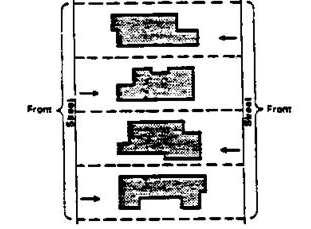
a.
If the lot is a through lot and adjoining lots face opposite street frontages, then the through lot shall be considered to have two (2) front yards, and the front yards shall have the same required front yard setback as the adjacent zone district (Figure 31-2).
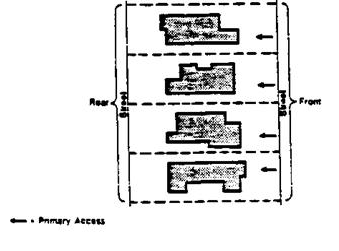
b.
If all lots in a block are through lots fronting in the same direction, then only one (1) front yard shall be required, and the front yard shall be that one from which primary pedestrian access is taken along the entire block (Figure 31-2).
Table 31-3
Permitted Projections and Structures in Required Yards
Footnotes:
(a) In the R-2-I Zone, permitted structures may extend to within 6 in. of the front property line.
(b) A side property line abutting an alley, public waterway, or public property other than a street shall be considered an interior side property line.
(c) Decks above grade, roof decks, and stairway railing shall not exceed the applicable building/structure height limit (measured to the railing) for the applicable zoning district.
(d) Transformers are allowed in front yard and street side yards only on lots without alleys, and only if the transformer is painted to match the building, is screened by a 3 ft. solid wall or hedge, and is located as far as possible on the lot. The utility company's design for the electric system, including locations and aesthetic treatment, shall be in accordance with the regulations of the Public Utilities Commission of the State of California.
(Ord. C-7663 § 31, 1999: Ord. C-7378 § 5, 1995)
Figure 31-1
FRONT YARD SETBACK EXCEPTION
Section 21.31.215(C)-Key Lot-
If the lot is a key lot and the abutting corner lot is built to the side yard line,
then the front yard of the key lot shall be one-half of that required for the nearest
interior lot in the same block facing the same street.
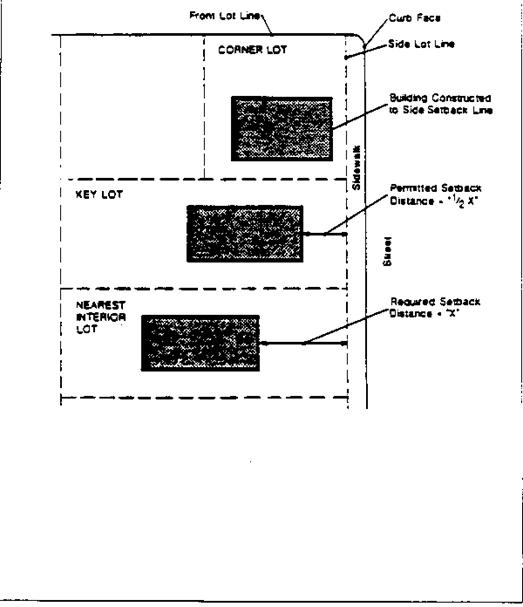
Figure 31-2
FRONT YARDS ON THROUGH LOTS
Section 21.31.215(C)2a—
If the lot is a through lot and adjoining lots face opposite street frontages, then
the through lots shall be considered to have two front yards, and the front yards
shall have the same required front yard setback as the adjacent zone district
Section 21.31.215(C)2b—Through Lot
If all lots in a block are through lots fronting the same direction, then only one
front yard shall be required, and the front yard shall be that one from which primary
pedestrian access is taken along the entire block face.
3.
Averaging in R-1-S, R-2-S and R-2-I Districts. If one or both adjoining lots encroach in the front yard setback in the R-1-S, R-2-S and R-2-I districts, then the front yard setback shall be established by the average setback of adjoining lots. If the subject lot adjoins a vacant lot, street or alley on one side, that side shall be considered a lot with no yard encroachment. Projections shall not be considered encroachments.
4.
Garages. Garages are subject to the front yard setback requirements specified in Section 21.31.245 of this Chapter.
5.
Parking Prohibited. Parking in the front yard setback is prohibited, except as provided in Section 21.41.276, recreational vehicles, or Section 21.41.281, vehicle parking in setbacks.
D.
Rear Yards. Rear yard depths shall conform to the standards specified in Chapter 21.31, Table 31-2, unless the conditions outlined in Section 21.31.215(D) apply. For triangular or gore-shaped lots, the rear lot line shall be established as provided for in the definition of rear lot line in Chapter 21.15 (Definitions) of this Title.
1.
Reverse Corner Lots. The rear yard setback for a reversed corner lot shall be the same as the side yard setback.
2.
Shallow Lots. On lots less than one hundred feet (100') in depth, the following special standards shall apply:
a.
In the R-1-S, R-1-M, R-2-S and R-2-l districts, the rear setback may be reduced to ten percent (10%) of lot depth, but not less than five feet (5');
b.
In the R-1-L and R-2-L districts, the rear setback may be reduced to thirty percent (30%) of lot depth, but not less than fifteen feet (15');
c.
In the R-1-N district, the rear setback may be reduced to ten percent (10%) of lot depth on the first story and thirty percent (30%) on the second story;
d.
In all other zones, the rear setback may be reduced to twenty percent (20%) of lot depth, but not less than ten feet (10').
3.
Buffers. In R-4-N, R-4-H, R-4-U districts and commercial zones which allow multifamily residential development, on sites adjoining, abutting or adjacent to R-1, R-2, or R-3 districts, a buffer setback facing the R-1, R-2 or R-3 district is required as follows:
a.
The minimum building setback shall be:
* This setback is measured from the property line or from the centerline of the abutting alley.
b.
If a building facing low-density residential and exceeding twenty-five feet (25') in height and fifty feet (50') in length, at least one-half (½) of such building facade shall be setback forty feet (40') from the property line.
c.
Within the required setback area, a five foot (5') wide planter strip containing a solid screen of trees planted ten feet (10') or closer on center shall be provided along the property line.
d.
No continuous building wall shall extend eighty-four feet (84') in length without recess of the building. This recess shall be at least ten feet (10') in each dimension.
E.
Side Yards. Side yards shall be required as set forth in Subsection 21.31.215.E, provided that:
1.
Zero Side Yard. One (1) zero side yard is permitted in the R-1-M, R-1-T, and R-3-T districts, subject to the following provisions:
a.
The side yard opposite the zero side yard shall be equal to or greater than twice the required width of an individual side yard for the zone;
b.
Any structure on the property adjoining the zero side yard shall not be less than eight feet (8') from the proposed zero lot line structure.
2.
Double Zero Side Yard. A double zero side yard is permitted in the R-1-T and R-3-T districts, provided that:
a.
No principal use structure on an adjoining lot lies within six feet (6') of any lot line proposed as a zero lot line, unless that structure is also a zero lot line building;
b.
A street or alley or private access driveway exists at the rear of the lot; and
c.
Not more than one hundred fifty feet (150') of a continuous building is created parallel to the front lot line.
3.
Buffers. In R-4-N, R-4-H and R-4-U districts and commercial zones which allow multifamily residential development, on sites adjoining, abutting or adjacent to R-1, R-2, or R-3 districts, a buffer setback facing the R-1, R-2 or R-3 district is required as follows:
a.
The minimum building setback shall be:
* This setback is measured from the property line or from the centerline of the abutting alley.
b.
If a building facing low-density residential and exceeding twenty-five feet (25') in height and fifty feet (50') in length, at least one-half (½) of such building facade shall be set back forty feet (40') from the property line.
c.
Within the required setback area, a five foot wide (5′) planter strip containing a solid screen of trees planted ten feet (10′) or closer shall be provided along the property line.
d.
No continuous building wall shall extend eighty-four feet (84′) in length without recess of the building. This recess shall be at least ten feet (10′) in each dimension.
F.
Side Yards on Narrow Lots. In specific areas of the City, existing lots located in the R-1-N, R-1-M, R-2-N and R-2-A zone districts have widths which are narrower than the required minimum widths indicated in Table 31-2. The following special side yard standards are established for lots less than twenty-seven feet (27′) in width in the R-1-N, R-1-M, R-2-N and R-2-A districts:
1.
Site Plan Review Required. Any developer proposing to construct a new dwelling unit or an addition greater than four hundred fifty (450) square feet in size to an existing dwelling located on a lot less than twenty-seven feet (27′) in width in the noted zoning districts must have the plans approved through site plan review. The site plan review process shall ensure that such development:
a.
Does not reduce light and air to neighboring properties;
b.
Minimizes curb cuts and the development of front yard areas with driveways;
c.
Minimizes the loss of privacy on adjacent properties;
d.
Maximizes the window area from primary rooms facing on the street; and
e.
Maintains quality residential development.
2.
Minimum Side Yard. For development on a narrow lot, the minimum yard area shall be three feet (3′).
3.
Lots With Access From Alley. If the lot abuts an alley, garage access shall be taken from that alley.
G.
A corner cutoff as defined in Section 21.15.660 of this Title, shall be required in all residential districts at all intersections of streets, driveways, or alleys. Nothing shall be erected or allowed to grow within the corner cutoff in such a manner as to impede visibility or accessibility up to eight feet (8') in height. Corner cutoffs shall be a minimum of six feet by six feet (6′ x 6′).
(ORD-19-0028 § 8, 2019; Ord. C-7326 § 9, 1995; Ord. C-7247 §§ 10, 11, 1994; Ord. C-7032 §§ 15—18, 1992; Ord. C-6933 § 15, 1991: Ord. C-6895 § 11, 1991; Ord. C-6822 § 8, 1990: Ord. C-6684 § 41 (part), 1990: Ord. C-6533 § 1 (part), 1988)
21.31.220 - Height limits.
A.
Measurement. A measurement of height shall use the definition of height contained in Section 21.15.1330.
B.
Exceptions. The height limitations specified in Table 31-2A shall apply to all elements and equipment on a building, except as follows:
1.
Chimneys and vent pipes shall be allowed to exceed the applicable height limit by two feet (2′) (when required to exceed roof height by the Uniform Building, Plumbing and Mechanical Codes).
2.
Flagpoles, when placed on the roof of a building, may exceed the height of the building by ten feet (10′). When placed on the ground, flagpoles shall not exceed sixty feet (60′) in height.
3.
Television or radio receiving or transmitting antenna(s) may exceed the applicable height limit according to the provisions contained in Section 21.46.060 (Radio and television antennas).
4.
Rooftop solar collectors and associated supporting structures may exceed the applicable height limit only if necessary for the sole purpose of solar collection, not otherwise installed on any occupiable areas of the roof, and consistent with the policies of the City of Long Beach Certified Local Coastal Program.
5.
The following rooftop elements and equipment in the R-4 zones may extend up to ten feet (10′) above the building height:
a.
Rooftop stair and elevator penthouse enclosures;
b.
Rooftop heating and air conditioning equipment and ducts; and
c.
Rooftop safety rails, spas, tubs, barbecues, wet bars, patio covers and similar nonportable rooftop amenities.
6.
R-4-H Height Incentive. In the R-4-H zone, the height limit shall be as shown in Table 31-3A. Both the minimum lot width and the minimum height must be achieved before the density is allowed to exceed the R-4-N density.
Any densities over R-4-N densities in the R-4-H zone are only allowed in true high-rise buildings utilizing the full high-rise package of features required in the Uniform Building Code.
(ORD-19-0007 § 2, 2019; ORD-16-0028 § 10, 2016; Ord. C-6933 § 17, 1991: Ord. C-6684 § 41 (part), 1990: Ord. C-6533 § 1 (part), 1988)
21.31.225 - Lot coverage.
Lot coverage shall conform to the standards specified in Table 31-2. The actual garage area up to seven hundred (700) square feet for a single-family dwelling, and all garage area for multi-family dwellings, shall be exempt from lot coverage.
(ORD-19-0028 § 9, 2019; ORD-19-0011 § 5, 2019; Ord. C-6684 § 41 (part), 1990: Ord. C-6533 § 1 (part), 1988)
21.31.230 - Usable open space.
Usable open space in terms of square feet per dwelling unit shall be provided as indicated in Table 31-2A. In R-3 and R-4 zones, each dwelling unit shall provide fifty percent (50%) of the open space as common open space and fifty percent (50%) as private open space, subject to the following standards. Indoor recreational space may be substituted for common usable open space.
A.
Open Space Dimensions. Table 31-4 specifies the minimum open space dimensions for both common and private open space areas.
B.
Combining Usable Open Space and Pedestrian Access. If the total width of the usable open space is eighteen feet (18′) or wider, any pedestrian path incorporated into open space design may be considered usable open space.
C.
Screening of Open Space. Private usable open space areas shall be screened as specified in Table 31-5.
Table 31-3A
R-4-H Height Incentive
Table 31-4
Usable Open Space Dimensions
Abbreviation: UBC—Uniform Building Code
Table 31-5
Screening of Open Space
D.
Recreational Amenities. Any development shall provide on-site recreational amenities. Such amenities shall include:
1.
For projects of twenty-one (21) or more units, a recreation room of three hundred (300) or more square feet, furnished with recreational facilities, a swimming pool, or such other recreational amenities as play equipment or other facilities directed to a specific demographic section of the housing market when judged to be of equivalent value by the Site Plan Review Committee.
2.
Adequate planter top area for seating not less than eighteen inches (18″) and not more than twenty-four inches (24″) in height, or equivalent bench seating, shall be provided.
(Ord. C-7550 § 6, 1998; Ord. C-6933 §§ 18, 19, 1991: Ord. C-6822 § 9, 1990; Ord. C-6684 § 41 (part), 1990: Ord. C-6533 § 1 (part), 1988)
21.31.235 - Floor area ratio.
The maximum ratio of building floor area to lot size shall be as specified in Table 31-2. For calculating residential floor area, the total area within a building shall include stairway and elevators on all floors.
A.
Basements. Basements and open areas shall not be calculated in residential floor area.
B.
Open Room. If outdoor roof deck or balcony is enclosed on all sides by parapet, solid railing or building wall greater than three feet, six inches (3′6″) in height, such open area shall be calculated in residential floor area.
C.
Garages. The actual garage area up to seven hundred (700) square feet for a single-family dwelling, and all garage area for multi-family dwellings, shall be excluded from the calculation of floor area ratio. GFA above the garage is not excluded.
(ORD-19-0028 § 10, 2019; ORD-19-0011 § 6, 2019; Ord. C-6684 § 41 (part), 1990: Ord. C-6533 § 1 (part), 1988)
21.31.240 - Privacy standards.
A.
Applicability. Privacy standards shall apply to all residential development of five (5) units or more requiring site plan review. In applicable cases, the privacy standards shall apply to all residential occupancy areas, as defined by the Uniform Building Code.
B.
Standards. The privacy standards in Table 31-6 apply to the shortest horizontal distance between the specified window and the specified property line, or to the window or wall of another unit in the same project. Each unit in a project must meet these standards in each room.
C.
Definitions.
1.
The measurements indicated in Table 31-6 are "line-of-sight" measurements from window to window, taken from the middle of the window.
2.
The following are considered "blank walls":
a.
Garden walls four feet (4′) or more in height;
b.
Frosted glass, stained glass or similar translucent but nontransparent materials; and
c.
Windows with a lower sill not less than five feet, six inches (5′6″) above the finished floor level.
Table 31-6
Privacy Standards
* Fifteen percent of lot width but not less than 10 ft., nor greater than 15 ft.
(Ord. C-7378 § 8, 1995)
3.
The primary room means a living room, dining room or family room. Where an open floor area plan combines the living and dining rooms, the living/dining room shall be considered one (1) room.
4.
All rooms not defined above as a primary room shall be considered a secondary room.
5.
In the case where windows in one (1) room are of equal size, either window may be selected by the builder as the largest window.
D.
Public Corridors. Public circulation corridors may be located within window-to-window or window-to-wall spacing distances. However, such corridors shall also have a minimum privacy spacing distance from primary and secondary windows as established in Table 31-6.
(Ord. C-7378 § 6, 1995; Ord. C-7032 § 19, 1992; Ord. C-6933 §§ 20, 21, 1991; Ord. C-6822 § 10, 1990; Ord. C-6684 § 41 (part), 1990: Ord. C-6533 § 1 (part), 1988)
21.31.242 - Minimum courtyard dimensions.
The courtyard provision is intended to create an attractive and comfortable on-site open space area in order to enable residents to enjoy outdoor living and recreational activities. Courtyard designs shall conform to the standards as specified. Exception to the minimum dimension requirement may be granted through the site plan review process only if the Site Plan Review Committee or the Planning Commission finds that the alternative design improves the overall quality of the development and meets the intent of the courtyard provision. Standards are as follows:
A.
The minimum dimension (width and depth) of any courtyard shall be equal to the same measurement as the height of the enclosing courtyard building walls (one-to-one ratio), but shall not be required to exceed fifty-five feet (55′);
B.
The height of the building wall shall be measured from the courtyard elevation to the roof eaves of the enclosing building;
C.
The courtyard dimension is a measurement of the usable open space between two (2) building walls, or to a property line. If balconies or corridors project into a courtyard, the dimension shall be measured from the edge of balconies or corridors;
D.
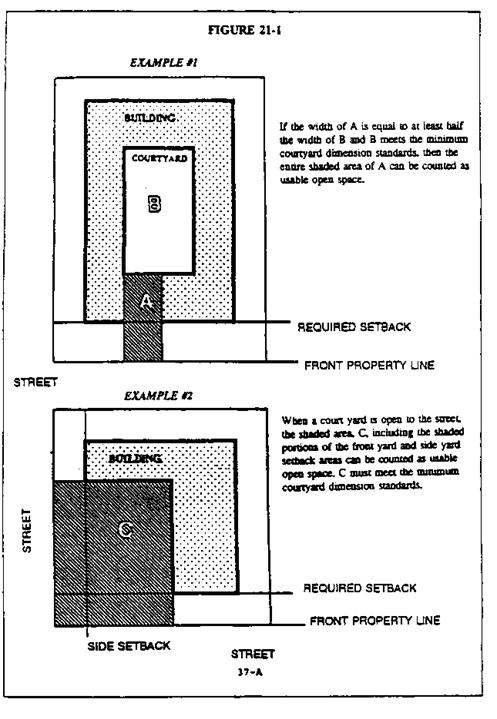
Special incentive is provided to encourage courtyards which are visibly open to the street. If fifty percent (50%) of the courtyard width is open to the street, special measurement provision shall apply (See Fig. 21-1);
E.
If the enclosing walls terrace back with succeeding stories, the courtyard dimension may be reduced but shall not be less than the lowest enclosing walls; and
F.
The courtyard dimensions set forth in this Section apply only to projects requiring site plan review.
(Ord. C-7032 § 20, 1992; Ord. C-6933 § 44, 1991)
21.31.245 - Accessory structures.
Attached and detached accessory structures shall be subject to the development standards indicated in Table 31-3 and as otherwise specified in this Section. Where no specific development standard is indicated, the standards for principal structures shall apply.
A.
Garages. This Subsection establishes the development standards for the location, height and size of a garage. The required number of parking spaces, parking stall size, turning radius and other parking standards are specified in Chapter 21.41 (Off-Street Parking and Loading Requirements) of this Title.
1.
Setbacks.
a.
If the garage takes direct access from a street, the garage shall be set back twenty feet (20′) from the street property line. If the garage door does not face the street, the setback shall be the same as required for principal use structures.
b.
In the rear half of a lot, a garage may be located directly on the rear property line and on one (1) side property line, provided the other side yard is at least three feet (3′) wide (except for permitted projections, see Table 31-3). Otherwise, the standards for setbacks of the principal use structures shall apply. Garages shall not be allowed in street side yard of a corner lot.
c.
In the R-1-L Zone, the garage shall be set back fifty feet (50′) from the street property line.
2.
Size. Garages for single-family residences shall not exceed seven hundred (700) square feet in size and for two-family residences, shall not exceed one thousand one hundred (1,100) square feet in size.
3.
Height. No garage shall exceed one-story and thirteen feet (13') in height. Mezzanines and lofts shall not be permitted. Attics for storage purposes shall be permitted, as "attic" is defined in Section 21.15.260.
4.
Other Uses in Garage. Laundry facilities, work benches and similar uses may be located in the garage, provided such uses do not encroach into the required parking area. If such a use or room is separated from the parking area in the garage by a solid wall, the room shall be considered an additional accessory structure and shall conform to applicable standards specified in Subsection 21.31.245.C of this Title.
5.
Garages In R-3 and R-4 Zones. Garages in R-3 and R-4 Zoning Districts, for projects with three (3) or more units on a lot, shall conform to the standards set forth in Table 31-7. For projects with one (1) or two (2) units on a lot, the standards of this Subsection 21.31.245.A shall apply.
B.
Common recreational room or buildings shall be permitted only in multifamily residential developments containing twenty-one (21) or more dwelling units, unless otherwise permitted by site plan review. Such rooms shall be developed in accordance with the following standards:
1.
Setbacks. Street, front, side and rear yard setbacks shall be the same as those established by Subsection 21.31.245.A.1 for garages in the R-3 and R-4 Districts.
2.
Size. The size of such rooms shall be limited to five hundred (500) square feet. Larger sizes may be approved through the site plan review process.
C.
Other Attached and Detached Accessory Buildings and Structures. All other permitted attached and detached accessory buildings shall be developed in accordance with the following standards:
1.
Use. An attached and detached accessory building shall be used as a workshop for noncommercial hobbies or amusement; for artistic endeavors; for storage; or for other similar purposes customarily related to a residential use. These structures shall not contain bathing or cooking facilities and shall not be utilized as "dwelling units" (as defined in Section 21.15.910);
2.
Location. An attached or detached accessory building shall be located only in the rear half of a lot. The building may be built directly on the rear property line and on one (1) side property line, provided the other side yard is at least three feet (3′) wide and has no structures or projections located in it and the structure is not located in the street side yard of a corner lot;
3.
Size. Such buildings shall not exceed three hundred (300) square feet or five percent (5%) of the lot area in size, whichever is smaller;
4.
Height. No detached accessory building shall exceed one-story and thirteen feet (13') in height. Mezzanines and lofts shall not be permitted. Attics for storage purposes shall be permitted, as "attic" is defined in Section 21.15.260; and
5.
Prohibited in R-1-S, R-1-M, R-2-S and R-2-I Zones. Detached accessory buildings are prohibited in R-1-S, R-1-M, R-2-S and R-2-I Zones.
D.
Radio and Television Antennas. Development standards are contained in Chapter 21.45 (Special Development Standards).
E.
Swimming Pools and Spas. Development standards are contained in Chapter 21.45 (Special Development Standards).
F.
Trash Receptacles. Trash receptacles shall be provided as follows:
1.
One to Three Units. Adequate receptacles shall be provided for each unit.
2.
Four or More Units. Common trash areas shall be provided in sufficient quantity to accommodate all refuse generated. Trash receptacle enclosures shall be provided as indicated in Chapter 21.45 (Special Development Standards).
(ORD-20-0018 §§ 3, 4, 2020; Ord. C-7663 § 7, 1999; Ord. C-7378 § 7, 1995; Ord. C-7326 § 10, 1995; Ord. C-7247 § 12, 1994; Ord. C-7032 §§ 21, 22, 1992; Ord. C-6933 § 22, 1991; Ord. C-6822 § 11, 1990: Ord. C-6684 § 41 (part), 1990: Ord. C-6533 § 1 (part), 1988)
Table 31-7
Garages in R-3 and R-4 Zone Districts
(a) For developments of 1 or 2 units on a lot, refer to Subsection 21.31.245.A.
* For 3 or more units, no vehicle shall be permitted to back into the street.
** Along the interior property lines, a minimum of a 5-foot landscape buffer shall be provided in accordance with Section 21.42.040 (landscaping standards).
*** Through a site plan review process, the maximum height of semi-subterranean garages may be increased.
(ORD-20-0018 § 7, 2020; ORD-19-0028 § 11, 2019; Ord. C-7326 § 11, 1995)
21.31.250 - Pedestrian access.
In the R-1-T, R-3 and R-4 zones, the following pedestrian access requirements shall apply:
A.
Front Entry. Every building shall have a covered front entryway developed in accordance with the following standards:
1.
Orientation. The front entry shall face the front property line or on a corner lot, the side street property line.
2.
Size. The entry shall be at least eight-feet-wide (8′).
3.
Walkway. A decorative paved walkway, separated from and not crossing the driveway, shall be provided between the entry and the public right-of-way.
B.
Elevators. At least one elevator shall be provided in each multi-family building containing twenty-one (21) or more units, where some of those units have primary accesses only to the third-story or higher stories.
(Ord. C-6684 § 41 (part), 1990: Ord. C-6533 § 1 (part), 1988)
21.31.255 - Design, treatment and finish.
The following design standards shall apply to all single-family detached and attached dwelling units unless, through site plan review, the Site Plan Review Committee or the Planning Commission finds variation from these standards to be appropriate:
A.
Unit Size. All single-family dwellings shall be at least sixteen (16) feet wide.
B.
Roof Material. No single-family dwelling shall have roofing materials with a reflective surface that produces glare.
C.
Siding. No single-family dwelling shall have siding with a reflective surface that produces glare.
D.
Style. Buildings in the R-1-T and R-3-T districts shall maintain a design style consistent with the style of the adjoining neighborhood.
E.
Large Single-Family Dwellings. New single-family dwellings and single-family dwelling rebuild projects in the R-1-L zone that exceed five thousand (5,000) square feet in total size or are within ten percent (10%) of the property's maximum floor area ratio shall comply with the following requirements:
1.
Four-sided architecture is required. Building details and design treatments shall be consistent on all building elevations. Bay windows, chimneys, and other projections shall be incorporated in building design for visual and architectural interest.
2.
All dwellings shall provide an inset/offset on walls twenty-five (25) feet or greater in length. Wall insets/offsets shall be at least two (2) feet deep and have a span of at least ten (10) feet and extend from grade to eave.
3.
Primary facades shall be street facing and entrances shall be obvious and visible. The height of porches or covered entryway features shall not exceed fifteen (15) feet.
4.
Second story windows facing an interior side property line shall not be located directly in line with the second story bedroom windows of a neighboring structure.
(ORD-19-0011 § 7, 2019; ORD-17-0006 § 2, 2017; Ord. C-7550 § 7, 1998: Ord. C-6684 § 41 (part), 1990: Ord. C-6533 § 1 (part), 1988)
21.31.260 - Reserved.
Editor's note— ORD-19-0028 § 38, adopted Nov. 5, 2010, repealed § 21.31.260 entitled "Distance between buildings," which derived from: Ord. C-7032 § 23, 1992; Ord. C-6684 § 41 (part), 1990; and Ord. C-6533 § 1 (part), 1988.
21.31.265 - Mechanical equipment screening.
Except as otherwise specified by this Code or any applicable PD or Specific Plan, all exterior mechanical equipment shall be screened by visually solid screening devices at least as high as the equipment. Equipment to be screened includes, but is not limited to, air conditioning and refrigeration equipment, duct work, heating, plumbing lines, and utility meters and telecommunications equipment pursuant to the requirements of Chapter 21.56. Additional standards shall apply as follows to improve aesthetic qualities and to prevent unauthorized access into a building.
A.
R-4-H, PD Zones. In the R-4-H and PD zones which allow high-rise development, all rooftop-mounted equipment (except solar collectors, heater and plumbing vents, passive air vents, roof hatches and rain gutters) shall be screened from public view both at grade and from higher buildings. The Director of Planning and Building shall review all screening for compliance with these provisions.
B.
R-4-R, R-4-N, R-4-U and PD Zones. In the R-4-R, R-4-N and R-4-U zones, and in PD zones planned for low-rise development, all rooftop-mounted mechanical equipment (except solar collectors, heating and plumbing vents, passive air vents, roof hatches and rain gutters) shall be screened from public view by solid screening devices at least as high as the equipment being screened.
C.
Materials and Design. Screening materials shall, at a minimum, have evenly distributed openings or perforations not exceeding fifty (50) percent of surface area. All screening devices shall be of a material requiring minimal maintenance. Wood generally shall not be used. All screening devices shall be well integrated into the design of the building through such items as parapet walls, false roofs or equipment rooms. Louvered designs are acceptable if consistent with building design style.
D.
Substitutions. Well planned, compact, architecturally integrated rooftop equipment may be substituted for screening with the approval of the Director of Planning and Building.
E.
Secured. All rooftop mechanical equipment shall be secured from unauthorized entry to the satisfaction of the Director of Planning and Building.
F.
Fire Rings. Rooftop fire rings shall be prohibited in all residential zones.
(ORD-19-0011 § 8, 2019; Ord. C-6684 § 41 (part), 1990: Ord. C-6533 § 1 (part), 1988)
21.31.270 - Utility meters screening.
All utility meters shall be fully screened from view from a public right-of-way. If enclosed in cabinets visible from public rights-of-way, exterior cabinet surfaces shall be finished in materials matching the primary or accent materials of the building. The utility company's design of the electric system, including locations and aesthetic treatment, shall be in accordance with the regulations of the Public Utilities Commission of the State of California.
(Ord. C-6684 § 41 (part), 1990: Ord. C-6533 § 1 (part), 1988)
21.31.275 - Undergrounding of utilities.
A.
All projects requiring site plan review shall provide for the ability to connect the building to any future undergrounding of utilities that may occur in the block. Such provisions shall include a vacant duct to the appropriate feed point for the underground connection.
B.
The utility company's design of the electric system, including locations and aesthetic treatment, shall be in accordance with the regulations of the Public Utilities Commission of the State of California.
C.
All projects requiring site plan review shall underground all overhead utility service to the site. In lieu of such undergrounding, the project developer may pay an in-lieu fee to the Department of Public Works for use in undergrounding within the applicable district. Such districts shall be established within one (1) year of the effective date of this Section and separate funds established for each district. The in-lieu fee shall be established based on the average per-foot cost of undergrounding established by the City Engineer and applied to the linear footage of the project site.
(Ord. C-6684 § 41 (part), 1990: Ord. C-6533 § 1 (part), 1988)
21.31.280 - Off-street parking and loading requirements.
Parking and loading areas shall be provided as required in Chapter 21.41 (Off-Street Parking and Loading Requirements) of this Title.
(Ord. C-6684 § 41 (part), 1990: Ord. C-6533 § 1 (part), 1988)
21.31.285 - Landscaping requirements.
All lots in residential districts shall be landscaped as provided for in Chapter 21.42 (Landscaping Standards) of this Title.
(Ord. C-6684 § 41 (part), 1990: Ord. C-6533 § 1 (part), 1988)
21.31.290 - Fences and garden walls.
Fences and garden walls are permitted accessory structures subject to the development standards contained in Chapter 21.43 (Fences and Garden Walls) of this Title.
(Ord. C-6684 § 41 (part), 1990: Ord. C-6533 § 1 (part), 1988)
21.31.295 - On-premises signs.
On-site signs are permitted accessory structures subject to the development standards contained in Chapter 21.44 (On-Premises Signs) of this Title.
(Ord. C-6684 § 41 (part), 1990: Ord. C-6533 § 1 (part), 1988)
21.31.299 - Right-of-way dedications and improvements.
Public rights-of-way shall be reserved, dedicated and improved as provided for in Chapter 21.47 (Dedication, Reservation and Improvement of Public Rights-of-Way) of this Title.
(Ord. C-6684 § 41 (part), 1990: Ord. C-6533 § 1 (part), 1988)
21.31.300 - Residential Planned Unit Development (PUD) district established.
A.
The City hereby establishes a residential planned unit development (PUD) zoning district, and associated procedures and development standards.
B.
The name of the PUD zoning district shall be Residential, Planned Unit Development district. The zoning symbol shall be "RP" followed by a numerical value indicating dwelling units per acre (DU/ac) for each site (examples: RP-6, RP-12, RP-25, etc.).
(ORD-15-0037 § 4, 2015)
21.31.310 - Purpose.
The Residential PUD zoning district is established to achieve the following objectives:
A.
Provide greater flexibility and encourage opportunities for innovative residential development through the application of site planning and subdivision techniques not otherwise permitted in the zoning and subdivision regulations;
B.
Establish a procedure for development and recycling of larger parcels of land that are unused or underutilized, and reduce or eliminate rigidity that otherwise may prevent these sites from being fully utilized due to the application of traditional development standards intended for typical lots;
C.
Encourage creative design and development according to good urban planning principles, with efficient use of land, a mixture of densities, diverse housing opportunities, and on-site community facilities;
D.
Encourage integration of urban and natural amenities within developments;
E.
Facilitate developments with higher levels of amenities, building design, and quality in internal street layout and access than would occur under traditional residential development standards and subdivision practice on large parcels of land;
F.
Encourage opportunities for innovative and sustainable land development techniques that will be given reasonable consideration for approval;
G.
Encourage preservation of serviceable existing structures of historic value or cultural merit by providing opportunities to use them imaginatively for purposes other than for which they were originally intended.
(ORD-15-0037 § 4, 2015)
21.31.320 - Procedures.
The following procedures are established for application for a PUD.
A.
Rezoning. A PUD is a type of residential zoning district. Creation of a PUD shall require a zone change, and application for such by the developer.
B.
Site Plan Review. At the time an application for a PUD zone change is submitted, the applicant also shall file an application for Site Plan Review for the development project proposed for said PUD, which shall be considered concurrently with the PUD request. No rezoning to a residential PUD shall be considered without concurrent consideration of the Site Plan Review associated with the requested PUD rezoning.
C.
Subdivision Tract Map. As part of any application for a PUD, any land proposed for a PUD shall be subdivided as necessary to create lots suitable for the PUD, and as such shall comply with all applicable requirements of Title 20 (Subdivisions) of the Long Beach Municipal Code, and the Subdivision Map Act (Government Code Section 66410-66413.5).
D.
Site. The area of each PUD shall be coterminous with a discrete PUD development site and corresponding Site Plan Review submittal.
E.
Approval body. Regardless of whether a Site Plan Review application is subject to staff level or Planning Commission approval, all PUD requests shall require a hearing for review and recommendation of approval or denial by the Planning Commission, followed by a hearing by the City Council to act on the rezoning request and other associated permits.
(ORD-15-0037 § 4, 2015)
21.31.325 - Modifications to a PUD.
The following procedures are established for modifications to an approved PUD:
A.
Changes to development plans. The issuance of any building permit, demolition permit, grading permit, utility connection, license, or other approval shall require the construction plans to be consistent with the development plan approved for the PUD by the approval body. Changes to any approved PUD shall require City approval, subject to the following procedure:
1.
Minor changes before or during PUD construction. The Zoning Administrator may authorize minor changes to an approved development plan before or during construction of the overall PUD project, if the changes are required because of conditions that were unknown at the time the plan was approved, and the zoning administrator determines that the changes are consistent with the standards of this Chapter and the findings made in connection with approval of the PUD.
2.
All other changes. Changes to the development plan before or during construction of the overall PUD project, other than the minor changes the Zoning Administrator can approve, shall require review by the Site Plan Review Committee, or Planning Commission, as applicable, under the procedures of Section 21.21.405 (Modification of permits). This includes increases in building height, reductions in setbacks, significant reconfiguration of internal streets or connections to the public right-of-way, or any other items that, in the judgment of the Zoning Administrator, may significantly differ from the substance or intent of the original PUD approval.
B.
Future modification of the PUD. After construction of the PUD project is completed, any changes to the PUD (including all structures and other site improvements) shall require City approval, subject to the following procedure:
1.
Minor changes. Any requested alteration or modification to structures or site improvements may be administratively approved by the Zoning Administrator if, in the judgment of the Zoning Administrator, the proposed change is minor in nature, and is within the scope and intent of the original PUD approval.
2.
All other changes to the PUD. Any other alteration, modification, or expansion of structures or site improvements shall be reviewed by the Site Plan Review Committee, or Planning Commission, as appropriate. The reviewing body may approve or deny the request, and may impose additional conditions of approval as necessary to ensure that any approved change is consistent with the intent and development standards of the original approval for the PUD.
3.
Compliance with development standards. In all cases, alterations, modifications or other expansions within the PUD shall comply with the development standards set forth in this Chapter, and as set forth in the specific approval for the PUD. Any request that is not in conformance with these standards shall require application for a Standards Variance, under the procedures established in Chapter 21.25.
(ORD-15-0037 § 4, 2015)
21.31.330 - Required Findings.
The Planning Commission and City Council may approve a PUD only when positive findings are made that the project is consistent with the following criteria. In granting such approval, the approval body may impose and enforce any conditions of approval it deems necessary to carry out the purposes of the General Plan and the Zoning Regulations.
A.
The PUD will provide a project of high quality design, adhering to good urban planning principles and consistent with the design guidelines of this Chapter, and will make efficient use of the available land;
B.
The PUD will provide a higher level of amenities and community facilities to residents than would otherwise be obtained through individual development of similar housing units;
C.
The PUD is appropriately sited and integrated into the surrounding urban and natural fabric;
D.
The PUD has a fully-integrated, complete internal street system that is functional and considerate of all units within the PUD, and is appropriately connected to the public street system;
E.
The PUD provides a high quality of building design, and the architectural theme is well-developed and consistent across the PUD; and
F.
The PUD project is in compliance with all City sustainability standards applicable to the size and scope of the development.
(ORD-15-0037 § 4, 2015)
21.31.340 - PUD Development Standards.
The following development standards are established for all PUDs, to ensure that each PUD provides a higher level of design quality and on-site improvements than would be obtained through individual lot development of a traditional subdivision. Deviation from these development standards shall require a Standards Variance, under the procedures established in Chapter 21.25. For any other pertinent development standards not set forth in this Section, conformance shall be provided per the relevant provision(s) of the Zoning Regulations. In cases of where the development standard is not specified, or its application is unclear, or the standard appears to conflict with the standards of this Section, the Zoning Administrator shall have the authority to determine the appropriate standard.
A.
Minimum PUD site area. A PUD shall contain a minimum contiguous site area of 5 acres. Application for a PUD on a site between 4.5 and 5 acres may be allowed at the discretion of the Zoning Administrator if he/she finds that all other standards set forth herein for PUDs can be satisfactorily met in conformance with the intent of these regulations. However, the approval body acting on the PUD request shall then have the authority to deny the request based on a finding of insufficient area.
B.
Internal integration. A PUD is intended to be internally integrated and connected within itself, and the site area shall not be divided by a public street, highway, or freeway, or a railroad right-of-way, or stream, river, or flood control channel.
C.
Setbacks, height, and other development standards. Minimum building setbacks, separation between buildings, maximum building height, minimum private open space, lot size, and other development standards shall be provided as set forth in Table 31-8.
D.
Street and sidewalk widths. The widths of the streets, sidewalks, alleys, and other rights-of-way and easements shall be provided as required in Chapter 20.08 (Design Standards) and Chapter 21.47 (Dedication, Reservation, and Improvement of Public Rights-of-way), except in cases where waivers from these standards are obtained according to the appropriate procedures specified in Chapter 20.08 and Chapter 21.47, with the goal of providing a design adhering to quality urban planning principles, in conformance with the PUD design standards contained in Section 21.31.350.
E.
Minimum unit size and width. Each dwelling unit in a PUD shall have a minimum size of 1,200 square feet of habitable floor area, and a width of at least 16 feet.
F.
Minimum common open space. Each PUD shall provide a minimum of fifteen percent of the site area as common usable open space, in functional, active recreation area(s).
G.
Parking. Each dwelling unit shall be provided with parking as required in Chapter 21.41 of the Zoning Regulations. One guest parking space shall be provided for each four dwelling units, based on the number of units in the development as a whole. Guest parking spaces may be provided as open parking or on-street parking within the PUD, at the discretion of the approval body, notwithstanding Section 20.08.080 (Private Streets).
H.
Detached garages and accessory structures. Detached garages and other detached accessory structures shall be prohibited. This does not include accessory structures in common areas (not individual ownership lots) used for utilities, maintenance, storage, or other accessory purposes to serve the common interest within the PUD.
I.
Driveways. Each garage shall be provided with a driveway either twenty (20) feet or more in length, or six (6) feet or less in length.
J.
Projections and structures in required yards. Projections and structures in required yard areas shall be permitted as set forth in Table 31-3 of this Chapter, except as otherwise specified in this Division and Table 31-8.
K.
Homeowner's Association. Each PUD shall have a Homeowner's Association (HOA), established by Covenants, Conditions & Restrictions (CC&Rs). In addition to any responsibilities specified in the CC&Rs, the HOA shall be responsible for the operation, upkeep, and maintenance of all commonly-owned improvements, and enforcement of all CC&Rs. The approval body (Planning Commission or City Council) shall have the authority to add or modify CC&Rs as necessary to ensure the PUD will comply with these development standards and the design guidelines contained in Section 21.31.350.
(ORD-23-0052 §§ 2, 3, 2023; ORD-15-0037 § 4, 2015)
21.31.350 - PUD Design Guidelines.
The following design guidelines are established for all PUDs, to provide basic objectives for quality urban design to which each PUD should conform. A PUD's consistency with these design guidelines is relevant to the required findings set forth for PUDs in Section 21.31.330. It is the intent of these design guidelines for each PUD to provide a higher level of quality in architecture, site planning, and amenities than would otherwise be obtained through individual lot development of a traditional subdivision.
A.
Landscaping. A PUD should be provided with landscaping as specified in Chapter 21.42 of the Zoning Regulations, and should, for landscaping purposes, be held to the standards for sites located in R-3 or R-4 zoning districts. All landscaping within the PUD should be composed of drought-tolerant, low-water-requirement trees, shrubs, and groundcover. Turf may be used in conformance with the water efficient landscaping requirements of Chapter 21.42 (Landscaping Standards) of the Zoning Regulations.
B.
Street widths. Street widths within the PUD should comply with the requirements of Chapter 20.08 and Chapter 21.47 to the extent feasible. However, streets are encouraged to be the minimum widths allowed by the Fire Department, Building and Safety Bureau, and Public Works Department, provided that the requirements of each reviewing department is met, and that any appropriate waivers of standards are obtained according to the procedures specified in Chapter 20.08 or 21.47, as appropriate. The purpose of this guideline is to encourage site planning that adheres to good urban planning principles, to promote pedestrian- and bicycle-oriented development, and to reduce vehicle speeds within the PUD.
C.
Sidewalks. Sidewalks should be provided on both sides of all through or circulatory private roads within a PUD, and should be at least 5 feet wide. Sidewalks also are strongly encouraged on both sides of any interior secondary alleys or drives, at a width of at least 4 feet.
D.
Parkways. A PUD should be provided with a landscaped parkway between main interior circulation streets and the sidewalk. The parkway should be wide enough to sustain a mature tree (four feet), and should be landscaped in accordance with Chapter 21.42 of the Zoning Regulations.
E.
Guest Parking. Notwithstanding Section 20.08.080 (Private Streets), guest parking should be provided as on-street parking on the internal streets of the PUD, if the streets are privately-owned and maintained. On-street parking by residents should be strongly discouraged, and the PUD's Homeowner's Association (HOA) should provide the necessary enforcement against on-street parking by residents.
F.
Pedestrian and bicycle connectivity. Connectivity to and within the PUD for pedestrians and bicycles is strongly encouraged, and should be provided to the greatest extent feasible. Separate pedestrian/bicycle entrances to the PUD should be provided independent of vehicular entrances, especially if the PUD is adjacent to a park, bike path, pedestrian trail, or other public amenity that is not directly accessible from the PUD by motor vehicles.
G.
Architecture. A PUD should make use of architecture that is of the highest quality, and gives the PUD a distinct visual identity. Architecture should adhere to a common theme and architectural vocabulary among the PUD's buildings, both private residences and community facilities. The use of interesting, creative, distinctive building materials, elements, and details is strongly encouraged.
H.
Exterior edges. The PUD should present attractive exterior edges to the surrounding community, neighborhood, and public rights-of-way. Utility or maintenance structures, storage or utility areas, and uninteresting building elevations, should not be exposed to the public viewshed outside the PUD.
I.
Outdoor area for common usable open space. At least fifty percent (50%) of the common usable open space for the PUD should be provided in outdoor areas, rather than indoor community rooms, workout rooms, and the like.
Notes:
a) Front, interior side/rear, and private street side/rear setbacks on irregular corner or gore-shaped lots may deviate from these standards at the discretion of the approval body.
(ORD-23-0052 §§ 4, 5, 2023; ORD-15-0037 § 4, 2015)
21.31.360 - Additional Land Use Restrictions.
Residential PUDs are intended to be primarily residential in nature. In addition to the restrictions set forth for the RP district in Table 31-1, the land uses in a PUD shall be restricted as follows:
A.
Residential uses. Each dwelling unit, whether built as a detached or attached single-family dwelling, or duplex, or triplex, or unit within a multifamily building, is intended to be a traditional one-family dwelling unit (as defined in Section 21.15.930), and all other types of residential uses are prohibited.
B.
Accessory Dwelling Units. Accessory dwelling units shall be prohibited in a PUD.
C.
Community facilities and parks. Community facilities and parks may be approved as part of the PUD at the time of PUD approval. Changes or additions to these uses after the fact shall require approval from the relevant approval body.
(ORD-17-0031 § 8, 2017; ORD-15-0037 § 4, 2015)

