
Ludlow City Zoning Code
SECTION VI
- SPECIAL LAND USE REGULATIONS
Section VI describes specific regulations that pertain to specific uses in specific districts. This section clarifies the conditions under which certain uses can be carried on.
Sec. V-6.0. - Horses and/or ponies.
The keeping of horses and/or ponies and a private stable, for personal use, are permitted under the following conditions:
6.0.1
The location of the stable is not less than 125 feet from a street line and not less than 50 feet from any side lot line and not less than 50 feet from any rear lot line.
6.0.2
The minimum acreage required for a private stable shall be one acre of suitable land per horse or pony. Acreage for this purpose excludes all area used for any residential and accessory structures not intended for the purpose of the stable.
6.0.3
Said animal or animals shall be kept under control by adequate fencing within the area specified. The fenced area shall be to the rear of the rear line of the dwelling of the owner or lessee except in cases where the frontage of the property is 200 feet or more on a public or private way.
6.0.4
Stables, corrals, and yards shall be properly drained and reasonably free from excessive odor, dust, and mud, so as not to create a nuisance or health hazard to the community or to surrounding property owners, from an air to drainage pollution standpoint.
6.0.5
Maintenance of the stable and property used in the keeping of horses and/or ponies shall conform to all regulations of the local board of health and state health authorities.
(10-3-2011 STM)
Sec. V-6.1. - Earth removal.
6.1.1
[Permit and approval required.] In any zoning district, removal or addition of earth products from a lot shall require a special permit from the board of selectmen, and site plan approval from the planning board. No mechanical separation will be permitted on site without a gravel bank permit.
6.1.2
Application requirements.
a.
In addition to meeting the requirements of section 7.0 special permits, all applicants for an earth removal special permit shall submit the following to the board of selectmen and the planning board:
(1)
The location of the proposed excavation.
(2)
A full statement as to the purposes of the earth removal.
(3)
A plan of the land involved showing all man-made features, property lines, and existing topography by ten-foot contours, plus proposed contours at ten-foot intervals showing the finish grade of the site after the completion of the proposed excavation project.
(4)
The estimated quantity of material to be removed.
b.
The board of selectmen may also request the following information:
(1)
An erosion and sediment control plan.
(2)
The amount and cost of proposed restoration materials.
6.1.3
Standards of operation. The board of selectmen shall include the following conditions to be complied with when issuing a permit:
a.
No excavation shall be permitted below the grade of a road bounding the property at any point nearer than 300 feet to such road.
b.
No excavation below the natural grade of any property boundary shall be permitted nearer than 50 feet to such boundary.
c.
No slope created by the removal operation shall be finished at a grade in excess of the natural angle or repose of the materials.
d.
All excavated areas shall, upon completion of the operation, be covered with not less than four inches of loam; brought to the finished grade and seeded in a satisfactory manner.
e.
Within the floodplain district excavation of earth products shall be prohibited if such excavation will lower the level of the water table or will interfere with the natural flow pattern or reduce the flood storage capacity of a stream.
f.
No permit for earth products removal shall be issued if such removal will:
(1)
Endanger the general public health or safety; or
(2)
Constitute a nuisance; or
(3)
Result in detriment to the normal use of adjacent property by reason of noise, dust, or vibration; or
(4)
Result in traffic hazards in residential area or excessive congestion or physical damage on public ways.
g.
A permit for any earth products removal may be issued for a period not exceeding five years in duration. Upon reapplication for a permit, the board of selectmen may at its discretion, grant one or more extensions of said permit, each of which shall not exceed five years duration.
h.
In approving the issuance of such permit, the board of selectmen shall impose reasonable requirements which shall constitute a part of the permit and which may include: grading, seeding, and planting, fencing necessary for public safety, methods of removal, location and use of structures, hours of operation, routes of transportation of material removed, control of drainage and disposition of waste incident to the operation.
i.
Security. The board of selectmen may require suitable bond or other security adequate to assure compliance with the provisions of this section.
6.1.4
Earth removal exemptions. No special permit shall be required for the following:
a.
Moving earth products within the limits of an individual property or series of contiguous properties of land in single ownership.
b.
Removal of earth products from an operating farm, nursery, or cemetery to the extent that such removal is necessary to the operation of same.
Sec. V-6.2. - Home occupations.
The planning board may authorize, by issue of a special permit and site plan approval, the use of a portion of a dwelling or building accessory thereto as the workroom of a resident artist, craftsman, beautician, dressmaker, milliner, photographer, cabinetmaker, skate sharpener, radio repairman or other person engaged in a customary home occupation, or as a place for incidental work and storage in connection with his off-premises trade by a resident builder, carpenter, electrician, painter, plumber or other artisan, resident tree surgeon, landscape gardener, or similar person. The criteria for issuance of said special permit is as follows:
6.2.1
Such use is clearly secondary to the use of a premises for dwelling purposes.
6.2.2
The use is pursued by a member of the family residing in the dwelling with no more than two non-resident employees.
6.2.3
No trading in merchandise is regularly conducted except for products made on the premises or of parts or other items customarily maintained in connection with, and incidental to, such merchandise.
6.2.4
No external change is made which alters the residential appearance of the building on the lot.
6.2.5
All operations, including incidental storage, are carried on within the principal or accessory building, and that there is no outward evidence that the premises are being used for any purpose other than residential (except for an accessory sign or vehicle as hereinafter permitted.
6.2.6
The proposed accessory use would be suitably located in the neighborhood in which it is proposed. The use shall not be characterized by outward manifestations (such as traffic generation, noise, public service and utility demand, etc.) not unlike those dwelling units in the particular neighborhood in which the dwelling is located.
6.2.7
Only one vehicle parked on the property may be a commercial vehicle and of not more than 10,000 pounds G.V.W. (gross vehicle weight). In all, the total number of vehicles parked on the property during business hours should not exceed by more than two the number of vehicles parked during non-business hours.
6.2.8
In residence (RA-1, RA, RB) and agriculture (A, AMD) districts, the use will be reasonably compatible with other uses permitted as of right in the same district and with adjoining uses.
6.2.9
The use will not constitute a nuisance by reason of an unacceptable level of air or water pollution, excessive noise or visually flagrant structures and accessories, and the use is not a serious hazard to abutters, vehicles, or pedestrians.
6.2.10
Adequate and appropriate facilities will be provided for the proper operation of the proposed use, including special attention to safe vehicular circulation on the site and at the intersection with abutting streets.
6.2.11
The occupational use shall not occupy more than the equivalent of 25 percent of the total gross floor area of the residential structure plus other accessory structures housing the occupation or no more than 500 square feet of gross floor area, whichever is less.
6.2.12
In connection with a home occupation there shall be no display visible from outside the building other than an identification sign not larger than two square feet in area and shall not be lighted.
6.2.13
Adequate off-street parking for employees and customers shall be provided and must be screened from view from the roadside and from the neighbors.
Sec. V-6.3. - Home professional offices.
The planning board may issue a special permit and site plan approval for the operation of an office of a physician, surgeon, dentist, optometrist, lawyer, or similar professional as a home professional office provided that:
6.3.1
The operation is located within the private residence of the professional. Unlike the home occupation, accessory building shall not be used in connection with a home professional office.
6.3.2
Such an office shall comply with the regulations concerning home occupations.
Sec. V-6.4. - Parking requirements.
6.4.1
General requirements.
a.
For all zoning districts, off-street parking spaces shall be provided for every new structure, the enlargement of an existing structure, or the development of a new land use.
b.
In granting a special permit for any use, the special permit granting authority may require off-street parking spaces, standards, or conditions in addition to those set forth in this bylaw, if it deems it necessary for the use.
c.
Any specific, more stringent provision in any other section of the town zoning bylaws relating to parking shall prevail over provisions in this section.
6.4.2
Parking guidelines.
a.
The following guidelines shall be used when determining adequate parking:
b.
Gross floor area shall mean the total area of a building measured by taking the outside dimensions of the building at each floor level intended for occupancy or storage.
c.
When the computation of required parking spaces results in the requirements of a fractional space, any fraction of one-half or more shall require one space.
d.
Plans submitted to the special permit granting authority or the building inspector for uses exempted from the requirements of this section shall indicate required spaces and reasonable access thereto.
e.
For proposed uses not listed in the parking guidelines an adequate number of parking spaces will need to be provided to accommodate visitors, staff, and the general public. Final determination of parking adequacy to be determined by the planning board, with input from the board of public works and the safety committee.
6.4.3
Mixed uses. In the case of mixed uses, the parking spaces required shall be the sum of the requirements for the various individual uses computed separately. Parking spaces for one use shall not be considered as providing the required parking for any other use.
6.4.4
Curb cut permits.
a.
A curb cut permit must be obtained from the department of public works or the engineering department for all new or relocated driveways or parking lots.
b.
The number of driveway entry permits allowed by right are as follows:
Single-family dwelling: one entry.
Business use in AMD district: one entry.
Any other use: two entries.
If an applicant wishes to modify the requirement, the applicant must obtain approval from the department of public works.
6.4.5
Parking area location.
a.
Uses permitted within the business A, business B and industrial A and C districts. For uses permitted within the business A, business B and industrial A and C districts, required off-street parking need not be provided on-site. Such parking may be provided on any parcel within a radius of 600 feet of any premises used for a purpose permitted within business districts provided:
(1)
Any such parcel is not located within a residential district;
(2)
Such parcel is landscaped in accordance with the provisions of table 3 of this bylaw.
b.
All other districts. For uses permitted in all districts except the business districts, motor vehicles parking accommodations shall be provided on the same lot or on an abutting lot under common ownership and located in the same zoning district as the principal building as follows.
6.4.6
Parking space.
a.
All parking and display spaces shall be nine by 18 feet exclusive of maneuvering area and reasonable access.
b.
Deleted.
6.4.7
Surfacing. In all business zones, all parking areas and driveways must be constructed of concrete or bituminous concrete.
In all industrial zones, all driveways and all visitor/employee parking areas must be constructed of concrete or bituminous concrete. Parking for equipment/heavy equipment and storage of equipment/heavy equipment is allowed on gravel surfaces.
In all other zoning districts, that portion of the driveway that lies within the public way shall be constructed in accordance with the town board of public works' "Regulations for Construction Within the Public Way" in effect at the time of construction.
(10-7-1996 STM; October 1997 STM; 10-7-2002 STM; 10-2-2006 STM; 5-9-2011 ATM; 10-3-2011 STM; 10-1-2012 STM; 5-12-2014 ATM; 10-4-2021 STM)
Sec. V-6.5. - Sign regulations.
6.5.1
Applicability. The provisions of this section shall apply to the construction, erection, alteration, use, location, and maintenance of all signs located out-of-doors, or those signs affixed on any part of a building for the express purpose of being visible from the exterior of the building.
6.5.2
Definitions.
Abandoned sign means any temporary sign which applied to an event more than seven days prior; any permanent sign for which the owner cannot be found, or which no longer has application to the property on which it is located.
Accessory sign means a sign which does not identify a business, service, product, or activity; i.e. open, closed, vacancy, hours of operation, etc.
A-frame sign. See "sandwich sign."
Animated sign means any sign which uses actual movement or the illusion of movement.
Area of a sign means the area of a sign shall be calculated as the smallest rectangular area which completely encompasses all components of the sign, exclusive of its support(s); or the smallest circular area, whichever is greater. Area of sign having no significant third dimension and displaying information on two sides shall be considered as the area of a single side. Area of signs having a significant third dimension, as judged by the sign commissioner, and displaying information on two or more sides shall be calculated on a case-by-case basis.
Awning sign means a sign attached to or printed upon the tile or fabric material supported by framing and which is attached to a building.
Banner means a flexible piece of cloth, plastic, or similar material, used for advertising attached at one or more points to a pole, staff, or other support.
Changeable-copy sign means a sign that is designed so that characters, letters, plaques, or illustrations can be changed or rearranged without changing the design of the sign.
Commercial #1 sign means any sign affixed to, suspended from, or incorporated as part of a building that directly or indirectly names, advertises, or calls attention to a business, product, service, or other commercial activity.
Commercial #2 sign means any sign that directly or indirectly names, advertises, or calls attention to a business, product, service, or commercial activity and is not a commercial #1 marquee, residential, political, real estate, professional announcements, lodging, boarding and tourist, temporary, or directional or identification sign.
Construction sign means a temporary sign identifying an architect, builder, contractor, subcontractor, material supplier, or other participant in the construction, alteration, or maintenance, currently being done on the property on which the sign is located.
Direct/external lighting means illumination by means of a light source that is external to the sign being lit.
Directional, informational, or safety sign means an on-premises sign which identifies the premises, the activity, or the business conducted upon such premises or which provides directions for the safe and efficient flow of traffic. Such signs include those marking entrances, exits, parking areas, loading areas, or other operational features of the premises.
Door sign or window sign means any sign or poster placed inside a window or door and legible from a public way (with characters that exceed two and one-half inches in height).
Double-faced sign means a sign lettered on both sides.
Flashing sign means a sign which is illuminated by an intermittent or sequenced light source.
Free-standing sign means a self-supporting sign not attached to any building, wall, or fence, but in a fixed location. This does not include portable or trailer-type signs.
Government sign means any sign erected and maintained by the government.
Height of a sign means the vertical distance measured from the highest point of a sign to the ground level beneath the sign.
Internal lighting (indirect lighting) means illumination by means of light sources contained within the body of the sign.
Ladder sign means a sign with two or more crosspieces serving as individual signs.
Marquee sign means a roof-like structure, canopy, or mobile unit bearing a signboard with or without a scrolling message.
Nonconforming sign means a sign which was erected legally but which does not comply with subsequently enacted regulations.
Off premises sign means a sign identifying a business or residential use, facility, or service which is not located on the premises where such activity is located.
Political sign means a temporary sign associated with the elective process.
Portable sign means any sign not permanently attached to the ground or other permanent structure, or a sign designed to be transported, included but not limited to: signs designed to be transported by means of wheels; and signs converted to A- or T-frames; menu and sandwich board signs and balloons used as signs. Portable signs are temporary signs.
Projecting sign means a sign which extends from a wall of a building.
Real estate sign means a temporary sign that advertises real property as being for sale, rent, or lease.
Residential sign means signs for the identification of residential subdivision developments, townhouse developments, and multi-family developments; signs for institutional uses, including schools, churches, state and federal buildings, and utilities; and identification signs for farms, riding stables, and other agricultural or forestry uses.
Roof sign means a sign which is located above, or projected above, the lowest point of the eaves or the top of the parapet wall of any building, or which is painted on or fastened to a roof.
Sandwich sign means a self supporting, double paneled, temporary sign, with panels that are not parallel but are connected along one edge and separated along the opposite edge. If connected on a vertical edge, it is a V-shaped sign. If connected at the top, it is an A-frame sign.
Sign means any permanent or temporary structure, device, letter, word, model, banner, pennant, insignia, trade flag, or representation use as, or which is in the nature of an advertisement, announcement, or direction, or is designed to attract the eye by means including intermittent or repeated motion or illumination.
Sign commissioner means the person appointed by and accountable to the appointing authority and responsible for the enforcement of this bylaw, currently the building commissioner/inspector of buildings.
Special event sign means a temporary sign advertising or pertaining to a civic, patriotic, educational, or other event.
Subdivision identification sign means a sign identifying a subdivision, condominium complex, or residential development under construction.
Subdivision lot plan sign means a sign depicting the lot plan of a subdivision.
Subsidiary sign means a lesser sized sign attached to another sign.
Temporary sign means any sign, including its support structure, intended to be maintained for a continuous period of not more than three months in any calendar year and is not permanently mounted. This includes portable signs.
Wall sign means any sign which is painted on, incorporated into, or affixed parallel to the wall of a building, and which extends not more than six inches from the surface of that building.
6.5.3
Permitted signs. Only signs which refer to a permitted use or an approved conditional use as set forth in section III of the zoning bylaw are permitted, provided such signs conform to the provisions of this section.
6.5.4
Prohibited signs.
a.
Signs in excess of 100 square feet in area.
b.
Signs that constitute a hazard to pedestrian or vehicular traffic because of intensity or direction of illumination.
c.
Signs that incorporate, or are lighted by, flashing or blinking lights, or are designed to attract attention by a change in light intensity or by repeated motion. Signs indicating the current time and/or temperature are permitted provided they meet all other provisions of this bylaw.
d.
Any sign advertising or identifying a business or organization which is defunct or no longer located on the premises is not permitted.
e.
Portable signs are prohibited in the RA-1, RA, RB, A, or AMD districts.
6.5.5
Placement standards/sign height in all districts.
a.
If affixed to, suspended from, or incorporated as part of a building, a sign cannot project more than 24 inches over or into any building.
b.
If supported by or suspended from a pedestal, post or tree, a sign cannot project more than 24 inches over or into any pedestrian or vehicular way customarily used by the public.
c.
No sign can project or extend more than six feet above the eaves line or parapet of any building to which it is affixed.
d.
If free-standing, a sign cannot extend more than 12 feet above ground level.
e.
No part of a free-standing sign is to be located closer than ten feet to the property line within the front yard setback. The sign cannot interfere with the line-of-sight for traffic. This required dimension is reduced to five feet for pre-existing, non-conforming parcels.
6.5.6
Signs allowed in each zoning district. No sign shall be erected unless it is permitted by table 4, permitted signs by type and zoning district:
Y—Yes sign permitted.
N—No sign prohibited.
6.5.7
Non-conforming and temporary signs.
a.
Signs legally existing at the time this bylaw is adopted may continue as non-conforming uses, and may be increased in size and height when approved by the board of appeals.
This provision shall not apply to billboards, signs and other advertising devices subject to the provisions of sections 29 through 33, inclusive, of chapter 93, and to chapter 93D of the general laws.
b.
A directional or identification sign may be erected and maintained in any district where the board of appeals, acting under section 7.0 finds that such a sign will serve the public convenience, will not endanger the public safety, and will be of such size, location, and design as will not be detrimental to the neighborhood.
c.
Nothing herein shall affect provisions in existing bylaws relating to temporary signs permitted by the selectmen, or posted by the town or government.
d.
The maximum size for temporary signs is 18 inches by 24 inches. Temporary signs cannot be placed on town property or interfere with the line-of-sight for traffic.
6.5.8
Permits.
a.
Any sign over 18 inches by 24 inches shall require a permit from the building commissioner. Excludes temporary signs.
b.
Applicants must provide a description of all existing signs on the premises as well as a scale drawing specifying dimensions, illumination materials and location on land or buildings for the proposed new sign(s).
c.
The building inspector shall issue a permit for a sign when an application therefore has been made and the sign complies with all applicable regulations of the town and the state building code.
(4-10-1995 ATM; 10-2-2006 STM; 5-14-2012 ATM; 10-1-2012 STM; 10-6-2014 STM)
Sec. V-6.6. - Accessory apartment bylaw.
6.6.1
[Special permit required.] Accessory apartments shall be permitted in all residential districts, the agricultural district, and the agricultural moderate density district only upon issuance of a special permit from the planning board, as specified in section 7.0 of this bylaw, and in accordance with the additional requirements specified herein.
6.6.2
General description. An accessory apartment shall mean a separate housekeeping unit, complete with its own sleeping, cooking, and sanitary facilities, that is substantially contained within the structure of a single-family dwelling, but functions as a separate unit.
6.6.3
[Standards.] The planning board may authorize, under a special permit in all residential districts, the agricultural district, and the agricultural moderate density district, a use known as accessory apartment, owner-occupied, single-family dwelling, provided that the following standards and criteria are met:
a.
The accessory apartment will be a complete, separate housekeeping unit that functions as a separate unit from the original unit.
b.
Only one apartment will be created within a single family home.
c.
The owner(s) of the residence in which the accessory apartment is located shall occupy at least one of the dwelling units on the premises.
d.
The additional unit shall be occupied only by a family member. For purposes of this article, family member shall be defined as one of the relatives of the home owner or spouse as follows: mother, father, sister, brother, son, daughter, uncle, aunt, grandmother, grandfather and/or their spouses.
e.
The accessory apartment shall be designed so that the appearance of the building remains that of a one-family residence as much as feasibly possible. In general, any new entrances shall be on the side or rear of the building. Any exterior changes made must conform with the single family character of the neighborhood.
f.
Deleted.
g.
The accessory apartment shall be clearly a subordinate part of the single family dwelling. It shall be no greater than 800 square feet nor have more than one bedroom.
h.
There shall be provided at least two off-street parking spaces for the principal dwelling unit, and at least one off-street parking space for the accessory apartment. Parking spaces shall be located to the side or rear of the structure, and behind the front yard setback required for the zoning district.
i.
For dwellings to be served by on-site septic system, the owner must obtain a letter from the board of health that the existing sewage disposal system is adequate for the proposed accessory apartment, before a special permit can be obtained.
j.
Deleted.
k.
There shall be no lodgers in either the original dwelling unit or the accessory apartment.
l.
The construction of any accessory apartment shall require a building permit.
6.6.4
Application procedure.
a.
The procedure for the submission and approval of a special permit for an accessory apartment in owner-occupied, single family dwellings shall be the same as prescribed in the special permit section by the planning board, except that it shall include a notarized letter of application from the owner(s) stating that he/they will occupy one of the dwelling units on the premises. A non-refundable fee shall be included with the application for an accessory apartment to cover the cost of processing the application and code inspections. The applicant shall also be responsible for the cost of the legal notices. As part of the public hearing process, parties of interest, as defined in M.G.L. chapter 40A, section 11 must be notified.
b.
A special permit shall be issued for a period of not greater than four years. The special permit may be automatically renewed every four years upon receipt of proof of owner occupancy and occupancy by a family member, as defined in section 6.6.3.d.
Approximately one month prior to the renewal date, the planning board shall send out a renewal form to be signed by the owner(s), notarized, and returned to the planning board for action by the board. If the owner fails to return the renewal form, the board will presume there is no interest in renewal and revoke the special permit at that time.
c.
Upon receiving a special permit, the owner(s) must file on subject property a declaration of covenants at the county registry of deeds. A time-stamped copy of the recorded declaration shall be provided to the planning board and the building department.
6.6.5
Transfer of ownership of a dwelling with an accessory apartment.
a.
The temporary special permit for an accessory apartment in an owner-occupied, single-family dwelling shall terminate upon the sale of the property or transfer of the title of the dwelling, or removal from the dwelling by reason of health or death of the occupant of the accessory unit.
b.
The owner(s) of the altered dwelling will dismantle the cooking facilities for the accessory apartment and restore the dwelling to a single-family residence upon sale or transfer of title of the dwelling, or removal from the dwelling by reason of health or death of the occupant of the accessory unit, unless a new special permit is obtained within three months after the happening of any of the above events.
c.
The new owner(s) must apply for reapproval of a special permit for an accessory apartment in an owner-occupied, single-family dwelling and shall submit a notarized letter of application stating that he/they will occupy one of the dwelling units and the additional unit will be occupied by a family member as defined in section 6.6.3.d. The notarized letter shall state that the original conditions at the time of the original application remain unchanged. Minor changes may be approved without a hearing from the planning board.
d.
Upon receiving a special permit, the new owner(s) must file on the subject property, a declaration of covenant at the county registry of deeds. A time-stamped copy of the recorded declaration of covenant shall be provided to the planning board and the building department.
(10-4-1993 STM; 1-25-1999 STM; 10-5-2020 STM)
Sec. V-6.7. - Wireless communications facilities.
6.7.1
Intent. The intent of this section is to regulate the siting and design of commercial and public utility-operated wireless communications facilities and to minimize any adverse impact that may be associated with facilities such as, but not limited to, cellular telecommunications towers.
6.7.2
Type. Wireless communications facilities may be either mounted on top of an existing building (roof-mounted), mounted adjacent to the side or rear of an existing building (side-mounted), mounted to the facade of an existing building (facade-mounted), or ground-mounted. An existing building must be used and occupied, except for buildings used in conjunction with the wireless communications facility. All facilities must conform to applicable rules and regulations set forth by the Federal Communications Commission (FCC) and the Federal Aviation Administration (FAA) as well as any applicable commonwealth and municipal regulations.
6.7.3
Design standards for facilities. Wireless communications facilities are subject to the requirements of the underlying zone and the following site design standards.
a.
Height. Ground-mounted facilities shall not exceed the permitted height of the underlying zone. For roof-, side-, and facade-mounted facilities, the height of the facility shall not extend more than 16 feet above the exiting roof line. In the case of an existing building height of 16 feet or less, the height of a roof- or facade-mounted facility shall not exceed the height of the existing building as defined in table 2.
b.
Facility area. Any ground-mounted or side-mounted wireless communications facility and any accessory structures must be enclosed within a defined facility area. This area shall enclose all structures relative to the operation of the facility and shall not be less than 300 square feet.
c.
Landscaping and fencing. The facility area, as defined by section 6.7.3 b, shall be suitably landscaped and fenced. Acceptable fencing shall cover the perimeter area, except that portion of a side-mounted facility adjacent to the structure. Fencing shall be six feet high. Fencing may be protective in nature, but shall not include a spun barbed wire design. A landscape buffer of evergreen shrubs or tree plantings shall be provided on the outside of the fenced area. The shrub or tree plantings shall mature to a height equivalent to the fence heights and be planted at a height of at least four feet and planted no less than three feet apart.
All landscape plantings must be continually maintained.
d.
Setback. For side- and ground-mounted facilities, the following setbacks apply: 30 percent of tower height from a property line abutting a non-residential use and 200 percent of tower height from a property line abutting a residential use, and 120 percent from any roadway or sidewalk. In no case shall a ground-mounted or side-mounted facility built as an accessory use be allowed on any portion of the lot between a street and the principal building.
e.
Co-location. Proposed side- or ground-mounted wireless communications facilities must demonstrate adequate engineering standards to provide for the co-location of two or more wireless communications carriers.
f.
Signs. There shall be no sign associated with a facility.
A two feet by two feet identification sign with a "No Trespassing" or "In Case of Emergency" message is allowed for ground- or side-mounted facilities.
6.7.4.
Facilities requiring a special permit. A special permit from the special permit granting authority is required when:
a.
A wireless communications facility is proposed to exceed the height restrictions in table 2. The special permit granting authority may review facilities up to a maximum height of 140 feet in agriculture and agriculture moderate density overlay districts; and 200 feet in industrial A, B, and C districts.
b.
A side- or ground-mounted structure is proposed on a parcel with such a facility or for a parcel abutting a parcel with such a facility.
c.
A ground-mounted facility is proposed.
6.7.5.
Special permit review criteria. The special permit granting authority, in reviewing a petition, shall consider the following criteria:
a.
The adequacy of protection from residential dwellings;
b.
The adequacy of the setback or design of the facility to ensure the safety of persons or other property in the event of collapse;
c.
Any adverse impact on other wireless communications facilities; and
d.
The aesthetic quality of the facility, including the adequacy of screening and landscaping; and the adequacy of security for the facility.
The special permit granting authority may, but is not required to, waive the area, height, or setback restrictions. The special permit granting authority may only waive up to 30 percent of the area requirements in residential zones. Any waiver request must be made in writing at the time of application with suitable documentation relative to site constraints or location difficulties.
6.7.6.
Discontinuance. Prior to the issuance of a building permit for a ground-mounted facility requiring a special permit, the applicant is required to post with the town treasurer, a bond or other form of financial security acceptable to said treasurer in an amount set by the building inspector or his/her designee. The amount shall be suitable to cover the demolition of the facility in the event the building inspector condemns the facility or deems it vacant for more than a year. The building inspector shall give the applicant 45 days' notice in advance of any demolition action. In the event that the posted amount does not cover the cost of demolition, the building inspector may place a lien on the property covering the difference in cost.
(4-14-1997 ATM; 1-25-1999 STM)
Sec. V-6.8. - Commercial kennels.
A special permit and site plan approval may be issued for a commercial kennel by the planning board. The minimum acreage required shall be a parcel that consists of at least ten acres. The facility shall be located not less than 150 feet from any street line and not less than 100 feet from any side or rear lot line. Maintenance of the facility shall conform to all regulations of the board of health and state health authorities.
(10-4-2010 STM)
Sec. V-6.9. - Small wind energy systems bylaw.
A.
Purpose. The purpose of this bylaw is to promote the safe, effective and efficient use of small wind energy systems installed to offset the on-site consumption of utility-supplied electricity.
B.
Small wind energy system diagram.
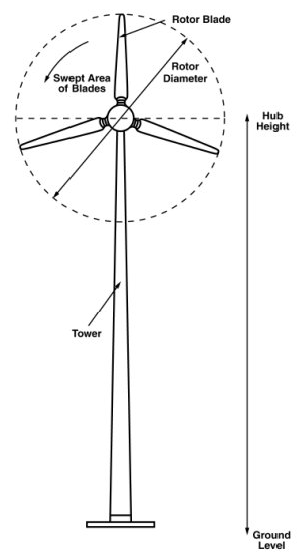
C.
General requirements.
(1)
Small wind energy systems that are accessory to a principal residential, commercial or industrial use are permitted by right with site plan approval by the planning board. However, roof- or building-mounted wind turbines that extend no higher than ten feet above the highest point of the building's roof are allowed by right and do not require planning board review.
(2)
No small wind energy system, including roof- or building-mounted systems, shall be erected, constructed, installed or modified without obtaining a building permit from the building inspector.
(3)
Meteorological towers shall be permitted under the same standards as a small wind energy system, except that the requirements apply to a temporary structure. A permit for a temporary meteorological tower shall be valid for a maximum of three years after which an extension may be granted by the planning board.
(4)
The construction and operation of all small wind energy systems shall be consistent with all applicable local, state and federal requirements, including but not limited to all applicable safety, construction, environmental, electrical, communications, and Federal Aviation Regulation (FAR) Part 77 requirements, including any necessary approvals for installations close to airports.
(5)
All applicants must register with the FAA and fill out the appropriate forms on the following website: https://oeaaa.faa.gov/oeaaa/external/portal.jsp. The Federal Aviation Administration Office of Obstruction Evaluation/Airport Airspace Analysis (OE/AAA) is the final authority over objects that affect navigable airspace.
(6)
All small wind energy systems are subject to the procedural requirements of the section 7.1 site plan approval of these zoning bylaws.
(7)
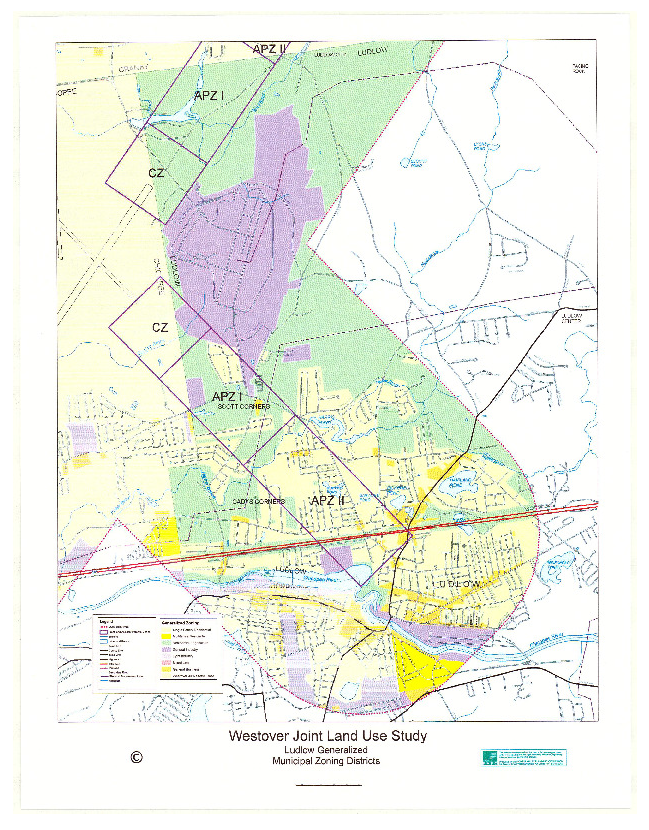
Small wind energy systems are permitted in the aircraft flight overlay district. However, proposals within the aircraft flight overlay district shall be submitted by the planning board to the Westover Air Reserve Base in Chicopee for review and comment, as part of the site plan approval process.
(8)
Small wind energy systems are not permitted in a clear zone (CZ) of the Westover Air Reserve Base. This bylaw hereby incorporates Map 1 (from the Westover Joint Land Use Study), which indicates the clear zone (CZ) locations.
D.
Siting requirements.
(1)
No part of the wind system, support structure, or the structure on which the rotor is located is to be located within a wetland area.
(2)
Setbacks.
Wind turbines that are part of systems with a rated capacity up to 60 kilowatts shall be set back a distance equal to the total height of the wind turbine plus 15 feet from all habitable structures on neighboring properties, as well as overhead utility lines and public road or rights-of-way.
Wind turbines that are part of systems with a rated capacity over 60 kilowatts and up to 100 kilowatts shall be set back at a distance equal to 1.5 times the total height of the wind turbine from all habitable structures on neighboring properties. Further, these turbines shall be set back from overhead utility lines and public road or rights-of-way at a distance equal to the total height of the wind turbine plus 15 feet.
The planning board may issue a waiver to reduce the minimum setback distance as appropriate based on site-specific considerations and written consent of any affected abutter(s).
E.
Design standards.
(1)
The wind generator and tower shall remain painted or finished in a nonreflective color or finish.
(2)
Wind turbines shall be lighted only if required by the Federal Aviation Administration. Lighting of other parts of the small wind energy system, such as appurtenant structures, shall be limited to that required for safety and operational purposes, and shall be reasonably shielded from abutting properties.
F.
Safety, aesthetic and environmental standards.
(1)
All small wind energy systems shall be constructed and operated in a manner that minimizes any adverse visual, safety, and environmental impacts.
(2)
Total wind turbine height shall be limited to 150 feet from existing grade.
(3)
Small wind energy systems shall be designed to prevent unauthorized access. Climbing access to the tower shall be limited by one of the following methods, or by an alternative method approved by the planning board: by placing climbing apparatus no lower than ten feet from the ground, or by placing shielding over climbing apparatus or access, or by installation of a fence.
(4)
The small wind energy system and associated equipment shall conform with the provisions of the department of environmental protection's division of air quality and noise regulations (310 CMR 7.10), or shall conform with the following provisions, whichever is more restrictive:
Noise may not:
(a)
Increase the broadband sound level by more than 10 dB(A) above ambient.
(b)
Produce a "pure tone" condition—when an octave band center frequency sound pressure level exceeds the two adjacent center frequency sound pressure levels by three decibels or more.
These criteria are measured at both the property line and the nearest inhabited structure on adjacent properties. Ambient is defined as a background-weighted sound level that is exceeded 90 percent of the time, as measured during equipment hours.
Failure to conform to this regulation may result in legal action from the town and may result in legal action from Mass DEP.
(5)
That planning board shall determine that clearing of natural vegetation has been limited to that which is necessary for the construction, operation and maintenance of the small wind energy system and is otherwise prescribed by applicable laws and regulations.
(6)
Shadow/flicker. Wind energy facilities shall be sited in a manner that minimizes shadowing or flicker impacts. The applicant has the burden of proving that this effect does not have significant adverse impact on neighboring or adjacent uses.
G.
[Required maintenance.] The applicant shall maintain the small wind energy system in good condition. Maintenance shall include, but not be limited to, painting, structural repairs, and security measures.
H.
Abandonment or decommissioning.
(1)
Any small wind energy system which has reached the end of its useful life or has been abandoned shall be removed.
(2)
A small wind energy system will be considered to be abandoned if it is not operated for a period of two years or if it is designated as a safety hazard by the building inspector. If this occurs, the building inspector shall issue a notice of abandonment, and the system owner will have 30 days to provide sufficient evidence that the system has not been abandoned, or that the safety hazard has been addressed. After 30 days from the issue of the notice of abandonment, if the issue is not resolved to the satisfaction of the building inspector, the town shall have the authority to enter the owner's property and remove the system at the owner's expense.
(3)
Once a small wind energy system has reached the end of its useful life or is designated as abandoned, the owner shall be required to immediately physically remove the installation. "Physically remove" shall include, but not be limited to:
Removal of small wind energy system, any equipment shelters and security barriers from the subject property.
Proper disposal of the waste materials from the site in accordance with local and state solid waste disposal regulations.
Restoring the location of the small wind energy system to its natural condition, except that any landscaping and grading improvements shall remain.
I.
Submission requirements.
(1)
Small wind energy system applications shall submit the required site plan contents detailed under section 7.1 site plan approval, unless specific criteria are waived by the planning board, and shall also include:
A site plan with property lines and physical dimensions of the subject property within two times the total height from the tower location, or as specified under section 7.1 site plan approval, whichever is greater.
Wind system specifications, including manufacturer and model, rotor diameter, tower height, tower type (freestanding or guyed), color, and proposed lighting, if any.
Tower and foundation blueprints or drawings signed by a professional engineer licensed to practice in the commonwealth or direct from the turbine manufacturer with documentation of compliance with state building code. Elevation drawings shall be provided and shall show both tower and building heights.
A line drawing of the electrical components in sufficient detail to allow for a determination that the manner of installation conforms to the state electrical code. This information is frequently supplied by the manufacturer.
A determination from the FAA (Form 7460-3).
Evidence that the utility company has been informed of the customer's intent to install an interconnected customer-owned generator. Off-grid systems are exempt from this requirement.
Proof of liability insurance for the facility in an amount and for the duration of time sufficient to cover loss or damage to persons and structures impacted by the failure of the small wind energy system.
(2)
Additional submission requirements may be requested by the planning board or building inspector, as necessary.
J.
Expiration.
(1)
Under the state building code, work must commence within 12 months from the date a building permit is issued. However, a project proponent may request one 12-month extension of the permit from the building commissioner. If the small wind energy system is not installed and functioning within 24 months from the date the original permit is issued, further permit extensions may be granted by the planning board.
(2)
All permits issued pursuant to this bylaw shall expire if the small wind energy system is abandoned.
K.
Violations. It is unlawful for any person to construct, install, or operate a small wind energy system that is not in compliance with this bylaw or with any condition contained in a permit issued pursuant to this bylaw.
L.
Administration, fees and enforcement.
(1)
Once an application is submitted, the planning board will have 90 days to review the site plan. If approved, the building commissioner will then have 30 days to either deny or approve the building permit. This bylaw shall be administered and enforced by the building commissioner or another official as designated.
(2)
If necessary the town may hire outside consultants, paid for by the applicant, to review all plans, in accordance with M.G.L. chapter 44, section 53G.
(3)
The building commissioner may enter any property for which a building permit has been issued under this bylaw to conduct an inspection to determine whether the conditions stated in the permit have been met.
M.
Penalties. Any person who fails to comply with any provision of this bylaw or a building permit issued pursuant to this bylaw shall be subject to enforcement and penalties as allowed by applicable law.
N.
Severability. The provisions of this section are severable and, in the event that any provision of this section is determined to be invalid for any reason, the remaining provisions shall remain in full force and effect.
(5-9-2011 ATM; 5-14-2012 ATM)
Sec. V-6.10. - Large-scale, ground-mounted, photovoltaic systems.
6.10.1
Purpose. The purpose of this section of the zoning bylaw is to establish appropriate criteria and standards for the placement, design, construction, operation, monitoring, modification, removal and/or repair of new large-scale, ground-mounted, photovoltaic systems. These standards will address public safety, minimize impacts on scenic, natural and historic resources and provide adequate financial assurance for the eventual decommissioning of such systems.
6.10.2
Applicability. This section applies to large-scale ground-mounted photovoltaic systems proposed to be constructed after the effective date of this section. This section also pertains to physical modifications that materially alter the type, configuration, or size of existing systems or related equipment. Building-mounted photovoltaic systems and small-scale, ground-mounted photovoltaic systems are exempt from the provisions under this bylaw but shall comply with the building code and require a building permit.
6.10.3
Location. Large-scale, ground-mounted, photovoltaic systems shall be allowed in the districts identified in table 1, table of principal uses. Large-scale, ground-mounted, photovoltaic systems shall be allowed in the aircraft flight overlay district provided they conform to all applicable rules and regulations set forth by the Federal Aviation Administration (FAA).
6.10.4
General requirements for site plan review and approval. Large-scale, ground-mounted, photovoltaic systems shall undergo site plan review by the site plan review authority prior to construction, installation or modification as provided in this section.
The construction and operation of all large-scale, ground-mounted, photovoltaic systems shall be consistent with all applicable local, state and federal requirements, including but not limited to all applicable safety, construction, electrical, and communications requirements. All buildings and fixtures forming part of a large-scale, ground-mounted, photovoltaic system shall be constructed in accordance with the building code.
All applications for site plan approval must comply with section 7.1, site plan approval. In addition, the following documents are required specifically for large-scale, ground-mounted, photovoltaic systems:
(a)
Documentation of the major system components to be used, including the photovoltaic panels, mounting system, and inverter.
(b)
Contact information for the proposed system installer.
(c)
Contact information and signature of the project proponent, as well as all co-proponents, if any, and all property owners.
(d)
Contact information and signature of agents representing the project proponent, if any.
(e)
Contact information for the person(s) responsible for public inquiries throughout the life of the system.
(f)
Blueprints of the photovoltaic system showing the proposed layout of the system and proposed shading from nearby structures, natural features and landscaping.
(g)
One or three lined electrical diagrams detailing the photovoltaic system, any associated components, and electrical interconnection methods, with all National Electric Code compliant disconnects and overcurrent devices.
(h)
All plans and maps associated with large-scale, ground-mounted, photovoltaic systems shall be prepared, stamped and signed by a professional engineer licensed to practice in the commonwealth.
(i)
Documentation of actual or prospective access and control of the project site sufficient to allow for construction and operation of the proposed photovoltaic system.
(j)
An operation and maintenance plan which shall include measures for maintaining safe access to the system, storm water controls, and general procedures for operational maintenance of the system.
(k)
Proof of liability insurance.
(l)
Description of financial surety that satisfies section 6.10.9(c).
(m)
Utility notification. No large-scale, ground-mounted, photovoltaic system shall be constructed until evidence has been given to the site plan review authority that the utility company that operates the electrical grid where the system is to be located has been informed of the owner or operator's intent to install an interconnected customer-owned generator. Off-grid systems shall be exempt from this requirement.
6.10.5
Design standards.
(a)
Dimensional and density requirements. All construction shall comply with the yard, space, and height requirements of the zoning district(s) in which the system is located as per table 2, table of dimensional regulations. In cases where the parcel abuts residential zones, park land, or conservation land, the setback shall be a minimum of 50 feet, unless waived by the site plan review authority.
(b)
Lighting. Lighting of the large-scale, ground-mounted, photovoltaic system and any appurtenant structures shall be directed downward and inward and shall incorporate full cut off fixtures to reduce light pollution. Lighting shall be limited to that which is required for safety and operational purposes, and shall be shielded from abutting properties.
(c)
Signage. An identification sign shall be no larger than two feet by two feet, shall identify the owner and provide a 24-hour emergency contact phone number. The sign shall be made visible from a right-of-way where the property has frontage. Large-scale, ground-mounted, photovoltaic systems shall not be used for displaying any advertising except for identification of the manufacturer or operator of the system. All signs require a building permit and will comply with the signage provisions in these zoning bylaws.
(d)
Utility connections. Reasonable efforts, as determined by the site plan review authority, shall be made to place all utility connections from the large-scale, ground-mounted, photovoltaic installation underground, depending on appropriate soil conditions, shape and topography of the site, and any requirements of the utility provider. Electrical transformers for utility interconnections may be above ground if required by the utility provider.
(e)
Appurtenant structures. All appurtenant structures to large-scale, ground-mounted, photovoltaic systems shall comply with table 2, table of dimensional regulations. In the case that the parcel abuts residential zones, park land or conservation land the setback shall be a minimum of 50 feet, unless waived by the site plan review authority.
Structures shall be shaded from view by vegetation and/or joined or clustered to avoid adverse visual impacts. All appurtenant structures shall have a landscape plan. Vegetative screening shall reach a mature form to effectively screen the installation within five years of installation.
6.10.6
Safety and environmental standards.
(a)
Emergency services. The large-scale, ground-mounted, photovoltaic system owner or operator shall provide a copy of the project summary, electrical schematic, and site plan to the local fire chief. Upon request, the owner or operator shall cooperate with local emergency services in developing an emergency response plan. All means of shutting down the large-scale, ground-mounted, photovoltaic system shall be clearly marked.
(b)
Land clearing, soil erosion and habitat impacts. Clearing of natural vegetation shall be limited to what is necessary for the construction, operation and maintenance of the large-scale, ground-mounted photovoltaic system or otherwise prescribed by applicable laws, regulations, and bylaws. Large-scale, ground-mounted, photovoltaic systems shall be installed on water-permeable surfaces, as approved by the site plan review authority during site plan review.
(c)
Landscaped buffer strip. A landscaped buffer strip is intended to provide, within five years of installation, a visual barrier between the large-scale, ground-mounted, photovoltaic system and neighboring properties. Except for vehicular and pedestrian passways and permitted signs, these areas shall be used only for an interplanting of deciduous or evergreen trees, shrubs and other vegetative ground cover that can appropriately create a visual barrier.
The buffer must provide coverage as outlined by table 3, required landscaping. Where considered appropriate in the judgment of the site plan review authority, walls and fences may be used in addition to or in lieu of plantings.
A planting plan showing the types, sizes and locations of material to be used shall be subject to the approval of the site plan review authority.
The site plan review authority may waive the requirements of the visual barrier where it deems it advisable.
6.10.7
Waivers.
(a)
The site plan review authority may waive strict compliance with any requirement of this bylaw, or the rules and regulations promulgated hereunder, where:
1.
Such action is allowed by federal, state and local statues and/or regulations;
2.
Is in the public interest;
3.
Is not inconsistent with the purpose and intent of this by-law.
(b)
Any applicant may submit a written request to be granted such a waiver. Such a request shall be accompanied by an explanation or documentation supporting the waiver request and demonstrating that strict application of the by-laws does not further the purposes or objectives of this by-law and why it is believed that the waiver meets the criteria in section 6.10.7(a).
(c)
All waiver requests shall be discussed at the public hearing for the project.
(d)
If in the site plan review authority's opinion, additional time or information is required for review of a waiver request, the site plan review authority may continue the hearing to a date announced at the meeting. In the event the applicant objects to a continuance, or fails to provide requested information, the waiver request shall be denied.
6.10.8
Monitoring and maintenance.
(a)
Installation conditions. The large-scale, ground-mounted, photovoltaic system owner or operator shall maintain the facility in good condition. Maintenance shall include, but not be limited to: painting, structural repairs, and integrity of security measures. Site access shall be maintained to a level acceptable to the site plan review authority, safety committee, emergency services, and department of public works. The owner or operator shall be responsible for the cost of maintaining the large-scale, ground-mounted, photovoltaic system and any access road(s) unless accepted as a public way.
(b)
Modification conditions. Any material modifications to a large-scale, ground-mounted, photovoltaic system made after issuance of the building permit shall require approval by the site plan review authority. Maintenance and repairs will not require site plan review authority approval.
6.10.9
Abandonment or decommissioning.
(a)
Abandonment. Absent notice of a proposed date of decommissioning or written notice of extenuating circumstances, a large-scale, ground-mounted, photovoltaic system shall be considered abandoned when it fails to operate for more than one year without the written consent of the site plan review authority. If the owner or operator of the large-scale, ground-mounted, photovoltaic system fails to remove the installation in accordance with the requirements of this section within 150 days of abandonment or the proposed date of decommissioning, the town may enter the property and physically remove the installation utilizing the surety provided in section 6.10.9(c). If such funds are insufficient, any additional costs will be the responsibility of the system's owner.
(b)
Removal requirements. Any large-scale, ground-mounted, photovoltaic system which has reached the end of its useful life or has been abandoned consistent with section 6.10.9(a) of this bylaw shall be removed. The owner or operator shall physically remove the installation no more than 150 days after the date of discontinued operations. The owner or operator shall notify the site plan review authority by certified mail of the proposed date of discontinued operations and plans for removal.
Decommissioning shall consist of:
i.
Physical removal of the large-scale, ground-mounted, photovoltaic system and all related structures, equipment, security barriers and transmission lines from the site.
ii.
Disposal of all solid and hazardous waste in accordance with local, state, and federal waste disposal regulations.
iii.
Stabilization or re-vegetation of the site as necessary to minimize erosion.
iv.
Return of land area to conditions prior to development.
(c)
Financial surety. The owner or operator of a proposed large-scale, ground-mounted, photovoltaic project shall provide a form of surety through an escrow account or bond, as determined by the town treasurer, to cover the cost of removal in the event the town must remove the installation and remediate the landscape. The surety account or bond will be managed by the town treasurer's office.
The amount of the financial surety will be determined to be reasonable by the site plan review authority, but in no event to exceed 125 percent of the cost of removal and compliance with the additional requirements set forth herein. Such surety will not be required for municipally or state owned facilities. The project owner or operator shall submit a fully detailed and inclusive estimate for all costs associated with removal to the site plan review authority for review. This estimate must be prepared by a qualified engineer.
The amount shall include a mechanism for calculating increased removal costs due to inflation and other causes over the life of the system. Such surety will not be required for municipally- or state-owned facilities.
(5-14-2012 ATM)
Sec. V-6.11. - Medical marijuana treatment center/dispensary.
Medical marijuana treatment center/dispensary. A non-profit facility or location that has been registered by the department of public health where medical marijuana is grown, processed and/or made available to a qualifying patient or a personal caregiver, provided that:
6.11.1
A medical marijuana treatment center/dispensary shall not be located within 1,000 feet of an elementary school, middle school, high school, church, public library, day care, public park or where children commonly congregate in existence at the time of enactment of the zoning bylaw amendment establishing this use.
6.11.2
All medical marijuana treatment centers/dispensaries need to provide a letter from the police and fire department that the centers/dispensaries meet all standards of security, fire code and public safety.
6.11.3
Medical marijuana treatment centers/dispensaries are allowed through site plan approval and a special permit from the planning board in the industrial A and industrial C zoning district.
6.11.4
A traffic study will be required.
(5-12-2014 ATM)
Sec. V-6.12. - Single-family dwellings on estate lots.
The purpose of this regulation is to allow for the creation of lots for single-family dwelling units only, with less than the required frontage, in exchange for increased square footage, for the purpose of preservation of open space and decreasing density in given areas.
Single-family dwellings on estate lots shall be permitted in the agriculture and residential A districts only upon the issuance of a special permit from the planning board as specified in section 7.0 of this bylaw, and in accordance with the additional requirement specified herein, unless waived by the planning board.
1.
No more than two consecutive estate lots shall be located on a public way.
2.
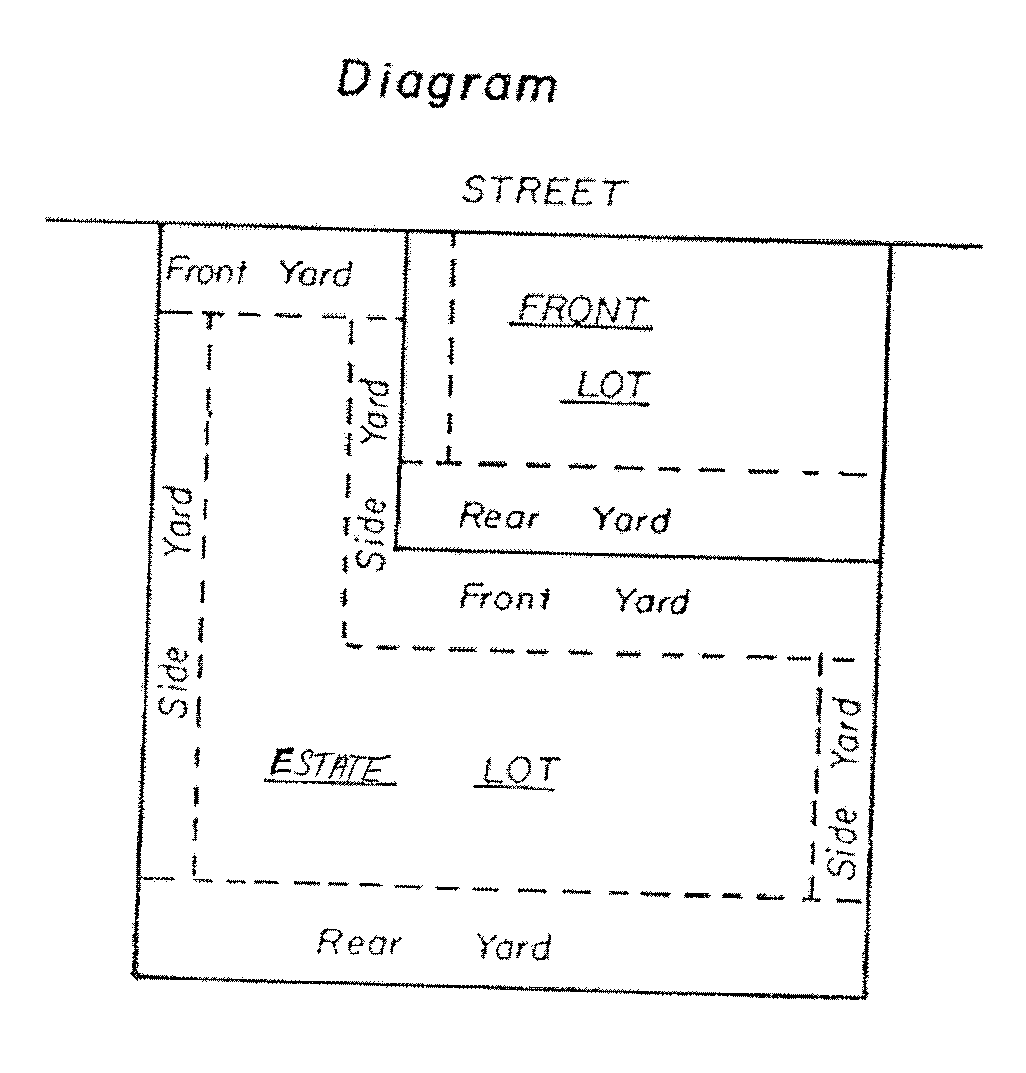
The estate lot(s) shall have a minimum street frontage of not less than 50 feet and access width of not less than 50 feet from the front lot line to the principal structure. The front lot shall meet all the zoning dimensional requirements normally required in the district.
3.
An estate lot(s) shall be double the minimum lot area normally required for that district inclusive of the access strip.
4.
An access strip that is accessible having a maximum length not exceeding 400 feet.
5.
The width of the lot where the principal building is to be constructed shall be equal to or exceed the distance normally required for street frontage in the district.
6.
Front, rear and side yards must equal or exceed those normally required in the district.
7.
The planning board may require that there be maintained or kept a naturally occurring or a planted vegetated buffer strip between estate lot(s) and adjacent lots to provide effective visual screening between the buildings at grade level.
8.
The estate lot entrance/driveway shall be clearly designated with a house number sign. Mailboxes shall not suffice.
9.
The driveway is to be located, constructed, and maintained a distance of no closer than ten feet to any abutting property line.
10.
Plan submitted shall include the statement, "Lot (fill in the Lot #) is an Estate Lot; building is permitted only in accordance with the Special Permit Estate Lot provisions of the Ludlow Zoning Bylaw."
11.
Estate lot example:
(10-6-2014 STM)

