
Manassas Park City Zoning Code
ARTICLE II
- RULES OF CONSTRUCTION AND DEFINITIONS
Sec. 31-5. - General rules of construction.
The following general rules of construction shall apply to the regulations of this chapter:
(1)
The singular number includes the plural, and the plural the singular, unless the obvious construction of the wording indicates otherwise.
(2)
Words used in the present tense include the past and future tenses, and the future the present.
(3)
The word "shall" is always mandatory. The word "may" is permissive.
Sec. 31-6. - Definitions.
The zoning administrator shall strictly construe the following terms and definitions. In the event a term is not defined in this section, the administrator shall refer to other chapters of the Code and to the building code for guidance. If ambiguity remains, the zoning administrator shall then rely upon the conventional, recognized meaning of the term (e.g., current edition, Merriam-Webster's Dictionary). In determining what activities comprise components of any use defined herein, the zoning administrator may consult the current edition of the North American Industrial Classification Standards. Unless otherwise provided elsewhere in this code, the definitions provided herein are to be used for this chapter only. Such definitions shall not be deemed, nor shall they be construed, to be a listing of the uses permitted in the zoning districts created by this chapter.
Abutting/adjoining: Having a common point or border; having property or district lines in common. Compare "adjacent".
Accessory building: A subordinate building located on the same lot as the principal building, and the use of which is customarily associated with and incidental to the use of the principal building. An accessory building shall not dominate a principal building in area, extent or purpose. An accessory building that is attached to and is an integrated part of (by location, materials and architectural design) a principal building shall be governed by the regulations of this chapter for principal buildings.
Accessory structure: A subordinate structure located on the same lot as the principal use, and the use of which is customarily associated with and incidental to the principal use. See Illustration 1 at end of this section.
Accessory use: A subordinate use or structure customarily incidental to and located upon the same lot occupied by the main use or building.
Acreage: A parcel of land, regardless of area, described by metes and bounds which is not a numbered lot on any recorded subdivision plat.
Adjacent: Nearby, being separated only by a street, railroad right-of-way or other like feature. Compare "abutting/adjoining".
Administrator: See "zoning administrator".
Adult book store: An establishment which has a substantial or significant portion of its stock in trade, books, magazines, or other periodicals and which excludes juveniles in accordance with §§ 18.2-290 and 18.2-391 of the Code of Virginia.
Adult mini motion picture theatre: An enclosed building with a capacity for less than fifty (50) persons used for exhibiting motion pictures, shows, or other presentations and which excludes juveniles in accordance with §§ 18.2-390 and 18.2-391 of the Code of Virginia (1950), as amended.
Agriculture: The tilling of soil, the raising of crops, the keeping of animals or fowl, horticulture, forestry; the cultivation of orchards, groves, or nurseries for growing or propagation of plants, trees and shrubs; dairies.
Airport: Any airfield, aerodrome, airstrip, landing strip, heliport, or other place, on land or water, for the operation of aircraft.
Alley: A travelway located to the sides or rears of lots allowing for vehicular ingress, egress, service access, and the placement and maintenance of utilities.
Ambulance service: Transportation service for patients, by licensed personnel; this is not an emergency response service.
Amusement center: An indoor facility that specializes in electronic or mechanized games and amusement devices to include arcades (video, pinball, or other), bowling alley, indoor playground, or similar use.
Antenna: Any device used to collect or radiate electromagnetic waves, including both directional antennas, such as yagi, panel parabolic, and omni-directional antennas, such as wire, whip, and dipole. An "antenna" does not include any structure to which it is affixed.
Apartment: A single-family dwelling unit with a room or suite of rooms fitted especially with cooking and housekeeping facilities, which is used, leased and/or owned, and a which is one (1) of a group of not less than three (3) units in a series separated from one another by party walls without doors, windows or other provisions of human passage or visibility through such walls from the ground floor to the roof. An apartment shall not be construed to mean a townhouse dwelling.
Applicant: A person seeking any determination, approval, or permit required by this chapter.
Arena: An indoor or outdoor entertainment venue having more than two thousand (2,000) fixed seats, such as an amphitheater, an auditorium, a concert venue, a stadium, or similar use.
Art gallery (private): A place for display or retail facility for finished art materials, including paintings, statues, tapestries, ceramics, or other art objects.
Assembly: The piecing together of various, separate, manufactured components and mechanical parts to construct a finished product.
Automobile graveyard: Any lot, place or parcel, except a lawful motor vehicle repair or service facility, upon which five (5) or more inoperative motor vehicles of any kind are found.
Automotive service station: See "motor vehicle fuel station".
Bank: See "financial institution".
Basement: A story partly underground and having at least one-half (½) of average height below the average grade of the adjoining ground.
Bedroom: A private room planned and intended for sleeping and separated from other rooms by a door, as defined by the building code.
Board: The Board of Zoning Appeals of Manassas Park.
Broadcast station, radio or television: A business that transmits a radio or television program for general or public use.
Buildable area: The area of that part of the lot not included within the yards or open spaces required within.
Building: Any structure having a roof supported by columns or walls, used or intended to be used for the shelter, housing, or enclosure of persons, animals, or chattels, including tents, cabins, and carports. Where divided by party walls from the ground through the ceiling, each portion of a structure shall be deemed to be a separate building.
Building code: The Virginia Uniform Statewide Building Code (Va. Code § 36-97 et seq.).
Building, completely enclosed: Any building having no outside openings other than ordinary doors, windows and ventilators.
Building height: The vertical distance from the average elevation of the finished lot grade at the front of the building to the highest point of the roof. See Illustration 3 at end of this section.
Building, main: The principal building or the principal buildings on a lot, or the building or one of the principal buildings housing the principal use on the lot.
Building official: The person so designated by the city manager.
Building restriction line (BRL): The line established by this chapter, beyond which a building shall not extend, except as specifically provided by this chapter. For purposes of this chapter, building restriction lines and setback lines applicable to buildings are not interchangeable.
By-right use: A use that is permitted in a zoning district upon approval of a site or subdivision plan (i.e., without further legislative approval).
Carpet or flooring retail sales: Retail sales of carpet and other floor covering, in which less than fifty (50) percent of the facility is storage area or installation work area that is not open to the general public.
Carport: Any space outside a building and contiguous thereto, wholly or partly covered by a roof, and used for the shelter of motor vehicles. An unenclosed carport is a carport with no side enclosure that is more than eighteen (18) inches in height, exclusive of screens (other than the side of the building to which the carport is contiguous.
Car wash, manned: Any motor vehicle cleaning business conducted entirely within the confines of an enclosed structure that houses the business and for which employees of the business perform all aspects of motor vehicle cleaning.
Certificate of use and occupancy: The certificate issued by the building official, which permits the use of a building in accordance with the approved plans and specifications and which certifies compliance with the provisions of this chapter and the building code for the use and occupancy of the building in its several parts, together with any special stipulations or conditions of zoning approval and/or the building permit.
City: The City of Manassas Park.
Civic building: Any permitted civic use building. Examples of civic buildings include, but are not limited to, governmental administrative offices, colleges, universities, cultural arts centers, post offices, public and private schools, and religious institutions.
Civic club: A facility used by a group of people organized as a nonprofit entity for a common purpose to pursue common goals, interests or activities and usually characterized by certain membership qualifications, payment of fees and dues, regular meetings, and a constitution and bylaws. Such organizations may use civic clubs for any activity that is consistent with their nonprofit status.
Clearing: Removing or causing to be removed the vegetation growing in the soil. Such removing or causing to be removed shall include any intentional or negligent act to (1) cut down, (2) remove all or a substantial part of, or (3) damage a tree or other vegetation which will cause the tree or other vegetation to decline and/or die. Such acts shall include but not be limited to damage inflicted upon the root system of the vegetation by the application of toxic substances, by the operation of equipment and vehicles, by storage of material, or by the change of natural grade due to unapproved excavation or filling, or damage caused by the unapproved alteration of natural physical conditions.
Clinic: An establishment where human patients who are not lodged overnight are admitted for examination or treatment by physicians or dentists.
Club, private: An association or organization of a fraternal or social character not operated or maintained for profit, but the term shall not include night clubs or other institutions operated as a business; provided, however, that no association or organization that denies membership to individuals who are members of a federal protected class or a class protected by the Virginia Human Rights Act shall be permitted to operate a private club, and entry to a private club shall not be denied because an individual is a member of a federal protected class or a class protected by the Virginia Human Rights Act.
Cold storage facility (industrial): A facility primarily engaged in the warehousing and storage of goods under refrigeration, which may include incidental processing, preparing or packaging of items for storage.
Commercial artist or photographer's studio: A facility primarily engaged in painting, photographic, graphic art and other art forms or video services. Film development facilities shall occupy twenty-five (25) percent or less of the gross floor area of the principal use.
Commercial use: Any wholesale, retail, or service business activity established to carry on trade for a profit or not for profit by the owner, lessee or licensee.
Commercial vehicle: As defined in subsection 24-51(e).
Common area: All land within a subdivision or townhouse development, excluding public streets and rights-of-way and private lots, held either by the owner/developer or an individual nonprofit corporate owner whose members are all property owners within the subdivision or townhouse development.
Comprehensive plan: The city's comprehensive plan, including those maps, plats, charts, and descriptive matter that have been formally adopted by the governing body, pursuant to the provisions of the Code of Virginia.
Conditional use: A use that, owing to some special characteristics attendant to its operation or installation, is permitted in a district after site specific review and subject to special conditions approved by the governing body. See section 31-54.1.
Condominium: Real property, or any incidents thereto or interests therein, lawfully submitted for approval as a condominium pursuant to the relevant provisions of the Code of Virginia.
Construction equipment: Heavy equipment or vehicles of a type used primarily by the construction industries. Such equipment may include, but is not limited to, bulldozers, backhoes, cement trucks, concrete mixers, construction tractors, cranes, derricks, dredging machinery, dump trucks, excavators, graders, hoists, pavers, power shovels, road construction and maintenance machinery, scaffolds, tank trucks, trenching machines, and water well drilling machinery.
Construction operation: The erection, repair, renovation, demolition or removal of any building or structure, and the excavation, filling, grading and alteration of property in connection therewith.
Contiguous: Abutting, adjoining, or touching, and having a boundary, or portion thereof, which is coterminous.
Contractor or tradesman: One who contracts to perform work or provide supplies for the building or service industry including, but not limited to, plumbing, heating, air conditioning, carpentry, electrical, masonry, and metal working.
Contractor or tradesman's shop (limited): A shop that does not involve millwork, operation of heavy equipment, furnaces or heating pots, or the dipping of furniture. Cabinetmaking, floor work, duct work, framing and other similar light work on or off-site is permitted.
Contractor or tradesman's shop (unlimited): A shop for contracting or trade operations involving millwork with industrial lathe, heavy equipment, furnaces or heating pots, automated tools, or the dipping or refinishing of furniture, or similar processes.
Corner lot: See "lot".
Dancing establishment (dance hall): Any place open to the general public where dancing is permitted, to which an admission fee is charged, or for which compensation such as the sale of refreshments, food, or any form of merchandise is received. Private clubs shall be excluded from this definition, provided attendance at dance is limited to bona fide members of such clubs and bona fide guests of such members.
Data and computer services: A use involving a building and premises in which the majority of the space is occupied by computers and/or telecommunications and related equipment, and where information is processed, transferred and/or stored. Examples of data and computer services include data centers, data technology centers, internet service providers, network operations centers, web hosting facilities and other similar establishments primarily engaged in providing direct access through telecommunications networks to computer-held information.
Defense production business: A company or identifiable subdivision of a company that is engaged in, or performs functions ancillary to or in support of, the design, development, or production of materials, components, or equipment required to meet the needs of national defense. In no case shall a use be permitted by a defense production business that is likely to be dangerous or offensive because of odor, dust, fire, explosion, or other reasons, or that uses equipment and/or processes that are likely to produce objectionable noise, vibration, explosion, fire, smoke, or other effect.
Development: Any man-made change to improved or unimproved real estate, including, but not limited to, buildings or other structures, the placement of streets and other paving, utilities, filling, grading, excavation, mining, dredging, and drilling operations.
District: Any section of the city in which certain zoning or development regulations apply.
Domestic storage: Storage of or pertaining to the family or household on the premises, such as garden implements, tools, and household items.
Drive-in facility: An establishment that, by design, physical facilities, or service or packaging procedures, encourages or permits customers to receive services, obtain goods, or be entertained while remaining in motor vehicles.
Dry cleaning/garment processing facility, retail: A commercial facility serving the general public that uses chemical solvents to clean and process garments and household fabrics on the premises, where garments and household fabrics are received and returned directly to the general public only, and not as a wholesale facility used by other dry cleaning shops. The processing area that is used for the actual cleaning/treatment of garments and household fabrics shall not exceed forty (40) percent of the gross floor area, with the remainder to include the public lobby, garment and household fabrics storage area, and accessory uses as a tailor or shoe repair. Such facility may not serve as a wholesale facility for any garments other than those left directly by the general public and may not be over three thousand (3,000) square feet in size unless located within an industrial zone.
Dry cleaning/garment processing facility: An industrial processing facility that uses chemical solvents to process and clean garments and household fabrics for distribution to retail outlets, such as dry cleaning pick-up facilities or dry cleaning/garment processing retail establishments. Such facility must be at least three thousand (3,000) square feet in size and must not be principally available to the general public.
Dry cleaning pick-up facility: A commercial facility that serves only as a drop-off/pick-up station for the general public for garments and household fabrics to be processed by a dry cleaning/garment processing facility located elsewhere.
Dwelling: A building or portion thereof, designed or used exclusively for residential occupancy, but not including trailers, mobile homes, hotels, motels, motor lodges, boarding houses, or tourist homes.
Dwelling, apartment: See "apartment".
Dwelling, multiple-family: A structure arranged or designed to be occupied by two (2) or more families, with one dwelling unit for each family where the dwelling units are stacked or have one or more common entrances.
Dwelling, single-family: A structure, other than a mobile home, arranged or designed to be occupied by one (1) family, the structure having only one (1) dwelling unit.
Dwelling, townhouse: See "townhouse".
Dwelling, two-family: A structure arranged or designed to be occupied by two (2) families, the structure having only two (2) dwelling units with separate entrances and no stacking of dwelling units.
Dwelling unit: One (1) or more rooms in a dwelling that serves as a housekeeping unit for one (1) family, and includes permanent provisions for living, sleeping, eating, cooking, and sanitation. A dwelling unit shall have no more than one (1) kitchen.
Engineer, registered: A person who is registered with the state board of architects, professional engineers, land surveyors and certified landscape architects as a professional engineer.
Equipment and material storage: A structure or lot where material, construction equipment and other mobile equipment is stored.
Fabrication: See "assembly".
Family: One (1) or more persons related by blood, adoption, marriage, or guardianship, living and cooking together as a single housekeeping unit; or a group of not more than four (4) persons, living and cooking together as a single housekeeping unit, though not related by blood, adoption, or marriage.
Family day home: A regularly operating child care program offered in the residence of the provider or the home of any of the children in care for one (1) through twelve (12) children (exclusive of the provider's own children and any children who reside in the home) where, during the absence of a parent or guardian, a person has agreed to assume responsibility for the supervision, protection, and well-being of a child under the age of thirteen (13) for less than a twenty-four-hour period. Compare "nursery school, child care center, kindergarten".
Farm tractor: Any motor vehicle designed and used as a farm, agricultural, or horticultural implement for drawing plows, mowing machines, and other farm, agricultural, or horticultural machinery and implements, including self-propelled mowers designed and used for mowing lawns.
Farm utility vehicle: Any vehicle that is powered by a motor and is designed for off-road use and is used as a farm, agricultural, or horticultural service vehicle, generally having four (4) or more wheels, bench seating for the operator and a passenger, a steering wheel for control, and a cargo bed. "Farm utility vehicle" does not include pickup or panel trucks, golf carts, low-speed vehicles, or riding lawn mowers.
Farmer's market: Retail sale of fresh fruits and vegetables, and other food and related items, at a facility with spaces occupied by several different temporary tenants on a short term or daily basis, either indoor or outdoor, and excluding roadside stands.
Fence: A freestanding structure of metal, masonry, composition, vinyl or wood or any combination, resting on or partially buried in the ground and rising above ground level, with posts at regular intervals, and used for confinement, screening, or partition purposes.
Filling station: See "automotive service station".
Financial institution: Any establishment, the primary business of which is concerned with such state regulated activities as banking, savings and loans, and consumer loan companies.
Fleet storage facility: An off-street all-weather surfaced parking area, with access to a public street, used for temporary storage of fleet vehicles; provided, however, that only fleet vehicles owned or operated by an agency or business that qualifies as a permitted use in the zoning district for the applicable site shall be parked in a fleet storage facility.
Fleet vehicle: A motor vehicle owned or operated by a governmental or public agency or a private business in conducting the primary purpose of the agency or business. Examples of fleet vehicles include city vehicles, public utility vehicles and buses.
Flood: A general and temporary inundation of normally dry land areas.
Flood, one-hundred-year: A flood that, on average, is likely to occur once every one hundred (100) years (i.e., that has a one (1) percent chance of occurring each year, although the flood may occur in any year).
Floodplain:
(a)
A relatively flat or low land area adjoining a river, stream, or watercourse which is subject to partial or complete inundation;
(b)
An area subject to the unusual and rapid accumulation or runoff of surface waters from any source.
Floodway: The designated area of the floodplain required to carry and discharge flood waters of a given magnitude. For the purposes of this chapter, the floodway shall be capable of accommodating a flood of the one hundred-year magnitude.
Floor area, gross: The sum of the total horizontal areas of the several floors of all buildings on a lot, measured from the interior faces of exterior walls, and includes basements; elevator shafts; stairwells at each story; stairs, closets, thickness of interior walls, columns, or similar features, floor space used for mechanical equipment with structural headroom of six feet, six inches or more; penthouses, unless enclosing only mechanical equipment; attic space, whether or not a floor has actually been laid, interior balconies; and mezzanines. Gross floor area shall not include parking structures below or above ground, or open roof top areas, provided these areas are not converted to usable or finished space or any other space demonstrated to the satisfaction of the zoning administrator as incapable of being finished. See Illustration 3 at end of this section.
Floor area, net: Seventy-five (75) percent of the gross floor area.
Floor area ratio (FAR): The ratio yielded by dividing the gross floor area of all buildings on a lot by the total area of the lot.
Foot-candles: A quantitative unit of measure used to measure the brightness of light falling on a surface. One foot-candle is equal to the amount of light falling on a surface of one foot square from a standard candle located one foot away. Foot-candle measurements shall be made with a photometric light meter at grade. One foot-candle is equal to ten lux or one lumen per square foot.
Frontage: Any property line that is coterminous with a public or private street or road right-of-way.
Front yard: See "yard, front".
Garage, private: An accessory building designed or used for storage purposes only by the occupants of the building to which it is accessory and having a capacity of not more than four (4) motor vehicles. See Illustration 1 at end of this section.
Golf course: Any property publicly or privately owned on which the game of golf is played, together with accessory uses and buildings customary thereto.
Governing body: The mayor and city council of the city.
Grade: A reference plane representing the average elevation of finished ground level adjoining the building or structure at all exterior walls or surfaces.
Grading: The reshaping of the ground surface to planned grades as determined by engineering survey evaluation and layout.
Greenhouse: A facility employing a glass, plastic or similar enclosure for the cultivation or protection of tender plants, flowers or house plants.
Gun shop: A facility for retail sales of firearms.
Gunsmith: A facility for sale, service and repair or refurbishing of firearms.
Hazardous material or process (HAZMAT): Any substance or activity involving any substance listed in 40 CFR Part 355, Appendix A, as an Extremely Hazardous Substance (EHS) when that substance is stored, generated, used or released in quantities equal to or greater than the lowest quantity listed for either the Threshold Planning Quantity (TPQ) or Reporting Quantity (RQ) for the substance.
Height (other than "building height"): The vertical distance from the lowest exposed point of the structure being measured to its highest point, but not including accessory fixtures part of the structure being measured.
Height, monopole/tower: The total distance measured from the finished grade to the highest point on the monopole or tower, including antennas and all other appurtenances.
Historic resources, area of: An area containing buildings or places in which historic events occurred or having special public value because of notable architectural or other features relating to the cultural or artistic heritage of the community, of such significance as to warrant conservation and preservation.
Home occupation: A business activity conducted entirely within a dwelling unit by residents of that unit that is clearly incidental and secondary to the principal use as a dwelling unit. (See article VI for supplementary regulations).
Homeowners association, owners association, condominium owners association: A community association that is organized for a development in which individual owners share common interests in open space or facilities.
Hospital: A building or group of buildings, having room facilities for over-night patients, used for providing services for the in-patient related facilities, central service facilities, and staff offices; provided, however, that such related facility must be incidental and subordinate to the main use and must be an integral part of the hospital operation.
Hotel or motel: A facility offering transient lodging accommodations for more than twenty (20) persons to the general public for compensation, in which room assignments are made through a lobby or office supervised by a person in charge at all hours and which may provide additional services such as restaurants, taverns, meeting rooms, ballrooms, and recreation facilities.
Industrial park: See "office or industrial park".
Inn; bed and breakfast establishment: A structure, either new or renovated, with fewer than twelve (12) guestrooms or suites, for use by transients as overnight accommodation.
Inoperable vehicle: A motor vehicle, trailer or semitrailer that:
(a)
Is not in operating condition;
(b)
Does not display valid license plates;
(c)
Does not display a valid safety inspection decal or displays an inspection decal that has been expired for more than sixty (60) days; or
(d)
Has been partially or totally disassembled by the removal of tires and wheels, the engine, or other essential parts required for operation of the vehicle for a period of sixty (60) days or longer.
Institutional food service: An establishment engaged in large scale meal preparation and related materials on a contractual basis to industry or institutions. On-site service of food is prohibited.
Interior lot: See "lot, interior".
Janitorial service: An establishment primarily engaged in furnishing building cleaning and maintenance services, such as restaurant or laboratory hood cleaning, window cleaning, floor waxing, and office cleaning.
Junk: Old or scrap copper, brass, rope, rags, batteries, paper, trash, rubber, debris, and waste; junked, dismantled, inoperable, or dilapidated motor vehicles, including parts; machinery; household furniture and appliances; construction equipment and materials; tanks and drums; tires; pipes; wire; wood; paper; metals; rags; glass; and any other kind of salvage or waste material.
Junk yard: Any land or structure used for the storage, keeping, collection, salvage, sale, disassembling, wrecking, baling, maintenance, or abandonment of junk or other discarded material, including an "automobile graveyard".
Kennel (animal boarding place): Any building and/or premises used, designed or arranged for the boarding, breeding, or care of four (4) or more dogs, cats, pets, fowl, or domestic animals of at least four (4) months of age.
Laboratory: A building, part of a building, or other place equipped to conduct scientific experiments, tests, investigations, etc., or to manufacture chemicals, medicines, or the like.
Laboratory, medical or dental: A laboratory that provides professional analytic or diagnostic services to the medical, dental, or other health service professions, or to the patient on a prescription basis; includes denture laboratories and prosthetic facilities. Eyeglass and contact lens and denture manufacturing is permitted; all other manufacturing is prohibited.
Laboratory, research, experimental or testing: A laboratory that conducts research and development for a use permitted in a zone.
Laboratory, photographic processing: A laboratory that produces photographic images on a variety of papers and other display materials.
Land disturbing activity: Any land change that could result in soil erosion from water or wind and the movement of sediment into state waters or other property, including, but not limited to, clearing, grading, excavating, transporting, and filling of land, but not including any activity exempted by state law as defined in the Public Facilities Manual.
Landscaping: The improvement of a lot, parcel or tract of land with grass, shrubs, trees, other vegetation and/or ornamental objects. Landscaping may include pedestrian walks, flowerbeds, ornamental objects such as fountains, statuary and other similar natural and artificial objects designed and arranged to produce an aesthetically pleasing effect.
Landscaping service: An operation where equipment and materials are kept, and which provides yard and garden landscaping and maintenance service, and which may include an office or other buildings and structures to store inventory, equipment, and vehicles, but shall not include a dump heap or landfill.
Large noncommercial vehicle: As defined in subsection 24-51(e).
Laundromat (laundry): A building or part thereof where clothes or other household articles are washed in self-service machines with a capacity not exceeding twenty (20) pounds dry weight and where such washed clothes and articles may also be dried or ironed and no delivery service is provided in connection therewith.
Lighting fixture, full cut-off: A lighting fixture from which zero percent of its light output is emitted at or above 90 degrees from horizontal (a horizontal plane drawn through the bottom of the light fixture) and no more than ten (10) percent above 80 degrees from the horizontal.
Lighting fixture, recessed canopy: An outdoor lighting fixture recessed into a canopy ceiling so that the bottom of the fixture protrudes no more than two (2) inches from the ceiling.
Live entertainment: Entertainment provided in person including, but not limited to, musical performances, music played by disc jockeys, karaoke, dancing (including dancing done solely by patrons), modeling and comedy performances.
Locksmith shop: A place of business for repairing or making locks.
Loading space: An off-street area reserved on a lot and intended for the temporary parking of motor vehicles for the loading or unloading of goods.
Lot: A parcel of land occupied or to be occupied by a main structure or group of main structures and accessory structures, together with such yards, open space, lot width, and lot areas as are required by this chapter either shown on a plat of record or considered as a unit of property and described by metes and bounds.
Lot, corner: A lot abutting upon two (2) or more streets at their intersection. See Illustrations 1 and 2 at end of this section.
Lot coverage: The area of a lot occupied by structures, off-street parking, driveways, outside storage, and any other improvements not considered open space. See Illustration 1 at end of this section.
Lot depth: The average horizontal distance between the front and rear lot lines.
Lot, double frontage: A lot, other than a corner lot, which has a frontage on two (2) streets. See Illustrations 1 and 2 at end of this section.
Lot, interior: Any lot other than a corner lot. See Illustrations 1 and 2 at end of this section.
Lot line: A line dividing one lot from another or from a dedicated public street or any public place. See Illustration 4 at end of this section.
Lot line, front: The line separating the lot from the street on which it fronts. On a corner lot, the front shall be deemed to be along the shorter dimension of the lot, and where the dimensions are equal, the front shall be on that street on which a predominance of the other lots in the block front.
Party lot line: A line separating two (2) attached single-family dwelling units. Side setback regulations for principal buildings shall not apply to party lot lines.
Lot line, rear: The lot line opposite and most distant from the front lot line.
Lot line, side: Any lot other than a front or rear lot line.
Lot of record: A lot, a plat or description of which has been recorded in the clerk's office of the circuit court.
Lot width: The horizontal distance measured from one side lot line to the other along the front setback line, parallel to the right-of-way.
Maintained lighting level, average: A level of illumination, measured at grade, which results when the initial output of a lamp is reduced by certain light loss factors, such as lamp depreciation and dirt accumulation.
Manufacture, manufacturing: The processing and/or converting of raw, unfinished materials or products into articles or substances of a different character, or for a different purpose.
Medical care facility, specialized: A facility primarily engaged in the in-and out-patient treatment of abused, alcoholic, narcotic, psychiatric, and other non-surgical patients.
Mobile home: A structure transportable in one (1) or more sections, which is eight (8) feet or more in width and is thirty-two (32) body feet or more in length, and which is built on a permanent chassis and designed to be used with or without a permanent foundation when connected to the required utilities.
Medical or dental office or clinic: A facility engaged in the examination, diagnosis and treatment of medical, chiropractic, ophthalmologic, dental, podiatric or other health care patients, including administrative and clerical operations of the practice, but not including overnight facilities for patients.
Monopole: A single, self-supporting pole-type structure, tapering from base to top and supporting a fixture designed to hold one or more antennas.
Motor vehicle: A device that is self-propelled or designed for self-propulsion, in or upon which any person or property is or may be transported or drawn upon any highway, except devices moved by human power or used exclusively on stationary rails or tracks.
Motor vehicle fuel station (automotive service station): A building, structure or premise or any portion thereof where a flammable fluid is stored, housed and sold for supply to motor vehicles, and may include accessory motor vehicle servicing within the principal building.
Motor vehicle repair: Any servicing, modification, reconditioning, restructuring, rebuilding of a motor vehicle or a motor vehicle component.
Motor vehicle repair shop: A building, structure, enclosure or premise in or on which the general business of servicing or repairing motor vehicles is conducted, including, but not limited to, body shop, engine rebuilding or reconditioning, upholstering, radiator reconditioning and repair, and similar industrial processes. Incidental servicing of motor vehicles, such as tires and audio installation is permitted.
Motor vehicle sales (limited): The retail sale of new or used automobiles and light duty trucks (no more than seven thousand five hundred (7,500) pounds gross vehicle weight); includes repair department, with parts inventory and sales, body and upholstery shop, tires, etc. Secondary sales of larger on-road vehicles are permitted.
Motor vehicle sales (recreational): The retail sale of new or used motor homes, travel trailers, recreational trailers, and camper coaches for trucks; includes storage, repair shop, or service department with parts inventory and sales. Pleasure boats and other small craft may also be sold, stored, serviced, or repaired.
Motor vehicle sales (unlimited): The sale, repair or servicing of new and used vehicles, of unlimited size or weight; also, off-road or on-road construction equipment, cranes, tractor-trailer rigs, static machinery, as well as any type motor vehicle is permitted.
Motor vehicle service: Motor vehicle maintenance services such as tune-ups and maintenance of brakes, air conditioning, transmission, mufflers, glass replacement, and similar services.
Motor vehicle service (limited): Minor motor vehicle maintenance services for tires, audio installation and similar services.
Motor vehicle storage yard: A facility for wholesale storage of motor vehicles.
Motor vehicle towing: A principal use or accessory to another use with more than two (2) salvaging vehicles such as tow trucks, cranes, and flatbed trucks used to tow or haul motor vehicles.
Motel: See "hotel or motel".
Nonconforming activity or use: The otherwise legal use of a building or structure or of a tract of land that does not conform to the use regulations of this chapter for the district in which it is located.
Nonconforming lot: An otherwise legally platted lot that does not conform to the minimum area or width requirements of the chapter for the district in which it is located.
Nonconforming structure: An otherwise legal building or structure that does not conform to the lot area, yard, height, lot coverage, or other area regulations of this chapter, or is designed or intended for a use that does not conform to the use regulations of this chapter for the district in which it is located.
Non-HAZMAT: See "hazardous material or process (HAZMAT)".
Nonprofit organization: An entity that exists solely for religious, charitable, educational, political or civic purposes and is not in business to make a profit.
Nursery: An area where plants (as trees or shrubs) are grown for transplanting, for use as stocks for budding and grafting or for sale.
Nursery school, child care center, kindergarten: Any child care program offered to two (2) or more children under the age of thirteen (13) in a facility that is not the residence of the provider, operated for the purpose of providing training, guidance, education, or care of children separated from their parents or guardians during part of the day. Compare "family day home".
Nursing home or convalescent care facility: An establishment used as a dwelling place by aged, infirm, chronically ill, or incurably afflicted persons, in which not less than three (3) persons live or are kept or provided for on the premises for compensation, excluding clinics and hospitals and similar institutions devoted to the diagnosis, treatment or care of the sick or injured.
Office: Any room, studio, clinic, suite or building wherein the primary use is the conduct of a business such as accounting, correspondence, research, editing, administration or analysis; or the conduct of a business by salespersons, sales representatives, or manufacturer's representatives; or the conduct of a business by professionals such as engineers, architects, land surveyors, artists, musicians, lawyers, accountants, real estate brokers, insurance agents, dentists or physicians, urban planners and landscape architects. In no case shall an office involve manufacturing, fabrication, production, processing assembling, cleaning, testing, repair or storage of materials, goods and products; or the sale and/or delivery of any materials, goods or products that are physically located on the premises.
Office or industrial park: A group of five (5) or more office and/or industrial sites with or without accessory uses, developed as an integrated project, and either connected contiguously, or directly across a public or private street; and also having at least one of the following characteristics: some or all of the uses share common parking, travelways, or entrances; or the land, uses, or facilities are organized under one management or ownership form for the purpose of enforcing reciprocal covenants.
Off-site: Any area lying outside the boundary of a lot.
Off-site parking: A parking area serving a nonresidential principal use which is located on a lot that is adjacent to or abutting the lot containing the principal use; or a parking area serving a nonresidential principal use which is located on the same lot as the principal use, but is located in a different zoning district. Off-site parking is permitted only within nonresidential zoning districts or within nonresidential areas of planned districts or residential districts. Off-site parking is not commercial parking as defined in this chapter.
Off street parking area: The area located outside of dedicated rights-of-way providing for on-site vehicular parking, including designated parking spaces and travelways providing access to parking, but excluding loading areas.
One-family dwelling, detached: See "single-family detached dwelling".
On-site: The area which is within the boundary of a lot.
Open space: The area within the boundaries of a development that is intended to provide light, air, view and/or a quality or general appearance of openness, and is designed for scenic, recreational, privacy, or environmental purposes. In general, open space shall be available for entry on and use by the residents of the development within which the open space is located, but may include areas designed to enhance aesthetic amenities, maintain property values and buffer incompatible uses by preserving natural features and providing landscaping or screening for the benefit of such residents or residents of neighboring areas. Open space may include, but shall not be limited to, lawns; decorative plantings; walkways and trails; active and passive recreation areas, such as tot lots; undisturbed natural areas; wooded areas; natural creeks, streams, lakes and similar water features; manmade lakes designed to be an attractive development amenity but which may be used for storm water management; storm water management dry ponds which are landscaped or contain existing trees; and areas where buffering, landscaping or screening is required by this chapter.
Natural open space: Open space with natural resource benefits within the boundaries of a development, such as native forests; topographic features; critical habitats for threatened and endangered species and species of special concern; natural creeks, streams and lakes; and natural wetlands that are set aside as an area to remain undisturbed during development and in perpetuity for the preservation of the natural resources contained therein and for the passive use and enjoyment of the residents of the development and/or the public at large. This definition is not to be construed to prohibit non-destructive activities, such as reforestation and stream restoration, specifically designed to improve the quality of the existing resource contained therein. This definition is intended to exclude areas where activities have destroyed any natural habitat in an attempt to create a man-made habitat (e.g., removal of tree cover to create a wetland). To be considered as natural open space the open space so considered must be conveyed, with appropriate restrictions as to use, to a bona fide homeowners association or other entity that would maintain the natural open space in perpetuity.
Outside storage: The keeping of goods or materials, excluding junk, outside of a fully enclosed building, and which shall be considered as an accessory use, unless specifically enumerated as a principal use (such as a contractor's storage yard or building material sales yard).
Owner: The owner of record of fee simple interest.
Package, telecommunications, and courier service: A retail service facility for the dispatching, coordination, preparation and routing of package pick-up and delivery (items weighing under one hundred (100) pounds), or telephone message system.
Parcel: See "lot".
Parking deck or garage: An off-grade, structured parking facility with at least two (2) levels of parking, in which the repair of motor vehicles is prohibited.
Parking facility: An off-street parking area, other than a private garage or carport, usually surfaced and improved, with direct access to a public street, open to the public and designed to accommodate at least twenty-five (25) motor vehicles for temporary parking.
Parking lot (i.e., surface parking): A ground level parking facility.
Parking lot, satellite: A parking lot used by a principal use that is not located on the same lot or parcel, or on a parcel adjoining or abutting to the subject lot or parcel, not including commercial parking facilities operating independently of other uses.
Parking space, off-street: An designated, all-weather surfaced area not in a street or alley and having an area of not less than one hundred sixty-two (162) square feet and dimensions of at least nine (9) feet by eighteen (18) feet, exclusive of driveways, permanently reserved for the temporary storage of one (1) vehicle and connected with a street or alley by a surfaced driveway which affords ingress and egress for an automobile without requiring another automobile to be moved.
Permitted vehicle: As defined in subsection 24-51(e).
Person: Any individual, partnership, firm, association, joint venture, public or private corporation, trust, estate, commission, board, public or private institution, utility, cooperative, county, city, town, or other political subdivision of the commonwealth, any interstate body, or any other legal entity.
Pet grooming service: A facility engaged in the manicuring, bathing, clipping and styling of pets.
Petroleum product: Liquid petroleum gas, fuel oil, and light fractions of crude oil, including kerosene, naphtha, gasoline, and diesel fuel. See also "hazardous material or process HAZMAT".
Petroleum product storage facility: A facility principally engaged in the storage of petroleum products except facilities used in conjunction with a gasoline service station, for storage as part of an agricultural use, or private vehicle fuel station.
Pharmaceutical product manufacturing: An establishment primarily engaged in manufacturing, packaging or finishing pharmaceutical products intended for internal and external consumption in dose forms, such as ampoules, tablets, capsules, vials, ointments, powders, solutions and suspensions.
Planned development: A contiguous land area of a minimum size, as specified by district regulation, to be planned and developed using a common master zoning plan, and containing one or more uses and appurtenant common areas.
Plat: A document, prepared by a registered surveyor, which delineates property lines, and shows monuments and other landmarks for the purpose of identifying property.
Portable storage unit: A portable box-like container, a maximum of eight feet six inches in height, ten (10) feet in width and twenty (20) feet in length, that is designed for the temporary storage of personal property and for ease of loading to and from a motor vehicle. This definition does not include sea-containers, truck compartments or trailers.
Premises: A lot, together with all buildings and structures thereon.
Principal building: A structure in which the principal use of the lot on which the building is located is conducted.
Principal use: The primary activity or structure for which a lot is used, as permitted by this chapter.
Private yard: A single area adjacent to a dwelling unit maintained directly by the owner of the unit.
Professional office: The office, studio, or room of a doctor, architect, artist, musician, lawyer, or similar professional person, excluding any funeral home or any establishment where goods are offered for sale.
Public access easement: Any area through which ingress and egress is not restricted or limited to any individual occupant of the development or guest.
Public building: A building, or part thereof, owned or leased and occupied and used by an agency or political subdivision of the United States of America, the commonwealth, the city or a county or town.
Public water and sewer system: A water or sewer system owned and operated by a municipality or owned and operated by a corporation approved by the governing body and properly chartered and certified by the state corporation commission, and subject to special regulations herein set forth.
Railroad passenger station: A facility, either light or heavy rail, for the boarding of passengers, and related ticketing sales and offices.
Range, shooting: A place where shooting is practiced, and including the following: rifle, pistol, skeet, trap, archery (including crossbows) and any other projectile weaponry ranges.
Recreation facility, indoor: A fully enclosed facility that includes exercise and weightlifting equipment, such as a health spa or club, a swimming pool, sports courts, a skating rink, or similar use.
Recreation facility, outdoor: A stand-alone or outdoor sports or activity facility, that includes an outdoor swimming pool, golf course, a hard or soft racquetball, squash, or tennis court, a roller or ice skating rink, a go-kart track, miniature golf, or similar use.
Recreational vehicle: As defined in subsection 24-51(e).
Recycling center: A facility that receives and sorts specified materials for conversion, either onsite or offsite, into new materials and objects or fuel products, by the operator or by others. Materials are either delivered to the recycling center or picked up from curbside bins or other receptacles, stored, and then delivered to a third party.
Refuse: As defined in section 13-11.
Religious institution: A place of worship or religious assembly with related facilities including, but not limited to, the following in any combination: rectory or convent; private school; meeting hall; offices for administration of the institution; licensed child or adult day care; playground; cemetery, or any other facility as may be identified with a conditional use permit.
Research and development: The administration and conduct of investigation, examination, prototype production, experimentation, testing, and/or training aimed at the discovery and interpretation of facts, theories, and/or the practical application of the above to products or processes. Prototype manufacturing shall be permitted as an accessory use.
Restaurant: A retail food service establishment with table service (order placement and delivery) provided to patrons, including traditional sit-down dinner establishments with waiter/waitress service and cafeterias with table attendants. Carry-out trade, if any, shall be a limited portion of the facility.
Restaurant, drive-in/drive-locksup, or drive-through: A restaurant or carry-out restaurant dispensing prepared food or drinks ready for consumption at the time of sale-where the customers are either served in, or have product delivered to, their vehicles, or at a drive-through window.
Required open space: Any space required in any front, side or rear yard.
Satellite wagering facility: A building and all areas of the property on which the building is constructed at which simulcast horse racing is received for the purposes of pari-mutuel wagering, and any additional areas designated by the Virginia Racing Commission.
School, business: A non-college degree-granting school offering courses in office machine operation, computers, data processing, software, secretarial, and related skills, schools, including educational correspondence courses, tutoring, and continuing education; offices and classroom facilities are permitted by right, however, laboratory or other specialized training facilities are to be evaluated based upon the zoning district in which the school is located.
School, private: A bona fide educational institution other than a public school that provides instruction which is equivalent to public school education to public school-age children, and which may involve the boarding of pupils who, in the ordinary course of events, return annually to the homes of their parents or guardian for not less than two (2) months of summer vacation.
School, public: A bona fide educational institution operated by a duly constituted governmental entity.
School, special instruction: A facility for the private instruction of skills or activities not directly related to employment. These may include the following: dance studio, music studio (not a conservatory), martial arts, gymnastics instruction, exercise studio (not having a locker room and shower facilities and not required to comply with the Virginia Health Spa Act).
School, trade, technical, and vocational: A school providing specialized vocational education courses; offices and classroom facilities are by right; however, laboratory or other specialized training facilities are required to be located, and permitted in accordance with restrictions, in zoning districts in which the underlying activities may be conducted.
Screening: A completely opaque visual barrier for loading areas, trash receptacles, maintenance and storage areas, mechanical equipment, and other similar features.
Self-storage center: A building or group of buildings divided into separate compartments used to meet the temporary storage needs of small businesses, apartment dwellers and other residential uses.
Semitrailer: As defined in subsection 24-51(e).
Setback: The minimum distance by which any building or structure must be separated from a lot line or other feature. See Illustration 4 at end of this section.
Shopping center: Any group of two (2) or more commercial uses, located in a zoning district where commercial uses are permitted as principal uses, and having any or all of the following characteristics:
(a)
Are designed as a single commercial group, whether or not located on the same lot;
(b)
Are under common ownership or management;
(c)
Are connected by party walls, partitions, canopies, or other structural members to form one (1) continuous structure, or if located in separate buildings, are interconnected by walkways and accessways designed to facilitate customer interchange between uses;
(d)
Share a common parking area; and
(e)
Otherwise present the appearance of a single, continuous commercial area.
Sign: Any display, visible beyond the boundaries of the parcel of land on which the display is made, comprised of letters, words, numerals, figures, logos, devices, emblems, and/or pictures, in any combination and by any means, for the purpose of attracting attention or making anything known. Every such display shall be deemed a sign whether made on, attached to, or as a part of a structure, surface, or any other thing, including, but not limited to, the window (inside or outside), wall, ground, any rock, tree or other natural object. See section 31-29.
Sign face: The area or display surface used for the message.
Sign, monument: A freestanding sign that is either a solid structure made of brick, stone, concrete or similar type of material; or constructed on or connected directly to a solid supporting foundation, with no separations between the sign and the base, made of brick, stone, concrete or similar type of material.
Sign structure: The supports, uprights, bracings and framework of any structure, be it single-faced, double-faced, V-type or otherwise, that exhibits a sign.
Single-family attached dwelling: A group of two (2) or more interrelated single-family dwelling units which are generally joined to one another by a common party wall, a common floor-ceiling or garage and/or with connecting permanent and architecturally unified structures such as breezeways, carports, or walls, which structures continue the design, pattern and/or materials of the facade from one dwelling unit to another, whether or not such a group is located on a single parcel or on adjoining individual lots. Connecting structures and outdoor living space may be so designed as to provide access between front and rear yards. Each unit shall have its own outside entrance and not be occupied by more than one family.
Single-family detached dwelling: A single-family dwelling unit entirely surrounded by open space or yards on the same lot.
Site plan: A drawing illustrating a proposed development and prepared in accordance with the specifications of article VII.
Story: The vertical distance from top to top of two (2) successive tiers of beams or finished floor surfaces; and, for the topmost story, from the top of the floor finish to the top of next above it, or if there be no floor above it, then the space between such and the ceiling joists, or, where there is not a ceiling, to the top of the roof rafters next above it.
Street, center line: The center line of a street shall mean the center line thereof as shown in any of the official records of the city, the county, or as established by the Virginia Department of Transportation (VDOT). If no such line has been established, the center line of a street shall be a line lying midway between the side lines of the right-of-way thereof. See Illustration 4 at end of this section.
Street, private: A street, as defined in section 1-2, that is privately-maintained and designed to provide access to private property, and which may be constructed in accordance with the Public Facilities Manual or other standards, as permitted.
Street, public: A street, as defined in section 1-2, that has been or is intended to be dedicated for public use, and is constructed in accordance with the requirements of the Public Facilities Manual. This definition includes any private street over which a public ingress/egress or access easement has been granted to the city.
Street width: The total width of the strip of land (right-of-way) dedicated or reserved for public travel, including roadway, curbs, gutters, sidewalks, and planting strips. See Illustration 4 at end of this section.
Streetscape: An area that may either abut or be contained within a public or private street or accessway that may contain sidewalks, street furniture, street lighting trees or other landscaping, and similar features.
Structural alteration: Any change in the supporting members of a building or structure, including bearing walls, partitions, columns, beams, girders, or similar parts of a building or structure, and any substantial change in the roof of a building.
Structure: Any assembly of materials forming a construction or fixture for occupancy or use on, under, or over (or any combination thereof) land or water, including, but not limited to, stadiums, tents, reviewing stands, platforms, stagings, observation towers, telecommunications towers, solar energy devices, water tanks, trestles, piers, wharfs, swimming pools, storage bins, fences, private or public utility lines and other facilities, signs, buildings, parking lots, driveways, patios, gasoline pumps and pump islands, underground storage tanks, storm water management and retention facilities. The word "structure" shall be construed as though followed by the words "or parts thereof" unless the context clearly requires a different meaning.
Surveyor: A person who is registered with the state board of architects, professional engineers, land surveyors and certified Landscape architects as a land surveyor.
Taxi or limousine operations and service: The provision of passenger vehicle transportation for hire, including business offices and dispatching, and the service of fleet vehicles if permitted in the zoning district.
Telecommunications: A process that permits the passage of information from a sender to one or more receivers in a usable form, such as printed copy, fixed or moving pictures, and/or visible or audible signals, by means of any electromagnetic system, such as electrical transmission by wire or radio, including such uses as telegraph and telephone.
Telecommunications facilities: Any land area, structure, and equipment affixed to land or structures (singly or in any combination) used in telephone, broadcast, cable television, microwave relay, two-way radio, and private amateur radio, or other operations involving the transmitting, receiving or exchanging of information over wires, cables, fibers, light beams or by electromagnetic energy through the atmosphere.
Telecommunications facilities, temporary: A temporary telecommunications facility erected for a limited period of time by a licensed telecommunications enterprise for the purpose of testing the location of a possible permanent telecommunications facility.
Telecommunications tower: A structure used to support one or more antennas. Such a structure is typically of skeletal lattice-type framework or solid construction. Guy wires, framework, or other stabilizing devices are considered part of the structure of the tower.
Technology business: A company or identifiable subdivision of a company that has fifty (50) percent or more of its gross receipts derived from research, development, manufacturing or rendering of advanced technological products or services and that expands or locates in a technology zone. In no case shall the use of computers or telecommunication services by a company or identifiable subdivision of a company in its administrative operations qualify such company or subdivision as a technology business.
Townhouse: A single-family attached dwelling unit being one (1) of a group of not less than three (3) nor more than ten (10) units in a series separated from one another by party walls without doors, windows, or other provisions for human passage or visibility through such walls from basement to roof.
Tradesman's shop: A facility for building or service industry contractors. See "contractor or tradesman's shop".
Trailer: As defined in subsection 24-51(e).
Trash: As defined in section 13-11.
Trash and refuse removal service: Establishment engaged in the collection of trash or refuse for disposal at an approved processing, recycling, or destruction plant, such as incinerators, waste treatment plant, landfills, or other locations approved by the city; on-site storage of refuse is prohibited.
Travel trailer: A vehicular, portable structure built on a chassis and designed to be used for temporary occupancy for travel, recreational or vacation use, and when factory equipped for the road, being of any length, provided its gross weight does not exceed four thousand five hundred (4,500) pounds, or being of any weight, provided its overall length is less than thirty-two (32) feet. For the purpose of this chapter, a travel trailer shall not be deemed a mobile home.
Truck terminal: Any structure or land devoted principally to the servicing, fueling, repair, storage, sales and leasing of trucks, or any of the above; or any structure or land devoted principally to any activity involving a substantial and routine traffic consisting of trucks or passenger buses, such as a gasoline or fuel oil distributor, a freight or shipping business, a bus depot, a moving business, or similar activities, but not including other principal uses specified in the zoning district(s) where a truck terminal is allowed.
Use: The purpose for which land or a building is arranged, designed, or intended, or for which either land or a building is or may be occupied or maintained.
Utilities: Distribution or service connection facilities and appurtenances thereto, for gas, electricity, water, sanitary sewer, storm sewer, communications, heating or air conditioning, fuel, and other similar consumable public commodities or services.
Variance: A reasonable deviation from provisions regulating the size or area of a lot or parcel of land, or the size, area, bulk or location of a building or structure when the strict application of this chapter would result in unnecessary or unreasonable hardship to the property owner, and such need for a variance would not be shared generally by other properties, and provided such variance is not contrary to the intended spirit and purpose of this chapter, and would result in substantial justice being done. A variance cannot authorize a change in a permitted use, which can only be accomplished by the governing body's approval of a rezoning application or a conditional use permit application. Variances may only be granted by the board of zoning appeals.
Veterinary hospital: A facility for the prevention, cure or alleviation of disease and injury in animals, including surgery.
Warehousing: An operation from a structure, or part of a structure, for storing goods, wares, commodities and merchandise, whether for the owner thereof or for others, and whether it is a public or private warehousing operation, but excluding self-storage centers.
Waste transfer station: A building or processing site for the transfer of waste. The facility serves as a location where local waste collection vehicles temporarily deposit their waste cargo, which is then loaded into larger vehicles. These larger vehicles then transport the waste to the end point of disposal in an incinerator, landfill, or hazardous waste facility, or for recycling.
Watercraft: As defined in subsection 24-51(e).
Weed: Weeds are vegetative growth generally deemed to exhale unpleasant and noxious odors; to be foreign growth, undesirable, rank or detrimental to the public health or safety; or to have minimal use or value.
Weight, vehicle: The same meaning as "weight", defined in subsection 24-51(e).
Wholesaling: The business of selling merchandise to retailers, to industrial, commercial, institutional, or professional business users, or to other wholesalers.
Yard: An open space on a lot, other than a court, unoccupied and unobstructed from the ground upward, except as otherwise provided in this chapter.
Yard, front: A yard lying between the front lot or street line and the nearest part of the building (excluding steps) and extending across the full width of the lot. The front yard depth shall mean the distance, measured horizontally, between any part of the building or use not specifically excepted and the front lot line.
Yard, rear: A yard lying between the rear lot line and the nearest part of the building (excluding steps) and extending across the full width of the lot. The rear yard depth shall mean the distance, measured horizontally, between any part of the building not specifically excepted and the rear lot line.
Yard, side: A yard lying between a side lot line and the nearest part of the building or use (excluding steps) and extending from the front yard to the rear yard. Side yard width shall mean the shortest distance, measured horizontally, between any part of the building or use not excluding steps, and the nearest side lot line.
Zoning administrator or administrator: The official charged with the interpretation, administration and enforcement of this chapter, and any assistant zoning administrator appointed to assist in administration and enforcement of this chapter. The zoning administrator shall be so designated by the governing body.
Illustration 1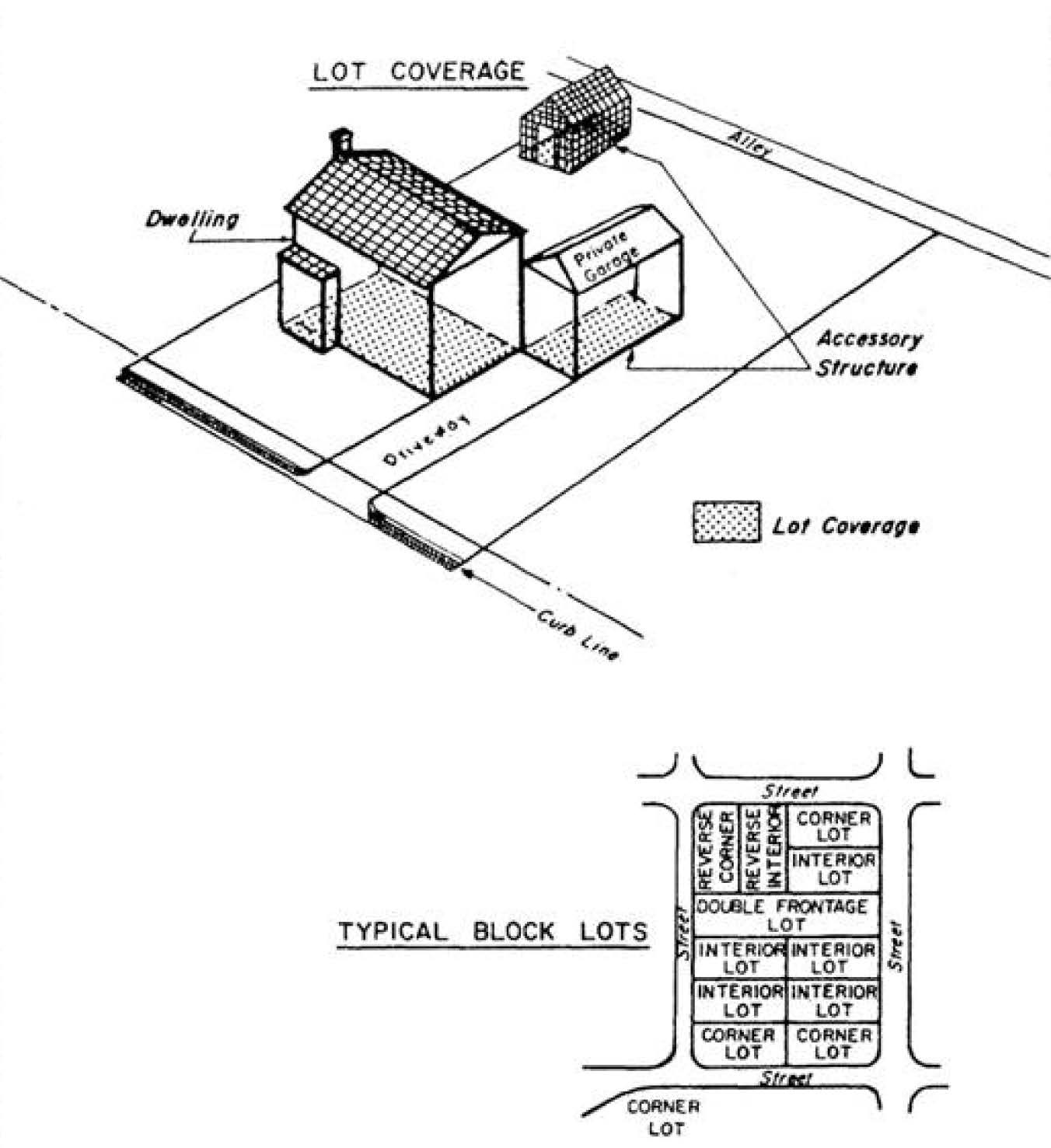
Illustration 2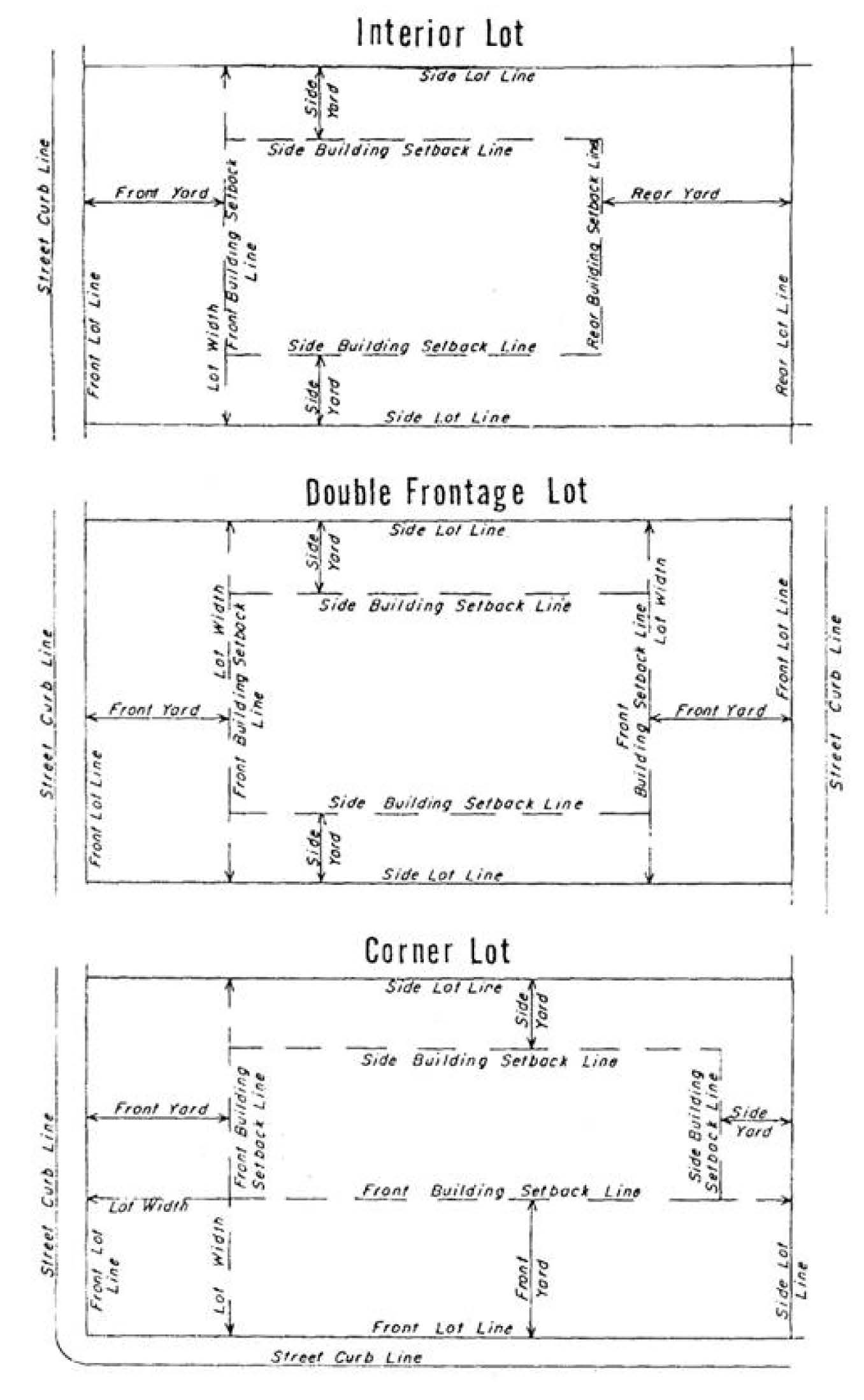
Illustration 3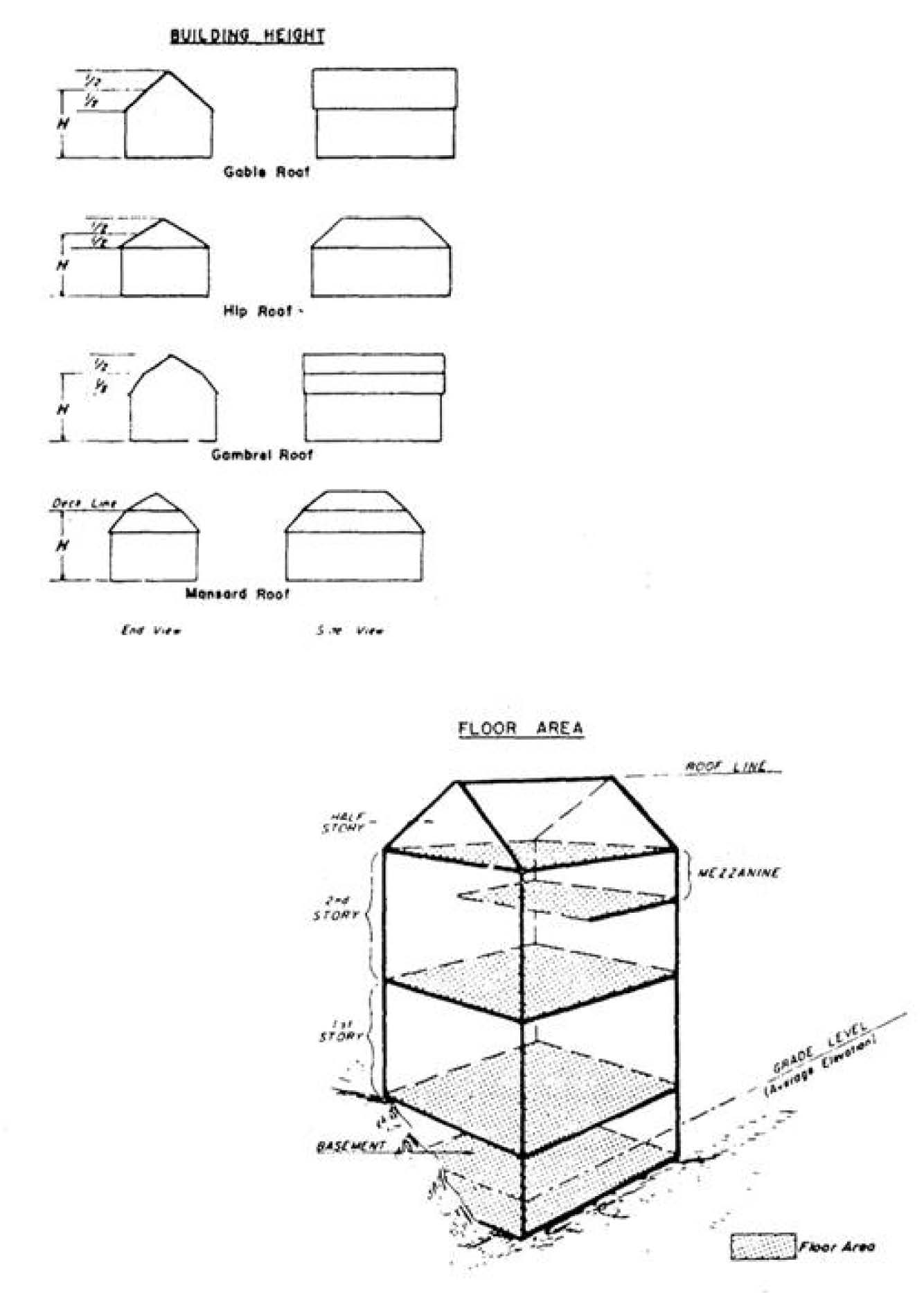
Illustration 4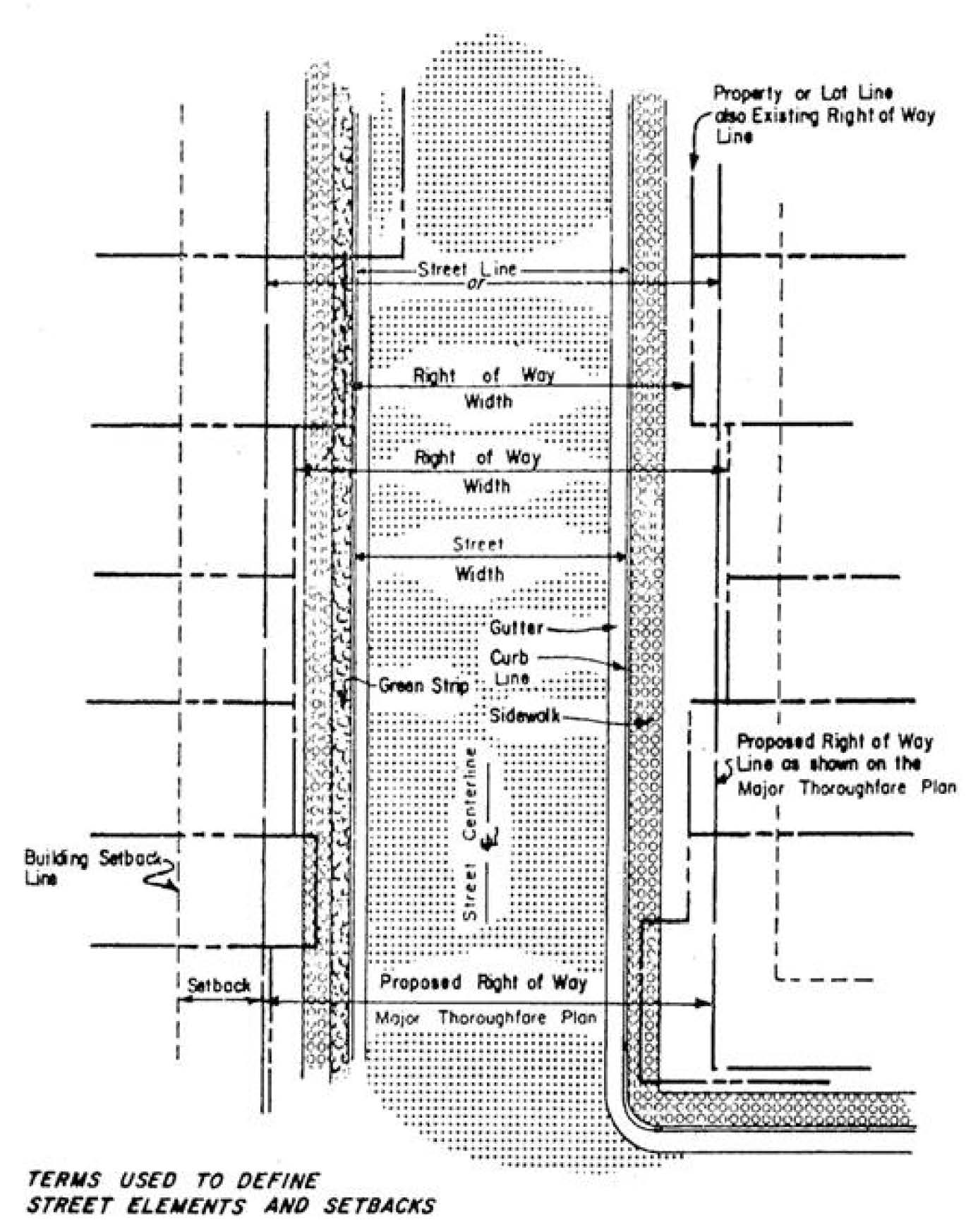
(Ord. No. 85-1700-269, 2-6-85; Ord. No. 86-1700-342, 9-2-86; Ord. No. 89-1700-393, 2-21-89; Ord. No. 93-1700-497, § 1, 12-2-93; Ord. No. 95-1700-522, 1-3-95; Ord. No. 04-1700-754, § 1, 7-20-04; Ord. No. 04-1700-767, § 1, 10-19-04; Ord. No. 06-1700-812, 9-19-06; Ord. No. 06-1700-818A, 12-12-06; Ord. No. 09-1700-864, § 1, 2-17-09; Ord. No. 11-1700-903, § 2, 5-24-11; Ord. No. 12-1700-916, § 1, 1-24-12; Ord. No. 12-1700-921, § 1, 4-3-12; Ord. No. 20-1700-1047, § 1, 3-4-20; Ord. No. 21-1700-1084, § 1, 10-5-21; Ord. No. 23-1700-1118, § 1, 7-18-23)

