
Mcdonough City Zoning Code
CHAPTER 17
108 - SIGN CODE
Sections:
17.108.010 - Purposes.
The purposes of the ordinance are set out in the preamble hereto and as follows herein.
A.
A comprehensive regulation is necessary because of the unique nature and history of the City of McDonough. In the decade preceding this ordinance there has been significant population growth in McDonough and Henry County. McDonough serves as the county seat of Henry County and Henry County is one of the fastest growing counties in the United States of America preceding the adoption date of this ordinance. McDonough has a unique historical town square and historic buildings that must be preserved for posterity.
B.
To prevent the further deterioration of the city and to ensure that it remains an attractive residential area as well as a viable commercial area it is necessary to maintain a visually satisfying environment. A plethora of signs of a certain size and nature, no matter how tasteful, can have an undesirable effect upon traffic safety and the wellbeing of the entire community. The city is more likely to attract commercial enterprises and permanent residents if it improves and maintains the city's appearance. The residents will ultimately benefit from enhanced retail and commercial environments and improvements in the quality of life as a result of these regulations. City-wide regulations are necessary in view of the fact that very few areas are distinctly residential or distinctly commercial, and homes including historic homes and buildings are often found in close proximity to commercial areas; it is a rational desire of the community, and most specifically of those who live therein from day to day, to plan their physical surrounding in such a way that unsightliness is minimized.
C.
Further, the city has an obligation and a right to protect the rights of adjoining landowners to adequate light and air, to promote desirable living conditions and sustain stability of neighborhoods, to protect property against blight and deprivation, and encourage the appropriate use of land, buildings and other structures throughout the city.
D.
Accordingly, in consideration of the city's rights and obligations to promote traffic safety, to preserve property values, to provide for the convenience and enjoyment of public travel, to eliminate annoyance to travelers, to attract tourists, residents and industry, to serve the health, safety and morals of the community, to advance the general prosperity of the community, and to serve the general welfare, the city hereby imposes the regulations contained in this chapter.
E.
The mayor and city council find that signs provide an important medium through which individuals and entities may convey a variety of noncommercial and commercial messages. However, left completely unregulated, signs can become a threat to public safety as well as a traffic hazard. Such signs may also constitute an aesthetic nuisance and be a detriment to property values and the city's public welfare. The mayor and city council intend by enacting this ordinance to:
1.
Balance the rights of individuals and entities to convey their message through signs and the right of the public to be protected against the unrestricted proliferation of signs;
2.
Further enhance the goals of the city's comprehensive plan;
3.
Protect the health, safety, and welfare of the city;
4.
Reduce traffic and pedestrian hazards;
5.
Maintain the historical image of the city;
6.
Protect property values by minimizing the potentially adverse effects and visual blight caused by signs.
7.
Promote economic development; and
8.
Ensure the fair and consistent enforcement of sign regulations.
(Ord. No. 25-01-02, § 1, 1-2-2025)
17.108.020 - Definitions.
For the purposes of this chapter, the definitions contained in the zoning ordinance shall control. In addition, the following words and phrases shall have the meanings respectively ascribed to them below, unless the context clearly indicates a contrary meaning:
Aerial view sign. Any sign which is designed primarily to be viewed from the sky from an airplane, helicopter, etc. This includes, but is not limited to, any sign horizontally affixed to a roof or attached to a roof such that the sign is not readily viewable from the surrounding ground.
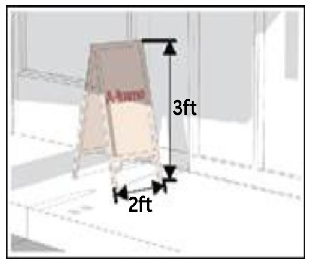
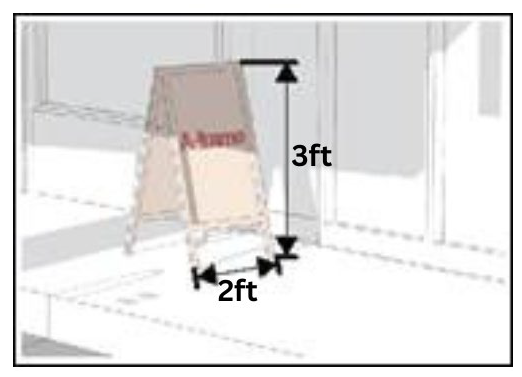
A-frame sign. Any double-faced sign having a metal or wooden frame adequately braced so as to be freestanding on but not permanently attached to the ground.
Aggregate signable area. The sum total of the signable area of any and all signs, for a given lot. Street numbers assigned by the United States Postal Service shall not be considered in calculating the aggregate signable area.
Animated sign. Any sign with action or motion with moving characters or changing colors which requires electrical energy, but not including wind actuated elements such as flags or banners. This definition includes electronic signs with lights and other elements which change copy and other characters.
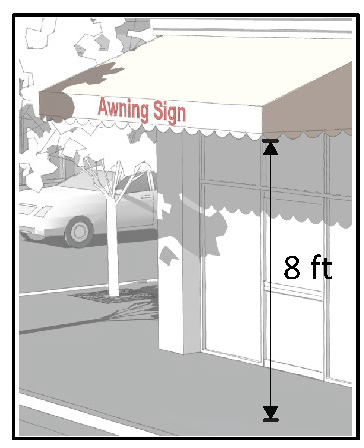
Awning. Any structure made of cloth or metal with a metal frame attached to a building and projecting over a thoroughfare, when the same is so erected as to permit its being raised to a position flat against the building when not in use, as opposed to a canopy.
Awning sign. Any sign attached to, affixed to, or hung from an awning.
Banner. A temporary sign made of cloth, paper, plastic or similar material, but not cut into ribbons, streamers, strips or pennants.
Billboard. Any off-site or off-premises board, fence, sign or structure not located on the premises of the business or entity indicated or advertised by such sign which is erected for advertising purposes or upon which any advertisement is shown, or whereupon any poster, bill, printing, painting, device or other advertising matter of any kind may be placed, stuck, tacked, posted, printed, painted, pasted or fastened. This definition shall not be held to include any board sign or surface used to display official notices issued by any court or public officer or posted by any public officer in the performance of a public duty.
Buildable area of lot. That area of lot within the setback lines as defined by the zoning ordinance generally.
Building frontage. The linear feet of the exterior wall of a building that faces any road or street that provides a means of direct ingress and egress to the lot.
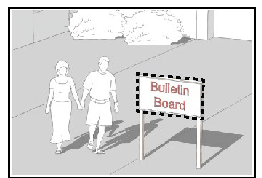
Bulletin board. Any sign which primarily displays the name of an organization and the upcoming events of that organization.
Business identification sign. Any sign which directs attention to a business, profession, product, service, activity or entertainment conducted, sold or offered on the premises upon which the sign is located.
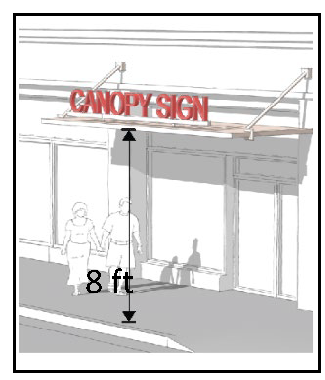
Canopy. Any structure made of cloth or metal with a metal frame attached to a building and erected so as to permanently project over a thoroughfare, as opposed to an awning.
Canopy sign. Any sign attached to, affixed to, or hung from a canopy.
Changeable copy panel. A sign or sign device consisting of or incorporating a panel designed specifically to allow the frequent changing of the copy thereon.
Decision date. The date upon which the director of community development makes a final decision on the approval or denial of a sign permit application.
Digital changeable copy. Changeable copy on a sign with a display or message composed of a series of lights that may be changed through electronic means.
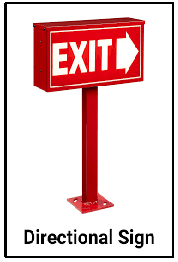
Directional sign. Any sign utilized for the purpose of indicating the location or direction of any object, place or area. For example, such signs include, but are not limited to, entrance and exit signs, no parking signs, drive through signs, restroom signs, etc.
Directly illuminated sign. Any sign designed to give forth artificial light directly (or through transparent or translucent material) from a source of light within such sign including, but not limited to, exposed lamp signs.
Double-faced sign. Any sign which has two (2) display surfaces backed against each other or against the same background, one (1) face of which is designed to be seen from one (1) direction and the other from the opposite direction.
Entrance sign. Any ground sign placed at the intersection of a public street and a private entryway into an apartment complex, condominium complex, office complex, industrial complex or other building with multiple residential dwelling units or commercial units.
Erect. To build, paint, construct, attach, hang, place, suspend, assemble or affix.
Externally illuminated signs. Any sign illuminated by an external light source directed primarily toward such sign.
Flashing sign. Any sign, the illumination of which is not kept constant in intensity at all times when in use, and which exhibits sudden or marked changes in lighting effects.
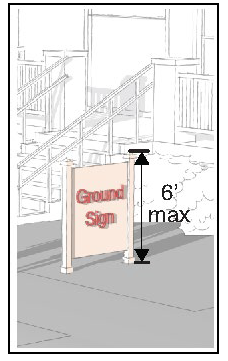
Ground sign. A sign which is supported by two (2) or more uprights or braces on the ground.
Hand-held signs. Any sign larger than six (6) inches by six (6) inches carried by a human appendage or prosthesis including, but not limited to, picket signs, shields or sandwich boards.
Internally illuminated signs. Any sign which has characters, letters, figures, designs or outlines illuminated by electric lights or luminous tubes located within the interior parts of the sign.
Interstate 75 corridor. Any portion of a lot zoned for nonresidential use that is located within one hundred (100) feet of the right-of-way of Interstate 75, including the on-ramp and off-ramp rights-of-way.
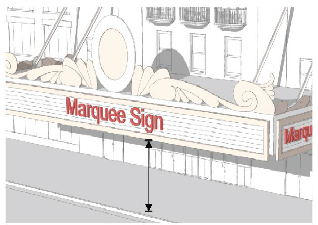
Marquee. Any roofed structure attached to and supported by a building and projecting over public or private sidewalks or right-of-way.
Marquee sign. Any sign painted on, attached to, or hung from a marquee.
Median. A paved or planted strip dividing any public or private right-of-way, road or highway into lanes parallel to the direction of travel.
Menu board. A variable-message sign that allows a retailer to list products and prices.
Mobile sign. A portable sign mounted on a vehicle or trailer.
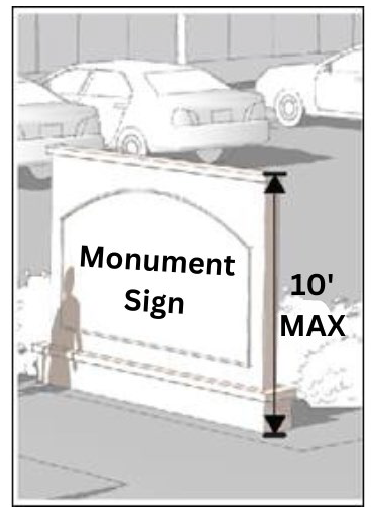
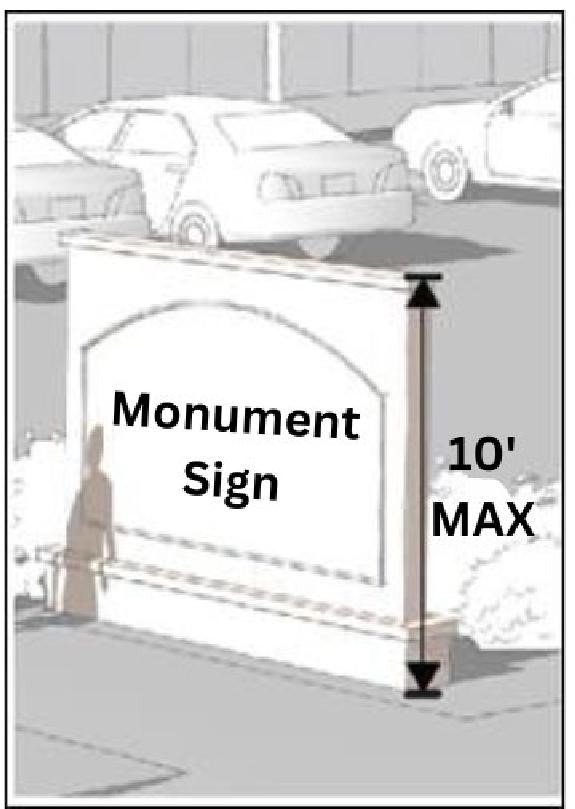
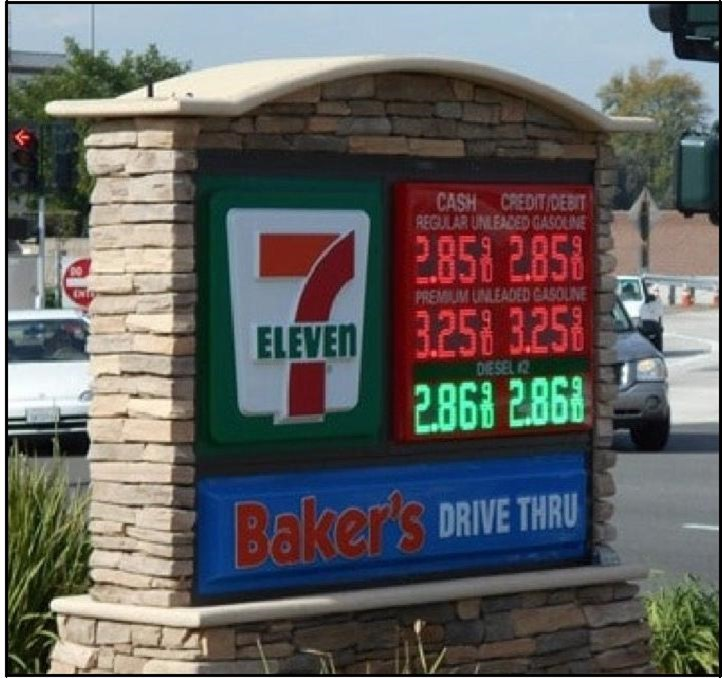
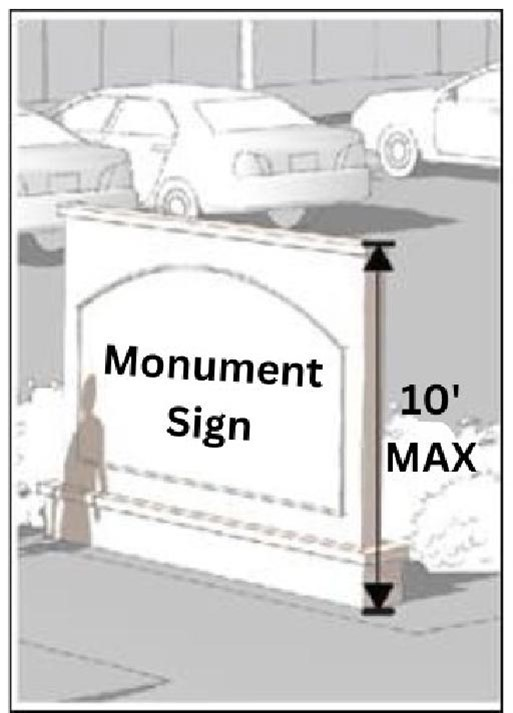
Monument sign. A sign securely affixed to a substantial support structure of columns, uprights or braces which is permanently attached to the ground and wholly independent of any building for support, the total height of which is less than ten (10) feet.
Noncombustible material. Any material which will not ignite at or below a temperature of one thousand two hundred (1,200) degrees Fahrenheit and will not continue to burn or glow at that temperature.
Noncommercial message. Any sign, wording, logo or other visual representation that does not directly or indirectly constitute or include a commercial message, but instead conveys an opinion, idea or concept, or similar noncommercial speech.
Nonconforming sign. Any lawfully erected sign which, on the effective date of the ordinance from which this section derives, fails to comply with the requirements of this chapter.
Off-premises sign. Any sign not located on the same premises as the person, business, commodity, service, entertainment or any other thing which it advertises or to which it relates, including any structure designed primarily for the display of off-site signs or advertising structures.
Outdoor advertising. Advertising on any board, fence or structure or the placing thereon of any poster, bill, printing, painting, device or any advertising matter of any kind, and the pasting, posting, painting, printing, nailing or tacking or otherwise fastening of any handbill, card, banner, sign, poster, advertising or notice of any kind upon any property or place.
Panel, sign. The display surface of a sign delineated by a frame or cabinet.
Person. Any person, firm, partnership, association, corporation, company, or organization of any kind.
Pole sign. Any sign erected on one (1) or more uprights supported from the ground, the height of which is greater than eight (8) feet, and which is not a part of any building or structure, other than a structure erected solely for the purpose of supporting the sign. The overall total height of a pole sign shall not exceed twenty (20) feet above ground level. A pole sign may include an accessory sign or change-able copy panel, the areas of which shall be included in the total area of the pole sign.
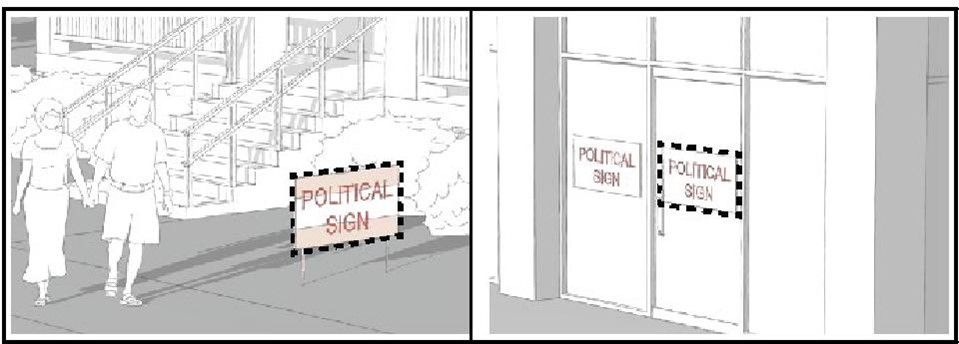
Political sign. A sign informing the public of an election issue, political issue, candidate for public office, or similar noncommercial campaign.
Portable sign. Any sign which is designed to be transported by any means, including by trailer or on its own wheels, even though the wheels of such sign may be removed and the remaining chassis or support constructed without wheels is attached temporarily or permanently to the ground, or any movable sign structure designed for transport, which is placed, parked or maintained at a particular location for the express purpose of promotion or conveying an advertising message. It is typical of such signs that the space provided for advertising matter consists of a changeable copy panel.
Price pane. Any sign or panel incorporated into a sign or sign device and having changeable numerals used for the purpose of displaying variable price information.
Primary facade. If the building faces more than one (1) street, the exterior wall of the building which is most nearly parallel to widest street to which the building faces.
Projecting sign. Any sign mounted on the face or vertical surface of a building or structure, the display surfaces of which are not parallel to the supporting surfaces.
Real estate sign, commercial. A temporary ground sign advertising the sale, rental or lease of the property on which the sign is located with a maximum sign area of thirty-two (32) square feet.
Real estate sign, residential. Any temporary sign advertising the sale, rental or lease of the residential property on which the sign is located with a maximum sign area of two and a quarter (2.25) square feet
Roof line. The highest continuous horizontal line of a roof. On a sloping roof, the roof line is the principal ridge line, or the highest line common to one (1) or more principal slopes of roof. On a flat roof, the roof line is the highest continuous line of the roof or parapet, whichever is the higher.
Roof sign. A sign which is attached to a building or structure and is displayed above the lowest horizontal line of a building's roof.
Sandwich board/sidewalk sign. A sign not secured or attached to the ground or surface upon which it is located, but supported by its own frame, which is typically in the shape of an A.
Secondary facade. Any exterior wall of a building which is most nearly parallel to an adjoining street that is not the primary facade.
Sign. Every device, item, product, frame, letter, figure, character, mark, plane, point, design, picture, stroke, stripe, trademark, or reading matter, which is used or intended to be used to attract attention or convey information when the same is placed in view of the general public. For the purpose of determining number of signs, a single display surface or a single display device containing elements organized, related, and composed to form a unit shall be considered to be one (1) sign. Where matters are displayed in a random manner without organized relationship to elements, or where there is reasonable doubt as to the relationship of elements, each element shall be considered to be a single separate sign.
Sign area. The total area upon which a message is displayed on any sign. For double-face signs, the side with the largest signable area shall be used in computing signable area. If the two (2) faces of a double-face sign are of unequal area, the signable area shall be the area of the larger face. For wall signs consisting entirely of products shaped in the form of letters or other figures attached directly to a wall or roof, the signable area shall consist of the net geometric area measured by the smallest possible single square or rectangle enclosing the display surface of the sign including the outer extremities of all letters, characters and delineations.
Stake sign. Any temporary sign supported by uprights which are placed into the ground, and not supported by or suspended from any building with signable area not greater than three (3) square feet.
Store front. The primary facade of a single, undivided unit containing an area larger than seven hundred and fifty (750) square feet located within a planned shopping center or planned business park.
Structural trim. The molding, battens, cappings, nailing strips, latticing, and platforms which are attached to a sign structure, but which do not contribute to the conveying of a message.
Subdivision sign. Any sign placed at the intersection of two (2) roads where one (1) of the roads is the main thoroughfare into and out of a commercial or residential subdivision.
Submission date. The date stamped on a sign application indicating the date the application was actually received in the community development department.
Swinging sign. Any sign which is mounted such that the sign may freely move back and forth.
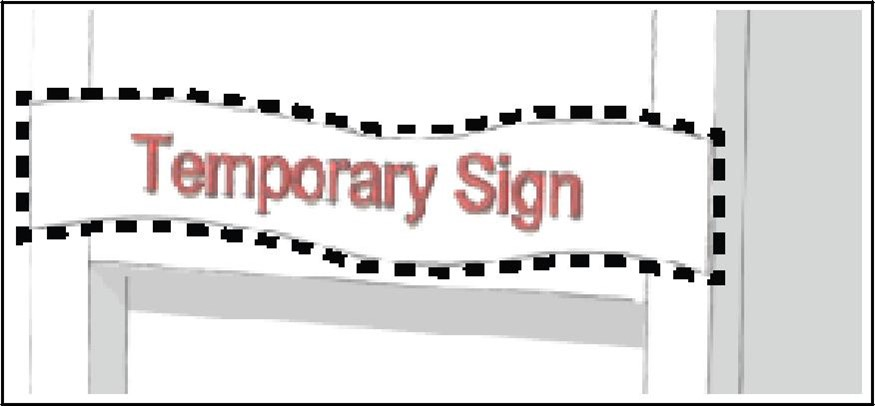
Temporary sign. Any sign or device which is not permanently attached to the ground or other permanent structure, which is designed to be mobile or is designed to remain in place for a limited time. This includes, but is not limited to, signs which are designed to be transported regularly from one location to another, signs which are designed with wheels, regardless of whether the wheels remain attached to the or signs tethered to an existing structure. These signs include, but are not limited to, (i) sky lights, (ii) balloons, (iii) streamers, (iv) flag strings, (v) inflatable displays, and (vi) mechanical or animated figures.
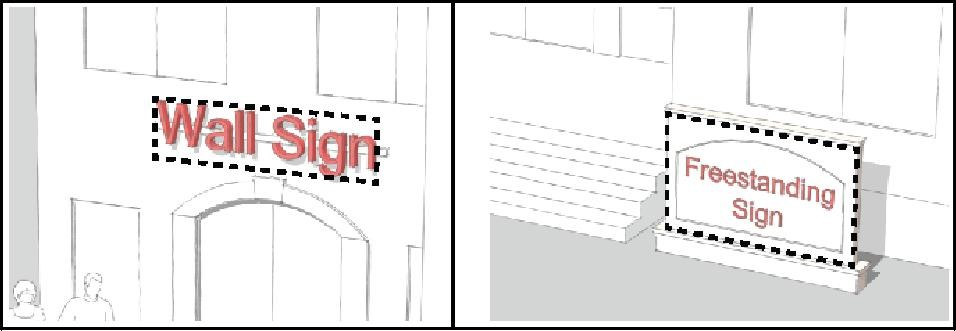
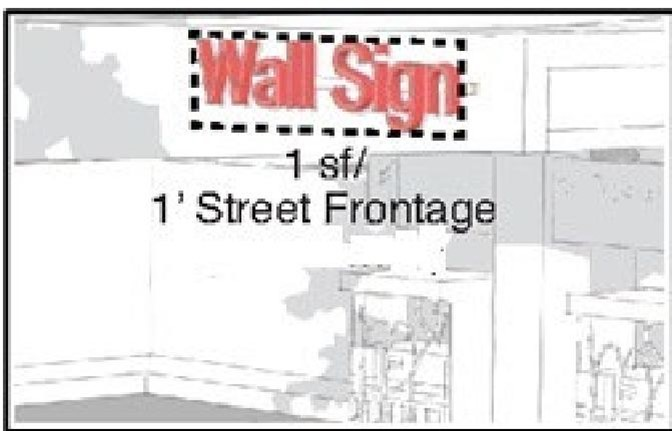
Wall sign. Any sign which is attached parallel to or painted on an exterior building wall.
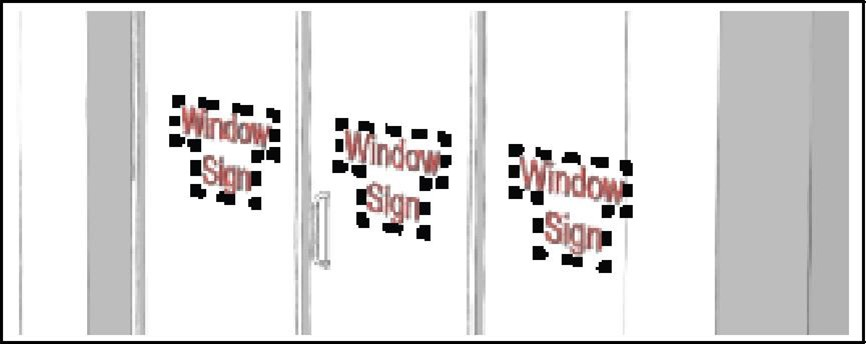
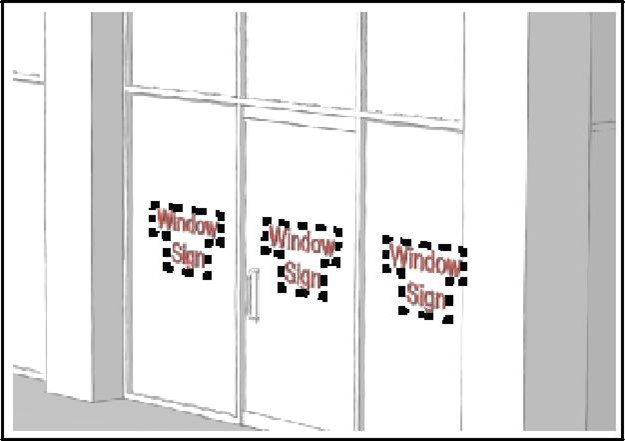
Window sign. A sign painted on, applied to or hung on the inside of a window.
Zoning district. The use classification of parcels of land as defined under the zoning ordinance generally.
(Ord. No. 25-01-02, § 1, 1-2-2025)
17.108.030 - Permits.
A.
Application requirements. All applications for sign permits must be complete and contain all required information. If the community development director or designated representative shall determine that the application does not contain all required information as set forth in this article, or if such information is not sufficient to determine whether the permit should be issued or denied, or if such information is inaccurate or untrue the application shall be denied.
B.
Permit required. It shall be unlawful for any person to erect, repair, alter, relocate, or maintain any sign as defined in this article without first obtaining a permit from the community development department in the manner set forth in this article or otherwise complying with the terms herein.
C.
Permit application. Application for permits to erect signs shall be made upon forms provided by the community development department, and shall contain or have attached thereto the following information:
1.
Name, address, and telephone number of the applicant;
2.
Address of building, structure, or lot to where the sign is to be attached or erected;
3.
Position of the sign in relation to nearby buildings or structures, property lines and other signs located on the lot showing compliance with zoning and other code setback lines;
4.
Accurately scaled color drawings of the plans, contents, specifications, and method of construction and attachment to the building or the ground for the sign as well as a scaled drawing of the site showing drives, structures, and any other limiting site features;
5.
Name of person, firm, corporation, or association erecting the sign (i.e. contractor or builder);
6.
Written consent of the owner of the building or lot upon which the sign is to be erected;
7.
A written list describing all other signs located on the lot and building indicating the sign type, size and placement, including all tenant spaces; and
8.
Such other information as the director shall require to show full compliance with this and all other ordinances of the city.
D.
Approval of community development director. Approval of the community development director is required for all signs that require a permit. Such officer shall examine the plans and specifications to determine if the same complies with the building code of the city except a building permit is not required and shall then mark his approval or disapproval thereon.
E.
Submission of sign permit applications.
1.
Sign permit applications must be delivered to the community development department in person on the 3 rd floor of city hall, by U.S. mail, or email.
Community Development Department
City of McDonough
136 Keys Ferry Street
McDonough, GA 30253
2.
All permit applications must be stamped by community development department personnel indicating the submission date.
3.
Permit applications that pertain to lots located in the downtown business district shall be examined by the community development department and sent to Main Street McDonough for their recommendation.
F.
Permit fees. Each application for a sign permit must be accompanied by a payment for the permit fee. The fee for sign permits shall be established by the mayor and city council from time to time.
1.
Schedule. Permit fees shall be payable with the application for the sign permit. Sign permit fees shall be paid according to the schedule as set forth in the schedule of fees and charges.
2.
Double fee penalty. If a sign is erected or painted before the issuance of a sign permit, a penalty equal to double the sign permit fee shall be charged.
G.
Issuance and denial of permit.
1.
Provided that the application is complete, all permit fees have been paid, and the proposed sign and the lot upon which the sign is to be placed are within all the requirements of this chapter and all other ordinances and laws of the city, the community development director shall then issue the permit; and
2.
In the event the community development director determines or learns at any time the applicant has not properly completed the application for the proposed sign, he shall promptly notify the applicant of such fact and shall automatically deny the application.
3.
In the event the community development director determines that all requirements for approval have not been met, the director shall then deny the permit.
a.
All permit applications shall either be issued or denied within fifteen (15) days of the submission date. If the application is denied because it does not contain the required information or the information is inaccurate or false, a new application must be submitted with all of the required information and such application shall be assigned a new submission date. Upon the expiration of the thirty-day period without a decision being made on the application, the applicant shall be permitted to erect and maintain the sign under this statutory provision unless and until such time as the community development director notifies the applicant of a denial of the application and states the reason(s) for the denial. No person erecting a sign under this provision shall acquire any vested rights to continued maintenance of such signs, and if the community development director later denies the application, the sign must be brought into compliance with this article.
b.
Upon making a final decision, the community development director must stamp each application with a decision date.
G.
Time period. If the work authorized under a permit has not been completed to the satisfaction of the community development director using common industry standards within six (6) months after the date of issuance, the permit shall become null and void. A ninety-day extension can be granted by the director if the applicant request an extension before the original six-month time period expires.
H.
Altering permit. Displaying a permit that has been tampered with, altered, or mutilated, or displaying a sign without a permit shall be a misdemeanor offense punishable in Municipal Court. The penalties for such a violation are provided in Section 17.108.170.
I.
Appeals. Appeals of the community development director's decision may be made to the board of zoning appeals under the procedure set forth in section 17.92.032 appeals from decisions of the director.
(Ord. No. 25-01-02, § 1, 1-2-2025)
17.108.040 - General provisions.
A.
Defacing of official signs and notices. No person shall injure, deface, obliterate, remove, take down, disturb or in any other manner interfere with any signboard containing the name of any street or public place, or any bulletin or reader board, or sign or notice erected, posted or placed, bearing the name of the city or any officer thereof.
B.
Business license required. No person shall engage in or carry on the business or occupation of billposting, advertising, sign painting, outdoor advertising, installing or maintaining signs unless said business is in compliance with the city's business license ordinance.
C.
Fastening signs, notices and posters on public property.
1.
Generally. It shall be unlawful for any person, except a public officer or employee in the performance of a public duty, to paste, print, nail, stake, tack or otherwise fasten any card, banner, handbill, sign, poster, advertisement or notice of any kind, or cause the same to be done, on any curbstone, lamppost, pole, hydrant, bridge, tree or area upon any public or publicly maintained street, sidewalk, right-of-way or property within the city, except as may be required by the provisions of this code, other ordinances of the city or the laws of the state or the United States or as may be otherwise authorized by this section.
2.
Consent of city administrator required for city property. It shall be unlawful for any person, except a public officer or employee in the performance of a public duty, to paste, post, paint, print, nail, tack or otherwise fasten any card, banner, handbill, sign, poster, advertisement or notice of any kind, or cause the same to be done, on any city property. Any advertisement prohibited by this section or Section 17.108.090 may be taken down, moved or destroyed by the city authorities.
3.
Consent of owner, holder, lessee or agent required for private property. It shall be unlawful for any person, except a public officer or employee in the performance of a public duty or a private person giving legal notice, to paste, post, paint, print, nail, tack or otherwise fasten any card, banner, handbill, sign, poster, advertisement or notice of any kind, or cause the same to be done, upon any property without the written consent of the owner, holder, lessee, agent or trustee thereof. Any advertisement prohibited by this section may be taken down, moved or destroyed by the city authorities.
D.
Scattering paste, glue, waste matter, paint or other materials on public or private property. No person shall scatter, daub or leave any paint, paste, glue or other substance used for painting or affixing advertising matter upon any public street or sidewalk, or scatter or throw or permit to be scattered or thrown any waste matter, paper, cloth or materials of whatsoever kind removed from signs or other advertising matter on any public street or private property.
E.
Noncommercial messages. Any sign allowed herein may contain, in lieu of any other message or copy, any lawful noncommercial message that does not direct attention to a business operated for profit, or to a product, commodity or service for sale or lease, or to any other commercial interest or activity, so long as said sign complies with the size, height, area and other requirements of this section.
(Ord. No. 25-01-02, § 1, 1-2-2025)
17.108.050 - Sign standards.
A.
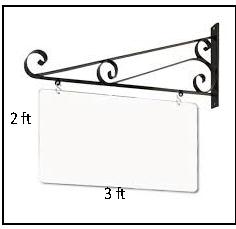
Awning, canopy, hanging, and marquee signs. Awning, canopy, hanging, and marquee signs shall be securely fastened to the building surface, shall be no less than eight (8) feet above the ground when erected over pedestrian walkways and no less than fourteen (14) feet above areas of vehicle access at the lowest extremity of the sign.
1.
Awning signs.
a.
Awning signs must be painted or installed directly on the valances of the awning.
b.
Awning signs shall not have lettering or graphics exceeding ten (10) inches in height.
c.
No awning sign may be internally illuminated.
d.
Only external illumination is allowed on awning signs.
e.
The signable area of any awning sign shall not exceed ten (10) percent of the surface area of the awning.
2.
Canopy signs.
a.
Canopy signs must be installed directly on the top of the canopy.
b.
Internal and external illumination are allowed with canopy signs.
c.
The signable area of any canopy sign shall be one (1) square foot for every linear foot of canopy width/frontage.
d.
A canopy shall be individual, freestanding letters or on a sign panel equal to the square footage of the signable area of the canopy sign.
3.
Hanging signs.
a.
Hanging signs may not exceed six (6) square feet in signable area.
b.
Hanging signs may be two-sided.
c.
Hanging signs shall be externally illuminated only, no exception.
d.
If a hanging sign is attached to a bracket, it may project from the face of the building no more than four (4) feet.
e.
A hanging sign hung from an awning, canopy, overhang, balcony, arcade, or porch, there must be eight (8) feet of clearance between the bottom of the sign and the sidewalk.
4.
Marquee signs.
a.
Signs may be placed on, attached to, or constructed in a marquee.
b.
The sign area permitted shall not exceed two hundred (200) square feet without a variance.
c.
Marquee signs shall be permitted around mcdonough square and within one (1) block of the square in any direction.
d.
Outside the McDonough Square and surrounding area, marquee signs shall require a conditional use permit.
B.
Directional, ground, monument, and pole signs. Directional, ground, monument, and pole signs shall be securely affixed to a substantial support structure which is permanently and securely attached to the ground and wholly independent of any building for support. Any sign over four (4) feet in height require drawings created by a licensed Georgia Structural Engineer.
1.
Directional signs.
a.
Each directional sign shall have a maximum area of three (3) square feet.
b.
Directional signs may be either attached or detached. However, detached directional signs shall have a maximum height of three (3) feet.
c.
Directional signs may be excluded from the sign area calculation for both permitted attached and detached signs.
d.
The number of allowable directional signs is based on the number of entrances/exits a parking area. Two (2) directional signs are allowed for each entrance/exit location.
2.
A-frame signs.
a.
A-frame signs shall not six (6) square feet of sign area per side (two-sided only).
b.
Materials. A-frame signs shall be constructed of metal and wood with a signable area not to exceed three (3) feet in height and two (2) feet in width.
c.
Only one (1) A-frame sign is allowed per business.
d.
Wood and metal. Plastic, vinyl and other materials shall be prohibited.
e.
An A-frame sign must be located in front of the business associated with the A-frame sign, and it shall be placed within an eight-foot maximum from the business' front entry. Any A-frame sign beyond eight (8) feet shall be subject to fines or removal by code enforcement.
f.
There must be five (5) feet of clearance between the A-frame sign and the business associated with the A-frame sign. (ADA requirement)
g.
A-frame signs shall be removed and placed in storage outside of business hours.
h.
Any A-frame sign that does not meet all of these requirements will be subject to fines or removal by code enforcement.
3.
Ground signs.
a.
The overall height of a ground sign shall not exceed six (6) feet in height.
b.
There shall be twelve (12) inches or one (1) foot of clearance between the bottom of the sign panel and the surrounding grade.
c.
The sign area of a ground sign shall not exceed twenty (20) square feet.
d.
Landscaping. Section 17.120.020, landscaping standards shall apply.
4.
Monument signs.
a.
Number. One (1) monument sign shall be permitted per principal use; however, the maximum number of monument signs per development site shall be two (2) monument signs.
b.
Sign area.
1)
Collector or local street: The maximum area of a monument sign shall not exceed one (1) square foot per linear foot of street frontage or fifty (50) square feet, whichever is less.
2)
Arterial or higher street: The maximum area of a monument sign shall not exceed one (1) square foot per linear foot of street frontage or one hundred (100) square feet per sign face, whichever is less.
3)
Corner developments are allowed one (1) monument sign per street frontage. One (1) supplemental monument sign is allowed for each additional two hundred and fifty (250) feet of linear road frontage.
c.
Sign height.
1)
Collector or local street: Six (6) feet.
2)
Major arterial or higher: Ten (10) feet.
d.
Setback. Signs shall have a minimum setback of ten (10) feet from all lot lines that are common to a public right-of-way, or an abutting lot not associated with the nonresidential use.
e.
Landscaping. Section 17.120.020, landscaping standards shall apply.
f.
Electronic variable message signs or internal illumination. No electronic variable message signs or internal illumination shall be permitted unless the development site fronts on an arterial. The evm portion of the sign shall comprise no more than fifty (50) percent of the detached sign area or thirty-two (32) square feet, whichever is less. EVM signs must meet applicable criteria set forth in Section 17.108.050(F), except that the EVM portion of the sign shall be prohibited from changing messages/images between 10:00 p.m. and 6:00 a.m.
5.
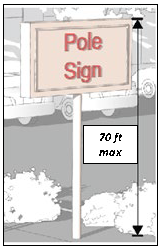
Pole/pylon sign.
a.
Pole/pylon signs are only allowed in the Interstate 75 Corridor with no variances allowed and are limited to one (1) per property abutting Interstate 75.
b.
The sign shall be constructed on a monopole structure.
c.
The outside measurement of all new signs shall not exceed a total of one hundred (100) square feet with or without trim for all pole signs.
d.
No more than two (2) sign faces shall be permitted on a single sign facing in one direction. No more than four (4) faces shall be allowed on any single sign pole;
e.
Sign faces shall not be configured in a triangular shape or quadrangular shape;
f.
The total height of the sign may not exceed seventy (70) feet above the level of the surface of the pavement of the nearest lane of the main traveled way or seventy (70) feet from the ground at the base of the structure to the tallest part of the structure, whichever is greater. Upon the effective date of this section, no new permit applications shall be accepted for signs with the total height of the sign exceeding seventy (70) feet above the level of the surface of the pavement of the nearest lane of the main traveled way or seventy (70) feet from the ground at the base of the structure to the tallest part of the structure, whichever is greater;
g.
All such signs permitted pursuant to this section shall be no closer than ten (10) feet to the property line or right-of-way;
h.
No portion of any such sign shall overhang any property line or right-of-way.
C.
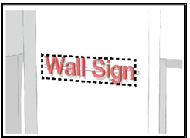
Wall signs.
1.
A wall sign is affixed to the wall or painted directly on the building.
2.
A wall sign cannot extend more than twelve (12) inches from the wall it is attached.
3.
No wall sign shall cover wholly or partially any wall opening, nor project beyond the ends or top of the wall to which it is attached.
4.
Sign area. The max area of a wall sign is two (2) square foot per linear foot of building frontage to a maximum of two-hundred (200) square feet, whichever is less.
5.
Additional wall signs are allowed on each façade that faces a public right-of-way. The sign area of secondary signs is half (½) the sign area of the wall sign on the primary frontage.
D.
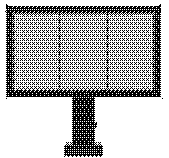
Menu boards. Menu boards servicing drive-up (drive-through) restaurants shall be permitted provided that:
1.
Number. Only one (1) menu board shall be permitted per drive-through lane.
2.
Landscaping required. The menu board shall be located in association with the drive-through service lanes and Section 17.120.020, landscaping standards shall apply.
3.
Visibility from street right-of-way. The menu board shall not be visible from the street right-of-way from which the primary access to the premises is obtained.
4.
Setbacks.
a.
The menu board shall not be located within the first twenty (20) feet of the front of the development site.
b.
The menu board shall be located a minimum of twenty (20) feet from any lot line abutting residential property.
5.
Sign area. The menu board shall have a maximum area of forty-eight (48) square feet and are independent of all other signage area calculations for the development site.
6.
Sign height. The menu board shall have a maximum height of eight (8) feet.
7.
Sound system. The sound system associated with a menu board shall be oriented and adjusted in such a way that resulting noise does not intrude into surrounding development in compliance with the applicable provisions of concerning noise in this code.
E.
Lighting requirements.
1.
No sign shall give off light which glares, blinds, or has any other such adverse effect on vehicular traffic. The light from an illuminated sign shall be established in such a way that adjacent properties and roadways are not adversely affected and that no direct light is cast upon adjacent properties and roadways. No illuminated signs shall be constructed or maintained within seventy-five (75) feet of any single-family dwelling. Signs with flashing, intermittent or animated illumination or effect are prohibited. Signs which simulate official traffic control, warning or public service signs are prohibited.
2.
Internal illumination. The illumination of internally illuminated signs shall not exceed twenty (20) foot candles of incandescent light measured at a distance of ten (10) feet from such structure.
3.
External illumination. Externally illuminated signs shall be lighted so that no lights are positioned in such a manner that light glares or shines into the eyes of motorists or pedestrians so as to create a hazardous or dangerous condition. The fixtures have to meet all requirements of Section 17.120.070, outdoor lighting standards.
F.
Electronic variable message boards (EVM). Electronic variable message boards (EVM) are also known by other names, including:
•
Changeable message sign (CMS): Can display one or more alternative messages, such as lane-use or blank-out signs.
•
Dynamic message sign (DMS): A term developed to support both CMS and VMS with a common data set.
•
Electronic message sign (EMS): Another term for a variable message sign.
1.
Operational standards and brightness. The following shall apply to all EVM signs.
a.
The copy on an EVM sign shall not change more than once in an eight (8) second period unless otherwise allowed by law or except as necessary on a sign for public health and safety, including traffic control.
b.
EVM signs shall only operate between the hours of 7:00 a.m. and 9:00 p.m. EVM signs may be permitted to operate outside these hours only while the establishment it serves is open to the public.
c.
Installation of a new EVM sign or replacement of an existing sign with an EVM sign shall require permits pursuant to the LDC.
d.
EVM signs must meet the following requirements:
1)
Display shall be limited to static messages.
2)
Static display time for each message is a minimum of eight (8) seconds.
3)
The amount of time to completely change from one message to the next is instantaneous.
4)
The change of message shall occur simultaneously for the entire sign face.
5)
The sign shall contain a default design that will hold the face of the sign at one position if a malfunction occurs.
6)
No flashing lights, traveling messages, animation, transitional effects, or other movements are allowed on an EVM sign.
7)
Ambient light sensors shall be installed and shall automatically adjust the light intensity of the sign based on ambient light conditions.
8)
The maximum light intensity shall not exceed 0.3-foot candles above ambient light levels.
9)
Light measurements shall be taken with the meter aimed directly at the sign message face, or at the area of the sign emitting the brightest light if that area is not the sign message face, at a distance of one hundred (100) feet from the sign area being measured.
2.
Location and placement.
a.
The following shall apply to the new placement or installation of an EVM sign.
b.
Only one electronic variable message (EVM) sign is allowed per singleoccupancy development or multiple-occupancy complex and must be integrated and designed as a component of a monument or marquee sign in accordance.
c.
EVM signs are not allowed for development with a street frontage less than fifty (50) feet or for outparcels within a multiple-occupancy complex.
d.
The area of the EVM portion of the sign shall not exceed fifty (50) percent of the total sign copy area and in no case shall exceed thirty-two (32) square feet.
e.
An EVM sign may not be installed where a development is already using a portable sign or other temporary signs.
3.
Enforcement.
a.
Violations of these regulations will be subject to code enforcement action.
b.
Any EVM sign which is found in violation of these regulations three (3) or more times may only be operated from one-half (½) hour after sunrise to one-half (½) hour before sunset, regardless of hours of operation.
G.
Construction and maintenance. All signs for which a permit is required shall be constructed and maintained in conformance with city building and electrical codes. Such signs, together with their supports, braces, guys, anchors and similar parts, shall be maintained and protected as necessary to maintain a clean and safe appearance and condition. The director reserves the right to remove any sign after due notice which shows gross neglect, becomes dilapidated or is not well maintained.
[H.
Reserved.]
J.
Fire safety. No sign shall obstruct any fire escape, any means of egress or ventilation or shall prevent free passage from one part of the roof to another part thereof, nor shall any sign be attached in any manner to a fire escape.
K.
Vehicular traffic. No sign shall interfere with any roadway visibility or obstruct or otherwise interfere with the safe and orderly movement of vehicular traffic.
L.
Natural features. No sign shall be erected, painted or drawn on any tree, rock or similar natural feature.
M.
Ownership. No sign shall be located on any building, fence, or other property belonging to another person.
N.
Prohibited activities. No sign shall advertise an activity, service, product or other item prohibited by the laws and regulations of the United States or the state or by the ordinances and regulations of the city.
O.
Sound. No sign shall emit or utilize in any manner any sound capable of being detected on any public roadway, public right-of-way or public sidewalk by a person of normal hearing.
P.
Public roads, rights-of-way and utility poles. No sign, sign structure or advertising shall be located on or within five (5) feet of any public roadway or public right-of-way, or shall any sign, sign structure or advertising device be located within ten (10) feet of any utility pole, except signs for public governmental purposes specifically authorized by local, state or federal law.
Q.
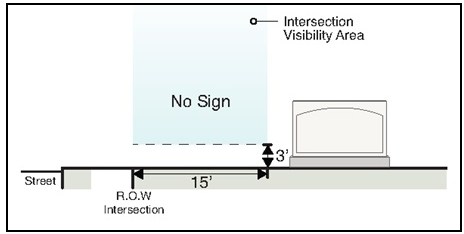
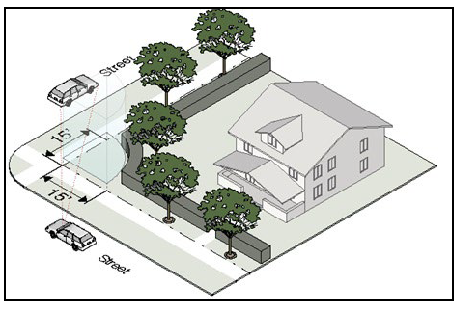
Street intersections. No sign or sign structure above a height of three (3) feet shall be located within fifteen (15) feet of the intersection of the right-of-way lines extended of two (2) streets, or of street intersection with a railroad right-of-way.
(Ord. No. 25-01-02, § 1, 1-2-2025)
17.108.060 - Permit required.
A permit shall be required for all permanent and temporary signs other than those specifically exempted from obtaining a permit by this section.
(Ord. No. 25-01-02, § 1, 1-2-2025)
17.108.070 - Inspection.
The director may inspect every sign installed under the provisions of this section to determine that each sign meets the requirements set forth in this section.
(Ord. No. 25-01-02, § 1, 1-2-2025)
17.108.080 - Signs exempt from permits.
The following signs are exempt from the permit requirements of this section:
A.
Official traffic or warning signs;
B.
Changing of copy of bulletin or reader board, poster board, display casement, marquee or changeable copy sign and the moving or relocating of embellishments that does not increase the area of embellishments;
C.
Decorative flags or buntings;
D.
Symbolic flag and award flag of institution or business, one for each business or one for each fifty (50) feet of street frontage;
E.
Construction signs not exceeding thirty-two (32) square feet in area;
F.
Residential real estate signs not exceeding twenty-four (24) square feet in area;
G.
Political signs (see Chapter 17.108);
H.
Directional signs not exceeding three (3) square feet in area;
I.
Residential signs (see Chapter 17.108);
J.
Signs of a governmental body, governmental agency or public authority, including traffic signs, traffic signals, traffic regulatory devices and warnings, official flags, emblems, official instruments, official public notices, and similar governmental signs or devices.
(Ord. No. 25-01-02, § 1, 1-2-2025)
17.108.090 - Prohibited signs and sign devices.
The following signs and sign devices are prohibited under the provisions of this section:
A.
Signs that display intermittent lights resembling flashing lights associated with danger.
B.
Signs using the word "stop" or "danger," or imitation of an official traffic control, warning or public service sign.
C.
Signs which provide background of colored lights blending with traffic signals which might confuse a motorist when viewed from normal approach distance of twenty-five (25) feet to three hundred (300) feet.
D.
Any sign attached or applied to benches, trash receptacles or any other unapproved supporting structure.
E.
Pennants, streamers, ribbons, whirligigs, spinning devices and similar-type devices.
F.
Signs, other than temporary signs, which are not securely affixed to the ground or securely anchored so as to be immobile or otherwise affixed in a permanent manner to an approved supporting structure.
G.
Signs attached to or placed on a vehicle that is parked on private property, except service vehicles parked temporarily parked there.
H.
Roof signs.
I.
Aerial signs.
J.
Flashing signs.
K.
Marquee signs except for bona fide theaters.
L.
Rotating signs.
M.
Portable signs.
N.
Projecting signs.
O.
Commercial product signs on residentially zoned property.
P.
Off-premises signs.
Q.
Signs advertising alcoholic beverages.
R.
Temporary signs unless permitted by this section.
S.
Signs wrapped around bollards.
(Ord. No. 25-01-02, § 1, 1-2-2025)
17.108.100 - Nonconforming signs.
A.
Signs which on the effective date of the ordinance from which this section derives were legally erected and maintained under previous ordinances and regulations, or which become nonconforming with respect to the requirements of this section, may be continued so long as the size of the sign is not increased beyond that existing as of the effective date of the ordinance from which this section derives, or any change thereto is made in conformance with this section. However, the display face of a nonconforming roof sign located on an owner-occupied building may be replaced or repainted with a new display face so long as the total area of the sign is not increased.
B.
A nonconforming sign shall not be replaced by another sign except one which complies with the requirements of this section.
C.
Minor repair and maintenance of nonconforming signs such as repainting, electrical repairs, and neon tubing shall be permitted. However, no structural repairs or changes in the size or shape of a nonconforming sign shall be permitted except to make the sign comply with the requirements of this section.
D.
Illegally installed or non-permitted nonconforming signs, nonconforming signs for which no permit was issued, and all non-conforming temporary signs shall be removed or made to conform with the requirements of this section within ninety (90) days of the effective date of the ordinance from which this section derives.
(Ord. No. 25-01-02, § 1, 1-2-2025)
17.108.110 - Vacant buildings, premises or property.
A.
Any business identification signs advertising a service or commodity associated with a vacated building premises or closed business shall be removed or resurfaced by the owner or tenant not later than sixty (60) days from time the premises are vacated or the business closes.
B.
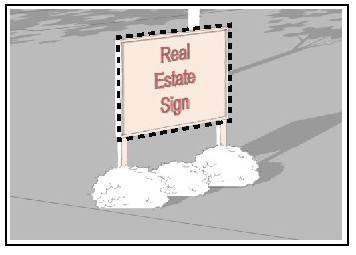
Real estate signs on a vacant or undeveloped property in a residential or professional office zoning district shall be limited to one (1) residential real estate sign not exceeding two and one quarter (2.25) square feet in area. Real estate signs on a vacant or undeveloped property in a commercial zoning district shall be limited to one (1) sign not exceeding thirty-two (32) square feet in area.
(Ord. No. 25-01-02, § 1, 1-2-2025)
17.108.120 - Permitted signs.
A.
Generally.
1.
In addition to general regulations and restrictions applying to all signs, no signs shall be permitted except in compliance with the following specific regulations and restrictions. Unless defined in this section, the meaning of such terms as "single-family dwelling," "high density, single-family dwelling," "street frontage," and so forth shall be as defined in this code.
B.
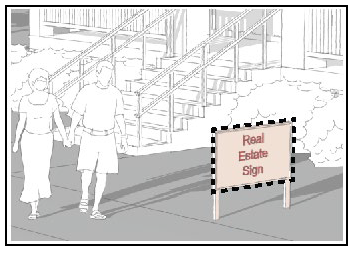
Single-family dwellings, two-family dwellings, and townhouse. Signs for single-family dwellings, two-family dwellings, or townhouse shall be limited to one (1) residential real estate sign not exceeding three (3) square feet for each single-family, two-family, or townhouse dwelling or lot. Such signs shall be placed no closer than ten (10) feet to the street right-of-way except that when a residential structure is located within ten (10) feet of the street right-of-way, the sign shall be located as close as possible to the residential structure. Residential real estate signs shall be removed within five (5) days of the signing of an agreement for the sale, rental or lease of the dwelling or lot. The sale of four (4) or more dwellings in a development under construction may also be advertised by one (1) residential real estate sign not exceeding twenty-four (24) square feet in area.
C.
Multiple-family dwellings and developments. Signs for multiple-family dwellings and developments of any size shall be limited to one (1) permanent monument sign or one (1) permanent wall sign mounted on and parallel to the surface of the building, not exceeding twenty-four (24) square feet in area, for the purpose of identifying the development. Multiple-family dwellings and developments of less than twelve (12) units may have one (1) residential real estate sign not exceeding six (6) square feet. Multiple-family dwellings of twelve (12) or more dwelling units may have one (1) residential real estate sign not exceeding twelve (12) square feet in area.
[D.
Reserved.]
E.
Signs for churches and other places of worship. Churches and other places of worship located in any zoning district may have signs described as follows:
1.
One (1) permanent bulletin or reader board not exceeding six (6) square feet in area.
2.
One (1) temporary sign not exceeding thirty-two (32) square feet in area announcing a special event.
3.
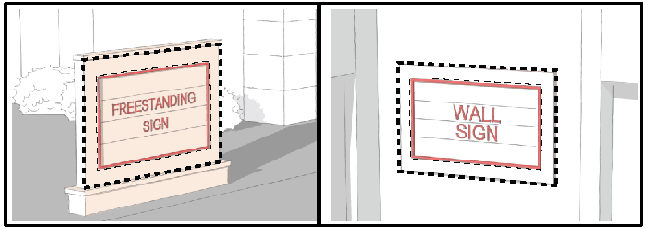
A maximum of one (1) permanent monument sign and one (1) permanent wall sign mounted on and parallel to the surface of the building. A maximum of two (2) permanent monument signs, or a maximum of two (2) permanent wall signs mounted on and parallel to the surface of the building for corner properties only. Each permanent monument or wall sign shall not exceed fifty (50) square feet in area. Only one (1) EVM shall be allowed, and it shall not exceed thirty-two (32) square feet and must adhere to Section 17.108.050.F of this code. The following standards shall be considered in determining whether such signs are approved:
a.
Suitability of the proposed signs in view of the character of the existing and proposed buildings of the church or other place of worship.
b.
Suitability of the proposed signs in view of the character and development of the adjacent and nearby properties.
c.
Suitability of the proposed signs in view of the area of the property on which the church or other place of worship is located.
d.
Suitability of the proposed sign in view of the number and size of the streets on which the church or other place of worship is located.
e.
Suitability of the proposed signs in view of the amount of public street frontage which the church or other place of worship has.
F.
Public buildings, parks, schools, cemeteries, and other public uses, private and parochial elementary and secondary schools, hospitals, churches and other places of worship. Signs for public buildings, parks, schools, cemeteries, and other public uses, private and parochial elementary and secondary schools, hospitals, churches and other places of worship shall be limited to the following:
1.
One (1) permanent monument sign and/or one (1) permanent wall sign mounted on and parallel to the surface of the building. See Section 17.108.050.B. and C. for more information of sign areas.
2.
One (1) permanent bulletin or reader board, including changeable copy panel, not exceeding twenty-four (24) square feet in area; and
3.
One (1) temporary sign not exceeding thirty-two (32) square feet in area announcing a special event.
G.
Colleges, seminaries, and other institutions of higher learning. Signs for colleges, seminaries, and other institutions of higher learning shall be limited to the following:
1.
One (1) permanent monument sign and/or one (1) permanent wall sign mounted on and parallel to the surface of the building, not exceeding twenty-four (24) square feet in area, for each street on which the institution has at least five hundred (500) linear feet of street frontage;
2.
One (1) permanent sign or bulletin/reader board not exceeding six (6) square feet in area; and
3.
One (1) temporary sign of thirty-two (32) square feet announcing a special event provided such sign is not placed or suspended closer than ten (10) feet to any property line or street right-of-way line.
H.
Nursery schools, day care centers, nursing homes, sanitariums, homes for the elderly. Signs for nursery schools, day care centers, nursing homes, sanitariums, homes for the elderly shall be limited to one (1) permanent monument sign not exceeding thirty-two (32) square feet in area located not closer than five (5) feet to any property line.
I.
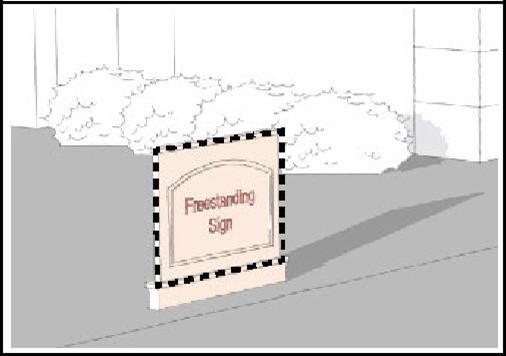
Multiple-tenant office buildings. In addition to signs permitted in Section 17.108.120.J. for storefront or street-facing businesses, signs for multiple tenant office buildings shall be limited to a lobby directory except that a multistory office building in excess of fifty thousand (50,000) square feet may have one (1) permanent business identification monument sign and/or one (1) permanent business identification wall sign that shall not exceed one (1) square foot per linear foot of street frontage or one hundred (100) square feet per sign face, whichever is less.
J.
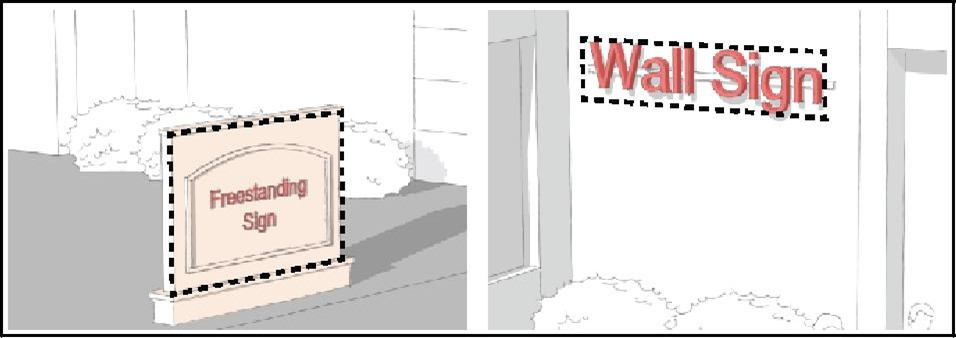
Storefront or street-facing business. Signs for a storefront or street-facing business shall be limited to the following:
1.
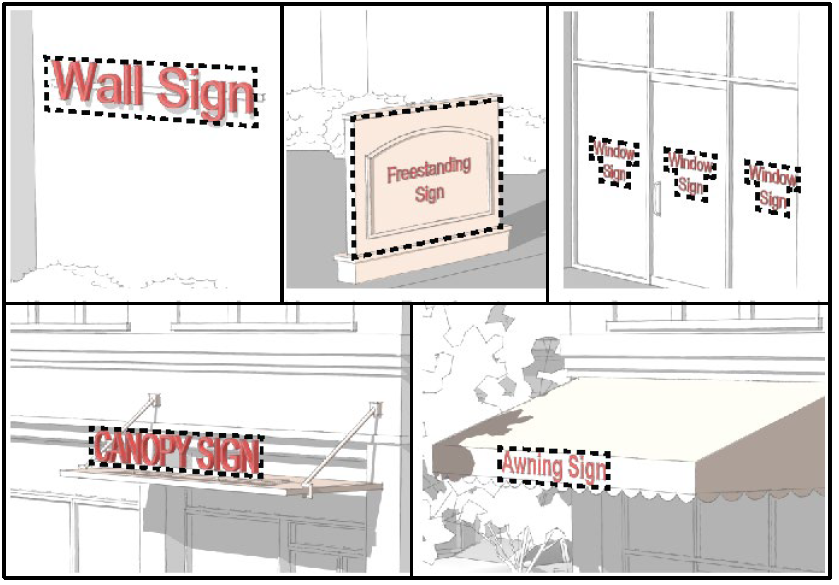
Permanent primary signs. The primary business identification sign may be a wall sign, a monument sign, a ground sign, a window sign, or awning or canopy sign. If a wall, a monument or awning or canopy sign, such sign shall not exceed two (2) square foot of sign area for each linear foot of street frontage of the business, the total sign area not to exceed two hundred (200) square feet. If a window sign, such sign shall not exceed one-tenth of the total window surface of the window in which it is located.
2.
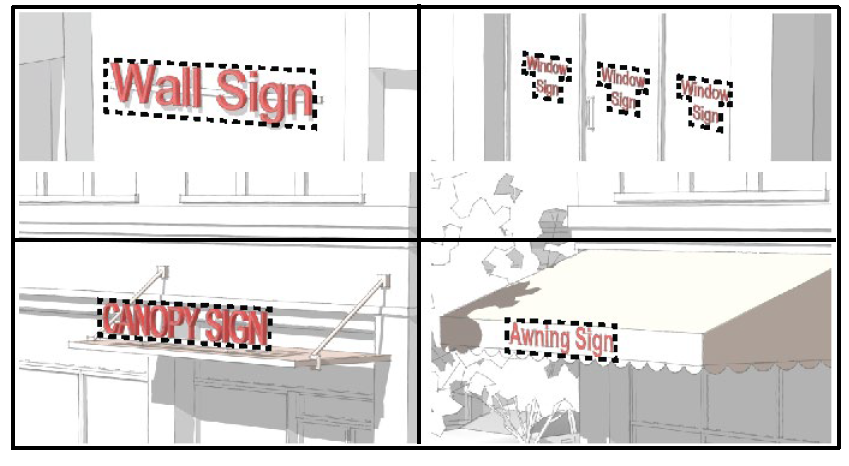
One permanent secondary sign. The secondary business identification sign may be a wall sign, a window sign or an awning or canopy sign. If a wall, an awning or canopy sign, such sign shall not exceed one (1) square foot of sign area for each linear foot of street frontage of the business for the street to which it is oriented, with a total sign area not to exceed one hundred (100) square feet. If a window sign, the area of such sign shall not exceed ten (10) percent of the total window surface area of the window in which it is located.
3.
Temporary A-frame sign. One (1) temporary A-frame for display purposes not exceeding four (4) feet in height and two (2) feet in width.
4.
Temporary sign limitation. Temporary signs limited to:
a.
Window signs, provided the area covered by such signs does not exceed ten (10) percent of window surface area in which it is located and there are no more than one (1) temporary sign per building façade with windows; or
b.
Banners not exceeding thirty-two (32) square feet in area. Banners may be used for a period not to exceed seven (7) days in each calendar year.
K.
Vehicular businesses. Signs for vehicular businesses shall be limited to signs permitted for storefront or street-facing businesses, as regulated by section 17.108.120.J. above, and one (1) business identification monument sign, the area of which shall not exceed one (1) square foot of sign area for each linear foot of street frontage of the business, the total sign area not to exceed one-hundred (100) square feet.
L.
Shopping centers. In addition to signs permitted for individual businesses located in a shopping center, as may be regulated by subsections 17.108.120.J. and 17.108.120.K., a shopping center may have one (1) permanent monument sign of not more than one (1) square feet of sign area per linear feet of building frontage, the total sign area not to exceed one hundred (100) square feet, to identify the shopping center and businesses which are located in the center.
M.
Political signs. Political signs are permitted in all zoning districts, but they shall be limited only to developed properties. These signs are permitted for a period of not more than six (6) weeks before a duly authorized election date. Political signs shall be removed within seven (7) days following the authorized general election date or within seven (7) days of the candidate's or issue's election or defeat, whichever comes first. Primary and general election dates shall be established by applicable federal, state or local law. Political signs shall not exceed eight (8) square feet in area and shall not exceed two (2) signs per lot. Political signs shall not be located closer than ten-foot to the edge of a public road surface. However, no political sign shall be permitted in a public right-of-way. Political signs displayed in nonresidential or multiple-family zoning districts may only be placed in the window area of the primary structure.
Political signs may be displayed on private property in connection with political campaigns or noncommercial civic health, safety or welfare campaigns. Political signs shall not exceed nine (9) square feet in sign area and shall not exceed a height of three (3) feet. Political signs displayed in nonresidential or multifamily zoning districts may only be placed in the window areas of the primary structure. All such signs shall be removed within seven (7) days of the date of conclusion of the campaign. Candidates are obligated and required to remove campaign signs placed on their behalf that are unlawfully located or that extend beyond the conclusion of the campaign and shall be liable to the city for the costs incurred in removing such unlawful signs. Campaign signs are specifically prohibited in or upon any public right-of-way or other public property and shall not be located closer than ten (10) feet from the curb of a public road surface.
N.
Service stations. Signs for service stations shall be limited to the following:
1.
One (1) permanent business identification monument sign with price panel, the maximum area of which shall be determined by the regulations for vehicular businesses in subsection 17.108.120.K.
2.
One (1) permanent principal business identification wall sign mounted flat on the building for the primary face with a sign area based on one (1) square foot of building frontage up to maximum of one hundred (100) square feet.
3.
Temporary signs shall be permitted, provided that they are limited to window signs, and the total window surface area covered by such signs does not exceed ten (10) percent of the window surface area in which they are located.
4.
Pennants, banners and other similar devices shall be permitted only for grand openings. The display time shall not exceed seven (7) days total time.
5.
Prohibited signs and sign devices at service stations. The following signs and sign devices are prohibited: temporary promotional signs other than window signs, tire and oil displays placed away from the building, signs of wood or other combustible materials, signs attached to pumps and light poles other than directional signs, signs that wrap around bollards, roof signs, vehicles used as signs, light bulb lines, feather flags, and searchlights.
O.
Professional offices. Signs for a professional office shall be limited to a non-illuminated permanent monument business identification sign not exceeding thirty-two (32) square feet in area.
P.
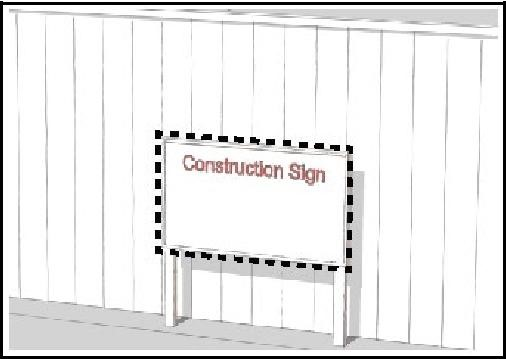
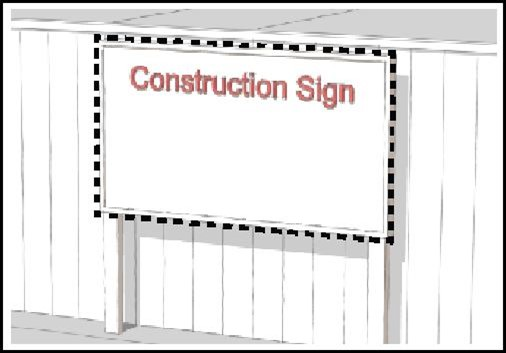
Construction signs. During construction on or development of property, construction signs shall be permitted as follows:
1.
Residential and professional office zoning districts. One (1) construction sign not exceeding thirty-two (32) square feet in area.
2.
Commercial zoning districts. One (1) construction sign not exceeding thirty-two (32) square feet in area.
(Ord. No. 25-01-02, § 1, 1-2-2025)
17.108.130 - Special limitations.
In addition to the limitations set forth in the other sections of this article, the following limitations shall apply to these specific types of signs:
A.
Wall signs.
1.
The total allowable sign area of the primary facade can be cumulative and split across multiple wall signs on the primary façade only.
2.
No wall sign shall cover wholly or partially any wall opening, nor project beyond the ends or top of the wall to which it is attached.
B.
Temporary signs.
1.
Temporary signs must be removed from the premises within thirty (30) days from the date the sign is issued, except for banners placed in city parks which must be removed within seventy-two (72) hours after placement.
2.
If any temporary sign is erected or maintained in such a manner so as to be in violation of this article and all other ordinances and laws of the city, the city may give written notice to the owner thereof and to the owner of the property and premises upon which the sign is located that the sign must be removed within three (3) days. If the sign is not thereafter removed, the city may cause its removal and impose the cost of the removal as a lien upon the property upon which the sign sits.
C.
Commercial entrance sign. All entrance signs shall be placed on private property and may not be placed in the right-of-way.
D.
Subdivision sign. All Subdivision signs shall be placed on private property and may not be placed in the right-of-way.
E.
Hand-held signs. Owner/user at their own risk.
F.
Banners. All banners shall be allowed to be erected for no more than seven (7) consecutive days whereby there is no re-use of said banner after expiration of time interval if for same use. Exception shall be for that of special events whereby the community development director shall reserve the authority of issuance after applicant provides necessary information pertaining to size, type, and location. Colors shall be of neutral color as to compliment the design standards of existing and new development. Banners also shall not be allowed along street frontages at ground level. This will deter the signage from being a potential traffic hazard and impacting the established streetscapes within the city limits.
G.
Responsibility of banners. Banners in city parks are the responsibility of the parks department of the city or county.
(Ord. No. 25-01-02, § 1, 1-2-2025)
17.108.140 - Special requirements by zoning classification.
In addition to all other regulations in this article, and except for as expressly provided for otherwise, all signs must conform with the requirements of the charts contained in this section. As used in these charts, the term "0" means that the use of that type of sign is prohibited.
A.
No sign shall be illuminated, either internally or externally, in any district zoned RA, R-200, R-100, R-85, R-75, RM-75, RTD, RCD and R-60, except that monument and/or subdivision signs may be externally illuminated from dusk until dawn.
B.
All temporary signs are prohibited on lots zoned for residential use, except for stake signs.
C.
In the downtown business district, except for properties used for residential, the following standards shall apply: NOTE: All proposed signage permits are submitted to the Community Development Department, then forwarded for review by the Main Street Manager and the Main Street Board of Directors' Design Committee. Once their review is complete, Main Street forwards a recommendation, a suggested change, or a denial to the Community Development Director. After Main Street responds, the final signage is approved by the Community Development Director per City Code and any applicable Zoning conditions.
1.
Materials of construction. All signs must be made of wood or metal unless painted or otherwise applied directly upon windows, awning valances or the exterior of the building. Paper, plastic (i.e., vinyl) and cardboard are prohibited as sign materials in the historic downtown business district except on windows.
2.
Projection over public property. The bottom of every hanging sign shall be placed at least eight (8) feet above the public sidewalk over which it is erected, and at a distance no greater than four (4) feet from the face of the wall to which it is attached, measuring from the point of the sign nearest thereto; and no sign or part thereof shall extend nearer the curb line than one (1) foot.
3.
Directory signs. Directory signs shall be required for all buildings where more than one (1) tenant occupies space for commercial use within one (1) building. Signs shall be included to enhance public safety by providing information to public safety officers of occupancy and aide traffic flow. Such directory sign shall not exceed three (3) square feet in sign area and shall be considered part of the total number of signs allowed for the building.
4.
No hindering ground signs. Ground signs shall be designed so as to not hinder pedestrian activity within the district.
5.
Monument signs. Monument signs shall be mounted on a decorative base not exceeding two (2) feet in height.
6.
Window signs.
a.
If not requiring a permit, the signage shall not exceed ten (10) percent of the total window or door area.
b.
If requiring a permit, the signage shall exceed ten (10) percent of the total window or door area.
7.
A-frame signs.
a.
A-frame signs are not to exceed a sign area of six (6) square feet.
b.
Materials shall be metal or wood. All other materials are prohibited.
8.
External illumination shall be allowed with the director's permission.
9.
Internally illuminated signs are prohibited.
10.
Projecting signs are prohibited.
11.
Roof signs are prohibited.
12.
Neon signs are prohibited.
13.
Temporary signs are prohibited.
14.
Flashing signs are prohibited.
D.
In districts used for hotels and hospitality as well as any other districts in which plan review and approval are required prior to development. The following requirements shall be observed:
1.
A uniform design scheme of signs shall be established for the development as a whole and/or for each building in the development and approved by the city.
2.
A signage plan for the development shall include detailed descriptions of all signs, including, but not limited to, size, height, location, type, colors and materials to be used, lighting and ownership responsibility.
3.
Plans for signs shall undergo the same review and approval process as is required of other aspects of the development.
4.
All signs shall be designed, erected and maintained in accordance with an approved plan.
(Ord. No. 25-01-02, § 1, 1-2-2025)
17.108.150 - Exceptions.
A.
Signs which, on the effective date of this article, were approved and legally erected under previous sign restrictions and which became non-conforming with respect to the requirements of this chapter restrictions:
1.
No change shall be made in the size of any nonconforming sign, nor shall any structural changes be made in such a sign unless the sign is brought into compliance with the provisions of this chapter.
2.
Any nonconforming sign declared to be unsafe by the community development director shall be removed or rendered safe and brought into compliance with the provisions of this chapter.
3.
No nonconforming sign damaged by fire or other causes shall be rebuilt in compliance with this chapter.
4.
Any sign erected in violation of this section may be removed from any public property or right-of-way by duly authorized employees of the city, and the responsible party may be cited for such violation.
5.
No conforming sign or advertising device shall be permitted or erected on any lot which has located there upon an existing nonconforming sign until the nonconforming sign has been removed.
B.
A nonconforming sign shall not be replaced by another nonconforming sign, except that the substitution or interchange of poster panels, painted boards or dismountable material on nonconforming signs shall be permitted.
C.
Minor repairs and maintenance of nonconforming signs shall be permitted. However, no structural repairs or changes in the size or shape of this sign shall be permitted except to make the sign comply with the requirements of this chapter.
D.
Big box stores (i.e. Home Depot, Lowes, Walmart, etc.).
Sign area. The max area of a wall sign is one (1) square foot per linear foot of building frontage to a maximum of five hundred (500) square feet, whichever is less.
E.
The total allowable sign area of the primary facade can be cumulative and split across multiple wall signs on the primary façade only.
(Ord. No. 25-01-02, § 1, 1-2-2025)
17.108.160 - Unsafe and unlawful signs.
A.
If the director shall find that any sign regulated herein is unsafe or unstable or is a menace to the public health or safety, or is abandoned, or is maintained in a dilapidated condition, or has been constructed or erected or is being maintained in violation of the provisions of this article, the director shall notify the permittee, owner, or occupant of the property on which the sign is located by certified mail of such violation. Said notice shall include a brief and complete statement of the violations to be remedied. If the permittee, owner, or occupant of the property where the sign is located cannot be located, notice shall be effected by the community development director affixing the notice to the sign or to the building on which the sign is erected.
B.
If the permittee or property owner fails to remove or alter the structure so as to comply with the standards herein set forth within ten (10) days after such notice, the permit for such sign shall be revoked and the permittee or property owner shall be subject to the penalties set forth in Section 17.108.170.
C.
In any case in which a sign is an immediate threat to the physical safety of persons or adjoining property, the director may cause such structure to be removed summarily and without notice and cause the cost of same to be placed as a lien on the property upon which the sign sits.
(Ord. No. 25-01-02, § 1, 1-2-2025)
17.108.170 - Penalties.
Any person found in violation of any of the provisions of the article shall be subject to a fine not to exceed five hundred dollars ($500.00) per day. A separate offense shall be deemed committed each day during or upon which a violation occurs or is permitted to continue. Any sign erected or maintained in violation of this chapter for more than thirty (30) days shall also be subject to removal by the city at the owner's or permittee's expense.
(Ord. No. 25-01-02, § 1, 1-2-2025)
17.108.180 - Severability.
A.
It is hereby declared to be the intention of the mayor and city council that, to the greatest extent allowed by law, each and every section, paragraph, sentence, clause or phrase of this chapter is severable from every other section, paragraph, sentence, clause or phrase of this chapter.
B.
It is hereby further declared to be the intention of the mayor and city council that, to the greatest extent allowed by law, no section, paragraph, sentence, clause or phrase of this chapter is mutually dependent upon any other section, paragraph, sentence, clause or phrase of this chapter.
C.
In the event that any phrase, clause, sentence, paragraph or section of this chapter shall, for any reason whatsoever, be declared invalid, unconstitutional or otherwise unenforceable by the valid judgement or decree of any court of competent jurisdiction, it is the express intent of the mayor and city council that such invalidity, unconstitutionality or unenforceability shall, to the greatest extent allowed by law, not render invalid, unconstitutional or otherwise unenforceable any of the remaining phrases, clauses, sentences, paragraphs or sections of the chapter and that, to the greatest extent allowed by law, all remaining phrases, clauses, sentences, paragraphs and sections of the chapter shall remain valid, constitutional, enforceable, and of full force and effect.
(Ord. No. 25-01-02, § 1, 1-2-2025)
17.108.190 - Signage chart.
(Ord. No. 25-01-02, § 1, 1-2-2025)

