
Mendocino County Unincorporated
City Zoning Code
City Zoning Code
CHAPTER 20
166 - ACCESSORY DWELLING UNITS AND JUNIOR ACCESSORY DWELLING UNITS
Sec. 20.166.005 - Purpose and Intent.
This chapter establishes regulations and a ministerial review process for Accessory Dwelling Units (ADU). Accessory dwelling units are intended to expand housing opportunities by increasing residential units available within existing neighborhoods while maintaining the primarily single-family residential character of the area.
(Ord. No. 4538, § 42(Exh. A), 9-10-2024)
Sec. 20.166.010 - Applicability.
This chapter applies to all accessory dwelling units and Junior Accessory Dwelling Units (JADU) as defined. Accessory dwelling units and junior accessory dwelling units are permitted by right in any zoning district which permits single-family or multi-family homes and do not exceed allowable density for the lot upon which it is located.
(Ord. No. 4538, § 42(Exh. A), 9-10-2024)
Sec. 20.166.015 - Permits and Approval.
(A)
Ministerial Action. Approval or denial of an accessory dwelling unit or junior accessory dwelling unit is a ministerial action and subject to compliance with the standards in this chapter and all other applicable codes.
(B)
Building Permit. All accessory dwelling units or junior accessory dwelling units shall require a building permit, subject to all the standard application and processing fees and procedures that generally apply to building permits. No other planning-related permit is required.
(C)
Issuance of Permit. The County shall issue a building permit within sixty (60) calendar days from the date on which the County received a completed application, unless either:
(1)
The applicant requests a delay, in which case the sixty-day time period is put on hold for the period of the requested delay; or
(2)
The application to create an accessory dwelling unit or junior accessory dwelling unit is submitted with an application to create a new single-family dwelling unit on the parcel. The County may delay acting on the accessory dwelling unit or junior accessory dwelling unit application until such time as the new single-family dwelling unit is approved.
(3)
If the County has not approved or denied the completed application within sixty (60) days, the application shall be deemed approved.
(D)
The County shall not deny an application for a permit to create an accessory dwelling unit or junior accessory dwelling unit due to the correction of nonconforming zoning conditions, building code violations, or unpermitted structures that do not present a threat to public health and safety and are not affected by the construction of the accessory dwelling unit or junior accessory dwelling unit.
(Ord. No. 4538, § 42(Exh. A), 9-10-2024)
Sec. 20.166.020 - Types of Accessory Dwelling Units.
(A)
Attached Accessory Dwelling Unit. An accessory dwelling unit that is attached to an existing or proposed primary dwelling including attached garages, storage areas or similar uses, such as through a shared wall, floor, or ceiling. An attached accessory dwelling unit can be created by converting a portion of an existing primary dwelling, by constructing a new primary dwelling which includes an accessory dwelling unit, or by constructing an addition to an existing primary dwelling. See Figure 20.166-A below.
(B)
Detached Accessory Dwelling Unit. An accessory dwelling unit that is physically detached or separated from the primary dwelling. A detached accessory dwelling unit includes a second-story addition above an existing detached structure. A detached accessory dwelling unit can be new construction or the conversion or expansion of an existing accessory structure. See Figure 20.166-A below.
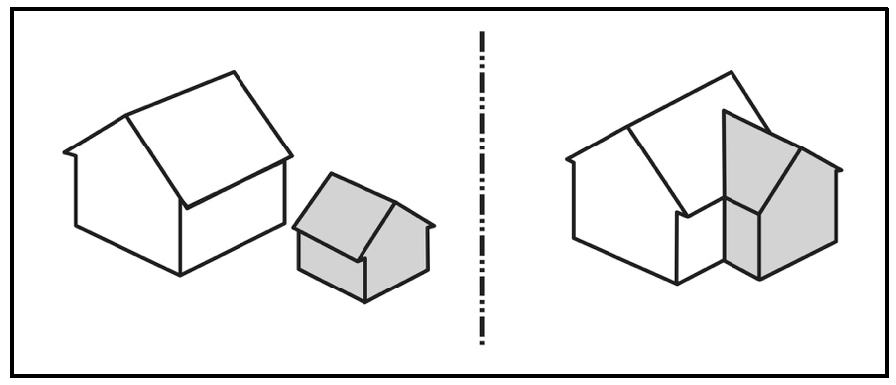
Figure 20.166-A—Accessory Dwelling Unit (Detached and Attached)
Accessory Dwelling Units can be detached from (left) or attached to (right) the primary unit.
(C)
Junior Accessory Dwelling Unit. An attached accessory dwelling unit that is a unit that meets the following criteria:
(1)
Maximum of five hundred (500) square feet in size.
(2)
Contained entirely within the existing footprint or area of a single-unit primary dwelling, including any attached garage, storage areas or similar uses (see illustration below).
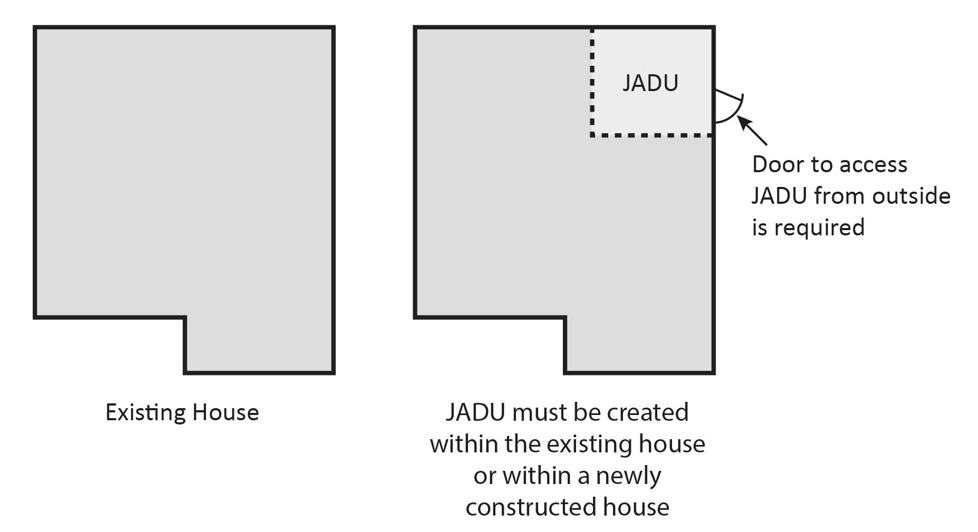
Figure 20.166-B—Junior Accessory Dwelling Unit
(3)
Has a separate entrance from the main entrance to the primary dwelling.
(4)
Has a bathroom either in the JADU itself or in a portion of the primary dwelling the resident of the JADU has full access to.
(5)
Includes an efficiency kitchen.
(Ord. No. 4538, § 42(Exh. A), 9-10-2024)
Sec. 20.166.025 - Number of Accessory Dwelling Units and Junior Accessory Dwelling Units on Lots or Parcels which allow Single Family Homes.
The following limits on the number of accessory dwelling units allowed on a lot or parcel apply in all zoning districts that in any zoning district which permits single-family or multi-family homes:
(A)
One (1) attached or detached accessory dwelling unit shall be allowed on a parcel, provided that no Second Residential Unit pursuant to Section 20.164.015(T) exists on the parcel, and that no building permit has been granted and has not expired for the construction of a Second Residential Unit.
(B)
In addition to an accessory dwelling unit or Second Residential Unit, one (1) junior accessory dwelling unit shall be allowed on a parcel.
(Ord. No. 4538, § 42(Exh. A), 9-10-2024)
Sec. 20.166.030 - Development Standards.
(A)
Attached Accessory Dwelling Units.
(1)
Location. Shall be located on the same lot or parcel as an existing or proposed primary dwelling unit and be attached to the primary dwelling unit by at least one (1) wall or by a ceiling (above or below the primary dwelling unit).
(2)
Size. The total floor area of an attached accessory dwelling unit shall not exceed fifty (50) percent of the existing or proposed primary dwelling unit. Unless constructed in compliance with provisions of section 20.166.040.
(3)
Setbacks.
(a)
Front yard setback: Per the zoning district standard for the primary dwelling. The Director shall modify or eliminate the front yard setback if it would prevent the construction of an Accessory Dwelling Unit of at least eight hundred (800) square feet in size.
(b)
Side yard: Four (4) feet.
(c)
Rear yard: Four (4) feet.
(4)
Height. Per the zoning district standard for the primary dwelling.
(5)
Access. An attached accessory dwelling unit shall have direct exterior access separate from the main entrance to the primary dwelling.
(6)
An adequate water system as approved by the Division of Environmental Health is available to serve the accessory dwelling unit.
(7)
An adequate sewage disposal system as approved by the Division of Environmental Health is available to serve the accessory dwelling unit
(8)
See section 20.166.035 for parking requirements.
(9)
Accessory dwelling units shall not be required to provide fire sprinklers if they are not required for the primary residence. The construction of an accessory dwelling unit shall not trigger a requirement for fire sprinklers to be installed in the existing primary dwelling.
(B)
Detached Accessory Dwelling Units.
(1)
Location. Shall be located on the same lot or parcel as an existing or proposed primary dwelling unit.
(2)
Size. A detached accessory dwelling unit shall not exceed twelve hundred (1,200) square feet in size, unless constructed in compliance with the provisions of section 20.166.040.
(3)
Setbacks. No setback shall be required for an existing living area or accessory structure or a structure constructed in the same location and to the same dimensions as an existing structure that is converted to an accessory dwelling unit or to a portion of an accessory dwelling unit. An accessory dwelling unit that is not converted from an existing structure or a new structure constructed in the same location and to the same dimensions as an existing structure, shall comply with the following setback requirements:
(a)
Front yard setback: Per the zoning district standard for the primary dwelling. The Director shall modify or eliminate the front yard setback if it would prevent the construction of an Accessory Dwelling Unit of at least eight hundred (800) square feet in size.
(b)
Side yard: Four (4) feet.
(c)
Rear yard: Four (4) feet.
(4)
Height. Per the zoning district standard for the primary dwelling.
(5)
An adequate water system as approved by the Division of Environmental Health is available to serve the accessory dwelling unit.
(6)
An adequate sewage disposal system as approved by the Division of Environmental Health is available to serve the accessory dwelling unit.
(7)
See section 20.166.035 for parking requirements.
(8)
Accessory dwelling units shall not be required to provide fire sprinklers if they are not required for the primary residence. The construction of an accessory dwelling unit shall not trigger a requirement for fire sprinklers to be installed in the existing primary dwelling.
(C)
Junior Accessory Dwelling Units.
(1)
Location. Shall be located on the same lot or parcel as an existing or proposed primary dwelling unit and be attached to the primary dwelling unit by at least one (1) wall or by a ceiling.
(2)
Size. Maximum of five hundred (500) square feet of living area.
(3)
Setbacks. Setbacks shall be the same as the existing structure or per the zoning district for the primary structure, whichever is less. Larger setbacks shall apply if required by Fire or Building codes on a case-by-case basis.
(4)
Access. A junior accessory dwelling unit shall have direct exterior access separate from the main entrance to the primary dwelling. If a permitted junior accessory dwelling unit does not include a separate bathroom, the permitted junior accessory dwelling unit shall include a separate entrance from the main entrance to the structure, with an interior entry to the main living area.
(5)
Kitchen. Each junior accessory dwelling unit shall include an efficiency kitchen.
(6)
Utilities.
(a)
Whether built as part of a new dwelling or converted from space in an existing dwelling, a junior accessory dwelling unit shall not be considered a separate or new dwelling unit for the purposes of calculating connection fees or County charges for utilities, including water, sewer, power service, or impact fees.
(b)
No new or separate utility connection between the junior accessory dwelling unit and the utility shall be required, although the property owner may voluntarily install a submeter for the junior accessory dwelling unit.
(c)
Any utility charges or fees shall be consistent with state law.
(7)
Parking. No additional off-street parking is required for the junior accessory dwelling unit.
(8)
Owner Occupancy Requirements for Junior ADUs.
(a)
The owner of the lot must reside on-site. Owner-occupancy shall not be required if the owner is another governmental agency, land trust, or housing organization.
(b)
A Junior Accessory Dwelling Unit shall not be sold, and rentals for terms shorter than thirty (30) days shall be prohibited.
(c)
Prior to obtaining a building permit for a Junior Accessory Dwelling Unit, a deed restriction, approved by the County, shall be recorded with the County Recorder's office, which shall include the pertinent restrictions and limitations of a junior accessory dwelling unit, which shall run with the land, and be binding upon any future owners, heirs, or assigns.
(Ord. No. 4538, § 42(Exh. A), 9-10-2024)
Sec. 20.166.035 - Required Parking.
(A)
One (1) off-street parking space, covered or uncovered, is required for each attached and detached accessory dwelling unit. However, no off-street parking space is required for an attached or detached accessory dwelling unit if one (1) or more of the following applies:
(1)
The accessory dwelling unit is located within one-half mile walking distance of public transit, including transit stations and bus stations.
(2)
When on-street parking permits are required by the County but not offered to the occupant of the accessory dwelling unit.
(3)
The accessory dwelling unit is part of the proposed or existing primary residence.
(4)
The accessory dwelling unit is the conversion of an existing accessory structure.
(5)
When there is a car share vehicle located within one (1) block of the accessory dwelling unit.
(6)
When a permit application for an accessory dwelling unit is submitted with a permit application to create a new single-family dwelling or a new multifamily dwelling on the same lot.
(7)
When the accessory dwelling unit is located within an architecturally and historically significant historic district.
(B)
No off-street parking is required for a junior accessory dwelling unit.
(C)
Required off-street parking for an accessory dwelling unit space may be located in setback areas or provided as tandem parking, including on a driveway.
(D)
Parking lost when a garage, carport, or covered parking structure is demolished to allow for the construction of an accessory dwelling unit or for the conversion of a structure to an accessory dwelling unit shall not be required to be replaced.
(Ord. No. 4538, § 42(Exh. A), 9-10-2024)
Sec. 20.166.045 - Accessory Dwelling Units and Junior Accessory Dwelling Units Exempt from Development Standards.
The types of accessory dwelling units provided for in this section shall not be required to comply with the development standards included in sections 20.166.030 and 20.166.035 and shall only be rented for a term longer than thirty (30) days. Prior to obtaining a building permit for an accessory dwelling unit pursuant to this section, a deed restriction, approved by the County, shall be recorded with the County Recorder's office, which shall include a restriction that the accessory dwelling unit only be rented for a term longer than thirty (30) days, which shall run with the land, and be binding upon any future owners, heirs, or assigns.
(A)
One (1) accessory dwelling unit and one (1) junior accessory dwelling unit is allowed per lot within a proposed or existing single-family dwelling or accessory structure if in compliance with the following:
(1)
If located in an accessory structure, an expansion of not more than one hundred fifty (150) square feet beyond the same physical dimensions as the existing accessory structure for the purposes of providing ingress and egress is proposed.
(2)
If located in a proposed or existing single-family dwelling, the space to be used for the accessory dwelling unit has exterior access from the proposed or existing single-family dwelling.
(3)
The side and rear setbacks are sufficient for fire and safety.
(4)
The junior accessory dwelling unit complies with the requirements of section 20.166.030(C).
(B)
One (1) detached, new construction, accessory dwelling unit that does not exceed four-foot side and rear yard setbacks for a lot with a proposed or existing single-family dwelling. The accessory dwelling unit may be combined with a junior accessory dwelling unit described in paragraph (A).
(C)
Multiple accessory dwelling units within the portions of existing multifamily dwelling structures that are not used as livable space, including, but not limited to, storage rooms, boiler rooms, passageways, attics, basements, or garages, if each unit complies with state building standards for dwellings. One (1) accessory dwelling unit shall be allowed within a multifamily dwelling and up to twenty-five (25) percent of the existing multifamily dwelling units.
(D)
Up to two (2) accessory dwelling units that are located on a lot that has an existing or proposed multifamily dwelling, but are detached from that multifamily dwelling and rear and side yard setbacks of no more than four (4) feet. If the existing multifamily dwelling has a rear or side yard setback of less than four (4) feet, no modification of the existing multifamily dwelling shall be required as a condition of approving the application to construct an accessory dwelling unit pursuant to this paragraph (D).
(E)
The installation of fire sprinklers shall not be required in an accessory dwelling unit described pursuant to paragraphs (A) through (D) if sprinklers are not required for the primary residence. The construction of an accessory dwelling unit shall not trigger a requirement for fire sprinklers to be installed in the existing multifamily dwelling.
(Ord. No. 4538, § 42(Exh. A), 9-10-2024)
Sec. 20.166.050 - Sale of Accessory Dwelling Units or Junior Accessory Dwelling Units.
An accessory dwelling unit or junior accessory dwelling unit may be sold in conformance with Government Code section 66341.
(Ord. No. 4538, § 42(Exh. A), 9-10-2024)

