
Missouri City City Zoning Code
SECTION 13
- SIGN REGULATIONS
Sec. 13.1.- Purpose and objectives.
The purpose of this section is to provide uniform sign standards which promote the safety of persons and property, provide for the efficient transfer of information, and protect the public welfare by enhancing the appearance and economic value of the landscape. The objectives to be pursued in applying specific standards are as follows:
A.
Safety. To promote the safety of persons and property by providing that signs:
1.
Do not create traffic hazards by confusing or distracting motorists or by impairing a driver's ability to see pedestrians, obstacles, or other vehicles or to read traffic signs; and
2.
Do not create a hazard due to collapse, fire, decay, or abandonment.
B.
Communications efficiency. To promote the efficient transfer of information in sign messages by providing that:
1.
Businesses and services may identify themselves;
2.
Customers and other persons may locate a business or service;
3.
No person or group is arbitrarily denied the use of the sight lines from the public right-of-way for communication purposes; and
4.
A person exposed to signs is not so overwhelmed by the number of messages presented that such person cannot find the information the person seeks and, such person is able to observe or ignore messages, according to the person's purpose.
C.
Landscape quality and preservation. To protect the public welfare and to enhance the appearance and economic value of the landscape by providing that signs:
1.
Do not interfere with scenic views;
2.
Do not create a nuisance to persons using the public rights-of-way;
3.
Do not constitute a nuisance to the occupancy of adjacent and contiguous property by their brightness, size, height, or movement; and
4.
Are not detrimental to land or property values.
(Ord. No. O-12-21, § 9, 6-18-2012)
Sec. 13.2. - Relation to zoning classifications.
A.
The term "suburban zoning district," as used in section 13 hereof, shall mean the SD suburban district.
B.
The term "residential zoning district," as used in section 13 hereof, shall mean the following zoning districts: R rural single-family residential district, R-1 single-family residential district, R-1-A single-family residential district, R-2 single-family residential district, R-3 two-family residential district, R-4 patio-cluster residential district, R-5 townhouse residential district, R-6 condominium residential district, MF-1 multifamily residential district, MF-2 multifamily residential district, and MH manufactured home district.
C.
The term "nonresidential zoning district," as used in section 13 hereof, shall mean the following zoning districts: LC local commercial district, LC-O local commercial office district, LC-1 local retail restricted district, LC-2 local retail district, LC-3 retail district, LC-4 retail district, BP business park district, I industrial district, and CF community facilities district.
(Ord. No. O-12-21, § 9, 6-18-2012)
Sec. 13.3. - Tables and depictions.
Tables and depictions shall be for reference purposes only. In the event that any table or depiction conflicts with any regulation within this section 13, the regulation shall prevail.
(Ord. No. O-12-21, § 9, 6-18-2012)
Sec. 13.4. - Application of regulations in the extraterritorial jurisdiction of the city.
A.
In accordance with the provisions of V.T.C.A., Local Government Code § 216.902, the provisions of section 13 hereof shall extend to and be enforced in the extraterritorial jurisdiction of the city.
B.
With respect to the application of the provisions of this section 13 within the extraterritorial jurisdiction of the city, whenever a lot, parcel, tract of land or any piece of real property within the extraterritorial jurisdiction is put to use, the sign regulations that would pertain to that use if such use was located within the city shall apply.
(Ord. No. O-12-21, § 9, 6-18-2012)
Sec. 13.5. - Master sign plan.
A.
Purpose. The purpose of a master sign plan is to:
1.
Provide for uniform characteristics in all sign elements, including type, design, and location, based upon specific criteria within an integrated business development, an independent business establishment, or a residential subdivision;
2.
Promote consistency among signs and create visual harmony between signs, buildings, and other components of such properties;
3.
Enhance the compatibility of signs with architectural and site design features;
4.
Encourage signs that are consistent with planned and existing uses; and
5.
Encourage integrated business developments to develop a set of sign regulations in conjunction with development standards.
B.
Master sign plan required.
1.
A master sign plan shall be required for integrated business developments, independent business establishments, and residential subdivisions.
2.
An application for a master sign plan shall be submitted by a property owner, a property owner's authorized agent, or an authorized agent of a homeowners' association in the following circumstances, whichever occurs first, and as applicable:
a.
Upon the submission of a building permit for the development of a new integrated business development, independent business establishment, or residential subdivision;
b.
Prior to the issuance of a sign permit for a new business to be located within an existing integrated business development or independent business establishment that does not have a master sign plan; or
c.
Prior to the issuance of a sign permit for the location of a sign in an existing residential subdivision that does not have a master sign plan.
3.
Upon the filing of a complete application for a master sign plan, the application and plans shall be examined by the director of development services or his designee. If such application complies with section 13 hereof and all other applicable laws, rules, and regulations, the director of development services or his designee shall approve the master sign plan. A master sign plan shall become effective on the date, as indicated on the site plan, on which the director of development services or his designee approves the master sign plan. Failure to obtain a master sign plan shall be grounds for withholding approval of a sign permit application.
4.
After a master sign plan has been approved for a particular integrated business development, independent business establishment, or residential subdivision, all existing and future owners, tenants, subtenants, and agents of property subject to such master sign plan shall comply with the standards set forth therein.
5.
A master sign plan may be amended by a property owner, a property owner's authorized agent, or an authorized agent of a homeowners' association by submitting a complete application for a master sign plan amendment to the director of development services or his designee. If an application for a master sign plan amendment complies with section 13 hereof and all other applicable city laws, rules, and regulations, the director of development services or his designee shall approve the master sign plan amendment.
6.
A master sign plan shall be required in addition to a sign permit required pursuant to subsection 13.6 hereof.
C.
Application requirements.
1.
An application for a master sign plan shall include a document describing or depicting the existing and proposed signs, and shall include the following:
a.
All sign types;
b.
Sign elevations (drawn to scale) for each existing and proposed sign that indicate each sign's:
i.
Dimensions;
ii.
Materials;
iii.
Colors and styles, including the lettering, fonts, logos, returns, and background; and
iv.
Illumination type (external or internal); and
c.
A site plan (drawn to scale) that indicates:
i.
Sign locations and the total number of signs;
ii.
Existing and proposed physical features and conditions, including the boundaries of the premises, building setbacks, streets, driveways, right-of-way widths, parking areas, sidewalks, utility easements, buildings and other structures;
iii.
Existing and proposed landscaping, buffer yards, and ornamental structures, including fences, fountains, public art, groundcover, and other landscaping elements;
iv.
Other features that may impact sign placement and visibility, including, but not limited to, large trees, grading, and water features; and
v.
The site's and adjacent tracts' zoning district designations.
2.
Sign elevations required by subsection 13.5.C.1.b hereof for the placement of monument signs shall be certified by a licensed engineer.
D.
Fees. An application for a master sign plan shall be accompanied by the payment of a fee in the amount specified in a resolution adopted by the city council establishing a schedule of fees.
(Ord. No. O-12-21, § 9, 6-18-2012)
Sec. 13.6. - Sign permits.
A.
Sign permit required.
1.
Except as provided by this section 13, a sign permit shall be required before erecting, constructing, reconstructing, structurally altering, or relocating any sign within the city. For the purposes of this subsection 13.6, a sign shall be considered to be reconstructed if more than 60 percent of the total existing sign structure is to be changed and a sign shall be considered to be structurally altered if any one of the following is to be changed: a channel letter, the sign type, the sign encasement, the sign base, any sign material, or a dimension of the sign.
2.
Upon the filing of an application for a sign permit, the application and plans shall be examined by the director of development services or his designee. If such proposed sign complies with the requirements of section 13 hereof, and all other applicable city rules and regulations, the director of development services or his designee shall issue the applicant a sign permit.
3.
A sign inspection shall be required before any sign for which a sign permit is required is located within the city. The applicant shall be required to arrange for such inspection in advance of the date the sign is to be located by contacting the director of development services or his designee.
4.
A sign permit shall be required in addition to any other permit or approval required for the use or occupancy of the premises to which the sign permit pertains.
B.
Application requirements. An application for a sign permit shall be accompanied by a plan or plans drawn to scale which shall include the following:
1.
The name of the integrated business development, independent business establishment, or residential subdivision for which the sign permit application has been submitted;
2.
A reference to the master sign plan, if applicable;
3.
The address of the premises;
4.
The legal description of the premises on which the sign is located;
5.
The names and signatures of the sign owner(s), landowner(s), and sign contractor;
6.
The gross leasable area of the integrated business development in which the sign is to be located, if applicable;
7.
The linear footage of business frontage, if applicable;
8.
The dimensions of the sign and its support structure;
9.
The maximum height of the sign base, if applicable;
10.
The materials of the sign and the sign structure;
11.
The colors and styles, including the lettering, fonts, logos, returns, and background of all proposed signs;
12.
Proof of a registered logo, trademark, or service mark to be included on the sign, if applicable;
13.
The proposed location of the sign;
14.
The location of all electrical transmission lines within 30 feet of any part of such proposed sign structure, if applicable; and
15.
The plans and specifications for the electrical system of the sign, if applicable.
C.
Fees. A sign permit application shall be accompanied by the payment of a fee in the amount specified in a resolution adopted by the city council establishing a schedule of fees.
D.
Exceptions. Except as otherwise provided herein, a sign permit shall not be required for the following:
1.
The changing of the advertising copy or message of a sign, provided that the sign shall not be structurally altered; and
2.
The maintenance of a sign.
E.
Stop orders. The issuance of a sign permit shall not constitute a waiver of this section 13 or other laws, rules, and regulations of the city. The director of development services or his designee may issue a stop order for any sign which is being erected, constructed, reconstructed, structurally altered or relocated in violation of section 13 hereof or any other law, rule, or regulation of the city.
(Ord. No. O-12-21, § 9, 6-18-2012)
Sec. 13.7. - Signs for areas subject to specific use permits.
Generally, the regulations for wall and monument signs as established by this section 13 for nonresidential zoning districts shall apply to areas to which a specific use permit applies. However, alternative rules may be applied by the city council in granting a specific use permit when it is deemed necessary for the protection of adjacent properties and the public interest.
(Ord. No. O-12-21, § 9, 6-18-2012)
Sec. 13.8. - Signs displaying commercial messages.
Notwithstanding any other provision of this section 13, any sign that may display a commercial message may also display any noncommercial message either in place of or in addition to the commercial message, provided that the sign shall be placed in accordance with other requirements of this section 13 and with other city laws, rules, and regulations that do not pertain to the content of the message displayed.
(Ord. No. O-12-21, § 9, 6-18-2012)
Sec. 13.9. - Summary of allowable signs.
Table 1 summarizes signs allowed within the corporate limits of the city and within the extraterritorial jurisdiction of the city.
Table 1. Allowable Signs by Zoning Districts
CE = Conditionally Exempt (allowed without a permit and subject to certain conditions)
P = Sign Permit required
— = Not Allowed
(Ord. No. O-12-21, § 9, 6-18-2012; Ord. No. O-13-01, § 5, 1-7-2013)
Sec. 13.10. - Regulations for conditionally exempt signs.
The following types of signs are allowed without a sign permit, provided that such signs comply with the provisions of this subsection 13.10:
A.
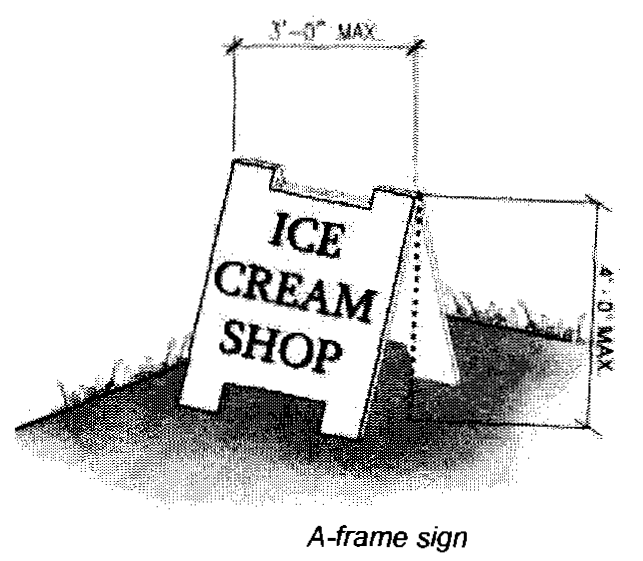
A-Frame signs. An A-frame sign may be located only in a nonresidential zoning district. Such sign shall be located in accordance with the following regulations:
1.
An A-frame sign shall be no more than four feet in height.
2.
An A-frame sign shall be no wider than three feet.
3.
An A-frame sign shall have a maximum area per side of 12 square feet.
4.
An A-frame sign shall be located only on a sidewalk abutting the advertised establishment.
5.
An A-frame sign shall be utilized only during the operational business hours of the establishment.
B.
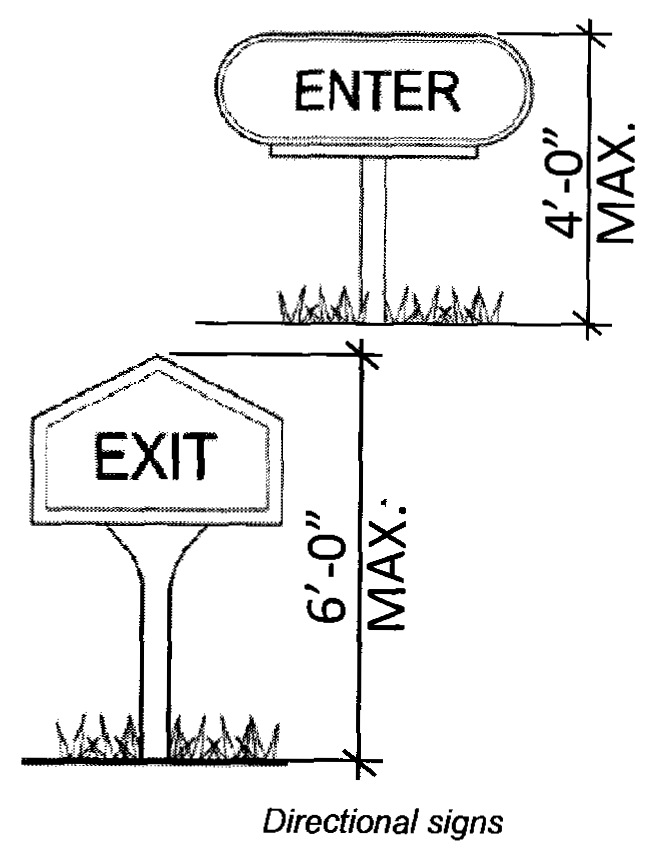
Directional signs. A directional sign may be located in any zoning district. Such sign shall be located in accordance with the following regulations:
1.
Except as provided by subsections 13.10.B.2 and 13.10.B.3 hereof, a directional sign shall be no more than four feet in height with a maximum area per side of six square feet.
2.
A directional sign located in an industrial zoning district shall be no more than six feet in height with a maximum area per side of six square feet.
3.
A directional sign located to direct vehicles or pedestrians to a residential subdivision recreational facility shall be no more than six feet in height with a maximum area per side of 16 square feet.
4.
A directional sign may be located only as an on-premises sign.
C.
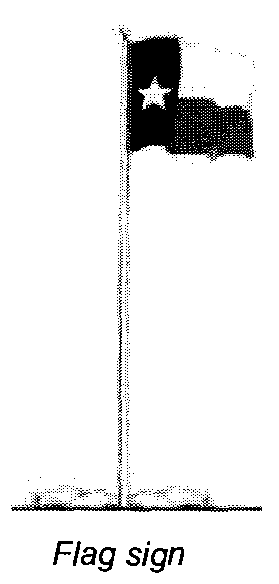
Flag signs. A flag sign may be located in any zoning district. Such sign shall be located in accordance with the following regulations:
1.
Flag signs in nonresidential zoning districts may only consist of governmental flag signs or, in accordance with subsection 13.10.C.3, flag signs containing commercial messages.
2.
All flag signs located in nonresidential zoning districts shall be displayed in accordance with the rules of etiquette for the display of United States of America flags contained in the United States Flag Code, 4 USC § 1 et seq.
3.
Flag signs containing commercial messages may only consist of registered or unregistered logos, trademarks, or service marks and must be located on the premises of the businesses or commercial enterprises which the signs advertise.
4.
Freestanding flagpoles shall be no more than 35 feet in height. The lowest component of a flag sign on a flagpole shall be a minimum of seven feet above the ground when measured at ground level.
5.
Flagpoles mounted on the walls of buildings shall not extend more than ten feet above the wall on which they are mounted and shall be no more than 35 feet in height.
6.
Flagpoles shall be permanently mounted.
7.
Flagpoles shall not be mounted on roofs. Flag signs shall not be displayed on or from roofs.
8.
No more than three flagpoles with a maximum of three flag signs, one flag sign per flag pole, may be located on each premises.
D.
Garage sale signs. A garage sale sign may be located in any zoning district. Such sign shall be located in accordance with the following regulations:
1.
A garage sale sign shall be no more than four feet in height.
2.
A garage sale sign shall have a maximum area per side of six square feet.
3.
No more than one on-premises garage sale sign may be located on the premises on which a garage sale is to be held.
4.
No more than two garage sale signs may be located on private property located within 1,000 feet from the premises on which a garage sale is to be held. Such signs shall be placed with the written permission of each property owner of the property on which the garage sale signs are to be located.
5.
A garage sale sign shall not be placed earlier than 24 hours prior to the beginning of the garage sale and shall be removed not later than 11:59 p.m. on the final day of the garage sale.
6.
Garage sale signs shall not be located on public property and property subject to a public easement or encumbrance. A garage sale sign located on public property or on property subject to a public easement or encumbrance may be removed by the city without notice.
E.
Political signs. A political sign may be located in any zoning district. Such sign shall be located in accordance with the following regulations:
1.
A political sign shall be no more than ten feet in height.
2.
A political sign shall not have a sign area greater than 36 square feet.
3.
A political sign shall not be illuminated.
4.
A political sign shall be located only on private property not subject to a public easement or encumbrance.
5.
A political sign placed solely for and relating to a public election shall be placed not earlier than the 30th calendar day before the first day of early voting and shall be removed not later than the third calendar day after the scheduled election date.
F.
Real estate signs. A real estate sign may be located in any zoning district. Such sign shall be located in accordance with the following regulations:
1.
A real estate sign shall be no more than four feet in height.
2.
A real estate sign shall shave a maximum area per side of six square feet.
3.
No more than one on-premises real estate sign may be located on real property for the sale, rent, or lease of such property.
4.
No more than two real estate signs may be located on private property abutting more than one major street, as identified by the city's thoroughfare plan, provided that such signs shall be located on a premises within 1,000 feet of the subject premises and placed with the written permission of each property owner of the property on which the real estate signs are to be located.
5.
Real estate signs shall be removed not later than the 15th calendar day after the date on which the property is sold, occupied, or removed from the market.
6.
Real estate signs shall not be located on public property and property subject to a public easement or encumbrance. A real estate sign located on public property or property subject to a public easement or encumbrance may be removed by the city without notice.
G.
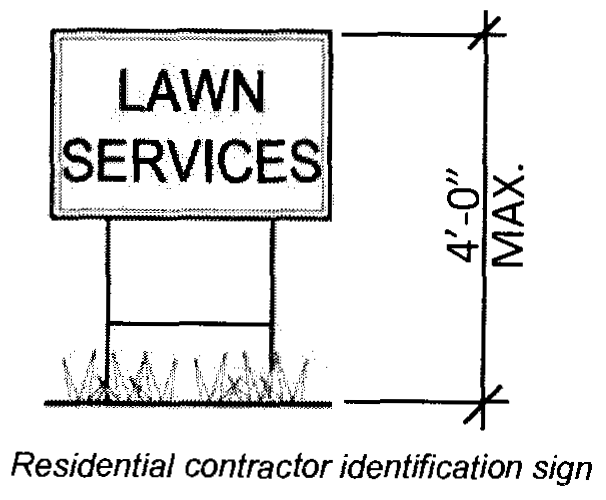
Residential contractor identification signs. A residential contractor identification sign may be located in any zoning district except for a suburban zoning district. Such sign shall be located in accordance with the following regulations:
1.
A residential contractor identification sign shall be no more than four feet in height.
2.
A residential contractor identification sign shall have a maximum area per side of six square feet.
3.
A residential contractor identification sign shall be located only on a premises on which a residential structure is located.
4.
No more than one residential contractor identification sign may be located on each premises.
5.
A residential contractor identification sign shall not be located on a premises earlier than the day on which the contractor's work commences on the premises and shall be removed not later than the third day after the day on which the contractor's work on the premises is completed.
H.
Vehicle signs. A vehicle sign may be located in any zoning district. Such sign shall be located in accordance with the following regulations:
1.
It shall be unlawful for a person to park a vehicle with a gross vehicle weight rating in excess of 6,000 pounds displaying a vehicle sign or a trailer displaying a vehicle sign so that the purpose of the vehicle or trailer is to be a sign.
2.
It shall be unlawful for a person to park a vehicle displaying a vehicle sign or a trailer displaying a vehicle sign within 15 feet of any edge of a parking lot that abuts a public right-of-way.
3.
This subsection shall not be interpreted or construed to allow the location of a vehicle or trailer where such location is otherwise restricted by other applicable laws.
4.
Affirmative defenses.
a.
It is an affirmative defense to prosecution under subsection 13.10.H.1 that the vehicle or trailer is not visible from a street.
b.
It is an affirmative defense to prosecution under subsection 13.10.H.1 that the vehicle is a motor vehicle, other than a motorcycle, used to transport persons and designed to accommodate 15 or fewer persons, including the operator.
c.
It is an affirmative defense to prosecution under subsection 13.10.H.2 that the vehicle or trailer is parked to the rear of a building.
d.
It is an affirmative defense to prosecution under subsections 13.10.H.1 and 13.10.H.2 that the vehicle or trailer is parked within an industrial zoning district.
e.
It is an affirmative defense to prosecution under subsections 13.10.H.1 and 13.10.H.2 that the vehicle or trailer is a mobile food unit that has a valid mobile food unit permit and is authorized to be located in the zoning district in accordance with section 9.19.
I.
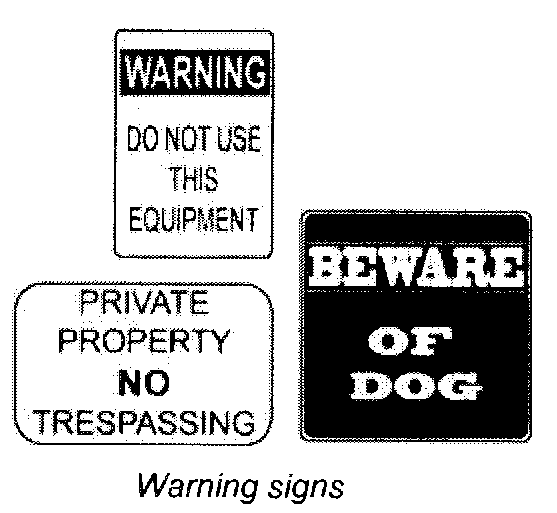
Warning signs. A warning sign may be located in any zoning district. Such sign shall be located in accordance with the following regulations:
1.
A warning sign shall have a maximum area of four square feet.
2.
No more than three warning signs may be located per 100 feet of property line.
J.
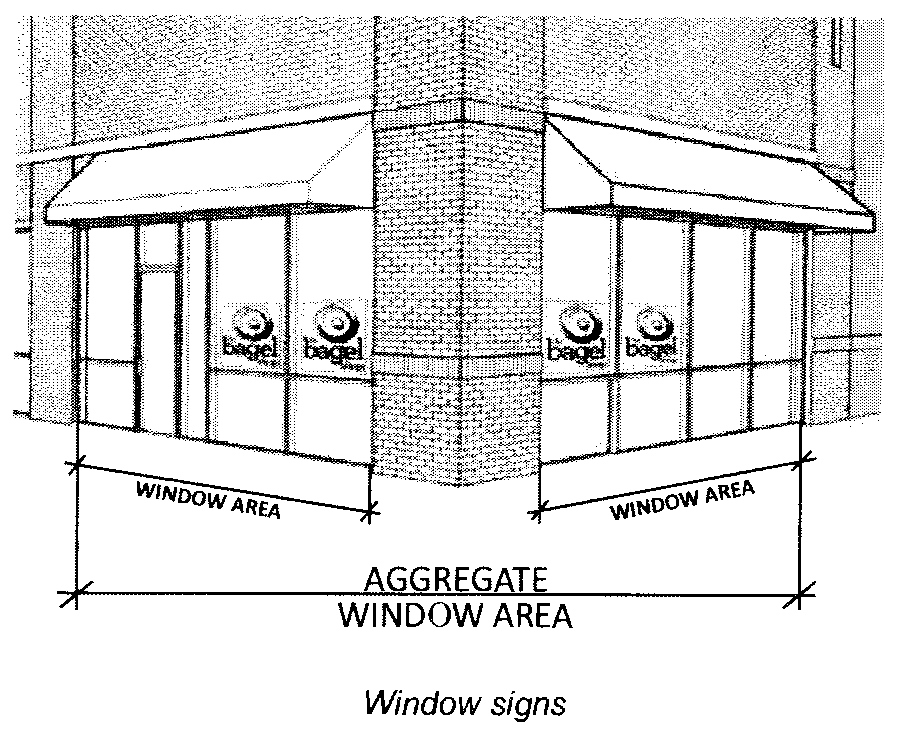
Window signs. A window sign may be located in any zoning district, except for a suburban zoning district. Such sign shall be located in accordance with the following regulations:
1.
Except as provided by subsections 13.10.J.2 and 13.12.P hereof, window signs in a nonresidential zoning district shall not exceed twenty-five percent of an establishment's aggregate window area.
2.
An establishment in a nonresidential zoning district that displays a changeable message sign on its premises may utilize no more than fifteen percent of the establishment's aggregate window area for window signs.
3.
The total sign area for all window signs located on a residential dwelling unit in a residential zoning district shall not exceed six square feet. Such signs may display only noncommercial messages.
(Ord. No. O-12-21, § 9, 6-18-2012; Ord. No. O-13-01, §§ 6, 7, 1-7-2013; Ord. No. O-17-41, § 4, 10-16-2017; Ord. No. O-25-02, § 2, 3-3-2025)
Sec. 13.11. - Summary of regulations for permitted signs.
Table 2 summarizes the regulations for permitted signs within the corporate limits of the city and within the extraterritorial jurisdiction of the city.
Table 2. Sign Regulations by Permitted Sign Type
Table 3. Low-profile, medium-profile, and high-profile monument sign regulations.
Table 3 summarizes low-profile, medium-profile, and high-profile monument sign regulations within the corporate limits of the city and within the extraterritorial jurisdiction of the city.
(Ord. No. O-12-21, § 9, 6-18-2012)
Sec. 13.12. - Regulations for permitted signs.
The following types of signs shall require a sign permit and are allowed, provided that such signs comply with the provisions of this subsection 13.12. Except for entry monument signs, off-premises monument signs, special event signs, and model home directional signs, the following types of signs shall be on-premises signs.
A.
Awning signs. An awning sign may be located only in a nonresidential zoning district. Such sign shall be located in accordance with the following regulations:
1.
An awning sign shall be a component of total allowable wall sign area, as calculated in subsection 13.12.R hereof.
2.
An awning sign shall be located only on the valance of an awning. An awning sign shall not be located on the projection of an awning.
3.
Awnings shall be constructed in accordance with the regulations set forth in section 7A hereof.
B.
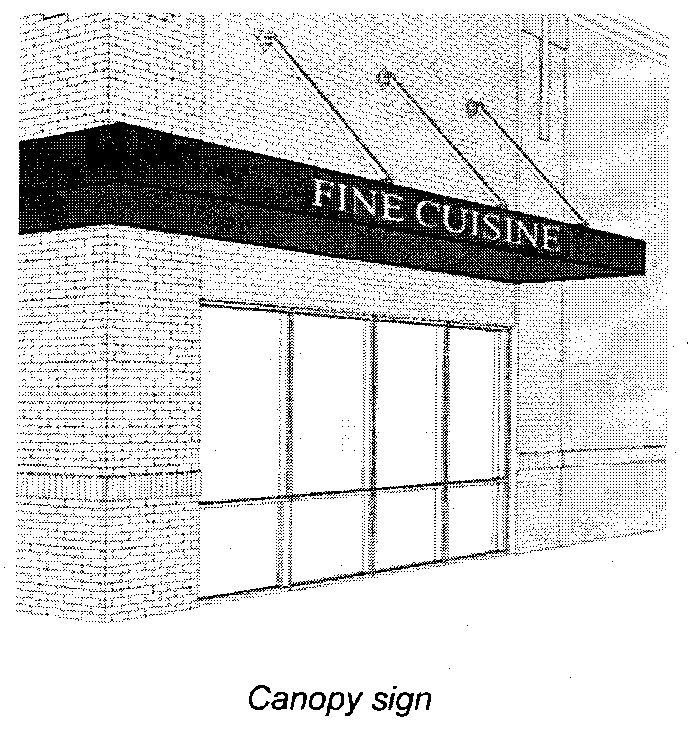
Canopy signs. A canopy sign may be located only in a nonresidential zoning district. Such sign shall be located in accordance with the following regulations:
1.
A canopy sign shall be a component of total allowable wall sign area, as calculated in subsection 13.12.R hereof.
2.
A canopy sign shall be flush mounted on the front or side of a canopy and shall not project or extend above, below or to the side of such canopy.
3.
A fuel-station canopy may include a color band, provided such color band does not exceed three feet in height from the bottom edge of the color band to the top edge of the color band.
C.
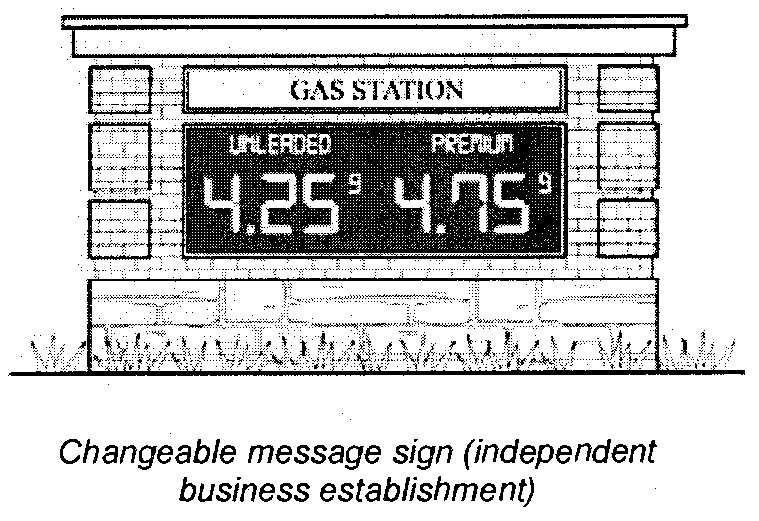
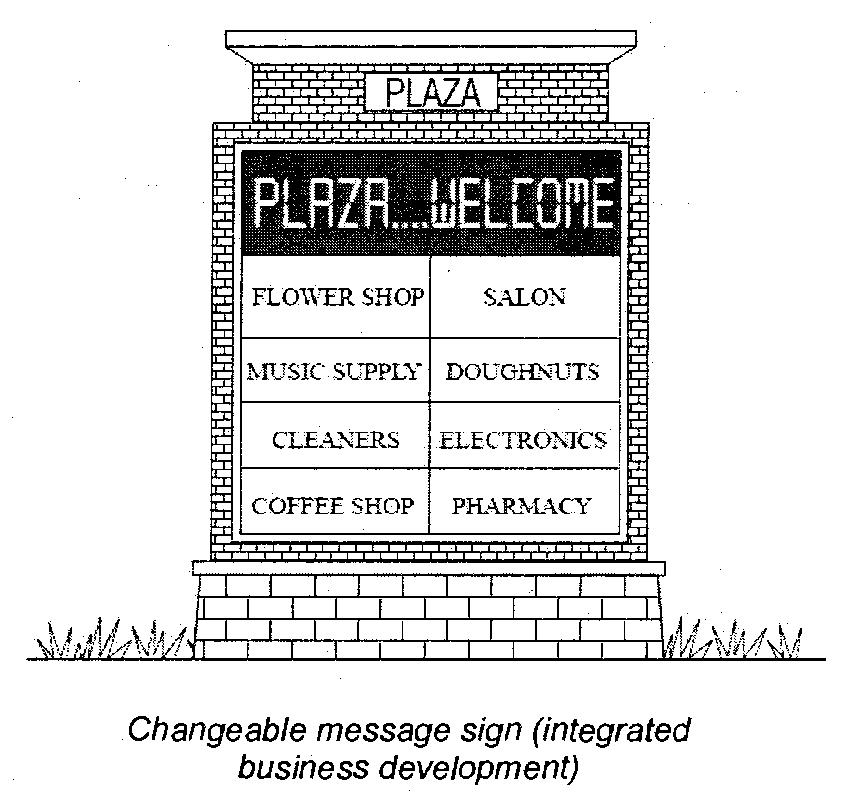
Changeable message signs. A changeable message sign may be located in any zoning district except for a suburban zoning district. Such sign shall be located in accordance with subsection 13.12.G hereof, the general requirements for monument signs, except as provided by the following regulations:
1.
A changeable message sign may be located only in a monument sign or a marquee sign, provided that the monument sign or marquee sign shall be located in accordance with section 13 hereof.
2.
Except as provided in this subsection 13.12.C, the sign area for each changeable message sign shall not exceed 24 square feet. The maximum sign area for a changeable message sign for a formally organized homeowners' association representing a residential subdivision that consists of 10,000 acres or more shall be 96 square feet.
3.
A changeable message sign for a formally organized homeowners' association representing a residential subdivision may be located only at a major entrance to a subdivision served by such homeowners' association.
4.
Except as provided herein, no portion of a changeable message sign shall flash, blink, rotate, scroll, twirl, change color, fade in or out, or in any manner imitate or simulate movement. A changeable message sign may include transitional movement, provided that such sign shall have: (a) a minimum display duration of eight seconds; (b) a transition time no longer than two seconds; and (c) a static display.
5.
A changeable message sign shall have a properly functioning automatic dimmer control that produces a distinct illumination change from a higher illumination level to a lower illumination level beginning one-half hour before sunset and ending one-half hour after sunrise each day.
6.
A changeable message sign shall be equipped with a properly functioning default mechanism that will stop the changeable message sign in one position should a malfunction occur.
D.
Construction site signs. A construction site sign may be located in any zoning district except for a suburban zoning district. Such sign shall be located in accordance with the following regulations:
1.
A construction site sign may only be located on a premises for which a valid building permit has been issued.
2.
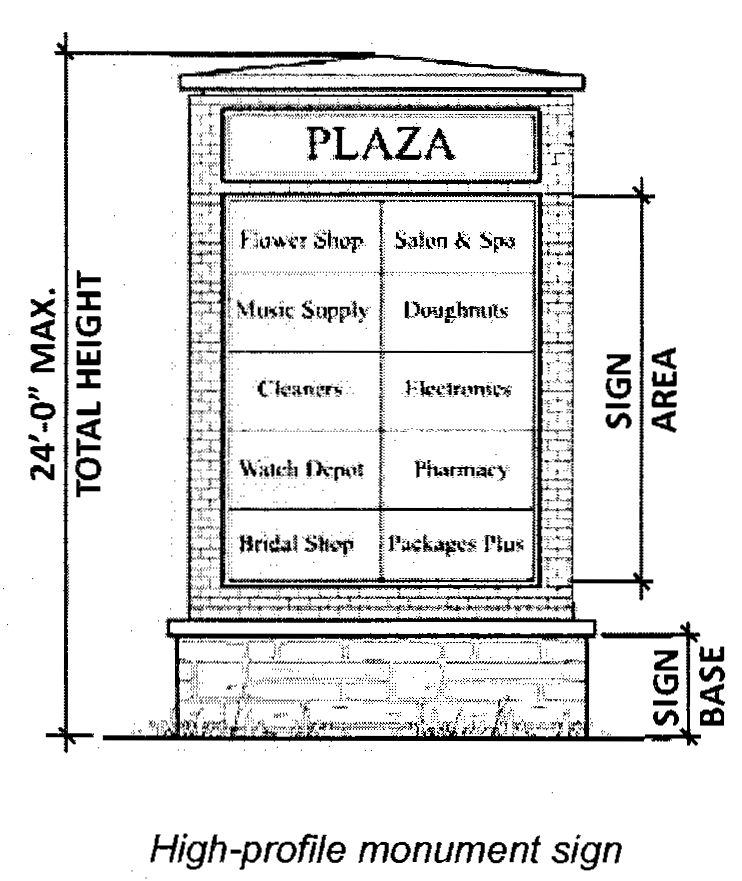
A construction site sign shall be no more than ten feet in height.
3.
A construction site sign shall be no wider than ten times the height of the sign.
4.
A single construction site sign or multiple construction site signs may be located on a construction site of less than ten acres, provided that the maximum sign area of all construction site signs shall be 64 square feet. A single construction site sign or multiple construction site signs may be located on a construction site of ten acres or more, provided that the maximum sign area of all construction site signs shall be 96 square feet. The sign area for each construction site sign shall be at least 32 square feet.
5.
A construction site sign shall be set back a minimum of five feet from any street frontage. A construction site sign shall be located a minimum distance of: (a) 50 feet from any side or rear property line and (b) 50 feet between all signs on the subject premises and 50 feet between all signs on the subject premises and on any adjacent properties. For spacing purposes, a construction site sign shall be measured from the edge or side of the sign structure closest to another sign structure to the closest edge or side of the other sign structure. A construction site sign located at the intersection of two streets shall be measured from the edge or side of the sign structure farthest from the intersection.
6.
No more than two construction site signs may be located along each street frontage abutting a construction site.
7.
A construction site sign shall be constructed of weather-resistant materials.
8.
A construction site sign shall be removed not later than the date on which either a certificate of occupancy or a temporary certificate of occupancy is issued for the premises.
E.
Entry monument signs. An entry monument sign may be located in any zoning district except for a suburban zoning district. Such sign shall be located in accordance with subsection 13.12.G hereof, the general requirements for monument signs, except as provided by the following regulations:
1.
An entry monument sign shall be no more than ten feet in height.
2.
The maximum sign area for all entry monument signs located at a major entrance to a subdivision that consists of less than 75 acres shall be 64 square feet. The maximum sign area for all entry monument signs located at a major entrance to a subdivision that consists of 75 acres or more shall be 288 square feet.
3.
The maximum sign area for each entry monument sign located at an entrance to a platted section of a subdivision shall be 32 square feet.
4.
No more than two entry monument signs may be located at each major entrance to a subdivision. No more than one entry monument sign may be located at each entrance to a platted section of a subdivision.
F.
Model home directional signs. A model home directional sign may be located in any zoning district except for a suburban zoning district. Such sign shall be located in accordance with the following regulations:
1.
A model home directional sign may be located in a subdivision, provided that an active model home sales office site shall be located in such subdivision.
2.
A model home directional sign shall be no more than ten feet in height.
3.
A model home directional sign shall be no wider than ten times the height of the sign.
4.
The maximum sign area for all model home directional signs located at a major entrance to a subdivision shall be 80 square feet. The maximum sign area for each model home directional sign located at an entrance to a platted section of a subdivision shall be 32 square feet.
5.
No more than two model home directional signs may be located at each major entrance to a subdivision. No more than one model home directional sign may be located at each entrance to a platted section of a subdivision.
6.
A model home directional sign may be located at an intersection in a subdivision, provided that a turn onto a street shall be necessary to lead a driver to the entrance of a platted section in which a model home is located within such subdivision. Where such turn is not necessary, but the distance from the major entrance to a subdivision to the entrance to a platted section in which a model home is located within such subdivision is more than one mile, no more than one model home directional sign may be located for each mile separating the two points. Such signs shall be equally spaced between the major entrance to a subdivision and the entrance to the platted section.
7.
Model home directional signs shall be removed upon the expiration of the permit for the use of land or lots as a model home sales office site in the subject subdivision section.
G.
Monument signs—General requirements. A monument sign may be located in any zoning district except for a suburban zoning district. Such sign shall be located in accordance with subsections 13.12.H, 13.12.I, and 13.12.J hereof, as applicable, and the following regulations:
1.
The sign base of a monument sign shall be no more than three feet in height.
2.
A monument sign shall be no wider than ten times the height of the sign.
3.
A monument sign shall have a sign area of at least 32 square feet.
4.
A monument sign shall be set back a minimum of five feet from any street frontage. A monument sign shall be located a minimum distance of: (a) 25 feet from any side or rear property line; (b) 50 feet between all signs on the subject premises; and (c) 50 feet between all signs on any adjacent properties. For spacing purposes, a monument sign shall be measured from the edge or side of a sign encasement closest to another sign encasement to the closest edge or side of the other sign encasement. A monument sign located at the intersection of two streets shall be measured from the edge or side of the sign encasement farthest from the intersection.
5.
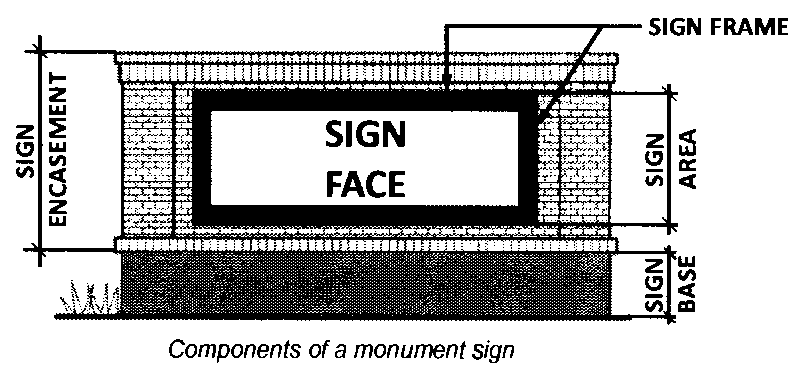
The sign area of a monument sign shall be located within a sign encasement. A sign encasement and the sign base of a monument sign shall be constructed of masonry material. A sign encasement and the sign base of a monument sign shall be constructed of the same primary material and shall match the color of the principal building, if applicable.
6.
The sign face of a monument sign shall be constructed of weather-resistant materials.
7.
Landscaping shall be provided for monument signs as required by subsection 11.7 hereof.
8.
A temporary monument sign may be located in any zoning district in which a monument sign may be located in accordance with this subsection 13.12.G hereof, the general requirements for monument signs, except as provided by the following regulations:
a.
A temporary monument sign may be located by an establishment, provided that a sign permit for a permanent monument sign has been issued for such establishment on the premises on which the temporary monument sign is to be located.
b.
A temporary monument sign shall be no more than ten feet in height.
c.
The maximum sign area for a temporary monument sign shall be 48 square feet.
d.
No more than one temporary monument sign may be located on each premises.
e.
A temporary monument sign shall be constructed of weather-resistant materials.
f.
A temporary monument sign shall be removed not later than the earlier of (1) the date on which the construction of a permanent monument sign is completed or (2) the 60th calendar day after the date on which the applicable monument sign permit application was made.
H.
Monument signs—Low-profile. A low-profile monument sign may be located in any zoning district except for a suburban zoning district. Such sign shall be located in accordance with subsection 13.12.G hereof, the general requirements for monument signs, except as provided by the following regulations:
1.
A low-profile monument sign shall be no more than ten feet in height.
2.
The maximum sign area for all low-profile monument signs located for each establishment shall be 64 square feet.
3.
No more than two low-profile monument signs may be located along each street frontage of an establishment.
I.
Monument signs—Medium-profile. A medium-profile monument sign may be located in any zoning district except for a suburban zoning district. Such sign shall be located in accordance with subsection 13.12.G hereof, the general requirements for monument signs, except as provided by the following regulations:
1.
A medium-profile monument sign shall be no more than 15 feet in height.
2.
The maximum sign area for all medium-profile monument signs located for each establishment shall be 160 square feet.
3.
A medium-profile monument sign shall not be located on a street with a posted speed limit of 40 miles per hour or less.
4.
No more than three medium-profile monument signs may be located along each street frontage of an establishment.
J.
Monument signs—High-profile. A high-profile monument sign may be located in any zoning district except for a suburban zoning district. Such sign shall be located in accordance with subsection 13.12.G hereof, the general requirements for monument signs, except as provided by the following regulations:
1.
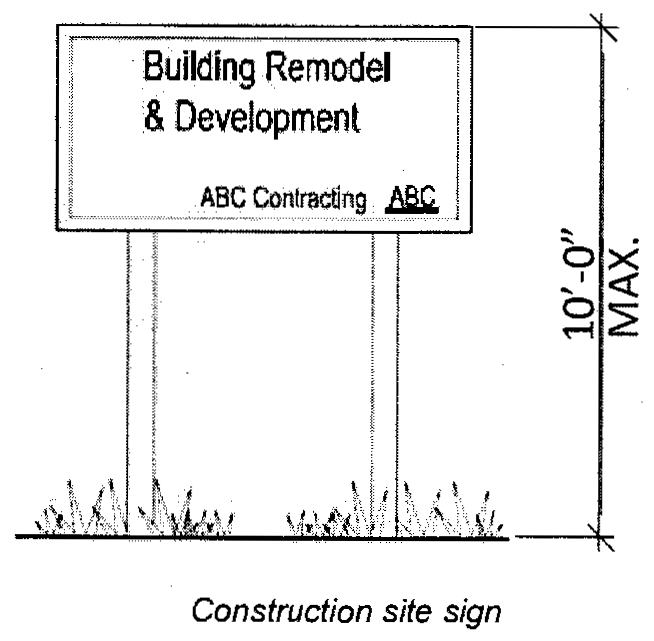
A high-profile monument sign shall be no more than 24 feet in height.
2.
The maximum sign area for each high-profile monument sign shall be 230 square feet.
3.
A high-profile monument sign shall not be located on a street with a posted speed limit of 50 miles per hour or less.
4.
A high-profile monument sign shall only be utilized for an integrated business development located on a premises adjacent to travel lanes that have a clearance height of 16 feet or more.
5.
No more than four high-profile monument signs may be located along each street frontage of an integrated business development.
6.
The sign base of a high-profile monument sign may be more than three feet in height.
7.
A high-profile monument sign shall be separated from another high-profile monument sign by at least 100 feet.
K.
Off-premises monument signs. An off-premises monument sign may be located in any zoning district except for a suburban zoning district. Such sign shall be located in accordance with subsection 13.12.G hereof, the general requirements for monument signs, except as provided by the following regulations:
1.
An off-premises monument sign may be a low-profile, medium-profile, or high-profile monument sign, provided that the off-premises monument sign shall be located in accordance with subsection 13.12.H, 13.12.I, or 13.12.J hereof, as applicable.
2.
No more than one off-premises monument sign may be located on each premises.
3.
An off-premises monument sign may be located on a premises, provided that the premises on which the off-premises monument sign is located shares a common entrance with the premises of the establishment for which the off-premises monument sign is displayed.
4.
An off-premises monument sign may be located on a premises in addition to other signs allowed by this section 13.
5.
An off-premises monument sign shall only identify a business, profession, activity, commodity, service, or entertainment located or conducted within the city or its extraterritorial jurisdiction.
6.
A premises on which an off-premises monument sign is located shall not be more than 1,000 feet from the premises on which the business, profession, activity, commodity, service or entertainment identified on such sign is located.
7.
An easement shall be required for the location of an off-premises monument sign. Such easement shall be recorded in the county in which the easement is located by a recorded plat or by a separate instrument.
L.
Private community recreational facility monument signs. A private community recreational facility monument sign may be located only in a residential zoning district. Such sign shall be located in accordance with subsection 13.12.G hereof, the general requirements for monument signs, except as provided by the following regulations:
1.
A private community recreational facility monument sign shall be no more than five feet in height.
2.
A private community recreational facility monument sign shall be no wider than ten times the height of the sign.
3.
The maximum sign area for a private community recreational facility monument sign shall be 48 square feet.
4.
No more than one private community recreational facility monument sign may be located on the premises of a residential subdivision recreational facility.
M.
Searchlight signs. A searchlight sign may be located only in a nonresidential zoning district. Such sign shall be located in accordance with the following regulations:
1.
A searchlight sign shall be located immediately adjacent to a business frontage or at the side of a building.
2.
No more than one searchlight sign may be located on a premises at any one time.
3.
A searchlight sign may not be displayed for more than five days or parts of days per calendar year.
N.
Special event signs for charitable, civic, and nonprofit purposes. A special event sign for charitable, civic, or nonprofit purposes and a directional sign for such event may be located in any zoning district except for a suburban district. Such signs shall be located in accordance with the following regulations:
1.
Special event signs in general. A special event sign that provides information about a special event on behalf of a charitable, civic, or nonprofit organization, or on behalf of a business or other profit-making organization sponsoring a special event for the benefit of a charitable, civic, or nonprofit organization located in the city shall be no more than ten feet in height and shall be no wider than ten times the height of the special event sign. The maximum sign area for each special event sign shall be 32 square feet. A special event sign for charitable, civic, or nonprofit purposes may be placed no earlier than ten calendar days before the special event and shall be removed not later than the second calendar day after the date of the special event. No more than one special event sign for charitable, civic, or nonprofit purposes may be located at each primary entrance to the special event. No more than one special event sign for charitable, civic, or nonprofit purposes may be located in the city's right-of-way at one or more of the following locations: McLain Boulevard at Gregory Boulevard, Cartwright Road at FM 2234, Cartwright Road at FM 1092, Cartwright Road at Dulles Avenue, FM 2234 at Missouri City Drive, State Highway 6 at Sienna Parkway, and State Highway 6 at Sienna Ranch Road.
2.
Special event directional signs. A special event directional sign for charitable, civic, or nonprofit purposes shall be no more than six feet in height and shall be no wider than ten times the height of the sign. The maximum sign area for such directional sign shall be 16 square feet. A directional sign used for a special event for charitable, civic, or nonprofit purposes may be placed no earlier than 24 hours before the special event and shall be removed not later than the first calendar day after the date of the special event. A directional sign for a special event for charitable, civic, or nonprofit purposes shall be located a minimum of one-half of a mile from another directional sign for such special event. In determining whether to approve directional signs for a special event for a charitable, civic, or nonprofit purpose, the director of development services or his designee shall consider the impact of such signs on adjoining properties.
3.
A special event sign for charitable, civic, or nonprofit purposes and a directional sign used for such special event shall be constructed of weather-resistant materials.
O.
Temporary display signs. A temporary display sign may be located only in a nonresidential zoning district. Such sign shall be located in accordance with the following regulations:
1.
An establishment may locate a temporary display sign on any portion of any facade of a building, except that such sign shall not be located on a facade that is located within 100 feet of a residential property line.
2.
A temporary display sign shall not project above the roofline or parapet walls of a building.
3.
No more than one temporary display sign may be located by each establishment at any one time.
4.
A balloon that is part of a temporary display sign may be displayed, provided the diameter of such balloon is no more than 12 inches.
5.
Banners that are part of a temporary display sign shall be no more than two square feet of area for each linear foot of business frontage with a maximum allowable area of 75 square feet. Such banners shall be flush mounted onto the facade of the building.
6.
All materials used in a temporary display sign shall be constructed of weather-resistant materials.
7.
A temporary display sign shall be displayed for a period not to exceed 15 consecutive calendar days and not more than 60 calendar days per year.
P.
Theater signs. A theater sign may be located only in a nonresidential zoning district. Such sign shall be located in accordance with the following regulations:
1.
The maximum sign area of a marquee sign located on a theater with a maximum posted occupancy of 750 or less shall be 100 square feet. The maximum sign area of a marquee sign located on a theater with a maximum posted occupancy of more than 750 shall be 200 square feet.
2.
A marquee sign shall be located only over the primary entrance of a theater.
3.
No more than one marquee sign may be located on a theater.
4.
A marquee sign shall be constructed of weather-resistant materials.
5.
Posters and window signs that consist of posters may be visible from the exterior of a theater, provided that such signs shall not exceed 50 percent of the exterior wall of the portion of the building in which the theater is located or 50 percent of the aggregate window area of the portion of the building in which the theater is located.
6.
The sign area of a marquee sign and the sign area of posters on a theater are not components of total allowable wall sign area or window sign area.
Q.
Vacant property signs. A vacant property sign may be located in any zoning district. Such sign shall be located in accordance with the following regulations:
1.
A vacant property sign may be displayed only during the period in which the real property identified by the sign is advertised for sale, rent, lease, or development.
2.
A vacant property sign shall be no more than ten feet in height.
3.
A vacant property sign shall be no wider than ten times the height of the sign.
4.
The maximum sign area for each vacant property sign shall be 48 square feet.
5.
A vacant property sign shall be set back a minimum of five feet from any street frontage. A vacant property sign shall be located a minimum distance of: (a) 50 feet from any side or rear property line and (b) 50 feet between all signs on the subject premises and [(c)] 50 feet between all signs on the subject premises and on any adjacent properties. For spacing purposes, a vacant property sign shall be measured from the edge or side of the sign structure closest to another sign structure to the closest edge or side of the other sign structure. A vacant property sign located at the intersection of two streets shall be measured from the edge or side of the sign structure farthest from the intersection.
6.
No more than two vacant property signs may be located along each street frontage abutting the premises.
7.
A vacant property sign shall be constructed of weather-resistant materials.
8.
A vacant property sign shall be removed not later than the 14th calendar day after the date on which the property is sold, occupied, or removed from the market.
R.
Wall signs. A wall sign may be located in any zoning district except for a suburban zoning district. Such sign shall be located in accordance with the following regulations:
1.
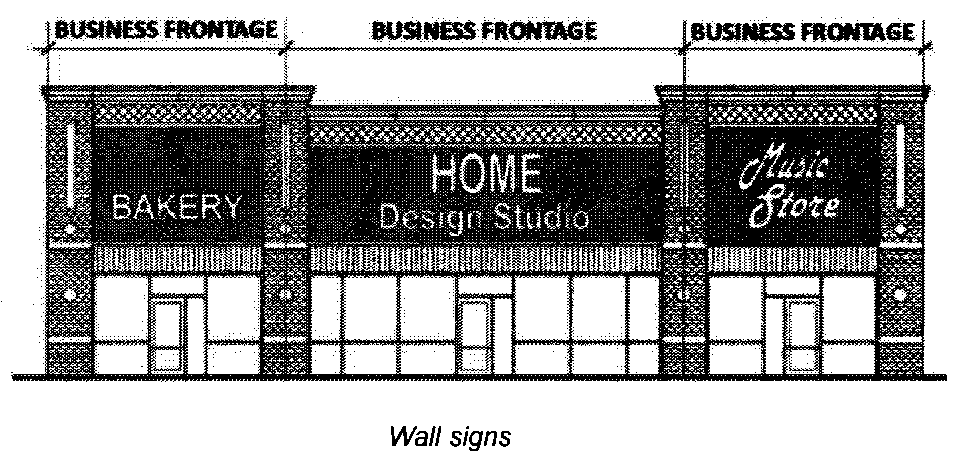
The maximum sign area for wall signs shall be two square feet for each linear foot of business frontage. An establishment located at the intersection of two public streets may utilize an additional 33 percent of wall sign area, provided that such establishment has business frontage along both public streets. Except as provided herein, no more than two square feet of wall sign area for each linear foot of business frontage may be located on any one front or side building facade. The maximum sign area for wall signs on the rear building facade shall be one square foot for each linear foot of business frontage.
2.
A wall sign may be located on any portion of any facade of a building, except that such sign shall not be located on a facade that is located within 100 feet of a residential property line.
3.
Except as provided herein, wall signs shall consist of channel letters and logos flush mounted directly onto a building facade, raceway, or wireway or contained within a panel sign. The board of adjustment may authorize, as a special exception, wall signs that do not consist of channel letters, provided that the board of adjustment makes a finding that the public welfare and convenience are substantially served; the proposed sign meets all other requirements for wall signs; the proposed wall sign consists of materials that are of equivalent or greater than the equivalent durability of channel letters; the proposed wall sign will be unlit; the proposed wall sign complements the architecture and appearance of the building on which the sign is to be located; the proposed wall sign will not alter the essential character of the district, including the essential character of nearby properties; and the proposed wall sign will not be located in an integrated business development. A wall sign shall not consist of sign boxes or sign bands.
4.
A wall sign shall not project above the roofline or parapet walls of a building.
5.
Wall sign raceways or wireways shall be installed in a uniform manner and shall be painted to match the surrounding predominant color of the building facade.
6.
Except as provided herein, lettering for wall signs shall be white. A wall sign may consist of:
a.
A logo, trademark, or service mark of any color that constitutes up to 100 percent of the sign area of a wall sign, provided that such logo, trademark, or service mark shall be registered;
b.
An unregistered logo, trademark, or service mark of any color, provided that such unregistered logo, trademark, or service mark shall not constitute more than 50 percent of the sign area of a wall sign; or
c.
Lettering in a single color other than white, provided that the board of adjustment makes a finding that the public welfare and convenience are substantially served; the white lettering would not be clearly visible from a roadway used by the general public; the proposed color of the wall sign complements the color and appearance of the building on which the sign is to be located; the proposed wall sign will not alter the essential character of the district, including the essential character of nearby properties; and the proposed wall sign will not be located in an integrated business development.
7.
Wall signs within an integrated business development shall be uniform in materials, location (including height and depth) and illumination and shall be similar in the method of construction and installation. Lettering fonts may differ for each tenant within an integrated business development.
8.
Wall sign trim caps shall match either the color of the sign return or the lettering color.
9.
Wall sign returns shall not match the lettering color. Wall sign returns shall be black or bronze if the lettering color matches or is similar in color to the color of the building facade to provide a contrast between the sign's lettering and the building facade unless the color of the building facade is black or bronze.
10.
Wall signs shall be constructed of weather-resistant materials.
11.
A temporary wall sign may be located in any zoning district in which a wall sign may be located in accordance with this subsection 13.12.R hereof, the requirements for wall signs, except as provided by the following regulations:
a.
A temporary wall sign located in an integrated business development may vary in materials, illumination, construction and installation from the permanent wall signs located within the integrated business development, provided that such wall sign shall be uniform in location (including height and depth) with other permanent wall signs.
b.
A temporary wall sign shall be removed not later than the earlier of (1) the date on which the construction of a permanent wall sign is completed or (2) the 60th calendar day after the date on which the applicable wall sign permit application was made.
(Ord. No. O-12-21, § 9, 6-18-2012; Ord. No. O-14-30, § 6, 8-18-2014)
Sec. 13.13. - Principles of sign area computation.
The following principles shall control the computation of sign area, height, and width.
A.
Computation of sign area of individual signs.
1.
Monument signs. The sign area of a monument sign shall be computed by measuring the area of the smallest geometric shape around the sign face and the sign frame. The sign base and sign encasement of a monument sign shall not be included in the calculation of the sign area.
2.
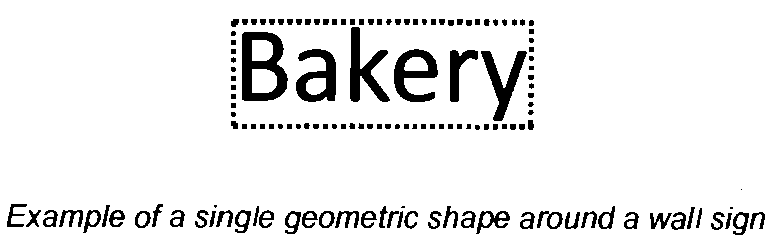
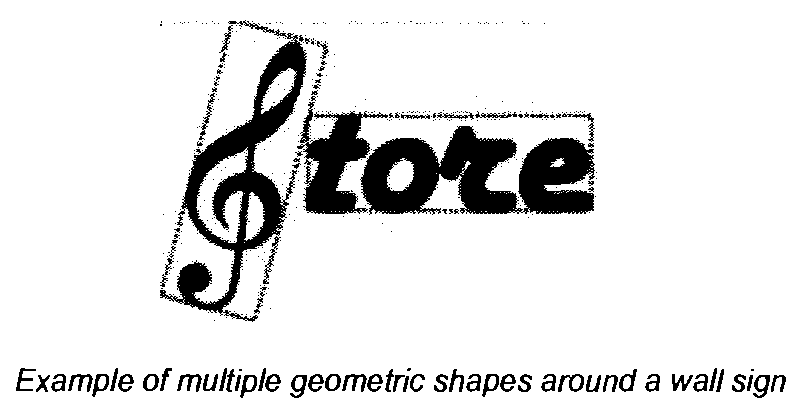
Wall signs. The sign area of a wall sign shall be computed to include the smallest geometric shape or a combination of geometric shapes, which completely encompass all elements in the sign face, the frame and any applied background that is not a part of the architecture of the building.
B.
Computation of sign area of multi-faced signs. Except as provided herein, the sign area for a multi-faced sign shall be computed by adding together the area of all sign faces visible from any one point. The sign area for a multi-faced sign shall be computed by measuring one sign face if: (1) the two sign faces are placed back to back in a manner that prevents both sign faces from being viewed from any point at the same time; (2) such sign faces are substantially similar; and (3) such sign faces are part of the same sign structure.
C.
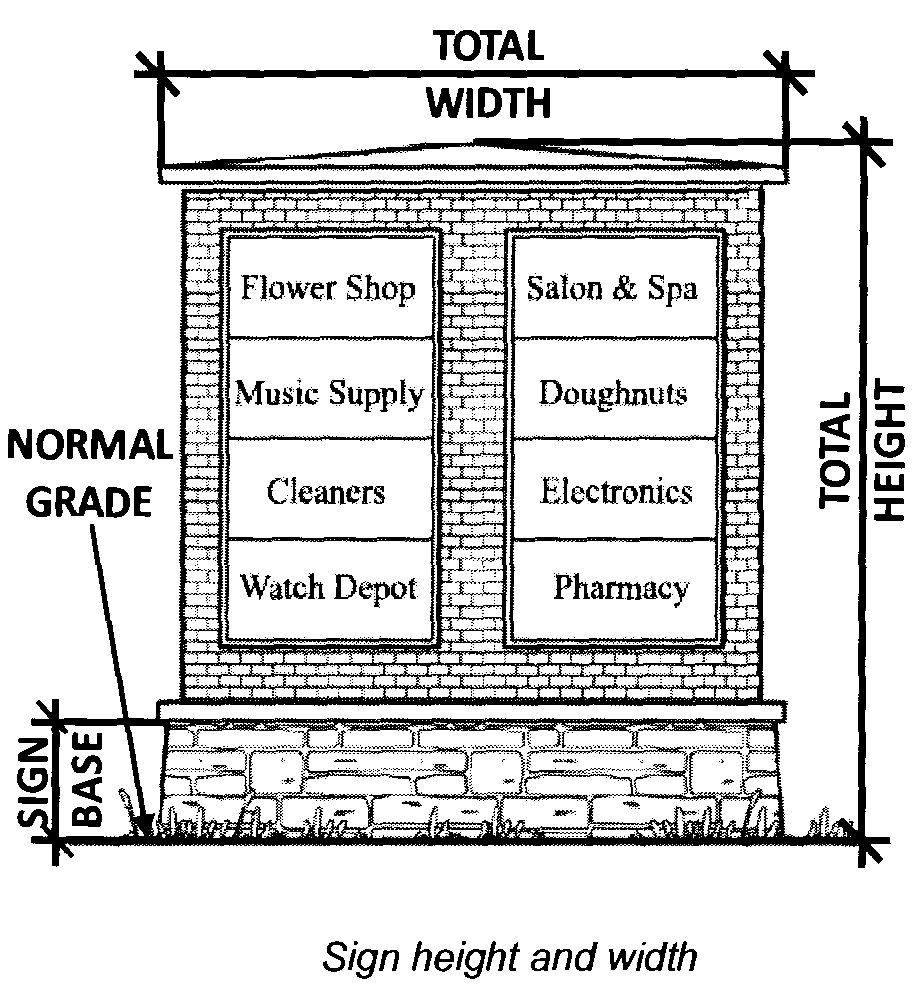
Computation of sign height. The height of a monument sign shall be computed as the distance from the bottom of the sign base of the sign at normal grade to the top of the highest attached component of the sign. The height of all other signs, except for wall signs, shall be computed as the distance from the bottom of the sign structure at normal grade to the top of the highest component of the sign structure. Normal grade shall be the lower of either (1) the existing grade prior to construction or (2) the newly established finished grade after construction, excluding any filling, berming, mounding or excavating solely for the purpose of locating the sign.
D.
Computation of sign width. The width of a monument sign shall be computed by measuring the distance between the left outer edge of the sign encasement to the right outer edge of the sign encasement. The width of all other signs, except for wall signs, shall be computed by measuring the distance between the left outer edge of the sign structure and the right outer edge of the sign structure.
(Ord. No. O-12-21, § 9, 6-18-2012)
Sec. 13.14. - Sign lighting standards.
A.
Exterior and interior sign lighting shall be screened to prevent glare on drivers of automobiles traveling on adjacent streets.
B.
An unshielded sign light source shall not be visible from the edge of the public right-of-way.
C.
All required electrical connections and components shall be mounted so as to not be visible from the public right-of-way.
(Ord. No. O-12-21, § 9, 6-18-2012)
Sec. 13.15. - Sign construction and maintenance.
All signs shall be designed, constructed, and maintained in accordance with the following standards:
A.
All signs shall be constructed and maintained in compliance with all applicable laws, rules, and regulations, including, but not limited to, the building code, the electrical code, and other applicable city ordinances. In the event of conflict between this section 13 and other laws, rules, and regulations, the most restrictive standard shall apply.
B.
Except as otherwise provided, all signs shall be constructed of durable materials and shall be permanently attached to the ground, a building, or another structure by direct attachment to a rigid wall, frame, or structure.
C.
All signs and sign structures shall be maintained in good repair and structural condition and shall have a neat appearance. Signs shall be maintained at reasonable intervals. Maintenance includes replacing defective parts and painting, repainting, and cleaning signs.
D.
All signs shall maintain a minimum clearance from electrical power lines of ten feet horizontally and 15 feet vertically, or as may otherwise be required by the utility provider.
E.
The building official or his designee shall require corrections of any signs deemed in violation of this section 13.
(Ord. No. O-12-21, § 9, 6-18-2012)
Sec. 13.16. - Exemptions.
Except as otherwise provided in this subsection 13.16 hereof, the following signs are allowed in any zoning district. Such signs may be placed only in accordance with the applicable provisions of this subsection 13.16:
A.
A sign located by the city.
B.
A sign required by law.
C.
A vehicle sign maintained by a governmental unit.
D.
A sign advertising the sale of a vehicle located on or affixed to the vehicle being advertised, provided that: (1) the sale of such vehicle shall not be a component of or used for a home occupation; (2) no more than one such vehicle shall be located on a residential lot in a residential zoning district at any one time; and (3) such vehicle shall be registered in the name of the owner of the residential lot. It is an affirmative defense to prosecution under this subsection that such vehicle is registered in the name of a resident of the residential lot.
E.
A sign located inside of a building, not attached to a window or door, that is not legible from a distance of more than three feet beyond the lot line closest to the sign.
F.
A menu board that is not attached to a window or door.
G.
Nameplate signs not exceeding two square feet for occupants of commercial, industrial, and professional buildings and for residents of multifamily dwellings and other similar facilities.
H.
Commemorative plaques and identification emblems of historical societies and organizations.
I.
Memorial signs, tablets, and building markers located on public or private buildings and tablets or headstones in cemeteries.
J.
Decorations associated with a holiday. Such decorations shall be displayed for only the length of time that such holiday is normally and customarily celebrated.
K.
Decorative landscaping lighting.
(Ord. No. O-12-21, § 9, 6-18-2012)
Sec. 13.17. - Prohibited signs.
The following signs shall be prohibited:
A.
Home occupation signs.
B.
Human signs.
C.
Inflatable signs.
D.
Except as otherwise provided in this section 13, portable signs.
E.
Except as provided by subsections 13.10.C and 13.12.C hereof, signs that move and signs that contain visible moving parts, including signs that blink, flash, flutter, rotate, spin, swing, travel, undulate, otherwise have ribbons, strings of light bulbs, moving lights or messages, or simulate movement.
F.
Except as provided herein, signs affixed to, attached to, or located upon exposed benches, trash containers, fences, trees, shrubs, and utility poles. Information about the manufacturer or distributor of benches and trash containers may be placed on their products, provided that such information shall not exceed ten percent of one surface of a bench or trash container.
G.
Except as otherwise provided in this section 13, pole signs and pylon signs.
H.
Signs attached to or located on roofs.
I.
Signs or portions thereof which are posted on or attached to any public right-of-way, public sidewalk, curb, hydrant, bridge, street light, traffic control device, street sign, or other similar public property without the written authorization of the public entity that owns or controls such property.
J.
Signs which interfere with, obstruct the view of, or may be confused with any official traffic control sign, signal, marking, or device.
K.
Signs violating the corner visibility triangle and the sight line triangle provisions set forth in the city infrastructure code.
L.
Signs which contain statements, words, pictures, photographs, silhouettes, drawings, or pictorial representations of any matter that depict or allude to the touching of human genitals, the pubic region, the anus, female breasts, sexual stimulation or sexual gratification, including sexual intercourse, masturbation, oral copulation, or sodomy, or signs which are obscene, as that term is defined by V.T.C.A., Penal Code § 43.21.
M.
Signs that emit an odor or produce an audible message.
N.
Signs not expressly allowed, conditionally exempt, or exempt from regulation pursuant to section 13 hereof.
(Ord. No. O-12-21, § 9, 6-18-2012; Ord. No. O-13-01, §§ 8, 9, 1-7-2013; Ord. No. O-14-30, § 7, 8-18-2014)
Sec. 13.18. - Illegal and nonconforming signs.
A.
Illegal signs; violation.
1.
The following signs are illegal signs:
a.
A sign located within the corporate limits of the city or within the extraterritorial jurisdiction of the city without a sign permit, either prior to or after the adoption of this section 13 if a sign permit was required for the location of such sign according to the laws, rules, and regulations in effect at the time the sign was located;
b.
A sign that does not comply with the applicable requirements of such sign according to the laws, rules, and regulations in effect at the time the sign was located; and
c.
A sign prohibited by this section 13 according to the laws, rules, and regulations in effect at the time the sign was located.
2.
It shall be unlawful for any person, including a sign owner, sign lessee, property owner, or tenant, to locate or allow the location of an illegal sign.
B.
Nonconforming signs.
1.
Generally. All signs which were legally located or legally maintained on the effective date of this section 13 or an amendment hereto and which do not conform to the provisions of this section 13 are nonconforming signs.
2.
Destruction and dismantling. A nonconforming sign shall lose its nonconforming status and shall be removed or modified so as to conform to the requirements of this section 13, provided that the sign, or a substantial part of such sign, has been destroyed or dismantled for any purpose other than maintenance operations or changing or replacing the letters or symbols on the sign. "Maintenance operations" and "changing or replacing the letters or symbols on the sign" shall not include a structural alteration to the sign. A structural alteration shall be a change to a channel letter or to the sign type, sign encasement, sign materials, sign base or dimensions of the sign. A nonconforming sign or a substantial part of such sign shall be considered to have been destroyed or dismantled if the cost of repairing or renovating the sign is more than 60 percent of the replacement cost of placing a new sign of the same type at the same location.
3.
Repair and renovation of nonconforming signs. A nonconforming sign shall lose its nonconforming status where the effect of a repair or renovation is to enlarge or increase the nonconforming sign. For the purposes of this subsection 13.18, routine maintenance shall not be considered to be repair or renovation.
4.
Removal required; notice. Except as provided by this section 13, a sign that has lost its nonconforming status shall be removed or modified so as to conform to the requirements of this section 13 by the property owner or his agent or by the sign owner or his agent, not later than the 30th day after the date on which the city sends written notice by United States Postal Service mail, return receipt requested, of the requirement to remove the sign pursuant to this subsection 13.18 to the physical address of the property on which such sign is located. Notification shall be complete upon deposit of the notice, enclosed in a postage paid, properly addressed wrapper, in a post office or official depository under the care and custody of the United States Postal Service.
(Ord. No. O-12-21, § 9, 6-18-2012)
Sec. 13.19. - Abandoned signs.
A.
Removal of abandoned signs required. If the premises, or a portion thereof, containing an on-premises sign is owned by the business or person that the sign or sign structure identifies or advertises, the on-premises sign shall be removed not later than the first anniversary of the date the business or person that the sign or sign structure identifies or advertises ceases to operate on the premises. If the premises containing the sign or sign structure is leased, such sign shall be removed not later than the second anniversary of the date the business or person ceases to operate on the premises.
B.
Notice of removal of abandoned signs. An abandoned sign that is required to be removed shall be removed by the owner of the building or premises upon which the sign is situated or his designee not later than the 30th day after the date on which the city sends written notice by United States Postal Service mail, return receipt requested, of the requirement to remove the sign pursuant to this subsection 13.19 to the physical address of the property on which such sign is located. Notification shall be complete upon deposit of the notice, enclosed in a postage paid, properly addressed wrapper, in a post office or official depository under the care and custody of the United States Postal Service.
C.
Sign permits subject to removal of abandoned signs. Except as provided herein, a sign permit shall not be issued for a new sign for a premises on which an abandoned sign is located until the abandoned sign is removed in accordance with this subsection 13.19. Approval may be granted on the condition that the abandoned sign shall be removed before a new sign is placed.
(Ord. No. O-12-21, § 9, 6-18-2012)
Sec. 13.20. - Owner's disclosure notice.
A.
A seller, owner, landlord or his respective agent shall give to the purchaser, tenant or lessee of property located in an integrated business development a written notice that reads substantially similar to the following:
NOTICE OF SIGN REGULATIONS
CONCERNING PROPERTY LOCATED AT _____ (street address)
The City of Missouri City requires all signs to be located in accordance with the applicable provisions of section 13 of the City of Missouri City Zoning Ordinance.
If a sign is not located in compliance with section 13 of the City of Missouri City Zoning Ordinance, the code official shall issue a letter listing such violations. Any violations must be corrected and the sign brought into compliance.
B.
The seller, owner, landlord or his respective agent shall deliver the notice required by this subsection 13.20 to the purchaser, tenant or lessee before the date the contract binds the purchaser, tenant or lessee to purchase, lease or rent the property. The notice may be given separately, as part of the contract during negotiations, or as part of any other notice delivered to the purchaser, tenant or lessee.
(Ord. No. O-12-21, § 9, 6-18-2012)

