
Morro Bay City Zoning Code
Division III
CITYWIDE REGULATIONS
Chapter 17.23 - GENERAL SITE REGULATIONS
Sections:
Chapter 17.24 - AFFORDABLE HOUSING, DENSITY BONUSES, AND OTHER INCENTIVES
Sections:
Chapter 17.25 - LANDSCAPING
Sections:
Chapter 17.26 - NONCONFORMING USES, STRUCTURES, AND LOTS (IP)
Sections:
Chapter 17.27 - PARKING AND LOADING (IP)
Sections:
Chapter 17.28 - PERFORMANCE STANDARDS
Sections:
Chapter 17.29 - SIGNS
Sections:
Chapter 17.30 - STANDARDS FOR SPECIFIC USES
Sections:
Chapter 17.31 - RESIDENTIAL AND MIXED USE OBJECTIVE DESIGN STANDARDS
Sections:
17.23.010 - Purpose and applicability (IP).
The purpose of this chapter is to prescribe development and site regulations that apply, except where specifically stated, to development in all districts. These standards shall be used in conjunction with the standards for each district and overlay district, including the coastal resource protection (CRP) overlay district, established in Division II, District Regulations. In any case of conflict, the standards specific to the district shall override these regulations.
(Ord. No. 662, § 2, 12-13-23)
17.23.020 - Accessory structures (IP).
A.
Applicability.
1.
The provisions of this section apply to roofed structures, including but not limited to garages, carports, sheds, workshops, gazebos, and covered patios, that are detached from and accessory to the main building on the site. These provisions also apply to open, unroofed structures such as play equipment, decks and trellises, that are over eighteen inches in height and that are detached from and accessory to the main building on the site.
2.
When an accessory structure is attached to the main building, it shall be made structurally a part of and have a common wall or roof with the main building and shall comply in all respects with the requirements of this title applicable to the main building.
B.
Relation to Existing Structures. A detached accessory structure shall only be constructed on a lot on which there is a permitted main building to which the accessory building is related.
C.
Development Standards. Accessory structures shall meet the setback, height, and lot coverage requirements of the district in which it is located in addition to the following:
1.
Roofed accessory structures eight feet in height or more or one hundred twenty square feet or greater in size shall be at least six feet from any dwelling existing or under construction, either on the same lot or an adjacent lot.
2.
Roofed accessory structures shall not project beyond the front building line of the main building on site.
D.
Laundry and Utility Sink Plumbing. A detached accessory structure may have plumbing for a washer, dryer, and/or utility sink provided that it has an open floor plan without interior partitions.
E.
Bathrooms. Bathrooms located in accessory structures not approved for living space shall only be permitted when a deed restriction, subject to the approval of the city attorney, is recorded to run with the property restricting the bathroom and adjoining space from being converted into living space for residential purposes.
F.
Guesthouses. Detached guesthouses are allowed in the agriculture district and in residential districts subject to the following:
1.
Limitation. Only one guesthouse is allowed per lot. Guesthouses shall not be allowed on a lot with an accessory dwelling unit except as allowed through conditional use permit approval on a lot seven thousand five hundred square feet or more in size.
2.
Size and Configuration. A guesthouse shall not contain more than six hundred forty square feet of habitable floor area, nor shall it exceed thirty percent of the floor area of the primary single-unit dwelling.
3.
Facilities. Guesthouses may contain conditioned space, a toilet, shower, and sink. Cooking or food preparation facilities are prohibited.
4.
Use. A guesthouse shall not be used for residential occupancy independent from the primary single-unit dwelling or as a dwelling unit for rent.
(Ord. No. 662, § 2, 12-13-23)
17.23.030 - Demolition of buildings and structures.
A.
Applicability. No building or structure in the city can be demolished, removed, or relocated, except as authorized under the provisions of this section.
B.
Demolition Defined.
1.
Demolition. A demolition subject to the provisions of this section and all other applicable city regulations occurs when any of the following take place at any time over a five-year period:
a.
More than fifty percent of the structural elements of the roof or roof framing is removed.
b.
More than fifty percent of the structural exterior walls (or vertical supports such as posts or columns when a structure has no walls) of a structure are removed or are no longer a necessary and integral structural component of the overall building.
c.
More than fifty percent of the foundation system is removed or is no longer a necessary and integral structural component of the overall structure, including, but not limited to: perimeter concrete foundation, retaining walls, post and pier foundations, or similar element(s) that connect a structure to the ground and transfers gravity loads from the structure to the ground.
2.
Calculation. The calculation for determining whether a wall has been demolished will be based on a horizontal measurement of the perimeter exterior wall removed between the structure's footings and the structure's ceiling. The calculation for determining whether the roof or foundation system has been demolished will be based on the lineal feet of the foundation system, count of post and piers, or overall square footage of that individual element.
3.
Removal. The removal of a building for relocation to another lot is considered a demolition.
C.
Coastal Development Permit Required in the Coastal Resource Protection (CRP) Overlay District. Demolition is considered development pursuant to Section 17.54.020 D, Development. No building permit or demolition permit will be issued by the city for any development that requires a coastal development permit under the California Coastal Act of 1976 or Public Resources Code § 30000 et seq. until such time as a coastal development permit has been issued for such development.
(Ord. No. 662, § 2, 12-13-23)
17.23.040 - Development on substandard lots (IP).
A.
Any lot or parcel of land that was legally created through a recorded deed may be used as a building site even when consisting of less area, width, or depth than that required by the regulations for the district in which it is located.
B.
No substandard lot can be further reduced in area, width, or depth, unless such reduction is required as part of a public improvement.
C.
A substandard lot will be subject to the same setback and density requirements as a standard lot.
(Ord. No. 662, § 2, 12-13-23)
17.23.050 - Encroachments into required setbacks (IP).
Where setbacks are required in this title, they shall be not less in depth or width than the minimum dimension specified, and they shall be at every point open and shall not be obstructed with non-movable features from the ground upward, except as provided in Table 17.23.050, Allowed Encroachments into Required Setbacks, or as specifically identified in another section of this title. Flags and flag poles are not allowed within required setback areas. The encroachments allowed in Table 17.23.050 are solely for specified zoning setbacks (for front, side, and rear yards) and not for any coastal resource setbacks (e.g., related to coastal bluffs/beaches or sensitive habitats).
(Ord. No. 662, § 2, 12-13-23)
17.23.060 - Fences and freestanding walls.
Fences, walls, dense hedges, and similar structures shall comply with the standards of this section.
A.
Maximum Height. The maximum allowed height of fences, walls, dense hedges, and related structures is as follows:
1.
Front and Corner Side Setbacks.
a.
Solid Fences, Walls, Dense Hedges, and Similar Structures. Solid fences, walls, dense hedges, and similar structures may be a maximum of three feet high within the required front and corner side setback except on parcels north of Alva Paul Creek and east of Highway One where solid fences, walls, dense hedges, and similar structures may be a maximum of four feet. Fence heights in existence as of date of adoption of Ordinance 662 shall be considered legal, non-conforming and allowed to remain to the maximum height of six and one-half feet.
b.
Open Fences, Walls, Hedges, and Similar Structures. Fences, walls, hedges, and similar structures with fifty percent or more of the surface open to the passage of air and light may be a maximum of four feet high within the required front and corner side setback except on parcels north of Alva Paul Creek and east of Highway One where such open fences, walls, dense hedges, and similar structures may be a maximum of five feet. Fence heights in existence as of date of adoption of Ordinance 662 shall be considered legal, non-conforming and allowed to remain to the maximum height of six and one-half feet.
2.
Areas Outside Front and Corner Side Setbacks. Fences, walls, dense hedges, and similar structures located outside the required front and corner side setback areas may be a maximum of six feet, six inches high.
3.
Decorative Features. One pedestrian entry gateway, trellis, or other entry structure is permitted in the required front or street-facing side yard of each lot, provided that the maximum height or width of the structure does not exceed ten feet. Such decorative feature shall not have any solid obstruction that exceeds two feet in diameter between the height of three and ten feet.
4.
Exceptions. The director may allow additional height, up to two feet with zoning clearance approval, where the location or characteristics of the site warrant additional height for safety or security purposes.
a.
Additional height may be allowed with minor use permit approval for fences, walls, dense hedges, and similar structures to enclose commercial or industrial uses, tennis courts, or similar areas.
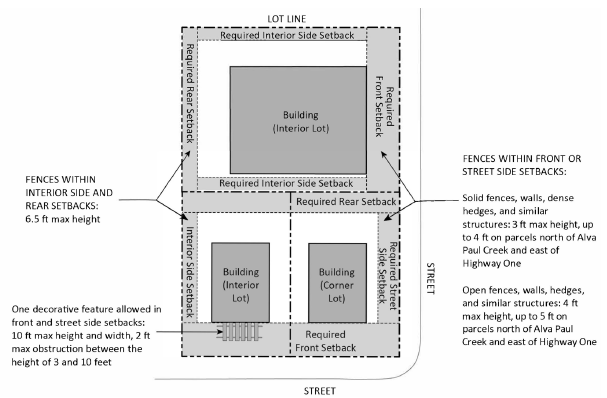
FIGURE 17.23.060(A): MAXIMUM HEIGHT, FENCE AND FREESTANDING WALLS
B.
Separation. Fences, walls, and similar structures located parallel to or within forty-five degrees of another shall be located a minimum of three feet apart. The area between the fences, walls, or similar structures shall be landscaped.
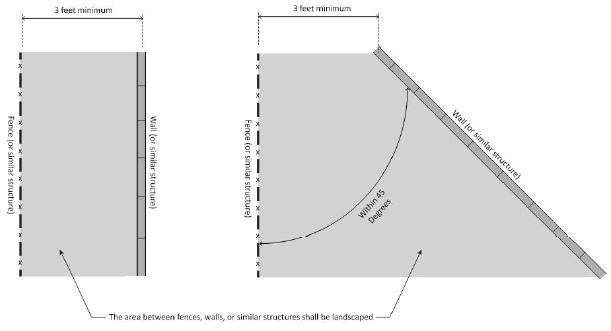
FIGURE 17.23.060(B): REQUIRED SEPARATION, FENCE AND FREESTANDING WALLS
C.
Intersection Visibility. Notwithstanding other provisions of this section, fences, walls, and related structures must comply with Section 17.23.180, Visibility at Intersections.
D.
Materials.
1.
Prohibition on Hazardous Fencing Materials. The use of barbed wire, razor wire, ultra-barrier, electrified, and other hazardous fencing is not permitted unless such fencing is required by any law or regulation of the city, the State of California, Federal Government, or other public agency. An exception to this standard may be approved for sites in an industrial district, according to the procedures of Chapter 17.42, Modifications.
2.
Limitation on Chain-Link Fencing. Chain-link fencing is not permitted in residential districts.
3.
Limitation on Concrete Block. Plain, concrete block is not permitted as a fencing material. Concrete block must be finished with stucco and capped with a decorative cap.
E.
Maintenance. All walls and fences shall be maintained in a safe, neat and orderly condition at all times.
(Ord. No. 662, § 2, 12-13-23)
17.23.070 - Heights and height exceptions (IP).
The structures listed in the following table may exceed the maximum permitted height for the district in which they are located, subject to the limitations stated and further provided that no portion of a structure in excess of the building height limit may contain habitable area or advertising.
(Ord. No. 662, § 2, 12-13-23)
17.23.080 - Lighting and illumination.
A.
Applicability. The standards of this section apply to all new development and to exterior alterations and additions that involve replacement light fixtures or systems, except as provided below.
1.
Exemptions. The following lighting is exempt from the provisions of this section.
a.
Public and Private Street Lighting.
b.
Athletic Field Lights. Athletic field lights used within a school campus or park.
c.
Safety and Security Lighting. Safety and security lighting for public facilities.
d.
Construction and Emergency Lighting. All construction or emergency lighting fixtures, provided they are temporary and are discontinued immediately upon completion of the construction work or abatement of the emergency.
e.
Seasonal Lighting. Seasonal lighting displays related to cultural or religious celebrations.
f.
City-Sanctioned Special Events. Lighting in conjunction with a city-sanctioned special event.
B.
Prohibitions. The following types of exterior lighting are prohibited.
1.
Searchlights. The operation of searchlights for advertising purposes.
2.
Mercury Vapor. Mercury vapor lights.
3.
Other Light Types. Laser lights or any other lighting that flashes, blinks, alternates, or moves.
C.
Exterior Lighting Plan Required. In the coastal resource protection (CRP) overlay district, an exterior lighting plan pursuant to Section 17.14.090 B, Exterior Lighting, is required.
D.
General Requirements. Exterior lighting shall be designed to be an integral part of the built environment, reflecting a balance for the lighting needs with the contextual ambient light level and surrounding nighttime characteristics of the community. Lighting for commercial installations adjacent to or near residential uses shall be compatible with and not directly illuminate nearby residential uses.
1.
Required Illumination.
a.
Sites Serving Three or More Residential Units.
i.
Lighting in parking areas, garage areas, and carport areas shall be maintained with a minimum of one foot-candle of illumination at the ground level during the hours of darkness.
ii.
Aisles, passageways, and recesses related to and within the site shall be illuminated with an intensity of at least 0.25 foot-candles at the ground level during the hours of darkness.
b.
Non-residential Buildings. All exterior doors, during the hours of darkness, shall be illuminated with a minimum of 0.5 foot-candle.
c.
Parking Areas. Parking areas consisting of four or more parking spaces shall be illuminated with a minimum of one foot-candle at ground level.
2.
Maximum Height.
a.
Within one hundred feet of a residential district: Sixteen feet.
b.
Other Locations: Twenty-five feet.
c.
Exceptions: The planning commission may allow additional height for activities, uses, or development with unique lighting needs; for accentuating historic architectural features of a building, accentuating signage and/or landscape features; or for security purposes.
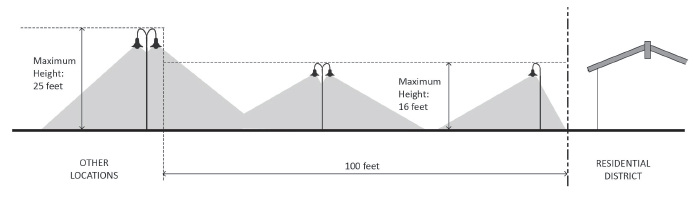
FIGURE 17.23.080(C)(2): MAXIMUM HEIGHT, LIGHTING, AND ILLUMINATION
3.
Design of Fixtures. Fixtures shall be appropriate to the style and scale of the architecture. Fixtures on buildings shall be attached only to walls or eaves, and the top of the fixture shall not exceed the height of the parapet or roof or eave of roof.
4.
Timing Controls. All exterior lighting in non-residential development shall be on a time clock or photo-sensor system and turned off during daylight hours and during hours when the building or, in the case of shopping centers, all buildings, are not in use and the lighting is not required for security.
5.
Trespass. All lights shall be directed, oriented, and shielded to prevent light trespass or glare onto adjacent properties. The light level at property lines shall not exceed 0.3 foot-candles.
(Ord. No. 662, § 2, 12-13-23)
17.23.090 - Motorhomes and recreational vehicles.
Motorhomes, recreational vehicles, or other vehicles shall not be used for human habitation or occupied for living or sleeping quarters except when installed within a licensed trailer court, recreational vehicle park or mobilehome park. Recreational vehicles, motor homes or boats maintained upon any lot, piece or parcel of land, other than a trailer court, trailer park or mobilehome park, shall comply with the following conditions:
A.
Outside Maintenance. Such vehicle or boat shall not be maintained in any required front yard or side street yard.
B.
Use as a Residence. Such vehicle or boat shall not be used for sleeping quarters nor shall any sanitary or cooking facilities contained therein be used.
C.
Connected to Utilities. Such vehicle or boat shall not be connected to utilities, including but not limited to electricity, gas, water or sewage.
(Ord. No. 662, § 2, 12-13-23)
17.23.100 - Open space (IP).
Open space required by this code shall be provided in accordance with the following.
A.
Configuration.
1.
Private open space typically consists of balconies, decks, patios, fenced yards, and other similar areas outside the residential unit.
2.
Common open space typically consists of landscaped areas, patios, swimming pools, barbeque areas, playgrounds, turf, or other such improvements as are appropriate to enhance the outdoor environment of the development; these can be located at the ground level, on parking podiums, or on rooftops, provided they are adequately landscaped.
B.
Minimum Dimensions.
1.
Private Open Space. Private open space located on the ground level (e.g., yards, decks, patios) shall have no dimension less than eight feet. Private open space located above ground level (e.g., balconies) shall have no dimension less than six feet.
2.
Common Open Space. Minimum length and width dimension of fifteen feet.
C.
Usability. A surface shall be provided that allows convenient use for outdoor living and/or recreation. Such surface may be any practicable combination of lawn, garden, flagstone, wood planking, concrete, or other serviceable, dust-free surfacing. Slope shall not exceed ten percent.
D.
Accessibility.
1.
Private Open Space. The space shall be accessible to only one living unit by a doorway to a habitable room or hallway.
2.
Common Open Space. The space shall be accessible to the living units on the lot. It shall be served by any stairway or other accessway qualifying as an egress facility from a habitable room.
(Ord. No. 662, § 2, 12-13-23)
17.23.110 - Outdoor storage.
Storage of goods, materials, machines, equipment, and inoperable vehicles or parts outside of a building for more than seventy-two hours shall conform to the standards in Table 17.23.110, Outdoor Storage Regulations. The regulations of this section do not apply to temporary storage of construction materials reasonably required for construction work on the premises pursuant to a valid building permit or to the parking and storage of operable vehicles.
(Ord. No. 662, § 2, 12-13-23)
17.23.120 - Refuse storage and collection areas.
Refuse storage and collection areas meeting the requirements of Title 8 shall be required for all new commercial and industrial projects, major redevelopments, and for all new residential projects of three or more units. Such areas shall be screened from public view in an attractive manner. The type, location, and method of screening of refuse storage and collection areas shall be approved by the director.
(Ord. No. 662, § 2, 12-13-23)
17.23.130 - Screening.
A.
Applicability. The standards of this section apply to all new development and additions that expand existing floor area by ten percent or more.
1.
Exceptions. Modifications to the standards of this section may be granted pursuant to Chapter 17.42, Modifications, where the review authority finds that the characteristics particular to the property or vicinity would render the required fencing or screening unnecessary or ineffective.
B.
Required Screening.
1.
Mechanical and Electrical Equipment. All exterior mechanical and electrical equipment shall be screened or incorporated into the design of buildings so as not to be visible from public rights-of-way and locations identified in the general plan/LCP land use plan areas from which there are visually significant views.
a.
Equipment to be screened includes, but is not limited to, all roof-mounted equipment, air conditioners, heaters, utility meters, cable equipment, telephone entry boxes, backflow preventions, irrigation control valves, electrical transformers, pull boxes, and all ducting for air conditioning, heating, and blower systems.
b.
Screening materials shall be consistent with the exterior colors and materials of the building.
c.
Exceptions may be granted by the director where screening is infeasible due to health and safety or utility requirements.
2.
Common Property Lines. A screening wall shall be provided on the interior lot lines of any lot that contains any use in the industrial use classification or the transportation, communication, and utilities use classification except telecommunications facilities, and abuts a residential district or property used for residential purposes.
a.
Timing. The screening wall shall be provided at the time of new construction or expansion of buildings, or changes from one use classification to another use classification.
b.
Location. Screening walls shall follow the lot line of the lot to be screened unless the director finds that screening in another location on the lot will substantially screen the subject building, facility, or activity.
c.
Height. The screening wall shall be four feet in height within the required front setback of the subject lot and adjacent to the required front setback of the adjacent residential lot and six feet, six inches in height in other locations.
d.
Materials. The screening wall shall be solid masonry.
3.
Outdoor Storage Areas. Outdoor storage areas shall be screened from public rights-of-way, adjacent residential districts, and publicly accessible open space area with a solid masonry wall a minimum of six feet in height.
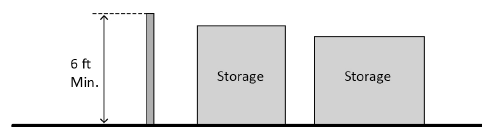
FIGURE 17.23.130(B.3): SCREENING, OUTDOOR STORAGE AREAS
4.
Public Utility Substations and Electrical Transformer Yards. Public utility substations and electrical transformer yards shall be screened from public rights-of-way and adjacent properties with a solid wall.
C.
Substitute Materials.
1.
Plant Materials. Screening comprised of plant materials may be substituted for a wall or fence when approved by the director as a suitable alternative provided such hedge is maintained at the minimum height required by this section.
2.
Landscaped Berms. A landscaped berm may be substituted for a wall or fence provided that the combination of berm and landscaping is no less than the required height of the fence or wall and the berm is constructed with a maximum slope of 1:3 with side slopes designed and planted so as to prevent erosion.
3.
Chain Link Fencing. Chain link fencing with vertical slats may be substituted for a solid wall or fence in an industrial district except where screening and fencing is required adjacent to a residential district or a location identified in the general plan/LCP land use plan areas from which there are visually significant views.
D.
Maintenance. Screening walls shall be maintained in good repair, including painting, if required, and shall be kept free of litter or advertising. Where hedges are used as screening, trimming or pruning shall be employed as necessary to maintain the required and the maximum allowed height.
(Ord. No. 662, § 2, 12-13-23)
17.23.140 - Sloping lots (IP).
The following standards apply to development on lots with an average slope of fifteen percent or greater prior to grading.
A.
Downhill Facing Building Elevation. The building elevation facing the downslope shall have a maximum height of twenty feet from finished grade with sufficient articulation from that building face to the next highest story to minimize the visual height and bulk as viewed from the lowest finished grade.
B.
Articulation. The apparent size of exterior wall surfaces visible from off the site shall be minimized through the use of bays, recesses, stepbacks, overhangs, landscaping, and/or other means of horizontal and vertical articulation to create changing shadow lines and break up massive forms.
C.
Foundation Design. The use of multi-level foundations (floor levels separated by a minimum of four feet) shall be the standard design for residential structures unless an alternative design, with less grading, is approved through the design review process as more appropriate for the site.
D.
Underfloors. Areas between the lowest floor and finished grade shall not exceed six feet in height.
E.
Decks. No portion of the walking surface of a deck with visible underpinnings shall exceed a height of six feet above grade. Decks shall be integrated into the architecture of the structure, and not appear as an add-on to the primary building mass.
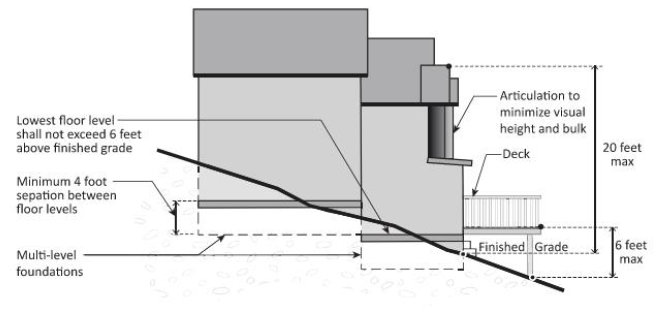
FIGURE 17.23.140: SLOPING LOTS
(Ord. No. 662, § 2, 12-13-23)
17.23.150 - Storage and parking of vehicles for sale.
Vehicles, including trucks, cars, boats, motorcycles, and recreational vehicles, shall not be permitted to be parked or stored on private property in a location viewable from public rights-of-way in any district for the primary purpose of sale or rental, except on the premises of a business enterprise authorized to conduct such sale or rental unless specifically approved by the director.
(Ord. No. 662, § 2, 12-13-23)
17.23.160 - Swimming pools and spas.
Swimming pools, spas, and any body of water having a depth of more than eighteen inches and related equipment shall comply with the setback requirements in Table 17.23.160, Swimming Pool and Spa Setbacks. The setback is measured to the outside wall of the water-containing portion of the swimming pool or spa.
(Ord. No. 662, § 2, 12-13-23)
17.23.170 - Underground utilities (IP).
All electrical, telephone, cable television, and similar distribution lines providing direct service to a project shall be installed underground within the site. This requirement may be waived by the director upon determining that underground installation is infeasible, in which case the utilities shall be placed outside of public view and/or appropriately screened with landscaping.
(Ord. No. 662, § 2, 12-13-23)
17.23.180 - Visibility at intersections.
A.
On any corner lot, there shall be a triangular area at the corner of the property at the intersection of the streets, which shall be kept clear of visual obstructions from the height of three to seven feet.
B.
Such triangular area shall have sides which extend a minimum of ten feet along each street; provided, that the city engineer may require a larger triangular area if deemed necessary due to topography, curving rights-of-way or any other factor.
C.
Upon the approval of the city engineer, this requirement may be waived for development at controlled intersections (i.e., intersections with stop signs or signals for travelers along at least one right-of-way).
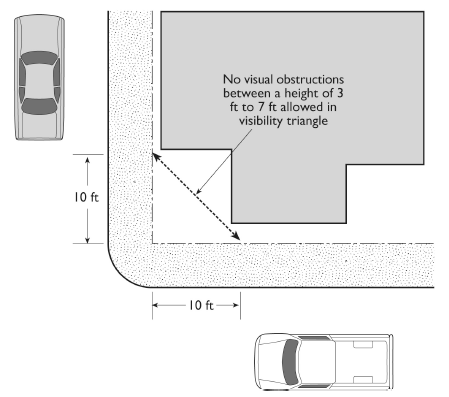
FIGURE 17.23.180: VISIBILITY AT INTERSECTIONS
(Ord. No. 662, § 2, 12-13-23)
17.24.010 - Purpose.
The purpose of this chapter is to:
A.
Meet the requirements to provide affordable housing contained in Government Code Sections 65580—65589.11 through inclusionary housing; and
B.
Promote and facilitate the provision of very-low, low, and moderate-income housing and housing for seniors, foster youth, veterans, and homeless persons consistent with the provisions of Government Code Sections 65915—65918 and the housing element of the general plan.
(Ord. No. 662, § 2, 12-13-23)
17.24.020 - Inclusionary housing requirements.
A.
Pursuant to the requirements of Government Code Sections 65580—65589.11, the following types of projects shall be required to provide inclusionary housing:
1.
Single-family homes of two thousand five hundred square feet or more of habitable floor area (excluding the floor area of any JADU or ADU units);
2.
Residential developments of five or more units;
3.
Residential development of two, three or four units with individual habitable floor areas of one thousand five hundred square feet or more (excluding the floor area of any JADU or ADU units);
4.
Condominium conversion projects;
5.
All new commercial projects of two thousand five hundred square feet or more of commercial floor area; and
6.
Mixed-use projects of two thousand five hundred square feet or more of commercial floor area that also include either: one, two, three or four residential units with individual habitable floor areas of one thousand five hundred square feet or more, or with five or more residential units (of any size).
B.
Single-family homes with two thousand square feet (habitable floor space for primary dwelling) or more shall either pay an in-lieu fee or build (or include) an on-site accessory dwelling unit (ADU) or junior accessory dwelling unit (JADU).
C.
Residential projects of five or more units, residential projects with two, three or four units with individual habitable floor areas of one thousand five hundred square feet or more, and condominium conversion projects, shall provide a minimum of one inclusionary unit or ten percent of the total number of units, whichever is greater, to be affordable to families with incomes in the very low-, low-, or moderate-income ranges, based on an affordable housing proposal which details unit types to the approval of the community development director with consideration for the needs of the city at the time of approval. The lower-income units may be either for rent or for sale. As noted in Section 17.24.050 affordable rental units shall be deed restricted to maintain affordability criteria for a minimum of fifty-five years, and for-sale and owner-occupied units for a minimum of forty-five years.
D.
Commercial projects shall be required to provide at least one affordable dwelling unit within the project, or pay an in-lieu fee.
E.
Mixed-use projects shall meet the requirements of Section 17.24.020 C for the residential component of the project, as well as pay applicable commercial fees per Section 17.24.030.
F.
In accordance with Government Code Section 65590, the city shall require the developer to provide affordable housing on-site where feasible. If the city determines that this is not feasible based on a detailed economic analysis prepared by a city-contracted consultant at the cost of the applicant, the city shall require the developer to provide such housing at another location in Morro Bay. If the city determines that it is not feasible for the developer to provide such affordable housing off-site, the developer shall pay a fee in lieu of providing such housing. Said fee shall be as prescribed in Section 17.24.030.
G.
In lieu of providing on-site affordable housing or paying an in-lieu housing fee to meet inclusionary requirements, an applicant may meet the requirements of this chapter by dedicating land to the city to another public agency or non-profit housing agency for providing affordable housing units, subject to the approval of the community development director.
H.
The number of affordable inclusionary units shall be provided as required by this section. Affordable units required by the inclusionary ordinance count as affordable units toward meeting requirements for the density bonus.
I.
The following types of projects are not required to provide inclusionary units:
1.
Residential developments of two, three or four units with individual habitable floor areas of less than one thousand five hundred square feet;
2.
New commercial developments of less than two thousand five hundred square feet of floor area;
3.
Residential and commercial building additions, repairs, or remodels, provided that such work does not increase the number of existing dwellings by four or more units or result in an increase in floor area of two thousand five hundred square feet;
4.
Commercial condominium conversions which do not result in the creation of new dwellings;
5.
Emergency projects or projects which the council determines are necessary to protect public health and safety;
6.
Development projects which the director determines are essentially noncommercial or nonresidential in nature, which provide educational, social, or related services to the community and which are proposed by public agencies, nonprofit agencies, foundations, and other similar organizations;
7.
Projects which replace or restore a structure damaged or destroyed by fire, flood, earthquake, or other disaster within three years prior to the application for the new structure(s) consistent with the size and scale of the pre-existing structure(s). If the project prior to destruction was affordable by design or condition, then affordability requirements may apply; and
8.
Projects for which an approved tentative map or vesting tentative map exists, or for which a construction permit was issued prior to the effective date of the ordinance codified in this chapter and the permittee has unexpired permits.
(Ord. No. 662, § 2, 12-13-23)
17.24.030 - In-lieu fees for affordable housing.
In cases where the provisions for the required affordable housing are not being met on-site or off-site, the applicant may contribute in-lieu fees. Said fees shall be paid prior to issuance of a building permit or final tract map. Fees shall be established on a project basis using the following method:
A.
Fees accepted for affordable housing shall be used by the city to construct or assist in the construction of housing for rent or sale to very low-, low- and moderate-income families or to purchase land for the purpose of affordable housing or to assist very low-, low- and moderate-income families to afford adequate housing or for other measures to provide housing for low- and moderate-income families. The city may, at its option, transfer in-lieu fees to another public agency, such as a nonprofit housing provider, for the purpose of providing affordable housing in the city of Morro Bay or may allow fees to be used for projects located outside city limits with the goal of providing flexibility for the benefit of residents. However, projects within city limits should be prioritized.
(Ord. No. 662, § 2, 12-13-23)
17.24.040 - State density bonuses and incentives.
A.
Applicability. Pursuant to the requirements of Government Code Sections 65915—65918, the provisions of this section apply to the construction of five or more housing units that satisfy one or more of the following criteria:
1.
At least ten percent of the units are designated for low-income households;
2.
At least five percent of the units are designated for very low-income households;
3.
At least ten percent of the units are designated for moderate-income households, provided that all units in the development are offered to the public for purchase;
4.
One hundred percent of the units in a senior housing development of at least thirty-five units as defined in Sections 51.3 and 51.12 of the Civil Code or a mobile home park that limits residency based on age requirements for housing for older persons pursuant to Government Code Section 798.76 or 799.5;
5.
Donation of land to the city consisting of at least one acre, or of sufficient developable acreage and zoning classification to permit construction of at least forty units, and not less than ten percent of the residential units in the proposed development, that are affordable to very-low income households.
6.
One hundred percent of the housing units (other than manager's units) are restricted to very low, lower and moderate-income residents (with a maximum of twenty percent available to residents with moderate income level).
7.
At least ten percent of the housing units are for transitional foster youth, disabled veterans or homeless persons, with rents restricted at the very low-income level.
8.
At least twenty percent of the housing units are for low-income college students in housing dedicated for full-time students at accredited colleges.
9.
At least thirty-three percent of the total units in a condominium conversion projects are available to lower or moderate-income households, or fifteen percent of the total units of the proposed condominium project to lower income households.
B.
Affordability Criteria. The various income thresholds for affordable housing rents are calculated in accordance with Health and Safety Code Section 500523 and 25 CCR Section 6918. The various income thresholds for affordable housing purchase costs for for-sale units are subject to Health and Safety Code Section 50052.5 and 25 CCR Section 6920. These income thresholds for different affordability categories are published annually by the County of San Luis Obispo.
C.
Calculating the Density Bonus. A density bonus shall be calculated on a sliding scale based upon the amount by which the percentage of affordable housing units exceeds the minimum number of affordable units required to qualify for a density bonus established in Section 17.24.040(A). The density bonus shall be calculated as follows:
1.
A twenty percent density bonus, increasing by an additional one and one-half for each additional one percent increase in low-income units above the initial ten percent threshold, per Section 17.24.040 A1, above.
2.
A twenty percent density bonus, increasing by an additional two and one-half percent for each additional one percent increase in very low-income units above the initial five percent threshold, per Section 17.24.040 A2, above.
3.
A twenty percent density bonus for senior citizen housing developments pursuant Government Code Section 65915(g)(3).
4.
A five percent density bonus, increasing by an additional one percent for each additional one percent increase in moderate-income units above the initial ten percent threshold, per Section 17.24.040 A3, above.
5.
A twenty percent density bonus for foster youth, disabled veterans or homeless persons, above the initial ten percent threshold, per Section 17.24.040 A7, above.
6.
A thirty-five percent density bonus for college students above the initial twenty percent threshold, per Section 17.24.040 A8 above.
7.
A maximum of a twenty-five percent density bonus for a condominium conversion project meeting the affordability levels noted in Section 17.24.040 A9 above.
8.
When an applicant proposes to construct a housing development that is eligible for a density bonus under Section 17.24.040 A, and includes a childcare facility that will be located on the premises of, or adjacent to, the housing development, the city shall grant either:
a.
An additional density bonus that is an amount of square feet of residential space that is equal to or greater than the square footage of the childcare facility; or
b.
An additional concession or incentive that contributes significantly to the economic feasibility of the construction of the childcare facility.
9.
Maximum density bonus. The maximum density bonus authorized by this section, Section 17.24.040 A, and Section 17.24.040 B, collectively, is fifty percent when a project provides either fifteen percent very low-income units, twenty-four percent low-income units, or forty-four percent moderate-income units. The maximum density bonus for a project that is one hundred percent affordable (exclusive of a manager's unit or units) is eighty percent where the units are restricted to very low-, low-, and moderate-income units (with a maximum of twenty percent moderate units). All density bonus calculations resulting in fractional units shall be rounded up to the next whole number of housing units.
D.
Developer Incentives.
1.
Restrictions. When an applicant seeks a density bonus as prescribed by Government Code Section 65915, the city will grant the number of developer incentives as required by Section 17.24.040 D2, below, unless it makes any of the following findings:
a.
The developer incentives are not required in order to provide affordable housing, as defined in Section 50052.3 of the Health and Safety Code, or for rents for the targeted units to be set as specified in Government Code Section 65915(c).
b.
The developer incentives would have a specific adverse impact, as defined in paragraph (2) of Subdivision (d) of Section 65589.5, upon public health and safety or the physical environment or on any real property that is listed in the California Register of Historical Resources and for which there is no feasible method to satisfactorily mitigate or avoid the specific adverse impact without rendering the development unaffordable to low- and moderate-income households.
c.
The developer incentives would be contrary to state or federal law.
2.
Number of Developer Incentives. A developer eligible to receive a density bonus shall receive the following number of concessions or incentives, in addition to a density bonus:
a.
One concession or incentive for projects that provide either ten percent of the units affordable to low-income households, five percent of the units affordable to very low-income households, ten percent of the units affordable to moderate-income households, or childcare facilities.
b.
Two concessions or incentives for projects that provide either seventeen percent of the units affordable to low-income households, at least ten percent of the units affordable to very low-income households, or twenty percent of the units affordable to moderate-income households.
c.
Three concessions or incentives for projects that provide either twenty-four percent of the units affordable to low-income households, at least fifteen percent of the units affordable to very low-income households, or thirty percent of the units affordable to moderate-income households.
d.
Four incentives—Projects with one hundred percent very-low, low-, and moderate-income households, exclusive of a manager's unit or units. Up to a twenty percent maximum of the total units in the development, including total units and density bonus units, may be for moderate income households.
3.
Parking. Upon request of a developer eligible to receive a density bonus, the city shall grant the following parking standards, inclusive of handicapped and guest parking, for the entire project as required by Government Code Section 65915(p)(1):
a.
Zero to one-bedroom units—One on-site parking space per unit;
b.
Two or three-bedroom units—One and one-half on-site parking spaces per unit; and
c.
Four-bedroom units—Two and one-half parking spaces per unit
4.
Developer Incentives Defined. For the purposes of this section, concession or incentive means any of the following:
a.
Reduced site development standards or modified zoning code or architectural design requirements that exceed the minimum building standards approved by the California Building Standards Commission as provided in Part 2.5 (commencing with Section 18901) of Division 13 of the Health and Safety Code, including, but not limited to, a reduction in setback and square footage requirements and the ratio of vehicular parking spaces that would otherwise be required that results in identifiable, financially sufficient, and actual cost reductions.
b.
Approval of mixed-use zoning if commercial, office, industrial, or other land uses will reduce the cost of the housing development and if the commercial, office, industrial, or other land uses are compatible with the housing project.
c.
A density bonus greater than the amount required by this section.
d.
Deferred or waived planning, plan check, construction permit, and/or development impact fees, in accordance with any fee deferral and waiver process and policies adopted by the city.
e.
Direct financial aid in the form of a loan or grant to subsidize off-site improvements, land or construction costs.
f.
Other regulatory developer incentives proposed by the developer or the city that result in identifiable, financially sufficient, and actual cost reductions.
5.
Waivers and Modifications of Development Standards.
a.
Proposal. In accordance with Government Code Section 65915(e), an applicant may propose a waiver or modification of development standards if they would physically preclude the construction of a development meeting the criteria for applicability, at the densities or with the developer incentives permitted by this section. A proposal for the waiver or reduction of development standards pursuant to this subdivision shall neither reduce nor increase the number of developer incentives to which the applicant is entitled pursuant to Section 17.24.040 D, above.
b.
Grounds for Denial. In accordance with Government Code Section 65915(e), the city council, or the coastal commission on appeal, may deny an applicant's request to waive or modify the city's development standards in any of the following circumstances:
i.
The application does not conform with the requirements of this section, Government Code Sections 65915—65918, or Coastal Act Section 30604(f).
ii.
The applicant fails to demonstrate that the city's development standards physically preclude the utilization of a density bonus on a specific site.
iii.
The waiver or reduction would have a specific, adverse impact, as defined in Government Code Section 65589.5(d)(2), upon health, safety, or the physical environment, and there is no feasible method to satisfactorily mitigate or avoid the specific adverse impact.
iv.
The waiver or reduction would have an adverse impact on any real property that is listed in the California Register of Historical Resources.
v.
The waiver or reduction would be contrary to state or federal law.
vi.
If in the coastal zone, the project is found to be inconsistent with the local coastal program (including but not limited to sensitive habitat, agriculture, public view shed, public services, public recreational access and open space protections), with the exception of the density bonus.
E.
Application Requirements and Evaluation.
1.
All Applications. All applications for a density bonus, developer incentive, or waiver or modification of development standards must include the following information:
a.
The total number of base units and affordable housing units;
b.
The specific developer incentive(s) sought, if any, and documentation regarding the necessity of the incentive in order to provide affordable housing costs or rents; and
c.
The specific waiver or modification to development standard(s), if any, and documentation regarding the necessity of the waver or modification, including documentation demonstrating that the city's development standards physically preclude the utilization of a density bonus.
2.
Land Donations. If requesting a density bonus based on land donation in accordance with Government Code Section 65915(g), in addition to the above listed information, the application must:
a.
Demonstrate the developable acreage and zoning classification is compliant with eligibility criteria of Section 17.24.030 A, and that the site is, or will be served by adequate public facilities and infrastructure;
b.
Verify that all permits and approvals, other than building permits, necessary for the development of the very low-income housing units have been secured prior to the date of approval of the final subdivision map, parcel map, or other development permits;
c.
Verify that the developer can donate and transfer land no later than the date of approval of the final subdivision map, parcel map, or residential development application; and
d.
The land will be transferred to the city or to a housing developer approved by the city. The city may require the developer to identify and transfer the land to the affordable housing developer.
3.
Childcare Facilities. If requesting a density bonus based on the provision of a child day care facility in accordance with Government Code Section 65915(h), in addition to the above listed information, the application must:
a.
Provide the location of the proposed child day care facility and the proposed operator;
b.
Agree to operate the child day care facility for a period of time that is as long as or longer than the period of time during which the density bonus units are required to remain affordable;
c.
Agree to have contracted with a child day care facility operator for operation of the child day care facility before the first building permit is issued;
d.
Agree that the child day care facility will be in operation when the first certificate of occupancy is issued; and
e.
Of the children who attend the childcare facility, the children of very low-income households, low-income households and moderate-income households shall equal a percentage that is equal to or greater than the percentage of affordable units in the housing development that are required for very low-, low- or moderate-income households.
The city shall not be required to provide a density bonus or concession or incentive for a childcare facility if it finds, based upon substantial evidence, that the community has adequate childcare facilities.
(Ord. No. 662, § 2, 12-13-23)
17.24.050 - Assurance of continued availability.
A.
Term of Availability. Where affordable housing units have been provided per the requirements of Section 17.24.020, Inclusionary Housing Requirements, or where a density bonus, incentives, or waivers of development standards has been made pursuant to this chapter, the developer shall assure both of the following:
1.
Continued availability of affordable rental units for a minimum of fifty-five years and for-sale, owner-occupied units for a minimum of forty-five years.
2.
Project phasing, including timing of completion, and rental or sale of affordable housing units shall occur concurrently with non-restricted units.
B.
Long Term Affordability. A developer of affordable units shall enter into an affordable housing agreement with the city prior to the recordation of the final map, or the issuance of a grading permit or a building permit where approval of a map is not requested. The agreement shall be recorded against the parcel(s) designated for construction of the affordable units. The agreement shall run with the land and shall be binding upon the successor(s) in interest. At a minimum, the agreement shall include:
1.
Total number and size of affordable units.
2.
Maximum qualifying household incomes for the affordable units.
3.
Standards for calculating affordable rents or affordable sales prices.
4.
Enforcement mechanisms, including annual reporting and monitoring to ensure affordable units are continuously occupied by eligible households and remedies for breach of the agreement.
5.
Affordability term.
(Ord. No. 662, § 2, 12-13-23)
17.24.060 - Consistency with state law.
The provisions of this chapter are intended to comply with Government Code Section 65915 and related state laws. In the event that any provision of this chapter conflicts with Government Code Section 65915 or any related state laws, the state law shall apply.
(Ord. No. 662, § 2, 12-13-23)
17.25.010 - Purpose.
The purposes of the landscaping regulations are to:
A.
Improve the appearance of the community by requiring permanently maintained landscaping;
B.
Enhance the appearance of development and minimize or eliminate conflicts between potentially incompatible uses through landscaping;
C.
Aid in energy conservation by providing shade from the sun and shelter from the wind;
D.
Provide areas on site to absorb rainfall and assist in reducing storm water runoff;
E.
Assist in erosion control;
F.
Promote conservation and efficient use of water; and
G.
Implement the Water Conservation in Landscaping Act.
(Ord. No. 662, § 2, 12-13-23)
17.25.020 - Applicability.
The provisions of this chapter shall apply to the following:
A.
All new development.
B.
Additions to multi-unit and non-residential development that expand existing floor area by ten percent or more.
C.
All new and rehabilitated landscaping projects that include new irrigated landscaping over five hundred square feet.
D.
Exceptions. The provisions of this chapter do not apply to the following:
1.
Farming, agriculture, and crop production including vegetable gardens, vineyards, and small orchards.
2.
Public recreational areas (designated for active play, recreation or public assembly).
3.
Registered local, state, or federal historical sites.
4.
Habitat restoration projects that do not require a permanent irrigation system.
5.
Mined-land reclamation projects that do not require a permanent irrigation system.
6.
Existing plant collections, as part of botanical gardens and arboretums open to the public.
E.
Coastal Resource Protection (CRP) Overlay District. In the CRP overlay district, the provisions of Chapter 17.14, Coastal Resource Protection (CRP) Overlay District, apply in addition to the provisions of this chapter.
(Ord. No. 662, § 2, 12-13-23)
17.25.030 - Areas to be landscaped.
In addition to areas required to be landscaped pursuant to other sections of this title, the following areas shall be landscaped, and may count toward the total area of a site required to be landscaped.
A.
Required Front and Corner Side Setbacks. In all zoning district, all required front and corner side setbacks, except for areas used for exit and entry, shall be landscaped. Hardscaping, including all paved areas and other areas covered in permeable or impermeable hard surfaces shall be limited to fifty percent of the required front and corner side setbacks.
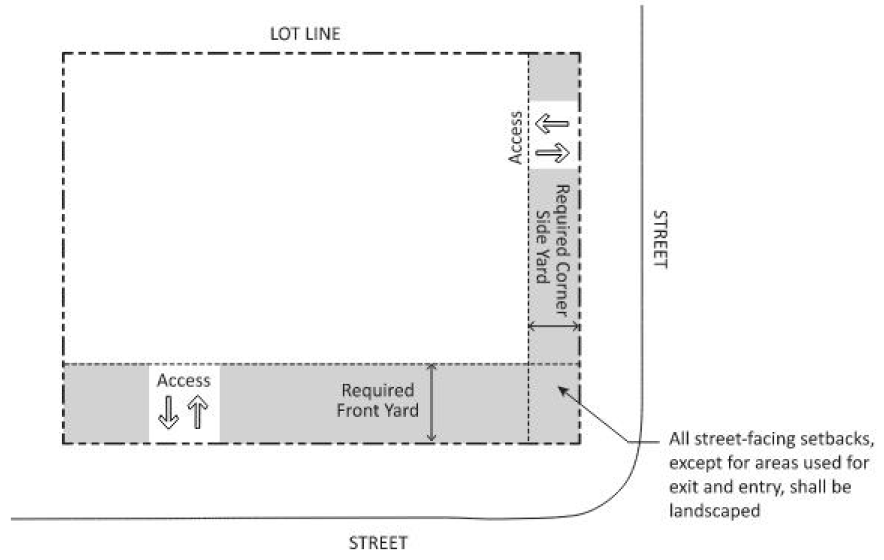
FIGURE 17.25.030(A): AREAS TO BE LANDSCAPED, REQUIRED FRONT AND CORNER SIDE SETBACKS
B.
Interior Property Lines Abutting Residential Districts. Whenever a non-residential use is located adjacent to a residential district, a six foot wide landscape buffer planted with a mix of trees and shrubs shall be provided along interior property lines. A minimum of one tree of at least fifteen-gallon size shall be planted per twenty linear feet or as appropriate to create a tree canopy over the buffer yard. In addition, at least three shrubs shall be planted per twenty linear feet.
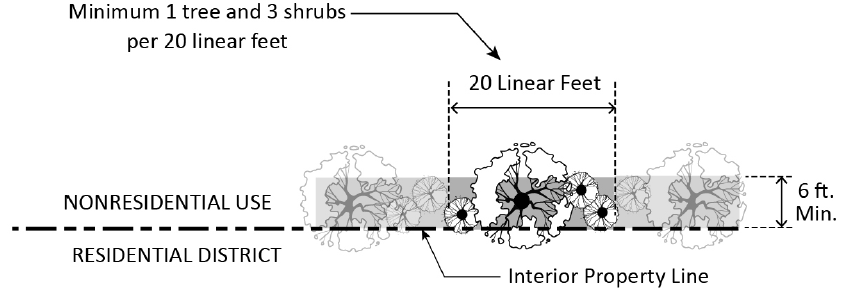
FIGURE 17.25.030(B): AREAS TO BE LANDSCAPED INTERIOR PROPERTY LINES ABUTTING RESIDENTIAL
DISTRICTS
C.
Building Perimeters. The portions of a non-residential building that front a public street shall have one or more landscape planters installed along a minimum twenty percent of that building face. The minimum width of the planter shall be three feet. This standard does not apply where a building is located on the front or corner side property line.
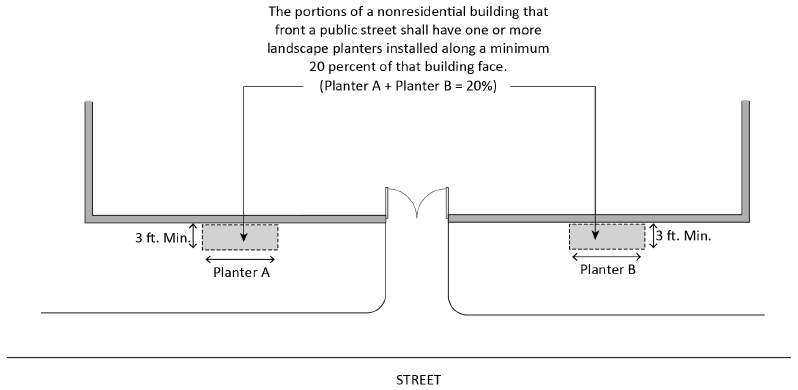
FIGURE 17.25.030(C): AREAS TO BE LANDSCAPED, BUILDING PERIMETERS
D.
Parking Areas. Parking areas as required by Chapter 17.27, Parking and Loading.
E.
Unused Areas. All areas of a project site not intended for a specific use, including areas planned for future phases of a phased development, shall be landscaped, hydroseeded, or left in a natural state.
(Ord. No. 662, § 2, 12-13-23)
17.25.040 - Landscape plan.
A landscape plan showing compliance with the standards of this chapter shall be submitted with the permit application for all projects for which landscaping is required.
A.
Proposed plant locations, species, sizes, and plant factor. Plants with similar water needs shall be grouped together on the landscape plan. The plant factor, established in the California Department of Water Resources study, water use classification of landscape species (WUCOLS), shall be identified for all landscaped areas on a site. All water features shall be identified as high water use, and temporarily irrigated areas shall be identified as low water use.
B.
Location of any existing tree over six inches in diameter or over two inches in diameter for oak trees, as measured at 48 inches above natural grade, and whether each such tree is proposed for retention or removal.
C.
Details and location of proposed fencing, entries, refuse collectors and free-standing or monument signs.
D.
Walkways, plazas and sitting areas, play areas, street furniture and other existing or proposed permanent outdoor equipment or decorative landscape features, if any.
E.
Outdoor light fixtures, including their location, height, intensity, and type.
F.
Proposed method and location of irrigation.
G.
Interim landscaping for future phases where deemed necessary by the city.
H.
Alternative Landscape Plan. An applicant may demonstrate that the intent of the landscape requirements of this chapter can be achieved through an alternative landscape plan. The alternative landscape plan shall be prepared in accordance with the purposes set forth in this chapter and the criteria of this section and shall clearly detail the modifications being requested from the provision of this section and how they reflect the evaluation criteria listed below.
1.
Innovative use of plant materials and design techniques in response to unique characteristics of the site or the proposed use.
2.
Preservation or incorporation of existing native vegetation.
3.
Incorporation of naturalistic design principles, such as variations in topography, meandering or curvilinear plantings, and grouping of dominant plant materials (trees, large shrubs) in a manner consistent with existing native vegetation.
4.
Integration of landscaping and pedestrian facilities in a manner that improves access or incorporates pedestrian-friendly design, this may include reduced ground-level planting along the front setback if canopy shade trees along sidewalks are provided.
5.
Use of additional shade trees to create a greater canopy effect.
6.
A greater degree of compatibility with surrounding uses than a standard landscape plan would offer.
I.
Preparation by Qualified Person. Landscaping for commercial projects, industrial projects, institutional projects, and residential projects consisting of more than twelve units shall be prepared by a California registered landscape architect.
(Ord. No. 662, § 2, 12-13-23)
17.25.050 - General requirements.
A.
Materials.
1.
General.
a.
Required landscaped areas shall be planted with a combination of ground covers, shrubs, vines, and trees.
b.
Landscaping may include decorative materials such as brick, bark, timber, decorative rock, structural features, or other decorative features, provided they do not cover more than fifty percent of the area required to be landscaped.
c.
Garden areas and other areas dedicated to edible plants are considered landscaped areas and count toward required landscaping.
2.
Required Water Efficient Plants. One of the following options of types of plants shall be chosen to ensure that the landscape project meets water efficiency requirements.
a.
Option A: All Low Water Plants. Exclusive of garden areas, all plants and trees shall be low or very low water use (average California Department of Water Resources study, water use classification of landscape species (WUCOLS) plant factor of three-tenths). Option A is available for all residential and non-residential areas.
b.
Option B: Primarily Low Water Plants. Exclusive of garden areas, at least eighty-five percent of the landscape area shall contain low or very low water use plants (average WUCOLS plant factor of three-tenths). Option B is only available for residential areas.
c.
Option C: Water Use Calculation. The estimated total water use (ETWU) of the landscaping shall not exceed the maximum applied water allowance (MAWA), calculated pursuant to the State Model Water Efficient Landscape Ordinance (MWELO). Option C is available for all residential and non-residential areas.
i.
Department of Water Resources Model Water Efficient Landscape Ordinance Compliance Required. Where option C is selected, all requirements of the Department of Water Resources Model Water Efficient Landscape Ordinance shall apply.
3.
Size and Spacing. Plant materials shall be grouped in hydrozones in accordance with their respective water, cultural (soil, climate, sun and light), and maintenance needs. Plants shall be of the following size and spacing at the time of installation:
a.
Ground Covers. Ground cover plants other than grasses shall be at least the four-inch pot size. Areas planted in ground cover plants other than grass seed or sod must be planted at a rate of one per twelve inches on center.
b.
Shrubs. Shrubs shall be a minimum size of one gallon. When planted to serve as a hedge or screen, shrubs shall be planted with two to four feet of spacing, depending on the plant species.
c.
Trees. Trees shall be a minimum fifteen-gallon size.
i.
Tree trunks shall be placed at least five feet from utilities.
ii.
Tree trunks shall be placed at least fifteen feet from light poles.
4.
Turf. Turf is subject to the following limitations.
a.
No more than twenty-five percent of the landscaped area may be turf.
b.
The installation of turf on slopes greater than twenty-five percent is prohibited.
c.
Turf is prohibited in locations that are less than ten feet wide.
5.
Invasive Plants Prohibited. Plant species that are listed by CAL-IPC as invasive are prohibited. Existing invasive plants and noxious weeds shall be removed.
6.
Mulch. A minimum three-inch layer of mulch shal.l be applied on all exposed soil surfaces of planting areas except in turf areas, creeping or rooting groundcovers, or direct seeding applications where mulch is contraindicated.
7.
Compost. Compost at a rate of at least four cubic yards per one thousand square feet to a depth of six inches into landscape area (unless contra-indicated by a soil test) shall be incorporated.
B.
Water Features. Recirculating water shall be used for all decorative water features.
C.
Dimension of Landscaped Areas. No landscaped area smaller than three feet in any horizontal dimension shall count toward required landscaping.
D.
Prescribed Heights. The prescribed heights of landscaping shall indicate the height to be attained within three years after planting.
E.
Intersection and Driveway Visibility. All landscaping shall comply with Section 17.23.180, Visibility at Intersections.
F.
Maintenance. All planting and other landscape elements shall be maintained in good growing condition. Such maintenance shall include, where appropriate, pruning, mowing, weeding, cleaning, fertilizing, and regular watering. Wherever necessary, plantings shall be replaced with other plant materials to ensure continued compliance with applicable landscaping requirements.
(Ord. No. 662, § 2, 12-13-23)
17.25.060 - Irrigation specifications.
An irrigation system shall be installed that meets the following standards.
A.
General Requirements.
1.
All irrigation equipment must meet American National Standards Institute (ANSI), American Society of Agricultural and Biological Engineers/International Code Council (ASABE/ICC) 802-2014. "Landscape Irrigation Sprinkler and Emitter Standard."
2.
The following areas shall be irrigated with subsurface irrigation or other means that produces no runoff or overspray.
a.
Slopes exceeding twenty-five percent.
b.
Areas less than ten feet wide in any direction.
3.
The irrigation system shall be designed to prevent runoff, low head drainage, overspray, or other similar conditions where irrigation water flows onto non-targeted areas such as adjacent property or hardscapes.
a.
Irrigation systems shall be designed for zero run-off onto paved surfaces unless that surface drains to another landscape area.
b.
Spray irrigation must be placed two-feet away from impervious surfaces unless that surface drains to another landscape area.
c.
Proper irrigation equipment and schedules, including features such as repeated cycles, shall be used to closely match application rates to infiltration rates therefore minimizing runoff.
d.
Slopes greater than twenty-five percent shall not be irrigated with an irrigation system with an application rate exceeding 0.75 inches per hour, and check valves shall be utilized.
B.
Sprinkler Heads. Where used, sprinkler heads shall be selected for proper area coverage, application rate, operating pressure, adjustment capability, and ease of maintenance.
1.
All sprinkler heads installed in the landscape must document a distribution uniformity low quarter of sixty-five hundredths or higher using the protocol defined in ASABE/ICC 802-2014.
2.
Sprinkler heads and other emission devices shall have matched precipitation rates, unless otherwise directed by the manufacturer's recommendations.
C.
Water Meters. A dedicated meter for irrigation is required for non-residential projects with landscape areas of one thousand square feet or more.
D.
Pressure Regulating Equipment. Pressure regulating valves or assemblies shall be installed to ensure that the dynamic pressure at each emission device is within the manufacturer's recommended pressure range for optimal performance.
E.
Flow Sensors. Flow sensors are required to detect high flow conditions created by system damage on all non-residential projects one thousand square feet and greater and residential projects five thousand square feet and greater.
F.
Controllers. Automatic control systems shall be required for all irrigation systems and must be able to accommodate all aspects of the design.
1.
Automatic irrigation controllers shall utilize either evapotranspiration or soil moisture sensor data, or rain sensing override devices.
2.
Irrigation controllers shall be of a type which does not lose programming data in the event the primary power source is interrupted.
G.
Control Valves. Plants which require different amounts of water should be irrigated by separate valves.
H.
Check Valves. Where required on steep slopes, check valves shall be installed to prevent low-head drainage.
I.
Valve Location. Locate valves as close as possible to the point of connection of the water supply, and place where needed to minimize water loss in case of an emergency (such as a main line break) or routine repair.
(Ord. No. 662, § 2, 12-13-23)
17.25.070 - Installation and completion.
A.
Consistency with Approved Plans. All landscaping shall be installed consistent with approved plans and specifications, in a manner designed to promote and maintain healthy plant growth.
B.
Timing of Installation. Required landscaping shall be installed prior to the issuance of a certificate of occupancy for the project.
C.
Exception—Assurance of Landscaping Completion. The director may permit the required landscaping to be installed within one hundred twenty days after the issuance of a certificate of occupancy in special circumstances related to weather conditions or plant availability. A surety in the amount equal to one hundred fifty percent of the estimated cost of landscaping, including materials and labor, as well as an agreement that the required landscaping will be installed within one hundred twenty days, must be filed with the city to assure completion of landscaping installation within such time. The surety may take the form of cash deposit, irrevocable letter of credit or bond; and together with the agreement, would provide for payment to the city of any costs incurred in contracting for completion of the required landscaping.
D.
Certification of Completion. Upon completion of the installation of the landscaping and irrigation system, a field observation shall be completed by the licensed project contractor. A certificate of completion shall be submitted to the city by the licensed project contractor. The certificate shall specifically indicate that the plants were installed as specified and that the irrigation system was installed as designed, along with a list of any deficiencies.
1.
Where Required Water Efficient Plant Option C. Water use calculation, was installed, the applicant shall submit a certificate of completion pursuant to the department of water resources model water efficient landscape ordinance.
(Ord. No. 662, § 2, 12-13-23)
17.26.010 - Purpose.
This chapter is intended to permit continuation of uses and continued occupancy and maintenance of structures that were legally established but do not comply with all of the standards and requirements of this title in a manner that does not conflict with the general plan or local coastal program. To that end, this chapter establishes the circumstances under which a nonconforming use or structure may be continued or changed and provides for the removal of nonconforming uses and structures when their continuation conflicts with the general plan, local coastal program, and public health, safety, and general welfare. In case of any conflict between this chapter and the provisions governing "redevelopment," including on coastal bluffs and beaches for coastal hazards and shoreline armoring purposes, those redevelopment provisions shall apply.
(Ord. No. 662, § 2, 12-13-23)
17.26.020 - Applicability.
The provisions of this chapter apply to structures, land, and uses that have become nonconforming by adoption of this title as well as structures, land, and uses that become nonconforming due to subsequent amendments to its text or to the zoning map.
(Ord. No. 662, § 2, 12-13-23)
17.26.030 - General provisions.
A.
Nonconformities, Generally. Any lawfully established use, structure, or lot that is in existence on the effective date of this title or any subsequent amendment but does not comply with all of the standards and requirements of this title shall be considered nonconforming.
B.
Right to Continue. Any use or structure that was lawfully established prior to the effective date of this title or of any subsequent amendments to its text or to the zoning map may only be continued and maintained provided there is no alteration, enlargement, addition, or other change to any building or structure; no substitution, expansion, or other change including an increase in occupant load or any enlargement of the area, space, or volume occupied by or devoted to such use, except as otherwise provided in this chapter.
1.
The right to continue a nonconforming use or structure shall attach to the land and shall not be affected by a change in ownership.
2.
The right to continue a nonconforming use or structure shall not apply to uses or structures deemed to be a public nuisance because of health or safety conditions.
3.
The right to continue a nonconforming use or structure shall not apply if the nonconforming use has been abandoned or vacated as described in Section 17.26.070, Abandonment of Nonconforming Uses.
C.
Removal of Nonconforming Structures Valued Under Two Thousand Five Hundred. Any structure which does not conform to the regulations of the district in which it is located and which has an assessed valuation of two thousand five hundred or less at the time it became nonconforming, shall be removed, or altered or reconstructed to be structurally conforming, within five years from the time the structure became nonconforming. The building inspector shall cause notice to be given to the owners of any such structure at least one year prior to the time removal or alteration is required, and removal or alteration is not required to be completed until such one-year period has lapsed.
(Ord. No. 662, § 2, 12-13-23)
17.26.040 - Maintenance of and alterations and additions to nonconforming structures.
Lawful nonconforming structures may be continued and maintained in compliance with the requirements of this section unless deemed by the building official to be a public nuisance because of health or safety conditions.
A.
Maintenance and Repairs. Nonstructural maintenance, repair, and interior alterations to a nonconforming structure are permitted if the changes and improvements do not enlarge the structure, change the building footprint, or increase building height or roof pitch.
B.
Structural Repairs. Structural repairs that do not enlarge or extend the structure, including modification or repair of building walls, columns, beams, or girders repairs may be permitted only when the building division determines that such modification or repair is immediately necessary to protect public health and safety, occupants of the nonconforming structure, or occupants of adjacent property, and when the cost of such work does not exceed fifty percent of the appraised value of the nonconforming structure.
C.
Alterations and Additions. Alterations and additions to nonconforming structures are allowed if the alteration or addition complies with all applicable laws and requirements of this title, the use of the property is conforming, and there is no increase in the discrepancy between existing conditions and the requirements of this title (i.e. there is no increase in the nonconformity), except as provided below.
1.
Nonconforming Setbacks, Residential Districts. In residential districts, a nonconforming interior side or rear yard may be maintained and extended, and shall not be considered an increase in the discrepancy, provided that:
a.
All new development is located a minimum of three feet from the property line.
b.
A new encroachment into any other required yard is not created;
c.
The height of the portion of the structure that is within the required setback is not increased; and
d.
Any residential additions above the first floor shall conform to the setbacks in effect at the time the application for the addition is submitted.
D.
Nonconforming Signs. Lawfully established signs that do not conform to the requirements of this title may only be maintained in compliance with the requirements of Chapter 17.29, Signs.
(Ord. No. 662, § 2, 12-13-23)
17.26.050 - Repair and replacement of damaged or destroyed nonconforming structures.
A nonconforming structure that is damaged or partially destroyed by fire, explosion, earthquake, or natural disaster which is not caused by an act or deliberate omission of a property owner, their agent, or person acting on their behalf or in concert with, may be restored or rebuilt subject to the following provisions.
A.
Restoration When Damage is Fifty Percent or Less of Value. If the cost of repair or reconstruction is less than or equal to fifty percent of its replacement cost immediately prior to such damage, replacement of the damaged portions of the structure is allowed by right provided that the replaced portions are the same size, extent, and configuration as previously existed.
B.
Restoration When Damage Exceeds Fifty Percent of Value. If the cost of repair or reconstruction exceeds fifty percent of its replacement cost immediately prior to such damage, the land and building shall be subject to all of the requirements of this title, except as provided below.
1.
Non-residential Uses and Structures. Any nonconforming use must permanently cease. The structure may be restored and used only in compliance with the requirements of this title.
2.
Residential Uses and Structures.
a.
Residential Uses, Three Units or Less. Nonconforming residential use of three or less units may be reconstructed, restored, or rebuilt up to the size and number of dwelling units prior to the damage and the nonconforming use, if any, may be resumed provided the rebuilt development complies with all current design and property development standards.
i.
Timing. Building permits must be obtained within one year of the date of the damage or destruction and construction shall be diligently pursued to completion unless another time period is specified through conditional use permit approval.
b.
Other Residential Uses. Any nonconforming use must permanently cease. The structure may be restored and used only in compliance with the requirements of this title.
(Ord. No. 662, § 2, 12-13-23)
17.26.060 - Expansions, changes, and substitutions of nonconforming uses.
Nonconforming uses shall not be expanded, moved, or changed except as provided below.
A.
Expansion. Nonconforming uses may only be expanded with planning commission approval where the planning commission makes the following findings.
1.
Required Findings.
a.
The nonconforming use was legally established;
b.
The proposed expansion of the nonconforming use would not be detrimental to public health, safety, or general welfare; and
c.
With the exception of the nonconforming use, the proposed expansion would not be inconsistent with the general plan and land use plan and would not preclude or interfere with implementation of any applicable city specific plan.
2.
Conditions. When making its decision on an application for an expansion of a nonconforming use, the planning commission may establish conditions that are necessary to accomplish the purposes of this chapter, including, but not limited to:
a.
Required improvement of, or modifications to existing improvements on, the property;
b.
Limitations on hours of operations;
c.
Limitations on the nature of operations; and
d.
A specified term of years for which the expanded nonconforming use shall be allowed.
B.
Change in Tenancy, Ownership, or Management. Any nonconforming use may change ownership, tenancy, or management where the new use is of the same use classification as the previous use, as defined in Chapter 17.53, Use Classifications.
C.
Change from Nonconforming to Permitted Use. Any nonconforming use may be changed to a use that is allowed by right in the district in which it is located and complies with all applicable standards for such use.
D.
Absence of Permit. Any use that is nonconforming solely by reason of the absence of a permit or approval may be changed to a conforming use by obtaining the appropriate permit or approval.
E.
Substitution of a Nonconforming Use with Another Nonconforming Use. The planning commission may allow substitution of a nonconforming use with another nonconforming use, subject to approval of a conditional use permit. In addition to any other findings required by this title, the planning commission must find that the proposed new use will be no less compatible with the purposes of the district and surrounding uses that comply with the requirements of this title than the nonconforming use it replaces.
1.
Amortization of Substituted Nonconforming Use. In granting a conditional use permit to allow a nonconforming use to be replaced with another nonconforming use, the planning commission may establish an amortization schedule for the nonconforming use by setting a date after which the nonconforming use must be discontinued or replaced with a conforming use.
(Ord. No. 662, § 2, 12-13-23)
17.26.070 - Abandonment of nonconforming uses.
No nonconforming use may be resumed, reestablished, reopened or replaced by any other nonconforming use after it has been abandoned or vacated for a period of six months. The six-month period shall commence when the use ceases and any one of the following occurs:
A.
The site is vacated;
B.
The business license lapses;
C.
Utilities are terminated; or
D.
The lease is terminated.
(Ord. No. 662, § 2, 12-13-23)
17.27.010 - Purpose.
The purposes of the parking and loading regulations are to:
A.
Ensure that adequate off-street parking and loading facilities are provided for new land uses and major alterations to existing uses;
B.
Minimize the negative environmental and urban design impacts that can result from parking lots, driveways, and drive aisles within parking lots;
C.
Ensure that adequate off-street bicycle parking facilities are provided and promote parking lot designs that offer safe and attractive pedestrian routes;
D.
Establish standards and regulations for safe and well-designed parking, unloading, and vehicle circulation areas that minimize conflicts between pedestrian and vehicles within parking lots and, where appropriate, create buffers from surrounding land uses; and
E.
Offer flexible means of minimizing the amount of area devoted to parking by allowing reductions in the number of required spaces in transit-served locations, shared parking facilities, and other situations expected to have lower vehicle parking demand.
(Ord. No. 662, § 2, 12-13-23)
17.27.020 - Applicability.
The requirements of this chapter apply to the establishment, alteration, expansion, or change in any use or structure, as provided in this section.
A.
Coastal Resource Protection (CRP) Overlay District. In the CRP overlay district, the provisions of Chapter 17.14, Coastal Resource Protection (CRP) Overlay District, apply in addition to the provisions of this chapter. In any case of conflict, the provisions more restrictive and protective of coastal resources shall apply.
B.
New Buildings and Land Uses. Parking and loading in accordance with this chapter shall be provided at the time any main building or structure is erected or any new land use is established.
C.
Reconstruction, Expansion, and Change in Use of Existing Non-Residential Buildings.
1.
When a change in use, expansion of a use, or expansion of floor area creates an increase in the number of required parking or loading spaces, additional parking and loading shall be provided for such addition, enlargement, or change in use and not for the entire building or site.
a.
Exception, Commercial Uses. Additional parking and loading spaces are not required for the change of use from one commercial use to another commercial use.
2.
The existing parking and loading shall be maintained.
3.
If the number of existing parking or loading spaces is greater than the requirements for such use, the number of spaces in excess of the prescribed minimum may be counted toward meeting the parking and loading requirements for the addition, enlargement, or change in use.
4.
A change in occupancy is not considered a change in use unless the new occupant is in a different use classification than the former occupant.
5.
Additional parking and loading spaces are not required for the reconstruction of an existing building when there is no increase in floor area.
D.
Alterations that Increase the Number of Dwelling Units. The creation of additional dwelling units through the alteration of an existing building or construction of an additional structure or structures requires parking to serve the new dwelling units. This requirement does not apply when sufficient parking exists to provide the number of spaces required for the existing and new dwelling units.
E.
When Constructed. Parking and loading facilities required by this chapter shall be constructed or installed prior to the issuance of a certificate of occupancy for the uses that they serve.
(Ord. No. 662, § 2, 12-13-23)
17.27.030 - General provisions.
A.
Existing Parking and Loading to be Maintained. No existing parking and/or loading serving any use may be reduced in amount or changed in design, location or maintenance below the requirements for such use, unless equivalent substitute facilities are provided, except as provided below.
1.
Electrical Vehicle Charging Station. If an electric vehicle charging station and any associated equipment interfere with, reduce, eliminate, or in any way impact the required parking spaces for existing uses, the city shall reduce the number of required parking spaces for the existing uses by the amount necessary to accommodate the electric vehicle charging station and any associated equipment.
B.
Nonconforming Parking or Loading. An existing use of land or structure shall not be deemed to be nonconforming solely because of a lack of parking and/or loading facilities required by this chapter, provided that facilities used for parking and/or loading as of the date of adoption of this code are not reduced in number to less than what this chapter requires.
C.
Accessibility. Parking and loading areas must be accessible for its intended purpose during all hours of operation.
D.
Stacked Parking. Stacked or valet parking is allowed if an attendant is present or an automated system is in place to move vehicles. If stacked parking managed by an attendant is used for required parking spaces, an acceptable form of guarantee must be filed with the director ensuring that an attendant will be present while the lot is in operation.
(Ord. No. 662, § 2, 12-13-23)
17.27.040 - Required parking spaces.
A.
Minimum Number of Spaces Required.
1.
Waterfront District. The parking requirements in Table 17.27.040 are required but may be satisfied on-site, off-site, or via in lieu fee (see land use plan policies CIR-4.1 and CIR-4.3).
2.
Other Districts. In districts other than the waterfront district, each land use shall be provided at least the number of parking spaces stated in Table 17.27.040, Required Number of Parking Spaces. The parking requirement for any use not listed in Table 17.27.040 shall be determined by the director based upon the requirements for the most similar comparable use, the particular characteristics of the proposed use, and any other relevant data regarding parking demand.
B.
Calculation of Required Spaces. The number of required parking spaces shall be calculated according to the following rules:
1.
Floor Area. Where a parking or loading requirement is stated as a ratio of parking spaces to floor area, the floor area is assumed to be total floor area, unless otherwise stated. See Section 17.02.030 F, Determining Floor Area.
2.
Employees. Where a parking or loading requirement is stated as a ratio of parking spaces to employees, the number of employees shall be based on the largest shift that occurs in a typical week.
3.
Bedrooms. Where a parking requirement is stated as a ratio of parking spaces to bedrooms, any rooms having the potential of being a bedroom and meeting the standards of the building code as a sleeping room shall be counted as a bedroom.
4.
Students. Where a parking or loading requirement is stated as a ratio of parking spaces to students (including children in day care), the number is assumed to be the number of students at the state-certified capacity or at building code occupancy where no state-certification is required.
5.
Seats. Where parking requirements are stated as a ratio of parking spaces to seats, each eighty inches of bench-type seating at maximum seating capacity is counted as one seat.
C.
Sites with Multiple Uses. If more than one use is located on a site, the number of required parking spaces and loading spaces shall be equal to the sum of the requirements calculated separately for each use unless a reduction is approved pursuant to Section 17.27.050, Parking Reductions.
(Ord. No. 662, § 2, 12-13-23)
17.27.050 - Parking reductions.
The number of parking spaces required by Section 17.27.040, Required Parking Spaces, may be reduced as follows.
A.
Transit Accessibility. For any land use except residential single-unit and two-unit development, if any portion of the lot is located within one-quarter mile of a transit stop with regular, scheduled service during the weekday hours of seven a.m. to nine a.m. and five p.m. and seven p.m., the number of required parking spaces is reduced by twenty percent of the normally required number of spaces. In addition, parking may be reduced in accordance with AB 2097. In all cases, such reduction shall not adversely impact public coastal access, and any such impact shall be appropriately mitigated.
B.
Proximate Public Parking Facilities. Where a use is located within one thousand two hundred feet of a city-owned public parking facility, measured along a pedestrian route, the number of required parking spaces may be waived all or in part with approval of a minor use permit.
C.
Motorcycle Parking. Motorcycle parking may substitute for up to five percent of required automobile parking. Each motorcycle space must be at least four feet wide and seven feet deep.
D.
Carsharing Programs. Required automobile parking spaces may be substituted with designated carshare vehicle parking spaces, pursuant to the following:
1.
Up to a maximum of twenty percent of the required automobile parking spaces may be designated as carshare vehicle parking spaces.
2.
Carshare vehicles shall be maintained for active use by carshare service and not for other purposes. No sales, servicing, storage, repair, administrative or similar functions shall occur and no personnel shall be employed on the site except for occasional short-term maintenance of vehicles unless otherwise permitted by the land use regulations in the zoning district.
3.
Carshare vehicles shall be made available to members of the carsharing service through an unattended, self-service operation twenty-four hours a day, seven days a week.
4.
All owners of a lot, including any applicable homeowner's associations, shall be required to grant permission for the operation or parking of a carshare vehicle on their property.
E.
Shared Parking. Where a shared parking facility serving more than one use will be provided, the total number of required parking spaces may be reduced up to fifty percent with approval of a minor use permit, if the review authority finds that:
1.
The peak hours of use will not overlap or coincide to the degree that peak demand for parking spaces from all uses will be greater than the total supply of spaces;
2.
The proposed number of parking spaces to be provided will be adequate to serve each use; and
3.
In the case of a shared parking facility that serves more than one property, a parking agreement has been prepared consistent with the provisions of Section 17.27.070 B.1, Allowance for Off-Site Parking.
F.
Embarcadero District. For development located on those city managed lease sites covered by the waterfront master plan (and located within the area identified in the -WMP zoning overlay), parking requirements may be deemed satisfied and reductions may be allowed based on the calculation of the parking requirements for the previously permitted uses on the lease site. City lease sites may utilize the existing parking requirement as evidence of satisfying the newly proposed use's determined parking requirements, unless additional parking is otherwise required, in which case only that additional parking must be satisfied. In all cases, approval of parking reduction shall be consistent with provisions of Section 17.27.050 G and consistent with the LCP coastal land use plan.
G.
Other Parking Reductions. Required parking for any use may be reduced through approval of a minor use permit as follows.
1.
Criteria for Approval. The review authority may only approve a minor use permit for reduced parking if it finds that:
a.
Special conditions—including, but not limited to, the nature of the proposed operation; proximity to frequent transit service; transportation characteristics of persons residing, working, or visiting the site; or because the applicant has undertaken a transportation demand management program—exist that will reduce parking demand at the site;
b.
The use will adequately be served by the proposed parking; and
c.
Parking demand generated by the project will not exceed the capacity of or have a significant impact on the supply of on-street parking in the surrounding area.
2.
Parking Demand Study. In order to evaluate a proposed project's compliance with the above criteria, submittal of a parking demand study that substantiates the basis for granting a reduced number of spaces may be required.
(Ord. No. 662, § 2, 12-13-23)
17.27.060 - Parking in-lieu payments and parking management programs and districts.
A.
Parking Management Programs and Districts. If parking management programs and districts are established, said formations shall be established consistent with the coastal land use plan. Assessment district financing and/or an in-lieu fee system may be established in order to provide adequate off-street parking requirements for new development.
B.
In-Lieu Parking Fee, Commercial and Mixed Use Districts. Where it can be demonstrated that the reasonable and practical development of property in a commercial or mixed use district precludes the provision of required off-street parking on the property, the planning commission may permit the applicant to satisfy parking requirements by payment of an in-lieu parking fee. The planning commission will determine the total parking requirements for each individual project at the time of permit review.
1.
Number of Spaces. The number of parking spaces required and used to calculate the in-lieu fee shall be determined according to the provisions of this chapter and any other applicable provisions of the zoning code and the city of Morro Bay Municipal Code.
2.
Change of Use. Any off-street parking satisfied through this provision shall run with the land and any subsequent change of use that requires more parking shall require subsequent action to satisfy the additional parking requirement. No refund of such payment shall be made when there is a change to a use requiring less parking.
3.
Change of Ownership. A change of ownership or the dividing or merging of properties shall not affect an obligation for parking in-lieu fees or a determination that parking requirements have been met according to fees paid for a particular use.
4.
Fees. The fee to be charged for each parking space required shall be set by resolution by the city council and may be modified from time to time, and shall be payable in accordance with administrative policies established in this chapter. In setting such fees, the city council shall consider all costs associated with the provision of the necessary parking including planning, design, land acquisition or lease costs and construction of improvements.
5.
Use of Fees. Fees accepted under this provision will be used by the city to provide the additional required parking at another location in lieu of the applicant providing the required off-street parking. Such parking shall be provided within a reasonable distance from the contributing project or within close proximity to public transit providing access to the use. All such fees collected shall be used by the city for the planning, design, acquisition or lease of land, and development and redevelopment of public parking facilities within or adjacent to the parking management plan area and for public transit facilities providing access to said parking.
6.
Fee Payment. The per space fee for new construction, additions or changes in occupancy shall be paid in a lump sum or in accordance with a payment plan approved by both the finance director and the city administrator, prior to the issuance of construction permits for the structure or occupancy for which the parking is required or prior to the issuance of a city business license for the activity for which the parking is required, if no construction permit is required.
(Ord. No. 662, § 2, 12-13-23)
17.27.070 - Location of required parking.
A.
Front and Corner Side Setbacks. Parking spaces required pursuant to this chapter shall not be located within a required front or corner side setback.
B.
On-Site Parking Required. Required parking shall be located on the same lot as the use it serves except as allowed below.
1.
Allowance for Off-Site Parking. Required parking may be located off-site provided the off-site parking facility is located within 600 feet, along a pedestrian route, of the principal entrance containing the use(s) for which the parking is required.
a.
Parking Agreement. A written agreement between the landowner and the city in a form satisfactory to the city attorney shall be executed and recorded in the office of the county recorder. The agreement shall include:
i.
A guarantee among the landowner for access to and use of the parking facility; and
ii.
A guarantee that the spaces to be provided will be maintained and reserved for the uses served for as long as such uses are in operation.
(Ord. No. 662, § 2, 12-13-23)
17.27.080 - Bicycle parking.
A.
Short-Term Bicycle Parking. Short-term bicycle parking intended to serve shoppers, customers, messengers, guests and other visitors to a site who generally stay for a short time, shall be provided as specified below.
1.
Parking Spaces Required. For the following uses, the number of short-term bicycle parking spaces shall be at least twenty percent of the number of required automobile parking spaces, with a minimum of four parking spaces provided per establishment.
a.
Multi-unit residential, group residential, and single room occupancy with five or more units.
b.
All uses in the public and semi-public use classification.
c.
All uses in the commercial use classification.
2.
Location. Short-term bicycle parking must be located within fifty feet of a main entrance to the building it serves. Where the bicycle parking area is not visible from the main entrance of the building, signs located at the main entrance of the building shall identify the location of bicycle parking.
a.
In the CC district, required short-term bicycle parking may be located in the right-of-way with an encroachment permit issued by the city.
3.
Anchoring and Security. For each short-term bicycle parking space required, a stationary, securely anchored object shall be provided to which a bicycle frame and one wheel (two points of contact) can be secured with a high-security U-shaped shackle lock if both wheels are left on the bicycle. One such object may serve multiple bicycle parking spaces.
4.
Size and Accessibility. Each short-term bicycle parking space shall be a minimum of two feet in width and six feet in length and shall be accessible without moving another bicycle. Two feet of clearance shall be provided between bicycle parking spaces and adjacent walls, poles, landscaping, street furniture, drive aisles, and pedestrian ways and at least five feet from vehicle parking spaces.
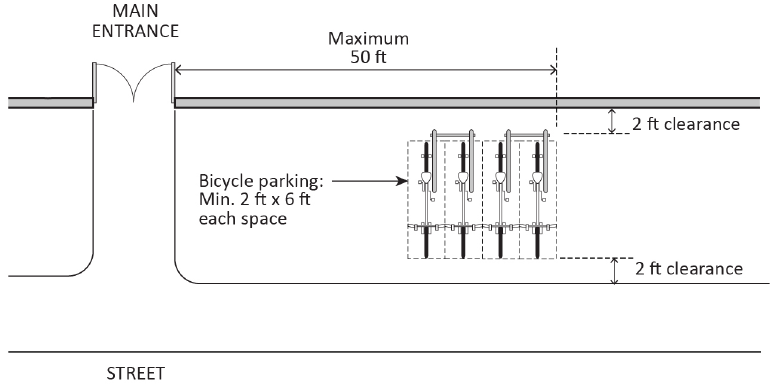
FIGURE 17.27.080 A: SHORT-TERM BICYCLE PARKING
B.
Long-Term Bicycle Parking. Long-term bicycle parking shall be provided in order to serve employees, students, residents, commuters, and others who generally stay at a site for four hours or longer.
1.
Parking Spaces Required.
a.
Residential Uses. A minimum of one long-term bicycle parking space shall be provided for every five units for multi-unit residential, group residential, and single room occupancy.
b.
Other Uses. Any establishment with twenty-five or more full time equivalent employees shall provide long-term bicycle parking at a minimum ratio of one space per twenty-five vehicle spaces.
c.
Parking Structures. Long-term bicycle parking shall be provided at a minimum ratio of one space per fifty vehicle spaces.
2.
Location. Long-term bicycle parking must be located on the same lot as the use it serves and near the facility entrance. In parking garages, long-term bicycle parking must be located near an entrance to the facility. Where the bicycle parking area is not visible from the entrance of the building, signs located at the entrance or in an entry lobby of the building shall identify the location of bicycle parking.
3.
Covered Spaces. At least fifty percent of required long-term bicycle parking must be covered. Covered parking can be provided inside buildings, under roof overhangs or awnings, in bicycle lockers, or within or under other structures.
4.
Security. Long-term bicycle parking must be in:
a.
An enclosed bicycle locker;
b.
A fenced, covered, locked or guarded bicycle storage area;
c.
A rack or stand inside a building that is within view of an attendant or security guard or visible from employee work areas or within secure/restricted bicycle storage room; or
d.
Other secure area approved by the director.
5.
Size and Accessibility. Each bicycle parking space shall be a minimum of two feet in width and six feet in length and shall be accessible without moving another bicycle. Two feet of clearance shall be provided between bicycle parking spaces and adjacent walls, poles, landscaping, street furniture, drive aisles, and pedestrian ways and at least five feet from vehicle parking spaces.
C.
Bicycle Parking Reductions and Modifications. A modification for a reduction in the number of required bicycle parking spaces or to other standards of this section may be granted pursuant to Chapter 17.42, Modifications, if the review authority finds that:
1.
Adequate site space is not available on an existing development to provide bicycle parking; or
2.
Reduced bicycle parking is justified by reasonably anticipated demand; or
3.
Other criteria based on unusual or specific circumstances of the particular case as deemed appropriate by the review authority.
(Ord. No. 662, § 2, 12-13-23)
17.27.090 - Loading.
A.
Loading Spaces Required. Every new building, and every building enlarged by more than ten thousand square feet of floor area that is to be occupied by a manufacturing establishment, storage facility, warehouse facility, retail store, eating and drinking establishment, wholesale store, market, hotel, hospital, mortuary, laundry, dry-cleaning establishment, or other use similarly requiring the receipt or distribution by vehicles or trucks of material or merchandise shall provide off-street loading and unloading areas as stated in Table 17.27.090, Required Loading Spaces.
1.
Multi-Tenant Buildings. The floor area of the entire building shall be used in determining spaces for multi-tenant buildings. A common loading area may be required, if each tenant space is not provided a loading area. Drive-in roll-up doors for multi-tenant industrial projects may be substituted for required loading areas.
2.
Reduction in Number of Loading Spaces Required. The loading space requirement may be waived if the director finds that the applicant has satisfactorily demonstrated that due to the nature of the proposed use and/or location, such loading space will not be needed or is not practical.
3.
Additional Loading Spaces Required. The required number of loading spaces may be increased to ensure that trucks will not be loaded, unloaded, or stored on public streets. Such requirement shall be based on the anticipated frequency of truck pickups and deliveries and of the truck storage requirements of the use for which the on-site loading spaces are required.
B.
Location. All required loading areas shall be located on the same site as the use served. Loading areas shall not be located within the required front, side, or rear setback.
C.
Screening. Loading areas shall be screened from public view by building walls, or a uniformly solid fence or wall, or any combination thereof, not less than six feet in height.
D.
Electric Vehicle Charging. All new loading spaces shall be electric vehicle charging spaces (EV spaces) capable of supporting future electric vehicle supply equipment (EVSE).
E.
Minimum Size. Each on-site loading space required by this chapter shall not be less than twelve feet wide, twenty-five feet long, and fourteen feet high, exclusive of driveways for ingress and egress, maneuvering areas and setbacks. The minimum size requirement may be modified if the director finds that the applicant has satisfactorily demonstrated that due to the nature of the proposed use, such size will not be needed.
F.
Driveways for Ingress and Egress and Maneuvering Areas. Each on-site loading space required by this chapter shall be provided with driveways for ingress and egress and maneuvering space of the same type and meeting the same criteria required for on-site parking spaces. Maneuvering areas shall not encroach into required parking areas, travelways, or street rights-of-way. This requirement may be modified if the director finds that sufficient space is provided so that maneuvering areas will not interfere with traffic and pedestrian circulation.
G.
Surfacing. All loading areas shall be paved and improved so as to provide a dust-free surface, and all sites shall be properly drained, consistent with applicable stormwater runoff regulations and subject to the approval of the city engineer.
(Ord. No. 662, § 2, 12-13-23)
17.27.100 - Driveways and drive approaches.
A.
Forward Entry. Vehicles shall not back onto an arterial street. Parking areas designed to accommodate five or more vehicles shall be provided with suitable maneuvering room so that all vehicles can enter and exit from a public street by forward motion only.
B.
Limited-Access and Arterial Street. Driveway encroachments shall be restricted onto arterial streets and highways if alternative points of access to the property are feasible or if the city council has, by resolution, restricted access to the street.
C.
Driveway Separation. There shall be a minimum of twenty-two feet of standard curb and gutter between the tops of the driveway transition. In residential districts, the required driveway separation only applies to driveways on the subject parcel.
D.
Driveway Transitions. No part of the driveway transition shall extend closer than one foot to side property line of the property being served by the driveway unless approved by the city engineer and unless a written agreement is obtained from the adjacent property owner and filed with the city engineer for recording with the county recorder. The agreement shall be in a form approved by the city attorney.
E.
Curb Height. Full height curbs shall be provided except for locations with approved driveways and/or handicap ramps.
F.
Driveway Length and Accessibility.
1.
Driveway Length. Driveways providing direct access from a public street to a covered or uncovered parking space shall be at least twenty feet in length except as follows:
a.
RS-A District, Lots Two Thousand Five Hundred Square Feet or Smaller in Size. The minimum driveway length is ten feet.
b.
RS-A District, Lots between Two Thousand Five Hundred One and Four Thousand Three Hundred Square Feet in Size. The minimum driveway length is fifteen feet.
c.
RS-B District, All Lots. The minimum driveway length is fifteen feet.
2.
Accessibility. In the residential districts, driveways providing access to parking spaces for detached residential single unit development shall be kept free and clear for the required length stated above. Driveways shall not be gated within this minimum distance.
G.
Driveway Width. The minimum and maximum width of a driveway shall be as follows.
H.
Turnarounds.
1.
Driveways that serve commercial or multi-unit development which exceed one hundred feet in depth shall provide a turnaround to ensure that vehicles can safely exit in a forward direction.
2.
Driveways that exceed fifteen percent slope serving any type of development may also be required to provide turnarounds.
I.
Surfacing. Driveways shall be surfaced with asphalt or concrete paving or alternative surface as approved by the city engineer.
1.
Residential Paved Wheel Tracks. For residential uses, in lieu of a full width paved driveway and where the driveway serves only one residence; paved wheel tracks are allowed as long as the tracks are located where the wheel traffic will most probably occur, the tracks are located only behind the sidewalk ramp, each track is at least three and one-half feet apart.
J.
Maximum Slope.
1.
Residential Development. Driveways serving residential development shall not exceed fifteen percent slope unless the city engineer approves a slope up to twenty percent provided special construction procedures and materials are used.
2.
Non-Residential Development. Driveways serving non-residential development shall not exceed ten percent slope.
K.
Visibility. Visibility of a driveway crossing a street property line shall not be blocked between a height of three feet and nine feet for a depth of five feet from the street property line as viewed from the edge of the right-of-way on either side of the driveway.
L.
Common Access Driveways. Projects are encouraged to provide shared vehicle and pedestrian access to adjacent properties for convenience, safety, and efficient circulation. A joint access agreement guaranteeing the continued availability of the shared access between the properties approved by the director shall be recorded in the county's recorder's office, in a form satisfactory to the city attorney.
M.
Replacement of Curb and Sidewalks of Abandoned Driveway. The director of public works shall determine whether a driveway has been abandoned. Any such abandoned driveway shall be removed by the owner and replaced with standard curb, gutter and sidewalk to fit the existing line of grade of adjacent standard curb, gutter and sidewalk. The director of public works shall cause an abandoned drive to be removed if it has not been removed within thirty days after the owner has been notified to do so. The procedure for repair and collection of the cost of repair shall be as set forth in Division 7, Part 3, Chapter 22 of the Streets and Highways Code.
(Ord. No. 662, § 2, 12-13-23)
17.27.110 - Parking area design and development standards.
All parking areas shall be designed and developed consistent with the following standards.
A.
Handicap Parking. Each parking area where parking is provided for the public as clients, guests, or employees shall include parking accessible to handicapped or disabled persons as near as practical to a primary entrance and in accordance with the standards for the number of spaces, size, location, signing, and markings/striping set for in Chapter 71, "Site Development Requirements for Handicapped Accessibility" of Title 24 of the California Code of Regulations.
B.
Electric Vehicle Charging.
1.
Nonresidential Parking. In new parking lots with ten or more parking spaces, a minimum of one level 2 or fast charging electric vehicle charging station shall be provided for every ten parking spaces.
2.
Residential Parking. In all new parking areas for single unit dwellings, two-unit dwellings, and multi-unit residential development, a minimum of fifty percent of the total number of parking spaces provided shall be electric vehicle charging spaces (EV spaces) capable of supporting future electric vehicle supply equipment (EVSE).
C.
Tandem Parking. Tandem parking may be permitted to satisfy parking requirements in accordance with the following.
1.
No more than two vehicles shall be placed one behind the other.
2.
Both spaces shall be assigned to a single dwelling unit or non-residential establishment.
3.
Tandem parking to meet required parking for non-residential uses may be used for employee parking; the maximum number of tandem parking spaces shall not exceed fifty percent of the total number of spaces.
4.
Tandem parking to meet required parking for multi-unit development shall be located within an enclosed structure; the maximum number of tandem parking spaces shall not exceed fifty percent of the total number of spaces.
5.
Tandem parking shall not be used to meet the guest parking requirement.
D.
Size of Parking Spaces and Maneuvering Aisles. Parking spaces and maneuvering aisles shall meet the minimum dimensions required by this subsection. Screening walls, roof support posts, columns, or other structural members shall not intrude into the required dimensions for parking spaces.
1.
Standard Parking Spaces and Drive Aisles. The minimum basic dimension for standard parking spaces is nine feet by twenty feet, with a minimum vertical clearance of seven feet. Table 17.27.110 D.1, Standard Parking Space and Aisle Dimensions, provides the dimensions of spaces (stalls) and aisles according to angle of parking spaces. The required aisle width may be modified if the city engineer finds that sufficient space is provided, so that maneuvering areas will not interfere with traffic and pedestrian circulation.
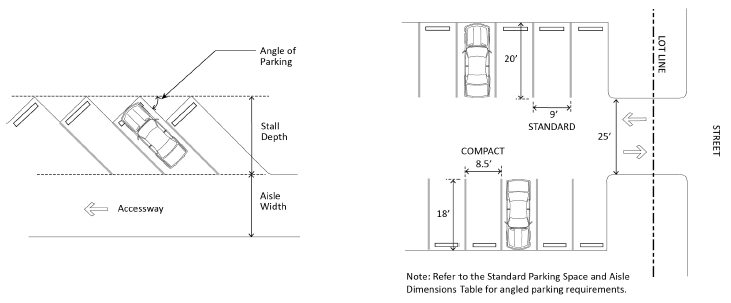
FIGURE 17.27.110(D.1): STANDARD PARKING SPACE AND AISLE DIMENSIONS
2.
Compact Parking Spaces. In parking areas with four or more parking spaces, up to twenty-five percent of the required spaces may be reduced to eight and one-half feet by eighteen feet and labeled "compact."
3.
Parking Spaces Abutting a Wall, Fence, or Column. The width of each parking space adjoining a wall, fence, column, or other obstruction higher than one-half feet shall be increased by one foot on each obstructed side.
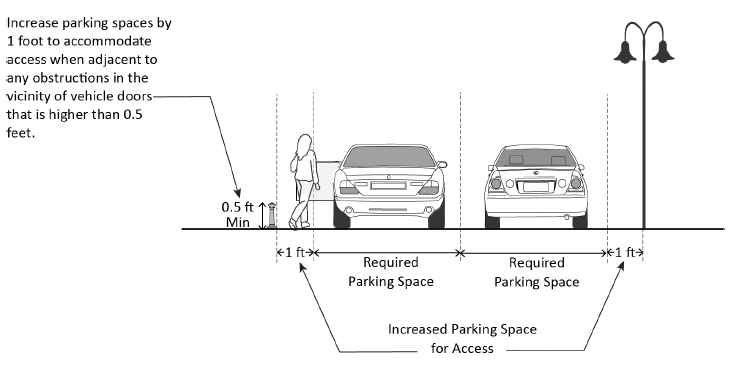
FIGURE 17.27.110(D.3): PARKING SPACES ABUTTING A WALL, FENCE, OR COLUMN
4.
Minimum Dimensions for Residential Garages. Garages serving residential uses shall be constructed to meet the following minimum inside dimensions.
a.
A single car garage shall be at least eleven feet wide and twenty feet long.
b.
A garage containing two or more parking spaces shall have a minimum inside dimension of ten feet in width by twenty feet in length per space.
c.
The minimum vertical clearance shall be seven feet except in the front four feet of the parking space where the minimum vertical clearance is four feet six inches.
d.
Garages shall be equipped with an automatic door opener and a roll-up sectional or similar garage door which does not extend onto the apron. A security gate for a multi-unit development is permitted.
E.
Service Vehicle Maneuvering Area. Parking lots shall be designed so that sanitation, emergency, and other public service vehicles can provide service without backing up unreasonable distances or making other dangerous or hazardous turning movements. The minimum allowable inside turning radius shall be twenty feet. Where fire truck access is necessary, the minimum inside radius shall be twenty-eight feet and the outside radius shall be a minimum of forty-eight feet.
F.
Pedestrian Circulation. Parking areas for multi-unit residential developments of five or more units and parking areas for commercial and mixed-use developments that are eighty feet or more in depth and/or include twenty-five or more parking spaces shall provide pedestrian access that is separate and distinct from driveways, according to the following standards:
1.
Connection to Public Sidewalk. An on-site walkway shall connect the main building entry to a public sidewalk on each street frontage. Such walkway shall be the shortest practical distance between the main building entry and sidewalk, generally no more than one hundred twenty-five percent of the straight-line distance.
2.
Materials and Width. Walkways shall provide at least five feet of unobstructed width and be hard-surfaced.
3.
Identification. Pedestrian walkways shall be clearly differentiated from driveways, parking aisles, and parking and loading spaces through the use of elevation changes, a different paving material, or similar method.
4.
Separation. Where a pedestrian walkway is parallel and adjacent to an auto travel lane, it must be raised and separated from the auto travel lane by a raised curb at least four inches high, bollards, or other physical barrier.
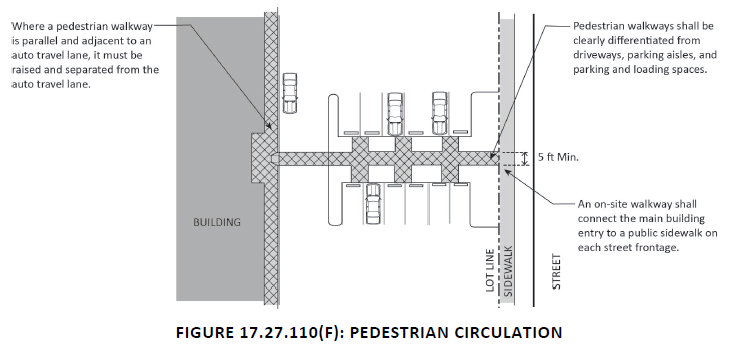
FIGURE 17.27.110(F): PEDESTRIAN CIRCULATION
G.
Parking Lot Striping. All parking stalls shall be clearly outlined with double striping, and all aisles, approach lanes, turning areas, and entrances shall be clearly marked with directional arrows and lines as required by the city engineer.
H.
Wheel Stops. Parking areas designed to accommodate five or more vehicles shall provide concrete bumper guards or wheel stops for all unenclosed parking spaces. A six-inch high concrete curb surrounding a landscape area at least six feet wide may be used as a wheel stop, provided that the overhang will not damage or interfere with plant growth or its irrigation.
I.
Surfacing. All parking areas shall be paved and improved, and all sites shall be properly drained, consistent with applicable stormwater runoff regulations and subject to the approval of the city engineer.
1.
Required Surface. All parking areas shall be surfaced with asphalt or concrete paving, pervious pavers, or alternative surface as approved by the city engineer.
a.
Landscaping Alternative. Up to two feet of the front of a parking space as measured from a line parallel to the direction of the bumper of a vehicle using the space may be landscaped with ground cover plants instead of paving.
2.
Slope and Drainage. Parking areas shall not exceed six percent slope nor be less than one-half percent slope in the direction of drainage. A maximum of ten percent slope in aisle and turnaround areas may be allowed by the city engineer.
J.
Perimeter Curbing. Parking areas designed to accommodate five or more vehicles shall provide a six-inch wide and six-inch high concrete curb along the outer edge of the parking facility pavement, except where said pavement abuts a fence or wall. Curbs separating landscaped areas from parking areas shall be designed to allow stormwater runoff to pass through.
K.
Heat Island Reduction. In order to reduce ambient surface temperatures in parking areas, at least fifty percent of the areas not landscaped shall be shaded, either with light-colored materials with a solar reflectance index of at least 29, or a combination of shading and light-colored materials.
1.
Shade may be provided by canopies, shade structures, trees, or other equivalent mechanism. If shade is provided by trees, the amount of required shading is to be reached within fifteen years.
L.
Lighting. Parking areas designed to accommodate five or more vehicles shall be provided with a minimum of one-half foot-candle and a maximum of three foot-candles of light over of the parking surface during the hours of use from one-half hour before dusk until one-half hour after dawn.
1.
Light poles and standards shall not exceed twenty feet in height unless a greater height is approved pursuant to Chapter 17.42, Modifications.
2.
Lighting design shall be coordinated with the landscape plan to ensure that vegetation growth will not substantially impair the intended illumination.
3.
Light sources shall be between 2600 and 3500 Kelvin and have a CRI of 85 or greater.
4.
Parking lot lighting shall, to the maximum extent feasible, be designed and installed so that light and glare is not directed onto residential use areas or adjacent public rights-of-way, consistent with Section 17.23.080, Lighting and Illumination.
M.
Separation From On-Site Buildings. Parking areas designed to accommodate five or more vehicles must be separated from the front and side exterior walls of on-site buildings by walkways a minimum of three feet in width. Commercial development with twenty-five thousand square feet or more of floor area must be separated from parking on all sides by a walkway a minimum of five feet in width, as well as a planter area at least three feet in width.
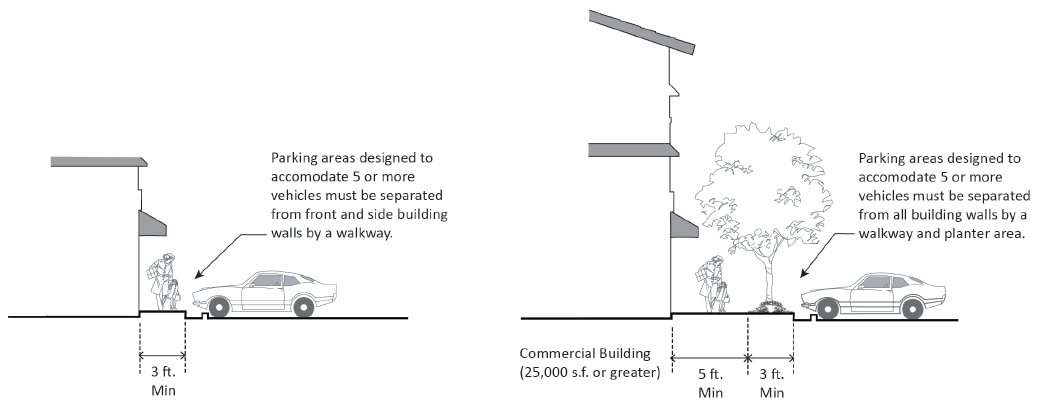
FIGURE 17.27.110(M): PARKING SEPARATION FROM ON-SITE BUILDINGS
N.
Landscaping. Parking areas designed to accommodate five or more vehicles must be landscaped according to the general standards of Chapter 17.25, Landscaping, as well as the standards of this subsection.
1.
Landscape Area Required. A minimum of ten percent of the parking lot area shall be landscaped.
2.
Minimum Planter Dimension. No landscape planter that is to be counted toward the required landscape area shall be smaller than twenty-five square feet in area, or four feet in any horizontal dimension, excluding curbing.
3.
Landscaped Planters Between Parking Stalls and at the Ends of Rows of Parking Stalls. In open parking areas, landscaped planter areas shall be provided after each five parking spaces in any row and at the ends of each row of parking spaces.
4.
Landscaped Buffer Adjacent to Right-of-Way. A landscaped area at least five feet wide shall be provided between any surface parking area and any property line adjacent to a public street for the length of the parking area.
5.
Landscaped Buffer Abutting Interior Lot Line. A landscaped area at least three feet wide shall be provided between any surface parking area and any interior property line for the length of the parking area.
6.
Trees.
a.
Number Required. One for every six parking spaces, minimum of two trees per parking area.
b.
Distribution. Trees shall be distributed relatively evenly throughout the parking area.
c.
Size. All trees shall be a minimum fifteen-gallon size.
7.
Protection of Vegetation.
a.
Clearance from Vehicles. All required landscaped areas shall be designed so that plant materials, at maturity, are protected from vehicle damage by providing a minimum two-foot clearance of low-growing plants where a vehicle overhang is permitted, or by wheel stops set a minimum of two feet from the back of the curb.
b.
Planters. All required parking lot landscaping shall be within planters bounded by a concrete curb at least six inches wide and six inches high. Curbs separating landscaped areas from parking areas shall be designed to allow stormwater runoff to pass through.
8.
Visibility and Clearance.
a.
Notwithstanding other provisions of this chapter, parking area landscaping shall comply with Section 17.23.180, Visibility at Intersections.
b.
Landscaping in planters at the end of parking aisles shall not obstruct driver's vision of vehicular and pedestrian cross-traffic.
c.
Mature trees shall have a foliage clearance maintained at eight feet from the surface of the parking area.
d.
Other plant materials located in the interior of a parking lot shall not exceed thirty inches in height.
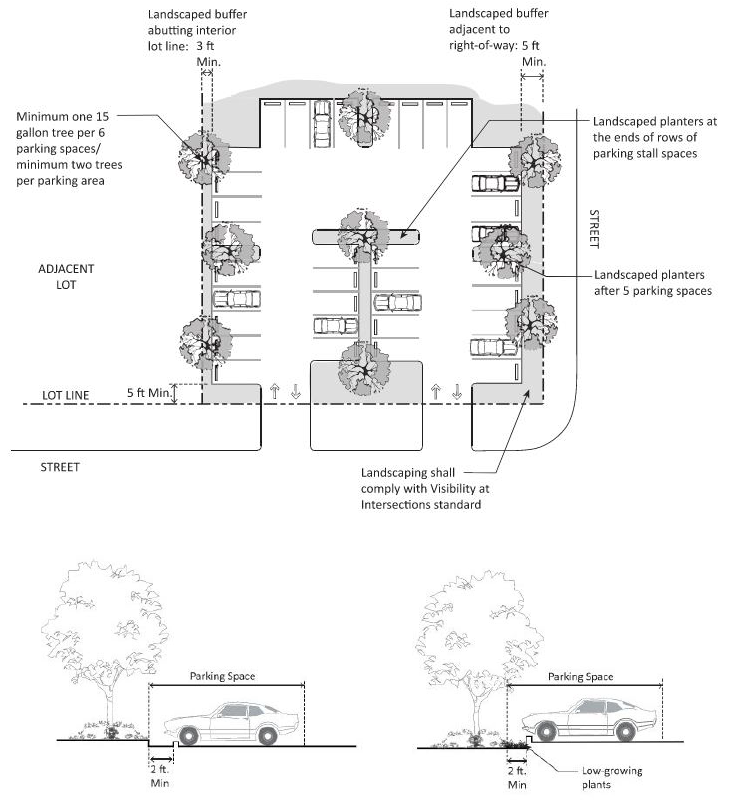
FIGURE 17.27.110(N): PARKING AREA LANDSCAPING
O.
Screening. Parking areas designed to accommodate five or more vehicles shall be screened along the street frontage and adjacent lots in a residential district, according to the following standards.
1.
Height. Screening along the street frontage shall be a minimum three feet in height. Screening adjacent to lots in a residential district shall be a minimum four feet in height.
2.
Materials. Screening may consist of one or any combination of the methods listed below.
a.
Walls. Low-profile walls consisting of brick, stone, stucco, or other quality durable material approved by the director, and including a decorative cap or top finish as well as edge detail at wall ends. Plain concrete blocks are not allowed as a screening wall material unless capped and finished with stucco or other material approved by the director.
b.
Planting. Plant materials consisting of compact evergreen plants that form an opaque screen.
c.
Berms. Berms a minimum of two feet in height and planted with appropriate shrubs and ground cover.
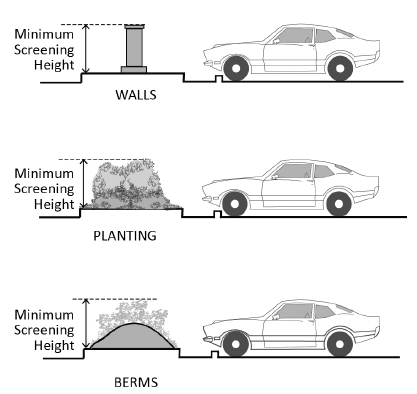
FIGURE 17.27.110(O): PARKING AREA SCREENING
P.
Alternative Parking Area Designs. Where an applicant can demonstrate to the satisfaction of the director that variations in the requirements of this section are warranted in order to achieve environmental design and green building objectives, including but not limited to achieving certification under the LEED™ Green Building Rating System or equivalent, an alternative parking area design may be approved.
Q.
Maintenance. It shall be the duty of the property owner to maintain and repair the parking lot and related improvements in accordance with the above standards and any other conditions imposed at the time of approval. Parking lots, including landscaped areas, driveways, and loading areas, shall be maintained free of refuse, debris, or other accumulated matter and shall be kept in good repair at all times.
(Ord. No. 662, § 2, 12-13-23)
17.28.010 - Purpose.
The purposes of this chapter are to:
A.
Establish permissible limits and permit objective measurement of nuisances, hazards, and objectionable conditions;
B.
Ensure that all uses will provide necessary control measures to protect the community from nuisances, hazards, and objectionable conditions; and
C.
Protect industry from arbitrary exclusion from areas of the city.
(Ord. No. 662, § 2, 12-13-23)
17.28.020 - Applicability.
The minimum requirements in this chapter apply to all land uses in all districts except as provided below.
A.
The following uses and activities are exempt from compliance with the requirements of this chapter:
1.
Legal nonconforming uses, which, based on a written opinion of the city attorney, have an established right not to comply with the provisions of this chapter.
2.
Temporary events with approved temporary use permits or other required permits, where such activities otherwise comply with other applicable provisions of this title.
3.
Any emergency activity on the part of the city or a private party.
4.
Temporary construction activity where such activity is explicitly regulated by other regulations of the municipal code.
5.
Other uses and activities as otherwise specified in this title.
(Ord. No. 662, § 2, 12-13-23)
17.28.030 - General standard.
Land or buildings shall not be used or occupied in a manner creating any dangerous, injurious, or noxious fire, explosive or other hazard that would adversely affect the surrounding area.
(Ord. No. 662, § 2, 12-13-23)
17.28.040 - Measurement of impacts.
Measurements necessary for determining compliance with the standards of this chapter shall be taken at the lot line of the establishment or use that is the source of a potentially objectionable condition, hazard, or nuisance.
(Ord. No. 662, § 2, 12-13-23)
17.28.050 - Air contaminants.
Uses, activities, and processes shall not operate in a manner that emits excessive dust, fumes, smoke, or particulate matter, unless authorized under federal, state, or local law. Sources of air emissions shall comply with all rules established by the Environmental Protection Agency (Code of Federal Regulations, Title 40), the California Air Resources Board, and the San Luis Obispo County Air Pollution Control District.
(Ord. No. 662, § 2, 12-13-23)
17.28.060 - Electromagnetic interference.
No use, activity or process shall cause electromagnetic interference with normal radio and television reception, or with the function of other electronic equipment beyond the lot line of the site in which it is situated. All uses, activities and processes shall comply with applicable federal communications commission regulations.
(Ord. No. 662, § 2, 12-13-23)
17.28.070 - Fire and explosive hazards.
All activities, processes and uses involving the use of, or storage of, flammable and explosive materials shall be provided with adequate safety devices against the hazard of fire and explosion. Firefighting and fire suppression equipment and devices standard in industry shall be approved by the fire department. All incineration is prohibited.
(Ord. No. 662, § 2, 12-13-23)
17.28.080 - Glare.
No use shall be operated such that significant, direct glare, incidental to the operation of the use is visible beyond the boundaries of the lot where the use is located.
(Ord. No. 662, § 2, 12-13-23)
17.28.090 - Hazardous and extremely hazardous materials.
The use, handling, storage and transportation of hazardous and extremely hazardous materials shall comply with the provisions of the California Hazardous Materials Regulations and the California Fire and Building Codes, as well as the laws and regulations of the California Department of Toxic Substances Control and the County Environmental Health Agency. Activities, processes, and uses shall not generate or emit any fissionable or radioactive materials into the atmosphere, a sewage system or onto the ground.
(Ord. No. 662, § 2, 12-13-23)
17.28.100 - Heat and humidity.
Uses, activities, and processes shall not produce any emissions of heat or humidity that cause distress, physical discomfort, or injury to a reasonable person, or interfere with ability to perform work tasks or conduct other customary activities. In no case shall heat emitted by a use cause a temperature increase in excess of five degrees Fahrenheit on another property.
(Ord. No. 662, § 2, 12-13-23)
17.28.110 - Liquid or solid waste.
A.
Discharges to Water or Sewers. Liquids and solids of any kind shall not be discharged, either directly or indirectly, into a public or private body of water, sewage system, watercourse, or into the ground, except in compliance with applicable regulations of the California Regional Water Quality Control Board (California Administrative Code, Title 23, Chapter 3 and California Water Code, Division) and any other agency as shall have jurisdiction of such activities.
B.
Solid Wastes. Solid wastes shall be handled and stored so as to prevent nuisances, health, safety and fire hazards, and to facilitate recycling. There shall be no accumulation outdoors of solid wastes conducive to the breeding of rodents or insects, unless stored in closed containers.
(Ord. No. 662, § 2, 12-13-23)
17.28.120 - Noise.
A.
Noise Limits. No use or activity shall create ambient noise levels that exceed the noise limits established in the general plan.
1.
Separation from Noise Sensitive Uses. Any business operation with sustained or intermittent noise levels exceeding seventy dB ldn (or CNEL) including, but not limited to, wood or machine milling, air hammers, generators, or prolonged or excessive truck deliveries, are not allowed within one hundred fifty feet of residential uses, hospitals, and other noise sensitive uses unless noise levels are mitigated in compliance with this section.
2.
Operational Hours. All commercial and industrial deliveries and loud commercial activities such as loading and unloading, leaf blowers, bands with loudspeakers within one hundred feet of a residential use shall be limited to the hours between seven a.m. and ten p.m.
B.
Acoustic Study. An acoustic study shall be required for any proposed project which could create or be subject to a noise exposure greater than that deemed "acceptable" by the noise element of the general plan.
C.
Noise Attenuation Measures. Noise attenuation measures necessary to reduce noise impacts to acceptable levels are required to be incorporated into a project in accordance with the following:
1.
All new residential development shall achieve interior noise level reductions through sound insulation and other measures to meet the general plan land use compatibility standards by acoustical design and construction of the structure and building elements.
2.
New dwelling units exposed to an exterior DNL above sixty-five dB shall incorporate the following noise reduction measures:
a.
All façades must be constructed with substantial weight and insulation;
b.
Sound-rated windows providing noise reduction performance similar to that of the façade must be included for all exterior entries;
c.
Acoustic baffling of vents is required for chimneys, fans, and gable ends; and
d.
Installation of a mechanical ventilation system affording comfort under closed window conditions.
3.
Other measures identified in an acoustic study conducted for the proposed project as necessary to reduce noise levels to "acceptable" levels.
D.
Exemptions. The provisions of this section, do not apply to:
1.
Emergencies. The emission of sound for the purpose of alerting persons to the existence of an emergency, or the emission of sound in the performance of emergency work.
2.
Warning Devices. Warning devices necessary for the protection of the public safety, such as police, fire, and ambulance sirens.
3.
Special Events. Occasional outdoor gatherings, public dances, shows, and sporting and entertainment events, provided that such events are conducted pursuant to a permit or license issued by the city.
4.
Religious Facilities and Other Similar Organizations. Unamplified bells, chimes, or other similar devices used by houses of religious worship, as such devices are played between the time period of seven a.m. and ten p.m. and the playing period does not exceed ten minutes in any one hour.
5.
Municipal Solid Waste Collection. Collection of solid waste, vegetative waste, and recyclable materials by the city or under contract with the city.
6.
Public Works Construction Projects, Maintenance, and Repair. Street, utility, and similar construction projects undertaken by or under contract to the city, San Luis Obispo County, or the State of California or a public utility regulated by the California Public Utilities Commission, as well as maintenance and repair operations conducted by such parties, including street sweeping, debris and litter removal, removal of downed wires, restoring electrical service, repairing traffic signals, unplugging sewers, vacuuming catch basins, repairing of damaged poles, removal of abandoned vehicles, repairing of water hydrants and mains, gas lines, oil lines, sewers, storm drains, roads, and sidewalks.
7.
Public Utility Facilities. Facilities including, but not limited to, sixty-cycle electric power transformers and related equipment, sewer lift stations, municipal wells, and pumping stations.
(Ord. No. 662, § 2, 12-13-23)
17.28.130 - Vibration.
No vibration shall be permitted so as to cause a noticeable tremor, measurable without instruments at the lot line.
(Ord. No. 662, § 2, 12-13-23)
17.29.010 - Purpose.
The purpose of this chapter is to regulate signs so that they express and enhance the character and environment of the city of Morro Bay and its community. These regulations recognize the importance of business activity to the economic vitality of the city. Specifically, these regulations are intended to:
A.
Encourage communications which aid in the identification of businesses and activities;
B.
Preserve and enhance the aesthetic character of the city;
C.
Restrict signs that, individually or cumulatively, create a confusing environment that impedes the public's ability to receive information;
D.
Prohibit signs which endanger public safety by distracting motorists, cyclists, or pedestrians, thereby increasing the probability of accidents; and
E.
Provide clear and distinct regulations for different districts and lodging establishments.
(Ord. No. 662, § 2, 12-13-23)
17.29.020 - Sign classifications and calculations.
A.
Sign Classifications. For purposes of this chapter, signs are classified based on their location:
1.
On-Premise Sign. A sign that directs attention to a business, commodity, industry, or other commercial activity sold, offered, or conducted on the premises upon which such sign is located. For the purpose of this chapter, all signs on private property that display noncommercial messages or designs are considered on-premise signs.
2.
Off-Premise Sign. A sign that directs attention to a business, commodity, industry, or other commercial activity sold, offered, or conducted elsewhere than on the premises upon which such sign is located. For the purpose of this chapter, temporary signs are not considered off-premise signs.
B.
Sign Types. For purposes of this chapter, signs are categorized into the following types based upon their design, construction, materials, and the manner in which they are mounted:
1.
Permanent Free-Standing Signs.
a.
Architectural Sign. A freestanding sign mounted on two or more poles or other supporting structures.
b.
Monument Sign. A sign, usually rather low in height, erected on the ground or on a solid base designed as a free-standing architectural unit not attached to a building.
c.
Pole Sign. A sign supported by a single pole.
2.
Permanent Building-Mounted Signs.
a.
Awning (Canopy) Sign. A sign painted on or attached to an awning, canopy, arcade, umbrella or similar feature.
b.
Entrance Sign. A secondary and size-limited wall sign (see below) mounted directly above a public entrance to a business or other use.
c.
Exterior Display Case. An openable weather-proof compartment with a transparent front panel. Exterior display cases are typically wall mounted or recessed into the wall of a structure, but could be designed to be free-standing. Typical uses for such cases include the display of restaurant menus or featured merchandise for sale.
d.
Marquee Sign. A sign which projects from a building and forms a canopy over the building entrance and/or a portion of the adjacent sidewalk. Marquee signs are traditionally associated with theaters and typically feature changeable copy or graphics which inform the public of the movie or other entertainment currently available at the venue. Marquee signs often also feature a decorative vertical element that may extend above the cornice line of the building. Marquee signs represent one of the more common instances in which filament lamp lighting is employed.
e.
Projecting Sign (Pub Sign, Flange Sign). A sign which is oriented perpendicular to the primary or secondary façade of an adjacent building and hangs from the canopy or cover over a walkway or driveway or which is mounted on and projects from the building wall.
f.
Roof Sign. A sign erected upon, over or above the roof or false (mansard) roof of a building or structure, or any sign affixed to the wall of a building so that it projects above the eave line of a roof.
g.
Suspended (Hanging) Sign. A sign which is oriented parallel to the primary or secondary façade of an adjacent building and hangs from the canopy or cover over a walkway, driveway or entrance, but which is not mounted on the building wall.
h.
Theater Display Case (Theater Case). An openable, wall-mounted, weather-proof compartment with a transparent front panel. Theater display cases are, by definition, larger exterior display cases and are typically used to display posters that advertise upcoming movies or entertainment events. The use of theater display cases, however, is not so restricted by this definition.
i.
Wall Sign. Any sign which is attached to, erected against or painted upon the wall or mansard of a building or structure, the face of which is in a single plane which is either vertical or parallel to the plane of the wall or mansard. A wall-mounted blackboard or whiteboard is considered a wall sign and is counted toward total allowable sign area.
j.
Window Sign. Any sign placed inside or upon a window facing the outside or affixed to a window in such manner as to be visible from the exterior.
3.
Other Permanent Signs.
a.
Equipment Sign. A sign incorporated into displays, machinery, or equipment by a manufacturer, distributor, or vendor, such as signs customarily fixed to automated teller machines (ATMs), vending machines, gasoline pumps, menu boards, and umbrellas.
b.
Residential Subdivision. A sign, typically a monument or wall type, which identifies the name of a subdivision.
c.
Directory sign. A single sign located in a multi-tenant complex which lists non-residential tenants within the building, complex, or development and the address of the site.
4.
Temporary and Portable Signs.
a.
Sidewalk Sign. A sign not permanently attached to the ground, a building, or other permanent supporting structure. A-frame signs represent one common example of a sidewalk sign. Where permitted, sidewalk signs are subject to special regulations and permits. A freestanding blackboard or whiteboard is considered a sidewalk sign and is regulated as such. A sidewalk-type sign placed on a pier or dock is referred to as a dock sign.
b.
Temporary Sign. A temporary sign is defined as any sign which:
i.
Is constructed of paper, cardboard, flexible plastic, or other non-durable material; or
ii.
Is mounted to a surface or object by means of tape, tacks, push pins, elastic cords, or other easily-removable means or is supported by leaning against a wall or other object or is anchored to the ground by means of wires or other easily-removable means or merely rests on the ground or other surface.
c.
Construction Sign. A sign displayed by a contractor, subcontractor, or architect on a project site whenever a building permit has been issued for construction, alteration, or repair of a structure and when work is in progress on site pursuant to such permit.
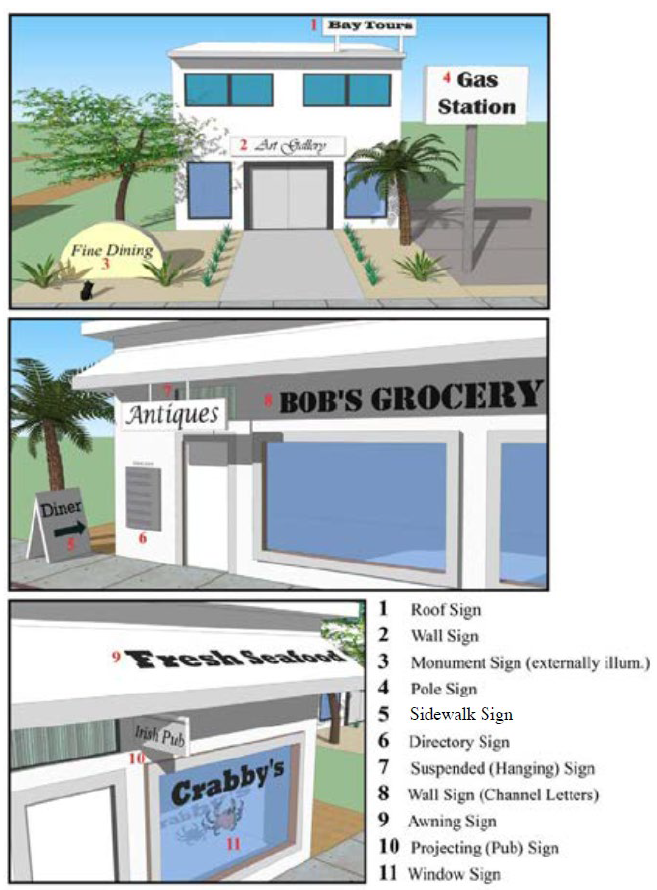
FIGURE 17.29.020(B): TYPES OF GENERAL BUSINESS SIGNS
C.
Exempt Signs. The types of signs listed below are not required to obtain a sign permit, but the owner or acting agent of the property shall give notice, in writing, to the community development department no fewer than thirty days prior to the placement of such sign. An exempt sign is fully subject to the standards established by Section 17.29.120, Performance Standards for Signs, through Section 17.29.140, Nonconforming, Unpermitted, and Illegal Signs. All exempt signs, except temporary signs, are not regulated by district and are exempt from the provisions in Section 17.29.050, Embarcadero District, through Section 17.29.110, Signs Outside of Designated Business Districts. Temporary signs, however, are regulated by the district provisions in Section 17.29.050, Embarcadero District, through Section 17.29.110, Signs Outside of Designated Business Districts.
1.
Legal Notice. An official notice issued by a court, public body or office and posted in the performance of a public duty or a notice posted by a utility or other quasi-public agent in the performance of a public duty.
2.
Government Sign. A sign erected by the city of Morro Bay or other government body.
3.
Historical Marker. A sign, monument, or marker erected by or with the permission of a governmental body or agency for the purpose of informing the public of the history of a building, site, or other feature.
4.
Educational Sign. A sign erected by or with the permission of a governmental body or agency for the purpose of public education or information.
5.
Government-Required Sign. A sign which is required by law or by the conditions of a government issued permit, including, but not limited to a conditional use permit or coastal development permit, or by the terms of any lease or land use agreement to which a governmental agency is a party, and which is installed in accordance with the specifications of the controlling law, permit, lease, or land use agreement. The maximum sign allowance will not be affected by signage required.
D.
Legacy Signs. The city recognizes that some existing signs may not be fully compliant with the requirements of this chapter, but which, by virtue of their long-standing history and iconic design, contribute significantly and positively to the character of the community. Such signs, therefore, may be designated as legacy signs by resolution of the planning commission.
1.
A request that planning commission consideration be given to the designation of any specific sign as a legacy sign may be initiated by the owner of the sign, the owner of the property on which the sign is located, the Morro Bay Planning Commission, or by any member of the city council.
2.
A designated legacy sign shall be exempt from the requirements of Section 17.29.040, Standards for All Districts and Zones, through Section 17.29.110, Signs Outside of Designated Business Districts. Such legacy signs, however, are fully subject to the standards established by Section 17.29.120, Performance Standards, through Section 17.29.140, Nonconforming, Unpermitted, and Illegal Signs. Additionally, a sign permit is required for a legacy sign.
E.
Sign Illumination Types. The sign illumination type is determined by the type of lighting that is employed to increase the sign's visibility. If a particular sign utilizes more than one form of illumination, the regulations of this chapter which relate to each of the sign illumination types shall apply.
1.
Non-Illuminated. A sign that incorporates no external or internal light source.
2.
Externally Illuminated. A sign that is illuminated by reflected light from an external light source placed or mounted near the sign. In this type of illumination, the light source itself is shielded and is not visible to the viewer.

FIGURE 17.29.020(E)(2):
EXTERNALLY-ILLUMINATED
3.
Internally Illuminated. A sign that is illuminated by light that radiates from an internal light source and passes through a translucent or transparent sign material. This sign illumination type includes individual channel letters with internal light sources.

FIGURE 17.29.020(E)(3):
INTERNALLY-ILLUMINATED
4.
Back Lit. A sign that consists of individual opaque letters and/or logos which are mounted in such manner that they are offset from a solid wall or other object and are illuminated only by the backwash of light upon the solid wall. The actual sources of light for a back lit sign are generally not directly visible.

FIGURE 17.29.020(E)(4): BACK LIT
5.
Filament Lamp. A sign that incorporates incandescent light bulbs which are visible to the viewer as a design element. In modern times, LED, compact fluorescent, or other bulbs designed to emulate the appearance of an incandescent bulb might be substituted.
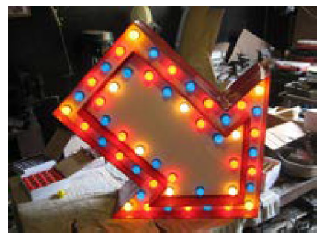
FIGURE 17.29.020(E)(5): FILAMENT LAMP
6.
Neon. A sign that incorporates neon tubes which are visible to the viewer. (Note that an externally illuminated, internally illuminated, or back-lit sign which utilizes a neon tube as a light source would not be considered a "neon sign," as the tubes would not be visible to the viewer.)

FIGURE 17.29.020(E)(6): NEON
7.
LED. A sign that incorporates light emitting diodes which are visible to the viewer. (Note that an externally illuminated, internally illuminated, or back-lit sign which utilizes LEDs as a light source would not be considered an "LED sign," as the LEDs would not be visible to the viewer.)
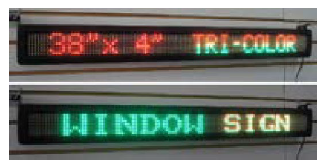
FIGURE 17.29.020(E)(6): NEON
F.
Displays Not Considered Signs. The following types of displays are not considered to be signs and are not subject to the provisions of this chapter.
1.
Murals and Other Art. Artwork painted on, affixed to, or erected near buildings shall not be considered a sign unless such artwork includes logos, text, or graphics that advertise, represent, depict, or promote services, products, or activities offered by a commercial enterprise, as determined by the community development director. In the event that a relatively small area of commercial advertising exists on a display that is predominately artistic in nature, the community development director may elect to consider only the area actually covered by the advertising as a sign, counting against total allowable sign area.
2.
Festive Decorations. Displays and decorations erected in conjunction with a holiday, festival, or other celebratory event shall not be considered as signs unless:
a.
Such displays or decorations include logos, text, or graphics that advertise a business, service, product or other commercial enterprise, as determined by the community development director;
b.
Such displays or decorations are constructed earlier than six weeks before the date of the event being observed; or
c.
Such displays or decorations are permitted to remain in place for longer than two weeks after the date of the event being observed.
(Ord. No. 662, § 2, 12-13-23)
17.29.030 - Computations of sign area.
A.
Single-Faced Signs. A sign is considered to be single-faced if it lies within a single plane and is viewable from only one side of the plane. The area of a single-faced sign shall be defined as the area (height × width) of a quadrangle (square or rectangle) that encloses the extreme limits of all sign elements including decorative frames or borders, written copy, logos, symbols, illustrations, and color, but excluding mounting brackets and supporting posts or poles.
B.
Double-Faced Signs. A double-faced sign consists of two faces that are, at no point, three feet or farther apart and that are either parallel (back-to-back), or meet at an interior angle of forty-five degrees or less, or if extended would meet at an angle of forty-five degrees or less. The area of such a sign shall be counted as the area of a quadrangle that encloses the extreme limits of all sign elements of one of the sign faces. Where the faces are not equal in size, the larger sign face shall be used as the basis for calculating sign area.
C.
Multi-Faced Signs. A multi-faced sign is composed of three or more planar sign faces, or of two sign faces which are, at any point, a distance greater than three feet apart or which meet (or would meet if extended) at interior angle greater than forty-five degrees. The area of a multi-faced sign shall be calculated as the sum of the area of quadrangles that encloses the extreme limits of all sign elements of each one of the sign faces.
D.
Three-Dimensional Signs. Three dimensional signs consist of, incorporate, or have attached to them, one or more three-dimensional objects (i.e., balls, cubes, clusters of objects, sculpture, or statue-like trademarks). The area of such signs shall be defined as one and one-half times the surface area of two adjacent vertical walls of an imaginary box that encloses the extreme limits of all sign elements including, but not limited to, sign structures or borders, written copy, logos, symbols, illustrations, and color, but excluding mounting brackets and supporting posts or poles.
E.
Special Considerations for Ground-Mounted Signs. In the case of architectural or pole-mounted signs, the entire sign structure, with the exception of supporting posts or poles shall be considered a sign face, and the sign area will be calculated as shown in the "framed sign" example in Figure 17.29.030. For monument signs, however, only that portion of the structure that is actually utilized for the display of written copy, logos, symbols, illustrations, or other information will be considered in computation of sign area.
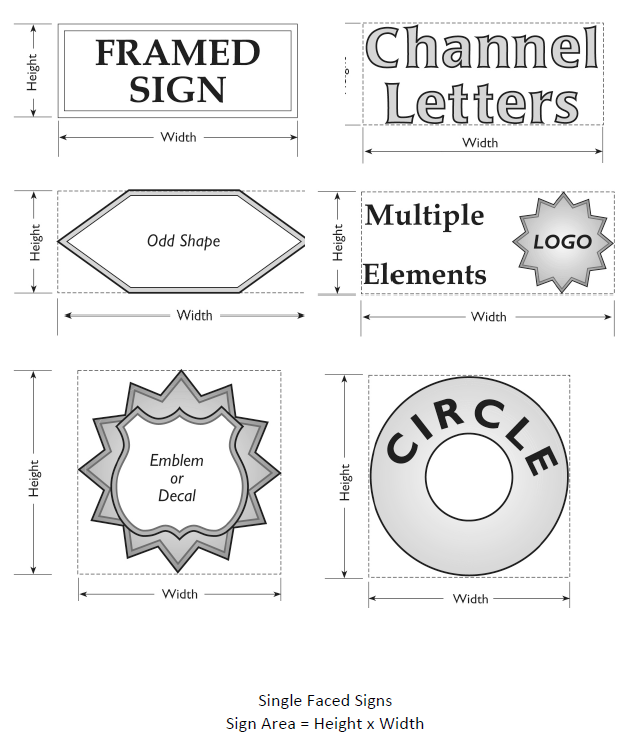
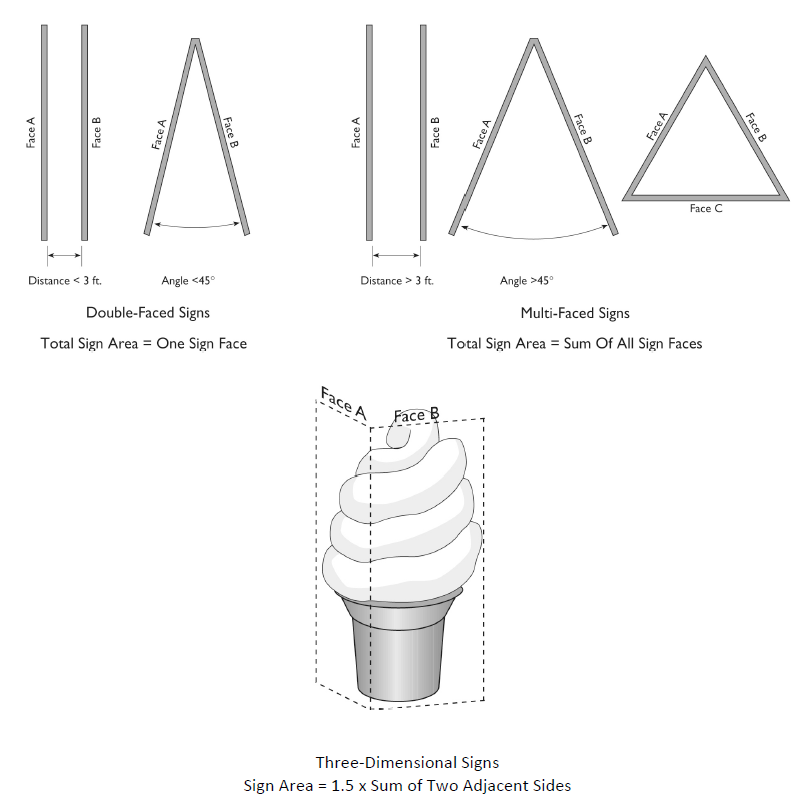
FIGURE 17.29.030: COMPUTATION OF SIGN AREA
F.
Computation of Façades.
Façade area is measured as the product of the façade length times the façade height. For the purposes of this chapter, façade height shall not include roof gables.
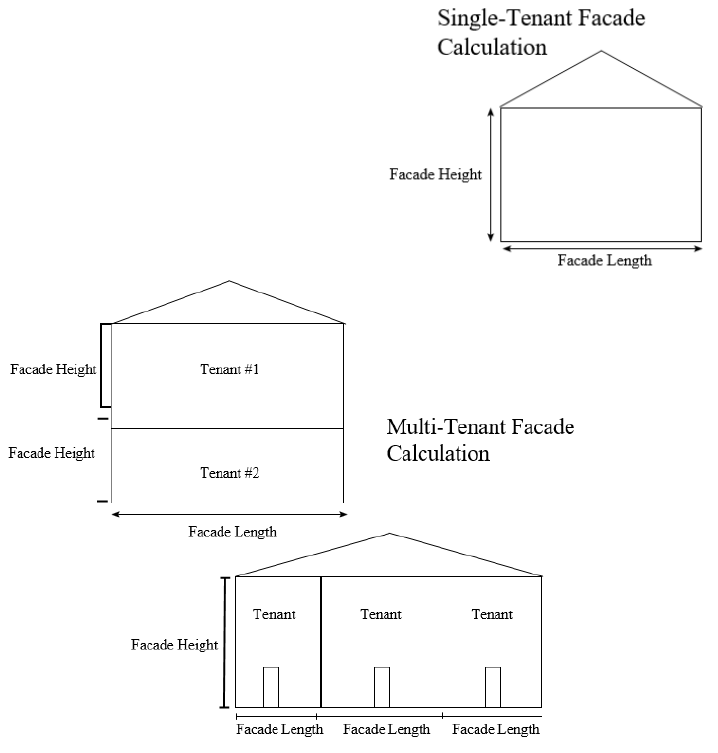
FIGURE 17.29.030(F): FAÇADE CALCULATION
(Ord. No. 662, § 2, 12-13-23)
17.29.040 - Standards for all districts and zones.
The principles and regulations of Section 17.29.120, Performance Standards, through Section 17.29.140, Nonconforming, Unpermitted, and Illegal Signs, apply to all signs, whether temporary or permanent, in any area within the city. Likewise the provisions listed in this section apply regardless of whether a sign is permitted or exempt. See other applicable sign standards by following these steps:
• Review Table 17.29.040, Standards Applicable in All Districts, to determine what additional provisions might apply to the type of sign that is planned
• Refer to Figure 17.29.040, Sign District Map, to determine the sign district in which the planned sign will be located.
• Consult the section and table that applies to the anticipated sign district (Section 17.29.050, Embarcadero District, through Section 17.29.110, Signs Outside of Designated Business Districts) to determine what district-specific regulations and design standards may apply.
− For lodging establishments, regardless of sign district, see Section 17.29.090, Lodging Establishments.
− For properties in industrial zones, regardless of sign district, see Section 17.29.100, Industrial Zones.
A.
Location of Signs.
1.
No sign may be placed on public property, unless by the city of Morro Bay or other authorized governmental agency.
2.
No sign may be placed on private property without the expressed consent of the property owner or other agent legally empowered to provide such consent.
3.
Off-premise signs, including but not limited to billboards, are prohibited citywide.
4.
No commercial sign advertising, related to, or sponsored by a business or business activity may be placed in any zoning district in which such business or business activity is prohibited by applicable provisions of the Morro Bay Zoning Ordinance, unless the related business entity has been established as a legal non-conforming, conditional, or interim use.
5.
No commercial sign advertising, promoting, or offering products, services, or accommodations for sale, rent, lease, barter, or exchange may be placed in any zoning district in which such sale, rent, lease, barter, or exchange is prohibited by applicable provisions of the Morro Bay Zoning Ordinance.
6.
At sites, buildings, or groups of buildings which have more than one non-residential occupant, on-premise signs may be placed upon or attached to only that portion of the property, building, or group of buildings that is physically occupied by the occupant providing the goods or services advertised, unless a master sign program has been approved for the premises.
B.
Sign Standards.
1.
The sign standards listed in Table 17.29.040, Standards Applicable in All Districts, are applicable citywide.
2.
Unlike the citywide sign standards, allowable sign area and sign types are typically designated by district. See Figure 17.29.040, Sign District Map to determine what district your business is located in, then consult Section 17.29.050, Embarcadero District, through Section 17.29.110, Signs Outside of Designated Business Districts to determine allowable sign types and area.
3.
For lodging establishments see Section 17.29.090, Lodging Establishments.
4.
For signs located in industrial zones see Section 17.29.100, Industrial Zones.
5.
For signs that are not located in any of the designated commercial districts, including those in residential areas, see Section 17.29.110, Signs Outside of Designated Business Districts, or consult with the Morro Bay Planning Department.
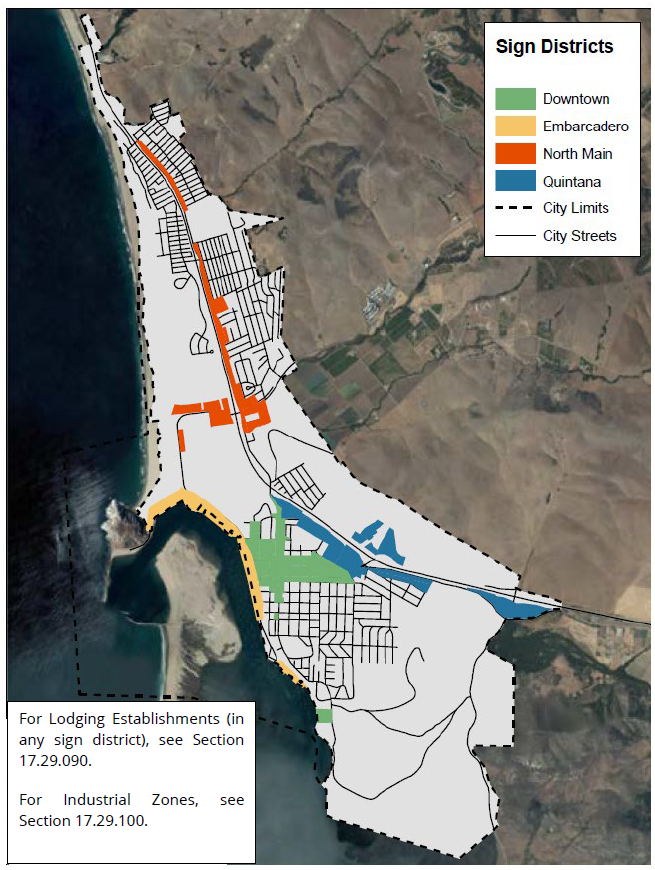
FIGURE 17.29.040: SIGN DISTRICT MAP
(Ord. No. 662, § 2, 12-13-23)
17.29.050 - Embarcadero district.
A.
Characterization of the District. The Embarcadero district is home to many of the tourist-serving businesses in Morro Bay. The Embarcadero district contains a dense collection of restaurants, hotels, bars, museums, gift shops, and recreation-based businesses.
B.
Purpose. The sign regulations for this district are intended to maintain the unique, beach town character of Morro Bay's waterfront. The Embarcadero district is dominated by pedestrians; the code promotes small scale signs and projecting type signs that are oriented towards pedestrians and bicyclists. With the prohibition of pole signs, the code also aims to maximize access to and views of the bay from the street and walkways.
C.
Design Standards for Signs in the Embarcadero District. The following design guidelines are not intended to stifle innovative and creative signage in this district. To the contrary, they are intended to promote a thoughtful approach to the design and appearance of signs that will enhance the overall ambiance and distinctive architectural style of the Embarcadero. The sign design guidelines establish a broad framework within which creativity and individuality are welcome. Signs which appear "generic," mass-produced, or excessively commercial are, in fact, strongly discouraged.
Signage in the Embarcadero district should respect and be consistent with the architectural design guidelines established by the waterfront master plan and the downtown waterfront strategic plan. In order to conform to the concepts articulated by the waterfront master plan, signs in this district shall conform to the following guidelines:
1.
Utilize natural or "industrial" materials that are typically associated with the commercial fishing industry. Such materials might include, among others, wood, stone, art glass, ceramics, concrete, canvas, raw steel, brass, and copper. The use of rigid or flexible plastics, fiberglass, or enameled light gauge sheet metal is not permitted.
2.
Be consistent with the architectural style and color of the building with which they are associated and with other signs related to the site. All of the signs associated with a particular lease site or structure must share a common, identifiable font and design theme and a common color palette that is compatible with and complementary to the building to which they relate.
3.
Utilize muted colors and weathered or distressed finishes consistent with an appearance that has "evolved over time." Excessively bright, fluorescent, or primary colors are not acceptable.
4.
Be placed in locations which are logical and compatible with the style and symmetry of the façade on which they are located.
5.
Be designed and sited to minimize interference with public views to and along the bay from any lateral or vertical accessway or required view corridor.
6.
Not be so large or numerous as to obscure or detract from the architecture of the building with which they are associated. See Table 17.29.050, Allowable Sign Types and Sign Area, Embarcadero District.
7.
Be non-illuminated or illuminated only externally. Signs that are internally illuminated, filament lamp signs, or neon signs are not permitted in the Embarcadero district. See Table 17.29.050 regarding limited acceptability of neon or LED illumination.
8.
Only non-illuminated signs are allowed on the rear, western, bay-facing sides of buildings on the waterfront to prevent glare and light pollution into the bay.
Signs indicating or directing the public to lateral or vertical coastal access should conform to any applicable standards or design guidelines established by the California Coastal Commission. Table 17.29.050, Allowable Sign Types and Sign Area, Embarcadero District, identifies all allowable sign types and specifications for businesses located in the Embarcadero district. If a sign type does not appear in Table 17.29.050, it is prohibited in this district.
D.
Additional Applicable Regulations.
1.
See Table 17.29.040, Standards Applicable in All Districts, for additional regulations that apply citywide to each sign type.
2.
See Section 17.29.120, Performance Standards, for performance standards that apply to all signs citywide.
3.
If property has three or more tenants, see also Section 17.29.150, Signage at Multi-Business Sites: Master Sign Program.
4.
If property has two tenants, façade calculations are determined by business façade, not overall building façade.
5.
If illumination or lighting of any kind is proposed on or around signs, see Section 17.29.020 E, Sign Illumination Types, and 17.29.120 D, Illumination.
6.
If a business is near the edge of a district, please consult with planning staff to confirm appropriate district designation.

FIGURE 17.29.050: EXAMPLES OF EMBARCADERO DISTRICT SIGNS
(Ord. No. 662, § 2, 12-13-23)
17.29.060 - Downtown district.
A.
Characterization of the District. The downtown district houses a combination of resident-serving and tourist-serving businesses. While there are many restaurants, gift shops and galleries, the district also contains banks, shopping markets, offices, and service-based businesses such as automobile repair shops. The downtown is accessed by pedestrians, cyclists, and persons traveling by automobile. Vehicular traffic, however, tends to be low-speed and traffic lanes are relatively close to store fronts, so that large signs or those mounted high above ground level have limited utility.
B.
Purpose. The sign regulations for this district are intended to preserve the small-town character that residents, tourists, and business owners enjoy. The code is designed to eliminate excessive signage while promoting pedestrian-oriented signs.
C.
Design Standards for Signs in the Downtown District. Until the adoption of the downtown waterfront strategic plan in 2018, the downtown district has not been covered by any adopted document that defines the character of or sets out visual guidelines for the area. Signage in the downtown has been developed over the years in a spontaneous and organic manner. This evolutionary process has been driven forward by the energies and imaginations of individual business owners and has produced signage which is distinctive, individualized, and highly creative. Fanciful images and whimsy are often featured. In many instances, signs in the downtown are, in fact, true pieces of folk art. Signs which appear "generic," mass-produced, or excessively commercial are strongly discouraged.
A few remaining historic signs in the downtown blend seamlessly with new signage and add visual character to the streetscape.
In order to preserve the eclectic and interesting character of signage in the downtown district, new signs shall conform to the following guidelines, in addition to the design guidelines established by the downtown waterfront strategic plan:
1.
Utilize natural or "industrial" materials that are typically associated with the commercial fishing industry. Such materials might include, among others, wood, stone, art glass, ceramics, concrete, canvas, raw steel, brass, and copper. The use of rigid or flexible plastics, fiberglass, or enameled light gauge sheet metal is not permitted.
2.
Be individualized and creative in appearance, incorporating images, fonts, and materials that are visually interesting and contribute positively to the eclectic character of the district.
3.
Incorporation or display of logos of national or regional retail organizations shall match the pallet and style of the surrounding area.
4.
Signs must be non-illuminated, externally illuminated, back-lit, or lighted by means of filament or neon lamps. Signs that are internally illuminated are not permitted in the downtown district.
5.
Mechanical changeable copy signs of the marque type are allowed in the downtown sign district. Other mechanical changeable copy signs are prohibited.
D.
Additional Applicable Regulations.
1.
See Table 17.29.040, Standards Applicable to All Districts, for additional regulations that apply citywide to each sign type.
2.
See Section 17.29.120, Performance Standards, for performance standards that apply to all signs citywide.
3.
If property has three or more tenants, see also Section 17.29.150, Signage at Multi-Business Sites: Master Sign Program.
4.
If property has two tenants, façade calculations are determined by business façade, not overall building façade.
5.
If illumination or lighting of any kind is proposed on or around signs, see Sections 17.29.020 E, Sign Illumination Types, and Section 17.29.120 D, Illumination.
6.
If a business is near the edge of a district, please consult with planning staff to confirm appropriate district designation.

FIGURE 17.29.060: EXAMPLES OF DOWNTOWN DISTRICT SIGNS
(Ord. No. 662, § 2, 12-13-23)
17.29.070 - Quintana Road district.
A.
Characterization of the District. The Quintana Road district contains many of the city's larger commercial buildings, shopping malls, and gas stations. Due to the presence of large parking lots and a lack of proximity to residential neighborhoods or visitor-serving accommodations, businesses in this district are most often accessed by persons traveling in automobiles. Local topography, however, severely limits the visibility of the Quintana district and any associated signage from State Highway 1. The relatively high posted speed limit (sixty-five mph) and limited egress opportunities from Highway 1 also suggest that motorists traveling on this route are not a likely target audience for signs erected in the Quintana district.
• The Quintana Road district comprises a mix of local businesses, regional chain stores, and national retail chains and gasoline outlets. Many of the customers for these establishments are locals who have a particular destination in mind. Existing signage is largely utilitarian and recognizable brand names and logos are not uncommon.
• The primary vehicular access to this district is provided by Quintana Road. Due to topography and the existing pattern of development, however, many businesses in this district are not actually visible from this thoroughfare. This presents a special challenge with regard to signage.
B.
Purpose. The sign regulations for this zone focus on allowing large-scale commercial and industrial businesses adequate signs that are proportionate to the associated structures and on promoting motorist and cyclist safety by requiring that signs are clear and legible from the road.
C.
Design Standards for Signs in the Quintana District. Signage in the Quintana Road district tends to be more informational than promotional. It more often serves to provide potential customers with the location of a business they are seeking, rather than entice them to visit a previously unknown site. Readability to drivers and occupants of vehicles traveling at approximately twenty-five to thirty-five mph is of primary importance. To these ends signs in the Quintana sign district shall conform to the following guidelines:
1.
Signs for businesses that front directly on Quintana Road should, when feasible, be mounted perpendicular to the direction of travel at that point.
2.
Signs should exhibit high contrast between background and lettering.
3.
Lettering should be a minimum of six inches in height and should utilize a mix of upper- and lower-case characters.
4.
Use of simple typeface is preferred over heavily flourished or ornamented fonts.
5.
For businesses that are affiliated with national companies or chains, the inclusion of readily recognizable trademarks or logos may be useful to improve readability.
6.
At multi-business sites, a master sign program is required and can allow additional freestanding signs near Quintana Road, serving to direct motorists to the correct entrance driveway. See 17.29.150, Signage at Multi-Business Sites: Master Sign Program.
7.
Sign heights should be low enough to allow motorists to read the message as they approach the entrances to businesses. Ground-mounted signs should be of the monument or architectural type, and pole signs are not permitted. Surface-mounted signs of the wall or projecting type are recommended over roof or window signs.
8.
Mechanical changeable copy signs are allowed in the Quintana Road sign district.
Table 17.29.070, Allowable Sign Types and Sign Area, Quintana District, identifies all allowable sign types and specifications for businesses located in the Quintana district. If a sign type does not appear in Table 17.29.070, it is prohibited in this district.
D.
Additional Applicable Regulations.
1.
See Table 17.29.040, Standards Applicable to All Districts, for additional regulations that apply citywide to each sign type.
2.
See Section 17.29.120, Performance Standards, for performance standards that apply to all signs citywide.
3.
If property has three or more tenants, see also Section 17.29.150, Signage at Multi-Business Sites: Master Sign Program.
4.
If property has two tenants, façade calculations are determined by business façade, not overall building façade.
5.
If illumination or lighting of any kind is proposed on or around signs, see Sections 17.29.020 E, Sign Illumination Types, and Section 17.29.120 D, Illumination.
6.
If a business is near the edge of a district, please consult with planning staff to confirm appropriate district designation.

FIGURE 17.29.070: EXAMPLES OF QUINTANA DISTRICT SIGNS
(Ord. No. 662, § 2, 12-13-23)
17.29.080 - North Main district.
A.
Characterization of the District. The North Main district is a highly heterogeneous area that includes residential, light industrial, neighborhood commercial, and visitor-serving commercial land uses. From the geographic configuration of land uses established by city planning documents, it appears that the historical intent for this area was that it would serve the needs of motorists traveling on State Highway 1. Over the years, however, Highway 1 has been widened to four lanes, the speed limit on this route has been increased to fifty-five—sixty-five mph, and opportunities for egress have been greatly restricted. Consequently, the potential customer base for businesses in the North Main Street district has shifted from itinerant travelers to local residents.
1.
The intersection of North Main Street and Highway 41 represents, to a degree, an exception to this general rule. This intersection is controlled by a four-way stop sign, so that travelers arriving westbound on Highway 41 are required to slow significantly and could represent an additional "target audience" for signage in the immediate vicinity of this intersection. The Highway 41/North Main Street intersection presents several challenges with respect to signage:
a.
Intensifying commercial development at this site presents a risk that signage will become less effective due to a large number of individual signs that are presented against a relatively cluttered background.
b.
Some businesses to the south of Highway 41 are relatively distant from the roadway and are substantially lower than traffic, factors which tend to impair their visibility.
c.
The proximity of this intersection to Morro Bay High School results in the intermittent presence of large number of pedestrian and bicycling students.
d.
Traffic leaving the intersection on Highway 41 eastbound often accelerates quickly to speeds that are greater than seen in other parts of the North Main district.
e.
Anticipated improvements to the intersection may displace some existing signs and must be taken into account when planning the locations for new signage.
2.
The North Main district contains a mixture of neighborhood commercial (e.g., grocery stores, hardware store), visitor-serving uses (e.g., motels, hotels), and businesses that are of interest to both tourists and locals (restaurants, antique shops). Although the majority of businesses are independent enterprises, some of the more recently-established ones are affiliated with national chains and may benefit from signage that includes readily recognized logos.
B.
Purpose. The regulations for this district should promote signs that are legible and appealing to pedestrians, bicyclists, and motorists traveling along North Main Street and on State Highway 41. Regulations are also intended to minimize any negative aesthetic impacts of signs erected on North Main Street with regard to motorists traveling on Highway 1.
C.
Design Standards for Signs in the North Main Street District. Signage in the North Morro Bay district should be targeted toward motorists traveling at relatively low speed (thirty—forty mph) along North Main Street and at somewhat higher speeds (forty—fifty mph) on Highway 41. As both the Quintana Road and North Main districts require signage that is effective and readable to persons traveling in motor vehicles, the design guidelines for these two districts are similar. Signs in the North Main district shall conform to the following guidelines:
1.
Signs for businesses that front directly on North Main Street or on Highway 41 should, when feasible, be mounted perpendicular to the direction of travel at that point.
2.
Signs should exhibit high contrast between background and lettering.
3.
Lettering should be a minimum of six inches in height along North Main Street and a minimum of eight inches in height along Highway 41, and should utilize a mix of upper- and lower-case characters.
4.
The use of simple typeface is preferred over heavily flourished or ornamented fonts.
5.
For businesses, especially visitor-serving businesses, that are affiliated with national companies or chains, the inclusion of readily recognizable trademarks or logos is encouraged.
6.
At multi-business sites, a master sign program is required and can allow additional freestanding signs on North Main Street or on Highway 41. See Section 17.29.150, Signage at Multi-Business Sites: Master Sign Program.
7.
Sign heights should be low enough to allow a motorist to read the message without diverting his/her gaze upward from nearby traffic and pedestrians. Ground-mounted signs should be of the monument or architectural type, and pole signs are not permitted.
8.
The location of new signs should be planned so as to avoid the area that would be required for construction of a traffic circle at the Highway 41/North Main Street intersection.
9.
Mechanical changeable copy signs are allowed in the North Main sign district.
10.
Signage that would draw motorist's attention and concentration away from the road is highly undesirable.
Table 17.29.080, Allowable Sign Types and Sign Area, North Main District, identifies all allowable sign types and specifications for businesses located in the North Main Street district. If a sign type does not appear in Table 17.29.080, it is prohibited in this district.
D.
Additional Applicable Regulations.
1.
See Table 17.29.040, Standards Applicable to All Districts, for additional regulations that apply citywide to each sign type.
2.
See Section 17.29.120, Performance Standards, for performance standards that apply to all signs citywide.
3.
If property has three or more tenants, see also Section 17.29.150, Signage at Multi-Business Sites: Master Sign Program.
4.
If property has two tenants, façade calculations are determined by business façade, not overall building façade.
5.
If illumination or lighting of any kind is proposed on or around signs, see Sections 17.29.020 E, Sign Illumination Types, and Section 17.29.120 D, Illumination.
6.
If a business is near the edge of a district, please consult with planning staff to confirm appropriate district designation.
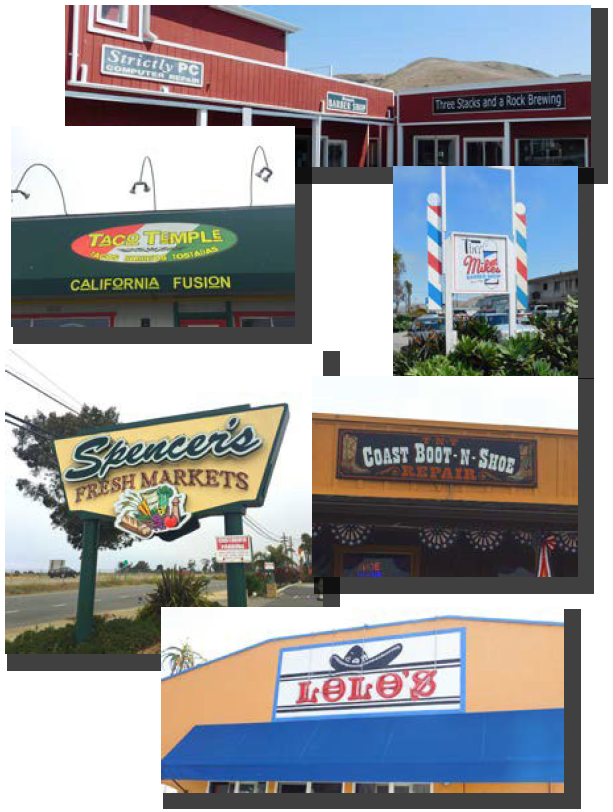
FIGURE 17.29.080: EXAMPLES OF NORTH MAIN DISTRICT SIGNS
(Ord. No. 662, § 2, 12-13-23)
17.29.090 - Lodging establishments.
A.
Purpose. The following regulations apply to lodging establishments in ALL districts. Lodging establishments in the city are located in both residential and commercial zones, and have unique requirements that do not coincide with the signage needs of other types of businesses. The regulations in this section are intended to promote signs that attract potential customers and that are also appealing to both residents and tourists.
B.
Design Standards for Signs Associated with Lodging Establishments. Signs associated with lodging establishments should be consistent with the design standards for the business district in which the establishment is located.
C.
Additional Applicable Regulations.
1.
See Table 17.29.040, Standards Applicable to All Districts, for additional regulations that apply citywide to each sign type.
2.
See Section 17.29.120, Performance Standards, for performance standards that apply to all signs citywide.
3.
If property has three or more tenants, see also Section 17.29.150, Signage at Multi-Business Sites: Master Sign Program.
4.
If property has two tenants, façade calculations are determined by business façade, not overall building façade.
5.
If illumination or lighting of any kind is proposed on or around signs, see Sections 17.29.020 E, Sign Illumination Types, and Section 17.29.120 D, Illumination.
6.
If a business is near the edge of a district, please consult with planning staff to confirm appropriate district designation.
(Ord. No. 662, § 2, 12-13-23)
17.29.100 - Industrial zones.
A.
Purpose. The following regulations apply to businesses located in industrial zones in ALL districts. Industrial businesses have unique requirements that do not coincide with the signage needs of other types of businesses.
B.
Design Standards for Signs in Industrial Zones. Signs associated with businesses in industrial zones should be consistent with the design standards for the business district in which the industrial zone is located.
C.
Additional Applicable Regulations.
1.
See Table 17.29.040, Standards Applicable to All Districts, for additional regulations that apply citywide to each sign type.
2.
See Section 17.29.120, Performance Standards, for performance standards that apply to all signs citywide.
3.
If property has three or more tenants, see also Section 17.29.150, Signage at Multi-Business Sites: Master Sign Program.
4.
If property has two tenants, façade calculations are determined by business façade, not overall building façade.
5.
If illumination or lighting of any kind is proposed on or around signs, see Sections 17.29.020 E, Sign Illumination Types, and Section 17.29.120 D, Illumination.
6.
If a business is near the edge of a district, please consult with planning staff to confirm appropriate district designation.
(Ord. No. 662, § 2, 12-13-23)
17.29.110 - Signs outside of designated business districts.
A.
Lodging Establishments (regardless of Sign District). See Section 17.29.090, Lodging Establishments.
B.
Industrial General (IG) District. See Section 17.29.100, Industrial Districts.
C.
Other Nonresidential Districts. Consult with the community development director to determine which district standards are most appropriate to the nature of the site.
D.
Residential Districts. See Table 17.29.110, Sign Standards for Residential Districts.
E.
Additional Applicable Regulations.
1.
See Table 17.29.040, Standards Applicable to All Districts, for additional regulations that apply citywide to each sign type.
2.
See Section 17.29.120, Performance Standards, for performance standards that apply to all signs citywide.
3.
If property has three or more tenants, see also Section 17.29.150, Signage at Multi-Business Sites: Master Sign Program.
4.
If illumination or lighting of any kind is proposed on or around signs, see Sections 17.29.020 E, Sign Illumination Types, and Section 17.29.120 D, Illumination.
5.
If a business is near the edge of a district, please consult with planning staff to confirm appropriate district designation.
(Ord. No. 662, § 2, 12-13-23)
17.29.120 - Performance standards for signs.
A.
Public Nuisance Prohibited. Regardless of whether or not a permit is required, no sign may be constructed or placed in such manner as to create a public hazard or nuisance.
B.
Code Compliance. Permanent signs and supporting structures thereof shall be installed in accordance with the building code.
C.
Emissions and Noise. No sign may emit visible smoke, vapor, bubbles, confetti, particles, or detectable odor, or be made with mechanical equipment that creates noise.
D.
Illumination. Signs with any type of illumination are subject to all of the following standards:
1.
All lighting is subject to necessary electrical permits.
2.
All newly fabricated illuminated signs shall incorporate light-emitting diodes (LEDs) or an equally energy efficient light source.
3.
Illuminated signs that are larger than ten square feet in area shall not be switched on during daylight hours. All newly fabricated signs larger than ten square feet in area shall incorporate an automatic, light-activated on/off switch.
4.
All illuminated signs shall be turned off by ten p.m. or at the time the business closes, whichever is later. Excluding lodging establishments, except when adjacent or within residential districts.
5.
External lighting shall be properly shielded to prevent glare upon an adjacent public right-of-way or adjacent property.
6.
Illumination shall be constant in intensity and color and shall not consist of flashing, animated or changing lights as to not be distracting to pedestrians, motorists, or neighboring property.
7.
No sign shall emit or reflect light exceeding ten foot-candle power at ten feet from the face of the sign.
8.
Waterfront properties shall not have any illuminated signs on the western, bay-facing façades to prevent glare into the bay
E.
Animation or Movement. No sign may incorporate, in any manner, any moving part or parts or any flashing, moving, rotating, pulsating or intermittent lighting, with the exception of approved time and temperature displays and barber poles.
F.
Attention-Getting Devices. No sign or any other advertising display may incorporate flags, banners, or streamers constructed of cloth, canvas, light fabric, paper, cardboard, wallboard or other light materials which are suspended, mounted, or attached in a manner which allows movements of the sign by atmospheric conditions; nor may any sign incorporate searchlights, string lights, rope lights, festoon lights, flashing lights, balloons, bubbles, fans, or similar devices for attracting attention. This definition, however, shall exclude fabric signs which are securely and permanently attached to a rigid framework (e.g. awning signs as defined in this chapter) or building in a manner which inhibits movement, and fabric projecting signs which are securely and permanently anchored on at least two opposite sides.
G.
Changeable Copy Signs. For the purpose of this ordinance, blackboards and whiteboards are not considered changeable copy signs.
1.
Electronic Changeable Copy Signs. No sign shall be designed so that characters, letters, or illustrations can be changed or rearranged electronically without altering the face or surface of the sign.
2.
Mechanical Changeable Copy Signs. Signs that are designed so that characters, letters, or illustrations can be changed or rearranged mechanically shall not be allowed unless specified in the sign district design guidelines.
H.
Electronic Images. No sign may display still or moving images which have been electronically recorded or stored or which have been received from an off-site source or service.
I.
Inflatable Sign Elements. No sign shall incorporate any element or elements that are made of flexible material designed to be filled with gas or air.
J.
Tire Stacks. No sign shall be placed on, attached to, or supported by stacked tires.
K.
Vehicle Display. No sign shall be mounted, placed or displayed on a vehicle, trailer, or boat, with the exception of:
1.
Signs advertising such vehicle, trailer, or boat for sale in locations where sale of vehicles is permitted.
2.
Those signs and displays described in Section 21100(p)(2) of the California Vehicle Code.
L.
Obscenities. No sign shall include matter that is offensive or disgusting by accepted standards of morality and decency.
M.
Egress. No sign may obstruct any fire escape, required exit, window or door opening intended as a means of egress.
N.
Ventilation. No sign may interfere with any opening required for ventilation.
O.
Persons or Animals. No human or animal shall be used as advertising such that the advertising is intended to, or does in fact, attract the attention of passing motorists to a business or service; and where such advertisement constitutes an off-premise sign.
P.
Traffic Hazard. No sign may be located in such a manner as to constitute a traffic hazard or obstruct the view of any authorized traffic sign or signal device, nor may any sign be constructed in a manner that can be confused with any authorized traffic sign, signal, or device.
Q.
Interference with Pedestrians. No sign shall be placed or constructed on a sidewalk, dock, pier, boardwalk, or designated coastal accessway if such sign, in any way, impedes the right-of-way for pedestrians or with egress of occupants from legally parked vehicles or vessels.
R.
Interference with Harbor-Related Activity. No sign shall be placed or constructed on a sidewalk, dock, pier, boardwalk, or designated coastal accessway if such sign, in any way, impedes the free movement, loading, or unloading of watercraft or interferes with commercial harbor-related industry. A dock sign may only be placed on docks or gangways owned, leased, rented, or otherwise legally controlled by the sign's owner.
S.
Obstruction of Protected View Corridors. Within the area of the city encompassed by the waterfront master plan, no sign or other display greater than thirty inches in height shall be placed or constructed in any view corridor established by a coastal development permit. An exception to this provision may be made by the community development director for signs required to ensure public safety or signs indicating coastal access if the director determines that a height greater than thirty inches is necessary to accomplish the sign's intended purpose.
T.
Interference with Utilities. No sign may be placed or constructed that fails to maintain clearance from or interferes with electrical conductors, communications equipment or lines, surface and underground facilities and conduits for water, sewage, gas, electricity and communications equipment or lines. Signs shall not be placed in public utility easements unless express written permission from the affected public utility is obtained.
U.
Materials. No permanent sign may be constructed of insubstantial materials that will be subject to rapid deterioration, as determined by the community development director. This provision, however, shall not apply to temporary signs or to signs mounted on the interior surface of a window.
V.
Orientation. With the exception of projecting (pub) signs, no sign may be placed or constructed which is so oriented as to be viewed primarily across an adjacent private property line. All signs must be visible directly from a public right-of-way, other public open space or from a parking lot, walkway, or courtyard on the same site as the sign, without view lines extending over private property different from that on which the sign is located.
(Ord. No. 662, § 2, 12-13-23)
17.29.130 - Maintenance, abandonment, and removal of signs, substitution of message.
A.
Maintenance.
1.
All signs, together with all supporting structures, shall be maintained as follows:
a.
Signs shall be kept free of rust, dirt, and of chipped, cracked, or peeling paint unless they are included in the original sign design.
b.
All hanging, dangling, torn, or frayed parts of signs shall be promptly repaired and graffiti and unauthorized attachments shall be removed.
c.
Burned-out illumination shall be replaced immediately.
d.
Sign areas shall be kept free and clear of noxious substances, rubbish, and weeds.
2.
If a sign is removed from its supporting structure for longer than sixty days, the supporting structure shall be removed.
3.
Any sign deemed unsafe by a building official shall be removed or fixed within three days of written notice.
4.
Every sign, including those signs for which no permit is required, together with all supports braces, guys, and anchors shall be maintained in a safe, presentable, and good structural condition at all times. The display surfaces of all signs shall be kept neatly painted, posted, or otherwise maintained at all times. The owner of property on which the sign is located shall be responsible for the condition of the area in the vicinity of the sign, and shall be required to keep this area clear, sanitary, and free from noxious or offensive substances, rubbish, and flammable waste materials.
5.
Any temporary sign which is no longer safe, presentable, and structurally sound shall be immediately removed by the owner.
B.
Abandonment. The following signs shall be presumed to be abandoned.
1.
Located on Property. Any sign which is located on property that becomes vacant and is unoccupied for a period of sixty days or longer.
2.
Unrelated to Property. Any sign which describes, references, or pertains to an occupant or business other than the present occupant or business.
3.
Time, Event, or Purpose Sign. Any sign which pertains to a time, event, or purpose which no longer exists.
C.
Removal. Abandoned signs are deemed a public nuisance due to their misleading and distracting nature and due to their contributing to visual blight, and are deemed detrimental to surrounding areas and the community generally. An abandoned sign is prohibited and shall be removed by the property owner.
D.
Substitution of Sign Message. The owner of a legal, permitted sign may substitute a non-commercial message for a commercial message.
(Ord. No. 662, § 2, 12-13-23)
17.29.140 - Nonconforming, unpermitted, and illegal signs.
A.
Purpose. The following regulations apply to signs throughout the city that do not comply with the regulations in this chapter. Section 17.29.170, Sign Permits, also has provisions the city shall utilize to bring nonconforming signs into compliance.
B.
Legal Nonconforming Signs. Signs existing prior to January 1, 2017, that do not comply with the provisions of this chapter but that were legally erected pursuant to applicable state and city ordinances in effect at the time of construction and after issuance of any permit required at the time of their construction shall be regarded as nonconforming signs, and shall be subject to the following:
1.
Limited Expansion. Changes may be made to the sign face, copy, graphic design, or color of a nonconforming sign provided that such changes can be made without removal of the sign. A nonconforming sign, however, may not be expanded, extended, reconstructed, or altered in location or orientation so as to enable it to be read or viewed from a different direction than its original positions.
2.
Abatement of Legal, Nonconforming Signs. A nonconforming sign shall be removed or otherwise made to conform to the provisions of this chapter under the following circumstances:
a.
Deterioration. When a nonconforming sign becomes deteriorated or dilapidated to the extent of over fifty percent of the physical value it would have if it had been maintained in good repair, it must be removed within sixty days after receiving notice from the community development department. If an ill-maintained sign cannot be adequately valued and assessed, the community development director may require that such sign be removed or repaired.
b.
Site Reconstruction or Repair. Whenever the physical structures on a commercial property are replaced or renovated, all nonconforming signs at the site shall be removed or made to conform to the provision of this chapter. This requirement, however, may be waived by the community development director if the property owner provides credible documentation that the cost of abating nonconforming signage would exceed ten percent of the cost of the proposed reconstruction or repairs.
c.
Tidelands Lease Agreements. Whenever the city of Morro Bay enters into a Tidelands lease agreement with any individual or business entity, whether as a new agreement or a lease renewal, a requirement that all nonconforming signs at the site be removed or made to conform to the provision of this chapter shall be incorporated into such lease agreement.
3.
Other Requirements. Nonconforming signs are also subject to the provisions of Chapter 17.27, Nonconforming Uses, Structures, and Lots.
C.
Unpermitted Signs. Any sign that was placed, erected, or constructed or which is maintained without the owner having obtained such sign permit as may have been required at the time of its placement, erection, or construction, but which is otherwise in conformance with all of the applicable provisions and standards of this chapter shall be termed an unpermitted sign.
1.
An unpermitted sign may become legalized if the owner submits a sign permit application on his/her own initiative or within ten days of receiving notice from the city. Such application, if received by the planning department within six months after the date of adoption of this ordinance, must be accompanied by payment of the fee established by the city for the processing of a sign permit application. If such application is received at a time greater than six months after the adoption of this ordinance, it must be accompanied by a fee equal to double the fee established for the processing of a timely sign permit application. If a sign permit is approved the sign shall be deemed to be legal and may remain in its current state.
2.
Failure to either remove an unpermitted sign or to submit a sign permit application within five days after receiving notice from the city shall be considered a violation of this title and subject to provisions in the MBMC, specifically regulations in public nuisances Chapter 8.14 and Title 1.
D.
Illegal Signs. Any sign which was placed, erected or constructed or which is maintained without the owner having obtained such sign permit or sidewalk sign permit as may have been required at the time of its placement, erection, or construction, and which is in violation of any applicable provision of Sections 17.29.040, Standards for All Districts and Zones, through 17.29.130, Maintenance, Abandonment, and Removal of Signs, Substitution of Message, or any other chapter of this title, or of any other federal, state, or local law is an illegal sign. Additionally, any sign which would otherwise be an exempt sign, but which was placed or erected without the thirty-day notice required by Section 17.29.020 B, Sign Types, shall be considered an illegal sign. The community development director shall order that such sign be brought into compliance with the provisions of the chapter or be abated as a public nuisance under public nuisances chapter of the municipal code (8.14).
1.
If the illegal sign is not a primary business sign (see definition in Section 17.29.200, Definitions), any work required to be done shall be completed or the sign shall be removed within ten days of the order, unless otherwise specified in writing.
2.
If the illegal sign is a primary business sign which was erected or placed prior to the date of enactment of this ordinance, the maximum allowable time for completion of any work required shall be specified by the community development department, as follows in the table below. Specification of a maximum allowable completion time greater than ninety days shall be contingent on the applicant providing a credible estimate of the cost of repair or replacement to the planning department within thirty days of illegal sign notification.
3.
If the illegal sign is a primary business sign which was erected or placed after the date of enactment of this ordinance, any work required to bring the sign into compliance with the provisions of this chapter or the sign shall be removed within ten days of the date of such order, unless otherwise specified in writing.
4.
Failure to remove an illegal sign within the time limits specified above shall be considered a violation of this title (see Section 17.29.180, Exceptions and Appeals).
(Ord. No. 662, § 2, 12-13-23)
17.29.150 - Signage at multi-business sites: master sign program.
A.
Additional Sign Provisions for Signs at Multiple-Business Sites (3+ Business Tenants)
1.
Shopping Center.
a.
A shopping center is defined as an establishment consisting of three or more businesses that:
i.
Are located in buildings on a single parcel, either detached or attached,
ii.
Are designed to be accessible to persons traveling by automobile and provide all required parking spaces on site, and
iii.
Exhibit a unified or common architecture.
b.
In addition to the signage allowable to individual businesses within a shopping center by Section 17.29.050, Embarcadero District, through Section 17.29.100, Industrial Zones, the shopping center as an entity shall be allowed one additional sign on each major street frontage or pedestrian entrance, subject to the following conditions:
i.
Signs allowable under this provision shall be of the architectural or monument type.
ii.
Minimum sign height shall be six feet and maximum height shall be eight feet.
iii.
Maximum sign area shall be eighty square feet per sign and maximum total sign area shall be one hundred sixty square feet.
iv.
The design of the signs shall be consistent with the architecture of the buildings comprising the shopping center.
c.
Construction of any sign in accordance with this section shall require approval of a master sign program, as described in Section 17.29.150 B, Master Sign Program.
d.
No business located within a shopping center will be permitted an individual pole, architectural, or monument type sign.
2.
Retail Cluster.
a.
A retail cluster is defined as an establishment consisting of three or more business that:
i.
Are located in buildings on a single parcel, either detached or attached;
ii.
Are designed to be primarily accessible to persons parking in public facilities or on public streets and traveling on foot;
iii.
Exhibit a unified or common architecture; and
iv.
Include at least one business that offers merchandise for sale.
b.
In addition to the signage allowable to individual businesses within a retail center by Section 17.29.050, Embarcadero District, through Section 17.29.100, Industrial Zones, the retail cluster as an entity shall be allowed one additional sign on each major street frontage or pedestrian entrance, subject to the following conditions:
i.
The sign allowable under this provision shall be of the architectural or monument type.
ii.
Minimum sign height shall be four feet and maximum height shall be six feet.
iii.
Maximum sign area shall be forty square feet.
iv.
The design of the sign shall be consistent with the architecture of the buildings comprising the retail cluster.
c.
Construction of any sign in accordance with this section shall require approval of a master sign program, as described in Section 17.29.150 B, Master Sign Program.
d.
No business located within a retail cluster will be permitted an individual pole, architectural, or monument type sign.
3.
Professional Building.
a.
A professional building is defined as an establishment consisting of three or more businesses that:
i.
Are located in buildings on a single parcel, either detached or attached;
ii.
Are designed to be accessible both to persons parking in public facilities or on public streets and to those parking on site;
iii.
Exhibit a unified or common architecture;
iv.
Include at least one business that offers medical, dental, optometric, psychological or psychiatric, legal, financial, secretarial, engineering, technological, architectural, design, or other similar services to the general public; and
v.
Offer only such retail sales as are clearly subsidiary to and supportive of the professional services available at the site (e.g., pharmacy, supplier of durable medical equipment).
b.
In addition to the signage allowable to individual businesses within a professional building by Section 17.29.050, Embarcadero District, through 17.29.100, Industrial Zones, the professional building as an entity shall be allowed one additional sign, subject to the following conditions:
i.
The sign allowable under this provision shall be of the architectural or monument type.
ii.
Minimum sign height shall be four feet and maximum height shall be six feet.
iii.
Maximum sign area shall be forty square feet.
iv.
The design of the sign shall be consistent with the architecture of the buildings comprising the professional building.
c.
Construction of any sign in accordance with this section shall require approval of a master sign program, as described in Section 17.29.150 B, Master Sign Program.
d.
No business located within a professional building will be permitted an individual sign of the pole, architectural, or monument type.
B.
Master Sign Program.
1.
Purpose. Master sign programs establish criteria for multi-tenant properties that ensure signage is uncluttered, consistent, and fairly distributed between tenants.
2.
Approval Body. Master sign programs shall be an administrative level permit unless the proposed signage is greater than permitted, in which case the planning commission or, on appeal, the city council will be the decision making authority.
3.
Applicability.
a.
Any site having three or more non-residential occupants shall submit a master sign program (MSP) for review and approval.
b.
Any site having three or fewer non-residential occupants may submit an MSP for review and approval.
c.
Projects involving construction or renovation of more than twenty-five thousand square feet of space in the commercial and mixed use zoning districts shall submit an MSP which must be approved prior to issuance of any occupancy permit.
d.
Properties subject to a MSP that do not have one shall establish an MSP when a current tenant proposes the installation of a new sign.
e.
All new signs shall conform to the approved master sign program.
4.
Application Requirements. Applications for approval of a master sign program shall be submitted to the community development director and shall include the following:
a.
Site plan. A plan, drawn to scale, delineating the site proposed to be included within the signing program and the location of all proposed signs.
b.
Drawings and Sketches. Drawings, sketches, or photo-simulations depicting the exterior surface details of all buildings and ground locations on the site on which signs are proposed and indicating the location of each proposed sign. Illuminated sign locations and illumination methods shall also be specified.
c.
Photographs of all existing signage and the building faces or sites where signage is proposed.
d.
Sign Standards. A written program specifying sign standards, including color, size, construction details, placement, and necessity for city review for distribution to future tenants.
e.
Public Access Sign. If a property includes a public access way, this access shall be indicated with a sign (minimum three square feet) on the primary building façade.
5.
Allowable Modifications. A master sign program may provide for additional signage, as detailed in Section 17.29.150 A, Additional Sign Provisions for Signs at Multiple-Business Sites. No deviations, however, may be granted to the provisions of Section 17.29.040, 17.29.120, 17.29.130, 17.29.140, or 17.29.160.
6.
Conditions of Approval. The decision-making authority may attach any reasonable conditions necessary to carry out the intent of the Master Sign Program requirement, while still permitting each sign user opportunities for effective identification and communication.
7.
Administrative Approval of Signs Consistent with Master Sign Program. Following approval of a master sign program, the community development director is authorized to issue building permits or other permits, as deemed necessary, to install signs that conform to an approved MSP. Minor modifications of individual sign area may be approved, provided the maximum allowed by an approved MSP and by the provisions of Section 17.29.040, Standards for All Districts and Zones, through Section 17.29.110, Signs Outside of Designated Business Districts, of this chapter are not exceeded.
(Ord. No. 662, § 2, 12-13-23)
17.29.160 - Minor adjustments.
The director may grant, for new or existing signs, minor adjustments to sign colors, landscaping requirements, advertising copy or message or height, or authorize deviations from sign area not to exceed twenty percent. In granting adjustments, the director may apply reasonable conditions to ensure that provisions of this chapter are met.
(Ord. No. 662, § 2, 12-13-23)
17.29.170 - Sign permits.
A.
Authority. No sign, other than an exempt sign, shall be erected or altered, without first obtaining a zoning clearance or sign permit from the community development director. The director may attach reasonable conditions on the approval of the sign permit to help ensure compliance with this chapter. These conditions may require the removal, modification or relocation of existing signs where the proposed sign(s) would be located on sites where existing signs are nonconforming.
B.
Requirement for Sign Permit. No business license will be issued or renewed by the city of Morro Bay unless the applicant for such license:
1.
Does not have a sign or is the holder of a valid sign permit issued by the city, and
2.
Submits credible documentation that the signage present at the business location is consistent with the issued sign permit. Such documentation may consist of a photographic record, a report of inspection by a city code enforcement officer, or such other method as may be deemed credible and acceptable by the community development director.
C.
Waiver of Requirement for Sign Permit. The requirements of Section 17.29.170, Sign Permits, may, however, be waived by the community development director if the applicant for issuance or renewal of a city business license provides an affidavit indicating that:
1.
There are no existing signs associated with the business; and
2.
No signs associated with the business will be erected or established during the time period for which the requested business license shall be in force.
Prior to issuing such a waiver, the community development director may, at his/her sole discretion, require the applicant to provide documentation that no signage is associated with the business under consideration. Such documentation may consist of a photographic record, a report of inspection by a city code enforcement officer, or such other method as may be deemed credible and acceptable by the community development director.
D.
Application Procedure. Applications for a sign permit shall be made in writing upon forms furnished by the community development director, accompanied by the required fee and plans drawn to scale and with all of the following information. The community development director has no more than thirty calendar days to determine application completeness. Where the scale and scope of the sign proposal so warrants, the director may waive some of the informational requirements listed below provided all information necessary for adequate review of the proposal is submitted.
1.
The proposed design, dimensions, copy, color, lighting methods and location of the sign on the site, including the dimensions of the sign's supporting members, and details of all connections, guy lines, supports and footings, and materials to be used.
2.
The maximum and minimum height of the sign.
3.
The location of off-street parking facilities, including entries and exits where directional signs are proposed.
4.
The size and dimension of all signs existing on the site.
5.
The location and horizontal frontage of any building(s) on the property, both existing and proposed.
6.
Photographs of all existing signage and the building faces or sites where signage is proposed.
7.
Any other information deemed necessary by the community development director.
E.
Required Findings. In approving a sign permit, the director must find that:
1.
Signs on all proposed buildings or new additions to existing buildings are designed as an integral part of the total building design.
2.
The location of the proposed sign and the design of its visual elements (lettering, words, figures, colors, decorative motifs, spacing and proportions) are legible under normal viewing conditions that prevail where the sign is to be installed.
3.
Review of signs at city entryways shall also be subject to the following provisions:
a.
Sign area, height and location of signs shall be designed so as not to interfere with view corridors as defined and specified in the general plan/LCP land use plan.
b.
Freestanding signs shall not exceed eight feet in height except within one hundred feet of Highway 1 or Highway 41. Where feasible, all freestanding signs within or along city entryways shall be placed within a landscaped planter.
(Ord. No. 662, § 2, 12-13-23)
17.29.180 - Exceptions and appeals.
A.
Exceptions. The planning commission or, on appeal, the city council may grant exceptions to the design guidelines established by this chapter.
1.
Findings. No exceptions to the provisions of this chapter shall be granted unless the following findings are made:
a.
The exception(s) granted will not constitute a grant of special privilege inconsistent with limitations placed on signage of other properties in the vicinity;
b.
The exception(s) granted will not adversely affect the health safety or general welfare of persons working or residing in the vicinity and will not create a visual obstruction or distraction to motorists, cyclists, or pedestrians;
c.
The sign for which an exception or exceptions is requested will not adversely affect the attractiveness or ambiance of the area in which it is proposed; and
d.
Either of the following:
i.
The exception(s) granted are necessary in order for the proposed sign to fulfill its intended purpose, and such purpose cannot be accomplished by any alternative that is consistent with the requirements of this chapter; or
ii.
The proposed sign offers creative and aesthetic qualities which will enhance the area in which the sign is to be constructed and which cannot be accomplished within the applicable design guidelines.
2.
Conditions of Grant of Exception. The planning commission may attach to any exemption granted, such conditions as may be deemed reasonable and necessary to carry out the purposes and intent of this chapter
3.
Limitation on Exceptions. No exceptions may be granted to the provisions of Sections 17.29.040, 17.29.110, 17.29.120 through 17.29.140, or 17.29.150 B of this chapter.
B.
Appeals.
1.
Persons Who May Appeal. Except as provided for elsewhere in this chapter, appeals to the planning commission or city council may be filed by the applicant, by the owner of property, or by any other person aggrieved by a decision that is subject to appeal under the provisions of this chapter.
2.
Final Decision Required. Unless otherwise specified by federal or state law, an appeal must be brought and a final decision rendered by the hearing body before the matter may be appealed to a court of law.
3.
Time Limits. Unless otherwise specified in state or federal law, all appeals shall be filed within ten days of the date of permit issuance.
4.
Proceedings Stayed By Appeal. The timely filing of an appeal shall stay all proceedings in the matter appealed, including, but not limited to, the issuance of city building permits and business licenses.
5.
Appeals of Director Decisions. A decision of the community development director on any application may be appealed to the planning commission by filing a written appeal with the planning department within ten days of such decision. The application shall identify the decision being appealed and shall clearly and concisely state the reasons for the appeal.
6.
Appeals of Planning Commission Decisions. Decisions of the planning commission may be appealed to the city council by filing a written appeal with the city clerk within ten days of such decision. The appeal shall identify the decision being appealed and shall clearly and concisely state the reasons for the appeal.
7.
Transmission of Record. The director, or in the case of appeals to the city council, the city clerk, shall schedule the appeal for consideration by the authorized appellate body within forty-five days of the date the appeal was filed. The community development director shall forward the administrative record, the appeal, and all other documents that constitute the record to the appellate body. The director also shall prepare a staff report that responds to the issues raised by the appeal and may include a recommendation for action.
8.
Appellate Body Action. The appellate body shall review the administrative record, the appeal, and any written correspondence submitted after the appeal has been filed, and conduct a public hearing and decide on the action and may take one of the following actions:
a.
Remand the matter to a decision-making body; or
b.
Cure a deficiency in the record or the proceedings.
9.
Standards of Review. When reviewing any decision on appeal, the appellate body shall use the same standards for decision-making required for the original decision. The appellate body may adopt the same decision and findings as were originally approved.
(Ord. No. 662, § 2, 12-13-23)
17.29.190 - Severability.
If any section, definition, clause, phrase, word, or portion of this chapter is held invalid, unconstitutional, or unenforceable by any court of related jurisdiction, such a ruling shall not affect, impair, or invalidate any other sections, definition, clause, phrase, word, or portion of this chapter. In adopting this chapter, the city council affirmatively declares that it would have approved and adopted the title even without any portion which may be held invalid or unenforceable.
(Ord. No. 662, § 2, 12-13-23)
17.29.200 - Definitions.
A.
Abandoned Sign. A sign that no longer applies to a business space, building, or site, due to lack of a valid business license, change of business name, or for any other reason that renders the sign not applicable to the premises involved.
B.
Billboard (Outdoor-Off-Site Freestanding Sign). A sign placed for the purpose of advertising products or services that are not produced, stored, or sold on the property or any other subject no related to the property or use of the property, upon which the sign is located.
C.
Building Mounted Sign. Any sign mounted or erected on or against any building or façade and includes all walls signs, awning and canopy signs and projecting signs.
D.
Business Sign. Any interior or exterior sign which is intended to identify the name or portions of the business name and which is viewable from any exterior area open to the public.
E.
Changeable Copy Sign. A sign designed so its characters, letters, or illustrations can be changed or rearranged mechanically or electronically without substantially altering the face or the surface of the sign.
F.
Commercial Sign. Any display which provides information as to the name, location, or activities of any business entity or which provides information concerning goods, services, or accommodations available for sale, rent, lease, or barter, regardless of whether such sign includes additional non-business related information.
G.
Canopy Sign. An ornamental roof-like structure upon which a sign may be attached or otherwise affixed which is usually located over gasoline pumps.
H.
Construction Sign. A sign displayed by a contractor, subcontractor, or architect on a project site whenever a building permit has been issued for construction, alteration, or repair of a structure and when work is in progress on site pursuant to such permit.
I.
Height of A Sign. Height of a sign means the greatest vertical distance measured from the ground level directly beneath the sign to the top of the sign or from the nearest property line fronting on a public street, whichever is lower.
J.
Human or Animal Advertisement. Any person or animal who is located anywhere within the city, and whose intent is to advertise a business or service, by the way of their actions, including but not limited to, holding a temporary sign or wearing a costume.
K.
Illegal Sign. An unpermitted sign that is found to be erected or maintained in violation of any provision of this chapter, this title, or any other federal, state, or local law.
L.
Façade Length. The length of the building face or tenant lease site (see [Figure 17.29.030(F)] of this chapter for a graphical representation).
M.
Façade Height. The height of the building face or tenant lease site which does not include the roof gable (see [Figure 17.29.030(F)] of this chapter for a graphical representation).
N.
Frontage. The linear measurement in feet of the property line directly fronting on a public street, or other public right-of-way to which such sign is oriented, excluding California State Highway One.
O.
Master Sign Plan. A coordinated program of all signs, including exempt and temporary signs for a business, or businesses if applicable, located on a development site. The sign program shall include, but not be limited to, indications of the locations, dimensions, colors, letter styles and sign types of all signs to be installed on a site.
P.
Mansard. A roof-like façade comparable to an exterior building wall.
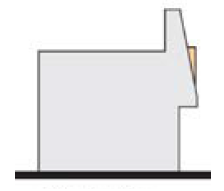
FIGURE 17.29.200: MANSARD ROOF (SIDE ELEVATION)
Q.
Non-Commercial Sign. A sign which provides only information unrelated to any for-profit business entity or to goods, services, or accommodations available for sale, rent, lease, or barter.
R.
Nonconforming Sign. Any previously approved and permitted sign that existed prior to a change in the municipal code that prohibits such sign. A nonconforming sign is different than an illegal sign (see definition above for "illegal sign").
S.
Open House Sign. An open house sign advertises that a house is open for view as part of the sale or exchange of the property.
T.
Primary Business Sign. The largest sign on the primary façade of a business or lease site.
U.
Primary Façade. The face of a building or tenant lease site that incorporates the main entrance to the business and that faces a primary street, as determined by the business owner.
V.
Professional Building. An establishment consisting of three or more businesses which:
1.
Are located in buildings on a single parcel, either detached or attached,
2.
Exhibit a unified or common architecture, and
3.
Includes only businesses whose primary activity is the provision of professional services, as opposed to the sale of merchandise.
W.
Real Estate Sign. A sign identifying that a property is for sale, lease, exchange, or rent. The purpose of this sign is to help owners in the sale of their property by providing information on the location of the property to potential buyers without impairing the appearance of the community.
X.
Retail Cluster. An establishment consisting of three or more businesses which:
1.
Are located in buildings on a single parcel, either detached or attached;
2.
Are designed to be primarily accessible to persons parking in public facilities or on public streets and traveling on foot;
3.
Exhibit a unified or common architecture; and
4.
Includes at least one business that offers merchandise for sale.
Y.
Shopping Center. An establishment consisting of three or more businesses which:
1.
Are located in buildings on a single parcel, either detached or attached;
2.
Are designed to be accessible to persons traveling by automobile and provide all required parking spaces on site; and
3.
Exhibit a unified or common architecture.
Z.
Secondary Façade. The face of a building or tenant lease site that serves as a secondary entrance and/or advertising space to the primary façade, as determined by the business owner.
AA.
Sign. Any man-made or natural object, structure, vehicle, trailer, boat, or watercraft or part thereof, upon which is attached, painted, or otherwise displayed any symbol, emblem, logo, trademark, model, banner, flag, pennant, insignia, decoration, device, representation which is intended to or does identify, attract attention to, advertise, or communicate information of any kind to the public.
BB.
Sign Area. The entire area of a sign calculated for maximum sign area purposes, pursuant to Chapter 17.29, Signs.
CC.
Sign Face. The surface or surfaces used for the display of a sign message as seen from any one direction.
(Ord. No. 662, § 2, 12-13-23)
17.30.010 - Purpose.
The purpose of this chapter is to establish standards for the location, site planning, development, and operations of certain land uses that are allowed by Division II, District Regulations, within individual or multiple districts, and for activities that require special standards to minimize the impacts of these uses and activities on surrounding properties and to protect the health, safety, and welfare of their occupants and of the general public.
(Ord. No. 662, § 2, 12-13-23)
17.30.020 - Applicability.
Each land use and activity covered by this chapter shall comply with the requirements of the section applicable to the specific use or activity, in addition to any applicable standard this zoning code requires in the district where the use or activity is proposed and all other applicable provisions of this code.
A.
The uses that are subject to the standards in this chapter shall be located only where allowed by base or overlay district use regulations or by a specific plan.
B.
The uses that are subject to the standards in this chapter are allowed only when authorized by the planning permit required by district regulations except where this chapter establishes a different planning permit requirement for a specific use.
(Ord. No. 662, § 2, 12-13-23)
17.30.030 - Accessory uses.
An accessory use shall be ancillary to a primary use and shall be allowed only in conjunction with a primary use or building to which it relates under the same regulations as the main use in any district. These regulations are found in the use regulation tables in Division II, District Regulations, and may be subject to specific standards found in this chapter or within each district, as specified in the tables. Accessory uses and structures are also subject to the development and site regulations found in Chapter 17.23, General Site Regulations.
(Ord. No. 662, § 2, 12-13-23)
17.30.040 - Accessory dwelling units.
Accessory dwelling units shall comply with all provisions of the base, overlay, or specific plan district, except as modified by this section.
A.
Residential Density. An accessory dwelling unit is a residential use that is consistent with the existing general plan and zoning designations for the parcel and any accessory dwelling unit constructed pursuant to this section shall not be considered as a dwelling unit in density calculations.
B.
Primary Dwelling Unit Required. The lot must be in a zoning district that allows single-unit, two-unit, or multi-unit dwellings and contain an existing primary dwelling unit at the time an application for an accessory dwelling unit is submitted, or the application for the accessory dwelling unit may be made in conjunction with the development of the primary dwelling. Covenants, conditions, and restrictions that either effectively prohibit or unreasonably restrict the construction or use of an accessory dwelling unit or a junior accessory dwelling unit in such a zoning district are void and unenforceable per Civic Code Section 4751.
C.
Number and Type of Units.
1.
Lots with Existing or Proposed Single-Unit Dwellings.
a.
One detached accessory dwelling unit or one accessory dwelling unit within the existing or proposed space of a single-unit dwelling; and
b.
One junior accessory dwelling unit within the existing or proposed space of a single-unit dwelling, including an attached garage.
2.
Lots with Existing or Proposed Two-Unit or Multi-Unit Dwellings.
a.
Two detached accessory dwelling units; or
b.
Up to twenty-five percent the number of units within a multi-unit structure, with a minimum of one accessory dwelling unit, constructed within portions of the multi-unit structure that are not used as livable space.
D.
Standards for Attached and Detached Accessory Dwelling Units.
1.
Floor Area.
a.
Detached Accessory Dwelling Units. Maximum one thousand square feet for studio and one-bedroom accessory dwelling units, up to one thousand two hundred square feet for accessory dwelling units with two or more bedrooms.
b.
Attached Accessory Dwelling Units. The total floor area of an accessory dwelling unit that is attached to the primary dwelling unit shall not exceed one thousand square feet.
2.
Setbacks. Accessory dwelling units shall comply with the setback standards applicable to other structures within the district in which the lot is located except that the minimum interior side and rear setbacks shall be four feet.
3.
Design and Materials. The exterior design and materials of the accessory dwelling unit shall match the architecture and materials used in the primary building.
E.
Standards for Accessory Dwelling Units Constructed Within Existing or Proposed Structures. For purposes of this subsection, in order to be considered an existing structure, the structure must be a legally permitted structure that conforms to current zoning or is legal nonconforming as to current zoning.
1.
Floor Area. The accessory dwelling unit shall be contained entirely within the permitted floor area of the primary residence or accessory structure on the same lot as the primary residence. A maximum one hundred fifty square feet expansion to existing floor area is allowed to accommodate ingress and egress for accessory dwelling units that are not designed as junior accessory dwelling units.
2.
Exterior Access. Exterior access that is independent from the primary residence shall be provided.
3.
Setbacks. The interior setbacks shall be sufficient for fire and safety.
4.
Junior Accessory Dwelling Unit. Accessory dwelling units within existing or proposed single-unit dwellings may be designed as a junior accessory dwelling units subject to the following standards.
a.
Floor Area. Maximum five hundred square feet.
b.
Efficiency Kitchen Required. The junior accessory dwelling unit shall have an efficiency kitchen which shall include all of the following.
i.
A cooking facility with appliances.
ii.
A food preparation counter and storage cabinets that are of reasonable size in relation to the size of the junior accessor dwelling unit.
c.
Sanitation Facilities. A junior accessory dwelling unit may include separate sanitation facilities or may share sanitation facilities with the existing structure. A junior accessory dwelling unit that shares sanitation facilities with the existing single-unit dwelling shall provide interior access to the existing single-unit dwelling that is separate from the exterior access.
d.
Owner Occupancy Required. The owner of the single-unit dwelling in which the junior accessory dwelling unit is located shall reside in either the remaining portion of the structure or the junior accessory dwelling unit.
F.
Conversions.
1.
Setbacks. No setback shall be enforced for an existing living area or accessory structure or a structure constructed in the same location and to the same dimensions as an existing structure that is converted to an accessory dwelling unit or to a portion of an accessory dwelling unit.
2.
Parking. If enclosed or covered parking for the primary dwelling is converted or demolished in conjunction with the construction of an accessory dwelling unit, replacement parking is not required, except as provided in Section 17.14.040 B.
G.
Required Parking. Automobile parking is not required for an accessory dwelling unit, except as provided in Section 17.14.040 B. Required parking for the primary dwelling shall be provided pursuant to Chapter 17.27, Parking and Loading.
H.
Sale Limitations. Accessory dwelling units may be rented separately from the primary residence, but may not be sold or otherwise conveyed separate from the primary residence, except as allowed pursuant to Government Code Section 65852.2. Junior accessory dwelling units are prohibited from being sold separately from the primary residence.
I.
Rental Limitations. Rental terms shall be a minimum of thirty consecutive days.
J.
Permit Review.
1.
Permit applications for accessory dwelling units shall be considered and approved ministerially without discretionary review or a hearing within sixty days from receipt of a completed application if there is an existing single-family or multifamily dwelling on the lot or when the permit application for a proposed single-unit or multi-unit dwelling is acted upon. All agencies involved in the review of an accessory dwelling unit permit, including utility districts, city departments, and special corporations, shall be subject to the sixty-day review period.
2.
In the coastal resource protection (CRP) overlay district, a coastal development permit pursuant to Chapter 17.39, Coastal Development Permits (IP) may be required.
3.
Permit applications for accessory dwelling units and junior accessory dwelling units shall not require, as a condition of approval, the correction of nonconforming zoning conditions, building code violations, or unpermitted structures on the property that do not present an imminent threat to public health and safety and are not affected by the construction of the new unit.
(Ord. No. 662, § 2, 12-13-23)
17.30.050 - Adult entertainment businesses.
A.
Purpose and Intent. The intent of this section is to regulate adult entertainment businesses to promote the health, safety and general welfare of the citizens of the city to prevent community wide adverse economic impacts, increased crime, decreased property values, and the deterioration of neighborhoods which can be brought about by the concentration of adult entertainment businesses in close proximity to each other in proximity to other incompatible uses such as schools for minors, religious institutions, and residential uses. Adult entertainment businesses, because of their nature, are recognized as producing negative secondary impacts, particularly when these businesses are concentrated or located near sensitive uses. The purpose of this chapter is to establish reasonable and uniform regulations to reduce or eliminate the adverse secondary effects and prevent any deleterious location or concentration of adult entertainment businesses, while permitting the location of adult entertainment businesses within the city limits. The provisions of this chapter have neither the purpose nor effect of imposing a limitation or restriction on the content of any communicative materials, including adult-oriented materials. Similarly, it is not the intent nor effect of this ordinance to restrict or deny access by adults to adult-oriented materials protected by the First Amendment, or to deny access by the distributors and exhibitors of adult-oriented entertainment to their intended market.
B.
Applicability. The provisions of this section apply to uses operated as adult entertainment business establishments in addition to all other applicable requirements of this title. The establishment of an adult use shall include the opening of such business as a new business, the relocation of such business, the conversion of an existing business location to any adult use, or the granting of permits required of masseurs and masseuses which would have the effect of the establishment of an adult use or the intensification of an existing adult use.
C.
Definitions. For purposes of this section, the following definitions shall apply:
1.
"Adult entertainment business" means an adult bookstore, adult novelty store, or adult video store establishment with more than twenty-five percent of:
a.
Its floor area devoted to; or
b.
Stock-in-trade consisting of; or
c.
Gross revenues derived from, and offering for sale for any form of consideration, any one or more of the following:
i.
Books, magazines, periodicals or other printed matter, photographs, drawings, motion pictures, slides, films, tapes, videocassettes, records, or other visual or audio representations which are characterized by an emphasis upon the depiction or description of "specified sexual activities" or "specified anatomical areas,"
ii.
Instruments, devices or paraphernalia which are designed to be used in connection with "specified sexual activities," or
iii.
Goods which are replicas of, or which simulate "specified anatomical areas," or goods which are designed to be placed on or in "specified anatomical areas," or to be used in conjunction with "specified sexual activities."
2.
"Adult live entertainment theater" means any place, building, enclosure or structure, partially or entirely used for "live adult entertainment" performances or presentations characterized by an emphasis on depicting, exposing, displaying, describing or relation to "specified sexual activities" or "specified anatomical areas" for observation by patrons or customers therein.
3.
"Live adult entertainment" means any physical human body activity, whether performed or engaged in alone or with other persons, including but not limited to singing, walking, speaking, dancing, acting, posing, simulation, wrestling or pantomiming, in which the performer or performers expose to public view without opaque covering "specified anatomical areas" for entertainment value for any form of consideration.
4.
"Adult motion picture or video arcade" means any business wherein coin, paper, note, or token operated or electronically, electrically, or mechanically controlled still or motion picture machines, projectors or other image-producing devices are maintained to show images to four or fewer persons per machine, at any one time, and where the predominant character or theme of the images so displayed is distinguished or characterized by its emphasis on matter depicting, or relating to "specified sexual activities" or "specified anatomical areas."
5.
"Adult motion picture theater" means any business, other than a hotel or motel which provides closed circuit viewing to each individual room as a secondary service to its motel customers, with the capacity of five or more persons where, for any form of consideration, films, motion pictures, video cassettes, slides or similar photographic reproductions in which the predominant character and theme is distinguished or characterized by its emphasis on matter depicting or relating to "specified sexual activities" or "specified anatomical area" as defined in this section. This includes, without limitation, showing any such slides, motion picture or videos by means of any video tape system, which has a display, viewer, screen, or a television set.
6.
"Public building" means any building owned, leased or held by the United States, the state, the county, the city, any special district, school district, or any other agency or political subdivision of the state or the United States, such as City Hall, county offices, library, community centers, post offices, police and fire stations.
7.
"Public park" or "recreation area" means public land which has been designated for park or recreational activities, including but not limited to a park, playground, nature trails, swimming pool, athletic field, basketball court, tennis court, pedestrian or bicycle paths, beaches, open space, or similar public land within the city or which is under the control, operation or management of the city recreation and parks department.
8.
"Religious institution" means any church, synagogue, mosque, temple, or building which is used primarily for religious worship, religious education and related religious activities.
9.
"School" means any public or private educational facility primarily attended by minors including but not limited to child day care facilities, nursery schools, preschools, kindergartens, elementary schools, primary school, intermediate schools, junior high schools, middle schools, secondary schools, vocational schools, continuation schools, special education schools, and includes school grounds.
10.
"Specified anatomical areas" shall include the following:
a.
Less than completely and opaquely covered human genitals, pubic region, buttock, anus, and/or the female breast below a point immediately above the top of the areola; and
b.
Human male genitals in a discernibly turgid state even if completely and opaquely covered.
11.
"Specified sexual activities" shall include the following:
a.
Actual or simulated sexual intercourse, oral copulation and intercourse, oral-anal copulation, bestiality, direct physical stimulation of unclothed genitals, flagellation or torture in the context of a sexual relationship, or the use of excretory functions in the context of a sexual relationship, and any of the following sexually oriented acts or conduct: anilingus, buggery, coprophagy, coprophilia, cunnilingus, fellatio, necrophilia, pederasty, pedophilia, piquerism, sapphism, zooerasty; or
b.
Clearly depicted human genitals in a state of sexual stimulation, arousal or tumescence; or
c.
Human or animal masturbation, sodomy, oral copulation, coitus, ejaculation; or
d.
Fondling or touching of nude human genitals, pubic region, buttocks or female breast; or
e.
Masochism, erotic or sexually oriented torture, beating or the infliction of pain; or
f.
Erotic or lewd touching, lewd fondling or other lewd contact with an animal by a human being; or
g.
Human excretion, urination, menstruation, vaginal or anal irrigation.
D.
Exceptions. An "adult entertainment business" shall not include:
1.
Bona fide medical establishments operated by properly licensed and registered medical and psychological personnel with appropriate medical or professional credentials for the treatment of patients.
2.
Persons depicting "specified anatomical areas" in a modeling class operated:
a.
By a college, junior college, or university supported entirely or partly by public revenue; or
b.
By a private college or university which maintains and operates educational programs in which credits are transferable to a college, junior college, or university supported entirely or partly by public revenue; or
c.
Where, in order to participate in a class a student must enroll at least three days in advance of the class.
3.
The practice of massage in compliance with the city of Morro Bay Municipal Code, is not in violation of this section.
E.
Location of Adult Entertainment Businesses. Adult entertainment businesses, as defined in this section, shall only be established in the CC or DC districts and shall be located a minimum of five hundred feet away from the following sensitive uses: religious institutions, schools, public parks or recreation areas, public buildings and other adult entertainment businesses.
1.
Adult entertainment businesses locating within five hundred feet of any residential use shall be subject to additional design and performance standards to help mitigate potential impacts.
2.
Distance shall be measured in a straight line, without regard to intervening structures, from the closest property line of the adult entertainment business to the closest property line of the sensitive use or residential use.
F.
Design and Performance Standards. The establishment or operation of an adult entertainment business shall comply with the applicable fees and site development standards, including, but not limited to, parking and design review, and the requirements of the Uniform Codes and building regulations and standards adopted by the city of Morro Bay. An adult entertainment business shall comply with the following design and performance standards:
1.
Signs, advertisements, displays, or other promotional materials depicting or describing "specified anatomical areas" or "specified sexual activities" or displaying instruments, devices or paraphernalia which are designed for use in connection with "specified sexual activities" shall not be shown or exhibited so as to be discernible by the public beyond the walls of the building or portion thereof in which the adult entertainment business is conducted.
2.
Each adult entertainment business shall have a business entrance separate from any other non-adult business located in the same building.
3.
All building openings, entries, and windows for an adult entertainment business shall be located, covered or screened in such a manner as to prevent a view into the interior of an adult entertainment business from any area open to the general public.
4.
No adult entertainment business shall be operated in any manner that permits the observation by the public of any material or activity depicting, describing, or relating to "specified sexual activities" or "specified anatomical areas" from any public way or from any location beyond the walls of the building or portion thereof in which the adult entertainment business is conducted.
5.
The building entrance to the adult entertainment business shall be clearly and legibly posted with a notice indicating that minors are precluded from entering the premises.
6.
No loudspeakers or sound equipment shall be used by an adult entertainment business for amplification of sound to a level discernible by the public beyond the walls of the building or portion thereof in which the adult entertainment business is conducted.
7.
Each adult entertainment shall be provided with a manager's station which shall be used for the purpose of supervising activities within the business. A manager shall be on the premises during all times that the adult entertainment business is open to the public.
8.
The interior of the adult entertainment business shall be configured in such a manner that there is an unobstructed view from a manager's station of every area of the adult entertainment business to which any patron is permitted access for any purpose, excluding restrooms. If the adult entertainment business has two or more manager's stations designated, then the interior of the adult entertainment business shall be configured in such a manner that there is an unobstructed view of each area of the adult entertainment business to which any patron is permitted access for any adult purpose, excluding restrooms, from at least one of the manager's stations. The view required in this subsection must be by direct line of sight from the manager's station.
9.
No individual viewing area may be occupied by more than one person at any one time. "Individual viewing area" shall mean a viewing area designed for occupancy by one person. Individual viewing areas of the adult entertainment business shall be operated and maintained without any hole or other opening or means of direct communication or visual or physical access between the interior space of two or more individual viewing areas.
10.
Off-street parking shall be provided for the adult entertainment business as specified in accordance with the parking provisions.
11.
The following additional requirements shall pertain to adult businesses providing live entertainment depicting specified anatomical areas or involving specified sexual activities:
a.
No person shall perform live entertainment for patrons of an adult business except upon a stage at least eighteen inches above the level of the floor which is separated by a distance of at least six feet from the nearest area occupied by patrons, and no patron shall be permitted within six feet of the stage while the stage is occupied by an entertainer. "Entertainer" shall mean any person who is an employee or independent contractor of the adult business, or any person who, with or without any compensation or other form of consideration, performs live entertainment for patrons of an adult business.
b.
The adult business shall provide separate dressing room facilities for entertainers which are exclusively dedicated to the entertainer's use.
c.
The adult business shall provide an entrance/exit for entertainers which is separate from the entrance/exit used by patrons.
d.
The adult business shall provide access for entertainers between the stage and the dressing rooms which is completely separated from the patrons. If such separate access is not physically feasible, the adult business shall provide a minimum three-foot wide walk aisle for entertainers between the dressing room area and the stage, with a railing, fence, or other barrier separating the patrons and the entertainers capable of (and which actually results in) preventing any physical contact between patrons and entertainers.
e.
No entertainer acting within the scope of their employment, either before, during, or after performances, shall have physical contact with any patron, and no patron shall have physical contact with any entertainer either before, during, or after performances by such entertainer.
12.
An off-site security program shall be prepared and implemented including the following items:
a.
All off-street parking areas and building entries serving the adult entertainment business shall be illuminated during all hours of operation with a lighting system which provides a minimum maintained horizontal illumination of one foot-candle (ten luxes) (one candlepower) of light on the parking surface and/or walkway;
b.
All interior portions of the adult entertainment business, except those areas devoted to mini-motion or motion pictures shall be illuminated during all hours of operation with lighting system which provides a minimum maintained horizontal illumination of not less than two foot-candles (twenty luxes) (two candlepower) of light on the floor surface;
c.
Security guards for other adult businesses may be required if it is determined by the chief of police that their presence is necessary in order to prevent any unlawful conduct from occurring on the premises.
The foregoing applicable requirements shall be deemed conditions of a permit for an adult business and failure to comply with every such requirement shall be grounds for revocation of the permit issued pursuant to these regulations.
G.
Additional Design and Performance Standards When Located Near a Residential Use. The following requirements apply to adult entertainment businesses which locate within five hundred feet of residential uses:
1.
There shall be an intervening street between the residential use and the adult entertainment business;
2.
No access from an adult entertainment business to a residential street shall be permitted;
3.
A six-foot tall barrier shall be constructed to prevent pedestrian and vehicular access to the adult entertainment business from the residential street;
4.
The barrier shall be screened by landscaping to provide a more aesthetically pleasing appearance.
H.
Application Requirements. Adult entertainment business permit applications shall be submitted for review and approval by the director.
1.
In addition to the submittal and review requirements for a permit as specified in the city's code, the following must be submitted prior to an application being deemed complete:
a.
The name and permanent address of applicant;
b.
The name and proposed business address of the applicant. If the applicant is a corporation, the name must be exactly as set forth in its articles of incorporation and the applicant shall show the name and residence address of each of the officers, directors, and each stockholder owning not less than twenty-five percent of the stock of the corporation. If the applicant is a partnership, the applicant shall show the name and residence address of each of the members, including limited partners;
c.
A detailed description of the proposed entertainment, including type of entertainment and number of persons engaged in the entertainment;
d.
A diagram of the premises showing a floor plan thereof, specifying where the specific entertainment uses are proposed to be conducted within the building, the location of one or more manager's stations, the location of all overhead lighting, fixtures, and designating any portion of the premises in which patrons will not be permitted;
e.
Hours of operation and the admission fee, if any, to be charged;
f.
The name or names of the person or persons who have the management or supervision responsibilities of the applicant's business, and of any entertainment;
g.
A statement of the nature and character of the applicant's business, if any, to be carried on in conjunction with such entertainment;
h.
A site area map showing the proposed business location and plotting all of the listed sensitive uses within five hundred feet of the proposed location;
i.
A mailing list of all property owners within one thousand feet of the proposed business location.
2.
Prior to the issuance of a permit, the police department shall complete a background investigation of all parties identified in subsections (1)(a) and (1)(b) of this section.
I.
Required Findings for Approval. The city council finds and determines that there are substantial adverse secondary effects of adult entertainment businesses, which secondary effects include, among other things, an increase in crime and a decrease in property values and retail trade. There is a need to regulate adult entertainment businesses because of the adverse secondary effects of such businesses. The following additional findings are to be made by the director prior to the approval of any permit for an adult entertainment business:
1.
The adult entertainment business and its proposed site are consistent with the general plan;
2.
The proposed use will not adversely affect the adjacent neighborhood;
3.
The proposed site has an appropriate shape and is of sufficient size to allow the development of the proposed use without detrimental effects to the surrounding area;
4.
The proposed use complies with all applicable city, county, state and other governmental laws.
J.
Time Limit for Action on Application. Within sixty days of receipt of a completed application, the director shall act to approve or deny the application in accordance with the provisions of this section, and so notify the applicant. No such action to approve or deny the application shall take place prior to noticing those property owners within one thousand feet of the proposed business location. Said noticing shall occur at least thirty days prior to the director's final action.
K.
Appeal of Director Action. After denial or approval of an application for an adult entertainment business permit, the applicant, or an aggrieved person, may seek review of such administrative action by the city council upon filing a request with the city clerk within ten days of the director denial or approval action. The request for additional review shall be scheduled before the city council within sixty days of the filing with the city clerk. If the denial or approval is affirmed on review, the applicant or aggrieved person may seek prompt judicial review of such administrative action pursuant to California Code of Civil Procedure Section 1094.5. The city shall make all reasonable efforts to expedite judicial review, if sought by the applicant.
L.
Inspection. An applicant or permittee shall permit representatives of the police department, health department, planning and building department, fire department, or other city departments or agencies to inspect the premises of an adult entertainment business for the purpose of ensuring compliance with the law and the development standards applicable to adult entertainment businesses, at any time it is occupied or opened for business. A person who operates an adult entertainment business or his or her agent or employee is in violation of the provisions of the section if he or she refuses to permit such lawful inspection of the premises at any time it is occupied or opened for business.
M.
Violations. It shall be unlawful to establish or operate an adult entertainment business in violation of this section. Any person who violates any provision of this section shall be deemed guilty of a misdemeanor. Nothing in the section shall be deemed or constituted to prevent the city from commencing any civil proceeding otherwise authorized by law for the declaration or abatement of a public nuisance.
N.
Severance Clause. If any provision, section, subsection, sentence, clause or phrase of this section, or the application of same to any person or set of circumstances if for any reason is held to be unconstitutional, void or invalid, the invalidity of the remaining portions of this section shall not be affected thereby, it being the intent of the city council in adoption [of] this section that no portion thereof, or provisions, or regulation contained herein, shall become inoperative, or fail by reason of any unconstitutionality of any other portion hereof, and all provisions of this section are declared to be severable for that purpose.
(Ord. No. 662, § 2, 12-13-23)
17.30.060 - Animal keeping.
The keeping of animals, including dogs, cats, poultry, rabbits, and other fowl, livestock, and pygmy livestock are subject to the provisions of Title 7, Animals, of the Morro Bay Municipal Code. In addition to the provisions contained in Title 7, Animals, of the Morro Bay Municipal Code, keeping of animals is subject to the following standards:
A.
Bees.
1.
Number of Hives. In all districts except the agriculture district, maximum of two hives per parcel unless otherwise approved with a minor use permit. No limit in the agriculture district.
2.
Hive Placement Requirements.
a.
Hives shall be located at least five feet from all property lines.
b.
Hive entrances shall face away from or parallel to the nearest property line(s).
c.
Hives must either be screened so that the bees must fly over a six-foot barrier, which may be vegetative, before leaving the property, or be placed at least eight feet above the adjacent ground level.
3.
Hive Management Requirements.
a.
Hives shall be continually managed to provide adequate living space for their resident bees to prevent swarming.
b.
Hives shall be requeened at least once every two years to prevent swarming.
c.
A water source for bees shall be provided at all times on the property where the bees are kept to discourage bee visitation at swimming pools, hose bibs and other water sources on adjacent public or private property.
d.
Hive maintenance materials or equipment must be stored in a sealed container or placed within a building or other bee-proof enclosure.
4.
Nuisance. Bees or hives shall be considered a public nuisance and subject to Chapter 17.48, Enforcement, when any of the following occurs:
a.
Colonies of bees exhibit defensive or objectionable behavior, or interfere with the normal use of neighboring properties.
b.
Colonies of bees swarm.
c.
Bees or hives do not conform to this code.
d.
Hives become abandoned by resident bees or by the owner.
B.
Livestock. The keeping of livestock is limited to lots one acre or larger in size in the RL or AG district.
1.
Livestock Density in the RL District. The maximum allowed livestock density in the RL district is two cattle or horses or four sheep or goats per acre. Where there is a combination of cattle or horses and sheep or goats, one bovine animal or horse is the equivalent of two sheep or goats.
2.
Livestock Density in the AG District. The maximum allowed livestock density in the agriculture district is four cattle or horses or eight sheep or goats per acre. Where there is a combination of cattle or horses and sheep or goats, one bovine animal or horse is the equivalent of two sheep or goats. Additional density may be permitted on a temporary basis, not to exceed a period of forty-five days.
3.
Exception. One livestock may be kept for temporary education projects such as FFA, 4-H, and school projects, on a lot that does not otherwise permit the keeping of livestock.
(Ord. No. 662, § 2, 12-13-23)
17.30.070 - Automobile/vehicle sales and services.
Automobile/vehicle sales and service establishments shall be located, developed and operated in compliance with following standards.
A.
Landscaping and Screening.
1.
A masonry wall at least six feet in height shall be provided along all lot lines adjacent to a residential district.
2.
At least ten percent of the site shall be landscaped. All landscaped areas shall be permanently maintained in compliance with Chapter 17.25, Landscaping.
3.
A landscaped planter with a minimum inside width of six feet and enclosed within a six-inch-high curb shall be provided along the front and street side property lines, except for vehicular circulation openings. A landscaping buffer with a minimum inside width of at least three feet shall be provided along all other property lines.
4.
A six hundred-square-foot planter with a minimum dimension of twenty feet shall be provided at the corner of intersecting streets unless a building is located at the corner.
5.
Additional screening and landscaping may be required where necessary to prevent visual impacts on adjacent properties.
B.
Standards for Specific Automobile/Vehicle Sales and Leasing Activities. In addition to the other standards of this section, the following provisions apply to identified automobile/vehicle sales and leasing activities.
1.
Automobile/Vehicle Sales and Leasing. Automotive servicing or repair is permitted as an accessory use for automobile/vehicle sales and leasing establishments that offer maintenance and servicing of the type of vehicles sold on site.
2.
Automobile/Vehicle Service and Repair, Major and Minor. Major and minor automobile/vehicle service and repair uses, as well as any other uses, such as auto dealerships or service stations, that perform auto servicing as an accessory activity, are subject to the following standards.
a.
Noise. All body and fender work or similar noise-generating activity shall be conducted within an enclosed masonry or similar building with sound-attenuating construction to absorb noise. Air compressors and other service equipment shall be located inside a building.
b.
Work Areas. All work shall be conducted within an enclosed building except for the following: pumping motor vehicle fluids, checking and supplementing various fluids, and mechanical inspection and adjustments not involving any disassembly.
c.
Vehicle Storage. Vehicles being worked on or awaiting service or pick-up shall be stored within an enclosed building or in a parking lot on the property that is screened in compliance with Section 17.27.110 O, Screening. Unattended vehicles may not be parked or stored on the sidewalk adjoining the property, in the street, or in any portion of the public right-of-way within the city.
d.
Litter. The premises shall be kept in an orderly condition at all times. No used or discarded automotive parts or equipment or permanently disabled, junked, or wrecked vehicles may be stored outside a building.
3.
Automobile/Vehicle Washing. Automobile/vehicle washing facilities are subject to the following standards.
a.
Washing Facilities. No building or structure shall be located within thirty feet of any public street or within twenty feet of any interior property line of a residential district. Vehicle lanes for car wash openings shall be screened from public streets to a height of forty inches. Screening devices shall consist of walls and/or berms with supplemental plant materials.
b.
Hours of Operation. Automobile/vehicle washing facilities are limited to seven a.m. to ten p.m., seven days a week. When abutting a Residential District, the hours of operation shall be between eight a.m. to eight p.m., seven days a week.
4.
Service Stations. Service stations and any other commercial use that includes fuel pumps for retail sales of gasoline are subject to the following standards.
a.
Pump Islands. Pump islands shall be located a minimum of twenty feet from any property line to the nearest edge of the pump island. A canopy or roof structure over a pump island may encroach up to ten feet within this distance.
b.
Work Areas. All work shall be conducted within an enclosed building except: pumping motor vehicle fluids, checking and supplementing various fluids, and mechanical inspection and adjustments not involving any disassembly.
c.
Abandonment. Any service station shall in the case of abandonment or non-operation of the primary use be dismantled and the site cleared within twelve months subsequent to the close of the last business day.
C.
Required Findings. The decision-making authority shall only approve a use permit for an automobile/vehicle sales and service facility if it finds that:
1.
The project is designed so that form and scale are harmonious and consistent with the character of the specific site, the adjacent uses and structures, and the surrounding neighborhood.
2.
The site design, including the location and number of driveways, will promote safe and efficient on-site and off-site traffic circulation.
3.
Service bay openings are designed to minimize the visual intrusion on surrounding streets and properties.
4.
Lighting is designed to be low-profile, indirect or diffused and to avoid adverse impacts on surrounding uses.
5.
The washing facility will not have an adverse impact on water supply and quality.
D.
Conditions of Approval. Conditions of approval may include limitations on operational characteristics of the use; restrictions on outdoor storage and display, location of pump islands, canopies and service bay openings; and/or requirements for buffering, screening, lighting, planting areas, or other site elements, in order to avoid adverse impacts on adjacent lots or the surrounding area.
(Ord. No. 662, § 2, 12-13-23)
17.30.080 - Day care.
Day care centers shall be located, developed and operated in compliance with the following standards:
A.
License. The operator shall secure and maintain a license from the State of California Department of Social Services.
B.
Outdoor Space. A minimum of seventy-five square feet of outdoor space for each child who is not an infant shall be provided unless waived by the director provided the applicant can demonstrate that there is a public park, school or other public open areas in close proximity.
1.
The outdoor space shall be either owned or leased by the applicant and cannot be shared with other property owners unless permission is granted by the other property owners.
2.
The outdoor space shall not be located in any required front or corner side setback.
3.
The outdoor space shall be screened with a periphery wall, constructed of wood or masonry, or landscaping screen and shall achieve seventy-five percent opacity. Chain metal fencing or barbed wire is prohibited.
C.
Hours of Operation. Hours of operation shall only be within the hours of six a.m. and eight p.m., Monday through Friday. Additional hours may be allowed subject to approval of a minor use permit.
D.
Pick-up and Drop-off Plan. A plan and schedule for the pick-up and drop-off of children or clients shall be submitted for approval by the director. The plan shall demonstrate that adequate parking and loading are provided to minimize congestion and conflict points on travel aisles and public streets. The plan shall include an agreement for each parent or client to sign that includes, at a minimum:
1.
A scheduled time for pick-up and drop-off with allowances for emergencies; and
2.
Prohibitions of double-parking, blocking driveways of neighboring properties, or using driveways of neighboring properties to turn around.
(Ord. No. 662, § 2, 12-13-23)
17.30.090 - Drive-through facilities.
Drive-in or drive-through facilities shall be located, developed, and operated in compliance with the following standards:
A.
Circulation Plan. A pedestrian and vehicular circulation plan shall be submitted for approval by the review authority. Such plan shall indicate how drive-through, pedestrian, and vehicular circulation will be designed to allow safe, unimpeded movement of vehicles at street access points and within the travel aisles and parking space areas and provide for pedestrian safety. The plan shall also indicate how vehicles will circulate to and through the drive-through or use drive-up facilities in manner that will not impede traffic flow on any public right-of-way.
B.
Drive Aisles. Drive-through aisles shall be inwardly focused within the site and located away from adjoining streets and adjoining properties, wherever feasible. Drive aisles shall be developed in accordance with the following except where modified by the review authority.
1.
A minimum fifteen-foot interior radius at curves and a minimum twelve-foot width is required.
2.
Each drive-in and drive-through entrance and exit shall be at least one hundred feet from an intersection of public rights-of-way, measured at the closest intersecting curbs, and at least twenty-five feet from the nearest curb cut on an adjacent property.
3.
Each entrance to an aisle and the direction of flow shall be clearly designated by signs and/or pavement markings or raised curbs outside of the public right-of-way.
C.
Landscaping. Each drive-through aisle shall be screened with a combination of decorative walls and landscape to a minimum height of twenty inches to prevent headlight glare and direct visibility of vehicles from adjacent streets and parking lots.
D.
Pedestrian Walkways. Pedestrian walkways shall not intersect drive-through aisles, unless no alternative exists. In such cases, pedestrian walkways shall have clear visibility, emphasized by enhanced paving or markings.
(Ord. No. 662, § 2, 12-13-23)
17.30.100 - Emergency shelters.
Emergency shelters shall be located, developed, and operated in compliance with the following standards:
A.
Applicability. It is the purpose of this section to facilitate and encourage the provision of emergency shelter for homeless persons and households by allowing permanent year-round emergency shelters without a conditional use permit or other discretionary action in the community commercial (CC) district, subject only to the same development standards that apply to the other permitted uses in this district and standards of this code unique to emergency shelters, as authorized by Government Code Section 65583(a)(4).
B.
Location. To avoid overconcentration of emergency shelter facilities, emergency shelters shall be located a minimum of three hundred feet from any other emergency shelter, in accordance with Government Code Section 65583(a)(4)(A)(v).
C.
Capacity. The maximum number of beds or persons to be served nightly by an emergency shelter shall be thirty-five.
D.
Length of Stay. The maximum length of stay by a homeless person in an emergency shelter shall be six months.
E.
Waiting Areas. A minimum of ten square feet per bed or one hundred square feet, whichever is greater, of waiting area shall be provided within the premises for clients and prospective clients to ensure that public sidewalks or private walkways are not used as queuing or waiting areas.
F.
Lighting. Exterior lighting shall be provided for the entire outdoor and parking area of the property.
G.
Management. On-site management shall be provided. The operator of the shelter shall submit a management and security plan for approval by the director. The plan shall address operational requirements pursuant to this section and issues identified by the director, including emergencies, transportation, client supervision, security, client services, staffing, good neighbor issues.
H.
Security. Security shall be provided during the hours that the emergency shelter is in operation.
I.
Limitations. No individual or household shall be denied emergency shelter because of an inability to pay.
(Ord. No. 662, § 2, 12-13-23)
17.30.110 - Employee housing (for farmworkers).
The following applies to employee housing for farmworkers as defined in Health and Safety Code § 17008.
A.
Six or Fewer Employees. Employee housing providing accommodations for six or fewer employees shall be deemed to be a single-unit structure with a residential land use, and shall be treated the same as a single unit dwelling of the same type in the same zoning district.
B.
Districts Where Agriculture Uses Are Allowed. The permitted occupancy in employee housing in a zone allowing agricultural uses shall include agricultural employees who do not work on the property where the employee housing is located and may consist of no more than thirty-six beds in a group quarters or twelve units or spaces designed for use by a single-family or household on land zoned for agricultural uses. Such employee housing shall be considered to be an activity that in no way differs from an agricultural use.
(Ord. No. 662, § 2, 12-13-23)
17.30.120 - Farmer's markets.
Farmer's markets shall be located, developed, and operated in compliance with the following standards:
A.
Management Plan. A management plan shall be prepared and provided to the director. The management plan shall include the following:
1.
Identification of a market manager or managers, who shall be present during all hours of operation.
2.
A set of operating rules addressing the governance structure of the market; types of products; the method of assigning booths and registering vendors; hours of operation; maintenance; security; refuse collection; and parking.
B.
Hours of Operation. Market activities may be conducted between the hours of seven a.m. and ten p.m. with specific hours and duration to be approved by the city. Set-up of market operations cannot begin more than two hours prior to the operational hours of the market and take-down shall be completed within two hours of the close of the market.
C.
Waste Disposal. Adequate composting, recycling, and trash containers shall be provided during hours of operation and shall be removed from site for appropriate disposal. The site shall be cleaned at the end of each day of operations, including the removal of all stalls and debris.
(Ord. No. 662, § 2, 12-13-23)
17.30.130 - Home occupations.
Home occupations shall be located, developed, and operated in compliance with the following standards:
A.
Applicability. This section applies to home occupations in any residential unit in the city regardless of the zoning designation. It does not apply to family day care, which is regulated separately.
B.
General Standards. All home occupations shall be located and operated consistent with the following standards:
1.
Residential Appearance. The residential appearance of the unit within which the home occupation is conducted shall be maintained, and no exterior indication of a home occupation is permitted except signs in conformance with Chapter 17.29, Signs.
2.
Location. All home occupation activities shall be conducted entirely within the residential unit, within a garage that is attached to the residential unit, or an enclosed accessory building. When conducted within a garage, the doors thereof shall be closed, and the area occupied shall not preclude the use of required parking spaces for parking.
3.
Employees. A maximum of one independent contractor other than residents of the dwelling shall be permitted to work at the location of a home occupation except as otherwise allowed for cottage food operations.
4.
Direct Sales Prohibition. Home occupations involving the display or sale of products or merchandise are not permitted from the site except by mail, telephone, internet, or other mode of electronic communication or except as otherwise allowed for cottage food operations.
5.
Hazardous Materials. Activities conducted and equipment or materials used shall not change the fire safety or occupancy classifications of the premises, nor use utilities different from those normally provided for residential use. There shall be no storage or use of toxic or hazardous materials other than the types and quantities customarily found in connection with a dwelling unit.
6.
Nuisances. A home occupation shall be conducted such that no offensive or objectionable noise, dust, vibration, smell, smoke, heat, humidity, glare, refuse, radiation, electrical disturbance, interference with the transmission of communications, interference with radio or television reception, or other hazard or nuisance is perceptible at or beyond any lot line of the unit or structure within which the home occupation is conducted, or outside the dwelling unit if conducted in other than a single-unit detached residence.
7.
Traffic and Parking Generation. Home occupations shall not generate a volume of pedestrian, automobile, or truck traffic that is inconsistent with the normal level of traffic in the vicinity or on the street on which the dwelling is located or which creates the need for additional parking spaces or involve deliveries to or from the premises in excess of that which is customary for a dwelling unit.
8.
Commercial Vehicles. No vehicle larger than a three-quarter ton truck may be used in connection with a home occupation.
C.
Cottage Food Operations. A cottage food operation is allowed as a home occupation and an accessory use to any legally established residential unit subject to the following standards:
1.
Registration. Cottage food operations shall be registered as "Class A" or "Class B" cottage food operations and shall meet the respective health and safety standards set forth in Section 114365 et seq. of the California Health and Safety Code.
2.
Sales. Sales directly from a cottage food operation are limited to the sale of cottage food products. A cottage food operation shall not have more than fifty thousand dollars in gross annual sales in each calendar year.
3.
Operator and Employee Allowed. Only the cottage food operator and members of his or her household living in the unit, as well as one full-time equivalent cottage food employee, may participate in a cottage food operation.
4.
Equipment. Cottage food operations may employ kitchen equipment as needed to produce products for which the operation has received registration, provided that equipment would not change the residential character of the unit, result in safety hazards, or create smoke or steam noticeable at the lot line of an adjoining residential property. Venting of kitchen equipment shall not be directed toward neighboring residential uses.
D.
Prohibited Home Occupations. The following specific businesses are not permitted as home occupations.
1.
Vehicle sales and services;
2.
Animal care, sales, and services;
3.
Eating and drinking establishments;
4.
Hotels and motels;
5.
Hospitals and clinics;
6.
Personal services; and
7.
Retail sales.
(Ord. No. 662, § 2, 12-13-23)
17.30.140 - Nonpermanent vendors.
Nonpermanent vendors are allowed in compliance with the following standards:
A.
Location. Nonpermanent vendors are limited to non-residential districts.
B.
Number. Maximum one nonpermanent vendor per day per lot unless authorized through a modification pursuant to Chapter 17.42, Modifications.
C.
Duration. Maximum six hours per day per lot. No lot may have a nonpermanent vendor onsite for more than ninety days total in any twelve-month period.
D.
Parking Surface. The vehicle shall only be stopped or parked on surface paved with concrete, asphalt, or other surface approved by the director.
E.
Required Parking. No parking spaces are required for a nonpermanent vendor that meets all of the standards under this section.
F.
Displaced Parking. Nonpermanent vendors may displace up to three required non-residential parking spaces for a maximum of six hours per day per parking lot, provided that no more than twenty-five percent of the total number of parking spaces on site are displaced. Required parking spaces for an existing non-residential use may be displaced if the existing non-residential use is not open during the event.
G.
Location. Vehicles shall not be left unattended at any time, or be left onsite when inactive, or stored overnight.
H.
Obstructions. Location and operation including customers, seating, and equipment, shall not obstruct the right-of-way, sight distances, or otherwise create hazards for vehicle or pedestrian traffic. The location shall comply with applicable accessibility requirements and the Americans with Disabilities Act.
I.
Nuisances. Nonpermanent vendors shall be responsible for keeping the area clean of any litter or debris and shall provide trash receptacles for customer use on site. No vendor shall ring bells, play chimes, play an amplified musical system, or make any other notice to attract attention to its business while operating within city limits. The use of prohibited or unpermitted signs for nonpermanent vendors is not allowed.
J.
Modifications. Modifications to the standards of this section may be approved pursuant to Chapter 17.42, Modifications.
(Ord. No. 662, § 2, 12-13-23)
17.30.150 - Off-shore oil development.
There shall be no construction, reconstruction, operation or maintenance of any commercial or industrial facility within the city, including but not limited to business or personnel office, oil or gas storage facilities, pipe, drilling materials, or equipment repair or storage facilities, or any other aid or support which operates directly or indirectly in support of any offshore oil or gas exploration, development, drilling, pumping or production; nor shall there be any construction, reconstruction, operation or maintenance of any pipeline within the city for the transmission of any oil or natural gas taken or removed from any offshore oil or gas drilling or pumping operations.
A.
Zoning Changes. No zoning changes to accommodate onshore support facilities for offshore oil or gas exploration, development, drilling, pumping or production shall be enacted without a vote of the people of the city.
B.
Ordinance. The ordinance codified in this section shall not be amended or repealed without a vote of the people.
(Ord. No. 662, § 2, 12-13-23)
17.30.160 - Outdoor dining and seating.
Outdoor dining and seating areas shall be located, developed, and operated in compliance with the following standards:
A.
Applicability. The standards of this section apply to outdoor dining and seating located on private property. Outdoor dining and seating located in the public right-of-way is subject to an encroachment permit issued by the public works department.
B.
Accessory Use. Outdoor dining and seating shall be conducted as an accessory use to a legally established eating and drinking establishment that is located on the same lot or an adjacent lot.
C.
Use Permit Required. Outdoor dining and seating area occupying three hundred fifty square feet or less area is allowed as an accessory use to a legally established eating and drinking establishment that is located on the same lot or an adjacent lot. Outdoor dining and seating area occupying more than three hundred fifty square feet require use permit approval as follows:
1.
More than three hundred fifty square feet and less than one thousand square feet. Minor use permit required.
2.
More than one thousand square feet. Conditional use permit required.
D.
Hours of Operation. Hours of operation shall be limited to the hours of operation of the associated eating and drinking establishment.
E.
Parking. Where an outdoor dining and seating area occupies less than three hundred fifty square feet, additional parking spaces for the associated eating and drinking establishment are not required. Parking shall be provided according to the required ratio in Chapter 17.27, Parking and Loading, for any outdoor dining and seating area exceeding three hundred fifty square feet.
F.
Location. Outdoor dining and seating areas may be located in required setback areas but shall not encroach into pedestrian pathways or required parking areas. Outdoor dining and seating areas may be allowed to encroach into a public right-of-way with an approved encroachment permit issued by the public works director.
G.
Noise. Amplified sound (e.g., music, television, etc.) shall not be audible beyond the lot line.
H.
Litter Removal. Outdoor dining and seating areas shall remain clear of litter at all times.
(Ord. No. 662, § 2, 12-13-23)
17.30.170 - Outdoor display and sales.
Outdoor display and sales shall be located, developed, and operated in compliance with the following standards:
A.
Temporary Outdoor Display and Sales. The temporary outdoor display and sale of merchandise shall comply with Section 17.30.260, Temporary Uses, and Chapter 17.41, Temporary Use Permits.
B.
Produce and Nursery Displays. The outdoor display of fresh produce or of live plants associated with an existing retail sales establishment on the same site is allowed, and no additional parking is required, subject to the following standards.
1.
The display area shall not exceed one hundred twenty-five square feet in size for produce displays or six hundred square feet for live plant displays unless a larger area is authorized pursuant to conditional use permit approval.
2.
The display shall not disrupt the normal function of the site or its circulation and shall not encroach upon parking spaces, driveways, pedestrian walkways, or required landscaped areas.
3.
All produce shall be removed or enclosed at the close of each business day.
C.
Permanent or Ongoing Outdoor Display and Sales. The permanent or ongoing outdoor display of merchandise, except for vehicle sales and leasing requires conditional use permit approval and shall comply with the following standards:
1.
Relationship to Main Use. The outdoor display and sales area shall be directly related to a business occupying a primary structure on the subject parcel.
2.
Allowable Merchandise. Only merchandise sold at the business is permitted to be displayed outdoors.
3.
Display Locations. The displayed merchandise shall occupy a fixed, specifically approved and defined location and shall not disrupt the normal function of the site or its circulation and shall not encroach upon parking spaces, driveways, pedestrian walkways, or required landscaped areas.
(Ord. No. 662, § 2, 12-13-23)
17.30.180 - Personal services.
Personal service establishments shall be located, developed, and operated in compliance with the following standards:
A.
Hours of Operation. Hours of operation shall be limited to eight a.m. to ten p.m. unless otherwise specified in a minor use permit.
B.
Fortune, Palm, and Card Reader. Fortune, palm, and card reader establishments shall be located at a minimum of one hundred feet from a sensitive use unless approved with a minor use permit.
C.
Massage Establishments. Massage establishments shall comply with the city of Morro Bay Municipal Code. Establishments, including sole proprietorships, which offer massage in exchange for compensation that do not comply with the city of Morro Bay Municipal Code are prohibited.
D.
Tattoo or Body Modification Parlor. Tattoo and body modification parlors shall be located a minimum of one hundred feet from a sensitive use unless approved with a minor use Permit.
(Ord. No. 662, § 2, 12-13-23)
17.30.190 - Recharging stations.
Recharging stations may be provided in any area designed for the parking or loading of vehicles.
(Ord. No. 662, § 2, 12-13-23)
17.30.200 - Recycling facilities.
Recycling facilities shall be located, developed, and operated in compliance with the following standards:
A.
Reverse Vending Machines.
1.
Accessory Use. Reverse vending machines may be installed as an accessory use to a permitted or conditionally permitted primary commercial or public/semi-public use on the same site.
2.
Location. Machines shall be located within the same building as the permitted commercial or public/semi-public use or adjacent to the entrance of the commercial host use. Machines shall not be located within fifty feet of a residential district or one thousand feet of any business that sells alcohol. Machines shall not obstruct pedestrian or vehicular circulation.
3.
Identification. Machines shall be clearly marked to identify the type of material to be deposited, operating instructions, the identity and phone number of the operator or responsible person to call if the machine is inoperative, and a notice stating that no material shall be left outside of the reverse vending machine.
4.
Signs. The maximum sign area on a machine is four square feet, exclusive of operating instructions.
5.
Lighting. Machines shall be illuminated to ensure comfortable and safe operation between dawn and dusk.
6.
Trash Receptacle. Machines shall provide a forty-gallon garbage can for nonrecyclable materials located adjacent to the reverse vending machine.
B.
Recycling Collection Facilities.
1.
Size. Recycling collection facilities shall not exceed a building site footprint of three hundred fifty square feet or include more than three parking spaces (not including space periodically needed for the removal or exchange of materials or containers).
2.
Equipment. No power-driven processing equipment, except for reverse vending machines, may be used.
3.
Location. Facilities shall not be located within fifty feet of a residential district or within one thousand feet of any business that sells alcohol.
4.
Setback. Facilities shall be set back at least ten feet from any front or corner side lot line and not obstruct pedestrian or vehicular circulation.
5.
Containers. Containers shall be constructed of durable waterproof and rustproof material and secured from unauthorized removal of material. Capacity sufficient to accommodate materials collected in the collection schedule.
6.
Identification. Containers shall be clearly marked to identify the type of accepted material, hours of operation, the identity and phone number of the operator or responsible person to call if the machine is inoperative, and a notice stating that no material shall be left outside.
7.
Signs. The maximum sign area shall be twenty percent of the area of the side of facility or container or sixteen square feet, whichever is larger. In the case of a wheeled facility, the side is measured from the pavement to the top of the container. The director may authorize increases in the number, size and nature of additional signs for necessary directional or identification purposes but not for outdoor advertising.
8.
Parking. Patrons and the attendant shall not reduce available parking spaces below the minimum number required for the main use unless a parking study shows available capacity during recycling facility operation.
9.
Site Maintenance. Sites shall be maintained clean, sanitary, and free of litter and any other undesirable materials.
C.
Recycling Processing Facility.
1.
Location. Facilities shall not abut a residential district.
2.
Screening. The facility shall be screened from public rights-of-way, by solid masonry walls or located within an enclosed structure.
3.
Outdoor Storage. Exterior storage of material shall be in sturdy containers or enclosures that are secured and maintained in good condition. Storage shall not be visible above the height of the required solid masonry walls.
4.
Identification. Facilities shall be clearly marked with the name and phone number of the facility operator and hours of operation.
(Ord. No. 662, § 2, 12-13-23)
17.30.210 - Self storage.
Self storage facilities shall be located, developed, and operated in compliance with the following standards:
A.
Business Activity. All self storage facilities shall be limited to inactive items such as furniture and files. No retail, repair, or other commercial use shall be conducted out of the individual rental storage units.
B.
No Hazardous Materials Storage. No storage of hazardous materials is permitted.
C.
Notice to Tenants. As part of the rental process, the facility manager shall inform all tenants of conditions restricting storage of hazardous materials and limitation on the use of the storage units. These restrictions shall be included in rental contracts and posted at a conspicuous location within the front of each rental unit.
D.
Open Storage. Open storage, outside an enclosed building, shall be limited to vehicles and trailers and screened from public view by building façades or solid fences.
E.
Exterior Wall Treatments and Design. Exterior walls visible from a public street or residential district shall be constructed of decorative block, concrete panel, stucco, or similar material. These walls shall include architectural relief through articulation, trim, change in color at the base, variations in height, the use of architectural "caps," attractive posts, or similar measures. A gate(s) shall be decorative iron or similar material.
F.
Screening. Where screening walls are required or proposed, they shall be constructed of decorative block, concrete panel, stucco, or similar material. The walls shall include architectural relief through variations in height, the use of architectural "caps," attractive posts, or similar measures. All gates shall be decorative iron or similar material.
G.
Fencing. A six-foot-high security fence shall be provided around the perimeter of the development at locations where the solid façades of the storage structures do not provide a perimeter barrier.
(Ord. No. 662, § 2, 12-13-23)
17.30.220 - Short-term vacation rentals (IP).
A.
Purpose. The purpose of this section is to establish a set of regulations applicable to short-term vacation rentals. In the adoption of these standards the city council finds that short-term vacation rentals support the city's significant tourism industry, but also have the potential to be incompatible with surrounding residential uses, especially when several are concentrated in the same area, as they can have a deleterious effect on the adjacent full-time residents, and may alter the character of the neighborhoods within which they are located. To that end, the city council with this chapter is adopting density limitations in residential zones, a permit scheme, and operational standards that strike the balance between these interests.
B.
Definitions. The terms used in this section shall have the following meanings, as well as the meanings of the terms as defined in Section 17.54.020, Definitions, unless the context clearly indicates otherwise; and, in the event of conflict this section shall govern unless specified.
1.
"Booking transaction" means any reservation or payment service provided by a company that facilitates a short-term vacation rental transaction between a prospective visitor and a host.
2.
"Full-home rental" means a short-term vacation rental of no more than thirty consecutive days of a home, in whole or in part, for exclusive transient use. The guest enjoys the exclusive private use of the dwelling, and the host is not present.
3.
"Guest" means a person who rents a short-term vacation rental.
4.
"Host" means the owner or his/her authorized agent, of a short-term vacation rental, who is responsible for its operation. A host can include the property owner, a tenant, or a management company.
5.
"Home-sharing rental" means a short-term vacation rental within a dwelling that is the host's primary residence, and where the host is on site throughout the guest's stay. Home-sharing rentals include guest houses when the host is on site in the primary residence throughout the guest's stay in the guest house, and any unit in a multifamily dwelling of no more than four units, where the host lives in the primary residence or in one of the units.
6.
"Hosting platform" means a company that participates in the short-term vacation rental business by collecting or receiving a fee, directly or indirectly through an agent or intermediary, for conducting a booking transaction using any medium of facilitation.
7.
"Junior accessory dwelling unit" shall have the same meaning as the term is defined in Section 65852.22 of the Government Code.
8.
"Local contact person" means an individual who is personally available by telephone on a twenty-four-hour basis and who maintains the ability to initiate corrective action within one hour of being notified of a concern or complaint and who has authority to address violations of this chapter or any disturbance or problem at a short-term vacation rental.
9.
"Primary residence" means the usual place of return for housing of an owner or long-term resident as documented by at least two of the following: motor vehicle registration, driver's license, California state identification card, voter registration, income tax return, or property tax bill. A person can only have one primary residence.
C.
Short-Term Vacation Rentals—General.
1.
Short-term vacation rentals may only be operated pursuant to a current and valid short-term vacation rental permit from the city of Morro Bay, as well as a current and valid city business license, in accordance with all the requirements of this section. Permits shall be obtained by the property owner. Permits shall be valid for no more than twelve months, unless renewed.
2.
Permits are non-transferable and are unique to the specific property and property owner. A permit for a property shall not be valid for a successor owner or host.
3.
Short-term vacation rentals are permitted in residential, commercial, and mixed use zoning districts only. Full-home short-term vacation rentals in residential districts shall be subject to the density limitations of Section 17.30.220 D, Short-Term Vacation Rentals—Density Limitations, below.
4.
Short-term vacation rentals shall not be operated in vehicles or in non-habitable or illegally constructed structures, such as sheds, unconverted garages, cars, vans, or trucks, unpermitted attached or detached accessory dwelling units, unpermitted rooms or patios, etc.
5.
Short-term vacation rentals shall not be operated from dwellings that are designated as affordable housing units, or out of mobile home parks.
6.
Short-term vacation rentals may not be operated from boats in the harbor, or from recreational vehicles unless permitted through the conditional use permit process.
7.
Operation of short-term vacation rentals in housing developments shall be permitted to the extent they are permitted by the development's CC&Rs. All provisions of this section shall apply. In case of conflict between this section and the development's CC&Rs, the more restrictive provisions shall apply. The city shall not be responsible for enforcing CC&R provisions relating to short-term vacation rentals.
8.
The city shall provide public information regarding validly permitted short-term vacation rentals.
9.
The provisions of this section shall apply to both home-sharing and full-home short-term vacation rentals, unless otherwise indicated.
10.
The host, and the property owner, if different, have the responsibility to ensure that the short-term vacation rental and its guests comply with all the provisions of this chapter. The city must have current contact information for both the local contact person and the host, if they are different. Any change in contact information must be provided to the city forthwith.
11.
Transient occupancy tax, Morro Bay Tourism Business Improvement District assessments and San Luis Obispo County Tourism Marketing District (SLOCTMD) assessment shall be collected on short-term vacation rentals in accordance with Chapters 3.24 (Transient Occupancy Tax) and 3.60 (Tourism Business Improvement District Law) of the Morro Bay Municipal Code. Short-term vacation rentals must contribute a minimum of five hundred dollars of TOT annually to maintain a valid permit.
12.
The city council may by resolution promulgate additional regulations relating to the operation of permitted short-term vacation rentals, including but not limited to, a training program for current and potential hosts, content guidelines for an informational brochure to be provided to guests (good neighbor brochure), and additional reporting requirements.
13.
The use of a guest house as a short-term vacation rental is prohibited, unless the guest house is rented as a home-share vacation rental with the host on site in the primary residence throughout the guest's stay in the guest house.
14.
Notwithstanding any other provision herein, short-term vacation rentals shall not be operated out of accessory dwelling units or junior accessory dwelling units, as provided in state law, except as provided for in Section 17.30.220 E, Nonconforming Short-Term Vacation Rentals.
D.
Short-Term Vacation Rentals—Density limitations.
1.
The maximum allowable number of full-home short-term vacation rentals in residential zones is one hundred seventy-five, subject to Section 17.41.220 E, Nonconforming Short-Term Vacation Rentals. No new permit applications for full-home short-term vacation rentals in a residential zone will be accepted until the number of active permits drops below one hundred seventy-five. This limitation shall not apply to home-share short-term vacation rentals in residential zones. This limitation applies to all accessory dwelling units or junior accessory dwelling units. No maximum number of short-term vacation rentals applies to the commercial and mixed-use zones.
2.
Property owners who wish to apply for short-term vacation rental permits for property in a residential zone shall be issued permits on a first-come, first-served basis, provided the proposed short-term vacation rentals do not violate the density limitations herein. Applicants who are not eligible for a permit due to these density limitations shall be placed on a chronologically maintained waiting list.
3.
Multi-family Developments in Commercial and Mixed Use Zoning Districts. No more than twelve and one-half percent (one hundred eighteenth) of the total number of units in an attached single-unit dwelling or multi-unit residential in a commercial and mixed use zoning district can be operated as a short-term vacation rental. Multi-family dwellings of fewer than eight units shall have no more than one unit operating as a short-term vacation rental. Any commercial and mixed use zoned lot with an attached or detached single-unit dwelling and multi-unit residential shall also be subject to these density limitations.
4.
Full-Home Single-Family Dwellings in Residential Zoning Districts.
a.
Single-family dwelling full-home short-term vacation rentals in residential zones must be separated by a one hundred seventy-five feet radius (as measured from exterior property line) from any other full-home short-term vacation rental in a residential district. This limitation applies to a detached single-unit dwelling used as a full-home rental, and this limitation does not apply to a detached single-unit dwelling used as a home-share rental. This limitation applies to all accessory dwelling units or junior accessory dwelling units. Abutting or intervening lots with attached single-unit dwellings or multi-unit residentials are also subject to this spacing limitation.
b.
Only one full-home short-term vacation rental shall be permitted on any property with a detached single-unit dwelling.
5.
Multi-family developments in residential districts may not be used as short-term vacation rentals.
E.
Nonconforming Short-Term Vacation Rentals. A short-term vacation rentals lawfully permitted by the city prior to the effective date of this ordinance, and in good standing with the city on the effective date of this chapter, shall be considered legal nonconforming uses not subject to the limitations of Section 17.30.220 D, Short-Term Vacation Rentals—Density Limitations, provided they obtain a new short-term vacation rental permit pursuant to this chapter within one year of its effective date. The permit application in conformance with this section should be filed in lieu of a renewal application.
F.
Permit Application and Renewal.
1.
A completed application for a short-term vacation rental permit shall be submitted by the property owner to the finance director on a form provided by the city, and shall include the following information:
a.
Name, address, and current contact information of the property owner/applicant. Any change in this information must be provided to the city forthwith. The application must be signed under penalty of perjury by the property owner. A permit application may not be submitted or signed by a property management company or other commercial agent.
b.
If different from the property owner, name and address of the host, including current contact information.
c.
Address and description of the property that will be used as a short-term vacation rental. The description shall include number of rooms, maximum guest occupancy, amenities, and available parking for guests.
d.
Whether the short-term vacation rental will be operated as a home-sharing or full-home rental.
e.
The house rules for the short-term vacation rental and any other information that will be provided to the guest.
f.
Proof that the property owner has insured the property as a short-term vacation rental.
g.
Hosting platforms that will advertise the property.
h.
A copy of any valid and current short-term vacation rental permit held by the applicant for any other property in the city.
i.
Information on any short-term vacation rental permits that have been suspended or revoked as to the host or the property owner anywhere in the State of California, or as to the property, within the previous two years, and the reasons therefor.
j.
If the property owner has been asked or been compelled to no longer advertise with a hosting platform within the previous two years, and the reasons therefor.
2.
Inspection.
a.
A completed application shall include a completed inspection report. The report shall include:
i.
Number of exits.
ii.
Conformance with application information.
iii.
Sufficient off-street parking.
iv.
Signage, per requirements.
v.
A good neighbor brochure.
vi.
Compliance with any other applicable code requirement.
b.
Short-term vacation rentals shall be inspected as part of the initial application, and every four years thereafter at the time of renewal. Each renewal application when a city inspection is not required will include a self-inspection form to be filled out and signed under penalty of perjury by the property owner.
c.
Properties may be additionally inspected to ensure that any violations are timely corrected.
d.
Any change in the information in the application, whether the change occurs while the application is pending, or at any time after the permit issues, must be provided to the city forthwith.
3.
The city shall review the application for completeness. If the application is incomplete, the city shall inform the applicant in writing within thirty days of receipt of the application, articulating the necessary additional information for completeness. An application that is found to be incomplete upon a second submission shall be deemed abandoned.
4.
The city shall deny, conditionally approve, or approve an application within forty-five days of receipt of a completed application. Conditions imposed shall be aimed at ensuring that the short-term vacation rental does not create a disturbance in the neighborhood, and is not operated in a manner that will undermine the character of its neighborhood.
5.
Renewals.
a.
Permit renewals shall be submitted sixty days prior to permit expiration on a form provided by the city and signed by the property owner. Renewal forms must detail any changes in the short-term vacation rental (bedrooms, ownership, number of guests, parking, etc.), and shall otherwise certify that other than what is listed as a change, the information in the original application remains the same.
b.
Permit renewals that are not timely submitted per subsection 5.a. may experience a delay in reissuance. In the event a permit expires before the renewal permit is issued because of a delay in renewal submittal, the permit shall be deemed suspended until the renewal issues, and the short-term vacation rental may not be rented as such.
c.
Any permit whose renewal application is submitted after the permit's expiration shall be deemed abandoned. Reapplication shall only be accepted in full compliance with all the provisions of this section, including the density limitations.
6.
Permit applications and renewals shall be subject to permit fees in accordance with the city's master fee schedule. Permit fees shall include, but not be limited to, the reasonable cost of processing the application and inspection fees, as applicable.
G.
Permit Denial, Suspension, and Revocation. A short-term vacation rental permit may be denied, suspended, or revoked based on the following grounds:
1.
A material misrepresentation on the application or renewal materials.
2.
The dwelling that is the subject of the application or permit is not in full compliance with all applicable local, state, and federal regulations.
3.
The host has violated, or has permitted his/her guest to violate, the terms of the hosting platform, and as a result the hosting platform has withdrawn its permission to advertise on that platform.
4.
The host has violated, or has permitted his/her guest to violate, any of the operational requirements in Section 17.30.220 I, Operational Requirements. A host is presumptively permitting violations of the applicable regulations under the following circumstances:
a.
If the violation consists of conduct by the guest that is disturbing the peace and quiet of the neighbors, or that constitutes an immediate threat to the health and safety, and the host does not initiate corrective action within one hour of being notified of the disturbance; or
b.
If the noticed violation is not corrected before the next guest arrives at the property.
5.
The property owner has had a short-term vacation rental permit revoked or suspended in the preceding two years.
6.
Grounds for Suspension. The city may initiate suspension proceedings for minor violations of this section, or of any applicable code, that are not timely corrected. Additional guidance on the grounds for suspension may be provided in the implementing regulations. A permit may be suspended for up to one hundred eighty days.
7.
Grounds for Revocation. The city may initiate revocation proceedings for repeated or serious violations of this section or of any applicable code. Serious violations include any condition that is a threat to the guest's, the neighbors', or the public's health, safety, and welfare; or, conditions that constitute a public nuisance. Additional guidance may be provided in the implementing regulations.
8.
A notice of intent to suspend or revoke, and the reasons therefore, shall be provided to the permit holder. The permit holder shall have fifteen days to submit relevant evidence for the city manager's consideration. The city manager shall issue a written decision articulating the grounds therefor within an additional fifteen days, taking into consideration any relevant evidence submitted by the permit holder.
9.
Any property owner whose permit is revoked may not reapply for a short-term vacation rental for the property for which the permit was revoked, or for any other property, for two years following the date of revocation. Revocation of a permit shall not affect any other current and valid short-term rental vacation permits by that property owner.
H.
Appeal of Permit Denial, Suspension, or Revocation. Any person whose permit application was denied, or whose permit was suspended or revoked, may appeal the decision as follows.
1.
An appeal must be submitted in writing to the city manager within fifteen days of the date of the decision. The appeal must articulate the reasons therefor, and shall be accompanied by an appeal fee in accordance with the city's master fee schedule.
2.
The city manager shall schedule an appeal hearing within thirty days of receipt of the appeal before an independent hearing officer, at which hearing the host will have an opportunity to be heard and to present evidence. Compensation for the independent hearing officer shall not be determined by the outcome of any appeal.
3.
The host shall be provided with notice of the hearing no later than ten days prior to the hearing. The hearing may be postponed for good cause.
4.
The hearing officer shall not be bound by the formal rules of evidence. The hearing officer may consider all relevant evidence and may exclude repetitive or irrelevant evidence.
5.
The hearing officer shall provide a written decision within ten days of the hearing and shall articulate the reasons therefor. The decision of the hearing officer shall be final. The hearing officer's decision may be challenged pursuant to Sections 1094.5 and 1094.6 of the Code of Civil Procedure, which shall be referenced in the written decision.
I.
Operational Requirements. Short-term vacation rentals must comply with the following requirements.
1.
A copy of the short-term vacation rental permit must be posted in a prominent location within the short-term vacation rental.
2.
The host shall use reasonably prudent business practices to ensure that the short-term vacation rental is used in a manner that complies with all applicable laws, rules, and regulations pertaining to its use and occupancy.
3.
Parking.
a.
Short-term vacation rentals must provide sufficient onsite parking spaces for their guests; no offsite or other street parking is allowed.
b.
Onsite parking should be only in legal spaces required for the applicable housing type.
4.
Short-term vacation rental operators must notify guests of the city's licensing requirement. The permit number must be included in the hosting platform advertisement.
5.
No one under the age of twenty-one years shall be permitted as the primary renter of a short-term vacation rental.
6.
The host shall use reasonably prudent business practices to ensure that short-term vacation rental guests do not violate the provisions of this ordinance or violate provisions of the code or any state law, such as but not limited to, regulations pertaining to noise, disorderly conduct, overcrowding, the consumption of alcohol, or the use of illegal drugs.
7.
Occupancy for each full-home rental shall be limited to two individuals per bedroom, plus two, for a maximum of ten guests; occupancy for home-share rentals shall be limited to two individuals per bedroom. Children under three years of age are excluded from the occupancy limits but children three and older are included.
8.
Guests must comply with all local noise restrictions.
9.
While a short-term vacation rental unit is rented, a local contact person shall be available twenty-four hours per day, seven days per week, to respond to complaints or notification of violations, and if appropriate initiate corrective action regarding the conduct of the occupants or their guests, or the condition or operation, of the short-term vacation rental, within one hour of being notified.
10.
The host shall:
a.
Prior to occupancy:
i.
Obtain the contact information of the guest.
ii.
Require the guest to execute a written acknowledgment that he or she is legally responsible for compliance by all occupants of the short-term vacation rental with all applicable laws, rules, and regulations pertaining to the use and occupancy of the short-term vacation rental.
b.
Maintain the information required in item a, above, for a period of two years, and make such information available upon request to any officer of the city responsible for the enforcement of any provision of this chapter or any other applicable local, state, or federal regulations.
c.
Provide guests with the good neighbor brochure, the name and number of the local contact person where problems can be reported, the city's hotline number, and the short-term vacation rental's house rules.
11.
A sign shall be posted in a location visible and legible from the public right-of-way that contains the following information:
a.
Identification as a short-term vacation rental, including the permit number.
b.
Twenty-four-hour contact information in case of problems or complaints, in conformance with subsection I, above.
12.
Short-term vacation rentals shall be subject to the provisions of Chapter 8.16, Solid Waste Management, of the Morro Bay Municipal Code; in addition, short-term vacation rentals shall not leave their solid waste containers curbside any earlier than the day before pickup, or any later than one day after pickup. If this requirement cannot be met, the host must provide for concierge trash service, if this service is available at the property.
J.
Advertising.
1.
All short-term vacation rental advertisements shall include the permit number.
2.
Advertising of unpermitted short-term vacation rentals is prohibited.
K.
Penalty and Enforcement.
1.
Violations of this section are deemed a public nuisance, and may be abated as such.
2.
Each day a violation continues is deemed a new violation.
3.
Violations of this section may be punishable as infractions or misdemeanors, pursuant to Chapter 1.16 of the Morro Bay Municipal Code.
4.
Violations of this section may be punishable thorough administrative fines, in accordance with Chapter 1.03 of the Morro Bay Municipal Code, as may be set by city council resolution.
5.
The owner of any illegally operated short-term vacation rental that is on the wait-list for a permit is presumed to have actual knowledge of the permit requirement. The owner of the illegally operated short-term vacation rental, as well as the unpermitted short-term vacation rental, shall be removed from the permit waiting list, and the host may not reapply for a short-term vacation rental permit for any property for two years. Any application for the same property shall also be barred for two years, irrespective of ownership.
(Ord. No. 662, § 2, 12-13-23)
17.30.230 - Single room occupancy.
Single-room occupancy (SRO) units shall be located, developed, and operated in compliance with the following standards.
A.
Occupancy. An SRO unit shall be occupied by a single person. Occupancy of SRO units may be restricted to seniors or be available to persons of all ages.
B.
Facilities. Units in an SRO housing development shall consist of a single room and may have a private or shared bathroom. A shared common kitchen and activity area may also be provided.
C.
Management. On-site management shall be provided unless waived through a minor use permit approval.
(Ord. No. 662, § 2, 12-13-23)
17.30.240 - Renewable energy systems.
Renewable energy systems shall be located, developed, and operated in compliance with the following standards:
A.
Solar Energy Systems.
1.
Height, Ground-Mounted Solar Energy Systems. The maximum height of a ground-mounted solar energy collector system is twenty-five feet or the maximum height allowed in the base or overlay district, whichever is less.
2.
Required Setback. Solar energy systems less than six feet in height may be installed within a required side and rear setback, but no closer than three feet to any property line. All other solar energy systems shall meet the required setback of the base or overlay district.
3.
Required Permit. Roof-mounted solar energy systems and ground-mounted solar energy systems located over a parking area are allowed in all districts and no use permit is required. Ground-mounted solar energy systems that are not located over a parking area are allowed in all districts subject to minor use permit approval.
B.
Other Renewable Energy Systems. Other types of accessory or minor renewable energy systems may be allowed in all districts subject to conditional use permit approval.
(Ord. No. 662, § 2, 12-13-23)
17.30.250 - Telecommunication facilities.
A.
Applicability and Exemptions. The requirements of this section apply to all telecommunication facilities that transmit and/or receive electromagnetic signals, including but not limited to personal communications services (cellular and paging) and radio and television broadcast facilities. The requirements apply to telecommunication facilities that are the primary use of a property and those that are accessory facilities, except that the following accessory facilities are exempt:
1.
Licensed amateur (ham) radio and citizen band operations.
2.
Hand-held, mobile, marine, and portable radio transmitters and/or receivers.
3.
Emergency services radio.
4.
Radio and television mobile broadcast facilities.
5.
Antennas and equipment cabinets or rooms completely located inside of permitted structures.
6.
A single ground- or building-mounted receive-only radio or television antenna not exceeding the maximum height permitted by this code, including any mast, or a receive-only radio or television satellite dish antenna, subject to the following restrictions:
a.
Residential Districts. A satellite dish that does not exceed one meter in diameter and is for the sole use of a resident occupying the same residential parcel is permitted anywhere on a lot in the residential district so long as it is affixed to the interior side or rear of a structure, the rear half of the roof of the primary dwelling or garage, or is ground-mounted. Such an antenna may be mounted on a mast provided the overall height of the antenna and its supporting mast does not exceed a height of twelve feet above the roofline unless authorized with a minor use permit.
i.
The director may, without public notice or hearing, grant a waiver from the above standards if application of the standards:
(1)
Unreasonably delay or prevent use of a satellite antenna;
(2)
Unreasonably increase the cost of the installation, maintenance or use of a satellite antenna; or
(3)
Preclude a person from receiving or transmitting an acceptable quality signal from an antenna subject to the standards of this section
b.
Non-Residential Districts.
i.
Satellite Dish Two Meters or Less. A satellite dish that does not exceed two meters in diameter is permitted anywhere on a lot where a commercial or industrial use is allowed provided it is affixed to the interior side or rear of a structure or to the roof of a structure and is sited and screened to minimize visibility from a street. Such an antenna may be mounted on a mast provided the overall height of the antenna and its supporting mast does not exceed a height of twelve feet above the roofline unless authorized with a minor use permit.
ii.
Satellite Dish Greater than Two Meters. A satellite dish that is greater than two meters in diameter that is not located within a required front yard or street side yard and is screened from view from any public right-of-way and adjoining residential district.
c.
Undergrounding Required. All wires and/or cables necessary for operation of an antenna shall be placed underground or attached flush with the surface of the building or the structure of the antenna.
7.
Any antenna or wireless communications facility that is exempt from local regulation pursuant to the rules and regulations of the Federal Communications Commission (FCC) or a permit issued by the California Public Utilities Commission (CPUC). The owner or operator of such facility shall provide the director with a copy of a current FCC or CPUC permit or a copy of applicable FCC regulations prior to its installation.
8.
Minor modifications to existing wireless facilities, including replacement in-kind or with smaller or less visible equipment, that meet the standards set forth in this section and will have little or no change in the visual appearance of the facility.
B.
Permit Requirements. At the sole discretion of the director, technical information submitted as part of a project application may be referred to a technical professional retained by the city to provide independent peer review of information for consistency with the requirements of this chapter. The applicant shall pay the reasonable actual cost and a reasonable administrative fee for hiring a technical professional to provide peer review.
1.
Stealth Facilities. Stealth facilities in which the antenna and the support equipment are hidden from view in a structure or concealed as an architectural feature, are permitted in all districts subject to conditional use permit approval.
2.
Co-Located Facilities. Permitted by right when proposed to be co-located on a facility that was subject to a discretionary permit issued on or after January 1, 2007 and an environmental impact report was certified, or a negative declaration or mitigated negative declaration was adopted for the wireless telecommunication collocation facility in compliance with the California Environmental Quality Act and the collocation facility incorporates required mitigation measures specified in that environmental impact report, negative declaration, or mitigated negative declaration.
3.
Non-Stealth Facilities. Permitted in all districts subject to conditional use permit approval.
C.
Standards. Telecommunication facilities shall be located, developed, and operated in compliance with all of the following standards and with applicable standards of the zoning district in which they are located.
1.
Location and Siting.
a.
No new freestanding facility, including a tower, lattice tower, or monopole, shall be located within one thousand feet of another freestanding facility, unless appropriate camouflage techniques have been used to minimize the visual impact of the facility to the extent feasible, and mounting on a building or co-location on an existing pole or tower is not feasible.
b.
All wireless telecommunication facilities shall meet the building setback standards of the district which they are to be located.
c.
When feasible, providers of personal wireless services shall co-locate facilities in order to reduce adverse visual impacts. The director may require co-location or multiple-user wireless telecommunication facilities based on a determination that it is feasible and consistent with the purposes and requirements of this section.
d.
When determined to be feasible and consistent with the purposes and requirements of this section, the director shall require the applicant to make unused space available for future co-location of other telecommunication facilities, including space for different operators providing similar, competing services.
2.
Support Structures. Support structures for telecommunication facilities may be any of the following:
a.
An existing non-residential building.
b.
An existing structure other than a building, including, but not limited to, light poles, electric utility poles, water towers, smokestacks, billboards, lattice towers, and flag poles. This term includes an electric utility pole erected to replace an existing electric utility pole, if the replacement pole will serve both electric and wireless communications functions, and if the replacement pole is substantially equivalent to the predecessor pole in placement, height, diameter and profile.
c.
An alternative tower structure such as a clock tower, steeple, functioning security light pole, functioning recreational light pole, or any similar alternative-design support structure that conceals or camouflages the telecommunication facility. The term "functioning" as used herein means the light pole serves a useful and appropriate lighting function as well as a wireless communications function.
d.
Existing publicly-owned and operated monopole or a lattice tower exceeding the maximum height limit.
e.
A single pole (monopole) sunk into the ground and/or attached to a foundation. Any new monopole shall be constructed to allow for co-location of at least one other similar communications provider.
f.
A monopole mounted on a trailer or a portable foundation if the use is for a temporary communications facility.
3.
Height Requirements. Telecommunications facilities are subject to the height limitations of the district in which it is located except as provided below.
a.
Building-Mounted Facilities. Building-mounted telecommunication facilities shall not exceed a height of twelve feet above the height limit of the district or twelve feet above the existing height of a legally established building or structure, whichever is lower, measured from the top of the facility to the point of attachment to the building.
b.
Facilities Mounted on Structures. Telecommunication facilities mounted on an existing structure shall not exceed the height of the existing structure unless camouflaged as part of the structure design, except antennas may extend up to twelve feet above the height of an electric utility pole.
c.
Facilities Mounted on Light Poles. A functioning security light pole or functioning recreational light pole shall have a height consistent with existing poles in the surrounding area or height usually allowed for such light poles.
4.
Design and Screening. Telecommunication facility structures and equipment shall be located, designed and screened to blend with the existing natural or built surroundings, as well as any existing support structures, so as to reduce visual impacts to the extent feasible.
a.
Stealth Facilities. State of the art stealth design technology shall be utilized as appropriate to the site and type of facility. Where no stealth design technology is proposed for the site, a detailed analysis as to why stealth design technology is physically and technically infeasible for the project shall be submitted with the application.
b.
Other Facility Types. If a stealth facility is not feasible, the order of preference for facility type is, based on their potential aesthetic impact: façade-mounted, roof-mounted, ground-mounted, and free-standing tower or monopole. A proposal for a new ground-mounted or free-standing tower shall include factual information to explain why other facility types are not feasible.
c.
Minimum Functional Height. All free-standing antennas, monopoles, and lattice towers shall be designed to be the minimum functional height and width required to support the proposed antenna installation, unless it can be demonstrated that a higher antenna, monopole, or tower will facilitate co-location.
d.
Camouflage Design. Telecommunication facilities that are mounted on buildings or structures shall be designed to match existing architectural features, incorporated in building design elements, camouflaged, or otherwise screened to minimize their appearance in a manner that is compatible with the architectural design of the building or structure.
e.
Equipment Cabinets. Equipment cabinets shall be located within the building upon which antennae are placed, if technically feasible. Otherwise, equipment cabinets and buildings, and associated equipment such as air conditioning units and emergency generators, shall be screened from view by a wall or landscaping, as approved by the city. Any wall shall be architecturally compatible with the building or immediate surrounding area.
f.
Landscaping. Landscaping shall be provided for and maintained to screen any ground structures or equipment visible from a public right-of-way.
g.
Lighting. Artificial lighting of a telecommunication facility, including its components, is prohibited, unless required by the Federal Aviation Administration. A motion-sensor light may be used for security purposes if the beam is directed downwards, shielded from adjacent properties, and kept off except when personnel are present at night.
h.
Advertising. No advertising shall be placed on telecommunication facilities, equipment cabinets, or associated structures.
5.
Security Features. All facilities shall be designed to minimize opportunities for unauthorized access, climbing, vandalism, graffiti, and other conditions that would result in hazardous conditions, visual blight, or attractive nuisances.
a.
Fencing. Security fencing, if any, shall not exceed the fence height limit of the base district. Fencing shall be effectively screened from view through the use of landscaping. No chain link fences shall be visible from public view.
b.
Maintenance. The permittee shall be responsible for maintaining the site and facilities free from graffiti.
6.
Radio Frequency Standards, Interference, and Noise.
a.
Radio Frequency. Telecommunication facilities shall comply with federal standards for radio frequency emissions and interference. Failure to meet federal standards may result in termination or modification of the permit.
b.
Interference. Telecommunications facilities shall not interfere with public safety radio communications.
c.
Noise. Telecommunication facilities and any related equipment, including backup generators and air conditioning units, shall not generate continuous noise in excess of forty decibels (dBa) measured at the property line of any adjacent residential property, and shall not generate continuous noise in excess of fifty dBa during the hours of seven a.m. to ten p.m. and forty dBa during the hours of ten p.m. to seven a.m. measured at the property line of any non-residential adjacent property. Backup generators shall only be operated during power outages and for testing and maintenance purposes. Testing and maintenance shall only take place on weekdays between the hours of eight a.m. and five p.m.
7.
Co-Location. The applicant and owner of any site on which a telecommunication facility is located shall cooperate and exercise good faith in co-locating telecommunication facilities on the same support structures or site. Good faith shall include sharing technical information to evaluate the feasibility of co-location, and may include negotiations for erection of a replacement support structure to accommodate co-location. A competitive conflict to co-location or financial burden caused by sharing information normally will not be considered as an excuse to the duty of good faith.
a.
All facilities shall make available unused space for co-location of other telecommunication facilities, including space for these entities providing similar, competing services. Co-location is not required if the host facility can demonstrate that the addition of the new service or facilities would impair existing service or cause the host to go offline for a significant period of time. In the event a dispute arises as to whether a permittee has exercised good faith in accommodating other users, the city may require the applicant to obtain a third party technical study at applicant's expense. The city may review any information submitted by applicant and permittee(s) in determining whether good faith has been exercised.
b.
All co-located and multiple-user telecommunication facilities shall be designed to promote facility and site sharing. Telecommunication towers and necessary appurtenances, including but not limited to parking areas, access roads, utilities and equipment buildings, shall be shared by site users whenever possible.
c.
No co-location may be required where it can be shown that the shared use would or does result in significant interference in the broadcast or reception capabilities of the existing telecommunication facilities or failure of the existing facilities to meet federal standards for emissions.
d.
Failure to comply with co-location requirements when feasible or cooperate in good faith as provided for in this section is grounds for denial of a permit request or revocation of an existing permit.
8.
Fire Prevention. All telecommunication facilities shall be designed and operated in a manner that will minimize the risk of igniting a fire or intensifying one that otherwise occurs.
a.
At least one-hour fire resistant interior surfaces shall be used in the construction of all buildings.
b.
The exterior walls and roof covering of all above-ground equipment shelters and cabinets shall be constructed of materials rated as non-flammable in the building code.
c.
Monitored automatic fire extinguishing systems shall be installed in all equipment buildings and enclosures.
d.
Openings in all above-ground equipment shelters and cabinets shall be protected against penetration by fire and wind-blown embers to the extent feasible.
9.
Surety Bond. As a condition of approval, an applicant for a building permit to erect or install a telecommunication facility shall be required to post a cash or surety bond in a form and amount acceptable to the city attorney to cover removal costs of the facility in the event that its use is abandoned or the approval is otherwise terminated.
D.
Required Findings.
1.
General Findings. In approving a telecommunication facility, the decision-making authority shall make the following findings:
a.
The proposed use conforms with the specific purposes of this section and any special standards applicable to the proposed facility;
b.
The applicant has made good faith and reasonable efforts to locate the proposed facility on a support structure other than a new ground-mounted antenna, monopole, or lattice tower or to accomplish co-location;
c.
The proposed site results in fewer or less severe environmental impacts than any feasible alternative site; and
d.
The proposed facility will not be readily visible or it is not feasible to incorporate additional measures that would make the facility not readily visible.
2.
Additional Findings for Facilities Not Co-Located. To approve a telecommunication facility that is not co-located with other existing or proposed facilities or a new ground-mounted antenna, monopole, or lattice tower the decision-making authority shall find that co-location or siting on an existing structure is not feasible because of technical, aesthetic, or legal consideration including that such siting:
a.
Would have more significant adverse effects on views or other environmental considerations;
b.
Is not permitted by the property-owner;
c.
Would impair the quality of service to the existing facility; or
d.
Would require existing facilities at the same location to go off-line for a significant period of time.
3.
Additional Findings for Setback Reductions. To approve a reduction in setback, the decision-making authority shall make one or more of the following findings:
a.
The facility will be co-located onto or clustered with an existing, legally established telecommunication facility; and/or
b.
The reduced setback enables further mitigation of adverse visual and other environmental impacts than would otherwise be possible.
4.
Additional Findings for Any Other Exception to Standards. The planning commission may waive or modify requirements of this section upon finding that strict compliance would result in noncompliance with applicable federal or state law.
E.
Vacation and Removal of Facilities. The service provider shall notify the director of the intent to vacate a site at least thirty days prior to the vacation. The operator of a telecommunications facility shall remove all unused or abandoned equipment, antennas, poles, or towers within sixty days of discontinuation of the use and the site shall be restored to its original, pre-construction condition.
(Ord. No. 662, § 2, 12-13-23)
17.30.260 - Temporary uses.
This section establishes standards for certain uses that are intended to be of limited duration of time and that will not permanently alter the character or physical facilities of the site where they occur. The provisions of this section shall not apply to temporary uses conducted or operated as part of an approved farmer's market or other event occurring under a special permit issued by the city of Morro Bay.
A.
Temporary Uses Not Requiring a Use Permit. The following types of temporary uses may be conducted without a temporary use permit. Other permits, such as building permits, may be required.
1.
Garage and Yard Sales. Sales of personal property conducted by a resident of the premises may be conducted in accordance with the following standards.
a.
No more than two garage/yard sales shall be conducted on a site in any twelve-month period.
b.
No single sale event shall be conducted for longer than three consecutive days.
c.
The display of property for sale shall be located on the lot and not within the public right-of-way.
2.
Non-Profit Fund Raising. Fund raising sales for up to three days per event is permitted on a site by a non-profit organization, not to be conducted more frequently than three times per year per site.
3.
Temporary Construction Office Trailers. On-site temporary construction offices during the period of construction. Screening may be required by the director.
B.
Temporary Uses Requiring a Temporary Use Permit. Other temporary uses may be permitted pursuant to Chapter 17.41, Temporary Use Permits, subject to the following standards. Additional or more stringent requirements may be established through the temporary use permit process in order to prevent the use from becoming a nuisance with regard to the surrounding neighborhood or the city as a whole.
1.
Sales Offices and Model Homes. Model homes with sales offices and temporary information/sales offices in new residential developments are subject to the following requirements.
a.
Time Limits.
i.
Temporary Sales Office. A temporary information/sales trailer may be used during the construction of the model homes for a maximum period of six months or completion of the first phase of the development, whichever occurs first. One six-month extension maybe approved by the director.
ii.
Model Homes. Model homes may be established and operated for a term period of one year or until completion of the sale of the lots or units, whichever comes first. One-year extensions may be approved by the director until the sale of all lots/residences is completed.
b.
Location of Sales. Real estate sales conducted from a temporary sales office are limited to sales of lots or units within the development.
c.
Return to Residential Use. Prior to the sale of any of the model homes as a residence, any portion used for commercial purposes shall be converted to its intended residential purpose.
2.
Temporary Produce Stands in the Agriculture District. Temporary seasonal stalls or stands not greater than one thousand square feet in area for the sale of produce, hay or feed, fifty percent of which is grown on-site or on sites which are leased or owned by the same tenant/owner within the agriculture district. Said use shall provide adequate access and parking.
3.
Seasonal Sales. The annual sales of holiday related items such as Christmas trees, pumpkins and similar items may be permitted in accordance with the following standards:
a.
Location. Seasonal sales are limited to non-residential districts.
b.
Time Period. Seasonal sales associated with holidays are allowed up to a month preceding and one week following the holiday. Christmas tree sales are allowed from Thanksgiving Day through December 31st.
c.
Goods, Signs and Temporary Structures. All items for sale, as well as signs and temporary structures, shall be removed within ten days after the end of sales, and the appearance of the site shall be returned to its original state.
4.
Temporary Refrigeration. Premises within non-residential districts on or near the waterfront that are associated with the processing or wholesale sale of fish, may be used to place temporary refrigeration facilities, provided that:
a.
Length of Use. The temporary refrigeration facilities will be allowed only for a period not exceeding two weeks within any six months;
b.
Use Conflicts. The installation of the facilities is found by the director not to conflict with the use of the premises or with the enjoyment of neighboring premises; and
c.
Power Source. The temporary refrigeration facilities shall be operated by a power source from the electric public utility.
5.
Special Events and Sales. Other short term special events may be permitted in accordance with the following standards:
a.
Location. Events are limited to non-residential districts.
b.
Duration. Events shall not exceed seven consecutive days or more than ten cumulative days in a year.
c.
Signs. Outdoor uses may include the addition of one nonpermanent sign up to a maximum size of four square feet in area.
d.
Time Limit. When located adjacent to a residential district, the hours of operation shall be limited to eight a.m. to nine p.m.
C.
Temporary Uses Requiring a Conditional Use Permit. Other temporary events and special events, outdoor sales, and displays that do not meet the standards for temporary uses that require a temporary use permit, may be allowed with the approval of a conditional use permit.
(Ord. No. 662, § 2, 12-13-23)
17.30.270 - Urban agriculture.
Urban agriculture uses shall be located, developed, and operated in compliance with the following standards.
A.
Community and Market Gardens.
1.
Management. A manager shall be designated for each garden who shall serve as liaison between gardeners, property owner(s), and the city.
2.
Hours of Operation. Gardens shall only be tended between dawn and dusk unless additional hours are approved pursuant to a minor use permit.
3.
Buildings and Structures. Accessory buildings, such as sheds, greenhouses, and hoophouses are allowed and shall comply with the property development standards of the district.
4.
Equipment. Use of mechanized farm equipment is prohibited except as provided below or approved pursuant to a minor use permit.
a.
Heavy equipment may be used initially to prepare the land for gardening.
b.
Landscaping equipment designed for household use is permitted.
5.
Operational Plan. The applicant shall submit an operational plan that identifies roles and responsibilities, contact information, and operations.
6.
Maintenance.
a.
The operator shall be responsible for the overall maintenance of the site and shall remove weeds, debris, etc. in a timely manner.
b.
Soil amendments, composting, and waste material shall be managed and shall not attract nuisance flies or support growth of flies.
7.
Composting.
a.
Compost and compost receptacles shall be located so as not to be visible from a public right-of-way.
b.
Compost and compost receptacles shall be set back a minimum of twenty feet from residential buildings.
c.
In residential districts, composting is limited to the materials generated on-site and shall be used on-site.
8.
Utilities. The land shall be served by a water supply sufficient to support the cultivation practices used on the site.
9.
Restrooms. If proposed, restrooms shall be connected to public utilities. Portable restrooms are not permitted.
B.
Private Gardens.
1.
Buildings and Structures. Accessory buildings, such as sheds, greenhouses, and hoophouses are allowed and shall comply with the property development standards of the district.
2.
Equipment. Pull behind equipment is prohibited. Only household garden tools and equipment, applicators and products, may be used. This includes, but is not limited to, soil preparation, cultivation, planting, application of chemicals, dust control, harvesting, etc.
3.
Composting. Composting is limited to the materials generated on-site and shall be used on-site.
C.
Urban Agriculture Stands. Urban agriculture stands are permitted on the site of an urban agriculture use subject to the following regulations:
1.
Maximum Size. Limited to one hundred twenty square feet unless a larger size is approved pursuant to a minor use permit.
2.
Removal. Urban agriculture stands shall be dismantled and removed during non-operating hours.
3.
Sales. Product sales are limited to produce and value-added products grown and produced on-site.
4.
Hours of Operation. Operating hours for an urban agriculture stand are limited to eight a.m. to seven p.m.
5.
Days of Operation. In residential districts, urban agriculture stands may operate a maximum of three days per week.
(Ord. No. 662, § 2, 12-13-23)
17.31.010 - Introduction.
A.
Purpose. The purpose of these design standards is to provide the public, building and design professionals, and decision-makers with objective, clear, and measurable criteria for eligible residential and mixed use development in Morro Bay.
1.
State housing laws have established eligibility for various types of residential and mixed use development, which must be evaluated on the basis of objective standards adopted by the city.
2.
The intent of such state legislation is to facilitate and expedite the construction of housing, contribute to the regional housing needs allocation, and address the local shortage of housing. The state finds that lack of homes has resulted in the following across California:
a.
Workers, public safety employees, healthcare providers, educators moving to lower-cost homes farther away from the communities they serve;
b.
Employers facing increasing difficulty in securing and retaining a workforce;
c.
Increased pressure to develop farmlands, open space, and rural areas into lower-cost homes, with longer commute times, greenhouse gas emissions, and higher exposure to fire hazard;
d.
Increased poverty and homelessness;
e.
Lower income residents moving into crowded and unsafe homes; and
f.
Families and individuals moving out of their communities and ultimately out of the State of California.
3.
The intent of this chapter is to provide clear design direction and an expedited planning process for these eligible residential projects. Unless otherwise indicated herein, all references to state statutes refer to the California Government Code.
B.
Eligible Projects. The provisions of this chapter apply to projects made eligible by, but not limited to, the following state housing laws:
1.
Senate Bill 35 Projects (California Government Code § 65913.4). SB 35 establishes eligible residential development in cities where the number of residential units built is less than the regional housing needs allocation for the reporting period. Eligible projects are subject to a ministerial, streamlined approval process, consistent with objective standards, if the following conditions are met.
a.
The proposed project contains two or more residential units, and at least two-thirds of the square footage of the development is designated for residential use;
b.
The proposed project is located on a site that satisfies the following:
i.
The site is a legal parcel or parcels located in city boundaries;
ii.
Seventy-five percent of the perimeter of the site adjoins parcels that are developed with urban uses (parcels that are only separated by a street or highway shall be considered to be adjoined); and
iii.
The site is zoned for residential use or residential mixed use development.
c.
The proposed site is not located any of the following:
i.
A coastal zone (defined in Division 20 and commencing with Section 30000 of the Public Resources Code);
ii.
Prime farmland or farmland of statewide importance (as defined by the United States Department of Agriculture);
iii.
Wetlands (as defined in the United States Fish and Wildlife Service Manual);
iv.
Very high fire hazard severity zone (as defined by the Department of Forestry and Fire Protection pursuant to Section 51178 of the California Government Code);
v.
Hazardous waste sites (defined by the Department of Toxic Substances Control and pursuant to Section 65962.5);
vi.
Delineated earthquake fault zone (defined by the state geologist);
vii.
Floodplains (defined by the Federal Emergency Management Agency);
viii.
Floodways (defined by the Federal Emergency Management Agency);
ix.
Lands identified for conservation in an adopted natural community conservation plan (pursuant to the Natural Community Conservation Planning Act);
x.
Habitat for protection species identified as candidate, sensitive, or species of special status by state or federal agencies, fully protect species, or species protected by the federal Endangered Species Act of 1973;
xi.
Lands under conservation easement;
d.
The proposed project is required to record land use deed restrictions for any units that are subsidized;
e.
The proposed project would not require the demolition of housing and is not located on a site that is governed under the Mobilehome Residency Law.
2.
Senate Bill 330 Projects (California Government Code § 65589.5 and § 65920). SB 330 establishes eligible affordable residential development in cities where the number of residential units built is less than the Regional Housing Needs Allocation for the reporting period. Eligible residential development is subject to a preliminary application process pursuant to Sections 65589.5 and 65920, and must be consistent with objective standards.
3.
Assembly Bill 2011 Projects (California Government Code § 65400, § 65585, and § 65912). AB 2011 establishes eligible one hundred percent affordable residential and mixed use development along commercial corridors (where office, retail, or parking is the principal use), subject to specific affordability, labor, and environmental criteria. AB 2011 projects are subject to a ministerial, streamlined approval process, if the following conditions are met.
a.
The proposed project meets the following affordability criteria:
i.
One hundred percent of the units within the development project, excluding managers' units, shall be dedicated to lower income households at an affordable cost, as defined by Section 50052.5 of the Health and Safety Code; and
ii.
The units shall be subject to a recorded deed restriction for a period of fifty-five years for rental units and forty-five years for owner-occupied units;
b.
The proposed site satisfies the following:
i.
The proposed project is located in a zoning district where office, retail, or parking are a principally permitted use;
ii.
The proposed project is located on a legal parcel or parcels located in city boundaries; and
iii.
The proposed project is located on a site where seventy-five percent of the perimeter adjoins parcels that are developed with urban uses (parcels that are only separated by a street or highway shall be considered to be adjoined).
c.
The proposed site is not located in any of the following:
i.
Prime farmland or farmland of statewide importance (as defined by the United States Department of Agriculture);
ii.
Wetlands (as defined in the United States Fish and Wildlife Service Manual);
iii.
Very high fire hazard severity zone (as defined by the Department of Forestry and Fire Protection pursuant to Section 51178 of the California Government Code);
iv.
Hazardous waste sites (defined by the Department of Toxic Substances Control and pursuant to Section 65962.5);
v.
Delineated earthquake fault zone (defined by the state geologist);
vi.
Floodplains (defined by the Federal Emergency Management Agency);
vii.
Floodways (defined by the Federal Emergency Management Agency);
viii.
Lands identified for conservation in an adopted natural community conservation plan (pursuant to the Natural Community Conservation Planning Act);
ix.
Habitat for protection species identified as candidate, sensitive, or species of special status by state or federal agencies, fully protect species, or species protected by the federal Endangered Species Act of 1973;
x.
Lands under conservation easement; or
xi.
A site where more than one-third of the square footage on the site is dedicated to industrial use.
d.
The proposed project would not require the demolition of housing and is not located on a site that is governed under the Mobilehome Residency Law; and
e.
If vacant, the proposed site does not contain tribal cultural resources (as defined by Section 21074 of the Public Resources Code) found pursuant to a consultation.
4.
Assembly Bill 2162 Projects (California Government Code § 65583 and § 65650). AB 2162 establishes eligible supportive housing by-right in zones where multi-unit and mixed use development is permitted. Eligible projects are subject to a ministerial, streamlined approval process, consistent with objective standards, if the following conditions are met.
a.
Units within the proposed development are subject to a recorded affordability deed restriction for fifty-five years;
b.
One hundred percent of the units within the development project, excluding managers' units, shall be dedicated to lower income households at an affordable cost, as defined by Section 50052.5 of the Health and Safety Code; and
c.
At least twenty-five percent of the total units, or twelve units, whichever is greater, are restricted to residents in supportive housing who meet target criteria.
5.
Senate Bill 6 Projects (California Government Code § 65913.4 and § 65852.24). SB 6 establishes eligible residential development along commercial corridors (where office, retail, or parking is the principal use), subject to specific labor and environmental criteria, in cities where the number of residential units built is less than the regional housing needs allocation for the reporting period. Eligible projects are subject to a ministerial, streamlined approval process, consistent with objective standards, if the following conditions are met.
a.
The proposed project contains two or more residential units, and at least two-thirds of the square footage of the development is designated for residential use;
b.
The proposed project is located on a site that satisfies the following:
i.
The site is a legal parcel or parcels located in city boundaries;
ii.
Seventy-five percent of the perimeter of the site adjoins parcels that are developed with urban uses (parcels that are only separated by a street or highway shall be considered to be adjoined); and
iii.
The site is zoned for residential use, residential mixed use development, office commercial use, or retail commercial use.
c.
The proposed site is not located any of the following:
i.
A coastal zone (defined in Division 20 and commencing with Section 30000 of the Public Resources Code);
ii.
Prime farmland or farmland of statewide importance (as defined by the United States Department of Agriculture);
iii.
Wetlands (as defined in the United States Fish and Wildlife Service Manual);
iv.
Very high fire hazard severity zone (as defined by the Department of Forestry and Fire Protection pursuant to Section 51178 of the California Government Code);
v.
Hazardous waste sites (defined by the Department of Toxic Substances Control and pursuant to Section 65962.5);
vi.
Delineated earthquake fault zone (defined by the State Geologist);
vii.
Floodplains (defined by the Federal Emergency Management Agency);
viii.
Floodways (defined by the Federal Emergency Management Agency);
ix.
Lands identified for conservation in an adopted natural community conservation plan (pursuant to the Natural Community Conservation Planning Act);
x.
Habitat for protection species identified as candidate, sensitive, or species of special status by state or federal agencies, fully protect species, or species protected by the federal Endangered Species Act of 1973; or
xi.
Lands under conservation easement.
d.
The proposed project is required to record land use deed restrictions for any units that are subsidized.
6.
All other residential or mixed use projects made eligible by state law and which are required to meet objective standards.
C.
Compliance with Other Standards. In addition to meeting objective standards in this chapter, eligible residential projects shall comply with other objective standards as established in the Morro Bay Municipal Code, other adopted city plans, and the California Building Code (CBC).
D.
Conflicting Standards. If there is any conflict between the objective design standards of this chapter and other city requirements, the less restrictive objective design standard applicable to the project shall apply. If there is any conflict between city requirements stated in this chapter and state law, the state law requirement shall apply.
E.
Exceptions, Waivers, or Modifications. The city's non-streamlined, discretionary review process shall be required for any project that seeks exceptions, waivers, variances or other modifications to the objective standards of this chapter.
(Ord. No. 661, § 2, 12-13-23; Ord. No. 662, § 2, 12-13-23)
17.31.020 - Site design standards.
A.
Purpose. Site planning refers to the arrangement of—and relationships between—buildings, parking areas, common and private open space, landscaping, and pedestrian connections. The site planning topics in this section include site layout and building placement, vehicular surface parking and access, pedestrian circulation and access, landscaping, and common and private open space.
B.
Building Placement and Orientation. Building placement and orientation shall comply with the provisions of Chapter 17.07, Residential Districts, or Chapter 17.08, Commercial and Mixed Use Districts. In addition, if buildings on the same block establish a contiguous street wall along at least fifty percent of the primary street frontage, new buildings shall be located to maintain the contiguous street wall.
C.
Vehicular Parking and Access. Off-street vehicular parking and access shall comply with the provisions of Chapter 17.27, Parking and Loading. For properties in commercial and mixed use districts, projects shall also comply with Section 17.08.040, Supplemental Regulations. In addition, projects shall comply with the following:
1.
Primary Access. Side street or alley access shall serve as the primary vehicular access to off-street parking areas, if available. If not available, the primary street shall serve vehicular access. See Section 17.27.100, Driveways and Drive Approaches, for detailed standards related to driveway location, site layout, limits to driveway width and design.
2.
Number of Access Points.
a.
For interior lots with less than one hundred linear feet of street frontage, a maximum of one vehicle access point from the street is permitted. For interior lots with one hundred linear feet or more of street frontage, a maximum of two vehicular access points from the street is permitted.
b.
For corner lots, one vehicular access point is permitted where both street frontages are less than one hundred linear feet. Two vehicular access points are permitted for lots where at least one street frontage is one hundred linear feet or more.
c.
The above standards assume that an access point can be a two-way connection (both ingress and egress) or a one-way connection (either ingress or egress).
FIGURE 17.31.020(C)(2): VEHICULAR ACCESS POINTS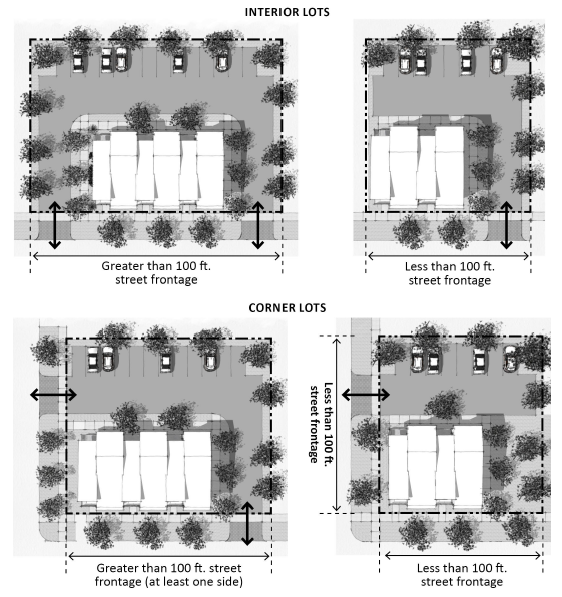
3.
Parking Location. Parking areas shall not be located within any front or street side setback, or between any residential/mixed use structure and the primary street.
a.
Parking Area Gates. Parking areas with gates to control access are allowed. Gates shall be located a minimum of twenty feet from the back of sidewalk, or edge of pavement where there is no sidewalk.
4.
Loading and Service Areas. The provision, layout and design of loading and service areas shall comply with Section 17.27.090, Loading, as well as the following standards:
a.
All required loading and service areas shall be located adjacent to a façade other than the primary building frontage.
b.
Loading and service areas shall not be located adjacent to residential dwelling units or common open space areas. Loading areas shall be screened from public view by building walls and/or uniformly solid fencing or walls, not less than six feet in height, or evergreen trees at least ten feet in height.
5.
Avoid Vehicle Light Intrusion into Ground-Floor Units. Vehicle parking areas shall be located, oriented, and/or screened to prevent visual intrusion of vehicle lights into interior residential spaces, including residential units on neighboring properties. Where parking areas are located within fifteen feet of a residential unit, they shall be located within a garage, carport, or parking structure, or screened by a solid wall, fence, or landscaping a minimum of six feet in height.
D.
Pedestrian Circulation and Access. On-site pedestrian circulation and access shall be provided according to the following standards.
1.
Internal Connections. A system of pedestrian walkways shall connect all buildings on a site to each other, to on-site automobile and bicycle parking areas, and to any on-site open space areas or pedestrian amenities.
2.
To Circulation Network. Regular connections between on-site walkways and the public sidewalk shall be provided. An on-site walkway shall connect the primary building entry or entries to a public sidewalk on each street frontage. Such walkway shall be the shortest practical distance between the main entry and sidewalk, generally no more than one hundred twenty-five percent of the straight line distance.
3.
To Neighbors. Direct and convenient access shall be provided from commercial and mixed-use projects to adjoining residential and commercial areas to the maximum extent feasible while still providing for safety and security.
4.
To Transit. Safe and convenient pedestrian connections shall be provided from transit stops to building entrances.
5.
Pedestrian Walkway Design.
a.
Walkways shall be a minimum of five feet wide, shall be hard-surfaced, and paved with concrete, stone, tile, brick, or comparable material.
b.
Where a required walkway crosses parking areas or loading areas, it must be clearly identifiable through the use of a raised crosswalk, a different paving material, or similar method.
c.
Where a required walkway is parallel and adjacent to an auto travel lane, it must be raised or separated from the auto travel lane by a raised curb at least four inches high, bollards, or other physical barrier.
6.
Pedestrian Design in Parking Areas. See Section 17.27.110, Parking Area Design and Development Standards, for requirements involving pedestrian access to vehicle parking areas.
E.
Common and Private Open Space. Common and private open spaces shall be provided according to the base zoning district regulations in Chapter 17.07, Residential Districts, or Chapter 17.08, Commercial and Mixed Use Districts. Section 17.23.100, Open Space, contains objective standards regarding minimum dimensions, usability, and accessibility for both private and common open space. In addition, the following standards apply:
1.
Common Open Space. Common open space shall be provided according to Section 17.23.100, Open Space, and shall comply with the following:
a.
Amenity Types. Where required by the base zoning district, projects shall provide at least one common open space through the following amenities: play areas, common courtyards, patios, gathering spaces, multi-use paths and trails, athletic/recreational facilities, dog runs and enclosures; pools and spas, rooftop decks, and community gardens. An applicant may provide common open space through an amenity not on this list if it is readily accessible by all residents for recreation and social purposes.
b.
Location. Common open space shall be located to fulfill at least one of the following:
i.
Avoid Building Shadow. The common open space shall not be located within the winter shadow line of the north-facing side of any building.
ii.
Proximity to Multiple Homes. The common open space(s) is within two hundred fifty feet of the pedestrian entrances to at least twenty percent of the residential homes.
iii.
Rooftop. The common open space is located on a building rooftop and is a minimum of fifteen feet away from any property line.
c.
Visibility. Common open space shall be located and arranged to allow visibility into the space from pedestrian walkways within the development. Fencing or barriers shall be designed with opaque, nontransparent materials for a maximum of eighty percent of the surface area, to allow some visual transparency between the common open space and pedestrian walkways.
2.
Private Open Space. Private open space shall be provided according to Section 17.23.100, Open Space, and shall be screened with one of the following options:
a.
Screening with Structural Elements. A private open space screened by a fence or wall shall comply with Section 17.23.060, Fences and Freestanding Walls.
b.
Screening with Landscaping and Structural Elements. A private open space screened by landscaping shall provide a landscape buffer or dense evergreen shrubs/vines of minimum five feet width and minimum four feet height. If a ground-level private open space is visible from a public right-of-way or common open space, a landscape buffer is required.
F.
Landscaping. Landscaping shall be utilized for all outdoor areas that are not specifically used for parking, driveways, walkways, or open space. Refer to Chapter 17.25, Landscaping, for regulations applicable to all new development. In addition, projects within the coastal resource protection (CRP) overlay district shall comply with relevant regulations in Chapter 17.14, Coastal Resource Protection Overlay District. For landscaping requirements in vehicular parking areas, refer to Section 17.27.110, Parking Area Design and Development Standards. In addition, the following standards apply:
1.
Number of Plants. A minimum of one fifteen-gallon tree or equivalent box size and ten five-gallon shrubs shall be planted for every one thousand square feet of required landscape area.
2.
Plant Selection. Projects shall comply with water efficient planting standards of Section 17.25.050, General Requirements. Plants shall be selected from plants that are native to California, or plants included on the city's street tree list. Artificial or synthetic plants, except for turf, are prohibited. In addition, tree and plant species that attract and provide habitat for local fauna (e.g., birds and pollinators such as bees and butterflies) are encouraged.
3.
Privacy. Landscaping shall be provided as a buffer between adjacent individual units. Landscaping shall obscure direct sight lines, and may be used in combination with walls, fencing, and/or trellises to screen views. Plant selection and landscape screening container size shall be selected to achieve at least fifty percent of this height within three years of installation.
4.
Pedestrian Walkways. Pedestrian walkways shall be adjacent to landscaping, on at least one side and may include a mix of turf, groundcover, or shrubs. Trees provided within twenty feet of pedestrian walkways shall be placed a maximum of thirty feet apart on center, in order to provide some shade.
FIGURE 17.31.020(F)(4): PEDESTRIAN WALKWAYS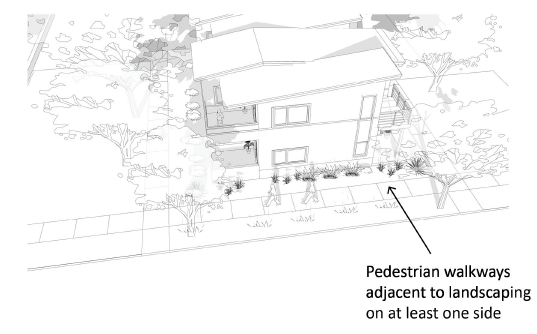
(Ord. No. 661, § 2, 12-13-23; Ord. No. 662, § 2, 12-13-23)
17.31.030 - Building design standards.
A.
Building Form, Massing, and Façade Articulation. Building form, massing and façade articulation facilitate the distinction of individual units, or groups of units, through varied heights, projections, setbacks, and recesses. Materials and colors emphasize changes and hierarchy in building form.
1.
Building Form and Vertical Hierarchy. Buildings shall be designed to differentiate between a defined base; a middle or body; and a top, cornice, or parapet cap. Buildings two stories or less shall include a defined base and a top, cornice, or parapet cap. This effect shall be achieved through incorporating at least two of the following design elements for all buildings:
a.
Color, texture, or material changes.
b.
Variations, projections, or reveals in the wall plane.
c.
Variations in fenestration size or pattern.
d.
Decorative architectural details such as cornices and columns.
FIGURE 17.31.030(B)(1): BUILDING FORM AND
VERTICAL HIERARCHY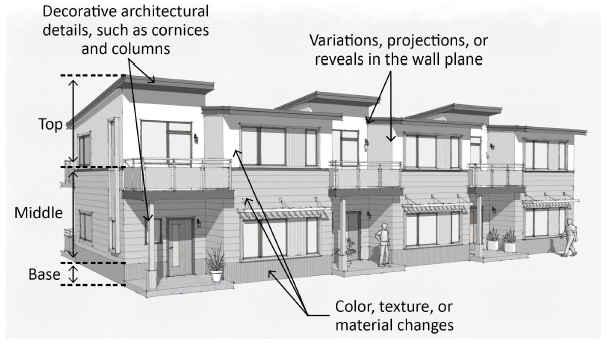
2.
Four-Sided Architecture. Buildings shall be designed and articulated with common details, articulation, materials, and elements on all sides.
3.
Massing.
a.
Upper Floor Area Reduction.
i.
Main Street and Morro Bay Boulevard. The floor area for upper floors shall be reduced through one of the following options:
(1)
The second floor shall have a maximum floor area that is ninety percent of the ground floor area, and the third and higher floors shall have a maximum floor area that is eighty percent of the ground floor area.
(2)
The second and higher floors shall provide that fifty percent of every elevation is set back a minimum of three feet in addition to the required setback area.
ii.
All Other Locations.
(1)
The second floor shall have a maximum floor area that is ninety percent of the ground floor area.
(2)
The third floor shall have a maximum floor area that is eighty percent of the ground floor area.
(3)
Floors above the third floor shall have a maximum floor area that is seventy percent of the ground floor area.
b.
Upper Floor Cantilever. Upper floor uncovered decks a minimum of six feet by eight feet in dimension shall be allowed to cantilever and protrude into front or street side setbacks or public right-of-way, provided that there is a minimum of twelve feet of vertical clearance and that the cantilever does not encroach more than two feet into the setback or public right-of-way. Right-of-way encroachment shall obtain an encroachment permit in accordance with Title 12 of the Morro Bay Municipal Code.
4.
Façade Articulation. All street-facing façades shall have at least one horizontal or vertical projection or recess at least two feet in depth for every twenty-five horizontal feet of wall. If located on a building with two or more stories, the articulated elements must be greater than one story in height, and may be grouped rather than evenly spaced in twenty-five-foot modules. Building entrances and front porches and projections into required yards such as stoops, bays, overhangs, fireplaces, and trellises may count towards meeting this requirement.
5.
Roofs.
a.
Roof Line Variation. Roof lines shall not extend more than a length of forty feet without at least one prominent change as described below:
i.
Provide variation in roof form, such as hip, gable, shed, and flat with parapet.
ii.
Provide variation of roof height of at least eighteen inches (as measured from the highest point of each roof line).
FIGURE 17.31.030(A)(4): ROOF LINE VARIATION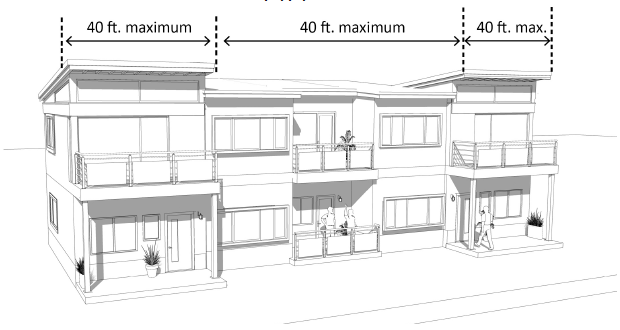
b.
Flat Roofs and Parapets. Parapets shall be provided around the perimeter of a flat roof and shall be a minimum of six inches taller than all rooftop equipment.
i.
Interior side of parapet walls shall not be visible from a common open space or public right-of-way.
ii.
Parapets shall be capped with "precast" treatment, continuous banding, or projecting cornices, dentils, or similar edge treatment. Visible unfinished metal flashing is prohibited.
6.
Corner Architectural Features. Buildings located on the corner of two streets, and greater than one story, shall include one or more of the following features on both of the intersecting façades, located within twenty-five feet of the corner of the building:
a.
An entry to ground-floor use or a primary building entrance.
b.
A different material application, color, or fenestration pattern of windows and doors from the rest of the façade.
c.
The area encompassed within twenty-five feet of the corner of the building shall have a change in height of at least two feet.
B.
Building and Unit Entrances. Entrance orientation and design shall comply with the provisions of Section 17.07.040, Supplemental Regulations (Residential Districts), or Section 17.08.040, Supplemental Regulations (Commercial and Mixed Use Districts). The following additional standards also apply:
1.
Primary Residential Building Entrances.
a.
Street-Facing Entry. Residential buildings located adjacent to the primary street shall have a ground-level common entry facing the primary street unless units are accessed by individual entries.
b.
Building Entry Architectural Treatments. Common building entries shall be differentiated from the main façade through at least two of the following:
i.
Roof above the entry incorporating a change in roof line of at least eighteen inches in height.
ii.
Entry incorporating a variation of wall plane (recessed or projected) a minimum of two feet from the adjacent wall planes.
iii.
Entry incorporating architectural treatments that vary from those on the general façade (e.g., window and/or door trim with substantial depth and detail, decorative siding, decorative fascia, porches, stoops).
c.
Porch Requirements. A porch serving more than one unit shall be a minimum of six feet by eight feet in dimension.
d.
Enhanced Paving for Building Entrances. Primary building entryways shall provide decorative and accent paving that contrast in color and texture from any adjacent pedestrian walkway surfaces. Allowed materials include stamped concrete, stained concrete painted concrete, concrete pavers, brick, stone, flagstone, and tile. Decomposed granite, pea gravel, and other types of crushed rock are prohibited.
FIGURE 17.31.030(B)(1)(B): PRIMARY BUILDING ENTRY ARCHITECTURAL TREATMENTS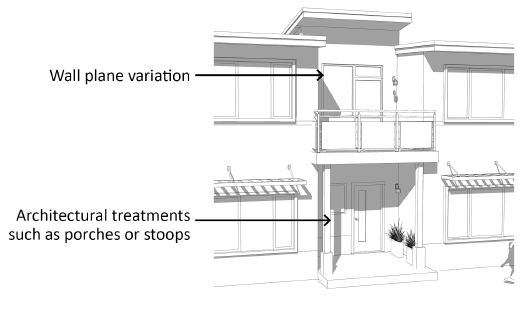
2.
Individual Unit Entrances.
a.
Upper-Floor Unit Entry. Exterior entries to individual units on upper floors are permitted; however, in order to avoid a "motel-style" appearance, no exterior access corridor located above the ground floor may provide access to five or more upper-floor units.
b.
Non Street-Adjacent Buildings. Buildings not located adjacent to a street shall have unit front entryways oriented to face common open space areas such as landscaped courtyards, plazas, or paseos.
c.
Porch Requirements. A porch serving an individual unit shall be a minimum of five feet by eight feet in dimension.
d.
Stoop Requirements. A stoop serving an individual unit shall be a minimum of four feet by four feet in dimension. The stoop adjacent to the door shall be a maximum of five feet in height above the adjacent walkway, and stairs or ramps from the stoop lead directly to the public right-of-way, or a parallel to the public right-of-way.
C.
Windows.
1.
Privacy. Where a residential building is located within ten feet of a neighboring property line, windows facing neighboring buildings shall be offset a minimum of five feet from closest edge to edge. Where this offset cannot be provided, the window design on the building façades facing each other shall avoid unfiltered/direct views into interiors and shall be designed with one or more of the following:
a.
Utilize non-transparent or obscured glazing, such as frosted/patterned glass, glass block, or non-operable opaque windows. Reflective glazing is not permitted.
b.
Provide permanent architectural screens or affixed louvers at windows.
c.
Utilize clerestory windows with the bottom edge of the window a minimum height of six feet from the ground.
2.
Window Treatment. All windows shall either be recessed at least two inches from the plane of the surrounding exterior wall or shall have trim at least one-half-inch in depth and two inches in width.
a.
Windows Facing a Public Street. Windows facing a public street shall feature enhanced window treatments, such as decorative architectural brackets, trim, shutters, awnings, and/or trellises.
b.
Window Shutters. Functional and decorative shutters shall be one-half-width of the associated window glazing (for paired shutters), or matching window width for a single shutter.
D.
Materials and Colors. Exterior building materials and colors shall comply with the provisions of Section 17.07.040, Supplemental Regulations (Residential Districts), or Section 17.08.040, Supplemental Regulations (Commercial and Mixed Use Districts).
1.
Wall Material. The primary exterior siding material for buildings shall be stone, brick, stucco, concrete block, painted wood clapboard, fiber cement clapboard, or painted metal clapboard.
2.
Window Material. Window materials, color, and style shall be consistent on all elevations, unless used at an entry way or as an accent feature.
3.
Material Transition. Changes in material shall occur at inside corners of intersecting walls or at architectural features that break up the wall plane, such as columns.
4.
Awnings. Glossy finish vinyl awning material is not allowed.
(Ord. No. 661, § 2, 12-13-23; Ord. No. 662, § 2, 12-13-23)
17.31.040 - Additional mixed use standards.
A.
Façade Articulation. Building façades visible from the primary street shall not extend more than fifty feet in length without at least one of the following: a five-foot variation in depth in the wall plane, architectural element, or other prominent feature that provides visual interest. Building entrances, front porches, upper-story setbacks, and projections such as stoops, bays, overhangs, fireplaces, upper-story decks and trellises count towards this requirement.
B.
Ground Floor Height. In order to retain the small-scale building character of Morro Bay, the ground floor height of commercial portions of mixed use projects shall be a maximum of twelve feet, measured floor to floor.
C.
Ground Floor Transparency. Exterior walls of buildings or portions of buildings containing non-residential uses facing and within twenty feet of a front or street side lot line shall include windows, doors, or other openings for at least fifty percent of the building wall area located between two and one-half and seven feet above the level of the sidewalk. Such walls may run in a continuous plane for no more than thirty feet without an opening.
D.
Street-Facing Setbacks. Where a front setback or street-facing side setback is provided for a mixed use building, it shall be designed for pedestrian orientation with hard surface and amenities. The setback area on each lot shall contain at least two amenities per fifty linear feet such as benches, drinking fountains, shade structure, or other design element (e.g. art or sculpture, planters, and kiosks).
E.
Entrances.
1.
Residential Street-Adjacent Entry. Mixed use buildings located adjacent to the primary street shall incorporate at least one residential building entrance that directly fronts the public sidewalk or right-of-way and complies with the requirements of Section 17.31.030 B1.
2.
Commercial Storefronts. Commercial entrances adjacent to the sidewalk shall be recessed from the façade by a minimum of two feet from the rest of the building, creating an alcove.
(Ord. No. 661, § 2, 12-13-23; Ord. No. 662, § 2, 12-13-23)
17.31.050 - Parking structures.
A.
Wall Plane Variation. Façades visible from the primary street shall not extend more than fifty feet in length without at least one of the following: a three-foot variation in depth in the wall plane, architectural element, or other prominent feature that provides visual interest.
B.
Materials and Colors. The parking structure shall utilize the same colors and materials as the primary buildings.
C.
Articulation. The exterior of the parking structure shall apply at least one of the following as articulation:
1.
Applied materials such as brick, stone, and/or siding which extend at least two inches from the face of the structure to the face of the applied materials. Painted concrete, smooth concrete, or stucco walls shall not be considered sufficient articulation.
2.
Decorative architectural features such as cut metal screens, awnings, trellises, louvers, and/or decorative security grills shall be used on openings facing a public street or open space.
D.
Landscaping. Vertical plantings shall be located between openings, entrances, and architectural accent features. At least one tree shall screen the building façade per fifty feet. Trees shall be selected from California native plants or from the city's street tree list. Trees shall be selected to grow to forty feet in height at maturity, and shall grow to at least fifteen feet in height within two years from time of installation.
(Ord. No. 661, § 2, 12-13-23; Ord. No. 662, § 2, 12-13-23)
17.31.060 - Utilitarian elements.
A.
Bicycle Parking. Bicycle parking shall comply with the provisions of Section 17.27.080, Bicycle Parking. Additionally, long-term bicycle parking areas shall be required to provide one 110-voltage wall outlet per every ten long-term bicycle parking spaces for residents with electric bicycles.
B.
Refuse Storage and Collection Areas. Trash, recycling, and green waste container enclosures are required for residential and mixed use developments. They shall be located within a service section of the primary building, incorporated into the exterior building design, or located within a detached and locked enclosure designed and placed as follows:
1.
Location. The enclosure shall be located to the rear or side of the building and located outside of view from a public right-of-way.
2.
Screening. The enclosure shall include a solid wall a minimum of six feet in height and a roof structure that fully shields the top of the container, and be located on the site in an area where the screening height required is allowed.
3.
Materials. The enclosure shall use materials that are consistent with exterior colors and materials of the primary building.
C.
Fences and Walls. Fences and walls shall comply with the provisions of Section 17.23.060, Fences and Freestanding Walls. In addition, where fences and walls of different materials or finishes intersect, a column or pilaster shall be provided.
D.
Lighting. Lighting shall comply with the provisions of Section 17.23.080, Lighting and Illumination. Projects within the coastal resource protection (CRP) overlay zone district shall comply with additional provisions of Section 17.14.090, Visual Resource Protection. Lighting in parking areas shall also comply with Section 17.27.110, Parking Area Design and Development Standards.
E.
Screening of Mechanical Equipment. Equipment and utilities shall comply with the provisions of Section 17.23.130, Screening.
F.
Vents and Exhaust. All wall-mounted elements shall be located at interior corners of building walls or behind building or screening elements that conceal them from public view. All flashing, sheet metal vents, exhaust fans/ventilators, and pipe stacks shall be painted to match the adjacent roof or wall material and/or color.
(Ord. No. 661, § 2, 12-13-23; Ord. No. 662, § 2, 12-13-23)

