
Mount Clemens City Zoning Code
ARTICLE 5
COMMERCIAL/MIXED-USE DISTRICTS
SEC. 5.1 - COMMERCIAL/MIXED-USE USE TABLE
In the Commercial/Mixed-Use Districts, land, buildings, and other structures shall be used only for one or more of the uses specified in the table below. Uses denoted by a "P" are permitted by right and uses denoted by a "SLU" are considered special land uses and may be approved by the Planning Commission subject to the applicable general and specific standards in Article 13: Special Land Uses. Additional applicable use standards are listed in the column at right.
(ord. eff. April 24, 2021; ord. eff. Feb. 25, 2023(1))
SEC. 5.2 - PROVISIONS APPLICABLE TO COMMERCIAL DISTRICTS
A.
EXTERIOR FACING MATERIALS. The exterior of all buildings hereafter erected shall be constructed of aesthetically pleasing brick and/or stone building materials. Other durable, decorative building materials may be approved by the Planning Commission in instances where the character and style of the proposed structure warrants special consideration. The architecture and approved exterior finish of any building shall be complementary and compatible in style and be of uniform finish on all sides of its exterior when the site is adjacent to any residential district. Within the Commercial Districts, the architecture and approved exterior finish shall be returned on the building side(s) a sufficient distance, as determined by the Planning Commission, to provide a continuous appearance when viewed diagonally from the street.
B.
DESIGN STANDARDS. Buildings shall have architectural variety but enhance the overall cohesive community character.
1.
Walls visible from the public right-of-way shall include architectural features customarily found on the front facade of a building, such as windows, awnings, cornice work, columns, edge detailing or other decorative finish materials. Wall massing shall be broken up with vertical pilasters or other architectural elements to reduce scale.
2.
Building walls over one hundred (100) feet long shall be broken up with varying building lines, vertical architectural features, windows, architectural accents, and trees.
3.
Building entrances shall utilize windows, canopies, and awnings; provide unity of scale, texture, and color; and clearly identify the entry.
4.
Building-mounted mechanical equipment shall be screened.
C.
EXISTING BUILDINGS. The following shall apply to additions or remodeling of existing buildings or to accessory buildings on existing sites:
1.
Where a new wall material is proposed for an existing building wall, only that portion of the building being altered shall be subject to this Section. However, in considering the proposed alteration, the City may modify the material requirements of this Section to ensure consistency with the architecture of the remainder building.
2.
Where an addition is proposed to an existing building, the Planning Commission or Community Development Director may allow the use of existing or compatible wall materials for the addition; provided that the design of the alteration is consistent with the existing building wall design.
D.
ACCESSORY BUILDINGS. In commercial/mixed-use districts, accessory buildings shall only occupy any of the ground area which the principal building is permitted to cover. Accessory buildings, such as buildings for parking attendants, guard shelters, gate houses and transformer buildings, may be located in the front or side yard setback in non-residential districts, upon Planning Commission approval. All such buildings or structures shall be architecturally and aesthetically compatible with the principal building and be located and landscaped to reduce the visual impact from surrounding properties and from public streets.
(ord. eff. April 24, 2021)
SEC. 5.3 - MU—MIXED-USE DISTRICT
A.
Intent. The intent of the Mixed-Use district is to accommodate a flexible variety of uses and scales; preserve historic detached houses; integrate context-sensitive mixed residential, office, and service uses; and serve as a transition from the denser CBD to surrounding residential neighborhoods.
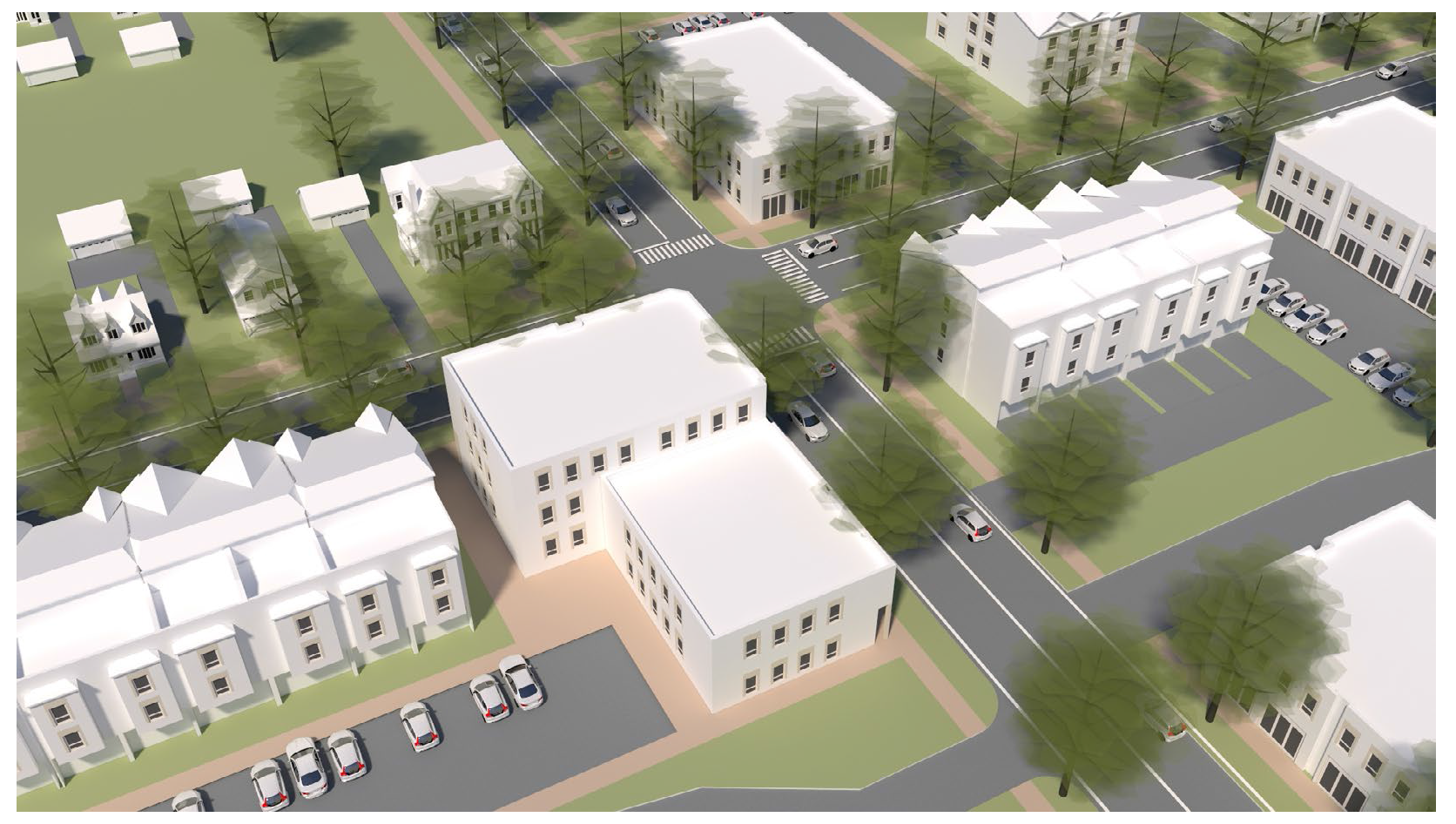
Illustrative example of the intent of this district.
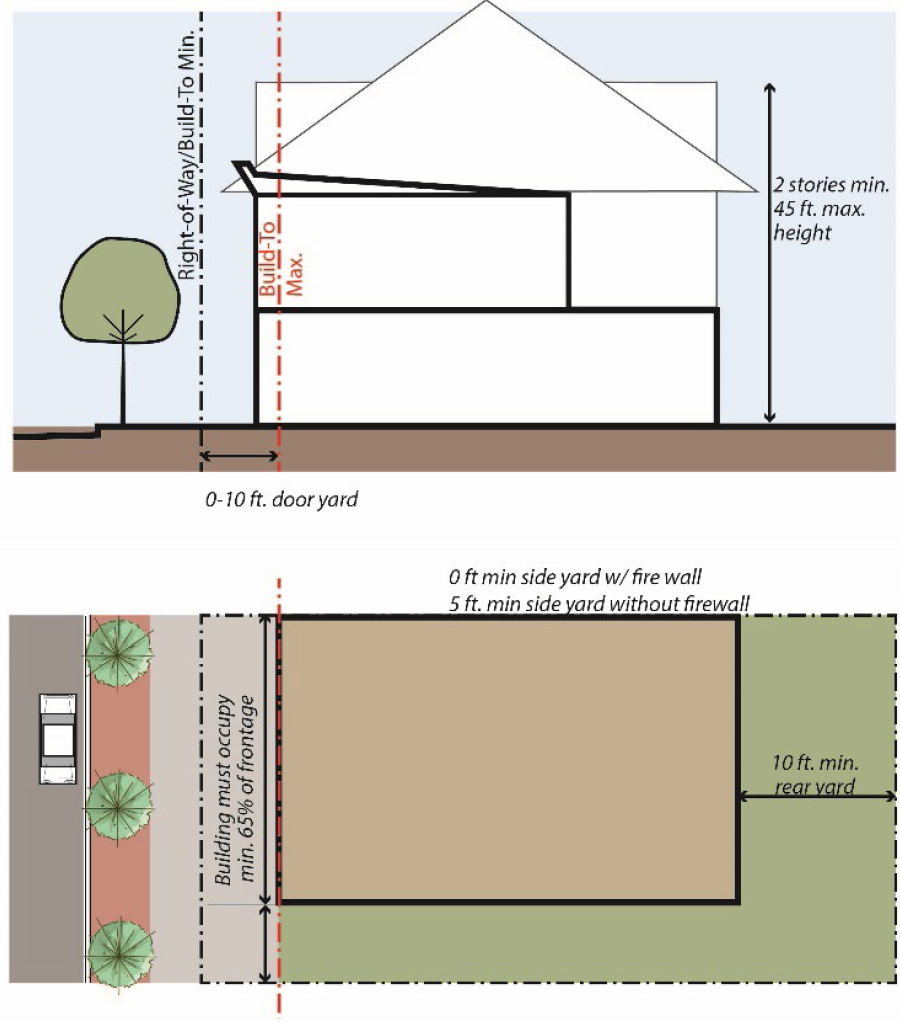
B.
Siting and Building Requirements
(ord. eff. April 24, 2021)
SEC. 5.4 - CBD—CENTRAL BUSINESS DISTRICT
A.
Intent. The intent of the CBD is to create a pedestrian-friendly, compact, mixed-use district. This district is intended for the most density in Mount Clemens. Typically, the mixture of uses are ground floor storefronts with retail and entertainment uses and offices and residential on upper stories.
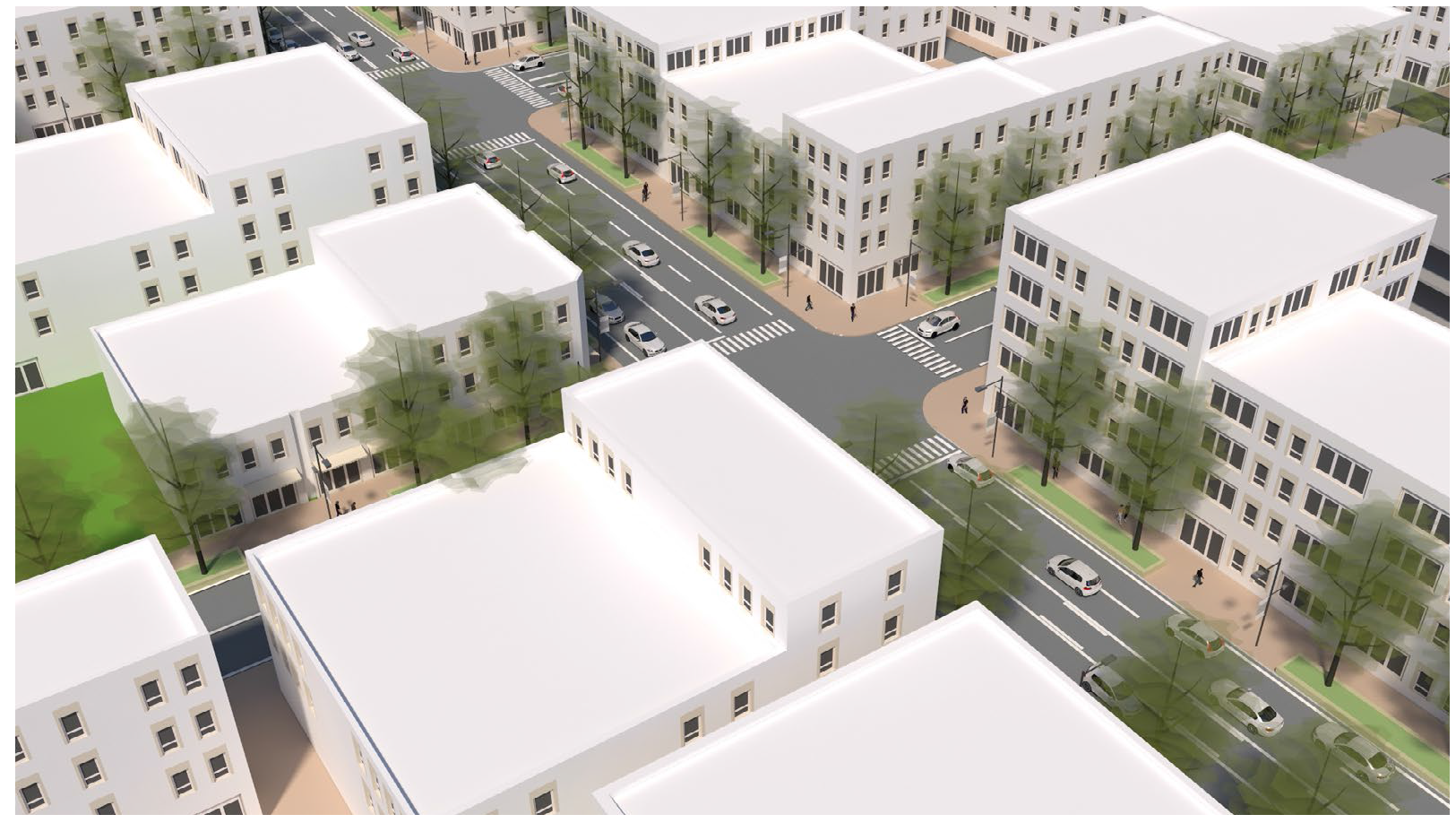
Illustrative example of the intent of this district.
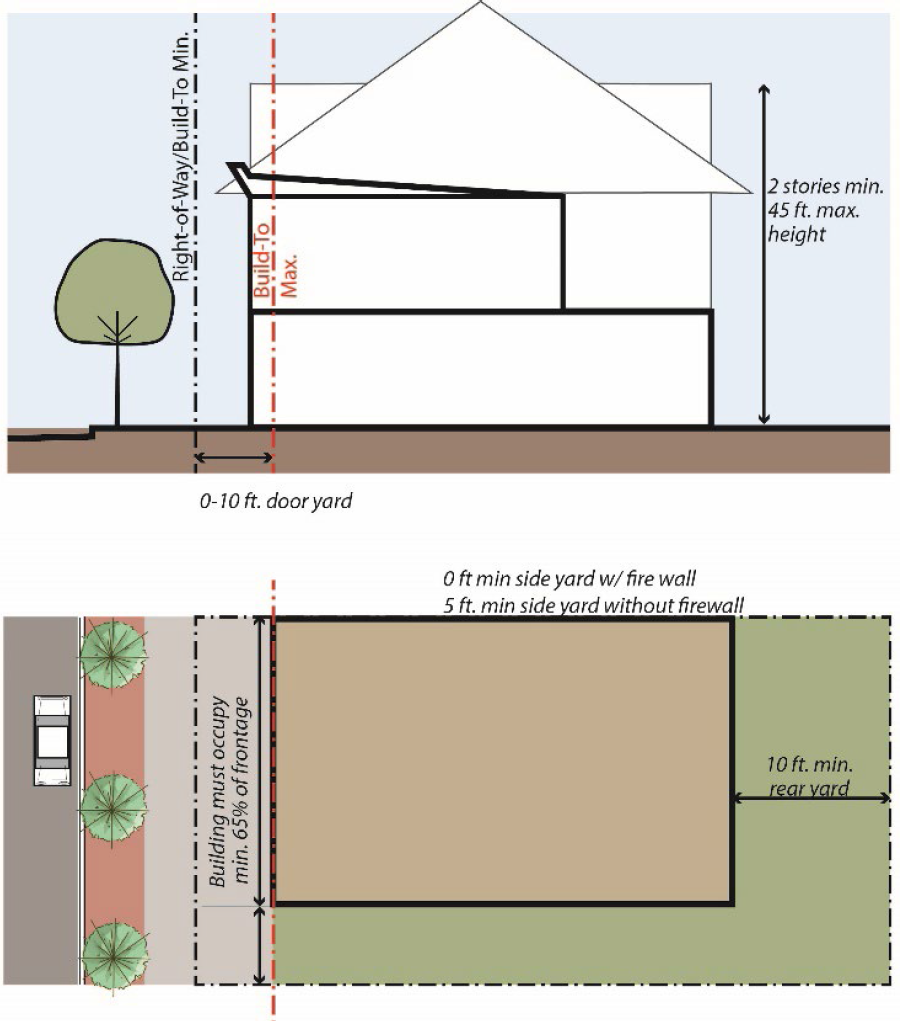
B.
Siting and Building Requirements
C.
Storefront Frontage. This additional designation in the CBD and Mixed-Use districts requires ground floor storefront uses and architectural requirements in order to preserve the walkable, active downtown interface with the public realm. Storefront buildings shall also meet the design specifications for the CBD and Mixed-Use districts, except as provided herein:
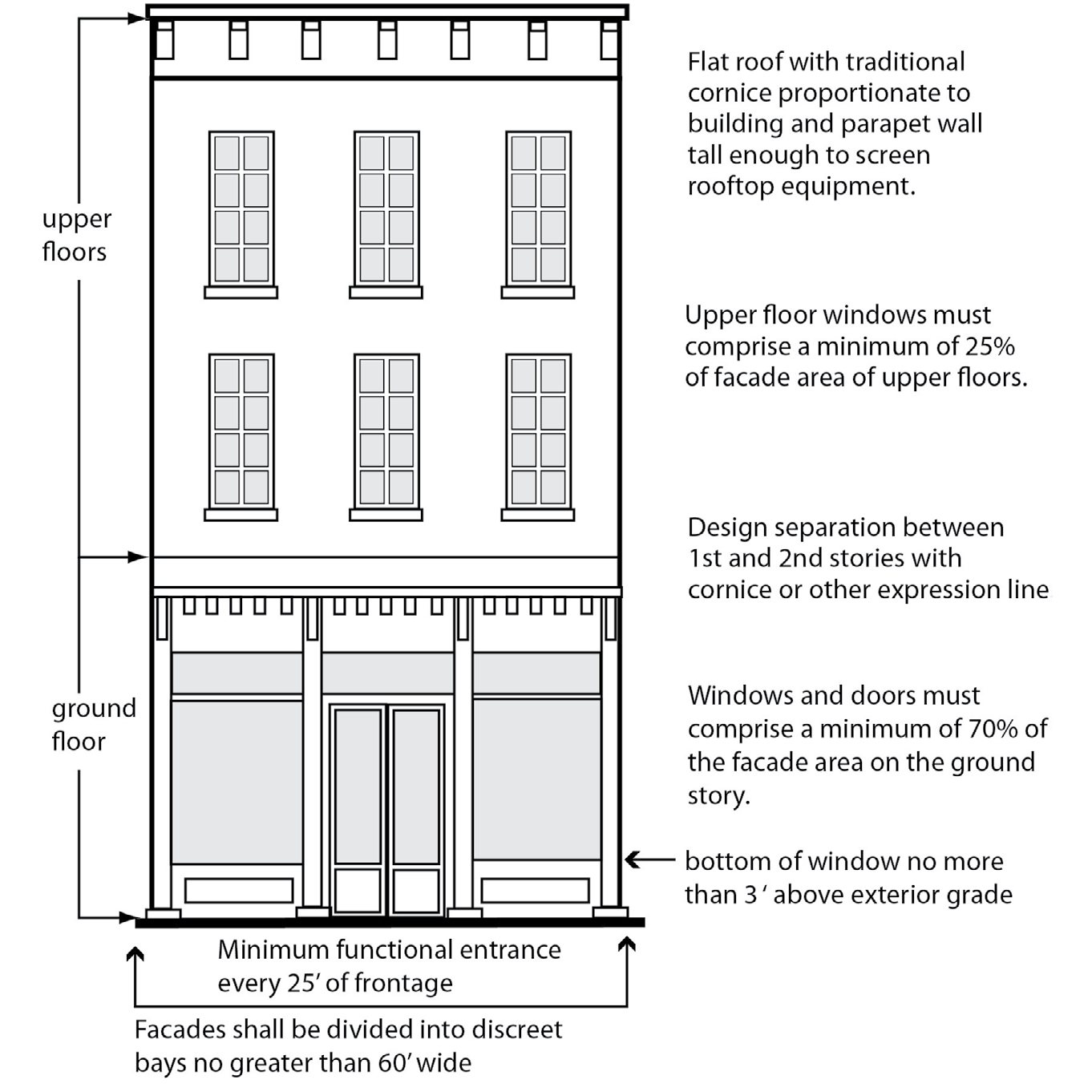
The above drawing is intended to illustrate the application of the design standards in this ordinance, but not require a specific architectural style.
1.
Fenestration
a.
Ground floor fenestration shall comprise between 70% and 90% of the ground story facade.
b.
Ground floor windows may not be made opaque by window treatments (except operable sunscreen devices). A minimum of 80% of the window surface shall allow a view into the building interior for a depth of at least 12 feet.
c.
The bottom of the window must be no more than 3 feet above the adjacent exterior grade.
2.
Horizontal Articulation
a.
Horizontal articulation is the arrangement and proportion of facade materials and elements (windows, doors, columns, pilasters, and bays) into discreet bays.
b.
For each block frontage, facades shall be divided into discreet horizontally articulated bays at no greater than 60 feet each.
c.
Adjacent facades shall contain different wall materials and rhythm of bays to distinguish each storefront in the horizontal plane.
d.
There shall be a minimum of one functional entrance every full 25 feet of frontage.
3.
Ground floor Articulation
a.
Storefront buildings shall be designed to create a distinct and separated ground floor area through the use of a horizontal expression line, such as a string course, change in material or textures, awnings or canopies, or sign band between the first and second stories.
4.
Uses
Only Active Ground Floor Uses are permitted:
a.
Retail sales and services
b.
Restaurant/Bar/Lounge
c.
Residential and Lodging Uses: Support functions such as lobbies, rental offices, and club rooms may be located on the ground floor.
d.
Offices
(ord. eff. April 24, 2021)
SEC. 5.5 - INST—INSTITUTIONAL CAMPUS DISTRICT
A.
Intent. The Institutional Campus district is established for the development of major educational, governmental, and medical facilities and other complementary and supporting uses such as office developments and attached residential. The Institutional district encourages campus-type character, which includes landscaped open space between buildings, a green buffer at the perimeter, and uniform site design and details.
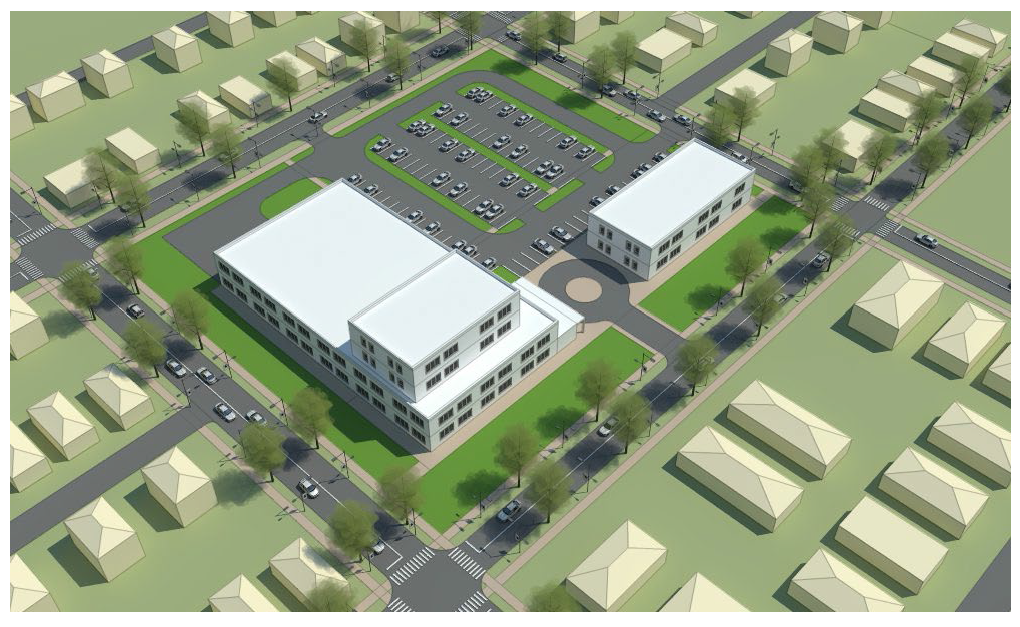
Illustrative example of the intent of this district.
B.
Siting and Building Requirements
(ord. eff. April 24, 2021)
SEC. 5.6 - GC—GENERAL COMMERCIAL DISTRICT
A.
Intent. The GC General Commercial District is designed to provide for a wide diversity of business activities which are predominantly, but not necessarily, totally retail in character. In addition to retail uses, a number of other activities, usually requiring considerable land area and access to major thoroughfares, are permitted. Uses in this district normally must have good automobile accessibility but should not cause congestion on adjacent thoroughfares.
B.
Siting and Building Requirements
((ord. eff. April 24, 2021)

