
Mountain Brook City Zoning Code
ARTICLE XXXI
VILLAGE OVERLAY STANDARDS.
Sec. 129-551.- Purpose and applicability.
(a)
General purposes. The village overlay standards are designed to:
(1)
Implement the village master plans, officially recommended by the planning commission as part of the overall master plan for the City of Mountain Brook and promote the health, safety, morals and general welfare of the community.
(2)
Provide for the kind, character and use of structures and improvements that may be erected or made within the villages, to promote and preserve the unique character and encourage pedestrian use of each of the villages.
(3)
Regulate the erection, construction, reconstruction, alteration, repair or use of buildings, structures or land subject to the standards, in conformance with the village master plan.
(4)
To permit differences in the height, mass, scale, design, type, and uses of buildings subject to the standards based on the relationship of sites to specific public streets, open spaces, and to surrounding parcels.
(5)
To allow coordinated development in the villages according to a comprehensive master plan that best complements the design and investment by the city in streets, open space and other public infrastructure.
(b)
General applicability. The village overlay standards supplement the standards of the current base zoning district of each parcel to the extent that the standards herein do not conflict with the standards in the base zoning district. To the extent that the standards set forth in the base zoning district conflict or are inconsistent with the standards herein, the standards set forth in this article shall apply; all uses allowed on lots in the base zoning district "Vine Street Transitional (VST) District" shall be exempt from the building type specifications of the village overlay standards. The standards in this section are applicable to the following base zoning districts which exist in the villages:
(1)
Local business;
(2)
Professional;
(3)
Mixed use;
(4)
Vine Street Transitional; and
(5)
Any residential zoning districts that exist in the village boundaries.
(c)
Specific applicability. The village overlay standards address building types, building heights, building form and orientation (relationship to streets and open spaces), and are specifically applicable to the following areas:
(1)
Crestline Village (except for lots zoned Vine Street Transitional (VST) District), as indicated on the attached building and development regulating plan for Crestline Village;
(2)
English Village, as indicated on the attached building and development regulating plan for English Village;
(3)
Mountain Brook Village, as indicated on the attached building and development regulating plan for Mountain Brook Village;
(4)
Overton Village, as indicated on the attached building and development regulating plan for Overton Village.
The boundaries officially approved for the village overlay standards, as specified above, are adopted herein by reference, and shall become a part of official zoning map of Mountain Brook as defined in section 129-17 of the zoning ordinance.
(d)
Building and development regulating plans. The building and development regulating plans for Crestline Village (except for lots zoned Vine Street Transitional (VST) District), English Village, Mountain Brook Village and Overton Village are attached hereto, included within, and made a part of these village overlay standards, and apply in all areas identified thereupon.
(Ord. No. 1762, § 1(19-31-1), 2-25-2008; Ord. No. 1899, §§ 2—4, 11-12-2013)
Sec. 129-552. - Permitted uses and building type.
(a)
Uses. The uses permitted in areas subject to the village overlay standards are those authorized by the base zoning district for each parcel.
(b)
Building types. The following building types are permitted by the village overlay standards in accordance with the table set forth below. Differences in size, placement, orientation and design of each building type are regulated by this article, and the applicable building and development regulating plan.
* Townhouse building types are only permitted in association with a base zoning of residence D or F; stacked flats are only permitted in association with a base zoning of residence D or G.
+ Refer to the village master plans for frontage definitions and requirements.
(c)
Civic uses. There is no specified building type for civic buildings. Civic uses in the village overlay area with proposed buildings that do not meet the requirements for any of the above building types require development plans subject to review for general compliance with the village master plan, the design guidelines and intent and purposes of the base zoning district and this article.
(d)
Vine Street Transitional District uses. There is no specified building type for uses on lots zoned Vine Street Transitional District in the village overlay area; proposed building plans are subject to review by the planning commission and village design review committee for compliance with the VST District regulations, the village master plan, the design guidelines and intent and purposes of the base zoning district and this article.
(Ord. No. 1762, § 1(19-31-2), 2-25-2008; Ord. No. 1899, § 5, 11-12-2013)
Sec. 129-553. - Building type standards.
(a)
Objective. The objective of the building type standards is to develop specific standards for site (building orientation), height and massing, and facade design for each of the building types included in the village master plan. The standards are specifically designed to:
(1)
Allow for efficient, compact, and appropriate-scaled development in the villages, emphasizing the existing pedestrian scale and character of the village;
(2)
Emphasize lot frontages, and the orientation, location, and facade design of the buildings, as a key determinant of compatible development, and a key element in shaping the character and streetscape of the village;
(3)
Recognize that different lot standards are appropriate for different building types;
(4)
Promote public and private development that enhances public streetscapes and frames public streetscapes with appropriate scaled buildings, with proportions and massing that create a pedestrian scale on each site;
(5)
Create compatible scale and heights of individual buildings on adjacent sites which may have a different amount of stories;
(6)
Promote a consistent scale and proportion throughout the village based upon the relationship of buildings to immediately adjacent buildings, the relationship of buildings to the streetscape and opposing buildings, and the relationship of buildings to transition areas outside of the village;
(7)
Animate the public streetscapes with pedestrian activity by promoting transparency of buildings; and
(8)
Establish standards that achieve the above objectives based on the context and street designs associated with a development site.
(b)
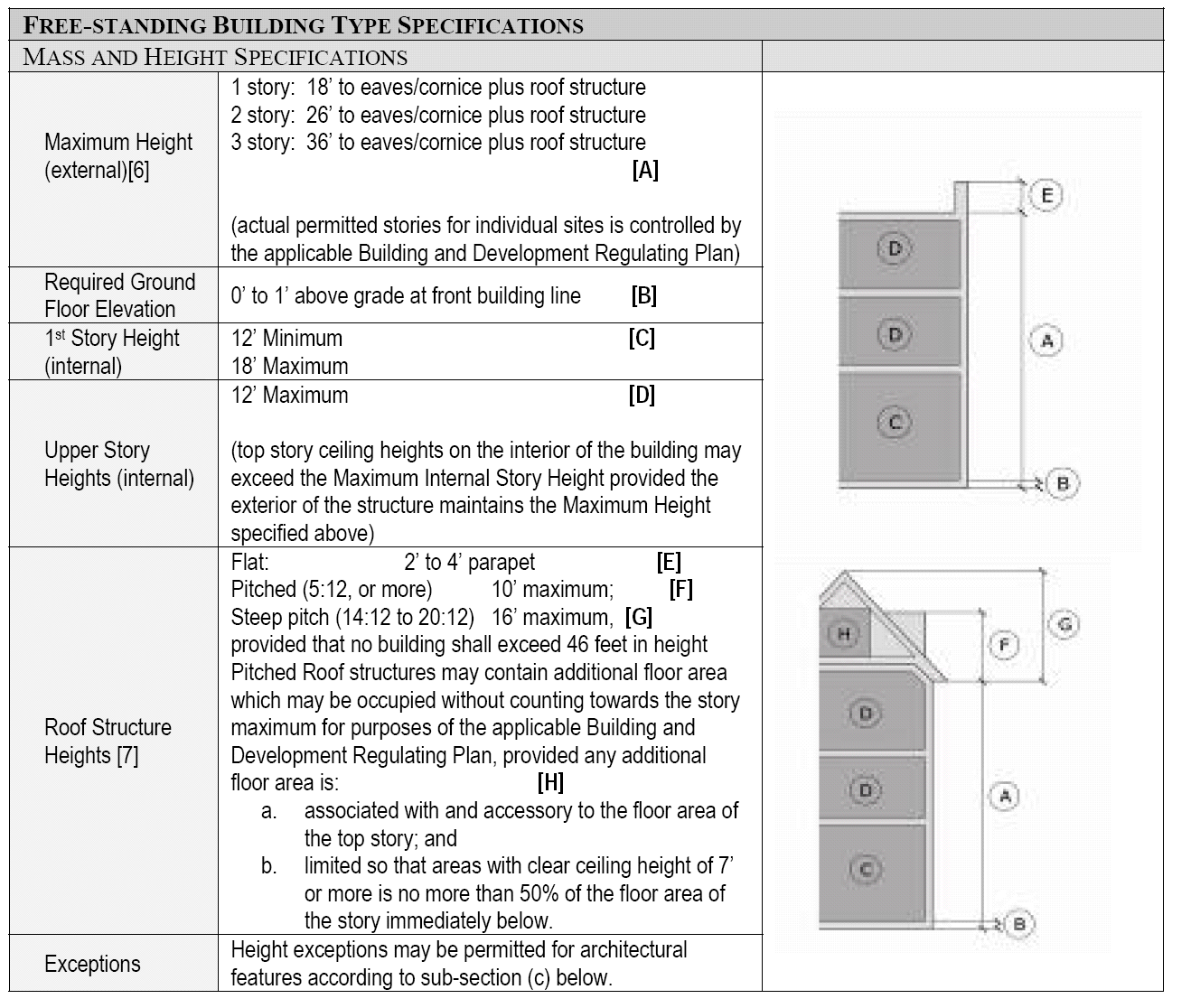
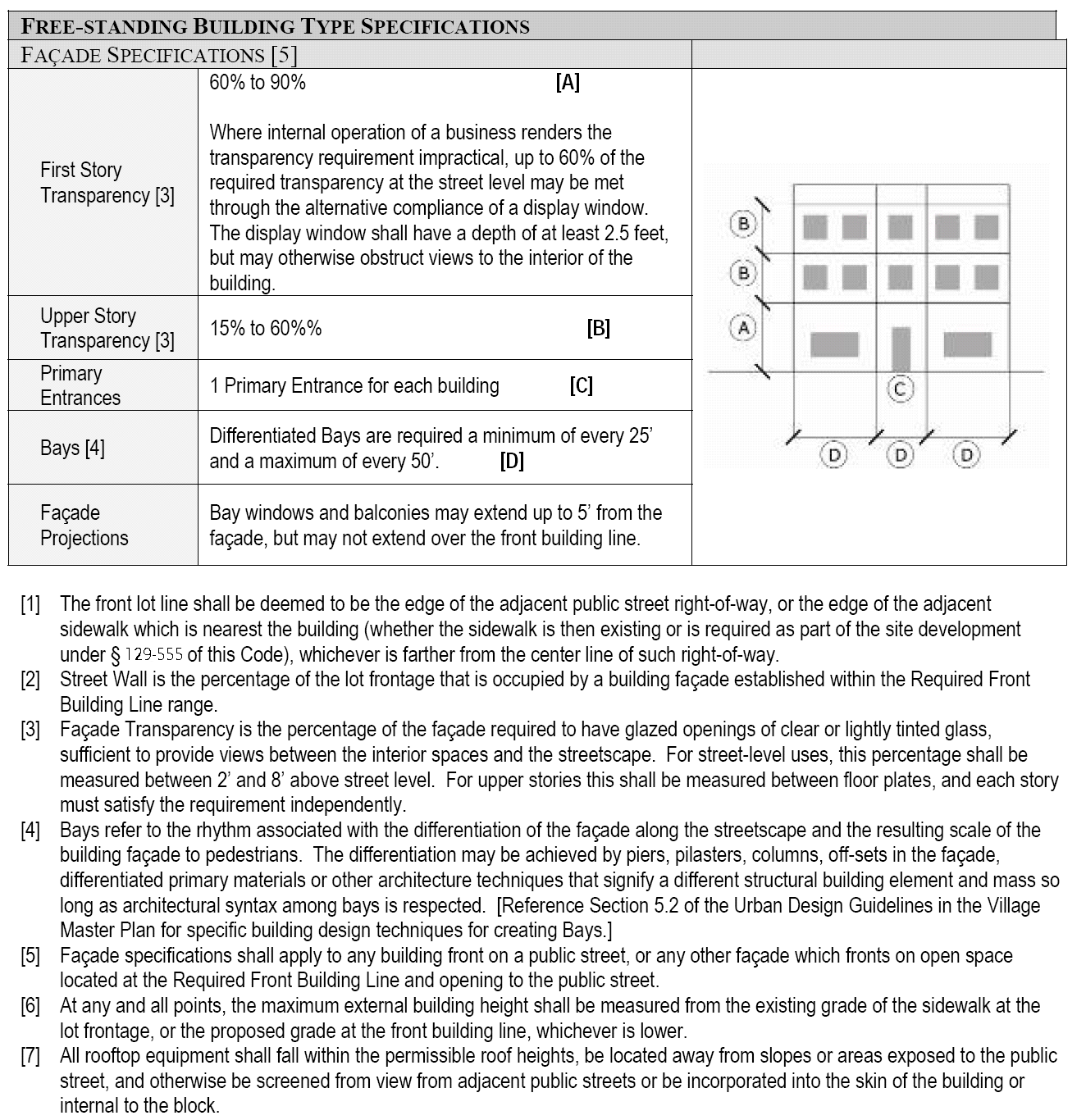
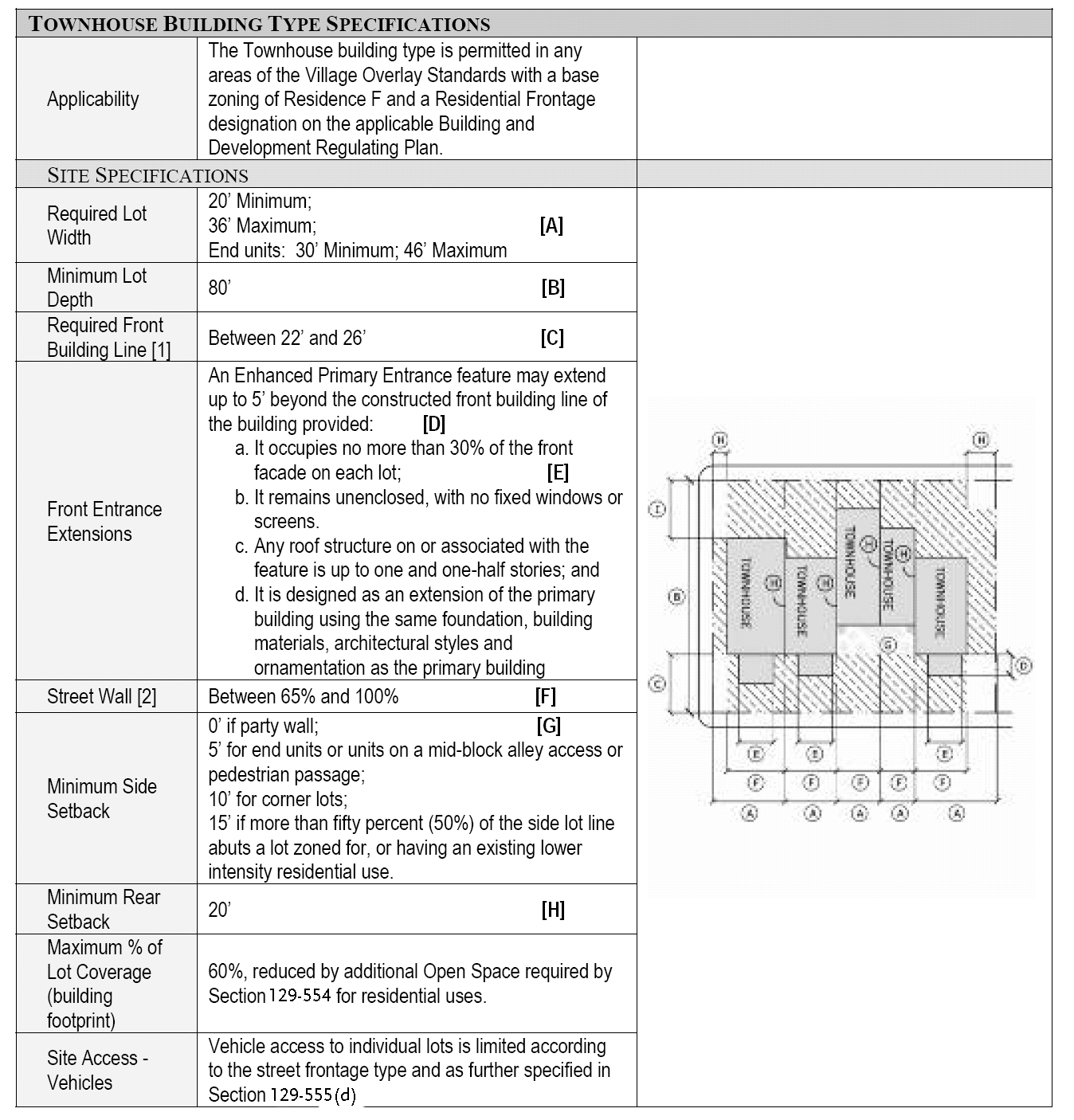
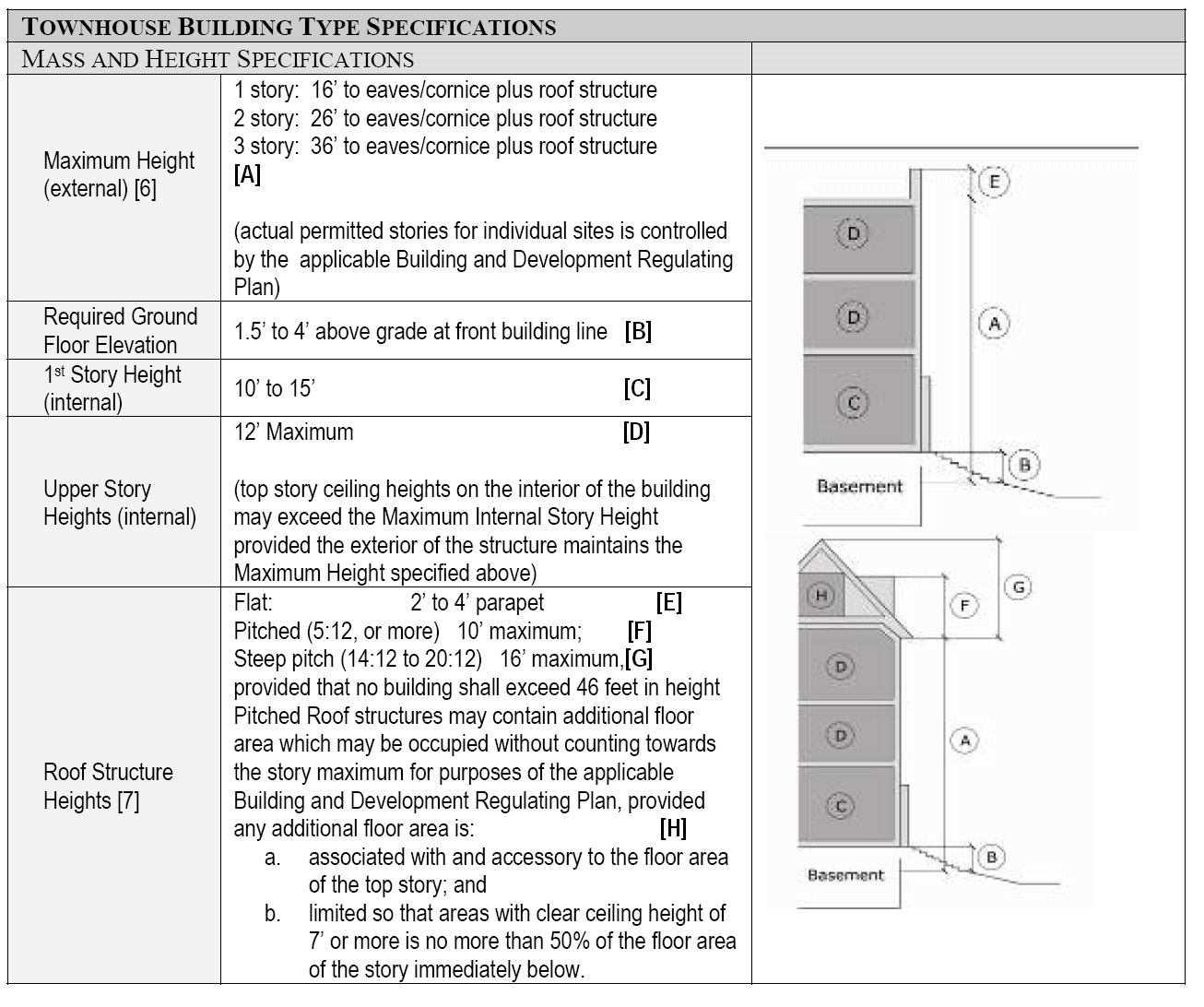
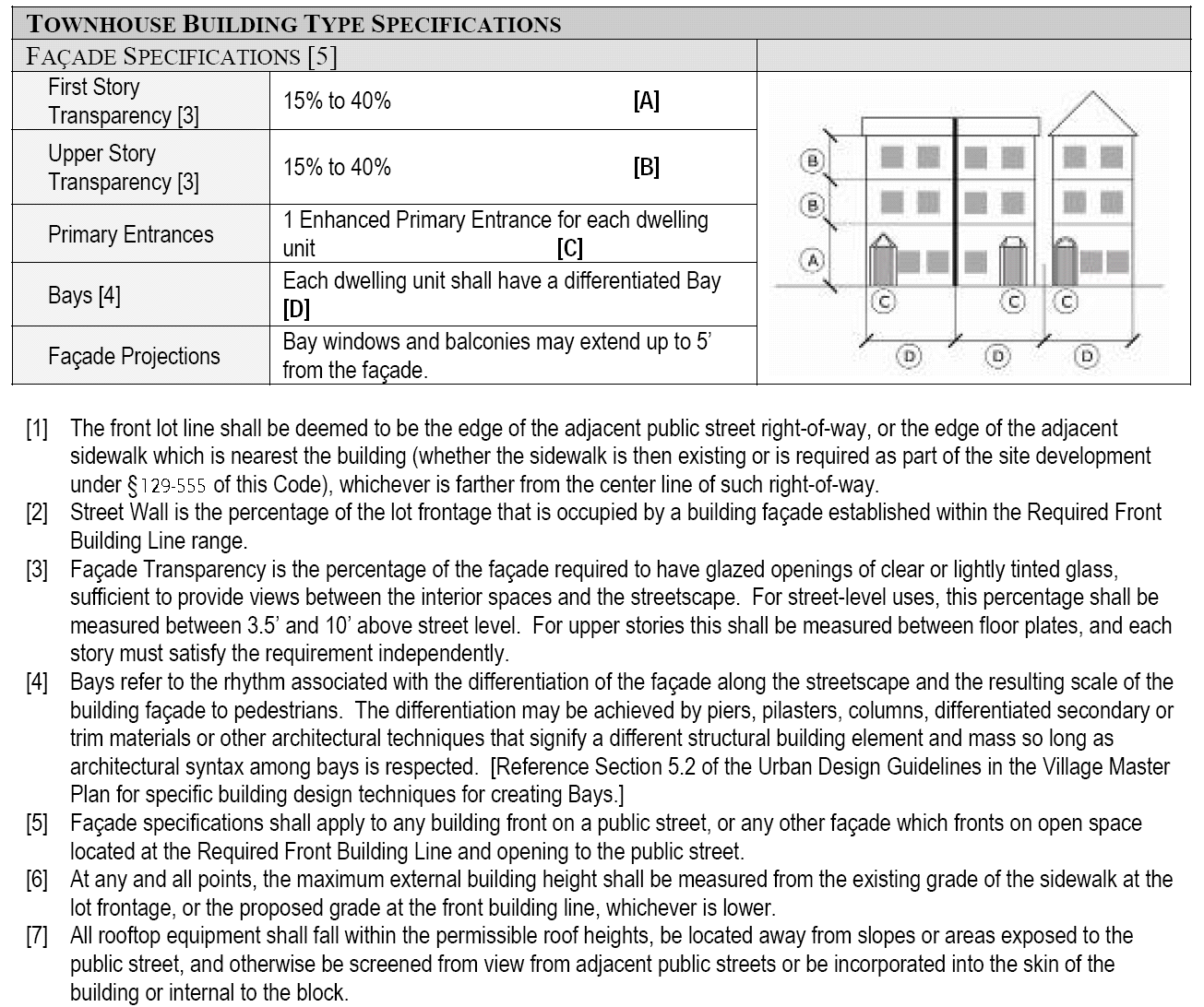
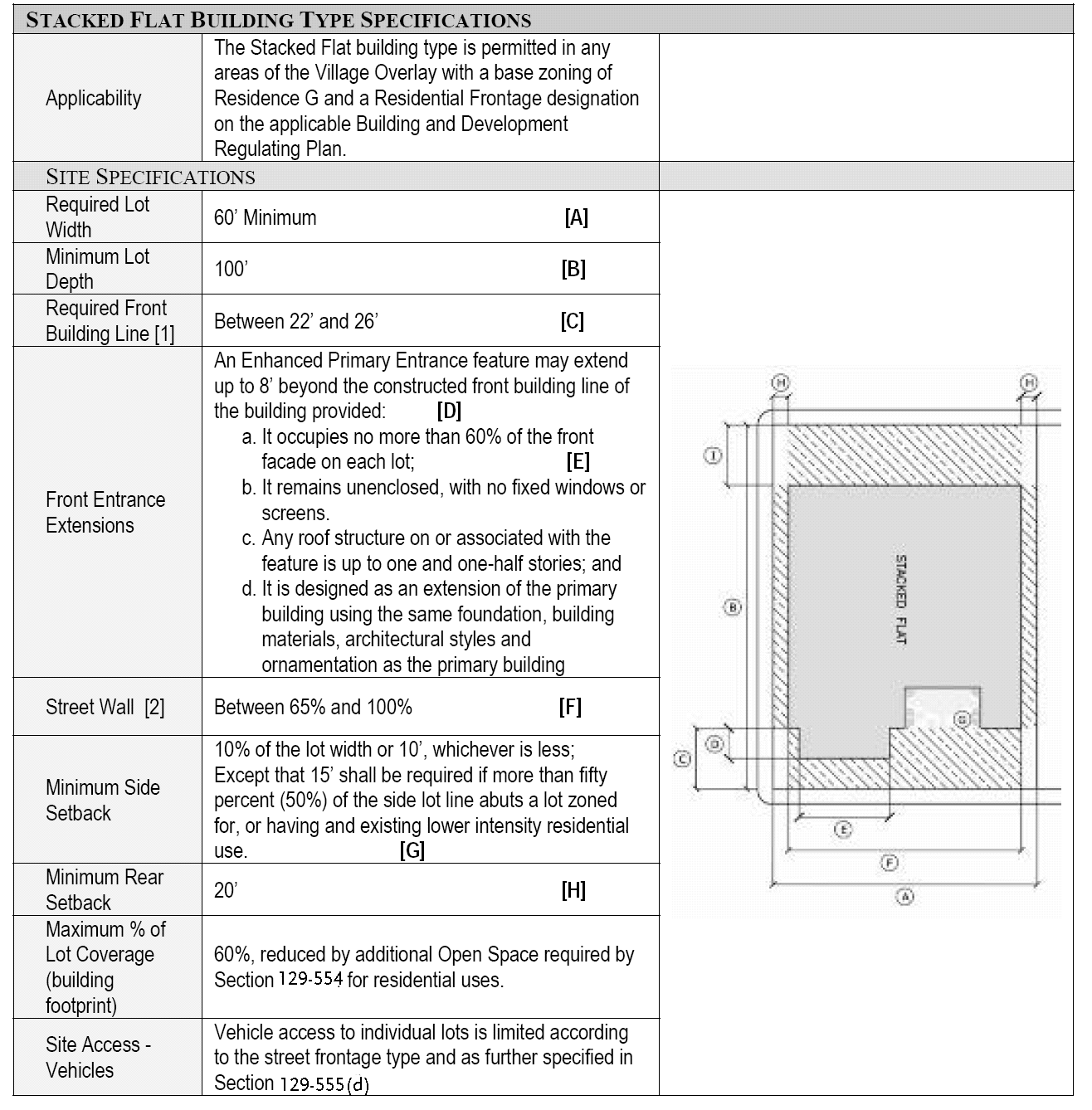
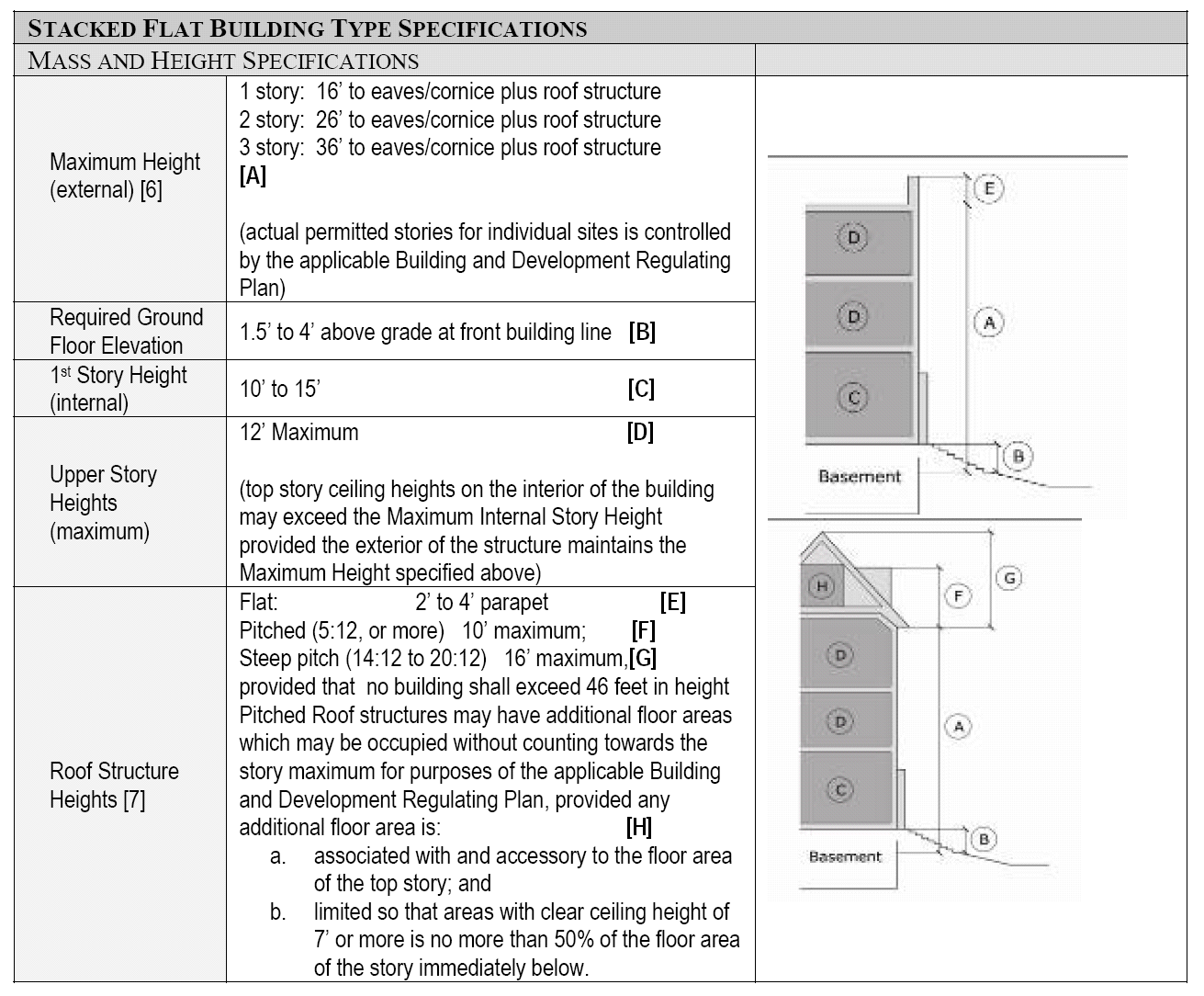
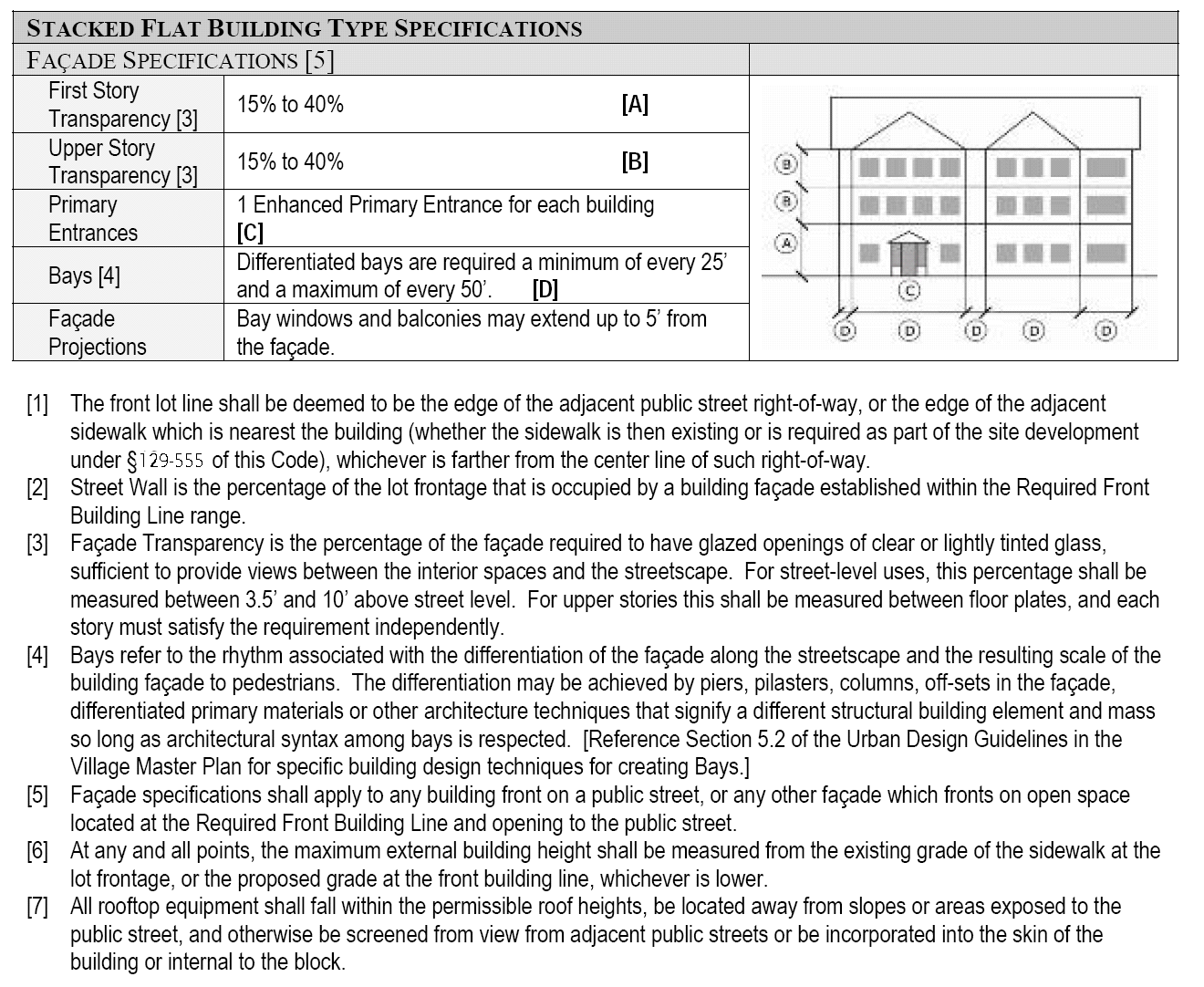
Standards. Permitted building types shall meet the following building standards, which standards shall control over any conflicting standard of the base zoning district (with the exception of any permitted use on lots zoned Vine Street Transitional (VST) District):
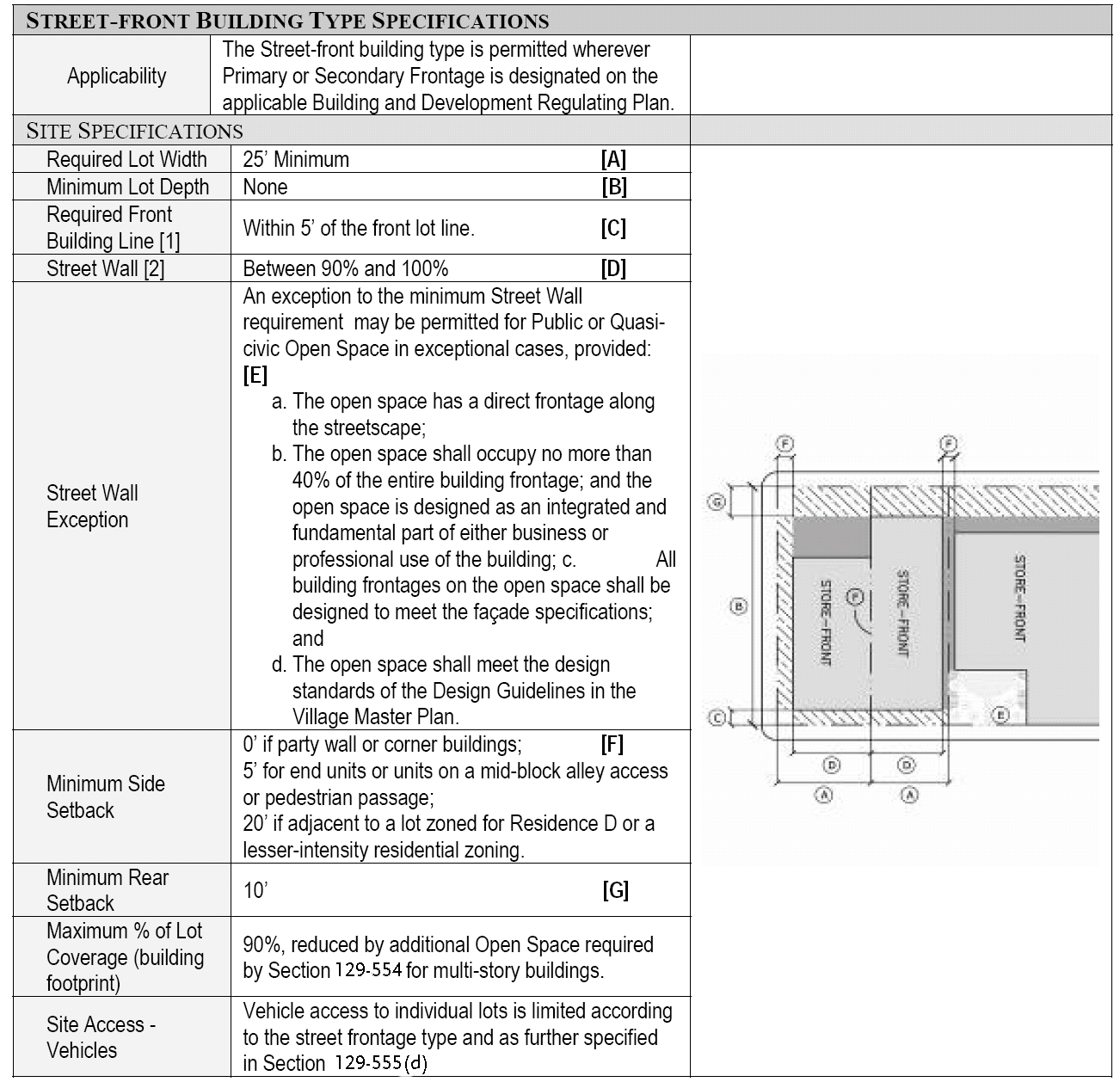
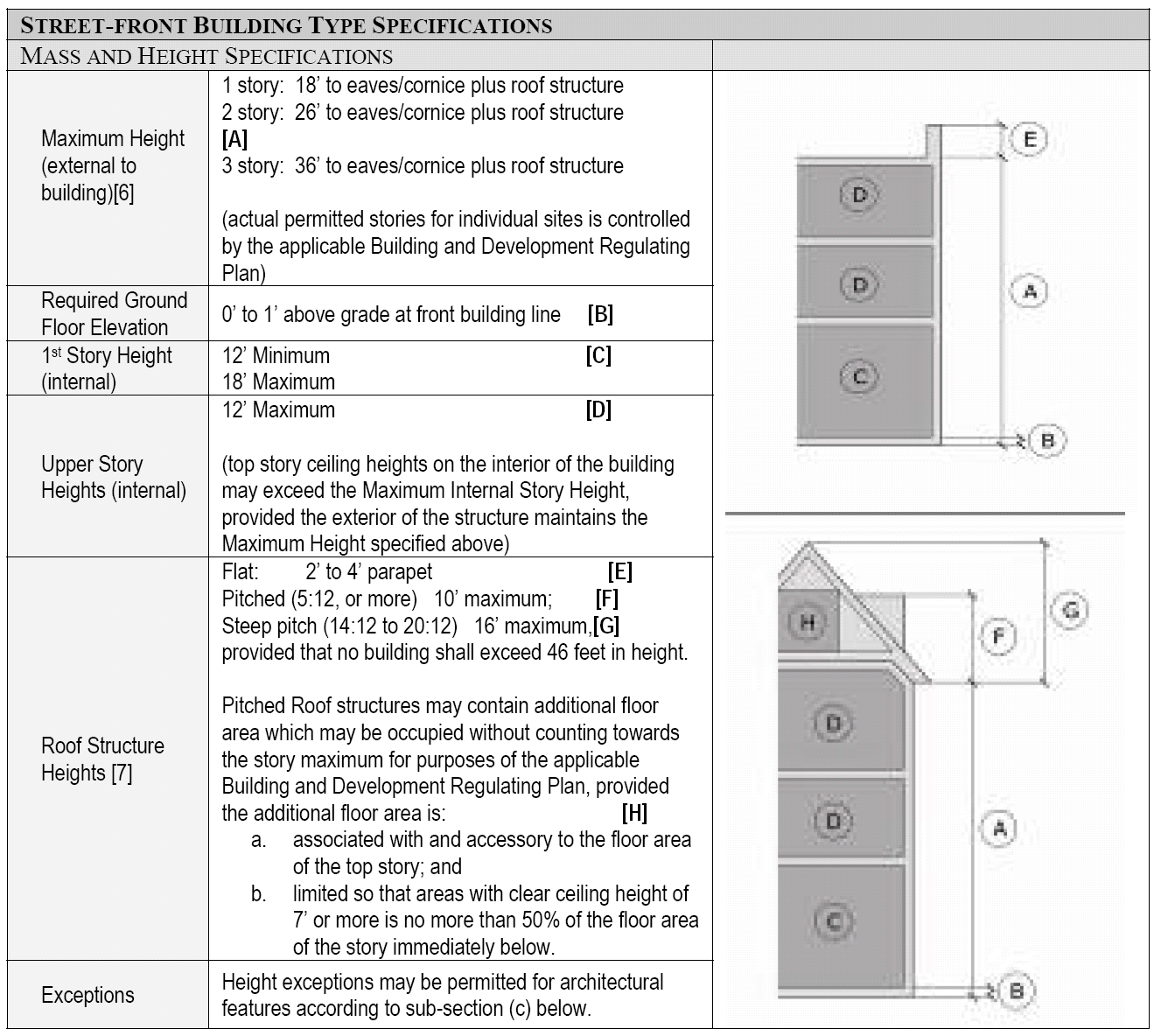
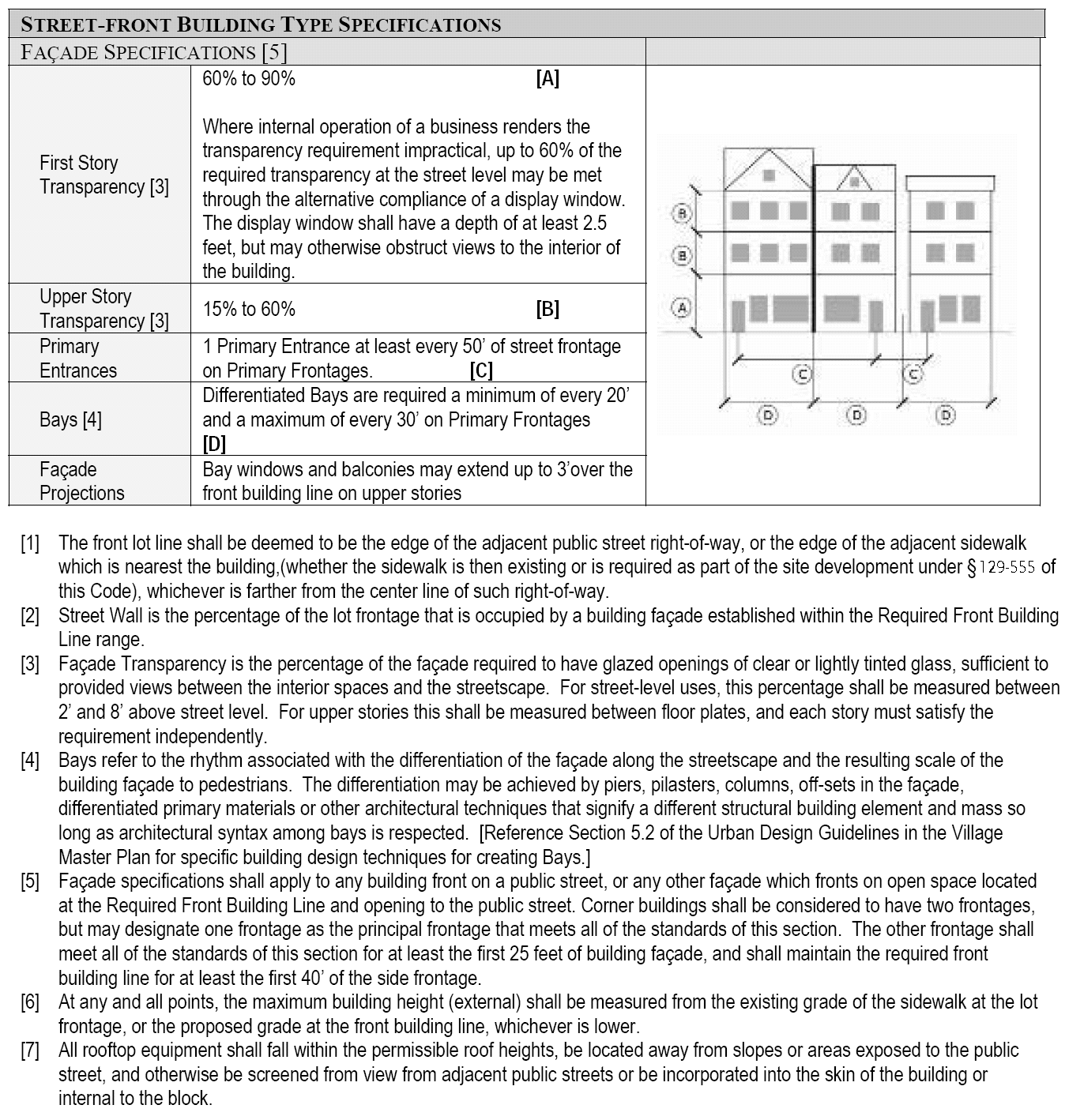
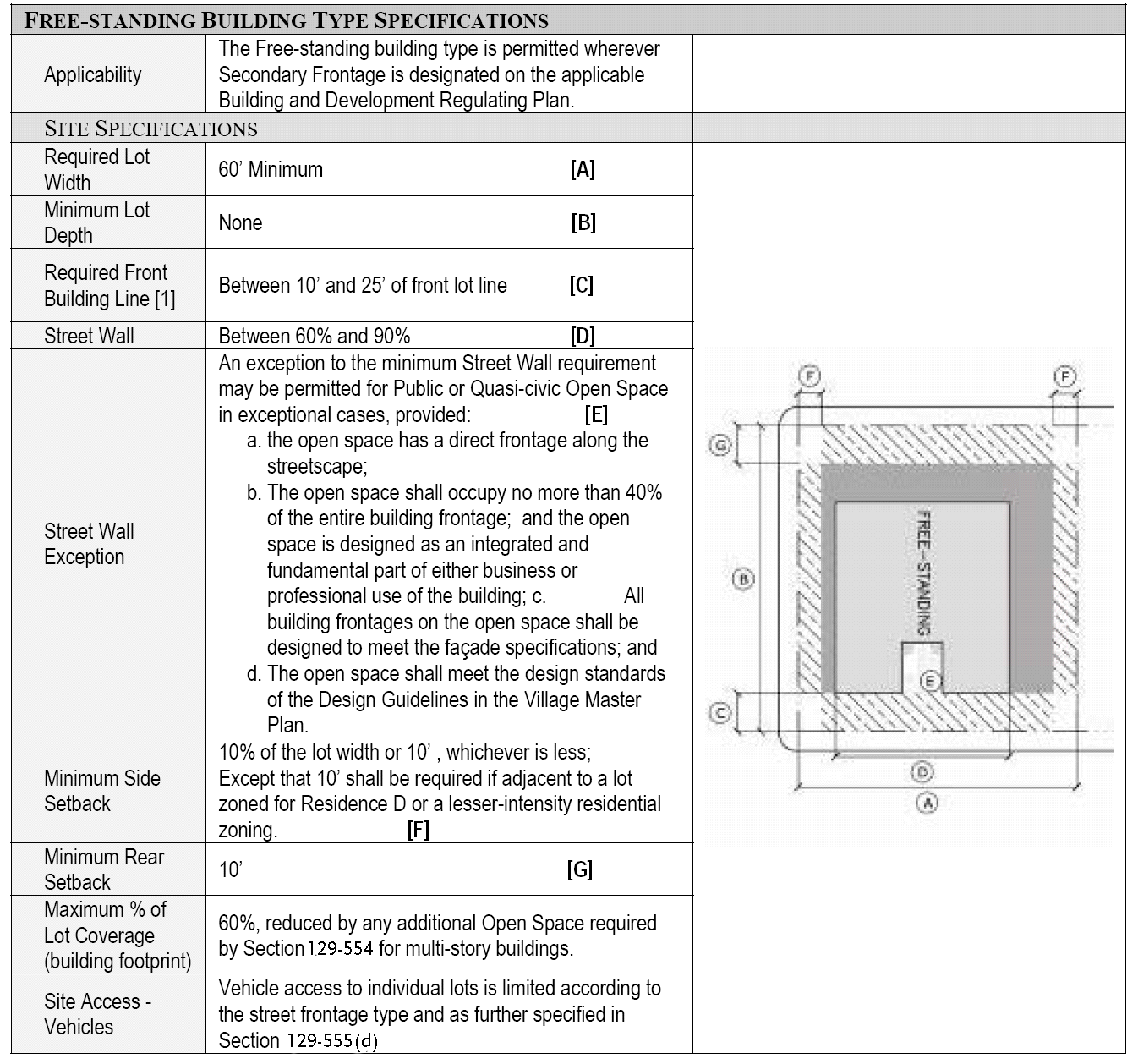
(c)
Building height exceptions.
(1)
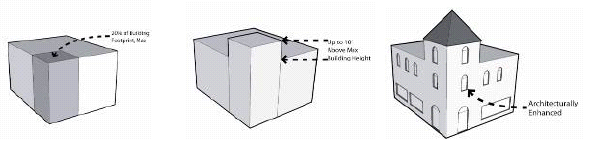
Architectural features. A height exception may be permitted for architectural features such as turrets, towers, or other similar features on buildings two stories or less, based upon the following:
a.
The architectural feature may extend up to ten feet above the maximum allowed building height of the building but shall not include any additional stories;
b.
The portion of the building receiving a height exception shall occupy no more than 20 percent of the building footprint.
c.
The architectural feature shall be in appropriate proportion to, shall enhance and shall emphasize the design features of both the village and the building and shall include enhanced ornamentation such as decorative molding, articulated openings, or other architectural details that meet the design guidelines for the overall village as expressed in the village master plan; and
d.
The architectural feature shall be located only at one of the following prominent locations that contribute to the overall design context of the village:
1.
At the corner of two public streets;
2.
On the block face opposite a "T" intersection with another public street and centered on that intersecting street; or
3.
Fronting on a significant public or quasi-civic open space that has street frontage and is located and designed according to the village master plan.
(2)
Ornamental features. A height exception may be permitted for ornamental features on all buildings where such features do not exceed an additional six feet in height and where said feature is limited to the following: spires, chimneys, chimney pots, flag poles, and weather vanes.
(Ord. No. 1762, § 1(19-31-3), 2-25-2008; Ord. No. 1899, §§ 6, 7, 11-12-2013)
Sec. 129-554. - Open space standards.
(a)
Objective. The objective of these open space standards is to:
(1)
Create civic amenities in the villages in exchange for any increased density or building intensity that is constructed under the village overlay standards;
(2)
Provide functional open space for occupants and patrons of buildings on all sites;
(3)
Require open space in relation to variations in the mass and orientation of buildings, that serves a purpose in the site plan and overall village-wide urban design; and
(4)
Create effective transitions between new buildings and the streetscapes of the village.
(b)
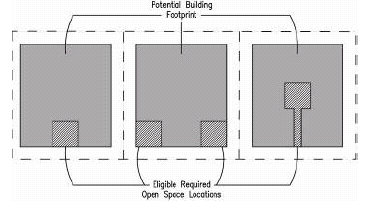
Standards. Lots shall contain public or quasi-public open space in addition to open space created implicitly by the operation of setbacks, maximum lot coverage or other building regulations. The required open space shall be based upon the type of use and building type and mass based upon the following table. The required open space shall be in addition to any required setbacks for the lot and building type, and must occur within the otherwise allowable building footprint. All open space required for street-front and free-standing buildings shall be directly accessible from and located along the building frontage or accessible by a passage that breaks the facade along the building frontage. Open space required for townhouse or stacked flat building types may be located at any location within the otherwise allowable building footprint. Open space must be functional and should utilize the design guidelines for open space in the village master plans, but may not consist of parking areas, service areas or site utility areas. [refer to section 5.4, Open Space Design, of the Design Guidelines of the Village Master Plan for specific strategies for open space design].
* For residential buildings, this open space may also be common or private open space according to the village master plans.
(Ord. No. 1762, § 1(19-31-4), 2-25-2008)
Sec. 129-555. - Parking, vehicle and pedestrian access standards.
The parking and vehicle access standards of the applicable base zoning district are specifically modified or amended by village overlay standards according to this section.
(a)
Parking quantity. For all new construction subject to the village overlay standards, onsite parking shall be provided pursuant to the following table:
* Per square feet of floor area exclusive of basements or areas used exclusively for storage, mechanical equipment, common interior areas.
(b)
Exceptions.
(1)
Nonresidential exemption. All new nonresidential construction may be exempt from the parking requirement provided:
a.
The new building replaces existing square footage. For buildings with expanded total square footage beyond the existing square footage, parking for the expanded square footages shall be required at the rate specified in this section; and
b.
The new building does not eliminate existing onsite parking.
(2)
Onstreet credit. New and additional onstreet parking created as part of a development plan may be credited to the parking to the parking requirement of this section.
(3)
Shared or offsite parking management agreement. Shared parking may be applied to meet the requirements of this section subject to the following criteria:
a.
All landowners participating in the shared parking must execute an appropriate access agreement with respect to the shared parking location;
b.
A written agreement executed by all parties participating in the sharing agreement must be presented to the city council, which may approve the agreement in its sole discretion;
c.
All parking spaces shall be within reasonable proximity of the main entrance of any building for which the agreement is intended to benefit. Employee parking may warrant greater distances from the main entrance than parking for customers; and
d.
The cumulative requirements of uses sharing the parking may be reduced for uses having different hours of operation or different peak periods of demand. The proposed reduction shall be based upon recognized industry sources, such as the most recent edition of the Urban Land Institute Shared Parking Model or other similar and equivalent study or data, and upon evidence that such model is applicable to the agreement; and
e.
If any of the circumstances underlying an approved shared parking agreement hange, including but not limited to the parties, the location of shared parking spaces, the number of parking spaces available, the number of parking spaces required, the type of business or use, an increase or reduction in parking spaces available onsite, or any other like change in circumstances, a revised written agreement executed by all parties participating in same must be presented to the council, which may approve the revised agreement in its sole discretion. A failure at any and all times to maintain a valid approved shared parking agreement shall constitute a violation of this article and will further constitute grounds for the revocation of the business license of any business utilizing the subject shared parking as the method of meeting the parking requirements in this section.
(c)
Parking design. Onsite parking in areas subject to the village overlay standards shall meet the following design standards.
(1)
Parking for all residential uses shall be located in the rear of any residential building, and no parking shall be permitted in any front yard or any side yard; provided, however, that required parking for visitors may be permitted in the front of any building if located onstreet and if said spaces are new spaces either dedicated or made available for public use.
(2)
All surface parking shall be set back at least 30 feet from any primary street frontage, and screened from the streetscape by a liner building meeting the requirements of this article.
(3)
All parking shall be setback at least eight feet from any secondary street frontage and screened from the streetscape by a landscape area or low decorative wall.
(4)
No setback is required for parking located off an access or service alley.
(5)
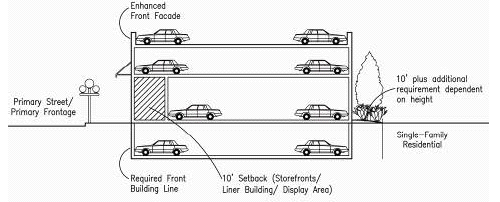
Any parking structure that is provided shall meet the following standards:
a.
Street-level parking shall be set back at least ten feet from a primary street and be screened by liner buildings or display areas that meet the street-front building design requirements.
b.
All upper-level parking, and street-level parking on secondary frontages may be up to the front building line provided that the facades hall otherwise meet all of the building standards and design guidelines applicable in the village.
(6)
Any parking that abuts a lot zoned for single-family use shall meet the following:
a.
Surface parking shall be set back at least ten feet from the common lot line and be screened by a combination of a high intensity landscape buffer composed of primary plantings of at least six feet in height at installation and a solid fence or finished wall between six feet and seven feet in height.
b.
Any parking structure shall be set back at least ten feet from the lot line, and an additional one foot for every two feet of parking structure that is above grade. This setback area shall be improved with a high intensity landscape buffer which provides a year-round screen of the structure.
(d)
Vehicle access limitations. Vehicle access to all lots subject to the village overlay standards shall be limited according to frontage type indicated on the applicable building and development regulating plan based upon the following standards:
(1)
Primary frontages. Vehicle access is prohibited except for one mid-block shared access area providing access to multiple lots within the block, and not to exceed 20 feet in width. All other vehicle access to individual lots shall be via alleys or off secondary, access, or support streets identified in the master plan.
(2)
Secondary frontages. Vehicle access is permitted subject to:
a.
No more than 20 percent of the lot frontage shall be dedicated to vehicle access.
b.
Access points shall be limited in width to no more than 24-foot wide per access point.
c.
Individual access points shall be separated by at least 100 feet on center.
(3)
Support frontages. No limitations.
(4)
Residential frontages. Vehicle access points shall be limited to no more than 15 percent of the lot frontage. Where this limitation prohibits vehicle access to individual lots, access shall be via a shared access or alley system.
(5)
Drive-through facilities. Drive-through facilities may be permitted only where ingress and egress is provided from a secondary or access street as identified in the master plan.
(6)
Waiver. A waiver of these access limitations may be granted by the city council if it is based on an overall circulation plan for a development site and supported by a technical study that considers vehicle and pedestrian circulation comprehensively, including all blocks in the surrounding area and the village as a whole.
(e)
Sidewalk standards. Any development fronting on streets that do not currently have sidewalks shall include sidewalks in association with the site development according to the following:
(1)
Sidewalks on primary village street designated in the Circulation and Urban Design Plan of the Village Master Plan, adopted June 2007, shall be between eight-foot and 12-foot wide.
(2)
Sidewalks on secondary village streets or village support streets designated in the Circulation and Urban Design Plan of the Village Master Plan, adopted June 2007, shall be between six-foot and eight-foot wide.
(3)
Where streets do not contain onstreet parking that buffers pedestrians from moving traffic, the sidewalk shall be separated from the edge of the finished street by a landscape or light fixture/signage zone at least five-foot wide. Where onstreet parking exists or is added to the streetscape as part of the site development, the sidewalk may immediately abut the finished street edge.
(4)
Enhancements such as landscaping and tree wells, pedestrian amenities and seating, or other streetscape elements may be added within the sidewalk or any landscape buffer areas, provided all areas of the sidewalk maintain a minimum five-foot clear area for pedestrian movement.
(5)
The city council may grant exceptions to one or more of these standards, either allowing smaller sidewalks or waiving the requirement entirely, in the event it finds all of the following:
a.
Strict compliance with these standards would lead to:
1.
An inappropriate design of the right-of-way and site according to sound urban design, planning, or landscape principles;
2.
A detriment to general public safety; or
3.
Excessive construction costs due to extreme and unusual topography or other site conditions.
b.
The inability to meet the standards is due to unique conditions of the site; and
c.
The degree of exception granted by the city council is the minimum necessary to result in an appropriate design of both the site and right-of-way on which the site fronts, and will not be detrimental to general transportation patterns along the street and through the village.
(Ord. No. 1762, § 1(19-31-5), 2-25-2008; Ord. No. 1976, § 1, 3-27-2017)
Sec. 129-556. - Material specifications.
(a)
Objectives. The objectives of the material specifications are to:
(1)
Enhance the existing character of the villages through the use of materials and architectural styles that are compatible to existing buildings throughout the village;
(2)
Permit flexibility and variety in architectural style, design and function while maintaining and promoting consistency with the overall form, scale and aesthetics of all of the buildings collectively in the villages;
(3)
To preserve the value and investment in buildings with quality and durable materials that complement the public investment in streetscapes and open spaces throughout the village.
(b)
Standards.
(1)
All buildings shall have one primary material covering at least 70 percent of the building facades. Buildings may have a secondary material covering up to 20 percent of the facades. Building may have up to three accent or trim materials covering no more than 30 percent of the building facades, however no building shall use more than four materials for primary, secondary, and accent or trim combined.
(2)
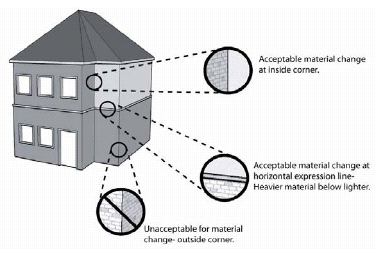
Except for accent or trim materials, changes in the facade material shall only occur at horizontal expression lines, with the heavier material below the lighter material. Alternatively, changes in the material may occur to emphasize distinct forms or massing on the building if material changes occur only at inside corners.
(3)
Exterior materials shall be permitted in accordance with the following table:
(4)
Equal or better simulated materials. Where "equal or better" simulated materials are permitted, they shall only be permitted in the sole discretion of the planning commission, which shall require the review and recommendation of the design review committee prior to consideration of the request. The planning commission may permit "equal or better" simulated materials only where specified in the permitted materials section and upon finding that:
a.
The proposed material has an identical physical appearance as the material it is intended to simulate, including but not limited to color and texture;
b.
The material presents benefits in addition to cost savings, such as reduced maintenance, or enhanced durability and performance;
c.
The material has a demonstrated track record of successful application and use; and
d.
Use of equal or better materials may be conditioned upon compliance with all application and manufacturer specifications.
(5)
Alternative materials. Materials other than those specified herein may be proposed for use to the planning commission, which shall first require the review and recommendation of the design review committee. The planning commission, in its sole discretion, may allow the use and installation of alternative materials when it finds that:
a.
Use of the proposed material advances the design objectives specified in this section;
b.
The proposed material meets the "equal or better" standards in subsection (4)(a—d) for any material that it is similar to;
c.
Use of the proposed material is consistent with the architectural style for the proposed building and will help achieve the objectives set forth in the Design Guidelines in section 5.0 of the Village Master Plan; and
d.
Use of the proposed material is limited and does not introduce the potential to erode the overall character of the village if applied in a similar manner on other sites.
Sec. 129-557. - Village maps.
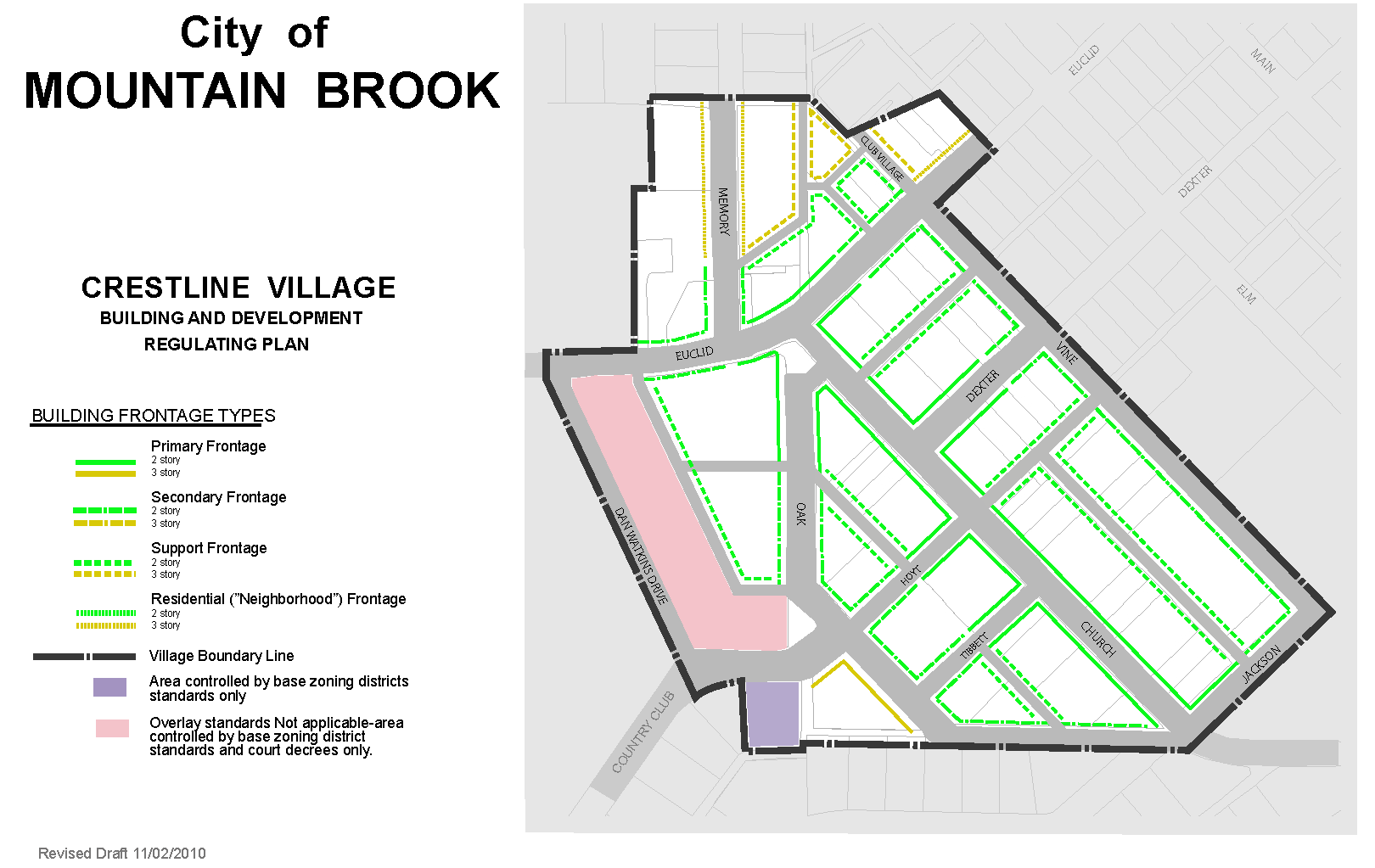
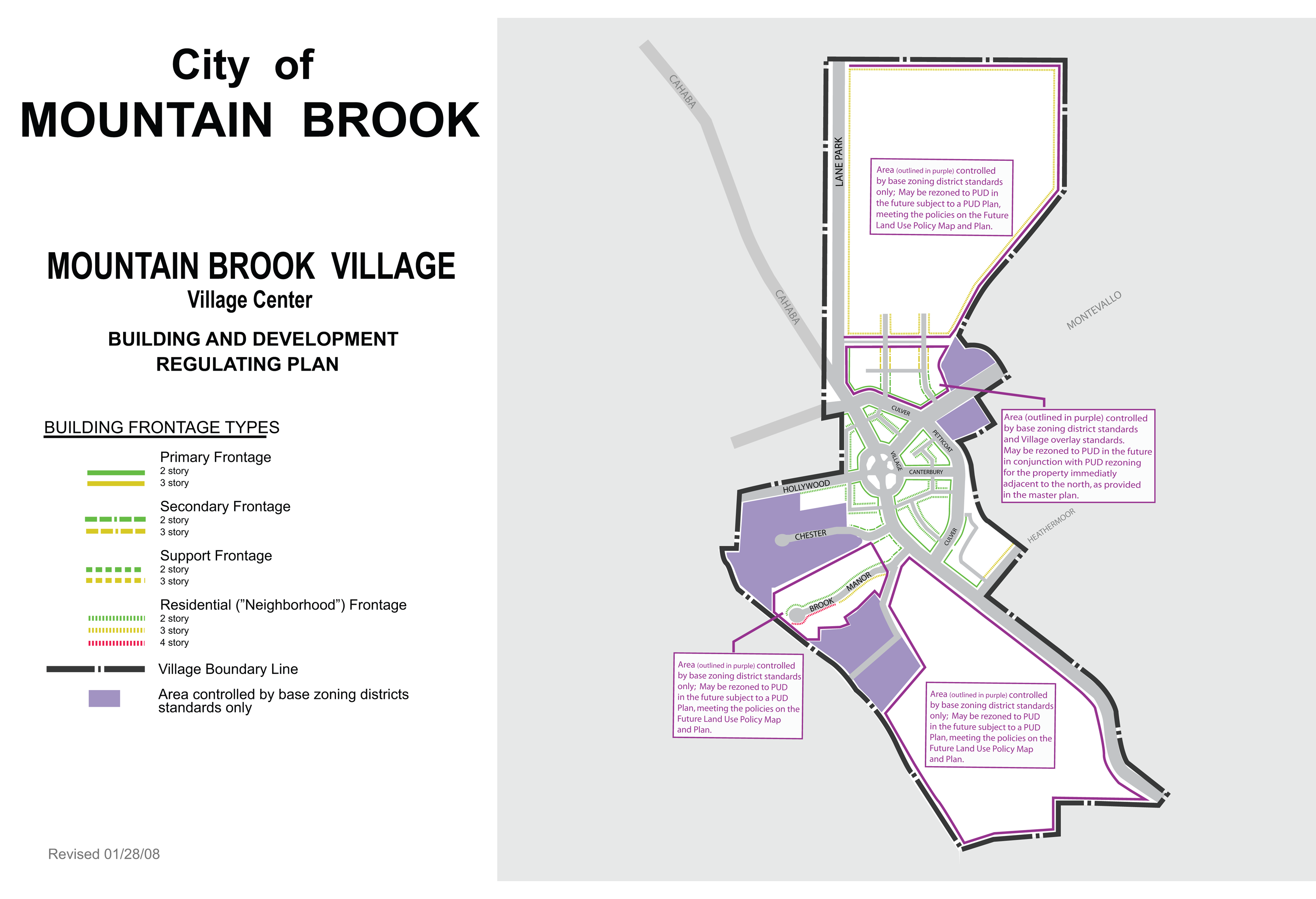
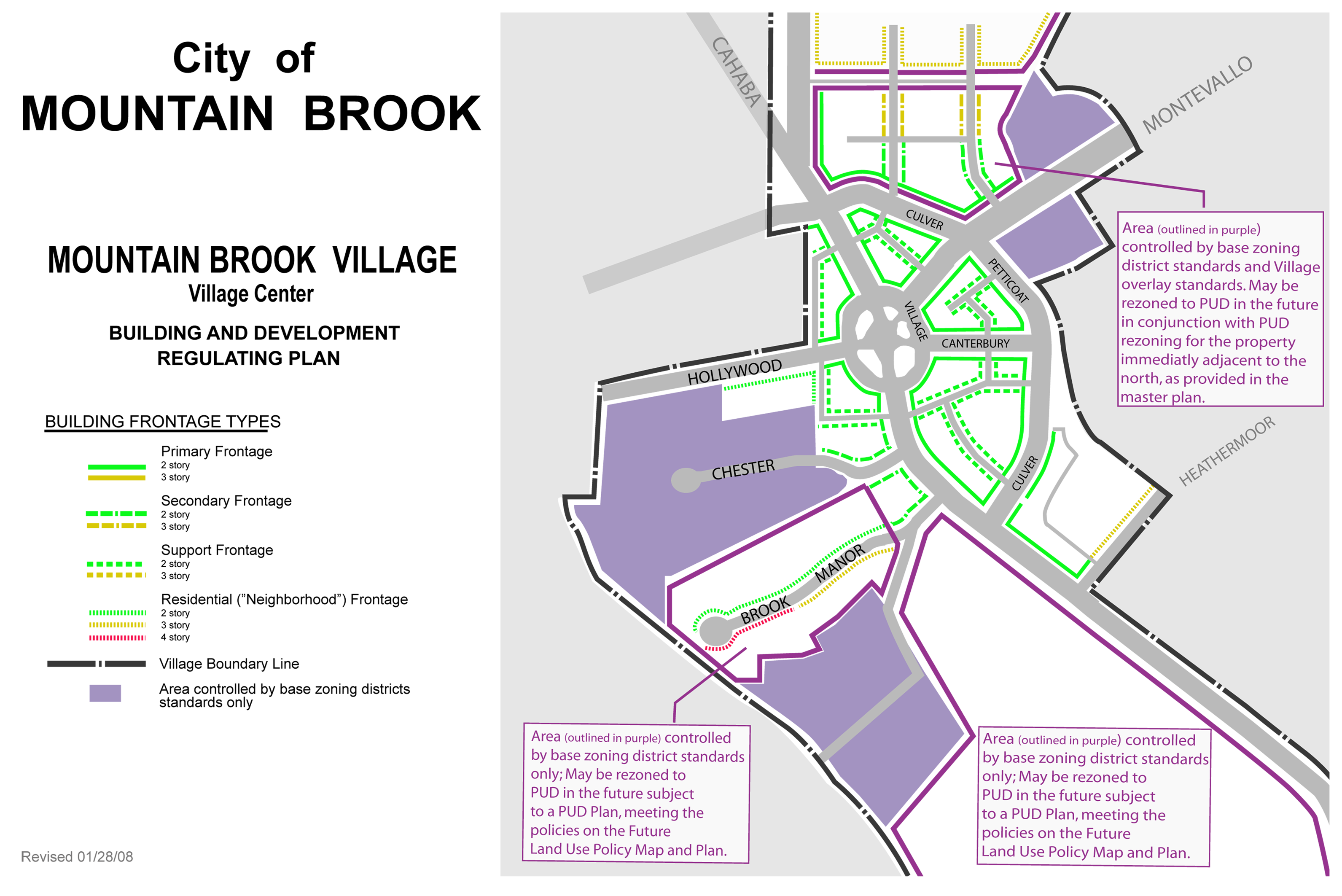
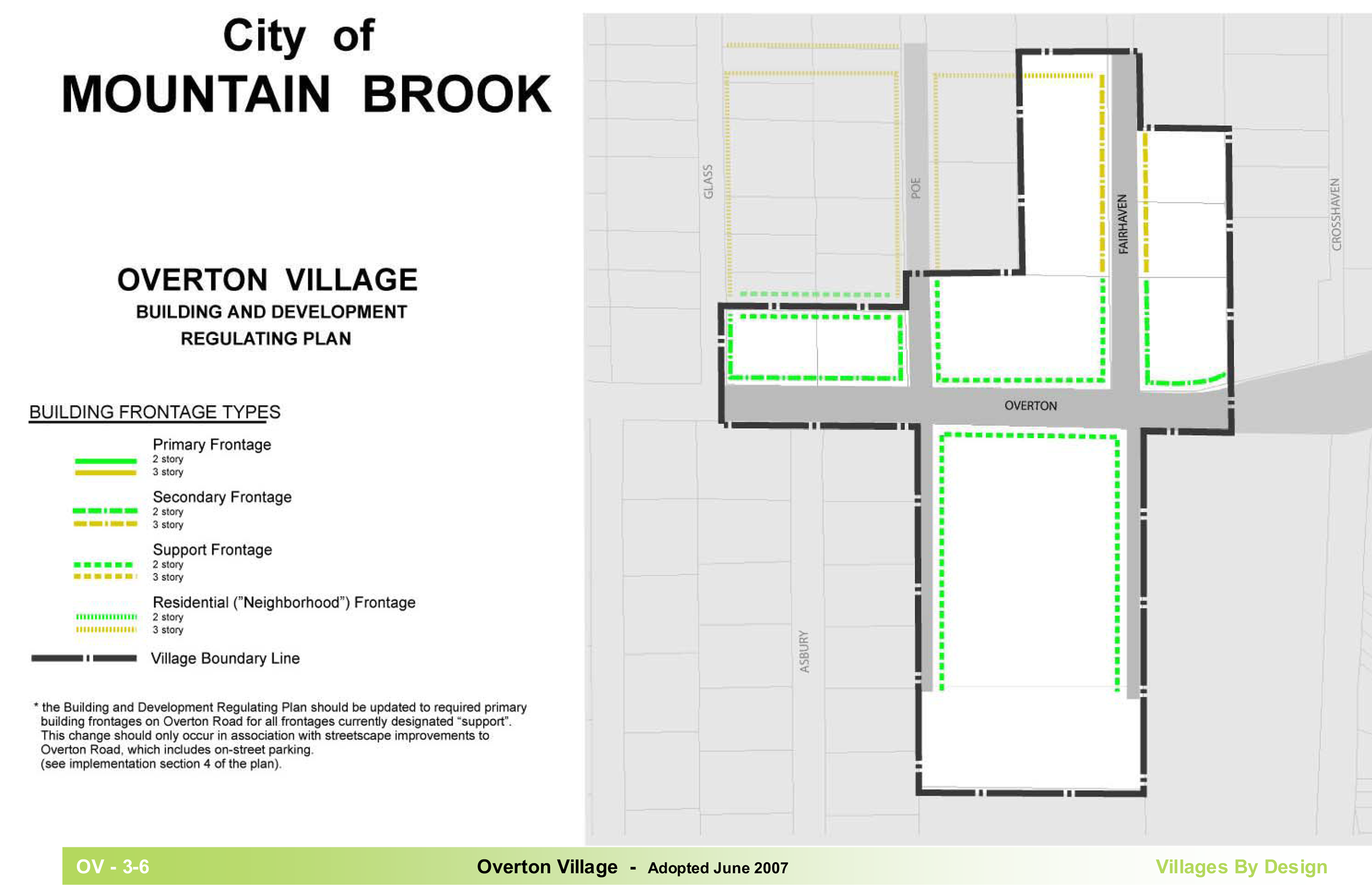
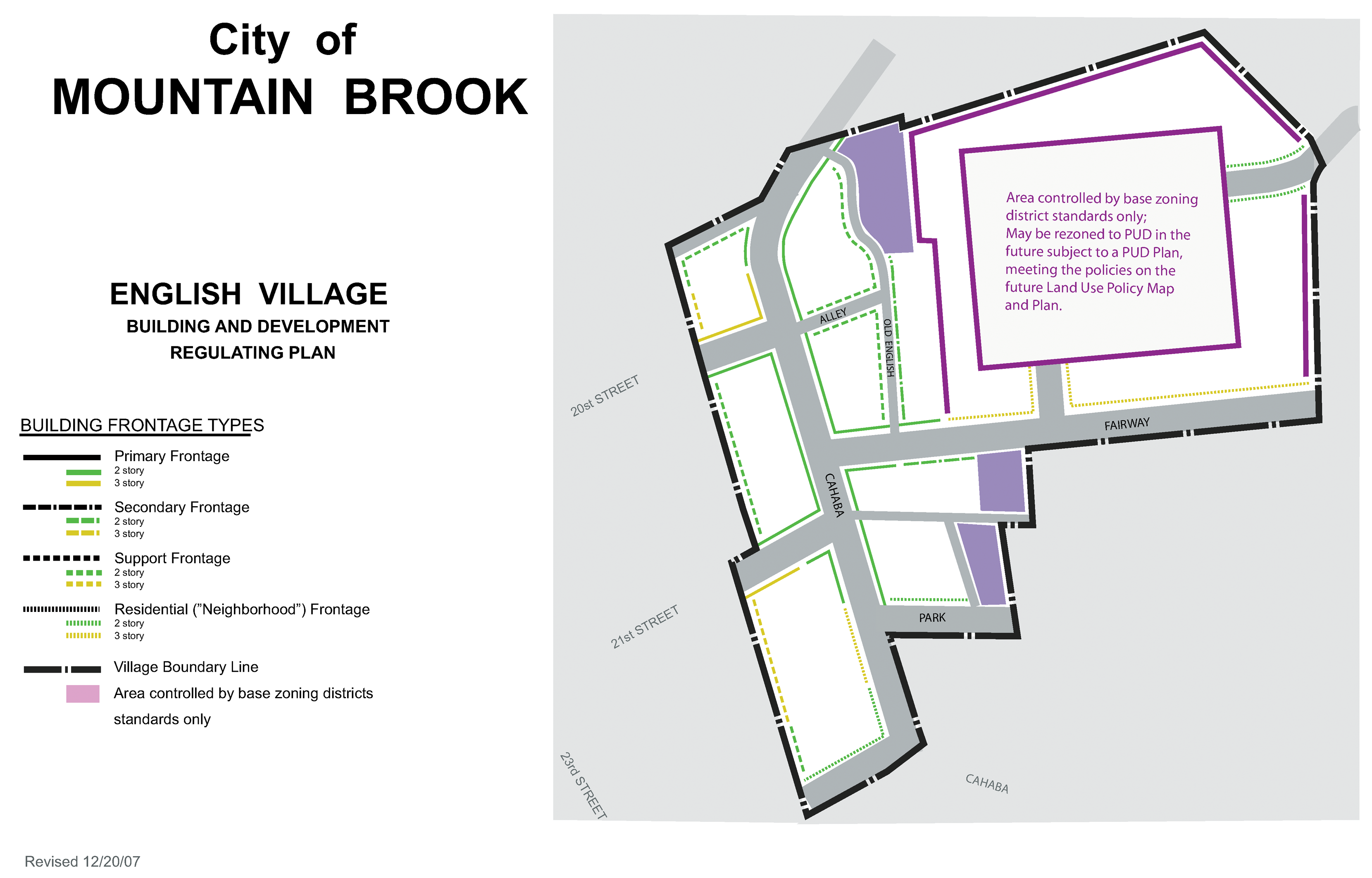
(Ord. No. 1762, § 1(19-31-6), 2-25-2008; Ord. No. 1834, § 1, 11-8-2010)

