
Natchez City Zoning Code
CHAPTER 12
- DEVELOPMENT STANDARDS
12.1.1 - Number of Principal Buildings Per Lot.
In any district, except R-E, R-1, and R-2, more than one structure containing a permitted or conditional principal use may be erected on a single lot, provided yard requirements are met around the group of buildings and provided the maximum lot coverage standards are not exceeded.
12.1.2 - Minimum Lot Dimensions.
Any lot that is created, developed, used or occupied shall meet the minimum lot requirement area and lot width requirements set forth in Chapter 11 for the zoning district in which it is located, except as otherwise established in this Ordinance for particular uses. These standards are summarized in Table 12.1.1 and the standards in Chapter 11 shall control. See Section 12.2.15 for bluff setbacks.
TABLE 12.1.1
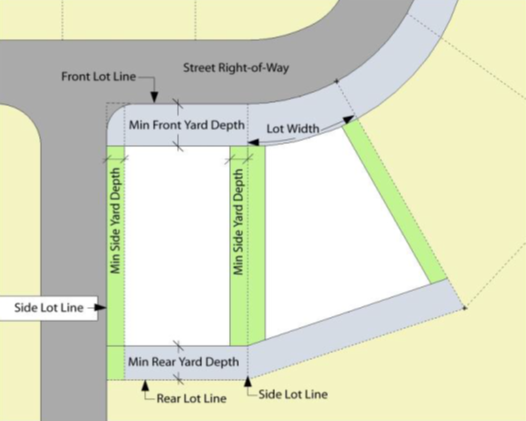
Figure 12.1.1: Lot Dimensions
12.1.3 - Required Yards, Allowable Encroachments into Required Yards.
(a)
A building, structure, or lot shall not be developed, used, or occupied unless it meets the yard requirements set forth in Chapter 11 of the zoning district in which it is located, except as otherwise established in the Ordinance for particular uses. These standards are summarized in Table 12.1.1 and illustrated in Figure 12.1.1.
(b)
The front yard requirement also applies to the yard between the building and the side street, in the case of a corner lot. This front yard requirement is to be measured from the right-of-way line to the building at the closest point.
(c)
The front yard requirement for a lot with buildings on both sides which are different than required by this Ordinance shall be calculated by averaging the setback of said adjoining buildings. This exception to the normal front yard requirements applies only where both adjacent buildings are located within 50 ft. of the side lot line of the lots sought to be built upon.
(d)
A yard, court, or other open space required by this Ordinance shall not be included as part of a yard or other open space required by this Ordinance for another building or structure.
(e)
The buildings or structures on a lot shall not be located in whole or in part in the required yard, except as follows:
(1)
Sills, cornices, and similar ornamental features projecting from the principal building may encroach up to eighteen (18) inches into any required yard or building restriction line shown on the subdivision plat for the property;
(2)
Bay windows, covered porches, balconies, and similar features projecting from the principal building may encroach up to three (3) feet into any required yard or building restriction line shown on the subdivision plat for the property;
(3)
Decks, uncovered porches, patios, terraces, and similar features may encroach into a required yard or building restriction line shown on the subdivision plat for the property, but no more than five feet (5) into the required yard or building restriction line;
(4)
Accessory buildings and structures may encroach into the required yard or building restriction line shown on the subdivision plat for the property, but no closer than five feet to the rear lot line or side lot lines. An accessory building or structure shall be located in the rear yard or side yard and not the front yard. An accessory building or structure shall be located at least fifteen (15) feet from the principal building; otherwise, it shall be considered a part of the principal building and shall conform to the yard setback requirements of the principal building.
(f)
The Planning Commission may approve encroachment of a principal building into any required yard up to a maximum of ten (10) percent of the applicable required yard setback, provided that:
(1)
The request involves only one (1) encroachment into one required yard per lot;
(2)
The encroachment is a result of a construction error by the property owner or a person acting on his behalf;
(3)
The encroachment cannot be corrected without substantial hardship and expense to the property owner; and
(4)
The encroachment, if approved, will not substantially interfere with the convenient and enjoyable use of adjacent properties and will not pose any substantial danger to the public health and safety.
12.1.4 - Corner Visibility.
(a)
Wherever a driveway intersects with a local, collector, or arterial street, unobstructed cross-visibility shall be provided between the heights of three and seven feet above the grade elevation of the roadway within sight triangles at each side of the intersecting driveway. Each sight triangle shall be measured from a point where the curb or edge-of-pavement line for the roadway and the extended edge of the driveway meet, to a point along the driveway edge located fifteen (15) feet behind the roadway's curb or edge-of-pavement line, to a point along the roadway curb or edge-of-pavement line located thirty (30) feet from the original point. See Figure 12.1.4(a).
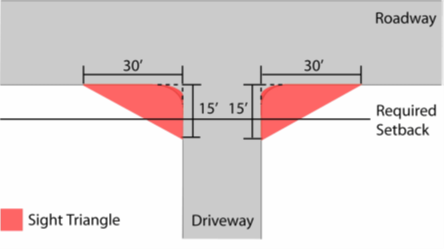
Figure 12.1.4(a): Sight Triangles
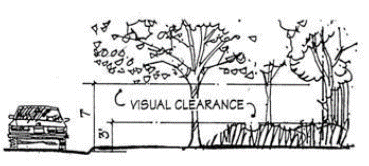
Figure 12.1.4(b): Visual Clearance Area
(b)
Within the sight triangles, no fence, wall, sign, earthworks, hedge, shrub, or other structure or planting shall be located, maintained, or permitted to grow between the heights of three (3) and seven (7) feet above the grade elevation of the adjacent road. Public safety and utility devices (such as street light, street sign, and telephone poles) and trees less than twelve (12) inches in diameter are exempt from these standards, provided their number and location is limited, and the limbs and foliage of any such trees are trimmed, to ensure the required unobstructed cross-visibility. See Figure 12.1.4(b).
12.1.5 - Building Design.
(a)
Building design plans. Building Design plans shall be submitted for approval as part of each site plan required by this Ordinance. Building design plans shall be developed by an individual, individuals, or professional firm having the competence and knowledge to satisfactorily develop the plans required by this Part.
(b)
Building design. Proposed building facades shall be designed to be compatible with adjacent developments in terms of architectural design, exterior building materials and colors, and arrangement of buildings and other features. All non-residential buildings shall have a facade of brick, stone, exterior insulation and finishing system (EIFS), stucco, split face block, or similar designer block over a minimum of 50% of the side(s) of the building facing a street. The 50% requirement shall be calculated based on the entire area of said building side including windows, doors and gable ends. Any offset building fronts which are as close or closer to the rear of the building than the front shall not require improvements described above. Building materials with a cost equal to or greater than the materials listed above may be substituted provided said equal or greater costs are documented. Landscaping in front of the building may also serve as a substitute.
(c)
Modifications to standards. Where necessary to accommodate individuality and creativity in site design, or where conformance with the strict requirements of this Part are not feasible on a particular property, the Site Plan Review Committee may modify the requirements of this Part in reviewing and approving a site plan, provided that the features which the applicant proposes are equivalent in effectiveness given stated purposes of this Part.
12.1.6 - Mechanical, Utility, and Trash Containment Areas.
(a)
Mechanical and utility equipment. Heating, ventilation, air conditioning, and other mechanical utility equipment, including, but not limited to, hoses, pipes, vents, fans, compressors, pumps, and heating and cooling units, which are located on, beside, or adjacent to any building or development shall be screened from the view of streets and adjacent property. The screen shall exceed the height of the equipment, shall not interfere with the operation of the equipment, and shall use building materials and design which are compatible with those used for the exterior of the principal building.
(b)
Trash containment areas. All trash containment devices, including compactors and dumpsters, shall be located and designed so as not to be visible from the view of adjacent streets and properties. If the device is not visible from off the site, then it need not be screened. The type of screening used shall be determined based on the proposed location of the trash containment area, existing site conditions, and the type and amount of existing and proposed vegetation on the site. All trash containment devices shall meet the following standards:
(1)
All trash containment areas shall be enclosed to contain windblown litter.
(2)
The enclosure shall be at least as high as the highest point of the compactor or dumpster.
(3)
The enclosure shall be made of a material that is opaque at the time of installation and compatible with the design and materials of the principal building.
(4)
All compactors and dumpsters shall be placed on a concrete pad, which is large enough to provide adequate support, and allows for positive drainage.
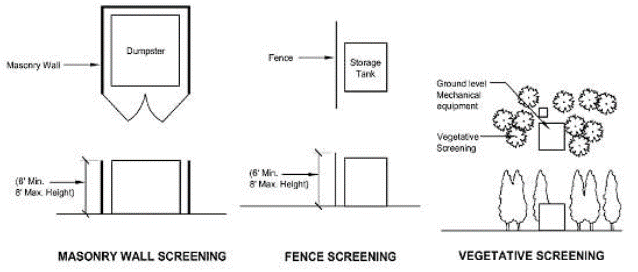
Figure 12.1.6: Landscaping options mechanical, utility and trash containment areas.
12.1.7 - Landscaping Requirements—Non-Residential and Multi-Family Uses.
(a)
Landscaping. Landscaping is required to be provided and maintained when non-residential uses or multi-family uses are being developed or expanded. The width of the landscaped area and the required plantings within the landscaped area may vary depending upon the location and type of uses. These requirements are intended to be flexible and the developer may choose among a number of combinations of widths and plantings to satisfy the requirement.
(1)
Landscape materials should be hardy and adaptable to local conditions, easily maintained, and drought tolerant. Use of native plants is strongly encouraged.
(2)
The design for parking areas shall include deciduous and evergreen trees to provide shade and break up expanses of asphalt. One tree, a minimum of 2½-3 inch calipers at the time of planting, shall be required for every five (5) parking spaces. There should be no more than ten (10) spaces between landscape islands or medians. See Figure 12.1.7(b) and Section 13.1.10.
(3)
Landscape islands or medians shall have no dimension narrower than five (5) feet.
(4)
Interior landscaping is required for parking lots containing ten (10) or more spaces at a ratio of twenty (20) square feet of landscape area for every one hundred (100) square feet of parking area. All landscaped areas should be protected by wheel stops or curbing, or be of sufficient width to prevent damage to plants by overhanging vehicles. See Figure 13.1.10(b) and (d).
(5)
Required perimeter setback areas shall be densely landscaped with a combination of trees and shrubs, which form a 90 percent ground cover within three (3) years of Planting.
(6)
Architectural features such as low walls, fountains, and sculptures may be used in places where planting areas are limited or restricted.
(7)
Project entrances should be enhanced through changes in paving materials such as brick pavers, textured and colored concrete, providing entry structures and unity in planting of trees and shrubs.
(8)
Individual trees along walkways and along sidewalks in the internal portions of projects should be planted in tree wells or planter boxes.
(9)
Open storm water detention facilities should be incorporated into project landscaping and open space where geographically feasible, also open storm water detention facilities shall be landscaped and screened.
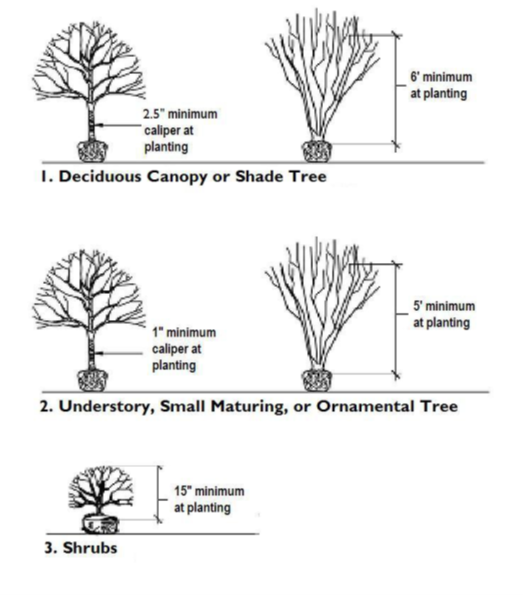
Figure 12.1.7: Landscaping.
(b)
Any new structure or any addition or accessory structure for non-residential and multi-family uses greater in size than 25% of the principal building shall provide landscaping conforming to the design standards within this section or as required by the Site Plan Review Committee.
(c)
Screening Design Standards. Screening barriers can consist of fencing, landscaping or a combination of both. Screening should be provided along the entire length of the property line adjacent to the use to be screened. However, no screen shall extend along a side property line any closer than the front yard setback.
(d)
Fence screening should consist of a solid board fence six feet in height constructed of western cedar, cypress, redwood, brick, stone or other equivalent material approved by the Planning Director and/or the Site Plan Review Committee. Fence framing members shall not be placed adjacent to the property to be screened.
(e)
Fence Substitute. Landscaping in the form of evergreen shrubs may be substituted for the fence, and, if so shall be a minimum of four (4) feet in height when planted and shall reach a minimum height of six (6) feet within three (3) years of planting. Shrubs planted on berms may have a lesser height provided the combined height of the berm and planting meets or exceeds those specified above. Shrubs shall be planted not greater than four (4) feet apart.
(f)
Existing trees and shrubs may also count towards satisfying the screening requirements, provided such meet or exceed the standards specified herein. Alternative screening plans may be submitted as a part of site plan review and may be approved by the Planning Director and/or the Site Plan Review Committee provided such plan meets or exceeds the intent of standards contained herein.
(g)
Maintenance of Required Landscaping and Screening. Plant materials that have died or are no longer functional shall be replaced at appropriate planting cycles within one year. Plant material shall be maintained in such a manner as to preserve their functional and aesthetic integrity. Fences shall be properly maintained. Portions of a fence, which have become damaged by reason of wind, fire, decay or for other reasons shall be replaced within thirty (30) days.
12.1.8 - Infrastructure Improvements.
(a)
Stormwater Runoff. Stormwater runoff plans shall be in accordance with the Mississippi Department of Transportations (MDOT) minimum 25 year rainfall frequency. See the latest edition of the MDOT Design Manual. (www.gomdot.com)
(b)
Drainage. Necessary facilities for drainage of roadways and for drainage of surface water in the subdivision shall be installed as determined by the City Engineer. Surface water shall be emptied into the city storm sewer system where it is reasonably accessible.
(c)
Street and Road Design. Specifications for road and bridge design shall be in accordance with the Mississippi Standard Specifications for state aid road and bridge construction (Green Book) See the latest edition of the Green Book at www.msstateaidroad.us. Concrete surfaces shall be in accordance with the City of Natchez Design and Construction for Concrete Pavement. Asphalt surfaces shall follow the City of Natchez Requirements for Asphalt Pavements. All new streets shall have curb and gutter (type 1 preferred) and approved storm drainage.
(d)
Private Driveway and Streets. Private driveways and streets shall be constructed in accordance with the City of Natchez Code of Ordinances Section 122-8.
(e)
Sidewalks. Sidewalks shall be installed on both sides of the street. Sidewalks shall be five (5) feet wide and shall be located on the property line. Crosswalk-ways shall be provided with paved walks five (5) feet wide. Sidewalks and crosswalk-way paved walks shall be concrete at least four (4) inches thick. Other acceptable materials include brick, interlocking concrete pavers, and similar materials as approved by the City Engineer.
(f)
Traffic Signs. Traffic signs along roadways shall be provided in accordance with requirements specified in the latest edition of the Federal Highway Administration's Manual of Uniform Traffic Control Devices.
(g)
Water and Sewer. New water and sewer extensions shall be in accordance with the Extension Policy for Water and Sewer Lines adopted February 26, 2006.
(h)
Easements. Easements at least twenty (20) feet wide, ten (10) feet on each side of rear or side property lines of lots, together with the right of ingress and egress thereto and therefrom, shall be provided where necessary for public utilities; the dimensions of such easements shall be increased where necessary to provide space for utility pole bracing or other construction. Above ground utilities shall be placed on rear or side property lines of lots along easements provided for this purpose, but only in the case of infill development within developed areas already having above-ground utilities. All newly-developed areas shall provide underground utilities.
(i)
Fire Hydrants. Generally, fire hydrants shall be installed approximately every five hundred (500) feet. However, depending on the configuration of lots and streets, the Fire Marshal may require fire hydrants installed closer that every five hundred (500) feet. A cul-de-sac or turn around must be provided for fire trucks in accordance with standards provided by the Fire Marshal.
12.1.9 - Performance bonds.
In lieu of the completion of improvements prior to the submission of the final plat for approval, the Site Plan Review Committee may accept a performance bond to secure to the city the actual construction and installation of such improvements within such time as may be specified by the Site Plan Review Committee or approving board.
12.2.1 - Accessory Dwelling Units.
This use is permitted by right in the VR, RE and R-1 zoning districts and in the R-2, R-3 and R-3HD by Special Exception. The following standards are applicable:
(a)
The accessory unit may be either attached or detached from the primary residence, but may not exceed 600 square feet of habitable building space.
(b)
No more than two (2) unrelated people may reside in the unit.
(c)
The accessory unit shall meet the setbacks of the zoning district in which it is located.
12.2.2 - Day Care Homes, Small.
A small day care home shall be a permitted or special exception use, depending upon the zoning district, as accessory to any dwelling unit, provided that:
(a)
If an outdoor play area is provided, it is limited to the side and/or rear yard and it is fenced with a minimum four (4) foot high opaque wooden privacy fence;
(b)
If less than two off-street parking spaces are provided for the home, additional parking spaces are provided for customers. Such additional parking shall not occur within the front yard.
12.2.3 - Day Care Homes, Large.
A large day care home is a facility established in a residential dwelling for the care and keeping of more than 5 but fewer than 16 unrelated persons. A large day care home may be a permitted or special exception use, depending upon the zoning district, as accessory to a dwelling unit. Review and approval of special exceptions is covered in Chapter 7 Part 3. The applicant's proposal must be in accordance with the procedures and standards listed below:
(a)
All State and Federal regulations are satisfied;
(b)
If an outdoor play area is provided, it is limited to the side and/or rear yard and an opaque wooden privacy fence at least six (6) feet in height is provided around the play area;
(c)
Landscaping is provided in order to blend the home into the neighborhood, screen its purely functional aspects from the street and neighboring yards, and absorb and/or deflect any excessive noise.
(d)
No excessive light will be generated at the home which will annoy neighboring residents;
(e)
The dwelling is which the home is located is similar in appearance to the character of the neighborhood and no building modification is made to the structure to accommodate the home except those required by the Building Code;
(f)
Adequate parking and loading spaces are provided and associated parking is not located in the front yard; Access to the facility from nearby streets is adequate based on the projected number of participants attending the home.
12.2.4 - Dog Kennels.
Dog kennels shall meet the following standards:
(a)
All kennel buildings shall be located at least thirty (30) feet from all property lines;
(b)
All kennel buildings and runs or pens for dogs shall be screened from the view of all adjacent streets and properties by fencing or vegetation.
12.2.5 - Drive-Through Standards.
(a)
Drive-through facilities shall be located at least 100 feet from any residential zoning district.
(b)
Drive-through facilities shall be located to the side or rear of the primary building, where practicable.
(c)
Drive-through facilities shall be designed so as not to obstruct the movement of pedestrian along sidewalks, through areas intended for public use, or between the building entrance and customer parking spaces.
(d)
In addition to meeting the off-street parking standards in the Schedule of Required Off-Street Parking, uses with drive-through facilities or similar auto-oriented functions shall comply with the following minimum stacking space standards:
TABLE 12.2.5
12.2.6 - Gas Station Canopies.
Gas station canopies, either attached to the principal building or detached and gas pump islands, may be erected in the required front yard, but shall not extend closer to the street right-of-way than fifteen (15) feet.
12.2.7 - Home Occupations.
A home occupation shall be permitted as accessory to any dwelling unit, provided that:
(a)
The principal person or persons providing the business or services resides in the dwelling on the premises;
(b)
The business or service is located within the dwelling or an accessory building thereto, and does exceed twenty percent (20%) of the combined floor area of the structures or five hundred (500) square feet, whichever is less;
(c)
There are no advertising devices on the property, or other signs of the home occupation, which are visible from outside the dwelling or accessory building;
(d)
The property contains no outdoor display or storage of goods or services which are associated with the home occupation;
(e)
The home occupation causes no change in the external appearance of the existing buildings and structures on the property;
(f)
There are no employees on the premises other than the principal person or persons providing the business or services and no customers or clients on the premises;
(g)
All vehicles used in connection with the home occupation are of a size, and are located on the premises in such a manner, so as to not disrupt the quiet nature and visual quality of the neighborhood.
12.2.8 - Home Business.
Home businesses are similar to home occupations, but they allow customers on the site (see the Definitions section for both terms). In those districts where permitted, home businesses shall be subject to the following conditions:
(a)
A special exception use must be secured in accordance with Chapter 7, Part 3 of this Ordinance, and
(b)
The home business shall be operated as a home occupation as defined in Section VII. Appendix of this Ordinance, except that additional activities are allowed as specified below:
(1)
A sign shall be allowed, provided such sign does not exceed two (2) square feet in size and is mounted flat on the wall or window of the building.
(2)
Customers are allowed on the premises of the home business, but not more than five (5) per day. An adequate number of parking spaces for said customers, as approved by the City, shall be provided. This shall be in character with the surrounding residential area. No parking for customers shall be located within the front yard required setback.
(3)
The making of crafts and other similar activities, as approved by the City, may be approved in an accessory building.
(4)
The only employees of the home business are those that live on the premises.
12.2.9 - Manufactured Homes Outside of Parks.
All manufactured homes located outside of a manufactured and mobile home park shall meet or exceed the construction standards promulgated by the U.S. Department of Housing and Urban Development that were in effect at the time of construction and that satisfies each of the following additional criteria:
(a)
The home has a length not exceeding four (4) times its width;
(b)
The pitch of the home's roof has a minimum vertical rise of one (1) foot for each five (5) feet of horizontal run, and the roof is finished with a type of shingle that is commonly used in standard residential construction;
(c)
The exterior siding consists of wood, hardboard, or aluminum (vinyl covered or painted, but in no case exceeding the reflectivity of gloss white paint) comparable in composition, appearance, and durability to the exterior siding commonly used in standard residential construction;
(d)
The home shall be placed on a permanent concrete foundation or piers;
(e)
A continuous, permanent underpinning of brick, stone, exterior insulation and finishing system (EIFS), stucco, split face block or similar exterior siding material of the manufactured home, shall be established un-pierced except for required ventilation and access;
(f)
The tongue, axles, transporting lights, and removable towing apparatus are removed after placement on the lot and before occupancy;
(g)
The front entrance of the manufactured home shall face the street, excepting manufactured homes with attached garages or carports;
(h)
All dwelling units must be skirted with brick, wood, vinyl of other approved material; and
(i)
Each dwelling shall have a separate driveway constructed to City specifications.
12.2.10 - Manufactured Homes in Parks.
All manufactured homes and mobile homes placed in manufactured and mobile home parks subsequent to the effective date of this ordinance shall be underpinned and shall be provided with solid concrete piers. Manufactured and mobile homes shall meet or exceed the construction standards promulgated by the U.S. Department of Housing and Urban Development that were in effect at the time of construction. Homes constructed prior to July 1, 1976 shall meet the minimum standard of the building code. Additionally:
(a)
All dwelling units must be skirted with brick, wood, vinyl of other approved material.
(b)
Each dwelling shall have a separate driveway constructed to City specifications.
12.2.11 - Natural Resource Extraction Uses.
Natural resource extraction uses shall comply with the following standards:
(a)
Natural resource extraction uses shall be located at least 1,000 feet from any residential district or existing residential use, community center, child day care facility, or education use.
(b)
Natural resource extraction uses shall be surrounded by a solid fence that is at least eight feet high, located no less than 100 feet from any public right-of-way, and located no less than 50 feet from any adjacent property.
(c)
Natural resource extraction industry uses shall include measures to reduce the off-site transmission of noise or dust to the maximum extent practicable.
12.2.12 - Satellite Dish Antennas.
To minimize any health and safety hazard created by mounting satellite dish antennae on residential buildings and lessen any impact on surrounding properties, Satellite dish antennae located in any zoning district the following requirements:
(a)
It shall not be located in either a front or side yard without first obtaining special exception use approval from the Planning Commission;
(b)
It shall not be located within ten (10) feet of side or rear property line, unless fully screened from view from the adjacent property to the side and rear;
(c)
It may be located on the roof at the rear of a building;
(d)
If located within the local historic district, it must meet the Historic Natchez Design Guidelines.
12.2.13 - Swimming Pools.
(a)
Swimming pools at residences shall be located in the rear yard. Pools may also be located in the side yard with the approval of a special exception use and provided such is screened from view from the street. The pool shall be a minimum of five (5) feet from the side and rear property lines, as measured from the water's edge.
(b)
Construction, fence and other regulations adopted by the City shall also apply.
(c)
See Section 12.2.15 for required setbacks from the bluff.
12.2.14 - Townhouses and Zero Lot Line Dwellings in the R-3 Zoning District.
(a)
Minimum lot area - 2,400 square feet for townhouses and 3,200 square feet for zero lot line dwellings.
(b)
Minimum lot width - twenty-four (24) feet for townhouses and forty (40) feet for zero lot line dwellings except that for corner lots the minimum shall be thirty-four (34) feet for townhouses and fifty (50) feet for zero lot line dwellings.
(c)
Minimum front yard depth - twenty (20) feet for town houses and zero lot line houses. Off-street parking is prohibited in this area or between the street right-of-way and the principal building. All parking is required in the rear.
(d)
Minimum side yard depth - none for townhouses, except on a corner lot the minimum side yard on the street side shall be twenty (20) feet. In zero lot line lots, there shall be no minimum on one side and ten (10) feet on the opposite side except on a corner lot, the minimum side yard on the street side shall be twenty (20) feet. However, in no case shall a townhouse or zero lot line dwelling be built closer than twenty-five (25) feet to the lot line of a lot which is zoned R-VR, R-E, R-1 or R-2 Residential or a lot which presently has a detached single family located on it.
(e)
Minimum rear yard depth - twenty (20) feet for townhouses and zero lot line dwellings. Such space may be used for parking purposes, including garages and open carports.
(f)
Maximum height - thirty-five (35) feet.
(g)
Maximum lot coverage - eighty (80) percent including accessory structures.
(h)
Accessory structures - accessory structures of a type compatible with the surroundings shall be permitted, and when detached from the main building, shall be in the rear yard and set back a minimum of fifty (50) feet from the front lot line, five (5) feet from the side lot line, and five (5) feet from the rear lot line. On corner lots the accessory structure must be erected on the opposite corner of the lot from the street side. No accessory structure may be used as living quarters. All accessory structures shall be built simultaneously with the principal structure or subsequent to the principal structure.
(i)
A maximum of eight (8) living units shall be allowed in each row of (attached) townhouses. When an end unit of a row house does not side on a street, an open space or court of at least twenty (20) feet in width shall be provided between it and the adjacent row of townhouses, and this open space or court shall be divided between the immediately adjacent townhouse lots as to property or lot lines. Parking shall not occur within this space.
(j)
Townhouses shall be constructed up to side lot lines without side yards and no windows, doors, or other openings shall face a side lot line except that the outside wall of end units may contain such openings.
(k)
Zero lot line dwellings shall be constructed against the lot line on one side of a lot and no windows, doors, or other openings shall be permitted on this side. Where adjacent zero lot line dwellings are not constructed against a common lot line, the builder or developer must provide for a perpetual wall maintenance easement of five (5) feet in width along the adjacent lot and parallel with such wall.
(l)
Driveways for townhouses and zero lot line houses shall be a minimum of twelve (12) feet in width for individual drives and a minimum of twenty-four (24) feet in width for shared drives with a maximum of two (2) principal structures on shared drives. Circulation within the development shall be subject to the approval of the City Engineer. Access from a rear alley or joint rear drive is preferred to access from the front yard.
(m)
The developer (owner) shall utilize one of the following general plans for providing for the ownership, use, maintenance, and protection of any common open space, if provided:
(1)
Establish an association or non-profit corporation of all individuals and entities owning property within the development.
(2)
Applicant (owner) to retain ownership control of such area and be responsible for the maintenance thereof.
(3)
Any other method proposed by the applicant (owner) which is acceptable to the City Attorney for the City of Natchez. Said proposed alternative method shall serve the purpose of providing for the ownership, use, maintenance, and protection of the common open space areas.
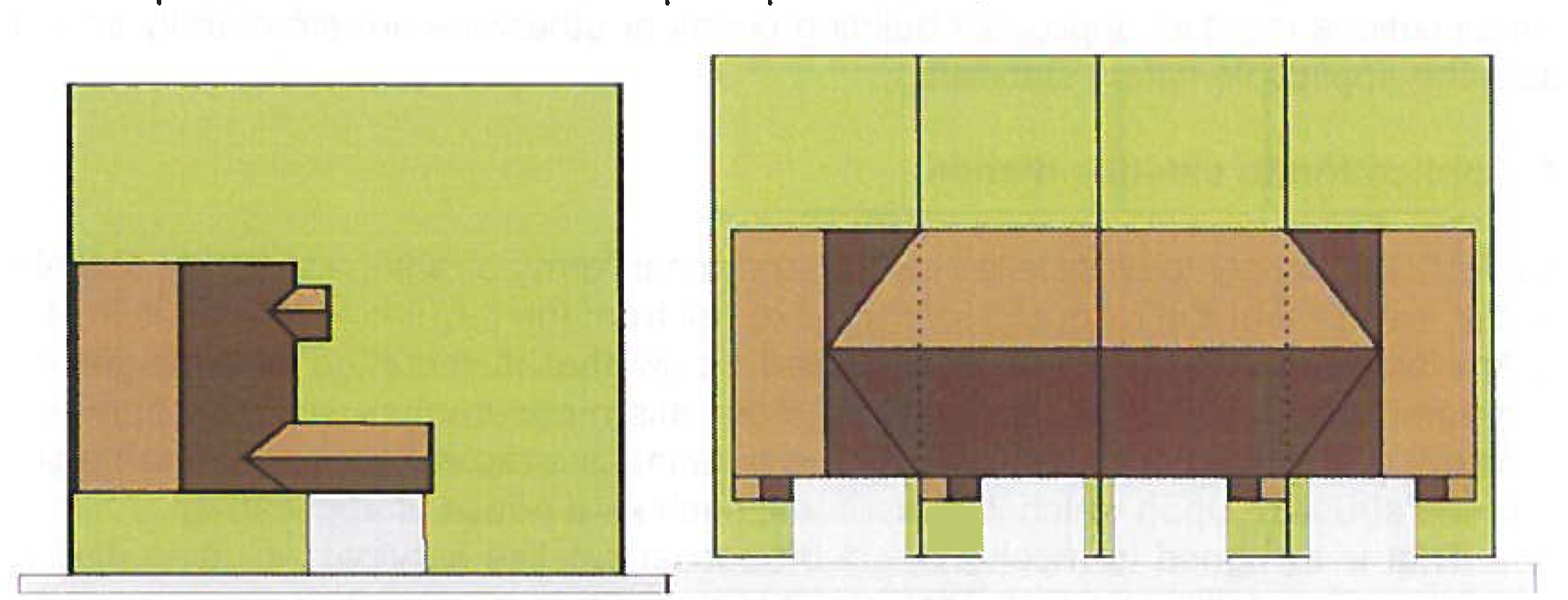
Figure 12.2.14: Zero lot line dwelling and townhouses
12.2.15 - Bluff Setbacks.
To ensure future stability of the bluffs, greater setbacks shall be observed. New buildings along the bluff shall be setback a minimum of 100 feet. Swimming pools shall be setback a minimum of 200 feet. Exceptions to the setbacks are on a site-specific basis and shall be substantiated by either a geotechnical study for buildings or strict preventive measures against leaks for swimming pools. The City Engineer shall review the geotechnical studies and preventive measures for swimming pool leakage and shall approve or deny the exception to the setbacks. If an exception is approved, the City Engineer shall provide a letter to the applicant and the Planning Department, prior to any building permit being issued.
12.3.1 - District height limitations.
In accordance with development code zoning district regulations, the requirements set forth in this section shall govern the location of towers that exceed, and antennas that are installed at a height in excess of, the height limitations specified for each zoning district. The height limitations applicable to buildings and structures shall not apply to towers and antennas.
12.3.2 - Amateur radio; receive-only antennas.
This Part shall not govern any tower, or the installation of any antenna, that is under seventy (70) feet in height, located in the rear yard of residentially zoned parcels, and is owned and operated by a federally-licensed amateur radio operator or is used exclusively for receive-only antennas.
12.3.3. - Grandfathered towers and antennas.
Any tower or antenna existing on the effective date of this Ordinance shall not be required to meet the requirements of this article, other than the requirements of any and all preexisting zoning ordinances and any state, FAA or FCC requirements. Any such towers or antennas that fail to meet the requirements of this Part shall be referred to in this article as "grandfathered" towers or "grandfathered" antennas. Provided however, any subsequent modifications to towers or antennas shall be the subject of an application as provided hereinafter, and at such time, said grandfathered towers and antennas shall be required to demonstrate to the satisfaction of the city engineer that such modifications meet all applicable building codes or otherwise are structurally sound and meet the applicable safety standards.
12.3.4 - Application to satellite dishes.
(a)
This Part shall apply to all satellite dishes and other forms of antennas located within the city, except that the following shall be exempt from the requirements of this Part:
(1)
Any antenna or satellite dish described below that is mounted at a height no greater than twelve (12) feet above grade (this measurement includes both the height of the mast or tower to which the antenna is attached as well as the height of the structure upon which it is mounted, such as a house, if applicable):
i.
That is designed to receive direct broadcast satellite service, including direct-to-home satellite services, that is one meter or less in diameter; or
ii.
That is designed to receive video programming services via multipoint distribution services, including multichannel multipoint distribution services, instructional television fixed services, and local multipoint distribution services, and that is one meter or less in diameter or diagonal measurement.
(2)
An antenna that is designed to receive television broadcast signals that is mounted at a height no greater than twelve (12) feet.
(b)
The city expressly finds that in order to protect the safety and welfare of its citizens, to protect adjacent property owners from damage by excessively tall, bulky or heavy antennas mounted on insufficiently designed or constructed towers or mast and to ensure the aesthetic value of the city is protected that it is necessary to regulate antennas that exceed the requirements of paragraph (a) by application of the provisions of this article.
(c)
Any antenna or satellite dish that does not fall within the exceptions set forth in paragraph "(a)" above shall be subject to applicable regulations contained in this article.
12.3.5 - Permit required.
It shall be unlawful for any person, firm, or corporation to erect, construct in place, place or erect, replace, or repair any tower without first making application to the planning and zoning department and securing a permit therefore as provided herein and in any other building codes. The term "repair" as used herein shall not include any bona fide emergency circumstance for which, because of the timing of such emergency arising, there is inadequate time to make such an application, but in such circumstances, the person, firm, or corporation shall file such an application and seek approval within three working days of the time such circumstance arises.
12.3.6 - Fees.
The application shall be accompanied by a non-refundable application fee. Such fee shall be payable by a certified check, postal or money order to the City of Natchez. The fee schedule shall be as periodically determined by the Board of Aldermen.
Should the cost for investigation and determination of the merit of such application exceed that customarily and reasonably expected, the city may, in its discretion, and for good cause, make such additional assessment upon the applicant which fee shall be paid within thirty (30) days after notification to the applicant of such cost, and shall not exceed fifty percent (50%) of the initial fee.
12.3.7 - Application.
Each application shall contain the following information as well as additional information that the Planning Commission and the planning and zoning department may from time to time require:
(a)
The name, address and telephone number of the person requesting the permit. The person named shall be a primary contact who has authority to act on behalf of the person or entity requesting the permit.
(b)
Site plan. The site plan shall contain a scaled site plan and a scaled elevation view and other supporting drawings and design data showing the proposed location of the tower, antenna or both, as well as the location of all other towers used to provide services within the city.
(c)
Each application shall state whether the tower will be a permitted use or that a special use permit or variance is required.
(d)
A report from a qualified and licensed professional engineer which describes:
(1)
The tower height and design, including a cross section and elevation;
(2)
The height above grade for all potential mounting positions for co-located antennas and the minimum separation distances between antennas;
(3)
The tower's capacity, including the number and type of antennas that it can accommodate;
(4)
Documented steps that the applicant will take to avoid interference with established public safety telecommunications;
(5)
Includes an engineer's stamp and registration number; and
(6)
Includes other information necessary to evaluate the request; and
(7)
A full geotechnical evaluation of the proposed tower location performed by a geotechnical engineer licensed to practice in the State of Mississippi.
(e)
Owners of all commercial wireless telecommunications service towers shall file a letter of intent committing the tower owner and his or her successors to allow the shared use of the tower if an additional user agrees in writing to meet reasonable terms and conditions for shared use.
(f)
Written authorization from the site owner for the application.
(g)
An estimate of the cost of construction; an estimate of the cost of demolition and removal.
(h)
An inventory or map of the applicant's existing towers, antennas or sites previously approved for such, either owned or leased, both within the city and within three miles of the city limits, including specific information about the location, height and design of each tower, and the height of the applicant's antenna(s). The separation distance between the proposed tower or antenna and these towers shall also be noted.
(i)
Before the issuance of a permit for the construction of a tower the following supplemental information shall be submitted:
(1)
Proof that the proposed tower complies with regulations administered by the FAA; and
(2)
A report from the qualified and licensed professional engineer which demonstrates the tower's compliance with structural and electrical needs required by this Part.
(j)
Before the issuance of a permit for the construction of a tower, the applicant shall provide a performance bond in the amount of one hundred twenty percent (125%) of the estimated cost of demolition and removal in favor of the city, assuring that, in the event the tower becomes obsolete or for any reason is no longer used or is abandoned by the tower owner, adequate funds exist to dismantle and remove the tower, per section 12.3.18 of this Part. Such performance bond should be issued by a surety company duly qualified in the state, and may at the discretion of the city be reviewed and revised if the bond is considered insufficient to cover the cost of the demolition and removal. In the event of the sale of the tower, the city must be notified thirty (30) days prior to the transfer of ownership and a performance bond must be obtained and furnished to the city by the new owner prior to the transfer of ownership and continuation of the operation of the tower, per the requirements of this Part.
12.3.8 - Processing.
(a)
Each application shall be processed within a reasonable period of time after application has been filed. A permit or denial of permit shall be issued not later than 30 days after the date on which the application was made except as otherwise provided. The governing authority may extend the time period for granting or denial of a permit beyond the allowed time in increments not to exceed 30 days if the governing authority finds that due to the nature and scope of the application additional time is required. The reasons for the additional time shall be provided to the applicant in writing.
(b)
If the request for a permit is denied, then the denial shall be in writing setting forth each specific reason for such denial. The reasons for the denial shall be entered in the written records of the city.
(c)
A denial shall be supported by substantial evidence.
12.3.9 - Permitted uses.
(a)
General. The uses listed herein are permitted uses and shall not require special use permits. Notwithstanding the foregoing, all such uses shall comply with all applicable safety and building codes established by the governing authority or any other FAA or FCC requirements. Prior to the installation of any antenna or tower the owner of such antenna or tower shall make written application as required in section 12.3.8 of this Part and include all information required therein and state on the application that the tower will be a permitted use and no special use permit or variance is required.
(b)
Specific permitted uses are as follows:
(1)
The placement of a tower or antenna, including additional buildings or other supporting equipment, in I-1 (industrial districts).
(2)
Installation of an antenna on an existing structure other than a tower (such as a building, light pole, water tower, or other free-standing non-residential structure) that is fifty (50) feet in height or greater, provided that the additional antenna adds no more than twenty (20) feet to the height of the existing structure.
(3)
Installation of an antenna on any existing tower of any height, so long as the addition of said antenna adds no more than twenty (20) feet to the height of the existing tower and the existing tower is not a grandfathered tower; provided, however, that such specific permitted use shall not include the placement of additional buildings or other supporting equipment used in connection with said antenna.
(4)
In all protected areas the maximum height of any tower, including all antennas and other attachments, shall conform to preexisting height restrictions established for said areas.
(5)
The placement of a temporary tower structure on any parcel within the I-1 (industrial) zoning districts or on any land or structure owned, leased, held or dedicated for use by the city; such structures must comply with the district yard requirements as defined in the zoning ordinance, and shall not exceed 100 feet in height. The Planning Director and Building Official must approve location, placement and grounding of such temporary structure prior to installation. The duration of a temporary permit may not exceed four months. Approval of a permit to install a temporary tower structure does not constitute approval of a permit to construct a permanent commercial wireless telecommunication service tower.
(6)
The placement of a tower or antenna on land or structures owned, leased, held or dedicated for use by the city.
12.3.10 - Co-location requirements with existing towers or other structures.
All towers erected, constructed, or located within the city shall comply with following requirements:
(a)
Any proposed tower shall be designed structurally, electrically, and in all respects, to accommodate both the applicant's antennas and comparable antennas for at least three additional users if the tower is over 100 feet in height or for at least one additional user if the tower is between 60 and 100 feet in height. Towers must be designed to allow for future rearrangement of antennas upon the tower and to accept antennas mounted at varying heights.
(b)
No new tower shall be permitted unless the applicant demonstrates to the reasonable satisfaction of the governing authority that no existing tower or other structure can accommodate the applicants proposed antenna within a one mile search radius of the proposed tower. Evidence submitted to demonstrate that no existing tower or structure can accommodate the applicant's proposed antenna may consist of any of the following:
(1)
No existing towers or structures are located within the geographic area required to meet applicant's engineering requirements.
(2)
Existing towers or structures are not of sufficient height to meet applicant's engineering requirements.
(3)
Existing towers or structures do not have sufficient structural capacity to support applicant's proposed antenna and related equipment and the existing or approved tower cannot be reinforced, modified or replaced to accommodate planned or equivalent equipment at a reasonable cost.
(4)
The applicant's proposed antenna would cause electromagnetic interference with the antenna on the existing towers or structures, or the antenna on the existing towers or structures would cause interference with the applicant's proposed antenna.
(5)
The fees or costs required to share an existing tower or structure or to adapt an existing tower or structure for sharing are unreasonable. Costs exceeding new tower construction are presumed unreasonable.
(6)
Property owners or owners of existing towers or structures are unwilling to accommodate reasonably the applicant's needs.
(7)
The applicant demonstrates that there are other limiting factors that render existing towers and structures unsuitable.
(c)
Any evidence submitted to the governing authority in order to meet the requirements of subsection (b) above shall be documented by a qualified and licensed professional engineer.
12.3.11 - Tower construction requirements.
All towers erected, constructed, or located within the city, and all wiring therefor, shall comply with the requirements set forth in any and all applicable building codes. Every tower shall be inspected a minimum of every twenty-four (24) months at the owner's expense, by a structural engineer licensed to practice in the state. This inspection shall be conducted in accordance with the tower inspection checklist provided in the Electronics Industries Alliance Standard 222 "Structure Standards for Steel Antenna Towers and Antenna Supporting Structures." Two copies of the inspection report shall be submitted to the department of planning and zoning. All towers erected, constructed, or located within the city shall be designed to withstand a basic wind speed of 85 miles per hour.
12.3.12 - Tower and antenna design requirements.
(a)
Towers and antennas shall be designed to blend into the surrounding environment, to the extent possible, through the use of color and camouflaging architectural treatment, unless the FAA or other federal or state authorities require otherwise or that the goal of co-location would be better served by an alternate design. The use of guyed wires is prohibited.
(b)
Towers shall be of a monopole design.
12.3.13 - Tower height and setback requirements.
(a)
The maximum commercial wireless telecommunication service tower height in I-1 (industrial) zoning districts is 250 feet from ground level. The maximum tower height in any other district is 100 feet. The maximum tower height on any property owned, leased, held or dedicated for use by the city is 250 feet; a waiver of the height requirement may be granted by the Board of Aldermen if it is determined that the additional height is necessary for the provision of public protection services, notwithstanding that such tower structures may be used jointly by the city and any other individual or entity for public or private purposes.
(b)
Commercial wireless telecommunication service towers shall be set back from a residential property line or residential district boundary a distance no less than two feet (2) for each foot in tower height. Commercial wireless telecommunication service towers shall be located a distance equal to fifty percent (50%) of the tower height to any property boundary. Additionally, commercial wireless telecommunication service towers shall be located no closer to any tower compound boundary than a distance equal to twenty-five percent (25%) of the tower height.
(c)
Notwithstanding Section 12.3.10 of this Part, if the Department of Planning and Zoning and the Planning Commission determine that the integration of a tower into an existing or proposed structure such as a church steeple, light standard, power line supports, athletic field lighting supports or other similar structures does not compromise the aesthetic appearance of the property, setback requirements may be waived.
12.3.14 - Tower lighting.
(a)
Towers shall not be illuminated through the use of artificial lights such as strobe lights or other lighting devices unless specifically required by the FAA or other state and federal government agencies. Light fixtures may be attached if it is part of the design incorporated into the tower structure to be used for the illumination of athletic fields, parking lots, streets or other similar areas. Lighting of the accessory buildings for basic security purposes is permissible but may not result in unnecessary glare on adjacent properties in residentially zoned areas.
(b)
Should lighting be required by state or federal law, such lighting shall be placed on the tower and designed in such a way as to minimize the glare on adjacent residential properties. White strobe lights may not be used unless required.
12.3.15 - Signs and advertising.
Towers shall not display signs or advertisements for commercial or non-commercial purposes, unless such signs are for the purpose of providing warning or specific equipment information.
12.3.16 - Accessory utility buildings and screening.
All utility buildings and structures accessory to a tower shall be architecturally designed to blend in with the surrounding environment and shall meet the minimum setback requirements of the underlying zoning district. Ground mounted equipment shall be screened from the view of the motoring public and adjacent residential land uses or residentially zoned properties by an eight foot solid wood fence and an evergreen screening tree row; the proposed tree species and an irrigation and maintenance plan must be submitted for approval by the department of planning and zoning. The governing authority may require additional screening or otherwise require design modifications to ensure that the attractiveness and the aesthetic quality of the area is not adversely impacted.
12.3.17 - Abandoned or unused towers.
All abandoned, unused or obsolete towers and accompanying accessory facilities shall be removed by the property owner within six (6) months of cessation of use. In the event that a tower and its associated facilities are not removed within six (6) months of cessation of operations at a site, the tower and associated facilities may be removed by the city using the performance bond required under Section 12.3.8 of this Part, and any additional removal costs assessed against the property.
12.3.18 - Proof of non-interference.
Each application for construction of a wireless telecommunication facility shall include either a preliminary or a certified statement that the construction of the tower, including reception and transmission functions, will not interfere with the radio, television and public safety communications devices or other services enjoyed by adjacent residential and non-residential properties. In the event only a preliminary statement is submitted with the application a final certified statement of non-interference will be provided and approved prior to issuance of a building permit. The certificate shall be certified by licensed engineer.
12.3.19 - Radio frequency emissions.
Each application must show that any antennae placed on the tower meets state and federal regulations pertaining to non-ionizing radiation and other health hazards related to such facilities. If new or more restrictive standards are adopted, then the antennae shall be made to comply or continued operation may be restricted.
12.3.20 - Indemnity; claim resolution.
The owner of the tower and all communications service providers must show by certificate from a registered engineer that the proposed facility will contain only equipment meeting FCC rules, and must file with the planning department a written indemnification of the city and proof of liability insurance or financial ability to respond to claims up to $1,000,000.00 in the aggregate which may arise from operation of the facility during its life, at no cost to the city, in a form and with terms and conditions which must be approved by the city's attorney. Such insurance policy shall be issued by a company authorized to do business in the state.
12.4.1 - Statement of Purpose.
The Section defines the standards and requirements for establishing a bed and breakfast facility in a historic residence or neighborhood, for continuing to operate an existing bed and breakfast facility and for conducting commercial meetings in a bed and breakfast facility.
12.4.2 - Where These Regulations Apply.
The Bed and Breakfast facility shall be at least one (1) of the following:
(a)
A property located within an existing local or National Register Historic district;
(b)
A property listed on the National Register of Historic Places or a designated National Historic Landmark;
(c)
A property designated a local landmark in accordance with the Natchez Historic Preservation Ordinance;
(d)
A property designated a Mississippi Landmark with the Mississippi Department of Archives and History.
A property owner has the right to apply for local designation status with the Natchez Historic Preservation Commission or to pursue listing on the National Register with the Mississippi Department of Archives and History if said property is not designated as such and merits such designation.
12.4.3 - Special Use Permit Review.
Bed and breakfast facilities are an as-of-right use in the VR zoning district and in commercially zoned areas within said designated historic areas. Bed and breakfast facilities located in the R-E, R-1, R-2 and R-3 require a special use permit. The permit process is the same as for all other City Planning Commission applications. Each application for special use must be accompanied by clear and convincing evidence that there will be no substantial interference with the health, safety and welfare of the general public, as well as, the character and integrity of a residential area. In addition, a bed and breakfast facility shall not promote the commercialization of residential neighborhoods. All decisions for the granting of a special use permit for the operation of a bed and breakfast facility will be made on a case-by-case basis. The City Planning Commission will work with each applicant to accommodate both individual interests and the interests of the City, and particularly those residents of the area in question.
The special use permit for a bed and breakfast residence or inn is not transferable to a subsequent owner or another property. The new owner or prospective purchaser must submit a new application to the City Planning Commission. A public hearing on the application must take place to inform the public of changes happening in their neighborhoods and provide an opportunity for public input on the change. Special consideration will be given to properties previously operating as a bed and breakfast facility, however all new applications must meet the provisions set forth in this ordinance.
In addition to the standards of this ordinance, conditions of approval may be added to the approved permits consistent with the intent and purpose of this ordinance.
12.4.4 - Operation.
All facilities authorized hereunder shall be owner occupied or have a resident manager, as defined herein.
12.4.5. - Use Related Regulations.
Accessory Use. An existing building or structure which is contiguous to the Bed and Breakfast facility or otherwise is part of the property on which the Bed and Breakfast facility is located.
Commercial Meetings. Under existing zoning regulations, commercial meetings are prohibited in all residential areas. Under this Chapter of the Development Code, commercial meeting privileges will be granted in the following manner:
(a)
By the approval of a new application for Bed and Breakfast Inn with Commercial
Meeting Privileges:
"The provisions of this ordinance will grant permission for commercial meetings, as defined by this ordinance, in Bed and Breakfast Inns (6 or more units) without separate application. A Bed and Breakfast Inn tends to have larger buildings and lot area to accommodate the impact of a commercial use in a residential area".
(b)
By the approval of a new application for Bed and Breakfast Residence with
Commercial Meeting Privileges:
"A Bed and Breakfast Residence with commercial meeting privileges (up to 5 units) grants permission to the applicant to host commercial meetings on case-by-case basis if the applicant can prove that all other requirements are met and that the proposed use will have little or no negative impact on the surrounding neighborhood".
Reports: Once commercial meeting privileges are granted to a bed and breakfast inn, bed and breakfast residence, or pre-established bed and breakfast facility, owner/operator must submit annual reports to the City Planning Commission. The reports shall reflect type of events, date and number of people and other such information as deemed necessary by the City Planning Commission.
Renewal: Commercial meeting status must be renewed every two years. All applications for commercial meeting privileges will be presented to the City Planning Commission for its consideration prior to approval.
Advertisement: On-site and off-site advertisement for commercial meetings to be held in bed and breakfast facilities is prohibited. This prohibition shall be applicable to all advertising, including specifically billboards and daily newspapers. This prohibition will not preclude, however, mailing, e-mailing or distribution of brochures or letters whether on site or offsite, nor will it preclude the publication of advertisements in national, regional, state or local travel and tourism periodicals. However, publication in such periodicals shall not be made more than quarterly per calendar year basis. Failure to comply will result in a fine and/or revocation of bed and breakfast special use permit.
Prohibitions
Under the provisions of this Chapter, commercial meeting privileges are prohibited in the following:
(a)
A Bed and Breakfast Inn without Commercial Meeting Privileges (more than 6 units). Owner has not applied for, or has not been granted, commercial meeting status with a special use permit.
(b)
A Bed and Breakfast Residence without Commercial Meeting Privilege (up to 5 units). Owner has not applied for, or has not been granted, commercial meeting status with a special use permit.
Service to Guests. Outlined as follows:
(a)
Food services may only be provided to overnight guests of a Bed and Breakfast facility or to the guests at a commercial meeting. The proprietor must meet all the requirements and seek approval by the Adams County Board of Health.
(b)
Serving alcohol to overnight guests is allowed. The proprietor must meet all requirements of the Mississippi Alcohol Beverage Control Commission in order to serve alcohol at a bed and breakfast facility.
Revocation. Failure to comply with conditions prescribed for commercial meeting privileges will result in fines and/or revocation of Bed and Breakfast Special Use Permit.
12.4.6 - Site Related Standards.
Appearance and Character. A Certificate of Appropriateness must be acquired by an owner prior to any exterior alteration or modification to any Bed & Breakfast facility as required in the Natchez Historic Preservation Ordinance.
Commercial Meeting Assembly Space and Number of People. An assembly space is defined by fire codes as one continuous space. The maximum number of persons attending a commercial meeting at a bed and breakfast facility may not exceed one person per seven square feet of assembly space. At a commercial meeting of 50 people or less, the assembly space must meet one person per seven square feet, however the assembly space does not have to be continuous, for example the sum of the square footage of two or three rooms. These site-related standards for commercial meetings shall be in accordance with the Standard Fire Prevention Code as adopted by the City of Natchez. The square footage of assembly space and the number or capacity of people therein who will be attending such commercial meetings must be submitted in writing to the Planning Department at the time of an original application, or in the event of any change thereafter, at the time of any renewal application.
Location. Bed and breakfast facilities may be located in any of the above mentioned national, state, or local historic districts or landmarks. However a bed and breakfast facility may not be located within 300 linear feet from the property line of another bed and breakfast facility unless it can be sufficiently demonstrated that all of the provisions of this ordinance can be met, and that an additional bed and breakfast facility will have no adverse effects on health, safety, and welfare of the residents of Natchez and particularly of the neighborhood and area affected.
Parking: One (1) off-street parking space must be provided for each authorized unit. Such parking does not include tandem (stacked) parking, parking in the front yard of the dwelling, or on-street parking. Off-street parking must be within 300 feet of a bed and breakfast facility, and proof of such parking (lease agreement, site plan, etc.) must be provided to the City Planning Department at time of application. The City Planning Commission may require the screening of parking (landscaping, fencing, etc.) as a condition of approval. On-street parking will be acceptable on a case-by-case basis depending on individual neighborhood parking conditions, site limitations or characteristics.
Signs. One (1) building sign shall be permitted. Signs may be externally-lit with a shielded spot light to avoid glare, but internally-lit signs are prohibited. Signs must meet the guidelines set forth in the Sign Guidelines in Historic Districts (signs for commercial use in residential areas must not exceed a total of four (4) square feet in area and must not exceed a height of four (4) feet from the bottom of the sign to the ground; off-premises signs and billboards are prohibited). Displaying the name and/or address of the owners may be permitted. Signs shall not include the words "hotel" or "motel." All other banners or flags used for advertisement or Bed and Breakfast identification purposes are prohibited.
Size. Bed and breakfast residences are limited to a maximum of five (5) units for guests. A bed and breakfast inn is limited to a minimum of six (6) units and a maximum of twenty-five (25). To be classified a bed and breakfast inn, the owner must demonstrate that the facility is of sufficient size to contain more rooms while meeting the purpose of this article. Applications for bed and breakfast residences and inns will be reviewed on a case-by-case basis.
Handicap Accessibility. All bed and breakfast facilities are encouraged to meet the provisions of the Americans with Disabilities Act.
12.4.7 - Monitoring.
All bed and breakfast facilities are encouraged to maintain a guest book for overnight guests and for commercial meetings. It should include dates of stay, origin of visitors, and the dates of commercial meetings if permissible by the City Planning Commission. The guest book may serve as evidence in the event that the bed and breakfast or commercial meeting privilege is in question or under review by the Planning Commission.
12.4.8 - Official Bed and Breakfast Facility List.
A list of all Bed and Breakfast facilities heretofore or hereafter established in the Natchez Historic District or other districts covered by this ordinance shall be maintained by the Planning Department, and kept on file in the office of the City Clerk of the City of Natchez, and shall be the official list of approved Bed and Breakfast facilities in the City of Natchez
12.4.9 - Application Fees.
Application fees for Bed and Breakfast Inns and Facilities shall be established from time to time by the Mayor and Board of Aldermen of the City of Natchez. The fee schedule shall be maintained by the Department of Planning and Zoning.
12.4.10 - Insurance.
Each person having a permit under this ordinance shall carry general liability insurance covering such operation, and which shall be kept on file in the city Clerk's office of the City of Natchez. Owners must present proof at the time of the initial permit and after from time to time as may be requested by the City of Natchez.
12.4.11 - Citizen Complaint.
Any private citizen can voice concern or otherwise appear before the City Planning Commission in regard to noncompliance with the provision of this ordinance, and such complaint, if well taken by the Commission, shall be considered by the Commission in considering the permitting or renewal or any bed and breakfast facility, including the granting of commercial meeting privileges.
12.4.12 - Voiding and Penalties for Violations of a Special Use Permit for a Bed and Breakfast Facility.
Special use permits for bed and breakfast facilities may be revoked for the following:
(a)
Noncompliance, with any provision of this ordinance; and
(b)
Failure to operate within a six (6) month period of issuance of permit (exceptions will be granted for extenuating circumstances such as delayed completion of renovations).
(c)
Violation of any city, state or federal law relevant to the operation of the facility.
If a permit is revoked, it becomes null and void, and said use shall be terminated. A property owner may reapply for a special use permit to operate a bed and breakfast facility after six (6) months of revocation.
12.5.1 - Statement of Purpose and Applicability.
Reception Facility is defined as a privately owned building rented out on a short term basis, not otherwise included as a permitted or accessory use, and whose only use is for hosting a private reception, party, reunion or other social event (i.e. invitation only, not open to the general public). Reception Facilities are permitted, by special exception in the B-3, B-3 HD and B-4 zoning districts.
12.5.2 - Special Exception Review.
Reception Facilities are permitted by special exception in the B-3, B-3 HD and B-4 zoning districts. Unless this Section expressly provides otherwise, Reception Facilities shall be deemed a "special exception and shall occur only as approved by the Planning Commission in accordance set forth in Chapter 7, Part 3 of this Ordinance.
1.
This Special Exception does not apply to churches, restaurants which have private party rooms, hotels, bed and breakfast with commercial meeting privileges, not-for-profit clubs and lodges, city-owned property and any other places the Planning Director deems the use as an accessory use.
2.
This Special Exception is not transferable to a subsequent owner or another property. The new owner or prospective purchaser must submit a new application to the Planning Commission. A public hearing shall be held to provide an opportunity for public input on the change. All new applications must meet the provisions set forth in this ordinance.
3.
Conditions, consistent with the intent and purpose of this ordinance, may be added by the Planning Commission when approving special exceptions.
4.
Failure to comply with the conditions prescribed may result in fines and/or revocation of the special exception.
5.
There shall be no sale of alcohol unless a liquor license is approved. Anyone serving liquor must be familiar with state liquor laws.
6.
Other than as part of the reception events, no meals shall be served to the general public on the site.
7.
The building shall be subject to inspection at any time by any authorized representative of the City of Natchez.
8.
All music and loud speakers shall be inside the building. The owner is required to have a staff member responsible for monitoring sound levels when sound/music/noise may be audible beyond the building. Noise complaints can result in calls for service from the Natchez Police Department. A police officer or Code Enforcement inspector may require the volume to be reduced or ceased based on complaints or unreasonable sound levels.
9.
No overnight lodging is allowed.
10.
No fee shall be charged for admission, food and/or drinks, and donations shall not be solicited.
11.
The owner is responsible for:
(a)
Having a sufficient number of containers to handle all trash generated by any reception;
(b)
Removing trash during and after the reception;
(c)
Completely cleaning the site and adjacent/affected areas after the reception; and
(d)
Providing a sufficient number of restroom facilities (including ADA accessible facilities).
12.
The owner is responsible for ensuring adequate parking for attendees and for minimizing any negative impacts to adjacent areas. The owner is responsible for obtaining authorized written approval for any private parking areas.
13.
Leasees shall be given a written copy of the regulations regarding food service, alcoholic beverages, maximum occupancy, lodging, music, noise and other conditions which the leasee is responsible for and may affect their guests.
14.
Each person having a permit under this ordinance shall carry general liability insurance covering such operation, and which shall be kept on file in the city Clerk's office of the City of Natchez. Owners must present proof at the time of the initial permit and after from time to time as may be requested by the City of Natchez.
12.5.3 - Application Requirements.
When an application is filed to the Planning Department, before it goes before the Planning Commission, the application must detail a complete description of the facility including, but not limited to:
• Types of events, days and hours of operation;
• Site plan showing layout of all buildings, parking areas, landscaping, buffers, etc.;
• Maximum occupancy of facility/total number of seats;
• Total number of employees, both full-time and part-time;
• Information regarding food service/catering and whether there will be open bar service, if alcoholic beverages may be provided by the lessee for on premises consumption or if no alcoholic beverages will be allowed;
• Type of security to be provided by owner for any reception (i.e. in house staff, hired security personnel; hired off-duty police officers);
• Any and all other relevant information that will help describe the facility and proposed uses;
• Other information may be required as determined by location and proposed use. (i.e. building elevations for new buildings, site plan review, traffic study).

