Zoneomics Logo
search icon

Natchez City Zoning Code

CHAPTER 13

- OFF-STREET PARKING AND LOADING

13.1.1 - Applicability.

Off street parking and off street loading shall be approved by the Site Plan Review Committee, in accordance with the regulations set forth herein. At the time of the erection, enlargement, or expansion of any principal building or structure, or when a new use is initiated, or an existing use is expanded in any zoning district, except the B-3 Central Business District and the B-2 General Business zoning district within the Historic District, there shall be provided minimum off-street parking, loading, stacking and maneuvering space with adequate provisions for ingress and egress in accordance with the regulations in this chapter. For the purpose of this section, buildings existing on the effective date of this ordinance shall not be deemed nonconforming by reason of noncompliance with off-street parking and off-street loading requirements.

13.1.2 - Minimum Off-Street Parking.

The minimum number of off-street parking spaces by type of use shall be determined in accordance with the schedule below. For purposes of determining compliance with off-street parking requirements, spaces provided in garages and carports shall be included. Upon submission of a parking study, approved by the Site Plan Review Committee, the total number of required parking spaces may be reduced in the site plan review process.

13.1.3 - Computation for Required Spaces.

(a)

If the required number of spaces is not a whole number, the number of required spaces shall be rounded up to the next higher whole number.

(b)

Reference herein to "employee(s) on the largest work shift" means the maximum number of employees employed at the facility regardless of the time period during which this occurs and regardless of whether any such person is a full-time employee. The largest work shift may be a particular day of the week or a lunch or dinner period in the case of a restaurant.

(c)

The term "capacity" as used herein means the maximum number of persons that may be accommodated by the use as determined by its design or by fire code regulations, whichever is greater.

(d)

When the parking requirement is not specified for a particular use, the Site Plan Review Committee shall apply the requirements for a similar use.

TABLE 13.1.3

SCHEDULE OF REQUIRED OFF-STREET PARKING
UsesMinimum Required Parking
RESIDENTIAL USES
Single Family Detached, one unit per lot 2 spaces per unit, plus one space per room rented
Single Family Detached, more than one unit per lot 2 spaces per unit, plus one space per room rented
Two Family Residence 2 spaces per unit, except that one-bedroom units require only one space
Multi-Family With respect to multi-family units located in buildings where each dwelling unit has an entrance and living space on the ground floor, the requirement shall be 1-1/2 spaces for each one-bedroom unit and 2 spaces for each unit with two or more bedrooms. Multifamily units limited to persons of low-or moderate-income or the elderly require only 1 space per unit. All other multi-family units require 1 space for each bedroom in each unit plus 1 additional space for every four units in the development.
Senior Citizen Multi-Family 1 space per 1.5 units
Nursing Homes 1 space per 5 beds
Homes for Special Services, Treatment, or Supervision 3 spaces for every 5 beds, except for uses exclusively serving children under 16, in which case 1 space for every three beds shall be required.
Boarding House/Rooming House 1 space for each bedroom, plus 1 space for each non-resident peak shift employee
Manufactured Home 2 spaces per unit
LODGING
Bed and Breakfast 1 space for each room to be rented, plus one space per non-resident peak-shift employee. Also, additional spaces (in accordance with other sections of this table) for restaurant or other facilities, when permitted.
Hotel/Motel 1 space for each room to be rented, plus one space per peak-shift employee. additional spaces for restaurant or other facilities shall be required, but only 75% of the number of spaces required for restaurants or other facilities which are not part of a lodging business.
RESTAURANTS, BARS, NIGHTCLUBS
- Restaurant, Full Service
- Fast food with or without Drive-thru
1 space per 75 square feet of leaseable gross floor area or 1 space per 2 seats, whichever is the lower number.
RETAIL
Convenience Store 1 space per 200 square feet of leaseable gross floor area.
- Grocery Store/Supermarket;
- Hardware/Paint/Home Improvement;
- Discount Store
1 space per 300 square feet of leaseable gross floor area.
Furniture/Carpet Store 1 space per 750 square feet of leaseable gross floor area.
Shopping Center/General Retail 1 space per 250 square feet of leaseable gross floor area.
Open Air Markets and Horticultural Sales 1 space per 1,000 square feet of lot area used for storage, display, or sales.
OFFICES AND SERVICES
Home Occupations To be determined by the City Planning Department based upon the specific characteristics of the particular home occupation.
Offices/Services designed to attract and serve customers on the premises (attorneys, physicians, insurance agents, stock brokers, travel agents, etc.) 1 space per 200 square feet of gross floor area.
Offices/Services designed to attract little or no customer traffic other than employees 1 space per 400 square feet of gross floor area.
Banks with Drive-thru 1 space per 200 square feet of gross floor area within main building.
Banks without Drive-thru 1 space per 150 square feet of gross floor area within main building.
Dry Cleaner/Laundromat 1 space per 250 square feet of gross floor area.
Wholesale 1 space per 400 square feet of gross floor area.
INSTITUTIONS
Daycare 1 space per peak-shift employee, plus 1 space per 8 children enrolled (those spaces based upon the number of children can be satisfied through available stacking area for the same number of vehicles).
Elementary School (including grounds and athletic facilities) 1.75 spaces per classroom. Bus parking and loading areas shall be determined on a case-by-case basis.
Secondary School (including grounds and athletic facilities) 1 space per 5 students, plus 1 space per employee. Bus parking and loading areas shall be determined on a case-by-case basis.
Trade or Vocational School 1 space per 100 square feet of gross floor area. Bus parking and loading areas shall be determined on a case-by-case basis.
Technical College 1 space for each 5 classroom seats, plus one space for every 3 seats in an auditorium.
Community College 1 space per 1.25 peak-hour students.
College/University (including associated facilities such as dormitories, office buildings, athletic fields, etc.) 1 space per 2 students.
Churches and Places of Worship (including associated residential structures for religious personnel and associated buildings, but not including elementary or secondary school buildings) 1 space for every four seats in the portion of the building to be used for worship/services, plus spaces for any residential use as determined in accordance with the parking requirements set forth above for residential uses, plus 1 space for every 200 square feet of gross floor area designed to be used neither for services nor residential purposes.
- Libraries, Museums, Art Galleries, Art Centers, and Similar Uses (including associated educational and instructional activities);
- Social, Fraternal Clubs and Lodges, Union Halls, Community Centers, and Similar Uses
1 space per 300 square feet of gross floor area.
Governmental Offices 1 space per 250 square feet of gross floor area.
Post Office 1 space per 200 square feet of gross floor area.
Hospitals, Clinics, Other Medical (including mental health treatment facilities in excess of 10,000 square feet of floor area) 2 spaces per bed or 1 space per 150 square feet of gross floor area, whichever is greater.
Emergency Services 1 space per 200 square feet of gross floor area.
Nursing Care Institutions (not including homes), Intermediate Care Institutions, Handicapped or Infirm Institutions, Child Care Institutions 3 spaces for every five beds.
Institutions (other than halfway houses) where mentally ill persons are confined 1 space for every two employees on maximum shift.
Penal and Correctional Facilities 1 space for every two employees on maximum shift.
Funeral Homes 1 space per four parlor/chapel seats or 1 space per 75 square feet of parlor/chapel floor area (whichever is greater), plus 1 space per peak shift employee.
Crematorium 1 space per 200 square feet of gross floor area.
RECREATION AND ENTERTAINMENT
Billiard and Pool Halls, Indoor Athletic and Exercise Facilities and Similar Uses 1 space per 200 square feet of gross floor area.
Health Club/Indoor Exercise 1 space per 225 square feet of leaseable gross floor area.
Tennis/Racquetball Courts 1 space per 1,000 square feet of leasable gross floor area.
Bowling Alley 4.5 spaces per lane
Roller/Ice Skating Rink 6 spaces per 1,000 square feet of gross floor area.
Video Game/Pinball Arcade 1 space per four machines.
Movie Theater 1 space for every four seats.
Drive-in Movie Theater 1 space per speaker outlet.
Coliseum, Stadium, and Similar Facility designed to seat or accommodate simultaneously more than 1,000 people 1 space for every four seats. Bus parking and loading determined on a case-by-case basis.
Privately-owned and Publicly owned and operated Recreational Facilities (country clubs, swimming or tennis clubs, etc.) not constructed pursuant to a permit authorizing residential development or school 1 space per 200 square feet of area within enclosed buildings, plus 1 space for every three persons that the facility is designed to accommodate when at maximum capacity.
Miniature Golf Course, Skateboard Park, Water Slide, and similar uses Miniature golf course, skateboard park, water slide, and similar uses - 1 space per 300 square feet of recreational area, plus 1 space per 200 square feet of building gross floor area.
Golf Driving Range (not accessory to golf course), Par 3 Golf Course, Driving range - 1 space per tee, plus 1 space per 200 square feet in building gross floor area: Par Three Course - 2 spaces per golf hole, plus 1 space per 200 square feet of building gross floor area.
Golf Course (not part of a country club) 5 spaces per golf hole, plus one space per peak shift employee.
Horseback Riding, Stables (not constructed pursuant to permit authorizing residential development) 1 space per horse that could be kept at the stable when occupied to maximum capacity.
Automobile and Motorcycle Racing Track 1 space for every three seats.
Marina 1 space per two berths.
Casino Casino patron parking shall be designed to accommodate peak user demand based upon 80% of boat capacity. Said parking shall reflect a mixture of bus and automobile parking such that bus spaces accommodate 20% to 30% of boat capacity. The exact percentage of estimated bus traffic shall be determined by the Planning Commission based upon marketing information provided by the casino developer, and bus parking shall be based upon 85% capacity of the bus. The following calculations shall be used:
Patron Cars - 80% of casino capacity minus 20% to 30% (buses) divided by 2.5 (patrons per car).
Employee Cars - 1 space per 1.2 peak-day total daily employees multiplied by 40%.
Buses - 20% to 30% of 80% casino capacity divided by 34 (patrons per bus at 85% capacity).
AUTOMOBILE SALES AND SERVICE
Motor Vehicle Sales or Rental, Mobile Home Sales 1 space per 200 square feet of gross floor area of the primary structure(s). Such parking requirements are for employee and patron parking, and it does not address inventory spaces.
- Sales with Installation of Motor Vehicle Parts or Accessories;
- Motor Vehicle Repair and Maintenance (not including substantial body work);
- Motor Vehicle Painting and Body Work
1 space per 200 square feet of gross floor area.
Gas Sales, Service Station 1 space per 200 square feet of gross floor area of building devoted primarily to gas sales operation, plus sufficient parking area to accommodate vehicles at pumps without interfering with other parking spaces.
Car Wash Conveyer type - 1 space for every two employees on the maximum shift. Self-service type - 2 spaces for drying, cleaning and vacuuming purposes per stall/bay.
TRANSPORTATION
Airport 10 spaces per daily airplane departure or arrival.
Bus/Train Station 1 space per 2 passengers of a peak hour for departures and arrivals (must consider multiple buses and/or trains during the peak hour)
INDUSTRIAL MANUFACTURING, STORAGE, AGRICULTURAL, ETC.
- Storage of Goods (enclosed or not enclosed, not related to sale or use of those goods on the same lot where they are stored);
- Scrap Materials, Salvage Yards, Junkyards, Automobile Graveyards
1 space for every two employees on the maximum shift, but not less than 1 space per 5,000 square feet of area devoted to storage (whether inside or outside).
Service and Enterprises Related to Animals 1 space per 200 square feet of gross floor area.
Agricultural, Silvicultural, Mining, Quarry Operations 1 space for every 1.5 employees on the maximum shift.
Research and Development 1 space per 600 square feet of gross floor area.
Sanitary Landfill 1 space for every 2 employees on the maximum shift.
Military Reserve, National Guard Centers 1 space per 100 square feet of gross floor area.
Commercial Greenhouse Operations 1 space per 200 square feet of gross floor area.
Light Industrial/Industrial Parks/Manufacturing 1.5 spaces per 1,000 square feet of gross building area or .75 spaces per peak-shift employee, whichever is greater.
Warehousing 1 space per 2,000 square feet of gross building area or 1 space per peak-shift employee, whichever is greater.


13.1.4 - Parking for Uses, Buildings or Structures.

(a)

All parking spaces provided pursuant to this ordinance shall be provided on the same site with the building or use, except that for buildings or uses located in that part of the B-2 and B-3 District west of Martin Luther King Street, parking spaces may be located on another site, provided such site is not more than eight hundred (800) feet from the building or use. Required commercial off-street parking shall be located within three hundred (300) feet of the use the parking is intended to serve.

(b)

Off-street parking requirements for two or more uses located on the same lot are cumulative, but may be jointly used provided the total parking requirement is met. Whenever a use, building or structure that qualifies under two (2) or more classifications, the classification with the larger parking requirement shall govern. See Section 13.1.7.

(c)

When any use is extended or a building or structure is enlarged, the existing parking spaces shall be maintained and the required number of parking spaces to serve the expansion or enlargement of the use, building or structure shall be provided.

(d)

Off-street parking and storage space shall not be used for the sale, repair, servicing of any vehicles, equipment, or materials.

13.1.5 - Parking and Storage of Certain Vehicles.

(a)

Commercial vehicles exceeding 10,000 lbs. G.V.M. and construction vehicles shall not be parked or stored in recorded residential subdivisions.

(b)

Major recreational vehicles including houseboats, travel trailers, pick-up campers, motorized dwellings, tent trailers, and other like vehicles shall not be stored or parked on any front yard on any lot in a residential district. No such equipment shall be used for living, sleeping, or housekeeping purposes.

13.1.6 - Handicapped Accessible Parking.

Required accessible off-street parking spaces serving a particular building shall be located to provide the shortest accessible route of travel to an entrance of the building that is accessible to the physically disabled. Where the building has multiple accessible entrances, the location of required accessible off-street parking spaces shall be dispersed in close proximity to each of the accessible entrances. Off-street parking areas for non-residential uses shall include the minimum number of handicapped accessible parking spaces established in Table 13.1.6 Minimum Number of Accessible Off-Street Parking Spaces. Accessible off-street parking spaces count toward meeting the minimum off-street parking space requirements.

TABLE 13.1.6

MINIMUM NUMBER OF ACCESSIBLE OFF-STREET PARKING SPACES
Total Number of Parking Spaces Minimum Total Number of Accessible Parking Spaces Minimum Number of Van Accessible Parking Spaces
1—25 1 1
26—50 2 1
51—75 3 1
76—100 4 1
101—150 5 1
151—200 6 1
201—300 7 1
301—400 8 1
401—500 9 2
501—1,000 2 percent of the total number of spaces 1 per 8 accessible spaces
More than 1,000 20 + 1 per 100 parking spaces (or fraction thereof) over 1,000


Typical handicapped accessible spaces must be a minimum of nine (9) feet by twenty (20) feet with an adjacent five (5) foot clear zone for handicapped access, and such spaces must be paved with a smooth surface, and must be adequately designated by signage. Van accessible spaces must be a minimum of nine (9) feet wide with an eight (8) foot wide adjacent clear zone. In cases where state or federal handicapped accessible parking regulations are more restrictive than those of this ordinance, state and federal requirements shall apply. See Figure 13.1.6.
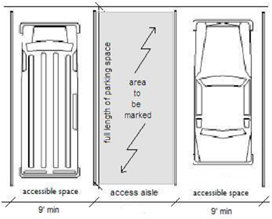
Figure 13.1.6: Clear Zone for accessible spaces.

Figure 13.1.6: Clear Zone for accessible spaces.

13.1.7 - Shared Parking.

Where parking is to be shared by uses on different lots, the subject parcels or lots shall be adjacent to one another and in no case shall properties bound under a shared parking agreement or plan be separated by a public street.

The intention to share parking facilities must be presented to the Site Plan Review Committee prior to site plan approval by means of a written agreement between the various property owners, or in the case of a single owner, an overall shared parking plan for the properties or development sites.

Said agreement or plan shall be binding upon all subsequent purchasers, inheritors, subjects and assigns. Should there be a change in the use within any individual structure or location which is bound by a shared parking agreement or plan, the transfer of the shared parking agreement shall be subject to the review and approval of the Site Plan Review Committee.

13.1.8 - Parking Dimensional Standards.

(a)

Layout and maintenance of off-street parking spaces. Except for one-family and two-family dwellings, off-street parking facilities shall be constructed, maintained and operated in accordance with the following specifications:

(1)

Vehicular access to individual parking spaces shall be provided by aisles not less than fourteen (14) feet wide for thirty (30) degree angle parking, sixteen (16) feet wide for forty-five (45) degree angle parking, twenty (20) feet wide for sixty (60) degree angle parking and twenty-six (26) feet wide for ninety (90) degree (perpendicular) parking. See Table 13.1.8.

TABLE 13.1.8
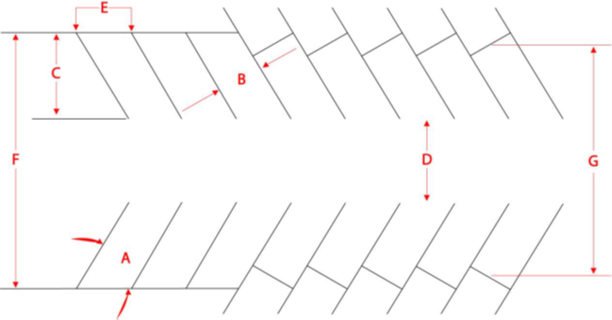
DIMENSIONAL STANDARDS FOR PARKING SPACES AND AISLES
Parking Angle (Degrees) Stall Width (ft) Stall Depth Perpendicular To Curb (ft) Aisle Width (ft) 2 Stall Length Along Curb (ft) Double Row + Aisle, Curb To Curb (ft) Double Row + Aisle, Center To Center (ft)
A B C D E F G
0 9 9 12 23 30 30
30 9 16.8 14 18 47.6 39.8
45 9 19.1 16 12.7 54.2 47.8
60 9 20.1 20 10.4 60.2 55.7
90 9 18 26 9 62 62
NOTES:
1. Refer to Figure below, for illustrations showing how dimensions for parking spaces and aisles in various configurations (A-G) are measured.
2. For one-way traffic. Aisles for two-way traffic shall be at least 26 feet wide (for all parking angles).


Fig13-1-8

(2)

Entrances and exits to parking facilities shall be so located as to minimize traffic congestion;

(3)

Other uses such as the sale, repair, dismantling, or servicing of vehicles, equipment, materials or supplies shall not be conducted within required off-street parking facilities;

(4)

In residential districts, off-street parking facilities shall be used only by vehicles up to eight thousand (8,000) pounds gross vehicle weight, manufacturer's capacity rating, and having wheels not to exceed twenty (20) inches in diameter.

(b)

Arrangement

Parking shall be arranged in such a manner that no vehicle, with the exception of single and two-family residences, is required to back into a street right-of-way.

13.1.9. - Residential Parking Location Standards.

Off-street parking spaces for single-family detached dwellings, subject to these requirements and the appropriate district regulations, may be included as a portion of the required side and rear yard area. Required off-street parking spaces for such dwellings shall not occupy any part of a required front yard except for paved circular drives.

13.1.10. - Parking Lot Design Standards.

(a)

Pedestrian Pathways - Pedestrian pathways shall be located between every other (alternate) parking bay, a parking bay being the vehicular access aisle and parking spaces on one or both sides served by it. If parking bays exceed three hundred (300) feet in length without vehicular access to adjacent bays or to another drive or street, a pedestrian pathway shall be provided between each parking bay. Required pedestrian pathways shall have a five (5) foot clear width and such width shall be protected and maintained by curbs or wheel guards. All pedestrian pathways shall be paved and maintained free of standing water, and shall be six (6) inches or more higher than the adjacent parking areas.
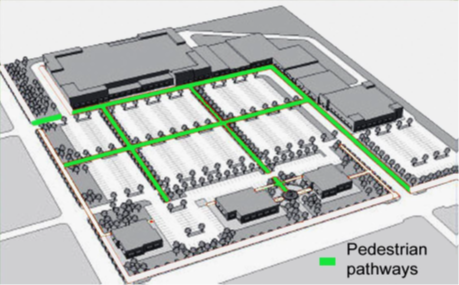
Figure 13.1.10(a): Example of Pedestrian Pathways through Parking Lot

Figure 13.1.10(a): Example of Pedestrian Pathways through Parking Lot

(b)

Parking Blocks - Blocks of parking bays containing not more than three hundred (300) parking spaces shall be established if the total number of parking spaces to be provided exceeds three hundred (300). Such blocks shall be defined by landscaped strips at least fifteen (15) feet wide. Each such landscaped strip shall be raised and protected by curbs and shall contain five (5) foot wide pedestrian walk extending the full length of the strip. Vehicular access aisles within the block shall be connected to one or more roadways at least twenty-four (24) feet wide or such greater width as may be required to accommodate the volume of traffic anticipated and along which no parking spaces shall be provided or allowed.
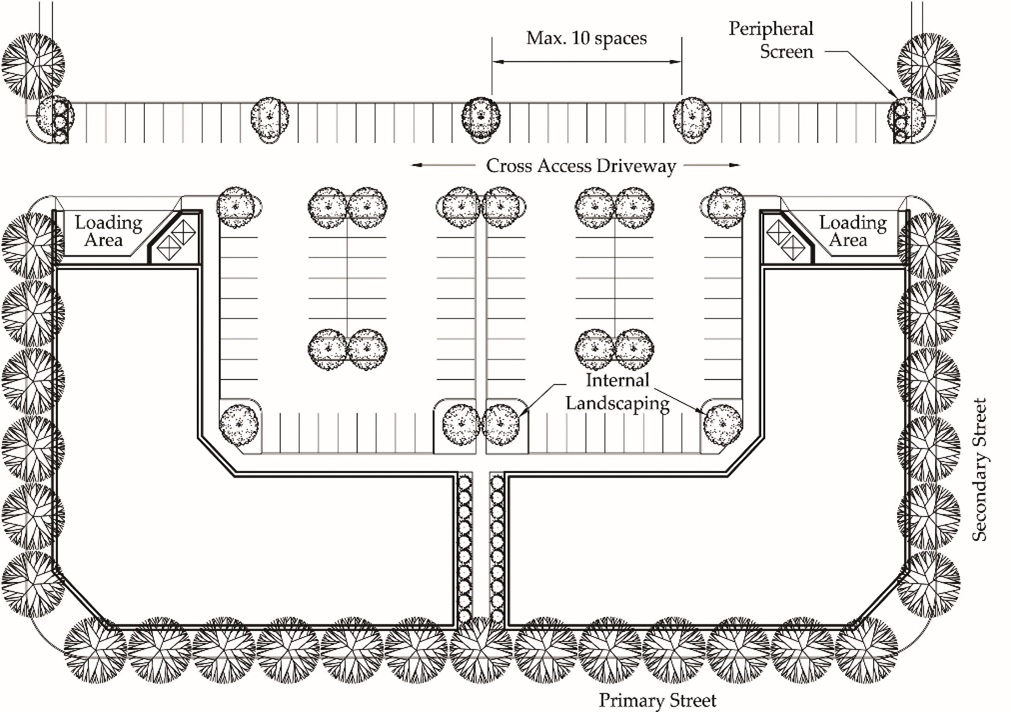
Figure 13.1.10(b): Parking Lot Layout.

Figure 13.1.10(b): Parking Lot Layout.

(c)

Surfacing - Surfacing of all parking facilities shall be concrete or asphalt. All parking facilities shall be properly graded for drainage and maintained in good condition, free of weeds, dust, trash, and debris.

(d)

Wheel/Bumper Guards - Wheel guards or bumper stops shall be provided and so located that no part of parked vehicles will extend beyond the parking facility.
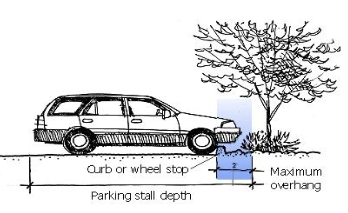
Figure 13.1.10(d): Example of Curb/wheel stop

Figure 13.1.10(d): Example of Curb/wheel stop

(e)

Lighting - Lighting shall be provided in all parking facilities accommodating ten (10) or more vehicles and such lighting shall be arranged and shielded so that the source of light does not shine directly into adjacent residential properties and does not interfere with traffic.

(f)

Cross-Access - Where appropriate, site plans shall be designed to provide vehicle and pedestrian connections with adjacent sites.
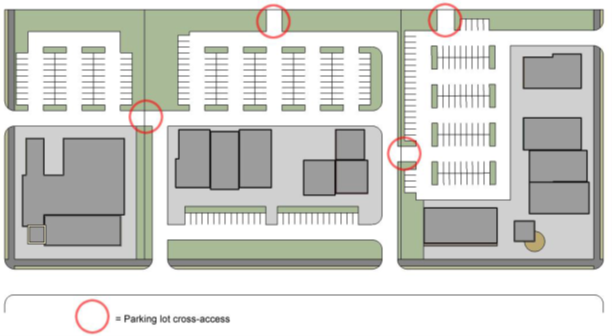
Figure 13.1.10(f): Cross-access between Parking Areas of Adjoining Developments

Figure 13.1.10(f): Cross-access between Parking Areas of Adjoining Developments

13.2.1 - Applicability.

The required off-street loading spaces shall be provided and satisfactorily maintained for each use established and each building erected after the effective date of this ordinance.

13.2.2 - General Standards.

Required off-street loading spaces

The following off-street loading spaces shall be provided and satisfactorily maintained for each use established and each building erected after the effective date of this ordinance.

(a)

Hotels and office buildings

Gross floor area of building Number of Spaces
0 to 19,999 square feet 1
20,000 to 59,999 square feet 2
For a gross floor area of 60,000 square feet or more one (1) additional off-street loading space shall be provided for each 100,000 square feet of gross floor area or fraction thereof.


(b)

Stores, hospitals, wholesale establishments, industrial establishments, and similar uses.

Gross floor area of building Number of Spaces
0 to 9,999 square feet 1
10,000 to 29,999 square feet 2
30,000 to 69,999 square feet 3
For a gross floor area of 70,000 square feet or more, one additional off-street loading space shall be provided for each 50,000 square feet of gross floor area or fraction thereof.


(Ord. No. 1973-24, Section 1, 1-28-74)
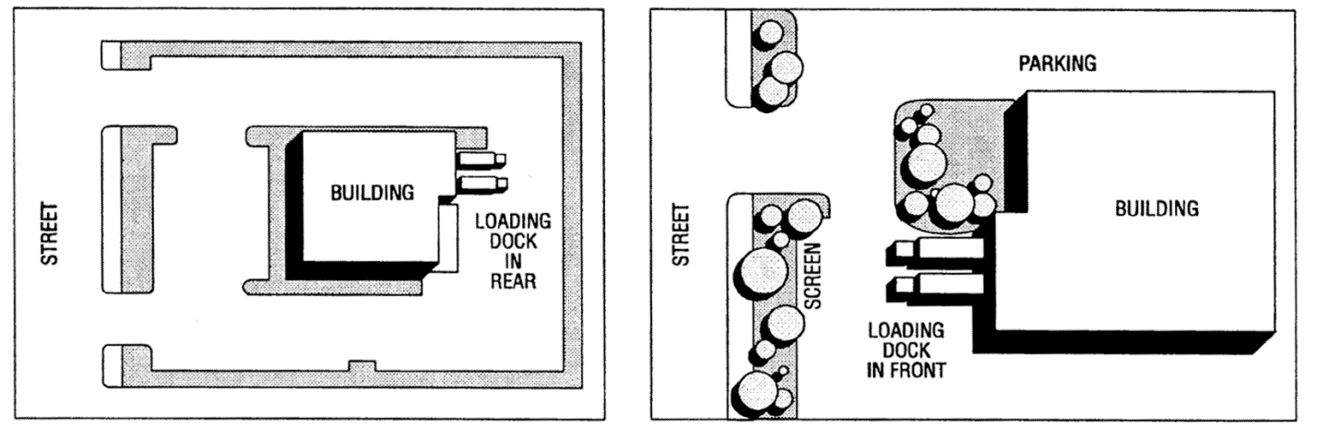
Figure 13.2.2: Examples of loading dock designs.

Figure 13.2.2: Examples of loading dock designs.
