
New Castle County Unincorporated
City Zoning Code
City Zoning Code
ARTICLE 23
- LANDSCAPING, TREES, PLANT MAINTENANCE, AND EROSION AND SEDIMENT CONTROL11
Editor's note— Ord. No. 18-021, § 29, adopted July 10, 2018, changed the title of Article 23 from "Landscaping, trees, and erosion" to "Landscaping, trees, plant maintenance, and erosion and sediment control."
Division 40.23.000.- Purpose.
This Article provides the detailed landscaping standards for installing and maintaining landscaping materials and protecting specimen trees. This Article also provides the requirements for erosion and sediment control.
(Ord. No. 97-172, § 3(ch. 13, div. 23.000), 12-31-1997)
Sec. 40.23.010. - Applicability.
All developments shall comply with Divisions 40.23.100, 40.23.200, 40.23.300, 40.23.400 and 40.23.500. Minor residential subdivisions shall be required only to comply with street tree and tree replacement requirements, except for residential developments in the NC2a zoning district, which are exempted. Major subdivisions and land developments, minor nonresidential subdivisions, and minor land developments shall comply with all divisions. Bufferyard standards may be reduced where it can be demonstrated through a viewshed plan that reductions in planting or buffering protect or enhance the scenic viewshed.
(Ord. No. 97-172, § 3(ch. 13, § 23.010), 12-31-1997; Ord. No. 04-059, § 1(Exh. A), 7-13-2004; Ord. No. 10-113, § 1(Exh. A), 1-18-2011; Ord. No. 18-021, § 30, 7-10-2018; Ord. No. 22-072, § 11, 10-11-2022)
Division 40.23.100. - Plant units and materials.
This Division establishes a standard landscaping element called a "plant unit." The plant unit serves as a basic measure of plant material required for all landscaping, except natural areas, or mitigation. The plant unit provides a balance of vegetation.
(Ord. No. 97-172, § 3(ch. 13, div. 23.100), 12-31-1997)
Sec. 40.23.110. - Standard plant units.
A.
The plant unit types in Table 40.23.110 are generally interchangeable with each other.
B.
The landscape architect may use any one (1) or a combination of plant unit types. However, some types are preferred given certain objectives. For example, plant unit type 5 is best suited for the interior of parking lots or other places where clear, low-level views are desired or where fences exist, and may not be used for bufferyard plantings.
C.
Where year-round screening is required, plant unit types 3 or 4 are preferred. In some cases, this Chapter or a condition of land development or site plan review may specify a specific plant unit type.
D.
The Department may approve a proposed alternative plant unit type(s) if they address a unique situation and provide screening or plant coverage equivalent to plant unit type 1. The total calculated area of the alternative plant unit type(s) as shown in the Bufferyard Model shall be greater than plant unit type 1 and utilize at least two (2) different plant types.
E.
When creating an alternative plant unit type, a note or graphic exhibit must be included on the landscape plan that describes or depicts the unique situation and demonstrates how the alternative plant unit meets the requirements of Subsection D. above.
Table 40.23.110
PLANT UNIT TYPES
| Plant Unit Type |
Quantity, Size & Type of
Plants Required | Illustration | |
|---|---|---|---|
| Type 1 |
1
2 13 |
canopy tree***
1½″ to 2″caliper understory 1½′ to 3′ high shrubs**** | 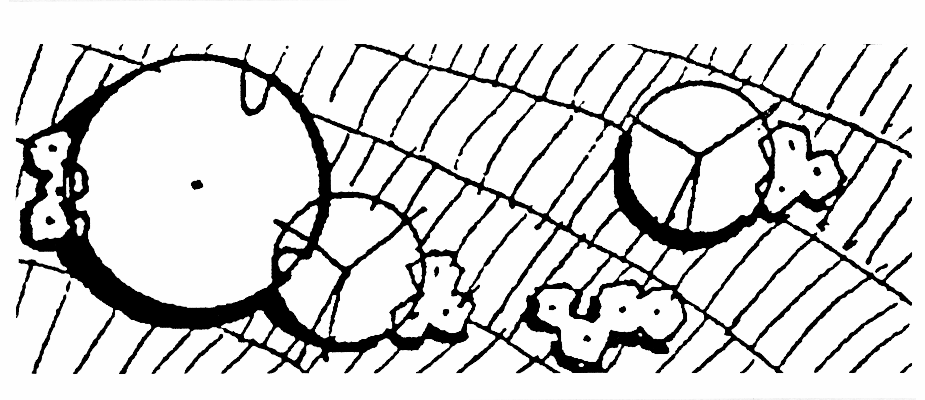 |
| Type 2* |
1
1 1 12 |
Canopy tree***
1½″ to 2″ caliper understory 5′ to 6′ high evergreen tree 1½′ to 3′ high shrubs**** | 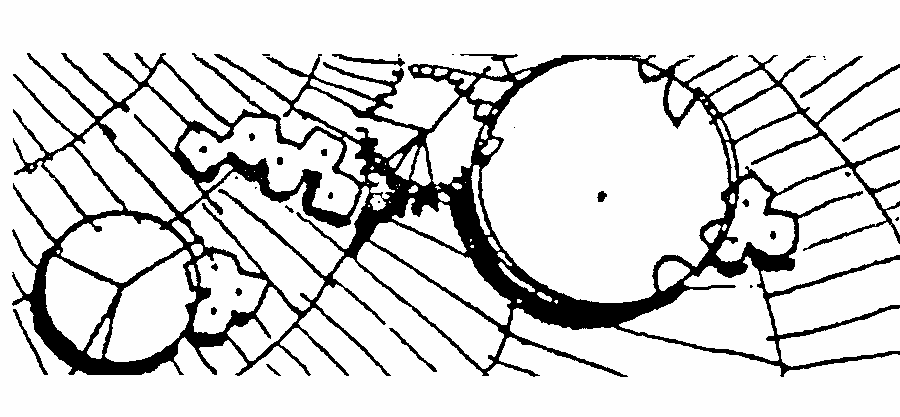 |
| Type 3* |
2
3 7 |
1½″ to 2″ caliper understory
5′ to 6′ high evergreen trees 1½ to 3′ high shrubs**** | 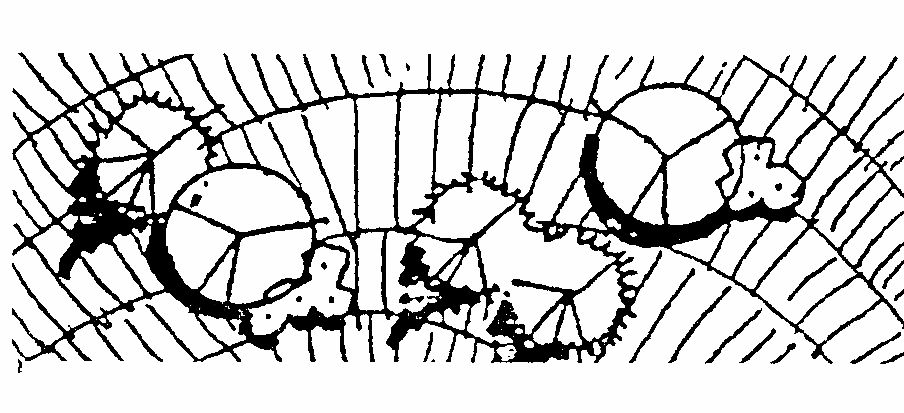 |
| Type 4* |
4
15 |
5′ to 6′ high evergreen trees
1½ to 3′ high shrubs**** | 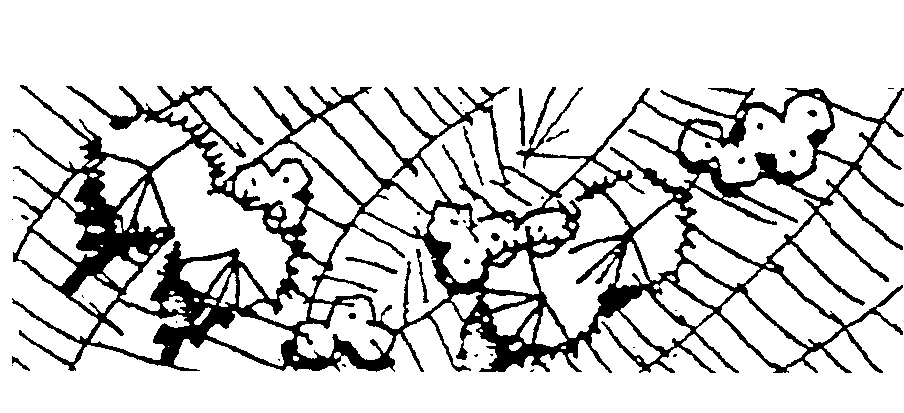 |
| Type 5** |
2
6 |
canopy trees***
1½ to 3′ high shrubs**** | 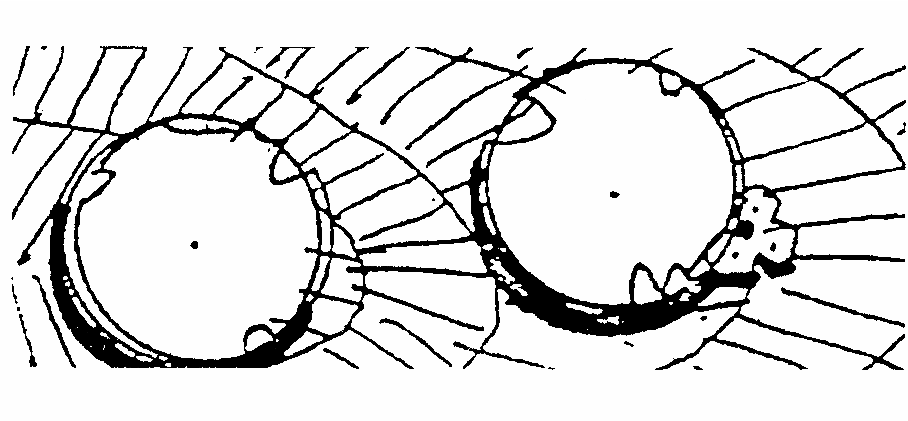 |
| * Preferred for year-round screen. | |||
| ** May be required where visibility is required for safe automobile operation. | |||
| *** Canopy trees within plant unit types shall be planted greater than 2" in caliper size as measured 6" above the established ground level. | |||
| **** The Department may permit approved herbaceous vegetation in lieu of required woody shrubs. The ratio of 5, one-gallon medium to large growing herbaceous perennials or grasses that reach a mature height of greater than 18" may be substituted for one shrub in any plant unit configuration not to exceed 50% of the shrubs required in any given planting area. | |||
(Ord. No. 97-172, § 3(ch. 13, § 23.110), 12-31-1997; Ord. No. 99-075, § 1, 12-14-1999; Ord. No. 03-045, § 1(Exh. A), 7-8-2003; Ord. No. 18-021, §§ 31, 32, 7-10-2018)
Sec. 40.23.120. - On-lot and open space landscaping.
A.
In general, the on-lot landscaping shall be distributed around the lot, planted close to the buildings where foundation plantings are appropriate to create visual interest, planted to provide shading or stormwater management benefits, or distributed in some combination as part of a planting scheme.
B.
In general, open space landscaping shall be distributed throughout open space to delineate areas, augment buffer plantings, create visual interest and design continuity, provide shading and spatial guidance for multi-modal transportation systems, integrate with stormwater management areas, or be distributed in some combination as part of a planting scheme.
C.
Landscape design for front yards is particularly important to preserving community character. Certain residential development unit types require additional planting material, as indicated in Section 40.23.121.
D.
The Department may grant a partial on-lot or open space landscape credit where planting for green technology stormwater best management practices is in excess of the planting requirements contained in Articles 4 and 23.
E.
Turf and meadow grass areas within open space shall be delineated on the landscape plan and be referenced to a corresponding maintenance matrix defining the seed mixture and mowing frequency for each designated area.
(Ord. No. 97-172, § 3(ch. 13, § 23.120), 12-31-1997; Ord. No. 03-045, § 1(Exh. A), 7-8-2003; Ord. No. 18-021, § 33, 7-10-2018)
Editor's note— Ord. No. 18-021, § 33, adopted July 10, 2018, changed the title of Section 40.23.120 from "On-lot landscaping" to "On-lot and open space landscaping." The historical notation has been preserved for reference purposes.
Sec. 40.23.121. - Special residential landscaping.
All residential lots of twelve thousand (12,000) square feet or less or any unit using side-load garages shall install special landscaping in addition to the landscaping required by Table 40.04.111.
A.
Village house. Village house street yards shall be landscaped with two (2) additional items. Select two (2) from the following categories. These additions shall be included in one (1) of two (2) ways. The plan shall identify the techniques on each lot, or options may be included in the house price and selected by the home purchaser.
1.
Street property-line border.
a.
Stone wall, wood or wrought-iron fence at least three (3) feet in height; or
b.
Hedge with shrubs planted at a maximum of three (3) feet on center; or
c.
A grade change of at least two (2) feet, raising the street yard above the sidewalk grade. This option is available only where the natural topography slopes up from the sidewalk on that side of the street. This option must run across at least three (3) consecutive lots and be identified on grading plans to ensure adequate drainage.
2.
Additional landscaping.
a.
Two (2) flowering understory trees at one and one-half (1.5) inch caliper.
b.
Two (2) evergreen trees at least five (5) feet high.
c.
Thirteen (13) decorative evergreen trees in at least five (5) gallon pots.
d.
A perennial flower bed having a minimum of five (5) species over eighty (80) square feet and one (1) understory or evergreen of the size indicated in Subsections A.2.a and A.2.b.
3.
Structure. One (1) of the following and ten (10) flowering or evergreen shrubs at least twenty-four (24) inches high. These options are not available where a front-load garage is used on a lot with less than ninety (90) feet of frontage.
a.
A roofed porch which is not enclosed or screened, running three-quarters (0.75) the width of the house front and having a minimum width of seven (7) feet.
b.
A masonry or stone patio raised a minimum of eighteen (18) inches above the front yard, minimum eight (8) foot width, and at least five hundred (500) square feet.
B.
Lot line houses. Lot line houses shall install an additional one and a half (1.5) plant units in the front yard whose purpose, location, and design is to screen the view into the side yard and enhance the privacy of this space. The developer may use hedges or substitute a fence for eighty (80) percent of the shrubs.
C.
Other single-family lots less than twelve thousand (12,000) square feet. These lots shall require an additional plant unit.
D.
Side-loading garages. Where a side-loading garage is permitted in front of the house proper, an extra plant unit shall be required between the street and the side of the garage facing the street, or the developer may propose planting options that, in the Department's opinion, are approximately equal in cost and effectiveness.
E.
Attached and multi-family. All attached units shall have on-lot landscaping of one (1) plant unit. The landscaping material shall be distributed in the front, rear, or side yards. In multi-family developments, the yard areas associated with each unit shall be landscaped with five (5) plant units per acre.
(Ord. No. 97-172, § 3(ch. 13, § 23.121), 12-31-1997; Ord. No. 10-113, § 1(Exh. A), 1-18-2011)
Sec. 40.23.130. - Parking lot landscaping.
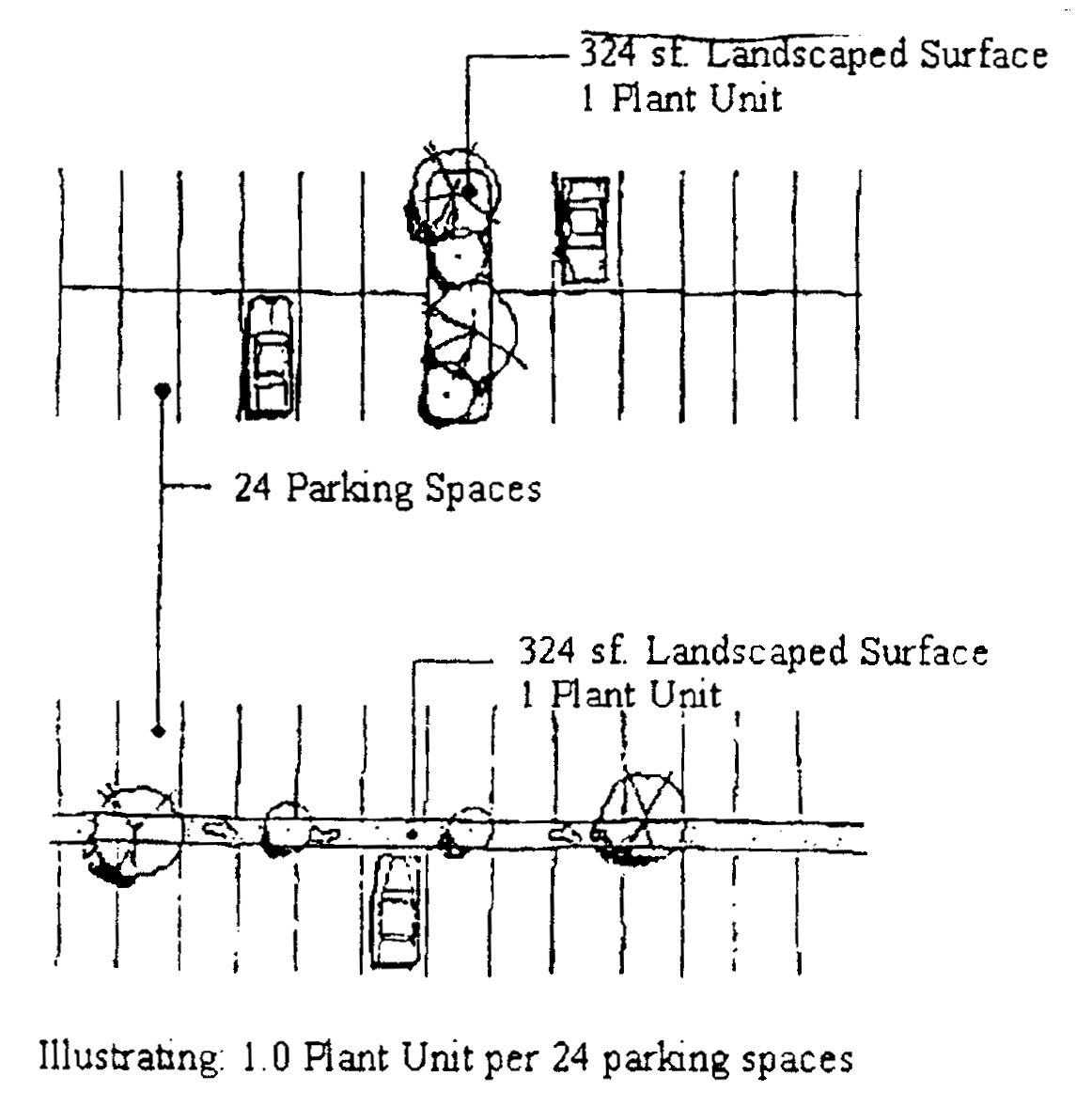
Parking lot landscaping shall be one (1) plant unit per number of parking spaces specified in Table 40.04.111. Each plant unit shall be planted in a planting island(s) or space with a minimum total area of three hundred twenty-four (324) square feet. The plant unit may be distributed between two (2) landscaping islands or in larger continuous islands. If two (2) smaller islands are selected, each shall contain a minimum of one hundred sixty-two (162) square feet in area. In small parking lots, the island(s) may be the lot's corners. The landscaping required by Table 40.04.111 shall be located within the parking lot or adjoining entrance drives and circulation drives. Figure 40.23.130 illustrates appropriate planting areas, preservation of existing trees, and several configurations of one (1) plant unit per twenty-four (24) parking spaces.
A.
Parking lot landscaping plants shall be capable of tolerating difficult growing conditions such as deicing salts, soil compaction, drought, mechanical damage/heavy pruning, and reflected heat.
B.
Soils in parking lot planting areas shall be amended backfill as deemed necessary in accordance with Tree Care Industry Association ANSI A300-2011 guidance, as may be amended.
C.
Irrigation in the form of an automated system, regular watering schedule, integrated stormwater management system or other method shall be provided for the long-term health and viability of parking lot landscaping.
(Ord. No. 97-172, § 3(ch. 13, § 23.130), 12-31-1997; Ord. No. 18-021, § 34, 7-10-2018)
Figure 40.23.130
EXAMPLES OF PARKING LOT LANDSCAPING CONFIGURATIONS
Sec. 40.23.140. - Standards for bufferyard plantings.
A.
Table 40.23.140 depicts the narrowest permitted bufferyard at the top of each opacity category. This is the minimum width of buffer permitted. The widths of bufferyards, the plant materials in plant units, and any proposed structures or berms shall be analyzed collectively to reach given levels of opacity or buffer type required by Table 40.04.111.
B.
Table 40.23.140 presents two (2) bufferyard parameters (minimum and maximum width and number of plant units). A wide range of other combinations also would meet the respective opacity rating. Flexibility and creativity are encouraged. By using the interactive bufferyard system in Section 40.23.141, the designer may create and test a buffer.
C.
These standards are based on a one hundred (100) linear foot buffer measured at the bufferyard's centerline.
D.
Figure 40.23.140 is an example that shows the two (2) bufferyard options set forth to achieve a five-tenths (0.50) opacity using Section 40.23.141.
E.
Some limited or conditional uses have requirements (Table 40.03.110) that increase bufferyards; these requirements must be met by adding the opacities of the district bufferyard and the limited or conditional use. For example, if the district requires a three-tenths (0.3) bufferyard and the specific use requires a two-tenths (0.2) bufferyard, then a five-tenths (0.5) bufferyard shall be selected.
Figure 40.23.140
BUFFERYARD OPTIONS FOR A 0.50 OPACITY
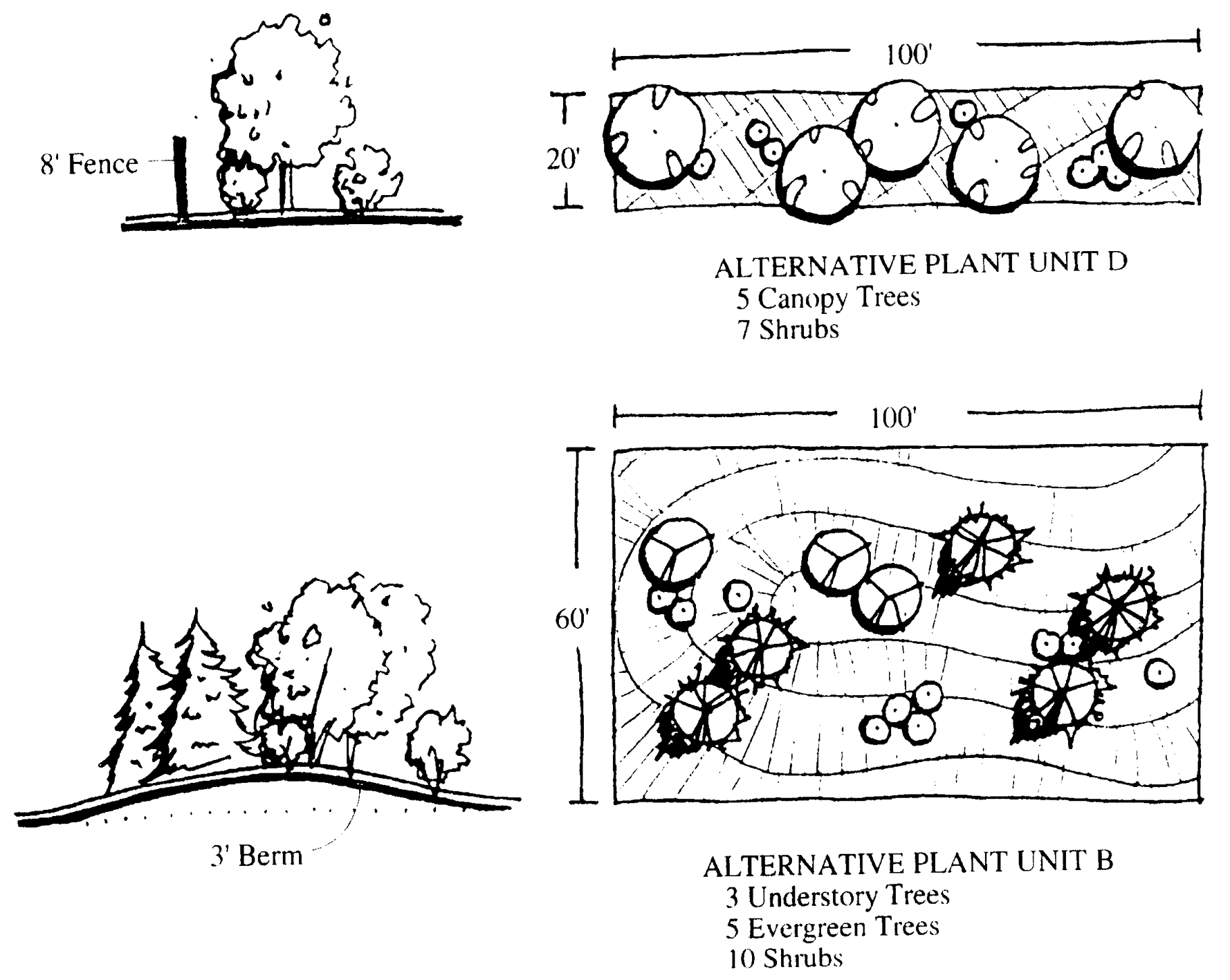
Table 40.23.140
BUFFERYARD REQUIREMENTS PER 100 LINEAR FEET
(Ord. No. 97-172, § 3(ch. 13, § 23.140), 12-31-1997; Ord. No. 98-080, § 1(ch. 13, § 23.140), 9-22-1998; Ord. No. 01-112, § 1(Exh. A), 3-12-2002; Ord. No. 02-075, § 1(Exh. A), 10-22-2002; Ord. No. 18-021, §§ 35, 36, 7-10-2018)
Sec. 40.23.141. - Bufferyards.
A.
The standards in Table 40.23.140 have been tested to ensure they meet the opacity standard. Numerous other mixes can meet the standard. The bufferyards were created using the Bufferyard Model. This model is available within the Unified Development Code available online.
B.
Any bufferyard that meets the required opacity rating within the width limits in Table 40.23.140 is permitted. The Bufferyard Model also can be used. Table 40.23.141 lists the settings that shall be used in running the model. This model determines whether or not the tested bufferyard is adequate. The plant type settings are shown, but are not to be altered. The number of plant units may be revised. The width of the buffer may be increased above the minimum for each opacity given in Table 40.23.140. The height of the structure may be varied only if modifying the parking buffer. Users shall supply the Department with a printout of the model run for a buffer that is proposed which shall be verified by the Department. Flexibility and creativity with respect to buffer width, utilization of plant unit types and the utilization of berms, fences, walls and hedges are encouraged.
Table 40.23.141
BUFFERYARD MODEL SETTINGS
C.
Buffers over fifty (50) feet wide must meet the height screening requirement of the model without a berm. Narrower buffers shall be permitted without meeting the model's height screening.
D.
A visual screen consisting of a planted hedge may be used as an alternative to a wall or a fence. Hedges may be comprised of evergreens, deciduous plants or a mix of plant species.
1.
In the Bufferyard Model, the following standards shall apply:
a.
For an evergreen hedge, the Structure Solidity category may equal up to a ninety (90) percent solidity rating and must be a minimum of four (4) feet tall at the time of planting.
b.
For a deciduous hedge, the Structure Solidity category may equal up to a seventy (70) percent solidity rating and must be a minimum of four (4) feet tall at the time of planting.
c.
The Structure Height category shall be set no greater than two (2) feet above the height of the hedge at installation.
d.
The Structure Placement category shall correspond to the centerline location of the hedge with respect to the bufferyard property line.
2.
Each plant component of a hedge shall be planted no further than four (4) feet on-center from one another. A reduction in spacing may be required depending on the plant species or cultivar selected.
3.
Individual plants used in a hedge may be counted toward portions of the required plant units within the same bufferyard. However, the minimum number of plants required in Table 40.23.110 shall be provided.
4.
The selection of other required bufferyard plant units and the placement of plants adjacent to the hedge shall take into account any spatial or shading conflicts with the hedge planting.
5.
A detailed description of the size, shape and plant species of any proposed hedge and perpetual maintenance responsibilities shall be placed on the landscape plan.
(Ord. No. 97-172, § 3(ch. 13, § 23.141), 12-31-1997; Ord. No. 01-112, § 1(Exh. A), 3-12-2002; Ord. No. 18-021, § 37, 7-10-2018)
Sec. 40.23.142. - Bufferyard opacity reduction.
Where the build-to line is permitted to be less than the required minimum street yard setback, the Department may approve a reduction in opacity standards. Reductions shall:
A.
be calculated on a percentile basis commensurate to the reduction of the bufferyard width plus the width of any publicly-accessible pedestrian or bicycle facility physically located within the bufferyard; and
B.
only be permitted directly along those portions of the facade adjacent to the build-to line.
(Ord. No. 18-021, § 38, 7-10-2018)
Sec. 40.23.150. - Street right-of-way.
All unpaved areas within street rights-of-way shall be seeded or sodded. Before the release of the twelve (12) month maintenance bond, all unpaved areas between the edge of the road pavement and the right-of-way line shall have:
A.
A minimum depth of four (4) inches of topsoil; and
B.
A growth of an acceptable healthy grass turf; and
C.
Trees growing in vigorous, healthy condition and as required in Section 40.23.151.
(Ord. No. 97-172, § 3(ch. 13, § 23.150), 12-31-1997; Ord. No. 10-113, § 1(Exh. A), 1-18-2011)
Sec. 40.23.151. - Street trees.
A.
In new subdivisions, or when the development of property occurs, the Department shall review for approval proposed landscaping plans, and shall require street trees to be planted within or alongside any of the rights-of-way of streets and parkways and other public places abutting lands henceforth developed or subdivided as required in Article 31.
B.
Large canopy street trees shall be planted on each side of the right-of-way at the minimum rate of one (1) tree per forty (40) linear feet of right-of-way. There is an exception for interior streets in nonresidential subdivisions not designated as arterials or collectors, wherein trees shall be planted on each side of the right-of-way at the minimum rate of one (1) tree per fifty (50) linear feet of right-of-way.
C.
When street trees are located in center medians, the median shall have a minimum width of ten (10) feet and shall have one (1) additional large or medium canopy tree planted for every forty (40) linear feet. Medians having a width greater than twenty (20) feet shall have one and one-half (1½) large or medium canopy trees planted every forty (40) linear feet.
D.
No one (1) tree species utilized for street tree plantings may make up more than twenty (20) percent of the planting stock of the entire development.
E.
Tree quality and size. All large or medium canopy street trees shall be balled and burlapped, single-stemmed trunks, branched no lower than six (6) feet above ground or when adjacent to vehicular cartways or parking facilities and pedestrian or bicycle facilities, eight (8) feet above ground, and no less than three (3)-inch caliper as measured six (6) inches above the established ground level. Small canopy or understory trees may be planted at two (2)-inch caliper.
1.
Small canopy or understory trees with multi-stemmed trunks are permitted to be planted within center medians.
2.
All plant classifications, measurement of plants and planting methods shall be in accordance with the American Standard for Nursery Stock ANSI Z60.1-2014, as may be amended.
F.
Minimum spacing. Outside of reforestation or afforestation situations, no large canopy trees may be planted closer together than thirty (30) feet and no medium or small canopy or understory trees may be planted closer together than fifteen (15) feet, except that special plantings may be clustered if the Department determines that the long-term survivability of the trees will not be impaired.
G.
Substitution. In certain situations, such as the presence of overhead utility wires or constrained planting areas, each required large canopy street tree may be substituted with one (1) medium canopy or one and one-half (1½) small canopy or understory trees suitable for street tree planting. See Appendix 3 to this chapter for a list of recommended tree species and further street tree planting guidance.
(Ord. No. 97-172, § 3(ch. 13, § 23.151), 12-31-1997; Ord. No. 98-080, § 1(ch. 13, § 23.151), 9-22-1998; Ord. No. 02-075, § 1(Exh. A), 10-22-2002; Ord. No. 18-021, § 39, 7-10-2018)
Division 40.23.200. - Landscaping installation requirements.
To ensure plant materials are installed and properly maintained, a landscape plan will be required of all developments. This plan shall show the location of all required plant materials and provide planting details for all proposed plant types and planting situations. A plant list shall accompany the plan, indicating species, size, and number provided. Appendix 3 to this Chapter provides a list of unacceptable and suggested plant species.
A.
The source of all plant material for the site shall be from within one whole number hardiness zone as defined by the United States Department of Agriculture (USDA) of the zone that covers the majority of New Castle County.
B.
The handling, planting and perpetual maintenance of all tree and plant material shall conform to Tree Care Industry Association ANSI A300-2011 standards.
(Ord. No. 97-172, § 3(ch. 13, div. 23.200), 12-31-1997; Ord. No. 98-080, § 1(ch. 13, div. 23.200), 9-22-1998; Ord. No. 10-113, § 1(Exh. A), 1-18-2011; Ord. No. 18-021, § 40, 7-10-2018)
Sec. 40.23.210. - Reserved.
Editor's note— Ord. No. 07-012, § 1, adopted May 8, 2007, repealed § 40.23.210 in its entirety. Formerly, said section pertained to performance bonds as enacted by Ord. No. 97-172, § 3(ch. 13, § 23.210), adopted Dec. 31, 1997.
Sec. 40.23.220. - Reserved.
Editor's note— Ord. No. 07-012, § 1, adopted May 8, 2007, repealed § 40.23.220 in its entirety. Formerly, said section pertained to replacement as enacted by Ord. No. 97-172, § 3(ch. 13, § 23.220), adopted Dec. 31, 1997; as amended by Ord. No. 03-045, § 1(Exh. A), adopted July 8, 2003.
Sec. 40.23.230. - Planting locations.
The exact placement of required plants and structures shall be the decision of each user, except for the following requirements that shall be met:
A.
Trees and shrubs shall be planted clear of the road-salt spray area, or the planting area shall consist of more highly salt tolerant plants.
B.
Evergreen trees and evergreen shrubs shall be planted with appropriate spacing in accordance with their habit and growth to maximize their chance for long-term survival.
C.
Location. No large canopy tree species shall be planted, as measured from the center of the tree trunk, under or within ten (10) lateral feet of any existing overhead utility wire, or over or within five (5) lateral feet of any existing underground water line, sewer line, transmission line, or other utility. Medium canopy tree or small canopy or understory tree species may be permitted. Additional mitigation such as specific cultivar selection, special planting and pruning techniques may be required.
D.
All trees and shrubs shall be placed so that they will not block or obstruct necessary sight-lines or rights-of-way.
(Ord. No. 97-172, § 3(ch. 13, § 23.230), 12-31-1997; Ord. No. 04-059, § 1(Exh. A), 7-13-2004; Ord. No. 18-021, § 41, 7-10-2018)
Sec. 40.23.240. - Afforestation/reforestation requirements.
All forest mitigation areas or open spaces to be afforested/reforested shall be planted pursuant to one or a combination of alternatives set forth in Table 40.23.240 using the plant species listed in Appendix 3 to this Chapter.
A.
The area around each tree shall be mulched. The entire area may be mulched or seeded in a perennial grass mix with a minimum thirty (30) percent indigenous herbaceous forest, or grassland species.
B.
Trees shall be selected to provide a diversity of native plants. All plants and trees used for afforestation/reforestation must consist only of species native and indigenous to Delaware. Selected plants and trees may not include cultivars or hybrids of species or State rare or endangered species.
C.
Plants and trees shall be selected and arranged within the afforestation/reforestation area in accordance with site conditions.
D.
Afforestation/reforestation plantings shall include a minimum of six (6) species. Where more than two hundred (200) trees are provided, a minimum of eight (8) species shall be used; no one (1) species shall have less than five (5) or more than twenty (20) percent of the total trees.
E.
Appendix 3 to this Chapter provides a list of unacceptable and suggested plant species and afforestation/reforestation planting guidelines.
F.
A plan for perpetual maintenance of any afforestation/reforestation area must be provided with the landscape plan and approved by the Department. The plan must include methodology for removing invasive plants while protecting reforestation plantings and facilitating the establishment of a leaf-litter layer on the ground within the reforestation area.
G.
The survival rate for reforestation areas shall be a minimum of one hundred (100) trees per acre or at least seventy-five (75) percent of the total number of trees planted per acre under the approved plan, whichever is greater. Replanting shall be required to meet this minimum standard for sites where the survival threshold is not met. Infill planting also may be required where planting fails in large contiguous areas, resulting in tree spacing greater than twenty-five (25) feet.
Table 40.23.240
AFFORESTATION/REFORESTATION PLANTING RATE ALTERNATIVES PER ACRE
(Ord. No. 97-172, § 3(ch. 13, § 23.240), 12-31-1997; Ord. No. 10-113, § 1(Exh. A), 1-18-2011; Ord. No. 18-021, §§ 42, 43, 7-10-2018; Ord. No. 21-009, § 7, 12-14-2021)
Editor's note— Ord. No. 21-009, § 7, adopted December 14, 2021, changed the title of Section 40.23.240 from "Reforestation requirements" to "Afforestation/reforestation requirements." The historical notation has been preserved for reference purposes.
Sec. 40.23.250. - Existing vegetation.
Where natural vegetation will be preserved on-lot or within open space, scenic easements, bufferyards, parking lots, or along roadway frontages, that plant material shall be credited towards that specific landscaping requirement in accordance with Table 40.23.250.
Table 40.23.250
PRESERVED TREES CREDITED TOWARDS REQUIREMENTS
Also, the following requirements must be met:
A.
A tree survey is conducted locating the individual trees to be preserved or, in the case of a forest, trees within fifty (50) feet of the edge of the limits of disturbance.
B.
Individual trees described in the tree survey as healthy and intended to count toward the landscaping or afforestation requirements shall count only if sufficient protection is provided as follows:
1.
Trees greater than sixteen (16) inches DBH:
a.
No area within the Critical Root Zone (CRZ) shall be disturbed. No topographic change greater than eighteen (18) inches shall occur at the edge of the protected area.
b.
A qualified forester, arborist or landscape architect shall provide professional judgment as to the probability that the tree will survive in a healthy and vigorous condition following the completion of construction activities.
c.
This may include recommendations for pruning, fertilization and other means to ensure the tree's survival both during and after completion of construction activities. Only those trees with a high probability of survival may be credited.
2.
Trees between three (3) and less than sixteen (16) inches DBH: No more than thirty (30) percent of the area within the CRZ shall be disturbed.
C.
Trees sixteen (16) inches or greater DBH whose natural drainage is cut off by re-grading or exposed to heavier drainage shall not be credited toward a landscaping requirement unless a management plan approved by a qualified forester, arborist or landscape architect is established to protect the tree.
D.
Areas classified as Tier 1, 2, or 3 forests or defined as forest under the General Definition in Article 33 shall count as meeting the following landscaping requirement provided:
1.
Open space. The forested area is at least one-half (0.5) acre, seventy-five (75) feet wide, and will be left undisturbed. Where the area is less than one-half (0.5) acre or less than seventy-five (75) feet wide and is to remain undisturbed, a tree survey is required and the trees to be credited will be calculated individually as in Table 40.23.250.
2.
Bufferyards.
a.
Where the forested area is two (2) times the width of the bufferyard or seventy-five (75) feet wide, whichever is greater, and to remain undisturbed, the bufferyard requirement shall be considered met. No tree survey is required.
b.
Where the forested area width equals or exceeds the minimum bufferyard width of the required opacity that does not include a fence, hedge, or berm (Table 40.23.140), all trees with less than ten (10) percent of their CRZ undisturbed shall be credited in accordance with Table 40.23.250.
3.
Lots. The developer shall place a conservation easement on the lot in accordance with Section 40.20.242.
E.
Existing trees used to fill any landscape requirements shall meet the requirements of Section 40.23.280.
F.
Preserved vegetation shall count for only one (1) landscaping requirement. For example, a sixteen (16)-inch tree to be preserved along a property line may count for three (3) open space trees or three (3) bufferyard trees.
G.
Preserved tree types (canopy, understory, or evergreen) shall only be credited for the same tree type requirement, except in forests where preservation of forest areas of at least fifty (50) feet in width shall count where all trees in the preserved forest are protected as required in Subsection B. of this Section.
(Ord. No. 97-172, § 3(ch. 13, § 23.250), 12-31-1997; Ord. No. 10-113, § 1(Exh. A), 1-18-2011; Ord. No. 18-021, § 44, 7-10-2018; Ord. No. 21-009, § 7, 12-14-2021)
Sec. 40.23.260. - Diversity requirements.
Diversity among required plant material shall be required not only for visual interest, but also to reduce the risk of losing large populations of plants due to disease. No one (1) species shall make up more than twenty (20) percent of the planting stock of the entire development.
(Ord. No. 97-172, § 3(ch. 13, § 23.260), 12-31-1997)
Sec. 40.23.270. - Tree and plant material quality.
Unless approved by the Department, all trees planted shall be grown in nurseries from within one whole number hardiness zone as the development site as defined by the United States Department of Agriculture (USDA). All plants, plant sizes and planting methods shall be in accordance with the American Standard for Nursery Stock (ANSI Z60.1-2014), as may be amended. All plants used to fulfill the landscape requirements shall come from the permitted plant list in Section 40.23.280, unless the Department approves a different, non-invasive species that it determines is comparable in terms of its ability to accomplish the purpose of this Article, its survivability, and any offsetting environmental or stormwater management benefits.
(Ord. No. 97-172, § 3(ch. 13, § 23.270), 12-31-1997; Ord. No. 98-080, § 1(ch. 13, § 23.270), 9-22-1998; Ord. No. 02-075, § 1(Exh. A), 10-22-2002; Ord. No. 18-021, § 45, 7-10-2018)
Editor's note— Ord. No. 18-021, § 45, adopted July 10, 2018, changed the title of Section 40.23.270 from "Tree quality" to "Tree and plant material quality." The historical notation has been preserved for reference purposes.
Sec. 40.23.280. - Plant lists.
Appendix 3 to this Chapter contains three (3) plant lists as guidance for plant selection: Part 1: Recommended Plant List; Part 2: Plants to Avoid; and Part 3: Native Plant Species of Special Interest. These lists are not intended to be comprehensive, nor does the use of these plants guarantee Department approval or availability at plant nurseries.
(Ord. No. 97-172, § 3(ch. 13, § 23.280), 12-31-1997; Ord. No. 10-113, § 1(Exh. A), 1-18-2011; Ord. No. 18-021, § 46, 7-10-2018)
Editor's note— Ord. No. 18-021, § 46, adopted July 10, 2018, changed the title of Section 40.23.280 from "Plant material species" to "Plant lists." The historical notation has been preserved for reference purposes.
Division 40.23.300. - Tree protection.
Specimen trees shall be located and identified to the species taxonomic level on the site plan or land development plan. The development design shall preserve specimen trees wherever practical. The County may require plan revision where additional preservation is possible without affecting density. Where preservation is not feasible, tree replacement shall be required as mitigation. Any mitigation shall be in addition to the other landscaping requirements of this Code.
(Ord. No. 97-172, § 3(ch. 13, div. 23.300), 12-31-1997; Ord. No. 18-021, § 47, 7-10-2018)
Sec. 40.23.310. - Preserving specimen trees.
A specimen tree is preserved by protecting one hundred (100) percent of the area within the tree's CRZ. The following techniques shall be used to preserve the maximum number of specimen trees:
A.
During construction, the CRZ shall be fenced with five (5) foot temporary fencing, and no earth moving, material storage, vehicular storage or vehicular incursions shall be permitted inside the fenced area. Existing impervious cover within the CRZ may be removed or altered with limited disturbance, provided measures are taken to minimize root disturbance and soil compaction. This may include recommendations for pruning, fertilization and other means to ensure the tree's survival both during and after completion of construction activities. Only those trees with a high probability of survival may be credited.
B.
Development design shall attempt to protect specimen trees by locating them in side yard or other setbacks.
C.
Horizontal road alignments may be reduced. Pavement centerlines may meander in rights-of-way.
D.
Building pads altering the building envelope may be required.
E.
Multi-story buildings may be required to reduce or reconfigure building footprints.
(Ord. No. 97-172, § 3(ch. 13, § 23.310), 12-31-1997; Ord. No. 18-021, § 48, 7-10-2018; Ord. No. 21-009, § 8, 12-14-2021)
Sec. 40.23.320. - Tree replacement.
A.
Where specimen trees are removed, they shall be replaced in accordance with Table 40.23.320. The replacement trees shall be planted on the same parcel as the tree being removed. The Department may allow some or all of the replacement trees to be planted on an adjacent or nearby parcel with the establishment of a conservation easement and provisions to ensure the perpetual maintenance of the trees. Off-site replacement trees shall be planted at a ratio of two to one (2:1).
B.
The Growth Categories of individual tree species are provided in Appendix 3 of this Chapter.
1.
Tree species that generally exhibit slower annual growth rates are accorded a smaller size threshold for specimen tree status.
2.
Tree species that generally exhibit faster annual growth rates are accorded a larger size threshold for specimen tree status.
3.
For tree species not listed in Appendix 3, the applicant may provide appropriate arboricultural justification for Growth Category assignment.
C.
Upon Department approval, if the site or an adjacent parcel or nearby parcel cannot accommodate the number of required replacement trees, the applicant may meet the requirements of this section by increasing the caliper of trees required by other sections of this Chapter. Determining the size of the caliper shall be calculated as follows and as illustrated in Appendix 3:
1.
The sum total of the cross-sectional area of the trunks for all required replacement trees as calculated pursuant to Table 40.23.320 divided by the number of larger trees.
2.
This figure is then added to the trunk cross-sectional area for each of the larger trees.
3.
New caliper figures for each of the larger trees are then calculated from their respective increased cross-sectional areas. Caliper figures shall be rounded up to the nearest one-half (½) inch.
D.
A note indicating the reason for planting trees with larger minimum calipers shall be placed on the landscape plan and referenced to each planting location.
Table 40.23.320
SPECIMEN TREE REPLACEMENT
(Ord. No. 97-172, § 3(ch. 13, § 23.320), 12-31-1997; Ord. No. 01-112, § 1(Exh. A), 3-12-2002; Ord. No. 06-060, § 1(Exh. A), 9-26-2006; Ord. No. 18-021, §§ 49, 50, 7-10-2018)
Division 40.23.400. - Sediment and erosion control.
All development or land disturbing activity is subject to the requirements of the Delaware Erosion and Sediment Control Handbook.
(Ord. No. 97-172, § 3(ch. 13, div. 23.400), 12-31-1997)
Division 40.23.500. - Tree and plant material maintenance and replacement.
This Division establishes standards for tree and plant material maintenance and replacement.
(Ord. No. 18-021, § 51, 7-10-2018)
Editor's note— Prior to the reenactment of Division 40.23.500 by Ord. No. 18-021, § 51, adopted July 10, 2018, Ord. No. 01-112, § 1(Exh. A), adopted March 12, 2002, repealed Div. 40.23.500, § 40.23.510, in its entirety. Formerly, said division and section pertained to open space and design standards, respectively; as adopted by Ord. No. 97-172, § 3(ch. 13, § 23.510), adopted Dec. 31, 1997. See the Unified Development Comparative Table.
Sec. 40.23.510. - Tree and plant material maintenance.
All trees, shrubs and woody plantings required to be planted by this Chapter shall be maintained in a natural growing condition. Pruning or trimming may not alter the general growth habit, appearance or form of a tree, shrub or woody planting, beyond what is typically found in arboricultural or horticultural practices for the given planting context or as designated on the approved landscape plan.
(Ord. No. 18-021, § 52, 7-10-2018)
Sec. 40.23.520. - Tree and plant material replacement.
Tree and plant material required by this Chapter shall be maintained in a healthy manner. After the warranty against defect period, a level of attrition of tree and plant material is allowable.
A.
Allowable attrition rates for total number of plants located within the planting areas defined in Article 4 shall be:
1.
Zero (0) percent for street trees and parking lots;
2.
Five (5) percent for street and peripheral bufferyards;
3.
Ten (10) percent for open space; and
4.
Fifteen (15) percent for on-lot.
B.
Any dead, damaged or diseased tree or plant material exceeding the allowable attrition rates shall be replaced unless, as documented by a professional arborist, forester or landscape architect, such tree or plant material can be made healthy.
C.
The Department may consider a limited amount of plant species substitutions for plant material shown on a landscape plan, as amended by a professional landscape architect, without the filing of a new landscape plan.
(Ord. No. 18-021, § 53, 7-10-2018)

