
Newark City Zoning Code
DIVISION III
CITYWIDE REGULATIONS
17.17.010 - Purpose and applicability.
The purpose of this chapter is to prescribe development and site regulations that apply, except where specifically stated, to development in all districts. These standards shall be used in conjunction with the standards for each zoning district established in Article II, Base and Overlay District Regulations. In any case of conflict, the standards specific to the zoning district shall override these regulations.
(Ord. No. 503, § 1(Exh. A), 1-25-2018)
17.17.020 - Accessory buildings and structures.
A.
Applicability.
1.
The provisions of this section apply to roofed structures, including but not limited to garages, carports, sheds, workshops, gazebos, and covered patios, that are detached from and accessory to the main building on the site. These provisions also apply to open, unroofed structures such as play equipment, decks and trellises, that are over eighteen inches in height and that are detached from and accessory to the main building on the site.
2.
When an accessory building or structure is attached to the main building, it shall be made structurally a part of and have a common wall or roof with the main building and shall comply in all respects with the requirements of this title applicable to the main building. Allowed building projections into yards and required building separations are stated in Section 17.17.090, Projections into Yards and Required Building Separations.
3.
Where an accessory dwelling unit is located over a detached garage, the entire structure shall be considered a main building, subject to the base district standards for main buildings. No portion of this building shall be closer to any lot line than is permitted for any other main building.
B.
Relation to Existing Structures. A detached accessory building may only be constructed on a lot on which there is a permitted main building to which the accessory building is related or on an adjacent lot under the same ownership.
C.
Height. The maximum allowable height of accessory structures is twelve feet except that accessory structures in non-residential districts with a minimum roof pitch of 4:12 may be up to sixteen feet in height.
D.
Location.
1.
All Districts.
a.
Front and Street-Side Setbacks. Accessory structures shall not be located within any required front or street-side setback area.
b.
Interior-Side and Rear Setbacks. Accessory structures greater than six feet six inches in height or more than one hundred twenty square feet in size shall be setback a minimum of three feet from interior side and rear property lines.
2.
Additional Limitation, RS and RL Districts. In the RS and RL Districts, accessory structures shall be located in the rear half of the lot, shall not occupy more than thirty percent of the required rear yard area. No more than two accessory structure shall be allowed, excluding a detached garage.
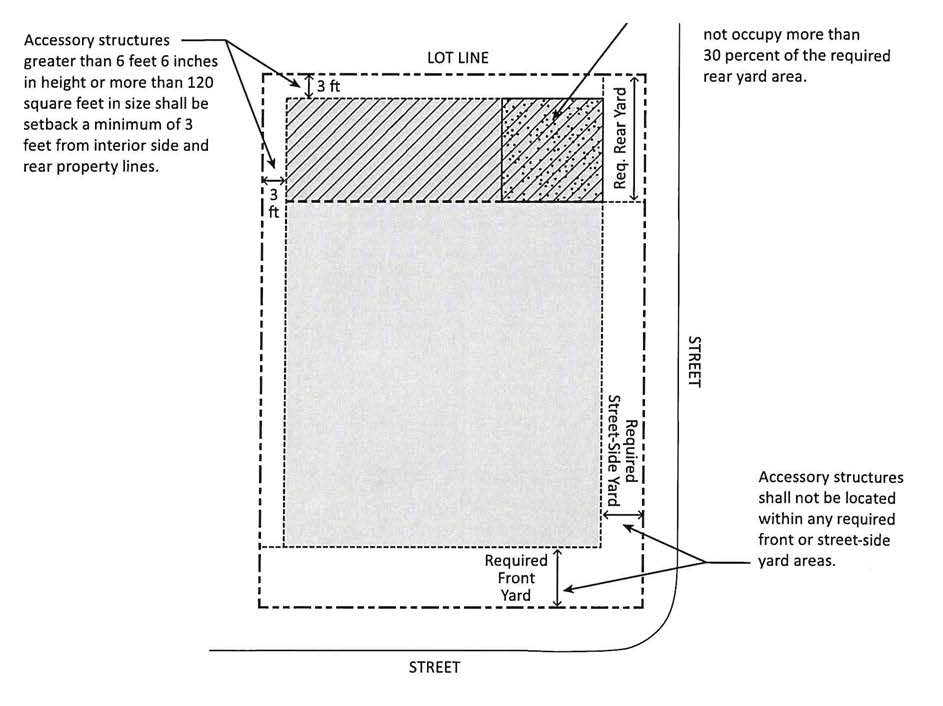
FIGURE 17.17.020.D: ACCESSORY STRUCTURE LIMITATIONS
E.
Separation from Main Buildings. Detached accessory structures shall be located a minimum of six feet from the main building, inclusive of roof covering.
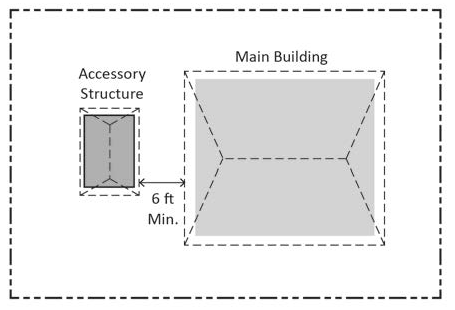
FIGURE 17.17.020.F: ACCESSORY STRUCTURE SEPARATION FROM MAIN BUILDING
(Ord. No. 503, § 1(Exh. A), 1-25-2018; Ord. No. 505, § 3(Exh. A), 7-12-2018)
17.17.030 - Development on substandard lots.
A.
Any lot or parcel of land that was legally created through a recorded deed may be used as a building site even when consisting of less area, width, or depth than that required by the regulations for the district in which it is located except as provided below:
1.
Two or More Adjoining Vacant Sites. Two or more adjoining vacant sites with continuous frontage, each having an area, width or frontage less than the minimum prescribed for the district in which the sites are located, in the same ownership as of the date of adoption of this section or subsequent thereto, is subject to all regulations for the district in which the sites are located, including minimum area, width and frontage requirements, as if the sites constituted a single parcel of real property.
B.
No substandard lot can be further reduced in area, width, or depth, unless such reduction is required as part of a public improvement.
C.
A substandard lot is subject to the same yard setback and density requirements as a standard lot.
(Ord. No. 503, § 1(Exh. A), 1-25-2018)
17.17.040 - Fences and freestanding walls.
Fences, walls, hedges, and similar structures shall comply with the standards of this section.
A.
Maximum Height. Fences, walls, hedges, and related structures are limited to a maximum of six feet except as follows: three feet high when located within required front yards or within four feet of a street side lot line, eight feet adjacent to four or more lane arterials for residential uses.
1.
Additional Height in Residential Districts.
a.
Director Approval. The Director may approve additional fence height with a minor use permit, in compliance with the following.
i.
Maximum Height.
(1)
Front Yards and within Four Feet of a Street Lot Line. Fences within the front yard and fences within four feet of a street lot line on a lot adjacent to a non-residential use may be up to six feet in height.
(2)
Outside Front Yards and More than Four Feet from a Street Lot Line. Fences located outside of a required front yard and more than four feet from a street lot line may be up to eight feet in height.
(3)
Materials. The Director may only approve additional fence height for fences made of masonry block, precast concrete, wood, or metal wrought iron. Vertical or horizontal extensions to an existing fence or wall shall be of the same material and design as the existing fence or wall.
ii.
Review and Required Findings. In approving additional fence height, the Director shall make the following findings.
(1)
The additional fence height will not impair the provision of adequate light, air, circulation, and visual openness around adjacent residential structures.
(2)
The additional fence height will not detract from the overall appearance of the neighborhood.
(3)
The additional fence height is not detrimental to the health, safety, and welfare of people living in the neighborhood.
2.
Additional Height in Non-residential Districts. The community development director may approve additional fence height with a minor use permit. The fence shall be in compliance with Materials Section A(1)(a)(i)(3) and the Required Findings Section A(1)(a)(ii) listed above.
3.
Hedges. Where the base of the main trunk is further than four feet from the street side lot line and within five feet of a permitted structure, a hedge may be of any height.
4.
Recreational Fencing. Fencing located around tennis courts, badminton courts, basketball or volleyball courts and similar areas up to twelve feet in height may be allowed with director approval, providing that all parts of the fence over six feet are made of open-wire construction or other corrosion-resistant materials.
5.
Decorative Features. One entry gateway, trellis, or other entry structure is permitted in the required front or street-facing side yard of each lot, provided that the maximum height or width of the structure does not exceed eight feet and the maximum depth does not exceed five feet.
6.
Intersection and Driveway Visibility. Notwithstanding other provisions of this section, fences, walls, and related structures shall comply with Chapter 10.36, Visibility Requirements, of the Newark Municipal Code.
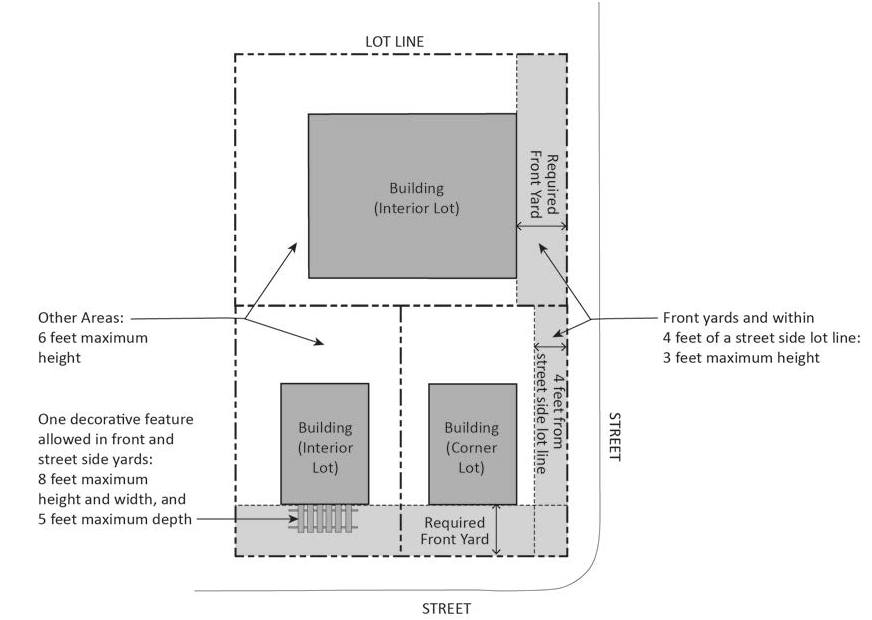
FIGURE 17.17.040.A: FENCE AND FREESTANDING WALL HEIGHT
B.
Materials.
1.
Prohibition on Hazardous Fencing Materials. The use of barbed wire, razor wire, ultra-barrier, electrified, and other hazardous fencing is not permitted unless such fencing is required by any law or regulation of the city, the State of California, federal government, or other public agency.
a.
Exception. The planning commission may approve an exception to this standard for sites in employment districts, provided the hazardous fencing materials are located at the top portion of a fence which is at least six feet in height where the planning commission finds such fencing is necessary for security purposes.
2.
Limitation on Chain-Link Fencing.
a.
Residential Districts. Chain-link fencing is prohibited in residential districts.
b.
Non-residential Districts. In non-residential districts, chain-link fencing shall not be visible from the street, a state highway, or adjacent residential districts.
3.
Limitation on Concrete Block. Plain, concrete block is not permitted as a fencing material. Concrete block must be finished with stucco (or decorative split-faced block) and capped with a decorative cap.
(Ord. No. 503, § 1(Exh. A), 1-25-2018; Ord. No. 505, § 3(Exh. A), 7-12-2018)
17.17.050 - Height and height exceptions.
The structures listed in the following table may exceed the maximum permitted building height for the district in which they are located, subject to the limitations stated and further provided that no portion of a structure in excess of the building height limit may contain habitable areas or advertising. Additional height, above this limit, may be approved with a conditional use permit, pursuant to the provisions of Chapter 17.35, Use Permits.
(Ord. No. 503, § 1(Exh. A), 1-25-2018)
17.17.060 - Lighting and Illumination.
A.
Applicability. The standards of this section apply to all new development and to exterior alterations and additions that involve replacement light fixtures or systems, except as provided below:
1.
Exemptions. The following lighting is exempt from the provisions of this section.
a.
Public and private street lighting.
b.
Athletic Field Lights. Athletic field lights used within a school campus or public or private park.
c.
Safety and Security Lighting. Safety and security lighting for public facilities.
d.
Construction and Emergency Lighting. All construction or emergency lighting fixtures, provided they are temporary and are discontinued immediately upon completion of the construction work or abatement of the emergency.
e.
Seasonal Lighting. Seasonal lighting displays related to cultural or religious celebrations.
B.
Prohibitions. The following types of exterior lighting are prohibited.
1.
Searchlights. The operation of searchlights for advertising purposes.
2.
Mercury Vapor. Mercury vapor lights.
3.
Other Light Types. Laser lights or any other lighting that flashes, blinks, alternates, or moves.
C.
General Requirements. Outdoor lighting shall be designed to be an integral part of the built environment, reflecting a balance for the lighting needs with the contextual ambient light level and surrounding nighttime characteristics of the community. Lighting for commercial installations adjacent to or near residential uses shall be compatible with and not directly illuminate nearby residential uses.
1.
Maximum Height.
a.
Within one hundred feet of a residential district: sixteen feet.
b.
Other locations: twenty-five feet.
c.
Exceptions: The planning commission may allow additional height for activities, uses, or development with unique lighting needs; accentuating historic architectural features of a building; accentuating signage and/or landscape features; or for security purposes.
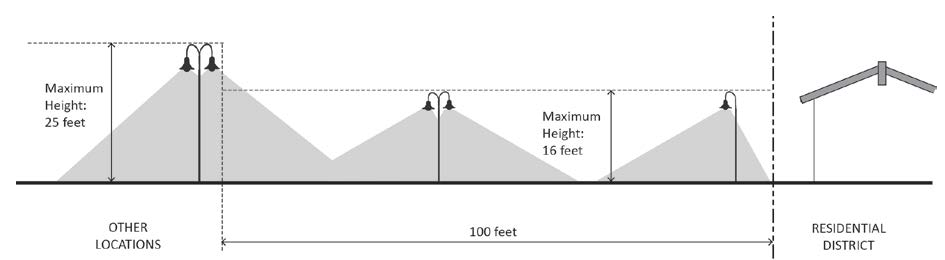
FIGURE 17.17.060.C.1: MAXIMUM HEIGHT, OUTDOOR LIGHTING
2.
Design of Fixtures. Fixtures shall be appropriate to the style and scale of the architecture. Fixtures on buildings shall be attached only to walls or eaves, and the top of the fixture shall not exceed the height of the parapet or roof or eave of roof.
3.
Timing Controls. All outdoor lighting in non-residential development shall be on a time clock or photo-sensor system and turned off during daylight hours and during hours when the building or, in the case of shopping centers, all buildings, are not in use and the lighting is not required for security.
4.
Trespass. All lights shall be directed, oriented, and shielded to prevent light trespass or glare onto adjacent properties. The light level at property lines shall not exceed 0.3 foot-candles.
D.
Supplemental Requirements.
1.
Multi-Unit Residential Buildings.
a.
Lighting in parking areas, garage areas, and carport areas shall be maintained with a minimum of one foot-candle of illumination at the ground level during the hours of darkness.
b.
Aisles, passageways, and recesses related to and within the building complex shall be illuminated with an intensity of at least 0.25 foot-candles at the ground level during the hours of darkness.
2.
Non-residential Buildings. All exterior doors, during the hours of darkness, shall be illuminated with a minimum of 0.5 foot-candle of light.
(Ord. No. 503, § 1(Exh. A), 1-25-2018)
17.17.070 - Outdoor storage.
Storage of goods, materials, machines, equipment, and inoperable vehicles or parts outside of a building for more than seventy-two hours shall conform to the standards in Table 17.17.070, Outdoor Storage Regulations. The regulations of this section do not apply to temporary storage of construction materials reasonably required for construction work on the premises pursuant to a valid building permit or to the parking and storage of recreational vehicles or trailers pursuant to Section 17.17.080, Parking and Vehicle Storage in Required Yards.
(Ord. No. 503, § 1(Exh. A), 1-25-2018; Ord. No. 505, § 3(Exh. A), 7-12-2018)
17.17.080 - Parking and vehicle storage in yards.
Noncommercial passenger vehicles, with a manufacturer's gross vehicle weight ten thousand pounds or less, recreation-type vehicles such as travel trailers, tent trailers, completely enclosed campers and boats on trailers may be parked or stored in yards, provided, that they are not subject to Chapter 10.52, Abatement of Abandoned, Wrecked, Dismantled or Inoperative Vehicles, of the Newark Municipal Code, subject to the following provisions:
A.
Unmounted campers shall not be located within the area extending across the full width of the lot between a street facing lot line and the nearest wall of the closest main building on the lot.
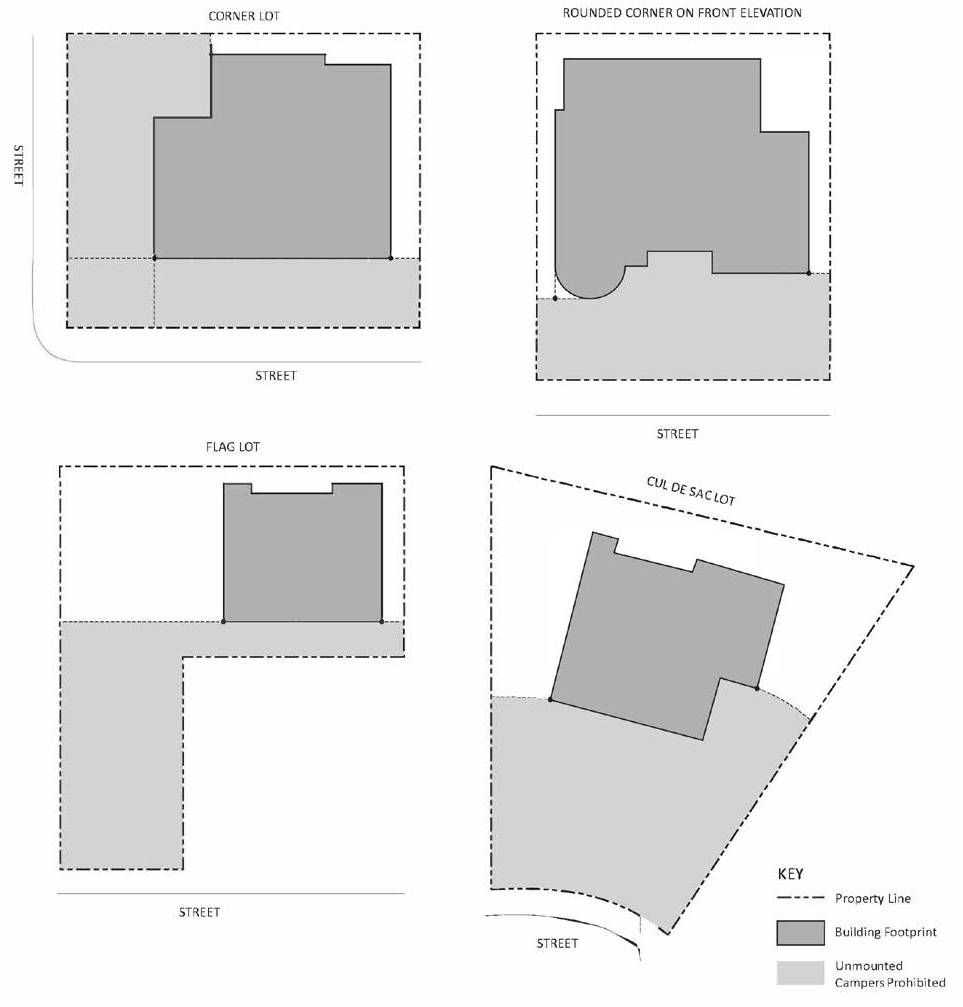
FIGURE 17.17.080.A: UNMOUNTED CAMPER LOCATION LIMITATION
B.
Vehicles and equipment shall be parked on a driveway. "Driveway" shall include a permanently surfaced extension of the original driveway, located immediately adjacent and parallel to the original driveway. Such extension shall not exceed ten feet in width and shall not be used for the parking or storage of more than one passenger or recreation-type vehicle at any one time.
1.
For properties that front on four lane arterials or two lane collector streets in residential districts, two permanently surfaced extensions of the original driveway, located immediately adjacent and parallel to the original driveway, allowing for a maximum of four vehicles in the front yard, all of which must be operable, are allowed subject to design review by the director.
C.
Vehicles or equipment shall not encroach into the public right-of-way, including sidewalks.
D.
Campers which have been removed from the transporting vehicle and which are stored on driveways shall be situated as close to the ground as is practicable and shall not present a hazard to persons entering the driveway or passing by in the public right-of-way.
E.
Parked or stored vehicles, campers, or equipment shall not be occupied.
F.
Vehicles or equipment visible from adjacent property or public right-of-way shall not be used for the accumulation or storage of trash, debris, garbage, garden trimmings or other discarded materials.
(Ord. No. 503, § 1(Exh. A), 1-25-2018)
17.17.090 - Projections into yards and required building separations.
Building projections may extend into required yards or spaces between structures, according to the standards of Table 17.17.090, Allowed Projections into Required Yards and Building Separations, subject to all applicable requirements of the building code. The "limitations" column states any dimensional, area, or other limitations that apply to such structures where they project into required yards.
(Ord. No. 503, § 1(Exh. A), 1-25-2018)
17.17.100 - Screening.
A.
Screening of Mechanical and Electrical Equipment. All exterior mechanical and electrical equipment shall be screened or incorporated into the design of buildings so as not to be visible from public rights-of-way or adjacent residential districts. Equipment to be screened includes, but is not limited to, all roof-mounted equipment, air conditioners, heaters, utility meters, cable equipment, telephone entry boxes, backflow preventions, irrigation control valves, electrical transformers, pull boxes, and all ducting for air conditioning, heating, and blower systems. Screening materials shall be consistent with the exterior colors and materials of the building. Exceptions may be granted by the director where screening is infeasible due to health and safety or utility requirements.
B.
Common Property Lines. A screening wall six feet in height shall be provided on the interior lot lines of any lot that contains any use in the industrial use classification or any use in the transportation, communication, and utilities use classification (except communications facilities and minor utilities) and abuts a residential district.
1.
Timing. The screening wall shall be provided at the time of new construction or expansion of buildings, or changes from one use classification to another non-residential use classification.
2.
Location. Screening walls shall follow the lot line of the lot to be screened, or shall be so arranged within the boundaries of the lot so as to substantially hide from adjoining lots the building, facility, or activity required to be screened.
3.
Materials. Industrial uses must provide a solid screening wall of stucco, decorative block, or concrete panel. Screening walls for other uses may be constructed of stucco, decorative block, concrete panel, wood, or other substantially equivalent material.
C.
Outdoor Storage Areas. Outdoor storage areas shall be screened from view from any public street or freeway; existing or planned residential area; or publicly accessible open space area, parking area, access driveway, or similar thoroughfare.
1.
Height. Screening walls and fences shall be at least six feet in height and no materials or equipment shall be stored to a height greater than that of the wall or fence. Fences and walls must not exceed the maximum allowable fence heights unless allowed pursuant to minor use permit approval.
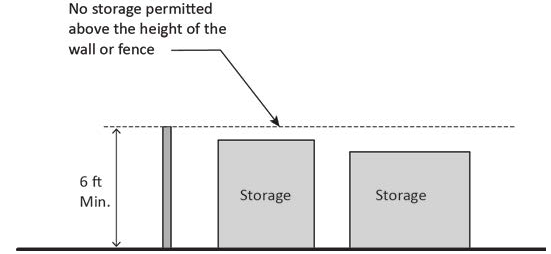
FIGURE 17.17.100.C.1: SCREENING OF OUTDOOR STORAGE
2.
Materials. The screening wall or fence shall be constructed of stucco, decorative block, concrete panel, wood or other substantially equivalent material.
D.
Other Outdoor Use Areas. Any use not conducted entirely within an enclosed structure shall be screened from view from any public street or freeway; existing or planned residential area; or publicly accessible open space area, parking area, access driveway, or similar thoroughfare where the director finds that the use without screening would have a detrimental effect on adjacent properties.
E.
Berms. An earth berm may be used instead of or in combination with the above types of screening walls.
F.
Maintenance. Screening walls shall be maintained in good repair, including painting, if required, and shall be kept free of litter or advertising. Where hedges are used as screening, trimming or pruning shall be employed as necessary to maintain the maximum allowed height.
(Ord. No. 503, § 1(Exh. A), 1-25-2018)
17.17.110 - Swimming pools and spas.
Swimming pools, spas, and any body of water having a depth of more than 18 inches shall comply with the following standards:
A.
The swimming pool or spa, or the entire lot on which it is located, shall be walled or fenced from the street or from adjacent lots.
1.
Swimming pools and spas located within fifty feet of any lot line shall be screened from view from the street and adjoining properties with a structure or a solid fence or wall at least five feet in height. Swimming pools and spas located less than thirty feet to any lot line shall be screened by a masonry wall or solid fence not less than six feet in height on the side facing such lot line.
B.
The outside wall of the water-containing portion of any swimming pool or spa shall not be located within the required front or street side setback and shall be located at least five feet from all interior side and rear lot lines.
C.
Swimming pools shall be built and maintained per the requirements of the building code, including requirements for enclosure and security.
(Ord. No. 503, § 1(Exh. A), 1-25-2018)
17.17.120 - Trash and recycling collection areas.
This section establishes design and locational criteria for the construction of refuse, solid waste, recycling, compost, and green waste container storage areas. Refuse, solid waste, recycling, compost, and green waste are collectively referred to as "waste and recycling."
A.
General Requirements. All waste and recycling shall be placed in an appropriate receptacle. All garbage cans, mobile trash bins, receptacles, and all recycling materials and containers for such recycling materials shall be maintained and stored in accord with this section.
B.
Containment. All development shall provide either individual waste and recycling containers or waste and recycling enclosures consistent with the following:
1.
Individual Waste and Recycling Containers. Individual waste and recycling containers for each unit or tenant may be provided as follows:
a.
Development Type. Individual waste and recycling containers may be provided for:
i.
Single-unit development.
ii.
Multi-unit development.
iii.
Non-residential development where the director finds that the nature of the proposed development is such that the development will be adequately served with individual waste and recycling containers.
b.
Location. The waste and recycling containers shall not be located within any required front setback, street side setback, any required parking and landscaped areas, or any other area required by this title to be constructed or maintained unencumbered, according to fire and other applicable building and public safety codes.
i.
GI and LI Districts. In the GI and LI districts, waste and recycling containers shall also be setback a minimum of five feet from any property line and a minimum of ten feet from any residential or open space district boundary.
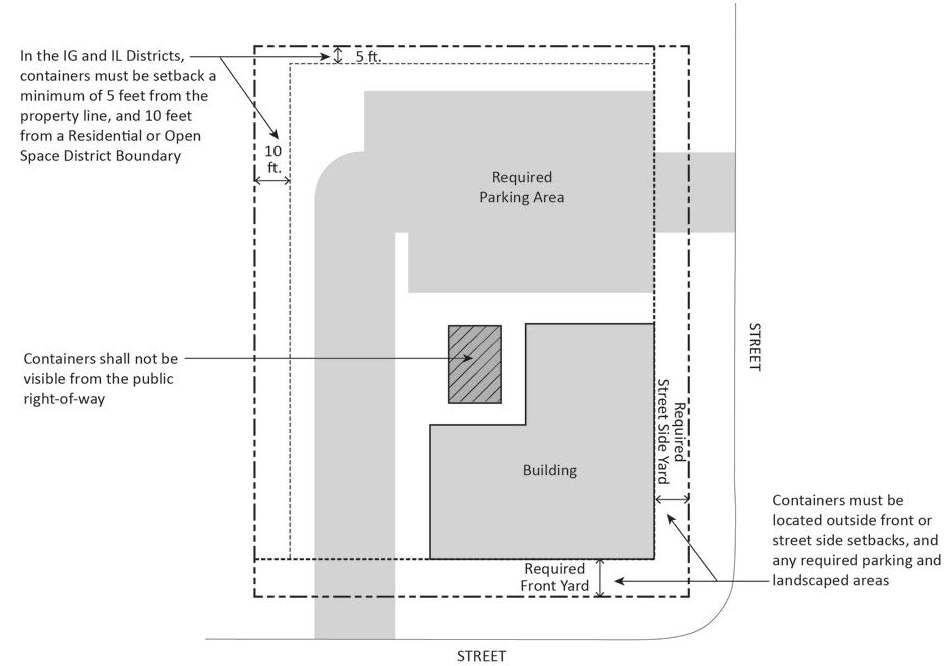
FIGURE 17.17.120.B.1.B: WASTE AND RECYCLING CONTAINER
LOCATION
c.
Visibility. The waste and recycling containers shall not be visible from a public right-of-way.
2.
Waste and Recycling Container Enclosures. Waste and recycling container enclosures are required for all new non-residential development except where the director finds the development will be adequately served with individual waste and recycling containers pursuant to Subparagraph (B)(1)(a) above.
a.
Size. Waste and recycling-container enclosures shall be sized to accommodate all trash, garbage, recyclables, and green waste until such items are picked up by the city or its contracted waste and recycling collector. The city may require additional collection service if receptacles do not provide adequate capacity.
b.
Location. The waste and recycling storage area shall not be located within any required front setback, street side setback, any required parking and landscaped areas, or any other area required by this title to be constructed or maintained unencumbered, according to fire and other applicable building and public safety codes.
c.
Accessibility. Waste and recycling storage areas shall be accessible so that trucks and equipment used by the contracted waste and recycling collector have sufficient maneuvering areas and, if feasible, so that the collection equipment can avoid backing up.
d.
Screening. Waste and recycling storage areas located outside or on the exterior of any building shall be screened with a solid enclosure at least six feet high and include a roof structure.
e.
Enclosure Material. Enclosure material shall be wood, solid masonry, or concrete tilt-up with decorated exterior-surface finish. The trash enclosure shall match and complement the color scheme and architecture of the associated development.
f.
Gate Material. Latching, view-obscuring gates shall be provided to screen trash enclosure openings.
g.
Enclosure Pad. Pads shall be a minimum of four-inch-thick concrete.
h.
Bumpers. Bumpers shall be two inches by six inches thick and made of concrete, steel, or other suitable material, and shall be anchored to the concrete pad.
i.
Clear Zone. The area in front of and surrounding all enclosure types shall be kept clear of obstructions, and shall be painted, striped, and marked "No Parking."
j.
Drainage. The floor of the enclosure shall have a drain that connects to the sanitary sewer system.
k.
Travelways and Area in Front of Enclosure. The travelways and area in front of the enclosure shall have an adequate base to support a truck weight of at least sixty-two thousand pounds.
(Ord. No. 503, § 1(Exh. A), 1-25-2018)
17.17.130 - Underground utilities.
All electrical, telephone, cable television, and similar distribution lines providing direct service to a project shall be installed underground within the site. This requirement may be waived by the director upon determining that underground installation is infeasible.
(Ord. No. 503, § 1(Exh. A), 1-25-2018)
17.18.010 - Purpose.
The provision of safe and stable housing for households at all income levels is essential for the public welfare of the city. Housing in the city has become steadily more expensive and housing costs have gone up faster than incomes. Federal and state government programs do not provide enough affordable housing to satisfy the needs of very low, low, or moderate income households.
As provided in the housing element of the general plan, the city wishes to retain an economically balanced community with housing available to households of all income levels, which is only possible if some of the housing built within the city is affordable to households with limited incomes.
Because new housing contributes to the demand for goods and services, it increases local employment and attracts employees, of whom a quantifiable number will have very low, low, or moderate incomes, increasing the demand for and exacerbating the shortage of housing available for people at these income levels. Further, new housing construction that does not include affordable units aggravates the existing shortage of affordable housing by absorbing the supply of available residential land. In addition, because non-residential development also attracts employees, of whom a quantifiable number will have very low, low, or moderate incomes, new non-residential development projects similarly increase the demand for and exacerbate the shortage of housing available for people at these income levels.
This chapter therefore imposes a residential and non-residential development housing impact fee to provide a means whereby developers of residential and non-residential development projects contribute to the supply of housing for households with very low, low, and moderate incomes. It also implements Program 8 in the city's 2007-2014 Housing Element, which called for amendments to the city's inclusionary housing program if problems were found due to market conditions. Because no affordable housing was produced by the city's former program, the city has adopted a housing impact fee to create a more effective affordable housing program.
(Ord. No. 503, § 1(Exh. A), 1-25-2018)
17.18.020 - Housing impact fee.
A.
Application. A housing impact fee is hereby imposed on all developers of residential and non-residential development projects.
B.
Calculation of Housing Impact Fee. The housing impact fee for residential and non-residential development projects shall be charged on a per square foot basis for new floor area, excluding additions to existing residential dwellings. The amount and calculation of each such fee shall be established by resolution of the city council. The city council may review the fees from time to time at its sole discretion and may, based on that review, adjust the fee amount. Housing impact fees shall not exceed the cost of mitigating the impact of the non-residential and residential projects on the need for affordable housing in the city.
C.
Time of Payment. Payment of the residential and non-residential development housing impact fee shall be due at the issuance of the building permit for the development. The fees shall be calculated based on the fee schedule in effect at the time the building permit is issued.
D.
Processing Requirements. No application for a building permit for any project subject to this section shall be deemed complete unless the application contains the items listed below. The director may require similar information for completeness of other city permits or licenses as necessary or convenient to implement this section:
1.
A statement of the new square feet in a residential or non-residential development project to be constructed, added, or placed that are subject to the requirements of this section, together with documentation sufficient to support the application;
2.
The intended use or uses for the residential or non-residential development project by new square feet; and
3.
A statement of any exemptions applicable to the project.
New square footage shall be calculated on either a gross square foot or net square foot basis, as specified in the fee schedule adopted by resolution of the city council.
(Ord. No. 503, § 1(Exh. A), 1-25-2018)
17.18.030 - Exemptions from payment of housing impact fee.
This fee shall not apply to developers of residential or non-residential development projects which fall within one or more of the following categories:
A.
Emergency Food and Shelter Services. Development projects to be operated by non-profit organizations and which will provide food storage, meal service, and/or temporary shelter to the homeless.
B.
Specific Uses. Projects for any of the following uses:
1.
Colleges and trade schools.
2.
Community assembly.
3.
Community garden.
4.
Cultural institutions.
5.
Day care centers providing care for eight or fewer persons.
6.
Emergency shelter.
7.
Park and recreation facilities.
8.
Public works and utilities.
9.
Schools.
10.
Social service facilities.
11.
Temporary uses.
C.
Government Property. Residential or non-residential development projects located on property owned by the State of California, the United States of America, or any of its agencies and used exclusively for governmental or educational purposes.
D.
Damaged Property. Any structure proposed to repair or replace a building that was damaged or destroyed by fire or other calamity, and construction of the replacement building begins within one year.
E.
Vested Rights. Residential or non-residential development projects to the extent they have received a vested right to proceed without payment of housing impact fees pursuant to state law including those that are the subject of development agreements currently in effect with the city, if such development agreements were approved prior to the effective date of this chapter and where such agreements expressly preclude the city from requiring payment of the housing impact fee.
F.
Prior Application. Residential or non-residential uses as set forth in an application for a building permit, use permit, rezoning or similar discretionary approval accepted as complete by the city prior to the effective date of this title; however, any extension or modification of such approval or permit after such date shall not be exempt.
G.
Affordable Housing. Housing for very low, low, or moderate income households that fully mitigates the development's impacts on the need for affordable housing.
H.
Chapter 17.27. Residential development projects that fulfill the requirements of Chapter 17.27.
(Ord. No. 503, § 1(Exh. A), 1-25-2018; Ord. No. 560, § 4(Exh. B), 1-22-2026)
17.18.040 - Discretionary exemption by city council.
The city council may elect to waive the payment of the impact fee if a developer of a residential or non-residential development project includes the provision of community benefits in excess of those required by the impacts of the project, and if the city council finds that the proposed benefits to the community exceed those that would be provided by the payment of the housing impact fee. Such community benefits may include the provision of senior housing, the generation of significant sales taxes, or the elimination of nuisances. If the city council elects to waive housing impact fees pursuant to this provision, the community benefits shall be guaranteed by a binding document in a form that is acceptable to the city attorney.
(Ord. No. 503, § 1(Exh. A), 1-25-2018)
17.18.050 - Alternatives to payment of housing impact fee.
A.
Mitigation of Housing Impacts. The city council may adopt by resolution the percentage of affordable units needed to fully mitigate the impact of residential or non-residential projects on the need for affordable housing.
B.
Residential Projects.
1.
As an alternative to paying the housing impact fee, a developer of residential property may provide on-site affordable rental or for-sale residential units or an alternative housing program. Any affordable rental or for-sale units proposed as an alternative to the payment of the housing impact fee shall be subject to the requirements described in this section. The program shall be guaranteed by a binding and recorded document, such as a development agreement, in a form that is acceptable to the city attorney.
2.
A developer who proposes the provision of affordable units that are rental must submit an affidavit to the city stating that any rental affordable units proposed by the developer are not subject to Civil Code Section 1954.52(a) nor any other provision of the Costa Hawkins Rental Housing Act (Civil Code Sections 1954.51 et seq.) inconsistent with controls on rents, because, pursuant to Civil Code Sections 1954.52(b) and 1954.53(a)(2), prior to approval of the residential project, the developer will enter into a contract with the city or another public agency agreeing to the limitations on rents contained in Section 17.18.050, Standards for Alternatives to Payment of Housing Impact Fee, in consideration for a direct financial contribution or any form of assistance specified in Chapter 4.3 (commencing with Section 65915) of Division I of Title 7 of the Government Code. The developer may request that the city waive the affordable housing impact fee as a direct financial contribution to the rental residential project.
C.
Non-residential Development Projects. A developer of non-residential development projects may propose an alternative affordable housing program to mitigate the impact of the development on the need for affordable housing. Any affordable rental or for-sale units proposed as an alternative to the payment of the housing impact fee shall be subject to the requirements described in Section 17.18.050, Standards for Alternatives to Payment of Housing Impact Fee. The program shall be guaranteed by a binding and recorded document, such as a development agreement, in a form that is acceptable to the city attorney.
D.
Planning Commission. The alternative means of compliance shall be brought to the planning commission for its consideration. The planning commission shall consider the alternative and recommend approval, conditional approval or denial to the city council. The commission shall only recommend approval or conditional approval of the alternative means of compliance if it is able to make all of the findings set forth below:
1.
The proposed alternative means of compliance fulfills the purposes of this chapter as set forth in Section 17.18.010, Purpose;
2.
The proposed alternative means of compliance will further affordable housing opportunities in the city to an equal or greater extent than compliance with the requirements of Section 17.18.020, Housing Impact Fee, and will fully mitigate the impact of the project on the need for affordable housing;
3.
The proposed alternative means of compliance would better address the city's needs than compliance with the requirements of Section 17.18.020, Housing Impact Fee; and
4.
The proposed alternative means of compliance will not unduly concentrate affordable housing in one geographic area so as to result in housing segregation.
E.
City Council. After consideration of the planning commission's recommendation, the city council may approve, conditionally approve, or deny the alternative means of compliance. The council shall only approve or conditionally approve the alternative means of compliance if it is able to make all of the findings described in Subsection D above.
(Ord. No. 503, § 1(Exh. A), 1-25-2018)
17.18.060 - Standards for alternatives to payment of housing impact fee.
A.
The for-sale and rental affordable units developed as an alternative to the payment of the housing impact fee shall be subject to a resale restriction, deed of trust, and/or regulatory agreement recorded against the property as applicable. These agreements shall have a term of fifty-five years for rental affordable units and a term of thirty years for for-sale units and shall require the affordable units to be rented to very low or low-income households at an affordable rent, or to be sold to very low, low or moderate income households at an affordable ownership cost.
B.
Affordable units shall be comparable to the market rate units in a residential development as follows:
1.
The affordable units shall have the same proportion of units of different bedroom sizes as provided in the residential development project as a whole;
2.
The exterior appearance of the affordable units shall be indistinguishable from that of market rate units;
3.
The affordable units shall be dispersed throughout the residential development project;
4.
The affordable units shall be provided or have access to the same amenities as the market rate units, including air conditioning, covered garages, recreation facilities and laundry facilities; and
5.
All affordable units in a residential development project or phase of a project shall be constructed concurrently with the market rate units.
(Ord. No. 503, § 1(Exh. A), 1-25-2018)
17.18.070 - Housing fund.
There is hereby established in the City of Newark the affordable housing fund. Separate accounts within such housing fund may be created from time to time to avoid co-mingling as required by law or as deemed appropriate to further the purposes of the fund.
A.
Administration. The housing fund shall be administered by the Director, who shall have the authority to govern the housing fund consistent with this chapter and to prescribe procedures for said purpose, subject to approval by the city council.
B.
Advisory Committee. The community development advisory committee shall review the status of the fund annually. As appropriate, the committee may define and prioritize recommended uses of the monies in the housing fund, subject to approval by the city council.
C.
Purpose and use of funds.
1.
Monies deposited in the housing fund, along with any interest earnings on such monies, shall be used solely to increase and preserve the supply of housing affordable to households of very low, low, and moderate incomes; including, but not limited to, acquisition of property and property rights, cost of construction, including costs associated with planning, administration, and design, as well as actual building or installation, as well as any other costs associated with the construction or financing of affordable housing; and reimbursement to the city for such costs if funds were advanced by the city from other sources. To the maximum extent possible, all monies should be used to provide for additional affordable housing. Monies may also be used to cover reasonable administrative expenses not reimbursed through processing fees, including reasonable consultant and legal expenses related to the establishment and/or administration of the housing fund and reasonable expenses for administering the process of calculating, collecting, and accounting for housing fees authorized by this section.
2.
Monies in the housing fund may be disbursed, hypothecated, collateralized or otherwise employed for these purposes from time to time as the director and city council determine is appropriate to accomplish the purposes of the housing fund. The housing fund monies may be extended for the benefit of rental or owner occupied housing or housing services.
3.
Expenditures by the director from the housing fund shall be controlled, authorized, and paid in accordance with general city budgetary policies. Execution of contracts related to the use or administration of housing fund monies shall be in accordance with standard city policy.
(Ord. No. 503, § 1(Exh. A), 1-25-2018)
17.18.080 - Administrative relief.
A.
As part of an application for the first approval of a residential or non-residential development project, a developer or applicant may request that the requirements of this chapter be waived or modified, based upon a showing that applying the requirements of this chapter would result in an unconstitutional taking of property or would result in any other unconstitutional result, or because there is no reasonable relationship between the impact of the development and the need for affordable housing. Any request for a waiver or modification shall be submitted concurrently with the project application. Failure to do so shall constitute a failure to exhaust administrative remedies. The developer or applicant shall set forth in detail the factual and legal basis for the claim, including all supporting technical documentation. Any request for a waiver or modification based on this section shall be reviewed and considered at the same time as the project application.
B.
The waiver or modification may be approved only to the extent necessary to avoid an unconstitutional result, based upon legal advice provided by or at the behest of the city attorney, after adoption of written findings, based on legal analysis and the evidence. If a waiver or modification is granted, any change in the project shall invalidate the waiver or modification, and a new application shall be required for a waiver or modification pursuant to this section.
(Ord. No. 503, § 1(Exh. A), 1-25-2018)
17.18.090 - Enforcement.
A.
Housing Impact Fee. Payment of the housing impact fee is the joint and several obligations of the applicant and the property owner for the subject residential or non-residential development project. In the event of administrative error, the city shall provide the applicant with a written notice, and the applicant shall be required to pay the fees within thirty days. The city may institute any appropriate legal actions or proceedings necessary to ensure compliance herewith, including, but not limited to, actions to revoke, deny, or suspend any permit or development approval.
B.
Violations. No person shall sell or rent an affordable unit built as an alternative to the payment of the housing impact fee at a price or rent exceeding the maximum allowed under this chapter, or to a household not qualified under this chapter. Said sale or rental shall constitute a public nuisance and shall be punishable as a misdemeanor. Each month that such unit is occupied in violation of this chapter shall constitute a separate violation.
C.
Enforcement. The city attorney shall be authorized to enforce the provisions of this chapter and all regulatory agreements and resale controls placed on affordable units by administrative or civil action or any other proceeding or method permitted by law. Failure of any official or agency to fulfill the requirements of this chapter shall not excuse any applicant, developer, or owner from the requirements of this chapter.
(Ord. No. 503, § 1(Exh. A), 1-25-2018)
17.19.010 - Purpose.
This chapter is intended to provide a local ordinance for implementation of the state-mandated density bonus set forth in California Government Code Section 65915 et seq. For the purposes of this chapter, "density bonus" means a density increase over the otherwise maximum allowable residential density under the applicable zoning and general plan land use designation as of the date of application by the applicant to the city.
(Ord. No. 503, § 1(Exh. A), 1-25-2018)
17.19.020 - Density bonus applicability and amount.
Density bonuses pursuant to California Government Code Section 65915 et seq. are available for the following projects. The total density bonus for a project shall not exceed thirty-five percent.
A.
Housing Development.
1.
Criteria. A density bonus shall be granted to housing developments that meet all of the following criteria:
a.
The development will include five or more dwelling units;
b.
The development will provide at least the amount of housing designated for very low or low income households, or moderate income households in a common interest development, set forth in Government Code Section 65915(b), or the development is a senior citizen housing development; and
c.
The affordability of the housing designated for very low, low or moderate income households shall be protected in accordance with Government Code Section 65915(c).
2.
Amount. The amount of the density bonus to which the developer is entitled shall be determined in accordance with Government Code Section 65915(f).
B.
Land Donation. An applicant for a tentative subdivision map, parcel map or other residential development approval may receive a density bonus for a donation of land if the land meets all of the following criteria:
1.
The applicant donates and transfers the land no later than the date of approval of the final subdivision map, parcel map, or residential development application;
2.
The developable acreage and zoning district classification of the land being transferred are sufficient to permit construction of units affordable to very low income households in an amount not less than ten percent of the number of residential units of the proposed development;
3.
The transferred land is at least one acre in size or of sufficient size to permit development of at least forty units, has the appropriate general plan designation, is appropriately zoned with appropriate development standards for development at the required density, and is or will be served by adequate public facilities and infrastructure;
4.
The transferred land shall have all of the permits and approvals, other than building permits, necessary for the development of the very low income housing units on the transferred land, not later than the date of approval of the final subdivision map, parcel map, or residential development application.
5.
The developer shall record a deed restriction approved by the city attorney for the transferred land and the density bonus units to restrict affordability with the requirements set forth in this chapter;
6.
The land shall be transferred to the city or to a housing developer approved by the city prior to approval;
7.
The transferred land must be within the boundary of the proposed development. Alternatively, the city council may approve a site within one-quarter mile of the project site; and
8.
A proposed source of funding for the very low income units shall be identified to the satisfaction of the city council not later than the date of approval of the final subdivision map, parcel map, or residential development or application.
C.
Childcare Facility. A development which meets the requirements of Subsection A or Subsection B above and also includes a child care facility shall receive an additional density bonus or an additional incentive or concession.
1.
To qualify, the child care facility must:
a.
Be located on the premises of, be a part of, or be adjacent to the housing development;
b.
Agree to remain in operation for at least as long as the density bonus units are required to remain affordable; and
c.
Maintain percentages of children from very low income, low income, and moderate income households equal to the percentages of dwelling units required for each income level.
2.
The amount of the additional density bonus shall be determined per Government Code Section 65917.5(a)(2)(A) and (B).
3.
Application for an additional incentive or concession shall be made as described in Section 17.19.030, Incentives and Concessions.
4.
A request for a child care bonus or incentive may be denied if the City Council finds, based on substantial evidence, that the community has adequate child care facilities.
5.
If the space allocated for a child care facility under this section is used for purposes other than a child care facility, or if developer fails to allocate space for the child care facility within three years of the issuance of the first temporary certificate of occupancy, the city council may levy and collect an assessment based on the square footage of the project.
(Ord. No. 503, § 1(Exh. A), 1-25-2018)
17.19.030 - Incentives and concessions.
A.
Applicants for a density bonus may also request incentives or concessions. The number of incentives or concessions will be determined based on Government Code Section 65915(d).
B.
Incentives or concessions may include the following:
1.
Allowing tandem or uncovered parking;
2.
Reduced parking standards;
3.
Reduced setbacks;
4.
Allowing mixed-use when compatible with neighboring properties and when mixed-use would reduce the cost of the housing development; or
5.
Other incentives or concessions that would result in identifiable, financially sufficient, and actual cost reductions.
C.
The city council may deny an application for an incentive or concession if it makes at least one of the following findings:
1.
The incentive or concession is not required to provide for affordable housing costs or rents;
2.
The incentive or concession would have a specific adverse impact that cannot be mitigated upon health, safety or the physical environment, including historical resources; or
3.
The incentive or concession would be contrary to state or federal law.
(Ord. No. 503, § 1(Exh. A), 1-25-2018)
17.19.040 - Waivers or modifications of development standards.
A.
Applicants for a density bonus may also request waivers or modifications of development standards.
B.
If a development standard would have the effect of physically precluding the construction of a development with a density bonus under this section, the city council will waive or modify the standard unless it makes one of the following findings:
1.
The waiver or modification would have a specific adverse impact that cannot be mitigated upon health, safety, or the physical environment;
2.
The waiver or modification would have an adverse impact on real property listed in the California Register of Historical Resources; or
3.
The waiver or modification would be contrary to state or federal law.
(Ord. No. 503, § 1(Exh. A), 1-25-2018)
17.19.050 - Application requirements and process.
A.
Timing. Applicants shall submit applications for a density bonus, incentive or concession, and waivers or modifications as part of a project application.
B.
Materials required.
1.
Application for a density bonus.
a.
Total number of units in the development;
b.
Number of units that will be limited by income or to seniors;
c.
Income limits that will be applied to each unit; and
d.
Amount of density bonus requested.
2.
Application for an incentive or concession.
a.
Description of incentives or concessions requested; and
b.
Financial information describing how each incentive or concession requested is necessary to provide for affordable housing costs or rents.
3.
Application for a Waiver or Reduction of Development Standards.
a.
Description of development standards requested for waiver or reduction;
b.
If a reduction is requested, the level to which the standards are proposed to be reduced; and
c.
An explanation of how the development standard would physically preclude the construction of a development that meets the criteria of Government Code Section 65915(b).
C.
Processing.
1.
If the project is subject to any discretionary approvals, the request for a density bonus, incentive or concession, and/or waiver or reduction of development standards shall be considered concurrently with the discretionary approval.
2.
For all other projects, the applications for a density bonus, incentive or concession, and/or waiver or reduction shall go through the following process:
a.
The planning commission shall consider the application and, based on due consideration of state requirements and all information presented, shall make a recommendation to the city council concerning the application.
b.
The city council shall approve or deny the application based on the requirements of state law, the provisions of this chapter, and the information presented in the application and at the meeting.
(Ord. No. 503, § 1(Exh. A), 1-25-2018)
17.19.060 - Density bonus housing agreement.
A.
All requirements and provisions related to the density bonus, any incentives or concessions, or any waivers or reductions in development standards, shall be set forth in a density bonus housing agreement in a form acceptable to the city attorney.
B.
The density bonus housing agreement shall be executed by the developer and the city manager and recorded at the county recorder's office.
C.
For any development that includes moderate income units which are used to qualify for a density bonus, incentive or concession, and/or waiver or modification of development standards, the developer shall provide draft legal documents for the equity sharing provisions that are set forth in Government Code Section 65915(c)(2).
(Ord. No. 503, § 1(Exh. A), 1-25-2018)
17.19.070 - Conflicts with state law.
In any instance where this density bonus ordinance conflicts with California state law, the state law shall govern.
(Ord. No. 503, § 1(Exh. A), 1-25-2018)
17.20.010 - Purpose.
A.
Historical resources within a community enrich it by providing it with a distinct identity and a link with the past, and by serving as a source of ideas for contemporary buildings, designers and other artisans. The number of irreplaceable historical resources within the community is limited and declining and the preservation of such resources is essential to the general welfare of the public. The purpose of this chapter is to encourage the preservation of historical resources, and to require that the actions to remove or demolish landmarks be subject to city council review, to enhance the preservation and relocation of such landmarks by interested persons and organizations.
B.
This chapter is adopted pursuant to Section 37361 of the California Government Code, which authorizes the adoption of special regulations for the protection, enhancement, perpetuation or use of places, buildings, structures and other objects having a special character or special historical or aesthetic interest or value.
(Ord. No. 503, § 1(Exh. A), 1-25-2018)
17.20.020 - Procedure for designation.
A.
The city council shall undertake and complete one or more historical resources surveys. Upon completion of the survey(s) the city council shall form and cause to be maintained a city historical resources list.
B.
The designation of historical resources, and the removal of such designation, shall be accomplished by the adoption of a resolution to add, or to delete, the historical resource from the historical resources list.
C.
Applications to designate historical resources or remove such designation may be initiated by the city council, the planning commission, the director, the owner of the subject real property or the authorized agent of the owner.
D.
Consideration of the designation of an historical resource by the city council shall be in accordance with the resolutions and procedural rules and regulations of the city council.
E.
The list of historical resources and any additions or deletions shall be maintained, distributed and recorded in the office of the city clerk.
(Ord. No. 503, § 1(Exh. A), 1-25-2018)
17.20.030 - Criteria.
Historical resources shall meet one or more of the following criteria:
A.
Historical and cultural considerations:
1.
One associated with the life or activities of a person significant in the development of institutions, activities or industries of Newark or Washington Township;
2.
One associated with a major group or organization in the history of Newark or Washington Township;
3.
One associated with a significant historic event of Newark or Washington Township;
4.
One associated with a major recurring event in the history of Newark or Washington Township such as an annual celebration;
5.
One associated with a past or continuing institution which has contributed substantially to the life of the city;
B.
Architectural and aesthetic considerations:
1.
One of the few of its decade remaining in the city (one of six) and is unique or one of a few remaining examples in the city of a particular architectural style or period;
2.
The work of a regionally or nationally famous architect;
3.
An architectural curiosity or picturesque work of particular artistic merit;
4.
Contains original materials and/or workmanship of merit. Has architectural, structural, or artistic merit. An important or scarce example (one of six), associated with the architectural and aesthetic character of Newark or of an architecturally and aesthetically distinct or unique neighborhood;
C.
Modifying conditions:
1.
The owner of a property shall have the right to veto its placement on the list of historical resources;
2.
If the historical resource is found to be in, or to have, several of the following conditions, consideration as a historical resource shall be suspended until a detailed report of its significance can be made;
a.
Has conditions which will or are suspected to further destroy its quality or use,
b.
Is not in, or is unadaptable to, productive use,
c.
Cannot be restored to its original use or preserved in its present use,
d.
The integrity of the original design is essentially altered,
e.
Cannot be adapted to a new use without harm to those historic and cultural or architectural and aesthetic elements which contribute to its significance,
f.
Is not free from known threats of demolition or obliteration by public or private action,
g.
Is not accessible, not served by utilities, not capable of providing adequate parking space, not covered by fire and police protection, or is economically unfeasible to preserve or adapt it for contemporary use,
h.
Preservation or restoration and continued maintenance is economically unfeasible,
i.
Is less than ninety years old,
j.
Is not compatible with the program developed for Ardenwood and the criteria of the regional park district.
(Ord. No. 503, § 1(Exh. A), 1-25-2018)
17.20.040 - Maintenance and alteration of historical resources.
A.
Routine maintenance or replacement of deteriorated parts of a landmark are exempt from city council review.
B.
The director may, when requested in writing by an owner of a landmark, advise appropriate remodeling necessary to protect the historic merit of the historic resource. Compliance of the property owner with the recommendations shall be voluntary, not mandatory.
(Ord. No. 503, § 1(Exh. A), 1-25-2018)
17.20.050 - Demolition or removal of historical resources.
A.
Inspection. The director shall have an inspection made of the physical condition of the landmark by the building official in the case of a building or structure, or the landscape parks supervisor if it is a tree or plant life. The inspection shall be made upon the filing of a permit application for any of the following:
1.
An application for a permit for the demolition of a landmark;
2.
A notice of intention to move, or remove a landmark; or
3.
An application for a development project on any landmark site, or land on which a landmark is located.
B.
Report. The inspection official shall report to the director as to the physical condition of the landmark.
C.
Review.
1.
If the report does not cite conditions hazardous to public health and safety, the director shall refer the permit application to the planning commission. The planning commission shall forward its recommendation to the city council for review.
a.
The planning commission shall review applications for the development of a landmark site in accordance with the requirements of this title and forward its recommendation to the city council for review.
2.
If the director finds that the removal, demolition, or destruction of the landmark must be undertaken promptly to adequately protect the public health and safety due to a hazardous condition of the landmark, the director shall do one of the following:
a.
Advise the city council immediately of hazardous conditions. The city council shall determine whether to call for a special meeting, or hold the hearing at their next regular meeting.
b.
If the director finds that the danger to the public health and safety is so immediate that no delay in undertaking the removal, demolition or destruction should take place, the permit may be issued, if such is required, for the removal, demolition or destruction in conformance with other applicable requirements of this chapter, to the extent necessary to eliminate the hazardous condition, without referral of the matter to the city council.
3.
The city council, upon review of the application for a permit for removal or demolition of a landmark, may:
a.
Authorize the building official to issue the permit by finding that taking into account the current market value, the value of transferable development rights, and the costs of rehabilitation to meet the requirements of the building code or other city, state or federal laws, the property retains no reasonable economic use; or
b.
Authorize the building official to issue the permit by finding that moving, removal, or demolition of the building will not have a significant effect on the achievement of the purposes of this chapter; or
c.
Impose a ninety-day moratorium, starting with the application date, on the issuance of the permit. During this period the city may indicate an interest in purchasing or relocating the historical resource; or
d.
Impose a thirty-day moratorium, beginning with either the permit application date or the date of receipt of a letter of intent to apply for a permit. The letter of intent must be submitted by the property owner, via registered mail, to the director. The thirty-day period shall apply only to primary landmarks (those historic resources meeting at least three criteria) that are not on the City of Newark historical resources list. During this period the city may indicate an interest in purchasing or relocating the historical resource.
D.
Acquisition. The city shall have the right to acquire the landmark only at the time the landmark is proposed to be moved or demolished.
(Ord. No. 503, § 1(Exh. A), 1-25-2018)
17.20.060 - Notice of hearing to interested organizations.
The director shall maintain a list of non-profit corporations chartered by the state who have filed a written request for notice of meeting on dispositions of historical resources. The director shall transmit by mail to each person, group or organization on the list a notice of each meeting of the planning commission and the city council, other than special meetings, or immediate danger findings, at which a hearing will be conducted regarding the designation of any historical resource; or the removal of any historical resource from its designation as such; or regarding any proposal for the removal, relocation, destruction or demolition of a landmark.
(Ord. No. 503, § 1(Exh. A), 1-25-2018)
17.21.010 - Purpose.
The purpose of the landscaping regulations is to:
A.
Improve the appearance of the community by requiring permanently maintained landscaping;
B.
Aid in energy conservation by providing shade from the sun and shelter from the wind;
C.
Soften the appearance of parking lots and other development and minimize or eliminate conflicts between potentially incompatible uses through landscaping;
D.
Promote conservation and efficient use of water; and
E.
Implement the Water Conservation in Landscaping Act.
(Ord. No. 503, § 1(Exh. A), 1-25-2018)
17.21.020 - Applicability.
The provisions of this chapter shall apply to the following:
A.
All new development.
B.
Additions to multi-unit and non-residential development that expand existing floor area by ten percent or more.
C.
All new and rehabilitated landscaping projects that include new irrigated landscaping over five hundred square feet.
D.
Exceptions. The provisions of this chapter do not apply to the following:
1.
Farming, agriculture, and crop production including vegetable gardens, vineyards, and small orchards.
2.
Public recreational areas (designated for active play, recreation, interpretation or public assembly).
3.
Registered local, state or federal historical sites.
4.
Habitat restoration projects that do not require a permanent irrigation system.
5.
Mined-land reclamation projects that do not require a permanent irrigation system.
6.
Existing plant collections, as part of botanical gardens and arboretums open to the public.
(Ord. No. 503, § 1(Exh. A), 1-25-2018)
17.21.030 - Areas to be landscaped.
The following areas shall be landscaped, and may count toward the total area of the site required to be landscaped by the zoning district regulations:
A.
Required Setbacks. All required front and street-facing side setbacks, except for areas used for exit and entry, shall be landscaped.
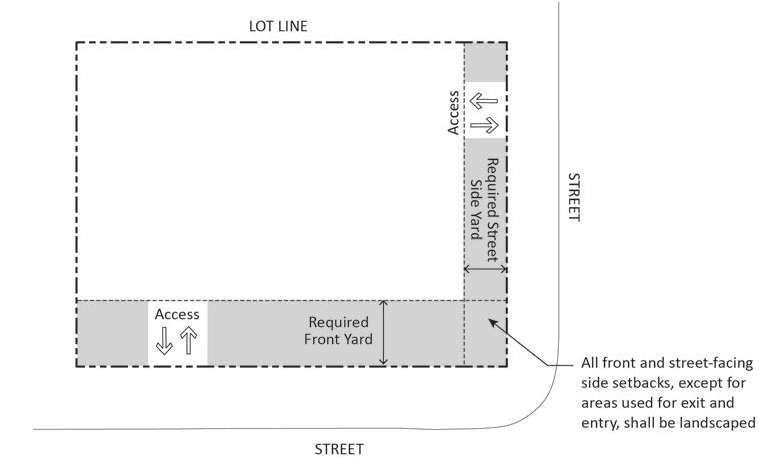
FIGURE 17.21.030.A: AREAS TO BE LANDSCAPED, REQUIRED SETBACKS
B.
Interior Property Lines Abutting Residential Districts. Whenever a non-residential use is located adjacent to a residential district or use, a landscape buffer planted with a mix of trees and shrubs shall be provided along interior property lines. At least one tree of at least fifteen-gallon size shall be planted per twenty linear feet or as appropriate to create a tree canopy over the buffer yard. In addition, at least three shrubs shall be planted per twenty linear feet.
1.
Commercial or Industrial Use. Ten foot wide landscaped buffer yard.
2.
Other Non-residential Uses. Six foot wide landscaped buffer yard.
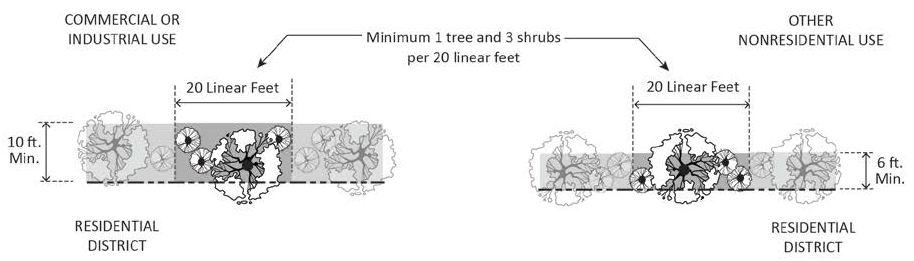
FIGURE 17.21.030.B: AREAS TO BE LANDSCAPED, INTERIOR PROPERTY LINES ABUTTING RESIDENTIAL
DISTRICTS
C.
Building Perimeters. The portions of a non-residential building that front a public street shall have one or more landscape planters installed along a minimum twenty percent of that building face. The minimum width of the planter shall be three feet. This standard does not apply where a building is located on the front or corner side property line.
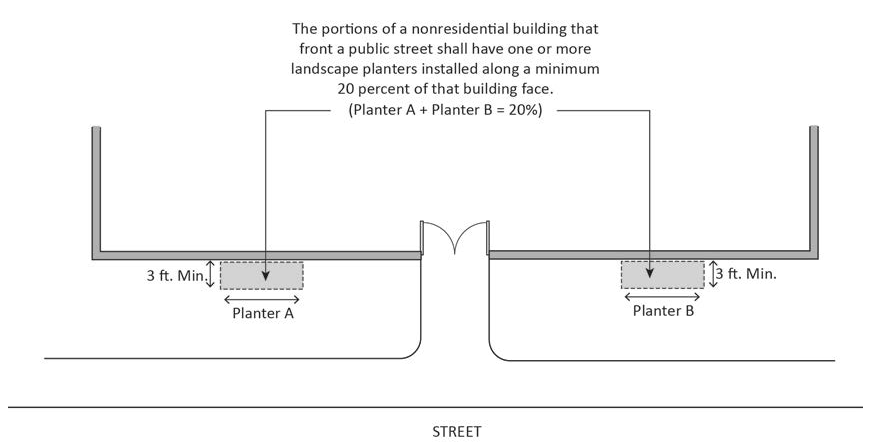
FIGURE 17.21.030.C: AREAS TO BE LANDSCAPED, BUILDING
PERIMETERS
D.
Parking Areas. Parking areas as required by Chapter 17.23, Parking and Loading.
E.
Stormwater Treatment Areas. Areas designated for landscape-based stormwater treatment to satisfy regional stormwater permit requirements.
F.
Unused Areas. All areas of a project site not intended for a specific use, including areas planned for future phases of a phased development, shall be landscaped or hydroseeded. The director may waive this required for areas planned for future development.
(Ord. No. 503, § 1(Exh. A), 1-25-2018)
17.21.040 - Landscape plan.
A landscape plan showing compliance with the standards of this chapter shall be submitted with the permit application for all projects for which landscaping is required.
A.
Proposed plant locations, species, sizes, and plant factor. Plants with similar water needs shall be grouped together on the landscape plan. The plant factor, established in the California Department of Water Resources study, Water Use Classification of Landscape Species (WUCOLS), shall be identified for all landscaped areas on a site. All water features shall be identified as high water use, and temporarily irrigated areas shall be identified as low water use.
B.
Location of any existing trees over six inches in diameter, as measured at forty-eight inches above natural grade, and whether each such tree is proposed for retention or removal.
C.
Alternative Landscape Plan. An applicant may demonstrate that the intent of the landscape requirements of this section can be achieved through an alternative landscape plan. The alternative landscape plan shall be prepared in accordance with the principles and design criteria set forth in this section and shall clearly detail the modifications being requested from the provision of this section and how they reflect the evaluation criteria listed below:
1.
Innovative use of plant materials and design techniques in response to unique characteristics of the site or the proposed use.
2.
Preservation or incorporation of existing native vegetation.
3.
Incorporation of naturalistic design principles, such as variations in topography, meandering or curvilinear plantings, and grouping of dominant plant materials (trees, large shrubs) in a manner consistent with existing native vegetation.
4.
Integration of landscaping and pedestrian facilities in a manner that improves access or incorporates pedestrian-friendly design, this may include reduced ground-level planting along the front setback if canopy shade trees along sidewalks are provided.
5.
Use of additional shade trees to create a greater canopy effect.
6.
A greater degree of compatibility with surrounding uses than a standard landscape plan would offer.
D.
Preparation by Qualified Person. Landscaping for commercial projects, industrial projects, institutional projects, and residential projects consisting of more than two units shall be prepared by a California Registered Landscape Architect. The architect shall indicate compliance with this chapter with a written statement on all prepared landscape construction plan sets and intended compliance on all preliminary or conceptual plans.
(Ord. No. 503, § 1(Exh. A), 1-25-2018)
17.21.050 - General requirements.
A.
Materials.
1.
General.
a.
Required landscaped areas shall be planted with a combination of ground covers, shrubs, vines, and trees. Fifty percent of all trees shall be evergreen species.
b.
Landscaping may also include incidental features such as stepping stones, benches, fountains, sculptures, decorative stones, or other ornamental features, placed within a landscaped setting.
c.
Landscaped areas may include paved or graveled surfaces, provided they do not cover more than thirty percent of the area required to be landscaped.
d.
Garden areas and other areas dedicated to edible plants are considered landscaped areas and count toward required landscaping.
2.
Required Water Efficient Plants. Plants shall be one of the following options shall be chosen to ensure that the landscape project meets water efficiency requirements:
a.
Option A: All Low Water Plants. Exclusive of garden areas, all plants and trees shall be low or very low water use (average California Department of Water Resources study, Water Use Classification of Landscape Species (WUCOLS) plant factor of 0.3). Option A is available for all residential and non-residential areas.
b.
Option B: Primarily Low Water Plants. Exclusive of garden areas, at least eighty-five percent of the landscape area shall contain low or very low water use plants (average WUCOLS plant factor of 0.3). Option B is only available for residential areas.
c.
Option C: Water Use Calculation. The estimated total water use (ETWU) of the landscaping shall not exceed the maximum applied water allowance (MAWA), calculated pursuant to the State Model Water Efficient Landscape Ordinance (MWELO). Option C is available for all residential and non-residential areas.
i.
Department of Water Resources Model Water Efficient Landscape Ordinance Compliance Required. Where Option C is selected, all requirements of the Department of Water Resources Model Water Efficient Landscape Ordinance shall apply.
3.
Size and Spacing. Plant materials shall be grouped in hydrozones in accordance with their respective water, cultural (soil, climate, sun and light) and maintenance needs. Plants shall be of the following size and spacing at the time of installation:
a.
Ground Covers. Ground cover plants other than grasses must be at least the four-inch pot size. Areas planted in ground cover plants other than grass seed or sod must be planted at a rate of one per twelve inches on center.
b.
Shrubs. Shrubs shall be a minimum size of one gallon. When planted to serve as a hedge or screen, shrubs shall be planted with two to four feet of spacing, depending on the plant species.
c.
Trees. All required trees shall be twenty-four-inch box or greater in size. All other trees shall be a minimum fifteen-gallon size.
i.
Tree trunks shall be placed at least five feet from utilities.
ii.
Tree trunks shall be placed at least fifteen feet from light poles.
4.
Turf. Turf, defined as a ground cover surface of mowed grass, is subject to the following limitations.
a.
No more than twenty-five percent of the landscaped area may be turf.
b.
The installation of turf on slopes greater than twenty-five percent is prohibited.
c.
Turf is prohibited in locations that are less than ten feet wide.
5.
Invasive Plants Prohibited. Plant species that are listed by CAL-IPC as invasive are prohibited. Existing invasive plants and noxious weeds shall be removed.
6.
Mulch. A minimum three-inch layer of mulch shall be applied on all exposed soil surfaces of planting areas except in turf areas, creeping or rooting groundcovers, or direct seeding applications where mulch is contraindicated.
7.
Compost. Compost at a rate of at least four cubic yards per one thousand square feet to a depth of six inches into landscape area (unless contra-indicated by a soil test) shall be incorporated.
B.
Water Features. Recirculating water shall be used for all decorative water features.
C.
Dimension of Landscaped Areas. No landscaped area smaller than three feet in any horizontal dimension shall count toward required landscaping.
D.
Visibility. Landscaping shall meet visibility requirements at street intersections and driveways pursuant to Chapter 10.36, Visibility Requirements, of the Newark Municipal Code.
E.
Prescribed Heights. The prescribed heights of landscaping shall indicate the height to be attained within three years after planting.
F.
Maintenance. All planting and other landscape elements shall be maintained in good growing condition. Such maintenance shall include, where appropriate, pruning, mowing, weeding, cleaning, fertilizing, and regular watering. Wherever necessary, plantings shall be replaced with other plant materials to ensure continued compliance with applicable landscaping requirements.
(Ord. No. 503, § 1(Exh. A), 1-25-2018; Ord. No. 505, § 3(Exh. A), 7-12-2018)
17.21.060 - Irrigation specifications.
An automatic irrigation system shall be installed that meets the following standards:
A.
General Requirements.
1.
All irrigation equipment must meet American National Standards Institute (ANSI), American Society of Agricultural and Biological Engineers/ International Code Council (ASABE/ ICC) 802-2014. "Landscape Irrigation Sprinkler and Emitter Standard".
2.
The following areas shall be irrigated with subsurface irrigation or other means that produces no runoff or overspray.
a.
Slopes exceeding twenty-five percent.
b.
Areas less than ten feet wide in any direction.
3.
The irrigation system shall be designed to prevent runoff, low head drainage, overspray, or other similar conditions where irrigation water flows onto non-targeted areas such as adjacent property or hardscapes.
a.
Irrigation systems shall be designed for zero run-off onto paved surfaces unless that surface drains to another landscape area.
b.
Spray irrigation must be placed two-feet away from impervious surfaces unless that surface drains to another landscape area.
c.
Proper irrigation equipment and schedules, including features such as repeated cycles, shall be used to closely match application rates to infiltration rates therefore minimizing runoff.
d.
Slopes greater than twenty-five percent shall not be irrigated with an irrigation system with an application rate exceeding 0.75 inches per hour, and check valves shall be utilized.
B.
Sprinkler Heads. Where used, sprinkler heads shall be selected for proper area coverage, application rate, operating pressure, adjustment capability, and ease of maintenance.
1.
All sprinkler heads installed in the landscape must document a distribution uniformity low quarter of .65 or higher using the protocol defined in ASABE/ICC 802-2014.
2.
Sprinkler heads and other emission devices shall have matched precipitation rates, unless otherwise directed by the manufacturer's recommendations.
C.
Water Meters. A dedicated meter for irrigation is required for non-residential projects with landscape areas of one thousand square feet or more.
D.
Pressure Regulating Equipment. Pressure regulating valves or assemblies shall be installed to ensure that the dynamic pressure at each emission device is within the manufacturer's recommended pressure range for optimal performance.
E.
Flow Sensors. Flow sensors are required to detect high flow conditions created by system damage on all non-residential projects one thousand square feet and greater and residential projects five thousand square feet and greater.
F.
Controllers. Automatic control systems shall be required for all irrigation systems and must be able to accommodate all aspects of the design.
1.
Automatic irrigation controllers shall utilize either evapotranspiration or soil moisture sensor data, or rain sensing override devices.
2.
Irrigation controllers shall be of a type which does not lose programming data in the event the primary power source is interrupted.
G.
Control Valves. Plants which require different amounts of water should be irrigated by separate valves.
H.
Check Valves. Where required on steep slopes, check valves shall be installed to prevent low-head drainage.
I.
Master Shut-off, Gate or Ball Valves. Locate valves as close as possible to the point of connection of the water supply, and place where needed to minimize water loss in case of an emergency (such as a main line break) or routine repair.
(Ord. No. 503, § 1(Exh. A), 1-25-2018)
17.21.070 - Installation and completion.
A.
Consistency with Approved Plans. All landscaping shall be installed consistent with approved plans and specifications, in a manner designed to promote and maintain healthy plant growth.
B.
Timing of Installation. Required landscaping shall be installed prior to the issuance of a certificate of occupancy for the project.
C.
Exception—Assurance of Landscaping Completion. The director may permit the required landscaping to be installed within one hundred twenty days after the issuance of a certificate of occupancy in special circumstances related to weather conditions or plant availability. A surety in the amount equal to one hundred fifty percent of the estimated cost of landscaping, including materials and labor, as well as an agreement that the required landscaping will be installed within one hundred twenty days, must be filed with the city to assure completion of landscaping installation within such time. The surety may take the form of cash deposit, irrevocable letter of credit or bond; and together with the agreement, would provide for payment to the city of any costs incurred in contracting for completion of the required landscaping.
D.
Certification of Completion. Upon completion of the installation of the landscaping and irrigation system, a field observation shall be completed by the licensed project contractor. A certificate of completion shall be submitted to the city by the licensed project contractor. The certificate shall specifically indicate that the plants were installed as specified and that the irrigation system was installed as designed, along with a list of any deficiencies.
1.
Where required Water Efficient Plan Option C: Water Use Calculation, was installed, the applicant shall submit a certificate of completion pursuant to the Department of Water Resources Model Water Efficient Landscape Ordinance.
(Ord. No. 503, § 1(Exh. A), 1-25-2018)
17.22.010 - Purpose.
This chapter is intended to permit continuation of uses and continued occupancy and maintenance of structures that were legally established but do not comply with the standards and requirements of this title and are operated in a manner that does not conflict with the general plan. To that end, the chapter establishes the circumstances under which a nonconforming use or structure may be continued or changed and provides for the removal of nonconforming uses and structures when their continuation conflicts with the general plan and public health, safety, and general welfare.
(Ord. No. 503, § 1(Exh. A), 1-25-2018)
17.22.020 - Applicability.
The provisions of this chapter apply to structures and uses that have become nonconforming by adoption of this title as well as structures and uses that become nonconforming due to subsequent amendments to its text or to the zoning map.
(Ord. No. 503, § 1(Exh. A), 1-25-2018)
17.22.030 - Nonconformities, generally.
Any lawfully established use or structure that is in existence on the effective date of this title or any subsequent amendment thereto but does not comply with the standards and requirements of this title shall be considered nonconforming.
A.
A nonconformity may result from any inconsistency with the requirements of this title including, but not limited to, use, location, density, floor area, height, yard, usable open space, buffering, performance standards, or the lack of an approved use permit or other required authorization.
B.
A use or structure shall not be deemed non-conforming solely because it does not conform with loading space requirements and landscape planting area regulations of the district in which it is located.
(Ord. No. 503, § 1(Exh. A), 1-25-2018; Ord. No. 505, § 3(Exh. A), 7-12-2018)
17.22.040 - Classification of nonconforming uses.
Nonconforming uses are classified as follows for the purpose of determining whether to permit substitution or expansion subject to the requirements of the following sections, or to require the elimination of the nonconforming use.
A.
Class I Nonconforming Use. Class I nonconforming uses are those that do not meet the current standards and requirements of this title but are compatible with the uses of the surrounding properties, including those described in subsections A.1 and A.2, below, or as determined by the planning commission pursuant to Subsection A.3, below. Class I nonconforming uses are generally treated like conforming uses and may expand and remain indefinitely, subject to the limitations of this chapter.
1.
Residential Uses. Any nonconforming residential use shall be classified as a Class I nonconforming use.
2.
Warehousing and Storage and Wholesaling and Distribution. Warehousing and storage and wholesaling and distribution that were lawful when established and in existence on the effective date of this title (February 25, 2018) shall be classified as a Class I nonconforming use.
3.
Other Non-residential Uses. Non-residential uses other than warehousing and storage and wholesaling and distribution may be classified as a Class I nonconforming use with the approval of a minor use permit by the planning commission. Class I non-residential nonconforming classification status shall only occur upon approval of a minor use permit by the planning commission. The classification of a nonconforming non-residential use by planning commission as a Class I nonconforming use shall be optional and shall be based on written application by the property owner or his/her designee, which shall include evidence that the use was legally established and information related to the findings required herein.
a.
Designation. Class I nonconforming uses are designated by the planning commission following a public hearing, with notice as required by Chapter 17.31, Common Procedures, and based on the following findings. The planning commission's decision on the designation of a Class I nonconforming use may be made concurrent with the planning commission's decision on an application for an expansion or substitution of the use. The required findings for Class I nonconforming use designation/expansion/substitution are:
i.
The nonconforming use was legally established;
ii.
The continuation, proposed expansion, or substitution of the nonconforming use would not be detrimental to public health, safety, or general welfare; and
iii.
With the exception of the nonconforming use, the continuation, proposed expansion, or substitution would not be inconsistent with the general plan and would not preclude or interfere with implementation of any applicable city specific plan.
b.
Considerations. In making the required findings, the planning commission shall consider the following factors as they relate to the nonconforming use:
i.
Noise;
ii.
Traffic generation;
iii.
Hours of operation;
iv.
Noxious or annoying emissions of odor, smoke, waste water or other matters;
v.
Proximity of the use to conforming uses;
vi.
Extent and severity of nonconformity;
vii.
Effect of the nonconforming use on surrounding conforming uses;
viii.
Character of the surrounding neighborhood, including the number and proportion of nonconforming uses;
ix.
Access to the nonconforming use;
x.
Maintenance of the nonconforming use; and
xi.
Any other factors the planning commission deems relevant given the purposes of this chapter.
c.
Conditions. When making its decision on an application for an expansion or substitution of a Class I nonconforming use, the planning commission may establish conditions that are necessary to accomplish the purposes of this chapter, including, but not limited to:
i.
Required improvement of, or modifications to existing improvements on, the property;
ii.
Limitations on hours of operations;
iii.
Limitations on the nature of operations; and
iv.
A specified term of years for which the expanded or substituted nonconforming use shall be allowed.
B.
Class II Nonconforming Use. Class II nonconforming uses are those that should be replaced at some time in the future in order to implement the general plan's and any applicable specific plan's long term objectives, but are not detrimental to surrounding properties due to health, safety, or substantial aesthetic impacts. Class II nonconforming uses include any nonconforming non-residential use that has not been designated as a Class I or Class III nonconforming use.
1.
Class II nonconforming uses may remain in operation but are subject to restrictions on expansion as set forth in Subsection 17.22.060.A, Expansion, and on substitution of uses as set forth in Subsection 17.22.060.E, Substitutions.
2.
The city council may establish amortization periods for specific Class II nonconforming uses on a case-by-case basis pursuant to Section 17.22.100, Establishment of Amortization Periods.
3.
Class II nonconforming uses may not be reestablished or resume business if the Class II nonconforming use has been destroyed or damaged at a level equal to or greater than fifty percent of the value of the nonconforming use business. The determination of the appraised value shall be made by a professional appraiser selected by the city, whose fee shall be paid by the business owner.
C.
Class III Nonconforming Use. Class III nonconforming uses are those designated as a public nuisance by the city council following a public hearing, with notice as required by Chapter 17.31, Common Procedures. Prior to city council consideration of the matter, the planning commission shall conduct a noticed public hearing and provide a recommendation on the designation to the city council. The Class III nonconforming use designation shall be based on a finding that the use is detrimental to public health, safety, or general welfare, or materially injurious to properties or improvements in the vicinity.
1.
The city council shall establish an amortization period for each Class III nonconforming use pursuant to Section 17.22.100, Establishment of Amortization Periods.
(Ord. No. 503, § 1(Exh. A), 1-25-2018)
17.22.050 - Right to continue.
Any use or structure that was lawfully established prior to the effective date of this title or of any subsequent amendments to its text or to the zoning map may only be continued and maintained provided there is no alteration, enlargement, addition, or other change to any building or structure or use therein; or no substitution, expansion, or other change including an increase in occupant load or any enlargement of the area, space, or volume occupied by or devoted to such use, except as otherwise provided in this chapter.
A.
The right to continue a nonconforming use or structure shall attach to the land and shall not be affected by a change in ownership, tenancy, or management.
B.
The right to continue a nonconforming use or structure shall not apply to uses or structures determined by the planning commission or city council as described in this chapter to be a public nuisance arising from conditions that constitute a threat to public health, safety or general welfare.
C.
The right to continue a nonconforming use or re-occupy a nonconforming structure shall terminate if the nonconforming use has been abandoned or the nonconforming structure has been vacated for the relevant period of time described in Section 17.22.110, Abandonment of Nonconforming Uses.
(Ord. No. 503, § 1(Exh. A), 1-25-2018)
17.22.060 - Changes to and substitutions of nonconforming uses.
Nonconforming uses shall not be expanded, modified, or substituted for another classification of a nonconforming use except as provided below:
A.
Expansion. A Class I or Class II nonconforming use may expand the area it occupies, including floor area of the occupied structure, all or part of another structure, and area of the subject lot, subject to planning commission approval of a conditional use permit in accord with Chapter 17.35, Use Permits.
B.
Absence of Permit. Any use that is nonconforming solely by reason of the absence of a conditional use permit may be changed to a conforming use by obtaining the appropriate conditional use permit pursuant to the requirements in Chapter 17.35, Use Permits.
C.
Substitutions. A nonconforming use may be substituted with a Class I or a Class II nonconforming use as follows:
1.
Substitution of a Class I or Class II nonconforming use with a Class I nonconforming use. The director may allow substitution of a Class I or Class II nonconforming use with a Class I nonconforming use, subject to the approval of a minor use permit.
2.
Substitution of a Class II nonconforming use with a Class II nonconforming use. The planning commission may allow substitution of a Class II nonconforming use with a Class II nonconforming use, subject to approval of a conditional use permit.
3.
Required Findings. In addition to any other findings required by this title, the review authority must find that the proposed new use will be no less compatible with the purposes of the district and surrounding uses that comply with the requirements of this title than the nonconforming use it replaces.
(Ord. No. 503, § 1(Exh. A), 1-25-2018)
17.22.070 - Maintenance of and additions and enlargements to nonconforming structures.
Nonconforming structures may be continued and maintained in compliance with the following provisions.
A.
Maintenance and Repairs. Structural and non-structural maintenance, repair, and interior alterations to a nonconforming structure are permitted if the changes and improvements do not enlarge the structure, change the building footprint, or increase building height or roof pitch.
B.
Additions. Additions to and/or enlargements of nonconforming structures are allowed if the addition or enlargement complies with all applicable laws and requirements of this title, the use of the addition/enlarged area of the property is authorized by this title, and there is no increase in the discrepancy between existing conditions and the requirements of this title, except as provided below:
1.
Nonconforming Setbacks, Residential Districts. In residential districts, a nonconforming interior side or rear yard may be maintained and extended, and shall not be considered an increase in the discrepancy, provided that:
a.
A new encroachment into any other required yard is not created;
b.
The height of the portion of the structure that is within the required setback is not increased; and
c.
Any residential additions above the first floor shall conform to the setbacks in effect at the time the application for the addition is submitted.
(Ord. No. 503, § 1(Exh. A), 1-25-2018)
17.22.080 - Repair and replacement of damaged or destroyed nonconforming structures.
A nonconforming structure that is damaged or partially destroyed by fire, explosion, earthquake, or natural disaster which is not caused by an act or deliberate omission of a property owner, their agent, or person acting on their behalf or in concert with them, may be restored or rebuilt subject to the following provisions.
A.
Restoration When Damage is Fifty Percent or Less of Value. If the cost of repair or reconstruction is less than or equal to fifty percent of the appraised value of the structure, replacement of the damaged portions of the structure is allowed by right provided that the replaced portions are the same size, extent, and configuration as previously existed. The determination of the appraised value shall be made by a professional appraiser selected by the city, whose fee shall be paid by the building owner.
B.
Restoration When Damage Exceeds Fifty Percent of Value. If the cost of repair or reconstruction exceeds fifty percent of the appraised value of the structure, as determined pursuant to Subsection A above, the land and building shall be subject to all of the requirements of this title, except as provided below:
1.
Warehousing and Storage and Wholesaling and Distribution Structures in Employment Districts. Warehousing and storage and wholesaling and distribution structures in employment districts may be replaced provided that the replaced portions are the same size, extent, and configuration as previously existed.
2.
Other Non-Residential Structures. Any nonconforming use must permanently cease. The planning commission may approve a conditional use permit for the structure to be rebuilt to the same size, extent, and configuration as previously existed provided that the use of the structure is permitted or conditionally permitted in the zone. In such cases any expansion or change to the previous use must conform to the requirements of this chapter.
3.
Residential Structures. Any nonconforming residential structure may be reconstructed, restored, or rebuilt up to the size and number of dwelling units prior to the damage and the nonconforming use, if any, may be resumed subject to a zoning clearance in the case of single-unit dwellings or a conditional use permit approval in the case of other residential uses, unless the review authority finds that the reconstruction, restoration, or rebuilding will be detrimental or injurious to the health, safety, or general welfare of persons residing or working in the neighborhood.
C.
Timing. Building permits must be obtained within two years of the date of the damage or destruction and construction shall be diligently pursued to completion unless another time period is specified through conditional use permit approval. Building permits must be maintained valid through the completion of the project.
(Ord. No. 503, § 1(Exh. A), 1-25-2018)
17.22.090 - Elimination of nonconforming uses, structures and signs.
A.
Elimination of Nonconforming Uses.
1.
Nonconforming Uses Not Occupying a Structure or Occupying a Structure with Valuation Less Than Two Thousand Five Hundred Dollars. The following nonconforming uses shall be discontinued and removed from their sites within three year(s) from the effective date of this title:
a.
A nonconforming use which does not occupy a structure; or
b.
A nonconforming use occupying a structure having an appraised valuation of less than two thousand five hundred dollars.
2.
Class II Nonconforming Uses. The city council may require Class II nonconforming uses to be discontinued and removed from their sites within a period determined pursuant to the process set forth in Section 17.22.100, Establishment of Amortization Periods.
3.
Class III Nonconforming Uses.
a.
Class III nonconforming uses shall be discontinued and removed from their sites within a period to be determined by the city council, pursuant to the process set forth in Section 17.22.100, Establishment of Amortization Periods.
b.
Class III nonconforming uses may also, upon order from the city or a court order, be subject to immediate cessation of the nonconforming use.
B.
Elimination of Nonconforming Signs or Structures.
1.
Nonconforming Sign with Valuation Less Than Five Thousand Dollars. A nonconforming sign or outdoor advertising structure valued at less than five thousand dollars shall be removed within two years from the time the sign or outdoor advertising structure becomes nonconforming unless it was nonconforming for at least three years at the time this title was adopted, in which case it shall be removed within five years from adoption of this title.
2.
Nonconforming Structure with Valuation Less Than Five Thousand Dollars. A structure having an appraised valuation of less than five thousand dollars, which does not comply with the title standards for lot coverage, setbacks, height, distances between structures or usable open space shall be removed from its site within three years from the effective date of this title, except that if the structure is altered to comply with such standards, this provision shall not apply.
3.
Other Nonconforming Structures. Nonconforming structures, excluding those structures referenced in paragraphs 1 and 2 above, may continue except that the city council may establish amortization periods for specific structures pursuant to Section 17.22.100, Establishment of Amortization Periods.
C.
Time for Elimination When Use, Structure, or Sign Becomes Nonconforming. Whenever a use, structure, or sign becomes nonconforming, the period of time prescribed in this chapter for the elimination of the use or the removal of the structure or sign is computed from the effective date of the change that results in the nonconforming status of the use, structure or sign.
D.
Burden of Proof. The burden of proof as to the nonconforming status of any use, structure, or sign shall rest with the property owner and/or resident.
(Ord. No. 503, § 1(Exh. A), 1-25-2018)
17.22.100 - Establishment of amortization periods.
Where a period during which a nonconforming use or structure is to be discontinued and removed from their site is to be established, such period shall be established as follows:
A.
The community development director shall submit the nonconforming use or structure and a recommended amortization period, based on the criteria in Section (C)(1) herein, to the planning commission for review;
B.
The planning commission shall hold a public hearing, noticed pursuant to Chapter 17.31, Common Procedures, to consider the recommended amortization period. Following the public hearing, the planning commission shall make a recommendation on the proposed amortization period to the city council.
C.
After receiving the recommendation from the planning commission, the city council shall hold a public hearing, noticed pursuant to Chapter 17.31, Common Procedures, to consider the recommended amortization period.
1.
The city council may establish a maximum time for which the nonconforming use shall be permitted to continue after considering the following in relation to the use, structure or sign:
a.
The amount of investment or original cost of the use, structure, or sign;
b.
The present actual or depreciated value of the use, structure, or sign;
c.
The remaining useful life of the use, structure or sign;
d.
The remaining term of the lease;
e.
The date or dates of construction;
f.
Amortization of the business or structure for tax purposes;
g.
The salvage value;
h.
The threat to the public health, safety, and welfare posed by the continuance of the nonconforming use; and
i.
Other factors as appropriate.
2.
The time period established by the city council shall be no less than three years in length.
(Ord. No. 503, § 1(Exh. A), 1-25-2018)
17.22.110 - Abandonment of nonconforming uses.
No nonconforming use may be resumed, reestablished, reopened, or replaced by any other nonconforming use after the nonconforming use has been abandoned or vacated for a period of six months or, in the case of Class I nonconforming uses, ten years. A Class I nonconforming use may be resumed, reestablished, or reopened without a conditional use permit after the Class I nonconforming use has been abandoned or vacated for a period less than ten years.
A.
Abandonment. The six-month, or, in the case of Class I nonconforming uses, ten-year, period shall commence when the use ceases to operate and any one of the following occurs:
1.
The site is vacated;
2.
Utilities are terminated; or
3.
The applicable lease is terminated.
(Ord. No. 503, § 1(Exh. A), 1-25-2018)
17.22.120 - Abatement.
The provisions of this chapter are in addition to existing state law authority to declare and abate a public nuisance pursuant to California law and other applicable provisions of the Municipal Code. In the event that a legal nonconforming structure or use is found to constitute a public nuisance, appropriate action may be taken by the city pursuant to the Municipal Code and Chapter 17.41, Enforcement and Abatement Procedures.
(Ord. No. 503, § 1(Exh. A), 1-25-2018)
17.23.010 - Purpose.
The specific purposes of the on-site parking and loading regulations are to:
A.
Ensure that adequate off-street parking and loading facilities are provided for new land uses and major alterations to existing uses;
B.
Minimize the negative environmental and urban design impacts that can result from parking lots, driveways, and drive aisles within parking lots;
C.
Ensure that adequate off-street bicycle parking facilities are provided and promote parking lot designs that offer safe and attractive pedestrian routes;
D.
Establish standards and regulations for safe and well-designed parking, unloading, and vehicle circulation areas that minimize conflicts between pedestrian and vehicles within parking lots and, where appropriate, create buffers from surrounding land uses;
E.
Offer flexible means of minimizing the amount of area devoted to parking by allowing reductions in the number of required spaces in transit-served locations, shared parking facilities, and other situations expected to have lower vehicle parking demand; and
F.
Reduce urban run-off and heat island effect.
(Ord. No. 503, § 1(Exh. A), 1-25-2018)
17.23.020 - Applicability.
The requirements of this chapter apply to the establishment, alteration, expansion, or change in any use or structure, as provided in this section.
A.
All New Buildings and Land Uses. On-site parking and loading in accordance with this chapter shall be provided at the time any main building or structure is erected or any new land use is established.
B.
Existing Non-Residential Buildings.
1.
When a change in use, expansion of a use, or expansion of floor area creates an increase of ten percent or more in the number of required on-site parking or loading spaces, additional on-site parking and loading shall be provided for such addition, enlargement, or change in use and not for the entire building or site.
2.
The existing parking and loading shall be maintained.
3.
If the number of existing parking or loading spaces is greater than the requirements for such use, the number of spaces in excess of the prescribed minimum may be counted toward meeting the parking and loading requirements for the addition, enlargement, or change in use.
4.
A change in occupancy is not considered a change in use unless the new occupant is in a different use classification than the former occupant.
5.
Additional parking and loading spaces are not required for the reconstruction of an existing building when there is no increase in floor area.
C.
Existing Residential Buildings. On-site parking in accordance with this chapter shall be provided where there is an expansion of existing floor area of thirty percent or more or where additional dwelling units are created through the alteration of an existing building or construction of an additional structure or structures.
D.
When Constructed. On-site parking and loading facilities required by this chapter shall be constructed or installed prior to the issuance of a certificate of occupancy for the uses that they serve.
(Ord. No. 503, § 1(Exh. A), 1-25-2018)
17.23.030 - General Provisions.
A.
Existing Parking and Loading to be Maintained. No existing parking and/or loading serving any use may be reduced in amount or changed in design, location or maintenance below the requirements for such use, unless equivalent substitute facilities are provided.
B.
Nonconforming Parking or Loading. An existing use of land or structure shall not be deemed to be nonconforming solely because of a lack of on-site parking and/or loading facilities required by this chapter, provided that facilities used for on-site parking and/or loading as of the date of adoption of this title are not reduced in number to less than what this chapter requires.
C.
Accessibility. Parking and loading areas must be accessible for its intended purpose during all hours of operation.
D.
Stacked Parking. Stacked or valet parking is allowed if an attendant is present or an automated system is in place to move vehicles. If stacked parking managed by an attendant is used for required parking spaces, an acceptable form of guarantee must be filed with the director ensuring that an attendant will be present while the lot is in operation.
17.23.040 - Required parking spaces.
A.
Minimum Number of Spaces Required. Each land use shall be provided at least the number of on-site parking spaces stated in Table 17.23.040, Required On-Site Parking Spaces. The parking requirement for any use not listed in Table 17.23.040 shall be determined by the director based upon the requirements for the most similar comparable use, the particular characteristics of the proposed use, and any other relevant data regarding parking demand.
B.
Calculation of Required Spaces. The number of required parking spaces shall be calculated according to the following rules:
1.
Floor Area. Where an on-site parking or loading requirement is stated as a ratio of parking spaces to floor area, the floor area is assumed to be gross floor area, unless otherwise stated.
2.
Employees. Where an on-site parking or loading requirement is stated as a ratio of parking spaces to employees, the number of employees shall be based on the largest shift that occurs in a typical week.
3.
Bedrooms. Where an on-site parking requirement is stated as a ratio of parking spaces to bedrooms, any rooms having the potential of being a bedroom and meeting the standards of the building code as a sleeping room shall be counted as a bedroom.
4.
Students. Where a parking or loading requirement is stated as a ratio of parking spaces to students (including children in day care), the number is assumed to be the number of students at the state-certified capacity or at building code occupancy where no state-certification is required.
5.
Seats. Where parking requirements are stated as a ratio of parking spaces to seats, each eighty inches of bench-type seating at maximum seating capacity is counted as one seat.
C.
Sites with Multiple Uses. If more than one use is located on a site, the number of required on-site parking spaces and loading spaces shall be equal to the sum of the requirements calculated separately for each use unless a reduction is approved pursuant to Section 17.23.050, Parking Reductions.
D.
CMU District. Supplementary standards are as follows:
1.
No on-site parking is required for the first five thousand square feet of ground floor non-residential use. Ground floor non-residential uses greater than five thousand square feet in size shall provide parking in accordance with Table 17.23.040, Required Number of On-Site Parking Spaces, for the floor area in excess of five thousand square feet.
For the Old Town Specific Plan Area, supplementary regulations in Section 17.14.060 also apply.
(Ord. No. 503, § 1(Exh. A), 1-25-2018; Ord. No. 505, § 3(Exh. A), 7-12-2018; Ord. No. 532, § 4(Exh. B), 10-14-2021)
17.23.050 - Parking reductions.
The number of on-site parking spaces required by Section 17.23.040, Required Parking Spaces, may be reduced as follows, subject to minor use permit approval.
A.
Transit Accessibility. For any land use except residential single-unit and two-unit development, if any portion of the lot is located within one-quarter mile of a transit stop with regular, scheduled service during the weekday hours of 7:00 a.m. to 9:00 a.m. and 5:00 p.m. and 7:00 p.m., the number of required parking spaces may be reduced by twenty percent of the normally required number of spaces.
B.
Shared Parking. Where a shared parking facility serving more than one use will be provided, the total number of required parking spaces may be reduced up to forty percent if the review authority finds that:
1.
The peak hours of use will not overlap or coincide to the degree that peak demand for parking spaces from all uses will be greater than the total supply of spaces;
2.
The proposed shared parking provided will be adequate to serve each use;
3.
A parking demand study prepared by an independent traffic engineering professional approved by the City supports the proposed reduction; and
4.
In the case of a shared parking facility that serves more than one property, a parking agreement has been prepared consistent with the provisions of Section 17.23.060.C, Off-Site Parking Facilities.
C.
Other Parking Reductions. Required parking for any use may be reduced as follows:
1.
Criteria for Approval. The review authority may only approve reduced parking if it finds that:
a.
Special conditions—Including, but not limited to, the nature of the proposed operation; proximity to frequent transit service; transportation characteristics of persons residing, working, or visiting the site; or because the applicant has undertaken a transportation demand management program—exist that will reduce parking demand at the site;
b.
The use will adequately be served by the proposed on-site parking; and
c.
Parking demand generated by the project will not exceed the capacity of or have a significant impact on the supply of on-street parking in the surrounding area.
2.
Parking Demand Study. In order to evaluate a proposed project's compliance with the above criteria, submittal of a parking demand study that substantiates the basis for granting a reduced number of spaces may be required.
(Ord. No. 503, § 1(Exh. A), 1-25-2018)
17.23.060 - Location of required parking.
A.
Residential Uses. Required parking for residential uses shall be on the same lot as the dwelling or use they serve or in an off-site facility as provided in Subsection 17.23.060.C, Off-Site Parking Facilities. Parking shall not be located within a required front or street-facing side yard.
B.
Non-residential Uses. Required parking spaces serving non-residential uses shall be located on the same lot as the use they serve, or in an off-site parking facility as provided in Subsection C.
C.
Off-Site Parking Facilities. Parking facilities for uses other than single-unit dwellings, two-unit dwellings, and second units may be provided off-site with director approval of a minor use permit provided the following conditions are met.
1.
Location.
a.
Residential Uses. Any off-site parking facility must be located within 200 feet, along a pedestrian route, of the unit or use served.
b.
Non-residential Uses. Any off-site parking facility must be located within six hundred feet, along a pedestrian route, of the principal entrance containing the use(s) for which the parking is required.
2.
Parking Agreement. A written agreement between the landowner and the city in a form satisfactory to the city attorney shall be executed and recorded in the office of the county recorder. The agreement shall include:
a.
A guarantee among the landowner for access to and use of the parking facility; and
b.
A guarantee that the spaces to be provided will be maintained and reserved for the uses served for as long as such uses are in operation.
(Ord. No. 503, § 1(Exh. A), 1-25-2018)
17.23.070 - Bicycle parking.
A.
Short-Term Bicycle Parking. Short-term bicycle parking shall be provided in order to serve shoppers, customers, messengers, guests and other visitors to a site who generally stay for a short time.
1.
Parking Spaces Required. For the following uses, the number of short-term bicycle parking spaces shall be at least five percent of the number of required automobile parking spaces, with a minimum of four parking spaces provided per establishment.
a.
Multi-unit development, group residential, and single room occupancy with five or more units.
b.
All uses in the public and semi-public use classification except cemeteries and community gardens.
c.
All uses in the commercial use classification.
2.
Location. Short-term bicycle parking must be located outside of the public right-of-way and pedestrian walkways and within fifty feet of a main entrance to the building it serves. Where the bicycle parking area is not visible from the main entrance of the building, signs located at the main entrance of the building shall identify the location of bicycle parking.
3.
Anchoring and security (racks).
a.
Rack Style. For each short-term bicycle parking space required, a stationary, securely anchored object shall be provided to which a bicycle frame and one wheel (two points of contact) can be secured with a high-security U-shaped shackle lock if both wheels are left on the bicycle. One such object may serve multiple bicycle parking spaces. Decorative bicycle racks, such as circular, ring, or bicycle shaped racks are recommended. No wave racks are allowed.
b.
Rack Spacing. Racks shall be spaced a minimum of three feet between each other when placed side by side, and a minimum of five feet when placed end to end. Racks shall be placed at least three feet from any wall, curb, or object when placed parallel to a wall, curb, or object, and at least two and one-half feet from any wall curb, or object when placed perpendicular to a wall, curb, or object.
4.
Size and Clearance. Each short-term bicycle parking space shall be a minimum of two feet in width and six feet in length and shall be accessible without moving another bicycle. Two feet of clearance shall be provided between bicycle parking spaces and adjacent walls, poles, landscaping, street furniture, drive aisles, and pedestrian ways and at least five feet from vehicle parking spaces.
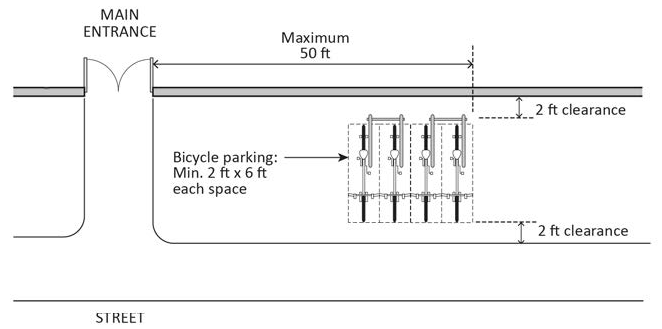
FIGURE 17.23.070.A: SHORT-TERM BICYCLE PARKING
B.
Long-Term Bicycle Parking. Long-term bicycle parking shall be provided in order to serve employees, students, residents, commuters, and others who generally stay at a site for four hours or longer.
1.
Parking Spaces Required.
a.
Residential Uses. A minimum of one long-term bicycle parking space shall be provided for every five units for multi-unit development, group residential, and single room occupancy.
b.
Other Uses. Any establishment with twenty-five or more full time equivalent employees shall provide long-term bicycle parking at a minimum ratio of one space per thirty vehicle spaces.
c.
Parking Structures. Long-term bicycle parking shall be provided at a minimum ratio of one space per fifty vehicle spaces.
2.
Location. Long-term bicycle parking must be located on the same lot as the use it serves and within one hundred feet of the facility entrance. In parking garages, long-term bicycle parking must be located within one hundred feet of an entrance to the facility. Where the bicycle parking area is not visible from the entrance of the building, signs located at the entrance or in an entry lobby of the building shall identify the location of bicycle parking.
3.
Covered Spaces. One hundred percent of required bicycle parking for multi-unit developments shall be inside buildings or garages or in bike lockers. At least sixty percent of other required long-term bicycle parking must be covered either inside a building, under roof overhangs or awnings, in bicycle lockers, or within or under other structures.
4.
Security. Long-term bicycle parking must be in:
a.
An enclosed bicycle locker;
b.
A fenced, covered, and locked or guarded bicycle storage area;
c.
A rack or stand inside a building that is within view of an attendant or security guard or visible from employee work areas or within secure/restricted bicycle storage room; or
d.
Other secure area approved by the director.
5.
Size, Clearance, and Accessibility.
a.
Size. Each bicycle parking space shall be a minimum of two feet in width and six feet in length and shall be accessible without moving another bicycle.
b.
Clearance. Two feet of clearance shall be provided between bicycle parking spaces and adjacent walls, poles, landscaping, street furniture, drive aisles, and pedestrian ways and at least five feet from vehicle parking spaces.
c.
Accessibility. Bicycle parking areas must be accessible from the public right-of-way. The access path must be clear at all times, provide a five foot minimum width, a three foot minimum door width, five percent maximum slope, elevator minimum interior dimensions of eighty inches by fifty-four inches, require no lifting of bicycle over any steps, and provide lighting for the access route and bicycle parking spaces. At least one main access path shall meet all the above listed criteria if multiple access paths are provided.
6.
Rack Style and Spacing. Racks, if used, shall be designed and spaced as follows:
a.
Rack Style. Decorative bicycle racks, such as circular, ring, or bicycle shaped racks are recommended. No wave racks are allowed.
b.
Rack Spacing. Racks shall be spaced a minimum of three feet between each other when placed side by side, and a minimum of five feet when placed end to end. Racks shall be placed at least three feet from any wall, curb, or object when placed parallel to a wall, curb, or object, and at least two and one-half feet from any wall curb, or object when placed perpendicular to a wall, curb, or object.
(Ord. No. 503, § 1(Exh. A), 1-25-2018)
17.23.080 - On-site loading.
A.
Loading Spaces Required.
1.
Uses with Moderate Loading Demand. The following land uses shall provide loading spaces in accordance with Table 17.23.080.A.1, Required Loading Spaces-Moderate Loading Demand.
a.
Banks and financial institutions.
b.
Banquet hall.
c.
Cinema/theaters.
d.
Clinics.
e.
Colleges and trade schools.
f.
Community assembly.
g.
Cultural institution.
h.
Custom manufacturing.
i.
Emergency shelter.
j.
Government offices.
k.
Hospitals.
l.
Hotels.
m.
Indoor sports and recreation.
n.
Maintenance and repair services.
o.
Motels.
p.
Offices.
q.
Public safety facilities.
r.
Residential care facilities.
s.
Residential facility, assisted living.
t.
Schools.
u.
Skilled nursing facilities.
v.
Veterinary services.
2.
Uses with High Loading Demand. The following land uses shall provide loading spaces in accordance with Table 17.23.080.A.2, Required Loading Spaces-High Loading Demand.
a.
Animal sales and grooming.
b.
Automobile/vehicle sales and services.
c.
Eating and drinking establishments.
d.
Food preparation.
e.
Nurseries and garden centers.
f.
Retail sales.
g.
Construction and material yards.
h.
Food and beverage manufacturing.
i.
General industrial.
j.
Light industrial.
k.
Research and development.
l.
Warehousing and storage.
m.
Wholesaling and distribution.
3.
Transportation Uses. Three loading spaces plus additional spaces as determined by the director to be necessary shall be provided for the following uses:
a.
Airports and heliports.
b.
Freight/trucking terminals.
4.
Other Uses. One loading space plus additional spaces as determined by the director to be necessary shall be provided for the following uses:
a.
Business services.
b.
Funeral parlors and interment services.
c.
Public works and utilities.
d.
Recycling facilities.
e.
Transportation passenger terminals.
f.
Any other use similarly requiring the receipt or distribution by vehicles or trucks of material or merchandise.
B.
Adjustments to Loading Space Requirements.
1.
Multi-Tenant Buildings. The gross floor area of the entire building shall be used in determining spaces for multi-tenant buildings. A common loading area may be required, if each tenant space is not provided a loading area. Drive-in roll-up doors for multi-tenant industrial projects may be substituted for required loading areas.
2.
Reduction in Number of Loading Spaces Required. The loading space requirement may be waived if the director finds that the applicant has satisfactorily demonstrated that due to the nature of the proposed use, such loading space will not be needed.
3.
Additional Loading Spaces Required. The required number of loading spaces may be increased to ensure that trucks will not be loaded, unloaded, or stored on public streets. Such requirement shall be based on the anticipated frequency of truck pickups and deliveries and of the truck storage requirements of the use for which the on-site loading spaces are required.
C.
Location. All required loading berths shall be located on the same site as the use served. No loading berth for vehicles over two-ton capacity shall be closer than fifty feet to any property in a residential district unless completely enclosed by building walls, or a uniformly solid fence or wall, or any combination thereof, not less than six feet in height. No permitted or required loading berth shall be located within twenty-five feet of the nearest point of any street intersection.
D.
Minimum Size. Each on-site loading space required by this chapter shall not be less than twelve feet wide, forty-five feet long, and fourteen feet high, exclusive of driveways for ingress and egress, maneuvering areas and setbacks. The minimum size requirement may be modified if the director finds that the applicant has satisfactorily demonstrated that due to the nature of the proposed use, such size will not be needed.
E.
Driveways for Ingress and Egress and Maneuvering Areas. Each on-site loading space required by this section shall be provided with driveways for ingress and egress and maneuvering space of the same type and meeting the same criteria required for on-site parking spaces. Truck-maneuvering areas shall not encroach into required parking areas, travelways, or street rights-of-way. This requirement may be modified if the director finds that sufficient space is provided so that truck-maneuvering areas will not interfere with traffic and pedestrian circulation.
F.
Surfacing. All loading areas shall be paved and improved, and all sites shall be properly drained, consistent with applicable stormwater runoff regulations and subject to the approval of the public works director.
1.
Pavement Standards. Pavement shall be either asphalt or concrete paving consistent with the following standards or comparable material approved by the public works director.
a.
Asphalt. Two inches of asphaltic concrete on four inches of aggregate base material.
b.
Concrete. Four inches of portland cement concrete on three inches of aggregate base material.
(Ord. No. 503, § 1(Exh. A), 1-25-2018)
17.23.090 - Parking area design and development standards.
All parking areas except those used exclusively for stacked or valet parking, shall be designed and developed consistent with the following standards. Parking areas used exclusively for stacked or valet parking are subject only to Subsections I through M. Stacked or valet parking areas which will allow parking at some times without attendants must be striped in conformance with the layout requirements of this section.
A.
Tandem Parking. Tandem parking is not permitted to satisfy the off-street parking requirement.
B.
Shopping Cart Storage. When there are businesses that utilize shopping carts, adequate temporary shopping cart storage areas shall be provided throughout the parking lots. No temporary storage of shopping carts is allowed on walkways outside of buildings. Shopping cart storage shall not occur in required parking spaces.
C.
Parking Access. Parking access areas shall be designed to ensure vehicular access to parking spaces as determined by the public works director.
1.
Distance from Intersection. Access for parking facilities with ten or more spaces shall be located a minimum of fifty feet from the intersection of any two streets.
2.
Access Width. The width of curb cuts for parking access is limited as follows:
a.
The width of a curb cut serving one travel lane is limited to a maximum of twelve feet, excluding splays.
b.
The width of a curb cut serving two travel lanes is limited to a maximum of twenty-four feet, excluding splays, except parking lots with more than one hundred spaces where the curb cut may be up to thirty-five feet wide, excluding splays.
3.
Shared Access. Non-residential projects are encouraged to provide shared vehicle and pedestrian access to adjacent non-residential properties for convenience, safety, and efficient circulation. A joint access agreement guaranteeing the continued availability of the shared access between the properties approved by the director shall be recorded in the county's recorders office, in a form satisfactory to the city attorney.
4.
Forward Entry. Parking areas of four or more spaces shall be provided with suitable maneuvering room so that all vehicles therein may enter an abutting street in a forward direction.
5.
Driveway Length. Driveways providing direct access from a public street to a garage or carport shall be at least twenty feet in depth.
6.
Driveway Width. The minimum width of a driveway is as follows:
a.
Ten feet for any driveway serving one residence.
b.
Ten feet for a one-way driveway.
c.
Twenty feet for a two-way driveway serving any use other than one residence.
D.
Size of Parking Spaces and Maneuvering Aisles. Parking spaces and maneuvering aisles shall meet the minimum dimensions required by this subsection. Screening walls, roof support posts, columns, or other structural members shall not intrude into the required dimensions for parking spaces.
1.
Standard Parking Spaces and Drive Aisles. The minimum basic dimension for standard parking spaces is nine feet by nineteen feet, with a minimum vertical clearance of seven feet. Table 17.23.090.D provides the dimensions of spaces (stalls) and aisles according to angle of parking spaces. The required aisle width may be modified if the public works director finds that sufficient space is provided, so that maneuvering areas will not interfere with traffic and pedestrian circulation.
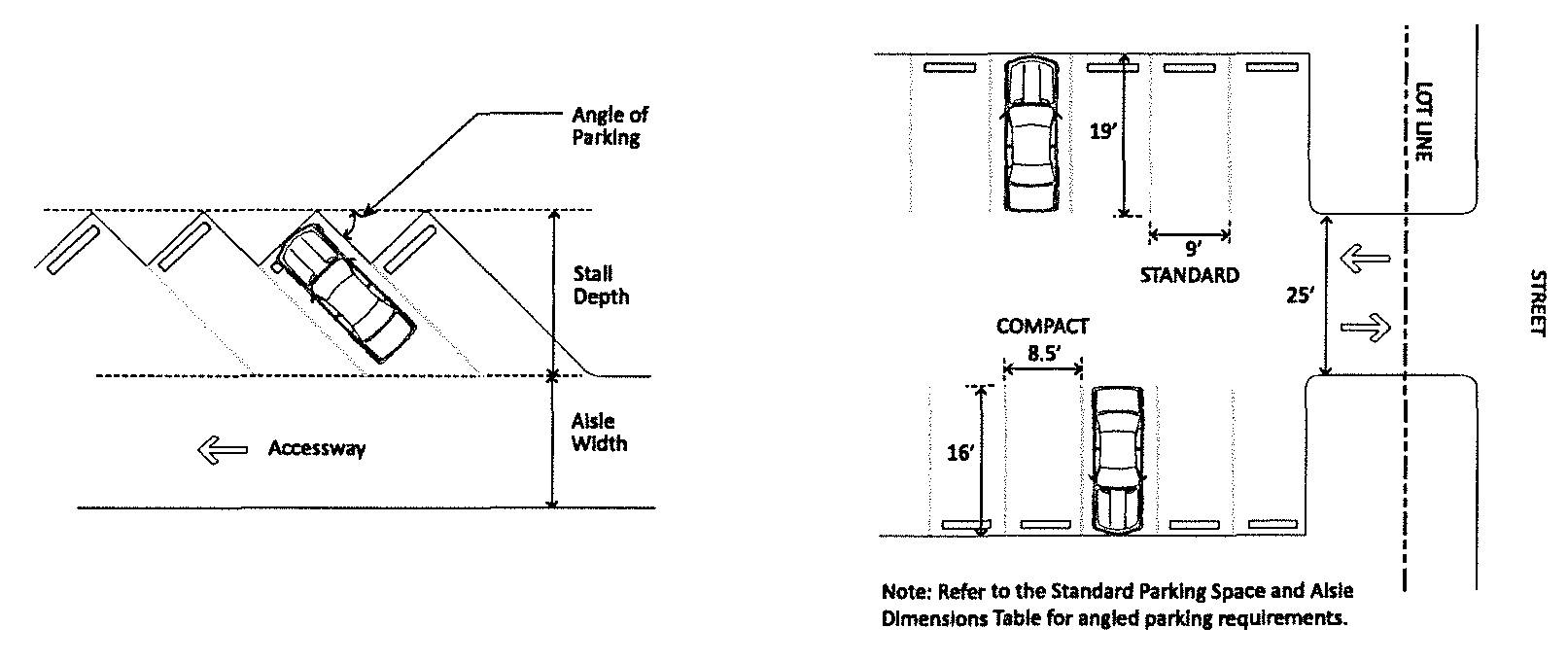
FIGURE 17.23.090.D.1: STANDARD PARKING SPACES AND DRIVE AISLES
2.
Compact Parking Spaces. Up to twenty-five percent of assigned spaces may be reduced to 8.5 feet by 16 feet and labeled "compact."
3.
Parking Spaces Abutting Wall or Fence. Each parking space adjoining a wall, fence, column, or other obstruction higher than 0.5 feet in the vicinity of where a vehicle door may be located shall be increased to accommodate access to the vehicle through the door.
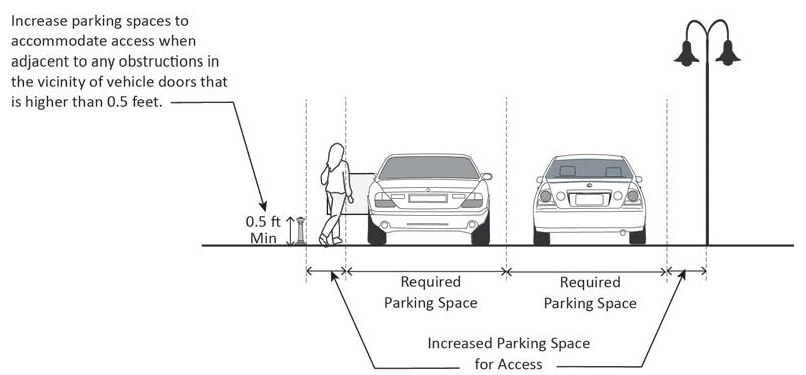
FIGURE 17.23.090.D.3: PARKING SPACES ABUTTING WALL OR FENCE
4.
Minimum Dimensions for Residential Garages and Carports. Garages and carports serving residential uses shall be constructed to meet the following minimum inside dimensions and related requirements:
a.
A single car garage or carport: Ten feet in width by twenty feet in length.
b.
A two-car garage or carport: Twenty feet in width by twenty feet in length.
c.
A garage or carport containing three or more spaces: Ten feet in width by twenty feet in length per space.
d.
The vertical clearance for garage or carport parking spaces shall not be less than seven feet.
e.
Stairs may encroach into the parking area of a garage provided that the front end of a standard size automobile can fit under the stair projection. The bottom of the stairwell (including exterior finish) shall be a minimum of five feet above the garage floor.
E.
Parking Lot Striping. All parking stalls shall be clearly outlined with striping, and all aisles, approach lanes, and turning areas shall be clearly marked with directional arrows and lines as necessary to provide for safe traffic movement.
F.
Wheel Stops. Parking areas designed to accommodate ten or more vehicles shall provide concrete bumper guards or wheel stops for all unenclosed parking spaces. A six-inch high concrete curb surrounding a landscape area at least six feet wide may be used as a wheel stop, provided that the overhang will not damage or interfere with plant growth or its irrigation. A concrete sidewalk may be used as a wheel stop if the overhang will not reduce the minimum required walkway width.
G.
Surfacing. All parking areas shall be paved and improved, and all sites shall be properly drained, consistent with applicable stormwater runoff regulations and subject to the approval of the public works director. No unpaved area shall be used for parking.
1.
Pavement Standards. Parking areas shall be paved consistent with the following materials or comparable material approved by the public works director:
a.
Asphalt. Two inches of asphaltic concrete on four inches of aggregate base material.
b.
Concrete. Four inches of Portland cement concrete on three inches of aggregate base material.
c.
Pavers or Permeable Pavement Systems. Pavers or permeable pavement systems with strength equivalent to a. or b. above.
2.
Landscaping Alternative. Up to two feet of the front of a parking space as measured from a line parallel to the direction of the bumper of a vehicle using the space may be landscaped with ground cover plants instead of paving.
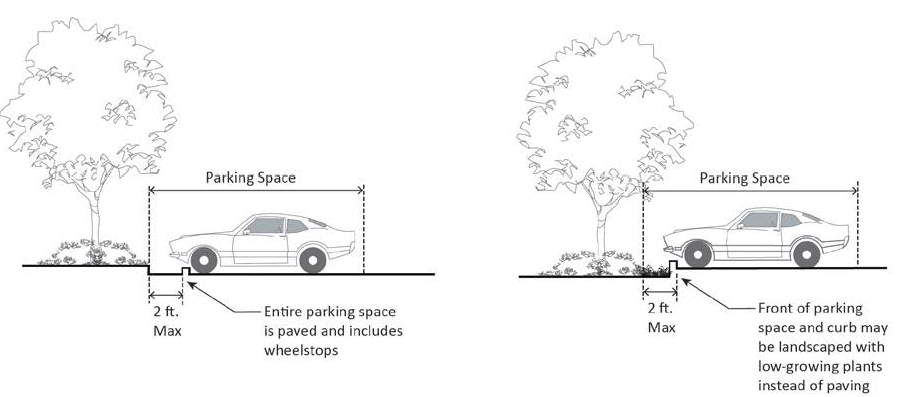
FIGURE 17.23.090.G: PARKING SURFACING
H.
Perimeter Curbing. Parking areas designed to accommodate ten or more vehicles shall provide a six-inch wide and six-inch high concrete curb along the outer edge of the parking facility pavement, except where said pavement abuts a fence or wall. Curbs separating landscaped areas from parking areas shall be designed to allow stormwater runoff to pass through.
I.
Heat Island Reduction. In order to reduce ambient surface temperatures in parking areas, at least fifty percent of the areas not landscaped shall be shaded, of light colored materials with a solar reflectance index of at least twenty-nine, or a combination of shading and light colored materials.
1.
Shade may be provided by canopies, shade structures, trees, or other equivalent mechanism. If shade is provided by trees, the amount of required shading is to be reached within fifteen years.
2.
Trees shall be selected from a list maintained by the planning division.
J.
Lighting. Parking areas designed to accommodate ten or more vehicles shall be provided with a minimum of one-half foot-candle and a maximum of three foot-candles of light over of the parking surface during the hours of use from one-half hour before dusk until one-half hour after dawn.
1.
Lighting design shall be coordinated with the landscape plan to ensure that vegetation growth will not substantially impair the intended illumination.
2.
Parking lot lighting shall, to the maximum extent feasible, be designed and installed so that light and glare is not directed onto residential use areas or adjacent public rights-of-way, consistent with Chapter 17.24, Performance Standards.
K.
Separation From On-Site Buildings. Parking areas designed to accommodate five or more vehicles must be separated from the front and side exterior walls of on-site buildings by walkways a minimum of three feet in width. Commercial buildings with twenty-five thousand square feet or more of gross floor area must be separated from on-site parking on all sides by a walkway a minimum of five feet in width, as well as a planter area at least three feet in width.
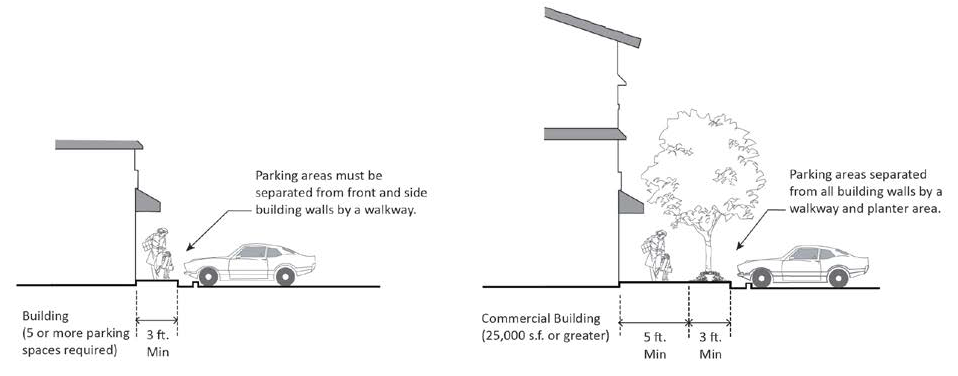
FIGURE 17.23.090.K: PARKING SEPARATION FROM ON-SITE BUILDINGS
L.
Landscaping. Parking areas designed to accommodate five or more vehicles must be landscaped according to the general standards of Chapter 17.21, Landscaping, as well as the standards of this subsection.
1.
Landscape Area Required. A minimum of ten percent of the parking lot area shall be landscaped.
2.
Minimum Planter Dimension. No landscape planter that is to be counted toward the required landscape area shall be smaller than twenty-five square feet in area, or four feet in any horizontal dimension, excluding curbing.
3.
Layout. Landscaped areas shall be well-distributed throughout the parking lot area. Parking lot landscaping may be provided in any combination of:
a.
Landscaped planting strips at least four feet wide between rows of parking stalls;
b.
Landscaped planting strips between parking areas and adjacent buildings or internal pedestrian walkways;
c.
Landscaped islands located between parking stalls or at the ends of rows of parking stalls; and
d.
On-site landscaping at the parking lot perimeter.
4.
Required Landscaped Islands. A landscaped island at least six feet in all interior dimensions and containing at least one twenty-four-inch box tree shall be provided at each end of each interior row of parking stalls and between every six consecutive parking stalls.
5.
Landscaped Buffer Adjacent to Right-of-Way. A landscaped area at least five feet wide shall be provided between any surface parking area and any property line adjacent to a public street, unless a different dimension is specified in the zoning district standards applicable to a site.
6.
Landscaped Buffer Abutting Interior Lot Line.
a.
Adjacent to a Residential, Park, or Open Space District. A landscaped area at least five feet wide shall be provided between any surface parking area and any adjacent lot in a residential, park, or open space district for the length of the parking area.
b.
Adjacent to Any Other District. A landscaped area at least three feet wide shall be provided between any surface parking area and any adjacent lot in any district other than residential, park, or open space for the length of the parking area.
7.
Trees.
a.
Number Required. One for each eight parking spaces.
b.
Distribution. Trees shall be distributed relatively evenly throughout the parking area.
c.
Species. Tree species shall be selected from a list maintained by the planning division.
d.
Size. All trees shall be a minimum twenty-four-inch box with a one-inch diameter at forty-eight inches above natural grade.
e.
Minimum Planter Size. Any planting area for a tree must have a minimum interior horizontal dimension of five feet. Additional space may be required for some tree species.
8.
Protection of Vegetation.
a.
Clearance from Vehicles. All required landscaped areas shall be designed so that plant materials, at maturity, are protected from vehicle damage by providing a minimum two-foot clearance of low-growing plants where a vehicle overhang is permitted, or by wheel stops set a minimum of two feet from the back of the curb.
b.
Planters. All required parking lot landscaping shall be within planters bounded by a concrete curb at least six inches wide and six inches high. Curbs separating landscaped areas from parking areas shall be designed to allow stormwater runoff to pass through.
9.
Visibility and Clearance. Landscaping in planters at the end of parking aisles shall not obstruct driver's vision of vehicular and pedestrian cross-traffic. Mature trees shall have a foliage clearance maintained at eight feet from the surface of the parking area. Other plant materials located in the interior of a parking lot shall not exceed thirty inches in height.
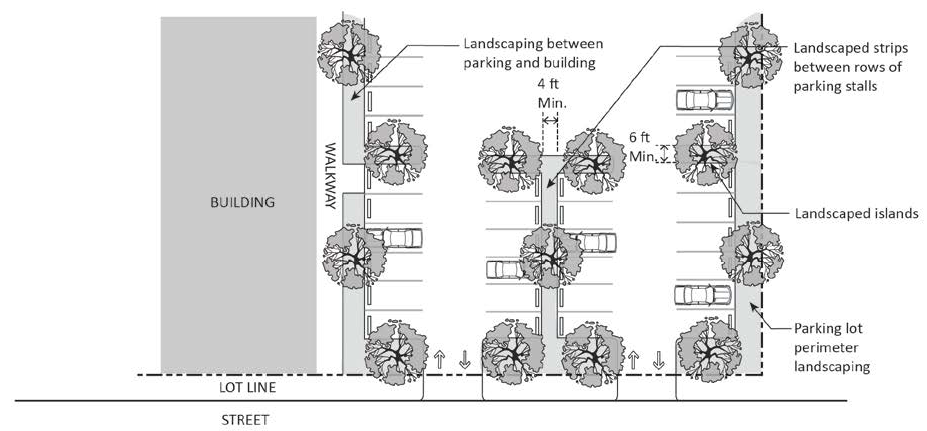
FIGURE 17.23.090.L: PARKING AREA LANDSCAPING
M.
Screening. Parking areas designed to accommodate five or more vehicles shall be screened from view from public streets and adjacent lots in a more restrictive zoning district, according to the following standards.
1.
Height. Screening of parking lots from adjacent public streets shall be forty-two inches in height. Screening of parking lots along interior lot lines that abut residential districts shall be six feet in height, except within the required front setback of the applicable zoning district, where screening shall be three feet in height.
2.
Materials. Screening may consist of one or any combination of the methods listed below:
a.
Walls. Low-profile walls consisting of brick, stone, stucco, or other quality durable material approved by the director, and including a decorative cap or top finish as well as edge detail at wall ends. Plain concrete blocks are not allowed as a screening wall material unless capped and finished with stucco or other material approved by the director.
b.
Fences. An open fence of wrought iron or similar material combined with plant materials to form an opaque screen. Use of chain-link or vinyl fencing for screening purposes is prohibited.
c.
Planting. Plant materials consisting of compact evergreen plants that form an opaque screen. Such plant materials must achieve a minimum height of two feet within eighteen months after initial installation and must be permanently maintained.
d.
Berms. Berms planted with grass, ground cover, or other low-growing plant materials.
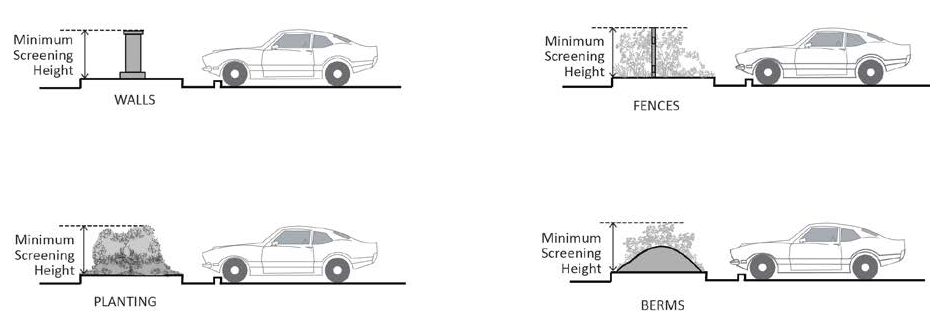
FIGURE 17.23.090.M: SCREENING OF PARKING AREAS
N.
Circulation and Safety.
1.
Visibility shall be assured for pedestrians, bicyclists, and motorists entering individual parking spaces, circulating within a parking facility, and entering or leaving a parking facility.
2.
Off-street parking areas of four or more spaces shall be provided with sufficient maneuvering room so that all vehicles can enter and exit from a public street by forward motion only.
3.
Parking lots shall be designed so that sanitation, emergency, and other public service vehicles can provide service without backing up unreasonable distances or making other dangerous or hazardous turning movements.
4.
Separate vehicular and pedestrian circulation systems shall be provided where possible. Multi-unit residential developments of five or more units must provide pedestrian access that is separate and distinct from driveways. Parking areas for commercial and mixed-use developments that are eighty feet or more in depth and/or include twenty-five or more parking spaces must have distinct and dedicated pedestrian access from the commercial use to parking areas and public sidewalks, according to the following standards:
a.
Connection to Public Sidewalk. An on-site walkway shall connect the main building entry to a public sidewalk on each street frontage. Such walkway shall be the shortest practical distance between the main building entry and sidewalk, generally no more than one hundred twenty-five percent of the straight-line distance.
b.
Materials and Width. Walkways shall provide at least five feet of unobstructed width and be hard-surfaced.
c.
Identification. Pedestrian walkways shall be clearly differentiated from driveways, parking aisles, and parking and loading spaces through the use of elevation changes, a different paving material, or similar method.
d.
Separation. Where a pedestrian walkway is parallel and adjacent to an auto travel lane, it must be raised and separated from the auto travel lane by a raised curb at least four inches high, bollards, or other physical barrier.
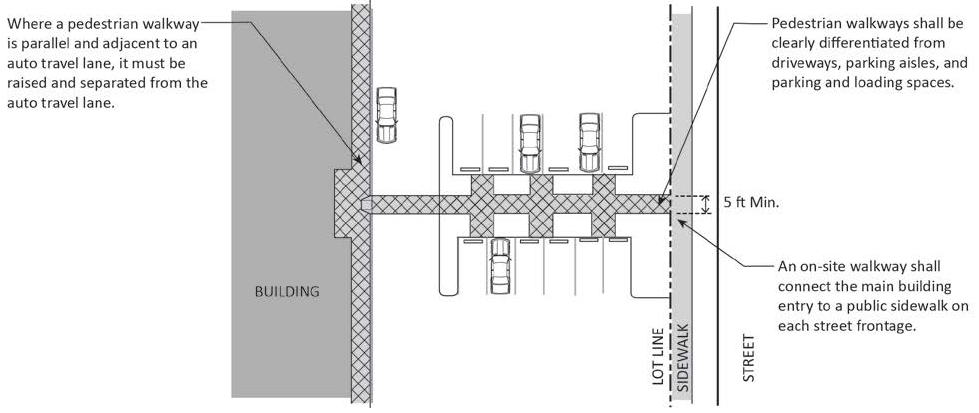
FIGURE 17.23.090.N: PEDESTRIAN CIRCULATION
O.
Alternative Parking Area Designs. Where an applicant can demonstrate to the satisfaction of the director that variations in the requirements of this section are warranted in order to achieve environmental design and green building objectives, including but not limited to achieving certification under the LEED TM Green Building Rating System or equivalent, an alternative parking area design may be approved.
P.
Maintenance. Parking lots, including landscaped areas, driveways, and loading areas, shall be maintained free of refuse, debris, or other accumulated matter and shall be kept in good repair at all times.
(Ord. No. 503, § 1(Exh. A), 1-25-2018; Ord. No. 505, § 3(Exh. A), 7-12-2018)
17.24.010 - Purpose.
The purposes of this chapter are to:
A.
Establish permissible limits and permit objective measurement of nuisances, hazards, and objectionable conditions;
B.
Ensure that all uses will provide necessary control measures to protect the community from nuisances, hazards, and objectionable conditions; and
C.
Protect industry from arbitrary exclusion from areas of the city.
(Ord. No. 503, § 1(Exh. A), 1-25-2018)
17.24.020 - General standard.
Land or buildings shall not be used or occupied in a manner creating any dangerous, injurious, or noxious fire, explosive or other hazard that would adversely affect the surrounding area.
(Ord. No. 503, § 1(Exh. A), 1-25-2018)
17.24.030 - Measurement of impacts.
Measurements necessary for determining compliance with the standards of this chapter shall be taken at the lot line of the establishment or use that is the source of a potentially objectionable condition, hazard, or nuisance.
(Ord. No. 503, § 1(Exh. A), 1-25-2018)
17.24.040 - Dust and fumes.
Uses, activities, and processes shall not operate in a manner that emits excessive dust, fumes, smoke, or particulate matter, unless authorized under federal, state, or local law. Sources of air emissions shall comply with all rules established by the Environmental Protection Agency (Code of Federal Regulations, Title 40), the California Air Resources Board, and the Bay Area Air Quality Management District.
(Ord. No. 503, § 1(Exh. A), 1-25-2018)
17.24.050 - Electromagnetic interference.
No use, activity or process shall cause electromagnetic interference with normal radio and television reception, or with the function of other electronic equipment beyond the lot line of the site in which it is situated. All uses, activities and processes shall comply with applicable Federal Communications Commission regulations.
(Ord. No. 503, § 1(Exh. A), 1-25-2018)
17.24.060 - Fire and explosive hazards.
All activities, processes and uses involving the use of, or storage of, flammable and explosive materials shall be provided with adequate safety devices against the hazard of fire and explosion. Firefighting and fire suppression equipment and devices standard in industry shall be approved by the fire department. All incineration is prohibited with the exception of those substances such as, but not limited to, chemicals, insecticides, hospital materials and waste products, required by law to be disposed of by burning, and those instances wherein the fire department deems it a practical necessity.
(Ord. No. 503, § 1(Exh. A), 1-25-2018)
17.24.070 - Glare.
No use shall be operated such that significant, direct glare, incidental to the operation of the use is visible beyond the boundaries of the lot where the use is located.
(Ord. No. 503, § 1(Exh. A), 1-25-2018)
17.24.080 - Hazardous and extremely hazardous materials.
The use, handling, storage and transportation of hazardous and extremely hazardous materials shall comply with the provisions of the California Hazardous Materials Regulations and the California Fire and Building Codes, as well as the laws and regulations of the California Department of Toxic Substances Control and the county environmental health agency. Activities, processes, and uses shall not generate or emit any fissionable or radioactive materials into the atmosphere, a sewage system or onto the ground.
(Ord. No. 503, § 1(Exh. A), 1-25-2018)
17.24.090 - Heat and Humidity.
Uses, activities, and processes shall not produce any emissions of heat or humidity that cause distress, physical discomfort, or injury to a reasonable person, or interfere with ability to perform work tasks or conduct other customary activities. In no case shall heat emitted by a use cause a temperature increase in excess of five degrees Fahrenheit on another property.
(Ord. No. 503, § 1(Exh. A), 1-25-2018)
17.24.100 - Noise.
A.
Noise Limits. It shall be unlawful for any person to disturb the peace, quiet, and comfort of the community, or any portion thereof, or neighborhood therein, by creating or causing to be created any unreasonable noises.
1.
Applicability. The provisions of this subsection apply to noises from all sources within the city except the following:
a.
Alarms and Warning Devises: Aural alarms or warning devices, including but not limited to fire alarms, burglar alarms, and emergency vehicle sirens and air horns. However, if a standard or minimum noise level is prescribed for particular type of aural alarm or warning device by the laws or regulations of the State of California, the noise emitted from such alarm or warning device shall not exceed such standard or minimum level by more than three dBA.
b.
Emergency Response Activities: Noise from emergency response activities.
c.
Events at Which No Mechanical or Amplifying Equipment is Employed: Noise from events conducted lawfully and without the use of sound of any kind that is mechanically produced or amplified or focused by any means.
d.
Audio Equipment Used by Public Safety Officers: Noise from audio equipment used or operated by public safety officers in the performance of their duties.
e.
Generators Required for Medical Purposes or During Power Outages: Noise from generators required for medical purposes or during power outages.
f.
Permitted for Temporary Uses or Activities: Specific uses or activities for which a temporary exemption was granted through a conditional use permit, minor use permit, or other permit or authorization granted by the city.
2.
Noise Restriction by Decibel.
a.
Residential Property Noise Limits.
i.
No person shall produce or allow to be produced by human voice, machine, device, or any combination of same, on residential property, a noise level at any point outside of the property plane that exceeds 70 dBA between the hours of 7:00 a.m. and 9:00 p.m. or 60 dBA between the hours of 9:00 p.m. and 7:00 a.m.
ii.
No person shall produce or allow to be produced by human voice, machine, device, or any combinations of same, on multifamily residential property, a noise level more than 60 dBA three feet from any wall, floor, or ceiling inside any dwelling unit on the same property, when the windows and doors of the dwelling unit are closed, except within the dwelling unit in which the noise source or sources may be located.
b.
Commercial and Industrial Property Noise Limits. Except for commercial and industrial property abutting residential property, no person shall produce or allow to be produced by human voice, machine, device, or any other combination of same, on commercial or industrial property, a noise level at any point outside of the property plane that exceeds 70 dBA.
i.
Abutting Residential Property. Commercial and industrial property that abuts residential property shall be subject to the residential property noise limits set forth in subsections (a)(i) and (ii) above.
c.
Public Property Noise Limits. Except as otherwise provided in these regulations, no person shall produce or allow to be produced on public property, by human voice, machine, device, or any combination of same, a noise level that exceeds 60 dBA at a distance of 25 feet or more from the source. Noise from activities of the City of Newark is exempted from these regulations.
3.
Construction and Landscaping Activities. Unless otherwise provided pursuant to a duly-issued permit or a condition of approval of a land use entitlement, the construction, alteration, or repair of structures and any landscaping activities, occurring between the hours of 10:00 a.m. and 6:00 p.m. on Sundays and holidays, and 7:00 a.m. and 7:00 p.m. on other days, shall be subject to the following:
a.
No individual device or piece of equipment shall produce a noise level exceeding 83 dBA at a distance of twenty-five feet from the source. If the device or equipment is housed within a structure on the property, the measurement shall be made outside the structure at a distance as close as possible to twenty-five feet from the equipment.
b.
The noise level at any point outside of the property plane shall not exceed 86 dBA. During all other times, the decibel levels set forth in Subsection 17.24.100.A.2, Noise Restriction by Decibel, control.
4.
Violation. Any person who violates or causes or permits another person to violate any provision of this section is guilty of an infraction.
5.
Enforcement. Any code enforcement officer or police officer who determines that a noise in violation of this section exists may issue an administrative citation to the person(s) violating this section in accordance with Chapter 7.18 of this Code. The fine amount(s) shall be in accordance with Section 1.16.010(C) of this Code. Any recipient of an administrative citation under this section may contest the violation pursuant to Section 7.18.030 and an administrative hearing shall be conducted as provided for in Section 7.22.020.
6.
Continuing violation. For purposes of this section only, a person may be issued an administrative citation each time a police officer responds to the same location and determines a violation of this section has occurred.
B.
Noise Creation and Noise Exposure.
1.
Acoustic Study. An acoustic study shall be required for any proposed project which could create or be subject to a noise exposure greater than that deemed "normally acceptable" by the general plan.
2.
Noise Attenuation Measures. Any project subject to the acoustic study requirements of Subsection 17.24.100.A.1, Acoustic Study, may be required as a condition of approval to incorporate noise attenuation measures deemed necessary to ensure that noise standards are not exceeded.
a.
New noise-sensitive uses (e.g., schools, hospitals, churches, and residences) shall incorporate noise attenuation measures to achieve and maintain an interior noise level of 45 dBA.
b.
Noise attenuation measures identified in an acoustic study shall be incorporated into the project to reduce noise impacts to satisfactory levels.
c.
Emphasis shall be placed upon site planning and project design measures. The use of noise barriers shall be considered and may be required only after all feasible design-related noise measures have been incorporated into the project.
(Ord. No. 503, § 1(Exh. A), 1-25-2018)
17.24.110 - Waste disposal.
A.
Discharges to Water or Sewers. Liquids and solids of any kind shall not be discharged, either directly or indirectly, into a public or private body of water, sewage system, watercourse, or into the ground, except in compliance with applicable regulations of the California Regional Water Quality Control Board.
B.
Containment. Wastes shall be handled and stored so as to prevent nuisances, health, safety and fire hazards, and to facilitate recycling. Closed containers shall be provided and used for the storage of any materials which by their nature are combustible, volatile, dust, or odor producing or edible or attractive to rodents, vermin, or insects.
C.
Incineration. There shall be no rubbish or refuse incineration on the premises.
(Ord. No. 503, § 1(Exh. A), 1-25-2018)
17.24.120 - Vibration.
No vibration shall be produced that is transmitted through the ground and is discernible without the aid of instruments by a reasonable person at the lot lines of the site. Vibrations from temporary construction, demolition, and vehicles that enter and leave the subject parcel (e.g., construction equipment, trains, trucks, etc.) are exempt from this standard.
A.
Development Near Railroads. An acoustic study shall be required for any proposed development within two hundred feet of a railroad track. Measures may be required to ensure that vibration impacts remain below acceptable levels.
(Ord. No. 503, § 1(Exh. A), 1-25-2018)
17.25.010 - Purpose.
The purpose of this chapter is to promote the public health, safety, and welfare through a comprehensive system of reasonable, effective, consistent, content-neutral, and nondiscriminatory sign standards and requirements. More specifically, this chapter is intended to:
A.
Balance public and private objectives by allowing adequate avenues for both commercial and non-commercial messages;
B.
Allow signs to serve as an effective channel of communication while preventing visual clutter that will detract from the aesthetic character of the city;
C.
Protect and improve the local economy and quality of life by preserving and enhancing the appearance of the streetscape;
D.
Maintain and enhance the city's appearance by regulating the location, number, type, quality of materials, size, illumination, and maintenance of signs;
E.
Restrict signs that may create a nuisance to nearby properties, violate privacy, or create hazards or unreasonable distractions for pedestrians or drivers;
F.
Provide clear and unambiguous sign standards that enable fair and consistent enforcement; and
G.
Ensure that the constitutionally guaranteed right of free speech is protected.
(Ord. No. 503, § 1(Exh. A), 1-25-2018)
17.25.020 - Applicability.
The provisions of this chapter apply to all signs in all zoning districts, unless otherwise specified, constructed or physically altered on or after the effective date of this title.
A.
Nothing in this chapter shall be construed to prohibit a person from holding a sign while picketing or protesting on public property that has been determined to be a traditional or designated public forum, so long as the person holding the sign does not block ingress and egress from buildings, create a safety hazard by impeding travel on sidewalks, in bike or vehicle lanes, or on trails, or violate any other reasonable time, place, and manner restrictions adopted by the city.
B.
The provisions of this chapter shall not require alteration of the display of any registered mark, or any trademark, service mark, trade name, or corporate name that may be associated with or incorporated into a registered mark, where such alteration would require the registered mark to be displayed in a manner differing from the mark as exhibited in the certificate of registration issued by the United States Patent and Trademark Office. It is the responsibility of the applicant to establish that a proposed sign includes a registered mark.
(Ord. No. 503, § 1(Exh. A), 1-25-2018)
17.25.030 - Exempt signs.
The following signs are exempt from the permit requirements of this chapter, and they do not count toward the total sign area limit for a site, provided that they conform to the specified standards.
A.
Address Signs. Required address identification signs that are in conformance with the building code.
B.
Commercial Displays on Vehicles. Displays on vehicles related to the goods or services provided by the vehicle owner or operator and public transit/public carrier graphics on properly licensed buses, taxicabs, and similar vehicles for hire that legally pass through the city.
C.
Commercial Mascot Signs. Commercial signs held or attended by a person serving as commercial mascots.
1.
Location. Limited to commercial and mixed-use districts.
2.
Number. No more than two commercial mascot signs per business.
3.
Maximum Size. The area of each sign held or attended by a person shall not exceed six square feet.
4.
Timing of Display. Commercial mascot signs shall not be displayed during hours when the business establishment related to the specific commercial mascot sign is not open to the public.
D.
Directional Signs. Directional and/or informational signs not more than six square feet in area for the direction or convenience of the public such as outlining/assisting vehicle and pedestrian circulation within a site, egress, ingress, and any public facilities such as restrooms, telephones, walkways, and other similar features.
E.
Open House Directional Signs. Up to four off-site signs directing the public to "open house" events for the viewing of lots, premises, dwellings or structures that are for sale, lease, or rent, are permitted on private land, provided they comply with the following standards:
1.
No sign or signs exceeds four square feet in area, or three feet in height from finished grade.
2.
The sign or signs may not be placed more than two hours before the start or remain more than two hours after the conclusion of the open house event.
F.
Flags. Flags erected and located in accordance with the following standards:
1.
Location. Flagpoles shall not be located within any required setback.
2.
Height. The maximum flagpole height is thirty feet.
3.
Number. No more than two flags per lot in residential districts, no more than three flags per lot in all other districts.
4.
Maximum Size. The maximum individual flag size is thirty-two square feet.
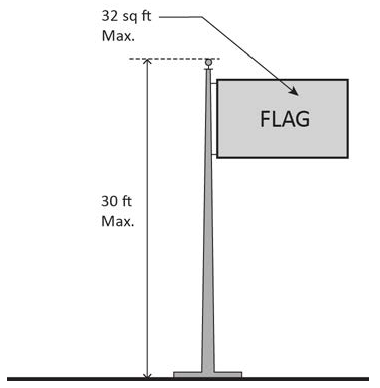
FIGURE 17.25.030.F: FLAGS
G.
Government Signs. Official notices issued by a court, public body, or office and posted in the performance of a public duty; notices posted by a utility or other quasi-public agency; signs erected by a governmental body to direct or regulate pedestrian or vehicular traffic; non-commercial bus stop signs erected by a public transit agency, or other signs required or authorized by law.
H.
Historic Plaques and Commemorative Signs. Historic plaques, memorial signs or tablets, or commemorative signs indicating names of buildings and dates of building erection, either attached to or cut into the surfaces of buildings, provided that no such sign exceeds four square feet in area.
I.
Interior Signs. Signs that are located in interior areas of a building or site not visible from the public right-of-way, and at least three feet from a window, door, or other exterior wall opening.
J.
Mobile Vendor Signs. Signs fixed to mobile vending vehicles that identify or advertise the name, product, or service provided by the vendor. Each mobile vending vehicle is limited to a maximum sign area of eight square feet.
K.
Nameplate. One nameplate for each tenant or occupancy not to exceed two square feet in area indicating the name of the occupant or tenant.
L.
Off-Site Signs. Off-premises signs no more than six square feet in size.
(Ord. No. 503, § 1(Exh. A), 1-25-2018)
17.25.040 - Prohibited signs.
Unless otherwise permitted by a specific provision of this Chapter, the following sign types are prohibited:
A.
Animated or Moving Signs. Animated, flashing, blinking, reflecting, revolving, or other similar sign with visibly moving or rotating parts or visible mechanical movement of any kind, unless expressly permitted by another section of this chapter. This provision does not apply to signs using digital display technology, such as LED (light emitting diodes) or functionally equivalent display methods, which are permitted, subject to the regulations of this chapter.
B.
Balloons, Inflatable Signs, Streamers, Pennants and Other Attention-Getting Devices. Balloons, inflatable signs, streamers, pennants, and other attention-getting devises, made of light-weight fabric or similar material, designed to rotate or move with the wind, that direct, promote, or that are otherwise designed to attract attention are prohibited except when used in conjunction with outdoor automobile sales.
C.
Cabinet or Can Signs. Internally lit cabinet and can signs.
D.
General Advertising. Temporary signs that publicize or promote other businesses or causes using methods of advertising (in contrast to self-promotion, on-site sales, or on-site advertising). General advertising is also known as advertising for hire.
E.
Mobile Billboards. Any sign carried or conveyed by a vehicle for the primary purpose of general advertising for hire. The purpose of this prohibition is to eliminate mobile billboard advertising within the city in order to reduce traffic congestion, promote the safe movement of vehicular traffic, to reduce air pollution, and improve the aesthetic appearance of the city. This prohibition does not apply to displays on vehicles related to the goods or services provided by the vehicle owner or operator and public transit/public carrier graphics on properly licensed buses, taxicabs, and similar vehicles for hire that legally pass through the city.
F.
Roof Signs.
1.
Attached signs that extend above the roofline or parapet (whichever is higher) of a building with a flat roof.
2.
Attached signs that extend above the deck line of a mansard roof.
3.
Signs on rooftop structures, such as penthouse walls or mechanical enclosures.
G.
Search Lights and Klieg Lights. Search and Klieg lights when used as attention-attracting devices for commercial uses.
H.
Signs Located in the Public Right-of-Way or on Public Property. Other than official government signs or warning signs required by law, no inanimate sign can be placed in or project into the public right-of-way or on public property unless authorized by an encroachment permit.
I.
Signs Affixed to Trees. Signs affixed to or cut into any tree or other living vegetation.
J.
Signs on Terrain. Signs cut, burned, marked, or displayed in any manner on a street, sidewalk, cliff or hillside.
K.
Signs of Certain Materials. Signs made of lights, roofing, siding, paving materials, flora, or balloons, or any other similar building, landscaping, or decorative component.
L.
Signs Creating Traffic Hazards or Affecting Pedestrian Safety. Signs must not be placed or located in such a manner as to constitute a safety hazard or to impede the public use of the public right-of-way.
1.
Signs placed, mounted, erected, or installed in any manner that obstructs use of any door, window or fire escape.
2.
Signs mounted or displayed in such a manner that blocks or impedes the normal pedestrian use or public sidewalks. A minimum unobstructed width of four feet must be maintained on sidewalks at all times.
3.
Signs located in such a manner as to constitute a traffic hazard or obstruct the view of traffic, any authorized traffic sign, or signal device.
4.
Signs that may create confusion with any authorized traffic sign, signal, or device because their color, location, or wording, or use of any phrase, symbol, or character interferes with, misleads, or confuses vehicular drivers in their use of roads or conflicts with any traffic control sign or device.
5.
Signs at or near any street intersection that will obstruct the free and clear vision of drivers and pedestrians. Other than traffic control signals, no sign can be installed in the visibility triangle at intersections, extending horizontally fifteen feet from the corner of the intersection and vertically, from a height of three feet to a height of eight feet.
M.
Signs for Prohibited Uses. A sign displaying a commercial message promoting a business that is a prohibited use and has not been established as a legal nonconforming use.
N.
Signs that Produce Noise or Emissions. Signs that produce visible smoke, vapor, particles, odor, noise, or sounds that can be heard at the property line, excluding voice units at menu boards and devices for servicing customers from their vehicles, such as drive-up windows at banks.
(Ord. No. 503, § 1(Exh. A), 1-25-2018)
17.25.050 - Sign measurement.
A.
Measuring Sign Area. The area of a sign face includes the entire area within a single continuous perimeter composed of squares and rectangles that enclose the extreme limits of all sign elements, including, without limitation, sign structures or borders, written copy, logos, symbols, illustrations, and color. Supporting structures, such as sign bases and columns, are not included in sign area provided that they contain no lettering or graphics except for addresses or required tags. The area of an individual sign shall be calculated as follows:
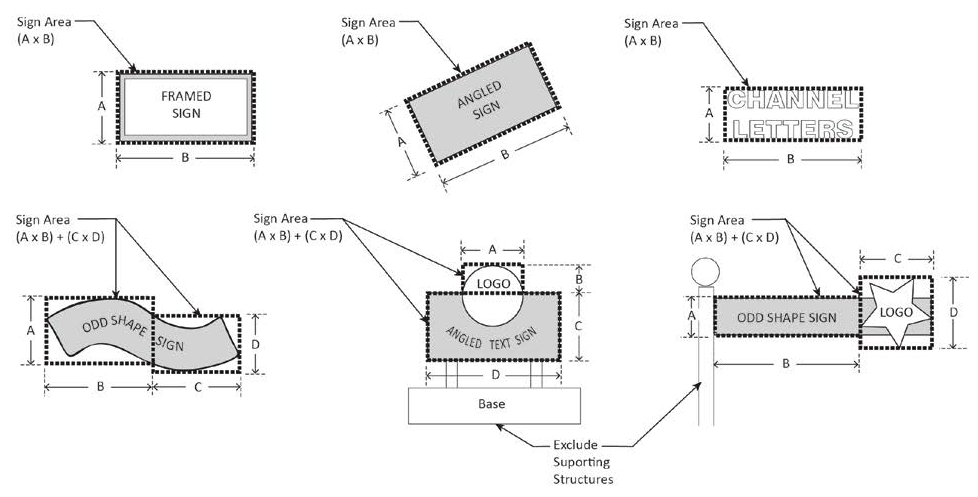
FIGURE 17.25.050.A.1: MEASURING SIGN AREA
1.
Single-Faced Signs. The sign area of a sign with a single face area is the area of the sign face.
2.
Double-Faced Signs. Where two faces of a double-faced sign are located two feet or less from one another at all points, or located at an interior angle of forty-five degrees or less from one another, the sign area of double-faced signs is computed as the area of one face. Where the two faces are not equal in size, the larger sign face will be used. Where two faces of a double-faced sign are located more than two feet or greater than forty-five degrees from one another, both sign faces are counted toward sign area.
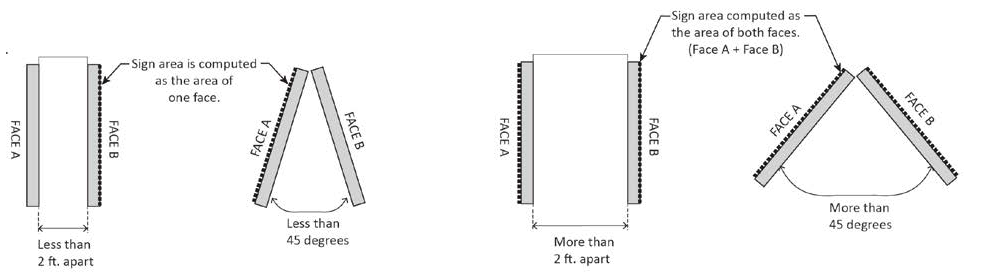
FIGURE 17.25.050.A.4: MEASURING DOUBLE-FACED SIGNS
3.
Multi-Faced Signs. On a three-faced sign, where at least one interior angle is forty-five degrees or less, the area of two faces (the largest and smallest face) must be summed to determine sign area. In all other situations involving a sign with three or more sides, sign area will be calculated as the sum of all faces.
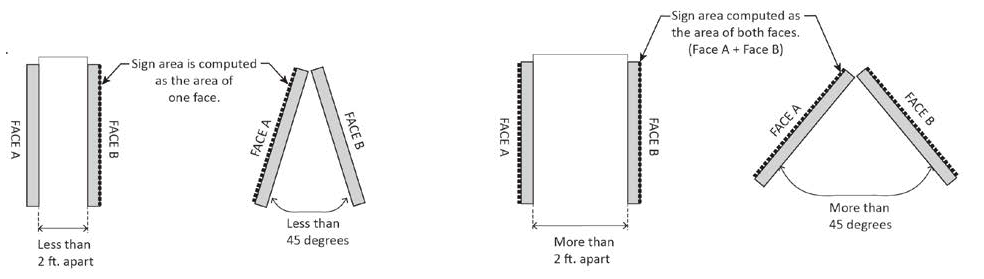
FIGURE 17.25.050.A.4: MEASURING MULTI-FACED SIGNS
4.
Three-Dimensional Signs. Signs that consist of, or have attached to them, one or more three-dimensional objects (i.e., balls, cubes, clusters of objects, sculpture, or statue-like trademarks), may have a sign area that is the sum of all areas using the four vertical sides of the smallest rectangular prism that will encompass the sign.
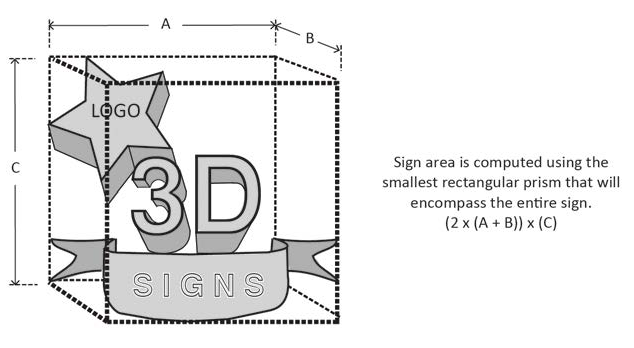
FIGURE 17.25.050.A.4: MEASURING THREE-DIMENSIONAL SIGNS
B.
Measuring Sign Height. The height of a sign is the vertical distance from the uppermost point used to measure sign area to the existing grade immediately below the sign.
1.
Height of Freestanding Signs. The height of freestanding signs shall be measured as the vertical distance from grade at the edge of the right-of-way along which a sign is placed to the highest point of the sign, including any structural or architectural components of the sign. When the grade at the edge of the right-of-way is higher than the site on which the sign is placed, that portion of the sign below the grade at the edge of the right-of-way shall not be included in determining the sign's overall height. Signs oriented towards a freeway shall be measured from the project site grade or pad, whichever is lower.
C.
Measuring Sign Clearance. Sign clearance shall be measured as the smallest vertical distance between finished grade and the lowest point of the sign, including any framework or other embellishments.
D.
Building Frontage. A building's frontage is considered continuous if projections or recesses in a building wall do not exceed ten feet in any direction. For buildings with two or more frontages, the length of the wall and allowable sign area shall be calculated separately for each building frontage.
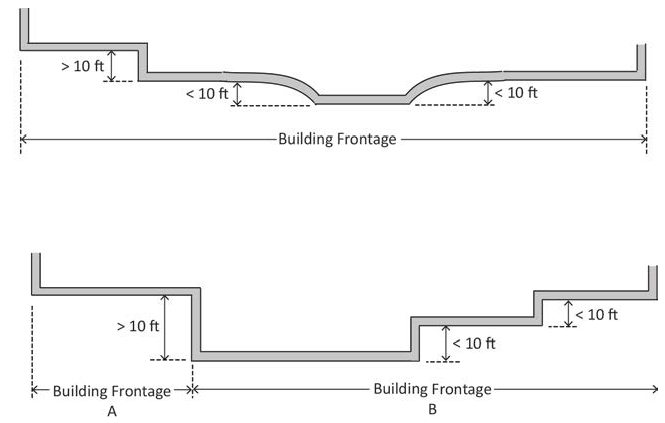
FIGURE 17.25.050.D: BUILDING FRONTAGE
E.
Street Frontage. The length of street frontage is measured along the property line adjacent to the public right-of-way.
(Ord. No. 503, § 1(Exh. A), 1-25-2018)
17.25.060 - General provisions.
This section establishes general standards that apply to all sign types and in all districts.
A.
Applicable Codes. In addition to complying with the provisions of this section, all signs must be constructed in accordance with the uniform building code, the uniform sign code, the electrical code, and all other applicable laws, rules, regulations, and policies.
B.
Changes to Copy of Approved Signs. Changes to the copy of approved signs that were legally established and have not been modified so as to become illegal are exempt from permitting pursuant to this title. Changes to copy do not include changes to the type or level of illumination of an approved sign.
C.
Non-commercial Signs. Non-commercial signs are allowed wherever commercial signage is permitted and are subject to the same standards and total maximum allowances per site or building of each sign type specified in this chapter. For purposes of this chapter, all non-commercial speech messages will be deemed to be "on-site," regardless of location.
D.
Message Substitution. A non-commercial message of any type may be substituted, in whole or in part, for any duly permitted commercial message, any non-commercial message may be substituted for any other non-commercial message, and any on-site commercial message may be substituted, in whole or in part, for any other on-site commercial message.
1.
No Additional Approval. Such substitution of message may be made without any additional approval, permitting, registration, or notice to the city. The purpose of this provision is to prevent any inadvertent favoring of commercial speech over non-commercial speech, or favoring of any particular non-commercial message over any other non-commercial message.
2.
Limitations. This message substitution provision does not: 1) create a right to increase the total amount of signage on a parcel, lot or land use; 2) affect the requirement that a sign structure or mounting device be properly permitted; 3) allow a change in the physical structure of a sign or its mounting device; or 4) authorize the substitution of an off-site commercial message in place of an on-site commercial message or in place of a non-commercial message.
E.
Changeable Copy.
1.
Manual Changeable Copy. Manually changeable copy shall represent no more than thirty percent of the sign area.
2.
Automatic Changeable Copy and Electronic Message Center Signs. Electronic message center (EMC) signs and automatic changeable copy in which copy can be changed or altered by electric, electro-mechanical, electronic, or any other artificial energy means, are allowed subject to the following standards:
a.
Permit Required. All automatic changeable copy and electronic message center signs require conditional use permit approval, except service and gas station price signs and time and temperature signs.
b.
Display Duration. The display shall change no more frequently than once every eight seconds and must have an unlighted interval between copy displays of 0.3 second or more.
c.
Static Message. Displays shall contain static messages only, and shall not have movement, or the appearance or optical illusion of movement, of any part of the sign structure, design, or pictorial segment of the sign, including the movement or appearance of movement of any illumination, or the flashing, scintillating or varying of light intensity
d.
Light Intensity. 0.3 foot-candles over ambient lighting conditions when measured at a distance equal to the square root of one hundred times the area of the sign in square feet. All electronic copy must be equipped with a sensor or other device that automatically determines the ambient illumination and programmed to automatically dim according to ambient light conditions, or that can be adjusted to comply with the 0.3 foot-candle measurements.
e.
Automatic Controls. All electronic message displays shall be equipped with automatic controls to allow for adjustment of brightness based on ambient lighting conditions.
F.
Illumination. Illuminated channel letters and neon signs are allowed. However, cabinet signs are prohibited. Lighting fixtures used to illuminate an outdoor sign shall be mounted on the top of the sign structure, unless approved with a minor use permit.
G.
Encroachment Permits. Signs mounted on private property may project into or above public property or the public right-of-way only with approval by the public works director of an encroachment permit.
H.
Materials. Signs shall be made of sturdy, durable materials. Paper, cardboard and other materials subject to rapid deterioration shall be limited to temporary signs. Fabric signs are limited to awnings, canopies, flags, and temporary signs.
(Ord. No. 503, § 1(Exh. A), 1-25-2018; Ord. No. 505, § 3(Exh. A), 7-12-2018)
17.25.070 - Allowed signs by district.
This section establishes the types and size of signs allowed per zoning district. These signs are also subject to the regulations in "General Provisions for All Sign Types" and "Standards for Specific Sign Types".
A.
Types of Signs Allowed. Table 17.25.070.A establishes the types of signs allowed per zoning district.
B.
Allowed Sign Area. Table 17.25.070.B establishes the maximum aggregate sign area allowed per zoning district.
1.
Sign Area Included in Calculation of Aggregate Sign Area. The sign area of awning and canopy signs, projecting and shingle signs, and wall signs is included in the calculation of aggregate sign area.
2.
Sign Area Excluded from the Calculation of Aggregate Sign Area. The sign area of exempt signs, signage allowances for specific uses and development, freestanding signs, a-frame signs, window signs, temporary signs, and high-rise building identification signs are not included in the calculation of aggregate sign area.
(Ord. No. 503, § 1(Exh. A), 1-25-2018)
17.25.080 - Signage allowances for specific uses and development.
This section establishes signage allowances for specific uses and development. These signs are allowed in addition to the signs allowed by district in Section 17.25.070, Allowed Signs by District, and are not included in the calculation of aggregate sign area. These signs are also subject to the regulations in "Standards for Specific Sign Types" unless otherwise stated.
A.
Residential Developments. Residential developments of two or more units or lots are allowed freestanding signs and wall signs with a total aggregate sign area of one square foot per two dwelling units, subject to the following standards:
1.
Maximum Number of Signs. One per street frontage.
2.
Maximum Size per Sign. Twenty square feet.
3.
Maximum Height of Freestanding Signs. Four feet.
B.
Non-Residential Uses in Residential Districts. Non-residential uses that are the primary use on a site in a residential district are allowed total aggregate sign area of one square foot per eight feet of street frontage. Allowed sign types and the maximum sign area for individual signs is as follows:
1.
Awning and Canopy Signs. Six square feet or twenty-five percent of the surface area of the awning, whichever is less.
2.
Freestanding Signs. Six square feet.
3.
Projecting and Shingle Signs. Six square feet.
4.
Window Signs. Fifteen percent of window area.
5.
Wall Signs. Ten square feet.
C.
Menu/Order Board Signs. Outdoor menu/order board signs are subject to the following standards:
1.
Uses Allowed With. Outdoor menu/order board signs are allowed on the site of a permitted drive-in, walk-up, or drive-thru facility.
2.
Maximum Number. A maximum of two per business with a drive-thru facility and one per business with a walk-up window.
3.
Maximum Size. The area of each menu/order board sign shall not exceed 32 square feet.
4.
Maximum Height. Six feet.
5.
Location.
a.
Menu/order board signs shall be located adjacent to the drive-thru aisle or walk-up window; and
b.
The signs shall not be located so as to impair the vision of the driver of a vehicle traveling either into, out of, or through the drive-thru aisle.
D.
Display Structures. Display structures for pedestrian viewing are allowed in commercial and mixed-use districts pursuant to master sign program approval. Such structures may include enclosed displays or displays incorporated into the structure such as bus stop benches, kiosks, or weather protection structures.
(Ord. No. 503, § 1(Exh. A), 1-25-2018)
17.25.090 - Standards for specific sign types.
This section establishes general standards for specific sign types that apply to all districts where such signs are allowed.
A.
Awning and Canopy Signs. Signs painted on awnings, canopies, arcades, or similar attachments or structures are subject to the following standards:
1.
Maximum Number. One for each establishment having entrance under or offering service under the awning or canopy.
2.
Maximum Size. Ten square feet or twenty-five percent of the surface area of the awning, whichever is less. The sign area of awning and canopy signs is included in the calculation of aggregate sign area allowed pursuant to Table 17.25.070.B, Maximum Allowable Aggregate Sign Area.
3.
Maximum Height. Fourteen feet.
4.
Minimum Sign Clearance. Eight feet.
5.
Illumination. Awning and canopy signs shall not be illuminated.
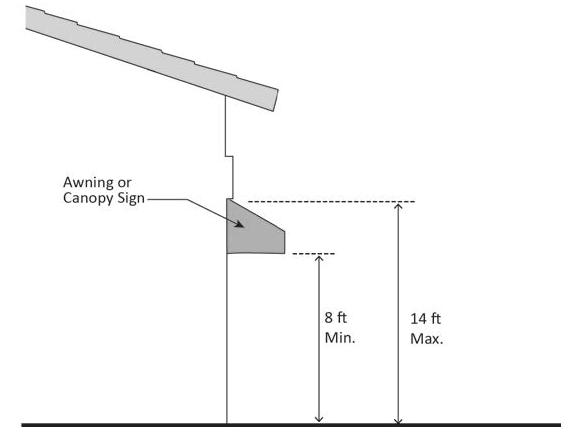
FIGURE 17.25.090.A: AWNING AND
CANOPY SIGNS
B.
Freestanding Signs. Freestanding signs are subject to the following standards:
1.
Maximum Number. One per 50 feet of street frontage.
2.
Maximum Size. The maximum sign area per freestanding sign is listed below. The sign area of freestanding signs is not included in the calculation of aggregate sign area allowed pursuant to Table 17.25.070.B, Maximum Allowable Aggregate Sign Area.
a.
NC, CMU, and CR districts: One hundred square feet.
b.
CC District: One hundred fifty square feet.
c.
RC District: Two hundred fifty square feet.
d.
OP district: One hundred square feet.
e.
BTP district: Sixty square feet.
f.
LI and GI districts: One hundred square feet.
g.
Public and semi-public and resource production districts: Sixty square feet.
3.
Maximum Height.
a.
NC, CMU, and CR districts: Twenty feet.
b.
CC district: One sign may be up to forty feet. Twenty feet for all other freestanding signs.
c.
RC district: One sign may be up to one hundred feet. Twenty feet for all other freestanding signs.
d.
OP district: Twenty feet.
e.
BTP district: Up to two signs per street entrance may be up to eight feet. Three feet for all other freestanding signs
f.
LI and GI districts: One sign may be up to thirty feet. Twenty feet for all other freestanding signs.
g.
Public and Semi-Public and Resource Production Districts: Eight feet.
h.
All monument signs shall be up to six feet.
4.
Additional Freestanding Signs in the RC District. In the RC district, one additional sign up to two hundred fifty square feet in size and up to forty feet high is allowed at each entrance from a public street. This additional sign is not included in the calculation of aggregate sign area allowed pursuant to Table 17.25.070.B, Maximum Allowable Aggregate Sign Area.
5.
Placement.
a.
Freestanding signs shall be located a minimum of five feet from any building.
b.
Freestanding signs shall be located a minimum of twenty feet from the lot line of any lot in a residential district.
c.
Freestanding signs shall be setback from all other property lines a minimum distance equal to one-half the height of the sign. Freestanding signs shall also meet visibility requirements at street intersections and driveways pursuant to Chapter 10.36, Visibility Requirements, of the Newark Municipal Code.
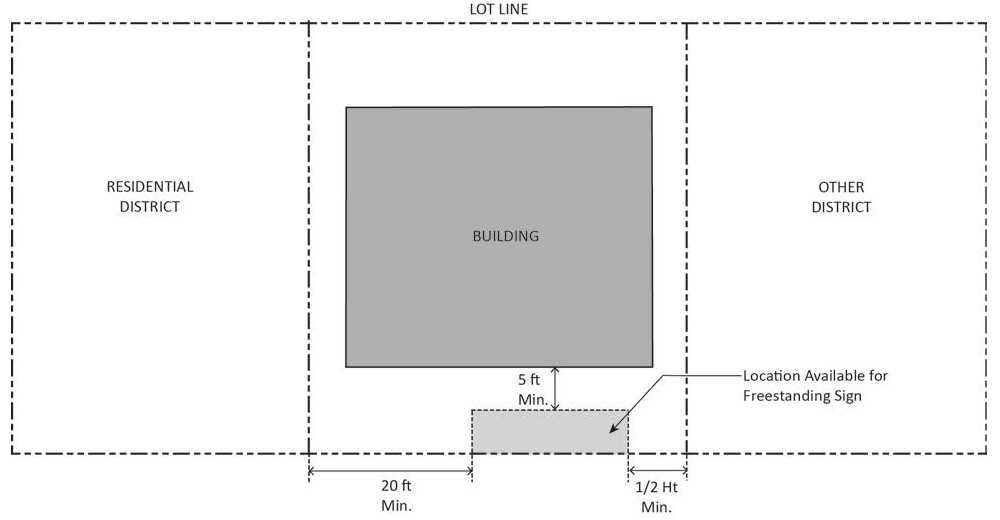
FIGURE 17.25.090.B: FREESTANDING SIGNS
C.
Projecting and Shingle Signs. Signs that project horizontally from the exterior wall of a building or are suspended beneath a marquee, covered walkway, canopy, or awning, are subject to the following standards:
1.
Maximum Number. One for each building frontage or tenant space.
2.
Maximum Size. Nine square feet. The sign area of projecting and shingle signs is included in the calculation of aggregate sign area allowed pursuant to Table 17.25.070.B, Maximum Allowable Aggregate Sign Area.
3.
Maximum Height. Fifteen feet.
4.
Minimum Sign Clearance. Eight feet.
5.
Projection Allowed.
a.
Projecting Sign. A projecting sign cannot extend more than four feet from the building to which it is attached and must be designed and located so as to cause no harm to street trees. Signs projecting into the public right-of-way are subject to an encroachment permit.
b.
Shingle Sign. A shingle sign cannot extend further than the outer edge of the marquee, covered walkway, canopy, or awning from which it is suspended.
6.
Illumination. Projecting and shingle signs shall not be illuminated.
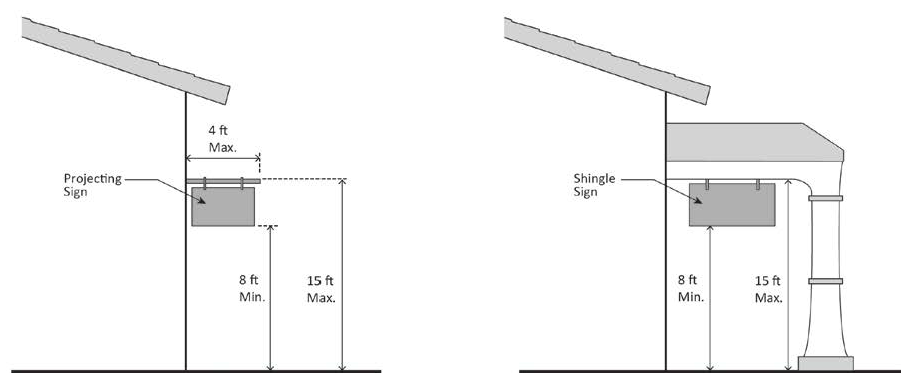
FIGURE 17.25.090.C: PROJECTING AND SHINGLE SIGNS
D.
Wall Signs. Wall signs include any sign attached to, erected against or painted upon the wall of a building or structure. Wall signs are subject to the following standards:
1.
Maximum Number. One per building frontage or tenant space.
2.
Maximum Size. Wall sign copy shall not occupy more than seventy-five percent of the length of the wall to which the sign is attached. The sign area of wall signs is included in the calculation of aggregate sign area allowed pursuant to Table 17.25.070.B, Maximum Allowable Aggregate Sign Area.
a.
BTP District. In the BTP district, wall signs are limited to ten square feet per tenant.
3.
Material. In commercial and mixed-use districts, wall signs shall consist of channel sign elements with the exemption of business logos.
4.
Attachment.
a.
Attached flat against or pinned away from a building wall, but shall not extend or protrude more than fifteen inches from the wall; or
b.
Attached to the facade of a building or on a sloping roof (mansard roof), but shall not extend above the upper edge of the facade or the sloping roof.
5.
Placement.
a.
Wall signs shall not be placed higher than the second story of a building.
b.
Wall signs shall not cover or interrupt major architectural features, including such features as doors, windows, or tile embellishments.
c.
Wall signs shall not extend higher than the building wall upon which they are attached except on a peaked, mansard, or shed roof where the sign may be placed in such a manner that the highest point on the sign shall be no higher than the lowest two-thirds of the roof height and providing that the vertical dimension of the sign shall be no greater than one-third the vertical dimension of the roof.
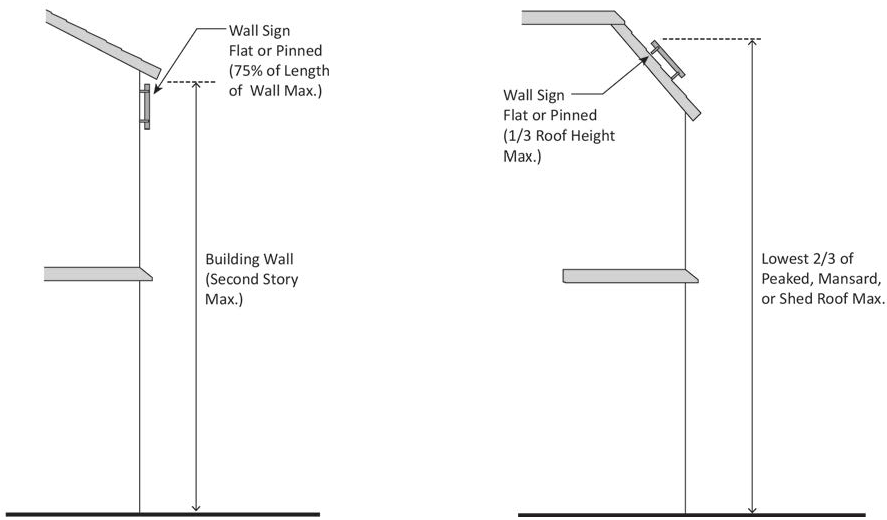
FIGURE 17.25.090.D: WALL SIGNS
E.
A-Frame Signs. A-frame signs are subject to the following standards:
1.
Maximum Number. One per business.
2.
Maximum Size. Six square feet. The sign area of A-frame signs is not included in the calculation of aggregate sign area allowed pursuant to Table 17.25.070.B, Maximum Allowable Aggregate Sign Area.
3.
Maximum Height. Four feet.
4.
Placement. A-Frame signs must be placed on private property directly in front of the business it is identifying.
5.
Hours of Display. A-frame signs shall be removed during hours when the establishment is not open to the public and cannot be displayed after the activity with which they are associated with is over.
F.
High-rise Building Identification Signs. High-rise building identification signs are allowed on buildings of at least four stories, subject to the following standards:
1.
Maximum Number. One per street frontage.
2.
Maximum Size. One square foot per linear foot of building frontage. The sign area of high-rise building identification signs is not included in the calculation of aggregate sign area allowed pursuant to Table 17.25.070.B, Maximum Allowable Aggregate Sign Area.
3.
Location. Signs shall be located on the upper-most story of the building.
G.
Temporary Signs. Any temporary sign, banner, balloon, pennant, valance or advertising display for any event of limited duration including, but not limited to, entertainment, sporting events, elections, construction, sales of goods, and real estate sales and rental may be erected and located in accordance with the following standards. Tenants and units include planned future tenants and units to be constructed for which a planning approval has been granted or for which a building permit has been issued.
1.
RS and RL Districts.
a.
Maximum Sign Area. Six square feet per street frontage.
b.
Maximum Height. Six feet above existing grade.
c.
Location. Signs greater than three square feet in size shall be setback from all property lines a minimum of five feet.
2.
RM and RH Districts.
a.
Maximum Sign Area. Twenty square feet per street frontage.
b.
Maximum Height. Ten feet above existing grade.
c.
Additional Individual Unit Signs. Each ground floor unit is also allowed one sign up to six square feet in size and six feet in height. Each upper floor unit is allowed one sign up to three square feet in size and located no higher than the eave line or parapet line of the unit.
d.
Location. Signs between three and ten square feet in size shall be setback from all property lines a minimum of five feet. Signs ten square feet in size or larger shall be setback from all property lines a minimum of ten feet.
3.
NC, CMU, CR, CC, and OP Districts.
a.
Maximum Sign Area. Thirty-two square feet per street frontage.
b.
Maximum Height. Six feet above existing grade
c.
Additional Individual Tenant/Unit Signs. Each ground floor tenant/unit is allowed one sign up to three square feet in size and six feet in height. Each upper floor tenant/unit is allowed one sign up to three square feet in size and located no higher than the eave line or parapet line of the unit.
d.
Location. Signs between three and ten square feet in size shall be setback from all property lines a minimum of five feet. Signs ten square feet in size or larger shall be setback from all property lines a minimum of ten feet.
4.
RC, BTP, LI, and GI Districts.
a.
Maximum Sign Area. Sixty-four square feet per street frontage.
b.
Maximum Height. Ten feet above existing grade
c.
Additional Individual Tenant/Unit Signs. Each ground floor tenant/unit is allowed one sign up to six square feet in size and six feet in height. Each upper floor tenant/unit is allowed one sign up to three square feet in size and located no higher than the eave line or parapet line of the unit.
d.
Location. Signs between three and ten square feet in size shall be setback from all property lines a minimum of five feet. Signs ten square feet in size or larger shall be setback from all property lines a minimum of ten feet.
5.
PK and TS Districts.
a.
Maximum Sign Area. Six square feet per street frontage.
b.
Maximum Height. Six feet above existing grade.
6.
PF, OS, and RP Districts.
a.
Maximum Sign Area. Twelve square feet per street frontage.
b.
Maximum Height. Ten feet above existing grade.
c.
Location. Signs between three and ten square feet in size shall be setback from all property lines a minimum of five feet. Signs ten square feet in size or larger shall be setback from all property lines a minimum of ten feet.
7.
Time Limits. Temporary signs shall be removed within fourteen days after the conclusion of the event the drive, the election, or the purpose served by the sign.
a.
Any such sign that remains more than fourteen days after the event shall be considered abandoned and the city clerk and/or public works director, or any of their agents, are authorized to remove the sign without notice.
8.
Removal. The city clerk and/or public works director, or any of their agents, are authorized to remove any sign found to be in violation of this section and shall store the sign in a safe location. The city clerk and/or public works director shall reasonably attempt to contact the person or entity responsible for posting the sign, such as the organization, campaign, committee, and/or candidate. If the sign is not retrieved within fourteen calendar days after such notification, or reasonable attempt thereof, the sign shall be considered as abandoned and the city clerk and/or public works director, or any of their agents, are authorized to dispose of the sign without further notice.
H.
Window Signs. Permanent window signs painted on or otherwise adhered directly onto a window and signs that block a window in any way are subject to the following standards:
1.
Maximum Size. Twenty-five percent of the window area. The sign area of window signs is not included in the calculation of aggregate sign area allowed pursuant to Table 17.25.070.B, Maximum Allowable Aggregate Sign Area.
2.
Height. Window signs shall not be mounted or placed on windows higher than the second story.
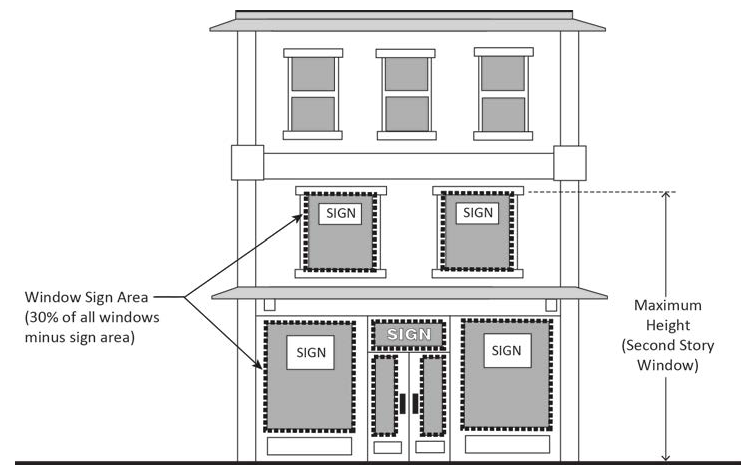
FIGURE 17.25.090.H: WINDOW SIGNS
(Ord. No. 503, § 1(Exh. A), 1-25-2018; Ord. No. 505, § 3(Exh. A), 7-12-2018)
17.25.100 - Sign permit required.
A.
Sign Permit Required. Except as otherwise expressly provided in this Chapter, it is unlawful for any person to affix, place, erect, suspend, attach, construct, structurally or electrically alter (not including a face change of sign copy), move, or display any temporary or permanent sign within the city without first obtaining a sign permit from the director. No sign permit is required for exempt signs and for cleaning or other normal maintenance of a properly approved sign, unless a structural or electrical change is made.
B.
Design Review Required. All signs are subject to design review by the planning division.
C.
Conditional Use Permit Required for Outdoor Advertising Structures (Billboards). Outdoor advertising structures displaying general advertising for hire are allowed when oriented towards a freeway in the RC and BTP districts subject to conditional use permit approval.
D.
Applications for Filing, Processing and Review.
1.
Filing and Filing Fee. Application for a sign permit shall be made upon forms furnished by the director and accompanied by the required fee and working drawings adequate to show:
a.
The location, dimensions, construction and design, including colors, materials, lighting, electrical elements, and advertising copy, of the sign.
b.
The location and dimensions of existing structures and the relationship of the proposed sign to existing structures.
c.
The location, dimensions, and design of all existing signs.
2.
Compliance with Standards.
a.
Upon acceptance of a sign application, the director shall review the request for compliance with the standards and requirements of this chapter, and with any standards established in a master sign program pursuant to Section 17.25.110, Master Sign Program.
b.
The director's decision shall clearly state any conditions of approval or reasons for disapproval and applicable appeal provisions.
c.
No permit for construction will be issued until design review, if required, has been granted and the application has been found in conformance with the approved design.
E.
Permit Number Identification. A tag issued by the city indicating the sign permit number shall be affixed to the sign so as to be readily visible by city inspectors.
(Ord. No. 503, § 1(Exh. A), 1-25-2018; Ord. No. 505, § 3(Exh. A), 7-12-2018)
17.25.110 - Master sign programs.
A.
Purpose. The purpose of a master sign program is to provide a method for an applicant to integrate the design and placement of signs within a project with the overall development design to achieve a more unified appearance.
B.
Applicability.
1.
A master sign program is required for:
a.
Projects with four or more non-residential tenants,
b.
Multi-unit developments of fifty or more units, and
c.
Whenever five or more signs are proposed for a building or site.
C.
Application. Master sign program applications shall contain all written and graphic information needed to fully describe the proposed sign program, including the proposed location and dimension of each sign, as well as proposed color schemes, font types, materials, methods of attachment or support, and methods of illumination. A master sign program application shall also include calculation of total allowed sign area, and total proposed sign area, for the site.
D.
Allowable Modifications. A master sign program may provide for deviations from the standards of this chapter.
E.
Review Authority. All master sign programs are subject to review and approval of the review authority for the project with which the signs are associated. A master sign program may be submitted separately or as part of the permit application for the project.
1.
The planning commission shall be the review authority for any master sign program application requesting additional sign area, additional height, or an increase in the number of signs otherwise allowed by this chapter.
2.
The director may, at his or her discretion, refer any application for a master sign program to the planning commission for a decision rather than acting on it himself or herself.
F.
Required Findings. In order to approve a master sign program, the review authority must find that all of the following are met, in addition to other applicable regulations in this section:
1.
The proposed signs are compatible in style and character with any building to which the signs are to be attached, any surrounding structures and any adjoining signage on the site;
2.
Future tenants will be provided with adequate opportunities to construct, erect or maintain a sign for identification; and
3.
Directional signage and building addressing is adequate for pedestrian and vehicular circulation and emergency vehicle access.
G.
Lessees to Be Informed of Master Sign Program. Lessees within developments subject to the requirements of an approved master sign program shall be made aware of the master sign program in their lease.
(Ord. No. 503, § 1(Exh. A), 1-25-2018)
17.25.120 - Nonconforming signs.
A.
Continuance and Maintenance. Reasonable and routine maintenance and repairs may be performed on signs that are nonconforming provided there is no expansion of any nonconformity.
B.
Abandonment of Nonconforming Sign. Whenever a nonconforming sign has been abandoned, or the use of the property has been discontinued for a continuous period of six months, the nonconforming sign must be removed.
C.
Restoration of a Damaged Sign. A nonconforming sign may be restored if it meets either of the following criteria:
1.
A sign with damage that does not exceed fifty percent of the total sign area, including hardware and attachments, provided that the repairs start within sixty days of the date of damage and are diligently pursued to completion.
2.
A sign that is a danger to the public or is unsafe as determined by the building official.
(Ord. No. 503, § 1(Exh. A), 1-25-2018)
17.25.130 - Sign maintenance.
Each sign displayed within the city, including exempt signs, shall be maintained to comply with the following standards:
A.
Graffiti on a sign shall be removed within two days of notice of its placement on such sign.
B.
The display upon any sign area of a sign shall be maintained in good condition, without rips, tears, and similar damage.
C.
All parts, portions, units and materials composing a sign, together with the frame, background, surface, support or enclosure therefore shall be maintained in a safe condition, painted, and adequately protected from weathering with all braces, bolts and structural parts and supporting frames and fastenings reasonably free from deterioration, rot, rust, and loosening so that they do not create a hazard to persons or property or constitute an attractive nuisance.
D.
Any sign or sign structure that is sagging, leaning, fallen, decayed, broken, deteriorated, or other dilapidated condition shall be promptly repaired, to the satisfaction of the city, or removed.
E.
Whenever any sign, by virtue of its physical nature and condition, poses an immediate and serious threat to the public safety, the sign may be removed by city personnel, or its physical deficiency cured, to the extent necessary to protect the public safety. The cost of such removal or repair shall be assessed against the sign owner.
F.
An on-premises sign identifying an activity, business, service or product shall be removed within thirty days following the actual discontinuance of the activity, business, service or product. If the sign is not so removed, the director may have the sign removed in accordance with the public nuisance abatement provisions of this title.
(Ord. No. 503, § 1(Exh. A), 1-25-2018)
17.25.140 - Enforcement.
Signs which do not conform to the provisions of this chapter and are erected after its effective date and signs erected after the effective date of this chapter without obtaining the permit required thereby are declared to be unlawful and a public nuisance. All signs declared to be unlawful by this section and all persons erecting or maintaining them shall be subject to the terms of Chapter 17.41, Enforcement and Abatement Procedures.
(Ord. No. 503, § 1(Exh. A), 1-25-2018)
17.26.010 - Purpose.
The purpose of this chapter is to establish standards for specific uses and activities that are permitted or conditionally permitted in several or all districts. These provisions are supplemental standards and requirements to minimize the impacts of these uses and activities on surrounding properties and to protect the health, safety, and welfare of their occupants and of the general public.
(Ord. No. 503, § 1(Exh. A), 1-25-2018)
17.26.020 - Applicability.
Each land use and activity covered by this chapter shall comply with the requirements of the section applicable to the specific use or activity, in addition to any applicable standard this title requires in the zoning district where the use or activity is proposed and all other applicable provisions of this title.
A.
The uses that are subject to the standards in this chapter shall be located only where allowed by base zoning district or overlay district use regulations.
B.
The uses that are subject to the standards in this chapter are allowed only when authorized by the planning permit required by base district regulations, such as a conditional use permit, except where this chapter establishes a different planning permit requirement for a specific use.
(Ord. No. 503, § 1(Exh. A), 1-25-2018)
17.26.030 - Accessory uses.
An accessory use shall be secondary to a primary use and shall be allowed only in conjunction with a principal use or building to which it relates under the same regulations as the main use in any zoning district. These regulations are found in the use regulation tables in Article II, Base and Overlay Districts, and may be subject to specific standards found in this chapter or within each district, as specified in the tables. Accessory uses and structures are also subject to the development and site regulations found in Chapter 17.17, General Site Regulations.
(Ord. No. 503, § 1(Exh. A), 1-25-2018)
17.26.040 - Accessory dwelling units.
A.
Purpose. The purpose of this section is to implement California Government Code Sections 66310 through 66342, or as amended, by allowing the creation of accessory dwelling units (ADUs) and junior accessory dwelling units (JADUs) through ministerial review consistent with state law.
B.
General Requirements. The following provisions apply to all ADUs and JADUs, including "State Exempt ADUs" as described in California Government Code Section 66323 et seq., or as amended, and subsection (E) of this section.
1.
Categories.
a.
ADUs. An ADU is accessory to an existing or proposed primary dwelling on the same lot and has complete independent living facilities for one or more persons. The type of ADUs include:
i.
Conversion ADU. An interior conversion of area within an existing or proposed primary dwelling, including attached garages, storage areas or similar spaces, or an existing accessory structure; or
ii.
Attached ADU. A newly constructed attached unit to the primary dwelling; or
iii.
Detached ADU. A newly constructed detached unit or an addition to an existing detached accessory structure.
b.
JADUs. A JADU is an accessory dwelling unit that is no more than five hundred square feet in floor area and contained entirely within the walls of an existing or proposed single-unit dwelling.
2.
Permitting Procedure.
a.
Ministerial Review. A permit application for an ADU or a JADU that meets the standards contained in this section shall be subject to ministerial review and approval without discretionary review or public hearing. If the permit application to create an ADU or a JADU is submitted with a permit application to create a new single-unit dwelling, two-unit dwelling, or multi-unit development, the city may delay acting on the permit application for that ADU or JADU until the city acts on the permit application for that new single-unit dwelling, two-unit dwelling, or multi-unit development, but the application for that ADU or JADU shall be considered ministerially without discretionary review or a public hearing.
b.
Review Timeline. A permit shall be issued within sixty days of the city's receipt of a complete application for an ADU or a JADU that meets the standards contained in this section if there is an existing single-unit dwelling, two-unit dwelling, or multi-unit development on the same lot. If the applicant requests a delay in the review timeline, the sixty-day timeline shall be tolled for the equivalent period of the delay.
c.
If city denies an application for an ADU or JADU unit pursuant to this section, city shall, within the time period described in subdivision (b), return in writing a full set of comments to the applicant with a list of items that are defective or deficient and a description of how the application can be remedied.
3.
Building Permit Required. No ADU and/or JADU shall be established or maintained until there has been a building permit approved by the city.
4.
Fees.
a.
This section shall not be construed to prohibit the city from adopting an ordinance or regulation relating to services or utility connection fees that applies to a single-unit dwelling, two-unit dwelling, or multi-unit development that contains an ADU and/or JADU so long as that ordinance or regulation applies uniformly to a single-unit dwelling, two-unit dwelling, or multi-unit development regardless of whether they include an ADU and/or JADU.
b.
Nothing in this section shall be construed so as to impact the connection fees or capacity charges charged by other government entities.
c.
No impact fees shall be applied to an ADU that has a floor area of eight hundred square feet or less.
d.
Impact fees for an ADU that has a floor area of more than eight hundred square feet shall be charged proportionately in relation to the floor area square footage of the primary dwelling unit in accordance with California Government Code Section 66324, or as amended.
5.
Density.
a.
ADUs and JADUs are not required to meet the density requirements of the general plan or zoning ordinance and do not count toward the permissible number of units per acre (or required lot area per dwelling). However, ADUs shall otherwise be consistent with the general plan text and diagrams in accordance with California Government Code Section 66314 et seq., or as amended.
b.
An ADU or JADU shall not be counted in any ordinance, policy, or program to limit growth, such as, but not limited to, the number of residential units permitted in a year.
6.
Occupancy Criteria.
a.
The rental of ADUs and JADUs for terms shorter than thirty days shall be prohibited.
b.
Nothing in this section shall be construed so as to limit the ADU, JADU, or primary dwelling on the lot from remaining vacant.
c.
Separate Sale. An ADU or JADU shall not be sold or conveyed separate from the sale or conveyance of the primary residence unless the conditions detailed in California Government Code Sections 66340 to 66341, or as amended, are met.
d.
For JADUs, the property owner must reside in either the remaining portion of the single-unit dwelling or the JADU, in accordance with California Government Code Section 66333, or as amended. If the JADU do not share sanitation facilities with the single-unit dwelling, the JADU is exempt from owner-occupancy requirements. Governmental agencies, land trusts, or housing organizations are exempt from this requirement.
7.
Building Safety.
a.
A smoke alarm and carbon monoxide detector shall be installed in all ADUs and JADUs.
b.
The installation of fire sprinklers shall not be required in an ADU and JADU if sprinklers are not required for the primary dwelling and the construction of an ADU and JADU shall not trigger a requirement for fire sprinklers to be installed in the existing primary dwelling, in accordance with California Government Code Section 66314, or as amended.
c.
A permanent foundation shall be required for all detached ADUs.
d.
Connection to Street. No passageway shall be required in conjunction with the construction of an ADU, unless such a connection is mandated by the Americans with Disabilities Act, or other state or federal safety code or standard. A passageway is a pathway that is unobstructed and clear to the sky and that extends from the street to the door of the ADU.
8.
Nonconforming Zoning Conditions. The correction of nonconforming zoning conditions, building code violations, or unpermitted structures that do not present a threat to public health and safety and are not affected by the construction of the ADU or JADU shall not be required for the approval of an application for the creation of an ADU or JADU in accordance with California Government Code Sections 66322 and 66336, or as amended.
C.
ADU Regulations. The following provisions apply to all ADUs, except for "State Exempt ADUs" in accordance with Government Code Section 66323 et seq. or as amended which are only subject to the provisions provided in subsection (B) and (E) of this section. In the event of a conflict between the provisions of this section and another section of the Newark Municipal Code, the provisions of this section shall prevail. In the event of a conflict between the provisions of this section and the California Government Code, including without limitation California Government Code Sections 66314 through 66332 or as amended, the provisions of the applicable California Government Code shall prevail.
1.
Permitted Location. Except as otherwise prohibited by this section, ADUs shall be allowed on lots with a proposed or existing primary dwelling in any zoning district that allows residential use including a single-unit dwelling, two-unit dwelling, or multi-unit development.
2.
Number of ADUs Allowed.
a.
Lots with a Single-Unit Dwelling. A maximum of one detached or attached ADU shall be permitted with an existing or proposed single-unit dwelling.
b.
Lots with a Two-Unit Dwelling and Multi-Unit Development. See subsection (E) of this section.
3.
Building Height. ADUs must adhere to the following height requirements, in accordance with California Government Code Section 66321, or as amended:
a.
A conversion ADU shall not exceed the height of the existing structure from which it was converted.
b.
An attached ADU shall not exceed the building height standards for the zoning district applicable to the primary dwelling on the lot. An attached ADU may not exceed two stories.
c.
A detached ADU shall not exceed sixteen feet in height, except under either of the following circumstances:
i.
A detached ADU shall not exceed eighteen feet in height if the lot is within one-half mile of walking distance of a major transit stop or a high-quality transit corridor, as those terms defined in Section 21155 of the California Public Resources Code. An additional two feet in height shall be allowed to accommodate a roof pitch on the detached ADU to be aligned with the roof pitch of the primary dwelling.
ii.
A detached ADU shall not exceed eighteen feet in height if the lot has an existing or proposed multistory two-unit dwelling and multi-unit development.
4.
Setbacks.
a.
Conversion ADU. No setbacks shall be required when an existing structure (e.g. garage, shed, or guest house) or existing living area is converted to an ADU, or where an ADU is constructed in the same location and to the same dimensions as an existing structure on a lot with a proposed or existing single-unit dwelling, two-unit dwelling, or multi-unit development in accordance with California Government Code Section 66314, or as amended.
b.
A detached or attached ADU shall be setback a minimum of four feet from side and rear property lines. For corner lots, a detached or attached ADU shall be setback a minimum of four feet from street side property lines. The minimum front setback requirement of the underlying zoning district shall apply to a detached and attached ADU, except for an ADU of eight hundred square feet or less where no alternative location on the lot exists in accordance with California Government Code Section 66321, or as amended.
c.
A detached and attached ADU shall comply with the allowed projections into yards requirement pursuant to NMC Section 17.17.090.
5.
Size. The maximum allowable floor area for an ADU shall not exceed the square footage limitations specified below. For the purposes of this section, the calculation of floor area for an ADU shall not include garages, carports, covered porches/patios, breezeways, and/or other accessory structures.
a.
Conversion ADU. An ADU converted from the proposed space of a single-family dwelling or existing space of a single-family dwelling or accessory structure shall not be subject to any size limitations.
b.
Attached ADUs. The total floor area for an attached ADU shall not exceed one thousand square feet.
c.
Detached ADUs. The total floor area for a detached ADU shall not exceed one thousand two hundred square feet.
6.
Design. ADUs, except for State Exempt ADUs in accordance with California Government Code Section 66323 et seq. or as amended and subsection (E) of this section, must adhere to the following objective design standards below:
a.
A detached ADU shall incorporate exterior wall and roof colors that are the same as the primary dwelling. An attached ADU shall incorporate exterior wall and roof materials and colors that are the same as the primary dwelling.
b.
Entrances and outside stairways to an ADU shall not be located on the front wall planes facing a public street of the primary dwelling.
c.
All exterior lighting shall be directed downwards and comply with NMC Section 17.17.060, Lighting and Illumination.
d.
Second story windows or transparent doors facing an adjoining lot with an existing single-family dwelling or ADU and within five feet of the property line shall not overlap any portion of existing windows into adjacent bedrooms of the residential structure unless any of the following methods are provided:
i.
Second story windows or transparent doors have obscured glazing.
ii.
Second story windows with clear glass are permitted if the bottom of the window sill is a minimum of five feet above the finished second floor.
e.
Second story balconies or decks facing an adjoining lot with an existing single-family dwelling or ADU shall not be located within ten feet of the property line. The railing shall be a minimum of forty-two inches in height and shall be a minimum fifty percent opaque (e.g. frosted glass, balusters, spindles, or pickets). This standard prevails over the applicable standards in NMC Section 17.17.090, Projections into yards and required building separations.
7.
Other Development Standards.
a.
ADUs Greater than Eight Hundred Square Feet in Floor Area.
i.
Any ADU greater than eight hundred square feet in floor area shall comply with the applicable minimum front setback requirement and minimum landscaping requirement of the underlying zoning district.
ii.
If an ADU is located on a lot with a two-unit dwelling and multi-unit development, then the ADU shall comply with the applicable minimum open space requirement of the underlying zoning district.
8.
Garage Conversions.
a.
An attached or detached garage may be converted into an ADU.
b.
No replacement parking for the primary dwelling is required for a garage conversion into an ADU in accordance with California Government Code Section 66314, or as amended. If replacement parking is proposed for the primary dwelling, it shall conform to all applicable standards in NMC Title 17, Zoning, which includes the standards of the underlying zoning district and NMC Chapter 17.23, Parking and Loading.
c.
Unless the following standards preclude the development of the ADU, the conversion of a garage to an ADU shall include the removal of the garage door. The garage door shall be replaced with an exterior wall with one or more windows and shall incorporate exterior wall materials and colors that are the same as the primary dwelling.
9.
Parking.
a.
No off-street parking spaces shall be required for an ADU. Any off-street parking space proposed for an ADU shall be subject to review and approval for consistency with NMC Title 17, Zoning and California Government Code Section 66314 et seq., or as amended.
b.
When a garage, carport, covered parking structure, or uncovered parking space is demolished in conjunction with the construction of an ADU or converted to an ADU, no replacement parking is required in accordance with California Government Code Section 66314, or as amended.
c.
A demolition permit for a detached garage that is to be replaced with an ADU will be reviewed with the application for the ADU and issued concurrently, in accordance with California Government Code Section 66314, or as amended.
D.
JADU Regulations. The following provisions apply to all JADUs. In the event of a conflict between the provisions of this section and another section of the Newark Municipal Code, the provisions of this section shall prevail. In the event of a conflict between the provisions of this section and the California Government Code, including without limitation California Government Code Sections 66333 through 66339, as may be amended, the provisions of the applicable California Government Code shall prevail.
1.
Permitted Location. A JADU shall be permitted on a lot with a proposed or existing single-unit dwelling.
2.
Number of JADU Allowed. A maximum of one JADU shall be permitted entirely within the walls of a proposed or existing space of a single-unit dwelling. For purposes of this requirement, enclosed spaces within the single-unit dwelling, such as attached garages, are considered a part of the proposed or existing single-unit dwelling. The JADU may not be expanded beyond the existing dimensions of the single-unit dwelling and may not be allowed within an accessory structure. A JADU is permitted even if an ADU already exists on the property.
3.
Size. The total floor area of the JADU shall not exceed five hundred square feet.
4.
Unit Access. The JADU shall include a separate entrance from the main entrance to the proposed or existing single-unit dwelling, in accordance with California Government Code Section 66333, or as amended. Unless the following standards preclude the development of the JADU, the entrance and outside stairway to the JADU shall not be located on the front wall planes facing a public street of the single-unit dwelling.
5.
Deed Restriction. A deed restriction, which shall run with the land, shall be filed and recorded with the county for a JADU prior to the issuance of a building permit and shall include the following:
a.
A prohibition of the sale of the JADU separate from the sale of the single-unit dwelling, including a statement that the deed restriction may be enforced against future purchasers; and
b.
A restriction on the size and attributes of the JADU that conforms with California Government Code Section 66333, or as amended.
6.
Sanitation. A JADU may include a bathroom or may share bathroom facilities within the single-family dwelling.
a.
If a JADU does not include a separate bathroom, the JADU shall include a separate entrance from the main entrance to the single-family dwelling, with an interior entry to the main living area in accordance with California Government Code Section 66333, or as amended.
7.
Kitchen. The JADU shall include an efficiency kitchen, which shall include all of the following:
a.
A cooking facility with appliances;
b.
A food preparation counter and storage cabinets that are of reasonable size in relation to the size of the JADU.
8.
Parking. No additional parking shall be required as a condition to grant a permit for a JADU in accordance with California Government Code Section 66334, or as amended. No replacement parking is required for garage conversion into a JADU.
9.
Building and Fire Code Requirements. For the purposes of any fire or life protection ordinance or regulation, a JADU shall not be considered a separate dwelling unit as described in California Government Code Section 66337, or as amended. No fire wall separation or noise attenuation measures are required between the single-unit dwelling and the JADU.
E.
State Exempt ADUs. State Exempt ADUs refers to ADUs and JADUs that are created pursuant to California Government Code Section 66323, or as amended. State Exempt ADUs shall be subject to ministerial review and approval if it creates any of the following:
1.
Lots with a Single-Unit Dwelling are permitted to contain the following ADUs:
a.
Single-Unit Converted ADUs and JADUs.
i.
One conversion ADU per lot shall be permitted within the proposed space of a single-unit dwelling or existing space of a single-unit dwelling or accessory structure.
ii.
One JADU per lot shall be permitted entirely within the walls of a proposed or existing space of a single-unit dwelling. For purposes of this requirement, enclosed spaces within the single-unit dwelling, such as attached garages, are considered a part of the proposed or existing single-unit dwelling. The JADU may not be expanded beyond the existing dimensions of the single-unit dwelling and may not be allowed within an accessory structure.
iii.
A conversion ADU and JADU must have exterior access and sufficient side and rear setbacks for fire and safety.
iv.
An ADU converted from an existing space of a single-unit dwelling or accessory structure is eligible for a one hundred fifty square-foot expansion to accommodate ingress and egress.
v.
A JADU must also comply with the provisions of JADU Law found in California Government Code Sections 66333 through 66339, or as amended.
b.
Single-Unit Detached ADU.
i.
One detached, new construction ADU that complies with the height requirements per subsection (C)(3) and setback requirements per subsection (C)(4) shall be permitted on lots with an existing or proposed single-unit dwelling.
ii.
The maximum floor area for a detached ADU shall be eight hundred square feet.
2.
Lots with a Two-Unit Dwelling and Multi-Unit Development are permitted to contain the following ADUs:
a.
Two-Unit and Multi-Unit Converted ADUs.
i.
Up to twenty-five percent of the number of existing units on the two-unit dwelling or multi-unit development, but no less than one ADU, shall be permitted to be converted within portions of the existing two-unit dwelling or multi-unit development that are not used as livable space, including, but not limited to, storage rooms, boiler rooms, passageways, attics, basements, or garages, if each unit complies with the state building standards for dwellings.
ii.
Livable space is defined as space in a dwelling intended for human habitation, including living, sleeping, eating, cooking, or sanitation.
b.
Two-Unit and Multi-Unit Detached ADUs.
i.
A maximum of two detached ADUs shall be permitted on a lot with a proposed two-unit dwelling or multi-unit development project.
ii.
A maximum of eight detached ADUs shall be permitted on a lot with an existing two-unit dwelling and multi-unit development, not to exceed the number of existing units on the lot.
iii.
Two-unit and multi-unit detached ADUs shall comply with the height requirements per subsection (C)(3) and setback requirements per subsection (C)(4).
iv.
If the existing two-unit dwelling and multi-unit development has a rear or side setback of less than four feet, the local agency shall not require any modification of the existing two-unit dwelling and multi-unit development as a condition of approving the application to construct an ADU that satisfies the requirements of this paragraph.
F.
Pre-Approved ADU Program. Pursuant to California Government Code Section 65852.27, or as amended, city shall maintain an application and process for the preapproval of detached ADUs. City shall accept ADU plan submissions for preapproval from design professionals (designers, architects, builders, and other qualified professionals) and shall approve or deny applications pursuant to standards established in California Government Code Sections 66314 through 66332, or as amended. City shall post preapproved ADU plans and the contact information of the applicant on the city's website.
(Ord. No. 503, § 1(Exh. A), 1-25-2018; Ord. No. 528, § 4(Exh. A), 2-25-2021; Ord. No. 563, § 5, 2-12-2026)
17.26.050 - Adult businesses.
Adult businesses shall be located and operated in compliance with following standards.
A.
Purpose. It is the purpose and intent of this section to regulate the operations of adult businesses, which tend to have judicially recognized adverse secondary effects on the community, including, but not limited to, increases in crime in the vicinity of adult businesses; degradation of the city's commercial and industrial base; increases in vacancies in residential areas in the vicinity of adult businesses; interference with residential property owners' enjoyment of their properties when such properties are located in the vicinity of adult businesses as a result of increases in crime, litter, noise, and vandalism; and the deterioration of neighborhoods. Special regulation of these businesses is necessary to prevent these adverse secondary effects and the blighting or degradation of the neighborhoods in the vicinity of adult businesses while at the same time protecting the First Amendment rights of those individuals who desire to own, operate or patronize adult businesses.
B.
Location. Adult businesses shall be located a minimum of five hundred feet from any other such establishment, public park, child day care facility, or school and a minimum of one hundred feet from any residential district.
C.
Violations. In addition to Chapter 17.41, Enforcement and Abatement Procedures, the following provisions apply to adult businesses.
1.
Any owner, operator, manager, employee or independent contractor of an adult business violating or permitting, counseling, or assisting the violation of any of these provisions regulating adult businesses shall be subject to any and all civil remedies, including license revocation.
2.
In addition to the remedies set forth in paragraph 1, above, any adult business that is operating in violation of these provisions regulating adult businesses is hereby declared to constitute a public nuisance and, as such, may be abated or enjoined from further operation.
(Ord. No. 503, § 1(Exh. A), 1-25-2018)
17.26.060 - Automobile/vehicle sales and services.
Automobile/vehicle sales and service establishments shall be located, developed and operated in compliance with following standards:
A.
Landscaping and Screening. All automobile/vehicle sales and service establishments shall provide landscaping and screening in compliance with the following:
1.
A masonry wall at least six feet in height shall be provided along all lot lines adjacent to a Residential District.
2.
At least ten percent of the site shall be landscaped. All landscaped areas shall be permanently maintained in compliance with Chapter 17.21, Landscaping.
3.
A landscaped planter with a minimum inside width of six feet and enclosed within a six-inch-high curb shall be provided along the front and street side property lines, except for vehicular circulation openings. A landscaping buffer with a minimum inside width of at least three feet shall be provided along all other property lines.
4.
Additional screening and landscaping may be required where necessary to prevent visual impacts on adjacent properties.
B.
Application Review and Findings for Approval. The decision-making authority shall only approve a use permit for an automobile/vehicle sales and service facility only if it finds that:
1.
The project is designed so that form and scale are harmonious and consistent with the character of the specific site, the adjacent uses and structures, and the surrounding neighborhood.
2.
The site design, including the location and number of driveways, will promote safe and efficient on-site and off-site traffic circulation.
3.
Service bay openings are designed to minimize the visual intrusion on surrounding streets and properties.
4.
Lighting is designed to be low-profile, indirect or diffused and to avoid adverse impacts on surrounding uses.
5.
The washing facility will not have an adverse impact on water supply and quality.
C.
Conditions of Approval. Conditions of approval may include limitations on operational characteristics of the use; restrictions on outdoor storage and display, location of pump islands, canopies and service bay openings; and/or requirements for buffering, screening, lighting, planting areas, or other site elements, in order to avoid adverse impacts on adjacent lots or the surrounding area.
D.
Automobile/Vehicle Sales and Leasing. Automotive servicing or repair is permitted as an accessory use for automobile/vehicle sales and leasing establishments that offer maintenance and servicing of the type of vehicles sold on site.
E.
Automobile/Vehicle Service and Repair, Major and Minor. In addition to other applicable standards of this section, major and minor automobile/vehicle service and repair uses, as well as any other uses, such as auto dealerships or service stations, that perform auto servicing as an accessory activity, are subject to the following standards:
1.
Noise. All body and fender work or similar noise-generating activity shall be conducted within an enclosed masonry or similar building with sound-attenuating construction to absorb noise. Air compressors and other service equipment shall be located inside a building.
2.
Work Areas. All work shall be conducted within an enclosed building except: pumping motor vehicle fluids, checking and supplementing various fluids, and mechanical inspection and adjustments not involving any disassembly.
3.
Vehicle Storage. Vehicles being worked on or awaiting service or pick-up shall be stored within an enclosed building or in a parking lot on the property that is screened in compliance with Section 17.17.100, Screening. Unattended vehicles may not be parked or stored on the sidewalk adjoining the property, in the street, or in any portion of the public right-of-way within the city.
4.
Litter. The premises shall be kept in an orderly condition at all times. No used or discarded automotive parts or equipment or permanently disabled, junked, or wrecked vehicles may be stored outside a building.
F.
Automobile/Vehicle Washing. In addition to other applicable standards of this section, automobile/vehicle washing facilities are subject to the following standards:
1.
Washing Facilities. No building or structure shall be located within thirty feet of any public street or within twenty feet of any interior property line of a Residential District. Vehicle lanes for car wash openings shall be screened from public streets to a height of forty inches. Screening devices shall consist of walls and/or berms with supplemental plant materials.
2.
Hours of Operation. Automobile/vehicle washing facilities are limited to 7:00 a.m. to 10:00 p.m., seven days a week. When abutting a Residential District, the hours of operation shall be between 8:00 a.m. to 8:00 p.m., seven days a week.
G.
Service Stations. In addition to other applicable standards of this section, service stations and any other commercial use that includes fuel pumps for retail sales of gasoline are subject to the following standards:
1.
Pump Islands. Pump islands shall be located a minimum of twenty feet from any property line to the nearest edge of the pump island. A canopy or roof structure over a pump island may encroach up to ten feet within this distance.
2.
Work Areas. All work shall be conducted within an enclosed building except: pumping motor vehicle fluids, checking and supplementing various fluids, and mechanical inspection and adjustments not involving any disassembly.
3.
Abandonment. Any service station shall in the case of abandonment or non-operation of the primary use be dismantled and the site cleared within twelve months subsequent to the close of the last business day.
(Ord. No. 503, § 1(Exh. A), 1-25-2018)
17.26.070 - Check cashing business.
Check cashing businesses shall be located, developed, and operated in compliance with the following standards:
A.
Maximum Size. Limited to two thousand five hundred square feet in size.
B.
Location. Check cashing businesses shall be located on an arterial or higher classification street, and at least one thousand feet from any other check cashing business.
C.
Queuing Area. Adequate queuing area shall be provided within the building. Queuing on the sidewalk is prohibited.
D.
Security. A security plan shall be provided for review and approval by the director. The plan shall provide for adequate security, including a central station alarm system to the police department. Bars on the windows are prohibited.
(Ord. No. 503, § 1(Exh. A), 1-25-2018)
17.26.080 - Community gardens.
Community gardens shall be located, developed, and operated in compliance with the following standards:
A.
Management. A manager shall be designated for each garden who shall serve as liaison between gardeners, property owner(s), and the city.
B.
Hours of Operation. Gardens shall only be tended between dawn and dusk.
C.
Buildings and Structures. Accessory buildings, such as sheds, greenhouses, hoophouses, or farmstands are allowed and shall comply with the property development standards of the zoning district.
D.
Equipment. Only household garden tools and equipment, applicators and products, may be used. This includes, but not limited to, soil preparation, cultivation, planting, application of chemicals, dust control, harvesting, etc. Pull behind equipment is prohibited.
E.
Operational Plan. The applicant shall submit an operational plan that identifies roles and responsibilities, contact information, and operations.
F.
Maintenance.
1.
The operator shall be responsible for the overall maintenance of the site and shall remove weeds, debris, etc. in a timely manner.
2.
Soil amendments, composting, and waste material shall be managed and shall not attract nuisance flies or support growth of flies.
G.
Sale of Produce. Incidental sales of items grown on-site are permitted.
H.
Composting. Composting is limited to the materials generated on-site and shall be used on-site.
I.
Utilities. The land shall be served by a water supply sufficient to support the cultivation practices used on the site.
J.
Restrooms. If proposed, restrooms shall be connected to public utilities. Portable restrooms are not permitted.
(Ord. No. 503, § 1(Exh. A), 1-25-2018)
17.26.090 - Day care.
Day care centers and large family day care homes shall be located, developed and operated in compliance with the following standards:
A.
License. The operator shall secure and maintain a license from the State of California Department of Social Services.
B.
Location. Unless specifically allowed pursuant to a use permit approval, day care centers and large family day care homes serving seven or more persons shall be located at least three hundred feet from any other residential care facility, day care center, or large family day care home serving seven or more persons.
1.
Adult Day Care Center Location Limitation. Adult day care centers serving seven or more persons shall be located on a lot with frontage on an arterial.
C.
Pick-up and Drop-off Plan. A plan and schedule for the pick-up and drop-off of children or clients shall be provided for approval by the director. The plan shall demonstrate that adequate parking and loading are provided to minimize congestion and conflict points on travel aisles and public streets. The plan shall include an agreement for each parent or client to sign that includes, at a minimum:
1.
A scheduled time for pick-up and drop-off with allowances for emergencies; and
2.
Prohibitions of double-parking, blocking driveways of neighboring properties, or using driveways of neighboring properties to turn around.
D.
Additional Requirements for Day Care Centers. In addition to the requirements listed above, day care centers shall comply with the following standards:
1.
Screening. A periphery wall, constructed of wood or masonry, or landscaping screen shall be provided to screen outdoor activity areas and shall achieve seventy-five percent opacity. Chain metal fencing or barbed wire is prohibited.
2.
Outdoor Space. Outdoor use area and play equipment and structures shall not be located in any required front or street side setback.
3.
Hours of Operation. Hours of operation shall only be within the hours of 6:00 a.m. and 7:00 p.m., Monday through Friday. Additional hours may be allowed subject to approval of a minor use permit.
4.
Noise. Outdoor activities shall not occur before 9:00 a.m. or after 6:00 p.m.
E.
Notice Requirements.
1.
Notice to Neighbors. At least ten days before submitting formal application with the Planning division, the applicant shall provide notice to the neighbors within a two hundred foot radius of the subject property as shown on the latest available assessment roll, of the intent to propose a large family day care. The notice shall include the location of proposed outdoor space, available parking spaces and timings of the day care.
2.
Notice of Action and Appeals. Notice of Action shall be provided pursuant to Subsection 17.31.080.B, Notice of Action. In addition to the recipients identified in Subsection 17.31.080.B, Notice of Action, Notice shall also be provided to all property owners within a minimum two hundred foot radius of the subject property as shown on the latest available assessment roll. A decision of the Director may be appealed to the Planning Commission and a decision of the Planning Commission may be appealed to the City Council, as provided in Section 17.31.110, Appeals.
(Ord. No. 503, § 1(Exh. A), 1-25-2018; Ord. No. 516, § 4(Exh. A), 9-26-2019)
17.26.100 - Drive-in and drive-through facilities.
Drive-in or drive-through facilities shall be located, developed and operated in compliance with the following standards:
A.
Drive-In and Drive-Through Aisles. Drive-in and drive-through aisles shall be designed to allow safe, unimpeded movement of vehicles at street access points and within the travel aisles and parking space areas.
1.
A minimum fifteen-foot interior radius at curves and a minimum twelve-foot width is required.
2.
Each drive-in and drive-through entrance and exit shall be at least one hundred feet from an intersection of public rights-of-way, measured at the closest intersecting curbs, and at least twenty-five feet from the nearest curb cut on an adjacent property.
3.
Each entrance to an aisle and the direction of flow shall be clearly designated by signs and/or pavement markings or raised curbs outside of the public right-of-way.
B.
Landscaping. Each drive-through aisle shall be screened with a combination of decorative walls and landscape to a height of twenty inches to prevent headlight glare and direct visibility of vehicles from adjacent streets and parking lots.
C.
Pedestrian Walkways. Pedestrian walkways shall not intersect drive-in or drive-through aisles, unless no alternative exists. In such cases, pedestrian walkways shall have clear visibility, emphasized by enhanced paving or markings.
(Ord. No. 503, § 1(Exh. A), 1-25-2018)
17.26.110 - Emergency shelters.
Emergency shelters shall be located, developed, and operated in compliance with the following standards:
A.
Location. Emergency shelters shall be located at least three hundred feet of another emergency shelter.
B.
Number of Residents. No more than fifty clients may be present on the premises at any one time.
C.
Length of Occupancy. Occupancy by an individual or family may not exceed sixty days. Extensions up to a total stay of one hundred eighty days may be provided if no alternative housing is available, upon determination by the director.
D.
Common Area. The shelter shall provide at least ten square feet per bed of public or communal gathering space, exclusive of hallways.
E.
Parking Reduction. The director may reduce the number of on-site parking spaces required by Section 17.23.040, Required Parking Spaces, where a shelter is located on a bus route, or other evidence is provided to indicate that less parking will be needed. The shelter shall, however, provide at least one space for each staff member who will be on duty when residents are present, and at least one space for residents.
F.
Lighting and Illumination. The shelter shall provide outdoor lighting sufficient to provide illumination and clear visibility to all outdoor areas, with minimal shadows or light leaving the property. The lighting shall be stationary, directed away from adjacent properties and public rights-of-way, and of intensity compatible with the neighborhood.
G.
Outdoor Activities. All functions associated with the shelter, except for children's play areas, outdoor recreation areas, and parking shall take place within the building proposed to house the shelter. There shall be no space for clients to congregate in front of the building, and there shall be no outdoor public telephones.
H.
Designated Smoking Area. The shelter shall provide a designated smoking area, preferably outside, that is not visible from public rights-of-way.
I.
Noise. The use shall be conducted in conformance with the noise standards set forth for multifamily housing in the noise element of the general plan.
J.
Supervision. On-site management shall be provided any time that clients are present at the shelter.
K.
Management and Security Plan. The operator of the shelter shall submit a management and security plan for approval by the director. The plan shall address issues identified by the director, including emergencies, transportation, client supervision, security, client services, staffing, and good neighbor issues.
(Ord. No. 503, § 1(Exh. A), 1-25-2018)
17.26.120 - Farmer's markets.
Farmer's markets shall be located, developed, and operated in compliance with the following standards:
A.
Required Permits. Farmer's markets are allowed in all districts subject to minor use permit approval. The market operator and vendors shall obtain a minor use permit and secure all necessary licenses, certificates and health permits, including permits for street closure, if applicable. All permits (or copies of them) shall be in the possession of the farmer's market manager or the vendor, as applicable, on the site of the farmer's market during all hours of operation.
B.
Management Plan. A management plan shall be prepared and provided to the zoning administrator. The management plan shall include the following:
1.
Identification of a market manager or managers, who shall be present during all hours of operation.
2.
A set of operating rules addressing the governance structure of the market; the method of assigning booths and registering vendors; hours of operation; maintenance; security; refuse collection; and parking.
C.
Hours of Operation. Market activities may be conducted between the hours of 7:00 a.m. and 10:00 p.m. with specific hours and duration to be approved by the city. Set-up of market operations cannot begin more than two hours prior to the operational hours of the market and take-down shall be completed within two hours of the close of the market.
D.
Waste Disposal. Adequate composting, recycling, and trash containers shall be provided during hours of operation, and shall be removed from site for appropriate disposal. The site shall be cleaned at the end of each day of operations, including the removal of all stalls and debris.
(Ord. No. 503, § 1(Exh. A), 1-25-2018)
17.26.130 - Live-work units.
Joint living and working quarters (live-work units) shall be located, developed, and operated in compliance with the following standards:
A.
Establishment. Live-work units may be established through the conversion of existing buildings or by new construction, permitted or conditionally permitted as specified in Division II, Base and Overlay Districts.
B.
Permitted Work Activity. The work activity in a building where live-work units are allowed shall be any use permitted by right or use permit in the zoning district, except that, in order to protect the health and safety of persons who reside in a live-work unit or in a building which contains one or more live-work units, no work activity shall be permitted nor shall any live-work unit be established on any site that contains those uses which the zoning administrator finds would, by virtue of size, intensity, hours of operation, number of employees or the nature of the operation, have the potential to adversely affect others living or working in or nearby the live-work development by reason of dust, glare, heat, noise, noxious gases, odor, smoke, traffic, vibration or other impacts, or would be hazardous by way of materials, process, product or wastes.
C.
No Separate Sale or Rental of Portions of Unit. No portion of a live-work unit may be separately rented or sold as a commercial space for a person or persons not living in the premises or as a residential space for a person or persons not working in the same unit.
(Ord. No. 503, § 1(Exh. A), 1-25-2018)
17.26.140 - Home occupations.
Home occupations shall be located, developed, and operated in compliance with the standards of this section. An inspection may be required to verify compliance with applicable standards.
A.
Applicability. This section applies to home occupations in any residential unit in the city regardless of the zoning designation. It does not apply to family day care, which is regulated separately.
B.
General Standards. All home occupations shall be located and operated consistent with the following standards:
1.
Residential Appearance. The residential appearance of the unit within which the home occupation is conducted shall be maintained, and no exterior indication of a home occupation is permitted except signs in conformance with Chapter 17.25, Signage Standards.
2.
Location. All home occupation activities shall be conducted entirely within the residential unit, or within a garage that is attached to, and reserved for, the residential unit. When conducted within a garage, the doors thereof shall be closed, and the area occupied shall not preclude the use of required parking spaces for parking.
3.
Floor Area Limitation. No more than twenty percent of the floor area of the dwelling unit may be used in the conduct of the home occupation.
4.
Structural Modification Limitation. No dwelling shall be altered to create an entrance to a space devoted to a home occupation that is not from within the building, or to create features not customary in dwellings.
5.
Employees. No employees or independent contractors other than residents of the dwelling shall be permitted to work at the location of a home occupation except as otherwise allowed for cottage food operations.
6.
On-Site Client Contact. No customer or client visits are permitted except for personal instruction services (e.g., musical instruction or training, art lessons, academic tutoring) which may have up to two students at one time.
7.
Direct Sales Prohibition. Home occupations involving the display or sale of products or merchandise are not permitted from the site except by mail, telephone, internet, or other mode of electronic communication or except as otherwise allowed for cottage food operations.
8.
Storage. There can be no storage of materials, supplies, and/or equipment for the home occupation in an accessory building or outdoors. Storage may only occur within a garage if it does not occupy or obstruct any required parking space. Contractors whose work is conducted entirely off site (and who use their home solely for administrative purposes related to the contracting business) may store construction, electrical, landscaping, plumbing, or similar supplies or materials within a single vehicle of one-half ton or less.
9.
Equipment. Home occupations shall not be permitted which involve mechanical or electrical equipment which is not customarily incidental to domestic use.
10.
Hazardous Materials. Activities conducted and equipment or materials used shall not change the fire safety or occupancy classifications of the premises, nor use utilities different from those normally provided for residential use. There shall be no storage or use of toxic or hazardous materials other than the types and quantities customarily found in connection with a dwelling unit.
11.
Nuisances. A home occupation shall be conducted such that no offensive or objectionable noise, dust, vibration, smell, smoke, heat, humidity, glare, refuse, radiation, electrical disturbance, interference with the transmission of communications, interference with radio or television reception, or other hazard or nuisance is perceptible at or beyond any lot line of the unit or structure within which the home occupation is conducted, or outside the dwelling unit if conducted in other than a single-unit detached residence.
12.
Traffic and Parking Generation. Home occupations shall not generate a volume of pedestrian, automobile, or truck traffic that is inconsistent with the normal level of traffic in the vicinity or on the street on which the dwelling is located or which creates the need for additional parking spaces, or involve deliveries to or from the premises in excess of that which is customary for a dwelling unit.
13.
Commercial Vehicles and Attachments. Home occupations involving more than one commercial vehicle parked on-site shall not be permitted. No attachments of equipment or machinery used for business purposes shall be permitted either on the vehicle or on the site when the vehicles are not in use and such equipment or machinery is within view from the public right-of-way or neighboring properties. Storage of attachments of equipment and machinery are not permitted in areas visible from public rights-of-way or neighboring properties, unless part of an active approved construction project on the site.
14.
Business Licenses. No home occupation shall be conducted without a current business license obtained and maintained pursuant to the provisions of Chapter 5.04, Business Licenses.
C.
Cottage Food Operations. A cottage food operation is allowed as a home occupation and an accessory use to any legally established residential unit subject to the following standards:
1.
Minor Use Permit Required. Cottage food operations are allowed subject to minor use permit approval.
2.
Registration. Cottage food operations shall be registered as "Class A" or "Class B" cottage food operations and shall meet the respective health and safety standards set forth in Section 114365 et seq. of the California Health and Safety Code.
3.
Sales. Sales directly from a cottage food operation are limited to the sale of cottage food products. A cottage food operation shall not have more than fifty thousand dollars in gross annual sales in each calendar year.
4.
Operator and Employee Allowed. Only the cottage food operator and members of his or her household living in the unit, as well as one full-time equivalent cottage food employee, may participate in a cottage food operation.
5.
Equipment. Cottage food operations may employ kitchen equipment as needed to produce products for which the operation has received registration, provided that equipment would not change the residential character of the unit, result in safety hazards, or create smoke or steam noticeable at the lot line of an adjoining residential property. Venting of kitchen equipment shall not be directed toward neighboring residential uses.
D.
Prohibited Home Occupations. The following specific businesses are not permitted as home occupations:
1.
Automobile/vehicle sales and services;
2.
Animal care, sales, and services;
3.
Eating and drinking establishments;
4.
Hotels and motels;
5.
Hospitals and clinics;
6.
Firearm sales;
7.
Personal services; and
8.
Retail sales.
E.
Home Occupation Permit; Issuance; Modification; and Revocation. No home occupation shall be permitted unless the director certifies that it conforms to the home occupation regulations of this chapter and application for such permit shall be made pursuant to Section 17.31.020 (Application Forms and Fees).
1.
The director may fix, in his or her reasonable discretion, a termination date upon a home occupation in order to affect a periodic review thereof. The director may revoke or modify any permit pursuant upon reasonable proof of a violation of any of the terms or conditions of the permit. If a permit is revoked or modified, no home occupation shall be conducted on the premises until the director issues a new permit or the terms of any modification are fully met.
2.
Nothing in this chapter shall require the director to issue a home occupation permit to any applicant. If any applicant has had a home occupation permit revoked or suspended pursuant to this code, the Director may deny a home occupation permit to any home occupation operated under the same name, same entity or by the same officers, managers or individuals responsible for or owning the home occupation for which a permit has been revoked or suspended regardless of any name change, change in management or conveyance of the home occupation to another person or entity.
F.
Appeals.
1.
Any applicant aggrieved by any decision of the director with respect to the issuance, denial, suspension, modification or failure to renew a permit under the provisions of this section, may appeal the decision pursuant to the procedures in Section 17.31.110.
2.
The failure to timely and properly file a request for a hearing under Section 17.31.110, or the failure to appear at a scheduled hearing, shall constitute a waiver of the right to appeal and a failure to exhaust administrative remedies. If appeal is waived for any reason, including as provided under this subsection, the decision of the Director shall be final.
(Ord. No. 503, § 1(Exh. A), 1-25-2018; Ord. No. 505, § 3(Exh. A), 7-12-2018)
17.26.150 - Hookah lounges.
Hookah lounges shall be located a minimum of five hundred feet from any other such establishment, public park, child day care facility, or school and a minimum of one hundred feet from any residential district.
(Ord. No. 503, § 1(Exh. A), 1-25-2018)
17.26.160 - Marijuana and cannabis.
All activity related to marijuana and cannabis, both medical and recreational is prohibited. The prohibition includes commercial cultivation, testing, manufacturing, distribution, delivery and dispensaries (fixed or mobile) of marijuana/cannabis. Cultivation of marijuana or cannabis for non-commercial personal purpose is allowed as long as it is consistent with state law and Chapter 5.36 of the Newark Municipal Code.
(Ord. No. 503, § 1(Exh. A), 1-25-2018)
17.26.170 - Outdoor dining and seating.
Outdoor dining and seating shall be located, developed, and operated in compliance with the following standards:
A.
Applicability. The standards of this section apply to outdoor dining and seating located on private property. Outdoor dining and seating located in the public-right-of-way is subject to an encroachment permit issued by the public works department.
B.
Accessory Use. Outdoor dining and seating shall be conducted as an accessory use to a legally established eating and drinking establishment that is located on the same lot or an adjacent lot.
C.
Hours of Operation. The hours of operation are limited to the hours of operation of the associated eating and drinking establishment.
D.
Parking. Where an outdoor dining and seating area occupies less than five hundred square feet, additional parking spaces for the associated eating and drinking establishment are not required. Parking shall be provided according to the required ratio in Chapter 17.23, Parking and Loading, for any outdoor dining and seating area exceeding five hundred square feet.
E.
Pedestrian Pathway. A four-foot pedestrian pathway shall be maintained and unobstructed. If there is more than a four-foot-wide pathway provided, outdoor dining may be located outside of the required four feet.
F.
Litter Removal. Outdoor dining and seating areas shall remain clear of litter at all times.
(Ord. No. 503, § 1(Exh. A), 1-25-2018)
17.26.180 - Outdoor display and sales.
Outdoor display and sales shall be located, developed, and operated in compliance with the following standards:
A.
Temporary Outdoor Display and Sales. The temporary outdoor display and sale of merchandise shall comply with Section 17.26.260, Temporary Uses, and Chapter 17.35, Use Permits.
B.
Produce Displays. The outdoor display of fresh produce associated with an existing food and beverage retail sales establishment on the same site is allowed, subject to the following standards:
1.
The display shall not disrupt the normal function of the site or its circulation and shall not encroach upon parking spaces, driveways, or required landscaped areas or block pedestrian walkways.
2.
All produce shall be removed or enclosed at the close of each business day.
C.
Permanent or Ongoing Outdoor Display and Sales. The permanent or ongoing outdoor display of merchandise, except for automobile/vehicle sales and leasing requires minor use permit approval and shall comply with the following standards:
1.
Relationship to Main Use. The outdoor display and sales area shall be directly related to a business occupying a primary structure on the subject parcel.
2.
Allowable Merchandise. Only merchandise sold at the business is permitted to be displayed outdoors.
3.
Display Locations. The displayed merchandise shall occupy a fixed, specifically approved and defined location and shall not disrupt the normal function of the site or its circulation and shall not encroach upon parking spaces, driveways, or required landscaped areas or block pedestrian walkways.
D.
Outdoor Vending Machines Prohibited. Outdoor vending machines other than those for the sale of newspapers is prohibited.
(Ord. No. 503, § 1(Exh. A), 1-25-2018)
17.26.190 - Personal services.
Personal service establishments shall be located, developed, and operated in compliance with the following standards:
A.
Hours of Operation. Hours of operation shall be limited to 8:00 a.m. to 10:00 p.m. unless otherwise specified in a use permit.
B.
Fortune, Palm, and Card Reader. Fortune, palm, and card reader establishments shall be located at a minimum of five hundred feet from any other such establishment, public park, child day care facility, or school and a minimum of one hundred feet from any residential district.
C.
Massage Establishments. Massage establishments shall comply with Chapter 5.24, Massage Establishments, of the Newark Municipal Code. Establishments, including sole proprietorships, which offer massage in exchange for compensation that do not comply with Chapter 5.24, Massage Establishments, of the Newark Municipal Code are prohibited.
D.
Tattoo or Body Modification Parlor. The following standards regulate the operation of facilities that perform tattooing and body modification to provide for the health, safety and welfare of the public and ensure compliance with California Health and Safety Code Section 119300 et seq.
1.
Location. Tattoo and body modification parlors shall be located a minimum of five hundred feet from any other such establishment, public park, child day care facility, or school and a minimum of one hundred feet from any Residential District.
2.
Registration Required. Any person who is engaged in the business of tattooing or body modification shall provide evidence of registration with the Alameda County Department of Health.
(Ord. No. 503, § 1(Exh. A), 1-25-2018)
17.26.200 - Personal storage.
Personal storage facilities shall be located, developed, and operated in compliance with the following standards:
A.
Business Activity. All personal storage facilities shall be limited to inactive items such as furniture and files. No retail, repair, or other commercial use shall be conducted out of the individual rental storage units.
B.
No Hazardous Materials Storage. No storage of hazardous materials is permitted.
C.
Notice to Tenants. As part of the rental process, the facility manager shall inform all tenants of conditions restricting storage of hazardous materials and limitation on the use of the storage units. These restrictions shall be included in rental contracts and posted at a conspicuous location within the front of each rental unit.
D.
Open Storage. Open storage, outside an enclosed building, shall be limited to vehicles and trailers and screened from public view by building façades or solid fences.
E.
Exterior Wall Treatments and Design. Exterior walls visible from a public street or residential district shall be constructed of decorative block, concrete panel, stucco, or similar material. These walls shall include architectural relief through articulation, trim, change in color at the base, variations in height, the use of architectural "caps," attractive posts, or similar measures. A gate(s) shall be decorative iron or similar material.
F.
Screening. Where screening walls are required or proposed, they shall be constructed of decorative block, concrete panel, stucco, or similar material. The walls shall include architectural relief through variations in height, the use of architectural "caps," attractive posts, or similar measures. All gates shall be decorative iron or similar material.
G.
Perimeter Wall. A six-foot-high screening shall be provided around the perimeter of the development at locations where the solid façades of the storage structures do not provide a perimeter barrier. The wall shall be located outside the required front setback and a minimum of four feet from a street lot line.
(Ord. No. 503, § 1(Exh. A), 1-25-2018)
17.26.210 - Recycling facilities.
Recycling facilities shall be located, developed, and operated in compliance with the following standards:
A.
Reverse Vending Machines.
1.
Accessory Use. Reverse vending machines may be installed as an accessory use to a permitted or conditionally permitted primary commercial or public/semi-public use on the same site.
2.
Location. Machines shall be located within the same building as the permitted commercial or public/semi-public use. Machines shall not be located within fifty feet of a residential district or one thousand feet of any business that sells alcohol. Machines shall not be located outdoors.
3.
Identification. Machines shall be clearly marked to identify the type of material to be deposited, operating instructions, the identity and phone number of the operator or responsible person to call if the machine is inoperative, and a notice stating that no material shall be left outside of the reverse vending machine.
4.
Signs. The maximum sign area on a machine is four square feet, exclusive of operating instructions.
5.
Trash Receptacle. Machines shall provide a forty-gallon garbage can for nonrecyclable materials located adjacent to the reverse vending machine.
B.
Recycling Collection Facilities.
1.
Size. Recycling collection facilities shall not exceed a building site footprint of three hundred fifty square feet or include more than three parking spaces (not including space periodically needed for the removal or exchange of materials or containers).
2.
Equipment. No power-driven processing equipment, except for reverse vending machines, may be used.
3.
Location. Facilities shall not be located within fifty feet of a residential district or within one thousand feet of any business that sells alcohol.
4.
Setback. Facilities shall be set back at least ten feet from any street lot line and not obstruct pedestrian or vehicular circulation.
5.
Containers. Containers shall be constructed of durable waterproof and rustproof material and secured from unauthorized removal of material. Capacity sufficient to accommodate materials collected in the collection schedule.
6.
Identification. Containers shall be clearly marked to identify the type of accepted material, hours of operation, the identity and phone number of the operator or responsible person to call if the machine is inoperative, and a notice stating that no material shall be left outside.
7.
Signs. The maximum sign area shall be twenty percent of the area of the side of facility or container or sixteen square feet, whichever is larger. In the case of a wheeled facility, the side is measured from the pavement to the top of the container. The director may authorize increases in the number, size and nature of additional signs for necessary directional or identification purposes but not for outdoor advertising.
8.
Parking. Patrons and the attendant shall not reduce available parking spaces below the minimum number required for the main use unless an approved parking study shows available capacity during recycling facility operation.
9.
Site Maintenance. Sites shall be maintained clean, sanitary, and free of litter and any other undesirable materials.
C.
Recycling Processing Facility.
1.
Location. Facilities shall not abut a residential district.
2.
Screening. The facility, including all storage and storage containers, shall be screened from public rights-of-way, by solid masonry walls or located within an enclosed structure.
3.
Outdoor Storage. Exterior storage of material shall be in sturdy containers or enclosures that are secured and maintained in good condition. Storage, including storage containers, shall not be visible above the height of the required solid masonry walls.
4.
Identification. Facilities shall be clearly marked with the name and phone number of the facility operator and hours of operation.
(Ord. No. 503, § 1(Exh. A), 1-25-2018)
17.26.220 - Residential care facilities.
Residential care facilities serving seven or more persons shall be located, developed and operated in compliance with the following standards:
A.
Licensing. Residential care facilities serving seven or more persons shall be licensed and certified by the State of California and shall be operated according to all applicable state and local regulations.
B.
Location. Unless specifically allowed pursuant to a use permit approval, residential care facilities serving seven or more persons shall be located on a lot with frontage on an arterial and at least three hundred feet from any other residential care facility, day care center, or large family day care home serving seven or more persons.
C.
Screening. A periphery wall, constructed of wood or masonry, or landscaping screen shall be provided to screen outdoor use areas and shall achieve seventy-five percent opacity. Chain metal fencing or barbed wire is prohibited.
D.
Complaints. Upon receiving two substantiated complaints from two different residences within one calendar year, the zoning administrator shall review the residential care facility operation at a noticed public hearing conducted in accordance with the procedures outlined in Chapter 17.31, Common Procedures. The zoning administrator may take no action, revoke or modify the permit, or take other actions to address the nuisance.
1.
Complaint Procedures. Before submitting a complaint to the city pursuant to this subsection, a complainant shall first submit to the operator of the residential care facility a written complaint, signed by the complainant and setting forth the complainant's address and telephone number. If after fourteen days from the submittal of a complaint to the operator, the complainant remains dissatisfied with the performance of the residential care facility, the complaint may then be submitted to the community development department, including the original complaint letter, and documentation of any and all contact with the operator to resolve the issues identified in the original complaint. The community development department shall investigate complaints within fourteen days of receipt of the complaint to determine their validity.
2.
Substantiated Complaint. A complaint shall be considered substantiated if the zoning administrator determines that the operator has failed to respond appropriately to a complaint concerning hours, traffic and circulation, or noise.
(Ord. No. 503, § 1(Exh. A), 1-25-2018)
17.26.230 - Single room occupancy units.
Single room occupancy (SRO) units shall be located, developed, and operated in compliance with the following standards:
A.
Maximum Occupancy. Each SRO living unit shall be designed to accommodate a maximum of two persons.
B.
Minimum Size. An SRO living unit shall have at least one hundred fifty square feet of floor area, excluding closet and bathroom. No individual unit may exceed four hundred square feet.
C.
Minimum Width. An SRO of one room shall not be less than twelve feet in width.
D.
Entrances. All SRO units shall be independently accessible from a single main entry, excluding emergency and other service support exits.
E.
Cooking Facilities. Cooking facilities shall be provided either in individual units or in a community kitchen. Where cooking is in individual SRO units, SRO units shall have a sink with hot and cold water; a counter with dedicated electrical outlets and a microwave oven or properly engineered cook top unit pursuant to building code requirements; a small refrigerator; and cabinets for storage.
F.
Bathroom. An SRO unit is not required to but may contain partial or full bathroom facilities. A partial bathroom facility shall have at least a toilet and sink; a full facility shall have a toilet, sink and bathtub, shower or bathtub/shower combination. If a full bathroom facility is not provided, common bathroom facilities shall be provided in accordance with the building code for congregate residences with at least one full bathroom per floor.
G.
Closet. Each SRO unit shall have a separate closet.
H.
Common Area. Common area in an amount equal to ten square feet per living unit shall be provided, excluding janitorial storage, laundry facilities and common hallways. At least two hundred square feet in area of interior common space shall be provided as a ground floor entry area that provides a central focus for tenant social interaction and meetings.
I.
Tenancy. Tenancy of SRO units shall be limited to thirty or more days.
J.
Facility management. An SRO Facility with ten or more units shall provide full-time on-site management. An SRO Facility with less than ten units shall provide a management office on-site.
K.
Management Plan. A management plan shall be submitted with the permit application for all SRO projects. At minimum, the management plan shall include the following:
1.
Security/Safety. Proposed security and safety features such as lighting, security cameras, defensible space, central access, and user surveillance;
2.
Management Policies. Management policies including desk service, visitation rights, occupancy restrictions, and use of cooking appliance;
3.
Rental Procedures. All rental procedures, including weekly and monthly tenancy requirements;
4.
Staffing and Services. Information regarding all support services, such as job referral and social programs; and
5.
Maintenance. Maintenance provisions, including sidewalk cleaning and litter control, recycling programs, general upkeep, and the use of durable materials.
(Ord. No. 503, § 1(Exh. A), 1-25-2018)
17.26.240 - Solar energy systems.
Solar energy systems shall be located, developed, and operated in compliance with the following standards:
A.
Height.
1.
Ground-Mounted Solar Energy Systems. The maximum height of a ground-mounted solar energy collector system is twenty-five feet or the maximum height allowed in the base zoning district, whichever is less.
2.
Roof-Mounted Solar Energy Systems. Solar energy systems may extend up to five feet above the roof surface on which they are installed, even if this exceeds the maximum height limit in the district in which it is located.
B.
Required Setback. Installations less than six feet in height may be installed within a required side and rear setback, but no closer than three feet to any property line. All other installations shall meet the required setback of the base zoning district.
C.
Required Permit. Solar energy systems are allowed in all districts. A use permit is required for certain ground-mounted solar energy systems as follows:
1.
RP District. In the RP District, roof-mounted solar energy systems are allowed, ground-mounted solar energy systems require conditional use permit approval.
2.
Other Districts. In districts other than the RP District, roof-mounted solar energy systems and ground-mounted solar energy systems located over a parking area are allowed. Ground-mounted solar energy systems that are not located over a parking area require minor use permit approval.
(Ord. No. 503, § 1(Exh. A), 1-25-2018)
17.26.250 - Telecommunication facilities.
A.
Applicability and Exemptions. The requirements of this section apply to all telecommunication facilities that transmit and/or receive electromagnetic signals, including but not limited to personal communications services (cellular and paging) and radio and television broadcast facilities. The requirements apply to telecommunication facilities that are the primary use of a property and those that are accessory facilities, except that the following accessory facilities are exempt:
1.
Licensed amateur (ham) radio and citizen band operations.
2.
Hand-held, mobile, marine, and portable radio transmitters and/or receivers.
3.
Emergency services radio.
4.
Radio and television mobile broadcast facilities.
5.
Antennas and equipment cabinets or rooms completely located inside of permitted structures.
6.
A single ground- or building-mounted receive-only radio or television antenna not exceeding the maximum height permitted by this title, including any mast, or a receive-only radio or television satellite dish antenna, subject to the following restrictions:
a.
Residential Districts.
i.
Satellite Dish One Meter or Less. A satellite dish that does not exceed one meter in diameter and is for the sole use of a resident occupying the same residential parcel is permitted anywhere on a lot in the residential district so long as it does not exceed the height of the ridgeline of the primary structure on the same parcel.
ii.
Satellite Dish Greater than One Meter. A satellite dish that is greater than one meter in diameter, is not located within a required front yard or side yard abutting a street, and is screened from view from any public right-of-way and adjoining property.
iii.
Antennas. An antenna that is mounted on any existing building or other structure that does not exceed twenty-five feet in height. The antenna shall be for the sole use of a resident occupying the same residential parcel on which the antenna is located.
b.
Non-residential Districts.
i.
Satellite Dish Two Meters or Less. A satellite dish that does not exceed two meters in diameter is permitted anywhere on a lot in a non-residential district so long as the location does not reduce required parking, diminish pedestrian or vehicular access, or require removal of required landscaping.
ii.
Satellite Dish Greater than Two Meters. A satellite dish that is greater than two meters in diameter that is not located within a required front yard or side yard abutting a street and is screened from view from any public right-of-way and adjoining property.
iii.
Mounted Antennas. An antenna that is mounted on any existing building or other structure when the overall height of the antenna and its supporting tower, pole or mast does not exceed a height of thirty feet, or twenty-five feet if located within twenty feet of a residential district.
iv.
Freestanding Antennas. A free standing antenna and its supporting tower, pole, or mast that complies with all applicable setback requirements when the overall height of the antenna and its supporting structure does not exceed a height of thirty feet or twenty-five feet if located within twenty feet of a residential district.
v.
Undergrounding Required. All wires and/or cables necessary for operation of an antenna shall be placed underground or attached flush with the surface of the building or the structure of the antenna.
7.
Any antenna or wireless communications facility that is exempt from local regulation pursuant to the rules and regulations of the Federal Communications Commission (FCC) or a permit issued by the California Public Utilities Commission (CPUC). The owner or operator of such facility shall provide the director with a copy of a current FCC or CPUC permit or a copy of applicable FCC regulations prior to its installation.
8.
Minor modifications to existing wireless facilities, including replacement in-kind or with smaller or less visible equipment, that meet the standards set forth in this section and will have little or no change in the visual appearance of the facility.
B.
Permit Requirements.
1.
Replacement, Removal, or Co-location of Transmission Equipment (Eligible Facilities Request). The co-location of new transmission equipment, removal of transmission equipment, or the replacement of transmission equipment is permitted by right provided the modification of an existing tower or base station that does not substantially change the physical dimensions of such tower or base station.
2.
Stealth Facilities. Stealth facilities in which the antenna, and sometimes the support equipment, are hidden from view in a structure or concealed as an architectural feature, are permitted in all districts subject to conditional use permit approval.
3.
Co-located Facilities. Permitted by right when proposed to be co-located on a facility that was subject to a discretionary permit issued on or after January 1, 2007 and an environmental impact report was certified, or a negative declaration or mitigated negative declaration was adopted for the wireless telecommunication collocation facility in compliance with the California Environmental Quality Act and the collocation facility incorporates required mitigation measures specified in that environmental impact report, negative declaration, or mitigated negative declaration.
4.
Non-stealth Facilities. Permitted in the LI district and GI district subject to conditional use permit approval.
C.
Standards. Telecommunication facilities shall be located, developed, and operated in compliance with all of the following standards and with applicable standards of the zoning district in which they are located.
1.
Location and Siting.
a.
No new freestanding facility, including a tower, lattice tower, or monopole, shall be located within one thousand feet of another freestanding facility, unless appropriate camouflage techniques have been used to minimize the visual impact of the facility to the extent feasible, and mounting on a building or co-location on an existing pole or tower is not feasible.
b.
All wireless telecommunication facilities shall meet the building setback standards of the district which they are to be located.
c.
When feasible, providers of personal wireless services shall co-locate facilities in order to reduce adverse visual impacts. The director may require co-location or multiple-user wireless telecommunication facilities based on a determination that it is feasible and consistent with the purposes and requirements of this section.
d.
When determined to be feasible and consistent with the purposes and requirements of this section, the director shall require the applicant to make unused space available for future co-location of other telecommunication facilities, including space for different operators providing similar, competing services.
2.
Support Structures. Support structures for telecommunication facilities may be any of the following:
a.
An existing non-residential building.
b.
An existing structure other than a building, including, but not limited to, light poles, electric utility poles, water towers, smokestacks, billboards, lattice towers, and flag poles. This term includes an electric utility pole erected to replace an existing electric utility pole, if the replacement pole will serve both electric and wireless communications functions, and if the replacement pole is substantially equivalent to the predecessor pole in placement, height, diameter and profile.
c.
An alternative tower structure such as a clock tower, steeple, functioning security light pole, functioning recreational light pole, or any similar alternative-design support structure that conceals or camouflages the telecommunication facility. The term "functioning" as used herein means the light pole serves a useful and appropriate lighting function as well as a wireless communications function.
d.
Existing publicly-owned and operated monopole or a lattice tower exceeding the maximum height limit.
e.
A single pole (monopole) sunk into the ground and/or attached to a foundation. Any new monopole shall be constructed to allow for co-location of at least one other similar communications provider.
f.
A monopole mounted on a trailer or a portable foundation if the use is for a temporary communications facility.
3.
Height Requirements.
a.
Freestanding Antenna or Monopole. A freestanding antenna or monopole shall not exceed a height of fifteen feet above the height limit of the district in which it is located.
b.
Building-Mounted Facilities. Building-mounted telecommunication facilities shall not exceed a height of fifteen feet above the height limit of the district or fifteen feet above the existing height of a legally established building or structure, whichever is lower, measured from the top of the facility to the point of attachment to the building.
c.
Facilities Mounted on Structures. Telecommunication facilities mounted on an existing structure shall not exceed the height of the existing structure unless camouflaged as part of the structure design, except antennas may extend up to fifteen feet above the height of an electric utility pole.
d.
Facilities Mounted on Light Poles. A functioning security light pole or functioning recreational light pole shall have a height consistent with existing poles in the surrounding area or height usually allowed for such light poles.
4.
Design and Screening. Telecommunication facility structures and equipment shall be located, designed and screened to blend with the existing natural or built surroundings, as well as any existing support structures, so as to reduce visual impacts to the extent feasible.
a.
Stealth Facilities. State of the art stealth design technology shall be utilized as appropriate to the site and type of facility. Where no stealth design technology is proposed for the site, a detailed analysis as to why stealth design technology is physically and technically infeasible for the project shall be submitted with the application.
b.
Other Facility Types. If a stealth facility is not feasible, the order of preference for facility type is, based on their potential aesthetic impact: façade-mounted, roof-mounted, ground-mounted, and free-standing tower or monopole. A proposal for a new ground-mounted or free-standing tower shall include factual information to explain why other facility types are not feasible.
c.
Minimum Functional Height. All free-standing antennas, monopoles, and lattice towers shall be designed to be the minimum functional height and width required to support the proposed antenna installation, unless it can be demonstrated that a higher antenna, monopole, or tower will facilitate co-location.
d.
Camouflage Design. Telecommunication facilities that are mounted on buildings or structures shall be designed to match existing architectural features, incorporated in building design elements, camouflaged, or otherwise screened to minimize their appearance in a manner that is compatible with the architectural design of the building or structure.
e.
Equipment Cabinets. Equipment cabinets shall be located within the building upon which antennae are placed, if technically feasible. Otherwise, equipment cabinets and buildings, and associated equipment such as air conditioning units and emergency generators, shall be screened from view by a wall or landscaping, as approved by the city. Any wall shall be architecturally compatible with the building or immediate surrounding area.
f.
Landscaping. Landscaping shall be provided for and maintained to screen any ground structures or equipment visible from a public right-of-way.
g.
Lighting. Artificial lighting of a telecommunication facility, including its components, is prohibited, unless required by the Federal Aviation Administration. A motion-sensor light may be used for security purposes if the beam is directed downwards, shielded from adjacent properties, and kept off except when personnel are present at night.
h.
Advertising. No advertising shall be placed on telecommunication facilities, equipment cabinets, or associated structures.
5.
Security Features. All facilities shall be designed to minimize opportunities for unauthorized access, climbing, vandalism, graffiti, and other conditions that would result in hazardous conditions, visual blight, or attractive nuisances.
a.
Fencing. Security fencing, if any, shall not exceed the fence height limit of the base district. Fencing shall be effectively screened from view through the use of landscaping. No chain link fences shall be visible from public view.
b.
Maintenance. The permittee shall be responsible for maintaining the site and facilities free from graffiti.
6.
Radio Frequency Standards, Interference, and Noise.
a.
Radio Frequency. Telecommunication facilities shall comply with federal standards for radio frequency emissions and interference. Failure to meet federal standards may result in termination or modification of the permit.
b.
Interference. Telecommunications facilities shall not interfere with public safety radio communications.
c.
Noise. Telecommunication facilities and any related equipment, including backup generators and air conditioning units, shall not generate continuous noise in excess of 40 decibels (dBa) measured at the property line of any adjacent residential property, and shall not generate continuous noise in excess of 50 dBa during the hours of 7:00 a.m. to 10:00 p.m. and 40 dBa during the hours of 10:00 p.m. to 7:00 a.m. measured at the property line of any non-residential adjacent property. Backup generators shall only be operated during power outages and for testing and maintenance purposes. Testing and maintenance shall only take place on weekdays between the hours of 8:00 a.m. and 5:00 p.m.
7.
Co-location. The applicant and owner of any site on which a telecommunication facility is located shall cooperate and exercise good faith in co-locating telecommunication facilities on the same support structures or site. Good faith shall include sharing technical information to evaluate the feasibility of co-location, and may include negotiations for erection of a replacement support structure to accommodate co-location. A competitive conflict to co-location or financial burden caused by sharing information normally will not be considered as an excuse to the duty of good faith.
a.
All facilities shall make available unused space for co-location of other telecommunication facilities, including space for these entities providing similar, competing services. Co-location is not required if the host facility can demonstrate that the addition of the new service or facilities would impair existing service or cause the host to go offline for a significant period of time. In the event a dispute arises as to whether a permittee has exercised good faith in accommodating other users, the city may require the applicant to obtain a third party technical study at applicant's expense. The city may review any information submitted by applicant and permittee(s) in determining whether good faith has been exercised.
b.
All co-located and multiple-user telecommunication facilities shall be designed to promote facility and site sharing. Telecommunication towers and necessary appurtenances, including but not limited to parking areas, access roads, utilities and equipment buildings, shall be shared by site users whenever possible.
c.
No co-location may be required where it can be shown that the shared use would or does result in significant interference in the broadcast or reception capabilities of the existing telecommunication facilities or failure of the existing facilities to meet federal standards for emissions.
d.
Failure to comply with co-location requirements when feasible or cooperate in good faith as provided for in this section is grounds for denial of a permit request or revocation of an existing permit.
8.
Fire Prevention. All telecommunication facilities shall be designed and operated in a manner that will minimize the risk of igniting a fire or intensifying one that otherwise occurs.
a.
At least one-hour fire resistant interior surfaces shall be used in the construction of all buildings.
b.
The exterior walls and roof covering of all above-ground equipment shelters and cabinets shall be constructed of materials rated as non-flammable in the building code.
c.
Monitored automatic fire extinguishing systems shall be installed in all equipment buildings and enclosures.
d.
Openings in all above-ground equipment shelters and cabinets shall be protected against penetration by fire and wind-blown embers to the extent feasible.
9.
Surety Bond. As a condition of approval, an applicant for a building permit to erect or install a telecommunication facility shall be required to post a cash or surety bond in a form and amount acceptable to the City Attorney to cover removal costs of the facility in the event that its use is abandoned or the approval is otherwise terminated.
D.
Required Findings.
1.
General Findings. In approving a telecommunication facility, the decision-making authority shall make the following findings:
a.
The proposed use conforms with the specific purposes of this section and any special standards applicable to the proposed facility;
b.
The applicant has made good faith and reasonable efforts to locate the proposed facility on a support structure other than a new ground-mounted antenna, monopole, or lattice tower or to accomplish co-location;
c.
The proposed site results in fewer or less severe environmental impacts than any feasible alternative site; and
d.
The proposed facility will not be readily visible or it is not feasible to incorporate additional measures that would make the facility not readily visible.
2.
Additional Findings for Facilities Not Co-Located. To approve a telecommunication facility that is not co-located with other existing or proposed facilities or a new ground-mounted antenna, monopole, or lattice tower the decision-making authority shall find that co-location or siting on an existing structure is not feasible because of technical, aesthetic, or legal consideration including that such siting:
a.
Would have more significant adverse effects on views or other environmental considerations;
b.
Is not permitted by the property-owner;
c.
Would impair the quality of service to the existing facility; or
d.
Would require existing facilities at the same location to go off-line for a significant period of time.
3.
Additional Findings for Setback Reductions. To approve a reduction in setback, the decision-making authority shall make one or more of the following findings:
a.
The facility will be co-located onto or clustered with an existing, legally established telecommunication facility; and/or
b.
The reduced setback enables further mitigation of adverse visual and other environmental impacts than would otherwise be possible.
4.
Additional Findings for Any Other Exception to Standards. The Planning Commission may waive or modify requirements of this section upon finding that strict compliance would result in noncompliance with applicable federal or State law.
E.
Vacation and Removal of Facilities. The service provider shall notify the director of the intent to vacate a site at least thirty days prior to the vacation. The operator of a telecommunications facility shall remove all unused or abandoned equipment, antennas, poles, or towers within sixty days of discontinuation of the use and the site shall be restored to its original, pre-construction condition.
(Ord. No. 503, § 1(Exh. A), 1-25-2018)
17.26.260 - Temporary uses.
This section establishes standards for certain uses that are intended to be of limited duration of time and that will not permanently alter the character or physical facilities of the site where they occur.
A.
Temporary Uses Not Requiring a Use Permit. The following types of temporary uses may be conducted without a use permit. Other permits, such as building permits, may be required.
1.
Garage and Yard Sales. Sales of personal property conducted by a resident of the premises may be conducted in accordance with the following standards.
a.
No more than two garage/yard sales shall be conducted on a site in any calendar year.
b.
No single sale event shall be conducted for longer than three consecutive days.
c.
Garage sales shall not be held for more than two consecutive weekends. Each weekend that sales are conducted constitutes a single sale event.
d.
Garage sales shall be conducted between the hours of 8:00 a.m. and 7:00 p.m.
e.
A maximum of four off-site directional signs, not to exceed eighteen inches by twenty-four inches, shall be permitted. Signs may be displayed only during the hours the garage sale is actively being conducted and shall be removed at the completion of the sale. No signs shall be placed on utility poles or in the public right-of-way.
f.
The display of property for sale shall be located at least five feet from the property line.
2.
Non-Profit Fund Raising. Fund raising sales for up to three days per event is permitted on a site by a non-profit organization, not to be conducted more frequently than three times per year per site.
3.
Temporary Construction Office Trailers. On-site temporary construction offices during the period of construction. Screening may be required by the director.
4.
Sales Offices and Model Homes. Model homes with sales offices and temporary information/sales offices in new residential developments are subject to the following requirements:
a.
Time Limits.
i.
Temporary Sales Office. A temporary information/sales trailer may be used during the construction of the model homes for a maximum period of six months or completion of the first phase of the development, whichever occurs first.
ii.
Model Homes. Model homes may be established and operated for a term period of four years or until completion of the sale of the lots or units, whichever comes first. One year extensions may be approved by the zoning administrator until the sale of all lots/residences is completed.
b.
Location of Sales. Real estate sales conducted from a temporary sales office are limited to sales of lots or units within the development.
c.
Return to Residential Use. Prior to the sale of any of the model homes as a residence, any portion used for commercial purposes shall be converted to its intended residential purpose.
B.
Temporary Uses Requiring a Minor Use Permit. Other temporary uses may be permitted with minor use permit approval, subject to the following.
1.
Standards. Temporary uses authorized through a minor use permit are subject to the following standards. Additional or more stringent requirements may be established through the minor use permit process in order to prevent the use from becoming a nuisance with regard to the surrounding neighborhood or the city as a whole.
a.
Mobile Vendor Services. Mobile vendor services may be permitted in accordance with the following standards:
i.
Display of Permits. The mobile vendor shall display current business tax certificate, health department permit (and decal), and mobile vending permit in plain view and at all times on the exterior of the vending vehicle.
ii.
Type of Vehicle. The mobile vending vehicle shall be a self-propelled vehicle maintained in operating condition at all times. The vehicle shall not become a fixture of the site and shall not be considered an improvement to real property.
iii.
Products. Operations are limited to the sales of food and beverage items for immediate consumption.
iv.
Site Condition. The site shall be maintained in a safe and clean manner at all times. Exterior storage of refuse, equipment or materials associated with the mobile vending service is prohibited.
b.
Seasonal Sales. The annual sales of holiday related items such as Christmas trees, pumpkins and similar items may be permitted in accordance with the following standards:
i.
Time Period. Seasonal sales associated with holidays are allowed up to a month preceding and one week following the holiday. Christmas tree sales are allowed from Thanksgiving Day through December 31st.
ii.
Goods, Signs and Temporary Structures. All items for sale, as well as signs and temporary structures, shall be removed within ten days after the end of sales, and the appearance of the site shall be returned to its original state.
c.
Special Events and Sales. Other short term special events that do not exceed three consecutive days, may be permitted in accordance with the following standards:
i.
Location. Events are limited to non-residential districts.
ii.
Number of Events. No more than four events at one site shall be allowed within any twelve-month period.
iii.
Signs. Outdoor uses may include the addition of one nonpermanent sign up to a maximum size of four square feet in area.
iv.
Existing Parking. The available parking shall not be reduced to less than sixty-six percent of the minimum number of spaces required by Chapter 17.23, Parking and Loading.
v.
Time Limit. When located adjacent to a residential district, the hours of operation shall be limited to 9:00 a.m. to 7:00 p.m.
vi.
Temporary Outdoor Sales. Temporary outdoor sales—including, but not limited to, grand opening events, and other special sales events—are also subject to the following standards:
(1)
Temporary outdoor sales shall be part of an existing business on the same site.
(2)
Outdoor display and sales areas shall be located on a paved or other approved hard surfaced area on the same lot as the structure(s) containing the business with which the temporary sale is associated.
(3)
Location of the displayed merchandise shall not disrupt the normal circulation of the site, nor encroach upon driveways, pedestrian walkways, or required landscaped areas, or obstruct sight distances or otherwise create hazards for vehicle or pedestrian traffic.
2.
Application. An application for a minor use permit for a temporary use shall be submitted at least forty-five days before the use is intended to begin. The application shall be on the required form and shall include the written consent of the owner of the property or the agent of the owner.
3.
Required Findings. The community development director may approve an application for a temporary use only upon making both of the following findings:
a.
The proposed use will not unreasonably affect adjacent properties, their owners and occupants, or the surrounding neighborhood, and will not in any other way constitute a nuisance or be detrimental to the health, safety, peace, comfort, or general welfare of persons residing or working in the area of such use or to the general welfare of the city; and
b.
The proposed use will not unreasonably interfere with pedestrian or vehicular traffic or circulation in the area surrounding the proposed use, and will not create a demand for additional parking that cannot be safely and efficiently accommodated by existing parking areas.
4.
Conditions of Approval. In approving a minor use permit for a temporary use, the director may impose reasonable conditions deemed necessary to ensure compliance with the findings listed above, including, but not limited to: regulation of ingress and egress and traffic circulation; fire protection and access for fire vehicles; regulation of lighting; regulation of hours and/or other characteristics of operation; and removal of all trash, debris, signs, sign supports, and temporary structures and electrical service. The director may require reasonable guarantees and evidence that such conditions are being, or will be, complied with.
C.
Temporary Uses Requiring a Conditional Use Permit. Other temporary events and special events, outdoor sales, and displays that exceed three consecutive days, may be allowed with the approval of a conditional use permit so long as they are not intended to extend longer than one month and they are determined to not impact neighboring uses or otherwise create significant impacts.
(Ord. No. 503, § 1(Exh. A), 1-25-2018; Ord. No. 505, § 3(Exh. A), 7-12-2018)
17.26.270 - Tobacco retailers.
Tobacco retailers shall be located, developed, and operated in compliance with the following standards:
A.
Location. Tobacco retailers shall be located a minimum of one thousand feet from any other such establishment, public park, child day care facility, or school.
B.
Access to Merchandise. Products shall be secured so that only store employees have immediate access to the tobacco products and/or tobacco paraphernalia. Self-service displays are prohibited.
C.
Advertising and Display of Tobacco Products. Tobacco retailers shall comply with local, state and/or federal laws regarding sales, advertising or display of tobacco products, including, posting a sign prominently near the cash register or other point of sale, the legal age to buy tobacco products and checking the identification of all purchasers to ensure they are of legal age.
D.
Selling or Exchange of Tobacco Products. No minor person may sell or exchange tobacco products.
E.
Sales to Minors. Tobacco products shall not be given or sold to minors.
(Ord. No. 503, § 1(Exh. A), 1-25-2018)
17.26.280 - Guesthouse.
A guesthouse is an accessory building used for living accommodations, including provisions for sleeping and sanitation. Guesthouses may not have kitchens or wet bars. Guesthouses may only be built on residential-zoned lots with single-family homes. Guesthouses are meant to be used on occasion by guests of the household living in the main house.
A.
Location.
1.
Front and Street-Side Setbacks. A guesthouse shall not be located within any required front or street-side setback area.
2.
Interior-Side and Rear Setbacks. A guesthouse shall be setback a minimum of five feet from interior side; and a minimum of ten feet from street side and rear property lines.
B.
Size. A guesthouse may have a gross floor area up to ten percent of the main house gross living area or two hundred seventy-five feet, whichever is larger.
C.
Additional Regulations.
1.
A guesthouse may not have a kitchen or a wet bar.
2.
A guesthouse may not be rented or sold.
3.
A parcel may not have both a guesthouse and an accessory dwelling unit.
4.
The minimum distance between a detached guesthouse and the main house or any other detached structure is six feet.
5.
A building permit is required to build a guesthouse. Like all structures, the guesthouse must comply with zoning regulations and the building code. Standard building permit application fees apply for guesthouses.
6.
Guesthouses are not separate dwellings, and therefore may not have a separate address.
7.
A guesthouse must be heated and must meet the state energy conservation standards.
(Ord. No. 516, § 4(Exh. A), 9-26-2019)
17.27.010 - Purpose.
The purpose of this chapter is to:
A.
Enhance the public welfare by ensuring that future residential projects contribute to the attainment of the affordable housing goals set forth in the housing element of the city general plan.
B.
Increase the production of residential units in Newark that are affordable to households of very low, low, and moderate income.
C.
Facilitate a cooperative effort between the city and the housing development community for the provision of affordable housing to all economic segments of the community.
D.
Ensure that units affordable to households of very low, low and moderate income are distributed throughout the city's various neighborhoods.
(Ord. No. 560, § 4(Exh. B), 1-22-2026)
17.27.020 - Definitions.
For purposes of this chapter, each of the following terms is defined as follows:
"Additions" are increases in habitable space to an existing building or structure.
"Affordable housing agreement" means a contractually binding timebound agreement between the city and a developer of a residential project documenting all of the developer's obligations pursuant to this chapter to implement an approved affordable housing program.
"Affordable housing cost" means the housing cost for dwelling units as defined by California Health and Safety Code section 50052.5 for owner-occupied housing and the affordable rent for rental units as defined by California Health and Safety Code section 50053, as applicable.
"Affordable housing developer" means a developer with experience constructing, owning and operating no fewer than four affordable residential projects in the state in the last ten years or a developer that is otherwise approved by the city manager.
"Affordable housing program" means a method for providing the affordable units in the proposed residential project, a method for a payment in-lieu of providing affordable units, or a combination thereof, pursuant to Section 17.27.060.
"Affordable unit" means a for-sale or rental dwelling unit, restricted to an affordable housing cost for households with very low, lower or moderate incomes as defined in this chapter.
"Area median income" or "AMI" means the annual median income for Alameda County, adjusted for household size, as published periodically in the California Code of Regulations, Title 25, Section 6932, or its successor provision, or as established by the County of Alameda in the event that such median income figures are no longer published periodically in the California Code of Regulations.
"Average AMI" means the mean of the household income level to which affordable units shall be made available.
"Building permit" means full structural building permits as well as partial permits for other vertical construction of the residential project.
"Construction phase" means either:
A.
The area included within one city approved tentative subdivision map for a residential project where a single final map implements the entire approved tentative map;
B.
The area included within each separate final map for a residential project where multiple final maps implement the entire approved tentative map; or
C.
An area designated as a construction phase in an approved affordable housing agreement.
"Developer" means the person(s) or legal entity(ies), who also may be the property owner, who is developing a particular project in the city.
"Dwelling unit" shall have the definition given for dwellings in Section 17.46.040 of this code.
"For-sale" means and refers to any separately conveyable dwelling unit, including a condominium, stock cooperative, community apartment, or attached or detached single-family home, for which a parcel or tentative and final map is required for the lawful subdivision of the parcel upon which the dwelling unit is located or for the creation of the unit in accordance with the Subdivision Map Act (California Government Code section 66410 et seq.) after compliance with the applicable requirements of the Subdivided Lands Act (California Business and Professions Code section 11000 et seq.).
"Habitable space" means floor area within a dwelling unit designed, used, or intended to be used exclusively for living and sleeping purposes.
"Large project" means a residential project with ten or more dwelling units.
"Lower income" shall have the definition given in California Health and Safety Code section 50079.5.
"Market rate unit" means a dwelling unit in a residential project that is not restricted to an affordable housing cost.
"Moderate income" shall have the definition given in California Health and Safety Code section 50093(b) except that the household shall earn no more than one hundred twenty percent of the area median income.
"Resale controls and/or rent restrictions" means legal restrictions, as set forth by the city, state and federal law, by which the affordable units shall be restricted to ensure that the unit remains affordable to very low, lower or moderate income households, as applicable, permanently or for the longest period allowed by law. Such resale controls and/or rental restrictions shall generally be consistent with the requirements of Health and Safety Code section 33334.3(f), as amended from time to time, and as may be more particularly set forth in this chapter. With respect to rental units, such rent restrictions shall generally be memorialized in the form of a regulatory agreement recorded against the applicable property. With respect to for-sale units, such resale controls shall generally be in the form of resale restrictions, deeds of trust and/or other similar documents recorded against the applicable property.
"Rental" means and refers to a dwelling unit that is not a for-sale dwelling unit, and does not include any dwelling unit, whether offered for rental or sale, that may be sold separately from any other dwelling unit as a result of the lawful subdivision of the parcel upon which the dwelling unit is located or creation of the unit in accordance with the Subdivision Map Act (California Government Code section 66410 et seq.), or any residential project including such rental dwelling units.
"Residential project" includes, without limitation, contiguous or non-contiguous parcels under the same ownership or control that have one or more applications filed within a twenty-four-month period for detached single-family dwellings, attached single-family dwellings, multiple dwelling structures, groups of dwellings, condominium or townhouse developments, condominium conversions, cooperative developments, mixed use developments that include dwelling units, and residential land subdivisions intended to be sold to the general public. All non-exempt residential projects are required to comply with the provisions of this chapter.
"Site control" means possession of a parcel in fee title or leasehold of at least fifty-five years, or an irrevocable right to acquire a parcel as demonstrated by a purchase and sale agreement, exclusive negotiating agreement, option agreement to purchase or lease the parcel, or similar, and valid for at least two years from date of submittal of initial application to the city.
"Small project" means a residential project with nine or fewer dwelling units.
"Very low income" means a household earning no more than the amount defined by California Health and Safety Code section 50105.
(Ord. No. 560, § 4(Exh. B), 1-22-2026)
17.27.030 - General requirements.
A.
Ten Percent Requirement. All large projects designed and intended for permanent occupancy located in any zoning district, for which an application for any use permit, design review approval or subdivision map is filed, shall maintain ten percent of the total number of dwelling units within the development as affordable units, according to the terms of this chapter. All other large projects shall comply with Chapter 17.18. The foregoing requirement shall be applied no more than once to an approved residential project, regardless of changes in the character or ownership of the development, provided the total number of dwelling units does not change.
B.
Affordability Levels. Affordable units provided pursuant to subsection A of this section shall be made affordable to very low, lower and moderate income households with an Average AMI at or below fifty percent of the area median income for rental residential projects and at or below one hundred ten percent of the area median income for for-sale residential projects. For rental residential projects, the affordable housing cost for affordable units shall not exceed what is affordable to a household at eighty percent of the area median income. For for-sale residential projects, the affordable housing cost shall not exceed what is affordable to a household at one hundred twenty percent of the area median income. Affordability restrictions for each affordable unit shall generally be memorialized in the form of a regulatory agreement or covenant recorded against the applicable property.
C.
Conditions of Approval. Any tentative map, use permit or design review approval approving a large project meeting the foregoing criteria shall contain conditions sufficient to ensure compliance with the provisions of this chapter. Such conditions shall specify the schedule of construction of affordable units, the number of affordable units, and appropriate resale controls and rental restrictions.
D.
Concurrent Construction. All affordable units in a large project or construction phase of a large project shall be made available for occupancy concurrently with or in advance of the market rate units.
E.
Design and Distribution of Affordable Units. Unless the city, at its sole discretion, and in cooperation with the developer, approves an alternative means of compliance pursuant to Section 17.27.060, all affordable units shall reflect the range of unit sizes as categorized by number of bedrooms provided in the residential project as a whole, have access to the amenities provided to market rate units in the project, and shall not be distinguished by exterior design, construction, or materials, and shall be reasonably dispersed throughout the project as determined by the community development director.
(Ord. No. 560, § 4(Exh. B), 1-22-2026)
17.27.040 - General procedures.
A.
Agreements. Prior to the issuance of a certificate of occupancy, resale restrictions and/or rental controls, as applicable, all of which must be acceptable to the community development director and be consistent with the requirements of this chapter, shall be recorded against parcels having affordable units. For for-sale projects, the resale restrictions shall be effective for ninety-nine years, and the ninety-nine-year period shall restart with each resale of the affordable unit. For rental projects the rental controls shall be effective for ninety-nine years, or the longest term allowable by law. A developer may request a term of affordability of less than ninety-nine years, but not less than fifty-five years, by demonstrating that the term of affordability would otherwise make the affordable units financially infeasible.
B.
Right of First Refusal. The resale restrictions shall provide that in the event of the sale of an affordable unit, the city shall have the right to purchase any affordable for-sale unit at the maximum prices which could be charged to an eligible household.
C.
Selection Criteria. No household shall be permitted to occupy an affordable unit unless the city or its designee has approved the household's eligibility. For for-sale units, eligibility shall be determined prior to sale of the dwelling unit. For rental units, eligibility shall be determined prior to initial occupancy of the dwelling unit, and on an annual basis thereafter. Eligible potential occupants of affordable units will be qualified on the basis of household income, the area median income, all sources of household income and assets, a relationship between household size and the size of available units, and any further criteria required by law. The developer or designee shall use an equitable selection method established in conformance with the terms of this chapter. No distinction will be made between adults and children. All persons in each of the following categories of otherwise qualified persons shall be selected before persons from the next succeeding category are selected:
1.
First priority: persons who have been displaced by the proposed residential project.
2.
Second priority: persons who live or work within the city.
3.
Third priority: all other eligible persons.
(Ord. No. 560, § 4(Exh. B), 1-22-2026)
17.27.050 - Public subsidy assistance.
A.
It is the intent of this chapter that its requirements of construction and maintenance of affordable units shall not depend upon the availability of any government subsidies. This is not to preclude the use of such programs or subsidies where available, however, and it is anticipated that subsidies of rental units may be available from federal, state, or regional agencies on an ongoing basis.
B.
Technical and Financial Assistance. Upon request, the city or its designee may provide assistance to developers concerning information regarding financial subsidy programs and economic analysis designed to indicate the most suitable methods by which the terms of this chapter may be implemented.
(Ord. No. 560, § 4(Exh. B), 1-22-2026)
17.27.060 - Alternative means of compliance.
This chapter is not intended to inhibit residential projects where providing affordable units is otherwise infeasible or impractical. Under certain circumstances, a developer may satisfy the requirements to provide affordable units pursuant to Section 17.27.030 (general requirements) through the following means, as documented by an affordable housing agreement:
A.
Large Project In-Lieu Fee. Subject to city council approval, the developer may satisfy requirements through payment of the large project in-lieu fee for any or all required affordable units. The large project in-lieu fee shall be paid prior to the issuance of a building permit for each dwelling unit in the project. The large project in-lieu fee shall be set forth in the city's master fee schedule or by other action of the city council. The large project in-lieu fee amount may be amended from time to time by the city council by resolution, to meet inflationary increases, and the amount shall be set forth in the city's master fee schedule.
B.
Clustered Affordable Units. Subject to city council approval, with any conditions as may be required by the city, the developer may satisfy requirements to provide affordable units by clustering affordable units within the same site as the residential project or a site contiguous thereto. The clustered affordable units shall comply with all standards of subsection 17.27.030(E), except the standard requiring reasonable dispersal throughout the project. An application for clustered affordable units shall demonstrate the following:
1.
The general requirements of Section 17.27.030 establish a financial burden that would otherwise make the residential project infeasible.
2.
Property management and resident services for the affordable units will be comparable to the unrestricted units and better meet the needs of moderate or lower income households.
C.
Off-Site Affordable Unit Development. Subject to city council approval, the developer may satisfy requirements to provide affordable units by causing the affordable units to be constructed on a non-contiguous site. An application for off-site affordable unit development shall demonstrate the following, unless otherwise authorized by the city council:
1.
The general requirements of Section 17.27.030 establish a financial burden that would otherwise make the residential project infeasible.
2.
Development of affordable units under the proposed alternative means of compliance is financially feasible.
3.
The affordable units will be made available for occupancy concurrently with or in advance of the market rate units.
4.
The developer's site control of the non-contiguous site.
5.
The non-contiguous site's capacity to accommodate the required affordable units as determined at the city's sole discretion.
6.
The developer's written partnership with a qualified affordable housing developer if the developer does not propose to construct the affordable units themselves.
7.
Property management and resident services for the affordable units will be comparable to the market rate units and better meet the needs of moderate or lower income households.
D.
Site Dedication. Subject to city council approval, the developer may satisfy requirements to provide affordable units by transferring fee title of a site to the city or, an affordable housing developer approved by the city, for development of the affordable units. The city shall not be required to construct affordable units itself, but may sell, lease, or otherwise transfer the dedicated site to an affordable housing developer for development of the affordable units. Any funds collected by the city as a result of the transfer to an affordable housing developer shall be deposited into the City of Newark Affordable Housing Impact Fee Fund and used in accordance with Section 17.27.130. An application for site dedication shall demonstrate the following standards:
1.
The general requirements of Section 17.27.030 establish a financial burden that would otherwise make the residential project infeasible.
2.
The site proposed for dedication is competitive for public subsidy programs and the required affordable units are financially feasible on the site.
3.
The site proposed for dedication is appraised at a value equal to or greater than the value of the housing impact fee.
4.
The developer has site control of the site proposed for dedication.
5.
The site proposed for dedication has sufficient capacity to accommodate the required affordable units.
6.
Development of the site proposed for dedication will provide an equal to or greater number of affordable units as would be provided through adherence to the requirements of this chapter.
E.
Other Contractually Binding Alternative Means of Compliance. The city council, in its discretion, may permit a developer to comply with the purpose of this chapter for a particular residential project through implementation of an alternative affordable housing program instead of by compliance with the provisions of this chapter if:
1.
Such alternative affordable housing program is set forth in a binding agreement, including, but not limited to, a government code development agreement, disposition and development agreement, disposition and development loan agreement, owner participation agreement, or affordable housing agreement with the city;
2.
The city council finds that such alternative affordable housing program will provide an equal to or greater than level of affordable units as would be provided through adherence to the requirements of this chapter.
(Ord. No. 560, § 4(Exh. B), 1-22-2026)
17.27.070 - Additional provisions.
This chapter is not intended to place any unreasonable burden upon developers of residential projects, and for that reason confers significant economic and land use benefits thereon, as set forth below:
A.
Density Bonus.
1.
The limitations upon residential density contained in Title 17 shall be deemed modified to the extent required by the terms of this chapter. The city, upon request, may approve an increase in the number of dwelling units permitted in a proposed residential project governed by this chapter, when such an increase in density is consistent with state density bonus law per Section 65915 of the State Government Code and Chapter 17.19 of this code. The dwelling units or parcels designated to meet the requirements of the city's affordable housing program shall count toward qualifying the proposed residential development for a density bonus.
2.
A developer proposing affordable units may request to have the provisions required under this chapter incorporated into any density bonus agreement required pursuant to California Government Code section 65915 et seq. and Chapter 17.19 of this code or for affordable housing streamlining pursuant to state law.
B.
Small Project In-Lieu Fees. A developer may satisfy the requirements to provide affordable units pursuant to Section 17.27.030 (general requirements) through the payment of the small project in-lieu fee; provided, that the proposed residential project has no more than nine dwelling units. The small project in-lieu fees shall be paid prior to the issuance of a certificate of occupancy. The small project in-lieu fee shall be set forth in the city's master fee schedule or by other action of the city council. The small project in-lieu fee amount may be amended from time to time by the city council by resolution, to meet inflationary increases, and the amount shall be set forth in the city's master fee schedule. Any small project in-lieu fees collected from a small project will be committed to an affordable housing project pursuant to Section 17.27.130.
C.
Fractional Units. In large projects where the calculation of the units required by Section 17.27.030(A) results in a fraction of a unit, such a fraction shall be paid in the form of the large project in-lieu fee, or the developer may elect to build an additional affordable unit. The fractional in-lieu fee payment shall be calculated as follows: fractional unit divided by the total affordable units required, multiplied by the per square foot large project in-lieu fee rate, multiplied by the total habitable space in the residential project.
D.
Negotiated Compliance. The city may, subject to city council approval, adjust the required affordability levels of a particular residential project on a case-by-case basis if it is deemed necessary and appropriate by the city to maximize the best suited development for a site.
E.
Waiver of Requirements. The city may, subject to city council approval, waive the requirements of this chapter if there are unusual development costs associated with the property that would otherwise prevent the residential project from proceeding. Typically, such a condition would involve excessive costs inherent on the property, such as environmental contamination.
(Ord. No. 560, § 4(Exh. B), 1-22-2026)
17.27.080 - Appeals.
A.
Any person aggrieved by any action involving denial, suspension or revocation of an occupancy or other permit, or denial, suspension or revocation of any development approval, may appeal such action or determination in the manner provided for by Section 17.31.110.
B.
Any developer or other person who contends that his or her rights conferred by this chapter have been adversely affected by any determination or requirement of any agency designated by the city as its administrative agent may notify the chief executive officer of said agency to that effect in writing, stating relevant facts. All such contentions shall be considered exclusively by said agency in accordance with such procedures as they may be established. In instances in which violations of this chapter or any agreement with the city on the part of said agency is alleged, city shall take appropriate investigative and corrective actions.
(Ord. No. 560, § 4(Exh. B), 1-22-2026)
17.27.090 - Exemption to general requirements.
Residential projects which fall within one or more of the following categories shall not be subject to the requirements of this chapter:
A.
Accessory Dwelling Unit. The construction of an accessory dwelling unit or junior accessory dwelling unit.
B.
Government Property. Residential projects located on property owned by the State of California, the United States of America, or any of its agencies and used exclusively for governmental or educational purposes.
C.
Damaged Property. Any structure proposed to repair or replace a building that was damaged or destroyed by fire or other calamity, and construction of the replacement building begins within one year.
D.
Vested Rights. Residential projects to the extent they have received a vested right to proceed without payment of housing impact fees pursuant to state law including those that are the subject of development agreements currently in effect with the city, if such development agreements were approved prior to the effective date of this chapter and where such agreements expressly preclude the city from requiring payment of the housing impact fee.
E.
Prior Application. Residential projects as set forth in an application for a building permit, use permit, rezoning or similar discretionary approval accepted as complete by the city prior to the effective date of this title; however, any extension or modification of such approval or permit after such date shall not be exempt. Residential projects that are exempt pursuant to this section shall still be required to comply with Chapter 17.18.
F.
Affordable Housing. Housing for extremely low, very low, low, or moderate income households that fully mitigates the residential development's impacts on the need for affordable housing.
(Ord. No. 560, § 4(Exh. B), 1-22-2026)
17.27.100 - Monitoring and enforcement.
A.
The provisions of this chapter shall apply to all agents, successors and assignees of a developer proposing a residential project governed by this chapter. No rezoning tentative map, parcel map, use permit, design review approval, building permit, or other entitlement shall be approved for any residential project unless exempt from or in compliance with the terms of this chapter.
B.
The city may institute any appropriate legal actions or proceedings necessary to ensure compliance herewith, including, but not limited to, actions to revoke, deny or suspend any permit or development approval.
C.
To the extent permissible by law, the city may require developers of affordable units and their successors and assignees to submit an annual report documenting compliance with the approved affordable housing program and/or conditions of approval, including selection criteria and resale controls and/or rent restrictions. Requirements may be published in the city's administrative guidance.
D.
To the extent permissible by law, the city may charge a fee to recoup the costs of confirming household eligibility for an affordable unit and compliance with resale controls and/or rent restrictions. Such costs shall be enumerated in an affordable housing agreement for the residential project, or the city's published administrative guidance.
E.
To ensure continued relevancy of this chapter and so as not to preclude future development or diminish the production of affordable units in the city, city council shall review this chapter no later than January 1, 2029, and every three years thereafter.
(Ord. No. 560, § 4(Exh. B), 1-22-2026)
17.27.110 - Housing in-lieu fund.
All fees collected pursuant to Section 17.27.060 shall be deposited into a separate account to be designated the city housing in-lieu fund. The fees collected pursuant to Section 17.27.060, Section 17.27.070(B), Section 17.27.070(C), and all earnings from investment of the fees shall be maintained and expended in accordance with applicable law, and exclusively provide or assure continued provision of affordable housing in the city through acquisition, construction, development assistance, rehabilitation, financing, or other methods, and for costs of administering these programs. Funds may be used for the reasonable and actual administrative costs directly related to the provision of affordable housing financed by the fund. The housing shall be of a type, or made affordable at a cost or rent, for which there is a need in the city and, to the extent feasible, shall be utilized to provide for moderate, low, very low, and extremely low income housing. The fees collected shall be administered by the city manager or designee, who may develop procedures to implement the purposes of the housing fund consistent with the requirements of this chapter and any adopted budget of the city.
(Ord. No. 560, § 4(Exh. B), 1-22-2026)

