
Orange Park City Zoning Code
Sec. 2.05.00
Supplementary regulations.
2.05.01.
Fences and walls.
(a)
Permit required. A building permit is required for the construction of all outdoor fences and walls. The construction of a fence or wall shall not begin prior to the issuance of a "fence permit" approved by the director of economic and community development, or designee.
(b)
Compliance with state building code. All fences and walls shall be constructed to comply with the state building code and in accordance with the dimensional and use regulations in this section. All posts must be made of materials rated to provide sufficient strength and endurance for outdoor use. The posts of each fence must be resistant to decay, corrosion, and termite infestation.
(c)
General provisions.
(1)
Height.
a.
Notwithstanding other provisions of this zoning ordinance or this section:
(i)
Fences or walls located within a side or rear required yard of any residential zoning district shall not exceed six feet in height.
(ii)
Fences or walls located within a front required yard adjoining a public or private street of a waterfront property shall not exceed four feet in height.
(iii)
Chain link fences located within a side or rear yard of any residential zoning district shall not exceed four feet in height.
(iv)
Fences or walls located within the front required yard of any residential zoning district shall not exceed four feet in height, except for the following:
1.
Decorative or ornamental fences made of aluminum, steel, vinyl, wood, or wrought iron may be a maximum of six feet in height with columns or gates extending up to 12 inches above the fence height. Decorative or ornamental fences shall be designed with picket spacing to provide an opacity of no greater than 50 percent allowing unobstructed visibility into the property for public safety (see diagram no. 1).
2.
Fences or walls permitted under section 2.05.10.
(v)
Fences or walls located adjacent to any public right-of-way and designed to be an integral part of a new or existing subdivision improvement, including, but not limited to, subdivision entrances and subdivision walls, shall not exceed eight feet in height, including columns.
(vi)
Fences or walls located in commercial or industrial zoning districts shall not exceed eight feet in height. Fences within the parking areas of commercial or industrial development shall not exceed four feet in height and an opacity of 50 percent allowing unobstructed visibility across the property for public safety (see diagram No. 1), except as provided for compliance with section 2.04.07.01(a)(2).
b.
Where a fence or wall transitions from a higher to a lower height, the transition must be complete at or before the point where the lower height must begin. For example, where a six-foot-tall fence transitions to a four-foot-tall fence, the transition from higher to lower must be completed where the four-foot height limitation begins, such that no portion of the fence exceeds the height limitation.
(2)
Location and visibility.
a.
No permanent fence or wall shall be located within a town right-of-way line or utility easement.
b.
No fence, wall, or other visual barrier exceeding 30 inches in height shall be permitted within 30 feet of any intersection as measured from the point of convergence of right-of-way lines.
c.
No permanent fence or wall shall be located within areas required to provide clearance for visibility in accordance with this section.
(3)
Design and maintenance.
a.
All fences and walls shall be designed to comply with the architectural and landscaping requirements of this Code.
b.
Allowable fence and wall types include wood, wrought iron, concrete wall, brick wall, vinyl, composite, steel and aluminum ornamental.
c.
All fences and walls shall be maintained in their original permitted condition.
d.
Fences and walls designed for painting or similar surface finishes shall be maintained in their original condition as designed.
e.
Missing boards, pickets, posts or top rails and ties shall be replaced in a timely manner with material of the same type and quality.
f.
The smooth (finished) side of a fence or wall shall be installed facing outward towards an adjoining property to prevent an adverse visual impact to the adjoining property.
g.
Any fence located adjacent to a public right-of-way or private road shall be placed with the finished side facing that right-of-way.
h.
No fence or wall shall be constructed or installed in such a manner as to interfere with drainage on the site.
i.
Fences or walls lawfully existing prior to the effective date of this article that do not conform to the height, location, or physical attributes or other requirements in this article may be continued in a legal nonconforming status. Should the fence or wall be destroyed to such an extent that more than 60 percent of the structure is physically damaged, the fence or wall will lose its legal nonconforming status and be required to comply with this article. A fence or wall will not be considered "destroyed" within the meaning of this section where the destruction is caused by vandalism or other criminal or tortious act.
(d)
Restrictions.
(1)
Chain link fences shall not be permitted in any residential front yard or commercial zoning district, except as provided for in this article.
(2)
No barbed wire, razor wire or similar material shall be allowed for residential uses. Temporary security fencing may be allowed for construction sites in residential zones.
(3)
Barbed wire shall be prohibited, except for commercial and industrial uses when installed at a six-foot height or greater. Any barbed wire shall be located at the top of the fence. If installed so that the barbed wire inclines outward, no portion may encroach into an adjacent property.
(4)
No doors, aluminum siding, corrugated roofing materials, plywood, OCB boards, or scrap materials shall be used in constructing fences or walls.
(e)
Exemptions and exceptions. The following exemptions and exceptions shall apply to this section:
(1)
Customary fencing within the governmental use zoning district, around tennis courts and other approved recreational amenities or public utility sites shall be exempt from height restrictions and prohibition against chain link fences.
(2)
A minimum six-foot high chain-link fence is permitted if required by the St. Johns River Water Management District around all stormwater retention ponds for public health and safety. Any newly constructed stormwater retention pond fences shall use vinyl coated (black, green or brown) chain link fencing.
(3)
Although not a preferred fencing material, vinyl coated (black, green or brown) chain link fences may be permitted for commercial and industrial uses for the limited purposes of screening, security, or storage. When approved as part of a site plan review, in accordance with article IV, a chain link fence may include slats consistent in color and design as the fence and include top rails for support and uniformity.
(4)
A fence or wall integrated into the architecture of a single family dwelling shall not exceed eight feet in height.
(f)
Waterfront properties. The following shall apply to the maximum allowable height and materials of fences located in the water-facing side of a waterfront lot located on navigable waterways including lakefront lots and riverfront lots:
(1)
Within 75 feet from the river/lake, fences shall not exceed four feet in height, shall have a maximum opacity of 25 percent, and must be constructed with materials such as aluminum picket or wrought iron to allow visibility across property lines to the water (see diagram no. 1).
(2)
Between 75 feet to 100 feet from the river/lake, fences shall not exceed six feet in height, however, any portion of the fence over four feet in height shall have a maximum opacity of 25 percent.
(3)
Landward beyond 100 feet from the river/lake, fences may be up to six feet in height and may be completely opaque.
Diagram No. 1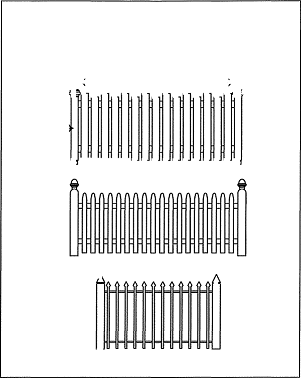
2.05.02.
Modification of height regulations.
(a)
The height limitations contained in 2.04.00, "District regulations," do not apply to spires, belfries, cupolas, water tanks, ventilators, chimneys, elevator shafts or other appurtenances usually required to be placed above the roof level and not intended for human occupancy; provided, however, that notwithstanding the permitted maximum height limitations allowed in the various zoning districts, no structure (including appurtenances and structures normally erected above roof level) shall be erected to a height above adjacent ground level exceeding the most restrictive of the following:
(1)
Fifty-five feet; or
(2)
Elevations as may be prescribed by the Federal Aviation Administration;
(3)
Elevations as may be prescribed by the State of Florida unless applicable permit has been issued; [or]
(4)
Elevations as may be prescribed for communication antennas and towers.
(b)
The height limitations contained in 2.04.00, "district regulations," further do not apply to church or similar structures conforming to requirements of (1) construction type of I, II or III of the building code as adopted from time to time in chapter 12 of this Code of Ordinances, (2) ceilings beneath roofs shall be open with no false ceilings, (3) heating, ventilating and air conditioning ducts and plumbing, including enclosures such as furred areas, shall be below 25 feet, (4) any area above 20 feet shall not be subject to occupancy, (5) sprinklers if any area above 12 feet is subject to occupancy; provided, however, that notwithstanding the permitted maximum height limitations allowed in the various zoning districts, no such church or similar structure shall be erected to a height above adjacent ground level exceeding 55 feet nor shall such church or similar structure (including appurtenances and structures normally erected above roof level) be erected to a combined height of both church or similar structure plus appurtenances exceeding the most restrictive of the following:
(1)
Seventy-five feet; or
(2)
Elevations as may be prescribed by the Federal Aviation Administration; or
(3)
Elevations as may be prescribed by the State of Florida unless applicable permit has been issued.
(c)
The height limitations contained in 2.04.00, "district regulations," do not apply to that area designated as the Interstate impact area in Attachment A to Article VII of the Land Development Regulations. Within said interstate impact area, the following height limitations shall apply:
(1)
No structure (including appurtenances and structures normally erected above roof level) shall be erected to a height exceeding 75 feet above the adjacent ground level.
(2)
No structure (including appurtenances and structures normally erected above roof level) shall be erected to a height between 35 feet and 75 above the adjacent ground level unless the following conditions are met:
a.
The framing of the structure consists solely of reinforced concrete, brick or steel.
b.
All exterior and interior wall sections of the structure are constructed using cement blocks or other fire resistant materials as approved by the town manager.
c.
All floor and roof sections of the structure are constructed using steel reinforced concrete coated with fire resistant insulation.
2.05.03
Erection of more than one main use structure on a lot.
More than one main use structure for a permitted or principal use shall not be erected on a single residential lot except as follows:
(a)
More than one structure may be erected on a single residential lot provided yard, area and other requirements of this zoning ordinance are met for each structure as though it were on an individual and separate lot; or
(b)
More than one structure used for multiple-family residential purposes may be erected on a single lot provided that an open space of not less than 15 feet is provided between each structure, required yards are provided between any structure and all lot lines, minimum and maximum lot coverage for all of such buildings taken together complies with district regulations.
2.05.04
Buildings to have access.
Every building hereafter erected or moved shall be on a lot adjacent to a public street or private street approved by the Orange Park Town Council, provided that such private street (r.o.w.) right-of-way shall be not less than 30 feet in width and further provided that all structures shall be so located on lots as to provide safe and convenient access for servicing, fire protection and required off-street parking. Existing easements or right-of-way of record shall be excluded.
2.05.05
Use of residentially zoned property for access.
No land which is residentially zoned shall be used for driveway, walkway or access purposes to any land which is nonresidentially zoned.
2.05.06.
Parking of commercial vehicles in residential districts.
(a)
The parking of any commercial use vehicle, open or closed, is prohibited on the public streets or on or within privately owned driveways or property within any residentially zoned district, except for loading and unloading purposes when rendering a service to the property. Furthermore, this parking prohibition shall include all vehicles, regardless of load rating, which have more than six weight-bearing wheels or vehicles with trailer combinations which are designed, intended or used for transportation of people, chattel, or goods used for purposes other than for a private passenger vehicle or use. Finally, this parking prohibition shall apply to all of the following vehicles, regardless of load rating: tow trucks, any vehicle with a crane or jib attached, any vehicle that is used commercially to transport insecticides, pesticides, noxious gases, septic tank residues, flammable liquids or gases, acids, alkalies, explosives or other dangerous substances or liquids.
(b)
Heavy vehicles subject to the following classifications shall not be parked in any residential district except as provided in section 2.05.06.00 (c) and (d):
(1)
Tractors, trailers and trucks for commercial use.
(2)
A motor vehicle equipped with machinery and designed for the exclusive purpose of well drilling, excavation, lawn maintenance, construction spraying or similar activity.
(3)
A school bus.
(4)
A wrecker.
(5)
A hearse or ambulance.
(6)
Motor vehicles for hire carrying nine (9) or more passengers.
(c)
A vehicle may park directly in front of a residence between the hours of 7:00 a.m. and 8:00 p.m. for a period of time not to exceed eight hours provided that:
(1)
A resident or agent of the resident is actively unloading furniture or other household items from the vehicle and placing said furniture or other household items in the residence; or
(2)
A resident or agent of the resident is actively removing furniture or other household items from the residence and placing said furniture or other household items in the vehicle; or
(3)
A resident or agent of the resident is actively using tools, equipment, or other materials contained in the vehicle to provide electrical, utility, plumbing, decorating, maintenance, or other similar services to the residence.
(d)
An ambulance or other emergency vehicle may park in front of a residence for the period of time required to provide emergency services to the residence.
2.05.07.
Pharmacies and medical marijuana treatment center dispensing facilities.
The following regulations shall apply to the location of pharmacies, which includes medical marijuana treatment center dispensing facilities authorized under Florida law:
(a)
Location. A pharmacy or medical marijuana treatment center dispensing facility shall not be located within 500 feet of another pharmacy or medical marijuana treatment center dispensing facility.
In addition, a medical marijuana treatment center dispensing facility may not be located within 500 feet of a public or private elementary school, middle school or secondary school.
2.05.08.
Parking or storage of inoperable vehicles.
Inoperable, dismantled or partially dismantled vehicles which require repairs to render such vehicles operable; vehicles not legally registered and licensed by the state department of motor vehicles; shall not be parked or stored in any zoning district except as provided in this article.
2.05.09
Service stations and convenience stores with gas pumps.
The following regulations shall apply to the location, design, construction, operation, and maintenance of service stations and convenience stores with gas pumps:
(a)
Lot dimensions. A service station or convenience store with gas pumps shall have a lot of adequate width and depth to meet all setback requirements; but in no case shall a corner lot have less than two street frontages of at least 100 feet each and an area of at least twenty-two thousand five hundred (22,500) square feet, and an interior lot shall have a street frontage of at least 100 feet and a minimum area of fifteen thousand (15,000) square feet.
(b)
Site development. A raised curb of at least six inches in height should be erected along all of the street property lines, except for driveway openings. This barrier helps to define driveway openings and prevents operation of vehicles on the sidewalks except at the designated crossings. The entire service area shall be paved with a permanent surface of concrete or asphalt. Any unpaved areas of the site should be landscaped and separated from the paved areas by a curb or another barrier.
(c)
Buildings. All main and accessory [buildings shall] be set back at least40 feet from all street right-of-way lines to provide adequate area for maneuvering vehicles in the service area and proper visibility, particularly at intersections.
(d)
Access driveways and curb cuts. Each driveway giving access to a gasoline service station creates a potential point of conflict between vehicles entering and leaving the station, pedestrians on the sidewalk, and vehicles forming the main stream of traffic. The driveway itself must be constructed so as to prevent its being widened through usage, frequently to the point where the entire street frontage of the service station is one continuous driveway. No driveway or curb cut for a driveway should be located within ten feet of an adjoining property line, as extended to the curb or pavement, or within 20 feet of any exterior (corner) lot line or street intersection. The number of curb breaks or driveways giving access to a single street shall not exceed two for each 100 feet of street frontage, each having a width of not more than twenty-five (25) feet or less than 20 feet. Any two driveways giving access to a single street shall be separated by an island with a minimum dimension of 20 feet at both the right-of-way line and the curb or edge of the pavement.
(e)
Lighting. All lights and lighting located on service station premises shall be so designed and arranged so that no source of light shall be directly visible from any residential district; this provision shall not be construed to prohibit interior-lighted signs.
(f)
Location of pumps and structures. No main or accessory buildings, no sign of any type, and no gasoline pump shall be located within 20 feet of the lot line of any property that is residentially zoned. No gasoline pump shall be located within 20 feet of any street right-of-way.
(g)
Location of service stations and convenience stores with gas pumps. Service stations shall not be located within a radius of five hundred (500) feet from another service station, church, club, lodge, library, municipal building, theater or any other buildings designed for public assembly.
(h)
Waste disposal. See 2.05.17.
2.05.10
Buffer between districts.
2.05.10.01
Where IW adjoins an RS-1, RS-2, RS-3, RG-1 or RG-2 district without an intervening street or alley, a buffer with 30 feet of planted green space and a solid masonry wall or vinyl fence installed finished side out (toward the residential use at least eight feet in height, measured from ground level, which creates a visual barrier shall be erected by the commercial property owner prior to the exercise of any use permitted on the commercial property. The wall or fence may be designed to six feet if it includes two feet of decorative design on top of which brings the overall height to eight feet. The wall or fence shall be installed along all side and rear property lines so adjoining, except that the buffer shall not project into any adjacent residential property. The solid masonry wall or vinyl fence shall be required regardless of the presence of an intervening street or alley.
2.05.10.02
Where a CI district adjoins an RS-1, RS-2, RS-3, RG-1 or RG-2 district without an intervening street or alley, a buffer with twenty-five (25) feet of planted green space and a solid masonry wall or vinyl fence installed finished side out (toward the residential use) at least eight feet in height, measured from ground level, which creates a visual barrier, shall be erected by the commercial property owner prior to the exercise of any use permitted on the commercial property. The wall or fence shall be installed along all side and rear property lines so adjoining, except that the buffer shall not project into any adjacent residential property. The solid masonry wall or vinyl fence shall be required regardless of the presence of an intervening street or alley.
2.05.10.03
Where a CN or CG district adjoins an RS-1, RS-2, RS-3, RG-1 or RG-2 district without an intervening street or alley, a buffer with 20 feet of planted green space and a solid masonry wall or vinyl fence installed finished side out (toward the residential use) at least eight feet in height, measured from ground level, which creates a visual barrier, shall be erected by the commercial property owner prior to the exercise of any use permitted on the commercial property. The wall or fence may be designed to (6) six feet if it includes (2) two feet of decorative design on top which brings the overall height to (8) eight feet. The wall or fence shall be installed along all side and rear property lines so adjoining, except that the buffer shall not project into any adjacent residential property. The solid masonry wall or vinyl fence shall be required regardless of the presence of an intervening street or alley.
2.05.10.04
Where CPO adjoins an RS-1, RS-2, RS-3 RG-1 or RG-2 district without an intervening street or alley, a buffer with 15 feet of planted green space and a solid masonry wall or vinyl fence installed finished side out (toward the residential use) at least eight feet in height, measured from ground level, which creates a visual barrier, shall be erected by the commercial property owner prior to the exercise of any use permitted on the commercial property. The wall or fence may be designed to six feet if it includes two feet of decorative design on top which brings the overall height to eight feet. The wall or fence shall be installed along all side and rear property lines so adjoining, except that the buffer shall not project into any adjacent residential property. The solid masonry wall or vinyl fence shall be required regardless of the presence of an intervening street or alley.
2.05.10.05
Where RG-1 or RG-2 adjoins an RS-1, RS-2, or RS-3 district without an intervening street or alley, a buffer with 15 feet of planted green space and a solid masonry wall or vinyl fence installed finished side out (toward the residential use) at least eight feet in height, measured from ground level, which creates a visual barrier, shall be erected by the owner of the RG-1 property prior to the exercise of any use permitted on the property. The wall or fence may be designed to six feet if it includes two feet of decorative design on top which brings the overall height to eight feet. The wall or fence shall be installed along all side and rear property lines so adjoining, except that the buffer shall not project into any adjacent residential property. The solid masonry wall or vinyl fence shall be required regardless of the presence of an intervening street or alley. This buffer requirement is not applicable when the use of the property is a single family home or one duplex, which consists of two dwelling units.
2.05.11
Portable storage containers.
2.05.11.01
Purpose and intent.
While temporary personal storage containers are useful to property owners, the town finds it in the public interest to regulate certain aspects, such as placement of these structures, the duration and frequency of use, and the condition of the structure itself in order to promote the health and safety of the residents of the town and to preserve the aesthetic value of its residential neighborhoods. A portable on-demand storage structure may be utilized as a temporary structure within the town when in compliance with the standards of this subsection. Any use of such structures within the town not in compliance with this subsection shall be unlawful.
2.05.11.02
Registration required; application; insurance; fee; duration.
For instances when a portable storage container is to be placed on the property for greater than seventy-two (72) hours, within 24 hours following the initial delivery of a portable storage container, registration for the structure shall be obtained by application to the economic and community development department who shall determine if the structure satisfies the requirements of this subsection. The application shall contain the name of the applicant to whom the storage container is supplied; whether the person owns, rents, occupies, or controls the property; the address at which the portable storage container will be placed; the delivery date; removal date; active building permit number (if applicable); and a sketch depicting the location and the placement of the storage container.
The registration fee shall be $25.00. Permission for placement shall be granted for a period of 14 consecutive days for residential property and 30 days for non-residential property, including the days of delivery and removal. An extension may be granted to the applicant for an additional 14 days by seeking an extension for cause from the economic and community development department director. Extension of a registration will cost $25.00.
Each residential dwelling unit is limited to a maximum of four registrations per calendar year, and a minimum of 15 days shall lapse between the end of one permit period and the beginning of another.
Each commercial business is limited to a maximum of two registrations per calendar year, and a minimum of 30 days shall lapse between the end of one permit period and the beginning of the other.
2.05.11.03
Requirements for placement.
The following requirements shall apply to the placement of a portable storage container in any residential zoning district or residential portion of a planned unit development:
(a)
Only one portable storage container may be placed at any residential property at one time. Such container shall not exceed eight feet in height, eight feet in width and 16 feet in length.
(b)
Any non-residential property less than two acres in size may place one portable storage container at any one time. Such container shall not exceed eight feet in height, eight feet in width and 16 feet in length.
(c)
Any non-residential property two acres or greater in size may place a maximum of three portable storage containers at any at one time. Such containers shall not exceed ten feet in height, ten feet in width and 20 feet in length.
(d)
Such container on residential property shall not be located closer than ten feet to the property line unless entirely placed on an existing impervious driveway. Such container on non-residential property shall not be located closer than 20 feet to any property line.
(e)
The unit or units shall not be located on or impede the use of any sidewalk.
(f)
Containers shall only be placed on the property owner's driveway or a parking area or, if access exists at the side or rear of the site, the side or rear yard. The required off-street parking space(s) shall at all times be maintained if a portable storage container is placed in parking areas.
(g)
The applicant, as well as the supplier, shall be responsible for ensuring that the portable storage container is maintained in good condition, free from evidence of deterioration, weathering, discoloration, graffiti, rust, ripping, tearing or other holes or breaks, at all times.
(h)
No portable storage container located on residential property shall be used to store solid waste, construction debris, demolition debris, recyclable materials, business inventory, commercial goods, goods for property other than the residential property where the portable storage container is located or any other illegal or hazardous material. Portable storage containers located on non-residential property may be used as temporary storage of business inventory and commercial goods, but shall not contain any solid waste, construction debris, demolition debris, or recyclable materials or any other illegal or hazardous material. At no time shall the portable storage container may be used for retail sales. Upon reasonable notice to the applicant, the code enforcement officer may inspect the contents of any portable storage container at any reasonable time to ensure that it is not being used to store said materials.
(i)
It shall be the obligation of the owner or user of such temporary structure to secure it in a manner that does not endanger the safety of persons or property in the vicinity of the temporary structure. In the event of high winds or other severe weather conditions in which such structure may become a physical danger to persons or property, the Orange Park Police Department may require the immediate removal of such temporary structure.
(j)
In the event of fire, hurricane or natural disaster causing substantial damage to the structure, the property owner may apply to the town council for permission to extend the time that a portable storage container may be located as a temporary structure on the property. Application for such extended duration shall be made in writing and filed with the economic and community development department director and shall provide sufficient information to determine whether such extended duration should be granted. The economic and community development department director shall determine whether or not to grant such extended duration and the length of any such extension.
(k)
Any portable storage container which is not removed at the end of the time for which it may lawfully remain in place, or immediately upon the direction of law enforcement for safety reasons, shall have a notice affixed to it from the police department advising the owner of the need to remove the structure within 24 hours. Should the structure not be removed after those 24 hours have passed, it may be removed by the town, without notice, and the cost of the administration of its removal, may be assessed against the property on which the temporary structure is located and may be filed as a lien against such property by the town clerk. Such lien shall be superior in dignity to all other liens or encumbrances upon the property, including the lien of a mortgage, and shall be equal in dignity to the lien of ad valorem taxes.
(l)
These regulations do not supersede more restrictive limitations contained in any homeowner's association or subdivision covenants, deeds, or restrictions.
2.05.12
Mobile homes, temporary public use and office.
2.05.12.01
Temporary office. A mobile home or trailer may be used in any zoning district as a temporary office or shelter for materials or tools incidental to construction or development of the premises upon which the mobile home or trailer is located, provided a permit for such construction or development has been issued, and such permit includes authorization for temporary use of a mobile home or trailer. Such use of a mobile home or trailer shall not be permitted for more than one month after the completion of such construction or development, or as determined by the economic and community development department director.
2.05.12.02
Temporary public use. Any agency of local, municipal, state or federal government may utilize a mobile home or trailer for temporary public purposes in any zoning district, provided such use shall not include a residential use.
2.05.12.03
Sales office. A mobile home may be used as a sales office on a mobile home sales lot in any zoning district permitting such use.
2.05.13
Mobile home, camping trailer, motorized home, pickup coach, travel trailer, boat, boat trailer, racing or recreational car, and self-propelled vehicle.
2.05.13.01
Application to self-propelled vehicles.
Except for the prohibition against parking in a vacant lot, self-propelled vehicles designed for use primarily for transportation, and commonly classified as sedans, station wagons, camping vans or buses, even though convertible to living or sleeping quarters are not considered to come within the provisions of this subsection, provided they are not converted to or used as living or sleeping quarters and provided sufficient equipment is removed therefrom to preclude such conversion.
2.05.13.02
Parking prohibition.
(a)
It shall be unlawful for any mobile home, house trailer, travel trailer, self-contained travel trailer, pickup coach, motorized home, camping trailer, boat, boat trailer, racing or recreational car to park for a period longer than two hours anywhere within the town, except as specifically provided by this chapter.
(b)
Under no circumstances shall any such vehicle be used for living or sleeping quarters, except as specified in section(s) 2.05.13.04 and 2.05.13.05.
(c)
Parking in the street or over a sidewalk is prohibited.
2.05.13.03
Unloading cargo.
A cargo trailer or semitrailer may be parked, for a period not to exceed 24 hours, in a driveway or on a street for the sole purpose of unloading cargo or personal effects, provided no undue interference to normal traffic results.
2.05.13.04
Parking on residential property.
The parking, storage or use of a travel trailer, self-contained travel trailer, pickup coach, motorized home, camping trailer, boat, boat trailer, racing or recreational car may be parked on residential property, but must comply with all yard (building setback) requirements listed in section 2.04.00, Table II.2, except that corner lots shall meet the more restrictive front yard requirement, and there shall be no utility hook-ups other than electrical.
Unless parked within or under an accessory structure pursuant to section 2.05.21, the parking location must be outside of all required yards (building setbacks).
2.05.13.05
Temporary parking in driveways or carports.
(a)
A guest of a town resident who is the bona fide owner or operator of a trailer, self-contained travel trailer, pickup coach, motorized home or camping trailer may park the trailer in the host's driveway or carport.
(b)
Such vehicle may be used as living or sleeping quarters with no connections other than electrical.
(c)
Such temporary parking shall not exceed five days within any six-month period.
2.05.13.06
Vacant lots.
No person shall park any trailer, boat trailer, self-propelled vehicles, cargo or mobile home, house trailer, travel trailer, self-contained travel trailer, pickup coach, motorized home or camping trailer in any vacant lot.
2.05.13.07
Reserved.
2.05.13.08
Application.
Each application for a mobile home park or trailer in the town shall be subject to a site plan, drawn to scale by a registered surveyor or engineer or architect showing a complete layout of the property of the proposed mobile home park together with drainage plan.
2.05.13.09
Sales area.
If a mobile home sales lot or area is provided in conjunction with any mobile home park, such area shall not exceed ten percent of the gross mobile home park area, and such sales area shall be separated from the remainder of the mobile home park by a solid fence or wall with a minimum height of eight feet. Street frontage for such sales area shall not exceed 100 feet and the sales area must be located at front of the mobile home park and in such a manner as to not block the ingress and egress of the mobile home park.
2.05.13.10
Required facilities.
It shall be required that each mobile home park shall contain adequate management office space, mail distribution, maintenance, boat and trailer storage area, a minimum of 250 square feet of visitor parking, and recreation area for each space or stand within the mobile home park; adequate laundry facilities with either a drying yard or mechanical clothes dryer.
2.05.13.11
Utilities and roadway requirements.
Each mobile home park shall have central water and sewage facilities meeting all local and state health regulations and all electric and telephone lines shall be underground. All streets and roads within the boundaries of each mobile home park shall have a minimum right-of-way of 26 feet with curbs and gutters and with a paved surface of not less than 19 feet. The entrance and exit road or street shall not pass through a developed residential area or other than over a thoroughfare or feeder road, and all streets shall be provided with adequate lighting.
2.05.13.12
Patio and off-street parking required.
Each mobile home space or stand shall be required to have a patio which has a minimum area of 200 square feet. Each mobile home space or stand shall be required to have a minimum of one off-street parking space.
2.05.14
Townhouses and condominiums.
Each structure containing townhouses or condominiums or each development of contiguous townhouse or condominium units shall comply with all regulations for multifamily dwellings of the district where permitted (RG-1). In addition to regulations applicable to the entire building or development, the following regulations shall apply to individual single-family townhouse units in such buildings or developments:
(a)
No side yards shall be required for individual interior townhouse units. Exterior units shall have a side yard requirements of ten feet.
(b)
The minimum lot area per dwelling unit shall be 6,000 square feet for the first family unit and 5,360 square feet for each additional dwelling unit (gross density of not more than eight units per acre).
(c)
Each townhouse unit shall have access to a public or private street.
2.05.15
Communication towers and communication antennas.
(a)
Applicability. This section shall apply to all lands in the incorporated area of the town.
(b)
Legislative findings, intent and purpose. The area around the town has on numerous occasions and with increasing frequency been confronted with requests to site communication towers. Prior to the adoption of this section, the Town of Orange Park Ordinance Code contained no provision specifically related to siting communication towers. It is the intent of this section to promote the health, safety and general welfare of the citizens by regulating the siting of communication towers. Accordingly, the town finds that the promulgation of this section is warranted and necessary to accomplish the following purposes:
(i)
To direct the location of communication towers within the town;
(ii)
To protect residential areas and land uses from potential adverse impacts of communication towers;
(iii)
To minimize adverse visual and aesthetic impacts of communication towers through careful design, siting, landscape screening, and innovative aesthetic mitigation;
(iv)
To accommodate the growing need for communication towers;
(v)
To promote and encourage shared use/co-location of existing and new communication towers as the preferred option rather than construction of additional single use towers;
(vi)
To consider the public health and safety of communication towers;
(vii)
To avoid or minimize potential damage to adjacent properties, from the perspective of public safety, from tower failure through engineering and careful siting of tower structures.
(c)
Applicability; government-owned property; use of existing structures.
(i)
All new communication towers in the town shall be conditional uses as provided for and allowed in the various zoning districts. All new communication towers shall be subject to the Town of Orange Park Ordinance Code and all other applicable building codes. In the event of any conflict between the zoning district regulations and the regulations contained in this section, the provision of this section shall override and supersede such other regulations unless otherwise specifically set forth herein.
(ii)
The provisions of this section shall apply to communication towers and communication antennas located on property, rights-of-way or easements owned by any governmental entity, and all such towers shall comply with applicable building codes and the minimum distances and separation distances described in subsection (g).
(iii)
All communication towers existing on the effective date of this ordinance [January 7, 1997] enacting this section shall be allowed to continue to be used as they presently exist. Routing [routine] maintenance (including replacement with a new tower of like construction and height and modifications to accommodate the co-location of an additional user or users resulting in a height increase of 20 feet or less) shall be permitted on such existing towers. Any modification resulting in an increase of tower height, however, shall comply with the requirements of subsection (1) relating to structural design. New construction, other than routine maintenance and modifications to accommodate location on an existing communication tower, shall comply with the requirements of this section.
(iv)
For the purpose of this section, a communication tower that has received final approval in the form of either a variance or building permit, but has not yet been constructed, shall be considered an existing tower so long as such approval is valid and unexpired.
(d)
Communication antennas. No approval shall be required to locate a communication antenna on existing structures, which may include, but are not limited to, buildings, water towers, existing communications towers, recreational light fixtures and other essential public utility structures, provided that:
(i)
The placement of the communication antenna does not result in a height increase of more than 20 feet above the highest point of the structure;
(ii)
The communication antenna complies with all applicable FCC and Federal Aviation Administration (FAA) regulations;
(iii)
The placement of the communication antenna is in compliance with the EIA/TIA 222-F Standards as verified in writing by a professional engineer and submitted to the building department.
(e)
Co-location of communication antennas. To minimize adverse visual impacts associated with the proliferation and clustering of communication towers, co-location of communication antennas by more than one carrier on existing or new communication towers shall be encouraged over the construction of new single-use communication towers as follows:
(i)
A communication tower which is modified or reconstructed to accommodate the co-location of an additional communication antenna shall be of the same tower type as the existing communication tower. Any modification or reconstruction must comply with the requirements of subsection (l) relating to structural design.
(ii)
Height.
(a)
An existing communication tower may be modified or rebuilt to a taller height, not to exceed 20 feet over the tower's pre-existing height, to accommodate the co-location of an additional communication antenna, notwithstanding the provisions of subsection (i) governing maximum height of communication towers.
(b)
The height change referred to in subsection (e)(ii)(a) may only occur one time per communication tower.
(iii)
On-site location.
(a)
An existing communication tower which is being rebuilt to accommodate the co-location of an additional communication antenna may be moved on-site within 50 feet of its existing location.
(b)
After the communication tower is rebuilt to accommodate co-location, only one tower may remain on the site.
(c)
A relocated on-site communication tower must still conform to the minimum distance requirements as provided in subsection (g).
(f)
Location on lot. A communication tower may be located on a lot utilized for other principal uses on a parcel smaller than the minimum lot size required in the zoning district. This parcel shall be considered as the "tower site." The tower site, but not the entire lot, shall be subject to all of the requirements of this section, except as specifically provided herein.
(g)
Minimum distance of communication towers from residential zoning districts and rights-of-way and setbacks; separation distances between towers.
(i)
Regardless of the zoning district in which the communication tower is located, the minimum distance of the tower shall be not less than 200 feet from the nearest single-family land use district (RS-1, RS-2, and RS-3) and 100 feet from the nearest multi-family land use district (RG-1). Notwithstanding, the minimum distances required by this paragraph shall not apply to property within these districts which is being used for non-residential conditional use or lawful nonconformity.
(ii)
Regardless of the zoning district in which the communication tower is located, the minimum distance of the tower shall be not less than 100 feet from the nearest city public or approved private street and 150 feet from the nearest county road or state highway with such distances measured to the closest edge of the right-of-way containing the street, road or highway.
(iii)
Minimum distances shall be measured from the center of the base of the communication tower.
(iv)
All accessory buildings and structures to a communication tower shall conform to the setback requirements for the applicable zoning district in which they are located.
(v)
All tower supports and peripheral anchors shall be located within the boundaries of the applicable lot and in no case less than five feet from the lot line. In addition, towers shall comply with the setback requirements of subsection (l) below entitled "structural design."
(vi)
Separation distances between communication towers shall be applicable for and measured between the proposed tower and those towers that are existing and/or have received a building permit after the effective date of the ordinance enacting this section [January 7, 1997]. The separation distances shall be measured by drawing or following a straight line between the base of the existing tower and the proposed base pursuant to a site plan, of the proposed tower. The separation distance shall be 2,000 feet minimum.
(vii)
All minimum distances and setbacks described in this subsection shall be based and measured on conditions in existence at the time of application for a building permit for a communication tower. Subsequent rezoning of real property within the radius of the site of an existing communication tower which could allow for residentially zoned lot lines closer to the communication tower than the minimum distances and setbacks otherwise allow will not render the communication tower use conforming under subsections (c)(iii) and (o) herein, or an otherwise unlawful use.
(h)
Maximum height. Measurement of communication tower height shall include antenna, base pad, and other appurtenances and shall be measured from the finished grade of the parcel. The maximum height of communication towers shall be 250 feet.
(i)
Equipment storage. No equipment, mobile or immobile, not used in direct support of the communication tower or tower function shall be stored or parked on the applicable parcel of land upon which the communication tower is located.
(j)
Illumination and signage. Communication towers shall not be artificially lighted except to assure human safety or as required by the FAA. If high voltage is necessary for the operation of the facility and is present in the ground or in the tower, signs located every 20 feet and attached to the fence or wall shall display in large bold letters the following: "HIGH VOLTAGE—DANGER."
(k)
Finished color. Communication towers not requiring FAA paint/marking shall have either a galvanized finish or a painted dull blue, gray, or black finish.
(l)
Structural design. In order to ensure that the structural failure of or collapse of the tower will not create a safety hazard to adjoining properties, all communication towers shall be located on the site so as to provide a minimum distance equal to 110 percent of the height of the tower from all property lines, or shall be certified by a registered engineer in the State of Florida, who shall submit calculations substantiating the position to the 100 percent break point, or in the alternative shall construct all towers to conform to the EIA/TIA-222-F standards for steel antenna towers and antenna supporting structures as published by Electronic Industries Association. The construction of all communication towers must conform to the EIA/TIA-222-F standards, structural stands for steel antenna towers and antenna supporting structures, as published by Electronic Industries Association and all applicable building codes. Further, any improvement and/or additions to existing communication towers, excluding that allowed in subsection (d), shall require submission of site plans sealed and verified by a professional engineer which demonstrate compliance with the EIA/TIA-222-F Standards. Said plans shall be submitted to and reviewed and approved by the building department at the time building permits are requested. If the minimum distances contained in subsection (g) exceed the minimum distances required by this subsection, then the minimum distances of subsection (g) shall apply.
(m)
Fencing. A minimum six-foot finished masonry wall or vinyl fence shall be required around all communication towers. Access to the tower shall be through a locked gate.
(n)
Landscaping. The visual impacts of communication towers shall be mitigated through landscaping or other screening materials at the base of the tower and ancillary structure, including any emergency generators.
(i)
The following landscaping and buffering of communication towers shall be required around the perimeter of the tower and accessory structures:
a.
A row of shade trees a minimum of six feet tall and a maximum of ten feet apart shall be planted around the perimeter of the fence;
b.
A continuous hedge at least 30 inches high at the time of planting, capable of growing to at least 36 inches in height within 18 months, shall be planted in front of the tree line referenced above;
c.
All required landscaping shall be of the evergreen variety; and
d.
All required landscaping shall be xeriscape tolerant or irrigated and properly maintained to ensure good health and vitality.
(ii)
Required landscaping shall be installed outside the fence or wall.
(iii)
The use of existing vegetation shall be preserved to the maximum extent practicable and may be credited as appropriate toward meeting landscaping requirements.
(iv)
These standards may be waived by the town manager or the manager's designee for those sides of the proposed tower that are located adjacent to undevelopable lands not in public view.
(o)
Nonconforming communication towers. To the extent set forth herein, the restrictions on nonconforming uses and structures contained in section 2.07.00 are modified and supplemented by this section. Bona fide nonconforming communication towers and antennas that are damaged or destroyed may be rebuilt and all such towers or antennas may be modified or replaced without meeting the minimum distance requirements specified in subsection (g). The type, height, and location of the tower on-site shall be of the same type and intensity as the original facility approval. Building permits to rebuild the tower shall comply with the applicable town codes and shall be obtained within 180 days from the date the tower is damaged or destroyed. If no permit is obtained or if said permit expires, the communication tower shall be deemed abandoned as specified in subsection (p).
(p)
Abandonment. In the event the use of any communication tower has been discontinued for a period of 180 days, the tower shall be deemed abandoned. Determination of the date of abandonment shall be made by the town manager or the manager's designee, based upon documentation and/or affidavits from the communication tower owner/operator regarding the issue of tower usage. Upon the town manager's or the manager's designee's determination of such abandonment, the owner/operator of the tower shall have an additional 185 days within which to reactivate the use of the tower or transfer the tower to another owner/operator who makes actual use of the tower, or dismantle and remove the tower. At the earlier of 185 days from the date of abandonment without reactivation or upon completion of dismantling and removal, any variance approval, if required, or non-conforming use status, for the tower shall automatically expire.
(q)
Certification of compliance with Federal Communication Commission (FCC) NIER Standards. Prior to receiving final inspection, adequate proof shall be submitted to the building department documenting that the communication tower complies with all current FCC regulations for non-ionizing electromagnetic radiation (NIER) and the radio frequency levels meet the American National Standards Institute (ANSI) C95 guidelines for public safety.
(r)
Information required for applications for locating communication towers. The following information shall be included with all applications for a building permit, to site a communication tower, and for any variance application. The applicant may use any combination of site plans, surveys, maps, technical reports or written narratives necessary to convey the following information:
(i)
A scaled site plan clearly indicating the tower site, type and height of the proposed tower, the location of the accessory building, on-site land uses and zoning, adjacent land uses and zoning, adjacent roadways, proposed means of access, distances from property lines, elevation drawings of the proposed tower, and any other proposed structures;
(ii)
A current zoning or tax map or aerial, as maintained by the Clay County Property Appraiser's Office or town's department of economic and community development, showing the location of the proposed tower;
(iii)
A legal description of the parent tract and tower site (if applicable);
(iv)
Information depicting whether the proposed tower site meets the required minimum distance from residentially zoned lands, approximate distance between the proposed tower and the nearest residential dwelling, platted residentially zoned properties, or unplatted residentially zoned properties. If the proposed tower site does not meet the minimum distance requirements, then exact distances, locations and identifications of said properties shall be shown on an updated zoning or tax map;
(v)
A landscape plan showing specific landscape materials;
(vi)
The method of fencing, finished color and, if applicable, the method of aesthetic mitigation and illumination;
(vii)
If the applicant is not co-locating (sharing space) on the proposed communication tower or another communications provider, evidence that it has made diligent but unsuccessful efforts to co-locate its antenna and associated equipment on an existing structure, including proximity distances to all existing towers within a ten mile radius of the proposed tower site;
(viii)
Evidence that the applicant has made diligent but unsuccessful efforts to locate the proposed communication tower on suitable government-owned property;
(ix)
The written consent by the applicant that any approval for siting a communication tower or the approval of any variance request shall be conditioned upon requiring the applicant to construct the proposed communication tower so as to provide sufficient excess capacity over the initial loading and permit at least one other comparable communication provider to use the proposed tower where feasible and subject to reasonable terms. The term "where feasible", as it applies to co-location, means the utilization of a tower by another party which would, at the time of such utilization, comply with sound engineering principles, would not materially degrade or impair the communication tower's utilization by existing users, would not unduly burden the tower structurally, and would not otherwise materially and adversely impact existing users. Reasonable terms for use of a communication tower that may be imposed by the owner include a requirement for reasonable rent or fees, taking into consideration the capitalized cost of the communication tower and land, the incremental cost of designing and constructing the tower so as to accommodate additional users, increases in maintenance expenses relating to the tower and a fair return on investment, provided such amount is also consistent with rates paid by other co-locators at comparable tower sites;
(x)
Information relating to the feasibility for camouflage of the tower and cost thereof to camouflage communication towers;
(xi)
In case of an application for a variance from the requirements of subsections (g)(i), (ii) and (vi), relating to minimum distances and separation distances, certification by a Florida licensed engineer that the proposed location of the communication tower is the only location which can serve an adjacent or nearby residential area or areas thereby justifying the shorter minimum distance or separation distance requested.
(s)
Supplemental standards and criteria for communication towers. In addition to meeting the requirements of this section, the following supplemental standards and criteria shall also apply to all applications for locating for communication towers:
(i)
The communication tower will be compatible with the existing contiguous uses or zoning and compatible with the general character and aesthetics of the neighborhood or the area, considering the design and height of the communication tower, the mitigating effect of any existing or proposed landscaping, fencing or other structures in the area, the proximity of the communication tower to existing or proposed buildings or structures, and similar factors; and
(ii)
The communication tower will not have a significant detrimental impact on adjacent property values and shall be blended and camouflaged in design and colors with its surroundings as the town may require.
(t)
Variance standards and criteria for communications towers. Any request to deviate from any of the requirements of this section shall require approval of a variance from the planning and zoning board. Notwithstanding any other variance criteria in the Town of Orange Park Ordinance Code, with respect to action upon applications for variances from the requirements of this section, the planning and zoning board shall grant a variance only if it finds from a preponderance of the evidence that the variance meets the following standards and criteria:
(i)
Certification by a Florida licensed engineer that the proposed communication tower is reasonably necessary to serve an adjacent or nearby residential area or areas shall be required;
(ii)
In the case of an application for a variance from the requirements of subsections (g)(i), (ii) and (vi), relating to minimum distances and separation distances, certification by a Florida licensed engineer that the proposed location of the communication tower is the only location which can serve an adjacent or nearby residential area or areas thereby justifying the shorter minimum distance or separation distance requested;
(iii)
The location of existing uses, structures or other features on or adjacent to the property create a need for the variance. Certification by a Florida licensed engineer that the proposed communication tower is reasonably necessary to serve an adjacent or nearby residential area or areas shall be required;
(iv)
The variance sought is the minimum necessary to address the need for the variance, subsequent to exploring all reasonable siting alternatives;
(v)
The location of the proposed communication tower in relation to existing structures, trees, and other visual buffers shall minimize, to the greatest extent reasonably practicable under the circumstances, any impacts on affected residentially-zoned property; and
(vi)
The location of the communication tower will not have a significant detrimental impact on adjacent property values.
(u)
[Town approval.] Each approval by the town of a development order or permit as defined in F.S. ch. 163, which would have the effect of allowing or approving the location or construction of a communication tower, shall be conditioned upon receipt by the town of the following:
(i)
Either a surety bond, third party controlled escrow account, insurance policy (which may be a blanket policy) or standby letter of credit, in each case reasonably acceptable to the town manager as to form and financial condition of the issuer, securing the obligations of the applicant to dismantle the communication tower as required by section 2.05.15.00(p). The bond, insurance policy or letter of credit shall be payable to the Town of Orange Park and shall provide to the town funds equal to the lesser of $25,000.00 or 150 percent of the estimated cost of dismantling the communication tower (net of salvage value), as evidenced by a certificate of a Florida licensed engineer or other evidence reasonably satisfactory to the town manager. Each such bond, insurance policy, or letter of credit shall be maintained in force for a minimum of 15 years and thereafter for additional periods designated by the town manager if the communication tower remains in place at the end of the original 15-year term. Such financial security shall be payable to the town if the applicant is in default of its obligation under section 2.05.15(p), to dismantle the communication tower and all proceeds shall be used to pay the cost of such dismantling and removal.
(ii)
An easement granted by the fee owner of the remaining land underlying the tower, in favor of the town to access the communication tower site for removal of the subject tower not complying with section 2.05.15(p) time period.
(iii)
Written permission, recordable in the public records of Clay County, from all record owners, beneficial owners and leaseholders of the tower in a form acceptable to the town, for town staff, agents or with contractors to enter upon the subject site and to remove the subject communication tower located there if it is found to be in violation of section 2.05.15(p).
2.05.16
Essential public services.
Essential public services may be permitted in any zoning district.
2.05.17
Waste disposal.
All multiple-family and non-residential uses within the town shall utilize the type and size containers provided by the franchisee and all such containers shall be enclosed with lids. On all commercial property and multiple-family housing sites where commercial type refuse containers are required, an adequate amount of space shall be provided for the placement of the necessary containers. Junk, scrap and waste collection areas shall be located off-street and to the rear of structures, allowing adequate maneuvering space for the servicing of the sites by the sanitation department. These areas shall have improved surface ingress-egress corridors to accommodate the servicing vehicles. All areas used for waste collection shall be enclosed and visually screened in an effective manner from any abutting public or approved private street or public right-of-way, and neighboring properties. In addition, waste disposal areas shall be constructed in a manner architecturally compatible with surrounding main use buildings.
2.05.18
Mobile food vending.
Where allowed under the permitted use provisions in certain zoning districts as set forth in this article, mobile food vendors shall conform to the following conditions:
(a)
Location and separation requirements—Commercial.
(1)
Mobile food vendors may be located on a lot in a CG, CI, or IW zoning district with a principal building or use and in right-of-way parking areas.
(2)
Mobile food vending vehicles are not allowed to locate:
(i)
Within 100 feet from the main entrance to any eating establishment or similar food service business and 100 feet from any outdoor dining area;
(ii)
Within a required sight visibility triangle at the intersection of a driveway, alleyway, or public street with another public street;
(iii)
Within 15 feet of a public sidewalk, utility box or vault, fire hydrant, handicapped ramp, building entrance, or exit or emergency access/exit way;
(iv)
Must not locate within any area of the lot that impedes, endangers, or interferes with pedestrian or vehicular traffic;
(v)
Within 50 feet of a residential unit, unless that residential unit is developed part of a vertically mixed-use structure with ground floor non-residential, as measured from the front door of that residential unit to the mobile food vendor vehicle;
(vi)
Within 20 feet of any bus stop;
(vii)
Within 100 feet of a town park unless authorized by the town authorized representative.
(3)
Hours of operation are limited to the hours between 7:00 a.m. and 10:00 p.m.
(4)
The mobile food vending operator or his or her designee must be present at all times.
(5)
Except for right-of-way parking areas, up to four outdoor tables seating 16 customers are allowed, which shall be maintained in an orderly appearance and not block pedestrian movement along sidewalks.
(6)
The mobile food vending vehicle and any associated outdoor seating must be removed from its permitted locations during impermissible hours of operation; and must not be stored, parked, or left overnight on any public street or sidewalk.
(7)
Signage is limited to those signs that are painted on or attached to the truck and one free standing sign is permitted on private property for each mobile food vendor. The total size of the sign may not exceed 36 inches in height and 36 inches in width. No audio amplification is permitted as part of a mobile food vending operation.
(8)
The mobile food vendor is responsible for the proper disposal of waste and trash associated with the permitted operation. At a minimum, vendors must remove all waste and trash from their approved location at the end of the day or as needed to maintain the health and safety of the public. Liquid waste or grease shall be disposed of at an approved location and not placed in such places as storm drains or any sidewalk, street or other public space.
(9)
With the exception of allowable outdoor seating areas, all equipment required for the operation must be contained within, attached to or within three feet of the mobile food vending vehicle.
(b)
Location and frequency requirements—Residential
(1)
A mobile food vendor may be located on a lot in a RS-1, RS-2, RS-3, RG-1 or RG-2 zoning district without having first obtained a special event permit as described in this section under the following conditions:
(i)
No more than one (1) mobile food vendor may be located on a lot at any one time.
(ii)
A mobile food vendor may be located on a lot a maximum of two (2) times per calendar year.
(iii)
Hours of operation are limited to the hours between 7:00 a.m. and 10:00 p.m.
(iv)
The mobile food vending operator, or his or her designee, must be present at all times.
(v)
The mobile food vendor may not locate within any area lot area that impedes, endangers, or interferes with pedestrian or vehicular traffic.
(vi)
The lot where the mobile food vendor is located is permitted for a single or two-family dwelling.
Any mobile food vendors seeking to operate in circumstances beyond those described in the above-listed conditions shall be required to comply with the conditions of a previously issued special event permit.
(c)
Mobile food vending vehicles shall be removed from the subject lot during impermissible hours of operation and shall not be stored, parked, or left overnight on any public street or sidewalk.
(d)
Mobile food vending vehicles shall comply with Orange Park Town Code Chapter 22, Article II and must have passed a fire safety inspection by the Orange Park Fire Department within the prior calendar year of the date of operation. All inspection documentation, or a copy thereof, shall be located on site for review at all times.
(e)
Mobile food vending vehicles and any associated seating shall not be located within 25 feet of a fire hydrant or fire department connection (FDC).
(f)
Exemptions, licenses and permits. Mobile food vendors participating in special events that the town sponsors, permits and/or coordinates shall be exempt from these regulations. Except for mobile food vendors that are exempt from these regulations, the mobile food vendor shall apply for, obtain and clearly display all required State of Florida, and Town of Orange Park permits, licenses and business tax receipts for each location of a mobile food vending vehicle area. Any such application shall be reviewed by the economic and community development department to assure compliance with this section before being submitted to the town for payment.
(g)
Proof of business insurance shall be required by an insurance company that is licensed to do business in the State of Florida, and which protects the applicant from all claims for damages to property, personal injury, and death. For operation on public property, or town leased property, the applicant must provide insurance naming the business owner as insured and naming the town as additional insured with regard to coverage for claims for personal claims for personal injury, death, and property damage in the amount of $500,000.00 per person and $1,000,000.00 per accident for personal injury/death and $300,000.00 for property damage.
(h)
Application submittal. Applications for mobile food vendor permits shall be submitted on the form provided by the economic and community development department.
(i)
Enforcement procedure.
(1)
Revocation. If at any time, the State of Florida or the Town of Orange Park revokes or suspends the issued mobile food vending permit, the town business tax receipt for the mobile food vending business will be simultaneously revoked or suspended. A mobile food vendor who has his or her permit declared null and void or revoked for any of the reasons set forth in this section shall not be allowed to reapply for a mobile food vending permit for a period of 90 days after the effective date of such action.
2)
Other violations. If at any time evidence is provided that a mobile food vending business is being operated in a way that does not comply with these regulations, a notice of violation shall be issued to the lot owner and mobile food vendor and the violation shall be referred to the special magistrate for a hearing and disposition in accordance with the provisions of the land development regulations.
2.05.19
Supplementary architectural and aesthetic regulations.
(a)
Definitions. As used in this section, the following terms and words are defined as follows:
(1)
"Immediate neighborhood" means the five closest residential dwellings with property lines within 350 feet of the property subject to review.
(2)
"Permanent foundation" means a load-bearing continuous stem wall underneath the entire permanent structure, slab on grade, piers installed pursuant to F.A.C. ch. 15-C-1.0103, other foundation systems with exposed tie-downs or pilings, or other permanent foundation which complies with the criteria of the flood regulations in flood prone areas.
(3)
"Projection" means a bay window, offsetting portions of the single-family dwelling, garages, dormer windows, recessed doors, or porches and decks (covered or uncovered), so long as these projections meet the size requirements set forth in subsection (b)(1)(ii); provided, however, that the covered porches must use a roofing material consistent with the roofing materials used on the primary structure and uncovered porches shall have a finished floor elevation within eight inches of the finished floor elevation of the primary structure and shall be continuously screened upward from the ground to floor with the same materials as the foundation wall used on the primary structure.
(4)
"Initial building plan" means the building plans for proposed single-family and two-family dwellings.
(b)
Applicability. In addition to other provisions of the Land Development Regulations, the following supplementary architectural and aesthetic regulations shall apply to all new and newly sited single-family dwellings and garage and carport additions in residential districts and PUD districts which permit single-family development.
(1)
Unless exempt pursuant to subsection (b)(3) below, all new and newly sited single-family dwellings located in zoning districts which permit single-family residential development must be similar in exterior appearance to other existing single-family dwellings in the immediate neighborhood. A dwelling is deemed to be similar in exterior appearance if it meets all of the following requirements, to the extent applicable:
(i)
Minimum square footage requirements for primary structure. The minimum square footage of the living area of the dwelling shall be 850 square feet.
(ii)
Minimum dimensions of exterior facade. The exterior facade of the dwelling's wall that faces the front yard shall contain projections as described herein. All projections shall be at least two feet and ten inches wide. Front yard facades less than 48 feet shall contain at least one projection that is at least three feet long. Front yard facades 48 feet or longer shall contain a projection or projections totaling 20 percent of the total length of the facade, with no one projection being less than three feet long.
(iii)
Lot grading. The lot grading and the finished floor elevation shall be compatible with the lot grading and finished floor elevations in the immediate neighborhood, or as otherwise required by the designated flood zone base flood elevation.
(iv)
Permanent foundations. The dwelling shall have a permanent foundation and no dwelling shall be placed or occupied for residential use upon a site until the permanent foundation plan has been submitted to and approved by the chief of the building inspection division or the chief's designee. Acceptable permanent foundation types include: a load-bearing continuous stem wall underneath the entire permanent structure, slab on grade, piers installed pursuant to Chapter 15-C-1.0103, F.A.C., other foundation systems with exposed tie-downs, or pilings, where a dwelling is constructed in a flood prone area, including a floodway or velocity zone, or where soils or topographic conditions necessitate the use of pilings. All piers and exposed tie-downs must be screened on all sides by a non-load bearing facade stem wall, which, upon completion, is consistent with the height of the average of the foundations of the existing dwellings in the immediate neighborhood. The facade stem wall shall consist of a masonry wall with a poured footer extending from ground level to the base of the structure; provided, however, that dwellings located in designated flood zones are exempt from this screening requirement.
(v)
Site orientation of the structure. The dwelling shall be oriented on the lot so that its long axis is parallel with the street. A perpendicular or diagonal placement may be permitted if there is a building addition or substantial landscaping so that the narrow dimensions of the dwelling so as modified and racing the street is no less than 50 percent of the dwelling's long dimension. If the dwelling is the first to be constructed in a platted subdivision, this subsection shall not apply.
(vi)
Exterior steps. Exterior steps, if any, must be permanently affixed to the foundation or facade stem wall.
(vii)
Electric meter box. The electric meter box for each dwelling shall be permanently affixed to the dwelling.
(viii)
Garage. The dwelling shall have a minimum nine feeet × 19 feet attached garage, unless the residences in the immediate neighborhood do not have a garage. In cases where the proposed single-family home is larger in square footage than the dwellings in the immediate neighborhood, and is proposed to have at least the same number of projections along the front of the dwelling as the average number of projections on dwellings in the immediate neighborhood, an attached garage is not mandatory. For the purposes of this section, attached means architecturally integrated into the design of the dwelling and structurally connected or connected by a breezeway, roof or other similar attachment.
(2)
Any proposed single-family dwelling which fails to meet all of the applicable criteria of (i) through (viii) above must comply with the requirements of subsections (d) and (e), unless exempt pursuant to subsection (b)(3).
(3)
A single-family dwelling proposed to be located in a subdivision which is subject to covenants and restrictions which regulate structural or exterior appearance and aesthetics and which apply to all of the lots within the subdivision is deemed to be similar in appearance and is therefore exempt from the requirements of this section. In order to qualify for this exemption, the applicant shall furnish recorded copies of both the plat and the applicable covenants and restrictions at the zoning counter when the application for a building permit is filed. If the plat and the applicable covenants and restrictions for the subdivision are already on file with the zoning counter, the applicant shall certify that these documents are on file and shall describe the proposed location of the dwelling within the subdivision in a form acceptable to the economic and community development department director.
(c)
Plan review requirements. Unless the lot is exempt pursuant to subsection (b)(3) above, the following information shall be provided at the zoning counter with all applications for a building permit:
(1)
Recent actual photographs depicting all sides of the dwelling, or the identical model to be used. If actual photographs are not available, elevation drawings which depict the "as-built" nature of the home may be provided instead;
(2)
Exterior dimensions;
(3)
Type of roof material to be used;
(4)
Pitch of roof and dimensions of roof overhang;
(5)
Description of exterior finish;
(6)
Foundation plan;
(7)
Lot grading plan;
(8)
Site plan showing the placement of the dwelling on the lot; and
(9)
Details of projections, including material and dimensions.
(d)
Approval procedures.
(1)
Applications for approval of new or newly sited single-family dwellings that do not comply with the requirements of subsection (b) shall be submitted to the economic and community development department director to review compatibility of exterior appearance with the immediate neighborhood. In addition to such information listed above in subsection (c), such application shall include all other information necessary to make a determination that the dwelling is similar to and compatible in exterior appearance to other single-family dwellings in the immediate neighborhood.
(2)
Within seven working days of receipt of the application and required supporting materials, the economic and community development department director shall made a determination as to compliance with the requirements of this ordinance and shall notify the applicant in writing of such determination.
(e)
Criteria for determining similarity in exterior appearance. All proposed single-family dwellings reviewed hereunder shall be compared with three out of the five residential dwellings in the immediate neighborhood. For the purposes of this section, if the immediate neighborhood consists of less than five residential dwellings, the proposed single-family dwelling shall be compared to one less than the total number of residential dwellings within 350 feet of the property line of the subject property. In order to be determined similar to and compatible in exterior appearance to other existing single-family dwellings, the proposed dwelling must:
(1)
Meet at least one of the following criteria:
(i)
Lot grading: The lot grading shall be compatible to the height of the residence and height of entryway from ground level in the immediate neighborhood; or
(ii)
Roof pitch: The roof pitch shall be within two-twelfths of the pitch of the average of the roof pitches in the immediate neighborhood; or
(iii)
Roof materials: The dwelling shall have asphalt shingles, title, slate, wood shakes, wood shingles or metal roofs. Any other roof materials will be compared with the roof material in the immediate neighborhood. If those in the immediate neighborhood have utilized an alternate roof material, the roof material will be considered compatible; and
(2)
Meet all of the following criteria:
(i)
Permanent foundation: The dwelling shall have a load-bearing stem wall with continuous footing, a slab or grade, piers installed pursuant to F.A.C. ch. 15-C-1.0103, other foundation systems with exposed tie-downs, or other permanent foundation which complies with the criteria of the flood regulations in flood prone areas, or a foundation similar to the foundations in the immediate neighborhood.
(ii)
Projections: The dwelling shall have at least the same number of projections along the exterior facade of the wall of the dwelling which faces the front yard as the average, rounded up to the closest round number, of those in the immediate neighborhood.
(iii)
Site orientation of the structure: The dwelling shall be oriented on the lot so that its long axis is parallel with the street. A perpendicular or diagonal placement may be permitted if there is a building addition or substantial landscaping so that the narrow dimension of the dwelling as so modified and facing the street is no less than 50 percent of the dwelling's long dimension.
(iv)
Minimum living area: The dwelling shall have a minimum 850 square feet of living area unless the residences in the immediate neighborhood are smaller than 850 square feet.
(f)
Attached garages. Proposed attached garages to existing single- and two-family dwellings shall comply with the following architectural and aesthetic standards.
(1)
Garage shall be designed and constructed so that the roof and exterior walls of the garage are of similar architecture, materials, and colors as the exterior of the principal structure.
(2)
Where garage doors face a public street, garage width shall not exceed thirty (30) feet or fifty (50) percent of the width of the front façade of the principal building, whichever is less.
(3)
The maximum height shall be limited to sixteen (16) feet or seventy (70) percent of the height of the existing dwelling, whichever is greater.
(g)
Attached carports. Proposed attached carports to existing single and two-family dwellings shall comply with the following standards. Carports structurally integrated into the residence's initial building plan and architecturally consistent with the principal structure's design are permitted but must also meet the following standards.
(1)
Shall contain a paved surface underneath and leading to the carport structure.
(2)
Shall consist of a similar architectural theme and be constructed of materials consistent with the principal structure, including, but not limited to, support posts and roofing materials.
(3)
Shall be generally located to the side of the principal structure. A carport shall not be located between the principal structure and the public right-of-way, unless the carport is architecturally integrated into the overall design of the principal structure.
(4)
Shall have a maximum height no greater than sixteen (16) feet or seventy (70) percent of the height of the existing dwelling, whichever is greater.
(h)
Waivers, appeals. If an application submitted pursuant to subsections (d) and (e) is denied by the economic and community development department director, the applicant may appeal to the planning and zoning board. The planning and zoning board is authorized to consider a waiver from these supplementary architectural and aesthetic regulations. Applications for waivers shall be in writing on the form prescribed by the planning and zoning board and filed with the economic and community development department director together with the required number of copies and all required attachments. Upon receipt of the application, the economic and community development department director shall determine whether the application is complete within five working days. If it is determined that the application is not complete, written notice shall be provided to the applicant specifying the deficiencies. The economic and community development department director shall take no further action on the application until the deficiencies are remedied. When the application is determined to be complete, the applicant must pay a fee in accordance with section 2.08.13.
(1)
The waiver may be granted if the planning and zoning board finds, based on competent substantial evidence, that the application meets all of the following criteria:
(i)
There are practical or economic difficulties in carrying out the strict letter of the regulation;
(ii)
The request is not based exclusively upon the desire to reduce the cost of constructing or siting the single-family dwelling;
(iii)
The proposed waiver will not substantially diminish property values in, nor alter the essential character of, the area surrounding the single family dwelling and will not substantially interfere or injure the rights of others whose property would be affected by the waiver;
(iv)
The proposed waiver will not be detrimental to the public health, safety or welfare, result in additional expense, the creation of nuisances or conflict with any other applicable law.
(i)
Temporary protection for damaged roofs. The use of protective tarps to cover and otherwise shield portions of a building's roof that have been damaged shall be allowed in all zoning districts so long as the tarp is maintained in good condition. For the purposes of this article, a tarp consists of a protective covering of canvas or other material waterproofed with plastic, tar, paint, or wax.
The use of a tarp shall not exceed four months to allow time for all necessary assessment and repairs to be completed. The use of a tarp to cover damage to a roof resulting from a fallen tree, declared emergency, tropical storm or hurricane shall not exceed eight months.
A protective tarp may not be reattached to the same roof in the same location sooner than 12 months for the same event from the date the tarp is removed. Any tarp shall be removed immediately should the condition of the tarp deteriorate and it becomes shredded and no longer provides ample protection from water damage and intrusion by the elements. Violations of this subsection shall be provided seven calendar days to come into compliance. After that point, the town has the power and duty to issue a code enforcement citation to the property owner.
2.05.19.01
Metal Buildings.
(a)
Applicability. These regulations shall apply to all commercial metal buildings involving nonresidential uses. Any new building, additions, exterior alterations shall adhere to these regulations. They shall apply to only that portion being added, remodeled, renovated, or changed. It is important to note, however, that these regulations do not affect existing buildings that are not proposed for new construction. The following projects are exempt from all provisions of section 2.04.19.01:
(1)
Repair and maintenance work on buildings, which does not significantly alter the appearance or function of the building.
(2)
Interior remodeling work.
(3)
Additions to the rear of a structure not exceeding two hundred fifty (250) square feet which are of similar architectural style to the existing structure and consist of like exterior finishes and colors including windows and doors.
(4)
Temporary uses and structures as defined by the town's land development regulations.
(5)
Routine roof maintenance and repair. Overall roof reconstruction is subject to these regulations.
(6)
Replacement of windows and doors, and existing porches, patio overhangs, porte cocheres or carports which are replaced in a similar style as the existing structure or main portion of the existing structure and consist of like exterior finishes and colors.
(7)
Any work not visible from the right-of-way.
(b)
Building scale and design. Covered walkways, such as arcades and colonnades, are required along the fronts of multi-tenant prefabricated commercial metal buildings. The columns of the arcade shall be aligned with the facade of the building.
(1)
Buildings may have either a pitched or flat roof, but rooflines must compliment the overall design and architecture of the building. Rooflines and parapets shall look complete when viewed from all sides of the building.
(2)
Rooftop-mounted equipment and vents shall be screened from views along all sides of a building. Rooftop screening shall be incorporated into the overall design of the building and be an integral part of the architecture.
(3)
Exterior facades shall be used to provide architectural detail and to add quality and scale to the overall building form.
(c)
Awnings and canopies. Awnings, arcades, overhangs and canopies shall be encouraged to create a more pedestrian scale experience, while providing protection from inclement weather and the sun. Besides being a traditional design element of commercial buildings, they may also provide places for signing of commercial uses.
(1)
Awnings shall fit within individual bays or structural division of the building facade rather than extending beyond a single bay.
(d)
Use of color. Colors that coordinate with other buildings on the block are encouraged.
(1)
The predominant colors for new buildings shall consist of earth tones. While the natural brick and stone colors should predominate, contrasting and complementary colors shall also be used to accent building components and architectural elements.
(2)
The use of contrasting accent colors for architectural details, awnings, and at entrances is encouraged to create interesting architectural elements.
(e)
Building materials. High quality exteriors shall be used for the building facade. Recommended materials for the exterior facade (not including existing buildings) and for roofs (where visible) are prescribed below:
Walls
(1)
Stucco, including either spray-on or panels;
(2)
Brick veneer;
(3)
Faux stone or rock veneer;
(4)
Clear glass, glass block (storefront only);
(5)
Exterior plaster (smooth trawled);
(6)
Granite, slate and other cut stones;
(7)
Horizontal lap board (Lap siding);
(8)
Rough sawn or "natural" (unfinished) wood;
(9)
Vertical wood siding (Board & Batten);
(10)
Coarsely finished "rough-sawn" on rustic materials (e.g. wood shakes, barn wood, Board & Batten, or T-111 siding).
Roofs
(11)
Standing seam metal roofs;
(12)
Tile of neutral color;
(13)
Shake.
(f)
Prohibited materials for building walls (not including existing buildings) and for roofs (where visible) are prescribed below:
Walls
(1)
Reflective or opaque glass;
(2)
Steel of metal siding;
Roofs
(3)
Crushed stone;
(4)
Brightly colored tile (orange, blue, etc.);
(5)
Corrugated fiberglass.
2.05.20
Supplementary regulations for certain uses.
In addition to the conditional uses listed in the schedule of district regulations (section 2.04.00. et seq.), the following uses shall be conditional uses in the districts indicated; such uses shall conform to all supplementary regulations listed under such use:
2.05.20.01
Bed and Breakfast Establishments.
(1)
One off-street parking space for each bedroom used as a guest room and two off-street parking spaces for the operator or owner thereof shall be provided.
(2)
No cooking facilities shall be allowed in the guest rooms.
(3)
All applicable regulations of the various health, building, and fire codes shall be met prior to the issuance of any building permits.
(4)
A site plan shall be provided and include provision for adequate traffic circulation, including ingress/egress, delineation of parking areas, and landscaping.
(5)
Check-in/check-out time shall be between 6:00 a.m. and 9:00 p.m.
(6)
The owner/operator must reside onsite.
(7)
An annual fire and safety inspection shall be required.
2.05.20.02
Clinic, drug addiction.
(1)
Location. Shall not be located within one thousand (1,000) feet of another drug addiction clinic, childcare center, public or private elementary school, middle school, or secondary school, or other residentially zoned property.
(2)
Provide an indoor waiting area large enough to accommodate all patients to be treated.
(3)
Maintain a fully operational security alarm system that secures all entry points and perimeter windows and is equipped with motion detectors, pressure switches, and duress, panic and hold-up alarms.
(4)
Maintain a video surveillance system that records continuously 24 hours a day and meets the following criteria:
(a)
Cameras are fixed in a place that allows for the clear identification of persons and activities in controlled areas of the premises.
(b)
Controlled areas include prescription drug processing and disposal rooms.
(c)
Cameras are fixed in entrances and exits to the premises which shall record from both indoor and outdoor, or ingress and egress, vantage points.
(5)
Retain video surveillance recordings for at least 45 days or longer upon the request of a law enforcement agency.
(6)
Provide sufficient lighting from dusk until dawn.
(7)
Prohibit dispensing of prescription drugs between the hours of 9:00 p.m. and 7:00 a.m.
(8)
Store prescription drugs in a secured, locked room or vault.
(9)
Require at least two of its employees, or two employees of a security agency with whom it contracts, to be on the premises at all times where processing and dispensing of prescription drugs occur.
(10)
Implement an alcohol and drug-free workplace policy.
2.05.20.03
Reserved.
2.05.20.04
Parking lots in commercial districts. Each business shall provide the required amount of off-street parking, loading and maneuvering space. In connection with the commercial use, no parking, loading, or maneuvering incidental to parking or loading shall be permitted on any public street, sidewalk or public right-of-way.
2.05.20.05
Parking lots in residential districts. Parking lots for vehicles no larger than three-quarter-ton pickup trucks shall be a permissible use for certain residential districts when adjacent to commercial general (CG) districts subject to the following conditions:
(a)
The permissible use shall be available only for those properties adjacent to the CG, commercial general, district fronting on Park Avenue, which CG and residentially zoned properties were under single ownership prior to June, 1975, which properties have residential zoning on the rear portion of the lot, and which residential properties have their only access through the commercial district to Park Avenue. On corner lots, such parking lots shall have access only through the commercial-zoned portion of the lot.
(b)
A solid wall or fence at least six but no more than eight feet in height which creates a visual barrier, and a minimum of 20 feet depth of either an existing natural barrier of not less than six feet in height, or if there is no natural barrier, then a landscape plan must be provided which shall have a minimum of the following:
(1)
Shrubs, when planted, will be a minimum of two feet in height and attain six feet in height within five years.
(2)
Fifty percent of the landscape barrier shall be planted with shrubs.
(3)
One tree for every 25 lineal feet with at least six inches' diameter breast high, shall be provided.
(4)
A source of irrigation to the landscape area shall be provided.
(5)
No retention pond shall be allowed within the buffer area.
(6)
All interior landscaping shall be protected from vehicular encroachment by curbing or other barriers (see diagrams 1, 2, and 3, in article V). The front of a vehicle may encroach upon any interior landscaped area which is at least five feet in depth per abutting parking space and protected by wheel stops. Two feet of said landscaped area may be a part of the required depth of each parking space. Or, anywhere curbs or other barriers are utilized, the area between the barrier and the end of the parking space shall be omitted as surfaced area, and landscaped in addition to the required landscaping herein. And further provided that said landscaping is of minimal maintenance material, such as grass or ground cover.
(7)
In the event that the landscaping requirements of this ordinance have not been met at the time that a building permit, certificate of occupancy, or certificate of occupancy and use could be granted, and said permit or certificate is requested, the department may enter an agreement (approved by the town attorney with the owner or his agent) that the provisions and requirements of this ordinance will be complied with. The owner or his agent shall post a performance bond or cash or other town-approved security in the amount equal to 100 percent of the costs of materials, labor and other attendant costs incidental to the installation of the required landscaping, the amount not less than $1,000.00. The security shall:
a.
Run to the town council;
b.
Be in a form satisfactory and acceptable to the town council;
c.
Specify the time for the completion of the landscaping requirements for this subsection, not to exceed six months.
(c)
No overhead lighting. Ground lighting may be permitted when and in such manner as may contribute to the safety of pedestrians and vehicular traffic and become more conducive to quiet sleeping conditions upon surrounding residential properties.
(d)
Vehicular use, other than for storage, upon permitted parking lots shall be prohibited between the hours of 11:00 p.m. and 7:00 a.m. Truck use of permitted parking lots shall be solely in support of the operation of the business located upon the CG zoned land adjacent to the parking lot.
(e)
No accessory use (including the location of a dumpster) to the CG district will be allowed in this residential zoned portion of the property.
(f)
All other applicable requirements of the Code of Ordinances and article II thereof shall be met including, but not limited to, the following:
(1)
Section 2.05.06, parking of heavy vehicles in residential districts;
(2)
Section 2.06.01, off-street parking;
(3)
Chapter 16, Town of Orange Park Code, Noise Ordinance.
2.05.20.06
Reserved.
2.05.20.07
Reserved.
2.05.20.08
Schools. Private, elementary and high schools with academic curriculums similar to those of public, elementary and high schools are permissible uses in all commercial districts. State of Florida accredited community colleges, junior colleges and universities are permissible uses in all commercial districts.
2.05.20.09
Religious assembly facilities. Churches (but not temporary revival establishments) are permissible uses in all commercial districts.
2.05.21
Accessory uses and structures.
(a)
Definitions. As used in this section, the following items and words are defined as follows:
(1)
"Initial building plan" means the building plans for proposed single-family and two-family dwellings.
2.05.21.01
Accessory uses and structures are permitted in all districts provided such uses and structures are of a nature customarily incidental and clearly subordinate to a permitted or permissible principal use or structure and, unless otherwise provided, are located on the same lot (or contiguous lot in the same ownership) as such principal use. Where a building or portion thereof is attached to a building or structure containing such principal use, such building or portion shall be considered as a part of a principal building and not an accessory building. Accessory uses shall not involve operations or structures not in keeping with the character of the district where located and shall be subject to the following:
(a)
Accessory uses and structures shall not be located in the required front or side yards in any residential district except as follows:
(1)
On double frontage lots, through lots and corner lots, accessory uses and structures may be located in any required front or side yard;
(2)
Accessory structures for the housing of persons such as guest houses shall not be located in any required yard;
(3)
Detached accessory structures (other than as in (2) above) which are separated from the main structure by not less than ten feet, may be located in a required side or rear yard but not less than three feet from any lot line;
(4)
Air conditioning compressors or other equipment designed to serve the main structure may be located in any required side or rear yard but not less than seven feet from any lot line;
(5)
The impervious floor area (surface) of all accessory structures shall be included in the calculation of the lot coverage, except for swimming pools and structures that do not have a roof impervious to weather.
(b)
Household pets are a permitted accessory use in all residential districts provided the number of such pets over ten weeks in age shall not exceed five and shall meet the following criteria: The household pets shall not be inherently dangerous, shall be kept under sanitary, safe and quiet circumstances and in a manner that in no way violates the peaceful, healthy and pleasant enjoyment of their lands by surrounding residents.
(c)
Accessory uses and structures in any residential district shall include noncommercial greenhouses and plant nurseries, guest houses, private garages, carports, tool and garden sheds, swimming pools, tennis courts, barbecue pits, facilities for security guards and caretakers, and similar uses or structures which:
(1)
Do not involve the conduct of any kind of commercial activity;
(2)
Are of a nature not likely to attract visitors in larger numbers than would normally be expected in a residential neighborhood;
(3)
Do not involve operations or structures not in keeping with the character of a residential neighborhood;
(4)
Enclosed structures other than garages with exposed metal exterior walls shall not exceed four hundred (400) square feet in area;
(5)
Garages shall be designed and constructed so that the roof and exterior walls of the garage are of similar architecture, materials, and colors as the exterior of the principal structure;
(6)
Accessory buildings may not exceed fifty (50) percent of the gross floor area of the principal structure;
(7)
The height of all accessory structures of buildings shall be limited to sixteen (16) feet or seventy (70) percent of the height of the principal structure of building, whichever is greater. Any accessory structure of building greater than sixteen (16) feet in height shall not be located closer than ten (10) linear feet to any property line of different ownership.
(d)
Single-family and two-family residential accessory carports shall comply with the additional following standard:
(1)
The carport shall be generally located to the side or rear of the principal structure. A carport shall not be located between the principal structure and the public right-of-way unless the carport is architecturally integrated into the overall design of the principal structure, pursuant to Section (c) above.
(e)
Private swimming pools, as regulated herein, shall be a structure of concrete, masonry or other approved material and finish, not located within a completely enclosed building, filled with a controlled water supply, and used or designed to be used for bathing or swimming purposes by humans. The minimum dimensions of a private swimming pool are 150 square feet in surface area and two feet in depth. A private swimming pool shall be allowed in a residential district as an accessory use and will not count against the maximum lot coverage only if it fully complies with the following conditions:
(1)
That the pool is intended and is to be used solely for the enjoyment of the occupants or bona fide guests.
(2)
That the pool may be located no closer than three feet from a property line. If the pool is located at a distance of three feet from a property line, it shall be no deeper than three feet. For each additional foot of distance the pool is set back from the property line, it may be constructed at an additional foot deeper, up to a distance of eight feet. At distances greater than eight feet from a property line, a pool may be constructed to any depth otherwise permitted by law. It may not be located in any front yard except waterfront lots.
(3)
That the pool shall be enclosed by a retaining wall or fence having a minimum height of four feet, but not over eight feet, and so constructed or installed as to obstruct access thereto by persons other than the owners or occupants of the premises on which the swimming pool is located. All gates installed in such fences shall be self-latching with latches placed at least four feet above the underlying ground. Any premises of a residential waterfront lot which is situated where any boundary lines are contiguous to a natural body of water having a constant depth of more than two feet, and where the pool thereon is built between the house and such body of water, shall be exempt from the mandatory fencing requirements of this subparagraph.
(f)
Any pier, dock, boathouse or other structure that projects from waterfront lots shall be so constructed as to attach to or project from the middle one-third of the lot frontage.
2.05.21.02
Satellite dishes. Unless otherwise provided herein, a satellite dish shall be an accessory structure to the primary or principal use upon a lot.
(a)
Location and number.
(1)
The preferred location of a roof-mounted satellite dish is as near to the rear property line as is practicable to not impose unreasonable limitations on reception.
(2)
No freestanding satellite dish antenna shall be located closer than five feet to any property line or upon the front lawn of a residential lot.
(i)
For purposes of this section, a "front lawn" shall be defined as any portion of a residential lot which is located within an area situated between the most recessed point of a residential home's exterior house front and any directly adjoining street or public right-of-way. An "exterior house front" is defined as any side of a house that faces a street or public right-of-way. A residential property located on a corner lot or between two streets may have more than one exterior house front."
(3)
There shall be no more than one satellite dish antenna per dwelling unit and no more than four dishes for any building.
(b)
Size.
(1)
The maximum diameter of a satellite dish mounted to a single-family, two-family or three-family dwelling shall be 36 inches.
(2)
The maximum diameter of any freestanding satellite dish mounted in the ground shall not exceed ten feet.
(c)
Any satellite dish antenna that has been unused for reception for a continuous period of six months or more shall be removed by the owner of the antenna.
2.05.22
Access to lots.
2.05.22.01
Access to through lots in residential districts will be on the same frontage as the majority of existing and proposed lots have access.
2.05.22.02
Culs-de-sac in RG-1, RG-2, RS-1, RS-2 and RS-3. A minimum lot frontage of 24 feet shall be permissible for entrance to lots abutting a cul-de-sac in any RG-1, RG-2, RS-1, RS-2 or RS-3 area providing all other criteria for the zoning classification are satisfied. When public streets dead-end or terminate into private property, the lots abutting the termination shall be treated accordingly.
(Ord. No. 16-16, § 1(Exh. A), 10-18-2016; Ord. No. 09-17, § 1F, 10-3-2017; Ord. No. 13-18, § 1, 8-7-2018; Ord. No. 15-19, § 1, 10-15-2019; Ord. No. 01-20, § 1, 1-7-2020; Ord. No. 18-20, § 1, 11-4-2020; Ord. No. 12-21, § 1, 7-20-2021; Ord. No. 15-21, § 1, 9-7-2021; Ord. No. 07-22, § 1, 8-2-2022; Ord. No. 02-23, § 1, 1-10-2023; Ord. No. 12-24, § 1(Exh. A), 11-12-2024)

