
Palmetto City Zoning Code
APPENDIX A
TABLE A.1. - USES BY DISTRICT
Sec. 25-1. - Interpretation.
Words used in this ordinance shall have their customary meaning, unless specifically defined here.
Sec. 25-2. - Definitions: A-B.
Abut. To directly touch and have common boundaries. Parcels across a public right-of-way or private road easement would not be abutting.
Accessory building. A detached, subordinate structure, the use of which is incidental to, customarily associated with, and related to the principal structure or use of the land, and which is located on the same lot as the principal structure or use.
Accessory dwelling unit. A second dwelling unit subordinate to the principal dwelling that shares ownership and utility connections with the principal dwelling unit on a single-family zoned lot.
Accessory use. A use customarily incidental to, subordinate to, and supportive of the principal use of the parcel.
Agribusiness. A business and/or commercial use operated primarily for the support of agricultural needs. It may consist of products, materials, and equipment servicing and sales; storage and/or processing of agricultural products and/or animals (but not including slaughtering, rendering or tanning); veterinarian and/or technical support services.
Agriculture. The use of land for agricultural purposes with the intent of selling any products produced by this activity. Agricultural uses include farming, dairying, pasturage, apiculture, horticulture, floriculture, viticulture, and animal and poultry husbandry, along with necessary accessory uses. Agricultural use does not include the operation or maintenance of a commercial stockyard or feedlot.
Alley. A minor private or public thoroughfare which is not a street, which affords a secondary means of access to abutting property, is generally used for service purposes and is not intended for general traffic circulation.
Animals.
A.
Agricultural animal. Cattle, horses, ponies, chickens, turkey, sheep, goats, hogs and other animals normally raised or kept on a farm, usually for commercial purposes. Wild, vicious or exotic animals shall not be included in this definition.
B.
Domestic animal. Any animal customarily kept by humans for companionship including, but not limited to, dogs, cats, birds, fish, ferrets, rabbits, gerbils, hamsters, turtles and the like.
Appeals board. The City of Palmetto Zoning Board of Appeals.
Applicant. Any person, firm, partnership, joint venture, association, corporation, group or organization who may apply for any permit, approval or decision required by this ordinance.
Architectural detail. That portion of a building containing any architectural projection, relief, cornice, column, change of building material or window or door opening.
Architectural feature. A prominent or significant part of element of a building, structure or site.
Awning. A roof like structure, generally made of canvas or plastic, mounted above a storefront, window or door that projects from the building wall and serves as an architectural detail and provides shelter from sun and rain.
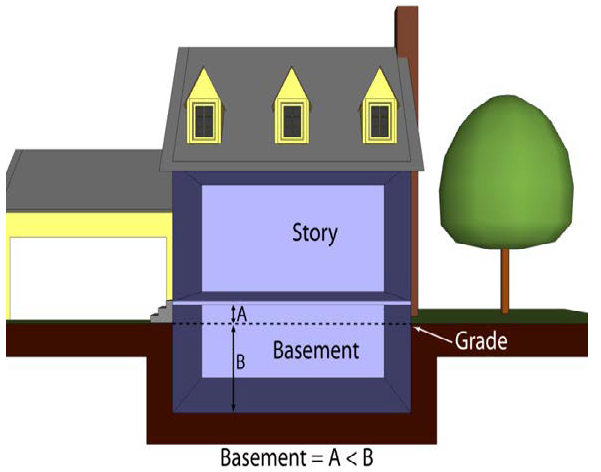
Basement. A room or rooms, or any part of a room having a floor level more than 48 inches below grade. Except when used for business purposes, a basement shall not be counted as a story in height or floor area measurement if the vertical distance between the basement floor and the average level of the finished grade is greater than the distance between the average level of the finished grade and the basement ceiling.
Bed and breakfast. An owner-occupied, owner-operated private single-family residence which shall be the principal residence of the owner and the principal structure on the premises, with bedrooms available for rent to the general public, with breakfast served at no additional cost.
Board. The City of Palmetto Planning and Zoning Board.
Boarding and rooming house. A building other than a hotel/motel containing a single dwelling unit and three or more rental rooms where lodging is provided, with or without meals, for compensation.
Brewpub. A fully licensed restaurant where malt beverages are manufactured and sold on the premises as an accessory use.
Buffer. That portion of a lot set aside with adequate natural or planted vegetation to accomplish visual and sound screening to separate a potentially incompatible zoning district from an abutting zoning district.
Building. Any structure attached to the ground which has a roof and walls or roof supports and which is designed for the shelter, housing or enclosure of persons, animals or property of any kind.
Building envelope. The maximum three-dimensional volume on a lot within which a structure can be built, as permitted by applicable height and setback requirements.
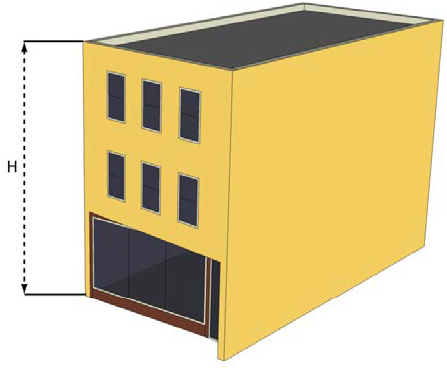
Building height. The vertical distance of a building measured from the average elevation of the finished grade at the front of the building to the highest point of the building.
Building line. A line established by the wall of the principal structure, or the portion of the wall of the principal structure closest to the lot line, not including open steps, an unroofed porch or patio or roof overhang, that is parallel to the front lot line and extends the width of the lot.
Building official. The person, officer, or official whom the Palmetto city council has designated as its agent for enforcing, in conjunction with the zoning administrator, the regulations of this ordinance relating to building construction and permitting.
Building, principal. The primary building containing the principal use of a lot.
( Ord. No. 2020-08 , § 2, 9-8-2020)
Sec. 25-3. - Definitions: C-D.
Certificate of occupancy. A permit authorized and issued by the zoning administrator indicating that the use or the building or land in question is in conformity with this chapter, or that a legal variance has been approved.
Child caring institution. Any institution, society, agency, or facility, whether incorporated or not, which either primarily or incidentally provides full time care for children under 17 years of age outside of their own homes subject to such exceptions as may be provided in the rules and regulations of the state board of human resources.
A.
Family child caring institution. A home in a family-type residence, non-institutional in character, which offers care to persons as described above and in which a maximum of six persons reside, inclusive of the caregiver(s).
B.
Group child caring institution. A home in a residence or other type building(s), noninstitutional in character, which offers care to persons as described above and in which seven to 15 persons reside, inclusive of the caregiver(s).
C.
Congregate child caring institution. A home that offers care to persons as described above and in which 16 or more persons reside, inclusive of the caregiver(s).
Church or place of worship. A church, synagogue, temple, mosque or other facility used for public worship where organized services are held by persons of similar beliefs.
Clinic. An establishment where patients are admitted for examination and treatment on an outpatient basis by one or more physicians, dentists, other medical personnel, psychologists, or social workers.
City. The City of Palmetto, Georgia.
Club or lodge, private. An association of persons organized for a common purpose to pursue common goals, interests or activities characterized by certain membership qualifications, payment of fees or dues, regular meetings and a constitution or bylaws.
Co-location. The placement and arrangement of multiple providers' antennas and equipment on a single support structure or equipment area.
Commercial district. The conventional districts, including C-1, C-3 and C-4; and the form-based district, C-2.
Community living arrangement. Any residence, whether operated for profit or not, that is licensed as a community living arrangement by the State of Georgia and that undertakes through its ownership or management to provide or arrange for the provision of daily personal services, supports, care, or treatment exclusively for two or more adults who are not related to the owner or administrator by blood or marriage and whose residential services are financially supported, in whole or in part, by funds designated through the Georgia Department of Human Resources, Division of Mental Health, Developmental Disabilities, and Addictive Diseases. For the purposes of this definition, "personal services" shall mean provision of services, on a daily basis, that include, but are not limited to, individual assistance with or supervision of medications, ambulation and transfer, and essential activities of daily living such as eating, bathing, grooming, dressing, and toileting.
Conditional use. A use identified by this ordinance which requires adherence to certain conditions specific to that use, in addition to the requirements of the district in which it is located.
Continuing care retirement community. A community designed for and occupied by persons age 55 and older and persons with disabilities that provides a range of housing and lifestyle choices, including independent living, assisted living, and skilled nursing care in an integrated system. Residents are provided housing, services, healthful activities and care through the continuing care contract.
Convenience store. A small retail outlet which offers commonly needed food and staples, including gasoline and oil, normally through extended hours of operation.
Conventional zoning districts. Zoning districts that employ traditional, as-of-right or self-executing zoning regulation and procedures, and in which district regulations are explicit; uses are specified; and development requirements for lot area, lot width, building height, minimum setbacks, and other site-specific requirements are imposed. Conventional zoning districts are intended to separate incompatible land uses and generally do not consider form or character as the basis of requirements.
Council. The city council of the City of Palmetto, Georgia.
County. Fulton County or Coweta County, Georgia, as applicable.
Cul-de-sac. A short, dead-end street terminating in a vehicular turnaround area.
Day care, adult. A daytime community-based program for functionally impaired adults, that provides a variety of health, social, and related support services in a protective setting.
Day care, child.
A.
Child care center. A facility other than a private residence that receives one or more preschool or school age children for care for periods of less than 24 hours a day, and at which the parents or guardians are not immediately available to the children. It includes a facility that provides care for more than four weeks during a calendar year, regardless of the number of hours of care per day. A child care center includes public and private preschools, day nurseries, nursery schools, parent cooperative preschools, drop-in centers, and daycare centers.
B.
Family daycare home. A private residence operated by any person who has received a certificate of registration from the state and who receives pay for supervision and care fewer than 24 hours per day, without transfer of legal custody, of three but not more than six children under 18 years of age who are not related by blood, marriage, or adoption to the operator and whose parents or guardians are not residents in the same private residence.
C.
Group daycare home. A private residence that receives more than six but not more than 12 minor children, not including children related by blood, marriage, or adoption to an adult residing in the residence, for care for periods of less than 24 hours a day, and at which the parents or guardians are not immediately available to the children. It includes a facility that provides care for more than four weeks during a calendar year, regardless of the number of hours of care per day.
Deck. An open structure at least 12 inches above the ground which may be attached to a building and is commonly used for outdoor leisure activities.
Decorative wall. A masonry wall constructed of materials such as brick, stone, or an architectural grade of concrete that reflects or complements the architectural materials on the same or adjoining properties.
Density. The total number of dwelling units per net or gross acre.
Density, gross. The number of residential units to be located on a parcel of property divided by the total acreage of the property.
Density, net. The number of residential units to be located on a parcel of property divided by the total acreage of the property, excluding any area occupied by existing street rights-of-way, wetlands, water bodies, 100-year floodplain, utility easements or other easements that prohibit buildings.
Disturbed area. That area of the land's surface disturbed by any work or activity upon the property by means including but not limited to grading; excavating; stockpiling soil, fill, or other materials; clearing; vegetation removal; removal or deposit of any rock, soil, or other materials; or other activities which expose soil. "Disturbed area" does not include the tillage of land that is zoned for agricultural use.
Drive in or drive through facility. An accessory use for a business (such as banks, restaurants, dry cleaners or pharmacies) where the delivery of customer services is done, usually from within the building via a service window, while patrons are in their motor vehicles.
Driveway. An approach and private vehicle travel way providing access from a street to private property.
Dwelling unit. A permanent building, or any part of a permanent building, having cooking and sanitary facilities, designed or used exclusively for residential occupancy by one family as a single housekeeping unit, but not including hotels/motels, trailer coaches, recreational vehicles, tents or portable buildings.
Dwelling, multiple family. A building, or portion of a building, designed, constructed, altered, or used for occupancy by three or more families, living independently of each other and each doing their own cooking in the building, with the number of families in residence not exceeding the number of dwelling units provided.
Dwelling, single-family. A detached building or manufactured home designed for the complete living accommodations of one family and containing only one dwelling unit.
Dwelling, two-family. A detached building designed for and occupied exclusively by two families living independently of one another. May also be referred to as a duplex.
Dwelling, townhome. A dwelling designed for occupancy by one family in a row of at least three such units in which each unit has its own front and rear access to the outside, no unit is located over another, and each unit is separated from any other unit by one or more vertical common fire-resistant walls.
( Ord. No. 2013-02 , § 7, 4-1-2013)
Sec. 25-4. - Definitions: E-F.
Façade. The exterior side of a building which faces and is most nearly parallel to a public or private street. The elevation of a façade is the vertical surface area.
Façade variation. Shifts in the plane of walls, setbacks, stepbacks, reveals, overhangs and details in order to create variations in a building's façade.
Family. One or more persons related by blood, marriage or legal adoption; or a group of not more than four unrelated persons occupying a dwelling unit and living as a single housekeeping unit. A family may also include domestic servants and not more than two gratuitous guests. The term "family" does not include any fraternity, sorority, club, hotel, organization or institutional group.
Farm. All of the contiguous, neighboring or associated land operated as a single unit which is devoted to agricultural activities carried on directly by the owner-operator, manager or tenant farmer by his own labor or with the assistance of members of his household or hired employees.
Fence. A barrier or partition of wood, masonry, stone, metal or similar manufactured material or combination of materials, used to prevent or control entrance, confine within, mark a boundary or act as a screen.
Final plat. A map establishing real estate interests for recording with the county clerk and recorder prepared by a Georgia Registered Surveyor, drawn in accordance with the requirements of this ordinance.
Flood hazard area. The area possibly threatened by periodic flooding consisting of the flood plain inclusive of the floodway and the flood fringe area.
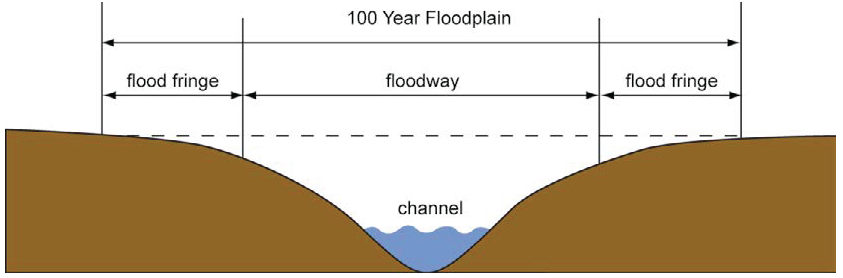
Floodplain. The area adjoining a river, stream, water course, or lake, subject to 100-year recurrence interval flood as delineated by the Federal Emergency Management Agency (FEMA). A floodplain shall include the stream channel, the overbank area, or the floodway, and the fringe areas of the floodway.
Floodway. The channel of a river, stream or other watercourse and the land areas of the floodplain adjoining the channel that are reasonably required to efficiently carry and discharge the flood water or flood flow of a river or stream and must be reserved in order to discharge the base flood without cumulatively increasing the water surface elevation more than a designated height.
Floodway fringe. The portions of the floodplain lying outside the floodway.
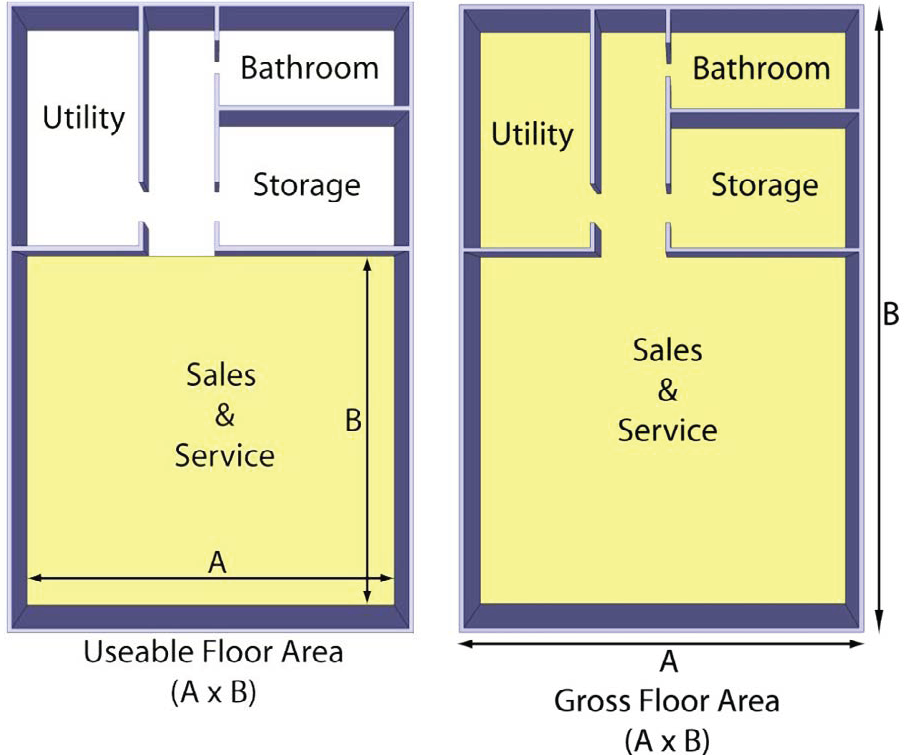
Floor area, gross. The sum of all gross horizontal areas of the several floors of a building or buildings, measured from the outside dimensions of the structure or from the centerline of a wall separating two buildings, but excluding any space where the floor-to-ceiling height is less than six feet.
Floor area, gross leasable. The area within a shopping center, commercial or industrial condominium that is available for lease by tenants, not including any common elements such as, but not limited to, hallways and mall public areas.
Floor area, usable. That area to be used for the sale of merchandise or services, or for use to serve patrons, clients, or customers, measured from the interior faces of the exterior walls. Areas used principally for the storage or processing of merchandise, for hallways, stairways, and elevator shafts, or for utilities or sanitary facilities shall be excluded from this computation.
Form-based zoning. A method of regulating development to achieve a specific urban form. Form-based zoning creates a predictable public realm primarily by controlling physical form, with a lesser focus on land use. Form-based codes address the relationship between building façades and the public realm, the form and mass of buildings in relation to one another, and the scale and types of streets and blocks. The regulations and standards in the form-based zoning chapters, presented in both diagrams and words, designate the appropriate form and scale (and therefore, character) of development, rather than mainly through distinctions in land-use types.
Foster care facility, adult. An establishment that provides supervision, assistance, protection, or personal care and room and board to persons.
A.
Adult foster care family home. A private residence with the approved capacity to receive not more than six adults who are provided with foster care for five or more days a week and for two or more consecutive weeks.
B.
Adult foster care small group home. An adult foster care facility with the approved capacity to receive not more than 12 adults who are provided with foster care.
C.
Adult foster care large group home. An adult foster care facility with the approved capacity to receive at least 13 but not more than 20 adults to be provided with foster care.
Frontage. The linear distance where a property line is coterminous with a street right-of-way line.
Sec. 25-5. - Definitions: G-H-I.
Garage, parking. A building or part of a building used primarily for the storage of motor vehicles, trailers, recreational vehicles or boats.
Garage, residential. A garage accessory to a dwelling that is under the same ownership as the principal dwelling.
Governing authority. The mayor and council for the City of Palmetto.
Grade, natural. The elevation of the ground level in its natural state, before construction, filling, or excavation.
Grade, finished. The average elevation at ground level at the front wall of the building after construction and grading is complete.
Greenbelt. A landscaped area or vegetative strip that provides aesthetic relief, typically along a roadway.
Greenhouse/nursery. A business where plants are raised, acquired and maintained for transplanting or sale.
Group care facility. A facility providing custodial care and treatment in a protective living environment for persons residing voluntarily or by court placement including, without limitation, correctional and post-correctional facilities, drug or alcohol abuse centers, juvenile detention facilities, and temporary custody facilities.
Home occupation. A vocational activity conducted as an accessory use in a dwelling unit by a member or members of the resident family, which is clearly accessory and incidental to the principal residential use of the dwelling.
Hospital. Any institution receiving inpatients, providing a staffed 24-hour emergency care facility and authorized under Georgia law to render medical, surgical, and/or obstetrical care. The term "hospital" shall include a sanitarium with an approved certificate of need (CON) from the state health planning agency for the treatment and care of various forms of mental illness, but shall not include clinics, convalescent homes or rest homes or office facilities for the private practice of medicine, dentistry or psychiatry.
Hotel/motel. A building under single management that provides rooms or suites intended primarily as sleeping accommodations for public rental on a daily basis for registered guests. A hotel shall maintain a central, internal lobby, and provide daily room cleaning and linen changes. Other supportive facilities may also be included such as, but not limited to, meeting rooms, incidental retail sales, restaurants, lounges, swimming pools, recreational and fitness facilities and similar facilities/services intended principally to serve registered guests.
Household pets. Companion animals commonly kept as pets, whose primary value is personal enjoyment including, but not limited to, dogs, cats, birds, fish, turtles, rodents (bred, such as gerbils, rabbits, hamsters or guinea pigs) and lizards (non-poisonous). Wild, vicious or exotic animals shall not be considered household pets.
Improvements. Street pavements, curbs, gutters, sidewalks, paths, bikeways, sedimentation control facilities, re-vegetation, water mains, sanitary and storm sewers, drainage ways, gas lines, electrical and telephone lines and appurtenances, street signs, trees and lights, lot pin monuments, range point boxes, and any other item required in conformance with the regulations of this ordinance or any conditions of approval.
Improvements agreement. A contractual and legally binding agreement between the city and the applicant which designates all improvements required to be constructed/installed by the approval of an application.
Industrial district. The M-1 and M-2 conventional zoning districts.
Industrialized building. See "Manufactured home."
Sec. 25-6. - Definitions: J-K-L.
Junk. Any motor vehicles, machinery, appliances, products or merchandise with parts missing, or scrap metals or other scrap materials that are damaged, deteriorated or in a condition which cannot be used for the purpose for which the product was intended or manufactured.
Junkyard. Property used for indoor or outdoor storage, keeping or abandonment, whether or not for sale or resale, of junk including scrap metal, rags, paper or other scrap materials, used lumber, salvaged materials and equipment; or for the dismantling, demolition or abandonment of automobiles or other vehicles or machinery or parts thereof.
Kennel. Any premises used to board, breed, sell, train, or treat more than three dogs, cats or other domestic pets who are more than six months old.
Loading space. An off-street portion of a parcel designated for the temporary parking of commercial vehicles while loading or unloading materials for use or sale on the parcel.
Lot. A legally described and recorded parcel of land occupied, or intended to be occupied, by a main building or a group of such buildings and accessory buildings, or utilized for the principal use and its accessory uses, together with such yards and open spaces as are required by this ordinance.
Lot area. The total horizontal area within the lot lines of the lot, excluding any road right-of-way or easement dedicated for street purposes.
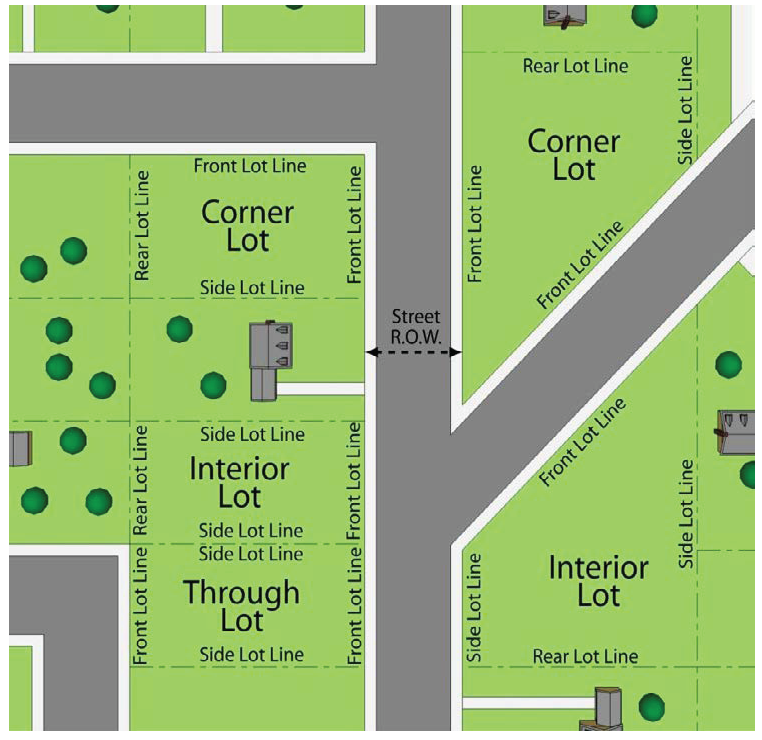
Lot, corner. A lot where the interior angle of two adjacent sides at the intersection of two streets is less than 135 degrees. A lot abutting a curved street shall be considered a corner lot if the arc is of less radius than 150 feet and the tangents to the curve, at the two points where the lot lines meet the curve or the straight street line extended, form an interior angle of less than 135 degrees.
Lot coverage. The percentage of the lot occupied by buildings, including accessory buildings.
Lot depth. The horizontal distance between the front and rear lot lines, measured along the midpoint between the side lot lines.
Lot, interior. Any lot other than a corner lot.
Lot line, front. The line separating a lot from the street or street right-of-way. On a corner lot, the front lot line shall be established on the plat of subdivision; if no front lot line has been designated, the street upon which the property is addressed shall determine the front lot line. On a through lot, each line separating the lot from a street or street right-of-way shall be a front lot line.
Lot line, rear. The line opposite the front lot line. In the case of a lot that is pointed at the rear, the rear lot line shall be an imaginary line parallel to the front lot line, not less than ten feet long, lying farthest from the front lot line and wholly within the lot.
Lot line, side. Any lot line other than the front lot line or rear lot line. A side lot line separating a lot from a street or street right-of-way is a street side lot line. A side lot line separating a lot from another lot is an interior side lot line.
Lot, through. An interior lot having frontage on two streets that are approximately parallel.
Lot width. The horizontal distance between the side lot lines, measured at the two points where the front setback line intersects the side lot lines.
Sec. 25-7. - Definitions: M-N-O.
Manufactured home. A factory-built, single-family structure, transportable in one or more sections, which is built on a permanent chassis in compliance with the National Manufacture Home Construction and Safety Standards Act (42 U.S.C., sec. 4301) and designed to be used as a single-family dwelling with or without a permanent foundation when connected to the required utilities. The term "manufactured home" includes "mobile home." Recreational vehicles and modular homes are not included in this definition.
Manufactured home community. A parcel or tract containing spaces for three or more manufactured homes with required improvements that are leased for the long-term placement of manufactured homes as year-round residences on a non-recreational basis, which may also include services and facilities for the residents.
Manufactured home space. A designated lot or plot of ground within a manufactured home community used to accommodate a single manufactured home.
Manufactured home subdivision. A parcel or tract of land planned and improved for the placement of three or more mobile homes for permanent use on individually owned private lots.
Microbrewery. A manufacturer of malt beverages for wholesale sales only, and producing less than 15,000 barrels annually.
Mini-warehouse. See "Self-storage facility."
Mixed use. Two or more uses within the same building through superimposition or adjacency, or in multiple buildings by adjacency, or at a close proximity.
Modular home. A factory-fabricated, transportable building unit that is not a manufactured home, placed upon a permanent foundation, and joined to make a single residential structure.
Nonconforming lot. A lot that was legally established and in existence at the time this ordinance or any amendment was adopted but which does not conform to the current regulations of the district in which it is located.
Nonconforming building or structure. A building or structure that was legally established at the time this ordinance or any amendment was adopted and which does not conform to the current regulations of the district in which it is located.
Nonconforming use. A use of a building, structure or land that was legally established and operating at the time this ordinance or any amendment was adopted and which is no longer permitted in the district in which it is located.
Nursing home. See "Personal care home."
Open air business. Uses operated for profit, substantially in the open air, including, but not limited to:
A.
Outdoor sale, rental or storage services for utility trailers, construction equipment or home equipment;
B.
Outdoor display and sale of garages, motor homes, manufactured homes, farm implements, swimming pools and similar merchandise;
C.
Retail sale of trees, fruits, vegetables, shrubbery, plants, seeds, topsoil, lawn furniture, playground equipment and similar home and garden supplies and equipment; and
Ordinance. The City of Palmetto Zoning Ordinance.
Ornamental fence. A decorative barrier with a maximum height of four feet, constructed of wood, stone, brick or similar material but not including wire mesh or wood stockade fence.
Overlay zone. A special purpose zoning district that encompasses all or a portion of one or more underlying zones and imposes additional requirements beyond those required by the underlying zone(s).
( Ord. No. 2020-08 , § 3, 9-8-2020)
Sec. 25-8. - Definitions: P-Q-R.
Parcel. A separate division of land legally described, surveyed and of record to show the actual boundaries of the parcel.
Parking garage. See "Garage, parking."
Parking structure. A structure or portion thereof composed of two or more floors, with at least one floor above grade, used exclusively for the parking or storage of motor vehicles.
Parking lot. A ground-level open area or plot of ground, usually improved, used for the temporary storage or parking of motor vehicles either for compensation or to provide an accessory service to a business, industrial or residential use.
Parking space. A defined off-street space of adequate size for parking a vehicle with room for opening doors on both sides and maneuvering.
Personal care home. A facility licensed as a rest home, nursing home, convalescent home, home for the aged, or similar use established and operated on a profit or nonprofit basis to provide lodging and/or meals and/or domiciliary care for the aged, infirm, chronically ill, terminally ill, mentally incapacitated, or convalescent persons, but not including hospitals, clinics or similar institutions devoted primarily to diagnosis and treatment. This term does not include buildings devoted to independent living units which include kitchen facilities in which residents have the option of preparing and servicing some or all of their own meals or boarding facilities which do not provide personal care.
A.
Family personal care home. A home in a family-type residence, non-institutional in character, which offers care to persons as described above and in which a maximum of six persons reside, inclusive of the caregiver(s).
B.
Group personal care home. A home in a residence or other type building(s), noninstitutional in character, which offers care to persons as described above and in which seven to 15 persons reside, inclusive of the caregiver(s).
C.
Congregate personal care home. A home which offers care to persons as described above and in which 16 or more persons reside, inclusive of the caregiver(s).
Personal service establishment. An establishment or place of business primarily engaged in the provision of frequent or recurrent needed services of a personal nature. Typical uses include, but are not limited to, beauty and barber shops, shoe repair shops, and tailor shops.
Planned unit development (PUD). A tract or parcel of land developed as a unit under single ownership or unified control that is unique and incorporates one or more of the following: A variety of uses, varied density of development, dedicated open space, preservation of significant natural features, reduced lot sizes or similar attributes.
Porch. A horizontal surface consisting of a deck, slab or other similar construction, covered and attached to a main building and designed for outdoor seating, shelter from the elements or as a means of entry to the building.
Public right-of-way. The publicly owned land in which any street, road, alley or pedestrian/bicycle way or other special purpose way or utility installation is constructed or reserved for public use.
Public utility. A person, firm, corporation, municipal department, or board authorized to furnish and furnishing to the public under municipal or state regulations water, sewage, gas, electricity, communications and power, including but not limited to sewage treatment plants, water pumping facilities, water treatment plants, water storage tanks, electrical substations and bulk gas metering facilities. This definition does not include wireless communications providers.
Recreation. A use designed for active human recreation that usually involves exertion or competition as part of leisure, amusement, play, exercise, sports or similar recreational endeavors, including, but not limited to, health clubs, sports fields, courts and arenas, swimming pools, racquet clubs, billiard parlors, amusement parks, bowling alleys, miniature golf, golf driving ranges and similar uses. For the purposes of this ordinance, recreation uses are classified as indoor or outdoor recreation and may be further distinguished as commercial or noncommercial recreation. This definition does not include parks and recreation facilities owned by the public or golf courses and country clubs.
Recreational vehicle. Any type of vehicle used temporarily or periodically for recreational or leisure pursuits. Examples include, but are not limited to, travel trailers, motor homes, boats, special purpose automobiles, floats, rafts, trailers, detachable travel equipment of the type adaptable to light trucks, personal watercraft and other vehicles or equipment of a similar nature, as well as any trailer used to transport them.
Recreational campground. An area of land developed and intended for use to provide the traveling public with temporary, short-term, accommodations for recreational vehicles and tents.
Recycling facility. May include the following:
A.
Collection facility. A center for the acceptance by donation, redemption, or purchase, of recyclable materials from the public. Such a facility does not typically use power-driven processing equipment. Collection facilities may include the following:
1.
Reverse vending machine(s).
2.
Small collection facilities that occupy an area of not more than 1,000 square feet, and may include:
a.
Bulk reverse vending machines or a group of reverse vending machines;
b.
Kiosk-type units which may include permanent structures; or
c.
Unattended containers placed for the donation of recyclable materials.
3.
Large collection facilities that may occupy an area of more than 1,000 square feet and may include permanent structures.
B.
Processing facility. A "processing facility" is a building or enclosed space used for the collection and processing of recyclable materials. Processing means the preparation of material for efficient shipment, or to an end-user's specifications, by such means as baling, briquetting, compacting, flattening, grinding, crushing, mechanical sorting, shredding, or cleaning.
Required building line. The required building setback location running parallel to the front lot line or lines, which is established to create a consistent building façade line on a street.
Residential district. The conventional districts, including RR, R-1, R-2, R-4, R-5 and R-6; and the form-based districts, R-3A and R3-B.
Restaurant, drive-in or drive-through. A business establishment whose method of operation involves the delivery of prepared food to the customer in a motor vehicle, typically through a drive-through window, for consumption off the premises. A drivethrough restaurant may also have indoor seating.
Restaurant, standard. A business establishment whose method of operation involves either the delivery of prepared food by servers to customers seated at tables within a building or prepared food is acquired by customers at a counter or cafeteria line and consumed at tables within a completely enclosed building. Standard restaurants may include outdoor seating areas.
Row house. See "Dwelling, townhome."
Sec. 25-9. - Definitions: S-T.
Sanitary landfill. An area of land utilized for sanitary disposal by filling with solid waste refuse and garbage, then covering with layers of earth.
Screen. A visual barrier that surrounds a potentially offensive activity.
Self-storage facility. A commercial storage warehouse subdivided into individual bays each having a separate outside entrance and controlled access in a fenced compound with the individual bays offered for lease to the public for storage of customers' goods or wares. A self-storage facility may also include long-term or seasonal outdoor storage of vehicles, such as recreational vehicles.
Setback means the minimum required horizontal distances measured from front, side, and rear lot lines which describe an area beyond which the main walls of a principal building may not extend. A "setback line" shall be the line established by the minimum horizontal distance for each yard. See "Yard" definitions.
Sexually oriented business. An adult arcade, adult bookstore, adult novelty store, adult video store, adult cabaret, adult motel, adult motion picture theater, adult theater, escort agency, nude modeling studio, sexual encounter center, or massage parlor.
A.
Adult arcade. Any place to which the public is permitted or invited wherein coin operated, slug-operated, or for any form of consideration an electronically, electrically, or mechanically controlled still or motion picture machine, projector, video or disc player, or other image producing device is maintained to show images to five or fewer persons per machine at any one time, and where the image is so displayed or distinguished or characterized by the depicting or describing of "specified sexual activities" or "specified anatomical areas."
B.
Adult bookstore, adult novelty store, or adult video store. A commercial establishment which, as one of its principal purposes, offers for sale or rental for any form of consideration, any one or more of the following:
1.
Books, magazines, periodicals or other printed matter, or photographs, films, motion pictures, video cassettes, discs or other video reproduction, slides, or other visual representations which are distinguished or characterized by the depiction or description of "specified sexual activities" or "specified anatomical areas;" or
2.
Instruments, devices or paraphernalia which are designed for use in connection with "specified sexual activities."
C.
Adult cabaret. A nightclub, bar, restaurant, or similar commercial establishment which regularly features:
1.
Persons who appear live in a state of nudity or semi-nudity;
2.
Live performances which are characterized by the exposure of "specified anatomical areas" or by "specified sexual activities;" or
3.
Films, motion pictures, video cassettes or discs, slides or other video or photographic reproductions which are distinguished or characterized by the depiction of "specified sexual activities" or "specified anatomical areas."
D.
Adult motel. A hotel, motel or similar commercial establishment which:
1.
Offers accommodations to the public for any form of consideration; provides patrons with closed-circuit television transmissions, films, motion pictures, video cassettes, slides, or other photographic reproductions which are characterized by the depiction or description of "specified sexual activities" or "specified anatomical areas;" and has a sign visible from the public right-of-way which advertises the availability of this type of photographic reproduction;
2.
Regularly offers a sleeping room for rent for a period of time that is less than ten hours; or
3.
Regularly allows a tenant or occupant of a sleeping room to sub-rent the room for a period of time that is less than ten hours.
E.
Adult motion picture theater. A commercial establishment where, for any form of consideration, films, motion pictures, videos, slides, or other similar photographic reproduction are regularly shown which are consistently distinguished or characterized by the depiction or description of "specified sexual activities" or "specified anatomical areas."
F.
Specified anatomical area. Means either:
1.
The human male genitals in a discernibly turgid state, even if completely and opaquely covered; or
2.
Less than completely and opaquely covered human genitals, attached pubic hair, buttocks or a female breast below a point immediately above the top of the areola.
G.
Specified sexual activity. Means any one of the following:
1.
The fondling or other erotic touching of human genitals, pubic region, buttocks, anus, or female breasts;
2.
Sex acts, normal or perverted, actual or simulated, including intercourse, oral copulation, masturbation, or sodomy; or
3.
Excretory functions as a part of or in connection with any of the activities set forth in [subsection] 1. or 2. above.
Sign. A name, identification, description, display or illustration which is affixed to or represented directly or indirectly upon a building, structure or piece of land and which directs attention to an object, product, place, activity, person, institution, organization or business.
A.
Animated sign. Any sign, or part of a sign, that uses any movement or change of lighting or color to depict action or create a special effect or scene.
B.
Awning or canopy sign. Any sign that is part of, or attached to an awning, canopy, or other fabric, plastic, or structural protective cover over a door, entrance, window, or outdoor service area. A marquee is not a canopy.
C.
Banner. Any sign of lightweight fabric or similar material possessing characters, letters, illustrations, or ornamentations that is intended to be hung either with or without a frame.
D.
Beacon. Any light with one or more beams directed into the atmosphere or directed at one or more points not on the same lot as the light source; also, any light with one or more beams that rotate or move.
E.
Billboard. Any sign which advertises or directs attention to a business, commodity, service, entertainment or any other subject matter not located, carried or provided on the lot or parcel where the sign is located or in the building or structure to which it is affixed.
F.
Flag. Any fabric or bunting containing colors, patterns, or symbols.
G.
Flashing sign. An illuminated sign on which the artificial lighting is not kept constant in intensity at all times and is not maintained stationary when in use. A revolving, illuminated sign shall be considered a flashing sign.
H.
Freestanding sign. Any sign supported by structures or supports that are placed on, or anchored in, the ground and that are independent from any building or other structure.
I.
Illuminated sign, external. A sign illuminated by an external light source.
J.
Illuminated sign, internal. A sign illuminated by an internal light source.
K.
Marquee sign. A sign that is a part of or attached to a permanent roof-like structure projecting beyond a building or extending along and projecting beyond the wall of the building, generally designed and constructed to provide protection from the weather.
L.
Menu board. A sign listing available items and pricing information for the establishment at which it is located, typically restaurants, but not designed to be readable from any public thoroughfare or right-of-way or beyond the boundaries of the lot or parcel upon which it is located.
M.
Moving sign. A sign which revolves, rotates, swings, undulates, or otherwise attracts attention through the structural movement of parts.
N.
Mural. See "wall sign."
O.
Out-of-store marketing device. Any facility which is located outside of a principal building in a nonresidential zoning district, which may or may not also include advertising copy or logos. Examples of out-of-store marketing devices include: Fuel pumps, bank ATM units, newspaper racks, drink machines, ice boxes, and phone booths.
P.
Pennant, streamer. Any lightweight plastic, fabric, or other material, whether or not containing a message of any kind, suspended from a rope, wire, or string, usually in a series, designed to move in the wind.
Q.
Portable sign. Any sign that is designed to be capable of being transported, either by trailer or on its own wheels.
R.
Public sign. Any sign erected by a governmental entity.
S.
Roof sign. Any sign erected and constructed wholly on and over the roof of a building, supported by the roof structure.
T.
Sign permit. A permit reviewed, approved, and issued by the city clerk for the City of Palmetto to erect a sign.
U.
Suspended sign. Any sign which is suspended from the eave or soffit of the building on from the underside of an arcade. May also be referred to as a "hanging sign."
V.
Temporary sign. Any sign that is not permanently attached to the ground, a building or another structure and is designed only to be displayed temporarily.
W.
Wall sign. Any sign attached parallel to a wall, painted on the wall surface, or erected and confined within the limits of an outside wall of any building or structure, which is supported by such wall or building, and which displays only one sign surface. No wall sign shall extend more than six inches from any wall, building, or structure.
X.
Window sign. Any sign that is placed inside a window or upon the window panes or glass either inside or outside the building, and is visible from the exterior of the structure.
Special event. A civic or social activity or celebration of limited duration that may occur on private property in accordance with all applicable requirements of the City of Palmetto Code of Ordinances and for which the owner of the permit under which the event is held charges a fee. Events include, but are not limited to, haunted houses, carnivals, antique auto sales, grand openings, festivals, home exhibitions, weddings, receptions and bazaars.
Special land use. Those uses of land and structures which are not essentially incompatible with the other uses permitted in a zoning district, but which possess characteristics of operation or locational qualities that may require individual review and restriction.
Story. That part of a building between the surface of any floor and the surface of the floor next above. Where there is no floor above, story shall mean the space between the surface of the floor and the ceiling next above.
Story, half. An uppermost story, lying under a sloping roof, having an area of at least 200 square feet, with a clear height of seven feet six inches. For the purposes of this ordinance, the usable floor area of a half story is only that area having at least four feet clear height between floor and ceiling.
Street classification. The hierarchy of street types denoting their relative function and traffic-carrying capability.
A.
Arterial. A connected network of continuous routes serving intra- and interstate travel, as well as interurban travel. Arterials accommodate high traffic volumes generally at higher speeds. Access to abutting land is subordinate to moving through traffic. The following streets are classified as "arterials":
1.
Roosevelt Hwy./Hwy. 29.
2.
Cascade-Palmetto Hwy./Hwy. 154.
3.
Johnson Road.
4.
Fayetteville Road.
B.
Collector. Those streets which collect traffic from local streets and channel it to arterial streets. Collector streets carry moderate traffic volumes and primarily provide for local traffic movements with a minor amount of through traffic. While traffic movement remains their primary function, collectors do provide for a higher degree of land access than arterials. The following streets are classified as "collectors":
1.
Carlton Road.
2.
Locke Street.
3.
Sims Street.
4.
Phipps Road.
5.
Church Street.
C.
Local. A street that provides direct access to adjacent land and access to higher street classifications. All streets not otherwise classified are "local."
Street, private. Any vehicular access not dedicated to the public that has been platted and recorded as a private street.
Street, public. A right-of-way dedicated to the city or other governmental entity and owned by the city or other governmental entity for public purposes.
Streetscape. The various components that make up the street, both in the right-of-way and on private lot frontages. It includes pavement, parking spaces, planting areas, street trees, streetlights, sidewalks, front yard fences, front yards, front porches, etc.
Streetwall. An opaque or mostly opaque freestanding wall built along a frontage line, or along the same building line as the principal building façade, usually for the purpose of screening a parking lot or other non-public area from the street or surrounding properties.
Structural alterations. Any change in the supporting members of a building or structure, such as bearing walls, columns, beams or girders.
Structure. Anything constructed, erected, or placed which requires location on or in the ground or is attached to something having a location on the ground, including without limitation, buildings, manufactured homes, gazebos, play structures, decks, towers, fences, and swimming pools.
Subdivision. A legal division of a tract of land into two or more lots, all fronting on a public street, and offered for sale as individual lots.
Tavern or bar. An establishment licensed by the State of Georgia to sell and serve alcoholic beverages on the premises, where revenue from the sale of alcohol is greater than that derived from the sale of food and where more than 30 percent of the gross floor area is made up of a bar, being a barrier or counter at which alcoholic beverages are sold or served to and consumed by customers. A tavern may also include areas dedicated to the use of stages, dance floors, standing-room areas and pool tables and other mechanical amusement devices.
Townhome. See "Dwelling, townhome."
Trailer park. An area of land on which two or more travel trailers or motor homes are regularly accommodated with or without charge, including any building or other structure, fixture or equipment that is used or intended to be used in connection with providing that accommodation.
Sec. 25-10. - Definitions: U-V-W.
Use, principal. The principal purpose for which a lot or the main building thereon is designed, arranged, or intended, and for which it is or may be used, occupied, or maintained.
Variance. A variation, authorized by the zoning board of appeals, from the strict requirements of the zoning ordinance relative to building, lot area or width, setbacks, height or other dimensional provisions of the ordinance.
Vehicle, abandoned. A vehicle which does not bear a current license plate and decal, if applicable, unless the vehicle is stored within a completely enclosed building or is located on a bonafide sales lot and is in satisfactory operating condition.
Vehicle repair, major. General repair, rebuilding, or reconditioning of engines, motor vehicles, or trailers; collision service, including body frame or fender straightening or repair; tire recapping or retreading; painting and engine steam cleaning.
Vehicle repair, minor. Incidental body and fender work, painting and upholstering, replacement of parts and motor service to passenger automobiles and trucks not exceeding one-ton capacity, but not including any operation defined as "major vehicle repair."
Vehicle service station. A building and premises wherein a primary use is the supply and dispensation of retail gasoline, diesel fuel, oil, grease, batteries, tires and motor vehicle accessories, and where minor repair services may be provided. This service shall not include major vehicle repair.
Vehicle wash. A building or portion of a building that contains facilities for washing vehicles, either using a production line with a conveyor, cleaning devices, blowers, or similar mechanical equipment, or by self-service washing and rinsing equipment.
Veterinary clinic/hospital. A building where care and treatment of small animals, including household pets, is provided.
Wetlands. Those areas that are inundated or saturated by the surface or groundwater at a frequency and duration sufficient to support, and that under normal circumstances do support, a prevalence of vegetation typically adapted for life in saturated soil conditions.
Wind energy conversion system, single accessory. A system consisting of a wind turbine, tower, and associated control or conversion electronics for the purpose of providing electrical power to a lawful principal use. A system having a rated capacity of ten kilowatts (kW) or less for residential use or 50kW or less for non-residential uses shall be considered a private use, single accessory system for the purposes of the regulations.
Wind energy conversion system, commercial. A system consisting of a wind turbine, tower, and associated control or conversion electronics for the purpose of providing electrical power to the utility grid.
Wireless communications facilities. The plant, equipment and property, including, but not limited to, cables, wires, conduits, ducts, pedestals, antennas, electronics and other appurtenances used or to be used to transmit, receive, distribute, provide or offer wireless communications services.
Wireless communications tower. Any structure, such as a mast, pole, monopole, guyed tower, or lattice tower, that is designed and constructed primarily for the purpose of supporting one or more antennas.
Sec. 25-11. - Definitions: X-Y-Z.
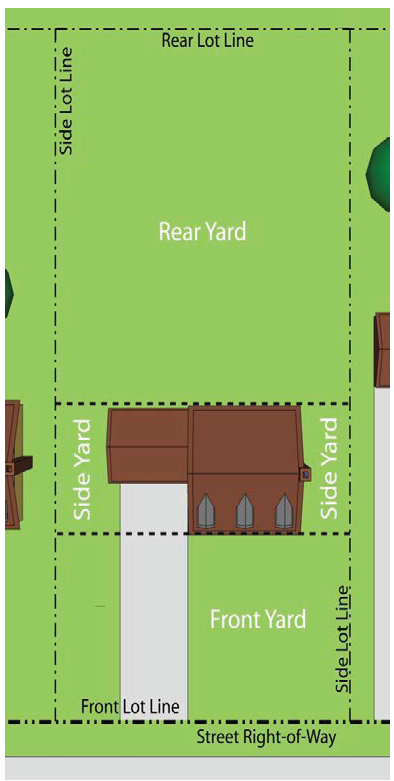
Yard. An open space on the same lot with a building or structure, unoccupied and unobstructed between the building and the nearest lot line, except as otherwise provided (see also "building line").
A.
Yard, front. A yard between the front building line and the street right-of-way, extending across the full width of the lot between the side lot lines. On a corner lot, the primary front yard is that yard along the street that abuts the front lot line (see "lot line, front"). The secondary street front yard is also a front yard, but may be distinguished with different setback requirements in a district.
B.
Yard, rear. A yard between the rear building line and the rear lot line, extending along the full width of the lot between the side lot lines. In the case of a corner lot, the rear yard is the yard opposite the primary front yard.
C.
Yard, side. A yard lying between the side building line and the side lot line, extending from the front yard to the rear yard.
Zoning administrator. The person designated by the Palmetto mayor and city council as the city's agent for administration of these regulations.
Zoning ordinance (or ordinance). The zoning ordinance of the City of Palmetto, Georgia.

