
Paonia City Zoning Code
ARTICLE 1
- GENERAL PROVISIONS
Sec. 16-1-10.- Short title.
This Chapter shall be known as and may be cited and referred to as the "Paonia Zoning Code."
(Ord. No. 83-116, Art. II, 1983; Ord. No. 2000-02, Art. II, 2000; Ord. No. 2014-04, § 1, 1-13-2015)
Sec. 16-1-20. - Purpose.
This Chapter shall be based upon the Comprehensive Plan of the Town and is intended to alleviate congestion in the streets; to secure safety from fire, panic, floodwaters and other dangers; to promote health and general welfare; to provide adequate light and air; to prevent the overcrowding of land; to avoid undue concentration of population; and to facilitate the adequate provision of transportation, water, sewage, schools, parks and other public requirements. This Chapter is drawn with reasonable consideration, among other things, as to the character of the district and its peculiar suitability for particular uses and with a view to conserving the value of buildings and encouraging the most appropriate uses of land throughout the Town.
(Ord. No. 83-116, Art. I, 1983; Ord. No. 2000-02, Art. I, 2000; Ord. No. 2014-04, § 1, 1-13-2015)
Sec. 16-1-30. - Authority.
(a)
The Board of Trustees shall have the authority as set forth in Section 31-4-101, C.R.S.
(b)
The Planning Commission, as established in Chapter 2 of this Code, shall prepare a master plan for the development of the Town and, in the preparation thereof, shall make careful and comprehensive surveys and studies of present conditions and future growth of the Town with due regard to its relation to neighboring territory. The plans shall be made with the general purpose of guiding and accomplishing a coordinated, adjusted and harmonious development of the Town and its environs, which will in accordance with present and future needs best promote health, safety, morals, order, convenience, prosperity and general welfare, as well as efficiency and economy in the process of development, including among other things adequate provision for traffic, the promotion of safety from fire and other dangers, adequate provision for light and air, the promotion of healthful and convenient distribution of population, the promotion of good civic design and arrangement, wise and efficient expenditure of public funds and the adequate provision of public utilities and other public requirements.
(Ord. No. 2000-02, Art. I, 2000; Ord. No. 2014-04, § 1, 1-13-2015)
Sec. 16-1-40. - Interpretation.
In their application and interpretation, the provisions of this Chapter shall be held to be minimum requirements. This Chapter is not intended to repeal, abrogate, annul or in any way impair or interfere with existing provisions of other laws or with existing provisions of private agreements, except that where this Chapter imposes greater restriction than that imposed by such existing provisions of law, contract or deed, the provisions of this Chapter shall control.
(Ord. No. 2000-02, Art. XXIII, 2000; Ord. No. 2014-04, § 1, 1-13-2015)
Sec. 16-1-50. - Incorporation of map.
The location and boundaries of the zone districts established by this Chapter are shown upon the "Zone District Map of the Town of Paonia," which is hereby incorporated into this Chapter. Said zoning map, together with all data shown thereon and all amendments thereto, is by reference hereby made a part of this Chapter. The Zone District Map shall be identified by signature of the Mayor, attested by the Town Clerk and bear the seal of the Town and the date of the adoption. Changes in the boundary of any zone district shall be made only upon amendment to the Zoning Ordinance and shall promptly be entered on the Zone District Map with an entry on the map giving the number of the amending ordinance, the date and the signature of the Mayor and attested by the Town Clerk. The Zone District Map shall be located in the office of the Town Clerk.
(Ord. No. 83-116, Art. III, 1983; Ord. No. 2000-02, Art. III, 2000; Ord. No. 2014-04, § 1, 1-13-2015)
Sec. 16-1-60. - Zone district boundaries.
Except where otherwise indicated, zone district boundaries shall follow municipal corporation limits, section lines, lot lines or right-of-way lines, centerlines of streets or extensions thereof. In property that is not subdivided or where a zone district boundary divides a lot or parcel, the scale of the Zone District Map, unless indicated by dimension, shall determine the location of such boundary. Where a zone district boundary coincides with a right-of-way line and said right-of-way is abandoned, the zone district boundary shall then follow the centerline of the former right-of-way. Land not part of a public railroad or utility right-of-way which is not indicated as being in any zone district shall be considered to be included in the most restricted adjacent zone district even when such district is separated from the land in question by a public railroad or utility right-of-way.
(Ord. No. 83-116, Art. IV, 1983; Ord. No. 2000-02, Art. IV, 2000; Ord. No. 2014-04, § 1, 1-13-2015)
Sec. 16-1-70. - Zoning of annexed territory.
All territory annexed to the Town shall be zoned according to district classifications of this Chapter. Such classification shall be determined by the Board of Trustees after a recommendation by the Planning Commission. The proposed zoning shall be established in accordance with applicable state statutes.
(Ord. No. 83-116, Art. V, 1983; Ord. No. 2000-02, Art. V, 2000; Ord. No. 2014-04, § 1, 1-13-2015)
Sec. 16-1-80. - Application of regulation.
Except as hereinafter provided:
(1)
No building or structure shall be erected, any existing building or structure moved, altered or extended, or any land, building or structure be used, designed to be used or intended to be used for any purpose or in any manner, other than as provided for among the uses hereinafter listed in the district regulation for the district in which such land, building or structure is located.
(2)
No building or structure shall be erected, any existing building or structure be moved, altered or extended, or any open space surrounding any building or structure be encroached upon or reduced in any manner, except in conformity with the setback, building site area, building location and height provision hereinafter provided in the regulations for the district in which such building structure or open space is located.
(3)
No lot area, yard, frontage, open space or parking provided about any building for the purpose of complying with provisions of this Chapter shall be considered as meeting the requirements for lot area, yard, frontage, open space or parking for any other building on any other lot unless approved as a PUD or as specifically permitted in the zoning district.
(Ord. No. 83-116, Art. VI, 1983; Ord. No. 2000-02, Art. VI, 2000; Ord. No. 2014-04, § 1, 1-13-2015)
Sec. 16-1-90. - Rules of construction.
(a)
The word lot includes plot/parcel.
(b)
The phrase used for shall be construed to include arranged for, designed for, maintained for and occupied for.
(c)
Words used in the singular number include the plural, and words in the plural include the singular, unless the context clearly indicates the contrary.
(d)
The word shall is always mandatory. The word may is permissive.
(Ord. No. 83-116, Art. VII, 1983; Ord. No. 2000-02, Art. VII, 2000; Ord. No. 2014-04, § 1, 1-13-2015)
Sec. 16-1-100. - Definitions.
For purposes of this Chapter, the following terms shall have the meanings ascribed to them as follows:
Accessory building, structure or use means a building, structure or use located on the same lot as the principal building, structure or use, which is clearly incidental to and subordinate to and customarily found in connection with the principal building structure or use. Accessory buildings, structures or uses shall not be used for living or sleeping quarters.
Alley means a public right-of-way within a block upon which the rear of building lots generally abut. Its use is intended for secondary access to a lot for service purposes and not intended for general travel.
Bed and breakfast establishment means a facility of residential character, which provides sleeping accommodations for hire for two (2) weeks or less, on a day-to-day basis, with one (1) or more meals per day included and a manager residing on the premises.
Boarding or roominghouse means a building other than a hotel, cafe or restaurant where, for compensation, lodging and/or meals are provided for three (3) or more boarders and/or roomers exclusive of the occupant's family. In such facilities, the length of stay is normally thirty (30) days or more.
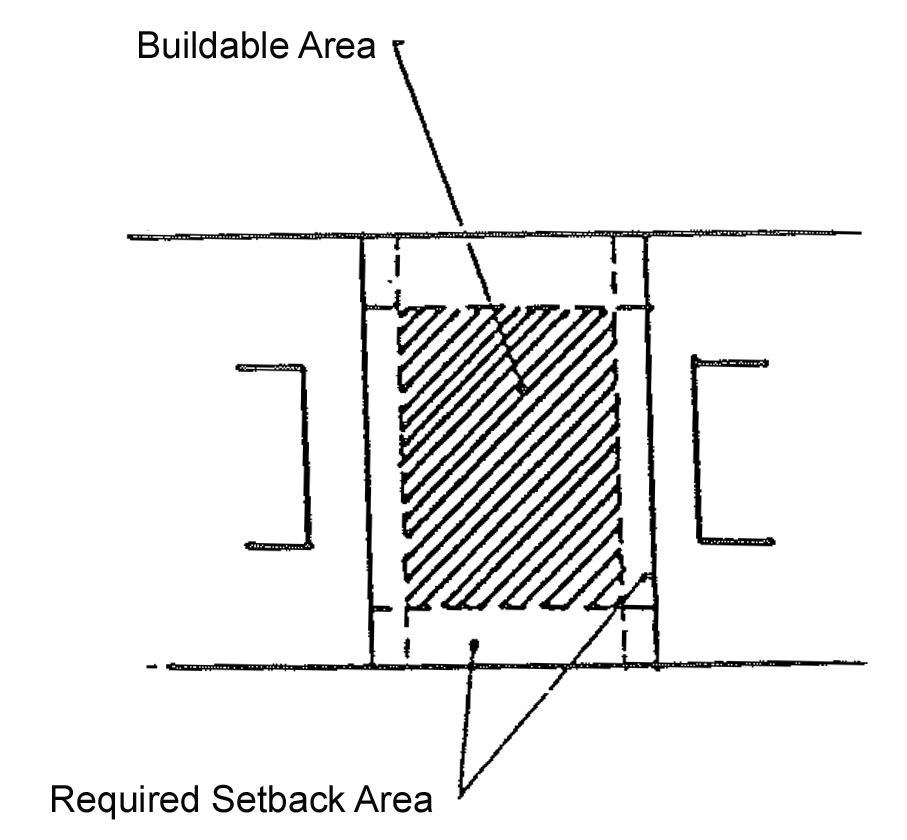
Buildable area means the portion of a lot, parcel or tract of land excluding all required yard area where a building could be located in accordance with provisions of this Chapter.
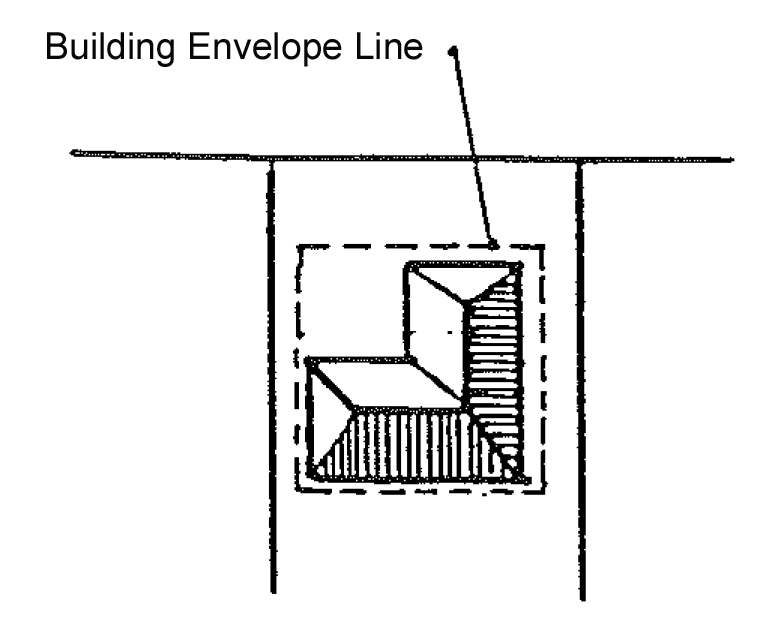
Building envelope means the two-dimensional space within which a building is proposed to be located on a lot, parcel or tract of land.
_____
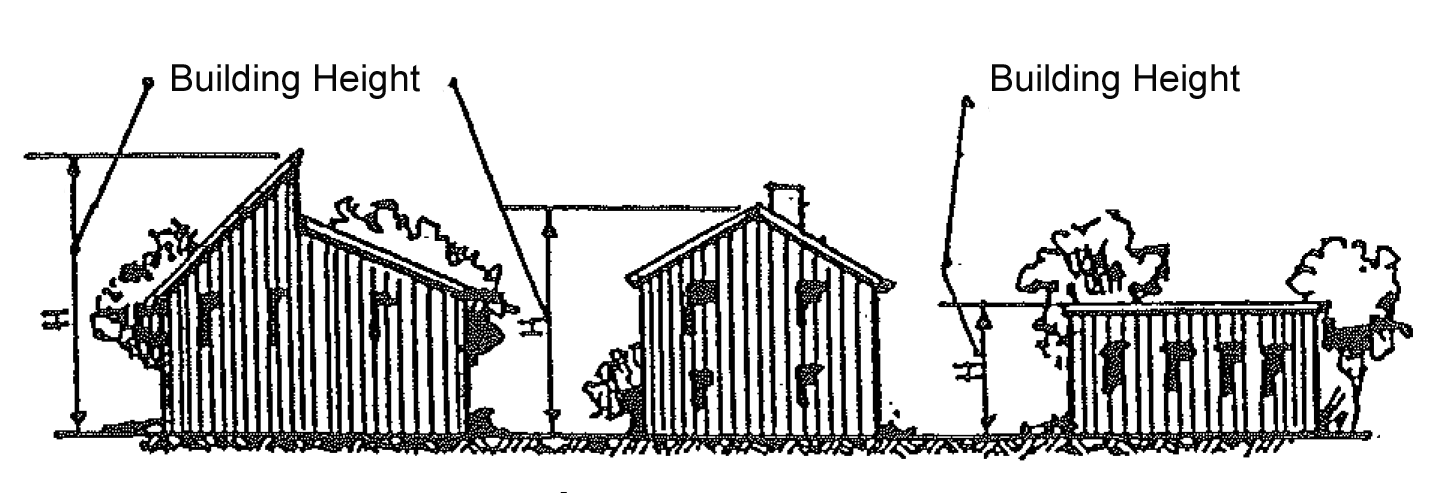
Building height means the vertical distance measured from the average finished grade at the setback lines to the highest point of the roof surface exclusive of chimneys, ventilators, pipes and similar apparatus.
_____
Developable lot area means the total area of a lot, tract or parcel less that portion of the lot, tract or parcel that is located in an area with a high flood hazard and is in the floodway as defined by the Federal Emergency Management Agency (FEMA), and less those portions with slopes in excess of twenty-five percent (25%).
Dwelling, multiple-family means a single building used by three (3) or more families living independently of each other in separate dwelling units but does not include motels, hotels, boarding houses or tourist homes.
Dwelling, single-family means a detached building used as a dwelling exclusively by one (1) family as an independent living unit. A single-family dwelling does not include a mobile home. See Section 16-2-30 of this Chapter.
Dwelling, two-family means a single building containing two (2) dwelling units and occupied by two (2) families living independently of each other.
Dwelling unit means one (1) room, or rooms connected together constituting a separate, independent housekeeping establishment for owner occupancy, rental or lease on a monthly or longer basis. The dwelling unit shall be physically separated from any other rooms or dwelling units that may be in the same structure and served by no more than one (1) gas meter, one (1) electric meter and one (1) water meter and sewer tap.
Family means any individual, two (2) or more persons related by blood or marriage or between whom there is a legally recognized relationship, or a group of not more than three (3) unrelated persons occupying the same dwelling unit.
Floor area means the gross area of the building measured along the outside walls of the building, including each habitable floor level and interior balconies but excluding interior courtyards, garages and enclosed parking areas and mechanical areas and one-half (½) of the area used exclusively for storage.
Formula business means a business which is required by contractual or other arrangement to maintain one or more of the following items: standardized ("formula") array of services and/or merchandise, trademarks, logos, servicemarks, symbols, decor, architecture, layout, uniforms, or similar standardized features and which causes it to be substantially identical to more than five other businesses regardless of ownership or location. Formula businesses can include, but are not limited to restaurants, retail stores, banks, real estate sales offices, spas, hair and nail salons, and hotel/motel/inn/B&B.
Group homes and homes for the developmentally disabled means those facilities licensed by the State which serve not more than eight (8) developmentally disabled persons. Developmentally disabled persons means to include, but is not limited to, those persons having cerebral palsy, multiple sclerosis, mental retardation, autism and epilepsy.
Home occupation means a business or profession that is conducted within a dwelling unit, an enclosed garage or accessory building and is in conformance with the provision of Section 16-11-20 of this Chapter.
Lot means a parcel of land occupied or intended to be occupied by a building or use and its accessories, and arranged to meet all the requirements of this Chapter and have at least twenty-five (25) feet of frontage on a public street.
Lot, corner means a lot abutting two (2) or more streets at their intersection.
Lot, double-frontage means a lot which is located between two (2) parallel streets so that the front lot line and the rear lot line abut a street.
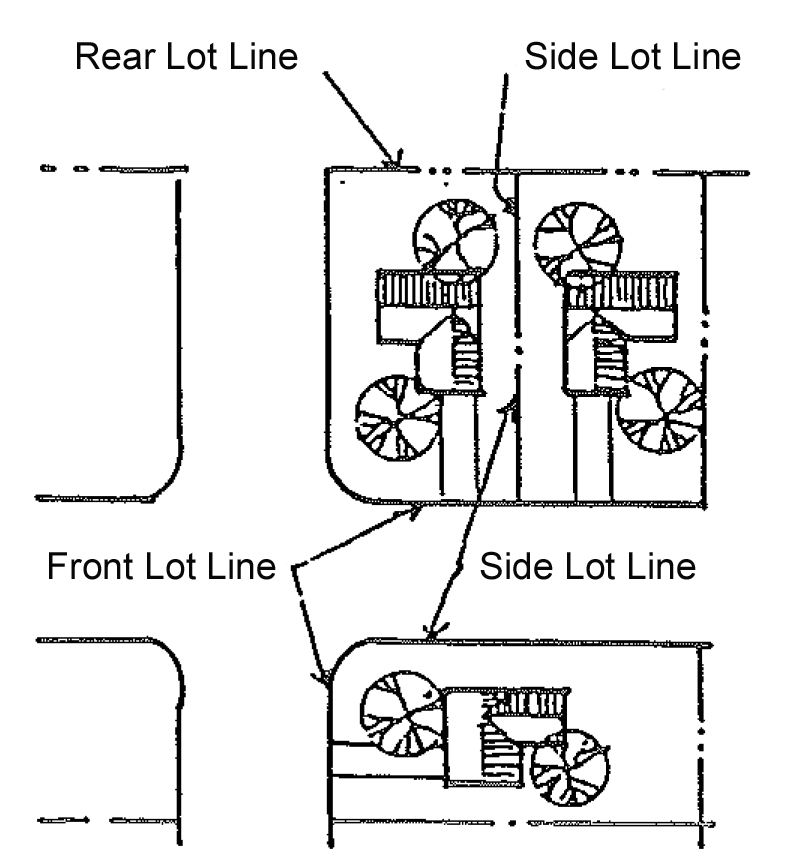
Lot line, front means the property line dividing a lot from the right-of-way of a street. On a corner lot, the shorter street right-of-way line shall be considered the front lot line.
Lot line, rear means the property line opposite the front lot line.
Lot line, side means any lot line other than a front or rear lot line.
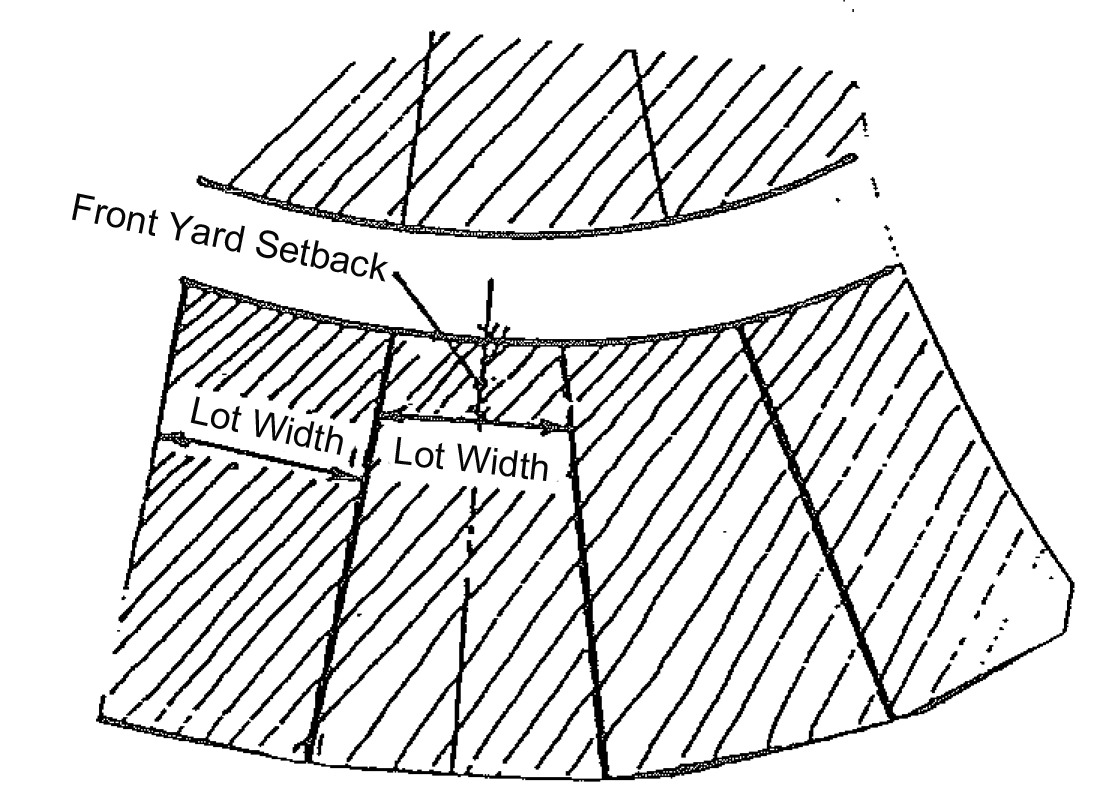
Lot width. The lot width shall be determined as follows:
a.
If the side lot lines are parallel, the lot width is the perpendicular distance between the side lot lines;
b.
If the side lot lines are not parallel, the lot width shall be the length of the line measured at right angles to the line or axis connecting the midpoints of the front lot line and the rear lot line. The length of the line shall be measured at the point equal to the front yard setback for the zoning district in which the lot is located.
Manufactured building means a building that is (1) mass produced in a factory, (2) designed and constructed for transportation to a site for installation and use when connected to required utilities and (3) is either an independent individual building or module for construction with other elements to form a building on the site. The term manufactured is synonymous with the term modular.
Manufactured home means a single-family dwelling which is partially or entirely manufactured in a factory and is not less than twenty-four (24) feet in width and thirty-six (36) feet in length. It is installed on a manufactured, designed or engineered permanent foundation, has brick, wood or cosmetically equivalent exterior siding and a three-twelfths ( 3/12 ) or more pitched roof of asphalt shingle, Pro-panel or cosmetically equivalent material. It is certified pursuant to the National Manufactured Housing Construction and Safety Standards Act of 1974, 42 U.S.C., § 5401, et seq., as amended, and is built for the State climate and snow loads according to the Department of Housing and Urban Development standards established under the provisions of 42 U.S.C., § 5401, et seq., called HUD. (See Article 8)
Manufactured housing unit means a manufactured building or portion of a building designed for long-term residential use. A manufactured housing unit must be built to one (1) of two (2) building codes: the Building Code adopted by the Town or the U.S. Department of Housing and Urban Development Code called HUD.
Mobile home means any wheeled vehicle exceeding eight (8) feet in width or thirty-two (32) feet in length, including towing gear and bumpers, without motor power, built on a permanent chassis designed for long-term residential occupancy or temporary office use, containing complete electrical, plumbing and sanitary facilities and designed to be installed in a permanent or semi-permanent manner without a permanent foundation, and is capable of being drawn over public highways by a motor vehicle. Factory-built homes and manufactured homes shall not be considered mobile homes. The term mobile home shall not include travel trailers, recreational vehicles, campers, self-contained motor homes or camper buses. (See Article 8)
Mobile home or camper sales lot means a plot of land that is used primarily for the sale of mobile homes or campers. Such uses are permitted only in commercially zoned areas and not as part of mobile home parks or subdivisions. This definition does not apply to any mobile home which is being sold by the person actually residing in the unit.
Mobile home park or community means any park, trailer park, trailer court, camp site, lot, parcel or tract of land designed, maintained or intended for the purpose of supplying a rental location or accommodation for any mobile home to be parked, and includes all buildings used or intended for use as part of the equipment where a charge is made. Mobile home park or community may include mobile homes which are parked, like a "spec" home for purposes of inspection, for sale or rental within the park.
Mobile home space means a plot of ground within a mobile home park designated for the accommodation of one (1) mobile home and its accessory structures.
Mobile home subdivision means a parcel of land subdivided into lots, each lot individually owned and utilized as the site for placement of single-family mobile homes or manufactured homes. Such a subdivision shall not be included in the definition of a mobile home park.
Neighborhoodcommercial uses means commercial or business uses that are low intensity of use, have minimal traffic generation and offer convenient shopping for residential areas. Neighborhood commercial uses may include small food stores, artist studios, antique or gift shops, specialty shops and other similar type uses. The maximum floor area for a neighborhood commercial use shall be two thousand (2,000) square feet.
Neighborhood convenience centers means small combinations of neighborhood commercial uses located near residential areas, possibly as a part of a PUD, that offer convenience goods or services. Neighborhood convenience centers should be compatible in scale and materials with surrounding residential areas. The maximum floor area for a neighborhood convenience center should be ten thousand (10,000) square feet, with no single neighborhood commercial use with a floor area greater than two thousand (2,000) square feet.
Nonconforming building means a building that was legally constructed prior to the effective date of the initial ordinance codified herein which does not comply with the height, floor area, lot coverage or other provisions of this Chapter.
Nonconforming lot means a legally recorded lot which at the time it was recorded fully complied with all applicable laws and ordinances but which does not fully comply with the lot requirements of this Chapter concerning minimum area, minimum lot width or minimum frontage upon a public street.
Nonconforming use means a use of land that was legally established prior to the effective date of the initial ordinance codified herein which is not in conformance with the use regulations of this Chapter, including the land use, minimum lot area per dwelling unit, off-street parking requirements or open space requirements.
Open space means land retained in an open or unimproved condition, except for agricultural, for the placement of landscape materials, including trees, shrubs, grasses, structures limited to footpaths and bridges, irrigation structures, erosion-protection devices and underground utilities, or improved for park use as defined herein. Ownership of such land may be private with an easement or reservation for open space use by deed restriction. It may be deeded or reserved to a property owner's association, or it may be dedicated to the public. Designation of an open space does not imply the provision of access by the public.
Open space, landscaped means a lot, tract or parcel of land that has been improved by the preservation, rearrangement, installation or planting of different trees, shrubs, grass and decorative materials. Decorative materials means materials which augment and enhance the botanical landscaping, including rocks, gravel, driftwood, bark, ponds, fountains, walls or other landscape design features approved by the Town. Such land may be used for plazas, walkways, arcades and pedestrian areas.
Planned Unit Development (PUD) means an area of land, controlled by one (1) or more landowners, to be developed under the unified control or unified plan of development for residential, commercial, educational, recreational or industrial uses or any combination of the foregoing. A PUD is a project designed to provide variety and diversity by allowing greater flexibility than would ordinarily be achieved by strict application of the zoning and subdivision standards. PUDs are permitted in all zoning districts and allow density averaging over the entire parcel. A PUD may include a combination of different dwelling types, grouping of dwelling units into clusters or a variety of land uses which complement each other and harmonize with existing and proposed land uses in the vicinity.
Principal building or principal use means the main or primary purpose for which a building or parcel of land is designed, arranged or intended, or for which it may be occupied or maintained under this Chapter.
Public building or public use means any building or use open to general use, participation or enjoyment of the public and owned by the Town, County, State or federal government or by a public utility corporation. All public buildings shall conform to the Americans with Disabilities Act.
Rooming unit means a room providing minimum housing accommodations for a roomer, arranged primarily for sleeping and/or study, and which may include a private bath but shall not include a separate kitchen.
School means any building used for educational purposes through the 12th grade by more than ten (10) persons or by ten (10) or fewer persons for more than twelve (12) hours per week or more than four (4) hours in any one (1) day.
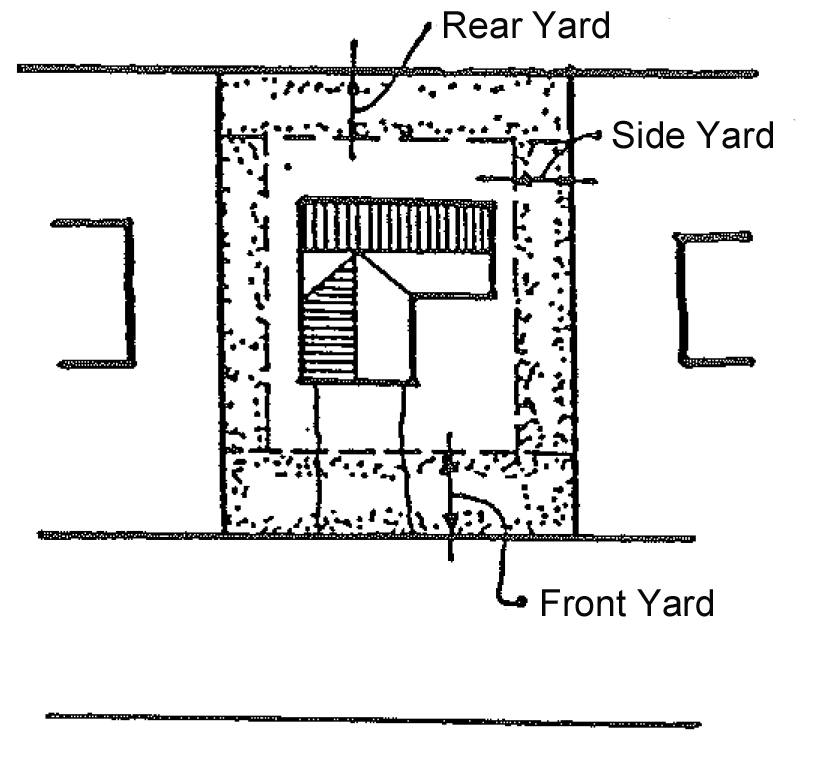
Setbacks are measured from the front yard, side yard and rear property lines. Front setbacks are to be measured from the front edge of any porch or wall of a structure excluding an eave with a maximum of a twenty-four-inch projection into the setback area. Rear setbacks are measured from the front edge of any porch or wall of a structure excluding an eave with a maximum of a twenty-four-inch projection into the setback area. Side yard setbacks are measured from the vertical plane of the foundation wall with a maximum of a twenty-four-inch eave projection into the setback area.
Special review use means a use that is permitted within a zoning district only with the prior review by the Planning Commission and approval by the Board of Trustees in accordance with procedures and requirements stated in Article 4 of this Chapter.
Street means a right-of-way reserved for public or private use which provides vehicular and pedestrian access to adjacent properties, including the designations of road, highway, thoroughfare, avenue, lane, boulevard or alley. Streets shall be further classified as set forth below.
Street, arterial means a street whose primary function is to facilitate the flow of traffic through the Town. Limited access is provided to adjoining properties. Arterial streets are designed to accommodate higher volumes of traffic than collector or local streets. Arterial streets may be further classified as major arterial and minor arterial, depending on the potential volume of traffic and local conditions.
Street, collector means a street with moderate traffic volumes that provide access to residential and commercial areas and to channel traffic from the local streets to the arterial streets. Collector streets may be further classified as major collectors and minor collectors depending on the potential volume of traffic and local conditions.
Street, local means a street with low traffic volumes that is intended to provide direct access to adjacent residential or commercial lots.
Structure means anything constructed or erected with a fixed location on the ground above grade.
Travel trailer, camper or recreational vehicle means a portable structure, mounted on wheels and drawn by a stock passenger automobile or designed to be loaded onto or affixed to the bed or chassis of a truck, or portable structure mounted on wheels and constructed with collapsible partial side walls of fabric, plastic or other pliable material which fold for towing by another vehicle and unfold at the campsite to provide for temporary living quarters for recreational camping or travel use. The term travel trailer shall include the units designated as campers, pop-ups, motor homes, camper buses or recreational vehicles.
Yard area, required means the open space area that is not occupied by a principal building with a depth or distance from a property line specified by the setback regulations for the district in which the lot is located.
(Ord. No. 83-116, Art. VIII, 1983; Ord. No. 2000-02, Art. VIII, 2000; Ord. No. 2003-07, § 1, 2003; Ord. No. 2004-01, § 1, 2004; Ord. No. 2014-04, § 1, 1-13-2015; Ord. No. 2019-10, § 2, 8-13-2019)
Sec. 16-1-110. - Severability.
If a provision of this Chapter is invalidated by decision of a court of competent jurisdiction, it is hereby declared to be the legislative intent that the effect of the decision shall be limited to the provision which is expressly stated in the decision to be invalid, and the decision shall not affect, impair or nullify this Chapter in its entirety.
(Ord. No. 2000-02, Art. XXVI, 2000; Ord. No. 2014-04, § 1, 1-13-2015)

