
Paonia City Zoning Code
ARTICLE 3
- DISTRICT REGULATIONS
Sec. 16-3-10.- Schedules of uses and requirements.
To facilitate public understanding of this Chapter and for convenient reference and use, the following schedules are provided for all districts. These schedules are a part of this Chapter and may be amended as with any other part of this Chapter.
(1)
Schedule of Uses. The schedule of uses indicates, by district, those uses that are:
P - Permitted by right
S - Permitted by special review
X - Prohibited
Any use that is not specifically permitted shall be deemed to be excluded. If a question arises as to whether a specific use does not fall within the expressed use categories, any person may apply to the Planning Commission for a determination as to whether a specific use is permitted.
(2)
Schedule of Requirements. The schedule of requirements includes minimum lot areas, setback, density and open space requirements for each residential and commercial zone. Additional requirements are listed for uses permitted by special review.
(Ord. No. 83-116, Art. X, 1983; Ord. No. 2000-02, Art. X, 2000; Ord. No. 2014-04, § 1, 1-13-2015)
Sec. 16-3-20. - Schedule of uses, residential districts.
Table 16-1
Schedule of Uses - Residential Districts
P = Permit by right
S = Permit by special review
X = Prohibited use
1 See Article 8 of this Chapter.
2 Professional offices as home occupations are permitted in all districts, subject to provisions in Section 16-11-20 of this Chapter.
3 Neighborhood commercial uses may include small food stores, specialty shops, gift, antique shops or similar type uses. Maximum floor area shall be 2,000 square feet total.
4 Neighborhood convenience center shall have a maximum total floor area of 10,000 square feet and no single business with a greater total floor area than 2,000 square feet.
(Ord. No. 2000-02, Art. X, 2000; Ord. No. 2014-04, § 1, 1-13-2015)
Sec. 16-3-30. - Schedule of requirements, residential districts.
Table 16-2
Schedule of Requirements1- Residential Districts
1 See also the following provisions: 16-3-40 to 16-3-60 pertaining to average lot areas, side yard setback variation and front yard variation.
2 See supplementary requirements in Section 16-10-60.
3 When a building is 3 stories, a 15-foot setback is required.
(Ord. No. 2000-02, Art. X, 2000; Ord. No. 2014-04, § 1, 1-13-2015)
Sec. 16-3-40. - Average lot area.
(a)
When a group of ten (10) or more single-family dwellings are proposed for development as a unit, the minimum lot area may be varied in order to achieve flexibility and creativity in design. However, in no case shall:
(1)
The lot area be less than four thousand five hundred (4,500) square feet;
(2)
The average lot size for the unit be less than six thousand (6,000) square feet; and
(3)
More than twenty percent (20%) of the lots be less than six thousand (6,000) square feet.
(b)
When such development procedures are followed, the Town-approved subdivision plat must be on record in the County Clerk and Recorder's office.
(Ord. No. 2000-02, Art. X, 2000; Ord. No. 2014-04, § 1, 1-13-2015)
Sec. 16-3-50. - Side yard setback variation.
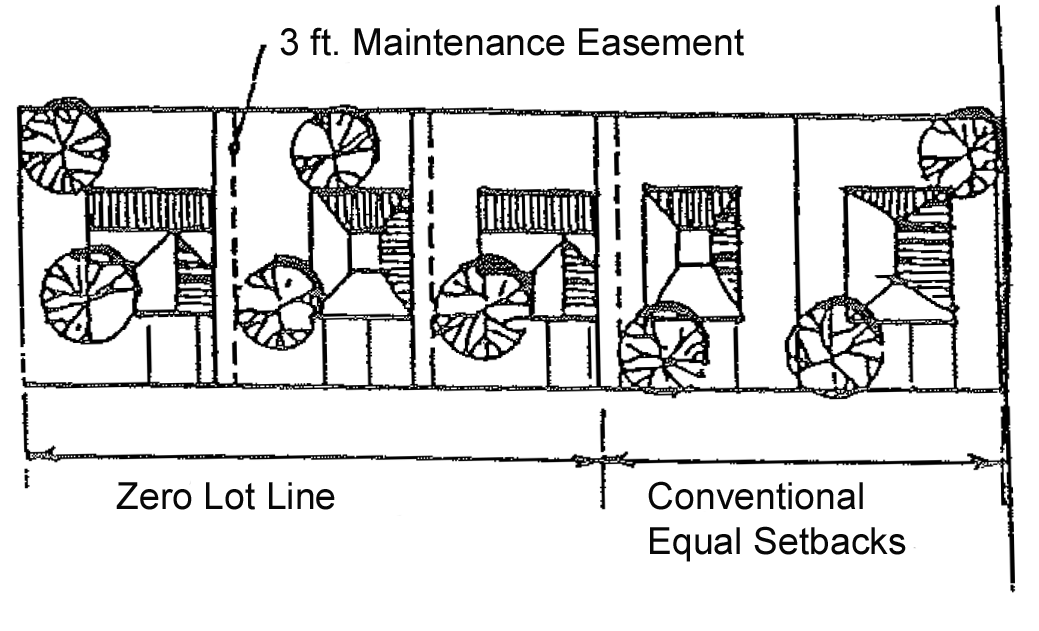
When a group or cluster of three (3) or more single-family dwellings are proposed for development as a unit, the side yard requirement may be reduced subject to the approval of the Town Administrator. However, the minimum spacing between two (2) structures shall not be less than twelve (12) feet. In the case of zero-lot-line developments, permitted by this provision, a minimum of a three-foot-wide maintenance easement shall be provided on the property adjacent to the wall that is placed along the side lot line.
(Ord. No. 2000-02, Art. X, 2000; Ord. No. 2014-04, § 1, 1-13-2015)
Sec. 16-3-60. - Front yard variation.
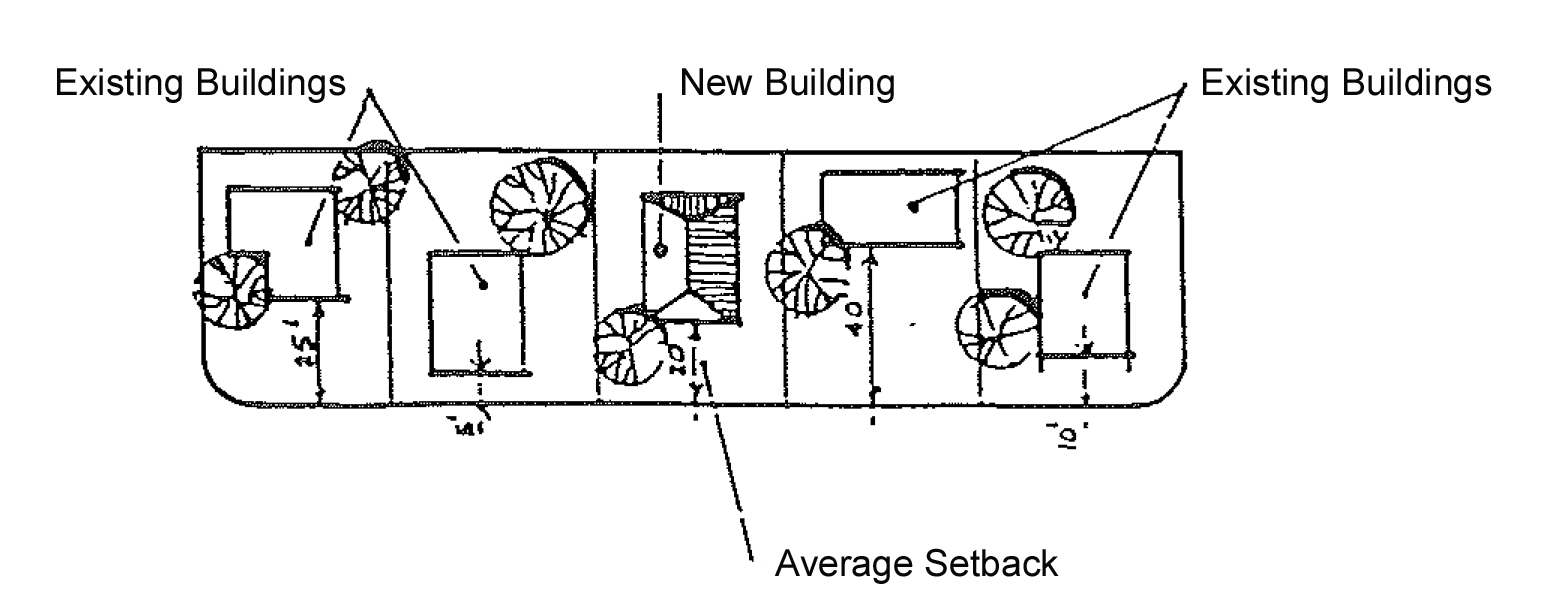
In areas established and predominantly built out prior to the effective date of the initial ordinance codified herein, the front yard setback shall be equal to the average setbacks for the other buildings on the same block or a maximum of that required by the new regulation as herein provided.
(Ord. No. 2000-02, Art. X, 2000; Ord. No. 2014-04, § 1, 1-13-2015)
Sec. 16-3-70. - Schedule of uses, commercial and industrial districts.
Table 16-3
Schedule of Uses - Commercial and Industrial Districts
P = Permitted by right
S = Permitted by special review
X = Prohibited
(Ord. No. 2000-02, Art. X, 2000; Ord. No. 2014-04, § 1, 1-13-2015; Ord. No. 2016-06, exh. A. 8-23-2016; Ord. No. 2019-10, § 2, 8-13-2019)
Sec. 16-3-80. - Schedule of requirements, commercial and industrial districts.
Table 16-4
Schedule of Requirements - Commercial and Industrial Districts
1 For residential development in the C-1 and C-2 acres, the minimum lot sizes shall be the same as the requirements of the R-3 District.
2 Unless the building is set back at least 150 feet from adjacent lot of lots in the R-1 or R-2 Districts, and if it is determined that the building will not block the view of adjoining R-1 or R-2 developed properties.
(Ord. No. 2000-02, Art. X, 2000; Ord. No. 2014-04, § 1, 1-13-2015)
_____
Sec. 16-3-90. - Developing Resource District.
(a)
Permitted uses. Uses permitted by right in the Developing Resource District include those existing uses of the land at the time of annexation, including:
(1)
Single-family residence.
(2)
Raising of crops, grain.
(3)
Ranching.
(4)
Other agricultural uses.
(b)
Rezoning required. No uses other than those existing at the time of annexation shall be permitted on property zoned DR unless the property is rezoned to a zoning district that permits the proposed use.
(c)
Uses permitted by special review. New dwelling units shall be permitted by special review.
(d)
Park dedication requirements and water rights. The properties that are annexed and zoned DR, Developing Resource, shall not be subject to requirements for park dedications or cash payment in lieu of dedicating park land or for water rights fees or requirements, except as to secured uses by right or permitted uses by special review, until the property is rezoned, wherein full satisfaction of the requirements of this Chapter shall then be due.
(Ord. No. 2000-02, Art. X, 2000; Ord. No. 2014-04, § 1, 1-13-2015)
Sec. 16-3-100. - Public District.
(a)
Permitted uses. Uses permitted by right in the Public District include the following:
(1)
Park recreational areas dedicated to the Town.
(2)
Public educational facilities existing at the time of adoption of the initial ordinance codified herein.
(3)
Public building and facilities existing at the time of the adoption of the initial ordinance codified herein.
(b)
Uses permitted by special review.
(1)
New public educational facilities.
(2)
New public buildings and facilities.
(Ord. No. 2000-02, Art. X, 2000; Ord. No. 2014-04, § 1, 1-13-2015)
Sec. 16-3-110. - Estate Residential District.
On those properties where livestock and poultry are allowed, the following performance standards shall be observed.
(1)
All manure shall be removed periodically or incorporated into the soil on a regular basis such that the manure does not draw flies or other insects or cause obnoxious odors.
(2)
Adequate overflow drainage on drinking facilities shall be provided to prevent the saturation of soil on adjacent property.
(3)
Spillage and leftovers from livestock feedings must be removed or so disposed of as to prevent fly, bird or rodent propagation or creation of odors.
(4)
Any shed, shelter, pen or enclosure for livestock shall not be closer than one hundred (100) feet to any off-property residence or place of business and shall be set back twenty (20) feet from the side lot line and fifty (50) feet from the front lot line.
(5)
All sheds or other shelter for livestock shall be kept reasonably free of rodents and insects and shall be kept in good repair.
(6)
Adequate drainage facilities or improvements shall be constructed to protect any adjacent rivers, streams or other bodies of water from pollution.
(7)
In subdivided areas, all livestock shall be kept within a fenced area.
(8)
Adherence to the Colorado Confined Animal Feeding Regulations, promulgated by the Colorado Department of Public Health and Environment, Water Quality Control Commission shall be observed.
(9)
The maximum number of allowable livestock per lot does not apply to young animals below the weaning age or six (6) months of age, whichever is less.
(10)
The number of livestock permitted shall be two (2) horses, one (1) cow, one (1) llama, three (3) sheep, or three (3) goats per three (3) acres. There shall be twenty-four (24) poultry total allowed.
(Ord. No. 2000-02, Art. X, 2000; Ord. No. 2014-04, § 1, 1-13-2015)
Sec. 16-3-140. - Formula business.
(1)
Intent. The purpose of these formula business requirements is to maintain and protect Paonia's historic downtown core as the civic, social and business hub of the community, ensure the vitality and diversity of the Town's commercial districts and enhance the quality of life of residents and visitors.
(2)
Applicability. These regulations shall apply to formula businesses as defined in Section 16-3-100 of the Code.
(3)
Related definitions. For purposes of this Section, the following definitions apply:
(a)
Color scheme means the selection of colors used throughout the business, such as on the walls, furnishings, permanent fixtures or on the building façade.
(b)
Décor means the interior design and furnishings that may include style of furnishings, shelving, display shelving/racks, wall coverings or other permanent fixtures.
(c)
Façade means the principal exterior face or front of a building, including awnings, overhangs, and porte-cocheres that are oriented towards a street, alley or open space.
(d)
Servicemark means a word, phrase, symbol or design or a combination of words, phrases, symbols or designs that identifies and distinguishes the source of a service of one party from those of others.
(e)
Signage means a sign as detailed Section 18-6-10.
(f)
Standardized array of merchandize means fifty percent (50%) or more of the in-stock merchandise is from a single manufacturer or distributor bearing uniform markings.
(g)
Standardized array of services means a substantially similar set of services or food and beverage menus that are priced, prepared and performed in a consistent manner.
(h)
Trademark means a word, phrase, symbol or design, or a combination of words, phrases, symbols or designs legally registered or established by use that distinguishes the source of the product of one party from those of others.
(i)
Uniform apparel means standardized items of clothing, including but not limited to standardized aprons, pants, shirts, vests, smocks or dresses, and hat and pins (other than name tags) with standardized colors and fabrics.
(4)
Exemptions. The following formula businesses are exempt from these formula business requirements:
(a)
Formula businesses in operation prior to the effective date of these regulations.
(b)
Construction work on a pre-existing, approved or exempt formula business that is required to comply with fire and/or life safety standards.
(c)
Disability access improvements to a pre-existing, approved or exempt formula business.
(5)
Formula Business Location Requirements. Formula retail businesses may be permitted as a Special Review in the C-2, I-1 or I-2 zone district.
Formula businesses that are legally in existence as of the effective date of this Ordinance may remain in their current location as a non-conforming use. The same or substantially similar type of use may be transferrable upon sale or transfer of the commercial space or ownership of the business and/or building.
Formula businesses that are legally in existence as of the effective date of this Ordinance may be renovated and/or expanded up to fifteen percent (15%) of the existing gross floor area or a maximum of one thousand five hundred (1,500) square feet, whichever is less.
(6)
Compliance with the Code. Formula business shall comply with all applicable standards of the underlying zone district and the applicable regulations of the Town Code.
(7)
Formula Business Additional Criteria. No conditional use permit for a formula business shall be approved unless the following criteria are met:
(a)
The formula business complements existing businesses and promotes quality, diversity and variety to assure a balanced mix of commercial uses and range of local, regional and national goods and services for residents and visitors.
(b)
The formula business has submitted plans, drawings, renderings, visual simulations or other examples that illustrate how it will be consistent with the historic nature of the Town of Paonia.
(c)
The formula business does not include any drive-through facilities.
(Ord. No. 2019-10, § 3, 8-13-2019)

