
Pine Mountain City Zoning Code
ARTICLE 4
- LOT AND BUILDING STANDARDS
This Article sets out the standards that control the size of lots, the placement of buildings and structures on a lot, and the bulk and intensity of development on a lot in each zoning district. This article also provides minimum requirements and standards for the planting of trees and other landscape material and the provision of natural and/or planted buffers between dissimilar uses.
401.01 - Conformance with regulations.
All lands, buildings and structures shall be developed in accordance with the zoning district regulations and use regulations applicable to the zoning district in which such land, buildings, and structures are located. Any development of land not in accordance with that permitted under these regulations shall be prohibited.
401.02 - Number of principal buildings.
(a)
Only one principal building and its customary accessory buildings may hereinafter be erected on any lot of record, in accordance with standards set forth in this Development Code.
(b)
Multi-Unit Structures.
(1)
In certain zoning districts, more than 1 multi-dwelling-unit structure may be erected on the same lot provided there shall be a minimum distance of 20 feet between principal buildings, as indicated in Table 4-1.
401.03 - Minimum buildable area.
Regardless of the minimum requirements of individual zoning districts, a plat shall not be approved until the buildable area of every lot is determined to be sufficient to accommodate the minimum building area required by the zoning district. No part of the required minimum lot size shall be permanently inundated by water or covered with designated wetlands.
401.04 - Authority of the Harris County Health Department.
Nothing contained in this article shall be construed as preventing the County Health Department, after study of the conditions existing in a proposed subdivision, from requiring that all or any portion of the area of such subdivision shall not be built upon or that the minimum lot sizes set forth in this Development Code are inadequate and must be increased to ensure the protection of the public health.
402.01 - General requirements.
(a)
No building or structure shall hereafter be erected, constructed, reconstructed, or altered to:
(1)
House a greater number of units per acre or occupy a smaller lot area than is herein required.
(2)
Have narrower or smaller front, rear, or side yards than are herein required.
(3)
Exceed the height limits.
(4)
Be in nonconformance with the minimum lot size requirements of the zoning district in which they are located, with the exception of lots served by on-site sewer (septic tank and drain field), which shall be subject to the approval and lot-size standards of the Harris County Environmental Health Department.
402.02 - Area regulations for lots and principal buildings.
(a)
Provisions relating to the minimum area, width and frontage, the maximum height of a building, minimum setbacks for front, side and rear yards, and other dimensional requirements as they relate to a principal building are included in this Section and in Table 4-1, Minimum Development Standards for Principal Buildings by zoning district, located at the end of this Article.
(b)
Minimum Development Standards for Planned Unit Development zoning districts and certain types of subdivisions are provided in Article 5 of this Development Code.
(c)
Setback provisions for accessory structures are contained in Section 403.
402.03 - Types of lots.
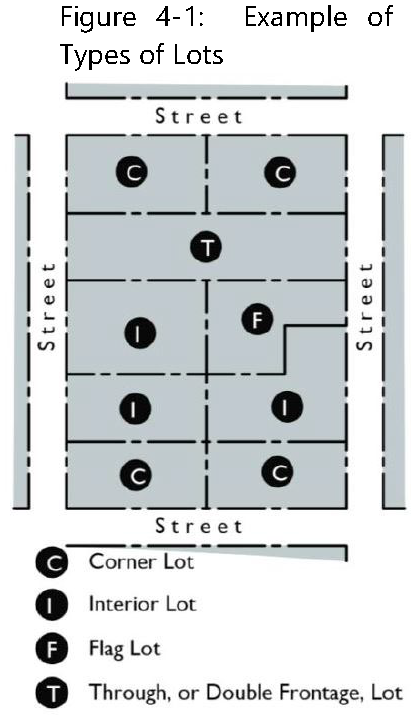
(a)
Interior Lots.
(1)
Defined. A lot having frontage on only one street.
(b)
Corner Lots.
(1)
Defined. Lots of which 2 adjoining sides abut their full lengths on a street.
(2)
The interior angle at the intersection of the 2 sides must be less than 135 degrees.
(3)
Setbacks for the street-adjoining side yards of corner lots shall be as specified in Table 4-1.
(c)
Flag Lots.
(1)
Defined. An irregularly shaped lot that has a very limited amount of street or road frontage. The portion of the lot nearest the street, the "flagpole," is substantially narrower than the rest of the lot. The wider part of the lot, the "flag," is back further from the road frontage.
(2)
Flag lots shall be avoided to the greatest extent feasible in a major subdivision, unless unavoidable due to topographic or similar conditions. Acceptable flag lots in a major subdivision shall have the required minimum road frontage for the zoning district.
(3)
The front setback on a flag lot shall be measured from the front property line that is parallel to the front street property line, where the required width of the lot at the building line meets requirements of the zoning district. For example, a flag lot may have a narrower street frontage than is required for a regular lot; however, the buildable area must meet lot width requirements for the regular lot where the flag lot widens.
(d)
Double- and Reverse-Frontage Lots.
(1)
Defined. A lot, other than a corner lot, that abuts more than one public street that are parallel or within 45 degrees of being parallel to each other.
(2)
The required front yard setback shall be provided along each street frontage.
(3)
Double-frontage and reverse-frontage lots (multiple frontage lots) should be avoided except where essential to provide separation of residential development from traffic arteries or to overcome specific disadvantages of topography and orientation.
(4)
A lot with rear frontage on an alley with approved design shall not be considered a double frontage lot.
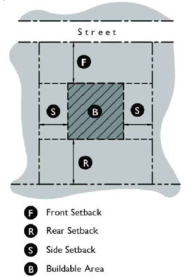
Figure 4-2: Example of Required Setbacks and Buildable Area for Typical Interior Lots
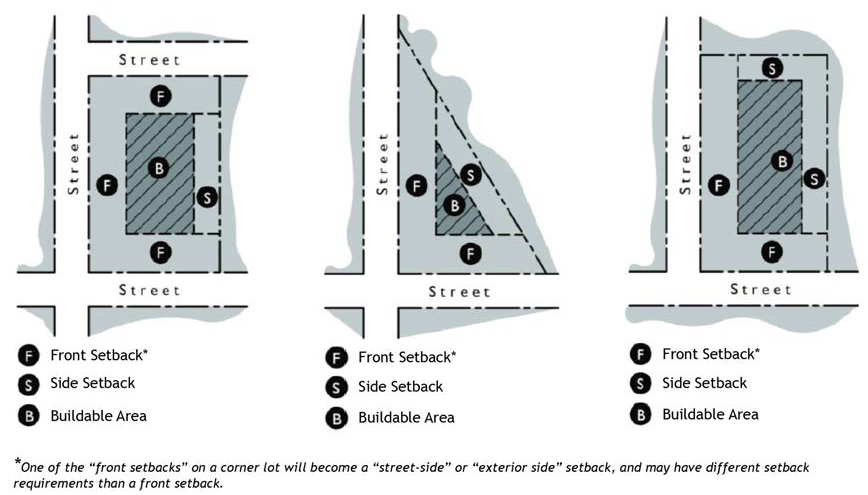
Figure 4-3: Example of Required Setbacks and Buildable Area for Corner Lots
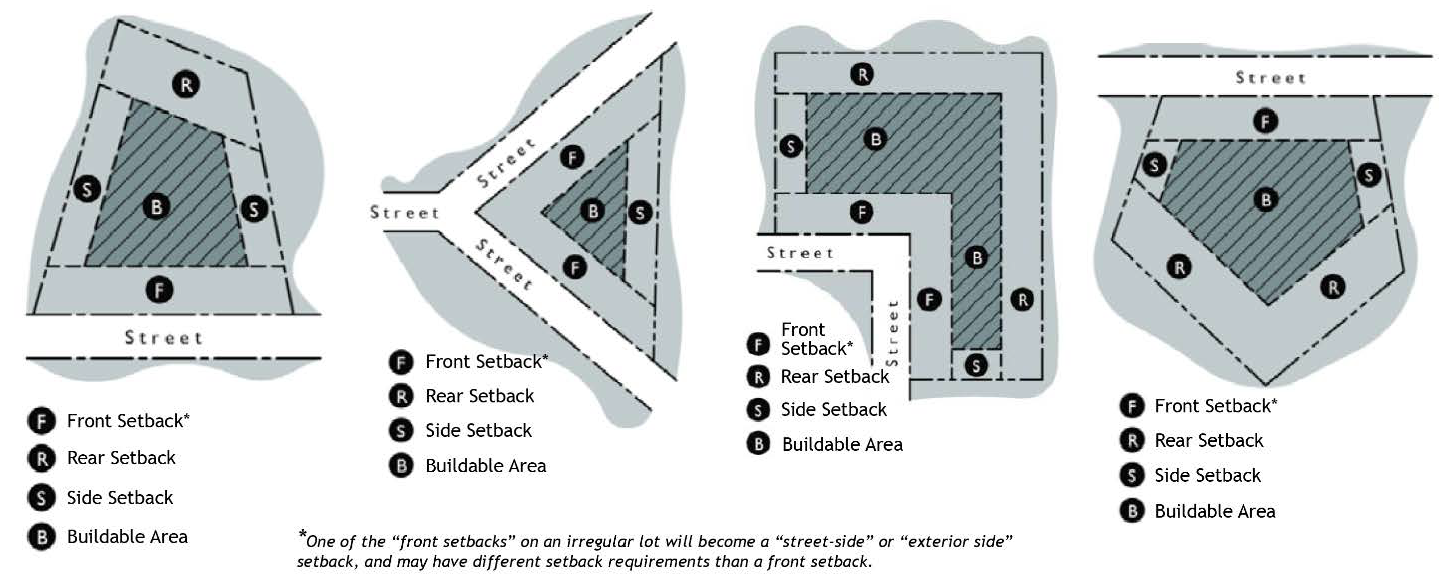
Figure 4-4: Example of Required Setbacks and Buildable Area for Various Irregular Lots
402.04 - Minimum lot size.
(a)
See Table 4-1 for minimum lot size requirements by zoning district.
(b)
Residential lots shall meet the area requirements necessary for adequate sewer treatment and water availability as set forth in Table 4-1, and for compliance with this Development Code.
(c)
Commercial and industrial lots shall be adequate to provide service areas and off-street parking suitable to use as intended and to meet zoning requirements.
(d)
Suitable Land Required.
(1)
No part of the required minimum lot size shall be permanently inundated by water or covered with designated wetlands.
(e)
Minimum Lot Size on Septic.
(1)
Minimum area for lots served by septic systems.
a.
Private Water. Any lot upon which both an individual well and septic tank are to be provided shall have a minimum area of not less than that required by State and County Health Department regulations or this Development Code, whichever is greater. The site location on the lot of these facilities shall be approved by the County Health Department in accordance with all applicable requirements.
b.
Public Water. Any lot which is to be served by a public water supply and an individual septic tank shall have an area of not less than that required by State and County Health Department regulations or this Development Code, whichever is greater. The site location on the lot of these facilities shall be approved by the County Health Department in accordance with all applicable requirements.
(2)
Lot size and width increases. The County Health Department may require larger lot sizes in individual cases based on a variety of factors, in accordance with their regulations.
402.05 - Minimum lot frontage.
(a)
Street frontage required.
(1)
Each lot shall abut a dedicated public street by the amount listed in Table 4-1, unless specified otherwise in this Development Code.
(2)
Each lot shall meet the minimum driveway sight distance requirements of the geometric design standards of the Georgia Department of Transportation.
402.06 - Minimum lot width.
(a)
Minimum lot widths shall be in accordance with zoning district standards indicated in Table 4-1.
(b)
The minimum lot width shall be achieved between the side lot lines measured along the front property line that abuts a street. Lot width shall be in accordance with requirements per zoning district as set forth in Table 4-1.
(c)
Residential corner lots shall have adequate width to meet building setback requirements from both abutting streets.
(d)
Lot width shall not narrow between the right-of-way and building line.
(e)
Culs-de-sac and flag lots. Flag lots or lots located on a cul-de-sac may have a reduced lot width, no less than 50 feet in width.
402.07 - Lot lines.
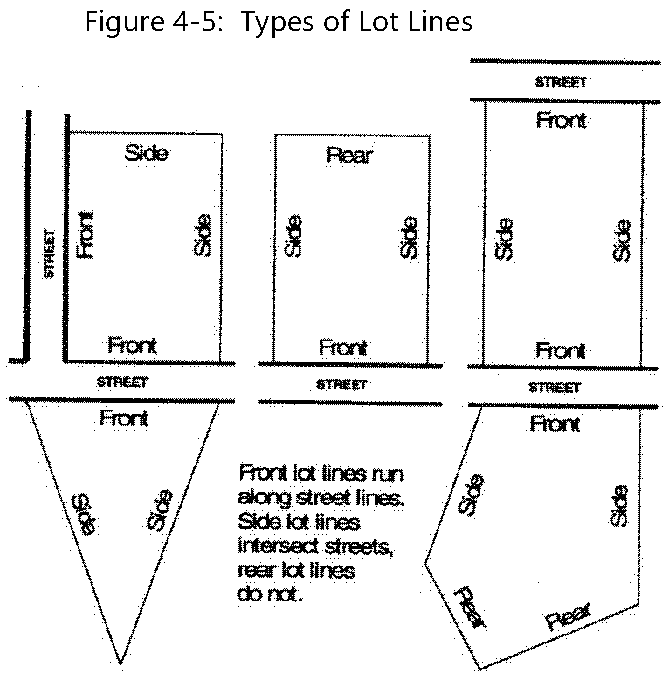
(a)
All lot lines shall be perpendicular or radial to street lines, unless not practical because of natural features such as creeks, rivers and water bodies.
(b)
In the case of a pointed or irregular lot, the rear lot line shall be an imaginary line parallel to and farthest from the front lot line, not less than ten feet long and wholly within the lot.
402.08 - Building lines.
(a)
All building lines shall meet the setback requirements established in Table 4-1.
402.09 - Minimum setbacks; principal buildings.
(a)
All principal buildings on a lot shall be setback from the street right-of-way lines and from the side and rear lot lines bounding the lot by no less than the distances shown on Table 4.1.
402.10 - Building and structure heights.
(a)
Building and Structure Heights; how measured.
(1)
Building height. The vertical distance measured to the highest point of a building from the average finished grade across those sides of a building that face a street.
(2)
Structure height. The vertical distance to the highest point of a structure (other than a building), as measured from the average grade at the base of the structure or from the average grade directly below a projecting structure.
(b)
Maximum Building and Structure Heights. The maximum height of all buildings and structures in each zoning district, except as otherwise provided in this section, shall be as shown on Table 4.1.
(c)
See Section 403 for height limitations for fences and freestanding walls.
(d)
See Section 404 for exceptions to height limitations.
402.11 - Minimum acreage requirements for creation of new zoning districts.
The table below presents minimum total acreage required for a rezoning that results in creation of a new zoning district. No new district may be created which contains less than the acreage specified in the table below for each district. When expanding an existing district, the acreage below must be met in the cumulative. For minimum lot size requirements of lots created through the development process see Table 4-1.
403.01 - General requirements.
(a)
An accessory building or structure may be erected either attached or unattached to a principal building on the same lot. An attached accessory building shall be considered a part of the principal building and shall comply with the requirements of the district in which it is located.
(b)
Accessory buildings shall be constructed concurrently with or subsequent to a principal dwelling, unless it qualifies as an agricultural use building, as specified in Section 403.04.
(c)
See Section 403.04 for requirements specific to accessory agricultural use buildings and structures.
(d)
See Article 3, Restrictions on Particular Uses, for additional standards for accessory buildings and structures.
(e)
Building Permits, when required.
(1)
Detached accessory buildings over 400 square feet in area shall require a building permit, with exception of agricultural buildings as defined in Section 403.04; agricultural buildings over 800 square feet in area shall require a building permit.
(2)
Detached accessory buildings or structures 400 square feet or less that are used for the private, noncommercial and non-dwelling use of the resident or that are used for agricultural purposes, shall not require a building permit, provided they meet the criteria noted in this Section 403.
a.
The building or structure shall not be used for human habitation;
b.
The building or structure shall be served by not more than 100 amp of electricity, provided, however, an electrical permit and designated inspection are required. No permit is required for a building 400 square feet or less in area without electricity;
c.
The building or structure shall not contain toilet facilities;
d.
The building or structure shall not be taller than one story; provided, however, that such story shall not exceed 20 feet in clearance height;
e.
Should the structure be altered or converted to a use which is inconsistent with the criteria outlined herein, this exemption shall not apply to such alterations and the owner must apply for a building permit and otherwise comply with all of the requirements of the applicable building code before proceeding with such alteration; and
f.
Regardless of whether or not a building qualifies for a permit exemption, all structures must be built according to the standards as required by the applicable state and county building codes.
403.02 - Minimum standards for accessory buildings.
Detached accessory buildings, as defined below, must comply with the following, unless otherwise noted herein:
(a)
Accessory buildings, defined. A subordinate building, the use of which is incidental to that of a principal building and located on the same lot therewith.
(b)
Location.
(1)
A detached accessory building 800 square feet or less may be located in the rear or side yard in the A-1, R-R, R-1 and R-2 zoning districts.
(2)
A detached accessory building over 800 square feet shall be located in the rear yard of the principal building in any district where allowed.
(c)
Maximum lot coverage. 30% of the area of the rear yard and/or side yard;
(d)
Minimum setbacks:
(1)
Rear lot line: Ten feet.
(2)
Side lot line: Ten feet.
(3)
An accessory building is shall not be located in any required front or street side yard, except as indicated in the provisions for exceptions in Section 403.02(e).
(4)
An accessory building shall not be located closer than 15 feet to the principal building on an adjoining lot.
(e)
Exceptions:
(1)
On corner lots or irregular lots that do not have a rear yard, a detached accessory building or structure may be located in an interior side yard or side yard abutting the street, provided it shall be:
a.
Setback at least 50 feet from the street side property line.
b.
Screened from the public right-of-way by an opaque fence or vegetative buffer.
(2)
For A-1 and R-R zoned parcels containing five acres or more, a detached accessory building or structure may be located in the front yard or side yard that abuts a street (e.g. corner lot), provided that it meets the criteria set forth in Section 403.04(c)(1) below.
(3)
Agricultural use buildings and structures are addressed separately in Section 403.04.
403.03 - Accessory dwelling units.
(a)
General Requirements.
(1)
Permit Required. All accessory dwelling units shall require a building permit.
(2)
There shall be no more than one accessory dwelling unit allowed per lot.
(3)
Minimum Standards: A guest house or garage apartment shall meet the following requirements:
a.
Shall be on same utilities as the primary structure.
b.
Shall be no more than 800 square feet.
c.
Shall be located in the rear or side yard of the primary structure.
d.
Detached structures which may be or are intended to be rented out as living areas shall comply with standards in Article 3. [2]
e.
The placement of a guest house on a lot shall not result in the violation of the lot coverage maximums applicable to the zone in which it is located.
f.
The water supply and sanitary sewage disposal system for the lot must be certified as adequate to support the guest house in combination with the main house.
g.
Shall meet additional requirements in (b) and (c) of this Section.
(b)
Garage Apartments.
(1)
Garage apartments shall be allowed in accordance with the Accessory and Temporary Use Table in Article 2.
(2)
Occupation of a private garage apartment, as defined in this Development Code, shall be limited to one family.
(c)
Guest Houses.
(1)
A guest house shall be allowed on the same lot as the primary structure in residential districts in accordance with the Accessory and Temporary Use Table in Article 2 of this Development Code.
(2)
Occupation of a guest house shall be limited to one family.
(d)
Tiny Houses.
(1)
A tiny house, as defined in this Development Code, shall be permitted on the same lot as the primary structure in the A-1 and R-R zoning district per Table 2-2, Accessory and Temporary Use Table, in Article 2 of this Development Code.
(2)
A tiny house shall only be constructed in accordance with current State Minimum Standard Residential Code(s) with Georgia State Amendments and with this Development Code.
Article 3 sets forth restrictions on certain uses, such as Short Term Vacation Rentals (STVR).
403.04 - Agricultural buildings and structures.
(a)
General Requirements:
(1)
An agricultural use building or structure shall meet the following requirements:
a.
Shall only be allowed in A-1 or R-R zoning districts;
b.
Shall only be used for agricultural purposes, including the storage of agricultural products, farm equipment and machinery, or as shelter for farm animals and/or livestock; and
c.
Shall not be used for human habitation or as a residential dwelling.
(2)
An agricultural use building or structure may be erected on a lot in the absence of a principal dwelling, provided that it meets the requirements of this Section 403.04.
(b)
Minimum Standards:
(1)
Location.
a.
A detached accessory agricultural building shall be located in the rear or side yard of the principal building, unless specified otherwise herein.
(2)
Maximum lot coverage: 30 percent of applicable yards.
(3)
Minimum setbacks:
a.
Rear lot line: Ten feet.
b.
Interior side lot line: Ten feet.
c.
Other buildings: 15 feet, or as otherwise specified in applicable building codes.
(c)
Exceptions:
(1)
On agricultural lots located in the A-1 or R-R zoning district containing five acres or more, detached accessory buildings may be located in the front yard or side yard that abuts a street (e.g. corner lot), provided that:
a.
There is not sufficient space in the rear yard of the principal building to accommodate the accessory agricultural building;
b.
The structure is setback from the property line along the street by the minimum front principal building setback requirement.
(Ord. No. 05-23, 12-5-2023)
403.05 - Accessory structures.
(a)
Accessory structures, defined. For the purposes of this section, an accessory structure is defined as a structure that is subordinate to the principal building or use, which is used for non-habitable purposes, including, but not limited to, fences, signs, decks, patios, driveways and outdoor swimming pools, and similar structures, but excluding accessory buildings as defined herein.
(b)
Fences, Freestanding Walls, and Hedges.
(1)
Minimum setback: There shall be no minimum setback from any property line, provided that any fence or freestanding wall meets the requirements in 403.05(b)(2) below.
(2)
Fences, freestanding walls, and hedges may be located in required yards, subject to the following limitations:
a.
They do not exceed 8 feet in height.
b.
They do not extend alongside lot lines in front yards more than half the depth of required front yards.
c.
They do not obstruct corner visibility at street intersections as set forth in Article 10, Project Design Standards, of this Development Code.
d.
They shall not be located within any public right-of-way or utility or drainage easement.
(c)
Decks and Patios.
(1)
Location. Decks and patios may be located within side and rear yards.
(2)
Minimum setback.
a.
Patios and decks under 30 inches in height above grade shall be located at least 5 feet from any adjacent property line.
b.
Decks that are 30 inches or more above grade, must be 10 feet from property lines.
(3)
Building Permit.
a.
Any deck that is 30 inches or more above grade or that is more than 100 square feet in area shall require a building permit and shall be compliant with current Building Code.
(d)
Outdoor Recreation Facilities. Outdoor recreation facilities shall meet the requirements in this section and shall meet the setback requirements for accessory buildings and structures set forth in Section 403.03.
(1)
Swimming Pools. The following regulations shall apply to private swimming pools:
a.
Private swimming pools may be established in agricultural and residential zoning districts, provided they are to be used solely by the occupants of the property on which it is [they are] located and their guests.
b.
Private swimming pools must be located within the rear yard of a residential zoning district.
1.
No part of the swimming pool may extend into any required front yard or side yard in a residential zoning district.
2.
No part of the swimming pool may extend into any required front yard in an agricultural zoning district.
c.
All noncommercial pools shall be enclosed by a fence or wall adjacent to the pool decking not less than 4 feet in height.
(2)
Paved or Concrete Recreation Courts.
a.
Paved recreation courts, including, but not limited to tennis courts, basketball courts, pickle ball courts, or similar paved recreational courts, may be permitted in residential zoning districts and shall meet the setback and lot coverage requirements set forth in Section 403.02.
(3)
Driveways. There are no minimum setback requirements for driveways.
(e)
Exceptions.
(1)
Corner lots. Outdoor recreation facilities may be located in a side yard or street side yard on a corner lot if they meet applicable setbacks and screening.
404.01 - Height limitations.
Height limitations shall not apply to the following structures or architectural features: Chimneys, church steeples, flagpoles, grain elevators, distribution lines, towers and poles, radio and television antennas, water towers, and similar structures.
404.02 - Front yard requirements.
The front yard requirements of this ordinance shall not apply on lots where the average depth of existing front yards on developed lots located within 100 feet on each side thereof and within the same block and zoning district is greater or less than the minimum required front yard depth.
(a)
In such case, the depth of the front yard on such lot shall be not less than the average front yard depth on such developed lots.
(b)
On double-frontage lots the required front yard shall be provided on each street.
404.03 - Projections into yards.
Certain architectural features shall be permitted to project into required yard areas as follows:
(a)
Cornices, canopies, eaves or similar features may project a distance not exceeding 2.5 feet.
(b)
Fire escapes may project a distance not to exceed four feet.
(c)
An uncovered stair or landing may project a distance not to exceed three feet.
(d)
Bay windows, balconies and chimneys may project a distance not to exceed 2 feet provided such features do not occupy more than one-third the wall on which they are affixed.
4 a) Minimum lot area shall be as indicated in this Table 4-1 or as required by Health Department; b) No part of a minimum lot shall be permanently inundated by water or designated wetlands; c) Stated minimum lot areas shall apply to creation of new lots through major or minor subdivision unless otherwise regulated in Article 5 of this Development Code.
5 Flag lots or lots located on a cul-de-sac may have reduced lot width, no less than 50 feet in width. See Section 402.06.
6 Exception: Subdivision lots in approved plats, reviewed & approved by the Planning Commission as a variance or waiver stipulated in resolution per Article 12.
7 See Table 2-1, Principal Use Table, in Article 2 of this Development Code for nonresidential uses allowed in the R-1 zoning district.
8 See Table 2-1, Principal Use Table, in Article 2 of this Development Code for nonresidential uses allowed in the R-2 zoning district.
9 Must have an approved water supply and water system and an approved sewage disposal system.
10 Whenever single-family residences or medium-density residences are proposed for an R-3 district, these residences must meet the district regulations of the R-1 or R-2 district respectively.
11 See Section 401.02. More than 1 multi-dwelling-unit structure may be erected on the same lot provided there shall be a minimum distance of 20 feet between principal buildings.
12 See Table 2-1, Principal Use Table, in Article 2 of this Development Code for nonresidential uses allowed in the R-3 zoning district.
13 Rear setback requirement shall be waived if a lot abuts on an alley and if loading and unloading facilities are provided in accordance with Article 6.
14 See Table 4-2 for required landscape strips and/or buffers when side yard abuts a residential district.
15 See Table 4-2 for required landscape strips and/or buffers when rear yard abuts a residential district.
16 A 20 ft fire lane shall be required on one side of the major structure or single freestanding structure.
17 See Table 4-2 for required landscape strips and/or buffers when rear yard abuts a residential district.
18 See Table 4-2 for required landscape strips and/or buffers when side yard abuts a residential district.
19 Landscape strips and/or buffers shall be provided on 3 sides of the property unless waived by the Planning Commission.
20 See Table 4-2 for required landscape strips and/or buffers when side yard abuts a residential district.
21 See Table 4-2 for required landscape strips and/or buffers when rear yard abuts a residential district.
22 See Article 3 for additional standards for manufactured home parks.
23 Open space shall be provided as follows: 150 square feet of park and recreation area is required per unit space
24 Must include 10 spaces for immediate occupancy.
25 See Table 4-2 for required landscape strips and/or buffers within the side and rear setbacks of a manufactured home park.
26 See Article 3 for additional standards for on manufactured home subdivisions.
(Ord. No. 05-23, 12-5-2023)
405.01 - Landscape and buffer requirements.
(a)
Landscape strips.
(1)
Landscape strips shall be provided within the required setback along lot lines that abut a residential zoning district, residential development or single-family dwelling, as specified in Table 4-2, Minimum Landscape Strip and Buffer Requirements, unless otherwise noted herein.
(2)
Types of plant materials. Landscape strips shall be comprised of shrubs, trees, and similar plant materials of sufficient density to form an opaque screen within three years. The plant materials shall maintain an opaque screen at all times. Dead trees or plant materials shall be removed and replaced.
(3)
Required Height. Required landscape strip material shall be planned to reach a minimum height of six feet and create a sufficiently opaque screen within three years of planting and shall maintain an opaque screen and a height of eight feet or greater at maturity.
(b)
Buffers.
(1)
Zoning buffers shall be provided along lot lines, where specified in Table 4-2, Minimum Landscape Strip and Buffer Requirements.
(2)
A zoning buffer shall be achieved with natural vegetation, as defined in this Development Code under "natural buffer" and may include undisturbed, existing vegetation:
a.
Natural buffer: A visual screen of natural vegetation six feet in height or any combination of existing and replanted vegetation which can reasonably be expected to be at least six feet in height within two growing seasons and at least eight feet at maturity, with such density so as to present an opaque visual separation when viewed from one side to the other throughout the year.
(c)
Greenbelts.
(1)
A greenbelt may be required along the perimeter commercial and industrial development, as indicated in this Development Code.
(2)
A greenbelt shall include a minimum of five feet of land planted with shrubs, trees, and similar plant material, along at least three sides of the perimeter of the development
405.02 - Tree conservation.
(a)
Clear cutting.
(1)
Tree retention shall be encouraged and clear cutting of any tract for residential subdivision shall be minimized to the greatest extent feasible.
(2)
On such lots, land area shall be cleared only as is necessary for purposes of the proper development of said lot. Clearing shall be limited to the specific development and an area not to exceed 10 feet from the specific development, including areas for:
a.
The placement of the individual home;
b.
The placement of driveways and sidewalks;
c.
The placement of utilities and detention ponds;
d.
The placement of septic systems;
e.
The placement of roads;
f.
The placement of decks and patios; and
g.
Proper drainage as required by the County.
405.03 - Maintenance of required landscape strips and buffers.
(a)
Landscape Strips. All landscaped areas shall be maintained to ensure that plant materials are healthy and thrive.
(1)
Any diseased or dead plant materials shall be replaced as soon as reasonably possible based on the growing season, but not later than 6 months following identification of the need for replacement.
(2)
Necessary trimming and maintenance shall be performed to maintain the health of the plant materials, to provide an aesthetically pleasing appearance, and to assure that the landscaped and buffer areas serve the intended purpose.
(b)
Zoning Buffers.
(1)
Every zoning buffer required by this article shall be maintained by the owner of the property where the zoning buffer is located, so as to provide an opaque visual screen to a minimum height of 8 feet on a continuous, year-round basis.
Table 4-2. Minimum Landscape Strip and Buffer Requirements
27 A landscape strip consisting of shrubs, trees, and similar plant material shall be planted within the required setback in accordance with the requirements of this Section.
28 May be waived by Harris County Planning Commission upon application review.
29 May be waived by Harris County Planning Commission upon application review.

