
Portola City Zoning Code
ARTICLE V
- Administration and Procedures
Chapter 17.79 - AUTHORITY TO ADMINISTER TITLE
Sections:
Chapter 17.82 - PERMIT AND VARIANCE REQUIREMENTS
Sections:
Chapter 17.85 - APPLICATION PROCESSING PROCEDURES
Sections:
Chapter 17.88 - PUBLIC REVIEW PROVISIONS AND APPROVAL STANDARDS
Sections:
Chapter 17.91 - APPEALS
Sections:
Chapter 17.94 - DEVELOPMENT AGREEMENTS
Sections:
Chapter 17.97 - ZONING ORDINANCE AMENDMENTS
Sections:
Chapter 17.100 - REVOCATION PROCEDURE
Sections:
Chapter 17.103 - ENFORCEMENT
Sections:
Chapter 17.106 - DEFINITIONS OF TERMS AND PHRASES
Sections:
17.79.010 - General.
This title shall be administered by the director under the policy direction of the council, working with the planning commission, as the duties of each are described by this chapter.
(Ord. 289 § 2 (Exh. A (part)), 2002)
17.79.020 - Director and planning department.
The director shall have the responsibility and authority to administer this title. The responsibilities of the director may also be carried out by planning department employees under the supervision of the director. The director shall have authority to make interpretations and take actions on permits and certificates as set forth in this title.
(Ord. 289 § 2 (Exh. A (part)), 2002)
17.79.030 - Planning commission.
The planning commission shall have the authority to perform the duties and functions delegated by the city council as set forth in this title. The planning commission shall have authority to act on permits and variances as set forth in Chapter 17.82, and to act on such other permit and variances as the council may delegate from time to time. The commission shall also make recommendations to the council on amendments to this title and adoption of development agreements.
(Ord. 289 § 2 (Exh. A (part)), 2002)
17.82.010 - Permit requirements.
In addition to any other approval required by this code or by applicable law, the following discretionary approvals may be required:
A.
Administrative Permit (AP). An administrative permit shall be obtained pursuant to this title prior to initiation of certain activities or construction of improvements which are permitted pursuant to Articles II, III and IV of this title and only upon compliance with specific standards as specified in this title. The approving authority for administrative permits shall be the city manager or his or her designee.
B.
Conditional Use Permit (CUP). A conditional use permit shall be obtained prior to initiation, modification or expansion of a use pursuant to Articles II and III, and upon compliance with specific standards, as applicable, of Article IV of this title. The approving authority for conditional use permits shall be the planning commission.
C.
Design Review Permit for Residential Subdivisions (DRP). A design review permit for residential subdivisions shall be obtained when required in Article II concurrent or following processing an application for a tentative residential subdivision map to establish design standards for a residential subdivision or as a separate permit when modifying existing design standards. The approving authority for design review for residential subdivisions is the planning commission.
D.
Flood Encroachment Permit (FEP). A flood encroachment permit shall be obtained prior to commencement of any use or activity, as listed in Chapter 17.28, within the floodplain overlay zone. The approving authority for a flood encroachment permit shall be the planning commission.
(Ord. No. 352, § 1, 11-28-2018; Ord. 289 § 2 (Exh. A (part)), 2002)
17.82.020 - Variance to development and parking standards.
Variance (V). A variance shall be obtained to allow deviation from the provisions of this title governing the application of development standards such as parking requirements, lot size, width, setbacks, area and height requirements thereof exceeding ten percent of the development standard. Variances that exceed the development standard by less than ten percent shall be processed administratively in accordance with Section 17.88.020. No variances from permitted uses for any zone district as set forth in this title shall be granted. A variance to reduce parking requirements shall not be processed administratively. The approving authority for variances shall be the planning commission, except as otherwise identified by this chapter.
(Ord. No. 352, § 1, 11-28-2018; Ord. 289 § 2 (Exh. A (part)), 2002)
17.82.030 - Concurrent processing.
A permit normally processed administratively, that is processed with a permit or variance, shall be reviewed by the public hearing approving authority for the permit or variance.
Whenever a proposed development or use requires the issuance of more than one permit or variance, the applicable processing requirements of this chapter shall apply simultaneously.
(Ord. 289 § 2 (Exh. A (part)), 2002)
17.85.010 - Purpose.
The purpose of this chapter is to address the processing of an application for a permit or variance from the time it is submitted to the planning department, including acceptance as complete, through issuance of the permit or approval of the variance. This chapter also addresses the process for modifying and extending permit approvals.
(Ord. 289 § 2 (Exh. A (part)), 2002)
17.85.020 - Application submittal.
An application for a permit, variance, or other approvals required by this title shall be submitted to the planning department on an application form provided by the planning department, and shall include the consent of the lawful owner of record, fees as established by the city council, plans, maps, and any information required by the department.
Approvals granted for an application which was submitted containing false or inaccurate information which the applicant knew or should have known, was false or inaccurate, shall be declared null and void and subject to immediate revocation.
(Ord. 289 § 2 (Exh. A (part)), 2002)
17.85.030 - Eligible applicants.
A permit application may be filed by:
A.
The lawful owner of record of the parcel, or their duly authorized agents.
B.
A person with lawful power of attorney or other acceptable authority from the lawful owner of record. Evidence of authorization shall be submitted upon request of the department.
(Ord. 289 § 2 (Exh. A (part)), 2002)
17.85.040 - Submittal requirements.
Every application for a permit shall include the following information:
A.
A description including maps, plans, and other relevant data, of the proposed development, project site and vicinity sufficient to determine whether the project complies with the requirements of these regulations, including sufficient information concerning the existing use of land and water areas in the vicinity of the site of the proposed project insofar as the applicant can reasonably ascertain for the vicinity surrounding the project site.
B.
A description of the applicant's interest in the property upon which work is to be performed.
C.
A dated signature by the property owner, or owners, authorizing the processing of the application, and, if so desired by the property owner, authorizing a representative to bind the property owner to matters concerning the application.
D.
Such other or additional information that the director may deem necessary in his or her discretion to determine whether the development as applied for, is consistent with the city's general plan and these regulations.
(Ord. 289 § 2 (Exh. A (part)), 2002)
17.85.050 - Application acceptance and initial review.
The department shall review all applications for compliance with the submittal requirements. In order to be accepted for processing, an application shall include the required application, filing fees, and plans as defined in Chapter 17.85. Applications submitted without the required information are not required to be accepted for processing.
(Ord. 289 § 2 (Exh. A (part)), 2002)
17.85.060 - Project referral.
Upon receipt of an application, the department shall refer copies of the application to any city department, local, state or federal agency or other individual or group that the department believes may have relevant authority or expertise on the proposed project.
(Ord. 289 § 2 (Exh. A (part)), 2002)
17.85.080 - Acceptance as complete.
Within thirty days of the application submittal, a determination shall be made whether or not the application is complete. Upon completion of the referral period, the applicant will be notified (in writing, by telephone, or in person) that all the submittal requirements have been satisfied and that the application has been accepted as complete. If any information is necessary to complete the application, the applicant will be notified in writing. The letter shall also address areas in which the submitted plans are not in compliance with city standards and requirements. The applicant may appeal the determination pursuant to Chapter 17.91 that additional information is necessary to the approving authority for the permit requested. If additional information is required and the application is not made complete within six months of application submittal, then the application shall be deemed withdrawn and no action will be taken on the application.
Permits which require approval of an amendment to this title, the general plan or a specific plan shall be processed concurrent with the legislative action, but the application for such permits shall not be deemed to be complete unless and until the legislative action becomes effective.
Upon acceptance of the application as complete, the planning department shall conduct an initial study pursuant to CEQA to evaluate the environmental impacts associated with the proposed project. The planning department shall then prepare and circulate for public distribution the appropriate environmental document, if applicable.
(Ord. 289 § 2 (Exh. A (part)), 2002)
17.85.090 - Application review.
Public notice shall be given in accordance with Chapter 17.88. A written report and recommendations for action shall be prepared by the planning department, and shall be mailed or delivered to the approving authority, the property owner and the applicant not less than three days prior to the public hearing or action on the application.
(Ord. 289 § 2 (Exh. A (part)), 2002)
17.85.100 - Approving authority action.
The approving authority, as required by Section 17.88.020, shall approve, conditionally approve, or deny the proposed permit or variance in accordance with the requirements of this title. In acting on a permit or variance, the approving authority shall make the applicable findings set forth in Chapter 17.88. An action of the approving authority may be appealed in accordance with the appeal procedures set forth in Chapter 17.91.
(Ord. 289 § 2 (Exh. A (part)), 2002)
17.85.110 - Notice of action.
Within five working days of the action by the approving authority, a notice of action shall be mailed to the applicant at the address appearing on the application or to such other address designated in writing by the applicant. The notice shall contain the following information:
A.
The action taken by the approving authority;
B.
Any conditions of approval;
C.
The permit expiration date and extension or renewal requirements;
D.
Notice of the time for appeal;
E.
Notice of the legal requirement to pursue administrative remedies.
(Ord. 289 § 2 (Exh. A (part)), 2002)
17.85.120 - Effective date.
An action which approves or denies a permit or variance, or which modifies or revokes a permit or variance or denies an application for modification or revocation of a permit or variance, which is subject to appeal shall be effective upon the expiration of the twenty calendar day or ten calendar day for administratively processed permits, appeal period. No action shall be final until all appeal periods have expired, or until the final action on appeal has been rendered pursuant to this title.
(Ord. 289 § 2 (Exh. A (part)), 2002)
17.85.130 - Effect of permit.
The approval of a permit or variance authorizes the applicant to proceed with the proposed project upon the effective date of the permit, subject to all conditions or restrictions imposed by the approving authority; provided, however, that all other permits, licenses, certificates and other grants of approval to which the proposed development project is subject must be secured before the development or use may be commenced.
No person shall obtain any right or privilege to use property for any purpose or in any manner described in an application for a permit or variance, or a modification thereof, unless and until the decision granting the permit or variance or modification becomes effective.
(Ord. 289 § 2 (Exh. A (part)), 2002)
17.85.140 - Expiration.
A permit shall expire and become null and void if not effectuated within the time specified in the permit, as otherwise specified in this title or within twenty-four months after the effective date whichever period is longer. The original approval date of a permit shall be defined as the date in which the approving authority took action.
(Ord. 289 § 2 (Exh. A (part)), 2002)
17.85.150 - Effectuation.
The effectuation of a permit involving a building(s) or structure(s) occurs when a building permit is issued by the city building department. The effectuation of a permit for a land use occurs when the use is initiated in compliance with the approved conditions. Effectuation may be otherwise defined by a condition of the permit. Such condition may specify that other substantial efforts or expenditures constitute effectuation of the permit.
(Ord. 289 § 2 (Exh. A (part)), 2002)
17.85.160 - Diligent pursuit required after effectuation.
Following the effectuation of the permit, the completion of the project shall be diligently pursued. If, in the judgment of the director, the project is not being diligently pursued to completion, the director may require the applicant to submit a schedule for completion of construction. If in the opinion of the director, the schedule for completion of construction does not demonstrate compliance with the conditions of approval, the director may initiate revocation or modification proceedings as specified in Chapter 17.100.
(Ord. 289 § 2 (Exh. A (part)), 2002)
17.85.170 - Phased construction.
For projects that involve construction in phases, the time periods for the phases may be stated in the conditions of the permit so as to avoid a lapse of progressive development following the completion of the preceding phase.
(Ord. 289 § 2 (Exh. A (part)), 2002)
17.85.180 - Modifications.
Any person holding a permit granted under this title may request a modification to that permit. For the purpose of this section, the modification of a permit may include modification of the terms of the permit itself, project design, or the waiver or alteration of conditions imposed in the granting of the permit. Requests of modification shall be processed as follows:
A.
Substantial Conformity. If the proposed modifications are in substantial conformity with the approved permit, the director may determine that no formal action is required and shall approve the modifications which shall be incorporated into the permit.
B.
The Approving Authority for Modifications shall be the director. Following a public notice, the director may waive the requirement for a public hearing. If a public hearing is requested, the director shall schedule and notice the permit for public hearing by the planning commission as specified by this title. A public hearing may be required for any modification at the discretion of the director.
(Ord. 289 § 2 (Exh. A (part)), 2002)
17.85.190 - Reconsideration.
If there are any new or different facts, circumstances, or law which could not have been presented at the hearing on the application and which may affect the action taken, the approving authority may reconsider such action, if a request for reconsideration, along with the fee established by the city council, is filed with the planning department within fifteen days following the date of the action. The requested reconsideration shall be subject to a public hearing and notice of such hearing shall be given as specified in Chapter 17.88. The failure of the applicant to present information which was available at or prior to the original action is not grounds for reconsideration.
(Ord. 289 § 2 (Exh. A (part)), 2002)
17.85.200 - Reapplication.
No application shall be accepted or acted upon, if within the preceding twelve months, an application has been made and denied by an approving authority which involves substantially the same parcel and which requests approval of substantially the same permits, unless the director permits such reapplication because either of the following applies:
A.
New evidence has become available which was unavailable or unknown to the applicant at the time of the previous action and which could not have been discovered in the exercise of reasonable diligence by the applicant; or
B.
There has been a substantial and permanent change of relevant circumstances since the previous decision, which materially affects the parcel involved in the application.
(Ord. 289 § 2 (Exh. A (part)), 2002)
17.85.210 - Extension.
The period within which effectuation of a permit must occur may be extended upon approval of the director. An application for such an extension shall be filed pursuant to Chapter 17.85.
The director may grant a single one year extension for a permit which has been approved but has not been effectuated. The approval of an extension extends the expiration date for one year from the original permit date. No additional extensions shall be granted for a permit which has been active for a period of three years, unless otherwise provided for in the conditions of approval or by this title. The permit as extended, may be conditioned to comply with any development standards which may have been enacted since the permit was initially approved. The extension shall be granted if the findings specified in Section 17.88.060.C are made. Any extension may require a public hearing at the discretion of the director.
(Ord. 289 § 2 (Exh. A (part)), 2002)
17.85.220 - Permit to run with land.
Unless otherwise conditioned, a permit or variance granted pursuant to the provisions of this chapter shall be transferable upon a change of ownership of the site, business, service, use or structure, provided that the use and conditions of the original permit or variance are fully complied with and not modified or enlarged.
(Ord. 289 § 2 (Exh. A (part)), 2002)
17.88.010 - Purpose.
The purpose of this chapter is to specify the public notice and hearing process for an application for a permit or variance, and the findings upon which an approval, conditional approval or denial is based.
(Ord. 289 § 2 (Exh. A (part)), 2002)
17.88.020 - Required public hearings, authorized approving authority and public notice.
Type "A": The public hearing may be waived as determined by the city manager or his or her designee. Notice of an intent to approve a development entitlement shall be mailed or delivered at least ten days prior to an action to the applicant, the property owner, the owners, as shown on the most recent secured assessor's roll, of property within three hundred feet of the property involved in the application, and all persons who have requested notice, pursuant to Section 17.88.050 of this title.
Type "B": Public hearing is required. Notice of the hearing shall be mailed or delivered at least ten days prior to the public hearing to the applicant, the property owner, the owners, as shown on the most recent secured assessor's roll, of property within three hundred feet of the property involved in the application, and each local agency expected to provide water, sewer, streets, roads, schools or other essential facilities or services to the site. Notice shall also be provided to all persons who have requested notice, pursuant to Section 17.88.050 of this title. The radius list for notice of a permit application for an adult establishment shall be expanded as required by Section 17.49.030 of this title.
Ten days prior to the public hearing, notice shall also be provided by at least one of the following methods:
1.
Publication in a newspaper of general circulation within the city; or
2.
Posting in at least three public places within the city and/or posting the application site, if applicable.
Type "C": The public hearing may be waived as determined by the city manager or his or her designee. Notice of intent to approve a development entitlement shall be posted on the subject site, by the property owner, at least ten days prior to an action to the applicant and/or the property owner(s).
Type "D": No public hearing required and no public notice is required.
REQUIRED HEARINGS, AUTHORIZED APPROVING AUTHORITY AND PUBLIC NOTICE
(Ord. No. 352, § 1, 11-28-2018; Ord. 289 § 2 (Exh. A (part)), 2002)
17.88.030 - Contents of public notice when a public hearing may be waived.
Whenever the provisions of Section 17.88.020 permit the waiving of a public hearing, the notice of intent to take action shall contain the following information:
A.
The name of the applicant;
B.
A general description of the nature of the request;
C.
A general description, in text or diagram, of the location of property, if any, that is subject to the hearing;
D.
The identity of the approving authority as the director and the scheduled date for action;
E.
The following statement:
"The purpose of this notice is to inform you that an application for the described project has been submitted to the Portola Planning Department. The Director may approve the application without holding a public hearing, unless a public hearing is requested in writing by you or any individual wanting to comment on the project prior to the scheduled approval date;"
F.
Notice that if a decision is challenged in court, the challenge may be limited to raising only those issues which were raised at a public hearing, if a public hearing is requested, or in written correspondence delivered to the director at, or prior to, the public hearing; and
G.
A description of the procedure for requesting the scheduling of a public hearing or for filing an appeal.
(Ord. 289 § 2 (Exh. A (part)), 2002)
17.88.040 - Contents of public notice when a public hearing is required.
The public notice when a public hearing is required shall contain the following information:
A.
The name of the applicant;
B.
A general description of the nature of the request;
C.
A general description, in text or diagram, of the location of property, if any, that is subject to the hearing;
D.
The date, time, and place of the public hearing;
E.
The identity of the approving authority and a brief description of the process and procedure for submitting public comment; and
F.
Notice that if a decision is challenged in court, the challenge may be limited to raising only those issues which were raised at the public hearing described in this notice, or in written correspondence delivered to the director at, or prior to, the public hearing.
(Ord. 289 § 2 (Exh. A (part)), 2002)
17.88.050 - Requests for notification.
Any person who requests to be on a mailing list for notice of hearing for a development project or projects shall submit such request in writing to the planning department. The city may impose a reasonable fee by resolution of the council for the purpose of recovering the cost of such notification.
(Ord. 289 § 2 (Exh. A (part)), 2002)
17.88.060 - Required findings for approval or conditional approval of permits and variances.
The approving authority may approve or conditionally approve an application for a permit or variance, as defined in Section 17.82.010, only if all of the following applicable findings, in addition to those findings that are applicable in this title are made.
A.
Findings for a Conditional Use Permit. The approving authority shall make the following findings to approve a conditional use permit:
1.
The proposed use or development is consistent with the City of Portola general plan and any applicable specific plan;
2.
The proposed use or development conforms with all applicable standards and requirements of this title; and
3.
The location, size, design and operating characteristics of the use or development is compatible with and shall not adversely affect or be materially detrimental to the health, safety, or welfare of persons residing or working in the area, or be detrimental or injurious to public or private property or improvements.
B.
Findings for an Extension. The approving authority shall make the following findings to approve an extension:
1.
The proposed development is in compliance with all standards in effect as of the date of application for the extension, or there is no public benefit to the imposition of current standards comparable to the cost of imposing item;
2.
No change has occurred in the circumstances or in the factual basis on which the approval was made since the date of original approval, which results in the inability to make findings of approval for the extension consistent with those originally made.
C.
Findings for a Flood Encroachment Permit. The approving authority shall make the following findings to approve a flood encroachment permit:
1.
The flood encroachment will be constructed and will be operated in compliance with all standards and regulations set forth in Chapter 17.28 of this title.
2.
The flood encroachment will not result in increased exposure of life and property to flood related hazards.
D.
Findings for a Variance. The approving authority shall make the following findings to approve a variance:
1.
There are special circumstances applicable to the property, including size, shape, topography, location or surroundings, such that the strict application of the provisions of this zoning ordinance deprives the property of privileges enjoyed by other property in the vicinity and under identical land use district classification;
2.
The granting of the variance will not be materially detrimental to the public health, safety, or welfare, or injurious to the property or improvements in such vicinity and land use district in which the property is located; and
3.
The granting of the variance does not allow a use or activity which is not otherwise expressly authorized by the regulations governing the subject parcel and will not constitute a grant of special privilege inconsistent with the limitations upon other property in the vicinity and under identical zoning classification.
E.
Findings for a Design Review Permit for Residential Subdivision. The approving authority shall make the following findings to approve a design review permit for residential subdivisions:
1.
The residential design, including the height, bulk, size and arrangement of buildings is harmonious with other buildings in the vicinity.
2.
The residential design is consistent with applicable design guidelines.
(Ord. No. 352, § 1, 11-28-2018; Ord. 289 § 2 (Exh. A (part)), 2002)
17.91.010 - Purpose.
This section identifies the procedures for filing and processing an appeal.
(Ord. 289 § 2 (Exh. A (part)), 2002)
17.91.020 - Appeal of decision or findings.
Any person aggrieved by an interpretation or action of the director or planning commission, made pursuant to this article, may appeal such action to the appropriate appeal authority, as shown in the table below, by filing a written appeal with the appropriate fee within ten days from the date of action by the director and twenty days from the date of the committee's/commission's action. All appeals shall be filed with the city clerk's office.
(Ord. 289 § 2 (Exh. A (part)), 2002)
APPEAL FROM ACTION OR DECISION OF:
(Ord. 289 § 2 (Exh. A (part)), 2002)
17.91.030 - Filing an appeal of the director's action or decision.
The appeal shall be filed within ten days from the date of action with such fees as may be established by the city council. The appeal shall specify the action being appealed and shall state the specific grounds for the appeal. If only certain conditions of an approval are being appealed, the specific conditions shall be identified and the specific grounds for appeal of the conditions shall be specified.
(Ord. 289 § 2 (Exh. A (part)), 2002)
17.91.040 - Filing an appeal of the planning commission's action or decision.
The appeal shall be filed with the city clerk within twenty days from the date of action with such fees as may be established by the city council. The appeal shall specify the action being appealed and shall state the specific grounds for the appeal. If only certain conditions of an approval are being appealed, the specific conditions shall be identified and the specific grounds for appeal of the conditions shall be specified.
(Ord. 289 § 2 (Exh. A (part)), 2002)
17.91.050 - Effect of filing an appeal.
A timely appeal of an action shall stay the effective date of the action, for that portion of the permit or variance being appealed, until the appeal has been acted upon or withdrawn. If only certain conditions are appealed, the effective date of approval shall remain the date of action by the approving authority.
(Ord. 289 § 2 (Exh. A (part)), 2002)
17.91.060 - Hearings and notices.
The city clerk shall give notice of the appeal authority's public hearing to consider the appeal at least ten days prior to the hearing date. The form, content, and method of providing notice shall be consistent with notice Type "B," Section 17.88.020 of this title.
Such hearing shall be held within forty-five calendar days from the last day of the appeal period. The appellant shall not be granted a continuance of the appeal beyond the forty-five day period.
(Ord. 289 § 2 (Exh. A (part)), 2002)
17.91.070 - Action on appeal.
Each appeal shall be considered to be a de novo hearing on the matter being appealed. The appellate approving authority may grant the appeal, grant the appeal in part, or deny the appeal. In taking its action on an appeal, the approving authority shall state the basis for the action being taken on the appeal, and may refer the matter back to the original approving authority for further action. The appellate approving authority may modify or delete any conditions which have been appealed, or add such conditions as may be necessary to address the issues being appealed, or may modify or delete any other conditions of approval which are necessarily related to those which have been appealed. Any condition which was not appealed, and which has not been modified or deleted upon appeal, shall remain unaffected.
(Ord. 289 § 2 (Exh. A (part)), 2002)
17.91.080 - Referrals.
The council may refer a matter back to the approving authority if the council finds that there is information that was not made available to the approving authority which may have affected the decision. The approving authority shall hold a public hearing on the matter within sixty days following the city council's date of referral.
(Ord. 289 § 2 (Exh. A (part)), 2002)
17.91.090 - Action by council is final.
The decision of the city council on an appeal is final, except as allowed under the provisions for reconsideration (Section 17.85.190).
(Ord. 289 § 2 (Exh. A (part)), 2002)
17.94.010 - Purpose.
This chapter is adopted in compliance with the provisions of California Government Code Sections 65864 through 65869.5.
(Ord. 289 § 2 (Exh. A (part)), 2002)
17.94.020 - Application requirements.
A.
Eligibility to Apply. Only a qualified applicant may file an application to enter into a development agreement. A qualified applicant is a person who has legal or equitable interest in the real property that is the subject of the development agreement. The director may require an applicant to submit proof of the applicant's interest in the real property and of the authority of any agent to act for the applicant. Before processing the application, the director may obtain the opinion of the city attorney as to the sufficiency of the applicant's interest in the real property to enter into the agreement.
B.
Application Content. The director shall prescribe the form for each application along with a processing fee as adopted by the city council. The director may require an applicant to submit such information and supporting data as the director considers necessary to process the application.
C.
Form of Agreement. Each application shall be accompanied by the form of standard development agreement established by the city and approved by the council with any additional alternatives, modifications or changes proposed by the applicant.
(Ord. 289 § 2 (Exh. A (part)), 2002)
17.94.030 - Hearing notice.
The director shall give notice of the city's intention to consider adoption of a development agreement in conjunction with any other public hearing required by law or this chapter, at least ten days prior to the hearing date. The form, content, and method of providing notice shall be consistent with notice Type "B," Section 17.88.020 of this title.
(Ord. 289 § 2 (Exh. A (part)), 2002)
17.94.050 - Council hearing.
Following notice as provided by Section 17.88.020 above, the council shall hold a public hearing. The council shall not approve the development agreement unless it finds that the provisions of the agreement are consistent with the general plan and any applicable specific plan. If the council approves the development agreement, it shall do so by the adoption of an ordinance. After the ordinance approving the development agreement takes effect, the city may enter into the agreement.
(Ord. 289 § 2 (Exh. A (part)), 2002)
17.94.060 - Amendment or cancellation.
Either party may propose an amendment to, or cancellation in whole or in part, of an executed development agreement. If proposed by the developer, the procedure for proposing and adoption of an amendment to or cancellation in whole or in part of the development agreement shall be the same as the procedure for entering into an agreement in the first instance. However, where the city initiates the proposed amendment to or cancellation of the development agreement, it shall first give at least thirty days notice to the property owner of its intention to initiate such proceedings in advance of the giving of public notice of hearing.
(Ord. 289 § 2 (Exh. A (part)), 2002)
17.94.070 - Recordation of agreement, amendment or cancellation.
A.
Within ten days after the city enters into the development agreement, the city clerk shall have the agreement recorded with the county recorder.
B.
If the parties to the agreement or their successors in interest amend or cancel the agreement as provided in Government Code Section 65865.1 for failure of the application to comply in good faith with the terms or conditions of the agreement, the city clerk shall likewise have record notice of such action with the county recorder.
(Ord. 289 § 2 (Exh. A (part)), 2002)
17.94.080 - Periodic review.
The city shall review the development agreement every twelve months from the date the agreement is entered into.
A.
The director shall begin the review proceeding by giving notice that the city intends to undertake a periodic review of the development agreement to the property owner. The director shall give the notice at least thirty days before the date when the matter shall be considered by the council.
B.
The council shall receive the director's report at a regularly scheduled city council meeting. A public hearing may be held but is not required. At the meeting, the property owner must demonstrate good faith compliance with the terms of the agreement. The burden of proof on this issue is upon the property owner. If a public hearing is held, notice of the hearing shall be given as provided by Section 17.88.020.
C.
The council shall determine whether or not the property owner has, for the period under review, complied in good faith with the terms and conditions of the agreement.
D.
If the council finds and determines that the property owner has complied in good faith with the terms and conditions of the agreement during the period under review, the review for that period is concluded. If the council finds and determines that the property owner has not complied in good faith with the terms and conditions of the agreement during the period under review, the council shall order the property owner to cure the default within sixty days. If the property owner fails to do so, the council may modify or terminate the agreement.
(Ord. 289 § 2 (Exh. A (part)), 2002)
17.97.010 - Purpose.
Any amendment to this title, which changes the zoning on any parcel or which modifies any provision of this title, shall be adopted in the manner set forth in this chapter.
(Ord. 289 § 2 (Exh. A (part)), 2002)
17.97.020 - Initiation of amendment.
An amendment of this chapter may be initiated in any of the following manners:
A.
Upon motion of the city council.
B.
Upon motion of the planning commission.
C.
Upon application by a property owner or owners of a parcel to be affected by an amendment of the zoning map which rezones the parcel, or amending the text of this title which applied to the parcel.
D.
Upon recommendation by the director to clarify text, address changes mandated by state law, maintain general plan and specific plan consistency, to address minor boundary adjustments, or for any other reason beneficial to the city.
(Ord. 289 § 2 (Exh. A (part)), 2002)
17.97.030 - Application form, fees and processing.
A.
Application. An application for an amendment to this title, shall be submitted to the planning department on a signed application form provided by the planning department. The application shall be accompanied by a description of the amendment, a fee as established by the city council and any other information required by the planning department in order to determine compliance with this title, the general plan and any applicable specific plan.
B.
Concurrent Processing. An application for an amendment may be processed concurrently with other applications, at the discretion of the director. Permits or variances approved in conjunction with a zoning ordinance amendment application shall not become effective until the zoning ordinance amendment is effective.
C.
Review. Upon acceptance of the application, the planning department shall review the request and shall prepare a written report.
D.
Public Hearing. The director shall give notice of the planning commission's intention to consider an amendment in accordance with Government Code Section 65854 as amended from time to time. The director may also provide such additional notice as the director deems appropriate or necessary based upon the nature of the proposed amendment.
(Ord. 289 § 2 (Exh. A (part)), 2002)
17.97.040 - Director report.
The director shall prepare a written report which shall be mailed or delivered to the planning commission and the applicant not less than three days prior to the hearing.
(Ord. 289 § 2 (Exh. A (part)), 2002)
17.97.050 - Recommendation on amendment.
A.
Following a public hearing, the planning commission shall consider the proposed amendment and make a recommendation to the city council. The planning commission shall include the reasons supporting their recommendation and shall, at a minimum, discuss if the proposed amendment is consistent with:
1.
The public interest, health, safety or welfare of the city, and
2.
The general plan and any applicable specific plan of the City of Portola.
B.
Findings. The planning commission may recommend and the city council may adopt any amendment to the zoning ordinance provided that it first makes the following findings:
1.
The proposed amendment, including any changes proposed in the various land uses to be authorized, is compatible with the objectives, policies, general land uses, and programs specified in the general plan;
2.
The proposed amendment is consistent with any applicable specific plan governing development of the subject property;
3.
It is in the public necessity, convenience, and/or general welfare that the zoning regulations governing the property be changed; and
4.
When a reduction in residential density is proposed, the following additional finding shall be made: The remaining sites identified in the housing element are adequate to accommodate the city's share of its regional housing need pursuant to California Government Code Sections 65584 and 65863.
C.
The decision of the planning commission shall constitute a recommendation to the city council.
(Ord. No. 352, § 1, 11-28-2018; Ord. 289 § 2 (Exh. A (part)), 2002)
17.97.060 - City council action.
Prior to taking action on a recommendation by the planning commission for an amendment, the city council shall consider the findings of the planning commission.
(Ord. 289 § 2 (Exh. A (part)), 2002)
17.100.010 - Purpose.
This chapter provides the process for the revocation or modification of any permit, or variance granted under this chapter.
(Ord. 289 § 2 (Exh. A (part)), 2002)
17.100.020 - Automatic revocation of a permit.
Notwithstanding any other provisions of this title to the contrary, a permit or variance shall cease to be valid, and all rights or privileges granted thereby shall lapse, whenever there becomes final any judgment of a court of competent jurisdiction declaring one or more of the conditions of approval to be void or unenforceable, or enjoining or otherwise prohibiting the enforcement or operation of one or more of such conditions.
(Ord. 289 § 2 (Exh. A (part)), 2002)
17.100.030 - Revocation or modification of a permit for cause.
A permit or variance may be revoked or modified for cause as provided by the provisions of this section. For purposes of this chapter, the modification of a permit or variance may include the modification of the terms of the permit or variance itself or the waiver, alteration or imposition of new conditions.
A.
Grounds for Revocation or Modification. A permit may be revoked or modified upon a finding of any of the following grounds:
1.
The permit was obtained or extended by false, misleading or incomplete information;
2.
One or more of the conditions upon which the permit was approved have been violated, or have not been complied with.
B.
Initiation of Action. The revocation of a permit or the modification of the conditions of approval of a permit shall be initiated by order of the planning commission. The order shall specify the basis upon which the action to revoke the permit or to modify the conditions is to be evaluated during the hearing to revoke or modify.
(Ord. 289 § 2 (Exh. A (part)), 2002)
17.100.040 - Revocation hearing.
A.
The city council shall hold a public hearing on the revocation of a permit or the modification of the conditions of a permit on the grounds stated by the planning commission. The hearing shall be held in a timely manner after the issuance of an order of the planning commission. The hearing shall be noticed in the manner provided for a Type "B" notice as set forth in Section 17.88.020. The council may grant a continuance of the hearing date upon a showing of reasonable cause or to allow the permittee additional time to adequately prepare for the hearing.
B.
At the hearing, the planning department shall present evidence showing the cause for revocation of the permit or modification of the conditions of the permit. The permittee shall be entitled to present additional or rebuttal evidence as he or she may desire regarding the issues in question. The city council shall consider all of the evidence, and may revoke the permit or modify a condition of a permit if it finds by a preponderance of the evidence that:
1.
The permit was obtained or extended based upon false, misleading, or incomplete information submitted with the application for the permit; or
2.
One (or more) of the conditions upon which the permit was approved has been violated, or has not been fully complied with in a timely manner.
C.
In its discretion, the city council may modify or delete the conditions of approval or add new conditions of approval in lieu of revoking a permit in order to address the issues raised by the revocation hearing. The decision of the city council shall be final.
(Ord. 289 § 2 (Exh. A (part)), 2002)
17.103.010 - Purpose.
The purpose of these provisions is to provide uniform enforcement procedures for the requirements of this title.
(Ord. 289 § 2 (Exh. A (part)), 2002)
17.103.020 - Enforcement.
It shall be the duty of the director to enforce the provisions of this title pertaining to the erection, construction, reconstruction, moving, conversion, alteration, or addition to or of any building or structure. All departments, officials and public employees vested with the duty or authority to issue permits or licenses shall not issue a permit or license for uses, buildings or purposes in conflict with the provisions of this title and any such permit or license issued in conflict with the provisions of this title shall be null and void. The director may delegate enforcement responsibilities to other city employees.
Any building, structure, or landscaping that is set-up, erected, constructed, altered, enlarged, converted, moved, or maintained contrary to the provisions of this title, or any use of any land, building, or premises established, conducted, operated, or maintained contrary to the provisions of this title, or failure to comply with any of the conditions of a permit or variance granted under this title is declared to be unlawful. The city attorney may initiate an action or proceeding to enforce the provisions of this title, as appropriate.
(Ord. 289 § 2 (Exh. A (part)), 2002)
17.103.030 - Penalty for violation.
Any property owner, person, firm, or corporation, whether as principal, agent, employee or otherwise, shall be deemed guilty of a separate offense for each and every day during any portion of which any violation of this title is committed, continued or permitted by such person, firm or corporation, and shall be deemed guilty of a separate offense for each and every day during any portion of which any violation of this title is committed, continued or permitted by such person, firm or corporation.
(Ord. 294 § 11, 2002; Ord. 289 § 2 (Exh. A (part)), 2002)
17.103.040 - Nuisances declared—Abatement.
Any building, structure, or landscaping that is set-up, erected, constructed, altered, enlarged, converted, moved, or maintained contrary to the provisions of this title, or any use of any land, building, or premises established, conducted, operated, or maintained contrary to the provisions of this title, or failure to comply with any of the conditions of a permit or variance granted under this title is declared to be a public nuisance. The city attorney may initiate an action or proceedings for the abatement and removal and enjoyment of said public nuisance in the manner prescribed by law, and may take such other steps and shall apply to such courts as may have jurisdiction to grant such relief as shall abate and remove such building or structure, and restrain and enjoin any property owner, person, firm, or corporation from setting up, erecting, building, maintaining, or using any such building contrary to the provisions of this title.
(Ord. 289 § 2 (Exh. A (part)), 2002)
17.103.050 - Revocations.
A.
Failure to comply with any of the conditions of a permit or variance granted under this title shall constitute grounds for revocation of such permit or variance pursuant to Chapter 17.100.
B.
In addition to the remedies provided above, any person violating a provision of this title or failing to comply with the mandatory requirements of this title may have any other related permits and/or related business licenses issued by the city revoked.
(Ord. 289 § 2 (Exh. A (part)), 2002)
17.103.060 - Remedies cumulative.
The remedies provided for herein shall be cumulative and not exclusive.
(Ord. 289 § 2 (Exh. A (part)), 2002)
17.106.010 - Purpose.
This chapter provides definitions of the terms and phrases used in this title that are technical or specialized, or that may not reflect common usage. This chapter also determines how language used throughout the title will be construed. Where any of the definitions in this chapter may conflict with definitions in other titles of the Portola Municipal Code, these definitions prevail for the purposes of this title.
(Ord. 289 § 2 (Exh. A (part)), 2002)
17.106.020 - General rules for construction of language.
The meaning and construction of works and phrases as set forth shall apply throughout this title, except where the context of such words or phrases clearly indicates a different meaning or construction. Definitions contained in the Uniform Building Code shall be applicable except when in conflict with definitions contained in this title, in which case the zoning definition shall apply. The following general rules of construction shall apply to the textual provisions of this title:
A.
Headings. The section and subsection headings of this title do not govern, limit, modify, or in any manner affect the scope, meaning or intent of any provision of this title.
B.
Illustrations. In case of any difference of meaning or implication between the text of any provision and any illustration, the text of the provision shall control.
C.
Shall, May and Should. "Shall" is always mandatory and not discretionary. "May" is permissive or discretionary. "Should" is advisory and not mandatory.
D.
Tense, Number, and Gender. Words used in the present tense include the past and future tense. Words used in the singular include the plural, and the plural the singular, unless the context clearly indicates the contrary. The masculine and feminine genders are both inclusive of the masculine, feminine, and neuter.
E.
Conjunctions. Unless the context clearly indicates the contrary, the following conjunctions shall be interpreted as follows:
1.
"And" indicates that all connected items or provisions shall apply.
2.
"Or" indicates that the connected items or provisions may apply singly or in any combination.
3.
"Either ... Or" indicates that the connected items or provisions shall apply singly but not in combination.
(Ord. 289 § 2 (Exh. A (part)), 2002)
17.106.030 - Definitions.
"Accessory building or structure." See "Building or structure, accessory."
"Adult-oriented business." These types of businesses shall mean the following:
A.
Adult Arcade. The term "adult arcade" as used in this title, shall mean a business establishment to which the public is permitted or invited, and in which image-producing devices, such as still or motion picture machines, projectors, videos, holograms, virtual reality devices, whether operated by mechanical, electronic, or electrical means, are maintained to display images on a regular or substantial basis, where the images so displayed are distinguished or characterized by an emphasis on matter depicting or describing specified sexual activities or specified anatomical areas.
B.
Adult Bookstore. The term "adult bookstore" as used in this title, is an establishment that has, as a regular and substantial portion (thirty percent or more) of its stock in trade in books, magazines, periodicals, or other printed matter, or of photographs, films, motion pictures, video cassettes, slides, tapes, records, or other form of visual or audio representations which are distinguished or characterized by an emphasis on the depiction or description of specified sexual activities and/or specified anatomical areas.
C.
Adult Cabaret. The term "adult cabaret" as used in this title, means a nightclub, restaurant, or similar business establishment which: (1) regularly features live performances which are distinguished or characterized by an emphasis upon the display of specified anatomical areas or specified sexual activities; and/or (2) which regularly features persons who appear semi-nude; and/or (3) shows films, computer generated images, motion pictures, video cassettes, slides, or other photographic reproductions a regular and substantial (thirty percent or more of the) number of which are distinguished or characterized by an emphasis upon the depiction or description of specified sexual activities or specified anatomical areas.
D.
Adult Hotel/Motel. The term "adult hotel/motel" as used in this title, means a hotel or motel or similar business establishment offering public accommodations for any form of consideration which: (1) provides patrons with closed-circuit television transmissions, films, computer generated images, motion pictures, video cassettes, slides, or other photographic reproductions a regular and substantial (thirty percent or more of the) number of which are distinguished or characterized by an emphasis upon the depiction of specified sexual activities or specified anatomical areas; and (2) rents, leases, or lets any room for less than a six-hour period, or rents, leases, or lets any single room more than twice in a twenty-four-hour period.
E.
Adult Motion Picture Theater. The term "adult motion picture theater" as used in this title, is a business establishment where, for any form of consideration, films, computer generated images, motion pictures, video cassettes, slides, or similar photographic reproductions are shown, and thirty percent or more of the number of which are distinguished or characterized by an emphasis upon the depiction or description of specified sexual activities or specified anatomical areas.
F.
Adult Theater. The term "adult theater" as used in this title, means a theater, concert hall, auditorium, or similar establishment which, for any form of consideration regularly features live performances which are distinguished or characterized by an emphasis on the display of specified anatomical areas or specified sexual activities.
G.
Modeling Studio. The term "modeling studio" as used in this title, means a business which provides, for pecuniary compensation, monetary or other consideration, hire or reward, figure models who, for the purposes of sexual stimulation of patrons, display specified anatomical areas to be observed, sketched, photographed, painted, sculpted, or otherwise depicted by persons paying such consideration. "Modeling studio" does not include a studio or similar facility owned, operated, or maintained by an individual artist or group of artists, which does not provide, permit, or make available specified sexual activities.
H.
Adult-Oriented Business Operator. "Adult-oriented business operator" means a person who supervises, manages, inspects, directs, organizes, controls, or in any other way is responsible for or in charge of the premises of an adult-oriented business or the conduct or activities occurring on the premises thereof.
I.
Specified Sexual Activities. "Specified sexual activities" as used in this title, include:
1.
Actual or simulated intercourse, oral copulation, anal intercourse, oral anal copulation, bestiality, direct physical stimulation of unclothed genitals, flagellation or torture in the context of sexual relationship or the use of excretory functions in the context of sexual relationship, and any of the following depicted sexually oriented acts or conduct: anilingus, buggery, coprophagy, coprophilia, cunnilingus, fellatio, necrophilia, pederasty, pedophilia, piquerism, sapphism, zooerasty; or
2.
Clearly depicted human genitals in a state of sexual stimulation, arousal or tumescence; or
3.
Use of human or animal masturbation, sodomy, oral copulation, coitus, ejaculation; or
4.
Fondling or touching of nude human genitals, pubic region, buttocks or female breasts; or
5.
Masochism, erotic or sexually oriented torture, beating or the infliction of pain; or
6.
Erotic or lewd touching, fondling or other contact with an animal by a human being; or
7.
Human excretion, urination, menstruation, vaginal or anal irrigation.
J.
Specified Anatomical Areas. "Specified anatomical areas" as used in this title, include:
1.
Less than completely and opaquely covered: (i) human genitals or pubic region; (ii) buttock; and (iii) female breast below a point immediately above the top of the areola; and
2.
Human male genitals in a discernible turgid state, even if completely and/or opaquely covered.
"Amendment" means any change, modification, deletion, or addition to the wording, text or substance of this title or any change, modification, deletion, or addition to the application of this title to property within the City of Portola, including any alteration in the boundaries of a zone district, when adopted by ordinance passed by the city council in the manner prescribed by law.
"Appellate approving authority" as designated in Section 17.91.020, it is either the planning commission or the city council that is authorized to hear and act on appeals to actions and decisions provided by this title.
"Approving authority" as designated in Section 17.88.020, it means one of the following depending on the nature of the application: city council, planning commission, or director.
"Building" means any structure having a roof supported by columns and/or walls and intended for the shelter, housing and enclosure of any individual, animal, process, equipment, vehicles, goods or materials of any kind or nature.
"Building or structure, accessory" means a building or structure detached from a principal building on the same lot and incidental to the principal building.
"Building or structure, nonconforming" means a building or structure, or portion thereof, which was lawfully erected, altered or maintained, prior to the effective date of this title, but which, because of the application of this title to it, no longer conforms to the specific regulations applicable to the zoning district in which it is located.
"Building coverage" means the land area covered by all primary buildings on a lot.
"Building, primary" means a building devoted primarily to the principal or conditionally permitted use of the lot or building site on which it is situated, as permitted by this title.
"Bus depot or station" means a place of business serving as a point of arrival or departure for passengers traveling by intercity or interstate bus, except those buses operated by a governmental entity.
"Child-oriented business" means a business, or portion of a building thereof, that primarily serves children aged eighteen and under.
"City" means the City of Portola, California.
"City council" means the City Council of the City of Portola.
"Clear vision triangle, commercial" means a triangular-shaped portion of land located at a corner and intended to provide clear vision for vehicular and pedestrian traffic. Land includes both private property and public right-of-way located at any corner defined by the triangular area created by the diagonal connection of two points measured thirty feet back from the intersection of the prolongation of points measured along the front and corner street side back of curb. No structures, fence, wall, hedge, sign or other structure, shrubbery, mounds of earth, or other visual obstruction over thirty-six inches, measured from the grade of the roadway (measured at the edge adjacent to the clear vision triangle), shall be erected in the clear vision triangle. The dimensions or height limitations of the clear vision triangle may be modified if the applicant can demonstrate compliance with current American Association of State Highway and Transportation Officials (AASHTO) guidelines for geometric design for the appropriate intersection and roadway capacity to the satisfaction of the building inspector or public works director.
"Clear vision triangle, residential" means a triangular-shaped portion of land located at a corner and intended to provide clear vision for vehicular and pedestrian traffic. Land includes both private property and public right-of-way located at any corner defined by the triangular area created by the diagonal connection of two points measured twenty-five feet along the front and seventy-five feet along the side of a property measured from the back of curb. The third side of the clear vision triangle shall be the hypotenuse of the triangle described connecting the other two sides. No structures, fence, wall, hedge, sign or other structure, shrubbery, mounds of earth, or other visual obstruction over thirty-six inches, measured from the grade of the roadway (measured at the edge adjacent to the clear vision triangle), shall be erected in the clear vision triangle. The dimensions or height limitations of the clear vision triangle may be modified if the applicant can demonstrate compliance with current American Association of State Highway and Transportation Officials (AASHTO) guidelines for geometric design for the appropriate intersection and roadway capacity to the satisfaction of the building inspector of public works director.
"Condominium" means an estate in real property consisting of an undivided interest in common in portions of a parcel of real property together with a separate interest in a dwelling, industrial or commercial building on such real property, such as an apartment, office, warehouse or store. A condominium may include, in addition, a separate interest in other portions of such real property.
"Condominium conversion" means a condominium conversion occurs whenever a multiple residential dwelling unit building or a residential housing project containing three or more dwelling units under the same ownership, or such a project that has been granted approval but construction has not begun or the project is not yet completely constructed, is subdivided so that individual dwelling units are available for sale as condominiums within the meaning of Civil Code Section 783.
"Construction trailer" means a trailer used as an on-site office only during actual construction of an approved building site.
"Council or city council" means the City Council of the City of Portola, California.
"Density" means the number of dwelling units per gross acre.
"Department" means the Planning Department of the City of Portola.
"Development" shall be as defined by California Government Code Section 65927.
"Development standard" means those parts of a zone district and any other regulation of this title which regulates aspects of physical development, including, but not limited to, density, lot area, lot width, lot coverage, building height, and setbacks.
"Director" means the city staff person primarily charged with carrying out the duties of the planning department. This may include the city administrator, the planning and redevelopment manager, or other primary staff person or his or her designee.
"Distance between structures" means the shortest horizontal distance measured between two vertical walls of two structures.
"Expansion—Building or structure" means an alteration of a building/structure that results in an increase in its size, either in extent or bulk, or an increase in its area or volume.
"Expansion—Use" means an alteration of a use that results in an increase in its size, either in extent, intensity or in the nature of the activities conducted.
"Family" means an individual or group of two or more persons occupying a dwelling and living together as a single housekeeping unit in which each resident has access to all parts of the dwelling and where the adult residents share expenses for food or rent.
"Fence" means an artificially constructed barrier of any material or combination of materials erected to enclose, screen, or separate areas.
"Garage sale" means the temporary sale of used household or personal articles held on the seller's own residential premises, also referred to as a yard sale or rummage sale.
"General plan" as used in this title, the term general plan means the City of Portola General Plan, and all revisions and amendments to the plan.
"Height—Building and other structures" means the vertical distance from the highest point of the building or structure to the average of the highest and lowest points where the exterior walls or supports touch the natural grade.
"Height—Fence or wall" means the height of a fence or wall shall be determined from the highest finished grade adjacent to the fence or wall.
"Home, model complex" means one or more dwelling units or one temporary trailer temporarily used for display purposes as an example of dwelling units available or to be available for sale or rental for the first time in a particular subdivision or residential development which may be comprised of single detached, semi-detached, or multiple unit dwellings, or a combination thereof. It also includes one sales office and associated parking.
"Junk yard" means any area of two hundred square feet or more of any parcel or combination of adjoining parcels under the same ownership used for the storage of junk, more than one unregistered or inoperable vehicle, except as provided by Sections 5051 et seq. of the Vehicle Code of the state or as otherwise exempted by Section 10.04.030 of this code, scrap materials, materials, salvaged from wrecked or demolished buildings, machinery or equipment; or used for the wrecking or demolishing of automobiles, other vehicles, or machinery.
"Landscaped area" means an area devoted to lawn, ground cover, trees, or shrubs or hardscape, and as specified in this title, any applicable specific plan, or by other city requirement.
"Loading space" means an area, other than a street, alley, or driving aisle, on the same lot with a building or a group of buildings which is permanently reserved and maintained for the temporary parking of commercial vehicles while loading or unloading merchandise or materials.
"Lot" means a legally created parcel of land used or capable of being used under the regulations of this title.
"Lot, area" means the area contained within the boundary lines of a lot.
"Lot, corner" means a lot located at the intersection of two or more streets, with one property boundary bordering on each street frontage.
"Lot, developed" means a lot with buildings or structures.
"Lot, flag" means a lot having access to a public or private street by a narrow strip of land.
"Lot, frontage" means that portion of the lot contiguous to the street.
"Lot, interior" means a lot, other than a corner lot, abutting only one street.
"Lot, key" means a lot with a side line that abuts the rear line of any one or more adjoining lots.
"Lot line, front" means the lot line separating a lot from a street right-of-way. The front lot line of a corner lot may face either street frontage, at the option of the owner, provided that the required rear yard setback is obtainable opposite from the front lot line.
"Lot line, rear" means that lot line, not intersecting a front lot line, which is most distant from and most closely parallel to the front lot line. In the case of an irregularly shaped lot or a lot bounded by only three lot lines, a line within the lot having a length of ten feet parallel to and most distant from the front lot line shall be interpreted as the rear lot line for the purpose of determining required yards, setbacks, and other provisions of this title.
"Lot line, side" means any lot line which is not a front or rear lot line.
"Lot, reversed corner" means a corner lot, the rear of which abuts the side of another lot.
"Lot, through" means a lot having frontage on two generally parallel streets.
"Lot, width" means the horizontal distance between the side lot lines, measured at the front setback line.
"Manufactured home" means a factory built or manufactured home permitted by State of California and federal laws.
"Mobile home" means same as manufactured home, but subject to the National Manufactured Housing Construction and Safety Act of 1974.
"Mobile home park" means any area or tract of land where one or more mobile home lots are rented or leased or held out for rent or lease to accommodate mobile homes used for human habitation. The rental paid for any such mobile home shall be deemed to include rental for the lot it occupies.
"Model home complex" means one or more dwellings used for the display and sale of units and lots within a subdivision.
"Nonconforming structure or building" means a structure or building, the size, dimensions, or location of which was lawful prior to the adoption, revision, or amendment to the zoning ordinance but that fails by reason of such adoption, revision, or amendment to comply to the present requirements of the zoning district.
"Nonconforming use" means a use or activity that was lawful prior to the adoption, revision or amendment of the zoning ordinance but that fails by reason of such adoption, revision, or amendment to comply to the present requirements of the zoning district.
"Outdoor sales area" means an outdoor area located on the same lot as the principal business used for merchandise display or storage as allowed under this title.
"Parcel" means an area of land.
"Parcel, nonconforming" means a parcel of land having less area, frontage, or dimensions than required in the zoning district in which it is located.
"Parking lot" means an area of land, a yard or other open space on a lot legally used for or designed for parking motor vehicles.
"Parking space" means an unobstructed space or area other than a street or alley which is permanently reserved and maintained for the parking of one motor vehicle.
"Permitted" means any use or activity allowed by the provisions of this title, and subject to the applicable regulations contained within this title.
"Person" means an individual, firm, co-partnership, joint venture, association, social club, fraternal organization, corporation, estate, trust, receiver, syndicate, city, local agency, or any other group or combination acting as an entity.
"Planning commission" means the Planning Commission of the City of Portola.
"Property owner" means a person or persons having a possessory interest in the property, other than a periodic tenancy, estate at will, or sufferance, or a person having a contractual right which will ripen into such a possessory interest in the property.
"Sale, fundraising" means the temporary sale of new or used merchandise conducted by a charitable, eleemosynary, or non-profit organization or by groups associated with churches, schools and clubs.
"Seating capacity" means the actual seating capacity of an area based upon the number of seats of one seat per eighteen inches of bench or pew length. For other areas where seats are not fixed, the seating capacity shall be determined as indicated by the Uniform Building Code.
"Secondary use" means a purpose for which land or a building is or may be intended, occupied, maintained, arranged, or designed, which is less visible, prominent, or important than the primary use(s) on the same lot or parcel.
"Setback" means the required distance that a building, parking lot or other designated item must be located from a lot line.
"Setback, front" means the front setback is an area formed by a line parallel to a front lot line. The front setback is measured at right angles to the front lot line.
"Setback, rear" means the rear setback is an area formed by a line parallel to the rear lot line. Rear setbacks are measured at right angles to the rear lot lines.
"Setback, side" means the side setback is an area formed by a line parallel to the side lot line, that extends between front and rear setback areas. Side setbacks are measured at right angles to the side lot lines.
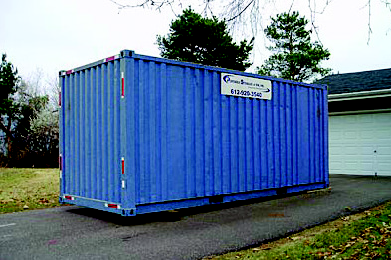
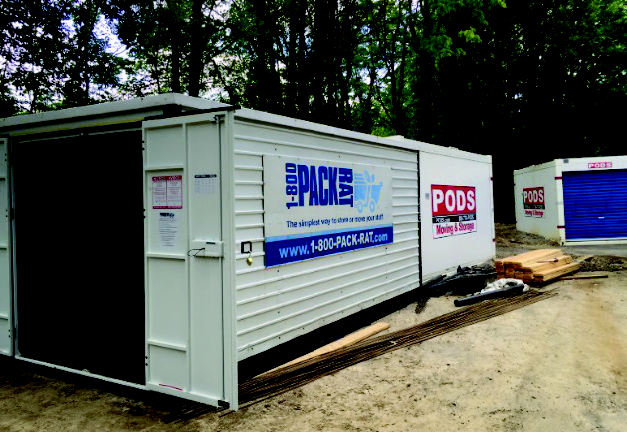
"Shipping container" means a structure designed and intended for the movement of materials over long distances, typically constructed of corrugated steel, ad commonly associated with ship, train, or tractor trailer shipping.
| Exhibit A: Examples of typical shipping containers | |
|---|---|
 |  |
"Shopping center" means two or more contiguous or separate retail commercial stores that share access and/or parking, which function by design, or ultimately function, as a single entity.
"Street" means a public or permanent private way thirty feet or more in width, which affords a primary means of access to property.
"Structural alterations" means any change in the supporting members of a building such as foundations, bearing walls, columns, beams, floor or roof joints, girders or rafters, or changes in roof or exterior lines.
"Structure" means anything constructed or erected which requires location on the ground or attachment to something having a permanent location on the ground, including but not limited to, antennas, signs and billboards, but not including outdoor areas such as paved areas, tennis courts, driveways, parking spaces where the area is unobstructed from the ground up.
"Uniform Building Code" means the Uniform Building Code currently in use and adopted by the City of Portola.
"Usable open space" means one or more open areas adjacent to residential uses, the purpose of which is to provide an outdoor area designed for outdoor living and recreation, and which is located at, below, or above grade. This space is typically accommodated within side and rear yard areas.
"Use" means the purpose of which land or a building is arranged, designed, or intended, or for which either land or a building is or may be occupied or maintained.
"Use, accessory" See: Accessory Uses, Article III of Chapter 17.34.
"Use, conditionally permitted" means a use type subject to a conditional use permit, which use may be essential or desirable to the public convenience or welfare in one or more zones but which may also impair the integrity and character of the zone or adjoining zone or be detrimental to the public health, safety or welfare unless additional restrictions on location and extent of use are imposed and enforced. Such use shall be permitted when all specific additional restrictions are completed and permanently satisfied in conformance with an approved conditional use permit. Should such restrictions be of a continuing nature, the use will remain conditional so long as the restrictions are complied with, but shall become an illegal use whenever and so long as the restrictions are not complied with.
"Use, primary" means the primary use or uses for which land or a building is or may be intended, occupied, maintained, arranged or designed and includes principally and conditionally permitted uses.
"Use, principally permitted" means the primary use of land or of a main building which use is compatible with the purpose of the zone and which is permitted in the zone. If a use is listed in a specific zone as a principally permitted use, it means that the owner, lessee, or other person who has legal right to use the land, has right to conduct such principally permitted use subject to the regulations and procedural requirements of this title.
"Use, temporary" means the temporary use of a property, which use is compatible with the purpose of the zone and is temporarily permitted in that zone. If a use is listed as a permitted temporary use in a specific zone, it means that the owner, lessee, or other person who has legal right to use the land, has the right to conduct such temporary uses subject to the regulations and procedural requirements of this title. See: Temporary Uses, Article IV of Chapter 17.73.
"Use type" means a category or class of land uses which share common functional, product or compatibility characteristics and which have been classified under a discreet use type in these regulations, commencing at Article II of this title.
"Zoning district" means a designated/mapped portion of the city within which a uniform set of regulations apply.
(Ord. No. 352, § 1, 11-28-2018; Ord. No. 338, § 3, 1-11-2012; Ord. 304 § 7, 2003; Ord. 289 § 2 (Exh. A (part)), 2002)

