
Richmond City Zoning Code
ARTICLE X
- ADMINISTRATION AND ENFORCEMENT
DIVISION 1. - ADMINISTRATIVE OFFICER[10]
Cross reference— Officers and employees, § 2-57 et seq.
DIVISION 4. - SITE PLAN[11]
Editor's note—Ord. No. 2024-314, § 3, adopted Dec. 9, 2024, repealed the former div. 4, §§ 30-1030—30-1030.8, and enacted a new div. 6 as set out herein. The former div. 6 pertained to plan of development and derived from Code 2004, §§ 114-1030—114-1030.7; Code 2015, § 1030—30-1030.7; Ord. No. 2004-180-167, §§ 3, 5, adopted June 28, 2004; Ord. No. 2007-54-121, §§ 1, 2, adopted May 29, 2007; Ord. No. 2009-221-2010-9, § 1, adopted Jan. 25, 2010; Ord. No. 2010-209-216, § 3, adopted Dec. 13, 2010; Ord. No. 2010-237-2011-16, § 1, adopted Jan. 24, 2011; Ord. No. 2015-80-74, § 1, adopted May 11, 2015; Ord. No. 2018-157, § 1, adopted June 25, 2018; Ord. No. 2020-171, § 8(30-1030.8), adopted Sept. 28, 2020; Ord. No. 2023-101, § 5, adopted April 24, 2023.
Sec. 30-1000. - Authority and appointment of Zoning Administrator.
It shall be the duty of the Zoning Administrator to administer and enforce this chapter. The Zoning Administrator shall be an employee of the Department of Planning and Development Review appointed by the Director of that Department.
(Code 1993, § 32-1000; Code 2004, § 114-1000; Code 2015, § 30-1000; Ord. No. 2009-221-2010-9, § 1, 1-25-2010)
Sec. 30-1000.1. - Enforcement duties.
The Commissioner of Buildings shall cause to be submitted to the Zoning Administrator for review all applications for permits for the construction, enlargement, structural alteration, conversion or relocation of any building or structure; permits to erect signs; certificates of use and occupancy; and certificates of zoning compliance. The Zoning Administrator shall approve or disapprove such applications based on compliance or noncompliance with this chapter. The Zoning Administrator shall use all best efforts to prevent violations and to detect and secure the correction of violations. If it shall be found that any of the sections of this chapter are being violated, the Zoning Administrator shall see that written notice is given to the person responsible for such violation, indicating the nature of the violation and the action necessary to correct it. The Zoning Administrator shall order or cause to be ordered the discontinuance of illegal uses of land, buildings or structures; removal of illegal buildings or structures or of illegal additions or alterations; and discontinuance of illegal work being done. The Zoning Administrator shall also take or cause to be taken any other action authorized by this chapter or other laws of the City or the Commonwealth to ensure compliance with and to prevent violation of this chapter. The Zoning Administrator shall respond withing 90 days of a request for a decision or determination on zoning matters within the scope of his authority unless the requester has agreed to a longer period.
(Code 1993, § 32-1000.1; Code 2004, § 114-1000.1; Code 2015, § 30-1000.1)
Sec. 30-1000.2. - Records.
The Zoning Administrator shall maintain records of all official actions taken by the zoning administration office with respect to the administration and enforcement of this chapter. Such records shall include, among such other information as the Zoning Administrator deems necessary, information relating to approved building permits, certificates of use and occupancy, certificates of zoning compliance, violations and actions taken with regard thereto, including remedial action taken and final disposition of cases.
(Code 1993, § 32-1000.2; Code 2004, § 114-1000.2; Code 2015, § 30-1000.2)
Sec. 30-1010. - Determination of compliance with chapter prior to issuance.
The Zoning Administrator shall be responsible for determining whether those applications for permits, set forth in Section 30-1000.1, are in accord with the requirements of this chapter, and no such permit shall be issued by the Commissioner of Buildings until the Zoning Administrator has certified that the proposed construction and use of the premises conform with all applicable provisions of this chapter. Approval of a building permit or land-disturbing permit shall not be granted by the Commissioner of Buildings until satisfactory evidence has been presented to the Zoning Administrator that any delinquent real estate taxes applicable to the subject property have been paid, provided that this requirement may be waived subject to compliance with the following criteria:
(1)
A licensed medical doctor must certify in writing to the Zoning Administrator that an owner of a single-family dwelling has a disability that requires approval of a building permit for that dwelling to accommodate the disability;
(2)
A licensed medical doctor must certify in writing to the Zoning Administrator that the specific building modification for which the building permit is sought is required to accommodate the disability; and
(3)
The Director of Finance must certify in writing to the Zoning Administrator that a payment schedule has been established for repayment of any delinquent real estate taxes applicable to the subject property.
Further, the requirement that satisfactory evidence be presented to the Zoning Administrator that any delinquent real estate taxes applicable to the subject property have been paid shall not apply to property that is not owned by Richmond public schools but is used primarily as a public school facility.
(Code 1993, § 32-1010; Code 2004, § 114-1010; Code 2015, § 30-1010; Ord. No. 2005-12-33, § 1, 3-29-2005)
Sec. 30-1010.1. - Plans to accompany applications.
All applications for permits to erect, construct, enlarge, structurally alter, convert or relocate any building or structure shall be accompanied by building plans, specifications and site plans as required by the Virginia Uniform Statewide Building Code, plus such additional information deemed necessary by the Zoning Administrator to enforce this chapter.
(Code 1993, § 32-1010.1; Code 2004, § 114-1010.1; Code 2015, § 30-1010.1)
Sec. 30-1010.2. - Conformance with approved plans.
It shall be unlawful for any person to erect, construct, enlarge, extend, structurally alter or use any building, structure or premises except in conformance with plans approved by the Zoning Administrator as required by this article.
(Code 1993, § 32-1010.2; Code 2004, § 114-1010.2; Code 2015, § 30-1010.2)
Sec. 30-1010.3. - Pending applications.
This chapter and any amendment to this chapter shall apply to all building permit applications pending and not yet finally approved as of the effective date of the ordinance from which this chapter is derived or amendment to this chapter.
(Code 1993, § 32-1010.3; Code 2004, § 114-1010.3)
Sec. 30-1015. - Responsibility of Zoning Administrator.
The Zoning Administrator shall be responsible for determining whether applications for certificates of use and occupancy, as defined in the Virginia Uniform Statewide Building Code, are in accord with the requirements of this chapter.
(Code 1993, § 32-1015; Code 2004, § 114-1015; Code 2015, § 30-1015)
Sec. 30-1015.1. - Plans to accompany applications.
All applications for certificates of use and occupancy shall be accompanied by building plans, specifications and site plans, if required by the Virginia Uniform Statewide Building Code, and by such additional information deemed necessary by the Zoning Administrator to enforce this chapter.
(Code 1993, § 32-1015.1; Code 2004, § 114-1015.1; Code 2015, § 30-1015.1)
Sec. 30-1015.2. - Issuance.
No certificate of use and occupancy or temporary certificate of use and occupancy shall be issued by the Commissioner of Buildings unless the Zoning Administrator is satisfied, after inspection of the building, structure or premises involved, that all applicable sections of this chapter are met. No certificate of use and occupancy shall be issued for any development within a Chesapeake Bay Preservation Area until all requirements of Chapter 14, Article IV and the approved Chesapeake Bay Site Plan have been met.
(Code 1993, § 32-1015.2; Code 2004, § 114-1015.2; Code 2015, § 30-1015.2; Ord. No. 2004-333-323, § 1, 12-13-2004)
Sec. 30-1015.3. - Temporary certificate.
The Zoning Administrator shall not approve any temporary certificate of use and occupancy where the applicable sections of this chapter are not met, except when lack of compliance is of a temporary nature and involves signage or site-related improvements, such as landscaping, vegetative screening and paving. In such instances, the Zoning Administrator shall, before approving such temporary certificate of use and occupancy, be satisfied that the premises involved is physically suitable for use and occupancy in terms of access, parking and other site-related improvements. Temporary certificates of use and occupancy approved by the Zoning Administrator shall state the nature of the incomplete work and the time period within which the work must be completed, which in no case shall exceed 120 calendar days. Before approving any such temporary certificate of use and occupancy, the Zoning Administrator shall require that the owner of the property or the owner's agent submit a letter acknowledging the nature of incomplete work and the time period within which the work must be completed, which in no case shall exceed the time period as specified in this section. In the case of a temporary certificate of use and occupancy involving a Chesapeake Bay Preservation Area, no such certificate shall be issued without approval of the Chesapeake Bay Administrator.
(Code 1993, § 32-1015.3; Code 2004, § 114-1015.3; Code 2015, § 30-1015.3; Ord. No. 2004-333-323, § 1, 12-13-2004)
Sec. 30-1020. - Required.
It shall be unlawful for any person to use or to permit the use of any building, structure or premises or portion thereof, other than an existing single-family dwelling, unless a certificate of zoning compliance for such building, structure or premises or portion thereof shall have been approved by the Zoning Administrator as required by this article. It shall also be unlawful for any person to construct or erect any building or structure which is exempt from application for a building permit under the provisions of the Virginia Uniform Statewide Building Code and which is three feet or greater in height, unless a certificate of zoning compliance for such building or structure has been approved by the Zoning Administrator. However, a certificate of zoning compliance shall not be required for fences, walls, poles, posts and other customary yard ornaments and accessories which are exempt from application for a building permit and which are permitted by the provisions of this chapter. The certificate of zoning compliance shall certify that the building, structure or premises and the use thereof comply with the applicable sections of this chapter. No certificate of zoning compliance shall be issued for any development within a Chesapeake Bay Preservation Area until all requirements of Chapter 14, Article IV and the approved Chesapeake Bay Site Plan have been met.
(Code 1993, § 32-1020; Code 2004, § 114-1020; Code 2015, § 30-1020; Ord. No. 2004-333-323, § 1, 12-13-2004; Ord. No. 2004-349-327, § 1, 12-13-2004)
Sec. 30-1020.1. - Plans to accompany application.
All applications for certificates of zoning compliance shall be accompanied by such plans, specifications, site plans, and such additional information as required by the Zoning Administrator in order to determine compliance with this chapter.
(Code 1993, § 32-1020.1; Code 2004, § 114-1020.1; Code 2015, § 30-1020.1)
Sec. 30-1020.2. - Transferability.
A certificate of zoning compliance shall not be transferable to any person. Any new tenant or new owner of such building, structure or premises shall make application for a new certificate of zoning compliance. New occupants of single-family dwellings or single dwelling or lodging units shall be exempt from the requirements of this division.
(Code 1993, § 32-1020.2; Code 2004, § 114-1020.2; Code 2015, § 30-1020.2)
Sec. 30-1020.3. - Issuance.
No certificate of zoning compliance shall be issued by the Zoning Administrator unless the Zoning Administrator is satisfied, after inspection of the building, structure or premises involved, that all applicable sections of this chapter are met. Within two working days after the filing of an application for a certificate of zoning compliance or a letter of zoning confirmation, the Zoning Administrator shall cause such application to be published on the City's website. Within two working days after the Zoning Administrator issues a certificate of zoning compliance or a letter of zoning confirmation, the Zoning Administrator shall cause such certificate of zoning compliance or letter of zoning confirmation to be published on the City's website.
(Code 1993, § 32-1020.3; Code 2004, § 114-1020.3; Code 2015, § 30-1020.3; Ord. No. 2018-276, § 1, 12-17-2018)
Sec. 30-1020.4. - Fee for filing an application for certificate of zoning compliance.
(a)
A fee shall accompany each certificate of zoning compliance application for the respective use, which fee shall be paid into the City treasury. The fees shall be as follows:
(b)
Approval of a certificate of zoning compliance shall not be granted until satisfactory evidence has been presented to the Zoning Administrator that any delinquent real estate taxes applicable to the subject property have been paid.
(Code 1993, § 32-1020.4; Code 2004, § 114-1020.4; Code 2015, § 30-1020.4; Ord. No. 2010-237-2011-16, § 1, 1-24-2011; Ord. No. 2015-80-74, § 2, 5-11-2015; Ord. No. 2018-089, § 1, 5-14-2018; Ord. No. 2020-079, § 2, 5-11-2020; Ord. No. 2023-235, § 2, 9-25-2023; Ord. No. 2024-099, § III(§ 14), 5-13-2024)
Sec. 30-1020.5. - Fee for Zoning Confirmation Letter.
A fee shall accompany each request for a Letter of Zoning Compliance for the respective use, which fee shall be paid into the City treasury. The fees shall be as follows:
(Code 1993, § 32-1020.5; Code 2004, § 114-1020.5; Code 2015, § 30-1020.5; Ord. No. 2010-237-2011-16, § 1, 1-24-2011; Ord. No. 2018-089, § 1, 5-14-2018; Ord. No. 2024-099, § III(§ 14), 5-13-2024)
Sec. 30-1030. - Intent.
The purpose of this division is to establish rules to govern the content, submittal, review, and validity of site plans for certain proposed development to ensure such development complies with the requirements of this chapter, and other applicable, duly adopted laws, regulations, and policies, prior to issuance of a building permit or certificate of occupancy. The compliance review for which this division provides is not intended to be a substitute or alternative for any other compliance review required by this Code.
(Ord. No. 2024-314, § 3, 12-9-2024)
Sec. 30-1030.1. - Definitions.
The following words, terms, and phrases, when used in this division, shall have the meanings ascribed to them in this section, except where the context clearly indicates a different meaning:
Days means calendar days. When the last day for any required act to occur falls on a Saturday, Sunday, or legal holiday recognized by the City of Richmond, the act may be completed on the next calendar day the City is open for business.
Development means a tract of land developed or to be developed as a unit under single ownership or unified control which is used or is to be used for any business or industrial purpose or contains or is to contain three (3) or more residential dwelling units, but excluding any tract of land which will be principally devoted to agricultural production.
Director means the Director of Planning and Development Review.
Officially submitted site plan means a site plan that has been submitted as part of a complete site plan application.
Site plan means a proposal for a development of real property that is intended to assure compliance of the proposed development with the requirements of Chapters 25 and 30 of this Code, and with other duly adopted statutes, ordinances, regulations, and policies that may apply to the development as shown in the proposal, by description of the use, location, and bulk of buildings; density of development; common open space; any public facilities; any covenants, grants, easements, and other conditions required by law; and such other information as required by this division. When "site plan" is not preceded by the words preliminary or final, then such reference shall apply to both.
(Ord. No. 2024-314, § 3, 12-9-2024)
Sec. 30-1030.2. - General provisions.
(a)
Director as designated agent. The Director shall be the agent responsible for site plan review and shall have the following related powers and duties:
(1)
To receive, process, and act on every site plan submittal, to include without limitation the rejection of site plans not officially submitted, and the approval or, in the event of identified deficiencies, disapproval of each officially submitted site plan;
(2)
To interpret applicable, duly adopted laws, regulations, and policies in performance of the review described in 30-1030.4(d);
(3)
To establish, publish, and update from time to time, guidance and procedural materials consistent with this division that discuss required site plan content and aid in the efficient administration of this division; and
(4)
To delegate the powers and duties described in this subsection (a) to qualified City employees.
(b)
Scope of review. The Director shall review every officially submitted site plan for compliance with the following:
(1)
Chapter 25 (Subdivision of Land) and Chapter 30 (Zoning) of this Code; and
(2)
Any other duly adopted law, regulation, or policy that governs an element of a development, to the extent such element is shown on a site plan, including without limitation the following chapters of this Code:
a.
Chapter 13 - Fire Prevention and Protection;
b.
Chapter 14 - Floodplain Management, Erosion and Sediment Control, and Drainage;
c.
Chapter 23 - Solid Waste;
d.
Chapter 24 - Streets, Sidewalks, and Public Ways; and
e.
Chapter 28 - Utilities.
Compliance review of a site plan in accordance with this division shall be subject to the limitations set forth in 30-1030.2.(e) below.
(c)
Eligible applicant. Only the owner of land that is the subject of a site plan, the owner's lawfully authorized representative, or a proprietor of such land with owner's consent, may submit an application for site plan review. If there are multiple owners of the land, all such persons, or their authorized representatives, shall authorize submittal of an application for site plan review.
(d)
References. Whenever reference is made to a regulation, policy, or procedure, it shall mean the most recent, published, and publicly available version of such regulation, policy, or procedure, unless otherwise specifically stated.
(e)
Limitations. The following limitations shall apply to this division:
(1)
Site plan approval shall not fulfill any other approval requirement imposed on a proposed development by this Code or other applicable law, regulation, or policy, or serve as the basis for any such approval.
(2)
No advisory letter issued in accordance with Section 30-1030.4(a)(4) shall operate as approval or disapproval of a site plan or as evidence of compliance with this division or any other law, regulation, or policy.
(3)
The Director shall not be responsible for assessing compliance of a site plan with the terms of any private easement, covenant, agreement, or restriction.
(Ord. No. 2024-314, § 3, 12-9-2024)
Sec. 30-1030.3. - Applicability.
(a)
Preliminary site plan. Submittal of a preliminary site plan for tentative approval is permitted for any development.
(b)
Final site plan. Prior to zoning administrator review of an application for building permit or certificate of occupancy, a development on a lot within fifty (50) feet of the James River floodwall, a development for which site plan review is required by this Chapter, or a development that involves one (1) or more of the following, shall require final site plan approval:
(1)
Clearing, grading, excavating, filling, or otherwise disturbing a land area of
a.
Four thousand (4,000) square feet or greater, or
b.
Two thousand, five hundred (2,500) square feet or greater if within a designated Chesapeake Bay Preservation Act Area;
(2)
Installation, relocation, extension, upgrading, upsizing, or increase in the capacity of any public right-of-way or public utility, including the addition or alteration of any vehicular access to a lot;
(3)
An increase of ten (10) percent or greater in the number of vehicular parking spaces, or where a proposed development includes new installation of any of the following: vehicular drive-ups, drive-throughs, fuel pumps, or charging stations intended for public use; or
(4)
Increase in the usable space of any building or structure by two thousand five hundred (2,500) or more square feet, as measured by applicable building codes.
(Ord. No. 2024-314, § 3, 12-9-2024)
Sec. 30-1030.4. - Procedures.
(a)
Pre-submittal conference.
(1)
Prior to submittal of a site plan application, an applicant may request, in writing, that the Director hold a pre-submittal conference to discuss the scope, features, and impacts of a proposed development and applicable regulations, policies, and procedures. As part of such request, an applicant shall submit a complete pre-application package, to include all drawings, data, and related materials described in procedures published by the Director for one of the following types of review, as specified by the applicant:
a.
Conceptual review. Review of the general feasibility of the proposed development based on the physical characteristics of the land, its designated future land use in the master plan, its existing or proposed zoning designation, and the availability and capacity of transportation networks and utility infrastructure; or
b.
Preliminary review. Preliminary compliance review of proposed development, as shown by an accurate site plan, in consideration of applicable, duly adopted laws, regulations, and policies.
(2)
The Director shall have ten (10) days from receipt of a complete pre-application request to determine the date of the pre-application conference, which shall occur as soon as reasonably possible given the complexity of the proposed development. Required pre-application conference attendees shall include the Director, or their designee, and the applicant, or the applicant's authorized representative.
(3)
The Director shall promptly distribute a submitted and complete pre-application request to the directors of all affected city departments, who shall in turn assign qualified staff to examine the request and provide comments to the Director at least three (3) days prior to the date of the pre-application conference.
(4)
Within ten (10) days following the date of a pre-application conference, the Director shall provide the applicant an advisory letter that discusses, but makes no formal determination about, one or more of the following:
a.
Potential or likely deficiencies among the pre-application package materials, or markings of such deficiencies on those materials, and the laws, regulations or policies with which the deficiencies do not comply;
b.
Discretionary modifications or corrections to the development described in the pre-application package that, though not required, would in the opinion of the Director promote health, safety, morals, comfort, prosperity, and general welfare in accordance with the spirit and intent of identified sections of City Code; and
c.
Other permits and approvals the applicant may need to secure prior to, or in conjunction with, construction of the development described in the pre-application package materials.
(b)
Submittal.
(1)
An applicant shall submit a site plan application for review and approval in accordance with procedures published by the Director.
(2)
Within ten (10) days from receipt of a site plan application, the Director shall notify the applicant whether the site plan application is complete. A complete site plan application is one for which both of the following apply:
a.
The site plan application is submitted in accordance with this subsection (b), including without limitation the payment of all applicable fees; and
b.
The site plan application includes, per procedures published by the Director or as the Director otherwise requests, all drawings and data needed for evaluation of the site plan in accordance with the scope of review described in section 30-1030.2(b).
(3)
If the Director determines a site plan application is complete, the Director shall notify the applicant that the site plan has been officially submitted for approval, effective as of the date applicant submitted such complete application.
(c)
State review.
(1)
Within ten (10) days from the time a site plan is officially submitted, the Director shall determine whether any feature of such site plan requires approval from any state agency or public authority authorized by state law.
(2)
If any feature of an officially submitted site plan requires approval from any state agency or public authority authorized by state law, the Director shall notify the applicant of such requirement and forward such site plan to each applicable state agency and public authority for review. The Director may proceed with city review described in Section 30-1030.4(d) during such time, but shall not complete such review before receipt of all approvals from all applicable state agencies and public authorities.
(3)
If no feature of an officially submitted site plan requires approval from any state agency or public authority authorized by state law, the Director shall proceed with city review.
(d)
City review.
(1)
The Director shall distribute an officially submitted site plan to the directors of all affected city departments, as determined by the Director. The Director and the directors of all other affected city departments shall assign one or more qualified staff to thoroughly review the site plan in accordance with the scope of review described in section 30-1030.2.(b) and in good faith identify all site plan deficiencies, if any.
(2)
Within thirty (30) days following receipt of an officially submitted site plan from the Director, the director of each affected city department shall provide the following to the Director:
a.
A written list of specific deficiencies of a site plan, or markings of specific deficiencies on the site plan itself;
b.
The laws, regulations or policies with which the deficiencies do not comply; and
c.
Modifications or corrections needed for compliance.
(3)
Within thirty (30) days from receipt of a site plan from the Director, the director of each affected city department may provide the Director, in writing, a separate list of discretionary modifications or corrections to a site plan that, while not required, would in the opinion of such Director promote health, safety, morals, comfort, prosperity, and general welfare.
(4)
The Director shall develop their own written list as described in paragraph (d)(2) above, may develop their own written list as described in paragraph (d)(3) above, and shall consolidate such lists with those received from the directors of all other affected city departments into a single document of site plan comments, which document shall distinguish site plan modifications and corrections necessary for site plan approval from discretionary site plan modifications and corrections.
(e)
Decision.
(1)
The Director shall render a decision to approve or disapprove an officially submitted site plan in the form of a written notice to the applicant within one of the following timeframes:
a.
sixty (60) days from the date an original site plan was first officially submitted; or
b.
forty-five (45) days from the date a modified and corrected site plan that was previously disapproved was officially resubmitted; or
c.
thirty-five (35) days from the date all applicable state agencies and public authorities authorized by state law have provided the Director their written responses for a site plan that requires such responses.
(2)
The Director shall approve a site plan if the Director concludes both of the following apply:
a.
The site plan complies with the duly adopted statutes, ordinances, regulations, and policies described in Section 30-1030.2.(b), as affirmed by the director of each affected city department; and
b.
The site plan has received all needed state agency and public authority approvals.
(3)
Notwithstanding the above, the Director may, by provision for variation in or exception from the general regulations of Chapter 25 of this Code, approve an officially submitted site plan that does not strictly comply with Chapter 25 of this Code in the event either of the following apply:
a.
The Director reasonably concludes from evidence presented by applicant that strict application of the regulations of Chapter 25 of this Code actually prohibit or unreasonably restrict the use of the property due to exceptional topographic conditions or other extraordinary or exceptional circumstances or conditions;
b.
The Director is satisfied, upon presentation of evidence by applicant, that strict adherence to one or more regulations of Chapter 25 of this Code would result in substantial injustice or hardship.
(4)
The Director shall disapprove a site plan if the Director concludes either of the following apply:
a.
The site plan fails to comply with all applicable duly adopted statutes, ordinances, regulations, and policies described in Section 30-1030.2.(b);
b.
The site plan has not received all needed state agency and public authority approvals.
(5)
In the event of disapproval, the Director shall provide the applicant with the following in addition to the written notice of disapproval:
a.
A written list of specific deficiencies of a site plan or markings of specific deficiencies on the site plan itself;
b.
The laws, regulations, or policies with which the deficiencies do not comply; and
c.
To the greatest extent practicable, modifications or corrections that would permit site plan approval.
(6)
Notwithstanding the approval or deemed approval of any submitted or resubmitted site plan, any deficiency in any proposed site plan that if left uncorrected would violate local, state or federal law, regulations, mandatory Virginia Department of Transportation engineering and safety requirements, and other mandatory engineering and safety requirements, shall not be considered, treated or deemed as having been approved by the Director.
(f)
Review of resubmittals.
(1)
For a site plan that does not solely involve lots of commercial or residential real estate, the Director shall act on any proposed site plan the Director has previously disapproved within forty-five (45) days after such site plan has been modified, corrected, and resubmitted for approval.
(2)
For a site plan that solely involves lots of commercial or residential real estate, the Director shall act on any proposed site plan the Director has previously disapproved within forty-five (45) days after such site plan has been modified, corrected, and resubmitted for approval, and the following shall apply to Director review of such resubmittal:
a.
For purposes of this subsection 30-1030.4(f)(2), the term "commercial" means all real property used for commercial or industrial uses, and the term "residential" means all real property used for single-family or multifamily use.
b.
The Director shall only consider the following:
i.
Deficiencies the Director identified in review of the initial site plan submittal that remain uncorrected; and
ii.
Deficiencies that result from corrections made to address deficiencies identified in the initially submitted, previously disapproved site plan.
c.
The Director shall provide the following to the applicant:
i.
A written list of specific deficiencies of a site plan or markings of specific deficiencies on the site plan itself;
ii.
The laws, regulations, or policies with which the deficiencies do not comply; and
iii.
To the greatest extent practicable, modifications or corrections that would permit site plan approval.
d.
The Director may provide the applicant a written list of specific deficiencies not identified in the review of the initial site plan or the resubmittal of a site plan that are considered a risk to health or safety.
e.
In the event the Director disapproves not only an initially submitted site plan but also a resubmittal of such site plan, Director review of a second resubmittal of the site plan shall be limited solely to the previously identified deficiencies that caused its disapproval.
f.
Notwithstanding the above, if any resubmitted a site plan includes a material revision of either infrastructure or physical improvements from an earlier submittal, or if a material revision in a resubmitted site plan creates a new required review by the Virginia Department of Transportation or by a state agency or public authority authorized by state law, then the Director's resubmittal review may consider not only deficiencies previously identified in the prior submittals but also deficiencies initially appearing in the resubmittal because of such material revision.
g.
Subject to subsection 30-1030.4(e)(6) above, failure of the Director to approve or disapprove a resubmitted site plan within the time period required by this subsection 30-1030.4(f)(2) shall cause such resubmitted site plan to be deemed approved.
(g)
Withdrawal.
(1)
An applicant may request, in writing, to withdraw a site plan from the review process at any time.
(2)
If an applicant fails to submit modifications or corrections to remedy an incomplete site plan application or to correct identified deficiencies of an officially submitted, disapproved site plan application within in one hundred and eighty (180) days after the date of an incomplete or disapproved application notice from the Director, the Director shall notify the applicant that the application shall be withdrawn from consideration within thirty (30) days from the date of such notice, which period the Director may extend as they deem reasonable under the circumstances if the applicant so requests.
(3)
The Director shall not refund fees to the applicant for a site plan that has been officially submitted for thirty (30) or more days.
(Ord. No. 2024-314, § 3, 12-9-2024)
Sec. 30-1030.5. - Modifications.
After the approval of any site plan, or previously-approved plan of development, and within its period of validity per Section 30-1030.6. below, the Director, upon written request by the applicant, shall consider minor modifications to a site plan for review and approval in accordance with this Section 30-1030.5.
(a)
Eligibility.
(1)
Minor modification. The Director shall consider and approve or disapprove a proposed minor modification to a site plan that is submitted in accordance with this Section 30-1030.5.
For purposes of this Section 30-1030.5, "minor modification" means a modification to a site plan that satisfies the following criteria:
a.
Does not involve a change of more than ten (10) percent of any element of the development, including without limitation any of the following: height, density, open space, parking area, impervious area, the size of any yard, fenestration, signage;
b.
Does not involve a change in use of the development or portion thereof;
c.
Does not propose a new development feature;
d.
Does not adjust the location or nature of either vehicular, pedestrian, or other access ways; or the intersection of any such way with public right-of-way;
e.
Does not require additional review by any state agency or public authority authorized by state law;
f.
Will not increase demand for or require additional public facilities or services; and
g.
Otherwise allows the development to remain substantially the same as that shown on the originally approved site plan.
(2)
Major modification. Any proposed modification to an approved site plan that is not a minor modification shall be a major modification, which major modification the Director may only approve following submittal of a new, complete site plan application in accordance with Section 30-1030.4.
(b)
Submittal.
(1)
An applicant shall submit a site plan modification application for review and approval in accordance with procedures published by the Director.
(2)
Within ten (10) days from receipt of a site plan modification application, the Director shall determine whether,
a.
The requested modification is a minor modification; and
b.
The application is complete and officially submitted for approval.
A complete site plan modification application is one that is submitted in accordance with this subsection 30-1030.5(b), including without limitation the payment of all applicable fees, and includes, per procedures published by the Director or as the Director otherwise requests, all drawings and data needed for evaluation of the proposed site plan modification in accordance with the scope of review described in section 30-1030.2(b).
(3)
If the Director determines a site plan modification application is complete, the Director shall notify the applicant that the site plan modification is officially submitted for approval as of the date applicant submitted such complete application.
(c)
Decision.
(1)
The Director shall thoroughly examine an officially submitted site plan modification for compliance with the laws, regulations, and policies described in Section 30-1030.2.(b) and shall render a decision to approve or disapprove in the form of a written notice to the applicant within thirty (30) days from the date the site plan modification was officially submitted.
(2)
The Director shall approve an officially submitted site plan modification if the Director concludes it complies with the laws, regulations, and policies described in Section 30-1030.2.(b).
[(3)]
The Director shall disapprove an officially submitted site plan modification if the Director concludes it does not comply with the laws, regulations, and policies described in Section 30-1030.2.(b) and shall provide the applicant with the following in addition to the written notice of disapproval:
a.
A written list of specific deficiencies of the site plan modification, or markings of specific deficiencies on the site plan itself;
b.
The laws, regulations, or policies with which the deficiencies do not comply; and
c.
To the greatest extent practicable, modifications or corrections that would permit site plan approval.
(Ord. No. 2024-314, § 3, 12-9-2024)
Sec. 30-1030.6. - Validity.
(a)
Preliminary site plan.
(1)
Subject to subsections 30-1030.6(a)(2) and (3), once a preliminary site plan is granted tentative approval, it shall be valid for a period of five (5) years, provided the applicant submits a final site plan for all or for a portion of the property within one (1) year of such approval and thereafter diligently pursues approval of the final site plan. For purposes of this subsection, the term "diligent pursuit of approval" means the applicant has incurred extensive obligations or substantial expenses relating to the submitted final site plan or modifications thereto.
(2)
No sooner than three (3) years following preliminary site plan approval, and upon ninety (90) days written notice by certified mail to the applicant, the Director may revoke such approval upon a specific finding of facts that the applicant has not diligently pursued approval of the final site plan.
(3)
A preliminary site plan shall remain valid for five (5) years from the date of the most recently approved final site plan for the property or any portion thereof.
(b)
Final site plan.
(1)
An approved final site plan shall be valid for a period of five (5) years, to expire on the fifth anniversary of the date of initial approval.
(2)
The Director, upon the written request of an applicant, may, at the time of final site plan approval, grant an approved final site plan a period of validity longer than five (5) years, but not to exceed ten (10) years, based on reasonable consideration of the size and phasing of the proposed development.
(c)
Extension of final site plan.
(1)
An applicant may request an extension of the validity period of an approved final site plan by written request to the Director at least ninety (90) days prior to the validity period expiration date.
(2)
The Director shall respond, in writing, within thirty (30) days from receipt of the extension request.
(3)
In response to an extension request, the Director may approve a longer period of validity for a final site plan as the Director deems reasonable, which period shall not exceed five (5) years from the date the final site plan would have expired, based on consideration of the size, scope, and phasing of the proposed development and the laws, ordinances, and regulations in effect at the time of the request for extension.
The Director shall deny, in writing, a request for extension of any final site plan validity period upon finding that the final site plan no longer complies with current laws, ordinances, or regulations.
(Ord. No. 2024-314, § 3, 12-9-2024)
Sec. 30-1030.7. - Appeals.
An applicant may bring an action at Richmond Circuit Court in the event of any of the following and in accordance with general law, or as otherwise permitted by general law:
(a)
The Director fails to approve an officially submitted site plan within sixty (60) days after it has been officially submitted for approval, or, if applicable, within thirty-five (35) days of receipt by the Director of any agency or authority response as described in Section 30-1030.4.(c), or within forty-five (45) days after a site plan has been officially resubmitted after a previous disapproval, and applicant gives the Director ten (10) days' written notice prior to filing its action;
(b)
The Director issues a written disapproval of an officially submitted site plan, applicant contends that the disapproval was not properly based on the ordinance applicable thereto, or was arbitrary or capricious, and applicant files its action within sixty (60) days from such disapproval; or
(c)
The Director issues a written denial of a request by applicant for extension of the validity period of an approved site plan, and applicant files its action within sixty (60) days.
(Ord. No. 2024-314, § 3, 12-9-2024)
Sec. 30-1030.8. - Fees.
A fee as set forth below, based on the area of the proposed development, shall accompany each site plan application, which shall be paid into the City treasury.
(a)
Less than or equal to five thousand (5,000) square feet: $600.00.
(b)
Greater than five thousand (5,000) square feet and less than or equal to fifty thousand (50,000) square feet: $1,200.00.
(c)
Greater than fifty thousand (50,000) square feet and less than or equal to two hundred thousand (200,000) square feet: $2,400.00.
(d)
Greater than two hundred thousand (200,000) square feet: $3,600.00.
(e)
Development solely involving an administrative review-eligible project as defined by section 30-692.1:1, regardless of area: $500.00
(Ord. No. 2024-314, § 3, 12-9-2024)
Sec. 30-1040.1. - Appeals.
Pursuant to Section 17.20 of the Charter and in accordance with such rules and procedures as may be established by the Board of Zoning Appeals, appeals may be taken to the Board by any person aggrieved or by any officer, department, board, commission or agency of the City affected by any decision of the Administrative Officer designated to enforce and administer this chapter.
(Code 1993, § 32-1040.1; Code 2004, § 114-1040.1; Code 2015, § 30-1040.1)
Sec. 30-1040.1:1. - Appeal period.
All appeals shall be taken within 30 days after the decision appealed by filing with the Zoning Administrator, and with the Board, a notice of appeal specifying the grounds thereof, provided that appeals shall be taken within ten days after the decision appealed by filing with the Zoning Administrator, and with the Board, a notice of appeal specifying the grounds thereof regarding appeals involving temporary or seasonal commercial uses, parking of commercial trucks in residential zoning districts, maximum occupancy limitations of a residential dwelling unit, or similar short-term recurring violations of applicable requirements of this chapter which shall include the following:
(1)
Occupancy of recreational vehicles or parking or storing of recreational vehicles, manufactured homes or semitrailers.
(2)
Placement, erection or maintenance of temporary signs, temporary sales and display areas, play equipment, vending machines or similar uses.
(3)
Placement of portable storage units in required yards.
(4)
Parking of vehicles within front yards or street side yards or on unimproved surfaces.
(5)
Operation or maintenance of flea markets.
(Code 2004, § 114-1040.1:1; Code 2015, § 30-1040.1:1; Ord. No. 2010-209-216, § 2, 12-13-2010)
Sec. 30-1040.2. - Variances and exceptions granted by the Board of Zoning Appeals.
(a)
Under such conditions and circumstances as are set forth in Section 17.20 of the Charter and in accordance with such rules and procedures as may be established by the Board of Zoning Appeals, variances from and exceptions to the provisions of this chapter may be granted by the Board.
(b)
A permit implementing the granting of a variance or exception shall not be approved until satisfactory evidence has been presented to the Zoning Administrator that any delinquent real estate taxes applicable to the subject property have been paid.
(Code 1993, § 32-1040.2; Code 2004, § 114-1040.2; Code 2015, § 30-1040.2; Ord. No. 2004-49-60, § 1, 3-22-2004)
Sec. 30-1040.3. - Additional exceptions granted by the Board of Zoning Appeals.
Pursuant to Code of Virginia, § 15.2-2309, the following exceptions to the district regulations or other restrictions set out in this chapter may be granted by the Board of Zoning Appeals, provided such exceptions shall by their design, construction and operation adequately safeguard the health, safety and welfare of the occupants of the adjoining and surrounding property, shall not unreasonably impair an adequate supply of light and air to adjacent property, shall not increase congestion in streets and shall not increase public danger from fire or otherwise unreasonably affect public safety and shall not diminish or impair the established property values in surrounding areas. In granting an exception, the Board shall be satisfied that it is consistent with the intent statement and the conditions as set forth in the particular exception, and the Board may attach such specific conditions and limitations as it deems necessary to satisfy the general conditions of this paragraph and the intent of the exception.
(1)
Construction of or additions to dwellings or accessory structures. Construction of or additions to single-family detached, single-family attached, two-family or multifamily dwellings or accessory structures on lots occupied by such dwellings when such dwellings, additions or accessory structures cannot meet applicable yard and/or lot coverage requirements. Such dwellings, additions or accessory structures shall be permitted, provided the Board shall be satisfied that:
a.
The intended purpose and use of the dwelling, addition or accessory structure is consistent with the use regulations applicable in the district in which the property is situated;
b.
The departure from the applicable yard and/or lot coverage requirements is the minimum necessary to accommodate the intended purpose of the dwelling, addition or accessory structure, and that the dwelling, addition or accessory structure or a similar dwelling, addition or accessory structure serving the same purpose and function cannot reasonably be located elsewhere on the lot in compliance with applicable requirements; and
c.
Any addition to an existing dwelling or construction of or addition to an accessory structure will be in keeping with the architectural character of the existing dwelling on the property, and any newly constructed dwelling or accessory structure will be in keeping with the development pattern of the neighborhood.
Intent statement. Many existing lots in the City are characterized by such small size, irregular configuration or other condition that current yard and/or lot coverage requirements severely inhibit their development for permitted dwelling use consistent with modern day dwelling needs. Also, a large number of dwellings in the City were constructed many years ago and do not meet contemporary needs of owners or occupants with regard to size, number, function or amenities of rooms and other living spaces. Many dwellings were constructed on relatively small lots and/or were constructed in a manner that current yard or lot coverage requirements do not enable additions to or construction of accessory structures for dwellings that are desired by owners or occupants to modernize or improve the functionality and livability of their properties. It is often desirable to permit construction of new dwellings, additions or accessory structures to encourage improvement of property, increase opportunities for home ownership, retain residents in the City and promote neighborhood improvement.
(2)
Lot division to create buildable lots. Division of a lot which is undeveloped or a lot which is developed with single-family detached, single-family attached, two-family or multifamily dwellings, with or without accessory structures, when such lot or such lot and dwellings are existing on the effective date of the ordinance from which this subsection is derived, into two or more lots for purposes of single-family detached, single-family attached, two-family or multifamily dwelling use, when the lots created by such division cannot meet applicable lot area, lot width, usable open space, lot coverage or side yard requirements. The division of such lot shall be permitted, provided that:
a.
Such lot shall have previously consisted of legal lots of record that were subsequently combined by deed or other action, and the number of lots to be created shall not exceed the number of previously existing lots of record. The configuration of the lots to be created by the division need not be the same configuration as the previously existing lots of record.
b.
The use of all lots created by the division shall be consistent with the use regulations applicable in the district in which the property is situated.
c.
All new lots shall comply with Section 30-610.1 regarding public street frontage and access to lots.
d.
Except where buildings are attached, each lot created by the division shall be provided with a side yard or and street side yard, where applicable, adjacent to each side lot line of not less than ten percent of the width of the lot, but in no case less than three feet, except in the case of an existing dwelling having an existing side yard of less width.
e.
The division shall comply with the applicable requirements of Chapter 25 regarding the subdivision of land.
f.
The Board shall be satisfied that the areas and widths of the lots created by the division are consistent with the predominant lot areas and lot widths in the immediate vicinity of the property, and that dwellings to be constructed on the lots will be compatible with dwellings existing or to be constructed in the immediate vicinity of the property.
Intent statement. In many older areas of the City, properties were originally subdivided into relatively small lots for purposes of single-family detached, single-family attached, two-family or multifamily development. In some cases, such lots were subsequently combined for purposes of creating an unusually large building lot or to simplify deeds or other transactions, and were developed with a single-family, two-family or multifamily dwelling or left undeveloped. In most instances, such lots cannot be divided in compliance with current lot area, lot width, side yard, usable open space or lot coverage requirements, although such division would result in lots that are consistent with the predominant established lot sizes and development pattern in the immediate vicinity of the property. It is often desirable to permit the division of these lots to increase opportunities for infill housing development that is compatible with the surrounding neighborhood.
(3)
Existing two-family dwelling use. The use of a property containing a two-family dwelling existing on the effective date of the ordinance from which this provision is derived, located within a district which permits two-family dwellings, which does not comply with applicable lot area requirements, and for which a building permit, certificate of use and occupancy or certificate of zoning compliance was previously issued for two-family use, where such use has been continuous since the issuance thereof. The continued use of these properties as two-family dwellings shall be permitted, provided that:
a.
The applicant can show that the property was acquired in good faith. The Board shall consider, among other factors, the extent to which the present and/or previous owners relied on previously issued permits or other actions by the City, or representations by sellers, agents, attorneys or others involved in the acquisition of the property;
b.
A minimum lot area of 1,700 square feet shall be provided.
Intent statement. In many older areas of the City zoned to permit two-family dwellings, some existing single-family dwellings were converted to two-family dwellings in violation of applicable lot area requirements. In some instances, permits were issued by the City for these conversions. Other conversions occurred without the benefit of any permits, but subsequently building permits for additions or alterations, certificates of use and occupancy or certificates of zoning compliance may have been issued. The lots on which these two-family dwellings exist are often similar in size to other legally existing two-family dwellings. The lot area requirement contained in the conditions in this subsection are those which were in effect prior to June 1, 1960, in those areas of the City where many of these conversions took place.
(4)
Existing multifamily dwelling use. The use of a property containing a multifamily dwelling existing on the effective date of this provision, located within a district which permits two-family or multifamily dwellings, which does not comply with the applicable lot area requirement, and for which a building permit, certificate of use and occupancy or certificate of zoning compliance was previously issued for the existing use, where such use has been continuous since the issuance thereof. The continued use of these properties as multifamily dwellings shall be permitted, provided that:
a.
The subject property shall have been zoned to permit multifamily dwellings at the time such use was created, or was subsequently zoned to permit multifamily dwellings, and the applicable lot area requirement was not met;
b.
The applicant can show that the property was acquired in good faith. The Board shall consider, among other factors, the extent to which the present and/or previous owners relied on previously issued permits or other actions by the City, or representations by sellers, agents, attorneys or others involved in the acquisition of the property;
c.
A minimum of 850 square feet of lot area shall be provided for each dwelling unit;
d.
The Board shall be satisfied that the design or configuration characteristics unique to the existing building would render it impractical or not economically viable for uses permitted by applicable provisions of this chapter. The Board may, in its discretion, in consideration of the design or configuration characteristics of the building and the character of the immediate surrounding neighborhood, grant a lesser number of dwelling units than requested.
Intent statement. In many older areas of the City, some existing single- and two-family dwellings were converted to multifamily dwellings, or additional units were added to existing multifamily dwellings, in violation of the applicable lot area requirement. In some instances, permits were issued by the City for these conversions. Other conversions occurred without the benefit of any permits, but subsequently building permits for additions or alterations, certificates of use and occupancy or certificates of zoning compliance may have been issued. The lots on which these multifamily dwellings were developed are often similar in size to other legally existing multifamily dwellings. The lot area requirement contained in the conditions in this subsection are those which were in effect prior to June 1, 1960, in those areas of the City where many of these conversions took place.
(5)
Dwelling units in UB, B and RF districts. The provisions in the use regulations of the UB, B and RF districts limiting the amount or location, or both, of floor area within the building that may be devoted to dwelling units or providing that certain portions of the ground floor of the building shall be devoted to other permitted principal uses, provided that:
a.
The applicant has demonstrated to the satisfaction of the Board that, due to the existing or projected land uses of properties on the same block, there is no purpose to be served by providing for uninterrupted commercial frontage on the property, or that ground floor commercial space on the property is either not physically practical or not economically viable;
b.
The applicant has demonstrated to the satisfaction of the Board that granting the exception will increase residential occupancy thereby facilitating a mixed use character of the district in which the property is located consistent with objectives for mixed use in the area;
c.
The applicant has demonstrated to the satisfaction of the Board that any alterations to the building will not be architecturally incompatible with the dominant character of building façades on the block;
d.
The Board may attach such conditions as it deems necessary to ensure that the building façade fenestration and the location and nature of pedestrian and vehicular ingress and egress are compatible with the surrounding area.
Intent statement. There are areas within UB, B and RF districts in the City where the established or projected character of development suggests that uninterrupted commercial frontage is not the most desirable form of development and/or that a mixed use character of development with a large dwelling component would be more advantageous to the livability and economic viability of the area. Also, there are properties and existing buildings within such districts where it is not physically or economically viable to establish ground floor commercial space or to limit the amount or location of ground floor area devoted to dwelling units. In such instances, there is a need for flexibility in application of the restrictions on the use of ground floor space within a building, so long as new or renovated buildings are functionally and architecturally compatible with the surrounding area.
(6)
Accessory lodging units within a single-family dwelling. Not more than two accessory lodging units within an owner-occupied single-family detached dwelling located in any district, provided that:
a.
The applicant can show to the satisfaction of the Board that the dwelling unit is of such size and arrangement that the lodging units can reasonably be accommodated, and that incorporating such lodging units within the dwelling will not create potential adverse impacts on adjoining and surrounding properties;
b.
When one lodging unit is located within a dwelling, not more than two persons shall occupy such lodging unit, and when two lodging units are located within in a dwelling, not more than one person shall occupy each lodging unit. At the request of the Zoning Administrator, the premises shall be made accessible to the Zoning Administrator by the owner of the property for purposes of verification of compliance with occupancy limitations;
c.
There shall be no addition or exterior modification to the dwelling to accommodate the lodging units, and there shall be no signage or other evidence visible from the exterior of the dwelling to indicate that it contains lodging units.
Intent statement. Many single-family detached dwellings in the City are of such size or contain such numbers of rooms that the dwelling exceeds the needs of the owner-occupant family or results in an excessive physical or economic burden on the owner to provide adequate maintenance and upkeep. In some instances it is desirable to convert a room or group of rooms within such dwelling to one or two accessory lodging units with limited occupancy in order to enable more reasonable physical utilization or greater economic use of the dwelling and to enhance the potential for adequate maintenance and upkeep, continued owner-occupancy and avoidance of pressures for conversion to additional dwelling units or to nondwelling use, provided that the single-family character of the property is preserved and there are no adverse impacts on the surrounding neighborhood.
(7)
Home occupation use of an accessory building. A home occupation as defined in Section 30-1220 and conducted within a completely enclosed accessory building, provided that:
a.
Home occupation use of accessory buildings shall be limited to offices, including business, professional and administrative offices, and studios of writers, designers or artists engaged in the graphic arts.
b.
All of the conditions set forth in Section 30-694.1 shall be met, except that the Board may impose such conditions and further limitations as it may deem necessary in the public interest.
c.
The applicant demonstrates to the satisfaction of the Board that such home occupation will not result in any greater impacts on adjoining and surrounding properties than would result if the home occupation were conducted within the dwelling unit.
Intent statement. It is the intent of this exception to enable limited home occupation use of an accessory building in a manner that will not result in adverse impacts on adjoining properties by providing review by the Board with consideration for the specific characteristics of the home occupation, the location and nature of the accessory building and its relation to adjoining and surrounding properties, and with the opportunity for the Board to impose such conditions and safeguards as necessary.
(8)
Height of fences and walls in side yards, rear yards and certain front yards. Fences and walls not exceeding eight feet in height when located within a required side yard, rear yard, street side yard on a corner lot, required front yard along the longer street frontage of a corner lot or a required front yard adjacent to the rear of a main building located on a through lot. For purposes of this subsection, the height of a fence or wall shall be measured from the ground level at the base of the fence or wall, and shall include the height of posts, columns, gates and ornamentation. Fences and walls of such height shall be permitted, provided the Board shall be satisfied that:
a.
The property on which the fence or wall is to be constructed is devoted to a conforming dwelling use.
b.
The applicant has demonstrated that the proposed height of the fence or wall is reasonably necessary to provide security for the property and/or to provide a buffer from noise and activity on the adjacent street.
c.
The design and construction materials of the fence or wall will be compatible with the main building and other structures located on the lot and with the general character of development in the immediate surrounding area.
d.
The fence or wall will not unreasonably impair light and air to adjacent property, and will not impair necessary visibility for operators of motor vehicles at any intersection of the adjacent street with an alley, driveway or other street.
e.
The fence or wall will be constructed in compliance with applicable requirements of the Virginia Uniform Statewide Building Code.
Intent statement. In many neighborhoods in the City, corner properties are situated at intersections where the street along the side of the property carries volumes of traffic or generates traffic noise that is disruptive to and not conducive to dwelling use of the property or to the use and enjoyment of the rear yard area of the lot. In addition, such corner properties are sometimes in need of enhanced security measures for the property in general and the rear yard area in particular. Also, many properties are situated adjacent to alleys or constitute through lots, resulting in similar traffic or security issues, or are situated relative to adjacent properties whereby adequate security or privacy cannot be afforded under normal fence and wall height limitations. It is often desirable in such situations to permit greater height of fences and walls than normally permitted by the zoning regulations in order to provide a more effective buffer from the street, alley or adjacent property or to provide greater security and privacy for the property as means to promote dwelling use and enjoyment of the property.
(9)
Nonconforming use: lot division to accommodate existing buildings. Division of a lot developed with one or more nonconforming uses existing on the effective date of the ordinance from which this provision is derived into two or more lots. (For division of a lot to accommodate permitted single-family detached, single-family attached, two-family or multifamily dwellings, see Section 30-620.5.) The division of such lot shall be permitted, provided that:
a.
The applicant can show to the satisfaction of the Board that the property was acquired or the current use was established in good faith, that the buildings cannot reasonably be devoted to conforming uses, and that such division will not increase potential adverse impacts of the nonconforming use on adjoining and surrounding properties;
b.
All new lots shall comply with Section 30-610.1 of this chapter regarding public street frontage and access to lots;
c.
The division shall result in at least one main building being located on each lot, and lot area, lot width, and yards shall be allocated to the newly created lots on a basis reasonably proportional to the buildings and uses contained on each lot;
d.
The division shall not result in the ability to create additional dwelling units or to accommodate other uses which would not have otherwise been permitted prior to the division;
e.
The division shall comply with the applicable requirements of Chapter 25 regarding the subdivision of land.
Intent statement. In many older areas of the City, some properties were originally developed with more than one main building on a lot, or several separately developed lots under common ownership were combined for purposes of simplifying deeds or other transactions. In many instances, the uses on these properties are nonconforming under current use regulations, resulting in prohibition of the lots being divided. It is often desirable to permit division of these properties into separate lots in order to enhance their potential for reasonable economic use and to increase opportunities for individual ownership, including owner occupancy, or to facilitate financing, insurance or resale, particularly in cases where there is no practical difference in the intensity of uses of the properties as a result of the division.
(10)
Nonconforming use: enlargement, extension or alteration. Enlargement, extension or structural alteration of a building or structure devoted to a nonconforming use; extension or expansion of a nonconforming use within a building or structure; or construction of an accessory building or structure to serve an existing nonconforming use; provided that:
a.
The applicant can show to the satisfaction of the Board that such enlargement, extension, expansion, alteration or construction is primarily for the purpose of enabling the nonconforming use to be operated more efficiently or safely and in a manner that does not adversely impact adjoining and surrounding properties;
b.
In no case shall the amount of floor area devoted to the nonconforming use be increased more than ten percent;
c.
There shall be no increase in the number of dwelling units on the property, nor shall the granting of such exception result in noncompliance with any yard, open space, or other requirements of this chapter or any increase in the degree or extent of any nonconforming feature;
d.
There shall be no increase in the area of any lot devoted to a nonconforming use, unless such increase is for purposes of enhancing screening, buffering, separation or other amenities or means of protection for adjoining and surrounding properties; and
e.
In all other respects the property shall continue to be subject to the rights and limitations set forth in Article VIII of this chapter relative to nonconforming uses, except that the Board may impose such conditions and further limitations as it may deem necessary in the public interest.
Intent statement. Due to the large number and wide variety of nonconforming uses in the City, there is a need for flexibility and discretion in their treatment in order to recognize that in many cases continuation, improvement and modernization of a nonconforming use is in the best interest of the City and is necessary to enable reasonable use of a building that may have little or no other use potential. Modest expansion, enlargement, structural alteration or addition of accessory facilities, together with improvements to enhance the compatibility of a nonconforming use, is a preferable alternative to vacant, underutilized or poorly-maintained properties in cases where conversion to conforming uses is not practicable.
(11)
Nonconforming use: re-establishment or change in use. Re-establishment of or change in a nonconforming use of a building or structure which has been discontinued for a period of two years or longer, provided that:
a.
The property owner can show to the satisfaction of the Board that the property was acquired or the current use was established in good faith and that the building or structure cannot reasonably be devoted to a conforming use;
b.
If a nonconforming use is changed to a more restricted use or a conforming use, the Board shall not authorize re-establishment of the nonconforming use or any change to a less restricted use;
c.
If the building or structure is vacant or the nonconforming use has been changed to an illegal use, the Board may authorize re-establishment of the last nonconforming use or change to a use that meets all of the criteria set forth in Section 30-800.3(a); and
d.
In all other respects the property shall continue to be subject to the rights and limitations set forth in Article VIII of this chapter relative to nonconforming uses, except that the Board may impose such conditions and further limitations as it may deem necessary in the public interest.
Intent statement. In some cases, nonconforming uses have been discontinued and buildings have remained vacant for a period of two years or longer where there was no intent to relinquish the nonconforming rights associated with the property. In other cases, nonconforming uses have been changed to uses in violation of applicable provisions of this chapter. In many of these instances, the buildings in question have little or no potential for conforming uses, and occupancy by the last nonconforming use, or a more restricted use or other limited use would result in reasonable economic use and improvement of the property and would be in the best interest of the neighborhood and the general public.
(12)
Nonconforming use: reduction in lot area. Reduction in the area of a lot on which a nonconforming use is located, provided that:
a.
The applicant can show to the satisfaction of the Board that such reduction will not increase potential adverse impacts of the nonconforming use;
b.
There shall be no reduction in the area of any lot devoted to a nonconforming dwelling use, located in a single-family residential district. For purposes of this provision, the division of a lot shall not be construed to constitute reduction in the area of the lot. In districts other than single-family residential districts, the area of a lot devoted to a nonconforming dwelling use may be reduced to not less than the lot area required for the dwelling use in the R-48 or R-63 district;
c.
The reduction shall not result in noncompliance with any lot area, lot width, yard, open space, lot coverage or other requirements of this chapter applicable in the district in which the property is located or any increase in the degree or extent of any nonconforming feature;
d.
In all other respects the property shall continue to be subject to the rights and limitations set forth in Article VIII of this chapter relative to nonconforming uses, except that the Board may impose such conditions and further limitations as it may deem necessary in the public interest.
Intent statement. Reduction in the area of a lot on which a nonconforming use is located is generally prohibited by this chapter since in most cases it would increase the intensity of the use and its potential adverse impacts on adjoining and surrounding properties. However, some properties devoted to nonconforming uses are of such large size or are developed, arranged or used in such a manner that reduction in the area of the lot would reduce the extent or intensity of the use or result in equal or greater compatibility with neighboring uses. Reduction in lot area in such cases could result in less area devoted to outdoor activity, reduction in the number of buildings on a site or reduction in overall area of the nonconforming use. It may enable the area removed from the lot to be devoted to conforming use, landscaped buffer or other use beneficial to adjoining and surrounding properties.
(13)
Nonconforming use: addition of accessory off-street parking. The addition of accessory off-street parking spaces to serve a nonconforming use, provided that:
a.
The nonconforming use shall be located in a district other than an R district, unless the nonconforming use is a dwelling use as defined in Section 30-1220;
b.
The accessory off-street parking spaces shall be located on the same lot as the nonconforming use, or on a contiguous lot;
c.
The addition of accessory off-street parking spaces shall not result in the demolition of any main building;
d.
All applicable off-street parking improvement requirements and landscaping standards set forth in Article VII, Division 2.1 of this chapter shall be met where feasible, as determined by the Board, provided that the Board may impose such conditions and further limitations as it may deem necessary in the public interest;
e.
The applicant has shown to the satisfaction of the Board that such additional accessory off-street parking spaces will not result in any greater adverse impacts on adjoining and surrounding properties than would result without the additional parking.
Intent statement. The addition of off-street parking spaces to serve a nonconforming use is generally prohibited by this chapter, since it constitutes extension or expansion of the nonconforming use. However, there are instances in the City where nonconforming uses are likely to continue to exist and are generally not detrimental to adjacent and surrounding properties, but where such nonconforming uses are not provided with adequate off-street parking to meet the needs of the use or to avoid adverse impacts on the surrounding area. It is the intent of this exception provision to enable the addition of off-street parking spaces to serve such nonconforming uses in order to relieve potential on-street congestion and to provide adequate parking in a manner that will not result in adverse impacts on neighboring properties, by providing review by the Board with consideration for the specific characteristics of the use and its relation to adjoining and surrounding properties, and with the opportunity for the Board to impose such conditions and safeguards as necessary.
(14)
Building height. The maximum permitted building height in any district except R-1 through R-8 districts, provided that:
a.
The proposed use of the building shall be consistent with the use regulations applicable in the district in which the property is located;
b.
The applicant has demonstrated to the satisfaction of the Board that the additional height authorized by such exception will not unreasonably impair light and air to adjacent or nearby property and will not unreasonably impair prominent views of significant land, water or other features from public spaces or from adjacent or nearby property;
c.
The Board shall be satisfied that the design, construction materials and overall mass of the building will be compatible with the general character of development in the immediate surrounding area.
Intent statement. In some cases, due to unusual conditions such as location, topography, other site conditions, lot orientation or the established or changing character of nearby development, the building height limit applicable in the district in which a property is located is not conducive to achieving the full development potential of the property consistent with the general intent of the district. Additional building height may also be appropriate where taller buildings are located nearby and to establish a transition from taller buildings to buildings of less height, or to enable the maximum permitted residential density or nonresidential intensity on a site while preserving open space at ground level where needed. In such cases, flexibility to enable additional building height is desirable as a means to adapt to unusual conditions, enhance the economic viability of the property and promote economic development for the benefit of the general public, so long as light and air, prominent views and the character of the surrounding area are adequately protected.
(15)
Freestanding signs. The height and yard provisions applicable to permitted freestanding signs, other than billboard signs, provided that:
a.
The applicant has demonstrated to the satisfaction of the Board that, due to topography or configuration of the site, elevation of the site relative to the elevation of the adjacent street, curvature of the adjacent street, structural improvements or vegetation on the site or on adjoining properties, or similar physical constraints, the height and/or yard requirements applicable to a permitted freestanding sign on the site would prohibit or unreasonably impair visibility of such sign from the adjacent street;
b.
The applicant has demonstrated to the satisfaction of the Board that the proposed height and location of the freestanding sign is the minimum departure from the regulations necessary to enable adequate identification of the use of the property, taking into consideration the nature of such use and character of the surrounding area, and is not for the purpose of affording a competitive advantage for the use of the property;
c.
The applicant has demonstrated to the satisfaction of the Board that the proposed freestanding sign will not impair public safety, will not interfere with visibility of traffic on adjacent streets or driveways intersecting streets, and will not unreasonably impair visibility of traffic signs, directional signs or other permitted identification signs in the area;
d.
The Board may attach such conditions and safeguards as it deems necessary to carry out the intent of this subsection, including, but not limited to, the size, location, configuration and illumination of the proposed freestanding sign and other signs on the property.
Intent statement. There are instances in the City where adequate identification of uses is not afforded by the height limitations or yard regulations, or both, applicable to permitted freestanding signs because of unusual physical characteristics of the property or the adjacent area. In such instances, there is a need for flexibility in application of the height or yard regulations, or both, for freestanding signs to enable adequate identification for the convenience of the public and to promote the economic viability of the uses such signs are intended to identify, so long as public safety is safeguarded, visibility of other permitted signs in the area is not impaired and the character of the freestanding sign is appropriate for the property and the surrounding area.
(Code 1993, § 32-1040.3; Code 2004, § 114-1040.3; Code 2015, § 30-1040.3; Ord. No. 2004-49-60, § 1, 3-22-2004; Ord. No. 2005-339-2006-10, § 1, 1-9-2006; Ord. No. 2006-293-304, § 1, 12-11-2006; Ord. No. 2007-111-81, § 1, 4-23-2007; Ord. No. 2007-112-82, § 1, 4-23-2007; Ord. No. 2007-113-83, § 1, 4-23-2007; Ord. No. 2007-283-248, § 1, 11-12-2007; Ord. No. 2008-2-55, § 2, 3-24-2008; Ord. No. 2008-45-63, § 1, 3-24-2008; Ord. No. 2008-188-192, § 1, 9-8-2008; Ord. No. 2012-74-84, § 3, 6-11-2012; Ord. No. 2023-101, § 5, 4-24-2023; Ord. No. 2023-196, § 1, 9-25-2023)
Sec. 30-1040.4. - Variances granted by the Zoning Administrator.
(a)
Pursuant Code of Virginia, § 15.2-2286, and in accordance with the following criteria, the Zoning Administrator shall be authorized to grant such variances from the yard requirements of this chapter as set forth in subsection (b) of this section:
(1)
The Zoning Administrator finds in writing that:
a.
The strict application of this chapter would produce undue hardship;
b.
Such hardship is not shared generally by other properties in the same zoning district and the same vicinity;
c.
The authorization of the variance will not be of substantial detriment to adjacent property; and
d.
The character of the zoning district will not be changed by the granting of the variance.
(2)
A variance granted by the Zoning Administrator shall be the minimum necessary to relieve the hardship.
(3)
Prior to the granting of a variance, the Zoning Administrator shall give all adjoining property owners, as shown on the current real estate tax assessment records of the City, written notice of the request for the variance. Such owners shall be given an opportunity to respond to the request within 21 days of the date of the notice. If any adjoining property owner objects to said request in writing within the time specified above, the request shall be transferred to the Board of Zoning Appeals for decision in accordance with the rules of procedure of the Board.
(4)
Applications for variances authorized under this section shall be submitted to the Zoning Administrator on forms provided by the Zoning Administrator for such purpose, along with such plans as required by the Zoning Administrator, and shall be accompanied by a fee of $100.00, which fee shall be paid into the Treasury of the City.
(b)
The Zoning Administrator shall be authorized to grant a variance from:
(1)
The interior side yard and rear yard requirements set forth in this chapter for single-family and two-family detached and attached dwellings and their accessory structures;
(2)
Section 30-810.1 to enable no more than a second story vertical expansion of an existing building devoted to a single-family detached dwelling which is nonconforming with regard to the front yard or street side yard requirement;
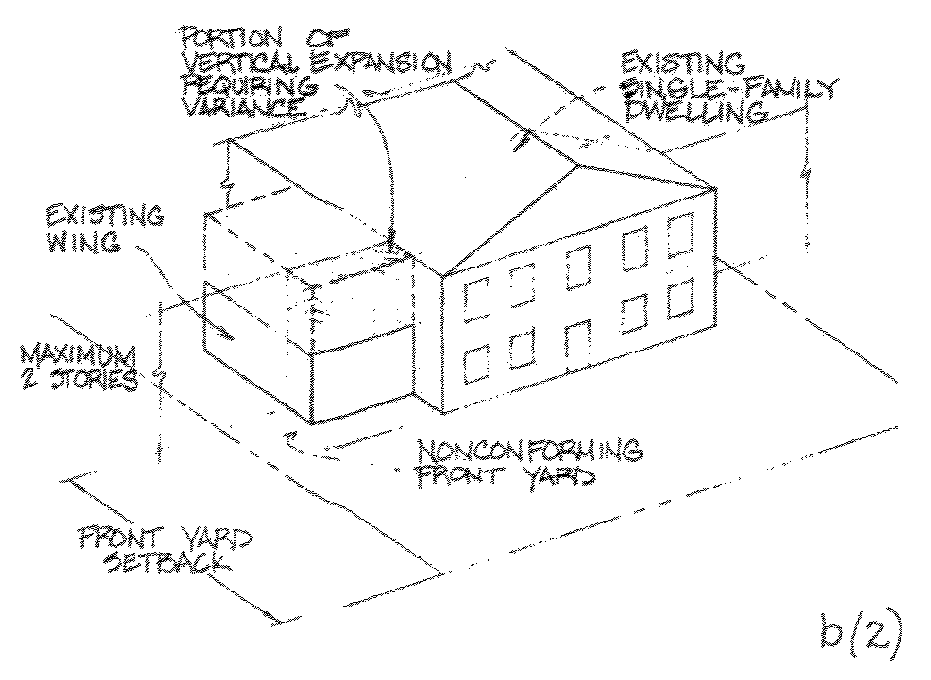
(3)
Section 30-630.1(a) with regard to the depth of the required front yard along the longer street frontage of the lot for construction of or an addition to a single-family detached dwelling located on a corner lot of record existing on April 25, 2005, and having a width of 35 feet or less, provided that no such variance shall permit a front yard with a depth less than ten percent of the width of the lot, and in no case less than three feet;
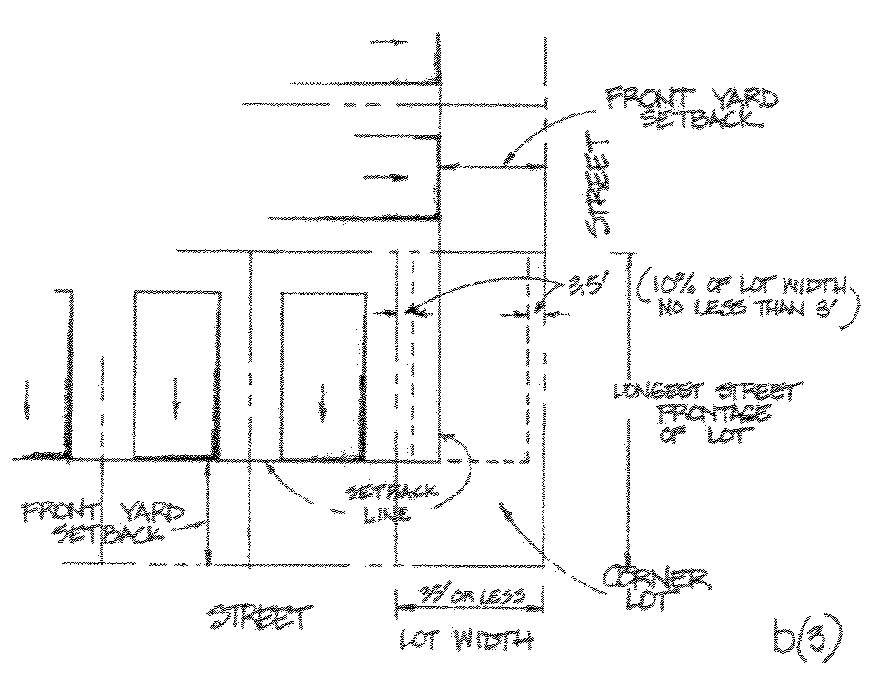
(4)
Section 30-630.1(a) with regard to the depth of the required street side yard in the case of an addition to a single-family detached dwelling existing on April 25, 2005, provided that no such variance shall permit a street side yard with a depth less than the street side yard provided for the existing building;
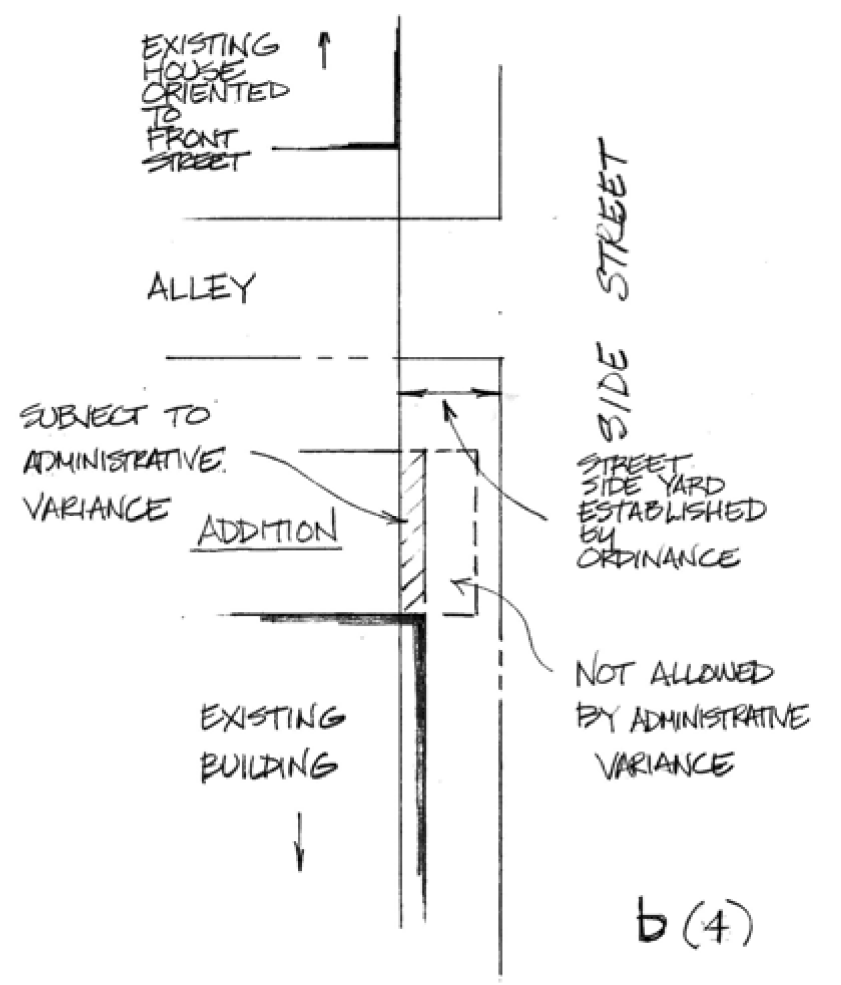
(5)
Section 30-630.2(b)(2) with regard to the depth of a required front yard on a corner lot in the case of an addition to a single-family detached dwelling existing on April 25, 2005, when such addition would have a front yard equal to or greater than the minimum required by the district regulations, provided that no such variance shall permit a front yard with a depth less than the front yard provided for the existing building.
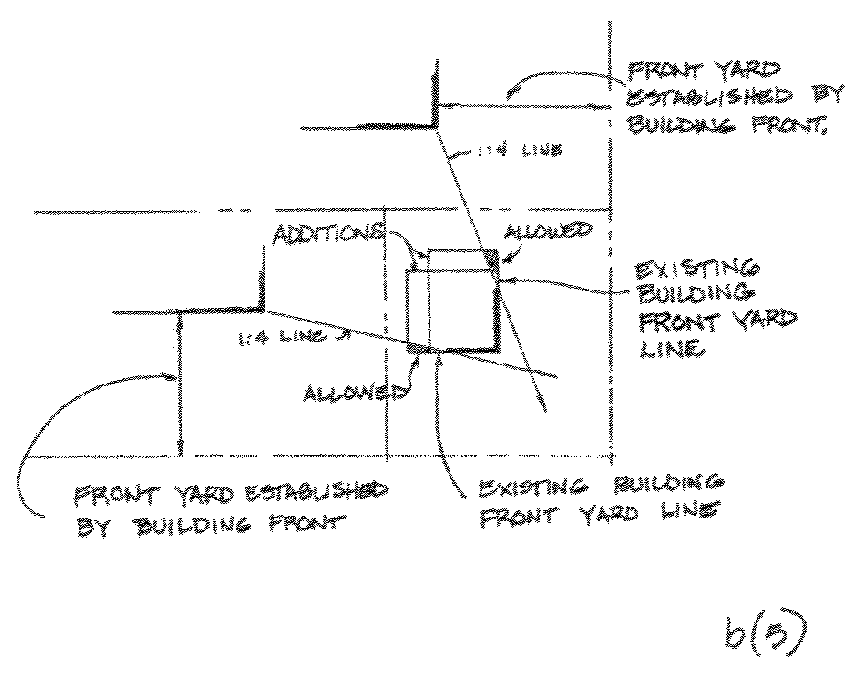
(Code 2004, § 114-1040.4; Code 2015, § 30-1040.4; Ord. No. 2004-49-60, § 2, 3-22-2004; Ord. No. 2005-51-46, § 1, 4-25-2005; Ord. No. 2010-237-2011-16, § 1, 1-24-2011)
Sec. 30-1045.1. - Intent.
Pursuant to Code of Virginia, §§ 15.2-2286, 15.2-2303, conditional use provisions are intended as a means for the City Council, after review and recommendation by the Planning Commission, to authorize certain uses which, although generally appropriate in the district in which they are permitted, have potentially greater impacts on neighboring properties than uses which are permitted by right. Such uses may or may not be appropriate at a particular location in the district depending on surrounding land uses, other site-specific factors, and determination in each case of potential local impacts from the use and the measures proposed by the applicant to mitigate any adverse impacts. The conditional use permit procedure provides the opportunity for the City Council to review each proposed conditional use and to approve or disapprove the use or impose such conditions as reasonably necessary to ensure the use will be compatible with the surrounding area and consistent with the purposes of this chapter.
(Code 1993, § 32-1045.1; Code 2004, § 114-1045.1; Code 2015, § 30-1045.1)
Sec. 30-1045.2. - Required; effect.
(a)
Required for certain uses. A use indicated as permitted as a conditional use in Article IV of this chapter shall be authorized only upon approval of a conditional use permit by the City Council in accordance with this article.
(b)
Effect of conditional use listing. The listing of a use as being permitted in a particular district by conditional use permit does not constitute assurance or presumption that a conditional use permit for such use will be approved. Approval of a conditional use permit for a particular use at a specific location within a district is subject to evaluation by the City Council and a determination in each case based on the standards and conditions set forth in this article.
(c)
Relation to other permits. Building permits, certificates of use and occupancy and certificates of zoning compliance and related reviews and approvals required by this chapter are required for conditional uses in the same manner as for other uses. No building permit, certificate of use and occupancy or certificate of zoning compliance for a conditional use or for a building devoted to a conditional use shall be issued unless a conditional use permit has been approved.
(d)
Existing uses. A use lawfully existing at the effective date of the ordinance from which this division is derived which is specified as a conditional use in the district in which it is located and for which no conditional use permit has been approved shall not be considered a nonconforming use because of its classification as a conditional use, nor shall the lack of a conditional use permit be considered a nonconforming feature of such use, provided that:
(1)
No building permit, certificate of use and occupancy or certificate of zoning compliance involving expansion of such use or major reconstruction, enlargement or moving a building devoted to such use shall be issued, nor shall any material change in the program or operating characteristics of such use take place that would increase the intensity of the use, unless a conditional use permit is approved in accordance with this article;
(2)
Except as provided in subsection (d)(3) of this section, whenever such use is discontinued for a period of two years or longer, whether or not equipment or fixtures are removed, the use shall not be reestablished unless a conditional use permit is approved in accordance with this division; and
(3)
When a building devoted to such use is damaged by fire, explosion, act of God or the public enemy to any extent, such building may be restored, repaired, reconstructed and used as before such damage without approval of a conditional use permit, provided that the floor area devoted to the use shall not be increased, and provided further that application for a building permit for the restoration, repair or reconstruction shall be submitted within two years of the date of damage.
(Code 1993, § 32-1045.2; Code 2004, § 114-1045.2; Code 2015, § 30-1045.2; Ord. No. 2011-29-150, § 12, 9-12-2011)
Sec. 30-1045.3. - Application.
Applications for conditional use permits shall be submitted to the Department of Planning and Development Review and may be filed by the owner or with the written consent of the owner of the property which is the subject of the proposed conditional use permit. Applications shall be accompanied by an applicant's report describing the proposed conditional use and explaining the manner in which it complies with the requirements and standards of this chapter, together with such plans and other information as set forth in written administrative policy adopted by the Planning Commission.
(Code 1993, § 32-1045.3; Code 2004, § 114-1045.3; Code 2015, § 30-1045.3; Ord. No. 2009-221-2010-9, § 1, 1-25-2010)
Sec. 30-1045.4. - Procedure for issuance.
(a)
Review by staff. Staff of the Department of Planning and Development Review shall review each application for a conditional use permit and forward the application to the Planning Commission along with a report indicating the manner in which the proposed conditional use complies or does not comply with this chapter and its recommendations regarding approval, disapproval or conditions to be attached.
(b)
Action by Planning Commission. The Planning Commission shall review each conditional use permit application for compliance with this chapter and shall provide a recommendation to the City Council in accordance with the following:
(1)
The Commission shall hold a public hearing on the conditional use permit application. Notice of the time and place of such public hearing shall be given in accordance with general law. The names and addresses of all property owners within the City to whom notices are to be sent shall be furnished by the City Assessor and shall be as shown on the then-current tax records of the City.
(2)
After holding a public hearing, the Commission may recommend approval or disapproval of the conditional use permit or that additional conditions be imposed. In making its recommendation, the Commission shall consider at least the standards indicated in Section 30-1045.5.
(3)
Action by the Commission shall be in the form of a motion, giving the reasons for its action.
(4)
When the Commission is unable to adopt a motion to recommend approval or disapproval, it shall forward a written report to the City Council stating such fact and summarizing its discussions on the matter.
(5)
Failure of the Commission to provide a recommendation or report to the City Council within 100 days after the first meeting of the Commission at which the conditional use permit application appears on its agenda shall be considered a recommendation of approval, unless the application has been withdrawn by the applicant prior to the expiration of such time period.
(c)
Action by City Council. The City Council shall take action on each conditional use permit application in accordance with the following:
(1)
After receiving the recommendation of the Planning Commission, the Council shall hold a public hearing on the conditional use permit application. Notice of the time and place of such public hearing shall be given in accordance with general law. The names and addresses of all property owners within the City to whom notices are to be sent shall be furnished by the City Assessor and shall be as shown on the then-current tax records of the City.
(2)
The City Council may, by ordinance, approve or disapprove the conditional use permit application and may impose additional conditions as authorized by this division.
(Code 1993, § 32-1045.4; Code 2004, § 114-1045.4; Code 2015, § 30-1045.4; Ord. No. 2009-221-2010-9, § 1, 1-25-2010; Ord. No. 2019-085, § 2, 4-22-2019)
Sec. 30-1045.5. - Standards for approval.
A conditional use permit shall be approved by the City Council only if it finds, after consideration of the recommendation of the Planning Commission, that the proposed use and related plans are appropriate at the location proposed based upon its consideration of the following standards and the specific conditions, where applicable, for the particular use in the district in which it is proposed to be located. No conditional use permit shall be approved by the City Council unless it finds the proposed use and development:
(1)
Will not be contrary to the general purposes of this chapter as stated in Section 30-100;
(2)
Will not be in conflict with the objectives and policies of the master plan for the City;
(3)
Will conform with all applicable sections of this article and other applicable requirements of the district in which it is proposed to be located;
(4)
Will not substantially diminish or impair the established property values in the neighborhood in which it is proposed to be located;
(5)
Will not have an undue adverse effect on the public health, safety or general welfare;
(6)
Will not adversely affect the character of the surrounding area or the continued use and development of surrounding property in a manner consistent with applicable zoning regulations or master plan objectives;
(7)
Will not cause undue traffic congestion on public streets or significantly increase traffic volumes on minor residential streets;
(8)
Will be adequately served by essential public services and facilities and will not cause an undue burden on such services and facilities;
(9)
Will not cause the destruction, loss or damage of significant natural, scenic or historic features to any greater degree than development of the property for uses permitted by right in the district;
(10)
Will ensure compatibility with surrounding property through existing and proposed landscaping, screening and buffering and the location, arrangement and character of existing and proposed buildings, structures, open spaces, parking areas, vehicular circulation, driveways, signage and lighting; and
(11)
Will not cause or result in any significant increase in negative cumulative impact when considered in conjunction with other conditional uses in the neighborhood in which it is proposed to be located.
(Code 1993, § 32-1045.5; Code 2004, § 114-1045.5; Code 2015, § 30-1045.5)
Sec. 30-1045.6. - Specific conditions applicable to particular uses.
The conditions set forth in this section shall be applicable to all the following uses as indicated when authorized by conditional use permit, provided that the city council may impose such additional or more stringent conditions as deemed necessary to ensure the use will comply with the standards set forth in this article and elsewhere in this chapter:
(1)
Emergency housing, transitional housing, or permanent supportive housing. A property with an emergency housing, transitional housing, or permanent supportive housing use shall comply, at minimum, with the provisions of article VI of this chapter.
(2)
Social service delivery uses. A property with a social service delivery use shall, at minimum, submit a site plan in accordance with Section 30-698.3(d).
(3)
Nondwelling uses occupying the ground floor of existing buildings in the R-8 district. The following conditions shall be applicable to nondwelling uses occupying the ground floor of existing buildings in the R-8 district:
a.
Before approving a conditional use permit for any such use, the city council shall make a finding that the location of the property, the type of use and the scale and operational characteristics of the use are such that, if approved, the use can reasonably be expected to primarily serve the adjacent neighborhood and be sustainable as a neighborhood convenience use, and will avoid traffic, parking congestion, noise and other impacts that more typically result from uses that draw patrons from outside a neighborhood.
b.
For any nondwelling use operating with an ABC license, such use shall not be operated between the hours of 10:00 p.m. and 6:00 a.m.
c.
Alterations to the exterior of the building, including facade treatment, fenestration, signage and lighting shall be designed to maximize compatibility with the residential character of the surrounding area. Elevation drawings of the building shall be submitted as part of the conditional use permit application.
d.
No music or public address system shall be operated in such a manner that sound produced therefrom is audible beyond the portion of the building devoted to the use.
e.
An operations plan, addressing not less than the following elements and providing such information as necessary to enable the city council to make the finding described in paragraph "a" of this subsection, shall be submitted as part of the conditional use permit application:
1.
Operational characteristics and features of the use, including: staffing levels; hours of operation; type of ABC license and related restrictions, if applicable; floor plan showing general arrangement of the use and seating capacity of tables and other facilities for patrons, if applicable; description of intended use of the upper floor(s) of the building, including floor plans and plans for ingress and egress; provisions for containing trash and refuse generated by the use, including screening of containers, and means of preventing trash from blowing onto adjacent properties or streets; and provisions for off-street parking, if applicable.
2.
Provisions for security, including procedures, features, arrangements and staffing levels for such for both the interior and exterior of the premises, and a plan and procedures for mitigating potential adverse impacts on nearby dwelling uses. The planning commission may recommend and the city council may include as conditions, such elements of the operations plan as it deems necessary to satisfy the standards set forth in this section or in section 30-1045.5 of this chapter.
(4)
Retail sales of liquor. The following conditions shall be applicable to retail sales of liquor:
a.
Except as provided in subdivision (b) of this subsection (5), such use shall be located within a retail establishment having a total floor area greater than 5,00 square feet, and in which not greater than 50 percent of the total floor area is devoted to the sale and storage of alcoholic beverages as defined by the Code of Virginia;
b.
In the case of a retail establishment existing on the effective date of this subsection and having on such date a total floor are of 5,000 square feet or less and greater than 50 percent of the total floor area devoted to the sale and storage of alcoholic beverages as defined by the Code of Virginia, the city council may waive the conditions of subdivision (a) of this subsection (5) when the city council is satisfied that the other applicable provisions of this subsection are met, and provided that in no case shall the existing total floor area of the establishment and the existing percentage of floor devoted to the sale and storage of alcoholic beverages be increased;
c.
Such use shall not take place at any time between the hours of 10:00 p.m. and 10:00 a.m.;
d.
Drive-up facilities shall not be permitted in conjunction with such use, and retail sales of liquor shall take place only within the interior of the building;
e.
The exterior features, including façade treatment, fenestration, signage and lighting, of the building in which such use is located shall be designed to maximize compatibility with the predominant character of surrounding commercial and residential areas, and elevation drawings of the buildings showing such features shall be submitted as part of the conditional use permit application, except that such drawings shall not be required in a case where no changes are to be made to the exterior of an existing building; and
f.
The conditional use permit shall be approved by the city council only if the applicant satisfies the council that the size and location of the user are reasonably related to the trade area that such use is intended to serve, and will not result in a disproportionate concentration of such uses within any particular area of neighborhood of the city or have a detrimental impact on the surrounding area due to close proximity to residential area or public, religious or child care facilities.
(5)
Nightclubs. A management program shall be submitted as part of the conditional use permit application. The planning commission may recommend and the city council may include as conditions such elements of the management program as it deems necessary to satisfy the standards set forth in section 30-1045.5. If a particular element listed is not applicable to a specific nightclub because of the characteristics of the nightclub, the management program shall include a statement of why the element is not applicable. The minimum required elements of the management program are as follows:
a.
Operational characteristics and features of the nightclub, including the following:
1.
Staffing levels;
2.
Hours of operation, and days of the week on which the establishment will be operated as a nightclub;
3.
Type of Virginia Alcoholic Beverage Control license and related restrictions;
4.
Floor plan showing the general arrangement and seating capacity of tables and bar facilities, dance floor and standing room areas and capacity, which floor plan shall be posted on the premises in a prominent location viewable by the patrons;
5.
Total occupant load; and,
6.
General type, frequency and hours of entertainment to be provided;
a.
Provisions for off-street parking; and
b.
Provisions for security and crowd management, including the following:
1.
Provisions for a level of security and crowd management sufficient to comply with the requirements of chapter 6, article V of this code, whether or not the nightclub is required to obtain a public dance hall permit;
2.
Procedures, features, arrangements and staffing levels for security and crowd management for both the interior and exterior of the premises; and
3.
A plan and the procedures for mitigating potential adverse impacts on nearby dwelling and business uses.
(6)
Parking areas and parking lots in the B-4 and B-5 district. The following conditions shall be applicable for parking areas and parking lots in the B-4 or B-5 district:
a.
The access, landscaping, screening, and arrangement of the parking area or parking lot shall be reviewed by the Urban Design Committee prior to the review of the application for the conditional use permit by the Planning Commission. The Urban Design Committee may recommend to the Planning Commission that the Planning Commission recommend that the City Council approve the conditional use permit or may recommend that the Planning Commission recommend that the City Council impose additional conditions. In making its recommendation, the Urban Design Committee shall consider at least the standards set forth in section 30-1045.5 and the parking improvement requirements and landscaping standards set forth in section 30-710.10 through 30-710.16.
(7)
Lodginghouses. A property with a lodginghouse use shall, at minimum, submit a site plan in accordance with Section 30-698.3(d).
(8)
Retail sales of tobacco and hemp. The following conditions shall be applicable to retail sales of tobacco and hemp:
a.
Any lot containing such use
1.
Shall be located no less than one thousand (1,000) feet from any lot in a R or RO zoning district; and
2.
Shall be located no less than one thousand (1,000) feet from any lot containing a child day center; public or private pre-, elementary, middle, or high school; park; public library; or church or other place of worship; and
3.
Shall be located no less than one thousand (1,000) feet from any other lot containing such use; and
b.
Drive-up facilities shall not be permitted in conjunction with such use; and
c.
Any sale, offering, or distribution of electronic smoking devices or retail tobacco products as such terms are defined in § 18.2-371.2 Code of Virginia, or of hemp products or hemp products intended for smoking as such terms are defined in § 3.2-4112 Code of Virginia, shall only take place within the interior of a building or structure; and
d.
Such use shall not take place at any time between the hours of 9:00 p.m. and 9:00 a.m.
(Code 1993, § 32-1045.6; Code 2004, § 114-1045.6; Code 2015, § 30-1045.6; Ord. No. 2010-18-30, § 5, 2-22-2010; Ord. No. 2010-19-31, § 3, 2-22-2010; Ord. No. 2011-29-150, § 12, 9-12-2011; Ord. No. 2012-234-2013-2, § 1, 1-14-2013; Ord. No. 2017-019, § 1, 2-27-2017; Ord. No. 2020-261, § 1, 3-8-2021; Ord. No. 2023-101, § 5, 4-24-2023; Ord. No. 2024-314, § 2, 12-9-2024; Ord. No. 2025-157, § 1, 7-28-2025)
Sec. 30-1045.7. - Additional conditions.
The Planning Commission may recommend and the City Council may impose such additional conditions and limitations on any conditional use, including its scale, intensity, site development, operation or general character, as deemed necessary or appropriate. Such conditions or limitations may be to prevent, minimize or mitigate potential adverse impacts on the surrounding area or on the City as a whole or to ensure compliance with any of the standards and conditions applicable to conditional uses and set forth in this article. Any such conditions or limitations shall be expressly set forth in the ordinance approving the conditional use.
(Code 1993, § 32-1045.7; Code 2004, § 114-1045.7; Code 2015, § 30-1045.7)
Sec. 30-1045.8. - Amendments after approval.
An approved conditional use permit may be amended only in accordance with the procedures and subject to the standards set forth in this article for review and approval of a new conditional use permit.
(Code 1993, § 32-1045.8; Code 2004, § 114-1045.8; Code 2015, § 30-1045.8)
Sec. 30-1045.9. - Expiration.
An approved conditional use permit shall become null and void if no application for a building permit to construct the authorized improvements has been submitted within two years of the date of approval by the City Council. A conditional use permit for which no building permit is required shall become null and void if the use is not established within two years of the date of approval by the City Council as evidenced by the issuance of a certificate of use and occupancy or a certificate of zoning compliance. The City Council may, for good cause, specify a longer period in its approval of a conditional use permit.
(Code 1993, § 32-1045.9; Code 2004, § 114-1045.9; Code 2015, § 30-1045.9)
Sec. 30-1045.10. - Discontinuance.
A conditional use permit shall run with the land, provided that any use established pursuant to an approved conditional use permit shall not be reestablished if replaced by a different use or if discontinued for a period of two years or longer.
(Code 1993, § 32-1045.10; Code 2004, § 114-1045.10; Code 2015, § 30-1045.10)
Sec. 30-1045.11. - Appeals.
Appeals from any decision of the City Council regarding a conditional use permit may be taken to the Circuit Court by any aggrieved party in accordance with applicable sections of State law.
(Code 1993, § 32-1045.11; Code 2004, § 114-1045.11; Code 2015, § 30-1045.11)
Sec. 30-1045.12. - Fee for filing application.
(a)
A fee of $1,500.00 plus $100.00 per acre shall accompany each conditional use permit application, which fee shall be paid into the City treasury.
(b)
A fee of $1,000.00 plus $100.00 per acre shall accompany each application for an amendment to a conditional use permit, which fee shall be paid into the City treasury.
(c)
Approval of a conditional use permit or an amendment to a conditional use permit shall not be granted until satisfactory evidence has been presented to the Secretary of the Planning Commission that any delinquent real estate taxes applicable to the subject property have been paid.
(Code 1993, § 32-1045.12; Code 2004, § 114-1045.12; Code 2015, § 30-1045.12; Ord. No. 2007-54-121, § 1, 5-29-2007; Ord. No. 2014-260-2015-10, § 1, 1-12-2015)
Sec. 30-1045.13. - Posting of notice on property.
In the case of each application for a conditional use permit or amendment to a conditional use permit, it shall be the responsibility of the Department of Planning and Development Review to post on the property that is the subject of the conditional use permit, a sign or signs notifying interested parties of the application and pending public hearings thereon. Such sign(s) (i) shall be posted at least 15 days prior to the scheduled Planning Commission public hearing on the application, (ii) shall remain on the property until final disposition of the application by the City Council, and (iii) shall comply with any applicable standards established by the Department of Planning and Development Review and approved by resolution of the Planning Commission.
(Code 2004, § 114-1045.13; Code 2015, § 30-1045.13; Ord. No. 2006-259-262, § 1, 10-23-2006; Ord. No. 2015-148-158, § 1, 7-27-2015)
Sec. 30-1045.14. - Violation of conditions.
(a)
Upon noting that a condition of a conditional use permit has been violated, the Zoning Administrator shall issue a written notice of violation to the property owner. The notice shall inform the property owner which condition has been violated, the nature of the violation, and that the Planning Commission shall hold a public hearing at which it shall review the violation and the conditional use permit pursuant to this division if:
(1)
The property owner does not abate the violation within 30 days of the issuance of the notice; or
(2)
Three notices of violation are issued to the property owner within any 12-month period.
(b)
A notice of violation shall run with the permit upon which the notice is issued if the permit is transferred. If property subject to a conditional use permit has been legally divided into more than one parcel prior to the issuance of a notice of violation, the notice of violation accrued by one parcel shall not count against the other parcels.
(Code 2004, § 114-1045.14; Code 2015, § 30-1045.14; Ord. No. 2011-29-150, § 11, 9-12-2011)
Sec. 30-1045.15. - Review; procedure on appeal.
(a)
The Zoning Administrator shall issue to the property owner a notice advising that the Planning Commission shall hold a public hearing at which it shall review the violation and the conditional use permit pursuant to this division if:
(1)
The property owner has not abated a violation within 30 days of the issuance of a notice of violation under Section 30-1045.14; or
(2)
Three notices of violation have been issued to the property owner within any 12-month period.
(b)
This notice shall also inform the property owner that the City Council shall make the final determination as to whether it shall revoke the conditional use permit, allow the conditional use permit to remain in effect, or amend the conditional use permit.
(Code 2004, § 114-1045.15; Code 2015, § 30-1045.15; Ord. No. 2011-29-150, § 11, 9-12-2011)
Sec. 30-1045.16. - Notice and public hearings.
(a)
Notice of the time, place, and subject of all public hearings before the Planning Commission and the City Council regarding the violation of one or more conditional use permit conditions shall be given in accordance with the Charter and applicable State law.
(b)
The Planning Commission shall hold a public hearing at which it shall review the violation and the conditional use permit. After the public hearing, the Planning Commission shall issue to the City Council a recommendation regarding whether the City Council should revoke the conditional use permit, allow the conditional use permit to remain in effect, or amend the conditional use permit and suggesting appropriate conditions if recommending an amendment of the permit.
(Code 2004, § 114-1045.16; Code 2015, § 30-1045.16; Ord. No. 2011-29-150, § 11, 9-12-2011)
Sec. 30-1045.17. - City Council action.
(a)
Upon issuance of the recommendation of the Planning Commission regarding a conditional use permit, the Secretary of the Planning Commission shall cause appropriate ordinances to be prepared so that the City Council may act on the Planning Commission's recommendations.
(b)
Following a public hearing on the review of the conditional use permit, the City Council may:
(1)
Revoke the conditional use permit;
(2)
Allow the conditional use permit to remain in effect; or
(3)
Amend the conditional use permit.
(c)
Notwithstanding any section of this division to the contrary, no action taken pursuant to this division shall in any way limit the City's right to pursue any other remedy at law or in equity against the property owner.
(Code 2004, § 114-1045.17; Code 2015, § 30-1045.17; Ord. No. 2011-29-150, § 11, 9-12-2011)
Sec. 30-1045.18. - Applicability of Sections 30-1045.14 through 30-1045.17.
Sections 30-1045.14 through 30-1045.17 shall apply only to all conditional use permits adopted after the effective date of the ordinance from which such sections are derived.
(Code 2004, § 114-1045.18; Code 2015, § 30-1045.18; Ord. No. 2011-29-150, § 11, 9-12-2011)
Sec. 30-1050.1. - Issuance.
Pursuant to Section 17.11 of the Charter and in accordance with the requirements set forth therein, the City Council may authorize the use of land, buildings and structures which do not conform to the regulations and restrictions prescribed for the district in which they are situated and may authorize the issuance of special use permits therefor to the owners of fee simple title thereto and their successors in fee simple title, whenever the Council finds that the proposed use will not:
(1)
Be detrimental to the safety, health, morals and general welfare of the community involved.
(2)
Tend to create congestion in streets, roads, alleys and other public ways and places in the area involved.
(3)
Create hazards from fire, panic or other dangers.
(4)
Tend to overcrowding of land and cause an undue concentration of population.
(5)
Adversely affect or interfere with public or private schools, parks, playgrounds, water supplies, sewage disposal, transportation or other public requirements, conveniences and improvements.
(6)
Interfere with adequate light and air.
(Code 1993, § 32-1050.1; Code 2004, § 114-1050.1; Code 2015, § 30-1050.1)
Sec. 30-1050.2. - Applications.
Applications for special use permits shall be filed in the Office of the Department of Planning and Development Review and shall be accompanied by such plans and other data as shall be required by written policy established by the Director of the Department.
(Code 1993, § 32-1050.2; Code 2004, § 114-1050.2; Code 2015, § 30-1050.2; Ord. No. 2009-221-2010-9, § 1, 1-25-2010)
Sec. 30-1050.3. - Notice and public hearing by Planning Commission.
The Planning Commission shall hold a public hearing on any ordinance to authorize the issuance of a special use permit. Notice of the time and place of such public hearing shall be given in accordance with general law. The names and addresses of all property owners within the City to whom notices are to be sent shall be furnished by the City Assessor and shall be as shown on the then-current tax records of the City.
(Code 1993, § 32-1050.3; Code 2004, § 114-1050.3; Code 2015, § 30-1050.3; Ord. No. 2019-085, § 2, 4-22-2019)
Sec. 30-1050.4. - Notice and public hearing by City Council.
The City Council shall hold a public hearing on the ordinance to authorize the issuance of a special use permit. Notice of the time and place of such public hearing shall be given in accordance with general law. The names and addresses of all property owners within the City to whom notices are to be sent shall be furnished by the City Assessor and shall be as shown on the then-current tax records of the City.
(Code 1993, § 32-1050.4; Code 2004, § 114-1050.4; Code 2015, § 30-1050.4; Ord. No. 2019-085, § 2, 4-22-2019)
Sec. 30-1050.5. - Posting of notice on property.
In the case of each application for a special use permit or amendment to a special use permit, it shall be the responsibility of the Department of Planning and Development Review to post on the property that is the subject of the special use permit, a sign or signs notifying interested parties of the application and pending public hearings thereon. Such sign(s) (i) shall be posted at least 15 days prior to the scheduled Planning Commission public hearing on the application, (ii) shall remain on the property until final disposition of the application by the City Council, and (iii) shall comply with any applicable standards established by the Department of Planning and Development Review and approved by resolution of the Planning Commission.
(Code 2004, § 114-1050.5; Code 2015, § 30-1050.5; Ord. No. 2006-259-262, § 1, 10-23-2006; Ord. No. 2015-148-158, § 1, 7-27-2015)
Sec. 30-1050.6. - Filing fees.
(a)
A fee as set forth below shall accompany each special use permit application, which shall be paid into the City treasury.
(b)
A fee shall accompany each application for an amendment to a special use permit pertaining to a change in the text only of the originally approved special use permit or amendment thereto, and a fee in the same amount shall accompany each application for an amendment to a special use permit pertaining to a change in the text and plans of the originally approved special use permit or amendment thereto, which shall be paid into the City treasury. Such fees shall be as follows:
(c)
There shall be no requirement for payment of an application fee if the purpose of a special use permit application is to have the City Council authorize continuation of an existing use which the Zoning Administrator determines should not be allowed under this chapter; provided, however, that such special use application must be for continuation of a use for which either a building permit or certificate of use and occupancy was previously issued.
(d)
There shall be no charge for the first continuance requested by the applicant. A fee of $400.00 shall accompany each subsequent continuance requested by the applicant, which fee shall be paid into the City treasury. There shall be no charge for a continuance requested by the Planning Commission.
(e)
A permit implementing the granting of a special use permit or an amendment to a special use permit shall not be approved until satisfactory evidence has been presented to the Zoning Administrator that any delinquent real estate taxes applicable to the subject property have been paid.
(Code 1993, § 32-1050.6; Code 2004, § 114-1050.6; Code 2015, § 30-1050.6; Ord. No. 2007-54-121, § 1, 5-29-2007; Ord. No. 2010-237-2011-16, § 1, 1-24-2011; Ord. No. 2014-260-2015-10, § 1, 1-12-2015; Ord. No. 2018-209, § 5, 9-10-2018; Ord. No. 2024-099, § III(§ 14), 5-13-2024)
Sec. 30-1050.7. - Violation of conditions.
(a)
Upon noting that a condition of a special use permit has been violated, the Zoning Administrator shall issue a written notice of violation to the property owner. The notice shall inform the property owner which condition has been violated, the nature of the violation, and that the Planning Commission shall hold a public hearing at which it shall review the violation and the special use permit pursuant to this division if:
(1)
The property owner does not abate the violation within 30 days of the issuance of the notice; or
(2)
Three notices of violation are issued to the property owner within any 12-month period.
(b)
A notice of violation shall run with the permit upon which the notice is issued if the permit is transferred. If property subject to a special use permit has been legally divided into more than one parcel prior to the issuance of a notice of violation, the notice of violation accrued by one parcel shall not count against the other parcels.
(Code 1993, § 32-1050.7; Code 2004, § 114-1050.7; Code 2015, § 30-1050.7)
Sec. 30-1050.8. - Review; procedure on appeal.
(a)
The Zoning Administrator shall issue to the property owner a notice advising that the Planning Commission shall hold a public hearing at which it shall review the violation and the special use permit pursuant to this division if:
(1)
The property owner has not abated a violation within 30 days of the issuance of a notice of violation under Section 30-1050.7; or
(2)
Three notices of violation have been issued to the property owner within any 12-month period.
(b)
This notice shall also inform the property owner that City Council shall make the final determination as to whether it shall revoke the special use permit, allow the special use permit to remain in effect, or amend the special use permit.
(Code 1993, § 32-1050.8; Code 2004, § 114-1050.8; Code 2015, § 30-1050.8)
Sec. 30-1050.9. - Notice and public hearings.
(a)
Notice of the time, place, and subject of all public hearings before the Planning Commission and the City Council regarding the violation of one or more special use permit conditions shall be given in accordance with the Charter and applicable State law.
(b)
The Planning Commission shall hold a public hearing at which it shall review the violation and the special use permit. After the public hearing, the Planning Commission shall issue to the City Council a recommendation regarding whether the City Council should revoke the special use permit, allow the special use permit to remain in effect, or amend the special use permit and suggesting appropriate conditions if recommending an amendment of the permit.
(Code 1993, § 32-1050.9; Code 2004, § 114-1050.9; Code 2015, § 30-1050.9)
Sec. 30-1050.10. - City Council action.
(a)
Upon issuance of the recommendation of the Planning Commission regarding a special use permit, the Secretary of the Planning Commission shall cause appropriate ordinances to be prepared so that the City Council may act on the Planning Commission's recommendations. Following a public hearing on the review of the special use permit, the City Council may:
(1)
Revoke the special use permit;
(2)
Allow the special use permit to remain in effect; or
(3)
Amend the special use permit.
(b)
Notwithstanding any section of this division to the contrary, no action taken pursuant to this division shall in any way limit the City's right to pursue any other remedy at law or in equity against the property owner.
(Code 1993, § 32-1050.10; Code 2004, § 114-1050.10; Code 2015, § 30-1050.10)
Sec. 30-1050.11. - Applicability of Sections 30-1050.7 through 30-1050.10.
Sections 30-1050.7 through 30-1050.10 shall apply only to all special use permits adopted after the effective date of the ordinance from which such sections are derived.
(Code 1993, § 32-1050.11; Code 2004, § 114-1050.11; Code 2015, § 30-1050.11)
Sec. 30-1060. - Conditions for issuance of permit for erection of building or structure; installation of plumbing fixtures.
For the purpose of promoting and preserving public health, safety, welfare and convenience, the Commissioner of Buildings shall issue a permit for the erection of a building or structure in which plumbing fixtures are to be installed only under the following conditions:
(1)
Site improvements existing. When all required site improvements are available as certified by the following:
a.
The Director of Public Works as to the following:
1.
A street consisting of a single roadway or the portion of the street consisting of more than a single roadway, in front or at the side of the lot upon which the building or structure is to erected, embraces a roadway contiguous thereto that has a surface which, in the Director of Public Works' opinion, is reasonably suitable for travel during all weather of the locality.
2.
A stormwater sewer, drain or other drainage facility adequate to provide proper drainage for the locality is adjacent to such lot.
3.
An alley of such width, grade and surface as is prescribed by the City's standard alley specifications abuts the lot on the rear or side, except that this shall not apply when no dedicated and public alley exists or when the Director of Public Works is satisfied that, due to topography or other exceptional situation, improvement of such alley would serve no public purpose.
4.
A sanitary sewer is adjacent to such lot either on the front, rear or side thereof to which it is practicable to connect with the sewage disposal facilities in the building or structure or when the owner of the lot satisfies the District Health Director and Director of Public Works that another sanitary sewage disposal system can and will be provided for the disposal of sanitary sewage originating in the building or structure and such system will be so used for that purpose and the District Health Director and Director of Public Works shall certify such facts to the Commissioner of Buildings.
b.
The Director of Public Utilities as to the following: a water main adjacent to such lot either in the front, rear or side thereof, to which it is practicable to connect the water supply facilities in the building or structure or when the owner of the lot satisfies the District Health Director and Director of Public Utilities that another safe water supply can and will be so used therein and the District Health Director and Director of Public Utilities shall certify such facts to the Commissioner of Buildings.
(2)
Site improvements do not exist. Conditions if site improvements do not exist are as follows:
a.
Residential development. When the Director of Public Utilities or District Health Director certifies as to water supply, the Director of Public Works or District Health Director certifies as to sanitary sewage disposal system and the Director of Public Works certifies as to paved streets, paved alleys and stormwater sewers, drains or other drainage facilities that such site improvements are being provided and that the cost of such improvements are being borne as provided in the City Subdivision Regulations (Chapter 25).
b.
Commercial or industrial development. When the Director of Public Works, as to the extension of streets, sanitary sewers, stormwater sewers, drains or other drainage facilities, and the Director of Public Utilities, as to the extension of water mains, certify that such are being provided by the owner or that, with the approval of the Chief Administrative Officer, the City will make such extensions and improvements or any portion of them at the entire cost and expense of the City, provided:
1.
Funds for such extensions and improvements are available for the purpose.
2.
The owner enters into a written contract with the City that, in consideration of making the extensions and improvement, the owner will:
i.
Apply to the Commissioner of Buildings for a permit for the erection of each building or structure within 30 days from the date of the contract;
ii.
Commence the construction of the building proposed to be erected within six months from the date the building permit is issued;
iii.
Complete the erection thereof with all reasonable dispatch, in any event within three years from the day such contract is entered into; and
iv.
Upon the failure, refusal or neglect of the owner to comply with subsection (2)b.2.i, (2)b.2.ii or (2)b.2.iii of this section, pay to the City all costs and expenses incurred in making such extensions and improvements.
(Code 1993, § 32-1060; Code 2004, § 114-1060; Code 2015, § 30-1060; Ord. No. 2004-360-330, § 1, 12-13-2004)
Sec. 30-1070. - Effect.
The sections of this chapter or the application thereof shall not be construed to affect, interfere with or abrogate any covenant, condition, limitation or restriction contained in any deed, contract or agreement, whether recorded or otherwise, relating to the use of any land, building or structure. Whenever the sections of this chapter or the application thereof impose greater restrictions upon the use of land, buildings or structures than are imposed by any such covenants, conditions, limitations or restrictions, the sections of this chapter or the application thereof shall govern the use of such land, buildings or structures.
(Code 1993, § 32-1070; Code 2004, § 114-1070; Code 2015, § 30-1070)
Sec. 30-1080. - Unlawful conduct and penalties.
It shall be unlawful for the owner of any land, building, structure or premises or the agent thereof having possession or control of such property or for any lessee, tenant, architect, engineer, builder, contractor or any other person to violate any section of this chapter or of any ordinance authorizing the issuance of a conditional use permit, a special use permit or community unit plan or the conditions attached thereto or to fail, refuse or neglect to perform any duty imposed by this chapter. It shall be unlawful for any such owner, agent, lessee, tenant, architect, engineer, builder, contractor or other person to take part in or to assist in any such violation, failure, refusal or neglect or to maintain any land, building or structure in connection with which such violation, failure, refusal or neglect exists. Any such violation shall be a misdemeanor punishable by a fine of not more than $1,000.00. If the violation is uncorrected at the time of the conviction, the court shall order the violator to abate or remedy the violation in compliance with this chapter within a time period established by the court. Failure to remove or abate a zoning violation within the specified time period shall constitute a separate misdemeanor offense punishable by a fine of not more than $1,000.00; any such failure during any succeeding ten-day period shall constitute a separate misdemeanor offense for each ten-day period punishable by a fine of not less than $100.00 nor more than $1,500.00 and any such failure during any succeeding ten-day period shall constitute a separate misdemeanor offense for each ten-day period punishable by a fine of not more than $2,000.00. In addition to or in lieu of any fine, any violation of this chapter shall also be punishable by confinement to jail for a period not to exceed 12 months. However, any conviction resulting from a violation of provisions regulating the number of unrelated persons in single-family dwellings shall be punishable by a fine of up to $2,000.00. Failure to abate the violation within the specified time period shall be punishable by a fine of up to $5,000.00, and any such failure during any succeeding ten-day period shall constitute a separate misdemeanor offense for each ten-day period punishable by a fine of up to $7,500.00. However, no such fine shall accrue against an owner or managing agent of a single-family residential dwelling unit during the pendency of any legal action commenced by such owner or managing agent of such dwelling unit against a tenant to eliminate an overcrowding condition in accordance with the Virginia Residential Landlord and Tenant Act, § 55.1-1200 et seq., as applicable. A conviction resulting from a violation of provisions regulating the number of unrelated persons in single-family residential dwellings shall not be punishable by a jail term. The City shall also impose an administrative fee of $100.00 on any violator to cover the costs arising out of an enforcement action.
(Code 1993, § 32-1080; Code 2004, § 114-1080; Code 2015, § 30-1080; Ord. No. 2020-171, § 1(30-1080), 9-28-2020)

