
Riverdale City Zoning Code
ARTICLE 1
- BASIC PROVISIONS
Introduction.
An ordinance of the City of Riverdale, Georgia, establishing standards pertaining to the location and use of buildings and property; the size of lots and buildable areas, and the density and distribution of population; creating districts for such purposes and establishing district boundaries; defining certain terms appearing in the ordinance; providing the method of administration and amendment; acknowledging the authority and responsibility of the mayor and council and officers of the city; and providing for imposition of penalties for violation of the provisions of this ordinance.
(Ord. No. 7-2020, § 1(Exh. A), 10-26-20)
Sec. 1.1. - Enactment clause.
The mayor and council of the City of Riverdale, Clayton County, in accordance with the authority granted to cities by the Constitution of the State of Georgia (as amended through January 1, 2017), Article IX. Counties and Municipal Corporations, section II. Home Rule for Counties and Municipalities, Paragraph IV. Planning and zoning which states, "The governing authority of each county and of each municipality may adopt plans and may exercise the power of zoning. This authorization shall not prohibit the general assembly from enacting general laws establishing procedures for the exercise of such power." This ordinance is also enacted under O.C.G.A. tit. 36, ch. 66 (2012) of the Georgia Code, Local Government Provisions Applicable to Counties and Municipal Corporations and in conjunction with the City of Riverdale Comprehensive Plan 2018 Update.
(Ord. No. 7-2020, § 1(Exh. A), 10-26-20)
Sec. 1.2. - Title.
This ordinance shall be formally known as the "City of Riverdale Zoning Ordinance" and may be cited and referred to as the "zoning ordinance."
(Ord. No. 7-2020, § 1(Exh. A), 10-26-20)
Sec. 1.3. - Jurisdiction.
This ordinance shall govern the development and use of all property within the corporate limits of the City of Riverdale, Clayton County, Georgia.
(Ord. No. 7-2020, § 1(Exh. A), 10-26-20)
Sec. 1.4. - Purpose.
Pursuant to authority conferred by the State of Georgia, and for purposes of promoting public health, safety, convenience, order, prosperity and welfare; minimizing congestion in the streets; securing safety from fire, panic, and other dangers; providing adequate light and air; preventing overcrowding of land; encouraging such timing, density and distribution of development that will facilitate economic and adequate provision of transportation, communication, water supply, drainage, sanitation, education, parks, recreation and other public facilities and services; protecting property values; preventing the overcrowding of land and undue concentration or dispersal of population; encouraging the most appropriate development and use of property in accordance with the Comprehensive Plan Update 2018; fostering greater economic development focusing on professional employment opportunities; promoting desirable living environments by reserving open space and creating walkable settings; facilitating mixed-use districts that enhance resident convenience and accommodating employment and consumer services in close proximity to housing; promoting income, cultural and age diversity; expanding the range of housing types and home prices; and adopting architectural design standards that improve the quality of housing, the mayor and council of the City of Riverdale do hereby ordain and enact into law the following articles and sections. This ordinance has been developed with reasonable consideration of the character of various zoning districts and their suitability for specific uses, and with the general objective of promoting desirable living environments, stable neighborhoods, attractive commercial districts, and desirable industrial areas; and protecting the natural resources of the city.
(Ord. No. 7-2020, § 1(Exh. A), 10-26-20)
Sec. 1.5. - Interpretation of certain terms.
Terms not defined in section 1.6, Definitions shall be construed to have the meaning given by Merriam-Webster's Collegiate Dictionary, 2016 or later edition. Unless otherwise expressly stated, the terms found in section 1.6 shall have the meaning indicated. Terms used in the present tense include the future tense. Terms used in the singular include the plural and terms used in the plural include the singular. The term "building" includes the term "structure." The term "shall" is mandatory; the term "may" is permissive. Used or occupied as applied to any lot or building shall be construed to include the terms "intended, arranged, maintained or designed to be used or occupied." The terms zone, zoning district and district have the same meaning and refer to the zoning districts established by this ordinance.
(Ord. No. 7-2020, § 1(Exh. A), 10-26-20)
Sec. 1.6. - Definitions.
The following words, terms and phrases, when used in this ordinance, shall have the meanings ascribed to them in this section, except where the context clearly indicates a different meaning:
Abandonment: The discontinuance of a use, activity or occupancy displaying no evidence of intent to continue or resume the use of a premises or land. Temporary or short-term interruptions to a use or activity during periods of remodeling, maintaining or otherwise improving or rearranging a building or property, during normal periods of vacation or seasonal closure or during a period of active marketing of a property for lease or sale shall not constitute abandonment. An "intent to resume" may be demonstrated by continuous operations in a building or portion of a building or land; maintenance of sewer, water and other public utilities; other evidence such as continuation of utility bills, delivery records, etc. See section 10.6, Re-establishment following abandonment.
Abutting: Having a common border with, or being separated by only a right-of-way, alley, or easement. The term is synonymous with adjacent, adjoining and contiguous.
Accessory building: A building detached from the principal building on the same lot that is clearly subordinate to the principal building. Examples of accessory buildings include detached garages and carports, storage buildings, gazebos and pool houses.
Accessory dwelling: A secondary dwelling established in conjunction with and clearly subordinate to the primary dwelling, whether part of the primary dwelling or located in a detached accessory building on the same lot.
Accessory use: A use located on the same lot and under the same ownership as the principal use that is customary, incidental and subordinate in size and purpose to the principal on the lot.
Acre: An area of land equal to 43,560 square feet.
Addition: Any construction that increases the gross floor area of a building.
Administrative decision: Any determination made by the community development director in applying this ordinance.
Adult care home: A private residence that provides long-term, basic adult care or adult health services to up to six adults, not related by blood or marriage 24-hours per day. Such individuals do not function fully independently, but do not need 24-hour nursing care. Services include bathing, shaving, brushing teeth, combing hair, toileting, dressing, eating, grooming, taking medications, and transfers and/or ambulation. Adult care services facilities are administered by the Division of Aging Services housed within the Georgia Department of Human Resources. Adult care home includes any facility that regularly provides adult custodial services. This term does not include respite care services programs. This term also refers to personal care home.
Adult daycare center: A facility that supports the health, nutritional, social and daily living needs of adults with disabilities, and also the elderly population, for fewer than 24-hours per day, in a professionally staffed, group setting. Such individuals do not function fully independently, but do not need 24-hour nursing care. Services include toileting, dressing, eating, grooming, taking medications, and transfers and/or ambulation. Adult care services facilities are administered by the Division of Aging Services housed within the Georgia Department of Human Resources. Adult care center includes any facility that regularly provides adult custodial services. This term does not include respite care services programs. This term also refers to adult care center.
Affordable housing: Living quarters available for a monthly rent not exceeding 30 percent of the total monthly household income of low-income households defined as a household earning less than 80 percent of the median annual income adjusted for household size, as determined by the United States Department of Housing and Urban Development (HUD); or living quarters that may be purchased with monthly payments including principal, interest, taxes, insurance, homeowners association fees, and assessments that do not exceed 30 percent of the total monthly household income of low-income households defined to be a household earning less than 80 percent of the median annual income adjusted for household size, as determined by HUD.
Agent: Any person authorized to act on behalf of a property owner.
Agriculture: Any form of farming, including plowing, tilling, cropping, seeding, cultivating, or harvesting for the production of food and fiber products (except commercial logging and timber harvesting operations); grazing or raising of livestock (except in feed lots); aquaculture; sod production; orchards; Christmas tree farms; nurseries; and the cultivation of produce as a commercial enterprise.
Air pollution: The emission of any contaminants in such place or manner which, when by itself or combined with other contaminants present in the atmosphere, is detrimental to or endangers public health, comfort, or safety, or which may cause injury or damage to property or premises.
Alley: A vehicle access used for service access to the rear or side of properties otherwise abutting on a street or a public or private thoroughfare that affords a secondary means of access to abutting properties.
Alteration, building or structural: Any change in the supporting members of a building, such as bearing walls, columns, beams, or girders except such changes as may be required for its safety; any addition to a building.
Amortization: A method of eliminating nonconforming uses by requiring termination of the nonconforming use, building or both, following a specified period. The amortization period is intended to afford the owner of the nonconforming use or building a reasonable period to continue the nonconforming use or building prior to termination. In this manner, the owner may recoup his or her investment in the nonconforming use or building made prior to the use or building becoming nonconforming by having been given a reasonable period to continue the nonconforming use or building prior to termination.
Animal hospital: Facility for the treatment or temporary boarding of domestic animals following a medical procedure performed by or under the supervision of a licensed veterinarian. The term does not include kennels or the boarding of animals in outside runs.
Assisted living facility: A personal care facility with a minimum of 25 beds, licensed by the Georgia Department of Community Health as an Assisted Living Community, and which provides meals and assistance with daily activities, such as dressing, grooming, bathing, etc. for the elderly or adults who are ambulatory, as defined by O.C.G.A. § 31-7-12.2, but unable to manage these activities independently.
Bakery, retail: An establishment primarily engaged in preparing baked goods sold at retail and intended for off-premises consumption.
Bakery, wholesale: An establishment at which baked goods are produced for purchase by resellers of such goods intended for off-premises distribution. The term does not include on-premises sale, "over-the-counter" or other retail sale of baked goods.
Banquet hall: An establishment rented by individuals or groups to hold private functions such as anniversaries, dinners, reunions, weddings, and similar events. Banquet halls may offer kitchen facilities for preparation or catering of food and beverages only during scheduled events and are not available to the public. See also "Event center."
Barber shop: An establishment that offers a variety of personal services to the public involving hair, facials, scalp massages or other treatments for compensation. Training of apprentices in a barber shop shall be deemed a customary accessory use but, shall not be the primary activity of the shop.
Barber shop or beauty salon workstation: An area within a beauty salon or barber shop assigned to a barber, stylist, or other employee to serve customers of the establishment.
Barbering schools and colleges: Any premises not operated as part of the public school system of Georgia where barbering is taught for a fee. The term does not include technical institutes whose programs have been approved by the Georgia Department of Technical and Adult Education.
Base flood elevation: Any point on the ground, expressed as "feet above mean sea level" at which inundation by storm water or other surface waters may occur at a frequency of once every 100 years, or which is subject to a one percent or greater chance of flooding in any given year.
Base zoning district: A zoning district classification that may be combined with an overlay zoning district to assign specific development standards to a lot. The base, or "underlying" zoning district, controls the use and development of the property unless specifically superseded by the standards of the overlay district.
Basement: That portion of a building having half or more of the distance between the ceiling and floor of the basement below the average grade at the exterior walls of the building.
Beauty and barber supply establishment: A cosmetology supply establishment or a barbering supply establishment engaged in the wholesale and/or retail sale of related goods and materials.
Beauty salon: An establishment where cosmetology services are provided including hair care, nail care, and skin care on a regular basis for compensation. Training of apprentices in a salon shall be deemed a customary accessory use but, shall not be the primary activity of the salon.
Bed and Breakfast inn: A private residence offering sleeping accommodations to lodgers for compensation in the owner or operator's principal residence. Breakfast is served at no cost to lodgers, only. For the purpose of this ordinance, a lodger means a person who rents a room in a bed-and-breakfast establishment for 30 or fewer consecutive days.
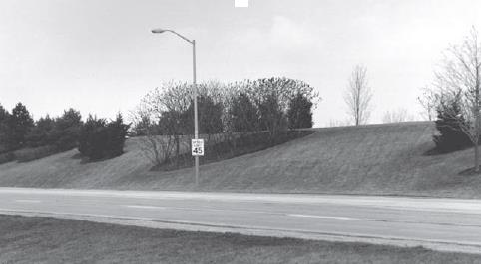
Berm: An earth mound designed to provide visual interest on a site, screen undesirable views, reduce noise, or fulfill other such purposes.
Billiard or pool hall: A commercial establishment containing more than two pool or billiard tables for the use of patrons. Billiard or pool halls may or may not sell alcoholic beverages.
Boarding house: A dwelling where multiple rooms are rented out individually, in which meals are provided.
Body piercing establishment: An establishment engaged in the penetration the skin with a needle or similar instrument to insert various ornamental objects. Body piercing does not include the use of a mechanized, pre-sterilized ear-piercing system that penetrates the outer edge or lobe of the ear or both.
Body shop: A commercial facility that provides vehicle collision repair services, including body frame straightening, replacement of damaged parts, and painting. Body and frame repair does not include engine or power train repair.
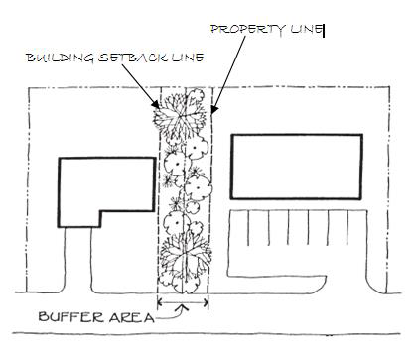
Buffer: A portion of a lot dedicated to landscaped open space intended to visually screen one use from a more intense use by means of vegetation, screening and distance; to shield or diminish noise, light and undesirable views; or otherwise mitigate other incompatibilities and nuisances. The width of a buffer is measured from the common property line.
Building: Any structure attached to the ground completely enclosed within exterior walls having a roof for the shelter of persons, animals, or property.
Building articulation: Building articulation refers to the range of design elements, both horizontal and vertical, that help create a unique building facade. Various building materials, special ground-floor design treatments, facade modulation, corner treatments, building setbacks for upper stories, and facade elements such as transparency, building entries, and other architectural details contribute to visual interest.
Building facade: The entire face of a building extending from the roof or top of a parapet wall to the ground and from one corner of the building to another.
Building height: The vertical distance measured from the average finished grade along the front of the building to the highest point of the roof. Chimneys, antennas, mechanical equipment and solar panels shall not be used in determining building height provided such features do not extend more than four feet above the height limit of the zoning district in which the building is located. Domes, towers, steeples or spires that are an integral part of religious buildings shall not be subject to this limit, provided such features are not occupied.
Building, principal: A building in which is conducted the principal use of the lot on which the building is located. A dwelling is the principal building on a residentially zoned or occupied lot.
Building, setback line: A line establishing the minimum allowable distance between any part of a building and the public right-of-way line measured perpendicularly. Covered porches, whether enclosed or not, shall be considered as part of the building and shall not project into a required yard.
Build-to line: A location on the ground generally parallel to the front lot line along which buildings shall be placed according to the zoning district in which the lot is located. Where a minimum and maximum build-to line exists, the building may be placed anywhere between the two lines. The build-to-line shall be measured from the right-of-way.
Carport: A structure used for storage of a vehicle having a roof but not enclosed by walls and accessory to a dwelling unit. Carports may be attached to the dwelling or detached as a freestanding structure.
Car wash: A structure equipped with facilities for washing vehicles. Car washes may be "in-bay" or "self-service" car washes or automated, referred to as "conveyor car washes." Conveyor car washes shall be subject to the Clayton County Water Authority Sewer Use Ordinance, section 98-7 Pretreatment of Wastewater, subsection (L), Commercial Car Wash Water Recycling Requirement adopted on March 6, 2018, as may be amended. Self-service and in-bay car washes shall be exempt from these requirements. See section 4.3.2.35, Vehicle washing service for additional standards pertaining to car washes.
Catering service: An establishment in which the principal use is the preparation of food and beverages on the premises, and where such food and beverages are delivered to another location for consumption.
Certificate of occupancy (C.O.): A document issued by the city certifying that the use of a building or lot complies with this zoning ordinance and that any building on the lot has been erected in accordance with this ordinance, and that the building code and all other applicable codes and ordinances of the City of Riverdale have been met or that an appropriate variance has been granted as provided by this ordinance.
Check cashing establishments: A business that for a fee cashes checks, issues money orders and provides other financial services. The term does not include a state or federally chartered bank, savings association, credit union, or loan company. Retailers such as convenience stores that may cash checks in the course of their primary business shall not be deemed a check cashing establishment.
Child care center: Any non-residential facility operated by an individual or any business entity who receives pay for supervision and care, for fewer than 24 hours per day, without transfer of legal custody, of children under 13 years of age, who are not related to the provider, and which is required to be licensed by the Georgia Department of Early Care and Learning. The term may include childcare learning center, daycare, child caring institution, playschool, pre-school, or early learning center.
Child care home: A private residence operated by an individual or business entity who receives pay for supervision and care fewer than 24 hours per day, without transfer of legal custody, at least three but not more than six children under 13 years of age, who are not related to such persons and whose parent(s) are not residents in the same private residence as the provider and which is required to be licensed by the Georgia Department of Early Care and Learning; provided, however, that the total number of unrelated children cared for in such home, for pay and not for pay, may not exceed six children under 13 years of age at one time, except that a provider may care for two additional children, three years of age or older for two designated one hour-periods daily upon approval by the Georgia Department of Early Care and Learning. This term may also include family childcare learning home.
City council: The mayor and council of the City of Riverdale.
Clear vision area: The vertical space between three and eight feet above grade and defined by the street property lines of a corner lot and a line joining points along the street lines 20 feet from their point of intersection.
Clinic: An establishment where patients are examined and treated by a physician, dentist or other health care professional on an out-patient basis.
Clinic/urgent care facilities: Emergency medical care provided for illness or injuries which require immediate attention but not emergency room services.
Club, private: A building or facilities owned or operated by nonprofit association of persons who are bona fide members paying annual dues, with the use of premises being restricted to members and their guests for social, cultural, intellectual, fraternal, literary, political, recreational, athletic or similar activities operated for the benefit of its members and not open to the public. Such facilities are generally not operated for profit or for rendering a service customarily conducted for gain. The term includes "lodge."
College or university: An educational facility that provides training beyond high school for students who attend classes in a campus setting. These facilities may offer associates, bachelors, masters, and doctoral degree programs.
Community development director: The officer of the city responsible for managing the community development department or his or her designee.
Comprehensive plan: The official document adopted by the elected officials of a local government that sets forth goals, objectives, and policies to guide an array of decisions in the administration of the jurisdiction of the city. These decisions include investment in public infrastructure such as streets and water and sewer utilities and services such as police and fire. Importantly, the comprehensive plan contains a "future development map" that guides land use decisions. The plan forms the basis of the zoning ordinance that is the primary tool for implementing land use goals and objectives adopted in the plan. In Georgia, the comprehensive plan encompasses population dynamics, housing supply, economic development, transportation, natural and historic resources, community facilities and services, intergovernmental cooperation and land use.
Condominium: A form of property ownership providing for individual ownership of spaces within a building together with an undivided interest in the land or other parts of the building in common with the other owners. Typically, condominiums are attached dwelling units; however, office condominiums are also common.
Consumer retail goods: A retail establishment offering apparel, fashion accessories, furniture, household appliances and similar goods. Typical uses include clothing stores, department stores, appliance stores, TV and electronics stores, bicycle shops, book stores, costume rental stores, stationery stores, art galleries, hobby shops, furniture stores, pet stores and pet supply stores, shoe stores, antique shops, secondhand stores, record stores, toy stores, sporting goods stores, variety stores, musical instrument stores, medical supply stores, office supply stores, office furnishing stores and wig shops. The term does not include small box discount stores or grocery stores.
Convalescent home: An intermediate care facility, primarily engaged in providing nursing or rehabilitative services to residents who require watchful care or medical attention or treatment on a temporary basis, although staff is on duty 24 hours per day. Convalescent home shall not include hospitals, clinics or similar institutions devoted primarily to the diagnosis and treatment of sick or injured individuals.
Convenience retail goods: A retail establishment offering sundries, personal grooming products, health maintenance products, retail bakeries and similar uses that provide incidental food and beverage services as part of their primary retail sales business. Typical uses include convenience stores, drug stores, specialty food stores, wine or liquor stores, gift shops, newsstands, florists and tobacco stores. The term does not include small box discount stores or grocery stores.
Convenience store: A retail establishment offering a limited range of groceries, prepackaged foods, household goods, medicines, cosmetics, and beer and wine, and may offer on-site food or drink services for immediate consumption. Convenience stores typically operate on extended hours and are designed to attract a large volume of stop-and-go traffic.
Cosmetology schools and colleges: Any establishment that receives compensation for training more than one person in the occupation of cosmetology as defined by state law. Technical colleges whose programs have been approved by the state are not cosmetology schools and colleges as defined in this section.
Covenants: Private deed restrictions imposed on land by private landowners which bind and restrict the land and apply to all present and subsequent owners. Covenants are enforced only by the landowners involved and not by the city or other public agency.
Coworking space: A facilitated environment which may contain desks or other workspaces and facilities and is used by a recognized membership who share the location to interact and collaborate with each other as part of a community. Rules for membership and participation in the coworking space are explicit, transparent and available to the public. Coworking spaces may host classes or networking events which are open to the public or to current and prospective members.
Cul-de-sac: A street having one end open to traffic and permanently terminated by a vehicular turn-around.
Curb cut: Any break in a street curb for the purpose of connecting a driveway to a street to provide vehicular access to abutting property.
Dangerous or hazardous use: Any activity conducted on property or in a building in any manner to create any injurious, noxious, or otherwise objectionable fire, explosive, or other hazard; noise or vibration, smoke, dust, odor, or other form of air pollution; heat, cold, dampness, electrical, or other disturbance; glare; liquid or solid refuse or waste; or other substance, condition, or elements in such manner or in such amount to adversely affect the property or adjacent or nearby property.
Dealer in precious metals or gems: An owner, manager, person or entity whose business involves receiving, buying, selling or trading precious metals such as gold or silver or platinum, including coins, and receiving, buying, selling or trading of jewelry, gems or precious or semiprecious stones, whether known as a redemption center, gold and silver dealer, pawnshop, or any other name. The term shall not include purchases from licensed wholesalers in the normal course of business, nor pawnbrokers who only accept precious metals or gems on pawn or pledge.
Density: The number of dwelling units per acre of land.
Design standards: A set of guidelines concerning the architectural appearance and exterior finish materials of a building that governs the construction, alteration, or relocation of a building.
Detention pond: A natural or man-made structure, including wetlands, used for the temporary storage of storm water by providing for the controlled release of such waters to minimize downstream flooding.
Development standards: Regulations controlling the size of structures and the relationships of structures and uses to each other and to the boundaries of a lot. Development standards include regulations controlling maximum building height, minimum lot area, minimum lot frontage, minimum building setbacks, maximum lot coverage and maximum floor area ratio.
Domestic pet: A tame animal customarily kept for pleasure rather than utility or profit and that is typically kept within a residence or an outside run for personal use and enjoyment including domestic dogs, domestic cats, domestic potbellied pigs, canaries, parrots, parakeets, domestic tropical birds, hamsters, guinea pigs, lizards and turtles: Domestic pet does not include livestock, poultry, or snakes, nor does it include hybrids of animals normally found in the wild.
Drive-in or drive-through window: A building feature used to offer goods or services to customers who remain in their vehicles.
Dry cleaners: An establishment that accepts soiled laundry for cleaning without maintaining any laundry or dry-cleaning equipment or machinery on the premises.
Dry cleaning plant: A building used for cleaning apparel, fabrics, carpets, textiles, or articles of any sort by immersion and agitation, or by immersion only, in volatile solvents including, but not by way of limitation, petroleum distillate solvents or chlorinated hydrocarbon solvents and related processes.
Dwelling: A building or portion of a building designed, arranged and used for living quarters for one or more individuals living as a single housekeeping unit with cooking facilities, including single-family, two-family, multifamily dwellings, and manufactured dwellings, but not including hotels, motels or other buildings designed for transient residence or for group living arrangements such as rooming and boarding houses, fraternity and sorority houses. The term also includes dwelling unit.
Dwelling, efficiency: A dwelling consisting of not more than one habitable room together with kitchen or kitchenette and sanitary facilities.
Dwelling, live-work: A dwelling that accommodates a living area and retail, commercial, service or office space. The commercial component may be the place of employment for individuals not resident on the premises; however, the owner of the dwelling must be a resident of the dwelling. No living quarters shall be permitted at the street level, although living quarters may be above the commercial space, to the rear and below street grade.
Dwelling, multifamily: A building designed for or occupied exclusively by three or more households living independently. The term includes triplexes and quadruplexes, containing three dwelling units and four dwelling units, respectively.
Dwelling, single-family: A building designed for or occupied by one household consisting of a kitchen, dining area, sleeping quarters and bathroom.
Dwelling, two-family: A building designed for or occupied by two households living independently. The term is also known as a duplex.
Emission testing facilities: An establishment offering vehicle emissions testing as regulated by the state.
Family: A group of individuals related by blood, marriage, adoption, guardianship or other custodial relationship, or a group of not more than four persons not so related, living together as a single housekeeping unit.
Fee simple: A form of land ownership that encompasses all property rights, including the right to develop the land.
Fence: An enclosure or barrier consisting of masonry or concrete walls, excluding retaining walls, or wood, vinyl, metal or concrete posts connected by boards, rails, panels, wire, or mesh used as a boundary, a means of protection, privacy screening or confinement, but not including hedges, shrubs, trees, or other natural growth manufactured specifically for fencing.
Fenestration: The arrangement, proportion and design of windows and other openings in a building, including doors.
Financial institution: Financial institutions shall have the same meaning as defined by O.C.G.A. tit. 7, ch. 1 and shall not include those establishments or otherwise unregulated entities engaged in the business of making small loans regulated by the Georgia Industrial Loan Act, as now existing and as amended in O.C.G.A. § 7-3-1 et seq.
Flood plain: That area within the intermediate regional flood contour elevations subject to periodic flooding once in 100 years as designated by the city based upon the U.S. Corps of Engineer's Flood Plain Reports, U.S. Department of Agriculture Soils Reports, and other federal, state, county or local hydraulic studies.
Floor area, gross: The total interior space in a building encompassed by all exterior walls and including all stories.
Floor area, heated: The gross finished horizontal area of all floors of a dwelling in which temperature is controlled by an HVAC system.
Food truck: A motorized vehicle or trailer drawn by a motorized vehicle used to prepare and sell food to the public directly from the vehicle or trailer.
Food truck court: An area designated in a private parking lot that is accessory to a permitted use conducted in a building on the lot or a permitted uses on a freestanding commercial parking lot, subject to the requirements of section 4.3.2.18, Food trucks of this ordinance.
Food truck vendor: Any person or entity that prepares and sells food from a food truck in a designated food truck court.
Fresh or fresh frozen food: Food for human consumption that is unprocessed, or otherwise in its raw state; food that was quickly frozen while still fresh. The term includes unprocessed meat and seafood.
Frontage: The distance on which a parcel of land adjoins a public street or public road right-of-way dedicated to and accepted by the City of Riverdale for vehicular traffic or over which the City of Riverdale may hold a prescriptive easement for public access.
Frontage, lot: The distance for which the front boundary line of the lot and the street line are coincident.
Funeral home: A building or portion of a building used for human funeral services. "Funeral homes" may include the following facilities and services, but shall not include facilities for cremation:
A.
Bodies to lie in state;
B.
Chapel areas for services;
C.
Embalming and performance of other services used in preparation of the deceased for burial;
D.
Performance of autopsies and other surgical procedures;
E.
Storage of caskets, funeral urns and other related funeral supplies and equipment; and
F.
Storage of funeral vehicles.
Garage: An accessory building or portion of a principal building, used primarily for vehicle storage.
Gas station: A retail station that sells fuel for vehicles.
Grocery store: A retail establishment engaged in the sale of a general line of groceries, packaged frozen foods, dairy products, poultry and poultry products, confectioneries, fish and seafood, meats and meat products, fresh fruits and vegetables, and related products where fresh or fresh frozen foods including fresh meat, poultry, seafood, fruits and produce comprise a minimum of 25 percent of store shelf space and display areas. Grocery stores may include a restaurant as an accessory use for on-premises consumption of food and beverages.
Group home: A small, residential facility for children or young people who cannot live with their families or afford their own homes, people with chronic disabilities who may be adults or seniors, or people with dementia and related aged illnesses. Typically, there are no more than six residents, and there is at least one trained caregiver there 24 hours a day. Term also refers to a special needs group home.
Halfway house: A facility licensed by the state that provides housing, meals, care, supervision, training and treatment or rehabilitation to individuals on supervised release from the criminal justice system and who have been assigned by a court to a residential facility in lieu of placement in a correctional institution; or to individuals who have been institutionalized and released from the criminal justice system; or to individuals suffering from the effects of drug or alcohol addiction which render functioning in society difficult and who require the protection of a supervised group setting. The purpose of a halfway house is to afford a transition period for individuals released from the criminal justice system prior to re-entering the community.
Health department: The office of environmental health services, a division of the Clayton County Board of Health, is the enforcement agency for the Georgia Department of Public Health.
Home occupations: Business occupations, trades or professions customarily carried on by residents of a dwelling as an accessory use clearly incidental to the residential use of the dwelling.
Homeless shelter: A facility in which is provided long-term, overnight accommodations not to exceed 16 hours each day, and related services, but no permanent living accommodations for more than four individuals who have no permanent residence and are in need of long-term housing assistance. Homeless shelters may also provide meals and social services, including counseling and substance abuse recovery assistance; however, such facilities are not among those mandated by state government.
Hospital: An institution licensed by the Georgia Department of Community Health providing primary health care services and medical or surgical care to persons, primarily inpatients, suffering from illness, disease, injury, or other abnormal physical or mental conditions, and including as an integral part of the institution, related facilities such as laboratories, outpatient facilities and training facilities.
Hotel: A facility offering lodging accommodations for compensation to the public on a nightly basis and in which access to all guest rooms is made solely through an inside lobby.
Hotel, extended stay: A hotel in which a maximum of ten percent of hotel or motel guest rooms may have fixed cooking appliances. For purposes of this section, the term "fixed cooking appliances" shall mean a stove top burner; a hotplate that does not serve as an integral part of an appliance designed solely to produce coffee; a conventional oven; a convection oven; or any oven producing heat using resistance heating elements, induction heating, or infrared heating sources.
Impound yard: Property used for temporary, outdoor storage of wrecked motor vehicles usually awaiting insurance adjustment or transport to a repair shop, but may also include vehicles towed from public or private property on which parking is illegal.
Industrialized building: A structure or component thereof that is, or in substantial part made, fabricated, formed, or assembled in manufacturing facilities for installation on a building site on a permanent foundation and has been manufactured in compliance and conformity with the Industrialized Building Act of the State of Georgia, 1982 Ga. Laws, page 1637 (O.C.G.A. tit. 8, ch. 2, art. II, pt. 1) as the same may be amended from time to time and complies with standards applicable to a site-built building.
Industrialized or modular dwelling: A single-family dwelling manufactured in one or more sections in accordance with the Georgia Industrialized Buildings Act, as amended, and the rules of the Georgia Department of Community Affairs. An industrialized or modular dwelling unit is designed for placement on a permanent foundation and not intended to be moved at a later date. Such units do not have a permanent chassis, axles or wheels.
Inoperable vehicle: Any motorized vehicle incapable of immediately being driven and not properly licensed or insured in accordance with state law.
Jewelry store: A retail establishment offering merchandise comprised of precious metals to the public. Jewelry store does not include a dealer in precious metals or gems or a pawnshop as defined herein.
Junk: Scrap or waste material of any kind collected or accumulated for resale, disposal, or storage.
Junk yard: A lot or portion of a lot used for the collection, storage, and sale of waste paper, rags, scrap metal, or discarded materials; or for the collecting, dismantling, storage, salvaging, or sale of inoperable vehicles, used vehicle parts or machinery.
Junked vehicle: Any vehicle which is in such disrepair as to be unusable, constitutes a nuisance or health or safety hazard or, is not licensed in accordance with O.C.G.A. § 40-2-20 (2010).
Kennel, commercial: A commercial establishment where three or more dogs, cats over three months of age, or other domestic animals of any age are kept, raised, sold, boarded, bred, shown, treated, trained or groomed for commercial gain.
Kennel, non-commercial: The keeping, breeding, raising, showing, or training of four or more dogs over six months of age for personal enjoyment of the owner or occupants of the property, and for which commercial gain is not the primary objective. See section 4.3.3.1, Domestic pets.
Kindergarten: A state-approved institution for the education of pre-school aged children.
Landfill, inert waste: A landfill accepting only wastes that will not or are not likely to cause production of leachate resulting in an environmental hazard. Such wastes are limited to fill dirt, concrete, cured asphalt, rock, bricks, lumber, stumps, and yard debris, including tree limbs and leaves. The term excludes industrial and demolition wastes, and hazardous wastes such as construction debris contaminated by lead or materials containing asbestos not specifically listed above.
Landscaping: An area of a site dedicated to lawns, trees, plants, wooded areas, water courses and other organic or inorganic materials used to enhance the appearance of the property or mitigate the impacts of development.
Laundering establishments: Laundromats, coin laundries and all establishments offering public self-service laundry facilities for washing clothes and other fabrics. The term does not include dry cleaners or companies that offer laundering services for compensation.
LEED (leadership in energy and environmental design): An internationally recognized green building certification system, providing third-party verification that a building was designed and built using strategies intended to improve performance in metrics such as energy savings, water efficiency, CO 2 emissions reduction, improved indoor environmental quality, stewardship of resources and sensitivity to the impacts of the building.
Livestock: Cattle, horses, goats, sheep, swine, and other hoofed animals; poultry, ducks, geese and other fowl; and rabbits, mink, foxes and other fur or hide-bearing animals customarily bred or raised in captivity for the harvesting of their skins; whether owned or kept for pleasure, utility or sale.
Loading space: Off-street vehicle parking reserved for temporary use in the pickup and delivery of goods.
Lobby: A public, interior waiting area at or near the entrance of a building. A lobby may include a variety of uses, but is limited to contiguous, open area and shall not include separate spaces for public use such as restrooms or offices.
Lot: A parcel of land separate from other parcels as defined by a legal description as on a subdivision plat of record, a property survey or as described by metes and bounds, which may be developed and occupied by any use allowed by the zoning district assigned to the parcel. The term does not include any portion of a dedicated right-of-way.
Lot, corner: A lot abutting on two or more street at their intersection.
Lot coverage: The area of impervious surfaces, including building foot print, drives and parking spaces, walks and any other surface that prevents water from entering the ground divided by total lot area. Lot coverage is represented in this ordinance by a maximum lot coverage ratio that varies with the zoning of the property.
Lot depth: The average horizontal distance between the front and rear lot lines.
Lot, double frontage: Any lot, other than a corner lot, which has frontage on two streets.
Lot line: A boundary of a lot. Lot line is synonymous with property line.
Lot line, front: The front property line coincident with a street right-of-way line. On a corner lot, the front lot line shall be the line having the least dimension.
Lot of record: A lot identified on a plat that has been recorded with the Clerk of Superior Court of Clayton County or a parcel of land, the deed of which has been recorded in the Clerk of Superior Court of Clayton County as of the effective date of this ordinance.
Lot width: The distance between side lot lines measured at the minimum, front yard setback.
Maker space: A collaborative work space which allows members access to fabrication tools similar to those in machine shops or other light industrial facilities for making, learning, exploring and sharing.
Manufactured home: Class I is a single-family dwelling unit meeting National Manufactured Home Construction and Safety Standards, approved by the Georgia Department of Insurance and bearing an insignia issued by the U.S. Department of Housing and Urban Development, or a single-family dwelling unit that, if constructed prior to applicability of such standards and insignia requirements, was constructed in conformity with the Georgia State Standards in effect on the date of manufacture.
The term "manufactured home" includes "mobile home:" Recreational vehicles and modular homes are not included in this definition.
Manufactured home park: A parcel of land that has been planned and improved for placement of manufactured homes. Spaces or lots are set aside and offered for rent to accommodate manufactured homes for residential occupancy. A manufactured home park does not include a manufactured home sales lot on which unoccupied manufactured homes are placed for inspection or sale.
Massage establishment: A personal service involving the manipulation of tissues by rubbing, kneading or tapping with the hand or an instrument for therapeutic purposes.
Medical office: An office used to provide diagnosis and treatment for medical, dental or psychiatric outpatient care.
Microbrewery: An establishment offering the retail sale of beer brewed on the premises to the public. Customers may purchase beer in a container owned by the customer known as a "growler." Such establishments may include a restaurant or limited food sales as an accessory use.
Mobile home: A detached, single-family dwelling designed for long-term occupancy transported on its own wheels, arriving at the site as a complete dwelling unit, usually including major appliances and furniture, and ready for occupancy. Removal of the wheels and placement on a foundation does not change the classification of the unit.
Modular home: A factory-built, single-family dwelling that is constructed in one or more sections and complies with the definition of "industrialized building" designed to be placed on a permanent foundation as a permanent structure with the appearance of a conventional on site constructed building and to be used for residential purposes. A modular home is not a mobile home.
Motel: A facility offering lodging accommodations for compensation primarily to the motoring public on a nightly, weekly or monthly basis and in which access to guest rooms may be accessed directly from parking areas.
Multifamily dwellings, supportive living: A private residential program that provides personal care, daily socialization, and educational activities in a multifamily, community setting. However, in contrast to assisted living, these services are provided at a reduced or subsidized cost. These communities have a limited ability to provide medical care and do not provide skilled nursing care.
Nightclub: An establishment having a minimum capacity of 100 persons with all booths and tables unobstructed and open to view which offers the sale of alcoholic beverages and in which music, dancing or entertainment is featured.
Nonconforming use: Any use of land or building lawfully existing on the effective date of adoption of this ordinance that was rendered out of compliance with one or more standards of the ordinance as a result of such adoption.
Nursing care facility: An establishment providing inpatient nursing and rehabilitative services to patients who require continuous medical supervision, providing skilled nursing care and rehabilitative nursing care as defined by the rules and regulations of the Georgia Department of Community Health and is licensed as a "nursing home" by the department. Care must be ordered by and under the direction of a physician. Staff must include a licensed nurse on duty continuously with a minimum of one full-time registered nurse on duty during each day shift. Term also refers to nursing home.
Office: An occupancy of a building that features administrative activities as opposed to retail sales or fabrication such as that conducted an industrial building.
Office park: A development on a tract of land that contains a number of separate office buildings, supporting uses and open spaces designed, planned, constructed and managed on an integrated and coordinated basis.
Official zoning map: A public record comprised of a graphic representation of every property in the city limits which defines the boundaries of the zoning district assigned to various properties. The official zoning map and the text of the zoning ordinance comprise the zoning ordinance.
Open space: An undeveloped area of land permanently reserved for passive recreational use or aesthetic purposes.
Outdoor amusement enterprises: Establishments including, but not limited to, drive-in theatres, pony rides, miniature golf, carnivals and bazaars that are in operation for 60 or fewer calendar days.
Outpatient medical care centers: A facility located apart from (or in conjunction with) a hospital which provide outpatient medical services by licensed medial professional.
Overlay district: A set of standards that are in addition to and superimposed upon the base zoning district or underlying district. Overlay districts typically address enhanced architectural design and materials standards and streetscape and site landscaping standards or may be used to protect historic resources.
Parking space: An area marked on pavement defining the location reserved for temporary storage of a motor vehicle having suitable access to a public street or alley and sufficient maneuvering room.
Pawnbroker: Any person or entity that lends or advances money for profit on the pledge or possession of person property, or other valuable items other than securities or written evidences of indebtedness in any manner, or any person or entity that deals in the purchasing of personal property or other valuable items on condition of selling the same back to the seller at a stipulated price within a specified period.
Place of assembly: a building or portion of building where people gather for purposes such as deliberation, worship and entertainment. Places of assembly may not be within 1,000 feet of another.
Place of worship: A building where persons assemble primarily for religious worship and conducting religious activities which is maintained and controlled by a religious body organized to sustain public worship, together with all accessory buildings and uses customarily associated with such primary purpose. Such uses include schools, religious education, social gathering rooms, food service facilities, indoor and outdoor recreation facilities, and child day care centers. The term includes synagogue, temple, mosque, church or other such place for worship and religious activities. The term does not include any building or property owned or operated by a religious organization or group that is not primarily used for religious worship or other religious activities.
Planning commission: The planning commission of the City of Riverdale as described in division 2, City Planning Commission of the City Charter.
Principal use: The primary activity conducted on a lot.
Professional office: An office from which an attorney, engineer, architect, accountant or similar professional persons may offer services.
Psychic service establishment: Commercial premises that provide services involving sensitivity to non-physical or supernatural forces and influences; or marked by extraordinary or mysterious sensitivity, perception or understanding; and include, but are not limited to palm readers, astrologers, psychics and crystal ball readers.
Quasi-judicial officers, boards, or agencies shall have the same meaning as defined in O.C.G.A. § 36-6-3.
Recreational vehicle: A motorized vehicle designed as off-site living accommodations for travel or recreation purposes having no foundation other than wheels or jacks; also referred to as a motor home.
Recycling center, building materials: The collection and indoor storage of used lumber, brick, windows and doors, fireplace mantels, lighting and bathroom fixtures and other architectural elements and construction components for resale. Used appliances shall not be considered building materials.
Restaurant, drive-in: Any premises used for the sale, dispensing or serving of food or beverages to customers in private vehicles, including the on-premises consumption of food or beverages.
Restaurant, fast food: An establishment at which customers are served food or beverage for on-premises consumption at a table or counter or in a vehicle in packages prepared for off-premises consumption. Such establishments do not provide wait staff service. The term includes carry-out, drive-through, drive-in and curb service restaurants.
Restaurant, full service: An establishment that offers food and beverages that are prepared, served by wait staff, and consumed within the building or outside on the premises. No drive-thru facilities are present. Also known as a "sit down" restaurant.
Retail establishment: A commercial business that sells commodities or goods in small quantities to consumers and may sometimes be referred to as a "retail shop." Such businesses may be classified as a "retail establishment" only when the business is not specifically classified elsewhere.
Retention ponds: Also referred to as wet ponds, retention ponds maintain a pool of water throughout the year and hold stormwater runoff following storms. The permanent pool of water characterizing retention ponds fluctuates in response to precipitation and runoff from the surrounding areas contributing to storm water and ground water flows. Unlike retention ponds, detention ponds hold water for a short period before discharging to a downstream water body.
Rezoning: A change in the zoning classification or the conditions of zoning affecting a lot.
Right-of-way: An area of land established for providing vehicle access to adjacent properties, for placement of public infrastructure and quasi-public utilities and for streetscape improvements such as lighting, landscaping and directional signs.
Rooming house: A dwelling where multiple rooms are rented out individually, in which the tenants may or may not share bathroom and/or kitchen facilities.
Row house: One of a series of single-family attached dwellings, often of similar or identical design, situated side by side and sharing common walls.
Schools: Organizations or institutions that provide pre-school and pre-kindergarten through 12th grade instruction. Private schools as defined by O.C.G.A. § 20-2-690 are encompassed within this definition. Qualifying entities must comply with all applicable state laws and regulations including, but not limited to, any applicable licensing requirements concerning such instruction. The term does not include child day care facilities.
Scrap tire processing plant: A facility that grinds, shreds, chops or otherwise processes scrap tires for secondary use.
Screening: A method of shielding or obscuring an objectionable view on an abutting or nearby property from another property by opaque fencing, walls, berms, densely planted vegetation or similar means.
Service station: Buildings and premises where the primary use is the retail sale of fuel to the public, and where the incidental sale of oil, batteries, motor vehicle accessories and minor vehicle repair services may be provided. Such services shall not include major mechanical or body work, engine, transmission or differential repair, straightening of body parts, painting, welding or other work involving noise, glare, fumes, smoke or other offensive characteristics perceptible beyond the property boundary.
Shipping container: Also known as cargo containers, a standardized, reusable metal box used in the transport of freight, goods and commodities and designed for mounting on a rail car or a truck trailer, or loaded on a ship. Alternate uses of shipping containers include dwellings, dormitories and commercial building and storage applications.
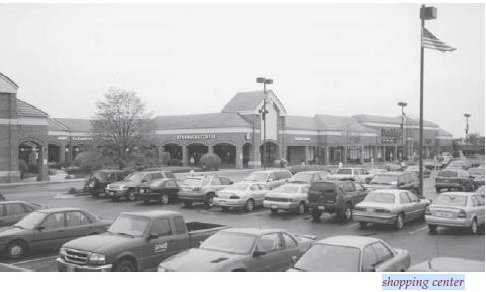
Shopping center: A group of retail establishments planned, built, and managed by a single entity. Off-street parking and landscaped areas are provided on site; indoor pedestrian malls or plazas may also be provided.
Single housekeeping unit: A group of individuals jointly occupying a dwelling unit that share a lease agreement, have consent of the owner to reside on the property, or own the property; jointly use all common areas including living, kitchen and dining areas, and share household responsibilities such as meals, cleaning, expenses and maintenance; and whose makeup is determined by the members of the dwelling rather than by the landlord, property manager, or other third party. The term does not include a boarding or rooming house.
Small box discount store: A retail establishment having a floor area below 12,000 square feet and offering a variety of convenience retail goods and consumer retail goods a majority of which sell below retail market value.
Spa: An establishment that offers massages and a minimum of four other personal services, each of which requires a state license. Examples include manicures, pedicures, waxing, wrapping, tanning and facials.
Special event permit: Special events may include temporary outdoor sales, art shows, carnival rides, social or religious events, entertainment, athletic events, car shows, and other events of community interest.
Special land use permit (SLUP): A use that is not automatically permitted by right, but which may be permitted subject to compliance with specific standards found in section 13.10.1, Development standards of this ordinance and any conditions assigned to an approval of a special land use by city council.
Story: That portion of a building comprised between the surface of any floor and the surface of the floor next above it, or if there is no floor above it, the space between the floor and the ceiling next above it, provided that a room suite, or story, with more than one-half of its height below grade shall not be considered a story for the purposes of regulations. The first floor of a two or multi-story building shall be deemed the story that has no floor immediately below it that is designed for living quarters or for human occupancy. Those stories above the first floor shall be numbered consecutively.
Street: A right-of-way for vehicular traffic whether designated as street, highway, thoroughfare, parkway, road, avenue, drive, expressway, boulevard, lane, place, circle, alley, or otherwise.
Street, private: The paved area located within a private development that has not been dedicated to the city and is used to access property within such developments. Private streets may be restricted to the use of owners of property within the development and are maintained by the developer or a subsequent ownership entity.
Street, public: The paved area located with the public right-of-way designed and built to accommodate vehicular traffic and used by the public to access property and the larger street network.
Structure: Anything constructed or built having a fixed location on the ground or attached to something having a fixed location on the ground, excluding in-ground swimming pools, fences and walls.
Subdivider: The person, firm or corporation having a proprietary interest in land to be subdivided or the authorized agent of such person, firm or corporation that may apply for the subdivision of such land under the City of Riverdale Subdivision Regulations.
Subdivision: The process of dividing land into two or more lots or the combination of lots resulting in one or more new lots; also refers to a development consisting of subdivided lots.
Supplemental area: The privately held area between the back of the required sidewalk clear zone and the build-to line.
Swimming pool: Any permanent structure, tank or basin located in the ground or attached to the ground for wading or bathing.
Tattoo parlors: Establishments that provide services that create an indelible mark on the body by insertion of pigment under the skin or by production of scars.
Tobacco retail establishments: Retail establishments in which the sale of tobacco and tobacco-related products exceed 50 percent of the total value of merchandise in inventory.
Tool and light equipment sale or rental: A commercial establishment engaged in the rental or sale of tools such as circular saws, drills, weed eaters and light equipment such as electrically-powered jack hammers, log splitters or utility trailers. Tool and light equipment sale or rental shall not include the sale or rental of vehicles, heavy equipment, trucks, boats, motorcycles or RVs.
Town house: A group of three or more attached dwelling units under fee simple or condominium or cooperative ownership as defined by laws of the State of Georgia.
Trailer, travel: A non-motorized vehicle, pulled by an automobile or truck, designed for the exclusive off premises use for travel or recreation purposes.
Trailer, utility: A vehicle designed to be towed by a motorized vehicle which may be open as in a landscape trailer or closed as in a car hauler. Utility trailers classified as up to class IV which are rated up to 10,000 pounds are considered light duty and include boat trailers, horse trailers and landscape trailers. Utility trailers having a rating above class IV are considered commercial vehicles and shall be regulated as heavy trucks.
Tutoring services: Educational instruction offered to school-age children as a supplement to public or private school education.
Use: The purpose for which land or a building is designed, arranged or intended, or for which land or a building is occupied, maintained or leased.
Use permitted "by right:" Any use of a lot complying with all standards of the zoning district in which such lot is located and other applicable ordinances without further approvals with the exception of appropriate development and building permits.
Vacant commercial property: Property with no activity of use or valid business license for at least 90 days.
Variance: A relaxation of the standards of this ordinance based on extraordinary conditions associated with a particular property where a strict application of such standards would comprise an unnecessary and undue hardship.
Vehicle, abandoned: A motor vehicle or trailer which: (1) has been left by the owner or an agent of the owner with an automobile dealer, repair shop or wrecker service for repair or other reason and has not been retrieved by such owner or agent within 30 days after the agreed upon time or, if no such time is agreed upon, within 30 days after the vehicle is turned over to such an entity; (2) has been left unattended on a public right-of-way or other public property for five or more days; (3) has been lawfully towed onto the property of another at the request of a law enforcement officer and left for 30 or more days without payment of all reasonable charges for such towing and storage; (4) has been lawfully towed onto private property at the request of a property owner on whose property the vehicle was abandoned for 30 days or more without payment of all reasonable current charges for such towing and storage; or (5) which has been left unattended on private property for a period of not less than 30 days.
Vehicle rental or leasing establishment: A commercial enterprise in which the primary business is the leasing of motor vehicles by the day or week and may include long-term leasing typically for more than one calendar year.
Vehicle repair garage: A building and premises where the primary use is the repair of passenger automobiles, trucks and vans limited to Class 2 vehicles having a gross vehicle weight rating of 10,000 pounds or less. Repair activities may include engine and transmission repair or replacement, but shall not include body shop services.
Vehicle sales establishment: A commercial enterprise in which the primary business is selling passenger cars, trucks, and vans at retail to the public. Such trucks and vans shall not exceed a Class 2 GVWR rating. "Vehicle sales" may include long-term leasing of vehicles typically for more than one calendar year.
Vehicle service establishment: An establishment at which minor vehicle services are performed, including but not limited to tire sales, oil changes, tune-ups, brakes and other minor repairs.
Veterinary clinic: Facility for the treatment of domestic animals, operated under the supervision of a licensed veterinarian. The boarding of animals is limited to short-term care incidental to the services of the clinic and makes limited use of outdoor runs.
Virtual currency: Virtual currency a digital representation of monetary value that does not have legal tender status as recognized by the United States government.
Warehouses, climate-controlled: A commercial facility providing secured spaces for storage of personal property, which are protected from temperature and humidity extremes and are accessed solely by way of interior hallways.
Warehouses, mini: A commercial facility providing secured spaces for storage of personal property.
Waste incinerator: Any facility that reduces waste volume by burning at a high temperature for a specified period. This term excludes air curtain destructors used for the on-site burning of yard trimmings and wood wastes as regulated by the Georgia Forestry Commission.
Wine store: A retail establishment specializing in the sale of wine and consumer products associated with wine.
Yard: A space on the same lot with a principal building, open unoccupied and unobstructed by buildings or structures from ground to sky except where encroachments are specifically allowed and accessory buildings may be placed.
Yard, front: An open, unoccupied space on the same lot with a principal building, extending the full width of the lot, and situated between the street right-of-way and the front yard setback line projected to the side boundary lines of the lot. The front yard of a corner lot shall be the frontage having the least dimension.
Yard, rear: An open, unoccupied space on the same lot with a principal building, extending the full width of the lot and situated between the rear boundary line of the lot and the rear yard setback line projected to the side boundary lines of the lot.
Yard, side: An open, unoccupied space on the same lot with the principal building, situated between the side yard setback line and the side boundary line of the lot extending from the front yard setback line of the lot to the rear yard setback line of the lot.
Youth entertainment center: A commercial establishment dedicated to recreation and other activities for children ages 12 and under.
Zoning decision shall have the same meaning as defined in O.C.G.A. § 36-6-3.
Zoning district: A classification used to identify the purpose, allowed uses and development standards of that classification and assigned to all properties within the city limits of Riverdale as reflected on the zoning map.
Zoning ordinance map amendment: Also referred to as a property rezoning, a change to the zoning classification of property or properties as reflected on the official zoning map.
Zoning ordinance text amendment: A change to the text of the zoning ordinance.
(Ord. No. 7-2020, § 1(Exh. A), 10-26-20; Ord. No. 2-2021, 1-22-21; Ord. No. 6-2021, § 1(Exh. A), 11-16-21; Ord. No. 3-2023, § 1(Exh. A), 7-24-23)

