
Sandy City Zoning Code
CHAPTER 17
84 - IMPROVEMENTS REQUIRED WITH DEVELOPMENT32
Editor's note— Pre-republication, this chapter was last revised by Ord. No. 2020-24, effective September 21, 2020. Any amendments occurring post-republication have a history note in parenthesis at the bottom of the amended section.
Sec. 17.84.00.- Intent.
This chapter provides general information regarding improvements required with residential, commercial, and industrial development. It is intended to clarify timing, extent, and standards for improvements required in conjunction with development. In addition to the standards in this chapter, additional standards for specific situations are contained in other chapters.
(Ord. No. 2024-01, § 1(Exh. A), 2-20-2024)
Sec. 17.84.10. - Exceptions—Improvements.
Single family residential, accessory dwelling unit, and duplex development on existing lots with existing public improvements are exempt from this chapter, with the exception of 17.84.30 Pedestrian and Bicyclist Requirements.
(Ord. No. 2024-01, § 1(Exh. A), 2-20-2024; Ord. No. 2025-32, § 1(Exh. A), 11-17-2025)
Sec. 17.84.20. - Timing of improvements.
A.
All improvements required by the standards in this chapter shall be installed concurrently with development, as follows:
1.
Where a land division is proposed, each proposed lot shall have required public and franchise utility improvements installed or financially guaranteed in accordance with the provisions of Chapter 17 prior to approval of the final plat.
2.
Where a land division is not proposed, the site shall have required public and franchise utility improvements installed or financially guaranteed in accordance with the provisions of Chapter 17 prior to temporary or final occupancy of structures.
B.
Where specific approval for a phasing plan has been granted for a subdivision, improvements may similarly be phased in accordance with that plan.
(Ord. No. 2021-16, § 12(Exh. K), 8-16-2021; Ord. No. 2024-01, § 1(Exh. A), 2-20-2024)
Sec. 17.84.30. - Pedestrian and bicyclist requirements.
A.
Sidewalks shall be required along both sides of all arterial, collector, and local streets, as follows:
1.
Sidewalks shall be a minimum of six feet wide on local streets. The sidewalks shall be separated from curbs by a tree planting area that provides separation between sidewalk and curb, and that meets the dimensional standards of Subsection 17.92.10.D and of the 2023 City of Sandy Transportation System Plan Typical Street Cross Section Standards (TSP Figures 18-24 and TSP Table 4), unless modified in accordance with Subsection 3., below.
2.
Sidewalks along arterial and collector streets shall be separated from curbs with a planting area, unless modified in accordance with Subsection 3. below. The planting area shall be landscaped with trees and plant materials approved by the City. The sidewalks shall be a minimum of six feet wide.
3.
Sidewalk improvements shall be made according to City standards. However, if the improvements are made as part of a discretionary review, the City standards may be modified if the Director determines that the public benefit in the particular case does not warrant imposing a severe adverse impact to a natural or other significant feature such as requiring removal of a tree with a trunk 11 inches DBH or greater, requiring undue grading, or requiring modification to an existing building. Any exceptions to the standards shall generally be in the following order.
a.
Reduce width of landscape strips to no less than four feet in width measured from the interior edge of the curb to the sidewalk.
b.
Reduce width of sidewalk or portion of sidewalk to no less than four feet in width.
c.
Eliminate landscape strips.
d.
Reduce width of on-street improvements by eliminating on-street parking.
e.
Eliminate sidewalks.
4.
The timing of the installation of sidewalks shall be as follows:
a.
Sidewalks and planted areas along arterial and collector streets shall be installed with street improvements, or with development of the site if street improvements are deferred.
b.
Sidewalks along local streets shall be installed in conjunction with development of the site, generally with building permits, except as noted in c., below.
c.
Where sidewalks on local streets abut common areas, tracts, drainageways, or other publicly owned or semi-publicly owned areas, the sidewalks and planted areas shall be installed with street improvements.
5.
Sidewalks shall be designed in conformance with Title 12 of the Sandy Municipal Code and with the City of Sandy Sidewalks Utility Standard Details.
B.
Safe and convenient pedestrian and bicyclist facilities that minimize travel distance to the extent practicable shall be provided as follows:
1.
New non-residential development shall provide safe and convenient bicycle and pedestrian facilities connecting to adjacent commercial developments, industrial areas, residential areas, public transit stops, and neighborhood activity centers such as schools and parks, as follows:
a.
For the purposes of this section, "safe and convenient" means pedestrian and bicyclist facilities that: are free from hazards that would interfere with or discourage travel for short trips; provide a direct route of travel between destinations; and meet the travel needs of pedestrians and bicyclists considering destination and length of trip, and considering that the optimum trip length of pedestrians is ¼ to ½ mile.
b.
To meet the intent of B., above, pedestrian rights-of-way connecting cul-de-sacs or passing through blocks shall be a minimum of 15 feet wide with eight feet of pavement and seven feet of landscaping.
c.
Twelve foot wide pathways shall be provided where multiuse paths are planned in the 2023 TSP.
d.
Pedestrian connectivity shall be encouraged in new developments by clustering buildings or constructing convenient pedestrian ways. Pedestrian pathways shall be provided in accordance with the following standards:
i.
The pedestrian circulation system shall be at least five feet in width and shall connect the sidewalk on each abutting street to the primary entrance of the primary structure on the site to minimize out of direction pedestrian travel.
ii.
Pathways at least five feet in width shall be provided to connect the pedestrian circulation system with existing or planned pedestrian facilities that abut the site but are not adjacent to the streets abutting the site.
iii.
Pathways shall be direct. A pathway is direct when it follows a route for which the length is not more than 20 feet longer or 120 percent of the straight-line distance, whichever is less.
iv.
Pathway/driveway crossings shall be minimized. Internal parking lot design shall comply with the standards in Section 17.98.60 to maintain safe and comfortable access for pedestrians from abutting streets, pedestrian facilities, and transit stops.
v.
With the exception of pathway/driveway crossings, pathways shall be separated from vehicle parking or vehicle maneuvering areas by grade, different paving material, painted crosshatching or landscaping. They shall be constructed in accordance with the sidewalk construction standards in the Utility Standard Details adopted by the City in 2004. (This provision does not require a separated pathway system to collect drivers and passengers from cars that have parked on site unless an unusual parking lot hazard exists).
vi.
Pedestrian amenities such as covered pathways, awnings, visual corridors and benches are encouraged. For every two benches provided, the minimum parking requirements shall be reduced by one, up to a maximum reduction of two parking spaces per site. Benches shall have direct access to the pedestrian circulation system.
2.
New multi-family developments and residential subdivisions shall meet the following pedestrian standards:
a.
Internal connections. On sites larger than 10,000 square feet, an internal pedestrian connection system shall be provided. The system shall connect all main entrances (in the case of multi-family development) or lots (in the case of a subdivision) to the following:
i.
Onsite shared facilities (if proposed) including parking areas, bicycle parking, recreational areas, and outdoor areas; and
ii.
Adjacent offsite improvements including public transit stops, schools, and parks.
b.
Public sidewalks shall be part of the pedestrian connection system for subdivisions and shall meet the standards in Section 17.100.270. Pedestrian and bicycle accessways, if required by Section 17.100.120.C, shall meet the minimum requirements of that section.
c.
On-site circulation systems required by the standards of this section shall be hard surfaced and shall meet the following minimum width requirements:
i.
The circulation system on sites with up to 20 residential units shall be at least four feet wide.
ii.
The circulation system on sites with more than 20 residential units shall be at least five feet wide.
3.
Where the system crosses driveways, parking areas, and loading areas, the system shall be clearly identifiable, through the use of elevation changes, speed bumps, a different paving material, or other similar method approved as part of a discretionary review. Striping does not meet this requirement. Elevation changes and speed bumps shall be at least four inches high.
4.
Where the system is parallel and adjacent to an auto travel lane, the system shall be a raised path or be separated from the auto travel lane by a raised curb, bollards, landscaping, or other physical barrier approved as part of a discretionary review. If a raised path is used it shall be at least four inches high and the ends of the raised portions shall be equipped with curb ramps. Bollard spacing shall be no farther apart than five feet on center.
C.
Where a development site is traversed by or adjacent to a future trail linkage identified in the 2023 City of Sandy Transportation System Plan, Figure 12, improvement of the trail linkage shall occur concurrent with development. Dedication of the trail to the City shall be provided in accordance with Subsection 17.84.90.D.
D.
Pedestrian facilities installed concurrent with development of a site shall be extended through the site to the edge of adjacent property(ies).
E.
To ensure improved access between a development site and an existing developed facility such as a commercial center, school, park, or trail system, as part of a discretionary land use review, the Planning Commission or Director shall require off-site pedestrian facility improvements concurrent with development.
(Ord. No. 2021-16, § 12(Exh. K), 8-16-2021; Ord. No. 2024-01, § 1(Exh. A), 2-20-2024)
Sec. 17.84.40. - Transit requirements.
A.
Development sites located along existing or planned public transit routes, as indicated in the 2020 Sandy Transit Master Plan, shall incorporate bus pull-outs and/or shelters into the site design, unless waived by the Transit Director because it is not needed to meet transit service standards. These improvements shall be installed in accordance with the guidelines and standards of the 2020 Sandy Transit Master Plan, pages 70-74.
B.
New developments at or near existing or planned transit stops shall design development sites to provide safe, convenient access to the transit system by meeting the following standards:
1.
Commercial and civic use developments shall provide a prominent entrance oriented towards arterial and collector streets, with front setbacks reduced as much as possible to provide access for pedestrians, bicycles, and transit.
2.
All developments within 300 feet of a transit stop (as measured in walking distance from the nearest property line) shall provide pedestrian walkways between the buildings and the transit stop, in accordance with the provisions of Subsection 17.84.30.B.
(Ord. No. 2024-01, § 1(Exh. A), 2-20-2024)
Sec. 17.84.50. - Street requirements.
A.
Transportation Impact Study (No Dwellings). For development applications that do not propose any dwelling units, the City may require a transportation impact study that evaluates the impact of the proposed development on the transportation system. Unless the City does not require a transportation impact study, the applicant shall prepare the study in accordance with the following:
1.
A proposal establishing the scope of the study shall be submitted for review to the City Traffic Engineer. The scope shall reflect the magnitude of the project in accordance with accepted transportation planning and engineering practices. Large projects shall assess intersections and street segments where the development causes increases of more than 20 vehicles in either the AM or PM peak hours. Once the City Traffic Engineer has approved the scope of the study, the applicant shall submit the results of the study as part of its development application. Failure to submit a required study will result in an incomplete application. A traffic impact study shall bear the seal of a Professional Engineer licensed in the State of Oregon and qualified in traffic or civil engineering.
2.
If the study identifies vehicle operating conditions less than the minimum mobility targets established in the development code or the 2023 City of Sandy Transportation System Plan, or fails to demonstrate that average daily traffic on existing or proposed streets will meet the ADT standards established in the development code, the applicant shall propose improvements and funding strategies for mitigating identified problems or deficiencies that will be implemented concurrent with the proposed development.
B.
Transportation Impact Study (Dwellings). For development applications that propose dwelling units, an applicant must submit a transportation impact study unless the application is exempt from this requirement pursuant to Subsection B.7., below. Failure to submit the study will result in an incomplete application. A traffic impact study shall bear the seal of a Professional Engineer licensed in the State of Oregon and qualified in traffic or civil engineering. The applicant shall prepare the study in accordance with the following:
1.
The study area must include all existing and proposed site accesses and all existing and proposed streets and intersections where the development adds more than 20 vehicles during any peak hour as determined by using the Institute of Transportation Engineers Trip Generation Manual (11 th edition). The determination of peak hour vehicle addition shall include the cumulative impact of the proposed development and development on abutting properties that received a certificate of occupancy or recorded a plat within the past five years.
2.
The study must analyze existing conditions and projected conditions upon completion of the proposed development.
3.
The study must be performed for the weekday a.m. peak hour (one hour between 7:00 a.m. and 9:00 a.m.) and p.m. peak hour (one hour between 4:00 p.m. and 6:00 p.m.). Analysis of other time periods may be required for uses that generate their highest traffic volumes at other times of the day or on weekends.
4.
The study must demonstrate that the transportation impacts from the proposed development will comply with the City's mobility targets and average daily traffic standards and the Oregon Department of Transportation's (ODOT's) mobility targets.
5.
If the study identifies vehicle operating conditions less than the minimum mobility targets established in the 2023 City of Sandy Transportation System Plan, or fails to demonstrate that average daily traffic on existing or proposed streets will meet the ADT standards established in Chapter 17.10 of the development code or fails to meet ODOT's mobility targets, the applicant shall propose improvements and funding strategies for mitigating identified problems or deficiencies that will be implemented concurrent with the proposed development.
6.
If improvements and mitigation measures are necessary, pursuant to Subsection 5., above, the following criteria shall be met in order for the application to be approved:
a.
The improvements and funding strategies proposed as mitigation address the problems or deficiencies to the extent necessary to meet the City's mobility targets and average daily traffic standards and, if applicable, ODOT's mobility target.
b.
If proposed mitigation requires improvements within City, County, or ODOT rights-of way, the design has been approved by the City Engineer, Clackamas County, and ODOT when applicable.
7.
A transportation impact study is not required under this section if:
a.
The cumulative impact of the proposed development and development on abutting properties that received a certificate of occupancy or recorded a plat within the past five years will generate no more than 20 vehicle trips in any weekday a.m. or p.m. peak hour as determined by using the Institute of Transportation Engineers Trip Generation Manual (11 th Edition); or
b.
The proposed development completed a transportation impact study at the time of annexation within the past five years and that study assessed the impact of the same or more dwelling units than proposed under the new land use action; or
c.
The application only proposes to convert an existing detached single family dwelling to a duplex.
C.
Transportation Impact Study (Dwellings)—Discretionary Track. As an alternative to the process outlined in Section 17.84.50.B., an applicant may choose to follow the process in Section 17.84.50.A.
D.
Traffic Letter (Dwellings). For development applications that propose dwelling units, an applicant must submit a traffic letter where the development adds 20 or fewer vehicles during any peak hour as determined by using the Institute of Transportation Engineers Trip Generation Manual (11 th Edition). Failure to submit the traffic letter will result in an incomplete application. Development applications that add two or fewer vehicles during any peak hour as determined by using the Institute of Transportation Engineers Trip Generation Manual (11 th Edition) are exempt from the traffic letter requirement.
E.
Street Requirements (Discretionary). For development applications that do not propose dwelling units, or for applications that include dwellings and that elect to use the discretionary track, the following standards shall be met.
1.
Location of new arterial streets shall conform to the 2023 City of Sandy Transportation System Plan in accordance with the following:
a.
Arterial streets should generally be spaced in one-mile intervals.
b.
Traffic signals should generally not be spaced closer than 1,500 feet for reasonable traffic progression.
2.
Local streets shall be designed to discourage through traffic. NOTE: for the purposes of this section, "through traffic" means the traffic traveling through an area that does not have a local origination or destination. To discourage through traffic and excessive vehicle speeds the following street design characteristics shall be considered, as well as other designs intended to discourage traffic:
a.
Straight segments of local streets should be kept to less than a quarter mile in length. As practical, local streets should include traffic calming features, and design features such as curves and "T" intersections while maintaining pedestrian connectivity.
b.
Local streets should typically intersect in "T" configurations rather than four-way intersections to minimize conflicts and discourage through traffic. Adjacent "T" intersections shall maintain a minimum of 150 feet between the nearest edges of the two rights-of-way.
c.
Cul-de-sacs are prohibited unless the criteria and standards in Subsections 17.100.110.G and H. are met.
3.
Development sites shall be provided with access from a public street improved to City standards in accordance with the following:
a.
Where a development site abuts an existing public street not improved to City standards, the abutting street shall be improved to City standards along the full frontage of the property concurrent with development.
b.
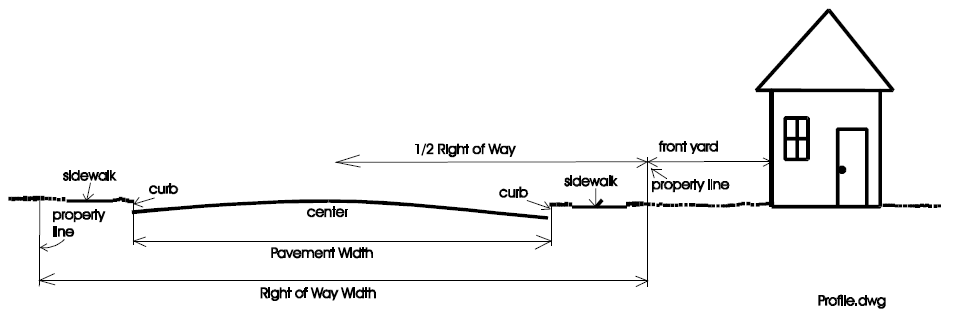
Half-street improvements are considered the minimum required improvement. Three-quarter-street or full-street improvements shall be required where traffic volumes generated by the development are such that a half-street improvement would cause safety and/or capacity problems. Such a determination shall be made by the City Engineer.
c.
To ensure improved access to a development site consistent with policies on orderly urbanization and extension of public facilities the Planning Commission or Director may require off-site improvements concurrent with development. Off-site improvement requirements upon the site developer shall be reasonably related to the anticipated impacts of the development.
i.
When necessary to meet transportation operations and safety standards, the City of Sandy, and ODOT where access to a state roadway is proposed, will identify conditions of approval consistent with the planned transportation system. The City may deny, approve, or approve the proposal with appropriate conditions based on the transportation standards in Section 17.100.110 and consistent with the City's adopted mobility targets, which requires a minimum level of service (LOS) D for signalized and unsignalized intersections and maximum volume to capacity ratio of 0.90 for roundabout intersections.
ii.
Improvements required as a condition of development approval, when not voluntarily provided by the applicant, shall be roughly proportional to the impact of the development on transportation facilities. Findings supporting development approval shall indicate how the required improvements directly relate to and are roughly proportional to the impact of development.
d.
Reimbursement agreements for three-quarter-street improvements (i.e., curb face to curb face) may be requested by the developer per Chapter 12 of the SMC.
e.
A half-street improvement includes curb and pavement two feet beyond the center line of the right-of-way. A three-quarter-street improvement includes curbs on both sides of the side and full pavement between curb faces.
4.
Public streets installed concurrent with development of a site shall be extended through the site to the edge of the adjacent property(ies) in accordance with the following:
a.
Temporary dead-ends created by this requirement to extend street improvements to the edge of adjacent properties may be installed without a turn-around, subject to the approval of the Fire Marshal.
b.
In order to assure the eventual continuation or completion of the street, reserve strips may be required.
5.
Where required by the Planning Commission or Director, public street improvements may be required through a development site to provide for the logical extension of an existing street network or to connect a site with a nearby neighborhood activity center, such as a school or park. Where this creates a land division incidental to the development, a land partition shall be completed concurrent with the development.
6.
Except for extensions of existing streets, no street names shall be used that will duplicate or be confused with names of existing streets. Street names and numbers shall conform to the established pattern in the surrounding area and be subject to approval of the Director.
7.
Location, grades, alignment, and widths for all public streets shall be considered in relation to existing and planned streets, topographical conditions, public convenience and safety, and proposed land use. Where topographical conditions present special circumstances, exceptions to these standards may be granted by the City Engineer provided the safety and capacity of the street network are not adversely affected. The following standards shall apply:
a.
Location of streets in a development shall not preclude development of adjacent properties. Streets shall conform to planned street extensions identified in the Transportation Plan and/or provide for continuation of the existing street network in the surrounding area.
b.
Grades shall not exceed six percent on arterial streets and ten percent on collector streets and local streets. Exceptions allowing local street grades over ten percent may be allowed with approval of a Variance, if approved by the Fire Marshal; however, in no case shall local street grades exceed 15 percent.
c.
As far as practical, arterial streets and collector streets shall be extended in alignment with existing streets by continuation of the street centerline. When staggered street alignments resulting in "T" intersections are unavoidable, they shall leave a minimum of 150 feet between the nearest edges of the two rights-of-way.
d.
Centerline radii of curves shall not be less than 500 feet on arterial streets, 300 feet on collector streets, and 100 feet on local streets.
e.
Streets shall be designed to intersect at angles of 75 to 105 degrees and shall comply with the following:
i.
The intersection of an arterial or collector street with another arterial or collector street shall have a minimum of 100 feet of straight (tangent) alignment approaching the intersection.
ii.
The intersection of a local street with another street shall have a minimum of 50 feet of straight (tangent) alignment approaching the intersection.
iii.
All intersections shall have a minimum curb corner radius of 28 feet, per Oregon Fire Code standards for fire apparatus access roads.
f.
Right-of-way and improvement widths shall be as specified by the 2023 City of Sandy Transportation System Plan. Exceptions to those specifications may be approved by the City Engineer to deal with specific unique physical constraints of the site.
F.
Street Requirements (Dwellings/Clear and Objective Track). For development applications that propose dwelling units, all of the following standards shall be met, unless the applicant elects to use the discretionary standards under Subsection E., above.
1.
Location of new arterial streets shall conform to the 2023 City of Sandy Transportation System Plan in accordance with the following:
a.
Arterial streets shall be spaced at minimum intervals of 5,280 feet and maximum intervals of 6,000 feet.
b.
Traffic signals shall not be spaced closer than 1,500 feet.
2.
Local streets shall be designed to discourage through traffic. NOTE: for the purposes of this section, "through traffic" means the traffic traveling through an area without originating or stopping in that area. To discourage through traffic and excessive vehicle speeds the following street design characteristics shall be considered, as well as other designs intended to discourage traffic:
a.
Straight segments of local streets shall be kept to less than a quarter mile in length.
b.
Local streets may intersect in "T" configurations rather than four-way intersections to minimize conflicts and discourage through traffic. Adjacent "T" intersections shall maintain a minimum of 150 feet between the nearest edges of the two rights-of-way.
c.
Cul-de-sacs are prohibited unless the criteria and standards in Subsections 17.100.110.G and H. are met.
3.
Development sites shall be provided with access from a public street improved to City standards in accordance with the following:
a.
Where a development site abuts an existing public street not improved to City standards, the abutting street shall be improved to City standards along the full frontage of the property concurrent with development.
b.
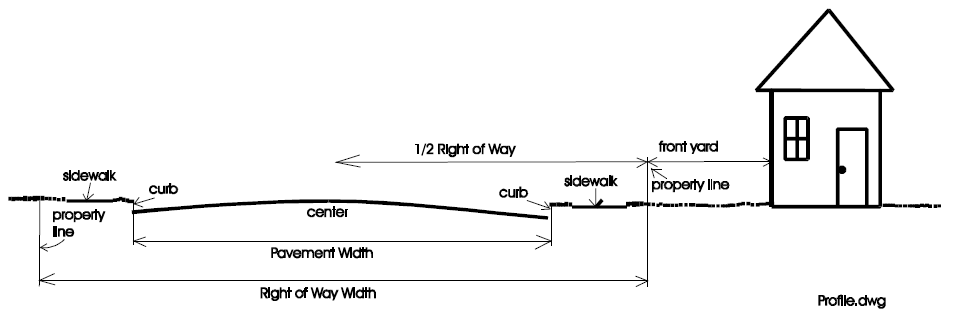
Half-street improvements are considered the minimum required improvement. Three-quarter-street or full-street improvements shall be required where traffic volumes generated by the development are such that a half-street improvement would result in the street failing to meet the level of service standards in the 2023 City of Sandy Transportation System Plan.
c.
To ensure improved access to a development site and extension of public facilities, off-site improvements concurrent with development shall be required if the Transportation Impact Analysis indicates they are necessary to mitigate problems or deficiencies in off-site facilities, pursuant to Section 17.84.50.B.
i.
If requested by the applicant, the City Engineer or designee may approve an alternative to the off-site improvements required under Subsection c., based upon information submitted by the applicant showing that the improvements which would otherwise be required by this Code would not be reasonably related or roughly proportional to the impact of the proposed development, as determined by the City.
d.
Reimbursement agreements for three-quarter-street improvements (i.e., curb face to curb face) may be requested by the developer per Chapter 12 of the SMC.
e.
A half-street improvement includes curb and pavement two feet beyond the center line of the right-of-way. A three-quarter-street improvement includes curbs on both sides of the side and full pavement between curb faces.
4.
Public streets installed concurrent with development of a site shall be extended through the site to the edge of the adjacent property(ies) in accordance with the following:
a.
Wherever a proposed development abuts unplatted land or a future development with an approved tentative plat, street stubs shall be provided to allow access to future abutting developments and to extend the street system into the surrounding area. If the abutting land has an approved tentative plat, streets shall align with streets in the approved tentative plat.
b.
Where the stubbed street is over 100 feet long, street ends shall contain temporary turnarounds built to Oregon Fire Code standards and shall be designed to facilitate future extension in terms of grading, width, and temporary barricades, unless this requirement is waived by the Fire Marshal.
c.
In order to ensure City control over the eventual continuation or completion of the street, reserve strips shall be granted to the City of Sandy.
5.
Public street improvements shall be required through a development site to provide for the logical extension of an existing street network. Where this street extension has the effect of dividing a parcel of land, a land partition shall be completed concurrent with the development.
6.
Except for extensions of existing streets, no street names shall be used that will duplicate or be confused with names of existing streets. Street names and numbers shall conform to the established pattern in the surrounding area and be subject to approval of the Director.
7.
Location, grades, alignment, and widths for all public streets shall be considered in relation to existing and planned streets, topographical conditions, public convenience and safety, and proposed land use in accordance with standards a. through f. below. Where topographical conditions present special circumstances, exceptions to these standards may be granted through the procedures in Chapter 17.66 of the Sandy Development Code, provided the City Engineer determines that the safety and capacity of the street network are not adversely affected.
a.
Location of streets in a development shall not preclude development of adjacent properties. Streets shall conform to planned street extensions identified in the 2023 City of Sandy Transportation System Plan, Figure 11, and/or provide for continuation of the existing street network in the surrounding area.
b.
Grades shall not exceed six percent on arterial streets and ten percent on collector streets and local streets. Exceptions allowing local street grades over ten percent may be allowed with approval of a Variance, if approved by the Fire Marshal; however, in no case shall local street grades exceed 15 percent.
c.
Arterial streets and collector streets shall be extended in alignment with existing streets by continuation of the street centerline. When staggered street alignments resulting in "T" intersections are unavoidable, they shall leave a minimum of 150 feet between the nearest edges of the two rights-of-way.
d.
Centerline radii of curves shall not be less than 500 feet on arterial streets, 300 feet on collector streets, and 100 feet on local streets.
e.
Streets shall be designed to intersect at angles of 75 to 105 degrees and shall comply with the following:
i.
The intersection of an arterial or collector street with another arterial or collector street shall have a minimum of 100 feet of straight (tangent) alignment approaching the intersection.
ii.
The intersection of a local street with another street shall have a minimum of 50 feet of straight (tangent) alignment approaching the intersection.
iii.
All intersections shall have a minimum curb corner radius of 28 feet, per Oregon Fire Code standards for fire apparatus access roads.
f.
Right-of-way and improvement widths shall be as specified by the 2023 City of Sandy Transportation System Plan, Figures 18 through 24 and Table 4. Exceptions to those specifications may be granted through the procedures in Chapter 17.66 of the Sandy Development Code, if approved by the City Engineer, to deal with specific unique physical constraints of the site.
8.
All public streets shall be designed in conformance with Title 12 of the Sandy Municipal Code and with the City of Sandy Utility Standard Details for Streets & Roads, Sidewalks, and Traffic Control Devices.
(Ord. No. 2024-01, § 1(Exh. A), 2-20-2024)
Sec. 17.84.60. - Public facility extensions.
A.
All development sites shall be provided with public water, sanitary sewer, broadband (fiber), and storm drainage and shall meet the following requirements:
1.
The required improvements shall be installed at the expense of the developer.
2.
Public water facilities shall meet the requirements of Title 13 of the Sandy Municipal Code and the 2022 City of Sandy Water System Master Plan and shall be designed in conformance with the City of Sandy Water Service Utility Standard Details.
3.
Sanitary sewer facilities shall meet the requirements of Title 13 of the Sandy Municipal Code and shall be designed in conformance with the City of Sandy Sewer Service Utility Standard Details.
4.
Storm drainage facilities meet the requirements of Title 13 of the Sandy Municipal Code and the City of Portland Stormwater Management Manual, as adopted by the City of Sandy, and shall be designed in conformance with the City of Sandy Stormwater Utility Standard Details.
B.
Where necessary to serve property as specified in A. above, required public facility installations shall be constructed concurrent with development, and shall be completed prior to issuance of a Certificate of Occupancy.
C.
Off-site public facility extensions necessary to fully serve a development site and abutting properties, as shown in the utility plan, shall be constructed concurrent with development.
1.
If requested by the applicant, the City Engineer or designee may approve an alternative to the off-site public facility extensions required under Subsection C., based upon information submitted by the applicant showing that the extensions which would otherwise be required by this Code would not be reasonably related or roughly proportional to the impact of the proposed development, as determined by the City.
D.
Public facilities installed concurrent with development of a site shall be extended through the site and extended or stubbed out to adjacent undeveloped land or to a point in the street that allows for connection with adjacent property(ies). If abutting land has an approved tentative plat, public facilities shall align with public facilities in the approved tentative plat.
E.
Private on-site sanitary sewer and storm drainage facilities shall only be considered either as described in Section 17.84.70, or if all the following conditions exist:
1.
Extension of a public facility through the site is not necessary for the future development of adjacent properties;
2.
The development site remains in one ownership and land division does not occur (with the exception of land divisions that may occur under the provisions of 17.84.50.E.7. or 17.84.50.F.5., above);
3.
The facilities are designed and constructed in accordance with the Uniform Plumbing Code and other applicable codes, and permits and/or authorization to proceed with construction is issued prior to commencement of work.
(Ord. No. 2024-01, § 1(Exh. A), 2-20-2024; Ord. No. 2025-17, § 1(Exh. A), 9-15-2025)
Sec. 17.84.70. - Alternative wastewater systems.
A.
Purpose. The purpose of Section 17.84.70 is to provide a means by which certain developments may obtain a permit to allow use of an alternative wastewater system in lieu of connecting to the City's sanitary sewer system as otherwise required by this Code.
B.
Definitions. As used in Section 17.84.70, the following terms are defined as follows:
1.
Alternative wastewater system means a system which provides for the collection and treatment or reuse of wastewater by a means other than through connection to the City's sanitary sewer system.
2.
Associated use means the use on the subject property which produces wastewater which will flow into an alternative wastewater system.
3.
Gray water means water which has been used for shower, sink, washing machine, and similar purposes, but does not include sanitary waste.
4.
Sanitary waste means waste from toilets, urinals, and similar devices.
5.
Wastewater is a general category which includes either sanitary waste or gray water, or both.
C.
Application requirements. An application shall be made on forms provided by the Director. The application shall be accompanied by the following:
1.
A narrative description of the proposed alternative wastewater system accompanied by site plans, technical specifications, and a screening plan.
2.
A description of the operation and maintenance requirements for the proposed alternative wastewater system.
3.
Payment of the alternative wastewater system permit fee established by resolution.
4.
Such other information and materials as may be necessary to demonstrate compliance with the approval criteria in Subsection E.
D.
Review Process. Alternative wastewater system permit applications will be processed as a Type IV decision.
E.
Criteria for Approval.
1.
All applications for an alternative wastewater system permit must meet the following criteria:
a.
At the time of application for the alternative wastewater system permit, the applicant would be unable to obtain land use approval for the associated use without an alternative wastewater system permit, as a result of a development moratorium in effect in the City at that time relating to capacity in the City's sanitary sewer system. For purposes of this subsection, an applicant shall not be considered able to obtain land use approval for the associated use if the only means by which such approval could be obtained would be by transferring a right to connect to the City's sanitary sewer system from another property;
b.
The alternative wastewater system will be located on a lot or parcel with a commercial, industrial, or community service use and will be used only in connection with a commercial, industrial, or community service use;
c.
If the associated use is a commercial or industrial use, the associated use is identified as a target industry in the City's Economic Development Strategic Plan or otherwise advances the goals of the Economic Development Strategic Plan;
d.
The alternative wastewater system will have no impact on the City's sanitary sewer system and will adequately protect against environmental contamination;
e.
Disposal of wastewater will occur entirely outside the City's sanitary sewer system;
f.
The alternative wastewater system, including its operation and maintenance program, is adequate to meet the wastewater character and volumes of the associated use, and the maintenance program is appropriate for the type of system and anticipated usage characteristics;
g.
The alternative wastewater system will be fully screened from view from public right-of-way and adjacent properties;
h.
The proposed alternative wastewater system complies with all applicable federal, state, and local laws, including but not limited to the Americans with Disabilities Act; and
i.
The alternative wastewater system proposal, taken as a whole, is not materially detrimental or injurious to the public welfare or the surrounding area.
F.
Conditions of Approval. Any approval of an alternative wastewater system permit will be subject to the following conditions of approval:
1.
Prior to certificate of occupancy, the applicant shall install all interior plumbing and fixtures required by the building code (e.g. toilets, urinals, sinks, etc.), all sanitary sewer infrastructure otherwise required by this Code, and all infrastructure necessary for the associated use to connect to the City's sanitary sewer system, up to the point of connection in the public right-of-way or a public utility easement, but no connection may be made until authorized by the City in writing. If the proposed alternative wastewater system requires that the interior fixtures not be used during the time period the alternative wastewater system is utilized, then those fixtures must be rendered inoperable or inaccessible during such period.
2.
The applicant shall remove the alternative wastewater system and connect to the City's sanitary sewer system as follows:
a.
For alternative wastewater systems the City Council determines are of a short-term, temporary nature, within 90 calendar days after written notice from the City.
b.
For alternative wastewater systems the City Council determines are of a long-term, more permanent nature, upon such date as the City Council shall determine at the time of permit approval based upon the expected useful life of the system. Substantial replacement of any such alternative wastewater system will require a new alternative wastewater system permit.
3.
Sanitary sewer system development charges are due and payable at the time of issuance of any permits required for connection to the City's sanitary sewer system, or upon such connection, whichever occurs sooner.
4.
The property owner shall record a deed restriction, in a form approved by the City Attorney, obligating the property owner and all successors to comply with Subsections F.2. and 3. and setting forth the penalties described in Subsection G.
5.
The alternative wastewater system shall be operated and maintained in accordance with the approved proposal.
6.
Such other conditions of approval as the City Council may determine necessary to ensure compliance with the approval criteria and the purposes of Section 17.84.70.
G.
Enforcement. In addition to and not in lieu of enforcement under Chapter 17.06 for any violation of Section 17.84.70, if a property owner fails to connect to the City's sanitary sewer system as described in Subsection F.2., the City may at its option perform or cause to be performed the work required to effectuate the connection at the property owner's sole cost and expense. The City shall notify the property owner in writing of the final cost within 30 calendar days after completing the work, and the property owner shall submit payment in full within 30 calendar days after the date the City sends such notice by U.S. mail to the owner's address reflected in the property records of Clackamas County. Any amounts unpaid after such date shall become a lien upon the real property and shall be recorded in the City lien docket. That lien shall have priority over all other liens and encumbrances of any character. The lien shall accrue interest at the rate applicable for municipal assessment liens from the date of docketing until clearance. The lien may be foreclosed on and the property sold as may be necessary to discharge the lien in the manner specified in ORS 223.505 through 223.595.
(Ord. No. 2025-17, § 1(Exh. A), 9-15-2025)
Sec. 17.84.80. - Franchise utility installations.
These standards are intended to supplement, not replace or supersede, requirements contained within individual franchise agreements the City has with providers of electrical power, telephone, cable television, and natural gas services (hereinafter referred to as "franchise utilities").
A.
Where a land division is proposed, the developer shall provide franchise utilities to the development site. Each lot created within a subdivision shall have an individual service available or financially guaranteed prior to approval of the final plat.
B.
Franchise utilities shall be extended through the site to the edge of adjacent property(ies), whether or not the development involves a land division.
C.
The developer shall have the option of choosing whether or not to provide natural gas or cable television service to the development site, providing all of the following conditions exist:
1.
Extension of franchise utilities through the site is not necessary for the future orderly development of adjacent property(ies);
2.
The development site remains in one ownership and land division does not occur (with the exception of land divisions that may occur under the provisions of 17.84.50.F., above); and,
3.
The development is non-residential.
D.
Where a land division is not proposed, the site shall have franchise utilities required by this section provided prior to occupancy of structures.
E.
All franchise utility distribution facilities installed to serve new development shall be placed underground except as provided below. The following facilities may be installed above-ground:
1.
Poles for street lights and traffic signals, pedestals for police and fire system communications and alarms, pad mounted transformers, pedestals, pedestal mounted terminal boxes and meter cabinets, concealed ducts, substations, or facilities used to carry voltage higher than 35,000 volts;
F.
The developer shall be responsible for making necessary arrangements with franchise utility providers for provision of plans, timing of installation, and payment for services installed. Plans for franchise utility installations shall be submitted concurrent with plan submittal for public improvements to facilitate review by the City Engineer.
G.
The developer shall be responsible for installation of underground conduit for street lighting along all public streets improved in conjunction with the development in accordance with the following:
1.
The developer shall coordinate with the City Engineer to determine the location of future street light poles. The street light plan shall be designed to provide illumination meeting standards in Chapter 15.30 of the Sandy Municipal Code.
2.
The developer shall make arrangements with the serving electric utility for trenching prior to installation of underground conduit for street lighting.
(Ord. No. 2024-01, § 1(Exh. A), 2-20-2024)
Sec. 17.84.90. - Land for public purposes.
A.
Easements for public sanitary sewer, water, storm drain, pedestrian and bicycle facilities shall be provided whenever these facilities are located outside a public right-of-way in accordance with the following:
1.
When located between adjacent lots, easements shall be provided on one side of a lot line.
2.
The minimum easement width for a single utility is 15 feet. The minimum easement width for two adjacent utilities is 20 feet. The minimum easement width for utilities set at a depth below 12 feet is 25 feet. The easement width shall be centered on the utility.
B.
Public utility easements with a minimum width of eight feet shall be provided adjacent to all street rights-of-way for franchise utility installations.
C.
Where a development site is traversed by an open channel drainageway or water course, a drainage way dedication shall be provided to the City equivalent to the width of flow for a 25-year return interval rainfall event, plus ten feet on each side.
D.
Where a development is traversed by, or adjacent to, a future trail linkage identified within the 2023 City of Sandy Transportation System Plan, Figure 12, dedications of land to accommodate the full width of the trail linkage right-of-way shall be provided. This width shall be determined by the City Engineer, considering the type of trail facility involved.
E.
Where existing rights-of-way and/or easements within or adjacent to development sites are nonexistent or of insufficient width to meet the standards identified in this chapter, dedications shall be required. The need for and widths of those required dedications shall be communicated to the applicant by the Director or City Engineer.
F.
Where easement or dedications are required in conjunction with land divisions, they shall be recorded on the plat. Where a development does not include a land division, easements and/or dedications shall be recorded by the developer on standard document forms provided by the City Engineer.
G.
Prior to acceptance of lands to be dedicated to the public or City, the City shall require the applicant to submit a Phase I Environmental Site Assessment of the land completed by a qualified professional according to American Society of Testing and Materials (ASTM) standards (ASTM E 1527). The results of this study shall indicate a clean environmental record prior to dedication.
1.
In the event that the Phase 1 Environmental Site Assessment detects the potential for contaminated soil, the applicant shall perform further assessment, testing and sampling as needed to determine the type and extent of contamination present, and potential remediation steps needed.
2.
If contaminated conditions are present the applicant shall either remediate the condition and submit a report to the City documenting the procedures and final soil conditions or, select another area for dedication.
(Ord. No. 2021-16, § 12(Exh. K), 8-16-2021; Ord. No. 2024-01, § 1(Exh. A), 2-20-2024)
Sec. 17.84.100. - Mail delivery facilities.
A.
In establishing placement of mail delivery facilities, locations of sidewalks, bikeways, intersections, existing or future driveways, existing or future utilities, right-of-way and street width, and vehicle, bicycle and pedestrian movements shall be considered. The final location of these facilities shall meet the approval of the City Engineer and the Post Office. Where mail delivery facilities are being installed in conjunction with a land division, placement shall be indicated on the plat, shall meet the U.S. Postal Service National Delivery Planning Standards, and shall be approved by the City Engineer and the Post Office prior to final plat approval.
B.
Where mail delivery facilities are proposed to be installed in areas with an existing or future curb-tight sidewalk, a sidewalk transition shall be provided that maintains the required design width of the sidewalk around the mail delivery facility. If the right-of-way width will not accommodate the sidewalk transition, a sidewalk easement shall be provided adjacent to the right-of-way.
C.
Mail delivery facilities and the associated sidewalk transition (if necessary) around these facilities shall conform to the City's standard construction specifications. Actual mailbox units shall conform to the U.S. Postal Service National Delivery Planning Standards for mail delivery facilities.
D.
Installation of mail delivery facilities is the obligation of the developer. These facilities shall be installed concurrently with the public improvements. Where development of a site does not require public improvements, mail delivery facilities shall be installed concurrently with private site improvements.
Mail delivery facilities may not be placed on arterial or collector streets or in sight distance zones or vision clearance areas.
(Ord. No. 2024-01, § 1(Exh. A), 2-20-2024)

