
Santaquin City Zoning Code
10.44 SIGN
REGULATIONS
10.44.010 PURPOSE
It is the purpose of this chapter to regulate signs and to authorize the use of signs that are compatible with their surroundings, are legible under the circumstances in which they are seen, are effective in indexing the environment, are conducive to promoting traffic safety and the convenience and enjoyment of public travel by preventing visual distraction, protecting pedestrians, attracting tourists to the city, preserving and enhancing property values, establishing first class business and commercial districts, and eliminating fire hazards.
It is also the intention and purpose of this chapter to promote short and long term civic beauty and order by establishing standards and regulations for sign design, location, size, type, compatibility, and aesthetics. By doing so it is hoped that this chapter will help to create streetscapes that are functional and attractive to both residents of Santaquin City as well as visitors. (Ord. 2-01-2002, 2-5-2002, eff. 2-5-2002)
10.44.020 SCOPE
The intent is to regulate the design and placement of commercial and governmental identification/communication devices and structures that are built specifically to identify, inform, and direct patrons to a particular merchant, store, establishment, or service. It is not the intent of this chapter to regulate the content of public speech.
The regulations of this chapter are intended to apply to both on premises and off premises signs, but do not apply to hand held placards and other similar devices traditionally used for public protest and the exercise of free speech. Any noncommercial message may be substituted for any commercial message permitted under this title. (Ord. 2-01-2002, 2-5-2002, eff. 2-5-2002)
10.44.030 INTERPRETATION
In interpreting and applying the provisions of this chapter, the sign regulations contained herein are declared to be the maximum allowable for the purposes set forth. If the zoning administrator, or other authorized officer, determines that an application needs further interpretation, he may request planning commission review of the proposal. (Ord. 2-01-2002, 2-5-2002, eff. 2-5-2002)
If the applicant wishes to propose or retain a sign that exceeds ordinance standards, the applicant may apply to the appeal authority for a variance or special exception as outlined in SCC 2.08. (Ord. 2-01-2002, 2-5-2002, eff. 2-5-2002; amd. Ord. 02-02-2008, 2-6-2008, eff. 2-7-2008)
10.44.040 ENFORCEMENT
Any sign not expressly allowed by this title is prohibited. The zoning administrator, or other authorized officer, shall be vested with the duty of enforcing this chapter and in performance of such duty, shall be empowered and directed to:
- Permits: Issue permits to construct, alter, or repair signs which conform to the provisions of this title. The expiration date for such permits shall be one hundred eighty (180) days in conjunction with building permits.
- Inspections: Ascertain that all signs, construction, and all reconstruction or modification of existing signs are built or constructed in conformance with the land use and development management code by conducting:
- Initial Inspection After Construction: The chief building official, or other authorized officer, under the direction of the zoning administrator, or other authorized officer, may make an initial inspection upon the completion of construction, erection, reerection, or remodeling of any sign for which a permit has been issued and an inspection request is made. This shall also include the inspection of temporary electrical signs.
- Reinspection, If Necessary: The building official, or other authorized officer, may make a reinspection of any sign for which a permit was issued but which upon primary inspection was not built in complete compliance with the regulations of this chapter.
- Legal Action: The zoning administrator, or other authorized officer, shall be empowered to institute any appropriate action or proceeding in any case where any sign is illegally erected, constructed, reconstructed, altered, repaired, converted, or maintained in any case where any sign is used in violation of any city ordinance including, but not limited to, the land use and development management code by:
- Issuing Notices Of Violations, Citations, And Information: The zoning administrator, or other authorized officer, may issue a written notice of violation to the person having charge, control, or benefit of any sign found to be unsafe, dangerous, or in violation of this code, particularly when the city is contemplating removal of said sign. Such official may also issue criminal citations and swear to information against violators.
- Abating And Removing An Unsafe Or Dangerous Sign: If an unsafe or dangerous sign is not repaired or made safe within five (5) working days after giving said notice, the zoning administrator, or other authorized officer, may at once abate and remove said sign, and the person having charge, control, or benefit of any such sign shall pay to Santaquin City, within thirty (30) calendar days after written notice is mailed to such person, the costs incurred in such abatement or removal.
- Abating And Removing An Illegal Sign:
- If a permanent sign installed without a permit, or otherwise illegal as defined by this code, is not made conforming within thirty (30) calendar days after written notice has been given, the zoning administrator, or other authorized officer, may at once abate and remove said sign. The person responsible for any such illegal posting shall be liable for the cost incurred in the removal thereof and the city is authorized to effect the collection of said cost.
- If a temporary sign posted upon private property has been installed without a permit, or is otherwise illegal as defined by this code, and after written notice it has not been made conforming after seventy two (72) hours either through removal of the temporary sign or by obtaining a temporary sign permit, the zoning administrator, or other authorized officer, may at once abate and remove said temporary sign or, in the alternative, use all available legal means to have the sign removed, including, but not limited to, criminal or civil action with the appropriate court. The person responsible for any such illegal posting shall be liable for the cost incurred in the removal thereof and the city is authorized to effect the collection of said cost.
- Any sign posted upon public property as defined in SCC 10.44.060 paragraph B may be removed by the city. Not withstanding the foregoing, the sign, though removed, cannot be destroyed in a period less than thirty (30) days from the date of removal. In no case shall the failure to remove said signs constitute approval by the city of the illegal placement of the sign.
- Abate And Remove Nonmaintained, Abandoned, Or Sign Identifying A Discontinued Use: The zoning administrator, or other authorized officer, shall require each nonmaintained, abandoned, or sign identifying a discontinued use to be removed from the building or premises when such sign has not been repaired or put into use by the owner, person having control, or person receiving benefit of such structure within forty five (45) calendar days after written notice of nonmaintenance, abandonment, or discontinuance is given to the owner, person having control, or person receiving benefit of such structure. (Ord. 2-01-2002, 2-5-2002, eff. 2-5-2002
- Right To Appeal: Any person who has been ordered to alter or remove any sign, or any person whose application for a sign permit has been denied because of conflict with regulations stated herein, may appeal to the appeal authority by serving a written notice to the zoning administrator, or other authorized officer, within ten (10) working days of the order or denial. An applicant may also appeal to the appeal authority an alleged error by the zoning administrator, other authorized officer, or staff. (Ord. 2-01-2002, 2-5-2002, eff. 2-5-2002; amd. Ord. 02-02-2008, 2-6-2008, eff. 2-7-2008)
10.44.050 NONCONFORMING SIGNS
- Regulation, Containment, And Elimination: In order to minimize confusion and unfair competitive disadvantage to those businesses which are required to satisfy the current Sign Ordinance standards, the City intends to apply firm regulation of existing nonconforming signs with a view to their eventual elimination. This goal shall be achieved by strictly construing limits on change, expansion, alteration, abandonment, and restoration. Excluding normal maintenance and repair, a nonconforming sign shall not be moved, altered, (including face changes) or enlarged unless it is brought into complete compliance with this chapter. The following alterations are exempt from this provision:
- Face changes in nonconforming multi-tenant signs, and
- Copy changes in nonconforming permanent signs which were originally approved by the City with a changeable copy feature.
- Abandonment: Within forty five (45) calendar days after vacation of an existing business, any on site nonconforming signs must be removed or brought into compliance by the property owner. If removal does not occur, Santaquin City may have the entire nonconforming sign (both face and structure) removed through the processes specified in SCC 10.44.040 paragraph C. An abandoned sign may not regain any legal nonconforming status later, even if the original business reoccupies the property. (Ord. 2-01-2002, 2-5-2002, eff. 2-5-2002)
- Special Exceptions: Upon appeal by the sign owner or business, the Appeal Authority is empowered to grant a special exception to allow the retention, alteration, movement, or expansion of a nonconforming sign, provided the Appeal Authority determines that: (Ord. 2-01-2002, 2-5-2002, eff. 2-5-2002; amd. Ord. 02-02-2008, 2-6-2008, eff. 2-7-2008)
- The nonconforming sign poses an alternative equivalent means of meeting the intent of this chapter and the City's comprehensive plan;
- The action will not impose a burden on other properties in the City beyond that posed by a conforming sign; and
- Approval will provide a forum for free expression or other articulable benefits to the public. (Ord. 2-01-2002, 2-5-2002, eff. 2-5-2002)
Unfair competitive disadvantage of businesses in the City whose signs do comply with this chapter is to be construed as a burden to be considered by the Appeal Authority. A new business generally shall not qualify for a special exception for reuse of a nonconforming sign left by a previous business. Purely economic factors, such as the expense of removing or altering a nonconforming sign or of purchasing a new conforming sign are not to be considered as reasons for granting a special exception by the Appeal Authority.
The Appeal Authority is empowered to attach reasonable requirements with which the petitioner must comply as a condition of approval of a special exception. The duration of the special exception shall not extend beyond that period allowed by any Amortization Ordinance in effect at the date the exception is granted and any special exception shall be conditioned on the posting of a bond with the City sufficient to cover the cost of timely removal of such sign. (Ord. 2-01-2002, 2-5-2002, eff. 2-5-2002; amd. Ord. 02-02-2008, 2-6-2008, eff. 2-7-2008)
10.44.060 PROHIBITED SIGN DEVICES
- Prohibited Sign Devices: The following devices used to attract pedestrian or vehicular attention are prohibited in any zone in Santaquin City. Any sign not specifically allowed herein is also prohibited.
- Hot or cold air balloons or inflatables, except as specifically allowed by this title for temporary signs or as part of a grand opening period or special promotion.
- Any sign which flashes, blinks, uses chaser lights, etc. Commercial signs may be approved with time/temperature or electronic message center capability. Animate or inanimate images of low intensity are allowed in accordance with applicable standards.
- Statuary bearing the likeness or suggestion of any product or logo.
- Projecting sign.
- Roof sign.
- Wind sign.
- Temporary sign.
- Any truck, trailer, or other vehicle conspicuously or regularly parked on or off premises with an advertising message or logo displayed to attract attention to a business, product, or promotion. The Zoning Administrator, or other authorized officer, may require a business to remove same if in his opinion such vehicle is being utilized for advertising purposes.
- Graffiti.
- Spotlights directed into the night sky except as part of an approved promotional period for temporary signs. (Ord. 05-02-2019, 5-7-2019, eff. 5-8-2019)
- Handbills, Signs; Public Places And Objects:
- No person shall paint, mark, write on, post, or otherwise affix any handbill or sign to or upon any sidewalk, crosswalk, curb, curbstone, parking strip, street lamp post, hydrant, tree, shrub, tree stake or guard, railroad trestle, electric light, or power, telephone, telegraph, or trolley wire pole, or wire appurtenance thereof or upon any lighting system, public bridge, drinking fountain, life saving equipment, street sign, or traffic sign.
- Any handbill or sign found posted upon any public property contrary to the provisions of this section may be removed by the Police Department, Public Works Department, Parks and Recreation Department, or the Community Development Department. The person responsible for any such illegal posting shall be liable for the cost incurred in the removal thereof and the City is authorized to effect the collection of said cost.
- Nothing in this section shall apply to the installation of a metal plaque, plate, or individual letters or figures in a sidewalk commemorating a historical, cultural, or artistic event, location, or personality for which the Department of Public Works has granted a written permit.
- Nothing in this section shall apply to the painting of house numbers upon curbs. (Ord. 2-01-2002, 2-5-2002, eff. 2-5-2002)
10.44.070 SIGNS ALLOWED WITHOUT A PERMIT
- All Zones: The following signs are allowed in any zoning district, except on public property, without the requirement of a sign permit.
- Directional Or Instructional Signs: Signs which provide direction or instruction and are located entirely on premises and which do not in any way advertise a business shall not exceed five (5) square feet in area or seven feet (7') in height. These signs may identify restrooms, public telephones, walkways, or shall provide direction such as parking lot entrance and exit signs and those of a similar nature.
- No Trespassing Or No Dumping Signs: No trespassing or no dumping signs may not exceed sixteen (16) square feet in area for a single sign or are limited to four (4) signs at four (4) square feet for each lot unless the Zoning Administrator, or other authorized officer, finds more signs are required to prevent violation.
- Plaques: Plaques or nameplate signs not more than two (2) square feet which are fastened directly to the building.
- Symbols Or Insignia: Religious symbols, commemorative plaques of recognized historical agencies, or identification emblems of religious orders or historical agencies, provided that no such sign shall exceed eight (8) square feet in area, and provided further that all such signs be placed flat against the building.
- Neighborhood Identification Signs: In any zoning district, a sign, masonry wall, landscaping, and other similar materials or features may be combined to form a display for neighborhood identification, provided that the legend of such sign or display shall consist of only the neighborhood name and/or address.
- Institutional Uses: Churches, public schools, public utility companies, libraries, governmental buildings, parks, public golf courses, etc., are allowed one monument sign of thirty two (32) square feet. If the institution has more than one frontage and is located on an arterial street, then an additional sign of the same size is allowed. Wall signs are regulated as per SCC 10.44.080 paragraph E.
- Flags: The flags, emblems, or insignia of any nation or political subdivision. Corporation flags may not exceed twelve (12) square feet and may be flown in tandem with the State or national flag. Large flags flown in high wind may cause a noise nuisance and are subject to removal upon investigation.
- Public Necessity Signs: Signs installed by a unit of the government for control of traffic and other regulatory purposes, including street signs, danger and warning signs, railroad crossing signs, hospital signs, directional or warning signs for public service companies, utilities or institutions, or signs erected by or on the order of a public officer in the performance of his public duty.
- Memorial Signs: Memorial signs or tablets with the names of buildings and date of erection cut into any masonry surface or inlaid so as to be part of the building.
- Notice Bulletin Boards: Notice bulletin boards not over thirty two (32) square feet in area for medical, public, charitable, or religious institutions, where the same are located on the premises of such institutions and are oriented solely to the interior of the property and are not used to direct exterior vehicular attention to any product or service of the institution.
- Holiday Decorations: Noncommercial signs of a primarily decorative nature, clearly incidental and customary, and commonly associated with any national, local, or religious holiday. Such signs may be of any type, number, area, and shall be contained entirely within the boundaries of the lot or premises on which they are erected and should be placed so as to avoid confusion with authorized traffic lights and signals and shall conform to traffic safety standards. They shall be removed within a reasonable period after the holiday is over.
- Changing Copy: The changing of the message on a permitted sign that has an approved marquee, reader board, electronic message center, or other replaceable copy area. (Ord. 2-01-2002, 2-5-2002, eff. 2-5-2002)
- Electioneering Signs: In addition to signage otherwise authorized by this chapter, electioneering signs are allowed as follows:
- Any one sign shall not exceed sixty four (64) square feet in aggregate area and, if freestanding, shall not exceed eight feet (8') in height. Such sign shall not be erected in a manner as to constitute a roof sign. Signs may not be placed on public property, in a public right of way, or in any place which would impede traffic visibility or safety.
- Electioneering signs or other such materials may not be placed within a polling place or in any public area within one hundred fifty feet (150') of any building where an official voting station is located. (Ord. 09-01-2011, 9-7-2011, eff. 9-8-2011)
- Community Signs: Community signs require review by the community development department including recommendation of the city traffic engineer and/or other pertinent city department, for compliance with the following criteria:
- No sign(s) shall be permitted which is unsafe for vehicular or pedestrian traffic, is inappropriate with respect to location, size, time, or duration of display, or is maintained in a deteriorated condition.
- Such sign(s):
- Must be made of durable, weather resistant material;
- Must use logos or symbols instead of copy where possible, where copy would cause a distraction to vehicular traffic; and
- May be located at various gateway areas to the city, along major streets and important intersections adjacent to nonresidential properties, as approved by the community development department.
- Such signs shall be uniform in size for each individual display and shall be no larger than four feet (4') wide and ten feet (10') tall for signs attached to light or utility poles. Signs attached to a building may be larger but must be appropriate in scale and location as approved by the community development department.
Freestanding community signs shall be allowed on parcels with the permission of the owner and approval of the community development department. The size of the sign depends on the number of acres involved on the property according to the following size and height standard:Less than 5 acres 32 square feet 5 to 10 acres 64 square feet 10 to 20 acres 96 square feet 20 or more acres 128 square feet Maximum height 15 feet - Such signs may not be attached to another temporary sign or a permanent traffic or business sign.
- Such signs may be part of a "rotating permanent feature" of the city or community for such events as:
- Santaquin Pride.
- Holidays.
- Cultural and/or arts events.
- Change in seasons.
- General community promotion; i.e., business, with the prohibition of commercial endorsement or name on any such sign.
- Such signs for any single purpose or event may not be displayed for more than thirty (30) days. However, the community development department may approve community purpose signs for long term purposes subject to review on a ninety (90) day basis.
- Residential Zones: It is recognized that signs announcing the location, availability, or development of property are necessary. Restraint is advised. The following shall apply:
- On Premises Development Identification Signs:
- Individual Lots: One sign announcing the name of the construction/development company is allowed. The area of the sign may not exceed sixteen (16) square feet nor six feet (6') in height. The sign may not be erected more than five (5) days prior to the beginning of construction for which a valid building permit has been issued. It must be removed before final occupancy.
- Subdivisions Or Planned Unit Developments: One development promotional sign may be placed on the premises of each development having five (5) or more lots or approved unit sites in any residential zone. The size allowed for the sign depends on the number of lots to be developed. Such signs shall be removed within five (5) years of the issuance of the first building permit in the project or if the lots are sold out before five (5) years immediately upon sale of the last lot.
5 - 24 units (lots) 64 square feet 25 - 49 units 96 square feet 50 or more units 128 square feet Maximum height 12 feet
- On Premises Real Estate Signs:
- Signs advertising the sale, rent, or lease of property shall be limited to one real estate sign on each lot. Each such sign shall not exceed six (6) square feet in size and six feet (6') in height.
- One real estate sign per street frontage is allowed for any multiuse residential or professional office building or lot intended for such and may not exceed thirty two (32) square feet in area or eight feet (8') in height. If the parcel is over two (2) acres in size, the sign may not exceed sixty four (64) square feet.
- Model home signs shall not exceed sixteen (16) square feet in area nor exceed six feet (6') in height and shall be placed entirely upon the premises of the model.
- Temporary Open House Real Estate Signs: Open house signs not to exceed six (6) square feet in area and four feet (4') in height, advertising real estate open for inspection may be placed on private property in the vicinity of the property open for inspection. They shall not be placed in the parking strip. They shall not be attached to trees, poles or street signs, etc. Open house signs shall be displayed only during those hours/day(s) which the house is open for actual inspection.
- On Premises Signs For Home Occupation In Residential Zones: Home occupations may need some form of identification. Because of their nature and restrictions on the intensity of use, they are not required to obtain a permit. They may have one nonilluminated flat wall sign two (2) square feet in area which identifies the name of the business. This applies to uses operated out of a single-family home.
- On Premises Development Identification Signs:
- Commercial And Industrial Zones: It is recognized that signs announcing the location, availability, or development of property are necessary. Because these are allowed without a permit, restraint is advised.
- On Premises Development Identification Signs: Signs announcing or identifying the future development of commercial or industrial property are allowed one per public or private street frontage. The sign(s) may not be erected before the proposed development has been submitted for site plan review. They must be removed before final inspection or before permanent signs are installed. The size of the sign depends on the number of acres involved in the project.
Less than 2 acres 32 square feet 2 to 5 acres 48 square feet 5 to 10 acres 64 square feet 10 to 20 acres 96 square feet More than 20 acres 128 square feet Maximum height 15 feet - On Premises Real Estate Signs:
- One on premises real estate sign advertising the sale of property per street frontage is allowed for any commercial or planned industrial center, building, or lot intended for such and may not exceed thirty two (32) square feet in area or eight feet (8') in height. If the parcel is over two (2) acres in size, the sign may not exceed sixty four (64) square feet. Individual pads or parcels within centers are allowed their own sign, but may not exceed sixteen (16) square feet or six feet (6') in height.
- One on premises sign advertising the availability of commercial or industrial space, for lease or sale, for space within a multi-tenant building or for a pad within the same center is allowed. The sign must be securely attached to the vacancy in question. It may not exceed twenty four (24) square feet in area.
- Other Allowed Signs:
- Window Signs: Window signs which are painted on or temporarily affixed to the window surface shall cover no more than twenty five percent (25%) of any single window, or twenty five percent (25%) of the entire surface area of a group of windows and shall not be so affixed as to block clear view of exits or entrances, or to create a safety hazard. This applies also to inside illuminated signs (e.g., neon, etc.) which are within eighteen inches (18") of the window surface.
- Menu Boards: Menu boards for drive-in restaurants are to be reviewed and approved by the community development department at site plan review. The following shall apply although the planning commission may approve additional menu boards or different locations depending upon circumstances:
- Only two (2) menu boards are allowed per drive-in aisle. If the menu board is located in the front of the building, it must be located behind the minimum front setback on primary frontagearea.
- Maximum area shall not exceed thirty five (35) square feet per sign and six feet (6') in height.
- Gasoline Price Signs: One double faced sign for each type of fuel sold is allowed per gas island with a maximum of ten (10) sets per station. The area of said sign may not exceed four (4) square feet each. (Ord. 2-01-2002, 2-5-2002, eff. 2-5-2002)
- On Premises Development Identification Signs: Signs announcing or identifying the future development of commercial or industrial property are allowed one per public or private street frontage. The sign(s) may not be erected before the proposed development has been submitted for site plan review. They must be removed before final inspection or before permanent signs are installed. The size of the sign depends on the number of acres involved in the project.
Amended by Ord. 09-01-2011 on 9/7/2011
Amended by Ord. 06-02-2022 on 6/7/2022
10.44.080 SIGNS THAT REQUIRE A PERMIT
- Purpose; Streetscape: The streetscape is the combination of vehicles, buildings, signs, landscaping, roads, utility poles, etc., that dominate the view of a driver or pedestrian. The streetscape tells residents and visitors how the city as a whole feels about the environment, safety, aesthetics, and its sense of order, among other things. A useful, attractive, and safe streetscape is one that necessarily regulates the size, location, and design of business signs. Because a proliferation of poorly designed, oversized, and inappropriately located signs in commercial and industrial areas can be detrimental to the achievement of effective, safe and attractive streetscapes, it is important that the permanent signs in these areas receive approved permits from the city.
Commercial and industrial uses are generally more intensive than those found in residential zones. Since these uses are designed by size, location, and style to attract attention and provide services to the public, they generally need signage to achieve that end. Business signs of any kind in residential neighborhoods can diminish the quality of life for which those zones were specifically created. However, there may be some residential uses which merit a sign, though much smaller and subdued than in commercial or industrial zones.
Therefore, it is the intent and purpose of this section to outline regulations and design standards for signs in both commercial/industrial and residential areas that will allow the business to identify itself while allowing Santaquin City to create and maintain safe and aesthetically pleasing streetscapes regardless of zone. (Ord. 2-01-2002, 2-5-2002, eff. 2-5-2002) - Development Sign Plans:
- All multi-tenant centers or buildings must submit a sign plan to the zoning administrator prior to site plan approvals. These plans shall include the following:
- The anticipated ground locations for all business and development identification signs.
- The materials, architectural design and lighting styles for any freestanding, monument, or directional signs on the property.
- Building elevations showing designated areas for wall signs.
- The allowed wall sign types and illumination methods.
- Planned commercial centers or developments having seven (7) or more acres, and at least three hundred feet (300') of frontage, may have a sign plan which varies from the regulations of this chapter under the following standards:
- The standards of safety, location, architectural consideration and spacing between signs are maintained as set forth in this chapter.
- Signs exceeding the standards of this chapter shall be set back one additional foot from the required setback for each additional one foot (1') of height or additional ten (10) square feet of sign area proposed. Minor architectural embellishments without copy, which relate the signs to the associated development themes, will not be considered additional height.
- Any existing signs on the premises will be altered or removed if necessary at the sole discretion of the City to conform to the approved sign plan.
- Increases in height shall not exceed that which is reasonably necessary for a peak hour five (5) second exposure time, taking into consideration site topography, adjacent traffic speeds, volumes, travel routes and site access points. Overall height of signs shall not exceed the lesser of fifty five feet (55') or, if the sign is placed adjacent to the I-15 corridor, a maximum of fifteen feet (15') above nearest adjacent I-15 travel lanes.
- Additional development signs may be allowed per five hundred feet (500') of development street frontage, but not to exceed two (2) freestanding signs within five hundred feet (500') along the same frontage (e.g., 600 feet of frontage may allow 2 development signs, 1,200 feet of frontage may allow 3 development signs). (Ord. 06-01-2008, 6-4-2008, eff. 6-5-2008)
- All multi-tenant centers or buildings must submit a sign plan to the zoning administrator prior to site plan approvals. These plans shall include the following:
- On Premises Freestanding Signs:
- Parcels Where Freestanding Signs Are Allowed:
- Commercial Parcels With Seven Acres And Three Hundred Feet Of Frontage: One freestanding sign shall be allowed per frontage on a collector or higher class road for any parcel that has at least seven (7) acres and three hundred feet (300') of street frontage. No freestanding signs are allowed for parcels with less than seven (7) acres and three hundred feet (300') of street frontage, except as provided in paragraphs C,1,b and C,1,c.
- Commercial Parcels Fronting I-15: Commercial properties not associated with a planned commercial center and having three hundred feet (300') of frontage on the I-15 corridor may have one freestanding sign along the fronted I-15 corridor.
- Commercial Parcels Within One Thousand Five Hundred Feet Of An I-15 Off Ramp Terminus: Commercial properties along Main Street, Highway 198, Highland Drive or between South Ridge Farms Road and I-15, which are not associated with a planned commercial center and are located within one thousand five hundred feet (1,500') of an I-15 off ramp terminus, may have one freestanding sign per frontage along the before mentioned roads. However, such properties must have at least one hundred feet (100') of frontage on the listed road or only a monument sign will be allowed along that frontage.
- General Freestanding Sign Standards: On parcels where freestanding signs are allowed pursuant to paragraph C,1, the following standards shall apply unless noted:
- Height Standards:
- Properties fronting the I-15 corridor may have freestanding signs that do not exceed forty five feet (45') above adjacent average grade and no more than thirty feet (30') above the nearest traveled freeway lane, whichever is less. However, for those properties fronting I-15 and not able to have a minimum thirty foot (30') tall sign due to natural topographic circumstances relative to freeway grades, a maximum thirty foot (30') tall sign is permitted as measured from natural grade directly below the sign.
- Properties along other designated public streets may have freestanding signs that do not exceed twenty five feet (25') above the grade of closest paved edge of the fronted street. For those properties within the areas listed in this paragraph, which are not able to have a minimum fifteen foot (15') tall sign due to natural topographic circumstances relative to adjacent public street grades, a maximum fifteen foot (15') tall sign is permitted as measured from natural grade directly below the sign.
- Sign height increases may be allowed in accordance with paragraph B,2. (Ord. 05-03-2019, 5-21-2019, eff. 5-22-2019)
- Area Standards:
- Properties with at least one hundred fifty feet (150') of frontage on the I-15 corridor may have an on-premises freestanding sign with total signage area that does not exceed three hundred fifty (350) square feet.
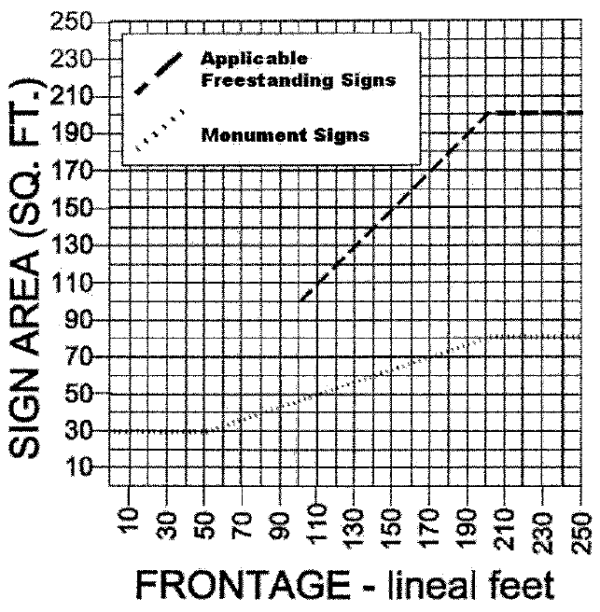
- Properties along other designated public streets may have freestanding signs that do not exceed the size set forth in SCC 10.44.150, attachment A or B of this chapter, where applicable. Sign area increases may be allowed in accordance with paragraph B,2.
- Location Standards: Signs must be located as follows:
- At least one hundred feet (100') from a monument sign or one hundred fifty feet (150') from another freestanding sign on the same side of the street,
- Outside of visibility triangles at intersections and site ingress/egress points,
- On private property not less than five feet (5') behind sidewalk or property line whichever is furthest from the street,
- Located within thirty feet (30') of the property line fronting the public road to which the sign is facing,
- If by government action a freestanding sign is condemned for health or safety issues the sign may be reconstructed and relocated on the same property to a location which complies with the above location standards where possible.
- Architectural Considerations:
- Signs must be in architectural harmony with associated uses and thematic elements of the associated development.
- All on premises freestanding signs must have the structural supports covered or concealed with pole covers (pylon covers) at least thirty six inches (36") wide. The actual structural supports shall not be exposed, and the covers must be architecturally and aesthetically designed to match the building or development to which it is associated.
- Materials, colors, illumination methods, and sign design should complement the rural and agrarian character of Santaquin City.
- Landscaping and/or architectural elements shall be provided under the copy area to integrate the sign with the landscape and not create isolated and barren structures on a site.
- Reader Boards And Message Centers:
- No reader boards or electronic message centers may exceed thirty percent (30%) of the total sign copy area of the sign. Amber lighting of electronic message centers is encouraged.
- If electronic message centers are utilized in signs along I-15, the message changes may not be more frequent than eight (8) seconds and the actual message rotation process must be accomplished in three (3) seconds or less.
- Animate And Inanimate Images:
- On-premises freestanding signs along the I-15 corridor may have signs with inanimate images. If inanimate images are utilized, the image changes may not be more frequent than eight (8) seconds and the actual image rotation process must happen instantly. Animate images on freestanding signs along I-15 are prohibited.
- Properties along other designated public streets may have freestanding signs with animate or inanimate images that are no more than twenty five (25) square feet. Such area shall be included within the maximum total sign area allowed.
- Height Standards:
- Parcels Where Freestanding Signs Are Allowed:
- Monument Signs: The following standards shall apply:
- Street Frontage Requirement For Monument Signs: Monument signs are allowed for any size parcel provided that the parcel has thirty feet (30') of street frontage. The sign area allowed is determined by the following formula: thirty two (32) square feet plus one square foot per one linear foot of street frontage over fifty feet (50'), maximum size is eighty (80) square feet. Parcels with two (2) street frontages are allowed a sign on each street. However, the signs must be separated by at least one hundred feet (100') as measured diagonally across the property from center to center of both signs or only one sign will be allowed. Signs within the visibility triangle may be allowed with the permission of the Santaquin City Engineer.
- Monument Signs For Planned Commercial Centers:
- Monument sign shall have a logo/identification theme as part of the sign.
- Planned commercial centers with two (2) or more street frontages are allowed one sign on each street frontage. The signs must be separated by at least one hundred feet (100') as measured diagonally across the property from center of sign. In no case shall the approved monument sign be placed closer than one hundred feet (100') to any other sign (monument or freestanding/pole) located on the same side of street.
- The area of the sign is determined by the length of the frontage along which the sign is to be placed, including the frontage of any freestanding buildings included within the planned commercial center. The sign area is determined as provided in paragraph D,1.
- In the case of the development of a planned commercial center on multiple parcels of property having common frontages, regardless of the number of separately owned parcels or buildings of separate occupancy within the planned commercial center, the frontage shall be considered to be the composite of the entire commonly used parcels or buildings and not the frontage of each individual business or occupancy. The overall frontage shall be used to calculate allowable sign area for the center identification sign as provided in paragraph D,1.
- In the event that a planned commercial center has several freestanding buildings (single or multi-occupant), each permitted monument sign shall be separated from each other by no less than one hundred feet (100').
- Freestanding Building Within A Planned Commercial Center:
- A freestanding building within an approved planned commercial center may request a monument sign provided that the freestanding building lot is contiguous to a major arterial street and has at least one hundred feet (100') of street frontage.
- Freestanding buildings with two (2) or more street frontages are allowed one sign on each frontage. The signs shall be separated by at least one hundred feet (100') as measured diagonally across the property from center of sign. In no case shall the approved monument sign be placed closer than one hundred feet (100') to any other sign (monument or freestanding/pole) located on the same side of street.
- The business or tenant occupying the freestanding building shall be allowed a monument sign upon determination of the Community Development Department that the sign is not in conflict with the purpose of this chapter and is in architectural harmony with uses adjacent to the development.
- The sign area is determined as provided in paragraph D,1.
- Freestanding Building Not Associated With A Planned Commercial Center:
- A freestanding building not associated with a planned commercial center is allowed one monument sign provided that the parcel has at least one hundred feet (100') of street frontage.
- In the case of the freestanding building having two (2) or more frontages, one sign may be placed on each street frontage provided that the signs are separated by at least one hundred feet (100') as measured diagonally from center of sign. In no case shall the permitted monument sign be placed closer than one hundred feet (100') to any other sign (monument or freestanding/pole) located on the same side of street.
- The sign area is determined as provided in paragraph D,1.
- Height Requirements For Monument Signs: Monument signs must have at least a one foot (1') pedestal, and the illuminated cabinet may not exceed five feet (5') for a total of six feet (6'). The height to the top of the sign as measured from the street curb may vary depending upon landscaping, but the combined height of the sign and berming/landscaping may not exceed nine feet (9'). The entire frontage of the property must be randomly bermed for this to occur, not just where the sign is to be positioned. The sign base shall be landscaped.
- Reader Boards And Electronic Message Centers: Reader boards (changeable copy areas) and electronic message centers may be allowed, however, such devices shall not exceed fifty percent (50%) of the total sign area.
- Animate And Inanimate Images: Monument signs may have animate or inanimate images that are no more than twenty five (25) square feet. Such area shall be included within the maximum total sign area allowed. (Ord. 05-02-2019, 5-7-2019, eff. 5-8-2019)
- Wall Signs: Wall signs should be the primary form of identification for business uses in the city. Each business is entitled to one wall sign if the following criteria are met:
- Area Occupied: The sign may not occupy more than fifteen percent (15%) or six hundred (600) square feet, whichever is less, of the flat wall area. If a sloping facade or roof exists, the sign may not exceed fifteen percent (15%) or six hundred (600) square feet, whichever is less, of that area. A wall sign may not use a combination of both flat and sloping areas in calculating the fifteen percent (15%). On a sloping roof the vertical projection is used to calculate area not actual length of the slope.
- Multiple Signs: The fifteen percent (15%) area of the primary wall and the five percent (5%) area of all secondary walls may be divided into more than one sign with the approval of the building official under the following guidelines and restrictions:
- Guidelines:
- The sign package blends with the aesthetics of the building and surrounding natural and manmade environment.
- The sign package color, style, size, scale and proportion enhances the exterior of the building and does not place too much bulk and external distractions on the exterior of the building.
- The number of signs are appropriate to the scale of the building.
- Restrictions:
- The maximum number of wall signs on any given wall, including multi-tenant buildings, shall be seven (7). For the purpose of this title, a sign will be considered a complete phrase and the suggested layout of the sign package (i.e., the individual words may either be lumped together as 1 phrase to equal 1 sign, or spread out to be many different signs, such as "1 Hour Photo" would be considered 1 sign).
- The maximum combined square footage of wall signs on any given wall shall be limited to six hundred (600) square feet or fifteen percent (15%) of the wall (5 percent if a secondary wall), whichever is less.
- Multi-tenant buildings may exceed the maximum number of signs to accommodate an additional sign if the Zoning Administrator judges the additional sign to be consistent with the criteria set forth above.
- Multiple wall signs shall utilize individual lettering and logos only. No multiple cabinet signs or combination of cabinet and individual lettering signs shall be approved. It is encouraged that the use of multiple materials and lettering styles, such as exposed neon, different type styles, use of logos in conjunction with the lettering be implemented.
- Guidelines:
- Painted Signs: Painted signs applied directly to any building face, must have specific approval of the Zoning Administrator . I If the sign is located on a historic building, the sign must have approval of the Historic Preservation Committee.
- Changeable Copy: Wall signs with changeable copy, reader board, or electronic message capability are not allowed.
- Wall Specified: Buildings or businesses with exposure on the side(s) and front may choose which wall to mount their primary sign upon. Signs are allowed on the rear of the building with Zoning Administrator approval.
- Multiple Walls: A sign on a third and fourth wall must be approved by the zoning administrator using the criteria as listed in paragraph E,2.
- Multi-Tenant Buildings: Owners of buildings that have small offices inside, accessory and/or secondary to the main use, are required to create a building identification sign instead of trying to obtain signage for every tenant. This is especially true for buildings with two (2) or more levels.
- Sloping Roofs: Wall signs on sloping roofs shall be erected so as to appear as a sign applied to a similarly vertical wall surface and finished in such a manner that the visual appearance from all sides is such that they appear to be part of the building itself. All such signs shall be installed or erected in such a manner that there is no visual support structure such as guywires or braces.
- Projection: No part of any wall sign or of the sign structure shall project above or below the highest or lowest part of the wall upon which the sign is mounted or painted.
- Projection From Face Of Building: No wall sign including any light box or structural part, shall project more than eighteen inches (18") from the face of the building to which it is attached. (Ord. 2-01-2002, 2-5-2002, eff. 2-5-2002)
- Off Premises Billboard Signs: Off premises billboard signs shall be permitted only as provided for in this paragraph F.
- Limits On The Number Of Billboards: No billboards are allowed within Santaquin City limits. The following provisions of this paragraph F shall apply to the rebuilding or relocation of all legal nonconforming billboards within the city to which an owner is entitled by Utah law:
- Billboard signs shall not be permitted within any zone in which residential uses are permitted including zones allowing mixed use developments.
- No billboard shall be erected within five hundred feet (500') of another existing billboard sign.
- Sign Construction: All off premises signs shall be of a monopole construction.
- Size: The maximum size of billboard signs shall be as follows:
- I-15 Corridor: Billboard signs located within one hundred feet (100') of the I-15 right of way and which are oriented to I-15 traffic shall be a maximum of fourteen feet by forty eight feet (14' x 48').
- Other Signs: All billboard signs which are located more than one hundred feet (100') from the I-15 right of way shall be a maximum of twelve feet by twenty four feet (12' x 24').
- Height: Maximum height of billboard signs shall be twenty five feet (25') to the highest point of the haggle above the grade of the traveled way of the right of way it fronts, as measured from the elevation of the roadway on the same side as the billboard at a point perpendicular to the roadway.
- Lighting:
- No billboard may be illuminated by artificial means between the hours of eleven o'clock (11:00) P.M. and six o'clock (6:00) A.M.
- All luminary devices shall be installed and directed to primarily illuminate the sign face with minimal light spill occurring off of the sign.
- Luminary devices shall be set at least ten feet (10') inside the outer edges of the sign face and no more than five feet (5') from the face of the sign.
- Metal halide or "white light" luminaries are not permitted. Existing lighting which does not comply with this standard shall be made compliant when such is repaired or replaced.
- Relocation Of Billboards: The current provisions of this code and the Utah state code shall apply to the rebuilding, replacement, or relocation of any billboard.
- Applications For Relocating Or Rebuilding Billboards: No billboard shall be constructed until the owner has obtained a Santaquin City building permit and paid all applicable fees. All building permit applications submitted for the replacement, rebuilding, or relocation of a billboard shall be valid for a period of six (6) calendar months from the date of issuance, except as required by Utah law.
- Construction Standards: All billboard applications shall comply with the international building code or its adopted successor, this code, as amended, and the national electrical code, or its adopted successor, as applicable. All billboards shall be constructed in accordance with these codes.
- Other Provisions: All other aspects of billboard placement and design shall be adhered to as provided in the Utah state code. (Ord. 02-01-2008, 2-6-2008, eff. 2-7-2008)
- Limits On The Number Of Billboards: No billboards are allowed within Santaquin City limits. The following provisions of this paragraph F shall apply to the rebuilding or relocation of all legal nonconforming billboards within the city to which an owner is entitled by Utah law:
- Suspended Signs: Suspended signs used in place of wall signs are allowed if the architecture of the building or planned center lends itself to that design and a sign theme is submitted and approved by the building official. The following shall apply:
- The zoning administrator, or other authorized officer, must review any proposal for a suspended sign for compatibility with the building.
- Any sign may not exceed fifteen percent (15%) of the flat wall of the tenant space.
- No sign may project beyond the outside limit of the arcade, marquee, or canopy or facade to which they are attached.
- Any sign must have at least an eight foot (8') clearance above the sidewalk or seven feet (7') above any landscaped area.
- There must be a minimum horizontal distance of five feet (5') on both sides between suspended signs.
- Awning Signs: Awning signs are allowed only under the following circumstances:
- The zoning administrator, or other authorized officer, may approve any applicant for an awning sign which fully complies with sign standards.
- Awning signs in planned centers must be designed to conform to an approved sign theme.
- No awning signs will be allowed on multitenant buildings or in planned centers unless the building or center has consistent treatment.
- Awning signs shall be limited to single story buildings or to the first level only of multistory buildings.
- Awning signs must function as true awnings by being placed over a doorway, window, or walkway to protect such from the elements.
- Awning signs are not allowed on or above sloping or mansard roof.
- The area of awning signs shall be a maximum of fifteen percent (15%) of the primary wall upon which the sign is mounted. Awning signs for secondary walls are limited to five percent (5%) of the wall area.
- Area of copy/logo on awnings shall be limited to forty percent (40%) of the awning. Illuminated signs on other sides shall be permitted.
- Awning signs shall conform to all provisions of the uniform building code governing such structures.
- Illuminated (backlit), translucent, vinyl awnings are not permitted. Translucent letters or accents sewn into opaque canvas or acrylic awnings are permitted.
- Awning signs shall not project out from the wall more than eight feet (8'), nor less than two feet (2'). In the case of entrance canopies the awning may project out from the building over a walkway and must lead to a bona fide business entrance. Such canopies will be permitted if they are compatible with the architecture of the building.
- Awning signs shall not project above the roofline, defined as the highest part of the vertical wall.
- Awning signs shall maintain a minimum clearance of seven feet (7') to the bottom of the valance and eight feet (8') to the frame above the sidewalk and comply with all other clearance requirements.
- Awning signs shall be maintained in a clean, safe and attractive condition. Failure to do so will result in revocation of the sign permit.
- Canopies (Gas Stations): Signs for canopies over gas islands are regulated as follows:
- Sign copy, corporate logos, etc., may be a maximum of fifteen percent (15%) of one face of the canopy.
- Up to three (3) sides of the canopy may be used for signs.
- The height to the top of the canopy may not exceed twenty feet (20') from grade and no canopy fascia may exceed four feet (4') in height.
- Individual letters, logos, or symbols may not exceed four feet (4') in height or project out from the surface of the canopy more than eighteen inches (18") or project above or below the canopy face.
- Gas price signs are allowed on the monument sign or below the canopy over the pumps. One double faced sign for each type of fuel sold is allowed per gas island with a maximum of four (4) sets per station. Area of said sign may not exceed four (4) square feet each.
- Residential Zones: Conditional uses may risk being more intensive uses allowed in residential zones. Therefore, the sign area allowances are more restrictive than in commercial areas and a sign permit is required for signs of conditional uses. If deemed appropriate upon planning commission review, conditional uses are limited to one monument sign of thirty two (32) square feet. Such signs may not have changeable copy capability. Wall signs shall be regulated as set forth in this chapter. Multitenant buildings with monument signs must identify the center primarily. (Home occupations are limited to nonilluminated flat wall signs no more than 2 square feet in area.)
- Advertising Bench Signs And Transit Bus Stop Enclosures: Such shall be regulated as follows:
- Location: Advertising bench and transit bus stop enclosures signs may be allowed in all commercial and industrial districts. In other districts, the planning commission shall review and may either approve or deny the location. The criteria that may be used by the planning commission when reviewing these alternative sites includes:
- Does this bus stop warrant a bench or transit bus stop enclosure due to ridership (ridership figures to be confirmed by the Utah transit authority or its successor)?
- Is the location upon a street with back facing lot?
- Is there sufficient space to place the entire bench or transit bus stop enclosure upon private property and not cause a pedestrian or traffic hazard?
- Placement:
- Advertising bench and transit bus stop enclosure signs shall be placed parallel to the roadway and shall not be placed within the public right of way. The right of way shall include all asphalt, curb, gutter, parking strip and sidewalk. Such bench signs or structures shall be permitted only at public transit bus stops, and shall be no closer than thirty feet (30') from an intersection.
- No bench or transit bus stop enclosure shall be placed upon or along any unimproved right of way.
- Information On Display Surface: The name and telephone number of the owner of the advertising bench shall be printed on the bench or at a conspicuous location within the transit bus stop enclosure. Advertisement must conform to the Utah outdoor advertising code.
- Bench And Transit Stop Enclosure Sign Concession: To install a bench advertising sign or transit bus stop enclosure sign, the company must be an approved concessionaire to operate such facilities. The number of concessions and ratio of bench signs to transit bus stop enclosure signs shall be determined by the city at the time the concession(s) are awarded.
- Permits: Prior to locating an advertising bench or transit bus stop enclosure sign, the concessionaire must obtain a sign permit for the site at which the advertising bench or transit bus stop enclosure sign will be placed. This permit shall be issued for the calendar year or as otherwise specified within the concession agreement. The permit shall not be issued until Santaquin City receives all documents and approvals as required by the concession agreement.
- Fee: The fee for an advertising bench sign permit shall be established by resolution of the city council.
- Bond Required: No permit shall be issued or remain in effect unless the permittee, at the permittee's own cost and expense and without cost to the city, shall procure and maintain in force and on file with the community development department a policy of insurance or a certificate of insurance and form of policy issued by an insurance company licensed to do business in Utah and approved by the city attorney and city risk manager; protecting Santaquin City, its officers, agents and employees and the abutting property owners, lessees and tenants from any and all claims for injury, death or damage to persons or property that might result through the placing and/or maintenance of the sign or signs. The minimum amount of the insurance policy shall be one hundred thousand dollars ($100,000.00) for injuries arising from each accident, and fifty thousand dollars ($50,000.00) for property damage in each accident. The policy shall also contain a provision that the community development department shall be notified at least thirty (30) days prior to any cancellation of such insurance. Advertising bench sign applicants need only procure and maintain one such policy of insurance per year which covers all permit applications submitted by the applicant.
- Time Limit For Placement: Advertising bench and transit bus stop enclosure signs shall be placed at the permitted site within thirty (30) days after the permit has been issued or the permit shall become null and void, unless otherwise specified in the concession agreement. (Ord. 2-01-2002, 2-5-2002, eff. 2-5-2002)
- Location: Advertising bench and transit bus stop enclosures signs may be allowed in all commercial and industrial districts. In other districts, the planning commission shall review and may either approve or deny the location. The criteria that may be used by the planning commission when reviewing these alternative sites includes:
Amended by Ord. 04-01-2014 on 4/16/2014
Amended by Ord. 05-02-2015 on 5/6/2015
Amended by Ord. 08-01-2024 on 8/6/2024
10.44.090 TEMPORARY SIGNS
- Standards For Temporary Signs: Temporary signs shall not be placed in or over a public right of way, may not flash, blink, spin, rotate, block traffic visibility, constitute a vehicular or pedestrian traffic hazard, or cause a public nuisance of any kind. They shall not be attached to telephone poles, fences, or trees. They must be firmly secured to the building or ground. Temporary signs may be attached to existing permanent signs only for the grand opening period. Temporary signs may cover or obscure an existing permanent sign only if the business has changed hands or changed names. No off premises temporary signs are allowed except those specifically noted and regulated for real estate purposes or otherwise noted in this title.
- Temporary Signs Requiring A Permit:
- Grand Opening Signs: Temporary signs announcing the initial opening of a business, or the relocation, or change of ownership of an existing business may be allowed provided that the event shall not continue for more than sixty (60) days and that the permit is issued within the first year of operation. There shall be no more than two (2) signs allowed per business. A combination banner and portable sign is acceptable. The signs must comply with general size and location standards for signage in this chapter and must be removed at the end of the sixty (60) day period. A temporary sign permit is required.
NOTE: "Now Open", "Grand Opening", "New Location of ...", "New Ownership", etc., are appropriate type message for such signs. - Special Promotion Periods: A business may apply for three (3) special promotion periods during the calendar year. Each period may not exceed seven (7) days in length. The periods may be combined to run consecutively. A temporary sign permit is required. A banner or portable sign is allowed during this period.
NOTE: Special product, price, or service advertising is appropriate during these periods. - Going Out Of Business/Bankruptcy Period: A business may apply for a permit in order to facilitate the liquidation of inventory for a failing business for a period not to exceed ninety (90) calendar days. Such permit will be allowed only once for any business license. A temporary sign permit is required. A banner or portable sign is allowed during this period.
NOTE: Special product, price or service advertising is appropriate during these periods.
- Grand Opening Signs: Temporary signs announcing the initial opening of a business, or the relocation, or change of ownership of an existing business may be allowed provided that the event shall not continue for more than sixty (60) days and that the permit is issued within the first year of operation. There shall be no more than two (2) signs allowed per business. A combination banner and portable sign is acceptable. The signs must comply with general size and location standards for signage in this chapter and must be removed at the end of the sixty (60) day period. A temporary sign permit is required.
- Temporary Signs Allowed Without A Permit:
- Holiday Periods: A business may advertise a special service, product or sale during the following holiday periods without a permit: NOTE: One banner sign only is allowed during these periods. The sign must be mounted on the building. The sign must be removed by the end of the first working day after the holiday period ends.
Presidents' Day - February 5 days Easter - March or April 5 days Memorial Day - May 5 days July 4 - July 24 5 days each Labor Day - September 5 days Thanksgiving - November 7 days Hanukkah, Christmas, New Year's 21 days starting December 15 and ending January 2 - Directional Signs For Subdivisions And Planned Unit Developments: These signs do not need a permit. However, written permission of the property owner must be obtained and presented to the community development department before they are erected.
- Three (3) directional signs may be allowed for a developer to guide traffic to the site and should contain only the name, address, and direction of the development. They are limited to thirty two (32) square feet in area and eight feet (8') in height and must be placed entirely upon private property with the permission of the owner. Two (2) additional sixteen (16) square foot directional signs may be allowed by the zoning administrator, or other authorized officer, if a special need or unusual circumstance can be demonstrated. They may not encroach upon any public right of way and may not be located within the sixty foot (60') traffic visibility triangle on corners except where they are not more than three feet (3') in height as per SCC 10.44.130 paragraph C or receive approval from the Santaquin City engineer.
- Such signs shall be removed within two (2) years of the issuance of the first building permit in the project or if the lots are sold out before two (2) years immediately upon sale of the last lot. An extension may be granted by the community development department if a substantial number of the lots have not been sold at the end of the two (2) year period. (Ord. 2-01-2002, 2-5-2002, eff. 2-5-2002)
- Holiday Periods: A business may advertise a special service, product or sale during the following holiday periods without a permit:
10.44.100 SIGN PERMIT PROCESS
No person shall erect, install, or paint any sign, or change the face of any sign, whether it be temporary or permanent in nature, without obtaining a sign permit from the community development department except as outlined in this title. This includes new signs, signs to be added to existing buildings or uses, and existing signs that are to be enlarged, changed, or modified.
NOTE: New or existing signs installed or maintained without a permit will be required to be removed or will be charged a penalty fee of one hundred dollars ($100.00), or a double sign permit fee, whichever is greater, at the time the owner/operator of the sign makes application for a sign permit with the community development department. (Ord. 2-01-2002, 2-5-2002, eff. 2-5-2002)
10.44.110 SITE PLAN REVIEW; SIGN DESIGN
- Site Plan Review: When new buildings or developments are presented for site plan review, signs proposed for the development shall be reviewed concurrently by staff. All planned centers and multitenant buildings must submit a sign theme for approval by the building official. The center must have an approved sign theme before any sign permits will be issued. If a plan for a sign package is not submitted at site plan review, which is encouraged, the developer will be notified of sign ordinance standards and expected to submit plans that will adhere to the code.
- Sign Design: Applicants for sign permits should give serious consideration to the following elements when submitting plans for signs:
- Architectural compatibility.
- Color and style.
- Size, scale, proportion (balance).
- Location.
- Landscaping.
NOTE: The building official may refer an application for a sign permit to the planning commission for further approval/denial if the building official feels adherence to the above listed criteria is not shown in submitted plans. (Ord. 2-01-2002, 2-5-2002, eff. 2-5-2002)
10.44.120 REQUIRED PERMIT INFORMATION
- Monument And Freestanding Signs:
- Plot plan showing relationship of sign to buildings, property lines, setback from public rights of way, intersections, easements and driveways.
- Two (2) accurately dimensioned, scaled drawings showing height, color, square foot dimensions, landscaping, sign composition, type of illumination, and how the sign will appear from the street.
- Details of sign construction including electrical plan, foundation scheme, and value of the sign.
- Number of acres and length of lineal frontage of property.
- Wall Signs:
- Two (2) scaled drawings showing square foot dimensions of both the building and the sign, sign composition, and type of illumination.
- A profile drawing of how the sign will appear from the street/parking area and on the building.
- Details of sign construction and attachment including electrical plan.
- Temporary Signs:
- Plot plan showing relationship of sign(s) to buildings, property lines, setback from public rights of way, intersections, easements and driveways.
- Length of period for display, type of request.
- Additional Information Required:
- Proof of current Santaquin City business license.
- Business address and phone number.
- Address of property owner and phone number.
- General or electrical contractor license, phone and address.
- Value of the sign. (Ord. 2-01-2002, 2-5-2002, eff. 2-5-2002)
10.44.130 SAFETY AND LOCATION STANDARDS FOR PERMANENT SIGNS
- Standards Of Construction:
- Code Compliance: All signs erected in Santaquin City shall comply with the provisions of the national electrical code, uniform building code and the Santaquin City sign ordinance effective at the time the sign permit is issued.
- Licensed Sign Contractor Required: No sign, fixture or device involving electrical wiring or connections shall be erected or installed in Santaquin City except by a licensed and bonded contractor.
- Engineering Required: All sign permit applications shall be engineered to demonstrate conformance with the applicable provisions of the uniform building code; and, where required by the chief building official, shall be accompanied by a drawing stamped by a structural engineer licensed by the state of Utah attesting to the adequacy of the proposed construction of the sign and its supports.
- Durability: All signs must be built of durable and permanent materials.
- Power Source: Permanent power sources for signs must be concealed underground away from public view.
- Traffic Safety: No sign or other advertising structure shall be erected which in any manner may be confused with an official traffic sign or signal, or which bears words normally used in such signs, i.e., stop, go slow, caution, danger, warning, etc. No sign or any advertising structure shall be erected which by reason of its size, location, shape, content, coloring, or manner of illumination might be confused as a traffic control device. No sign shall have lighting which impairs the vision of anyone traveling upon a public street or distracts any driver so as to create a public nuisance. Specifically, no sign or group of signs may not exceed one foot-candle in brightness as measured at the property line.
- Clear View Of Intersecting Streets: No sign more than three feet (3') in height (above the top back of curb) shall be erected at any intersection for vehicular traffic within a triangular area formed by the intersection of straight lines extended from the back of curb (or future curb) and a line connecting them at points sixty feet (60') from the intersection of the lines.
NOTE: Monument signs may be erected in the above mentioned area if they are less than three feet (3') above the curb grade to the top of the sign. The building official must approve any removal of landscaping in order to accomplish that objective. (Ord. 2-01-2002, 2-5-2002, eff. 2-5-2002)
Deviations from these requirements must be reviewed and approved by the Santaquin City traffic engineer, if found to maintain an acceptable degree of safety. Deviations beyond those approved by the traffic engineer must be appealed to the appeal authority. (Ord. 2-01-2002, 2-5-2002, eff. 2-5-2002; amd. Ord. 02-02-2008, 2-6-2008, eff. 2-7-2008) - Specific Clearance And Location Requirements: The following rules apply for all signs:
- Freestanding signs shall not extend over any pedestrian or vehicular access area unless specifically approved by the traffic engineer.
- No part of any sign shall interfere with the use of any fire escape, exit, required stairway, door ventilator, or window.
- No sign shall be erected or maintained which has less horizontal or vertical clearance from communication lines and energized electrical power lines than that prescribed by the laws of the state of Utah or its agencies.
- No sign shall be located on publicly owned land or inside street rights of way, except signs owned and erected by permission of an authorized public agency or specifically authorized herein.
- High profile (freestanding) and low profile (ground or monument) signs shall be located at least their height in distance from side property lines in order to prevent damage to adjacent land in case a sign is toppled by accident or an act of God.
- Low profile (monument) signs shall be set back at least three feet (3') from the front sidewalk and from all driveways.
- Maintenance: Every sign shall be kept in complete operating condition. The landscaped area in which any sign is placed shall be kept free from weeds, garbage, and debris. "Maintenance" includes the repair of facades where signs have been removed; the painting, cleaning, repairing of the sign. "Maintenance" does not include structural alterations, cosmetic or style changes or enlargements of face changes.
- Landscaping: All freestanding or monument detached signs installed in Santaquin City must be incorporated into a landscape design or planter box. Exceptions to this rule must be approved by the planning commission. The planning commission must also approve any permanent removal of landscaping for the purpose of situating a sign.
- Pole Cover Required: All on premises freestanding signs must have the structural supports covered or concealed with pole covers (pylon covers) at least thirty six inches (36") wide. The actual structural supports shall not be exposed, and the covers must be architecturally and aesthetically designed to match the building.
- Foundations: All signs must be permanently mounted on foundations and footings which conform to the uniform building code.
- Pedestal Required: All monument signs must have at least a one foot (1') opaque pedestal designed as part of the foundation which conceals any pole support. The pedestal should run at least fifty percent (50%) of the horizontal length of the sign, and there may not be any exposed space between the pedestal and the ground or landscaped area. The planning department may review and approve/deny any variation to the pedestal base requirement.
- Lighting: The light from the illumination of signs shall be carefully directed so that the light is not obtrusive or a nuisance to adjacent properties particularly residential areas. (Ord. 2-01-2002, 2-5-2002, eff. 2-5-2002)
- Building Identification: All buildings within the city shall be clearly identified with a street address number in addition to any business identification, as applicable, and such numbers shall be identified using the following standards:
- Background: Numbers shall be set on a background of a contrasting color.
- Size: Numbers shall be at least four inches (4") in height and/or located and large enough to be easily seen from the street.
- Visibility: When a dwelling is some distance from a street or when view of the dwelling is blocked by trees or shrubs, numbers should be displayed on a sign attached to a fence, gate, or street mailbox.
- Corner Lots: House numbers shall face the street named in the address. (Ord. 03-01-2003, 3-5-2003, eff. 3-17-2003)
10.44.140 MEASUREMENT OF REGULATED SIGN AREA
- Wall Signs: Sign copy mounted or painted on a background panel or area distinctly painted, textured or constructed as a background for the sign copy shall be measured as that area contained within the outside dimensions of the background panel or surface. Any illuminated bands or illuminated structures which contain sign copy, corporate logos, etc., are by definition wall signs in their entirety and as such may not exceed fifteen percent (15%) of the wall area. However, illuminated bands on canopies covering gasoline pump islands shall be regulated per this chapter.

For sign copy mounted as individual letters and/or graphics against a wall or fascia of a building or other structure that has not been painted, textured or otherwise altered to provide a distinctive background for the sign copy, the area shall be defined as the area enclosed by the smallest six (6) sided polygon that will enclose all sign area.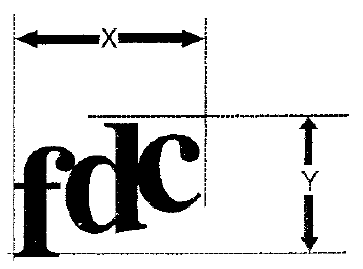 For sign copy on an illuminated sign or illuminated architectural element of a building, the entire illuminated surface or illuminated architectural element which contains sign copy shall be counted as sign area.
 - Monument Signs: The regulated area of a monument sign shall include all parts of the sign or structure that contains identification (words or symbols) and information.
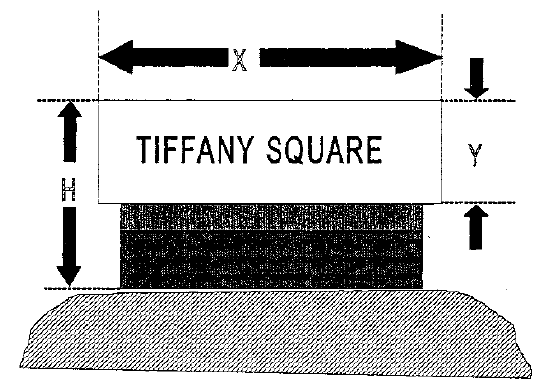
The height of a ground sign shall be the distance from the highest point of the sign to the height of the street curb or sidewalk. - Multiple Face Signs (Including, But Not Limited To, Freestanding Or Monument Signs):
- Single Panel: Measure the area of the single face only.
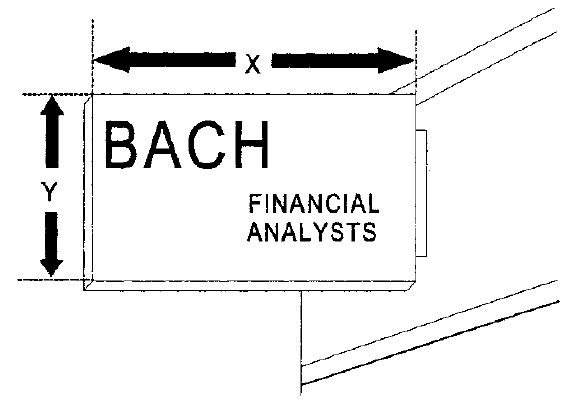
- Double Panel: If the interior angle between the top two (2) faces is forty five degrees (45°) or less, the area to be measured will be the area of one face only. If the angle between the two (2) sign faces is greater than forty five degrees (45°), the sign area to be measured will be the sum of the areas of the two (2) faces.
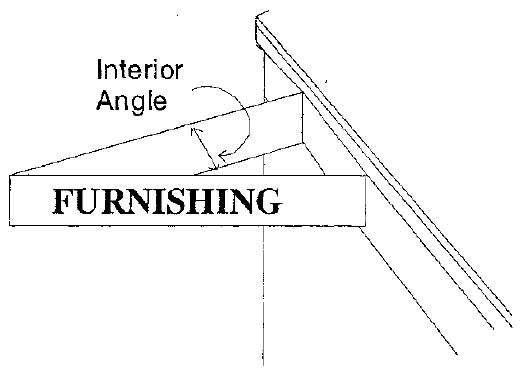
- Three Or More: The sign area shall be the sum of the areas of the three (3) or more faces.
- Single Panel: Measure the area of the single face only.
- Freestanding Signs: The regulated area of a freestanding sign shall include all parts of the sign or structure that contains identification (words or symbols) and information.
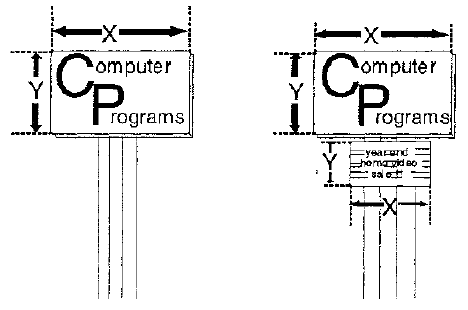 The height of a freestanding sign shall be the distance from the highest point of the sign to the top of the curb or sidewalk or crown of the street when there is no curb or sidewalk.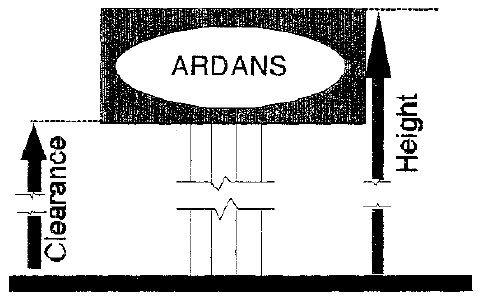
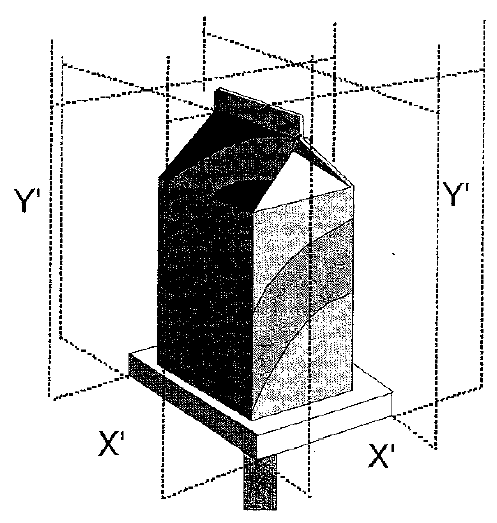
- Nonplaner Signs: For spherical, free form, sculptural, or other nonplaner signs, the sign area shall be the sum of the areas of the four (4) vertical sides of the smallest polyhedron that will encompass the sign structure.
 (Ord. 2-01-2002, 2-5-2002, eff. 2-5-2002)
10.44.150 ATTACHMENTS AND GRAPHS
ATTACHMENT A Size Allowance For Monument And Applicable Freestanding Signs
 (Ord. 05-02-2019, 5-7-2019, eff. 5-8-2019)
ATTACHMENT B
Sign Area Allowance For Development Identification Signs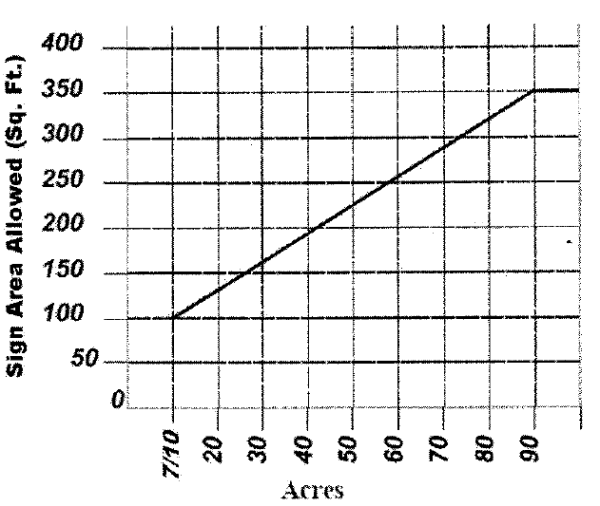 (Ord. 06-01-2008, 6-4-2008, eff. 6-5-2008)
10.44.160 DEFINITIONS - SIGN REGULATIONS
In this chapter, it is the intent to define certain words and phrases in order that they may be understood when used in the sign regulation sections of this code. Words used in the present tense include the future; the singular includes the plural and the plural the singular. Further questions concerning definitions as defined in this chapter shall be referred to the zoning administrator, or other authorized officer. The following terms, as defined, shall apply as such throughout these sign regulations:
SIGN: Every message, announcement, declaration, demonstration, display, illustration, insignia, surface, or space erected or maintained in view of the observer thereof for identification, advertisement, or promotion of the interests of any person, entity, product, or service. The definition of sign shall include all flags of any type. The definition of sign shall also include the sign structure, supports, lighting system, and any attachments, ornaments or other features used to draw the attention of observers.
Abandoned Sign: A sign which no longer correctly advertises a bona fide business, lessor, owner, product or activity conducted or available. Such signs may also be a nonmaintained sign. A sign which contains a public service announcement is not an abandoned sign.
Billboard: A freestanding sign, usually having more than one hundred twenty (120) square feet of sign area, and which may be owned by a commercial company which rents or leases use of the sign for advertising purposes.
Freestanding (Or Pole) Sign: A sign which generally exceeds eight feet (8') in height which is vertically self-supported by a fixed, permanent form or support(s) in the ground.
Ground (Or Monument) Sign: A sign which does not generally exceed eight feet (8') in height which is vertically self-supported by a fixed permanent form or support(s) in the ground.
Illegal Sign: Any sign which does not conform to the regulations of this code as currently adopted or as adopted at the time of construction.
Illuminated Sign: A sign which has characters, letters, figures, designs, background, or outlines illuminated by electric lights or luminous tubes as part of the sign proper.
Nonconforming Sign: A sign, sign structure or portion that was constructed in accordance with all laws and regulations in effect on the date that the complete application for such construction was received by the city, but which does not conform to all applicable regulations prescribed herein.
Nonmaintained Sign: A sign which, due to lack of repair, cleaning, painting, oiling, or changing of light bulbs has become deteriorated, nonfunctional, or may pose a health and safety risk.
Off Premises Sign: An advertising sign which directs attention to a site, product, commodity, or services not related to the premises on which it is erected. This may include billboards.
On Premises Sign: A sign which directs attention to a business, commodity, product, use, service or other activity which is sold, offered or conducted on the premises upon which the sign is located.
Permanent Sign: Any sign which is not temporary by definition. And intended to be displayed for more than sixty (60) consecutive days.
Sign Area: The area of a sign that is used for display purposes, excluding the minimum frame and supports and as further detailed in these sign regulations.
Temporary Sign: A banner, pennant, valance or other advertising display with or without frames, intended to be displayed in or out of doors for a short period of time; shall include political signs, special events signs, special business promotions, mobile signs, banners, wind signs, portable signs, and inflatables.
Unsafe Or Dangerous Sign: A sign constituting a hazard to public safety, or which does not meet lateral and/or vertical load requirements, or applicable wiring and installation standards of the city adopted codes.
Wall Sign: A sign that is mounted to or painted on a building wall or its facing, or is applied in such a way that it gives the visual appearance of being painted on a wall or facing by not having a frame or separation from the wall or facing. (Ord. 02-01-2008, 2-6-2008, eff. 2-7-2008)

