
Sebring City Zoning Code
ARTICLE V
- SUPPLEMENTARY DISTRICT REGULATIONS5
Editor's note— Section 2 of Ord. No. 1324, adopted Sept. 6, 2011, changed the title of art. V from "Supplementary Regulations" to "Supplementary District Regulations."
DIVISION 2. - OFF-STREET PARKING AND LOADING[6]
Editor's note— Ord. No. 1279, § 2, adopted April 21, 2009, repealed the former Div. 2., § 26-201, and enacted a new Div. 2 as set out herein. The former Div. 2 pertained to similar subject matter and derived from Code 1981; Ord. No. 1040, adopted July 2, 2002; and Ord. No. 1247, adopted Sept. 4, 2007.
Cross reference— Stopping, standing and parking generally, § 22-126 et seq.
DIVISION 3. - SPECIAL LAND USES[7]
Editor's note— Section 27 of Ord. No. 1335, adopted Aug. 7, 2012, repealed div. 3, §§ 26-221—26-229, and section 28 of said ordinance enacted a new div. 3 as set out herein. The Former div. 3 pertained to Community Unit Regulation (C-U), and derived from the 1981 Code, § 22-26.
Sec. 26-176. - Additional height and area regulations.
The following requirements or regulations qualify or supplement as the case may be the district regulations or requirements appearing elsewhere in this chapter. Regulations specific to accessory buildings are provided in section 26-222, accessory uses and structures.
(1)
Public or semipublic buildings, hospitals, sanitoriums, congregate living facilities, schools and churches or temples, where permitted in a district, may be erected to a height not exceeding 75 feet, when the front, rear and side yards are increased an additional foot for each foot such building exceeds the height limit otherwise provided in the district in which the building is built.
(2)
Single-family and two-family dwellings in the dwelling districts may be increased in height by not more than ten feet when two side yards of not less than 15 feet each are provided. Such dwellings, however, shall not exceed three stories in height.
(3)
Chimneys, water tanks or towers, penthouses, scenery lofts, elevator bulkheads, stacks, ornamental towers or spires, wireless or broadcasting towers, monuments, cupolas, domes, false mansards, parapet walls, similar structures and necessary mechanical appurtenances may be erected to a height in accordance with ordinances of the city.
(4)
In the case of group houses or court apartments, buildings may rear upon the required side yard provided:
a.
For group houses, the required side yard shall be increased by one foot for each abutting building.
b.
For apartment houses, the required side yard shall be increased by one foot for each stairway opening onto or served by such side yard.
c.
The width of the place or court shall not be less than three times the width of the side yard as required in this subsection, provided that open unenclosed porches may project into a required place or court not more than 20 percent of the width of such place or court.
d.
Where no roadway is provided in the place or court, the width allowed for such roadway shall be in addition to that required in this subsection.
e.
All other requirements, including front, side and rear yards, shall be complied with in accordance with the district in which such group houses or court apartments are located.
(5)
The side yard requirements for dwellings shall be waived where dwellings are erected above stores or shops.
(6)
In computing the depth of a rear yard, for any building where such yard opens onto an alley, half of such alley may be assumed to be a portion of the rear yard.
(7)
Every part of a required yard or court shall be open from its lowest point to the sky unobstructed, except for the ordinary projection of sills, belt courses, cornices, buttresses, ornamental features and eaves; however, none of the above projections shall project into a minimum court more than six inches nor into a minimum side yard more than 24 inches.
(8)
No cornices shall project over the street line more than five percent of the width of such street, and shall in no case project more than four feet.
(9)
Open or enclosed fire escapes, fireproof outside stairways and balconies projecting into a minimum yard or court not more than three and one-half feet and the ordinary projections of chimneys and flues may be permitted by the building official where they are so placed as not to obstruct the light and ventilation.
(Code 1981, § 22-17; Ord. No. 1406, § 1(Exh. A), 9-20-2016)
Sec. 26-177. - Rights-of-way.
(a)
Purpose. The purpose of this section is to assure a safe and efficient traffic circulation system in the city by establishing right-of-way widths for future transportation facilities and by prohibiting encroachment of structures into existing rights-of-way.
(b)
Permit required. Except as provided in subsection (e) of this section, no person shall construct or maintain any structure or facility or make any other use of a public road right-of-way unless a permit has been issued by the city administrator or his designee approving and authorizing such construction, maintenance or use. All applications for the use of public rights-of-way must describe the space to be used and the length of time of such use. Permits may be granted for a period of time not exceeding six months, but may be renewed for periods not to exceed six months if the encroachment does not unreasonably restrict the public use of the right-of-way and the encroachment is necessary to accomplish the objective for which it is requested in a reasonable manner.
(c)
Minimum right-of-way requirements.
(1)
No person shall willfully obstruct any portion of the right-of-way for a new roadway identified in the future traffic circulation map series established in the traffic circulation element of the comprehensive plan. Further, no person shall construct any structure or facility or make any other use of the right-of-way for a new roadway identified in the future traffic circulation map series.
(2)
The following minimum right-of-way widths for new roadways are established:
RIGHT-OF-WAY
BY FACILITY TYPE
(d)
Presumption. Any person who obstructs a public road right-of-way shall be presumed to have done so willfully if the obstruction is allowed to remain on the right-of-way for a period of 24 hours after the person has been notified to remove the obstruction by the city council or its authorized representative.
(e)
Exceptions. The following shall be exceptions from the requirements of subsection (b) of this section:
(1)
Improvement of a public road by a property owner of such public road adjacent to his property with landscaping, shrubbery or grass that is not inconsistent with the use of the public road for road purposes.
(2)
The parking of motor vehicles on that portion of the public road not used as traffic lanes if not otherwise prohibited.
(3)
Use of the public road for road and traffic purposes other than such purposes involving vehicles of such weight or of such characteristics (for example, metal tires or treads) as may damage the road surface.
(4)
The replacement or maintenance of existing utility facilities, such as telephone poles.
(f)
Nonpermitted structures or facilities. Any structure or facility, including utilities constructed or maintained on public roads, in violation of this section shall be removed from such right-of-way and such right-of-way shall be restored to the condition that existed immediately prior to the construction or maintenance of the structure or facility at the expense of the person constructing, maintaining or owning such structure or facility. If such structure or facility has not been removed and the right-of-way restored as required by this section within ten days of demand by the city council to do so, such structure or facility may be removed by the city council at the expense of the person constructing, maintaining or owning such structure or facility. If such person does not pay to the city council the cost of removing such structures and facilities and restoring the right-of-way as required by this section within ten days of demand, the cost shall be and constitute a lien against all property owned by such person in the city, to be foreclosed in the manner provided by law.
(Code 1981, § 22-19; Ord. No. 1517, § 1, 10-17-2023)
Sec. 26-178. - Access management.
(a)
General standards. All proposed development, except as provided in subsection (d) of this section, shall meet the following standards for vehicular access and circulation:
(1)
Access points must be able to accommodate all vehicle entrances having occasion to enter the site, including delivery vehicles.
(2)
Access point design must be such that an entering standard passenger vehicle will not encroach upon the exit lane of a two-way driveway. Also, a right-turning exiting vehicle will be able to use only the first through traffic lane available without encroaching into the adjacent through lane.
(3)
There must be sufficient on-site storage to accommodate queued vehicles waiting to park or exit without using any portion of the street right-of-way or in any other way interfering with street traffic.
(b)
Number of access points.
(1)
A maximum of one access point shall be permitted to a particular site from each of one or two abutting streets.
(2)
When it is in the interest of good traffic circulation, the building and zoning official may permit one additional access point along a continuous site with frontage in excess of 300 feet, or two additional access points along a continuous site with frontage in excess of 600 feet.
(3)
For the purposes of this section, dual one-way access drives will be considered to be one access point.
(c)
Separation of access points.
(1)
The separation between access points on state-maintained roads shall be in accordance with state department of transportation rules, chapter 14-96 and chapter 14-97.
(2)
On roads that are not maintained by the state, the separation between access points onto arterial and collector roadways, or between an access point and an intersection of an arterial or collector with another road, shall be as shown in the following table:
(3)
The distance between access points shall be measured from the centerline of the proposed driveway or roadway to the centerline of the nearest adjacent roadway or driveway.
(4)
The building and zoning official may permit a single access point for a property that cannot be permitted access consistent with the standards of this subsection and that has no reasonable alternative access, as determined by the building and zoning official.
(d)
Exceptions. Construction of driveways serving individual single-family lots on local roads or existing individual single-family lots of record shall be exempt from the provisions of this section unless in conflict with state department of transportation rules, chapter 14-97.
(Code 1981, § 22-20; Ord. No. 1335, § 25, 8-7-2012; Ord. No. 1389, § 1(Exh. A), 4-21-2015)
Sec. 26-179. - Sale of alcoholic beverages near church or school.
(a)
Definitions. The following words, terms and phrases, when used in this section, shall have the meanings ascribed to them in this subsection, except where the context clearly indicates a different meaning:
Alcoholic beverages means as defined in F.S. § 561.01, except as such definition may be in conflict with the provisions of subsection (b) of this section.
Church means any structure dedicated to and used for public worship and religious services, including but not limited to churches, synagogues and temples.
School means any public or any state licensed private educational facility for the education of minors in, elementary or secondary school grades.
(b)
Regulated. Except for those vendors set forth in [subsection] (b)(1)—(b)(4), no alcoholic beverage shall be sold within 300 feet of any church or school, measured by following the nearest practical route of ordinary pedestrian travel along the public thoroughfares from any public entrance of such place of business to any public entrance or the nearest outdoor activity use area (excluding parking) of the church or school, except such places of business as may be in existence as of the effective date of this section, which existing place of business will be nonconforming uses controlled under section 26-38. Subject to the restrictions of section 3-3 of the Sebring Code:
(1)
This prohibition shall not apply to restaurants in commercially zoned districts of the city that conform to both of the following:
a.
Where the sale of alcoholic beverages is incidental to the service of food and which are eligible for a state alcoholic beverage license; and
b.
Where there are no display windows, signs or other indications on the exterior which denote that intoxicating or alcoholic beverages are obtainable in the place of business.
(2)
This prohibition shall not apply to a location where a church or school is subsequently established within 300 feet of a legally authorized business establishment that sells alcoholic beverages.
(3)
This prohibition shall not apply to a wine boutique which, for the purposes of this section, means a small winery with set hours that allows custom wine production, wine tasting and the associated sale of wine, accessories, accessory food, and finished wine by the bottle or case, stores no more than 1,000 cases on site, and is properly licensed pursuant to F.S. § 564.01 et seq.
(4)
This prohibition shall not apply to the real property lying within the boundaries of the Sebring Community Redevelopment Entertainment Overlay District, the bounds of which are depicted on attached Schedule A.
_____
Schedule A
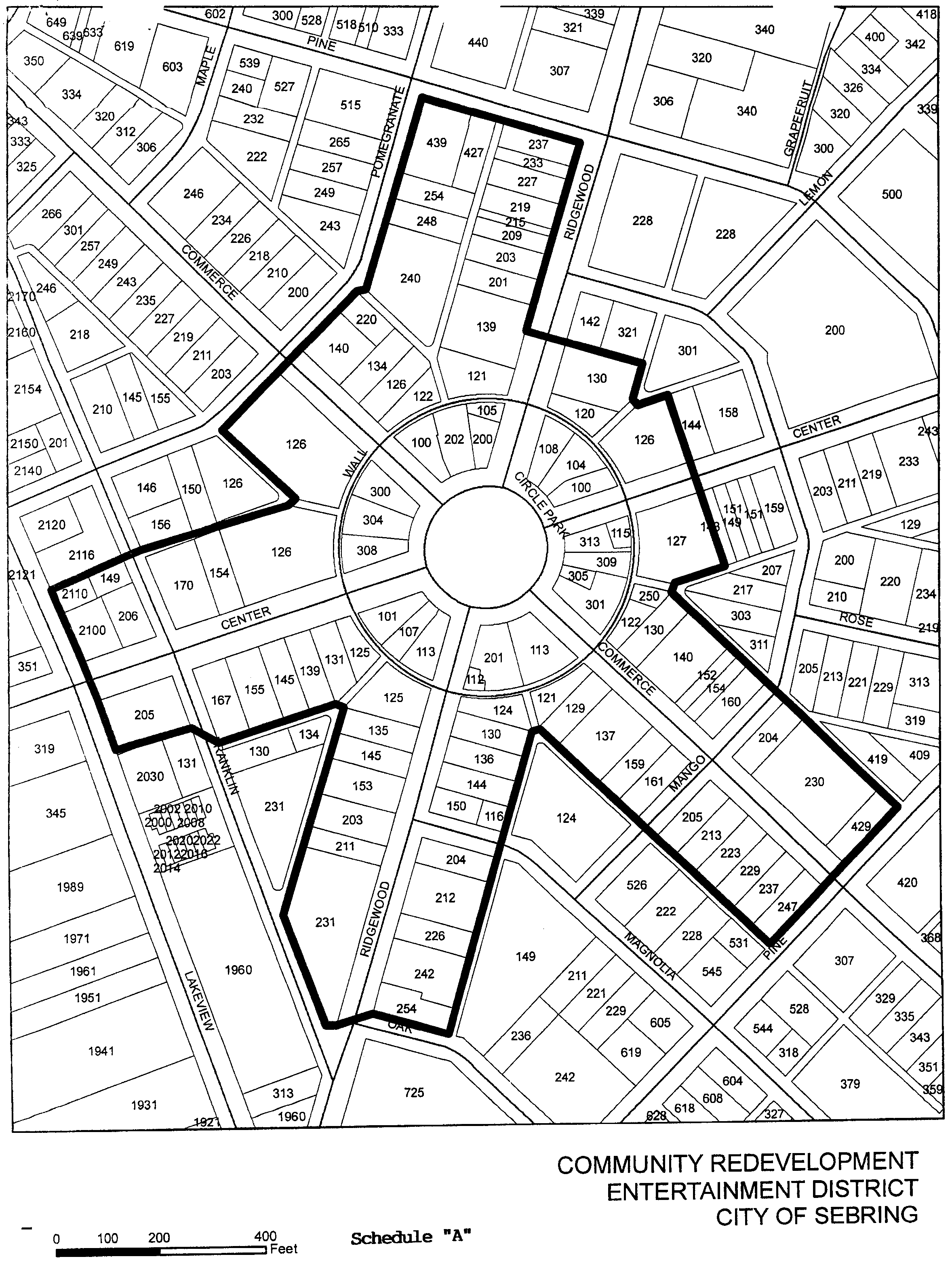
(Code 1981, §§ 22-28, 22-29; Ord. No. 1251, § 1, 11-6-2007; Ord. No. 1322, § 1, 6-7-2011)
Cross reference— Alcoholic beverages generally, ch. 3; hours of sale of alcohol, § 3-2.
_____
Sec. 26-180. - Reserved.
Editor's note— Section 31 of Ord. No. 1335, adopted Aug. 7, 2012, redesignated former § 26-180 as § 26-243.
Sec. 26-181. - Sidewalk cafes.
(a)
Permit required. It shall be unlawful for any person to operate a sidewalk cafe without a permit. Sidewalk cafes shall be permitted only within cafe zones. A sidewalk cafe permit is a temporary license to use the sidewalk and does not grant, nor shall it be construed or considered to grant, the permit holder any property right or interest in the sidewalk or the use thereof.
(b)
Duration and fee.
(1)
Each permit shall be effective from October 1 until September 30 of each year.
(2)
The annual permit fee for a sidewalk cafe shall be as established by city council by resolution, from time to time.
(3)
The permit fee shall be due upon receipt of the permit. The permit fee will be prorated on a per month basis for any permit issued after October 1 of any year. Any portion of a month shall be considered a full month for the purposes of prorating the permit fee.
(c)
Permit application.
(1)
The initial application for a sidewalk cafe permit shall be made to the city administrator and shall include, but not be limited to, the following information:
a.
Name, address and telephone number of the applicant.
b.
Name and address of the abutting indoor or outdoor eating and drinking establishment.
c.
A copy of the current city occupational license to operate the indoor or outdoor eating and drinking establishment abutting the proposed sidewalk cafe.
d.
Written approval from the owner of the building abutting the proposed sidewalk cafe and letter(s) of support or opposition from owners and tenants of buildings immediately on either side of the building abutting the proposed sidewalk cafe.
e.
A copy of the applicant's current certificate of insurance in the form and amounts required by this section.
f.
A drawing (drawn to scale of one inch to six-inch) showing the layout and dimensions of the sidewalk and adjacent private property; the proposed location, size and number of tables, chairs, steps, umbrellas, awnings and canopies; the location of doorways, trees, parking meters, sidewalk benches, trash receptacles; and, any other item, either existing or proposed, within the proposed sidewalk cafe.
g.
Photographs, drawings or manufacturers' brochures fully describing the appearance of all proposed tables, chairs, umbrellas, awnings, canopies or other items to be located in the sidewalk cafe.
(2)
The initial application shall be accompanied by a nonrefundable application fee, in the amount established from time to time by resolution of city council, which fee shall be credited toward the first year permit fee, if the application is approved.
(d)
Standards and criteria.
(1)
Permits shall be issued only to persons who hold valid occupational licenses for adjacent indoor eating and drinking establishments.
(2)
Sidewalk cafes shall be restricted to the sidewalk abutting the indoor eating and drinking establishment to which a permit has been issued unless the permit holder has written permission from the owners and tenants of an adjacent building abutting additional sidewalk frontage.
(3)
Sidewalk cafes may only be located on sidewalks which are at least ten feet in width, including any vacant space located between the right-of-way and the adjacent building, unless the public safety issues created by a more narrow width, including separation of pedestrians from vehicular traffic, are otherwise addressed to the city administrator's satisfaction.
(4)
Sidewalk cafes shall be located and maintained in a manner that will not inhibit efficient and direct pedestrian movement. A minimum of one unobstructed pedestrian path, at least four feet wide, shall be maintained at all times. In areas of congested pedestrian activity, the city administrator may require a wider pedestrian path.
(5)
The perimeter of the sidewalk cafe may be delineated by nonpermanent fixtures, such as railings, potted plants or decorative chains. No permanent anchoring of tables, chairs, umbrellas, awnings, canopies, railing or other fixtures to the sidewalk shall be allowed.
(6)
Tables, chairs, umbrellas, canopies, awnings and any other items used in connection with a sidewalk cafe shall be of uniform design for each sidewalk cafe and shall be made of quality materials and workmanship to ensure the safety and convenience of users and to enhance the visual quality of the area. Design, materials and colors must be compatible with the Sebring Community Redevelopment Agency's Design Guidelines and must be approved by the city administrator prior to the issuance and each renewal of the permit.
(7)
Sidewalk cafes will not be permitted beyond the building edge on corner lots if they will restrict the view of motorists.
(8)
Any permit issued under this provision shall apply only to the sidewalk cafe and related uses on private property may be governed by other regulations.
(e)
Liability and insurance.
(1)
By acceptance of a permit granted hereunder, the permit holder agrees to indemnify, defend, save and hold the city, its officers, agents and employees harmless from any and all claims, liability, lawsuits, damages and causes of action which may arise out of this permit or the permit holder's activity in connection with the sidewalk cafe. The permit holder shall enter into a written agreement with the city to evidence this indemnification on a form promulgated by the city.
(2)
The permit holder shall acquire and keep in full force and effect, at its own expense, the following insurance during the entire permit period:
a.
Commercial general liability insurance in the single limit amount of $1,000,000.00 per occurrence for bodily injury and property damage, with the city named as an additional insured.
b.
Workers' compensation and employers' liability insurance as required by the state.
c.
All policies must be issued by companies authorized to do business in the state and rated B+:VI or better per Best's Key Rating Guide's latest edition.
d.
The city shall receive at least 30 days written notice prior to any cancellation, nonrenewal or material change in the coverage provided.
e.
The permit holder must provide a certificate of insurance as evidence that the above requirements have been met prior to the permit becoming effective and upon each renewal. Failure to comply with these requirements shall be grounds for denial, suspension or revocation of the permit.
(f)
Conditions of permit. Sidewalk cafes permitted under this section shall be subject to the following conditions:
(1)
The permit issued shall be personal to the initial permit holder and shall be transferable only with the prior written approval of the city administrator.
(2)
The city may require the temporary removal of a sidewalk cafe by the permit holder when street, sidewalk or utility repairs necessitate such action or when it is necessary to clear sidewalks for a parade or other event. The permit holder shall be responsible for removing all sidewalk cafe items at least one day prior to the date for the event identified in writing by the city. If such temporary removal exceeds 15 days during any calendar year, the city shall apply a prorata credit toward the following year's permit fee for each additional day the sidewalk cafe is removed. The permit holder shall not be entitled to any refund for such removal. The city shall not be responsible for any costs associated with the removal or the return of any sidewalk cafe items.
(3)
The city may cause the immediate removal or relocation of all or any part of the sidewalk cafe in any emergency situation. The city, its officers, agents and employees shall not be responsible for any damage or loss of sidewalk cafe items so removed during emergency situations and shall not be responsible for any costs associated with the storage, return, repair or replacement of any sidewalk cafe items.
(4)
The sidewalk cafe shall be limited to the area shown on the permit.
(5)
The permit holder shall insure that the sidewalk cafe does not interfere with or limit the free unobstructed passage of pedestrians in the approved pedestrian path.
(6)
The sidewalk cafe items may be restricted to the use of patrons of the permit holder only during the hours of operation of the sidewalk cafe.
(7)
Tables, chairs, umbrellas, canopies, awnings and any other items used in connection with a sidewalk cafe shall be maintained with a clean and attractive appearance and shall be kept in good repair at all times.
(8)
Tables, chairs, awnings, canopies, umbrellas and any other decorative material shall be made of fire retardant or fire resistant materials.
(9)
No items used in connection with a sidewalk cafe shall be attached, chained, or in any manner affixed to the sidewalk or any tree, post or sign.
(10)
The sidewalk cafe and five (5) feet beyond either end shall be maintained by the permit holder in a neat and orderly appearance at all times and shall be cleared of all debris on a periodic basis during the day and at the close of each business day.
(11)
Outdoor seating authorized herein shall not be used for calculating seating requirements pertaining to the location of, applications for, or issuance of a liquor license for any establishment nor shall such additional seats be used to claim any exemption from any other requirements of any codes, ordinances, laws or regulations.
(12)
The opening and closing hours of sidewalk cafes shall not extend beyond the hours of operation of the abutting indoor eating and drinking establishment, and in no event shall open prior to 7:00 a.m. nor close after 9:00 p.m., with the exception of evenings when special events sponsored by the city, community redevelopment agency or downtown merchants association occur, at which time closing shall be at 10:00 p.m. The city may further restrict the hours of operation of sidewalk cafes abutting residential property.
(13)
The permit holder shall notify the city, in writing, within 24 hours of commencement of operation of the sidewalk cafe.
(14)
No preparation of food or drink shall be allowed within the sidewalk cafe.
(15)
The permit holder shall be responsible for the repair of any damage to the sidewalk caused by the existence or operation of the sidewalk cafe.
(16)
Tables or chairs shall not be allowed within four feet of any bus stop, taxi stand, telephone booth or fire hydrant, nor within two feet of any building entrance or exit.
(17)
Only one menuboard shall be allowed for each sidewalk cafe. The menuboard shall not exceed four square feet; shall be attached to the abutting building or located in such other location as is approved by the city administrator; and, must be in compliance with city codes. All signage, including the menuboard and any signage on awnings, canopies and umbrellas and other fixtures, must be in compliance with city codes.
(18)
The permit holder must conform to all other city, county and state regulations, laws and ordinances.
(19)
All food or drink shall be served on or in plastic or other shatter-proof material.
(g)
Denial, revocation or suspension of permit; removal and storage fees; penalties.
(1)
The city administrator may revoke a sidewalk cafe permit for any reason and without penalty upon the giving of 30 days written notice to the permit holder and refunding the unused portion of the permit fee.
(2)
The city administrator may also deny or immediately revoke or suspend a permit if it is determined that:
a.
Any permit or occupational license for the sidewalk cafe or the abutting indoor eating and drinking establishment has expired or been suspended, revoked or canceled.
b.
The permit holder does not have the required insurance in effect.
c.
Changing conditions of pedestrian or vehicular traffic cause such congestion that the minimum approved pedestrian path is insufficient and represents a danger to the health, safety, or general welfare of pedestrians or vehicular traffic and an alternative pedestrian path that eliminates such concerns cannot be determined or agreed to.
d.
An owner or tenant of property abutting a sidewalk cafe has revoked or suspended the permission required by this section.
e.
The permit holder has failed to correct violations of any condition of the permit or other applicable laws or regulations within three days of receipt of the city's notice of same, delivered in writing to the permit holder or left for the permit holder at the sidewalk cafe during its hours of operation.
(3)
Upon denial, suspension or revocation of the permit, the city administrator shall give notice of such action to the permit holder in writing. If the denial, suspension or revocation of the permit is pursuant to subsection (2) above, the permit holder shall not be entitled to a refund of any portion of the annual permit fee or any other fees paid to the city for operation of a sidewalk cafe. Any other suspension or revocation shall entitle the permit holder to a refund of a prorated portion of the annual permit fee on a per month basis from the effective date of such action.
(4)
In the event the permit holder fails to remove any tables, chairs, canopies, awnings or other items related to the sidewalk cafe before the date set forth in the city's notice of revocation, suspension or temporary removal, the city administrator may have such fixtures or objects removed and stored and the permit holder shall be responsible for all expenses incurred by the city for such removal and storage.
(5)
Penalties for violation of this section, in addition to revocation of a permit, shall be imposed as set forth in section 1-7 of this Code.
(h)
Appeals. Any decision of the city administrator to grant, deny, revoke or suspend a permit may be appealed to city council by any resident or any person owning or operating a business within the city. Notice of such appeal shall be accompanied by a nonrefundable fee as established by city council from time to time by resolution and such notice must be in writing and filed with the city clerk within ten days from the date of the city administrator's notice to deny, suspend or revoke the permit or, if granted, from the date of the issuance of the permit. City council shall set a date for and hold a public hearing on the appeal within a reasonable time. Written notice of the public hearing shall be mailed by the city clerk to the appellant and, if appellant is other than the applicant or permit holder, to the applicant or permit holder not less than ten days prior to the date set for the public hearing.
(i)
Permit renewals. The city administrator is authorized to renew permits on an annual basis upon the applicant providing proof of current insurance coverage in the amount required in this section and payment of any permit renewal fee that may be established by city council by resolution. Once issued, permit renewals are subject to subsections (d)—(h).
(Ord. No. 983, § 3, 9-1-1998; Ord. No. 1105, § 1, 6-15-2004; Ord. No. 1111, §§ 1, 2, 7-6-2004; Ord. No. 1446, § 1, 11-5-2019)
Sec. 26-182. - Power substation location and landscape regulations.
(a)
Applicability. The following regulations shall apply to all new power transmission substations (herein called substations) located in the City of Sebring after the effective date of this section.
(b)
Location. No substation shall be located except on I-1 zoned property within the City of Sebring.
(c)
Additional requirements.
(1)
Setbacks. Setbacks in the front, side and rear of a substation shall be no less than twice the minimum required from a commercial use or 50 feet, whichever is greater. In addition, there shall be a setback of 200 feet from all residential uses.
(2)
Required screening. Required screening in a residential zoning district shall include both a solid wall, fence or berm and vegetation.
(3)
Solid wall or fence. When a solid wall or fence is a screen, it shall be a minimum of eight feet in height, constructed of substantial materials such as masonry, pressure treated woods or composition non-organic materials simulating masonry, concrete or wood materials. The wall or fence shall be constructed without openings except for the entrance/exit. The gate to the entrance/exit shall also be without openings and equipped to be located at all times. If painted, the wall or fence colors shall be within the earth tone palette. Plans for such a wall or fence shall be submitted to the city building official who shall determine if the proposed wall or fence is in compliance with this section.
(4)
Vegetative. When vegetation is selected as material for a screen, a continuous border 30 feet wide shall be set outside a security fence (chain-link, six feet in height, if a wall is not used), with non-coniferous broad-leafed evergreen trees consisting of two rows, with trees spaced not more than 20 feet apart on centers, staggered alternately, with a linear row of evergreen scrubs, three feet on centers, planted between the two rows of staggered trees, to obscure the area of view between the ground and the beginning of the tree canopy. The border is to be fully planted and irrigated. Plans for such a vegetative screen and fence shall be submitted to the city building official, who shall determine if they are in compliance with this section.
(5)
Earthen berm. When an earthen berm is selected for a screen, a continuous border 20 feet wide shall be set outside a security fence (chain-link, six feet in height, if a wall is not used), within which the berm will be located and built on a maximum slope of 2:1 to four feet in height, covered with an appropriate ground cover and capped with an evergreen shrub hedge trimmed to four feet for an over all height of eight feet. The earthen berm border shall be fully irrigated. Plans for such a berm and fence shall be submitted to the city building official, who shall determine if they are in compliance with this section.
(6)
Access. No driveway or other point of vehicular access to the power substation shall connect any public road within 200 feet of the point of intersection of two public roads measured along the center lines. No driveway shall be greater than 20 feet in width.
(7)
Screen maintenance. The applicant must guarantee by affidavit that the screen will be maintained as specified an approved by this Code. The removal of a portion of the screen or a portion of the screen fails due to neglect, shall be reason to suspend, revoke or modify the permit for the substation.
(8)
Plan of facility. The applicant shall provide a site plan for the proposed substation to the city building official prior to commencing construction. The site plan shall be of sufficient scale to clearly indicate the arrangement of the various functions of the station and the materials to be stored within the property. At a minimum, the site plan shall indicate the following:
a.
An area sketch indicating the location of the property within its immediate vicinity and the distance to the closest intersecting public roads and the distance to all adjacent residential uses on all sides;
b.
The boundaries of the property with dimensions, including the wall/fence locations or borders if vegetative or berm methods are being used for screening;
c.
Location of any on-site environmental issues such as wetlands, natural seasonal surface water areas or drainage ways;
d.
The topography, surface drainage and location of proposed retention areas; and
e.
Location of the entrance/exit to the property and the width and length of the driveway.
(Ord. No. 1199, § 1, 5-16-2006)
Sec. 26-183. - Building design and appearance standards.
(a)
Purpose. The building design and appearance standards are established to provide regulation in the design and quality of the built environment as they are important elements in reinforcing a comfortable, human-scale environment, maintaining the city's attractiveness and economic vitality, and providing a unique sense of place in the city. These requirements are not intended to control the detailed design of buildings or supersede or supplant established building and fire code regulations, nor to regulate the quality, durability, maintenance, performance, load capacity, or fire resistance characteristics or workmanship of buildings and materials. Accordingly, it is the purpose of this section to:
(1)
Maintain the visual environment of the city, protect the general welfare, and ensure that the city's property values, appearance, character, and economic well-being are preserved through design and appearance standards.
(2)
Preserve the unique heritage, history, and architectural character of existing buildings as these buildings are proposed, renovated, re-used, and as changes and improvements are made.
(3)
Provide standards for the use of exterior building façade materials are established in this section for the purposes of promoting harmony in the context of physical relationships and scale between buildings vet encourage originality and uniqueness in design.
(b)
Applicability.
(1)
Location. The building design and appearance standards are applicable to the following areas.
• Historic district.
• Core area of the community redevelopment area (CRA).
• C-1, C-2, and I-1 zoning districts in the CRA outside of the core area.
• C-1 zoning district outside of the CRA.
Building Design and Appearance Standards
City of Sebring Non-Residential Zoning Map
Figure 26-183.1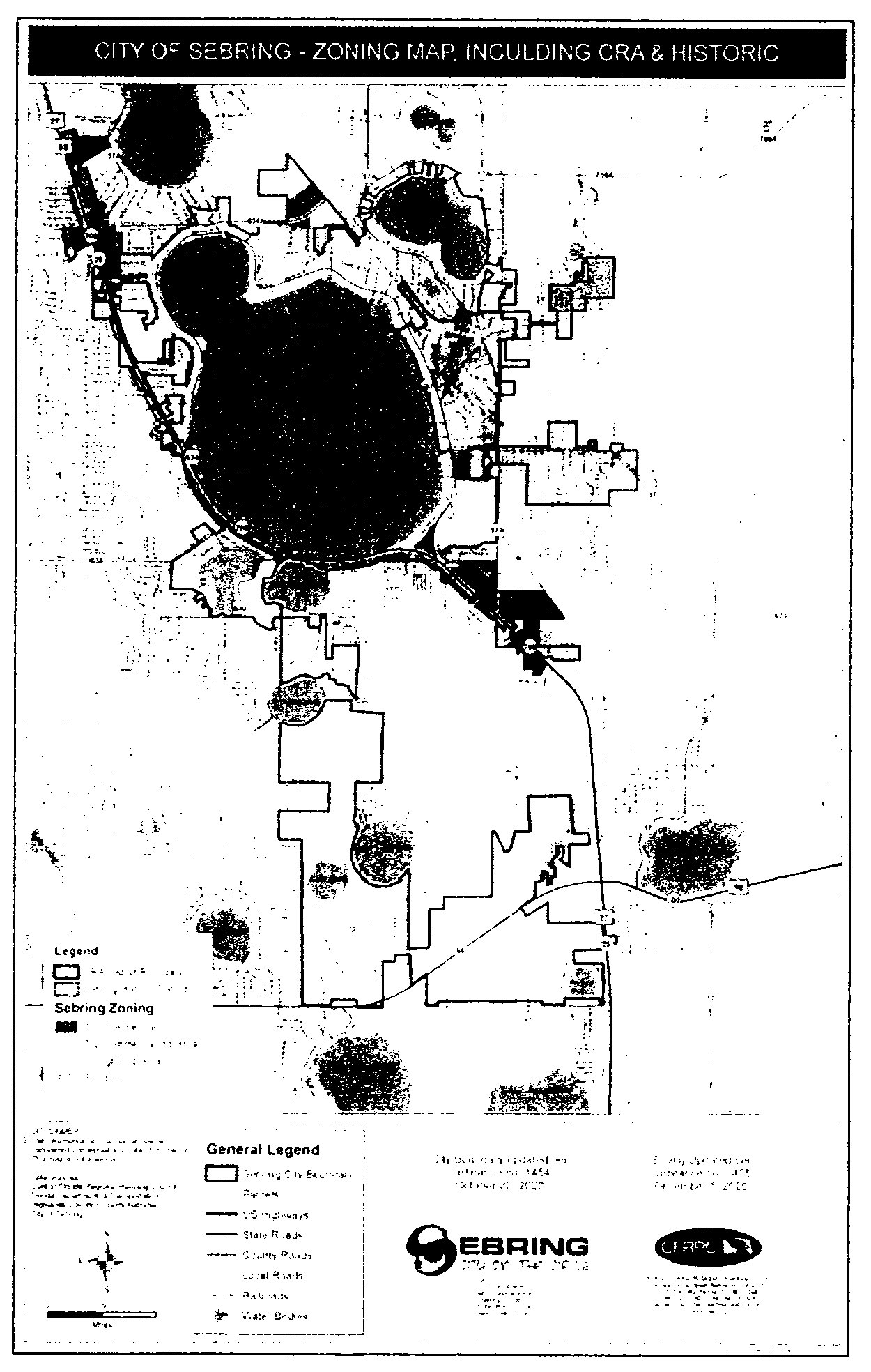
Building Design and Appearance Standards
Community Redevelopment Area and Historic District Non-Residential Zoning Map
Figure 26-183.2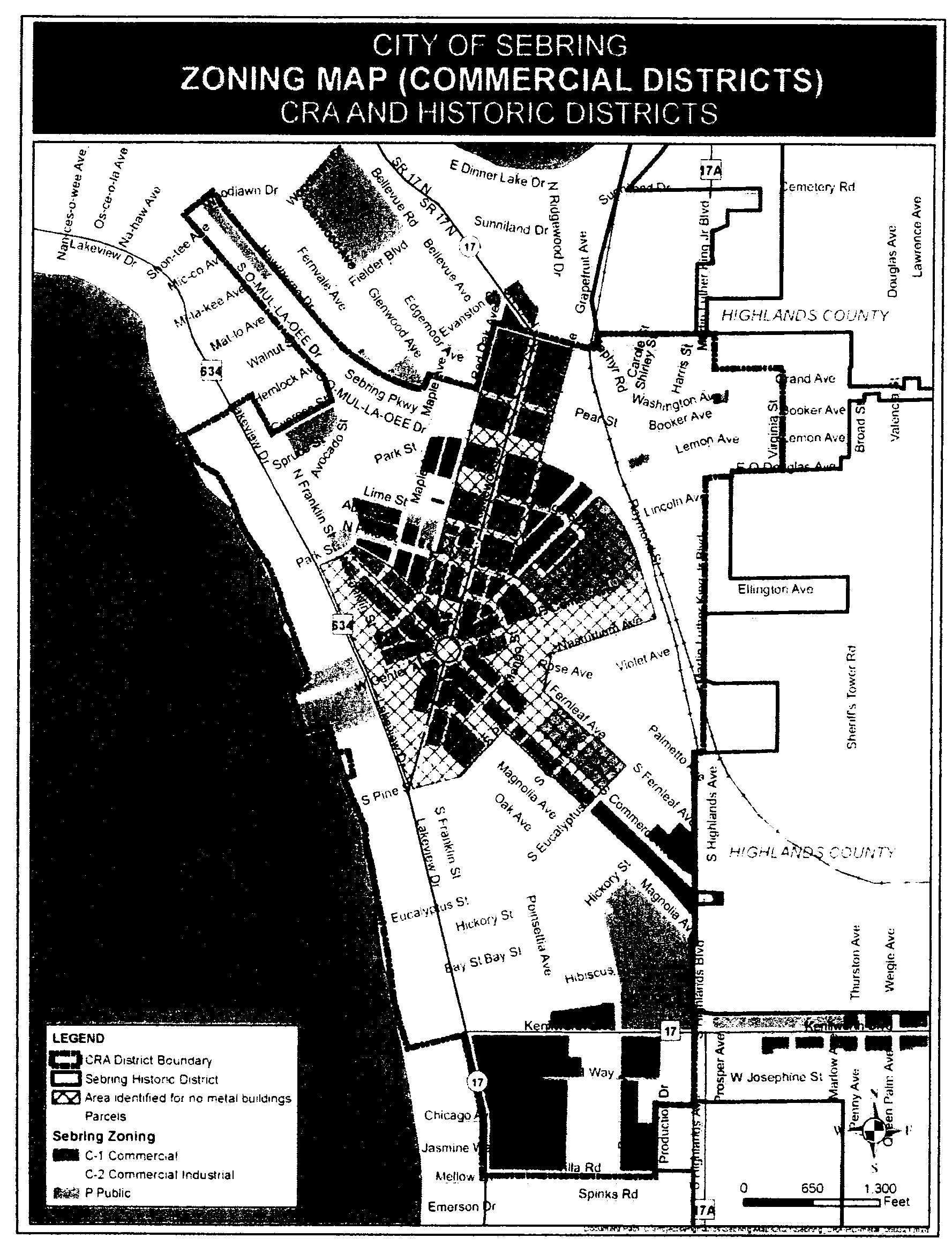
(2)
Compliance with standards.
a.
All new construction of buildings and structures. New construction refers to site preparation for and construction of entirely new structures whether or not the site was previously occupied and/or the construction/placement of additional buildings on the site.
b.
All substantial exterior building improvements. Substantial exterior improvements include the exterior improvement, expansion, and/or replacement of structures where the value of such work is 50 percent or more of the assessed value of all buildings on the parcel at the time or exceeds 50 percent of the existing structure's floor area. The cumulative value shall include the value of other such work performed within the previous 24 months, but not before the effective date of these requirements.
(3)
Exemptions from the provisions of this section.
a.
All "single family" uses.
b.
Accessory structures.
c.
Routine maintenance or repair of any structure or site feature. For the purposes of this section, routine shall mean that the repairs shall in no case exceed 50 percent of the value of the structure. If there is no alteration in the exterior appearance, maintenance items such as roof repair or replacement, HVAC repair and replacement, electrical and plumbing repair, foundation stabilization, masonry repair, replacement of rotten wood, and repair of existing windows and doors that do not significantly change the architectural character of a building shall not, in and of themselves, be considered substantial renovation.
d.
The construction, reconstruction, alteration, restoration, moving, or demolition of any structure or site feature to correct existing violations of state or local health, sanitary, or safety code specifications which have been identified by the local code enforcement official and which are the minimum necessary to ensure safe living and/or working conditions.
e.
Temporary uses as defined in the City of Sebring Code of Ordinances. Temporary uses and structures being used during the construction of a permanent structure. The zoning permit shall specify a limited duration for the temporary structure.
f.
Building material requirements established through an adopted planned unit development master development plan shall supersede these requirements.
g.
Buildings in the P zoning district where the structures are not visually intrusive and are consistent with the character of the neighborhood or community.
(c)
Standards for exterior façade materials. Corrugated and other metal siding may not be used for exterior wall surfaces except in the C-2, I-1 and P zoning districts outside of the historic and community redevelopment area districts. All building construction, alteration, renovation, and other development activity subject to the provisions of section 26-183(b)(2) shall conform to the following standards for exterior building façade materials. Each building façade shall conform to these standards independently of other façades.
(1)
Approved exterior finish materials.
• Stucco or synthetic stucco.
• Brick or glazed brick.
• Tinted and textured concrete masonry.
• Textured concrete (pre-cast or cast-in-place).
• Split face concrete block.
• Stone, cast stone, marble, or similar material.
• Glass and glass storefront.
• Painted surfaces (excluding corrugated metal buildings).
• Architectural treated metal.
• Architectural finished exterior finish insulation systems (EFIS).
• Fiber cement/cement board siding (Hardiplank®).
• Prefabricated metal buildings may be used if finished with an approved exterior finish material other than paint (see approved exterior finish materials) except in the historic district.
(2)
Prohibited exterior finish materials.
• Buildings with exposed corrugated metal siding are not permitted. Prefabricated metal buildings may be used if finished with an approved exterior finish material other than paint (see approved exterior finish materials).
• Exposed concrete block.
• Exposed plywood or particle board.
(d)
Requirements for building design and appearance standards. This section applies to the following unless exempted in section 26-183(b)(3).
• Historic district (no metal buildings are allowed).
• Core area of the community redevelopment area (CRA).
• C-1, C-2, and I-1 zoning districts in the CRA outside of the core area.
• C-1 zoning district outside of the CRA.
Table 26-183.1 provides each area and the requirements for coverage for each area. The sections below are referenced in the table for purposes of applicability.
(1)
Overall building design and appearance standards. The development and functionality of buildings and spaces shall adhere to the following development guidelines.
a.
A single, large, dominant building mass shall be avoided. Changes in mass shall be related to entrances, the integral structure and the organization of interior spaces and activities, and not merely for cosmetic effect.
b.
Multi-story buildings shall be designed to minimize overall building massing. This can be accomplished through upper story setbacks, façade articulations, and other architectural treatment methods.
c.
Flexibility in building orientation shall be provided to promote an interesting visual environment. A building's orientation may vary depending on site constraints and the need to meet other design standards and/or regulations.
d.
Building orientation with a primary operable entrance on the street-side of a lot is encouraged to help create an active street frontage.
e.
Buildings within the same development envelope (i.e., on the same lot or parcel) are encouraged to utilize similar architectural treatments consistent with other buildings on the same lot.
(2)
Façade articulation. Façade articulation applies primarily to the street-side and/or pedestrian oriented side of a building. The following shall be required for all buildings or structures located on the development site.
a.
Blank, opaque wall areas shall not exceed ten feet in vertical direction or 20 feet in the horizontal direction of any primary façade. This does not include the gutter.
b.
The first floor of buildings with road frontage shall be designed so that 35 percent of the total surface area of each first-floor frontage is comprised of transparent windows, doors, and other openings to provide visual interest and compliment pedestrian activity at the ground level, unless regulations for specific activity centers specify otherwise.
c.
Buildings with the primary operable entrance not located on the street-side of the building shall provide a minimum of 15 percent architectural features thru the use of windows, doors, and/or other openings, and gutters along the total surface area of each street-side building surface to provide visual interest and security.
d.
Buildings designed for multiple tenant spaces at the ground level, particularly, retail storefronts, shall provide visible articulations between such spaces and include well-defined entranceways.
e.
Upper stories along street fronts only shall provide transparent windows, doors, or other openings along ten percent of the total surface area of each upper floor façade.
f.
Simulated or opaque windows may be used to provide visual interest.
g.
Varying roof heights and wall planes are encouraged to provide additional visual interest. Architectural rhythm should also be considered in the design of roof heights and wall planes and should be coordinated with those of existing buildings on adjacent lots.
(3)
Architectural treatments. Architectural treatments enhance the attractiveness of buildings and structures. Such treatments shall be applied in a consistent manner along all sides of a building façade. Architectural treatments include:
a.
Horizontal banding or belt courses, when applied shall have a minimum vertical dimension of eight inches.
b.
Within the core of the CRA, decorative cornices, when applied shall have a minimum vertical dimension of 12 inches and be projected outward from wall two inches.
(4)
Historic district. No metal buildings are allowed within the historic district. All historic district design requirements apply.
(5)
Community redevelopment area (CRA) in C-1, C-2, and I-1 zoning districts in core and periphery of the CRA. All façades that are parallel to a right-of-way or pedestrian oriented space shall maintain an exterior finish that conforms to this section. For lots at the corner of an intersection. The secondary street side façade shall also maintain an exterior finish that conforms to this section. All applicable CRA design guidelines apply.
a.
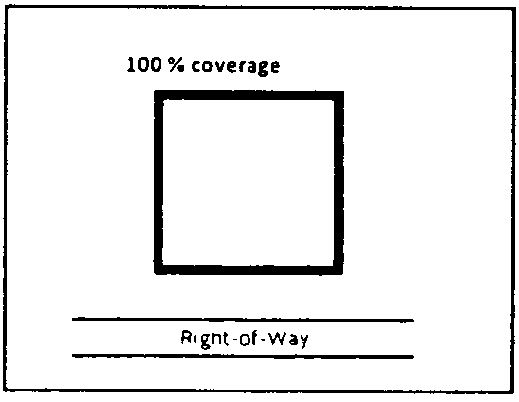
Core of CRA: All building façades, regardless of road frontage (right-of-way/pedestrian oriented space), shall provide 100 percent façade building coverage and shall provide façade improvements consistent with sections 26-183(d)(1), (2), (3) and (4).
b.
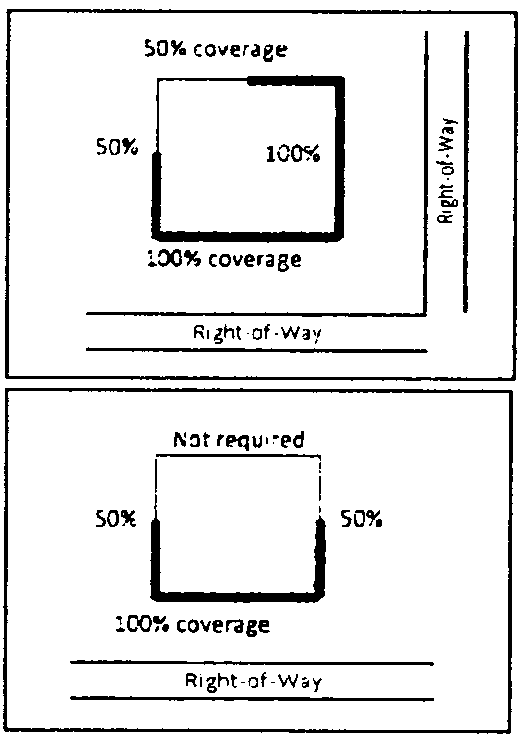
C-1, C-2, and I-1 zoning districts in the CRA outside of the core area (periphery of CRA): All building facades along a road (right-of-way/pedestrian oriented space) must provide 100 percent building coverage and façade improvements consistent with sections 26-183(d)(1),(2), and (3). Fifty percent of the side building facades must provide building coverage and façade improvements consistent with sections 26-183(d)(1), (2), and (3). The remaining portion of the façade is exempt from the requirements.
(6)
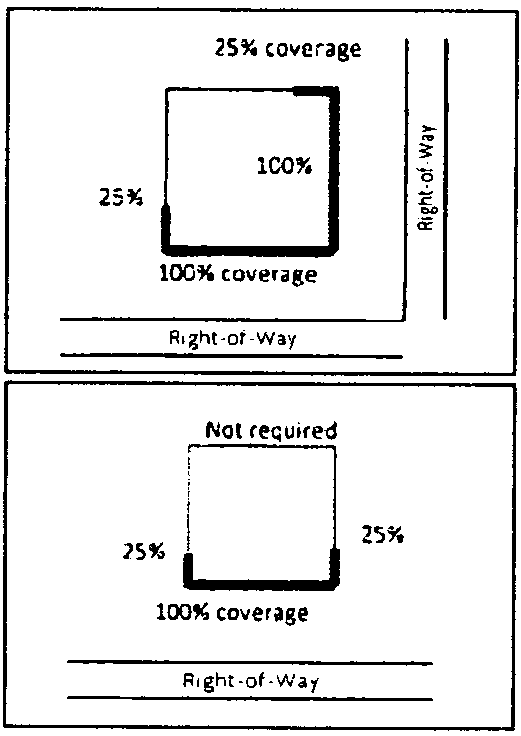
C-1 zoning district outside of the historic and CRA districts. All building façades along a road (right-of-way/pedestrian oriented space) must provide 100 percent building coverage and façade improvements consistent with sections 26-183(d)(1),(2), and (3). Twenty-five percent of the side building facades must provide building coverage and façade improvements consistent with sections 26-183(d)(1), (2), and (3). The remaining portion of the façade is exempt from the requirements.
To help understand some of the general design terms and strategies provided in this section, please refer to figure 26-183.1 below.
Figure 26-183.1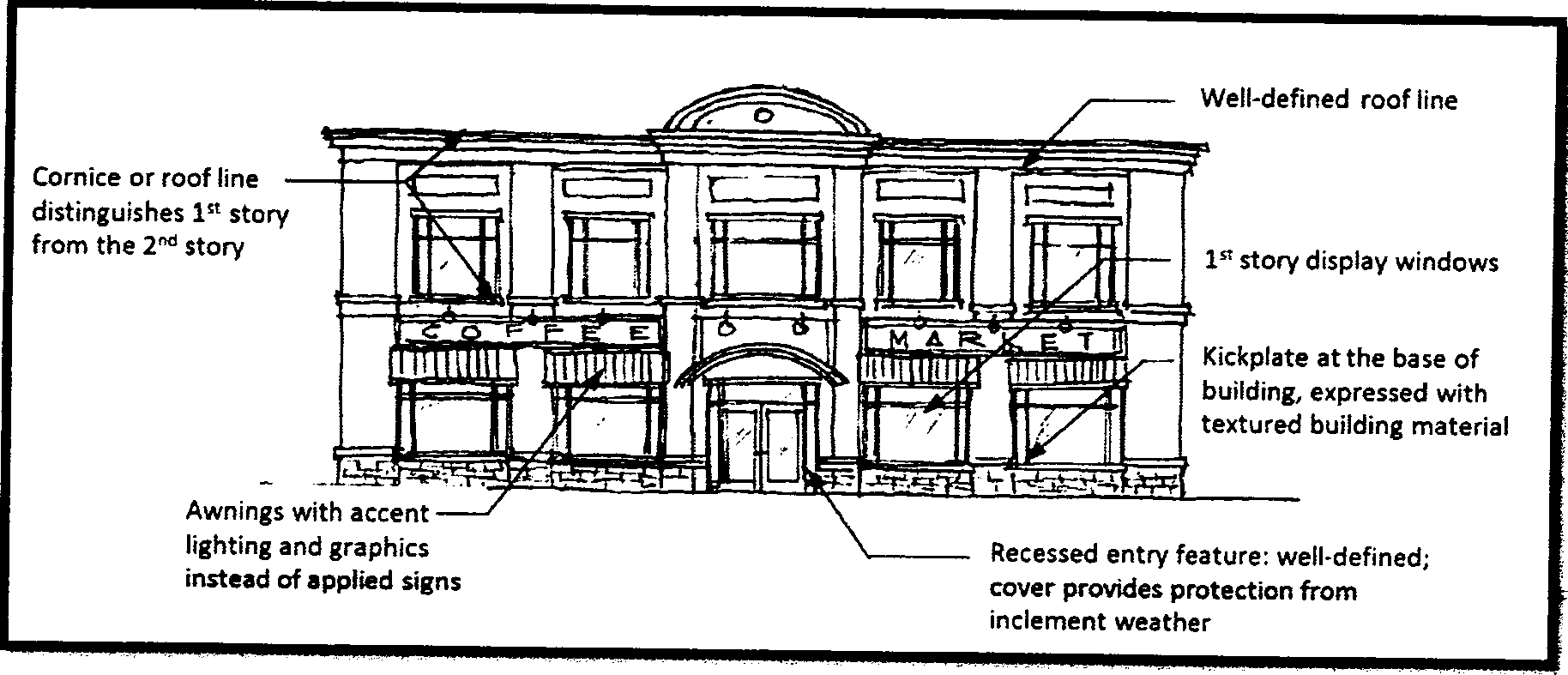
| Building Design and Appearance Standards Applicable Overlays and Zoning Districts Table 26-183.1* | |||||
|---|---|---|---|---|---|
| District | Historic District | Core of CRA | Periphery of CRA C-1, C-2, I-1 Zoning Districts in the Community Redevelopment Area (CRA) outside of the Core Area | C-1 Zoning Outside of the Historic and CRA Districts | C-2 & I-1 Zoning Outside of Historic and CRA Districts in |
| Applicable Sections | Section 26-183(d)(4) | Section 26-183(d)(1), (2), (3), (4)
Section 26-183(d)(5)a. | Section 26-183(d)(1), (2), (3), (4)
Section 26-183(d)(5)c. | Section 26-183(d)(1), (2), (3), (6) | |
| Standards | No metal buildings Allowed in any zoning districts in the historic district |
All building facades, regardless of road frontage (right-of-way/pedestrian oriented
space), shall provide 100 percent façade building coverage and shall provide facade
improvements consistent with Sections 26-183(d)(1), (2), (3), (4) and (5).
 |
Metal buildings allowed as follows: On periphery of the core area of the CRA- 100%
of the building facade along a road must meet building design and appearance standards.
- 50% of the building façades on the sides must meet building design and appearance
standards.
- Exterior finishes on the rear of the building are optional
 |
Metal building allowed as follows: C-1 zoning district- 100% of the building façade
along a road must be meet building design and appearance standards
- 25% of the building façades on the sides must meet building design and appearance
standards.
- Exterior finishes on the rear of the building are optional
 |
Metal buildings are allowed
Building design and appearance standards to do not apply. |
*Facades with bold line shall conform to exterior building material requirement.
(e)
Alternative designs or materials. The city recognizes that specific sites and uses may exhibit unique needs and requirements. The city will work with applicants to provide flexibility through alternate design considerations so long as the proposed improvements meet the purpose and intent of building design and appearance standards.
(1)
Alternative design criteria. Alternative design(s) may be considered and approved if any of the following criteria are evidenced:
a.
Does the proposal meet the intent and the general direction set forth by what is required in this section?
b.
Is the specific change superior in design quality to that potentially achieved by what is required in this section?
c.
Is the proposed alternative an application that is necessary to better respond to constraints of the site, the use, or its surroundings?
d.
Is the proposed alternative part of an overall, thoughtful and comprehensive approach to the design of the project as a whole or to the building design and appearance standards?
(2)
Approval of alternative design.
a.
The CRA director or designee or the administrative official if outside of the CRA, or his or her designee, shall review and approve alternate deign requests.
b.
The CRA director or designee or the administrative official if outside of the CRA, at his or her discretion, may forward any alternate design request to the CRA advisory committee, planning and zoning board and/or city council for consideration and approval.
(f)
Development review and approval process. To ensure that development, redevelopment, and improvements are consistent with the purpose and intent of this Section, the following review process will be followed prior to site development plan approval or the issuance of building permits:
(1)
Application process.
a.
Pre-application meeting. Unless otherwise waived, at the discretion of the administrative official, or his or her designee, a pre-application meeting shall be held for each new development plan submitted to the city for review. The intent of this meeting is to discuss early and informally the purpose and effect of this section and the guidelines and standards contained herein.
It is recommended that the applicant provide a site analysis plan at the pre-application meeting for discussion. The purpose of the site analysis plan is to ensure that important elements of the development proposal have been adequately identified prior to the creation of a full-scale site development plan. The site analysis plan, which may be developed as a sketch, shall include, at a minimum, the following features:
1.
Property boundaries.
2.
Representation of adjacent lots, existing buildings, adjacent streets, and opportunities for connectivity.
3.
Location of proposed uses and buildings on the lot.
b.
Application submittal. The applicant shall submit an application, including site development plans and other project specific attachments for development review. All materials shall be submitted to the administrative official, or his or her designee, for processing and review. The following items as determined by the administrative official, or his or her designee, must be submitted with the application:
1.
Site plan.
2.
Statement of how the development proposal meets the requirements building design and appearance standards.
3.
Proposed design alternative(s), if any, with a statement as to why the provisions of this section are unable to be met and how the alternative(s) meets the purpose and intent of the building design and appearance standards.
(g)
Non-compliance. Failure to comply with an approved site plan or any of the conditions upon which such approval was contingent, including time limits for performance, shall be cause to deny issuance of a building permit or, where a permit has been issued pursuant to an approved site plan, to render such building permit invalid. Any action, construction, development or use of property undertaken in violation of the provisions of this Code shall constitute a violation of this Code and may be subject to a stop-work order.
(h)
Appeals. Decisions and approvals made by the administrative official, or his or her designee, may be appealed to the city council.
(Ord. No. 1464, § 1(Exh. A), 7-6-2021)
Editor's note— Section 1(Exh. A) of Ord. No. 1464, adopted July 6, 2021, repealed § 26-183 in its entirety and enacted a new § 26-183 to read as herein set out. Former § 26-183 pertained to prohibited building materials, and derived from Ord. No. 1231, § 2, adopted March 20, 2007; Ord. No. 1264, § 1, adopted April 15, 2008; Ord. No. 1284, § 1, adopted May 19, 2009; and Ord. No. 1406, § 1(Exh. A), adopted Sept. 20, 2016.
Sec. 26-184. - Reserved.
Editor's note— Ord. No. 1406, § 1(Exh. A), repealed former § 26-184 which pertained to limitation of the use of prefabricated or modular buildings, and derived from Ord. No. 1231, § 3, adopted March 20, 2007.
Sec. 26-201. - Purpose and intent.
It is the intent of this division:
(a)
To ensure that all land uses and their buildings hereafter erected or instituted except for downtown, historic sites, downtown mixed use redevelopment, and central business district (CBD is on map #1) uses and their buildings shall be provided with adequate off-street parking and loading facilities for the use of occupants, employees, visitors, vendors, or patrons;
(b)
To ensure that the public interest, welfare and safety are promoted by requiring that certain uses provide adequate off-street loading facilities;
(c)
To require that such off-street parking and loading facilities shall be maintained and continued as an accessory to the principal use they are intended to serve so long as such use is continued; and
(d)
To ensure adequate and appropriately located off-street parking and loading, to avoid congestion on surrounding streets, to avoid unnecessary conflicts between vehicles and pedestrians, to preserve and enhance pedestrian activity areas within the city, and to facilitate vehicular access from public rights-of-way to off-street parking facilities.
(e)
It is not the intent of this division to allow uses in areas not expressly permitted by chapter 26.
(Ord. No. 1279, § 1, 4-21-09; Ord. No. 1324, § 2, 9-6-2011)
Editor's note— Map #1 may be found at § 26-204.
Sec. 26-202. - Applicability.
The provisions of this division shall apply in all zoning districts, and to all development, redevelopment, or amendments to the existing permits, as set forth below. A certificate of occupancy shall not be issued for any structure or use unless required parking spaces and loading facilities are provided, except as exempted by the applicable provisions of subsections 26-204(a) and 26-204(b).
(a)
Nonresidential development. Any new construction, expansion, alteration, or improvement which increases the total floor area of any building or structure shall require that the total parking requirement for the aggregate sum of the additional floor area and the base floor area be provided concurrent with the additional floor area.
(b)
Residential development. Any new construction, expansion, alteration, or improvement which increases the number of dwelling units shall require that the total parking requirement for the aggregate sum of the dwelling units be provided concurrent with the additional dwelling units.
(c)
Any change in use of an existing structure or property will not require an increase in the number of parking or loading spaces.
(d)
Parking requirements for less than four residential dwelling units.
(1)
Location and surface. Required off-street parking spaces for less than four residential dwelling units shall be located on the property on which the units are constructed. Required parking may be located in a front yard; however, the lesser of 1,000 square feet or 75 percent of the front yard area must be landscaped. Parking areas located in the front yard shall be surfaced with a nondusting surface in compliance with section 26-203, except asphalt and concrete are not required for single-family residential dwellings. It shall be a violation of this chapter to park on any unpaved areas as described in this division, except as exempted in this division, "off-street parking and loading."
(2)
Configuration. Required off-street parking areas shall consist of a parking bay, stall, driveway, garage, or combination thereof.
(3)
Retention of required off-street parking spaces. Required off-street parking spaces shall not be replaced by any other on-site facility unless equal parking facilities are provided elsewhere. Off-street parking spaces existing on the effective date of the ordinance from which this division is derived shall not be reduced to an amount less than required.
(e)
Status of prior approvals. Unexpired permits approved prior to the effective date of these regulations shall comply with the parking requirements in effect at the time of the original permit issuance. Should the unexpired permit be amended, the total parking requirement that is attributable to the amended plan pursuant to these regulations shall be met on site.
(Ord. No. 1279, § 1, 4-21-09; Ord. No. 1324, § 3, 9-6-2011)
Sec. 26-203. - Maintenance.
All off-street parking areas shall be well maintained and shall be free of potholes, debris, weeds, broken curbs, and broken wheel stops. All off-street parking shall also be clearly striped and all area lighting shall be maintained in good working condition.
(Ord. No. 1279, § 1, 4-21-09; Ord. No. 1324, § 4, 9-6-2011)
Sec. 26-204. - Parking spaces required.
The following off-street parking spaces shall be provided and maintained in accordance with this division.
(a)
Central business district (CBD) of the downtown. Notwithstanding any other requirements of this chapter, requirements for off-street parking shall not apply for any use in the CBD which is shown in the following map.
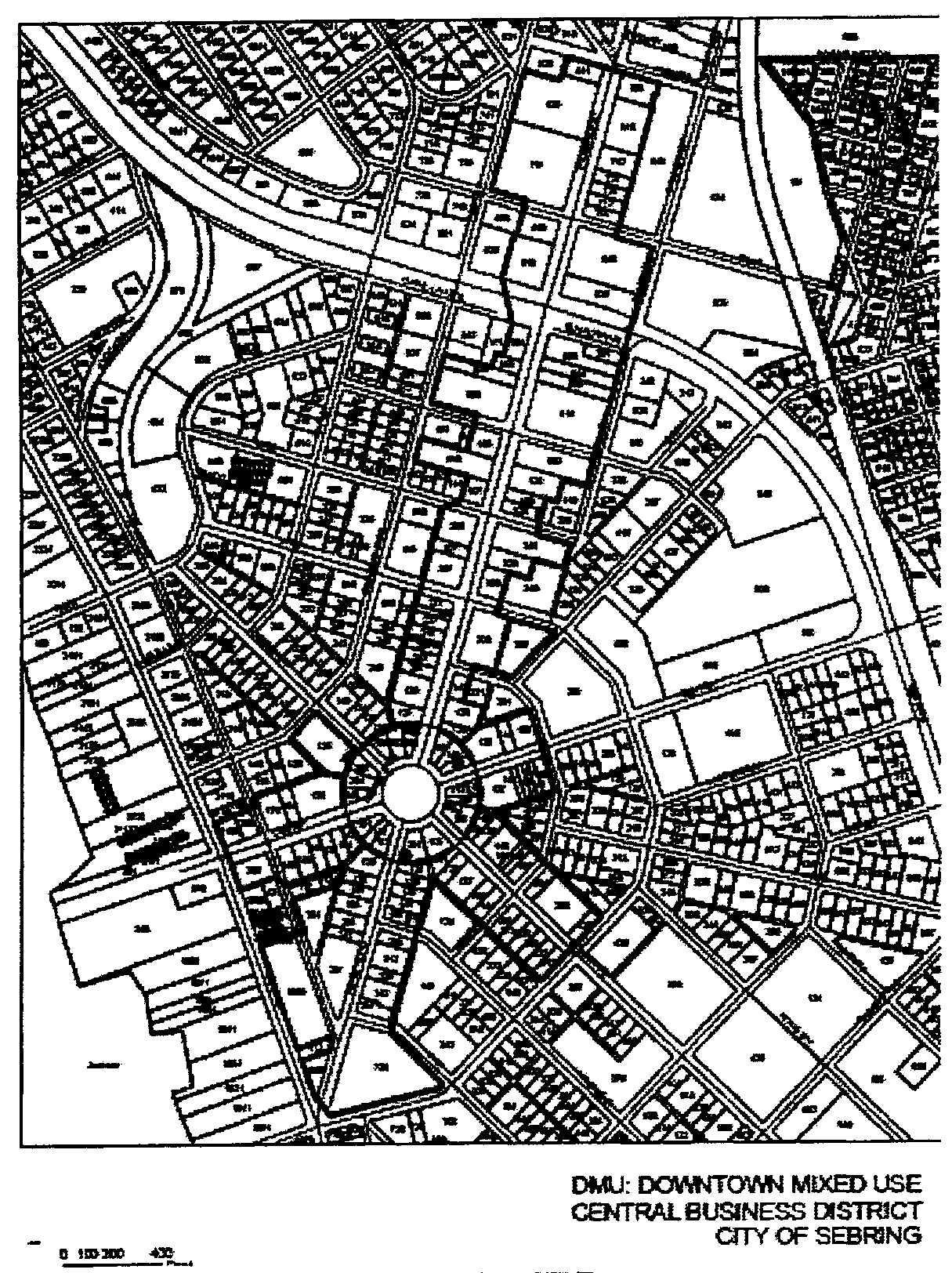
MAP #1—CBD
(b)
On-site parking in the downtown mixed use redevelopment comprehensive plan area and for historic buildings. The following standards supersede where in conflict with other parking provisions.
(1)
Uses in the downtown mixed use redevelopment comprehensive plan category (CRA district) may count available publically owned on-street and publically owned off-street public parking lot spaces which are located within 400 feet of a front or back door of that use to meet the on- site parking requirements of this Code.
(2)
Locally designated historic buildings shall not be required to provide parking in addition to that which currently exists.
(c)
Guaranteed use of public parking. The requirements for off-street parking may be satisfied by execution of a longterm lease for a segment of equivalent parking in an existing public or private parking facility. Lease fees in public facilities may be established and adjusted by the City of Sebring City Council after considering the advice of the CRA. Continued leasing of such space shall be required, and failure to provide the required parking shall be cause for revocation of the occupancy permit for the structure involved.
_____
(d)
Table 5-1—Parking Spaces Required. Note: GFA = gross floor area
(Ord. No. 1279, § 1, 4-21-09; Ord. No. 1324, § 5, 9-6-2011)
_____
Sec. 26-205. - Uses not specifically mentioned.
Uses not specifically mentioned or annotated shall provide off-street parking as provided for the use most similar.
(Ord. No. 1279, § 1, 4-21-09)
Sec. 26-206. - Fractional measurements.
Any fraction equal to or greater than one-half of the required parking space shall require a full off-street parking space.
(Ord. No. 1279, § 1, 4-21-09)
Sec. 26-207. - Mixed uses.
For mixed uses, the total requirement for off-street parking shall be the sum of the requirements of each use computed separately, and off-street parking space for one use shall not be considered as providing the required off-street parking for any other use.
(Ord. No. 1279, § 1, 4-21-09)
Sec. 26-208. - Computation of parking spaces measurement.
Gross floor area (GFA) means the gross floor area inside of the exterior walls. In hospitals, bassinets shall not count as beds. In stadiums, sports arenas, churches and other places of assembly in which occupants utilize benches, pews or other similar seating facilities, each 30 lineal inches of such seating facilities shall be counted as one seat for the purpose of computing off-street parking requirements.
(Ord. No. 1279, § 1, 4-21-09)
Sec. 26-209. - Parking space and lot design
Parking lots shall be designed such that vehicles shall not utilize any portion of any public rights of way for site circulation or for the maneuvering into or out of parking spaces. Parking spaces which require the backing into public rights of way are strictly prohibited. Parking lot design shall conform to the following standards:
(a)
Minimum aisle widths.
Table 5-2
(b)
Minimum parking stall size and vehicle overhangs. Each parking space shall be a minimum of 9.5 feet by 18 feet except compact parking spaces pursuant to this section. The vehicle overhang in a parking stall may extend two feet beyond the wheel stops or curb stops.
(c)
Minimum compact space size. Up to 20 percent of the required parking spaces may be designated as compact spaces with minimum dimensions of eight feet by 16 feet. Compact spaces will only be allowed in projects requiring 20 or more parking spaces. The compact spaces shall be clustered in one or more groups of spaces and dispersed throughout the site so that drivers using either compact or full sized spaces have equal access to the most convenient parking locations. Compact spaces shall be designated by signs on every third space painted "Compact" on each pavement space and double striped to indicate their status. Spaces provided in excess of the required number of spaces may all be compact spaces provided that compact spaces shall never exceed 33 percent of the total number of spaces provided.
(d)
Curb design. Installation of curbs base surface construction and the like shall be as specified in the Highlands County Technical Standards Manual current edition.
(e)
Parking lot details shall be shown on all final site plans and where applicable improvement plans.
(f)
Construction standards and exceptions. Parking lot specifications shall be at a minimum six inches of shellrock base compacted to 95 percent density per AASHTO T 180 with a one and one-half-inch SI dust-free asphalt surface course except as listed below:
(1)
Six inches of 3,000 psi concrete over well compacted soil may be substituted for shellrock and asphalt.
(2)
For churches where parking needs are limited to one or two days per week, parking spaces may be grass. Aisles and circulation areas shall be paved. This exemption may be approved upon a finding by the development code official that there would be no detrimental effect due to erosion or other degrading of the natural environment.
(g)
Grassed parking.
(1)
Grassed parking may only be used for ten percent of the required parking, except for single-family residential.
(2)
Parking lots that have grass parking spaces shall not use such areas in calculations to meet minimum requirements for buffers, landscaping, or retention. An allowable alternative is reservation of an area to accommodate additional retention capacity in the event of paving.
(3)
Where grass or permeable surface pavement parking spaces are allowed, all required handicap spaces shall be paved and meet the requirements of section 26-213.
(h)
Parking of vehicles in public rights-of-way. Parking of vehicles in public rights-of-way is strictly prohibited except in those instances whereby approval is granted by city council or for existing roadways incorporating such within the rights of way as of April 21, 2009.
(i)
Parking within the principal structure. In instances where off-street parking is provided within the principal structure the, number of off-street parking spaces in parking lots required by this division shall not be reduced.
(j)
Permeable surface pavement. Permeable pavement is an alternative to asphalt or concrete surfaces and allows stormwater to drain through that surface, sometimes acting as a filter of pollutants. Traditional paved surfaces turn almost all rainfall into runoff.
(1)
Permeable paving may be permeable interlocking concrete pavers, concrete grid pavers (turfstone), porous concrete, porous asphalt or plastic turf reinforcing grids, as shown in Figure P4 below.
(2)
The degree of precipitation the infiltrates through the surface must be certified by a professional engineer with experience in permeable pavement.
(3)
The amount of pervious surface in a parking lot that uses the aforementioned materials or has grassed parking shall not count against the impervious surface ratio of a development.
(4)
The city shall allow alternative calculations of runoff based on this section, pursuant to approval by the water management district in their drainage calculations.
(5)
However, driveway aprons and other areas within the public right-of-way shall be paved in accordance with city standards.
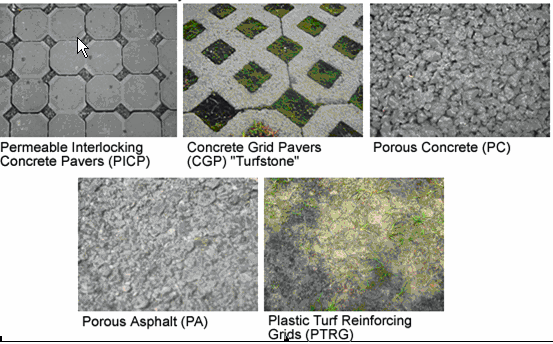
Figure P4
(Ord. No. 1279, § 1, 4-21-09; Ord. No. 1324, § 6, 9-6-2011; Ord. No. 1335, § 26, 8-7-2012)
Sec. 26-210. - Adjustments to requirements.
To avoid requiring more parking spaces than are actually needed to serve a proposed development, the development code official may defer the provisions of a portion of the required off-street parking spaces if the conditions and requirements of this Section are satisfied. As a condition prior to seeking approval of partial deferral by the development code official, the proposal shall meet the criteria of either [subsection] (a) or (b) below.
(a)
A signed and sealed parking study is prepared and submitted by a qualified professional traffic engineer that indicates that there is not a need for parking which would otherwise be required. The contents of and requirements for a parking study are described in section 26-212.
(b)
A signed and sealed transportation system management program is prepared by a qualified professional traffic engineer and submitted that shows that alternative means of access are or will be established which justify deferring the number of parking spaces sought to be deferred. Such transportation system management program is limited to:
(1)
Public transportation that satisfies transportation demands for a portion of the users of the facility corresponding to the amount of parking to be deferred;
(2)
Ride sharing including private and public carpools or van pools; and/or
(3)
Flexible work hour scheduling.
(c)
If the proposal satisfies one or more of the requirements in this section, the development code official may approve a deferred parking plan. The number of parking spaces deferred shall correspond to the estimated number of parking spaces that will not be needed because of the conditions established. The parking plan shall nevertheless contain sufficient spaces to meet the full parking requirement of this section additionally the proposal shall meet all of the following requirements listed herein:
(1)
The parking plan shall illustrate the layout of the full number of spaces and shall designate which are to be deferred.
(2)
The parking plan shall not assign deferred spaces to areas required for landscaping transition zones setbacks or areas that would otherwise be unsuitable for parking spaces because of the physical characteristics of the lands or other requirements of these regulations.
(3)
The landscaping plan for off-street parking areas.
(4)
The parking plan shall include an improvement agreement with the city acceptable to the city attorney that after one year from the date of issuance of the certificate of occupancy any deferred spaces shall be converted to parking spaces that conform to these regulations at the developer s expense should the city determine that additional parking spaces are needed.
(5)
The parking plan shall include a written agreement that the developer shall defray the total cost to cover the expense of a parking study to be undertaken by the city to determine the advisability of requiring the full parking requirement.
(d)
If deferred parking was approved following a preliminary finding that parking is not adequate but not sooner than one year after the date of issuance of a certificate of occupancy for the development the city may undertake a study to determine the need for fulfilling the parking demand.
(e)
Based upon the study and recommendations of the development code official the city shall determine if the deferred spaces shall be converted to operable parking spaces by the developer or retained as deferred parking area.
(f)
The developer may at any time request that the development code official approve a revised permit to allow converting deferred spaces to operable parking spaces.
(Ord. No. 1279, § 1, 4-21-09; Ord. No. 1324, § 7, 9-6-2011)
Sec. 26-211. - Joint use of parking spaces.
(a)
Nothing in this division shall be construed to prevent the joint use of off-street parking or off-street loading space for two or more buildings or uses, if the total of such spaces when used together shall not be less than the sum of the requirements of the various individual uses computed separately in accordance with the requirements of this chapter. Joint use of facilities may also be approved if the development code official determines that the periods of usage of such buildings or uses will not be simultaneous, as shown in a parking study as described herein with sufficient data to demonstrate that hours of maximum demand for parking at the respective uses do not normally overlap; and
(b)
An agreement for such joint use, in the form of a longterm lease, or other method, shall be filed with the zoning administrator, approved by the city attorney between the owners of the said uses and recorded by the applicant in the public records of Highlands County, guaranteeing that joint use of the parking spaces shall be permitted until required parking is provided elsewhere in accordance with the provisions of these regulations.
(Ord. No. 1279, § 1, 4-21-09; Ord. No. 1324, § 8, 9-6-2011)
Editor's note— Section 8 of Ord. No. 1324, adopted Sept. 6, 2011, changed the title of § 26-211 from "Reduction of mixed or joint use of parking spaces" to "Joint use of parking spaces."
Sec. 26-212. - Parking study requirements.
(a)
Applicability. Proposed developments that meet one of the following criteria shall include a parking study with the applications for development approval:
(1)
A proposed use where the applicant asserts that the parking requirement resulting from the application of section 26-204 is greater than that actually needed to serve the development and is making a request for a parking deferral as provided in section 26-210; or
(2)
A proposed reduction in parking requirement is being made based on a mixed or joint use proposal as provided in section 26-211.
(b)
Contents of the parking study. The parking study shall be designed to provide evidence of the actual parking requirement of the proposed development The study shall be prepared signed and sealed by a qualified professional traffic engineer with documented traffic experience and shall include but is not limited to consideration of the following:
(1)
Estimates of parking requirements shall be based on recommendations in studies such as those from the Urban Land Institute (ULI) or the Institute of Transportation Engineers (ITE) based on data collected from uses or combinations of uses that are the same or comparable to the proposed use comparability shall be determined by density scale bulk area type of activity and location the report shall document the source of data used to develop recommendations; and
(2)
The extent to which a transportation system management program and use of alternative forms of transportation lessens the parking requirement.
(Ord. No. 1279, § 1, 4-21-09; Ord. No. 1324, § 9, 9-6-2011)
Sec. 26-213. - Parking for persons with disabilities.
Where a use is required to provide accessibility for persons with disabilities, the number and design of such parking spaces must be in accordance with the requirements of F.S. ch. 553, pt, II as may be amended ("Florida Americans With Disabilities Accessibility Implementation Act") and in accordance with Florida Accessibility Code for Building Construction, as amended.
(a)
Level parking spaces shall be reserved for physically handicapped persons according to the following requirements:
Table 5-3
(b)
The following statement shall be placed on all final site plans and where applicable improvement plans. "I hereby certify that the details of the handicap accessibility plan shown hereon are to the best of my knowledge and belief in full and complete compliance with the current adopted version of the Florida Accessibility Code for Building Construction."
(Ord. No. 1279, § 1, 4-21-09; Ord. No. 1324, § 10, 9-6-2011)
Editor's note— Section 10 of Ord. No. 1324, adopted Sept. 6, 2011, changed the title of § 26-213 from "Handicapped access" to "Parking for persons with disabilities."
Sec. 26-214. - Off-street loading areas.
The off-street loading requirements are intended to provide minimum standards necessary for loading and unloading of goods for the uses permitted by these regulations to protect the capacity of the city's or county's street system to avoid undue congestion resulting from loading and unloading activities and to lessen unnecessary conflicts between trucks and other vehicles.
(a)
These requirements section shall apply to all commercial and industrial development whether new structures or alterations to existing structures off-street loading shall be available for use prior to issuance of any certificate of occupancy or occupational license and its continued maintenance shall be the obligation of the property owner and occupant as long as the use requiring loading facilities continues. No off-street loading shall be altered or discontinued except in accordance with these regulations.
(b)
Every final site plan shall show details of the required loading area in compliance with this section.
(c)
Loading spaces shall not be used for storage of vehicles and or materials. Loading spaces shall not be used to meet off-street parking requirements.
(d)
Each loading space shall be directly accessible from a street or alley without crossing or entering any other required off-street loading space. Such loading space shall be accessible from the interior of the building it serves and shall be arranged for convenient and safe ingress and egress by motor truck and or trailer combination.
(Ord. No. 1279, § 1, 4-21-09; Ord. No. 1324, § 11, 9-6-2011)
Editor's note— Section 11 of Ord. No. 1324, adopted Sept. 6, 2011, changed the title of § 26-214 from "Loading areas" to "Off-street loading areas."
Sec. 26-215. - Off-street loading requirements.
Off-street loading spaces shall be provided and maintained as follows:
(a)
Each retail store, storage, warehouse, wholesale establishment, industrial plant, factory, freight terminal, market, restaurant, mortuary, laundry, dry cleaning establishment or similar use shall provide loading spaces in accordance with the following table:
Off-Street Loading Requirements
plus for each additional 90,000 square feet over 290,000 square feet or major fraction thereof one additional loading space shall be provided.
(b)
For each multiple dwelling apartment or hotel having at least 20 dwelling units but not over 50 dwelling units: one loading space.
(c)
For each multiple dwelling unit apartment or hotel having over 50 dwelling units: one loading space for each additional 50 dwelling units or major fraction thereof.
(d)
For each auditorium, convention hall, exhibition hall, museum, hotel, motel, office building, sports arena, stadium, hospital, sanitarium, welfare institution, or similar use which has a gross floor area (GFA) of over 10,000 square feet but not over 40,000 square feet one loading space; plus for each additional 60,000 square feet over 40,000 square feet or major fraction thereof: one loading space; and for any use not specifically mentioned, the requirements for off-street loading facilities for a use which is so mentioned and to which the unmentioned use is similar shall apply.
(e)
All loading facilities shall be located on the same building site as the use they serve and outside of existing public rights of way and proposed right of way lines established by the future transportation circulation map plan.
(f)
Loading areas shall be constructed in accordance with the requirements of this section.
(g)
Loading spaces shall be clearly striped and marked to insure adequate reservation for all loading and unloading activities.
(h)
All loading spaces shall meet the minimum size requirements as follows.
(1)
When normal delivery of merchandise and materials is via trucks not exceeding two tons in load capacity 12 feet by 30 feet with an eight-foot vertical clearance.
(2)
When normal delivery of merchandise and materials is via trucks exceeding two tons in load capacity 12 feet by 60 feet with a 12-foot vertical clearance.
(3)
Where delivery of automobiles or trucks is by automotive transport carrier a space 12 feet by 100 feet with an 18-foot vertical clearance shall be provided.
(Ord. No. 1279, § 1, 4-21-09; Ord. No. 1324, § 12, 9-6-2011)
Sec. 26-216. - Parking of commercial vehicles.
(a)
Parking of commercial vehicles. Off-street parking facilities supplied by the owner or operator under the requirements of this division shall not be used by commercial vehicles owned, operated or used in the business of such owner or operator during his regular hours of business.
(b)
Parking of commercial vehicles in residential districts. Except when necessary to avoid conflict with other traffic, or in compliance with law or the directions of a police officer or official traffic control device, no person shall park a Class 3 commercial vehicle in excess of 14,000 GVW rated capacity on a lot whose principal use is residential and where the commercial vehicle is used by a resident of the premises. Permitted nonresidential uses may utilize and park on their premises such commercial or other vehicles as may be necessary and customary for such uses but this provision shall not be construed to permit the parking of school buses utilized by public private or parochial schools except in approved parking lots.
(Ord. No. 1279, § 1, 4-21-09; Ord. No. 1324, § 13, 9-6-2011)
Editor's note— Section 13 of Ord. No. 1324, adopted Sept. 6, 2011, changed the title of § 26-216 from "Parking of commercial vehicles in residential districts" to "Parking of commercial vehicles."
Sec. 26-217. - Parking of recreational vehicles and trailers in residential zoned districts.
(a)
Definitions. For the purpose of this section, the term recreational vehicle shall include any recreational vehicle, auto camper, boat, boat trailer, camping trailer, horse or cattle trailer, house boat, motor home, mud buggy, swamp buggy, dune buggy, race car, truck camper, pickup coach or camper, utility trailer, and other related or similar equipment.
(b)
[Limitations; exceptions.] No more than a total of two recreational vehicles, including motor homes, travel trailers and similar vehicles, or trailers as defined in subsection 26-217(a) above may be parked on any residential zoned property unless:
(1)
The property is properly zoned for recreational vehicles, and then only in the rear or side yards of the premises; or
(2)
The recreational vehicles are within a fully enclosed garage, or for any length of time on a paved driveway in the front yard or temporarily in the front yard of such property on a nonpaved area for 72 hours or less each month.
No portion of a recreational vehicle parked in the side yard may extend streetward beyond a line created by extending a line across the front of the main part of the residence to each side lot line.
No recreational vehicle on residentially zoned property shall be occupied more than 21 days per calendar year while located on the residential property unless the property is properly zoned for recreational vehicle parking.
(c)
Parking of recreational vehicles in nonresidential zoned districts.
(1)
The parking and storing of recreational vehicles shall be permitted in C-1 and less restrictive zoning districts.
(2)
The use of a recreational vehicle for living purposes shall be a permitted use only in RV park zoning district.
(3)
Recreational vehicles shall not be used to house, either permanently or temporarily, a watchman, guard, or any other person for security purposes.
(Ord. No. 1279, § 1, 4-21-09; Ord. No. 1324, § 14, 9-6-2011; Ord. No. 1374, § 1, 3-18-2014)
Sec. 26-220. - Extra requirements for conditional uses or permitted uses.
(a)
The uses listed in this section are determined to be the uses permitted by right but also subject to extra requirements or conditional uses.
(b)
Variances from the literal terms of this section shall be permitted pursuant to the procedures set forth in [sections] 16-34 and 16-35.
(Ord. No. 1335, § 28, 8-7-2012)
Sec. 26-221. - Accessory guest dwelling units, attached or detached.
(a)
Applicability and zoning districts where permitted. These requirements apply to Accessory Guest Dwelling Units in the R-1AA, R-1A, R-1, and Agriculture zoning districts.
(b)
Additional application requirements. A site plan or drawing to scale showing the building, all entrances and exits, and the distance separation requirements as pursuant to the requirements of this section.
(c)
Additional standards for approval.
(1)
Scale. The gross floor area (GFA) of an accessory guest dwelling unit shall not exceed 50 percent of the principal building's floor area. The building footprint of the accessory guest dwelling unit shall not exceed 40 percent of the building footprint of the principal dwelling. The "building footprint" shall include patios but shall not include porches.
(2)
Size. The accessory dwelling shall not exceed 800 square feet of GFA in the R-1A, R-1, and agriculture zoning districts, or 1,200 square feet in the R-1AA zoning district. This restriction applies only to that portion of a structure that constitutes living area for an accessory guest dwelling.
(3)
Building design. In order to maintain the architectural design, style, appearance, and character of the main building as a single-family dwelling, the accessory guest dwelling unit shall have a roof pitch, siding, and window proportions similar to that of the principal dwelling.
(4)
Height. An accessory guest dwelling shall not exceed the height of the applicable zoning district.
(5)
Exterior stairway. No exterior (open or unenclosed) stairway to the second floor is permitted at the front of the building.
(6)
Parking. The number and design of parking spaces are established in Division 2 of Article V Parking in Chapter 26 of the Development Code. Parking spaces shall be located in the driveway of the principal dwelling or in the rear setback and behind the principal dwelling.
(7)
Utilities. The accessory guest dwelling shall be connected to the central water and sewer system of the principal dwelling.
(8)
There shall be only one electric meter for both the primary dwelling and the accessory guest dwelling.
(9)
Affidavit and covenant attesting to no rentals:
a.
No rentals. The accessory guest dwelling shall not be rented.
b.
Affidavit. The property owner shall sign an affidavit before a notary public affirming that the owner occupies either the principal dwelling or the accessory guest dwelling. The affidavit shall be in favor of the city and enforceable by the city.
c.
Covenant running with the land. The applicant shall provide a covenant suitable for recording in the Highlands County Clerk of Court public records providing notice that the existence of the accessory guest dwelling unit is predicated upon the occupancy of either the accessory guest dwelling or the principal dwelling by the person to whom the certificate of occupancy has been issued. The covenant shall also require any owner of the property to notify a prospective buyer of the limitations of this section and to provide for the removal of improvements added to convert the premises to an accessory guest dwelling and the restoration of the lot to a single-family dwelling in the event that any condition of approval is violated. This covenant shall be a covenant running with the land.
(10)
Occupancy. The property owner must occupy either the principal dwelling or the accessory guest dwelling as the permanent residence. The property owner shall not receive rent for the principal dwelling. For purposes of this section, "property owner" means the title holder and/ or contract purchaser of the lot, and "owner occupancy" means that a property owner, as reflected in the title records, makes his/her legal residence at the dwelling, as evidenced by voter registration, vehicle registration, or similar means.
(Ord. No. 1335, § 28, 8-7-2012)
Sec. 26-222. - Accessory uses and structures.
(a)
Applicability and zoning districts where permitted.
(1)
This section applies to any subordinate use of a building or other structure or use of land that is:
a.
Conducted on the same lot as the principal use to which it is related; and
b.
Clearly incidental to, and customarily found in connection with, the principal use or structure.
(2)
Where a principal use or structure is permitted, such use shall include accessory uses and structures subject to this section.
(b)
Additional application requirements. As required by this code or the Florida Building Code.
(c)
Additional standards for approval.
(1)
The following may not be used as accessory buildings: containers from ships, tractor trailer containers, truck bodies, trailers, the bed or back of pick-up trucks, RVs, motor homes, mobile homes or the like, except as incidental to construction on any real property while there is an active, open building permit issued by the building department for that real property.
(2)
Establishment.
a.
Accessory buildings or uses shall not be constructed or established on a lot until construction of the principal structure is completed or the principal use is established.
b.
In no instance shall an accessory building or use be established on a vacant lot.
c.
Accessory buildings shall not be used for dwelling purposes except where permitted in the permitted use tables or the applicable zoning district.
(3)
Dimensional and density standards.
a.
The location of accessory uses and structures is subject to all development standards of this Code.
b.
For residential lots not exceeding two acres, detached accessory buildings shall not be located in the front setback.
c.
Detached accessory buildings may be located in the required rear setback within five feet of the rear lot line.
d.
For residential lots exceeding 2 acres, detached accessory buildings may be located between the front plane of the dwelling and the front setback.
e.
The maximum size of all accessory structures shall not exceed the total buildable area inside the required setbacks and must comply with the Impervious Surface Ratio and Open Space requirement of the zoning district in which the site is located.
f.
Accessory uses and structures shall not exceed 60 percent of the gross floor area (GFA) of the principal use.
g.
An accessory building may occupy not more than 30 percent of a required rear yard; however, in the case of reversed frontage, no accessory building shall be erected closer than five feet to the line of the abutting lot to the rear.
h.
Within nonresidential districts, accessory structures, except for carports, are prohibited within the side and rear setbacks of lots adjacent to a residential district.
(4)
General requirements.
a.
Accessory uses shall not include the conduct of trade unless permitted in conjunction with a home occupation or permitted use of the zoning district where the use is located.
b.
Accessory uses shall be located on the same lot as the principal use for which they serve.
c.
Accessory buildings shall not exceed:
1.
The height regulations of the applicable zoning district; or
2.
Fifteen feet in height, where the accessory structure is located within a setback.
(5)
Yard or garage sale permit. No garage or yard sale of tangible personal property shall be held in a residentially zoned district (including R-1AA, R-1A, R-2, R-3, R-3P, and R-4) without a permit issued by the city, which shall be issued without cost to the applicant. Garage sales shall be permitted up to two times in each calendar year for any location and for no more than three days per sale, only where:
a.
Such tangible personal property is sold only on the premises of a residential dwelling unit by the owner or lessee of such dwelling unit, who may act in concert with another owner or owners at the time of the sale.
b.
No new merchandise (i.e., merchandise acquired for the purpose of resale) shall be sold at such sale.
(6)
Other accessory uses include arbors, basketball goals, berms, birdhouses, clothes lines, flagpoles, gates, retaining walls, and light poles.
(7)
Temporary storage containers in commercially zoned property. Notwithstanding subsection (c)(1) above, in commercially zoned districts structures manufactured specifically for storage up to ten feet high, ten feet wide and 40 feet in length may be utilized as accessory buildings once per year for up to 120 consecutive days in any calendar year, pursuant to a permit issued by the building department and payment of the permit fee established from time to time by city council resolution. The temporary storage container(s) may be used only as accessory structure(s) and:
a.
Shall not exceed either a maximum of one temporary storage unit per half acre or forty temporary storage units per lot, whichever is less;
b.
Shall be located in the rear of the business and must not be easily visible from the primary road on which the business is located;
c.
Shall be setback a minimum of five feet from any property line and may not be located within the clear site triangle per section 26-171;
d.
Shall not be stacked;
e.
Shall not be located in the right-of-way;
f.
Shall not be modified by adding windows, electrical, plumbing or mechanical improvements and/or used as habitable space;
g.
Shall not be used to store solid waste, debris, recyclable materials;
h.
Shall not be used to store materials or goods for property other than at the site where the unit is located;
i.
Shall be maintained in good condition, free from evidence of deterioration, rust, holes or breaks;
j.
Shall be kept locked when not in use; and
k.
If the City of Sebring is within the area of a hurricane watch, the containers must be removed or tied down in a manner sufficient to withstand sustained winds of 120 miles per hour within 24 hours of the issuance of the watch.
(8)
Flagpoles. Flagpoles in C-1 and C-2 zoning districts shall be permitted up to 110 feet in total height measured from grade level. Flagpoles over 50 feet in height must be set back at least 20 feet from all lot lines.
_____
(d)
Table 26-222.D. Illustrative List of Accessory Uses and Structures Allowed.
(Ord. No. 1335, § 28, 8-7-2012; Ord. No. 1399, §§ 1, 2, 11-3-2015; Ord. No. 1406, § 1(Exh. A), 9-20-2016; Ord. No. 1428, § 2, 8-21-2018)
_____
Sec. 26-232. - Commercial sales or vending, outdoor on commercial or industrial zoned property.
(a)
Applicability and zoning districts where permitted: Unless otherwise specified in this chapter, all commercial uses permitted in any commercial or industrial zoned property may locate as a vendor or have outdoor sales if those uses are permitted in that zoning district and outdoor sales of motor vehicles are subject to the standards of section 6-67.
(b)
Additional application requirements: None.
(c)
Additional standards for approval: There are no additional standards of approval other than those that exist for that zoning district, except outdoor sales of motor vehicles are subject to the standards of section 6-67 and the appropriate occupational business tax paid in the building department.
(Ord. No. 1358, § 1, 8-6-2013; Ord. No. 1385, § 1, 2-17-2015)
Sec. 26-234. - Community residential homes and group living facilities
(a)
Applicability and zoning districts where permitted. The requirements apply to all community residential homes and group living facilities.
(1)
Community residential home Type A housing six or fewer residents is allowed in the R-1AA, R-1A, R-1, R-2, R-3, R-3P, R-4, DR, PD, MUQD, agriculture, and DMU zoning districts as a permitted use with extra requirements.
(2)
Community residential home, Type B housing seven to 14 residents is allowed as a conditional use in the R-3, R-4, R3-P, DR, and DMU zoning districts, and as a PX in the C-1, C-2 and PD zoning districts.
(3)
Group living facility, Type C (assisted living facility) is a facility that provides lodging, meals or related services for 15 or more unrelated individuals is allowed as a conditional use pursuant to section 26-41 in the R-3, R-4, R3-P, DR, and DMU zoning districts, and as a PX in the C-1, C-2 and PD zoning districts. A conditional use permit may also be requested for reduction of the separation distance requirement.
(4)
Group living facility, Type D is a facility for individuals classified as former substances abusers, participants in inmate release programs, etc. is allowed as a Conditional Use pursuant to section 26-41 in the R-3, R-4, R3-P, DR, DMU C-1, C-2 and PD zoning districts. A conditional use permit may also be requested for reduction of the separation distance requirement.
(b)
Additional application requirements.
(1)
Notice. When an applicant has selected a site for a community residential home or a Type C or Type D group living facility, the applicant shall notify the City Administrator in writing of its selection. The notice shall include the following:
a.
The address of the site, the licensing category of the proposed facility, the number of residents, the community support requirements, and the most recently published compilation of data that identifies all group homes in the area in which the proposed home is to be located.
b.
If applicable, the notice shall include a statement from district administrator for the applicable state department indicating the need for and the licensing status of the proposed home and specifying how the home meets the applicable licensing criteria for the safe care and supervision of the residents.
(2)
The city may review the notice submitted by the applicant and (1) not respond, (2) approve the application, (3) approve with conditions ensuring that the proposed Home or Group Living Facility meets the requirements of the City of Sebring Code of Ordinances, or (4) inform the applicant that a Conditional Use Permit is required pursuant to section 26-41.
(3)
If a conditional use is required, the additional application requirements and standards of approval shall be part of conditional use approval process pursuant to section 26-41.
(4)
Prior to the issuance of an occupational license or building permit, whichever occurs first, evidence shall be provided that appropriate approvals or licenses from county, state, or federal regulatory agencies have been obtained.
(c)
Additional standards for approval.
(1)
Community residential homes. The requirements of Title XXX (Social Welfare) - Chapter 419 (Community Residential Homes), F.S. § 419.001 - Site selection of community residential homes shall apply to all community residential homes. Such homes, when required shall be licensed by the Department of Children and Families, Department of Elderly Affairs, Department of Juvenile Justice, Agency for Health Care Administration, Agency for Persons with Disabilities or other applicable state agency, department or division.
(2)
Group living facilities. Such facilities, when required shall meet the requirements of the applicable Florida Statutes. Assisted living facilities shall meet the requirements of Title XXX (Social Welfare) - Chapter 429 (Assisted Care Communities), Part I (Assisted Living Facilities) (F.S. §§ 429.01—429.54).
(3)
Compatibility with existing residential areas. No exterior structural alterations to an existing dwelling unit that change the residential character of the structure. A new dwelling should be similar in construction and design to the adjacent dwellings and conform to the character of the neighborhood. Conformity to the character of that neighborhood applies to design, density, lot size, landscaping, or other factors affecting the neighborhood's character. This will prevent disruption of a neighborhood due to the introduction of a dissimilar structure.
(4)
Existing community residential homes or group living facilities. Nothing in this section shall change the authority of any community residential home lawfully established prior to this ordinance to continue to operate.
(5)
Relationship of rooms to dwelling units for community residential homes and group living facilities. The following shall be the basis for determination of density. The maximum shall be no greater than the applicable density of the zoning district, as follows:
a.
Licensed nursing homes in residential districts may have 2.5 times as many beds as dwelling units permitted in that district.
b.
Each separate room or group of rooms designed or intended for use as a residence by an individual or family and having kitchen facilities shall be equal to one dwelling unit.
c.
Each separate bedroom or bedroom and associated rooms containing two beds, designed or intended for use as a residence and not having kitchen facilities but having access to a common dining area, shall be equal to one-half dwelling unit.
d.
Each separate bedroom or bedroom and associated rooms containing only one bed, designed or intended for use as a residence by an individual or couple and not having kitchen facilities but having access to a common dining area, shall be equal to one-quarter dwelling unit.
e.
Where beds are provided for residents in the nature of a hospital or nursing home ward rooms, as opposed to residential dwelling units with three or more beds, each bed shall be equal to one-quarter dwelling unit.
f.
In the event all or a portion of a Group Living facility consists of bona fide dwelling units, rather than sleeping quarters without personal care or service normally provided by licensed adult congregate living facilities, then the regulations of the applicable zoning districts shall apply.
(6)
Separation distances.
a.
Community residential Home Type A shall not be located within a radius of 1,000 feet of another existing community residential home, measured from the nearest point of the existing community residential home to the nearest point of the proposed community residential home.
b.
Community residential home Type B shall not be located within a radius of 1,200 feet of another existing community residential home, measured from the nearest point of the existing community residential home to the nearest point of the proposed community residential home or group living facility.
c.
Group living facility Type C located in a residential zoning district shall not be within a radius of 1,500 feet of another community residential home or Group Living Facility.
d.
Group living facility Type D shall not be located within a radius of 1,500 feet of another existing community residential home, measured from the nearest point of the existing community residential home to the nearest point of the proposed community residential home.
(Ord. No. 1335, § 29, 8-7-2012; Ord. No. 1389, § 1(Exh. A), 4-21-2015)
Sec. 26-236. - Duplex and triplex.
(a)
Applicability and zoning districts where permitted. These requirements apply in the R-2, R-3, R-3P, R-4, DR, C-1, C-2, MUQD, PD, and DMU zoning districts and any zoning district where a duplex or triplex is allowed.
(b)
Additional application requirements. A plan showing the building, all entrances and exits, and the requirements as pursuant to this section.
(c)
Additional standards for approval.
(1)
A duplex and triplex shall include at least one of the following architectural elements that face the street:
a.
Dormers;
b.
Front porches;
c.
Bay windows;
d.
Balconies; or
e.
Visually separated or distinct roofs. The roof of each attached unit must be distinct from the other roof through either separation of roof pitches or direction, or other variation in roof design.
(2)
Covered balconies. duplexes or triplexes may provide a covered balcony on the same facade as the main entrance instead of a front porch.
(3)
Windows. Windows shall have a vertical-to-horizontal ratio of at least 1.5:1 and less than 3:1, which are recessed into the face of the building.
(4)
Fire separation. A duplex containing not more than two kitchens (one kitchen per dwelling unit) must have a two hour fire separation.
(Ord. No. 1335, § 30, 8-7-2012; Ord. No. 1389, § 1(Exh. A), 4-21-2015)
Sec. 26-243. - Home occupations.
(a)
Applicability and zoning districts where permitted.
(1)
[Applicability.] This section applies to any occupation, profession, or business activity that is conducted entirely within a dwelling unit and carried on by a resident residing in the dwelling unit, and which occupation or profession is clearly incidental and subordinate to the use of the dwelling unit for dwelling purposes and does not change the character of the dwelling unit. The home occupation section:
• Establishes criteria for operation of home occupations in dwelling units within residential districts;
• Permits and regulates the conduct of home occupations as an accessory use in a dwelling unit, whether owner- or renter-occupied;
• Ensures that such home occupations are compatible with, and do not have a deleterious effect on, adjacent and nearby residential properties and uses; and
• Allows residents of the community to use their dwellings as places to enhance or fulfill personal economic goals, under certain specified standards, conditions, and criteria.
(2)
Home occupations allowed as a permitted use or a conditional use. A conditional use is required for all home occupations located in the R-1AA and R-1A zoning districts pursuant to section 26-41 and are allowed in all other zoning districts pursuant to this section. Any vocation or trade not listed herein may be approved by conditional use pursuant to section 26-41.
(3)
Home occupations subject to all rules of the zoning code. In zoning district wherein a home occupation is permitted as an accessory use to the primary residential dwelling, such accessory uses shall be subject to the regulations in this section and all other applicable provisions of the city.
(4)
Exempt home occupations. The following home occupations are allowed by right in all zoning districts, provided that all persons engaged in such activities reside on the premises and not subject to the regulations in section 26-243:
a.
Artists, sculptors, and composers not selling their artistic product to the public on the premises;
b.
Craft work, such as jewelry-making and pottery, with no sales permitted on the premises;
c.
Home offices with no client visits to the home permitted; and
d.
Telephone answering and message services.
(b)
Permitted home occupations. The following home occupations are permitted subject to the standards established in this section:
(1)
Accounting, tax preparation, bookkeeping, and payroll services;
(2)
Baking and cooking;
(3)
Bed and breakfast homes;
(4)
Catering;
(5)
Computer repair training;
(6)
Computer systems design and related services;
(7)
Computer training;
(8)
Drafting services;
(9)
Engineering, architecture, and landscape architecture;
(10)
Family day care home;
(11)
Financial planning and investment services;
(12)
Fine arts studio (creation of individual works only, no mass production);
(13)
Hair salon, barbering, hairdressing, and other personal care services; only one barber or hair styling or similar work station allowed per residential use;
(14)
Information and data processing services and other business exclusively on the internet;
(15)
Insurance sales;
(16)
Interior decoration (no studio permitted);
(17)
Mail order business (order taking only, no stock in trade);
(18)
Musical instruction, voice, or instrument;
(19)
Musical instrument tuning and repair;
(20)
Offices for professional, scientific, or technical services or administrative services;
(21)
Photographic services;
(22)
Professional services;
(23)
Real estate services and appraisal;
(24)
Swimming or scuba diving lessons and instruction;
(25)
Tailoring (e.g., dressmaking and alterations) services;
(26)
Teaching of crafts and incidental sale of supplies to students;
(27)
Tutoring; and
(28)
Vegetables, fruits, or flowers, both selling and growing, when grown on the resident owner's property as an accessory use when no more than 50 percent of the gross area of the parcel is used to cultivate the fruit, vegetables, or flowers.
(c)
Prohibited home occupations except as conditional use. The following uses are not permitted as home occupations in residential zoning districts, except where permitted in as a conditional use:
(1)
Body piercing and/or painting, tattoos, or any type of physical therapy or psychotherapy;
(2)
Commercial food preparation;
(3)
Contractors shops;
(4)
Furniture refinishing;
(5)
Gymnastic facilities;
(6)
Medical/cosmetic facilities for animals so long as no boarding facilities are present;
(7)
Medical/dental office;
(8)
Medical procedures;
(9)
Machine shop/metal working;
(10)
Mortuaries;
(11)
Motor vehicle and engine repair;
(12)
Outdoor recreation activities;
(13)
Recording studios;
(14)
Retail sales; and
(15)
Any other use not allowed in accordance with this section.
(d)
Additional standards for approval—Performance standards. Home occupations shall comply with the performance standards set forth as follows:
(1)
The use shall be clearly incidental and secondary to residential occupancy.
(2)
The use shall be conducted entirely within the interior of the dwelling.
(3)
No person other than members of the family residing on the premises may be engaged in such occupations. No other persons may park, pick up, leave, report to and/or from the premises in a vehicle engaged in such occupation.
(4)
No nonresident employee shall be permitted. If a nonresident is employed in a home occupation, the home occupation must obtain a conditional use, pursuant to section 26-41 of the Code of Ordinances, but no more than two nonresident employees shall be permitted.
(5)
Not more than six clients per day, with a limit of one visit per day per client, are permitted to visit home occupation. Hours for visits shall be between 8:00 a.m. and 8:00 p.m., except as listed below.
(6)
Not more than 25 percent of the gross floor area of the principal dwelling structure shall be utilized for the home occupation.
(7)
Music, art, craft, or similar lessons are permitted where there are 12 or fewer clients per day.
(8)
Public facilities and utilities shall be adequate to safely accommodate equipment used for home occupation.
(9)
Storage of goods and materials shall be inside.
(10)
Parking shall be provided only in the driveway.
(11)
Outside storage of heavy equipment or material shall be prohibited.
(12)
No truck or van with a payload rating of more than that allowed for class 3 vehicle (14,000 GVW) shall be parked on the lot or in front of the lot on a regular basis.
(13)
Mechanized equipment shall be used only in a completely enclosed building.
(14)
Electronically amplified sounds shall not be audible from adjacent properties or public streets.
(15)
No generation of dust, odors, noise, vibration, or electrical interference or fluctuation shall be perceptible beyond lot lines.
(16)
Deliveries and pickups shall be those normally associated with residential services, shall not block traffic circulation, and shall occur only between 8:00 a.m. and 8:00 p.m., Monday through Saturday.
(17)
Accessory buildings shall not be used for home occupation purposes.
(18)
Signage shall pursuant to chapter 17 of the Code of Ordinances.
(Ord. No. 1335, § 31, 8-7-2012)
Sec. 26-254. - Mobile homes.
(a)
Applicability and zoning districts where permitted.
(1)
Mobile homes are allowed in the R-4, PD, and the MH mobile home park zoning districts.
(2)
Due to the lack of comprehensive implementation of federal building and safety standards for transportable structures manufactured prior to June 15, 1976, no such mobile homes shall be permitted in any zoning district of the city.
(b)
Additional application requirements. Applications for approval of mobile homes shall show compliance with all of the requirements pursuant to this section
(c)
Additional standards for approval. Approval for mobile homes shall be authorized by the building official pursuant to the following:
(1)
Minimum square footage of main body. Minimum square footage of the main body of the mobile home located on the lot shall not be less than 800 square feet, not including porches, garages, carports or screen rooms.
(2)
Exterior finish; light reflection. Any material may be used for exterior finish which is generally acceptable for housing, provided, however, that reflection for such exterior shall not be greater than from siding coated with clean white gloss exterior enamel. The exterior siding shall be similar in appearance to siding material commonly used on conventionally build housing adjacent dwellings or directly or diagonally across from any street from the mobile home.
(3)
Foundation. A mobile home shall be placed upon a permanent foundation. Permanent foundation shall mean:
a.
Foundations shall meet local adopted Florida Building Code and shall be stem wall, monolithic slab or pier construction. All crawl spaces shall be fully enclosed with stucco, brick, masonry or approved skirting with proper ventilation and access openings.
b.
The foundation shall extend at a minimum from the ground surface to the bottom starter of the exterior wall surfaces of the home as approved by the building official.
c.
Prior to requesting a final building inspection the wheels, axles, hitch, drawbar, and coupling mechanism utilized to transport the mobile home must be removed.
(4)
Garage/carports/screen rooms. A mobile home will be required to have a garage, carport or screen room attached to the unit.
(5)
A mobile home shall have a finished porch or deck for each entrance door.
(6)
A mobile home shall not be relocated within the city after seven years from its date of manufacture.
(7)
Those previously constructed mobile homes on a legal lot are exempt from this provision.
(Ord. No. 1335, § 32, 8-7-2012; Ord. No. 1380, § 1, 9-2-2014; Ord. No. 1484, § 1(Exh. A), 4-5-2022)
Sec. 26-257. - Multi-family greater than three dwelling units.
(a)
Applicability. Unless otherwise specified in this ordinance, subsections (b) and (c) apply only to multi-family dwelling units:
(1)
In any multi-family development located on at least one acre; or
(2)
That have more than a total of 20 units; or
(3)
That have more than 20 units per acre that are located in the R-3, R-3P, R-4, DR, DMU, C-1, C-2, MUQD, or the PD zoning districts. For purposes of computing the number of dwelling units to determine applicability of the standards of this section, the number of existing or proposed dwelling units within any tract of land plus all existing or proposed multi-family dwellings on any adjacent property under common ownership shall be counted.
(b)
Additional application requirements.
(1)
Site plan review is required pursuant to section 26-61 to section 26-62. All of the requirements in subsection 26-257(c) must be addressed in the application for site plan review.
(2)
The building permit application shall meet all of the requirements pursuant to this section, based on site plan review approval.
(c)
Additional standards for approval.
(1)
Entryways. For developments of 40 or more dwelling units, a divided ingress-egress driveway with a landscaped median for all entrances from public streets shall be provided. Median design shall conform to the standards in article 5 of chapter 26 or other applicable requirements of the City Code.
(2)
Common open space. Common open space areas shall be required in accordance with minimum open space requirements of the applicable zoning district. In addition, adequate recreation and open space land must be provided pursuant to the Park and Open Space Element of the Comprehensive Plan requirement of 10.0 acres per 1,000 population. The requirement may be met either through provision of land or payment of fees in lieu of provision of the land, with the approval of the city council. The planning and zoning director may waive up to 50 percent of the open space requirement if all units within the development are located within 1,000 feet of a public park as measured by following the nearest practical route of ordinary pedestrian travel along the public thoroughfares from any public entrance of the multi-family development to the public park entrance. The open space requirements of this section shall not apply to multi-family residential developments that are second floor units above first-floor commercial development, or to any residential developments in the "DMU" downtown mixed use zoning district. Open space provided pursuant to this requirement shall be accessible to all residents of the development and shall measure at least 30 feet across its narrowest dimension.
(3)
Pedestrian facilities. Sidewalks shall be constructed within the interior of the development to link residential buildings with other destinations, such as, but not limited to, parking, adjoining streets, mailboxes, trash disposal, adjoining sidewalks or greenways, and on-site amenities, such as recreation areas. These interior sidewalks shall be constructed in accordance with the standards for sidewalks in Article 5 of Chapter 26. Sidewalks shall be provided adjacent to all public streets that provide access to the development.
(4)
Building design. Building design for multi-family buildings shall:
a.
Not have a monotonous, "barracks"-style buildings design; and
b.
Ensure that multi-family buildings have a multifaceted exterior form in which articulated facades are combined with window and door placements as well as other detailing.
c.
These standards limit flat walls with minimal features.
(5)
Building design standards. The following standards shall apply to building design:
a.
Facades greater than 50 feet in length, measured horizontally, shall incorporate wall plane projections or recesses. Ground-floor facades that face public streets shall have arcades, windows, entry areas, awnings, or other such features for at least 60 percent of their horizontal length;
b.
Buildings shall be arranged so that they are aligned parallel to a sidewalk or around common open space, such as courtyards, greens, squares, or plazas; and
c.
Entryways shall face a street, sidewalk, or common area. Buildings shall not face the rear of other buildings on the same lot or parcel.
(6)
Utilities.
a.
All utility lines within the development shall be located underground.
b.
Outdoor area lighting shall be provided for security. Such lighting shall be shielded to direct light downward and not into dwelling units on, or adjacent to, the multi-family site.
c.
Lighting shall be provided to illuminate the intersections of primary interior driveways and building entryways.
(7)
For multi-family residential, the required side setback shall be increased by one foot for each stairway opening onto or served by such side setback.
(8)
Fire separation. A townhouse must have a two hour fire separation.
(Ord. No. 1335, § 33, 8-7-2012)
Sec. 26-262. - Places of assembly.
(a)
Applicability and zoning districts where permitted. These requirements apply as follows:
(1)
Permitted accessory use for any structure or place used by 25 or fewer persons when accessory to an existing residential use in the R-1AA, R-1A, R-1, R-2, R-3, R-3P, R-4, MH, RV, and DR zoning districts.
(2)
Conditional use for any structure or place used by 25 or more persons when accessory to an existing residential use in the R-1AA, R-1A, R-1, and R-2 zoning districts approved through section 26-41 pursuant to the standards in this section.
(3)
Permitted use with extra requirements (PX) for any structure or place used by 25 or more persons when accessory to an existing residential use in the R-3, R-3P, R-4 MH, RV, and DR zoning districts pursuant to the standards in this section.
(b)
Additional application requirements. All PX and conditional uses in the R-1AA, R-1A, R- 1, R-2, R-3, R-3P, R-4, MH, RV, and DR zoning districts must submit information to show compliance with the standards in section 26-262 below. All conditional uses require site plan approval pursuant to section 26-61 to section 26-62.
(c)
Additional standards for approval. Places of assembly with the following additional minimum standards:
(1)
Minimum lot area shall be one acre for each place of assembly with a Florida Building Code capacity of 100 persons or less plus an additional one-half acre for each additional 50 persons of Florida Building Code capacity.
(2)
Minimum setback setbacks:
a.
Front: 25 feet.
b.
Side, interior: 25 feet.
c.
Side, street: 25 feet.
d.
Rear: 50 feet.
(Ord. No. 1335, § 34, 8-7-2012)

