
Shabbona City Zoning Code
ARTICLE VI
- RESIDENTIAL DISTRICTS
Sec. 30-268. - Standards for anti-monotony.
(a)
Purpose. The purpose of this section is to preserve the aesthetically pleasing character of the village's residential districts by promoting such character, protecting and enhancing property values, and to promote the easy identification of houses, while encouraging the construction of new buildings of distinctive design and discouraging excessive similarity among adjacent buildings.
(b)
Anti-monotony standards. The developer of single-family homes shall offer a reasonable variety of models and building elevations for each housing type so as to provide individuality to the development and prevent architectural monotony by following these guidelines:
(1)
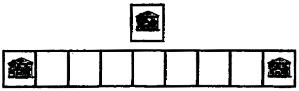
No home with the same model or floor plan and same elevation may be on the same side of the street unless separated by four lots.

(2)
No home with the same model or floor plan and same elevation may be directly across the street or diagonally unless separated by three lots.
(3)
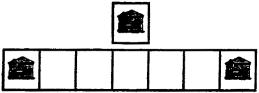
No home with the same model or floor plan may be on the same side of the street unless separated by two lots.

(4)
No home with the same model or floor plan may be directly across the street or diagonally unless separated by two lots.
(5)
No home with the same dominant color feature can be adjacent to another home with the same dominant color (i.e., same color siding). Homes with the same dominant color must be separated by two lots.

(6)
No home with the same dominant color feature can be directly across the street or diagonal from a home with the same dominant color.
(7)
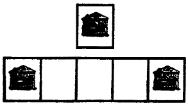
On a cul-de-sac turnaround, no home with the same model or floor plan and/or dominant color feature may be duplicated on the turnaround.
(Code 2009, § 9-9-2-5; Ord. of 9-22-2014)
Sec. 30-300. - Purpose.
It is the purpose of the R-1 Single-Family Residence District to establish regulations for an area of single-family residential lots and those public and semipublic uses normally considered an integral part of a residential neighborhood. The provisions of this division apply to the R-1 district.
(Code 2009, § 9-9-1; Ord. of 11-25-1996)
Sec. 30-301. - Use restrictions.
(a)
Building allowance. In the R-1 Single-Family Residence District, only one principal building shall be erected on any one lot.
(b)
Accessory buildings.
(1)
Height. No accessory building shall exceed 15 feet and six inches in height.
(2)
Location. No part of an accessory building shall be located within the required side yard or front yard. No part of an accessory building shall be located closer than five feet to the rear lot line. No detached accessory building shall be closer than ten feet to the principal building.
(3)
Time of construction. No accessory building or structure shall be constructed on any lot prior to the start of construction of the principal building to which it is accessory.
(4)
Use of accessory building. Use of any accessory structure as a dwelling is strictly prohibited.
(5)
Yard coverage. Accessory buildings shall not cover more than 30 percent of the rear yard.
(6)
Satellite receiving dishes. Satellite receiving dishes are allowable as an accessory use, provided they comply with all accessory building requirements.
(Code 2009, § 9-9-1-1; Ord. of 11-25-1996)
Sec. 30-302. - Lot and building requirements.
Properties in the R-1 Single-Family Residence District shall conform to the following lot and building requirements:
(1)
Minimum lot area: 15,000 square feet with public sewer and water; 40,000 square feet without public sewer and water.
(2)
Minimum lot width: 100 feet at the building line.
(3)
Minimum setbacks.
a.
Front yard: 30 feet.
b.
Corner side yard: 30 feet.
c.
Side yards: Ten percent of lot width at the building line.
d.
Rear yard: 30 feet.
(4)
Maximum structure height: 30 feet.
(5)
Maximum lot coverage: 30 percent. Accessory buildings are included in this 30 percent.
(Code 2009, § 9-9-1-2; Ord. of 11-25-1996)
Sec. 30-303. - Permitted uses.
Provided all the use restrictions of the R-1 Single-Family Residence District are observed, the following uses are permitted:
(1)
Home agricultural uses as an accessory use including gardens but not to include livestock or sale of products on premises.
(2)
Home occupations.
(3)
Parks and recreational areas when owned by the village.
(4)
Public schools, elementary, high, junior college or university, including playgrounds and athletic fields auxiliary thereto.
(5)
Single-family detached dwellings.
(Code 2009, § 9-9-1-3; Ord. of 11-25-1996)
Sec. 30-304. - Special uses.
Provided all the use restrictions of the R-1 Single-Family Residence District are observed, the following uses may be allowed by special use permit:
(1)
Bed and breakfast establishments.
(2)
Cemeteries.
(3)
Churches, chapels, temples, synagogues.
(4)
Conversion of a single-family dwelling into a two-family dwelling which meets the following requirements:
a.
When divided, each dwelling unit will have a minimum of 600 square feet in floor area measured from the outside, including utility rooms, but excluding all other areas not used for living or sleeping purposes.
b.
Must have or agree to provide on-site a paved parking area, not in a required yard, providing two parking spaces for each dwelling unit, with the exception of one car per driveway.
c.
Must meet all other building and yard requirements for the R-1 district.
1.
Funeral establishments.
2.
Golf courses, including accessory uses, such as driving ranges, bars, restaurants, and meeting and banquet rooms. This does not include miniature golf courses, pitch and putt and non-golf course golf driving range.
3.
Government buildings and structures.
4.
Hospitals, nursing homes and medical clinics.
5.
Offices for professionals, such as physicians, dentists, attorneys at law, architects, engineers, musicians, artists, teachers, accountants, photographers, real estate agents, insurance agents, public stenographers, brokers, business consultants and other professional offices, but not beauty shops and barbershops, as determined by the plan commission if they meet the following criteria:
(i)
Must provide paved parking area which is approved by the village board;
(ii)
There shall be no parking in the required front yard; and
(iii)
Signage must be approved by the village board.
6.
Public library/museum.
7.
Public utilities and utility substations.
8.
Small community residences, provided:
(i)
They are located not less than 1,300 feet from another small community residence.
(ii)
Prior to occupancy, a certificate of zoning compliance is applied for and received.
9.
Two-family residence dwellings which are new construction and which meet the following requirements:
(i)
Lot must be 15,000 square feet in area and if on well and/or septic system, 40,000 square feet in area.
(ii)
Must provide paved parking areas which provide two parking spaces for each unit (garage or carport can be included in required spaces).
(iii)
Must meet all other building and yard requirements for the district.
(Code 2009, § 9-9-1-4; Ord. of 11-25-1996; Ord. No. 2020-01-27(C), 1-27-2020)
Sec. 30-327. - Purpose.
It is the purpose of the R-2 Multiple-Family Residence District to encourage the creation and maintenance of a stable and enduring multiple residence environment. To do this, limitations are imposed on the use, character and density or development of land so as to take advantage of, or to avoid conflict with, natural topography, existing development, arrangement and location of existing or planned community facilities and the social needs of the village. The provisions of this division apply to the R-2 district.
(Code 2009, § 9-9-2; Ord. of 11-25-1996)
Sec. 30-328. - Use restrictions.
(a)
Building allowance. Only one principal building shall be built on one zoning lot.
(b)
Accessory uses.
(1)
Height. No accessory use shall be higher than 15 feet and six inches.
(2)
Setbacks. No accessory use shall be located within the front yard area. No part of an accessory building shall be located in any part of the side yard.
(3)
Yard coverage. Accessory uses shall not cover more than 30 percent of the rear yard.
(4)
Use as dwelling. Use of any accessory structure as a dwelling is strictly prohibited.
(5)
Satellite receiving dishes. Satellite receiving dishes are allowable as an accessory use, provided they comply with all accessory building requirements.
(Code 2009, § 9-9-2-1; Ord. of 11-25-1996)
Sec. 30-329. - Lot and building requirements.
(a)
Lot size. Every detached dwelling hereafter erected shall be located on a lot having the following minimum area requirements:
(1)
Single-family dwelling: 15,000 square feet with public sewer and water; 40,000 square feet without public sewer and water.
(2)
Two-family dwelling: 15,000 square feet; dwelling must be connected to public sewer and water.
(3)
Multiple-family dwelling: 5,000 square feet (per dwelling unit); dwelling must be connected to public sewer and water.
(b)
Yard areas. No building shall be erected or enlarged unless the following yards are provided and maintained:
(1)
Front yard: On every zoning lot, a front yard shall be provided of not less than 25 feet in depth. For buildings exceeding 25 feet in height, the minimum front yard shall be increased by one foot for each two feet or fraction thereof by which the building height exceeds 25 feet.
(2)
Interior side yard.
a.
For single-family, two-family and multiple-family dwelling units, the side yard on each side of the main building shall be a minimum of ten feet in width, plus an additional two feet in width for each additional story above two stories in height. On corner lots, there shall be maintained a side yard of not less than 15 feet on the side adjacent to the street.
b.
On a lot improved with a nonresidential building, there shall be a side yard of not less than 12 feet on each side of the main building and a combined total of side yards of not less than 30 feet.
(3)
Rear yard: On every zoning lot, a rear yard shall be provided of not less than 30 feet in depth.
(4)
Corner side yard: Same as the front yard.
(c)
Lot coverage. Not more than 60 percent of the area of a lot may be covered by the building and structure, including accessory buildings.
(d)
Height limitations. Maximum building height is 75 feet.
(e)
Minimum lot width. The minimum lot width is 75 feet.
(Code 2009, § 9-9-2-2; Ord. of 11-25-1996)
Sec. 30-330. - Permitted uses.
Provided all the use restrictions of the R-2 Multiple-Family Residence District are observed, the following uses are permitted:
(1)
Any use permitted in the R-1 district (section 30-303).
(2)
Apartments.
(3)
Condominiums.
(4)
Multiple-family dwellings.
(5)
Parks and recreational areas when publicly owned and operated.
(6)
Two-family dwellings.
(Code 2009, § 9-9-2-3; Ord. of 11-25-1996)
Sec. 30-331. - Special uses.
Provided all the use restrictions of the R-2 Multiple-family residence district are observed, the following uses may be allowed by special use permit:
(1)
Any special use in the R-1 district (section 30-304).
(2)
Barbershops.
(3)
Beauty shops.
(4)
Bed and breakfast establishments.
(5)
Clinics, hospitals, nursing homes, and medical centers which are licensed and/or registered.
(6)
Gift and craft shops, if along a state route.
(7)
Hotels and motels, if along a state route.
(8)
Large community residences, subject to the following conditions:
a.
No such residence shall be located less than 600 feet from a small or large community residence; provided, however, that this spacing requirement may be waived by the village board if they find that the cumulative effect of such use would not alter the residential character of the neighborhood setting and, by its operation, would not create an adverse effect on surrounding properties.
b.
Prior to admitting residents, the operator of such residence shall demonstrate that the dwelling will comply with all applicable licensing and code standards.
c.
Applicant shall submit a statement of the exact nature of the residence, the qualifications of the agency that will operate the residence, the number and type of personnel who will be employed, and the number and nature of the residents who will live in the residence.
d.
The residence shall, as close as possible, conform to the type and outward appearances of the residences in the area in which it is located.
e.
Prior to occupancy, a certificate of zoning compliance is applied for and received.
(9)
Mobile home park with permanent accommodations for mobile homes, provided that an application for special use permit shall be made in writing to the village clerk and shall contain the name of the applicant, the location of the proposed park and the number of mobile homes to be accommodated.
a.
Attendant. Each mobile home park shall be in the charge of a responsible attendant or caretaker at all times.
b.
Location in park; storage. No mobile home or house trailer will be parked or situated in the village except in an approved mobile home park, provided that a trailer or mobile home may be temporarily placed on a lot with a single-family dwelling for a period not to exceed 30 days in duration. Every mobile home park shall have direct access to a principal county, township, village or state highway or arterial street or road.
c.
Size. Mobile home parks shall comply with the following requirements:
1.
No permit shall be issued for the establishment of a new mobile home park unless such contains at least three acres and no more than 50 acres of area.
2.
The mobile home lot shall be at least 50 feet in width. The term "effective width" means the distance between side lot lines, measured at the rear line of the required front yard.
3.
The mobile home lot size shall not be less than 5,000 square feet in area.
d.
Yards and setbacks. The following minimum setback regulations shall apply:
1.
No building, structure or mobile home shall be located closer than 50 feet to any property line of the mobile home park, nor closer than 75 feet to any principal county, township, village or state highway or arterial street or roadway right-of-way.
2.
Mobile homes shall be set back at least 15 feet from the pavement of streets or roadways within the park.
3.
The owner of the mobile home park shall be responsible for maintaining all streets and shall cover all streets with an approved blacktop in order to prevent dust and mud from arising therefrom or being created thereon. The owner shall also be responsible for the removal of snow in order to allow the easy movement of vehicles upon the streets of the mobile home park.
4.
No part of any mobile home or any addition or appurtenance thereto shall be placed within 20 feet of any other mobile home, addition or appurtenance thereto, nor within 50 feet of any accessory or service building or structure.
5.
Each individual mobile home site shall abut or face on a driveway which shall have unobstructed access to a public highway or alley.
6.
There shall be an open space of at least eight feet between the sides of every mobile home and at least ten feet between the ends of every mobile home.
e.
Height. No building, structure or mobile home located in a mobile home park shall exceed one story or 14 feet in height, except the office/utility building, which may consist of two stories or 28 feet in height.
f.
Parking. There shall be at least two off-street parking spaces available to each individual mobile home lot and located within 100 feet of such lot. All parking areas must be paved.
g.
Water supply. An adequate supply of pure water for drinking and domestic purposes from the municipal water system shall be supplied to meet the requirements of the mobile home park. Each home shall have its own water line. One water meter and vault shall be installed for each mobile home as required by the village.
h.
Sanitary facilities. Each mobile home shall have its own sanitary sewer service connected to mobile home toilets, baths or showers which shall comply with the provisions of the ordinance relating thereto. Each mobile home shall be provided with sewage facilities connecting to a village sewage treatment plant.
i.
Garbage. It shall be the duty of the owner, the owner's agent or caretaker to provide for the collection and removal of garbage or other waste material and to otherwise maintain the park in a clean and sanitary condition.
j.
Lights. The park shall be kept properly and adequately lighted at all times so that the grounds shall be safe for occupants and visitors.
k.
Permanent use. It shall be unlawful for any person to maintain any mobile home used for human habitation upon any plot of ground in the village except in a licensed mobile home park. It shall be unlawful for any person to remove the wheels or other transporting device from any mobile home or otherwise to affix said mobile home permanently to the ground so as to prevent its ready removal unless a permit to do so is obtained as required for the construction of a new building. Any such alteration shall be construed as converting the mobile home into a building and subject to the requirements of this chapter and the building ordinances. It shall be unlawful to occupy for sleeping or other residence purposes any mobile home which has been rendered immobile by the removal of wheels, placing the same on a foundation or on the ground, unless such mobile home, in construction and location, complies with the ordinances relating to the construction, wiring, plumbing, sewer facilities and regulations applicable to single-family dwellings.
l.
Exceptions. Nothing in this chapter shall be construed to prohibit the storage of any mobile home for any length of time when said mobile home is not used for living or sleeping purposes.
m.
Improvements. Mobile home parks shall meet all public improvement requirements which are listed in chapter 22.
(10)
Restaurants, if along a state route.
(Code 2009, § 9-9-2-4; Ord. of 11-25-1996; Ord. No. 2020-01-27(C), 1-27-2020)

