
Snellville City Zoning Code
CHAPTER 200
- ZONING AND LAND USE
201-1.1. - Sites
A.
Defined
A site is any lot or group of contiguous lots owned or controlled by the same person or entity, assembled for the purpose of a single development.
B.
Site Area
Site area is the cumulative area of all contiguous lots that the site is composed of. It excludes existing public rights-of-way but does include planned public or private rights-of-way that will be created in the development.
C.
Site Frontage
All sites must have at least 25 feet of frontage upon a public street or private street built to public standards.
201-1.2. - Density
A.
Dwelling Units Allowed
1.
The maximum number of dwelling units allowed on a site is calculated by either:
a.
Multiplying the site area by the maximum number of units per acre allowed in the zoning district, when applicable; or
b.
Conforming to minimum lot sizes.
Minimum lot sizes in some districts may appear to allow additional units to be developed on a site beyond what is allowed by sentence a above; however, the zoning district's allowed density serves as the cap on the maximum number of units on a site.
2.
The maximum number of dwelling units allowed on a site or portion of a site located within a floodplain must be further reduced when required by the FH district standards of Sec. 205-3.3.A.
B.
Accessory Dwelling Units
Accessory dwelling units are not counted in density calculations.
201-1.3. - Lots
A.
Defined
A parcel of land either vacant or occupied intended as a unit for the purpose, whether immediate or for the future, of transfer of ownership, or possession, or for development.
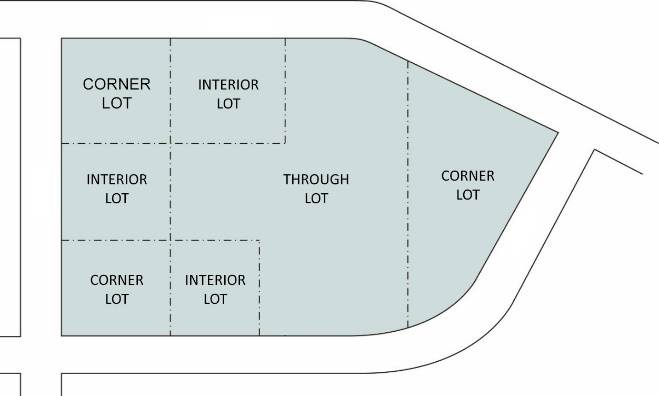
Lot types include the following:
1.
Corner Lot. Any lot with frontage on two streets at their intersection.
2.
Interior Lot. A lot with frontage on only one street.
3.
Flag lot. A lot that does not meet the minimum frontage and/or width requirements and where access to the public street is by a narrow right-of-way or driveway.
4.
Through Lot. A lot other than a corner lot with frontage on two or more streets.
B.
Lot Area
The area included within the rear, side, and front lot lines. Lot area does not include existing or proposed rights-of-way, whether dedicated or not dedicated to public use.
C.
Lot Coverage
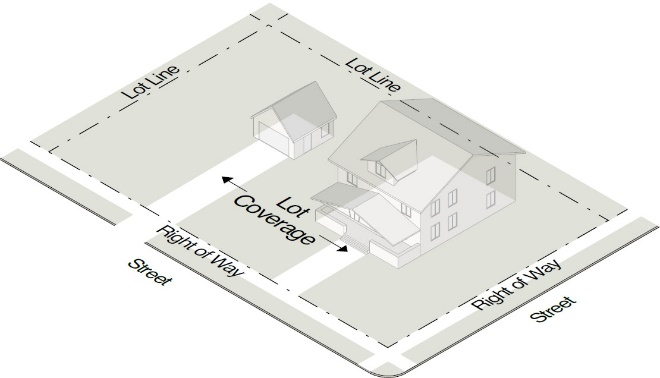
The percentage of total lot area, excluding any streetscape easements provided in accordance with Sec. 401-4.2.A.3, that includes:
1.
The horizontal area of the building footprint measured within the outside of the exterior walls of the ground floor of all principal buildings and any roofed accessory buildings on the lot; and
2.
Any impervious parking areas, driveways, walkways, steps, terraces, uncovered patios and decks, swimming pools, and any similar features. The Director may establish rules for determining the extent to which partially pervious materials are exempt from lot coverage.
D.
Lot Depth
The distance between midpoints of straight lines connecting the foremost points of the side lot lines in front and the rearmost points of the side lot lines in the rear.
E.
Lot Frontage
1.
Defined. The portion of a lot adjacent to a street or specified courtyard for a cottage court.
2.
Minimum Frontage.
a.
Every lot must have at least 25 feet of frontage upon either a public street, a private street built to public standards, or a specified courtyard for a cottage court, except when less frontage is allowed by zoning district regulations or when more frontage is required along cul-de-sacs.
b.
Every lot along a cul-de-sac must have at least 35 feet of frontage, measured along a straight line along the chord of the arc at the right-of-way line.
F.
Lot Width
1.
Defined. The distance between side lot lines measured at the minimum required front yard setback, except as provided for cul-de-sacs below.
2.
Lot Width along Cul-de-Sacs. For a lot with the majority of its frontage on a cul-de-sac, the lot width may be measured at the minimum required front setback line or at a line parallel to said setback line at no more than twice the minimum front setback distance from the street.
G.
Through Lots
1.
Through lots are required for residential subdivisions along major thoroughfares where internal access can be provided, except as otherwise allowed by clause G.2 below.
2.
Interior and corner lots are allowed along major thoroughfares in the TCO, TC, MU, and NR districts when these lots have internal access from an alley or shared driveway."
3.
When a through lot is required by clause G.1 above, a no-access landscape strip must also be provided when required by Sec. 207-3.2.C.
H.
Lot Size
1.
New lots must conform to the size requirements of the applicable zoning district, except as otherwise allowed by paragraph I below.
2.
No lot, even though it may consist of one or more adjacent lots in the same ownership at the time of passage of this UDO, may be reduced in size so that its width, size of yards, lot area per dwelling unit, or any other requirements of this UDO are not maintained. This does not apply when a portion of a lot is acquired for public use.
3.
New lot size is determined by Sec. 401-4.2.A.3.c on existing public streets where there is insufficient right-of-way for the required streetscape improvements and an easement is provided in accordance with Sec. 401-4.2.A.2.
I.
Lot Size Exceptions
1.
No lot served by a septic tank may have a lesser area than that approved by the Environmental Health Section for safe drinking water and septic tank operation.
2.
Lots used exclusively for common areas, open spaces, private alleys, or stormwater facilities are exempt from lot size requirements.
3.
Lots used exclusively for subdivision entrance sign or subdivision entrance landscape features are exempt from lot size requirements when:
a.
The lot is located at an entrance to the subdivision as an "island" in the right-of-way of a local or minor collector street; and
b.
The subdivision provides a mandatory homeowner association (or non-residential equivalent) that is responsible for maintaining the lot in perpetuity; and
c.
Right-of-way with a minimum width of 6 feet from the back of the curb is provided adjacent to the perimeter of the lot;
d.
Landscape plantings are not allowed in the right-of-way, except as otherwise provided in this UDO within the streetscape planter by Sec. 401-4.2 (Streetscape Required).
J.
Substandard Lots of Record.
Any lot of record existing at the time of the adoption or amendment of the UDO, that has an area or width that is less than is required by the UDO, may be used, subject to the following:
1.
Individual Lot Not Meeting Minimum Lot Size Requirements.
a.
Except as set forth in sentences J.1.b and c below, in any zoning district where single-family detached dwellings are permitted, any lot of record existing at the time of adoption or amendment of the UDO which has an area, width or depth less than that required by the UDO may be used as a building site for one single-family detached dwelling.
b.
In the case of such a lot, when it is not possible to provide the required side setbacks and at the same time build a minimum width single-family detached dwelling, the Board of Appeals is authorized to grant a variance reducing the side setback requirements for such lot the minimum amount necessary for a reasonable dwelling, but in no case may each of the side setbacks be less than 5 feet in width or the new structure located less than 10 feet from an principal structure on an adjacent lot.
c.
In the case of such lot, when the lot was previously approved in a final plat for use as a common area, open space, private alley, stormwater facilities, or similar amenity or infrastructure use, it may not be used as a building site for one single-family detached dwelling.
2.
Adjoining Lots. When two or more adjoining lots of record with continuous frontage are in one ownership at any time after the adoption or amendment of the UDO and such lots, individually, have an area or width that is less than is required by the UDO, then such contiguous lots are considered as a single lot or several lots of the minimum width and area required by the zoning district in which they are located and must be combined.
201-1.4. - Building Setbacks
A.
Type of Setbacks
1.
There are four types of setbacks - front, side (street), side (interior), and rear.
2.
Building setbacks apply to both principal and accessory buildings or structures, except where it explicitly states otherwise in this UDO.
B.
Measurement of Building Setbacks
Building setbacks are measures as follows, except when paragraph C below applies:
1.
A front setback is measured at a right angle (perpendicular) to the front lot line, except as otherwise required by clause B.7.
2.
A side (street) setback is measured at a right angle (perpendicular) to the side street lot line, except as otherwise required by clause B.7.
3.
A rear setback is measured at a right angle (perpendicular) to the rear lot line.
4.
Lot lines which are not front, side (street), or rear lot lines are considered side (interior) lot lines for the purpose of measuring setbacks. Side (interior) setbacks are measured at a right angle (perpendicular) to the side interior lot line.
5.
Setbacks must be drawn using an extension of a line perpendicular to the lot line until they intersect with another setback line.
6.
Where street right-of-way dedication occurs, setbacks are measured from the final lot line.
7.
Where a streetscape easement is provided in accordance with Sec. 401-4.2.A.3, setbacks must be measured from the easement.
C.
Irregularly Shaped Lots
The Director will determine how setbacks apply to irregularly shaped lots.
D.
Front Setback Exceptions
The following applies in all districts except the TCO, TC, MU, and NR districts.
1.
Front setback requirements do not apply on lots where the average depth of the front yards of existing buildings on adjoining lots located wholly or partially within 100 feet on each side of such lot within the same block and zoning district and fronting on the same side of the street is either more or less than the minimum required front setback.
2.
If the average depth of the front yards is more than the required front setback, then the lot's required front setback is the average depth of the front yards of the above-referenced buildings but not more than 150% of the otherwise required front setback.
3.
If the average depth of the front yards is less than the required minimum front setback, then lots required front setback is the average of the front yards of the aforementioned buildings.
201-1.5. - Building Setback Encroachments
All principal buildings and structures must be located at or behind the required zoning district setbacks, except as listed below. Unless specifically stated in this UDO, no building or structure may extend into a required easement or public right-of-way.
A.
Non-Profit Private Clubhouse, Non-Profit Private Recreation
Zoning district setbacks do not apply to non-profit private clubhouse and non-profit private recreation uses. Both must conform to the setbacks provided in Article 7 for their use.
B.
Principal Building Features
1.
Porches, stoops may not encroach, except as allowed in Sec. 201-2.14 (Building Elements) in zoning districts where building types apply.
2.
Balconies and awnings/canopies may encroach up to 6 feet, except where a greater distance is allowed in Sec. 201-2.14 (Building Elements) in zoning districts where building types apply.
3.
Building eaves, roof overhangs, gutters, downspouts, and light shelves may encroach up to 4 feet, provided that such extension is at least 2 feet from the vertical plane of any lot line.
4.
Bay windows and oriels less than 10 feet wide may encroach up to 4 feet, provided that such extension is at least 2 feet from the vertical plane of any lot line.
5.
Chimneys may encroach up to 4 feet, provided such extension is at least 2 feet from the vertical plane of any lot line.
6.
Cornices, belt courses, sills, buttresses, or other similar architectural features may encroach up to 2 feet.
7.
Unenclosed and uncovered patios, decks, swimming pool decking, or terraces may encroach up to 4 feet into a side (interior) setback, or up to 8 feet into a required rear setback, provided that such extension is at least 2 feet from the vertical plane of any lot line.
8.
Handicap ramps may encroach to the extent necessary to perform their proper function.
9.
Structures below and covered by the ground may encroach to any extent.
C.
Accessory Use and Structure Setback Encroachments
Accessory uses and structures may encroach into building setbacks in accordance with Sec. 201-1.6 (Accessory Uses and Structures - Residential Districts) and Sec. 201-1.7 (Accessory Uses and Structures - Nonresidential Districts).
D.
Buffer Setbacks
See Sec. 201-1.9 (Buffer Setbacks) for an additional buffer setback that applies even when a lesser setback is otherwise allowed by this subsection.
(UDO 22-01, § 2, 2-28-2022)
201-1.6. - Accessory Uses and Structures - Residential District
The following applies in residential and TC-R zoning districts:
A.
General Accessory Use and Structure Locations
1.
No accessory structure except driveways and individual mailboxes may be in a public right-of-way.
2.
Landscaping may not be in a public right-of-way of a City street unless approved by the Director.
3.
No accessory structure in a public right-of-way may create a sight hazard to the traveling public. See Sec. 201-1.8 (Intersection Visibility).
4.
Accessory uses and structures are only allowed in rear yards, except as shown in Table 201-1.6 or otherwise allowed in this UDO.
5.
Accessory uses and structures are subject to the additional buffer setback requirements of Sec. 201-1.9 (Buffer Setbacks), which apply even when a lesser setback is otherwise allowed by this subsection.
6.
When an accessory use or structure is allowed in a specific yard, it has no setback requirements, except as shown in Table 201-1.6, clause 5 above, or otherwise in this UDO.
Table 201-1.6. Allowed Locations of Residential District Accessory Uses and Structures
B.
Accessory Use and Structure Setback Requirements
When shown in Table 201-1.6, accessory uses and structures must observe the following setback requirements adjacent to all lot lines, except when the required building setback is less than the following distances:
1.
Up to 100 square feet in area: min. 5-foot setback.
2.
101 to 300 square feet: min. 10-foot setback.
3.
301 to 500 square feet: min. 15-foot setback.
4.
Over 500 square feet: min. 20-foot setback.
C.
Canopies and Covered Entrances
Canopies and covered entrances for places of worship may encroach:
1.
Into the required side (interior) or rear yard up to 3 feet; and
2.
Into the required front yard or side (street) yard, provided such extensions are not closer than 15 feet from the street right-of-way line or future right-of-way line as designated on the Gwinnett County Long Range Road Classification Map, whichever is greater.
D.
Driveways
1.
No more than 35% of the front yard area may be used for driveways or authorized on-site parking. See paragraph G below.
a.
The Director is authorized to grant administrative variances to the requirement of this section, in order to meet the requirements of Sec. 201-1.6.D.2. or Sec. 201-1.6.D.3.
2.
All garage doors facing a public or private street must observe a minimum 22-foot front and side (street) setback from sidewalk in all residential districts.
3.
Build to Rent residential districts require a minimum 24-foot wide driveway and minimum 30-foot driveway length, measured from inside edge (house side) of sidewalk to garage door.
E.
Fences and Walls
1.
Fences, walls, and retaining walls are allowed in all yards, except as provided for in Sec. 201-1.9 (Buffer Setbacks) and clause E.2 below.
2.
Fences, walls, and retaining walls in a front yard or side (street) yard must be placed within 2 feet of the vertical plane of any lot line unless a greater distance is required by Sec. 201-1.8 (Intersection Visibility).
F.
Mechanical Equipment
1.
Mechanical equipment associated with residential uses, such as HVAC units, swimming pool pumps or filters, and security lighting, may encroach into a side (interior) or rear yard, provided that such extension is at least 3 feet from the vertical plane of any lot line.
2.
Mechanical equipment associated with residential uses may only encroach into a front or side (street) yard when less than 30 square feet in footprint.
3.
Mechanical equipment not associated with residential uses must conform to Sec. 201-1.7.F.
4.
See Sec. 207-2.2 for screening requirements.
G.
On-Site Parking
1.
No parked vehicle or any portion of a parked vehicle, including those in driveways, may be within the public right-of-way including sidewalk, except for authorized on-street parking.
2.
When parking is allowed in the front yard, no more than 35% of the front yard area may be used for parking or authorized driveways.
3.
When parking is allowed in the rear yard, no more than 20% of the rear yard area may be used for parking, and the parking must be screened from view of adjacent residential uses.
H.
Stormwater Infrastructure
Stormwater infrastructure may only encroach into a front or side (street) yard when:
1.
The infrastructure is completely covered by ground; or
2.
The infrastructure consists exclusively of management practices, such as normally dry storage and retention facilities or ponds always maintaining water. These must be designed by a qualified professional as formal or natural amenities with additional uses other than stormwater management, such as an amphitheater, sports field, or a pond or pool as part of the landscape design.
(UDO 22-01, §§ 2, 2(Exh. A), 2-28-2022; UDO 22-03, § 2, 1-9-2023)
201-1.7. - Accessory Uses and Structures - Nonresidential Districts
The following applies in all nonresidential districts except TC-R.
A.
General Accessory Use and Structure Locations
1.
No accessory structure, except driveways and individual mailboxes, may be in a public right-of-way.
2.
Landscaping may not be in a public right-of-way of a City street unless approved by the Director.
3.
No accessory structure in a public right-of-way may create a sight hazard to the traveling public. See Sec. 201-1.8 (Intersection Visibility).
4.
Accessory uses and structures are only allowed in rear yards, except as shown in Table 201-1.7 or otherwise in this UDO.
5.
Accessory uses and structures are subject to the additional buffer setback requirements of Sec. 201-1.9 (Buffer Setbacks), which apply even when a lesser setback is otherwise allowed by this subsection.
6.
Accessory uses and structures are subject to the additional landscape strip restrictions of Sec. 207-3.2.D (Structures in Landscape Strip), which apply even when a lesser setback is otherwise allowed by this subsection.
7.
When an accessory use or structure is allowed in a specific yard, it has no setback requirements, except as shown in Table 201-1.7, clause A.5 above, or otherwise in this UDO.
Table 201-1.7. Allowed Locations of Nonresidential District Accessory Uses and Structures
B.
Setback Requirements
When shown in Table 201-1.7, accessory uses and structures must observe the following setback requirements adjacent to all lot lines, except when the required principal building setback is less than the following distance:
1.
Up to 100 square feet in area: min. 5?foot setback.
2.
101 to 300 square feet: min. 10?foot setback.
3.
301 to 500 square feet: min. 15?foot setback.
4.
Over 500 square feet: min. 20?foot setback.
C.
Canopies
1.
When a canopy not over a pump island is utilized in connection with a commercial or industrial use it may encroach into a required front or side (street) yard, subject to the following:
a.
No portion of a canopy may be closer than 10 feet from the vertical plane of any street right-of-way, nor closer than 20 feet from the vertical plane of the face of the curb of the street.
b.
No canopy may occupy more than 50% of a required yard over which it extends.
c.
Canopies must be completely unenclosed.
2.
Canopies over pump islands may extend up to the street right-of-way line or future right-of-way line as designated on the Gwinnett County Long Range Road Classification Map, whichever is more restrictive.
D.
Driveways
Driveways and alleys providing inter-parcel access are allowed in all required yards but may not exceed 24 feet in width and must be placed generally perpendicular to the yard.
E.
Fences and Walls
1.
Fences, walls, and retaining walls are allowed in all yards, except as provided for in Sec. 201-1.9 (Buffer Setbacks), Sec. 207-2.3 (Fences and Walls), Sec. 207-3.2.D (Structures in Landscape Strip), and clause E.2 below.
2.
Fences, walls, and retaining walls in a front yard or side (street) yard must be placed within 2 feet of the vertical plane of any lot line unless where a greater distance is required by Sec. 207-3.2 (Landscape Strips) or Sec. 201-1.8 (Intersection Visibility).
F.
Mechanical Equipment
1.
Mechanical equipment may encroach into a side (interior) or rear yard.
2.
Mechanical equipment may only encroach into a front or side (street) yard when less than 30 square feet in footprint.
3.
Minor structures accessory to utilities (such as hydrants, manholes, sanitary sewer lift stations, emergency power generators, transformers, and other cabinet structures, and related fences) may encroach into a rear or side (interior) yard but are not allowed in a front of side (street) yard.
4.
See Sec. 207-2.2 for screening requirements.
G.
On-Site Parking
1.
No parked vehicle or any portion of a parked vehicle, including those within driveways, may be within the public right-of-way, except for authorized on-street parking.
2.
The parking of any vehicle in any yard is allowed, except where specifically not allowed by district regulations, building types, or use standards.
H.
Stormwater Infrastructure
Stormwater infrastructure may only encroach into a front or side (street) yard when:
1.
The infrastructure is completely covered by ground; or
2.
The infrastructure consists exclusively of management practices, such as normally dry storage and retention facilities or ponds always maintaining water. These must be designed by a qualified professional as formal or natural amenities with additional uses other than stormwater management, such as an amphitheater, sports field, or a pond or pool as part of the landscape design.
(UDO 22-01, § 2(Exh. A), 2-28-2022)
201-1.8. - Intersection Visibility
A.
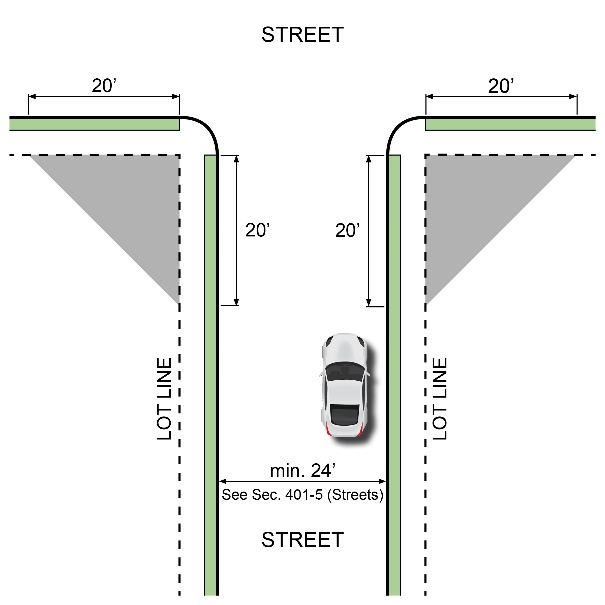
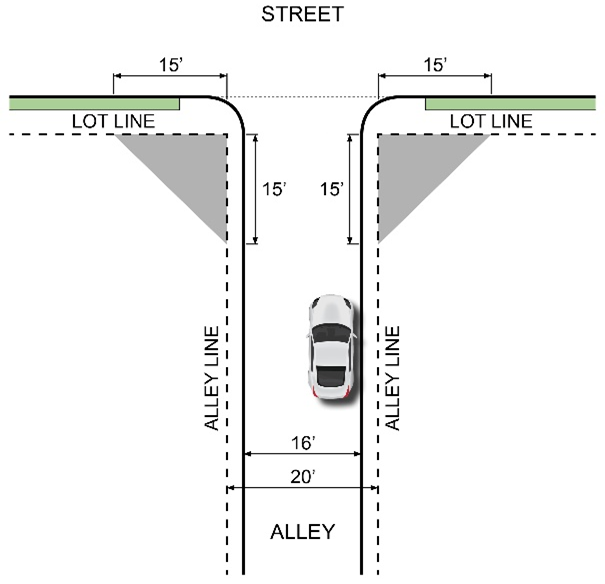
Except in districts allowing the construction of buildings or structures to the lot line, an unobstructed view must be provided across the triangles formed as follows:
1.
By a diagonal line connecting two points located on intersecting lines of the street right-of-way, each point being 20 feet from the intersecting lines.
2.
By a diagonal line connecting two points located on intersecting street right-of-way, alley easement, or alley edge lines, each point being 15 feet from the intersecting lines.
3.
Within these triangles, there may be no sight obscuring wall, fence, entrance sign, marker, or foliage higher than 30 inches above grade, or in the case of trees, foliage lower than 8 feet. Vertical measurements are made at the top of the curb on the street or alley adjacent to the nearest side of the triangle or if no curb exists, from the edge of the nearest traveled way.
 |  |
B.
Heights of fences, hedges, and other continuous foliage are measured from the adjacent top of the street curb, the surface of an alley or the official established grade thereof, whichever is the higher. On interior lot lines, the measurement is from the average grade of the lot line of the property with the lower elevation.
C.
The City Council or Board of Appeals may approve, or may direct as a condition of approval, fences or plantings taller than allowed by paragraph A and B above in order to provide screening between different uses or between like uses upon agreement between the affected parties. No such approval may have the effect of reducing visibility required by this subsection.
D.
See Sec. 401-5.13.D for additional corner sight distance requirements along minor collectors or major thoroughfares.
201-1.9. - Buffer Setbacks
Structures, including driveways, parking facilities, and retaining walls must be located at least 5 feet from any buffer required by Sec. 207-2.1.B (Buffer Requirements).
201-1.10. - Floor Area
A.
Single-Family Dwelling Floor Area
Floor area is the sum of finished and conditioned floor area on all floors within surrounding exterior walls of a building. Floor area does not include unenclosed balconies, unenclosed porches, unenclosed stoops, unfinished attics, unfinished basements, garages, or carport.
B.
Floor Area of all Other Uses
Floor area is the sum of floor area on all floors within surrounding exterior walls of a building. Areas of a building not provided with surrounding walls are included in the floor area if such areas are included within the horizontal projection of the roof or floor above. Floor area does not include unenclosed balconies, unenclosed porches, unenclosed stoops, or parking structures.
201-1.11. - Height
A.
General
1.
No building or structure may be erected, converted, enlarged, reconstructed, moved or structurally altered to exceed the height limit established for the zoning district it is located in.
2.
The height of buildings and structures is also regulated by the building construction codes, which only apply for building construction code purposes.
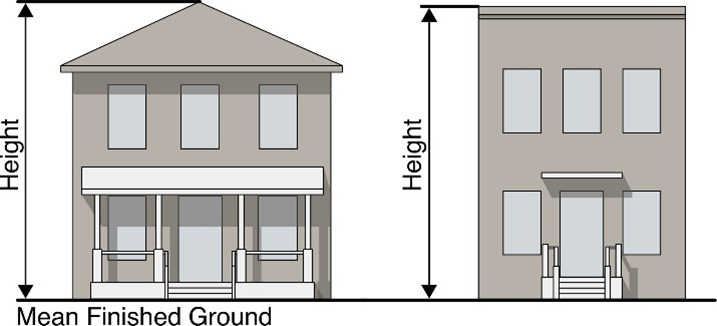
B.
Measurement
Height is measured as the vertical distance from the mean finished ground level at the front of the building to the highest point of a roof or parapet.
C.
Height Variances
Buildings and structures exceeding the height limitations contained in this UDO, and which have not been granted approval by the City Council through a related zoning action, require variance approval by the Board of Appeals.
D.
Height Encroachments
The maximum height limits of the district do not apply to:
1.
Cupolas, weathervanes, chimneys, parapets and similar architectural features, or satellite dishes or other necessary mechanical rooftop appurtenances provided they do not exceed the height limit by more than 20 feet.
2.
Steeples, domes, belfries or ornamental towers, if they are 100 feet in height or less.
3.
Barns, silos, and similar agricultural structures, if they are 75 feet in height or less.
4.
Water towers, smokestacks, conveyors, derricks, and similar industrial structures, if they are 75 feet in height or less.
5.
Flagpoles, if they are 80 feet in height or less.
6.
All other structures, except buildings and signs, if they are 50 feet in height or less.
7.
The height of transmission towers, radio or television towers and antennas and other telecommunication facilities, which are regulated in Sec. 206-4.3.D (Telecommunications Antenna and Tower).
201-1.12. - Street Classification
For purposes of this UDO, all of the streets, roads, and highways are classified in the current adopted Gwinnett County Unified Plan or Long-Range Transportation Plan.
(UDO 25-01, § 1, 3-10-2025)
201-1.13. - Fenestration
A.
Fenestration is the minimum percentage of window and door glass that must cover a façade.
B.
Glass used to satisfy fenestration requirements must be unpainted, must have a transparency (visible light transmission) higher than 70%, and must have an external reflectance of less than 15%. Transparency and external light reflectance must be established using the manufacturer's specifications.
C.
Fenestration is measured from the top of the finished floor to the top of the finished floor above.
D.
When there is no floor above, fenestration is measured from the top of the finished floor to the top of the wall plate.
E.
Window signs must conform to the coverage restrictions of Sec. 207-6 (Signs).
F.
Adhesive film, fabric, paper, and other materials that are affixed to the window surface or otherwise installed in a way that prevents visibility into the building interior are prohibited. This prohibition does not apply to curtains, shades, Venetian blinds, interior or exterior shutters, and other window treatments that are in operable condition and capable of being adjusted, opened, or closed daily.
201-1.14. - Blank Wall Area
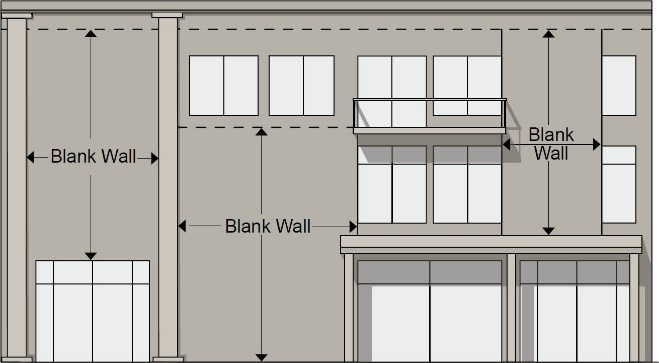
A.
Blank wall area means a portion of the exterior façade of the building that does not include: fenestration, columns, pilasters, or other articulation greater than 12 inches in depth.
B.
Blank wall area applies in both a vertical and horizontal direction.
C.
Blank wall area applies to ground and upper story street-facing facades only.
201-1.15. - Pedestrian Access
A.
A pedestrian entrance and walkway providing ingress and egress, operable to residents at all times and operable to customers, visitors, and employees during business hours, is required to meet any street-facing pedestrian entrance requirements. Additional entrances off another street, pedestrian area, civic space, amenity space, or internal parking area are permitted but must have the same or shorter hours of operability as the street-facing entrance.
B.
A street address number must be located above the street-facing pedestrian entrance utilizing numbers that are 6 to 10 inches in height. When multiple entrances exist on a street-facing façade, only one address is required.
C.
An angled or mitered pedestrian entrance may be provided at either corner of a building along the street to meet the street-facing pedestrian entrance requirements.
D.
These requirements may also apply abutting a civic space in TC Districts, as determined by the Director. In making this determination, the Director must consider the use and design of the civic space, the use of the proposed building, and the public health, safety, and welfare.
E.
A front porch or stoop is required to meet the street-facing pedestrian entrance requirements when required by building type.
201-2.1. - General
A.
Applicability
1.
This section only applies in zoning districts where building types are utilized.
2.
All principal buildings in zoning districts where building types apply must comply with this section.
B.
Intent
Building types are used to improve the design of development in certain districts in order to reinforce their character and scale.
C.
Determination of Buildings Type
Applicants must select which allowed building type corresponds to the building they are proposing to construct or alter, subject to the approval of the Director.
D.
Graphic Depictions are Illustrative Only
All graphic depictions of building types are for illustrative and zoning purposes only.
E.
Relationship to Building Codes
Building types are not linked to building construction codes.
201-2.2. - Detached House
A.
Defined
A building type that accommodates one single-family detached dwelling unit on an individual lot with yards on all sides. Not for nonresidential use.
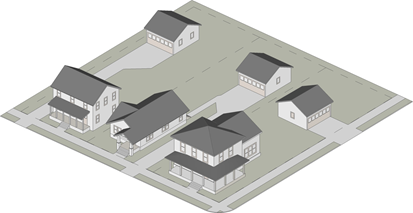
B.
Specific Standards
(UDO 22-01, § 2, 2-28-2022)
201-2.3. - Carriage House
A.
Defined
A building type that accommodates an accessory dwelling unit on the same lot as a detached house, semi-detached house, or townhouse but is physically separated from the principal dwelling unit. Carriage houses may also contain garages, workshops, and similar uses. Not for nonresidential use.
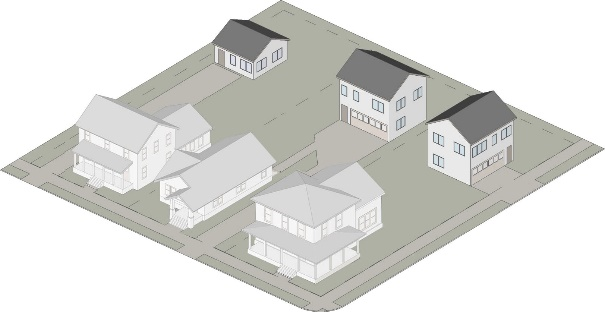
B.
Specific Standards
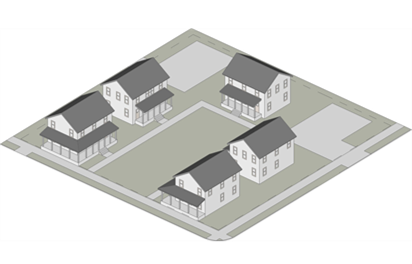
201-2.4. - Cottage Court
A.
Defined
A building type that accommodates five to ten detached dwelling units organized around a shared internal courtyard. Units may not be vertically mixed. Not for nonresidential use.
B.
Specific Standards
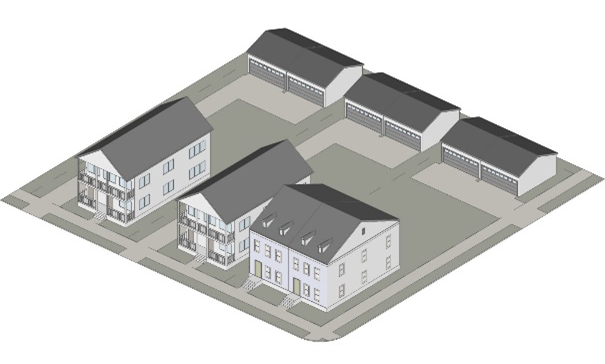
201-2.5. - Semi-Detached House
A.
Defined
A building type that accommodates one two-family dwelling. Units may be arranged horizontally or vertically. Not for nonresidential use.
B.
Specific Standards
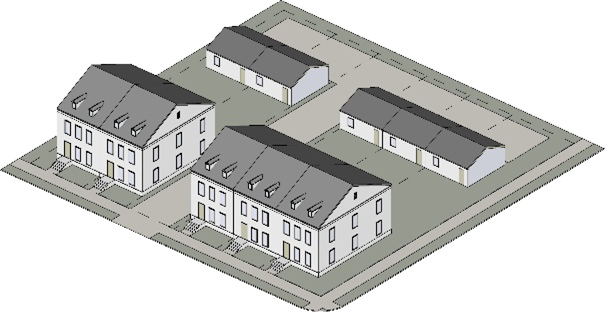
201-2.6. - Townhouse
A.
Defined
A building type that accommodates three or more dwelling units where each unit is separated by a common sidewall. Units may not be vertically mixed. Not for nonresidential use.
B.
Specific Standards
Table Note:
[1]
Units in separate buildings connected by a canopy, pergola, or similar exterior feature are considered separate rows.
(UDO 22-01, § 2, 2-28-2022; UDO 25-01, § 1, 3-10-2025)
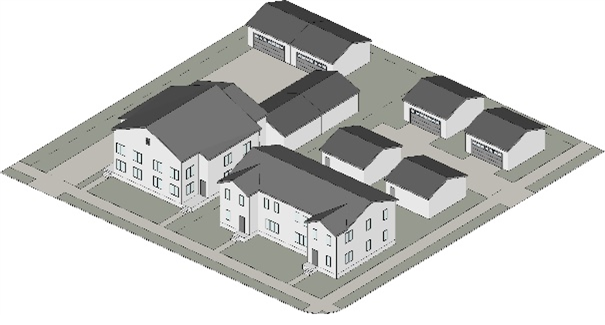
201-2.7. - Walk-Up Flat
A.
Defined
A building type that accommodates three to eight dwelling units vertically and horizontally integrated. Not for nonresidential use.
B.
Specific Standards
201-2.8. - Stacked Flat
A.
Defined
A building type that accommodates nine or more dwelling units vertically and horizontally integrated. Not for nonresidential use.
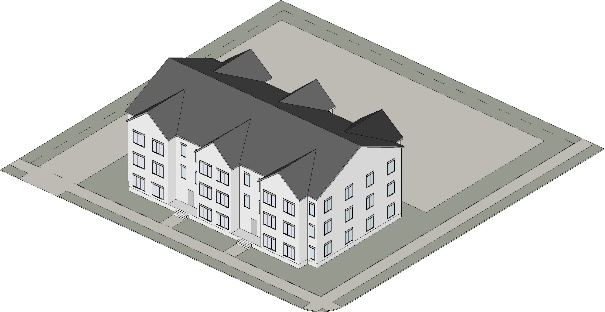
B.
Specific Standards
201-2.9. - Commercial House
A.
Defined
A building type that accommodates nonresidential uses in a building that resembles a detached house. Not for residential uses.
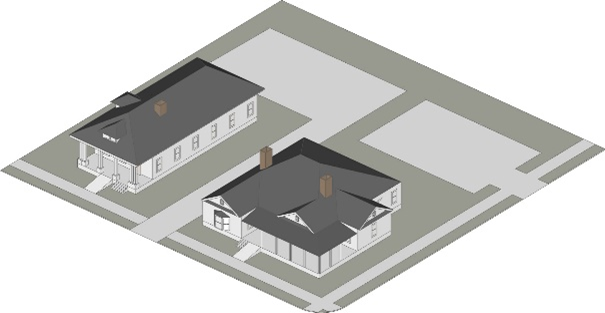
B.
Specific Standards
201-2.10. - Shopfront
A.
Defined
A single-story building type that typically accommodates single-use retail or commercial activity. Not for residential uses.
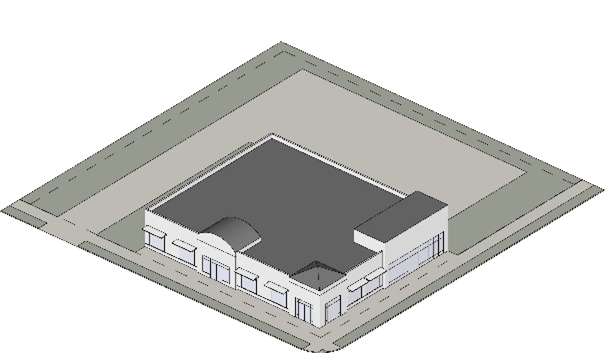
B.
Specific Standards
201-2.11. - Mixed-use Building
A.
Defined
A multi-story building type that typically accommodates ground floor retail, office or commercial uses with upper-story residential or office uses. Not for ground floor dwelling units except when such units are not along a street-facing façade.
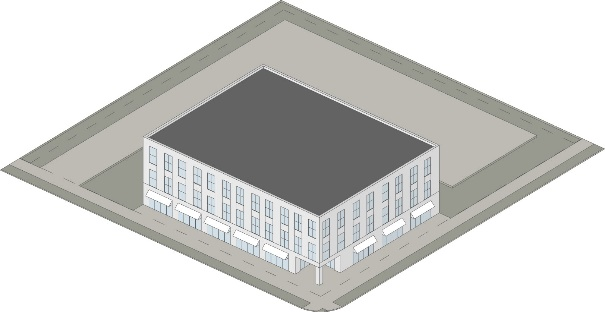
B.
Specific Standards
201-2.12. - General building
A.
Defined
A multi-story building type that typically accommodates nonresidential uses such as industrial, hotel or office uses on all stories. Not for residential use.
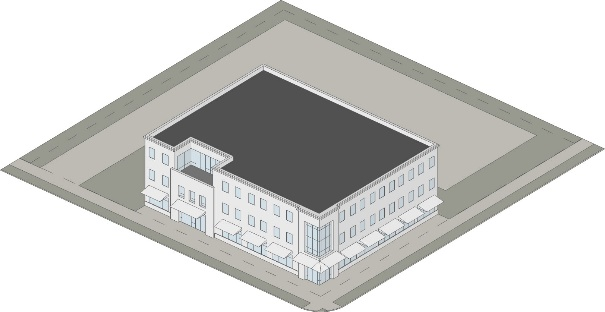
B.
Specific Standards
201-2.13. - Civic Building
A.
Defined
A building type that accommodates civic uses. Not for commercial, retail, office, or residential uses.
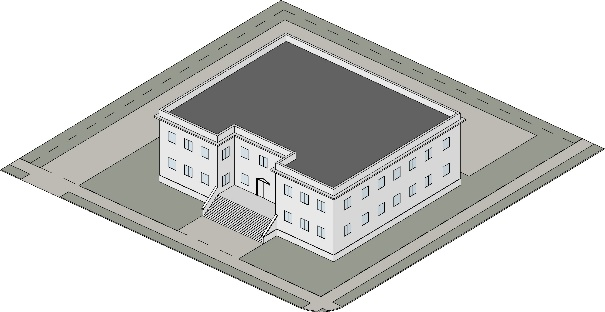
B.
Specific Standards
201-2.14. - Building Elements
A.
Intent
The following standards are intended to ensure that certain building elements, when added to a street-facing façade, are of sufficient size to be both usable and functional and be architecturally compatible with the building they are attached to.
B.
Applicability
1.
This subsection applies in all zoning districts where building types are utilized.
2.
This subsection also applies in other districts when indicated in district regulations.
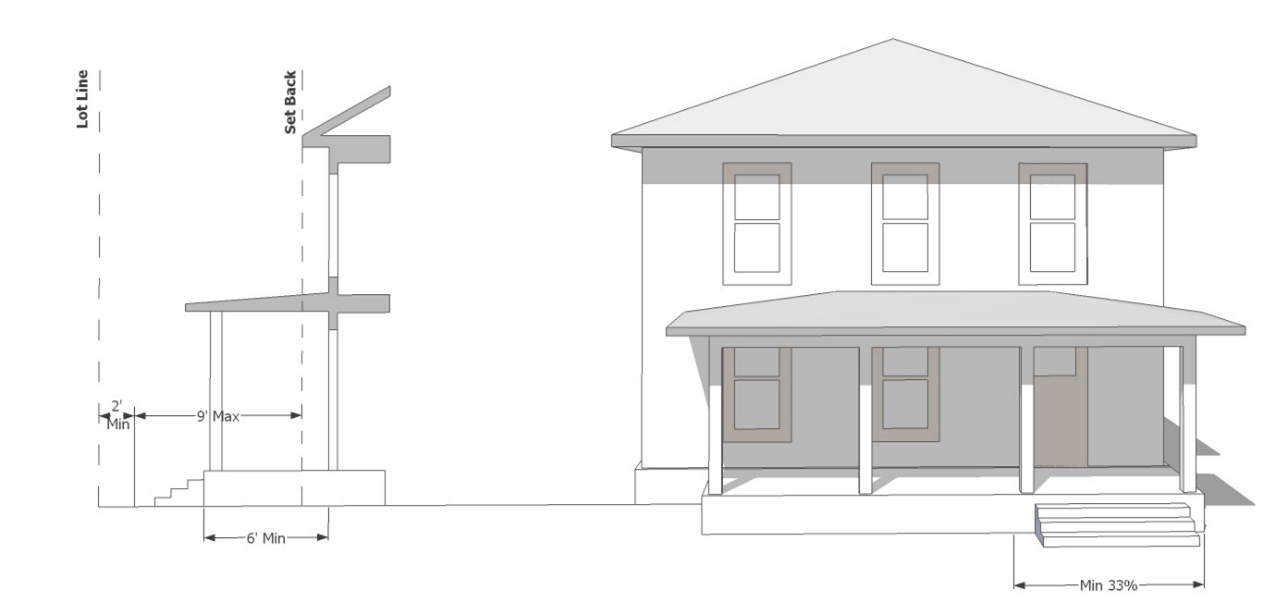
C.
Front Porch
A raised structure attached to a building, forming a covered pedestrian entrance to a doorway.
1.
A front porch must be at least 6 feet deep (not including the steps).
2.
A front porch must be contiguous, with a width not less than 33% of the building façade from which it projects.
3.
A front porch must be roofed and may be screened but may not be fully enclosed.
4.
A front porch may extend up to 9 feet, including the steps, into a required front setback, provided that such extension is at least 2 feet from the vertical plane of any lot line.
5.
A front porch must not encroach into the public right-of-way or required sidewalk.
6.
Steps leading to front porches must have enclosed risers.
7.
Round roof support columns must have a minimum diameter of 8 inches.
8.
Square roof support columns must have a minimum width of 6 inches.
D.
Stoop
A small raised platform that serves as a pedestrian entrance to a building.
1.
A stoop must be no more than 6 feet deep (not including the steps).
2.
A stoop may be covered but may not be fully enclosed.
3.
A stoop may extend up to 6 feet, including the steps, into a required setback, provided that such extension is at least 2 feet from the vertical plane of any lot line.
4.
A stoop must not encroach into the public right-of-way or required sidewalk.
5.
Steps leading to stoops must have enclosed risers.
6.
Stoop columns, where provided, must be a minimum width of 8 inches.
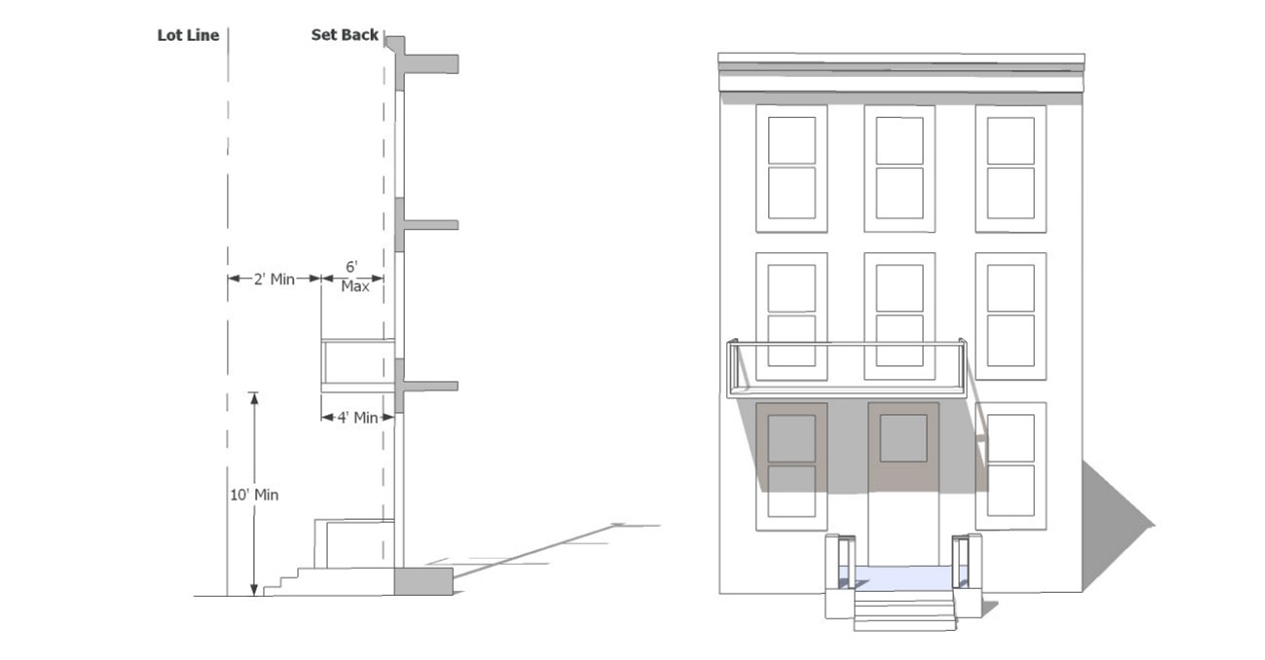
E.
Balcony
A platform projecting from the wall of an upper story of a building with a railing along its outer edge, often with access from a door or window.
1.
A balcony must be at least 4 feet deep and may extend up to 6 feet into a required setback, provided that such extension is at least 2 feet from the vertical plane of any lot line.
2.
A balcony must have a clear height above the sidewalk of at least 10 feet.
3.
A balcony may be covered and screened but may not be fully enclosed.
4.
A balcony may encroach up to 6 feet into the public right-of-way or required sidewalk but must be at least 2 feet inside the curb line or edge of the pavement, whichever is greater.
5.
No signage may be affixed to a balcony.
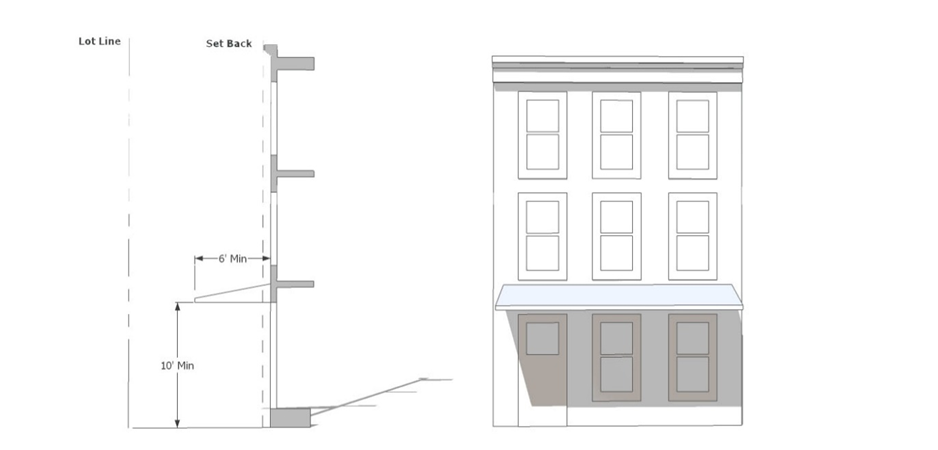
F.
Awning/Canopy
A wall-mounted, cantilevered structure providing shade and cover from the weather for a sidewalk.
1.
Awnings must be located on the ground floor.
2.
An awning must be a minimum of 10 feet clear height above the sidewalk and must have a minimum depth of 6 feet.
3.
An awning may extend into a required setback.
4.
An awning may encroach up to 9 feet into the public right-of-way or required sidewalk but must be at least 2 feet inside the curb line or edge of the pavement, whichever is greater.
5.
Awnings must be made of canvas or other woven fabric and may not be reflective or shiny.
6.
Awnings must have open ends called "shed awnings" to allow views into buildings.
7.
Awnings may not be internally lit nor allow light to pass through awning materials.
8.
Awnings may only be externally lit from above for below.
9.
Awnings may not be narrower than, nor 2 feet wider than, the door or window opening that they serve. Where multiple doors and windows are less than 2 feet apart, multiple awnings may be combined into a single awning.
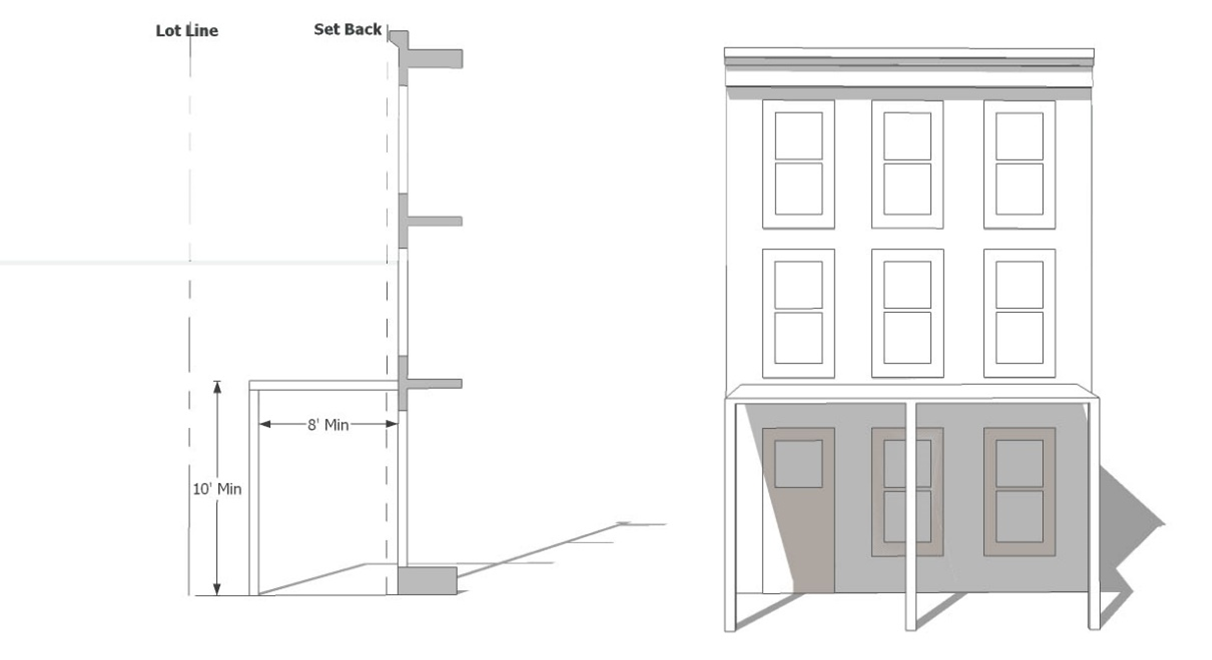
G.
Gallery
A covered passage extending along the outside wall of a building supported by arches or columns that is open on three sides.
1.
A gallery must have a clear depth from the support columns to the building's façade of at least 8 feet and a clear height above the sidewalk of at least 10 feet.
2.
A gallery must be contiguous and extend over at least 75% of the width of the building façade from which it projects.
3.
A gallery may extend into a required setback.
4.
A gallery may encroach up into the required sidewalk but not the required planter.
201-3.1. - General
A.
Applicability
This section applies to buildings and sites in all zoning districts, except the TCO, TC, MU, and NR districts.
B.
Alternative Standards
The City Council may approve alternative standards to this section as a condition of rezoning.
C.
Intent
These regulations are intended to:
1.
Maintain high quality, long-lasting, and sustainable development in Snellville.
2.
Enhance the visual appeal and livability of the city.
3.
Foster architectural diversity and interest, yet achieve and maintain a consistent, durable and pleasing aesthetic/visual quality.
4.
Ensure that large commercial buildings incorporate designs that reduce their visual mass and create the impression of smaller buildings.
D.
Application Requirements
1.
Building plans submitted as an application for a building permit must clearly indicate the proposed building materials and colors for each facade as described in this section. The plans must also clearly show the location and calculate the percentages of all building materials per facade.
2.
Groups of buildings on the same site may be reviewed and permitted as a single application. This is encouraged to minimize the number of reviews required and to allow for originality and design flexibility.
E.
Relief
1.
The Director is authorized to grant administrative variances to the requirements of this section.
2.
Administrative variances may only be granted to permit a practice that is not consistent with a specific provision of this section but is justified by their intent.
3.
Administrative variances relating to a physical element or numeric measurements must be based upon credible submitted evidence demonstrating that:
a.
Approval, if granted, would not offend the intents of paragraph C above;
b.
There are such extraordinary and exceptional situations or conditions pertaining to the particular piece of property that the literal or strict application of the regulations would create an unnecessary hardship due to size, shape or topography or other extraordinary and exceptional situations or conditions not caused by the applicant;
c.
Relief, if granted would not cause a substantial detriment to the public good and surrounding properties; and
d.
That the public safety, health, and welfare are secured, and that substantial justice is done.
201-3.2. - Basic Standards
A.
Applicability
The following applies to any new building that is not used for a single-family detached, two-family, or attached dwelling.
B.
General
1.
Permanent mounted exterior neon lights are not allowed.
2.
Back-lit awnings, roof-mounted lights, and roof-mounted flag poles are not allowed.
3.
Satellite dishes must be located and painted to blend with the background as much as practical.
C.
Exterior Wall Finish Materials
Exterior wall finish materials (excluding foundations, architectural accents, windows, and doors) are limited to the following and Table 201-3.2.C and Table 201-3.2.D:
1.
Unpainted full-depth brick where each brick is placed on the exterior wall during construction, but not including half-depth brick, thin brick, or simulated brick veneers;
2.
Stone, including unpainted natural stone, unpainted cast stone with the appearance of natural stone, and unpainted terra cotta;
3.
True hard coat stucco;
4.
Concrete block, which must be painted;
5.
Split-face block and painted concrete masonry units (CMU);
6.
Wood, including natural wood or cement-based artificial wood siding;
7.
Shingles, including wood or cement-based shakes and shingles;
8.
Tilt/architectural pre-cast concrete; and
9.
Glass.
D.
Exterior Wall Finish Material Combinations
Exterior wall finish materials may only be combined horizontally, with the visually heavier below the lighter as shown in Table 201-3.2.C. This does not apply to architectural accents or glass.
Table 201-3.2.C. General Architectural Standards Visual Weight Table
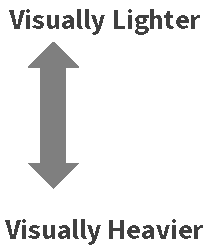 |
True Hard Coat Stucco
Shingles Wood/Cement-Based Siding Brick, CMU, Pre-Cash Concrete Natural/Manufactured Stone |
| _____ | |
Table 201-3.2.D.1. Allowed Building Materials: All Uses
Table Notes
[1]
Allowed only on rear facades of buildings larger than 10,000 square feet floor area. When allowed it must be tinted or painted to blend with the balance of the building. Concrete block and CMU/split-face block are prohibited when the rear building faces a residential property or public street.
[2]
For industrial/warehouse buildings less than 30,000 square feet floor area.
[3]
Allowed for buildings intended to have a residential appearance. A minimum 4:12 roof pitch is required.
[4]
Allowed for building facades that are setback at least 150 feet from the right-of-way.
Table 201-3.2.D.2. Allowed Building Materials: Uses over 30,000 square feet Floor Area
Table Notes
[1]
Allowed only on rear facades. When allowed it must be tinted or painted to blend with the balance of the building. Concrete block and CMU/split-face block are prohibited when the rear building faces a residential property or public street.
[2]
Allowed for building facades that are setback at least 150 feet from the right-of-way.
E.
Architectural Accent Materials
Architectural accents are limited to the following:
1.
Any allowed exterior wall finish materials;
2.
EIFS, provided the total combined area of EIFS and the other materials identified in clause 3 below may not exceed 15% of total wall area per façade; and
3.
Small amounts of other materials, provided the total combined area of these accents may not exceed 10% of the total wall area per facade.
F.
Building Color
1.
All exterior wall finish, foundations, windows, and door material colors must use hues from or equivalent to any historic palettes from any major paint manufacturer, except that primary and fluorescent colors are not allowed.
2.
Colors other than those allowed by clause F.1 above may be used for accents but may not exceed 10% of the total façade wall area.
G.
Building Massing
Variation in the roofline of buildings and offsets in pitched roofs and gables are required. Parapets on individual facades exceeding 125 continuous linear feet must vary in height and projection at least once every 125 feet and must use decorative elements such as crown moldings, dentils, brick soldier courses, or similar details.
(UDO 22-01, § 2(Exhs. C, D), 2-28-2022)
201-3.3. - Small Residential Building Standards
A.
Applicability
The following applies to:
1.
New single-family detached dwellings not in subdivisions;
2.
New single-family detached dwellings in new subdivisions approved after the effective date of this UDO;
3.
New single-family detached dwellings in existing subdivisions where no dwelling units were issued a certificate of occupancy before the effective date of this UDO and where there are no valid approved or pending building permits per the transitional provisions of Sec. 101-1.4;
4.
New two-family dwellings; and
5.
New single-family attached dwellings.
B.
Alternative Standards
The City Council may approve alternative standards to this subsection in a new subdivision.
C.
Prohibited Exterior Wall Finish Materials
The following exterior wall finish materials (excluding architectural accents, windows, and doors) are not allowed:
1.
Vinyl;
2.
Concrete;
3.
Metal, except that aluminum clapboard siding is allowed;
4.
EIFS;
5.
Concrete masonry units;
6.
Plywood (including T1-11); and
7.
Cementitious panels, except that cementitious clapboard is allowed.
D.
Building Colors
All exterior wall finish, foundations, windows, and door material colors must use hues from or equivalent to any historic palettes from any major paint manufacturer, except that primary and fluorescent colors are not allowed.
E.
Building Facades
Building facades facing a street must comply with the following:
1.
The total combined area of all windows and doors on a front facade may not exceed 40% of the front façade wall area.
2.
A front porch or stoop is required and must conform to Sec. 201-2.14.C or Sec. 201-2.14.D, as applicable.
3.
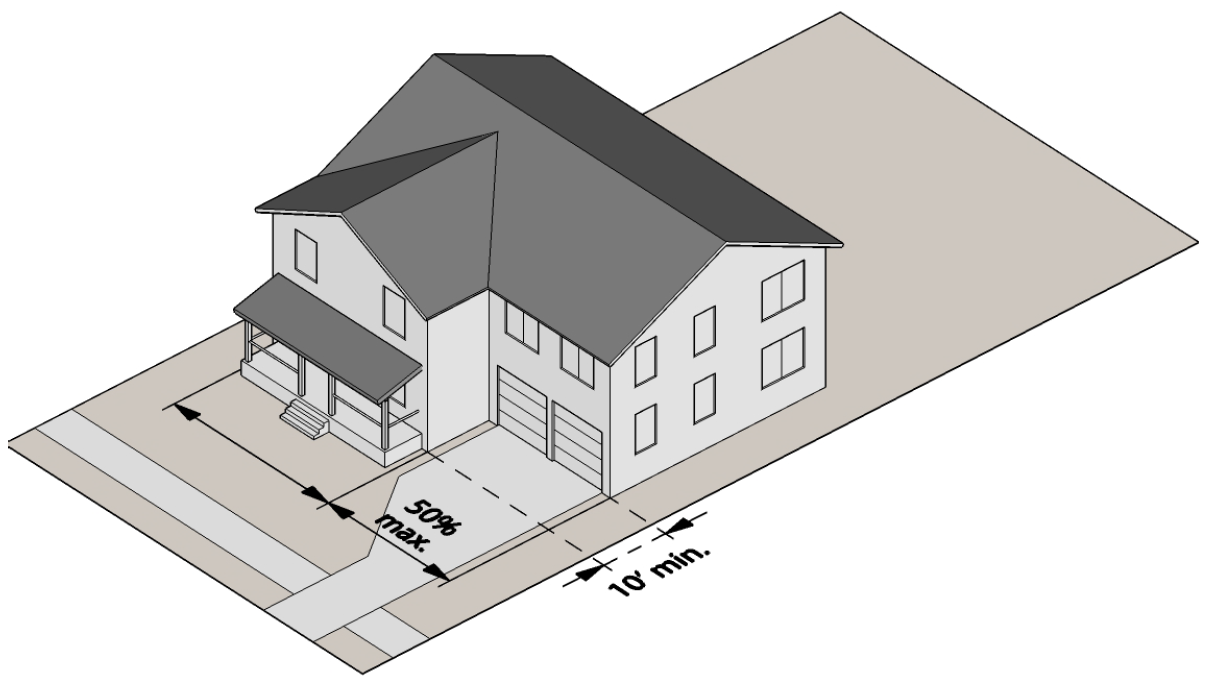
Single-family (detached) dwelling garage doors facing a street may not comprise more than 50% of the overall width of the front wall plane of the house.
4.
Except single-family (attached) dwellings, all garage doors facing a public or private street must observe a minimum 22 feet front and side (street) setback from sidewalk in all zoning districts, unless a greater setback is required to meet the 30 feet minimum driveway length, measured from right-of-way to garage door, required in the Build to Rent districts.
5.
Garages and driveways serving single-family (attached) dwellings must be rear-entry with access provided from an alley. Front-entry garages and driveways facing a public or private street are prohibited. Garage doors must observe a minimum 22 feet setback from alley.
6.
No more than three adjacent single-family attached units may have identical façade designs. Differentiation between adjacent units may be accomplished by a change in materials, building height, color, or roof form.
F.
Building Massing
1.
Pitched roofs, if provided, must be symmetrically sloped no less than 5:12, except that roofs for front porches and attached sheds may be sloped no less than 2:12.
2.
Flat roofs must be enclosed by parapets a minimum of 42 inches high, or as required to conceal mechanical equipment by Sec. 207-2.2.C (Screening, Roof Mounted Equipment).
G.
Roofs
All roofs must have a minimum 25-year roof life (per manufacturer's warranty) and must have no visible roll roofing.
(UDO 22-01, § 2, 2-28-2022; UDO 22-03, § 3, 1-9-2023; UDO 25-01, § 1, 3-10-2025)
201-4.1. - General
A.
Applicability
This section applies in the TCO, TC, MU, and NR districts.
B.
Alternative Standards
The City Council may approve alternative standards to this section as a condition of rezoning.
C.
Application Requirements
1.
Building plans submitted as an application for a building permit must clearly indicate the proposed building materials and colors for each facade as described in this section. The plans must clearly show the location and calculate the percentages of all building materials per facade.
2.
Groups of buildings on the same site may be reviewed and permitted as a single application. This is encouraged to minimize the number of reviews required and to allow for originality and design flexibility.
D.
Relief
1.
The Director is authorized to grant administrative variances to the requirements.
2.
Administrative variances may only be granted to permit a practice that is not consistent with a specific provision of these regulations, but is justified by the following:
a.
The purpose of the applicable district;
b.
The policies of the Comprehensive Plan; and
c.
The policies of other officially City plans, programs, and projects.
3.
Administrative variances relating to a physical element or numeric measurements must be based upon credible submitted evidence demonstrating that:
a.
Approval, if granted, would not offend the purposes of the applicable district;
b.
There are such extraordinary and exceptional situations or conditions pertaining to the particular piece of property that the literal or strict application of the regulations would create an unnecessary hardship due to size, shape or topography or other extraordinary and exceptional situations or conditions not caused by the applicant;
c.
Relief, if granted would not cause a substantial detriment to the public good and surrounding properties; and
d.
That the public safety, health, and welfare are secured, and that substantial justice is done.
201-4.2. - Basic Standards
A.
Applicability
1.
The following applies to all buildings, except as provided by clauses A.2 and 3 below.
2.
Detached houses, carriages houses, cottage courts, semi-detached houses, and townhouses must comply with either the following or Sec. 201-4.3 (Small Residential Building Standards) at the discretion of the applicant.
3.
Commercial houses must comply with Sec. 201-4.3 (Small Residential Building Standards).
B.
General
1.
Permanent mounted exterior neon lights are not allowed.
2.
Back-lit awnings, roof-mounted lights, and roof-mounted flag poles are not allowed. Satellite dishes must be located and painted to blend with the background as much as practical.
C.
Exterior Wall Finish Materials
Exterior wall finish materials (excluding foundations, architectural accents, windows, and doors) are limited to the following and Table 201-4.2.D:
1.
Unpainted full-depth brick where each brick is placed on the exterior wall during construction, but not including half-depth brick, thin brick, or simulated brick veneers;
2.
Stone, including unpainted natural stone, unpainted cast stone with the appearance of natural stone, and unpainted terra cotta;
3.
True hard coat stucco;
4.
Concrete block, which must be painted;
5.
Split-face block and painted concrete masonry units (CMU);
6.
Wood, including natural wood or cement-based artificial wood siding;
7.
Shingles, including wood or cement-based shakes and shingles; and
8.
No more than two identical materials (including color) may be used on a single building unless the façade is designed to give the appearance of many smaller buildings.
D.
Exterior Wall Finish Material Combinations.
Exterior finish materials must be combined only horizontally, with the visually heavier below the lighter as shown in Table 201-4.2.C. This does not apply to architectural accents.
Table 201-4.2.C. Enhanced General Visual Weight Table
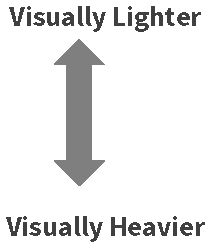 |
True Hard Coat Stucco
Shingles Wood/Cement-Based Siding Brick Natural/Manufactured Stone |
| _____ | |
Table. 201-4.2.D. Enhanced Allowed Building Materials Table
Table Notes
[1]
Along facades that abut an alley and are not visible from a civic space or street (not including the alley), the maximum percentage restriction is 50% per façade.
E.
Architectural Accent Materials
Architectural accents are limited to the following:
1.
Any allowed exterior wall finish materials;
2.
EIFS, provided the total combined area of EIFS and the other materials identified under "3" below may not exceed 15% of total wall area per façade; and
3.
Small amounts of other materials, provided the total combined area of these accents may not exceed 10% of the total wall area per facade.
F.
Foundation Materials
Foundations must be constructed as a distinct building element that is finished in a different material or color than the exterior wall. Exposed above-ground foundations must be coated or faced in cement, true hard coat stucco, brick, manufactured stone, or natural stone to contrast with façade materials.
G.
Building Colors
1.
All exterior wall finish, foundations, windows, and door material colors must use hues from or equivalent to any historic palettes from any major paint manufacturer, except that primary and fluorescent colors are not allowed.
2.
Colors other than those allowed by clause G.1 above may be used for accents but may not exceed 10% of the total façade wall area.
H.
Building Façades
Façades facing a street or civic space must comply with the following:
1.
Where used, shutters must match one-half the width and shape of the window opening to which they are adjacent.
2.
Façades must provide visual divisions between the ground floor and second story through architectural means such as courses, awnings, or a change in materials.
3.
Façades must delineate all stories above the ground floor with windows, belt courses, balconies, cornice lines, or similar architectural detailing.
4.
Except townhouses, all garage doors facing a public or private street must observe a minimum 22 feet front and side (street) setback from sidewalk.
5.
Garages and driveways serving townhouses must be rear-entry with access provided from an alley. Front-entry garages and driveways facing a public or private street are prohibited. Garage doors must observe a minimum 22 feet setback from alley.
6.
Windows above the ground floor must be equally sized and equally spaced rectangles with a height greater than width and arranged in a grid pattern.
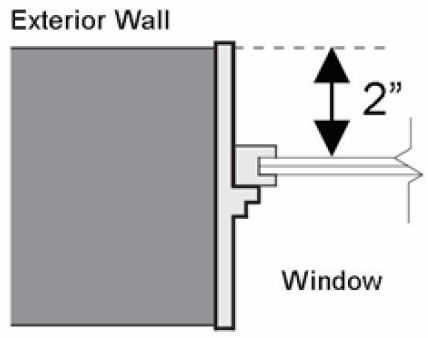
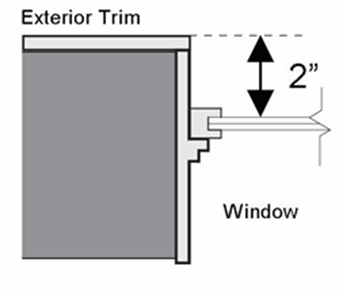
7.
Window panes must be recessed as follows:
a.
On ground floors, panes must be recessed a minimum of 3 inches from the adjacent exterior wall.
b.
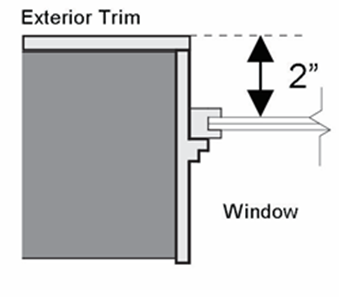
On floors above the ground floor, panes must be recessed a minimum of 2 inches from either the adjacent exterior wall (when no trim is provided) or from the trim (when trim at least 3.5 inches wide is provided).
| Window Recess without Trim | Window Recess with 3.5-inch Trim |
 |  |
I.
Building Massing
1.
Facades over 50 feet in length must incorporate wall projections or recesses a minimum of 12 inches in depth. The combined length of said recesses and projections must constitute at least 20% of the total individual façade length.
2.
Variation in the roofline of buildings and offsets in pitched roofs and gables are required. Parapets in individual facades exceeding 100 continuous linear feet must be varied in height and projection at least once every 100 feet and must use decorative elements such as crown moldings, dentils, brick soldier courses, or similar details.
(UDO 25-01, § 1, 3-10-2025)
201-4.3. - Small Residential Building Standards
A.
Applicability
The following applies to detached houses, carriages houses, cottage courts, semi-detached houses, townhouses, walk-up flats, stacked flats, and commercial houses in a TC District.
B.
Exterior Wall Finish Materials
Exterior wall finish materials (excluding architectural accents, windows, and doors) are limited to the following:
1.
Unpainted brick, except that veneers intended to simulate brick is not allowed;
2.
Unpainted natural stone and unpainted cast stone with the appearance of natural stone;
3.
True hard coat stucco but not EIFS;
4.
Natural wood or cement-based artificial wood clapboard siding; or
5.
Natural wood or cement-based artificial wood shakes and shingles.
C.
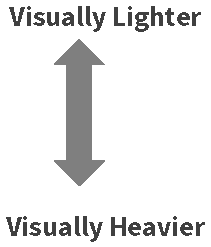
Exterior Wall Finish Material Combinations
Exterior finish materials must be combined only horizontally, with the visually heavier below the lighter as shown in Table 201-4.3.C. This does not apply to architectural accents.
Table 201-4.3.C. Enhanced Residential Building Visual Weight Table
 |
True Hard Coat Stucco
Shingles Wood/Cement-Based Siding Brick Natural/Manufactured Stone |
| _____ | |
D.
Architectural Accent Materials
Architectural accents are limited to the following:
1.
Any allowed exterior wall finish materials; and
2.
Small amounts of other materials, provided the total combined area of these accents may not exceed 10% of the total wall area per facade.
E.
Foundation Materials
Foundations must be constructed as a distinct building element that is finished in a different material or color than the exterior wall. Exposed above-ground foundations must be coated or faced in cement, true hard coat stucco, brick, manufactured stone, or natural stone to contrast with façade materials.
F.
Building Colors
1.
All exterior wall finish, foundations, windows, and door material colors must use hues from or equivalent to any historic palettes from any major paint manufacturer, except that primary and fluorescent colors are not allowed.
2.
Colors other than those allowed by clause F.1 above may be used for accents but may not exceed 10% of the total façade wall area.
G.
Building Façades
Façades facing a street or civic space must comply with the following:
1.
Doors and windows that operate as sliders are prohibited.
2.
Where used, shutters must match one-half of the width and shape of the window opening to which they are adjacent.
3.
Windows must include sills of wood, masonry, stone, cast stone, or terra cotta.
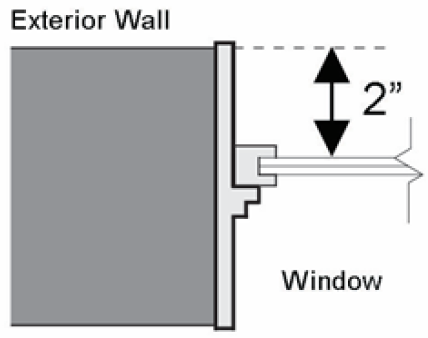
4.
Window panes must be recessed a minimum of 2 inches from either the adjacent exterior wall (when no trim is provided) or from the trim (when trim of at least 3.5 inches wide is provided).
| Window Recess without Trim | Window Recess with 3.5-inch Trim |
 |  |
5.
Awnings are not allowed.
6.
Except townhouses, all garage doors facing a public or private street must observe a minimum 22 feet front and side (street) setback from sidewalk.
7.
Garages and driveways serving townhouses must be rear-entry with access provided from an alley. Front-entry garages and driveways facing a public or private street are prohibited. Garage doors must observe a minimum 22 feet setback from alley.
8.
Garage doors facing a street may not comprise more than 50% of the overall width of the front wall plane of the house.
H.
Building Massing
1.
Pitched roofs, when provided, must be symmetrically sloped no less than 5:12, except that front porch roofs and attached shed roofs may be no less than 2:12.
2.
Flat roofs must be enclosed by parapets a minimum of 42 inches high, or as required to conceal mechanical equipment by Sec. 207-2.2.C (Screening, Roof Mounted Equipment).
3.
All roofs must have a minimum 25-year roof life (per manufacturer's warranty) and must have no visible roll roofing.
4.
Chimneys, where provided, must extend to the ground and must be faced in brick or stacked stone.
I.
Roofs
All roofs must have a minimum 25-year roof life (per manufacturer's warranty) and must have no visible roll roofing.
(UDO 25-01, § 1, 3-10-2025)
202-1.1. - Applicability
This section applies in all residential districts.
202-1.2. - Design Criteria
A.
Before issuance of a site development permit for each phase of a project, if any, the developer must submit architectural elevations in the form of a "Plan Book" for typical structures for review and approval by the Director. At a minimum, the "Plan Book" must include: allowable building elevations; design criteria for entries, porches, doors, windows, dormers, columns, cornices, rakes, garages, roofs, landscaping, fencing, and retaining walls; exterior colors and materials; and other pertinent information. All structures must be constructed in accordance with the approved "Plan Book." This "Plan Book" becomes a binding restriction on all structures within the development and may be amended or supplemented only by approval of the Director.
B.
Portions of lots and buildings along external public streets must include the following in areas visible from such streets:
1.
Enhanced foundations including either:
a.
A minimum 24-inch high foundation wall faced in brick or stone; or
b.
A minimum 24-inch high water table faced in brick or stone; or
c.
A minimum 24-inch high combination of a foundation wall and water table, both faced in brick or stone.
2.
Window treatments, such as trim and shutters, similar to the front façade.
3.
Landscaping similar to the grass and planting beds in the front of the house.
4.
Facades with an architectural treatment similar to the front façade.
These requirements apply in addition to those of Sec. 201-3 (General Architectural Standards) and are intended to continue the architectural theme that is presented on the front elevation of the house/building to other facades exposed to frequent public view.
C.
If alleys are provided, ingress and egress points to them from the public streets must be enhanced with landscaping and decorative pavers, as approved by the Director.
D.
All grassed areas must be sodded with a drought-resistant grass, such as Bermuda, Centipede, Zoysia, or other species, as approved by the Director.
202-1.3. - Concept Plan Review Required
All rezoning applications to a residential district must be accompanied by a concept plan in compliance with this subsection. The purpose concept plan review is to encourage logic, imagination, innovation, and variety in the design process and ensure the soundness of the proposed development and its compatibility with the surrounding area. The Director will review plans for compliance with concept plan review criteria and this UDO. The recommendations of both the Director and the Planning Commission will be transmitted to the City Council. Through the rezoning process, the City Council may condition approval of a rezoning request to a specific concept plan or require an additional future site plan review by the Planning Commission and City Council.
The following exhibits must be prepared by registered design professionals, such as engineers, architects or landscape architects, and submitted to the Department. No application for an R-TH district may be accepted for processing without these required exhibits:
A.
A location map indicating existing zoning on the site and the adjacent areas;
B.
A concept plan drawn no smaller than 1-inch equals 100 feet, including the following information:
1.
Lot lines and setbacks;
2.
Topography with contour intervals no greater than 4 feet;
3.
Lakes, ponds and floodplains and the sources of floodplain data;
4.
Stormwater detention areas;
5.
Recreational facilities (if applicable);
6.
Location of typical off-street parking;
7.
Location of new streets;
8.
Location of sidewalks and streetscapes;
9.
Color elevations of front, sides, and rear of all typical units, including proposed building materials, and any other structures such as recreational buildings;
10.
Acreage and proposed density;
11.
Lot sizes (typical dimensions and square footage);
12.
Unit sizes (typical square footage and number of bedrooms);
13.
Amount of common open space in square feet (if applicable);
14.
Location of sales or leasing offices; solid waste dumpsters; and mailbox kiosks (if applicable);
15.
Such other site design and engineering data as may be required to evaluate the project.
202-2.1. - Purpose
This district is intended to provide stable residential areas of high-quality single-family houses; to protect the residential character of the district; and to encourage a suitable residential environment on lots which are of moderate width but greater depth than other single-family districts.
202-2.2. - Use Provisions
See Sec. 206-2 (Allowed Use Table).
202-2.3. - Building Types
No building type requirements apply in RS-30.
202-2.4. - Architectural Standards
See Sec. 202-1.2 (Design Criteria) and Sec. 201-3 (General Architectural Standards).
202-2.5. - Site Development Standards
See Chapter 200 Article 7 (Site Development) for parking and loading, buffer and screening, landscaping, tree ordinance, lighting, signs, and utility requirements.
202-2.6. - Dimensional Standards
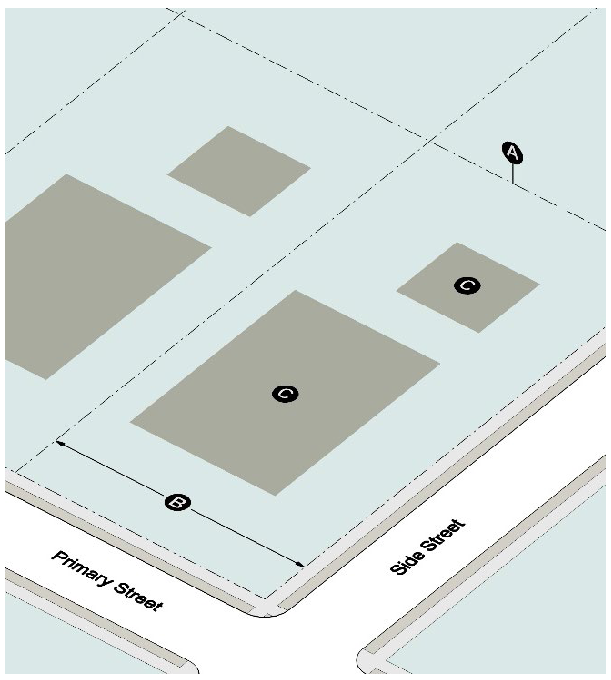
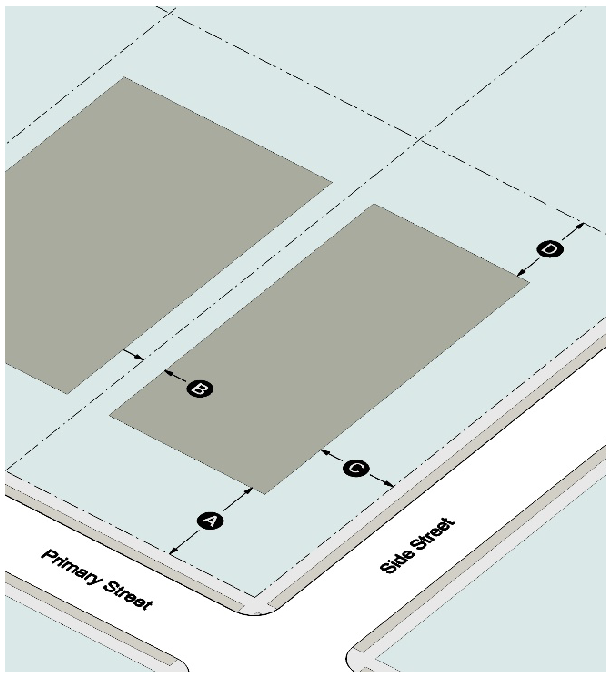
202-2.7. - Building Placement
202-2.8. - Bulk and Mass
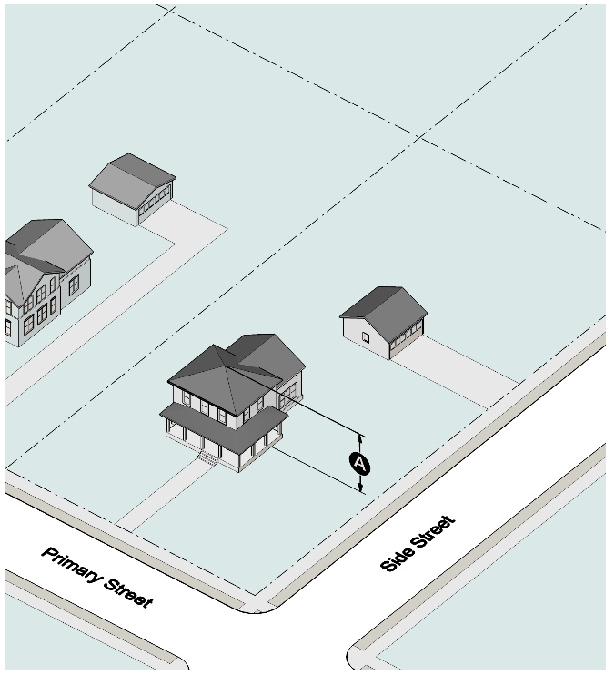
202-3.1. - Purpose
This district is intended primarily for moderate-sized single-family detached houses and related uses.
202-3.2. - Use Provisions
See Sec. 206-2 (Allowed Use Table).
202-3.3. - Building Types
No building type requirements apply in RS-15.
202-3.4. - Architectural Standards
See Sec. 202-1.2 (Design Criteria) and Sec. 201-3 (General Architectural Standards).
202-3.5. - Site Development Standards
See Chapter 200 Article 7 (Site Development) for parking and loading, buffer and screening, landscaping, tree ordinance, lighting, signs, and utility requirements.
202-3.6. - Dimensional Standards
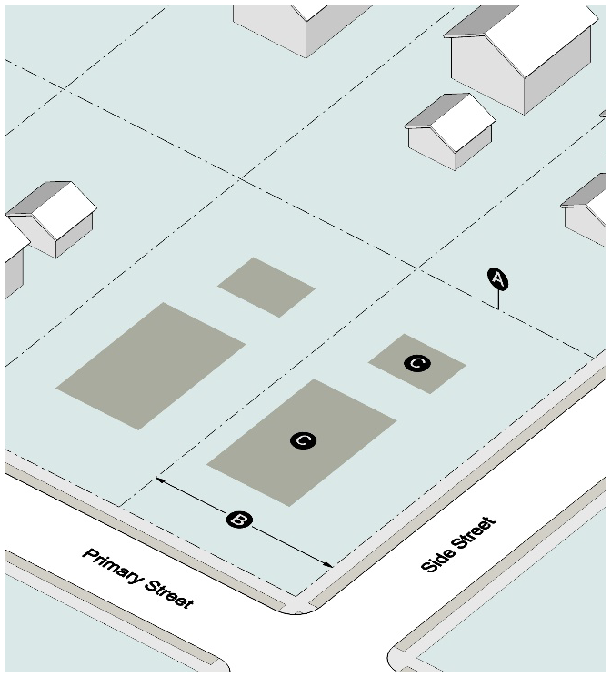
202-3.7. - Building Placement
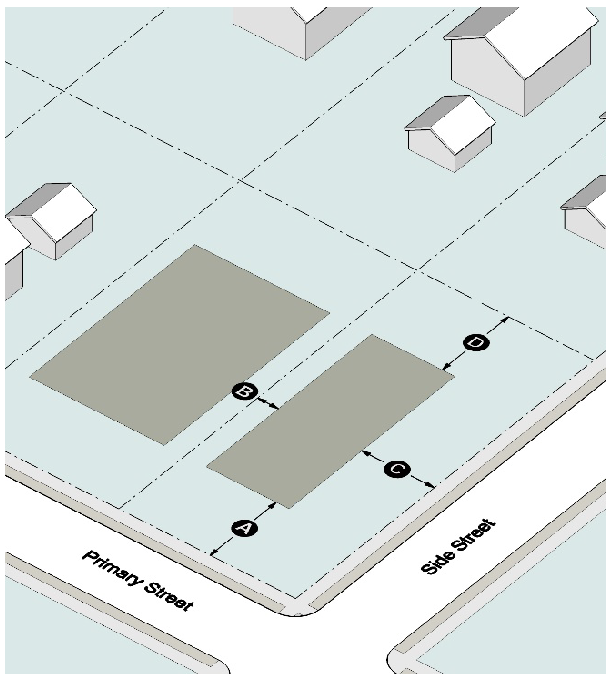
202-3.8. - Bulk and Mass
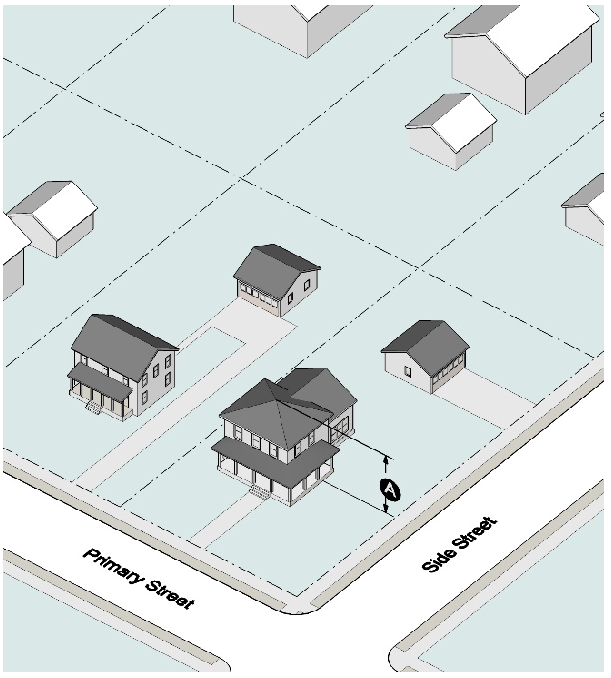
202-4.1. - Purpose
The district is intended to provide areas for high-quality, small-lot, single-family detached housing in a walkable setting.
202-4.2. - Use Provisions
See Sec. 206-2 (Allowed Use Table).
202-4.4. - Building Types
Building type requirements apply in the RS-5 district and the following types are allowed:
A.
Detached House
B.
Civic Building
202-4.5. - Architectural Standards
See Sec. 202-1.2 (Design Criteria) and Sec. 201-3 (General Architectural Standards).
202-4.6. - Development Standards
See Chapter 200 Article 7 (Site Development) for parking and loading, buffer and screening, landscaping, tree ordinance, lighting, signs, and utility requirements.
202-4.7. - Dimensional Standards
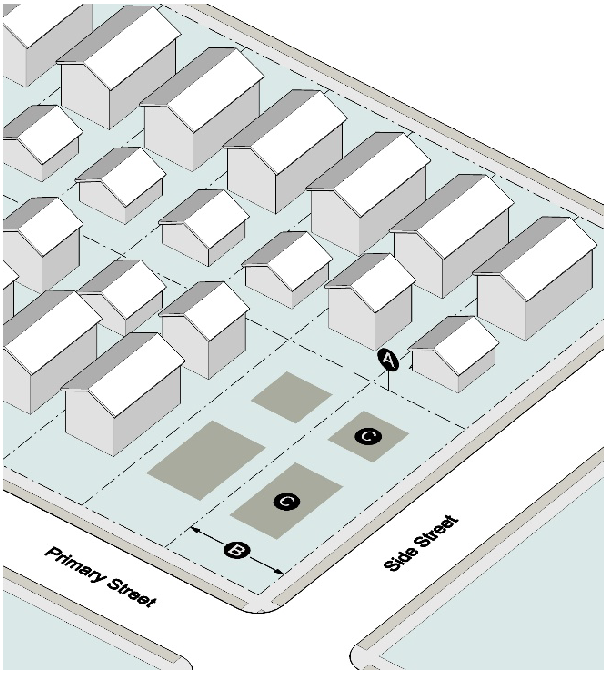
202-4.8. - Building Placement
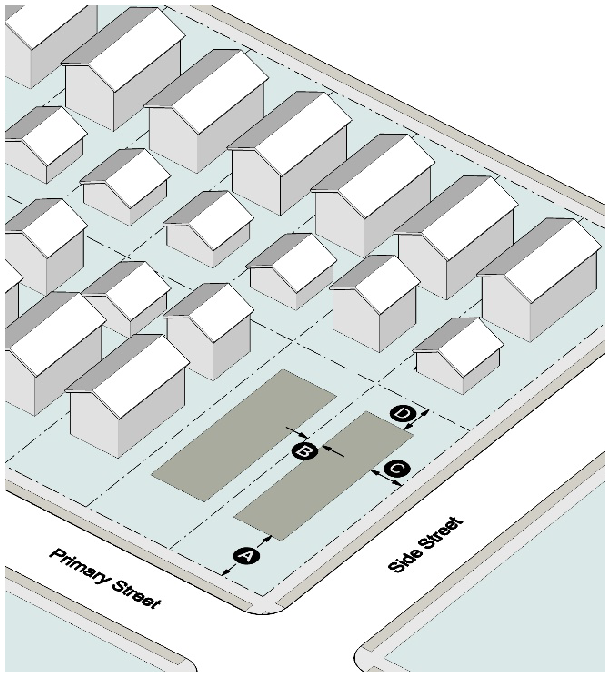
202-4.9. - Bulk and Mass
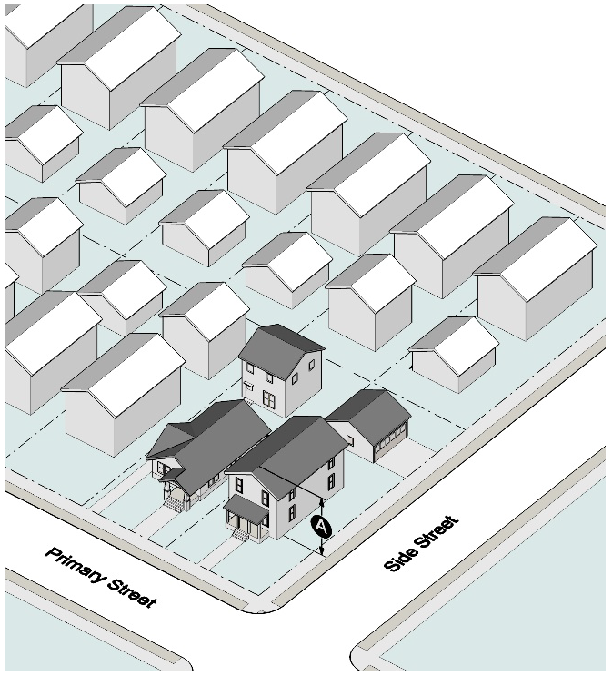
Table Note:
[1]
See Sec. 207-1.2.B for required vehicular parking spaces.
202-5.1. - Purpose
This district is intended for existing two-family dwellings with utilities and a residential character. It is also intended for vacant lands where utilities and a residential character are likely to occur. Because these areas are served by public utilities and facilities, a moderate density of development can be supported.
202-5.2. - Use Provisions
See Sec. 206-2 (Allowed Use Table).
202-5.3. - Building Types
No building type requirements apply in R-DU.
202-5.4. - Architectural Standards
See Sec. 202-1.2 (Design Criteria) and Sec. 201-3 (General Architectural Standards).
202-5.5. - Site Development Standards
See Chapter 200 Article 7 (Site Development) for parking and loading, buffer and screening, landscaping, tree ordinance, lighting, signs, and utility requirements.
202-5.6. - Dimensional Standards
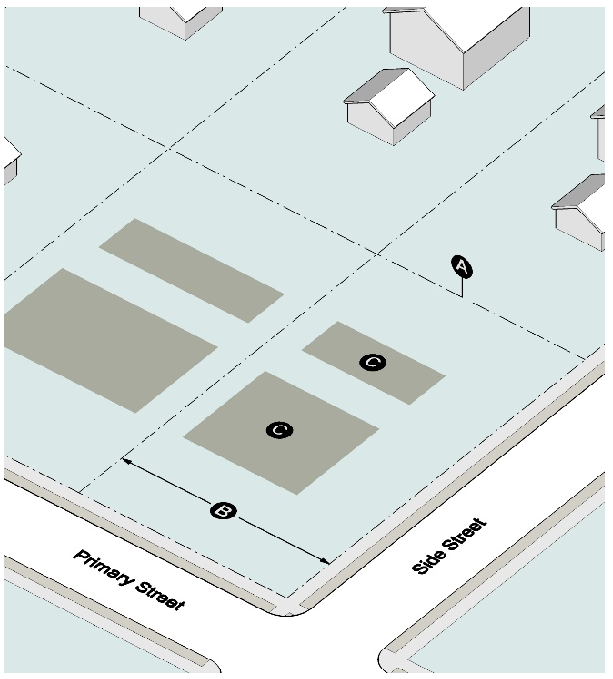
202-5.7. - Building Placement
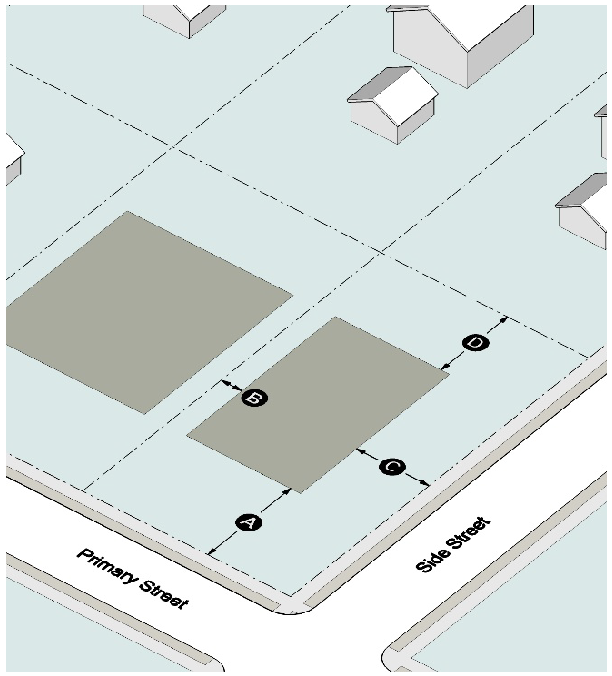
202-5.8. - Bulk and Mass
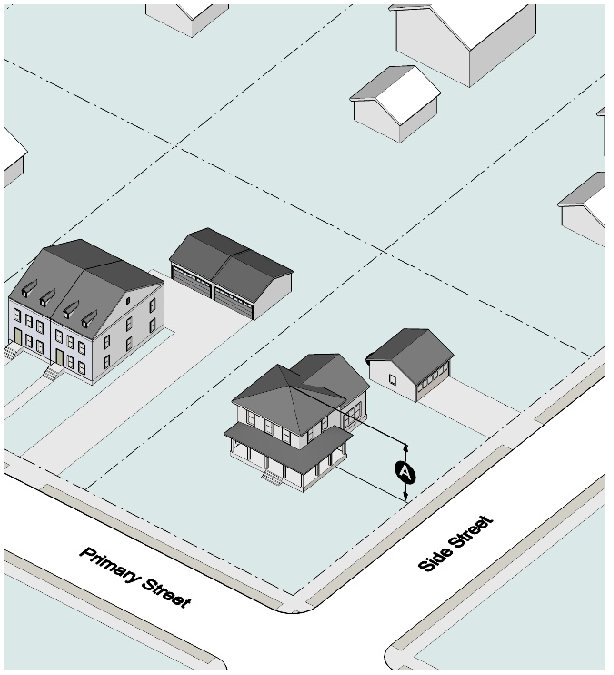
202-6.1. - Purpose
This district is intended exclusively for single-family attached dwelling units and customary accessory uses and structures. R-TH districts are located where public water supply and sewerage facilities are available and where there is direct access to collector streets, major streets or State routes.
202-6.2. - Use Provisions
See Sec. 206-2 (Allowed Use Table).
202-6.3. - Building Types
No building type requirements apply in R-TH.
202-6.4. - Architectural Standards
A.
See Sec. 202-1.2 (Design Criteria) and Sec. 201-3 (General Architectural Standards); and
B.
See Sec. 202-6.9 (TH Design Standards).
202-6.5. - Site Development Standards
A.
See Chapter 200 Article 7 (Site Development) for parking and loading, buffer and screening, landscaping, tree ordinance, lighting, signs, and utility requirements.
B.
See Sec. 202-6.9 (TH Design Standards).
202-6.6. - Dimensional Standards
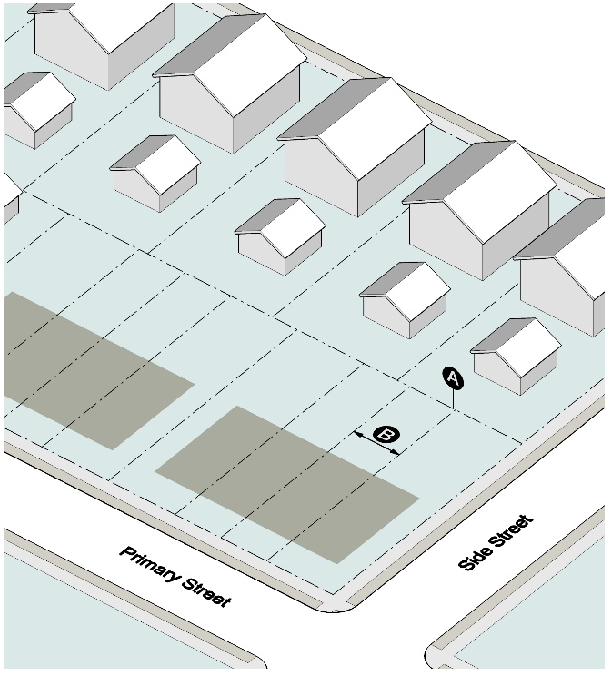
202-6.7. - Building Placement
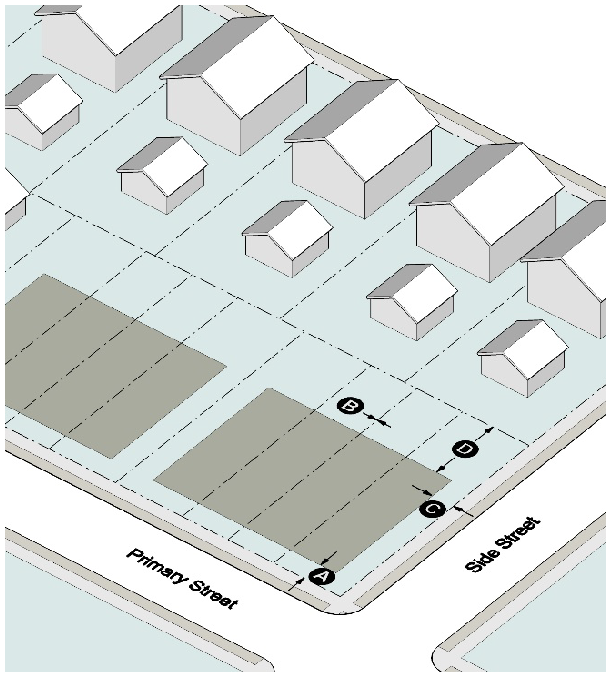
(UDO 22-01, § 3, 2-28-2022; UDO 25-01, § 2, 3-10-2025)
202-6.8. - Bulk and Mass
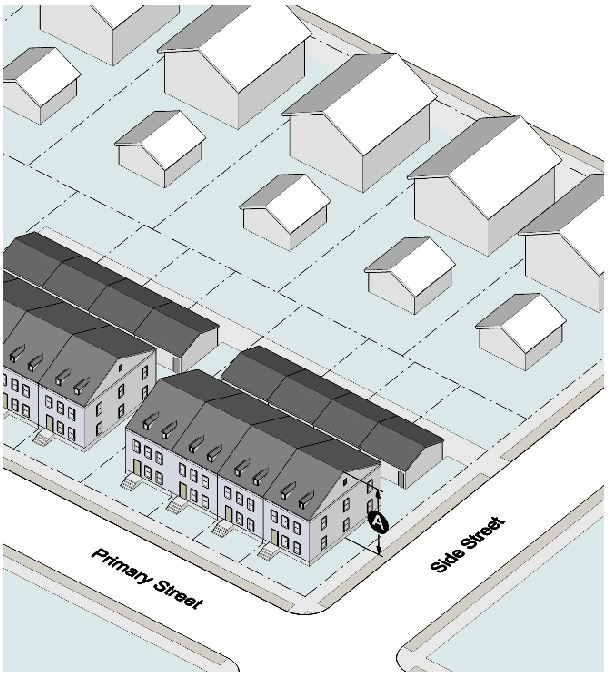
Table Note:
[1]
See Sec. 207-1.2.B for required vehicular parking spaces.
202-6.9. - R-TH Design Standards
A.
A minimum 2-hour rated firewall is required between each attached dwelling unit. A 4-hour rated firewall is required between every fourth attached dwelling units. The 4-hour rated firewall may be reduced to a 2-hour rated firewall if approved residential sprinkler systems or similar fire prevention measures, as approved by the Gwinnett County Fire Marshal, are installed in each unit. Firewalls must be constructed in accordance with applicable building codes of the City and Gwinnett County.
B.
A continuous paved pathway or sidewalk system must be provided to connect on-site open spaces, on-site dwelling units, sidewalks along public streets bordering the site.
C.
The site setback along a front and side (street) lot lines may incorporate natural vegetation and must include a decorative fence/wall and entrance monument. The fence may be constructed as a solid brick or stacked stone wall, or as a wrought iron-style fence with brick or stacked stone columns (max. 30 feet on-center).
D.
Exterior wall finish materials are limited to:
1.
Unpainted full-depth brick where each brick is placed on the exterior wall during construction, but not including half-depth brick, thin brick, or simulated brick veneers;
2.
Stone, including unpainted natural stone, unpainted cast stone with the appearance of natural stone;
3.
True hard coat stucco but not EIFS; and
4.
Cement-based artificial wood siding; shakes and shingles.
The primary material on the front facade must also be used on all other facades. At least two of the above-listed materials must be used on each facade.
E.
No more than three adjacent attached units may have the same façade designs. Differentiation between adjacent units may be accomplished by a change in materials, building height, color, roof form, or setbacks.
F.
Garages and driveways must be rear-entry with access provided from an alley. Front-load garages and driveways facing a public or private street are prohibited. Garage doors must observe a minimum 22 feet setback from alley.
G.
Buildings with garages abutting an alley must have garage doors facing and accessible from said alley.
H.
All units must have a front door providing pedestrian access and a minimum 4-foot wide walkway, constructed of concrete or decorative pavers, must extend from the front door to the pathway or sidewalk system required by paragraph B above.
I.
Front doors must have either a glass element in the door, or sidelights and a transom around it.
J.
Columns on the front elevation or otherwise visible from the public view shall have a minimum 2-foot base constructed of brick or stone to match the front facade.
(UDO 25-01, § 2, 3-10-2025)
202-7.1. - Purpose
This district is intended primarily for multifamily dwellings. The RM districts are located where public water supply and sewerage facilities are available and where there is direct access to collector streets, major streets or State routes.
202-7.2. - Use Provisions
See Sec. 206-2 (Allowed Use Table).
202-7.3. - Building Types
No building type requirements apply in RM.
202-7.4. - Architectural Standards
A.
See Sec. 202-1.2 (Design Criteria) and Sec. 201-3 (General Architectural Standards); and
B.
See 202-7.10 (RM Design Standards).
202-7.5. - Site Development Standards
A.
See Chapter 200 Article 7 (Site Development) for parking and loading, buffer and screening, landscaping, tree ordinance, lighting, signs, and utility requirements.
B.
See 202-7.10 (RM Design Standards).
202-7.6. - Inter-parcel Access
See Sec. 401-3.4.H (Inter-parcel Access).
202-7.7. - Dimensional Standards
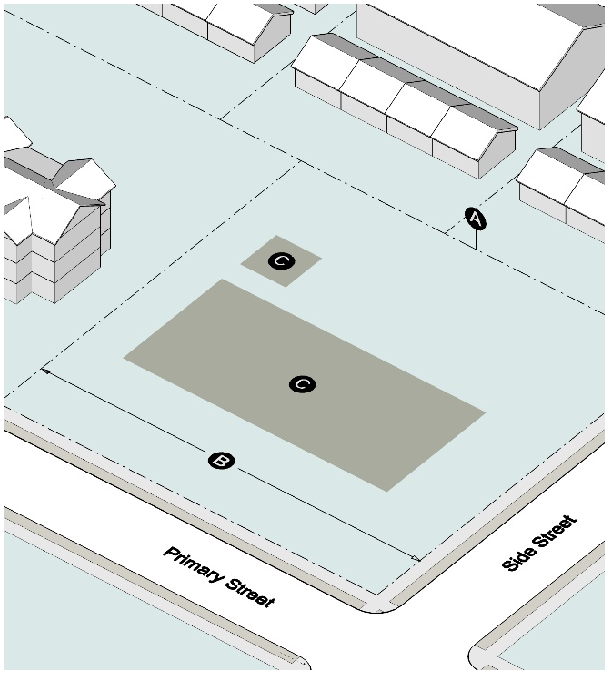
Table Note
[1]
At least 12,000 sf. of lot area must be provided for the first unit and at least 4,000 sf. for each additional unit, but in no event may the site density exceed 8 units per acre.
202-7.8. - Building Placement
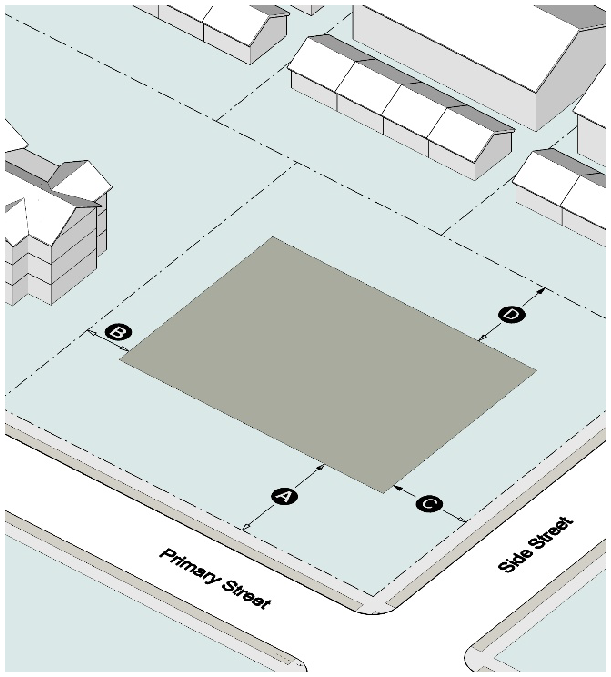
Table Note
[1]
Greater site setbacks also apply per Sec. 202-7.7.
202-7.9. - Bulk and Mass
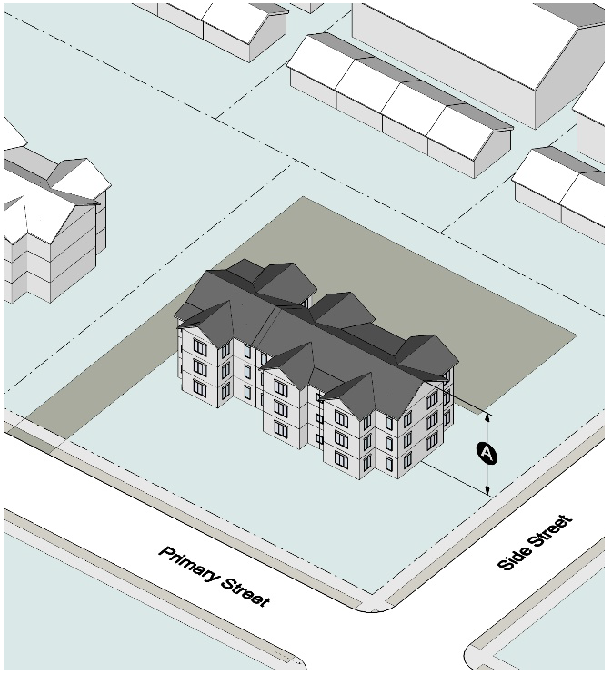
Table Note
[1]
See Sec. 207-1.2.B for required vehicular parking spaces.
202-7.10. - RM Design Standards
A.
A minimum 2-hour rated firewall is required between each attached dwelling unit. A 4-hour rated firewall is required between every fourth attached dwelling unit. The 4-hour rated firewall may be reduced to a 2-hour rated firewall if approved residential sprinkler systems or similar fire prevention measures, as approved by the Gwinnett County Fire Marshal, are installed in each unit. Firewalls must be constructed in accordance with applicable building codes of the City and Gwinnett County.
B.
A continuous paved pathway or sidewalk system must be provided to connect on-site open spaces, on-site dwelling units, sidewalks along public streets bordering the site.
C.
All units must have a minimum 4-foot wide walkway, constructed of concrete or decorative pavers, extending from the unit or building pedestrian entrance to the pathway or sidewalk system required by B above.
D.
The site setback along a front lot line may incorporate natural vegetation and must include a decorative fence/wall and entrance monument. The fence may be constructed as a solid brick or stacked stone wall, or as a wrought iron-style fence with brick or stacked stone columns (max. 30 feet on-center).
E.
Exterior wall finish materials are limited to:
1.
Unpainted full-depth brick where each brick is placed on the exterior wall during construction, but not including half-depth brick, thin brick, or simulated brick veneers;
2.
Stone, including unpainted natural stone, unpainted cast stone with the appearance of natural stone;
3.
True hard coat stucco but not EIFS; and
4.
Cement-based artificial wood siding, shakes, and shingles.
The primary material on the front facade must also be used on all other facades. At least two of the above-listed materials must be used on each facade.
202-8.1. - Purpose
This district is intended to provide a mix of housing types in areas where public water supply and sewerage facilities are available and where there is direct access to collector streets, major streets or State routes.
202-8.2. - Use Provisions
See Sec. 206-2 (Allowed Use Table).
202-8.3. - Building Types
Building type requirements apply in the RX district and the following types are allowed:
A.
Detached House
B.
Carriage House
C.
Semi-Detached House
D.
Townhouses
E.
Cottage Court
F.
Walk-up flat
G.
Stacked flat
H.
Civic Building
202-8.4. - Architectural Standards
See Sec. 202-1.2 (Design Criteria) and Sec. 201-3 (General Architectural Standards).
202-8.5. - Site Development Standards
See Chapter 200 Article 7 (Site Development) for parking and loading, buffer and screening, landscaping, tree ordinance, lighting, signs, and utility requirements.
202-8.6. - Inter-parcel Access
See Sec. 401-3.4.H (Inter-parcel Access).
202-8.7. - Dimensional Standards
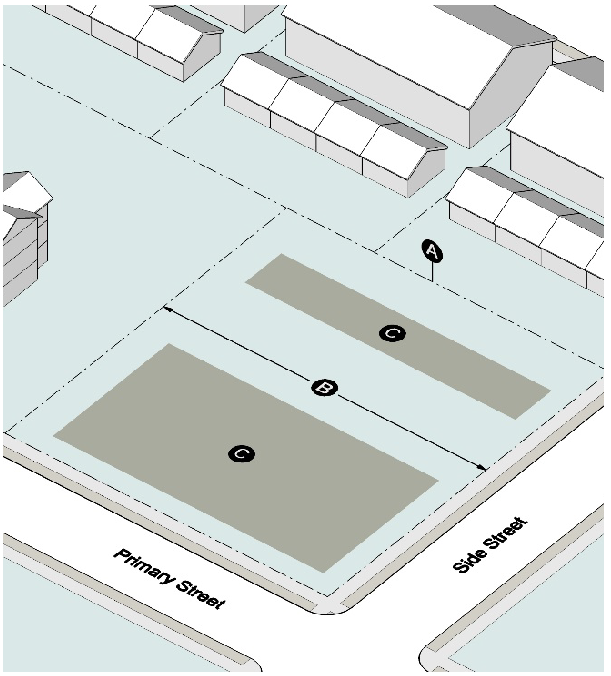
202-8.8. - Building Placement
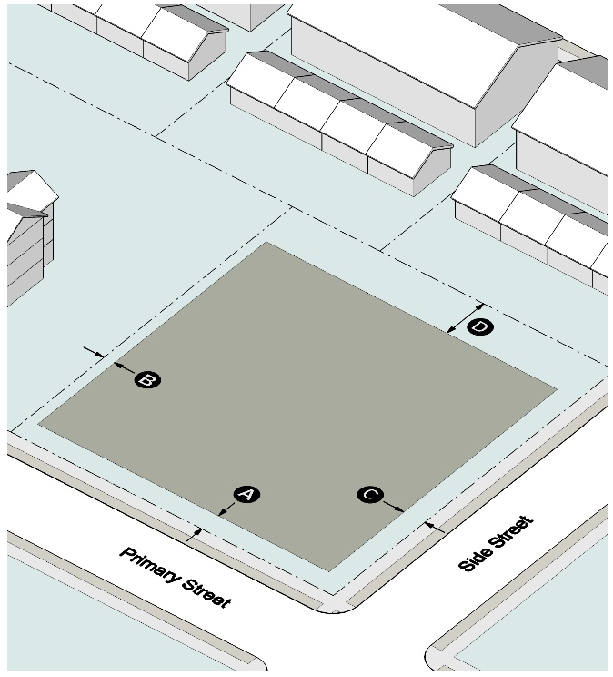
202-8.9. - Bulk and Mass
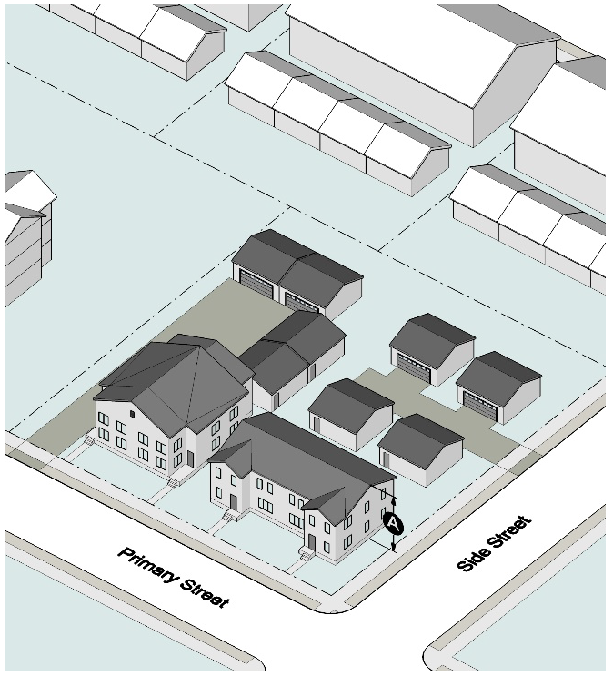
Table Note:
[1]
See Sec. 207-1.2.B for required vehicular parking spaces.
202-9.1. - Purpose
This district is intended to serve the housing needs of persons who are 55 years of age or older by allowing a mix of age-restricted housing types and requiring community open spaces. The district must be in areas of the city that facilitate pedestrian access to nearby goods and services, and/or amenities/cultural facilities. A rezoning to RO will not serve as a precedent for medium density zoning in an otherwise low-density residential area.
202-9.2. - Use Provisions
A.
See Sec. 206-2 (Allowed Use Table).
B.
All dwelling units must be occupied by at least one person who is 55 years of age or older.
C.
Accessory uses also mean any accessory use necessary for the operation of the facility or for the benefit or convenience of the residents and their guests including, but not limited to: cooking and eating facilities; restaurants; places of worship; indoor and outdoor recreation; retail sales; and banks; beauty, hair, or nail salons; classrooms; conference rooms; social rooms; common areas; guest rooms; medical uses; wellness center; craft and music rooms; various craft, health, exercise and vocational activities; classrooms; swimming pools; facilities related to the operation of the facility, such as but not limited to, administrative offices, food and record storage areas, property maintenance facilities, adult care center, day care center for children of employees, and security operations. Any accessory uses must be for the primary benefit of the district.
202-9.3. - Building Types
Building type requirements apply in the RO district and the following types are allowed:
A.
Detached House
B.
Cottage Court
C.
Semi-Detached House
D.
Townhouses
E.
Walk-up flat
F.
Stacked flat
G.
Civic buildings
202-9.4. - Architectural Standards
A.
See Sec. 202-1.2 (Design Criteria) and Sec. 201-3 (General Architectural Standards); and
B.
See 202-9.10 (RO Design Standards).
202-9.5. - Site Development Standards
See Chapter 200 Article 7 (Site Development) for parking and loading, buffer and screening, landscaping, tree ordinance, lighting, signs, and utility requirements.
202-9.6. - Dimensional Standards
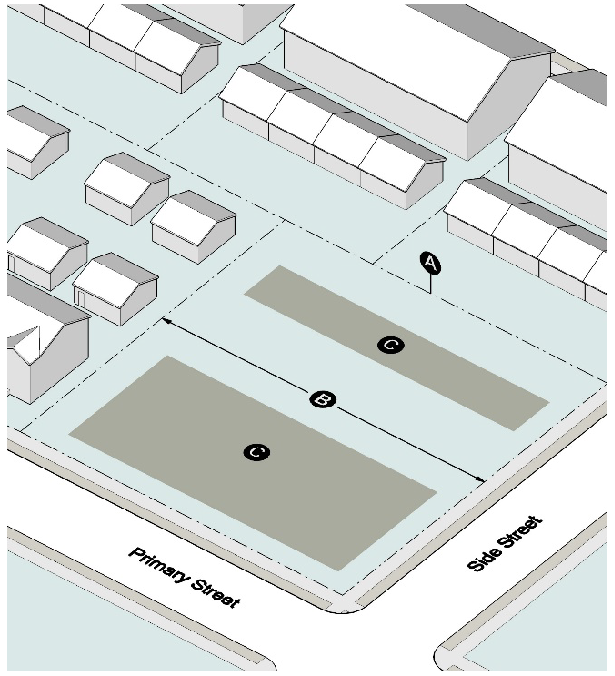
202-9.7. - Building Placement
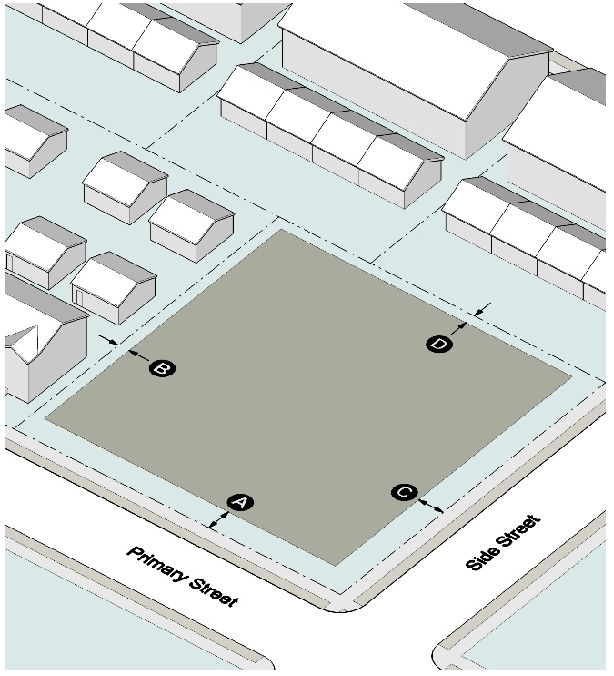
Table Note:
[1]
Greater site setbacks also apply per Sec. 202-9.6.
202-9.8. - Bulk and Mass
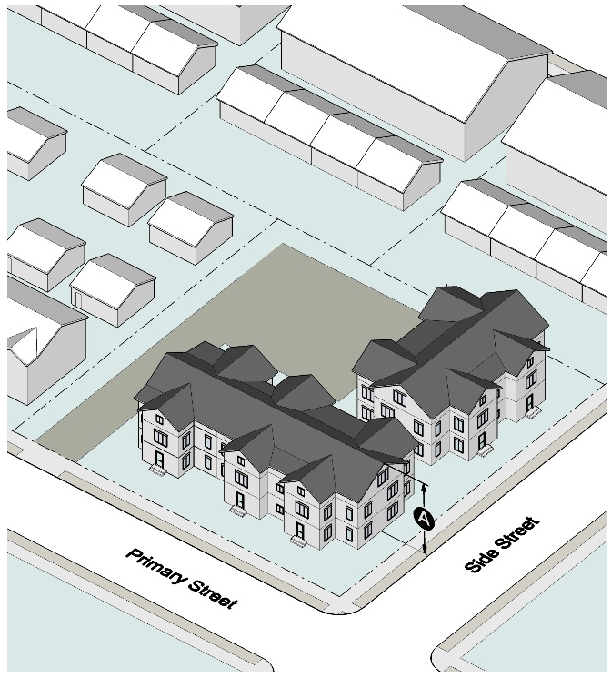
Note
[1]
No building may exceed 3 stories when abutting a residential district unless a 100-foot buffer is provided and planted per Sec. 207-3.
202-9.9. - Retirement Community Density
The number of retirement community (continuing care) independent living units may not exceed 35 units per acre.
202-9.10. - RO Design Standards
A.
A landscape strip planted in accordance with Article 7 of Chapter 200 must be provided around the entire site perimeter, including along rights-of-way. The landscape strip may incorporate natural vegetation and must be supplemented with a minimum of one of the following:
1.
A landscaped berm (minimum of 4 feet as measured from the elevation of the public right-of-way); or
2.
Wrought-iron style fence with brick or stone columns (30 feet on-center); or
3.
A decorative brick wall.
Alternate decorative fence materials may be utilized, subject to review and approval of the Director.
B.
Garage doors facing an internal or exterior street must use decorative design treatments to enhance their appearance, including, but not limited to, carriage-style doors or window inserts.
C.
A continuous paved pathway or sidewalk system must be provided to connect on-site open spaces, on-site dwelling units, sidewalks along public streets bordering the site.
D.
All units must have a minimum 4-foot wide walkway, constructed of concrete or decorative pavers, extending from the unit or building pedestrian entrance to the pathway or sidewalk system required by paragraph C above.
E.
Streetlights within the development must be located 75 feet apart on average.
202-9.11. - Accessibility Standards
All dwelling units must incorporate the following accessibility standards:
A.
At least one step-free entrance.
B.
36-inch wide, clear passage doorways throughout the unit.
C.
Wheelchair, step-free access to the following areas, at a minimum: kitchen; dining area; entertainment area (e.g., living room/den, great room, etc.); at least one bedroom; at least one full bathroom; and laundry room with washer/dryer connection.
D.
The installation of full sheets of ¾-inch plywood, blocking, or its equivalent, in all bathrooms to allow for future installation, if necessary, of grab bars. The Director may approve alternative designs when in conformance with the reinforced walls for grab bars standards of the Fair Housing Act.
202-9.12. - Mandatory Homeowner Association
A mandatory homeowner association which provides for building and grounds maintenance and repair, insurance, and working capital is required for developments. This association must publish and adhere to policies and procedures that demonstrate that the community is intended to provide housing for persons 55 years of age and older including maintaining surveys or affidavits verifying compliance with 55 years of age and older occupancy requirements as permitted by 42 U.S.C. Section 3607, (b)(2)(c) of the Federal Fair Housing Act and implementing regulations. Said association must provide an affirmative declaration to be governed by the "Georgia Property Owners' Association Act" (POA) and the applicable provisions of O.C.G.A. § 44-3-220 et seq. This association must also include declarations and bylaws including rules and regulations, which must at a minimum regulate and control the following:
A.
Restriction on homes being occupied, with at 100% of the occupied units occupied by at least one resident who is age 55 years of age or older.
B.
Restrictions on persons under 18 years of age permanently residing in the community. Permanently residing in the community means more than 90 days in any 180-day period or establishing residency as defined by State or local law. However, the HOA must provide for a hardship provision allowing for an owner/occupant to house and care for a child less than 18 years of age in situations where the owner/occupant assumes responsibility for caring for the child due to urgent circumstances stemming from actions not under the owner/occupant's control. The association may, but is not required to, allow for hardship exceptions to this requirement.
C.
Restrictions on single-family dwellings and leasing of units. Except in CCRC units, no more than 10% of the total units may be leased by individual owners at any one time.
D.
Except for a central amenity package, prohibit playground equipment, trampolines, or like fixtures.
E.
The association must also provide that the covenants automatically renew at the end of the 20-year term, unless 100% of the owners at that time vote that the covenants should not renew.
F.
The association or its property manager must give written notice to any grantee of the restrictions covered in this subsection at or before any sale or transfer of any property.
202-9.13. - Covenants and Restrictions
Legally binding covenants and/or deed restrictions that run with the land must apply to all RO housing units; this legal instrument must bind the applicant, any assignee, mortgagee, or buyer, and all other parties that receive title to the property. The grantor must state in any deed or instrument conveying title to an RO dwelling unit, that the property conveyed is intended to be housing for older persons and is subject to the restrictions contained in this section. No covenant referencing any of the regulations or restrictions herein for a housing for older persons housing unit may be recorded until and unless said covenant contains restrictions approved by the Director that are consistent with the requirements of this section. This review and response must be completed within 30 days following the date of submission of such documents to the Director.
202-9.14. - Additional Requirement Authority
A.
Where the provisions of this section do not provide sufficient specificity in terms of administration, the Director is authorized to prepare and apply additional standards and qualifications for administering the requirements of this section. If prepared, said standards and requirements will be titled "Housing for Older Persons Zoning Implementation Standards and Procedures" and will be public record. The Director must seek approval by resolution of said administrative procedures and standards from the City Council.
B.
The Director is responsible for adopting and implementing policies for the monitoring and enforcement of mandatory homeowner association requirements.
C.
The Director must publish, and the City must adhere to, policies and procedures that demonstrate that communities in RO Districts are intended to provide housing for persons 55 years of age and older including maintaining surveys or affidavits verifying compliance with 55 years of age and older occupancy requirements as permitted by 42 U.S.C. Section 3607, (b)(2)(c) of the Federal Fair Housing Act and implementing regulations.
202-10.1. - Purpose
This district is intended to provide quality medium density residential uses through building and site design criteria and by requiring the conservation of open space owned in common and accessible, at a minimum, to all residents of the development. PRC districts are generally located wherever opportunities are found for open space conservation or where existing natural or historic features require conservation. The district may be located as a transitional use, generally from commercial uses into low density residential.
202-10.2. - Rezoning to PRC Prohibited
No additional land may be zoned to the PRC district.
202-10.3. - Use Provisions
See Sec. 206-2 (Allowed Use Table).
202-10.4. - Building Types
No building type requirements apply in PRC.
202-10.5. - Architectural Standards
A.
See Sec. 202-1.2 (Design Criteria) and Sec. 201-3 (General Architectural Standards); and
B.
See 202-10.10 (PRC Design Standards).
202-10.6. - Site Development Standards
See Chapter 200 Article 7 (Site Development) for parking and loading, buffer and screening, landscaping, tree ordinance, lighting, signs, and utility requirements.
202-10.7. - Dimensional Standards
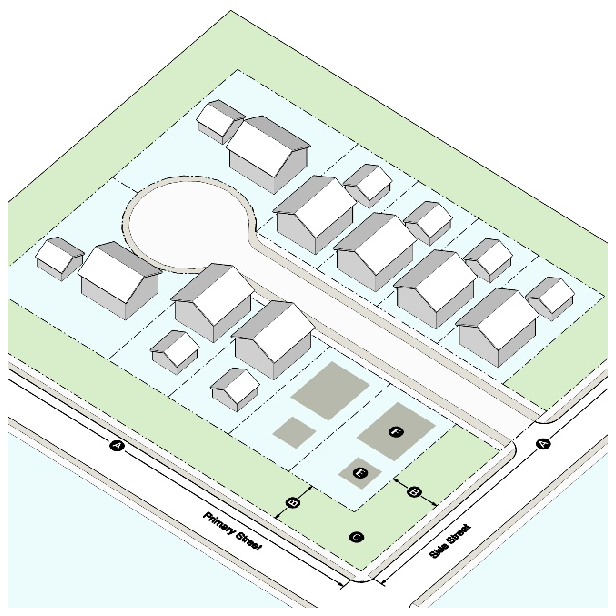
202-10.8. - Building Placement
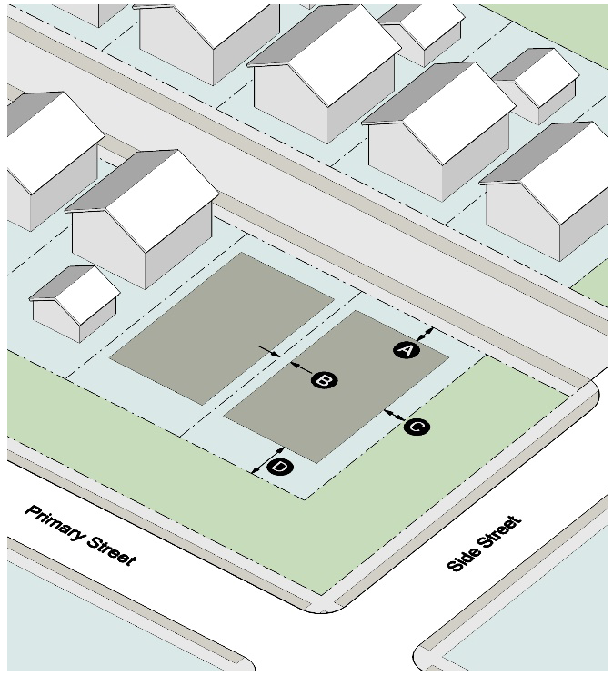
Table Note:
[1]
Greater site setbacks also apply per Sec. 202-10.7.
202-10.9. - Bulk and Mass
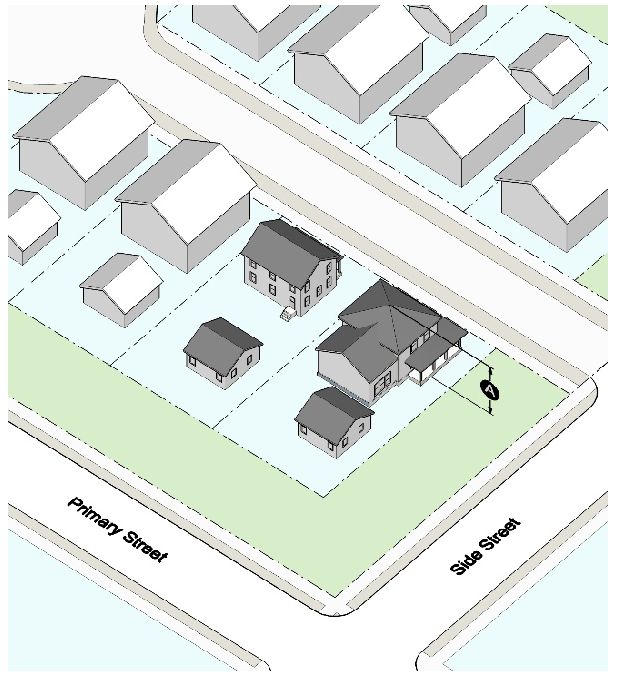
202-10.10. - PRC Design Standards
A.
The minimum roof pitch is 6:12 and the maximum roof pitch is 10:12.
B.
Exterior wall finish materials are limited:
1.
Unpainted full-depth brick where each brick is placed on the exterior wall during construction, but not including half-depth brick, thin brick, or simulated brick veneers;
2.
Stone, including unpainted natural stone, unpainted cast stone with the appearance of natural stone;
3.
True hard coat stucco; and
4.
Cement-based artificial wood siding.
C.
Front facades must be finished in the above brick, stone, or true hard coat stucco on at least 50% of the site's dwelling units. These materials must constitute at least 60% of each front façade wall area and must include a minimum 12-inch return on side elevations.
D.
Porches must conform to Sec. 201-2.14.C and no two adjacent units may have identical porch designs.
E.
One decorative yard light fixture must be placed 1 foot outside of the right-of-way. The fixture type must be approved by the Director.
202-11.1. - Purpose
This district is intended to provide stable residential areas of high-quality single-family houses that can be rented to residents; to protect the residential character of the district; and to encourage a suitable residential environment on lots which are of moderate width but greater depth than other single-family districts.
(UDO 22-03, § 4, 1-9-2023)
202-11.2. - Use Provisions
See Sec. 206-2 (Allowed Use Table).
(UDO 22-03, § 4, 1-9-2023)
202-11.3. - Building Types
No building type requirements apply in RS-30-BTR.
(UDO 22-03, § 4, 1-9-2023)
202-11.4. - Architectural Standards
See Sec. 202-1.2 (Design Criteria) and Sec. 201-3 (General Architectural Standards).
(UDO 22-03, § 4, 1-9-2023)
202-11.5. - Site Development Standards
See Chapter 200 Article 7 (Site Development) for parking and loading, buffer and screening, landscaping, tree ordinance, lighting, signs, and utility requirements.
(UDO 22-03, § 4, 1-9-2023)
202-11.6. - Dimensional Standards
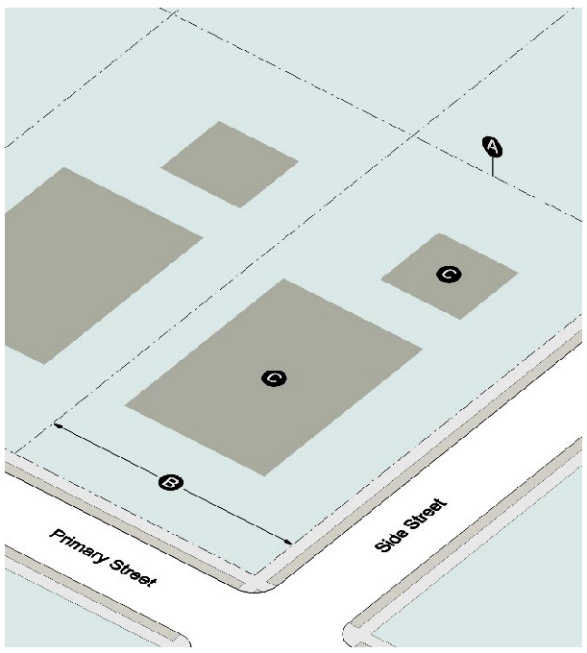
(UDO 22-03, § 4, 1-9-2023)
202-11.7. Building - Placement
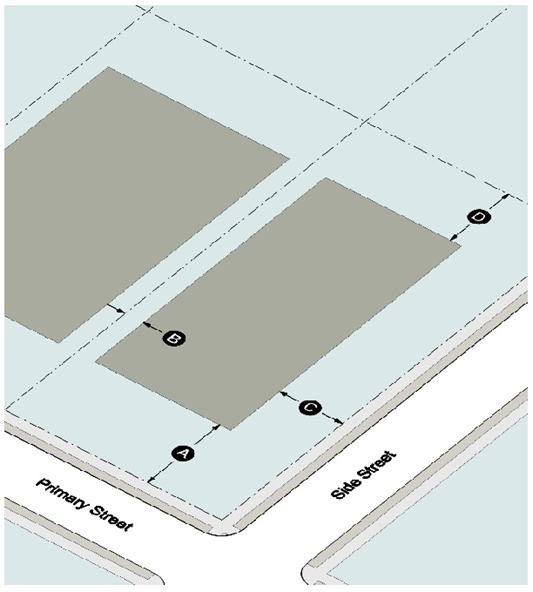
(UDO 22-03, § 4, 1-9-2023)
202-11.8. - Bulk and Mass
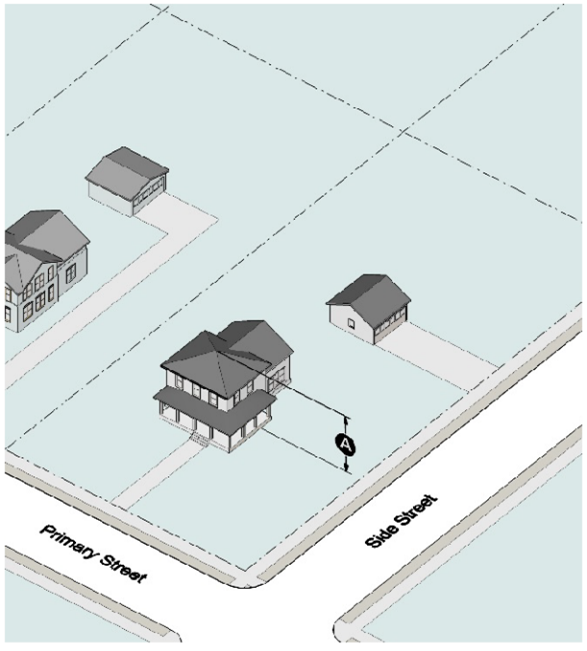
(UDO 22-03, § 4, 1-9-2023)
202-11.9. - Additional Requirements
A.
The following standards are required in this zoning classification. In the event these requirements contradict another section of this Ordinance, the requirements listed here shall control.
1.
A property owners association shall be created and all parcels in the development shall be subject to mandatory membership in the association.
2.
The property owner's association or its management company shall be responsible for all ground maintenance in the development.
3.
The property owner's association or its management company shall be responsible for all maintenance of all building exteriors in the development.
4.
All Interior Roadways in the development must be a minimum of 29 feet from edge of pavement to edge of pavement.
5.
All driveways must be a minimum width of 24 feet and minimum length of 30 feet, measured from inside edge (house side) of sidewalk to garage door.
(UDO 22-03, § 4, 1-9-2023)
202-12.1. - Purpose
This district is intended primarily for moderate-sized single-family detached houses and related uses that can be rented to residents.
(UDO 22-03, § 4, 1-9-2023)
202-12.2. - Use Provisions
See Sec. 206-2 (Allowed Use Table).
(UDO 22-03, § 4, 1-9-2023)
202-12.3. - Building Types
No building type requirements apply in RS-15-BTR.
(UDO 22-03, § 4, 1-9-2023)
202-12.4. - Architectural Standards
See Sec. 202-1.2 (Design Criteria) and Sec. 201-3 (General Architectural Standards).
(UDO 22-03, § 4, 1-9-2023)
202-12.5. - Site Development Standards
See Chapter 200 Article 7 (Site Development) for parking and loading, buffer and screening, landscaping, tree ordinance, lighting, signs, and utility requirements.
(UDO 22-03, § 4, 1-9-2023)
202-12.6. - Dimensional Standards
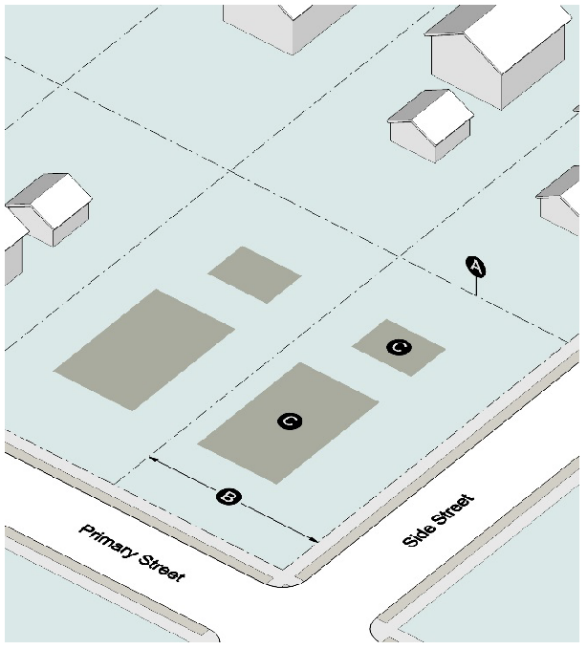
(UDO 22-03, § 4, 1-9-2023)
202-12.7. - Building Placement
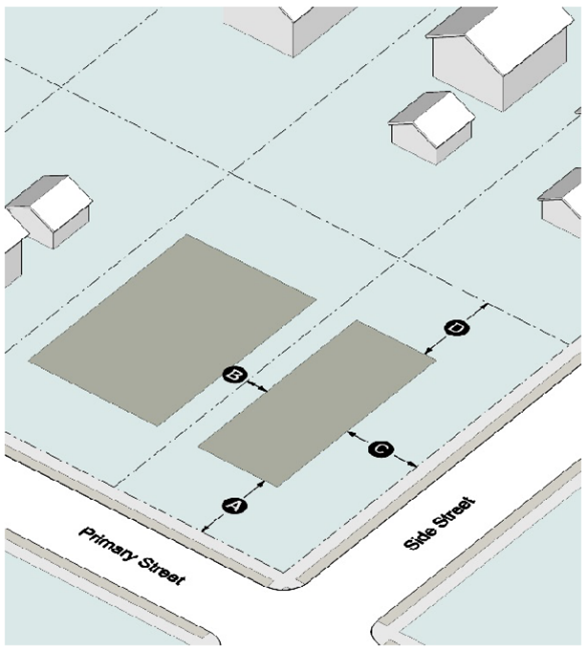
(UDO 22-03, § 4, 1-9-2023)
202-12.8. - Bulk and Mass
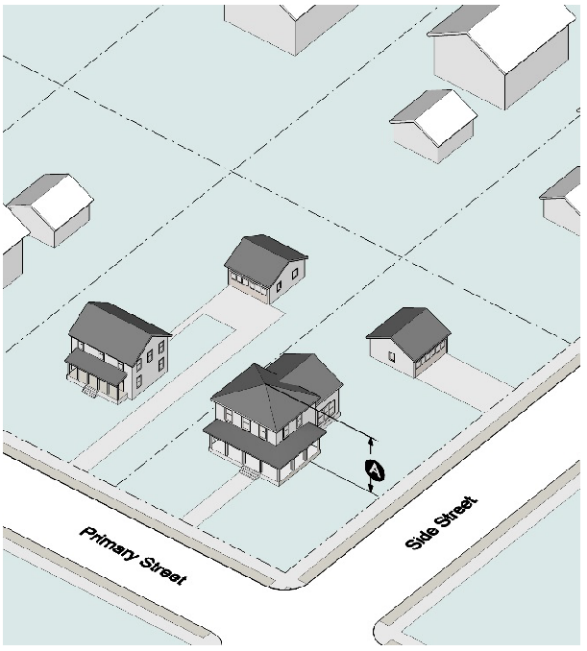
(UDO 22-03, § 4, 1-9-2023)
202-12.9. - Additional Requirements
A.
The following standards are required in this zoning classification. In the event these requirements contradict another section of this Ordinance, the requirements listed here shall control.
1.
A property owners association shall be created and all parcels in the development shall be subject to mandatory membership in the association.
2.
The property owner's association or its management company shall be responsible for all ground maintenance in the development.
3.
The property owner's association or its management company shall be responsible for all maintenance of all building exteriors in the development.
4.
All Interior Roadways in the development must be a minimum of 29 feet from edge of pavement to edge of pavement.
5.
All driveways must be a minimum width of 24 feet and minimum length of 30 feet, measured from inside edge (house side) of sidewalk to garage door.
(UDO 22-03, § 4, 1-9-2023)
202-13.1. - Purpose
The district is intended to provide areas for high-quality, small-lot, single-family detached housing for rent in a walkable setting.
(UDO 22-03, § 4, 1-9-2023)
202-13.2. - Use Provisions
See Sec. 206-2 (Allowed Use Table).
(UDO 22-03, § 4, 1-9-2023)
202-13.4. - Building Types
Building type requirements apply in the RS-5-BTR district and the following types are allowed:
A.
Detached House
B.
Civic Building
(UDO 22-03, § 4, 1-9-2023)
202-13.5. - Architectural Standards
See Sec. 202-1.2 (Design Criteria) and Sec. 201-3 (General Architectural Standards).
(UDO 22-03, § 4, 1-9-2023)
202-13.6. - Development Standards
See Chapter 200 Article 7 (Site Development) for parking and loading, buffer and screening, landscaping, tree ordinance, lighting, signs, and utility requirements.
(UDO 22-03, § 4, 1-9-2023)
202-13.7. - Dimensional Standards
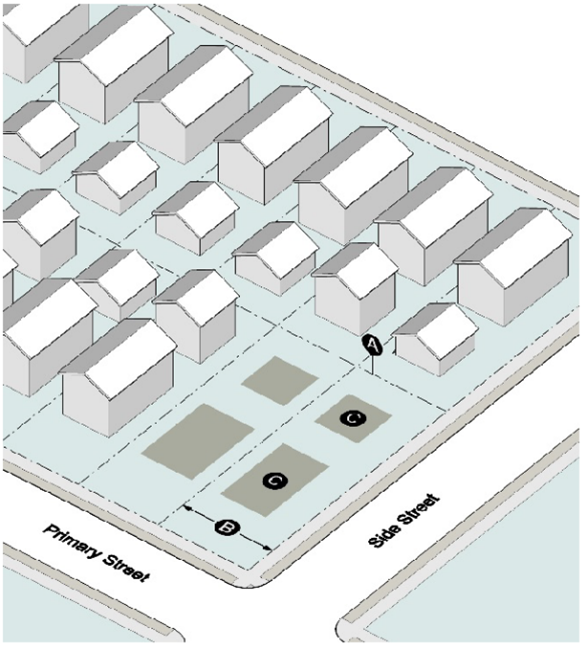
(UDO 22-03, § 4, 1-9-2023)
202-13.8. - Building Placement
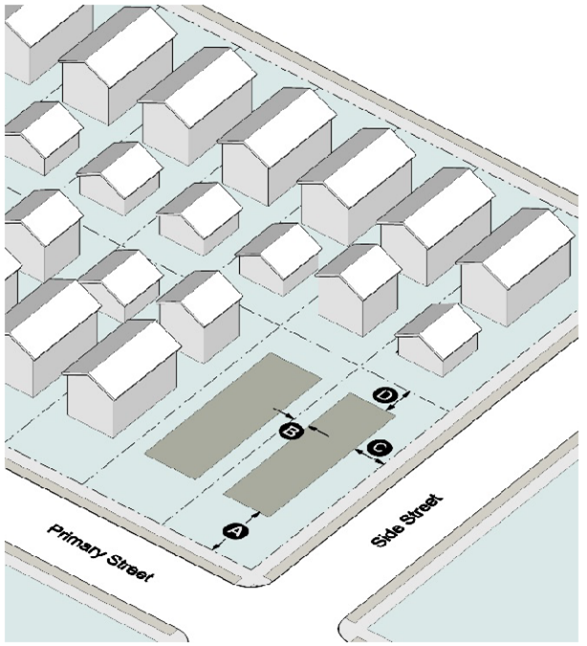
(UDO 22-03, § 4, 1-9-2023)
202-13.9. - Bulk and Mass
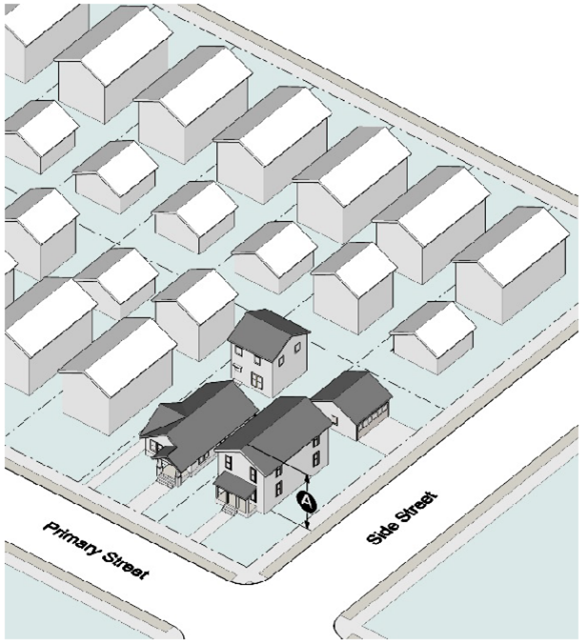
Table Note:
[1]
See Sec. 207-1.2.B for required vehicular parking spaces.
(UDO 22-03, § 4, 1-9-2023)
202-13.10. - Additional Requirements
A.
The following standards are required in this zoning classification. In the event these requirements contradict another section of this Ordinance, the requirements listed here shall control.
1.
A property owners association shall be created and all parcels in the development shall be subject to mandatory membership in the association.
2.
The property owner's association or its management company shall be responsible for all ground maintenance in the development.
3.
The property owner's association or its management company shall be responsible for all maintenance of all building exteriors in the development.
4.
All Interior Roadways in the development must be a minimum of 29 feet from edge of pavement to edge of pavement.
5.
All driveways must be a minimum width of 24 feet and minimum length of 30 feet, measured from inside edge (house side) of sidewalk to garage door.
(UDO 22-03, § 4, 1-9-2023)
202-14.1. - Purpose
This district is intended for rentable two-family dwellings with utilities and a residential character. It is also intended for vacant lands where utilities and a residential character are likely to occur. Because these areas are served by public utilities and facilities, a moderate density of development can be supported.
(UDO 22-03, § 4, 1-9-2023)
202-14.2. - Use Provisions
See Sec. 206-2 (Allowed Use Table).
(UDO 22-03, § 4, 1-9-2023)
202-14.3. - Building Types
No building type requirements apply in R-DU-BTR.
(UDO 22-03, § 4, 1-9-2023)
202-14.4. - Architectural Standards
See Sec. 202-1.2 (Design Criteria) and Sec. 201-3 (General Architectural Standards).
(UDO 22-03, § 4, 1-9-2023)
202-14.5. - Site Development Standards
See Chapter 200 Article 7 (Site Development) for parking and loading, buffer and screening, landscaping, tree ordinance, lighting, signs, and utility requirements.
(UDO 22-03, § 4, 1-9-2023)
202-14.6. - Dimensional Standards
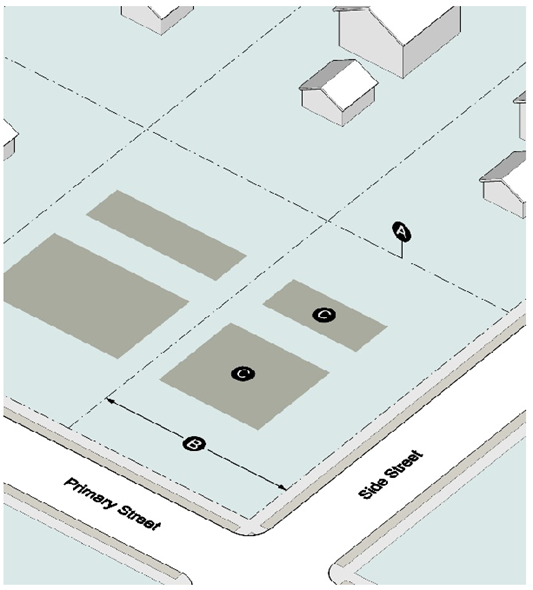
(UDO 22-03, § 4, 1-9-2023)
202-14.7. - Building Placement
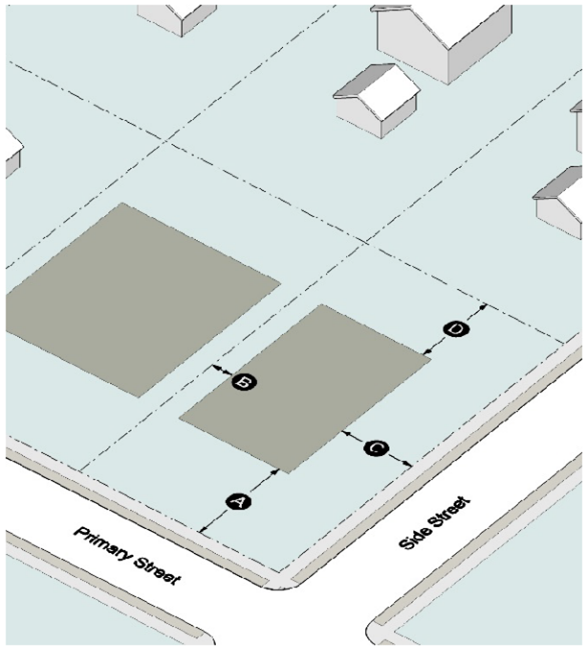
(UDO 22-03, § 4, 1-9-2023)
202-14.8. - Bulk and Mass
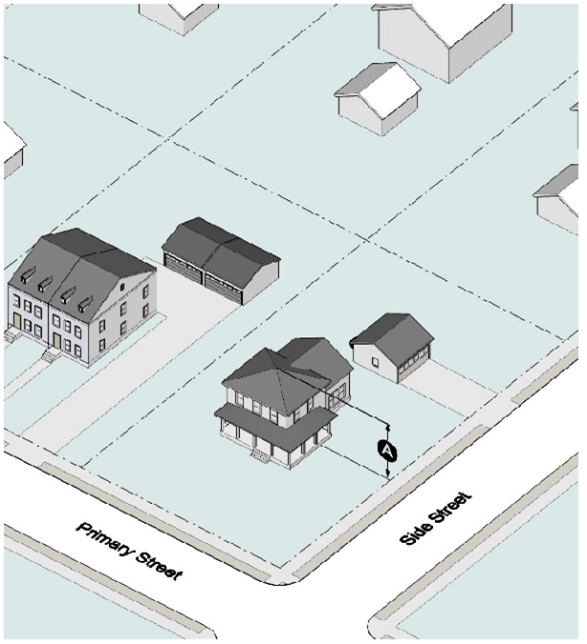
(UDO 22-03, § 4, 1-9-2023)
202-14.9. - Additional Requirements
A.
The following standards are required in this zoning classification. In the event these requirements contradict another section of this Ordinance, the requirements listed here shall control.
1.
A property owners association shall be created and all parcels in the development shall be subject to mandatory membership in the association.
2.
The property owner's association or its management company shall be responsible for all ground maintenance in the development.
3.
The property owner's association or its management company shall be responsible for all maintenance of all building exteriors in the development.
4.
All Interior Roadways in the development must be a minimum of 29 feet from edge of pavement to edge of pavement.
5.
All driveways must be a minimum width of 24 feet and minimum length of 30 feet, measured from inside edge (house side) of sidewalk to garage door.
(UDO 22-03, § 4, 1-9-2023)
202-15.1. - Purpose
This district is intended exclusively for rentable single-family attached dwelling units and customary accessory uses and structures. R-TH districts are located where public water supply and sewerage facilities are available and where there is direct access to collector streets, major streets or State routes.
(UDO 22-03, § 4, 1-9-2023)
202-15.2. - Use Provisions
See Sec. 206-2 (Allowed Use Table).
(UDO 22-03, § 4, 1-9-2023)
202-15.3. - Building Types
No building type requirements apply in R-TH-BTR.
(UDO 22-03, § 4, 1-9-2023)
202-15.4. - Architectural Standards
A.
See Sec. 202-1.2 (Design Criteria) and Sec. 201-3 (General Architectural Standards); and
B.
See Sec. 202-15.9 (TH Design Standards).
(UDO 22-03, § 4, 1-9-2023)
202-15.5. - Site Development Standards
A.
See Chapter 200 Article 7 (Site Development) for parking and loading, buffer and screening, landscaping, tree ordinance, lighting, signs, and utility requirements.
B.
See Sec. 202-15.9 (TH Design Standards).
(UDO 22-03, § 4, 1-9-2023)
202-15.6. - Dimensional Standards
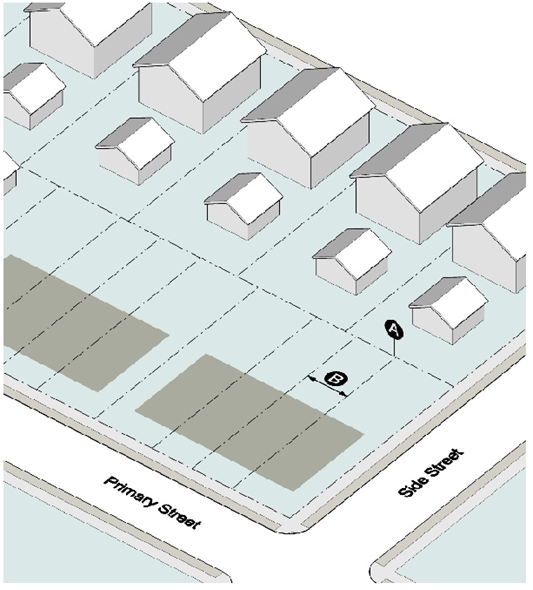
(UDO 22-03, § 4, 1-9-2023)
202-15.7. - Building Placement
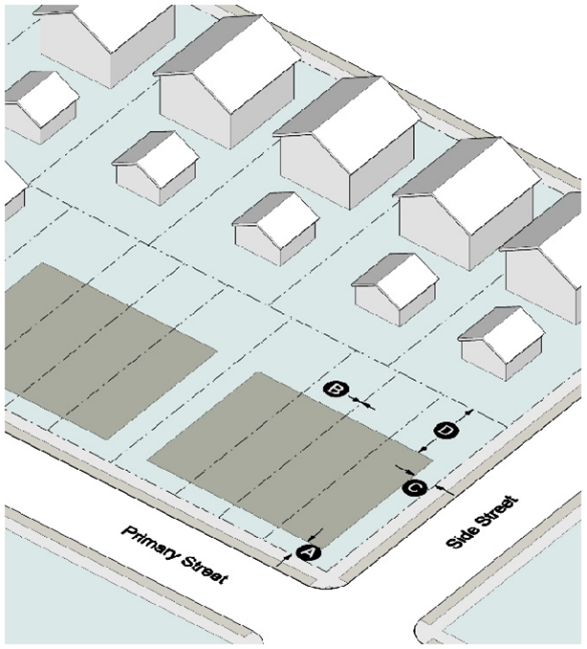
(UDO 22-03, § 4, 1-9-2023; UDO 25-01, § 2, 3-10-2025)
202-15.8. - Bulk and Mass
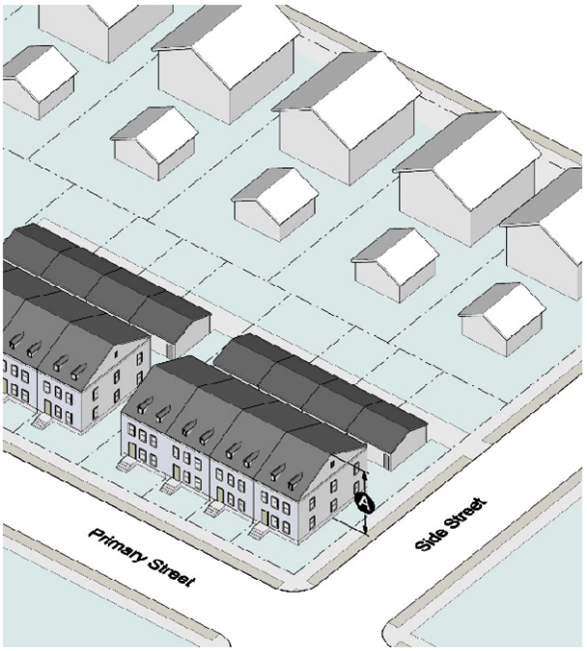
Table Note:
[1]
See Sec. 207-1.2.B for required vehicular parking spaces.
(UDO 22-03, § 4, 1-9-2023)
202-15.9. - R-TH-BTR Design Standards.
A.
A minimum 2-hour rated firewall is required between each attached dwelling unit. A 4-hour rated firewall is required between every fourth attached dwelling units. The 4-hour rated firewall may be reduced to a 2-hour rated firewall if approved residential sprinkler systems or similar fire prevention measures, as approved by the Gwinnett County Fire Marshal, are installed in each unit. Firewalls must be constructed in accordance with applicable building codes of the City and Gwinnett County.
B.
A continuous paved pathway or sidewalk system must be provided to connect on-site open spaces, on-site dwelling units, sidewalks along public streets bordering the site.
C.
The site setback along a front and side (street) lot lines may incorporate natural vegetation and must include a decorative fence/wall and entrance monument. The fence may be constructed as a solid brick or stacked stone wall, or as a wrought iron-style fence with brick or stacked stone columns (max. 30 feet on-center).
D.
Exterior wall finish materials are limited to:
1.
Unpainted full-depth brick where each brick is placed on the exterior wall during construction, but not including half-depth brick, thin brick, or simulated brick veneers;
2.
Stone, including unpainted natural stone, unpainted cast stone with the appearance of natural stone;
3.
True hard coat stucco but not EIFS; and
4.
Cement-based artificial wood siding; shakes and shingles. The primary material on the front facade must also be used on all other facades. At least two of the above-listed materials must be used on each facade.
E.
No more than three adjacent attached units may have the same façade designs. Differentiation between adjacent units may be accomplished by a change in materials, building height, color, roof form, or setbacks.
F.
Garages and driveways must be rear-entry with access provided from an alley. Front-load garages and driveways facing a public or private street are prohibited. Garage doors must observe a minimum 22 feet setback from alley.
G.
Buildings with garages abutting an alley must have garage doors facing and accessible from said alley.
H.
All units must have a front door providing pedestrian access and a minimum 4-foot wide walkway, constructed of concrete or decorative pavers, must extend from the front door to the pathway or sidewalk system required by paragraph B above.
I.
Front doors must have either a glass element in the door, or sidelights and a transom around it.
J.
Columns on the front elevation or otherwise visible from the public view shall have a minimum 2-foot base constructed of brick or stone to match the front facade.
(UDO 22-03, § 4, 1-9-2023; UDO 25-01, § 2, 3-10-2025)
202-15.10. - Additional Requirements
A.
The following standards are required in this zoning classification. In the event these requirements contradict another section of this Ordinance, the requirements listed here shall control.
1.
A property owners association shall be created and all parcels in the development shall be subject to mandatory membership in the association.
2.
The property owner's association or its management company shall be responsible for all ground maintenance in the development.
3.
The property owner's association or its management company shall be responsible for all maintenance of all building exteriors in the development.
4.
All Interior Roadways in the development must be a minimum of 29 feet from edge of pavement to edge of pavement.
5.
All driveways must be a minimum width of 24 feet and minimum length of 22 feet measured from alley.
That the addition of Section 202-16 in Unified Development Ordinance of the City of Snellville, Georgia be created and is hereby codified as follows:
(UDO 22-03, § 4, 1-9-2023; UDO 25-01, § 2, 3-10-2025)
202-16.1. - Purpose
This district is intended to serve the housing needs of persons who are 55 years of age or older by allowing a mix of rentable, age-restricted housing types and requiring community open spaces. The district must be in areas of the city that facilitate pedestrian access to nearby goods and services, and/or amenities/cultural facilities. A rezoning to RO-Build for Rent will not serve as a precedent for medium density zoning in an otherwise low-density residential area.
(UDO 22-03, § 4, 1-9-2023)
202-16.2. - Use Provisions
A.
See Sec. 206-2 (Allowed Use Table).
B.
All dwelling units must be occupied by at least one person who is 55 years of age or older.
C.
Accessory uses also mean any accessory use necessary for the operation of the facility or for the benefit or convenience of the residents and their guests including, but not limited to: cooking and eating facilities; restaurants; places of worship; indoor and outdoor recreation; retail sales; and banks; beauty, hair, or nail salons; classrooms; conference rooms; social rooms; common areas; guest rooms; medical uses; wellness center; craft and music rooms; various craft, health, exercise and vocational activities; classrooms; swimming pools; facilities related to the operation of the facility, such as, but not limited to, administrative offices, food and record storage areas, property maintenance facilities, adult care center, day care center for children of employees, and security operations. Any accessory uses must be for the primary benefit of the district.
(UDO 22-03, § 4, 1-9-2023)
202-16.3. - Building Types
Building type requirements apply in the RO-BTR district and the following types are allowed:
A.
Detached House
B.
Cottage Court
C.
Semi-Detached House
D.
Townhouses
E.
Walk-up flat
F.
Stacked flat
G.
Civic buildings
(UDO 22-03, § 4, 1-9-2023)
202-16.4. - Architectural and Design Standards
A.
See Sec. 202-1.2 (Design Criteria).
B.
See Sec. 201-3 (General Architectural Standards).
C.
See Sec. 202-9.10 (RO Design Standards).
D.
See Sec. 202-9.11 (Accessibility Standards).
(UDO 22-03, § 4, 1-9-2023)
202-16.5. - Site Development Standards
See Chapter 200 Article 7 (Site Development) for parking and loading, buffer and screening, landscaping, tree ordinance, lighting, signs, and utility requirements.
(UDO 22-03, § 4, 1-9-2023)
202-16.6. - Other Requirements
A.
See Sec. 202-9.12 (Mandatory Homeowner Association).
B.
See Sec. 202.9.13 (Covenants and Restrictions).
C.
See Sec. 202-9.14 (Additional requirement Authority).
(UDO 22-03, § 4, 1-9-2023)
202-16.7. - Dimensional Standards
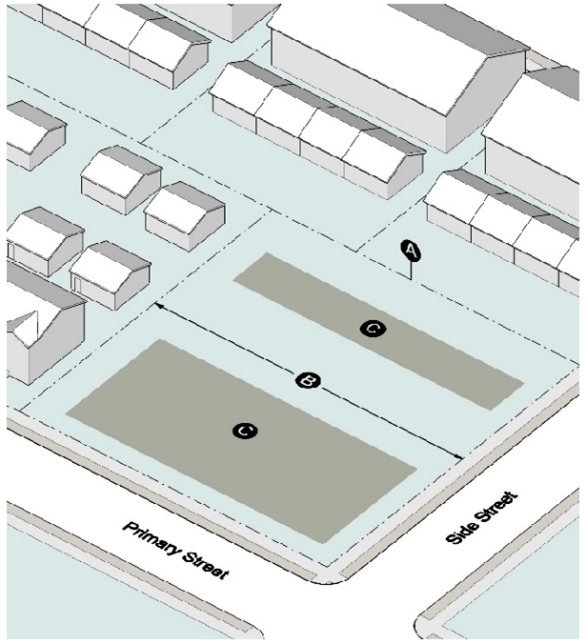
(UDO 22-03, § 4, 1-9-2023)
202-16.8. - Building Placement
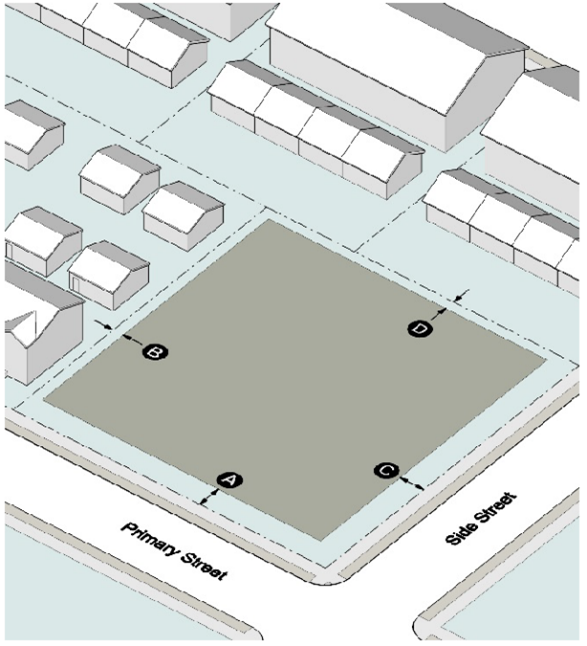
Table Note:
[1]
Greater site setbacks also apply per Sec. 202-9.6.
(UDO 22-03, § 4, 1-9-2023)
202-16.9. - Bulk and Mass
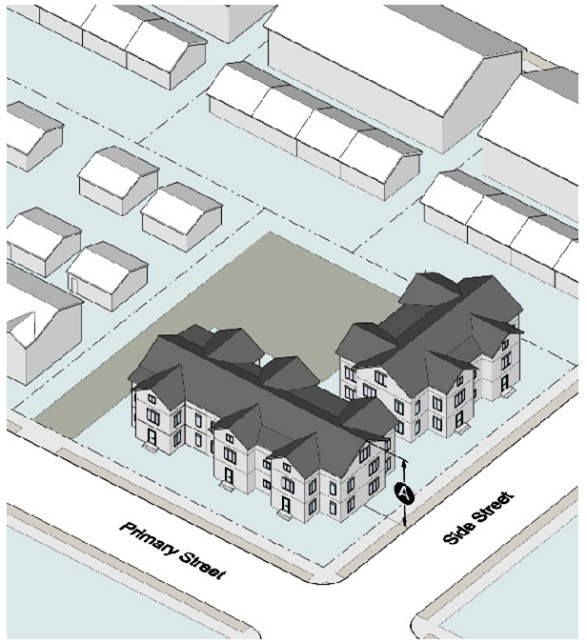
Table Note:
[1]
No building may exceed 3 stories when abutting a residential district unless a 100-foot buffer is provided and planted per Sec. 207-3.
(UDO 22-03, § 4, 1-9-2023)
202-16.10. - Retirement Community Density
The number of retirement community (continuing care) independent living units may not exceed 35 units per acre.
(UDO 22-03, § 4, 1-9-2023)
202-16.11. - Additional Requirements
A.
The following standards are required in this zoning classification. In the event these requirements contradict another section of this Ordinance, the requirements listed here shall control.
1.
A property owners association shall be created and all parcels in the development shall be subject to mandatory membership in the association.
2.
The property owner's association or its management company shall be responsible for all ground maintenance in the development.
3.
The property owner's association or its management company shall be responsible for all maintenance of all building exteriors in the development.
4.
All Interior Roadways in the development must be a minimum of 29 feet from edge of pavement to edge of pavement.
5.
All driveways must be a minimum width of 24 feet and minimum length of 30 feet, measured from inside edge (house side) of sidewalk to garage door.
(UDO 22-03, § 4, 1-9-2023)
203-1.1. - Purpose
The office professional district is intended to accommodate the location of a mixture of office, clerical, research, professional enterprises, medical and dental facilities, and closely related service businesses.
203-1.2. - Use Provisions
See Sec. 206-2 (Allowed Use Table).
203-1.3. - Building Types
No building type requirements apply in OP.
203-1.4. - Architectural Standards
See Sec. 201-3 (General Architectural Standards).
203-1.5. - Site Development Standards
See Chapter 200 Article 7 (Site Development) for parking and loading, buffer and screening, landscaping, tree ordinance, lighting, signs, and utility requirements.
203-1.6. - Inter-parcel Access
See Sec. 401-3.4.H (Inter-parcel Access).
203-1.7. - Dimensional Standards
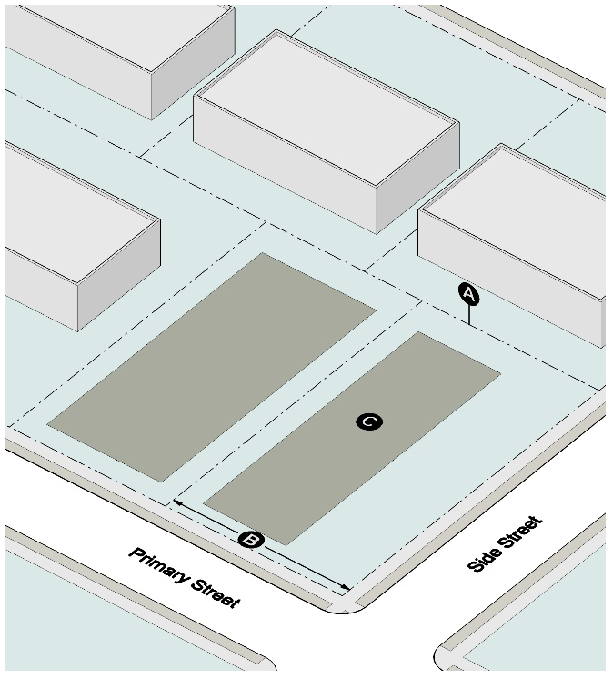
203-1.8. - Building Placement
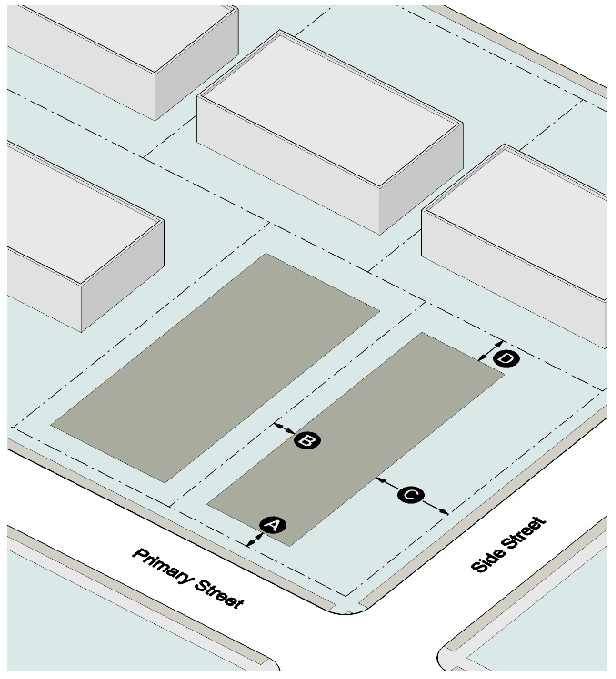
203-1.9. - Bulk and Mass
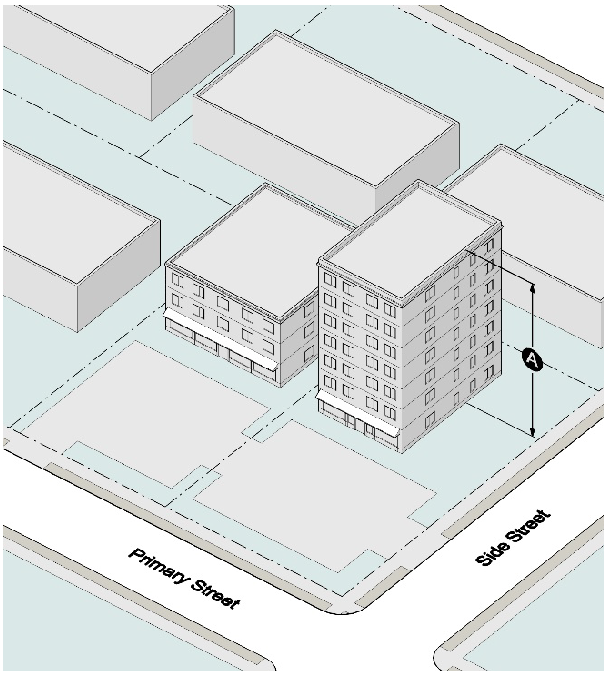
Table Note:
[1]
Measured in a straight line from the residential district boundary. The reduced height limit applies to all portions of buildings and structures within the indicated distance.
203-2.1. - Purpose
This district provides for a wide range of retail and service establishments requiring a location accessible to large sectors of the community population.
203-2.2. - Use Provisions
See Sec. 206-2 (Allowed Use Table).
203-2.3. - Building Types
No building type requirements apply in BG.
203-2.4. - Architectural Standards
See Sec. 201-3 (General Architectural Standards).
203-2.5. - Site Development Standards
See Chapter 200 Article 7 (Site Development) for parking and loading, buffer and screening, landscaping, tree ordinance, lighting, signs, and utility requirements.
203-2.6. - Inter-parcel Access
See Sec. 401-3.4.H (Inter-parcel Access).
203-2.7. - Dimensional Standards
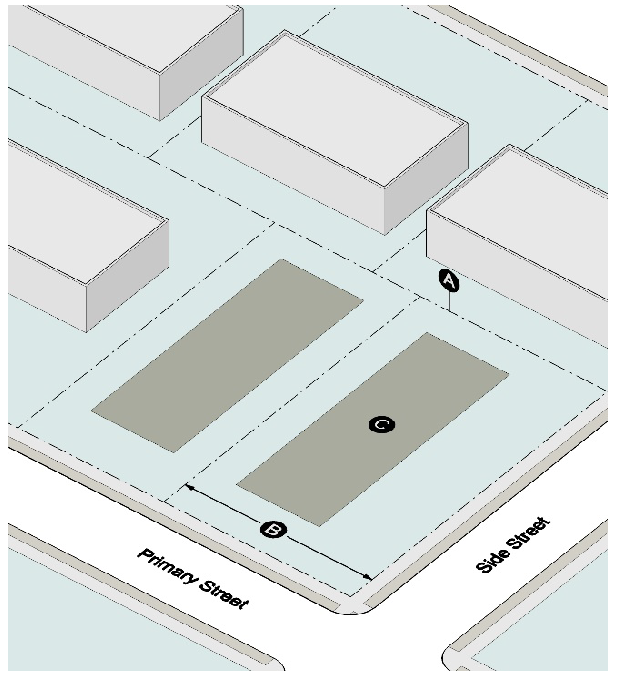
203-2.8. - Building Placement
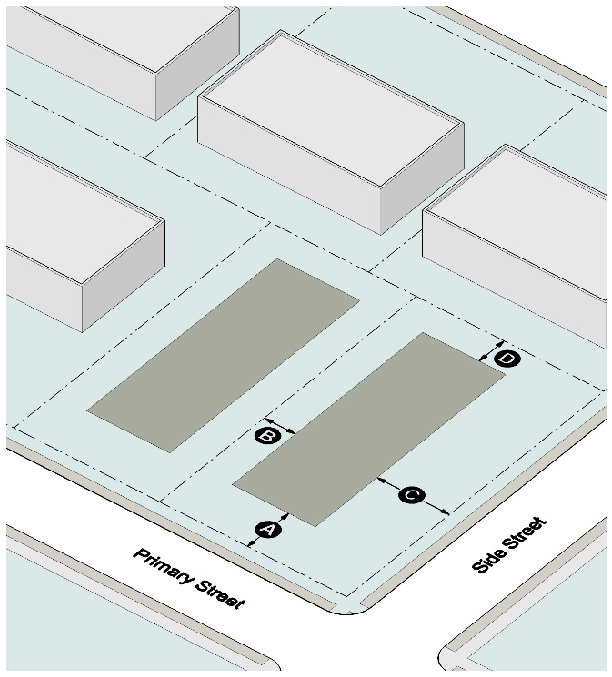
203-2.9. - Bulk and Mass
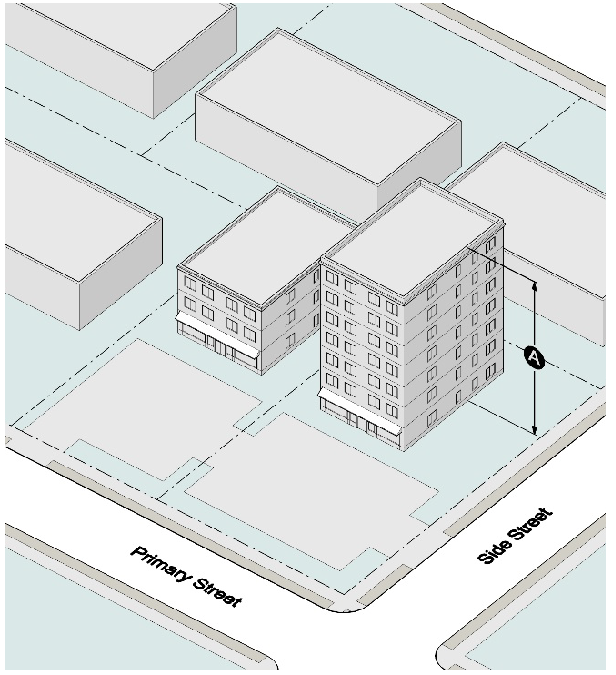
203-3.1. - Purpose
This district is designed to provide for the effective use of land situated in relationship to major highways and highway interchanges so efficient grouping of activities can develop to serve the traveling public. Front yard requirements are designed to provide for the safety of the traveling public by provision for adequate off-highway maneuvering and parking space.
203-3.2. - Use Provisions
See Sec. 206-2 (Allowed Use Table).
203-3.3. - Building Types
No building type requirements apply in HSB.
203-3.4. - Architectural Standards
See Sec. 201-3 (General Architectural Standards).
203-3.5. - Site Development Standards
See Article 7 (Site Development) for parking and loading, buffer and screening, landscaping, tree ordinance, lighting, signs, and utility requirements.
203-3.6. - Inter-parcel Access
See Sec. 401-3.4.H (Inter-parcel Access).
203-3.7. - Dimensional Standards
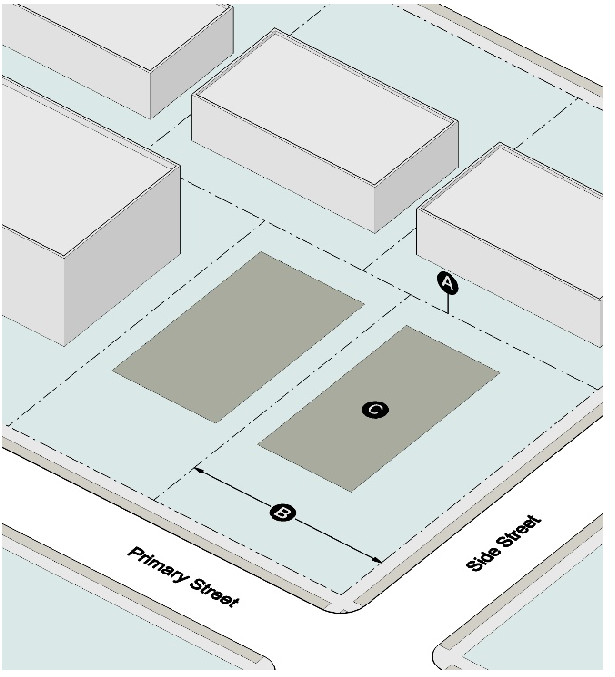
203-3.8. - Building Placement
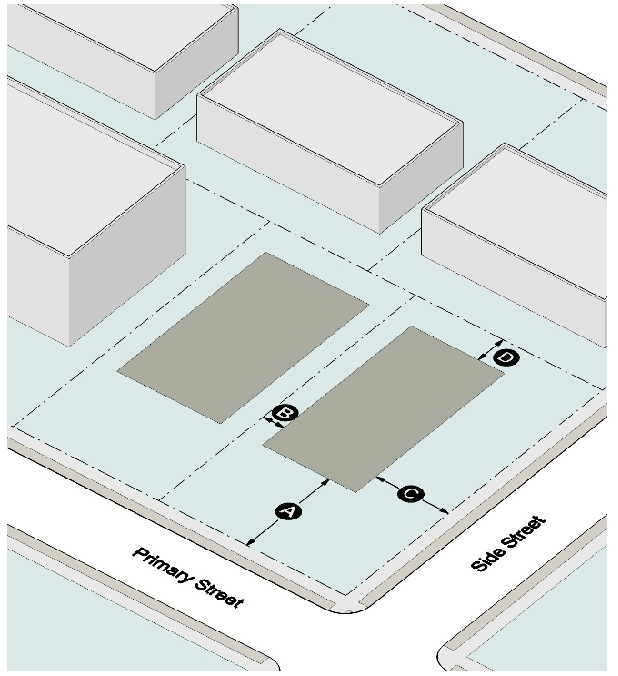
203-3.9. - Bulk and Mass
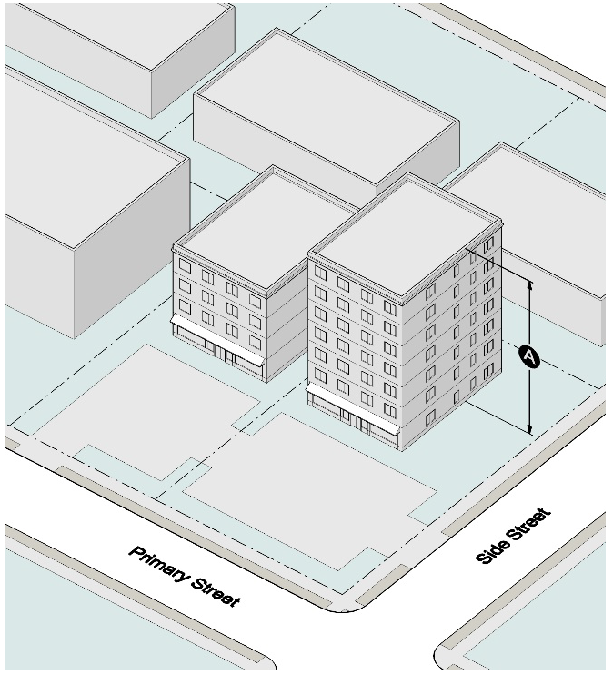
203-4.1. - Purpose
The purpose of this district is to provide for compact, mixed-use development in Snellville's activity centers, in conformance with the Comprehensive Plan.
203-4.2. - Use Provisions
A.
Allowed Uses
See Sec. 206-2 (Allowed Use Table).
B.
Mixed-Use Requirement
1.
At least 25% of the total floor area of every development must be residential uses and at least 25% of the total floor area of every development must be nonresidential uses.
2.
No certificates of occupancy may be issued for more than 100 dwelling units in a development until certificates of occupancy have also been issued for at least 10,000 square feet of nonresidential floor area on the same development.
3.
No certificates of occupancy may be issued for more than 10,000 square feet of nonresidential floor area on a development until certificates of occupancy have been issued for at least 100 dwelling units on the same development.
203-4.3. - Building Types
Building type requirements apply in the MU district and the following types are allowed:
A.
Detached house
B.
Carriage house
C.
Cottage court
D.
Semi-detached house
E.
Townhouse
F.
Walk-up flat
G.
Stacked flat
H.
Commercial house
I.
Shopfront
J.
Mixed-use building
K.
General building
L.
Civic building
203-4.4. - Architectural Standards
See Sec. 201-4 (Enhanced Architectural Standards).
203-4.5. - Site Development Standards
See Article 7 (Site Development) for parking and loading, buffer and screening, landscaping, tree ordinance, lighting, signs, and utility requirements.
203-4.6. - Blocks
See Sec. 401-3.2 for block standards.
203-4.7. - Inter-parcel Access
See Sec. 401-3.4.H (Inter-parcel Access).
203-4.8. - Dimensional Standards
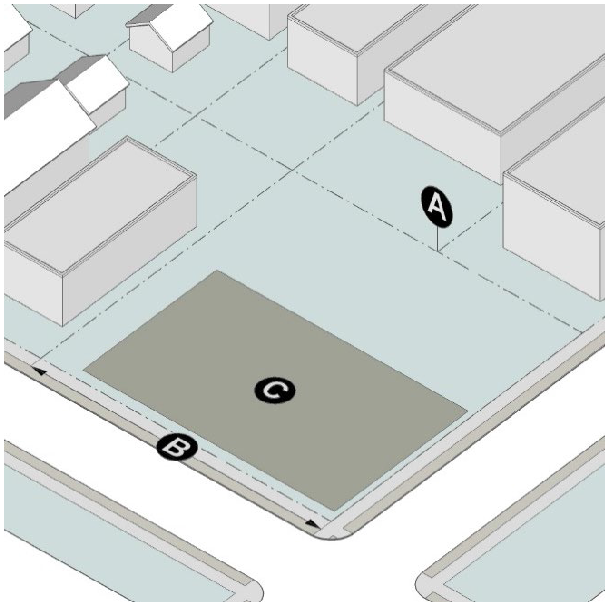
203-4.9. - Building Placement
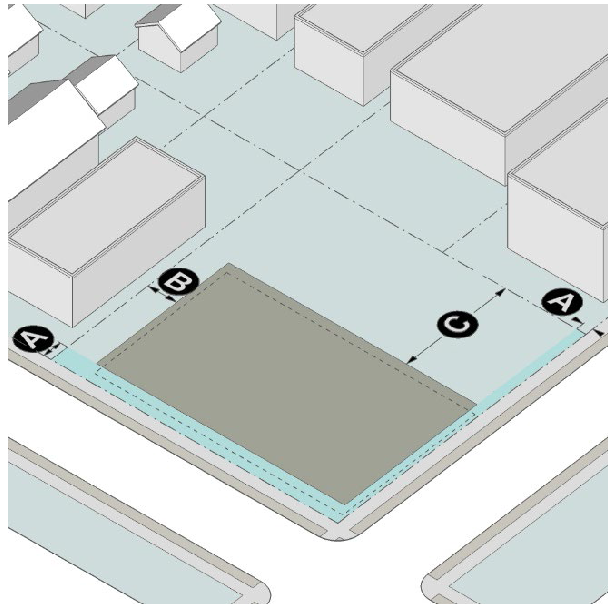
Table Note:
[1]
Greater site setbacks also apply per Sec. 203-4.8.
203-4.10. - Bulk and Mass
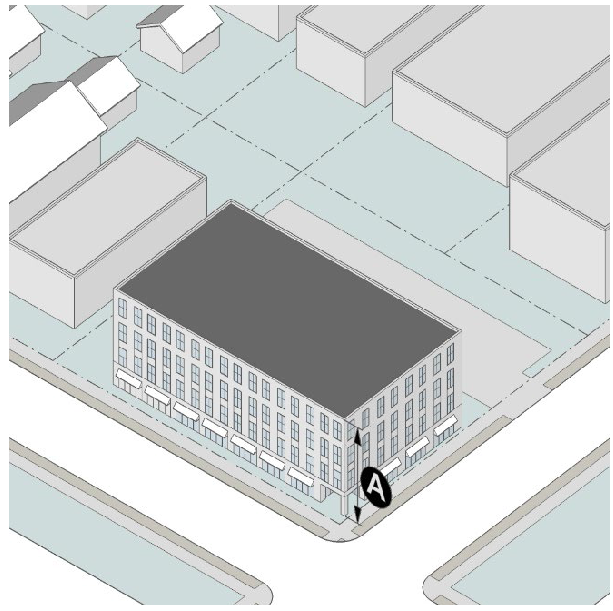
203-5.1. - Purpose
This district is intended to support the incremental redevelopment of the Comprehensive Plan's North Road Transitional Corridor Character Area from single-family residential uses into a residential-scaled mix of residential, office, and complementary commercial uses, in accordance with the recommendations of the such plan. In doing so, the district will support the creation of a transitional area between the Towne Center, Highway 124, and residential neighborhoods.
203-5.2. - Rezoning to NR
No site smaller than the minimum site areas in Sec. 203-5.8 (Dimensional Standards) may be zoned to the NR district, unless such rezoning is initiated by the City Council.
203-5.3. - Use Provisions
A.
Allowed Use Table
See Sec. 206-2 (Allowed Use Table), subject to the additional restrictions in paragraph B below.
B.
Commercial Uses
Commercial uses may only occupy either:
1.
Any existing structure built before the effective date of this UDO; or
2.
A new building on a site of at least 3 acres in size.
203-5.4. - Building Types
Building type requirements apply in the NR district and the following types are allowed:
A.
Detached house
B.
Carriage house
C.
Cottage court
D.
Semi-detached house
E.
Townhouse
F.
Walk-up flat
G.
Commercial house
H.
Civic building
203-5.5. - Architectural Standards
See Sec. 201-4 (Enhanced Architectural Standards).
203-5.6. - Site Development Standards
A.
General
See Article 7 (Site Development) for parking and loading, buffer and screening, landscaping, tree ordinance, lighting, signs, and utility requirements.
B.
Residential District
Where the standards referenced in paragraph A above include specific standards for "residential districts," those standards will also apply in the NR district.
203-5.7. - Inter-parcel Access
See Sec. 401-3.4.H (Inter-parcel Access).
203-5.8. - Dimensional Standards
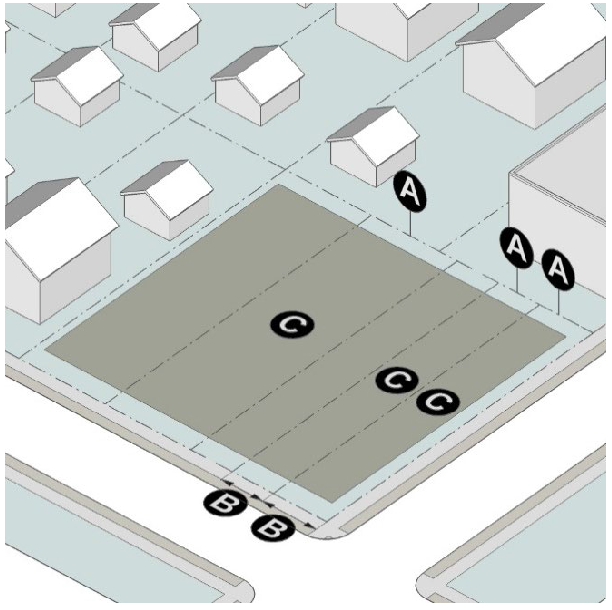
;sz=9;Table note:
[1]
Lot standards only apply to sites that meet the minimum area requirements. When minimum site area is not met, no subdivision is allowed.
203-5.9. - Building Placement
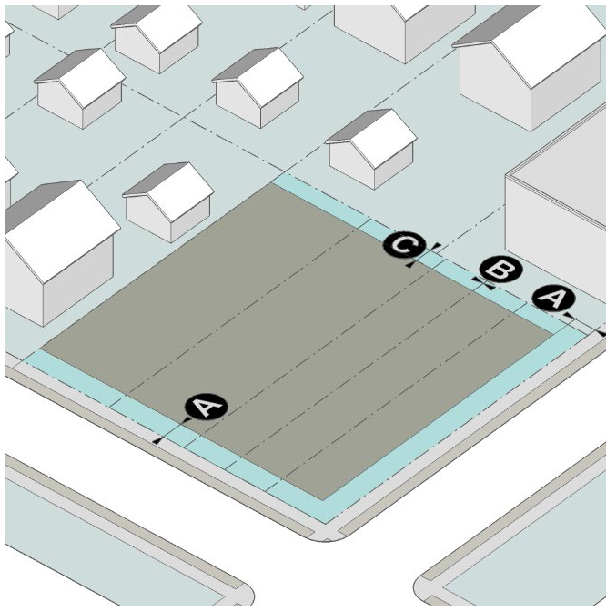
Table Note:
[1]
Greater site setbacks also apply per Sec. 203-5.8.
203-5.10. - Bulk and Mass
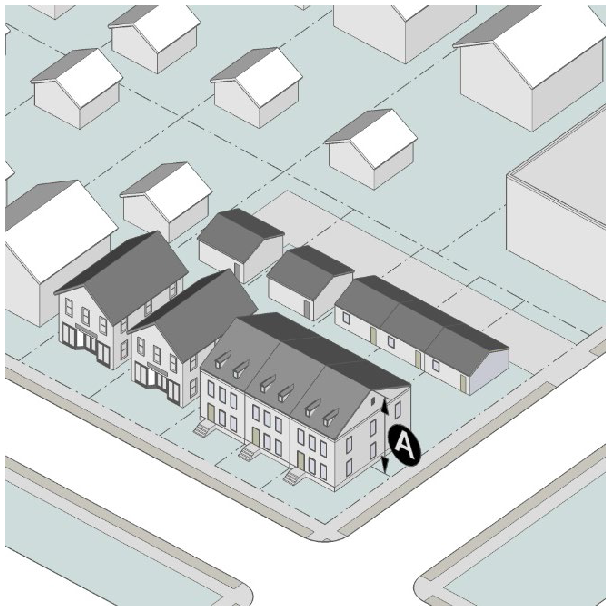
203-5.11. - Driveways
The following applies to driveways, including those serving as alleys, but not to required new streets.
A.
Number
The maximum number of driveways allowed on a site may not exceed an amount equal to one driveway for every 300 feet of total street frontage or fraction thereof.
B.
Sidewalks and Driveways
All sidewalk materials must continue across driveways.
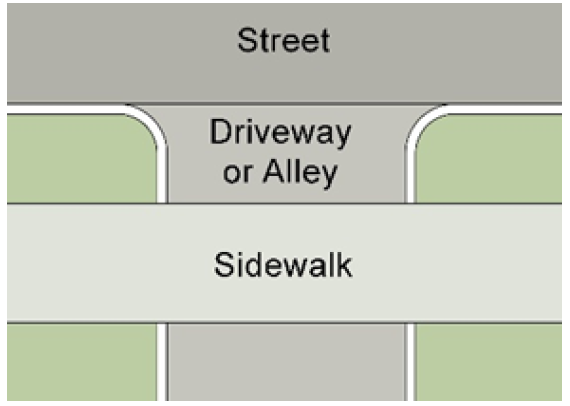
203-6.1. - Purpose
This district provides for a wide range of light industrial uses and compatible commercial uses, all of which must meet comparatively rigid specifications for nuisance-free performance. The district is comprised of lands that are located on or have ready access to a major street or State route and are well adapted to industrial development, but whose proximity to residential or commercial districts makes it desirable to limit industrial operations and processes to those that are not objectionable by reason of the emission of noise, vibration, smoke, dust, gas, by fumes, odors, or radiation, and that do not create fire or explosion hazards or other objectionable conditions.
203-6.2. - Use Provisions
See Sec. 206-2 (Allowed Use Table).
203-6.3. - Building Types
No building type requirements apply in LM.
203-6.4. - Architectural Standards
See Sec. 201-3 (General Architectural Standards).
203-6.5. - Site Development Standards
See Article 7 (Site Development) for parking and loading, buffer and screening, landscaping, tree ordinance, lighting, signs, and utility requirements.
203-6.6. - Inter-parcel Access
See Sec. 401-3.4.H (Inter-parcel Access).
203-6.7. - Dimensional Standards
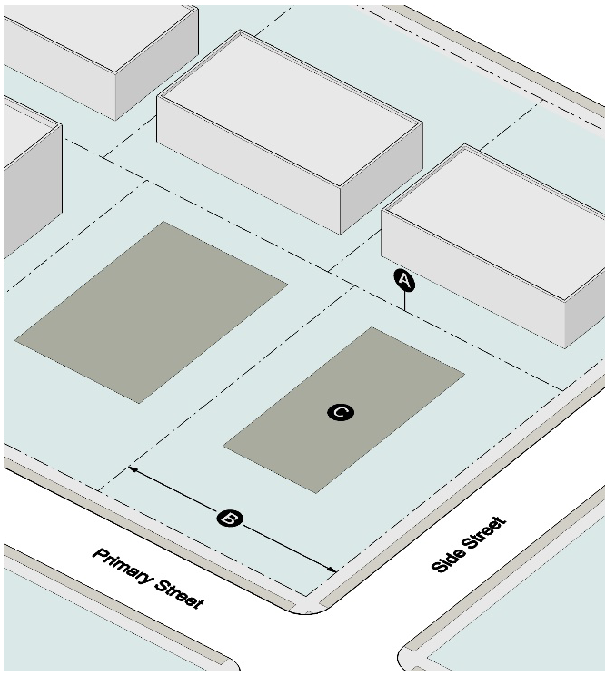
203-6.8. - Building Placement
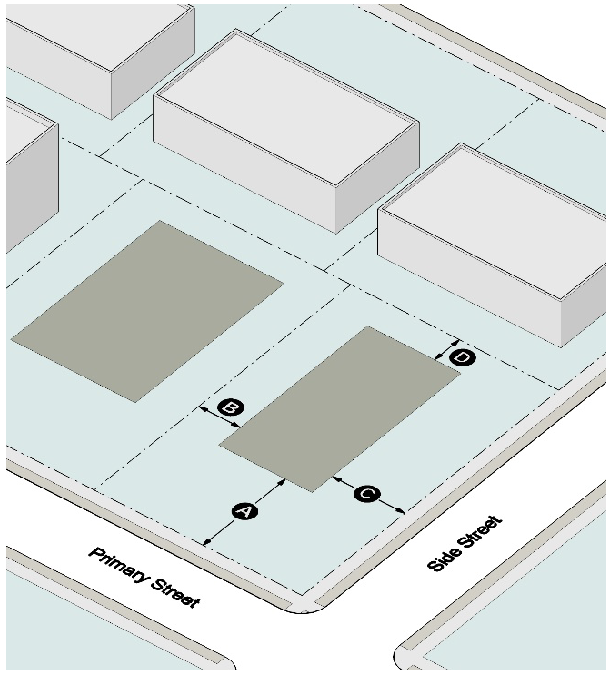
203-6.9. - Bulk and Mass
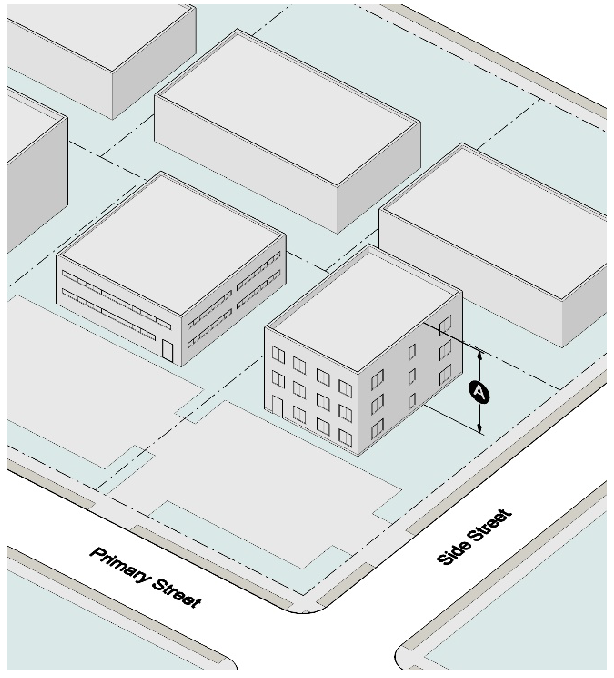
204-1.1. - Purpose
The purpose of this district is to provide for compact, mixed-use development in Snellville's core that supports the Towne Center's role as a focal point for the city. See Sec. 205-1.1 (TCO) for additional purposes.
204-1.2. - Use Provisions
See Sec. 206-2 (Allowed Use Table).
204-1.3. - Site Development Standards
See Chapter 200 Article 7 (Site Development) for parking and loading, buffer and screening, landscaping, tree ordinance, lighting, signs, and utility requirements.
204-1.4. - Building Types
Building type requirements apply in the TC-MU district and the following types are allowed:
A.
Detached house
B.
Carriage house
C.
Cottage court
D.
Semi-detached house
E.
Townhouse
F.
Walk-up flat
G.
Stacked flat
H.
Commercial house
I.
Shopfront
J.
Mixed-use building
K.
General building
L.
Civic building
204-1.5. - Architectural Standards
See Sec. 201-4 (Enhanced Architectural Standards).
204-1.6. - Dimensional standards
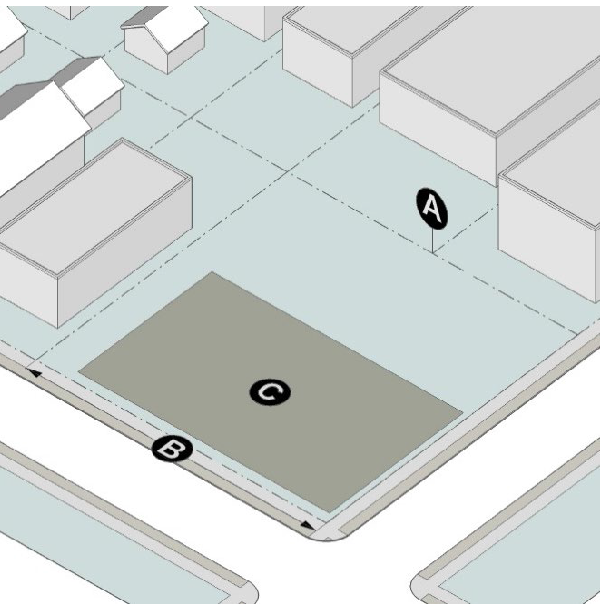
204-1.7. - Building Placement
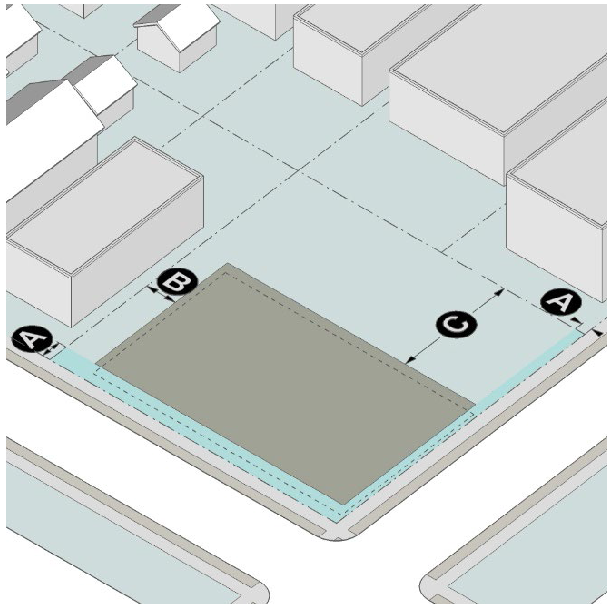
204-1.8. - Bulk and Mass
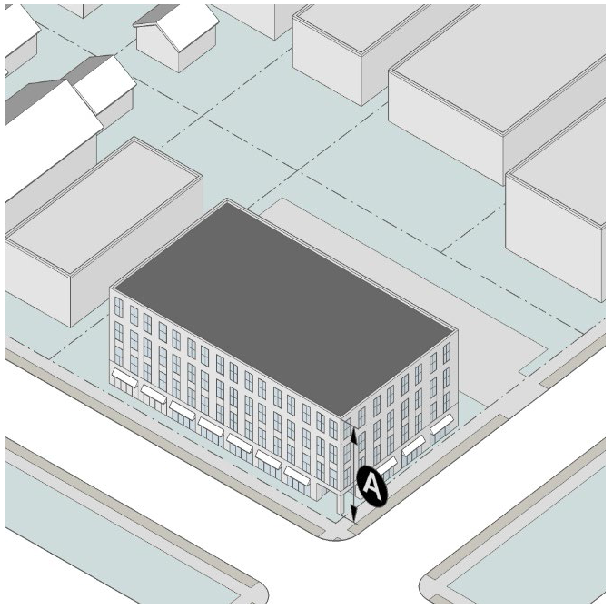
204-1.9. - TCO Standards
The Towne Center Overlay applies in the TC-MU District. See Sec. 205-1 (Towne Center Overlay).
204-2.1. - Purpose.
The purpose of this district is to provide for a variety of housing options near the Towne Center's mixed-use core. See Sec. 205-1.1 (TCO Purpose) for additional purposes.
204-2.2. - Use Provisions
See Sec. 206-2 (Allowed Use Table).
204-2.3. - Site Development Standards
See Chapter 200 Article 7 (Site Development) for parking and loading, buffer and screening, landscaping, tree ordinance, lighting, signs, and utility requirements.
204-2.4. - Building Types
Building type requirements apply in the TC-R district and the following types are allowed:
A.
Detached house
B.
Carriage house
C.
Cottage court
D.
Semi-detached house
E.
Townhouse
F.
Walk-up flat
G.
Stacked flat
H.
Civic building
204-2.5. - Architectural Standards
See Sec. 201-4 (Enhanced Architectural Standards).
204-2.6. - Dimensional Standards
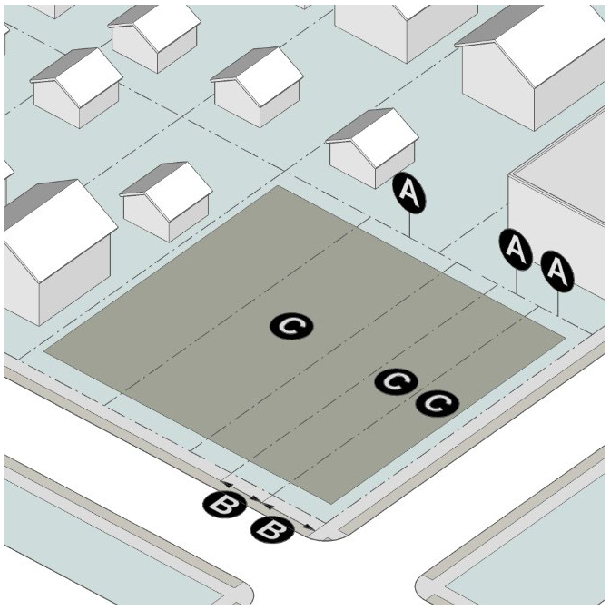
204-2.7. - Building Placement
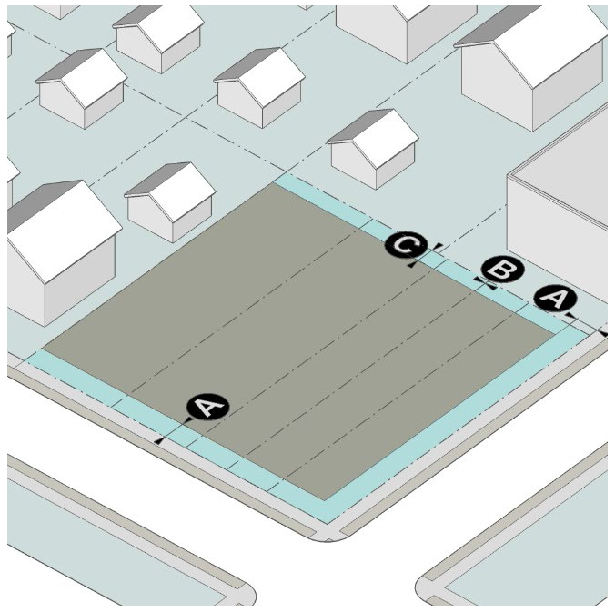
204-2.8. - Bulk and Mass
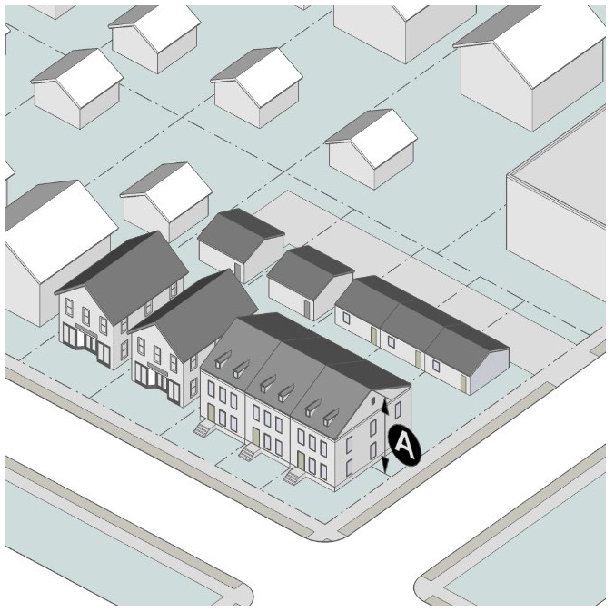
204-2.9. - TCO Standards
The Towne Center Overlay applies in the TC-R District. See Sec. 205-1 (Towne Center Overlay).
205-1.1. - Purpose
The intent and purpose of this overlay and the TC Districts is to enable and support the implementation of the following policies:
A.
That the Towne Center is the focal point for the City of Snellville as established in the City's Livable Centers Initiative Town Center Plan, The Towne Center @ Snellville master plan, and the Comprehensive Plan.
B.
That growth in the Towne Center will occur through the redevelopment of existing commercial properties and that this requires different regulations from development on vacant land.
C.
That the Towne Center should support economic growth and vitality in the City of Snellville.
D.
That the Towne Center should have a distinct physical design and sense of place.
E.
That the design of buildings, landscaping, streets, and public spaces should be coordinated in order to contribute to the Towne Center's sense of place.
F.
That the Towne Center should serve people of all ages and allow residents to remain in the community as they age.
G.
That interconnected networks of streets should be designed to disperse traffic, reduce the length and number of car trips, and create a pedestrian-friendly area where alternatives to driving are viable transportation options.
H.
That high-quality and aesthetically compatible housing should be provided to accommodate different needs in the community.
I.
That the quality-of-life in existing nearby neighborhoods should be preserved and protected.
J.
That a range of useable civic spaces including parks, squares, playgrounds, and preserved environmentally sensitive areas, should be distributed throughout the Towne Center.
K.
That the harmonious and orderly redevelopment of the Towne Center should be secured through these regulations.
205-1.2. - Applicability
A.
Towne Center Districts
This section applies to all TC Districts (TC-MU and TC-R).
B.
Other Districts
This section applies to all other zoning districts within the Towne Center Overlay.
C.
Relationship to Underlying Zoning
When this overlay's requirements differ from those of the underlying zoning district or elsewhere in this UDO, the requirements of this overlay will apply.
(UDO 21-01, § 2, 10-25-2021)
205-1.3. - Variances
A.
The Board of Appeals may consider variances to the requirements of the Towne Center Overlay and any TC Districts within it.
B.
Variances may only be granted to permit a practice that is not consistent with a specific provision of these regulations but is justified by their purpose.
C.
Variances may not be used to:
1.
Increase the permitted site density;
2.
Increase the maximum permitted number of stories in a building; or
3.
Permit a use that is not allowed.
D.
Variances relating to a physical element or numeric measurements must be based upon credible submitted evidence demonstrating that:
1.
Approval, if granted, would not offend the purposes as indicated in Sec. 205-1.1 (Purpose) and in the TC District, when applicable;
2.
There are such extraordinary and exceptional situations or conditions pertaining to the particular piece of property that the literal or strict application of the regulations would create an unnecessary hardship due to size, shape, topography, or other extraordinary and exceptional situations or conditions not caused by the applicant;
3.
Relief, if granted would not cause a substantial detriment to the public good and surrounding properties; and
4.
That the public safety, health, and welfare are secured, and that substantial justice is done.
(UDO 23-02, § 2, 6-12-2023)
205-1.4. - Use Provisions
A.
Allowed Use
See Sec. 206-2 (Allowed Use Table) for allowed uses, except as otherwise required by paragraph B below.
B.
Exception
On all sites, except those zoned TC-R or TC-MU, all commercial sales and service must be conducted within enclosed permanent structures and there may be no unenclosed displays of merchandise except for outdoor dining or temporary Towne Center Outdoor Sales.
205-1.5. - Building Standards
A.
Architectural Standards
See Sec. 201-4 (Enhanced Architectural Standards).
B.
Building Types
Building type requirements apply in this overlay and the following types are allowed, except in a TC Districts, where the building type standards of the TC District apply:
1.
Detached house
2.
Cottage court
3.
Semi-detached house
4.
Townhouse
5.
Cottage court
6.
Walk-up flat
7.
Stacked flat
8.
Commercial house
9.
Shopfront
10.
Mixed-use building
11.
General building
12.
Civic building
C.
Building Size
No building with a single use, tenant, or occupant may exceed 10,000 square feet without first obtaining a special use permit from the City Council and in accordance with Sec. 103-10.
1.
Exception: For properties zoned TC-MU as of 10-26-2021, no building with a single use, tenant, or occupant may exceed 45,000 square feet without first obtaining a special use permit from the City Council.
(UDO 21-01, § 2, 10-25-2021)
205-1.6. - Space limits
A.
Applicability
This subsection applies to all sites, except sites zoned a TC District.
B.
Space Limit Standards
The following standards apply:
1.
Lot area: 1,600 sf. min.
2.
Lot width: 32 ft. min.
3.
Minimum building height: For properties with any portion within one-half mile radius from the intersection of Oak Road and Clower Street, two stories or 24 feet, whichever is greater.
4.
Maximum building height: Five floors or 80 feet, whichever is less.
5.
Minimum front yard, street (side) yard: Zero ft.
6.
Maximum front yard: 10 ft.
7.
Maximum side (street) yard: No maximum.
8.
Minimum rear yard: 15 ft., but 30 ft. if abutting a residential district not within the overlay.
9.
Minimum side (interior) yard: Zero ft., but 40 ft. if abutting a residential district not within the overlay
10.
Lot coverage: 100% max: Front yards may exceed maximum distances listed above upon request of GDOT or the Gwinnett County DOT and with approval of the Director.
C.
Front and Side (Street) Yards Elevations
Front and side (street) yards may not be higher than 24 inches above the adjacent public sidewalk for a minimum distance of 15 feet from the nearest edge said sidewalk, unless existing topographical considerations render this requirement unreasonable.
(UDO 21-01, § 2, 10-25-2021)
205-1.7. - Blocks
See Sec. 401-3.2 for block standards.
205-1.8. - Driveways
A.
Applicability
This subsection applies to driveways, including those serving as alleys, but not to required new streets.
B.
Number
The maximum number of driveways allowed on a site may not exceed an amount equal to one driveway for every 300 feet of total street frontage or fraction thereof.
C.
Sidewalks and Driveways
All sidewalk materials must continue across driveways.
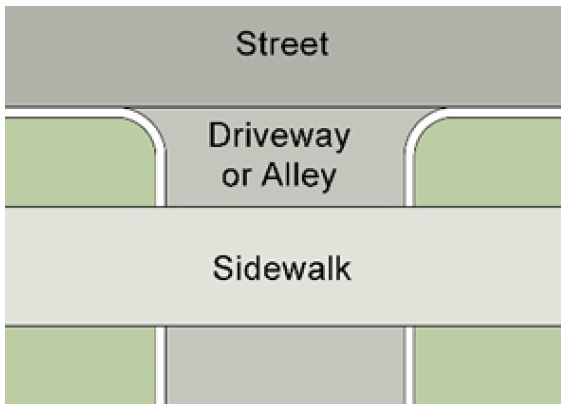
205-1.9. - Design of Parking Structures
A.
Applicability
This subsection applies to all parking structures as either principal or accessory uses.
B.
General Requirements
1.
Internal lighting fixtures may not be visible from a public or private street (not including an alley).
2.
Parking structure facades must be designed so cars and ramps are not visible from ground level view from an adjacent lot or adjacent public or private street (not including an alley).
3.
Parking structure facades must have the appearance of a horizontal storied building when adjacent to or visible from a public or private street (not including an alley).
C.
Storefront Street Requirements
When a parking structure abuts a storefront street, it must conform to one or more of the following along such street (except at pedestrian or vehicle access points):
1.
Active Uses. The ground floor must provide conditioned interior space for active uses (such as, but not limited to, residential, commercial, office, or civic uses) along said street. The space must have a minimum depth of 20 feet and must provide a minimum of 65% fenestration.
2.
Display Cases and Landscaping. The ground floor must provide display cases with a minimum depth of 5 feet and a minimum 65% fenestration. A minimum 10 feet wide landscape strip must also be provided between the sidewalk and the parking structure. The landscape strip must be planted in accordance with Sec. 207-3.2.G and Sec. 207-3.2.H of the Landscape Ordinance.
3.
Outdoor Vending and Landscaping. An outdoor vending or market area with a minimum depth of 10 feet must be provided between the sidewalk and the parking structure.
4.
Landscaping. When the existing average grade, before construction of a parking structure, is more than 5 feet above or below the average grade of the adjacent required sidewalk (measured at a line 5 feet from the back of the required sidewalk), a minimum 15 feet wide landscape strip must be provided between the sidewalk and the parking structure. The landscape strip must be planted in accordance with Sec. 207-3.2.G and Sec. 207-3.2.H of the Landscape Ordinance.
D.
Non-Storefront Street Requirements
When a parking structure abuts a street that is not a storefront street, it must conform to one of the following along such street (except at pedestrian or vehicle access points):
1.
Storefront Street Requirements. Conformance with paragraph C above; or
2.
Landscaping. A minimum 10 feet wide landscape strip must be provided between the sidewalk and the parking structure. The landscape strip must be planted in accordance with Sec. 207-3.2.G and Sec. 207-3.2.H of the Landscape Ordinance.
205-1.10. - Inter-parcel Access
See Sec. 401-3.4.H (Inter-parcel Access).
205-1.11. - Vehicle Access and Parking Locations
A.
Off-street parking for the following building types must be accessed from alleys:
1.
Townhouses on lots of any width; and
2.
Other building types on lots less than 50 feet in width.
B.
Permitted parking locations are determined by the building type standards of Sec. 201-2 (Building Types). When multiple buildings exist on a site, the standards apply to each building independently. When a building is located on the interior of a block and does not abut a public or private street and is screened from view by an intervening conforming building, the Board of Appeals may grant a variance to the parking location restrictions.
C.
No off-street parking lot fronting a required storefront street sidewalk may exceed 120 feet in width (measured at the back of the required sidewalk) without an intervening building. The required intervening building must have a minimum width of and depth of 30 feet.
(UDO 23-02, § 2, 6-12-2023)
205-1.12. - Fences and Walls
A.
Applicability of Citywide Wall and Fence Standards
1.
Fences/walls must conform to Sec. 207-2.3 (Fences and Walls), except as specifically provided by this subsection.
2.
As used in Sec. 207-2.3 (Fences and Walls), "residential district" means "residential use" when applied to this overlay and "nonresidential district" means "nonresidential use" when applied to this overlay.
B.
Retaining Walls
Retaining walls must made of be finished poured concrete and must be faced with stone, brick or smooth true hard coat stucco.
C.
Commercial Uses
Commercial uses must conform to the following additional requirements:
1.
No fixed fences/walls or retaining walls are allowed in front or side (street) yards unless a variance is granted by the Board of Appeals for topographic hardship, except for those surrounding authorized outdoor storage, or screening required by Sec. 207-2.2 (Screening).
2.
Movable fences/walls up to a maximum height 30 inches are allowed in front or side (street) yards surrounding outdoor dining, but may not occupy the required sidewalk.
(UDO 23-02, § 2, 6-12-2023)
205-1.13. - Landscaping and Screening
A.
Applicability
1.
New Construction. New building or site improvements must comply with the following landscaping and screening requirements.
2.
Maintenance and Repair. Existing buildings or sites may be renovated or repaired without providing additional landscaping or screening when all of the following conditions are met:
a.
There is no increase in floor area;
b.
There is no increase in the improved site area; and
c.
The activity is not considered a substantial building permit.
3.
Additions.
a.
An existing building, use, or site may be increased in floor area or improved site area cumulatively by less than 25% without providing additional landscaping or screening, provided said activity is not considered a substantial building permit.
b.
When an existing building, use, or site is increased in floor area or improved site area by 25% or more than cumulatively, both the existing building, use, or site and the additional floor or site area must conform to the landscaping and screening requirements of this Section.
4.
Change of Use. A change in use does not trigger the application of these requirements, except when there is a specific use standard requiring landscaping or screening for the new use.
5.
Conformance with the Landscape Ordinance. Except when specifically stated to the contrary in this Section, all landscaping must conform to the Landscape Ordinance.
B.
Yard Landscaping
1.
Yards between a parking lot and a street must comply with paragraph C below and the applicable provisions of the Landscape Ordinance.
2.
Yards between a building and a street must comply with Sec. 207-3.2 (Landscape Strips) except areas used for:
a.
Front porches and stoops;
b.
Outdoor dining or display;
c.
Pedestrian walkways used to access a street-facing pedestrian entrance; and
d.
Amenity space or civic space.
C.
Parking Lot Landscape Strips
1.
Applicability. Surface parking areas (of any size) abutting a public or private street (not including an alley) must be screened using one of the following options. All options must include wheel stops to prevent vehicles from overhanging the landscaped area.
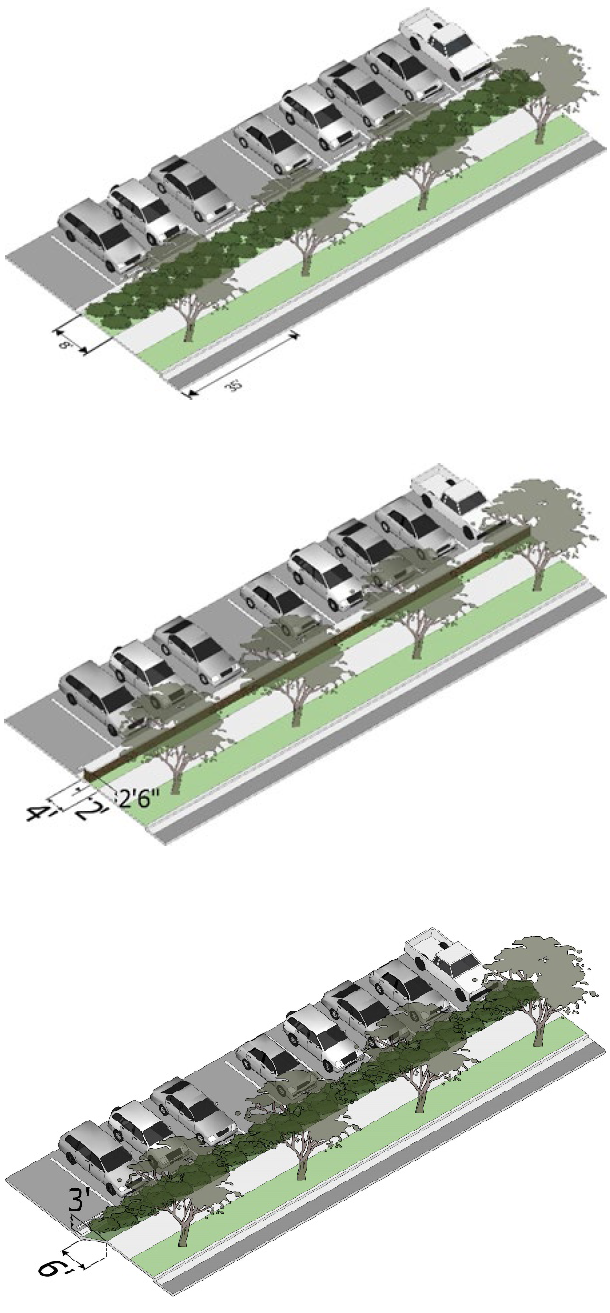
2.
Landscape Strip with Shrubs. A minimum 8 feet wide landscape strip planted with a minimum of 10 shrubs per 35 linear feet of street frontage, excluding driveway openings. Shrubs must be provided to screen paved areas and parking lots from the street. Shrubs must be 2 feet tall at the time of planting. They must be planted two rows deep and must provide a screen within 3 years of planting.
3.
Landscape Strip with Wall.
a.
A 2.5-foot high wall in a minimum 4-foot landscape strip.
b.
Walls must be close to the parking lot in order to provide a minimum 2-foot landscaped strip facing the street.
c.
Walls must be opaque and constructed of one or a combination of the following: decorative blocks; brick; stone; cast-stone; split-faced block; or true hard coat stucco over standard concrete masonry blocks.
4.
Landscape Strip with Grade Change. A 6-foot landscaped strip with a minimum 3-foot grade drop from the street to the parking lot.
5.
Location. A required landscape strip must be located at the outer perimeter of the parking lot and must be provided along the entire parking lot abutting the street, excluding breaks for pedestrians, bicycles, and driveways.
6.
Plant Material. Plantings must conform to Sec. 207-3.2.G of the Landscape Ordinance.
205-1.14. - Storefront Street Requirements
A.
The following additional requirements apply to the portions of lots abutting storefront streets (see Sec. 102-2. Defined Terms of Article 2. Definitions for a list of "storefront streets").
B.
Except as provided in paragraph C below, curb cuts and driveways are not permitted along any storefront street when vehicular access may be provided from an alternative street located immediately adjacent to a contiguous property.
C.
Two curb cuts are permitted along a storefront street for motel/hotel/extended stay hotel patron access.
D.
Buildings abutting a storefront street are limited to:
1.
Mixed-use buildings where a minimum of 80 percent of the ground level/first floor building area is devoted to retail, restaurant, and/or entertainment uses open to the general public, or ground floor dwelling units except when such units are not along a street-facing façade.
2.
Shopfronts.
3.
Additional building types may be provided to the rear of a conforming mixed-use building or shopfront.
(UDO 21-01, § 2, 10-25-2021)
205-1.15. - Miscellaneous Provisions
A.
Alcoholic Beverage Licensing
The distance and measurement requirements for alcoholic beverages, which are either sold or offered for sale by licensed establishments as set forth in subsections 6-5(a) through (e) of the City of Snellville Alcoholic Beverage Ordinance (Ordinance No. 2004-04, adopted Jan. 10, 2005) do not apply in this overlay.
205-2.1. - Purpose
This district is intended to provide a location for important buildings and services that are essentially non-commercial or not primarily profit-motivated in nature and that often serve as community landmarks. Examples of the uses and buildings included in this district are community meeting halls, libraries, post offices, schools, child care centers, religious buildings, significant medical facilities serving the city, public buildings and uses, museums, and cultural facilities.
205-2.2. - Use Provisions
See Sec. 206-2 (Allowed Use Table).
205-2.3. - Site Development Standards
See Chapter 200 Article 7 (Site Development) for parking and loading, buffer and screening, landscaping, tree ordinance, lighting, signs, and utility requirements.
205-2.4. - Building Types
No building type requirements apply in CI.
205-2.5. - Architectural Standards
See Sec. 201-3 (General Architectural Standards).
205-2.6. - Inter-parcel Access
See Sec. 401-3.4.H (Inter-parcel Access).
205-2.7. - Dimensional Standards
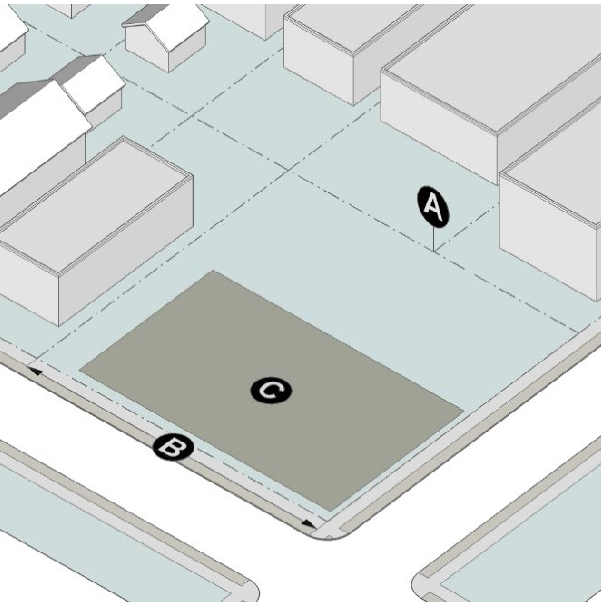
205-2.8. - Building Placement
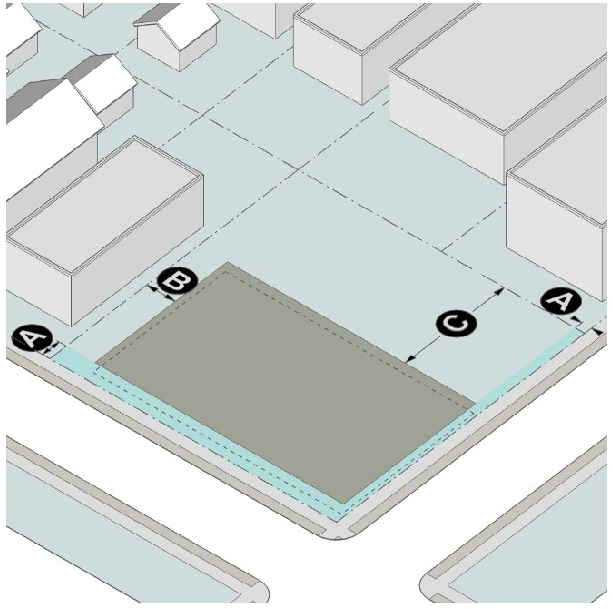
205-2.9. - Bulk and Mass
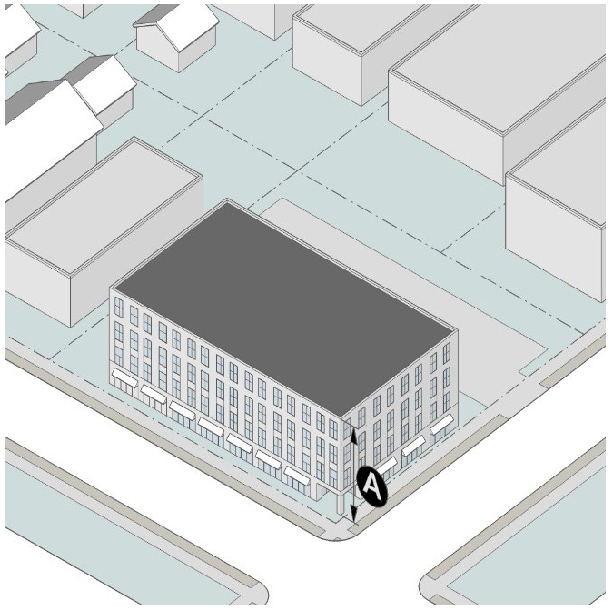
Note
[1]
No building may exceed 3 stories when a lot abuts a residential district.
205-2.10. - District Application
CI districts may only be applied in three general situations:
A.
Larger public or institutional uses that need sites greater than 1 acre and are intended to serve the city and its surrounding areas should have convenient access to State routes or other major thoroughfares (except for elementary and middle schools).
B.
Smaller civic uses (less than 1 acre) or those with less impact or intended to serve neighborhoods may be designated at prominent places and intersections intentionally planned for such uses within neighborhoods and otherwise at the entrance or edges of neighborhoods.
C.
At locations generally indicated on maps in the Comprehensive Plan or recommended in its narrative.
205-2.11. - Application Requirements
Each application of a CI district to a site must adopt a site plan as a condition of zoning. Substantial variation from the approved plan, as determined by the Director, require City Council approval. The City Council may allow a phased plan of compliance for existing nonconforming sites.
205-3.1. - Purpose
The purpose of this appended district is to apply to properties which are subject to occasional flooding or inundation by floodwaters, and which require special regulations for the protection of such properties and their improvements from hazards and damage which may result from floodwaters, and for the protection of public health and safety. Provisions Sec. 403-4 (Floodplain Protection) also apply.
205-3.2. - Use Provisions
A.
Principal Permitted Uses
Any use permitted in the primary district to which this district is appended, subject to provisions of Sec. 403-4 (Floodplain Protection). The intent of the regulations within this section is to limit the use of land contained within a floodplain. Notwithstanding the uses permitted for any applicable zoning district which apply to the property, no building or structure or land may be used or occupied other than in conformance with this section, and no building or structure or part thereof may be erected, constructed, reconstructed, moved or altered except in conformity with this section when such lands fall within or are affected by a floodplain.
B.
Uses Permitted in the Floodplain
Within a floodplain, only the following uses are allowed:
1.
Agriculture, including forestry and livestock raising, requiring no structure within the floodway except structures for temporary shelter and including agriculture and forestry access roads.
2.
Dams, provided they are designed and constructed in accordance with specifications of the State Safe Dam Act, latest revision and this UDO.
3.
Public parks and recreation areas and facilities requiring no structures within the floodplain, except structures for temporary shelter, including but not limited to, boat ramps, docks, parking areas, and recreation facilities; private and commercial recreation developments and campgrounds.
4.
Bridges, culverts, and the roadway fill related to these structures.
5.
Parking areas. All required parking areas must be located at an elevation higher than the calculated 5-year storm, and may not be located within any floodway.
6.
Outdoor storage and/or accessory buildings not exceeding 500 square feet.
7.
Fences with sufficient open area to permit the free flow of water and debris.
8.
Public utility poles, towers, pipelines, sewer, and other similar public and semi-public utilities and facilities.
9.
Signs and sign structures, provided they permit the free flow of water and debris.
10.
Swimming pools and tennis courts, provided that fences around such structures have sufficient open area to permit the free flow of water and debris.
205-3.3. - Site and Lot Standards
All of the site and lot standards of the primary district to which this district is appended must be complied with except as otherwise specified below, subject to any modifications or changes provided for in Sec. 403-4 (Floodplain Protection).
A.
Lot Area Restrictions
All concept plans, site plans, preliminary plats, and final subdivision plats with all or portions of the land area contained within the floodplain, or contiguous to the floodplain, must comply with the following, as applicable:
1.
In all residential districts, up to 25% of the area located at or below the base flood elevation may be counted towards the site area for density purposes.
2.
In residential districts, no lot may contain less than 8,000 square feet of land area above the flood elevation.
3.
No subdivision lot will be approved which has less than 50% of the minimum area required by the applicable zoning district located above the base flood elevation.
4.
Each plat or site plan submitted for rezoning or special use permit must contain a readily identifiable line indicating the limits of the base flood elevation if any portion of the property lies within the floodplain. This line must be clearly labeled and the base flood elevation above the mean sea level stated. The plat or site plan must indicate where the base flood elevation has been established by the FEMA or where the base flood elevation has been calculated by a registered professional engineer using the best available information.
205-3.4. - Federal Flood Insurance Program
Flood studies and maps depicting flood-prone areas have been prepared as part of the flood insurance study prepared for the City of Snellville as conducted by FEMA and Federal Insurance Administration arm of the Department of Housing and Urban Development. The Flood Damage Protection Ordinance was adopted as a result of these studies.
The floodway boundary and floodway maps published as a result of these studies are adopted by reference as part of this UDO and must be used to determine the boundaries of flood hazard areas described in this section.
206-1.1. - General
No land, building, or structure may be used except in accordance with this section and for a purpose permitted in the zoning district in which it is located.
206-1.2. - Classification of Uses
A.
Principal Uses
1.
In order to regulate a variety of similar uses, use categories have been established for principal uses. Use categories provide a systematic basis for assigning uses to appropriate categories with other, similar uses. Use categories classify principal uses and activities based on common functional, product or physical characteristics.
2.
Where a use category contains a list of included uses, the list is to be considered example uses, and not all-inclusive. The Director has the responsibility for categorizing all uses.
3.
The allowed use table in Sec. 206-2. establishes permitted uses by zoning district.
4.
Permitted uses shall be further restricted as specified in the FH Flood Hazard District.
5.
Use definitions and use standards for uses are specified in Sec. 206-3 (Residential Uses) through Sec. 206-6 (Industrial Uses).
B.
Accessory Uses
1.
An accessory use is any use that is subordinate in both purpose and size, incidental to and customarily associated with a permitted principal use located on the same lot.
2.
The allowed use table in Sec. 206-2 establishes permitted accessory uses by district, except as further restricted as specified in the FH Flood Hazard District. Use definitions and use standards for accessory uses are specified in Sec. 206-8.
C.
Temporary Uses
1.
A temporary use is a use that is in place for a limited period of time only.
2.
Temporary uses are allowed in the zoning districts specified in Sec. 206-9.
206-1.3. - Principal Uses Not Listed
A principal use not specifically listed is prohibited unless the Director determines the use to be part of a use category as described below.
A.
The Director is responsible for categorizing all principal uses. If a proposed use is not listed but is similar to a listed use, the Director may consider the proposed use part of that use category. When determining whether a proposed use is similar to a listed use, the Director must consider the following criteria:
1.
The actual or projected characteristics of the proposed use;
2.
The relative amount of site area or floor area and equipment devoted to the proposed use;
3.
Relative amounts of sales;
4.
The customer type;
5.
The relative number of employees;
6.
Hours of operation;
7.
Building and site arrangement;
8.
Types of vehicles used and their parking requirements;
9.
The number of vehicle trips generated;
10.
How the proposed use is advertised;
11.
The likely impact on surrounding properties; and
12.
Whether the activity is likely to be found independent of the other activities on the site.
Where a use not listed is found by the Director not to be similar to any other permitted use, the use is only permitted following a text amendment to the UDO (See Sec. 103-9.).
206-1.4. - Accessory Uses Not Listed
An accessory use not specifically listed is prohibited unless the Director determines the accessory use:
A.
Is clearly incidental to and customarily found in connection with an allowed principal use;
B.
Is subordinate to and serving an allowed principal use;
C.
Is subordinate in area, extent, and purpose to the principal use served;
D.
Contributes to the comfort, convenience or needs of occupants, business or industry in the principal use served; and
E.
Is located on the same lot as the principal use served.
206-1.5. - Use Table Key
A.
Permitted Use (P). Indicates a use is permitted in the respective district. The use is also subject to all other applicable requirements of this UDO.
B.
Limited Use (L). Indicates a use is permitted in the respective district, subject to a use standard found in the right-hand column of the use table. The use is also subject to all other applicable requirements of this UDO.
C.
Special Use (S). Indicates a use may be permitted in the respective district only where approved by the City Council in accordance with Sec. 103-10. Special uses are subject to all other applicable requirements of this UDO, including any applicable use standards, except where the use standards are expressly modified by the City Council as part of the special use permit approval.
D.
Use Not Permitted. A "—" in a cell indicates that a use is not permitted in the respective district.
(UDO 22-03, § 4, 1-9-2023)
Sec. 206-2. - Allowed Use Table
Table Note
[1]
TCO use standards do not apply to properties zoned TC-MU or TC-R.
(UDO 21-01, § 2(Exh. A), 10-25-2021; UDO 22-01, § 4(Exh. E), 2-28-2022; UDO 22-03, § 5(Exh. A), 1-9-2023; UDO 23-01, § 1(Exh. A), 2-27-2023; UDO 25-01, § 3(Exh. A), 3-10-2025)
206-3.1. - Household Living
A.
Defined
Residential occupancy of a dwelling unit by a household. Household living includes the following:
1.
Single-family detached dwelling.
2.
Two-family dwelling.
3.
Single-family attached dwelling.
4.
Multiple-family dwelling.
5.
Towne Center loft.
6.
Towne Center flat.
7.
Mobile home.
8.
Live-work.
B.
Single-Family Detached Dwelling
1.
Defined
A detached residential unit other than a mobile home, designed for and occupied by one family only.
C.
Two-family dwelling
1.
Defined
A detached residential building containing two dwelling units, designed for occupancy by not more than two families.
D.
Single-Family Attached Dwelling
1.
Defined
A structure subdivided by a coincidental lot line and wall which separates the structure into two or more dwelling units, each occupying its own lot.
2.
Use Standards
Where a single-family attached dwelling is allowed as a special or limited use, it is subject to the following:
a.
Units may not be vertically mixed.
b.
The lots created by the coincidental lot line and the wall must each contain at least the following in zoning districts where building types do not apply:
i.
An equal percentage of the minimum lot area of the zoning district in which they are located; and
ii.
An equal percentage of the minimum lot width of the zoning district in which they are located.
c.
Attached single-family structures must meet all setback requirements of the zoning district in which it is located, except for the coincidental lot line and wall.
d.
Each unit must be separately metered for all utilities and the coincidental property wall must be fire-rated and extend from the foundation to the roof decking of the structure. Otherwise, an attached single-family structure must meet all standards that would be required for two-family dwellings in the zoning districts in which it is located.
E.
Multiple-Family Dwelling
1.
Defined
Three or more dwelling units in a single building (that does not meet the definition of single-family attached dwelling) not within a TC District.
F.
Towne Center Flat
1.
Defined
Three or more dwelling units in a single building (that does not meet the definition of single-family attached dwelling) within a TC District and where the ground floor of the building contains no nonresidential uses.
2.
Use Standards
Where a Towne Center flat is allowed as a limited or special use, it is subject to the following:
a.
Towne Center flats must be in a conforming walk-up flat or stacked flat building type.
b.
Ground floor dwelling units may be accessed from the outside or through a conditioned interior hallway, as permitted by building type.
c.
Dwelling units located above the ground floor must be accessed through a conditioned interior hallway.
d.
Each dwelling unit must have at least 750 square feet of floor area.
e.
Sites containing 30 or more Towne Center flat dwelling units must provide a minimum of 5,000 square feet of commercial floor area for each additional 30 Towne Center flats, or fraction thereof, unless a variance is granted by the Board of Appeals in conformance with sentence F.2.f below.
f.
Variance requests may only be approved when the applicant demonstrates that all Towne Center flat buildings are located within 1,000 feet of at least 15,000 square feet of existing commercial space. This distance is measured by the most direct route of travel on ground in the following manner:
i.
From the lobby entrance of each proposed building housing a Towne Center flat;
ii.
In a straight line to the nearest public sidewalk, walkway, street, road or highway by the nearest route;
iii.
Along such public sidewalk, walkway, street, road or highway by the nearest route;
iv.
To the main entrance of the existing commercial floor area.
g.
When multiple commercial establishments are required to attain 15,000 square feet, this requirement applies to all establishments.
G.
Towne Center Loft
1.
Defined
Three or more dwelling units in a single building (that does not meet the definition of single-family attached dwelling) within a TC District and where the ground floor of the building contains exclusively commercial uses, except for lobbies to access upper-story residential uses.
2.
Use Standards
Where a Towne Center loft is allowed as a limited or special use, it is subject to the following:
a.
Towne Center lofts must be located in a mixed-use building type.
b.
At least 50% of the ground floor area of each building containing a Towne Center loft must be leasable commercial space. Lobbies, atriums, service corridors, and similar shared common areas may not be counted towards this requirement.
c.
Each dwelling unit must be accessed through a conditioned interior hallway.
H.
Mobile Home
1.
Defined
A detached single-family dwelling unit with the following characteristics:
a.
Designed for long-term occupancy as opposed to transient location, containing sleeping accommodations, toilet facilities, with plumbing and electrical connections provided;
b.
Designed to be transported after fabrication on its own wheels or flatbed or other trailer or on detachable wheels;
c.
Built to arrive at the site where it is to be occupied as a dwelling unit complete, or all units built since June 15, 1976, documentation of compliance with the National Mobile Home Construction and Safety Standard Act (department of housing and urban development certification); and
d.
For all units built before June 15, 1976, documentation of compliance with specifications prescribed by the American National Standards Institute.
I.
Live-Work
1.
Defined
Nonresidential activity conducted wholly within a dwelling unit that allows employees, customers, clients or patrons to visit.
2.
Use Standards
Where live-work is allowed as a special or limited use, it is subject to the following:
a.
Live-work is only permitted on the ground floor of a dwelling unit.
b.
A minimum of one person must occupy the dwelling containing the live-work use as their primary place of residence.
c.
The live-work use may employ no more than two persons not living on the premises at any one time.
d.
No business storage or warehousing of material, supplies or equipment is permitted outside of the dwelling containing the live-work use.
e.
The nonresidential use of the live-work use is limited to a permitted or special use allowed in the zoning district.
f.
No equipment or process may be used that creates, without limitation, noise, dust, vibration, glare, fumes, odors, or electrical interference detectable to the normal human senses, off the premises.
g.
No more than five customers are permitted on the premises at any one time.
206-3.2. - Group Living
A.
Defined
Residential occupancy of a structure by a group of people that does not meet the definition of household living. Generally, group living facilities have a common eating area for residents, and residents may receive care or training. The Fair Housing Act (42 U.S.C. Section 3604(f)(3)) makes it unlawful to make a dwelling unavailable to a person because of race, color, national origin, sex, familial status, handicap or disability. No policy or practice of this UDO is intended to have a disparate impact on a protected class. Further, in order to avoid prohibited discrimination, if a person or persons identified as a protected class believes a reasonable accommodation can be made to any use restriction, that person or persons must make an application for a special use or zoning text or map change.
Group living includes the following:
1.
Addiction treatment facility.
2.
Assisted living facility.
3.
Boarding or rooming house.
4.
Collective residence.
5.
Halfway house.
6.
Hospice.
7.
Monastery or convent.
8.
Nursing facility (skilled).
9.
Nursing home.
10.
Retirement community (continuing care).
11.
Shelter.
B.
Addiction Treatment Facility
1.
Defined
An inpatient facility for treatment and recovery for substance abuse and addiction.
C.
Assisted Living Facility
1.
Defined
A facility for the frail elderly that provides rooms, meals, personal care, and supervision for self-administered medication. Facility may also provide specialized memory care.
D.
Boarding or Rooming House
1.
Defined
A dwelling in which meals, lodging, or both are furnished for compensation to more than two, but not more than ten non-transient persons.
E.
Collective Residence
1.
Defined
Any residence, whether operated for profit or not, which undertakes through its ownership or management to provide or arrange for the provision of housing, food, one or more personal services, support, care, or treatment exclusively for two or more persons who are not related to the owner or administrator of the residence by blood or marriage and which is licensed as a group home, personal care home, or community living arrangement pursuant to O.C.G.A. § 31- 2-4(d)(8). Any residence that Georgia law requires to be licensed as a Community Living Arrangement, Group Home, Personal Care Residence, or any other facility permitted by the State of Georgia to house two or more unrelated persons, is considered to be a collective residence.
2.
Use Standards
Where a collective residence is allowed by a special use permit, it is subject to the following:
a.
The facility must be licensed by the Department of Human Resources of the State of Georgia. Before applying for a special use permit, the applicant must seek a specific permit from the State of Georgia for operating the collective residence. All details of the State application must be attached to the special use permit application and must be incorporated by reference as a condition of said permit. If the applicant changes the operation of the collective residence from the type disclosed in the State application, the special use permit will be automatically revoked, and the applicant must apply for a new special use permit for the new type of community residence. The new application must be judged by the City on its own merits and subject to the full review for a new special use permit, which may be denied based on the required criteria of these use standards. The fact that a different type of community residence has been operated at this same site has no bearing on the new application.
b.
The facility must apply for and receive an occupation tax certificate/business license from the City before operation. The certificate and license must be revoked if any condition of the special use permit is violated.
c.
The facility must apply for, earn, and maintain nonprofit corporation status in accordance with the requirements of O.C.G.A. § 14-3-120 et seq., unless otherwise stated in these use standards.
d.
The facility must submit annual reports to the City Manager, just as the community residence would for a member under O.C.G.A. § 14-3-1620 et seq.
e.
The facility must comply with all parking requirements, except that no more than six parking spaces are allowed at any community residence unless otherwise allowed or required by the special use permit.
f.
Every bedroom in the residences must contain at least 80 square feet of floor area for each person who sleeps in that room.
g.
Community living arrangements and family personal care homes are subject to the following:
(i)
Special use permits may only be granted for the care of up to six persons without a variance from the City Council.
(ii)
Except as otherwise stated in E.2.g(i) above, operations are subject to Sec. 206-8.12 (Home Occupation).
h.
Group homes are subject to the following:
(i)
The dwelling unit must be licensed by the Department of Human Resources of the State of Georgia as a child care institution.
(ii)
Group homes are exempt from the requirements of article XVIII, subsection 18.4G. to the extent they require that the owner of the group home live on-premises, and to the extent that subsection 18.4.G.requires that only two or fewer employees occupy the premises. At least one employee must occupy the premises. Two is the minimum number of employees that must work on the premises.
i.
Family personal care homes are subject to the following:
(i)
The dwelling unit must be the primary and legal place of residence for the owner of the family personal care home.
(ii)
For purposes of this these use standards, "owner" of the family personal care home means an individual, not a partnership or corporation, who is an officer in the nonprofit corporation that owns the place of residence at which the personal care home is located. Dwelling and premises must maintain a residential character.
j.
If the use fails to comply with any threshold requirement under these use standards, its special use permit is subject to revocation by the Director pursuant to Sec. 103-10 (Special Use Permits).
k.
Collective residences may not be located within 1,500 feet of each other. This distance is measured by the most direct route of travel on the ground in the following manner: i. From the main entrance of the collective residence; ii. In a straight line to the nearest public sidewalk, walkway, street, road or highway by the nearest route; iii. Along such public sidewalk, walkway, street, road or highway by the nearest route; iv. To the main entrance of the next closest collective residence.
l.
The application for a special use permit must include the following:
(i)
A full review of fire code compliance and fire access requirements must be made and to the extent that special needs are demonstrated, the special use permit can be conditioned by including additional conditions.
(ii)
All environmental health requirements must be disclosed and modifications to the facility may be required as a condition of the special use permit.
(iii)
A parking plan to accommodate all residents, staff, visitors, and professionals caring for residents, and the granting of a special use permit may be conditioned on compliance with parking requirements of this UDO. Parking in the public right-of-way is prohibited.
(iv)
The real estate that is the subject of the special use permit must be owned at the time of application and during the term of the special use permit by the nonprofit organization operating the facility.
(v)
The application for the special use permit must be in a form prepared by the Director and must incorporate disclosure of all the following:
a.
All information required to demonstrate compliance with the requirements of these use standards.
b.
A full and complete financial disclosure by the applicant to include financial statements that reveal how trust funds of residents will be maintained, a balance sheet showing the overall capital structure of the nonprofit organization, and a full capital disclosure targeted at the financial condition of the specific facility to be operated at the site of the special use permit.
F.
Retirement Community (Continuing Care)
1.
Defined
A managed residential facility for elderly adults that allows residents to age in one community, with on-site access to healthcare services and a transition to greater levels of care over time. These facilities provide distinct levels of care: independent living in which residents live on their own and have access to a wide array of amenities; assisted living, which provides help with daily tasks such as bathing and dressing; and, 24-hour nursing home-style care. As a resident's health needs increase, they transition from one level to the next, all within the same community.
G.
Halfway House
1.
Defined
A dwelling in which meals, lodging, or both are furnished for compensation to persons with criminal backgrounds or that are on parole to learn (or relearn) the necessary skills to re-integrate into society and better support and care for themselves.
As well as serving as a residence, the halfway house may also provide social, medical, psychiatric, educational, and other similar services.
H.
Hospice
1.
Defined
A health care facility for the terminally ill that emphasizes pain control and emotional support for the patient and family, typically refraining from taking extraordinary measures to prolong life.
I.
Monastery or Convent
1.
Defined
A place of residence providing group living accommodations to a community of persons living in seclusion under religious vows.
J.
Shelter
1.
Defined
A facility providing temporary sleeping facilities for displaced persons.
(UDO 21-01, § 2, 10-25-2021; UDO 23-01, § 1(Exh. A), 2-27-2023)
206-4.1. - Civic
A.
Defined
Places of public assembly that provide ongoing governmental, life safety, educational, and cultural services to the general public, as well as meeting areas for religious practice. Civic includes the following:
1.
College, public or private.
2.
Community center.
3.
Fraternal organization and club, non-profit.
4.
Museum, library.
5.
Non-profit private clubhouse.
6.
Non-profit private recreation.
7.
Place of worship.
8.
Public buildings and uses.
9.
Public civic and cultural center.
10.
School, public or private.
B.
College, Public or Private
1.
Defined
A public or private institution of higher education with the authority to award bachelor's and higher degrees.
C.
Community Center
1.
Defined
A non-commercial building, structure, or use that provides indoor community meeting rooms and may also provide outdoor facilities such as swimming pools, tennis courts, and playgrounds.
D.
Fraternal Organization and Club, Non-profit
1.
Defined
A facility used for associations or organizations of an educational, fraternal, or social character, not operated or maintained for profit. Representative organizations include Elks, Veterans of Foreign Wars, and Lions.
E.
Museum, Library
1.
Defined
A facility with public significance by reason of its architecture or former use or occupancy, or a building serving as a repository for a collection of books, natural, scientific, literary curiosities or objects of interest, or works of art, and arranged, intended, and designed to be viewed by members of the public, with or without an admission fee, and which may include as an accessory use the sale of goods to the public as gifts or for their own use.
F.
Non-Profit Private Clubhouse
1.
Defined
A non-commercial building, structure, or use exclusively used by residents of a development or their nonpaying guests that may include indoor meeting rooms or indoor recreation areas.
2.
Use Standards
a.
Where a non-profit private clubhouse is allowed as a limited use, the total building floor area may not exceed 4,000 square feet.
b.
Where non-profit private recreation is allowed as a limited use, it is subject to the following building setbacks, even if greater setbacks are required by district regulations:
i.
Front setback: 25 ft. min.
ii.
Rear setback: 10 ft. min.
iii.
Side interior setback: 10 ft. min.
iv.
Side street setback: 15 ft. min.
G.
Non-Profit Private Outdoor Recreation
1.
Defined
A non-commercial outdoor facility exclusively used by residents of a residential development or their nonpaying guests that includes outdoor recreation facilities such as swimming pools, tennis courts, or playgrounds.
2.
Use Standards
Where non-profit private recreation is allowed as a special use, it is subject to the following building setbacks, even if greater setbacks are required by district regulations:
a.
Front setback: 25 ft. min.
b.
Rear setback: 10 ft. min.
c.
Side interior setback: 10 ft. min.
d.
Side street setback: 15 ft. min.
H.
Place of Worship
1.
Defined
A specially designed structure or consecrated space where individuals or a group of people such as a congregation come to perform acts of devotion, veneration, or religious study. Temples, churches, synagogues, and mosques are examples of structures created for worship.
2.
Use Standards
Where a place of worship is allowed as a special or limited use, it is subject to the following:
a.
Facilities must have at least 100 feet of frontage on a street with a minimum classification of major collector.
b.
The minimum lot size is 1 acre.
c.
The maximum lot size is 3 acres.
d.
All buildings must be set back at least 50 feet from the front lot line, 40 feet from the rear lot line, 20 feet from the side (interior) lot line, and 35 feet from the side (street) lot line.
e.
A minimum 10 feet wide buffer, at least 6 feet high, is required along side (interior) and rear lot lines that are adjacent to residential districts or residential uses.
f.
Facilities and building to serve for place of worship use only. Mixed-use or multi-tenant building use is prohibited.
I.
Public Buildings and Uses
1.
Defined
Any building, structure, or use owned or operated by the federal government, State of Georgia, Gwinnett County or other county, the City or other municipality, or any authority, agency, board, or commission of the above governments, that is necessary to serve a public purpose, including but not limited to, government administrative buildings, post offices, police, fire and EMS stations, public health facilities, public works facilities, community centers, and jails and correctional facilities.
J.
School, Public or Private
1.
Defined
An educational facility for students in grades pre-kindergarten through 12 that is either:
a.
Operated by the Gwinnett County Board of Education; or
b.
Operated by a private entity and has a curriculum at least equal to a public school with regard to the branches of learning and study required to be taught in the public schools of the State of Georgia.
2.
Use Standards
Where a public or private school is allowed as a special use, it is subject to the following:
a.
The minimum lot size is 5 acres.
b.
Facilities must have at least 100 feet of frontage on a street with a minimum classification of major collector.
c.
A minimum 10 feet wide buffer is required along side (interior) and rear lot lines.
d.
Facilities and building to serve for school use only. Mixed-use or multi-tenant building use is prohibited.
K.
Public Civic and Cultural Center
1.
Defined
Any event space owned by the City of Snellville that hosts events and leases out the space for special events.
(UDO 22-01, § 4, 2-28-2022; UDO 25-01, § 3, 3-10-2025)
206-4.2. - Park and Open Space
A.
Defined
A use focusing on natural areas consisting mostly of vegetation, passive or active outdoor recreation areas, and with few structures. Park and open space includes the following:
1.
Cemetery.
2.
Community garden.
3.
Golf course.
4.
Parks, plaza, square.
5.
Playground.
B.
Cemetery
1.
Defined
The use of property as a burial place.
2.
Use Standards
Where a cemetery is allowed as a special use, it is subject to the following:
a.
The cemetery must have at least 100 feet of frontage on a street with a minimum classification of major collector.
b.
The minimum lot size is 2 acres.
c.
A minimum 10 feet wide buffer is required along side (interior) and rear lot lines. It must also be surrounded by a fence or wall made of brick, stone, true hard coat stucco, and/or painted metal, as approved by the Director.
C.
Community Garden
1.
Defined
A tract of land managed and maintained by a group of individuals to grow and harvest food crops and non-food ornamental crops, for personal or group use, consumption or donation. On-site sales may be permitted upon approval of a special use permit. It may be divided into separate plots for cultivation by one or more individuals or may be farmed collectively by members of the group and may include common areas maintained and used by the group.
D.
Country Club, Golf Course
1.
Defined
A tract of land laid out with at least nine holes for playing golf and improved with tees, greens, fairways, and hazards. A country club, golf course may include a clubhouse and shelters as accessory uses.
E.
Park, Plaza, Square
1.
Defined
An area used for noncommercial outdoor assembly, enjoyment, play, recreation, or natural resource protection, often containing seating, walking paths, trails, recreational equipment, ball fields, soccer fields, basketball courts, swimming pools, and tennis courts.
F.
Playground
1.
Defined
An area used for children to play often containing recreational equipment such as slides, swings, climbing frames, but not recreational fields.
206-4.3. - Utilities
A.
Defined
Public or private infrastructure, including but not limited to water, sewer, gas, and electric, telephone, Internet, cable and other similar services serving the general community and possibly with on-site personnel. Utilities includes the following:
1.
Minor utility.
2.
Small cell facility.
3.
Telecommunication antenna and tower.
4.
Utility substation.
B.
Minor Utility
1.
Defined
Public or private infrastructure, including but not limited to water, sewer, gas, electric, telephone, Internet, cable and other similar services serving a limited area with no on-site personnel. Minor utility includes the following.
a.
On-site stormwater retention or detention facility.
b.
Neighborhood-serving cable, telephone, gas or electric facility.
c.
Water or wastewater pump or lift station.
2.
Use Standards
Where a minor utility is allowed as a limited use, it is subject to the following:
a.
Minor utility facilities must be essential to serve the immediate area;
b.
Materials storage is not permitted; and
c.
Vehicles may not access the site except for maintenance, repair, and inspection purposes.
C.
Small Cell Facility
1.
Defined
Radio transceivers; surface wave couplers; antennas; coaxial, fiber optic, or other cabling; power supply; backup batteries; and comparable and associated equipment, regardless of technological configuration, at a fixed location or fixed locations that enable communication or surface wave communication between user equipment and a communications network and that meet both of the following qualifications: (a) each wireless provider's antenna could fit within an enclosure of no more than 6 cubic feet in volume; and (b) all other wireless equipment associated with the facility is cumulatively no more than 28 cubic feet in volume, measured based upon the exterior dimensions of height by width by depth of any enclosure that may be used. The following types of associated ancillary equipment are not included in the calculation of the volume of all other wireless equipment associated with any such facility: electric meters; concealment elements; telecommunications demarcation boxes; grounding equipment; power transfer switches; cut-off switches; and vertical cable runs for the connection of power and other services. Such terms do not include a pole, decorative pole, or support structure on, under, or within which the equipment is located or collocated or to which the equipment is attached and do not include any wireline backhaul facilities or coaxial, fiber optic, or other cabling that is between small wireless facilities, poles, decorative poles, or support structures or that is not otherwise immediately adjacent to or directly associated with a particular antenna.
2.
Applicability
a.
This paragraph C (Small Cell Facility) only applies when small cell facilities are attached to an existing structure.
b.
Small cell facilities that are not attached to an existing structure are subject to Sec. 206-4.3.D (Telecommunication Antennas and Towers).
3.
Permit Required
A permit is required to install a small wireless facility in the City, except no permit is required to perform the activities described in O.C.G.A. § 36-66C-6(e) or (f).
4.
Use Standards
a.
Small cell facilities may only be installed:
i.
On streetlight or mast arms mounted on pre-existing poles, including utility and street light poles or other pre-existing exterior support structures;
ii.
On the wall of a building facing the rear lot line at a height of at least 20 feet in a residential district or when mounted on a residential building, or 15 feet in a nonresidential or when mounted to a commercial building; and
iii.
On the roof of a building.
b.
No portion of the facility may exceed the building height limits of the zoning district.
c.
Antennas located at the top of poles and support structures must be incorporated into the pole or support structure or placed within shrouds of a size such that the antenna appears to be part of the pole or support structure.
d.
Antennas placed elsewhere on a pole or support structure must be integrated into the pole or support structure or be designed and placed to minimize visual impacts.
e.
Radio units or equipment cabinets holding radio units and mounted on a pole must be placed as high as possible, located to avoid interfering with or creating any hazard to any other use of the public right-of-way, and located on one side of the pole. Unless the radio units or equipment cabinets can be concealed by appropriate traffic signage, radio units, or equipment cabinets mounted below the communications space on poles, they must be designed so that the largest dimension is vertical, and the width is such that the radio units or equipment cabinets are minimally visible from the opposite side of the pole on which they are placed.
f.
Wiring and cabling must be neat and concealed within or flush to the pole or support structure, ensuring concealment of these components to the greatest extent possible.
g.
Public property.
i.
City property. A private small cell facility may be located on the exterior of public property or attached to an existing support structure owned or operated by the City. The use of any property owned or operated by the City will be at the discretion of the City Council and will not be subject to the same conditions and requirements as are applicable to such facilities on privately owned property. The City Council may, but is not required to, hold a public hearing before its decision to allow the use of property owned or under the control of the City.
ii.
Non-city right-of-way. A private small cell facility may be located in a right-of-way that is owned or operated by Gwinnett County, the State of Georgia, or the federal government, subject approval of the applicable government.
iii.
Other public property. A private small cell facility may be located in public property, other than a right-of-way, that is owned or operated by a county, state, federal, or other governmental agency subject to the same conditions and requirements as are applicable to such facilities on privately owned property.
h.
No lights are permitted on any antenna unless required by the Federal Communications Commission, the FAA, or the City.
i.
Every small cell facility must be removed at the cost of the owner when it is no longer in use or when it has not been operated for a continuous period of 6 months. Such a facility must be removed within 90 days after receiving a removal notice from the City.
5.
Procedures
a.
The applicant must provide proof that it is a licensed provider and will comply with all applicable federal, State, and City laws and regulations, including those regarding wireless communications services.
b.
Within 30 days of the date an application is filed with the City, the Director must notify the applicant in writing of any information required to complete the application. If additional information is required, the time required by the applicant to provide such information will not be counted toward the 90-day review period set forth in this clause.
c.
In determining whether to issue an administrative permit allowing the installation of a small cell facility on an existing structure, the Director will consider the following factors and decide if it is appropriate:
i.
Demonstrated need for the small cell technologies within the geographic area requested in order to deliver adequate service.
ii.
Proof that all co-location sites in the area of need are/were pursued and have been denied; or that there does not exist the ability to co-locate using existing structures. The applicant must demonstrate all actions taken to achieve co-location.
iii.
The character of the area in which the small cell technology wireless support structure is requested, including evidence of surrounding properties and uses.
iv.
Stealth technology, if any, proposed to be utilized by the applicant, or proof that stealth technology is either unnecessary or cannot be used.
v.
Proof that the proposed small cell technology wireless support structure is the minimal physical installation that will achieve the applicant's goals.
vi.
The safety and aesthetic impact of: any proposed small cell technology wireless support structure; related accessory equipment; and/or equipment compound.
d.
The City has 90 days from receipt of a completed application for a small cell system to make a final decision of approval or disapproval. If the application is incomplete, the Director must notify the applicant within 10 days of application submission. At that time, the 90-day clock stops and is reset to zero. Upon submittal of a completed application, the 90-day clock will start. Within 90 days of the date a completed application is filed with the City, the City must:
i.
Complete the review;
ii.
Make a final decision of approval or disapproval; and
iii.
Advise the applicant in writing of the final decision, including the specific reason for said decision based on the applicable factors in this subsection.
e.
Within 60 days of the date of a complete application is filed with the City for attaching equipment to a structure which is part of an existing small cell system, the City must:
i.
Complete the review;
ii.
Make a final decision of approval or disapproval; and
iii.
Advise the applicant in writing of the final decision, including the specific reason for said decision based on the applicable factors in this paragraph C (Small Cell Facilities).
D.
Telecommunications Antenna and Tower
1.
Purpose and intent
The purpose of these regulations is to establish general guidelines for the siting of telecommunication towers and antennas. The goals of these regulations are to:
a.
Encourage the location of towers in nonresidential areas and minimize the total number of towers throughout the community;
b.
Encourage collocation of new antenna arrays onto existing towers, if possible;
c.
Encourage users of towers and antennas to locate them, to the extent possible, in areas where the adverse impact on the community is minimal;
d.
Encourage users of towers and antennas to configure them in a way that minimizes the adverse visual impact of the towers and antennas; and
e.
Enhance the ability of the providers of telecommunications services to provide such services to the community quickly, effectively, and efficiently.
2.
Applicability
a.
District height limitations. Except as set forth in sentence c below (Amateur radio; receive-only antennas), this paragraph D (Telecommunications Antennas and Towers) governs the location of towers that exceed, and antennas that are installed at a height in excess of, the height limitations specified for each zoning district in which towers and antennas are permitted.
b.
Governmental exception. This paragraph D (Telecommunications Antennas and Towers) does not apply to governmental facilities and structures. Private facilities and structures may be permitted on City-owned property with the recommendation of the City Manager and approval of the City Council with no special use permit required.
c.
Amateur radio; receive-only antennas. This paragraph D (Telecommunications Antennas and Towers) does not govern any tower, or the installation of any antenna, that is under 75 feet in height and is owned and operated by a federally licensed amateur radio station operator or is used exclusively as a receiver-only antenna. Amateur radio towers 75 or more feet in height may be located in any zoning district by special use permit.
d.
Grandfathered towers and antennas. Any tower or antenna existing before January 1, 2008, is not required to meet the requirements of this paragraph D (Telecommunications Antennas and Towers), other than the requirements of clause 4 below (Federal requirements) and clause 5 below (Building codes; safety standards). Any such existing towers or antennas that fail to meet the requirements of this paragraph D (Telecommunications Antennas and Towers) is referred to in this paragraph as grandfathered towers or grandfathered antennas. The nonconforming use provisions of this UDO apply to grandfathered towers and grandfathered antennas.
3.
General Requirements
a.
Principal or accessory use. Antennas and towers may be considered either principal or accessory uses. A different existing use or an existing structure on the same lot does not preclude the installation of an antenna or tower on such a lot. For purposes of determining whether the installation of a tower or antenna complies with district development regulations, including but not limited to, setback requirements, lot coverage requirements, and other such requirements, the dimensions of the entire lot will control, even though the antennas or towers may be located on leased areas within such lots. Towers that are constructed, and antennas that are installed, in accordance with this paragraph D (Telecommunications Antennas and Towers), will not be deemed to constitute the expansion of a nonconforming use or structure.
b.
Inventory of existing sites. Each applicant for an antenna and or tower, except for amateur radio towers in excess of 75 feet, must provide to the Director an inventory of its existing towers that are within the city and within 3 miles of it, including specific information about the location, height, and design of each tower. The Director may share such information with other applicants for special use permits under this paragraph D (Telecommunications Antennas and Towers) or other organizations seeking to locate antennas within the city; provided, however, that the Director is not, by sharing such information, in any way representing or warranting that such sites are available or suitable.
c.
Aesthetics; lighting. The following guidelines govern the location of all towers, and the installation of all antennas, governed by this paragraph D (Telecommunications Antennas and Towers); provided, however, that the City may waive these requirements if it determines that the goals of this paragraph are better served thereby.
i.
Towers must either maintain a galvanized steel finish or, subject to any applicable standards of the FAA, be painted a neutral color, so as to reduce visual obtrusiveness.
ii.
At a tower site, the design of the buildings and related structures must, to the extent possible, use materials, colors, textures, screening, and landscaping that will blend the tower facilities to the natural setting and built environment.
iii.
If an antenna is installed on a structure other than a tower, the antenna and supporting electrical and mechanical equipment must be of a neutral color that is identical to, or closely compatible with, the color of the supporting structure to make the antenna and related equipment as visually unobtrusive as possible.
iv.
Towers may not be artificially lighted unless required by the FAA or other applicable authority. If lighting is required, the City may review the available lighting alternatives and approve the design that would cause the least disturbance to the surrounding views.
4.
Federal Requirements
All towers must meet or exceed current standards and regulations of the FAA, the FCC, and any other agency of the federal government with the authority to regulate towers and antennas. If such standards and regulations are changed, then the owners of the towers and antennas governed by this paragraph D (Telecommunications Antennas and Towers) must bring such towers and antennas into compliance with such revised standards and regulations within 6 months of the effective date of such standards and regulations, unless a more stringent compliance schedule is mandated by the controlling federal agency. Failure to bring towers and antennas into compliance with such revised standards and regulations will constitute grounds for the removal of the tower or antenna at the owner's expense. Any such removal by the City must be in the manner provided in O.C.G.A. §§ 41-2-8—41-2-17.
A review and final decision for new towers must be completed with 150 days of the application date. A 30-day completeness review is allowed and tolls the final decision deadline.
5.
Building Codes; Safety Standards
To ensure the structural integrity of towers, the owner of a tower must ensure that it is maintained in compliance with standards contained in applicable local building codes and the applicable standards for towers that are published by the Electronic Industries Association, as amended from time to time. If, upon inspection, the City concludes that a tower fails to comply with such codes and standards and constitutes a danger to persons or property, then upon notice being provided to the owner of the tower, the owner has 30 days to bring such tower into compliance with such standards. If the owner fails to bring such tower into compliance within said 30 days, the City may remove such tower at the owner's expense. Any such removal by the City must be in the manner provided in O.C.G.A. §§ 41-2-8—41-2-17.
6.
Security Fencing
Towers must be enclosed by an opaque security fencing not less than 8 feet in height and must be equipped with an appropriate anti-climbing device; provided, however, that the City may waive such requirements, as it deems appropriate.
7.
Landscaping
The following guidelines govern the landscaping surrounding towers for which a special use permit is required; provided, however, that the City may waive such requirements if the goals of this paragraph D (Telecommunications Antennas and Towers) would be better served thereby.
a.
Tower facilities must be landscaped with a buffer of evergreen plant materials that effectively screens the view of the tower compound from adjacent residential property.
i.
A minimum 5 feet wide buffer is required outside the perimeter of the compound.
ii.
The buffer and all landscaping must be planted per Sec. 207-3 (Landscaping).
b.
Existing mature tree growth and natural landforms on the site must be preserved to the maximum extent possible. In some cases, such as towers sited on large, wooded lots, natural growth around the property perimeter may be sufficient buffer.
8.
Administrative approvals
The Director may administratively approve the installation of an antenna on any existing tower whether or not the structure or tower is grandfathered, so long as the additional structure does not make a "substantial change" to the tower or base station as defined by the FCC. A "substantial change" per FCC regulations occurs when the proposed change:
a.
Adds more than 10% of the tower height or 20 feet to the height of the existing tower or structure, whichever is greater;
b.
Extends outward more than 20 feet from the existing tower;
c.
Involves installation of more than the standard number of cabinets, not to exceed four;
d.
Involves excavation outside the current lease area;
e.
Defeats existing facility concealment elements; or
f.
Violates conditions of approval, provide such conditions do not contradict the "substantial change" thresholds.
This administrative approval process may include any related equipment structures.
9.
Special Use Permit Standards
When this UDO requires a special use permit for a telecommunication antenna and tower, it is subject to the following:
a.
In granting a special use permit, the City Council may impose conditions to the extent necessary to minimize any adverse effect of the proposed tower on adjoining properties.
b.
Any information of an engineering nature submitted by the applicant, whether civil, mechanical, or electrical, must be certified by a licensed professional engineer.
c.
Information required. Each applicant requesting a special use permit must submit a scaled site plan, scaled elevation view and other supporting drawings, calculations, and/or other documentation, signed and sealed by licensed professional engineers, showing the location and dimensions of all improvements, including information concerning topography, radio frequency coverage, tower height requirements, setbacks, drives, parking, fencing, landscaping, adjacent uses, and other information deemed by the City to be necessary to assess compliance with these requirements.
d.
Factors considered in granting special use permits. The City Council must consider the following factors in determining whether to issue a special use permit, although the City may waive or reduce the burden on the applicant of these criteria, if the City, concludes that the goals of this paragraph D are better served thereby:
i.
Height of the proposed tower.
ii.
Proximity of the tower to residential structures and residential district boundaries.
iii.
Nature of uses on adjacent and nearby properties.
iv.
Surrounding topography.
v.
Surrounding tree coverage and foliage.
vi.
Design of the tower, with particular reference to design characteristics that have the effect of reducing or eliminating visual obtrusiveness.
vii.
Availability of suitable existing towers and other structures per sentence D.9.e below.
e.
Availability of suitable existing towers or other structures. No new tower may be permitted unless the applicant demonstrates to the reasonable satisfaction of the City that no existing tower or structure can accommodate the applicant's proposed antenna. Evidence submitted to demonstrate that no existing tower or structure can accommodate the applicant's proposed antenna may consist of any of the following:
i.
No existing towers or structures are located within the geographic area required to meet the applicant's engineering requirements.
ii.
Existing towers or structures are not of sufficient height to meet the applicant's engineering requirements.
iii.
Existing towers or structures do not have sufficient structural strength to support the applicant's proposed antenna and related equipment.
iv.
The fees, or costs, or contractual provisions required by the owner in order to share an existing tower or structure or to adapt an existing tower or structure for sharing are unreasonable. Costs exceeding new tower development are presumed unreasonable.
v.
The applicant demonstrates that there are other limiting factors that render existing towers and structures unsuitable.
f.
Setbacks and separation. The following setbacks and separation requirements apply to all towers and antennas for which a special use permit is required:
i.
Towers must be set back at least 125% of the total height of the tower from the lot line of a residential zoning district.
ii.
Towers, guys, and accessory facilities must satisfy the minimum zoning district setback requirements.
iii.
In zoning districts other than light manufacturing (LM), towers over 90 feet in height may not be located within 0.25 mile from any existing tower that is over 90 feet high.
10.
Removal of abandoned antennas and towers
Any antenna or tower that ceases to operate for a period of 12 months is considered abandoned, and the owner of such antenna or tower must remove the same within 90 days of receipt of notice from the City notifying the owner of such abandonment. If such antenna or tower is not removed within said 90 days, the governing authority may, in the manner provided in O.C.G.A. §§ 41-2-8—41-2-17, remove such antenna or tower at the owner's expense. If there are two or more users of a single tower, then this provision does not become effective until all users cease using the tower.
E.
Utility Substation
1.
Defined
A facility consisting of equipment used for reducing electric, gas, water, cable, internet, or other public utility transmission to one that is suitable for supply to consumers.
2.
Use Standards
Where a utility substation is allowed as a special use, it is subject to the following:
a.
Documentation must be submitting demonstrating the need for the substation.
b.
The substation must conform to all dimensional standards, building placement, and bulk and mass limits of the zoning district.
c.
The substation must be enclosed by an opaque fence other than a cyclone type and must be appropriately landscaped.
d.
A minimum 10 feet wide buffer is required along side (interior) and rear lot lines.
206-5.1. - Adult Entertainment Establishment
A.
Defined
Any business or establishment, as described in Article II of Chapter 10 of the Code of Snellville, Georgia.
B.
Use Standard
Where an adult entertainment establishment is allowed as a limited use, it must meet all specifications and requirements of Article II of Chapter 10 of the Code of Snellville, Georgia, and all other applicable City regulations.
206-5.2. - Day Care
A.
Defined
A facility providing care, protection, and supervision of children or adults on a regular basis away from their primary residence. Care is provided to a given individual for less than 24 hours a day. Day care includes the following:
1.
Adult care center.
2.
Day care center.
3.
Family day care home.
B.
Adult Care Center
1.
Defined
A facility licensed or registered with the State of Georgia and licensed by the City to provide, for fewer than 24-hour per day, basic adult day care or adult day health services to one or more adults who require basic services. Includes any establishment that regularly provides adult custodial services.
C.
Day Care Center
1.
Defined
A facility, except a private residence, licensed or registered by the State of Georgia and licensed by the City to provide, for fewer than 24-hours per day, group supervision and care for six or more children under 18 years of age.
D.
Family Day Care Home
1.
Defined
A private residence licensed or registered by the State of Georgia where the person living there receives pay for group supervision and care, for fewer than 24 hours per day, for three but not more than five children under 18 years of age, who are not related to such person and whose parents or guardians are not residents in the same private residence.
206-5.3. - Special Event Facility (Indoor)
A.
Defined
An indoor facility, other than a private residence, hotel, motel, other lodging place, private club, restaurant, bottle shop, lounge, night club or bar used by a for-profit host which serves as rental space for group functions for the purposes of honoring a person or an event, such as wedding, wedding reception, bridal shower, retirement party, holiday party, award dinner or luncheon, bar/bat mitzvah, celebration of life or similar type of function, with or without live entertainment, with or without the catering of food and drink for consumption on-premises by persons in attendance. This definition shall not include a place of worship, or non-profit civic associations and facilities in which the predominant activities or events are publicly accessible without pre-invitation, such as operations consistent with that of a restaurant, lounge, nightclub, bar or late-night establishment. "Publicly accessible" means that entry is available to the general public, whether or not admission is free or dependent on payment by the individual attendees.
B.
Use Standards
Where a special event facility (indoor) is allowed as a special use it is subject to the following:
1.
Use agreement. The special event facility is subject to a use agreement between a private group or individual and the unrelated special event facility business owner/operator.
2.
Pre-planned events. Scheduled events shall not be advertised or accessible to the general public, and shall be restricted to predetermined invited guests.
3.
Entrance. The main entrance of the facility shall be clearly visible from a public space or the traveling public.
4.
Parking requirements. 1 space per 3 seats (rooms with fixed seating) plus 1 space per 200 sq. ft. of gross lease area (areas with no fixed seating). When a site or location is used in combination of uses (i.e., strip center), the parking requirements are the sum of the requirements for each use, and no parking space for one use may be included in the calculation of parking requirements for any other use, except as allowed in Sec. 207-1.3 (Shared Vehicle Parking).
5.
Change in occupancy classification. If the occupancy classification of any existing building or structure is changed, the building, electrical, gas, mechanical and plumbing systems must be made to conform to the intent of the construction codes as required by the Building Official.
6.
Fire Marshal Certificate of Occupancy. A current and valid Certificate of Occupancy issued by the Gwinnett County Fire Marshal's Office is required.
7.
Restroom facilities. Must meet the minimum required number of bathroom (toilet) facilities based on the occupancy classification and occupant load for the facility.
8.
Security cameras. The special event facility shall have live camera coverage around the exterior perimeter and retain footage for no less than 10-days following end of each event.
9.
On-premises security. Must provide on-premises privately contracted security equal to: one security personnel for events with 25 to 75 event attendees. Two contracted security personnel for events having more than 75 event attendees. Security personnel shall be required to be on the premises at all times and shall not be a participant in the special event festivities.
10.
Event attendees shall not congregate outside of the special evet facility including event parking areas and area businesses.
11.
Noise control. Noise standards shall be regulated in accordance with Article II (Noise Control) of Chapter 26 of the Snellville City Code.
12.
Food and beverage service. The special events facility itself cannot possess an alcohol license, and food may not be prepared on-site. Neither the special events facility nor its employees shall provide any food or beverages, including alcoholic beverages to guests. Rather only the caterer or its employees may do so. Caterers must obtain the necessary permits from the State of Georgia as well as from their County of origin to provide food and beverage services at the event or gathering. Only a licensed alcoholic beverage caterer shall be permitted to serve or sell alcoholic beverages for consumption at a catered special event or function, subject to the licensing and other requirements for alcoholic beverage caterers in Chapter 6 (Alcoholic Beverage Ordinance) of the city code.
13.
Closing time. Any special events facility event or gathering must conclude by 12:30 a.m., at which time all event attendees and guests must vacate the premises.
(UDO 25-01, § 3, 3-10-2025)
206-5.4. - Hotel, Motel, Extended Stay Hotel
A.
Defined
1.
Hotel/motel. A facility consisting of one or more buildings, with more than five dwelling units with provisions for transient living, sanitation, and sleeping, that is specifically constructed, kept, used, maintained, advertised, and held out to the public to be a place where temporary lodging of 30 days or less is offered for pay to persons, is not intended for long-term occupancy, and does not otherwise meet the definition of an extended-stay hotel defined in this subsection.
2.
Extended stay hotel. A facility consisting of one or more buildings, with more than five dwelling units with provisions for living, sanitation, and sleeping, that is specifically constructed, kept, used, maintained, advertised, and held out to the public to be a place where temporary residence is offered for pay to (a) persons for extended-stays and/or stays longer than 30 days, regardless of the presence of rentals or leases for shorter periods of time; or (b) for stays longer than 15 days in rooms equipped with kitchen facilities. Or, where more than 5% of the guest rooms therein contain fixed cooking appliances.
3.
Hotel. See "motel/hotel" in clause A.1 above.
B.
Use Standards
Where a hotel, motel, or extended stay hotel is allowed as a special use, it is subject to the following:
1.
The minimum lot size is 2 acres.
2.
Each motel or hotel must have at least 60 guest rooms.
3.
Each extended stay hotel must have a density of at least 60 guest rooms per gross acre of development.
4.
The lobby size must be at least 700 square feet.
5.
Each guest room must be accessed through an interior hallway and may not have access to the exterior of the building (except through the central lobby or as otherwise determined by fire codes).
6.
Each motel, hotel, or extended-stay hotel must man the lobby with a bona fide employee or manager 24 hours a day.
7.
Each guest room must have at least 300 square feet of floor area.
8.
Each motel, hotel, or extended-stay hotel building must have a minimum roof pitch of four in twelve (4:12).
9.
Each motel, hotel, or extended-stay hotel must provide an enclosed heated and air-conditioned laundry space with at least three washers and three dryers.
10.
Any outdoor recreational areas provided must be located to the rear of the site.
11.
A minimum 75 feet wide natural buffer plus an additional minimum 25 feet wide landscaped buffer (100 feet total) is required adjacent to residential districts or residential uses.
12.
Each motel, hotel, or extended-stay hotel is further regulated in Article VI, Motels, Hotels and Extended-Stay Hotels of Chapter 22, Businesses of the Code of Snellville, Georgia.
206-5.5. - Indoor Recreation
A.
Defined
A facility, varying in size, providing daily or regularly scheduled recreation-oriented activities in an indoor setting. Indoor recreation includes the following:
1.
Amusement center, game/video arcade.
2.
Assembly hall, auditorium, meeting hall.
3.
Billiard hall, pool hall.
4.
Bowling alley.
5.
Convention center, arena, indoor stadium.
6.
Electric or gas-powered vehicle tracks.
7.
Extreme sports facility such as BMX, skateboarding or rollerblading.
8.
Gym, health spa, or yoga studio.
9.
Ice or roller skating rink.
10.
Indoor sports facility.
11.
Inflatable playground.
12.
Meditation center.
13.
Miniature golf facility.
14.
School for the arts.
15.
Indoor shooting range.
16.
Theaters.
B.
Gym, Health Spa, Yoga Studio
1.
Defined
A facility that for-profit or gain provides as one of its primary purposes, services or facilities which are purported to assist patrons to improve their physical condition or appearance. This definition does not include facilities operated by nonprofit organizations, facilities wholly owned and operated by a licensed physician at which such physician is engaged in the practice of medicine, or any establishment operated by a health care facility, hospital, intermediate care facility, or skilled nursing care facility.
C.
School of the Arts
1.
Defined
An educational facility not operated by the Gwinnett County Board of Education that offers or provides instruction to more than two students at a time in dance, singing, music, painting, sculpting, fine arts or martial arts.
D.
Theater
1.
Defined
A movie theater or other indoor theater.
206-5.6. - Medical
A.
Defined
A facility providing medical or surgical care to patients. Some facilities may offer overnight care. Medical includes the following:
1.
Ambulatory surgical center.
2.
Blood plasma donation center, medical or dental laboratory.
3.
Hospital, urgent care, emergency medical office.
4.
Kidney dialysis center.
5.
Medical clinic.
6.
Medical, dental office or chiropractor, osteopath, physician, medical practitioner, ophthalmologist, and optometrist.
B.
Ambulatory Surgical Center
1.
Defined
A health care facility focused on providing same-day surgical care, including diagnostic and preventive procedures.
2.
Use Standards
Where an ambulatory surgical center is allowed as a limited use, it is subject to the following:
a.
Maximum lot size cannot exceed 2.99 acres.
C.
Mobile Health Wellness and Screening
1.
Defined
Vehicle-based health and wellness clinic that provides basic medical, dental, hearing, and vision screening services including, but not limited to, blood donation and testing; ultrasound screenings; immunizations; vision and eye exams, and health risk assessments.
2.
Use Standards
Where mobile medical and screening is allowed as a limited use, it is subject to the following:
a.
The duration of the event may not exceed 10-days in any 30-day calendar period.
b.
Requires written permission from the property owner.
c.
Requires a Temporary Use Permit approved by the Director (see Sec. 206-9.8. (Mobile Health Wellness and Screening Temporary Use).
D.
Medical Cannabis Dispensary
1.
Defined
Any business establishment that is granted a license by the State of Georgia for the sale and distribution of medical cannabis products, as defined in O.C.G.A. § 16-12-190 or related products as defined in O.C.G.A. § 16-12-200(15). This definition shall not include any bonafide full-service pharmacy that holds a dispensing license as authorized by O.C.G.A. § 16-12-206(b).
2.
Use Standards
a.
State license required prior to application. All applicants wishing to open a medical cannabis dispensary in the City shall first obtain a valid dispensary license from the State of Georgia. It shall be unlawful for any person or legal entity to receive an occupation tax certificate from the City or to operate a medical cannabis dispensary in the City under any other circumstance.
b.
Number of licenses limited. No more than two licenses for every 10,000 residents of the City, may be in effect at a time. The City shall not issue a license for a medical cannabis dispensary that would result in more such establishments being licensed to operate simultaneously than is allotted by the population of the City as determined by the most current Census data. Exceptions to this rule are as follows:
i.
Any transfer, sale or relocation of the establishment shall void the current license, except that upon the death or incapacity of a licensee or a co-licensee of a medical cannabis dispensary, any heir or devisee of the deceased licensee, or any guardian of an heir or devisee of a deceased licensee, may continue the business of an establishment for a reasonable period of time not to exceed 60 days to allow for an orderly transfer of the license. For the purpose of this provision, if the business is a corporation or LLC, a sale or transfer of at least 50 percent of a stock of a corporation or 50 percent of the membership certificates of an LLC, shall constitute transfer of a dispensary.
c.
Size limitations. No dispensary may be greater than 5,000 square feet in gross floor area.
d.
No medical cannabis dispensaries shall be allowed:
i.
Within 2,000 feet of any residential dwelling, residential substance abuse diagnostic or treatment facility, any licensed drug or alcohol rehabilitation facility, religious institution or Place of Worship, Early Care and Education Program as defined in O.C.G.A. § 20-1A-2, Public or Private School, College or University, Governmental facility or Park.
ii.
Within two miles of another medical cannabis dispensary.
iii.
Distance shall be measured by a straight line without regard to intervening structures or objects, from the front door of the medical cannabis dispensary to the closest point on a boundary of any parcels containing a residential dwelling, Church, Temple or Place of Worship, Early Care and Education Program, School, College, University, Government Facility or Park, or another Medical Cannabis Dispensary.
e.
All medical cannabis dispensaries shall adhere to all applicable state and local laws, rules, regulations, and ordinances, including, but not limited to, O.C.G.A. §§ 16-12-200—16-12-236 and the rules and regulations promulgated by the Georgia Access to Medical Cannabis Commission.
(UDO 21-01, § 2, 10-25-2021; UDO 22-01, § 4, 2-28-2022; UDO 25-01, § 3, 3-10-2025)
206-5.7. - Office
A.
Defined
A facility used for activities conducted in an office setting and generally focusing on business professional or financial services. Office includes the following:
1.
Bank, Savings and Loan Institution.
2.
Business services including, but not limited to, advertising, business management consulting, computer or data processing, graphic design, commercial art or employment agency.
3.
Counseling in an office setting.
4.
Finance company.
5.
Financial services including, but not limited to, lender, investment or brokerage house, call center, insurance adjuster, real estate or insurance agent, mortgage agent, or collection agency.
6.
Loan office.
7.
Office showroom.
8.
Professional services including, but not limited to, lawyer, accountant, auditor, bookkeeper, engineer, architect, sales office, travel agency, interior decorator or security system services.
9.
Radio, film, recording, and television studios and stations.
10.
Trade, vocational, business school.
B.
Bank, Savings and Loan Institution
1.
Defined
A State or federally charted financial institution that solicits and accepts savings of the general public as demand deposits or time deposits and pays a fixed or variable rate of interest. They may also be called savings association, savings institution, or thrift institution.
C.
Finance company
1.
Defined
Any specialized financial institution that supplies credit for the purchase of consumer goods and services by purchasing the time-sales contracts of merchants.
D.
Loan Office
1.
Defined
Any establishment engaged in whole or in part in the business of lending money of $3,000.00 or less per transaction for a period of 36 months and 15 days or less and may charge, contract for, collect, and received interest and fees in accordance with Section 7-3-14 of GILA and is not otherwise exempted in Section 7-3-6 of GILA; and the interest and money paid or agreed to be paid by the borrow in order to obtain the loan does not exceed the charges authorized by GILA.
2.
Use Standards
Where a GILA-regulated loan office is allowed as a limited use, it is subject to the following:
a.
There may be no more than one location per company within the city limits.
b.
No loan office establishment may be licensed or operated within 1,000 feet of any residential district, public or private school or college, place of worship, library, day care facility, public park or playground, massage establishment, tattoo studio, pawnshop, title pawnshop, GILA-regulated loan office, check cashing, or adult entertainment establishment. This distance is measured by the most direct route of travel on ground in the following manner:
i.
From the main entrance of the proposed loan office establishment;
ii.
In a straight line to the nearest public sidewalk, walkway, street, road or highway by the nearest route;
iii.
Along such public sidewalk, walkway, street, road or highway by the nearest route;
iv.
To the main entrance of the existing establishment identified above, or zoning line for properties in a residential district.
c.
No on-site display or storage of pledged goods or vehicles is allowed.
E.
Office Showroom
1.
Defined
A facility used to display products for sale, such as furniture, appliances, kitchens, carpet, home furnishings, or apparel, but where products are delivered to or installed at the customer's home, business, or other establishment at a future point in time. Products for sale may not be stored on-site.
F.
Radio, Film, Recording, and Television Studios and Stations
1.
Defined
A facility in which video, radio or sound production takes place, either for live broadcasting or for the acquisition of raw footage for postproduction.
G.
Trade, Vocational, Business School
1.
Defined
An educational use not operated by the Gwinnett County Board of Education and with a curriculum devoted primarily to business (including barbers and beauticians), industry, nursing, driving, trade or other vocational-technical instruction.
H.
LM District Use Standards
Where an office use is allowed as a limited use in the LM district, it may not exceed 15,000 square feet in floor area and must include accessory outdoor storage
206-5.8. - Outdoor Recreation
A.
Defined
A commercial facility, varying in size, providing daily or regularly scheduled recreation-oriented activities. Activities take place predominately outdoors or within outdoor structures. Outdoor recreation includes the following:
1.
Drive-in theater.
2.
Electric or gas-powered vehicle tracks.
3.
Extreme sports facility such as BMX, skateboarding or rollerblading.
4.
Outdoor amusements such as batting cage, golf driving range, amusement park, miniature golf facility or water park.
5.
Outdoor shooting range.
6.
Outdoor sports field/court.
7.
Outdoor stadium, arena.
8.
Outdoor theater.
206-5.9. - Passenger Terminal
A.
Defined
A facility for the boarding and unboarding of bus, taxi, or limousine passengers, but excluding on-site storage or parking of vehicles. Passenger terminal includes:
1.
Bus terminal.
2.
Taxicab, limousine, or non-emergency transport service.
206-5.10. - Personal Service
A.
Defined
A facility involved in providing personal or repair services to the general public. Personal service includes the following:
1.
Animal care (indoor).
2.
Animal care (outdoor).
3.
Beauty, hair, or nail salon.
4.
Food catering.
5.
Laundry and dry cleaning.
6.
Photocopying, printing and reproduction service.
7.
Funeral home, mortuary.
8.
Locksmith shop.
9.
Eyeglass shop.
10.
Personal repair.
11.
Psychic, fortune teller.
12.
Tailor, milliner or upholsterer.
13.
Tanning salon.
14.
Tattoo parlor or body piercing.
15.
Taxidermist.
16.
Massage therapy.
17.
Tutoring service.
B.
Animal Care (Indoor)
1.
Defined
A facility designed or arranged for the care of animals without any outdoor activity. No outdoor activity associated with the care of animals is allowed, except outdoor pet elimination areas. Includes animal grooming, animal hospital, veterinary clinic, pet clinic, animal boarding, animal shelter, kennel (5 or more dogs, cats, or other small animals, excluding litters of animals under 6 months old), and doggy day care.
C.
Animal Care (Outdoor)
1.
Defined
A facility designed or arranged for the care of animals that includes outdoor activity. Includes animal grooming, animal hospital, veterinary clinic, pet clinic, animal boarding, animal shelter, kennel (5 or more dogs, cats, or other small animals, excluding litters of animals under 6 months old), and doggy day care.
D.
Laundry and Dry Cleaning
1.
Defined
A facility where consumers wash their clothes using self-operated machines or leave clothes for on or off-site cleaning. Laundry and dry cleaning includes dry cleaning pick-up and delivery stations, clothes drop-off facility, laundromat, and washeteria.
2.
Use Standards
Where a laundry and dry-cleaning establishment is allowed as a limited use, no individual business may exceed 2,000 square feet of floor area.
E.
Massage Therapy
1.
Defined
A facility whose primary use is providing the manipulation or treatment of soft tissues of the body, including, but not limited to, the use of effleurage, petrissage, pressure, friction, tapotement, kneading, vibration, range of motion stretches, and any other soft tissue manipulation whether manual or by use of massage apparatus, and may include the use of oils, lotions, creams, salt glows, hydrotherapy, heliotherapy, hot packs, and cold packs. The use does not include diagnosis, the prescribing of drugs or medicines, spinal or other joint manipulations, or any service or procedure for which a license to practice chiropractic, physical therapy, podiatry, or medicine is required by the State of Georgia.
2.
Use Standards
Where massage therapy is allowed as a limited use, it is subject to the following:
a.
Massage therapists must provide evidence of licensure by the Professional Licensing Board of the State of Georgia.
b.
The establishment must obtain a massage establishment license in accordance with Article III of Chapter 26 of the City Code of Ordinances.
F.
Personal Repair
1.
Defined
A facility whose primary use is repair services to the general public. Personal repair specifically includes, but not limited to, repair of appliances, bicycles, canvas product, clocks, computers, jewelry, musical instruments, office equipment, radios, shoes, televisions, watches, or similar items. Personal repair specifically excludes small engine repair, vehicle repair, and any other principal or accessory use that is otherwise identified in this article.
G.
Psychic, Fortune Teller
1.
Defined
A facility providing the telling of fortunes, forecasting of fortunes or futures, or furnishing of any information not otherwise obtainable by ordinary process of knowledge, by means of any occult, psychic power, clairvoyance, clairaudience, cartomancy, phrenology, spirits, tea leaves, or other such reading, mediumship, augury, astrology, palmistry, necromancy, mind reading, telepathy, or other craft, art, science, cards, talisman, charm, potion, magnetism, magnetized ordinance or substance, gypsy cunning or foresight, crystal gazing, oriental mysteries or magic, or other similar means, of any kind or nature.
2.
Use Standards
Where a psychic, fortune teller is allowed as a special use, no psychic or fortuneteller may be licensed or operated within 2,000 feet of any residential district, public or private school or college, place of worship, library, day care facility, public park or playground, massage establishment, adult entertainment establishment, tattoo and/or body piercing establishment, and any other existing psychic and fortunetelling business. For purposes of this requirement, distance is measured by the most direct route of travel on ground in the following manner:
a.
From the main entrance of the proposed psychic or fortuneteller establishment;
b.
In a straight line to the nearest public sidewalk, walkway, street, road or highway by the nearest route;
c.
Along such public sidewalk, walkway, street, road or highway by the nearest route; and
d.
To the existing main entrance of the establishment identified above.
H.
Tattoo Parlor or Body Piercing
1.
Defined
A facility providing one or more of the following:
a.
Placing of designs, letters, figures, symbols, or other marks upon or under the skin of any person, using ink or other substances that result in the permanent coloration of the skin by means of the use of needles or other instruments designed to contact or puncture the skin.
b.
Creation of an opening in the body of a person for the purpose of inserting jewelry or other decoration.
2.
Use Standards
Where a tattoo parlor or body piercing is allowed as a special use, no tattoo and/or body piercing establishment may be licensed or operated within 2,000 feet of any residential zoning district, public or private school or college, place of worship, library, day care facility, public park or playground, massage establishment, adult entertainment establishment, and any other tattoo and/or body piercing business. For purposes of this requirement, distance is measured by the most direct route of travel on ground in the following manner:
a.
From the main entrance of the proposed tattoo parlor establishment;
b.
In a straight line to the nearest public sidewalk, walkway, street, road or highway by the nearest route;
c.
Along such public sidewalk, walkway, street, road or highway by the nearest route;
d.
To the main entrance of the existing establishment identified above, or zoning line for properties in a residential district.
206-5.11. - Restaurant
A.
Defined
A facility that prepares and sells food and drink for on- or off-premises consumption. Restaurant includes the following:
1.
Bar, night club, tavern, lounge, hookah bar or hookah lounge.
2.
Brewpub.
3.
Coffee, tea, or juice shop.
4.
Drive-in restaurant.
5.
Restaurant, take out or pizza delivery facility.
6.
Restaurant.
7.
Restaurant, with drive-thru window.
8.
Yogurt or ice cream shop.
B.
Hookah Bar or Lounge
1.
Defined
Any restaurant or non-restaurant facility that allows people to gather inside or outside to smoke flavored or specially prepared tobacco/shisha from a hookah/water pipe.
C.
Bar, Nightclub, Tavern, Lounge
1.
Defined
A facility that prepares and sells drink that has alcoholic beverage sales in excess of 70% of the business's total annual on-site sales.
D.
Brewpub
1.
Defined
A restaurant that brews beer on-site and sells 25% or more of its produced beer in the restaurant.
E.
Drive-In Restaurant
1.
Defined
Any restaurant facility where one can drive-in with an automobile for service, where customers park their vehicles and are usually served by staff who walk or roller-skate out to take orders and return with food and beverage items, encouraging diners to remain parked while they eat.
F.
Use Standards
1.
All Districts. Where a restaurant is allowed as a limited use in any zoning district, it is subject to the following:
a.
Exterior exhaust fans must be installed so that exhaust is not blown towards sidewalks, walkways, open spaces, outdooring dining areas, or on-site residential uses.
b.
In buildings that contain both restaurants and residential uses, exterior exhaust fans may only be located:
i.
On the roof; or
ii.
On an exterior wall that has no operable residential windows within 75 feet of the fan (measured in a straight line both vertically and horizontally).
c.
Additional drive-thru facility requirements are specified in Sec. 206-8.9.
2.
OP and CI District. Where a restaurant is allowed as a limited use in an OP or CI district, the use must be located within a multi-tenant office or medical complex.
(UDO 22-01, § 4, 2-28-2022)
206-5.12. - Retail Sales
A.
Defined
A facility involved in the sale, lease, or rental of new or used products to end consumers, not other businesses. Retail sales includes the following:
1.
General retail.
2.
Appliance and electronics store.
3.
Art gallery, art studio.
4.
Artisan shop.
5.
Bakery.
6.
Bicycle shop.
7.
Bottle shop, growler shop.
8.
Building supply store.
9.
Consumer fireworks retail sales facility.
10.
Department store.
11.
Drug store/pharmacy.
12.
Guns and ammunition.
13.
Lawnmower shop.
14.
Meat market.
15.
Music, video, and video game store.
16.
Pawn shop, pawn broker, title pawn, check cashing.
17.
Plant nursery.
18.
Smoke or vape shop.
B.
General Retail
1.
Defined
A facility whose primary use is the sale, lease, or rental of merchandise, food, or beverages that have been produced off-site to the general public. General retail specifically includes, but is not limited to, antiques, animal supplies, art and school supplies, baked goods, beverages, books, cameras, crafts, clothing, convenience foods, convenience goods, dry goods, fabric, flowers, furniture, garden supplies, gifts and cards, groceries, hardware (including small engine repair as an accessory use), hobbies, home improvement supplies, household products, jewelry, medical supplies, musical instruments, news, office supplies, package shipping, pets, pet supplies, photo finishing, phones, picture frames, plants, pottery, printed materials, produce, seafood, shoes, souvenirs, sporting goods, stationery, toys, trophies, and related products. General retail excludes any principal, limited or accessory use that is otherwise identified in this article.
C.
Artisan Shop
1.
Defined
A facility whose primary use is the retail sale of art glass, clothing, furniture, ceramics, jewelry, packaged food and beverages, and other handcrafted items, where the facility includes an area for the production of the items being sold.
2.
Use Standards
Where an artisan shop is allowed as a limited use, no equipment or process may be used that creates, without limitation, noise, dust, vibration, glare, fumes, odors, or electrical interference detectable to the normal human senses, off the premises.
D.
Bakery
1.
Defined
A facility whose primary use is the retail sale of breads, cakes, cookies, pastries, and other baked goods that have been produced on-site or off-site to the general public.
E.
Bottle Shop, Growler Shop
1.
Defined
A facility specializing in the sale of beer and/or wine for consumption off-premises; however, such establishments may also offer by-the-drink on-premises consumption in conjunction with a special use permit obtained in Article VI of Chapter 6, Alcoholic Beverages of the City Code of Ordinances.
F.
Building Supply Store
1.
Defined
A facility specializing in the sale, lease, or rental of one of the following: plumbing supplies, electrical supplies, swimming pools, or home building supplies.
G.
CBD Store
1.
Defined
A facility involved in the principal retail sale of cannabidiol (CBD) products that are derived from hemp (canabis sativa L. plant, or any derivative) and contain less than 0.3% tetrahydrocannabinol (THC) content. The cultivation and production of medical hemp is prohibited.
H.
Consumer Fireworks Retail Sales Facility
1.
Defined
The meaning provided for by NFPA 1124, as a permanent or temporary building or structure that is used primarily for the retail display and sale of consumer fireworks; provided, however, that such term does include a tent, canopy or membrane structure. As used in this UDO, any business that has fireworks sales in excess of 10% of the business's total annual on-site sales will also be considered a consumer fireworks sales facility.
2.
Use Standards
Where a consumer fireworks retail sales facility is allowed as a limited use, it is subject to the following:
a.
When the use is within a single-tenant/user, standalone building:
i.
There may be no more than one location per State-licensed distributor within the City.
ii.
No consumer fireworks retail sales facility (within a single-tenant/user standalone building) is permitted or may operate within 1,500 feet of any standalone consumer fireworks retail sales facility or consumer fireworks retail sales facility within a multi-tenant building/shopping center. For purposes of this requirement, distance is measured by the most direct route of travel on ground in the following manner:
a.
From the main entrance of the proposed consumer fireworks retail sales facility (located in a single-tenant/user standalone building);
b.
In a straight line to the nearest public sidewalk, walkway, street, road or highway by the nearest route;
c.
Along such public sidewalk, walkway, street, road or highway by the nearest route;
d.
To the main entrance of the existing establishment identified in provision G.2.a.ii above.
b.
When the use is in a multi-tenant building/shopping center containing three or more tenant spaces:
i.
The use's leased floor area/tenant space may not exceed 5,000 square feet;
ii.
No consumer fireworks retail sales facility (within a multi-tenant building/shopping center) is permitted or may operate within 1,500 feet of any standalone consumer fireworks retail sales facility or consumer fireworks retail sales facility within a multi-tenant building/shopping center. For purposes of this requirement, distance is measured by the most direct route of travel on ground in the following manner:
a.
From the main entrance of the proposed consumer fireworks retail sales facility (located in a single-tenant/user standalone building);
b.
In a straight line to the nearest public sidewalk, walkway, street, road or highway by the nearest route;
c.
Along such public sidewalk, walkway, street, road or highway by the nearest route;
d.
To the main entrance of the existing establishment identified in "G.2.b.ii" above.
iii.
The shopping center must meet this UDO's off-street parking requirements for all existing and new uses.
iv.
The applicant must obtain a permit for conforming, non-temporary wall signage for the building storefront for the duration of the lease period.
I.
Drug store, Pharmacy
1.
Use Standards
Where a drug store, pharmacy is allowed a limited use, it must be accessed through and associated with medical clinics, doctors' offices, or dental offices.
J.
Lawnmower Shop
1.
Defined
A facility involved in the sale, lease, rental, and repair of lawnmowers, chain saws, leaf blowers, snowblowers, string trimmers, woodchippers, and other similar small engine or electric landscaping equipment.
K.
Meat Market
1.
Defined
A facility whose primary use is the sale of meat for human consumption and which may also include the cutting, grinding, and processing of meat to be sold.
2.
Use Standards
Where a meat market is allowed as a limited use, there may be no killing, eviscerating, skinning, plucking, or smoking of food products on the premises.
L.
Package Store (Distilled Spirts)
1.
Defined
A retail business establishment that sells unbroken sealed bottles or other sealed containers of alcoholic beverages, malt beverages (beer), wine and distilled spirits (liquor) only at retail to consumers and not for resale for off-premises consumption:
a.
Which derives from such retail sale of alcoholic beverages in unbroken packages at least 75 percent of its total annual gross sales from the sale of a combination of distilled spirits, malt beverages, and wine; and
b.
That is not a beverage store, bottle shop, convenience store, drug store, grocery store, or growler shop, or other retail outlet that is not permitted to sell distilled spirts for off-premises consumption.
The store may also sell non-alcoholic beverages, mixers, ice, garnishes, premium cigars and pipes, pipe tobacco and other pipe products, but not sell lottery tickets, magazines, cigarettes, cigarette-like devices, or vaping products.
2.
Use Standards
Where a package store is allowed as a limited use, it is subject to the following:
a.
The premises shall not be within:
i.
500 yards of another licensee authorized to sell distilled spirits by the package,
ii.
100 yards of any place of worship building, or
iii.
130 yards of any school building, school grounds, or college campus.
a.
For purposes of this requirement, distance shall be measured by the most direct route of travel on the ground and shall be measured in the following manner:
1.
From the main entrance of the establishment from which alcoholic beverages are sold or offered for sale;
2.
In a straight line to the nearest public sidewalk, walkway, street, road or highway by the nearest route;
3.
Along such public sidewalk, walkway, street, road or highway by the nearest route;
4.
To the main entrance of the place of worship, school building, or to the nearest portion of the school grounds or college campus.
b.
The premises must contain a minimum of 10,000 square feet of heated and air-conditioned space, must be a freestanding building, and it must be located on property that is a minimum of one-half acre in size with a minimum of 100 feet of road frontage on a Principal Arterial roadway or within 350 feet of the Principal Arterial public right-of-way, as classified on the latest update of the Gwinnett County Long Range Road Classification Map.
c.
Each building in which the business will be located shall contain sufficient lighting so that the building itself and premises on all sides of the building shall be visible at all times from the front of the street on which the building is located. The lighting shall reveal the inside retail area of the building and shall reveal all of the outside of the building.
d.
The premises shall allow ingress and egress for customers and their purchases through a door opening to the outside and facing a public street or public pedestrian area.
e.
The premises must have access to a traffic light either directly from the premises parking lot or through access easements through adjacent properties.
f.
All deliveries shall be made at the rear of the store building and all loading areas, dumpsters, recycling bins, and compactors shall be screened from ground view.
g.
The premises shall not sell lottery tickets, magazines, or cigarettes, cigarette-like devices, or vaping products. Premium cigars and pipes, pipe tobacco and other pipe products are allowed.
3.
Alcoholic Beverage Licensing Requirements
Property owner and/or owner operator shall comply with applicable regulations of Chapter 6 (Alcoholic Beverage Ordinance) of the Code of Ordinances of the City of Snellville, Georgia.
M.
Pawn Shop, Pawn Broker, Title Pawn, Check Cashing
1.
Defined
a.
Pawn Shop. A facility wherein a substantial part thereof is to take or receive, by way of pledge, pawn, consignment or exchange, any goods, wares, merchandise, or any kind of personal property, or the title to any goods, wares, merchandise, or any kind of personal property whatever, as security for the repayment of money lent thereon.
b.
Pawn Broker. A person engaged in whole or in part in the business of lending money on the security of pledged goods, or in the business of purchasing tangible personal property on the condition that it may be redeemed or repurchased by the seller for a fixed price within a fixed period of time, or in the business of purchasing tangible personal property from persons or sources other than manufacturers or licensed dealers as part of or in conjunction with the business activities described in this paragraph K.
c.
Title Pawn. A pawn shop.
d.
Check Cashing. A facility that provides one or more of the following and has general retail sales constituting less than 75% of the total annual revenue generated on the premises:
i.
An amount of money that is equal to the face of the check or the amount specified in the written authorization for an electronic transfer of money, less any fee charged for the transaction;
ii.
An agreement not to cash a check or execute an electronic transfer of money for a specified period of time; or
iii.
The cashing of checks, warrants, drafts, money orders, or other commercial paper for compensation by any person or entity for a fee.
2.
Use Standards
Where pawn shop, pawn broker, title pawn, or check cashing is allowed as a special use, the business may not be licensed or operated within 1,000 feet of any residential district, public or private school or college, place of worship, library, day care facility, public park or playground, massage establishment, tattoo studio, existing pawnshop, title pawn shop, check cashing or adult entertainment establishment. For purposes of this requirement, distance is measured by the most direct route of travel on ground in the following manner:
a.
From the main entrance of the proposed pawn shops/broker, title pawn, or check cashing establishment;
b.
In a straight line to the nearest public sidewalk, walkway, street, road or highway by the nearest route;
c.
Along such public sidewalk, walkway, street, road or highway by the nearest route;
d.
To the main entrance of the existing establishment identified above, or zoning line for properties in a residential district.
N.
Plant Nursery
1.
Defined
A facility in which the primary operation is the sale of seeds and organic and inorganic materials, including, but not limited to, trees, shrubs, flowers, and other plants for sale or transplanting, mulch, pine straw, and other organic products for landscaping purposes, and other limited retail accessory products for gardening and/or landscaping.
O.
Smoke or Vape Shop
1.
Defined
A facility whose principal use involves the sale or on-site use of tobacco products, alternative nicotine products, vape juice, or any combination of these. For the purposes of this definition, "alternative nicotine products" refer to any products or devices that employ an electronic heating element, power source, electronic circuit, battery, or other electronic, chemical, or mechanical means to produce a vapor that delivers nicotine to the person inhaling from the device, including electronic cigarettes, electronic cigars, electronic hookahs, electronic bongs and electronic pipes, whether manufactured, distributed, marketed, or sold as an electronic cigarette, electronic cigar, or electronic pipe. For the purposes of this definition, "vape juice" refers to any liquid that contains compounds containing pharmaceutical grade vegetable glycerin, propylene glycol, nicotine, food-grade flavoring, and water, and can be used for vaping by means of an alternative nicotine product. For purposes of this definition, "principal use" means that the combined total sales of tobacco products, alternative nicotine products, and vape juice constitute at least 25 percent of the business's aggregate sales. "Principal use" also means that any amount of on-site use of sold tobacco products, alternative nicotine products, vape juice, or any combination of these occurs on the premises. A business will be deemed a smoke or vape shop when either or both of these "principal use" meanings are met.
2.
Use Standards
Where a smoke or vape shop is allowed as a limited use, it is subject to the following:
a.
An operational indoor sprinkler system is required.
b.
One thousand linear feet of separation must exist between said business and any public or private school, day care, parking, place of worship, or playground. For purposes of this requirement, distance is measured by the most direct route of travel on ground in the following manner:
i.
From the main entrance of the proposed smoke or vape shop;
ii.
In a straight line to the nearest public sidewalk, walkway, street, road or highway by the nearest route;
iii.
Along such public sidewalk, walkway, street, road or highway by the nearest route;
iv.
To closest property line of the lot containing the public or private school, day care, parking, place of worship, or playground.
(UDO 23-01, § 1(Exh. A), 2-27-2023; UDO 25-01, § 3, 3-10-2025)
206-5.13. - Vehicular
A.
Defined
A facility primarily providing the sale, leasing, servicing, repair parts, or storage of passenger vehicles, light and medium trucks, and other consumer motor vehicles such as motorcycles, boats, recreational vehicles, and unpowered tow trailers. Vehicular includes the following:
1.
Automobile parts store.
2.
Boat, recreational vehicle, utility or enclosed trailer sales, rental, or service.
3.
Car wash.
4.
Gas station.
5.
Internet vehicles sales.
6.
Public parking.
7.
Remote parking.
8.
Vehicle rental.
9.
Vehicle sales, rental, or auction.
10.
Vehicle repair, minor.
11.
Vehicle repair, major.
B.
Automobile Parts Store
1.
Defined
A facility where accessories and parts are sold for passenger vehicles, light and medium trucks, and other consumer motor vehicles such as motorcycles. Repairs and accessory/part installation are only allowed in conformance with the standards for major or minor vehicle repair, as applicable, including any required special use permits.
C.
Boat, Recreational Vehicle, Utility or Enclosed Trailer Sales, Rental, or Service
1.
Defined
A facility that sells, leases, rents or repairs new or used boats, recreational vehicles, utility or enclosed trailers, but not tractor/semi trailers for a fee.
2.
Use Standards
Where boat, recreational vehicle, utility or enclosed trailer sales, leasing, rental and service is allowed as a special use, it is subject to the following:
a.
The minimum lot size is two acres.
b.
The property must have at 200 feet of frontage on a street.
c.
One thousand linear feet of separation must exist between said business and any other boat, recreational vehicle, utility or enclosed trailer sales, leasing, rental, and service business. For purposes of this requirement, distance is measured by the most direct route of travel on ground in the following manner:
i.
From the main entrance of the proposed establishment from which vehicle sales or leasing shall occur;
ii.
In a straight line to the nearest public sidewalk, walkway, street, road or highway by the nearest route;
iii.
Along such public sidewalk, walkway, street, road or highway by the nearest route;
iv.
To the main entrance of the existing establishment from which vehicle sales or leasing will occur.
d.
All new and used product inventory on the premises must be in generally good and operable condition. Wrecked or partially wrecked, dismantled, or non-operable recreational vehicles, boats, or trailers are not allowed, unless parked/stored inside a fully enclosed building.
e.
All new and used product inventory which is parked on the premises must be parked on a hard-surface marked/striped spaces only and only in areas designated for the display of product inventory being offered for sale, lease, or rent and may not be parked in any landscape strip or buffer area or elevated by the use of a ramp, post or other device higher than five feet above grade.
f.
All new and used product inventory may not be parked in areas reserved for customer or employee parking.
g.
No outdoor incidental uses such as carwashes or air compressors are allowed.
h.
The sides and rear of the facility must be screened from view of surrounding properties by an opaque eight-foot high fence.
i.
All service and repair work must be performed in an enclosed building.
j.
Showrooms and/or service bays that keep the new and used product inventory within building structures must meet all applicable federal, State, County, and local building and life-safety codes (at the time of application for an occupation tax certificate).
k.
Before the issuance of an occupational tax certificate from the City, all applicants must provide a current copy of any required dealer licenses obtained from the State of Georgia.
l.
Anyone found to be in violation of these use standards is subject to citation(s) of up to $1,000.00 per day and/or up to 60 days in jail so long as the violation(s) are present on the property.
D.
Car Wash
1.
Defined
A facility with mechanical or hand-operated equipment used for the cleaning, washing, polishing, or waxing of motor vehicles, including, but not limited to, self-service, full-service, and hand-detailing service.
2.
Use Standards
Where a car wash is allowed as a permitted use or special use, it is subject to the following:
a.
Any facility that employs persons on a full-time or part-time basis or that sub-leases space to car wash or detailing operators shall contain at least one ADA compliant restroom in the building. Shared restrooms from other businesses is prohibited.
b.
Any new conveyor car wash facility constructed after 2-28-2022, where the car moves on a conveyor belt during the wash must install an operation recycled water system, where a minimum of fifty-percent (50%) of water utilized will be recycled. This requirement does not apply to an in-bay car wash facility or self-serve car was facility.
E.
Gas Station
1.
Defined
A facility or business that sells vehicle fuel and may also sell convenience goods, such as prepackaged food items and a limited line of groceries but does not perform vehicle repair or service.
2.
Use Standards
Where a gas station is allowed as a special use, it is subject to the following:
a.
Fuel pumps may not be closer than 30 feet to the right-of-way.
b.
Fuel pumps and gas storage tanks must be set back at least 100 feet from any residential district.
c.
Pump canopies must provide a fascia between 24 and 30 inches in height.
d.
Pump canopies may not exceed 18 feet in height as measured to the top of the structure.
e.
Pump canopies and support columns must be compatible with the color, texture, material, and architectural design of the principal building.
f.
Pump canopies, canopy support columns, and pumps may not be internally illuminated.
F.
Internet Vehicle Sales
1.
Defined
A facility that sells used passenger vehicles, light or medium trucks, or motorcycles through the internet and where there is no temporary or permanent storage, parking, delivery, or display of vehicle inventory.
2.
Use Standards.
Where internet vehicles sales is allowed as a limited use, it is subject to the following:
a.
Applicant to provide a copy of their Used Motor Vehicle Dealer license issued by the Georgia Board of Used Motor Vehicle Dealers.
b.
Sworn/notarized affidavit by the applicant or property owner certifying that there will be no temporary or permanent storage, parking, delivery or display of any passenger vehicle, truck, motorcycle, or other motorized vehicle bought or sold at any time on the property.
G.
Public Parking
1.
Defined
A facility that provides public parking or parking for off-sites uses as a principal use.
H.
Remote Parking
1.
Defined
A facility that provides parking as a principal use that is used to meet the off-site parking provisions of Sec. 207-1.4.C.
I.
Vehicle Rental
1.
Defined
A facility that rents passenger vehicles, light and medium trucks, or motorcycles for short periods of time (generally ranging from a few hours up to two weeks) for a fee.
J.
Vehicle Sales, Rental, or Auction
1.
Defined
A facility that sells, leases, or auctions new or used passenger vehicles, light or medium trucks, or motorcycles.
2.
Use Standards
Where vehicles sales, rental, or auction is allowed as a special use, it is subject to the following:
a.
The minimum lot size is 2 acres.
b.
The property must have at 200 feet of frontage along a street.
c.
One thousand linear feet of separation must exist between said business and any other vehicle sales or leasing business. For purposes of this requirement, distance is measured by the most direct route of travel on ground in the following manner:
i.
From the main entrance of the proposed establishment from which vehicle sales or leasing shall occur;
ii.
In a straight line to the nearest public sidewalk, walkway, street, road or highway by the nearest route;
iii.
Along such public sidewalk, walkway, street, road or highway by the nearest route;
iv.
To the main entrance of the existing establishment from which vehicle sales or leasing will occur.
d.
All vehicles on the sales lots must be in generally good and operable condition at all times. Wrecked or partially wrecked, dismantled, or non-operable vehicles are not allowed.
e.
All vehicles in sales lots shall be parked on a hard-surface marked/striped spaces only and only in areas designated for the display of vehicles for sale and may not be parked in landscape or grassy areas or elevated by the use of a ramp, post or other device higher than 5 feet above grade.
f.
Vehicles for sale may not be parked in areas reserved for customer or employee parking.
g.
No outdoor incidental uses such as carwashes or air compressors are allowed.
h.
The sides and rear of the facility must be screened from view of surrounding properties by an opaque 8-foot high fence.
i.
All service and repair work must be performed in a covered service bay with opaque walls on all sides, except at vehicular entrances and exits.
j.
Showrooms and/or service bays that keep new/used/service vehicles within building structures must meet all applicable federal, State, County, and local building and life-safety codes (at the time of application for an occupation tax certificate) regarding the storage of hazardous materials.
k.
Before the issuance of an occupational tax certificate from the City, all applicants must provide a current copy of required dealer licenses obtained from the State of Georgia.
l.
Anyone found to be in violation of these use standards is subject to citation(s) of up to $1,000.00 per day and/or up to 60 days in jail so long as the violation(s)are present on the property.
K.
Vehicle Repair, Minor
1.
Defined
A facility where minor vehicle repair and service is conducted. Includes audio and alarm installation, custom accessories, quick lubrication facilities, minor scratch and dent repair, emissions testing, bed-liner installation, and glass repair or replacement.
2.
Use Standards
Where minor vehicle repair is allowed as a special use, it is subject to the following:
a.
All customer vehicles stored/parked/displayed outside must be on paved parking surfaces.
b.
Service bays within building structures must meet all applicable federal, State, County, and local building and life-safety codes (at the time of application for an occupation tax certificate) regarding the storage of hazardous materials.
c.
The dismantling of vehicles for salvage and the storage of impounded vehicles is not allowed.
d.
All vehicles stored/parked/displayed must be in generally good repair.
e.
No vehicle sales, rental, or auction are allowed.
f.
Emission testing must occur in a permanent noncombustible structure that meets the architectural standards of Sec. 201-3.2.
g.
Drive-thru emission testing must include a paved stacking lane for a minimum of four vehicles.
L.
Vehicle Repair, Major
1.
Defined
A facility where general vehicle repair is conducted, including transmission, brake, muffler and tire shops, along with body and paint shops.
2.
Use Standards
Where major vehicle repair is allowed as a special use, it is subject to the following:
a.
All customer vehicles stored/parked/displayed outside must be on paved parking surfaces.
b.
Service bays within building structures must meet all applicable federal, State, County, and local building and life-safety codes (at the time of application for an occupation tax certificate) regarding the storage of hazardous materials.
c.
The dismantling of vehicles for salvage and the storage of impounded vehicles is not allowed.
d.
All service and repair work must be performed in a covered service bay with opaque walls on all sides, except at vehicular entrances and exits.
e.
All vehicles stored/parked/displayed must be in generally good repair.
f.
No vehicle sales, rental, or auction are allowed.
(UDO 22-01, § 4, 2-28-2022; UDO 23-01, § 1(Exh. A), 2-27-2023; UDO 23-02, § 3, 6-12-2023)
206-6.1. - Craft Manufacturing
A.
Defined
A facility whose primary use is the shared or individual use of hand-operated tools for the manufacturing of products or parts, including their design, processing, fabrication, assembly, treatment and packaging. Craft manufacturing may also include the incidental storage, sale, and distribution of said products or parts. Craft manufacturing specifically includes, but is not limited to, the manufacturing of electronic goods, food and bakery products, non-alcoholic beverages, printmaking, household appliances, leather products, jewelry and clothing, metalwork, furniture, glass or ceramics, and paper.
B.
Use Standards
Where craft manufacturing is allowed as a limited use, it is subject to the following:
1.
No individual establishment may exceed 4,000 square feet of floor area.
2.
No equipment or process may be used that creates, without limitation, noise, dust, vibration, glare, fumes, odors, or electrical interference detectable to the normal human senses, off the premises.
206-6.2. - Heavy Industrial
A.
Defined
A facility that involves dangerous, noxious or offensive uses, or a facility that has smoke, odor, noise, glare, fumes, gas, vibration, threat of fire or explosion, emission of particulate matter, interference with radio, television reception radiation or any other likely cause. Heavy industrial includes the following:
1.
Animal processing, packing, treating and storage, livestock or poultry slaughtering, processing of food and related products, production of lumber, explosives, fireworks, tobacco, chemical, rubber, leather, clay, bone, paper, pulp, plastic, stone, or glass materials or products, production or fabrication of metals or metal products including enameling and galvanizing.
2.
Bottling plant.
3.
Bulk fuel sales.
4.
Bulk storage of flammable liquids, chemicals, cosmetics, drugs, soap, paints, fertilizers and abrasive products.
5.
Chemical, cosmetics, drug, soap, paints, fertilizers and abrasive products.
6.
Concrete batch plant.
7.
Petroleum, liquefied petroleum gas and coal products and refining.
8.
Prefabricated building manufacturing.
9.
Sawmill, log production facility, lumberyard.
10.
Rubber and plastic products, rubber manufacturing.
206-6.3. - Light Industrial
A.
Defined
A facility that involves conducting food and beverage production; land-intensive outdoor sales and services; or repair or servicing of industrial, business, or consumer machinery, equipment, or products mainly by providing centralized services for separate retail outlets. Contractor storage and similar uses perform services off-site. Light industrial includes the following:
1.
Ambulance service (with on-site storage or parking of vehicles).
2.
Baking plant.
3.
Brewery, winery, distillery.
4.
Contractor storage.
5.
Food truck (base of operations/commissary).
6.
Laundry, dry-cleaning, and carpet cleaning plant.
7.
Manufactured building, mobile home sales.
8.
Sale, rental, or repair of machinery, heavy equipment, or special trade tools.
9.
Taxicab, limousine, or non-emergency transport service (with on-site storage or parking of vehicles).
B.
Ambulance Service
1.
Defined
A facility providing emergency medical transport, but not including transport by helicopter or aircraft.
C.
Brewery, Winery, Distillery
1.
Defined
An industrial facility where malt beverages, distilled spirits, or wine are produced on the premises and then sold or distributed for off-premises consumption in compliance with State law and Department of Revenue licensing requirements. The sale, by a retail licensee, of beverages manufactured at the facility is permitted from the premises. Restaurants and event facilities are also permitted within the facility as accessory uses.
D.
Contractors Storage
1.
Defined
A facility engaged in the provision of offsite contractor activities, including, but not limited to, plumbing, electrical work, building, grading, paving, roofing, carpentry, exterminating and landscaping and other such activities, including the storage of material and the overnight parking of commercial vehicles.
E.
Food Truck (Base of Operations/Commissary)
1.
Defined
A fixed location with a food service permit from which a mobile food service unit, extended food service unit, "pop-up" food service operation, or catering food service establishment operates. Exception: Mobile food service units operating in conjunction with a restaurant or food service establishment.
2.
Use Standards
a.
Must obtain a food service permit from Gwinnett County Health Department.
b.
Must provide a grease trap if required by Gwinnett County Water Resources.
F.
Sale, Rental, or Repair of Heavy Equipment
1.
Defined
A facility involved in the sale, rental, repair, service, washing or accessory installation for commercial vehicles, including box trucks, 18-wheelers and construction or other heavy equipment.
(UDO 25-01, § 3, 3-10-2025)
206-6.4. - Light Manufacturing
A.
Defined
A facility conducting light manufacturing operations within a fully enclosed building. Light manufacturing includes the following:
1.
Clothing, textile or apparel manufacturing.
2.
Facilities engaged in the assembly or manufacturing of scientific measuring instruments; semiconductor and related devices, including but not limited to clocks, integrated circuits, jewelry, medical, musical instruments, photographic or optical instruments or timing instruments.
3.
Pharmaceutical or medical supply manufacturing.
4.
Printing, bookbinding, or publishing plant.
5.
Sheet metal, welding, machine shop, tool repair.
6.
Stone, clay, glass, or concrete products.
7.
Woodworking, cabinet makers, or furniture manufacturing.
206-6.5. - Storage Lot
A.
Defined
A facility used entirely for:
1.
Contractors equipment storage.
2.
Equipment storage.
3.
Fleet storage.
4.
New and operable used vehicle, boat, or other similar operable vehicle storage.
5.
Trailer storage, drop off lot.
6.
Storage of soil, mulch, stone, lumber, pipe, steel, and other similar material or equipment.
7.
Storage and splitting of logs.
8.
Towing/impounding of vehicles.
9.
Tractor trailers storage.
206-6.6. - Research and Development
A.
Defined
A facility focused primarily on the research and development of new products. Research and development includes the following:
1.
Laboratories, offices and other facilities used for research and development by or for any individual, organization or concern, whether public or private.
2.
Pilot plants used to test manufacturing processes planned for use in production elsewhere.
3.
Prototype production facilities that manufacture a limited amount of a product in order to fully investigate the merits of such a product.
206-6.7. - Self-Service Storage
A.
Defined
A facility providing separate storage areas for personal or business use designed to allow private access by the tenant for storing or removing personal property. Self-service storage includes the following:
1.
Indoor multi-story storage.
2.
Mini-warehouse.
3.
Warehouse, self-service.
206-6.8. - Warehouse and Distribution
A.
Defined
A facility involved in the storage or movement of goods for themselves or other firms. Goods are generally delivered to other firms or the final consumer with little on-site sales activity to customers. Warehouse and distribution includes the following:
1.
Building materials storage yard.
2.
Bulk storage, including non-flammable liquids, cold storage plants, frozen food lockers, household moving and general freight storage.
3.
Distribution of products and merchandise.
4.
Parcel service.
5.
Transfer and storage business where there are no individual storage areas or where employees are the primary movers of the goods to be stored or transferred.
206-6.9. - Waste Related Services
A.
Defined
A facility that used for the sale, exchange, storage, salvage, baling or cleaning of waste material. Waste-related service includes the following:
1.
Hazardous household materials collection center.
2.
Hazardous waste facility.
3.
Junk of salvage yard.
4.
Landfill.
5.
Recycling processing center.
6.
Scrap metal processor.
7.
Waste incinerator.
8.
Waste transfer station.
206-6.10. - Wholesale
A.
Defined
A facility involved in the sale of new products, primarily to businesses.
206-7.1. - Crop and Tree Farming
A.
Defined
The noncommercial growing and harvesting of crops and trees, but not including the raising of animals or fowl except as otherwise provided for in this UDO, or the sale of any retail products on the premises.
206-8.1. - General
A.
Accessory uses are permitted in conjunction with an allowed principal use. Allowed accessory uses include those listed in this section and additional accessory uses as interpreted by the Director.
B.
Accessory buildings must share utility services and meters with the main building.
C.
Accessory uses may not be erected before construction of the principal building to which they are accessory.
D.
Accessory buildings or structures may not be utilized unless the principal structure is also occupied.
E.
Accessory buildings may have a ½ bath or a kitchen but cannot contain both a full bathroom and a kitchen unless the accessory building is used for an accessory dwellings or caretaker's residences. Habitation is not permitted in an accessory building unless it is used for an accessory dwelling unit or caretaker's residence.
F.
Accessory buildings may not be used for any use not allowed in the zoning district.
G.
Accessory buildings may not be used for the storage of hazardous materials, waste products or putrescent materials.
H.
Dimensional standards for accessory buildings and structures are included with the building setback for each zoning district; by use standards within this section; subject to the yard encroachments allowed under Sec. 201-1.5; and subject to the accessory use and structure standards of Sec. 201-1.6.B and Sec. 201-1.7.B.
I.
Allowed accessory uses and structures include the following:
1.
Accessory cemetery.
2.
Accessory dwellings unit (ADU).
3.
Automated retail structure.
4.
Beekeeping.
5.
Caretaker's residence.
6.
Donation bin.
7.
Drive-thru facility.
8.
Dumpster.
9.
Heliport.
10.
Home occupation.
11.
In-law suite.
12.
Institutional accessory uses.
13.
Keeping of pets.
14.
Keeping of livestock.
15.
Modular offices/classroom.
16.
On-site parking.
17.
Outdoor storage, minor.
18.
Outdoor storage, major.
19.
Parking of recreational vehicles.
20.
Parking of business vehicles.
21.
Parking and storage of watercraft.
22.
Portable accessory structure (PAS).
23.
Religious accessory uses.
24.
Roofed accessory structure.
25.
Satellite dish antenna.
26.
Swimming pool, hot tub, spa, and koi pond.
27.
Unroofed accessory structure.
206-8.2. - Accessory Uses Not Listed
A.
An accessory use not specifically listed in this section is not allowed unless the Director determines the accessory use:
1.
Is clearly incidental to and customarily found in connection with an allowed principal use;
2.
Is subordinate to and serving an allowed principal use;
3.
Is subordinate in area, extent, and purpose to the principal use served;
4.
Contributes to the comfort, convenience or needs of occupants, business, or industry in the principal use served; and
5.
Is located on the same lot as the principal use served.
206-8.3. - Accessory Cemetery
A.
Defined
A cemetery that is accessory to a place of worship.
B.
Use Standards
Where an accessory cemetery is allowed as a special use, it is subject to the following:
1.
The maximum cemetery size is 2 acres.
2.
The cemetery must have 40 feet of frontage on a public street.
3.
The cemetery must also be surrounded by a fence or wall made of brick, stone, true hard coat stucco, and/or painted metal, as approved by the Director.
206-8.4. - Accessory Dwelling Unit (ADU)
A.
Defined
A small, self-contained dwelling unit located on the same lot as a principal dwelling unit.
B.
Use Standards
Where an ADU is allowed as a limited use, it is subject to the following:
1.
The design and size of the ADU must conform to all codes required for any new construction.
2.
Only one ADU may be created per principal dwelling unit.
3.
The ADU must be either:
a.
Located within a carriage house building type; or
b.
Attached or within the principal dwelling unit but not accessible from the interior of said dwelling unit. Such ADU must have its own independent entrance.
4.
The building containing the ADU must be located in the rear or side (interior) yard.
5.
The building containing the ADU may not be higher than the principal dwelling.
6.
The property owner must occupy either the principal dwelling unit or the ADU as their permanent residence for at least 8 months out of each year, and at no time receive rent for the owner-occupied unit.
7.
No ADU may exceed 800 square feet in floor area nor be less than 300 square feet in floor area, excluding any related garage area or other ancillary storage. No ADU may exceed 40% of the floor area of the principal dwelling, nor have more than two bedrooms or two occupants.
8.
ADUs are subject to the parking requirements of Sec. 207-1.
C.
The equipment of an accessory building or equipment of part of a principal building with one or more of the following or similar items, systems or equipment will be considered prima facie evidence that such accessory building or such part of the principal building is a separate and distinct dwelling unit and is subject to the regulations of the zoning district in which it is located: utility services; utility meters; mailboxes; kitchen equipment such as sink, stove, oven, and/or cabinets.
206-8.5. - Automated Retail Structure
A.
Defined
A retail structure that stores or dispenses items for sale, rent or customer pick-up. Includes the outdoor placement of soft drink or similar vending machines, propane gas storage racks, ice storage bins, automated teller machines (ATM) and other similar machines. It may be freestanding, inside a building, or attached to a principal structure.
B.
Use Standards
Where an automated retail structure is allowed as a limited use, it is subject to the following:
1.
The structure may not exceed 150 square feet in area and 14 feet in height.
2.
The structure is not allowed in any required setback area.
206-8.6. - Bee Keeping
A.
Defined
The rearing and breeding of honeybees that is accessory to a permitted use.
B.
Use Standards
Where beekeeping is allowed as a limited use, it is subject to the following:
1.
Honeybees may not be kept on lots less than 15,000 square feet in size. No more than two colonies or hives, with only two swarms, are allowed per 15,000 square feet of lot area.
2.
Hives must be marked or identified to notify visitors.
3.
No hive may exceed 20 cubic feet in volume.
4.
No hive may be located within 10 feet of any lot line. A greater distance may be required by clause B.5 below.
5.
No hive may be located closer than 50 feet from a public right-of-way or 25 feet from the principal building on an abutting lot.
6.
A constant supply of water must be provided for all hives.
7.
A flyway barrier at least 6 feet in height must shield any part of a lot line that is within 25 feet of a hive. The flyway barrier must consist of a wall, fence, dense vegetation or a combination thereof.
8.
Any colony or hive which becomes a nuisance as defined by State law must be removed.
9.
Abandoned colonies or hives and diseased bees must be removed (this does not prohibit the use of swarm traps).
206-8.7. - Caretaker's Residence
A.
Defined.
A single dwelling unit as a residence for a caretaker or watchman that is accessory to a permitted use in all districts other than a residential district.
206-8.8. - Donation Bin
A.
Defined
An attended or unattended enclosed receptacle, trailer, or container made of metal, steel, plastic, wood or similar material and designed or intended for the collection of unwanted clothing, shoes, textiles, books, or other household or recyclable items.
B.
Use Standards
The placement and use of collection bins or donation boxes is prohibited in all zoning districts, except for receptacles, trailers, or containers used at the City Recycling Center.
206-8.9. - Drive-Thru Facility
A.
Defined
A facility at which the customer is served while sitting in a vehicle, typically associated with drive-thru restaurants, banks, and pharmacies.
B.
Use Standards
1.
Where a drive-thru is allowed as a limited use, no drive-thru window, lane, or order box is permitted within 50 feet of a ground-floor residential use (measured from the residential lot line to the closest point of the drive-thru lane).
2.
Additional design requirements are specified in Sec. 207-1.7.G.
206-8.10. - Dumpster
A.
Defined
A large receptacle for the collection and removal of trash generated on-site.
B.
Use Standards
Where a dumpster is allowed as a limited use, it is subject to the following:
1.
Dumpsters must be located in the rear or side (interior) yard a minimum of 5 feet from side (interior) and rear lot lines. Dumpsters are not allowed in front yards. Dumpsters, including the enclosure structure, must be located a minimum of 5 feet from a buffer.
2.
Dumpsters must be placed on concrete pads of sufficient size and strength to support the weight of service vehicles. The size of the pad may not be less than 10 feet wide by 20 feet long.
3.
Dumpsters must conform to the screening requirements of Sec. 207-2.2 (Screening).
4.
Dumpsters must have lids and are prohibited from connecting to sanitary sewer utilities.
5.
Open-top or roll-off dumpsters are prohibited unless used for the collection of construction waste and with an approved building permit or approved land disturbance permit issued by the Director.
(UDO 22-01, § 4, 2-28-2022)
206-8.11. - Heliport
A.
Defined
Facility for the taking off and landing of helicopters an accessory use.
B.
Use Standards
Where a heliport is allowed as allowed as a special use, it is subject to the following:
1.
The heliport may be used only for emergency medical purposes.
2.
Design standards for a heliport shall be in accordance with Federal Aviation Administration requirements.
206-8.12. - Home Occupation
A.
Defined
A lawful occupation that provides a product or service that is conducted wholly within a dwelling unit. The use includes a family day care regulated under Sec. 206-5.2.
B.
Use Standards
Where a home occupation is allowed as a limited use, it is subject to the following:
1.
General Provisions
a.
No more than two home occupations may be established in a dwelling.
b.
A home occupation must be clearly incidental and secondary to the use of the dwelling for residential purposes.
2.
Physical Limitations
The floor area of a dwelling unit devoted to all home occupations must not exceed 25% of the floor area of the dwelling.
3.
Alterations to the Dwelling and Exterior Appearances
a.
The exterior appearance and character of the dwelling must remain that of a dwelling.
b.
No internal or external alterations inconsistent with the residential use and character of the buildings are permitted.
c.
No display or storage of products, materials, or machinery where they may be visible from outside the dwelling is permitted.
d.
No activity associated with the home occupation may be visible outside the dwelling.
e.
No additional signage is allowed for the home occupation.
4.
Vehicles
One business vehicle may be kept on-site, provided it is used exclusively by an occupant of the dwelling. This vehicle may only be an automobile, pick-up truck, van or sport-utility vehicle.
5.
Equipment, Off-Site Impacts, and Nuisances
a.
No home occupation may generate traffic, sound, smell, vibration, light, or dust that is offensive or that creates a nuisance.
b.
No equipment that interferes with radio or television reception is allowed.
c.
Home occupations exclude the use of machinery or equipment that emits sound (for example, saws, drills, or musical instruments) detectable beyond the property.
d.
Chemical, electrical, or mechanical equipment that is not normally a part of domestic or household equipment which is used primarily for commercial purposes is not permitted.
6.
Visitation
Total client visits are limited to five per week in conjunction with the home occupation, except that this restriction does not apply to a family day care home due to the overriding public goal of the care of children.
7.
Employees and Licenses
Only occupants of the dwelling may work on the premises in connection with a home occupation. Any occupational licenses, including business registrations, required by State, County, or City regulations must be obtained. Proof of State registration, if required for the home occupation, must be submitted to the City before the issuance of a business license.
8.
Uses Specifically Prohibited
The following uses are specifically prohibited as home occupations, except when otherwise a lawfully permitted use within the zoning district. This list is not all-inclusive. The Director may prohibit additional uses that do not meet the intent of these home occupation regulations.
a.
Adult entertainment establishments.
b.
All animal care, except hobby breeding, and except animal boarding and animal grooming when the total number of all animals being boarded or groomed does not exceed four.
c.
All medical uses.
d.
All indoor recreation uses.
e.
All industrial uses.
f.
All vehicular uses.
g.
Firewood sales.
h.
Funeral home, mortuary.
i.
Massage therapy.
j.
Psychic, fortune teller.
k.
Small or large engine repair or sales.
l.
Tattoo parlor or body piercing.
206-8.13. - In-Law Suite
A.
Defined
A suite that is accessory to a single-family detached dwelling that includes provisions for living, sleeping, eating, cooking, and sanitation, but is not an independent dwelling unit.
B.
Use Standards
Where an in-law suite is allowed as a limited use, it is subject to the following:
1.
The in-law suite may not constitute a separate dwelling unit.
2.
The individual residing in the in-law suite must be allowed access to the common areas of the dwelling unit (e.g., the kitchen, bathroom, living room, etc.).
3.
The in-law suite must not have separate gas and electric utilities (more than one meter per utility would constitute a separate dwelling unit and is prohibited).
4.
The in-law suite may not be in an accessory building or structure.
5.
The in-law suite must be connected to the main heated living area of the dwelling (the in-law suite may not be connected to the building by a breezeway as this would constitute a separate dwelling unit).
6.
The in-law suite must have principal means of access to the outside of the dwelling unit via the dwelling units main exterior doorways (single access to the outside of the in-law suite would constitute a separate dwelling unit).
7.
The in-law suite may have a kitchen and bathroom as well as a bedroom.
206-8.14. - Institutional Accessory Uses
A.
Defined
Accessory uses administered by an institution that are related directly to the campus or institution, including parks, athletic fields, stadiums, playgrounds, bookstores, soda shops, art galleries, restaurants, cafeterias, card and souvenir shops, clinics, medical and dental offices, boarding and rooming houses, clubs, sororities, fraternities, and temporary lodging facilities.
206-8.15. - Keeping of Pets
A.
Defined
The keeping of any animal owned or kept for pleasure rather than sale, which is an animal of a species customarily bred and raised to live in the habitat of humans and is dependent upon them for food and shelter. Pets include cats, dogs, rabbits, caged birds, potbellied pigs, dwarf/pygmy goats, Guinea pigs, reptiles, hamsters, and other small animals. The keeping of pets does not include livestock and wild animals, nor does it include any activity that would render the use to be deemed animal care.
B.
Use Standard
Where the keeping of pets is allowed a limited use, it is subject to the following:
1.
Potbellied pigs may not weigh more than 120 pounds.
2.
Dwarf/pygmy goats may not weight more than 70 pounds.
3.
No more than a combined total of two potbellied pigs or dwarf/pygmy goats may be maintained, possessed, or kept on a property.
206-8.16. - Keeping of Livestock
A.
Defined
The rearing and breeding of cattle, horses, donkeys, mules, goats (except dwarf/pygmy goats), sheep, swine and other hoofed animals (except potbellied pigs); poultry, ducks, geese, pigeons, peacocks and other live fowl; and fur or hide-bearing animals; whether for pleasure or utility; as an accessory use to a single-family detached dwelling. The keeping of livestock does not include pets.
B.
Use Standard
Where the keeping of livestock is allowed as a limited use, it is subject to the following:
1.
The minimum lot size is 5 acres.
2.
Any structure, pen, corral or other building used for the keeping and raising of livestock must be located at least 200 feet from any lot line.
3.
The keeping of livestock is subject to all regulations promulgated by the Gwinnett County Health Department.
206-8.17. - Modular Offices/Classrooms
A.
Defined
A structure or building designed to be moveable from one location to another and which is not designed to be permanently attached or anchored to the ground but is intended for occupancy. Temporary buildings in connection with a construction project or subdivision development are exempt from the following requirements.
B.
Use Standards
Where a modular offices/classroom is allowed as a special use, it is subject to the following:
1.
The structure may only be located within the side (interior) or rear yard and may not be in front of the primary associated business/use. A site plan designating the proposed location of the structure(s) must be submitted with the special use permit application. Said site plan must be approved by the fire marshal before submittal.
2.
The structure may not be visible from the public street, or must be screened from view with a wall or fence made of materials similar to the main building façade, or screened from view landscaping; all as determined by the Director. Any required screening must be installed before the portable accessory structure(s) may be located on-site. A rendering(s) of the proposed screening must be submitted with the special use permit application.
3.
Revised parking ratio calculations that comply with this UDO must be submitted with the special use permit application for any structure to be located in a designated parking area.
4.
If the applicant is not the property owner upon which the structure will be located, the applicant must furnish to the City a letter from the property owner acknowledging understanding of all regulations concerning modular offices/classrooms and granting permission for the location.
5.
The structure must be constructed of rigid walls.
6.
The structure may not exceed 20 feet in height.
7.
The structure may not be rented/leased by otherwise off-site businesses.
8.
The structure may not be used for retail sales.
9.
The structure must be stored as a single unit story height (no stacking).
206-8.18. - On-Site Parking
A.
Defined
Parking provided on-site to serve a principal use of the site.
B.
Use Standards
See Sec. 207-1.10 (Residential District Parking) and Sec. 207-1.12 (Nonresidential District Parking).
206-8.19. - Outdoor Storage, Minor
A.
Defined
Minor outdoor storage includes, but is not limited to:
1.
The outdoor storage of merchandise or material in boxes, in crates, on pallets or other kinds of shipping containers;
2.
Outdoor sale or rental areas for sheds, building supplies, garden supplies, plants, lawnmowers, barbecues, and other similar items;
3.
The overnight outdoor storage of vehicles awaiting repair (but not new vehicles for sale); and
4.
The outdoor storage of contractors equipment that is accessory to a retail sales business with a floor area of 25,000 square feet or larger.
The use does not include the storage or sale of any items identified under major outdoor storage; nor does it include the outdoor display of tires or animals; nor does it include any temporary events under Sec. 206-9.5 (Temporary Events).
B.
Use Standards
1.
Accessory to Large Retail Sales. Where minor outdoor storage is allowed as a limited use and is accessory to a retail sales business with a floor area of 25,000 square feet or larger, it is subject to the following:
a.
Minor outdoor storage must be located to the side (interior) or rear of the business it is accessory to, or within 100 feet of the primary entrance, or within 10 feet of the front façade.
b.
Minor outdoor storage may not impede the safe movement of pedestrian traffic.
c.
Minor outdoor storage may not exceed 10% of the enclosed floor area size of the business it accessory to.
d.
Minor outdoor storage may or may not be fully or partially covered. No coving may extend higher than the roof level of the principal building.
2.
Accessory to All Other Business. Where minor outdoor storage is allowed as a limited use and is not subject to clause B.1 above, it is subject to the following:
a.
Minor outdoor storage must be located to the side (interior) or rear of the business it is accessory to.
b.
Minor outdoor storage may not exceed the enclosed floor area size of the business it accessory to.
c.
Minor outdoor storage must be enclosed by a permanent, minimum 8 feet high or fence that is compatible with the principal building in terms of texture, quality, material, and color.
d.
Minor outdoor storage may or may not be fully or partially covered. No coving may extend higher than the roof level of the principal building.
206-8.20. - Outdoor Storage, Major
A.
Defined
Major outdoor storage includes, but is not limited to:
1.
The outdoor storage of contractors equipment that is not accessory to a retail sales business with a floor area of 25,000 square feet or larger;
2.
The outdoor storage of soil, mulch, stone, lumber, pipe, steel, salvaged or recycled materials, and other similar merchandise, material or equipment;
3.
The outdoor storage of vehicles (including fleet vehicles), boats, recreational vehicles, or other similar vehicles; and
4.
The outdoor storage of pallets, kegs, cardboard, air and gas-filled tanks, and similar items, as determined by the Director.
B.
Use Standards
Where outdoor storage is allowed as a special use, it must be screened with a minimum 8-foot high opaque fence or wall.
206-8.21. - Parking of Business Vehicles
A.
Defined
Parking of any delivery/service vehicles, fleet vehicles, tractor trailers, and other vehicles displaying advertising, including on an otherwise vacant lot, except within a conforming storage lot or major outdoor storage.
B.
Use Standards
1.
Residential Districts. Where parking of business vehicles is allowed as a limited use in a residential district, the parking of business vehicles (other than an automobile, pick-up or panel truck used to provide daily transportation to and from work or a business vehicle parked temporarily while making a delivery or providing a service) and any vehicle with a carrying capacity of more than 1½ tons is prohibited, except when the following provisions apply:
a.
Such business vehicle may park within a fully enclosed structure that meets all other criteria of the zoning district and this UDO.
b.
Such business vehicle may park on the side (interior) or to the rear of the primary residential structure on the lot provided that the lot is 5 acres or larger, but in no case may be located closer than 100 feet from any lot line.
c.
Such business vehicle is used for the primary purpose of transporting children to and from State-licensed or accredited elementary, middle or high schools, provided such vehicle is parked off any public thoroughfare, on an all-weather surface, and in the side (interior) or rear yard.
2.
Nonresidential Districts. Where parking of business vehicles is allowed as a limited use in a nonresidential district, it is subject to the following:
a.
Vehicles must be parked within the side (interior) or rear yard.
b.
Vehicles may not be parked within the side (street) or front yard, except vehicles parked temporarily while making a delivery, providing a service, or purchasing goods or services.
206-8.22. - Parking of Recreational Vehicles
A.
Defined
Parking of recreational equipment such as boats and boat trailers, travel trailers, pickup campers or coaches (designed to be mounted on automotive vehicles), motorized dwellings, tent trailers, and the like, and cases or boxes used for transporting recreational equipment, whether occupied by such equipment or not. The use includes equipment for on-site agricultural uses.
B.
Use Standards
Where parking of recreation vehicles is allowed as a limited use, it is subject to the following:
1.
Vehicles or equipment may only be parked in a carport, enclosed structure, or in the side (interior) or rear yard on a paved surface or approved grassed paving system and which connects to the driveway.
2.
Vehicles or equipment parked in the rear yard, but not in a carport or an enclosed structure, must be at least 15 feet from the rear lot line and at least 5 feet from all the side lot lines.
3.
Vehicles or equipment used for agricultural purposes on residential property with 5 or more acres are exempt from hard surface requirements if parked outside the required front setback.
206-8.23. - Parking or Storage of Watercraft
A.
Defined.
The parking or storage of ships. boats, pontoons, personal watercraft, jet skis, canoes, kayaks, paddleboats, and any other devices designed for water travel.
B.
Use Standards
Where parking of watercraft is allowed as a limited use, it is subject to the following:
1.
There may be no more than two watercraft parked, stopped, or standing on any lot.
2.
All watercraft must be located on an improved surface in a side (interior) or rear yard only, except as otherwise allowed by clause B.3 below.
3.
All watercraft may be in a completely enclosed and safely erected roofed accessory structure.
206-8.24. - Portable Accessory Structure
A.
Defined
Any box-like storage container transported by truck or trailer to the desired location for drop-off with a storage capacity of more than 216 cubic feet that would normally be stored at an off-site location. Although these containers are often generically referred to by the trademarked brand name "PODS," this subsection applies to any brand of portable outdoor storage container meeting its specifications.
This definition does not include: 1) consumer fireworks retail sales stands licensed in accordance with O.C.G.A. title 25; 2) a contractor office trailer which is used in association with a land disturbance permit/site development permit approved by the Director; 3) semi-trailers or cargo trailers containing two or more tandem axles at the rear and which attaches to the tractor with a fifth wheel hitch; or 4) roll-off, open top dumpsters used for the collection and transport of solid waste, which are exempt under this subsection.
B.
Use Standards
1.
Where a portable accessory structure is allowed as a limited use, it is subject to the following:
a.
May not be used for permanent onsite storage.
b.
May be used as a convenient means of temporarily storing belongings relating to a move-in/move-out; or following damage by a fire or natural disaster; or when the building is undergoing renovation, repair or reconstruction; or for the temporary storage of seasonal merchandise.
c.
May not be used for the storage or repair of motorized vehicles of any type.
d.
May not be used to store solid waste, recyclable materials, refuse, and/or construction demolition debris.
e.
May not be used to store any hazardous, combustible, or flammable materials.
f.
Must be placed flush on the ground as designed and not raised for underneath storage; cannot be stacked vertically or placed upon any structure.
g.
May not exceed 16 feet in length, eight feet in width, or 8.5 feet in height.
h.
May not be used for vegetative, human, and/or animal shelter or habitation.
i.
No temporary or permanent electrical wiring shall be provided to any storage unit.
j.
When not attended, must be locked or secured to prevent unauthorized access or access by children.
k.
During remodeling, renovation or other construction, the portable accessory structure may be used to store on-site tools, equipment and materials to be used, provided an active building permit has been issued for the property. The portable accessory structure must be removed upon completion or cessation of construction, or by the permit expiration, or before issuance of a Certificate of Occupancy; whichever is earliest.
l.
Must be kept in good condition, free from weathering, discoloration, graffiti, rust, peeling/flaking paint, tearing or other holes or breaks, and other visible forms of deterioration or blight. The area around the portable accessory structure must be kept free of debris and litter and must be in strict compliance with the weed and refuse provisions of Chapter 300 Article 4 (Property Maintenance).
m.
May not be placed in the street or block any sidewalk or placed where it can obstruct or diminish a motor operator's view of other vehicles, bicycle or pedestrian ways, or placed in a manner that obstructs any fire lane or hydrant.
n.
May not be located within a required landscape strip; required landscape area; buffer area; areas that are considered environmentally sensitive; within any drainage easement; or on top of a septic tank or septic system drain field.
2.
Residential Districts. Where a portable accessory structure is allowed as a limited use in a residential district, it is subject to the following:
a.
May not be used to store commercial goods (i.e., used for retail sales), goods for property other than that of the residential property where the PAS is located.
b.
The number of portable accessory structures allowed on any developed lot or contiguous lots under the same ownership is limited as follows:
i.
One portable accessory structure may be used for the first 2,000 square feet of conditioned floor area of the principal dwelling. Two may be used for dwellings with 2,001 to 5,000 square feet of conditioned floor area. Three may be used for dwellings that exceed 5,000 square feet of conditioned floor area.
ii.
In no event may there be more than three portable accessory structures placed on any developed lot or contiguous lots under the same ownership.
iii.
The above restrictions notwithstanding, when the principal structure on the property has been made uninhabitable as a result of a declared natural disaster, or a fire or other damaging event beyond the control of the owner, the Director may authorize the use of more than one portable accessory structure for on-site storage, provided the authorization for such use is dependent upon issuance of a building permit for the reconstruction/repair of the principal structure.
c.
When possible, the portable accessory structure must be placed on the driveway or other hard-surfaced area and located at least 5 feet from the side (interior) lot line and 10 feet from a public or private street right-of-way.
d.
The portable accessory structure may block or obstruct any required exits, parking spaces, and/or any driveways for access to multifamily dwelling units.
e.
The placement of a portable accessory structure on a lot must not cause vehicles to be illegally parked (i.e., parked in the yard or on the street/right-of-way where the posted speed limit is above 25 mph).
f.
Duration/length of time allowed:
i.
Where a portable accessory structure is used for the storage of items for moving:
a.
First 30-day period in any 12-month period. No permit required.
b.
Second 30-day period in any 12-month period. Permit required.
c.
Portable accessory structure must be removed on or before the 60th day from the initial drop.
ii.
Where used during renovation, remodel or repair of the dwelling with an approved building permit being issued:
a.
First 90-day period in any 12-month period. Permit required.
b.
Thirty-day renewal period in any 12-month period. Permit required.
c.
Portable accessory structure must be removed on or before the 120th day from the initial drop, or upon issuance of a certificate of occupancy, whichever occurs first.
d.
Permit fee will be waived/refunded upon providing proof of a filed insurance claim for the repair or damages caused by fire, water, lightning, fallen tree, or other unforeseen acts.
iii.
Where used due to a declared natural disaster with an approved building permit being issued:
a.
First 180-day period in any 12-month period: permit required; however, permit fee is waived.
b.
Ninety-day renewal period in any 12-month period: permit required; however, permit fee is waived.
c.
Portable accessory structure must be removed on or before the 270th day from the initial drop or upon issuance of a certificate of occupancy, whichever occurs first.
d.
The Director has the authority to grant a one-time extension up to an additional 90 days.
e.
In no event may a portable accessory structure be allowed to remain on any property for a period exceeding one year.
3.
Nonresidential Districts. Where a portable accessory structure is allowed as a limited use in a nonresidential district, it is subject to the following:
a.
The portable accessory structure may only be located within the designated rear yard of the associated business, or the side (interior) yard where there is no rear yard. A site plan designating the proposed location of the structure(s) must be submitted with the portable accessory structure permit application. Site plan must first be reviewed and approved by the Gwinnett County Fire Marshal's Office.
b.
Duration/length of time allowed:
i.
Where a portable accessory structure is used for the storage of items for moving or for the temporary storage of seasonal merchandise:
a.
First 60-day period in any 12-month period. Permit required.
b.
Second 60-day period in any 12-month period. Permit required.
c.
In no event may a portable accessory structure be allowed to exceed 120 days in any 12-month period.
ii.
Where used during renovation, remodel or repair of the building with an approved building permit being issued:
a.
First 90-day period in any 12-month period. Permit required.
b.
Second 90-day renewal period in any 12-month period. Permit required.
c.
Portable accessory structure must be removed on or before the 180th day from the initial drop, or upon issuance of a certificate of occupancy, whichever occurs first.
d.
Permit fee will be waived/refunded upon providing proof of a filed insurance claim for the repair or damages caused by fire, water, lightning, fallen tree, or other unforeseen acts.
iii.
Where used due to a declared natural disaster with an approved building permit being issued:
a.
First 180-day period in any 12-month period: permit required; however, permit fee is waived.
b.
Ninety-day renewal period in any 12-month period: permit required; however, permit fee is waived.
c.
Portable accessory structure must be removed on or before the 270th day from the initial drop or upon issuance of a certificate of occupancy, whichever occurs first.
d.
The Director has the authority to grant a one-time extension up to an additional 90 days.
e.
In no event may a portable accessory structure be allowed to remain on any property for a period exceeding one year.
c.
The business owner and/or property owner upon which the portable accessory structure will be located must acquire a portable accessory structure permit from the City before locating any structure(s) on-site.
(UDO 22-01, § 4, 2-28-2022)
206-8.25. - Religious Accessory Uses
A.
Defined
Accessory uses administered by a religious institution that are related directly to their place of worship.
B.
Use Standards
Where a religious accessory use is allowed as a limited use, it is subject to the following:
1.
Accessory uses to a place of worship must be directly related directly to the institution, and may include parks, athletic fields, stadiums, playgrounds, bookstores, soda shops, art galleries, restaurants, cafeterias, card and souvenir shops, clinics, medical and dental offices, and emergency lodging facilities, but not columbariums, except as allowed by clause B.2 below.
2.
Columbariums are only allowed in the CI district and may be in any yard.
206-8.26. - Roofed Accessory Structure
A.
Defined.
A small accessory building, such as a garage serving one dwelling unit, shed, gatehouse, gazebo, greenhouse, children's playhouse and similar accessory use, whether portable or not (except as provided for temporary storage containers), that are subordinate in use and size to the principal use. Excludes all garages except those serving one dwelling unit.
B.
Use Standards
Where a roofed accessory structure is allowed as a limited use, it is subject to the following:
1.
The maximum allowed cumulative total square footage of all accessory buildings is based on lot size as follows:
a.
Lots under 10,500 sf.: 500 square feet in area, excluding any accessory dwelling unit.
b.
Lots 10,501 sf. to 0.99 acre: 750 square feet in area, excluding any accessory dwelling unit.
c.
Lots over 1 acre: an amount equal to 50% of the floor area of the principal structure, up to a maximum of 2,000 square feet in floor area, excluding any accessory dwelling unit.
2.
No more than three roofed accessory structures are allowed on a single-family detached dwelling lot.
3.
Roofed accessory structures under 120 square feet in floor area may not exceed 10 feet in height in a residential district.
4.
Roofed accessory structures 120 square feet or more in floor area must abide by the following:
a.
Except for greenhouses, exterior walls of roofed accessory that are accessory to all uses, except single-family detached dwellings, must be finished with brick, stone, cement-based siding, or with materials and colors similar to that of the principal building.
b.
Except for greenhouses, exterior walls of roofed accessory that are accessory to single-family detached dwellings must be any material listed in sentence a above or factory finished powder-coated metal, except that pre-engineered metal buildings are not allowed.
c.
Except for greenhouses, roofing materials and roofing colors must match that of the principal building.
d.
Height may not exceed 20 feet in a residential district.
5.
The construction of any roofed accessory structure over 20 square feet in floor area requires a building permit. All permit applications must indicate the proposed use of the structure and must include a scaled drawing (i.e., 1" = 30') that shows the exact location on the property with distance(s) from the adjacent lot line(s).
6.
The Board of Appeals may consider variances to the requirements of clauses 1 through 5 above when the roofed accessory structure is accessory to a country club or golf course.
7.
Roofed accessory structures may not be located:
a.
Within any drainage easement, sewer easement, or other easement as shown on any recorded plat.
b.
Within any stream buffer or impervious surface buffer.
c.
Within the Floodplain.
(UDO 22-01, § 4, 2-28-2022; UDO 23-02, § 3, 6-12-2023)
206-8.27. - Satellite Dish Antennas
A.
Use Standards
1.
Satellite dish antennas are only allowed in rear yards unless it can be documented that reception is impaired by such a location. In this case, an antenna will be allowed in all side yards, but not a front yard.
2.
Satellite dish antennas larger than 18 inches in diameter may not be located on the roof of a residential structure.
206-8.28. - Swimming Pool, Hot Tub, Spa, and Koi Pond
A.
Use Standards
Above-ground and in-ground swimming pools, hot tubs, spas, koi ponds, and similar features must conform to the barrier and enclosure requirements of Section 303 of the International Property Maintenance Code.
206-8.29. - Unroofed Accessory Structure
A.
Defined
An unroofed accessory structure such as, but not limited to, tennis courts, trampolines, playground equipment, fences, walls, walkways, flagpoles, retaining walls, gardens, decks and patios, fire pits, trellises, pergolas, clotheslines, amateur radio receive-only antennas under 75 feet in height, and similar uses not otherwise defined in this UDO.
206-8.30. - Temporary Shelter
A.
Defined
A tent, canopy, shade, sukkah or other non-permanent shelter structure that provides shelter from the elements to persons on a temporary basis and is usually associated with a special outdoor event (reception, graduation, reunion, holiday or religious celebration, etc.).
B.
Use Standards
Where a temporary shelter is allowed as a limited use, it is subject to the following:
1.
Structure may not be erected for more than 10 days within any 60-day calendar period.
2.
A Tent Permit from the Gwinnett County Fire Marshal's Office is required for tents 400 sq. ft. or greater in size or canopies (with no sides) that are 700 sq. ft. or greater in size.
(UDO 22-01, § 4, 2-28-2022; UDO 25-01, § 3, 3-10-2025)
206-8.31. - Electric Vehicle (EV) Charging Station
A.
Defined
A public or private parking space that is served by battery charging station equipment that has as its primary purpose the transfer of electric energy (by conductive or inductive means) to a battery or other energy storage device in an electric vehicle.
B.
Use Standards
Where an Electric Vehicle (EV) Charging Station is allowed as a limited accessory use, it is subject to the following:
1.
Permitted Locations
a.
Allowed in all single-family detached and single-family attached residential districts where Level-1 or Level-2 charging equipment is located within a fully-enclosed garage. An electrical permit is required for the installation of charging equipment.
b.
Allowed in RM, RX, and RO Districts and designated as private restricted use only.
c.
Level-3 charging stations are permitted in the OP, BG, HSB, LM, CI, NR, TCO, TC-MU and TC-R Districts.
d.
If the primary use of the parcel is the retail electric charging of vehicles, then the use shall be considered a "Gasoline Station" for zoning purposes and allowed with a Special Use Permit in the BG, HSB and LM Districts.
2.
General Requirements
a.
Electrical Service
i.
Installation of any EV charging station shall meet the requirements of the National Electric Code Article 625 and performed by a Georgia registered and licensed electrician.
ii.
Electrical service to the EV charging station shall be provided by underground electrical service only. Overhead electrical service is prohibited.
iii.
The use of solar panels is prohibited.
b.
Parking
i.
An EV charging station space may not be included in the calculation for minimum required parking spaces required in accordance with Sec. 207-1.2. Parking Requirements.
ii.
Public EV charging stations are reserved for parking and charging electric vehicles only. Electric vehicles may be parked in any space designated for public parking, subject to the restrictions that would apply to any other vehicle that would park in that space.
iii.
An EV charging station may only be located in perpendicular (0 degree), or diagonal (45/60 degree) parking spaces and shall meet the requirements in Sec. 207-1.7. Vehicle Parking Layout and Design. Parallel parking locations are prohibited.
c.
Lighting
i.
Site lighting shall be provided when an electric vehicle charging station is installed, unless charging is for daytime use only.
ii.
Site lighting shall comply with Sec. 207-5, Lighting.
d.
Equipment Standards and Protection
i.
Battery charging station outlets and connector devices shall be no less than 36 inches and no higher than 48 inches from the surface where mounted.
ii.
Equipment shall be designed and located as to not impede pedestrian travel or create trip hazards on sidewalks.
iii.
Charging connector cords shall be retractable or have a place to hang the connector and cord sufficiently above the pedestrian surface. Any cords connecting the charger to a vehicle shall be configured so that they do not cross a driveway, sidewalk, or passenger unloading area.
iv.
Adequate EV charging station protection, such as concrete-filled steel bollards, shall be used. Concrete curbing may be used in lieu of bollards, if the battery charging station is setback a minimum of 24 inches from the face of the curb or wheel-stop.
e.
Signage
i.
Information shall be posted identifying voltage and amperage levels and any time of use, fees, operational instructions, or safety information relating to the EV charging station. Contact information for reporting when the equipment is malfunctioning or damaged shall be provided.
ii.
Each EV charging station space shall be posted with signage indicating the space is only for electric vehicle charging purposes. Restrictions shall be included on the signage, if removal provisions are to be enforced by the property owner.
iii.
Use of electronic message board technology is permitted, provided:
a.
The electronic message board screen size does not exceed 18 sq. ft. in area per side.
b.
Subject to Sec. 207-6.8, Electronic Message Board sign regulations.
c.
Requires an approved Sign Permit.
iv.
Wayfinding signage, if installed, shall be placed to effectively guide motorists to the EV charging station.
f.
Maintenance
i.
EV charging stations shall be maintained in all respects, including the functioning of the equipment and keeping the equipment in good repair.
ii.
A phone number or other contact information shall be provided on the equipment for reporting of malfunctioning or damaged equipment.
g.
Emergency Disconnect
i.
For EV charging stations rated at more than 60 amps or more than 150 volts to ground, a means of disconnect that is capable of being locked in the open position must be installed in a readily accessible location and within sight of the electric charging connector.
h.
Decommissioning. Unless otherwise directed by the Director, within 90 days of cessation of use of the EV charging station, the property owner or operator shall restore the site to its original condition. Should the property owner or operator fail to complete said removal within 90 days, the Director shall conduct the removal and disposal of improvements at the property owner or operator's sole cost and expense.
(UDO 22-01, § 4, 2-28-2022)
206-8.32. - Hybrid Solar Energy System
A.
Defined
An energy system that converts sunlight (solar energy) into electricity through photovoltaic (PV) cells that are typically 4 to 6 inch square or circular pieces that are grouped together into flat, rigid PV panels and is designed to serve the electricity needs of the building to which it is connected, thus offsetting a home's electricity usage, while also utilizing a battery back-up in the event of a power outage.
A Hybrid Solar Energy System may consist of:
1.
An Integrated Solar Energy System where solar materials are incorporated into building materials, such that the two are reasonably indistinguishable, or where solar materials are used in place of traditional building components, such that the SES is structurally an integral part of a house, building, or other structure. An Integrated SES may be incorporated into, among other things, a building facade, skylight, shingles, canopy, or light.
2.
Rooftop Solar Energy System that is structurally-mounted to the roof of a house, building, or other structure and does not qualify as an Integrated Solar Energy System.
3.
Ground-Mounted Solar energy System that is structurally-mounted to the ground and does not qualify as an Integrated Solar Energy System and any solar canopy that does not qualify as an Integrated Solar Energy System shall be considered a Ground-Mounted Solar Energy System, regardless of where it is mounted.
B.
Use Standards
Where a Hybrid Solar Energy System is allowed as a limited accessory use, it is subject to the following:
1.
Rooftop and Integrated Systems
a.
Single-family detached and single-family attached residential districts.
i.
Allowed with an approved building permit by the Director.
ii.
Consistent with O.C.G.A. § 44-9-20 et seq., property owner may obtain a solar easement from another property owner for the purpose of ensuring the system's adequate exposure to sunlight.
iii.
The removal of trees or natural vegetation is allowed but shall be avoided to the extent reasonably practicable.
b.
Non-residential zoning districts
i.
Allowed with an approved building permit by the Director.
ii.
Consistent with O.C.G.A. § 44-9-20 et seq., property owner may obtain a solar easement from another property owner for the purpose of ensuring the system's adequate exposure to sunlight.
iii.
If mounted on a sloped roof, shall not vertically exceed the highest point of the roof to which it is attached. If mounted on a flat roof, may not exceed the maximum building height of the zoning district by more than 15 feet.
iv.
A setback from all roof edges, as defined by the most recent International Fire Code adopted by Georgia at the time the rooftop solar energy system is installed, shall be provided for rooftop solar energy systems to ensure that firefighters may access the roof in a quick and safe manner and may penetrate the roof to create ventilation if necessary.
v.
Tree removal is strictly prohibited.
c.
Ground-Mounted Solar Energy Systems (not allowed).
(UDO 22-01, § 4, 2-28-2022)
Sec. 206-9. - Temporary Uses
Temporary uses are only allowed in the zoning districts specified in this section.
206-9.1. - Famers' Market
A.
Applicability
Farmer's market is an allowed temporary use in all zoning districts.
B.
Defined
The outside temporary display and sale of agricultural products sold directly by farmers. A farmers' market typically consists of booths, tables or stands where farmers sell fruits, vegetables, meats, and sometimes value-added farm products and prepared foods and beverages.
C.
Use Standards
1.
At least 75% of the displayed inventory of the products sold in each farmers' market must be farm products or value-added farm products.
2.
At least 75% of the booths open during the market's hours of operation must be producers, or family members or employees or agents of producers.
3.
If a booth sells farm products or value-added farm products that are not produced by the vendor, the booth must explicitly disclose the producer's name and location in writing with lettering that is at least 2 inches tall and visible to the consumer.
206-9.2. - Garden Market
A.
Applicability
Garden market is an allowed temporary use in all zoning districts.
B.
Defined
The outside temporary display and sale of agricultural products grown on-site. A garden market typically consists of booths, tables or stands where fruits, vegetables, meats, and sometimes value-added farm products and prepared foods and beverages are sold.
C.
Use Standards
1.
All displayed inventory of the products sold in each garden market must be farm products grown on-site.
2.
All booths open during the market's hours of operation must be the on-site producers, or family members or employees or agents of said producers.
206-9.3. - Short-Term Rental
A.
Applicability
Short-term rental is an allowed temporary use in all zoning districts.
B.
Defined
An accommodation for transient guests where, in exchange for compensation, all or part of a dwelling unit is provided for lodging for a period not exceeding 30 consecutive nights per stay.
C.
Use Standards
Short-term rental must comply with Article VII of Chapter 22 of the Snellville Code of Ordinances.
206-9.4. - Temporary Buildings and Signs
A.
Applicability
Temporary buildings and signs are an allowed temporary use in all zoning districts.
B.
Defined.
A temporary building, sign or buildings for use in connection with a construction project or subdivision development.
C.
Use Standards
1.
Temporary buildings and signs are only allowed on the land on which the project is being constructed during the duration of the construction period.
2.
Temporary buildings related to a subdivision development must be removed when 100% of all lots are occupied.
3.
If no activity occurs at the construction site within a consecutive 3-month period, all buildings and signs must be removed.
4.
All temporary buildings and signs must secure an annual permit.
5.
The City must hold the certificate of occupancy for the last structure until all temporary buildings and signs are removed.
6.
Temporary signs must conform to the applicable standards of Sec. 207-6 (Signs) and must be removed immediately when all lots are occupied by completed homes.
206-9.5. - Temporary Events
A.
Residential, CI, and TC-R Districts
1.
Any place of worship, public school, or private school located in residential districts, CI, or TC-R districts; or any use in a CI district may carry out the following uses by temporary use permit for a period not to exceed 20 days or otherwise indicated:
a.
The sale of fruits or vegetables between April 1 and September 30.
b.
Charitable and nonprofit events.
c.
Pumpkin sales between September 15 and October 31.
d.
Christmas tree sales between November 1 and December 31.
e.
Carnival event (defined as an amusement show or civic fair usually including rides, games, sideshows or similar activities operated and sponsored by a bona fide civic or charitable organization) not to exceed 20 days provided no structure or equipment is located within 500 feet of any residential lot line.
f.
Fireworks show between December 26 and January 1 (for New Year's) and June 30 and July 6 (for the 4th of July).
g.
Consumer fireworks retail sales stand, licensed in accordance with O.C.G.A. title 25 for the New Years' holiday and/or July 4th holiday (one stand per property or institution).
h.
When the above temporary uses are in a residential district or in the TC-R district, they may only occur on the premises of the place of worship or the public or private school carrying out the event.
2.
Applicant must submit a completed temporary use permit application, along with fees as provided for on the City's fee schedule, unless exempt under clause A.3 below, for review and approval by the Director. Applicant must comply with all other applicable federal, State, County and City ordinances and regulations. A permit for any temporary use may be applied for up to six times per year per property. Violation of any of the following requirements may result in revocation of the permit or denial of future permits. The use and permit must conform to the following:
a.
Written permission of the property owner must be provided.
b.
Excess parking, ingress, and egress must be provided on-site or written permission must be obtained if provided on an adjoining property.
c.
Trash receptacles must be provided and/or the permittee must secure the property owner's approval to dispose of refuse properly (if applicable).
d.
Permitted uses may be no closer than 250 feet from the lot line of any dwelling unit.
e.
Sales, displays, and other structures may not be located within 50 feet of the edge of any public street.
f.
A sign (not a mobile sign) may be erected in accordance with the regulations for a temporary banner and/or feather flag but does require a separate sign permit.
g.
The noise control ordinance of the Snellville Code of Ordinances must be complied with.
h.
The hours of operation shall be from 7:00 a.m. to 11:00 p.m.
i.
Permittee must indicate where employees or volunteers have permission to use restroom facilities.
3.
Upon presentment of evidence of such, any organization that maintains a valid registration under Sections 501(c)(3) or Section 501(c)(6) of the Internal Revenue Code of the United States, is not subject to the temporary use permit fee assessed by the City, however, such permittee must still comply with all other applicable federal, State, County, and City regulations.
B.
BG, HSB, and LM Districts
1.
Definitions. As herein, certain phrases used are defined as follows:
a.
"Goods and merchandise" means tangible or movable personal property, other than money.
b.
"Holiday activities" mean seasonal activities associated with federally-recognized holidays and Halloween.
c.
"Temporary" means for a period not to exceed 20 days. A second permit for a temporary use on the same property may not be applied for or renewed within 90 days from the date of any prior approval of a temporary use.
d.
"Temporary use" means for-profit activities involving the temporary outside sale of goods and merchandise in association with an existing business located on the premises as the principal use of the premises with such activities continuing for a period not exceeding 20 days. The term includes the sale of farm produce, carnival event, or the sale of Christmas trees from a property that is vacant or which contains a separate and distinct primary use. Temporary uses must occur in unenclosed areas.
2.
Temporary uses may be authorized by temporary use permit and must comply with the following:
a.
Peddling goods and merchandise not customarily sold on a day-to-day basis in the business which constitutes the principal use of the premises is prohibited.
i.
Exception: Consumer fireworks retail sales stand, licensed in accordance with O.C.G.A. title 25 for the New Years' holiday and/or July 4th holiday.
b.
Mobile food services and the preparation of food on-site are permitted as a secondary temporary outdoor activity for no more than three days.
c.
Written permission of the property owner must be provided.
d.
Excess parking, ingress, and egress must be provided on-site or written permission must be obtained if provided on an adjoining property. Temporary uses are permitted only on property where such activities may not disrupt controlled vehicular ingress and egress or occupy required off-street parking spaces.
e.
Trash receptacles must be provided and/or the permittee must secure the property owner's approval to dispose of refuse properly (if applicable).
f.
These uses may be no closer than 250 feet from the lot line of any dwelling unit.
g.
No display may be erected or installed, nor may any temporary uses take place, within 50 feet of any right-of-way.
h.
Temporary uses are not allowed on lots under 2 acres in size.
i.
No operator, employee, or representative of the operator of a temporary outdoor activity may solicit directly from the motoring public.
j.
All temporary uses require an occupation tax certificate issued by the Department.
k.
No more than one temporary use is permitted simultaneously on a lots under 5 acres.
l.
Temporary uses, other than holiday activities and carnival events, must be conducted on a paved surface and not on grassed or landscaped areas.
m.
A sign (not a mobile advertising sign) may be erected on the property provided it does not exceed a total of 16 square feet or 10 feet in height and is not placed within 20 feet of any public street.
n.
The noise control ordinance of the Snellville Code of Ordinances must be complied with;
o.
The hours of operation shall be between 7:00 a.m. and 11:00 p.m.
p.
Indicate where employees have permission to use restroom facilities.
q.
Christmas tree sales are permitted between November 1 and December 31. Only one temporary use permit is required for the duration of this use, which will count as one of the six allowable permits per applicant per year.
r.
Pumpkin sales are permitted from September 15 through October 31. Only one temporary use permit is required for the duration of this use, which will count as one of the six allowable permits per applicant per year.
s.
The sale of fruits or vegetables is permitted between April 1 and September 30. Only one temporary use permit required for the duration of this use, which will count as one of the six allowable permits per applicant per year.
t.
Carnival event (defined as an amusement show or civic fair usually including rides, games, sideshows or similar activities operated and sponsored by a bona fide civic or charitable organization) not to exceed 20 days, provided no structure or equipment is located within 500 feet of any residential use lot line.
u.
Carnival events and the sale of goods and merchandise associated with the primary use are not restricted to certain times of the year.
v.
Consumer fireworks retail sales stand, licensed in accordance with O.C.G.A. title 25 for the New Years' holiday and/or July 4th holiday (one stand per property or institution).
w.
A temporary use permit must be applied for and approved by the Department. All other permits and regulations of Gwinnett County and the City must be met. A permit for any temporary use may be applied for up to six times per year per applicant. Violation of any of these requirements may result in revocation of the permit or denial of future permits.
3.
The 90-day waiting period for second or renewal permits shall not apply to any property that contains 75,000 square feet or more of indoor retail sales space.
4.
Upon presentment of evidence of such, any organization that maintains a valid registration under Section 501(c)(3) or Section 501(c)(6) of the Internal Revenue Code of the United States, shall not be subject to the temporary use permit fee assessed by the City, however, such permittee must still comply with all other applicable federal, State, County, and the City regulations.
C.
LM District
Recreational uses of a temporary nature are allowed by special use, provided no permanent construction or land disturbing activities are undertaken.
(UDO 23-02, § 3, 6-12-2023)
206-9.6. - Towne Center Outdoor Sales
A.
Applicability
1.
Towne Center outdoor Sales are only allowed as a temporary use in the Towne Center Overlay or the TC-MU district, and only when all its definitions and use standards are met. A temporary use permit is not required when these standards are met.
2.
When this subsection's definition or use standards are not met, the temporary event standards of Sec. 206-9.5 apply.
B.
Defined
The temporary outdoor display of products actively available for sale within the Towne Center Overlay or the TC-MU district. The use does not include the storage or sale of any items identified under outdoor storage or automated retail structures.
C.
Use Standards
1.
Towne Center outdoor sales areas must abut the street-fronting façade and may not extend more than 10 feet from the façade.
2.
Towne Center outdoor sales may not exceed 6 feet in height.
3.
Towne Center outdoor sales must be removed and placed inside a fully enclosed building at the end of each business day.
4.
Towne Center outdoor sales may not encroach upon any public right-of-way or required sidewalk.
206-9.7. - Yard/Garage Sales
A.
Defined
A sale of personal belongings or household effects held at a person's home, usually in the garage or front yard.
B.
Use Standards
1.
The duration of the sale may not exceed 72 hours.
2.
A sale on a particular property may not occur more frequently than four times during any 12-month period.
3.
No goods purchased for resale or consignment goods may be offered for sale.
207-1.1. - Applicability
A.
New Construction
Any new building or use must comply with the parking requirements of this UDO.
B.
Maintenance and Repair
An existing building or use may be repaired, maintained, or modernized without providing additional parking if there is no increase in a building's floor area or a use's improved site area.
C.
Additions
When an existing building or use is increased in floor area by more than 200 square feet cumulatively, parking is only required for the additional floor.
D.
Change in Use
1.
A change in use based on Table 207-1.2.B must comply with the parking requirements unless the use has the same or a lesser parking demand than the previous use.
2.
When the number of parking spaces required for a new by Sec. 207-1.2.B is 125% or less of the parking spaces required for an existing use, no additional parking spaces are required.
3.
When the number of parking spaces required for a new use exceeds 125% of the required parking spaces for an existing use, additional parking is only required for the difference between the current parking spaces required and the parking spaces required for the new use.
207-1.2. - Parking Requirements
A.
Calculation of Required Parking Spaces
1.
Parking spaces must be provided in accordance with Sec. 207-1.2.B. Where a use is not specifically listed or only a broad use category is shown, the Director must categorize the use in accordance with Sec. 206-1 (Use Classification).
2.
When a site or lot is used for a combination of uses, the parking requirements are the sum of the requirements for each use, and no parking space for one use may be included in the calculation of parking requirements for any other use, except as allowed in Sec. 207-1.3 (Shared Vehicle Parking).
3.
In determining the required number of parking spaces, fractional spaces are rounded to the nearest whole number, with one-half or more counted as an additional space.
4.
Unless otherwise noted, the parking requirement is based on the floor area of the building devoted to the particular use specified.
5.
Parking requirements also include outdoor dining areas that exceed 25% of a restaurant's floor area.
B.
Required Vehicle Parking Spaces
1.
Unless specifically otherwise stated in this parking section, vehicle parking spaces must be provided in accordance with Table 207-1.2.B.
2.
Alternative parking requirements apply to shopping centers (see Sec. 207-1.2.C).
Table 207-1.2.B Vehicle Parking Requirements
C.
Small Nonresidential Use Exception
1.
Nonresidential establishments under 3,000 square feet in floor area must conform to these requirements in lieu of Table 207-1.2.B.
2.
Nonresidential establishments, except restaurants, are not required to provide vehicle parking when located on a lot that contains another use or establishment.
3.
Nonresidential establishments under 3,000 square feet in floor area must conform to Table 207-1.2.B when the establishment is a restaurant or is located on a lot that contains another use or establishment.
D.
Shopping Centers
1.
Shopping centers must conform to these requirements instead of Table 207-1.2.B.
2.
Shopping centers under 15,000 square feet in floor area must provide at least 1 vehicle parking space per 500 square feet of floor area.
3.
Shopping centers 15,000 square feet in floor area or larger must provide at least 1 vehicle parking space per 1,000 square feet of floor area.
(UDO 22-01, § 5(Exh. F), 2-28-2022; UDO 25-01, § 4, 3-10-2025)
207-1.3. - Shared Vehicle Parking
A.
Applicants wishing to use shared parking as a means of reducing the total number of required spaces may submit a shared parking analysis using the Urban Land Institute (ULI) Shared Parking Model (latest edition).
B.
The study must be provided in a form established by the Director.
C.
Reductions in the total number of required spaces for shared parking are not allowed unless the Director determines a reduction is appropriate on a case-by-case basis using the ULI Shared Parking Model (latest edition).
D.
Uses providing shared parking must either have mutually exclusive or compatibly overlapping normal hours of operation. The Director will determine if the hours of operation are compatibly overlapping on a case-by-case basis using the ULI Shared Parking Model (latest edition).
207-1.4. - Location of Vehicle Parking
A.
On-Site Parking Required
Required vehicle parking spaces must be located on the same lot or site that they are intended to serve, except as provided below.
B.
On-Street Parking
1.
Where on-street parking spaces exist in the public or private street right-of-way, one on-street parking space may be substituted for every one required on-site parking space, provided the on-street space immediately abuts the subject property.
2.
Each on-street parking space may only be counted for one property. Where a space straddles an extension of a lot line, the space may only be counted by the owner whose property abuts 50% or more of the on-street parking space.
3.
The Director may determine that to ensure future roadway capacity, the on-street parking credit may not be available.
C.
Remote Parking
1.
Required vehicle parking spaces may be located off-site, provided the remote parking spaces are located within 500 feet of the primary entrance of the use served and are located within the same or more intense zoning district as the use served.
2.
Applications for remote parking must submit the following:
a.
A to-scale map indicating the location of all proposed parking spaces;
b.
Written notarized consent of all property owners agreeing to the remote parking; and
c.
Lease agreements.
3.
Lease agreements must be for a term of not less than 1 year to serve the use or uses proposed to be satisfied by the off-site leased parking. Each year the use is renewed (as shown by the renewed application for a business license), the applicant for the business license must show a current lease agreement for not less than 1 year for the necessary off-site parking. Lack of a current lease automatically terminates remote parking authorization.
4.
The distances referred to above is measured by the most direct route of travel on the ground and are measured in the following manner:
a.
From the front door of the principal structure on the applicant's property;
b.
In a straight line to the nearest sidewalk, street, road, or highway;
c.
Along a sidewalk, walkway, street, road, or highway by the nearest route; and
d.
To the edge of the off-site parking area to be used by the applicant to meet parking requirements.
207-1.5. - Accessible Parking
A.
General Provisions
1.
Accessible parking spaces must be provided in accordance with the requirements of the Americans with Disabilities Act (ADA) (Public Law 101-136), the State Building Code, and the American National Standards Institute.
2.
The minimum required number of on-site accessible spaces is as provided below. Accessible spaces count toward the requirements of Sec. 207-1.2.
B.
Location
Accessible parking spaces serving a specific building must be located on the shortest accessible route of travel from the parking area to an accessible entrance. In parking facilities that do not serve a specific building, or in buildings with multiple entrances, accessible parking must be located on the shortest accessible route of travel to an accessible pedestrian entrance of the parking facility.
C.
Signs
Accessible parking spaces must be designated as reserved by a sign showing the symbol of accessibility. These signs must be located so that they cannot be obscured by a vehicle parked in the space.
207-1.6. - Bicycle Parking
A.
Bicycle parking must be provided in accordance with the following:
1.
Nonresidential uses with 20 or more vehicle parking spaces must provide at least one bicycle parking space, plus one space for each additional 20 required or provided vehicle parking spaces, subject to clause A.3 below.
2.
Multifamily, Towne Center Flat, and Towne Center loft uses must provide at least one bicycle parking space for each five dwelling units.
3.
No use that is required to provide bicycle parking may provide fewer than three spaces nor be required to provide more than 30 spaces.
B.
Bicycle parking must comply with the following:
1.
Bicycle racks must be securely anchored, be easily usable with both U-locks and cable locks, and support a bicycle at two points of contact to prevent wheel and frame damage.
2.
Bicycle parking must be provided in a well-lit area.
3.
Spacing of the bicycle racks must provide clear and maneuverable access.
4.
Exterior bicycle parking may be placed in the adjacent sidewalk planter in a way that does not obstruct the use of the sidewalk.
5.
Exterior bicycle parking spaces must be as close as or closer than the nearest vehicle parking space (as measured along a pedestrian walkway from the door of the use the parking serves).
6.
Interior bicycle parking must be located on the ground level and be accessible to the outside without the exclusive use of stairs
207-1.7. - Vehicle Parking Layout and Design
A.
Access
1.
On-site parking must be arranged so that no vehicle is forced to back out onto a public street or forced to use a public street, not including an alley, to gain access from one parking aisle to another parking aisle.
2.
Interior driveways must connect each parking space with a public right-of-way.
B.
Standard Driveway and Parking Space Dimensions
1.
Standard driveways and parking spaces must meet the following dimensions:
| Dimension | 0° Parallel (A) | 0° Diagonal (A) | 45° Diagonal (A) | 60° Diagonal (A) | 0° Perpendicular (A) |
|---|---|---|---|---|---|
| Space Width (B) | 10 ft. | 9 ft. | 9 ft. | 9 ft. | 9 ft. |
| Space length (C) | 20 ft. | 17.5 ft. | 17.5 ft. | 17.5 ft. | 18 ft. |
 |  |  | 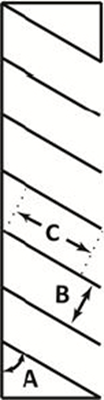 |  | |
| Single Driveway Aisle Width | 10 ft. min. | 15 ft. min. | 18 ft. min. | 18 ft. min. | 24 ft. min |
| Double Driveway Aisle Width | 20 ft. min. | 20 ft. min. | 22 ft. min | 22 ft. min. | 24 ft. min |
2.
Dimensions other than those shown above may be approved by the Director if prepared and sealed by a registered engineer in the State of Georgia with expertise in parking facility design. The Director may also approve tandem parking spaces, but such spaces may not count toward the requirements of Sec. 207-1.2 unless associated with valet parking or residential uses.
C.
Compact Parking
1.
Compact car parking spaces may be used instead of standard parking spaces. The total number of compact car parking spaces may not exceed 25% of the total number of provided parking spaces.
2.
Compact spaces may be reduced to 8 feet in width and 16 feet in depth.
3.
Compact parking spaces must be clearly and visibly striped and labeled for compact car use only.
D.
Accessible Parking Space Layout and Design
1.
Accessible parking spaces must be at least 9 feet wide with a minimum 5-foot-wide access aisle.
2.
Accessible van spaces must be at least 11 feet wide with a minimum 5-foot-wide access aisle.
3.
Parking access aisles must be part of an accessible route to the building or facility entrance.
4.
Two adjacent accessible parking spaces may share a common access aisle.
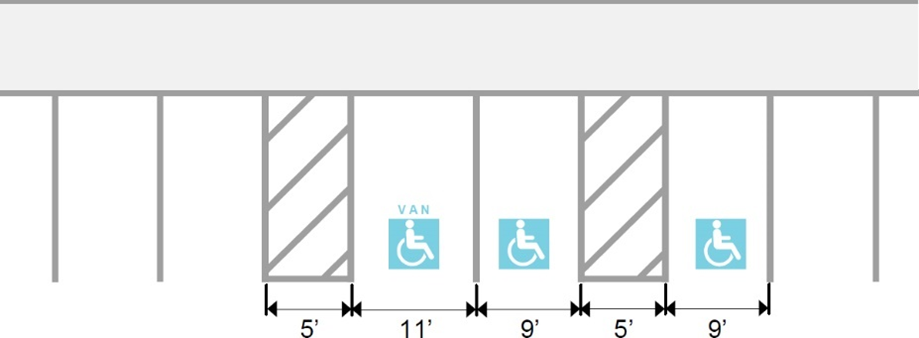
E.
Surfacing and Lighting
The following applies to parking and driveways for all uses, except single-family detached dwellings in residential districts, which must conform to 207-1.11.C (Residential District Driveway and Parking Surfacing).
1.
Off-street parking spaces, access, and driveways must have a paved concrete or asphalt surface. The Director may approve alternative pervious paving systems. Gravel driveways and parking are not allowed.
2.
The parking of any vehicle on other than the acceptable pavement in clause E.1 above is not allowed.
3.
If the off-street parking facilities are used at night, they must be properly illuminated for the safety of pedestrians, vehicles, and security. The lighting may not reflect onto or cause glare in any adjacent residential district and must conform with Sec. 207-5 (Lighting).
F.
Pedestrian Circulation
1.
Pedestrian walkways connecting from the closest street sidewalk to the building entrance must be provided in parking lots with 20 or more vehicle parking spaces.
2.
Pedestrian walkways must be at least 5 feet wide and must include a landscape strip that is at least 5 feet wide on at least one side. This strip must be continuous (except where the walkway crosses internal driveways) and must be planted with trees as specified in Sec.207-4.18.B (Parking Lot and Street Tree Species Table).
3.
The total distance from a building entrance to the closest street sidewalk (measured along the walkway) may not exceed 150% of the shortest straight-line distance.
4.
Where walkways cross internal driveways, pedestrian walkways must include raised walkways to slow traffic and provide safe access.
5.
No parking spaces may be more than 150 feet from a pedestrian walkway.
6.
Pedestrian walkways have curbs to prevent vehicular encroachment.
G.
Drive-Thrus
1.
Drive-thru windows and lanes may not be located between a building and the closest public street (not including an alley).
2.
Where drive-thru windows and lanes are allowed (by variance or otherwise) between a public street (not including an alley) or a ground-floor residential use and the associated building, the entire length of the drive-thru lane, including but not limited to, menu boards, stacking lanes, trash receptacles, ordering box, drive-up windows, and other objects associated with the drive-thru must be screened.
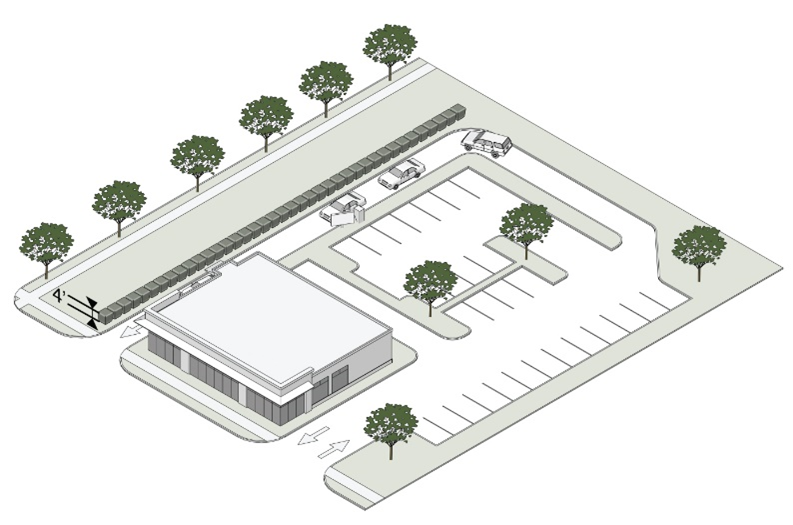
3.
Drive-thru screening must be a continuous compact evergreen hedge. At the time of installation, the screening must be at least 3 feet in height and reach a height of 4 feet within 3 years of planting.
4.
In lieu of the compact evergreen hedge, a screening wall with a minimum height of 4 feet may be installed. The wall must be compatible with the principal building in terms of texture, quality, material, and color.
5.
A minimum of 10 feet wide driveway and stacking lane is required for any drive-thru.
6.
A vehicular circulation plan must be submitted to the Director before issuing building permits. The plan must be reviewed to determine that the circulation does not:
a.
Constitute a threat to public safety; or
b.
Block access to and from parking spaces.
H.
Large Parking Facility Requirements
Parking facilities with 500 or more parking spaces must incorporate one of the following:
1.
At least 10% of total parking surface lot area (gross surface area) must use porous paving or grass paving systems, such as "Grasscrete" or "Grasspave;" or
2.
At least 10% of the total number of parking spaces must be in a multi-level parking deck.
(UDO 22-01, § 5, 2-28-2022; UDO 23-02, § 4, 6-12-2023)
207-1.8. - Vehicle Parking Location
A.
Exceptions
This subsection does not apply in zoning districts where building types are used to determine the location of vehicle parking.
B.
Parking Location Limitations
Buildings under 10,000 square feet of floor area, except single-family detached dwellings and two-family dwellings, located on lots that are all or partially within 300 feet of State Route 124 or State Route 10/United States Highway 78, must conform to the following.
1.
No more than 20% of parking areas (surface area) may be located between a building and abutting public streets.
2.
No more than one double row of parking may be located between a building and abutting public streets.
3.
No more than 20% of parking areas (gross surface area) may be located between a building and a side (interior) lot line.
(UDO 23-02, § 4, 6-12-2023)
207-1.9. - Vehicle Loading
A.
Loading Not Required
If determined necessary by the Director, adequate space must be made available on-site for the unloading and loading of goods, materials, items or stock for delivery and shipping, otherwise, on-site loading space is not required.
B.
Location
If a loading area is provided or required, it must meet the following:
1.
Except for areas specifically designated by the City, loading and unloading activities are not permitted in a public street, not including an alley.
2.
Loading and unloading activities may not encroach on or interfere with the use of sidewalks, drive aisles, stacking areas and parking areas by vehicles, bicycles, or pedestrians.
3.
In the OP, BN, BG, HSB, CI, TCO, and TC Districts, loading areas must be located to the side (interior) or rear of buildings, but not between a building and a public or private street (not including an alley).
C.
Screening
If an off-street loading area is provided or required, it must meet the following.
1.
Where a loading dock is placed between a public or private street (not including an alley) or a shared lot line and the associated building, the entire length of the loading area must be screened.
2.
Screening must consist of an 8-foot high wall compatible with the principal building in terms of texture, quality, material, and color, except as provided in clause C.3 below.
3.
Screening may also consist of evergreen plant material in lieu of an 8-foot high wall if a landscape plan is submitted demonstrating that said plant material will provide an equal or greater level of screening (within 3 years of planting) and includes adequate long-term maintenance provisions.
(UDO 23-02, § 4, 6-12-2023)
207-1.10. - Prohibited Uses of Parking
The following are prohibited in required off-street parking areas:
A.
The display for sale of all types of vehicles except for private individuals selling one personal vehicle from a residence or a licensed dealership.
B.
The display, storage or sales of any goods or merchandise, except as part of an authorized farmers' market or temporary event.
C.
Motor vehicle repair except for temporary repair to make the vehicle operable to move off-site.
207-1.11. - Residential District Parking
A.
Prohibited Vehicle Parking
Parking of the following vehicles is not allowed in residential districts: any vehicle for hire including but not limited to, limousines, taxis, box trucks, flatbed trucks, dump trucks, tow trucks, transport wreckers, tandem axle trucks, cab-on-chassis trucks, tractor trailers, pull behind cement mixers, or trailers (including, but not limited to, flat bed, drop deck, auto hauler, concession trailer, dump body trailer, gooseneck, logging, low-boy, tank, tilt, livestock, horse, etc.), bucket trucks, buses, earthmoving machinery, semi-trailers, and this restriction also applies to any vehicle over 20 feet in length, or 7 feet in height, or 7 feet in width. Vehicles used for agricultural purposes on residential property with 5 acres or more are allowed if parked outside the required front yard.
B.
Allowed Vehicle Parking
Notwithstanding paragraph A above, parking of the following vehicles is allowed:
1.
An automobile, pick-up truck, van, or SUV used to provide daily transportation to and from work, except those vehicles that fall under the requirements of Sec. 206-8.12 (Home Occupation).
2.
Utility and box trailers less than 12 feet in length.
3.
Business vehicles when in conformance with Sec. 206-8.21 (Parking of Business Vehicles).
4.
No more than four vehicles, including utility and box trailers, per dwelling unit may be parked, stopped, standing, or stored on any lot. The Director is authorized to allow more than four vehicles when the occupants of the dwelling unit can prove that the number of vehicles does not exceed the number of licensed drivers in the dwelling and the vehicle is operable, or when the vehicle is more than 30 years old.
a.
All vehicles and trailers of any kind found, parked, stopped, standing, or stored that require licenses, emission stickers, tags, titles, tax payment receipts, or registration with State or federal agencies, must properly display all required certifications for operation in the State or they will be cited as abatable nuisances under City ordinance and State law, and, if applicable, will otherwise be cited for other registration or display compliance failures.
b.
Each lot may have additional vehicles, including trailers, parked, stopped, standing, or stored, so long as they are in a safely erected and maintained enclosed she1ter, not visible from the public right-of-way or adjoining properties, where the entire floor area under the roof of the enclosed shelter is made of concrete, asphalt, gravel, other improved surface.
C.
Driveways and Parking Surfacing
The following only applies to driveways and parking serving single-family detached dwellings. All other uses must conform to Sec. 207-1.7.E (Surface and Lighting).
1.
Driveways must be paved with concrete and additional parking must be constructed out of concrete, asphalt, or an alternative pervious paving, as allowed by clause C.3 below. Gravel driveways and/or gravel parking areas are prohibited.
2.
The parking of any vehicle on any surface that is not allowed by clause C.1 above is prohibited.
3.
The Board of Appeals may consider variances to allow construction of additional hard-surface parking areas in a side (interior) or rear yard, adjacent to an existing driveway, for the purposes of overflow parking where, in their opinion, the intent of this UDO can be achieved and equal performance obtained by granting a variance. Examples of materials that the Board may approve include, but are not limited to, brick, cobblestone, or pavers set in concrete or similar hard surfaces.
(UDO 23-02, § 4, 6-12-2023)
207-1.12. - Nonresidential District Parking
A.
Vehicle Parking Layout and Design
Vehicles in nonresidential districts must park in a parking space that conforms to Sec. 207-1.7 (Vehicle Parking Layout and Design).
B.
Overnight Parking
1.
The overnight parking of vehicles is not allowed in nonresidential districts, unless serving an on-site residential use or an off-site residential use subject to a remote parking arrangement in conformance with Sec. 207-1.4.C.
2.
The overnight parking of business vehicles, including all tractor trailers, is not allowed in nonresidential districts unless in conformance with Sec. 206-8.21 (Parking of Business Vehicles).
C.
Additional BG, HSB, LM District Standards.
Parking in the required front yard must provide a minimum 10-foot landscaped strip and curb is provided adjacent to the right-of-way so that no automobile can back into the bordering street.
D.
Additional CI District Standards
Parking is not allowed in a front yard or side (street) yard.
207-2.1. - Buffers
A.
Applicability
This subsection applies to any Development Permit or Substantial Building Permit, except those involving individual single-family detached and two-family dwellings. Permit applications must include a separate landscape plan that has been prepared and sealed by a Georgia registered landscape architect, certified arborist, or Georgia registered forester.
B.
Buffer Requirements
A buffer is required as follows:
1.
New projects must provide a buffer strip along lot lines that abut another existing zoning district when indicated in Table 207-2.1.B, unless otherwise allowed by clause B.2 below.
2.
When a buffer is required by Table 207-2.1.B, but the existing adjacent site is designated for commercial, office institutional, or light manufacturing in the future land use plan, the buffer may be eliminated or reduced with the written consent of the abutting property owner.
Table 207-2.1.B. Minimum Buffer Strip Requirements
Table Notes
[1]
Residential district use allowed by special use
[2]
Required where adjacent to residential zoned property(s) located in unincorporated Gwinnett County.
C.
Minimum Buffer Strips
All buffers must be established in accordance with the following:
1.
Buffers must be undisturbed and may contain no structures except walls, fences, or structures otherwise allowed in the buffer by this UDO.
2.
When the buffer includes a utility or pipeline easement, a buffer area at least 20 feet wide is required outside of the easement, except as may be permitted by paragraph D below.
3.
Screening must be established in buffers along the entire length of the side (interior) and rear lot lines. However, this requirement may be adjusted in order to observe the site distance required in Sec. 201-1.8 or as a condition of zoning, special use, or variance approval, or as approved by the Director.
4.
Nonresidential uses that abut residential districts must provide dense landscaping to provide visual screening. A 5-foot high permanent berm may be required in the first 20 feet of the buffer at a 2:1 slope, as determined by the Director. The slope is measured from the elevation of the residential property. The top of the berm must be planted in accordance with paragraph G below. The top of the berm and the side facing the residential property must be planted with a staggered row of evergreen trees.
5.
Except for the NR (North Road) District, a 20-foot, undisturbed buffer is required when a nonresidential use is separated from a residential district by a public right-of-way that is 60 feet wide or less. No access through this buffer is allowed. The buffer may be reduced or eliminated with the written consent of the affected residential property owner.
D.
Reduction in Width
The width of the buffers required in Table 207-2.1.B may be reduced (excluding stream buffer and setback requirements), as appropriate, by the Board of Appeals only when:
1.
An opaque 8-foot high screening wall, but not fencing, is provided in the buffer, in which case the buffer width may be reduced by 50%.
2.
It is clearly demonstrated that existing topography and/or vegetation in the reduced area is sufficient to achieve the visual screening that is otherwise required by the buffer and screening requirements by this section; or
3.
It is clearly demonstrated that, for topographic reasons, a fence, wall and/or other screening device required by this section, could not possibly screen activities conducted on ground level from view from the normal level of a first story window on any lot in a residential district abutting the use.
E.
City Council Requirements
The City Council may:
1.
Reduce or eliminate the buffer requirement as part of rezoning or special use permit approval;
2.
Increase the minimum required buffer width as a condition of zoning or special uses permit approval; and/or
3.
Require temporary construction buffers as a condition of zoning or as a special use approval.
F.
Designation On-Site Plan
Buffers must be designated on the appropriate permit application and indicated on the required site plan or final subdivision plat as "Undisturbed Buffer" or "Temporary Construction Buffer" as provided in this UDO. Orange fencing indicating buffer limits must be installed before development.
G.
Type of Screening Buffer and Landscaping
When the Director determines that the natural vegetation and topography are insufficient to achieve the desired level of screening, a screening buffer and landscaping must be provided as follows:
1.
Newly planted landscaping must be of a species identified in Table 207-2.1.C.
2.
All overstory and understory trees must be a minimum of 4-inch caliper at planting.
Table 207-2.1.C. Screening Buffer and Landscaping Species
H.
Maintenance
Buffer plantings must be guaranteed for the life of commercial, industrial, office, mixed-use, or residential developments. Necessary trimming and maintenance must be performed in accordance with ANSI standards to maintain the health of the plant materials, to provide an aesthetically pleasing appearance, and to assure that the buffer actually serves the purpose for which it is intended. Any dead, diseased, or dying landscape must be replaced with similar species that conform to the minimum size requirements for new plantings required by this section.
(UDO 22-01, §§ 5, 5(Exh. G), 2-28-2022; UDO 22-03, § 6(Exh. B), 1-9-2023; UDO 23-02, § 4, 6-12-2023)
207-2.2. - Screening
A.
Applicability
This subsection applies to any development permit or substantial building permit.
B.
Service Areas and Dumpsters
1.
Trash and recycling collection, dumpsters, and other similar service areas must be located to the side (interior) or rear of buildings and may not be between a building and the street.
2.
Service areas and dumpsters must be screened on three sides by a wall a minimum of 8 feet in height and minimum width based on the dumpster size and number of dumpster bays and on the 4th side by a solid gate at a minimum of 8 feet in height.
3.
Dumpsters for construction and debris materials are allowed for 30 days or with an active building permit and are exempt from screening requirements.
4.
The wall must be opaque and be constructed of one or a combination of the following: decorative blocks; brick; stone; cast-stone; split-faced block; or true hard coat stucco over standard concrete masonry blocks.
5.
A 3'-0" opaque door is required in the side wall for access to the dumpster side access opening. Door shall be maintained in good working order at all times.
6.
The gate must be opaque, self-locking, and maintained in good working order at all times.
7.
Service areas and dumpster enclosures shall be kept free of overflowing trash and maintained in a clean and sanitary conditions at all times.
(UDO 23-02, § 4, 6-12-2023; UDO 25-01, § 4, 3-10-2025)
207-2.3. - Fences and Walls
A.
All Districts
1.
Fences and walls must be maintained in a structurally sound condition and in good repair. Fences must be free from loose or rotting materials and must have braces and supports attached or fastened in accordance with common building practices.
2.
Exposed concrete block, tires, scrap metal, sheet metal, plastic/fiberglass sheeting, vinyl siding or fabric, plywood, pallet material, junk or other discarded items are not allowed as fence or wall materials.
B.
Nonresidential Districts
1.
Applicability
This paragraph applies to all fences and walls, except temporary fences and walls associated with permitted land disturbing activities in accordance with Sec. 103-3, and permitted building activities in accordance with Sec. 103-4, and temporary tree protection fences in accordance with Sec. 207-4 (Tree Ordinance).
2.
Height
No fence or wall may exceed the building height allowed in the zoning district or the roof level of the principal building, whichever is less.
3.
Fences in Landscape Strips
Walls and fences are only allowed in side (interior) yard and rear yard landscape strips when they are installed to satisfy the use standards of Chapter 200, Article 6 (Use Provisions) or Sec. 207-2.2.H (Other Screening Requirements). Walls and fences are not allowed in front yard or side (street) yard landscape strips, nor within 5 feet of any right-of-way (not including an alley).
4.
Fences in Front or Side (Street) Yards
Fences are only allowed in front or side (street) yards, but not within a required landscape strip, when they conform to the following:
a.
The fence must be constructed as a wrought iron-style fence with brick or stacked stone columns (max. 30 feet on-center).
b.
The fence may not exceed 5 feet in height, except that column or gatepost within the fence may not exceed 6 feet in height.
c.
The fence must be adjacent to a required landscape strip or adjacent to an additional landscape strip at least 5 feet deep in depth. The additional landscape strip must be continuous and placed between the fence and the front or side (street) lot line, as applicable.
d.
The Board of Appeals may waive this requirement as a variance when the use standards of Chapter 200 Article 6 (Use Provisions) or Sec. 207-2.2.H (Other Screening Requirements) require an alternative fence or wall standard.
5.
Fence Material
All fences, except those subject to clause B.5 above, must conform to the following:
a.
Fences must be constructed of high-quality materials including one or a combination of the following: wood; wrought iron; composite fencing, PVC; aluminum; metal; or any material allowed in clause B.5.b below for walls.
b.
Walls must be constructed of high-quality materials including one or a combination of the following: decorative blocks; brick; stone; cast-stone; split-faced block; true hard coat stucco over standard concrete masonry blocks; and glass block.
c.
Wire and woven metal are not allowed unless it is chain link located in a rear or side (interior) yard.
d.
Barbed wire and razor wire are not allowed unless located in a rear or side (interior) yard in the HSB or LM district.
C.
Residential Districts
1.
Applicability
This paragraph applies to all fences and walls except temporary fences and walls associated with permitted land disturbing activities in accordance with Sec. 103-3, permitted building activities in accordance with Sec. 103-4, or temporary tree protection in accordance with Sec. 207-4 (Tree Ordinance).
2.
Height
a.
No wall or fence may exceed 4 feet in height within the front yard, except that any gate or gatepost within the wall or fence may not exceed 6 feet in height.
b.
No wall or fence may exceed 8 feet in height within a side or rear yard.
3.
Height Exceptions
The height standards of clause C.1 do not apply in the follows:
a.
A fence, wall or hedge that encloses an approved stormwater management facility may be a maximum of 6 feet in height.
b.
A fence or wall enclosing a tennis court may be a maximum of 12 feet in height.
c.
City Council may condition the approval of a rezoning or special use permit to require that walls or fences of a height in excess of these regulations must be placed in any yard where such a wall or fence is necessary to provide screening.
d.
A fence or wall on a corner lot, located in the front yard, where the side of the principal dwelling is also located in the front yard may be a maximum of 8 feet in height.
e.
A fence or wall on a corner, located in the side (street) yard, may be a maximum of 8 feet in height when it set back from the right-of-way at least 50% of the required side (street) setback.
f.
Through lots that require a no-access landscape strip per Sec. 207-3.2.B may have a fence up to 8 feet in height adjacent to the no-access landscape strip.
g.
Screening required by Sec. 207-2.2.
4.
Fence Material
a.
No wall or fence made of woven wire or metal fabric (chain link, hog wire, barbed wire) may extend into a front or side (street) yard, except fences enclosing stormwater facilities may be vinyl coated chain link. Woven wire or metal fabric fences may extend into a front yard when on lots 3 acres or larger. Razor wire is not allowed.
b.
Any wall or fence which extends into the front yard or side (street) yard on lots under 3 acres must be ornamental or decorative and may be constructed of brick, stone, wood, true hard coat stucco, wrought iron or split rail; provided that no wall or fence must be constructed of exposed concrete block, tires, junk or other discarded materials.
5.
Subdivision Entrance Features
Walls, fences, or hedges incorporated into a subdivision entrance feature may not exceed 10 feet in height and are subject to review and approval by the Director after the submission of a landscape plan, site plan, and architectural review.
(UDO 23-02, § 4, 6-12-2023
207-3.1. - General
A.
Title
This section is known as the "Landscape Ordinance."
B.
Purpose
The purpose of this section is to preserve and enhance Snellville's natural environment. This is accomplished through the preservation, protection, and planting of trees and other landscape material, particularly those trees recognized herein as canopy and understory trees, and the provision of natural and/or planted buffers between properties of dissimilar uses as part of the land development process. The ordinance from which this section derives is intended to further the City's policy that all development sites where trees are most commonly removed will achieve upon project completion a uniform reduction, prevention of soil erosion, production of oxygen, dust infiltration, fostering air quality through carbon dioxide absorption, providing wildlife habitat, and contributing to the aesthetic and economic value of real property.
C.
Applicability
This section applies to any development permit or substantial building permit, except those involving individual single-family detached and two-family dwellings. An application for a permit must include a separate landscape plan that has been prepared and sealed by a Georgia registered landscape architect, certified arborist, or Georgia registered forester.
207-3.2. - Landscape Strips
A.
General Landscape Strips
1.
Minimum landscape strips are required on all lots, except as provided for in paragraph B below, paragraph C below or in TC Districts.
2.
Landscape strips must be provided as follows:
3.
Landscape strips are measured from the lot line into the lot, except as indicated in clause A.4 below.
4.
Landscape strips are measured from the back of the sidewalk into the lot when there is insufficient right-of-way to accommodate a required sidewalk and said sidewalk must extend onto the lot.
5.
Inter-parcel access driveways and alleys are allowed in all landscape strips but may not exceed 24 feet in width and must be placed generally perpendicular to the yard.
B.
Exception in the MU and NR Districts
1.
In the MU and NR districts, landscape strip requirements only apply to the overall site before development and not to any existing or proposed lots within it.
2.
See 201-1.1 (Sites) for site determination.
C.
No-Access Landscape Strips
1.
In residential subdivisions where street access to through lots is restricted by Sec. 201-1.3.G, a 10-foot no-access landscape strip is required along arterial streets.
2.
No-access landscape strips must be planted to the standards of paragraph G below.
3.
No-access landscape strips must be completed before the recording of the final plat. If the planting cannot be completed due to climatic or related conditions, the developer and/or owner must enter into a performance surety agreement with the City agreeing to complete the strips within 6 months of the date of approval of the final plat.
D.
Structures in Landscape Strip
1.
No permanent structures except walkways, walls (excluding retaining walls), and fences are allowed in landscape strips. This prohibition includes, but is not limited to, pavement, retaining walls, curbing, dumpsters, drainage structures, detention facilities, etc.
2.
Walls and fences are only allowed in side (interior) yard and rear yard landscape strips when they are installed to satisfy the use standards of Article 6 of Chapter 200 (Use Provisions) or Sec. 207-2.2.H (Other Screening Requirements). Walls and fences are not allowed in front yard or side (street) yard landscape strips.
E.
Signs in Landscape Strip
1.
Signs may only be located in areas of turf or groundcover and must not conflict with the growth potential of trees and shrubs.
2.
Signs must be located at least 10 feet from all trees.
3.
Signs are not allowed within required stream buffers or zoning buffers.
F.
Stormwater Runoff
1.
The deposition of stormwater runoff into or drainage swales through landscape strips is not permitted, except in conformance with clause F.2 below.
2.
The Director may approve stormwater management practices, such as rain gardens, bio-swales, retention ponds, or dentition ponds, in landscape strips, as follows:
a.
The open space containing the stormwater feature must be designed and stamped by a Landscape Architect licensed in the State of Georgia;
b.
Stormwater features in the landscape strip must be designed as formal or natural amenities for the open space;
c.
Exposed concrete is not allowed in the stormwater management facility. This includes concrete located in retention or detention ponds, spillways, or basins;
d.
Stormwater features may not be fenced or enclosed by retaining walls over 30 inches in height; and
e.
The purpose of this subsection has been met.
3.
Exceptions may be considered by the Director only if this standard will create an undue hardship to the property owner.
4.
Under no circumstance may the length of a drainage easement through a landscape strip exceed the width of the strip.
G.
Design standards
All required landscape strips must be planted with a combination of trees, shrubs, perennials, groundcovers, and grass, as approved by the Director. The landscape strips must be designed with a minimum of 60% coverage in trees and large shrubs (4 ft. × 4 ft. or larger). Small shrubs, perennials, ornamental grasses, groundcover, and grass may not constitute more than 60% coverage of the landscape strip. All landscape strips along the public street must be planted in a manner to achieve a 2 to 3 feet tall evergreen screening buffer.
Landscape strip coverage is calculated as follows:
1.
Calculate the total spatial area of the landscape strip.
2.
Calculate the total coverage of landscape materials, ensuring that the coverage of trees and large shrubs is greater than or equal to 40% of the total area of the strip. The following sizes must be used when calculating the coverage of the landscape materials:
a.
Trees greater than 8-inch caliper: 400 sf.
b.
Trees 6-inch caliper to 8-inch caliper: 250 sf.
c.
Trees less than 6-inch caliper: 100 sf.
d.
Large shrubs: (4 ft. height × 4 ft. spread or larger): 16 sf.
e.
Ornamental grasses: 12 sf.
f.
Small shrubs: 9 sf.
g.
Perennials: 6 sf.
3.
Any exposed ground must be planted with groundcover or appropriate mulching material. Mulching materials may not exceed 4 inches in height.
4.
Trees and shrubs required herein may be planted and spaced singly or in groups as authorized by the Director so long as the total number of plantings is achieved.
5.
The remaining ground area must be sodded, seeded or hydroseeded with grass, and/or planted with groundcover species and/or provided with other landscaping material, or any combination thereof. Permanent stabilization, as defined by the State, must be achieved at the time of certificate of occupancy issuance.
H.
Landscape Strip Trees
1.
Landscape strips must have a minimum of 1 tree for every 50 linear feet of a landscape strip to the nearest whole number.
2.
Tree clumping is only allowed when adequate spacing is allowed for future tree growth. The tree replacement plan requires all proposed trees to be drawn at 75% mature diameter. Sec. 207-4.18 (Recommended Tree Species) includes a "75% Mature Diameter (feet)" column in all tree species tables for reference purposes.
I.
Width Reduction
1.
Where desirable, the landscape strip is not required to be a strip per se or may be reduced to a width of 5 feet with the approval of the Director.
2.
The reduction in clause I.1 above is by-right when the location has been identified as a greenway or multi-use trail in any plan that has been adopted by the City or GDOT.
J.
Curb Stops Required
Curb stops must be used when parking perpendicular to 5-foot landscape strip, or shrubs or trees adjacent to a landscape strip must set back at least 3 feet from the edge of the curb. Creative alternatives are encouraged and must be approved by the Director.
(UDO 23-02, § 4, 6-12-2023)
207-3.3. - Parking Areas
Parking lots designed for eight or more spaces must be designed as follows:
A.
The planter islands may be sized according to two different options:
1.
Each planter island must be a minimum of 300 square feet. Planter islands must be located at the terminus of each parking row and no further apart than every ten parking spaces.
2.
Each planter island must be a minimum of 200 square feet. Planter islands must be located at the terminus of each parking row and no further apart than 25 parking spaces. Planting strips at least 8 feet wide must run continuously between all planter islands. These strips must be planted with 1 overstory tree for every 30 linear feet of the strip.
B.
Planter islands must conform to the following planting requirements:
1.
Each planter island must be designed with at least 60% coverage in trees and shrubs.
2.
Each planter island abutting double rows of parking must include two overstory trees.
3.
Each planter island abutting single rows of parking must include one overstory tree.
4.
No plants, except trees, may exceed 3 feet in height.
5.
Turf grass is not allowed.
6.
All groundcover must be an evergreen ground cover (ex. liriope).
C.
All planter islands and landscape strips must be curbed to prevent vehicular encroachment.
D.
Planter islands and strips must be designed to prevent compaction. This may be accomplished by planting a dense shrub cover or by elevating the planting area at least 1 foot above the curb.
E.
Trees and underground utilities must be placed per the detail drawings in Sec. 207-3.9.
207-3.4. - Street Trees
A.
Street Trees Required
1.
Street trees must be planted in the planter on all streets in accordance with Sec. 401-4.2 (Streetscapes Required) unless clauses A.2 or A.3 below applies.
2.
Along State Routes and routes controlled by Gwinnett County, when street trees are prohibited by GDOT or Gwinnett County, or when clause A.3 below applies, street trees are not required in the planter.
3.
Along other streets, streets trees are not required in the planter:
a.
When the Director determines that street trees in the planter conflict with authorized utilities (power, gas, cable TV, water and sewer); or
b.
When the Director determines that street trees in the planter are a threat to the public health, safety, and welfare.
4.
When clauses A.2 or A.3 above applies:
a.
Streets trees must be installed in the right-of-way behind the required sidewalk; or
b.
Street trees must be installed in an adjacent yard; or
c.
An in-lieu contribution must be made to the Tree Replacement Fund, per Sec. 207-4.9 (Tree Recompense).
B.
Standards
1.
A street tree planting plan must be submitted to and approved by the Director before issuance of a development permit. The plan must be prepared and sealed by a Georgia registered landscape architect, certified arborist, or Georgia registered forester. All proposed trees must be individually located on the plan with an included species list.
2.
Street trees must be planted no more than 50 feet apart (except as otherwise required in this UDO) and no closer than 25 feet to street intersections. Street trees are not required adjacent to each individual lot when spacing distances are inadequate. Street trees are required on both sides of new streets. The Director may approve alternate spacing when the 50-foot spacing requirement cannot be met due to driveways and other improvements.
3.
Street trees must be overstory or mid-canopy trees identified in Sec. 207-4.18, subject to the approval of the Director, who may approve the use of understory trees.
4.
All utilities (including but not limited to overhead power lines, underground power lines, water lines, and sewer lines) must be shown on the street tree planting plan. Where tree plantings conflict with overhead power lines the designer must note the mature height of the tree(s).
5.
No more than 35% of the total number of street trees planted in or adjacent to a development may be the same genus.
6.
Street trees must be a minimum 3-inch caliper at the time of planting. They must be single stemmed with a single, straight leader. Trees must be located at least 3 feet from the face of the curb unless a modification is granted by the Director.
7.
Street trees must be installed adjacent to each building or residential lot, as specified on the street tree planting plan, before issuance of the certificate of occupancy. However, street tree plantings may be delayed from May 1 through October 1. In this case, the builder must enter into a performance surety agreement with the City guaranteeing tree planting by November 1. The performance surety agreement must be executed before the issuance of the certificate of occupancy for buildings or lots in this case.
8.
Impermeable rigid tree root barriers must be installed in a linear method in all tree strips. The barriers must be a minimum of 24 inches deep and include ribs to direct root growth downward. The root barriers must be installed per the detail drawings in Sec. 207-3.9.
9.
Street trees may count towards the minimum individual lot tree density requirements of Sec. 207-4.5.
10.
Street trees must be maintained by the owner of the adjacent lot. Maintenance must include, but is not limited to, watering, pruning, tree replacement and removal of leaves and litter from the sidewalks and street, as necessary. All maintenance must conform to ANSI A300 standards for tree care. A maintenance responsibility statement must be provided on the final plat.
207-3.5. - Site Landscape Materials
The following standards apply to all landscape materials, except street trees:
A.
Landscape materials must meet the minimum guidelines as outlined in the latest edition of American Standard for Nursery Stock.
B.
Deciduous trees must be a minimum 3-inch caliper at the time of planting.
C.
Evergreen trees must be 6 feet tall or larger at the time of planting.
D.
Shrubs and ornamental grasses must be 3-gallon size or larger.
E.
Perennials must be 1-gallon size or larger.
F.
Sod, rather than seed, must be used in all landscape strips and no-access strips that abut public right-of-way and may extend to the curb of the public roadway.
G.
Sod, rather than seed, must be used on all single-family dwelling or two-family dwelling lots and must be installed in all areas designated for grass from the back of the curb to the front corner of all houses, at a minimum.
H.
All species must be ecologically compatible with the intended growing site.
I.
No more than 35% of the total number of trees planted in a development may be of the same genus, and no more than 35% of the total number of shrubs planted in a development may be of the same genus.
J.
Evergreen trees may only be used in the interior and/or rear landscape strips.
K.
All plant materials are subject to the approval of the Director.
207-3.6. - Installation and Maintenance
A.
Installation
Landscaping must be installed in a sound workman-like manner and according to accepted good planting procedures. The Director must inspect all landscaping and no certificate of occupancy or similar authorization will be issued unless the landscaping meets the requirements of this section.
B.
Staking and guying
Staking and guying materials must be flat, woven polypropylene photodegradable three-fourths-inch wide with 900-pound break strength and must be removed within 1 year of installation.
C.
Irrigation
1.
An irrigation system is required in all landscape strips, planter islands, and no-access strips. The required irrigation may include drip irrigation, gator bags, and a combination of drip irrigation and water-efficient design or a creative irrigation plan with the approval of the Director. The required irrigation must be maintained for at least 1 year after planting.
2.
Irrigation systems must be designed to prevent any overspray onto adjacent public and private sidewalks and public and private streets.
3.
Irrigation systems equipped with an electronic controller must have a rain sensor shut-off switch, except when the system is completely dependent upon a nonpublic water source.
D.
Minimum Space Requirements
Newly planted trees must have adequate space to grow unobstructed to maturity, to avoid sight obstructions, and to provide clearance. The following space requirements must be met:
E.
Maintenance
The owner, occupant, tenant, and their respective agents, if any, is jointly and severally responsible for the maintenance and protection of all required landscaping in perpetuity, and must:
1.
Keep landscaping reasonably free of visible signs of insects and disease and appropriately irrigated to enable landscaping to exist in a healthy growing condition.
2.
Mow or trim landscaping in a manner and at a frequency appropriate to the use made of the material and species on the site so as not to detract from the appearance of the general area. Growth of plant material at maturity must be considered where future conflicts such as view, signage, street lighting, utilities, and circulation might arise.
3.
Maintain all landscaping to minimize property damage and public safety hazards, including removal of dead or decaying plant material, and removal of low hanging branches obstructing lighting along public and private sidewalks and walkways.
4.
Prune only in accordance with ANSI A300 (Part 1) "Standards for Tree Care Operations—Pruning." Tree topping is not allowed. Crown reduction pruning must be used instead to reduce the height of a tree when necessary. Topped trees may not be counted toward tree density requirements.
207-3.7. - Water-Efficient Landscaping
A.
Water-Efficient Design Consideration
The City encourages those who prepare the plans and plats required by this section to consider the use of water-efficient landscaping principles and techniques during plant selection and design.
B.
Water-Efficient Principles and Techniques
The recommended principles and techniques to be considered are as follows:
1.
Locate plants where they will naturally thrive and not require excessive water and maintenance to survive, as well as grouping plants by water needs, and limiting and concentrating high-water using plants.
2.
Limit turf areas and selecting turfgrasses that can survive the variable rainfall condition in this region.
3.
Once plants are established, avoid watering during periods of normal rainfall and during droughts, watering every week to 10 days or less depending on the drought tolerance of the plants.
4.
Loosen and break up the soil beyond the immediate planting area to allow better water absorption and to promote deep roots.
5.
Use mulch to hold moisture in the soil which helps maximize the benefits of watering as well as preventing weeds.
6.
Select plants native or suitable to the region according to their watering requirements and optimum locations.
7.
Maintain the landscape to maximize water conservation such as increasing mowing heights and avoiding fertilizing during dry spells.
207-3.8. - Agreement and Bonding
A.
Bonding Required
The developer or owner must post a performance bond or cash escrow guaranteeing all landscaping materials and work for a period of 2 years after the approval or acceptance thereof by the City. The bond or cash escrow is required for commercial developments before the issuance of a certificate of occupancy. A maintenance bond or cash escrow is required for residential developments at the time of recording of the final plat, or the completion of the planting (if planted after the recording of the final plat). A maintenance bond is required for any street trees that are planted by the builder after the final plat has been recorded. The bond must be provided by the builder or the developer before the issuance of a certificate of occupancy.
B.
Bond Amount
The bond must be in the amount of 125% of the estimated cost of replacing all the required landscaping. An itemized estimate must be provided by the owner and based on the opinion of a landscape contractor and found to be reasonable by the Director.
C.
Inspection
The Director must make an inspection upon request and notify the owner or developer and the bond company of any corrections to be made within this 2-year period.
207-3.9. - Detail Drawings
A.
Sidewalks and Streetscape Details
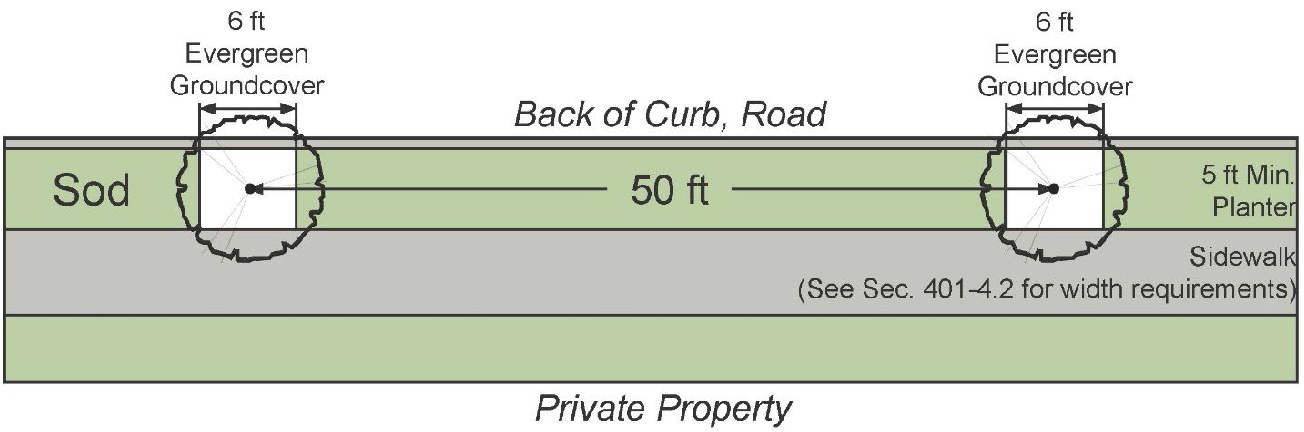
Plan View
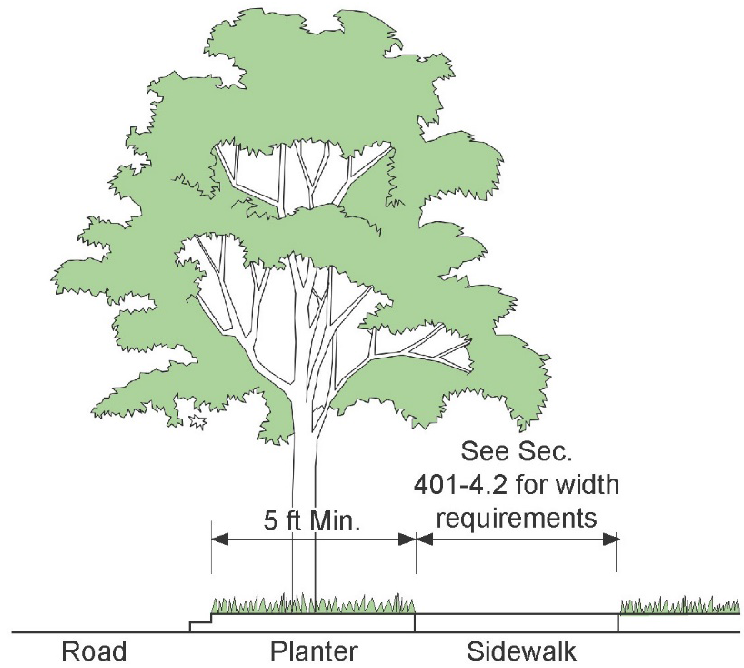
Section View
B.
Detail for the Locations of the Root Barriers
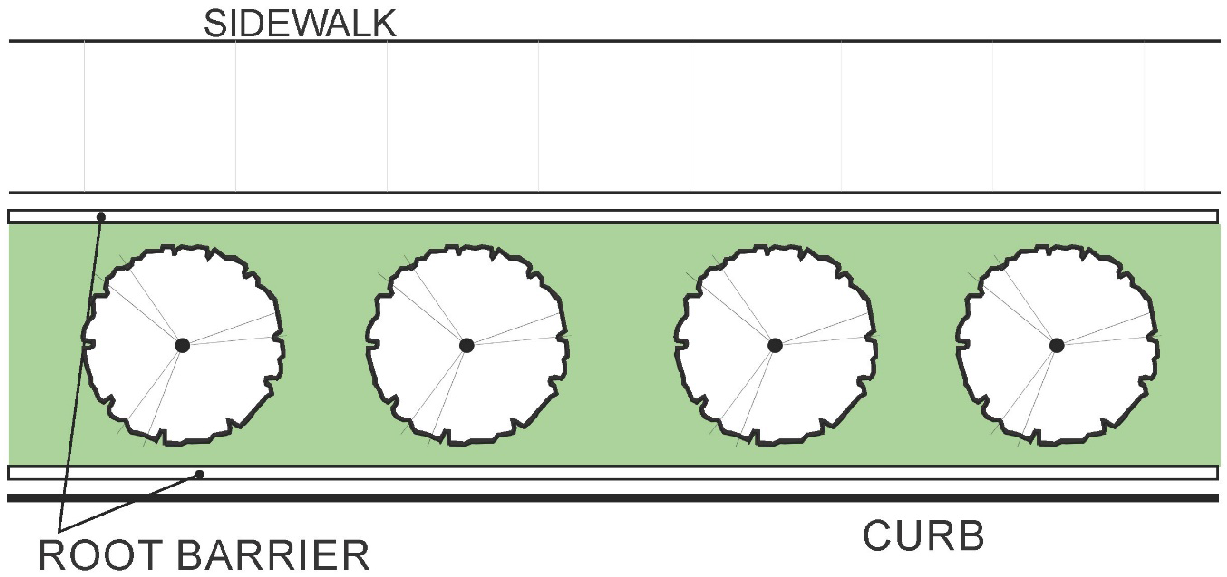
207-4.1. - Intent, Purpose, and Title
A.
Title
This section is known as the "Tree Ordinance."
B.
Intent
It is the intent of the City that there is no net loss of trees within its boundaries. The purpose of this section is to establish the standards necessary to assure that this intent is realized and that the City will continue to cultivate and encourage a high level of tree preservation, promote the general provisions within this section, and develop detailed provisions within the administrative guidelines in order to implement the regulations set forth to preserve, maintain, and replant trees within the city. The provisions of this section are enacted to:
1.
Establish and maintain the maximum amount of tree cover on public and private lands by prohibiting the destruction and removal of trees except in accordance with the standards in this section;
2.
Maintain trees in a healthy and nonhazardous condition through professionally accepted arboricultural practices;
3.
Establish and revise as necessary standards for tree planting and maintenance so as to improve the economic base of the city by improving property values, to enhance the visual quality of the city and its neighborhoods, and to improve public health by lessening air pollution and the incidence of flooding;
4.
Minimize hazards and damage to streets and sidewalks and lessen public rights-of-way maintenance costs;
5.
Provide for the designation of historic and specimen trees; and
6.
Provide latitude in the interpretation and application of City administrative rules, standards, and guidelines, when reasonable and necessary to minimize the destruction of trees.
207-4.2. - Applicability
This section applies to any development permit or substantial building permit, except those involving individual single-family detached and two-family dwellings.
207-4.3. - Permit Procedures
A.
Required
No person may directly or indirectly remove, destroy, or injure any tree located on public property that is subject to the provisions of this section, or any tree with a diameter breast height (DBH) of 3 inches or larger located on private property subject to the provisions of this section, without obtaining a permit as provided in this subsection.
B.
Tree Protection Plan
All permit applications must include a tree protection plan submitted with other permit drawings. The plan must be a separate drawing that has been prepared and sealed by a registered landscape architect, certified arborist, or registered forester and that includes the following:
1.
Survey. The survey must be a to-scale map or site plan that has been prepared and sealed by a registered landscape architect, certified arborist, registered forester, registered surveyor, or registered engineer no more than 12 months before the date of submittal. The survey must show the following:
a.
The location, species, and size (DBH) of existing specimen and/or heritage trees on the site. Their critical root zone (CRZ) must also be delineated and the spot elevation at the base of their trunk must be indicated. Trees must also be labeled in a way to determine if they are intended for removal or preservation.
b.
The location, species, and size (DBH) of existing trees on the site with a diameter breast height (DBH) measurement of 4 inches or larger.
c.
The location, species, and size (DBH) of existing trees within the public right-of-way with a DBH measurement of 3 inches or larger.
d.
The location, species, and size (DBH) of existing boundary trees with a DBH of 4 inches or larger that have a CRZ that lies anywhere on the site.
2.
Definition of Spatial Limits
a.
Lot line and lot acreage.
b.
Limits of land disturbance, clearing, grading, and trenching.
c.
Tree protection zones.
d.
Areas of revegetation.
e.
Indication of staging areas for parking, material storage, concrete washout, debris burn, and other areas where tree protection may be affected.
f.
Locations of existing and proposed utilities, structures, paving, driveways, cut and fill areas, detention areas, utilities, etc.
3.
Detail Drawings of Tree Protection Measures (where applicable)
a.
Protective tree fencing.
b.
Erosion-control fencing.
c.
Tree protection signs.
d.
Planting and transplanting specifications.
e.
Tree wells, and aeration systems.
f.
Staking specifications.
4.
Tree replacement plan (where applicable)
a.
Tree density calculations (Sec. 207-4.5.D).
b.
Recompense calculations (Sec. 207-4.9).
c.
All proposed replacement trees are to be located per spacing requirements and labeled with their caliper size and species. Replacement trees must have a diameter drawn on the plan that is representative of the tree at 75% mature size (Sec. 207-4.18).
5.
Procedures and schedules of the implementation, installation, and maintenance of tree protection measures.
6.
Other applicable drawings.
C.
An on-site inspection must be made by the Director before starting any development activity.
D.
Landscape plans, tree protection plans, and related documentation must be reviewed by the Director for conformance to the provisions of these regulations and either approved, returned for revisions, or denied within 30 days of receipt. If denied, the reasons for denial must be annotated on the landscape plan or otherwise stated in writing.
E.
Issuance of the permit is contingent upon approval of the required soil erosion and sediment control plan, tree protection and/or replacement plan, and an on-site inspection by the Director for tree protection measures.
207-4.4. - Removal and Damage of Trees
A.
Trees may not be removed in any tree protection zone. When preserving trees in a tree protection zone would result in a documented economic hardship, an exception may be made. The documentation proving the hardship must be submitted to the Director as part of the tree protection plan. Nothing in this section may be construed to allow the removal of vegetation in a natural, undisturbed buffer required by Sec. 207-2.1.B. No removal may be initiated before a request for removal being approved by the Director.
B.
Applicants for a permit to remove, destroy, or injured trees must, to the maximum extent feasible, minimize the impact on the site's trees. The minimum impact on trees equates to anything less than or equal to 25% impact to the critical root zone (CRZ) of the tree. The CRZ of a tree is determined by drawing a circle that has a radius of 1 foot for each 1 inch of tree DBH. Any tree that has greater than 25% impact to the CRZ will be deemed as a lost tree, and thus will not count towards the site's tree density factor. Trees that are considered lost are not required to be removed unless they pose an immediate hazard or have a CRZ impacted equal to or greater than 60%.
C.
The removal of dead, diseased, insect-infested, or hazardous (DDH) trees is exempt from this section if the property owner provides documentation of the condition of said trees. Documentation includes, but is not limited to, photographs and a report by a certified arborist, and must be submitted to the Director before removal. No removal may begin before a request for removal is approved by the Director.
D.
When no trees are present in the tree protection zone, or when it is proposed that any portion of the protected zone be disturbed, the owner/developer must landscape said areas (where improvements are not constructed), with trees or other plant materials subject to the other applicable regulations of this UDO.
E.
Trees may not be removed from any buffer area and/or floodplain except as follows:
1.
When those trees are found to be dead, diseased, insect-infested, or hazardous by the Director, the County extension service, a certified arborist, the Georgia Forestry Commission, or a registered forester. No removal may be begin before a request for removal is approved by the Director.
2.
When necessary for construction, repair, or maintenance of public roads, utilities, or drainage structures. No removal may begin before a request for removal is approved by the Director.
207-4.5. - Tree Replacement, Afforestation
A.
Tree replacement in the minimum required landscape areas, as determined by this section, must occur under the following conditions:
1.
To establish the minimum tree density requirements for the site.
2.
Where grading occurs outside the buildable area of the lot.
3.
If the buildable area of the lot leaves no protected zone.
4.
If no trees are present within an existing protected zone.
5.
Where specimen and/or heritage trees or specimen and/or heritage stands of trees within the buildable portion of the lot are to be removed.
6.
Where specimen and/or heritage trees or specimen and/or heritage stands of trees, and trees within otherwise designated tree-protective zones have been irreparably damaged or removed through development or construction activities.
B.
Where appropriate site conditions exist, replacement trees must be overstory or mid-canopy species. Understory trees are permitted where site conditions do not allow the planting of overstory or mid-canopy trees. When authorized, understory trees may not constitute more than 25% of the required tree density; lots less than 8,000 square feet are exempt from this requirement. A list of recommended tree species can be found in Sec. 207-4.18.
1.
The spacing of replacement trees must be compatible with spatial limitations and within responsible considerations towards potential species size. Overstory trees must be planted at a minimum of 30 feet on center. Mid-canopy trees must be planted at a minimum of 20 feet on center. Understory trees must be planted at a minimum of 12 feet on center.
2.
Proposed deciduous trees must be a minimum of 3-inch caliper or larger in order to receive credit towards the replacement density factor (RDF).
3.
Existing and proposed coniferous evergreens may be applied towards the site's tree density requirements. These trees must be at least 6 feet high and may not constitute more than 20% of the required tree density. Since coniferous evergreens are typically measured using height, not DBH or caliper, the following chart must be used for a height to inches conversion:
4.
Existing trees on a site may be transplanted on the same site and receive replacement credit. A transplanted tree must have an arborist's inspection to determine that it is in good health and suitable to transplant in terms of type, size, and other factors. An arborist's report and prescription for all transplanted trees must be submitted with the tree replacement plan. All transplanted trees must comply to the maintenance section of this article.
5.
Replacement trees with a caliper of 4.5 inches or less will receive a 1:1 replacement ratio.
Ex: A proposed 4-inch caliper oak tree will receive 4 inches of credit.
6.
Replacement trees with a caliper of more than 4.5 inches to 6 inches will receive a 1.5:1 replacement ratio.
Ex: A proposed 6-inch caliper oak tree will receive 9 inches of credit.
7.
Replacement trees with a caliper of more than 6 inches to 7.5 inches will receive a 2:1 replacement ratio.
Ex: A proposed 7-inch caliper oak tree will receive 14 inches of credit.
8.
Replacement trees with a caliper more than 7.5 inches will receive a 3:1 replacement ratio.
Ex: A proposed 8-inch caliper oak tree will receive 24 inches of credit.
9.
Tree save areas are encouraged and any trees (including specimen and heritage trees) preserved, with less than or equal to 25% impact to the tree's CRZ, will be given 100% credit towards the existing density factor (EDF). For example, an existing tree with a DBH of 20 inches may count all 20 inches towards the EDF.
10.
Trees with a CRZ that is impacted greater than 25% will be given no credit towards the EDF.
11.
Multi-trunked trees may only be given credit by measuring the single largest trunk and not the cumulative total of the various trunks.
12.
Tree-form shrubs may not be given credit for satisfying the required tree density standards.
13.
The following species are considered nuisance trees and may not be used/counted towards tree density requirements: Albizia julibrissin (Mimosa), Ailanthus altissima (Tree of Heaven), Cupressocyparis leylandii (Leyland Cypress), Morus alba (White Mulberry), Broussonetia papyrifera (Paper Mulberry), Melia azedarach (Chinaberry), Paulownia tomentosa (Princess Tree), Prunus caroliniana (Carolina Cherry Laurel), Pyrus calleryana (Bradford Pear). In addition, on private property, a developer may remove any of the above nuisance trees without having to apply for a permit. Existing nuisance trees that are being used to count towards open space and/or buffer requirements may not be removed without approval from the Director.
C.
Species selected for replacement must be quality specimens that are ecologically compatible with the intended growing conditions. No more than 35% of any one species may be used. Evergreens may constitute no more than 25% of the trees in non-buffer areas. Standards for transplanting, and selecting quality replacement stock may be in accordance with standards of the International Society of Arboriculture, or National Association of Arborists, or American Standard for Nursery Stock.
D.
Species selection and replacement densities are subject to approval by the Director.
207-4.6. - Tree Density Requirements
A.
Tree density requirements (TDR) apply to private property only. Areas within the public right-of-way, buffers required by Sec. 207-2.1, and any other area that may be excluded by this section do not count towards a site's overall acreage. Residential district developments less than 3 acres or less than three total lots are exempt from tree density requirements.
B.
TDR must be met whether a site had trees before development or not. The tree density may be achieved by counting existing trees to be preserved, planting new trees in accordance with the minimum standards of this section, or any combination of the two. The tree density is calculated as a collective measurement of tree trunk diameter of existing and replacement trees. Existing trees to be preserved are given density credit based on their size measure in DBH. The DBH sum of all the existing trees (4-inch DBH or greater) to be preserved will be the site's existing density factor (EDF). The size of replacement trees is measured according to nursery standards using tree caliper. The caliper sum of all the replacement trees (3-inch caliper or greater) will be the site's replacement density factor (RDF). A developer's minimum RDF is calculated and established pursuant to the following formula:
Ex. 1: A 3.5-acre lot is zoned Single-Family Residential (RS-30). There is a requirement of 120-inches/acre. There are three trees (24-inch oak, 12-inch oak, and a 17-inch oak), which are noted to be preserved on the Tree Protection Plan. Per code, the developer must replace 367-inch of tree caliper back on the site.
TDR = 420-inch
(120 inches/acre required x 3.5 acres of land)
EDF = 53-inch
(24-inch + 12-inch + 17-inch)
RDF = 367-inch
(420-inch TDF - 53-inch EDF = 367-inch RDF)
Ex. 2: A 10-acre lot is zoned Business General (BG). There is a requirement of 90-inches/acre. There are seven trees (26-inch oak, 26-inch elm, 23-inch-elm, 19-inch tulip poplar, 15-inch oak, 12-inch tulip poplar, and 10-inch oak), which are noted to be preserved on the Tree Protection Plan. Per code, the developer must replace 769-inch of tree caliper back on the site.
TDR = 900-inch
(90 inches/acre required x 10 acres of land)
EDF = 131-inch
(26-inch + 26-inch + 23-inch + 19-inch + 15-inch + 12 inch+ 10-inch)
RDF = 769-inch
(900-inch TDF - 131-inch EDF = 769-inch RDF)
C.
Minimum tree density requirement per land use are shown in the table below:
D.
In addition to meeting the site's tree density factor, the following minimum number of trees (3-inch DBH/caliper or greater) must be maintained and/or planted on all lots developed:
E.
Understory replacement trees may not account for more than 25% of the replacement tree density. The Director may approve the additional use of understory trees for meeting density requirements on single-family dwelling lots if the lot's size or layout does not permit large overstory trees.
F.
Both existing and new trees must be reasonably distributed throughout the site, with emphasis on tree groupings to achieve aesthetic results following professional landscaping standards. Trees, including street trees, may be retained or planted for credit within a public street right-of-way if granted authorization by the Director.
G.
In consultation with the owner or owner's representative of a boundary tree, the Director may require additional protective measures to limit the impact on the tree during construction, including but not limited to watering regimes, root treatments, mulching, deadwood removal, and protective pruning. Any boundary tree that has its CRZ impacted greater than 25% due to site construction will be considered lost. Replacement trees for lost boundary trees must be planted on the same property that the boundary tree was located.
207-4.7. - Public Trees
A.
Existing trees (3-inch DBH or greater) within the public right-of-way that are removed, destroyed, or injured to the point of being deemed lost will require tree replacement that is in addition to the site's required tree density. Right-of-way (ROW) trees removed, destroyed, or lost must be replaced per the following ratio:
ROW tree: 1-inch of DBH removed: 1-inch of caliper replaced
Ex: removing two trees within the right-of-way that have a combined DBH of 12-inch will require 12-inch of replacement caliper.
B.
Replacement trees for public right-of-way trees must be either overstory or mid-canopy trees, 3-inch minimum caliper, and conform to all other requirements as noted in Sec. 207-4.5 (Tree Replacement, Afforestation).
C.
Specimen and/or heritage trees located within the public right-of-way will be replaced according to the guidelines noted in Sec. 207-4.8 (Specimen and Heritage Trees).
D.
Trees within a public right-of-way must be maintained by the adjacent property owner in accordance with Sec. 207-4.11 (Maintenance).
E.
Public street trees do not count towards a private property's tree density requirements.
207-4.8. - Specimen and Heritage Trees
A.
Some trees warrant special consideration and encouragement for preservation. These trees are referred to as specimen or heritage trees. A specimen and heritage tree survey plan must be submitted with the concept/site plan and must be prepared by a certified arborist, landscape architect, urban forester, or other authorized registered professional. Trees that meets both the size and all condition criteria are considered specimen or heritage trees and must be shown on the specimen and heritage tree survey plan:
B.
Condition of tree criteria:
1.
Relatively sound and solid trunk with no extensive decay.
2.
No more than one major and several minor dead limbs.
3.
No major insect or pathological problems.
4.
No major pruning deficiencies (i.e., topping).
5.
A life expectancy of greater than 10 years.
6.
At least 75% of the CRZ in a natural, undisturbed state.
7.
Exceptional quality.
8.
Of historical significance.
C.
All reasonable efforts must be made to save specimen and heritage trees. Reasonable effort includes, but is not be limited to, alternate building design, building location, parking area layout, parking area location, water retention location, and the like. In order to encourage the preservation of specimen and heritage trees, the removal of these trees requires tree replacement that is in addition to the site's required tree density. When authorized to remove a specimen and/or heritage tree, said trees must be replaced per the following ratios:
Specimen tree: 1-inch of DBH removed: 1.5-inch of caliper replaced
Ex: removing a specimen hardwood with a DBH of 32-inch will require 48-inch of replacement caliper
Heritage tree: 1-inch of DBH removed: 2-inch of caliper replaced
Ex: removing a heritage hardwood with a DBH of 40-inch will require 80-inch of replacement caliper
D.
The Director may identify and require the preservation of a tree stand if it contains one or more specimen and/or heritage tree(s) and the tree(s) are interlocked with other members of the stand in such a manner as to imperil the individual tree if other members of the stand were to be removed.
E.
No specimen and/or heritage tree(s) may be removed without the prior written approval of the Director. Any specimen and/or heritage tree that is removed without the appropriate review and approval of the Director must be replaced with 5-inch caliper or larger trees with a total density equal to three times the DBH value of the tree removed. Size alone will determine whether a tree was of specimen or heritage quality if the tree is removed without approval. Additionally, the area that encompassed the CRZ of the specimen and/or heritage tree must remain undisturbed to allow for the planting of replacement trees.
F.
Replacement trees for both specimen and heritage trees must be either overstory or mid-canopy trees, 3-inch minimum caliper, and conform to all other requirements of Sec. 207-4.5 (Tree Replacement, Afforestation).
207-4.9. - Tree Recompense
A.
Recompense is calculated when a project site cannot bear the tree density requirement. In this case, the Director may approve a contribution to the City of Snellville Tree Replacement Fund. The following standards have been established for administering these contributions and fund:
1.
The Director must review and approve all requests for alternative compliance. In no instance may 100% of the required site density be met through alternative compliance. As many trees as can reasonably be expected to survive must be planted on the site in question.
2.
No permit may be issued until the required recompense has been made to the Tree Replacement Fund. The amount of the recompense must be determined using the following formula:
Ex: A 3-acre lot is zoned Office Professional (OP) (90-inch cal./acre required). There are four trees (20-inch elm, 22-inch elm, 22-inch oak, and a 19-inch oak), which are noted to be preserved on the Tree Protection Plan. There is 1 heritage tree on the site (42-inch oak) that is noted to be removed on the Tree Protection Plan. That heritage tree requires a replacement of 84-inch of caliper. No trees within the public right-of-way were removed, destroyed, or lost. The developer is replacing a total of 210-inch of tree caliper back on the site. The developer's owed recompense is calculated below:
R = $250(84 + (270 - (20+22+22+19 + 210))
R = $250(84 + (270 - (83 + 210)
R = $250(84 + (270 - 293)
R = $250(84 + -23)
R = $250(61)
R = $15,250
3.
The City of Snellville Tree Replacement Fund must be used for planting trees on public property. Funds may be used for the purchase of trees, installation of trees, shrubs, and irrigation, and the purchase of mulch and soil amendments for the planted areas.
207-4.10. - Tree Protection
A.
The following minimum tree protection measures must be in place for all tree protection zones:
1.
Trees identified for preservation must have temporary protection fencing at least 4 feet high installed at the edge of the critical root zones. The Director may require this temporary fencing to be chain link where the likelihood of possible encroachment exists. All tree protection zones must be identified with signage posted visibly on all sides of the fenced area. Signs requesting workers' cooperation and compliance with tree protection standards are recommended at site entrance(s).
2.
Tree protection zones must be designed to prevent the sedimentation of erosion material. Silt fences must be placed along the outer uphill edges of tree protection zones at the development interface.
3.
No person may encroach into tree protection zones. Construction activities, including but not limited to parking, vehicle and foot traffic, material storage, concrete washout, debris burning, and other activities must be arranged to prevent disturbance in protected areas.
4.
Reasonable efforts must be made to locate utility lines along corridors between tree protection zones. If utility lines must encroach into protection zones, they must be installed by tunneling rather than trenching.
5.
Tree protection devices must remain in fully functioning condition until the certificate of occupancy is issued.
6.
Temporary protection fencing must be removed with 30 days of certificate of occupancy issuance, unless the fencing is made permanent and conforms with Sec. 207-2.3 (Fences and Walls).
7.
Any tree designated for preservation that is negligently damaged during construction or removed without the appropriate review and approval, as determined by the Director, must be treated according to the National Arborists Association Standards. If fatally damaged, the tree(s) must be replaced with 4-inch caliper trees equal to the unit value of the tree removed. Any specimen tree damaged as described above must be replaced with trees equal to three times the unit value of the tree removed.
8.
Tree protection zones must be mulched with at least 4 inches and not more than 8 inches of organic mulch, such as pine straw, wood chips, tree leaves, or compost.
9.
There may be no construction activity inside the tree protection zones, including but not limited to, grading, paving, and construction of buildings and other structures.
10.
The site must be designed and maintained in a manner to ensure proper drainage in tree protection zones during and after construction.
B.
Tree protection inspections must be performed by a certified arborist, registered forester, urban forester, or the Director during construction. The inspections must be conducted before the commencement of development, immediately following the clearing and grubbing phase, immediately following the grading phase, and at the end of the project before a certificate of occupancy (commercial developments) is issued or the final plat approved (residential developments). The site must be inspected to ensure all tree protection regulations are being met and to identify any existing or developing tree-related problems that require treatment. An inspection report must be prepared and certified by the inspector and submitted to the Director. Any damage noted must be treated according to the recommendation of the inspector before the issuance of a certificate of occupancy or approval of the final plat. The Director may require additional reports if they determine significant construction damage has occurred, the tree protection supervisor has failed to enforce minimum protection standards, or if other development processes, including but not limited to utility placement and building construction, may impact the tree protection zones.
207-4.11. - Maintenance
Maintenance activities performed on preserved or proposed trees to be included in the tree density requirements must be performed according to the most current professional standards, including, but not limited to, the standards described below. The property owner is responsibility for compliance of such work. The property owner is also responsible for maintaining the health of all replacement trees for a period of 2 years from the date of planting. If maintenance activities on said trees are not in compliance with such professional standards, then the property owner must replace the damaged or dead trees with new trees of an equivalent density value, based on the DBH at the time damage occurs.
A.
Nursery stock: All nursery stock must meet standards defined in the latest edition of American Standard for Nursery Stock.
B.
Pruning: All pruning must be done in accordance with ANSI A300 (Part 1) Standards for Tree Care Operations—Pruning. Tree topping is not allowed. Crown reduction pruning must be used instead to reduce the height of a tree when necessary. Topped trees may not be counted toward tree density requirements.
C.
Fertilization: All tree fertilization must be performed in accordance with ANSI A 300 (Part 2) Standards for Tree Care Operations—Fertilization.
D.
Cabling and bracing: All cabling and bracing installation and maintenance must be performed in accordance with ANSI A300 (Part 3) Standards for Tree Care Operations—Cabling and Bracing.
E.
Lightning protection: All lightning protection installation and maintenance must be performed in accordance with ANSI A300 (Part 4) Standards for Tree Care Operations—Lightning Protection.
F.
Safety: All tree-related work must be performed in accordance with ANSI Z133.1 Standards for Tree Care Operations—Safe Work Practices.
207-4.12. - Permit completion or Expiration
Properties, where a permit is issued to conduct land disturbing activities that do not require the issuance of a certificate of occupancy or the approval of a final plat, or said activities as authorized, are completed or the permit expires, must comply with the tree density standard as follows:
A.
Clearing, clearing and grubbing or grading only permits: Replacement trees proposed to be planted to achieve the tree density standard of this section, that are not planted upon completion or before expiration of a clearing, clearing and grubbing or grading permit, must be planted within 30 days of the completion or expiration of said permit, unless a performance bond is posted with the Department.
B.
Development permits: Replacement trees proposed to be planted to achieve the tree density standard of this section that are not planted upon expiration, as opposed to completion, of a development permit, must be planted within 30 days of the expiration of said permit unless a performance bond is posted with the Department.
207-4.13. - Inspection
The Director must inspect the plantings and landscape materials required by this section before the expiration of the warranty or maintenance period. The owner must then be notified of any replacements or restoration that must be made to maintain compliance with this section or conditions of zoning, special use, or variance approval.
A.
The owner, occupant, tenant, and their respective agents, if any, are jointly and severally responsible for the perpetual maintenance and protection of buffers, trees, and landscape plantings required by this section. Homeowners are exempt from this maintenance requirement for the individual lot tree or tree protection area option of Sec. 207-4.10 (Tree Protection) unless these trees are protected by a conservation easement.
B.
The Department is authorized to order diseased, infested, dying, dead or damaged landscaping required herein to be replaced.
207-4.14. - Enforcement
The Director has the authority to revoke, suspend or void any development permit and has the authority to suspend all work on a site or any portion thereof. The Director has the authority to approve alternative methods of compliance with the provisions of this section when they determine the overall intent of the section and/or specific guidelines can be met.
207-4.15. - Violation and Penalty
Any person, firm, or corporation violating any of the provisions of this section is guilty of a misdemeanor and assessed a fine in the amount of $900.00. Each tree removal constitutes a separate violation. Each day's continuance of a violation is considered a separate offense. The owner of a property where a violation exists, and any builder, contractor, or agent who may have assisted in the commission of any such violation, is guilty of a separate offense. The Municipal Court of the City of Snellville has jurisdiction to try offenses to these regulations.
207-4.16. - Waiver
A.
Waiver request of the requirements of this section must be filed and processed in accordance with the waiver procedures as set forth in Chapter 100 Article 3.
B.
The City Council may consider variance requests for this section at the time of rezoning and special use permit request to approve, deny, or amend the request by the owner/applicant.
207-4.17. - Grandfathered Projects
Any project included within the limits of a land disturbance permit approved before the effective date of this UDO, and remaining portion of a project where 75% of the area has been included in LDP's approved before April 18, 1994, the effective date of the original Tree Ordinance, are considered a grandfathered project.
207-4.18. - Recommended Tree Species
A.
The selection of trees is not limited to these lists. The applicant may submit plans prepared by a certified arborist, urban forester, landscape architect, or architect with additional species of trees for approval by the Director.
B.
Replacement trees must be overstory or mid-canopy tree species unless site conditions (overhead powerlines, utilities, etc.) do not allow planting of these trees. No more than 25% of the total site tree density can be comprised of understory trees.
207-5.1. - General
A.
Purpose
1.
This section is intended to control the use of outdoor artificial illuminating devices emitting rays into the night sky which have a detrimental effect on astronomical observations. It is the intention of these standards to encourage good lighting practices such that lighting systems are designed to reduce or eliminate light pollution, conserve energy and money, while increasing nighttime safety, utility, security, and productivity.
2.
Furthermore, it is the intent of this section to establish lighting levels for various permitted uses that promote visual surveillance, reduce the potential for criminal activity and prevent the unnecessary glare of light on adjacent properties.
B.
Applicability
All areas containing outdoor lighting, including but not limited to floodlighting, security lighting, event lighting or the lighting of off-street parking and loading areas must comply with this section.
207-5.2. - Administration
A.
Site Lighting Plan
1.
A site lighting plan must be submitted at a 1 inch = 20 feet scale minimum.
2.
Site lighting plans must include:
a.
Location and mounting information for each light;
b.
Illumination calculations showing light levels in foot candles at points located on a ten-foot center grid, including an illustration of the areas masked out per the requirements above regarding points of measurement;
c.
A fixture schedule listing fixture design, type of lamp, distribution and wattage of each fixture, and number of lumens after using 85% depreciation for both metal halide and high-pressure sodium of initial output; (85% depreciation not applicable to recreational lighting);
d.
Manufacturer's photometric data for each type of light fixture, including initial lumens and mean depreciation values;
e.
An illumination summary, including the minimum average and maximum foot-candle calculations ("array values") and the total number of array points (points used on the ten-foot grid calculations);
f.
Copies of all nema (fixture distribution) types with photometric reports in the form of independent testing laboratory submittals. Note: No isocandela curve reports will be accepted; and
g.
Photometric calculations must be initial and maintained with aiming diagrams and mounting heights.
B.
Light Level Measuring
1.
Light levels are specified, calculated and measured in foot-candles. All foot-candle values are maintained foot-candles.
2.
Measurements are to be made at ground level, with the light-registering portion of the meter held parallel to the ground pointing up.
C.
Relief
Relief from the requirements of this section may be granted by the City Council under the following circumstance:
1.
Minimum levels may be less than required by this section, depending on site and traffic conditions.
2.
Maximum levels may be more than allowed by this section when the proposed levels strictly conform to the recommended levels within the IESNA Lighting Handbook, the accepted industry standards.
207-5.3. - Prohibited Lighting
The following lighting systems are prohibited:
A.
Aerial lasers;
B.
Temporary searchlights and other high-intensity narrow-beam fixtures;
C.
Mercury or sodium vapor lamps and other light sources that lack color correction or do not allow for uniform site lighting;
D.
Cobra-head-type fixtures with dished or drop lenses or refractors, which contain sources that are not incandescent;
E.
Blinking or flashing lights, rope lights or lights outlining architectural features (other than temporary holiday lighting); and
F.
Spotlights or floodlights mounted on any tree (other than temporary holiday lighting).
207-5.4. - Lighting Standards, Configuration, and Timing
A.
Exterior lighting must be of full cutoff design and directed downward and away from adjoining property, with luminaries shielded to prevent unnecessary glare. "Full cutoff" has the meaning established by Illuminating Engineering Society of North America (IESNA) and means that the luminous intensity (in candelas) at or above an angle of 90° above nadir is zero, and the luminous intensity (in candelas) at or above a vertical angle of 80° above nadir does not numerically exceed 10% of the luminous flux (in lumens) of the lamp or lamps in the luminaire.
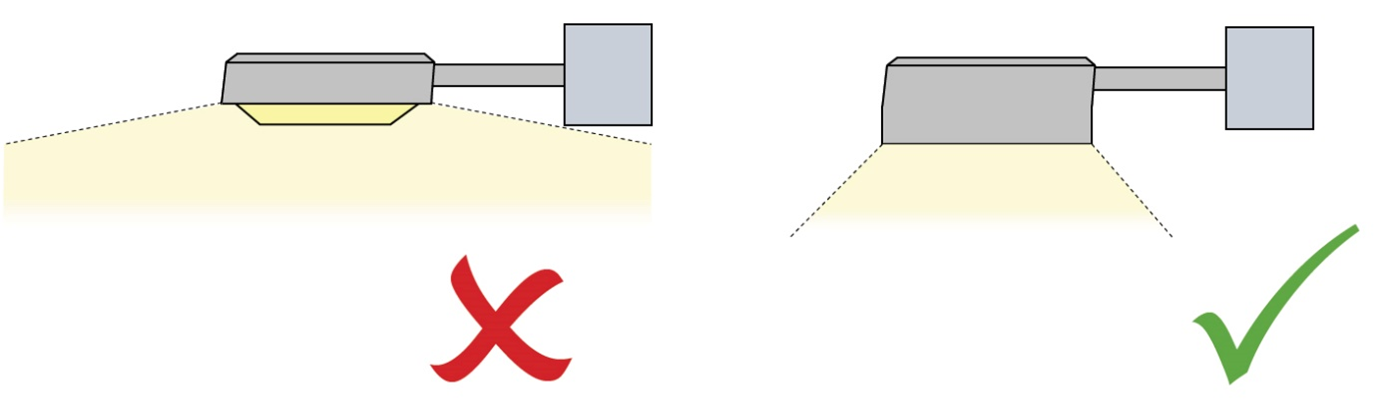
B.
Trees and shrubs may not interfere with the distribution of exterior lighting necessary for security purposes as required by this section.
C.
Security lighting above building entrances, parking lots, off-street loading areas and service entrances must be LED or metal halide, unless permitted otherwise during plan review, and incorporated in exterior areas going to and from the building(s) or use(s) within the site.
D.
All exterior fixtures, when used for security purposes, except for parking lot lighting, shall be illuminated from dusk until dawn, unless otherwise specifically designated on the site plan and as approved through the site plan process. All other exterior lighting that is not necessary for security purposes shall be turned off one hour after the close of business.
E.
Any exterior lighting device designed for security lighting must be protected by weather and vandal-resistant covering, a managed light source for controlling the times of illumination and fully shielded and directed down to minimize glare and intrusiveness on adjacent properties or rights-of-way.
F.
Lighting in multi-level parking ramps must be evaluated on a case-by-case basis to maximize safety and to minimize unnecessary glare to adjacent or nearby residential areas.
(UDO 22-01, § 5, 2-28-2022)
207-5.5. - Minimum Illumination Guidelines for Security Purposes
All minimum illumination guidelines for security lighting listed in this section must be maintained from ground level to a height of 6 feet. The minimum to maximum uniformity ratio may range up to 6:1 in acceptable layouts. In some circumstances, customer convenience, closed-circuit surveillance, and commercial entertainment uses may require a higher level of lighting.
207-5.6. - Outdoor Lighting Intensity Standards
When outdoor lighting is proposed or required, the following standards in the following table will apply and the "activities" as described in the table will be assigned and evaluated by the Snellville Police Department and the Director based on the use, hours of operation, and location.
(UDO 22-01, § 5(Exh. H), 2-28-2022)
207-5.7. - Light Trespass
Areas containing outdoor lighting (except public street lighting) must limit light trespass onto adjacent property, when measured at any point along a lot line, to the requirements set forth below. Compliance shall be achieved by utilizing fixture shielding, directional control designed into fixtures, fixture location, height, or aim, or a combination of these or other factors.
207-5.8. - Exterior Illumination of Buildings and Other Vertical Structures
When buildings or other structures are illuminated, the design for the illumination must be in accordance with the following:
A.
The illumination of buildings is restricted to security lighting or highlighting unique architectural features.
B.
Lighting fixtures must be located and/or aimed such that light is directed only onto the building surface. All fixtures used to illuminate buildings must be fully shielded.
C.
For statues, monuments, fountains, or other objects for which it may not be possible to illuminate with downward lighting, upward lighting may be used only in the form of spotlights which confine the illumination to the object of interest.
D.
If upward lighting is used to illuminate flags, only spotlights may be used; floodlights directed above the horizontal shall not be used to illuminate a flag.
207-5.9. - Neon Lighting
Light sources consisting of glass tubes filled with neon, argon, krypton, or other similar gas (hereafter referred to as "neon lighting") are excluded from shielding and line-of-sight requirements; however, lighting must be included in the light trespass requirements of Sec. 207-5.7 (Light Trespass). Furthermore, neon lighting will not be considered as security lighting.
207-5.10. - Enforcement
Failure to adhere to the requirements of this section or an approved lighting plan will be deemed a violation of this UDO.
207-5.11. - Exceptions
The following types of lighting are exempt from the requirements of this section:
A.
The temporary use of low wattage or low voltage lighting for festivals and celebrations, except where they create a hazard or nuisance from glare. Consideration of light trespass requirements must be demonstrated before commencing the use of temporary lighting.
B.
Temporary holiday lighting (for a period of no more than 30 days before the holiday and no more than 7 days after the holiday), except where they create a hazard or nuisance from glare. Consideration of light trespass requirements must be demonstrated before commencing the use of temporary lighting.
C.
Emergency lighting and traffic control lighting.
D.
Underwater lighting used for the illumination of swimming pools and fountains.
207-5.12. - Nonconforming Lights
A.
Authority to Continue
Lawful lighting fixtures located within the City at the effective date of this UDO or which come to be located in the City as a result of annexation after the effective date of this UDO, which do not conform to the standards of this section, may continue provided the lighting remains in conformance with this section.
B.
Ordinary Maintenance and Repair
Nothing in this section relieves the owner or beneficial user of legal nonconforming lighting, or the owner of the property on which the legal nonconforming lighting is located, from the provisions of this UDO regarding safety, maintenance, and repair. Normal maintenance, including replacing light bulbs, cleaning, or routine repair of legal nonconforming light fixtures, will not be deemed to be a condition which triggers a loss of lawful status described below, unless such maintenance increases the nonconforming aspects of the lighting.
C.
Loss of Lawful Status
1.
The legal nonconforming status will terminate under the following conditions:
a.
If a light fixture is not used for a period of 12 months or longer it will be deemed abandoned and may not be reestablished; or
b.
If a lighting fixture is structurally altered such that its nonconforming aspects increase; or
c.
If a lighting fixture is relocated, replaced, or moved in any way; or the lighting fixture is damaged and the cost of repair exceeds 50% of its replacement value.
2.
When any condition described in clause C.1 above occurs, the lighting fixture must be immediately brought into compliance with this section or removed.
D.
Removal Pursuant to Public Order
Lighting found by a governmental agency to create public hazard can be ordered removed or altered at any time.
207-6.1. - Purpose and Intent
The City Council recognizes that signage is an important medium through which individuals may communicate commercial and noncommercial messages. However, if left completely unregulated signage can become a threat to public safety in the form of traffic hazards, a source of confusion for the intended reader, and a detriment to the aesthetic character of the city.
It is hereby declared that the aesthetic and safety interests of the City of Snellville are reasonably promoted by the provisions of this section. Accordingly, it is the intent and purpose of this section to:
A.
Balance the rights of individuals to convey their messages through signs and the right of the public to protect against unrestricted proliferation of signs;
B.
Further the objectives of the Comprehensive Plan which is expressly incorporated herein;
C.
Protect the public health, welfare and safety of our citizens and others who may visit the city;
D.
Reduce traffic and pedestrian hazards;
E.
Promote the aesthetic qualities of the city;
F.
Promote economic development of the city; and
G.
Ensure the fair and consistent enforcement of the sign regulations.
Notwithstanding any other restrictions in this section, signs authorized under this section may contain commercial or noncommercial messages.
While developing this section, the City Council, the Planning Commission, and staff considered and reviewed numerous studies that considered the relationship between advertising signage, public perception and traffic issues. Among the items reviewed were:
A.
U.S. Small Business Administration, "Signage for Your Business;"
B.
Urban Design Associates, "An Evidence Based Model Sign Code;"
C.
ISA, "Electronic Message Display Brightness Guide;" and
D.
Daktronics, "Digital Display Sign Code Information."
207-6.2. - Definitions
Certain words and terms used in this section are defined and interpreted as follows:
Air and gas filled device. A sign using, either wholly or in part, forced air or other gas as a means of supporting its structure.
Attention getting device. A pennant, valance, propeller, spinner, ribbon, streamer, costumed character, sign spinner, balloon, or searchlight, LED light, neon light (where the light source is visible from the public right-of-way) or similar device or ornamentation designed for or having the effect of attracting the attention of potential customers or the general public.
Awning fixed. An awning that is constructed with a rigid frame that cannot be retracted folded or collapsed.
Awning, retractable. A roof-like cover that is temporary or portable in nature and that projects from the wall of a building for the purpose of shielding a doorway or window from the elements and is periodically retracted into the face of the building.
Banner. A sign with or without characters, letters, illustrations, or ornamentations applied to cloth, paper, flexible plastic, or fabric of any kind with only such material for backing.
Banner, arm pole. A banner attached to one or two arms mounted perpendicular to a vertical pole.
Beacon. A light with one or more beams directed into the atmosphere or directed at one or more points not on the same zone lot as the light source; also, any light with one or more beams that rotate or move.
Bench sign. A sign located on any part of the surface of a bench or seat placed on or adjacent to a public right-of-way.
Building elevation. The area of the face of a building including parapet articulation (height × width).
Building wrap. A graphic applied to vinyl, durable mesh or cloth and applied to the exterior surface of a building consisting of images, words, or other graphic embellishments designed to attract attention to the building.
Canopy. A roof-like structure supported by columns or cantilevered supports projecting from a building and open on at least three sides. A canopy may also be detached from the building as a freestanding structure.
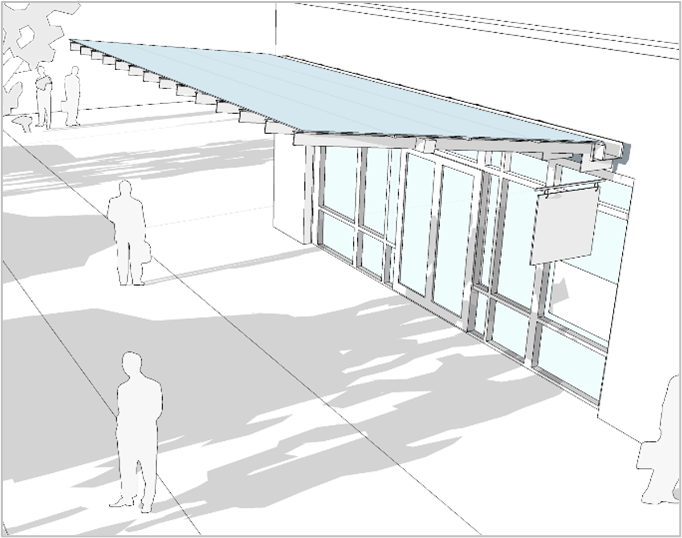 | 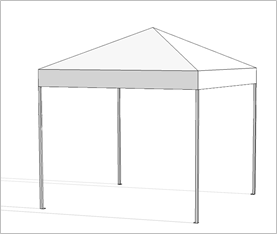 |
| Attached Canopy | Detached Canopy |
Channel letter construction. Individually illuminated letters and graphics composed of extruded metal structures with plastic faces and internal neon or L.E.D. illumination. Letters and graphics must be individually mounted to the wall surface or mounted on a raceway.
Channel letter construction, open face. Channel letter construction with clear plastic face or no face.
 |  |
| Standard Channel Letters | Reverse Channel Letters |
Channel letter construction, reverse. Channel letter construction with clear plastic backing that creates a halo-lit effect.
 |  |
| Open Face Channel Letters | Front & Back Lit Channel Letters |
Conversion structure. A billboard that will be converted to an electronic message board in accordance with the terms of Sec. 207-6.10.B.
Curlie spinner. See "Spinsock."
Electronic billboard. An electronic message board that will be installed on a conversion structure and operated in accordance with this ordinance.
Flag. Any fabric, banner, or bunting which has the width to length proportions of 10:19 which is typical with flags of the U.S., states, cities, counties and other organizations.
Flag, banner. See "Flag, feather."
Flag, bow. See "Flag, feather."
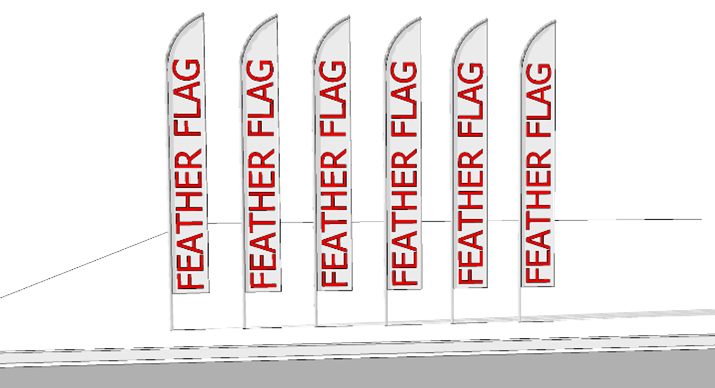
Flag, feather. A sign with or without characters, letters, illustrations, or ornamentations applied to cloth, paper, flexible plastic, or fabric of any kind with only such material for backing. Feather flags are generally a single sign attached to a support post. The feather flag typically has a dimensional ratio of 4 high to 1 wide.
Flag, tear drop. See "Flag, feather."
Flag, windfeather. See "Flag, feather."
Hula wiggler. Colored strips sewn side-by-side and usually attached to a strand or string of nylon.
Mural. A mural is any piece of artwork painted or applied directly on a wall, ceiling or other large permanent surface. A particularly distinguishing characteristic of mural painting is that the architectural elements of the given space are harmoniously incorporated into the picture.
Pennant. Small narrow triangular or other shaped flags usually attached to a strand or string of nylon.
Removal structure. A billboard that will be removed in accordance with the terms of Sec. 207-6.10.B.
Right-of-way, public. A strip of land acquired by reservation, dedication, forced dedication, prescription, or condemnation and intended to be occupied by a road, sidewalk, crosswalk, railroad, electric transmission lines, oil or gas pipeline, water line, sanitary or storm sewer, and other similar uses; right-of-way is not generally part of adjacent lots and usually coincides with adjacent lot property lines.
Road frontage. The distance, measured in a straight line, from the two furthest property corners located on the same public right-of-way, excluding out lots.
Sign. Any structure, display, or device that is used to advertise, identify, direct, or attract attention to a business, institution, organization, person, idea, product, service, event, or location by any means, including words, letters, figures, design characteristics, symbols, logos, fixtures, movement, or illumination.
Sign, abandoned. Any sign that no longer serves the functional purpose for which it was originally erected due to physical deterioration.
Sign, animated. A sign with action, motion, rotation or changing colors, excluding electronic message board signs and signs which indicate only time, temperature, or date or any combination thereof.
Sign, area. The entire area within a continuous perimeter, enclosing the extreme limits of the sign structure, not to include the first 24 inches of the base height of a monument sign. Curved, spherical, or any other shaped sign face area will be computed based on the actual surface area. The copy of signs composed of individual letters, numerals, or other devices will be the sum of the area of the smallest rectangle or other geometric figure encompassing each of said letter or device as well as spaces between each letter or device.
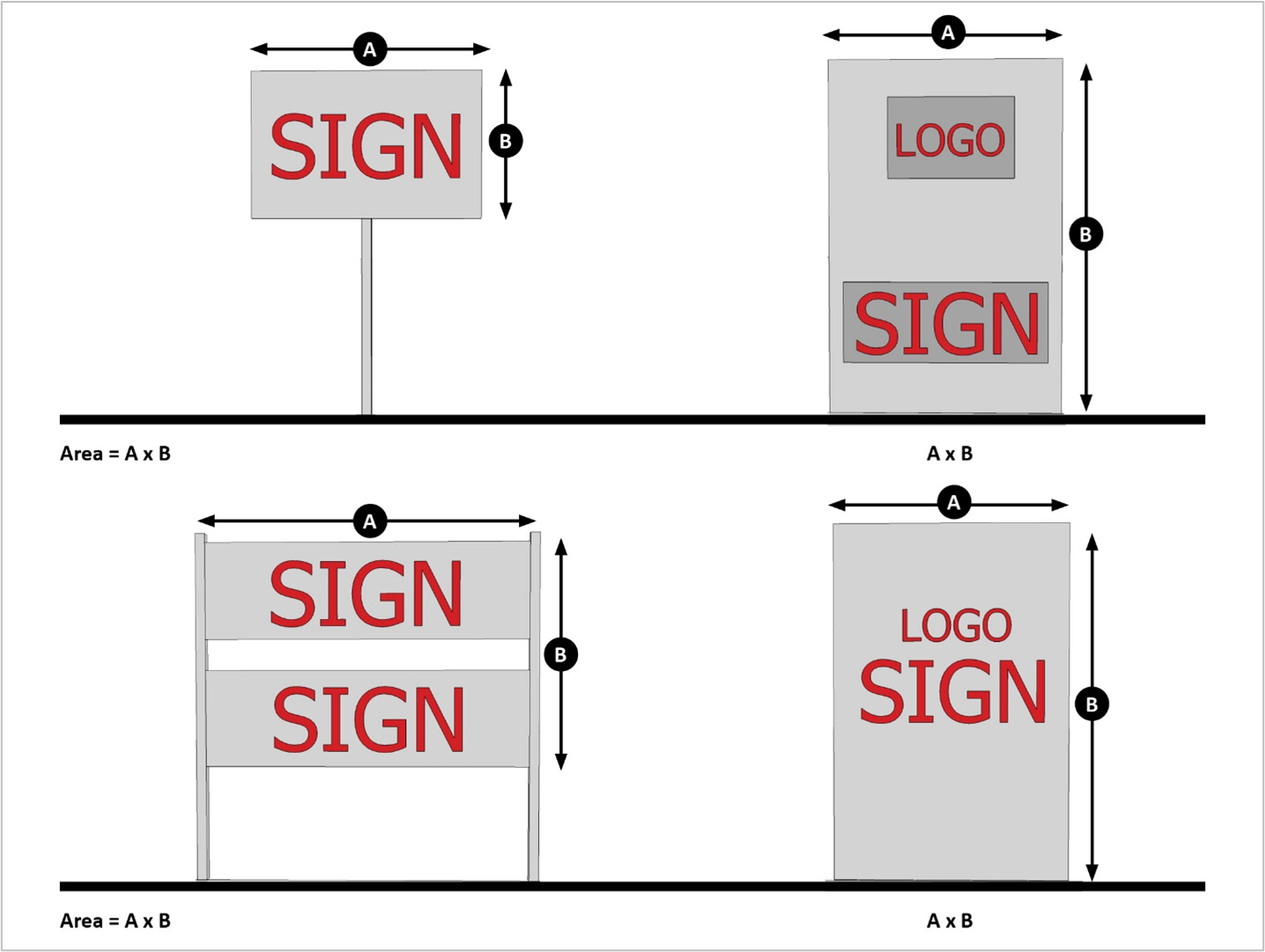
Sign, awning. A sign painted, stamped, perforated, or stitched, or otherwise applied on the valance of an awning.
Sign, canopy. A sign affixed to, superimposed upon, or painted on any roof-like structure, which extends over a sidewalk or walkway or vehicle access area.
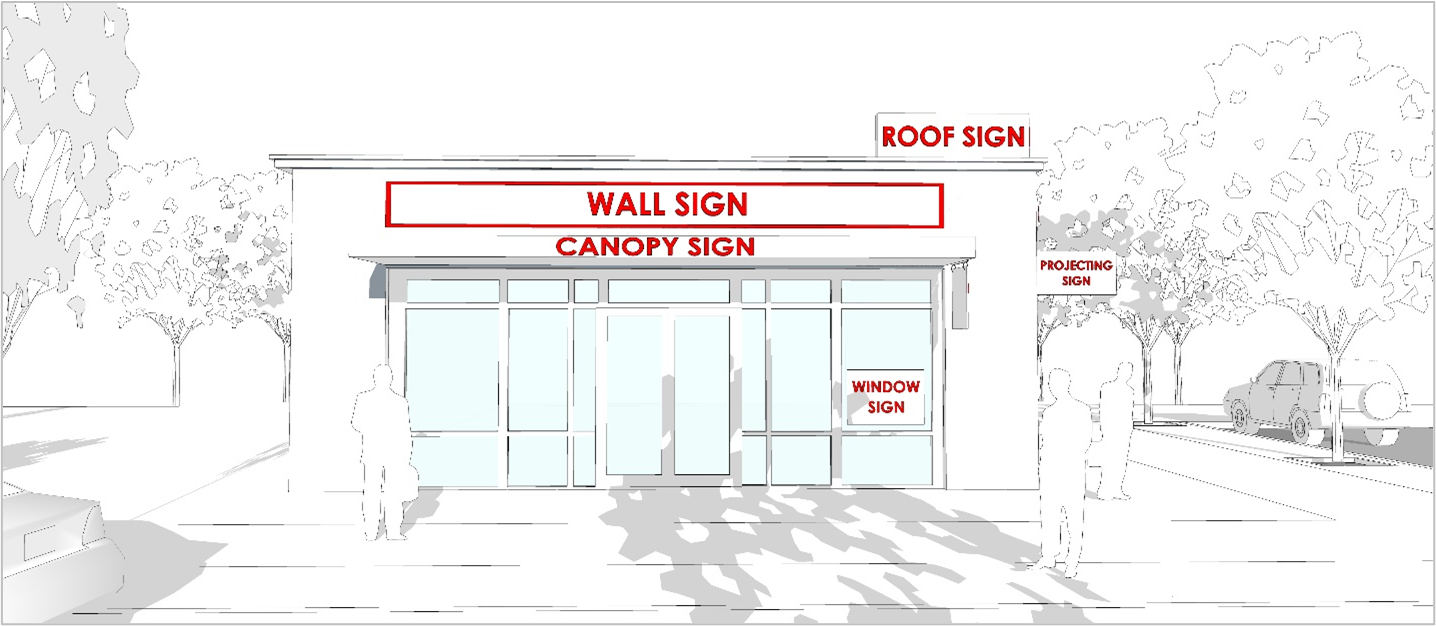
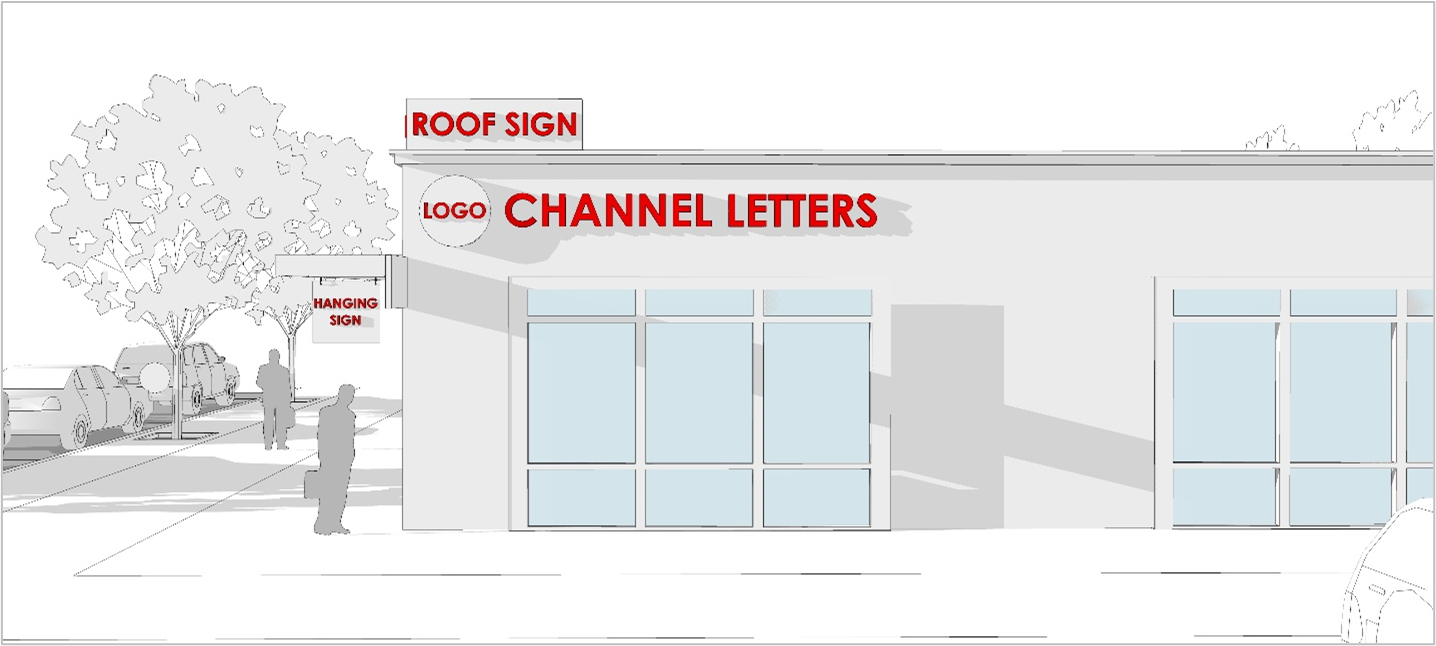
Sign, door. A sign that is applied or attached to the exterior or interior of a door or located in such manner within a building that it can be seen from the exterior of the structure through a door.
Sign, double-faced. A sign with two display areas against each other or where the interior angle formed by the display areas is 60 degrees or less, where one face is designed to be seen from one direction and the other from another direction.
Sign, electronic message board. A sign that uses changing lights or colors to form a sign message or messages wherein the sequence of messages and the rate of change is electronically programmed and can be modified by electronic processes.
Sign, entrance. A permanent sign located at a public street or private driveway entrance to a platted residential subdivision/development, multifamily development, nonresidential office park or industrial park, or office-condominium development which identifies said development or subdivision.
Sign, face. The surface upon, against, or through which the sign intends to advertise, identify, direct, or attract attention, not including the base of monument signs other sign support system.
Sign, flashing. A sign, the illumination of which is not kept constant in intensity at all times when in use, and which exhibits marked changes in lighting effects. Illuminated signs which indicate only the time, temperature, or date or any combination thereof shall not be considered as flashing signs.
Sign, freestanding. A permanent sign with no decorative base that is supported by one or more upright poles, columns, or braces placed in or on the ground and not attached to any building or structure.
Sign, grandfathered. See "Sign, nonconforming."
Sign, height. The distance in vertical feet from the elevation of the adjacent dedicated public street, the edge of the pavement, to the highest point of the sign structure. For property with an elevation higher than the adjacent public street, the height is measured from ground level at the base of sign to the highest point of the sign structure. The ground may not be altered for the sole purpose of providing additional sign height.
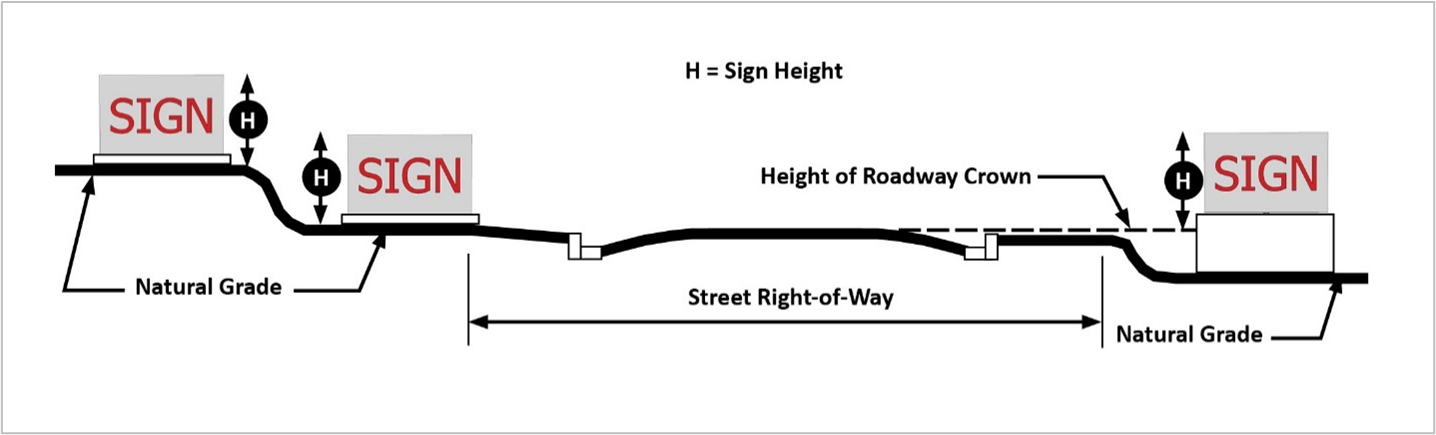
Sign, illuminated. A sign illuminated in any manner by an artificial light source.
Sign, material. Signs may be constructed from any of the following materials either singly or in combination.
1.
Natural routed wood.
2.
Stone.
3.
Masonry.
4.
L.E.D.
5.
Hybrid routed wood product.
6.
Cut or formed metal.
7.
Plastics.
8.
High-density urethane foam.
9.
Acrylics.
10.
Polycarbonates.
Sign, menu board. A freestanding sign oriented to the drive-through lane for a restaurant that advertises the menu items available from the drive-through window.
Sign, mobile. A sign which is attached to, mounted on, pasted on, painted or drawn on any vehicle, whether motorized or drawn, which is placed, parked or maintained at one particular location.
Sign, monument. A permanent ground sign designed so the base of the sign face is flush with the supporting base and the supporting base is flush with the ground. Sign must include a solid, decorative base and may include a decorative frame. The base must be at least as wide as the sign and/or frame upon it and a minimum of two feet in height. Decorative base and frame materials include stone, brick, EIFS or true hard coat stucco. No support posts may be exposed. Electrical disconnect and/or meter base may not be visible from the public right-of-way.
Sign, nonconforming. Any sign and its supporting structure that does not conform to all or any portion of this section and was in existence and lawfully erected before the effective date of this UDO; and was in existence and lawfully located and used in accordance with the provision of any prior ordinances applicable thereto, or which was considered legally nonconforming thereunder, and has since been in continuous or regular use; or was used on the premises at the time it was annexed into the City and has since been in regular and continuous use.
Sign, portable. A movable sign that is not attached to a structure or the ground and includes: A-boards, portable reader boards, and similar type sign.
Sign, pre-menu board. A freestanding sign that is secondary to and located before a menu board sign and oriented to the drive-through lane for a restaurant that advertises the menu items available from the drive-through window.
Sign, projecting. A sign that is wholly or partly dependent upon a building for support and which projects more than 12 inches from such building.
Sign, roof. A sign projecting over the coping of a flat roof, or over the ridge of a gable, hip or gambrel roof, and supported by or attached to said roof.
Sign, spinner. Referring to a person carrying a sign that stands, walks or performs along the street. This definition also applies to costumed characters or street performers.
Sign, swinging or rotating. Any sign that is mounted such that the sign may freely move back and forth.
Sign, temporary. Any sign or device that is not permanently attached to the ground or other permanent structure and/or is designed to remain in place for a limited time. This includes, but is not limited to, signs which are designed to be transported regularly from one location to another, signs placed into the ground on a temporary basis or nonpermanent foundation, signs utilized by sign spinners, or signs tethered to an existing structure.
Sign, vehicle. A graphic applied to the exterior surface of a vehicle and designed to advertise, identify, direct, or attract attention to a business, institution, organization, person, idea, product, service, event, or location by any means, including words, letters, figures, design characteristics, symbols, logos, fixtures, colors, movement, or illumination.
Sign, wall. A sign fastened to the wall of a building in such a way that the wall is the supporting structure for, or forms the background surface of, the sign and which does not project more than 12 inches from such building. The total signage on one side of a building or structure constitutes one wall sign.
Sign, wayfinding. A standalone freestanding sign that may be part of a greater wayfinding system which is used to identify a particular location or serve as directional signage to effectively navigate people through a space; or convey general and/or regulatory information.
Sign, window. A sign that is applied or attached to the exterior or interior of a window or located in such manner within a building that it can be seen from the exterior of the structure through a window.
Spinsock. A spinning windsock.
Tail feather. See "Flag, feather."
Vehicle wrap. See "Sign, vehicle."
Wind cone. See "Windsock."
Wind sleeve. See "Windsock."
Windsock. A tapered, open-ended sleeve pivotally attached to a standard.
(UDO 22-01, § 5, 2-28-2022; UDO 22-02, § 1, 11-28-2022)
207-6.3. - Signs Prohibited
A.
Prohibited Signs
The following types of signs are prohibited in all zoning districts:
1.
Animated sign;
2.
Flashing sign;
3.
Roof sign;
4.
Signs attached to any street sign or marker, traffic control sign or device, or attached to or painted on any pole, post, tree, rock, shrub, plant or other natural object or feature;
5.
Signs which contain flashing lights or are in imitation of an official traffic or construction sign;
6.
Any sign placed or erected on a property without the permission of the property owner;
7.
Signs placed within the public right-of-way, except publicly owned, authorized or maintained signs which serve an official public purpose;
8.
Mobile sign;
9.
Bench sign;
10.
Air and gas filled device sign;
11.
Beacon sign;
12.
Open face channel letter construction;
13.
Attention getting device;
14.
Swinging or rotating sign except as provided Sec. 207-6.5 (Signs Exempt);
15.
Freestanding signs larger than 6 square feet in sign area;
16.
Ground signs over 15 feet in height;
17.
Building wraps as defined in Sec. 207-6.2, unless they receive a special use permit or approved master signage plan;
18.
Murals as defined in Sec. 207-6.2, unless they receive a special use permit or approved master signage plan;
19.
Spinsock;
20.
Windsock;
21.
Signs attached to a retaining wall;
22.
Signs associated with a customary home occupation, as defined in Sec. 206-8.12;
23.
Signs which contain words, pictures, or statements which are obscene, as defined by applicable case and statutory law;
24.
Signs which interfere with road or highway visibility or obstruct or otherwise interfere with the safe and orderly movement of traffic or which otherwise pose a hazard to traffic due to structural deficiencies in the structure of such sign;
25.
Signs which advertise any activity, service, or product prohibited by the laws or regulations of the United States or the State of Georgia or by the ordinances or resolutions of the City. This section shall not prohibit signs promoting the legalization of any matter presently prohibited by federal, state, or local law;
26.
Signs which obstruct any fire escape, any means of egress or ventilation or shall prevent free passage from one part of a roof to any other part thereof, as well as signs attached to any fire escape;
27.
Signs which do not conform to applicable building and electrical codes;
28.
Signs which are in violation of the rules and regulations of any zoning overlay district presently existing or as may later be enacted;
29.
Signs (including sign structures) related to a business, service or commercial transaction that has been discontinued for 6 months or more;
30.
Signs that are structurally unsound, or are a hazard to traffic or pedestrians; and
31.
Signs (including sign structure) that do not present a neat and orderly appearance, which may be manifested by the following: rust or holes on or in the sign or sign structure, or broken, missing, loose or bent parts, faded or flaking paint, non-operative or partially non-operative illuminating or mechanical devices or missing letters in sign copy.
(UDO 22-02, § 1, 11-28-2022)
207-6.4. - Signs Permitted
A.
Residential Districts
Signs permitted and regulated in residential zoning districts include:
1.
Temporary signs, provided the cumulative sign area of all temporary signs may be no greater than 32 square feet per lot.
2.
Monument signs no greater than 32 square feet, excluding the monument base, decorative columns and supporting structure at the entrance to a subdivision.
3.
Freestanding sign required by the Georgia Department of Community Health for state licensed Personal Care Home, Community Living Arrangement, or Group Home, one sign per road frontage, not to exceed six square feet in sign area, not to exceed three feet in height including sign support post(s) and generally located at or near the driveway. Sign must meet the setback requirements of Sec. 207-6.6.A.
4.
Entrance sign(s). A maximum of two permanent signs, per entrance, into any platted residential subdivision/development, or multifamily development is permitted. Such signs are not included in the calculation of the aggregate sign area for any lot. Entrance signs may be externally illuminated.
Table 207-6.4. Signs Permitted in Residential Districts
B.
Nonresidential and Mixed-Use Districts
Signs permitted and regulated in the nonresidential and mixed-use districts, and approved special uses in residential districts and places of worship as an approved special use include:
1.
Awnings signs. Signs on awnings should be minimized and are only appropriate if there are no good alternatives for wall signs, projecting signs, or hanging and suspended signs. Signage should be limited to the skirt of the awning and should not be on the awning face. Signs should only be considered for the awning face if there is no other adequate location for signage on a given storefront or property. Awning colors are only permitted only if they are part of the official City color palette shown in Figure 207-6.4.
Figure 207-6.4. Official City Color Palette

2.
Wall signs. Wall signs must conform to the following size criteria:
3.
Window and door signs, window/door coverage must:
a.
Not exceed 40% of the glazing surface area of each window or door, where each window or door is framed or separated by a mullion.
b.
The remaining 60% of the glazing surface area must remain clear and not covered.
c.
Perforated window film is measured using the extreme limits of the perforated window film.
d.
Window tinting/film designed to reduce glare or fading and containing no graphics is allowed to cover 100% of the glazing surface area of each window or door, provided the transmittance of visible light is at least 70% and must have an external reflectance of less than 15%. Transparency and external light reflectance must be established using the manufacturer's specifications.
4.
Temporary signs in accordance with Sec. 207-6.5 (Signs Exempt) and Sec. 207-6.7 (Banners).
5.
Monument signs as defined in Sec. 207-6.2. and regulated as follows:
a.
Monument sign area is defined as the entire area within a continuous perimeter, enclosing the extreme limits of the sign structure (overall height by overall width), not to include the first 24 inches of the base height of a monument sign.
b.
One monument sign is allowed per public road frontage.
c.
The maximum square footage of the sign is based upon one-half (0.50) square feet per one foot of road frontage or 64 square feet, whichever is larger.
d.
In lieu of allowing a second monument sign, corner lots with two adjacent public road frontages may utilize 30 percent of the allowable sign area from the second public road frontage for the sign area calculation of the monument sign, subject to the maximum sign area of subsection (e). Sign area variances of Sec. 207-6.6.C. are not allowed. Sign placement shall comply with Sec. 201-1.8. (Intersection Visibility).
e.
The maximum sign area allowed is 225 square feet.
f.
Signs greater than five feet high must be set back at last ten feet from the right-of-way. Signs greater than ten feet high must be set back at least 15 feet from the public right-of-way.
g.
Monument base must be constructed of natural unpainted brick or natural unpainted stone; or true hard coat stucco painted or stained using hues from or equivalent to any historic palettes from any major paint manufacturer, except that primary and fluorescent colors are prohibited. Faux stone, faux brick, or foam core monument base signs are prohibited.
h.
Monument base shall be at least as wide as the sign and/or frame upon it and a minimum of two feet in height above the highest adjacent grade. No support posts may be exposed.
i.
Electrical service to be provided by underground service only. Electrical disconnect and/or meter base must not be visible from the public right-of-way. Solar powered lighting is prohibited.
j.
Monument sign must include the numeric street address of the property upon which it is located. The numbers used to identify the address may be no less than five inches in height and no more than nine inches in height.
6.
Signs for convenience stores, automotive service stations and other locations providing vehicle fueling with fuel pump islands: Spreader bars (signs located under canopy over pump islands) are limited to no more than two signs per spreader bar, not to exceed four square feet per sign. Fuel pump signage not to exceed six square feet per side.
7.
Freestanding sign(s):
a.
To identify reserved parking spaces, not to exceed six square feet in total sign area and not to exceed seven feet in height including support post.
b.
Directional sign, not to exceed six square feet in total sign area, not to exceed three feet in height including support post(s) and generally located at or near the entry and exit drives to a public roadway. The maximum number of signs permitted is two per road frontage or two per curb cut, whichever is greater. Signs must meet the setback requirements of Sec. 207-6.6.A.
c.
Wayfinding sign, not to exceed 12 square feet in total sign area, not to exceed 12 feet in height including support post(s) and pier and not to exceed four signs per property. Sign must meet the setback requirements of Sec. 207-6.6.A. Sign may be internally illuminated and an element of an electronic message board sign, subject to the requirements of Sec. 207-6.8 (Electronic Message Boards). Electrical service to be provided by underground service only. Solar powered lighting is prohibited. If located in a parking area, the first 24-inches of support post(s) height must be encapsulated by a concrete pier.
8.
Electronic message board signs utilized as an element of a monument sign, freestanding sign, menu board sign, pre-menu board sign, fuel pump canopy sign or window/door signage and only in accordance with Sec. 207-6.8 (Electronic Message Boards).
9.
Canopy sign, utilizing approved wall sign typology, and not to exceed 15% of the face of the canopy on which the sign is located. Canopy faces must be from the official City color palette shown in Figure 207-6.4.
10.
Arm pole banner, not to exceed two arms per parking lot light pole; each banner to not exceed 6 square feet in area; and located a minimum of 10 feet above the ground.
11.
Entrance sign(s) per Sec. 207-6.4.A.4 for a nonresidential office park or industrial park, or office-condominium development.
12.
Menu board sign must be a freestanding sign with the design, materials, and finish to match those of the primary building. One menu board sign is permitted per drive-thru ordering station. The maximum sign area may not exceed 40 square feet. The maximum height may not exceed 6 feet (OAH). Menu board signs may be internally illuminated and an element of an electronic message board sign, subject to the requirements of Sec. 207-6.8 (Electronic Message Boards).
13.
Pre-menu board sign must be a freestanding sign with the design, materials, and finish of the menu board sign. One pre-menu board sign is permitted per menu board sign and located at the entrance to the drive-thru lane and within 20 feet of the menu board. The maximum sign area may not exceed 20 square feet. The maximum height may not exceed 6 feet (OAH). Menu board signs may be internally illuminated and an element of an electronic message board sign, subject to the requirements of Sec. 207-6.8 (Electronic Message Boards).
14.
Interior project directional sign(s) are authorized in all developments or planned subdivisions of land within any nonresidential, mixed-use districts, approved special uses in residential districts and places of worship as an approved special use subject to the following:
a.
May not be located within 100 feet of an entrance to a project.
b.
Maximum sign area of each sign may not exceed 16 square feet.
c.
Maximum sign height shall not exceed six feet above grade.
d.
Only one sign may be located at each internal intersection of private driveway or public streets within the project.
15.
Electric Vehicle (EV) Charging Station signage may not exceed 18 square feet in total area per side per station and may be an element of an electronic message board sign, subject to the requirements of Sec. 207-6.B (Electronic Message Boards). The maximum sign height may not exceed ten feet above grade and setback a minimum of ten feet from the right-of-way.
16.
Signs per an approved Sign Plan in Sec. 207-6.12. (Sign Plan Required in TC-MU (Towne Center Mixed Use) District).
(UDO 22-01, § 5, 2-28-2022; UDO 22-02, § 1, 11-28-2022)
207-6.5.A. - Signs Exempt
A.
The following types of signs are exempt from the requirements of this section unless otherwise expressly prohibited by Sec. 207-6.3. (Signs Prohibited). These signs must meet the height and setback requirements of this section. No permit is required. Signs that are constructed of degradable material may be posted for a maximum period of 90 calendar days. Nothing will prevent such a sign from being replaced by an identical sign:
1.
Signs not visible from public thoroughfares or intended to be seen by the traveling public.
2.
Signs within a business, office, mall, or totally enclosed area.
3.
Signs erected by, or on the order of, a public official in the performance of their duty, may be located within the public right-of-way.
4.
Portable signs that are a maximum of six square feet in area, only one per storefront. Portable signs must be located near the building entry on the sidewalk. Portable signs are not allowed in parking areas, streets or public rights-of-way and may not impede the flow of pedestrian traffic.
5.
Flags, no more than three poles, neither in excess of 60 square feet, nor greater than 40 feet in height per property. The flags must be no further from the structure than 50 percent of the distance from the face of the structure to the public right-of-way.
6.
Temporary sign(s). There may be no more than eight temporary signs on display at any one time. The cumulative total of all temporary signs may be no greater than 32 square feet per property. Temporary signs may not exceed six feet in height above grade and must be located out of right-of-way or at least ten feet from the back of the curb or edge of the pavement of the adjacent street, whichever is greater.
7.
Sign spinners, wavers, costumed characters or street performers with signage devices are prohibited within the public right-of-way. Any persons involved in this activity must remain on private property in a hard surface paved area, away from entry and exit drives.
8.
Swinging or projecting signs not exceeding five square feet or projecting more than four feet and attached under the eave or awning of a building above a business entrance.
9.
One official sign as required by the State of Georgia for vehicle emissions stations licensed by the State. One sign per public right-of-way frontage. Sign shall meet the setback requirements of Sec. 207-6.6.A. and may not exceed 24 inches wide by 36 inches high with standard frame and hardware.
10.
Vehicle sign/wrap shall be allowed when the vehicle is legally parked in the rear or to the side of an establishment or when vehicle cannot legally park in the rear or side of the establishment, may park in a parking area that is farthest away from the public street right-of-way. Vehicles must be operational at all times and must not remain stationary for more than 72 hours.
11.
Signage affixed to an automated teller kiosk and accompanying canopy if serving as an accessory use to a bank or financial institution on the same lot.
12.
Signage on vending machines, limited to four per lot, and which are not located more than five feet from the building foundation and wall, and within the required front yard setback of the zoning district.
13.
Freestanding sign required by the Georgia Department of Community Health for state licensed Personal Care Home, Community Living Arrangement, or Group Home.
(UDO 22-02, § 1, 11-28-2022)
207-6.6. - General Requirements
In addition to the requirements of Sec. 207-6.3. (Signs Prohibited), Sec. 207-6.4 (Signs Permitted), and Sec. 207-6.5. (Signs Exempt), the following regulations also apply:
A.
Setbacks
Signs may not be located in the right-of-way and must be at least 10 feet from the back of the curb or edge of the pavement of the adjacent street, whichever is greater. Signs on a corner lot located at the intersection of two streets must be located outside of the sight distance triangle, measured 30 feet from the intersecting lines of the street right-of-way or at least 15 feet from the back of the curb or edge of pavement of the adjacent streets, whichever is greater.
B.
Multiple Signs
No business is allowed to install an additional conforming sign until it has removed all existing nonconforming signs. Provided, however, that on lots with three or more businesses, at least two of which are party to a lease or leases, any business that does not own or control the nonconforming sign may erect a wall sign.
C.
Street Numbers
Monument signs must include the numeric street address of the property upon which it is located. The numbers used to identify the address may be no less than 5 inches in height and no more than 9 inches in height.
D.
Illumination
Excluding electronic message board signs, internally illuminated signs may not exceed 20 foot-candles at a distance of 10 feet from such structure. Externally illuminated signs must be lighted so that lights are positioned in such a manner that light does not produce glare nor does it shine into the eyes of motorists or pedestrians so as to create a hazardous or dangerous condition. Externally illuminated signs must have lights with directional cut offs which do not allow the light source to be seen by passersby. All fixtures must be ground-mounted. No more than two fixtures per side. No more than 2% of light may go above horizontal.
(UDO 22-02, § 1, 11-28-2022; UDO 23-02, § 4, 6-12-2023)
207-6.7. - Banners
Banners are permitted in nonresidential and mixed-use districts and special uses in residential districts subject to the approval of a banner permit issued by the Director and subject to the following criteria:
A.
Banners and/or feather flags not in excess of 32 square feet in area (cumulative) to be attached to the building facade or to a permanent sign or placed in the ground, must be located out of right-of-way or at least 10 feet from the back of the curb or edge of pavement of the adjacent street, whichever is greater.
B.
A banner permit may be issued for each occurrence not to exceed two, 14-day periods and one, 21-day period per calendar year per establishment.
C.
Feather flags are limited to one flag per business and must be located out of right-of-way or at least 10 feet from the back of the curb or edge of the pavement of the adjacent street, whichever is greater. Feather flags are permitted for no more than two, 14-day periods and one, 21-day period each calendar year.
(UDO 22-02, § 1, 11-28-2022)
207-6.8. - Electronic Message Boards
A.
Permitted Districts
1.
Electronic messaging signs are permitted in the following zoning districts:
a.
CI - Civic Institutional district.
b.
OP - Office Professional district.
c.
BG - General Business district.
d.
HSB - Highway Service Business district.
e.
LM - Light Manufacturing district.
f.
MU - Mixed Use district.
g.
TC-MU - Towne Center Mixed Use district.
2.
Electronic messaging signs are allowed with an approved special use permit in the following districts:
a.
NR - North Road district.
b.
TC-R - Towne Center Residential district.
3.
Electronic messaging signs are allowed in the RS-30 (Single-family Residential) zoning district for any place of worship operating with an approved special use permit or conditional use permit.
B.
Sign Types to Utilize Electronic Message Boards
Electronic messaging may be an element of a monument, freestanding, fuel pump canopy, menu board, pre-menu board or window/door sign. Wall signs may not contain electronic messaging.
C.
Size and Location Requirements
Electronic message boards must meet the size and placement requirements of this subsection.
1.
Maximum allowable electronic message board sign area as an element of:
a.
Monument sign: Fifty percent of the monument sign area in Sec. 207-6.4.B.5. (Monument Sign).
b.
Menu board/pre-menu board: One Hundred percent of allowable sign area in Sec. 207-6.4.B.12. (Menu Board Sign) and 207-6.4.B.13. (Pre-menu Board Sign).
c.
Fuel pump canopy: One Hundred percent of allowable sign area in Sec. 207-6.4.B.6. (Fuel Pump Islands).
d.
Window/door: One Hundred percent of allowable sign area in Sec. 207-6.4.B.3. (Window and Door Signs) for one window/door. Only one window/door electronic message board sign allowed per location. No electronic message board window/door sign may exceed 15 square feet in total display area.
e.
Freestanding sign: One Hundred percent of allowable sign area in Sec. 207-6.4.B.7. (Freestanding Sign).
f.
Electric Vehicle (EV) Charging Station: One Hundred percent of allowable sign area in Sec. 207-6.4.B.15. (EV Charging Station).
2.
Sign area variances of Sec. 207-6.6.C. are not allowed and may only be considered by the Board of Appeals.
D.
Duration of Display
1.
Any electronic message displayed shall remain unchanged for a minimum of 10 seconds before switching messages.
2.
The following display types are prohibited:
a.
Animation is prohibited;
b.
Flashing, blinking, fade in, fade out or scrolling text is prohibited; and
c.
Video images are prohibited.
E.
Intensity of Light
1.
The maximum luminance produced by the sign may not exceed three-tenths foot-candle greater than the ambient light level.
2.
The light level produced by the sign is measured using the following equation based on typical sign-to-viewer distance: the square root of the product of the sign area and 100. Example using a 12 square foot sign:
√(12 × 100) = 34.6 ft. measuring distance
3.
Automatic dimming capability must adjust the sign's illumination to the ambient light at all times of the day or night.
F.
Default Control
1.
The sign must be equipped to freeze the display in one position if a malfunction occurs.
2.
The sign must also be equipped with a means to immediately discontinue the display if it malfunctions.
3.
The sign owner must immediately stop the display when notified by the Director that the sign is not complying with the standards of this section.
(UDO 22-01, § 5, 2-28-2022; UDO 22-02, § 1, 11-28-2022)
207-6.9. - General Procedures
The following procedures must be followed by all persons erecting signs:
A.
Conformance and Permits
All signs erected, replaced, modified or relocated must be in conformance with all ordinances and codes of the City. A sign permit must be secured from the Director. This permit must be issued before installation or modification of any sign. No permit is required for any change in the lettering, text or graphics displayed on a display board, provided no modification is made to the size or location of the sign. No permit is required for those signs exempt under Sec. 207-6.5. (Signs Exempt). The discretion of any City official reviewing a sign permit application is to determine if the application and the proposed sign are in compliance with this section. No official reviewing a sign permit application or building or electrical permit application for a proposed sign may consider the content of any message on a proposed sign.
1.
Signs that require both a building permit and a sign location permit:
a.
Signs that exceed 32 square feet in area; or
b.
Signs that exceed 6 feet in height above grade; or
c.
Signs on walls with a height exceeding 4 feet; or
d.
Signs that are internally illuminated.
2.
Signs that require design by a Georgia registered professional engineer:
a.
Signs that exceed 50 square feet in area, inclusive of the sign support structure and/or monument base, that are either monument signs or signs with supporting structures.
b.
Signs that exceed 12 feet in height above grade.
3.
Documentation required for plan review and obtaining a building permit:
a.
A sign location plan is required.
b.
In order to obtain a building permit, three complete sets of drawings must be submitted to the planning and development department. The drawings must clearly indicate the structural and electrical construction requirements for each proposed sign and at a minimum contain the information described in clauses A.4 and A.5 below. The drawings must also clearly indicate the proposed sign location.
c.
A building permit can be obtained after drawings containing the complete structural and electrical information stated below have been reviewed and approved by the Director.
4.
Electrical drawing(s) plan review requirements:
a.
Drawings for each illuminated sign must clearly indicate the electrical requirements including the size and location of the electrical disconnect the type and size of the wire, the conduit size and estimated load.
b.
Electrical service for monument and freestanding signs to be provided by underground service only, overhead or solar powered electrical service is prohibited.
c.
Drawings must also specify the name of a nationally recognized organization as applicable to the illuminated sign to be installed.
d.
Electrical installations must meet the requirements of the NFPA National Electrical Code and must be performed by a Georgia licensed electrician.
5.
Structural drawing(s) plan review requirements:
a.
Drawings for each sign structure must clearly specify the required materials, sizes, and locations for all structural components. Complete details must be provided that clearly indicates the required connections between all structural components including anchorage to the foundation. Details shall also indicate required attachments of sign cabinets to the supporting structure.
b.
Sign foundation requirements must be clearly indicated on the drawings including, but not limited to, footing size and reinforcement, 28-day compressive strength of concrete, anchor bolt size and embedment depth.
c.
Drawings for signs that require design by a Georgia registered professional engineer must contain the following minimum design data in addition to the information required in sentences 5.a and 5.b immediately above:
i.
State on drawings that the design complies with the International Building Code;
ii.
State on drawings that the wind load design complies with ASCE 7 (minimum design loads for buildings and other structures);
iii.
Basic wind speed (mph), design wind pressure (PSF), exposure category (B or C);
iv.
Minimum required soil bearing capacity (PSF);
v.
Structural material specifications (including but not limited to ASTM designation, yield strength (SKI), and material grade, if applicable).
6.
Inspection requirements:
a.
Drawings for sign structures that have been reviewed and approved by the Director must be kept readily accessible at the job site at all times during construction. The building permit card must be posted in the immediate vicinity of the proposed ground sign location.
b.
The electrical subcontractor must submit a completed subcontractor affidavit to Department at least 2 days before requesting an electrical inspection.
c.
Each sign, for which a building permit has been issued, requires inspection by the building inspector during the following stages of construction:
i.
A foundation inspection is performed after excavation and before concrete placement with steel reinforcement, anchor bolts, and structural posts in place.
ii.
An electrical inspection is performed only after the foundation has been inspected and approved by the City inspector.
iii.
A final inspection is performed after completion of all construction and a building final is issued.
iv.
Erosion and sediment control measures shall be maintained throughout construction in accordance with City ordinances and procedures.
B.
Application Procedure
Applications for sign permits required above must be filed by the sign owner or their agent with the Department upon forms furnished by the Director.
1.
Applications must describe and set forth the following:
a.
Street address of the property upon which the sign is to be located. In the absence of a street address, an acceptable alternative method of location may be used.
b.
Type of sign as defined in this section.
c.
Plans indicating the dimensions of the sign, sign area, height, and mounting details.
d.
Plans indicating its location on the property or the face of the building including the road frontage or building elevation.
e.
The name(s) and address(es) of the real property upon which the subject sign is to be located.
f.
Written consent of the owner, or their agent, granting permission for the placement and/or maintenance of the subject sign.
g.
The name, address, phone number and business license number of the sign contractor.
2.
The Department must complete its review of the application within 15 working days of the date of application and either approve or deny the application. If the application is incomplete or contains insufficient information as described in clause B.1 above, it must be denied. If the Department fails to approve or deny the sign within 15 working days, the applicant may post the sign as if approved.
C.
Expiration Date
A sign permit becomes null and void if the sign for which the permit was issued has not been completed within 6 months after the date of approval.
D.
Sign Fees
No permit may be issued until the appropriate application has been filed with the Department and fees have been paid. If any person, company, firm or corporation begins work for which a permit is required by this section without taking out a permit, they must pay three times the amount of the applicable above-described fee.
(UDO 22-01, § 5, 2-28-2022; UDO 22-02, § 1, 11-28-2022)
207-6.10. - Nonconforming Signs
A.
General
Nonconforming signs which met all legal requirements when erected may stay in place until the deterioration of the sign or damage in accordance with the maintenance and removal requirements of this section, unless the damage to the sign was caused by circumstances beyond the owners control in accordance with O.C.G.A. § 32-6-83, in which case the owner m either repair or remove the sign. However, no other structural repairs, changes in shape, size or design to nonconforming signs or replacement of nonconforming signs are permitted except to make a nonconforming sign comply with all requirements of this section.
B.
Billboard Conversion and Reduction
1.
Eligibility for use as a Conversion Structure
Any legal nonconforming billboard existing before the effective date of this UDO which is located along State Route 124 or State Route 10/United States Highway 78, and is located no closer than 6,000 feet from the nearest conversion structure or electronic billboard is eligible for use as a conversion structure under the provisions of this paragraph B.
2.
Exchange Ratio and Permitting
Notwithstanding any other provision of Sec. 207-6. (Signs), any eligible conversion structure may be modified to an electronic billboard, provided that the applicant removes from within the City of Snellville an equal number of removal structures and billboard sign faces to be converted. In order to be eligible for use as a removal structure, the entirety of the above-ground portion of the removal structure must be removed. The applicant is entitled to obtain a permit, upon proper application, for the conversion of a conversion structure to an electronic billboard, which permit must provide that the conversion structure may not converted to an electronic billboard until the removal structure has been fully removed. Each permit will grant the applicant a period of not less than 1 year to complete conversion of the conversion structure after removal of the removal structure.
3.
Construction
In addition to the replacement of the billboard sign face(s) with the electronic billboard, the applicant is permitted to structurally modify or replace the conversion structure as may be necessary to comply with current applicable building codes. In addition, the conversion structure may be relocated upon the property so long as such relocation does not increase the height or size of the sign, nor does it increase the degree of nonconformity in regard to applicable setbacks without the prior approval of the City Council.
4.
Operation of Electronic Billboards
Each electronic billboard must be operated in accordance with the following requirements:
a.
The electronic billboard may include the entire sign face, but may not exceed 672 square feet in size;
b.
Only static messages may be displayed on the electronic billboard. Each individual static message must remain unchanged on the display for not less than ten seconds. The change between each static message shall be accomplished within one second, and such change may not include any scrolling, blinking, fading, frame effects, or other graphics. Animation, flashing, blinking, and video images are prohibited;
c.
Each electronic billboard must contain a light sensing device which will adjust the sign face brightness to account for changing ambient light conditions. The maximum brightness produced by each sign face may not exceed three-tenths foot candles above ambient light levels as measured at five feet above the ground at a distance of 250 feet from the sign face.
d.
Each electronic billboard owner or operator must provide the City with twenty-four-hour contact information in the event the City needs to notify them of the malfunction of the electronic billboard. In the event of a malfunction of the electronic billboard such that it violates the provisions of this paragraph B, or otherwise violates State operational standards, the electronic billboard must either be turned off, display a blank image, or the display frozen to a single image until it can be repaired.
e.
Each electronic billboard owner must participate in the National Amber Alert Program, FBI, GBI, and other recognized emergency alert broadcasting systems in regard to the electronic Billboard. In addition, such owner must coordinate with the Snellville Police Department to permit the display of local emergency messages where appropriate.
f.
Where located on a State-controlled route, each electronic billboard must obtain all necessary permits from GDOT or other applicable regulatory agencies.
(UDO 22-02, § 1, 11-28-2022)
207-6.11. - Maintenance and Removal
A.
Sign Maintenance
Every sign, including those specifically exempt from this section with respect to permits and permit fees, must be maintained in good structural condition at all times. All signs must be kept neatly painted, including all metal parts and supports thereof that are not galvanized or of rust-resistant material. All signs must be free from: rust or holes on or in the sign or sign structure; broken, missing, loose or bent parts; faded or flaking paint; nonoperative or partially nonoperative illuminating or mechanical devices; and/or missing letters/graphics in sign copy. The Director will inspect and has the authority to order the painting, repair, alteration, or removal of a sign which constitutes a hazard to safety, health or public welfare by reason of inadequate maintenance, dilapidation or obsolescence.
B.
Dangerous or Defective Signs
No person may maintain or permit to be maintained on any premises owned or controlled by him any sign which is in a dangerous or defective condition. Any such sign must be removed or repaired by the owner of the sign or the owner of the premises.
C.
Removal of Signs by the Director
The Director must cause to be removed any sign that endangers the public safety, such as a dangerous, or materially, electrically, or structurally defective sign, or a sign for which no permit has been issued. The Director must prepare a notice which describes the sign and specifies the violation involved and which states that, if the sign is not removed or the violation is not corrected within 10 days, the sign will be removed in accordance with the provisions of this subsection
D.
Notice
For all signs the notice must be issued to the owner of the property on which the sign is located as shown on the last tax record. If known, or with reasonable care should be known, the notice must be mailed to or delivered to the owner of the sign and/or the occupant of the property.
E.
Appeal/Administrative Review
Any person with an interest in the sign or the property may appeal the determination of the Director ordering removal or compliance by filing a written notice of appeal with the Board of Appeals within 30 days after the date of mailing of the notice of violation, or 30 days after receipt of the notice if the notice was hand-delivered not mailed. The Board of Appeals must review said application at the next regularly scheduled meeting. If the Board of Appeals fails to reach a decision (excluding postponement of meeting or agenda item) during its next regularly scheduled meeting, the appeal will be deemed to be granted. Applications for appeals are subject to provisions of Chapter 100 of this UDO.
Notwithstanding the above, in cases of emergency, the Director may cause the immediate removal of a dangerous or defective sign without notice.
207-6.12. - Sign Plan Required in TC-MU (Towne Center Mixed-Use District)
A.
Purpose and Intent
The purpose of this Section is to allow for consistent signage throughout a qualifying development. It is the intent of the City of Snellville that this Section will only apply to and affect qualifying properties located within the Towne Center Mixed Use District.
B.
Qualifying Property
This Section shall apply to developments of 10 acres or more that are zoned Towne Center Mixed Use (TC-MU).
C.
Process
1.
All Qualifying Properties under this section shall submit a Signage Plan to be approved by the Mayor and Council. This Signage Plan shall include:
a.
Street address of the property upon which the sign is to be located. In the absence of a street address, an acceptable alternative method of location may be used.
b.
Type of sign as defined in this Article.
c.
Plans indicating the dimensions of the sign, sign area, height, and mounting details.
d.
Plans indicating its location on the property or the face of the building including the road frontage or building elevation.
e.
The name(s) and address(es) of the real property upon which the subject sign is to be located.
f.
Written consent of the owner, or their agent, granting permission for the placement and/or maintenance of the subject sign.
g.
The name, address, phone number and business license number of the sign contractor.
h.
Indicate any signage which would otherwise require a variance under this Article. Upon submission of the Signage Plan, the applicant shall not have to submit a separate request for a variance under this Article.
2.
The Planning and Development Department will review the plan for completeness. If complete, the Department will forward the plan to Planning Commission for a public hearing and recommendation. The recommendation from Planning Commission will then be forwarded to Mayor and Council for public hearing and final decision.
3.
If approved, the applicant will pay all necessary sign permit fees in accordance with the Fee Schedule prior to work beginning on the signs.
(UDO 22-02, § 1, 11-28-2022)
207-7.1. - Placement of Utilities
A.
General Standards
Authorized public underground utilities must be located within a public street right-of-way of a public street or within an easement designated for such use. Within a public street right-of-way, placement of the various authorized utilities (power, gas, cable TV, water and sewer) must be placed underground, be noted on the plans and must conform to the specific locations designated for such use by the City, as illustrated in the City's standard drawings.
B.
Private underground utility standards
No other underground utilities, such as private lawn sprinkler systems, yard lighting, etc., may be installed within a public right-of-way or easement except by authorization of the Department. Such authorization, if issued, requires the applicant to assume all repair costs of the applicant's facilities should they be damaged during the course of installation, maintenance or repair of any of the public utilities authorized to occupy said right-of-way or easement.
C.
Manholes and valve boxes
Utility manholes and valve boxes must be brought flush to the finished grade within the roadway section.
D.
Street Cut Limitations
Street cuts are not allowed within existing public roadways unless deemed absolutely necessary due to the presence of rock, the need to tap into an existing line beneath the road surface, or other circumstance which makes boring impossible or infeasible.
1.
Fees and escrow. No street cut may be authorized until such street cut fees and escrow have been paid.
2.
Trench compaction. If approved, all trenches for open cut utility installations on existing roads must be backfilled and compacted the same day the trench is opened.
a.
Trenches under the paving must be returned to 95% compaction.
b.
See Sec. 401-5.6 (Street Subgrade Preparation) for trench compaction and test requirements.
3.
Trench requirements. All trenches under paving may be concreted with 8 inches of class "A" concrete base, and 2 inches of 9.5 mm Superpave Type II wearing course asphalt to be spread.
a.
The paving cut may be widened to a minimum of 9 inches beyond the edges of the trench.
b.
The edges of the paving cut must be smooth.
E.
Approval
1.
All utility construction plans within City right-of-way must be reviewed and approved by the Director before construction begins.
2.
Contact the applicable regulatory authority of the public utility for minimum requirements and approval process for connections to and/or extension of the applicable utility for the proposed development. Provide the City with utility approval of proposed work.
F.
Lane/Road Closure Notification
In advance of the closure of traffic lanes or roadways, notify the City and responsible party of the roadway at least 24 hours in advance. Please note that depending on the classification of the road in need of closure, it may be necessary to coordinate with the GDOT or Gwinnett County Department of Transportation, and their minimum notification period may be greater.
207-7.2. - Water System, Fire Hydrants, Wells
A.
Water Main Connections
The developer must install or have installed a system of water mains connected to a public water supply system in accordance with the requirements of the Gwinnett County Department of Water Resources (DWR).
B.
Design
1.
All water mains, fire hydrants, and appurtenances must be designed in accordance with the policies, standards, plans and specifications of the Gwinnett County Fire Prevention Ordinance and Gwinnett County DWR. Where jurisdiction resides with the Gwinnett County DWR, the public water mains and appurtenances must be reviewed by the County upon submittal of the development plans for the project.
2.
All new replacement water supply systems must be designed to minimize or eliminate infiltration of floodwaters into the system.
C.
Installation Timetable
Within the Gwinnett County DWR's jurisdiction, water mains and appurtenances must be installed after installation of the curbs and gutters and before paving, or after staking of the curb line and submission to the water system of an as-graded survey of the street profile accompanied by a certification executed by the owner as required by the water system that the subgrade will not change. Water mains must be relocated as necessary to meet water system regulations before approval of development conformance, if improperly located to final curb line or grade.
D.
Potable Water Supply Wells
1.
The use of individual water wells as a potable water supply is prohibited. Potable water supply means any water supply that is used or satisfactory for drinking, culinary, and domestic purposes by humans.
2.
Existing individual potable water supply wells may continue to exist, but must have been registered with the City no later than 30 days after June 25, 2001. The property owner, at their cost, must have the well tested every 2 years with the results of the test forwarded to the City.
207-7.3. - Easements
A.
General
Temporary construction easements and permanent easements for public utilities or other public facilities must be dedicated to Gwinnett County and recorded in accordance with county requirements. Easements must be shown on all plats and/or plans submitted to the City of Snellville for review. All easements must be stabilized in accordance with the Manual for Erosion and Sediment Control in Georgia.
B.
Drainage Easements
Drainage Easements must conform to Sec. 404-1.7 (Drainage Easements).
207-7.4. - Sanitary Sewerage
A.
Sanitary sewerage must conform to the requirements of Chapter 106, Article III, Sewer Service, Division 1 of the Gwinnett County Code.
B.
New and replacement sanitary sewage systems must be designed to minimize or eliminate infiltration of floodwaters into the system and discharges from the systems into floodwaters.

