Glossary. [2]
Editor's note—Ord. No. 6335, § II, adopted February 9, 2021, repealed the former Art. 04, and § III(Exh. A) of the same ord. enacted a new article as set out herein. The former Art. 04 pertained to LIA Land Intensive Agriculture District and derived from Ord. No. 4643, adopted in 1993; and Ord. No. 5964, § III, adopted Jan. 31, 2012.
This article provides definitions of terms and phrases used in the zoning ordinance that are technical or specialized, or which may not reflect common usage. Uses are defined separately in Chapter 26, within the use standards articles. If any of the definitions in this article conflict with others in this chapter or elsewhere in the county code, these definitions shall control for only the provisions of this zoning ordinance. If a word is not defined in this chapter or in other chapters of the zoning ordinance, the director shall determine the appropriate definition.
(Ord. No. 6335, § III(Exh. A), 2-9-2021)
A.
"A" Terms.
1.
Accessory Dwelling Unit (ADU). See Section 26-24-020 for definition and development standards.
2.
Accessory Renewable Energy System. An on-site renewable energy system, including but not limited to wind, bioenergy, solar, low-temperature geothermal heating systems, geothermal heat pump systems, and fuel cells and combinations thereof, where the energy generated is used primarily to meet the energy demands of the lawful use on the property where the system is located.
3.
Accessory Structure, Residential. A structure, which is accessory to and incidental to a dwelling on the same lot.
4.
Accessory Structure, Agricultural. A structure, primarily used in support of agricultural operations and which is located on the same lot as the agricultural operation.
5.
Accessory Use. A use of land or a building that is related to and subordinate to the primary use of the land or building located on the same lot. (Compare with "secondary use")
6.
Administrative Citation. A written citation on a form approved by the director, issued to any person or entity responsible for creating or allowing a violation of the provisions of the county code, when the agent of the county determines that a violation has occurred.
7.
Affordable Housing. Affordable ownership or affordable rental housing as defined in this article.
8.
Affordable Housing Agreement. A contract with the county executed by the developer of a residential project that limits the sales price and/or monthly rent of specified dwelling units within the project, establishes a time period during which the specified units shall continue to be sold and/or rented at affordable prices, and which may contain administrative, enforcement or other provisions to ensure that the specified units are sold and/or rented to targeted households at affordable sales prices and/or monthly rent over the entire term of the agreement.
9.
Affordable Housing Project. A project that is granted a density bonus in exchange for the provision of affordable ownership housing, or affordable rental housing, which affordable housing, or a portion thereof, is subject to an affordable housing agreement pursuant to Section 26.89.100.
10.
Affordable Housing Unit, Restricted. A unit of affordable rental or affordable ownership housing that is subject to an affordable housing agreement recorded and maintained in accordance with Sections 26.89.080 (ownership unit occupancy and long-term restrictions) and 26.89.090 (rental unit occupancy and long-term restrictions).
11.
Affordable Ownership Housing. Home ownership housing for which the monthly housing costs (principal and interest payment on a thirty-year, fixed-rate, fully amortized first mortgage, homeowners insurance, property taxes, and, as applicable, homeowners association dues and private mortgage insurance) do not exceed thirty percent (30%) of the maximum allowable income as established by the U.S. Department of Housing and Urban Development for extremely low-, very low-, low-, and moderate-income households, adjusted for household size; assuming that household size will equal the number of bedrooms contained within the unit, plus one (1).
12.
Affordable Rental Housing. Rental housing for which the monthly housing costs (rent plus tenant-paid utilities) do not exceed thirty percent (30%) of sixty percent (60%) of median area income as established by the U.S. Department of Housing and Urban Development (HUD) for a low-income household, adjusted for household size, and, not more than thirty percent (30%) of fifty percent (50%) of HUD median area income for a very low-income household, adjusted for household size, and not more than thirty percent (30%) of thirty percent (30%) of HUD median area income for an extremely low-income household, adjusted for household size, assuming that the household size will equal the number of bedrooms contained within the unit, plus one (1).
13.
Agent of the County. Any county employee or authorized representative of the County, or a designated county contractor, charged with the authority to implement or enforce any provision of the county code.
14.
Agency having jurisdiction. The agency having delegated authority to adopt, determine, mandate or enforce ordinances and regulatory requirements established by the county of Sonoma and other jurisdictional governing bodies.
15.
Agricultural Crop. Any cultivated crop grown and harvested for commercial purposes, except for cannabis and other controlled substances, which are defined and classified separately.
16.
Agricultural Employee. A person employed in the operation of an agricultural enterprise.
16.1.
Agricultural Employee Housing. Caretaker dwelling. See Section 26-24-030 for definition and development standards.
16.2.
Agricultural Employee Housing: Full-time. See Section 26-24-040 for definition and development standards.
16.3.
Agricultural Employee Housing: Seasonal. See Section 26-24-050 for definition and development standards.
16.4.
Agricultural Employee Housing: Temporary Camp. See Section 26-24-060 for definition and development standards.
16.5.
Agricultural Employee Housing: Year-round or extended seasonal. See Section 26-24-070 for definition and development standards.
17.
Agricultural Enterprise. An operation of a property owner/operator that derives their primary and principal income from the production of agricultural commodities for commercial purposes, including but not limited to the following: growing of crops or horticultural commodities; breeding and raising of livestock, poultry, bees, furbearing animals, horses; agricultural processing; and preparation of commodities for market. An agricultural enterprise excludes boarding of horses, forestry and lumbering operations, and commercial transportation of prepared products to market.
18.
Agricultural Lands. Land designated in the general plan within an agricultural land use category.
19.
Agricultural Processing. The act of changing an agricultural product from its natural state to a different form, as grapes to wine, apples to juice or sauce, agricultural crops to extracted oils, etc.
20.
Agricultural Production. Production of food, fiber and plant materials, including, but not limited to, growing, harvesting, crop storage and milking, etc., but not including agricultural support services, processing and visitor-serving uses.
20.1.
Agricultural Support Services. See Section 26-18-050 for definition and development standards.
20.2.
Airfields and Landing Strips: Agricultural or Personal. See Section 26-030-020 for definition and development standards.
20.3.
Airfields and Landing Strips: Restricted Use. See Section 26-30-030 for definition and development standards.
20.4.
Alcoholic Beverage Sales. See Section 26-26-020 for definition and development standards.
20.5.
Animal Keeping: Beekeeping. See Section 26-18-060 for definition and development standards.
20.6.
Animal Keeping: Confined Farm Animals. See Section 26-18-070 for definition and development standards.
20.7.
Animal Keeping: Farm Animals. See Section 26-18-080 for definition and development standards.
20.8.
Animal Product Processing. See Section 26-20-020 for definition and development standards.
21.
Antenna. The transmitting and/or receiving device, including wires, rods, discs, or similar devices, that transmits or receives electromagnetic signals.
22.
Antenna, Vertical. A vertical type antenna with no horizontal components other than a small radial element at its base.
22.5.
Applicant - Cannabis. A person that is applying for a permit to engage in commercial cannabis activity pursuant to this chapter.
22.6.
Aquaculture. See Section 26-18-110 for definition and development standards.
23.
Arboreal Value. A mathematical evaluation of the arboreal component of a site for the purposes of establishing a plan for tree preservation.
24.
Attached Commercial Telecommunication Facility. A commercial telecommunication antenna which is affixed, fastened, or joined to a residence, business, or similar structure, other than another telecommunication facility, and which does not include a tower.
25.
Applicant. Any person, firm, partnership, association, joint venture, corporation, or an entity or combination of entities which seeks county permits and approvals.
B.
"B" Terms.
1.
Banks and Financial Institutions. See Section 26-28-030 for definition and development standards.
1.5.
Bar, Tavern, Nightclub. See Section 26-26-030 for definition and development standards.
1.6
Base Unit. A dwelling unit allowed on a site by the applicable zoning district, but not including an accessory dwelling unit, farm family unit, agricultural employee housing, or density bonus unit.
2.
Biodiesel. A liquid fuel intended for consumption by compression ignition engines that is produced by chemical modification of plant oil, animal fat, or algae feedstock. Production involves reacting the feedstock with an alcohol such as ethanol in the presence of a catalyst.
3.
Bioenergy. Renewable energy made available from materials derived from feedstocks that consist of recently living organisms or their metabolic by- products from sources such as farming, forestry, and biodegradable industrial and municipal waste.
4.
Biosolids. Sewage sludge that has been treated, tested and shown to be capable of being used beneficially as a soil amendment for agricultural, silvicultural, horticultural, and land reclamation activities.
5.
Biotic Resources. Unique or significant plant or animal communities including estuaries, fresh and salt water marshes, tideland resources, riparian corridors and certain terrestrial communities as set forth in the general plan.
6.
Base Zoning District. The primary zoning, as distinguished from a combining zone, that applies to a parcel of land as shown on the zoning map.
7.
Board. The Sonoma County Board of Supervisors.
8.
Building. See "structure."
8.5.
Building and Landscape Materials Sales. See Section 26-26-040 for definition and development standards.
9.
Building, Accessory. A subordinate building, the use of which is incidental to that of the main building on the same lot or building site.
10.
Building Coverage. The percentage of total lot area covered by structures, provided that pavement, driveways, uncovered decks less than thirty inches (30″) in height, and roof overhangs less than two feet (2′) wide may be excluded.
11.
Building Envelope. A defined location or locations on a lot.
12.
Building, Main. A building in which is conducted the principal use of the lot or building site on which it is situated.
13.
Building Site Area. An area of land which may be smaller than a recorded lot or parcel occupied or to be occupied by a main building and its accessory buildings, or by a dwelling group and its accessory buildings, together with such open areas as are required by the terms of this chapter.
14.
Building Permit. A permit issued in compliance with the county code to allow construction of a structure or other physical improvement.
15.
Business Area. Property contiguous to a highway that (a) upon one (1) side of which highway, for a distance of six hundred feet (600′), fifty percent (50%) or more of the contiguous property fronting thereon is occupied by a permanent business use, or (b) upon both sides of which highway, collectively, for a distance of three hundred feet (300′), fifty percent (50%) or more of the contiguous property fronting thereon is so occupied. A business area may be longer than the distances specified in this section if the above ratio of land in use for business to the length of the highway exists.
15.5.
Business Support Services. See Section 26-28-040 for definition and development standards.
16.
By Right. A land use, structure, or activity allowed if it complies with applicable zoning ordinance requirements and no discretionary approval is required.
C.
"C" Terms.
1.
California Environmental Quality Act (CEQA). California State law (Public Resources Code Section 2100 et seq.) requiring government agencies to consider the environmental consequences of their actions before taking action on a proposed project.
1.5.
Camp, Organized. See Section 26-22-020 for definition and development standards.
1.6.
Campgrounds. See Section 26-22-030 for definition and development standards.
2.
Cannabis. All parts of the plant Cannabis sativa Linnaeus, Cannabis indica, or Cannabis ruderalis, or any other strain or varietal of the genus Cannabis that may exist or hereafter be discovered or developed whether growing or not; the seeds thereof; the resin, whether crude or purified, extracted from any part of the plant; and every compound, manufacture, salt, derivative, mixture, or preparation of the plant, its seeds, or resin. "Cannabis" also means the separated resin, whether crude or purified, obtained from cannabis. "Cannabis" does not include the mature stalks of the plant, fiber produced from the stalks, oil or cake made from the seeds of the plant, any other compound, manufacture, salt, derivative, mixture, or preparation of the mature stalks (except the resin extracted therefrom), fiber, oil, or cake, or the sterilized seed of the plant which is incapable of germination. For the purpose of this section, "cannabis" does not mean "industrial hemp" as defined by Section 81000 of the California Food and Agricultural Code or Section 11018.5 of the California Health and Safety Code, or the weight of any other ingredient combined with cannabis to prepare topical or oral administrations, food, drink, or other product. Cannabis is classified as an agricultural product separately from other agricultural crops.
3.
Cannabis Business Owner. A person with an aggregate ownership interest of twenty percent (20%) or more in the person applying for a permit, unless the interest is solely a security, lien, or encumbrance; the chief executive officer of a nonprofit or other entity; a member of the board of directors of a nonprofit; the trustee(s) and all persons that have control of the trust and/or the commercial cannabis business that is held in trust; and/or an individual who will be participating in the direction, control, or management of the person applying for a permit.
4.
Cannabis Cultivation. Any activity involving the planting, growing, harvesting, drying, curing, grading, or trimming of cannabis.
5.
Cannabis Cultivation Area. The total aggregate area(s) of cannabis cultivation on a single premises as measured around the outermost perimeter of each separate and discrete area of cannabis cultivation at the dripline of the canopy expected at maturity and includes, but is not limited to, the space between plants within the cultivation area, the exterior dimensions of garden beds, garden plots, hoop houses, green houses, and each room or area where cannabis plants are grown, as determined by the review authority.
6.
Cannabis Cultivation - Indoor. Cannabis cultivation within any type of structure using exclusively artificial lighting.
7.
Cannabis Cultivation - Mixed-Light. Cannabis cultivation in a greenhouse or other similar structure using natural light, light deprivation, and/or any combination of natural and supplemental artificial lighting.
8.
Cannabis Cultivation Outdoor. Cannabis cultivation using no artificial lighting conducted in the ground or in containers outdoors.
9.
Cannabis Cultivation Site. The premises where commercial cannabis is planted, grown, harvested, dried, cured, graded, or trimmed or where all or any combination of those activities occurs.
10.
Cannabis Cultivation Type. The type of cultivation is classified as outdoor, indoor or mixed-light as defined herein, consistent with the state licensing scheme.
10.5.
Cannabis Delivery. The commercial transfer of cannabis or cannabis products to a customer, including use by a retailer of any technology platform owned and controlled by the retailer.
11.
Cannabis Dispensary. A facility where cannabis, cannabis products, or devices for the use of cannabis are offered, either individually or in any combination, for retail sale, including an establishment that delivers cannabis and/or cannabis products as part of a retail sale.
12.
Cannabis Distribution. The procurement, sale, and transport of cannabis and cannabis products between licensees.
13.
Cannabis License. A license issued by the state of California pursuant to the Medicinal and Adult-Use Cannabis Regulation and Safety Act (MAUCRSA).
14.
Cannabis Licensee. Any person issued a license by the state of California under the Medicinal and Adult-Use Cannabis Regulation and Safety Act (MAUCRSA).
15.
Cannabis Manufacturer. A person that conducts the production, preparation, or compounding of cannabis or cannabis products either directly or indirectly or by extraction methods, or independently by means of chemical synthesis, or by a combination of extraction and chemical synthesis at a fixed location that packages or repackages cannabis or cannabis products or labels or relabels its container.
16.
Cannabis Manufacturing. All aspects of the extraction process, infusion process, and packaging and labeling processes, including preparing, holding, or storing of cannabis products. Manufacturing also includes any preparing, holding, or storing of components and ingredients.
17.
Cannabis Medical. Any cannabis or cannabis product intended to be sold for use pursuant to the Compassionate Use Act of 1996 (Proposition 215), found at Section 11362.5 of the Health and Safety Code.
18.
Cannabis Operator. The individual authorized to represent the person applying for or operating pursuant to a permit authorizing any commercial cannabis activity pursuant to this chapter.
19.
Cannabis Product. Cannabis that has undergone any process whereby the plant material has been transformed into a concentrate, including, but not limited to, concentrated cannabis, or an edible or topical product containing cannabis or concentrated cannabis and other ingredients.
20.
Cannabis Testing Laboratory. A laboratory, facility, or entity in the state of California that offers or performs tests of cannabis or cannabis products.
21.
Cannabis Transport. The physical movement of cannabis or cannabis products from one (1) licensed premises to another licensed premises.
21.5.
Caretaker Dwelling. See Section 26-24-080 for definition and development standards.
22.
Carport. An accessible and usable covered space not less than ten feet (10′) by twenty feet (20′) open on two (2) or more sides for the storage of automobiles.
22.5.
Cemetery. See Section 26-28-050 for definition and development standards.
23.
Certified Arborist. Any person who has current certificate from the International Society of Arboriculture.
23.5.
Civic institution. See Section 26-22-040 for definition and development standards.
24.
Co-Generation. The successive production of electrical or mechanical energy and useful heat energy.
25.
Co-Located Telecommunication Facility. A telecommunication facility which is comprised of a single tower containing a combination of antennas owned or operated by more than one (1) public or private entity.
26.
Combining District. A district whose Regulation may supplement any other district except another combining district; for example, "RR" combined with "SR" (RR SR) adds the requirements of the scenic resource combining district.
26.1.
Commercial Cannabis Activity. The cultivation, possession, manufacture, distribution, processing, storing, laboratory testing, packaging, labeling, transportation, delivery, or sale of cannabis and cannabis products.
26.2.
Commercial Horse Facilities and Stables. See Section 26-28-060 for definition and development standards.
26.3.
Commercial Kennel. See Section 26-28-070 for definition and development standards.
27.
Commercial Renewable Energy Facility. An energy generation facility using renewable fuel sources, including but not limited to wind, bioenergy, solar, geothermal, and fuel cells and combinations thereof, where the energy generated is used to meet off-site energy needs. Commercial renewable energy facilities are subject to the general development standards set forth in Section 26-88- 200(b) as well as any applicable special use regulation.
28.
Community Choice Aggregator (CCA). As defined in Public Utilities Code Section 331.1 refers to any of the following entities, if that entity is not within the jurisdiction of a local publicly owned electric utility that provided electrical service as of January 1, 2003: any city, county, or city and county whose governing board elects to combine the loads of its residents, businesses, and municipal facilities in a communitywide electricity buyers' program or any group of cities, counties, or cities and counties whose governing boards have elected to combine the loads of their programs, through the formation of a joint powers agency established under Chapter 5 (commencing with Section 6500) of Division 7 of Title 1 of the Government Code.
28.5.
Community Meeting Facilities. See Section 26-22-050 for definition and development standards.
29.
Community Supported Agriculture. A system by which people purchase, typically through monthly subscription, a share from a local farm and periodically receive fresh produce or other agricultural products produced or processed on site.
30.
Companion Animals. Animals normally maintained in a home as pets.
31.
Composting. The controlled or uncontrolled biological decomposition of organic wastes.
32.
Condominium. An estate in real property consisting of an undivided interest in common in a portion of a parcel of real property, together with a separate interest in space in a residential, commercial or industrial building on such property (See Civil Code Section 783.) A condominium may also include a separate interest in other parts of the real property. For purposes of this chapter, and to the extent reasonably feasible, the term condominium apartment building and a stock cooperative, as each are defined by Sections 1103-4 of the Business and Professions Code. The creation of two (2) or more condominiums may be termed a condominium project.
33.
Condominium Conversion. The subdivision of real property containing an apartment building or buildings or dwelling group into a condominium project, a planned unit development project, a community apartment project, or a stock cooperative project.
33.5.
Congregate Housing. See Section 26-24-090 for definition and development standards.
34.
Contiguous Riparian Vegetation. Riparian vegetation that is physically touching or adjacent, and not separated by features like roads, developed land, or cropland.
34.1.
Cottage Food Operation. See Section 26-24-100 for definition and development standards.
34.2.
Cottage Housing Development. See Section 26-24-110 for definition and development standards.
34.3.
Country Club. See Section 26-22-060 for definition and development standards.
35.
County. The unincorporated portions of Sonoma County.
36.
County Boundary. The boundary of the county, or the boundary of any city in the county.
37.
Cropland. Land devoted to the production of agricultural crops.
38.
Cultural Events. See "periodic special events."
D.
"D" Terms.
1.
Damage to a protected tree. Significant injury to the root system or other parts of a tree including burning, application of toxic substances, damaging through contact with equipment or machinery or compacting the soil within the dripline, changing the natural grade, interfering with the normal water requirements of the tree, trenching or excavating within the dripline, or removing more than one-third of the live wood.
1.5.
Day Care Center. See Section 26-28-080 for definition and development standards.
2.
Decision maker. The director, the design review committee, the zoning administrator, the planning commission, or the board of supervisors, as appropriate.
3.
Density Bonus. A density increase allowed pursuant to Section 26.89.050 (density bonus programs) over the otherwise maximum allowable residential density permitted in the applicable zoning district. (See "residential density.")
4.
Density Bonus Unit. A dwelling unit allowed in a project by the County in addition to base units pursuant to Section 26.89.050 (density bonus programs).
5.
Department. The Sonoma County Permit and Resource Management Department.
6.
Designated Stream. A river or stream mapped or identified in the Open Space and Resource Conservation Element of the general plan, or in an adopted area plan or specific plan or other adopted stream protection standards, guidelines, or mitigation measures.
7.
Development Fee. The impact fees established by the board of supervisors for development including, but not limited to, special area development fees, countywide traffic development fee, parkland dedication fee and affordable housing in-lieu fee. Development fee does not include fees established by special districts or school districts.
8.
Development Incentive. See "Incentive."
9.
Development permit. A discretionary permit or approval including, but not limited to; subdivisions, use permits, precise development plans, lot line adjustments, variances, design review and zoning permits. Ministerial permits not accompanied by any other type of discretionary review or approval are exempt from this definition.
10.
Development Standard. For purposes of Article 89 (affordable housing program requirements and incentives), a site or construction standard or condition, including, but not limited to, a height limitation, a setback requirement, a floor area ratio, an onsite open-space requirement, or a parking ratio that applies to a residential development pursuant to any ordinance, general plan element, specific plan, or other local condition, law, policy, resolution, or regulation.
11.
Diameter At Breast Height (Dbh). The average diameter of a standing live tree measured outside the bark, at breast height, a point four and one-half feet (1.37m) above the average ground level. For trees that are multi-stemmed at this height, diameter at breast height shall be calculated by measuring each stem individually and combining the results. Diameter at breast height may be calculated by measuring the circumference of a tree at breast height and dividing by 3.14.
12.
Director. The Sonoma County Permit and Resource Management Director or the director's designee.
13.
Disabled Household. A household with at least one (1) person who has a physical, developmental, or mental impairment that substantially limits one (1) or more major life activities, such as caring for one's self, performing manual tasks, walking, seeing, hearing, speaking, breathing, learning, and/or working (Source: 24 CFR Part 8, Sec. 8.3).
14.
Discretionary Approval. Action by the county by which individual judgement is used as a basis to approve or deny an application.
14.5.
Dispatch Facility. See Section 26-30-040 for definition and development standards.
15.
Distributed Energy System or Facility. A small-scale electricity generation system or facility that is interconnected to the distribution network. Distributed energy systems primarily serve on-site uses, while distributed energy generation facilities generate power for both on- and off-site power needs.
16.
District. See "zoning district."
17.
Drip Line. The area identified by extending a vertical line from the outermost portion of the limb canopy to the ground with its axis parallel to the trunk.
18.
Dwelling Group. A group of two (2) or more detached or semi-detached, one (1) family duplex or multiple dwellings situated upon a permanent foundation, occupying a parcel of land having any yard, court or area in common.
19.
Dwelling Unit. See "Residential - dwelling unit."
E.
"E" Terms.
1.
Education Institutions: Colleges and Universities. See Section 26-22-070 for definition and development standards.
1.1.
Education Institutions: Elementary and Secondary schools. See Section 26-22-080 for definition and development standards.
1.2.
Education Institutions: Specialized Education and Training. See Section 26-22-090 for definition and development standards.
1.3
Efficiency Kitchen. A cooking facility with appliances, and a food preparation counter and storage cabinets that are of reasonable size in relation to the size of the dwelling unit.
1.4.
Electric Vehicle Charging Station. A station that is designed and built in compliance with Article 625 of the California Electrical Code to charge electric or partially electric vehicles.
2.
Emerging Renewable Technology. Technology that uses a renewable power source, such as solar or wind energy, to generate electricity, and that has emerged beyond the research and development phase, is commercially available, and has significant commercial potential as determined by the Energy Commission. Emerging renewable technologies include photovoltaic, solar thermal electric, fuel cells using a renewable fuel, and small wind turbine technology no greater than fifty (50) kilowatts in size.
3.
Employment Node. An area of contiguous parcels within an urban service area that encompasses at least three (3) acres of commercial-zoned land, ten (10) acres of industrial-zoned land, or a combination that provides an equivalent ratio.
4.
Exotic Animal. Any wild animal which the California Fish and Game Commission has declared to be a prohibited wild animal and the importation, transportation or possession of which is unlawful except under authority of a revocable permit issued by the California Department of Fish and Game.
5.
Extremely Low-Income Household. A household whose gross annual income does not exceed thirty percent (30%) of the median income for Sonoma County as established by the U.S. Department of Housing and Urban Development, adjusted for household size.
F.
"F" Terms.
1.
Family Day Care Home. See Section 26-24-150 for definition and development standards.
1.1
Farm Animal. Any animal, other than wild or exotic, customarily kept or raised by humans for companion and/or commercial purposes.
1.2.
Farm Equipment and Supplies Sales and Rental. See Section 26-26-050 for definition and development standards.
2.
Farm Family Dwelling. An additional single-family dwelling incidental to the main dwelling in terms of size, location and architecture which is not leased, subleased, rented or subrented separately from the main dwelling nor divided by sale, and which is inhabited by a member of the farm operator's family.
2.5.
Farm Stand. See Section 26-18-150 for definition and development standards.
3.
Farm Retail Sales Facility. A small-scale retail facility for year-round sales of agricultural products grown or raised on the site or other properties owned or leased by the farm operator, and pre-packaged goods processed from onsite agricultural production, excluding alcoholic products. See use regulation 26-18-140. See also tasting room or farm stand.
4.
Farmworker. See "agricultural employee."
5.
Farmworker Housing, Seasonal. Any housing accommodation or structure of a temporary or permanent nature used as housing for farmworkers for not more than one hundred eighty (180) days in any calendar year and approved for such use pursuant to Title 25 of the California Code of Regulations.
6.
Farmworker Housing, Year-Round And Extended. Any housing accommodation or structure of a temporary or permanent nature used as housing for farmworkers for more than one hundred eighty (180) days in any calendar year and approved for such use pursuant to Title 25 of the California Code of Regulations.
7.
Feed Yard/Lot. Corrals or holding areas for the primary purpose of holding or feeding animals for market and not incidental to a farm or ranch.
7.5.
Fertilizer Plants. See Section 26-20-030 for definition and development standards.
8.
Final Inspection. The same meaning as described in the Uniform Building Code, as modified and adopted in Chapter 7 of the county code.
8.5.
Firewood Yard. See Section 26-20-030 for definition and development standards.
9.
First Time Home-Buyer. As defined by the CDC and set forth in its Sonoma County Affordable Housing Program Homeownership Policies, available at the offices of the CDC.
10.
Flood Proof Structure. A structure which, in the opinion of the chief engineer of the Sonoma County water agency and the county building inspector, is designed and constructed to resist flotation, destruction, or major damage by the maximum flood predicted for the structure site.
11.
Flood, Selected. The magnitude of flood to be used for establishing minimum flood profile levels and designating the outer limits of the part of the flood plain to be regulated, i.e., the outer limits of the floodway (F1) and floodplain (F2) districts. The selected flood shall be determined by the planning commission and the board of supervisors upon recommendation by the chief engineer of the Sonoma County water agency.
12.
Floodway. The portion of the stream channel and the adjacent flood plain that must be reserved in order to discharge the selected flood without cumulatively increasing the water surface more than one foot (1′).
13.
Forest Practice Rules. The California Forest Practice Rules, California Code of Regulations, Title 14, Division 1.5, Chapter 4.
14.
Freestanding Commercial Telecommunication Facility. A telecommunication facility which is operated in whole or part for commercial purposes such as mobile radio services, cellular telephone services, TV and radio broadcast, personal communication services, but which is not affixed, fastened, or joined to a residence, business, or similar structure. A facility which includes an antenna(s) placed upon a tower which is attached to a structure is considered to be a freestanding facility. Telecommunication facilities operated in whole or part by public agencies are included in this category. However, a telecommunication facility installed by a public utility for the sole purpose of monitoring and protecting its gas and electric facilities shall not be considered a telecommunication facility and shall be exempt from the telecommunication standards of this chapter.
a.
Major Facility. Such facility which involves a combination of towers and antennas greater than one hundred thirty feet (130′) in height.
b.
Intermediate Facility. Such facility which involves a combination of towers and antennas greater than forty feet (40′) and less than or equal to one hundred thirty feet (130′) in height.
c.
Minor Facility. Such facility which involves a combination of towers and antennas less than or equal to forty feet (40′) in height.
15.
Freeway. Any expressway or limited access highway, as those terms are defined by the Streets and Highways Code of the State.
16.
Fuel Cell. An advanced energy conversion device that combines hydrogen-bearing fuels with airborne oxygen in an electrochemical reaction to produce electricity very efficiently and with minimal environmental effects.
17.
Fuel Dealers. See Section 26-26-070 for definition and development standards.
18.
Fuel Station, Retail. A retail facility that sells gasoline or diesel to the public for the purposes of fueling motor vehicles, or gasoline powered tools or appliances.
19.
Fuel Station, Non-Retail. Fossil fuel dispensing equipment operated solely by an owner, business, or agricultural operation to support that owner, business, or agricultural operation's own legally established uses, but not including any equipment used to provide fuel for sale to the public.
G.
"G" Terms.
1.
Garage. An accessible and usable covered parking space of not less than ten feet (10′) by twenty feet (20′) for storage of automobiles, such garage to be located on the lot so as to meet the requirements of this chapter for an accessory building.
2.
Garden Apartments. An apartment building with a minimum of two thousand (2,000) square feet of building area per dwelling unit together with outdoor living or recreation space with planting and landscaping.
3.
Gasoline service station. See "fuel station."
4.
General Plan. The current adopted version of the Sonoma County General Plan.
4.5.
General Retail. See Section 26-26-090 for definition and development standards.
5.
Geothermal. Natural heat from within the earth, captured for production of electrical power.
5.5.
Golf Course. See Section 26-22-100 for definition and development standards.
5.6.
Greenhouse. A permanent structure, including glasshouses, conservatories, hothouses, or other similar structures for the covered propagation and growing of plants, constructed with a translucent roof and/or walls.
6.
Guest House. See Section 26-24-170 for definition and development standards.
H.
"H" Terms.
1.
Hardrock Quarry Operations. Processed or crushed rock operations which entail the extraction, stockpiling, processing and sale of bedrock geologic deposits.
1.5.
Heavy Equipment Sales and Rentals. See Section 26-26-100 for definition and development standards.
2.
Height of Buildings. The vertical distance from the average level of the highest and lowest point of that portion of the lot covered by the building to the topmost point of the roof.
3.
Home Occupation. The conduct of a business within a dwelling unit or accessory structure by occupants of the dwelling, with the business activity being subordinate to the residential use of the site. All home occupations shall be conducted in accordance with Section 26-88-121.
3.1.
Homeless Shelter. See Section 26-28-090 for definition and development standards.
3.2.
Hoop House - Cannabis. A temporary structure used for season extension or crop protection erected for less than one hundred eighty (180) days. Hoop houses do not include light deprivation, ventilation, artificial lighting, or any electrical components. The ends are left open and the material covering the structure is removable.
3.3.
Horse Boarding. See Section 26-28-100 for definition and development standards.
4.
Housing Opportunity Area. A parcel or parcels of land designated by the County for affordable housing in compliance with the general plan housing element and Section 26.89.050(F).
5.
Hybrid Alternative Energy Facilities. An alternative energy system using one or more renewable fuel sources to provide electricity, gas, or heat energy. Batteries or fuel cells may be a part of a hybrid alternative energy facility.
I.
"I" Terms.
1.
Important Farmland. Lands mapped by the state Farmlands Mapping and Monitoring Program (FMMP) as prime farmland, farmland of statewide importance, or unique farmlands. Does not include lands mapped by the FMMP as farmlands of local importance unless specifically noted.
2.
Incentive. For purposes of Article 89 (affordable housing program requirements and incentives), a modification of zoning code requirements (e.g., minimum open space, minimum lot size, setbacks, parking standards); or an allowance of other regulatory incentives or measures granted in exchange for the provision of affordable ownership housing or affordable rental housing pursuant to Section 26.89.060.
3.
Incidental Use. See "secondary use."
3.5.
Indoor Crop Cultivation. See Section 26-18-160 for definition and development standards.
4.
Indoor Recreation. See "commercial recreation facility, indoor."
5.
Infill Development. A dwelling group, consisting of detached single-family dwellings or manufactured homes, on a single parcel located in an R1 low density residential district. The number of dwelling units within such dwelling group shall not exceed the maximum residential density permitted by the general plan land use element.
6.
Institutional Use. Any use, commonly consisting of offices, churches, public buildings, financial institutions, etc., whose function does not involve direct on- site sales of products or personal services.
7.
Instream Operations. Sand and gravel operations which entail the extraction and sale of sand and gravel from stream and river channels.
8.
Intensity of Development. The floor area or floor area ratio of a development.
J.
"J" Terms.
1.
Junior Accessory Dwelling Unit (JADU). See Section 26-24-190 for definition and development standards.
2.
Junkyard. Any land or lot where more than one hundred (100) square feet of the area or where any portion of that land or lot which adjoins any public or private street or road is used for the storage of junk, including scrap metals, salvage or other scrap materials, or for the dismantling or wrecking of automobiles or other vehicles or machinery, whether for sale or storage.
K.
"K" Terms.
1.
Kennel Animal. Any dog or cat kept at a commercial kennel or pet fancier kennel.
2.
Kitchen. A kitchen means an area within a structure that is used or designed to be used for the preparation or cooking of food and that contains one (1) or both of the following:
a.
Cooking appliances or rough-in facilities including, but not limited to: ovens, convection ovens, stoves, stove-tops, built-in grills or microwave ovens or similar appliances, 240-volt electrical outlets or any gas lines; or
b.
A sink less than eighteen inches (18") in depth with a waste line drain one and one-half inches (1½") or greater in diameter AND a refrigerator exceeding five (5) cubic feet in capacity or space with an electrical outlet that may reasonably be used for a refrigerator exceeding five (5) cubic feet in capacity.
L.
"L" Terms.
1.
Laboratories. See Section 26-20-040 for definition and development standards.
1.1.
Land and Resource Management. See Section 26-18-170 for definition and development standards.
1.2
Land Use. See "Use."
2.
Land Use Regulation Table. A table in Article 6 (agricultural and resource zoning districts) through Article 14 (special purpose zoning districts) identify permits required for allowed land uses in each zoning district
3.
[Reserved].
3.5.
Laundry Plants. See Section 26-20-050 for definition and development standards.
4.
Lead Agency. Lead agency as defined in Section 15367 of the State CEQA Guidelines.
4.5.
Light Deprivation. The elimination of natural light in order to induce flowering, using black out tarps or any other opaque covering.
4.6.
Live/Work. See Section 26-24-200 for definition and development standards.
5.
Livestock. Animals maintained as a source of food or clothing, including bovine and equine animals.
6.
Local Area Development Guidelines. Design and other guidelines for development that apply to a specified community or local area, as a subunit of a planning area, and which provide a greater level of detail or relate special circumstances for use in that area.
6.1.
Lodging: Agricultural Farmstay. See Section 26-28-110 for definition and development standards.
6.2.
Lodging: Agricultural Marketing Accommodations. See Section 26-28-120 for definition and development standards.
6.3.
Lodging: Bed and Breakfast. See Section 26-28-130 for definition and development standards.
6.4.
Lodging: Hosted Rental. See Section 26-28-140 for definition and development standards.
6.5.
Lodging: Hotel, Motel, and Resort. See Section 26-28-150 for definition and development standards.
6.6.
Lodging: Vacation Rental. See Section 26-28-160 for definition and development standards.
7.
Lot. Lot means a legally defined parcel or contiguous group of parcels in single ownership or under single control, usually considered a unit for purposes of development.
8.
Lot, Corner. A lot, two (2) or more adjacent sides of which abut upon a street.
9.
Lot Coverage. See "building coverage."
10.
Lot, Frontage. The linear measurement of the front lot line.
11.
Lot, Key. An interior lot adjacent to a corner lot, the side line of which is contiguous with the rear lot line of the corner lot.
12.
Lot Lines. The property lines bounding the lot.
13.
Lot Line, Front. Any of the following: (1) each street lot line of an interior or through lot, (2) either one or the other of the two (2) street lot lines of a corner lot.
14.
Lot Line, Rear. The lot line opposite and most distant from the front line, where such lot line is not also a street lot line.
15.
Lot Line, Side. Any lot line other than a front or rear lot line. A side lot line separating a lot from a street is called a side street lot line. A side lot line separating a lot from another lot or lots is called an interior side lot line.
16.
Lot of Record. A lot that is designated upon a map showing the lot, block and tract as indicated on a final map, as such map is filed in the County recorder's office, or as a lot shown on a recorded parcel map.
17.
Lot Width. The least distance between the side lot lines, measured at points midway between the front and rear lot lines. In the case of triangular lots, or lots that are bounded by more than four (4) straight lines, or that have curvilinear side lines, the planning director shall determine the lot width.
18.
Lot Depth. Lot depth is measured along an imaginary straight line drawn from the midpoint of the front property line of the lot to the midpoint of the rear property line or to the most distant point on any other lot line where there is no rear lot line.
18.5.
Low Temperature Geothermal Resource Development. See Section 26-30-050 for definition and development standards.
18.7.
Low-Barrier Navigation Center. See Section 26-24-210 for definition and development standards.
19.
Low-Income Household. A household whose gross annual income does not exceed eighty percent (80%) of the median income for Sonoma County as established by the U.S. Department of Housing and Urban Development, adjusted for household size.
20.
Lower-Income Household. Includes "low-income households," "very low- income households" and "extremely low-income households."
M.
"M" Terms.
1.
Maintenance and Repair Service, non-vehicular. See Section 26-28-170 for definition and development standards.
1.5.
Major Timberland Conversion. A timberland conversion that requires a timberland conversion permit, or is exempt from a timberland conversion permit under Section 1104.2 of the Forest Practice Rule.
2.
Manufactured Cannabis. Raw cannabis that has undergone a process whereby the raw agricultural product has been transformed into a concentrate, an edible product, or a topical product.
3.
Manufactured Home. A dwelling unit including mobile homes and factory-built housing as defined in Sections 18210.5 and 19971, respectively, of the California Health and Safety Code.
3.1.
Manufactured Home Sales and Rental. See Section 26-26-110 for definition and development standards.
3.2.
Manufacturing/processing, heavy. See Section 26-20-060 for definition and development standards.
3.3.
Manufacturing/processing, light. See Section 26-20-070 for definition and development standards.
3.4.
Manufacturing/processing, medium. See Section 26-20-080 for definition and development standards.
3.5.
Marina. See Section 26-30-060 for definition and development standards.
4.
Marijuana. See Cannabis.
5.
Market Rate Unit. A dwelling unit in a residential project that is not restricted by an affordable housing agreement, and which is not expected to be provided as affordable to an extremely low-, very low-, low- or moderate-income household.
6.
Medical Marijuana. See "Cannabis - Medical."
6.1.
Medical Services: Hospitals. See Section 26-28-180 for definition and development standards.
6.2.
Medical Services: Offices and Outpatient Care. See Section 26-28-190 for definition and development standards.
6.3.
Mining, Surface. See Section 26-18-180 for definition and development standards.
7.
Ministerial Action. A governmental decision involving little or no personal judgment by the decision maker as to the wisdom or manner of carrying out a project. The decision maker merely applies the law to the facts as presented but uses no special discretion or judgement in reaching a decision. A ministerial decision involves only the use of fixed standards or objective measurements, and the decision maker cannot use personal, subjective judgement in deciding whether or how a project should be carried out.
7.5.
Mixed-use Development. See Section 26-24-210 for definition and development standards.
8.
Mobile Home. A structure, transportable in one (1) or more sections, which is built on a permanent chassis and is designed to be used as a dwelling unit with or without a permanent foundation. Mobile home does not include a recreational vehicle or factory-built housing as defined in Section 19971 of the California Health and Safety Code.
8.5.
Mobile Home Park. See Section 26-24-220 for definition and development standards.
9.
Moderate-Income Household. A household whose gross annual income does not exceed one hundred twenty percent (120%) of the median income for Sonoma County as established by the U.S. Department of Housing and Urban Development, adjusted for household size.
10.
Multi-Family Housing Project. See "Rental Housing Project."
11.
Multiple-User Telecommunication Facility. A telecommunication facility which is comprised of multiple towers containing a combination of antennas owned or operated by more than one (1) public or private entity.
12.
Mushroom Farming. See Section 26-18-190 for definition and development standards.
N.
"N" Terms.
0.1.
Native Oak Tree. A native oak tree to Sonoma County of the genus Quercus, that is classified as any one (1) of the following: blue oak (Q. douglasii), interior live oak (Q. wislizenii), coast live oak (Q. agrifolia), canyon live oak (Q. chrysolepis), Oregon oak (Q. garryana), California black oak (Q. kelloggii), valley oak (Q. lobata), Shreve oak (Q. parvula var. shrevei), or naturally occurring hybrids of two (2) or more of the preceding listed trees.
0.2.
Natural Community Conservation Plan. A plan that meets the definition of "Natural community conservation plan," codified at California Fish and Game Code Section 2805(h).
1.
Natural Slope. The slope of the ground prior to any grading or other land disturbing activity. Natural slope shall be determined by measuring the horizontal distance between adjacent contours on a USGS quadrangle map or other topographic map acceptable to the County with a scale of not less than 1:24000 (1″ = 2000′) and contour intervals of not more than twenty feet (20′), and then dividing the difference in elevation between the two (2) contours by the measured horizontal distance. The horizontal distance shall be measured perpendicular to the contours.
2.
Noncommercial Telecommunication Facility. A telecommunication facility which is operated solely for personal use and not for commercial purposes.
3.
Nonconforming Use. A lawful use existing on the effective date of a zoning ordinance restriction and continuing since that date in nonconformance to the zoning ordinance restriction.
3.5.
Nonmanufactured Cannabis: Flower, shake, kief, leaf, and pre-rolls.
3.6.
Nonoperative Motor Vehicle. A nonoperative motor vehicle is any which cannot be moved under its own power, or cannot be operated lawfully on a public street or highway within this state. Nonoperative motor vehicle shall not include "vehicles of historic value" as defined by the California Vehicle Code which have current special identification plates as provided herein.
4.
Nonoperative Motor Vehicle Storage Yard. The placing on any lot or parcel or contiguous lots or parcels of land one (1) or more nonoperative motor vehicles for a period exceeding fifteen (15) days. A nonoperative motor vehicle is any which cannot be moved under its own power, or cannot be operated lawfully on a public street or highway within this state. Nonoperative motor vehicle shall not include "vehicles of historic value" as defined by the California Vehicle Code which have current special identification plates as provided herein.
4.5.
Nonvolatile Solvent: Any solvent used in the extraction process that is not a volatile solvent. For purposes of this chapter, 'nonvolatile solvents' include carbon dioxide and ethanol.
5.
Nursery Cannabis. An establishment that produces only clones, immature plants, and seeds for wholesale distribution to permitted cultivators or dispensaries, used specifically for the planting, propagation, and cultivation of medical cannabis.
6.
Nursery, Retail. See Section 26-26-120 for definition and development standards.
7.
Nursery Wholesale. An establishment engaged in the commercial production of trees, plants, seeds, stock, and other vegetation grown on site outdoors either in the ground or in containers for wholesale distribution to other businesses. Wholesale nursery does not include cannabis nurseries which are classified separately.
8.
Nursery Wholesale Greenhouse. An establishment engaged in the commercial production of trees, plants, seeds, stock, and other vegetation grown within a commercial greenhouse for wholesale distribution to other businesses. Wholesale greenhouse nursery does not include cannabis nurseries which are classified separately.
O.
"O" Terms.
0.1.
Oak Woodland. A contiguous stand of trees dominated by Native Oak Trees with at least one-half (0.5) acre of cover. For purposes of this definition, "contiguous stand" means a stand where all individual oak trees with diameter at breast height (dbh) equal to or greater than six inches (6″) have canopies located within two hundred feet (200 ′) of one another on a parcel. Oak Woodland includes lands that supported native oak trees as indicated in the 2013 Sonoma VegMap. This term is inclusive of both oak woodlands and savannas, where canopy gaps may be more present, and oak forests, where canopy gaps are less present. Oak woodland is inclusive of associated vegetative strata including canopy, subcanopy, and shrubs.
0.2.
Oak Woodland Conservation Plan. A site-specific plan developed by a qualified professional knowledgeable in Oak Woodland conservation, which describes the conditions, qualities, and capabilities of a property's Oak Woodland resources, describes conservation objectives, identifies existing and intended use of the property, and identifies recommended or potential resource improvement projects.
1.
Oil and Gas Exploration and Extraction. See Section 26-30-070 for definition and development standards.
1.5.
Old Growth Redwood. Any redwood tree over two hundred (200) years old.
2.
Open Areas. Those areas suitable for common recreational use or which provide visual relief to developed areas, exclusive of flood control channel rights-of-way, areas devoted to parking, vehicular traffic or private use, and any other area which does not significantly lend itself to the overall benefit of either the particular development or surrounding environment. Open areas may include areas in private lot ownership, provided, that such areas are not fenced. The boundaries of open areas shall be treated as property lines in determining required rear and side yard setbacks. At least fifty percent (50%) of the required open area shall be contained as a single visually identifiable area exclusive of connecting corridors or pathways, and in no case be less than fifty feet (50′) in width nor five thousand (5,000) square feet in area.
3.
Outdoor Advertising Sign. Any card, cloth, paper, metal, painted or wooden sign of any character (excluding appurtenant and directional signs) placed for outdoor advertising purposes, on the ground or onto any tree, wall, bush, rock, post fence, building, structure or thing. The term "placed," as used in this definition, includes erecting, constructing, maintaining, posting, painting, printing, tacking, nailing, gluing, sticking, carving or otherwise fastening, affixing to, or making visible in any manner.
4.
Outdoor Advertising Structure. A structure of any kind or character erected or maintained for outdoor advertising purposes, upon which any advertisement of any kind whatsoever may be placed. The term placed, as used in this definition, includes erecting, constructing, maintaining, posting, painting, printing, tacking, nailing, gluing, sticking, carving or otherwise fastening, affixing to, or making visible in any manner.
4.5.
Outdoor Vendor. See Section 26-26-130 for definition and development standards.
5.
Ownership Housing Project. A project of two (2) or more units, whether attached or detached, when those units are each placed on individual or air-space lots such that each individual unit may be owned separately.
P.
"P" Term.
1.
Parking Facilities. See Section 26-30-080 for definition and development standards.
1.5.
Parking Spaces. Usable off-street area with independent access, not included within established front-yard setback, at least nine feet (9′) by twenty feet (20′) for diagonal or perpendicular vehicle parking, or at least eight feet (8′) by twenty-two feet (22′) for parallel vehicle parking.
1.6.
Parks and Playgrounds. See Section 26-22-110 for definition and development standards.
2.
Periodic Special Events. See Section 26-22-120 for definition and development standards. (Also "cultural events.")
2.5.
Permanent Supportive Housing. See Section 26-24-230 for definition and development standards.
3.
Permit. A county approval required by the zoning ordinance, including design and site plan review, historic resource permits, use permits, planned development permits, variances and zoning permits. The term "permit" does not including planning clearances, building permits, grading permits, and other construction-related approvals unless otherwise indicated. See also "use permit" and "zoning permit."
4.
Person. An individual, firm, partnership, joint venture, association, corporation, limited liability company, estate, trust, business trust, receiver, syndicate, tribe, or any other group or combination acting as a unit and includes the plural as well as the singular number.
4.5.
Personal Services. See Section 26-28-200 for definition and development standards.
5.
Photovoltaic (PV). A technology that uses a semiconductor to convert sunlight directly into electricity.
6.
Planned Development. A real estate development other than a community apartment project, a stock cooperative or a cooperative, or a condominium and which is more particularly defined in Sections 11003 and 11003.1 of the California Business and Professions Code and subsequent amendments thereto, and having either or both of the following features:
a.
Any contiguous or noncontiguous lots, parcels or areas owned in common by the owners of the separately owned lots, parcels or areas consisting of areas or facilities the beneficial use and enjoyment of which is reserved to same or all of the owners of separately owned lots, parcels or areas;
b.
Any power existing to enforce any obligation in connection with membership in the owners association, or any obligation pertaining to the beneficial use and enjoyment of any portion of, or any interests in, either the separately or commonly owned lots, parcels or areas by means of a levy or assessment which may become a lien upon the separately owned lots, parcels or areas of defaulting owners or members, which said lien may be foreclosed in any manner provided by law for the foreclosure of mortgages or deeds of trust, with or without a power of sale.
7.
Planning Department. The permit and resource management department.
7.5.
Premises - Cannabis: The designated structure or structures and land specified in the application that is owned, leased, or otherwise held under the control of the applicant or person holding a valid permit where commercial cannabis activity will be or is conducted.
8.
Primary Caregiver. The same meaning as Health and Safety Code Section 11362.7(d), as may be amended.
9.
Primary Owner. The property owner who resides in the property for a majority of the year, and does not have another primary residence. Primary owner does not include residences or condominiums owned as a timeshare, limited liability partnership or corporation, or fractional ownership of six (6) or more interests.
10.
Prime Soils. Soils classified by the United States Department of Agriculture Soil Conservation Service as class I or class II.
10.5.
Process, Processing, or Processes - Cannabis: All activities associated with drying, curing, grading, trimming, rolling, storing, packaging, and labeling of nonmanufactured cannabis.
11.
Processing Services. Support services which are related to and necessary for agricultural processing activities.
11.5.
Professional Office. See Section 26-28-210 for definition and development standards.
12.
Protected Perimeter. A protected area surrounding a protected tree, the radius of which is at least one and one-half (1.5) times the distance from trunk to outermost extent of canopy.
13.
Protected Tree. The following tree species and any natural hybrids of these tree species are considered protected tree species:
1)
Hardwoods: Big Leaf Maple (Acer macrophyllum), Black Oak (Quercus kelloggii), Blue Oak (Quercus douglasii), Boxelder (Acer negundo), California Black Walnut (Juglans californica), California Buckeye (Aesculus californica), Canyon Live Oak (Quercus chrysolepis), Coast Live Oak (Quercus agrifolia), Cottonwood species (Populus fremontii, P. trichocarpa), Interior Live Oak (Quercus wislizenii), Madrone (Arbutus menziesii), Oregon Ash (Fraxinus latifolia), Oregon Oak (Quercus garryana), Red or White Alder (Alnus rubra, A. rhombifolia), Valley Oak (Quercus lobata), Willow species (Salix laevigata, S. lucida) 2) Softwoods: Cypress species (Hesperocyparis macrocarpa, H. macnabiana), Grand Fir (Abies grandis), Pine species (Pinus attenuata, P. contorta, P. lambertiana, P. muricata, P. ponderosa, P. sabiniana), Redwood (Sequoia sempervirens), Western Hemlock (Tsuga heterophylla)
14.
Public Garage. Any premises, except those herein defined as a private or storage garage, used for the storage or care of motor vehicles or where any such vehicles are equipped for operation or repair or kept for remuneration, hire or sale.
15.
Public Safety Facilities. See Section 26-30-090 for definition and development standards.
16.
Public Utility Facilities. See Section 26-30-100 for definition and development standards.
Q.
"Q" Terms.
1.
Qualified Patient. The same meaning as Health and Safety Code Section 11362.7(f), as may be amended.
2.
Quasi-Public Use or Facility. A use operated by a private nonprofit, educational, religious, charitable or medical institution, having the primary purpose of serving the general public, and including uses such as churches, private schools and universities, community, youth and senior citizen recreational facilities, private hospitals and the like.
R.
"R" Terms.
1.
Recreation and Sports Facilities: Health/Fitness Facility. See Section 26-22-130 for definition and development standards.
1.1.
Recreation and Sports Facilities: Recreation Facility, Indoor. See Section 26-22-140 for definition and development standards.
1.2.
Recreation and Sports Facilities: Recreation Facility, Outdoor. See Section 26-22-150 for definition and development standards.
1.3.
Recreation and Sports Facilities: Rural sports and recreation. See Section 26-22-160 for definition and development standards.
1.4.
Recreation and Sports Facilities: Shooting Ranges. See Section 26-22-170 for definition and development standards.
1.5.
Recycling Collection Facilities. See Section 26-20-090 for definition and development standards.
1.6.
Recycling Processing Facilities. See Section 26-20-100 for definition and development standards.
2.
Registered Professional Forester. A registered professional forester as defined in Section 895.1 of the Forest Practice Rules.
2.5.
Renewable Energy Facility. See Section 26-30-110 for definition and development standards.
3.
Rental Housing Project. A project of two (2) or more units on a single lot, such that the individual units cannot be separately owned.
3.5.
Residential Community Care. See Section 26-24-240 for definition and development standards.
4.
Residential Density. The maximum number of dwelling units per acre or the minimum number of acres per dwelling unit as permitted in the applicable zoning district.
4.5.
Residential Dwelling, Multi-family. See Section 26-24-120 for definition and development standards.
4.6.
Residential Dwelling, Single-family. See Section 26-24-130 for definition and development standards.
4.7.
Residential Dwelling, Two-family. See Section 26-24-140 for definition and development standards.
5.
Residential Dwelling Unit. A room or group of internally connected rooms that have sleeping, cooking, eating, and sanitation facilities, but not more than one (1) kitchen, which constitute an independent housekeeping unit, occupied by or intended for one (1) household on a long-term basis. Dwelling unit does not include a tent, travel trailer, recreational vehicle or similar vehicle or structure.
6.
Residential Project. For the purposes of Article 89 (affordable housing program requirements and incentives), one (1) or more dwelling units on a single site, including residential units provided within a mixed-use development.
7.
Resource Agency. A federal or state agency having jurisdiction by law over natural resources affected by an activity.
7.5.
Restaurant. See Section 26-26-140 for definition and development standards.
8.
Restoration. Actions taken with the primary goal to maintain, improve, or restore physical, chemical, and biological functions of a stream, wetland, or other sensitive habitat.
9.
Review Authority. The official or body designated to approve, conditionally approve, or deny an application.
10.
Riparian Corridor. The area occupied by a river or stream and related plant and animal communities.
11.
Riparian Corridor, #-Foot. A riparian corridor with a streamside conservation area of 50/100/200 feet as specified, on each side of a designated stream measured from the top of the higher bank.
12.
Riparian Functions. The beneficial uses of areas in and along streams, including: providing food, water, and breeding, egg deposition and nesting areas for fish, amphibians, reptiles, birds, insects, and mammals; providing protective cover, shade and woody debris to stream channels as habitat for coho salmon, steelhead, freshwater shrimp, and other protected and common aquatic-dependent species; providing movement opportunities, protective cover, and breeding, roosting, and resting habitat for terrestrial wildlife; filtering sediment and pollutants in runoff into streams; providing erosion protection for stream banks; and facilitating groundwater recharge.
13.
Riparian Tree. A woody perennial plant growing in a riparian corridor, typically larger than fourteen feet (14') at maturity with a well-defined stem and definite crown having a single or multi-trunk structure, with a minimum diameter at breast height of two inches (2") for a single stem or aggregate of multi-trunk stems of five inches (5"), and a minimum height of ten feet (10').
14.
Riparian Vegetation. Plant communities contiguous to and affected by surface and subsurface hydrologic features of water bodies (rivers, streams, lakes, or wetlands) that have one (1) or both of the following characteristics: 1) distinctly different vegetative species than adjacent areas, and 2) species similar to adjacent areas but exhibiting more vigorous or robust growth forms. Riparian vegetation is usually transitional between wetland and upland.
15.
River Terrace Operation. Sand and gravel operations which entail the extraction, stockpiling, processing and sale of sand and gravel from terrace floodplain deposits.
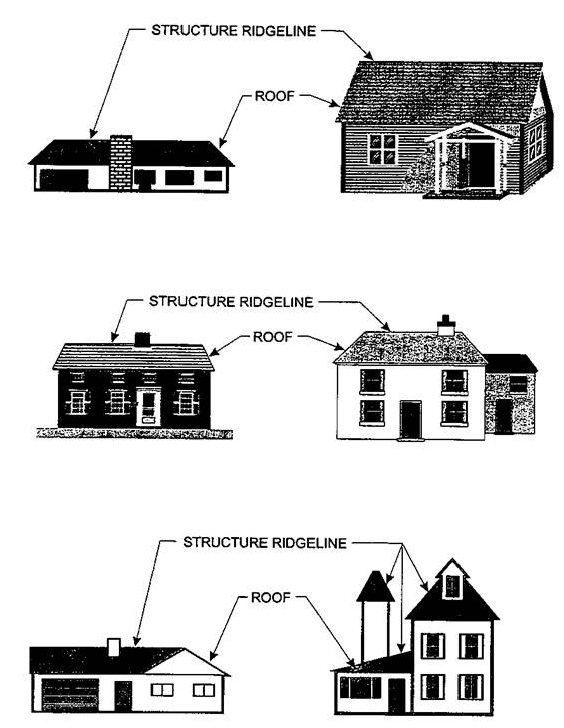
16.
Roof. The exterior surface on the top of a building or structure, as shown in the illustration accompanying "structure ridgeline."
S.
"S" Terms.
1.
Scenic Corridor. As designated on Figure OS-2 of the general plan open space element, a strip of land of high visual quality along a certain roadway.
2.
Scenic Highway. Those roadways in Sonoma County that have been so designated by the state of California.
3.
Seasonal Farmworker Housing. See "agricultural employee housing, seasonal."
4.
Second Unit. See "accessory dwelling unit."
5.
Secondary Use. A use of land or a building that is subordinate to, but may be different from the primary use of the land or building located on the same lot.
6.
Senior Household. A household with at least one (1) person who is sixty-two (62) years of age or older.
7.
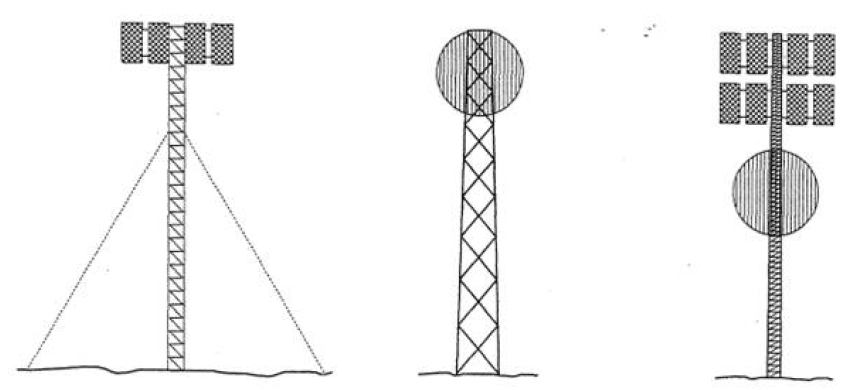
Silhouette. A calculation of the exposed surface area of the towers and antennas associated with a telecommunication facility, as seen from an elevation perspective, as shown in the accompanying illustration.
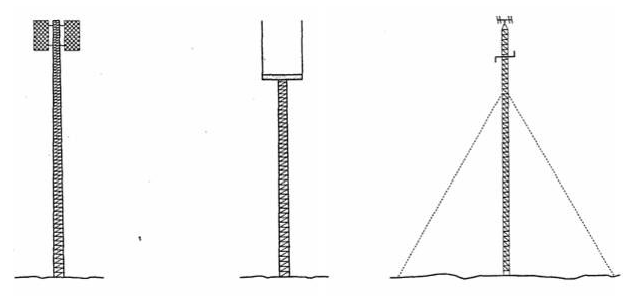
The silhouette is a calculation of the physical surfaces of the combined tower and antenna(s) included in a telecommunication facility. Only the physical surfaces, and not the air spaces in between, are counted in the calculation. The silhouette calculation is measured from the viewing angle which presents the largest exposure from an elevation perspective.
7.5.
Single-room Occupancy. See Section 26-24-250 for definition and development standards.
8.
Site Class I or II timberland. As defined in Section 1060 of the Forest Practice Rules.
9.
Site Classification. Site classification as defined in Section 4528 of the Public Resources Code.
10.
Site Coverage. The percentage of total lot area encumbered by impervious surfaces, including all structures, buildings and paved or compacted driveways, parking areas, patios and walkways and similar features.
11.
Slope. An inclined ground surface, the inclination of which is expressed as a ratio of horizontal distance to vertical distance (e.g., 2:1) or as a percentage (e.g., fifty percent (50%)).
12.
Sludge. Solid material produced through sewage treatment processes.
13.
Small Alcoholic Beverage Retail Establishment. An alcoholic beverage retail establishments with less than ten thousand (10,000) square feet of floor area.
14.
Small Collection Facility. A small collection facility which occupies an area of not more than five hundred (500) square feet and includes: reverse vending machines occupying more than fifty (50) square feet; bins, boxes, cans, kiosk-type units and other containers or receptacles; and/or a properly licensed automobile, truck, trailer or van.
15.
Small Wind Energy System. A wind energy conversion system consisting of a wind turbine, a tower, and associated control or conversion electronics, which has a rated capacity that does not exceed the allowable rated capacity under the Emerging Renewables Fund of the Renewables Investment Plan administered by the California Energy Commission and which will be used primarily to reduce onsite consumption of utility power.
16.
Solar Thermal Electric. The conversion of sunlight to heat and its concentration and use to power a generator to produce electricity. Typically, solar concentrators boil water with focused sunlight, generating high-pressure steam which drives conventional turbine generators.
16.5.
Sports and Entertainment Assembly. See Section 26-22-180 for definition and development standards.
17.
State CEQA Guidelines. The State Guidelines for Implementation of the California Environmental Quality Act, California Code of Regulations Title 14, Division 6, Chapter 3.
18.
State Stocking Standards. Stocking standards as defined in Section 895.1 of the Forest Practice Rules.
18.1.
State-Regulated Small Employee Housing. See Section 26-24-260 for definition and development standards.
18.2.
Storage: Contractor's storage yard. See Section 26-20-110 for definition and development standards.
18.3.
Storage: Manufactured home storage. See Section 26-20-120 for definition and development standards.
18.4.
Storage: Personal storage. See Section 26-20-130 for definition and development standards.
18.5.
Storage: Vehicle, boat, and RV storage. See Section 26-20-140 for definition and development standards.
18.6.
Storage: Warehouses. See Section 26-20-150 for definition and development standards.
18.7.
Storage: Wholesale and distribution. See Section 26-20-160 for definition and development standards.
19.
Street. A public or private thoroughfare which affords principal means of access to abutting property, including avenue, place, way, drive, land, boulevard, highway, road and any other thoroughfare except an alley as defined herein.
20.
Street Line. The boundary between a street and property.
21.
Structure. Anything constructed or erected, the use of which requires a location on the ground or attachment to something having location on the ground.
22.
Structural Alterations. Any change in the supporting members of a building such as bearing walls, columns, beams or girders.
23.
Structure Ridgeline. The long, narrow crest at the top of the juncture of two (2) or more surfaces making up the roof of a building or structure, as shown in the accompanying illustration.
24.
Studios for Art Crafts, Dance, Music. See Section 26-22-190 for definition and development standards.
T.
"T" Terms.
1.
Tasting Rooms. See Section 26-18-210 for definition and development standards.
1.1.
Telecommunication Facility. See Section 26-30-120 for definition and development standards.
1.2.
Temporary Occupancy of Travel Trailer. See Section 26-24-260 for definition and development standards.
1.3.
Theater and Entertainment Venues. See Section 26-22-200 for definition and development standards.
1.4.
Timber. Those species of trees listed as commercial species for the Coast Forest District, Group A, in Section 895.1 of the Forest Practice Rules.
2.
Timber Harvesting Plan. A timber harvesting plan approved by the Director of the California Department of Forestry and Fire Protection, or by the State Board of Forestry and Fire Protection upon appeal, pursuant to Section 1032 et seq. of the Forest Practice Rules.
2.1.
Timber Management. See Section 26-18-220 for definition and development standards.
2.2.
Timber Operations. Timber operations as defined in Section 4527 of the Public Resources Code.
2.3.
Timber Operator Storage Yard. See Section 26-18-230 for definition and development standards.
2.4.
Timber Production. Growing and harvesting timber for commercial purposes.
3.
Timber Saw Mills and Lumber Production. See Section 26-18-240 for definition and development standards.
4.
Timberland. Timberland as defined in Section 1100 of the Forest Practice Rules.
5.
Timberland Conversion. See Section 26-18-250 for definition and development standards.
6.
Timberland Conversion Permit. A timberland conversion permit issued by the Director of the California Department of Forestry and Fire Protection, or by the State Board of Forestry and Fire Protection upon appeal, pursuant to Section 1100 et seq. of the Forest Practice Rules.
6.5.
Timeshare. Any accommodation, or portion thereof, used in accordance with a timeshare plan. See Section 26-28-165 for related definitions.
7.
Tower. The support structure, including guyed, monopole and lattice types, upon which antennas are located as part of a telecommunication facility or upon which a wind turbine (or other mechanical device) is mounted as part of a small wind energy system.
8.
Tower Height. The height above grade of the fixed portion of the tower, excluding any telecommunication antennas or a wind energy system or its blades.
9.
Transient Use or Transient Occupancy. occupancy of a lodging facility or residence by any person other than the primary owner by concession, permit, right of access, license, gift or other agreement for a period of thirty (30) consecutive calendar days or less, counting portions of calendar days as full days.
9.5.
Transitional Housing. See Section 26-24-270 for definition and development standards.
10.
Travel Trailer. A vehicle, other than a motor vehicle or mobile home which is designed or used for human habitation and for travel or recreational purposes, which is not more than eight feet (8′) in width and is less than forty feet (40′) in length, and which may be moved upon a public highway without special permit or chauffeur's license or both, without violating any provision of the Vehicle Code of the state.
11.
Travel Trailer Park Or Recreational Trailer Park. Any area or tract of land where one (1) or more lots accommodate owners or users of travel trailers used for travel or recreational purposes wherein occupancy by any one (1) individual does not exceed ninety (90) consecutive days in any one (1) calendar year.
12.
Tree. A healthy living large woody plant which ordinarily has a central trunk and at maturity exceeds a height of fourteen feet (14′).
13.
Truck/Bus/Freight Terminal. See Section 26-30-130 for definition and development standards.
14.
Type Conversion. The removal of the capacity of the land to grow oak trees or Oak Woodlands by a person. This includes but is not limited to, clearing, grading, or otherwise modifying land for roads, driveways, buildings or building pads, utility easements, and Agricultural Crop Cultivation within an Oak Woodland. Maintenance such as pruning and removing dead branches from living oak resources is not included, provided that the maintenance does not include crown reduction resulting in death or conversion of the oak resource.
U.
"U" Terms.
1.
Universal Design. An environment designed and built to be accessed and used by all persons, regardless of ability or mobility.
2.
Urban Service Area. An urban service area designated in the general plan land use element. Also "county-designated area urban service area."
3.
Use or Land Use. The activity conducted on a site or in a structure, or the purpose for which a site or structure is designed, arranged, occupied, or maintained.
4.
Use Permit. A conditional use permit or a minor use permit.
V.
"V" Terms.
1.
Vacation Rental. The tenancy of residential property for a term of thirty (30) days or less that is subject to transient occupancy tax. Vacation rental does not include a hosted rental or a bed and breakfast inn.
2.
Vegetation removal. The cutting, breaking, burning or uprooting of vegetation, the application of herbicide to vegetation, the covering over of vegetation with earth, or the compacting of the soil under and around vegetation. For the purposes of this chapter, vegetation means all natural, non-cultivated plant life including the root system, stem, trunk, crown, branches, leaves or blades.
2.5.
Vehicle Maintenance and Repair. See Section 26-28-220 for definition and development standards.
2.6.
Vehicle/boat Sales and Rentals. See Section 26-26-150 for definition and development standards.
3.
Very Low-Income Household. A household whose gross annual income does not exceed fifty percent (50%) of the median income for Sonoma County as established by the U.S. Department of Housing and Urban Development, adjusted for household size.
4.
Veterinary Clinic. See Section 26-28-220 for definition and development standards.
4.5.
Visitor/Interpretive Center. See Section 26-22-210 for definition and development standards.
5.
Volatile Solvent. Volatile solvents may include but is not limited to: (1) explosive gases, such as Butane, Propane, Xylene, Styrene, Gasoline, Kerosene, 02 or H2; and (2) dangerous poisons, toxins, or carcinogens, such as Methanol, Methylene Chloride, Acetone, Benzene, Toluene, and Tri-chloro-ethylene as determined by the fire marshall.
W.
"W" Terms.
1.
Wet Bar. A single sink with a waste drain line no greater than one and one-half inches (1½") in diameter and an under counter refrigerator no greater than five (5) cubic feet in size with cabinets and/or counter top area not exceeding six (6) lineal feet. A wet bar shall not include a refrigerator in excess of five (5) cubic feet in size or a kitchen sink greater than two (2) square feet in size or a gas or electric range, stove top and/or oven (but may include a microwave oven).
2.
Wind Energy Conversion System. A machine used to convert the kinetic energy of the wind into a usable form of electrical energy, including wind turbine generators, rotors, and blades.
3.
Wind Energy System Height. The height above grade of the fixed portion of the tower including the vertical length of any extensions such as the rotor blade.
3.1.
Woodland Impact. Any activity which results in the removal or death of Native Oak Trees within an Oak Woodland.
4.
Work/Live Unit. See Section 26-24-280 for definition and development standards.
5.
Wrecking and Salvage Yards. See Section 26-20-170 for definition and development standards.
X.
"X" Terms.
Y.
"Y" Terms.
1.
Yard, Front. A yard extending across the front of the lot between the inner side yard lines and measured from the front line of the lot to the nearest lines of the building; provided, that if any building line or official plan line has been established for the street upon which the lot faces, then such measurement shall be taken from such building line or official plan line to the nearest line of the building.
2.
Yard, Rear. A yard extending across the full width of the lot and measured between the rear line of the lot and the nearest line of the main building.
3.
Yard, Side. A yard between the line of the lot and the nearest line of the building and extending from the front line of the lot to the rear yard.
4.
Year-Round or Extended Seasonal Farmworker Housing. See "Agricultural Employee Housing, Year-Round or Extended Seasonal."
Z.
"Z" Terms.
0.5
Zoning administrator. The zoning administrator or acting zoning administrator, as provided in Section 2-79 of this code.
1.
Zoning Database. The official zoning map of Sonoma County identifying the zoning districts and combining districts that apply to properties in unincorporated Sonoma County.
2.
Zoning District. A portion of the County within which certain uses of land and buildings are specified and within which certain yards and other open areas are required and certain height limits are established for buildings, all as set forth and specified in this chapter.
3.
Zoning Ordinance.Chapter 26 of the Sonoma County Code.
4.
Zoning Permit. A document issued by the Planning Division, typically permitting a parcel of land to be used for a prescribed purpose. See also "permit."
(Ord. No. 6516, § III(Exh. A), 5-6-2025; Ord. No. 6478, § V(Exh. A), 4-30-2024; Ord. No. 6469, § IV(Exh. A), 4-16-2024; Ord. No. 6458, §§ I, II, 12-5-2023; Ord. No. 6424, § II(Exh. A), 4-24-2023; Ord. No. 6403, 3-7-2023; Ord. No. 6405, § IV(Exh. A), 3-14-2023; Ord. No. 6386, § III, 8-2-2022; Ord. No. 6352, §§ II—IV, 9-14-2021; Ord. No. 6335, § III(Exh. A), 2-9-2021)

Glossary. [2]
Editor's note—Ord. No. 6335, § II, adopted February 9, 2021, repealed the former Art. 04, and § III(Exh. A) of the same ord. enacted a new article as set out herein. The former Art. 04 pertained to LIA Land Intensive Agriculture District and derived from Ord. No. 4643, adopted in 1993; and Ord. No. 5964, § III, adopted Jan. 31, 2012.
This article provides definitions of terms and phrases used in the zoning ordinance that are technical or specialized, or which may not reflect common usage. Uses are defined separately in Chapter 26, within the use standards articles. If any of the definitions in this article conflict with others in this chapter or elsewhere in the county code, these definitions shall control for only the provisions of this zoning ordinance. If a word is not defined in this chapter or in other chapters of the zoning ordinance, the director shall determine the appropriate definition.
(Ord. No. 6335, § III(Exh. A), 2-9-2021)

A.
"A" Terms.
1.
Accessory Dwelling Unit (ADU). See Section 26-24-020 for definition and development standards.
2.
Accessory Renewable Energy System. An on-site renewable energy system, including but not limited to wind, bioenergy, solar, low-temperature geothermal heating systems, geothermal heat pump systems, and fuel cells and combinations thereof, where the energy generated is used primarily to meet the energy demands of the lawful use on the property where the system is located.
3.
Accessory Structure, Residential. A structure, which is accessory to and incidental to a dwelling on the same lot.
4.
Accessory Structure, Agricultural. A structure, primarily used in support of agricultural operations and which is located on the same lot as the agricultural operation.
5.
Accessory Use. A use of land or a building that is related to and subordinate to the primary use of the land or building located on the same lot. (Compare with "secondary use")
6.
Administrative Citation. A written citation on a form approved by the director, issued to any person or entity responsible for creating or allowing a violation of the provisions of the county code, when the agent of the county determines that a violation has occurred.
7.
Affordable Housing. Affordable ownership or affordable rental housing as defined in this article.
8.
Affordable Housing Agreement. A contract with the county executed by the developer of a residential project that limits the sales price and/or monthly rent of specified dwelling units within the project, establishes a time period during which the specified units shall continue to be sold and/or rented at affordable prices, and which may contain administrative, enforcement or other provisions to ensure that the specified units are sold and/or rented to targeted households at affordable sales prices and/or monthly rent over the entire term of the agreement.
9.
Affordable Housing Project. A project that is granted a density bonus in exchange for the provision of affordable ownership housing, or affordable rental housing, which affordable housing, or a portion thereof, is subject to an affordable housing agreement pursuant to Section 26.89.100.
10.
Affordable Housing Unit, Restricted. A unit of affordable rental or affordable ownership housing that is subject to an affordable housing agreement recorded and maintained in accordance with Sections 26.89.080 (ownership unit occupancy and long-term restrictions) and 26.89.090 (rental unit occupancy and long-term restrictions).
11.
Affordable Ownership Housing. Home ownership housing for which the monthly housing costs (principal and interest payment on a thirty-year, fixed-rate, fully amortized first mortgage, homeowners insurance, property taxes, and, as applicable, homeowners association dues and private mortgage insurance) do not exceed thirty percent (30%) of the maximum allowable income as established by the U.S. Department of Housing and Urban Development for extremely low-, very low-, low-, and moderate-income households, adjusted for household size; assuming that household size will equal the number of bedrooms contained within the unit, plus one (1).
12.
Affordable Rental Housing. Rental housing for which the monthly housing costs (rent plus tenant-paid utilities) do not exceed thirty percent (30%) of sixty percent (60%) of median area income as established by the U.S. Department of Housing and Urban Development (HUD) for a low-income household, adjusted for household size, and, not more than thirty percent (30%) of fifty percent (50%) of HUD median area income for a very low-income household, adjusted for household size, and not more than thirty percent (30%) of thirty percent (30%) of HUD median area income for an extremely low-income household, adjusted for household size, assuming that the household size will equal the number of bedrooms contained within the unit, plus one (1).
13.
Agent of the County. Any county employee or authorized representative of the County, or a designated county contractor, charged with the authority to implement or enforce any provision of the county code.
14.
Agency having jurisdiction. The agency having delegated authority to adopt, determine, mandate or enforce ordinances and regulatory requirements established by the county of Sonoma and other jurisdictional governing bodies.
15.
Agricultural Crop. Any cultivated crop grown and harvested for commercial purposes, except for cannabis and other controlled substances, which are defined and classified separately.
16.
Agricultural Employee. A person employed in the operation of an agricultural enterprise.
16.1.
Agricultural Employee Housing. Caretaker dwelling. See Section 26-24-030 for definition and development standards.
16.2.
Agricultural Employee Housing: Full-time. See Section 26-24-040 for definition and development standards.
16.3.
Agricultural Employee Housing: Seasonal. See Section 26-24-050 for definition and development standards.
16.4.
Agricultural Employee Housing: Temporary Camp. See Section 26-24-060 for definition and development standards.
16.5.
Agricultural Employee Housing: Year-round or extended seasonal. See Section 26-24-070 for definition and development standards.
17.
Agricultural Enterprise. An operation of a property owner/operator that derives their primary and principal income from the production of agricultural commodities for commercial purposes, including but not limited to the following: growing of crops or horticultural commodities; breeding and raising of livestock, poultry, bees, furbearing animals, horses; agricultural processing; and preparation of commodities for market. An agricultural enterprise excludes boarding of horses, forestry and lumbering operations, and commercial transportation of prepared products to market.
18.
Agricultural Lands. Land designated in the general plan within an agricultural land use category.
19.
Agricultural Processing. The act of changing an agricultural product from its natural state to a different form, as grapes to wine, apples to juice or sauce, agricultural crops to extracted oils, etc.
20.
Agricultural Production. Production of food, fiber and plant materials, including, but not limited to, growing, harvesting, crop storage and milking, etc., but not including agricultural support services, processing and visitor-serving uses.
20.1.
Agricultural Support Services. See Section 26-18-050 for definition and development standards.
20.2.
Airfields and Landing Strips: Agricultural or Personal. See Section 26-030-020 for definition and development standards.
20.3.
Airfields and Landing Strips: Restricted Use. See Section 26-30-030 for definition and development standards.
20.4.
Alcoholic Beverage Sales. See Section 26-26-020 for definition and development standards.
20.5.
Animal Keeping: Beekeeping. See Section 26-18-060 for definition and development standards.
20.6.
Animal Keeping: Confined Farm Animals. See Section 26-18-070 for definition and development standards.
20.7.
Animal Keeping: Farm Animals. See Section 26-18-080 for definition and development standards.
20.8.
Animal Product Processing. See Section 26-20-020 for definition and development standards.
21.
Antenna. The transmitting and/or receiving device, including wires, rods, discs, or similar devices, that transmits or receives electromagnetic signals.
22.
Antenna, Vertical. A vertical type antenna with no horizontal components other than a small radial element at its base.
22.5.
Applicant - Cannabis. A person that is applying for a permit to engage in commercial cannabis activity pursuant to this chapter.
22.6.
Aquaculture. See Section 26-18-110 for definition and development standards.
23.
Arboreal Value. A mathematical evaluation of the arboreal component of a site for the purposes of establishing a plan for tree preservation.
24.
Attached Commercial Telecommunication Facility. A commercial telecommunication antenna which is affixed, fastened, or joined to a residence, business, or similar structure, other than another telecommunication facility, and which does not include a tower.
25.
Applicant. Any person, firm, partnership, association, joint venture, corporation, or an entity or combination of entities which seeks county permits and approvals.
B.
"B" Terms.
1.
Banks and Financial Institutions. See Section 26-28-030 for definition and development standards.
1.5.
Bar, Tavern, Nightclub. See Section 26-26-030 for definition and development standards.
1.6
Base Unit. A dwelling unit allowed on a site by the applicable zoning district, but not including an accessory dwelling unit, farm family unit, agricultural employee housing, or density bonus unit.
2.
Biodiesel. A liquid fuel intended for consumption by compression ignition engines that is produced by chemical modification of plant oil, animal fat, or algae feedstock. Production involves reacting the feedstock with an alcohol such as ethanol in the presence of a catalyst.
3.
Bioenergy. Renewable energy made available from materials derived from feedstocks that consist of recently living organisms or their metabolic by- products from sources such as farming, forestry, and biodegradable industrial and municipal waste.
4.
Biosolids. Sewage sludge that has been treated, tested and shown to be capable of being used beneficially as a soil amendment for agricultural, silvicultural, horticultural, and land reclamation activities.
5.
Biotic Resources. Unique or significant plant or animal communities including estuaries, fresh and salt water marshes, tideland resources, riparian corridors and certain terrestrial communities as set forth in the general plan.
6.
Base Zoning District. The primary zoning, as distinguished from a combining zone, that applies to a parcel of land as shown on the zoning map.
7.
Board. The Sonoma County Board of Supervisors.
8.
Building. See "structure."
8.5.
Building and Landscape Materials Sales. See Section 26-26-040 for definition and development standards.
9.
Building, Accessory. A subordinate building, the use of which is incidental to that of the main building on the same lot or building site.
10.
Building Coverage. The percentage of total lot area covered by structures, provided that pavement, driveways, uncovered decks less than thirty inches (30″) in height, and roof overhangs less than two feet (2′) wide may be excluded.
11.
Building Envelope. A defined location or locations on a lot.
12.
Building, Main. A building in which is conducted the principal use of the lot or building site on which it is situated.
13.
Building Site Area. An area of land which may be smaller than a recorded lot or parcel occupied or to be occupied by a main building and its accessory buildings, or by a dwelling group and its accessory buildings, together with such open areas as are required by the terms of this chapter.
14.
Building Permit. A permit issued in compliance with the county code to allow construction of a structure or other physical improvement.
15.
Business Area. Property contiguous to a highway that (a) upon one (1) side of which highway, for a distance of six hundred feet (600′), fifty percent (50%) or more of the contiguous property fronting thereon is occupied by a permanent business use, or (b) upon both sides of which highway, collectively, for a distance of three hundred feet (300′), fifty percent (50%) or more of the contiguous property fronting thereon is so occupied. A business area may be longer than the distances specified in this section if the above ratio of land in use for business to the length of the highway exists.
15.5.
Business Support Services. See Section 26-28-040 for definition and development standards.
16.
By Right. A land use, structure, or activity allowed if it complies with applicable zoning ordinance requirements and no discretionary approval is required.
C.
"C" Terms.
1.
California Environmental Quality Act (CEQA). California State law (Public Resources Code Section 2100 et seq.) requiring government agencies to consider the environmental consequences of their actions before taking action on a proposed project.
1.5.
Camp, Organized. See Section 26-22-020 for definition and development standards.
1.6.
Campgrounds. See Section 26-22-030 for definition and development standards.
2.
Cannabis. All parts of the plant Cannabis sativa Linnaeus, Cannabis indica, or Cannabis ruderalis, or any other strain or varietal of the genus Cannabis that may exist or hereafter be discovered or developed whether growing or not; the seeds thereof; the resin, whether crude or purified, extracted from any part of the plant; and every compound, manufacture, salt, derivative, mixture, or preparation of the plant, its seeds, or resin. "Cannabis" also means the separated resin, whether crude or purified, obtained from cannabis. "Cannabis" does not include the mature stalks of the plant, fiber produced from the stalks, oil or cake made from the seeds of the plant, any other compound, manufacture, salt, derivative, mixture, or preparation of the mature stalks (except the resin extracted therefrom), fiber, oil, or cake, or the sterilized seed of the plant which is incapable of germination. For the purpose of this section, "cannabis" does not mean "industrial hemp" as defined by Section 81000 of the California Food and Agricultural Code or Section 11018.5 of the California Health and Safety Code, or the weight of any other ingredient combined with cannabis to prepare topical or oral administrations, food, drink, or other product. Cannabis is classified as an agricultural product separately from other agricultural crops.
3.
Cannabis Business Owner. A person with an aggregate ownership interest of twenty percent (20%) or more in the person applying for a permit, unless the interest is solely a security, lien, or encumbrance; the chief executive officer of a nonprofit or other entity; a member of the board of directors of a nonprofit; the trustee(s) and all persons that have control of the trust and/or the commercial cannabis business that is held in trust; and/or an individual who will be participating in the direction, control, or management of the person applying for a permit.
4.
Cannabis Cultivation. Any activity involving the planting, growing, harvesting, drying, curing, grading, or trimming of cannabis.
5.
Cannabis Cultivation Area. The total aggregate area(s) of cannabis cultivation on a single premises as measured around the outermost perimeter of each separate and discrete area of cannabis cultivation at the dripline of the canopy expected at maturity and includes, but is not limited to, the space between plants within the cultivation area, the exterior dimensions of garden beds, garden plots, hoop houses, green houses, and each room or area where cannabis plants are grown, as determined by the review authority.
6.
Cannabis Cultivation - Indoor. Cannabis cultivation within any type of structure using exclusively artificial lighting.
7.
Cannabis Cultivation - Mixed-Light. Cannabis cultivation in a greenhouse or other similar structure using natural light, light deprivation, and/or any combination of natural and supplemental artificial lighting.
8.
Cannabis Cultivation Outdoor. Cannabis cultivation using no artificial lighting conducted in the ground or in containers outdoors.
9.
Cannabis Cultivation Site. The premises where commercial cannabis is planted, grown, harvested, dried, cured, graded, or trimmed or where all or any combination of those activities occurs.
10.
Cannabis Cultivation Type. The type of cultivation is classified as outdoor, indoor or mixed-light as defined herein, consistent with the state licensing scheme.
10.5.
Cannabis Delivery. The commercial transfer of cannabis or cannabis products to a customer, including use by a retailer of any technology platform owned and controlled by the retailer.
11.
Cannabis Dispensary. A facility where cannabis, cannabis products, or devices for the use of cannabis are offered, either individually or in any combination, for retail sale, including an establishment that delivers cannabis and/or cannabis products as part of a retail sale.
12.
Cannabis Distribution. The procurement, sale, and transport of cannabis and cannabis products between licensees.
13.
Cannabis License. A license issued by the state of California pursuant to the Medicinal and Adult-Use Cannabis Regulation and Safety Act (MAUCRSA).
14.
Cannabis Licensee. Any person issued a license by the state of California under the Medicinal and Adult-Use Cannabis Regulation and Safety Act (MAUCRSA).
15.
Cannabis Manufacturer. A person that conducts the production, preparation, or compounding of cannabis or cannabis products either directly or indirectly or by extraction methods, or independently by means of chemical synthesis, or by a combination of extraction and chemical synthesis at a fixed location that packages or repackages cannabis or cannabis products or labels or relabels its container.
16.
Cannabis Manufacturing. All aspects of the extraction process, infusion process, and packaging and labeling processes, including preparing, holding, or storing of cannabis products. Manufacturing also includes any preparing, holding, or storing of components and ingredients.
17.
Cannabis Medical. Any cannabis or cannabis product intended to be sold for use pursuant to the Compassionate Use Act of 1996 (Proposition 215), found at Section 11362.5 of the Health and Safety Code.
18.
Cannabis Operator. The individual authorized to represent the person applying for or operating pursuant to a permit authorizing any commercial cannabis activity pursuant to this chapter.
19.
Cannabis Product. Cannabis that has undergone any process whereby the plant material has been transformed into a concentrate, including, but not limited to, concentrated cannabis, or an edible or topical product containing cannabis or concentrated cannabis and other ingredients.
20.
Cannabis Testing Laboratory. A laboratory, facility, or entity in the state of California that offers or performs tests of cannabis or cannabis products.
21.
Cannabis Transport. The physical movement of cannabis or cannabis products from one (1) licensed premises to another licensed premises.
21.5.
Caretaker Dwelling. See Section 26-24-080 for definition and development standards.
22.
Carport. An accessible and usable covered space not less than ten feet (10′) by twenty feet (20′) open on two (2) or more sides for the storage of automobiles.
22.5.
Cemetery. See Section 26-28-050 for definition and development standards.
23.
Certified Arborist. Any person who has current certificate from the International Society of Arboriculture.
23.5.
Civic institution. See Section 26-22-040 for definition and development standards.
24.
Co-Generation. The successive production of electrical or mechanical energy and useful heat energy.
25.
Co-Located Telecommunication Facility. A telecommunication facility which is comprised of a single tower containing a combination of antennas owned or operated by more than one (1) public or private entity.
26.
Combining District. A district whose Regulation may supplement any other district except another combining district; for example, "RR" combined with "SR" (RR SR) adds the requirements of the scenic resource combining district.
26.1.
Commercial Cannabis Activity. The cultivation, possession, manufacture, distribution, processing, storing, laboratory testing, packaging, labeling, transportation, delivery, or sale of cannabis and cannabis products.
26.2.
Commercial Horse Facilities and Stables. See Section 26-28-060 for definition and development standards.
26.3.
Commercial Kennel. See Section 26-28-070 for definition and development standards.
27.
Commercial Renewable Energy Facility. An energy generation facility using renewable fuel sources, including but not limited to wind, bioenergy, solar, geothermal, and fuel cells and combinations thereof, where the energy generated is used to meet off-site energy needs. Commercial renewable energy facilities are subject to the general development standards set forth in Section 26-88- 200(b) as well as any applicable special use regulation.
28.
Community Choice Aggregator (CCA). As defined in Public Utilities Code Section 331.1 refers to any of the following entities, if that entity is not within the jurisdiction of a local publicly owned electric utility that provided electrical service as of January 1, 2003: any city, county, or city and county whose governing board elects to combine the loads of its residents, businesses, and municipal facilities in a communitywide electricity buyers' program or any group of cities, counties, or cities and counties whose governing boards have elected to combine the loads of their programs, through the formation of a joint powers agency established under Chapter 5 (commencing with Section 6500) of Division 7 of Title 1 of the Government Code.
28.5.
Community Meeting Facilities. See Section 26-22-050 for definition and development standards.
29.
Community Supported Agriculture. A system by which people purchase, typically through monthly subscription, a share from a local farm and periodically receive fresh produce or other agricultural products produced or processed on site.
30.
Companion Animals. Animals normally maintained in a home as pets.
31.
Composting. The controlled or uncontrolled biological decomposition of organic wastes.
32.
Condominium. An estate in real property consisting of an undivided interest in common in a portion of a parcel of real property, together with a separate interest in space in a residential, commercial or industrial building on such property (See Civil Code Section 783.) A condominium may also include a separate interest in other parts of the real property. For purposes of this chapter, and to the extent reasonably feasible, the term condominium apartment building and a stock cooperative, as each are defined by Sections 1103-4 of the Business and Professions Code. The creation of two (2) or more condominiums may be termed a condominium project.
33.
Condominium Conversion. The subdivision of real property containing an apartment building or buildings or dwelling group into a condominium project, a planned unit development project, a community apartment project, or a stock cooperative project.
33.5.
Congregate Housing. See Section 26-24-090 for definition and development standards.
34.
Contiguous Riparian Vegetation. Riparian vegetation that is physically touching or adjacent, and not separated by features like roads, developed land, or cropland.
34.1.
Cottage Food Operation. See Section 26-24-100 for definition and development standards.
34.2.
Cottage Housing Development. See Section 26-24-110 for definition and development standards.
34.3.
Country Club. See Section 26-22-060 for definition and development standards.
35.
County. The unincorporated portions of Sonoma County.
36.
County Boundary. The boundary of the county, or the boundary of any city in the county.
37.
Cropland. Land devoted to the production of agricultural crops.
38.
Cultural Events. See "periodic special events."
D.
"D" Terms.
1.
Damage to a protected tree. Significant injury to the root system or other parts of a tree including burning, application of toxic substances, damaging through contact with equipment or machinery or compacting the soil within the dripline, changing the natural grade, interfering with the normal water requirements of the tree, trenching or excavating within the dripline, or removing more than one-third of the live wood.
1.5.
Day Care Center. See Section 26-28-080 for definition and development standards.
2.
Decision maker. The director, the design review committee, the zoning administrator, the planning commission, or the board of supervisors, as appropriate.
3.
Density Bonus. A density increase allowed pursuant to Section 26.89.050 (density bonus programs) over the otherwise maximum allowable residential density permitted in the applicable zoning district. (See "residential density.")
4.
Density Bonus Unit. A dwelling unit allowed in a project by the County in addition to base units pursuant to Section 26.89.050 (density bonus programs).
5.
Department. The Sonoma County Permit and Resource Management Department.
6.
Designated Stream. A river or stream mapped or identified in the Open Space and Resource Conservation Element of the general plan, or in an adopted area plan or specific plan or other adopted stream protection standards, guidelines, or mitigation measures.
7.
Development Fee. The impact fees established by the board of supervisors for development including, but not limited to, special area development fees, countywide traffic development fee, parkland dedication fee and affordable housing in-lieu fee. Development fee does not include fees established by special districts or school districts.
8.
Development Incentive. See "Incentive."
9.
Development permit. A discretionary permit or approval including, but not limited to; subdivisions, use permits, precise development plans, lot line adjustments, variances, design review and zoning permits. Ministerial permits not accompanied by any other type of discretionary review or approval are exempt from this definition.
10.
Development Standard. For purposes of Article 89 (affordable housing program requirements and incentives), a site or construction standard or condition, including, but not limited to, a height limitation, a setback requirement, a floor area ratio, an onsite open-space requirement, or a parking ratio that applies to a residential development pursuant to any ordinance, general plan element, specific plan, or other local condition, law, policy, resolution, or regulation.
11.
Diameter At Breast Height (Dbh). The average diameter of a standing live tree measured outside the bark, at breast height, a point four and one-half feet (1.37m) above the average ground level. For trees that are multi-stemmed at this height, diameter at breast height shall be calculated by measuring each stem individually and combining the results. Diameter at breast height may be calculated by measuring the circumference of a tree at breast height and dividing by 3.14.
12.
Director. The Sonoma County Permit and Resource Management Director or the director's designee.
13.
Disabled Household. A household with at least one (1) person who has a physical, developmental, or mental impairment that substantially limits one (1) or more major life activities, such as caring for one's self, performing manual tasks, walking, seeing, hearing, speaking, breathing, learning, and/or working (Source: 24 CFR Part 8, Sec. 8.3).
14.
Discretionary Approval. Action by the county by which individual judgement is used as a basis to approve or deny an application.
14.5.
Dispatch Facility. See Section 26-30-040 for definition and development standards.
15.
Distributed Energy System or Facility. A small-scale electricity generation system or facility that is interconnected to the distribution network. Distributed energy systems primarily serve on-site uses, while distributed energy generation facilities generate power for both on- and off-site power needs.
16.
District. See "zoning district."
17.
Drip Line. The area identified by extending a vertical line from the outermost portion of the limb canopy to the ground with its axis parallel to the trunk.
18.
Dwelling Group. A group of two (2) or more detached or semi-detached, one (1) family duplex or multiple dwellings situated upon a permanent foundation, occupying a parcel of land having any yard, court or area in common.
19.
Dwelling Unit. See "Residential - dwelling unit."
E.
"E" Terms.
1.
Education Institutions: Colleges and Universities. See Section 26-22-070 for definition and development standards.
1.1.
Education Institutions: Elementary and Secondary schools. See Section 26-22-080 for definition and development standards.
1.2.
Education Institutions: Specialized Education and Training. See Section 26-22-090 for definition and development standards.
1.3
Efficiency Kitchen. A cooking facility with appliances, and a food preparation counter and storage cabinets that are of reasonable size in relation to the size of the dwelling unit.
1.4.
Electric Vehicle Charging Station. A station that is designed and built in compliance with Article 625 of the California Electrical Code to charge electric or partially electric vehicles.
2.
Emerging Renewable Technology. Technology that uses a renewable power source, such as solar or wind energy, to generate electricity, and that has emerged beyond the research and development phase, is commercially available, and has significant commercial potential as determined by the Energy Commission. Emerging renewable technologies include photovoltaic, solar thermal electric, fuel cells using a renewable fuel, and small wind turbine technology no greater than fifty (50) kilowatts in size.
3.
Employment Node. An area of contiguous parcels within an urban service area that encompasses at least three (3) acres of commercial-zoned land, ten (10) acres of industrial-zoned land, or a combination that provides an equivalent ratio.
4.
Exotic Animal. Any wild animal which the California Fish and Game Commission has declared to be a prohibited wild animal and the importation, transportation or possession of which is unlawful except under authority of a revocable permit issued by the California Department of Fish and Game.
5.
Extremely Low-Income Household. A household whose gross annual income does not exceed thirty percent (30%) of the median income for Sonoma County as established by the U.S. Department of Housing and Urban Development, adjusted for household size.
F.
"F" Terms.
1.
Family Day Care Home. See Section 26-24-150 for definition and development standards.
1.1
Farm Animal. Any animal, other than wild or exotic, customarily kept or raised by humans for companion and/or commercial purposes.
1.2.
Farm Equipment and Supplies Sales and Rental. See Section 26-26-050 for definition and development standards.
2.
Farm Family Dwelling. An additional single-family dwelling incidental to the main dwelling in terms of size, location and architecture which is not leased, subleased, rented or subrented separately from the main dwelling nor divided by sale, and which is inhabited by a member of the farm operator's family.
2.5.
Farm Stand. See Section 26-18-150 for definition and development standards.
3.
Farm Retail Sales Facility. A small-scale retail facility for year-round sales of agricultural products grown or raised on the site or other properties owned or leased by the farm operator, and pre-packaged goods processed from onsite agricultural production, excluding alcoholic products. See use regulation 26-18-140. See also tasting room or farm stand.
4.
Farmworker. See "agricultural employee."
5.
Farmworker Housing, Seasonal. Any housing accommodation or structure of a temporary or permanent nature used as housing for farmworkers for not more than one hundred eighty (180) days in any calendar year and approved for such use pursuant to Title 25 of the California Code of Regulations.
6.
Farmworker Housing, Year-Round And Extended. Any housing accommodation or structure of a temporary or permanent nature used as housing for farmworkers for more than one hundred eighty (180) days in any calendar year and approved for such use pursuant to Title 25 of the California Code of Regulations.
7.
Feed Yard/Lot. Corrals or holding areas for the primary purpose of holding or feeding animals for market and not incidental to a farm or ranch.
7.5.
Fertilizer Plants. See Section 26-20-030 for definition and development standards.
8.
Final Inspection. The same meaning as described in the Uniform Building Code, as modified and adopted in Chapter 7 of the county code.
8.5.
Firewood Yard. See Section 26-20-030 for definition and development standards.
9.
First Time Home-Buyer. As defined by the CDC and set forth in its Sonoma County Affordable Housing Program Homeownership Policies, available at the offices of the CDC.
10.
Flood Proof Structure. A structure which, in the opinion of the chief engineer of the Sonoma County water agency and the county building inspector, is designed and constructed to resist flotation, destruction, or major damage by the maximum flood predicted for the structure site.
11.
Flood, Selected. The magnitude of flood to be used for establishing minimum flood profile levels and designating the outer limits of the part of the flood plain to be regulated, i.e., the outer limits of the floodway (F1) and floodplain (F2) districts. The selected flood shall be determined by the planning commission and the board of supervisors upon recommendation by the chief engineer of the Sonoma County water agency.
12.
Floodway. The portion of the stream channel and the adjacent flood plain that must be reserved in order to discharge the selected flood without cumulatively increasing the water surface more than one foot (1′).
13.
Forest Practice Rules. The California Forest Practice Rules, California Code of Regulations, Title 14, Division 1.5, Chapter 4.
14.
Freestanding Commercial Telecommunication Facility. A telecommunication facility which is operated in whole or part for commercial purposes such as mobile radio services, cellular telephone services, TV and radio broadcast, personal communication services, but which is not affixed, fastened, or joined to a residence, business, or similar structure. A facility which includes an antenna(s) placed upon a tower which is attached to a structure is considered to be a freestanding facility. Telecommunication facilities operated in whole or part by public agencies are included in this category. However, a telecommunication facility installed by a public utility for the sole purpose of monitoring and protecting its gas and electric facilities shall not be considered a telecommunication facility and shall be exempt from the telecommunication standards of this chapter.
a.
Major Facility. Such facility which involves a combination of towers and antennas greater than one hundred thirty feet (130′) in height.
b.
Intermediate Facility. Such facility which involves a combination of towers and antennas greater than forty feet (40′) and less than or equal to one hundred thirty feet (130′) in height.
c.
Minor Facility. Such facility which involves a combination of towers and antennas less than or equal to forty feet (40′) in height.
15.
Freeway. Any expressway or limited access highway, as those terms are defined by the Streets and Highways Code of the State.
16.
Fuel Cell. An advanced energy conversion device that combines hydrogen-bearing fuels with airborne oxygen in an electrochemical reaction to produce electricity very efficiently and with minimal environmental effects.
17.
Fuel Dealers. See Section 26-26-070 for definition and development standards.
18.
Fuel Station, Retail. A retail facility that sells gasoline or diesel to the public for the purposes of fueling motor vehicles, or gasoline powered tools or appliances.
19.
Fuel Station, Non-Retail. Fossil fuel dispensing equipment operated solely by an owner, business, or agricultural operation to support that owner, business, or agricultural operation's own legally established uses, but not including any equipment used to provide fuel for sale to the public.
G.
"G" Terms.
1.
Garage. An accessible and usable covered parking space of not less than ten feet (10′) by twenty feet (20′) for storage of automobiles, such garage to be located on the lot so as to meet the requirements of this chapter for an accessory building.
2.
Garden Apartments. An apartment building with a minimum of two thousand (2,000) square feet of building area per dwelling unit together with outdoor living or recreation space with planting and landscaping.
3.
Gasoline service station. See "fuel station."
4.
General Plan. The current adopted version of the Sonoma County General Plan.
4.5.
General Retail. See Section 26-26-090 for definition and development standards.
5.
Geothermal. Natural heat from within the earth, captured for production of electrical power.
5.5.
Golf Course. See Section 26-22-100 for definition and development standards.
5.6.
Greenhouse. A permanent structure, including glasshouses, conservatories, hothouses, or other similar structures for the covered propagation and growing of plants, constructed with a translucent roof and/or walls.
6.
Guest House. See Section 26-24-170 for definition and development standards.
H.
"H" Terms.
1.
Hardrock Quarry Operations. Processed or crushed rock operations which entail the extraction, stockpiling, processing and sale of bedrock geologic deposits.
1.5.
Heavy Equipment Sales and Rentals. See Section 26-26-100 for definition and development standards.
2.
Height of Buildings. The vertical distance from the average level of the highest and lowest point of that portion of the lot covered by the building to the topmost point of the roof.
3.
Home Occupation. The conduct of a business within a dwelling unit or accessory structure by occupants of the dwelling, with the business activity being subordinate to the residential use of the site. All home occupations shall be conducted in accordance with Section 26-88-121.
3.1.
Homeless Shelter. See Section 26-28-090 for definition and development standards.
3.2.
Hoop House - Cannabis. A temporary structure used for season extension or crop protection erected for less than one hundred eighty (180) days. Hoop houses do not include light deprivation, ventilation, artificial lighting, or any electrical components. The ends are left open and the material covering the structure is removable.
3.3.
Horse Boarding. See Section 26-28-100 for definition and development standards.
4.
Housing Opportunity Area. A parcel or parcels of land designated by the County for affordable housing in compliance with the general plan housing element and Section 26.89.050(F).
5.
Hybrid Alternative Energy Facilities. An alternative energy system using one or more renewable fuel sources to provide electricity, gas, or heat energy. Batteries or fuel cells may be a part of a hybrid alternative energy facility.
I.
"I" Terms.
1.
Important Farmland. Lands mapped by the state Farmlands Mapping and Monitoring Program (FMMP) as prime farmland, farmland of statewide importance, or unique farmlands. Does not include lands mapped by the FMMP as farmlands of local importance unless specifically noted.
2.
Incentive. For purposes of Article 89 (affordable housing program requirements and incentives), a modification of zoning code requirements (e.g., minimum open space, minimum lot size, setbacks, parking standards); or an allowance of other regulatory incentives or measures granted in exchange for the provision of affordable ownership housing or affordable rental housing pursuant to Section 26.89.060.
3.
Incidental Use. See "secondary use."
3.5.
Indoor Crop Cultivation. See Section 26-18-160 for definition and development standards.
4.
Indoor Recreation. See "commercial recreation facility, indoor."
5.
Infill Development. A dwelling group, consisting of detached single-family dwellings or manufactured homes, on a single parcel located in an R1 low density residential district. The number of dwelling units within such dwelling group shall not exceed the maximum residential density permitted by the general plan land use element.
6.
Institutional Use. Any use, commonly consisting of offices, churches, public buildings, financial institutions, etc., whose function does not involve direct on- site sales of products or personal services.
7.
Instream Operations. Sand and gravel operations which entail the extraction and sale of sand and gravel from stream and river channels.
8.
Intensity of Development. The floor area or floor area ratio of a development.
J.
"J" Terms.
1.
Junior Accessory Dwelling Unit (JADU). See Section 26-24-190 for definition and development standards.
2.
Junkyard. Any land or lot where more than one hundred (100) square feet of the area or where any portion of that land or lot which adjoins any public or private street or road is used for the storage of junk, including scrap metals, salvage or other scrap materials, or for the dismantling or wrecking of automobiles or other vehicles or machinery, whether for sale or storage.
K.
"K" Terms.
1.
Kennel Animal. Any dog or cat kept at a commercial kennel or pet fancier kennel.
2.
Kitchen. A kitchen means an area within a structure that is used or designed to be used for the preparation or cooking of food and that contains one (1) or both of the following:
a.
Cooking appliances or rough-in facilities including, but not limited to: ovens, convection ovens, stoves, stove-tops, built-in grills or microwave ovens or similar appliances, 240-volt electrical outlets or any gas lines; or
b.
A sink less than eighteen inches (18") in depth with a waste line drain one and one-half inches (1½") or greater in diameter AND a refrigerator exceeding five (5) cubic feet in capacity or space with an electrical outlet that may reasonably be used for a refrigerator exceeding five (5) cubic feet in capacity.
L.
"L" Terms.
1.
Laboratories. See Section 26-20-040 for definition and development standards.
1.1.
Land and Resource Management. See Section 26-18-170 for definition and development standards.
1.2
Land Use. See "Use."
2.
Land Use Regulation Table. A table in Article 6 (agricultural and resource zoning districts) through Article 14 (special purpose zoning districts) identify permits required for allowed land uses in each zoning district
3.
[Reserved].
3.5.
Laundry Plants. See Section 26-20-050 for definition and development standards.
4.
Lead Agency. Lead agency as defined in Section 15367 of the State CEQA Guidelines.
4.5.
Light Deprivation. The elimination of natural light in order to induce flowering, using black out tarps or any other opaque covering.
4.6.
Live/Work. See Section 26-24-200 for definition and development standards.
5.
Livestock. Animals maintained as a source of food or clothing, including bovine and equine animals.
6.
Local Area Development Guidelines. Design and other guidelines for development that apply to a specified community or local area, as a subunit of a planning area, and which provide a greater level of detail or relate special circumstances for use in that area.
6.1.
Lodging: Agricultural Farmstay. See Section 26-28-110 for definition and development standards.
6.2.
Lodging: Agricultural Marketing Accommodations. See Section 26-28-120 for definition and development standards.
6.3.
Lodging: Bed and Breakfast. See Section 26-28-130 for definition and development standards.
6.4.
Lodging: Hosted Rental. See Section 26-28-140 for definition and development standards.
6.5.
Lodging: Hotel, Motel, and Resort. See Section 26-28-150 for definition and development standards.
6.6.
Lodging: Vacation Rental. See Section 26-28-160 for definition and development standards.
7.
Lot. Lot means a legally defined parcel or contiguous group of parcels in single ownership or under single control, usually considered a unit for purposes of development.
8.
Lot, Corner. A lot, two (2) or more adjacent sides of which abut upon a street.
9.
Lot Coverage. See "building coverage."
10.
Lot, Frontage. The linear measurement of the front lot line.
11.
Lot, Key. An interior lot adjacent to a corner lot, the side line of which is contiguous with the rear lot line of the corner lot.
12.
Lot Lines. The property lines bounding the lot.
13.
Lot Line, Front. Any of the following: (1) each street lot line of an interior or through lot, (2) either one or the other of the two (2) street lot lines of a corner lot.
14.
Lot Line, Rear. The lot line opposite and most distant from the front line, where such lot line is not also a street lot line.
15.
Lot Line, Side. Any lot line other than a front or rear lot line. A side lot line separating a lot from a street is called a side street lot line. A side lot line separating a lot from another lot or lots is called an interior side lot line.
16.
Lot of Record. A lot that is designated upon a map showing the lot, block and tract as indicated on a final map, as such map is filed in the County recorder's office, or as a lot shown on a recorded parcel map.
17.
Lot Width. The least distance between the side lot lines, measured at points midway between the front and rear lot lines. In the case of triangular lots, or lots that are bounded by more than four (4) straight lines, or that have curvilinear side lines, the planning director shall determine the lot width.
18.
Lot Depth. Lot depth is measured along an imaginary straight line drawn from the midpoint of the front property line of the lot to the midpoint of the rear property line or to the most distant point on any other lot line where there is no rear lot line.
18.5.
Low Temperature Geothermal Resource Development. See Section 26-30-050 for definition and development standards.
18.7.
Low-Barrier Navigation Center. See Section 26-24-210 for definition and development standards.
19.
Low-Income Household. A household whose gross annual income does not exceed eighty percent (80%) of the median income for Sonoma County as established by the U.S. Department of Housing and Urban Development, adjusted for household size.
20.
Lower-Income Household. Includes "low-income households," "very low- income households" and "extremely low-income households."
M.
"M" Terms.
1.
Maintenance and Repair Service, non-vehicular. See Section 26-28-170 for definition and development standards.
1.5.
Major Timberland Conversion. A timberland conversion that requires a timberland conversion permit, or is exempt from a timberland conversion permit under Section 1104.2 of the Forest Practice Rule.
2.
Manufactured Cannabis. Raw cannabis that has undergone a process whereby the raw agricultural product has been transformed into a concentrate, an edible product, or a topical product.
3.
Manufactured Home. A dwelling unit including mobile homes and factory-built housing as defined in Sections 18210.5 and 19971, respectively, of the California Health and Safety Code.
3.1.
Manufactured Home Sales and Rental. See Section 26-26-110 for definition and development standards.
3.2.
Manufacturing/processing, heavy. See Section 26-20-060 for definition and development standards.
3.3.
Manufacturing/processing, light. See Section 26-20-070 for definition and development standards.
3.4.
Manufacturing/processing, medium. See Section 26-20-080 for definition and development standards.
3.5.
Marina. See Section 26-30-060 for definition and development standards.
4.
Marijuana. See Cannabis.
5.
Market Rate Unit. A dwelling unit in a residential project that is not restricted by an affordable housing agreement, and which is not expected to be provided as affordable to an extremely low-, very low-, low- or moderate-income household.
6.
Medical Marijuana. See "Cannabis - Medical."
6.1.
Medical Services: Hospitals. See Section 26-28-180 for definition and development standards.
6.2.
Medical Services: Offices and Outpatient Care. See Section 26-28-190 for definition and development standards.
6.3.
Mining, Surface. See Section 26-18-180 for definition and development standards.
7.
Ministerial Action. A governmental decision involving little or no personal judgment by the decision maker as to the wisdom or manner of carrying out a project. The decision maker merely applies the law to the facts as presented but uses no special discretion or judgement in reaching a decision. A ministerial decision involves only the use of fixed standards or objective measurements, and the decision maker cannot use personal, subjective judgement in deciding whether or how a project should be carried out.
7.5.
Mixed-use Development. See Section 26-24-210 for definition and development standards.
8.
Mobile Home. A structure, transportable in one (1) or more sections, which is built on a permanent chassis and is designed to be used as a dwelling unit with or without a permanent foundation. Mobile home does not include a recreational vehicle or factory-built housing as defined in Section 19971 of the California Health and Safety Code.
8.5.
Mobile Home Park. See Section 26-24-220 for definition and development standards.
9.
Moderate-Income Household. A household whose gross annual income does not exceed one hundred twenty percent (120%) of the median income for Sonoma County as established by the U.S. Department of Housing and Urban Development, adjusted for household size.
10.
Multi-Family Housing Project. See "Rental Housing Project."
11.
Multiple-User Telecommunication Facility. A telecommunication facility which is comprised of multiple towers containing a combination of antennas owned or operated by more than one (1) public or private entity.
12.
Mushroom Farming. See Section 26-18-190 for definition and development standards.
N.
"N" Terms.
0.1.
Native Oak Tree. A native oak tree to Sonoma County of the genus Quercus, that is classified as any one (1) of the following: blue oak (Q. douglasii), interior live oak (Q. wislizenii), coast live oak (Q. agrifolia), canyon live oak (Q. chrysolepis), Oregon oak (Q. garryana), California black oak (Q. kelloggii), valley oak (Q. lobata), Shreve oak (Q. parvula var. shrevei), or naturally occurring hybrids of two (2) or more of the preceding listed trees.
0.2.
Natural Community Conservation Plan. A plan that meets the definition of "Natural community conservation plan," codified at California Fish and Game Code Section 2805(h).
1.
Natural Slope. The slope of the ground prior to any grading or other land disturbing activity. Natural slope shall be determined by measuring the horizontal distance between adjacent contours on a USGS quadrangle map or other topographic map acceptable to the County with a scale of not less than 1:24000 (1″ = 2000′) and contour intervals of not more than twenty feet (20′), and then dividing the difference in elevation between the two (2) contours by the measured horizontal distance. The horizontal distance shall be measured perpendicular to the contours.
2.
Noncommercial Telecommunication Facility. A telecommunication facility which is operated solely for personal use and not for commercial purposes.
3.
Nonconforming Use. A lawful use existing on the effective date of a zoning ordinance restriction and continuing since that date in nonconformance to the zoning ordinance restriction.
3.5.
Nonmanufactured Cannabis: Flower, shake, kief, leaf, and pre-rolls.
3.6.
Nonoperative Motor Vehicle. A nonoperative motor vehicle is any which cannot be moved under its own power, or cannot be operated lawfully on a public street or highway within this state. Nonoperative motor vehicle shall not include "vehicles of historic value" as defined by the California Vehicle Code which have current special identification plates as provided herein.
4.
Nonoperative Motor Vehicle Storage Yard. The placing on any lot or parcel or contiguous lots or parcels of land one (1) or more nonoperative motor vehicles for a period exceeding fifteen (15) days. A nonoperative motor vehicle is any which cannot be moved under its own power, or cannot be operated lawfully on a public street or highway within this state. Nonoperative motor vehicle shall not include "vehicles of historic value" as defined by the California Vehicle Code which have current special identification plates as provided herein.
4.5.
Nonvolatile Solvent: Any solvent used in the extraction process that is not a volatile solvent. For purposes of this chapter, 'nonvolatile solvents' include carbon dioxide and ethanol.
5.
Nursery Cannabis. An establishment that produces only clones, immature plants, and seeds for wholesale distribution to permitted cultivators or dispensaries, used specifically for the planting, propagation, and cultivation of medical cannabis.
6.
Nursery, Retail. See Section 26-26-120 for definition and development standards.
7.
Nursery Wholesale. An establishment engaged in the commercial production of trees, plants, seeds, stock, and other vegetation grown on site outdoors either in the ground or in containers for wholesale distribution to other businesses. Wholesale nursery does not include cannabis nurseries which are classified separately.
8.
Nursery Wholesale Greenhouse. An establishment engaged in the commercial production of trees, plants, seeds, stock, and other vegetation grown within a commercial greenhouse for wholesale distribution to other businesses. Wholesale greenhouse nursery does not include cannabis nurseries which are classified separately.
O.
"O" Terms.
0.1.
Oak Woodland. A contiguous stand of trees dominated by Native Oak Trees with at least one-half (0.5) acre of cover. For purposes of this definition, "contiguous stand" means a stand where all individual oak trees with diameter at breast height (dbh) equal to or greater than six inches (6″) have canopies located within two hundred feet (200 ′) of one another on a parcel. Oak Woodland includes lands that supported native oak trees as indicated in the 2013 Sonoma VegMap. This term is inclusive of both oak woodlands and savannas, where canopy gaps may be more present, and oak forests, where canopy gaps are less present. Oak woodland is inclusive of associated vegetative strata including canopy, subcanopy, and shrubs.
0.2.
Oak Woodland Conservation Plan. A site-specific plan developed by a qualified professional knowledgeable in Oak Woodland conservation, which describes the conditions, qualities, and capabilities of a property's Oak Woodland resources, describes conservation objectives, identifies existing and intended use of the property, and identifies recommended or potential resource improvement projects.
1.
Oil and Gas Exploration and Extraction. See Section 26-30-070 for definition and development standards.
1.5.
Old Growth Redwood. Any redwood tree over two hundred (200) years old.
2.
Open Areas. Those areas suitable for common recreational use or which provide visual relief to developed areas, exclusive of flood control channel rights-of-way, areas devoted to parking, vehicular traffic or private use, and any other area which does not significantly lend itself to the overall benefit of either the particular development or surrounding environment. Open areas may include areas in private lot ownership, provided, that such areas are not fenced. The boundaries of open areas shall be treated as property lines in determining required rear and side yard setbacks. At least fifty percent (50%) of the required open area shall be contained as a single visually identifiable area exclusive of connecting corridors or pathways, and in no case be less than fifty feet (50′) in width nor five thousand (5,000) square feet in area.
3.
Outdoor Advertising Sign. Any card, cloth, paper, metal, painted or wooden sign of any character (excluding appurtenant and directional signs) placed for outdoor advertising purposes, on the ground or onto any tree, wall, bush, rock, post fence, building, structure or thing. The term "placed," as used in this definition, includes erecting, constructing, maintaining, posting, painting, printing, tacking, nailing, gluing, sticking, carving or otherwise fastening, affixing to, or making visible in any manner.
4.
Outdoor Advertising Structure. A structure of any kind or character erected or maintained for outdoor advertising purposes, upon which any advertisement of any kind whatsoever may be placed. The term placed, as used in this definition, includes erecting, constructing, maintaining, posting, painting, printing, tacking, nailing, gluing, sticking, carving or otherwise fastening, affixing to, or making visible in any manner.
4.5.
Outdoor Vendor. See Section 26-26-130 for definition and development standards.
5.
Ownership Housing Project. A project of two (2) or more units, whether attached or detached, when those units are each placed on individual or air-space lots such that each individual unit may be owned separately.
P.
"P" Term.
1.
Parking Facilities. See Section 26-30-080 for definition and development standards.
1.5.
Parking Spaces. Usable off-street area with independent access, not included within established front-yard setback, at least nine feet (9′) by twenty feet (20′) for diagonal or perpendicular vehicle parking, or at least eight feet (8′) by twenty-two feet (22′) for parallel vehicle parking.
1.6.
Parks and Playgrounds. See Section 26-22-110 for definition and development standards.
2.
Periodic Special Events. See Section 26-22-120 for definition and development standards. (Also "cultural events.")
2.5.
Permanent Supportive Housing. See Section 26-24-230 for definition and development standards.
3.
Permit. A county approval required by the zoning ordinance, including design and site plan review, historic resource permits, use permits, planned development permits, variances and zoning permits. The term "permit" does not including planning clearances, building permits, grading permits, and other construction-related approvals unless otherwise indicated. See also "use permit" and "zoning permit."
4.
Person. An individual, firm, partnership, joint venture, association, corporation, limited liability company, estate, trust, business trust, receiver, syndicate, tribe, or any other group or combination acting as a unit and includes the plural as well as the singular number.
4.5.
Personal Services. See Section 26-28-200 for definition and development standards.
5.
Photovoltaic (PV). A technology that uses a semiconductor to convert sunlight directly into electricity.
6.
Planned Development. A real estate development other than a community apartment project, a stock cooperative or a cooperative, or a condominium and which is more particularly defined in Sections 11003 and 11003.1 of the California Business and Professions Code and subsequent amendments thereto, and having either or both of the following features:
a.
Any contiguous or noncontiguous lots, parcels or areas owned in common by the owners of the separately owned lots, parcels or areas consisting of areas or facilities the beneficial use and enjoyment of which is reserved to same or all of the owners of separately owned lots, parcels or areas;
b.
Any power existing to enforce any obligation in connection with membership in the owners association, or any obligation pertaining to the beneficial use and enjoyment of any portion of, or any interests in, either the separately or commonly owned lots, parcels or areas by means of a levy or assessment which may become a lien upon the separately owned lots, parcels or areas of defaulting owners or members, which said lien may be foreclosed in any manner provided by law for the foreclosure of mortgages or deeds of trust, with or without a power of sale.
7.
Planning Department. The permit and resource management department.
7.5.
Premises - Cannabis: The designated structure or structures and land specified in the application that is owned, leased, or otherwise held under the control of the applicant or person holding a valid permit where commercial cannabis activity will be or is conducted.
8.
Primary Caregiver. The same meaning as Health and Safety Code Section 11362.7(d), as may be amended.
9.
Primary Owner. The property owner who resides in the property for a majority of the year, and does not have another primary residence. Primary owner does not include residences or condominiums owned as a timeshare, limited liability partnership or corporation, or fractional ownership of six (6) or more interests.
10.
Prime Soils. Soils classified by the United States Department of Agriculture Soil Conservation Service as class I or class II.
10.5.
Process, Processing, or Processes - Cannabis: All activities associated with drying, curing, grading, trimming, rolling, storing, packaging, and labeling of nonmanufactured cannabis.
11.
Processing Services. Support services which are related to and necessary for agricultural processing activities.
11.5.
Professional Office. See Section 26-28-210 for definition and development standards.
12.
Protected Perimeter. A protected area surrounding a protected tree, the radius of which is at least one and one-half (1.5) times the distance from trunk to outermost extent of canopy.
13.
Protected Tree. The following tree species and any natural hybrids of these tree species are considered protected tree species:
1)
Hardwoods: Big Leaf Maple (Acer macrophyllum), Black Oak (Quercus kelloggii), Blue Oak (Quercus douglasii), Boxelder (Acer negundo), California Black Walnut (Juglans californica), California Buckeye (Aesculus californica), Canyon Live Oak (Quercus chrysolepis), Coast Live Oak (Quercus agrifolia), Cottonwood species (Populus fremontii, P. trichocarpa), Interior Live Oak (Quercus wislizenii), Madrone (Arbutus menziesii), Oregon Ash (Fraxinus latifolia), Oregon Oak (Quercus garryana), Red or White Alder (Alnus rubra, A. rhombifolia), Valley Oak (Quercus lobata), Willow species (Salix laevigata, S. lucida) 2) Softwoods: Cypress species (Hesperocyparis macrocarpa, H. macnabiana), Grand Fir (Abies grandis), Pine species (Pinus attenuata, P. contorta, P. lambertiana, P. muricata, P. ponderosa, P. sabiniana), Redwood (Sequoia sempervirens), Western Hemlock (Tsuga heterophylla)
14.
Public Garage. Any premises, except those herein defined as a private or storage garage, used for the storage or care of motor vehicles or where any such vehicles are equipped for operation or repair or kept for remuneration, hire or sale.
15.
Public Safety Facilities. See Section 26-30-090 for definition and development standards.
16.
Public Utility Facilities. See Section 26-30-100 for definition and development standards.
Q.
"Q" Terms.
1.
Qualified Patient. The same meaning as Health and Safety Code Section 11362.7(f), as may be amended.
2.
Quasi-Public Use or Facility. A use operated by a private nonprofit, educational, religious, charitable or medical institution, having the primary purpose of serving the general public, and including uses such as churches, private schools and universities, community, youth and senior citizen recreational facilities, private hospitals and the like.
R.
"R" Terms.
1.
Recreation and Sports Facilities: Health/Fitness Facility. See Section 26-22-130 for definition and development standards.
1.1.
Recreation and Sports Facilities: Recreation Facility, Indoor. See Section 26-22-140 for definition and development standards.
1.2.
Recreation and Sports Facilities: Recreation Facility, Outdoor. See Section 26-22-150 for definition and development standards.
1.3.
Recreation and Sports Facilities: Rural sports and recreation. See Section 26-22-160 for definition and development standards.
1.4.
Recreation and Sports Facilities: Shooting Ranges. See Section 26-22-170 for definition and development standards.
1.5.
Recycling Collection Facilities. See Section 26-20-090 for definition and development standards.
1.6.
Recycling Processing Facilities. See Section 26-20-100 for definition and development standards.
2.
Registered Professional Forester. A registered professional forester as defined in Section 895.1 of the Forest Practice Rules.
2.5.
Renewable Energy Facility. See Section 26-30-110 for definition and development standards.
3.
Rental Housing Project. A project of two (2) or more units on a single lot, such that the individual units cannot be separately owned.
3.5.
Residential Community Care. See Section 26-24-240 for definition and development standards.
4.
Residential Density. The maximum number of dwelling units per acre or the minimum number of acres per dwelling unit as permitted in the applicable zoning district.
4.5.
Residential Dwelling, Multi-family. See Section 26-24-120 for definition and development standards.
4.6.
Residential Dwelling, Single-family. See Section 26-24-130 for definition and development standards.
4.7.
Residential Dwelling, Two-family. See Section 26-24-140 for definition and development standards.
5.
Residential Dwelling Unit. A room or group of internally connected rooms that have sleeping, cooking, eating, and sanitation facilities, but not more than one (1) kitchen, which constitute an independent housekeeping unit, occupied by or intended for one (1) household on a long-term basis. Dwelling unit does not include a tent, travel trailer, recreational vehicle or similar vehicle or structure.
6.
Residential Project. For the purposes of Article 89 (affordable housing program requirements and incentives), one (1) or more dwelling units on a single site, including residential units provided within a mixed-use development.
7.
Resource Agency. A federal or state agency having jurisdiction by law over natural resources affected by an activity.
7.5.
Restaurant. See Section 26-26-140 for definition and development standards.
8.
Restoration. Actions taken with the primary goal to maintain, improve, or restore physical, chemical, and biological functions of a stream, wetland, or other sensitive habitat.
9.
Review Authority. The official or body designated to approve, conditionally approve, or deny an application.
10.
Riparian Corridor. The area occupied by a river or stream and related plant and animal communities.
11.
Riparian Corridor, #-Foot. A riparian corridor with a streamside conservation area of 50/100/200 feet as specified, on each side of a designated stream measured from the top of the higher bank.
12.
Riparian Functions. The beneficial uses of areas in and along streams, including: providing food, water, and breeding, egg deposition and nesting areas for fish, amphibians, reptiles, birds, insects, and mammals; providing protective cover, shade and woody debris to stream channels as habitat for coho salmon, steelhead, freshwater shrimp, and other protected and common aquatic-dependent species; providing movement opportunities, protective cover, and breeding, roosting, and resting habitat for terrestrial wildlife; filtering sediment and pollutants in runoff into streams; providing erosion protection for stream banks; and facilitating groundwater recharge.
13.
Riparian Tree. A woody perennial plant growing in a riparian corridor, typically larger than fourteen feet (14') at maturity with a well-defined stem and definite crown having a single or multi-trunk structure, with a minimum diameter at breast height of two inches (2") for a single stem or aggregate of multi-trunk stems of five inches (5"), and a minimum height of ten feet (10').
14.
Riparian Vegetation. Plant communities contiguous to and affected by surface and subsurface hydrologic features of water bodies (rivers, streams, lakes, or wetlands) that have one (1) or both of the following characteristics: 1) distinctly different vegetative species than adjacent areas, and 2) species similar to adjacent areas but exhibiting more vigorous or robust growth forms. Riparian vegetation is usually transitional between wetland and upland.
15.
River Terrace Operation. Sand and gravel operations which entail the extraction, stockpiling, processing and sale of sand and gravel from terrace floodplain deposits.
16.
Roof. The exterior surface on the top of a building or structure, as shown in the illustration accompanying "structure ridgeline."
S.
"S" Terms.
1.
Scenic Corridor. As designated on Figure OS-2 of the general plan open space element, a strip of land of high visual quality along a certain roadway.
2.
Scenic Highway. Those roadways in Sonoma County that have been so designated by the state of California.
3.
Seasonal Farmworker Housing. See "agricultural employee housing, seasonal."
4.
Second Unit. See "accessory dwelling unit."
5.
Secondary Use. A use of land or a building that is subordinate to, but may be different from the primary use of the land or building located on the same lot.
6.
Senior Household. A household with at least one (1) person who is sixty-two (62) years of age or older.
7.
Silhouette. A calculation of the exposed surface area of the towers and antennas associated with a telecommunication facility, as seen from an elevation perspective, as shown in the accompanying illustration.
The silhouette is a calculation of the physical surfaces of the combined tower and antenna(s) included in a telecommunication facility. Only the physical surfaces, and not the air spaces in between, are counted in the calculation. The silhouette calculation is measured from the viewing angle which presents the largest exposure from an elevation perspective.
7.5.
Single-room Occupancy. See Section 26-24-250 for definition and development standards.
8.
Site Class I or II timberland. As defined in Section 1060 of the Forest Practice Rules.
9.
Site Classification. Site classification as defined in Section 4528 of the Public Resources Code.
10.
Site Coverage. The percentage of total lot area encumbered by impervious surfaces, including all structures, buildings and paved or compacted driveways, parking areas, patios and walkways and similar features.
11.
Slope. An inclined ground surface, the inclination of which is expressed as a ratio of horizontal distance to vertical distance (e.g., 2:1) or as a percentage (e.g., fifty percent (50%)).
12.
Sludge. Solid material produced through sewage treatment processes.
13.
Small Alcoholic Beverage Retail Establishment. An alcoholic beverage retail establishments with less than ten thousand (10,000) square feet of floor area.
14.
Small Collection Facility. A small collection facility which occupies an area of not more than five hundred (500) square feet and includes: reverse vending machines occupying more than fifty (50) square feet; bins, boxes, cans, kiosk-type units and other containers or receptacles; and/or a properly licensed automobile, truck, trailer or van.
15.
Small Wind Energy System. A wind energy conversion system consisting of a wind turbine, a tower, and associated control or conversion electronics, which has a rated capacity that does not exceed the allowable rated capacity under the Emerging Renewables Fund of the Renewables Investment Plan administered by the California Energy Commission and which will be used primarily to reduce onsite consumption of utility power.
16.
Solar Thermal Electric. The conversion of sunlight to heat and its concentration and use to power a generator to produce electricity. Typically, solar concentrators boil water with focused sunlight, generating high-pressure steam which drives conventional turbine generators.
16.5.
Sports and Entertainment Assembly. See Section 26-22-180 for definition and development standards.
17.
State CEQA Guidelines. The State Guidelines for Implementation of the California Environmental Quality Act, California Code of Regulations Title 14, Division 6, Chapter 3.
18.
State Stocking Standards. Stocking standards as defined in Section 895.1 of the Forest Practice Rules.
18.1.
State-Regulated Small Employee Housing. See Section 26-24-260 for definition and development standards.
18.2.
Storage: Contractor's storage yard. See Section 26-20-110 for definition and development standards.
18.3.
Storage: Manufactured home storage. See Section 26-20-120 for definition and development standards.
18.4.
Storage: Personal storage. See Section 26-20-130 for definition and development standards.
18.5.
Storage: Vehicle, boat, and RV storage. See Section 26-20-140 for definition and development standards.
18.6.
Storage: Warehouses. See Section 26-20-150 for definition and development standards.
18.7.
Storage: Wholesale and distribution. See Section 26-20-160 for definition and development standards.
19.
Street. A public or private thoroughfare which affords principal means of access to abutting property, including avenue, place, way, drive, land, boulevard, highway, road and any other thoroughfare except an alley as defined herein.
20.
Street Line. The boundary between a street and property.
21.
Structure. Anything constructed or erected, the use of which requires a location on the ground or attachment to something having location on the ground.
22.
Structural Alterations. Any change in the supporting members of a building such as bearing walls, columns, beams or girders.
23.
Structure Ridgeline. The long, narrow crest at the top of the juncture of two (2) or more surfaces making up the roof of a building or structure, as shown in the accompanying illustration.
24.
Studios for Art Crafts, Dance, Music. See Section 26-22-190 for definition and development standards.
T.
"T" Terms.
1.
Tasting Rooms. See Section 26-18-210 for definition and development standards.
1.1.
Telecommunication Facility. See Section 26-30-120 for definition and development standards.
1.2.
Temporary Occupancy of Travel Trailer. See Section 26-24-260 for definition and development standards.
1.3.
Theater and Entertainment Venues. See Section 26-22-200 for definition and development standards.
1.4.
Timber. Those species of trees listed as commercial species for the Coast Forest District, Group A, in Section 895.1 of the Forest Practice Rules.
2.
Timber Harvesting Plan. A timber harvesting plan approved by the Director of the California Department of Forestry and Fire Protection, or by the State Board of Forestry and Fire Protection upon appeal, pursuant to Section 1032 et seq. of the Forest Practice Rules.
2.1.
Timber Management. See Section 26-18-220 for definition and development standards.
2.2.
Timber Operations. Timber operations as defined in Section 4527 of the Public Resources Code.
2.3.
Timber Operator Storage Yard. See Section 26-18-230 for definition and development standards.
2.4.
Timber Production. Growing and harvesting timber for commercial purposes.
3.
Timber Saw Mills and Lumber Production. See Section 26-18-240 for definition and development standards.
4.
Timberland. Timberland as defined in Section 1100 of the Forest Practice Rules.
5.
Timberland Conversion. See Section 26-18-250 for definition and development standards.
6.
Timberland Conversion Permit. A timberland conversion permit issued by the Director of the California Department of Forestry and Fire Protection, or by the State Board of Forestry and Fire Protection upon appeal, pursuant to Section 1100 et seq. of the Forest Practice Rules.
6.5.
Timeshare. Any accommodation, or portion thereof, used in accordance with a timeshare plan. See Section 26-28-165 for related definitions.
7.
Tower. The support structure, including guyed, monopole and lattice types, upon which antennas are located as part of a telecommunication facility or upon which a wind turbine (or other mechanical device) is mounted as part of a small wind energy system.
8.
Tower Height. The height above grade of the fixed portion of the tower, excluding any telecommunication antennas or a wind energy system or its blades.
9.
Transient Use or Transient Occupancy. occupancy of a lodging facility or residence by any person other than the primary owner by concession, permit, right of access, license, gift or other agreement for a period of thirty (30) consecutive calendar days or less, counting portions of calendar days as full days.
9.5.
Transitional Housing. See Section 26-24-270 for definition and development standards.
10.
Travel Trailer. A vehicle, other than a motor vehicle or mobile home which is designed or used for human habitation and for travel or recreational purposes, which is not more than eight feet (8′) in width and is less than forty feet (40′) in length, and which may be moved upon a public highway without special permit or chauffeur's license or both, without violating any provision of the Vehicle Code of the state.
11.
Travel Trailer Park Or Recreational Trailer Park. Any area or tract of land where one (1) or more lots accommodate owners or users of travel trailers used for travel or recreational purposes wherein occupancy by any one (1) individual does not exceed ninety (90) consecutive days in any one (1) calendar year.
12.
Tree. A healthy living large woody plant which ordinarily has a central trunk and at maturity exceeds a height of fourteen feet (14′).
13.
Truck/Bus/Freight Terminal. See Section 26-30-130 for definition and development standards.
14.
Type Conversion. The removal of the capacity of the land to grow oak trees or Oak Woodlands by a person. This includes but is not limited to, clearing, grading, or otherwise modifying land for roads, driveways, buildings or building pads, utility easements, and Agricultural Crop Cultivation within an Oak Woodland. Maintenance such as pruning and removing dead branches from living oak resources is not included, provided that the maintenance does not include crown reduction resulting in death or conversion of the oak resource.
U.
"U" Terms.
1.
Universal Design. An environment designed and built to be accessed and used by all persons, regardless of ability or mobility.
2.
Urban Service Area. An urban service area designated in the general plan land use element. Also "county-designated area urban service area."
3.
Use or Land Use. The activity conducted on a site or in a structure, or the purpose for which a site or structure is designed, arranged, occupied, or maintained.
4.
Use Permit. A conditional use permit or a minor use permit.
V.
"V" Terms.
1.
Vacation Rental. The tenancy of residential property for a term of thirty (30) days or less that is subject to transient occupancy tax. Vacation rental does not include a hosted rental or a bed and breakfast inn.
2.
Vegetation removal. The cutting, breaking, burning or uprooting of vegetation, the application of herbicide to vegetation, the covering over of vegetation with earth, or the compacting of the soil under and around vegetation. For the purposes of this chapter, vegetation means all natural, non-cultivated plant life including the root system, stem, trunk, crown, branches, leaves or blades.
2.5.
Vehicle Maintenance and Repair. See Section 26-28-220 for definition and development standards.
2.6.
Vehicle/boat Sales and Rentals. See Section 26-26-150 for definition and development standards.
3.
Very Low-Income Household. A household whose gross annual income does not exceed fifty percent (50%) of the median income for Sonoma County as established by the U.S. Department of Housing and Urban Development, adjusted for household size.
4.
Veterinary Clinic. See Section 26-28-220 for definition and development standards.
4.5.
Visitor/Interpretive Center. See Section 26-22-210 for definition and development standards.
5.
Volatile Solvent. Volatile solvents may include but is not limited to: (1) explosive gases, such as Butane, Propane, Xylene, Styrene, Gasoline, Kerosene, 02 or H2; and (2) dangerous poisons, toxins, or carcinogens, such as Methanol, Methylene Chloride, Acetone, Benzene, Toluene, and Tri-chloro-ethylene as determined by the fire marshall.
W.
"W" Terms.
1.
Wet Bar. A single sink with a waste drain line no greater than one and one-half inches (1½") in diameter and an under counter refrigerator no greater than five (5) cubic feet in size with cabinets and/or counter top area not exceeding six (6) lineal feet. A wet bar shall not include a refrigerator in excess of five (5) cubic feet in size or a kitchen sink greater than two (2) square feet in size or a gas or electric range, stove top and/or oven (but may include a microwave oven).
2.
Wind Energy Conversion System. A machine used to convert the kinetic energy of the wind into a usable form of electrical energy, including wind turbine generators, rotors, and blades.
3.
Wind Energy System Height. The height above grade of the fixed portion of the tower including the vertical length of any extensions such as the rotor blade.
3.1.
Woodland Impact. Any activity which results in the removal or death of Native Oak Trees within an Oak Woodland.
4.
Work/Live Unit. See Section 26-24-280 for definition and development standards.
5.
Wrecking and Salvage Yards. See Section 26-20-170 for definition and development standards.
X.
"X" Terms.
Y.
"Y" Terms.
1.
Yard, Front. A yard extending across the front of the lot between the inner side yard lines and measured from the front line of the lot to the nearest lines of the building; provided, that if any building line or official plan line has been established for the street upon which the lot faces, then such measurement shall be taken from such building line or official plan line to the nearest line of the building.
2.
Yard, Rear. A yard extending across the full width of the lot and measured between the rear line of the lot and the nearest line of the main building.
3.
Yard, Side. A yard between the line of the lot and the nearest line of the building and extending from the front line of the lot to the rear yard.
4.
Year-Round or Extended Seasonal Farmworker Housing. See "Agricultural Employee Housing, Year-Round or Extended Seasonal."
Z.
"Z" Terms.
0.5
Zoning administrator. The zoning administrator or acting zoning administrator, as provided in Section 2-79 of this code.
1.
Zoning Database. The official zoning map of Sonoma County identifying the zoning districts and combining districts that apply to properties in unincorporated Sonoma County.
2.
Zoning District. A portion of the County within which certain uses of land and buildings are specified and within which certain yards and other open areas are required and certain height limits are established for buildings, all as set forth and specified in this chapter.
3.
Zoning Ordinance.Chapter 26 of the Sonoma County Code.
4.
Zoning Permit. A document issued by the Planning Division, typically permitting a parcel of land to be used for a prescribed purpose. See also "permit."
(Ord. No. 6516, § III(Exh. A), 5-6-2025; Ord. No. 6478, § V(Exh. A), 4-30-2024; Ord. No. 6469, § IV(Exh. A), 4-16-2024; Ord. No. 6458, §§ I, II, 12-5-2023; Ord. No. 6424, § II(Exh. A), 4-24-2023; Ord. No. 6403, 3-7-2023; Ord. No. 6405, § IV(Exh. A), 3-14-2023; Ord. No. 6386, § III, 8-2-2022; Ord. No. 6352, §§ II—IV, 9-14-2021; Ord. No. 6335, § III(Exh. A), 2-9-2021)