


St Bernard Parish City Zoning Code
Sec. 22-2
Interpretation.
22-2-1. General interpretation.
22-2-1.1. Prohibited if not permitted. Use of land, buildings or structures not clearly permitted in the various zoning districts is prohibited. Activities not clearly permitted in the regulations are prohibited.
22-2-1.2. Minimum or maximum standards. In their interpretation and application, the provisions of these regulations shall be held to be the minimum requirements unless the context clearly indicates that such provision is intended to be a maximum limitation.
22-2-1.3. In the event of conflict. Where these regulations impose greater restrictions upon land, buildings or structures than is imposed or required by any existing provision of law, ordinance, covenant, rule, regulation, permit, contract, or deed, the provisions of these regulations shall control.
22-2-2. Interpretation of terms.
22-2-2.1. Interpretation of specific terms. For the purpose of these regulations, certain words and terms shall be interpreted as follows:
•
As defined in section 22-2-4 of the regulations.
•
When not inconsistent with the context:
o
Words in the present tense include the future and vice-versa;
o
Words in the singular include the plural and vice-versa; and
o
Words used in the masculine include the feminine and neuter and vice-versa.
•
The word "shall" is mandatory and not discretionary.
•
The word "may" is permissive.
•
The words "zone," "zoning district," and "district" have the same meaning.
•
The phrase "used for" shall include the phrases "arranged for," "intended for," "maintained for," and "occupied for."
•
The word "person" also includes a partnership, association, trust, corporation or other legal entity.
•
The phrase "these regulations" shall refer to the entire zoning regulations.
22-2-3. Interpretation of other terms.
22-2-3.1. Terms and words defined. The words and phrases set forth in these regulations shall be construed as defined in this section, unless otherwise clearly qualified by their context. Words not defined in this section shall be interpreted by the commission after consulting one (1) or more of the following:
•
The St. Bernard Parish Subdivision Regulations.
•
The State Building Code, as amended.
•
"A Planners Dictionary" (Planning Advisory Service, American Planning Association, Chicago, IL, 2004).
•
A comprehensive general dictionary, i.e. Webster's Dictionary.
22-2-4. Definitions.
Abuse addiction treatment facility: A facility that provides services related to prevention and/or treatment of the abuse/addiction of controlled dangerous substances, drugs or inhalants, alcohol, problem or compulsive gambling, or a combination of the above. The facility shall be licensed by the State of Louisiana to provide treatment to clients diagnosed with abuse/addiction disease/disorders and provide related support and prevention intervention to families, the public, and those individuals identified as having greater than normal risk for developing abuse/addiction disease/disorders. If the facility is residential, it shall be deemed a residential care facility for the purpose of identifying zoning districts in which the use is permitted.
Accessory building and accessory uses:
(a)
Accessory building. A structurally detached building, except by roof, subordinate to the principal building on a lot, the use of which is customarily incidental to that of the principal building and not used as a place of habitation.
Note: For purposes of this chapter, shipping containers, cargo containers, railroad cars, truck vans, converted mobile homes, trailers, recreational vehicles, bus bodies, vehicles and similar prefabricated items and structures originally built for purposes other than the storage of goods and materials are not accessory storage buildings.
(b)
Accessory use. A subordinate use which is incidental to and customary or necessary in connection with the principally permitted use of a building or a principally permitted use, and which is located on the same lot with such principal building or use.
Adult oriented businesses: An adult bookstore, adult motion picture theater, adult mini-motion picture theater, adult cabaret, or a massage business. Adult establishment also means any premises which sells or disseminates "explicit sexual material". Burlesque shows or acts, generally performed in a variety theater, are not considered an adult oriented business use.
Agricultural storage yard: Land or structures used primarily for the storage of equipment, vehicles, machinery, farm implements, or building materials.
Alley: A way affording a secondary means of access to property abutting thereon.
Amusement places: Establishments used solely by the public for recreational purposes that offer the use of electronic and video games, pool tables or any other mechanical devices for entertainment. Amusement places can only operate between the hours of 3:30 p.m. to 12:01 a.m. during the school year. Hours are not restricted on Saturday, Sunday, or summer vacation (when the St. Bernard Parish School System is not in operation).
Animal boarding facility:An establishment for the boarding on a temporary or overnight basis of animals (pets) as a commercial use.
Animal hospital/clinic: An establishment for the care and treatment of animals, and where animals may be boarded during their convalescence. The primary operation of the use is the care and treatment of the diseases and injuries of animals.
Apartment: A room or suite of rooms with culinary facilities, designed for or used as living quarters for a single family. For the purposes of this chapter, an apartment shall have a minimum living area of four hundred (400) square feet.
Apartment hotel: A building designed for or containing both apartments and individual guest rooms or suites of rooms and apartments wherein is maintained an inner lobby through which all tenants must pass to gain access to the apartments, and catering to permanent and not transient tenants, and which may furnish services ordinarily furnished by hotels, such as drugstores, barbershops, cigar and newsstands and dining rooms, when such uses are located entirely within the building with no entrance from the street nor visible from any sidewalk, and having no sign display visible from the outside of the building indicating the existence of such use.
Apartment houses: See "dwelling, multiple-family."
Art gallery: A commercial establishment engaged in the sale, loan and exhibition of paintings, sculpture, photography, video art, or other works of art. An art gallery does not include a cultural facility, such as a library, museum, or non-commercial gallery that may also display paintings, sculpture, photography, video art, or other works of art. This includes a permanent outdoor art market on private property.
Art studio: An establishment for the instruction or study of an art or type of exercise or activity such as dance, martial arts, photography, music, painting, gymnastics, sculpture, ceramics, hot work (i.e. glass, iron), yoga or other like mediums. This use may also include residential space for artists.
Artist community: Land and structures used as a meeting place, retreat, and exhibition center for the exchange of ideas between artists, members of the professional art community, and the general public, which may provide exhibition space, work space, meeting space, lecture halls, performance space, and sculpture parks, as well as living and dining facilities for the staff, artists, and participants in the center's retreat programs.
Bakery: Establishment primarily engaged in the retail sale of bakery products such as bread, cakes and pies and which can produce some or all products sold on the premises; ancillary seating may be permitted.
Bar: An establishment serving alcoholic beverages in which the principal business is the sale of such beverages for consumption on the premises. A bar may include a micro-brewery or micro-distillery on site as an ancillary use and retail sales of those beverages produced in the on-site micro-brewery or micro-distillery. A bar may also include live entertainment as a secondary use.
Basement: See "cellar."
Bed and breakfast: An owner-occupied residential dwelling that is designed for and used to accommodate a transient tourist population. Said accommodations shall include the renting of no more five (5) rooms, without separate kitchen facilities, but may provide meals in a common dining area. The accommodation of transients shall not exceed a period of fourteen (14) days.
Blockface: That portion of a block or tract of land facing the same side of a single street and lying between the closest intersecting streets.
Boardinghouse: A building, other than a hotel, where, for compensation and by prearrangement for a definite period, meals or lodging and meals are provided for three (3) or more persons, but not exceeding twenty (20) persons.
Booking transaction: Any contractual agreement between a guest and an owner/operator relative to a short-term rental.
Bookstore: A retail establishment where books are primarily sold.
Brewery: A facility licensed as a "manufacturer or brewer" as defined in R.S. 26:241. The facilities may include an on-site tasting room as an accessory use with retail sales of only those alcoholic beverages produced at the facility for consumption on or off the premises. An on-site tasting room shall be subject to the use and parking standards of a bar and any limitations provided for in state law. The facilities may also include other uses such as standard restaurant, bar, or live entertainment as permitted in the zoning district, with retail sales of only those alcoholic beverages produced at that facility for consumption on or off the premises with a capacity of more than twelve thousand five hundred (12,500) barrels per year.
Building, height of: The vertical distance measured from the average elevation of the grade at the front of the building to the highest point of the coping of a flat roof; to the mean height level between eaves and ridge for gable, hip and gambrel roofs; and to the deck line of a mansard roof.
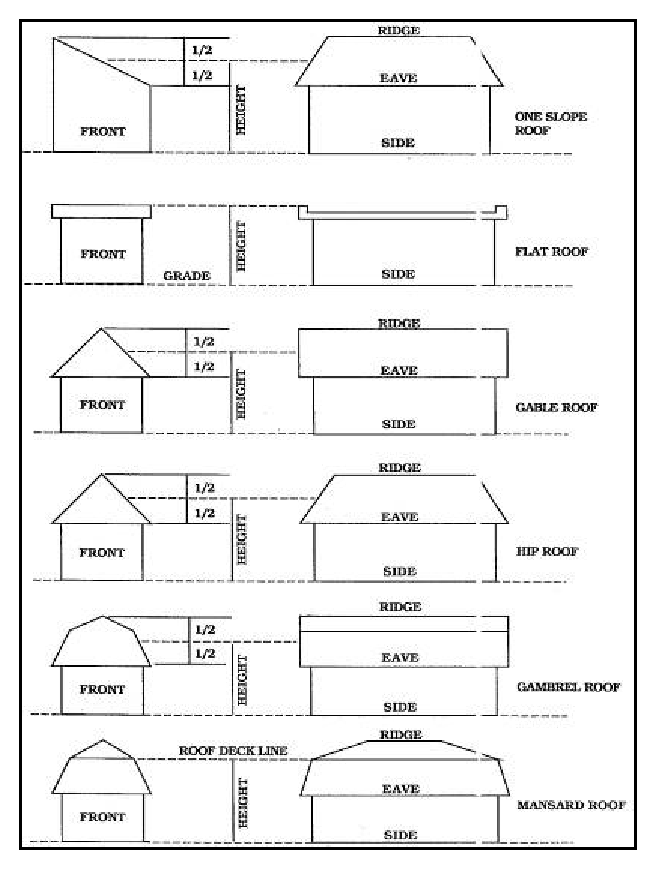
Buildings: Any structure designed or built for the support, enclosure, shelter or protection of persons, animals, chattels or property of any kind.
Building area: The area of that part of the lot not included in the yards or open spaces herein required.
Bulletin board: See "signs, advertising."
Burlesque shows or acts: A type of theater performance involving a variety of different acts, usually a parody or satire of popular culture. Shows often include singing, comics, circus tricks, and striptease acts. Burlesque does not include nudity or exposed nipples.
Business and professional office building (less than fifteen thousand (15,000) square feet): A small commercial building used primarily for offices, including shared common areas and spaces.
Business and professional office buildings (greater than fifteen thousand (15,000) square feet): A large commercial building used primarily for offices or suites used exclusively by independent commercial tenants.
Cafeteria: A restaurant at which patrons serve themselves at a counter and take food to the tables to eat.
Car wash: A commercial establishment engaged in the washing and cleaning of passenger vehicles, recreational vehicles or other light duty vehicular equipment, whether automatic or by hand.
Carport, attached: A canopy or shed, attached to the main building, open on two (2) or more sides, for the purpose of providing shelter for automobiles. An attached carport is considered an addition to the main structure.
Carport, detached: A canopy or shed, open on all sides, for the purpose of providing shelter for automobiles, recreational vehicles (RVs), and boats. A detached carport is considered to be an accessory structure.
Catering kitchen: A facility for the preparation and distribution of foods in a ready-to-consume or partially ready state directly to mobile food trucks or for consumption at events off-site. Catering kitchens do not include the on-site sale of individual meals, individual beverages, or the manufacturing of alcoholic beverages.
Cellar: An area below the first story having more than one-half (½) of its height below grade and used for utilities, storage or garage [space] for occupants of the building, or janitor or watchman quarters. A cellar so used shall not be considered as a story.
Check cashing establishment: An establishment, other than a state or federally chartered bank or financial institution (i.e., savings association, credit union), that provides the general public a check cashing service. As a primary element of its operation, the establishment charges either a flat fee for such service or a service fee based upon a percentage of the face value of the check to be cashed.
Children: Individuals who are two (2) years of age through twelve (12) years of age.
Clinic: An establishment used by physicians, surgeons, dentists, physiotherapists, psychiatrists or practitioners in related specialties or a combination of persons in these professions where patients who are not lodged overnight are admitted for examination and treatment.
Club: Buildings and facilities owned and operated by a corporation, association, person or persons for a social, educational or recreational purpose, but not primarily for profit or to render a service which is normally carried on as a business.
Coffee shop: A retail establishment where coffee is primarily served and sold; ancillary seating may be permitted.
Communication tower: A structure situated on a nonresidential site that is intended for transmitting or receiving television, radio, microwave, or telephone communications.
Community center: A facility used as a place of meeting, recreation or social activity, and not operated for profit, which is open to the public.
Conference center: A commercial facility used for assemblies or meetings of the members or representatives of groups, including exhibition space. This term does not include banquet halls, clubs, lodges or other meeting facilities of private or non-profit groups that are primarily used by group members. A conference center shall not accommodate more than five hundred (500) persons per event.
Contractor storage yard: Land or structures used primarily for the storage of equipment, vehicles, machinery, or building materials of a contractor in the conduct of any building trade or craft.
Convenience store: A retail store generally containing less than two thousand five hundred (2,500) square feet of gross floor area that is designed and stocked to sell primarily food, beverages, and other household supplies to customers.
Court: An open space which may or may not have access and around which is arranged a single building or a group of related buildings.
Cultural facility: A use that is open to the public and provides cultural services and facilities including, but not limited to, libraries, museums, aquariums, zoos, botanical gardens, and historical societies. A cultural facility may have ancillary retail uses, that offer items related to the facility for sale, and ancillary restaurants, which are only open during the hours of operation of the facility. A cultural facility may hold special events and receptions on-site, including events that take place after closing hours.
Day care center, adult: A facility where, for a portion of a twenty-four (24) hour day, functionally impaired adults that are not related to the owner or operator of the facility are supervised or participate in a training program. This excludes patients of mental institutions who have been found not guilty by reason of insanity. An adult day care center does not include adult day care home.
(a)
Day care center, small: Seven (7) to twelve (12) adults.
(b)
Day care center, large: Thirteen (13) to thirty (30) adults.
(c)
Day care center, commercial: Thirty-one (21) or more adults.
Day care center, child: A facility where care, supervision and guidance of children that are not related to the owner or operator of the facility is provided on a regular basis. A child day care center does not include a child day care home.
(a)
Day care center, small: Seven (7) to twelve (12) children.
(b)
Day care center, large: Thirteen (13) to thirty (30) children.
(c)
Day care center, commercial: Thirty-one (21) or more children.
Day care home, adult: A residential dwelling where a permanent occupant of the dwelling provides care for up to six (6) elderly and/or functionally impaired adults in a protective setting for less than twenty-four (24) hours per day. This excludes alcohol and drug abuse clientele, former inmates of prisons or correctional institutions, or former patients of mental institutions who have been found not guilty by reason of insanity.
Day care home, child: A residential dwelling where a permanent occupant of the dwelling provides care for up to six (6) children from outside households in a protective setting for less than twenty-four (24) per day. The number counted includes the family's natural or adopted children and all other persons under the age of twelve (12). A child day care home does not include facilities that receive children from a single household.
Delicatessen: A store selling cold cuts, cheeses, and a variety of salads, as well as a selection of unusual or foreign prepared foods; ancillary seating may be permitted.
Distillery: A facility that produces alcoholic beverages in quantities exceeding twelve thousand (12,000) gallons per year and includes a tasting room. A tasting room allows customers to taste samples of products manufactured on site and purchase related sales items. Sales of alcohols manufactured outside the facility are prohibited. A separate liquor license is required for sales of alcohols manufactured on site.
District: Any section of the Parish of St. Bernard in which these zoning regulations are uniform.
Dock: A structure built over or floating upon the water and used as a landing place for both commercial and non-commercial boats and other marine transport, fishing, swimming and other recreational uses.
Dockside stand (seafood): A temporary, open-air stand or place for the immediate retail sale or display of fresh seafood. A dockside stand is located directly adjacent to public water ways and operate on the dock for which the marine vessel is moored. Structures associated with dockside sales shall be portable and capable of being dismantled or removed from the sales site.
Dwelling: Any structure or portion thereof, which is designed or used for residential purposes.
Dwelling unit: Any room or group of rooms located within a structure forming a single habitable unit with facilities which are used or intended to be used for living, sleeping, cooking, eating and sanitation.
Dwelling, multiple-family:A building designed for and occupied exclusively by three (3) or more families. A structure designed for and occupied exclusively by three (3) or more families, containing three (3) or more dwelling units.
Dwelling, single-family: A structure designed for and occupied exclusively by one (1) family.
Dwelling, two-family: A building designed for and occupied exclusively by two (2) families. A structure designed for and occupied exclusively by two (2) families.
Educational facility, vocational: A school that teaches industrial, clerical, computer, managerial, automotive, repair (electrical, plumbing, carpentry, etc.), commercial, or artistic skills, or a school conducted as a commercial enterprise, such as a driving school or school for general educational development (GED). This definition applies to privately operated schools that do not offer a complete educational curriculum. Vocational educational facilities do not include university educational facilities. An "educational facility, vocational" includes ancillary uses that serve the student population, such as cafeterias, restaurants, and retail goods establishments.
Extraction: The removal from the premises of sand, gravel, shells, topsoil, minerals or other natural resources from a lot or a part thereof.
Family: One (1) or two (2) individuals or parents, with their direct lineal descendants and adopted or legally cared for children (and including the domestic employees thereof) together with not more than two (2) individuals not so related, living together in the whole or part of a dwelling comprising a single housekeeping unit. Every additional group of four (4) or fewer individuals living in such housekeeping unit shall be considered a separate family for the purpose of this chapter.
Farm: Any parcel of land which is used for gain in the raising of agricultural products, livestock, poultry and dairy products. It includes necessary farm structures within the prescribed limits and the storage of equipment used. It excludes the raising of fur-bearing animals, riding academies, livery or boarding stables and dog kennels.
Farmers market: The offering for sale of produce or processed, packaged, or prepared food on pre-established dates in an open area or in a structure, subject to the procedures and regulations set forth in this chapter and the City Code. The individual sellers need not be the same each time the market is in operation.
Financial institution: A bank, savings and loan, credit union, or mortgage office. A financial institution does not include check cashing, pay day loan, or title loan establishments.
Floor area:
(a)
Commercial business and industrial. The sum of the gross horizontal areas of the several floors of the main building measured from the exterior faces of the exterior walls or from the centerline of walls separating two (2) buildings, but not including:
(1)
Attic space providing less than seven (7) feet of headroom.
(2)
Cellar space not used for retailing.
(3)
Uncovered steps or fire escapes.
(4)
Accessory water towers or cooling towers.
(5)
Accessory off-street parking spaces.
(6)
Accessory off-street loading areas.
(b)
Residential. The sum of the gross horizontal areas of the several floors of the dwelling, exclusive of garages, cellars and open or roofed porches measured from the exterior faces of the exterior walls of a dwelling.
Frontage: All the property on one (1) side of a street between two (2) intersecting streets (crossing or terminating) or if the street is dead-ended, then all of the property abutting on one (1) side between an intersecting street and the dead end of the street.
Gaming facility, primary:Any institution in which gaming operations are its primary use is permitted to occur, upon a riverboat, at the land-based casino or bingo hall, at a facility licensed for the operation of electronic video draw poker devices, at an eligible facility licensed for the operation of slot machines, by a licensed charitable organization, or at a pari-mutuel wagering facility or off-track wagering facility which is licensed for operation and regulated under the provisions of R.S. Title 4, Chapters 4 and 11, and R.S. Title 27, Chapters 4, 5, 6 and 7, or any other gaming operations authorized by law.
Gaming facility, secondary: Any institution in which gaming operations are permitted to occur, as a secondary use such as electronic gaming devices as a part of its main use, upon a riverboat, at the land-based casino, at a facility licensed for the operation of electronic video draw poker devices, at an eligible facility licensed for the operation of slot machines, by a licensed charitable organization, or at a pari-mutuel wagering facility or off-track wagering facility which is licensed for operation and regulated under the provisions of R.S. Title 4, Chapters 4 and 11, and R.S. Title 27, Chapters 4, 5, 6 and 7, or any other gaming operations authorized by law.
Garage, private: An enclosed space for the storage of not more than three (3) motor vehicles; provided, that no business, occupation or service is conducted for profit therein nor space therein for more than one (1) motor vehicle is leased to a nonresident of the premises; and provided further, that not more than one (1) of the vehicles stored shall be a commercial vehicle of not more than two (2) ton capacity. (Parking of certain vehicles in residential areas in general and pickup trucks up to one (1) ton capacity in particular, section 20-144.1.)
Garage, public: A building, land or portion thereof, other than a private or parking garage, designed or used for equipping, servicing, repairing, hiring, selling or storing motor driven vehicles.
Garden, community: An area, open to the public, utilized for cultivation of fruits, flowers, vegetables, grasses or plants by more than one (1) person or family.
Garden, private (commercial):An area, privately held and maintained, utilized for cultivation of fruits, flowers, vegetables, grasses or plants intended for either onsite sales or off-site commercial wholesale. The use may include site improvements such as fencing, lighting and accessory structure(s) supporting the primary use. A farm stand and educational components may be included within the operations for the site.
Gas station: An establishment where flammable or combustible liquids or gases used as fuel for motor vehicles are stored and dispersed from fixed equipment into the fuel tanks of motor vehicles. Gas stations may include electronic charging stations for automobiles and may include secondary retail components.
Grade: The elevation of the ground at a building or building site as established by the parish engineer.
Grocery store (seven thousand five hundred (7,500) square feet or greater): A retail establishment offering a wide variety of packaged an non-packaged food items, household merchandise, and health and personal care items. A grocery store shall offer fresh meat and produce options as a part of its operations.
Group home: A group care facility in a residential dwelling, licensed by the state, for twenty-four (24) hour medical or non-medical care of persons in need of personal services, supervision, or assistance essential for sustaining the activities of daily living, or for the protection of the individual. Group homes include youth transitional residences, adult residential care facilities, emergency child shelters, and child residential care facilities licensed by the state.
(a)
Small group homes: Up to six (6) residents.
(b)
Large group homes: Seven (7) to fifteen (15) residents.
(c)
Congregate group homes: Sixteen (16) or more residents.
Hazardous waste facility: Any area, structure, storage pit, storage tank, lagoon, treatment plant, disposal well and any other appurtenance and structure used for the storage or disposal of hazardous waste, except package sewage treatment systems in the unsewered portion of the parish, as defined in LAC 33:V, Chapter 49.
Home occupation: A home/home-based occupation is any allowed activity requiring a business license that is conducted within a residential dwelling by one (1) or more residents thereof for the purpose of generating income. It is an accessory, secondary use that is strictly incidental to the residential use of the dwelling.
Hospital: A building or portion thereof designed or used for the diagnosis, therapeutic treatment or other case of ailments of bed patients who are physically or mentally ill.
Hotel: A building used as an abiding place of more than twenty (20) persons, who, for compensations, are lodged and offered the customary accessory services normally associated with hotels, including the serving of meals and alcoholic beverages. No provision is made for cooking in individual rooms or suites, and ingress and egress to and from all rooms is through an inside lobby or office supervised by a person in charge at all hours. As such it is open to the public in contradistinction to a boardinghouse or an apartment, which are herein separately defined.
Hotel, apartment:See "apartment hotel."
Industrial—Heavy:Manufacturing or other enterprises with significant external effects, or which pose significant risks due to the involvement of explosives, radioactive materials, poison, pesticides, herbicides, petroleum, or other hazardous materials in the manufacturing or other process.
Industrial—Light:Research and development activities, the manufacturing, compounding, processing, packaging, storage, assembly, and/or treatment of finished or semifinished products, from previously prepared materials, which activities are conducted wholly within an enclosed building. Finished or semifinished products may be temporarily stored outdoors pending shipment.
Institution: A building or group of buildings designed or used for the nonprofit, charitable or public service purposes of providing board, lodging or health care for persons aged, indigent or infirm, or for the purpose of performing educational or religious services and offering board and lodging to persons in residence.
Itinerant market (seasonal): The retail sale of any products (including seafood, farmers and pop-up markets as well as snoball/ice-cream stands, etc.) for a period of not more than six (6) months of any one (1) calendar year that are not housing in permanent structures (building with permanent foundations or pilings); excluding produce.
Junkyard (automobile):The use of more than two hundred (200) square feet of the area of any lot, whether inside or outside a building, or the use of any portion of that half of any lot that joins any street for the storage of dismantled, demolished or abandoned automobiles or other vehicles or machinery or parts thereof. Junkyards can be used for commercial or non-commercial purposes on a non-temporary basis.
Kennel: An establishment where dogs over six (6) months of age are boarded, bred, raised, and trained for commercial gain.
Laundromat: A business providing for the hire and use on the premises of home-type washing, drying and/or ironing machines.
Light manufacturing: The manufacturing or processing of materials employing electricity or other unobjectionable motive power, utilizing hand labor or unobjectionable machinery or processes, and free from any objectionable odors, fumes, dirt, vibration or noise.
Line, street: The dividing line between the street and the lot.
Live entertainment—Secondary use: Live entertainment that supplements a primary use such as standard restaurants and bars. Primary uses may be open to the public when no live performances are scheduled.
Live performance venues: Facilities above five thousand (5,000) square feet of gross floor area, to be utilized primarily for the performance arts and live entertainment. However, indoor however indoor live performance facilities shall not exceed ten thousand (10,000) square feet of gross floor area.
Loading space: A space within the main building or on the same lot, providing for the standing, loading or unloading of trucks.
Lodginghouse:A building other than a hotel or apartment hotel where lodging for three (3), but not more than, twenty (20) persons is provided for definite periods for compensation pursuant to previous arrangement.
Lot:A portion of land with fixed boundaries, that is developed or that may be developed with a main building and any accessory structures, together with open space and parking areas, and having its principal frontage upon an officially approved street or access servitude.
Lot lines: The lines bounding a lot.
Lot of record: A lot which is either part of a subdivision, the map of which has been recorded in the Office of the Clerk of the District Court of the Parish of St. Bernard, or a parcel of land which became legally established and defined by deed or act of sale prior to July 18, 1978.
Lot, corner: A lot abutting upon two (2) or more streets at their intersection.
Lot, depth of: A mean horizontal distance between the front and rear lot lines, measured in the general direction of its side lot lines.
Lot, interior: A lot other than a corner lot.
Lot, through: A lot having frontage upon two (2) approximately parallel streets. Also a lot of double frontage.
Lot, width of: The average horizontal distance between side lot lines.
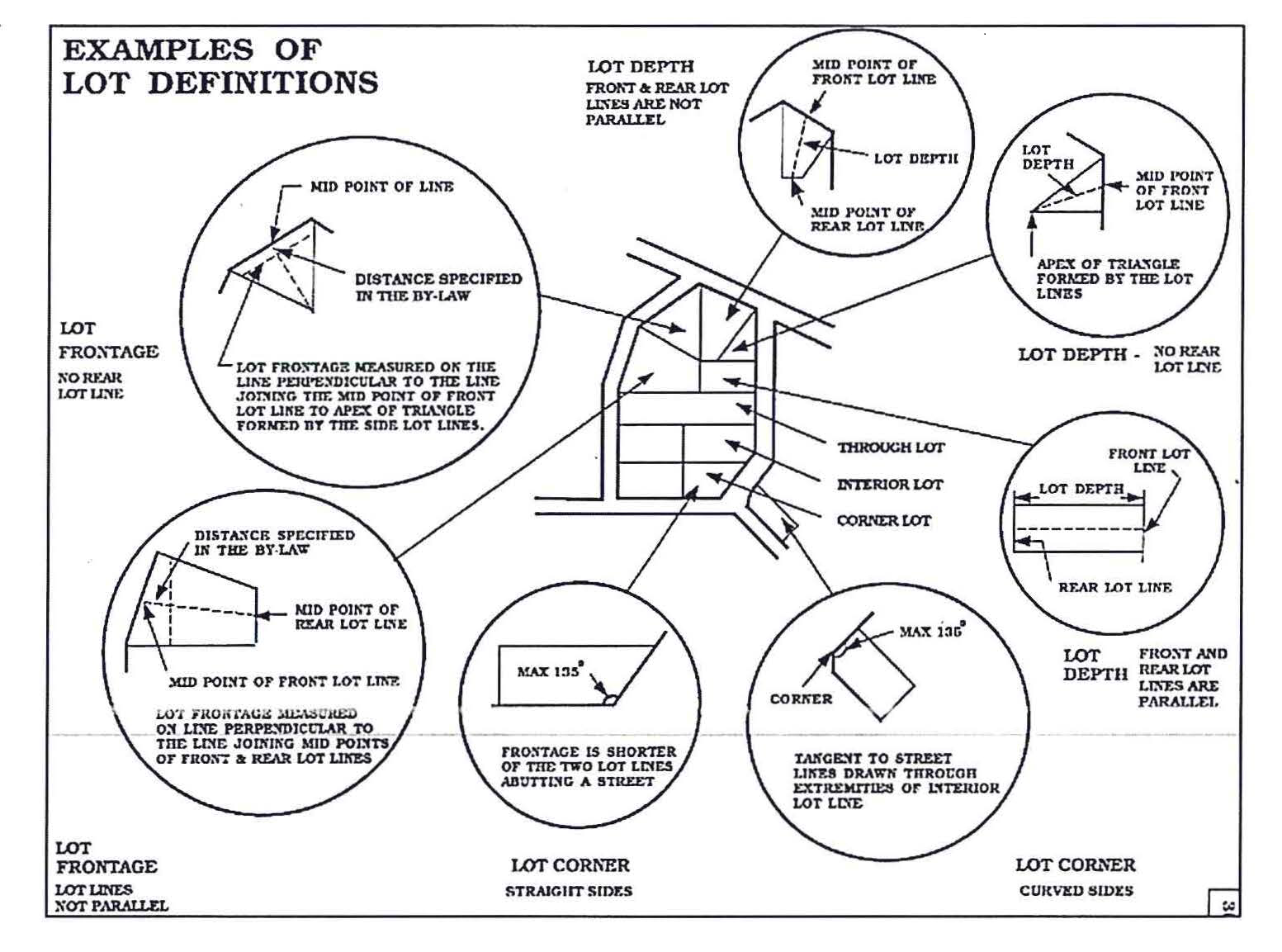
Main building: The principal building or buildings (where permitted) on a lot or tract which are used for, or within which is conducted, the principal use of the land.
Major street: A street or highway shown as a major street upon the street plan of the Parish of St. Bernard.
Manufacturing: Establishments engaged in the mechanical or chemical transformation of materials or substances into new products, including the assembling of component parts, the creation of products, and the blending of materials.
Manufacturing, heavy: The manufacturing of products from raw or unprocessed materials, where the finished product may be combustible or explosive. This shall include any establishment or facility using large unscreened outdoor structures such as conveyor belts, cooling towers, cranes, storage silos, or similar equipment.
Manufacturing, light: The manufacture, predominantly from previously prepared materials, of finished products or parts, including processing, fabrication, assembly, treatment and packaging of such products, and incidental storage, sales, and distribution of such products, but excluding basic industrial processing and custom manufacturing.
Medical/dental clinic or office: A facility operated by one (1) or more physicians, dentists, chiropractors, physiotherapists, or other licensed practitioners of the healing arts for the examination and treatment of persons solely on an outpatient basis. The primary use shall not include pain management, addiction or mental health treatment, or similar uses.
Micro-brewery: A facility licensed as a "manufacturer or brewer" as defined in R.S. 26:241. The facilities may include an on-site tasting room as an accessory use with retail sales of only those alcoholic beverages produced at the facility for consumption on or off the premises. An on-site tasting room shall be subject to the use and parking standards of a bar and any limitations provided for in state law. The facilities may also include other uses such as standard restaurant, bar, or live entertainment as permitted in the zoning district, with retail sales of only those alcoholic beverages produced at that facility for consumption on or off the premises with a capacity of less than twelve thousand five hundred (12,500) barrels per year.
Micro-distillery: A facility that produces alcoholic beverages in quantities not to exceed twelve thousand (12,000) gallons per year and includes a tasting room. A tasting room allows customers to taste samples of products manufactured on site and purchase related sales items. Sales of alcohols manufactured outside the facility are prohibited. A separate liquor license is required for sales of alcohols manufactured on site.
Mini-warehouse: A structure which is used for the purpose of storing personal effects, such as household goods and clothing, or small retail merchandise, where individual compartments shall not exceed five hundred (500) square feet.
Minor street: A street or highway not shown as a major street upon the street plan of the Parish of St. Bernard.
Mixed use residential: Any structure with commercial uses accompanied by one (1) or more residential dwellings. Residential dwelling units shall be prohibited from the first floor of a mixed use structure.
Mobile home: See "trailer."
Mobile home park: See "trailer park."
Mobile vendor (temporary): The retail sale of any products for a period not to exceed five (5) days (with option for one (1) five (5) day extension) for any one (1) calendar year from a mobile vehicle. Permissible food products shall be limited to pre-packaged, non-perishable food items such as popcorn, packaged snakes, confections or other foods not prepared at the mobile vending site.
Motel: See "tourist court."
Motor vehicle dealership: An establishment that sells or leases new or used automobiles, trucks, vans, trailers, recreational vehicles, boats, or motorcycles, or other similar motorized transportation vehicles. A motor vehicle dealership may maintain an inventory of the vehicles for sale or lease either on-site or at a nearby location, and may provide on-site facilities for the repair and service of the vehicles sold or leased by the dealership.
Motor vehicle service and repair, minor: A business that includes, but is not limited to, minor repairs to motor vehicles up to ten thousand (10,000) pounds, including repair or replacement of cooling, electrical, fuel and exhaust systems, brake adjustments, relining and repairs, wheel servicing, alignment and balancing, repair and replacement of shock absorbers, and replacement or adjustment of mufflers and tail pipes, hoses, belts, light bulbs, fuses, windshield wipers/wiper blades, grease retainers, wheel bearings, and the like. The business may also include the sale of new and used tires, including tire installation.
Motor vehicle service and repair, major: A business involved in engine rebuilding, major reconditioning of worn or damaged motor vehicles or trailers up to ten thousand (10,000) pounds, towing and collision service, including body, frame or fender straightening or repair, and painting of motor vehicles. The business may also include the sale of new and used tires, including tire installation.
Movie studio "movie lot": A campus-like site containing multiple buildings with uses related to the production of motion pictures and film. These uses include sound stages, exterior sets, recording facilities, laboratories, offices, construction/repair and storage facilities, back lots, mills, other supporting facilities, and all vehicles used to transport equipment and other related commercial vehicles.
Nonconforming use: A structure or land lawfully occupied by a use that does not conform to the regulations of the district in which it is situated.
Nursing or convalescent home: A building designed or used in whole or in part to provide, for compensation, the care of the ill, senile or otherwise infirm persons resident on the premises.
Office—General business and professional services: A room, group of rooms or a portion of a building used for conducting the affairs of business, profession, service industry, non-profit or government.
Open or green space. An area that is essentially unimproved and set aside, dedicated, designated, or reserved for public or private use. An open or green space area may include limited improvements such as sidewalks, paths, benches, trash receptacles, lighting, off-street parking areas, landscaping or similar uses.
Outdoor advertising signs: See section 22-7-4.
Outdoor commercial recreation: Commercial establishment designed and equipped for the conduct of sports, leisure activities, and other recreational activities wholly or partially outside of any building or structure. Examples of such use include, but are not limited to, outdoor commercial swimming pools, driving ranges, miniature golf facilities, amusement parks, go-cart tracks, and all accessory uses generally associated therewith, such as food services, equipment rental and repairs, and pro-shops.
Pain management clinic: A clinic that focuses on the diagnosis and management of chronic pain. A pain management clinic focuses on procedures to deal with specific types of pain like your back and neck. In addition to medications, this type of clinic can help you manage pain with physical, behavioral, and psychological therapies. Pain management clinic may also teach you about your pain, coach you on lifestyle changes, and offer complementary or alternative medicine.
Parcel: A contiguous group of lots in single ownership or under single control.
Parking lot: An open, hard-surfaced area, other than a street or public way, used for the storage of operable passenger or commercial motor vehicles for limited periods of time. Parking may be available for residents, visitors, employees, clients, customers, or similar users whether for compensation or at no charge.
Park: Any public or private land available for passive recreational, educational, cultural, or aesthetic use.
Parking space: An impervious, hard-surfaced area, enclosed in the main building or in an accessory building or unenclosed, having a rectangular area of not less than one hundred sixty (160) square feet, with a minimum width of eight (8) feet when unenclosed, or one hundred eighty (180) square feet with a minimum width of nine (9) feet when individually enclosed on two (2) or more sides, exclusive of driveways, permanently reserved for the storage of one (1) automobile, and connected with a street or alley by an impervious hard-surface driveway at least eight (8) feet in width providing unobstructed ingress and egress for motor vehicles.
Parking structure: A structure composed of one (1) or more levels or floors used for the temporary parking and storage of motor vehicles up to ten thousand (10,000) pounds.
Pawn shop: An establishment that lends money on a deposit or pledge or who takes other things into possession as security for money advanced or who makes a public display at his place of business of the sign generally used by pawnbrokers to denote his business, namely, three (3) gilt or yellow balls, or who publicly exhibits a sign that money is to be loaned on things on deposit.
Personal service: Establishments providing non-medically related services, including beauty and barbershops, clothing rental, dry cleaning, laundromats, shoe repair shops, tanning salon, nail salon or like uses. These uses may also include accessory retail sales of products related to the services.
Pet day care center: An establishment where pet animals owned by another person are boarded for the day or overnight, and services such as grooming, dog walking, and pet training are offered. A "pet day care service" may include ancillary retail sales on the site.
Place: An open, unoccupied space other than a street or alley, permanently reserved as the way of access to abutting property.
Playground: An improved outdoor area designed, equipped, and set aside for children's play that is not intended for use as an athletic playing field or athletic court, and shall include all playground equipment, surfacing, fencing, signs, internal pathways, internal land forms, vegetation, and related structures. A play area as an accessory use to a person's residential property which includes equipment shall not be considered as a playground.
Professional service: Work done for others, predominantly on the premises of the office, by someone trained and engaged in such work for a career, e.g. doctor, lawyer, accountant.
Public market: A recurring assembly of multiple vendors selling art, crafts, edible items, packaged food or beverages, produce, and/or other similar merchandise directly to retail customers in a covered or uncovered open-air setting.
Reception facility: A business establishment that functions as a hosting and rental facility or banquet hall for private events, including, but not limited to, wedding receptions, holiday parties and fundraisers, with food and beverages that are prepared and served on site or by a caterer to invited guests during intermittent dates and hours of operation but cannot be operated as any kind of restaurant, cocktail lounge, or nightclub with regular hours of operation. Live entertainment, excluding live adult entertainment, may be included as an accessory use of the private event.
Recreational vehicle (RV): A motorized or towable vehicle that combines transportation and temporary living accommodations for travel, recreation, and camping, not to exceed forty-one (41) feet in overall length and eight and one-half (8½) feet when the vehicle is folded and stowed away for transit. Examples of RVs include folding camping trailers, slide-in truck campers, and motor homes. A conversion vehicle, mobile home, or park model recreational unit is not considered to be a recreational vehicle and as such is not suitable for use by patrons in a recreational vehicle park.
Recreational vehicle park: A single parcel of land upon which recreational vehicle sites are established and maintained for occupancy by recreational vehicles of the general public as temporary living quarters for recreational camping, travel, or seasonal use, differing from a mobile or manufactured home park as defined in section 12-1 of the Parish Code of Ordinances.
Refining and storage—Petroleum: See "industrial, heavy."
Research and experimental laboratories: An establishment or other facility for carrying on investigation in the natural, physical, or social sciences, which may include engineering and product development.
Restaurant: An establishment where prepared foods, desserts or beverages are offered for sale for consumption on or off the premises and where the sales of such foods, desserts or beverages, exclusive of alcoholic beverages, constitute fifty (50) percent or more of the revenue for said establishment (exclusive of a snowball stand). Restaurants do not include barrooms, nightclubs or lounges. Restaurants may utilize outdoor seating or dining areas as an extension of its operations. For purposes of this chapter, restaurants shall be of the following types:
(a)
Standard restaurant. A restaurant whose principal business is the sale of foods, desserts, or beverages to the customer in a ready-to-consume state, and where customers, normally provided with an individual menu, are served their food, desserts or beverages by a restaurant employee at the same table or counter at which said items are consumed.
(b)
Cafeteria restaurant. A restaurant characterized typically by the selection of prepared food items by customers as they move in a line in front of the individual food items. An individual menu is not normally provided and food items are typically placed on the customer's plate by restaurant employees. The food items are transported to adjoining tables by the customer or by restaurant employees.
(c)
Fast food restaurant. Fast food restaurants (which may or may not be a part of a fast food chain) whose principal business is the sale of foods, desserts or beverages to the customer in a ready-to-consume state, either within the restaurant building or for carry-out with consumption off the premises, and whose design or principal method of operation bears all of the following characteristics:
(1)
Food items at the majority of the outlets within the fast food chain are served in paper, plastic, or other disposable containers.
(2)
Substantially similar food items are available at the majority of the outlets within the fast food chain.
(3)
A majority of the outlets within the chain share substantially similar architecture, interior design and/or signage.
(d)
Drive-in restaurants. A restaurant whose principal business is the sale of foods, desserts, or beverages to the customer in a ready-to-consume state, and whose design, method of operation or any portion of whose business is the serving of food items directly to the customer in a motor vehicle by a carhop or by other means which eliminate the need for the customer to exit the motor vehicle.
Retail establishment—Non-food: A business that provides physical goods, products, or merchandise directly to the consumer, where such goods are typically available for immediate purchase and removal from the premises by the purchaser.
Retail establishment (greater than thirty thousand (30,000) square feet): A large scale or big box type of retail establishment offering a wide variety of packaged and non-packaged food items, household merchandise, and health and personal care items. This large scale retail establishment shall also offer fresh meat and produce options as a part of its operations.
Retail goods/food store establishment (two thousand five hundred (2,500) to less than seven thousand five hundred (7,500) square feet): A business that provides physical goods, products, or merchandise directly to the consumer, where such goods are typically available for immediate purchase and removal from the premises by the purchaser. A retail goods establishment does not include any adult uses. A retail goods establishment may not sell alcoholic beverages unless retail sales of packaged alcoholic beverages are allowed within the district and a separate approval is obtained for such use. A retail goods establishment that sells goods and food products, such as a hardware store, grocery, or clothing boutique may offer ancillary seating areas for consumption of food on the premises.
Riverboat gaming establishment: Water craft licensed and/or authorized by the State of Louisiana to be used for gaming operations.
Roadside: Privately owned property located adjacent to a roadway but, not including, any or all parts of a public right-of-way.
Roadside stand (produce): A temporary, open-air stand or place for retail sale or display of and limited to fresh produce. A produce stand is portable and capable of being dismantled or removed from the sales site. The retail sale of produce may occur on a seasonal or semi-seasonal basis, not within public rights-of-way and the produce is generally grown off-premises from which the stand is located.
Roominghouse: See "lodginghouse."
School, trade or industrial: An establishment, public or private, offering training to students in skills required for the practice of trades and in industry.
School, business: Privately owned schools offering instruction in accounting, secretarial work, business administration, the fine or illustrative arts, trades, dancing, music and similar subjects.
School, private: Privately owned schools having a curriculum essentially the same as ordinarily given in a public elementary or high school. The term includes day nurseries and kindergartens.
Scrap or salvage yard: Outdoor establishment primarily engaged in assembling, breaking up, sorting, and temporary storage and distribution of recyclable or reusable scrap and waste materials.
Seafood market: The offering for sale of raw, processed, packaged, or prepared seafood (fish, shellfish, edible crustacean) on pre-established dates directly to retail customers in a covered or uncovered open-air setting. The individual sellers need not be the same each time the market is in operation.
Service station: A building, structure or land used for dispensing, sale or offering for sale at retail any automobile fuels, lubricants or accessories and in connection with which is performed general automotive servicing as distinguished from automotive repairs.
Shared parking lot: An open area which is used for the shared temporary parking of motor vehicles and may be used as required off-street parking facility for adjacent commercial businesses. All parking lots shall be subject to design standards within the St. Bernard Parish Zoning Ordinance.
Shipping container or similar items:
(a)
A standardized reusable vessel that was originally designed for or used in the packing, shipping, movement or transportation of freight, articles, goods or commodities or having a similar appearance to and similar characteristics of cargo containers.
Shopping center: A group of retail stores, planned and designed for the site upon which they are built.
Short-term rental: The use and enjoyment of a dwelling unit, or any portion thereof, by guests for a period of at least one (1) night and less than thirty (30) consecutive days. Hotels, motels, bed and breakfasts, and other land uses explicitly defined and regulated in this CZO separately from short-term rentals are not considered to be short-term rentals.
Short-term rental guest: Any person who occupies a dwelling unit pursuant to a short-term rental.
Short-term rental booking platform: One (1) or more portals, listing services, or websites under common ownership or control through which a person, other than an owner, collects or receives a fee, directly or indirectly, for facilitating booking transactions. A platform shall not include a service, but merely posts advertisements for short-term rentals.
Short-term rental operator: A natural person possessing a short-term rental operator's permit.
Sign definitions: See section 22-7-4.2.
Small cell telecommunications facility. A facility, excluding a satellite television dish antenna, established for the purpose of providing wireless voice, data and/or image transmission within a designated service area. A small cell telecommunications facility must not be staffed, and consists of one (1) or more antennas attached to a support structure. An antenna or wireless antenna base station may not be larger than a maximum height of three (3) feet and a maximum width of two (2) feet. A small cell telecommunications antenna may be installed on existing rooftops, structures or support structures where permitted. A small cell telecommunications facility also consists of related equipment which may be located within a building. If support structures, such as wooden utility poles, do not exist in a subdivision, new non-wood poles that match the neighborhood character may be constructed if the applicant receives a resolution from the planning commission. The applicant shall submit engineered plans with elevations for the structures and a five hundred dollar ($500.00) application fee.
Smoke shops: A tobacco retailer whose business exclusively or primarily involves the sale of tobacco products, vapor products and related goods or accessories. This use also allows for designated on-site smoking areas (i.e. hookah or cigar lounges).
Sno-ball: Shaved ice flavored with syrup and may include a variety of toppings.
Sno-ball stand: A place where sno-balls are made and sold. A sno-ball stand may also sell additional food and beverage items, such as ice cream, hot dogs, nachos, and non-alcoholic beverages.
Solid waste transfer facility: A facility that receives primarily solid waste materials, from commercial vehicles for the purpose of storing, sorting, and handling prior to transferring to another facility.
Sound stage: A soundproof, hangar-like structure used for the production of theatrical filmmaking and television production.
Stable, private: An accessory building for the housing of not more than two (2) horses or mules owned by a person or persons living on the premises and which horses or mules are not for hire or sale.
Stable, public: A stable with a capacity for the housing of more than two (2) horses or mules, which stable may be operated for remuneration, hire, sale or stabling.
Stockyard: Any place, establishment, or facility commonly known as stockyards, conducted, operated, or managed for profit or nonprofit as a public market for livestock producers, feeders, market agencies and buyers, consisting of pens, or other enclosures, and their appurtenances, in which live cattle, sheep, swine, horses, mules, or goats are received, held, or kept for sale or shipment in commerce.
Story: That portion of a building, other than a cellar, included between the surface of any floor and the surface of the floor next above it or, if there be no floor above it, then the space between the floor and the ceiling next above it.
Street: A public or private thoroughfare affording the principal means of access to abutting property.
Street line: The line dividing a lot, tract or parcel of land and a contiguous street. Also, street right-of-way line.
Structure: Anything constructed or erected, the use of which requires a location on the ground, or attached to something having a location on the ground, including, but without the generality of the foregoing, advertising signs, billboards, backstops for tennis courts, fences and pagodas.
Structural alteration: Any change or rearrangement in the bearing walls, partitions, columns, beams, girders, exit facilities, exterior walls or roof of a building, excepting such repair as may be required for the safety of the building, or an enlargement, whether by extending on a side or by increasing in height, or movement of the building from one (1) location or position to another.
Sundry store: Miscellaneous small items, usually of no large value and too numerous to mention separately, such as dry goods, toiletries, and perishable and nonperishable foods. Sundry stores are also commonly referred to as dime or dollar stores.
Tattoo parlor: Any place where an individual may have a tattoo inscribed onto the body at a certain cost as determined by the owner, manager, or employee of the establishment.
Temporary commercial amusements: Participatory and spectator uses conducted indoors or outdoors, which may include partially enclosed facilities. Typical uses include, but are not limited to, miniature golf courses, batting cages, archery ranges, and amusement parks (carnivals or circuses). An outdoor amusement facility includes ancillary uses, such as food stands, snack bars, or restaurants for the use of patrons, but do not serve alcoholic beverages.
Tenant dwelling: A residential structure located on a bona fide farm and occupied by a nontransient farm worker employed by the farm owner for work on the farm.
Theater: Any auditorium or building used for or designed for the primary purpose of exhibiting movies, stage drama, musical recital, dance, lecture, or other similar performance.
Theater, drive-in: An open lot or part thereof with its appurtenant facilities devoted primarily to the showing of moving pictures or theatrical productions on a paid-admission basis to patrons seated in automobiles or on outdoor seats.
Through lot: A lot that runs from street to street, such streets being parallel; either end of which is considered a front yard.
Tourist court: A group of attached or detached buildings designed, constructed or under construction or alteration for guest rooms or dwelling units intended primarily for automobile transients, each unit having a separate entrance opening out-of-doors or into a foyer, with parking space appropriately located on the lot for use by guests of the court, the operation of such court to be supervised by a person in charge at all hours. Tourist courts include auto courts, motels, motor courts, motor hotels and motor inns.
Tourist home: A dwelling in which overnight accommodations are provided or offered for transient guests for compensation.
Townhome (row house): A structure consisting of no less than three (3) dwelling units, with no other dwelling or portion of other dwelling located directly above or below, where each unit has a separate entrance and direct ground level access to the outdoors. These units are connected to other dwelling units by a single party wall with no opening. A townhouse dwelling does not include a multi-family dwelling.
Trailer: Any vehicle, covered or uncovered, used for living, sleeping, business or storage purposes, having no foundation other than wheels, blocks, skids, jacks, horses or skirtings, and which has been or reasonably may be equipped with wheels or other devices for transporting the vehicle from place to place, whether by motive power or other means. The term "trailer" shall include camp car and house car.
Trailer park: An area providing spaces where one (1) or more auto trailers can be or are intended to be parked, with flush toilet and bathing facilities provided on the site. Also "trailer camp."
Truck marshalling: The temporary parking or storage on a property of trucks or other vehicles that transport goods to or from another property, such as an office building, retail or wholesale center, or meeting or convention site. The vehicles are temporarily parked or stored at the property before they are driven to the property being served, where the transported goods are loaded or unloaded.
Truck service and repair: A business servicing trucks, agricultural and construction vehicle equipment over ten thousand (10,000) pounds.
Truck stop: A structure or land use primarily for the retail sale of fuel for trucks and incidental service or repair of trucks including but not limited to: attendance eating, and truck parking facilities, but not to include the storage of vehicles for the purpose of using parts of such vehicles for sale or repair. Such a facility may include video poker gaming, but only if such a facility is on a site of at least ten (10) acres and meets the criteria listed in General Commercial C-2.
Urgent care clinic: A walk-in clinic focused on the delivery of ambulatory care in a dedicated medical facility outside of a traditional emergency room. Urgent care centers primarily treat injuries or illnesses requiring immediate care, but not serious enough to require an emergency room visit.
Vehicle impound lot: An open, hard surfaced parking area or an enclosed garage used for towed vehicles intended to be housed on a temporary basis.
Vehicle operations facility: A business that operates by means of the egression and ingression of vehicles i.e. private EMS, taxicabs.
Vehicle storage lot: An open, hard surfaced parking area used for the non-temporary storage of operable private, rental, recreational and towable vehicles.
Warehouse storage: A building used primarily for the storage of goods and materials.
Warehousing and distribution: A building used for the receipt, storage, auctions and distribution of goods, products, and materials.
Waste facility: Any area, structure, storage pit, storage tank, lagoon, treatment plant, disposal well and any other appurtenance and structure used for the storage or disposal of waste, except package sewage treatment systems in the unsewered portion of the parish, as defined in LAC 33:VII.501.
Welfare agency: An organization, public or private, offering professional social work services to individuals or groups.
Wholesale establishment: Establishments primarily engaged in selling merchandise to retailers; to industrial, commercial, institutional, or professional business users; to other wholesalers; or acting as agent or brokers and buying merchandise for, or selling merchandise to, such individuals or companies.
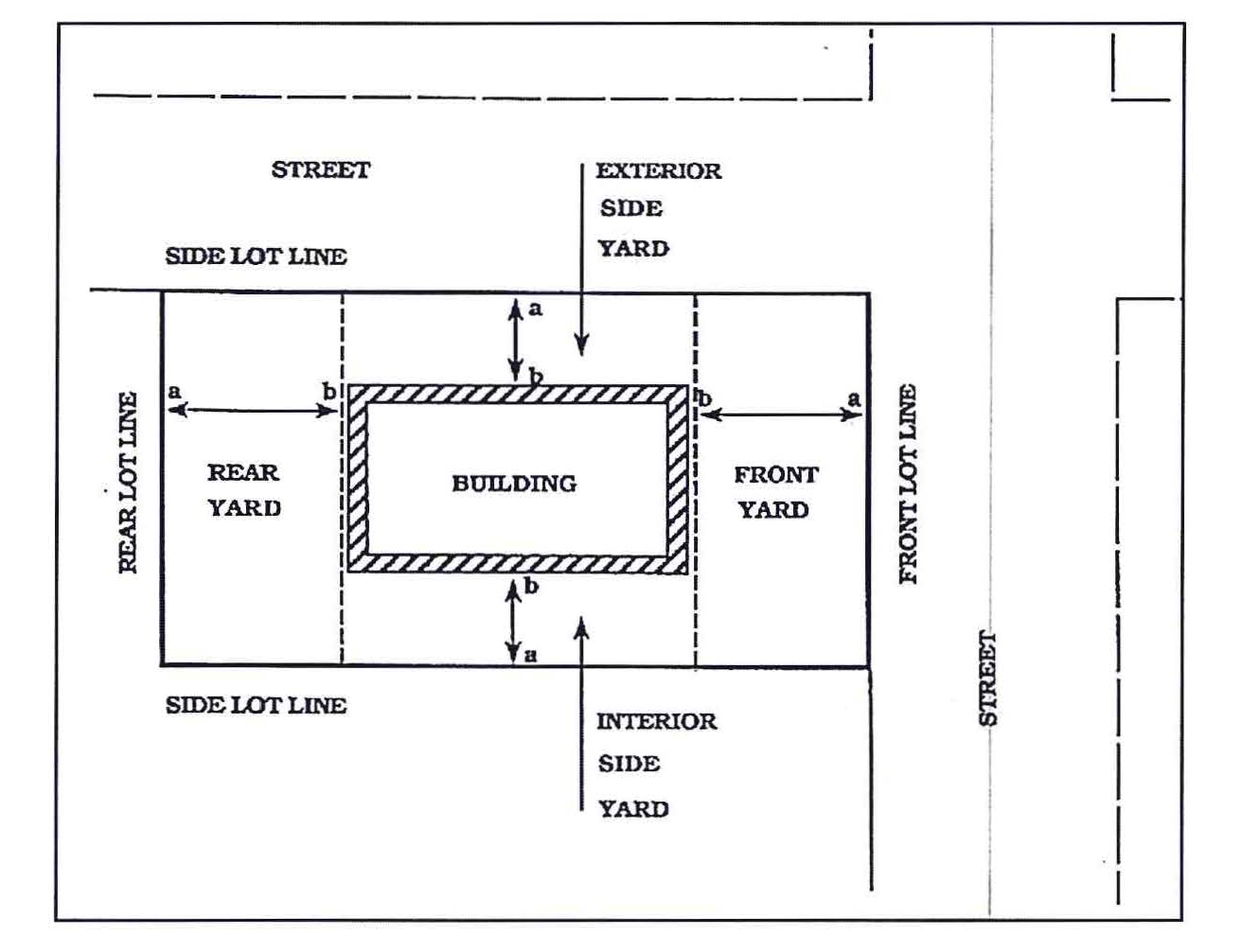
Yard: An open space at grade between a building and the adjoining lot lines unoccupied and unobstructed by any portion of structure from the ground upward except as otherwise provided herein. In measuring a yard to determine the width of a yard, the minimum horizontal distance between the lot line and the maximum permissible main building shall be the yard dimension.
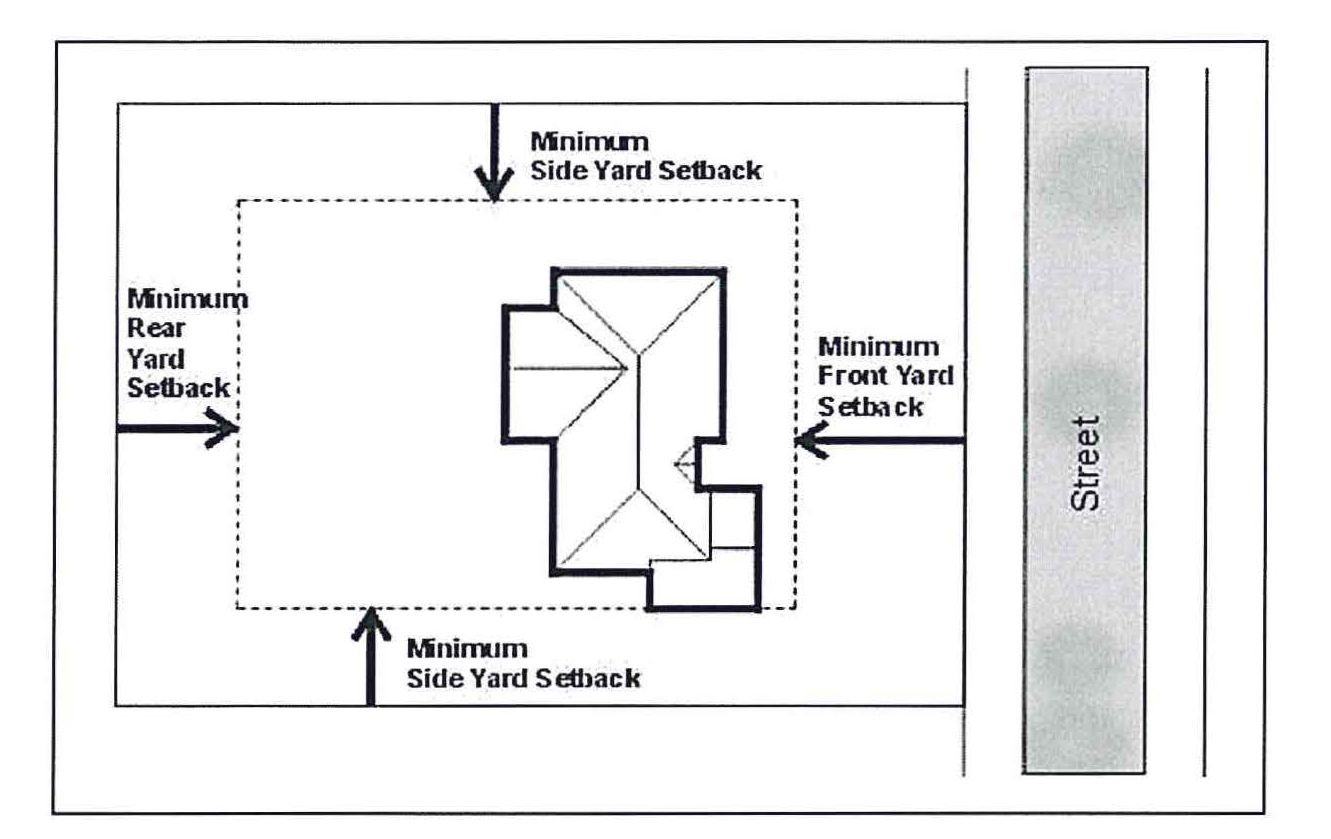
Yard, front: A required yard extending across the front of a lot between the side lot lines and being the minimum horizontal distance between the street line and the maximum permissible main building. On corner lots the front yard shall be considered as parallel to the street upon which the lot has its least dimension. A front yard setback shall be maintained on each street line.
Yard, rear: A required yard extending across the rear of a lot between the side lot lines and being the minimum horizontal distance between a rear lot line and the rear of the maximum permissible main building. On all lots the rear yard shall be at the opposite end of the lot from the front yard except on a through lot in which case the rear yard shall be that portion of the lot extending from the center line of the width of the lot in either direction to the minimal horizontal distance between the center line and the building area if the lot were two (2) equally sized lots.
Yard, side: A required yard between the main building and the side lot lines and extending from the required front yard to the required rear yard, and being the minimum horizontal distance between a side lot line and a side of the maximum permissible main building.
(Ord. No. SBPC-1370-01-13, § 1, Exh. A, 1-22-13; Ord. No. SBPC-1419-09-13, § 1(Exh. A), 9-3-13; Ord. No. SBPC-1561-10-14, § 1(Exh. A), 10-7-14; Ord. No. SBPC-1591-12-14, § 1(Exh. A), 12-16-14; Ord. No. SBPC-1607-01-15, § 1(Exh. A), 1-20-15; Ord. No. SBPC-1669-07-15, § 1(Exh. A), 7-21-15; Ord. No. SBPC-1700-10-15, § 1(Exh. A), 10-20-15; Ord. No. SBPC-1731-02-16, § 1(Exh. A), 2-18-16; Ord. No. SPBC-1790-06-16, § 1(Exh. A), 6-21-16; Ord. No. SBPC-1885-06-17, § 1(Exh. A), 6-20-17; Ord. No. SBPC-1987-07-17, § 1(Exh. A), 7-18-17; Ord. No. SBPC-2040-03-18, § 1(Exh. A), 3-20-18; Ord. No. SBPC-2102-10-18, § 1(Exh. A), 10-2-18; Ord. No. SBPC-2133-02-19, § 1(Exh. A), 2-5-19; Ord. No. SBPC-2247-07-20, § 1(Exh. A), 7-21-20; Ord. No. SBPC-2273-10-20, § 1(Exh. A), 10-20-20; Ord. No. SBPC-2404-01-22, § 1(Exh. A) 1-4-22; Ord. No. SBPC-2497-06-23, § 1(Exh. A), 6-6-2023; Ord. No. SBPC-2624-12-24, § 1(Exh. A), 12-3-24)