
Suffolk City Zoning Code
SEC. 31-408
SPECIFIC BASE ZONING DISTRICT CRITERIA.
(a)
SPECIFIC C ZONING DISTRICT CRITERIA. No application for development approval in the C zoning district shall be approved unless the proposed use and/or development conforms to the requirements of Articles 4, 6 and 7 of this Ordinance.
(b)
SPECIFIC A ZONING DISTRICT CRITERIA. The City Council hereby finds and determines that the preservation of agricultural, silvicultural, and woodland industries is necessary in order to implement the Comprehensive Plan, to protect the economy and environment, and to preserve an efficient and orderly growth pattern throughout the City.
The density and dimensional restrictions of this Section are found and determined to be necessary to prevent the unnecessary and premature conversion of agricultural lands to urban uses. Accordingly, no application for development approval within the A district shall be approved unless in accordance with Subsections (1) through (5) of this Section.
(1)
No application for development approval in the A zoning district shall be approved unless the proposed use and/or development conforms to the requirements of Articles 4, 6 and 7 of this Ordinance.
(2)
The City Council hereby finds and determines that a minimum of five acres is required for assessment of property as agricultural use (Code of Virginia, § 58.1-3233).
(3)
Lots shall conform to the requirements of Section 31-607.1.
(4)
Rural commercial and retail uses. The purpose of this Subsection is to avoid the stripping of uncoordinated retail and service land uses along rural roads to minimize traffic hazards resulting from strip commercial development, to maximize mobility and traffic flows, while allowing for local-serving retail uses in the Agriculture district which respects the rural character of the community. Convenience retail centers, convenience stores, personal service establishments, restaurants, and pharmacies shall comply with the following standards:
A.
No building shall exceed 10,000 square feet in gross area.
B.
The proposed use shall be located on a lot adjoining the intersection of an arterial road with another arterial road or collector road.
(5)
Manufactured homes are subject to uniform standards in Agricultural zoning districts pursuant to Code of Virginia, § 15.2-2290. The City Council finds that manufactured homes provide a useful resource for affordable housing, and that uniform design standards can provide for compatibility between conventional and manufactured homes without having the effect of excluding manufactured housing. Accordingly, manufactured homes in the A district shall conform to the single-family design standards of Sections 31-602(c)(3) and 31-602(c)(4) of this Ordinance.
(c)
SPECIFIC RR RESIDENTIAL ZONING DISTRICT CRITERIA.
(1)
No application for development approval in the RR zoning district shall be approved unless the proposed use and/or development conforms to the requirements of Articles 4, 6, and 7 of this Ordinance.
(2)
Subdivision plats or site plans may utilize Cluster or Hamlet use patterns consistent with Sections 31-411(e), 31-411(f) and Subsection (d)(2), below.
(3)
No major subdivision plat shall be approved unless the proposed development is served by the central water system of the City of Suffolk and the central sewer system of the City of Suffolk, in accordance with Section 31-613 of this Ordinance, and Chapter 90, of the City Code of Suffolk.
(d)
SPECIFIC RE RESIDENTIAL ZONING DISTRICT CRITERIA.
(1)
No application for development approval in the RE zoning district shall be approved unless the proposed use and/or development conforms to the requirements of Articles 4, 6 and 7 of this Ordinance and the criteria set forth in Subsection (2) for Cluster or Hamlet use patterns.
(2)
Subdivision plats or site plans may utilize Hamlet or Cluster use patterns consistent with Sections 31-411(e) or 31-411(f) with the approval of a Conditional Use Permit.
(3)
No subdivision plat shall be approved unless the proposed development is served by the central water system of the City of Suffolk. Wastewater may be treated through a septic system or other Wastewater Facility approved by the City of Suffolk Department of Health, in accordance with Section 31-613 of this Ordinance, and Chapter 90, of the City Code of Suffolk.
(e)
SPECIFIC RL, RLM, RM, RC, RU and RU-12 DISTRICT CRITERIA.
(1)
No application for development approval in the RL, RLM, RM, RC, RU, and RU-12 zoning districts shall be approved unless the proposed use and/or development conforms to the requirements of Articles 4, 6, and 7 of this Ordinance. Cluster option developments shall conform to the specific criteria set forth in Subsection (2) below.
(2)
Subdivision plats or site plans may utilize hamlet or cluster use patterns consistent with the requirements of Table 406-1 and Sections 31-411(e) or 31-411(f).
(3)
No subdivision plat shall be approved unless the proposed development is served by the central water system of the City of Suffolk and the central wastewater system of the City of Suffolk, in accordance with Section 31-613 of this Ordinance, and Chapter 90, of the City Code of Suffolk.
(f)
SPECIFIC RU-18 DISTRICT CRITERIA.
(1)
No application for development shall be approved unless the proposed use and/or development conforms to the requirements of Articles 4, 6, and 7 of this Ordinance.
(2)
No subdivision plat shall be approved unless the proposed development is served by the central water system of the City of Suffolk and the central wastewater system of the City of Suffolk, in accordance with Section 31-613 of this Ordinance, and Chapter 90, of the City Code of Suffolk.
(3)
Pedestrian and vehicular conflicts shall be minimized by a system of sidewalks and other pedestrian amenities which provide connectivity to surrounding neighborhoods while providing adequate separation and channeling of pedestrian and vehicular movements.
(4)
Residential mixed-use dwellings shall be permitted above the first floor of any building with commercial and/or retail uses on the ground floor.
(5)
Commercial and retail uses listed in Table 406-1 as permitted in this district shall be limited to mixed use structures.
(g)
SPECIFIC RU-24 DISTRICT CRITERIA.
(1)
No application for development approval shall be approved unless the proposed use and/or development conforms to the requirements of Articles 4, 6, and 7 of this Ordinance.
(2)
No subdivision plat shall be approved unless the proposed development is served by the central water system of the City of Suffolk and the central wastewater system of the City of Suffolk, in accordance with Section 31-613 of this Ordinance, and Chapter 90. of the City Code of Suffolk.
(3)
Pedestrian and vehicular conflicts shall be minimized by a system of sidewalks and other pedestrian amenities which provide connectivity to surrounding neighborhoods while providing adequate separation and channeling of pedestrian and vehicular movements.
(4)
Residential mixed-use dwellings shall be permitted above the first floor of any building with commercial and/or retail uses on the ground floor.
(5)
Commercial and retail uses listed in Table 406-1 as permitted in this district shall be limited to mixed use structures.
(6)
No surface parking shall be permitted between any structure and a public street. Parking areas which are screened from the view of public streets by the principal buildings shall be exempt from the parking lot screening requirements of the parking standards or landscaping standards of this Ordinance.
(h)
SPECIFIC B-1 DISTRICT CRITERIA.
(1)
No application for development approval in the B-1 zoning district shall be approved unless the proposed use and/or development conforms to the requirements of Articles 4, 6 and 7 of this Ordinance and the criteria set forth below.
(2)
Pedestrian and vehicular conflicts shall be minimized by a system of sidewalks and other pedestrian amenities which provide connectivity to surrounding neighborhoods, while providing adequate separation and channeling of pedestrian and vehicular movements; and
(3)
For purposes of evaluating an application for rezoning to a B-1 zoning district, the following guidelines shall be considered:
A.
B-1 districts shall be limited to the intersection of:
(I)
Arterial/collector, collector/collector, subcollector/collector, subcollector/local or collector/local street intersections, except where an existing center has been established prior to the adoption of this Ordinance;
(II)
The interior of a block along an arterial or collector street which lies parallel to an existing town center;
(III)
Service entrances and service yards shall be located only in the rear or side yard of the business use. Service yards shall be screened from adjacent residential zones or uses by the installation and maintenance of a solid wall or fence having a height of not less than four feet or greater than six feet or vegetation having a minimum height of four feet. If vegetation is proposed, it shall be designed so that it provides immediate screening similar to walls and fences;
(IV)
Refuse enclosures shall be located at the rear of the site and screened with a wall and gate.
(4)
All uses authorized in the B-1 district, including operations and storage of goods, shall be performed and primarily stored within an enclosed building. The outdoor display and sales of merchandise is authorized subject to the provisions of Section 31-609, Outdoor Storage and Display and Section 31-717(b) and (c), Temporary Uses.
(i)
SPECIFIC CBD, VC, and MUC-40 DISTRICT CRITERIA. No application for development approval in the CBD, VC, or MUC-40 zoning district shall be approved unless the proposed development conforms to the requirements of Articles 6 and 7 of this Ordinance and the criteria listed below. An asterisk (*) in column (B) shall mean that the standard is required in the CBD district. An asterisk (*) in column (C) shall mean that the standard is required in the VC district. An asterisk (*) in column (D) shall mean that the standard is required in the MUC-40 district. The purpose of these criteria is to encourage a mix of uses designed to foster the growth of the Mixed Use Core-40 Residential District. Central Business District and Village Centers as special places of community and as mixed use activity centers. These standards are designed: to promote a quality, urban streetscape in the CBD and MUC-40 districts and a rural townscape in the VC districts, to promote a pedestrian friendly environment, to establish a variety of mixed uses in the core of the community, to provide an orderly development pattern, to maintain a supply of developable land while preserving the compact development form of the Mixed Use Core, CBD and Village Centers, to improve traffic circulation and to promote alternatives to automobile travel, to provide housing opportunities within walking distances of employment, service and retail opportunities; to maintain an overall design theme; to preserve a human scale for new buildings; to provide economic development; and to provide for the daily needs and services of the community.
|
(A)
Criteria |
(B)
CBD |
(C)
VC |
(D)
MUC-40 |
(E)
Illustration | |
|---|---|---|---|---|---|
| Central Business District, Village Center District, and Mixed Use Core-40 Use Criteria. | |||||
| * | Single-family dwellings shall be restricted to mid-block locations and shall abut a local street, urban collector, or arterial street. | * | * | ||
| * | Non-residential uses shall be restricted to lots abutting arterial or collector streets; provided, however, that any use permitted in the CBD or VC districts and which is also permitted in the B-1 district may abut the intersection of a local street and an arterial collector street. | * | * | ||
| * | In order to stimulate pedestrian activity, the first floor (street level) of any new non-residential building abutting a major arterial roadway, minor arterial roadway or major collector roadway shall devote not less than 50% of the net first floor area to retail business or personal service uses. | * | * | * | |
| * | Residential mixed-use dwellings shall be permitted above the first floor of any building with commercial and/or retail uses on the ground floor. | * | * | * | |
| * | In order to promote pedestrian activity and to avoid the impacts of heavy automobile traffic and other automobile intensive uses on pedestrian safety, no auto-oriented uses shall be located within 100 feet of another auto-oriented use, as measured from the exterior boundaries of the buildings, parking and storage areas relating to said uses. | * | * | ||
| Applicability of Adequate Public Facilities Standards. The City Council hereby finds and determines that the existing development densities and intensities of these districts are established, that all necessary public facilities and services needed to serve the districts are available, and that there is a compelling public interest to encourage and to reinforce development in the existing town and City centers in order to utilize infrastructure capacity which is already available and to discourage urban sprawl. Accordingly, applications for development approval in the CBD or VC districts are exempt from review for compliance with the adequate public facilities criteria of Article 6, Section 31-601. | * | * | |||
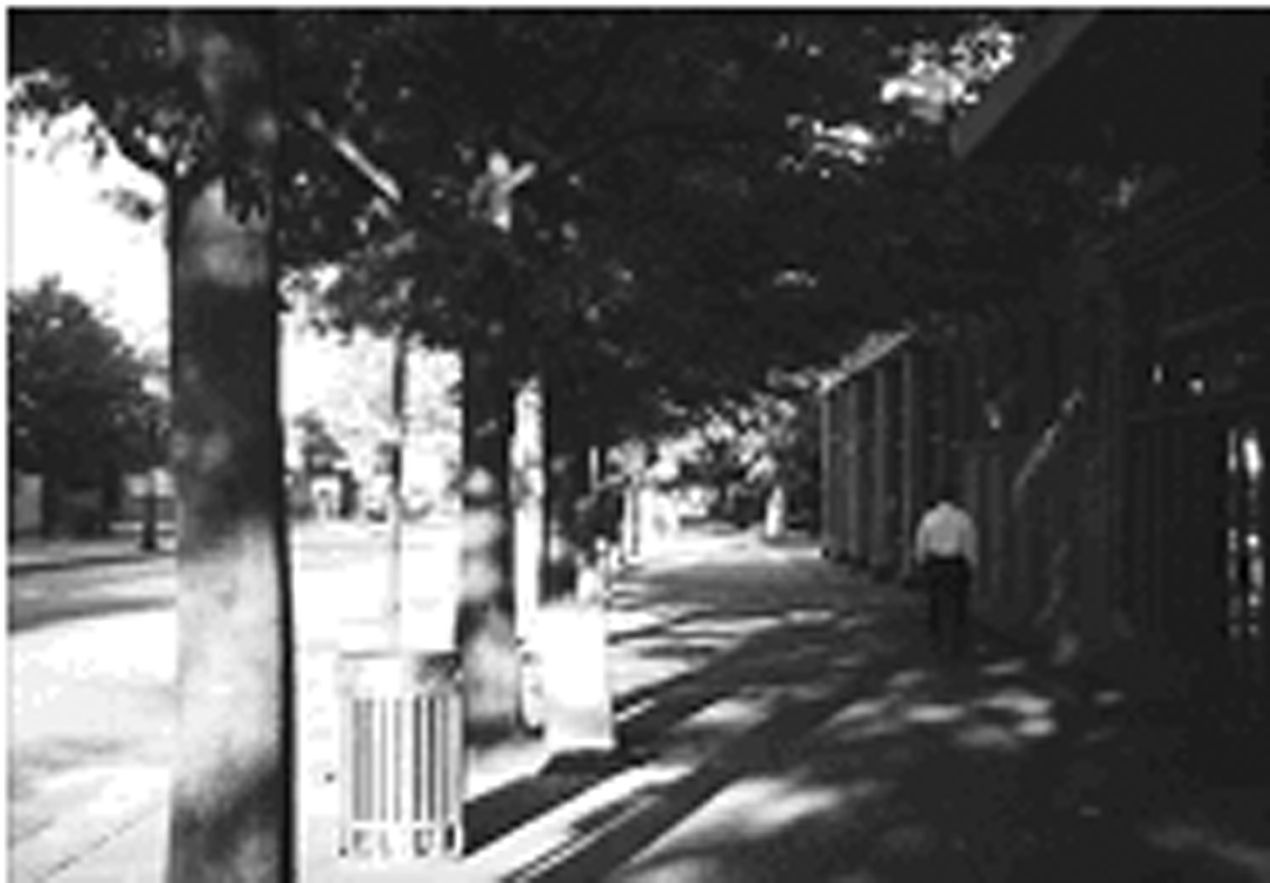
| Main Entrance. All buildings shall have a principal entrance opening to a street, square, plaza, or sidewalk. Pedestrian access from the public sidewalk, street right-of-way or driveway to the principal structure shall be provided through an improved surface. | * | * | * |
>
 | |
| Parking and Service Areas. | |||||
| * | For non-residential uses, no surface parking shall be permitted in front of a principal structure. Not more than one row of parking may be permitted on the sides of the structure. Off-street surface parking shall be located to the rear of principal structures. Parking areas which are screened from the view of public streets by the principal buildings shall be exempt from the parking lot screening requirements of the parking standards or landscaping standards of this Ordinance. | * | * | * | 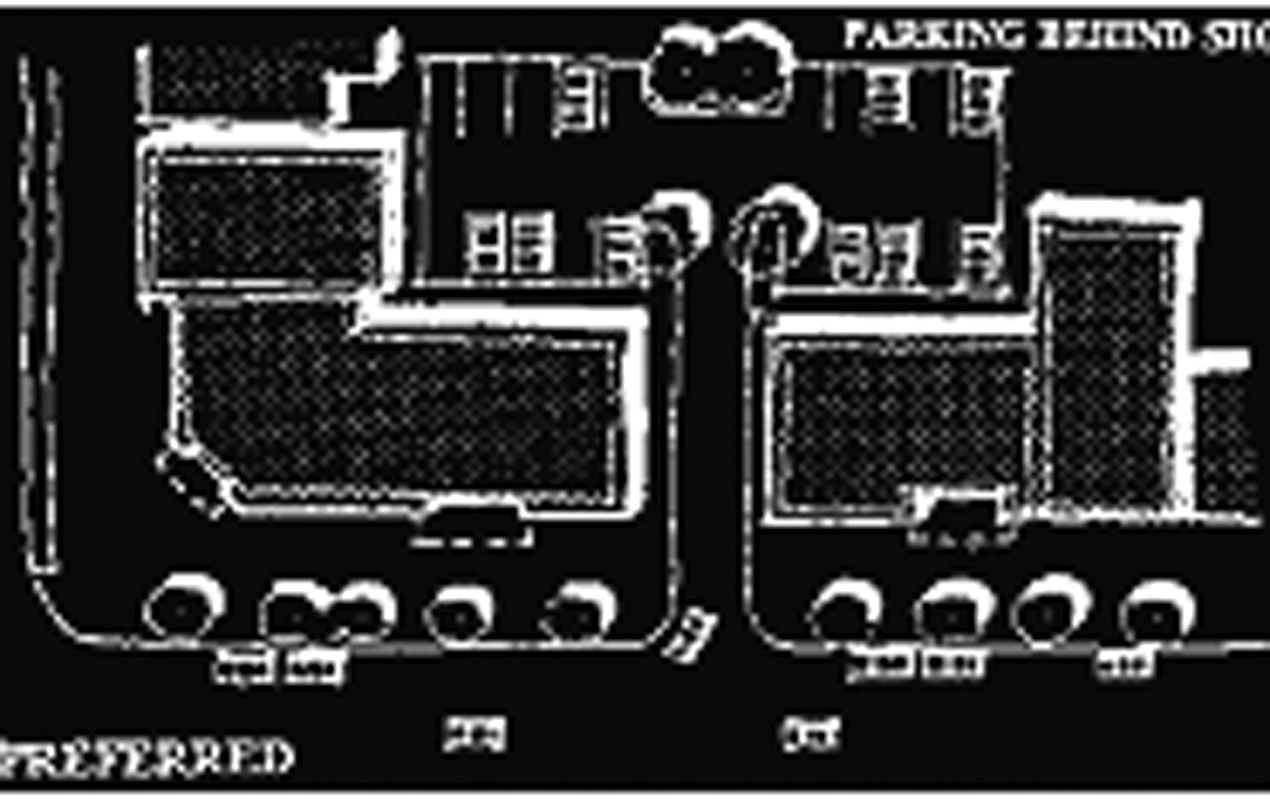 |
| * | Service entrances and service yards shall be located only in the rear or side yard. Service yards shall be screened from adjacent residentially zoned or used property by the installation of a buffer yard as set forth in the buffer standards of this Ordinance. | * | * | * | |
| First Floor Pedestrian Orientation. The first floor of all non-residential buildings shall be designed to encourage and to complement pedestrian-scale activity by the use of windows and doors arranged so that the uses are visible from and/or accessible to the street on not less than 50% of the length of the first floor street frontage. Not less than 50% percent of the length and 25% of the surface of the primary structure(s) shall be in public entrances or windows (including retail display windows). Where windows are used, they shall be transparent. Blank walls shall not exceed 20 feet in length. All street level retail uses with sidewalk frontage shall be furnished with an individual entrance and direct access to the sidewalk in addition to any other access which may be provided. This standard shall not apply to any lot with a street frontage of less than 24 feet. | * | * | * | 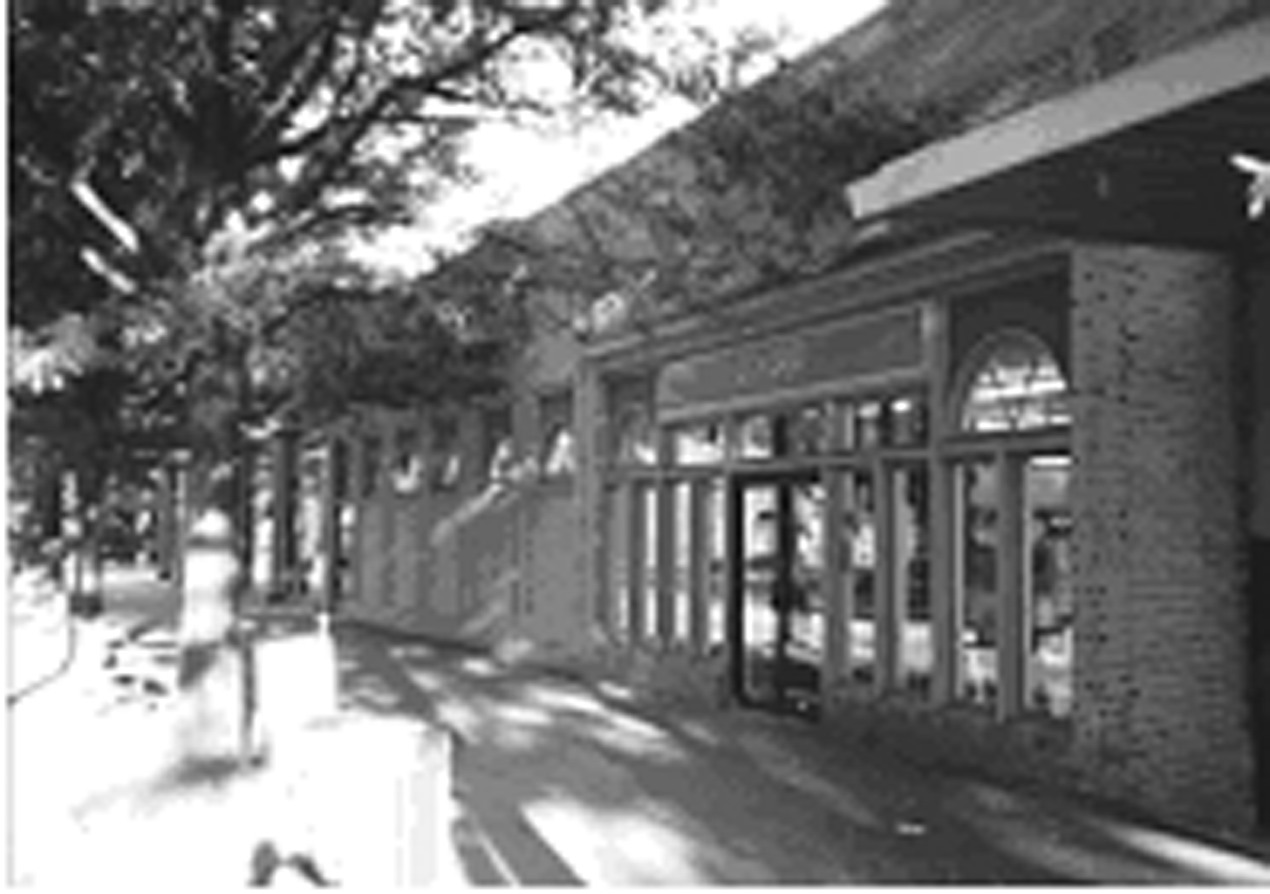 | |
| Entryways. The maximum setback requirements may be waived by the Administrator for an area not to exceed 90% of the frontage in order to accommodate courtyards or outdoor terraces. | * | * | 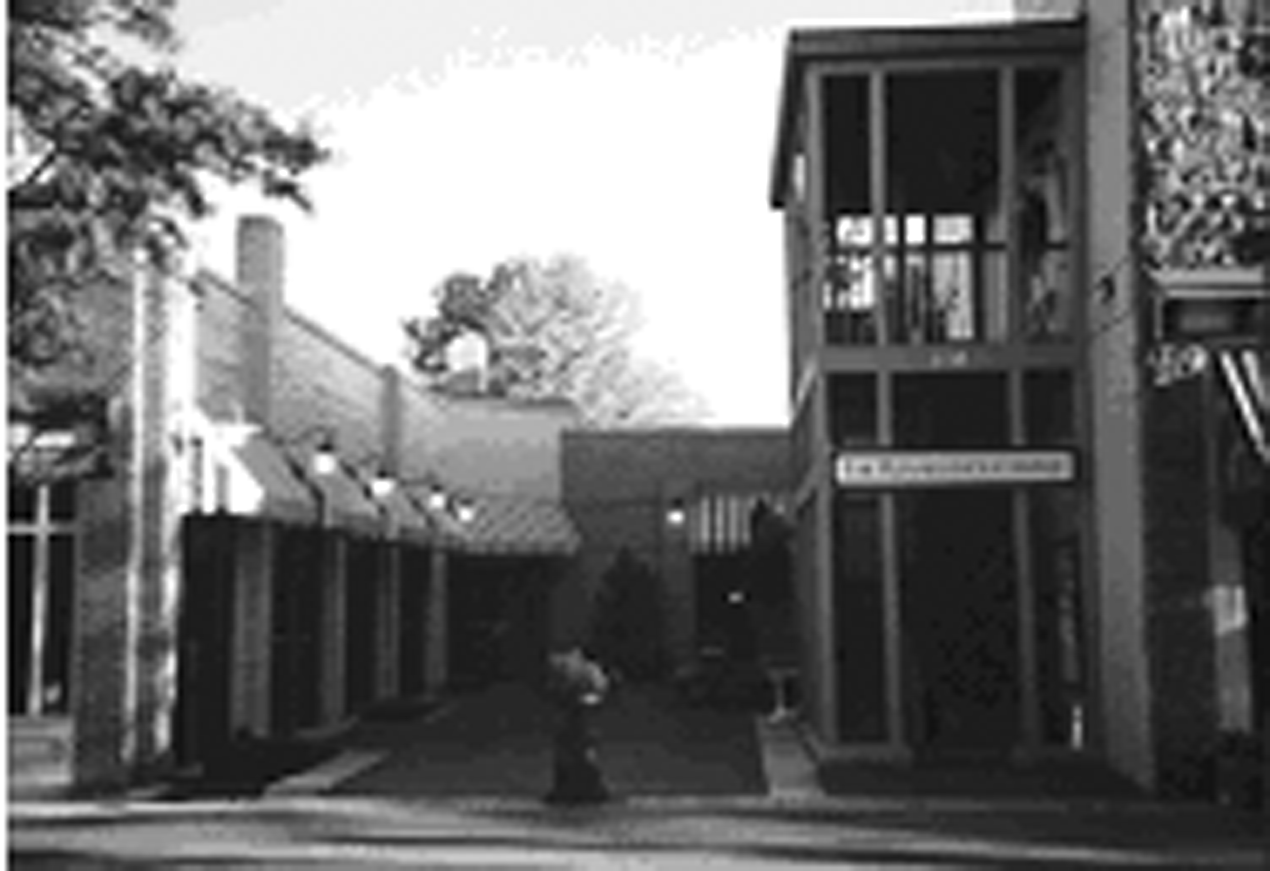 | ||
| Open Space. | |||||
| * | Open space shall comply with the parks and open space standards of this Ordinance. This Section shall not apply to any single-family residential dwelling located on an existing recorded lot. | * | * | * | 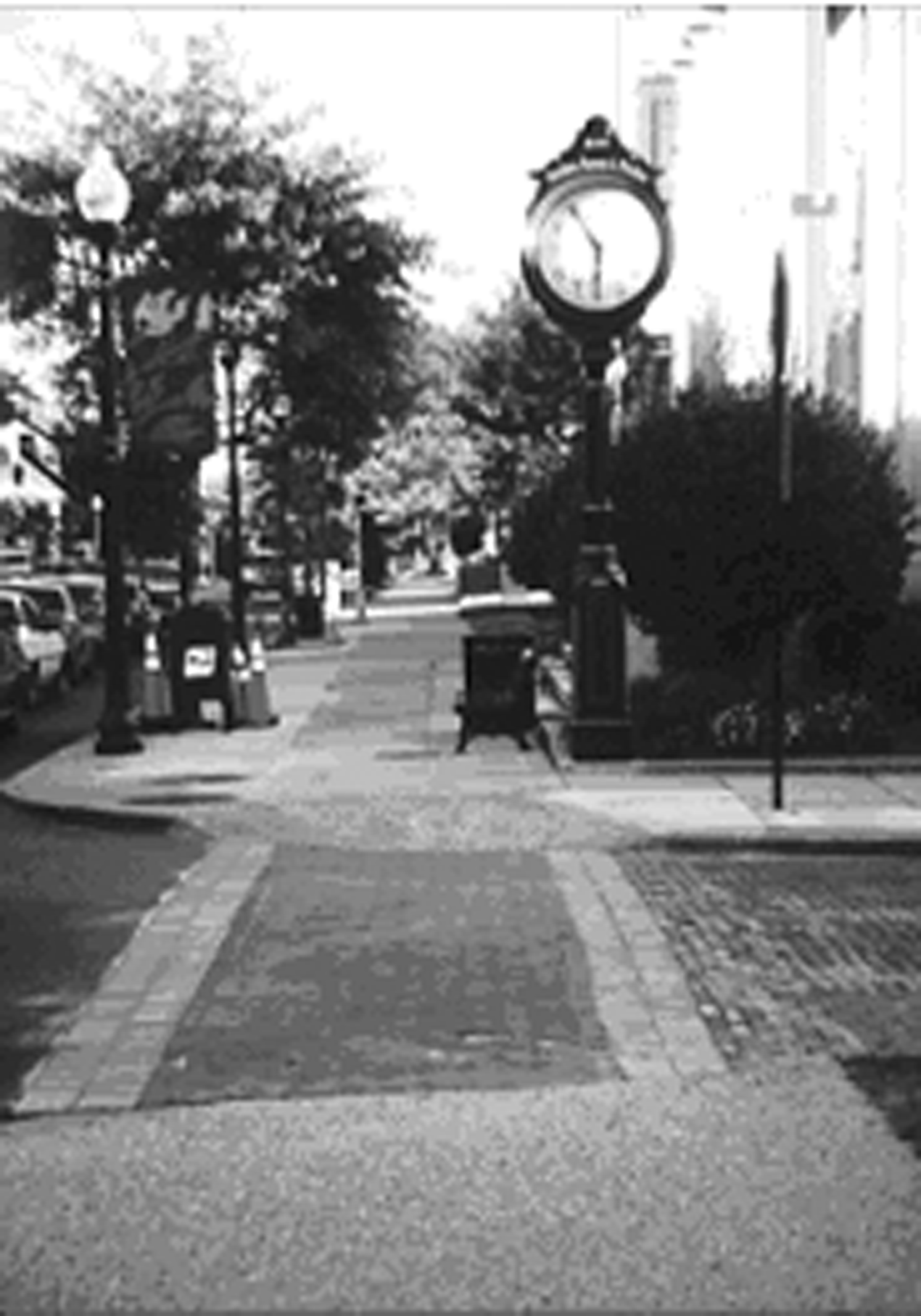 |
| * | Outdoor seating is encouraged, but not required. For example, one linear foot of seating may be provided for each 50 square feet of open space within any front setback. Seating may be between 20 to 24 inches high and 15 to 20 inches deep. | * | * | * | |
| * | For non-residential uses at least one of the following amenities shall be provided in an open space area: ornamental fountains, ornamental lamp posts, ornamental public stairways (excluding fire escapes), waterfalls, sculptures, arbors, trellises, planted beds, drinking fountains, clock pedestals, public telephones, awnings, or canopies. | * | * | * | |
| CANOPIES AND OTHER BUILDING ENTRANCES. |  | ||||
| Canopies, awnings, and similar appurtenances may be constructed at the entrance to any non-residential building, subject to the following criteria: | |||||
| * | Such appurtenance shall be constructed of rigid or flexible material designed to complement the streetscape. | * | * | * | |
| * | Any such appurtenance may extend from the building to up to 80 percent of the width of the sidewalk area in front of the building or nine feet, whichever is less, subject to any encroachment permit which may be required by VDOT or the City. In no case shall any such facility extend beyond the curb line of any public facility, nor shall it interfere with the growth or maintenance of street trees. | * | * | * | |
| * | A minimum overhead clearance of eight (8) feet from the sidewalk shall be maintained. | * | * | * | |
(j)
SPECIFIC B-2 DISTRICT CRITERIA. No application for development approval in the B-2 zoning district shall be approved unless the proposed development conforms to the requirements of Articles 4, 6 and 7 of this Ordinance and the following criteria listed below.
(1)
The following criteria shall be used (in addition to the general rezoning criteria established in Section 31-304(e)) in consideration of the placement of this zone and the type and arrangement of uses within it:
(2)
The zone and its uses shall continue the orderly development and concentration of business and commercial uses; and
A.
Pedestrian and vehicular conflicts shall be minimized by a system of sidewalks and other pedestrian amenities which provide connectivity to surrounding neighborhoods, while providing adequate separation and channeling of pedestrian and vehicular movements; and
B.
B-2 zones shall be located along arterials and arterial/arterial or arterial/collector intersections.
(3)
All uses authorized in the B-2 district, including operations and storage of goods, shall be performed and primarily stored within an enclosed building. The outdoor display and sales of merchandise is authorized subject to the provisions of Section 31-609, Outdoor Storage and Display and Section 31-717(b) and (c), Temporary Uses.
(k)
SPECIFIC O-I DISTRICT CRITERIA. No application for development approval in the O-I zoning district shall be approved unless the proposed use and/or development conforms to the requirements of Articles 4, 6 and 7 of this Ordinance and to the following criteria:
(1)
LOCATIONAL CRITERIA. The following criteria shall be used (in addition to the general rezoning criteria established in Section 31-304(e)) in consideration of the placement of this zone and the type and arrangement of uses within it:
A.
The zone and its uses shall continue the orderly development and concentration of office uses; and
B.
Pedestrian and vehicular conflicts shall be minimized by a system of sidewalks and other pedestrian amenities which provide connectivity to surrounding neighborhoods, while providing adequate separation and channeling of pedestrian and vehicular movements; and
C.
O-I zones shall have direct access to minor arterial, major or urban collector, or sub-collector streets.
(2)
PERMITTED USES. (See also Table 406-1)
A.
Flex Space establishments shall comply with the following restrictions:
(i)
Not more than sixty percent (60%) of the gross floor area shall be devoted to wholesale, retail, business services, general services, or personal services.
(3)
APPROVAL PROCESS. Site plan approval shall be required for any use in the O-I zoning district prior to construction.
(4)
STANDARDS. Uses in this district shall be in full conformance with the standards of this and other applicable Sections of this Ordinance.
A.
Buildings or other structures, including parking lots, erected closer than fifty (50) feet when adjacent to any area developed or zoned as a residential zoning district shall be screened in accordance with the landscaping standards of this Ordinance, Section 31-603(f).
B.
Principal vehicle access to and from the site shall be from a primary driveway.
C.
All loading shall be from the rear or side of the building, but not facing a public street. If loading faces a parcel within a residential zoning district, the rear setback shall be increased by fifty percent (50%).
D.
All buildings shall be of reinforced concrete, masonry construction or architectural metal. Corrugated metal buildings shall not be permitted.
E.
Applicants are required to provide the following site plan elements in order to create an office complex ambiance and appearance:
(i)
Loading courts which are not visible from any public street. Screening of these areas shall be provided by the principal building;
(ii)
Entry courts and pedestrian plazas;
(iii)
Unique landscape features such as berming, fountains, and sculpture gardens, particularly adjacent to the arterial street;
(iv)
If utilized covered or decked parking structures which appear as an integrated part of the building;
(v)
Sidewalks consistent with the street improvement standards shall link all principal buildings, or shall link the principal building or buildings to offsite destinations including retail, shopping, or services (including day care, dry cleaners or grocery stores.
(l)
SPECIFIC M-1 AND C-P DISTRICT CRITERIA. No application for development approval in the M-1 or C-P zoning districts shall be approved unless the proposed use and/or development conforms to the requirements of Articles 4, 6 and 7 of this Ordinance and to the following criteria:
(1)
LOCATIONAL CRITERIA. The following criteria shall be used (in addition to the general rezoning criteria established in Section 31-304 (e))in consideration of the placement of this zone and the type and arrangement of uses within it:
A.
The zone and its uses shall continue the orderly development and concentration of industrial and manufacturing uses; and
B.
The land area shall be sufficient to maintain compatibility with surrounding uses; and
C.
M-1 zones shall have direct access to arterials and/or major collector streets. M-1 zones shall not have direct access to a local street.
(2)
PERMITTED USES. (See also Table 406-1)
A.
Retail commercial operations, when the product sold at retail is the product which is manufactured as the primary use, shall not exceed twenty percent (20%) of the gross floor area. A retail commercial operation is directly related to the primary industrial use when the product sold at retail is the product which is manufactured or stored as the primary use.
B.
Retail commercial uses which are not directly related to the primary industrial use, but which are complementary to the primary use, the other uses in the industrial park, or the other uses in the district, may be permitted. A retail commercial use is complementary to the primary use, other uses in the industrial park, or the other uses in the district if the Director finds the following:
(i)
The market area of the proposed retail commercial use is directed toward the primary use, the other uses in the industrial park or other uses in the district; and
(ii)
The retail commercial use does not take place after 9:00 p.m.; and
(iii)
The retail commercial use meets one or more of the following standards:
a.
The use provides cultural or recreational opportunities for employees;
b.
The use provides day care or preschooling for the children of the employees;
c.
The use is a restaurant or a convenience retail use;
d.
The use sells at retail, products or services used by the primary use, the other uses in the industrial park or the other uses used in the district.
C.
Flex space establishments shall comply with the following restrictions:
(i)
Not more than sixty percent (60%) of the gross floor area shall be devoted to wholesale, retail, business services, general services, or personal services.
(3)
APPROVAL PROCESS. Site plan approval shall be required for any use in the M-1 zoning district prior to construction.
(4)
STANDARDS. Uses in this district shall be in full conformance with the standards of this and other applicable Sections of this Ordinance.
A.
Storage yards shall be completely screened from view so as not to be visible from the boundary of any property not zoned M-1 or CP or from the public right-of-way.
B.
In addition to the requirements of Section 31-407 of this Ordinance, no buildings or other structures, including parking lots, shall be erected closer than thirty (30) feet when adjacent to any area developed or zoned as a Residential Zoning District.
C.
Principal vehicle access to and from the site shall be from a primary driveway.
D.
All loading shall be from the rear or side of the building, but not facing a public street.
E.
All buildings shall be of reinforced concrete, masonry construction or architectural metal. Concealed fastener metal building panels combined with concrete or masonry shall be permitted.
F.
Applicants are encouraged to provide the following site plan elements in order to create an office complex ambiance and appearance to the industrial development:
(i)
Loading courts which are not visible from any public street. Screening of these areas shall be provided by the principal building;
(ii)
Entry courts and pedestrian plazas;
(iii)
Unique landscape features such as berming, fountains, and sculpture gardens, particularly adjacent to the arterial street;
(iv)
Covered or decked parking structures which appear as an integrated part of the industrial building;
(v)
The majority of the parking structures shall not be located adjacent to the arterial street;
(vi)
Sidewalks consistent with the street improvement standards shall link all principal buildings, or shall link the principal building or buildings to offsite destinations including retail, shopping, or services (including day care, dry cleaners or grocery stores).
G.
All noises, vibrations, emissions of smoke, dust, or gases shall be controlled so as not to be detrimental or cause a nuisance to nearby residential or commercial areas in conformance with the Industrial Performance Standards of this Ordinance.
(m)
SPECIFIC M-2 DISTRICT CRITERIA. No application for development approval in the M-2 zoning district shall be approved unless the proposed use and/or development conforms to the requirements of Articles 4, 6 and 7 of this Ordinance and to the following criteria:
(1)
LOCATIONAL CRITERIA. The following criteria shall be used (in addition to the general rezoning criteria established in Section 31-304(e)) in consideration of the placement of this zone and the type and arrangement of uses within it:
A.
The zone and its uses shall continue the orderly development and concentration of industrial and manufacturing uses; and
B.
The land area shall be sufficient to maintain compatibility with surrounding uses; and
C.
M-2 zones shall have direct access to arterials and/or major collector streets. M-2 zones shall not have direct access to a local street.
(2)
APPROVAL PROCESS. Site Plan approval shall be required for any use in the M-2 zoning district prior to construction.
(3)
STANDARDS.
A.
Storage yards shall be completely screened from view so as not to be visible from the boundary of any property not zoned M-2 or from the public right-of-way.
B.
All driveways, parking areas, and pedestrian ways shall be surfaced with an all weather surface. Curb and gutter shall be provided where required by the Street Improvement Standards.
C.
All delivery and freight handling areas shall be screened from view so as not to be visible from the boundary of any property not zoned M-2 or from the public right-of-way.
D.
Sites shall not be directly accessed from residential streets.
E.
All noises, vibrations, emissions of smoke, dust, or gases shall be controlled so as not to be detrimental or cause a nuisance to nearby residential or commercial areas in conformance with the industrial performance standards of this Ordinance.
(n)
SPECIFIC FRRD DISTRICT CRITERIA. No application for development approval in the FRRD zoning district shall be approved unless that proposed use and/or development conforms to the following criteria:
(1)
LOCATIONAL CRITERIA. The zone and its uses shall comply with the Fairgrounds Master Redevelopment and Revitalization Plan, and to the extent practical implement the Conceptual Master Development Plan and Conceptual Master Schematic Plan, as amended, for the Fairgrounds Revitalization Plan and Fairgrounds Redevelopment Plan, as amended.
(2)
APPROVAL PROCESS. Subdivision or site plan approval shall be required for any use in the FRRD zoning district prior to construction. Where that portion of the district is overlaid by the Historic Conservation Overlay district (HC district), exterior design for both new construction and rehabilitation of existing structures shall comply with the regulations set forth for that district, including review and approval of such design by the Suffolk Historic Landmarks Commission.
(Ord. No. 13-O-021, 2-20-2013; Ord. No. 16-O-014, § 2(Exh. B), 2-17-2016; Ord. No. 23-O-110, § 2(Exh. B), 8-16-2023; Ord. No. 25-O-053, § 2(Exh. B), 5-21-2025)

