
Suisun City City Zoning Code
ARTICLE II
ZONING DISTRICTS
Chapter 18.30 - SPECIAL USE STANDARDS[2]
Editor's note—Ord. No. 809, § 1, adopted Aug. 20, 2024, amended the title of Ch. 18.30 to read as herein set out. The former Ch. 18.30 title pertained to specific use standards.
18.06.010 - Establishment of zoning districts.
Several districts have been established in the city and are shown in Table 18.06.01, Suisun City Zoning Districts.
(Ord. No. 743, § 3, 3-21-2017)
18.06.020 - Zoning map adopted.
The districts, described in Section 18.06.010, are established insofar as the designations, locations, and boundaries are set forth and indicated in this section and in other sections of this title, which describe the districts and consists of a map, entitled "Zoning Map City of Suisun City, California," dated November 2008. The zoning map in Section 18.06.050 and all notations, references, data, and other information shown within it are adopted and made a part of this title. The zoning map is on file in the office of the city clerk.
(Ord. No. 743, § 3, 3-21-2017)
18.06.030 - Boundary uncertainties.
Where uncertainty exists as to the boundaries of any of the districts, as described in this chapter or as shown on the sectional maps, written application shall be made to the development services director for review of mapping, which may include assessor's parcel maps and zoning district maps, among others, to determine the location of zoning district boundaries. If the boundaries of parcels, contributing to a zoning district are unclear or unknown due to a lack of available data or boundary line revisions, the development services director may request a survey to ascertain the precise boundaries of a zoning district in a specified area.
The development services director's decision may be appealed in writing to the planning commission or the planning commission may, upon its own motion, request a hearing of zoning district boundaries. The planning commission determination may be appealed to the city council, in accordance with Chapter 18.84, "Appeals."
(Ord. No. 743, § 3, 3-21-2017)
18.06.040 - Annexed land.
A.
Any land within the incorporated limits of the city, now or in the future, and not designated or indicated on the zoning map, shall be placed in the proper zoning district by initiation of amendments procedure, as set forth in Chapter 18.74 "Amendments by the Planning Commission."
B.
Under the direction of the city council, the planning commission may consider and recommend appropriate zoning for all land contained in the annexation proceedings.
C.
When no action is taken by the planning commission and city council to place land in a specified zoning district identified in this title, then it shall be placed in a zoning district, consistent with general plan land use designation identified for that property's location.
(Ord. No. 743, § 3, 3-21-2017; Ord. No. 748, § 4, 5-15-2018)
18.06.050 - Zoning map.
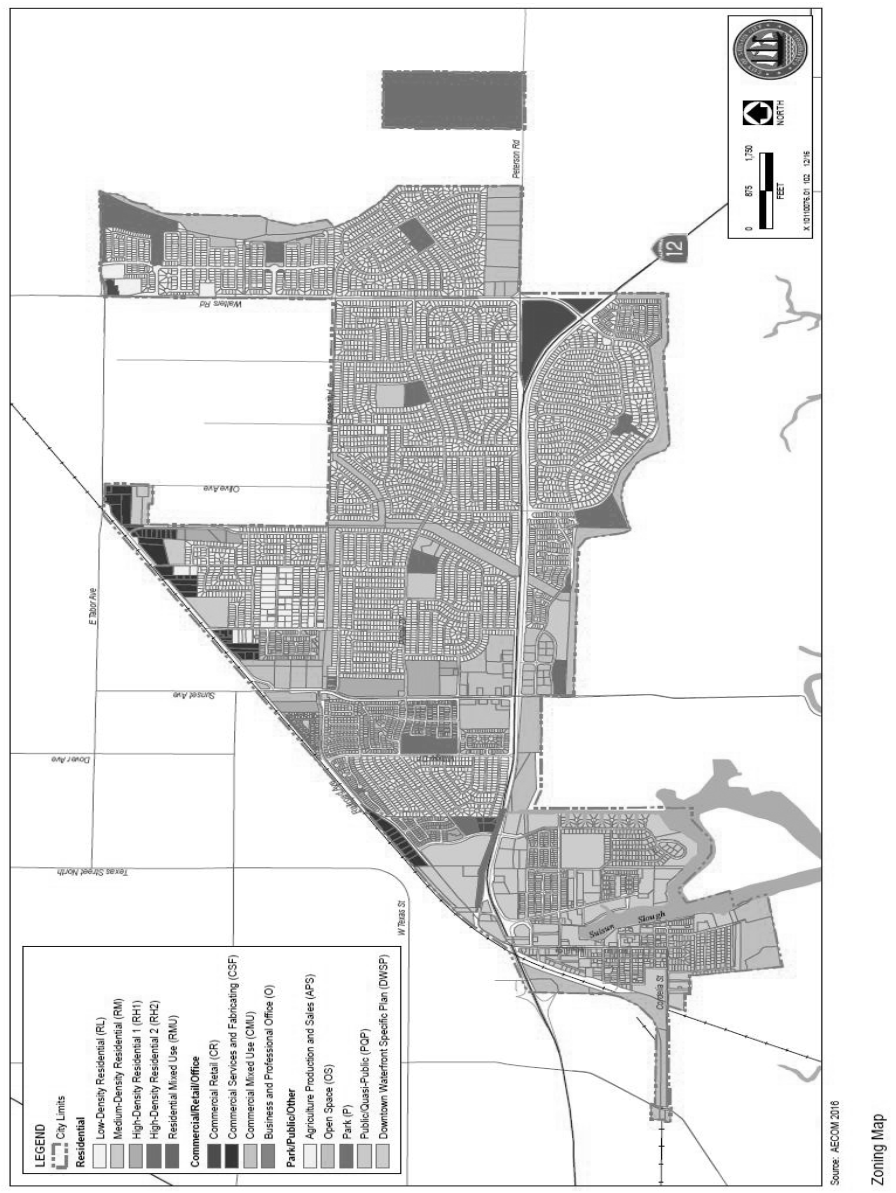
(Ord. No. 743, § 3, 3-21-2017)
18.08.010 - Low-density residential (RL).
The low-density residential (RL) zoning district is applicable to parcels, where dwellings developed in the four to ten dwelling units per gross acre range, are the primary land use. Residential dwelling types in the RL district may include single-family detached dwellings on small or standard lots, two-family dwellings (duplexes or duets), townhomes (attached and detached), and other dwellings within the specified density and intensity range, as identified in Section 18.08.050. Other residential uses, as well as secondary, public/quasi-public, and commercial uses may be permitted in this zone, as indicated in Table 18.08.02, "Allowable Uses in Residential Zones." The RL zone is consistent with the low-density residential land use designation in the general plan.
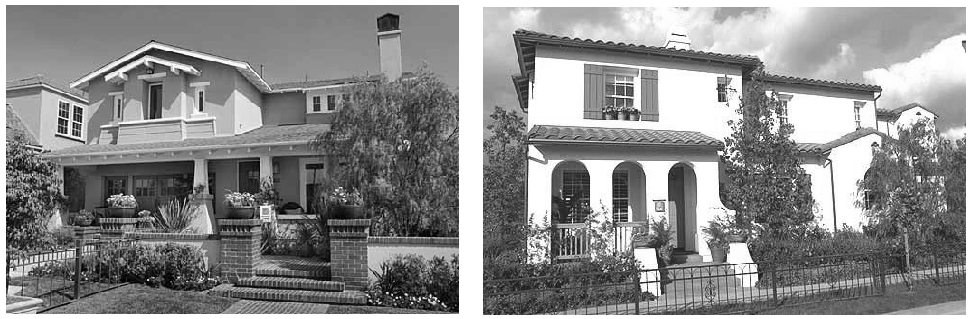
(Ord. No. 743, § 3, 3-21-2017)
18.08.020 - Medium-density residential (RM).
The medium-density residential (RM) zoning district is applicable to parcels, where dwellings developed in the 10.1 to 20 dwelling units per gross acre range, are the primary land use. Residential dwelling types in the RM district may include single-family detached dwellings on small lots, two-family dwellings (duplexes or duets), townhomes (attached and detached), multi-family apartments and condominiums, and other dwellings within the specified density and intensity range, as identified in Section 18.08.050. Other residential uses, as well as secondary, public/quasi-public, and other uses may be permitted in this zone, as defined in Table 18.08.02, "Allowable Uses in Residential Zones." The RM zone is consistent with the medium-density residential land use designation in the general plan.
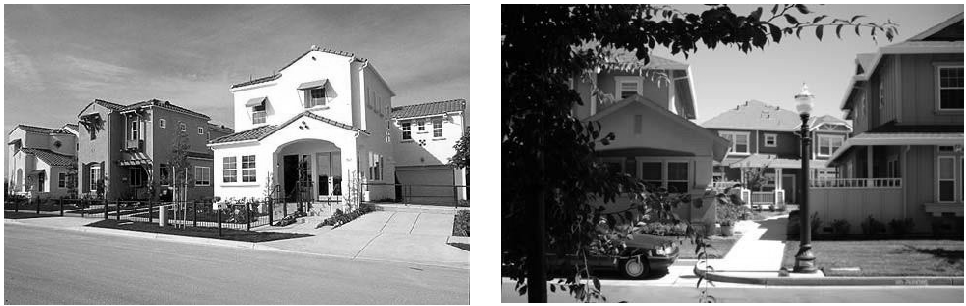
(Ord. No. 743, § 3, 3-21-2017)
18.08.030 - High-density residential 1 (RH1).
The high-density residential 1 (RH1) zoning district is applicable to parcels, where dwellings developed in the 20.1 to 30 dwelling units per gross acre range, are the primary land use. Dwelling types in the RH district may include multi-family dwellings in a variety of formats, including attached townhomes and garden court formats, and representing surface and tuck-under parking arrangements. Other dwelling types within the specified density range and meeting the standards, identified in Section 18.08.050, may be included in this zone. Nonresidential uses may be permitted, as indicated in Table 18.08.02, "Allowable Uses in Residential Zones." The RH1 zone is consistent with the high-density residential land use designation in the general plan.
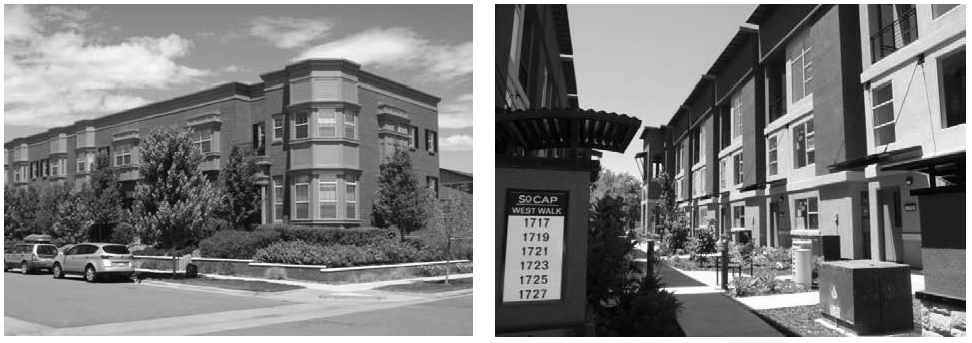
(Ord. No. 743, § 3, 3-21-2017)
18.08.040 - High-density residential 2 (RH2).
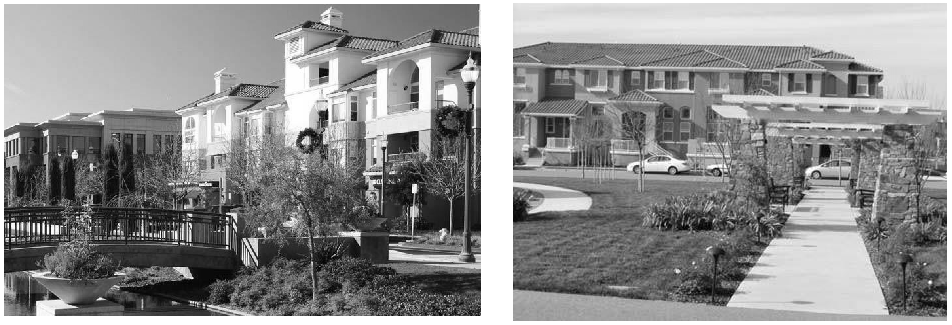
The high-density residential 2 (RH2) zoning district is applicable to parcels, where dwellings developed in the 20.1 to 45 dwelling units per gross acre range, are the primary land use. Dwelling types in the RH2 district may include multi-family dwellings in a variety of formats, including townhomes and garden court apartments, with surface, tuck-under, and podium parking arrangements. Other dwelling types within the specified density range and meeting the standards, identified in Section 18.08.050, may be included in this zone. Nonresidential uses may be permitted, as indicated in Table 18.08.02, "Allowable Uses in Residential Zones." The RH2 zone is consistent with the high-density residential land use designation in the general plan.
(Ord. No. 743, § 3, 3-21-2017)
18.08.050 - Residential mixed use (RMU).
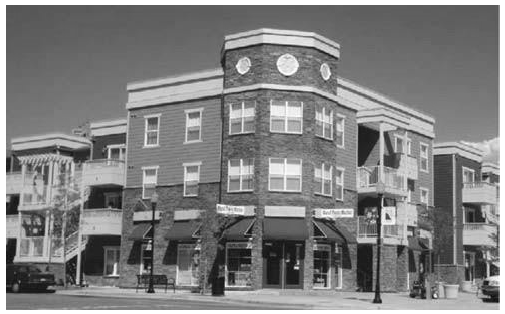
The residential mixed use (RMU) zoning district is applicable to parcels, where a variety of residential dwelling types and complementary nonresidential uses are desired in proximity. Dwellings in the RMU zone will be developed in the 10 to 45 dwelling units per gross acre range and nonresidential intensities within the 0.3 to 1.0 floor area ratio range, with residential uses as the primary use and nonresidential as a secondary use. Nonresidential uses are not required on any given parcel, but are permitted on the ground floor to increase the likelihood of their economic viability and contribute to the goods and services available to the neighborhood. All uses must meet density and intensity standards in Section 18.08.050. The RMU zone is consistent with the mixed use land use designation in the general plan.
(Ord. No. 743, § 3, 3-21-2017)
18.08.060 - Densities and intensities in residential zones.
Table 18.08.01, "Densities and Intensities in Residential Zones" shows the minimum and maximum build-out possible in each residential zone.
(Ord. No. 743, § 3, 3-21-2017)
18.08.070 - Allowable uses in residential zones.
Table 18.08.02 identifies the residential and nonresidential land uses allowed in residential zoning districts in the city. Uses not listed here, but consistent with the character and density and intensity of zoning districts, defined in Sections 18.08.010 through 18.08.040, may be permitted through the administrative review process.
(Ord. No. 743, § 3, 3-21-2017; Ord. No. 809, § 1, 8-20-2024)
18.08.080 - Two unit Senate Bill (SB) 9 project.
The purpose of this section is to facilitate the development of new residential housing units consistent with the provisions of state law as reflected in Government Code Sections 65585, 65852.21, and 66411.7 et seq., and to establish an application and approval process for two unit SB 9 projects. In cases of conflict between this section and any other provision of this title, the provisions of this section shall prevail.
A.
A Two unit SB 9 project (meaning two attached or detached units on a property, as described further, below) shall be ministerially approved by staff if it meets all the following requirements:
1.
The parcel is located within the low-density residential (RL) or medium-density residential (RM) zoning district or in a Specific Plan on property intended for residential development.
2.
The parcel is not located in any of the following:
a.
Either prime farmland or farmland of statewide importance, as defined pursuant to United States Department of Agriculture land inventory and monitoring criteria, as modified for California, and designated on the maps prepared by the Farmland Mapping and Monitoring Program of the Department of Conservation, or land zoned or designated for agricultural protection or preservation by an approved local ballot measure.
b.
Wetlands, as defined in the United States Fish and Wildlife Service Manual, part 660 FW 2 (June 21, 1993).
c.
Within a very high fire hazard severity zone, as determined by the Department of Forestry and Fire Protection pursuant to Section 51178 of the Government Code, or within a high or very high fire hazard severity zone as indicated on maps adopted by the Department of Forestry and Fire Protection pursuant to Public Resources Code Section 4202. This subparagraph does not apply to sites excluded from the specified hazard zones by the city, pursuant to subdivision (b) of Section 51179 of the Government Code, or sites that have adopted fire hazard mitigation measures pursuant to existing building standards or state fire mitigation measures applicable to the development.
d.
A hazardous waste site that is listed pursuant to Government Code Section 65962.5 or a hazardous waste site designated by the Department of Toxic Substances Control pursuant to Heath and Safety Code Section 25356, unless the State Department of Public Health, State Water Resources Control Board, or Department of Toxic Substances Control has cleared the site for residential use or residential mixed uses.
e.
Within a delineated earthquake fault zone as determined by the State Geologist in any official maps published by the State Geologist, unless the development complies with applicable seismic protection building code standards adopted by the California Building Standards Commission under the California Building Standards Law (Part 2.5, commencing with Section 18901, of Division 13 of the Health and Safety Code), and by any local building department under Chapter 12.2 (commencing with Section 8875) of Division 1 of Title 2 of the Government Code.
f.
Within a special flood hazard area subject to inundation by the 1 percent annual chance flood (100-year flood) as determined by the Federal Emergency Management Agency (FEMA) in any official maps published by FEMA. If a development proponent is able to satisfy all applicable federal qualifying criteria in order to provide that the site satisfied this subparagraph, the city shall not deny the application on the basis that the development proponent did not comply with any additional permit requirement, standard, or action adopted by the city that is applicable to that site. A development may be located on a site described in this subparagraph if either of the following are met (1) the site has been subject to a letter of map revision prepared by FEMA and issued to the city; or (2) the site meets FEMA requirements necessary to meet minimum flood plain management criteria of the National Flood Insurance Program pursuant to Part 59 (commencing with Section 59.1) and Part 60 (commencing with Section 60.1) of Subchapter B of Chapter 1 of Title 44 of the Code of Federal Regulations.
g.
Within a regulatory floodway as determined by FEMA in any official maps published by FEMA, unless the development has received a no-rise certification in accordance with Section 60.3(d)(3) of Title 44 of the Code of Federal Regulations. If a development proponent is able to satisfy all applicable federal qualifying criteria in order to provide that the site satisfies this subparagraph and is otherwise eligible for streamlined approval under this section, the city shall not deny the application on the basis that the development proponent did not comply with any additional permit requirement, standard, or action adopted by the city that is applicable to that site.
h.
Lands identified for conservation in an adopted natural community conservation plan pursuant to the Natural Community Conservation Planning Act (Chapter 10, commencing with Section 2800, of Division 3 of the Fish and Game Code), habitat conservation plan pursuant to the federal Endangered Species Act of 1973 (16 U.S.C. Sec. 1531 et seq.), or other adopted natural resource protection plan.
i.
Habitat for protected species identified as candidate, sensitive, or species of special status by state or federal agencies, fully protected species, or species protected by the federal Endangered Species Act of 1973 (16 U.S.C. Sec 1531 et seq.), the California Endangered Species Act (Chapter 1.5, commencing with Section 2050n, of Division 3 of the Fish and Game Code), or the Native Plant Protection Act (Chapter 10, commencing with Section 1900, of Division 2 of the Fish and Game Code).
j.
Lands under conservation easement.
3.
The two unit SB 9 project application would not require demolition or alteration of any of the following types of housing:
a.
Housing subject to a recorded covenant, ordinance, or law that restricts rents to levels affordable to persons and families of moderate, low, or very low income.
b.
Housing that is subject to any form of rent or price control through a public entity's valid exercise of its police power.
c.
Housing that has been occupied by a tenant in the last three years.
4.
The parcel is not a parcel on which an owner of residential real property has exercised the ownership rights under Government Code Section 7060 et seq. to withdraw accommodations from rent or lease within 15 years before the date that the applicant submits an SB 9 application.
5.
The parcel is not located within a historic district or property included on the State Historic Resources Inventory, as defined in Public Resources Code Section 5020.1, or within a site that is designated or listed as a city landmark or historic property or district by local ordinance.
6.
The two unit SB 9 project meets all other requirements of this section.
B.
A two unit SB 9 project shall be processed consistent with Section 18.76.020—Administrative site plan review required.
1.
Within 60 days of submittal of a complete application, the development services director (or his/her designee) shall review and approve complete applications that are in compliance with the requirements of this section and the underlying development standards in the zoning district or specific plan in which it is located, and any other applicable objective development standards stated in this Code. Provisions of this section shall supersede where any conflict exists. If the director has not approved or denied the completed application within 60 days, the application shall be deemed approved.
2.
Two unit SB 9 projects shall meet the following requirements:
a.
The project application is consistent with Subsection 18.08.080 A.;
b.
The side and rear setbacks of each unit are at least four feet;
c.
The front setback meets the standard of the underlying zoning district or specific plan requirements;
d.
The architectural style, materials, and color palettes of each unit are similar and compatible;
e.
One off-street parking space is provided for each unit, unless:
i.
The parcel is located within one-half mile walking distance of either a high-quality transit corridor, as defined in subdivision (b) of Section 21155 of the Public Resources Code, or a major transit stop, as defined in Section 21064.3 of the Public Resources Code; or
ii.
There is a car share vehicle located within one block of the parcel.
f.
A restrictive covenant shall be recorded upon approval of the project precluding the rental of either unit for a term less than 30 days;
g.
Each dwelling unit shall have access, provide access to, or adjoin the public right-of-way. Accessibility shall be in conformance with the building code and Americans with Disability Act and shall not preclude construction of future public improvements.
3.
If the project is a two unit SB 9 project to be constructed on a site created by an SB 9 urban lot split, no ADU or JADU may be constructed in addition to the project's two units.
4.
Fees for two unit SB 9 projects shall be the same as those assessed for other residential construction projects.
C.
Notwithstanding an SB 9 project's compliance with the above, the director shall deny a complete application if the city's building official makes a written finding, based upon a preponderance of the evidence, that the proposed two unit SB 9 project would have a specific, adverse impact, as defined and determined in paragraph (2) of subdivision (d) of Section 65589.5, upon public health and safety, for which there is no feasible method to satisfactorily mitigate or avoid the specific, adverse impact.
(Ord. No. 817, § 1, 3-4-2025)
18.08.090 - Senate Bill (SB) 9 urban lot split.
The purpose of this section is to appropriately regulate qualifying SB 9 urban lot split developments on property intended for single-family residential development in accordance with California Government Code Section 66411.7 and to establish an application and approval process for such projects. In cases of conflict between this section and any other provision of this title, the provisions of this section shall prevail.
A.
An SB 9 urban lot split shall be ministerially approved by the development services director or his/her designee within 60 days of the date of submission of a complete application if it meets all the following requirements:
1.
The parcel is located within the low-density residential (RL) or medium-density residential (RM) zoning district or in a specific plan on property intended for residential development;
2.
The project application is consistent with Subsection 18.08.080 A.;
3.
The project will create no more than two new parcels and each of the newly-created parcels meets the following requirements:
a.
Is at least 40 percent of the lot area of the parcel being divided;
b.
Is at least 1,200 square feet in size;
c.
Allows for the construction of a unit not less than 400 square feet and not greater than 1,200 square feet, with side and rear setbacks not less than four feet;
d.
Has access to or adjoins the public right-of-way, sufficient to allow development on the parcel to comply with any property access requirements under the California Fire Code Section 503 and Title 14, California Code of Regulations Section 1273.00 et seq., when applicable to the parcel;
e.
Allows for the construction of one off-street parking space, unless:
i.
The parcel is located within one-half mile walking distance of either a high-quality transit corridor, as defined in subdivision (b) of Section 21155 of the Public Resources Code, or a major transit stop, as defined in Section 21064.3 of the Public Resources Code; or
ii.
There is a car share vehicle located within one block of the parcel.
f.
The project includes a covenant to be recorded upon approval precluding the rental of either unit for a term less than 30 days;
g.
The proposed new parcels are intended for exclusively residential use.
4.
If the two unit SB 9 project is intended to be constructed on a site created by an SB 9 urban lot split, no ADU or JADU may be constructed in addition to the project's two units.
5.
The owner of the parcel to be subdivided signs an affidavit under penalty or perjury declaring all of the following to be true:
a.
The housing units proposed to be demolished or altered (if any) have not been occupied by a tenant at any time within three years of the date of application for an urban lot split;
b.
The owner of the parcel intends to occupy one of the housing units as their principal residence for a minimum of three years from the date of approval of the urban lot split. (Ownership is not required if the owner is a community land trust or qualified nonprofit corporation under Sections 214.5 or 402.1 of the Revenue and Taxation Code.)
c.
The owner has not previously subdivided an adjacent parcel using an urban lot split.
d.
The owner has not previously acted in concert with any person to subdivide an adjacent parcel using an urban lot split. ("Acted in concert" means that the owner, or a person acting as an agent or representative of the owner, knowingly participated with another person in a joint activity or parallel action toward a common goal of subdividing the adjacent parcel.)
B.
SB 9 urban lot splits are not permitted on parcels:
1.
Described in Subsection 18.08.080.A;
2.
Created by a prior SB 9 urban lot split;
3.
Containing more than two existing units.
C.
All provisions of the Subdivision Map Act and the City of Suisun City Municipal Code shall apply unless expressly modified in this section.
1.
No dedication of right-of-way or construction of off-site improvements shall be required as a condition of SB 9 urban lot split parcel map approval.
2.
If the SB 9 urban lot split is proposed on a public street that has not been dedicated to its ultimate width, public access and utility easements shall be recorded as a condition of parcel map approval.
3.
Correction of nonconforming zoning conditions shall not be required as a condition of ministerial approval.
D.
Notwithstanding an SB 9 project's compliance with the above, the director shall deny a complete application if the city's building official makes a written finding, based upon a preponderance of the evidence, that the proposed two unit SB 9 project would have a specific, adverse impact, as defined and determined in paragraph (2) of subdivision (d) of Section 65589.5, upon public health and safety, for which there is no feasible method to satisfactorily mitigate or avoid the specific, adverse impact.
(Ord. No. 817, § 1, 3-4-2025)
18.08.095 - SB 9 definitions.
The following definitions are applicable to SB 9 two unit projects and urban lot splits:
"Adjacent parcel" means a parcel of land that is touching the subject parcel at any point, separated from the subject parcel by only a public right-of-way, private street or way, or public or private utility access easement.
"Car share vehicle" means a motor vehicle that is operated as part of a fleet by a public or private car-sharing company or organization and provides hourly or daily service.
"Common ownership or control" means property owned or controlled by the same person, persons, or entity, or by separate entities in which any shareholder, partner, member, or family member of an investor of the entity owns ten percent or more of the interest in the property.
"Lower-income household" means a household described by the meaning set forth in California Health and Safety Code Section 50079 et seq.
"Major transit stop" means a site containing any of the following:
(1)
An existing rail or bus rapid transit station;
(2)
A ferry terminal served by either a bus or rail transit service; or
(3)
The intersection of two or more major bus routes with frequency of service intervals of 15 minutes or less during morning and evening peak commute periods.
"Moderate-income household" means a household described by the meaning set forth in California Health and Safety Code Section 50093 et seq.
"SB 9 project" or "SB 9 application" means a project application submitted to the city in accordance with Section 18.08.080 or Section 18.08.090 of this title to:
(1)
Split a qualifying single-family residential zoned parcel into two lots; or
(2)
Develop no more than two primary units on a single lot.
"Two unit SB 9 development" means a development that proposes no more than two new primary residential units (or proposes to add one new primary residential unit to one existing primary residential unit) that meets all the criteria and standards set forth in Section 18.08.080 of this title.
"Urban lot split" means subdivision of an existing parcel into no more than two separate parcels that meets all the criteria and standards set forth in Section 18.08.090 of this title.
"Very low-income household" means a household described by the meaning set forth in California Health and Safety Code Section 50105 et seq.
(Ord. No. 817, § 1, 3-4-2025)
18.14.010 - Purpose.
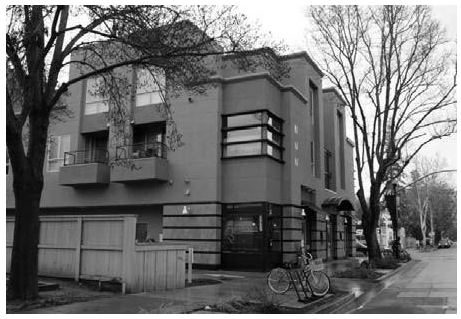
To provide for a predominantly residential zone that allows for flexible housing types, along with a mix of compatible and supportive nonresidential uses in proximity, that could include neighborhood commercial, office, and service uses and live-work units.
(Ord. No. 743, § 3, 3-21-2017)
18.14.020 - Definitions.
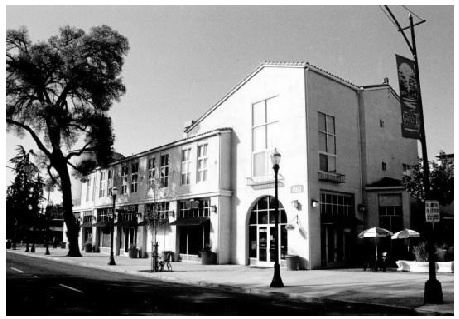
"Vertical mixed use." The combination of two or more uses in a single building, with each use typically occupying on one or more floors of the building.
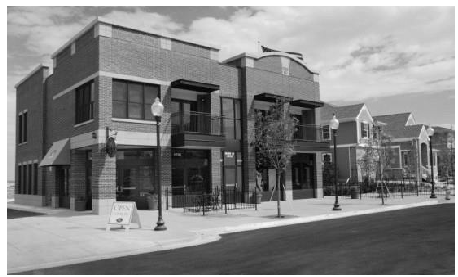
"Horizontal mixed use." The combination of two or more uses on a single site, with the uses sharing a building (e.g., a residential building wrapped by commercial uses) or occupying separate buildings.
(Ord. No. 743, § 3, 3-21-2017)
18.14.030 - Mixing of uses.
A.
Nonresidential uses are permitted, but not required in the RMU district.
B.
Both vertical mixed use and horizontal mixed-use development is permitted in this zone.
C.
In vertical mixed-use buildings, nonresidential uses must be located on the ground floor and occupy street frontage.
(Ord. No. 743, § 3, 3-21-2017)
18.14.040 - Development size.
A.
A single nonresidential (commercial/retail or office) tenant space, where provided, shall be no larger than 15,000 square feet of gross leasable area (the approximate size of a large full service restaurant).
B.
Each individual development project may include between a minimum of zero percent and maximum of 50 percent nonresidential uses of the total gross leasable building area. Each individual development project must include some residential uses.
C.
Mixed-use development with residential and non-residential uses may be eligible for a density bonus, including parking reductions, per Section 18.14.060, "Parking Reductions."
(Ord. No. 743, § 3, 3-21-2017)
18.14.050 - Site design.
A.
Access drives on local streets that connect with major streets is preferred to reduce curb cuts on major streets.
B.
Where the size of the development warrants (and there are multiple tenants on a site greater than two acres) with internal traffic circulation routes and parking areas, pedestrian routes must be clearly marked with paving treatments and signage.
C.
Street trees shall be planted in landscape strips or tree wells along drive aisles and pedestrian walkways and in parking areas, as required by Chapter 18.42.
D.
Pedestrian amenities (street trees, sidewalks, and benches) shall be included along pedestrian walkways in the building frontage area.
E.
A minimum five-foot clear pedestrian path shall be maintained along sidewalks and building frontage areas. Pedestrian amenities shall not be located in this clear zone.
F.
Pedestrian and bicycle connections to nearby uses and adjacent neighborhoods must be identified on site plans, submitted with tentative parcel maps.
(Ord. No. 743, § 3, 3-21-2017)
18.14.060 - Parking reductions.
A.
Parking reductions less than the total of the various uses may be requested based the Urban Land Institute's Shared Parking Second Edition (2006) or another shared parking resource approved by the development services director. On-street parking may be used to satisfy off-street parking requirements.
B.
An approved parking plan must be completed before a certificate of occupancy can be issued for an RMU project.
C.
Parking for nonresidential uses shall not exceed three per 1,000 square feet of gross floor area.
(Ord. No. 743, § 3, 3-21-2017)
18.20.010 - Commercial retail (CR).
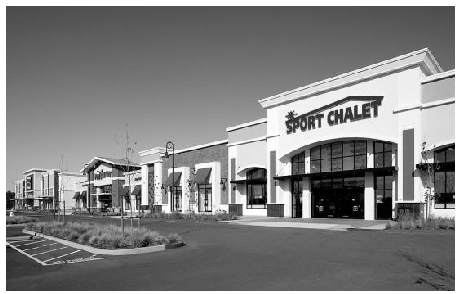
The commercial retail (CR) zoning district is applicable to parcels where the sale of goods and services is the primary intended use. This includes large format retail establishments, as well as smaller commercial businesses scaled to neighborhood-serving goods and services meeting the density and intensity standards defined in Section 18.20.060. The CR zone is consistent with the commercial land use designation in the general plan.
(Ord. No. 743, § 3, 3-21-2017)
18.20.020 - Commercial services and fabricating (CSF).
The commercial services and fabricating (CSF) zoning district is applicable to parcels where a mix of retail, services, wholesale, warehousing, light assembly, and manufacturing uses are desirable. 1 Uses in this zone are subject to the density and intensity standards identified in Section 18.20.060 and the development standards defined in Section 18.32. The CSF zone is consistent with the commercial land use designation in the general plan.
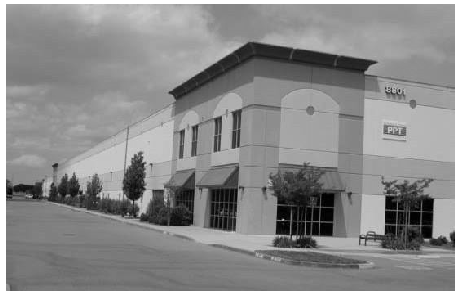
1 The CSF zone is intended to replace the light manufacturing (ML) zone with a more inclusive category that combines some wholesale/retail with warehousing and assembly.
(Ord. No. 743, § 3, 3-21-2017)
18.20.030 - Commercial mixed use (CMU).
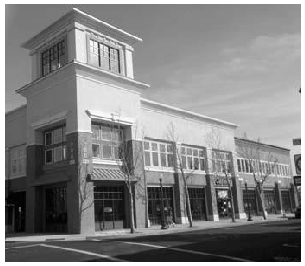
The commercial mixed use (CMU) zoning district is applicable to parcels where a variety of commercial uses are desired as the primary use, with residential uses permitted as a secondary use. Commercial and other nonresidential uses in this zone may be within the 0.25—1.0 floor area ratio range, with residential uses to be developed within the ten—40 dwelling units per acre range.
Residential uses are not required on any given parcel, but if included, must be above or behind ground floor commercial uses in this zone. All uses must meet development standards, as defined in Section 18.32. The CMU zone is consistent with the mixed use land use designation in the general plan.
(Ord. No. 743, § 3, 3-21-2017)
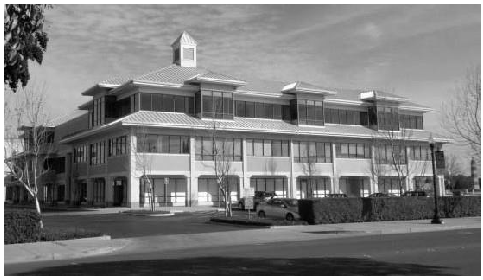
18.20.040 - Business and professional office (O).
The business and professional office (O) zoning district is applicable to parcels where professional office is the primary intended use, with complementary services and retail permitted as secondary uses. The O zone is consistent with the commercial land use designation in the general plan.
(Ord. No. 743, § 3, 3-21-2017)
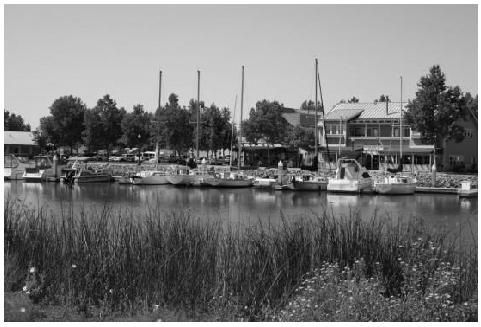
18.20.050 - Waterfront district specific plan (DWSP).
The waterfront district specific plan (DWSP) zoning district encompasses the zoning districts in the downtown, as defined by the latest city waterfront district specific plan.
(Ord. No. 743, § 3, 3-21-2017)
18.20.060 - Densities and intensities in commercial zones.
Table 18.20.01, Densities and Intensities in Commercial Zones shows the minimum and maximum build-out possible in each residential zone. Parcels within the DWSP zone are regulated by the latest city waterfront district specific plan and are not subject to the densities and intensities defined in the Table 18.20.01.
(Ord. No. 743, § 3, 3-21-2017)
18.20.070 - Allowable uses in commercial zones.
(Ord. No. 743, § 3, 3-21-2017; Ord. No. 809, § 1, 8-20-2024)
Editor's note— Ord. No. 809, § 1, adopted Aug. 20, 2024, amended the title of § 18.20.070 to read as herein set out. The former § 18.20.070 title pertained to allowable uses.
18.20.080 - Trash and storage areas.
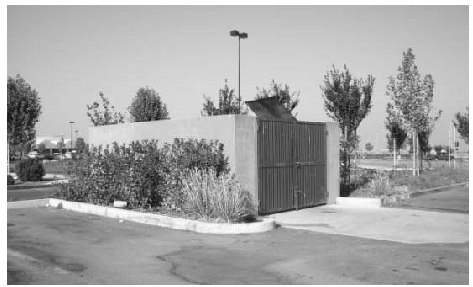
Refuse containers shall be stored within an enclosed area in such a manner as not to be visible from public rights-of-way, driveways or parking areas and preventing the materials contained therein to be viewed from outside the enclosure or blown outside of the enclosure. In all nonresidential and multiple family districts, refuse containers shall be stored within a masonry or similar permanent enclosure, provided with screening doors.
(Ord. No. 743, § 3, 3-21-2017)
18.20.090 - Utility service.
Any utility service located in public view from the front of buildings or public streets shall be screened.
(Ord. No. 743, § 3, 3-21-2017)
18.22.010 - Purpose.
The purpose of the commercial mixed use (CMU) zoning district is to allow a mix of land uses that may include commercial retail, service, or office and housing to support a variety of uses that effectively respond to changes in the market and promote economic vitality. The CMU zoning district is intended to be comprised of predominantly retail or service uses, in combination with other secondary and complementary uses (i.e., residential, office, or civic uses).
(Ord. No. 743, § 3, 3-21-2017)
18.22.020 - Definitions.
"Vertical mixed use." The combination of two or more uses in a single building, with each use typically occupying one or more floors of the building.
"Horizontal mixed use." The combination of two or more uses on a single site, with the uses sharing a building (e.g., a residential building "wrapped" by commercial uses) or two or more uses occupying separate buildings.
(Ord. No. 743, § 3, 3-21-2017)
18.22.030 - Development size.
A.
The minimum area per commercial development is 2,500 square feet, as indicated in Chapter 18.32.
B.
Minimum size of commercial/retail tenant space is 2,500 square feet of gross leasable area. Maximum size of commercial/retail tenant space is 40,000 square feet gross leasable area. Over 40,000 square feet of gross leasable space and up to a maximum 100,000 square feet is possible, with a conditional use permit. The use may be permitted, based on a traffic impact and parking analyses and corresponding circulation and parking plans and any required CEQA analysis, not previously addressed, that minimizes impacts to adjacent areas.
(Ord. No. 743, § 3, 3-21-2017)
18.22.040 - Mixing of uses.
A.
Each development project must include at least 50 percent minimum retail and up to a maximum of 100 percent retail gross leasable area, where 100 percent retail is permitted only in the early phases of the project (unless part of a larger commercial mixed-use development area that will contain a varied mix of commercial uses).
B.
Each development may include up to 50 percent residential, office, and civic uses.
C.
Multi-family housing may be eligible for a density bonus, per Chapter 18.47, "Residential Density Bonus and Density Incentives."
(Ord. No. 743, § 3, 3-21-2017; Ord. No. 748, § 4, 5-15-2018)
18.22.050 - Site design.
Commercial mixed use development shall incorporate the following site design requirements:
A.
Access drives on local streets that connect with nearby major streets shall reduce curb cuts on major streets to ensure safe vehicular access.
B.
In commercial centers with internal traffic circulation routes and parking areas, pedestrian routes must be clearly marked with paving treatments and signage.
C.
Street trees shall be planted in landscape strips or tree wells along drive aisles and pedestrian walkways and in parking areas.
D.
Pedestrian amenities (street trees, sidewalks, and benches) shall be included along pedestrian walkways along building storefronts.
E.
A five-foot clear, unobstructed pedestrian path must be provided and maintained along the building storefronts for pedestrian access.
F.
Pedestrian connections to nearby uses and adjacent neighborhoods must be provided on tentative parcel maps and/or site plans.
G.
Commercial mixed use development is encouraged to be provided adjacent to transit. Transit stops, located within a CMU development, are preferred, but where transit is located outside of the development, nearby wayfinding signage shall be provided that clearly displays the location of transit stops.
(Ord. No. 743, § 3, 3-21-2017)
18.22.060 - Building design on mixed use sites.
A.
In general, commercial/retail uses in the CMU zoning district should be oriented toward a commercial street, visible and accessible from that street at the pedestrian level. However, commercial street frontage may include other nonresidential uses, as well as limited residential uses in the proportions defined in Section 18.22.040 and described in this section.
B.
In a vertical mixed use development in the CMU zoning district, commercial/retail uses should typically occupy the ground floor. Multi-story commercial/retail buildings with multiple tenants or a multi-story design for a single commercial/retail store are also permitted. Stories above the ground floor may include residential, office, or other nonresidential uses.
C.
In a horizontal mixed use development in the CMU district, commercial/retail uses should typically be oriented toward the commercial street front at the ground floor level. Where residential and other nonresidential uses are included, they should be located behind the commercial/retail street front and accessible from side and local streets.
(Ord. No. 743, § 3, 3-21-2017)
18.22.070 - Parking reductions.
A.
Parking reductions, less than the total of the various uses, may be requested, based on the Urban Land Institute's Shared Parking Second Edition (2006) or another shared parking resource approved by the development services director. On-street parking may be included in parking calculations.
B.
An approved parking plan must be completed before a certificate of occupancy can be issued for a CMU project.
C.
Parking for nonresidential uses shall not exceed three per 1,000 square feet of gross leasable floor area.
(Ord. No. 743, § 3, 3-21-2017)
18.26.010 - Purpose.
The purpose of the waterfront district is to provide a mechanism for carrying out the goals, policies, objectives, and regulations of the waterfront district specific plan.
(Ord. No. 743, § 3, 3-21-2017)
18.26.020 - Permitted uses.
Existing structures in the waterfront district may be occupied by new uses, only when such use is found by the development services director to be consistent with the land use descriptions found in Chapter 4, "Land Use Regulations," the land use map, and all other applicable provisions of the waterfront district specific plan.
(Ord. No. 743, § 3, 3-21-2017)
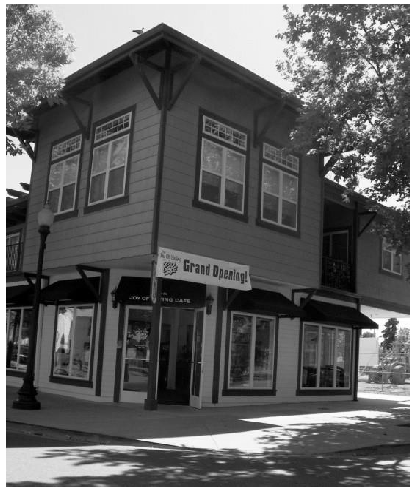
18.26.030 - Uses permitted subject to site plan/architectural review.
Certain uses shall be subject to site plan/architectural review, as specified by the waterfront district specific plan.
(Ord. No. 743, § 3, 3-21-2017)
18.26.040 - Uses permitted with conditional use permit.
As specified by the waterfront district specific plan.
(Ord. No. 743, § 3, 3-21-2017)
18.26.050 - General development standards.
Development standards for new or remodeled structures and uses are contained in the waterfront district specific plan and are to be considered minimum standards for the purposes of administering the regulations of this district.
(Ord. No. 743, § 3, 3-21-2017)
18.26.060 - Off-street parking.
A.
Any new construction or alteration to commercial districts within the specific plan, which requires additional off-street parking facilities, shall be satisfied by:
1.
Provision of the spaces required by the specific plan on-site; or
2.
Provided by entering into an agreement with the city for payment of fees in lieu of the provision of on-site spaces, as addressed in the specific plan.
B.
Such agreement shall provide for the following:
1.
Payment to the city in an amount equal to the value of the required parking on a per-parking-space basis. From time to time, the city council shall establish by resolution the value of the off-street parking facilities on a per-parking-space basis. Funds collected by the city from such payment shall be deposited in a special fund and used only by the city to acquire and/or develop off-street parking spaces and related facilities in the downtown public parking benefit area.
2.
Funds paid to the city in lieu of parking shall not be refundable, except where funds are not used within ten years.
3.
All in-lieu-of-parking fees shall be paid prior to the issuance of any license or permit by the city.
(Ord. No. 743, § 3, 3-21-2017)
18.26.070 - Nonconforming uses.
All nonconforming uses shall comply with the regulations in Chapter 18.68, "Nonconforming Uses."
(Ord. No. 743, § 3, 3-21-2017)
18.26.080 - Design review.
Remodeled structures, alterations, additions, construction, removal or demolition, and signs shall be subject to the design review, as provided in the downtown waterfront specific plan.
(Ord. No. 743, § 3, 3-21-2017)
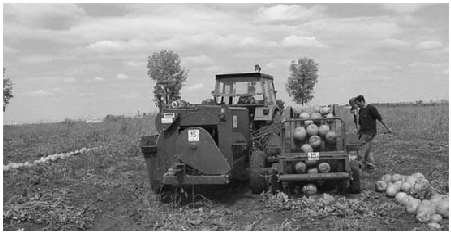
18.28.010 - Agricultural production and sales (APS).
The agricultural production and sales (APS) zoning district is intended to preserve agricultural lands in the city, while permitting compatible uses such as, the processing and packaging of agricultural products, recreation, the sales and marketing of agricultural products, and commercial uses, such as restaurants and bed and breakfast establishments. The APS zone is consistent with the agriculture and open space land use designation in the general plan.
(Ord. No. 743, § 3, 3-21-2017)
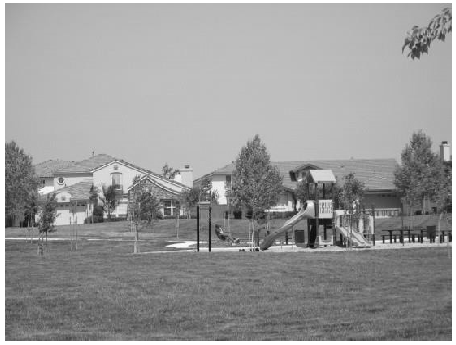
18.28.020 - Park (P).
The park (P) zoning district is the primary park and recreation zone in the city allowing for a variety of permitted active and passive outdoor recreational uses. The zone also allows for compatible public facilities that may benefit from proximity to a park such as, community centers and libraries. The P zone is consistent with the park land use designation in the general plan.
(Ord. No. 743, § 3, 3-21-2017)
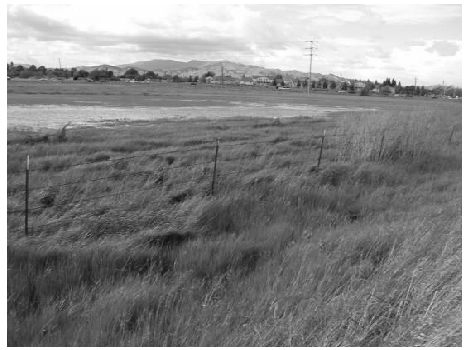
18.28.030 - Open space (OS).
The open space (OS) zoning district is intended for the preservation and restoration of open space areas for which the primary use is the retention of these lands in their natural state. Secondary or complementary uses may include trails, accessory buildings (such as maintenance structures), and passive power generation, where these do not impinge on the functionality of the open space areas to be preserved. The OS zone is consistent with the agriculture and open space land use designation in the general plan.
(Ord. No. 743, § 3, 3-21-2017)
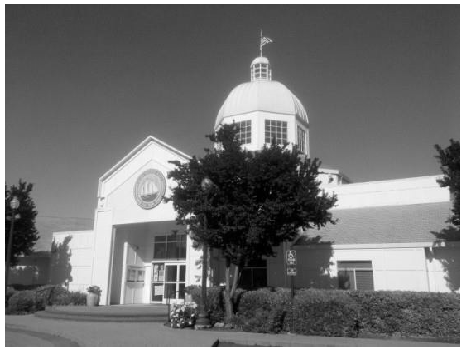
18.28.040 - Public/quasi-public (PQP).
The public/quasi-public (PQP) zoning district is intended to accommodate governmental, educational, community service (such as fire or law enforcement), religious, child care, or cultural facilities (galleries, art, and dance schools) that are complementary to community life. The PQP zone is consistent with the civic land use designation in the general plan.
(Ord. No. 743, § 3, 3-21-2017)
18.28.050 - Planned unit development (PUD).
The planned unit development (PUD) permit is designed and intended to provide for the orderly development of land in conformance with the general plan and applicable specific plan. The permit would allow a flexible design approach to the establishment of a community environment equal to or better than that resulting from the application of the minimum standards of this title. The permit is designed and intended to accommodate various types of development such as neighborhood and district shopping centers, professional and administrative office areas, multi-family housing developments, single-family residential developments, commercial service centers, or light industrial parks, or any other use or combination of uses, which can be made appropriately a part of a planned development. The underlying zoning districts and general plan land use designations will vary.
(Ord. No. 743, § 3, 3-21-2017)
18.28.060 - Densities and intensities in civic/park/other zones.
Table 18.28.01, "Densities and Intensities in Civic/Park/Other Zones" shows the minimum and maximum build-out possible in each residential zone.
Note: Notwithstanding any other provision of this chapter (or code), all development shall be consistent with the adopted current version of the Travis Air Force Base Land Use Compatibility Plan, which as of writing of this document is the one adopted on October 8, 2015 (Resolution 15-17).
(Ord. No. 743, § 3, 3-21-2017)
18.28.070 - Allowable uses.
(Ord. No. 743, § 3, 3-21-2017; Ord. No. 809, § 1, 8-20-2024)
18.30.010 - Amusement center.
Amusement center, bowling alley, dance hall, and similar places of amusement may be conditionally permitted in the CR, CSF, or CMU district, subject to:
A.
Providing parking as required with ingress and egress designed so as to avoid traffic congestion;
B.
Providing a minimum six-foot masonry wall separating parking areas from abutting residential property; and
C.
Showing that adequate control or measures will be taken to prevent offensive noise and vibration.
(Ord. No. 743, § 3, 3-21-2017)
18.30.020 - Animal hospital.
An animal hospital shall:
A.
Be located no closer than 200 feet from any residential district, restaurant, hotel or motel, and be required to obtain a conditional use permit. The conditional use permit shall be subject to revocation and/or modification for any condition found by the planning commission to be detrimental to the public health, safety, or welfare;
B.
If a building permit is required, prior to issuance of a permit, the applicant must show that adequate measures and controls shall be taken to prevent a public nuisance, as defined in Chapter 18.66, "Performance Standards." These measures and controls shall include such items as the provision of additional insulation and ventilation to prevent offensive noise and odor. No incineration of refuse shall be permitted on the premises except on approval of the development services director and fire chief;
C.
Only provide boarding which is medically necessary for the animal. An animal hospital shall not operate as a kennel.
(Ord. No. 743, § 3, 3-21-2017)
18.30.030 - Bakery or laundry.
A bakery, creamery, laundry, cleaning and dyeing establishment shall:
A.
Provide off-street loading spaces, as required in Chapter 18.42, "Parking and Loading Areas;"
B.
Be entirely enclosed within a building;
C.
Show that adequate controls or measures will be taken to prevent offensive noise, vibration, odor, and glaring lights, as defined in Chapter 18.66, "Performance Standards."
(Ord. No. 743, § 3, 3-21-2017)
18.30.040 - Bed and breakfast inns.
In order for a use permit for a bed and breakfast inn to be approved, the following development criteria shall be met:
A.
All standards of the underlying zoning district, including but not limited to, height, lot and yard requirements, and lot coverage shall apply.
B.
One additional off-street parking space shall be provided for each room available for lodging purposes. Tandem parking may be deemed as meeting this requirement.
C.
If more than one person who resides off the premises is employed, one additional off-street parking space for every two such employees shall be provided.
D.
Bed and breakfast facilities shall be subject to all applicable building, fire, health, and safety codes.
E.
No person who is paying rent in exchange for lodging shall occupy a guest room on the premises for more than 14 consecutive nights.
F.
The scale and appearance of bed and breakfast facilities within the RL district shall remain primarily residential in character. All buildings and site improvements shall be similar to, and compatible in design with, the surrounding neighborhood and adjacent residences.
G.
One externally lighted sign shall be allowed on the premises. The sign may be either wall-mounted or freestanding, and shall not exceed six square feet in area. Freestanding signs shall not exceed five feet in height. The development services director shall have authority to review and approve, approve with conditions, or deny the location, size, materials and design of any sign proposed in conjunction with a bed and breakfast facility.
H.
Operation of the facility must comply with all applicable county health department regulations.
I.
The parking requirements of Chapter 18.42, "Parking and Loading Areas," may be fulfilled by arranging for the shared use of an off-site parking facility or participation in a parking assessment district, so long as the parking facilities to be used are located within 300 feet walking distance of the proposed bed and breakfast inn.
(Ord. No. 743, § 3, 3-21-2017)
18.30.050 - Circuses, fairs, revivals.
Circuses, fairs, revivals, or similar temporary establishments involving assemblages of people and automobiles shall be permitted for a brief duration not to exceed fourteen days and providing a temporary use permit, as defined in Chapter 18.73, is first secured in each case in the CR, CFS, CMU, APS, P, and PQP districts.
(Ord. No. 743, § 3, 3-21-2017)
18.30.060 - Concrete and asphaltic concrete plants—Construction storage yards.
Concrete and asphaltic concrete mixing plants and construction storage yards incidental to construction or public works projects may be allowed in the APS or CFS district for a limited period provided a temporary use permit is first secured in each case.
(Ord. No. 743, § 3, 3-21-2017)
18.30.070 - Concrete or asphaltic mixing plant, construction storage yards.
Concrete and asphaltic concrete mixing plants, and construction storage yards incidental to construction on public works projects in all districts shall:
A.
Show that adequate controls or measures will be taken to prevent offensive noise, odor, dust, fumes, smoke or vibration as defined in Chapter 18.66, "Performance Standards;" and
B.
Be so located that traffic generated will not constitute a hazard or nuisance to surrounding property.
(Ord. No. 743, § 3, 3-21-2017)
18.30.080 - Dancehalls, liquor-serving establishments, places of amusement, or recreation.
No dancehall, roadhouse, nightclub, commercial club, or any establishment where liquor is served, or commercial place of amusement or recreation, or any place where entertainers are provided, whether as social companions or otherwise, shall be established in any district closer than 200 feet to any boundary of any residential district, unless a conditional use permit is first secured in each case.
(Ord. No. 743, § 3, 3-21-2017)
18.30.090 - Emergency shelter.
In accordance with California Code Section 65583(a)(4), emergency shelters shall be subject to the following provisions:
A.
Distance Separation Requirements. No emergency shelter shall be located within 300 feet of any other emergency shelter.
B.
Occupancy. An emergency shelter shall not exceed 40 residents, excluding staff.
C.
Length of Occupancy. Any single resident's stay shall not exceed six consecutive months.
D.
Zone Specific Development Standards. An emergency shelter shall comply with all development standards of the applicable zoning district in which it is located.
E.
Parking Requirements. Emergency shelters shall provide one parking space for every staff member or one parking space for every ten temporary residents, or as based on the demonstrated need.
F.
Management. An emergency shelter must adequately comply with the management standards:
1.
There shall be space inside the building so that prospective and current residents are not required to wait on sidewalks or any other public rights-of-way.
2.
Security shall be provided on-site during hours of operation.
3.
On-site management shall be provided by at least one emergency shelter staff member at all times while residents are present at the shelter.
(Ord. No. 743, § 3, 3-21-2017; Ord. No. 809, § 1, 8-20-2024)
18.30.100 - Merchandise display.
Merchandise, whether for sale or rent, shall not be placed in display upon the public right-of-way except by temporary use permit, as defined in Chapter 18.74, and review and approval of the development services director.
(Ord. No. 743, § 3, 3-21-2017)
18.30.110 - Minerals or natural materials removal.
Removal of minerals or natural materials, including building and construction materials to be used for commercial purposes, may be allowed for a limited period in any district provided a conditional use permit is first secured in each case.
(Ord. No. 743, § 3, 3-21-2017)
18.30.120 - Multi-family dwellings.
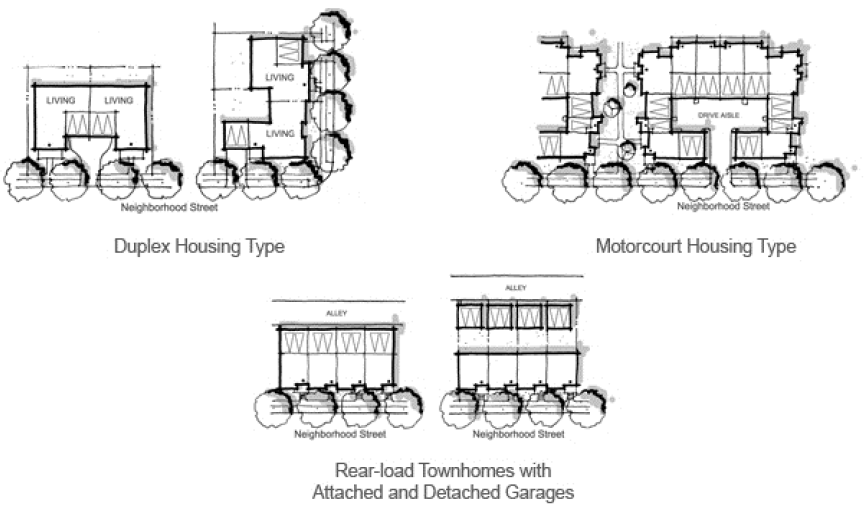
Multi-family dwellings shall be construed to include, but shall not be limited to, flexible housing forms that may include duplex/duet units, triplex units, fourplex, attached and detached townhomes, green court, and podium-level dwelling types. The city shall not restrict flexible housing forms, provided that all site and architectural design requirements are met as part of the development plan process.
(Ord. No. 743, § 3, 3-21-2017)
18.30.130 - Printing or blueprinting.
A newspaper or commercial printing shop, or blueprinting shop shall:
A.
Be entirely enclosed within a building;
B.
Provide off-street loading space in proportion to the number of truckloads per day, as defined in Chapter 18.42, "Parking and Loading Areas;"
C.
Show that adequate controls or measures will be taken to prevent offensive noises or vibration, as defined in Chapter 18.66, "Performance Standards."
(Ord. No. 743, § 3, 3-21-2017)
18.30.140 - Private stables.
The following regulations shall apply to all private stables:
A.
The minimum lot area upon which a horse may be kept is two and one-half acres, up to a maximum of four horses. One additional horse may be kept for each 20,000 square feet by which the parcel of land exceeds two and one-half acres.
B.
Stables shall be located a minimum of 25 feet from the side lot lines, and a minimum 60 feet from the front lot line, and a minimum 20 feet from the rear lot line. Paddocks shall be located on the rear half of the lot, and no closer than 40 feet from any dwelling on the same or adjoining property.
(Ord. No. 743, § 3, 3-21-2017)
18.30.150 - Train or bus station.
A train or bus station shall be located so that generated traffic will not constitute a hazard or nuisance to surrounding property, as defined in Chapter 18.66, "Performance Standards."
(Ord. No. 743, § 3, 3-21-2017)
18.30.160 - Satellite dish antennas.
A.
Residential Zones.
1.
Antenna size, maximum diameter, 12 feet;
2.
Setbacks:
a.
Rear: Five feet.
b.
Side: Five feet.
c.
Street side: Ten feet.
3.
Front yard locations are prohibited.
4.
Height:
a.
Pole-mounts: 15 feet.
b.
Roof-mounts and pole-mounts attached to the structure are subject to review by planning commission.
5.
Number. One satellite dish antenna per lot in addition to normal television and radio antennas.
B.
Commercial Zones.
1.
Installations shall be subject to site plan review by the planning commission, as authorized by this title.
2.
Installation shall not be permitted within front and street side landscaped areas.
3.
Installation shall, by location and design, minimize visibility from adjoining residential properties and rights-of-way.
(Ord. No. 743, § 3, 3-21-2017)
18.30.170 - Accessory dwelling units.
Purpose. This section is intended to achieve the goals of the city's housing element and of the California Government Code by permitting accessory dwelling units, thereby increasing housing opportunities for the community through use of existing housing resources and infrastructure.
The following regulations shall apply to all accessory dwelling units in a residential zoning district:
A.
An accessory dwelling unit may be established on any residentially zoned parcels, in any district where single-family or multi-family dwellings are a permitted use; and on any lot with an existing or proposed single-family or multi-family dwelling.
B.
Accessory dwelling units are a residential use that shall be consistent with the existing general plan and zoning designation for the lot.
C.
There will be only up to one accessory dwelling unit and one junior accessory dwelling unit per lot.
D
The accessory dwelling unit can either be attached to and designed to be located within the living area of the existing dwelling or detached from and no less than five feet from the existing single-family dwelling.
E.
The proposed increase in gross floor area of an attached or detached accessory dwelling unit shall not exceed 50 percent of the existing living area up to a maximum of 1,000 square feet.
F.
Accessory dwelling units shall be located no closer than four feet from any side or rear property lines, be on the rear 50 percent of the lot and must meet the requirements of Section 18.31 (Standards for Residential Districts), Table 18.31.01 (Development standards in residential zones).
G.
[Reserved.]
H.
An internal ADU may be constructed regardless of whether it conforms to the current zoning requirement for building separation or setbacks.
I.
If an internal ADU is proposed to be constructed within an existing accessory structure, the city shall ministerially permit an expansion of the existing accessory structure by up to 150 square feet for the purpose of accommodating ingress and egress.
J.
If an existing structure is demolished and replaced with an accessory dwelling unit, an accessory dwelling unit may be constructed in the same location and to the same dimensions as the demolished structure.
K.
The accessory dwelling unit shall be architecturally integrated into the existing building design.
L.
Foundation. An accessory dwelling unit shall be constructed on a permanent foundation.
M.
The accessory dwelling unit shall not be placed on top of any easements.
N.
Connection Fees. A local agency is prohibited from requiring a new or separate utility connection for an accessory dwelling unit if contained within the existing space of a single-family residence or accessory structure (in accordance with Government Code Section 65852.2(f)).
O.
Parking.
1.
Maximum of one space per unit or one space per bedroom, whichever is less. Tandem parking on an existing driveway is allowed, which may be within setback areas.
2.
No additional parking for accessory dwelling units can be required when:
a.
An accessory dwelling unit is located:
i.
Within one-half mile walking distance of public transit;
ii.
Within an architecturally and historically significant historic district;
iii.
Within an existing primary residence or an existing accessory structure;
iv.
Within an area where off-street parking is required, but no permit is offered to the occupant of the accessory dwelling unit;
v.
Within one block of a car share vehicle.
3.
When a garage, carport, or covered parking structure is demolished in conjunction with the construction of an accessory dwelling unit or converted to an accessory dwelling unit, replacement parking stalls are not required for the demolished parking structure.
P.
Rental.
1.
An accessory dwelling unit may be rented but shall not be sold or otherwise conveyed separately from the primary dwelling, unless the requirements of California Government Code Section 65852.26 are met.
2.
The rented unit shall not be leased for any period less than 30 days.
Q.
Recordation of Deed Restriction. An executed deed restriction, on a form provided by the city, shall be submitted to the city prior to issuance of a building permit and shall be recorded prior to final occupancy. The deed restriction shall stipulate all of the following:
1.
That the rented unit shall not be rented for any period less than 30 days at a time; and
2.
That the accessory dwelling shall not be sold separately from the primary dwelling.
3.
For junior accessory dwelling units, restrictions on size and attributes in conformance with this section.
R.
Ministerial Consideration.
1.
New Construction. If the development services department receives an application to construct an accessory dwelling unit (by either adding on to an existing structure, or constructing a new detached structure), and the proposal meets all of the requirements of this code as determined by Section 18.30.170 (Accessory Dwelling Units), then within 60 days of receipt of a complete application for the accessory dwelling unit, the development services department staff shall ministerially approve the application without a hearing.
2.
No Expansion. If the applicant will not be adding floor area, and instead has submitted a complete application for an accessory dwelling unit entirely within the existing space of a single-family residence or accessory structure, then the director shall, without a hearing, ministerially approve a complete application for a building permit to create an accessory dwelling unit if all of the following apply:
a.
The unit is contained entirely within the existing space of a single-family residence or accessory structure (without adding floor area to the existing residence or accessory structure) and doesn't exceed 50 percent of the existing primary dwelling.
b.
The unit is in any district where single-family or multi-family dwellings are a permitted use.
c.
On any lot with an existing or proposed single-family or multi-family dwelling.
d.
The unit has independent exterior access from the existing residence.
e.
Fire sprinklers are provided to the same extent that they are required for the primary residence.
(Ord. No. 743, § 3, 3-21-2017; Ord. No. 774, § 3, 8-18-2020; Ord. No. 809, § 1, 8-20-2024)
18.30.180 - Stadium or auditorium.
A stadium or auditorium shall:
A.
Have multiple points of access and accommodate pedestrian, bicycle, and transit access;
B.
Provide parking as required in Chapter 18.42; and
C.
Show that adequate controls or measures will be taken to prevent offensive noise or light as defined in Chapter 18.66, "Performance Standards."
(Ord. No. 743, § 3, 3-21-2017)
18.30.190 - Transitional and supportive housing.
A.
Supportive and Transitional Housing, Generally. Pursuant to California Government Code Section 65583(c)(3), transitional and supportive housing constitute a residential use and are subject only to those restrictions that apply to other residential uses of the same type in the same zoning district.
B.
Supportive Housing, Up to 50 Units. Pursuant to California Government Code Section 65651, supportive housing development with up to 50 supportive housing units shall be permitted by right in all zoning districts where multi-family and mixed-use residential development are permitted provided the development satisfies all of the following requirements:
1.
All supportive housing units within the development are subject to a recorded affordability restriction for 55 years.
2.
One hundred percent of the units, excluding managers' units, within the development are dedicated to lower-income households and are receiving public funding to ensure affordability of the housing to lower-income Californians. For purposes of this paragraph, "lower-income households" has the same meaning as defined in Section 50079.5 of the Health and Safety Code.
3.
At least 25 percent of the units in the development or 12 units, whichever is greater, are restricted to residents in supportive housing who meet criteria of the target population. If the development consists of fewer than 12 units, then 100 percent of the units, excluding managers' units, in the development shall be restricted to residents in supportive housing.
4.
The developer shall provide the information required by California Government Code Section 65652 to the planning division.
5.
Nonresidential floor area shall be used for onsite supportive services in the following amounts:
a.
For a development with 20 or fewer total units, at least 90 square feet shall be provided for onsite supportive services.
b.
For a development with more than 20 units, at least three percent of the total nonresidential floor area shall be provided for onsite supportive services that are limited to tenant use, including, but not limited to, community rooms, case management offices, computer rooms, and community kitchens.
6.
The developer replaces any dwelling units on the site of the supportive housing development in the manner provided in paragraph (3) of subdivision (c) of Section 65915.
7.
Units within the development, excluding managers' units, include at least one bathroom and a kitchen or other cooking facilities, including, at minimum, a stovetop, a sink, and a refrigerator.
8.
Notwithstanding any other provision of this section to the contrary, the local government shall, at the request of the project owner, reduce the number of residents required to live in supportive housing if the project-based rental assistance or operating subsidy for a supportive housing project is terminated through no fault of the project owner, but only if all of the following conditions have been met:
a.
The owner demonstrates that it has made good faith efforts to find other sources of financial support.
b.
Any change in the number of supportive service units is restricted to the minimum necessary to maintain project's financial feasibility.
c.
Any change to the occupancy of the supportive housing units is made in a manner that minimizes tenant disruption and only upon the vacancy of any supportive housing units.
(Ord. No. 743, § 3, 3-21-2017; Ord. No. 809, § 1, 8-20-2024)
18.30.200 - Warehouse.
A warehouse shall provide parking as required in Chapter 18.42 and shall show that any stored material will not constitute a hazard to surrounding property.
(Ord. No. 743, § 3, 3-21-2017)
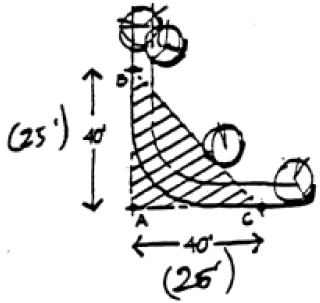
18.30.210 - Clear vision triangle.
At all vehicular intersections with public streets, clear vision shall be maintained as follows:
A.
Extend curb lines of the two intersecting streets to point A where the lines intersect.
B.
Locate points B and C by measuring 40 feet from point A along the curblines of each intersecting street, where the intersection involves a collector or arterial street; 25 feet for residential street intersections.
C.
The "clear vision triangle," defined by points A, B and C, shall be free of all obstructions between three feet and eight feet in height, except for sign poles and tree trunks no greater than six inches in diameter.
D.
Minor deviations may be permitted by the Planning Commission at the recommendation of the Development Services Director and Public Works Director.
(Ord. No. 743, § 3, 3-21-2017)
18.30.220 - Family day care homes—Large.
A large family day care home shall be allowed in single family residential dwelling zones, upon the issuance of a family day care permit by the Zoning Administrator and in compliance with the following standards:
A.
Notice shall be given to properties within 100 feet of the proposed family day care home at least ten days prior to consideration of the permit.
B.
The permit shall be considered without public hearing unless a hearing is requested by the applicant or other affected party by the hearing deadline date. The applicant or other affected party may appeal the zoning administrator's decision to the city council.
C.
The family day care function shall be incidental to the residential use of the property.
D.
The large family day care home shall not locate within:
1.
Three hundred feet of another such facility with said measurement being defined as the shortest distance between the property lines of any such facilities.
2.
One thousand two hundred feet of another such facility along the same street with said measurements being defined as the shortest distance between front property lines as measured along the same street of any such facilities.
E.
The owner must provide a double-wide driveway which shall be paved to meet city standards and be a minimum of 16 feet wide and 19 feet in depth as measured from the edge of sidewalk to any vertical construction. The driveway shall be available during all hours of operation for the loading and unloading of children. If a garage exists on site, it must be utilized for parking of personal vehicle(s). In the event that less than a two-car garage exists on site, the owner must designate and area on site other than on the driveway so that a total of two personal vehicles can be parked on site, including the garage. Notwithstanding the foregoing, the applicant must comply with all other Code provisions as to parking and traffic.
F.
If, in the opinion of the zoning administrator, there is a potential for significant traffic problems, the zoning administrator shall request review of the application by the city traffic engineer. The city traffic engineer may impose accessory requirements for the day care permit in these instances to ensure maintenance of traffic safety levels within the vicinity of the home.
G.
Adequate outdoor play space shall be required and determined on a case-by-case basis. Outdoor play activity shall not be allowed in the front or exterior side yard of the home.
H.
Play area shall be designed and located to reduce the impact of noise on surrounding properties.
I.
A business license will be obtained concurrently within the use permit.
J.
At the city's discretion, an annual review of the permit may be done to determine compliance with state and city requirements and the permit's conditions of approval.
(Ord. No. 743, § 3, 3-21-2017; Ord. No. 748, § 4, 5-15-2018)
18.30.230 - Portable storage units.
Portable storage unit:
Any container designed for the outdoor storage of personal property which is typically rented to owners or occupants of residential property for their temporary use on the exterior of the property and which is delivered to the property and removed by vehicle.
Portable storage units shall be permitted in residential zoning districts only on lots containing dwelling units subject to the following requirements:
A.
Portable storage units shall be permitted for a period not to exceed seven consecutive days within a six month period.
B.
Portable storage units shall not exceed a cumulative gross floor area of 140 square feet for each dwelling unit and shall not exceed a height of eight and one-half feet and a length of 16½ feet.
Portable storage units shall be permitted in commercial, industrial or public/semi-public zoning districts only as accessory uses incidental to a permitted commercial, industrial or public/semi-public principal use.
Portable storage units shall not be located in any required open space, landscaped area, on any street or sidewalk or in any public right-of-way or utility easement, in any location that interferes with vehicular or pedestrian circulation, in any required off-street parking space, in any location that restricts safe ingress or egress of buildings, in any location that hinders access to fire hydrants or utility shut-off valves, or in any location that obstructs a clear sight triangle or clear sight distance.
(Ord. No. 743, § 3, 3-21-2017)

