
Tuscaloosa City Zoning Code
ARTICLE VI
DEVELOPMENT STANDARDS
Sec. 25-112. - Purpose and intent.
The purpose of these mobility and connectivity standards is to ensure that developments are served by a coordinated multimodal transportation system that permits the safe and efficient movement of motor vehicles, emergency vehicles, bicyclists, pedestrians, and transit within each development and between a development and the external transportation network, neighboring development, and local destinations such as places of employment, schools, parks, and shopping areas. In particular, the intent of these standards is to support a transportation system that:
a.
Provides transportation options;
b.
Maximizes the safety of all users;
c.
Reduces emergency response times;
d.
Contributes to the attractiveness of development in the community;
e.
Connects neighbors and increases opportunities for interaction between neighbors;
f.
Promotes walking and bicycling;
g.
Facilitates use of public transportation;
h.
Reduces vehicle miles of travel and travel time;
i.
Minimizes congestion and traffic conflicts; and
j.
Preserves the capacity of the city's transportation system.
(Ord. No. 9572, § 2, 12-17-24)
Sec. 25-113. - Applicability.
The standards in this division shall apply to development outside the IU and IP districts as follows:
a.
Except for development on an individual lot of a single-family detached dwelling, duplex dwelling, or, all new development shall comply with all standards.
b.
Any expansion or alteration of development that existed on January 1, 2025 shall comply with the standards of this division to the maximum extent practicable, if the expansion increases the floor area of all buildings in the development by fifty (50) per cent or more, or involves fifty (50) per cent or more of the floor area of all buildings in the development.
(Ord. No. 9572, § 2, 12-17-24)
Sec. 25-114. - Timing of review.
Review for compliance with the standards of this division shall occur during review of a development application for a planned development (section 25-37), a conditional use permit (section 25-38), a special exception use permit (section 25-39), or a land development permit (section 21-218), as appropriate.
(Ord. No. 9572, § 2, 12-17-24)
Sec. 25-115. - Developer responsible for improvements.
a.
The developer shall provide all street, bikeway, sidewalk, pedestrian way, and other access and circulation improvements, both on the development site and, where applicable, off the site, in accordance with the standards in this division, applicable development approvals and permits, and the following:
1.
The city's Land Development Manual Technical Standards;
2.
The Tuscaloosa Subdivision Regulations;
3.
The Major Streets Plan of Tuscaloosa;
4.
The Tuscaloosa Transportation Standards; and
5.
The Comprehensive Plan.
b.
The developer shall set aside land on the development site for improvements that are identified in the comprehensive plan or in any transportation plan adopted by the city, such as the Riverwalk Master Plan, a greenway plan, or a bicycle/pedestrian plan, subject to any changes from the adopted plan that are mutually agreed to by the developer and the city.
c.
All improvements dedicated to the city shall be constructed according to the city's standards for the type of facility being constructed, subject to the standards in section 26-7.2, acceptance and bonding improvements, or the land development permit regulations in chapter 21, article XII, of this Code, as applicable.
(Ord. No. 9572, § 2, 12-17-24)
Sec. 25-116. - Circulation plan required.
All development applications subject to the requirements of this division shall include a circulation plan that demonstrates how the development complies with the requirements of this division. In addition, the plan shall address safety considerations relevant to the proposed vehicular, bicycle, and pedestrian facilities, including details about how conflict points between different road users will be managed to ensure the safety of all users.
(Ord. No. 9572, § 2, 12-17-24)
Sec. 25-117. - Multimodal access and circulation system.
a.
General.
1.
To the maximum extent practicable, all development subject to the requirements of this division shall be served by a system of sidewalks, paths, streets, accessways, and other facilities designed to provide for multiple travel modes (vehicular, transit, bicycle, and pedestrian), as appropriate to (i) the development's size, character, and relationship to surrounding development, (ii) surrounding development patterns, and (iii) existing and planned community transportation systems.
2.
Vehicular, transit, bicycle, and pedestrian access and circulation systems shall be coordinated and integrated to provide transportation choices within, and to and from, the proposed development, as appropriate.
3.
Streets shall encourage safe use by all users through the use of context-sensitive designs, consistent with the Tuscaloosa Transportation Standards, which serve to slow traffic and improve pedestrian safety.
b.
Street design and layout. All streets in a proposed development shall be designed and laid out in accordance with the standards in the subdivision regulations and the Tuscaloosa Transportation Standards.
c.
Bicycle facilities. As appropriate, and in coordination with section 25-126, bicycle parking standards, development shall provide safe and convenient bicycle facilities that connect all bicycle parking provided on the site with existing and planned on-street and off-street bicycle facilities both within and outside the development.
d.
Sidewalks. Sidewalks are required along streets in accordance with the standards in the subdivision regulations.
e.
Pedestrian circulation system.
1.
All multifamily, mixed-use, and commercial development shall be served by an internal pedestrian circulation system (including sidewalks, pedestrian paths, and trails) that permits safe, convenient, efficient, and orderly movement of pedestrians within the development and to destinations outside the development, and that connects with an existing or planned external, community-wide pedestrian circulation system.
2.
The pedestrian circulation system shall connect to the following destinations on the site or other pedestrian connection points immediately abutting the property:
i.
The primary entrance(s) of principal buildings, including any outparcels;
ii.
Off-street parking areas;
iii.
Nearby shopping areas;
iv.
Schools;
v.
Bus stops and shelters; and
vi.
Recreation facilities and other common use areas and amenities.
3.
All pedestrian ways required by this division shall be a minimum of five (5) feet in width and shall be ADA accessible and in accordance with Tuscaloosa Transportation Standards.
4.
Where pedestrian ways cross an internal drive or a street within the development, the crossing shall be perpendicular to the internal drive or street, to the maximum extent practicable, and shall be marked by a change in paving material, color, or height; decorative bollards; or similar elements.
f.
Cross-access requirement.
1.
The internal circulation system in nonresidential and mixed-use development shall be designed and constructed to provide cross-access between any parking lots and pedestrian ways within the development and any parking lots and pedestrian ways on adjoining parcels containing nonresidential or mixed-use development, and to the boundary of adjoining vacant land, if the adjoining vacant land is not in a residential district.
2.
Cross-access facilities shall consist of the following:
i.
A driveway or drive aisle for vehicles that is at least twenty-two (22) feet wide or two (2) one-way driveways or aisles for vehicles that are each at least fourteen (14) feet wide; and
ii.
A pedestrian way that is at least five (5) feet wide, except that the director of planning may waive this requirement if cross-access is available using a pedestrian way such as a sidewalk that is in close proximity to the proposed cross-access location.
3.
The driveway or aisle and the pedestrian way do not need to be adjacent to each other.
4.
Easements allowing cross-access to and from lands served by a cross-access required by this subsection f., along with agreements defining maintenance responsibilities of land owners pertaining to the cross-access, shall be recorded in the office of the county probate judge.
5.
The director of planning may waive or modify the requirement for cross-access in this subsection f. on determining that such cross-access is impractical or undesirable due to the presence of topographic features, natural features, site design features of adjacent properties, or proximity to adjacent public infrastructure.
(Ord. No. 9572, § 2, 12-17-24)
Sec. 25-118. - Purpose and intent.
The purpose of these off-street parking, bicycle parking, and loading standards is to ensure that development provides adequate facilities to accommodate the vehicular and bicycle parking needs and loading activities on the development site. In particular, the intent of these standards is to:
a.
Ensure adequate facilities for off-street vehicular parking and loading and bicycle parking in proportion to the generalized parking and loading demand of the different zoning districts and different uses allowed by this ordinance;
b.
Allow flexibility in how developments meet minimum parking requirements;
c.
Avoid requiring that excessive amounts of space be devoted for parking, thereby making development more efficient, preserving existing buildings, reducing the amount of unneeded impervious surfaces, and supporting more pedestrian-friendly development;
d.
Minimize the visual impact of off-street parking and loading facilities by regulating the permitted location of parking spaces and loading bays and requiring screening in appropriate locations;
e.
Ensure that off-street parking and loading areas do not encroach on or interfere with the public use of streets and alleys by pedestrians and that such parking and loading areas provide for safe crossings by pedestrians; and
f.
Improve the quality of development design in the city.
(Ord. No. 9572, § 2, 12-17-24)
Sec. 25-119. - Applicability.
The standards in this division shall apply to development outside the IU and IP districts as follows:
a.
All new development shall provide off-street vehicular and bicycle parking spaces and off-street loading areas in accordance with the standards of this division.
b.
If an existing structure or use is expanded or enlarged (in terms of the number of dwelling units or floor area), any additional off-street vehicular and bicycle parking spaces and off-street loading areas that are required shall be provided in accordance with the requirements of this division as applied only to the expanded or enlarged part of the structure or use.
c.
If an existing use in the residential or industrial use classifications is changed to a use in the commercial use classification, off-street vehicular and bicycle parking spaces and off-street loading areas shall be provided in accordance with the requirements of this division.
(Ord. No. 9572, § 2, 12-17-24)
Sec. 25-120. - Timing of review.
Review for compliance with the standards of this division shall occur during review of a development application for a planned development (section 25-37), a conditional use permit (section 25-38), a special exception use permit (section 25-39), a land development permit (section 21-218), or a commercial or residential building permit (chapter 6, article II), as appropriate.
(Ord. No. 9572, § 2, 12-17-24)
Sec. 25-121. - Parking plan required.
All development applications subject to review for compliance with the standards of this division which propose more than ten (10) off-street parking spaces shall include a parking and loading plan. The plan shall accurately designate the number and location of required vehicular parking spaces, accessible parking spaces, delivery/pick-up/rideshare spaces, access aisles, driveways, bicycle parking spaces, and loading facilities, as applicable. The plan shall also illustrate how the vehicular and bicycle parking and loading facilities relate to the uses or structures they are designed to serve, including how they coordinate with the vehicular, pedestrian, bicycle, and transit circulation systems within and adjacent to the development.
(Ord. No. 9572, § 2, 12-17-24)
Sec. 25-122. - General parking and loading standards.
a.
Use of parking or loading area. Parking lots required by this division shall be used solely for the parking of registered motorized vehicles in good operating condition. At all times, adequate parking shall be made available to accommodate the uses on the site. Required parking spaces and loading berths shall not be utilized for any activities other than parking or loading, including any accessory or temporary use identified in this ordinance, unless otherwise authorized by this ordinance.
b.
Parking site. Except as otherwise provided by section 25-124(c), off-site parking, all off-street parking required by this division shall be provided on the site of the principal use that the parking serves.
c.
Surfacing. All parking areas shall be surfaced with hard, dustless, and bonded surface materials such as asphalt cement concrete, Portland cement, brick, or pavers that are approved by the city engineer.
d.
Location, arrangement, and design.
1.
Safe and convenient access.
i.
Off-street parking lots and loading areas shall be arranged for convenient access between an adjacent street and all parking spaces and loading berths to facilitate ease of access, provide ample clearance, and support the safety of vehicles and pedestrians. Each off-street parking space and loading berth shall have adequate, unobstructed means for the ingress and egress of vehicles using the space or berth.
ii.
Parking lots shall be arranged so no parking or maneuvering incidental to parking shall occur on a public street or sidewalk unless approved by the office of the city engineer.
iii.
Except for off-street parking lots accommodating four (4) or fewer vehicles, parking lots shall be arranged so an automobile may be parked or un-parked without moving another and so that no vehicle is required or encouraged to back out from the lot directly onto the street. In single-family, duplex, and multifamily dwellings only (but not student multifamily dwellings), tandem parking may be used when two (2) back-to-back parking spaces are assigned to or owned by the lessee or owner of a single dwelling unit.
2.
Design.
i.
Parking lots, drive aisles, pedestrian walks, landscaping, and open space shall be designed as integral parts of an overall development plan and shall be properly related to existing and proposed buildings.
ii.
All off-street parking and loading spaces shall provide curbs, wheel stops, or similar devices that prevent vehicles from overhanging on or into public right-of-way, walkways, adjacent land, or required landscaping areas.
iii.
Parking in elevated structures is only permitted in the MRU, MFRU, and MFR districts.
3.
Circulation. Buildings, parking lots, loading areas, landscaping, and open spaces shall be designed so that pedestrians moving from parking areas to buildings and between buildings are minimally exposed to vehicular traffic.
4.
Parking lot access and egress.
i.
All driveways or drive aisles used for vehicles to access and exit a parking area from a public or private street shall be constructed in accordance with the location requirements and geometric standards established by the office of the city engineer.
ii.
Drive aisles and driveways shall not be used to meet the minimum off-street parking requirements in section 25-123, off-street parking standards, except that the driveway of a single-family detached, or duplex, dwelling may be counted as one or more parking spaces for a dwelling unit if the director of planning determines the size and configuration of the driveway is adequate to support both parking and site access uses.
iii.
Cross access shall be provided in accordance with section 25-117(f), cross-access requirement.
e.
Dimensional standards. The following standards apply to all off-street parking lots serving four (4) or more vehicles, except for parking lots serving single-family detached or duplex uses.
1.
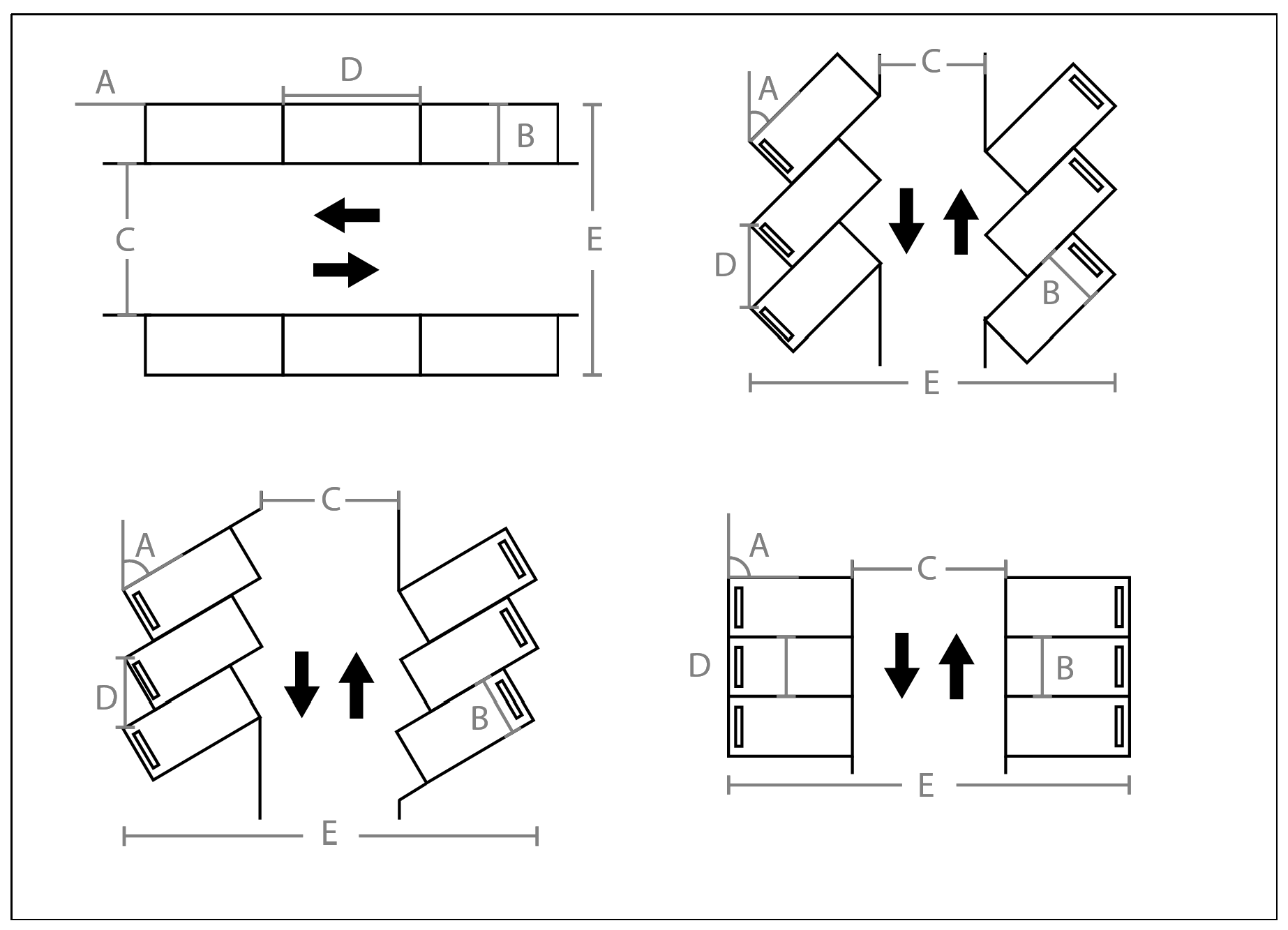
General. Standard vehicle parking spaces and aisles shall comply with the minimum dimensional standards established in table VI-1: minimal dimensional standards for parking. The minimum dimensional standards are illustrated in figure VI-1: measurement of parking space and aisle dimensions.
Table VI-1: Minimal Dimensional Standards for Parking
Notes:
[1] The director of planning may reduce to 22 feet the width of two-way aisles that are not the primary access into the site if the director determines that there will be adequate space for safe maneuverability of vehicles.
Figure VI-1: Measurement of Parking Space and Aisle Dimensions
2.
Marking. Each required parking lot and space, and each off-street loading area and berth, shall be identified by surface markings that are arranged to provide for orderly and safe loading, unloading, parking, and storage of vehicles. Such markings shall include striping, directional arrows, and lettering on signs and in handicapped-designated areas. All such surface markings shall be maintained to be readily visible at all times.
f.
Exterior lighting. Lighting in parking lots and loading areas shall comply with the standards of article VI, division 6, exterior lighting standards.
g.
Landscaping. Parking lots and loading areas shall be landscaped in accordance with the standards of article VI, division 3, landscape and buffer standards.
h.
Drainage. Parking lots and loading areas shall be graded and drained in accordance with applicable city standards.
i.
Large parking lots. Parking lots that contain two hundred (200) or more spaces shall comply with the following additional standards:
1.
Primary drive aisle. Primary drive aisles within parking lots shall be designed to appear as an extension of the public street network extending from the public right-of-way along the full length of the primary façades of structures being served by the drive. Each primary drive aisle shall comply with the following standards:
i.
Have a cross section that can accommodate two (2) travel lanes;
ii.
Include a sidewalk or curb-delineated pedestrian passageway along the front façade of a building when the drive aisle is aligned parallel to that building façade; and
iii.
Provide street trees along both sides of the primary drive aisle with a maximum spacing of fifty (50) feet on-center. Small-maturing trees may be used adjacent to the building façade within forty (40) feet of building entrances.
2.
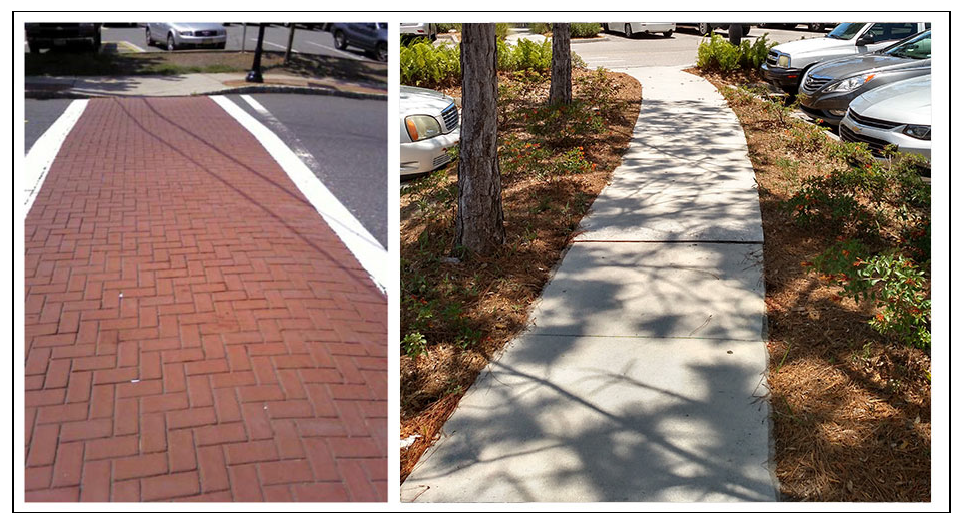
Pedestrian pathways. The parking lot shall be visually and functionally segmented into smaller lots with landscape islands and strips through the use of fully-separated, improved pedestrian pathways that (see figure VI-2: example of pedestrian pathways):
i.
Are provided, at a minimum, every six (6) parallel parking rows (every three (3) sets of back-to-back parking stalls) or every two hundred (200) feet, whichever is the lesser dimension;
ii.
Are enhanced with planted landscaping strips;
iii.
Include, to the maximum extent practicable, a pathway aligned with and perpendicular to the primary entrance into the building served by the parking lot;
iv.
Are paved with asphalt, cement, or other comparable material;
v.
Are of contrasting color or materials and are adequately illuminated when crossing drive aisles;
vi.
Follow applicable state and federal requirements and at a minimum are at least five (5) feet wide when located within planting strips, and ten (10) feet wide when crossing drive aisles; and
vii.
Connect to all existing or planned adjacent transit and pedestrian facilities.
Figure VI-2: Example of Pedestrian Pathways
3.
Pick-up and drop-off areas. The parking lot shall include designated areas for pick-up and drop-off by visitors, taxis, or other mobility service providers. The designated pick-up and drop-off area shall not interfere with or block the movement of vehicles, pedestrians, or bicycles within the parking lot.
j.
Special provisions in specific zoning districts.
1.
Limitations on surfacing in the front yard. In the front yard of a lot with a single-family detached dwelling, the surfacing of any area used for parking shall comply with the following standards:
i.
The surfacing shall consist of any permeable or non-permeable material that complies with subsection c. above and the city's Land Development Manual Technical Standards, and shall not consist of grass or other vegetation.
ii.
The maximum width of the surfaced area shall be twenty (20) feet, beginning at the property line or curb up to a distance into the site that allows for safe and adequate access and egress from the site.
iii.
The maximum area of the front yard that may be surfaced in accordance with this subsection is as follows:
(a)
Forty-five (45) per cent in the SFR-4 and SFR-5 districts;
(b)
Fifty (50) per cent in all other districts, or on a lot in the SFR-4 or SFR-5 districts with less than forty-five (45) feet of lot width.
2.
Parking restrictions. The parking of vehicles or trailers in the front yard of a lot is permitted only in areas surfaced in accordance with subsection 1. above, except as follows:
i.
Authorized emergency vehicles are permitted to park anywhere in the front yard while responding to an emergency;
ii.
Delivery, contractor, and similar vehicles are permitted to park anywhere in the front yard while work is taking place on the site; and
iii.
On properties that have no rear yard access for parking because of a narrow side yard or lack of a rear alley or street, parking is permitted anywhere between the principal building and the front lot line if the property has less than forty (40) feet of street frontage or has a dwelling that is set back less than thirty (30) feet from the street.
k.
Special provisions in residential districts. In a residential district, parking of recreational vehicles, construction equipment, boats, boat trailers, utility trailers, other types of trailers, buggies, wagons, tractors, street sweepers and cases or boxes used for transportation of recreational or construction equipment, whether occupied by such equipment or not, is permitted only in accordance with section 25-111(k), temporary parking of trailers, construction equipment, and major recreational equipment in a residential district.
l.
Special provisions in historic districts.
1.
Except as provided in subsection 2. below, in historic districts, neither vehicular parking nor surfacing with any material other than grass or other vegetation is permitted in the front yard, unless a variance permit is granted in accordance with section 25-43, variance. If a variance permit is granted, the parking area may be accessed with a driveway up to ten (10) feet in width.
2.
The following vehicles may park in the front yard of a property in the historic district:
i.
Authorized emergency vehicles; and
ii.
Delivery, contractor, and similar vehicles while work is taking place on the site, when necessary to facilitate the work.
(Ord. No. 9572, § 2, 12-17-24)
Sec. 25-123. - Off-street parking standards.
a.
Applicability.
1.
Except for development in the D, IU, and IP districts, all development shall provide off-street vehicular parking in accordance with this section.
2.
All group living uses, and all development in the D, DP, DHE, and R districts are subject to the maximum parking standards in this section.
b.
Minimum number of off-street parking spaces required.
1.
General.
i.
The minimum number of off-street parking spaces required by each development is established as follows:
(a)
First, the minimum off-street parking tables, table VI-2: minimum off-street parking for agricultural and residential uses, table VI-3: minimum off-street parking for institutional uses, table VI-4: minimum off-street parking for commercial uses, and table VI-5: minimum off-street parking for industrial uses, establish the minimum number of off-street parking spaces based on the principal use(s) involved and the extent of development. If a site includes more than one principal use (e.g. a restaurant and residential dwellings), the minimum number of off-street parking spaces shall be calculated by adding the minimum parking required for each use.
(b)
Second, reductions in the number of required off-street parking spaces authorized through other provisions in this section and ordinance (see section 25-124, off-street parking alternatives) are calculated and applied.
(c)
Interpretation of the off-street vehicular parking space standards for principal uses with variable parking demands or for unlisted principal uses shall be in accordance with subsection e. below.
ii.
The minimum number of off-street parking spaces shall be rounded up to the nearest whole number.
2.
Minimum off-street parking for agricultural and residential uses. For uses within the agricultural use classification or the residential use classification, the required minimum number of off-street parking spaces is set forth in table VI-2: minimum off-street parking for agricultural and residential uses.
Table VI-2: Minimum Off-Street Parking for Agricultural and Residential Uses
Notes:
sf = square feet. Measured as square feet of gross floor area, unless otherwise specified.
du = dwelling unit.
Measurements per bedrooms, residents, etc. based on design capacity.
3.
Minimum off-street parking for institutional uses. For uses within the institutional use classification, the required minimum number of off-street parking spaces is set forth in table VI-3: minimum off-street parking for institutional uses.
Table VI-3: Minimum Off-Street Parking for Institutional Uses
Notes:
sf = square feet. Measured as square feet of gross floor area, unless otherwise specified.
du = dwelling unit.
Measurements per room, bedrooms, residents, etc. based on design capacity.
4.
Minimum off-street parking for commercial uses. For uses within the commercial use classification, the required minimum number of off-street parking spaces is set forth in table VI-4: minimum off-street parking for commercial uses.
Table VI-4: Minimum Off-Street Parking for Commercial Uses
Notes:
sf = square feet. Measured as square feet of gross floor area, unless otherwise specified.
Measurements per room, bedrooms, residents, etc. based on design capacity.
Variable = minimum off-street parking determined in accordance with subsection e. below.
5.
Minimum off-street parking for industrial uses. For uses within the industrial use classification, the required minimum number of off-street parking spaces is set forth in table VI-5: minimum off-street parking for industrial uses.
Table VI-5: Minimum Off-Street Parking for Industrial Uses
Notes:
sf = square feet. Measured as square feet of gross floor area, unless otherwise specified.
c.
Maximum number of off-street parking spaces permitted. Except for parking provided in a structured parking facility or in accordance within section 25-124(a)(1), parking study, the maximum number of off-street parking spaces that development may provide is as follows:
1.
In all districts, a maximum of one off-street parking space per bedroom for all group living uses.
2.
In the D district, eighty (80) per cent of the minimum number of off-street parking spaces required in table VI-2: minimum off-street parking for agricultural and residential uses, table VI-3: minimum off-street parking for institutional uses, table VI-4: minimum off-street parking for commercial uses, and table VI-5: minimum off-street parking for industrial uses.
3.
In the DP, DHE, and R districts, one hundred (100) per cent of the minimum number of off-street parking spaces required in table VI-2: minimum off-street parking for agricultural and residential uses, table VI-3: minimum off-street parking for institutional uses, table VI-4: minimum off-street parking for commercial uses, and table VI-5: minimum off-street parking for industrial uses.
d.
Electric vehicle parking spaces.
1.
Applicability. The standards of this subsection apply to parking lots for light vehicle fuel stations, and parking lots providing more than fifty (50) parking spaces that include one or more of the following uses:
i.
Multifamily dwelling.
ii.
Multifamily student dwelling.
iii.
Office
iv.
Hotel.
2.
Minimum electric vehicle parking spaces required. Two (2) per cent of the parking spaces for the entire site, rounded up to the nearest whole number, shall be designated as electric vehicle (EV) parking spaces:
3.
Additional standards.
i.
Parking spaces that are designated as accessible in accordance with the building code shall not count towards the number of required EV parking spaces. Any EV charging stations provided to serve accessible parking spaces shall be accessible to disabled persons who may use the spaces.
ii.
EV parking spaces shall be reserved for parking and charging of electric vehicles only. Each EV parking space shall be posted with signage indicating the space is for parking only by electric vehicles only while the vehicles are being charged.
iii.
At least one EV parking space shall be adjacent to a parking space designated as accessible and the EV charging station shall be operable by disabled persons using the EV charging station from the adjacent accessible parking space.
iv.
Time limits may be placed on the number of hours that an electric vehicle is allowed to charge or park.
v.
Signage shall be provided to indicate the EV parking spaces are reserved for the use of electric vehicles.
vi.
EV charging stations shall comply with the standards in section 25-107(k), electric vehicle charging station.
e.
Variable or unlisted uses. An applicant proposing to develop a principal use or uses listed as "variable" in the minimum off-street parking tables (table VI-2 through table VI-5) or that is not listed as a principal use shall specify in the application materials the proposed amount of required vehicular parking, using one of the three (3) methods below. After receiving the application, the director of planning shall determine the amount of required off-street vehicular parking using the applicant's methodology or one of the other methods listed below, and may require that the applicant prepare a study as described in subsection 3. below:
1.
Apply the minimum off-street parking space standard for the listed use that the director of planning deems most similar to the proposed use;
2.
Establish the minimum off-street parking space standard by reference to standard parking resources published by the Institute for Transportation Engineers (ITE), Urban Land Institute (ULI), National Parking Association, or the American Planning Association (APA); or
3.
Conduct a parking demand study to demonstrate the appropriate minimum off-street parking space standard. The study shall estimate parking demand based on the recommendations of the ITE, ULI, or another acceptable source of parking demand data. This demand study shall include relevant data collected from uses or combinations of uses that are the same or comparable to the proposed use in terms of density, scale, bulk, area, type of activity, and location.
(Ord. No. 9572, § 2, 12-17-24)
Sec. 25-124. - Off-street parking alternatives.
a.
General. The director of planning may authorize modifications to the minimum or maximum off-street vehicular parking standards established in this ordinance in accordance with this section 25-124. An applicant who proposes an alteration in off-street vehicular parking standards shall submit an alternative parking plan using one of the two (2) following methods:
1.
Parking study. An applicant may provide a parking study that results in an alternative parking plan. Based on the study, the director of planning may allow up to a sixty (60) per cent reduction in the minimum off-street vehicular parking requirements established in section 25-123, off-street parking standards, or allow up to a twenty-five (25) per cent increase in the maximum number of off-street vehicular parking spaces established in section 25-123(c), maximum number of off-street parking spaces permitted. The parking study shall:
i.
Either:
(a)
Use professionally accepted methods of transportation engineering and off-street parking demand which are prepared and sealed by a registered professional engineer or landscape architect; or
(b)
Provide data regarding actual parking demand at other examples of the same or similar business in contexts similar to the proposed use; and
ii.
Demonstrate that the required parking ratios do not accurately apply to the specific development proposal or that other options to satisfy the parking demand are available.
2.
Parking reduction options. An applicant may provide an alternative parking plan which utilizes one or more of the following methods to reduce the number of off-street vehicular parking spaces required by section 25-123, off-street parking standards. Multiple methods may be stacked to decrease the minimum off-street parking requirement by the amount specified for each method below:
i.
Mixed-use development. Reduction of up to forty (40) per cent (see subsection b. below).
ii.
Off-site parking. Reduction of up to forty (40) per cent (see subsection c. below).
iii.
On-street parking. Reduction of up to twelve (12) parking spaces (see subsection d. below).
iv.
Valet parking. Reduction of up to sixty (60) per cent for a hotel use or fifty (50) per cent for a restaurant use (see subsection e. below).
b.
Mixed-use development. An applicant for a development containing more than one use may propose a reduction of up to forty (40) per cent of the minimum number of required off-street vehicular parking spaces for the development based on a comprehensive analysis of parking demand for each use by time of day. The request shall include an analysis that includes discussion of the size and type of the uses proposed to share off-street parking spaces, the composition of their tenants, the types and hours of their operations, the anticipated peak parking and traffic demands they generate, and the anticipated rate of turnover in parking space use.
c.
Off-site parking. An applicant may propose to provide up to forty (40) per cent of the required off-street vehicular parking in an off-site parking lot, in accordance with the following standards:
1.
Location. All off-site vehicular parking spaces shall be located within a maximum walking distance of the primary pedestrian entrances, measured by the actual distance to walk from the shared parking area to the primary pedestrian entrance(s) using a route that complies with subsection 2. below. The maximum walking distance from off-site parking shall be eight hundred (800) feet to a residential use, and one thousand two hundred (1,200) feet to all other uses.
2.
Access and signage.
i.
Adequate and safe pedestrian access shall be provided by a paved pedestrian path protected by a landscape buffer or a curb separation and elevation from the street grade. The pedestrian access shall not cross an arterial street unless pedestrian access across it is provided by appropriate traffic controls (such as a signalized crosswalk) or a grade-separated and lighted pedestrian route (such as a bridge or tunnel).
ii.
Signage complying with the standards in division 10, signs and billboards, shall be provided to direct the public to the shared parking spaces.
3.
Adequate number of spaces. If the off-site parking is shared with other uses, the alternative parking plan shall include justification of the adequacy of shared parking among the proposed uses using the same factors evaluated for mixed-use development parking reductions in subsection b. above.
4.
Accessible parking. Parking spaces required to be accessible to persons with disabilities shall not be provided off-site.
5.
Agreement required.
i.
To ensure that any off-site parking permitted to satisfy minimum parking requirements remains available to the applicant's development, a written off-site parking agreement shall be required if land containing the off-site parking area is not on the same parcel as the land containing the principal use served or if multiple uses are sharing parking.
ii.
Written agreements used to comply with subsection i. above shall:
(a)
Include the owners of land containing the off-site parking area, as well as all owners or long-term lessees of lands containing the uses proposed to share off-street parking spaces;
(b)
If the agreement is for exclusive use of off-site parking by a single use, provide the owner of the served use the right to use the off-site parking area and shall specify that the parking spaces are for the exclusive use of the served use, including any customers and employees;
iii.
An attested copy of an approved and executed agreement shall be recorded in the office of the county probate judge before a building permit for any use to be served by the off-site parking area may be issued.
iv.
The agreement shall be considered a restriction running with the land and shall bind the heirs, successors, and assigns of the landowner.
v.
A violation of the agreement shall constitute a violation of this ordinance and shall be subject to enforcement accordingly.
vi.
No use served by the off-site parking may be continued if the off-site parking becomes unavailable to the use permanently or for longer than thirty (30) days, unless substitute off-street parking spaces are provided in accordance with this ordinance.
vii.
For a commercial or mixed-use development, the maximum number of off-street parking spaces that may be satisfied through the use of a shared parking agreement shall not exceed fifty (50) per cent of the total number of parking spaces required for a single development.
6.
Unavailability of shared parking. If shared parking is no longer available due to the expiration or termination of a shared parking agreement, the director of planning may require the owner of the use requiring parking to comply with the terms of this section, including requiring that the applicant enter into a new shared parking agreement or otherwise provide additional off-street vehicular parking.
d.
On-street parking.
1.
General. Along streets adjacent to property in districts other than MRU and MFRU, an applicant may propose to substitute up to twelve (12) required off-street vehicular parking spaces for on-street vehicular parking spaces in a one-to-one ratio, provided:
i.
The on-street parking space is on a street that is adjacent to the development;
ii.
Pedestrian access is provided via an accessible pedestrian way to the primary entrance(s) of the development;
iii.
The on-street parking space is not reserved for people with disabilities;
iv.
The on-street parking space remains open for use by the general public, and no sign or markings are used to claim the use of the space is exclusive to the applicant's tenants, customers, or clients;
v.
The distance between the on-street parking space and one of the primary entrances of the development does not exceed four hundred (400) feet, measured along the shortest pedestrian route;
vi.
The on-street parking meets the standards of the office of city engineer and the city's transportation standards; and
vii.
Curb stops are installed so that sidewalks are not impacted.
2.
On-street parking in MRU and MFRU districts. Along streets adjacent to property in the MRU and MFRU, an applicant may propose to substitute up to fifty (50) per cent of the required off-street vehicular parking spaces for on-street vehicular parking spaces in a one-to-one ratio, provided:
i.
The on-street parking space is located on a public right-of-way immediately abutting the property;
ii.
The on-street parking space remains open for use by the general public, and no sign or markings are used to claim the use of the space is exclusive to the applicant's tenants, customers, or clients;
iii.
The on-street parking space is located on a street designated as an "avenue," not "street;" and
iv.
Curb stops are installed so that sidewalks are not impacted.
e.
Valet parking. An applicant may propose to use valet and tandem parking to meet a portion of the minimum number of off-street parking spaces required for commercial uses in accordance with the following standards:
1.
Maximum reduction. The minimum number of required off-street vehicular parking spaces may be reduced by up to sixty (60) per cent for a hotel use, and up to fifty (50) per cent for a restaurant use.
2.
Vehicle storage location. The applicant shall identify where the vehicles will be parked and demonstrate that the proposed valet parking area has sufficient capacity to store the vehicles.
3.
Drop-off and pick-up area.
i.
The development shall provide a designated drop-off and pick-up area, which may be located adjacent to the building served, but shall not be located in public right-of-way, in an on-street parking space, in a fire lane, or where its use would impede vehicular and/or pedestrian circulation, cause queuing in a public street, or impede an internal drive aisle serving the development.
ii.
Drop-off and pick-up areas shall not be allowed to use sidewalks for any stationing of vehicles.
4.
Valet parking agreement.
i.
Valet parking shall be established and managed only in accordance with a valet parking agreement that:
(a)
Has a minimum duration of ten (10) years and includes provisions ensuring that a valet parking attendant will be on duty during hours of operation of the uses served by the valet parking.
(b)
Is submitted to the director of planning for review and approval before it is executed.
ii.
An attendant shall be provided to park vehicles during all business hours of the use utilizing the valet parking.
iii.
No use served by valet parking may be continued if the valet service becomes unavailable, unless substitute off-street parking spaces are provided in accordance with this ordinance.
iv.
An attested copy of an approved and executed agreement shall be recorded in the office of the county probate judge before issuance of a building permit for any use to be served by the valet parking.
v.
A valet parking agreement approved in accordance with this section shall be considered a restriction running with the land and shall bind the heirs, successors, and assigns of the landowner. A violation of the agreement shall constitute a violation of this ordinance and shall be subject to enforcement accordingly.
(Ord. No. 9572, § 2, 12-17-24)
Sec. 25-125. - Stacking standards.
a.
Drive-throughs and similar facilities.
1.
Required number of stacking spaces. Uses with drive-through facilities and other auto-oriented uses where vehicles queue up to access a service facility shall provide at least the minimum number of stacking spaces established in table VI-6: minimum stacking spaces for drive-through and similar facilities.
Table VI-6: Minimum Stacking Spaces for Drive-Through and Similar Facilities
Notes:
[1] If a single queue splits into multiple pickup areas (for example, a drive-through restaurant queue that splits into two order boards and pick-up windows), the total number of stacking spaces required shall equal the minimum required for each lane multiplied by the number of "measured from" destinations (in this example, the drive-through restaurant would require a total of 12 stacking spaces).
[2] The director of planning may require additional stacking spaces upon determining that there is a reasonable possibility that the listed minimum number will result in queuing that will interfere with pedestrian or vehicular traffic on adjacent streets or with internal circulation on the development site. The determination may be based on drive-through stacking at similar establishments in other locations in the city or in other jurisdictions.
[3] At least three stacking spaces shall be provided per bay, except that only one stacking space per bay is required if the use provides nearby areas for vehicles to wait that do not interfere with vehicular or pedestrian circulation on the site.
2.
Stacking space standards. All required stacking spaces shall:
i.
Be a minimum of ten (10) feet wide and twenty (20) feet long;
ii.
Be contiguous end-to-end;
iii.
Not impede onsite or offsite vehicular traffic movements or movements into or out of off-street parking spaces;
iv.
Not impede onsite or offsite bicycle or pedestrian traffic movements; and
v.
Be separated from access aisles and other vehicular surface areas by raised medians, if necessary for traffic movement and safety.
b.
Parking lot entrances. Parking lots for all uses other than attached residential dwellings or dwellings with fewer than five (5) units in a single building shall be designed to provide stacking lanes measured between the edge of the street right-of-way and the first entrance into the parking area, in accordance with the minimum stacking lane distances established by the office of city engineer.
(Ord. No. 9572, § 2, 12-17-24)
Sec. 25-126. - Bicycle parking standards.
a.
Minimum bicycle parking required.
1.
Applicability. Bicycle parking shall be provided in the districts specified in this section and in accordance with the requirements of this section in:
i.
All new development; and
ii.
Any individual expansion or alteration of a building that existed on January 1, 2025 if the expansion increases the floor area of all buildings in the development by fifty (50) per cent or more, or involves fifty (50) per cent or more of the floor area of all buildings in the development, as measured over any five-year period, provided no bicycle parking is required if the building has a gross floor area of less than five thousand (5,000) square feet after the expansion or alteration.
2.
Minimum bicycle parking in the DP, DHE, R, MRU, MFRU, and UC districts.
i.
Except as provided in subsection ii. below, development in the DP, DHE, R, and UC districts shall provide bicycle parking in accordance with table VI-7: minimum bicycle parking in the DP, DHE, R, MRU, MFRU, and UC districts, to the maximum extent practicable.
Table VI-7: Minimum Bicycle Parking in the DP, DHE, R, MRU, MFRU, and UC Districts
ii.
The director of planning may reduce the amount of minimum bicycle parking required to be provided in accordance with table VI-7 by two (2) spaces for each U-rack installed by the city and available for public use that is located within one hundred (100) feet of a main entrance to the development.
b.
Bicycle parking standards. All bicycle parking spaces installed in the city shall comply with the following standards:
1.
Bicycle racks shall be high-quality, inverted "U"-type construction or be attached to the building. Alternative high-quality bicycle parking racks that support the bicycle at two (2) points of contact to the bicycle wheels and frame may be approved by the director of planning. Adequate on-site lighting shall be provided near the bicycle parking spaces to illuminate them if they are accessible to bicyclists after sunset.
2.
If internal to a building, the rooms in which bicycles are stored shall be lockable and contain systems for locking to allow for at least two (2) points of contact to the bicycle wheels and frame.
3.
If serving a building with one use, all bicycle parking spaces shall be located within seventy-five (75) feet of a public entrance to the building for which the space is required, measured along the most direct pedestrian access route.
4.
If located in an area serving multiple uses, all bicycle parking spaces shall be located within one hundred fifty (150) feet of a public entrance to the building or buildings for which the space is required, measured along the most direct pedestrian access route.
5.
If located in an area with direct access from the site to the riverwalk via a pedestrian way or similar facility, at least half of the required bicycle parking shall be visible from and accessible using the closest access point along the riverwalk.
(Ord. No. 9572, § 2, 12-17-24)
Sec. 25-127. - Off-street loading standards.
a.
Minimum number of off-street loading berths.
1.
Except as provided in subsection 2. below, all new development involving the routine vehicular delivery or shipping of goods, supplies, or equipment to or from the development shall provide a sufficient number of off-street loading berths to accommodate the delivery and shipping operations of the development's uses in a safe and convenient manner. Table VI-8: minimum number of off-street loading berths, sets forth the minimum number of loading berths for the different principal uses. For proposed uses not listed in table VI-8: minimum number of off-street loading berths, the director of planning shall establish a minimum number of loading berths based on the use most similar to the proposed use.
Table VI-8: Minimum Number of Off-Street Loading Berths
2.
The director of planning may approve a reduction in the minimum number of off-street loading berths required by table VI-8: minimum number of off-street loading berths if the applicant submits a study prepared by a registered professional engineer or landscape engineer that uses professionally accepted methods of transportation engineering which demonstrates an appropriate number of loading facilities for the development that is different from what is required by this ordinance.
b.
Dimensional standards for loading areas and berths.
1.
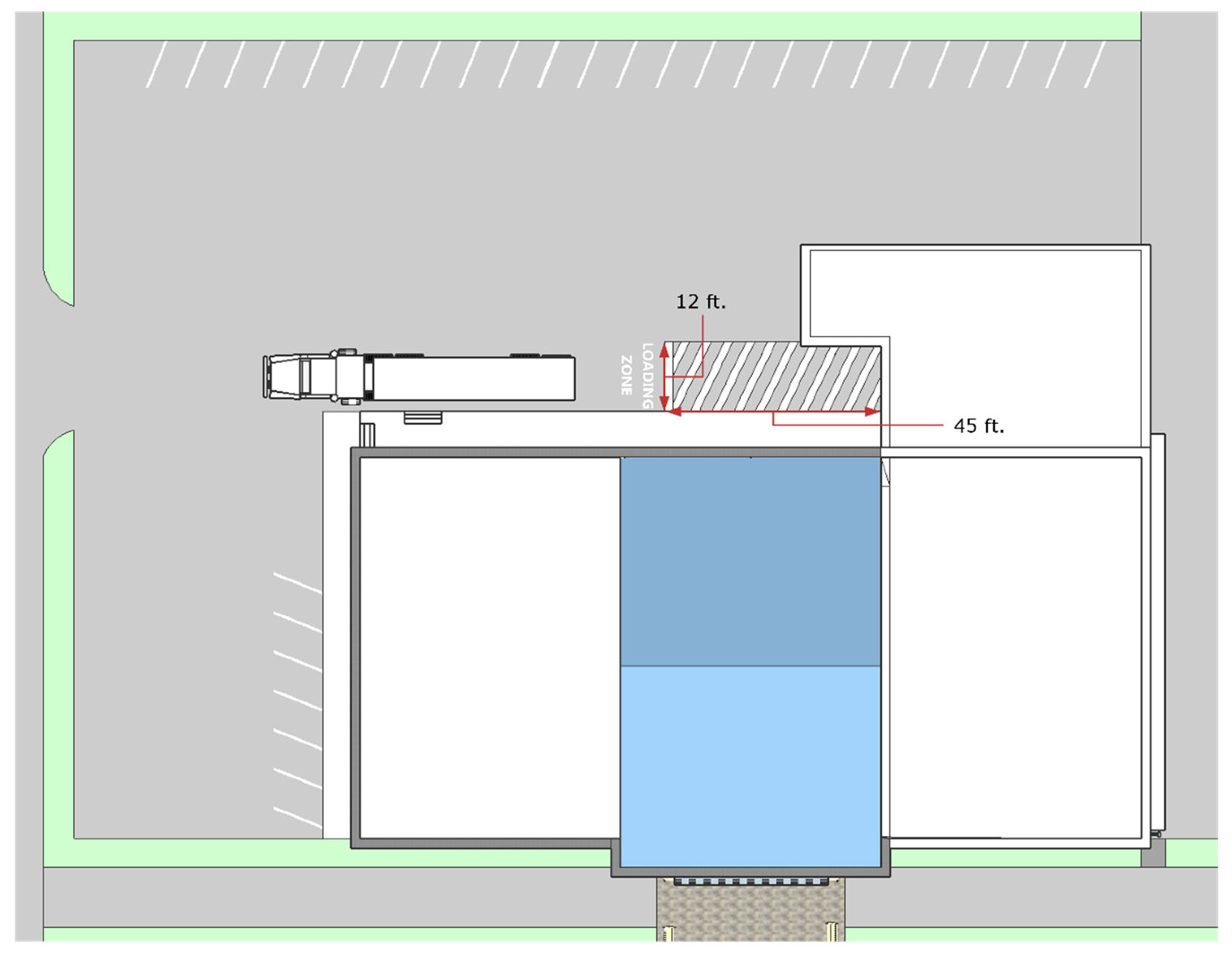
Each loading berth shall be of sufficient size to accommodate the types of vehicles likely to use the loading area. The minimum loading berth size that presumptively satisfies loading berth needs is least twelve (12) feet wide and forty-five (45) feet long in general industrial, distribution, or warehousing uses (see figure VI-3: loading area configuration). For all other uses, a berth as short as thirty-three (33) feet may be allowed. The director of planning may require a larger loading berth or allow a smaller loading berth on determining that the characteristics of the particular development warrant such increase or reduction and the general standard is met.
2.
Each loading berth shall have at least fifteen (15) feet of overhead clearance.
c.
Location and arrangement of loading areas.
1.
Except in the D, DP, DHE, R, UC, and NC districts, to the maximum extent practicable, loading areas should be located to the rear of the building housing the use they serve (see figure VI-3: loading area configuration). In the D, DP, DHE, R, UC, and NC districts, loading areas shall be located to the rear or side of the building housing the use they serve.
2.
Each loading berth should be located adjacent to the building's loading doors, in an area that promotes its practical use, and be accessible from the interior of the building it serves.
3.
Each loading berth shall be directly accessible from a street or alley without crossing or entering any other required off-street loading space.
4.
Each loading berth shall be arranged so that all vehicle maneuvers for loading and unloading occur entirely within the property lines of the site and do not obstruct or interfere with use of any parking space, parking lot aisle, or public right-of-way.
5.
Each loading berth shall be screened from view from the right-of-way with, at a minimum, screening equivalent to the requirement for the perimeter of parking lots in section 25-132(c), parking lot perimeter landscaping standards.
Figure VI-3: Loading Area Configuration
(Ord. No. 9572, § 2, 12-17-24)
Sec. 25-128. - Purpose and intent.
The purpose of this division is to promote and protect the public health, safety, and general welfare by providing for the planting, maintenance, and preservation of trees, shrubs, and other plants within the city. More specifically, the intent of this division is to:
a.
Encourage the planting, maintenance, restoration, and survival of trees, shrubs, and other plants, in appropriate locations;
b.
Protect community residents and visitors from personal injury and property damage, and protect the city from property damage caused or threatened by the improper planting, maintenance, or removal of trees, shrubs, or other plants;
c.
Encourage the use of native plants and discourage the proliferation of invasive species and plants;
d.
Mitigate against erosion and sedimentation;
e.
Reduce stormwater runoff and the costs associated with it;
f.
Preserve and protect the water table and surface waters and facilitate compliance with state and federal legislation relating to water and air quality, including the Clean Air Act, 42 U.S.C. § 7401 et seq., and the Clean Water Act, 33 U.S.C. § 1251 et seq.;
g.
Maintain and preserve tree canopy on private and public lands to provide shade, improve air quality, and moderate the effects of heat;
h.
Restore soils and land denuded as a result of construction and grading;
i.
Provide perimeter buffers and visual screening, where appropriate, to mitigate the undesirable effects of incompatible uses;
j.
Preserve the character of the city;
k.
Protect and enhance property values; and
l.
Improve the visual quality of the city.
(Ord. No. 9572, § 2, 12-17-24)
Sec. 25-129. - Applicability.
a.
All new development shall comply with the standards of this division, unless stated to the contrary within this subsection or division, except that lots with single-family detached, or duplex dwellings are exempted from all standards except section 25-131(g), utility easements.
b.
Within the area known as the original city survey and within the mixed residential university (MRU), multifamily residential university (MFRU), institutional university (IU), and university commercial (UC) districts, these standards shall not apply, but instead landscaping shall be applied in the public right-of-way in accordance with Exhibit A: Urban Forest Master Plan, which is incorporated herein by reference, and Exhibit B: Typical Street Cross Section, which is also incorporated herein by reference, and which shall be approved by the office of the city engineer. Provided, however, where commercial developments subject to this subsection contain open parking lots with more than ten (10) spaces, the standards of this division shall apply.
c.
Unless stated to the contrary elsewhere in this division, any expansion or alteration of development that existed on January 1, 2025 shall comply, to the maximum extent practicable, with the standards in this division if the development proposes an increase of fifty (50) per cent or more in gross floor area of the development, or an alteration exceeds fifty (50) per cent of the assessed value of the development (at the time of alteration).
(Ord. No. 9572, § 2, 12-17-24)
Sec. 25-130. - Timing of review.
Review for compliance with the standards of this division shall occur during review of a development application for a planned development (section 25-37), a conditional use permit (section 25-38), a special exception use permit (section 25-39), or a land development permit (section 21-218), as appropriate.
(Ord. No. 9572, § 2, 12-17-24)
Sec. 25-131. - General landscaping requirements.
a.
Landscape plan required. A landscape plan is required to be submitted for all development subject to this division. The purpose of the landscape plan is to demonstrate how landscaping will be retained and planted on a development site. The landscape plan shall:
1.
Identify all plant types to be used;
2.
Demonstrate compliance with all planting standards and specifications of this division;
3.
Designate the location for each planting to be installed or vegetation to be preserved;
4.
Provide information about the installation schedule;
5.
Detail any alternative compliance method (see section 25-135, alternative landscaping plan); and
6.
Include other information requested by the director of planning.
b.
Installation.
1.
All landscaping required by this division shall be installed as set forth in the approved landscape plan. The developer shall certify to the director of planning that landscaping has been installed to meet the minimum requirements of this article VI, division 3, and the director of planning shall inspect the site prior to issuing a certificate of occupancy.
2.
If inclement weather or difficulties acquiring needed landscape materials delay the installation of landscape materials beyond the date specified in the landscape plan, the developer may make a written request to the director of planning for an extension for completion. The request shall specifically state the reason for the delay as well as a proposed date for completion. The director of planning may approve a revised date of completion for good cause shown. Failure to complete the installation by the specified date shall constitute a violation of this ordinance.
3.
All plantings shall maintain a three-foot clearance around all fire suppression equipment as well as a clear, accessible path, visible from the main approach.
c.
Existing vegetation and site features. Healthy existing trees of approved species (see table VI-9: approved tree list) and shrubs that comply with the standards of this division and that are identified on the landscape plan may be used to meet the requirements of this division, following approval of the landscape plan. Any existing trees and shrubs used shall be subject to the same maintenance and replacement requirements that apply to newly planted trees and shrubs.
d.
Planting standards. New trees, shrubs, and other vegetation planted on a site, as well as existing trees, shrubs, and other vegetation preserved on the site, shall comply with the following standards:
1.
Trees. At time of planting:
i.
An understory tree shall have a minimum height of five (5) feet and be a minimum of two (2) inches in caliper.
ii.
A deciduous canopy tree shall have a minimum height of eight (8) feet and be a minimum of two (2) inches in caliper.
2.
Shrubs. At time of planting, all shrubs shall be a minimum of three-gallon container size and eighteen (18) inches in height or spread (depending on whether the growth habit is upright or spreading), measured from the top of the root zone.
3.
Quality.
i.
All new plant material shall be of good quality, free from disease, and in good health, including being free from injury or improper pruning.
ii.
All trees shall have mulch installed around them at time of planting that is no deeper than three (3) inches and, if a mulch ring is used, to a distance of at least three (3) feet in diameter.
4.
Approved species.
i.
The canopy and understory trees listed in table VI-9: approved tree list are approved for use. Any tree which is not on this list may be submitted for approval to the director of planning. Trees that exhibit poor health characteristics, are not native to the climate range in Tuscaloosa, or that are considered invasive species shall not be approved for installation.
Table VI-9: Approved Tree List
ii.
Vegetative material shall be adapted to the site conditions where it will be planted. The use of native, drought-tolerant vegetation is encouraged to reduce dependency upon irrigation.
5.
Prohibited species. Plants included in the Alabama Invasive Plant Council's current list of invasive plants or plants specified by the director of planning are prohibited.
e.
Planting diversity standards. To curtail the spread of disease or insect infestation in a plant species, as well as ensure the health of the urban forest, new plantings shall consist of different genera of shrubs and trees as listed in table VI-10: required shrub and tree genus diversity. Each required genus shall be planted in roughly equal proportions with the other required genera.
Table VI-10: Required Shrub and Tree Genus Diversity
f.
Irrigation. The installation and use of irrigation systems to irrigate required landscaping is encouraged. The use of methods to reduce irrigation needs, such as use of existing vegetation, native plants, drought-tolerant plants, and water-conserving irrigation techniques, such as the use of a rain sensor and re-use of rainwater, also is strongly encouraged.
g.
Utility easements. The following provisions apply to landscaping within utility company easements:
1.
Nothing in this article VI, division 3, shall be construed to impair:
i.
The right of eminent domain granted by state law to utilities;
ii.
A utility's right to design, locate, erect, construct, reconstruct, alter, protect, or maintain utility poles, drainage ditches, structures, towers, lines, conduits, pipes, or mains reasonably required in the public service;
iii.
A utility's right to exercise authority conferred by statute, franchise, certificate of convenience and necessity, license, or easement; or
iv.
The right of the utility's employees, agents, or contractors to conduct maintenance, repair, and extension of any public and private utility lines or related infrastructure.
2.
New canopy trees shall be planted at least thirty (30) feet from any overhead utility line.
3.
New understory trees shall be planted at least fifteen (15) feet from any overhead utility line.
4.
Any part of a tree that is growing within fifteen (15) feet of an overhead utility line shall be maintained by a certified line trimmer approved by a utility company that owns or leases the utility line.
(Ord. No. 9572, § 2, 12-17-24)
Sec. 25-132. - Parking lot landscaping.
a.
Purpose. The purpose of these standards is to establish general requirements for landscaping within parking lots and around their perimeter to improve parking lot aesthetics, screen adjacent residential properties and nearby rights-of-way from parking lots, enhance drainage and stormwater control, and reduce the urban heat-island effect.
b.
Parking lot interior landscaping standards.
1.
Applicability. The standards in this section shall apply to the following development, except for parking lots associated with single-family detached or duplex dwellings:
i.
All new surface parking lots with three (3) or more parking spaces; and
ii.
To the maximum extent practicable, all surface parking lots of four (4) or more spaces for buildings that existed on January 1, 2025 that are enlarged or expanded by fifty (50) per cent or more of their gross floor area.
2.
Interior landscaping standards. All parking lots, except those in parking structures, shall provide and maintain landscaped planting areas within the interior of the parking lot in accordance with this subsection. Low impact development techniques are encouraged and may be included in the landscape plan and used to meet these requirements. Parking structures shall comply with the perimeter parking lot requirements of this subsection.
3.
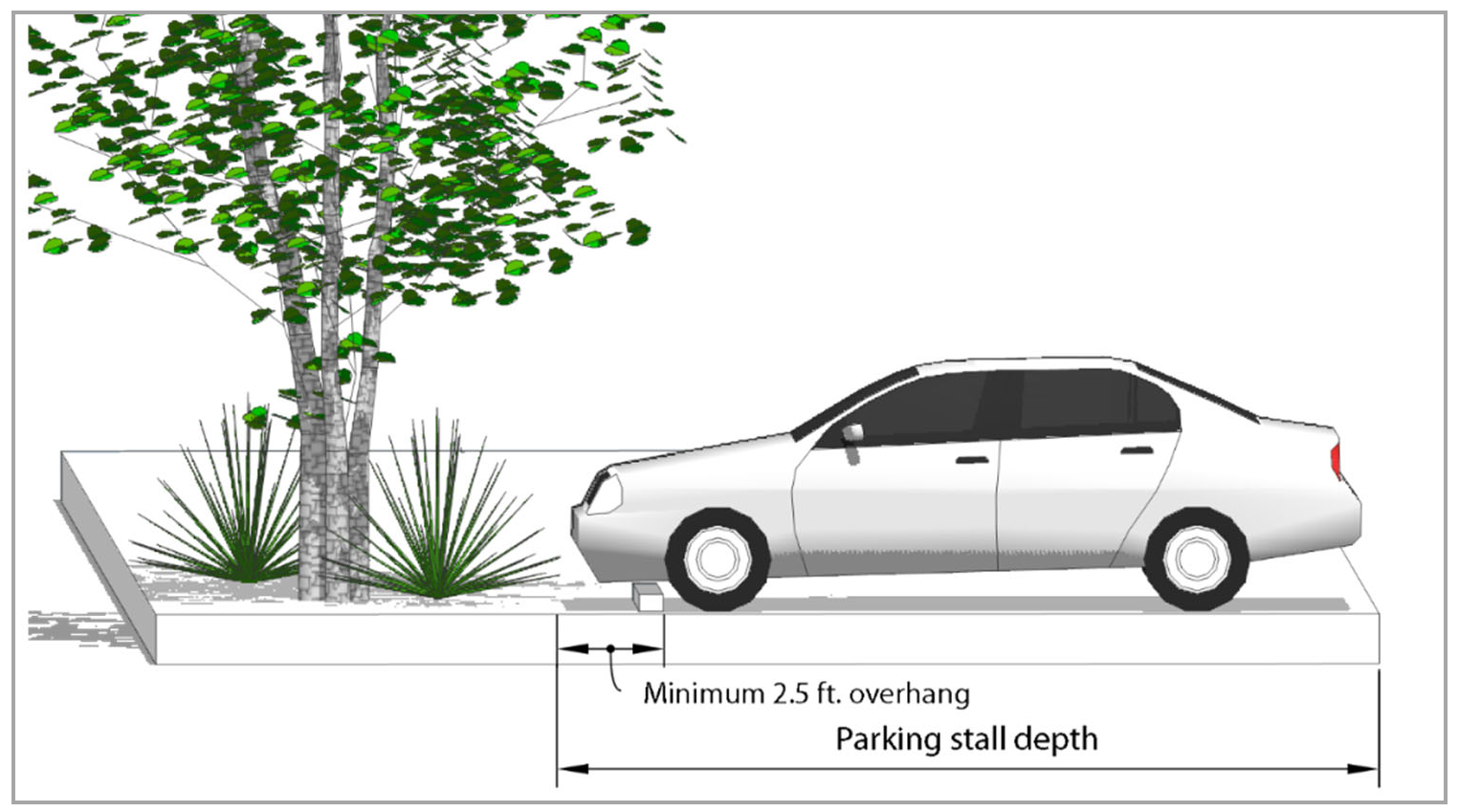
Size. Each planting area within the interior of a parking lot shall contain minimum areas in accordance with this subsection. In all instances, the planting area shall be adequate to accommodate the root growth of the plant material used. The placement of plant material shall accommodate a two-and-one-half foot bumper overhang of a vehicle over the face of the curb or, if used, wheel stops or other comparable devices. See figure VI-4: landscaping accommodation for vehicle overhang.
Figure VI-4: Landscaping Accommodation for Vehicle Overhang
4.
Design.
i.
Plantings shall be placed in islands located in-line or at the end of a row of parking, with a minimum size of one hundred eighty (180) square feet for single-loaded parking rows, and a minimum size of three hundred sixty (360) square feet for double-loaded bays.
ii.
Islands shall be located at the end of parking bays to separate parking spaces from the drive aisle.
iii.
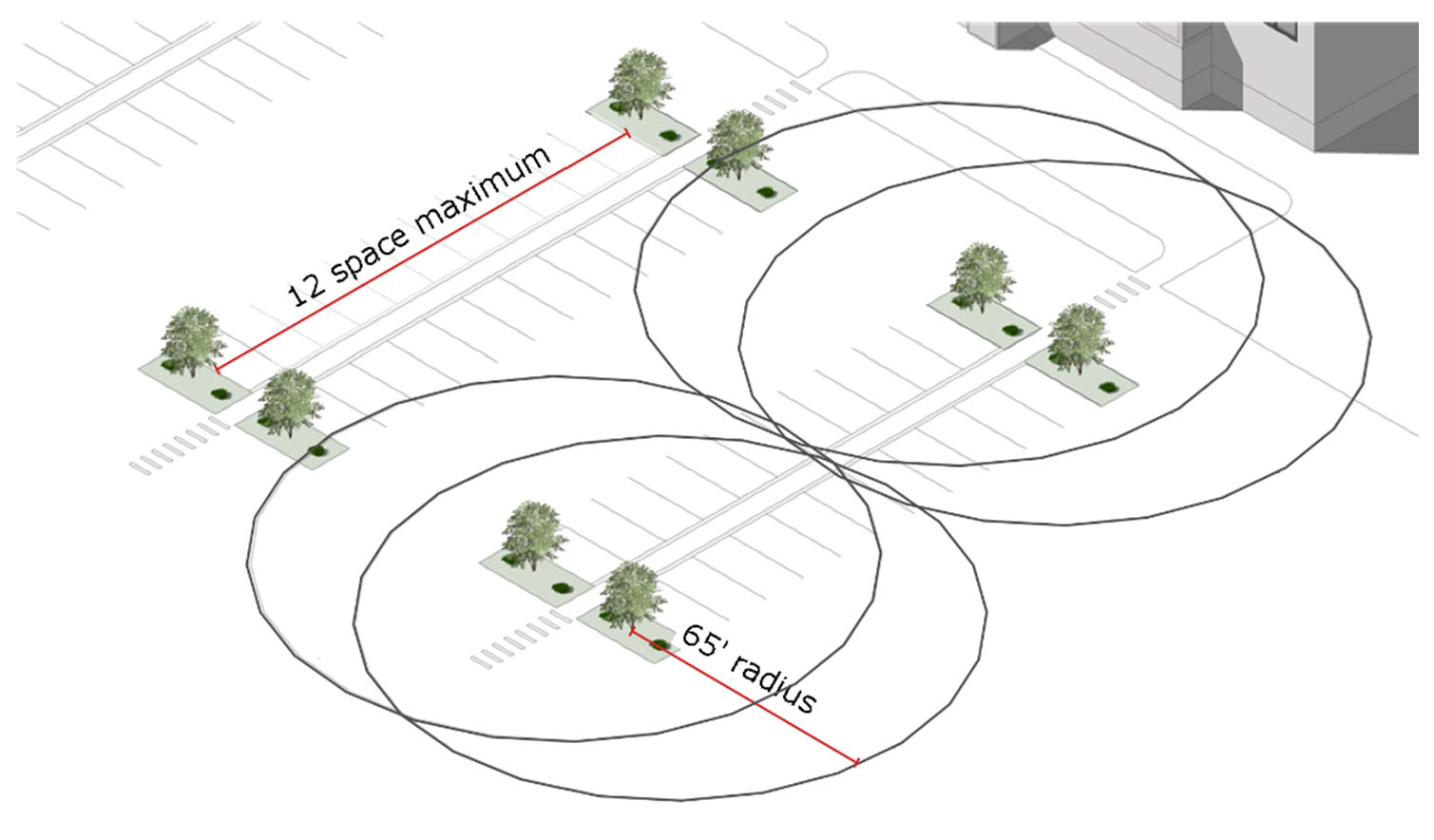
Islands shall be placed such that there are no more than twelve (12) continuous side-by-side parking spaces between landscape islands.
iv.
Tree and light placement shall be coordinated to minimize the tree's impact on parking lot lighting.
v.
In no instance shall a parking space be more than sixty-five (65) feet from the trunk of a canopy tree or fifty (50) feet from the trunk of an understory tree. Perimeter parking lot landscaping, street trees, or other required landscaping may be used to meet this requirement.
Figure VI-5: Parking Lot Landscape Island Configuration
5.
Landscaping island design.
i.
Each landscaped planting area shall contain at least two (2) small shrubs for each one hundred eighty (180) square feet of planting area.
ii.
Stormwater inlets within a parking lot shall be incorporated within the landscaped planting area, to the maximum extent practicable. To the extent practicable, the landscaped planting area shall incorporate rain gardens, bioswales, or other stormwater mitigation techniques approved by the city, to promote infiltration and reduce stormwater runoff and nonpoint source pollution.
iii.
The remainder of the landscaped planting area shall consist of permeable ground cover such as grass, plant material, or mulch.
c.
Parking lot perimeter landscaping standards. Where a parking lot abuts a street right-of-way, the following standards shall apply:
1.
Continuous visual screen. Except for outdoor display areas for vehicle sales uses, on the street facing side of the parking lot, the perimeter landscaping for the parking lot shall form a continuous vegetative screen, excluding required sight clearances at driveways.
2.
Minimum width. The minimum width for any perimeter landscaping strip shall be ten (10) feet. Curbing or wheel stops shall be used to protect against vehicular intrusion into the minimum ten-foot strip. The placement of plant material shall accommodate a two-and-one-half foot bumper overhang of a vehicle over the face of the curb if wheel stops or other comparable devices are not used.
3.
Location. Perimeter landscaping strips for screening parking lots shall be located on the same property on which the parking lot is located.
4.
Required materials.
i.
Evergreen shrubs shall be used to form the continuous visual screen in the perimeter landscaping strip. The shrubs shall be at least eighteen (18) inches in height at planting and at least three (3) feet in height at maturity.
ii.
In addition to the shrub requirements, each perimeter landscaping strip shall include trees in accordance with the following:
(a)
One canopy tree with a minimum of two (2) inches in caliper and twelve (12) feet in height planted a maximum of fifty (50) feet on center, with minimum lateral separation from overhead utility lines of at least thirty (30) feet.
(b)
If pre-existing overhead utility lines preclude installation of canopy trees, understory trees shall be substituted as needed, spaced forty (40) feet on center, or if understory trees will conflict with the overhead utilities, shrubs that at maturity are a minimum of four (4) feet in height shall be substituted on a four-to-one basis.
iii.
The remainder of the perimeter landscaping strip shall include permeable ground cover such as grass, plant material, or mulch that leaves no bare ground two (2) years after all landscape materials are installed.
iv.
No shrubs or trees shall be installed in the sight triangle.
5.
Adjacent to buffers or streetscape landscaping area. Perimeter landscaping strips may be credited towards buffer standards or street tree standards, provided that the minimum standards for each are established and maintained.
(Ord. No. 9572, § 2, 12-17-24)
Sec. 25-133. - Buffers.
a.
Purpose. Buffers on the perimeters of properties are provided to protect land uses from the traffic, noise, glare, trash, activity, vibration, odor, visual disorder, and other harmful or noxious effects likely to be emitted by or associated with an adjacent more intense land use.
b.
Applicability.
1.
General. Unless exempted in accordance with subsection 2. below, the standards in this subsection shall apply to:
i.
All new development and re-development; and
ii.
All expansion or enlargement of gross floor area of a building that existed on January 1, 2025 by more than fifty (50) per cent.
2.
Exemptions. Development in the mixed residential university (MRU), multifamily residential university (MFRU), institutional university (IU), downtown (D), downtown perimeter (DP), downtown historic edge (DHE), riverfront (R), and university commercial (UC) districts is exempted from the requirements of this subsection.
c.
Buffer options. Table VI-11: buffer options, defines three (3) types of buffers based on their function, width, and minimum screening requirements. Each buffer type includes two (2) options for plantings and other screening. The width of the buffer under one of the options, indicated in the top row of each buffer type in table VI-11, may be reduced by a wall or berm, provided that the director of planning determines that the buffer is adequate to screen the incompatible uses in locations where the buffer width is reduced. If the director of planning determines that the presence of utility or access easement or lines within the buffer will make it impractical for the buffer to accomplish its purpose, the director of planning may reduce the buffer width and require additional tree planting or the addition of an opaque wall in accordance with subsection e.6. below.
Table VI-11: Buffer Options
| Buffer type/image | Description | Option 1 | Option 2 |
|---|---|---|---|
| Type I: Industrial | 50 ft | ||
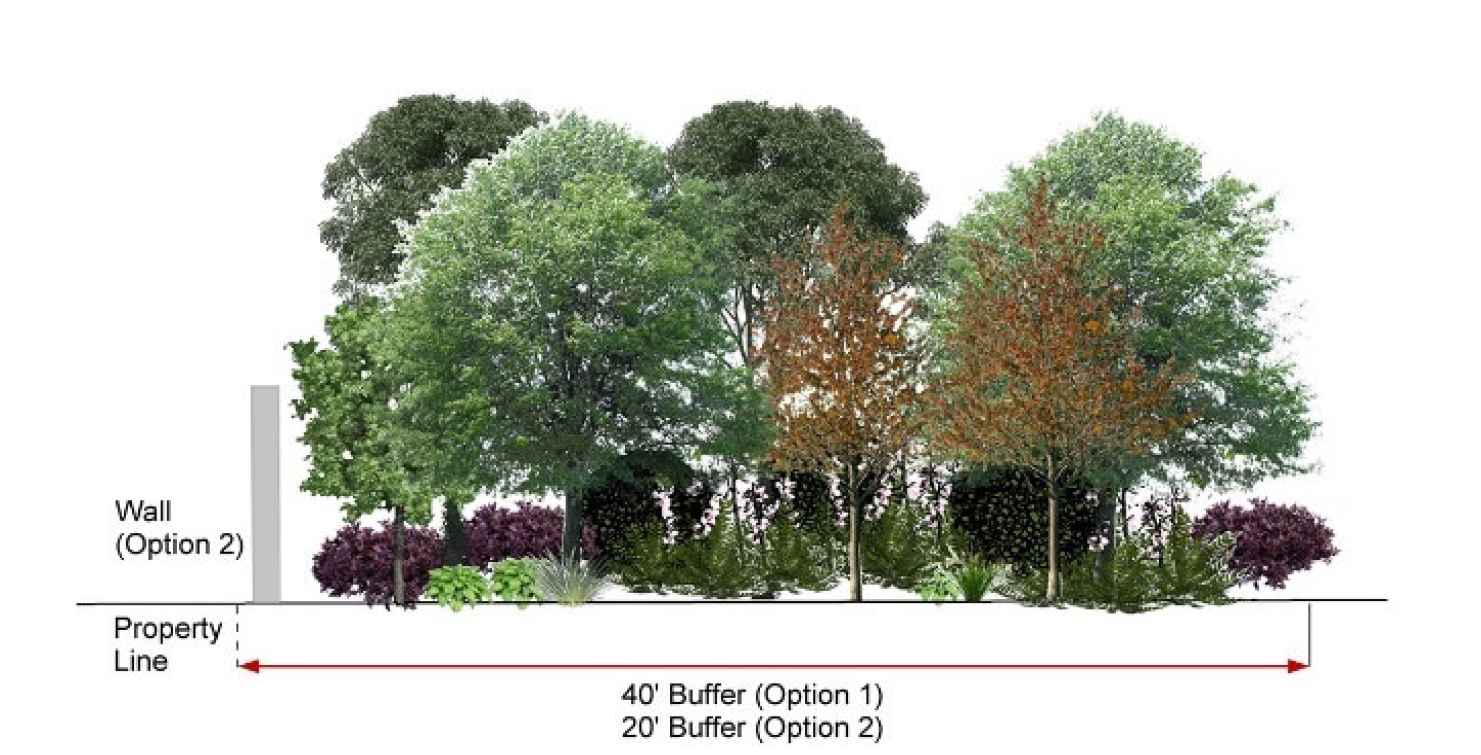 | This buffer functions as an opaque screen from the ground to a height of at least 35 feet upon full maturity of the trees. This type of buffer prevents visual contact between uses and creates a strong separation. | 4 canopy trees and 4 understory trees, and 90 shrubs per 100 linear feet | |
| Type A: Opaque | 40 ft | 20 ft | |
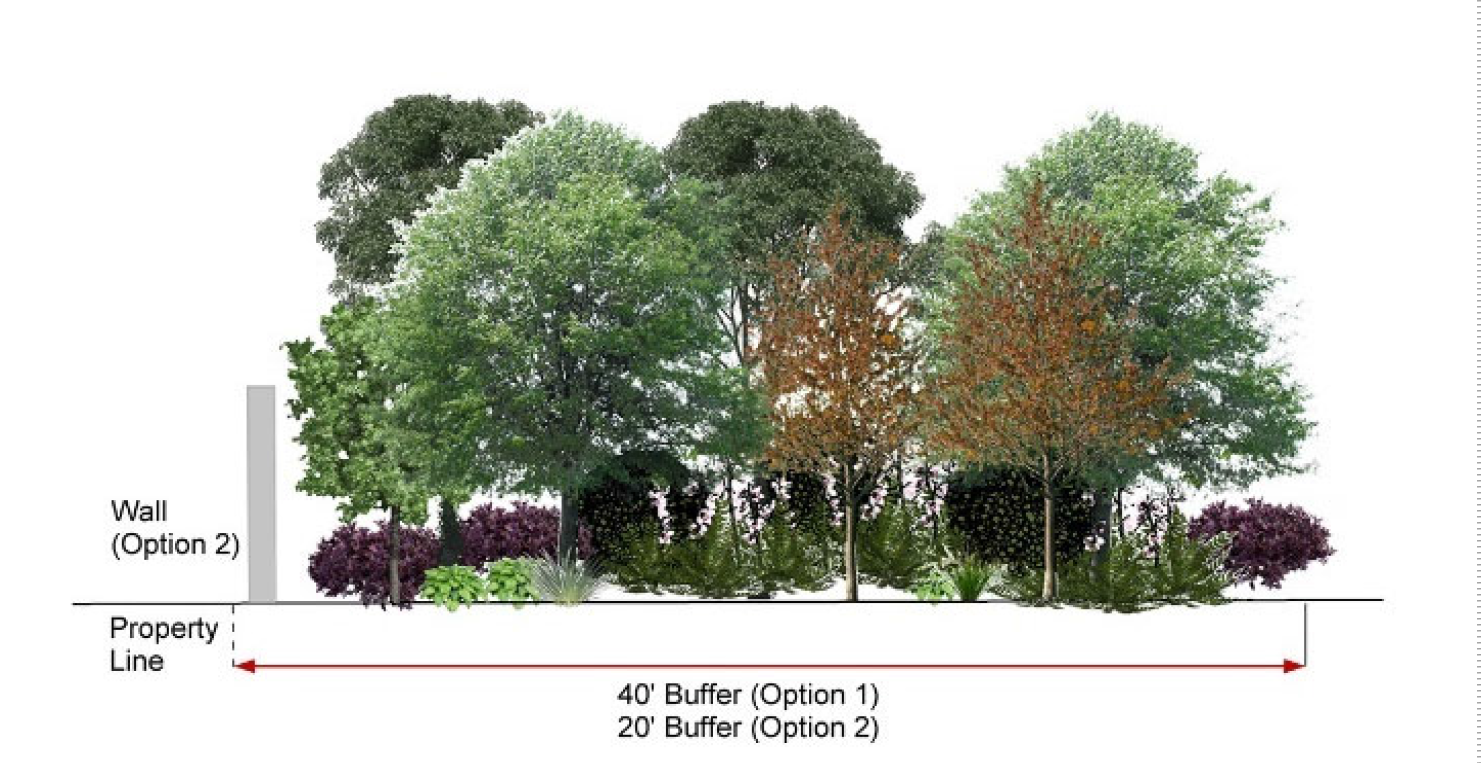 | This buffer functions as an opaque screen from the ground to a height of at least 35 feet upon full maturity of the trees. This type of buffer prevents visual contact between uses and creates a strong separation. | 4 canopy trees and 4 understory trees, and 90 shrubs per 100 linear feet | 5 canopy trees and 5 understory trees, and 100 shrubs per 100 linear feet, and a wall (see subsection e.6. below) |
| Type B: Semi-Opaque | 35 ft | 20 ft | |
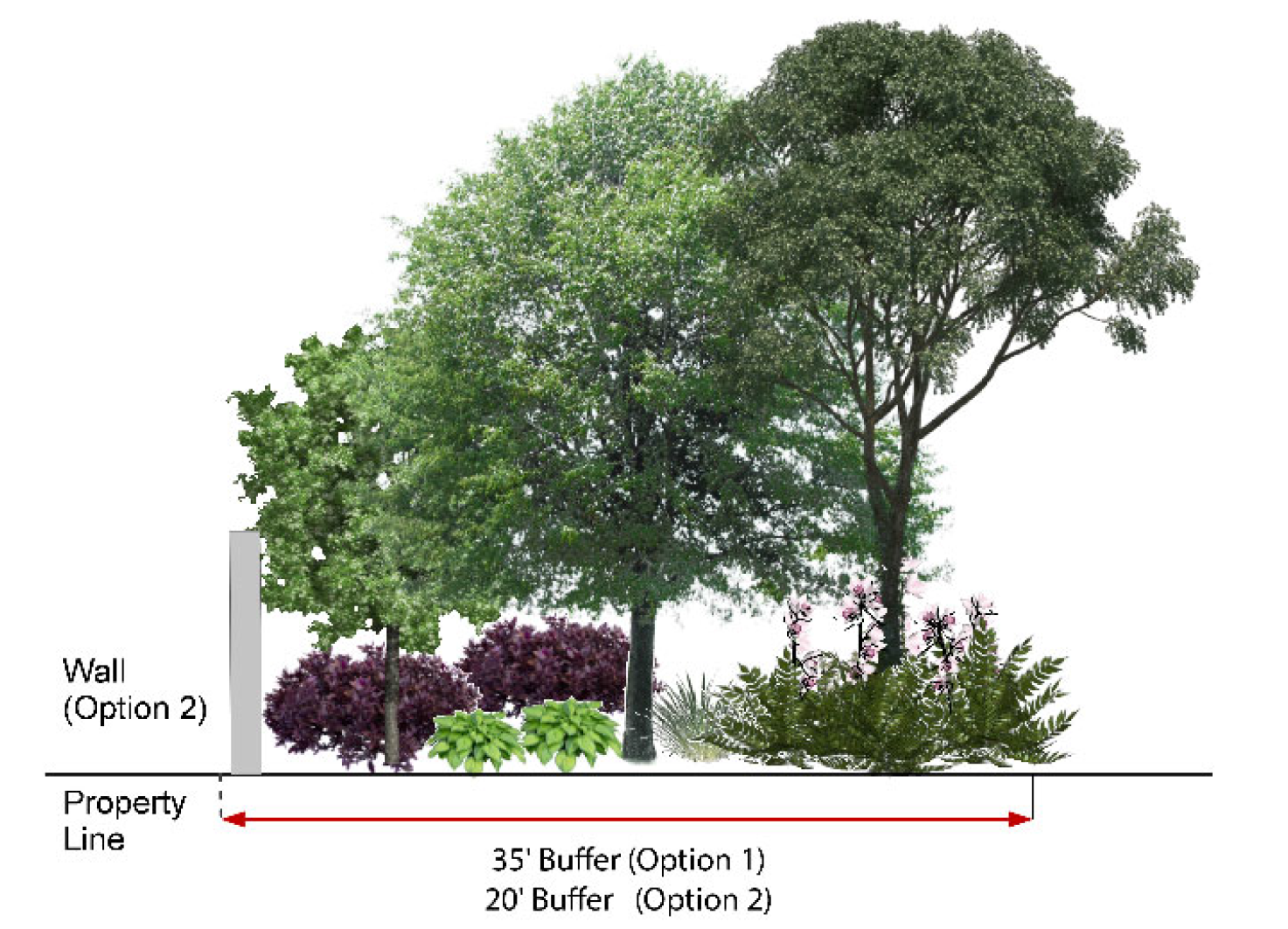 | This buffer functions as semi-opaque screen from the ground to at least a height of 30 feet, upon maturity of the trees. | 4 canopy trees and 4 understory trees, and 60 shrubs per 100 linear feet | 3 canopy trees and 6 understory trees, and 80 shrubs per 100 linear feet, and a wall (see subsection e.6. below) |
| Type C: Aesthetic | 20 ft | 10 ft | |
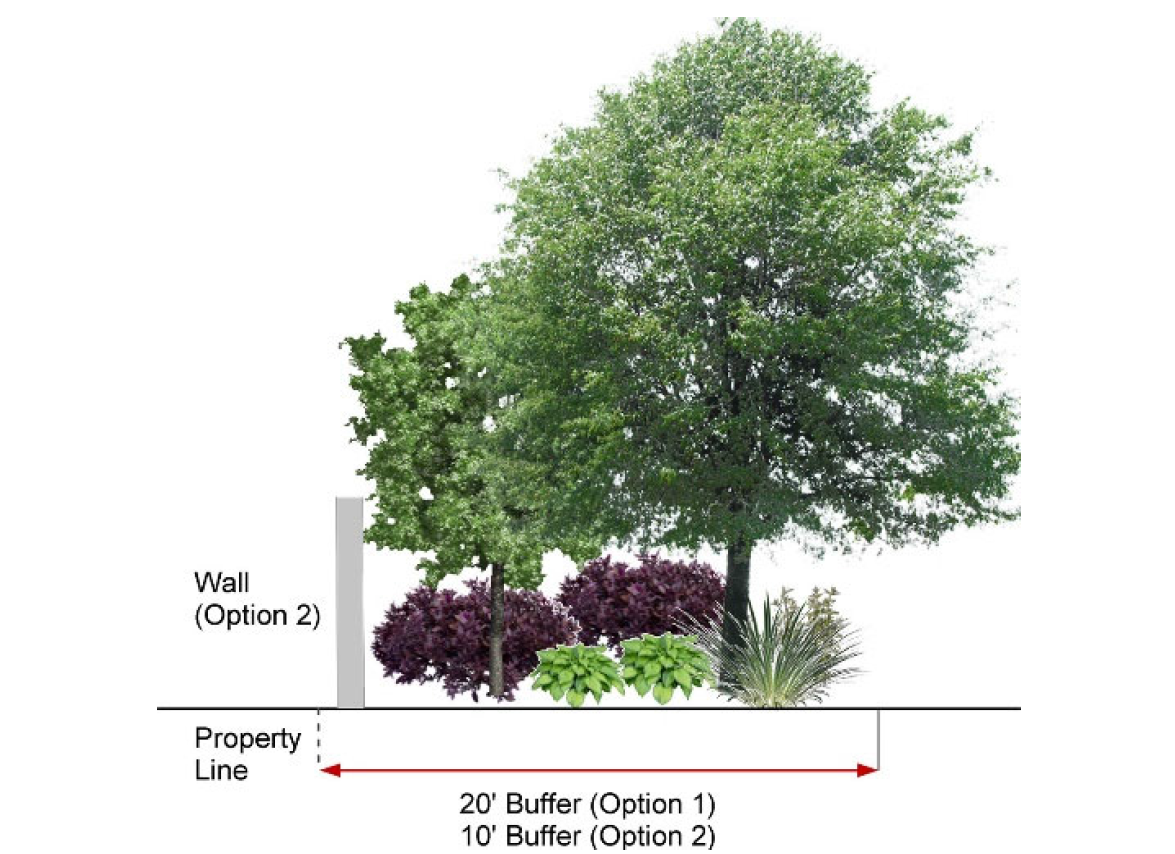 | This buffer functions as an intermittent visual obstruction from the ground to 20 feet upon maturity of the trees, and creates the impression of spatial separation without eliminating visual contact between uses. | 2 canopy trees and 6 understory trees and 60 shrubs per 100 linear feet | 2 canopy trees and 8 understory trees, 80 shrubs per 100 linear feet, and a wall (see subsection e.6. below) |
d.
Buffer types.
1.
The width of a buffer and the required quantity and type of plantings varies based on the nature of the potentially adjacent uses. Table VI-12: buffer types, establishes the type of perimeter buffer required between two adjacent land uses. The buffer types are described above in table VI-11: buffer options.
2.
Where parking lot landscaping requirements overlap with these buffer requirements, they shall be counted toward the buffer requirements if the minimum of both standards are met.
3.
A buffer is not required if properties are separated by an improved right-of-way that is twenty (20) feet or greater in width.
Table VI-12: Buffer Types
Notes:
[1] The letters in the cell reference the type of buffer required between the uses; see table VI-11: buffer options.
[2] Athletic fields (softball, baseball, football and soccer fields; basketball, tennis, and pickleball courts; and comparable uses) shall provide a type C buffer in all districts.
[3] No buffer is required between a townhouse dwelling and a single-family detached dwelling.
e.
Buffer installation.
1.
Adjacent to vacant parcel. Where a developing parcel is adjacent to a vacant parcel, the developing parcel shall provide fifty (50) per cent of the buffer required adjacent to the vacant parcel.
2.
Adjacent to existing land use. Where a developing parcel is adjacent to an existing use, the developing parcel shall provide the full buffer required adjacent to the existing use in accordance with this section, unless a portion or all of a buffer that complies with the standards of this section already exists on the adjacent lot. Where all or part of a buffer exists but the buffer does not fully comply with the standards of this section, the developing parcel shall be responsible for providing all the additional planting material necessary to comply with this section.
3.
Location of buffers. Buffers required by this section shall be located along the outer perimeter of the lot or site and shall extend to the lot boundary line or right-of-way line; however, the buffer may be located along shared access or utility easements between parcels in nonresidential development.
4.
Trees. Required canopy and understory trees shall be spaced to achieve the screening goals and meet the standards in this subsection.
5.
Shrubs. All required shrub plantings shall form a visual screen and be a minimum of four (4) feet in height within two (2) years after planting.
6.
Wall or fence. A wall or fence used within the buffer to accomplish a reduced buffer width option shall be six (6) feet in height and shall consist of one or a combination of the following materials: brick, textured concrete masonry units, stucco block, cementitious board, or other similar material approved by the director of planning. (A retaining wall shall be considered a wall for the purposes of this subsection).
7.
Existing vegetation. Existing vegetation which meets or exceeds the quantity, spacing, and height standards of this section may be used to satisfy the requirements of this subsection. Supplemental native shrubs may be required, however, if it can be reasonably determined that after two (2) years, the existing vegetation will not provide the visual screen required by this section.
f.
Development within required buffers.
1.
General. The required buffer shall not contain any development, impervious surfaces, or site features that do not function to meet the standards of this subsection or that require removal of existing vegetation, unless otherwise allowed under this ordinance.
2.
Sidewalks and trails. Sidewalks and trails may be placed in buffers provided damage to existing vegetation is minimized to the maximum extent practicable.
3.
Overhead and underground utilities. Overhead and underground utility lines, if allowed by the city, are permitted in buffers, but shall minimize the impact to vegetation, to the maximum extent practicable. In cases where required landscaping material is damaged or removed due to utility activity within a required buffer, the landowner shall be responsible for replanting all damaged or removed vegetation necessary to ensure the buffer meets the standards in this subsection.
4.
Damage to plantings. In the event that buffer plantings are damaged in a way that results in the loss of the buffer's intended purpose, the damage shall be repaired by the landowner.
(Ord. No. 9572, § 2, 12-17-24)
Sec. 25-134. - Screening.
a.
Purpose. The purpose of the screening standards is to conceal specific site features that might have negative visual or auditory impact from both on-site and off-site views. The site features to be screened shall be screened at all times, unless otherwise stated in this section, regardless of adjacent development, or the types and amount of landscaping material required to be placed on the development site from other requirements.
b.
Applicability. Large waste receptacles (dumpsters), ground-level HVACs, and refuse collection points (including grease traps, cardboard recycling containers, and trash carts) shall not be located within a front yard and shall be completely screened from view in accordance with this standards of this section.
c.
Screening methods. The following screening methods shall be used for each site feature required to be screened:
1.
Large waste receptacles (dumpsters) and refuse collection points.
i.
Large waste receptacles (dumpsters) and refuse collection points shall not be located within any required landscaped area and shall be screened with an opaque wall of masonry (which shall be constructed of brick, textured concrete masonry units, or stucco block), horizontally installed painted or stained wood, cementitious fiber board, or other material of comparable appearance and durability. The wall shall be at least six (6) feet in height and at least one foot taller than the object to be screened.
ii.
All commercial waste receptacles shall be placed on a pad approved by the city engineer that allows for pick-up and maintenance, as needed.
(Ord. No. 9572, § 2, 12-17-24)
Sec. 25-135. - Alternative landscaping plan.
a.
General. An alternative landscaping plan may be requested by an applicant and reviewed and approved by the director of planning where a modification from the landscape and buffer standards in this division is justified because of site or development conditions that make compliance with the standards impossible or impractical. An alternative landscaping plan may also be requested to allow for exemplary design opportunities that would otherwise not be possible, or to permit alternatives that would result in improved environmental quality. Such conditions may include but are not limited to:
i.
Natural conditions, such as lakes, ponds, or other natural features;
ii.
The likelihood that landscaping material would be ineffective at maturity due to placement, location, soil, topography, drainage, or other existing site conditions that are not created by the development;
iii.
Lot size or configuration;
iv.
The site is part of a planned development district or another planned development with an approved alternate landscaping plan.
v.
The presence of utility or other easements;
vi.
Forthcoming public improvement projects;
vii.
The potential for interference with public safety; or
viii.
Other situations where strict adherence to the landscape and buffer standards are determined to be impractical due to reasons not directly caused by the proposed layout and design of the development.
b.
Submittal and review. An applicant may submit an alternative landscaping plan as part of a development application in accordance with section 25-129, applicability. The director of planning shall review and approve or deny an alternative landscaping plan based on the standards of this ordinance.
c.
Allowable deviations. Allowable deviations that can be approved in an alternative landscaping plan include, but are not limited to, the following:
1.
Reduced planting rates due to public facilities. An adjustment to planting locations, spacing, or reduction in the type or total number of required trees or shrubs when underground or aboveground connections to public facilities or public utilities, public easements, or right-of-way, are located upon or in close proximity to the parcel, or whenever a fewer number or smaller size of trees would be more desirable in terms of good landscape practice.
2.
Reduction in standards due to size, configuration, or general nature of parcel. A reduction in the planting locations, count, spacing, species diversity, or the total number of trees or shrubs if it is more desirable in terms of good landscape practice considering the size, configuration or general nature of the parcel and adjacent parcels.
3.
Modifications due to topography or other natural conditions. Modification of the planting locations, count, spacing, species diversity, or the total number of trees or shrubs due to topographic or other natural conditions of the development site.
4.
Modifications due to conditions preventing maturation of landscape. Modification of the planting locations, count, spacing, species diversity, or the total number of trees or shrubs due to other site conditions not created by the development, which might make it unrealistic that the landscaping would properly mature.
5.
Modifications due to protection of natural features. Modification of the planting locations, count, spacing, species diversity, or the total number of trees or shrubs to enhance the protection of natural features on the site.
6.
Modifications due to public safety. Modification of the planting locations, count, spacing, species diversity, or the total number of trees or shrubs to ensure public safety.
7.
Modifications of plant location due to other unique site conditions.
i.
Modification of the planting locations to off the development site, if it can be demonstrated the relocation is due to unique site conditions, and the relocated landscaping will serve the same purpose of the landscaping if it was located on the development site.
ii.
If landscaping is relocated off-site in accordance with this section, development approval shall be conditioned on the landowner ensuring to maintain the off-site landscaping, in perpetuity, in part by entering into an agreement with the city to adequately preserve and maintain the off-site landscaping.
(Ord. No. 9572, § 2, 12-17-24)
Sec. 25-136. - Maintenance.
The landowner of the property being developed in accordance with this division shall be responsible for the maintenance of all landscaped areas. Such areas shall be maintained in accordance with the approved landscaping plan or alternative landscaping plan, as appropriate, and shall present a healthy and orderly appearance, free from refuse and debris. All plant life shown on an approved landscaping plan or alternative landscaping plan, as appropriate, shall be replaced if it dies, is in poor health, is seriously damaged, or is removed. All landscaping areas shall be maintained so as to prevent debris from washing onto streets and sidewalks.
(Ord. No. 9572, § 2, 12-17-24)
Sec. 25-137. - Purpose and intent.
Open space is intended for the use and enjoyment of a development's residents, employees, or users. Open space serves numerous purposes, including preserving natural resources, ensuring access to open areas and facilities for active recreation, reducing the heat island effect of developed areas, providing civic and meeting spaces, enhancing stormwater management, and providing other public health benefits. To this end, the standards in this division establish minimum requirements for open space in new development, identify areas and features that will be credited toward meeting the minimum requirements, and specify the required location, configuration, design, maintenance, and ownership of open space.
(Ord. No. 9572, § 2, 12-17-24)
Sec. 25-138. - Applicability.
a.
General. Unless exempted in accordance with subsection b. below, all new development shall comply with the standards in this division. The landowner shall be responsible for completing all improvements required by this division.
b.
Exemptions. The following development is exempt from the standards in this division:
1.
Development limited to an individual single-family detached dwelling on a single lot, or an individual duplex dwelling on one or two (2) lots;
2.
Development in the open space (OS), single-family residential estate (SFR-E), single-family residential 1 (SFR-1), single-family residential 2 (SFR-2), single-family residential 3 (SFR-3), single-family residential 4 (SFR-4), lake residential (LR), lake multifamily (LMF), institutional university (IU), institutional public (IP), downtown (D), downtown perimeter (DP), and downtown historic edge (DHE) districts.
3.
Agricultural uses;
4.
Utility uses; and
5.
Development consisting of four (4) or fewer single-family detached or duplex, triplex, or quadplex dwellings, where all dwellings within the development are located within one-quarter-mile walking distance of an existing public park, and:
i.
The park has an area equal to or greater than the total open space area required by table VI-13: minimum required open space; and
ii.
Pedestrian access to the park from all lots in the development is provided by sidewalks or other pedestrian ways.
(Ord. No. 9572, § 2, 12-17-24)
Sec. 25-139. - Timing or review.
Review for compliance with the standards of this division shall occur during review of a development application for a planned development (section 25-37), a conditional use permit (section 25-38), a special exception use permit (section 25-39), a land development permit (section 21-218), a subdivision master plan, a subdivision preliminary plat, or a minor subdivision, as appropriate.
(Ord. No. 9572, § 2, 12-17-24)
Sec. 25-140. - Minimum required open space.
Development subject to the standards in this division shall provide the minimum amounts of open space identified in table VI-13: minimum required open space, based on the proposed use and the zoning district where the development is proposed.
Table VI-13: Minimum Required Open Space
(Ord. No. 9572, § 2, 12-17-24)
Sec. 25-141. - Open space features.
a.
Descriptions and specific design and maintenance requirements. The features and areas identified in table VI-14: types of open space, shall be credited towards compliance with the minimum open space standards in table VI-13: minimum required open space.
Table VI-14: Types of Open Space
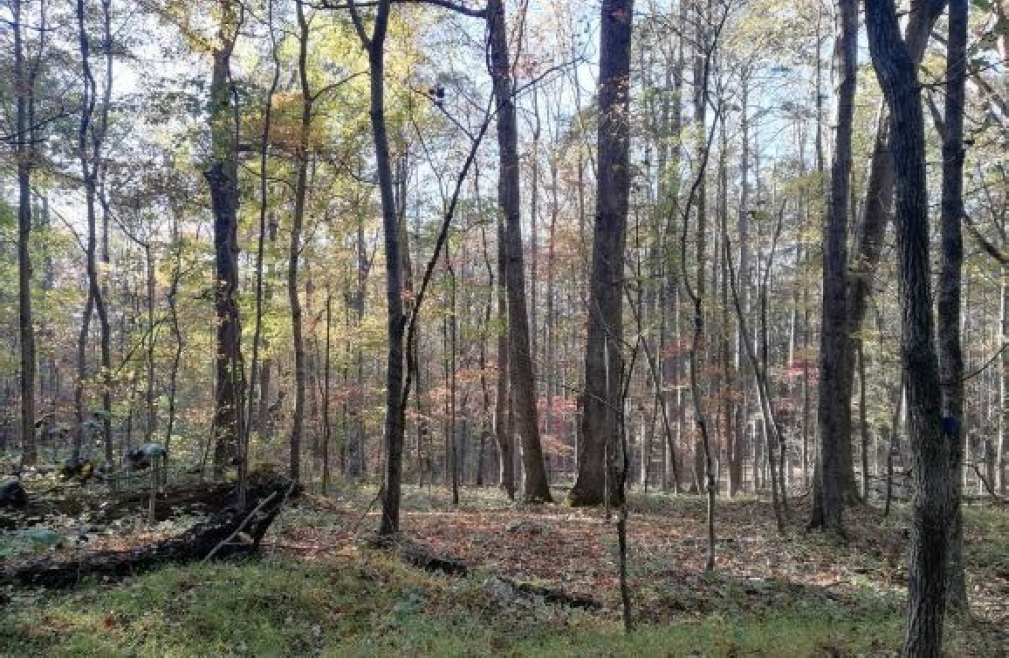 | Natural features |
| Description: Natural features (including lakes, ponds, rivers, streams, wetlands, drainageways, and other riparian areas), riparian buffers, flood hazard areas, wildlife habitat, and other natural conservation areas. | |
| Design and maintenance requirements: Preservation of any existing natural features shall have highest priority for locating open space areas. Maintenance is limited to the minimum removal and avoidance of hazards, nuisances, and unhealthy conditions. | |
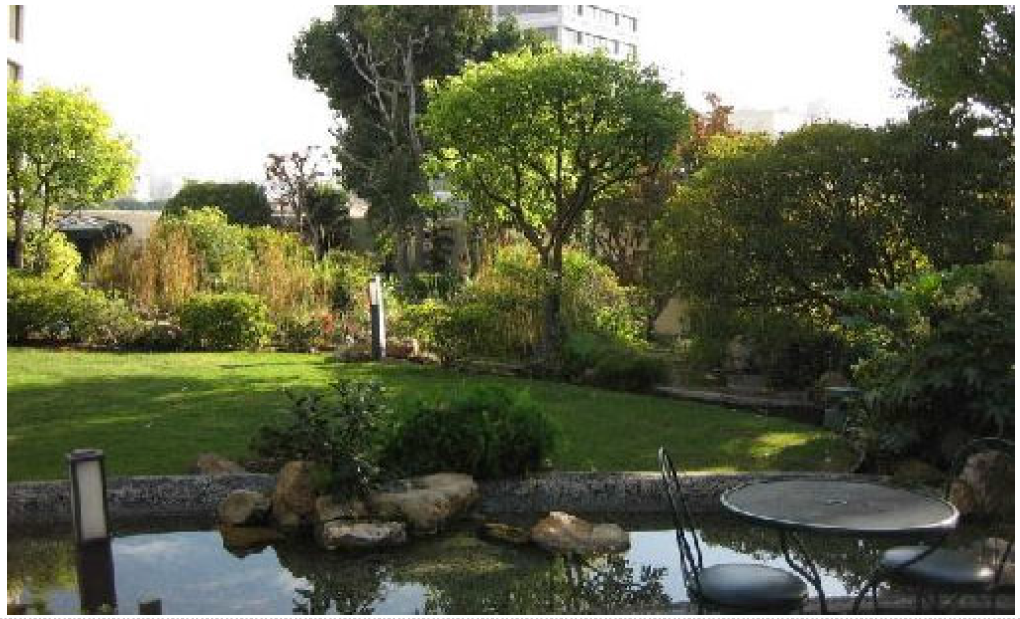 | Required landscape areas |
| Description: Areas occupied by required landscaping except for required buffers on the perimeter of a site. | |
| Design and maintenance requirements: See article VI division 3, landscape and buffer standards | |
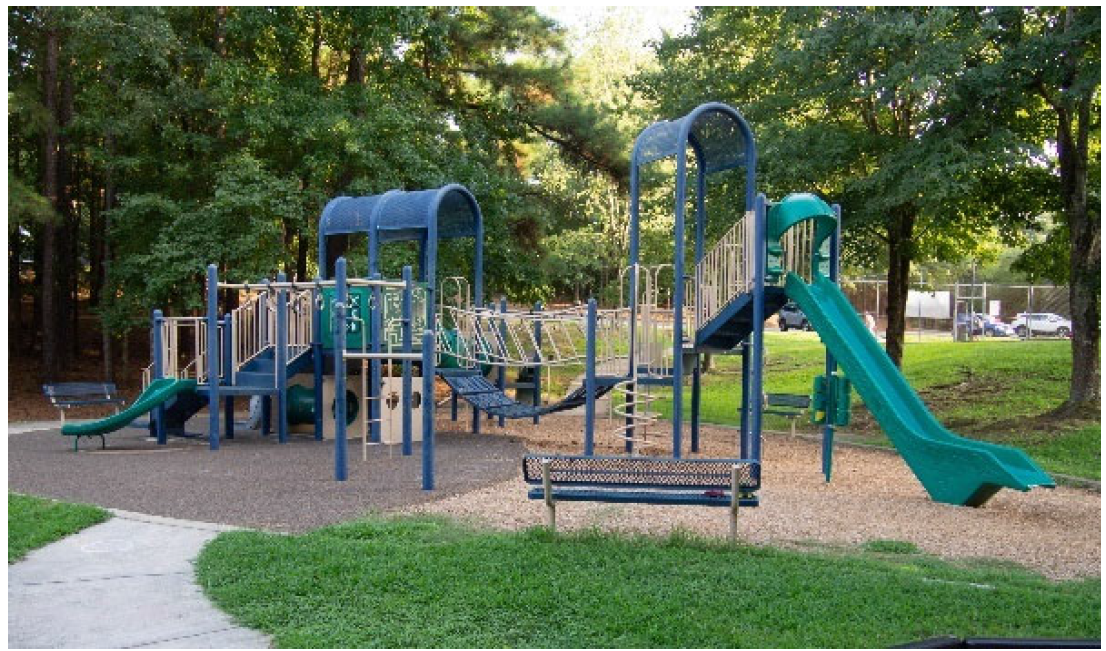 | Active recreational areas |
| Description: Land occupied by areas and facilities used for active recreational purposes, such as ballfields, playgrounds, tennis courts, pools, jogging trails, and community buildings and clubhouses, and land dedicated for parks. | |
| Design and maintenance requirements: Active recreational areas shall be compact and contiguous, to the maximum extent practicable, unless used to link or continue existing or public open space lands. | |
 | Passive recreational areas (including plantings and gardens) |
| Description: Formally planned and regularly maintained open areas that provide passive recreation opportunities, including trails and pedestrian ways, arranged plantings, gardens (including community gardens and rooftop gardens with walking paths or gathering areas), gazebos, and similar structures. | |
| Design and maintenance requirements: Passive recreation, other than rooftop gardens, shall provide direct access to the residents of the development. Rooftop gardens shall also be reasonably accessible to the occupants and users of the building, as appropriate. | |
 | Squares, forecourts, and plazas |
| Description: Squares, forecourts, plazas, and civic greens that provide active gathering places and opportunities to create special places. | |
| Design and maintenance requirements: The minimum contiguous area shall be 500 square feet. Such features shall have direct access from the site to a street or sidewalk or pedestrian way and shall be designed to accommodate people sitting and gathering, incorporating benches, tables, fountains, or other similar amenities. Surrounding buildings shall be oriented toward the square, forecourt, or plaza when possible, and a connection shall be made to surrounding development, if possible. | |
 | Public access easements with paths or trails |
| Description: Public access easements that combine utility easements with paths or trails that are available for passive recreational activities such as walking, running, and biking. Greenways provided to comply with other requirements of this ordinance shall count toward the minimum open space set-aside requirements in this division. | |
| Design and maintenance requirements: Such public access easements shall include at least one improved access from a public street, sidewalk, or trail that includes signage designating the access point. | |
 | Stormwater management areas treated as site amenities |
| Description: Up to 75 per cent of the land area occupied by stormwater management facilities (including retention and detention ponds and other bioretention devices) can be counted towards the minimum open space requirements in table VI-13, when such features are treated as an open space site amenity. | |
| Design and maintenance requirements: Stormwater management facilities treated as an open space site amenity are encouraged to support passive recreation uses by providing access, gentle slopes (less than 3:1), vegetative landscaping, and pedestrian elements such as paths and benches. Stormwater management facilities shall be subject to a maintenance agreement approved by the operating authority or agency having regulatory authority over the facility. |
b.
Areas not counted as open space. The following areas shall not be counted as open space:
1.
Front, side, or rear yards that are not subject to an open space or conservation easement;
2.
Street right-of-way or private access easements, including sidewalks located within those right-of-way or easements;
3.
Vehicular parking areas or lots (excluding the landscaped areas);
4.
Driveways for dwellings;
5.
Land covered by structures not designated for active recreational uses;
6.
Designated outdoor storage areas; and
7.
Stormwater management facilities and ponds that are not treated as an open space site amenity in accordance with table VI-14: types of open space.
(Ord. No. 9572, § 2, 12-17-24)
Sec. 25-142. - General design and configuration.
a.
Areas and features prioritized and required. To the maximum extent practicable, and in accordance with section 25-141(a), descriptions and specific design and maintenance requirements, open space shall be located and organized to include, protect, and enhance the following open areas and features, in the following general order of priority:
1.
Natural features such as riparian areas, riparian buffers, shorelines, flood hazard areas, floodplains, wetlands, steep slopes, and wildlife habitat and corridors;
2.
Water features such as rivers, lakes, creeks, canals, natural ponds, wetlands, and retention and detention ponds;
3.
For multifamily development, a minimum of fifty (50) per cent of the open space shall be for active recreation (see description of active recreational areas in table VI-14: types of open space above);
4.
In the riverfront (R) and university commercial (UC) districts, a minimum of fifty (50) per cent of the open space shall be squares, forecourts, or plazas;
5.
Parks and trails, regardless of public or private ownership; and
6.
In other than the riverfront (R) and university commercial (UC) districts, gathering places such as squares, forecourts, and plazas.
b.
Location and configuration.
1.
Except for natural features and stormwater management areas treated as site amenities, open space shall be located to be reasonably accessible to the occupants and users of the development.
2.
The location and configuration of open space shall conform with all adopted city plans addressing open space, greenways, and similar features.
3.
If the development site is adjacent to existing or planned public trails, greenways, parks, or other public open space area land, the open space shall, to the maximum extent practicable, be located to adjoin, extend, connect, and enlarge the trail, park, or other public land.
4.
Open space shall be compact and contiguous, unless a different configuration is needed to continue an existing trail or greenway or to accommodate preservation of natural resources. With the exception of greenways, greenbelts, or any other linear open space, the minimum width for any required open space shall be fifty (50) feet.
c.
Development in open space. Development within open space shall be limited to that appropriate to the purposes of the type(s) of open space. Where appropriate, such development may include, but is not limited to, walking, jogging, and biking paths or trails; benches or other seating areas; meeting areas; tables, shelters, grills, trash receptacles, and other picnic facilities; docks and other facilities for fishing; environmental education guides and exhibits; historic interpretive signage; gazebos and other decorative structures; fountains or other water features; play structures for children; gardens or seasonal planting areas; pools; and athletic fields and courts and associated clubhouses.
(Ord. No. 9572, § 2, 12-17-24)
Sec. 25-143. - Development with phases.
If a development consists of multiple phases, each phase shall include, at a minimum and at the discretion of the director of planning, a proportional share of open space, based on the number of dwelling units and the amount of nonresidential gross floor area in the phase and the total number of dwelling units and gross floor area in all phases of the development.
(Ord. No. 9572, § 2, 12-17-24)
Sec. 25-144. - Ownership and maintenance.
a.
General. Open space required by this ordinance shall be managed and maintained as permanent open space through one or more of the following options:
1.
Conveyance of open space areas to a property owners' or homeowners' association that holds the land in common ownership and will be responsible for managing and maintaining the land for its intended open space purposes, in perpetuity;
2.
Conveyance of open space areas to a third party beneficiary such as an environmental, historical, or civic organization, or a government entity, that is organized for, capable of, and willing to accept responsibility for managing and maintaining the land for its intended open space purposes, in perpetuity; or
3.
If public stormwater management facilities are treated as site amenities, through stormwater management easements.
b.
Options involving private ownership. All options involving private ownership of open space areas shall include deed restrictions, covenants, or other legal instruments that ensure continued use of the land for its intended open space purposes, in perpetuity, and provide for the continued and effective management, operation, and maintenance of the land and facilities.
c.
General responsibility. Responsibility for establishing provisions for the management and maintenance of open space rest with the owner of the land of the open space. Failure to maintain open space in accordance with this division shall be a violation of this ordinance.
(Ord. No. 9572, § 2, 12-17-24)
Sec. 25-145. - Purpose.
The standards in this division regulate the location, height, materials, and design of fences and walls in order to:
a.
Ensure the safety, security, and privacy of land;
b.
Maintain visual harmony within neighborhoods and throughout the city;
c.
Protect adjacent lands from the indiscriminate placement of fences and walls; and
d.
Ensure that fences and walls are appropriately maintained.
(Ord. No. 9572, § 2, 12-17-24)
Sec. 25-146. - Applicability.
a.
Except as otherwise provided in subsection b. below, all fences and walls are subject to the standards in this division. Additional standards for fences and walls may apply to specific uses (see article V, use regulations), in specific zoning districts (see article IV, zoning districts), or as a part of the development standards in this article (e.g. parking standards, landscape and buffer standards).
b.
The following are exempt from the standards in this division:
1.
Fences and walls in the OS, IU, and IP districts;
2.
Customary fencing enclosing athletic fields, tennis courts, playgrounds, and similar recreational areas;
3.
Fences and walls installed by a public entity along a public roadway;
4.
Fences and walls required for structural support of a principal or accessory structure;
5.
Fences around stormwater retention and detention ponds;
6.
Temporary fences and barricades around construction sites;
7.
Fences for tree protection (temporary and permanent);
8.
Landscaping berms installed without fences; and
9.
Fences and walls necessary for soil erosion and control.
(Ord. No. 9572, § 2, 12-17-24)
Sec. 25-147. - Timing of review.
Review for compliance with the standards of this division shall occur during review of a development application for a planned development (section 25-37), a conditional use permit (section 25-38), a special exception use permit (section 25-39), or a land development permit (section 21-218), as appropriate.
(Ord. No. 9572, § 2, 12-17-24)
Sec. 25-148. - Location.
a.
Except as otherwise provided in this division, fences and walls are allowed anywhere on a lot, or on a property line between privately-owned lots.
b.
Fences and walls are prohibited within a sight triangle.
c.
Fences and walls shall not be located in any street right-of-way.
d.
Fences and walls shall be set back at least ten (10) feet from the curb line of abutting streets.
e.
A fence shall not be installed so it blocks or diverts a natural drainage flow onto or off of any other land, unless it is subject to an approved stormwater management plan.
(Ord. No. 9572, § 2, 12-17-24)
Sec. 25-149. - Height.
a.
Except as otherwise provided in subsections b. and c. below, fences and walls shall not exceed the following heights above the grade on the abutting land:
1.
In residential districts on lots with uses that are not multifamily dwellings, four (4) feet when placed within the minimum front setback and eight (8) feet when placed elsewhere on the lot;
2.
In residential districts on lots with multifamily dwellings, six (6) feet when placed within the minimum front setback and eight (8) feet when placed elsewhere on the lot;
3.
In business districts, eight feet; and
4.
In industrial districts, ten feet.
b.
On corner lots in residential districts, a fence or wall no more than six (6) feet in height may be placed within the minimum setback of one of the front yards.
c.
A retaining wall may exceed the maximum heights in subsections a. and b. above if the director of planning determines it does not unreasonably impede visibility of street traffic and from vehicles exiting driveways.
(Ord. No. 9572, § 2, 12-17-24)
Sec. 25-150. - Materials and design.
a.
The following materials shall not be used in fences and walls:
1.
Fabric, rolled plastic, or plastic tarps;
2.
Fiberboard;
3.
Plywood;
4.
Sheet metal;
5.
In the MFR, MFRU, business, and institutional districts, chain link on fences located in the front yard;
6.
Razor wire, concertina wire, and similar security fencing materials; and
7.
Barbed wire or above ground electrically charged wire, except for the confinement of livestock or domestic animals as part of an agricultural use.
b.
In residential districts, fences located in the front setback on a lot other than a corner lot shall have a minimum of fifty (50) per cent of the fence area open and unobstructed through the use of wrought iron, pickets, chain link, or other customary fencing materials. On a corner lot in a residential district where the predominant pattern of development consists of single-family dwellings, this requirement shall not apply along a frontage adjacent to a street classified as a collector street or greater in the city major street plan.
c.
On sites with a multifamily dwelling or multifamily student dwelling where a fence or wall is visible from off-site locations, if one side of the fence or wall has visible support framing and the other does not, or one side of a wall has a more finished surface than the other, then the side of the fence without support framing and/or with a more finished surface shall face the exterior of the lot (see figure VI-6: finished side facing exterior).
Figure VI-6: Finished Side Facing Exterior
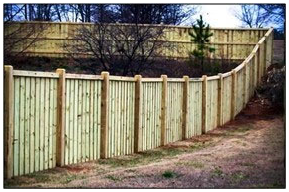
(Ord. No. 9572, § 2, 12-17-24)
Sec. 25-151. - Maintenance.
Fences and walls shall be maintained in good repair and in a safe and attractive condition in compliance with property maintenance. Maintenance of fences and walls shall include, but not be limited to, the replacement of missing, decayed, or broken structural or decorative elements and the repair of deteriorated or damaged fence materials, such as weathered surfaces visible from adjacent lands, sagging sections, and posts that lean more than fifteen (15) degrees from vertical.
(Ord. No. 9572, § 2, 12-17-24)
Sec. 25-152. - Security exemption.
The following security exemption is available to landowners on property with non-residential uses only in business and industrial districts:
a.
A landowner in need of heightened security may submit to the director of planning a security exemption plan proposing a fence or wall taller than the height permitted by this division or proposing the use of barbed wire, razor wire, concertina wire, or electrically-charged wire atop a fence or wall for security reasons.
b.
The director of planning may approve, or approve with conditions, the security exemption plan upon finding the location, condition, or use of the land, or the history of activity in the area, indicates the land or any materials stored or used on it are in significantly greater danger of theft or damage than surrounding land, or represent a significant hazard to public safety without:
1.
A taller fence or wall than the height permitted by this division; or
2.
Use of barbed wire, razor wire, concertina wire, or electrically-charged wire, whichever is included in the plan.
c.
If the director of planning finds the applicant fails to demonstrate compliance with subsection b. above, the security exemption plan shall not be approved, at which time the applicant may apply for a variance from the standards of this division in accordance with section 25-43, variance.
(Ord. No. 9572, § 2, 12-17-24)
Sec. 25-153. - Purpose.
The purpose of this division is to regulate exterior lighting to:
a.
Ensure it is designed and installed to maintain adequate lighting levels for users of the site;
b.
Prevent excessive light spillage and glare directed at adjacent property, neighboring areas, and motorists;
c.
Curtail light pollution, reduce skyglow, and preserve the nighttime environment for the enjoyment of residents and visitors;
d.
Conserve energy and resources to the greatest extent possible; and
e.
Ensure the safety and security of persons and property.
(Ord. No. 9572, § 2, 12-17-24)
Sec. 25-154. - Applicability.
a.
Except as otherwise provided by subsection b. below, the standards of this division apply to:
1.
All new development and re-development;
2.
Expansions or alterations of a building if the expansion increases the building's floor area by fifty (50) per cent or more, or the alteration involves fifty (50) per cent or more of the building's floor area (including interior alterations); and
3.
Expansions of a parking lot if the expansion increases the number of parking spaces by fifty (50) per cent or more over a two-year period.
b.
The following lighting is exempted from the standards of this division:
1.
Lighting in the IU and IP districts;
2.
Lighting exempt under state or federal law;
3.
FAA-mandated lighting associated with a utility tower or airport;
4.
Lighting for public monuments and statuary;
5.
Lighting solely for signage (see article VI, division 10, signs and billboards);
6.
Lighting for outdoor athletic field uses such as ball diamonds, football fields, soccer fields, other playing fields, tennis courts, and similar uses, provided that maximum illumination from such lighting measured at any property line shared with a lot outside the development containing a residential use is not brighter than 2.0 footcandles;
7.
Temporary lighting for circuses, fairs, carnivals, and theatrical and other performance areas, provided such lighting is discontinued upon completion of the performance;
8.
Temporary lighting of construction sites, provided such lighting is discontinued upon completion of the construction activity;
9.
Temporary lighting for emergency situations, provided such lighting is discontinued upon abatement of the emergency situation;
10.
Security lighting controlled and activated by motion sensor devices for periods of ten (10) minutes or less;
11.
Underwater lighting in swimming pools, fountains, and other water features;
12.
Holiday or festive lighting;
13.
Streetlights owned, operated, or maintained by the city that are located within a street right-of-way or other easement granted to the city; and
14.
Outdoor lighting fixtures that do not comply with provisions of this division on January 1, 2025, provided they are brought into compliance with this division when they become unrepairable.
(Ord. No. 9572, § 2, 12-17-24)
Sec. 25-155. - Timing of review.
Review for compliance with the standards of this division shall occur during review of a development application for a planned development (section 25-37), a conditional use permit (section 25-38), a special exception use permit (section 25-39), a land development permit (section 21-218), or building permit (chapter 6, article II), as appropriate.
(Ord. No. 9572, § 2, 12-17-24)
Sec. 25-156. - Fixture type and configuration.
a.
All exterior luminaries, including security lighting, shall be full cut-off fixtures that are directed downward (see figure VI-7: full cut-off fixtures), except as provided in subsection c. below. In no case shall lighting be directed above a horizontal plane through the lighting fixture.
b.
All neon light fixtures shall be certified to comply with the Underwriters Laboratories Inc. (UL) Standard for Electric Signs 48.
c.
Decorative lighting intended to enhance the appearance of a building, monument, and/or landscaping may cast light upward against a surface or landscape feature but not towards the sky. Any such decorative lighting shall not exceed one thousand six hundred (1,600) lumens for any single fixture.
Figure VI-7: Full Cut-Off Fixtures
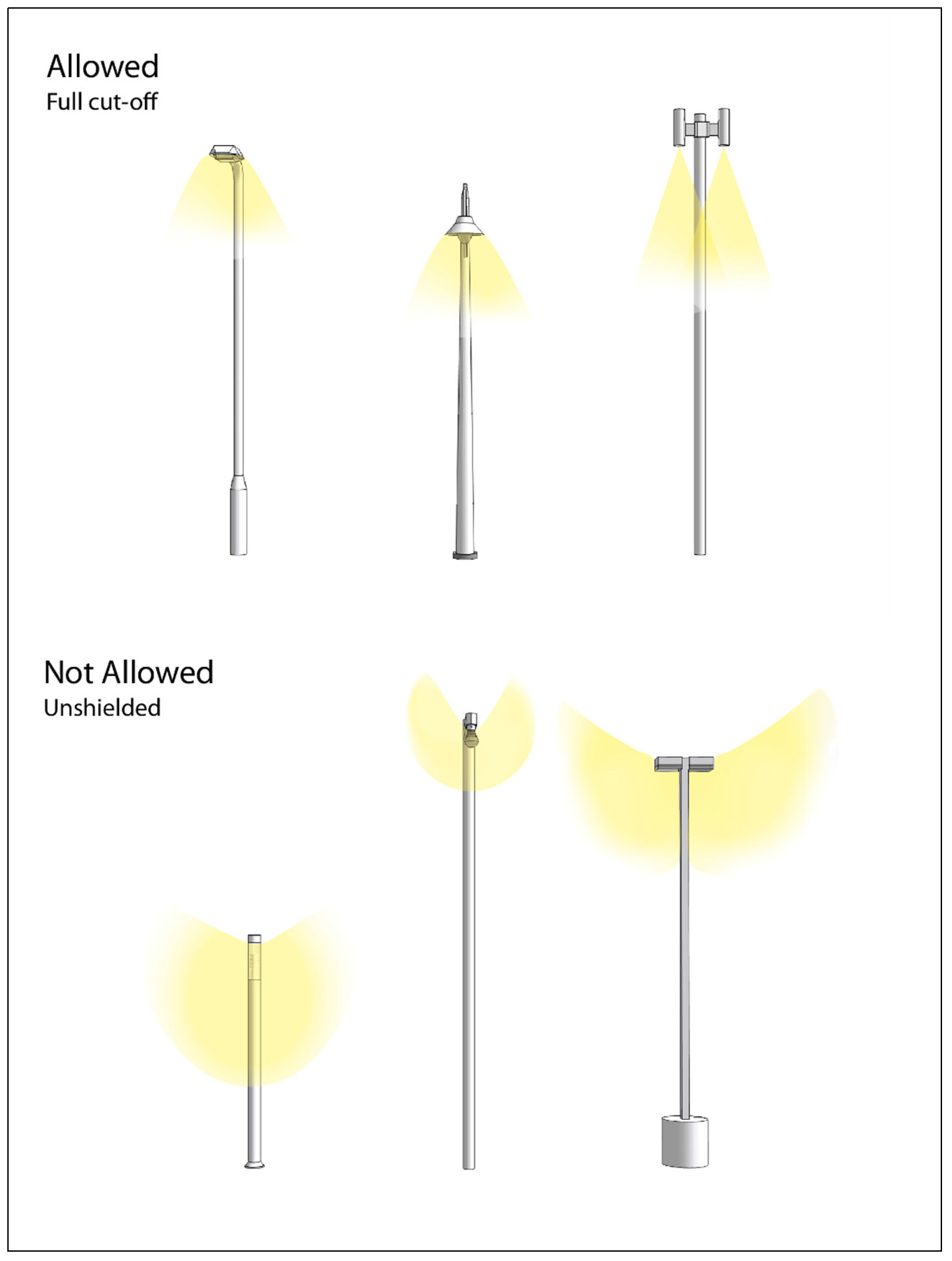
d.
All outdoor lighting fixtures shall have a correlated color temperature no greater than 4000K. Light sources shall be color-correct types such as Halogen, LED, or metal halide.
e.
All outdoor light fixtures and light elements shall be energy efficient, as defined in subsection f. below. The director of planning may allow exceptions to this requirement if the applicant demonstrates any of the following:
1.
An energy efficient fixture or light element is not reasonably available that meets the necessary functional requirements;
2.
Available energy efficient fixtures or light elements are not cost-effective over the life of the product, taking energy cost savings into account; or
3.
The use of an energy efficient fixture or light element is unreasonable or impractical for other reasons.
f.
For purposes of subsection e. above, an energy efficient light fixture or light element shall meet one of the following criteria:
1.
Is in the upper twenty-five (25) per cent of efficiency for all similar products as designated by the U.S. Department of Energy's Federal Energy Management Program; or
2.
Meets Department of Energy and Environmental Protection Agency criteria for use of the Energy Star trademark label.
g.
Except as otherwise provided for specific site features below, the height of exterior light fixtures shall not exceed:
1.
In all residential districts, twenty (20) feet; and
2.
In all other districts, twenty-five (25) feet.
h.
Service connections for all freestanding light fixtures shall be installed underground.
(Ord. No. 9572, § 2, 12-17-24)
Sec. 25-157. - Light uniformity.
The ratio of maximum to minimum lighting levels on a given site or parcel of land in all developed areas designed for outdoor activity (such as parking areas or sidewalks) as measured in footcandles at ground level, shall not exceed fifteen-to-one (15:1) for residential uses excluding multifamily dwelling uses, or ten-to-one (10:1) for multifamily dwelling uses and all nonresidential and mixed-use developments.
(Ord. No. 9572, § 2, 12-17-24)
Sec. 25-158. - Light trespass.
a.
All light fixtures shall be designed and oriented so as to not direct glare onto adjacent properties, streets, or sidewalks.
b.
Except for street lighting, all exterior lighting and fixtures, and indoor lighting and fixtures that are visible from outside the building, shall be designed, located, and directed so that the illumination measured in footcandles at ground level at any point on a lot line does not exceed the maximum illumination levels in table VI-15: maximum illumination levels (see figure VI-8: maximum illumination levels at lot lines).
Table VI-15: Maximum Illumination Levels
Notes:
[1] Illumination measurement shall be made at the lot line of the land upon which light is to be measured. If measurement on private property is not possible or practical, light level measurements may be made at the boundary of the public street right-of-way that adjoins the land. Measurements shall be made at finished grade (ground level), with the light-registering portion of the meter held parallel to the ground. Illumination measurements shall be taken with a light meter that has been calibrated within the previous two years.
Figure VI-8: Maximum Illumination Levels at Lot Lines
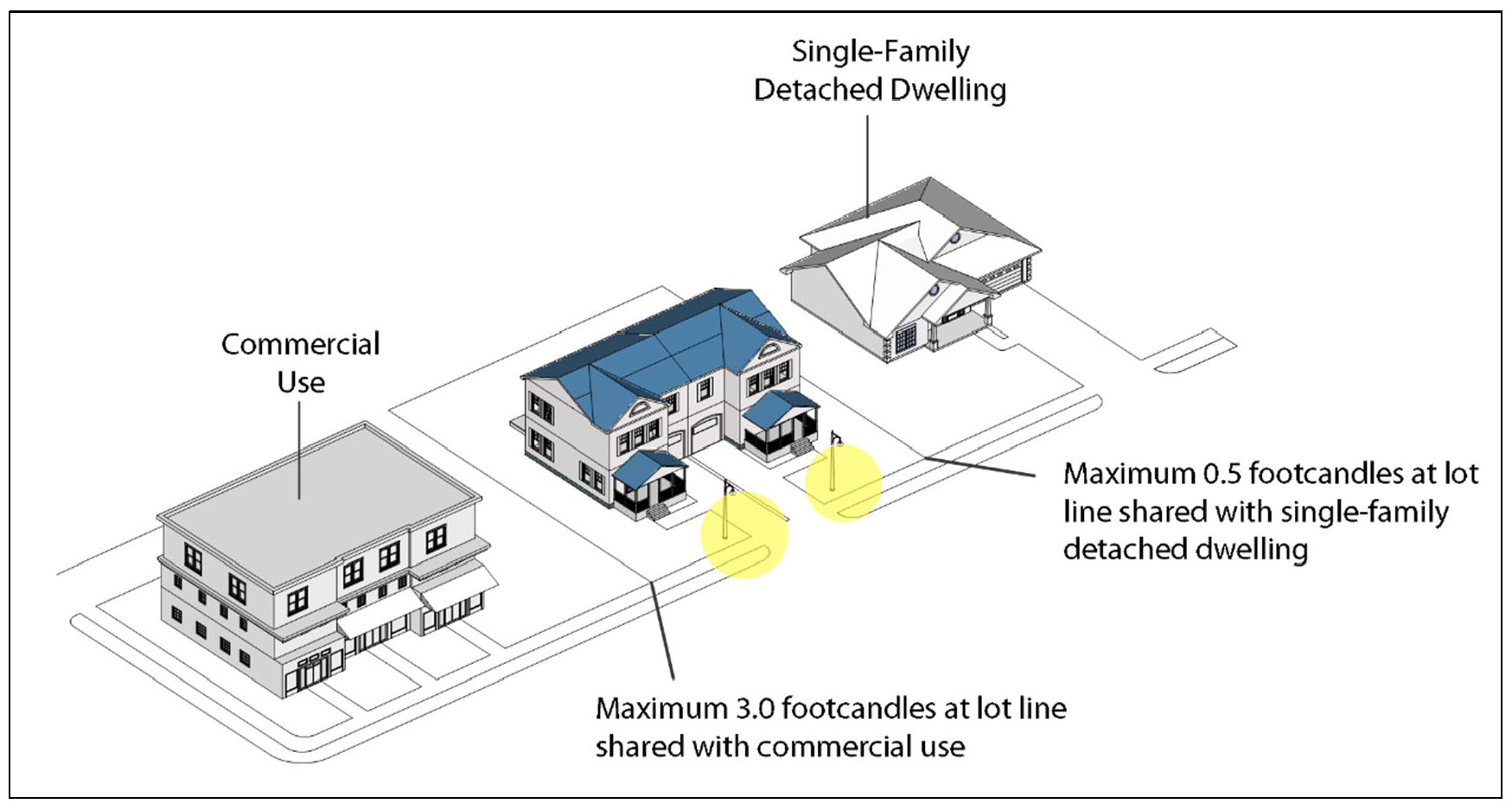
(Ord. No. 9572, § 2, 12-17-24)
Sec. 25-159. - Prohibited lighting.
The following are prohibited:
a.
Cobra-head-type fixtures having dished or drop lenses or refractors containing sources that are not incandescent;
b.
Light fixtures that imitate an official highway or traffic control light or sign;
c.
Light fixtures that have a flashing or intermittent pattern of illumination, except for holiday or festive lighting or as otherwise allowed by article VI, division 10, signs and billboards; and
d.
Searchlights, except when used by federal, state or local authorities, or where they are used to illuminate alleys, parking garages, and working (maintenance) areas, so long as they are shielded and aimed so that they do not result in lighting on any adjacent lot or public right-of-way exceeding 2.0 foot candles.
(Ord. No. 9572, § 2, 12-17-24)
Sec. 25-160. - Specific site features.
a.
Off-street parking areas. Maintained average horizontal illuminance values in parking lots shall not exceed 4.0 foot candles.
b.
Sports or performance venues. Lighting fixtures for outdoor sports areas, athletic fields, and performance areas shall be equipped with a glare control package (e.g. louvers, shields, or similar devices) and aimed so that their beams are directed and fall within the primary playing or performance area.
c.
Pedestrian area lighting.
1.
Except for pedestrian bollard lamps, light fixtures outside of parking lots for sidewalks, walkways, trails, and bicycle paths shall comply with the following standards:
i.
Provide at least 1.0 footcandles of illumination, but not exceed 2.0 footcandles;
ii.
Have a maximum height of fifteen (15) feet; and
iii.
Be placed a maximum of one hundred (100) feet apart.
2.
Pedestrian bollard lamps shall be mounted no higher than four (4) feet above grade and shall not exceed nine hundred (900) lumens for any single lamp.
d.
Flood lights, wall packs, and flood lamps. Except for single-family dwellings, flood lights, wall packs, and flood lamps on the exterior of a building shall be fully shielded (e.g. true cut-off type bulb or light source not visible from off-site) to direct the light vertically downward and shall not exceed one thousand six hundred (1,600) lumens for any single fixture.
e.
Canopy. Areas under a canopy shall be designed so as not to create glare off-site. Acceptable methods to address this include one or both of the following:
1.
A recessed fixture incorporating a lens cover that is either recessed or flush with the bottom surface (ceiling) of the canopy that provides a full cutoff or fully-shielded light distribution; or
2.
A surface mounted fixture incorporating a flat glass that provides a full cutoff or fully-shielded light distribution.
f.
Decorative and landscape lighting. Outdoor light fixtures used for decorative effects shall comply with the following standards:
1.
Decorative lighting intended to enhance the appearance of a building and/or landscaping shall cast all light downward (rather than upward) against the building surface or onto a landscape feature.
2.
Decorative lighting fixtures shall not exceed one thousand six hundred (1,600) lumens for any single fixture.
g.
Rope lighting. The following standards apply to rope lighting:
1.
Rope lighting shall not be used around architectural building features such as windows.
2.
Each light along the rope shall not emit more than fifty (50) lumens per bulb.
(Ord. No. 9572, § 2, 12-17-24)
Sec. 25-161. - Security exemption.
a.
A landowner in need of heightened security may submit to the director of planning a security exemption plan proposing exterior lighting that deviates from the standards in this division for security reasons.
b.
The director of planning may approve, or approve with conditions, the security exemption plan upon finding all of the following:
1.
The proposed deviation from the standards is necessary for the adequate protection of the subject land, development, or the public;
2.
The condition, location, or use of the land, or the history of activity in the area, indicates the property or any materials stored or used on it are in significantly greater danger of theft or damage, or members of the public are at greater risk for harm than on surrounding property without the additional lighting; and
3.
The proposed deviation from the standards is the minimum required, and will not have a significant adverse effect on neighboring lands.
c.
If the director of planning finds the applicant fails to demonstrate compliance with subsection b. above, the security exemption plan shall not be approved, at which time the applicant may apply for a variance from the standards of this division in accordance with section 25-43, variance.
(Ord. No. 9572, § 2, 12-17-24)
Sec. 25-162. - Purpose.
The purpose of these neighborhood compatibility standards is to provide a proper transition and ensure compatibility between existing single-family development, as well as vacant lands in single-family residential zoning districts, and other more intense forms of development. More specifically, it is the intent of these standards to:
a.
Protect the character of existing neighborhoods consisting of primarily single-family residential development from potentially adverse impacts resulting from more intense and incompatible adjacent forms of development;
b.
Use development form treatments as alternatives to large vegetative buffers; and
c.
Support development of vibrant pedestrian-oriented areas where multiple uses can operate close to one another.
(Ord. No. 9572, § 2, 12-17-24)
Sec. 25-163. - Applicability.
a.
Except as otherwise provided by subsection c. below, the standards in this division apply to:
1.
New multifamily, nonresidential, and mixed-use development (see subsection b. below) when located on land adjacent to, or across a street or alley from a single-family residential lot (see subsection b. below).
2.
Any expansion or alteration of an existing multifamily, nonresidential, or mixed-use development located on land abutting or across a local street or alley from a single-family residential lot (see subsection b. below), where the expansion increases the development's floor area by fifty (50) per cent or more, or the alteration involves fifty (50) per cent or more of the development's floor area.
b.
For the purposes of this division:
1.
Single-family residential lots include:
i.
Lots where an existing single-family detached, U-single, duplex, or U-duplex dwelling is located; and
ii.
Undeveloped lots in the SFR-E, LR, SFR-1, SFR-2, SFR-3, SFR-4, and SFR-5 districts;
2.
Multifamily development includes the following:
i.
Multifamily and multifamily student dwellings;
ii.
Townhouses (for the purposes of this division only);
iii.
U-rowhouses;
iv.
Triplexes;
v.
U-triplexes;
vi.
Quadplexes; and
vii.
Uses in the group living category, except group homes.
3.
Nonresidential development includes all uses that are not in the residential use category; and
4.
Mixed-use development includes buildings containing both dwellings as principal uses and nonresidential principal uses.
c.
The following are exempt from the standards in this division:
1.
Multifamily, nonresidential, and mixed-use development that is adjacent to a single-family residential lot located in a district that is not a residential district;
2.
Multifamily, nonresidential, and mixed-use development located on lots separated from single-family residential lots by a street having four (4) or more travel lanes; and
3.
Institutional uses in the community services, education, and utilities, transportation, and communication categories.
(Ord. No. 9572, § 2, 12-17-24)
Sec. 25-164. - Timing of review.
Review for compliance with the standards of this division shall occur during review of a development application for a planned development (section 25-37), a conditional use permit (section 25-38), a special exception use permit (section 25-39), a land development permit (section 21-218), or a building permit (chapter 6, article II), as appropriate.
(Ord. No. 9572, § 2, 12-17-24)
Sec. 25-165. - Neighborhood compatibility standards.
Development subject to the standards of this division shall comply with the following standards.
a.
Buildings.
1.
Height.
i.
Building height shall not exceed:
(a)
Two (2) stories within seventy-five (75) feet of a single-family lot (see figure VI-9: compatible building design);
(b)
Three (3) stories within between seventy-five (75) feet and one hundred twenty-five (125) feet of a single-family lot; and
(c)
The maximum building height applicable in the zoning district in which the building is located in all other cases.
ii.
For purposes of subsection i. above, distances from a single-family lot shall be measured from the lot line closest to the building subject to these requirements, or if the property is vacant, from the nearest minimum required setback on the single-family lot.
Figure VI-9: Compatible Building Design
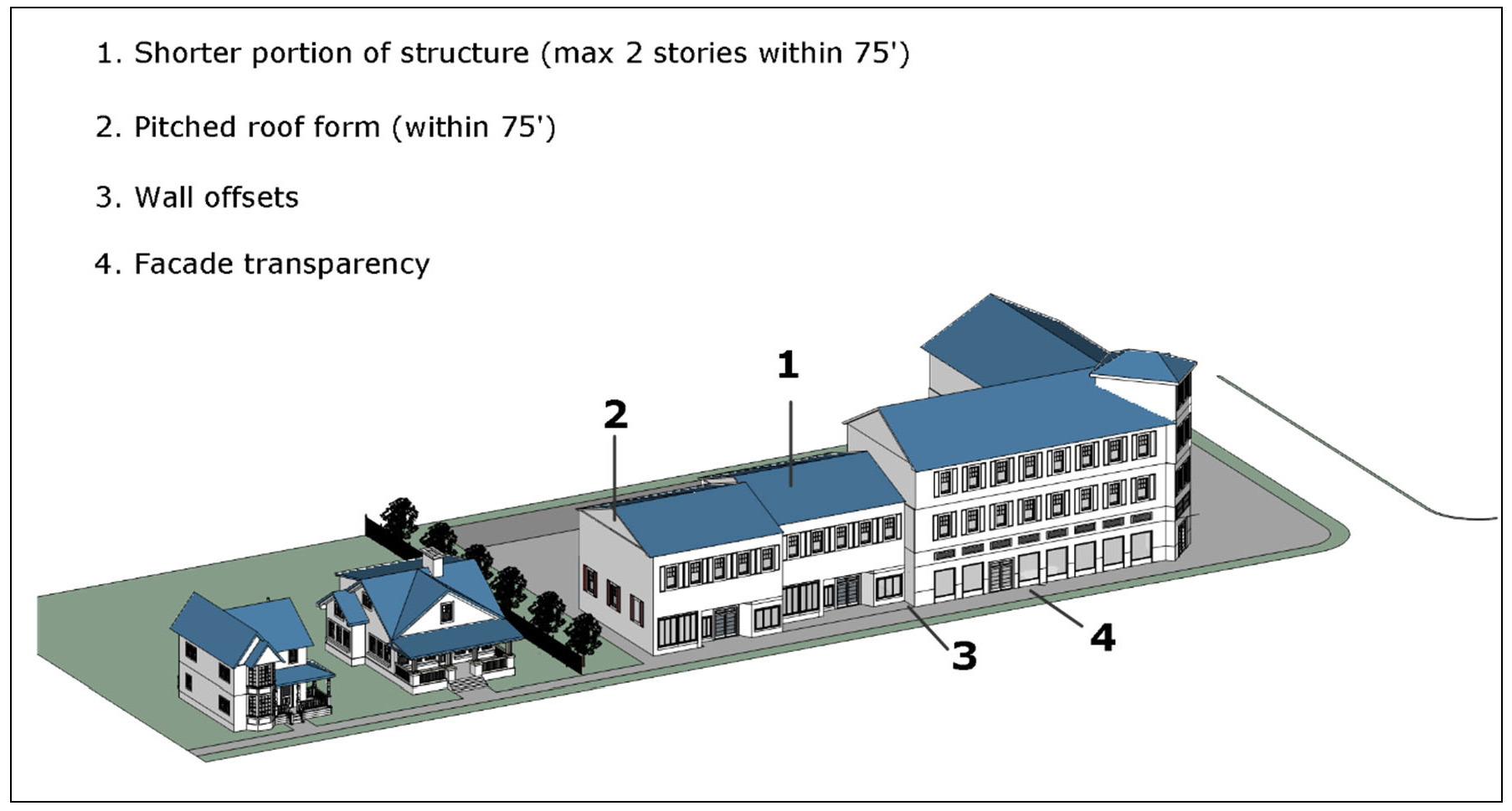
2.
Roofs.
i.
A pitched roof form is required on any portion of a building that is within seventy-five (75) feet of a single-family lot (see figure VI-9: compatible building design).
ii.
All roof-mounted equipment shall be configured to avoid or minimize the view of the equipment from adjacent single-family lots and public right-of-way.
3.
Façades.
i.
Buildings shall use similarly sized and patterned wall offsets and other building articulations found on adjacent single-family detached or duplex dwellings (see figure VI-9).
ii.
All porches and balconies shall be oriented away from adjacent single-family lots, to the maximum extent practicable.
4.
Building orientation.
i.
Multifamily, nonresidential, and mixed-use development shall be oriented to face similar forms of development on adjacent or opposing lots rather than single-family residential lots, to the maximum extent practicable.
ii.
When compatible with subsection i. above, the primary entrance of a new building shall face the street from which the building obtains its street address or mailing address.
b.
Site design and features.
1.
Off-street parking.
i.
The total amount of off-street parking shall be sufficient to park all vehicles associated with the development off-street. Any reduction from the required minimum parking spaces through an alternative parking plan shall demonstrate that the reduction will not have an adverse impact on the adjacent single-family lots.
ii.
Off-street parking shall be established in one or more of the following locations, listed in priority order:
(a)
Adjacent to off-street parking lots serving nonresidential development on abutting lots;
(b)
Adjacent to lot lines abutting nonresidential development;
(c)
Adjacent to lot lines abutting mixed-use development;
(d)
Behind the building;
(e)
Within a lot's corner side yard;
(f)
In front of the building; or
(g)
Adjacent to lot lines abutting single-family lots.
iii.
Off-street parking areas shall be located at least ten (10) feet from single-family lots and shall be screened from such lots by plantings consistent with the planting requirements for a type C: aesthetic buffer (see section 25-133, buffers).
2.
Loading, service, and refuse collection areas. Loading, service, and refuse collection areas shall be:
i.
Located to the side or rear of the building away from adjacent single-family lots, screened with walls and/or landscaping, and provided with access that is integrated with parking areas and the vehicular circulation network;
ii.
Completely screened from view from adjacent single-family lots, to the maximum extent practicable; or
iii.
Incorporated into the overall site so that the impacts of these functions are fully contained within an enclosure or are otherwise out of view from adjacent single-family lots.
3.
Open space.
i.
Open space for development subject to these standards, except active recreation features, shall be located between the development and the adjacent single-family lots, to the maximum extent practicable.
ii.
Outdoor recreation features such as swimming pools, tennis courts, and playgrounds shall be located within the buildable area of the lot.
4.
Natural areas. Natural features, such as existing vegetation, streams, and wetlands, shall be used as transitions to adjacent development where possible. Where such natural features are used as transitions, pedestrian connections to adjoining uses are strongly encouraged.
5.
Drive-through facilities.
i.
Drive-through or pick-up windows shall not be located within one hundred (100) feet of any single-family zoning district unless the window is located on the side of the lot opposite from the single-family zoning district.
ii.
Ordering stations associated with a drive-through or pick-up window shall not be located within one hundred fifty (150) feet of any single-family lot.
6.
Signs. To the maximum extent practicable, all free-standing signage shall be set back at least seventy-five (75) feet from lot lines shared with a single-family lot. Any free-standing sign located within seventy-five (75) feet of a lot line shared with a single-family lot shall have a maximum sign area equal to seventy-five (75) per cent of the maximum sign area that would otherwise apply in accordance with article VI, division 10, signs and billboards, and a maximum height of twenty (20) feet.
(Ord. No. 9572, § 2, 12-17-24)
Sec. 25-166. - Multifamily development.
a.
Purpose and intent. The purpose and intent of these multifamily form and design standards are to:
1.
Establish a minimum level of development quality for townhouse, triplex, quadplex, and multifamily residential development;
2.
Promote greater compatibility between townhouse, triplex, quadplex, and multifamily residential development and other allowable uses; and
3.
Provide landowners, developers, architects, builders, business owners, and others with a clear and equitable set of parameters for developing land.
b.
Applicability.
1.
Except as otherwise provided in subsection 2. below, the multifamily form and design standards in this division shall apply to:
i.
All new townhouse, U-rowhouse, triplex, U-triplex, quadplex, multifamily, and multifamily student development; and
ii.
Any expansion of an existing townhouse, U-rowhouse, triplex, U-triplex, quadplex, multifamily, or multifamily student building, unless expressly stated otherwise in the specific multifamily form and design standards below, if the expansion increases the building's gross floor area by fifty (50) per cent or more.
2.
The following are exempt from the multifamily form and design standards in this division:
i.
Development in the institutional university (IU) district; and
ii.
Dwellings located in the same building as and above a nonresidential principal use.
c.
Timing of review. Review for compliance with the standards of this division shall occur during review of a development application for a planned development (section 25-37), a conditional use permit (section 25-38), a special exception use permit (section 25-39), a land development permit (section 21-218), or building permit (chapter 6, article II), as appropriate.
d.
Site access. Development with fifty (50) or more dwelling units shall not have direct vehicular access along a local street serving existing single-family detached dwellings, unless no other point of access is available.
e.
Off-street parking.
1.
No more than fifty (50) per cent of off-street surface parking may be located between a building and the street it faces unless the parking bays are screened from view from the street by another building.
2.
Freestanding garages or carports visible from public streets outside the development shall be located to the side or rear of the principal dwelling and shall either (i) be oriented perpendicular to the street; or (ii) include wall offset and design features on the street-facing façade in accordance with the standards that apply to the principal dwelling (see figure VI-10: detached garage location and orientation). The exterior materials, design features, and roof form of a detached garage or carport shall be the same as those of the principal dwelling.
Figure VI-10: Detached Garage Location and Orientation
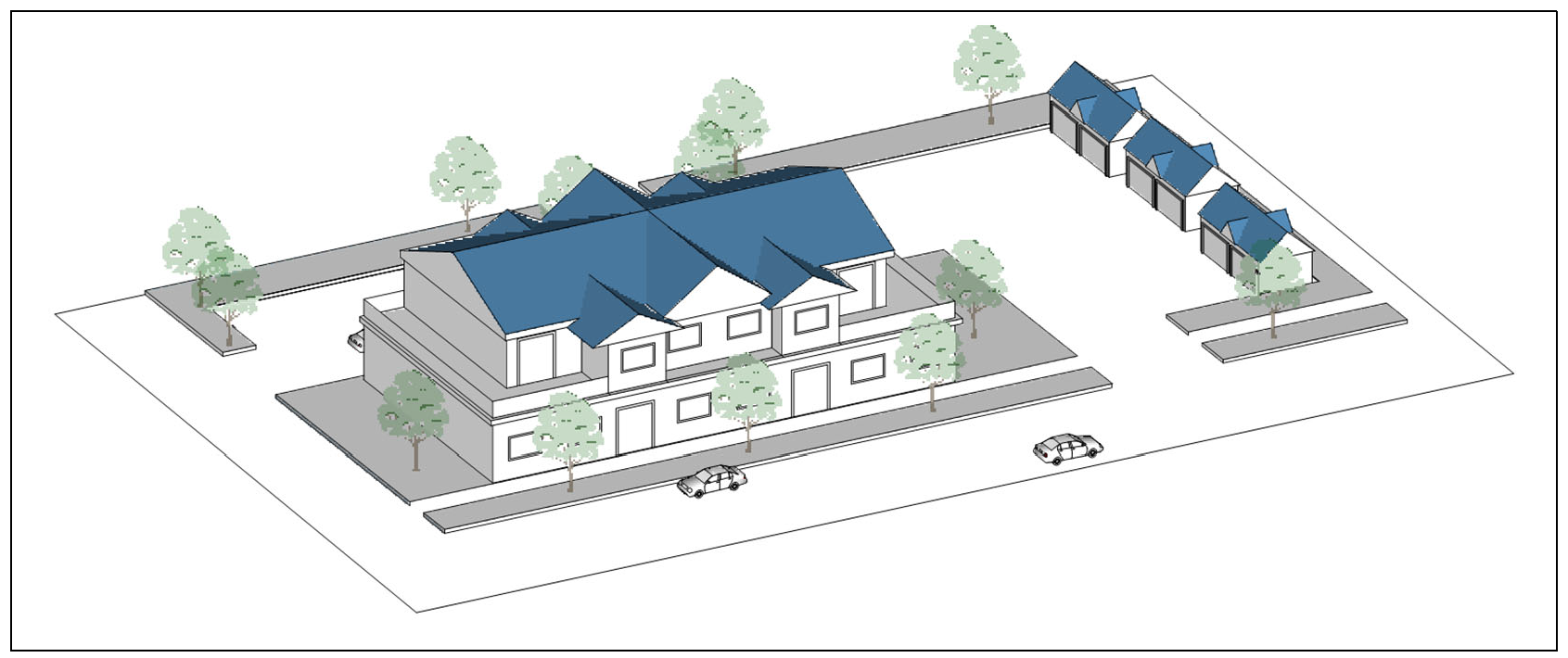
f.
Building orientation and configuration.
1.
The primary entrance and architectural front of individual buildings within a multi-building development shall be oriented towards the following (listed in priority order) and not toward off-street parking lots, garages, or carports:
i.
Perimeter streets;
ii.
Primary internal streets;
iii.
Open space areas; or
iv.
Secondary internal streets.
2.
Buildings shall be oriented so that architectural fronts of buildings across the street from each other face each other, so as to avoid the front façade of one building facing a side or rear façade of another building.
g.
Maximum length of structures. No single row of townhouse units shall exceed three hundred (300) feet in length.
h.
Building façades.
1.
Materials and fenestration.
i.
Exterior building walls shall be wood clapboard, cementitious fiber board, wood shingle, wood drop siding, primed board, wood board and batten, brick, stone, stucco, vinyl, or similar material.
ii.
A minimum of twenty (20) per cent of the street facing façade area shall consist of windows or doorways.
2.
Offsets. Building façades greater than fifty (50) feet in width that face a street shall incorporate wall offsets, in the form of projections or recesses in the façade plane at least two (2) feet in depth, spaced no more than fifty (50) feet apart (see figure VI-11: façade offsets and design features).
Figure VI-11: Façade Offsets and Design Features
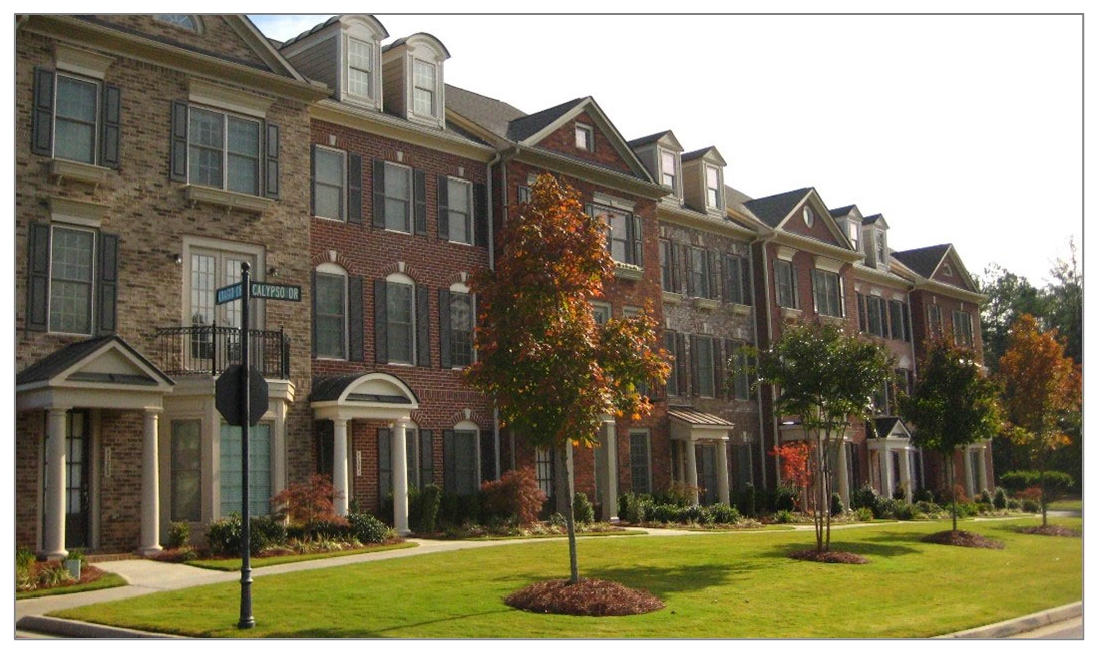
3.
Design features. Front façades shall provide a minimum of three (3) of the following design features for each residential unit fronting onto a public street (see figure VI-11: façade offsets and design features):
i.
One or more dormer windows or cupolas;
ii.
A recessed entrance;
iii.
A covered porch;
iv.
Pillars, posts, or columns next to the doorway;
v.
One or more bay windows projecting at least twelve (12) inches from the façade plane;
vi.
Eaves projecting at least six (6) inches from the façade plane;
vii.
Raised corniced parapets over the entrance door;
viii.
Multiple windows with a minimum four-inch-wide trim;
ix.
Integrated planters that incorporate landscaped areas or places for sitting; or
x.
Roof form and line changes consistent with the façade offsets.
i.
Roofs.
1.
Sloped roofs on buildings over one hundred (100) feet in length shall include two (2) or more different sloping roof planes, each with a minimum pitch between 4:12 and 12:12.
2.
Flat roofs shall be concealed by parapet walls that extend at least three (3) feet above the roof level and have three-dimensional cornice treatments that project at least eight (8) inches outward from the parapet façade plane.
3.
Alternative roof forms or pitches may be allowed for small roof sections over porches, entryways, or similar features.
4.
All roof-based mechanical equipment, as well as vents, pipes, antennas, satellite dishes, and other roof penetrations (except chimneys), shall be located on the rear elevations or otherwise be configured and screened (if necessary) to have a minimal visual impact as seen from the street.
j.
Utilities and service areas.
1.
Utilities shall be underground, except where significant practical difficulties dictate otherwise. Any incremental cost of installing utilities underground shall be borne as agreed between the customer and the utility.
2.
All ground-level mechanical equipment, meters, vault boxes, electrical boxes, and other similar equipment shall be located outside of the front yard and screened so as not to be visible from all rights-of-way and open space set asides.
3.
All service areas, including areas for trash collection and recycling collection, shall be screened from view from all rights-of-way and open space.
(Ord. No. 9572, § 2, 12-17-24)
Sec. 25-167. - Large retail establishments.
a.
General. Large retail establishments shall comply with the standards below. For purposes of this section, a large retail establishment is any single-tenant building (including but not limited to those with a combination retail use) having a gross floor area of sixty thousand (60,000) square feet or more that devotes sixty (60) per cent or more of the total floor area to retail sales activities.
b.
Building entrances.
1.
Buildings shall have clearly defined, highly visible customer entrances featuring no less than three of the following (see figure VI-12: large retail establishment form and design):
i.
Canopies or porticos above the entrance;
ii.
Roof overhangs above the entrance;
iii.
Entry recesses or projections;
iv.
Arcades that are physically integrated with the entrance;
v.
Raised corniced parapets above the entrance;
vi.
Gabled roof forms or arches above the entrance;
vii.
Outdoor patios or plazas next to the entrance;
viii.
Display windows that are directly next to the entrance;
ix.
Architectural details, such as tile work and moldings, that are integrated into the building structure and design and are above or next to the entrance; or
x.
Integral planters or wing walls that incorporate landscaped areas or seating areas.
2.
All portions of buildings designed to appear as customer entrances shall be functional customer entrances.
Figure VI-12: Large Retail Establishment Form and Design
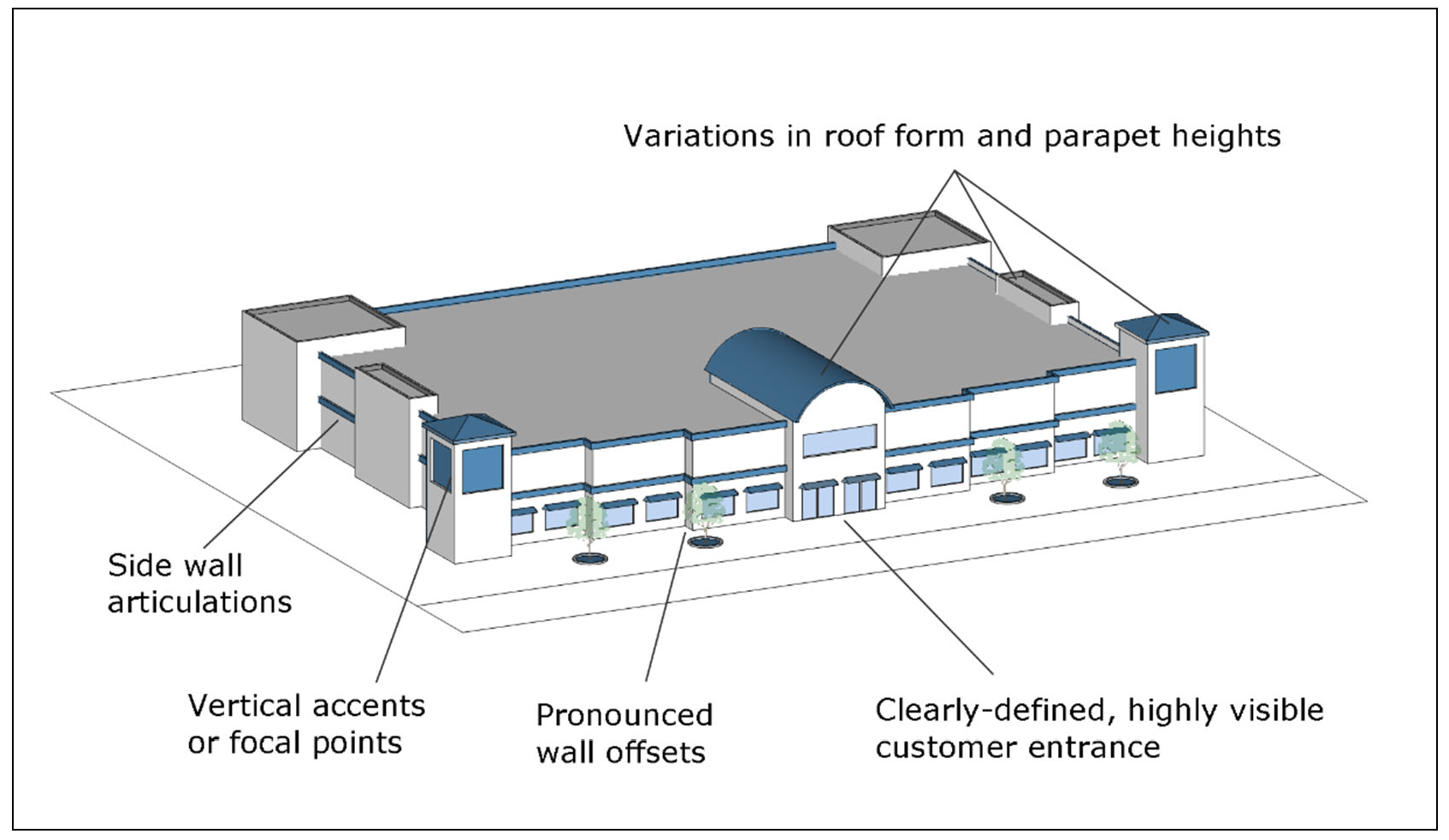
c.
Building façades.
1.
To reduce their perceived mass and scale, buildings shall incorporate two (2) or more of the following design elements on each façade facing a street right-of-way (see figure VI-12: large retail establishment form and design):
i.
Variations in roof form and parapet heights;
ii.
Pronounced wall offsets that are at least two (2) feet deep;
iii.
Distinct changes in texture and color of wall surfaces;
iv.
Ground level arcades and second floor galleries or balconies;
v.
Protected and recessed entries; and
vi.
Vertical accents or focal points.
2.
Side building walls that do not face a street right-of-way and exceed thirty (30) feet in length shall have façade-articulating elements such as columns and/or changes in plane, texture, or masonry pattern (see figure VI-12: large retail establishment form and design).
(Ord. No. 9572, § 2, 12-17-24)
Sec. 25-168. - Purpose and intent.
The purpose of this division is to add support for green building practices in the city by providing incentives for developments that incorporate specific types of green building features. Specifically, this division is intended to provide incentives for developments that incorporate green building features that support:
a.
Energy conservation;
b.
Alternative energy use;
c.
Indoor air quality;
d.
Water conservation;
e.
Sustainable building; and
f.
Alternate forms of transportation.
(Ord. No. 9572, § 2, 12-17-24)
Sec. 25-169. - Applicability.
a.
All development is eligible to receive green building incentives in accordance with this division.
b.
In cases where the incentives in this division conflict with the neighborhood compatibility standards in article VI, division 7, neighborhood compatibility standards, the neighborhood compatibility standards shall control.
(Ord. No. 9572, § 2, 12-17-24)
Sec. 25-170. - Incentives.
a.
Development integrating green building features in accordance with this division shall be eligible for the following incentives. They shall be integrated into the development consistent with the requirements of this division and this ordinance:
1.
A density bonus of up to one and one-half additional dwelling units per acre beyond the maximum allowed in a base residential zoning district in which the incentive is allowed, and up to two (2) additional dwelling units per acre beyond the maximum allowed in any other base zoning district;
2.
An increase in the maximum allowable height by up to one story or twelve (12) feet beyond the maximum allowed in the base zoning district; and
3.
A decrease in the minimum off-street vehicular parking requirement by up to twelve (12) per cent.
b.
Development shall be eligible for a maximum of two (2) incentives, in accordance with the standards of this division, but in no instance shall the amount of an incentive be increased or decreased (as appropriate) beyond the maximum listed in this section.
(Ord. No. 9572, § 2, 12-17-24)
Sec. 25-171. - Required certification.
a.
Development that complies with the current versions of the following green building certification programs may be entitled to the green building incentives of this division, in accordance with the procedure in section 25-172 below:
1.
LEED® Gold Certification or equivalent. LEED® Gold certification or certification of meeting equivalent standards of the National Green Building Standard™/NGBS Green or the International Code Council's International Green Construction Code.
2.
LEED® Platinum Certification or equivalent. LEED® Platinum certification or certification of meeting equivalent standards of the National Green Building Standard™/NGBS Green or the International Code Council's International Green Construction Code.
b.
Certification shall be met using the green building rating system that is most appropriate to the development. For example, development that involves new construction or major renovation that seeks one incentive through LEED® Gold certification shall use the LEED® Building Design and Construction (BD+C) rating system.
(Ord. No. 9572, § 2, 12-17-24)
Sec. 25-172. - Procedure.
a.
Applicants seeking to use green building incentives shall include with the application a written statement that the development will comply with one of the required certifications in section 25-171 above. The written request shall include a statement attesting that the development is proposed to be rated and certified to meet the applicable certification in section 25-171 above, and that as a result of this certification the development is eligible for one or two of the incentives listed in section 25-170 above.
b.
The applicant may seek to use one green building incentive if LEED® Gold certification or an equivalent certification is proposed in accordance with section 25-171(a)(1) above, or two (2) green building incentives if LEED® Platinum certification or equivalent certification is proposed in accordance with section 25-171(a)(2) above.
c.
Review for compliance and granting of requests for incentives in accordance with this division shall occur during the review of a development application for a planned development (section 25-37), conditional use permit (section 25-38), special exception use permit (section 25-39), land development permit (section 21-218), a subdivision master plan, a subdivision preliminary, or a minor subdivision, as appropriate.
d.
The decision-making body or person responsible for review of the development application shall also be responsible for the review of the green building incentive request and shall authorize the incentive only upon making a determination that the development will achieve the applicable certification.
(Ord. No. 9572, § 2, 12-17-24)
Sec. 25-173. - Requirement to install and maintain sustainable/green building practices.
Prior to the issuance of a building permit, the applicant shall submit certification from an architect or engineer licensed to practice in Alabama that demonstrates the proposed development will achieve the green building certification that was used to obtain the right to use one or more incentives provided in accordance with this division. Prior to issuance of a certificate of occupancy, the applicant shall submit proof that the development has achieved the green building certification that was used to obtain the right to the one or more incentives provided in accordance with this division. Failure to submit proof of certification is a violation of this ordinance, and may result in revocation of the development approval or permit, or other penalties.
(Ord. No. 9572, § 2, 12-17-24)
Sec. 25-174. - Purpose and intent.
a.
This division establishes regulations for the display and maintenance of signs in order to protect the health, safety, welfare, convenience, and enjoyment of the general public. While signs are a proper commercial use of private property and perform an important function in identifying properties, businesses, services, residences, events, and other matters of public interest which are entitled to the protection of the law, signs should be reasonably regulated in their number, size, height, spacing, and illumination in the interest of the public safety and welfare and to safeguard and promote the aesthetic quality of the city. To that end, these sign and billboard regulations are intended to:
1.
Protect the public from the danger of unsafe signs;
2.
Preserve, protect, and enhance areas of historical, architectural, cultural, aesthetic, and economic value, regardless of whether they are natural or human-made;
3.
Establish standards and provide controls that permit reasonable use of signs and enhance the character of the city, recognizing the benefits of signs to the city's residents, businesses, and visitors, such as aiding orientation, identifying activities, expressing local history and character, and serving other educational purposes;
4.
Preserve the views of natural resources, green space, and other open spaces;
5.
Ensure the safety and efficiency of the city's transportation network by minimizing clutter, unsightliness, confusion, and hazardous distractions to motorists; reducing collision hazards; and facilitating motorists' ability to see pedestrians, obstacles, other vehicles, and traffic signs;
6.
Integrate sign regulations with general zoning regulations by establishing specific requirements for signs and billboards related to setbacks, height, and spacing to ensure adequate lighting, ventilation, and preservation of views in a manner that is compatible with other land uses in the city; and
7.
Protect adjacent and nearby properties, in particular residentially zoned properties, from the impact of signs and billboards by regulating the lighting, number, size, height, movement, and location of signs and billboards and their proximity to single-family residential lots in accordance with article VI, division 7, neighborhood compatibility standards.
b.
These sign and billboard regulations are not intended to inhibit an individual's rights protected by the First Amendment to the United States Constitution.
(Ord. No. 9572, § 2, 12-17-24)
Sec. 25-175. - Applicability.
a.
General. Except as otherwise provided in subsection b. below, these sign and billboard regulations shall apply to all signs erected, constructed, displayed, painted, maintained, altered, or installed, which are legible from public or private property other than the one on which the sign is located. No sign shall be erected or installed unless it is in compliance with the regulations of this article.
b.
Exemptions from standards.
1.
Exempt from all sign standards. The following signs are exempt from all sign and billboard standards in this division:
i.
Signs erected by, on behalf of, or pursuant to the authorization of a governmental body, including traffic, directional, and regulatory signs and legal notices; and
ii.
Signs the city is prohibited from regulating by state or federal law, to the extent of the prohibition.
2.
Exempt from specific sign standards. The following activities and signs are exempt from all sign and billboard standards in this division other than section 25-179, general provisions:
i.
Cleaning, painting, or comparable maintenance of a sign that does not alter the size, image, or message of the sign.
ii.
Changing the copy, announcement, or message on a changeable copy sign.
iii.
Address numbers used for the purposes of identifying the E-911 address of a property, if they are not included on a sign with other commercial or noncommercial messages or images.
iv.
Signs marking construction, excavation, or similar hazards.
v.
Temporary decorations used to celebrate a single holiday or season.
vi.
Signs attached to a vehicle or trailer that is used in the normal day-to-day operation of the business advertised on the vehicle, if the vehicle or trailer is used primarily for the transportation or conveyance of persons or commodities from one place to another, and not for advertising.
vii.
A sign designed to be carried by a person and that is not prohibited in section 25-179(h), prohibited signs, such as a placard.
viii.
Signs on structures or sites which were designated as historic structures or sites before December 1, 2007, if the sign was included in a photo, drawing, or description that is part of (i) a document designating the structure or site as a historic structure or site, or (ii) an approved application for a certificate of appropriateness, and if the sign is maintained in a manner that retains its historical significance, character, method and manner of operation, and appearance.
ix.
Signs posted on the site of public K-12 schools operated by Tuscaloosa City Schools or the Tuscaloosa County School System.
c.
Severability. If any section, subsection, paragraph, subparagraph, sentence, phrase, clause, term, or word of this division is declared to be unconstitutional or otherwise invalid by a judgment or decree of a court of competent jurisdiction, such judgment or decree shall not affect the validity of this division as a whole or any other section, subsection, paragraph, subparagraph, sentence, phrase, clause, term, or word of this division.
d.
Substitution of message. Any sign allowed in accordance with this ordinance may contain, in lieu of a commercial message, any lawful message that is not a commercial message.
(Ord. No. 9572, § 2, 12-17-24)
Sec. 25-176. - Timing of review.
Review for compliance with the standards of this division shall occur during review of a development application for a planned development (section 25-37), a conditional use permit (section 25-38), a special exception use permit (section 25-39), a land development permit (section 21-218), or building permit (chapter 6, article II), as appropriate. Review of compliance with these standards for freestanding signs in residential subdivisions may also occur during the subdivision process.
(Ord. No. 9572, § 2, 12-17-24)
Sec. 25-177. - Sign permit required.
a.
Except as otherwise provided in subsection b. below, no person shall erect, alter, relocate, repair, replace the face of, or change a sign without first obtaining a sign permit in accordance with section 25-42, sign permit.
b.
The following signs are exempt from the requirement of obtaining a sign permit, but shall comply with all applicable standards in this division:
1.
Signs and activities exempt from these sign and billboard standards in accordance with section 25-175(b), exemptions from standards;
2.
Signs erected by a K-12 school on the premises of the school;
3.
Window signs (see section 25-182(a));
4.
Traffic and pedestrian signs (see section 25-182(e));
5.
Drive-through signs (see section 25-182(f));
6.
Flags (see section 25-182(g));
7.
Banners (see section 25-183(a));
8.
Temporary construction signs (see section 25-183(b));
9.
Temporary real estate signs (see section 25-183(c)); and
10.
Temporary yard signs (see section 25-183(d)).
(Ord. No. 9572, § 2, 12-17-24)
Sec. 25-178. - Sign measurements.
a.
Height. Except as otherwise provided in this ordinance, the height of a sign shall be measured as the vertical distance between the highest point of the sign and the tallest of:
1.
The finished elevation of the lot or development site on which the sign is located;
2.
The finished grade of the sidewalk, alley, or ground directly below the sign, provided any berming or filling solely for the purpose of locating the sign shall be computed as a part of the sign height; or
3.
The elevation of the adjacent street curb, or in the absence of a curb, the adjacent street centerline.
b.
Display area.
1.
Except for A-frame signs, the display area of a sign or advertising device is measured by the smallest square, rectangle, triangle, circle, or combination thereof, which will encompass the entire sign or advertising device; including trim, frame, apron, posts, wrappings, sheathings, coverings of any type, encasements, uprights, and braces or other structural members which support it. If the sign consists of a logo or symbol, individual letters, or connected lettering mounted on a building in a raceway or similar mounting or on the surface of an integral architectural element, which is a part of the building, the display area shall be measured by the number of square feet in the smallest rectangle, within which all letters, logos, symbols or other elements of the sign can be enclosed, multiplied by 0.8. If an electronic, digital, or video board is included on a sign, the area of the board shall be counted toward the maximum allowable display area. The measurement of display area shall be taken from the largest two-dimensional profile of the structure.
2.
If a sign has two (2) or more faces, the display area shall be:
i.
The display area of the largest of the sign faces if only one face can be viewed from any single location on abutting roadways; or
ii.
The largest sum of the display areas of all sign faces that can be viewed from any single location, if more than one sign face can be viewed from any single location on abutting roadways.
3.
When a sign is in the form of a three-dimensional object, the area shall be determined by drawing a square, rectangle, triangle, circle or combination thereof, which will encompass the projected image of the sign and multiplying that area by two (2). The "projected image" is that image created by tracing the largest possible two-dimensional outline of the sign.
c.
Brightness. Sign brightness shall be measured (in nits) from the sign's face when the sign is set to its maximum brightness.
(Ord. No. 9572, § 2, 12-17-24)
Sec. 25-179. - General provisions.
a.
Measurement. Sign height, display area, and light intensity shall be measured in accordance with section 25-178, sign measurements.
b.
Location.
1.
Signs and their supporting structures shall not be located within or project into the public right-of-way except as specifically allowed in this ordinance.
2.
Signs and their supporting structures shall not be located in any sight triangle.
3.
Signs and their supporting structures shall not be located so as to impede the use of any fire escape, emergency exit, or ventilation opening.
4.
Except as otherwise provided in section 25-182(h), billboards and section 25-183(a), banners, no sign containing a message related to goods, services, products or other activities that are not offered on the same premises on which the sign is located shall be permitted.
c.
Illumination.
1.
Devices that illuminate a sign or signs shall be placed and shielded so that direct light is not cast into residential areas or the eyes of pedestrians, cyclists, or motorists entering or using a street, road, or highway.
2.
Sign lighting shall not be designed or located to cause confusion with traffic signals.
d.
Building code compliance. All permanent signs and their illumination shall be designed, constructed, and maintained in conformity with the building code. Wherever there is inconsistency between this article and the building code, the more restrictive requirement shall apply.
e.
Maintenance. All signs and billboards and their supporting structures shall be maintained in accordance with the building code and in good repair, free of rust, peeling, fading, broken or cracked panels, broken or missing letters, or any condition that would constitute a fire or health hazard. Nonfunctioning light bulbs shall be replaced within ten (10) days of becoming nonfunctioning. Vegetation shall be properly maintained and the general area in the vicinity of the sign or billboard shall be kept free and clear of spare or discarded sign materials.
f.
Unsafe signs. Any sign that, in the opinion of the chief building official, constitutes a danger to the public due to structural maintenance, or other issues, notwithstanding the fact that it may conform with the dimensional and other standards of this division, shall be illegal in accordance with section H101 of the 2016 International Building Code. The determination that a sign is a danger to the public shall be made in writing and shall specify the characteristics of the sign that constitute a danger, and a copy of the determination shall be promptly served on the permit holder for the sign or the property owner of record. If the sign owner or property owner responds within three (3) business days of being served with the determination with a proposed plan to eliminate the danger and begins and maintains diligent work to implement that plan, the sign shall no longer be considered illegal. Otherwise, the sign shall be considered illegal and the director of planning shall proceed in accordance with the enforcement provisions in this ordinance (see article VII, enforcement).
g.
Abandoned signs. Except as otherwise provided in this division, a sign shall be deemed abandoned if it is located on property that is vacant or unoccupied for a period of greater than ninety (90) days, pertains to a business which does not maintain a current business license, or pertains to a time, event, or purpose which no longer applies. Each abandoned sign shall be removed by the owner of the sign or the owner of the property. If the abandoned sign's supporting structure complies with this ordinance, the supporting structure is not required to be removed, otherwise, the supporting structure shall either be removed or made to conform to this ordinance.
h. Prohibited signs. The following signs are expressly prohibited in the city:
1.
Any sign which does not conform to the requirements of this ordinance with respect to number, display area, location, or otherwise;
2.
Any sign not expressly authorized by this division;
3.
Except as otherwise permitted in this ordinance, any sign not permanently attached to the ground or other permanent structure or designed to be readily transported, including, but not limited to, signs designed to be transported by means of wheels; balloons used as signs; umbrellas with signs such as those affixed to tables; and signs attached to or painted on vehicles parked and visible from the public right-of-way;
4.
Signs made of paper, cloth, or other nondurable materials;
5.
Any sign which simulates or imitates in size, color, lettering, or design any official traffic sign or signal;
6.
Any signs, other than official traffic control devices, highway identification markers, warning signs, and other official signs, that are located within the right-of-way of a street or alley or outside the right-of-way in a manner that creates a safety hazard by (i) obstructing the vision of pedestrians, cyclists, or motorists traveling on or entering a street, road, or highway; or (ii) using the word "stop" or "danger" or other language that presents or implies the need or requirement of stopping or caution or the existence of danger, if such signs are likely to be confused with a sign displayed or authorized by a public authority;
7.
Any sign which employs moving strobe-type lights, flashing lights, beacons, spotlights directed at the sky or at anything other than the sign surface, flashing or blinking lights, or any type of pulsating or moving light;
8.
Feather flag signs;
9.
A fluttering object, gas balloon, moored blimp, moving object, pennant, revolving object, ribbon, rotating object, spinner, streamer, or any similar object or structure that is designed to inform or attract the attention of persons not on the premises on which it is located, except as specifically permitted in section 25-183(a), banners.
10.
Signs that are of such intensity or brilliance as to cause glare or impair the vision of motorists, cyclists, or pedestrians, or that illuminate adjacent residential development;
11.
Signs that emit audible sound, odor, or visible matter such as smoke or steam;
12.
Signs on public land, other than those erected at the direction or with the permission of the governmental authority that manages the land, in accordance with its established policies and procedures;
13.
Signs erected on public utility poles, even if they are located on private property, other than signs erected by a public authority for public purposes;
14.
Signs erected on any broadcasting or telecommunications tower or any antenna, except as required by law;
15.
Signs installed on any property owned or controlled by the state or city or on school board property, including all public rights-of-way, trees, light poles, sidewalks, streets, benches, fire hydrants, public parks or playgrounds, libraries, fire stations, city hall, and schools, except for signs installed by the owner of the property in accordance with the standards of this division;
16.
Signs or their supporting structures that interfere in any way with free use of any fire escape, emergency exit, or standpipes, or that obstruct any window to such an extent that light or ventilation is reduced to a point below that required by any provision of these regulations or any other regulation of the city;
17.
Signs painted on or attached to trees, rocks, or other natural features;
18.
Signs attached to or painted on the roof and intended to be visible from above; and
19.
Signs or their supporting structures that have become deteriorated or damaged by any means to an extent of more than fifty (50) per cent, as determined by the chief building official.
(Ord. No. 9572, § 2, 12-17-24)
Sec. 25-180. - Freestanding sign general standards.
a.
Number of freestanding signs allowed.
1.
Except in the D district, freestanding signs are allowed in accordance with the following:
i.
For a parcel with one street frontage, a single freestanding sign is allowed.
ii.
For a parcel with more than one street frontage, up to two (2) freestanding signs are allowed, with no more than one on a single street frontage, and each sign shall be oriented to be perpendicular to the street.
iii.
For a parcel with frontage along the Black Warrior River or Lake Tuscaloosa, a single monument sign is allowed along the frontage. Pole signs are prohibited along the Black Warrior River or Lake Tuscaloosa.
2.
Freestanding signs are not allowed in the D district.
b.
Pole signs.
1.
The portion of a pole sign below the sign structure shall be covered with materials similar to the materials used on the principal buildings on the site.
2.
The pole of the sign structure below the sign shall not be considered part of the display area if it does not establish a logo or other representation of the establishment on the site where the sign is located, and contains no message other than the address of the site.
c.
Maximum height.
1.
Except as otherwise provided in subsection 2. below, the maximum height of a freestanding sign is established in table VI-16: maximum freestanding sign display area.
2.
The maximum height of a freestanding sign on a lot abutting Interstate I-20/59 or I-359 south of I-20/59 shall be sixty-five (65) feet measured from the grade of the interstate with a maximum structure height of one hundred (100) feet if:
i.
The development, including developments located at designated exit ramps, lies contiguous to the interstate right-of-way; and
ii.
The development is adjacent to a locally classified road with no privately owned property between the right-of-way of the local street and the interstate right-of-way.
d.
Maximum display area. The maximum height and display area allowed for each freestanding sign shall be as set out in table VI-16: maximum freestanding sign display area.
Table VI-16: Maximum Freestanding Sign Display Area
Notes:
[1] sf = square feet
[2] The maximum display area per sign (see section 25-178(b), display area)
[3] Increase in maximum sign area applies only if: (i) the development, including developments located at designated exit ramps, lies contiguous to the fenced interstate right-of-way, (ii) the freestanding sign is oriented to the interstate and is not oriented to any other street or avenue or positioned parallel to the interstate right-of-way, and (iii) the development includes at least 10,000 square feet of gross building area and all buildings, parking lots, and accessory uses are located on a single lot. Otherwise, the maximum display area for the freestanding sign is 200 square feet. Maximum sign height may be increased in accordance with subsection c.2. above.
[4] Area measurements refer to the sum of all gross floor areas of all buildings in the shopping center.
[5] One square foot of sign copy area is permitted for each linear foot of river- or water-facing frontage, up to a maximum of 150 square feet of copy area. Only applies to parcels outside the R or RPD district.
(Ord. No. 9572, § 2, 12-17-24)
Sec. 25-181. - Building/wall sign general standards.
a.
Number of building/wall signs allowed. Any number of building/wall signs are allowed subject to the standards of this subsection.
b.
Display area.
1.
The sum of all display areas of all building/wall signs on any single development site shall not exceed a total of two (2) square feet per linear foot of the main or entry façade of all buildings on the site. For purposes of this section, the main or entry façade shall be the façade or side of the building that faces the public street, road or highway, or, in cases where the building is oriented in a manner not parallel to the street, the façade where the primary entrance is located. In the case of a shopping center, where it cannot be determined which façade is the main or entry façade, the longest single exterior elevation of the structure, or, in the case of an individual shopfront in a multi-tenant building, the longest exterior entry façade of the individual business, shall be the main or entry façade.
2.
No single building/wall sign shall exceed three hundred (300) square feet of display area.
c.
Allocation of display area.
1.
Each individual business is allowed a minimum of thirty-two (32) square feet and a maximum of five hundred (500) square feet of building/wall sign display area, subject to the maximum display area limitations in subsection b. above.
2.
A minimum of seventy (70) per cent of the display area (a minimum of fifty (50) per cent of the display area for a corner lot or a lot with two (2) or more frontages) shall be on the main or entry façade determined in accordance with subsection b. above.
3.
Building façades containing drive-thru or walk-up windows that are not also a main or entry façade are limited to sixty (60) square feet of building wall signage.
4.
Signs on awnings or canopies shall not exceed thirty (30) per cent of the face area of the canopy or awning. The face area includes the entire canopy or awning, including the valance.
d.
Placement on building/wall.
1.
A building/wall sign shall not be mounted to the structural roof or applied to the roof. This limitation also applies to painted signs.
2.
A building/wall sign shall not project more than four feet above the lowest roof line or top of the parapet line.
e.
Projection. A sign shall not project out more than six (6) feet from the façade to which it is attached, measured from the point of connection on the building to the furthest part of the sign. A right-of-way use permit is required if a sign projects over a public right-of-way. The maximum display area of a projecting sign is eighteen (18) square feet.
f.
Minimum vertical clearance.
1.
Signs projecting over pedestrian ways shall provide at least eight (8) feet vertical clearance.
2.
Signs projecting over public alleyways shall provide at least sixteen (16) feet vertical clearance.
(Ord. No. 9572, § 2, 12-17-24)
Sec. 25-182. - Standards for specific types of permanent signs.
a.
Window signs. Window signs shall not occupy more than twenty (20) per cent of the entire glass area along the front façade or more than twenty (20) per cent of the entire glass area along each street-level façade.
b.
Shopping center signs. A freestanding sign located on a lot with a shopping center shall be supported by a structure constructed of brick, stone or other masonry material, or other material of similar weight, durability, and finish, as determined by the director of planning.
c.
Subdivision or office/industrial park entrance signs. A freestanding sign may be located at any primary entrance to a residential subdivision, office park, or industrial park of at least five (5) acres in accordance with the following standards:
1.
The sign shall be located on private property and not within the public right-of-way, except as provided in subsection 6. below;
2.
A maximum of one such sign is allowed per street front (entrance); however, two (2) sign faces may be used (on either side of the entrance) if the sign is incorporated into a wall or other architectural entrance feature.
3.
The maximum display area of each sign face shall be thirty-two (32) square feet.
4.
The maximum height of each such sign shall be eight (8) feet.
5.
The sign supporting structure shall be constructed of brick, stone, or other masonry material or such other decorative material approved by the director of planning.
6.
The sign may be platted or designed to be located in a traffic island, located within a median of the development, or at the entrance to the development in a manner that encroaches within or on the street or highway right-of-way, if the sign complies with the following additional standards:
i.
The sign shall be placed in a designated median or traffic island;
ii.
The developer shall indicate the location of such sign on a site plan and plat and provide construction details for review and approval by the city engineer, and shall also apply for and receive a right-of-way use permit for the sign from the city;
iii.
Any utilities involved with construction of the sign shall be permitted through the building and inspection division; and
iv.
The developer shall provide an engineer's certification that site distance around the sign meets minimum requirement established by the city.
7.
A sign erected in a traffic island, in accordance with subsection 6. above, that is damaged shall be rebuilt, repaired, or replaced only in accordance with the requirements of this ordinance. Such a sign will not be repaired or replaced at the city's expense and may not remain in a damaged condition.
d.
Multifamily residential signs.
1.
A site that contains a multifamily residential use may contain one of the following at each entrance from a public street:
i.
A building/wall sign having a maximum display area of thirty-two (32) square feet; or
ii.
A freestanding sign having a maximum display area of thirty-two (32) square feet and a maximum height of eight (8) feet.
2.
A site that contains a multifamily residential use and includes uses in the commercial use classification may additionally include building or wall signs for the nonresidential uses in accordance with section 25-181, building/wall sign general standards, above.
e.
Traffic and pedestrian signs. Up to four (4) signs legible off-site are allowed on each lot containing a commercial, institutional, or industrial use. Each sign shall have a display area of ten (10) square feet or less and a height of three (3) feet or less. All such signs shall be oriented toward pedestrian or vehicular traffic and posted at access or exit points or at trash receptacles, first aid facilities, shopping cart corrals, or locations in the pedestrian and/or vehicular circulation system on a development site. An unlimited number of signs that are not visible off-site are allowed.
f.
Drive-through facility signs. Two (2) permanent signs are allowed along the queuing area of each drive-through facility. Each sign shall:
1.
Be oriented toward the queuing lane;
2.
Have a maximum display area of forty-eight (48) square feet; and
3.
Have a maximum height of eight (8) feet.
g.
Flags.
1.
Up to two (2) flags no larger than thirty-two (32) square feet in area are allowed per premises.
2.
The maximum height of any flag is sixteen (16) feet in residential districts and fifty (50) feet in districts other than residential districts, measured from the ground level in accordance with section 25-178(a), height.
3.
Flags shall be attached to a flagpole. The flagpole may be freestanding or attached to a building. Flags shall not be hung from a balcony, railing, or other elements of a building except when attached to a flagpole.
h.
Billboards.
1.
Applicability.
i.
The billboard standards in this section shall apply to all billboards constructed after December 4, 2007.
ii.
Billboards erected prior to December 4, 2007, that were legal nonconforming billboards prior to December 4, 2007, shall be considered nonconforming billboards under this ordinance and shall be subject to section 25-195, nonconforming signs and billboards.
iii.
Except as provided in subsection iv. below, billboards erected prior to December 4, 2007, that were in conformity with the regulations in effect prior to the adoption of amended billboard regulations on December 4, 2007, shall be deemed conforming billboards under this ordinance.
iv.
Billboards are prohibited in the following areas, and any existing billboards in such areas are nonconforming billboards, subject to article VIII, section 25-195, nonconforming signs and billboards:
(a)
Abutting Rice Mine Road as the same is depicted and shown on the city major streets plan.
(b)
Abutting Jack Warner Parkway as the same is depicted and shown on the city major streets plan.
(c)
Abutting Ol' Colony Road as the same is depicted and shown on the city major streets plan.
(d)
Abutting New Watermelon Road as the same is depicted and shown on the city major streets plan.
(e)
Abutting the Eastern Northern Bypass, also known as State Road 297 (21st Street NE) from Jack Warner Parkway to Rice Mine Road N.E.
(f)
Abutting Northridge Road as the same is depicted and shown on the city major streets plan.
(g)
Abutting McWright's Ferry Road.
(h)
Abutting a road designated as an Alabama Scenic Byway in accordance with the Alabama Scenic Byways Program.
(i)
Within the area enclosed by the following boundaries:
(1)
On the north: by the Black Warrior River;
(2)
On the west: by Martin Luther King, Jr. Boulevard to the point where Martin Luther King, Jr. Boulevard intersects Jack Warner Parkway. Said boundary is then to continue along an imaginary northern extension of Martin Luther King, Jr. Boulevard to the Black Warrior River;
(3)
On the south: by the centerline of 15th Street going east from Martin Luther King, Jr. Boulevard to the old Southern Railroad right-of-way and then easterly along the old Southern Railroad right-of-way to McFarland Boulevard East; but not to include properties fronting the south side of 15>th Street;
(4)
On the east: by McFarland Boulevard East.
(j)
Within three hundred (300) feet, measured radially, of the property line of (i) any public park, public playground, church, school, river bridge, or historical structure as designated by the Alabama Register of Landmarks and Heritage maintained by the Alabama Historical Commission or the National Register of Historic Places maintained by the United States Department of the Interior; or (ii) any property line of a cemetery/graveyard, except where separated from the cemetery/graveyard by a U.S. highway of at least four (4) lanes.
(k)
On the premises of any historic or architectural landmark (see section 25-31, definitions) or in any historic district identified in chapter 20 of this Code.
2.
Limitation on number of billboards. The number of billboards and their supporting structures located on properties not adjacent to Interstate 20/59 shall not exceed the number of billboards that existed on December 4, 2007. On properties abutting the fenced right-of-way of Interstate 20/59, there shall be no limitation on the number of billboards provided all new billboards comply with the standards in this article VI, division 10.
3.
Modification, replacement, or removal of existing billboards.
i.
Billboards may be dismantled, moved, and/or converted to accommodate electronic, digital, and video displays or tri-vision technology in accordance with the standards in this article VI, division 10.
ii.
A billboard that is replaced or converted is subject to the following:
(a)
The maximum height of the billboard shall not increase.
(b)
The display area of each sign face of the billboard shall not increase.
iii.
Prior to the removal of any billboard, the billboard's owner shall obtain a permit for the demolition and removal of the billboard.
4.
Minimum clearance and maximum height.
i.
On properties adjacent to Interstate 20/59, the base of a billboard sign face shall be at least eleven (11) feet above the ground and not more than the higher of seventy-five (75) feet above the ground or sixty (60) feet above the plane of the adjoining highway lanes. Such billboards are not subject to a maximum total height limitation.
ii.
Except as otherwise provided in subsection i. above, the distance from the base of the lowest sign face of a billboard to the ground beneath the billboard shall be at least eleven (11) feet and not more than:
(a)
Forty (40) feet if the billboard is located along a street with more than three (3) moving lanes; and
(b)
Twenty-six (26) feet if the billboard is located along a street with three (3) or fewer moving lanes.
iii.
Except as otherwise provided in subsection i. above, the total height of a billboard, as measured from the top of the sign face to the ground beneath the billboard, shall not exceed:
(a)
In cases where the ground level is lower than the main-traveled way of the street or highway to which the sign is directed, the higher of twenty-five (25) feet above the plane of such main-traveled way or sixty (60) feet in total height; and
(b)
Sixty (60) feet in all other cases.
5.
Maximum display area. The maximum display area of a billboard shall be six hundred seventy-two (672) square feet.
6.
Minimum spacing.
i.
The minimum spacing between billboards which are on the same side of the street shall be seven hundred fifty (750) feet along Interstate 20/59 and one thousand (1,000) feet along all other streets.
ii.
The minimum spacing between billboards which are on opposite sides of the street shall be five hundred (500) feet, except no such minimum spacing shall apply along Interstate 20/59.
iii.
The distances specified in subsections i. and ii. above, shall be measured:
(a)
Radially from the center point of the adjacent intersection if the billboard is located on a corner lot (see figure VI-13); or
(b)
Along the centerline of the street along which the billboards are located in all other cases (see figure VI-14).
Figure VI-13: Corner Lot Billboard Spacing Measurement
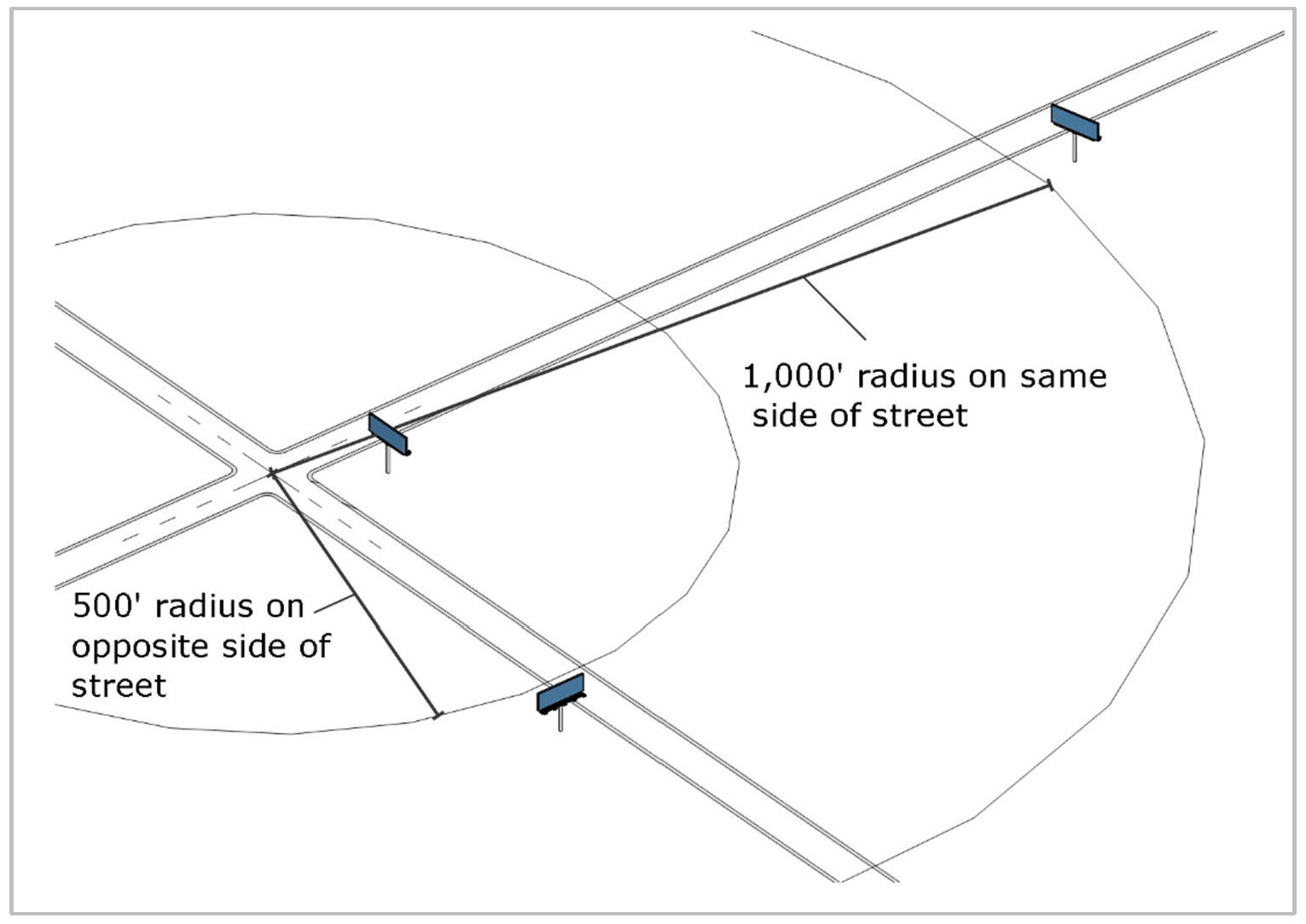
Figure VI-14: Non-Corner Lot Billboard Spacing Measurement
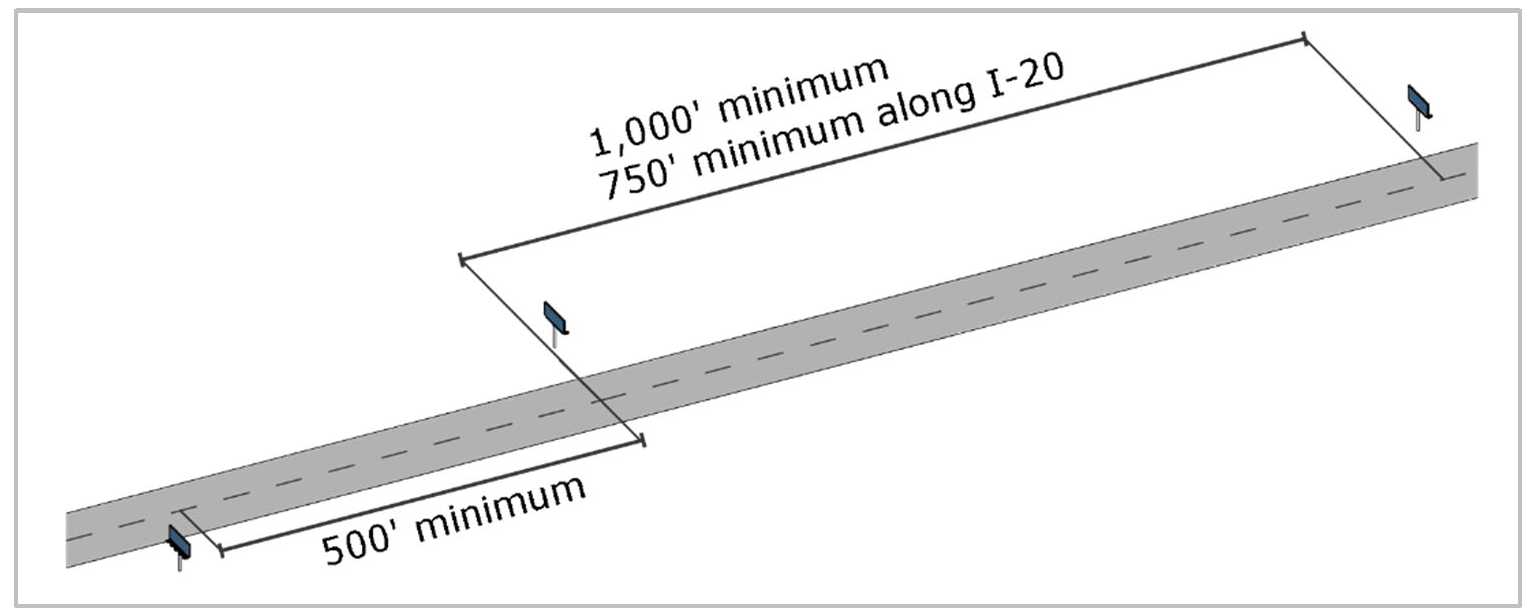
7.
Minimum setback from residential districts. Billboards shall be set back from all lands classified in residential districts as follows (see figure VI-15: billboard setback from residential districts):
i.
Billboards having a display area of three hundred (300) square feet or less and their supporting structures shall be set back at least sixty (60) feet from all such lands, measured in a straight line, and at least two hundred (200) feet from such lands fronting the street on the same side of the street as the billboard, measured along the street frontage; and
ii.
Billboards having a display area of more than three hundred (300) square feet and their supporting structures shall be set back at least seventy-five (75) feet from all such lands, measured in a straight line, and at least three hundred (300) feet from such lands fronting the street on the same side of the street as the billboard, measured along the street frontage.
Figure VI-15: Billboard Setback from Residential Districts
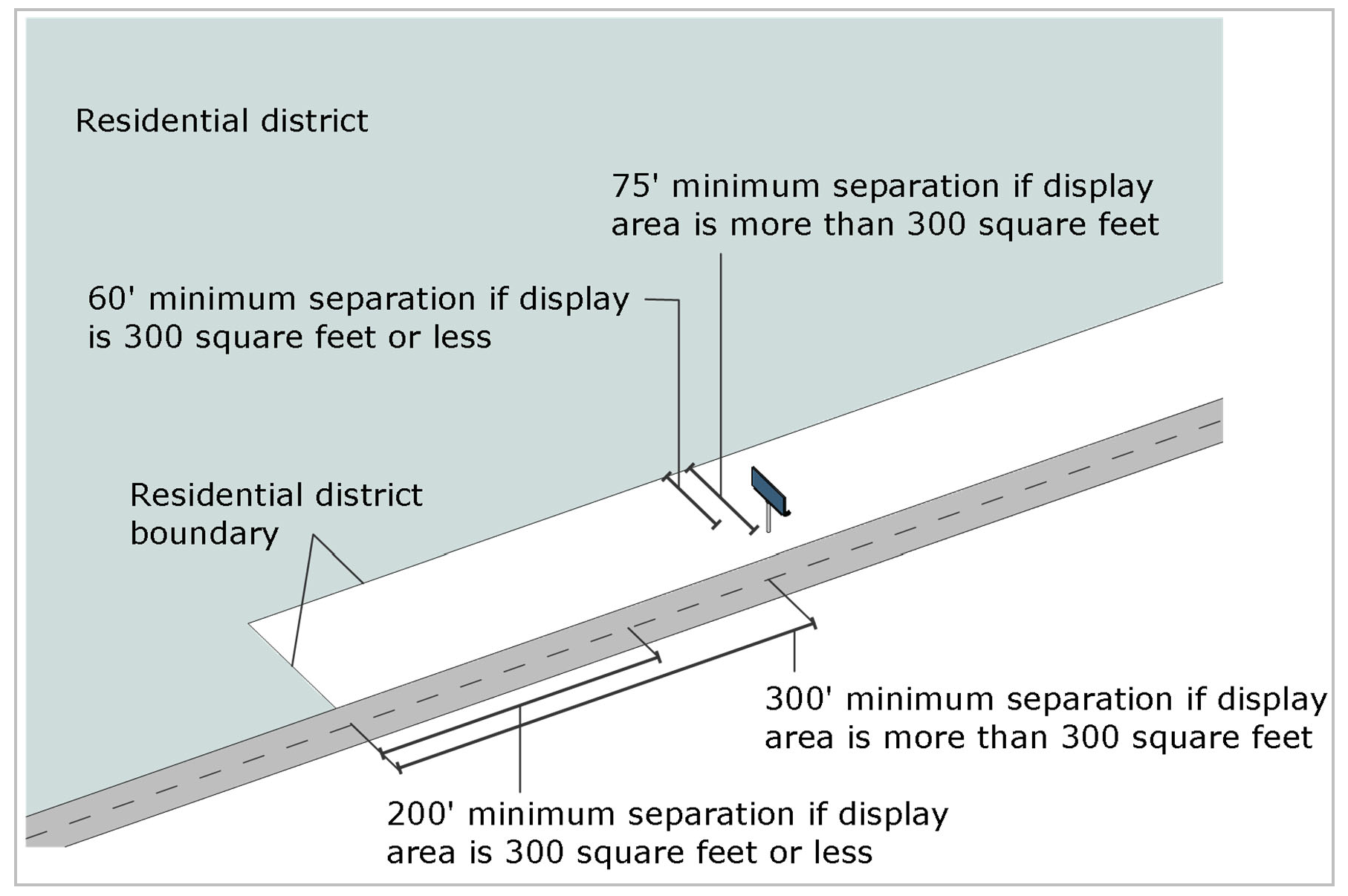
8.
Design and configuration.
i.
No billboard or component thereof shall revolve, show, or allow movement or rotate, except tri-vision technology in accordance with the standards in this section.
ii.
Lighting of billboards shall be shielded upward to prevent beams or rays from being directed at any portion of a traveled roadway or an occupied residential area and shall not be of such intensity or brilliance as to cause glare or impair vision.
iii.
Billboards that include an electronic, digital, or video display or tri-vision technology shall comply with the standards that apply to electronic, digital, and video displays in this Code.
iv.
Billboards that include an electronic, digital, or video display or tri-vision technology shall comply with the following spacing requirements:
(a)
Except as provided in subsection (b) below, each billboard that includes an electronic, digital, or video display or tri-vision technology shall be separated by at least two thousand (2,000) feet from any other such billboard, measured along the centerline of the adjacent street, or, if the billboard is located on a corner lot, radially from the center point of the adjacent intersection.
(b)
The spacing requirement of subsection (a) above shall not apply, and the spacing requirement of subsection 6. above shall apply, for a single new billboard that includes an electronic, digital, or video display or tri-vision technology, if the owner of the new billboard removes two (2) existing billboards in accordance with the standards of this section, provided that the existing billboards:
(1)
Were erected more than fifteen (15) years before the date that the new billboard with an electronic, digital, or video display is installed;
(2)
Do not include an electronic, digital, or video display or tri-vision technology; and
(3)
Are within four thousand (4,000) feet of where the new billboard will be installed, measured along the centerline of the adjacent street, or, if the billboard is located on a corner lot, radially from the center point of the adjacent intersection,
v.
Sign copy shall not be placed on any portion of the billboard supporting structure other than a sign face.
vi.
Each billboard may have a maximum of two (2) sign faces, provided a billboard having two (2) sign faces shall be configured in one of the following configurations:
(a)
As a "V"-type billboard, with the two (2) sign faces forming an interior angle of twenty-five (25) degrees or less;
(b)
With the two (2) sign faces facing opposite directions, the two (2) sign faces parallel and no more than five (5) feet apart;
(c)
With the two (2) sign faces facing the same direction and not having a combined display area greater than six hundred seventy-two (672) square feet; or
(d)
If the billboard has electronic, digital, or video display or tri-vision technology installed behind the sign faces, the two (2) sign faces shall be parallel and no more than ten (10) feet apart.
vii.
The sign supporting structure shall not be larger than is reasonably necessary to support the sign.
viii.
Exposed back of signs, poles, and other components of supporting structures shall be painted white, black, dark green, or dark brown to present an attractive and finished appearance which will blend with natural surroundings in order to further accomplish the purposes of this division and this ordinance.
ix.
No billboard may be mounted or displayed as a roof sign or wall sign or on any structure not intended specifically for use as a billboard.
x.
No billboard shall be located on, or project over, any public property, right-of-way, utility easement or drainage easement. No part of any billboard supporting structure, including the sign face, shall extend over a building setback line or property line.
xi.
No billboard shall be mounted, affixed, or attached to a vehicle, motor vehicle or trailer and operated, maneuvered, or towed in or upon any street, avenue, alley, or right-of-way within the corporate limits of the city. This prohibition shall include vehicles, motor vehicles, or trailers designed and built or used specifically for and as mobile advertising billboards. For the purposes of this section, such vehicles shall not be considered delivery vehicles or vehicles used in the ordinary course of business as a means to circumvent this ordinance.
(Ord. No. 9572, § 2, 12-17-24)
Sec. 25-183. - Temporary signs.
Except as otherwise specified in this division, the temporary signs allowed by this section are not exclusive, meaning any one or more types of allowed temporary signs may be displayed on a lot at any given time in accordance with the requirements of this ordinance.
a.
Banners.
1.
Banners are allowed as temporary signs for uses on sites other than shopping centers in accordance with the following standards:
i.
A single banner is allowed on a lot for no more than fourteen (14) consecutive days, no more than four (4) times per calendar year,
ii.
The maximum display area of each banner shall be thirty-two (32) square feet.
2.
Banners are allowed as temporary signs for uses in shopping centers in accordance with the following standards:
i.
A maximum of three (3) banners may be posted simultaneously in the shopping center.
ii.
Each tenant within the shopping center is allowed a single banner for no more than fourteen (14) consecutive days, no more than four (4) times per calendar year.
iii.
The maximum display area of each banner shall be thirty-two (32) square feet.
iv.
Each banner shall be spaced at least fifty (50) feet from all other banners on the same premises or site.
b.
Temporary construction signs. A temporary sign may be placed at each principal entrance to an area where construction activities of any type are being performed, with an active building permit, in accordance with the following standards:
1.
The sign shall not be artificially illuminated.
2.
The maximum display area of the sign shall be thirty-two (32) square feet.
3.
The maximum height of the sign shall be eight (8) feet.
4.
The sign shall be placed outside of all rights-of way, city-owned property, and sight triangles.
5.
A windscreen placed on construction fencing is not subject to the display area restrictions of this subsection b.
c.
Temporary real estate signs. One temporary sign may be located on any real property actively marketed for sale, lease, or rent, in accordance with the following standards:
1.
A maximum of one such sign is allowed to face each street adjacent to the property.
2.
The maximum display area of each sign shall be as follows:
i.
In residential districts, six (6) square feet per side of the sign, not to exceed twelve (12) square feet; and
ii.
In all other districts, thirty-two (32) square feet.
3.
The maximum height of the sign shall be as follows:
i.
In residential districts, four (4) feet; and
ii.
In all other districts, eight (8) feet.
4.
The sign shall be set back at least five (5) feet from the curb or street edge and outside of all rights-of-way, and city-owned property.
5.
All such signs on the property shall be removed within two (2) days of the property no longer being offered for sale, lease, or rent.
d.
Temporary yard signs. Up to three (3) temporary signs may be displayed in the yards of lots in the residential district containing uses other than multifamily dwellings or multifamily student dwellings, in accordance with the following standards:
1.
Each such sign shall have a display area of six (6) square feet or less; and
2.
Each such sign shall be set back at least five (5) feet from the curb or street edge, and shall be located outside of all rights-of-way and city property.
e.
A-frame signs. Each establishment may display one A-frame sign that:
1.
Has no more than twelve (12) square feet of copy area per side;
2.
Has a maximum height of four (4) feet;
3.
Is located within ten (10) feet of the entrance of the use it is serving;
4.
May only be located in the city right-of-way if it does not interfere with pedestrian access or ADA accessibility; and
5.
Is taken indoors during non-business hours.
(Ord. No. 9572, § 2, 12-17-24)

