
Westminster City Zoning Code
CHAPTER 11
- SIGN REGULATIONS5
Editor's note—Ord. No. 4053, § 1, adopted December 21, 2020, repealed the former Ch 11, §§ 11-11-1—11-11-9, and enacted a new Ch. 11 as set out herein. The former Ch. 11 pertained to similar subject matter and derived from 2534, 2567, 2862, 2881, 2982, 2983, 3018, 3328, 3564, 3599, 3634.
11-11-1. - Title.
This Chapter shall be known and may be cited as the "Westminster Sign Regulations" or "Sign Regulations."
(Ord. No. 4053, § 1, 12-21-2020)
11-11-2. - Purpose, Intent and Findings.
Purpose. The purpose of this Chapter is to:
• Accommodate the rights of private entities to freedom of speech,
• Recognize the business community's need for effective, individualized identity and public awareness,
• Regulate and reduce what otherwise might be confusing and objectionable clutter,
• Determine placement consistent with traffic safety by reducing traffic hazards caused by distractions to motorists and impairment of sight lines,
• Protect property values by facilitating the harmony between residential and commercial uses,
• Incorporate new technologies for sign design and display,
• Complement the character of the comprehensive plan land use designations, zoning districts, and specific plan areas,
• Preserve the residential character of residential neighborhoods,
• Reduce administrative burdens,
• Avoid the creation of nonconformities,
• Facilitate the implementation of the City's Comprehensive Plan and Zoning Districts, adopted Specific Plans, and
• Preserve, protect and promote the public health, safety and general welfare.
Findings: The City finds that the type, dimensions, setbacks, and physical design of signs permitted by this Chapter protect the City's interests in traffic safety, community character, and aesthetics, while allowing for adequate visibility, legibility, and pedestrian or motorist recognition and comprehension. The City finds and determines that the standards set out in this Chapter were developed after a public process in which the design and dimensional standards were tested against industry criteria, past experience in administering sign standards, and community input as to the appropriate characteristics of signs in the City's various neighborhoods and business areas.
(A)
Generally. This Chapter regulates the type, dimensions, design and other characteristics of signs throughout the City.
(B)
Content Neutral. This Chapter regulates only the sign structure and physical parameters, and not the sign's content.
(Ord. No. 4053, § 1, 12-21-2020)
11-11-3. - Authority.
This title is enacted pursuant to the home rule provisions of Article XX of the Colorado Constitution and the authority and powers contained in the City Charter of the City of Westminster, including, but not limited to, Chapters II, IV and XI(V).
(Ord. No. 4053, § 1, 12-21-2020)
11-11-4. - Applicability.
(A)
Generally:
(1)
This Chapter applies to any sign within the corporate limits of the City of Westminster, Colorado.
(2)
It is unlawful for any person to erect, operate, or otherwise use any sign that is prohibited by this Chapter.
(3)
It is unlawful for any person to erect, operate, or otherwise use any sign at a time, place, or manner that is prohibited by this Chapter.
(4)
If a Specific Plan provision is inconsistent with a provision of this Chapter, the Specific Plan provision controls.
(B)
Exemptions. This Chapter does not apply to:
(1)
Signs located entirely within the interior of a building or structure and not visible from outside of the building, except as otherwise provided below.
(2)
In order to promote traffic and public safety, any public notice or warning posted or required by valid and applicable federal, state, or local law, regulation, or ordinance, including street addresses. Street addresses not exceeding four square feet in area are not counted toward the sign allocation for wall signs.
(3)
A sign carried or worn by a person.
(4)
A sign affixed to a vehicle, except as provided in Section 11-11-5(G), W.M.C.
(5)
Public signs.
(6)
Up to five temporary signs or banners of six square feet in area or less each for 100 feet of frontage or less, and one additional sign of up to six square feet in area for each additional 20 feet of frontage over 100 feet.
(7)
Bumper stickers.
(C)
Message Neutrality:
(1)
Despite any other provision of this Chapter, no sign is subject to any limitation based on the content of its message.
(2)
Any sign authorized in this Chapter may contain any non-commercial copy in lieu of any other copy.
(D)
Planned Unit Developments (PUDs):
(1)
A sign within a PUD is subject to the requirements of any approved Official Development Plan (ODP) applicable to the PUD, and any requirements of this Chapter that are not inconsistent with the PDP requirements.
(2)
To the extent that an ODP is silent about the type, area, height, design features, or other sign requirements, this Chapter applies.
(E)
Specific Plan Districts (SPDs):
(1)
A sign within an SPD is subject to the requirements of any approved Specific Plan applicable to the SPD, and any requirements of this Chapter that are not inconsistent with the Specific Plan requirements.
(2)
To the extent that a Specific Plan is silent about the type, area, height, design features, or other sign requirements, this Chapter applies.
(F)
These Sign Regulations are enforced by the City. Nothing in these Sign Regulations is intended to create a private cause of action.
(Ord. No. 4053, § 1, 12-21-2020; Ord. No. 4086, § 1, 8-23-2021)
11-11-5. - Prohibited Signs.
The following types of signs are prohibited in the City of Westminster:
(A)
Signs Not Enumerated. Any sign not specifically permitted by this Chapter.
(B)
Signs in Right-of-Way. Any sign on or over any public property. This prohibition does not include public signs, such as traffic control signs or hazard/warning signs.
(C)
Animation or Movement. Includes:
(1)
Signs with visible moving, revolving, or rotating parts or visible mechanical movement, or any description or other apparent visible movement achieved by electrical, electronic or mechanical means. This prohibition does not apply to marquees in the Downtown and Station Area.
(2)
Signs that are animated with lights or illuminations that flash, move, rotate, scintillate, blink, flicker, vary in intensity, vary in color, or use intermittent electrical pulsations.
(D)
Attention-Getting Devices. This includes wind signs (including feather signs, pennants, streamers, and balloons), strings of light bulbs (except as provided in 11-11-7(D), W.M.C.), or any inflatable object or material (except as provided for temporary signs as provided in 11-11-11(B), W.M.C.).
(E)
Limitations of Official Government Protective or Warning Signs. Any sign that is a copy of, or that for any reason is likely to be confused with any government approved official signs, such as those signs approved and shown in the Uniform Traffic Code.
(F)
Obstruction of Building Features. Any attached sign (other than a window sign) that obstructs any window, door, fire escape, stairway, ladder, or opening intended to provide light, air, ingress, or egress for any building, as required by the adopted building code. For purposes of this subsection, "obstruct" means to locate any part of the sign directly on or over a feature.
(G)
Vehicle Signs. Any sign (other than a bumper sticker) displayed on a vehicle or trailer that is used primarily to display the sign is prohibited. Signs are permitted on a vehicle if:
(1)
The vehicle at no time remains in one visible place for more than 24 consecutive hours;
(2)
The vehicle is actually and primarily used by its owner or another as a means of transportation of people or goods or for delivery of services (i.e. tow truck); and
(3)
The vehicle displays current registration and is insured to operate on public streets in the State of Colorado.
(H)
Billboards.
(I)
Pole Signs.
(J)
Snipe Signs.
(K)
Light Trespass. Any sign that causes any direct glare. For purposes of this subsection, "glare" means a brightness level that exceeds the limits specified in Section 11-11-7(B)(5).
(L)
Abandoned Signs. A sign, including its structure, that is no longer used. A sign is no longer used if: (1) the business the sign advertises has closed; or (2) the property on which the sign is located is vacant or unoccupied for at least 90 consecutive days; or (3) no legal owner of the sign can be found. An abandoned sign is declared a public nuisance and is considered an illegal sign. This provision does not apply to permanent signs accessory to businesses that are open only on a seasonal basis if there is clear intent to continue operation of the business. This does not apply to public signs.
(Ord. No. 4053, § 1, 12-21-2020)
11-11-6. - General Requirements.
(A)
Construction. Signs and sign structures shall comply with the Building Code (Title 11, Chapter 9, W.M.C.). Building permits may be required even if sign permits are not required.
(B)
Maintenance.
(1)
Signs shall be properly maintained as provided in Section 8-1-8, W.M.C., and shall:
(a)
Be of sound structural quality,
(b)
Be maintained in good repair,
(c)
Painted, where applicable (galvanized metals, aluminum and stainless-steel portions of signs need not be painted), and
(d)
Have a clean and neat appearance.
(2)
The property owner or sign owner shall not allow any portion of any sign structure or sign face to become insecure or otherwise unsafe.
(3)
The property owner or sign owner shall maintain all surfaces of the sign structure free of peeling paint and torn paper.
(4)
All sign structures shall be free of broken or bent elements.
(5)
The Building Official or Planning Manager may order a sign to be removed if it is not maintained as described and/or becomes a public safety hazard or nuisance.
(C)
Intersection Sight Distance. Signs shall comply with the City of Westminster Standards and Specifications for the Design and Construction of Public Improvements, Chapter 6, Roadway Section 6.18.00 Sight Distances and 6.18.02 Sight Distance Triangle (see also Section 11-7-3, W.M.C.). No sign shall be erected or maintained that obstructs the vision of motorists, as determined by the City's traffic engineer. A sign that obstructs the vision of motorist may be abated as a nuisance as set forth in Title VIII, Chapter 4, W.M.C.
(Ord. No. 4053, § 1, 12-21-2020)
11-11-7. - Illuminated and Digital Signs.
(A)
Illuminated Signs.
(1)
Applicability. This section applies to any illuminated sign. An "illuminated sign" means any sign that incorporates illumination on or in the sign, or that directs illumination toward or over all or part of the sign, or that is created by the projection of illuminations onto a surface (such as a building wall). Types of illumination include:
(a)
Digital Signs. See subsection (B) below.
(b)
External Illumination: A sign that is illuminated by an external light source.
Figure 11-11-7-1 External Illumination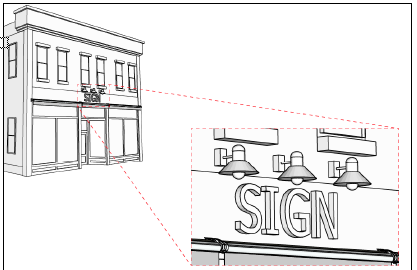
Examples of external illumination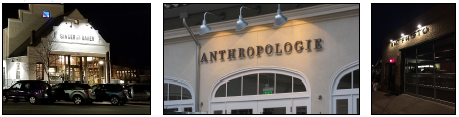
(c)
Halo Lit: Illumination created by concealing the light source behind three-dimensional opaque letters, numbers, or other characters of a sign, resulting in the nighttime perception of a halo around the silhouette of each character. This is also referred to as "reverse channel" or "reverse lit" illumination. A halo lit sign is not considered an internally illuminated sign.
Figure 11-11-7-2 Halo Lit Illumination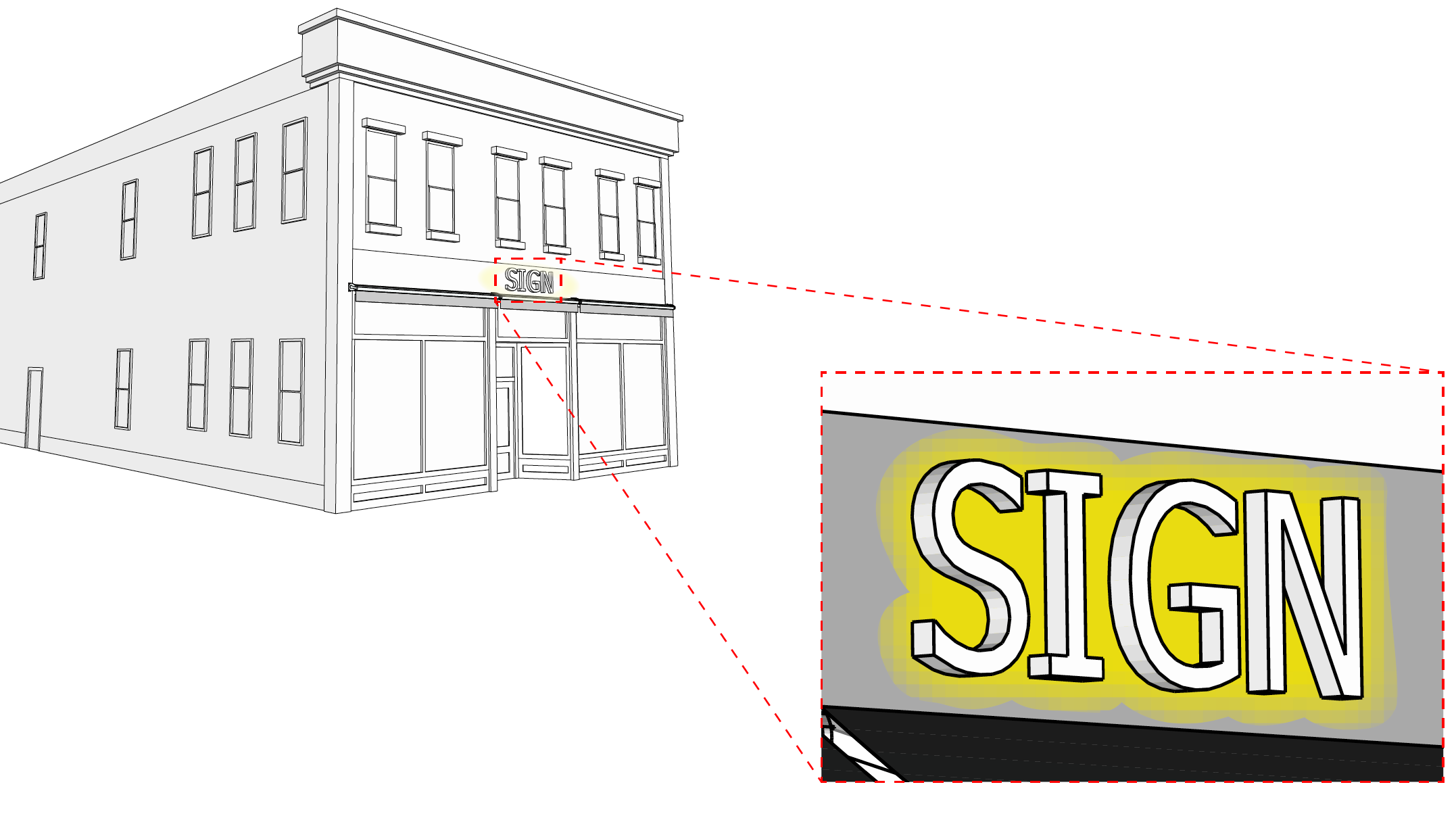
Examples of halo lighting: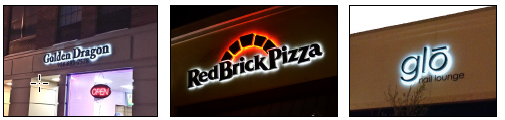
(d)
Internal Illumination: Illumination created by a light source internal to the sign, transparent or translucent material from a light source within the sign structure or panel, or exposed lighting located on the same plane as the sign face.
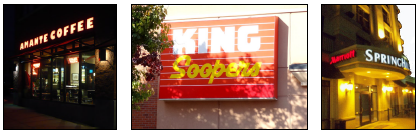
Figure 11-11-7-3 Internal Illumination
(e)
Neon: A source of light supplied by a glass tube that is filled with neon gas, argon, mercury or other inert gas that produces ultraviolet light, and bent to form letters, symbols, or other shapes. Neon includes all tubular light sources that employ a charged gas to illuminate a tube that glows, similar gas-activated tubular light systems that emit colors, and other tubular light sources (including fiber optics) that are used to form letters and shapes.
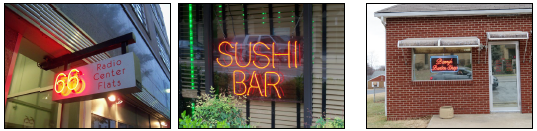
Figure 11-11-7-4 Neon
(2)
Where Permitted. The standards for individual sign types in Sections 11-11-9 (Freestanding Signs), 11-11-10 (Attached Signs), 11-11-11 (Incidental and Miscellaneous Signs), and 11-11-11(B) (Incidental and Temporary Signs), W.M.C., indicate whether changeable copy or illumination is allowed, and the type of illumination allowed (internal illumination, external illumination, halo lit, or digital).
(3)
Animation. Illumination shall not include animation, moving video, or flashing, scrolling, intermittent, moving lights, rotating beams or flashing beacon lights.
(4)
Electrical Code. Illuminated signs shall comply with all applicable provisions of the City's Electrical Code.
(5)
Hours of Operation. Illuminated signs in or within 250 feet of a residential area shall be reduced to 50 percent of the maximum brightness level allowed by this section between the hours of 2:00 AM and 6:00 AM. An illuminated sign subject to this provision shall include an automatic shut off mechanism to ensure that the sign is not illuminated during this time period. This provision does not apply to the Downtown SPD or Westminster Station.
(B)
Digital Signs. Digital signs shall conform to the following standards:
(1)
Applicability. This section applies to any digital sign. A "digital sign" means any sign that displays digital copy, including any illuminated sign on which the illumination is not kept stationary or constant in intensity and color when the sign is in use, including any light emitting diode (LED) or digital panel, and which varies in color or intensity. In the sign industry, digital signs are also referred to as dynamic signs, changeable electronic variable message signs (CEVMS), electronic message centers (EMCs), etc.
Figure 11-11-7-5 Digital Signs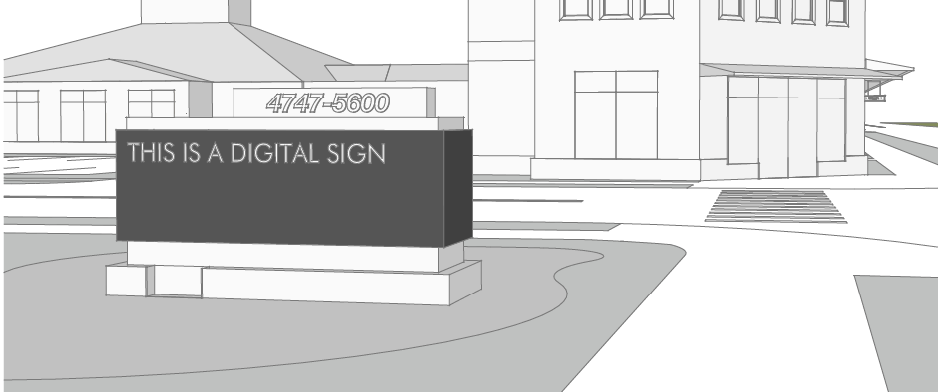
Examples of digital signs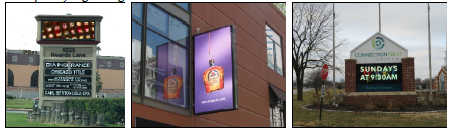
(2)
Where Permitted. Digital signs are permitted only in the Office/Transition (OTC), Commercial (COM), Mixed Use (MSP), and Employment (ERD) land use categories (refer to 11-11-8(C), W.M.C.).
(3)
Hold Time. Each message on the sign must be displayed for at least eight seconds duration. Message changes shall be completed instantaneously and shall be imperceptible. Transition effects are prohibited.
(4)
Digital Copy. Digital signs shall contain static messages only changed only through dissolve or fade transitions, and shall not have movement or the appearance or optical illusion of movement during the static display period of any part of the sign. A static message shall not include any flashing or the varying of light intensity, and the message shall not scroll. The change of message using dissolve or fade transition shall not exceed one (1) second of time between each message displayed on the sign.
(5)
Brightness:
(a)
The intensity of the light source for a digital sign shall not produce glare, the effect of which constitutes a traffic hazard or is otherwise detrimental to the public health, safety or welfare.
(b)
Digital signs shall not operate at brightness levels of more than 0.3 foot-candles above ambient light as measured using a foot candle (Lux) meter at a preset distance depending on sign area, measured as follows:
Table 11-11-7-1
Foot-candle Measurement Distance
For signs with an area in square feet other than those specifically listed in the table above (i.e., 12 sf, 400 sf, etc.), the measurement distance is calculated with the following formula: The square root of the product of the sign area multiplied by one-hundred (100).
Example using a 12 square foot sign:
Measurement Distance = √(12 Sq. Ft. x 100) = 34.6
(c)
Prior to the issuance of a sign permit, the applicant shall provide written certification from the sign manufacturer that the light intensity has been factory pre-set not to exceed 0.3 foot-candles above ambient light and that the intensity level is protected from end-user manipulation by password-protected software or other method as deemed appropriate by the Planning Manager.
(6)
Light Sensing Device. Each digital sign must have a light sensing device that will adjust the brightness as ambient light conditions change.
(7)
Technology. The technology currently being deployed for digital billboards is LED (light emitting diode), but there may be alternate, preferred and superior technology available in the future. Any other technology that complies with the performance standards for digital signs, including the maximum brightness levels as stated above, is permitted.
(8)
Automatic Shutoff. A digital sign must:
(a)
A digital sign shall have automatic dimmer software or solar sensors to control brightness for nighttime viewing and variations in daytime ambient light.
(b)
Include systems and monitoring to either turn the display off, show "full black" on the display, or include a default mechanism that freezes the sign in one position if a malfunction occurs, and
(c)
Be designed so that a catastrophic power surge will cause the sign to go dark or to deploy the maximum brightness limitations, and
(d)
Automatically adjust the intensity of its display according to natural ambient light conditions.
(9)
Resolution:
(a)
Digital sign faces shall have a pixel pitch of no more than 16 millimeters. "Pixel pitch" means a measurement of the resolution of a digital display, in terms of the distance (generally in millimeters) between the center of a light-emitting diode (LED) cluster (pixel) and the center of the next LED pixel. Lower pixel pitch measurements indicate higher display resolution.
(b)
This subsection (9) applies only to signs that are constructed, rebuilt or replaced after the effective date of this Section.
(10)
Owner Responsibilities. The sign owner shall provide the Planning Manager the phone number and email address of a person who is available to be contacted at any time and who is able to turn off the electronic sign promptly after a malfunction occurs.
(11)
Maintenance. The light modules on digital billboards shall be repaired or replaced if they become broken, burned-out or substantially dimmed.
(12)
Nonconformities. All existing digital signs that contain an electronic changeable copy module which does not comply with the provisions of this subsection shall be made to conform to subsections (3) (hold time) and (4) (digital copy) within 180 days of the effective date of this Section.
(C)
Neon:
(1)
Neon is considered internal illumination for purposes of Sections 11-11-9 through 11-11-11(B), W.M.C.
(2)
Fluorescent tubular lighting, which generates a white light, is not considered neon, and such exposed fluorescent light sources are not permitted.
(3)
Neon may be shaped to form objects or letters, or it may outline portions of a sign.
(4)
Neon letters or characters may appear as a freestanding object, mounted directly on a wall surface, mounted on a panel, or contained in open channel letters.
(5)
Neon or other tubular lighting may not be used to outline architectural features of locally designated historic buildings or any building in a designated landmark or district as defined in Section 11-13-2, W.M.C.
(D)
String Lights.
(1)
String lights are allowed:
(a)
In the Westminster Station and Downtown Westminster Specific Plan Districts, or
(b)
As an accent element for porches, patios, or similar architectural elements.
(2)
String lights are not counted toward the maximum sign area allocation in Sections 11-11-9 through 11-11-11(B), W.M.C.
(3)
String lights must be clearly shown and approved on an ODP.
(Ord. No. 4053, § 1, 12-21-2020)
11-11-8. - Sign Types and Area Allocation.
(A)
Purpose and Findings.
(1)
Sections 11-11-9 through 11-11-11(B), W.M.C. establish standards and overall allowances for signs by number and area for three (3) major sign categories:
(a)
Freestanding signs,
(b)
Attached signs, and
(c)
Miscellaneous and incidental signs.
(2)
This system provides flexibility for persons and businesses who display signs, avoids sign distinctions that depend on a sign's message, and minimizes potential traffic hazards and clutter.
(3)
Because this Chapter does not regulate sign content, applicants and property owners may allocate signs by message type (for example, onsite advertising, directional, and opinion messages) in any manner within the sign quantity and area limits established in this Chapter.
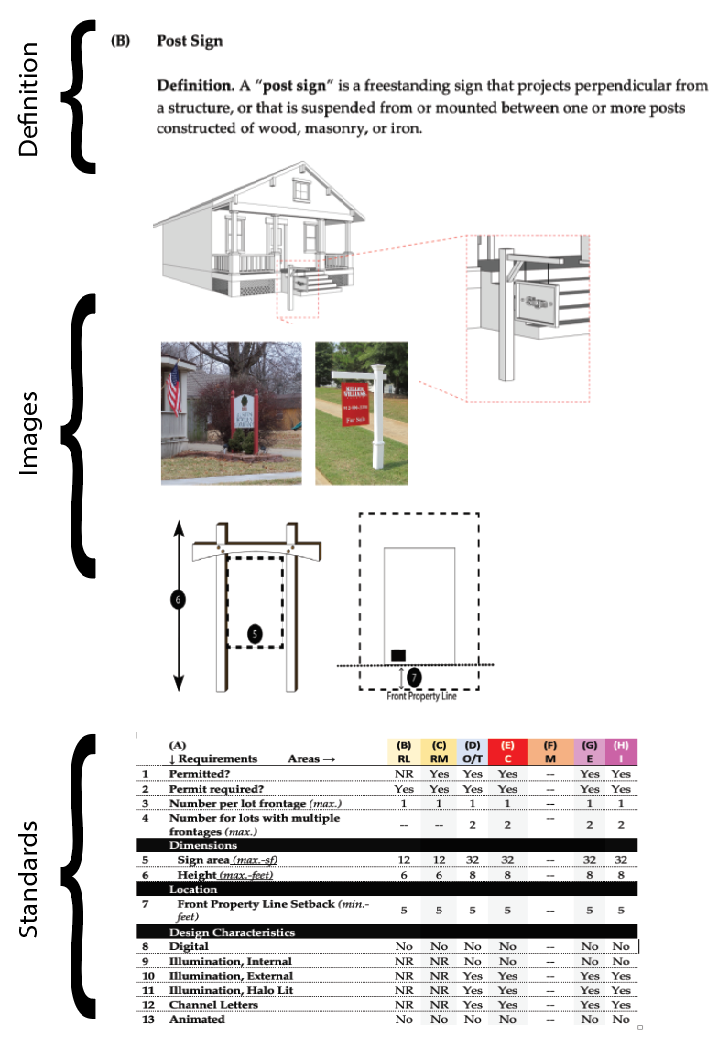
Figure 11-11-8-1 Summary of Sign Standards
(B)
Generally. Sections 11-11-9 through 11-11-11(B), W.M.C. establish standards for individual sign types, including:
(1)
An initial paragraph that defines the sign type, and
(2)
Images that illustrate the sign types, and
(3)
A table summarizing the sign standards, including:
(a)
Whether the sign type is permitted in the designated areas (see subsection C, below).
(b)
Whether a sign permit is required.
(c)
The maximum permitted number of signs of the designated category, which may be based on:
(i)
Number per street frontage, or
(ii)
Number per each business or institution (occupying a multi- tenant building) which has its own ground floor entryway or storefront, or
(iii)
Number per single-tenant building or multi-tenant building with a single entry, or
(iv)
The total number of that sign type on a single lot or parcel.
(d)
Maximum sign dimensions, which may include:
(i)
Sign area,
(ii)
Height,
(iii)
Location,
(iv)
Property line setback, or
(v)
Spacing in relation to other signs.
(e)
Design characteristics, including whether the following design features are allowed or required:
(i)
Digital,
(ii)
Illumination, internal,
(iii)
Illumination, external,
(iv)
Illumination, halo lit,
(v)
Channel letters,
(vi)
Changeable copy, or
(vii)
Animation.
(C)
Categories. Sections 11-11-9 through 11-11-11(B), W.M.C., regulate sign characteristics by common zoning districts or comprehensive plan land use designations (referred to herein as "areas"). The City currently regulates use, setbacks, building dimensions and site and building design by land use designations in the Comprehensive Plan (applied at the time of PDP/ODP approval) and zoning districts (established in Chapter 4 of this Title) and designated on the Zoning Map (see Section 11-4-2, W.M.C.). Many of these land use designations and zoning districts have common characteristics for purposes of sign regulations and are collapsed into common categories for purposes of applying this Chapter's sign regulations. If the Comprehensive Plan land use designation and the zoning designation on a given parcel are misaligned or contradicting, the Comprehensive Plan category shall govern, except for SPD. Properties with PUD zoning shall be subject to the associated Comprehensive Plan designation for the property. These land use categories are as follows:
Table 11-11-8-1
Sign Categories
(Ord. No. 4053, § 1, 12-21-2020; Ord. No. 4204, § 1, 6-26-2023)
11-11-9. - Freestanding Signs.
(A)
Monument Signs:
Definition. A "monument sign" is a freestanding sign whose sign face is attached to a base or structural frame with a width and thickness of at least two-thirds (2/3) the width of the widest part of the sign face.
Figure 11-11-9-1 Monument Signs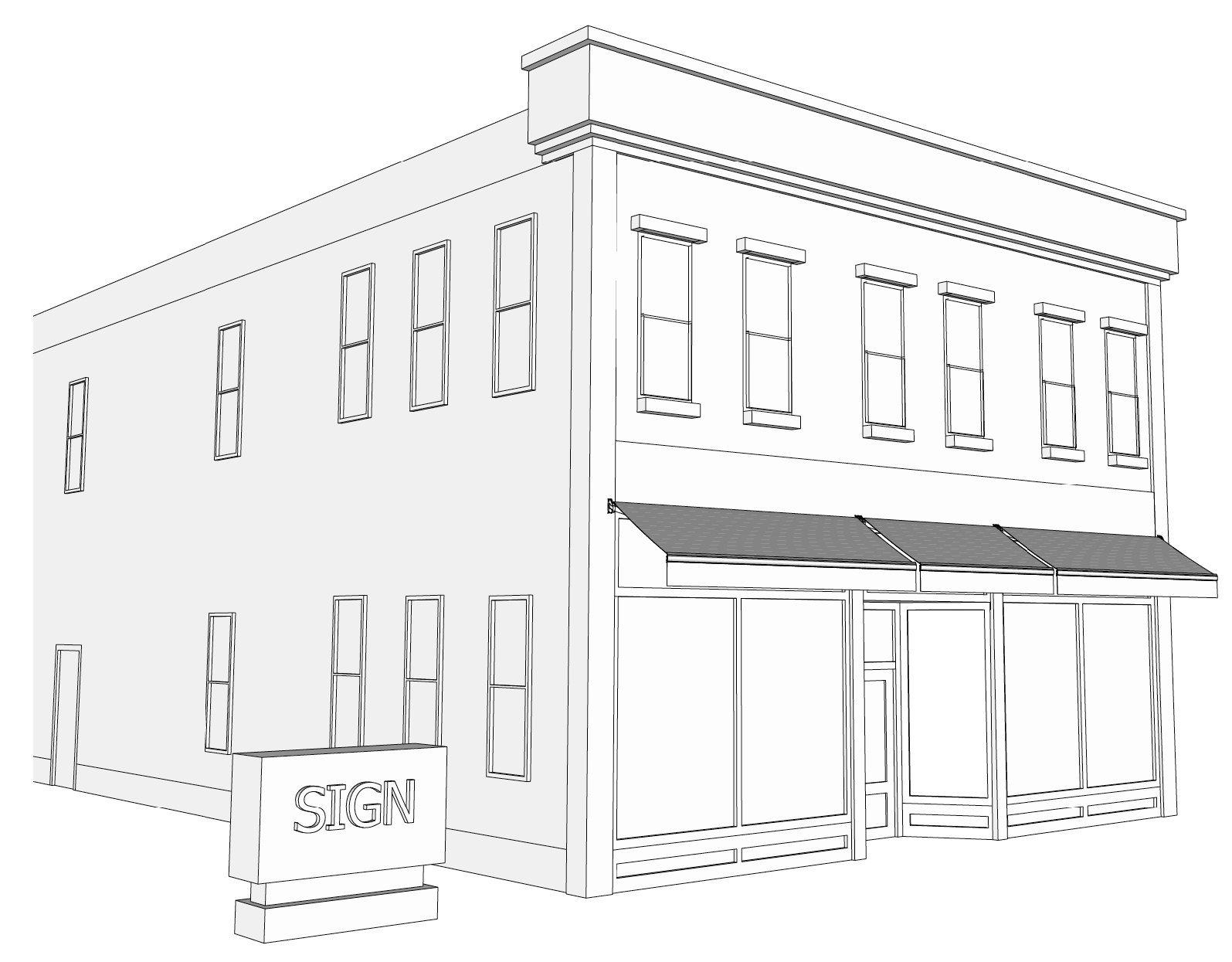
Examples of monument signs: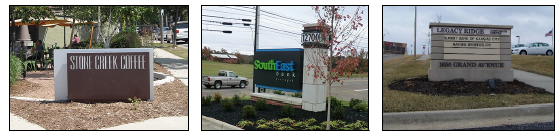
Table 11-11-9-1
Monument Sign Standards
Rules of Interpretation: Yes = the sign type or characteristic is permitted; No = the sign type or characteristic is not permitted; R = the sign type or characteristic is required; NR = the sign type is permitted for non-residential uses only; "—" the standard does not apply. Categories (see Section 11-11-8(C)): RLI = Residential Low Intensity, RMI = Residential Medium Intensity, OTC= Office/Transition, COM=Commercial, MSP=Mixed Use, ERD=Employment, IFA=Industrial.
* Not permitted in the Downtown Specific Plan (D), and Westminster Station Area Specific Plan (WS) areas.
(1)
Base Materials. The materials of the base of a monument sign shall be either masonry, stone or similar building material that is compatible with the primary exterior materials used in the principal building.
(2)
Residential Setback. No monument sign over eight (8) feet in height is permitted within 175 feet of any residential district boundary or residential development.
(3)
Multiple-Faced Signs. If a monument sign is a multiple-faced sign, the sign area is based only on one side (see Section 11-11-16(B)(3)(b), W.M.C.). The copy and composition may be the same on both sides or may be different.
(4)
Design. For a master planned development where signs are placed on more than one lot within the development, monument signs on those lots shall be consistent in design and color with each other.
(B)
Post Signs:
Definition. A "post sign" is a freestanding sign that projects perpendicular from a structure, or that is suspended from or mounted between one or more posts constructed of wood, masonry, iron, or similar materials.
Figure 11-11-9-2 Post Signs: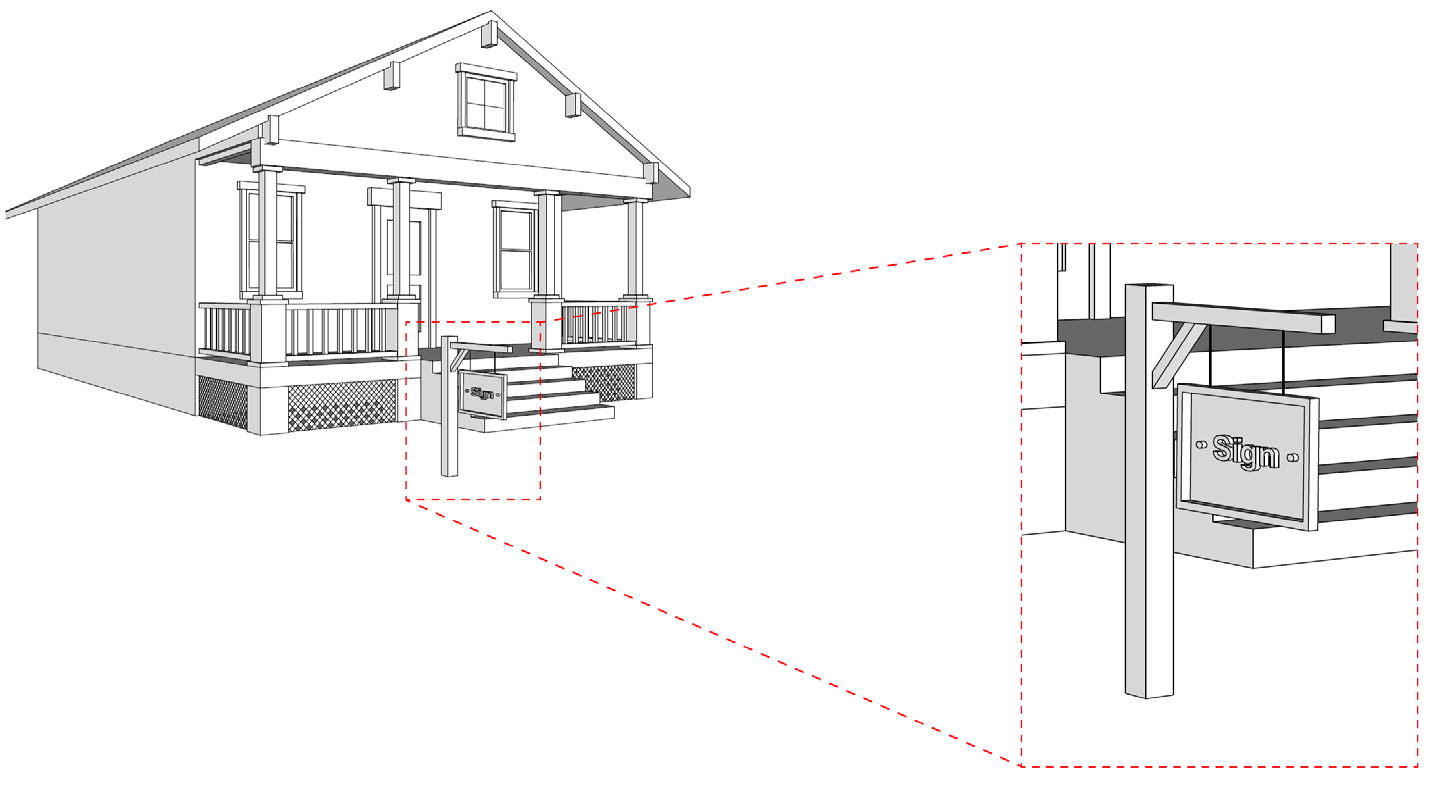
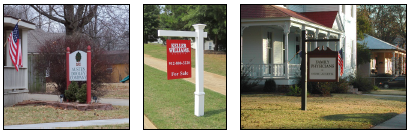
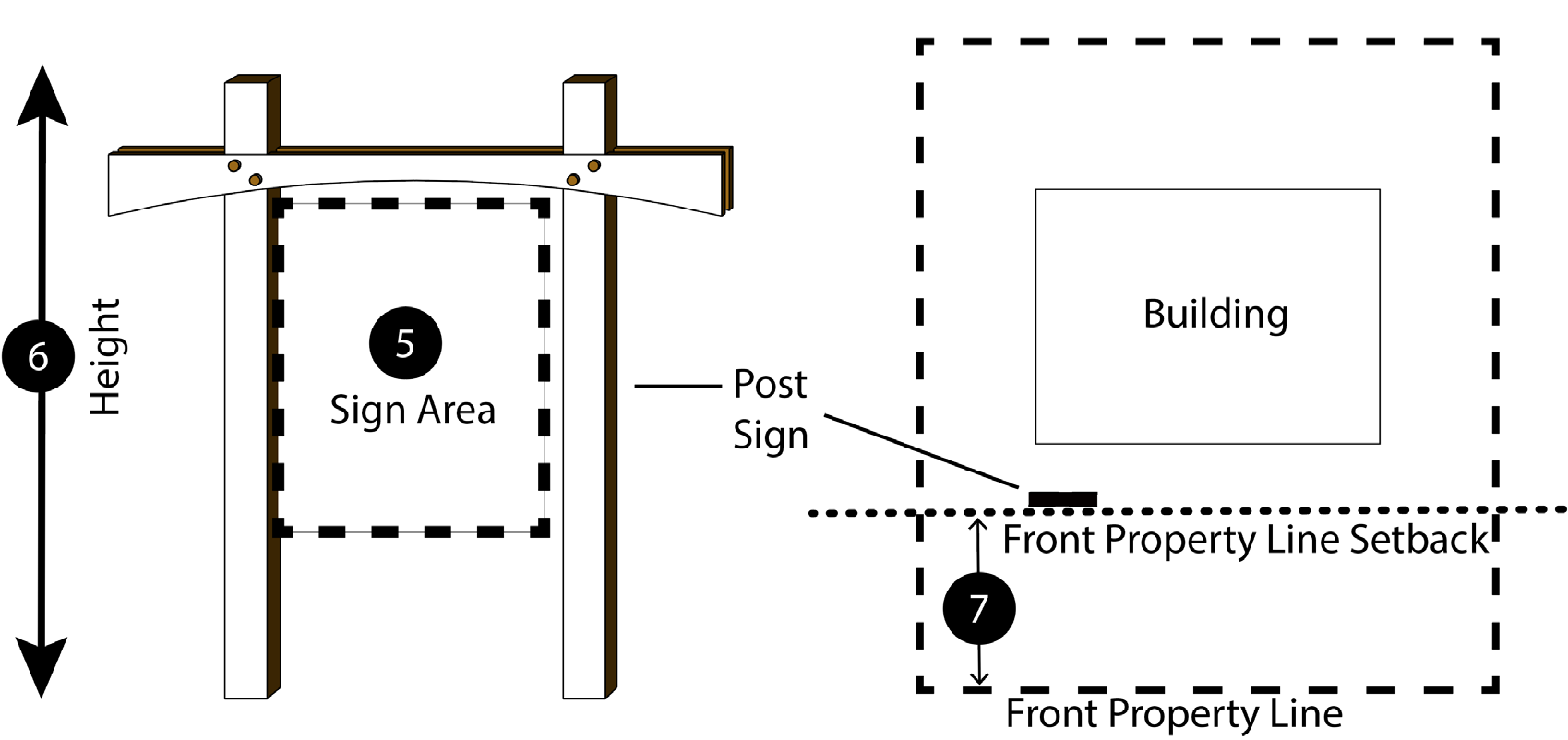 ;eop;
;eop;
Table 11-11-9-2
Post Sign Standards
Rules of Interpretation: Yes = the sign type or characteristic is permitted; No = the sign type or characteristic is not permitted; R = the sign type or characteristic is required; NR = the sign type is permitted for non-residential uses only; "—" the standard does not apply. Z = as established for the principal building by the applicable ODP, Zoning District or Specific Plan. Categories (see Section 11-11-8(C)): RLII = Residential Low Intensity, RMI = Residential Medium Intensity, OTC= Office/Transition, COM=Commercial, MSP=Mixed Use, ERD=Employment, IFA=Industrial.
(1)
Post signs must be within twenty (20) feet of the main pedestrian path connecting the adjacent right-of-way to the building entry.
(C)
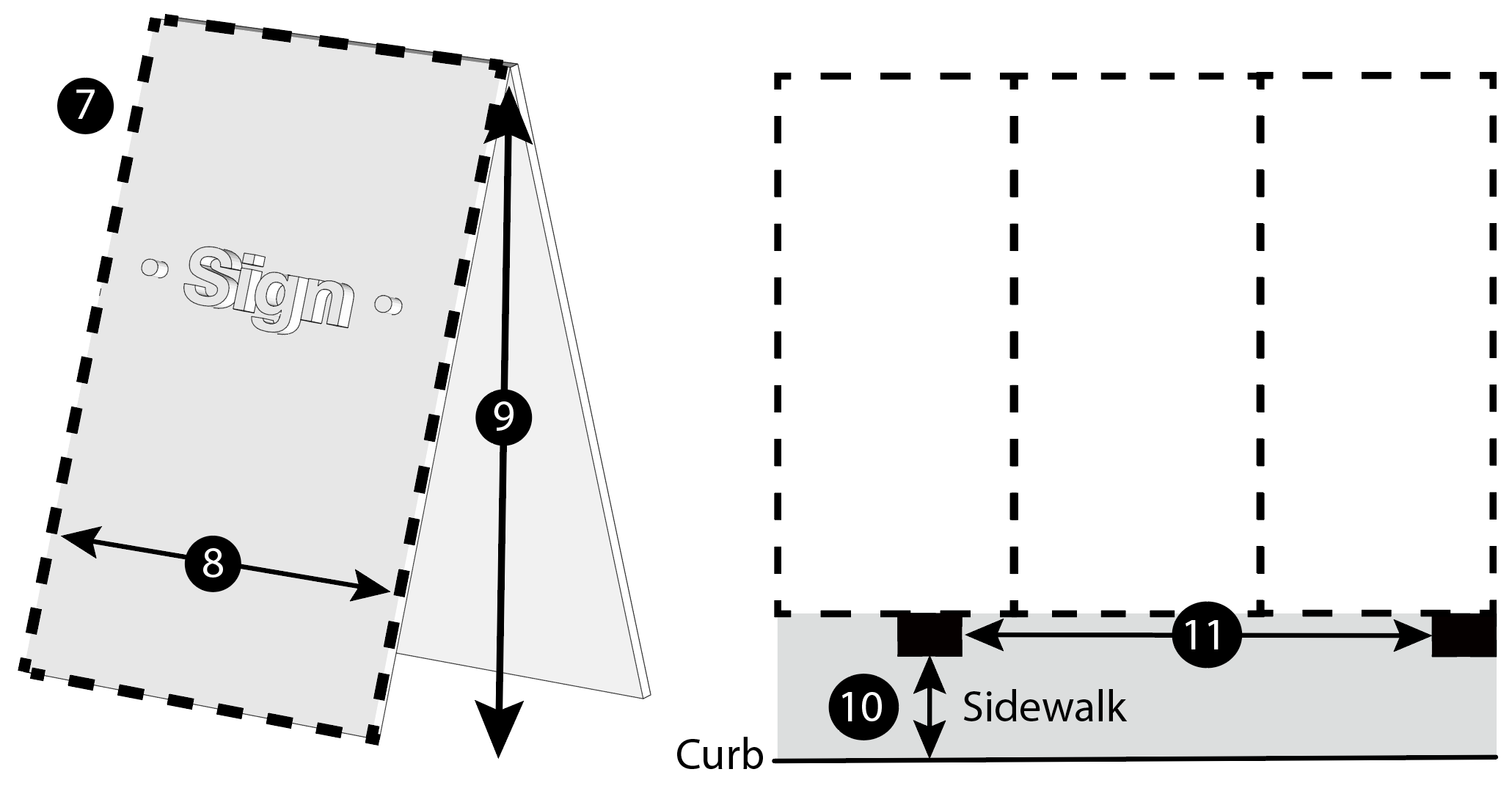
Sandwich Board: A "sandwich board" is a portable sign that is ordinarily in the shape of an "A" with back-to-back sign faces, an easel, or a similar configuration. [Note: sandwich boards require a sticker pursuant to Section 11-11-13(G), W.M.C.]
Figure 11-11-9-3 Sandwich Boards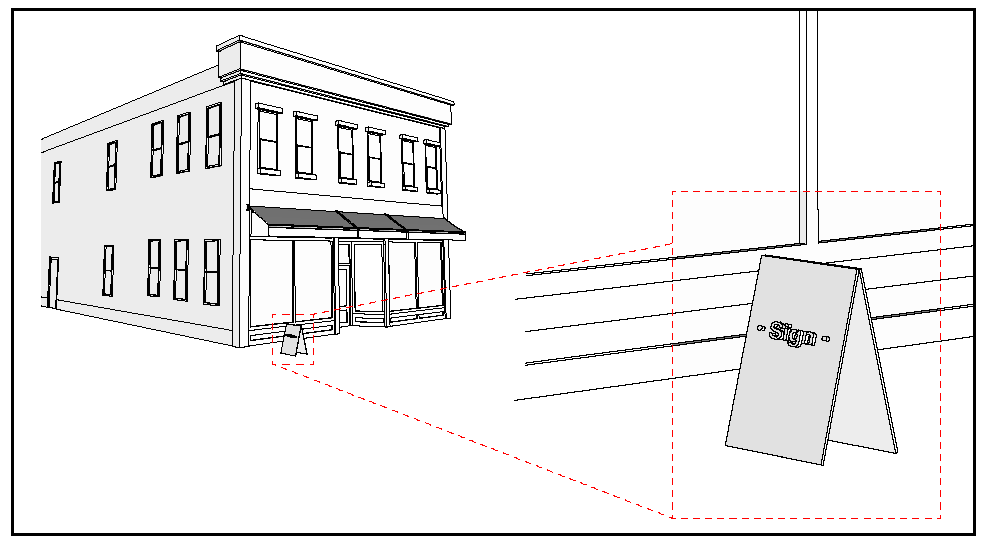
Examples of sandwich boards: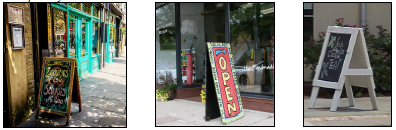
 ;eop;
;eop;
Table 11-11-9-3
Sandwich Board Standards
Rules of Interpretation: Yes = the sign type or characteristic is permitted; No = the sign type or characteristic is not permitted; R = the sign type or characteristic is required; NR = the sign type is permitted for non-residential uses only; "—" the standard does not apply. Z = as established for the principal building by the applicable ODP, Zoning District or Specific Plan. Categories (see Section 11-11-8(C)): RLII = Residential Low Intensity, RMI = Residential Medium Intensity, OTC= Office/Transition, COM=Commercial, MSP=Mixed Use, ERD=Employment, IFA=Industrial.
(1)
Sandwich Boards are not permitted in planter beds.
(2)
Sandwich Boards are allowed only where a building is within a build-to line or maximum setback, or where a front facade that includes an entryway open to the general public during normal business hours is within 10 feet of the edge of a public sidewalk.
(3)
Sandwich Boards shall leave a minimum, unobstructed sidewalk clearance as provided above or as otherwise required by the ADA and City fire lane requirements, whichever is greater.
(4)
Sandwich Boards shall be anchored to the ground in a manner sufficient to withstand wind loads established by the Building Code. However, Sandwich Boards shall have no permanent attachments to the sidewalk.
(5)
Sandwich Boards shall be composed of wood, medium-density fiberboard, metal (iron or steel) frames, or other materials with equivalent weight and density. The sign face may include a chalkboard. Sandwich Boards shall not be composed of plastic or similar materials.
(D)
Subdivision Entry:
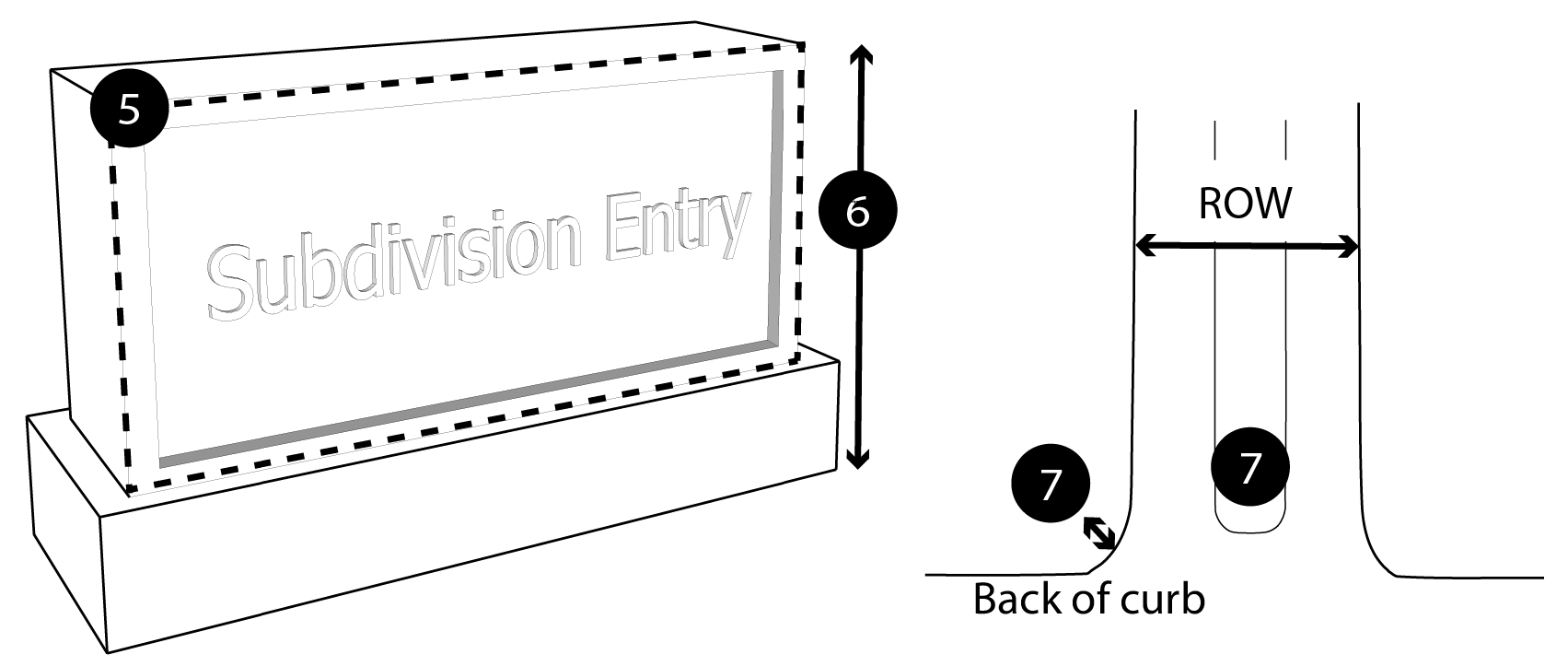
Definition: A "subdivision entry sign" is a monument sign located directly adjacent to a vehicular entry point to a subdivision from a collector or arterial street and provides wayfinding for motorists.
Figure 11-11-9-4 Subdivision Entry Signs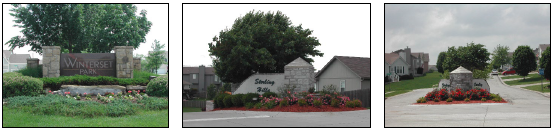
 ;eop;
;eop;
Table 11-11-9-4
Standards for Subdivision Entry Signs
Rules of Interpretation: Yes = the sign type or characteristic is permitted; No = the sign type or characteristic is not permitted; R = the sign type or characteristic is required; NR = the sign type is permitted for non-residential uses only; "—" the standard does not apply. Z = as established for the principal building by the applicable ODP, Zoning District or Specific Plan. Categories (see Section 11-11-8(C)): RLII = Residential Low Intensity, RMI = Residential Medium Intensity, OTC= Office/Transition, COM=Commercial, MSP=Mixed Use, ERD=Employment, IFA=Industrial.
(1)
Subdivision entry signs may be located only at vehicular entrances into the subdivision.
* Note: subdivision entry signs are not allowed in the public right-of-way (see Section 11-11-5(B), W.M.C.). The City may allow subdivision entry signs within easements and/or in right-of-way that is sold or transferred to a private property owner, subject to the caveat that no sight triangle conflicts are created.
(Ord. No. 4053, § 1, 12-21-2020; Ord. No. 4282, §§ 1—3, 4-14-2025)
11-11-10. - Attached Signs.
(A)
Generally:
(1)
Location. The highest point of an attached sign shall not project above the roof line of a structure. This section does not apply to permitted roof signs.
(2)
Clearance:
(a)
Attached signs shall not extend more than 5 feet from any building wall or beyond the outer edge of a sidewalk, whichever is greater. These signs may not extend into/over any portion of the public right-of-way (other than a sidewalk or alley) or an elevated electrical line.
(b)
The minimum required vertical clearance for an awning sign, canopy sign, over canopy sign, under canopy sign, or projecting sign is at least eight (8) feet above any sidewalk and fourteen (14) feet above any alley surface where vehicles may pass below.
(3)
Architectural Features. Attached signs shall not obscure window or door openings, other open areas within a building facade, or architectural features such as arches, columns, eaves, cornices, moldings, dormers, pediments, or ornamental materials such as metal, glass or woodwork, except for:
(a)
Window signs, to the extent permitted by this Code (see Section 11-11-10(E), W.M.C.), and
(b)
Signs located on the drip-flap portion of an awning, canopy or marquee, or an under-canopy sign, to the extent permitted by Section 11-11-10(C), W.M.C.
(B)
Wall Signs:
Definition: A "wall sign" is a sign (other than a projecting sign, roof sign, skyline sign, or window sign) that (1) is fastened to or painted on the wall of a building or other structure so that the wall becomes the supporting structure for, or forms the background surface of, the sign; and (2) extends less than 18 inches from a building surface.
Figure 11-11-10-1 Wall Signs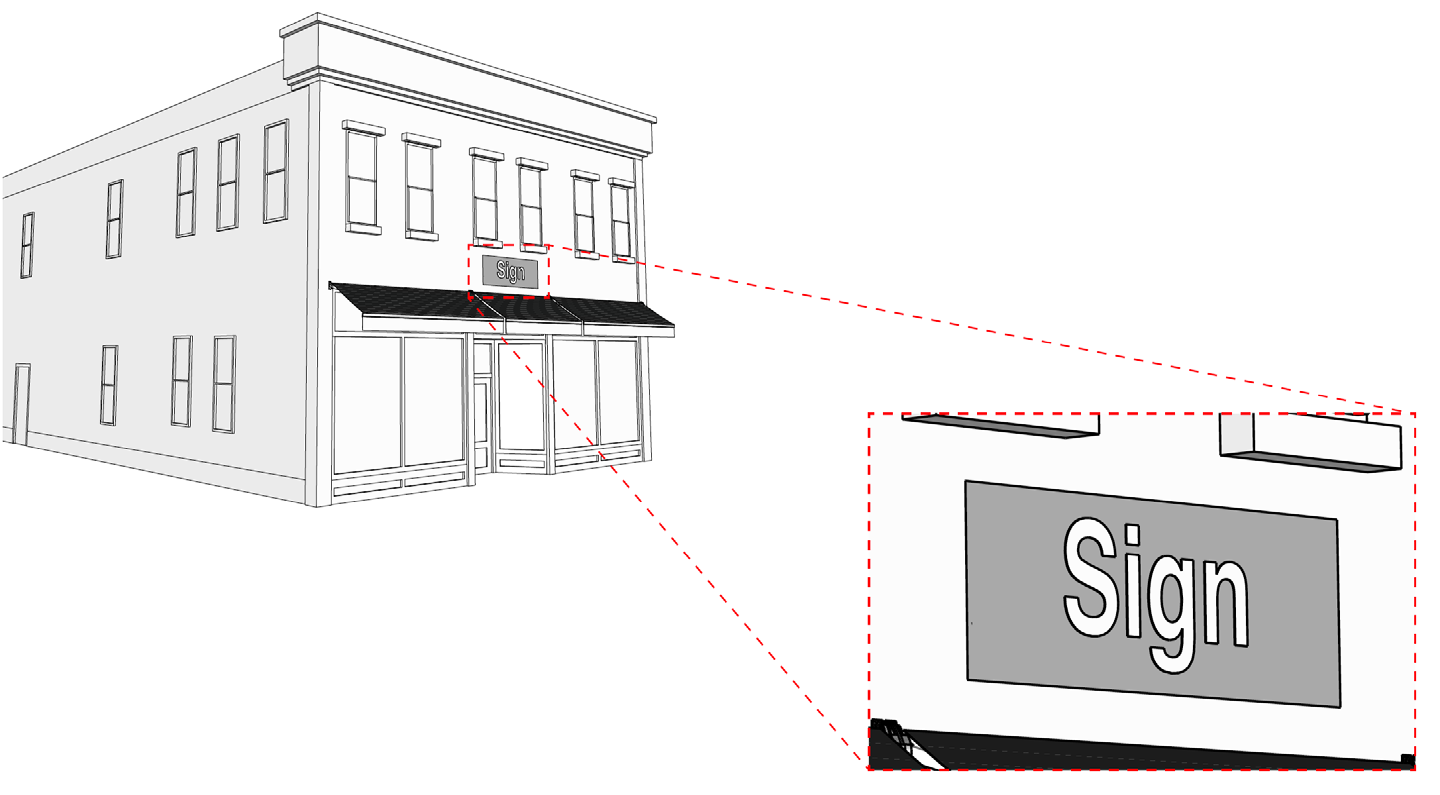
Examples of wall signs: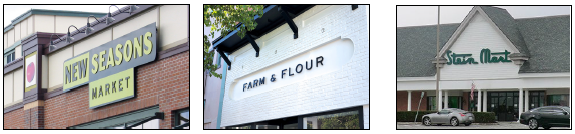
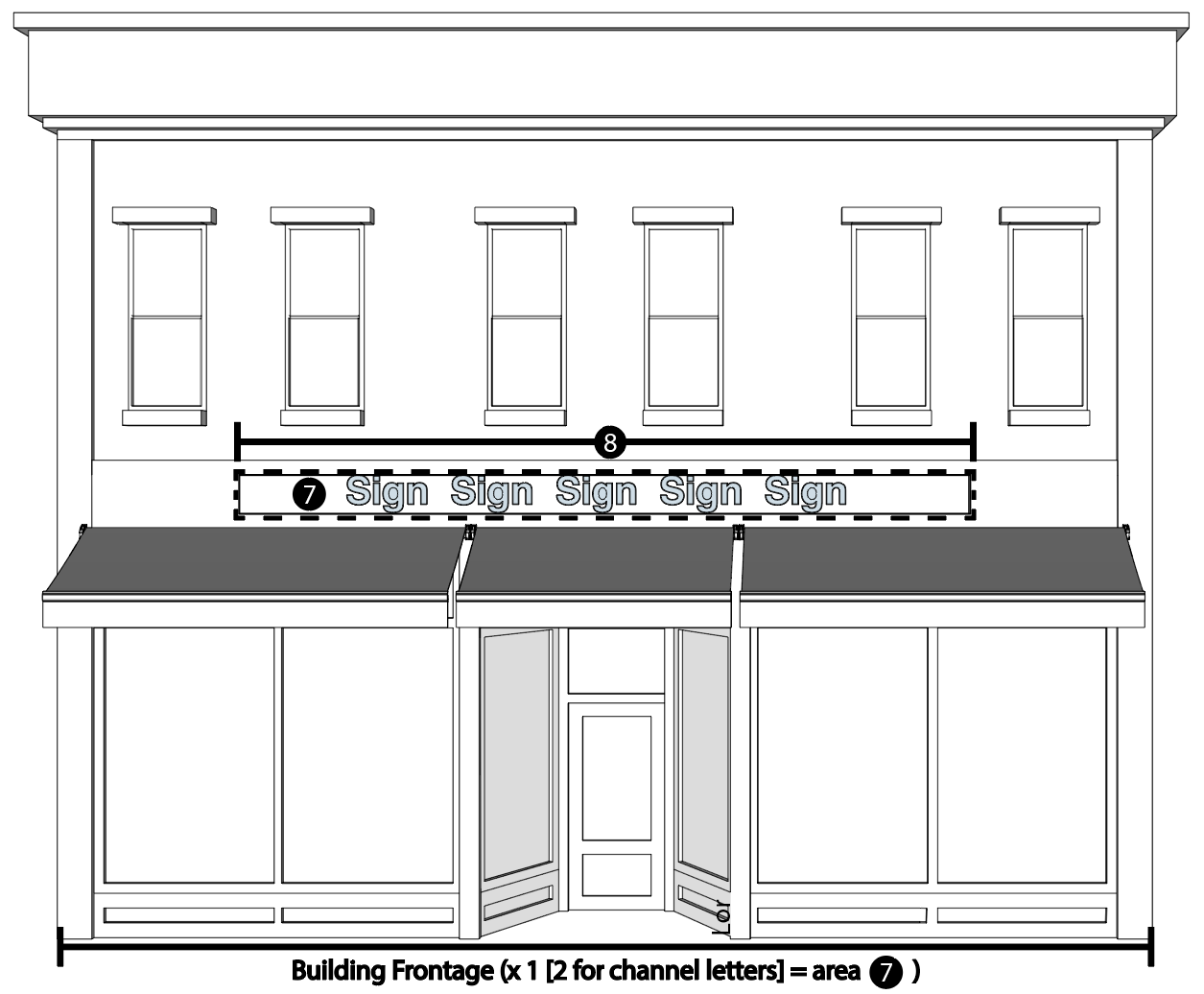
Table 11-11-10-1
Wall Sign Standards
Rules of Interpretation: Yes = the sign type or characteristic is permitted; No = the sign type or characteristic is not permitted; R = the sign type or characteristic is required; NR = the sign type is permitted for non-residential uses only; "—" the standard does not apply. Z = as established for the principal building by the applicable ODP, Zoning District or Specific Plan. D refers to the Downtown SPD, and W refers to the Westminster Station SPD. Categories (see Section 11-11-8(C)): RLII = Residential Low Intensity, RMI = Residential Medium Intensity, OTC= Office/Transition, COM=Commercial, MSP=Mixed Use, ERD=Employment, IFA=Industrial.
Note: wall signs cannot obscure architectural features (see 11-11-6(D)).
(1)
Additional Allocations.
(a)
The area and number allocation for projecting signs (see subsection (D), below) must fall within the allocation for wall signs. The area and number allocation for awning, over- and under-canopy and marquee signs, roof signs, skyline signs, and window signs in this section are in addition to the allocation for wall signs.
(b)
A tenant occupying a space at the end of a multi-tenant building may have up to three (3) signs, with no more than two (2) signs on any building elevation.
(2)
Height/Location. The highest point of a wall sign shall comply with subsection (A)(2) above, and:
Table 11-11-10-2
Wall Sign Height / Location
(3)
Painted Wall Signs. Wall signs may be created by applying paint to the building surface. A painted wall sign shall not cover windows.
(C)
Awning/Over or Under-Canopy/Marquee Signs:
Definitions:
An "awning sign" is any sign painted, printed, attached, or otherwise applied to any facet or support structure of an awning. An "awning" means an architectural projection that provides weather protection, identity or decoration, and is partially or wholly supported by the building to which it is attached. An awning is comprised of a lightweight frame structure over which a covering is attached. (Source: International Building Code 2015)
Figure 11-11-10-2 Awning Signs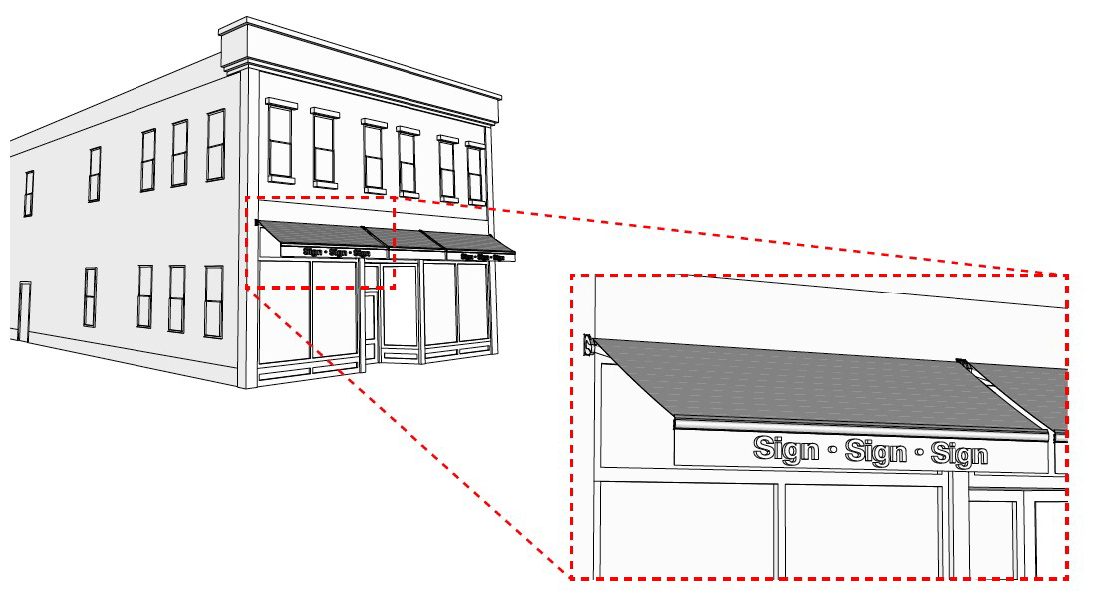
Examples of awning signs: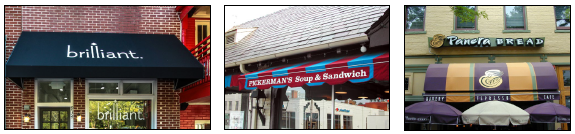
A "canopy sign" is a sign attached to the surface of a canopy. A "canopy" means a
permanent structure or architectural projection of rigid construction over which a
covering is attached that provides weather protection, identity or decoration. A canopy
may be structurally independent (a "detached canopy") or supported by attachment to
a building on one or more sides (an "attached canopy").
(Source: International Building Code, 2015)
Figure 11-11-10-3 Canopy Signs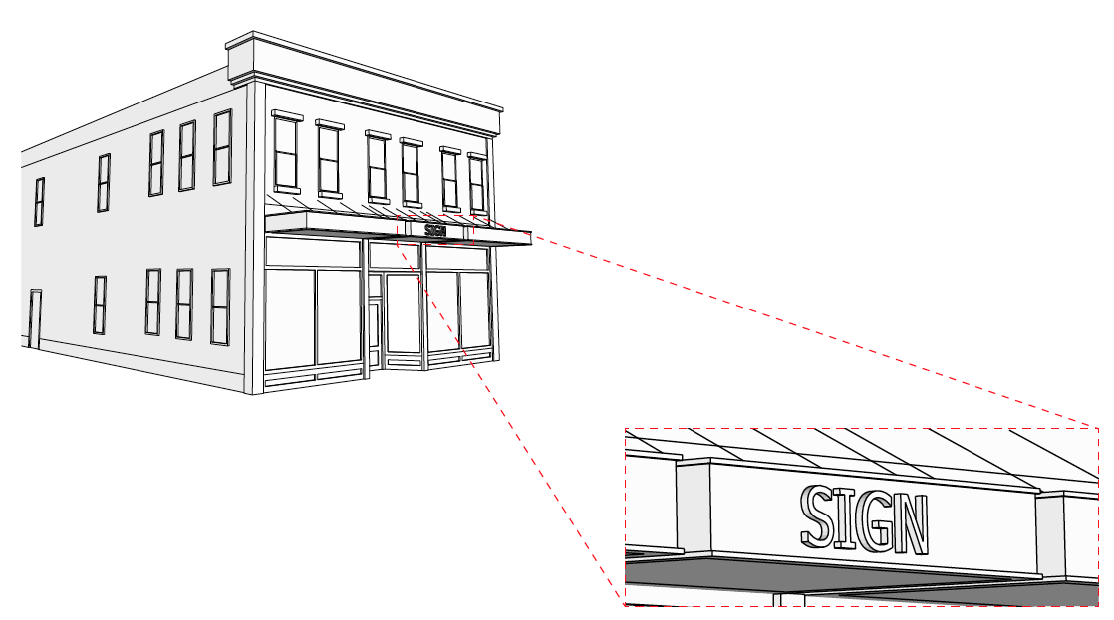
Examples of canopy signs: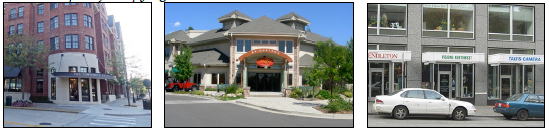
A "marquee sign" is a sign attached to the fascia of marquee. A "marquee" means a canopy that has a top surface which is sloped less than 25 degrees from the horizontal and is located less than 10 feet (3.05 m) from operable openings above or adjacent to the level of the marquee. (Source: International Building Code, 2015)
Figure 11-11-10-4 Marquee Signs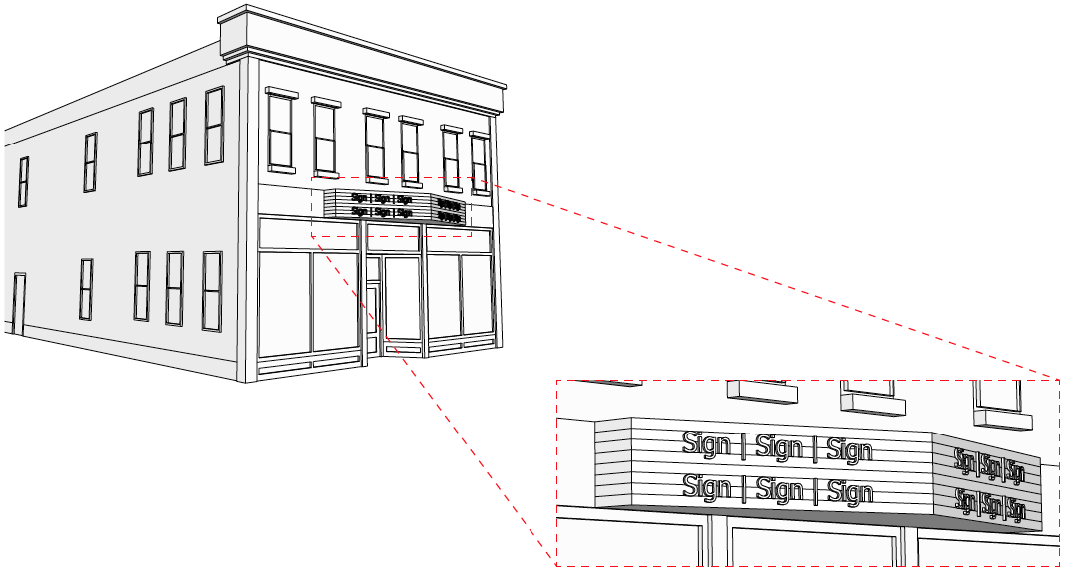
Examples of marquee signs: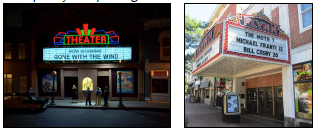
An "over-canopy sign" is a sign on the top of a roof overhang of a covered porch or walkway.
Figure 11-11-10-5 Over-Canopy Signs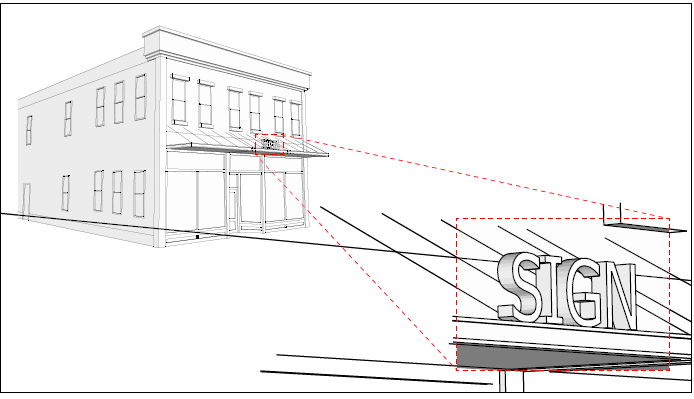
Examples of over-canopy signs: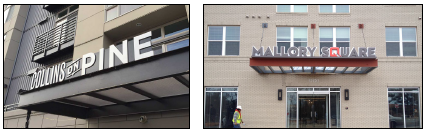
An "under-canopy sign" is a sign suspended from the underside of a canopy, awning, ceiling, marquee, roof overhang, a covered porch, or walkway.
Figure 11-11-10-6 Under-Canopy Signs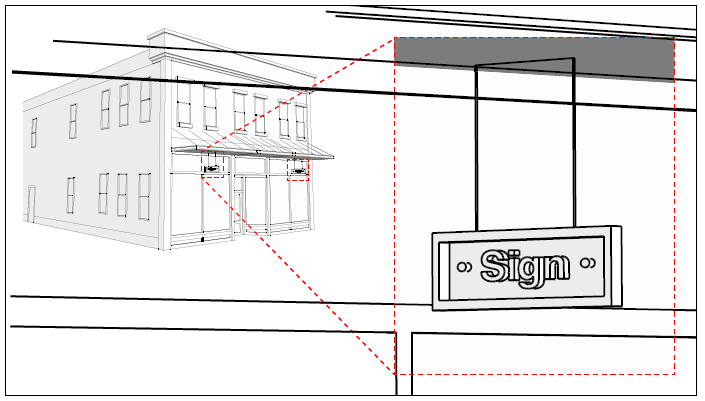
Examples of under-canopy signs: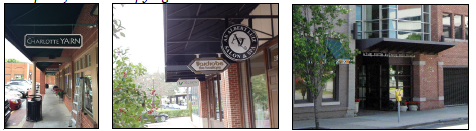
Figure 11-11-10-7 Illustrations of standards for Table 11-10-3
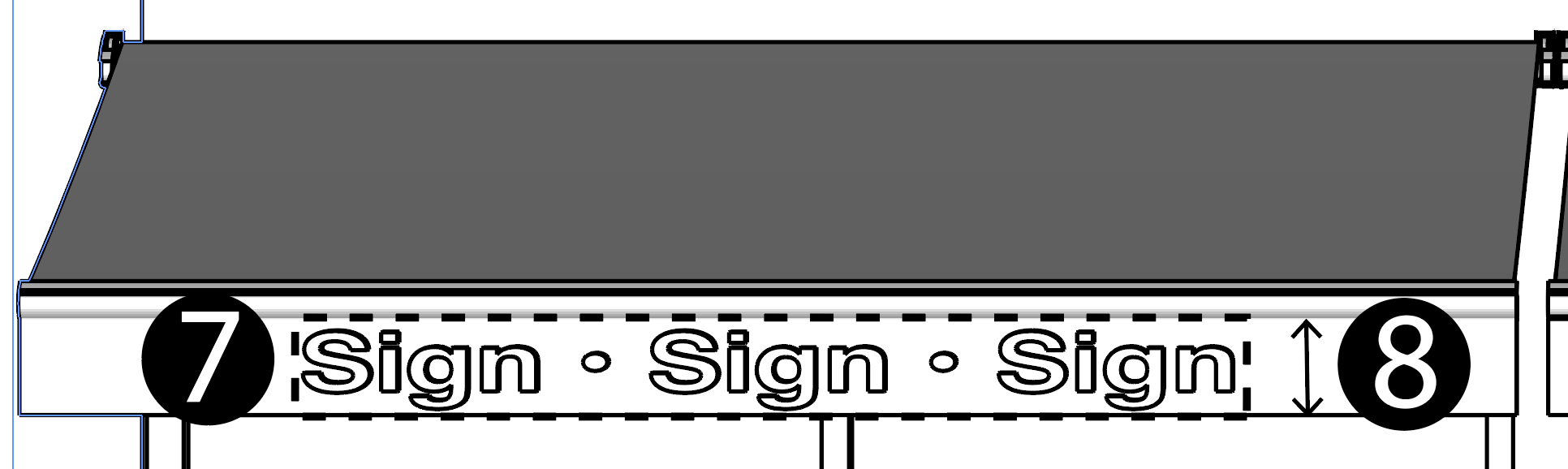
Canopy Sign
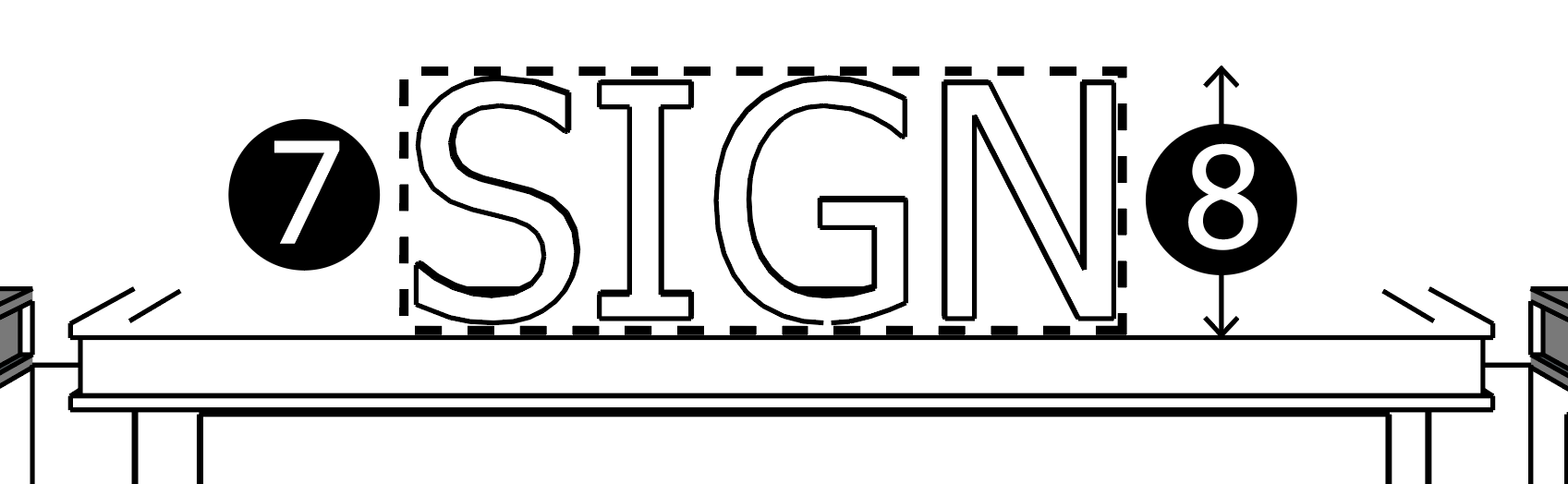
Over Canopy Sign
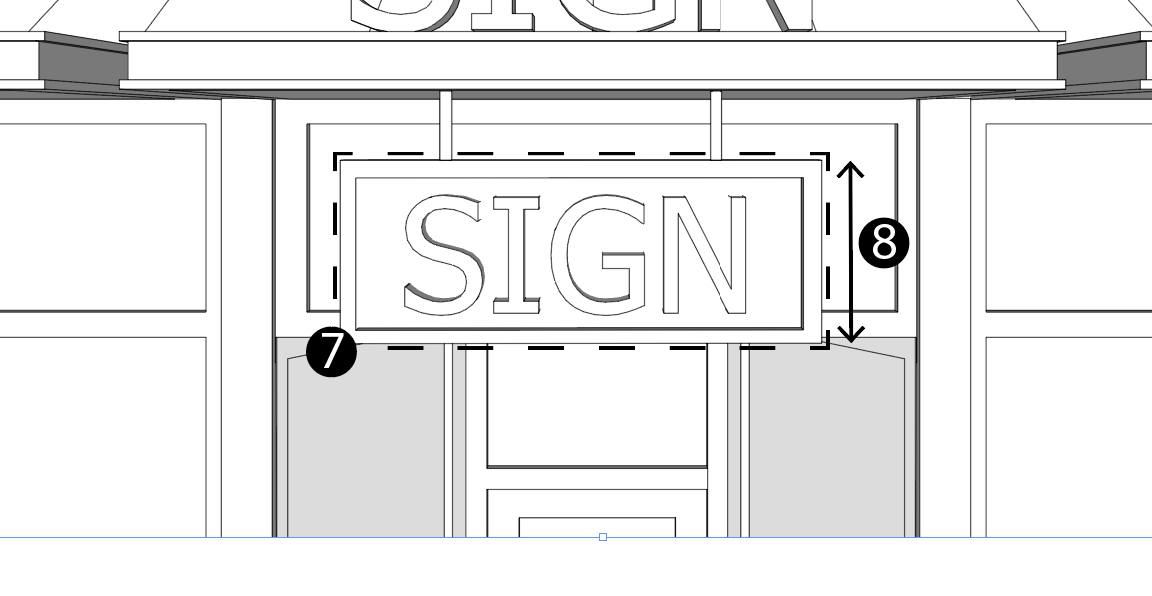
Under Canopy Sign
Table 11-11-10-3
Standards for Awning, Canopy, Marquee, Over- and Under-Canopy Signs
Rules of Interpretation: Yes = the sign type or characteristic is permitted; No = the sign type or characteristic is not permitted; R = the sign type or characteristic is required; NR = the sign type is permitted for non-residential uses only; "—" the standard does not apply. Z = as established for the principal building by the applicable ODP, Zoning District or Specific Plan. Categories (see Section 11-11-8(C)): RLII = Residential Low Intensity, RMI = Residential Medium Intensity, OTC= Office/Transition, COM=Commercial, MSP=Mixed Use, ERD=Employment, IFA=Industrial.
* A detached canopy may use internal scrolling or magnetic mechanisms, but may not contain a light emitting diode (LED), and may not change its message more often than twice in a 24-hour period.
(D)
Projecting Signs:
Definition: A "projecting sign" is a sign supported by, and with any part extending at least eighteen (18) inches from, a building wall.
Figure 11-11-10-8 Projecting Signs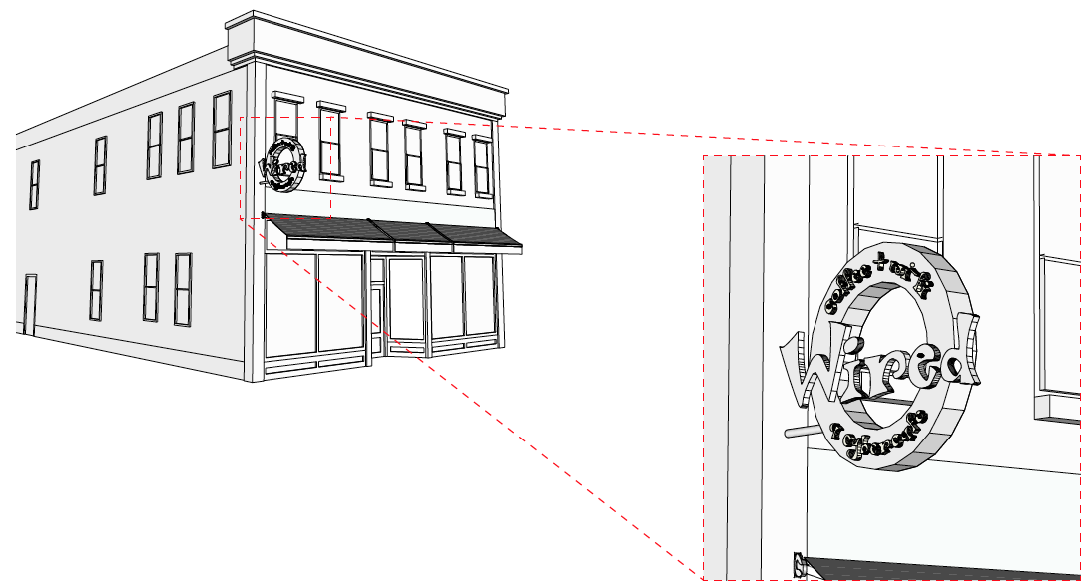
Examples of projecting signs: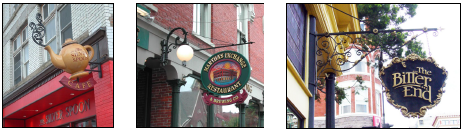
11-11-10 Attached Signs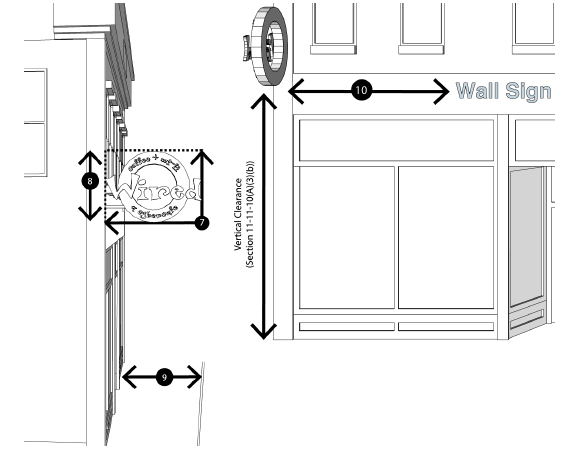
Table 11-11-10-4
Projecting Signs
Rules of Interpretation: Yes = the sign type or characteristic is permitted; No = the sign type or characteristic is not permitted; R = the sign type or characteristic is required; NR = the sign type is permitted for non-residential uses only; "—" the standard does not apply. C = see clearance regulations (subsection (A), above). Categories (see Section 11-11-8(C)): RLII = Residential Low Intensity, RMI = Residential Medium Intensity, OTC= Office/Transition, COM=Commercial, MSP=Mixed Use, ERD=Employment, IFA=Industrial.
No part of a projecting sign is permitted above the top of the second-floor plate.
(E)
Window Signs:
A "window sign" is a sign posted, painted, placed, or affixed to the inside of a window and inside a building, but clearly visible from outside the building. Signs placed on the exterior of a window are not permitted. This includes any sign that is mounted within three (3) feet of a window and oriented to the window in a manner that is visible from the outside of the building or wraps or film that reduce the transparency of the window. For purposes of this definition, a curtain wall or window wall is not considered a window.
Figure 11-11-10-9 Window Signs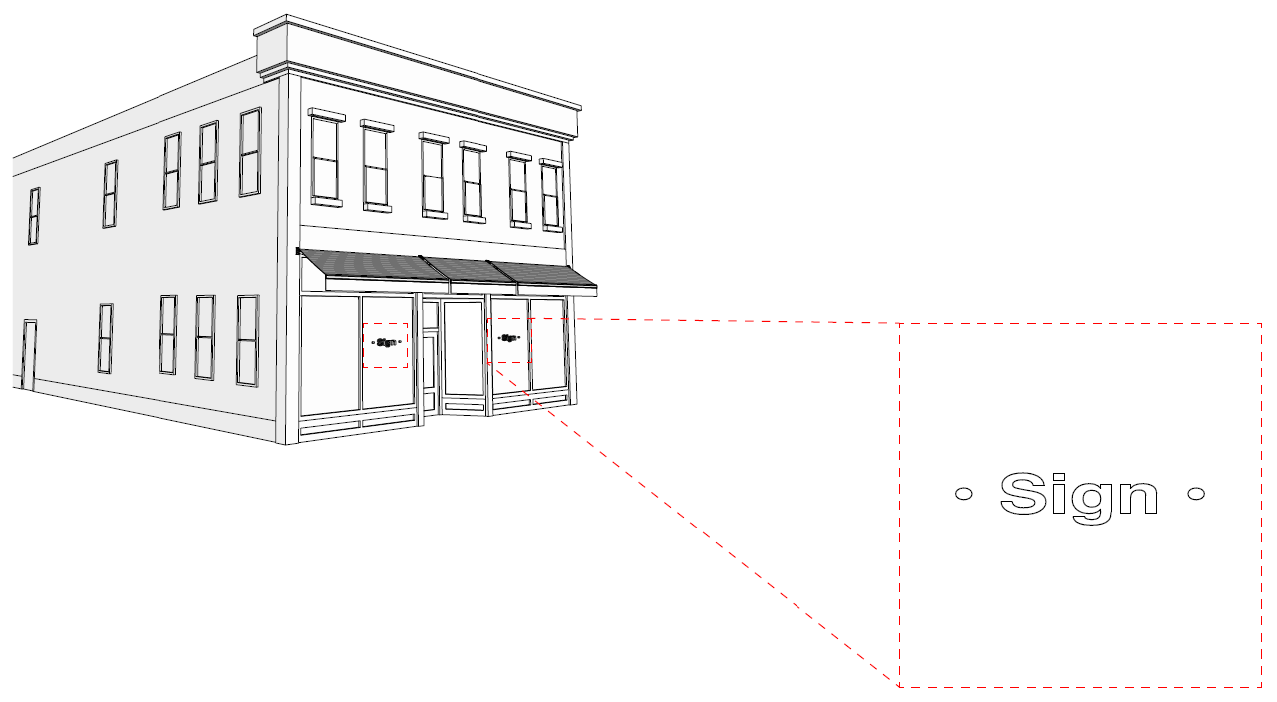
Examples of window signs:
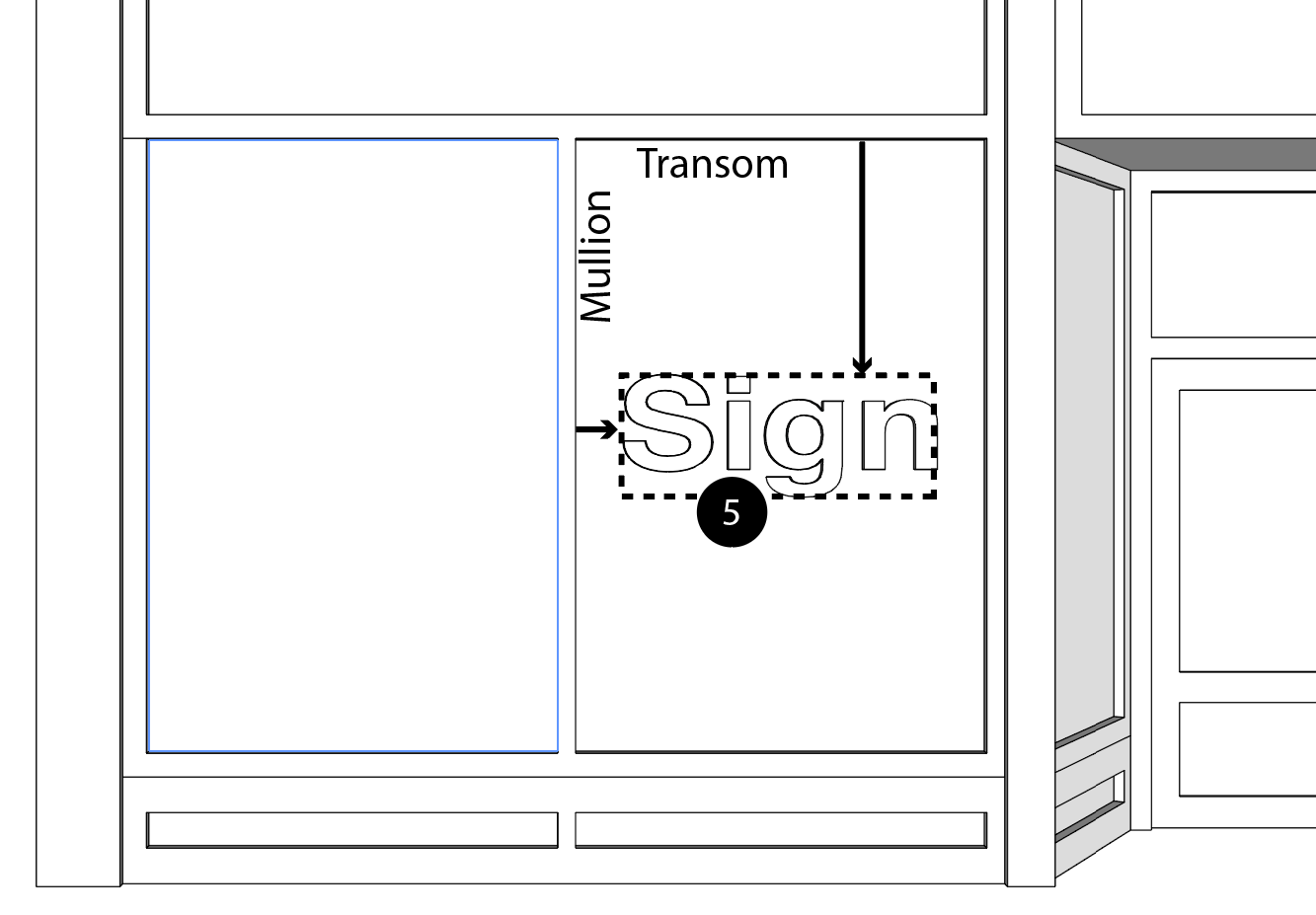 ;eop;
;eop;
Table 11-11-10-5
Standards for Window Signs
Rules of Interpretation: Yes = the sign type or characteristic is permitted; No = the sign type or characteristic is not permitted; R = the sign type or characteristic is required; NR = the sign type is permitted for non-residential uses only; "—" the standard does not apply. Z = as established for the principal building by the applicable ODP, Zoning District or Specific Plan. Categories (see Section 11-11-8(C)): RLII = Residential Low Intensity, RMI = Residential Medium Intensity, OTC= Office/Transition, COM=Commercial, MSP=Mixed Use, ERD=Employment, IFA=Industrial/Transition, COM=Commercial, MSP=Mixed Use, ERD=Employment, IFA=Industrial.
(F)
Roof Signs:
Definition: A "roof sign" is a sign that is mounted on the roof of a building, or that is wholly or partially dependent upon the building for support, and that projects above the highest point of a building with a flat roof, the eave-line of a building with a gambrel, gable, or hip roof, or the deck-line of a building with a mansard roof.
Figure 11-11-10-10 Roof Signs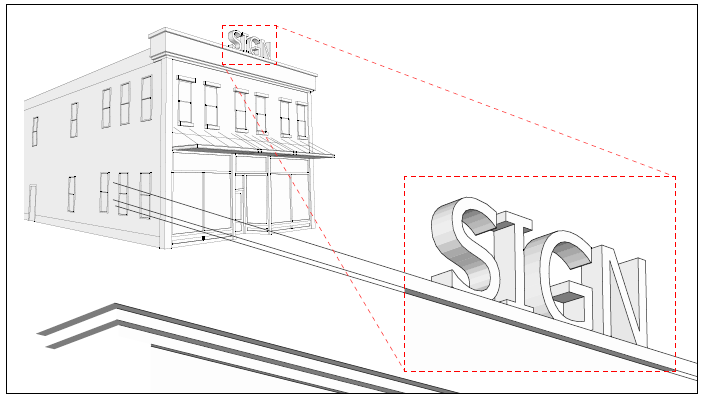
Examples of roof signs: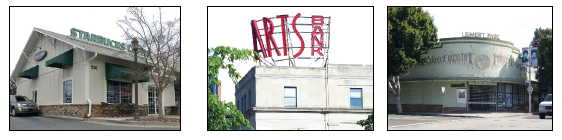
 ;eop;
;eop;
Table 11-11-10-6
Standards for Roof Signs
Rules of Interpretation: Yes = the sign type or characteristic is permitted (* = SPD only); No = the sign type or characteristic is not permitted; R = the sign type or characteristic is required; NR = the sign type is permitted for non-residential uses only; "—" the standard does not apply. Z = as established for the principal building by the applicable ODP, Zoning District or Specific Plan. Categories (see Section 11-11-8(C)): RLI = Residential Low Intensity, RMI = Residential Medium Intensity, OTC= Office/Transition, COM=Commercial, MSP=Mixed Use, ERD=Employment, IFA=Industrial.
(1)
A building may include either a roof sign or a skyline line subject to this subsection, but not both.
(2)
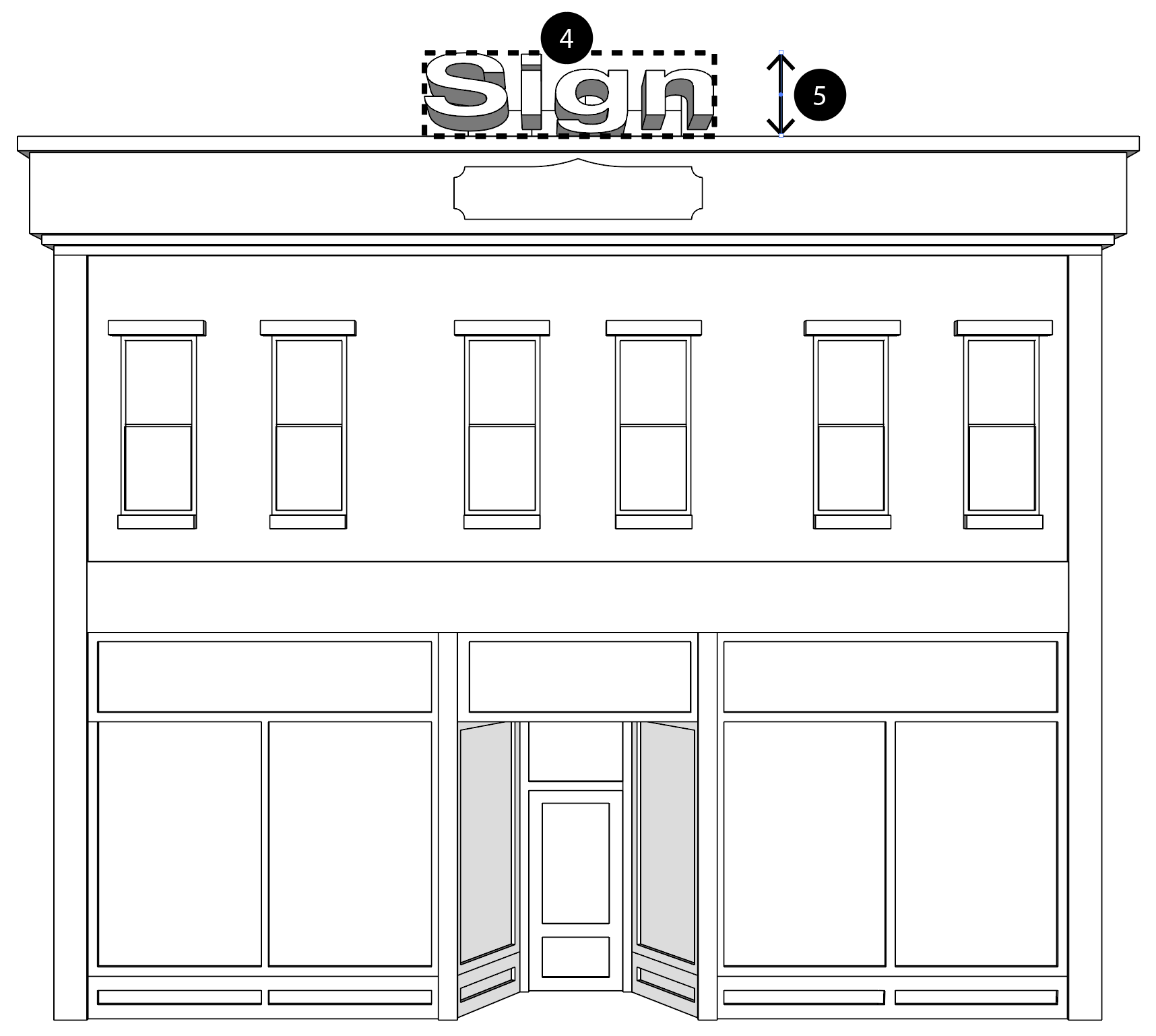
Roof signs shall not extend above:
(a)
Eight (8) feet above the top of a flat roof, or
(b)
The top of a mansard roof, or
(c)
The top ridge of a gable, hip, cone, gambrel, or shed roof; or
(d)
The top ridge of any other sloped roof.
(3)
Roof signs must be designed to withstand wind loads established by the Building Code.
(4)
Channel letters shall not be mounted on panels.
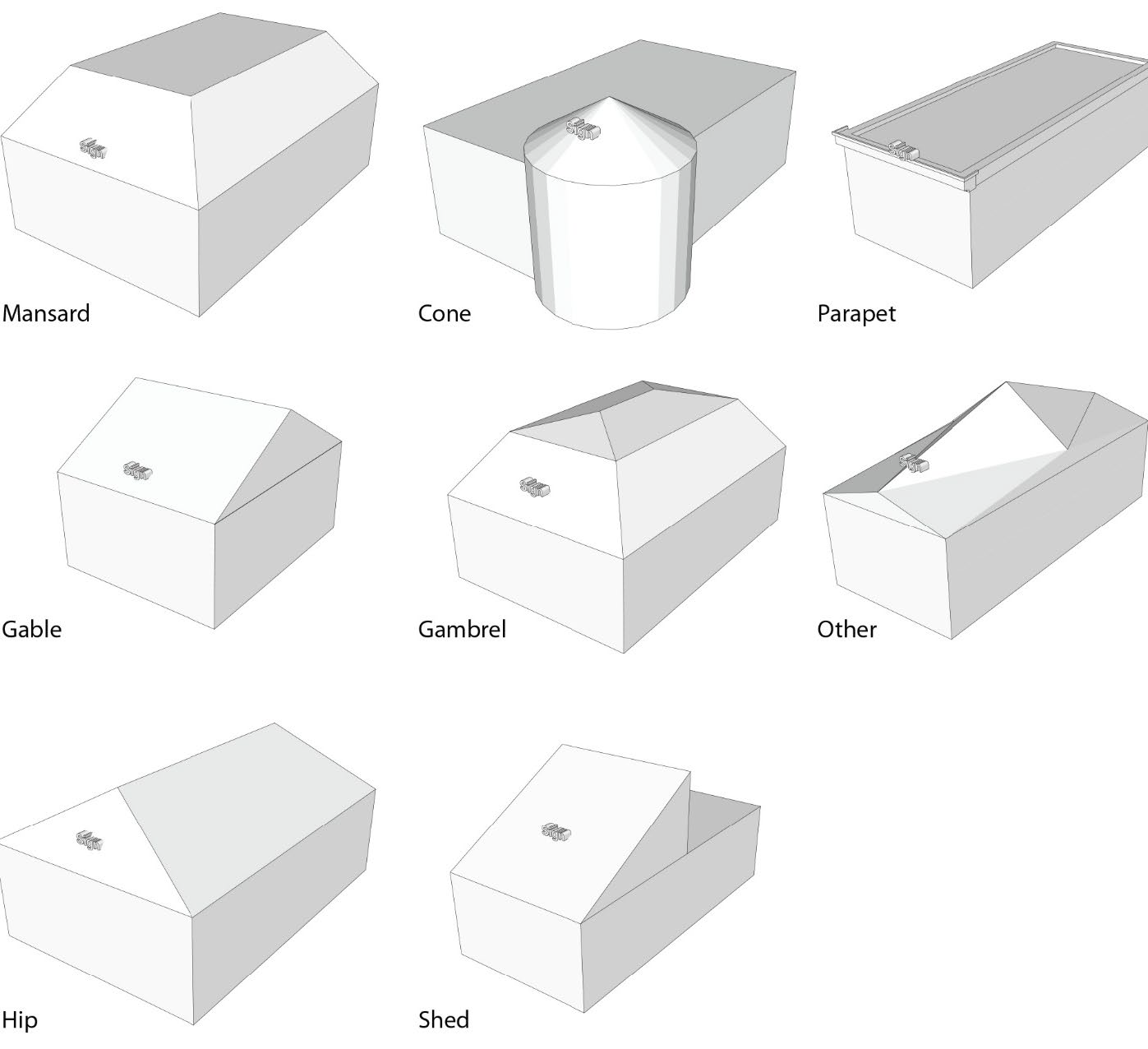
Figure 11-11-10-11 Roof Sign Placement
(G)
Skyline Signs:
Skyline Sign: A sign that is placed above the windows of the highest floor of a building that is at least three (3) stories or 36 feet in height. Skyline signs may not project above the roofline of the building.
Figure 11-11-10-12 Skyline Signs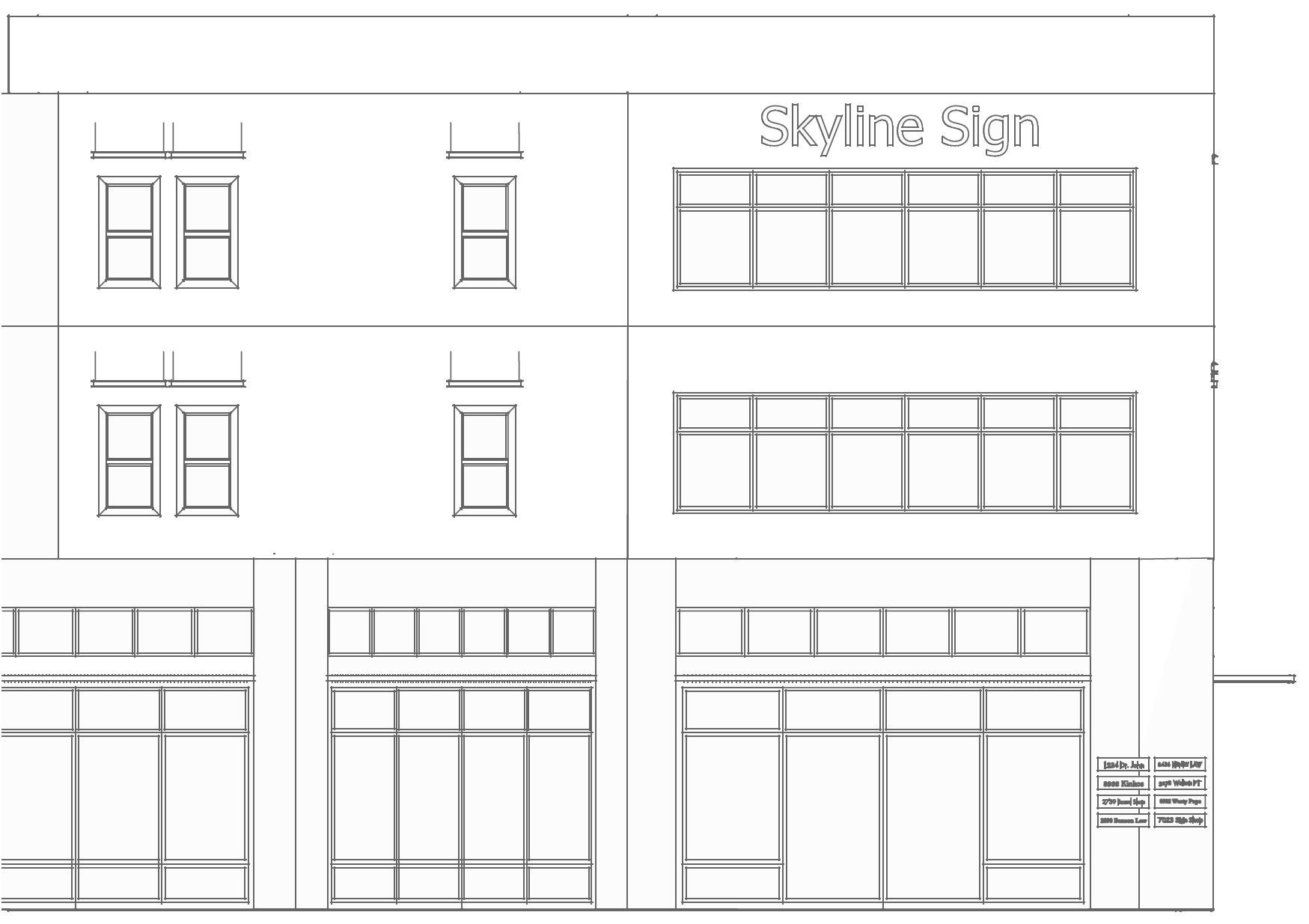
Examples of skyline signs: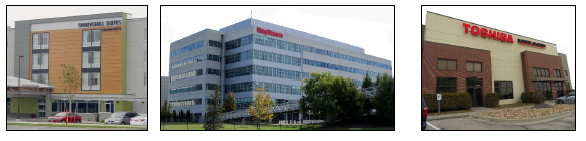
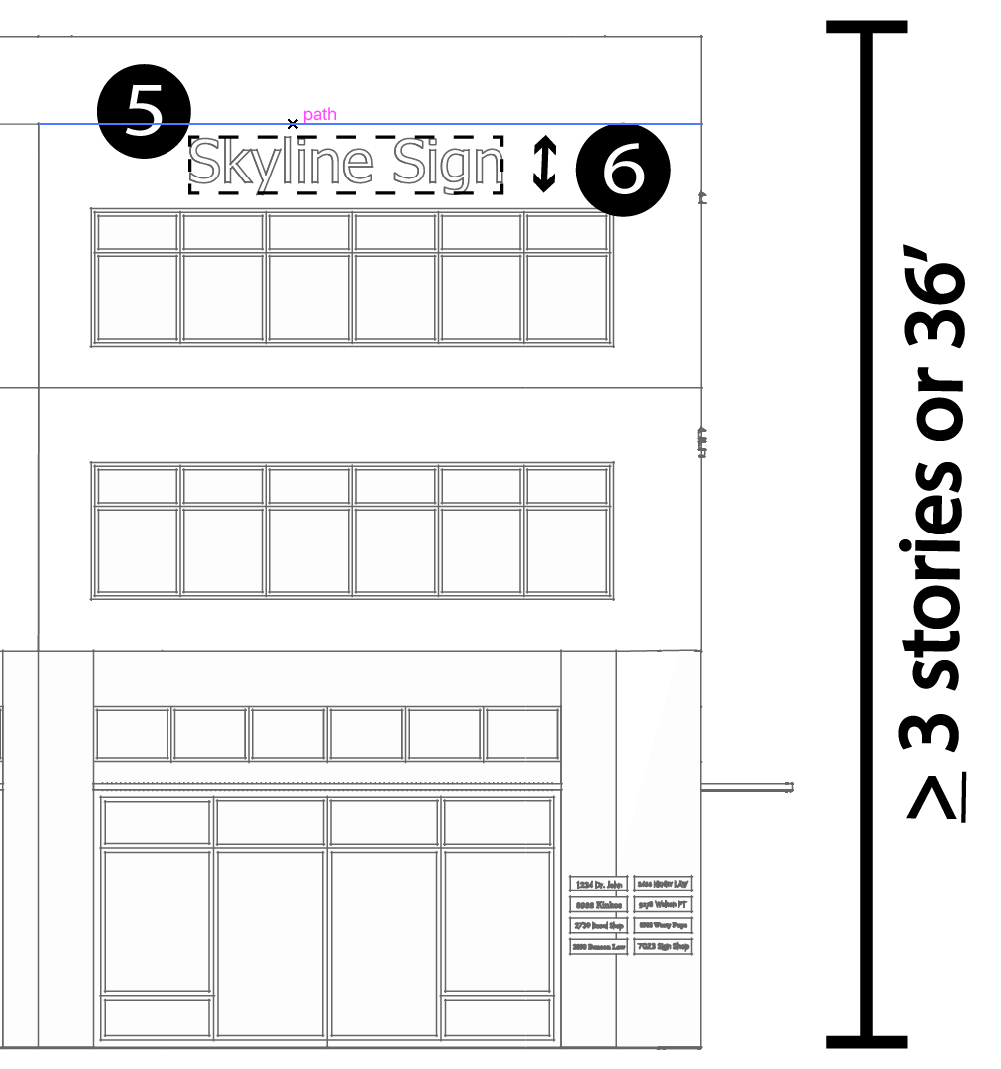
Table 11-11-10-7
Standards for Skyline Signs
Rules of Interpretation: Yes = the sign type or characteristic is permitted; No = the sign type or characteristic is not permitted; R = the sign type or characteristic is required; NR = the sign type is permitted for non-residential uses only; "—" the standard does not apply. Z = as established for the principal building by the applicable ODP, Zoning District or Specific Plan. Categories (see Section 11-11-8(C)): RLII = Residential Low Intensity, RMI = Residential Medium Intensity, OTC= Office/Transition, COM=Commercial, MSP=Mixed Use, ERD=Employment, IFA=Industrial.
A building may include either a roof sign or a skyline line subject to this subsection, but not both.
(Ord. No. 4053, § 1, 12-21-2020)
11-11-11. - Incidental and Miscellaneous Signs.
(A)
Flags:
Definition: A "flag" is a piece of fabric or other flexible material, with distinctive colors and patterns, customarily mounted on a pole or similar freestanding structure, or on a pole mounted on a building.
Figure 11-11-11-1 Flags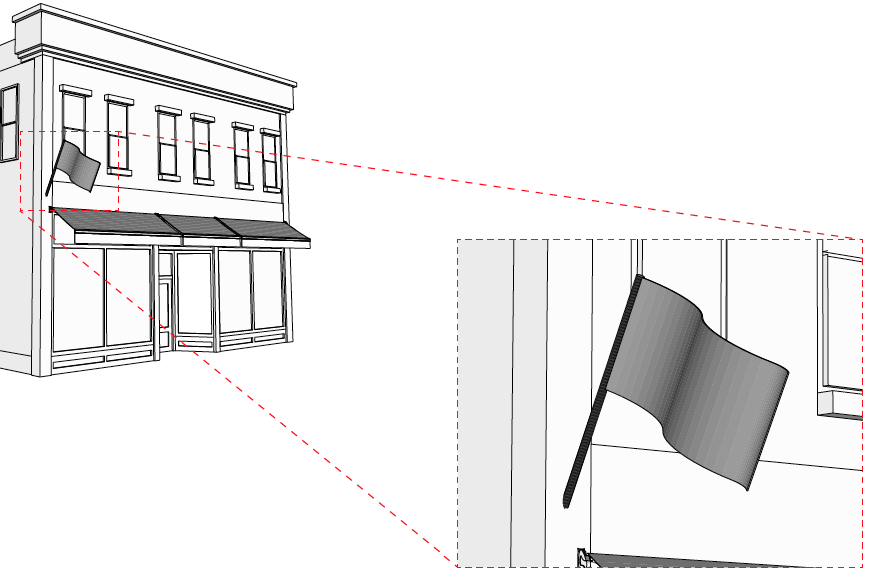
Examples of flags: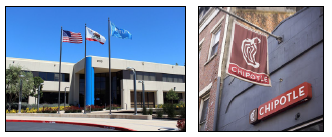
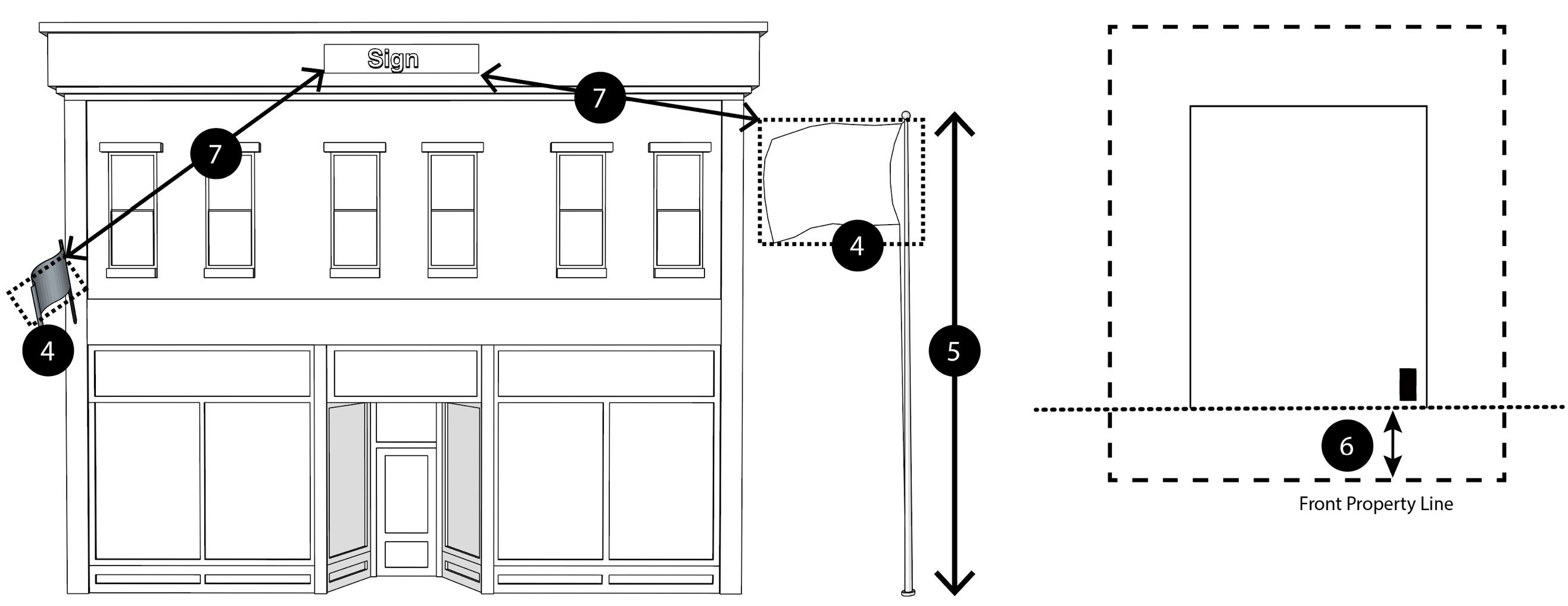
Table 11-11-11-1
Standards for Flags
Rules of Interpretation: Yes = the sign type or characteristic is permitted; No = the sign type or characteristic is not permitted; R = the sign type or characteristic is required; NR = the sign type is permitted for non-residential uses only; "—" the standard does not apply. Z = as established for the principal building by the applicable ODP, Zoning District or Specific Plan. Categories (see Section 11-11-8(C)): RLII = Residential Low Intensity, RMI = Residential Medium Intensity, OTC= Office/Transition, COM=Commercial, MSP=Mixed Use, ERD=Employment, IFA=Industrial.
(B)
Incidental and Temporary Signs:
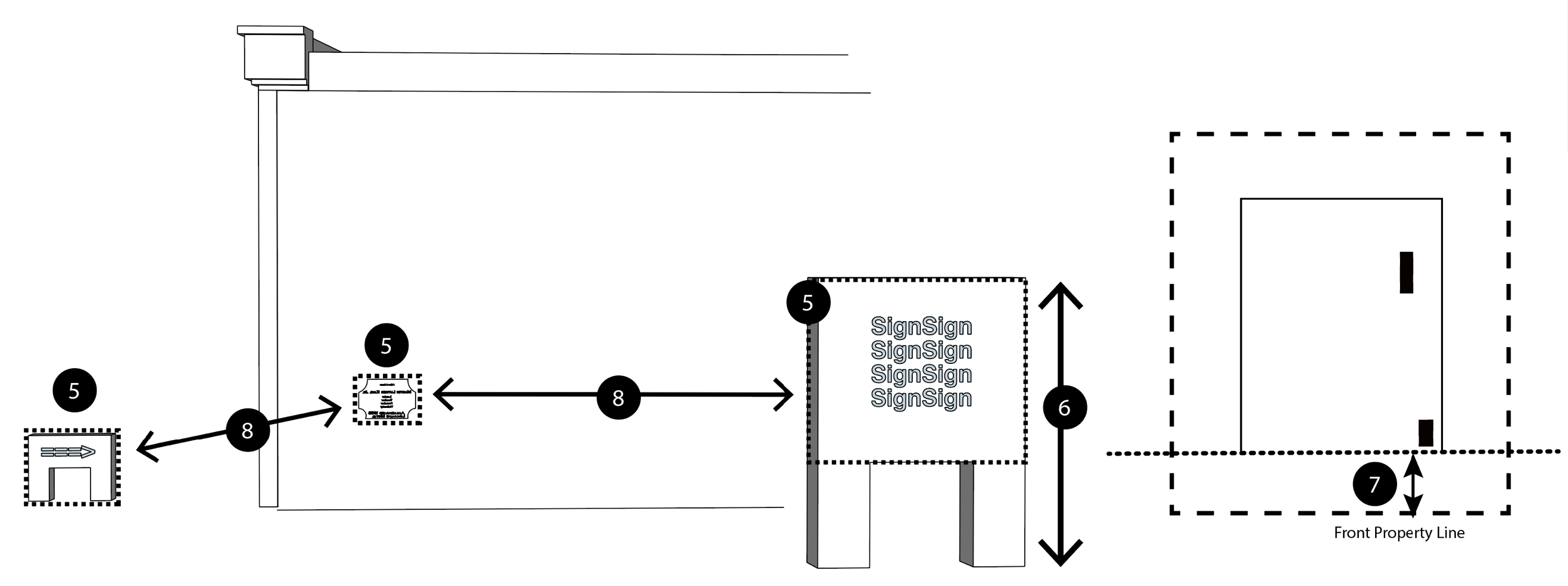
Definition: An "Incidental Sign" is a sign with copy located on a rigid panel and mounted on a pole or a wall or similar structure, with or without a structural frame, that is normally incidental to the allowed use of the property, but can contain any message or content. An incidental sign does not include an attention getting device or other prohibited sign. Temporary signs are considered a form of incidental sign. [Note: examples of customary uses for incidental signs include banners (see subsection 11-11-11(C), W.M.C. below for banners), directional signs, real estate signs, non-commercial opinion signs, menu boards, garage sale signs, holiday decorations, property or tenant identification names or numbers, names of occupants, signs on mailboxes or newspaper tubes, signs posted on private property relating to circulation or private parking, political signs or signs warning the public against trespassing or danger from animals. This paragraph is provided to clarify the regulations and does not limit the content of incidental signs.]
Figure 11-11-11-2 Incidental Signs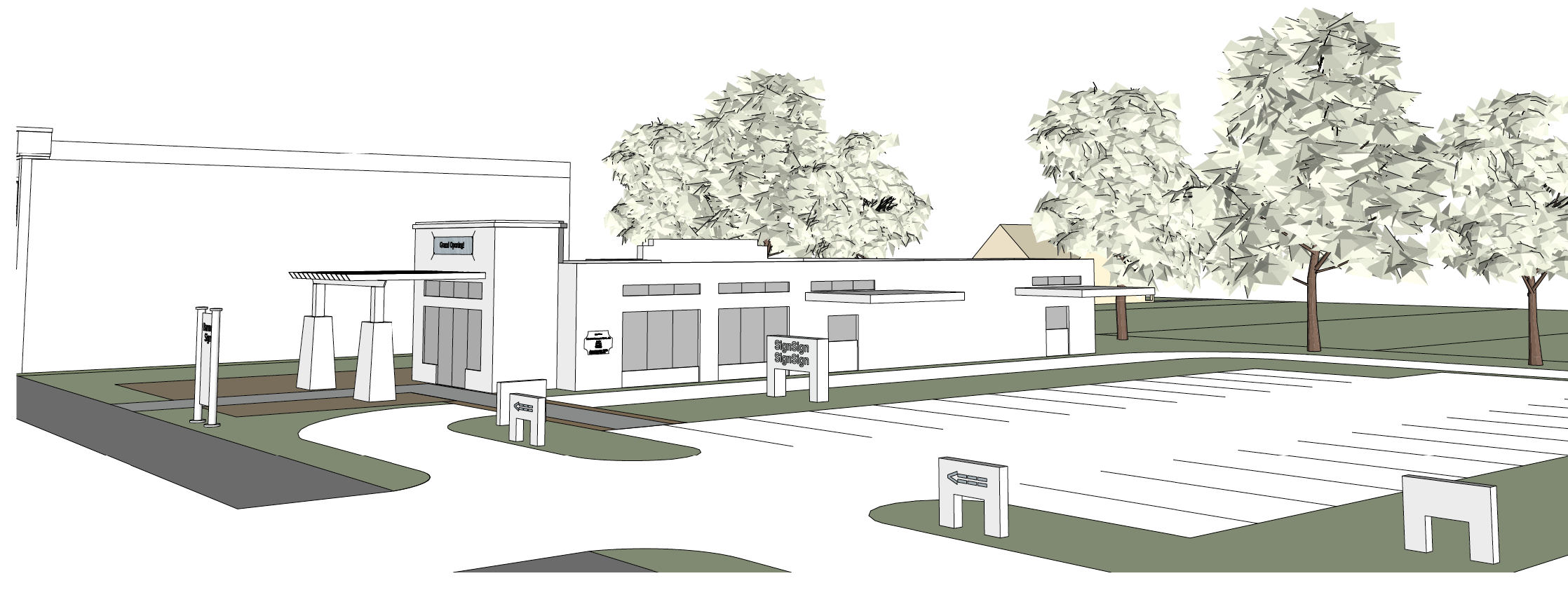
Examples of incidental signs: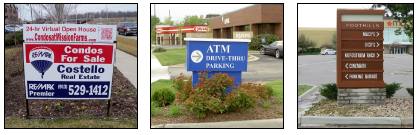
 ;eop;
;eop;
Table 11-11-11-2
Standards for Incidental Signs
Rules of Interpretation: Yes = the sign type or characteristic is permitted; No = the sign type or characteristic is not permitted; R = the sign type or characteristic is required; NR = the sign type is permitted for non-residential uses only; "—" the standard does not apply (or no maximum for row 4). Z = as established for the principal building by the applicable ODP, Zoning District or Specific Plan. Categories (see Section 11-11-8(C)): RLII = Residential Low Intensity, RMI = Residential Medium Intensity, OTC= Office/Transition, COM=Commercial, MSP=Mixed Use, ERD=Employment, IFA=Industrial.
(1)
Display Period for Temporary Signs. A temporary sign may be erected for the following maximum continuous time periods:
(a)
Freestanding Signs Mounted with Standard Wire Stakes or T-Posts: 30 days three times during a calendar year.
(b)
Freestanding Signs Mounted with Metal or Wood Frames, or Mounting Methods of Similar Durability, or Wall Signs:
(i)
90 consecutive days over one calendar year, or
(ii)
40 consecutive days three times during a calendar year, with each 40-day period separated by at least 14 days.
(2)
Incidental signs adjacent to, facing, and oriented toward vehicles in a drive-through lane may use or incorporate digital screens. Up to 100 percent of the permitted sign face area may be digital. A drive-through lane is a vehicular travel lane that allows motorists to remain in their vehicles while ordering and receiving the goods and services of a business.
(C)
Banners:
Definition: A sign made of fabric, cloth, bunting, plastic, paper, or any other non-rigid material with no enclosing framework. This definition does not include flags, pennants or streamers.
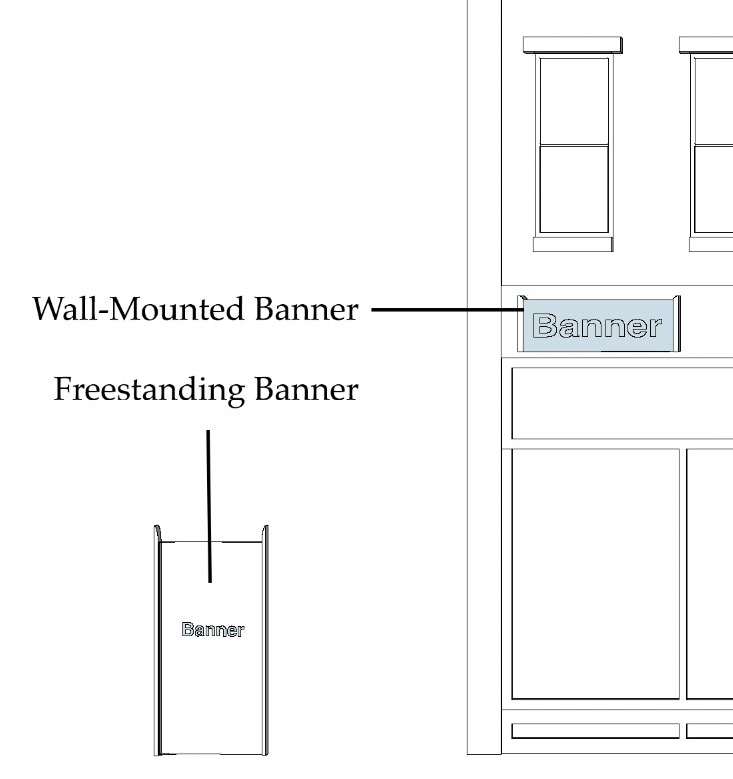
Figure 11-11-11-3 Banners
Examples of Banners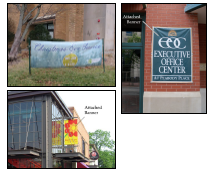
Table 11-11-11-3
Standards for Banners
Plus 100 additional square feet of signage for every 100 linear feet of frontage over 600 linear feet.
Rules of Interpretation: Yes = the sign type or characteristic is permitted; No = the sign type or characteristic is not permitted; R = the sign type or characteristic is required; NR = the sign type is permitted for non-residential uses only; "—" the standard does not apply. Categories (see Section 11-11-8(C)): RLII = Residential Low Intensity, RMI = Residential Medium Intensity, OTC= Office/Transition, COM=Commercial, MSP=Mixed Use, ERD=Employment, IFA=Industrial.
* Banners may exceed the incidental and temporary sign allocation up to the maximum sign area allocation above, but sign area used for banners is counted toward the maximum cumulative sign area for incidental and temporary signs.
(1)
Display Period for Banners. A banner may be erected:
(a)
90 consecutive days over one calendar year, or
(b)
40 consecutive days three times during a calendar year, with each 40-day period separated by at least 14 days.
(D)
Internal Signs:
Definition: A sign that is oriented to a street or drive that is internal to:
• a subdivision, or
• a development that is subject to an ODP.
[Note: Examples include signs in interior areas of shopping centers, mixed-use centers, business parks, or structures, stadiums, and similar recreational areas.]
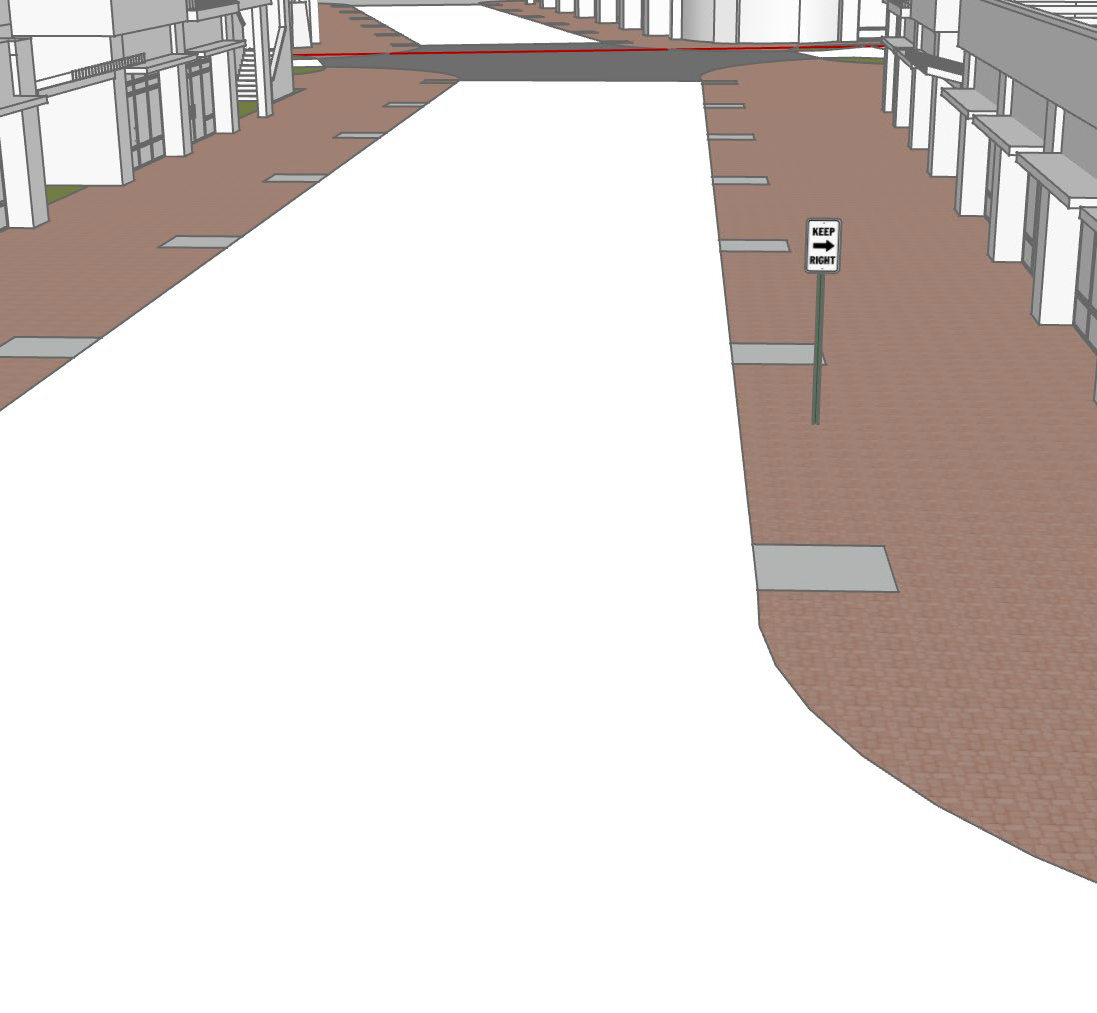
Figure 11-11-11-4 Internal Signs
Examples of Internal Signs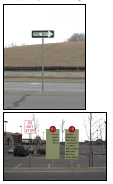
Table 11-11-11-4
Standards for Internal Signs
Rules of Interpretation: Yes = the sign type or characteristic is permitted; No = the sign type or characteristic is not permitted; R = the sign type or characteristic is required; NR = the sign type is permitted for non-residential uses only; "—" the standard does not apply. Categories (see Section 11-11-8(C)): RLII = Residential Low Intensity, RMI = Residential Medium Intensity, OTC= Office/Transition, COM=Commercial, MSP=Mixed Use, ERD=Employment, IFA=Industrial. "Site area" means the minimum continuous area of a subdivision or an ODP, measured from its exterior boundaries.
* Neither the number or area of internal signs is counted toward the cumulative sign area allowance for incidental signs in subsection 11-11-11(B), W.M.C., above.
(Ord. No. 4053, § 1, 12-21-2020; Ord. No. 4244, § 1, 4-22-2024; Ord. No. 4282, § 4, 4-14-2025)
11-11-12. - Historic Signs.
(A)
Applicability. A property owner may apply to designate a sign as an Historic Landmark pursuant to Chapter 13 of this Title.
(B)
Designation. Landmark designation for any sign shall occur as provided in Chapter 13 of this Title, and as follows:
(1)
The City shall not designate a sign as a landmark without the property owner's consent, and
(2)
The Historic Landmark Board shall refer the application to the Parks, Recreation, Libraries and Open Space Advisory Board for its review and concurrence.
(C)
Effect of Designation. A sign designated as a landmark:
(1)
Shall comply with all applicable requirements of Chapter 13 of this Title and any criteria adopted by the Historic Landmark Board, and
(2)
May exceed the area or height established by Sections 11-11-9 through 11-11-11(B), W.M.C., or include any design features otherwise prohibited by those sections, and is considered a conforming sign. The first 30 square feet, and up to 50 percent of the sign area above the first 30 feet, of the designated landmark sign is exempt from the maximum area allowed for that category of sign.
(3)
If the sign is altered or destroyed, it loses its historic designation. However, the sign may be rebuilt at the same location and up to the area and height of the original sign, and must replicate the design characteristics of the original sign in terms of color, materials, mounting, and similar features. Subject to the prior approval of the Parks, Recreation, Libraries and Open Space Advisory Board, alternate comparable materials may be substituted in the reconstruction of the sign if the original materials:
(a)
are no longer available, or
(b)
are so cost prohibitive their use in reconstruction of the sign is infeasible.
(Ord. No. 4053, § 1, 12-21-2020)
11-11-13. - Administration.
(A)
Sign Permits:
(1)
Applicability. Except as otherwise provided by Sections 11-11-9 through 11-11-11(B), W.M.C., it is unlawful for the owner, manager, or occupant of any property located within the City to erect, maintain, or permit the erection or maintenance of any sign on the property without first obtaining a sign permit.
Note: Applicants may also seek administrative variances or variances from the requirements of this Code, and Section 11-11-14 may require a master sign plan. Table 11-11-13-1 (Summary of Alternative Compliance, Variances, and Master Sign Plans) summarizes these actions: ;eop;
Table 11-11-13-1
Summary of ODP Amendments, Administrative Variances, Sign Variances, and Master Sign
Plans
(2)
Procedure.
(a)
An application for a sign permit shall be filed with the Community Services Department and must contain the following information, unless waived by the Planning Manager.
(i)
An elevation of the proposed sign, drawn to scale, showing the sign that is proposed to be erected and (optionally) the proposed copy.
(ii)
The color, finish, and construction materials of the sign and sign structure.
(iii)
A plot plan showing the location of the sign on the property. If the sign is to be attached to the face of the building, the facade shall also show the outline of the building, doors, windows, and architectural features shown for review.
(iv)
All measurements including area, total number of signs requested, table outlining existing signs to remain and sign heights, locations of all signs on the property.
(v)
An engineer's stamp for any freestanding sign exceeding six (6) feet in height.
(b)
An application for a sign permit shall be accompanied by the appropriate fee as required in Subsection 11-9-3(E), W.M.C.
(c)
City staff shall issue a sign permit if they find that the sign conforms to this Chapter and the Building Code, and any applicable ODP. If the application is denied, the Planning Manager, or designee, shall inform the applicant of the reason for denial.
(d)
Any person installing, structurally altering or relocating a sign for which a permit has been issued shall notify the City upon completion of the work. The City may require a final inspection, including an electrical inspection.
(B)
Altering or Moving Existing Signs. A new permit is required prior to moving an existing sign from one location to another or altering a sign in any manner, other than for normal maintenance. An alteration to an existing sign that requires a new permit includes, but is not limited to, height, size, shape, construction material, or lighting.
(C)
Signs in Planned Unit Developments. See Sections 11-11-4(D).
(D)
Sign-Related ODP Amendments and Administrative Variances. Sign-Related ODP Amendments and Administrative Sign Variances allow for administrative approval of modifications to these regulations in a way that provides equivalent public benefits.
(1)
Applicability.
(a)
The Planning Manager may review new signs and modify any sign standard (including but not limited to sign area, setbacks, lighting, and/or height modifications).
(b)
ODP Amendments and Administrative Variances are not available for:
(i)
Incidental Signs (Section (B), W.M.C.), or
(ii)
Prohibited Signs (Section 11-11-5, W.M.C.), or
(iii)
An overall sign program for a PUD provided in a PDP (Subsection (C) above), or
(iv)
Master Sign Plans (Section 11-11-14, W.M.C.).
(2)
Criteria. In considering a request for an ODP Amendment or Administrative Sign Variance to modify the sign allowance(s) on a property, the Planning Manager shall determine that:
(a)
The variance, if granted, would implement alternative or innovative practices that provide equivalent benefits to the public, and
(b)
The variance, if granted, would not modify a dimensional requirement (sign location, area, height, resolution, or quantity) by more than 20 percent, and
(c)
The variance, if granted, would not weaken the general purpose of the Sign Regulations, the Comprehensive Plan policies, or zoning regulations prescribed for the land use designation or zoning district in which the sign is located, and
(d)
The variance, if granted, would not alter the essential character of the land use designation or zoning district in which the sign is located, and
(e)
The variance, if granted, would not be detrimental to any abutting properties, and
(f)
The variance, if granted, would not pose a threat to public health, safety, or welfare, and
(g)
The variance, if granted, would not authorize a type of sign that is not otherwise permitted by this Code.
(E)
Sign Variances.
(1)
Applicability. An applicant proposing to modify the requirements of this Chapter for a sign is subject to the following thresholds, approval jurisdiction and procedures:
(2)
Criteria. In considering a request for a variance to the Sign Regulations, the Planning Commission shall determine that:
(a)
There are special circumstances or conditions, such as the existence of buildings, topography, vegetation, sign structures, or other matters on adjacent lots or within the adjacent public right-of-way that would substantially restrict the effectiveness of the sign in question. However, those circumstances or conditions must be peculiar to the particular entity to which the applicant desires to draw attention, not apply generally to all entities in the applicable Comprehensive Plan land use designation or zone district, and are not conditions created by the property owner, and
(b)
The variance, if granted, would not weaken the general purpose of the Sign Regulations, the Comprehensive Plan policies, or zoning regulations prescribed for the land use designation or zoning district in which the sign is located, and
(c)
The variance, if granted, would not alter the essential character of the land use designation or zoning district in which the sign is located, and
(d)
The variance, if granted, would not be detrimental to any abutting properties, and
(e)
The variance, if granted, would not pose a threat to public health, safety, or welfare, and
(f)
The variance, if granted, would not authorize a type of sign that is not otherwise permitted by this Code.
(F)
Limitation on Variances. Sign-related ODP Amendments, Administrative Variances, and Variances are sign-specific, and may not be applied to a future sign erected on the property.
(G)
Enforcement.
(1)
Violation. It is unlawful for any person to violate any of the provisions of this chapter.
(2)
Public Nuisance. Any violation of the provisions of this chapter is declared to be a public nuisance.
(3)
Abatement. The City may abate public nuisances according to the provisions of Title VIII, Chapter 4, W.M.C.
(4)
Summary Abatement. Summary abatement procedures (Subsection 8-4- 4(A), W.M.C.) may be followed for the following reasons:
(a)
Any sign whose condition or placement is found by the Code Enforcement Officer to constitute an imminent danger of serious injury to persons or property, including, but not limited to, danger of collapse or blocking views of streets, alleys, driveways, or other entrances and exits from public ways.
(b)
The sign is placed unlawfully in the public right-of-way. Those signs may be immediately removed and destroyed without notice or liability.
(5)
Penalties. Any person found guilty of violating any of provision of this Chapter shall, upon conviction, be punished by a fine or imprisonment, or both, pursuant to Section 1-8-1, W.M.C. Each day that a violation continues to exist is a separate and distinct violation.
(Ord. No. 4053, § 1, 12-21-2020; Ord. No. 4244, § 2, 4-22-2024; Ord. No. 4255, § 7, 7-22-2024)
11-11-14. - Master Sign Plans.
(A)
Applicability.
(1)
A master sign plan is required for any development or redevelopment of at least three (3) acres.
(2)
This section does not apply to the Downtown or Westminster Station SPDs.
(B)
Master Sign Plan.
(1)
The master sign plan shall include an overall sign program with performance standards to be included in the ODP that address design, lighting, color, materials, and type and method of construction to ensure that all signs within the development are designed in a harmonious, consistent, and compatible manner.
(2)
The master sign plan shall be included in a required ODP.
(C)
Criteria. The master sign plan shall comply with the following:
(1)
The master sign plan shall comply with all applicable requirements of this Chapter.
(2)
All signs shall be appropriately related in form, proportion, scale, color, materials, surface treatment, overall sign size and the size and style of lettering to the function and architectural character of the building or premise on which they will be displayed; and
(3)
All signs shall be placed in a logical location in relation to the overall composition of the building's facade, as determined by the Planning Manager; and
(4)
All signs shall use consistent mounting, and coordinate mounting location with the architectural features of the principal buildings on the site.
(5)
Master Sign Plans for non-residential developments that, in aggregate, reach or exceed 30 acres in total area may include free-standing, attached, and incidental and miscellaneous signs in excess of the sign quantity allowances set forth in this Chapter, subject to approval on an Official Development Plan. All other standards (e.g., materials, sign area, setbacks, design requirements, permitted sign types, etc.) must continue to be maintained in conformity with this Chapter.
(Ord. No. 4053, § 1, 12-21-2020; Ord. No. 4282, § 5, 4-14-2025)
11-11-15. - Lawful Nonconforming Signs.
Any legal, nonconforming sign that exists prior to the adoption or amendment of this Code may be continued, subject to the following provisions:
(A)
No nonconforming sign shall be enlarged or altered in such a manner as to increase its nonconformity. However, any sign may be altered to decrease its nonconformity.
(B)
If any sign or nonconforming portion of a sign is destroyed by any means or removed for any reason, voluntary or otherwise, to an extent of more than 50 percent of its replacement cost at the time of removal or destruction, it shall not be reconstructed or reassembled except in conformity with this Chapter.
(C)
If a nonconforming sign is moved from its location for any reason, it shall conform to the provisions of the Comprehensive Plan land use designation and zoning district that it is moved to.
(D)
Any digital sign lawfully established before the effective date of this Code may continue to operate, subject to the requirements of Section 11-11-7(B), W.M.C.
(Ord. No. 4053, § 1, 12-21-2020)
11-11-16. - Definitions, Measurement and Rules of Interpretation.
(A)
General Rules of Interpretation.
(1)
This Title establishes minimum requirements adopted for the promotion of the public health, safety, and welfare.
(2)
When a requirement of this Chapter varies from another provision of this Title, any other duly adopted City ordinance, or any duly promulgated rule or regulation of the City, the more restrictive, or that imposing the higher standards, applies.
(3)
Any action or approval authorized in this Chapter to be taken by an official may be taken by that official's designee.
(4)
When used in this Chapter, the phrase "used for" includes "arranged for," "designed for," "intended for," "maintained for," and "occupied for."
(5)
The term "include" means "including, but not limited to" unless otherwise provided.
(6)
Purpose statements are incorporated in some sections to include a statement of the City's intent in adopting regulations, establish legislative findings of the facts supporting the provisions, and/or to explain how the section works for the typical reader. Purpose statements are not requirements but may support the City's actions in interpreting and applying the requirements.
(7)
Any reference to a statute, provision of the Westminster Municipal Code, other laws or regulations, reference documents, technical manuals, or other documents refer to the most recent versions of those documents, including any amendments or updates to the statute, Westminster Municipal Code, law, regulation, or other document.
(8)
The following elements of this Chapter are provided for explanatory purposes and for the convenience of the reader. They are not binding, and do not supersede any mandatory standards and procedures:
(a)
This Chapter includes graphics (such as drawings, diagrams, photographs, and images) to help the reader understand the text. If there is a conflict between a graphic and the text, the text applies.
(b)
Where a provision includes explanatory material or examples in italics, those provisions are for the reader's convenience and do not supersede the text or requirements that it explains.
(B)
Measurement. The following rules are used to determine sign area:
(1)
Cabinet, Panel or Raceway. For signs that are included within a cabinet, panel or raceway, the sign area is the area of the smallest rectangle that encloses all of the copy and the extreme limits of the sign cabinet or edges of a cabinet, panel or raceway.
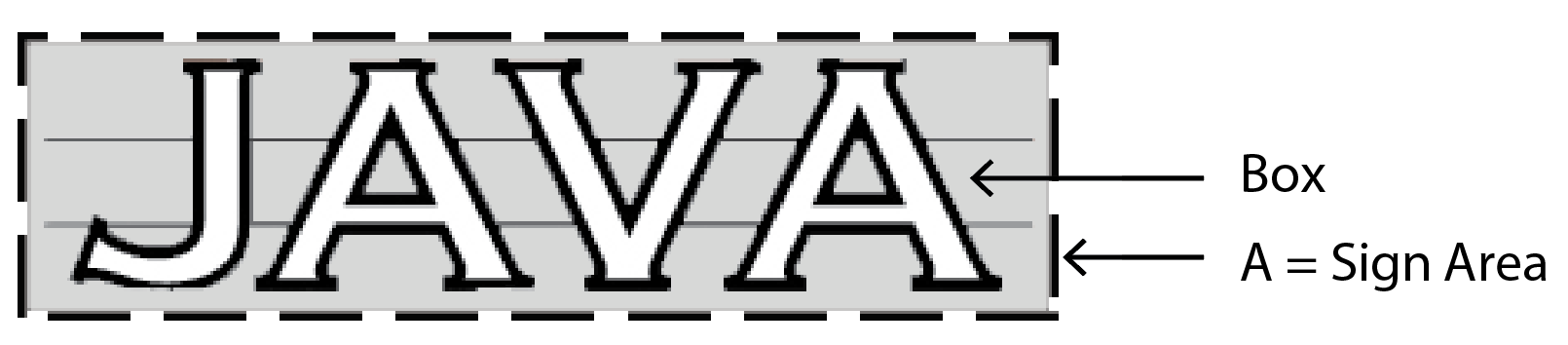
Figure 11-11-16-1 Area of Sign with Cabinet, Panel or Raceway
(2)
Individual Elements. For signs that are composed of individual letters, symbols, pictographics or other artistic elements, such as channel letters, the sign area is the sum total of the smallest rectangle enclosing all of the letters or components used to convey the message of the sign, including voids interior to the letters or components.

Figure 11-11-16-2 Area of Signs with Individual Elements
(3)
Freestanding Signs:
(a)
Single Face. For a sign with one sign face, sign area is computed as provided in subsections (1) and (2) above. The sign area includes any panel or material forming an integral part of the background of the display against which it is placed. The sign area does not include structural supports for freestanding signs allowed in Section 11-11-9, W.M.C., but does include structural supports for incidental signs.
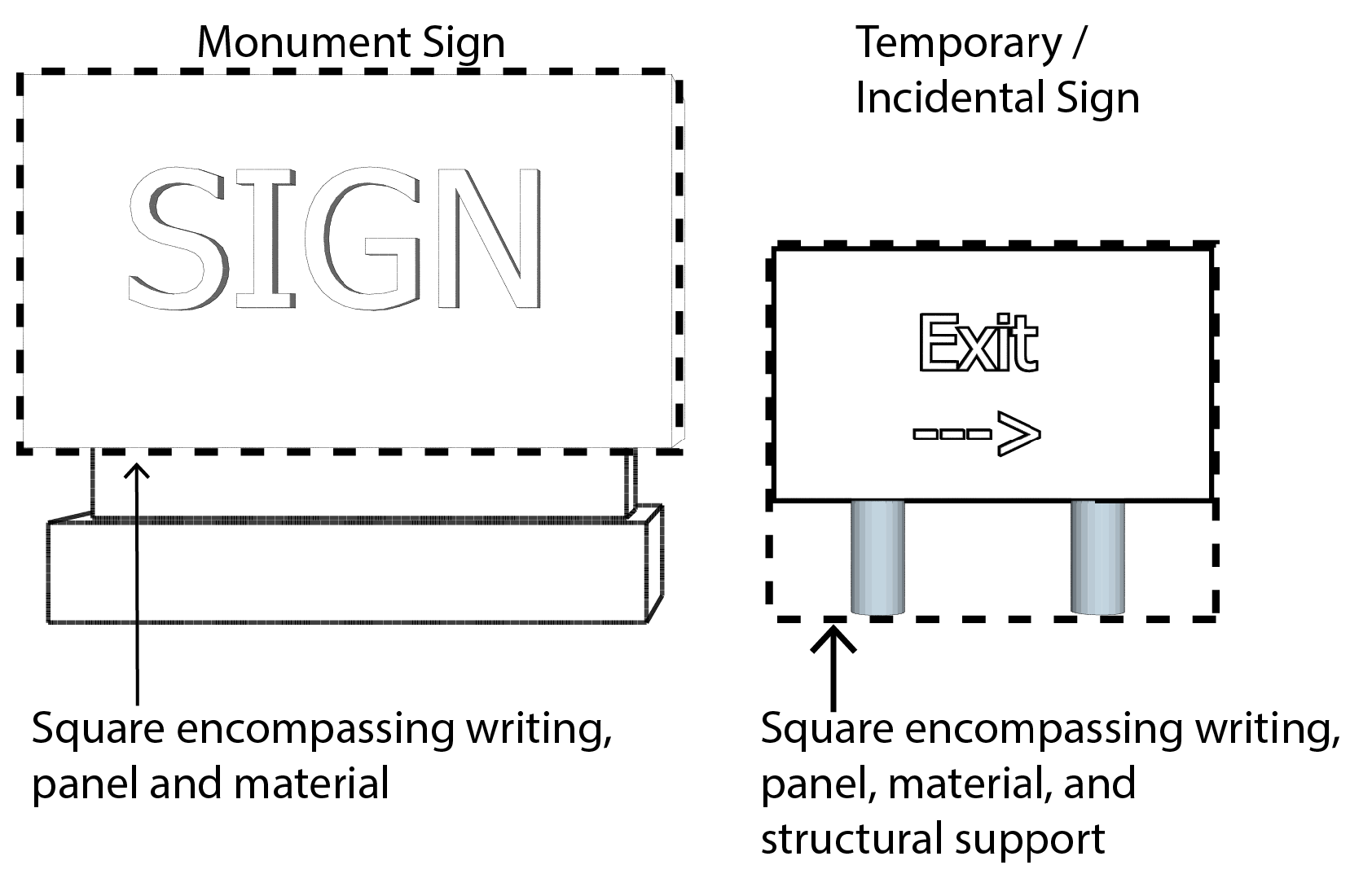
Figure 11-11-16-3 Area of Freestanding Signs
(b)
Multiple Faces. For all multiple-faced freestanding signs, the area is determined by measuring one face of the sign only (see subsection (3)(a) above). When at least two identical sign faces are placed back to back, so that both faces cannot be viewed at the same time from any point along a public right-of-way, public property or private property other than the lot on which the sign is located, and when those sign faces are part of the same sign structure and are no more than forty-two (42) inches apart, the sign area is computed by measuring one of the faces and the sign structure is considered a single sign. If the sign faces are more than 42 inches apart, each sign face is considered a separate sign.
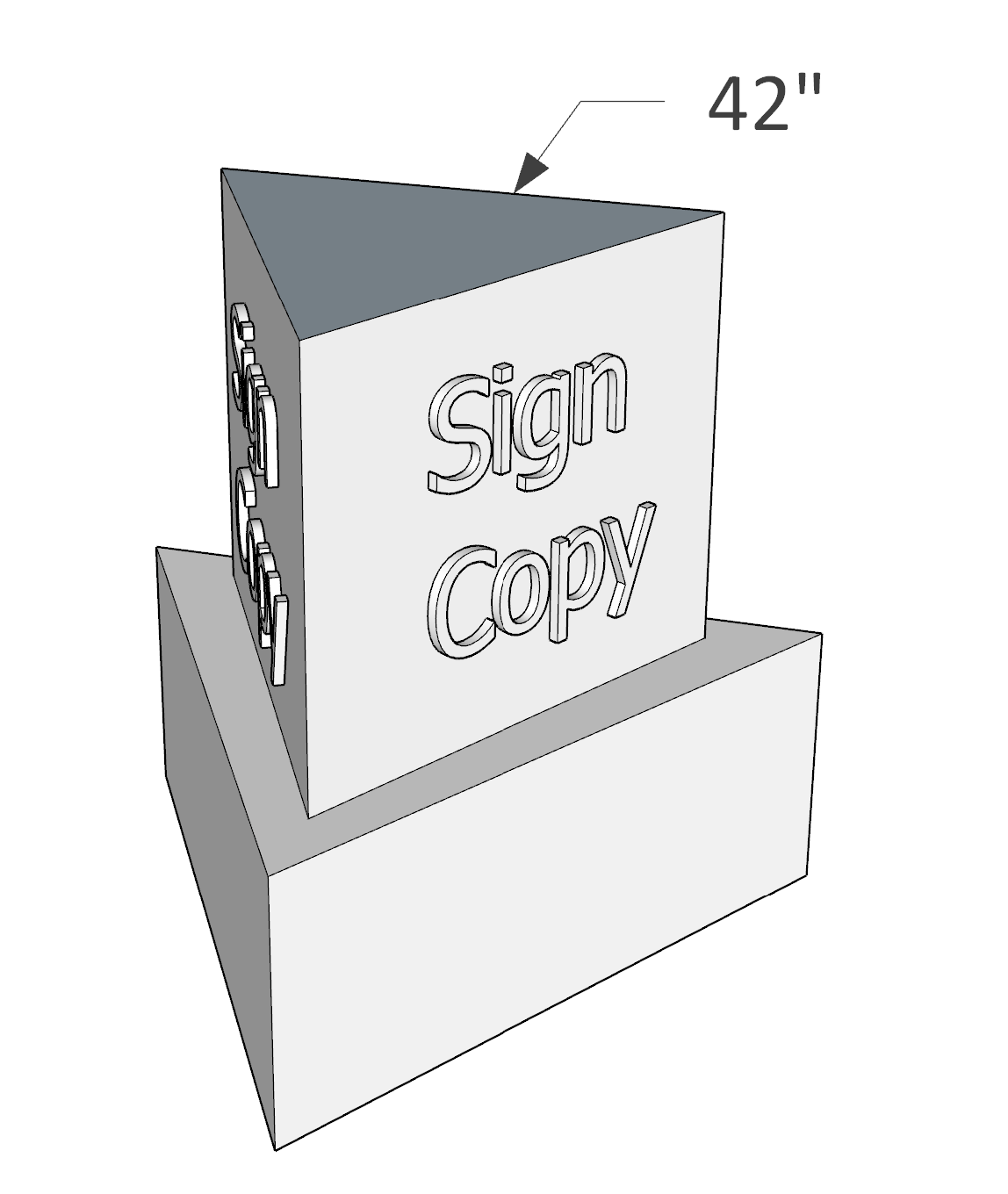
Figure 11-11-16-4 Multiple-Faced Signs
(4)
Attached Signs:
(a)
Wall Area. Where sign size is prescribed as a percent of wall area, the "wall area" is a continuous portion of a building facade, as viewed by a person approaching the building from the public right-of-way, consisting of a plane surface (see Figure 11-11-16-5, below).
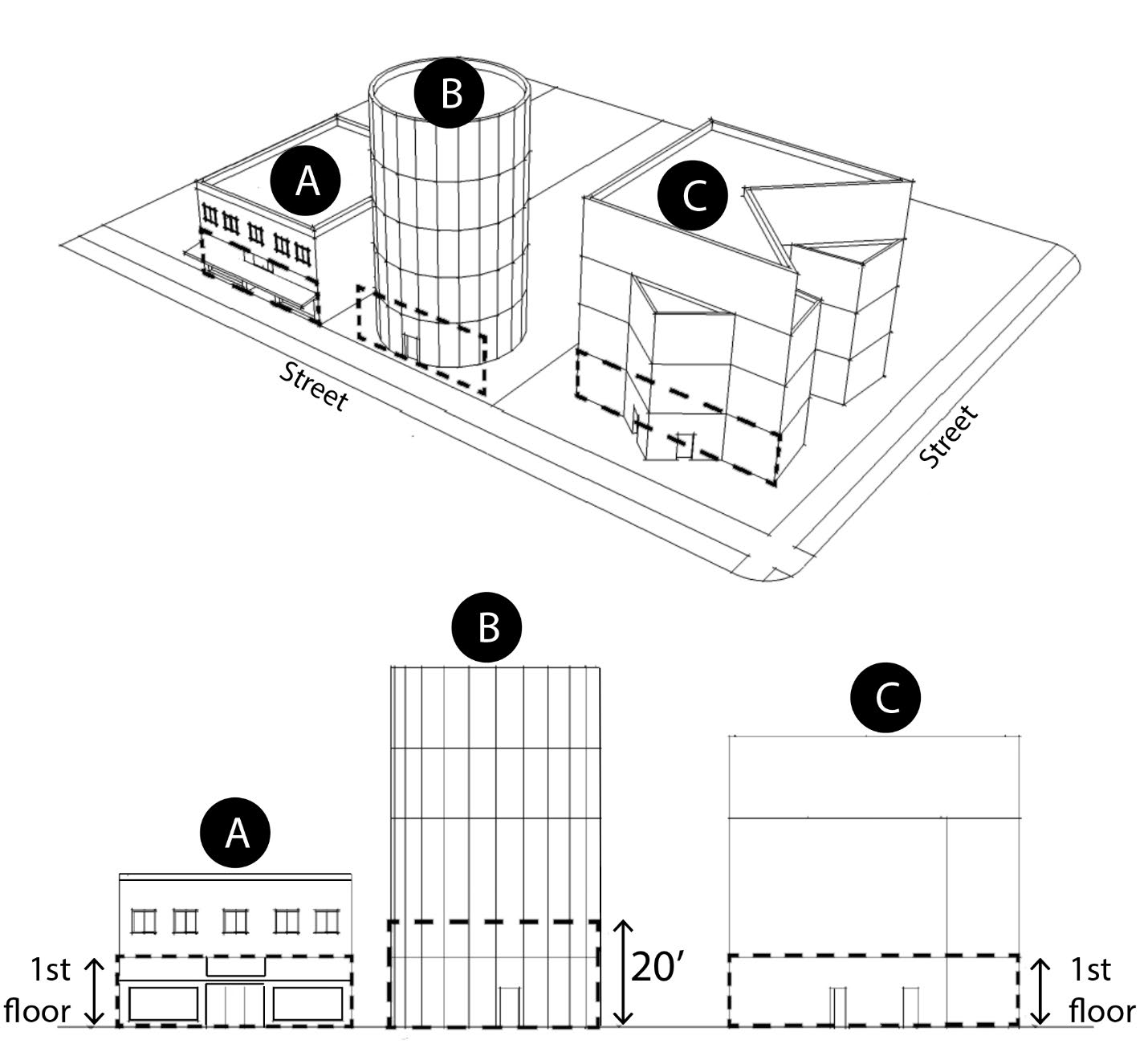
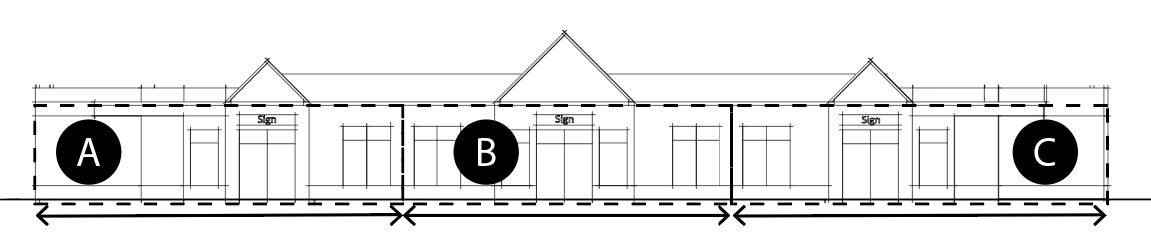
Figure 11-11-16-5 Wall Sign Area
To determine the maximum square footage of sign area that is permitted for all signs that are considered collectively, a simple rectangle (trapezoid for a sloped building), or set of rectangles or trapezoids, is drawn around the ground level of the building. The intent is to base the maximum permitted sign area on the proportion of the first-floor facade, to assure that the sign area is in proportion to pedestrians in the public way. This section illustrates how to establish the facade area calculation boundary. Five scenarios are illustrated.
A.
Rectangular facade: In this scenario, a conventional storefront faces the street. The wall area is a simple rectangle drawn around the first floor. It extends the full width of the building, and extends from the street level vertically to the interior ceiling line of the first-floor level and horizontally between exterior walls of a detached building or the party walls of an attached storefront.
B.
Cylindrical building: This scenario involves a cylindrical building. There is no apparent demarcation of the first floor, and the fenestration framing system does not correspond to floor levels. The wall area is a simple rectangle is drawn parallel to the front property line and to a height of 20 feet.
C.
Multifaceted building: A "prismatic" building design includes a variety of wall planes at varying angles. If there is a demarcation of the first floor, the wall area is a simple rectangle is drawn around the first floor. If not, the wall area is a simple rectangle drawn parallel to the front property line and to a height of 20 feet.
D.
Corner building: A corner building has a facade facing the two streets. The wall area is two simple rectangles that extend out to the corner of the property, to define the two planes. The attached sign percentage is calculated separately for each rectangle.
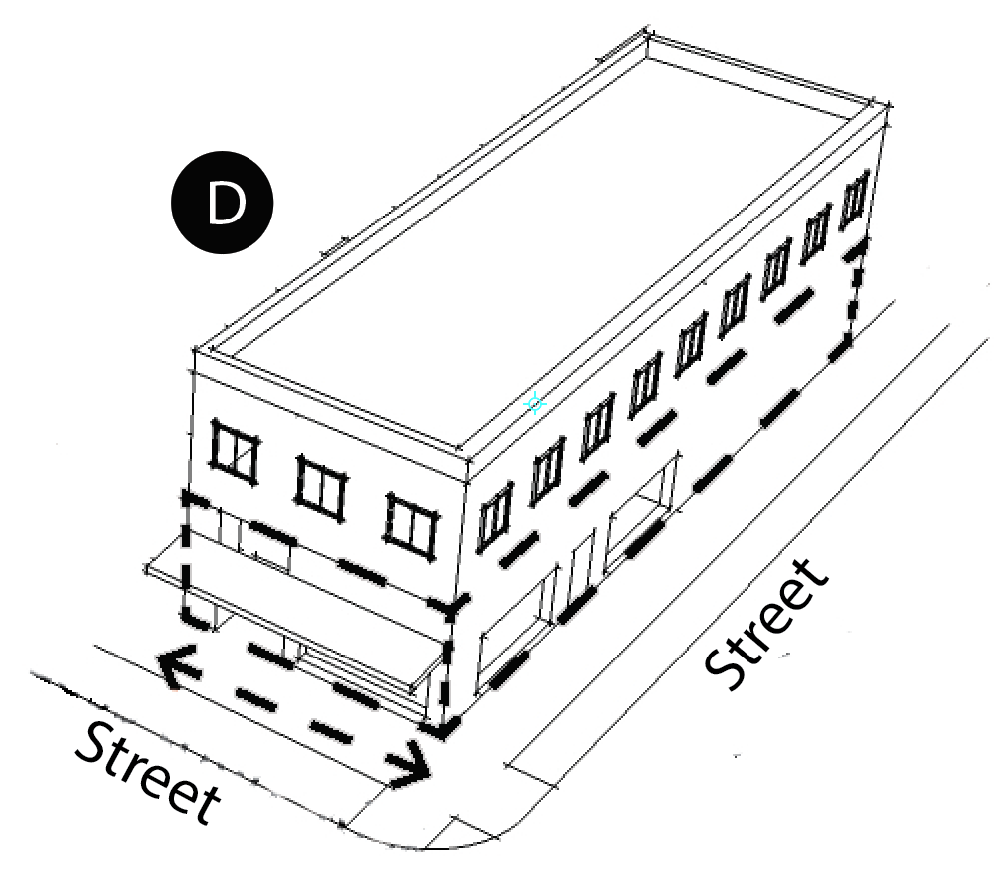
Figure 11-11-16-6 Wall Sign Area for Corner Building
E.
Corner building with an angled corner: Description: A corner building has facades facing both streets, and a "clipped" corner, with varying facets. The wall area is two simple rectangles that extend out to the corner of the property, to define the two planes. The attached sign percentage is calculated separately for each rectangle.
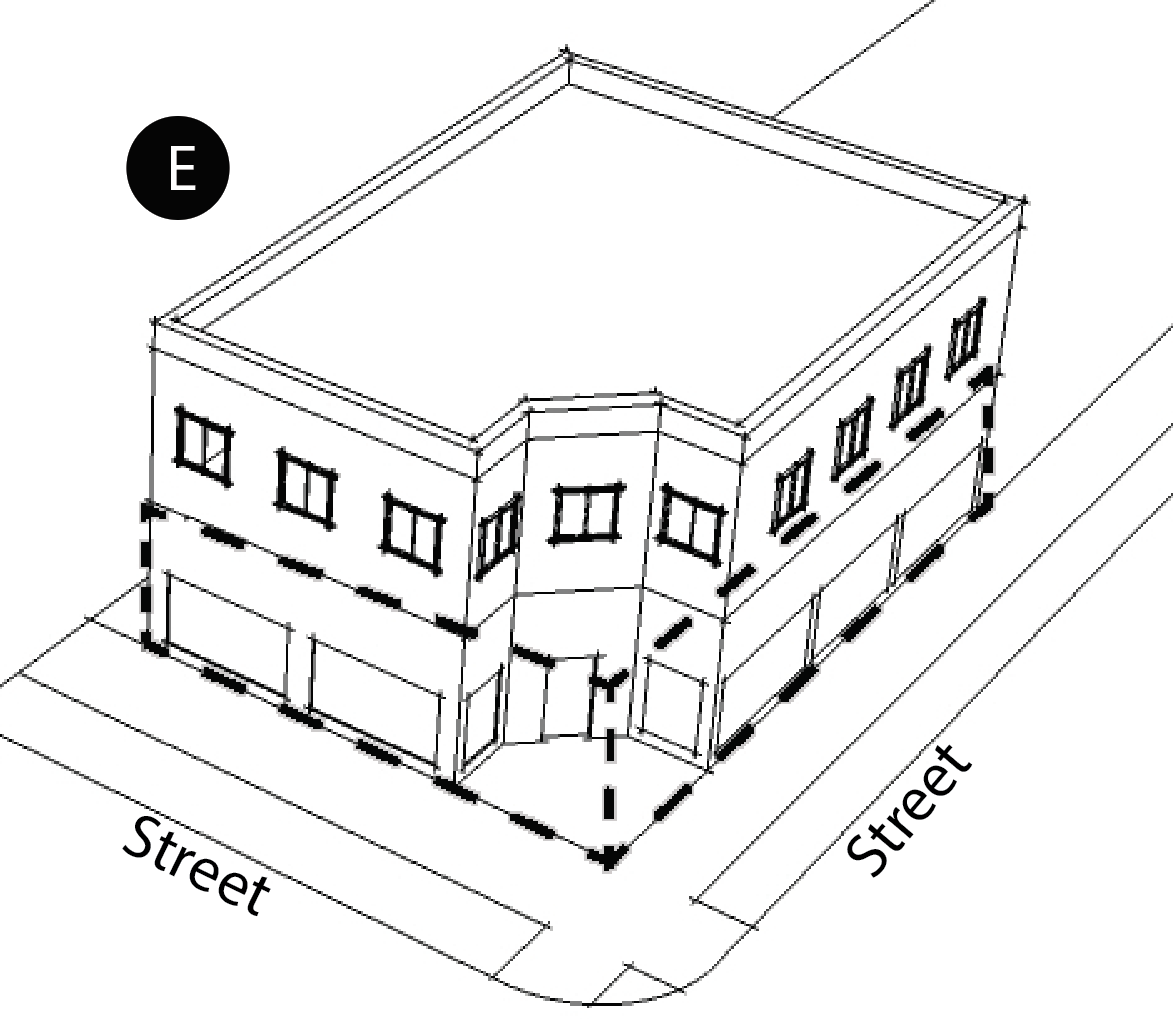
Figure 11-11-16-7 Wall Sign Area for Corner Building with Angled Corner
F.
Sloped lot: In this scenario, a storefront faces the street and there is a discernable slope. The wall area is a trapezoid is drawn around the first floor. It extends the full width of the building, and extends from the street level vertically to the interior ceiling line of the first-floor level and horizontally between exterior walls of a detached building or the party walls of an attached storefront.
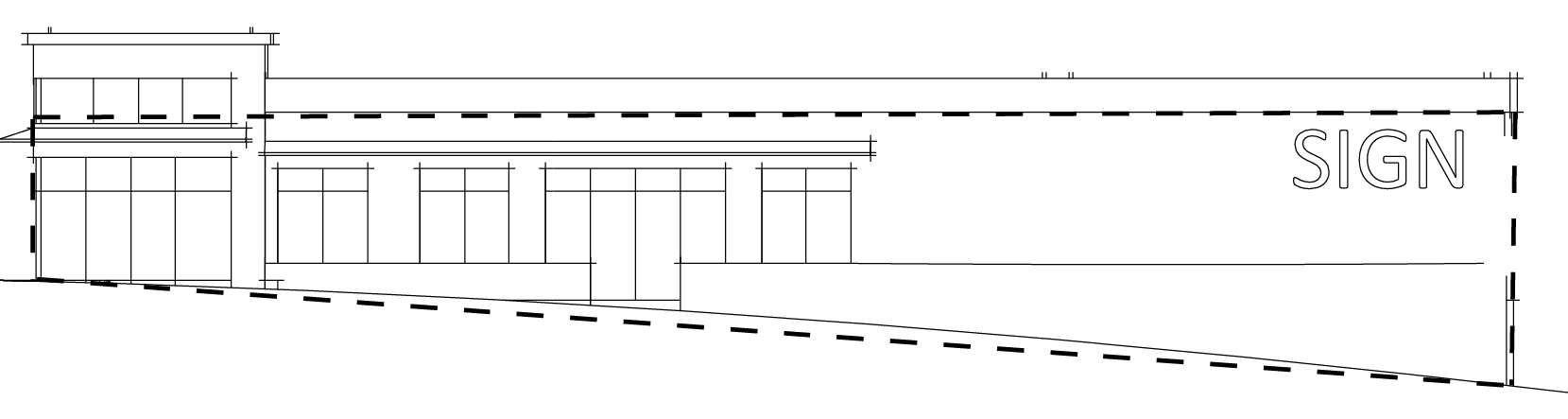
Figure 11-11-16-8 Wall Sign Area for Building on Sloped Lot
(b)
Attached Sign Size and Number of Signs.
(i)
For an attached sign which is framed, outlined, painted or otherwise prepared and intended to provide a background for a sign display, the area and dimensions include the entire background or frame (see subsection (B)(1) above).
(ii)
The area of an attached sign comprised of individual letters, figures or elements on a wall or similar surface of the building or structure with no distinct mounting surface (other than the wall) is calculated as provided in subsection (B)(2) above.
(iii)
A distinct cluster of individual letters, figures or elements is considered a single sign for purposes of determining the number of attached signs per facade (see Section 11-11-10, W.M.C.) for each wall.
(iv)
When separate elements are organized to form a single sign, but are separated by open space, the sign area and dimensions are calculated by determining the rectangle that encompasses all of the display area, including the space between different elements.
(v)
Text on a multi-sided marquee counts as one (1) sign, and is subject to total sign area calculations in this subsection.
(vi)
The sign area does not include any supporting framework, bracing, or decorative fence or wall when the fence or wall otherwise meets zoning regulations and is clearly incidental to the display itself.
(vii)
Projecting signs with multiple faces are subject to the measurement standards established in subsection (3)(b), above.
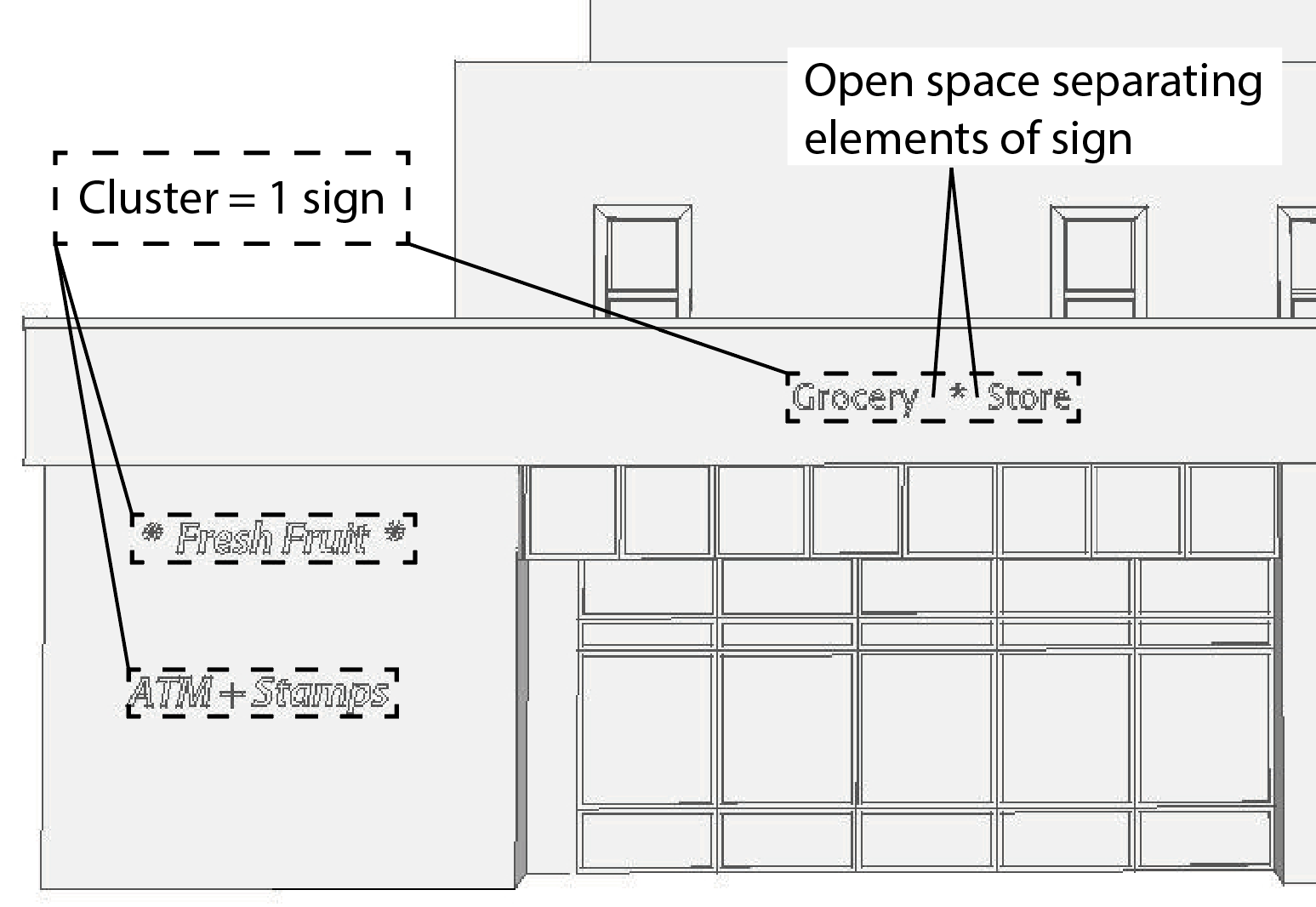
Figure 11-11-16-9 Determining Number of Attached Signs
(5)
Height:
(a)
Freestanding Signs. The height of a freestanding sign is measured from the base of the sign or supportive structure at its point of attachment to the ground, to the highest point of the sign. A freestanding sign on an artificial base, including a graded earth berm or mound, is measured from the average finished grade at the base of the berm.
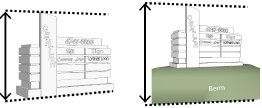
Figure 11-11-16-10 Freestanding Sign Height
(b)
Attached Sign. The height of an attached sign is the vertical distance between the lowest and the highest point of the sign, including any framework or other embellishments.
(c)
Clearance. Clearance for detached and projecting signs is measured as the vertical distance between finished grade and the lowest point of the sign, including any framework or other embellishments.
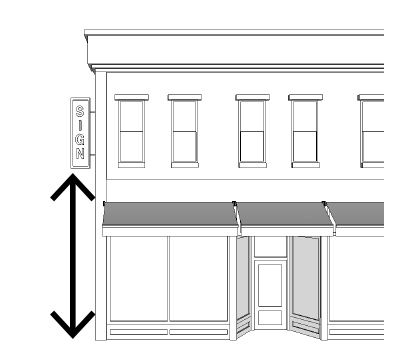
Figure 11-11-16-11 Vertical Clearance
(C)
Boundaries. The boundaries of all Comprehensive Plan land use designations, zoning districts, and Specific Plans (including the Downtown Westminster and Westminster Station Specific Area Plan) are as defined in Section 11-4-2, W.M.C.
(D)
Definitions. The following words, terms and phrases have the following meaning when used in this Chapter, unless the context clearly indicates otherwise:
Abut or Abutting: Having a common border, or separated from a common border by a street, alley, right-of-way, service lane, stream or easement.
Abandoned Sign: See Section 11-11-5(L), W.M.C.
Animated: Any sign or part of a sign that changes physical position or light intensity by any movement, rotation, strobing, illumination or other means, or that gives the visual impression or illusion of movement, rotation, illumination or rotation. An animated sign may not be a Digital Sign.
Attached Sign. A sign that is attached to a building (including a building component, such as a column, marquee or canopy) and that uses the building as its primary support.
Attention Getting Device: A sign, device, or ornamentation designed for the purpose of attracting attention or promotion, except as otherwise expressly permitted in this Chapter. Attention getting devices include feather signs, inflatable signs, temporary pole signs, pennants, streamers, balloons, and similar devices.
Awning: See Section 11-11-10(C). [That section states: "[A]n architectural projection that provides weather protection, identity or decoration, and is partially or wholly supported by the building to which it is attached. An awning is comprised of a lightweight frame structure over which a covering is attached. (Source: International Building Code 2015)"]
Awning Sign: See Section 11-11-10(C), W.M.C. [That section states: "Any sign painted, printed, attached, or otherwise applied to any facet or support structure of an awning.]
Awning, Internally Illuminated: Any awning lit by means of a light source that is within an awning that is constructed from any, but not limited to, translucent or opaque material.
Banner: See Section 11-11-11(C), W.M.C. [That section states: "A sign made of fabric, cloth, bunting, plastic, paper, or any other non-rigid material with no enclosing framework. This definition does not include flags, pennants or streamers."]
Billboard: A freestanding sign or sign structure upon which copy is placed on a poster or panel and mounted on a pole or metal structure, typically as follows: (1) wood posts or pole supports with dimensional lumber as the secondary support (A-frame) with a wood or metal catwalk and a single display panel, (2) steel A-frame constructed with angle iron or steel supports with metal framing, catwalk, and a single display panel, (3) multi-mast structure constructed with steel poles, I-beam or equivalent as primary support, with a catwalk, and a single display panel, or (4) monopole structure constructed with tubular steel support, tubular steel framing, metal catwalk and a single display panel with a concrete foundation. [Reference: for a detailed description and graphics of billboard structures, see North Carolina Department of Revenue, Billboard Structures Valuation Guide (2020), at https://www.ncdor.gov/documents/2020-billboard-structures-valuation-guide]
Building Code: The City's building code adopted pursuant to Title 11, Chapter 9, W.M.C.
Bumper Sticker: a strip of adhesive paper or plastic of up to two square feet bearing a printed message affixed to any part of a motor vehicle.
Building Elevation: The view of any building or other structure from any one of its sides.
Canopy: See Section 11-11-10(C). [That section states: "[a] 'canopy' means a permanent structure or architectural projection of rigid construction over which a covering is attached that provides weather protection, identity or decoration. A canopy may be structurally independent (a "detached canopy") or supported by attachment to a building on one or more sides (an "attached canopy"). (Source: International Building Code, 2015)"]
Canopy, Detached: A canopy that is structurally independent of a building (see "Canopy").
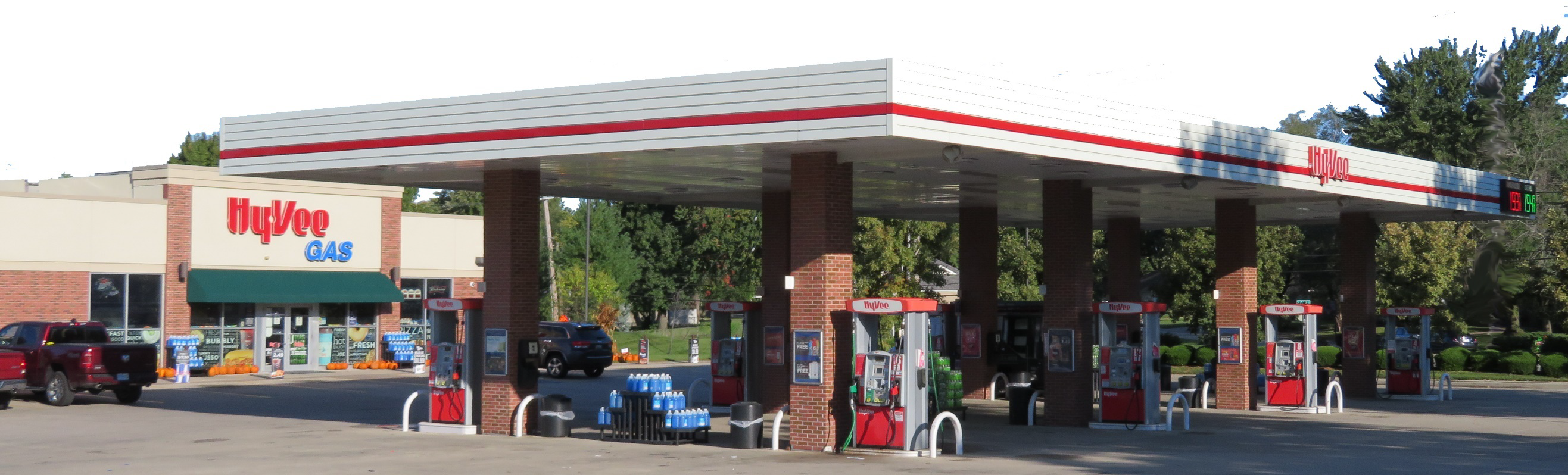
Figure 11-11-16-12 Example of Detached Canopy
Canopy Sign: See Section 11-11-10(C). [That section states: "[a] 'canopy sign' is a sign attached to the surface of a canopy."]
Channel Letter: A fabricated or formed three-dimensional letter, number, logo or symbol.
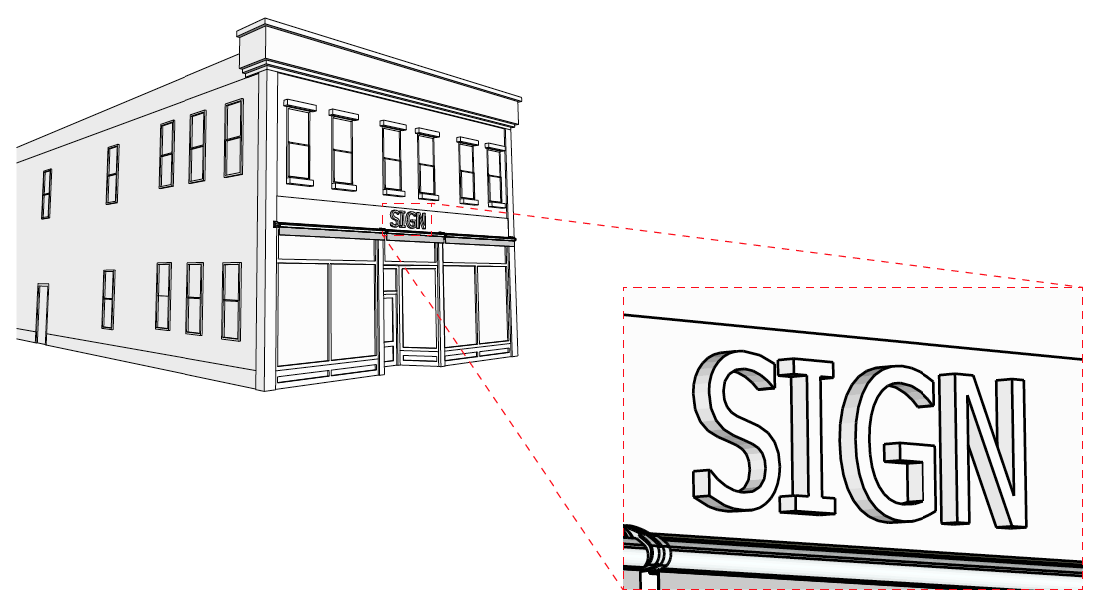
Figure 11-11-16-13 Channel Letters

Examples of channel letters:
Changeable Copy: Copy that can be changed or rearranged without altering the Sign Face or Sign Structure, excluding Digital Copy.
Character: Any letter, number, symbol, picture, or logo.
Commercial Copy: Any sign text, logo, or other representation that, directory or indirectly, names, advertises, or calls attention to a business, product, service, or other commercial activity.
Community Services Director: The Director of the Community Services Department, or his/her designee.
Coping: The cap at the top of a wall, installed for decoration or for protection from weather elements.
Copy: Any words, letters, numbers, figures, designs or other symbolic representations incorporated into a sign.
Curtain Wall: A non-load bearing exterior wall cladding that is hung on the exterior of a building, usually spanning from floor to floor.
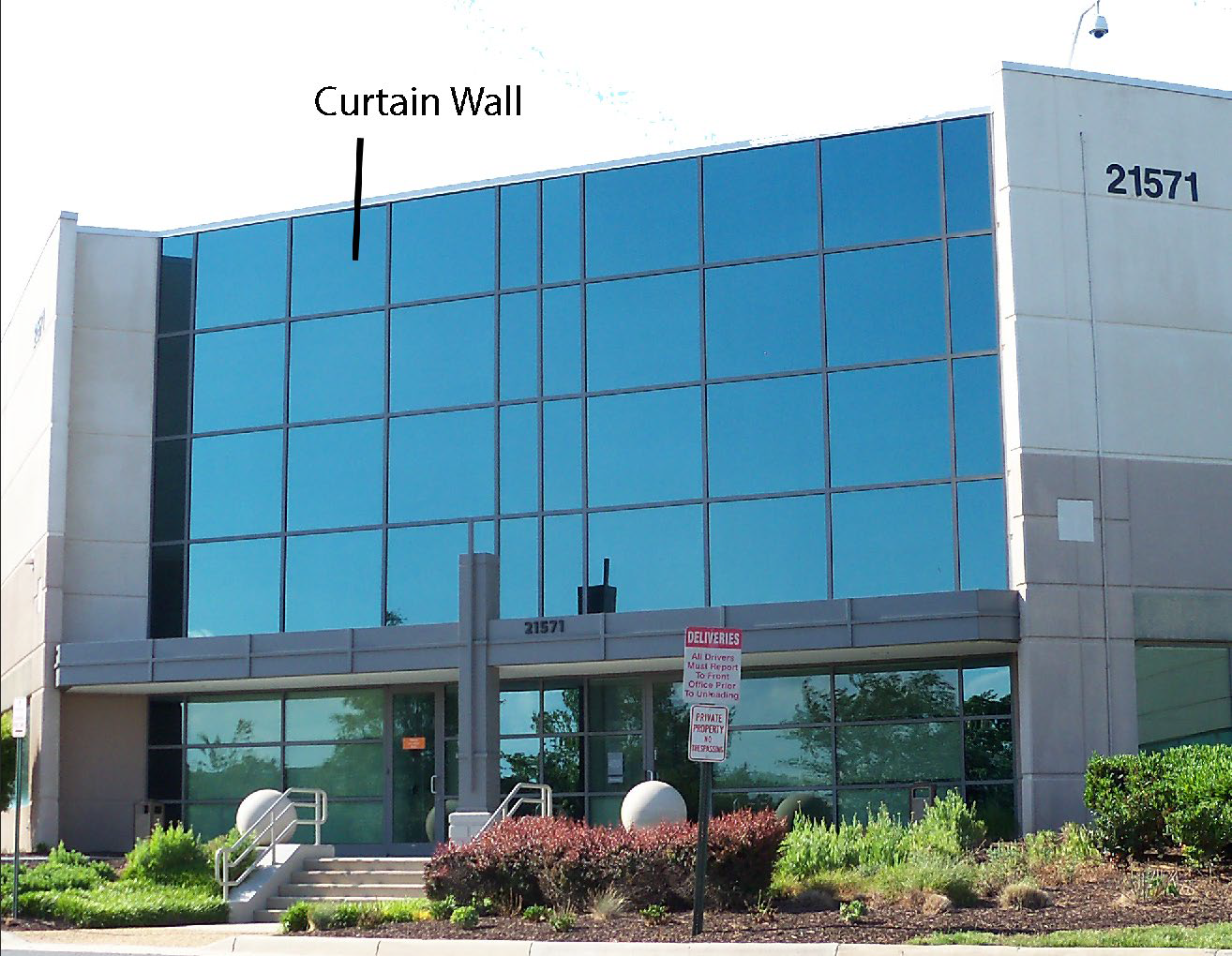
Figure 11-11-16-14 Curtain Wall
Digital Copy: Static images that are controlled by electronic communications that allow the images to be turned on or off intermittently.
Digital Sign: See Section 11-11-7(B)(1), W.M.C. [That section states: "a sign that displays Digital Copy, including any illuminated sign on which the illumination is not kept stationary or constant in intensity and color when the sign is in use, including any light emitting diode (LED) or digital panel, and which varies in color or intensity. In the sign industry, digital signs are also referred to as dynamic signs, changeable electronic variable message signs (CEVMS), electronic message centers (EMCs), etc."]
Double-Faced Sign: A sign with two faces of equal area, placed back-to-back.
Eave: The projecting lower edges of a roof overhanging the wall of a building.
Embellishment: An addition to the sign structure on which a continuation of the copy is placed. Standard bases and standard trim are not considered embellishments. An embellishment is considered part of the sign area.
Exposed Neon: A neon sign in which the neon tubes are not enclosed by an opaque covering.
Facade: The exterior wall of a building exposed to public view or a wall viewed by persons not within the building.
Fascia: The horizontal plane just below the roof or coping, and above the wall or supports.
Feather Sign: A sign made of flexible material in the shape of a feather, quill, sail, blade or teardrop, and mounted on a solid or flexible pole or cord. These are sometimes referred to as "quill signs" or "sail banners."
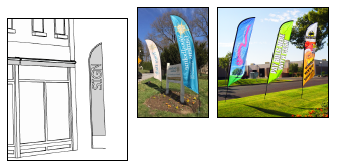
Figure 11-11-16-15 Feather Signs
Flag: See Section 11-11-11(A), W.M.C. [That section states: "[a] 'flag' is a piece of fabric or other flexible material, with distinctive colors and patterns, customarily mounted on a pole or similar freestanding structure or a pole mounted on a building."]
Floor Plate: The surface of a facade extending from the bottom floor to the floor above it or, if there is no floor above, to the top of the exterior wall plane.
Frame: The surround of a Window, consisting of a beam, trim, or border.
Foot-candle: A measure of illumination on a surface that is one foot from a uniform source of light of one candle and equal to one lumen per square foot.
Freestanding Sign. A single or double-faced sign placed upon or supported by the ground independent of any other structure, such as a monument sign.
Front Setback: The required distance from that side of a lot abutting on a street or way ordinarily regarded as the front of the lot, and a sign.
Frontage: The linear frontage(s) of a lot or parcel abutting on a private or public street that provides principal access to, or visibility of, the premises.
Halo Lit: See Section 11-11-7(A)(1)(c), W.M.C. [That section states: "[i]llumination created by concealing the light source behind three-dimensional opaque letters, numbers, or other characters of a sign, resulting in the nighttime perception of a halo around the silhouette of each character. This is also referred to as "reverse channel" or "reverse lit" illumination. A halo lit sign is not considered an internally illuminated sign."]
Illegal Sign: A sign that does not meet the requirements of this Code and that has not received legal nonconforming status.
Illuminated Awning: Any awning lighted by or exposed to artificial lighting, either by lights on or in the awning, or directed toward the awning.
Illumination: An artificial light source incorporated internally or externally to emanate light from, or direct light to, a surface. Light sources may include exposed tubing, electrical bulbs, fluorescent lights, neon tubes, light emitting diodes (LED), liquid crystal displays, or other artificial sources of light.
Illumination, External: See Section 11-11-7(A)(1), W.M.C. [That section states: "[a] sign that is illuminated by an external light source."]
Illumination, Internal: See Section 11-11-7(A)(1)(c), W.M.C. [That section states: "[i]llumination created by a light source internal to the sign, transparent or translucent material from a light source within the sign structure or panel, or exposed lighting on the sign face."]
Illuminated Sign: Any sign that incorporates illumination on or in the sign, or that directs illumination toward or over all or part of the sign, or that is created by the projection of illumination onto a surface (such as a building wall).
Incidental Sign: See Section 11-11-11(B), W.M.C. [That section states: "[a]n 'Incidental Sign' is a sign with copy located on a panel and mounted on a pole or a wall or similar structure, with or without a structural frame, that is normally incidental to the allowed use of the property, but can contain any message or content."]
Light: For purposes of defining a window, the aperture through which daylight may pass, such as a pane of glass. Lights are surrounded by mullions or transoms.
Maintenance: The cleaning, painting, repair, or replacement of worn or defective parts of a sign in a manner that does not alter in any way the approved signage.
Marquee: See Section 11-11-10(C), W.M.C. [That section states: "[a] 'marquee' means a canopy that has a top surface which is sloped less than 25 degrees from the horizontal and is located less than 10 feet (3.05 m) from operable openings above or adjacent to the level of the marquee. (Source: International Building Code, 2015)"]
Marquee Sign: See Section 11-11-10(C), W.M.C. [That section states: "[a] 'marquee sign' is a sign attached to the fascia of marquee."]
Mixed-Use Neighborhood: An area designated as Mixed-Use Neighborhood in the Comprehensive Plan.
Mixed-Use Neighborhood-M: That portion of a Mixed-Use Neighborhood designated in an ODP as a mixed-use village center or a mixed-use commercial district.
Mixed-Use Neighborhood-R: That portion of a Mixed-Use Neighborhood designated in an ODP as neighborhood general or neighborhood edge.
Monument Sign: See Section 11-11-9, W.M.C. [That section states: "[a] 'monument sign' is a freestanding sign whose sign face is attached to a base or structural frame with a width and thickness of at least two-thirds (2/3) the width of the widest part of the sign face."]
Mullion: Vertical posts between the lights of a window.
Nit: A unit of illuminative brightness equal to one candle per square meter, measured perpendicular to the rays of the source.
Neon: See Section 11-11-7(A)(1)(e), W.M.C. [That section states: "[a] source of light supplied by a glass tube that is filled with neon gas, argon, mercury or other inert gas that produces ultraviolet light, and bent to form letters, symbols, or other shapes. Neon includes all tubular light sources that employ a charged gas to illuminate a tube that glows, similar gas-activated tubular light systems that emit colors, and other tubular light sources (including fiber optics) that are used to form letters and shapes."]
Non-Commercial Copy: Any copy other than commercial copy.
Nonconforming Sign: Any sign that does not conform to one or more applicable provisions of this Code, but that was lawfully erected and maintained, or approved in an official development plan, prior to the applicable provision or provisions.
Oriented or Oriented To: a sign is "oriented" to a location (such as a street) if it faces and is directed to, and is intended to be read from, that location.
Owner: A person recorded as such on official records. The owner of property on which a sign is located is presumed to be the owner of the sign, unless facts to the contrary are officially recorded or otherwise brought to the attention of the City.
Over-Canopy Sign: See Section 11-11-10(C). [That section states: "[a]n 'over-canopy sign' is a sign on the top of a roof overhang of a covered porch or walkway."]
Painted Sign: Paint that is applied directly on a building wall to create a sign.
Panel: A plate, backing material, or other delineating surface that contains copy within a sign structure.
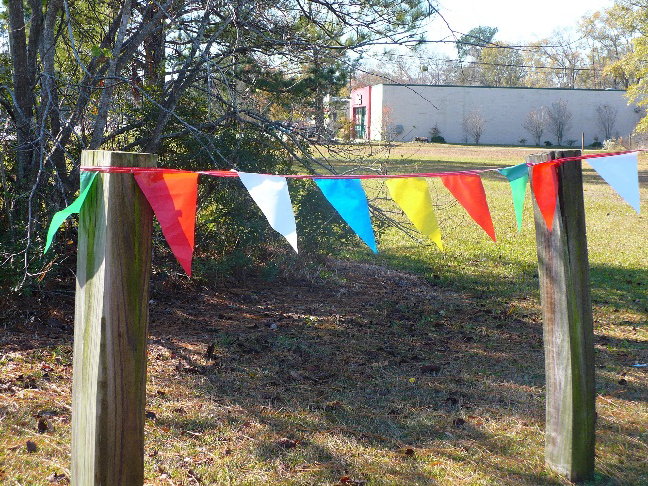
Figure 11-11-16-16 Pennants
Pennant: A sign made of flexible materials that typically features a series of geometric shapes (e.g., triangles), suspended from one or two corners fastened to a string, which is secured or tethered so as to allow movement and used as an attention-getting form of media.
Planning Manager: the member of the Department of Community Services charged with administering the Comprehensive Plan and its implementation, and who serves as the chief zoning official, and manager of the Planning Division. "Planning Manager" includes the Planning Manager's designee.
Pole Sign: A freestanding sign that is supported by a pole, is not attached to a building, and where the bottom edge of the sign face is located at least three (3) feet above the average finished grade at the base of the sign. A "pole sign" does not include a flag mounted on a flagpole, where permitted by this Chapter.
Portable Sign: Any sign designed to be moved easily and not permanently affixed to the ground, a structure, or a building.
Post Sign: See Section 11-11-9(B), W.M.C. [That section states: "[a] 'post sign' is a freestanding sign that projects perpendicular from a structure, or that is suspended from or¬ mounted between one or more posts constructed of wood, masonry, iron, or similar materials."]
Premises: A lot or parcel, and includes other parcels that are part of a master sign plan included as part of an ODP. For use in this section, "premises" does not include: (1) easements, or (2) adjacent parcels except as provided above.
Projecting Sign: See Section 11-11-10(D), W.M.C. [That section states: "[a] 'projecting sign' is a sign supported by, and with any part extending at least eighteen (18) inches from, a building wall."]
Property Line: The boundary of any lot, parcel, or tract as platted or described in the conveyance of the property to the owner. "Property Line" does not include the streets or alleys upon which the lot, parcel, or tract abuts.
Property Line Setback: The required distance from any property line and a sign.
Public Property: Any property, real or personal, owned, leased or licensed by the City, county, state or federal government, including public rights-of-way, and for which the right to possess and control such property has not been legally surrendered, granted, licensed, or conveyed to a private person or entity.
Public Sign: A sign erected by any governmental entity in conjunction with the conduct of any governmental program, operation or activity, including, but not limited to, federal, state, county, and City governments, and school and recreation districts.
Rebuild: Structural alterations to a sign that exceed 50 percent of the total replacement cost of the structure.
Restore: Structural alterations to a sign that does not exceed 50 percent of the total replacement cost of the structure.
Residential Area: Any Area designated as Residential Low Intensity (RLI) (Comprehensive Plan land use designations O1, R1, R-2.5, R-3.5, and R-5 and zoning districts O1, RE, R1, RA, R2, and R5), Residential Medium Intensity (RMI) (Comprehensive Plan land use designations R-8, R-12, R-18, R-36, and TMUND-R and zoning district R3 and R4), or otherwise designated for residential use in an ODP.
Right-of-way: The land within the public sphere which may be used by pedestrian or vehicular traffic.
Roof: The outside top covering of occupiable space in any building or structure.
Roof Sign: See Section 11-11-10(E), W.M.C. [That section states: "[a] 'roof sign' is a sign that is mounted on the roof of a building, or that is wholly or partially dependent upon the building for support, and that projects above the highest point of a building with a flat roof, the eave-line of a building with a gambrel, gable, or hip roof, or the deck-line of a building with a mansard roof."]
Roofline: The eave or fascia of any wall plane.
Sandwich Board: See Section 11-11-9, W.M.C. [That section states: "[a] 'sandwich board' is a portable sign that is ordinarily in the shape of an "A" with back to back sign faces, an easel, or a similar configuration."]
Sign: Any object, device, flag, display, structure, or part thereof, situated outdoors or indoors, that is used to advertise, identify, display, direct, or attract attention to an object, person, institution, organization, business, product, service, event, or location by any means, including, but not limited to, words, letters, figures, designs, symbols, fixtures, colors, illumination, or projected images. A "sign" includes the sign structure.
Sign Area: The entire sign face, including the advertising surface and any framing, trim, or molding, but not including the supporting structure. The sign area shall be measured as a rectangle, encompassing the largest horizontal width and largest vertical height.
Sign Copy: The graphic content of a sign in either permanent or removable words, letters, figures, designs, symbols, fixtures, colors, illumination, or projected images.
Sign Face: The area or display surface used for the graphic message.
Sign Permit: A permit authorizing the erection or maintenance of a sign pursuant to Section 11-11-12(A), W.M.C.
Sign Structure: Any combination of materials to form a construction for the purpose of attaching, fixing, or otherwise supporting a sign, whether installed on, above, or below the surface of the land, a building, or any other solid surface.
Sign Height: The vertical distance measured from the highest point of a sign to the lowest grade beneath the sign.
Skyline Sign: See Section 11-11-10(G), W.M.C. [That section states: "[a] sign that is placed above the windows of the highest floor of a building consisting of at least three (3) stories or 36 feet in height."]
Snipe Sign. A sign illegally attached to a utility pole or utility box, or affixed to a public sign.
Streamer: An attention-getting device consisting of two or more balloons, ribbons, reflectors, fringes or similar objects strung together on a common line, pole, or sign structure, or attached to one or more products offered for sale.
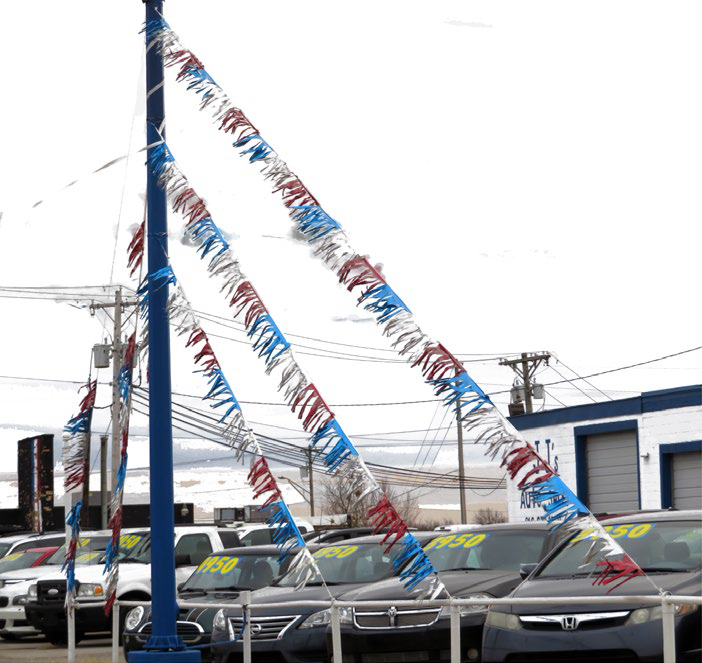
Figure 11-11-16-17 Streamers
String Light: A lighting fixture that is composed of electrical wiring encased in plastic with sockets for bulb placement.
Subdivision Entry Sign: See Section 11-11-9, W.M.C. [That section states: "[a] 'subdivision entry sign' is a monument sign located along the entry to a subdivision from a collector or arterial street."]
Temporary Sign: A sign that is:
• constructed of either rigid or non-rigid material, and
• physically attached to, or freestanding on, the ground or any structure, and
• designed or intended to be attached or freestanding impermanently for a limited time
Tenant Space: That portion of a facade attached to interior space that is occupied by one occupant that has a ground floor entry that provides public or customer access to the occupant. An "occupant" includes one tenant, owner or business.
Transom: A horizontal element framed across a window.
Under Canopy Sign: See Section 11-11-10(C), W.M.C. [That section states: "[a]n 'under-canopy sign' is a sign suspended from the underside of a canopy, awning, ceiling, marquee, roof overhang, a covered porch, or walkway."]
Wall Sign: See Section 11-11-10(B), W.M.C. [That section states: "[a] 'wall sign' is a sign (other than a projecting sign, roof sign, skyline sign, or window sign) that (1) is fastened to or painted on the wall of a building or other structure so that the wall becomes the supporting structure for, or forms the background surface of, the sign; and (2) does not extend more than 18 inches from a building surface."]
Warning Sign: Any temporary or permanent sign used for warning or informing the public of any hazardous, dangerous or unsafe condition at any public or private property.
Wind Sign: An attention-getting device with or without copy, or a series of devices such as streamers, balloons, feather signs, and pennants with or without copy, fastened in such a manner as to move in the wind.
Window: An opening constructed in a wall and which admits light or air to an enclosure, is framed and spanned with glass, and which may be mounted to permit opening and closing.
Window Sign: See Section 11-11-10(E), W.M.C. [That section states: "[a] "window sign" is a sign posted, painted, placed, or affixed to a window and inside a building, but clearly visible from outside the building. This includes any sign that is mounted within three (3) feet of a window and oriented to the window in a manner that is visible from the outside of the building or wraps or film that reduce the transparency of the window. For purposes of this definition, a curtain wall or window wall is not considered a window."]
Window Wall: A non-load-bearing fenestration system provided in combination assemblies and composite units, including transparent vision panels and/or opaque glass or metal panels, which span from the top of a floor slab to the underside of the next higher floor slab.
(E)
Acronyms. The following acronyms have the following meanings for purposes of this Title, unless the context clearly indicates otherwise:
Table 11-11-16-1
Acronyms
(Ord. No. 4053, § 1, 12-21-2020; Ord. No. 4204, § 2, 6-26-2023; Ord. No. 4255, § 7, 7-22-2024)

