
Wilton Manors City Zoning Code
PART I
- PURPOSE, APPLICABILITY, INTERPRETATIONS AND DEFINITIONS
Sec. 145-010. - Purpose.
It is the purpose of this chapter to promote the public health, safety and general welfare through reasonable, consistent and non-discriminatory sign standards. The sign regulations in this chapter are not intended to censor speech or to regulate viewpoints, but instead are intended to regulate the secondary effects of speech and especially insofar as those secondary effects may adversely affect aesthetics, traffic or pedestrian safety. The purposes of these sign regulations are:
(A)
To encourage the effective use of signs as a means of communication in the City;
(B)
To provide a means of way-finding in the community, thus reducing driver confusion and traffic congestion;
(C)
To maintain and enhance the aesthetic environment and the City's ability to attract sources of economic development;
(D)
To regulate signs to curtail visual clutter that may otherwise be caused by the proliferation, improper placement, illumination, animation, excessive height, and excessive size (area) of signs so as to not obstruct the vision of or distract motorists, bicyclists, or pedestrians and vehicular traffic;
(E)
To curtail the size and number of signs to the minimum reasonably necessary to identify a residential or business location and the nature of any land uses, activities and functions to which they pertain;
(F)
To improve pedestrian and traffic safety;
(G)
To differentiate among those signs that, because of their location, may distract drivers in active traffic and those that may provide information to them while they remain in their cars but out of active traffic;
(H)
To protect property values by precluding to the maximum extent possible signs that create a nuisance to the occupancy or use of other properties as a result of their size, height, illumination, brightness, or movement;
(I)
To minimize the possible adverse effects of signs on nearby public and private property;
(J)
To establish sign size in relationship to the scale of the lot and building on which the sign is to be placed or to which it pertains;
(K)
To implement the provisions of the Comprehensive Plan, as updated from time to time;
(L)
To enable the fair and consistent enforcement of these sign regulations;
(M)
Except to the extent expressly preempted by state or federal law, to ensure that signs are constructed, installed and maintained in a safe and satisfactory manner, and protect the public from unsafe signs;
(N)
To encourage and allow signs that are appropriate to the zoning district in which they are located consistent with and serving the needs of the land uses, activities and functions to which they pertain; and
(O)
To regulate signs no more than necessary to accomplish the compelling and substantial government objectives described herein.
(P)
These regulations are not intended to and do not apply to signs erected, maintained or otherwise posted and/or leased by the State, the federal government, the County or the City. The inclusion of "government" in describing some signs does not intend to subject the government to regulation, but instead helps illuminate the type of sign that falls within the immunities of the government from regulation.
(Ord. No. 874, § 3(Exh. A), 12-13-05; Ord. No. 2020-003, § 5, 9-22-20)
Sec. 145-020. - Applicability and effect.
(A)
Applicability. A sign may be erected, placed, established, painted, created, altered, or maintained on public or private property in the City only in conformance with the standards, procedures, exemptions, and other requirements of this Article. Certain zoning districts contain their own signage regulations that are unique to the applicable district. Where the provisions of this Article conflict with the signage provisions contained within any zoning district, the signage regulations of the specific zoning district will prevail to the extent of such conflict.
(B)
Effect. The effect of this Article, as more specifically set forth herein, is:
(1)
To establish a permit system to allow a variety of types of signs in commercial, industrial and some mixed-use zoning districts, and a limited variety of signs in other zoning districts, subject to the standards and the permit procedures of this Article;
(2)
To allow certain signs, based upon their function, small size, and unobtrusive nature, subject to the substantive requirements of this Article, but without a requirement for a City sign permit;
(3)
To provide for temporary signs in limited circumstances;
(4)
To prohibit all signs not expressly permitted by this Article; and
(5)
To provide for the enforcement of the provisions of this Article.
(C)
Transitional provisions.
(1)
Existing signs. All signs legally erected pursuant to a issued permit prior to the effective date of the ordinance adopting this Article ("Article") or any amendment hereto, may remain in place and in use, subject to certain restrictions on modification, replacement, and other actions affecting signs not in conformance with the provisions of this Article, as set forth in Section 145-180, Nonconforming signs.
(2)
Existing permits. All holders of permits for signs issued legally prior to the effective date of this Article, or any amendment hereto, may erect the signs which are the subject of such permits within the times allowed by such permits, and such signs shall then be treated as though they had been erected prior to the effective date of this Article. However, such permits may not be extended or amended unless the sign which is the subject of such permit will conform to all of the requirements of this Article as it exists at such time.
(3)
Existing violations. All violations of the sign regulations repealed in favor of this Article shall remain violations of the ordinances of the City and all penalties and enforcement remedies set forth hereunder shall be available to the City as though the violation were a violation of this Article. However, if the effect of this Article is to make a sign that was formerly nonconforming become conforming, then enforcement action shall cease except to the extent of collecting penalties (other than removal of the sign) for violations that occurred prior to the effective date of this Article.
(D)
In accordance with F.S. §§ 526.111, 526.121, and 553.79, as amended, this Article shall not apply to the design, construction, or location of signage advertising the retail price of gasoline.
(E)
In accordance with F.S. § 553.79, as amended, this Article does not authorize the City to adopt or enforce any regulation that conflicts with or impairs corporate trademarks, service marks, trade dress, logos, color patterns, design scheme insignia, image standards, or other features of corporate branding identity on real property or improvements thereon used in activities conducted under F.S. ch. 526, or in carrying out business activities defined as a franchise by Federal Trade Commission regulations in 16 C.F.R. section 436.1, et. seq. This subsection does not affect any requirement for design and construction in the Florida Building Code.
(Ord. No. 874, § 3(Exh. A), 12-13-05; Ord. No. 2020-003, § 5, 9-22-20)
Sec. 145-030. - Interpretation and computation of sign area.
(A)
Computation of sign area of individual signs. The area of a sign consists of the area within the perimeter of the sign faces. For signs composed of individual symbols, letters, figures, illustrations, graphics, messages, representations, emblems, forms or panels, sign area shall be computed by means of the smallest square, circle, rectangle, or triangle, that will encompass the extreme limits of same.
(B)
Computation of area of double-faced signs.
(1)
The area of a double-faced sign with sign faces that are parallel or the interior angle of the two (2) faces is fifteen (15) degrees or less, shall be calculated using the area of only one sign face.
(2)
The area of a double-faced sign with sign faces having an interior angle of more than fifteen (15) degrees shall be calculated using the area of both sign faces added together to determine the total area of a sign based on the principal that all sign elements that can be seen at one time, from one vantage point, shall be counted in measuring signage area.
(3)
Signs with more than two (2) faces are prohibited.
(C)
Computation of height. The height of a sign shall be computed as the vertical distance from the average elevation of the crown of the street(s) along the entire length of the property frontage upon which the sign is placed to the top of the highest attached component of the sign.
(D)
Computations based upon frontage. Lots fronting on two (2) or more streets are allowed the permitted sign area for each street frontage. However, the total sign area that is oriented toward a particular street may not exceed the portion of the lot's total sign area allocation that is derived from the street or building wall frontage, as applicable, on that street.
(E)
Determination of primary street frontage. In the event a property has multiple street frontages, and these regulations require the determination of a primary street frontage, the Director of Community Development Services or the Director of Community Development Services' designee shall determine which constitutes the primary frontage based upon consideration of the following criteria:
(1)
Arterial roadways generally constitute primary frontage.
(2)
A roadway onto which a property has its vehicular access generally constitutes primary frontage as contrasted with a roadway onto which the property has no vehicular access.
(3)
When one street frontage is at least twenty-five (25) percent longer than another, it constitutes the primary street frontage provided criteria A. and B. do not indicate otherwise.
(4)
If the Director of Community Development Services or the Director of Community Development Services' designee believes the criteria above do not adequately provide guidance, the Director of Community Development Services or the Director of Community Development Services' designee may take into account the nature of the vehicular access (i.e. full access versus right-in, right-out only), traffic volumes using each access point, and other considerations consistent with the intent of this provision, as established by the nature of the criteria contained herein and the intent and purpose of this Article.
(5)
If warranted after careful consideration of the above criteria, the Director of Community Development Services or the Director of Community Development Services' designee may find that it is not possible to determine the primary frontage, in which case the signage allowance for the primary frontage shall be permitted along all frontages satisfying the above criteria.
(F)
Fractional measurements. Any calculation that results in a fractional measurement shall be rounded down to the next lowest whole number. For example, if one sign is allowed per one hundred (100) feet of street frontage and a lot has one hundred ninety (190) feet of street frontage, only one sign shall be permitted.
(G)
Distance separations. Required distance between signs and other required distances shall be measured in a straight line using the shortest airline distance from the closest point of a sign to the closest point of another sign or feature for which the separation is required.
(Ord. No. 874, § 3(Exh. A), 12-13-05; Ord. No. 2020-003, § 5, 9-22-20)
Sec. 145-040. - Definitions.
Rules of Interpretation. Words and phrases used in this Article shall have the meanings set forth in this Section. Words and phrases not defined in this Section but defined elsewhere in the ULDR shall be given the meanings set forth there. All other words and terms not defined herein shall be interpreted in accord with their legal meaning and where no legal meaning is available, the terms shall be interpreted in accord with the meaning contained in the most recent edition of Webster's Unabridged Dictionary using the customary meaning of the word given the context of the provision containing the word. Section headings or captions are for reference purposes only and shall not be used in the interpretation of this Article. In interpreting this Article, the following words and phrases shall be given the specific definitions used here:
Accessory sign shall mean a sign that is incidental and subordinate to the principal use of the premises. An accessory sign includes but is not limited to: on-site directional signs for vehicles and pedestrians, parking restrictions, warnings and other similar signs.
Address sign shall mean a sign containing only the address of the premises upon which it is located.
Advertising shall mean a sign copy intended to directly or indirectly promote the sale or use of a product, service, commodity, entertainment, or real or personal property.
Advertising bench shall mean a bench bearing signage. Although the term includes the word "advertising," which is specifically defined herein, the term shall also include a bench bearing noncommercial signage.
A-frame signs are freestanding portable signs ordinarily in the shape of an "A" or some variation thereof that is double-faced. A-frame signs are not considered temporary signs.
Animated sign shall mean any sign that uses movement or change of lighting to depict action, to create a special effect or scene, or to display a message with streaming text.
Attached sign shall mean any sign attached to any part of a building or projection thereof, including but not limited to, signage on building walls, awnings, canopies and marquees, and as contrasted to a "Freestanding Sign."
Attention-attracting device shall mean any device or object visible from any public street which is primarily designed to attract the attention of the public to a business(s), institution, sign, or activity through such means, including, but not limited to, illumination, color, size, moving parts, or location. Attention-attracting devices or objects oftentimes incorporate illumination, which may be stationary, moving, turning, blinking (including animation) or flashing. Attention-attracting devices may or may not convey a message and can include, but are not limited to, search lights, beacons, strobe lights, strings of lights, barber poles, internally illuminated translucent canopies or panels, electronically controlled message boards (time/temperature signs, gas price signs, public service announcements, etc.), banners, streamers, pennants, propellers and inflatable objects (including strings of balloons) or other device/objects designed to attract attention. Approved traffic-control devices are not considered to be attention-attracting devices for purposes of this Article.
Awning sign shall mean a sign attached to, or incorporated into an awning.
Banner shall mean any sign of lightweight fabric or similar material that is mounted to a pole or a building at one or more edges. National flags, state or municipal flags, or the official flag of any institutional use shall not be considered a banner.
Beacon shall mean any light with one or more beams directed into the atmosphere or directed at one or more points not on the same lot as the light source; also, any light with one or more beams that rotate or move.
Box sign: See "Cabinet Sign."
Building frontage shall mean the portion(s) of the facade of a building facing, and roughly parallel with, a collector or arterial street, as well as facades without street frontage that serve as storefronts and/or main public entrances.
Building marker shall mean any wall sign indicating the name of a building, and date and incidental information about its construction, which sign is cut into a masonry surface or made of bronze or other permanent material.
Cabinet sign shall mean any sign, the face of which is enclosed, bordered or contained within a box-like structure, frame or other device, whether illuminated or not.
Campaign sign shall mean a temporary sign expressing or requesting support or opposition for a candidate, political party for public office or a ballot measure, or otherwise stating a position regarding an issue upon which the voters of the City have the opportunity to vote, but bearing no commercial message whatsoever.
Canopy, motor fuel pump island shall mean a permanent roof-like structure erected above motor fuel pump islands to shelter patrons from sun and precipitation, often containing lights on its underside, and having a vertical surface around its perimeter where signage can be placed.
Canopy sign shall mean a sign that is a part of, or attached to, a canopy. The term "canopy sign" does not refer to motor fuel pump island canopies signs unless specified.
Changeable copy sign shall mean a static display sign that is capable of changing the position or format of word messages or other displays on the sign face and that can also change the visible display of words, numbers, symbols, and graphics by the use of a matrix of electric lamps, movable discs, moveable panels, light apertures, or other methods, and such changes are actuated by a control mechanism or manually on the face of the sign. A sign on which the message visible at any given moment changes more than once in any ten (10) second period shall be considered an animated sign and not a changeable copy sign for purposes of this Article.
Commercial message shall mean any sign, wording, logo, or other representation that, directly or indirectly, names, advertises, or calls attention to a business, product, service, attraction, or other commercial activity.
Community identification sign shall mean a sign located at one or more entrances to a neighborhood, subdivision or multiple-family development, identifying the name of same, and for multiple-family developments, indicating that the development is a rental community, as applicable.
Community service sign shall mean a temporary sign that advertises only a function of a nonprofit organization.
Construction sign shall mean a temporary sign that provides information as to the parties involved in a future development or current construction on the property upon which the sign is located. Information is limited to the names of the project team member companies such as the general contractor, architect, planner or Manager, lending institution, and owner or agent, and the telephone number for the owner or agent.
Copy shall mean the linguistic or graphic content of a sign, including logos.
Detached wall sign shall mean a sign attached to a fence or wall extending in front of or to the side of a building which fence or wall does not enclose space.
Directory sign shall mean a ground or building sign that lists tenants or occupants of a building or project, with unit numbers, arrows, or other directional information.
Directional sign shall mean a sign used to direct visitors or customers to a particular land use.
Enforcement official shall mean a person charged by the City with enforcement of this Article.
External illumination shall mean illuminated by an exterior light source or luminous tubing which is primarily designed to illuminate only the sign.
Feather Flag Sign or Feather banner shall mean a flexible pole to which one side of a flexible fabric, generally in the shape of a feather or similar shape, is attached. Such banners are also known and sold under names which include, but are not limited to, "quill sign," "banana banner," "blade banner," "flutter banner," "flutter flag," "bowflag," [and] "teardrop banners".
Flag shall mean any fabric, banner, or bunting containing distinctive colors, patterns, or symbols, used as a symbol of an existing government, political subdivision, or other entity, and contains no commercial message (see "Banner") The flag of a not-for-profit institution shall not be considered to contain a commercial message. The display and use of the flag of the United States of America by civilians or civilian groups or organizations shall comply with 36 United States Code, Sections 173, 174 et seq., as amended.
Flashing sign shall mean a sign, the illumination of which is not kept constant in intensity at all times when in use, and which exhibits sudden or marked changes in lighting effects. "Flashing" Sign for purpose of this Article shall include any sign with a strobe light or strobe—like effect.
Freestanding sign shall mean a sign supported by a sign structure secured to the ground and not attached to a building, fence, wall, or other structure other than its own structure for support.
Free expression sign shall mean a sign communicating information or views on matters of public policy concern, or containing any other noncommercial message.
Inflatable sign or device shall mean an inflatable sign or device, called simply "inflatable" in this Article, means a non-durable sign made of canvas, plastic or other soft material, tethered to the ground or a building and inflated continuously through the operation of a fan or other air-moving device.
Government sign shall mean a government sign is a sign that is constructed, placed or maintained by the federal, state or local government or a sign that is required to be constructed, placed or maintained by the federal, state or local government, either directly or to enforce a property owner's rights.
Incidental sign shall mean a sign containing noncommercial information—except as provided in this Article for signs indicating a property is protected by an alarm system—that has a purpose customarily secondary to the use of the lot on which it is located, such as "no parking," "entrance," "loading only," "telephone," "drive-thru," "additional parking in rear," and similar information and directives.
Institutional sign shall mean a permanent sign used on the premises of a government, or institutional use, including places of worship.
Internal illumination shall mean a light source concealed or contained within the sign, and which becomes visible by shining through a translucent surface.
Logo shall mean a design, crest, letter, character, symbol, emblem, trademark or graphic device or combinations thereof, used to identify an organization, business, or corporation.
Marquee sign shall mean a business sign painted on or attached to the face of a marquee, which is attached to the principal structure on the lot.
Monument sign shall mean a freestanding sign consistent with one of the following designs:
Type 1: Having a solid appearance with a solid base or the appearance of a solid base, touching the ground and not exceeding a ratio of sign width to base support width of greater than three to one (3:1); illustrated in Figure 145-1.
Type 2: Having two (2) supports on either side of the signage, such that the signage is contained in the area between the supports, with a clearance above the ground of no more than three (3) feet from the bottom of the signage structure to the ground, consistent with the illustration in Figure 145-2.
Type 3: Having two (2) supports with suspended signage consistent with the illustration in Figure 145-3.
Type 4: Having one support with suspended signage only in the form illustrated in Figure 145-4.
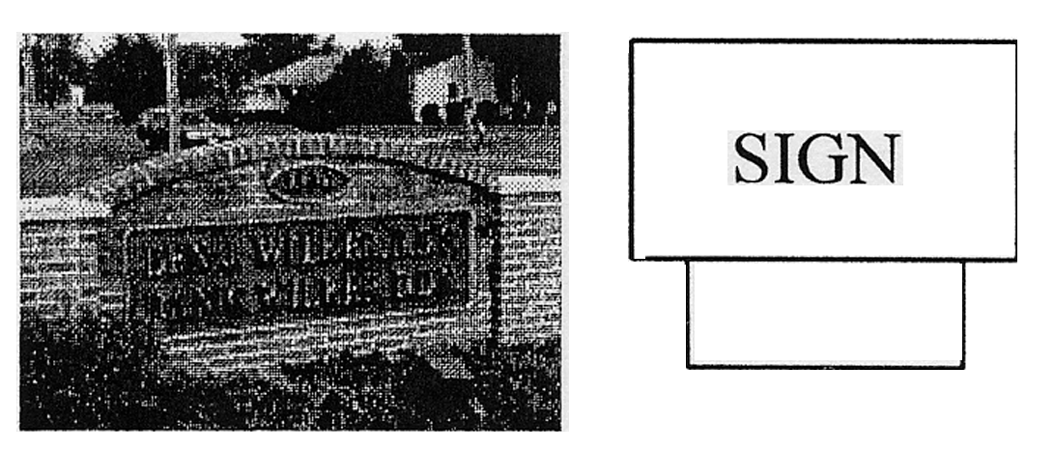
Figure 145-1. Type 1 monument sign.
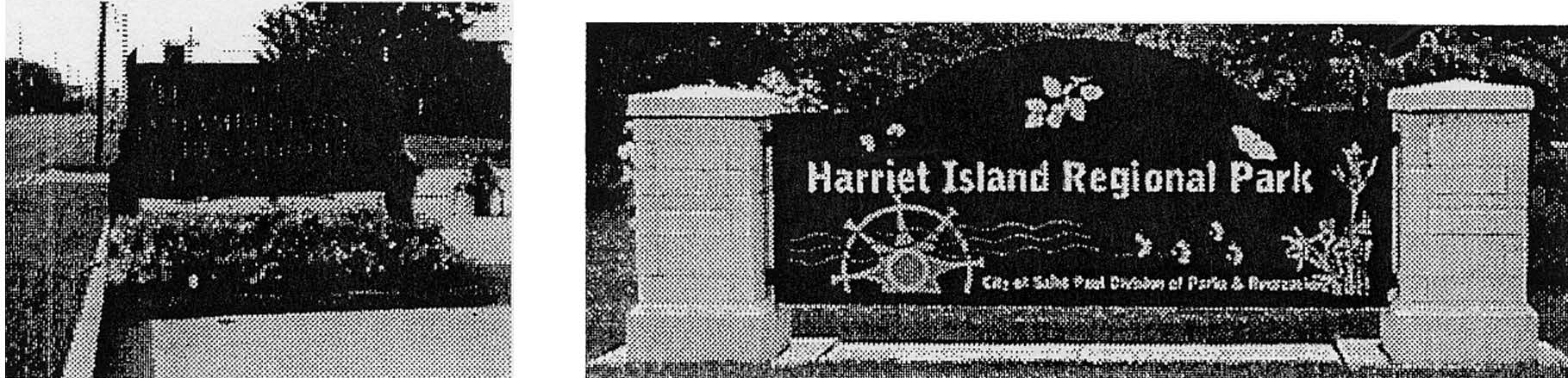
Figure 145-2. Type 2 monument sign.
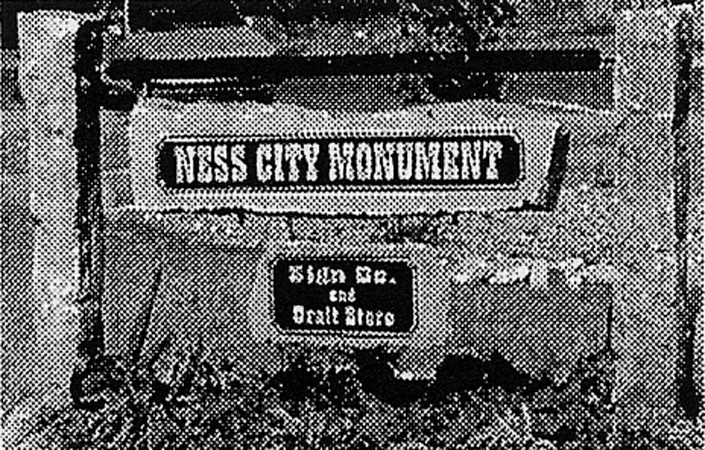
Figure 145-3. Type 3 monument sign.
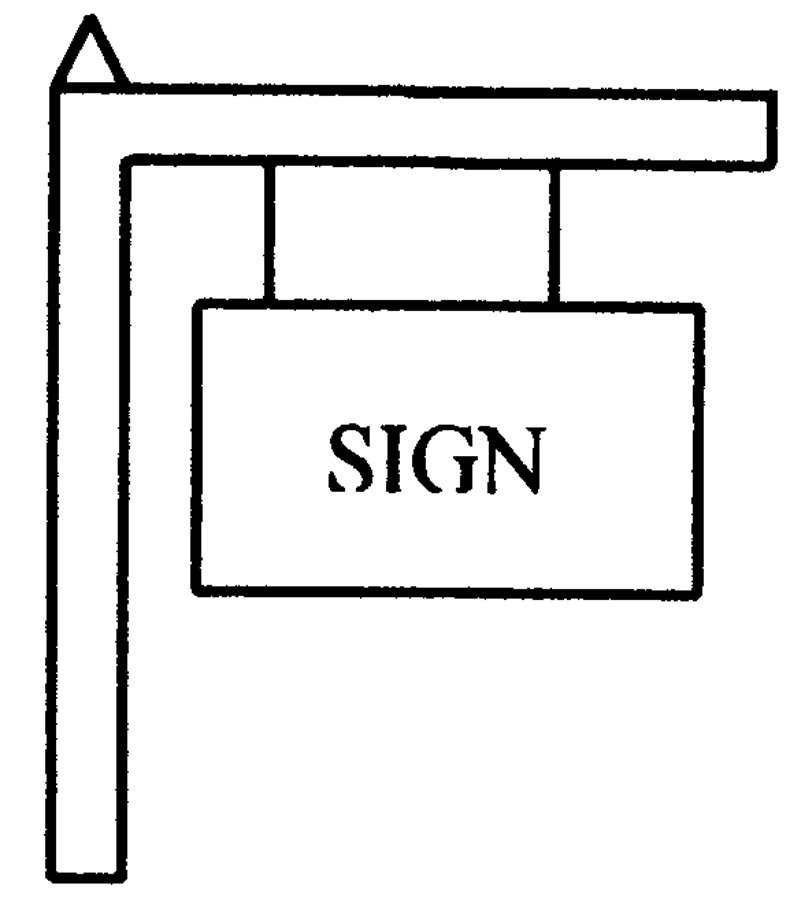
Figure 145-4. Type 4 monument sign.
Nonconforming sign shall mean any sign that does not conform to the requirements of this Article.
Obscene or pornographic signs shall mean signs that meet the following criteria, as determined by the Director of Community Development Services or the Director of Community Development's designee and/or the City of Wilton Manors Special Magistrate:
(a)
The average person, applying contemporary community standards, would find, taken as a whole, appeals to the prurient interest;
(b)
Depicts or describes, in a patently offensive way, sexual conduct; and
(c)
Taken as a whole, lack serious literary, artistic, political, or scientific value.
Occupant shall mean a business or other nonresidential use located within a structure.
Off-premises sign shall mean a sign which directs attention to a business, commodity, service, or establishment not exclusively related to the premises where such sign is located or to which it is affixed.
On-premises sign shall mean any sign with a commercial message that is located upon the premises where the subject of the message is furnished, sold or taking place, and any noncommercial message regardless of location.
Pennant shall mean any lightweight plastic, fabric, or other material, whether or not containing a message of any kind suspended from a rope, wire, or string, usually in series, designated to move in the wind.
Permanent sign shall mean any of the types of signs specifically listed within the ULDR as a permitted sign, and which is installed and maintained in a fixed location for an indefinite period of time.
Permit or sign permit shall mean a City of Wilton Manors sign permit, issued under the ULDR to ensure compliance with the standards and requirements of this Article and other applicable provisions of the ULDR. The term "permit" shall not refer to a permit required or issued under the Florida Building Code unless the permit is referred to as a "building permit" or is specifically used in a given provision to pertain to a building permit or the Florida Building Code.
Permitted sign shall mean any allowed sign.
Pole sign shall mean any detached sign located on one or more stationary poles and otherwise separated from the ground by air.
Portable sign shall mean a sign not permanently attached to the ground or other permanent structure or a sign designed to be transported, including, but not limited to, signs designed to be transported by means of wheels; signs made as A-frames or T-frames; menu and sandwich board signs; balloons used as signs; and umbrellas used as signs. Portable signs are not considered temporary signs.
Project sign shall mean a temporary sign that provides information as to a future development or current construction on the property upon which the sign is located. Information is limited to the name of the project, the size and nature of the development, expected completion date and a rendering depicting the completed development.
Projecting sign shall mean any sign attached to a building wall and extending laterally more than twelve (12) inches from the face of such wall.
Real estate sign shall mean a temporary sign erected by the owner or owner's agent, indicating that the real property upon which the sign is located is for rent, sales or lease.
Revolving or rotating sign shall mean a sign that revolves or rotates.
Roof sign shall mean a sign that is placed above on, or over the roof, or extending above the roofline, and that is dependent upon the roof, parapet, or upper walls of a building or portion thereof for support.
Sandwich board sign shall mean a portable freestanding sign in the shape of an "A" or some variation thereof, which is not permanently attached to the ground or any structure with only two (2) visible sides. A sandwich board sign is not considered a temporary sign.
Seasonal/holiday sign shall mean a temporary sign whose symbols, graphics, colors, shapes, and word, as applicable, are customarily associated with and used for emphasizing the celebration of a recognized holiday. Such signs include festoons of lights.
Sexual conduct shall mean actual or simulated sexual intercourse, deviate sexual intercourse, sexual bestiality, masturbation, or sadomasochistic abuse; actual lewd exhibition of the genitals; actual physical contact with a person's clothed or unclothed genitals, pubic area, buttocks, or, if such person is a female, breast with the intent to arouse or gratify the sexual desire of either party; or any act or conduct which constitutes sexual battery or simulates that sexual battery is being or will be committed. A mother's breastfeeding of her baby does not under any circumstance constitute "sexual conduct."
Sidewalk/sandwich sign: See "Portable sign."
Sign shall mean any device, fixture, placard, or structure placed or otherwise visible outdoors, that uses any color, form, graphic, illumination, symbol or writing to advertise, announce the purpose of, or identify a person or entity, attract attention, or to communicate information of any kind to the public. Logos, trademarks, insignias and similar emblems shall be considered as signs.
Sign face shall mean the part of the sign that is, or can be, used to identify, advertise, communicate information or for visual representation, that attracts the attention of the public for any purpose, and includes any material, color, panel, trim and self or direct illumination forming an integral part of the background of the display or used to differentiate the sign from the backdrop, surface or structure against which it is placed. The sign structure, including any supporting framework, bracing or other structural component, shall not be included as a portion of the sign face provided that no part of such structural component contains or displays, or includes in its design, any of the aforementioned sign face criteria, and cannot be construed to a part of a sign face.
Snipe sign shall mean a sign of any material when attached in any way to trees, telephone poles, utility poles, stakes, fences, benches, trash receptacles or other objects, where such sign may or may not apply to the premises upon which the sign is located, and including cardboard signs on sticks and similar signage materials.
Suspended sign shall mean a sign that is suspended from the underside of a horizontal plane surface and is supported by such surface.
T-frame sign shall mean a freestanding portable sign ordinarily in the shape of an upside down "T" or some variation thereof, which is not permanently attached to the ground or any structure. T-frame signs are not considered temporary signs.
Temporary sign shall mean unless otherwise specified, any sign permitted in these regulations to be erected only on a temporary basis, and not permanently affixed to the ground, building, or permanent structure. Temporary signs include but are not limited to: Construction signs, community service signs, project signs, real estate signs, seasonal/holiday signs, grand openings and promotion signs, and campaign signs.
Vehicle sign shall mean a permanent or temporary sign affixed to, or placed in or upon any parked vehicle, parked trailer or other parked device capable of being towed, the primary purpose of which is to attract the attention of the traveling public, provided that this definition does not include any signs that are required by an unit of government and does not include a single sign placed upon a single vehicle or trailer at a residence of an individual, which sign identifies the vehicle or trailer as being for sale. Signs affixed to vehicles used in day to day business operations that are usually off the site of the business and in varying locations shall not be considered vehicle signs.
Wall sign shall mean any sign attached and parallel to, and with all portions of the sign extending not more than twelve (12) inches beyond a wall, painted on the wall surface or erected and confined within the limits of an outside wall of any building or structure, which is supported by such wall or building, and which displays only one sign surface. Wall signs extending more than twelve (12) inches from a wall are "Projecting Signs."
Wind sign shall mean a sign that uses objects or material fastened in such a manner as to move upon being subjected to pressure by wind, including but not limited to banners, flags, pennants, ribbons, spinners, streamers or captive balloons.
Window sign shall mean any sign, picture, symbol or combination designed to communicate information about an activity, business, commodity, event, sale or service, that is painted or placed either on the exterior of a window pane, door, glass, and/or inside a window, or located within ten (10) feet or less of the interior of a building's exterior glass area, including but not limited to doors and windows.
(Ord. No. 874, § 3(Exh. A), 12-13-05; Ord. No. 2016-016, § 3, 7-25-17; Ord. No. 2020-003, § 5, 9-22-20)

