
Winter Springs City Zoning Code
ARTICLE VII
S.R. 434 AND TUSKAWILLA ROAD STREETSCAPE REQUIREMENTS.
Sec. 20-600.- Intent.
State Road 434 and Tuskawilla Road are major roadway corridors that run through the heart of the jurisdictional limits of the city, and these roadways have unique streetscape attributes that impact the overall appearance and quality of life of the Winter Springs community. The intent of this article is to create and maintain a sustainable streetscape strategy along the State Road 434 and Tuskawilla corridors that will play an important role in forming the visual image of Winter Springs being a sustainable city. It is further the intent of this sustainable streetscape strategy to mitigate against the occurrence of urban blight and deterioration, and to employ streetscape strategies that more effectively manage stormwater runoff and reduce carbon footprint, improve pedestrian space, health and safety, improve aesthetics, enhance property values, reduce urban noise and light pollution, and overall help create a better place and image for present and future residents and businesses within the city. It is not the intent of this section to mandate the dedication or conveyance of additional public right-of-way along said corridors from development in order to accomplish the required streetscape treatment. This section also does not apply to properties that were previously developed prior to the adoption of this article unless and until such properties seek to redevelop.
(Ord. No. 2020-02, § 2, 4-27-20)
Sec. 20-601. - Streetscape requirements.
(a)
There shall be a minimum streetscape area of twenty-seven (27) feet in depth for properties located along the State Road 434 and Tuskawilla Road corridors.
(b)
The total twenty-seven (27) feet of required streetscape area shall consist of three component parts which include:
(1)
Five-foot landscape area;
(2)
Six-foot sidewalk; and
(3)
Sixteen-foot landscape and treescape area for planting canopy trees which will line the right-of-way and installing any authorized street furnishings.
(c)
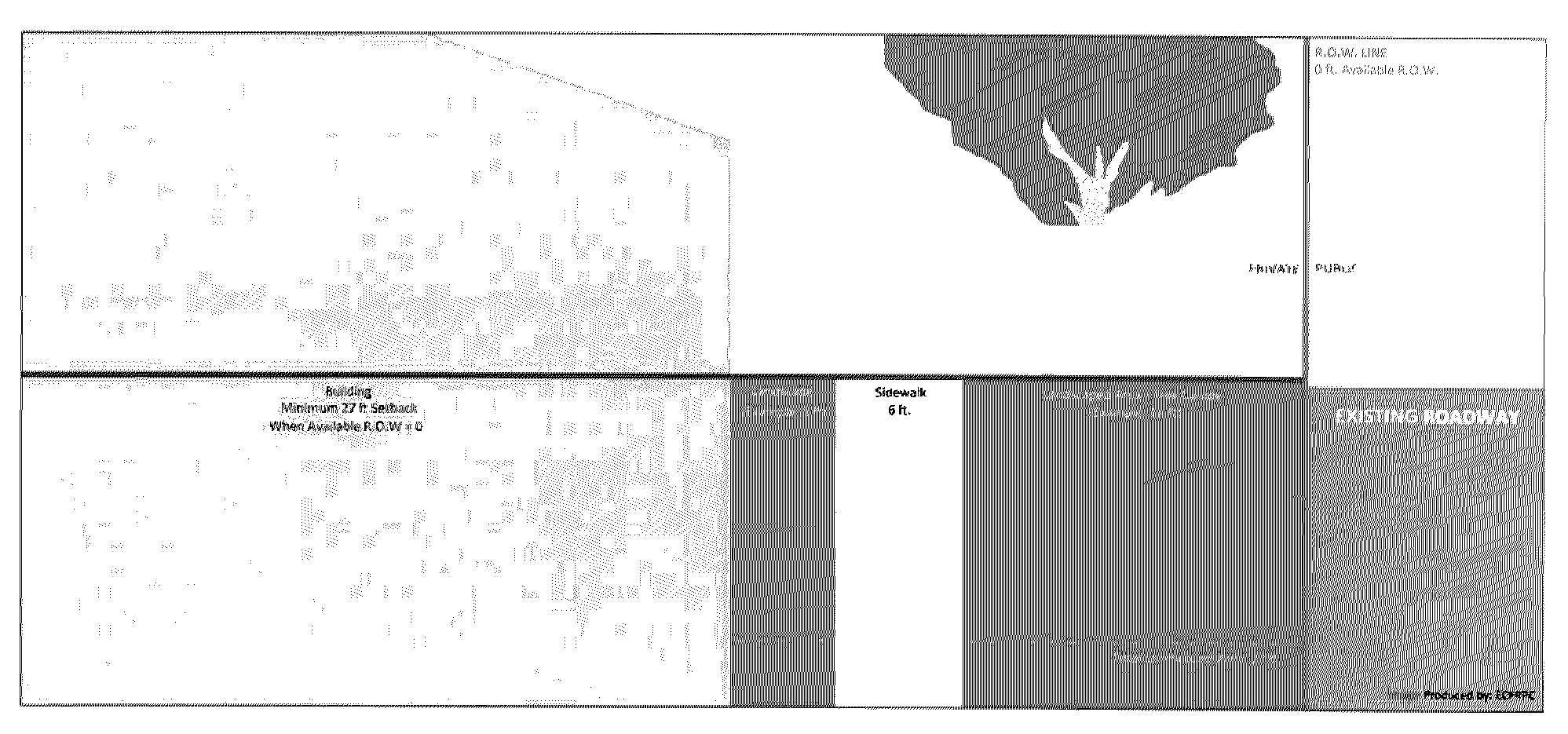
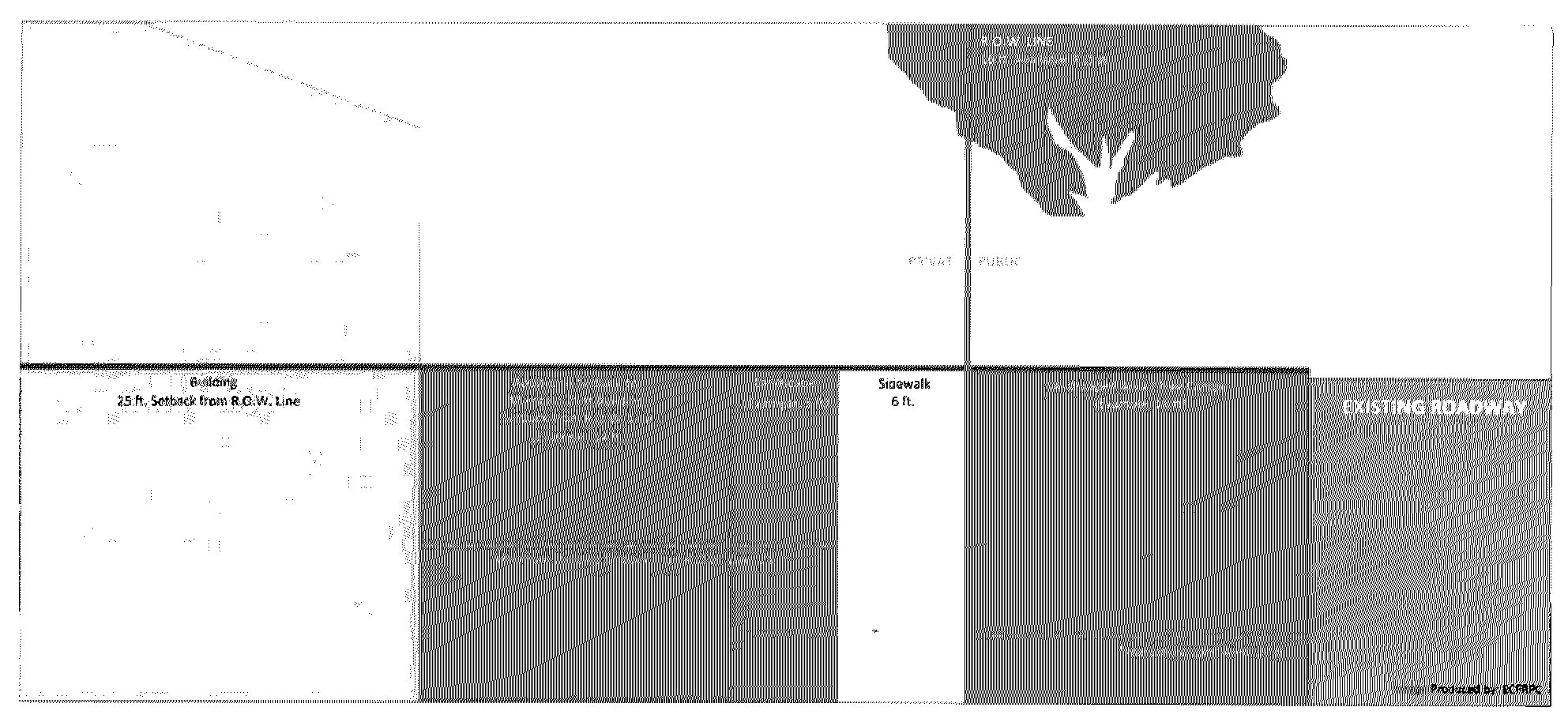
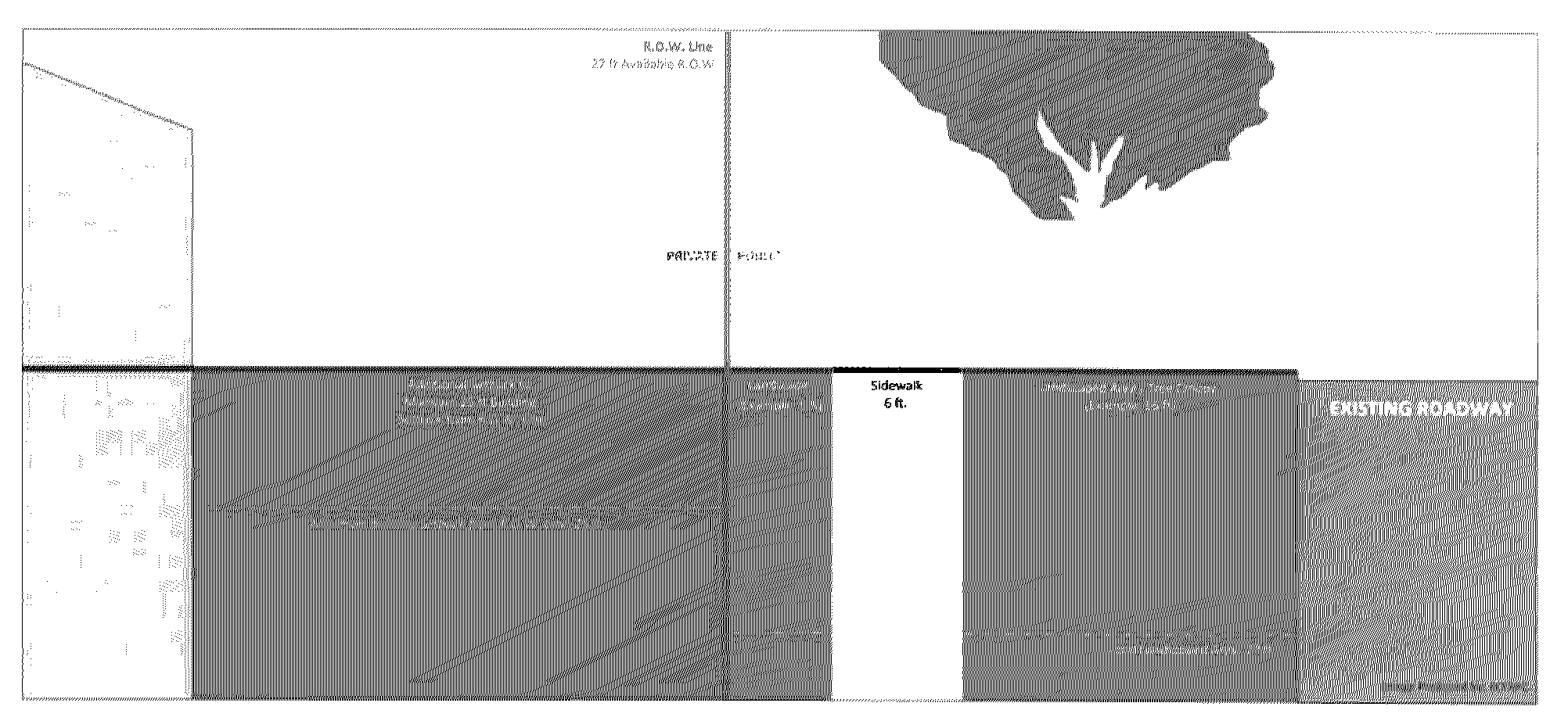
Depending on the existing depth of available right-of-way for streetscape, the twenty-seven (27) feet will either be entirely within the right-of-way or entirely on the subject property under development or a combination of both the available right-of-way and the subject property. For example, as illustrated in section 20-610 of this article, there are three (3) possible required streetscape scenarios:
(1)
If there is twenty-seven (27) feet of existing right-of-way, the streetscape is required to be located entirely within the right-of-way.
(2)
If there is no existing available right-of-way, the streetscape is required to be located entirely on the subject property.
(3)
If there is only ten (10) feet of available right-of-way, the streetscape is required to be located within the ten (10) feet of available right-of-way and within seventeen (17) feet of the subject property, etc.
For purposes of this subsection, the term "available" means that the authority with jurisdiction over the right-of-way has granted permission to construct, install and maintain the streetscape required by this article.
(d)
Streetscape trees required to be planted under this article shall be canopy trees of the size and type authorized on the city's approved species list for streetscape canopy trees. Trees shall be planted within the required sixteen (16) foot landscape area between the sidewalk and roadway with a minimum fifteen (15) foot separation between trees. Authorized street furnishing may also be installed and maintained within the sixteen (16) foot landscape area such as benches, bus shelters, lighting, trash receptacles, bicycle racks, and public signage and art.
(e)
Regardless of where the required streetscape is located, any building constructed on the subject property shall be required to be satisfy the required front setback from the right-of-way boundary. Buildings cannot be located within the required streetscape area so in instances when the subject development property is required to be used for streetscape in excess of twenty-five (25) feet, the building front setback will be greater than twenty-five (25) feet in order to accommodate the streetscape required by this article.
(Ord. No. 2020-02, § 2, 4-27-20)
Sec. 20-602. - Appropriate streetscape illustrations.
The following streetscape illustrations are examples of streetscapes that comply with the requirements of this article, and shall be used as a guide for determining compliance with this article:
(Ord. No. 2020-02, § 2, 4-27-20)

