
York City Zoning Code
ARTICLE III
- RULES AND DEFINITIONS
Sec. 1. - Rules.
For the purpose of this ordinance, the following rules shall apply:
(1)
Words and numbers used singularly shall include the plural. Words and numbers used plurally shall include the singular. Words used in the present tense shall include the future.
(2)
The word "persons" includes a corporation, members of a partnership or other business organization, a committee, board, trustee, receiver, agent or other representative.
(3)
The word "shall" is mandatory.
(4)
The words "use," "used," "occupy" or "occupied" as applied to any land or building shall be construed to include the words "intended," "arranged" or "designed" to be used or occupied.
(5)
For purposes of this ordinance whenever the word "family" is used, it shall be understood to mean "household" as defined in this ordinance.
(Ord. No. 2283, § 1, 4-15-2021)
Sec. 2. - Definitions.
For the purpose of interpreting the provisions of this ordinance, certain terms or words used herein are defined as follows:
(1)
Accessory use: A use of land customarily incidental and subordinate to the use of the principal building on the same lot or tract.
(2)
Accessory use of building: A subordinate building or use which customarily is incidental to that of the main or principal building or use of the premises. Customary accessory uses include, but are not limited to, tennis courts, swimming pools, detached garages, garden houses, antenna/satellite dishes, amateur radio or land mobile towers (cellular communication towers) of less than one hundred (100) feet, and residential, agricultural and recreational storage sheds. Garages or other accessory uses attached to the principal structure shall be considered a part thereof and meet the requirements of the principal structure.
(3)
Alley: A public thoroughfare which provides only a secondary means of access to abutting property, the right-of-way of which is twenty (20) feet or less in width.
(4)
Alteration: (See Structural alterations.)
(5)
Antenna, satellite receiving: An antenna intended for gathering radio and television signals emanating from communications satellites in earth orbit.
(6)
Apartment: (See Dwelling, multiple-family.)
(6.5)
Animal: Beef cattle and swine.
(7)
Animal hospital or clinic: An establishment where animals are admitted principally for examination, treatment, board or care, by a doctor of veterinary medicine. This does not include open kennels or runs.
(8)
Babysitting: (See Child care.)
(9)
Basement: A story having part, but not less than one-half (½) of its height below grade.
(10)
Board of adjustment: The legally appointed municipal board empowered to hear and decide appeals from, and to provide interpretations of, the terms of the zoning ordinance and official map as defined within this ordinance and in accordance with the laws of the State of Nebraska.
(11)
Boarding house and lodging house: A building other than a hotel where, for compensation and by prearrangement for definite periods, meals, or lodging and meals are provided for three (3) or more persons but not exceeding twenty (20) persons. This shall include bed and breakfast facilities.
(12)
Building: Any structure designed, or intended for the enclosure, shelter or protection of persons, animals or property. When a structure is divided into separate parts by unpierced walls from the ground up, each part is deemed a separate building.
(13)
Building height: The vertical dimension measured from the average elevation of the finished lot grade at the front of the building to the highest point of a flat roof; to the deck line of a mansard roof; and to the average height between the plate and ridge of a gable, hip or gambrel roof (see illustrations at end of this article).
(14)
Building official: The person or persons designated by the governing body to administer this zoning ordinance, whether such person or persons be entitled building official, building inspector, administrative official, director of public works, or enforcing officer.
(15)
Car wash: An establishment having facilities designed or used exclusively for washing or cleaning motor vehicles.
(16)
Cellar: A story having more than one-half of its height below grade.
(17)
Child care: The process of caring for not more than three (3) unrelated minor children with or without compensation. A child care service of this size is not required to be licensed by the Nebraska Department of Health and Human Services. Child care shall include the term "babysitting," but shall not include day nurseries or preschools. Also see "day nurseries" and "preschool."
(18)
Clinic: (See Medical, dental or health clinic.)
(19)
Club or lodge: A nonprofit association or organization formed for either fraternal, social, educational, philanthropic or other similar purposes, including unions and professional organizations.
(20)
Comprehensive plan: The duly adopted comprehensive plan for the development of the community which includes maps, charts, illustrations and tests for the following:
(a)
Land use studies.
(b)
Goals and objectives.
(c)
Population study and forecasts.
(d)
Economic base study.
(e)
Housing survey.
(f)
Transportation plan.
(g)
Central business district plan.
(h)
Community facilities and public utilities plan.
(i)
General development plan.
(21)
Condominium: A single-unit dwelling located in a multi-unit structure containing three (3) or more such units, where the surrounding lot area is held in common and maintained through a special ownership agreement.
[(21.5)]
Data Center: a centralized repository for the storage, management, processing, conversion, and dissemination of data and information which may also house equipment that supports communications network infrastructure without actually being part of the physical network. A data center may house equipment that includes, but is not limited to, computers, servers, data storage devices, and related equipment. A data center may include, but shall not be limited to, accessory uses that include offices for data center staff and accessory structures that include water storage tanks, cooling towers, network systems, fuel storage tanks, guardhouses and security offices, storage, chillers, electrical transformers, and engine generators. Accessory uses shall not include retail sales, telephone call centers, or customer services operations. Typical uses include data processing centers and server or mining farms.
(22)
Day nursery: An establishment other than a preschool which provides regular day care without specific education curriculum for four (4) or more unrelated minor children, as opposed to a child care or babysitting service. A facility which provides services to four (4) or more minor children is required to be licensed by the Nebraska Department of Health and Human Services as defined under the authority of Sections 71-1908 through 71-1918, Revised Statutes of Nebraska [R.R.S. 1943, §§ 71-1908—71-1918], as provided and defined under Title 474 of the Nebraska Administration Code, Chapter 6, Section 202 [now repealed].
(23)
District: A section or sections of the city and the two (2) mile area for which the regulations governing the use of buildings and premises, the height of buildings, the size of yards and the intensity of use are uniform.
(24)
Dwelling: A building or portion of a building, not a mobile home, designed or used exclusively for residential occupancy, including single-unit dwellings, two-unit dwellings, and multiple-unit dwellings, but not including hotels or motels, or other transient accommodations, nor institutional care facilities such as hospitals or nursing homes.
(25)
Dwelling, single-unit: A building having accommodations for and occupied exclusively by one (1) household. This may include modular homes.
(26)
Dwelling, two-unit: A building having accommodations for and occupied exclusively by two (2) households. This may include modular homes.
(27)
Dwelling, multiple-unit: A building having accommodations for and occupied exclusively by more than two (2) households. This may include modular homes.
(28)
Dwelling unit: Any room or group of rooms located within a dwelling and forming a single habitable unit with facilities used, or intended to be used for living, sleeping, cooking, eating and sanitation, by one (1) household.
(29)
Household: One (1) or more persons, functioning as a single housekeeping unit, occupying a single dwelling unit in compliance with the occupancy limitations set forth in the International Property Maintenance Code. The number of occupants per household shall not exceed the number of occupants permitted by the minimum area requirements of the occupancy limitations set forth in the International Property Maintenance Code. Uses where tenancy may be arranged for less than a month-to-month basis are not considered household living; they are considered a form of lodging. This definition does not include group homes or group care facilities.
(30)
Fence, solid: Solid fence shall mean a fence of wood, metal or masonry construction which is designed to obstruct the public view. Such fence may utilize materials having openings or perforations for decorative or functional purposes, but such openings or perforations shall not exceed fifteen (15) per cent of the total external face area, or be so arranged as to permit an unobstructed public view at any point.
(31)
Floodplain: Those lands within the zoning jurisdiction of the City of York which are subject to a one per cent or greater chance of flooding in any given year. The regulatory floodplain for this ordinance shall be based on the official flood hazard boundary map or flood insurance rate map issued by the Federal Insurance Administration, U.S. Department of Housing and Urban Development and any revision thereto. Copies of said map shall be on file in the office of the city clerk.
(32)
Frontage: All the property on one side of a street between two (2) intersecting streets (crossing or terminating) measured along the line of the street. Where a street is dead ended, the frontage shall be considered as all that property abutting on one side between an intersecting street and the dead end of the street.
(33)
Garage, community: A garage used exclusively for the parking and storage of vehicles owned or operated by residents of nearby dwelling units and their guests, which is not operated as a commercial enterprise and is not available to the general public, and which is owned, leased or cooperatively operated by such residents.
(34)
Garage, private: An accessory building designed or used for the storage of not more than four (4) motor driven vehicles and less than one thousand (1,000) square feet in which vehicles owned and used by the occupants of the building to which it is accessory.
(35)
Garage, public: A building, or portion thereof other than a private or storage garage, designed or used for equipping, repairing, hiring, servicing, selling or storing motor-driven vehicles.
(36)
Garage, storage: A building, or portion thereof, designed or used exclusively for housing four (4) or more motor-driven vehicles and consisting of at least one thousand (1,000) square feet or more area.
(37)
Governing body: Mayor and city council of the City of York, Nebraska.
(37.2)
Group care facility shall mean a facility licensed or approved by the State of Nebraska or other appropriate agency or organization, which provides for the care and short or long-term, continuous multi-day occupancy of unrelated persons who receive therapy or counseling as part of an organized and therapeutic program for any of the purposes listed below:
(a)
Rehabilitation from alcohol or substance abuse.
(b)
Supervision under a program alternative to imprisonment including but not limited to pre-release, work-release, and probationary programs.
(37.4)
Group home shall mean a facility licensed or approved by the State of Nebraska or other appropriate agency or organization in which persons who are unrelated, not including resident managers or house parents, reside while receiving therapy, training, or counseling for the purpose of living with or rehabilitation from a physical, mental, behavioral, or developmental impairment or dysfunction that prevent such persons from living independently. Examples of group homes include residential settings for persons with physical, mental, or developmental disabilities or impairments and facilities for the placement of juveniles. The term "group home" shall not include a residential setting that qualifies as a "group care facility."
(37.7)
Harvest: Shall mean in regard to the harvest of animals: to kill an animal for human consumption.
[(37.8)]
Home-Based Business: Home-Based Businesses conducted by residents on the premises of their residential property. Home occupations, including food establishments that are authorized pursuant to the Nebraska Pure Food Act, Neb. Rev. Stats. § 81-2,239 et seq. [R.R.S. 1943, § 81-2,239 et seq.], are permitted if they comply with the following conditions and standards:
(a)
No more than three nonresident employees may be on site at once.
(b)
No more than three clients or customers may be on site at once. Section (b) does not apply to the use of a residential property for parties of up to four hours organized in a home to sell a particular type of good.
(c)
The Home-Based Business must operate exclusively within an enclosed structure on the property.
(d)
The operation of the Home-Based Business cannot be visible from the street.
(e)
The Home-Based Business must remain a secondary use to the site's primary (residential) use.
(f)
A single sign may be attached to the structure in which the Home-Based Business is operated, which sign must be 32 square feet or less. A single detached sign may be placed on the property on which the Home-Based Business is located, which sign must be 3 square feet or less.
(g)
Materials or products associated with the home occupation on the premises must be stored within an enclosed structure.
(h)
The operation of the home occupation shall be consistent with permitted residential uses, shall not create any conditions that amount to a public nuisance, and shall not be detrimental to the residential neighborhood bycausing increased noise, traffic, lighting, odor, or by violating any applicable ordinances or laws.
(i)
The Home-Based Business must operate in compliance with all City, State and County health and safety regulations.
(38)
Home occupation: An occupation or activity carried on within the dwelling or by a member of the family residing on the premises, which occupation or activity is incidental and secondary to the residential occupancy and does not change the residential character nor infringe upon the right of neighboring residents to enjoy a peaceful occupancy of their homes.
(39)
Hospital: An establishment used primarily for inpatient care and provide health, medical, mental, and surgical care of the sick or injured.
(40)
Hotel/motel: An establishment providing for a fee, sleeping accommodations and customary lodging services including maid services, desk service and may include facilities with conference and meeting rooms, restaurants, bars and recreational facilities. A hotel/motel includes a motor hotel, tourist court, extended-stay hotel or motel, apartment hotel or similar use, but does not include a mobile home park or any facility in which the majority of lodging units are rented or leased for periods or more than thirty (30) days.
(41)
Institution of higher learning: A college, university or incorporated academy providing general academic instruction equivalent to the standards prescribed by the state board of education. Dormitories, fraternity houses, sorority houses and other student housing which are constructed on campus shall be considered accessory buildings.
(42)
Institution (nonprofit): A building occupied by a nonprofit corporation or a nonprofit establishment for public use.
(43)
Junk or salvage yard: A place where waste, discarded or salvaged metals, building materials, paper, textiles, used plumbing fixtures, abandoned or inoperable motor vehicles or parts thereof, and other used materials are bought, sold, exchanged, stored, baled or cleaned; and places or yards for the storage of salvaged metal, materials and equipment; but not including pawn shops and establishments for the sale, purchase or storage of used cars or trucks presently in operable condition, boats or trailers presently in operable condition, and used furniture and household equipment in usable condition and not including the processing of used, discarded or salvaged materials as part of manufacturing operations.
(44)
Kennel: An establishment used for keeping more than two (2) domesticated animals, commonly considered to be household pets, more than three (3) months old.
(45)
Laboratory, medical: An establishment which provides bacteriological, biological, medical, X-ray, pathological and other similar analytical or diagnostic services.
(46)
Laundry (self-service): An establishment equipped with individual coin-operated washing, drying or dry cleaning machines.
(47)
Laundry: An establishment where commercial laundry and dry cleaning work is undertaken.
(48)
Livestock confinement facility/operation shall mean any building(s), lot(s), pen(s), pool(s), or pond(s) or other confined spaces, which normally are not used for raising crops or grazing of animals, which are designed and/or used for on-going confined raising, feeding or management of animals for more than one hundred and eighty (180) consecutive days, in one (1) calendar year.
(49)
Livestock, grazing of: shall be defined as the feeding of livestock upon naturally grown vegetation in pasture lands, or from crop lands after harvesting. "Livestock, grazing of" shall not include supplemental feeding, such as bundled hay or feed, after vegetation or crop lands is barren.
(50)
Reserved.
(51)
Lot area: The total area within the property lines of the lot, plot or tract.
(52)
Lot or plot: A parcel of land occupied or intended for occupancy by one main building, together with its accessory buildings, including the open spaces required by this ordinance. A lot or plot may include more than one platted lot.
(53)
Lot, corner: A lot, as defined above, abutting upon two (2) or more streets at their intersection. (See illustration at the end of this article.)
(54)
Lot coverage: The total area of building expressed as a percentage of the total lot, plot or tract. (Includes both principal and accessory buildings.)
(55)
Lot, interior: A lot other than a corner lot which has frontage on one street only. (See illustration at the end of this article.)
(56)
Lot, depth of: The mean horizontal distance between the front and the rear lot lines. (See illustration at the end of this article.)
(57)
Lot, double frontage: A lot having a frontage on two (2) nonintersecting streets as distinguished from a corner lot. (See illustration at the end of this article.)
(58)
Lot or record: A lot which is a part of a subdivision, the map of which has been recorded in the office of the register of deeds, or a lot described by metes and bounds, the description of which has been recorded in the office of the register of deeds.
(59)
Manufacture: Any method of processing, developing, fabricating, assembling, either raw materials, semi-finished materials or parts into a semi-finished or finished product.
(60)
Manufactured home: A factory-built structure which is to be used as a place for human habitation, which is not constructed or equipped with a permanent hitch or other device allowing it to be moved other than to a permanent site, which does not have permanently attached to its body or frame any wheels or axles, and which bears a label certifying that it was built to compliance with National Manufactured Home Construction and Safety Standards, 24 C.F.R. 3280 et seq., promulgated by the United States Department of Housing and Urban Development, or a modular housing unit as defined in Section 71-1557 of the Nebraska Revised Statutes [R.R.S. 1943, § 71-1557] bearing the seal of the Department of Health and Human Service System.
(61)
Medical, dental or health clinic: Any building designed for use by one or more persons lawfully engaged in the diagnosis, care and treatment of physical or mental diseases or ailments of human beings; including, but not limited to, doctors of medicine, dentists, chiropractors, osteopaths, optometrists, psychiatrists, and podiatrists; and in which no patients are lodged overnight.
(62)
Mobile home (manufactured home): A year-round, transportable structures which is a single family dwelling unit suitable for permanent, more than thirty (30) days of living quarters, more than eight (8) feet wide and forty (40) feet in length and built to be towed on its own chassis with or without a permanent foundation when connected to the required utilities. This portable dwelling may consist of one (1) or more units that can be telescoped when towed and expanded later for additional capacity, or two (2) or more units, separately towable but designed to be joined as one (1) integral unit. Nothing in this definition shall be construed so as to include prefabricated, modular, precut dwelling units or these manufactured in sections or parts away from the site and transported thereto for assembly. Other mobile home terms are as follows:
(a)
Dependent mobile home: A mobile home which does not have a flush toilet and bath or shower.
(b)
Independent mobile home: A mobile home which has a flush toilet and a bath or shower.
(c)
Licensee: Any person licensed to operate and maintain a mobile home park under the provisions of this ordinance.
(d)
Mobile home space: A plot of ground within a mobile home park designed for the accommodation of one mobile home.
(e)
Natural or artificial barrier: Any river, pond, canal, railroad, levee, embankment, or major street.
(f)
Permittee: Any person to whom a permit is issued to maintain or operate a mobile home park under the provisions of this ordinance.
(g)
Permanent foundation: A foundation of conventional construction utilizing concrete, masonry or similar materials which is specifically designed to accommodate the mobile home, and which has been constructed in accordance with the building codes of the City of York.
(h)
Person. Any individual, firm, trust, partnership, association or corporation.
(i)
Street. Any recognized thoroughfare in the city.
(63)
Mobile (manufactured) home park: Any area of land which two (2) or more mobile homes are parked, connected to utilities and used by one (1) or more persons for living or sleeping purposes. A mobile home parked in this area can either be placed on permanent foundation or supported only by its wheels, jacks, blocks, or skirting or a combination of these devices. A mobile home park includes any premises set apart for supplying to the public parking space, either free of charge or for revenue purposes for one (1) or more mobile homes, connected to utilities and used by one (1) ore more persons living, or sleeping purposes and shall include any building, structure, tent, vehicle or enclosure used or intended for use as part of the equipment of such mobile home park.
(64)
Modular home: Any dwelling whose construction consists entirely of or the major portions of its construction consist of a unit or units not fabricated on the final site for the dwelling units, which units are movable or portable until placed on a permanent foundation and connected to utilities. All modular homes shall bear a label certifying that it was built to compliance with the Nebraska Department of Health and Human Services System as established in Section 71-1557 of the Nebraska revised Statutes [R.R.S. 1943, § 71-1557].
(65)
Nonconforming building: The use of a building or portion thereof lawfully existing at the time of the passage of this zoning ordinance and amendments thereto, which does not conform with the provision of this ordinance or amendments thereto.
(66)
Nonconforming use: Any land lawfully occupied by a use, at the time of the passage of this ordinance or amendments thereto, which does not conform with the provisions of this ordinance or amendments thereto.
(67)
Nonstandard use: Lots occupied by buildings or uses which existed immediately prior to the effective date of the zoning ordinance which fail to comply with any of the following: Minimum lot requirements for the area, density, width, front yard, side yard, rear yard, height or parking for the district in which they are located, even though the use of the premises conforms to the permitted use within the district as identified in the provisions of this ordinance.
(68)
Nursing home: An establishment or agency licensed by the State of Nebraska for the reception, board, care or treatment of three (3) or more unrelated elderly individuals.
(69)
Outlot: A lot platted as an outlot which does not meet the land subdivision requirements and cannot be built upon. May be used for drainage easements, park, open space, etc.
(70)
Parking space: An area surfaced for the purpose of storing one parked automobile. For the purpose of this ordinance one parking space shall have a minimum width of nine (9) feet and a minimum length of twenty (20) feet. In computing off-street parking, additional space shall be required off-street for access drives to each parking space.
(71)
Planning commission: The City Planning Commission of York, Nebraska.
(72)
Place or court: An open, unoccupied space, other than a street or alley, permanently reserved as the principal means of access to abutting property.
(73)
Preschool: An establishment, other than a public or parochial school, which provides regular day care with specific educational curriculum for unrelated minor children. Also see "child care" and "day nursery."
(74)
Professional office: Any building or part thereof used by one or more persons engaged in the practice of law, medicine, accounting, architecture, engineering or other occupation customarily considered as a profession.
(75)
Public utility: Any business which furnishes the general public telephone service, telegraph service, electricity, natural gas or water, and any other business so affecting the public interest as to be subject to the supervision or regulation by an agency of the state.
(76)
Recycling center: A salvage operation that accepts salvage material limited to paper; aluminum foil; containers made of glass, plastic, metal, aluminum, and paper; and similar household wastes; no hazardous material as defined by state and federal law is accepted; there is no wrecking or dismantling of salvage material and no salvage material is held outside a building.
(77)
Restaurant: A public eating establishment at which the primary function is the preparation and serving of food.
(78)
Restaurant, drive-in: An eating establishment, where for compensation, food is prepared and dispensed, having only incidental consumption within the principal building on the premises.
(79)
Reserved.
(80)
Sanitary landfill: A lot or parcel of land used primarily for the disposal, abandonment, dumping, burial or burning of garbage, sewage, trash, refuse, junk, discarded machinery or motor vehicles or part thereof, or other waste, and which is in conformance with the requirements of the Nebraska Department of Environmental Quality.
(81)
School: A public elementary or secondary educational facility which is under direction and control of the state board of education and the state superintendent of public instruction and/or a parochial elementary or secondary educational facility which offers the same general curriculum as that provided by a comparable public educational facility.
(82)
Service station: An establishment consisting of a building or group of buildings and surfaced area where automotive vehicles may be refueled and serviced; such service shall not include tire recapping, body repairs or major overhaul.
(83)
Setback: Distance between the lot line and building line. Except front yard setback is the distance between the lot line and the nearest architectural projection, such as the vertical face of the first step of the front porch.
(84)
Sign: A sign shall include any sign or other devise which shall display or include any letter, word, model banner, flag, pennant, insignia, devise or representation used as, or which is in the nature of, an advertisement or announcement which directs attention to an object, procedure, place, activity, person, institution, organization or business, but shall not include any display of official notice or official flag.
(a)
Sign, attached means a sign that is structurally connected to a building or depends upon that building for support.
(b)
Sign, awning means a sign printed on such a temporary or movable shelter supported entirely from the exterior wall of a building and composed of non-rigid materials, except for a supporting framework.
(c)
Sign, banner means material with a printed message or graphic secured or mounted from a structure in such a way as to allow wind movement.
(d)
Sign, canopy means a sign that is attached or made an integral part of a canopy.
(e)
Sign, freestanding means a sign that is self-supporting and structurally independent from any building.
(f)
Sign, electronic message means a sign which uses an array of electrically illuminated lights, generally controlled by a computer or other electronic programming device, to display information or supporting graphics.
(g)
Sign, flag means a sign that is emblazoned on a flag and is intended to be displayed in a free-flowing manner.
(h)
Sign, nonconforming means a sign that was legally erected prior to the adoption of this Zoning Ordinance but which violates the regulations of this Zoning Ordinance.
(i)
Sign, marquee means a permanent, roof-like structure projecting from a building at the entrance to the building with signage on the top or face of the structure. Not to exceed ten (10) feet from structure.
(j)
Sign, portable means a sign supported by frames or posts rigidly attached to bases not permanently attached to the ground or a building and capable of being moved from place to place, and constructed of paper, cloth, canvas, light fabric, cardboard, plywood, light plastic or other similar materials.
(k)
Sign, projecting (blade) means a sign other than a wall sign that is attached to and projects from a building face that extends more than eighteen (18) inches beyond the building plane.
(l)
Sign, residential means a small detached or attached sign located on a residential premise, conveying a message communicated by the owner or resident of the property.
(m)
Sign, roof means a sign or part of sign erected upon, against, or directly above a roof or on top of or above the parapet or cornice of a building.
(n)
Sign, wall means a sign attached to and parallel with the side of a building that does not project more than eighteen (18) inches from the building wall.
(o)
Sign, window means a sign painted on or installed inside a window for the purpose of viewing from outside the premises.
(p)
Sign, yard means a detached sign in a yard of a property.
(q)
Sign, sandwich An advertising or business ground sign which is constructed in such a manner to form an "A" or a tentlike shape, hinged or not hinged at the top and each angular face held at an appropriate distance by a supporting member.
(r)
Sign, flashing Any illuminated sign on which the artificial light is not constant in intensity and color at all times. For the purpose of this ordinance, any revolving illuminated sign shall be considered a flashing sign.
(s)
Sign, illuminated Any sign which has characters, letters, figures, designs or outlines illuminated externally by electric lights or internally by luminous tubes.
(t)
Sign, ground A ground sign shall mean a sign with less than ten (10) feet clearance supported by one or more uprights, poles, or braces in or upon the ground other than a pole sign, as defined in this article.
(u)
Sign, pole A pole sign shall mean a sign wholly supported by a sign structure in the ground with any part of the sign area having a minimum of ten (10) foot clearance above grade.
(v)
Sign, temporary A temporary sign shall mean any outdoor sign or device intended to be displayed for a limited period of time and not permanently affixed.
(w)
Sign, area: Area of sign shall mean the area of the largest single face of the sign within a perimeter which forms the outside shape including any frame which forms an integral part of the display, but excluding necessary supports or uprights on which the sign may be placed. If the sign consists of more than one section or module, all areas will be totaled. Signs mounted or painted on a wall shall be calculated by using a simple geometric figure around the message and shall include any framing or decoration, the primary purpose of which is to highlight the sign.
(x)
Sign, height: The height of a sign shall mean the distance between the lowest grade level within two (2) feet of either side of a sign, and the highest part of the sign or its support; except that if the property was lower than the adjacent roadway, then the height of the sign is to be calculated from the street grade at a ninety (90) degree angle from the sign.
(85)
Reserved.
(86)
Reserved.
(87)
Special use permit: A written permit issued with authorization of the city council. The special permit provides permission under specific conditions to make certain special uses of land in specific zoning districts as stipulated under permitted special uses in each of the district zoning regulations.
(88)
Street: A right-of-way, other than an alley dedicated to the public use, which provides principal access to adjacent properties.
(89)
Street line: A dividing line between a lot, tract or parcel of land and the contiguous street.
(90)
Street network:
(a)
Arterial street: A street which provides for through traffic movement between and around areas and across the city with direct access to abutting property; subject to necessary control of entrances, exits and curb uses.
(b)
Collector street: A street which provides for traffic movement between arterial and local streets, with direct access to abutting property.
(c)
Local street: A street which provides direct access to abutting land and for local traffic movement, whether in business, industrial or residential areas.
(91)
Structure: Anything constructed or erected, the use of which requires permanent location on the ground or attachment to something having a permanent location on the ground, but not including fences.
(92)
Structural alterations: Any change or rearrangement of the supporting members of a building, such as bearing walls or partitions, columns, beams or girders, or any complete rebuilding of the roof or the exterior walls. For the purpose of this ordinance, the following shall not be considered structural alterations:
(a)
Attachment of a new front where structural supports are not changed.
(b)
Addition of fire escapes where structural supports are not changed.
(c)
New windows where lintels and support walls are not materially changed.
(d)
Minor repair or replacement of nonstructural members.
(93)
Subdivision: The division of a tract of land into one or more lots or parcels for the purpose of transfer of ownership or building development, or, if a new street is involved, any division of a parcel of land. The term subdivision includes resubdivision and the term "resubdivision," as used herein, shall include any further subdivision of a lot or parcel of land previously subdivided, for sale, use, or other purposes, which varies from the latest, approved subdivision of the same. See land subdivision ordinance.
(94)
Reserved.
(95)
This ordinance: The document duly approved and adopted by the mayor and city council of the City of York, Nebraska, which establishes zoning requirements.
(96)
Townhouse: A single-unit dwelling located in a multi-unit structure containing three (3) or more such units, where portions of the surrounding lots are sold with the dwelling units to create privately owned and maintained yards.
(97)
Tract: A plot or parcel of land, other than a lot in a subdivision which is recorded in the office of the register of deeds.
(98)
Trailer: (See Mobile Home.)
(99)
Use: The specific purpose for which land or a building is used. The term "permitted use, " or its equivalent, shall not be deemed to include any illegal nonconforming use.
(100)
Variance: The authorization, by the board of adjustment, of a variance from the specific terms of this zoning ordinance. Variances are limited to those authorized in the powers and duties of the board of adjustment defined in this ordinance.
(101)
Wind energy conversion system (WECS): Any device such as a wind generator, or wind turbine which is designed to utilize the force of wind to power machinery and/or produce another form of usable energy.
(102)
Yard: A space on the same lot with a main building open, unoccupied and unobstructed by buildings or structures from the ground upward.
(103)
Yard, front: A yard extending across the full width of the lot, the depth of which is the least distance between the street right-of-way and the front building line. (See illustration at the end of this article.)
(104)
Yard, rear: A yard extending across the full width of the lot between the rear of the main building and the rear lot line, the depth of which is the least distance between the rear lot line and the rear of such main building. (See illustration at the end of this article.)
(105)
Yard, side: A yard between the main building and the side lot line, extending from the front yard, or front lot line where no front yard is required, to the rear yard. The width of the required side yard shall be measured horizontally, at ninety (90) degrees with the side lot line, from the nearest point of the main building. (See illustration at the end of this article.)
(106)
Zone or district: A portion, area or section of the City of York, Nebraska, for which uniform regulations governing the use, height, area, size and intensity of use of buildings, land, and open spaces about building are herein established.
(Ord. No. 1497, § 2, 2-14-1985; Ord. No. 1528, § 1, 9-11-1986; Ord. No. 1536, § 2, 3-12-1987; Ord. No. 1564, § 1, 1-14-1988; Ord. No. 1574, § 1, 7-14-1988; Ord. No. 1727, 6-13-1996; Ord. No. 1803, § 1, 11-18-1999; Ord. No. 1978, § 1, 1-18-2007; Ord. No. 2247, § 1, 6-4-2020; Ord. No. 2270, § 2, 9-3-2020; Ord. No. 2273, § 2, 11-5-2020; Ord. No. 2284, § 1, 4-15-2021; Ord. No. 2320, § 1, 4-21-2022; Ord. No. 2337, § 1, 10-20-2022)
[Sec. 2.1. - Building height graphic.]
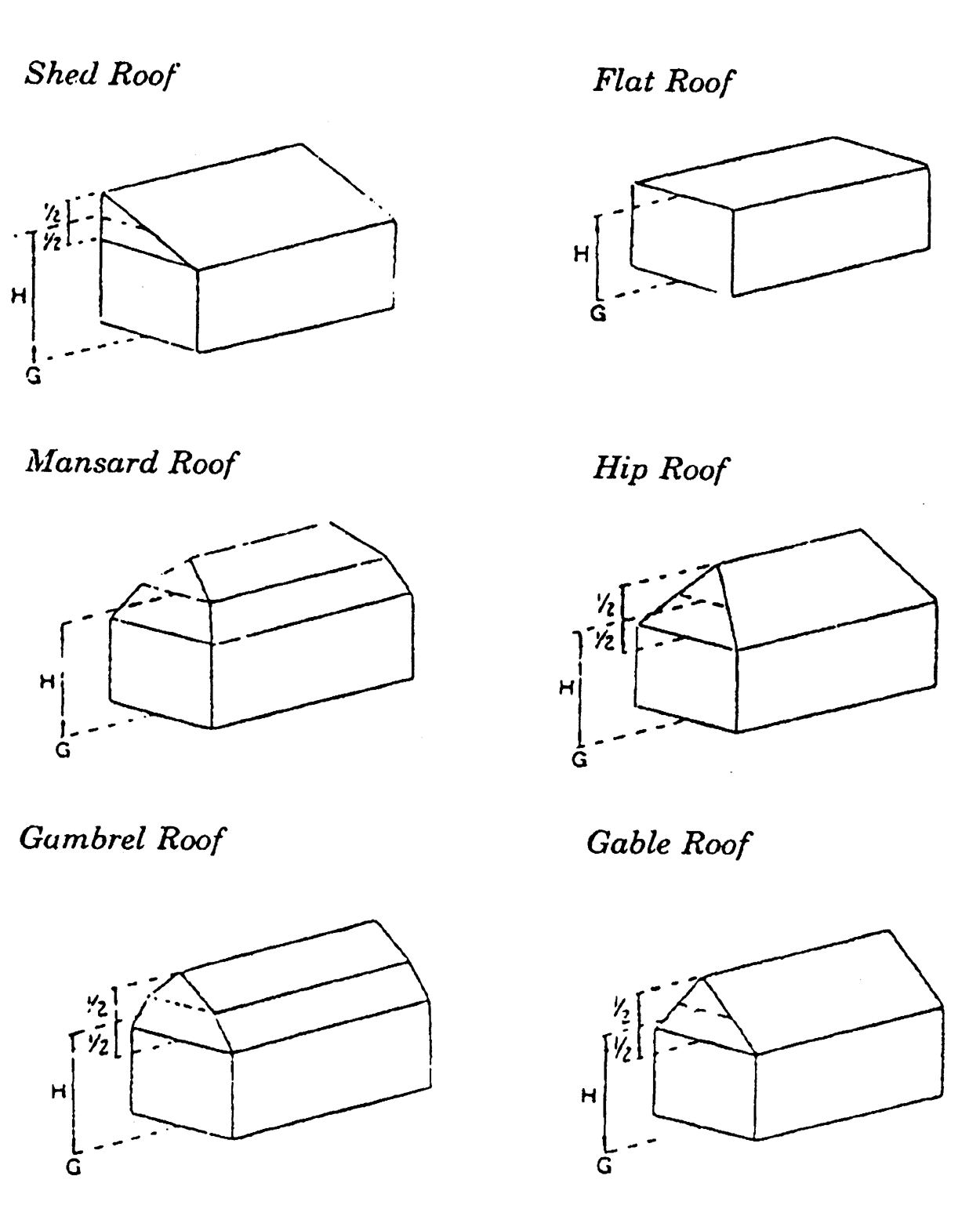
Buildings
H-Height of building.
G-Grade.
(Ord. No. 1574, § 1, 7-14-1988)
[Sec. 2.2. - Block diagram.]
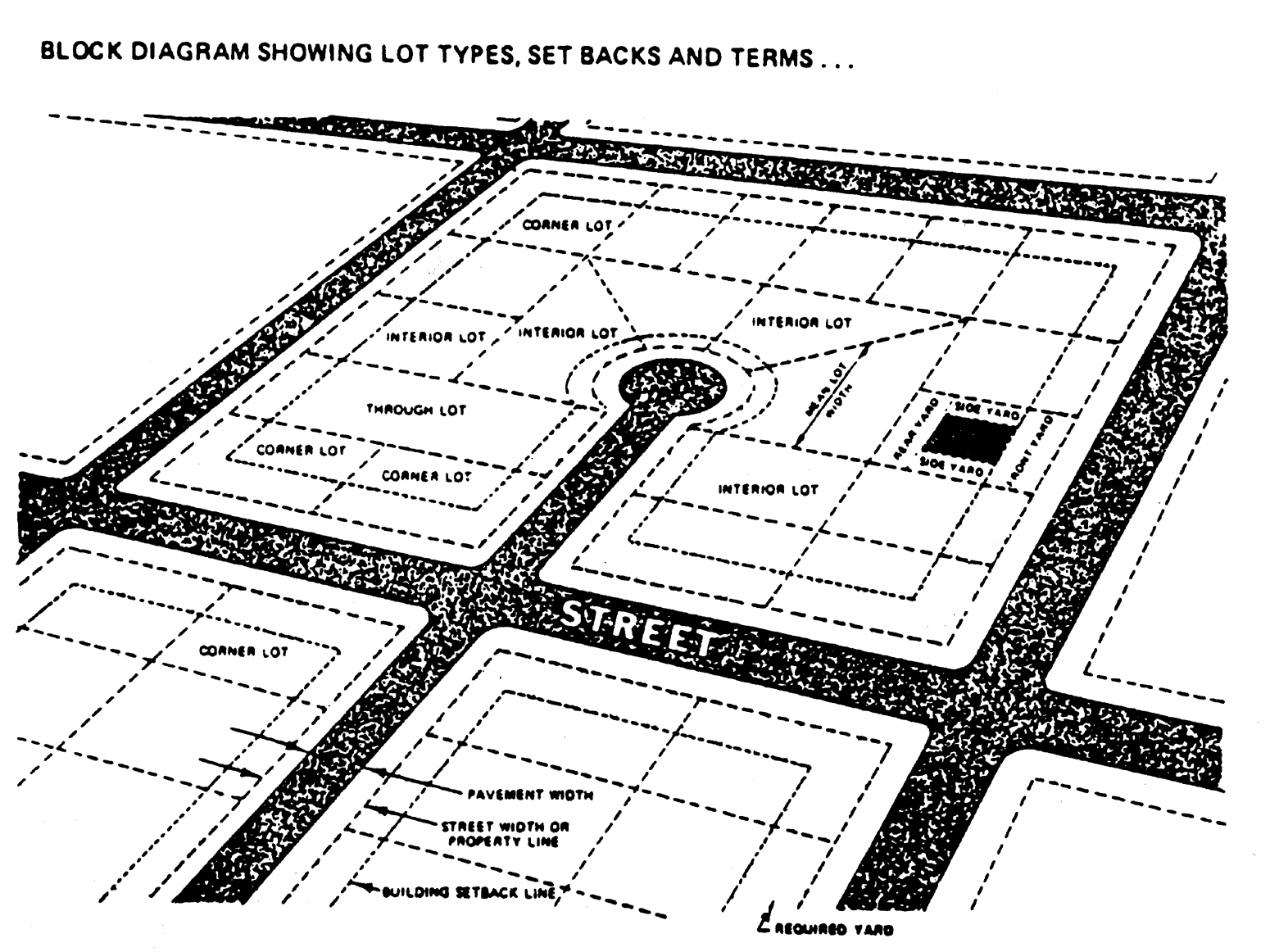
Block Diagram
(Ord. No. 1414, 4-9-1981; Ord. No. 1456, § 1, 1-13-1983)
Sec. 3. - Other terms.
Words or terms not herein defined shall have their ordinary meaning in relation to the context.

