
Alamosa City Zoning Code
ARTICLE IV
LOT, BUILDING, AND STRUCTURE STANDARDS
Sec. 21-4-101. - Purpose and application of division.
(a)
Purpose. The purpose of this division is to provide standards that allow for neighborhood diversity and stability in the EN Zone. The EN Zone is generally characterized by medium and higher density single-family development, with duplexes and small multifamily buildings interspersed.
(b)
Application of division. The standards of this division apply within the EN Zone.
(Ord. No. 33-2017, § 1, 12-6-17)
Sec. 21-4-102. - Status of existing lots and buildings in EN zone.
(a)
Protection of existing lots, buildings, and density.
(1)
Lots within the EN Zone that were lawfully created and existing as of the date the zoning of the lot changed to the EN Zone are "conforming" for the purposes of this UDC regardless of their dimensions.
(2)
Buildings within an EN Zone that were lawfully constructed as of the date the zoning of the lot changed to the EN Zone are "conforming" to these regulations regardless of their height, building coverage, floor area ratio, or setbacks.
(3)
Duplex and multifamily residential dwelling units within the EN Zone that were lawfully constructed as of the date the zoning of the lot changed to the EN Zone are "conforming" to these regulations with regard to density.
(4)
It is the policy of the city to allow for the continuation of existing residential uses, and for the construction of new single-family detached buildings on existing vacant lots in the EN Zone. As such, the development yield of each existing vacant lot in the EN Zone shall be a minimum of one (1) single-family detached dwelling unit.
(b)
Restriction on subdivision of combined lots. If two (2) or more existing lots of record are combined for the purposes of development as of the effective date (i.e., an existing building footprint spans two (2) or more lots), they shall not be subsequently split for the purposes of separate development, unless all of the resulting lots meet the applicable minimum requirements for lot width, lot frontage, and lot area.
(Ord. No. 33-2017, § 1, 12-6-17)
Sec. 21-4-103. - EN zone flexible setback standards.
(a)
Generally. In general, the standards of article IV, division 2, housing palette, apply within the EN Zone. However, with regard to residential building setbacks:
(1)
Setback standards apply to new residential building construction on vacant lots, redevelopment of developed residential lots for residential use, and to nonresidential buildings. Front setbacks may be reduced for single-family detached and duplex uses as provided in subsection (b), below.
(2)
Setback standards apply to expansions of existing residential buildings, except that such standards may be modified according to subsections (b) and (c), below.
(b)
Contextual front or rear setback reduction.
(1)
The required front setback may be reduced if it is demonstrated that:
a.
Fifty (50) percent or more of the lots on the same side of the street segment (not counting the applicant's lot) are developed with buildings that are set back at distances that are less than the required front yard setback;
b.
The average front setback of all of the developed lots on the same side of the street segment (with fractions dropped) is less than the required front setback; and
c.
The reduced front setback is not less than the average front setback of all of the developed lots on the same side of the street segment.
(2)
The required rear setback may be reduced for an addition to an existing building if it is demonstrated that the proposed rear building setback is equal to not more than ten (10) percent less than the average actual rear setback of the other homes on the same side of the same block.
(c)
Individual lot setback reductions. The following setback reductions are allowed for additions to existing buildings.
(1)
All setbacks. Setback reductions on individual lots shall be applied only if it is demonstrated that the setback-specific standards below are met, and:
a.
The proposed construction does not interfere with planned expansion of right-of-way (if right-of-way expansion is planned, the encroachment shall be evaluated as if the right-of-way has been expanded);
b.
The proposed construction does not result in interference with a utility easement, drainage easement, emergency access, or required sight triangle; and
c.
The proposed addition does not create new or increased nonconformity with respect to the building code or fire code (e.g. fire separation distance) on either the subject property or adjoining property.
(2)
Front setbacks.
a.
Option #1. The reduction is ten (10) percent or less of the required front setback, and the encroachment will not reduce the depth of a driveway to:
1.
Less than twenty (20) feet in length to the edge of the sidewalk; or
2.
Less than twenty-five (25) feet in length to the edge of pavement if no sidewalk is either provided or planned.
b.
Option #2. The reduction is more than ten (10) percent of the required front setback, but less than twenty-five (25) percent of the required front setback, and:
1.
No garage doors or carport openings that face the street are located in the reduced setback area;
2.
The improvement is not more than eighteen (18) feet in height;
3.
The proposed construction does not involve the destruction of a healthy, mature tree; and
4.
If the encroachment is more than ten (10) feet wide (measured parallel to the front building line), then a canopy tree or evergreen tree is located between the encroachment and the street.
c.
Option #3. The existing building encroaches upon the setback as of the effective date, and:
1.
The proposed construction does not involve the destruction of a healthy, mature tree;
2.
The proposed construction will not reduce the depth of a driveway to less than twenty (20) feet in length to the edge of the sidewalk or less than twenty-five (25) feet in length to the edge of pavement if no sidewalk is either provided or planned; and
3.
The proposed construction will be set back not less than ninety (90) percent of the setback of the existing building.
(3)
Interior side setbacks. Interior side setbacks may be reduced by up to forty (40) percent if it is demonstrated that the proposed construction meets the following standards:
a.
Limit of encroachment towards residential property. If the lot that adjoins the proposed building expansion is used for residential purposes, then:
1.
The building expansion is screened from view from the street by at least one (1) evergreen tree per story of the building expansion, unless it encroaches into the required side setback less than one (1) foot closer to the lot line than the existing building;
2.
Building expansions that are twelve (12) feet in height (measured from the average grade across the side of the proposed construction facing the abutting lot) or less are set back at least forty-two (42) inches from the side lot line; and
3.
Building expansions that are more than twelve (12) feet in height (measured from the average grade across the side of the proposed construction facing the abutting lot) are set back at least five (5) feet from the side lot line.
b.
Limit of encroachment towards nonresidential property or open space. If the lot that abuts the proposed building expansion is used for nonresidential purposes or permanent open space that is at least twenty (20) feet in width, then the building expansion is set back at least forty-two (42) inches from the side lot line.
c.
Horizontal dimension. The building expansion, combined with the existing building, will not create a horizontal building dimension of more than fifty (50) feet that does not include an offset in the building wall of at least two (2) feet for a horizontal distance of at least six (6) feet.
d.
Windows. The building expansion does not include a window that is located directly across from another window on a residential building that is closer than fifteen (15) feet away, unless:
1.
The window is on the first floor and a privacy fence is installed between the two (2) buildings to a height of six (6) feet; or
2.
The window is not operational and is made of glass block or frosted glass.
(4)
Street side setbacks.
a.
On corner lots of double-loaded blocks, street side setbacks may be reduced up to fifty (50) percent if it is demonstrated that:
1.
The portion of the building expansion that encroaches on the street side setback contains not more than fifteen (15) percent of the floor area of the building; and
2.
No horizontal dimension of the part of the building expansion that encroaches upon the street side setback runs for more than thirty (30) feet unless there is an offset of at least two (2) feet for a distance of at least six (6) feet to break up the apparent mass of the building wall.
b.
On corner lots that are not on double-loaded blocks, street side setbacks may be reduced as if the street side setback were a front setback.
(5)
Rear setbacks. Rear setbacks may be reduced up to twenty (20) percent if it is demonstrated that:
a.
No driveway on an alley-loaded lot with a rear-facing garage door will be affected such that its resulting length will be between three (3) and twenty (20) feet.
b.
There will be at least five hundred (500) square feet of useable, permeable landscaped area in the back yard.
c.
The encroachment affects not more than forty (40) percent of the rear frontage of the building.
(Ord. No. 33-2017, § 1, 12-6-17; Ord. No. 5-2020, § 23, 3-4-20)
Sec. 21-4-201. - Purpose and application of division.
(a)
Purpose. The purpose of this division is to set out types of housing that may be developed in the city, and to establish minimum lot and building standards (and in some cases, other applicable standards) for each housing type. The housing palette provides a range of choices for lot sizes and housing types so that applicants may design projects that promote affordability and diversity, address multiple market demands, and (where appropriate) protect open space and natural resources.
(b)
Application.
(1)
Measure the available land. Step 1 is to multiply the open space ratio by the land area of the subject property to determine how much land must be open, and how much land is available for development. The open space that is required in each zone is set out in article III, density, intensity, and open space.
(2)
Calculate the maximum unit count. Step 2 is to calculate the maximum unit count by multiplying the allowed density by the land area of the subject property (in acres, including open space). The densities that are allowed in each zone are set out in article III, density, intensity, and open space.
(3)
Check the use table. Step 3 is to determine which housing types are allowable in the zone by checking the use table. The use table is set out in section 21-2-202, Residential and Special Residential Land Use Table.
(4)
Check the site design standards and apply the housing palette. Step 4 is to review the applicable design standards in this article and article V, Site design standards, and then lay out a development that incorporates the allowable housing types of the applicant's choice. The standards for each housing type are set out in this division.
(Ord. No. 33-2017, § 1, 12-6-17)
Sec. 21-4-202. - Single-family detached lot and building standards.
(a)
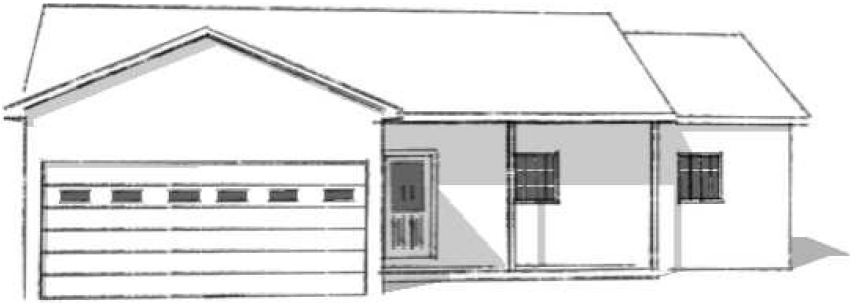
Generally. The single-family detached housing type consists of a single-family dwelling unit located on a privately-owned lot with private yards on each side of the dwelling unit. An illustrative single-family detached building is shown in Figure 21-4-202(a), Illustrative Single-Family Detached Building.
|
Figure 21-4-202(a)
ILLUSTRATIVE SINGLE-FAMILY DETACHED BUILDING |
 |
(b)
Lot and building standards; differentiating among single-family housing types. Table 21-4-202(b), Single-Family Detached Lot and Building Standards, below, establishes five (5) lot types for single-family detached dwelling units. To meet the requirements for any lot type, both the lot area and the lot width minimums must be met. For example:
(1)
If a developer proposes a seven thousand three hundred (7,300) sf. single-family lot that is fifty (50) ft. wide, the lot would be classified as a "Town Lot" lot, but if the lot width is increased to sixty (60) ft., the lot would be classified as a "Suburban Lot."
(2)
If a developer proposes a four thousand seven hundred (4,700) sf. single-family lot that is forty-five (45) ft. wide, the lot would be classified as a "Town Lot" (and could be accessed via street or alley), but if the same lot were only forty (40) ft. wide, it would be a "Town Lot" that must have alley access, as provided in Table 21-4-202(b).
(Ord. No. 33-2017, § 1, 12-6-17; Ord. No. 15-2019, §§ 1, 2, 7-3-19; Ord. No. 12-2021, §§ 4, 12, 8-18-21; Ord. No. 26-2021, § 3, 12-15-21)
Sec. 21-4-203. - Duplex lot and building standards.
(a)
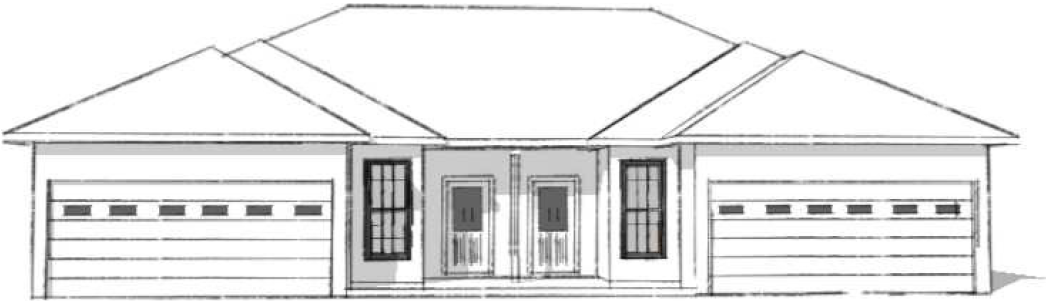
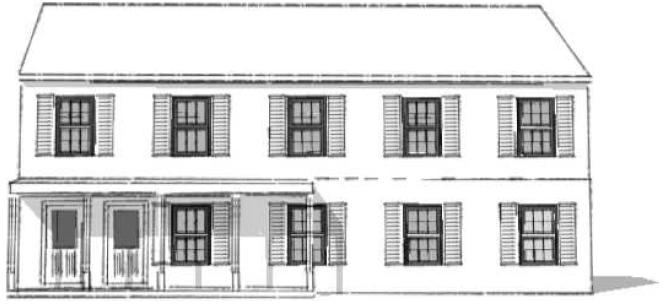
Generally. The duplex housing type consists of two (2) single-family dwelling units located in a single building (either side-by-side or over-and-under). An illustrative duplex building is shown in Figure 21-4-203(a)(1), Illustrative Side-by-Side Duplex Building, and Figure 21-4-203(a)(2), Illustrative Over-Under Duplex Building.
|
Figure 21-4-203(a)(1)
ILLUSTRATIVE SIDE-BY-SIDE DUPLEX BUILDING |
|---|
 |
|
Figure 21-4-203(a)(2)
ILLUSTRATIVE OVER-UNDER DUPLEX BUILDING |
|---|
 |
(b)
Lot and building standards. Table 21-4-203(b), Duplex Lot and Building Standards, below, establishes lot and building standards for duplex buildings.
(Ord. No. 33-2017, § 1, 12-6-17; Ord. No. 26-2021, § 4, 12-15-21)
Sec. 21-4-204. - Townhouse lot and building standards.
(a)
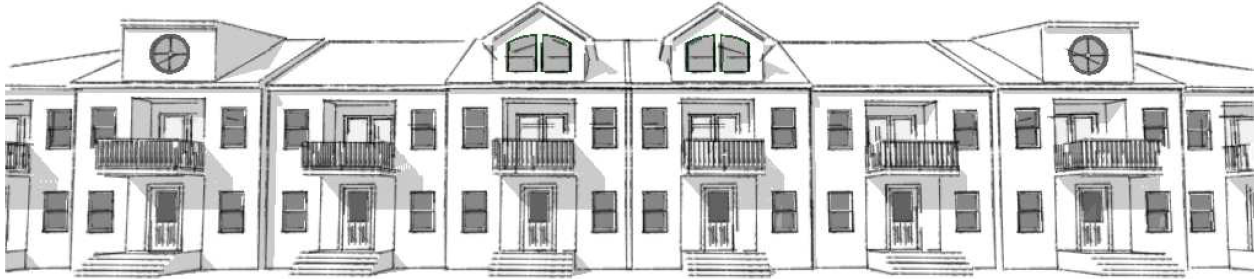
Generally. The townhouse housing type consists of three (3) or more dwelling units located in a single building, in which the individual dwelling units are separated by vertical firewalls. An illustrative townhouse building is shown in Figure 21-4-204(a), Illustrative Townhouse Building.
|
Figure 21-4-204(a)
ILLUSTRATIVE TOWNHOUSE BUILDING |
|---|
 |
(b)
Lot and building standards. Table 21-4-204(b), Townhouse Lot and Building Standards, below, establishes lot and building standards for townhouse buildings.
(Ord. No. 33-2017, § 1, 12-6-17)
Sec. 21-4-205. - Multiplex or multifamily lot and building standards.
(a)
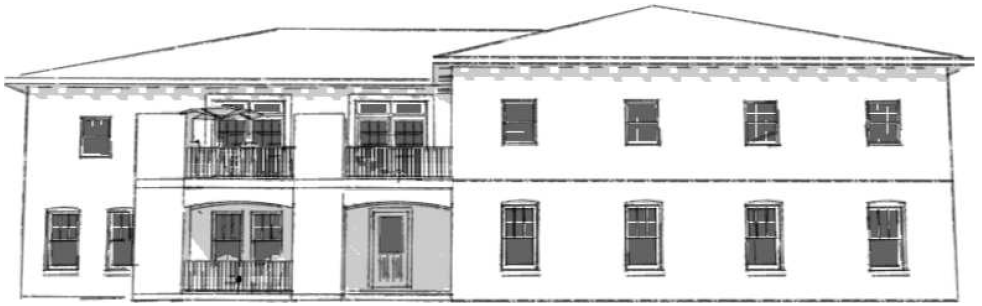
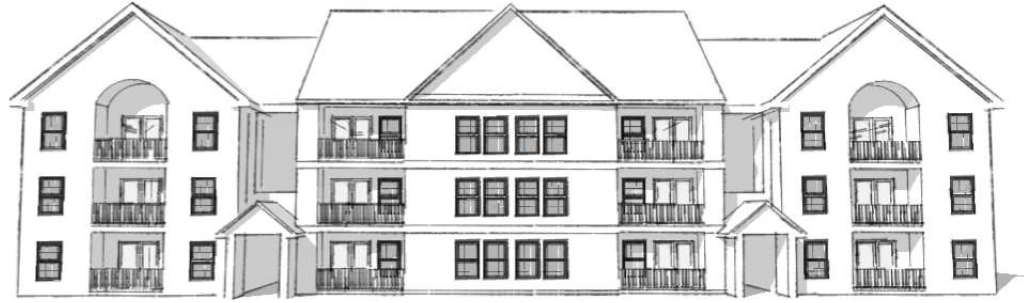
Generally. Multiplex and multifamily are both multiple-family building types. Multiplex buildings are constructed to look like large single-family homes. See Figure 21-4-205(a)(1), Illustrative Multiplex Building. The multifamily housing type is typically in the form of apartments or condominiums of two (2) to three (3) stories in height. See Figure 21-4-205(a)(2), Illustrative Multifamily Building. Multifamily dwelling units may also be located in the upper floors of vertically mixed-use buildings; however, those buildings are subject to the standards for nonresidential and mixed-use buildings set out in division 3, Nonresidential and mixed-use lot and building standards, and not the standards of this section.
|
Figure 21-4-205(a)(1)
ILLUSTRATIVE MULTIPLEX BUILDING |
|---|
 |
|
Figure 21-4-205(a)(2)
ILLUSTRATIVE MULTIFAMILY BUILDING |
|---|
 |
(b)
Lot and building standards. Table 21-4-205(b), Multiplex and Multifamily Lot and Building Standards, below, establishes lot and building standards for multiplex and multifamily buildings.
(Ord. No. 33-2017, § 1, 12-6-17)
Sec. 21-4-206. - Manufactured home lot and building standards.
(a)
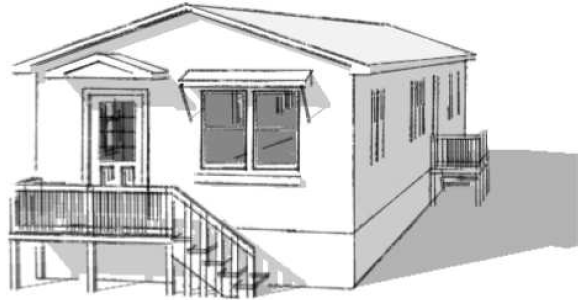
Generally. Manufactured homes are a special type of single-family detached home, in that they are constructed in factories according to federal standards (instead of local building codes), and are designed to be moved. There are three (3) types of manufactured homes: single-wide (transported in one (1)section), double-wide (transported in two (2) sections), and triple-wide (transported in three (3) or more sections). An illustrative example of a single-wide is provided in Figure 21-4-206(a), Illustrative Manufactured Home.
|
Figure 21-4-206(a)
ILLUSTRATIVE MANUFACTURED HOME |
|---|
 |
(b)
Lot and building standards.
(1)
The lot and building standards for manufactured homes are set out in Table 21-4-206(b), Manufactured Home Lot and Building Standards. The standards of this Subsection apply to manufactured homes that are located in new manufactured home parks or manufactured home subdivisions, or expanded areas of existing manufactured home parks or manufactured home subdivisions.
(2)
In existing manufactured home parks and manufactured home subdivisions, manufactured homes may be placed on existing lots or spaces that do not comply with this section, provided that they are spaced a minimum of ten (10) feet apart and ten (10) feet from the boundary lines of the manufactured home park or manufactured home subdivision.
(3)
Where manufactured homes are allowed as an individual residential use in other areas, they are subject to the standards applied to single-family detached homes.
(Ord. No. 33-2017, § 1, 12-6-17)
Sec. 21-4-207. - Tiny home, cottage, small duplex, and co-housing cluster lot and building standards.
(a)
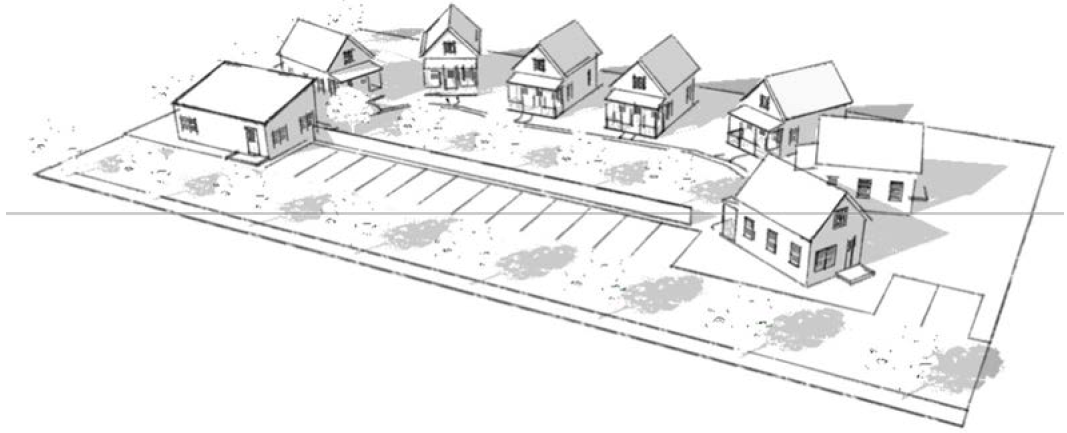
Generally. The tiny home and cottage housing types consists of small single-family detached residences that have a floor area that is less than seven hundred fifty (750) square feet. The small duplex housing type is a duplex with a total floor area of less than one thousand five hundred (1,500) square feet. These housing types are typically arranged in a cluster of three (3) to twelve (12) residential buildings around a green space, and may include a common building as an amenity (e.g., a common kitchen or meeting area). Vehicular access is provided by a shared parking lot. See Figure 21-4-207(a), Illustrative Housing Cluster.
|
Figure 21-4-207(a)
ILLUSTRATIVE HOUSING CLUSTER |
|---|
 |
(b)
Lot and building standards. Table 21-4-207(b), Tiny Home, Cottage, Small Duplex, and Co-Housing Cluster Lot and Building Standards, below, establishes lot and building standards for clusters of tiny homes, cottages, and small duplex buildings, and for common buildings within the clusters. Tiny homes, cottages, and small duplex buildings, and common buildings must meet or exceed the residential design criteria of the International Residential Code (IRC) and the International Energy Conservation Code (IECC) as adopted by the city.
(Ord. No. 33-2017, § 1, 12-6-17; Ord. No. 15-2022, § 6, 7-20-22)
Sec. 21-4-208. - Live-work lot and building standards.
(a)
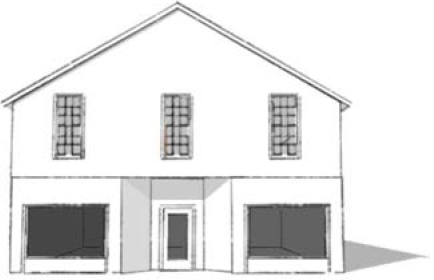
Generally. The live-work housing type consists of a dwelling unit with an integrated ground-floor workspace. Live-work buildings may take many forms, including single-family detached, townhouse, and multifamily. An illustrative single-family detached live-work building is shown in Figure 21-4-208(a), Illustrative Live-Work Building.
|
Figure 21-4-208(a)
ILLUSTRATIVE LIVE-WORK BUILDING |
|---|
 |
(b)
Lot and building standards. Table 21-4-208(b), Live-Work Lot and Building Standards, below, establishes lot and building standards for live-work buildings.
(Ord. No. 33-2017, § 1, 12-6-17)
Sec. 21-4-301. - Nonresidential and mixed-use lot and building standards.
Table 21-4-301, Nonresidential and Mixed-Use Lot and Building Standards, sets out the lot and building standards for nonresidential and mixed-use development.
(Ord. No. 33-2017, § 1, 12-6-17)
Sec. 21-4-401. - Purpose and application of division.
The purpose of this division is to set out the exceptions to the lot and building standards that are set out in division 2, housing palette, and division 3, nonresidential and mixed-use lot and building standards.
(Ord. No. 33-2017, § 1, 12-6-17)
Sec. 21-4-402. - Setback flexibility.
(a)
Generally. Setbacks may be administratively modified as provided in this section.
(b)
Effect on building coverage. The objective of this section is not to allow an increase the permissible building coverage, but instead, to provide for a range of relationships between buildings and the street.
(c)
Front setbacks.
(1)
EN Zone. In the EN Zone, the front yard requirement for single-family detached and duplex dwellings that front on local streets (not collector or arterial streets) may be reduced if:
a.
Thirty (30) percent or more of the lots on the same side of the street segment (not counting the subject property) within the same zone are developed with principal buildings that are set back at distances that are less than the required front setback;
b.
The reduced front setback is not less than the average front setback of the developed lots on the same side of the street segment that are set back les than the required front setback. (See Figure 21-4-402(c)(1), Illustrative EN Zone Front Setback Reduction).
|
Figure 21-4-402(c)(1)
ILLUSTRATIVE EN ZONE FRONT SETBACK REDUCTION |
|---|
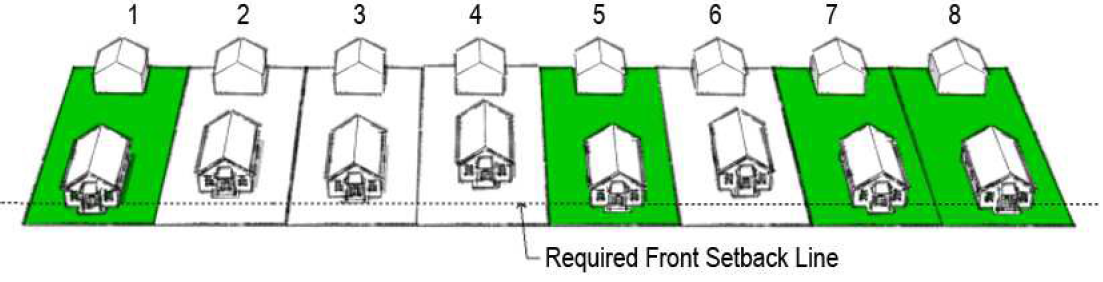 |
| The owner of lot 4 seeks to redevelop the lot. The required front setback line is 15 feet. However, lots 1 and 8 were constructed to a 12-foot setback, and lots 5 and 7 were constructed to a 13-foot setback. Since more than 30 percent of the lots have less than the required front setback, the owner of lot 4 may build to the average setback of lots 1, 5, 7, and 8, which is 12 ½ feet. |
(2)
CA Zone. In the CA Zone, front setbacks may be reduced to five (5) feet if:
a.
A build-to line is established by the campus master plan or by existing conditions along the same side of the block;
b.
For single-family detached, duplex, and townhome buildings:
1.
Access is taken from an alley;
2.
Garage doors that face alleys are not located in the area between three (3) feet and twenty (20) feet from the nearest edge of the alley; and
3.
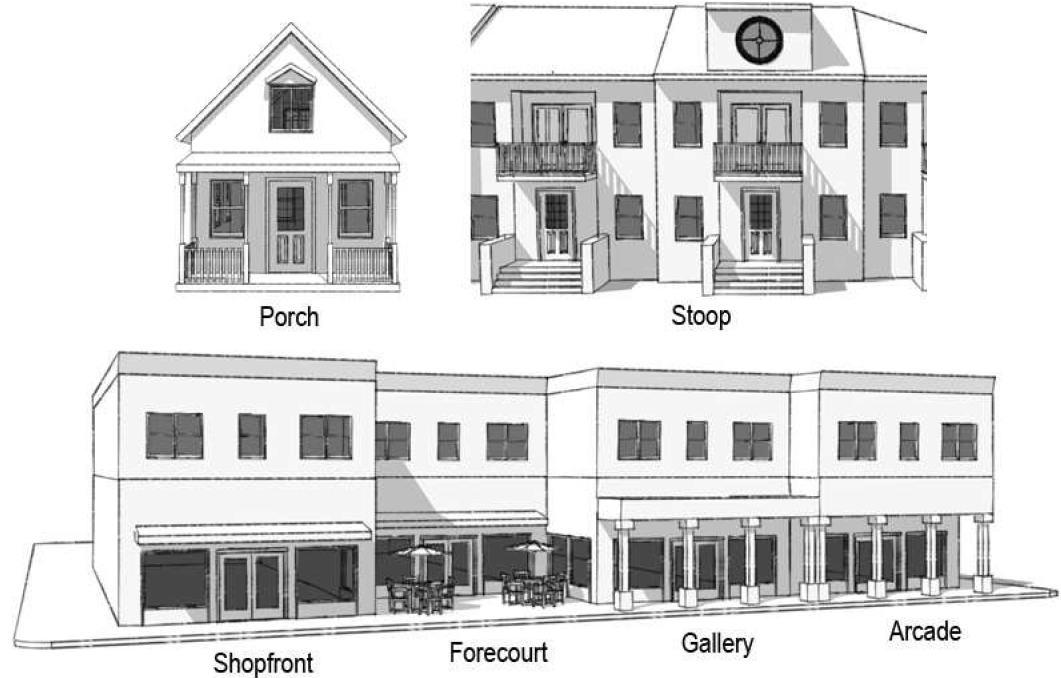
Buildings have a porch or stoop frontage (see Figure 21-4-402(c)(2), Illustrative Frontage Types).
c.
For nonresidential, mixed-use, and multifamily buildings:
1.
Parking is not located between the building and the street;
2.
Nonresidential and mixed-use buildings have shopfront, gallery, arcade, or forecourt frontages; and
3.
Multifamily buildings have a porch, stoop, gallery, arcade, or forecourt frontage (see Figure 21-4-402(c)(2), Illustrative Frontage Types).
|
Figure 21-4-402(c)(2)
ILLUSTRATIVE FRONTAGE TYPES |
|---|
 |
(d)
Interior side setbacks.
(1)
Interior side setbacks for single-family detached lots may be reduced by the Administrator up to thirty (30) percent (or up to one hundred (100) percent if the applicant owns or controls both affected lots), provided that:
a.
The reduction is necessary due to the existing development of the lot, or specific physical or access constraints justify the reduction;
b.
There is no reduction of an interior side setback along a lot line that is also a boundary line of the subdivision;
c.
Buildings on both sides of the reduced setback are constructed to applicable building and fire codes based on their proximity to each other;
d.
There is sufficient space between the buildings for building maintenance and emergency access, or a sufficient easement is provided on the adjacent lot for such access; and
e.
Windows that face the reduced setback are not located across from each other within a six-foot offset distance along the building wall unless they are frosted and inoperable, or located at least six (6) feet above the room floor of the story in which they are located.
(2)
Interior side setbacks for lots that are not used for single-family detached purposes may be reduced by the Administrator by up to twenty (20) percent, provided that:
a.
The reduction is necessary due to the existing development of the lot, or specific physical or access constraints justify the reduction;
b.
The reduction affects only one (1) side lot line;
c.
The affected side lot line is not shared with a lot that is put to single-family detached or duplex use; and
d.
Buildings on both sides of the reduced setback are constructed to applicable building and fire codes based on their proximity to each other.
(e)
Street side setbacks. Street side setbacks may be reduced by the Administrator by up to twenty (20) percent, provided that:
(1)
The reduction is necessary due to the existing development of the lot, or specific physical or access constraints justify the reduction;
(2)
There will be no material impact on public safety as a result of potential obstruction of the street for sight distances, or movement of emergency vehicles;
(3)
Sight triangles are not obstructed;
(4)
Building walls are located at least five (5) feet from the inside edge of the public sidewalk and do not encroach upon the public right-of-way or drainage or utility easements; and
(5)
All street-facing overhead doors are set back twenty (20) feet.
(f)
Rear setbacks. Rear setbacks may be reduced by the Administrator by up to twenty (20) percent for lots with street access, and up to one hundred (100) percent for lots with alley access, provided that:
(1)
The reduction is necessary due to the existing development of the lot, or specific physical or access constraints justify the reduction;
(2)
If the lot is accessed from an alley:
a.
There is sufficient area for parking, and maneuvering, and safe passage along the alley;
b.
Sight triangles are not obstructed;
c.
There will be no material impact on public safety as a result of potential obstruction of a street or alley for sight distances or movement of emergency vehicles; and
d.
All alley-facing overhead doors are set back less than three (3) feet or more than twenty (20) feet.
e.
The building will not encroach upon a drainage or utility easement.
(3)
If the lot is accessed from a street, windows within the reduced setback area do not face the back yards of adjoining single-family detached or duplex residential uses unless they are frosted and inoperable, or located at least six (6) feet above the room floor of the story in which they are located
(Ord. No. 33-2017, § 1, 12-6-17)
Sec. 21-4-403. - Projections into required setbacks.
(a)
Generally. Specified structures and architectural features may encroach into required setback areas as provided in Table 21-4-403(a), Setback Reductions for Building Elements, Equipment, and Structures. The encroachments authorized by this section are subject to all applicable building code requirements.
(b)
Limitations on permissible encroachments. No building, building element, or structure shall:
(1)
Cross a lot line, unless a recorded document provides for access to and maintenance of the projection;
(2)
Encroach onto public property or rights-of-way, unless a revocable encroachment permit is issued by the administrator;
(3)
Encroach upon access easements; or
(4)
Encroach upon utility easements, unless the design of the improvement and a recorded agreement allows access to the utility and allows the utility or the city to efficiently remove the encroachment at the property owner's expense.
(Ord. No. 33-2017, § 1, 12-6-17; Ord. No. 15-2022, § 20, 7-20-22)
Sec. 21-4-404. - Exception to building height regulations.
The height of chimneys, radio and television towers, wind chargers, cooling towers, elevator bulkheads, fire towers, monuments, stacks, stage towers or scenery lofts, tanks, water towers, ornamental towers, spires, grain elevators, and necessary mechanical appurtenances may exceed the building height regulations subject to approval as a conditional use, except that the standards for approval that are set out in section 21-2-302, general standards for all conditional uses, are replaced with the following:
(1)
The additional height does not materially affect the adequacy of light and air on adjacent properties or public rights-of-way;
(2)
The additional height does not materially affect views from neighboring properties to landmarks or scenic vistas;
(3)
The additional height does not affect public safety in case of structural collapse; and
(4)
Adequate firefighting capabilities are available to address the additional height in the event of a fire emergency.
(Ord. No. 33-2017, § 1, 12-6-17)
Sec. 21-4-501. - Purpose of division.
The purpose of this division is to set out standards for certain accessory buildings, structures, and accessory uses.
(Ord. No. 33-2017, § 1, 12-6-17)
Sec. 21-4-502. - Accessory buildings.
(a)
Generally. Accessory buildings (e.g., detached garages, storage buildings, or accessory dwelling units) shall comply with all requirements for principal buildings except where specifically modified by this chapter.
(b)
Spacing. No part of any accessory building shall be located closer than ten (10) feet to any other structure on an adjacent lot and no closer than five (5) feet to any structure on the same lot without adequate fire separation requirements as defined in the International Building Code being applied.
(c)
Construction. All accessory buildings (except greenhouses) that are larger than two hundred (200) square feet in floor area shall be installed on a permanent foundation.
(Ord. No. 33-2017, § 1, 12-6-17; Ord. No. 15-2022, § 7, 7-20-22)
Sec. 21-4-503. - Accessory dwelling units.
(a)
Generally. Accessory dwelling units are allowed on lots that contain single-family detached and duplex units according to the standards of this section. Accessory dwelling units must meet or exceed the residential design criteria of the International Residential Code (IRC) and the International Energy Conservation Code (IECC).
(b)
Accessory dwelling units in accessory buildings. If the accessory dwelling unit is in an accessory building, the floor area of the accessory dwelling unit may not be more than six hundred (600) square feet and either of the following standards must be met:
(1)
The lot area of the subject property must be at least:
a.
Eight thousand (8,000) square feet if the ADU is on a lot that contains a duplex or if the ADU is street accessed, or
b.
Six thousand (6,000) square feet if the ADU is alley accessed; or
(2)
The lot depth of the subject property must be at least one hundred twenty-five (125) feet.
(c)
Integrated units. In single-family dwellings, an accessory unit may be integrated into the principal building. The floor area of the integrated accessory dwelling unit may not be more than thirty (30) percent of the floor area of the principal building, except that an integrated accessory dwelling unit may occupy an entire basement or garden level, regardless of floor area.
(Ord. No. 33-2017, § 1, 12-6-17; Ord. No. 26-2021, § 1, 12-15-21)
Sec. 21-4-504. - Fences, garden walls, retaining walls, and hedges.
(a)
Generally. A fence, hedge, garden wall, retaining wall, column, pier, post, dog run, or any similar type structure, or any combination of such structures, are subject to the standards of this Section.
(b)
Building code. All fences, garden walls, or retaining walls that are more than six (6) feet in height are subject to building code requirements.
(c)
Identification of property lines. It shall be the responsibility of the property owner to locate all property lines. No fence or wall may extend beyond or across a property line except by agreement with the adjoining property owner. No fence, hedge, or wall shall extend into street or alley rights-of-way.
(d)
Sidewalk setback. No fence, hedge, or wall shall be placed nearer than eighteen (18) inches to any public sidewalk, unless by written permission of the administrator.
(e)
Security fencing. No barbed wire, razor edge, or electrically charged fence shall be permitted, except as follows:
(1)
In the I zone, barbed wire or razor edge fences may be used if there is a demonstrated need for heightened security due to the nature of the use.
(2)
In the A zone, barbed wire or an electrically charged fence may be used.
(f)
Dog runs. Dog runs are allowed only in back yards.
(g)
Maximum height; exceptions.
(1)
No fence, garden wall, retaining wall, or hedge shall exceed six (6) feet in height in a side yard, rear yard, or street side yard behind the front building line, and four (4) feet in height in a front yard or street side yard in front of the front building line, except that:
a.
If the State of Colorado requires a particular use to have a higher fence than this UDC otherwise allows, and the use meets all other requirements of this UDC, then the maximum height shall be increased to allow the state-mandated fence height.
b.
Wall height may be increased by up to two (2) inches to allow for drainage under the wall.
c.
The height of a dog run may be increased to up to ten (10) feet, provided that the dog run is set back from property lines not less than two (2) feet for each foot in height (or portion thereof) that the dog run fence extends above six (6) feet.
d.
The height of a deer fence may be increased to up to ten (10) feet, provided that the deer fence is set back from property lines not less than two (2) feet for each foot in height (or portion thereof) that the deer fence extends above six (6) feet.
e.
Posts and pillars may exceed the maximum fence height by up to eight (8) inches.
f.
Open arches, gates, and pergolas may be constructed up to nine (9) feet in height, provided such elements are spaced at least thirty (30) feet apart.
g.
Fences that are used for athletic fields (e.g., baseball diamonds), play courts (e.g., tennis), or driving ranges are not subject to the height restriction.
h.
Walls that are used in Class D bufferyards, and buffers between industrial uses and other uses, may be up to ten (10) feet in height.
(2)
The administrator may approve deviations from the standards of this subsection as required to create appropriate buffering or screening, accommodate recreational uses, or provide for specific security requirements.
(h)
Materials.
(1)
All privacy fences shall be constructed to orient any exposed structural framework to the interior of the subject property;
(2)
All fences, garden walls, or retaining walls that are visible from public rights-of-way must be made from traditional fence or wall materials such as:
a.
Fence materials:
1.
Wood, vinyl, or composite wood (in picket, shadowbox, or post-and-rail formats);
2.
Metal (chain-link fencing or aluminum or wrought iron decorative fencing);
3.
Ribbed metal paneling (coated or galvanized aluminum or steel panels);
b.
Wall materials:
1.
Stacked stone;
2.
Tinted split-face concrete masonry units;
3.
Brick;
4.
Stucco-finished block; or
c.
For fences or walls, materials that are approved by the administrator that are comparable to the materials listed in this subsection (h)(2).
(Ord. No. 33-2017, § 1, 12-6-17; Ord. No. 23-2021, § 1, 11-17-21)
Sec. 21-4-505. - Swimming pools.
(a)
Generally. A swimming pool may be permitted in any zone as an accessory use, subject to the standards of this Section.
(b)
Location. No public or private swimming pool may be located in any required front or side setback that abuts a street. No swimming pool basin shall be located closer than five (5) feet to a property line.
(c)
Enclosure.
(1)
Every swimming pool must be completely surrounded by a fence or garden wall not less than six (6) feet in height with no openings that are large enough to facilitate climbing or permit children to pass through, other than gates or doors that can be fastened to protect against entry. A building may be used as part of such required enclosure.
(2)
All gates or doors that open through such fenced or walled enclosures must be equipped with a self-closing and self-latching device for keeping the gate or door securely closed at all times when not in actual use.
(Ord. No. 33-2017, § 1, 12-6-17)
Sec. 21-4-506. - Outdoor storage.
(a)
Generally. Outdoor storage areas, whether as a primary use (e.g. salvage or junk yard or outdoor storage yard) or accessory use (e.g., to heavy industry or heavy retail), shall meet the standards of this Section.
(b)
Location.
(1)
The area used for outdoor storage shall be located in a back yard or side yard, except that if the principal use is heavy industry, outdoor storage yard, or salvage or junk yard, outdoor storage areas may be located anywhere on the subject property.
(2)
Notwithstanding subsection (b)(1), outdoor storage area shall not be located in areas that are used for parking, bufferyards, or stormwater conveyance or detention areas, or that are environmentally sensitive areas (e.g., a wetland).
(c)
Surfacing. Outdoor storage areas shall be surfaced and maintained in a manner that prevents windblown particulates.
(d)
Screening and enclosure. The area used for outdoor storage shall be enclosed by a Class B bufferyard (see section 21-5-306) that includes fence or screen wall that is not less than six (6) feet in height, except that:
(1)
If the principal use is heavy retail, then the area used for outdoor storage shall be enclosed by a wall that is integrated into the principal building in terms of aesthetics, quality, and durability.
(2)
If the principal use is salvage or junk yard, the area used for outdoor storage shall be enclosed by a Class C bufferyard (see section 21-5-306) that includes a fence, screen wall, berm, or combination thereof that is at least eight (8) feet in height.
(3)
If the principal use is single-family or duplex residential, the area used for outdoor storage shall be enclosed by a privacy fence that is at least five (5) feet in height.
(e)
Operation and maintenance.
(1)
The area used for outdoor storage shall be kept orderly, pest-free, and odor-free.
(2)
The following materials shall not be stored outdoors: gasoline, other motor fuels, and comparable or greater fire or explosion hazards; or items that have a high potential for generating obnoxious odors or windblown particulates or debris.
(3)
Unless the principal use is salvage or junk yard, the outdoor storage area shall not be used to dispose of inoperable vehicles, inoperable machines, garbage, or other waste.
(4)
If the principal use is single-family or duplex residential, outdoor storage areas shall not be used for storage of materials, products, and equipment used for a home occupation or cottage industry.
(f)
Common residential outdoor storage. Residential development, including manufactured home parks and manufactured home subdivisions, may provide for common outdoor storage, as follows:
(1)
Common outdoor storage areas in residential developments shall be enclosed by a Class B bufferyard (see section 21-5-306).
(2)
Access to the common outdoor storage area shall be provided from a street within the development.
(3)
Common outdoor storage areas shall not be located such that they adjoin neighboring residential development.
(Ord. No. 33-2017, § 1, 12-6-17)
Sec. 21-4-507. - Loading and service areas.
(a)
Generally. Loading and service areas for nonresidential uses shall conform to the standards of this section. Where alley access is not available for loading in the CBD zone, over-the-curb loading is allowed.
(b)
Required setback. No areas for loading or building service shall be located within twenty (20) feet of any public street, public sidewalk, or internal pedestrian way.
(c)
Design integration. Loading docks, semi-truck or trailer parking, utility meters, HVAC equipment, trash compaction, and other service functions shall be incorporated into the overall design of the building and the landscaping so that the visual and acoustic impacts of these functions are mitigated and, to the maximum extent feasible, out of view from adjacent properties and public streets.
(d)
Materials. Screening materials shall be comparable to the principal materials of the building and landscape in terms of aesthetics, quality, and durability.
(Ord. No. 33-2017, § 1, 12-6-17)
Sec. 21-4-508. - Trash collection.
(a)
Generally. Trash collection for multifamily and nonresidential uses shall conform to the requirements of this section.
(b)
Centralized collection facilities. Multifamily uses shall provide centralized collection facilities. Manufactured home parks, manufactured home subdivisions, and nonresidential uses may provide centralized collection facilities. Such facilities shall be designed and configured as follows:
(1)
Distance to dwelling units or nonresidential uses. Centralized solid waste collection facilities shall be located so that they are available within two hundred (200) linear feet of the principal entrance of each residential unit or nonresidential service entrance on the subject property.
(2)
Location on site.
a.
Centralized solid waste collection facilities shall be set back at least:
1.
Ten (10) feet from interior property lines; and
2.
Twenty (20) feet from any public street, public sidewalk, or internal pedestrian way.
b.
In the alternative, if it is not possible to service the centralized facilities in a location which is at least ten (10) feet from all property lines, then the facilities may be located closer to the property lines, provided that:
1.
They are designed and constructed to be consistent and compatible with the building or buildings on the subject property in terms of materials and architecture;
2.
The setback reduction is applied to the front setback as a "last resort," and only if it is demonstrated that no other setback reduction will solve the service problem; and
3.
They are located as far from the property line as is practicable.
(c)
Enclosure requirements.
(1)
The areas where refuse and recycling containers are stored shall be fully enclosed to the height of the tallest dumpster with screen walls, privacy fencing, or a landscaped berm.
(2)
The materials, colors, and design of screening walls or fences and any cover shall be comparable to those used as principal materials and colors on the principal building in terms of quality, durability, and aesthetic appearance.
(3)
The enclosures shall be sized to include the types of solid waste containers that will be necessary to serve the use or uses of the subject property.
(d)
Access configuration.
(1)
Service gates shall be provided and shall remain closed at all times except when the containers are being serviced.
(2)
The enclosure shall also provide separate, accessible pedestrian access gates.
(e)
Container specification. Containers shall be fly-tight, watertight, and rodent-proof.
(Ord. No. 33-2017, § 1, 12-6-17)
Sec. 21-4-509. - Drive-in or drive-through facilities.
(a)
Generally. Drive-in or drive-through facilities, where allowed, are subject to the standards of this section.
(b)
Minimization of circulation conflicts. Traffic circulation shall be arranged so that internal pedestrian and vehicular movements are compatible and traffic hazards are minimized.
(c)
Minimization of off-site hazards. Traffic circulation, ingress and egress shall be arranged so as to avoid hazardous or adverse effects on adjacent sites and streets.
(Ord. No. 33-2017, § 1, 12-6-17)
Sec. 21-4-510. - Satellite dishes and antennae.
(a)
Generally. The standards of this section apply to satellite dishes and antennae that are typically associated with residential uses. They are not applicable to facilities that are used for commercial purposes or the provision of personal wireless telecommunication services to people who do not reside on the lot on which the dish or antenna is located.
(b)
TV antennae, DTV antennae, wireless cable antennae, and satellite dishes.
(1)
The following are allowed if they are attached to a building or mounted on a mast that extends not more than twelve (12) feet above the highest peak of the roof:
a.
TV antennae;
b.
DTV antennae;
c.
Wireless cable antennae; or
d.
Satellite dishes that are one (1) meter or less in diameter; or
e.
Antennae for MMDS, ITFS, or Wireless Internet, that are one (1) meter or less in diameter or diagonal measurement.
(2)
All cabling must be run internally (when feasible), securely attached, and as inconspicuous as practicable.
(3)
Masts that are greater than twelve (12) feet above the peak of the roof are allowed if it is demonstrated that:
a.
An adequate signal cannot be obtained at a lower height; and
b.
The mast and antenna are lower than overhead utility lines, or set back from overhead utility lines such that a collapse of the mast will not result in contact with the lines.
(4)
Satellite dishes that are more than one (1) meter in diameter are allowed if:
a.
They are located on the ground in the rear yard and are not visible from ground-level views from public rights-of-way or abutting properties; or
b.
If the dish cannot be located in the rear yard, it is located on the ground within the permitted building envelope on the side of the building, and the dish or antenna is fully screened from view from public rights-of-way with:
1.
A masonry wall; or
2.
An evergreen hedge or evergreen shrubs and understory trees.
(c)
Amateur radio antennae. Amateur radio antennae are permitted if the following standards are met:
(1)
Height, setbacks, and screening for the antenna structure shall be as provided in Table 21-4-510(c), Amateur Radio Antennae.
(2)
Support structures that are not attached to the antenna structure are accessory structures for the purposes of this UDC.
(Ord. No. 33-2017, § 1, 12-6-17)
Sec. 21-4-511. - Renewable energy.
(a)
Generally. Renewable energy systems include solar collectors (photovoltaic arrays or water heaters), geothermal heating and cooling systems, and small wind energy conversion systems. They do not include the manufacture of renewable combustible fuels (e.g., ethanol or biodiesel).
(b)
Photovoltaic arrays. Photovoltaic arrays convert sunlight into electricity. The following standards apply to photovoltaic arrays:
(1)
Roof-mounts. Photovoltaic arrays may be roof-mounted on principal and accessory buildings and structures (e.g., covered walkways or covered parking spaces) in all residential districts.
(2)
Ground-mounts or structure-mounts. Ground or structure-mounted photovoltaic arrays (not mounted on buildings or roofed structures) shall be set back as if they were detached accessory buildings if the highest point on the panels is more than eight (8) feet above grade.
(c)
Geothermal heating and cooling systems. Geothermal heating and cooling systems use buried pipes to exchange heat with the ground, cooling buildings in the summer and warming them in the winter. Closed loop systems (horizontal and vertical loop systems) are permitted, provided that the loops are set back two (2) feet from property lines and do not encroach into utility easements.
(d)
Small wind energy conversion systems.
(Ord. No. 33-2017, § 1, 12-6-17)
Sec. 21-4-512. - Unattended collection boxes.
(a)
Generally. Unattended collection boxes may be located in parking and loading areas of nonresidential uses, according to the standards of this section.
(b)
Location.
(1)
Unattended collection boxes shall be set back at least five (5) feet from front property lines.
(2)
Unattended collection boxes shall not obstruct parking or vehicular circulation.
(c)
Construction. Unattended collection boxes shall be constructed of waterproof and rustproof materials, and shall be secured against animals and scavenging.
(d)
Maintenance. Materials that are deposited in unattended collection boxes shall be collected on a regular schedule that is sufficient to prevent the boxes from overflowing.
(Ord. No. 33-2017, § 1, 12-6-17)
Sec. 21-4-601. - Purpose and applicability of division.
(a)
Purpose. The unique and diverse landscapes of the city are among its most valuable assets. Protecting these assets requires that wireless telecommunications facilities and related equipment be designed and sited in a manner that is sensitive to, and in scale and harmony with, the character of the community. As such, the purpose of this division is to provide design standards specific to wireless telecommunications facilities in order to ensure their compatibility with the surrounding environment and existing and anticipated development patterns.
(b)
Intent.
(1)
These regulations are intended to provide predictable, consistent, and balanced standards for the siting and screening of wireless telecommunications facilities and related equipment on private property within the city, in order to:
a.
Preserve the character and aesthetics of areas that are in close proximity to wireless telecommunications facilities and related equipment by minimizing the visual, aesthetic, and safety impacts of such facilities and equipment through careful design, siting, screening, and placement;
b.
Protect the health, safety, and welfare of persons living, recreating, or working in the area surrounding wireless telecommunications facilities and related equipment, as they relate to the placement, construction, or modification of such facilities;
c.
Provide development that is compatible in appearance with allowed uses of the underlying zone;
d.
Ensure that the city does not unreasonably discriminate among providers of functionally equivalent services or prohibit or have the effect of prohibiting the provision of personal wireless services;
e.
Encourage co-location and clustering of antenna sites and structures, when practical, to help reduce the number of such facilities that may be required in the future to service the needs of customers, and thus avert unnecessary proliferation of facilities and related equipment; and
f.
Ensure the timely processing of applications for insubstantial changes to existing wireless telecommunications facilities (See section 21-8-521 for approval procedures).
(2)
It is not the intent of these regulations to regulate the placement, construction, or modification of wireless telecommunications facilities on the basis of the environmental effects of radio frequency emissions to the extent that such facilities comply with the Federal Communications Commission's regulations concerning such emissions.
(c)
Applicability.
(1)
This division applies to wireless telecommunications facilities and related equipment related to cellular telephone, paging, enhanced specialized mobile radio ("ESMR"), personal communication services ("PCS"), commercial mobile radio service ("CMRS"), and other commercial wireless telecommunication devices, including facilities and equipment that are affixed to the ground or buildings, and all associated structures and equipment such as transmitters, antennas, monopole antennas, towers, masts, microwave dishes, cabinets, and equipment rooms.
(2)
This division does not apply to facilities that are regulated by section 21-4-510, satellite dishes and antennae.
(d)
Permitting. All applications for the installation, expansion, or modification of wireless telecommunication facilities must receive permits prior to installation. Approval procedures are set forth in section 21-8-521. Minor modifications that do not substantially change the size or appearance of the facility may be approved by the administrator on application forms developed by the administrator. For purposes of this subsection (d), a "substantial change" is defined as follows:
Substantial change. A modification substantially changes the physical dimensions of a support structure if it meets any of the following criteria:
(1)
For Telecommunications Towers, it increases the height of the tower by more than ten (10) percent or by the height of one (1) additional antenna array with separation from the nearest existing antenna not to exceed twenty (20) feet, whichever is greater; for other eligible support structures, it increases the height of the structure by more than ten (10) percent or more than ten (10) feet, whichever is greater;
(2)
For Telecommunications Towers, it involves adding an appurtenance to the body of the tower that would protrude from the edge of the tower more than twenty (20) feet, or more than the width of the Tower structure at the level of the appurtenance, whichever is greater; for other eligible support structures, it involves adding an appurtenance to the body of the structure that would protrude from the edge of the structure by more than six (6) feet;
(3)
For any support structure, it involves installation of more than the standard number of new equipment cabinets for the technology involved, but not to exceed four (4) cabinets; or it involves installation of any new equipment cabinets on the ground if there are no pre-existing ground cabinets associated with the structure, or else involves installation of ground cabinets that are more than ten (10) percent larger in height or overall volume than any other ground cabinets associated with the structure;
(4)
It entails any excavation or deployment outside the current site;
(5)
It would defeat the concealment elements of the eligible support structure; or
(6)
It does not comply with conditions associated with the siting approval of the construction or modification of the tower or multiple use facility, provided however that this limitation does not apply to any modification that is non-compliant only in a manner that would not exceed the thresholds identified in paragraphs (1)-(4) of this section.
(e)
Conditions and limitations. Approval by the city of a wireless telecommunications facility or related equipment application is an approval of the land use only, and shall not be construed to waive any other applicable zoning or building regulations.
(Ord. No. 33-2017, § 1, 12-6-17; Ord. No. 20-2018, § 3, 7-18-18)
Sec. 21-4-602. - Site selection standards.
(a)
Wireless telecommunications facilities shall, in accordance with the requirements of this UDC, be located in the following order of preference:
(1)
First, the facilities shall be co-located with existing or approved wireless telecommunications facilities ("co-location priority"); or installed on existing approved structures that are (or will be) principally used for other purposes (e.g., buildings, flagpoles, church steeples, cupolas, ball field lights, water towers, etc.) ("multiple-use facility priority");
(2)
Second, in locations where existing topography, vegetation, buildings or other structures provide the greatest amount of screening; and
(3)
Last, on vacant ground or highly visible sites without significant visual mitigation and where screening or buffering is difficult.
(b)
The co-location priority and multiple-use facility priority locations (collectively, "first priority locations") may be waived by the Administrator or other decision making authority upon a showing that:
(1)
Federal or state regulations prohibit the installation of the wireless telecommunications facility in the first priority locations;
(2)
The proposed wireless telecommunications facility would interfere with the current uses of the first priority locations;
(3)
The proposed wireless telecommunications facility, if installed in the first priority locations, would materially interfere with surrounding property or uses;
(4)
The owners of the first priority locations will not agree to reasonable terms;
(5)
No available first priority location is appropriate for the proposed wireless telecommunications facility due to its physical characteristics or capacity to provide the desired service from the first priority locations; or
(6)
Installation of the proposed wireless telecommunications facility in the first priority locations is not in the best interest of the public health, safety or welfare.
(Ord. No. 33-2017, § 1, 12-6-17)
Sec. 21-4-603. - Telecommunications towers.
(a)
Location and form.
(1)
Prohibited locations. Telecommunications Towers are not allowed in the following locations
a.
Residential zones, and any location within one hundred fifty (150) feet of a residential zone boundary except that Small Wireless Facilities not exceeding thirty-five (35) feet in height are not prohibited.
b.
The CBD zone.
c.
The area within two hundred (200) feet of the centerline of Highway 160 except that Small Wireless Facilities not exceeding forty (40) feet in height (if not within one hundred (100) feet of a residential zone) are not prohibited.
d.
The area within two hundred (200) feet of the centerline of Highway 285 South except that Small Wireless Facilities not exceeding forty (40) feet in height (if not within one hundred (100) feet of a residential zone) are not prohibited.
e.
The area bounded by the railroad tracks, Highway 285 South, and Highway 160 except that Small Wireless Facilities not exceeding forty (40) feet in height (if not within one hundred (100) feet of a residential zone) are not prohibited.
f.
The area within two hundred (200) feet of the centerline of Highway 17except that Small Wireless Facilities not exceeding forty (40) feet in height (if not within one hundred (100) feet of a residential zone) are not prohibited.
g.
In a public right-of-way within 600 feet of any other Telecommunications Tower. The administrator may exempt an applicant from this requirement if: (i) the applicant demonstrates through technical network documentation that the minimum separation requirement cannot be satisfied for technical reasons, or (ii) the administrator determines, when considering the surrounding topography; the nature of adjacent uses and nearby properties; and the height of existing structures in the vicinity, that placement of a Telecommunications Tower at a distance less than six hundred (600) feet from another Telecommunications Tower in the public right-of-way will meet the intent of reducing visibility and visual clutter of Telecommunications Towers.
(2)
Prohibited forms. Guyed mast towers are prohibited.
(b)
Maximum height. The maximum tower height by zone is set out in Table 21-4-603(b), Maximum Tower Height by Zone.
(c)
Design for concealment. New Telecommunications Towers shall be designed insofar as practicable to conceal their presence or intended use. Design plans shall call out all design or location elements that tend to conceal the presence or intended use of the tower (e.g., limitation of height to tree line, color or material specifications, "stealth" features such as artificial tree limbs, or other contextual or physical features).
(d)
Design for co-location. New Telecommunications Towers shall be designed to provide for co-location of other wireless telecommunications facilities or equipment by structurally "overbuilding" in order to handle the loading demands of additional antennas to the extent reasonably feasible from technical, construction, engineering and design perspectives..
(e)
Co-location of additional facilities. Facilities that are proposed for co-location on an existing tower shall not reduce the effectiveness of any concealment techniques that applied to the existing tower when it was constructed.
(Ord. No. 33-2017, § 1, 12-6-17; Ord. No. 20-2018, § 4, 7-18-18; Ord. No. 5-2020, § 28, 3-4-20)
Sec. 21-4-604. - Multiple-use facilities.
(a)
Generally. All wireless telecommunications facilities (including co-located facilities) that are mounted on multiple-use facilities, and related equipment (whether installed on the roof or on the ground), shall be concealed from view from adjacent and nearby public rights-of-way and property (whether public or private) by color selection and either:
(1)
Camouflage (e.g., the facility appears to be an integrated part of the architecture of the building or the function of the structure, such that its presence is not obvious); or
(2)
Physical barriers such as:
a.
Parapet walls, screen walls, or architectural or structural elements (e.g., steeples, cupolas, belfries, chimneys, towers, turrets, ) that are compatible with the building or structure's design in terms of color, materials, or texture; or
b.
Fencing, landscaping or berming that is compatible with the site's overall design.
(b)
Height.
(1)
The maximum height of building-mounted wireless telecommunications facilities that are located on a rooftop is ten (10) feet above the highest portion of the roof.
a.
Antennae: Five (5) feet above the highest portion of the roof; or
b.
Whip antennae: Ten (10) feet above the highest portion of the roof.
(2)
The maximum height of building-mounted wireless telecommunications facilities that are located on a building wall, or of structure-mounted (e.g., flagpoles, light poles, water towers, and comparable structures) wireless telecommunications facilities, is:
a.
The top of the parapet for a building with a flat-roofed system; or
b.
The eave line above the equipment for a building with a sloped-roof system; or
c.
No more ten (10) feet above the top of the structure.
(c)
Setbacks and step-backs.
(1)
Building-mounted antennae and related equipment shall be set back the same distances that are required for principal buildings.
(2)
Roof-mounted antennae shall be stepped back from the parapet wall one (1) foot for each foot in height between the roof surface and the top of the antenna.
(d)
Distance restrictions in public rights-of-way.
(1)
In general. No multiple-use support structure for wireless telecommunications facilities may be installed within the public right-of-way within six hundred (600) feet of, nor in the same block as, any other wireless telecommunications facility support structure in the public right-of-way. This limitation shall not apply to multiple use facilities that replace an existing traffic signal, street light pole, or similar structure, as determined by the administrator. The administrator may exempt an applicant from this requirement if: (i) the applicant demonstrates through technical network documentation that the minimum separation requirement cannot be satisfied for technical reasons, or (ii) the administrator determines, when considering the surrounding topography; the nature of adjacent uses and nearby properties; and the height of existing structures in the vicinity, that placement of a Telecommunications Tower at a distance less than six hundred (600) feet from another Telecommunications Tower in the public right-of-way will meet the intent of reducing visibility and visual clutter of Telecommunications Towers.
(2)
Residential areas. When placed adjacent to a residential zoned property, the facility shall be placed within five (5) feet of the common side yard property line between adjoining residential properties. In the case of a corner lot, the facility shall be placed within five (5) feet of the common side yard property line between adjoining residential properties or on the corner formed by two (2) intersecting streets.
(Ord. No. 33-2017, § 1, 12-6-17; Ord. No. 20-2018, §§ 5—8, 7-18-18)
Sec. 21-4-604.5. - Equipment location limits in public rights-of-way.
(a)
Under grounding. To the extent reasonably feasible from technical, construction, engineering and design perspectives, all ground based equipment shall be installed in the facility itself or in an underground or partially underground equipment vault (projecting not more than thirty-six (36) inches above grade), or co-located within a traffic cabinet of a design approved by the administrator, unless a waiver is obtained from the administrator based on unique circumstances of the particular location that cannot reasonably accommodate such underground installation.
(b)
Public safety. Any ground mounted equipment shall be located in a manner necessary to address both public safety and aesthetic concerns in the reasonable discretion of the administrator. The applicant shall demonstrate that the vertical infrastructure to which any equipment is fastened to can safely support such equipment.
(c)
Sidewalk Clearance. Any encroachment on a sidewalk shall maintain a minimum clearance of eight (8) feet vertically and horizontally of unobstructed pedestrian way. The requirements of this paragraph may be modified by the administrator if reasonable passage is provided on the sidewalk and the safety of pedestrians, bicyclists and motorists is not impaired.
(d)
Unreasonable Interference with traffic and parking prohibited. Wireless telecommunications facilities in the public right-of-way shall not alter vehicular circulation or parking within the right-of-way or impede vehicular, bicycle or pedestrian access or visibility along the right-of-way. All equipment installations shall comply with the Americans With Disabilities Act and every other local, state and federal law and regulation. No wireless telecommunication facility may be located or maintained in a manner that causes unreasonable interference. Unreasonable interference means any use of the right-of-way that disrupts or interferes with its use by the city, the general public or other persons authorized to use or be present upon the right-of-way, when there exists an alternative that would result in less disruption or interference. Unreasonable interference includes any use of the right-of-way that disrupts vehicular or pedestrian traffic, any interference with public utilities and any other activity that will present a hazard to public health, safety or welfare.
(e)
Exclusion of competitors prohibited. No wireless telecommunication facility owner or lessee shall act to exclude or to attempt to exclude any other competitor from using the same structure for the location of other antennas, to the extent reasonably feasible from technical, construction, engineering and design perspectives.
(Ord. No. 20-2018, § 4, 7-18-18)
Sec. 21-4-605. - Lighting and signage.
(a)
Generally. In addition to other applicable sections of the city Code regulating signage or outdoor lighting, the standards of this section apply to wireless telecommunications facilities and related equipment.
(b)
Lighting. Telecommunications towers and tower-mounted wireless telecommunications facilities and related equipment shall not be illuminated, unless such illumination is required by state or federal regulations. Wireless telecommunications facilities (except towers and tower-mounted facilities), including accessory buildings and equipment, may be illuminated as provided in division 4, lighting.
(c)
Signage. The display of any sign other than as required by law as to public safety warnings, licenses, certifications, or other required seals on any wireless communications facility or related equipment is prohibited. Emergency contact telephone numbers shall be posted:
(1)
On each wireless telecommunications facility; or
(2)
In the case of tower-mounted facilities, at the base of the tower or on each gate if the tower is enclosed by a security fence.
(d)
Access.
(1)
Access to and from wireless telecommunications facilities and related equipment shall comply with all applicable building code requirements.
(2)
No wireless telecommunications facility shall be located in a required parking, maneuvering, or vehicle or pedestrian circulation area such that it interferes with or in any way impairs the intent or functionality of the area for such parking or circulation.
(3)
Wireless telecommunications facilities shall be secured from access by the general public, but access for emergency services must be provided. Access roads shall be capable of supporting all potential emergency response vehicles and equipment.
(4)
Any easements required for ingress and egress and for electrical and telephone shall be recorded at the county clerk and recorder's office prior to the issuance of building permits.
(Ord. No. 33-2017, § 1, 12-6-17)
Sec. 21-4-606. - Maintenance, abandonment, and removal.
(a)
Maintenance. All towers, antennas, related facilities and equipment, and the subject property shall be maintained in a safe and clean condition in accordance with project approvals and building codes. The operator or property owner shall be responsible for maintaining the subject property and its improvements free from graffiti, debris, and litter. All towers, antennas and related facilities shall be subject to periodic inspection by the city to ensure continuing compliance with all conditions of approval and requirements of this section.
(b)
Abandonment and removal. All required approvals shall be in effect only so long as the antennas and other structures are operated on the subject property. Facilities that are not in use for one hundred eighty (180) consecutive days for personal wireless services purposes shall be considered abandoned and shall be removed by the facility owner within forty-five (45) days of the one hundred eightieth (180th) consecutive day of non-use. Following removal, the subject property shall be restored to the condition it was in prior to the installation or construction of the facility. Such removal shall be carried out in accordance with applicable health and safety requirements.
(Ord. No. 33-2017, § 1, 12-6-17)
Sec. 21-4-701. - Applicability, exemptions, and permit exceptions.
(a)
Generally.
(1)
The provisions of this division apply to the display, construction, installation, erection, alteration, use, location, maintenance, and removal of all signs within the city that are not specifically exempt from such application.
(2)
No sign shall be displayed, constructed, installed, erected, or altered within the city until the city has issued a sign permit, unless the sign is exempt from this division, partially exempt from this division, or the sign (or modification) qualifies for an exception to the permit requirement.
(b)
Exemptions. This division does not apply to:
(1)
Signs of any type that are installed or posted (or required to be installed or posted) by the Federal government, the State of Colorado, Alamosa County, the city, or the school district (collectively, "governmental entities"), on property owned or controlled by the governmental entity. Such signs include but are not limited to street signs and permanent traffic control devices, temporary signs that are used in conjunction with traffic control, and other signs that said entities display, require, or license to be displayed upon property that they own or control.
(2)
Decorations that are clearly incidental, customary, and commonly associated with a holiday.
(c)
Partial exemptions. The following signs are subject only to section 21-4-703, design characteristics, and shall not require a sign permit:
(1)
Signs that are required by applicable building codes (e.g., address numbers) or health and safety regulations (e.g., the Occupational Safety and Health Act ("OSHA")); or to comply with other laws or regulations (collectively, "required signs").
(2)
Signs that are not visible from any of the following areas due to the configuration of the building(s) or structure(s) or the topography of the site upon which the signs are located:
a.
Residential lots;
b.
Abutting property not under common ownership; or
c.
Public rights-of-way.
(3)
Signs that are not legible from abutting property or rights-of-way due to the configuration of the building(s) or structure(s) or the topography of the subject property or the orientation or setback or typeface of the sign, provided that the sign area is not more than thirty-two (32) square feet.
(4)
Signs that are applied to or painted on a utility cabinet or pedestal, provided that:
a.
The cabinet or pedestal is in use for its principal purpose as a utility cabinet or pedestal and the sign does not interfere with such use;
b.
The cabinet or pedestal is not larger than four (4) feet in horizontal dimension and five (5) feet in vertical dimension; and
c.
The owner of the utility cabinet or pedestal consents to the installation of the sign.
(5)
Historic signs.
(6)
Flags that are hung from not more than three (3) rigid, straight, building-mounted or ground-mounted flagpoles per one hundred (100) feet of property frontage or fraction thereof, provided that:
a.
No more than three (3) flags are flown from any one (1) flagpole;
b.
No flag obstructs pedestrian, bicycle, or vehicular traffic, or a required sight triangle; and
c.
No flag exceeds thirty-two (32) square feet in area.
(7)
Small signs.
a.
Signs that are affixed to a building or structure, that do not exceed one (1) square foot in sign area, provided that only one (1) such sign is present on each building frontage that is visible from public rights-of-way or neighboring property; and
b.
Signs that are less than one (1) square foot in area that are affixed to machines, equipment, fences, gates, walls, gasoline pumps, public telephones, or utility cabinets.
(8)
Temporary signs.
(d)
Exceptions to permit requirement.
(1)
Maintenance of or incidental changes to existing signs. No permit is required for routine sign maintenance, painting, replacing a panel in a cabinet sign (except that the installation of a new manual changeable copy message center or electronic message center does require a permit), or replacing light sources with lighting of comparable brightness.
(2)
Signs that do not require permits.Section 21-4-702, types of signs permitted, lists some signs that may be displayed without a sign permit. However, such signs are subject to all applicable provisions of this division:
(e)
Relationship to other regulations.
(1)
In addition to the regulations set out in this division, signs may also be subject to applicable state laws and regulations (e.g., State of Colorado, Department of Highways, "Rules and Regulations Pertaining to Outdoor Advertising," effective January 1, 1984, as may be amended from time to time), federal laws and regulations, and applicable adopted building and electrical codes. Exceptions to the sign permit requirement do not constitute exemptions to other applicable codes or permit requirements.
(2)
Where any provision of this division covers the same subject matter as other regulations of the city, the more specific regulation shall control the more general one, unless the city determines that the more restrictive regulation is facially content-based or otherwise clearly unenforceable as a matter of law.
(3)
Where any provision of this division covers the same subject matter as other regulations of the State of Colorado or the United States, the applicant is advised that nothing in this chapter shall be construed as a defense to a violation of applicable state or federal law except as may be provided in the state or federal law.
(Ord. No. 33-2017, § 1, 12-6-17; Ord. No. 5-2020, § 23, 3-4-20)
Sec. 21-4-702. - Types of signs permitted.
(a)
Generally. The types of signs that are allowed in the various zones of the city are specified in Table 21-4-702(a), Permitted Signs by Type, Characteristics, and Zoning District.
The limitations set forth in Table 21-4-702(a) concerning temporary freestanding signs shall not apply to the following locations, where any number of temporary freestanding signs of up to thirty-two (32) square feet each may be displayed at any time:
(1)
The City's train pavilion;
(2)
Olympian Park;
(3)
Sunset Park.
(b)
Vacant land.
(1)
Permanent signs shall not be installed on vacant lots or parcels unless the lots or parcels are part of an approved subdivision plat.
(2)
Temporary freestanding signs may be installed on vacant lots or parcels as follows:
a.
A zone standards apply if the subject property is greater than 2 acres in area
b.
CBD zone standards apply if the subject property is two (2) acres or less in area, except that the maximum sign area (per sign) for such freestanding temporary signs on vacant lots shall be thirty-two (32) square feet.
c.
During the periods from May 1 to July 5 and September 1 to November 15 in any given calendar year, the limitation on maximum number of temporary freestanding signs shall not apply, and the limit on sign area of each sign shall be thirty-two (32) square feet regardless of the zoning district in which the sign is located.
d.
In addition to the periods set forth in subsection c, above, any person may, by permit issued by the director of public works or his or her designee, display a freestanding temporary sign of no more than thirty-two (32) square feet which causes the lot on which the sign is located to exceed the maximum number set forth in Table 21-4-702(a) by no more than two (2) signs, which permit shall be valid for a period of time not exceeding, in the aggregate, fourteen (14) days in any calendar year for any given person.
(Ord. No. 33-2017, § 1, 12-6-17; Ord. No. 21-2018, §§ 1—4, 7-18-18; Ord. No. 16-2019, § 1, 7-17-19; Ord. No. 5-2020, § 11, 3-4-20)
Sec. 21-4-703. - Design characteristics.
(a)
Prohibited elements. The following elements and materials shall not be incorporated as an element of any sign or sign structure, whether temporary or permanent:
(1)
Animated or moving parts, including any moving, swinging, rotating, or spinning parts or flashing, blinking, scintillating, fluctuating, or otherwise animated light, except electronic message centers, standard flags, feather flags, banners, temporary holiday displays, and clocks.
(2)
Cardboard, card stock, or paper, except when laminated or used as a window sign.
(3)
Motor vehicles, unless:
a.
The vehicles are operational, and either:
1.
Automobile dealer inventory; or
2.
Regularly used as motor vehicles, with current registration and tags;
b.
The display of signage on the motor vehicle would not interfere with the immediate operation of the motor vehicle (e.g., signs that are held in place by an open hood or trunk are not allowed; signs that cover windows are not allowed; and signs that would fall off of the vehicle if the vehicle were in motion are not allowed); and
c.
The motor vehicle is legally parked in a designated parking space.
(4)
Semi trailers, shipping containers, or portable storage units, unless:
a.
The trailers, containers, or portable storage units are:
1.
Structurally sound and capable of being transported;
2.
Used for their primary purpose (e.g., storage, pick-up, or delivery); and
3.
If subject to registration, have current registration and tags; and
b.
The display of signage is incidental to the primary purpose; and
c.
The semi trailer, shipping container, or portable storage unit is parked or placed in a designated loading area or on a construction site in an area that is designated on an approved construction staging plan.
(5)
Stacked products (e.g., tires, soft drink cases, bagged soil or mulch).
(6)
Unshielded bare lightbulbs.
(7)
Materials with a high degree of specular reflectivity, such as polished metal, installed in a manner that creates substantial glare from headlights, street lights, or sunlight. This prohibition does not include retroreflective materials that comply with the standards set forth in the Manual on Uniform Traffic Control Devices ("MUTCD"), published by the U.S. Department of Transportation, Federal Highway Administration.
(b)
Prohibited obstructions. In no event shall a sign, whether temporary or permanent, obstruct the use of:
(1)
Building ingress or egress, including doors, egress windows, and fire escapes.
(2)
Operable windows (with regard to movement only; obstruction of transparency is allowed as provided herein).
(3)
Equipment, structures, or architectural elements that are related to public safety, building operations, or utility service (e.g., standpipes, downspouts, fire hydrants, electrical outlets, lighting, vents, valves, and meters).
(4)
Any required vision clearance area.
(c)
Prohibited mounts. No sign, whether temporary or permanent, shall be posted, installed, mounted on, fastened, or affixed to any of the following:
(1)
Any tree or shrub.
(2)
Any utility pole or light pole, unless:
a.
The sign is a banner or flag that is not more than ten (10) square feet in area;
b.
The owner of the utility pole or light pole consents to its use for the display of the banner or flag;
c.
The banner or flag is mounted on brackets or a pole that extend not more than thirty (30) inches from the utility pole or light pole; and
d.
The banner or flag is either situated above an area that is not used by pedestrians or vehicles, or the bottom of the banner or flag has a sign clearance of at least eight (8) feet.
(3)
Utility cabinets or pedestals (except signs that are applied by or with the consent of the owner of the utility cabinet or pedestal).
(4)
An exposed, unfinished metal pole that is more than six (6) feet in height, except that this standard does not apply to flags that are flown from flagpoles.
(d)
Prohibited locations. In addition to applicable setback requirements and other restrictions set out in this division, no sign shall be located in any of the following locations:
(1)
In or over public rights-of-way (which, in addition to streets, may include other sidewalks, parkways, trails, multi-use pathways, retaining walls, utility poles, traffic calming devices, medians, and center islands that are within public rights-of-way), except:
a.
Signs painted on or affixed to transit shelters and bus benches as authorized by the provider of the shelter or bench, but not extending beyond the physical structure of the shelter or bench; or
b.
Signs that are the subject of a revocable license agreement with the city, installed and maintained in accordance with the terms of that agreement.
c.
Temporary yard signs, so long as they are erected and maintained in accordance with the following limitations:
1.
Signs may only be placed on rights of way in residential zoning districts.
2.
Signs may only be placed on the right-of-way immediately adjacent to a residential lot if the owner or tenant of such lot has given permission for such placement.
3.
Signs may only be in place during the periods of time between May 1 and July 5; and September 1 and November 15 in any given year.
4.
The top of the sign must be less than three (3) feet from ground level.
5.
Signs must be a minimum of eighteen (18) inches behind the back of the curb, and twelve (12) inches from the edge of any sidewalk.
6.
Signs may not be larger than ten (10) square feet.
(2)
Within twelve (12) inches from building corners, cornice or eave lines, or ground planes, or within six (6) inches of doors, windows, downspouts, or dimensional architectural details, except that a sign located within a sign band that is eighteen (18) inches or less in height may extend to within two (2) inches of the border of the sign band; buildings located on street intersections are exempt from the building corner restrictions.
(e)
Illumination. Internal and external illumination of permanent signs is allowed in all nonresidential and mixed-use zones, and for multifamily and nonresidential uses in residential zones, as follows:
(1)
All illumination shall comply with the standards set out in division 5-4, Lighting.
(2)
External lights, electrical equipment, and wiring shall be concealed from view.
(3)
Flashing, blinking, or chasing lights are not allowed.
(4)
Externally illuminated signs shall be lit only from the top of the sign, with fully shielded fixtures designed and installed to prevent light from spilling beyond the physical edges of the sign.
(5)
Electronic message centers that are both visible from, and located within one hundred (100) feet from, a residential zone shall be turned off by 10:00 p.m.
(f)
Electronic message centers. Electronic message centers are only allowed on freestanding permanent signs in the CA, CB, and CBD zones, as follows:
(1)
Electronic message centers are subject to the requirements of division 5-4, Lighting.
(2)
Electronic message centers shall appear to be integrated into a permanent freestanding sign, and shall not compose more than thirty-five (35) percent of the sign area of the sign to which they are attached.
(3)
Not more than one (1) electronic message center is allowed per subject property.
(4)
Electronic message centers are not allowed if a changeable copy panel is present on the subject property.
(5)
Electronic message centers that are both visible from, and located within one hundred (100) feet of a residential zone shall be turned off by 10:00 p.m.
(6)
Messages appearing on electronic displays shall not be displayed for less than five (5) seconds and shall require no longer than one (1) second to transition from one (1) message to another. Moving and/or flashing text or images are prohibited.
(7)
The luminous surface area of an individual sign shall not exceed eighty (80) square feet per face.
(8)
All electronic message centers shall have automatic dimming capability that adjusts the brightness to the ambient light at all times of the day and night.
(g)
Changeable copy. Changeable copy panels are allowed as a component of freestanding permanent signs in the CB zone and on lots that contain nonresidential uses in residential zones, as follows:
(1)
Changeable copy panels shall not exceed thirty-five (35) percent of the sign area of the freestanding permanent sign, and shall be located beneath the permanent sign elements.
(2)
Changeable copy panels shall be secured and protected against weather.
(h)
Provisions for exceptional design. To encourage the integration of signage into the visual framework of its location, special consideration may be given to signs of exceptional design. Such special consideration may, in some cases, result in a relaxation of the dimensional and locational standards specified in this chapter. Such a relaxation of standards is not to be confused with a variance. Rather, the relaxation is to be based on an exceptional effort toward creating visual harmony between the sign, the building(s), and the site where it is to be located through the use of exceptional design resulting in signs that demonstrate an exceptionally high quality of design creativity and crafting and add aesthetic value to the city. Property or business owners CB, CBD, MU, or I zone are eligible to apply for an exceptional design sign permit, which will be reviewed by the design review committee, consisting of the City Manager and two other members of city staff appointed by the city manager. The committee shall approve or disapprove of the application. The action of the design review committee shall not be reviewable.
(1)
The design review committee shall consider applications for signs of exceptional design. Such applications shall be submitted with the standard sign permit application, and presented to the design review committee with a narrative outlining the proposed plan addressing, but not limited to, the following:
a.
How the physical components of the sign address legibility, visibility, readability, and aesthetics in relation to traffic speed, color combinations, sign placement, etc.;
b.
The relationship of the proposed sign to the community vision for the zone, as expressed in the comprehensive plan, intent of the zone, and development design guidelines. In the Central Business District in particular, signs designed to enhance the historic character of downtown may be given special consideration;
c.
Relationship of the sign to the immediate surroundings, including existing and proposed buildings, other signs, and landscape;
d.
Relationship of the sign to the business that the sign is to promote; and,
e.
A colored rendering, showing the proposed sign, dimensions of the sign, and location of the sign.
(2)
The design review committee will consider the forgoing factors, as well as the following factors:
a.
Architectural Style,
b.
Color,
c.
Contextual Criteria,
d.
Design Quality,
e.
Illumination,
f.
Neighborhood Impacts,
g.
Sign Materials;
(3)
After considering the foregoing issues, the design review committee, in its discretion, may allow relaxation of the dimensional and locational standards of this chapter if the committee finds that the proposed sign exhibits a high degree of imagination and inventiveness, materials and workmanship, and that relaxation of those standards would better serve the public interest than would strict adherence to those standards, and lead to a better and more aesthetically pleasing sign.
(Ord. No. 33-2017, § 1, 12-6-17; Ord. No. 15-2018, § 1, 6-6-18; Ord. No. 5-2020, § 12, 3-4-20; Ord. No. 15-2022, § 8, 7-20-22; Ord. No. 27-2024, §§ 1—3, 11-6-24)
Sec. 21-4-704. - Content.
(a)
Generally. Except as provided in this section, no sign shall be approved or disapproved based on the message it displays.
(b)
Prohibition on certain types of unprotected speech. The following content is prohibited without reference to the viewpoint of the individual speaker:
(1)
Text or graphics of an indecent or immoral nature that is harmful to minors under state or federal law;
(2)
Text or graphics that advertise unlawful transactions, except as provided in subsection (c) of this section;
(3)
Text or graphics that are obscene, fighting words, defamation, incitement to imminent lawless action, or true threats; or
(4)
Text or graphics that present a clear and present danger due to their potential confusion with traffic control signs or signs that provide public safety information (for example, signs that use the words "Stop," "Yield," "Caution," or "Danger," or comparable words, phrases, symbols, or characters in such a manner as to imply a safety hazard that does not exist).
(c)
Commercial speech related to marijuana. Federal law prohibits the advertising and sale of marijuana. Colorado law specifically allows the advertising and sale of marijuana, subject to comprehensive state regulation. As of the effective date of this UDC, the U.S. Department of Justice has indicated that it will use prosecutorial discretion to (in general) not enforce federal marijuana laws in states that have legalized marijuana under state law and enacted comprehensive regulations for the marijuana industry. Accordingly, if the city permits marijuana uses, the city will allow a limited exception to subsection (b)(2) of this section for the signs of marijuana businesses, provided that the businesses are licensed and operated in compliance with applicable state statutes and regulations. The exception created by this subsection does not create a defense to the enforcement of federal law, nor shall the city be liable for any damages of any type caused by the enforcement of federal law. If the federal policy regarding prosecutorial discretion officially changes such that federal marijuana prohibitions are enforced in Colorado, then the limited exception created by this section shall automatically terminate, and signs advertising marijuana shall be considered prohibited signs.
(d)
Severability. The narrow classifications of content that are prohibited by this section are either not protected by the United States or Colorado Constitutions, or are offered limited protection that is outweighed by the substantial and compelling governmental interests in protecting the public safety and welfare. It is the intent of the city council that each subsection of this section (e.g., subsections (b)(1), (b)(2), (b)(3), (b)(4) or subsection (c)) be individually severable in the event that a court holds one (1) or more of them to be inconsistent with the United States or Colorado Constitutions.
(Ord. No. 33-2017, § 1, 12-6-17)
Sec. 21-4-705. - Maintenance of signs, removal of obsolete or abandoned signs.
(a)
Maintenance required. All signs must be structurally sound, maintained in good repair and may not constitute a hazard to safety, health or public welfare by reason of inadequate maintenance, dilapidation or electrical shock. The front and back surfaces of all signs shall be kept neatly painted or posted at all times. In addition to other remedies provided for in this Division, the Code Administrator shall have the authority to order the painting, repainting, repair, maintenance, or removal of any sign that has become dilapidated or a hazard to safety, health or public welfare, or that has become obsolete or been abandoned. If such a condition is determined by the code administrator to exist, the code administrator shall give notice to the sign owner at the address shown on the sign permit, if any, or the address shown in the records of the city finance director for the business with which the sign is associated if there is no permit, and to the property owner of the property on which the sign is located as shown in the records of the Alamosa County Assessor, by certified mail, return receipt requested, of the condition and the remedy required to alleviate the condition. The notice shall include notice of the sign or property owner's right to appeal pursuant to section 21-8-703.
(b)
Remedial action for signs requiring maintenance. If, within sixty (60) days from service of the notice, or, if the owner is diligently pursuing compliance, such longer time as the Code Administer may allow, not to exceed six (6) months, no appeal has been filed within the time period allowed by section 21-8-703, or, if filed, has been determined adversely to the owner, and the code administrator's order is not complied with, the code administrator may remove the sign, or cause it to be removed, and the cost of removal shall be charged against the property.
(c)
Conforming signs deemed obsolete or abandoned. Owners of conforming signs that are obsolete or abandoned, and owners of the property on which the sign is located as set forth in the records of the Alamosa County Assessor, if different from the sign permit holder, shall be given notice as described in section 21-4-705(a), above, that their sign has been determined to be obsolete or abandoned, and shall have one (1) year, in the case of obsolescence, and sixty (60) days, in the case of abandonment, to rehabilitate the sign. If, within sixty (60) days from service of the notice, or, if the owner is diligently pursuing compliance, such longer time as the code administer may allow, not to exceed six (6) months, no appeal has been filed within the time period allowed by section 21-8-703, or, if filed, has been determined adversely to the owner, and the code administrator's order is not complied with, the code administrator may remove the sign, or cause it to be removed, and the cost of removal shall be charged against the property. The city may provide a program of assistance to share costs in bringing obsolete or abandoned conforming signs into compliance with any order issued by the code administrator. Any such program shall not be available to non-conforming signs.
(d)
Nonconforming signs deemed obsolete or abandoned.
(1)
Obsolete nonconforming signs. Owners of nonconforming signs that are obsolete, and owners of the property on which the sign is located as set forth in the records of the Alamosa County Assessor, if different from the sign permit holder, shall be given notice as described in section 21-4-705(a), above, that their sign has been determined to be obsolete, and shall have six months to rehabilitate the sign. If, within sixty (60) days from service of the notice, no appeal has been filed within the time period allowed by section 21-8-703, or, if filed, has been determined adversely to the owner, and the obsolete sign has not been rehabilitated within the six (6) month period provided, the Code Administrator may remove the sign, or cause it to be removed, and the cost of removal shall be charged against the property. See also other provisions governing nonconforming signs set forth in section 21-4-703.
(2)
Abandoned nonconforming signs. Owners of nonconforming signs that are obsolete, and owners of the property on which the sign is located as set forth in the records of the Alamosa County Assessor, if different from the sign permit holder, shall be given notice as described in section 21-4-705(a), above, that their signs have been determined to be abandoned, and shall have sixty (60) days to remove the abandoned sign. If, within sixty (60) days from service of the notice, no appeal has been filed within the time limits established by section 21-8-703, or, if filed, has been determined adversely to the owner, and the obsolete sign has not been removed, the code administrator may remove the sign, or cause it to be removed, and the cost of removal shall be charged against the property. See also other provisions governing nonconforming signs set forth in section 21-4-703.
(Ord. No. 5-2020, § 9, 3-4-20)
Sec. 21-4-801. - Purpose and application of division.
(a)
Generally. The design standards set out in this division are intended to be applied to certain types of development or within certain areas of the city. Each section of this division includes an applicability statement that describes the type of development or the geographic area (or both) to which the standards of the section apply. With the exception of the alternative design standards that may be created by section 21-4-801, the standards of this division are applied administratively.
(b)
Alternative design standards. The city council may allow the use of alternative design standards instead of otherwise applicable design standards from this division, as set out in section 21-4-801, alternative design standards.
(Ord. No. 33-2017, § 1, 12-6-17)
Sec. 21-4-802. - Alternative design standards.
The design standards set out in this division are not necessarily the only techniques by which the objective of quality design and development may be achieved. They are intended as minimum standards which, if met, will create the character and quality that the city expects from new large-scale retail sales and services uses. Alternative methods for achieving the objectives of this Division may be approved if, due to innovative design, the use of natural features or screening, intensive landscaping, or other techniques, it is demonstrated that the design objectives are achieved and that the level of design as expressed in these standards is either met or exceeded.
(Ord. No. 33-2017, § 1, 12-6-17)
Sec. 21-4-803. - Large-scale retail ("big box") design standards.
(a)
Applicability. The standards of this section apply to all new development or redevelopment that has all of the following characteristics:
(1)
The development is located in the CB or MU zone;
(2)
The development is principally intended for retail sales and services (type 1 or type 2), heavy retail, business services, personal services, liquor stores, or restaurant uses; and
(3)
The development includes more than twenty-five thousand (25,000) square feet of floor area within a single building, even if the building is divided into multiple tenant spaces.
(b)
Architectural standards.
(1)
Building articulation and detailing.
a.
Street-facing and parking lot-facing building frontages that are more than one hundred (100) feet wide shall be articulated in order to mitigate the appearance of building mass and to provide visual interest, as follows:
1.
Wall plane projections or recesses that are offset at least three (3) feet for a distance of at least five (5) feet shall be included on the building frontage.
2.
The cumulative total width of the required offsets shall not be less than twenty (20) percent of the width of the building frontage.
b.
Street-facing and parking lot-facing building frontages shall have no rectangular area of "blank wall" that is taller than fifteen (15) feet or wider than forty (40) feet.
c.
Building frontages that include principal public entrances shall include arcades, display windows, entry areas, awnings, or other comparable features in the area within ten (10) feet above ground level along not less than:
1.
Forty (40) percent of their horizontal width in the CB zone; or
2.
Sixty (60) percent of their horizontal width in the MU zone.
d.
The features that are required by subsection (b)(1)c., above, must be integral parts of the building's architecture, and not appear as superficially applied trim, graphics, or paint.
(2)
Vertical articulation and roof structures.
a.
Variations in apparent building height shall be used to break up building scale (e.g., tower elements, varying roof heights, or varying parapet height).
b.
Where sloped roof systems are used:
1.
Roof pitch shall be not less than four (4) feet of vertical rise for every twelve (12) feet of horizontal run (4:12 pitch) and not more than twelve (12) feet of vertical rise for every twelve (12) feet of horizontal run (12:12 pitch).
2.
The roof system shall have a compound form.
c.
Where flat roof systems are used:
1.
Parapets shall conceal the roof system and any rooftop equipment (such as HVAC units) from street-level public view.
2.
Parapet height, on average, shall not exceed fifteen (15) percent of the height of the supporting wall, and shall not at any point exceed one-third (⅓) of the height of the supporting wall.
3.
Parapets shall include three-dimensional cornice treatment.
(3)
Cladding materials.
a.
The following shall not be used as primary cladding materials:
1.
Smooth-faced concrete block;
2.
Tilt-up concrete panels;
3.
Vinyl siding;
4.
Corrugated, "R-panel," "U-panel," or standing-seam metal panels; or
5.
Exterior insulation finishing systems ("EIFS").
b.
The following are permitted as primary cladding materials:
1.
Brick or thin brick;
2.
Sandstone or other native stone;
3.
Tinted textured or split face concrete masonry units;
4.
Pre-finished structural or architectural insulated metal panel systems; or
5.
Stucco.
c.
The administrator may allow additional materials that are not prohibited by subsection (b)(3)a. to be used as primary cladding materials if it is demonstrated that they are of comparable quality, durability, and appearance to the materials that are listed in subsection (b)(3)b.
(4)
Colors.
a.
Principal building colors shall be low reflectance, subtle, neutral, or earth tones. High-intensity colors, primary colors, metallic colors, black, or fluorescent colors are not allowed.
b.
Building trim and accent areas may be painted or finished with brighter colors (including primary colors).
(5)
Accent lighting. Neon tubing (or comparable lighting systems), whether shielded or not, shall not be used to highlight building trim or accent areas.
(c)
Building access.
(1)
CB Zone. In the CB zone:
a.
Primary public entrances shall be located on the elevation of the building that is closest in distance to the majority of off-street parking spaces. If that elevation is more than one hundred (100) feet wide, it shall include at least two (2) public entrances.
b.
If there is only one (1) primary public entrance to the building, it shall be located near the center of the building, or in a location that tends to optimize the accessibility of the entrance from the parking lot.
c.
If there are multiple public entrances, they shall be distributed in a manner that tends to optimize accessibility to the building from the parking lot.
d.
Parking areas shall be designed to provide routes for safe pedestrian access from sidewalks on adjoining rights-of-way to the primary public entrances.
(2)
MU Zone. In the MU zone:
a.
Primary public entrances shall be located on a street-facing elevation. Access shall also be provided from elevations that face parking lots that serve the use, if those elevations are not street-facing.
b.
Parking areas shall be designed to provide routes for safe pedestrian access to the primary public entrances.
(d)
Additional setbacks.
(1)
CB Zone. In the CB zone, buildings shall be set back not less than thirty-five (35) feet from all property lines.
(2)
MU Zone. In the MU zone, buildings shall be set back not less than thirty-five (35) feet from zone boundaries, unless the zone boundary is a street, in which case standard front or street side setbacks apply.
(e)
Sidewalks. Sidewalks of at least six (6) feet in width shall be provided along all adjoining public streets, and shall be connected to routes that provide safe access to the building.
(Ord. No. 33-2017, § 1, 12-6-17; Ord. No. 5-2020, § 23, 3-4-20)
Sec. 21-4-804. - Downtown design standards.
(a)
Purpose and intent. The purpose of the downtown design standards is to promote the long-term economic prosperity of Downtown Alamosa as a vital, pedestrian-friendly urban center for government, culture, office, finance, tourism, specialty shopping, dining, and entertainment. These standards are intended to promote:
(1)
Safe and convenient pedestrian circulation,
(2)
Complementary new development and redevelopment that respects the existing character and historic qualities of Downtown Alamosa;
(3)
Adaptive re-use of existing historic buildings; and
(4)
Coordinated design to sustain and further encourage a cohesive downtown core.
(b)
Applicability. This section applies to all development (hereafter referred to as "renovations/development") within the CBD zone that affects the exterior of properties that are visible from public ways, including alterations, renovations or additions to and replacement of existing buildings, new construction, the erection of a sign, or that involves site disturbance.
(c)
Building setbacks and frontage. Buildings shall reinforce the traditional building alignment found on the same block. Such alignments vary within the downtown, as follows:
(1)
Buildings that are located on the following street segments shall be built to the front property line along one hundred (100) percent of the street frontage (except at recessed building entries or upper-story step-backs):
a.
400 through 700 blocks of Main Street; and
b.
300 through 500 blocks of State Avenue.
(2)
Where buildings are built to the front property line as required by subsection (c)(1), above, recessed building entrances shall be provided for principal public entrances to ground floor uses. Such recessed building entrances are allowed elsewhere in the CBD zone if historically used in the immediate area.
(3)
In areas of the CBD zone not specifically described in subsection (c)(1), above, buildings shall be constructed to the established building line.
(d)
Building mass, form, and orientation. New development, redevelopment, and additions to existing buildings shall be consistent with the traditional mass, scale, orientation, fenestration, and architectural character of the existing buildings in the CBD zone within the immediate area (except buildings with single-family form), as follows:
(1)
Building forms shall be comparable to those seen traditionally on the same block. Simple rectangular solids are typically appropriate.
(2)
Building widths shall appear to be similar to those found historically on the same or adjacent blocks. Buildings that are wider than the traditional pattern shall be designed to appear as a series of individual buildings that fit into the traditional pattern (for buildings that are located on corners, this standard applies only to the primary street frontage).
(3)
Facade proportions shall reinforce those present on historic buildings that are visible from the subject property and the street in front of the subject property, as follows:
a.
The ratio of the width to height of the building shall appear to be maintained with respect to renovations to existing buildings, such that:
1.
Expansions of building that extend the building frontage more than ten (10) feet in horizontal width shall be designed so that addition to the building appears to be a separate building.
2.
Expansions of the building that add a floor to the building shall be designed so that the vertical addition is stepped back from all vertical building planes along street frontages not less than one (1) foot for each additional foot in height that the addition adds to the building.
b.
All renovation and development construction shall maintain the original proportions of the facades and storefront openings, including the spacing of storefront bays to one (1) another, in a manner that is consistent with the historic buildings within the downtown.
c.
The facades of buildings shall include architectural treatments and details that are commonly used on traditional or historic storefronts in Alamosa. Such treatments and details include parapets or cornices, sign bands, upper-story windows, awnings, display windows, and kickplates below display windows. New buildings may utilize contemporary interpretations of traditional or historic treatments and details.
(4)
No area of blank wall shall be larger than twenty (20) feet wide or twelve (12) feet high.
(5)
Roof forms shall be consistent with to those of existing and traditional buildings that are visible from the subject property and the street in front of the subject property.
(6)
The standards of this subsection (d) shall not apply to modifications of single-family detached residential building forms, unless the applicant proposes to change the essential form of the building to a commercial building form. If a single-family detached building form is maintained, the building and roof forms and proportions shall be comparable to the existing building or comparably-aged residential buildings within a one-quarter mile radius. For example, large expanses of glass, such as oversized display windows, or false building fronts are inappropriate on single-family detached residential building forms that are used for commercial purposes.
(e)
Building materials.
(1)
On existing buildings, historical cladding materials shall be maintained, repaired, or replaced in-kind wherever feasible. For example, a brick facade shall generally be maintained, repaired, or replaced with brick, and not stucco or other material.
(2)
New construction shall use exterior cladding materials that are consistent with traditional or historic downtown buildings in terms of texture, color, scale, durability, and quality. Such materials may include brick, stone, historically appropriate ornamental pressed metal, wood, and stucco.
(3)
Exterior renovations to existing buildings shall utilize cladding materials that are consistent with the historic materials original to the structure.
(4)
The following shall not be used as primary cladding materials:
a.
Smooth-faced concrete block;
b.
Tilt-up concrete panels;
c.
Vinyl siding;
d.
Corrugated, "R-panel," "U-panel," or standing-seam metal panels; or
e.
Exterior insulation finishing systems ("EIFS").
(f)
Building access. If a subject property is located on a corner lot within the CBD zone, it shall provide access at the corner or along both the primary street and the side (or "secondary") street. Display windows or outdoor seating areas may be provided along the side or secondary street in lieu of (or in addition to) building access in that location.
(g)
Off-street parking.
(1)
Where parking is provided on-site and in conjunction with a building, all parking shall be located at the rear or to one (1) side of the building. To the maximum extent feasible, ingress and egress to parking lots shall be from an alley.
(2)
Parking that is located to the side of the building shall be buffered from the public sidewalk (except at points of vehicular ingress and egress) with a three-foot high masonry wall that includes a "seat wall" component that is between eighteen (18) and twenty (20) inches high (including the cap) and at least twelve (12) inches in depth (at the cap). If the parking lot is accessed from the street, the wall shall be set back three (3) feet from the public sidewalk.
(3)
Parking structures shall be integrated with the architectural character of surrounding buildings.
a.
To the maximum extent practicable, where parking structures front on streets, retail and other uses along ground floor frontage should be provided to minimize interruptions in pedestrian interest and variety.
b.
Where such uses are not practicable, parking structures shall be designed so that the use of the building for parking is not obvious (except at points of vehicular ingress and egress) from the building's architecture and finishes.
(h)
Pedestrian amenities and streetscape.
(1)
Street-facing yards, if larger than ten (10) feet in depth and five hundred (500) square feet in area and not used for parking, shall be landscaped with:
a.
One (1) tree per one thousand (1,000) square feet (dropping fractions); and
b.
Shrubs, perennials, bulbs, a seeded or sodded lawn, hardscaped (e.g., brick pavers) plazas, fountains, sculptures, or xeriscaping.
(2)
Sidewalks shall be provided in all areas of Downtown Alamosa. Sidewalks shall be constructed in such a way as to maintain continuity and historical character of the street.
(3)
Pedestrian-scaled streetscape elements that create visual interest at the sidewalk edge, such as awnings, canopies, planters, seating, and displays may be allowed to encroach upon the portion of the right-of-way used for a sidewalk, subject to a revocable license executed by the city and the owner of the subject property.
(Ord. No. 33-2017, § 1, 12-6-17; Ord. No. 5-2020, § 23, 3-4-20)
Sec. 21-4-805. - Manufactured home park and manufactured home subdivision design standards.
(a)
Generally. Manufactured homes may only be placed in manufactured home parks or manufactured home subdivisions. Mobile homes are not permitted anywhere within the City of Alamosa. Manufactured home parks and manufactured home subdivisions shall be designed according to the minimum standards of this section.
(b)
Manufactured home installation.
(1)
All manufactured homes shall meet the following installation specifications:
a.
The average elevation of a manufactured home frame above ground elevation, measured at ninety (90) degrees to the frame, shall not exceed four (4) feet from the top of the foundation pad.
b.
The wheels, axles, tongue, towing apparatus, and transporting lights shall be removed prior to final installation of the manufactured home.
(2)
Within manufactured home subdivisions, the space between the finished grade of the property on which a manufactured home is located and the exterior edges of the finished floor of the unit must be skirted with rock, brick, or concrete masonry construction installed on a concrete footing so there is not a visible gap between the finished floor and the ground. All skirting materials shall be compatible in appearance with the home and shall allow for adequate ventilation and drainage. The skirting must be a continuous, complete, opaque, and rigid surface that lends permanency to the appearance of the manufactured home and totally screens the crawlspace under the manufactured home.
(c)
Vehicular circulation and configuration of internal streets.
(1)
Manufactured home parks and manufactured home subdivisions that are designed to accommodate more than twenty (20) manufactured homes shall be designed with a minimum of two (2) points of vehicular ingress and egress.
(2)
Generally, internal streets must be interconnected or looped. However, where site constraints required a dead-end, a cul-de-sac turnaround shall be provided with a minimum radius that will provide an appropriate turnaround for service and emergency vehicles.
(3)
Access to all manufactured home lots (or spaces) shall be from interior streets.
(d)
Perimeter setbacks. There shall be a minimum setback of twenty (20) feet from any portion of a manufactured home or accessory structure to any exterior boundary of the manufactured home park or manufactured home subdivision.
(e)
Pedestrian circulation. An internal circulation system of sidewalks, trails, or multi-use pathways shall be installed within the manufactured home park or manufactured home subdivision to provide for safe and convenient pedestrian access and circulation.
(f)
Lighting. All interior streets and sidewalks shall be lighted for safe movement of vehicles and pedestrians at night. Such lights shall be fully shielded to prevent glare on adjacent properties and external streets, and to avoid sky glow. All outdoor lighting shall adhere to division 5-4, Lighting.
(g)
Individual storage buildings. One detached storage building is permitted on each manufactured home lot or space, for use by the resident of that lot or space. All such storage buildings shall be located in the rear one-half (½) of the lot or space.
(h)
Community storage areas. A manufactured home park or manufactured home subdivision may also include outdoor storage areas for use by all residents for large items such as recreational vehicles, boats, trailers, or commercial vehicles. Such storage areas must be set back not less than fifty (50) feet from the boundaries of the manufactured home park or manufactured home subdivision, and must be completely screened from off-site views. Such storage areas shall not be used for the storage or disposal of junk.
(i)
Fences and accessory structures. Fences and dog runs are allowed upon lots or spaces that are used for individual manufactured homes, provided that fences are located behind the front building line of the manufactured home and dog runs are located in the back yard.
(j)
Accommodation of tiny homes or occupied recreational vehicles. A manufactured home park may include areas for tiny homes or recreational vehicles ("RVs"), as follows:
(1)
Such areas shall not exceed fifteen (15) percent of the total area of the manufactured home park.
(2)
The period of occupancy of RVs shall not exceed thirty (30) consecutive days. The period of occupancy of building code-compliant tiny homes is not limited.
(3)
In areas designated for RVs, the following additional minimum design standards shall be met:
a.
The minimum area designated for each RV space shall be not less than three thousand five hundred (3,500) square feet, with a minimum width and frontage of thirty-five (35) feet.
b.
The minimum depth of each RV space shall be one hundred (100) feet.
c.
All RVs parked in a manufactured home park shall be in good repair. Motorized camper vehicles shall have a valid motor vehicle inspection sticker.
(k)
Buffers. Manufactured home parks and manufactured home subdivisions shall be screened from adjacent streets with a Class B bufferyard, and screened from adjacent properties with not less than a Class C bufferyard.
(Ord. No. 33-2017, § 1, 12-6-17; Ord. No. 27-2024, § 4, 11-6-24)

