
Angier City Zoning Code
CHAPTER 9
INFRASTRUCTURE
Section 9.1.- Street standards.
9.1.1 Conformance with transportation plans. The location and design of streets shall be in conformance with any adopted transportation plan of the town. Where conditions warrant, right-of-way width and pavement width in excess of the minimum street standards may be required by the technical review committee. In any case where any part of a development lies within the corridor of a thoroughfare shown on an official Thoroughfare Map adopted pursuant to N.C.G.S. Chapter 136, Article 2E, no development approval shall be granted with respect to the property in the corridor.
9.1.2 Traffic impact analysis required. The requirement of a traffic impact analysis is intended to help mitigate the impacts of new development to existing and proposed roadways and intersections. This analysis provides a standard procedure to identify a development's expected traffic impacts on the road system and any potential issues with access to and from a site. As part of this analysis, recommendations will be made to improve development design to resolve these potential adverse traffic impacts and access issues.
A traffic impact analysis shall be submitted at the time of application for review of a preliminary subdivision plat, nonresidential or multifamily site plan, special use permit or a conditional rezoning.
All development that is expected to generate 1,000 or more vehicle trips to or from a site during a 24-hour period shall require a Traffic Impact Analysis. In addition, all development that is expected to generate 100 or more vehicle trips to or from the site during the peak traffic hour shall require a Traffic Impact Analysis.
The planning director may waive the requirement for a traffic impact analysis if the applicant shows that the proposed development's impact on adjacent roadways and intersections will be no more than those projected by a traffic impact analysis submitted within the past two years for the same site.
In addition to any roadway improvements that may be required by NCDOT, roadway improvements recommended by the Traffic Impact Analysis may be required for new development.
A.
Level of service standards.
1.
The traffic impact analysis must demonstrate that the proposed development will not cause peak-hour level of service on any adjacent roadway or at any intersection within the study area to fall below Level of Service (LOS) "D" as defined by the latest edition of the Transportation Research Board's Highway Capacity Manual, or where the level of service is LOS "E," that the proposed development would not cause the LOS to fall to a lower grade.
2.
If a road segment or intersection within the study area is LOS "F," the analysis must demonstrate that the proposed development, with any proposed improvements, would not cause build-out year peak-hour operation to decrease more than five percent of the total delay on any intersection approach.
3.
Proposed roadway access points within a development must be shown within the analysis to avoid unsafe conditions on adjacent roads and intersections.
4.
Failure to meet the standards of this section will require the developer to install any roadway or intersection improvements needed to correct the deficiencies identified in the analysis.
B.
Study area. A required traffic impact analysis must include the proposed development's traffic impact on the following:
1.
Roads and intersections within the development site.
2.
Road segments and intersections abutting the development site.
3.
Off-site road segments and intersections where traffic from the proposed development is expected to account for at least ten percent of the road's or intersection approach leg's average daily traffic.
C.
Qualifications. Any required traffic impact analysis shall be prepared by a licensed professional engineer.
D.
Study contents. A required traffic impact analysis must include charts, graphics and a written narrative to include at least the following information:
1.
A description of existing land uses and development densities, the location and characteristics (number of lanes, speed limit, signalization, etc.) of roads and intersections, and the existing traffic volumes and conditions (including level of service) of those roads and intersections within the study area.
2.
A description of the location and traffic-related characteristics (Land use, density, expected date of full build-out and occupancy, vehicular access points and characteristics, etc.) of the proposed development and other developments in the study area that are under construction, approved, or pending approval, as well as roadway and other transportation improvements in the study area that are under construction, programmed, or planned by NCDOT.
3.
Projections of future traffic at proposed and existing intersections and roadways which includes traffic forecasted to the development's build-out year levels as well as traffic generated by other development in the study area that is under construction, approved, or pending approval.
4.
Future site traffic projections must be made for the peak hours of the adjacent road segments and intersections for the development's expected full build-out, and must include trip generation, trip distribution and traffic assignment estimates;
5.
Analysis of the proposed development's impacts on road capacity during peak hours at all site access points and at road segments and intersections in the study area. This should include:
a.
Determining the level of service for those road segments and intersections as well as evaluating vehicle queuing and existing versus proposed vehicle storage.
b.
Determining the need for signalization of intersections in the study area.
c.
Evaluating existing or potential high accident areas and proposing improvement which may decrease the potential for accidents.
6.
An analysis of sight distances at proposed intersections.
7.
A description of the location, nature, and extent of site access and transportation improvements and other measures recommended to mitigate any failure to meet traffic operation standards due to the proposed development's traffic impacts, including the expected effectiveness of each mitigation measure in addressing deficiencies, the feasibility of implementing the measures, the measures' relationship to any other approved or planned transportation improvements, and a suggested time schedule for the implementation of the measures.
8.
Résumés of the preparers of the analysis, demonstrating specific education, training, and professional experience in traffic-related analyses and, if the analysis involves roadway or traffic signal design, traffic engineering.
9.
Identification of all assumptions and data sources used in its projections, analyses, and recommendations.
9.1.3 Blocks.
A.
The lengths, widths, and shapes of blocks shall be determined with due regard to: provision of adequate building sites suitable to the special needs of the type of use contemplated; zoning requirements; needs for vehicular and pedestrian circulation; control and safety of street traffic; limitations and opportunities of topography; and convenient access to water areas.
B.
Blocks shall not be less than 400 feet nor more than 1,200 feet in length. Where a longer block will reduce the number of railroad grade crossings, major stream crossings, or where longer blocks will result in less traffic through residential developments from adjoining business or industrial areas, the technical review committee may authorize block lengths in excess of 1,200 feet.
C.
Blocks shall have sufficient width to allow two tiers of lots of minimum depth except where single tier lots are required to separate residential development from through vehicular traffic or another type of use, in nonresidential developments, or where abutting a water area.
D.
Where deemed necessary by the administrator, a pedestrian crosswalk at least 15 feet in width may be required to provide convenient public access to a public area such as a park or school, to a water area, or to areas such as shopping centers, religious or transportation facilities.
9.1.4 Street design.
A.
In any new development, the street layout shall conform to the arrangement, width and location indicated by an official plan or map for the town. In areas for which such plans have not been completed, the streets shall be designed and located in proper relation to existing and proposed streets, to the topography, to such natural features as streams and tree growth, to public convenience and safety, and to the proposed use of land to be served by such streets as determined by the Administrator during preliminary plat or site plan review.
B.
Residential collector and local streets shall be laid out in a way that offers convenient access to existing and future neighboring developments. Streets shall be designed or walkways dedicated to assure convenient access to parks, playgrounds, schools, or other places of public assembly.
C.
Proposed streets should be adjusted to the contour of the land so as to produce usable lots.
9.1.5 Street construction standards. All new streets and street improvements shall be constructed in accordance with the latest edition of the Town of Angier Standard Specifications and Construction Details.
9.1.5.1 On-street parking. On-street parking shall be at least eight feet wide and 22 feet long and be marked on the pavement.
9.1.5.2 Sidewalks.
A.
Sidewalks shall be required along both sides of all streets to provide pedestrian linkages within and adjacent to nonresidential developments, multifamily developments, on collector streets, on major and minor thoroughfares, and in residential developments in the R-10 or R-6 zoning districts. Sidewalk shall be extended along the existing roadway on either side of the entrance to all new developments and should stub to the adjacent properties. Streets within the R-15 zoning district shall have sidewalks along one side. Developments located within the RA-30 zoning district and the Town of Angier's extraterritorial jurisdiction shall be exempt from sidewalk requirements unless one of the following conditions exists:
1.
The development is within ¼ mile of existing pedestrian system, or
2.
The development is within ¼ mile of city limits, or
3.
The development is within ¼ mile of a school, park or recreational facility, retail commercial or restaurant, or public transportation node.
B.
Sidewalks shall also be required along all streets that extend the sidewalks of an existing sidewalk network.
C.
Sidewalks shall be required along the rights-of-way of a nonresidential development when the street is identified for future need by the Angier Pedestrian Plan. The sidewalk shall extend the entire length of the street frontage and stub out to each adjacent property.
D.
Sidewalks shall be constructed to a minimum width that meets American Disabilities Act (ADA) requirements.
E.
All sidewalks shall be placed in the right-of-way, and shall consist of a minimum of six inches of concrete at driveway crossings.
F.
Installation of all sidewalk at the entrance of subdivisions and along the adjacent road frontage, as well as sidewalk adjacent to all open space and other common areas within the subdivision shall be installed by the developer prior to plat recordation. Installation of sidewalk adjacent to individual lots within subdivisions may be bonded by the developer and completed by the builder as building permits are issued. In the event all of the required sidewalk within the subdivision is not completed within two years of the date of final plat approval, the developer shall be responsible for installing the remaining sidewalk. If the developer has not installed the remaining sidewalk within 90 days after the deadline above, the town may secure the bonded funds through any lawful method and facilitate the completion of remaining sidewalk.
9.1.5.3 Roadway improvements.
A.
Concrete curbs and gutters, that meet North Carolina Department of Transportation standards shall be constructed along both sides of all streets within all residential and nonresidential developments. Curbs and gutters should also be installed adjacent to the existing roadway along either side of the entrance to the development and should provide convenient access for future connection by adjacent development. Developments located within the RA-30 zoning district, specifically within the town's Extraterritorial Jurisdiction (ETJ), shall be exempt from this requirement.
B.
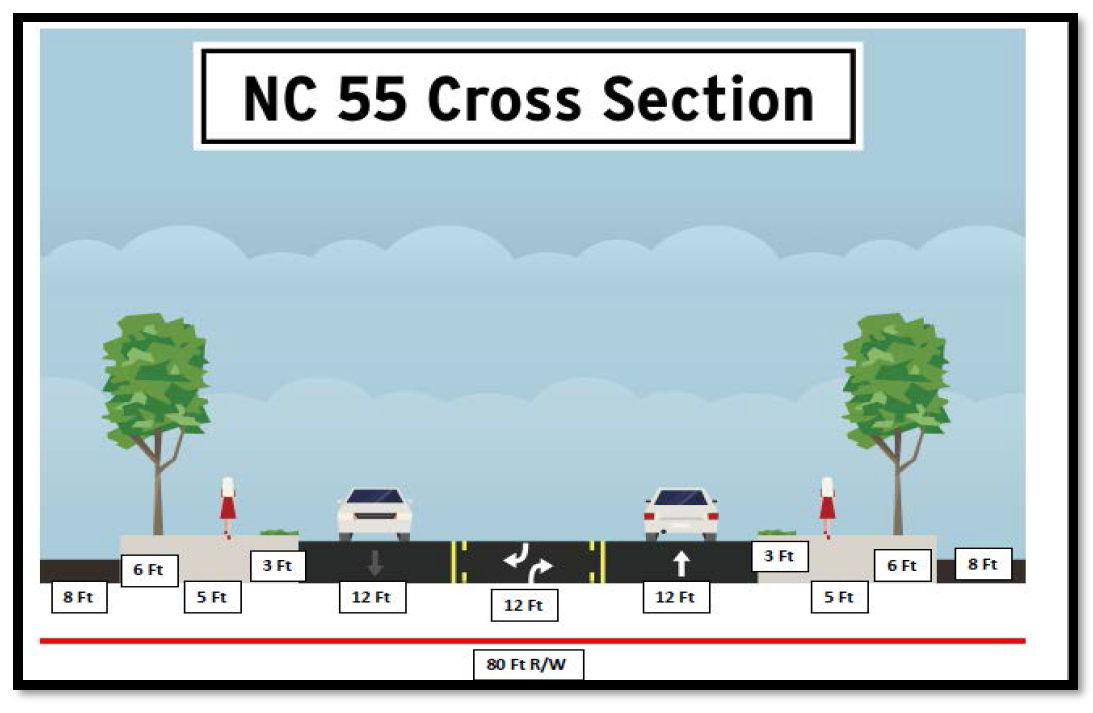
Any new residential and nonresidential development located along the designated Highway 55 corridor, specifically from Lagenaria Drive to Old Buies Creek Road, shall comply with, and be constructed in accordance with the approved cross-sections located within the Town of Angier Standard Specifications and Construction Details, as applicable to the project's portion of adjacent right-of-way.
C.
For the purposes of these requirements, the "cross section" shall be an 80-foot right-of-way section, applicable along Highway 55 between Lagenaria Drive and Old Buies Creek Road. All proposed development adjacent to the Highway 55 corridor shall be responsible for dedicating the required portion of right-of-way in accordance with section 9.1.7.
D.
Roadway improvements, including, but not limited to, turning lanes, medians and planting strips may be required by the technical review committee (TRC). In addition to any roadway improvements that may be required by NCDOT, all roadway improvements recommended by the Traffic Impact Analysis shall be required for new development.
E.
It is the responsibility of the developer to take future roadway plans, of the town and NCDOT, into account when proposing a development. As a result of the driveway permit, additional improvements may be required by NCDOT.
9.1.5.4 Cul-de-sacs.
A.
As a feature of development design, cul-de-sacs should be discouraged and kept to a minimum.
B.
Culs-de-sac should not be used to avoid connection with an existing street or to avoid the extension of a proposed street to an adjacent property.
9.1.5.5 Alleys.
A.
Alleys shall be required to serve lots used for commercial and industrial purposes except that this requirement may be waived where other definite and assured provision is made for service access.
B.
The width of an alley shall be at least 20 feet.
C.
Dead-end alleys shall be avoided where possible, but if unavoidable, shall be provided with adequate turnaround facilities at the dead end as may be approved by the Technical Review Committee.
D.
Sharp changes in alignment and grade shall be avoided.
9.1.5.6 Sight distance. No planting, structure, sign, fence, wall, or obstruction greater than two feet in height shall be placed or maintained within the sight triangle. The following are the distances used to establish a sight triangle as measured from an intersecting right-of-way: ten feet by 70 feet
9.1.6 Access management, driveways, and connectivity.
9.1.6.1 Development access. At least two entry points shall be provided in proposed developments that contain 100 or more lots or dwelling units and to all lots within the development. The Technical Review Committee may allow other alternatives if the curb cuts for the two accesses cannot meet the minimum distance allowed according to NCDOT regulations at any location.
9.1.6.2 Restriction of access. Where a tract of land to be subdivided adjoins a principal arterial street, the developer may be required by the Technical Review Committee to provide a marginal access street parallel to the arterial street or reverse frontage on a minor street for the lots to be developed adjacent to the arterial. Where reverse frontage is established, private driveways shall be prevented from having direct access to the principal arterial.
9.1.6.3 Through traffic. Residential collector and local streets shall be laid out in such a way that they provide multiple connections to existing and future developments, disperse traffic, and maintain reduced speeds. Streets shall be designed or walkways dedicated to assure convenient access to parks, playgrounds, schools, or other places of public assembly.
9.1.6.4 Intersections.
A.
Where public and private streets intersect, the design standards of the NCDOT Division of Highways, Development Roads Minimum Construction Standards shall apply. An approved NCDOT Driveway permit is required for connection to any existing roadway within the state system. This permit is required prior to any construction on the street. The application is available at the office of the applicable district engineer of NCDOT.
B.
Streets shall be laid out so as to intersect as nearly as possible at right angles, and no street shall intersect any other street at an angle less than 60 degrees.
C.
Offset intersections are to be avoided unless exception is granted by NCDOT. Intersections which cannot be aligned should be separated by a minimum length of 200 feet between survey center lines.
9.1.6.5 Connectivity.
A.
The proposed street layout shall be made according to good land planning practice for the type of development proposed and shall be coordinated with the street system of the surrounding areas. The arrangements of streets in new developments shall make provision for the continuation of the principal existing streets in adjoining developments or, when adjoining property is not developed, their proper projection insofar as they may allow for vehicular circulation in the future. The street and alley arrangement must be so designated as to cause no hardship to owners of adjoining property when they plat their own land and seek to provide for convenient access to it. When a new development adjoins undeveloped land, the new streets shall stub to the boundaries of the adjacent tract and a temporary turnaround provided, except where it is determined by the Technical Review Committee that certain streets may not be required to be so extended for one or more of the following reasons:
1.
Physical barriers or environmentally sensitive area be crossed (for example, railroad, watercourses, steep topography, wetlands or flood area).
2.
There is a large discrepancy in the size of the adjacent parcel (a smaller parcel being subdivided may not have to provide a stub to a much larger parcel, if other, more desirable, interconnections are available to the large parcel).
3.
The stub street would connect to property for which development rights have been sold for a public purpose and access to the property is not desirable for orderly development of the street network.
4.
The stub street would cause the existing roads to go over the design capacity on that portion of the street.
B.
Where a temporary turnaround is provided as required in subsection A., a sign shall be erected at the temporary turnaround that informs the public of the intended future connection of the street to future development.
9.1.7 Street names and signs.
A.
Proposed streets which are obviously in alignment with existing streets shall be given the same name. In assigning new names, duplication of existing names shall be avoided and in no case shall the proposed name be phonetically similar to existing names in the town or its planning area irrespective of the use of a suffix such as street, road, drive, place, court, etc.
B.
The town shall provide and erect street name signs at all intersections within the development. The town shall be reimbursed by the developer for the cost of the signs.
9.1.8 Right-of-way dedication.
A.
Proposed developments that adjoin existing streets maintained by either the town or NCDOT shall dedicate the additional street right-of-way necessary to meet the minimum width requirements for the type of classification of the adjoining street. The classification of proposed streets in new developments shall be approved by the Technical Review Committee, and right-of-way width shall be dedicated as shown in the town's current standards and specifications.
B.
When any part of the development is on both sides of an existing street, the entire minimum right-of-way shall be provided.
C.
When the development is located on only one side of an existing street, one-half of the minimum right-of-way, measured from the centerline of the existing street, shall be provided.
D.
The dedication requirements of this section shall not apply to residential subdivisions with five or fewer new lots and which front on existing streets that have already been accepted for maintenance by the town or NCDOT.
(Ord. of 7-7-2020(1))
Editor's note— Ord. of July, 7, 2020(1), amended section 9.1 in its entirety to read as herein set out. Former section 9.1, §§ 9.1.1—9.1.8, pertained to similar subject matter and derived from Ord. No. 2012.04, adopted Oct. 2, 2012; and Ord. of July 11, 2017(2).
Section 9.2. - Water, sewer and fire hydrants.
A.
All water lines, sewer lines, and fire hydrants shall be constructed or installed in accordance with section in accordance with the latest edition of the Town of Angier Standard Specifications and Construction Details.
B.
Any property seeking connection to the Town of Angier public sewer system must first receive voluntary annexation approval. If the property is annexed, the property owner shall be responsible for installing any infrastructure necessary for connection to the sewer system, and all infrastructures shall be turned over to the town upon final acceptance from the town.
C.
Connection to Town of Angier public water and/or sewer systems is required when the closest portion of a proposed nonresidential structure or development is located within 1,000 feet of an existing town owned and operated system. The property owner shall be responsible for extending water or sewer to the proposed structure or development, and all extensions shall be turned over to the town upon final acceptance by the town.
D.
Connection to Town of Angier public water and/or sewer systems is required when a proposed residential structure or subdivision is located within that number of feet of an existing town owned and operated system which equals the product of the number of structures or lots within the subdivision (including lots to be developed in the future) multiplied by 100; provided however that the maximum distance required for connection shall be 5,000 feet. In such cases where the public water and/or sewer supply system is of insufficient capacity to permit the delivery of either water or sewer supply, the subject proposed structure or subdivision shall be relieved of the requirement to connect to such public system.
E.
Where public water and/or sewer systems are to be installed as part of the development improvements, such systems shall be constructed to provide tap-on stub-outs for each lot plotted in the development.
F.
Uses requiring an excess of 20,000 gallons per day of water or sewer usage shall be required to improve infrastructure capacity as determined by the town board of commissioners upon the recommendation of the town engineer.
G.
Where community water and/or sewer systems are to be installed as part of the development improvements, such systems shall be designed and installed in accordance with the standards and specifications of the county health department and/or the North Carolina Department of Environment and Natural Resources agency responsible for the approval of such systems.
H.
Prerequisite to final plat approval, all lots on the plat to be recorded must be certified in writing by the county health department to meet minimum standards for on-site water and/or sewer systems when either or both of such systems are proposed to be used.
(Ord. of 7-11-2017(1))
Section 9.3. - Lighting.
9.3.1 Applicability. The provisions of this section shall apply to the installation of all outdoor lighting within the planning and development regulation jurisdiction of this ordinance except that the following shall be exempt from this section:
A.
Outdoor lighting installed for governmental purposes by local, state or federal governmental units and their agents.
B.
Outdoor lighting required to be installed by laws or regulations of a local, state or federal governmental unit.
C.
Outdoor lighting associated with a bona fide farm operation.
9.3.2 Prohibited outdoor lighting. The following types of outdoor lighting are prohibited unless exempted by the subsection above:
A.
Light fixtures that imitate an official highway or traffic control light or sign.
B.
Light fixtures in the direct line of vision with any traffic control light or sign.
C.
Light fixtures that have a flashing or intermittent pattern of illumination.
D.
Privately owned light fixtures located in the public right-of-way.
E.
Light fixtures that are a source of glare by their design, orientation or intensity.
F.
Searchlights.
G.
Structure highlighting that is illuminated between 12 midnight and 7:00 a.m.
H.
Unshielded open vertical light fixtures.
I.
Light fixtures that violate any law of the State of North Carolina relative to outdoor lighting.
9.3.3 Plan approval required. Outdoor lighting is subject to approval by the administrator and technical review committee (TRC). The lighting plan shall show sufficient information to determine compliance with the standards of this section and may require a photometric plan upon determination of the administrator. In approving lighting plans the administrator and TRC may modify the standards of this section where the applicant agrees and where equal or better performance would result. In granting modifications, the administrator and TRC may require such conditions as will secure, insofar as practicable, the objectives of the requirements modified.
9.3.4 Outdoor lighting requirements.
A.
Outdoor lighting fixtures shall be installed in a manner to protect the street and neighboring properties from direct glare or hazardous interference of any kind. Glare or hazardous interference are situations where the sensation produced by luminance within the visual field is sufficiently greater than the luminance to which the eyes are adapted, such as to cause annoyance, discomfort, or loss in visual performance and visibility.
B.
Outdoor lighting shall be constructed and operated to minimize the spillover of obtrusive light onto property outside the boundaries of the property on which the lighting is sited which could result in annoyance, discomfort or distraction to persons on the other property.
C.
All outdoor lighting fixtures, subject to this section, except for temporary and emergency lighting, that would otherwise cause glare or obtrusive spillover shall be shielded, recessed or otherwise oriented or treated in such a way to prevent glare or obtrusive spill over.
D.
As a general principle, all outdoor lighting shall be directed downward and away from adjoining property and streets.
E.
The maximum light level shall not exceed one-half (½ or 0.5) maintained footcandle at any property line in a residential district, or on a lot occupied by a dwelling, and shall not exceed two maintained footcandles at any public street right-of-way.
F.
All floodlights shall be installed such that the fixture shall be aimed down at least 45 degrees from vertical, or the front of the fixture is shielded such that no portion of the light bulb extends below the bottom edge of an external shield. Floodlights and display lights shall be positioned such that any such fixture located within 50 feet of a public street right-of-way is mounted and aimed perpendicular to and away from the right-of-way, with a side-to-side horizontal aiming tolerance not to exceed 15 degrees from perpendicular to the right-of-way.
G.
The mounting height of all outdoor lighting shall not exceed 40 feet above finished grade, except that the mounting height of outdoor sports field and outdoor performance area lighting fixtures shall not exceed 80 feet from finished grade.
H.
All light fixtures shall meet the IESNA definition of cutoff fixtures. Forward throw fixtures (type IV light distribution, as defined by the IESNA) are required within 25 feet of any public street right-of-way. Alternatively, directional fixtures (such as floodlights) may be used provided they shall be aimed and shielded in accordance with this section.
I.
Sign lighting shall be regulated in accordance with chapter 10.
J.
Lighting fixtures shall be selected, located, aimed, and shielded so that direct illumination is focused exclusively on the building facade, plantings, and other intended site features and away from adjoining properties and the public street right-of-way.
K.
Outdoor lighting fixtures shall use metal halide or light emitting diode (LED) bulbs.
9.3.5 Street lighting provisions. Street lighting shall be provided and installed at the developer's expense throughout the development in accordance with the latest edition of the Town of Angier Standard Specifications and Construction Details. The developer shall be required to pay to the electric company the cost of street lighting installation. The developer shall be required to install all fixed items such as conduit, pads, hand holes and pole foundations. The Town of Angier will own and maintain the said fixed items.
A.
High-pressure sodium fixtures shall be permitted only within residential subdivisions.
9.3.6 Town Center (TC) District Lighting Standards. The following requirements shall apply to the town center district, as designated on the Town of Angier Land Use Plan:
Types of Outdoor Lighting Fixtures and Posts Allowable:

A.
Fixtures:
1.
Mitchell with Ribs, Band and Medallions

B.
Posts:
1.
Style V
Height: 12 ft., 16 ft.
Color: Black Aluminum
9.3.7 The following requirements shall apply to the Commercial (COM) Zoning District, new subdivision developments, and modifications of existing developments that do not meet the requirements of this section:
Types of Outdoor Lighting Fixtures and Posts Allowable:
A.
Fixtures:
1.
Cutoff Enclosed
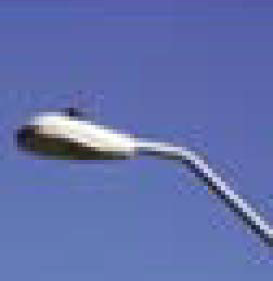
Mounting Heights: 25 feet, 30 feet, 35 feet
Metal Halide Options: Yes
High Pressure Sodium Options: Yes
IESNA Cutoff Classification: Full Cutoff
2.
Nightcap

Mounting Heights: 25 feet
Metal Halide Options: No
Light Emitting Diode (LED) Options: No
High Pressure Sodium: Yes
IESNA Cutoff Classification: Full Cutoff
3.
Semi-Enclosed
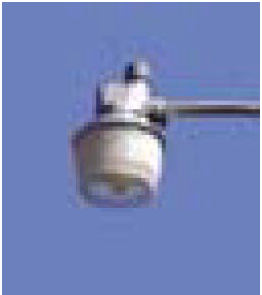
Mounting Heights: 25 feet
Metal Halide Options: No
Light Emitting Diode (LED) Options: No
High Pressure Sodium Options: Yes
IESNA Cutoff Classification: Non-Cutoff
4.
Shoebox

Mounting Heights: 30 feet
Metal Halide Options: Yes
Light Emitting Diode (LED) Options: No
High Pressure Sodium Options: Yes
IESNA Cutoff Classification: Full Cutoff
5.
Decorative Black Cutoff Enclosed

Mounting Heights: 25 feet, 30 feet
Metal Halide Options: Yes
Light Emitting Diode (LED) Options: No
High Pressure Sodium Options: Yes
IESNA Cutoff Classification: Full Cutoff
6.
Post Stop Style "S"

Mounting Heights: 12 feet, 13 feet, 16 feet
Metal Halide Options: Yes
Light Emitting Diode (LED) Options: No
High Pressure Sodium Options: Yes
IESNA Cutoff Classification: Full Cutoff
7.
Sanibel

Mounting Heights: 12 feet, 13 feet, 16 feet
Metal Halide Options: Yes
Light Emitting Diode (LED) Option: No
High Pressure Sodium Options: Yes
IESNA Cutoff Classification: Full Cutoff
8.
Post Top Style "M"

Mounting Heights: 12 feet, 13 feet, 16 feet
Metal Halide Options: Yes
Light Emitting Diode (LED) Option: No
High Pressure Sodium: Yes
IESNA Cutoff Classification: Cutoff
9.
Post Top Style "A"

Mounting Heights: 12 feet, 13 feet, 16 feet
Metal Halide Options: Yes
Light Emitting Diode (LED): No
High Pressure Sodium: Yes
IESNA Cutoff Classification: Non-Cutoff
10.
Roadway

Mounting Heights: 25 feet, 30 feet, 35 feet
Metal Halide Options: No
Light Emitting Diode (LED) Options: Yes
High Pressure Sodium Options: No
IESNA Cutoff Classification: N/A
11.
Site Lighter
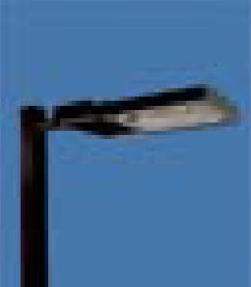
Mounting Heights: 30 feet, 35 feet
Metal Halide Options: No
Light Emitting Diode (LED) Options: Yes
High Pressure Sodium Options: No
IESNA Cutoff Classification: N/A
12.
Mitchell

Mounting Heights: N/A
Metal Halide Options: Yes
Light Emitting Diode Options: No
High Pressure Sodium Options: Yes
IESNA Cutoff Classification: N/A
13.
Michell with Ribs, Band and Medallions

Mounting Heights: N/A
Metal Halide Options: Yes
Light Emitting Diode (LED) Options: No
High Pressure Sodium Options: Yes
IESNA Cutoff Classification: N/A
14.
Mitchell Top Hat

Mounting Heights: N/A
Metal Halide Options: Yes
Light Emitting Diode (LED) Options: No
High Pressure Sodium Options: Yes
IESNA Cutoff Classification: N/A
15.
Mitchell Top Hat with Ribs, Band and Medallions

Mounting Heights: N/A
Metal Halide Options: Yes
Light Emitting Diode (LED) Options: No
High Pressure Sodium Options: Yes
IESNA Cutoff Classification: N/A
16.
Monticello

Mounting Heights: N/A
Metal Halide Options: Yes
Light Emitting Diode (LED) Options: No
High Pressure Sodium Options: Yes
IESNA Cutoff Classification: N/A
17.
Twin Bracket A

Mounting Heights: N/A
Metal Halide Options: Yes
Light Emitting Diode (LED) Options: No
High Pressure Sodium: Yes
IESNA Cutoff Classification: N/A
B.
Posts:
1.
Decorative Aluminum
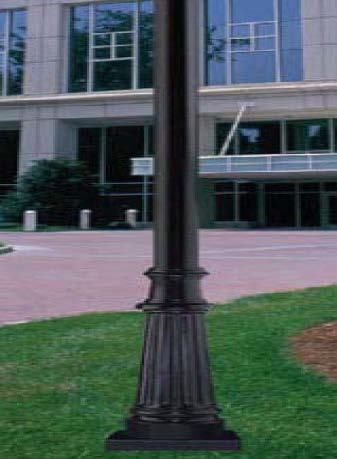
Height: 12 foot
Color: Black
Type: Anchor Base
2.
Fluted Concrete
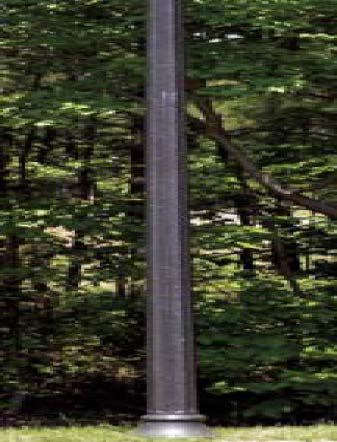
Height: 13 feet
Color: Black
Type: Direct Burial
3.
Decorative Tapered Metal
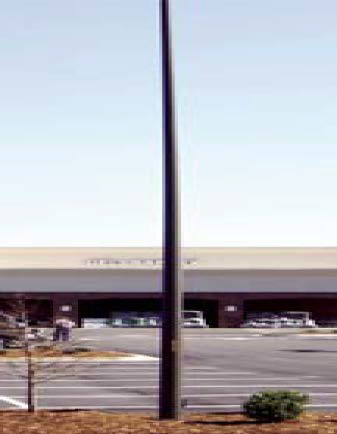
Height: 35 feet
Color: Dark Bronze
Type: Anchor Base
4.
Decorative Square Metal
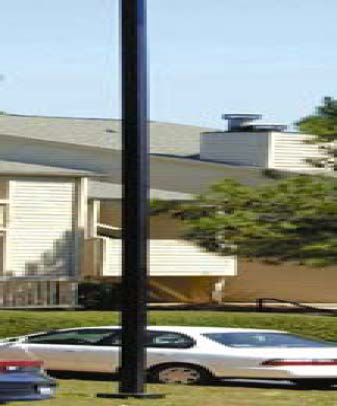
Height: 30 feet
Color: Black or Dark Bronze
Type: Anchor Base
5.
Concrete
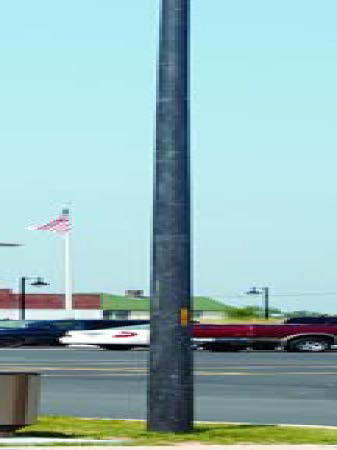
Height: 29 feet
Color: Black
Type: Direct Burial
6.
Smooth Concrete
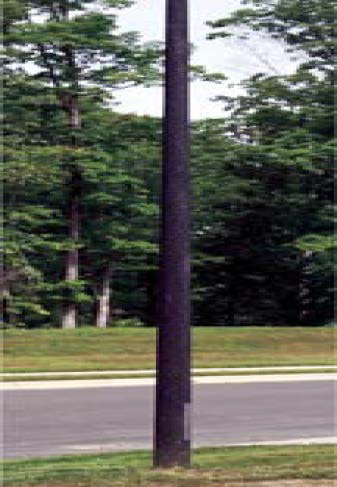
Height: 12 feet, or 16 feet
Color: Black
Type: Direct Burial
7.
Fiberglass

Height: 16 feet
Color: Black
Type: Direct Burial
8.
Fiberglass
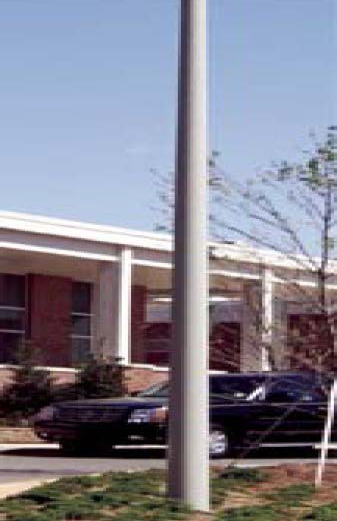
Height: 25 feet, 30 feet or 35 feet
Color: Gray
Type: Direct Burial
(Ord. No. 2011.01, 7-5-2011; Ord. of 1-3-2016(2); Ord. of 6-1-2021)
Section 9.4. - Stormwater management.
9.4.1 General provisions. The developer shall provide a surface water drainage system constructed to the standards of the North Carolina Department of Transportation, as reflected in the Handbook for the Design of Highway Surface Drainage Structures, subject to review by the Town of Angier consulting engineer.
A.
No surface water shall be channeled or directed into a sanitary sewer.
B.
Where feasible, the developer shall connect to an existing surface water drainage system.
C.
Where an existing surface water drainage system cannot feasibly be extended to the development, a surface drainage system shall be designed to protect the proposed development from water damage.
D.
Surface drainage courses shall have side slopes of at least three feet of horizontal distance for each one foot of vertical distance, and courses shall be of sufficient size to accommodate the drainage area without flooding, and designed to comply with the standards and specifications for erosion control of the North Carolina Sedimentation Pollution Control Act, G.S. 143-34.12, Chapter 113A, Article 4 and the North Carolina Administrative Code Title 15, Chapter 4, and any locally adopted erosion and sedimentation control ordinances.
E.
The minimum grade along the bottom of a surface drainage course shall be a vertical fall of at least one foot in each 200 feet of horizontal distance.
F.
Stream banks and channels downstream from any land disturbing activity shall be protected from increased degradation by accelerated erosion caused by increased velocity of runoff from the land disturbing activity in accordance with the North Carolina Sedimentation Pollution Control Act, G.S. 143-34.12, Chapter 113A, Article 4 and the North Carolina Administrative Code Title 15, Chapter 4.
G.
Anyone constructing a dam or impoundment within the development must comply with the North Carolina Dam Safety Law of 1967 and the North Carolina Administrative Code Title 15, Subchapter 2 K.
H.
In all areas of special flood hazards, all development proposals shall have adequate drainage provided to reduce exposure to flood damage.
I.
In areas contained within water supply watershed boundaries, all development proposals shall comply with the requirements of the Town of Angier Water Supply Watershed regulations.
9.4.2 Stormwater construction standards. Stormwater improvements shall be constructed and installed to the in accordance with the latest edition of the Town of Angier Standard Specifications and Construction Details.
The Town of Angier is in Harnett County, which is designated as a "Phase II Tipped" County. Future development in Harnett County would be subject to Phase II Post-Construction stormwater requirements. Decide whether to include the model ordinance in the UDO or in the Standard Specifications and Construction Details.
9.4.3 Easements.
A.
Where a development is traversed by a stream or drainage way, an easement shall be provided conforming with the lines of such stream and of sufficient width as will be adequate for the purpose of drainage.
B.
The Administrator may require any water course or stormwater management facility to be located within dedicated a drainage easement officially recorded at the Harnett County Register of Deeds as a "public storm drainage easement" that provides sufficient width for maintenance.
C.
Maintenance easements may be required depending upon the size of the drainage way and the maintenance responsibility as determined by the town.
D.
Where easements are required, they shall be noted on the final plat.
9.4.4 Obstruction of drainage channels prohibited. No fences or structures shall be constructed across an open drainage channel that will reduce or restrict the flow of water.
9.4.5 Grading standards. The following standards shall be followed in establishing the grading plan for a development:
A.
Developments shall be designed and constructed with a positive drainage flow away from buildings towards approved stormwater management facilities. Plans for drainage facilities shall be approved by the town engineer.
B.
In the design of site grading plans, all impervious surfaces in the proposed development (including off street parking) shall be considered.
C.
Site grading and drainage facilities shall protect sinkholes, wetlands, ponds and lakes from increased sediment loading.
D.
Site grading shall not increase runoff flow rate onto downstream properties.
E.
A site shall not be graded to create a slope greater than two to one at adjacent properties unless the slope already existed on the undeveloped land. In no case shall the slope be made steeper than it was on the undeveloped land. Terraced or stepped slopes that achieve the overall slope requirement may be considered by the TRC on a case by case basis.
F.
All disturbed areas within the dedicated right-of-way and easements of any development street shall be restored with vegetation and the landscaping standards of Chapter 7 shall be met.
Section 9.5. - Garbage and refuse collection.
A.
Dumpster pads shall be constructed and installed in accordance with the latest edition of the Town of Angier Standard Specifications and Construction Details and shall be screened in accordance with Chapter 7.
B.
The method of garbage disposal shall be indicated on each site plan or preliminary plat that is submitted.
Section 9.6. - Other infrastructure requirements.
9.6.1 Placement of monuments. Unless otherwise specified by this ordinance, the Manual of Practice for Land Surveying as adopted by the N. C. State Board of Registration for Professional Engineers and Land Surveyors, under the provisions of Title 21 of the North Carolina Administrative Code, Chapter 56 (21 NCAC 56), shall apply when conducting surveys for subdivisions; to determine the accuracy for surveys and placement of monuments, control corners, markers, and property corner ties; to determine the location, design, and material of monuments, markers, control corners, and property corner ties; and to determine other standards and procedures governing the practice of land surveying for subdivisions.
9.6.2 Construction procedures. No construction or installation of improvements shall commence in a proposed subdivision until the preliminary plat has been approved, and all plans and specifications have been approved by the appropriate authorities. No building, zoning or other permits shall be issued for erection of a structure on any lot not of record at the time of adoption of this ordinance until the requirements of this ordinance have been met. The developer, prior to commencing any work within the subdivision, shall make arrangements with the administrative officer to provide for adequate inspection. The administrative officer or his representatives shall inspect and approve all completed work prior to release of the sureties.
9.6.3 Oversized improvements. The Town of Angier may require installation of certain oversized infrastructure or the extension of utilities to adjacent property when it is in the interest of future development. If the town requires the installation of improvements in excess of the standards required in this ordinance, including all standards adopted by reference, the town shall pay the cost differential between the improvement required and the standards in this ordinance.
Section 9.7. - Improvement guarantees.
For any required improvement that cannot be installed prior to final zoning inspection or final plat approval the following shall apply:
A.
In order to ensure compliance with this ordinance, in lieu of requiring the completion and installation of required improvements prior to occupancy or final plat recordation, the Town of Angier may enter into an agreement with the developer whereby the developer shall agree to complete all required improvements. To secure this agreement, the developer shall provide to the Town of Angier one of the following guarantees. The amount of such guarantee shall be equal to one and one-quarter times the cost of purchasing, installing, and completing all required improvements of this ordinance. All such guarantees shall be subject to the approval of the town and shall be made payable to the Town of Angier. The developer shall elect to provide either one or a combination of the following guarantees:
1.
Surety performance bond(s). The developer shall obtain a performance bond(s) from a surety company authorized to do business in North Carolina. The duration of the bond(s) shall be set one year from the date the bond is issued, unless the developer determines that the scope of work for the required improvements necessitates a longer duration.
2.
Cash or letter of credit. The developer shall deposit cash, an irrevocable letter of credit or other instrument readily convertible into cash at face value, either with the town or in escrow with a financial institution designated as an official depository of the Town of Angier. If cash or other instrument is deposited in escrow with a financial institution as herein provided, the developer shall then file with the Town of Angier an agreement between the financial institution and himself guaranteeing the following:
a.
That said escrow account shall be held in trust for one year, unless the developer determines that the scope of work for the required improvements necessitates a longer duration. The escrow account will be released by the town and may not be used or pledged by the developer in any matter during the term of the escrow; and
b.
That in the case of a failure on the part of the developer to complete said improvement, the financial institution shall, upon notification by the Town of Angier and submission by the Town of Angier to the financial institution of a landscape architect's estimate of the amount needed to complete the improvements, immediately either pay to the town the funds estimated to complete the improvements, up to the full balance of the escrow account, or deliver to the town any other instruments fully endorsed or otherwise made payable in full to the town.
B.
The developer shall demonstrate reasonable, good-faith progress toward completion of the required improvements that are secured by the performance guarantee or any extension. If the improvements are not completed to the specifications of the local government, and the current performance guarantee is likely to expire prior to completion of the required improvements, the performance guarantee shall be extended, or a new performance guarantee issued, for an additional period. An extension under this subdivision shall only be for a duration necessary to complete the required improvements. If a new performance guarantee is issued, the amount shall be determined by the procedure provided in Section A of this subsection and shall include the total cost of all incomplete improvements.
C.
Upon default, meaning failure on the part of the developer to complete the required improvements in a timely manner as spelled out in the performance bond, escrow agreement, or approved extension, then the surety, or the financial institution holding the escrow account, shall, if requested by the town, pay all or any portion of the bond or escrow fund to the Town of Angier up to the amount needed to complete the improvements based on a landscape architect's estimate. Upon payment, the town, in its discretion, may expend such portion of said funds as it deems necessary to complete all or any portion of the required improvements. The town shall return to the bonding firm any funds not spent in completing the improvements. Should the amount of funds needed to complete the installation of all required improvements exceed the amount in the bond or escrow account, the developer shall nonetheless be responsible for providing the funds to cover such costs. The developer shall at all times bear the financial burden for the installation of all required improvements. A lien shall be attached to the property if the developer fails to provide the full financial responsibility.
D.
The administrator shall authorize the release of a portion of any security posted as the improvements are completed and approved. Such funds shall then be released within ten days after the corresponding improvements have been so approved.
(Ord. of 6-1-2021)

