
Black Mountain City Zoning Code
CHAPTER 9
- SIGNS
9.1 - Intent.
Signs are a necessary and beneficial use of property that contributes to our community's economic vitality and appearance. Reasonable sign regulations are necessary to protect public property and community aesthetics, encourage economic activity, and contribute to the overall appeal of the community. It is the intent of this section to regulate the use, size, layout, style, typography, legibility, and arrangement of signs to ensure that signs are compatible with their surroundings, appropriate to identify individual properties, occupants, and/or the community, and facilitate the safe and orderly flow of pedestrian and vehicular traffic. Specifically, this section is intended to:
A.
Promote the public health, safety, and welfare of residents and visitors;
B.
Provide an environment which fosters growth and development of a vibrant business community;
C.
Protect commercial and industrial districts from visual clutter;
D.
Protect property values;
E.
Eliminate distractions which are hazardous to motorists and pedestrians;
F.
Protect and enhance the natural beauty, cultural attributes, distinctive character, and visual environment of the Town of Black Mountain;
G.
Protect the public's ability to identify establishments and premises in an orderly, readable and safe manner;
H.
Protect the public's investment in public buildings, streets, roads, highways, and open spaces; and
I.
Balance the individual rights of property owners to communicate their message with the public's right to be free of unreasonable distractions and aesthetic intrusions.
(Ord. No. O-21-17, 12-13-2021)
9.2 - Applicability.
A.
No sign visible from the public right-of-way, whether exterior to or interior to a structure, shall be erected, displayed, or substantially altered on any lot zoned or used for non-residential use, except in accord with the provisions of this chapter and until a zoning compliance permit has been issued for the sign.
B.
Pursuant to N.C.G.S. 160D-908, fence wraps displaying signage affixed to perimeter fencing at a construction site are exemption from the requirements of this chapter for up to 24 months or until the certificate of occupancy is issued for the final portion of construction, whichever is shorter. This exemption will not apply to fence wrap that displays advertising other than by a person or company directly involved in the construction project and for which monetary compensation for the advertisement is not paid or required.
C.
Recognizing that certain signs and messages are required to be displayed by federal or state law or regulation, and further recognizing the many benefits of certain commonly occurring signage that promote local economic activity, civic events and political discourse, many of which are of a temporary nature, the following types of signage are allowed in any district without need for obtaining a permit, provided that the specific requirements listed below, if any, are met:
1.
Any sign required by law, including emergency, safety, warning or traffic signs or any sign installed by, at the direction of, or with the approval of a governmental authority.
2.
Signs bearing only property identification numbers and names, post office box numbers, names of occupants of the premises on which the sign is located, provided that:
a.
The sign is not illuminated and does not exceed two square feet in area per display surface, and
b.
No more than two such signs are displayed on the zoning lot.
3.
Flags having a total area of less than 24 square feet.
4.
Signs erected and maintained by public agencies and governmental bodies.
5.
Historical markers erected or placed by a historical nonprofit corporation or governmental authority.
6.
Signs directing and guiding traffic and parking on private property on which the signs are located, provided that such signs:
a.
Are not illuminated,
b.
Bear no advertising, and
c.
Do not exceed four square feet in area per display surface.
7.
Construction site identification signs whose message is limited to the project or building name, identification of architects, engineers, contractors, lenders and other individuals or firms involved with the construction, the intended purpose of the building and the expected completion date, provided that such signs:
a.
May not exceed four square feet in area per display surface and six feet in height for single-family or duplex construction;
b.
May not exceed 32 square feet in area per display surface and eight feet in height for multifamily or non-residential construction;
c.
Such signs shall not be illuminated;
d.
No more than one such sign shall be allowed per construction site;
e.
No such sign shall be erected prior to issuance of a building permit for the site; and
f.
Such sign must be removed within seven days of the issuance of a certificate of occupancy.
8.
Real estate signs advertising the sale, rental, or lease of the premises, provided that such signs:
a.
Do not exceed one sign per street frontage and four square feet in area per display surface for property zoned residential; and
b.
Do not exceed one sign per street frontage and 16 square feet per display surface for property zoned non-residential or located within an approved planned development; and
c.
Such signs shall not be illuminated.
9.
Residential property management sign permanently affixed to the building façade, which includes contact information for the management company, provided that such signs:
a.
Do not exceed one sign per building façade and four square feet in area per display surface; and
b.
Are attached to a residential structure with seven or fewer dwelling units.
10.
Temporary political signs, provided that such signs:
a.
Do not exceed four square feet in area per display surface;
b.
Are located on private property or within a public right of way;
c.
When placed within a public right-of-way, must comply with the following additional requirements:
i.
May not be placed more than 30 days before the beginning of early voting pursuant to N.C. Gen. Stat. § 163-227.2;
ii.
The candidate must obtain the permission of any property owner of a residence, business, or religious institution fronting the right-of-way where the sign would be placed;
iii.
No sign is permitted within the right-of-way of a fully controlled access highway;
iv.
No sign may obscure motorist visibility at an intersection;
v.
No sign may be greater than 42 inches in height above the edge of the pavement of the road;
vi.
No sign may be larger than 18 by 24 inches;
vii.
No sign may obscure or replace another sign.
d.
Are removed within ten days following the primary or general election, as applicable;
11.
Signs announcing ales, provided that such signs:
a.
Do not exceed one sign per site of the sale;
b.
Do not exceed four square feet in area per display surface; and
c.
Are removed within seven days of posting.
12.
Announcements by public or nonprofit organizations of special events or activities of interest to the general public, provided such signs:
a.
Do not exceed one sign per site of such events or activities; and
b.
Do not exceed 12 square feet in area per display surface; and
c.
Are removed within 14 days of posting.
13.
Information kiosks or bulletin boards erected by or on behalf of a governmental body on public property or rights-of-way in the town business districts for the display of handbills or posters of community interest, provided such kiosks or bulletin boards:
a.
Contain no more than six square feet in area per sign display surface and a maximum of 72 square feet per kiosk or bulletin board.
14.
A sign held by or attached to a human, located in front of the business, during business hours, for the purposes of advertising or otherwise drawing attention to an individual, business, commodity, service or product. This may also include a person dressed in costume for the purpose of advertising or drawing attention to an individual, business, commodity, service or product.
15.
Signs on registered, licensed vehicles that are parked in a manner that serves the purpose of advertising a business, is generally located in front of the business, and is parked in a standard size parking space.
16.
Signs stating that a business (other than a home occupation) is open, provided that there is no more than one such sign per business establishment, any illumination is steady (does not blink or flash), and the sign does not exceed two square feet in display area.
(Ord. No. O-21-17, 12-13-2021)
9.3 - Prohibited signs.
The following types of signs are prohibited:
A.
Moving signs. Animated, rotating, or other moving or apparently moving signs, including vehicular billboards.
B.
Digital changeable copy. Digital changeable copy that scrolls, blinks, or flashes, including but not limited to LCD, LED and any similar technology, except as used to display time and temperature or gas price.
C.
Traffic safety precautions. Notwithstanding any other provision in this Chapter, the following restrictions shall apply to signs in order to preserve the safety of pedestrian, bicycle, and vehicular movement:
1.
No sign may make use of the words "STOP", "SLOW", "CAUTION", "DANGER", or any other word, phrase, symbol or character in such manner as is reasonably likely to be confused with traffic directional and regulatory signs.
2.
Except as used to display time and temperature, no sign may contain flashing lights.
3.
No sign, or part of a sign, may be located within a sight distance area established below.
4.
No sign may be erected so that by its location, color, nature or message it is likely to be confused with or obstruct the view of traffic signals or signs, or is likely to be confused with the warning lights of an emergency or public safety vehicle.
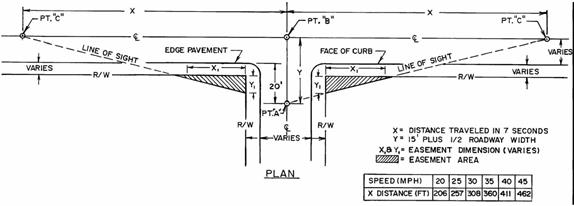
(Ord. No. O-21-17, 12-13-2021)
9.4 - General standards.
A.
Location. Except where expressly exempted in this Section, all signs must be located on the same lot as the permitted use and be clearly incidental, customary and commonly associated with the operation of the permitted use.
B.
Cessation or vacation of use. When the use or establishment to which a sign is related ceases or is vacated, any sign, including all of its supports, frames and hardware, must be removed within four months of the cessation or vacating of the use or establishment unless the sign is used by a new use or establishment on the premises in conformance with all current regulations of this chapter.
C.
Signs in the right-of-way.
1.
Signs must not encroach into the public right-of-way unless expressly allowed in this Chapter.
2.
Wall signs, awning signs, canopy signs, projecting signs, crown signs and shingle signs may encroach over the public sidewalk but must not encroach on or over any streets or alleys. All signs must be a minimum of 24 inches inside the curb line or edge of pavement, whichever is greater.
3.
No sign may be attached, affixed, or painted on any utility pole, light fixture, tree, rock or other natural object within the right-of-way.
D.
Unified sign plan.
1.
Where a zoning lot contains more than three principal uses or establishments, the provisions of this Section apply to the zoning lot as a whole, and the owners of the zoning lot are responsible for allocating permitted signs and display surface area among the individual uses or establishments.
2.
A unified sign plan is an overall plan for placement and design of multiple signs for a building or group of buildings on a zoning lot.
3.
The unified sign plan submitted for a zoning lot must show all signs located or proposed on the zoning lot.
4.
The unified sign plan must display harmony and consistency with regard to number and size of signs, placement of signs, materials and color, size and style of lettering, and type of sign illumination.
5.
Unified sign plans are not required in central business or mixed-use zoning districts.
E.
Address on ground signs. The street address number must be included on all ground signs. Numerals must be at least nine inches in height. The area of the address is not included in any calculation of total sign area.
F.
Pre-existing, nonconforming signage. Any sign in place prior to adoption of this ordinance that does not comply with the standards of this chapter for size, location, height or sign type is considered a pre-existing, nonconforming sign that may be continued, maintained, repaired, or replaced if damaged or destroyed, provided that the nonconformity is not in any way enlarged or intensified.
1.
Any advertising sign or business identification sign which is not specifically prohibited and is permanently affixed to a building, structure or the ground, which is nonconforming because of its height, size, setback or location shall be allowed to continue and shall be maintained as provided for in the preceding sections, but shall not be:
a.
Replaced with another nonconforming sign;
b.
Structurally altered (except to meet safety requirements);
c.
Altered so as to increase the degree of non-conformity of the sign;
d.
Expanded;
e.
Re-established after its discontinuance for 60 days;
f.
Continued in use after cessation or change of the business or activity to which the sign pertains; or
g.
Re-established after deterioration, damage, destruction or voluntary demolition if the cost of reconstruction exceeds 60 percent of the replacement cost of a sign of comparable quality.
(Ord. No. O-21-17, 12-13-2021)
9.5. - Permitted signs.
| Sign Type |
UR-8,
TR-4, CR-1, SR- 2, NMU- 8 |
CB,
HB-8, TND |
HI0,
OI- 6, LI-8, ICD |
Sign Area
Allocation (max) |
|---|---|---|---|---|
 | P* | P | P | Maximum 5% of the building facade up to and including the fourth floor, for all of these sign types combined. No individual sign shall exceed 250 sq. ft. in area |
 | P* | P | P | |
 | P* | P | P | |
 | P* | P | P | |
 | P* | P | P | Based on sign area |
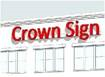 | — | P | P | Maximum 2.5% of the building facade (in addition to other building signs) |
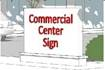 | — | P* | P | Based on sign area |
 | P* | P | P | |
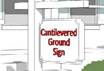 | P* | P | P | |
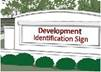 | P | P** | P | |
|
KEY: P = Sign type permitted
P* = For allowed nonresidential uses only P** = For residential identification sign only — = Not Permitted A. | ||||
A.
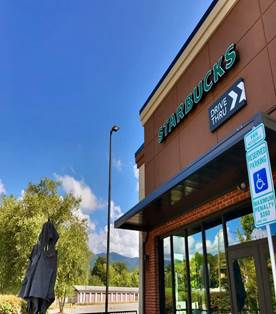
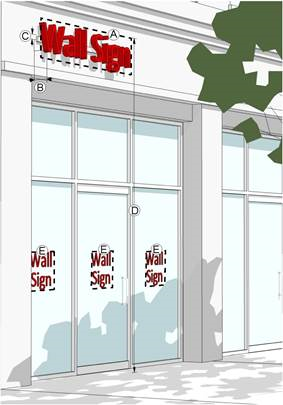
Wall sign.
Number of signs
1. In the UR-8, TR-4, CR-1, SR-2, NMU-8 districts, maximum one wall sign per street frontage.
2. In all other districts, maximum of three wall signs per individual establishment per street frontage. Window signage shall not be counted towards the maximum number of wall signs.
B.
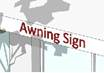
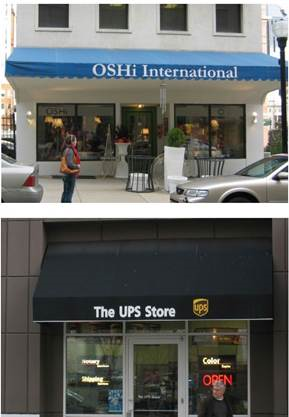
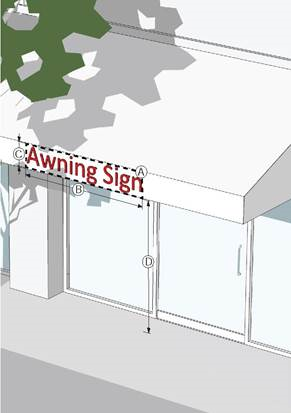
Awning sign.
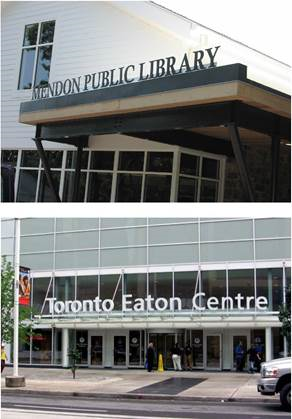
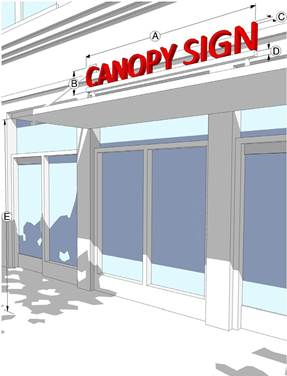
C.
Canopy sign.
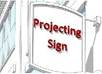
D.
Projecting sign.
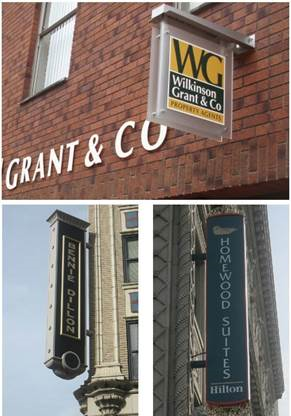
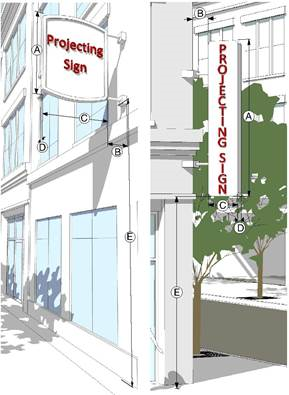
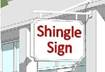
E.
Shingle sign.
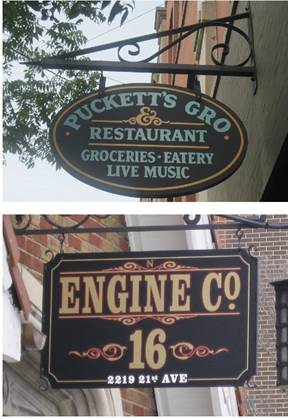
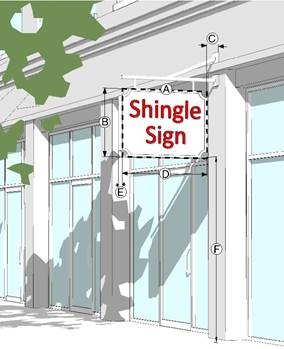
F.
Crown sign.
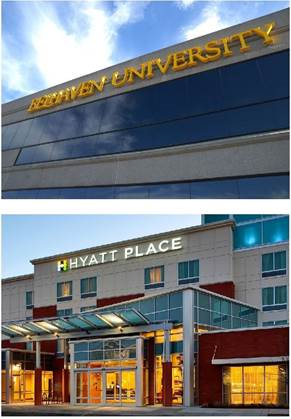
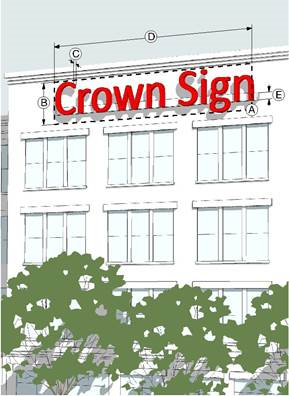
G.
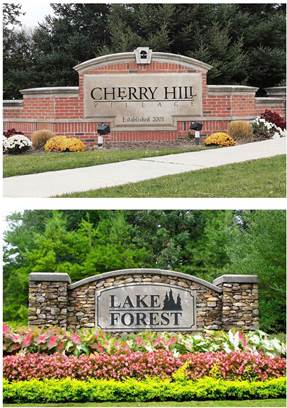
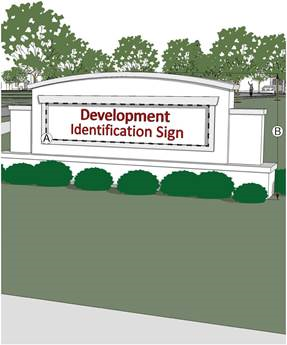
Development identification sign.
H.
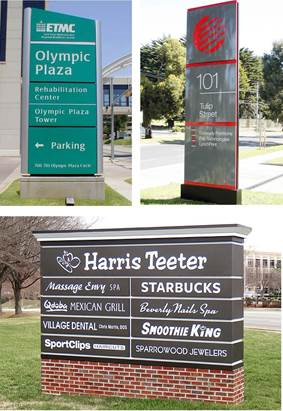
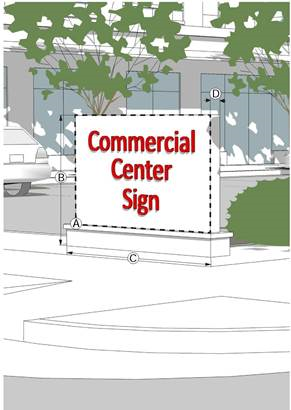
Commercial center sign.
I.
Ground sign.
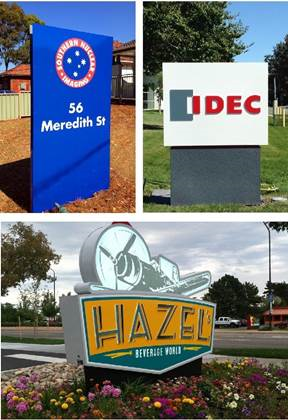
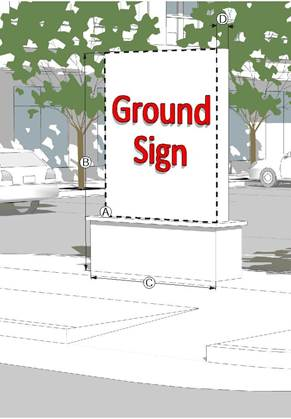
J.
Cantilevered ground sign.
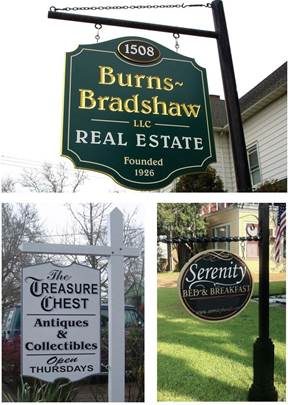
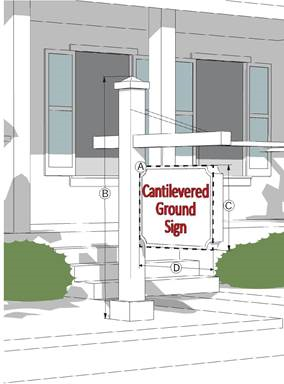
(Ord. No. O-21-17, 12-13-2021)
9.6 - Specialty sign types.
A.
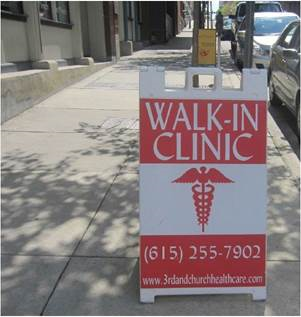
Sidewalk sign. A sidewalk sign is a movable sign not secured or attached to the ground or surface upon which it is located. This sign type is typically an A-frame or spring-mounted sign.
1.
A sidewalk sign is permitted in the central business district and highway business.
2.
A sidewalk sign must be no more than 42" tall and 36" wide. The sign face must be no more than six square feet in area.
3.
There may be no more than one sidewalk sign per tenant, generally located adjacent to the primary facade in front of the business.
4.
A sidewalk sign must not obstruct vehicular, bicycle or pedestrian traffic, and must comply with ADA clearance and accessibility requirements.
5.
The sign must be removed and placed indoors at the close of each business day.
6.
No illumination is permitted.
B.
Parking lot identification banners.
1.
Each parking lot identification banner must not exceed four square feet in display area, and must be limited to the name of the building or development.
2.
One or two banners may be approved for display from each streetlight.
3.
The colors, shape, materials, appearance and duration of display for such banners must be approved by the town manager.
C.
Gas stations.
1.
Pumps. Signs located on the top of gas pumps (pump toppers) must comply with the following standards:
a.
Gas stations may install one pump topper per pump.
b.
Pump toppers are limited to a maximum of six square feet per side and no more than two sides per pump.
c.
The base of the pump must be a neutral color, and must not contain any signage.
d.
No internal illumination of the pump or pump topper is allowed.
2.
Canopies. Gas station canopy signs must comply with the following standards:
a.
The sign must be an integral component of the pump canopy (composed of lettering mounted, painted or otherwise affixed to the pump canopy, and not located on the top or bottom of the canopy).
b.
The features, materials, colors and designs used in the pump canopy must be similar to the principal structure. Such features are considered similar where the materials and colors of the canopy are the same as the predominant materials and colors of the principal structure.
c.
Each canopy sign may not exceed four square feet of display area. The maximum letter height or trademark height must not exceed 18 inches.
d.
Additional canopy sign area may be permitted by transferring building sign display area. If building sign display area is transferred, one canopy sign is permitted on each side of a canopy, up to a maximum of three sides.
e.
The canopy must not encroach upon any publicly dedicated rights-of-way.
f.
No internal canopy illumination is permitted.
3.
Digital gas price display. Gas prices may be displayed as digital (electronic) changeable copy.
(Ord. No. O-21-17, 12-13-2021)
9.7 - Sign measurements.
A.
Computation of sign area. The area of all signs is determined as follows:
1.
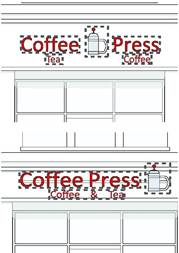
For wall signs, awning signs, canopy signs and crown signs consisting of freestanding letters or logos, sign area is calculated as the total area of the rectangle, circle or square that fully encloses all the letters or logo.
2.
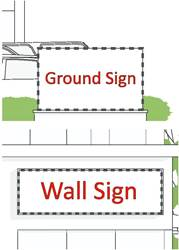
For signs on a background, the entire area of the background is calculated as sign area, including any material or color forming the sign face and the background used to differentiate the sign from the structure on which it is mounted. Display surface includes the face of the structure that the message is affixed to. Display surface does not include any structural members not bearing advertisement.
3.
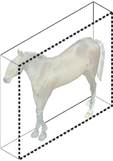
The sign area of a three-dimensional sign is calculated as total area of the smallest rectangle, circle or square that fully encloses the largest profile of the three-dimensional sign.
4.
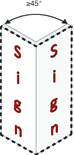
The area for a sign with more than one face is calculated by adding the area of all sign faces that are 45 degrees or greater; where the sign face angle is less than 45 degrees only the area of the largest sign face is computed as part of the sign area.
B.
Measurement of sign height.
1.
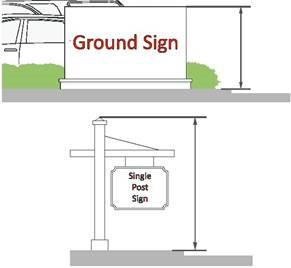
The total height of a sign is measured from the highest point of the sign or supporting structure to the top of the abutting sidewalk (or the crown of the adjacent roadway where no sidewalk exists).
C.
Measurement of sign height: Commercial center sign.
1.
The height of a commercial center sign is measured from the mean natural grade.
2.
Mean natural grade is measured along a line parallel to the street frontage for a distance of 100 feet on either side of the base of the sign, and along a line perpendicular to the street starting at the right-of-way for a distance equal to the width of the proposed sign.
3.
Where the proposed location of the sign is below the natural grade of the adjacent street frontage, the overall height of the base of the sign may be increased by up to ten feet in order to achieve the maximum permitted height, as measured from the natural grade of the adjacent street frontage.
4.
Landscaping around the base of a sign must be shown on a landscape plan. The landscaping must buffer and screen that portion of the base of the sign located below the natural grade of the adjacent street frontage.
5.
The design of the base of the sign must complement the features and frame of the sign.
6.
In those situations where compliance with Federal Emergency Management Agency (FEMA) floodplain regulations prohibits the installation of a contiguous structural base, the town manager may approve an alternate base design. Landscaping and screening must be incorporated into the alternate base design.
D.
Sign setback. Signs required to be set back are typically measured from the property line. However, in instances where the property line is adjacent to a drainage area or other right-of-way that may reasonably be anticipated to exist in the future, the town manager may allow the sign to be placed at the property line without any setback.
E.
Sign maintenance. All signs must be maintained in good condition and present a neat and orderly appearance. Failure by the owner or tenant to remove poorly maintained signs may result in enforcement action by the town. The town manager may cause to be removed (after due notice) any sign which shows gross neglect, becomes dilapidated, or if the ground area around it is not well maintained.
(Ord. No. O-21-17, 12-13-2021)
9.8 - Changeable copy.
A.
Defined. A sign or portion of a sign that has a reader board for the display of text information in which each alphanumeric character, graphic or symbol is defined by objects (not consisting of an illumination device) that may be changed or re-arranged manually or mechanically without altering the face or the surface of the sign.
1.
Manual changeable copy is allowed in conjunction with a permitted commercial center sign, ground sign or marquee wall sign only.
2.
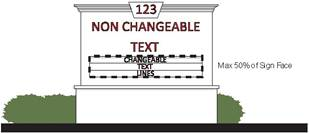
The manual changeable copy portion of the sign may be no greater than 50 percent of the total sign area on each display face.
3.
No electronic or digital changeable copy is allowed, except for digital time and temperature signs and gas price signs at gas stations.
(Ord. No. O-21-17, 12-13-2021)
9.9 - Sign illumination.
A.
Prohibited light sources. The following light sources are not permitted:
1.
Blinking, flashing, chasing or scrolling.
2.
Bare bulb illumination that exceed 0.3 foot candles at the property line.
3.
Colored lights used in any manner so as to be confused with or construed as traffic control devices.
4.
Direct reflected light that creates a hazard to operators of motor vehicles.
B.
Brightness. The light from any illuminated sign must not be of an intensity or brightness that will interfere with the comfort, convenience and general welfare of residents or occupants of adjacent properties. Brightness must not exceed town maximum foot-candle standards.
C.
Internal illumination.
1.
Internal illumination is not allowed in the CR-1, NMU, SR-2, UR-8, TR-4 Districts.
2.
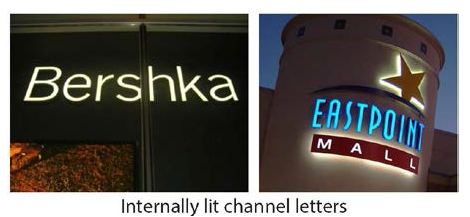
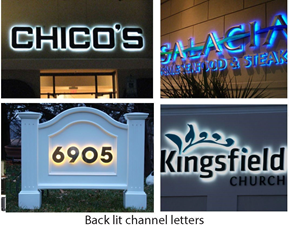
Channel letters may be internally lit, halo lit or back-lit.
3.
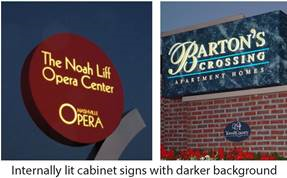
For internally illuminated signs, the background must be opaque or a substantially darker color than the sign message.
4.
Light emitting diodes (LED)'s are permitted as a light source only where the LED is behind an acrylic, metal or similar sign face and returns in such a manner that the LED modules are not visible from the exterior of the sign.
5.
Internal illumination for shingle and cantilever signs is limited to the text, letter or logo. The background may not be internally or externally illuminated.
6.
The letter or message of internally illuminated signs must consist of non-reflective materials.
D.
External illumination.
1.
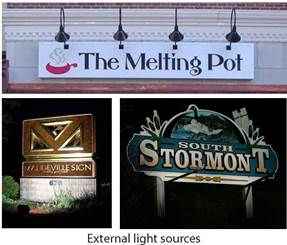
Lighting directed toward a sign must be shielded so that it illuminates only the face of the sign and does not shine directly onto public right-of-way or adjacent properties.
2.
Flood lights or spotlights near the top of a sign must be focused downward onto the sign. Floodlights or spotlights must be aimed such that the entire beam falls within the intended area of the sign to be lit.
E.
Raceways and transformers.
1.
If a raceway is necessary, it must not extend in width or height beyond the area of the sign.
2.
Raceways must be finished to match the background wall or canopy, or integrated into the overall design of the sign.
3.
Visible transformers are not permitted.
(Ord. No. O-21-17, 12-13-2021)
9.10 - Guidelines for administrative adjustment of signage regulations.
Intent: It is the intent of the Town of Black Mountain to allow the administrative adjustment of the sign ordinance standards to provide for flexibility that is compatible with the town's character; to acknowledge the artistic creativity of sign makers, business owners, and individuals; to create visual harmony between the sign, structure, and site where the sign is located; and to enhance retail areas consistent with the Elevate Black Mountain Comprehensive Plan and subsequent small area plans, development agreements, and form-based district codes.
A.
Adjustment applications: Adjustment applications shall be made on forms available from the planning and development services office. An application shall consist of a completed application form; any necessary supporting documentation such as plot plans, building elevations, photographs or other information; and an application fee.
B.
Review: Adjustment applications shall be reviewed by the director of planning and development services and planning staff. Applications are available for public review and comment.
C.
Approval criteria: The standards in this chapter may be adjusted administratively when the director of planning and development services determines all the following criteria are met:
1.
The intent of the sign ordinance is better achieved with the administrative adjustment than by other alternatives allowed by this section;
2.
Sufficient reason is shown for the adjustment in order to address exceptional or extraordinary circumstances or conditions applicable to the property (including topographical issues), or intended use of the property, that are not contemplated or provided for by this chapter;
3.
The modification is compatible with the scale, character, and design of the building in which the use is located;
4.
The modification is compatible with the scale, character, design and lighting of the adjacent neighborhood or focus area;
5.
The modification is consistent with the purpose of this chapter and would not adversely affect the neighborhood in which the business is located; and
6.
The modification is within the standards identified in the table below.
Allowable Administrative Adjustments
(up to the limits set forth in the table for the type of standard). If the modification
exceeds these standards, the applicant may seek a variance form the board of adjustment
(Ord. No. O-21-17, 12-13-2021)
9.11 - Enforcement and penalties.
In addition to the remedies provided in chapter 1 of this land use code for violations of the terms of a permit or development approval, the planning director, or the director's designee, may remove any illegally posted sign. Any such removed sign will be retained for seven days, during which period the sign may be retrieved by the owner upon payment of a $25.00 storage fee. After those seven days and for a second or repeat offense, illegal signs removed by town staff shall be disposed of or destroyed.
(Ord. No. O-21-17, 12-13-2021)

