
Bourbonnais City Zoning Code
ARTICLE III
- DEFINITIONS
Sec. 36-3-1. - Definitions.
For the purpose of this chapter, certain terms are defined as indicated in this article. These definitions and all other provisions of this chapter are subject to the following rules of interpretation:
(1)
Words used in the present tense shall include the future.
(2)
The singular number includes the plural number and the plural the singular.
(3)
The word "shall" is mandatory and not discretionary.
(4)
The word "may" is permissive.
(5)
The word "structure" includes the word "building." The word "building" does not include the word "structure"
(6)
The word "village" means the Village of Bourbonnais
(7)
The masculine gender includes the feminine and neuter.
(8)
The phrase "used for" shall include the phrase "maintained for," "reserved for," and "occupied for."
(9)
All measured quantities shall be to the nearest integral unit of measure, and if a fraction is one-half or greater, the next highest integral unit shall be used, unless otherwise noted.
(10)
Whenever a word or term defined hereinafter appears in the text of this Code, its meaning shall be construed as set forth in the definition thereof. Any word not defined in this Code should be construed as defined in normal dictionary usage.
Definitions.
—A—
Abandonment. An action to give up one's rights or interests in property. A use that has not conducted regular, lawful business operations for a period of six consecutive months or more.
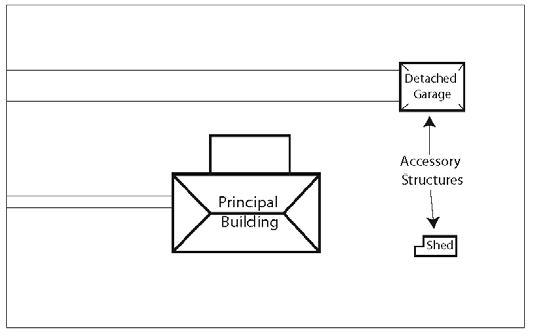
Accessory structure or use. Any structure or use, other than the principal structure or use, that is secondary and incidental to or required for the use of the permitted use of any premises; also, as specifically designated under the zoning district regulations of this Code:
An "accessory structure or use" is one which:
(1)
Is subordinate of and serves a principal structure or principal use;
(2)
Is subordinate in area, extent or purpose to the principal structure or principal use served;
(3)
Contributes to the comfort, convenience, or necessity of occupants of the principal structure or principal use served; and
(4)
Is located on the same zoning lot as the principal building or principal use served with the single exception of such accessory off-street parking facilities as are permitted to locate elsewhere than on the same zoning lot with the building or use served.
Addition. Any construction that increases the size of a building or structure in terms of lot coverage, height, length, width, or gross floor area.
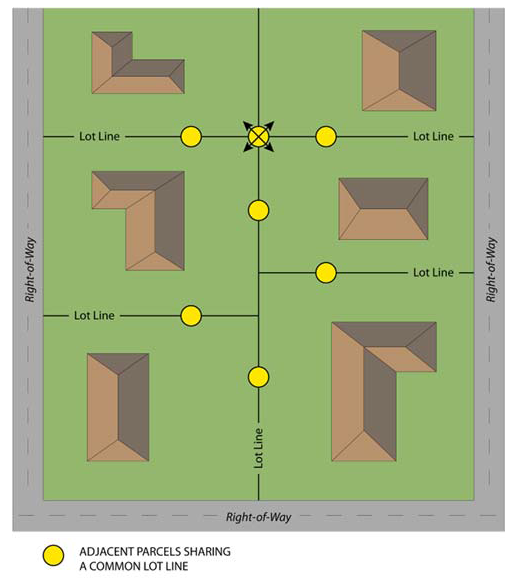
Adjacent. The terms adjacent and contiguous are used as synonymous terms, and mean lots located with the same street frontage in contact with or touching another parcel of land. Lots across a street right-of-way or alley are adjacent.
Adult bookstore. An establishment having as a substantial or significant portion of its stock in trade, books, magazines, and other periodicals which are distinguished or characterized by their emphasis on matter depicting, describing or relating to specified sexual activities or specified anatomical areas or an establishment with a segment or section devoted to the sale or display of such material.
Adult entertainment. Any exhibition of adult-oriented motion pictures, live performance, display or dance of any type which has as a significant or substantial portion of such performance any actual or simulated performance of specified sexual activities or exhibition and viewing of specified anatomical areas, removal of articles of clothing or appearing unclothed, pantomime, modeling, or any other personal service offered customers.
Adult entertainment cabaret. A public or private establishment which features topless or nude dancers and/or waitresses, strippers, male or female impersonators and/or similar entertainers.
Adult entertainment center. An enclosed building with the capacity for less than 50 persons used for presenting material distinguished or characterized by an emphasis on matter depicting, describing or relating to specified sexual activities or specified anatomical areas for observation by patrons therein.
Adult gift shop. An establishment having as a substantial or significant portion of its stock in trade pictures, photographs, drawings, diagrams, paraphernalia, apparatus or other objects which are distinguished or characterized by their emphasis on matter depicting, describing or relating to specified sexual activities or specified anatomical areas or an establishment with a segment or section devoted for the sale or display of such material.
Adult movie theater. An enclosed building with a capacity of 50 persons or more used primarily for presenting material distinguished or characterized by an emphasis on matter depicting, describing or relating to specified sexual activities or specified anatomical areas for observation by patrons therein.
Adult use. An establishment that provides goods or services characterized as sexual or adult in nature, including adult bookstores, adult entertainment cabarets, adult entertainment centers, adult gift shops, and adult movie theaters.
Adult use, specified anatomical areas.
(1)
Less than completely and opaquely covered human genitals, pubic region, the female breast below a point immediately above the areola to a point immediately below the areola, said opaque cover covering the entire areola.
(2)
The display of the human male genitals in a discernibly turgid state, real or simulated, even if completely and opaquely covered.
Adult use specified sexual activities. Actual or simulated human genitals in a state of sexual stimulation or arousal; acts or simulated acts of human masturbation, sexual intercourse or sodomy; acts or simulated acts of oral sexual conduct; fondling or other erotic touching of human genitals, pubic region, buttock or female breast; or excretory functions as part of or in connection with any activities set forth in this definition.
Agriculture. The use of land for farming, dairying, pasturage, apiculture, horticulture, floriculture, viticulture, animal and poultry husbandry, and the necessary accessory uses for packing, treating, and storing the produce but not including the commercial feeding of garbage or offal to swine or other animals; provided that the operation of accessory uses shall be secondary to that of normal agricultural activities.
Alley. A public or private right-of-way, not constituting a street, used primarily for secondary vehicular access to property abutting on a street.
Antenna or related equipment. Transmitting, receiving, or other equipment used to support cellular telecommunications services or personal communications services.
Antenna, directional. A personal wireless services antenna that radiates or receives greater power in specific directions allowing for increased performance and reduced interference from unwanted sources.
Antenna, height. The height of an antenna measured from the ground level at grade to its highest point.
Antenna, omnidirectional. A personal wireless service receiving signals from or transmitting in all directions.
Antenna, panel. A type of directional antenna that is usually one-directional, used to increase the range and capability of wireless Internet networks.
Antenna, personal wireless services. An antenna used in connection with the provision of personal wireless services.
Antenna, support structure. Any structure used for the principal purpose of supporting a personal wireless services antenna.
Antenna surface area. An area determined by adding together the actual surface area of each solid element or part of a personal wireless services antenna or its support structure, where "solid" is defined to include all air spaces that are fully bounded by solid elements.
Antenna, whip. A personal wireless services antenna in the form of a long flexible wire or rod with a connection to one end.
Apartment. A dwelling unit in a multiple-family building.
Apartment building. See Multiple-family dwelling.
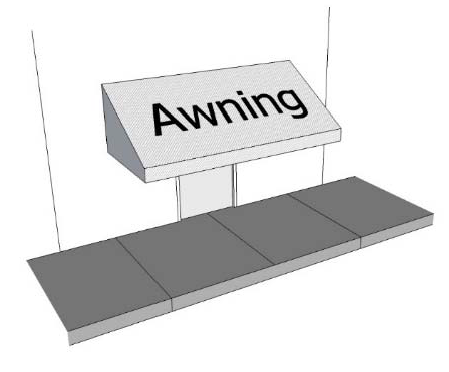
Awning. A structure made of cloth, metal or other material affixed to a building in such a manner that the structure may be permanently affixed or affixed in such a manner that it may be raised or retracted to a position against the building.
—B—
Basement. That portion of a structure located partly underground but having less than half its clear floor-to-ceiling height below the grade of the lot.
Berm. An earthen mound designed to provide visual interest, screen undesirable views, and/or decrease noise.
Bed and breakfast. An operator-occupied residence providing accommodations for a charge to the public. Bed and breakfast establishments do not include motels, hotels, boarding houses, or food service establishments.
Beneficiary. Any person, corporation, or other entity having a beneficial interest in a land trust.
Best management practice ("BMP"). A design or practice employed with the primary objective to minimize adverse water quality impacts, preserve beneficial features on-site, avoid downstream erosion and habitat loss, maintain natural base flows and groundwater recharge, prevent increases to downstream flooding, provide multiple uses of drainage and storm water drainage facilities, and/or provide for the economical, safe and aesthetically pleasing drainage system for development.
Billboard. A sign advertising a land use, business, product or service, not located or available upon the premises whereon the sign is located. These signs are distinguished from other off-premise signs by their larger than otherwise permitted size and typical location along State Highways and major arterial roadways. Additionally, billboards are often erected to attract attention to land uses, businesses, products, and/or services that may be utilized by motorists unfamiliar with area-wide land uses, businesses, products and/or services, such as tourists and out-of-state visitors.
Boarding or lodging house. A residential building or portion thereof, not qualifying as a community residence under state or federal law, that contains lodging rooms for the accommodation of two or more persons who are not members of the keeper's immediate family where lodging or lodging in combination with meals, including lunch and dinner, is provided in exchange for compensation. Boarding houses shall not provide meals to non-boarders and do not include motels, hotels, apartment hotels or restaurants.
Buffer/buffer zone. A combination of physical space and vertical elements, such as plants, berms, fences, or walls, the purpose of which is to separate and screen incompatible land uses from each other.
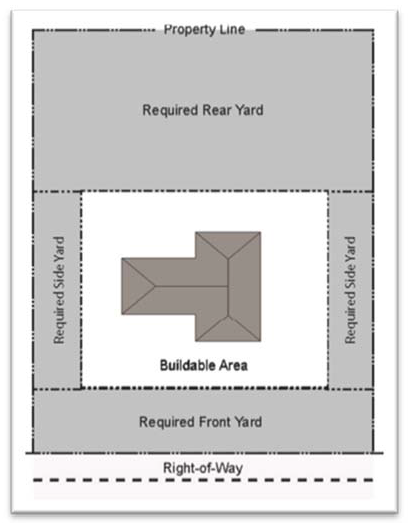
Buildable area. The space remaining on a zoning lot after the minimum setback requirements have been complied with.
Building. Any structure permanently affixed to the land and constructed or used for the shelter, enclosure, or protection of persons, animals, or property.
(1)
Completely enclosed building. A building separated on all sides from the adjacent open space or from other buildings or structures by a permanent roof and by exterior walls having only windows and normal entrance or exit doors, or by party walls.
(2)
Detached building. A principal building surrounded by open space on the same lot.
(3)
Nonconforming building. A building or structure or portion thereof lawfully existing at the time of enactment of this chapter or any amendment thereto but which does not conform to all the regulations of the zoning district in which it is situated.
(4)
Principal building. A building in which is conducted the principal use of the lot on which it is located.
(5)
Residential building. A building designed for residential use and occupancy.
(6)
Temporary building. A building that is established for a period of less than one year and is removed within that time.
Building frontage. The linear length of the front wall of a building, fronting on the roadway, excluding walls that abut loading areas and service drives exclusively.
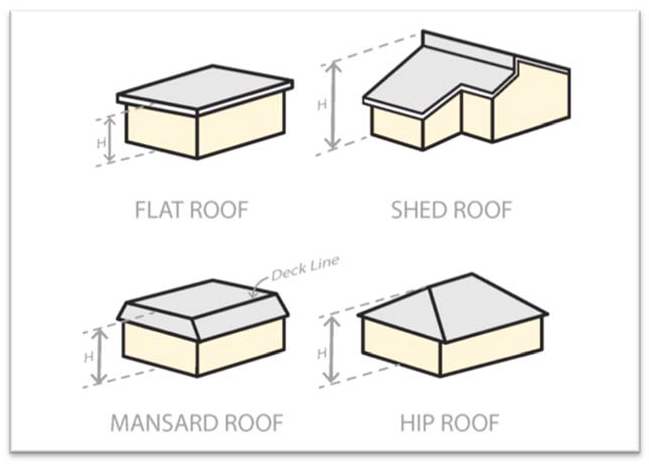
Building, height. The vertical measurement taken from the top of foundation of the building or lot grade (whichever results in greater height), to the highest point, vertex or ridgeline of a roof.
Building line. The line nearest the front of and across a zoning lot, establishing the minimum open space to be provided between the front line of a building or structure and the street right-of-way line.
Building permit. A permit issued by the village for the construction, alteration, removal or demolition of a building or structure.
Bulk. A term used to indicate the size and setbacks of buildings and the location of same with respect to the lot on which situated. It includes height of the building, the amount of ground coverage on the lot which the building occupies, the lot size in relationship to the building, the maximum floor area ratio, lot width and required yard areas maintained around buildings or structures.
Bulk regulations. Regulations controlling the size of structures and the relationships of structures and uses to each other and to open areas and lot lines. Bulk regulations include regulations controlling:
(1)
Maximum height.
(2)
Maximum lot coverage.
(3)
Minimum size of yards and setbacks.
Block. A tract of land bounded by streets or by a combination of one or more streets and public parks, cemeteries, railroad rights-of-way, bulkhead lines or shore lines of waterways, or corporate boundary lines.
Business park. A special or exclusive planned business area designed and equipped to accommodate a collection of manufacturing, warehousing, research, or similar industrial uses together with substantial office development related thereto.
—C—
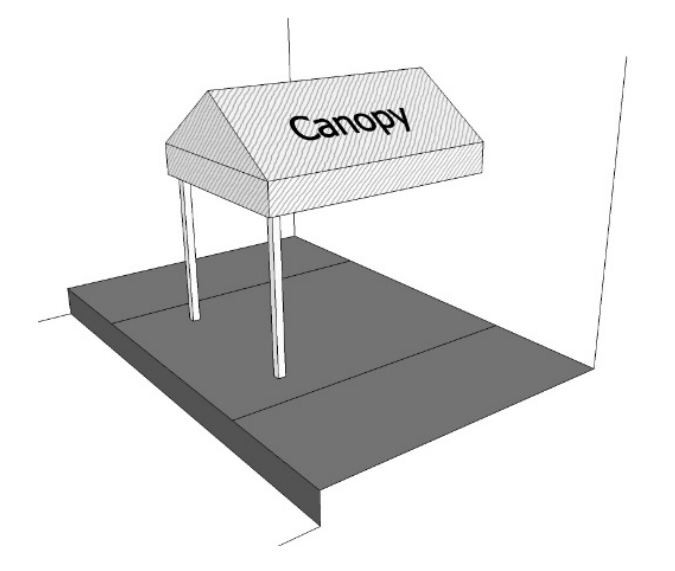
Canopy. A multi-sided overhead structure or architectural projection supported by attachment to a building on one or more sides and either cantilevered from such building or also supported by columns at additional points.
Cargo storage container. A reusable vessel designed without an axle or wheels capable of being: (1) used in the packing, shipping, movement or transportation of freight, articles, goods or commodities; or (2) mounted or moved on a rail car and/or being mounted on a chassis, bogie or trailer for movement by truck trailer or loaded on a ship.
Cellar. That portion of a building located partly or wholly underground and having more than half of its clear floor-to-ceiling height below the grade of the lot.
Cellular antenna tower. A tower constructed for, or an existing building or facility that has been adapted for, the location of transmission or related equipment to be used in the provision of cellular telecommunications services or personal communications services.
Child day care facility. Any person, group, agency, or otherwise, which provides care for one or more children, unrelated to the operator of the facility (facilities shall be in keeping with current state regulations).
Child care home. A family home which receives more than three up to a maximum of eight children for less than 24 hours per day. The maximum of eight children includes the family's natural, foster, or adopted children and all other persons under the age of 12. The term does not include facilities which receive only children from a single household (facilities shall be in keeping with current state regulations)
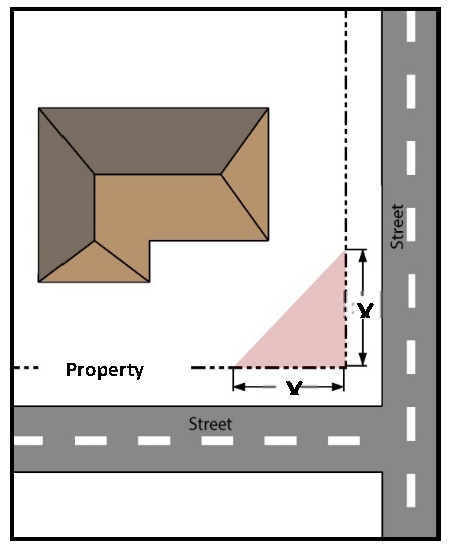
Clear vision triangle. An area required in locations where an unobstructed view of approaching traffic is necessary for the safety of pedestrians, bicyclists and drivers.
Collection container. A drop-off box, container, receptacle, trailer or similar facility that:
(1)
Accepts textiles, shoes, books and/or other salvageable items of personal property;
(2)
Is not located entirely within an enclosed and lawfully constructed and permitted building; and
(3)
Is not a lawful waste receptacle or dumpster expressly authorized by this Code.
Common open space. See Open space, common.
Comprehensive plan. The official adopted plan for the physical development, conservation, and redevelopment of the village.
Community residence. A group home or specialized residential care home serving persons with disabilities that have been determined to be eligible for services by an independent service coordination agency, and which agency has determined that joint occupancy of a residential property is medically necessary or beneficial for the person with disabilities. A community residence does not include a residence that serves persons as an alternative to incarceration for a criminal offense.
—D—
Day care center. A facility as defined in Section 2.09 of the Childcare Act of 1969 (225 ILCS 10/2.09), as amended.
Decibel dB(a). A unit of measurement of the sound level. Sound level meters employed to measure the intensity of sound are calibrated in "decibels". A "decibel" is technically defined as 20 times the logarithm to the base ten of the ratio of the sound pressure in microbars to a reference pressure of 0.0002 microbar.
Deck. An uncovered and open platform built above grade and attached to a principal or accessory building, typically supported by pillars or posts.
Density. A ratio determined as follows:
Number of dwelling units
___ (divided by) ___
Total lot area in acres
(Expressed in units per single acre)
Density, gross. Calculated based on the total area of land included in a development (gross acreage). Gross density is determined by dividing the total number of dwelling units by the total gross acreage of the site.
Density, net. Calculated based on the total area of land that is available for development, known as "developable land". Land within environmental areas, (such as floodplains or other environmental areas determined by the zoning administrator), rights-of-way, or other areas that cannot be developed would not be a part of the developable land. Net density is determined by dividing the total number of dwelling units by the developable land acreage of the site
Development. Any construction, change or other action related to a structure or land (other than maintenance of existing structures, paved areas and landscaping, and interior remodeling of existing structures), including, without limitation, the construction or installation of new, or enlargement of existing, structures, paved areas, or utilities; dredging, filling, drilling, mining, grading, paving, or excavating operations; installation of new landscaping; and open storage of materials.
Disability. As defined by the Americans with Disability Act (ADA), a person who has:
(1)
A physical or mental impairment that substantially limits one or more major life activities;
(2)
A record of such an impairment; or
(3)
Is regarded as having such an impairment
Dog run. Any area set aside, intended, or utilized primarily as an area for the defecation by and/or penning of dog(s).
Dwelling and dwelling unit. A "dwelling" is a building providing shelter, sanitation, cooking and sleeping accommodations and the amenities for permanent habitation. It does not include mobile homes, temporary lodging or individual sleeping rooms for rent. "Dwelling unit" refers to that dwelling accommodation within a building designed for one individual or family unit maintaining separate and independent housekeeping.
(1)
Manufactured dwelling. A dwelling unit, other than a mobile home, constructed largely of one or more finished modular building sections produced in a factory and assembled on a building site.
(2)
Multiple-family dwelling. A building or portion thereof designed or altered for occupancy by three or more families living independently of each other and separated by a common fire barrier.
(3)
Single-family dwelling. A residential building consisting of a single dwelling unit.
(4)
Single-family dwelling, attached. A single-family dwelling attached to one or more other single-family dwellings by one or more common vertical walls. Each dwelling may be located on a separate lot.
(5)
Single-family dwelling, detached. A single-family dwelling separated from other dwelling units by open space.
(6)
Dwelling, two-family (duplex). A building consisting of two dwelling units separated by a common fire barrier.
—E—
Easement. A right to use a portion of another person's real property for certain limited purposes.
Electric substation. A terminal at which electric energy is received from the transmission system and is delivered to other elements of the transmission system and, generally, to the local distribution system.
Encroachment. Any building, sign or other structure or object of any kind which is placed, located or maintained in, on, under or over any portion a yard.
Erect. To build, construct, attach, manually place, suspend, or affix.
—F—
Facade. The exterior walls of a building or tenant space exposed to public view or that will be viewed by persons not within the building.
Family.
(1)
A person living alone;
(2)
Two or more persons related by blood, marriage or adoption (including foster children) living together as a housekeeping unit and occupying a single dwelling unit;
(3)
A group of not more than three persons, who need not be related by blood, marriage or adoption (including foster children) living together as a housekeeping unit by joint agreement and occupying a single dwelling on a nonprofit, cost sharing basis; or
(4)
A group of four or more persons living in a community residence.
Fence. A free-standing structure of metal, masonry, composition or wood or any combination thereof resting on or partially buried in the ground and rising above ground level, and used for confinement, screening or partition purposes.
(1)
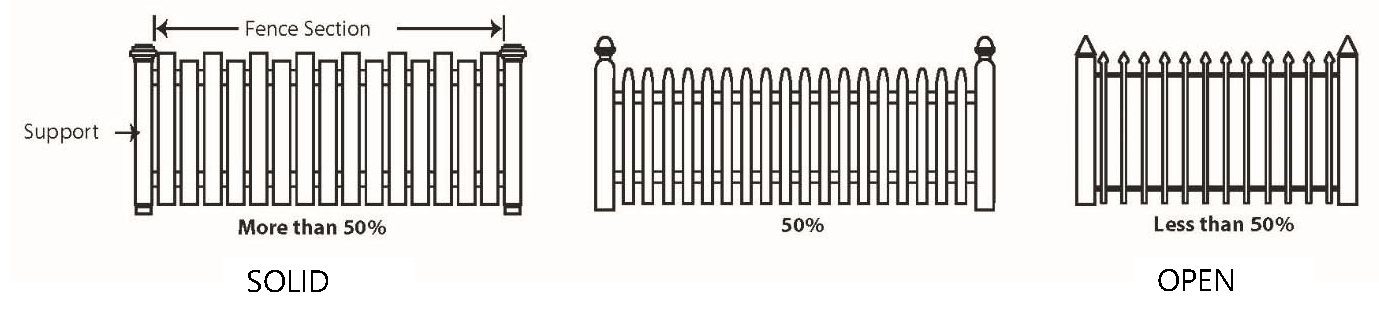
Fence, open. A fence, including entrance and exit gates, designed and constructed so that the surface area of any segment of such fence contains at least 50 percent or more of open spaces.
(2)
Fence, solid or privacy fence. A fence that is constructed so that less than 50 percent of the area prohibits light through it, screening views.
Fence height. The height of a fence or wall measured from the grade level to the top of the fence.
Fence, permanent. An enclosure or barrier intended to be erected on a long term basis.
Fence, temporary. An enclosure or barrier intended to be erected on a seasonal basis or for a limited period of time as a method of protecting a site (i.e.: snow fences, construction fences, silt fences).
Floodplain. The land consisting of the floodway and the flood fringe that is subject to inundation by a 100-year flood, as defined by the Federal Emergency Management Agency (FEMA).
Floodway. That portion of the floodplain, including the channel that is reasonably required to discharge the bulk of the waters from a 100-year flood, as defined by the Federal Emergency Management Agency (FEMA).
Floor area. The sum of the gross horizontal areas of the several floors of the building measured from the exterior faces of the exterior walls or computed as follows:
For determining floor area ratio: The sum of the following areas:
(1)
Elevator shafts and stairwells at each floor;
(2)
Floor space used for mechanical equipment (except equipment, open or enclosed, located on the roof);
(3)
Penthouses for mechanical equipment;
(4)
Attic space having average headroom of seven feet, ten inches or more;
(5)
Interior balconies and mezzanines;
(6)
Enclosed porches; and,
(7)
Floor area devoted to accessory uses.
(8)
Space devoted to off-street parking or loading.
Floor area ratio (F.A.R). The floor area ratio is determined as follows:
Total floor area, all floors on lot (square feet)
(divided by)
Total lot area (square feet)
Foot-candle (FC). The unit of illuminance equal to one lumen per square foot.
Foundation, permanent. A closed perimeter formation consisting of materials such as concrete or concrete blocks which extend into the ground below the frost line.
Frequency. The number of oscillations per second in a sound wave, or measure of the pitch of the resulting sound.
Frontage, Lot. The width of a lot abutting a public right-of-way, measured along the adjoining property line.
—G—
Grade or grade level. The average elevation at the corners of the buildable areas of the site as formed by the intersection of: The minimum required front yard, rear yard, side yard, setback lines. Grade shall be established prior to any development, demolition, or issuance of a building permit.
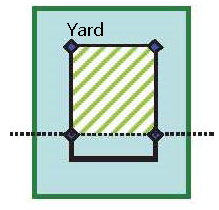
Ground elevation. The original elevation of the ground surface prior to cutting or filling.
Ground-floor area. The lot area covered by a building measured from the exterior faces of exterior walls but excluding open porches, patios, or terraces, garages, or carports.
—H—
Hedge. Planted vegetation, including trees, shrubs, or other natural vegetation that is planted in close proximity or clustered together and that has a surface area that obstructs the view.
Home occupation. Any occupation or profession carried on by a member of a family, residing in a dwelling unit as a use that is clearly incidental to the use of the dwelling unit for residential purposes.
—I—
Illuminance. A measure of how much light is falling onto a surface, typically measured in foot candles.
Impervious surfaces. A surface composed of any material that impedes or prevents natural infiltration of water into the soil. Impervious surfaces shall include but are not limited to roofs, solid decks, driveways, patios, sidewalks, parking areas, tennis courts, concrete or asphalt streets, or compacted gravel surfaces.
Independent service corporation agency. An agency that promotes service accessibility and continuity of care for persons with disabilities and seeks to maximize an individual's potential for independence, productivity, and community integration by conducting comprehensive assessments and related services.
—K—
Kennel. Any lot, structure, or dwelling unit where three or more cats or dogs more than four months of age are kept, bred, groomed, boarded, trained or sold.
—L—
Landscaping. The improvement of a lot, parcel or tract of land with grass, shrubs, and trees. Landscaping may include, flowerbeds, ornamental objects such as fountains, statuary, and other similar natural and artificial objects designed and arranged to produce an aesthetically pleasing effect.
Land trust. An express agreement whereby the legal and equitable title to real estate is held by a trustee for the benefit of beneficiaries who have the exclusive right to manage and control said real estate.
Logo. A distinctive symbol which identifies a business.
Lot. A subdivided parcel of land under one ownership devoted to a common use or occupied by a single or principal building plus accessory structures, and which is shown as a lot on a recorded and approved plat of subdivision.
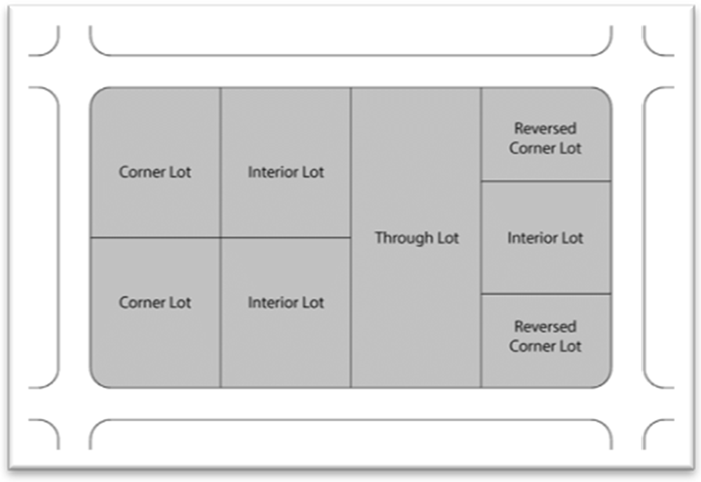
(1)
Lot (corner). A lot which abuts on two intersecting streets.
(2)
Lot (double-frontage) or through lot. Any lot other than a corner lot which abuts on two streets.
(3)
Lot (interior). A lot abutting only one street.
(4)
Lot (reverse corner). A corner lot, the rear of which abuts the side of another lot.
(5)
Lot (triple frontage). A lot which abuts on three streets.
Lot area. The area of a horizontal plane bounded by vertical planes containing the front, side and rear lot lines.
Lot coverage. The area of a zoning lot occupied by the principal building or buildings, accessory structures, and impervious improvements such as driveways, patios, and sidewalks.
Lot depth. The mean horizontal distance between the front and rear lot lines of a lot measured within the lot boundaries.
Lot line. The dividing lines between a public way and an abutting lot, or between lots.
(1)
Front lot line. That lot line which is along an existing or dedicated public street or which is established as the front lot line on a plat of record. Where a lot is a corner lot as defined herein, the front lot line shall be the shortest lot boundary line along a street, unless designated otherwise on a plat of dedication or plat of subdivision.
(2)
Rear lot line. That boundary of a lot that is most distant from and is, or is approximately, parallel to the front lot line.
(3)
Side lot line. Any boundary of a lot that is not a front or rear lot line. On a corner lot, a side lot line may be a street.
Lot, nonconforming. A lot lawfully existing at the time of enactment of this chapter or any amendment thereto but which does not conform to all the requirements of the zoning district in which it is situated.
Lot of record. A lot that is part of a subdivision, the plat of which was recorded in the office of the county recorder of deeds, or a parcel of land the deed to which was recorded in the office of said recorder prior to the adoption of this chapter.
Lot, zoning. A single tract of land located within a single block, which (at the time of filing for a building permit) is designated by its owner or developer and legally described as a tract to be used, developed, or built upon as a unit, under single ownership or control. Therefore, a zoning lot or lots may or may not coincide with a lot of record.
Luminance. The brightness or the amount of light coming off a surface in a given direction, typically measured in candela per square meter (abbreviated as cd/m 2 ).
—M—
Manufactured home. A type of structure, transportable in one or more sections in the traveling mode, each towable unit built on a permanent chassis and designed to be used as a dwelling with or without a permanent foundation and when connected to the required utilities.
Mayor. The mayor of the Village of Bourbonnais.
Motor home. A vehicular unit designed to provide temporary living quarter for recreation, camping, or travel use built on or permanently attached to a self-propelled motor vehicle chassis or on a chassis cab or van that is an integral part of the completed vehicle.
—N—
Net residential land area. The total residential land area less all public and private rights-of-way and other nonresidential uses.
Nonconformity. Any characteristic of a use, building, structure, or lot that was lawful prior to the effective date of this chapter or of any amendment thereto but which does not conform to all of the requirements of the zoning district in which the property is situated.
Nonconforming lot. See Lot.
Nonconforming structure. See Structure.
Nonconforming use. See Use.
Normal viewing angles. The view of the surroundings obtained by eyes located at 5 feet (1.5 meters) above grade looking horizontally in any direction.
North American Industry Classification System (NAICS). The standard used by Federal statistical agencies in classifying business establishments for the purpose of collecting, analyzing, and publishing statistical data related to the U.S. business economy. NAICS was developed under the auspices of the Office of Management and Budget (OMB), and adopted in 1997 to replace the Standard Industrial Classification (SIC) system.
—O—
Obstruction. Any building or structure, or part thereof, in the open area required by this chapter, excluding trees and shrubs.
Occupant. Any person who is in possession of any space within a building or land.
Off street loading space. An open hard-surfaced area of land other than a street or a public way, the principal use of which is for the standing, loading and unloading of motor trucks, tractors and trailers, to avoid undue interference with the public use of streets and alleys.
Open space. Uncovered areas open to the sky on the same lot with a building.
Open space, common. Gross site area not covered by buildings or pavement that is permanently set aside for the common use and enjoyment of the resident or businesses within a development or for the community at large and the preservation and perpetual maintenance of which is assured by dedication to the village or other satisfactory legal arrangement. Common open space shall not include streets rights-of-way, off-street parking or loading areas, or detention or retention areas.
Open storage. Open Storage is the storage of any products, materials, vehicles, equipment, junk, or scrap outside the confines of an enclosed building.
Outdoor sales. The display and sales of products, otherwise sold inside a business on the property, primarily outside a structure, including where parking is the principal use of the property.
Outdoor storage. The keeping or storage of any goods, material, equipment, part or merchandise in an enclosed, but open to the sky, area, for a period of time.
Owner. Any person or legal entity having a legal or equitable property interest in a building or land, including, as applicable, any agent, heir, beneficiary, executor, administrator, legal representative, successor or assign thereof.
—P—
Parkway. That portion of village owned property between the curb line, shoulder line, traveled portion of the roadway or alley and the private property line.
Party wall. A wall starting from the foundation and extending continuously through all stories to or above the room that separates one building from another and that is in joint use by each building.
Patio. An unenclosed surface area located at the finished lot grade, usually constructed of concrete or masonry materials.
Performance standard. A criterion to control noise, odor, smoke, toxic or noxious matter, vibration, fire and explosive hazards, glare, heat, or other effects generated by or inherent in uses of land or buildings.
Person. In addition to a natural person, the term person includes the following: Partnership, firm, association, organization, trust, trustee, estate, legal representative of an estate, trust company, financial institution, corporation, governmental unit or agency.
Personal wireless services. A personal wireless service facility shall mean any facility of whatever kind or nature, except a small wireless facility, that receives, transmits or relays radio or microwave signals for cellular, PCS or other similar service. This shall include any installation or mounting structure or equipment and any appurtenant electronics necessary for the operation of the facility. This definition shall be inclusive of the definition of personal wireless service facility set forth in 47 USC 332(c)(7)(C), as amended now or in the future.
Pervious surface. A surface that permits full or partial absorption of storm water.
Planned development. A tract of land which is developed as a unit under single ownership or unified control, which may include two or more principal buildings or uses.
Planning and zoning commission. The Village of Bourbonnais Planning and Zoning Commission.
Porch, closed. A covered platform with a separate roof over the structure projecting out from wall or walls of a main structure commonly enclosed with windows, doors and/or screens for outdoor living and enjoyment. It includes a permanent foundation, constructed at any height above grade, and may include steps projecting out to the ground.
Porch, open. An open platform with or without a separate roof over the structure projecting out from the wall or walls of a main structure commonly open to the weather. It is located in the yard of the building with a permanent foundation, constructed at any height above grade and may include steps projecting out to the ground.
Premises. Any improved or unimproved property.
Private playground or park. A privately owned and maintained outdoor area, maintained for private recreational and ornamental purposes, set aside for recreation and play, especially one containing equipment such as seesaws, swings, tennis courts and basketball courts, which said outdoor area shall adjoin and touch another parcel/lot of real property with a residential building existing on it, both parcels/lots owned by the same person.
Public park. A non-commercial, not-for-profit facility designed to serve the recreation needs of the residents of the community. "Parks" include, but are not limited to, ballfields, football fields, soccer fields, basketball courts, playgrounds and park district field houses that may have indoor recreation facilities.
—R—
Restaurant. An establishment whose principal business is the dispensing of edible, prepared food and/or beverages for consumption on and/or off the premises.
Restaurant, class "A". A restaurant where there is either no retail sale of alcoholic beverages or where the sale of alcoholic beverages is incidental and complementary to the sale and service of meals.
Restaurant, class "B". A restaurant operating under a village-issued liquor license and which exhibits any one of the following three characteristics:
(1)
Has a bar/lounge area separate from the restaurant which is utilized by non-eating customers.
(2)
Has, on a regular or semi-regular basis, entertainment facilities to include, but not be limited to, dance floors, disc jockeys, or live bands.
(3)
Has additional facilities other than the restaurant. The restaurant sales are incidental and complementary to the sales and services to attract customers.
Right-of-way. Area dedicated to or owned by a public body. In the case of public streets, the right-of-way normally includes the curbs, lawn strips, and lighting, sidewalks and drainage facilities and may include special features such as grade separation, landscaped areas, viaducts, and bridges.
—S—
Screening. A structure erected or vegetation planted to conceal the area behind it.
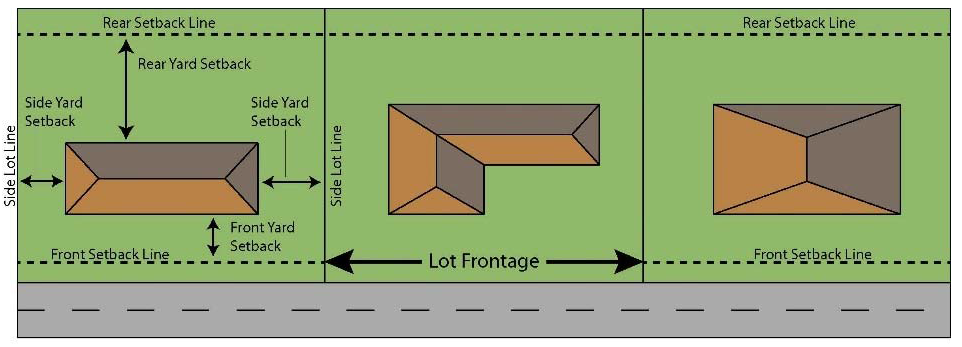
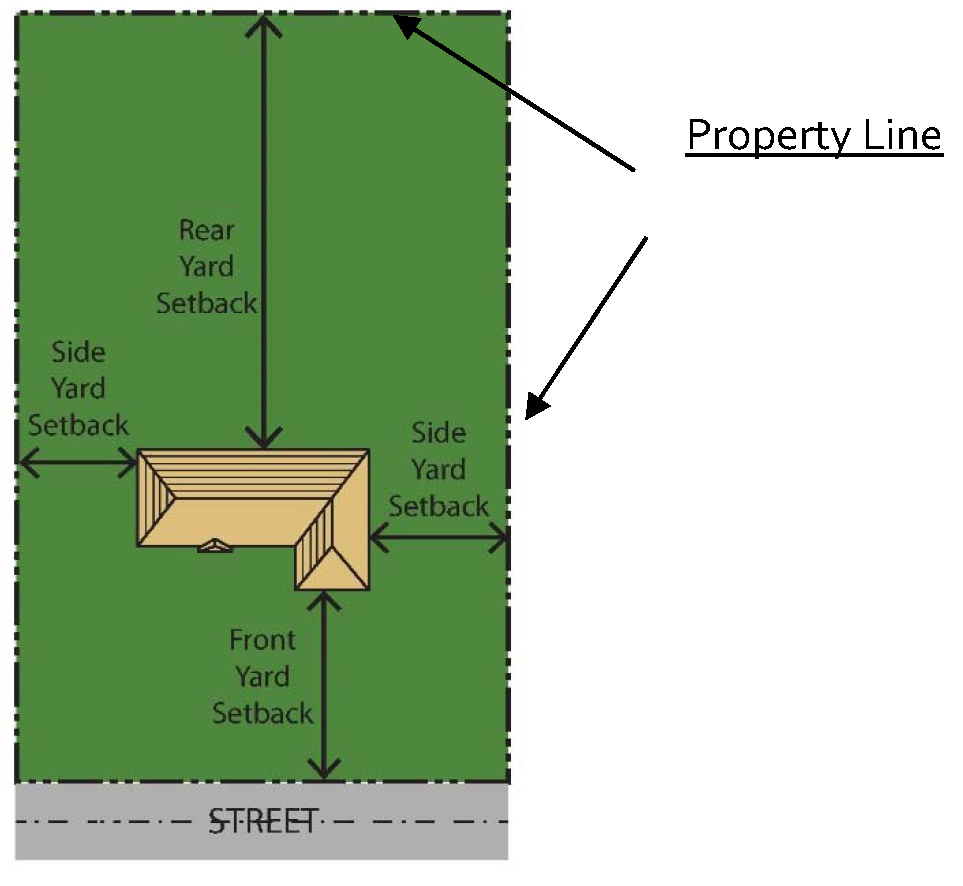
Setback line (front). The line nearest the front of and across a zoning lot, establishing the minimum setback to be provided between the front line of a building or structure and the street right-of-way line.
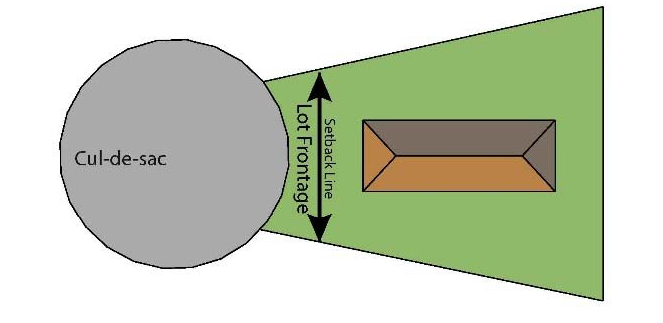
Setback line (rear). The line nearest the rear of and across a zoning lot, establishing the minimum setback to be provided between the rear line of a building or structure and the rear property line or street right-of-way line.
Setback line (side). The line nearest the side of and across a zoning lot, establishing the minimum setback to be provided between the side line of a building or structure and adjacent property or street right-of-way line.
Shade trees. Large trees whose primary role is to provide shade or cover in the surrounding environment due to its spreading canopy.
Shelter, temporary. Establishments primarily engaged in providing:
(1)
Short-term emergency shelter for victims of domestic violence, sexual assault, or child abuse and/or
(2)
Temporary residential shelter for homeless individuals or families, runaway youth, and patients and families caught in medical crises.
Shielded. A light fixture in which the lamp is not in sight from normal viewing angles. All fully shielded and full cut-off fixtures are considered to be shielded.
Shopping center. A complex of commercial establishments, the whole planned, developed and managed as a unit, sharing common parking facilities.
Short term rental. Any rental of a residential dwelling unit, or of a bedroom within a dwelling unit, in exchange for payment, as residential accommodations for a duration of time. (See article VII, Accessory Uses and Structures.)
Shrub. Any self-supporting, woody, perennial plant that usually produces several branches without any distinct head and usually does not exceed ten to 15 feet in height at maturity.
Sound-level meter. An instrument standardized for the measurement of the intensity of sound.
Story. That portion of a building including between the top surface of any floor and the top surface of the floor next above, or, if there is no floor above, the ceiling next above. A basement shall be counted as a story, but a cellar shall not be counted as a story.
Stoop. A raised platform, approached by steps and sometimes having a roof, at the entrance to a building.
Street. A paved public or private way for motor vehicle travel. The term "street" includes a highway, thoroughfare, parkway, throughway, road, pike, avenue, boulevard, lane, place, drive, court and similar designations, but excludes alley or way for pedestrian use only.
Structure. Anything constructed, reconstructed, or erected or any production or piece of work man-made or composed of parts joined together in some definite manner, the use of which requires permanent or temporary location on or in the ground or requires attachment to something having a permanent location in or upon the ground.
(1)
Structure, temporary. A structure without any foundation or footings and which is removed when the designated time period, activity or use for which the temporary structure was erected has ceased.
(2)
Structure, nonconforming. A structure which does not comply in some respect with the lot size requirements or bulk regulations applicable to new structures in the zoning district in which it is located.
Structural alteration. Any change, other than incidental repairs, in the supporting members or any partition therein of a building or structure such as bearing walls, columns, beams, or girders, or any substantial change in the roof or exterior walls.
Sign. Any object or device containing letters, figures and/or other means of communication or part thereof, situated outdoors or indoors, of which the effect produced is to advertise, announce, communicate, identify, declare, demonstrate, direct, display, and/or instruct potential users of a use, product and/or service.
Sign, animated. Any sign, or any part thereof which changes physical position by means of movement, rotation or change in illumination to depict movement.
Sign, awning. A sign that is mounted, painted, or attached to an awning or other window or door canopy. Any projecting canvas or other material over a structural framework used for a small amount of shelter or shade on a facade that has signage displayed on the visible surface.
Sign, blade or shingle. A sign which projects from a vertically oriented wall.
Sign, banner. A temporary advertising sign which is not attached to a permanently mounted backing.
Sign clearance. Sign clearance is the distance between the bottom of a sign face or structural element that is not affixed to the ground and the nearest point on the surface under it. See article IX, Signs.
Sign, directional. Any sign on a lot that directs the movement or placement of pedestrian or vehicular traffic with or without reference to, or inclusion of, the name of a product sold or service performed on the lot or in a building, structure or business enterprise occupying the same.
Sign, electronic message. A sign which exhibits changing and/or illuminated messages.
Sign, kiosk. A freestanding sign structure used for posting other signs or information.
Sign, marquee. Any sign made a part of marquee and designed to have changeable copy letters, either manually or electronically.
Sign message. The thought or idea conveyed or expressed by the words, letters, insignia, figures, designs, fixtures, colors, motion, illumination, sound or projecting images or any combination thereof.
Sign, monument. A freestanding sign, other than a pole sign, in which the entire bottom is in contact with or close to the ground.
Sign, neon. A sign consisting of glass tubing, bent to form letters, symbols, or other shapes and illuminated by neon or a similar gas through which an electrical voltage is discharged.
Sign, off-premise. A sign advertising a land use, business, product or service not located or available upon the premises whereon the sign is located.
Sign, parapet. A sign placed upon a low wall or protective railing along the edge of a roof, balcony or terrace.
Sign, permanent. A sign constructed of durable material and affixed, lettered, attached to or placed upon a fixed, nonmovable, nonportable supporting structure.
Sign, pole. A freestanding sign that is affixed, attached, or erected on a pole or poles and that is not itself an integral part of or attached to a building or structure.
Sign, portable. A sign that is designed to be easily moved from one location to another, and when placed, is neither fastened to a permanent structure or building, nor mounted in the ground. Portable signs include signs mounted on trailers, wheeled carriers, or frames that are designed to be placed onto a surface without being secured to it.
Sign, roof. A sign upon or above the roofline or parapet of the building or structure.
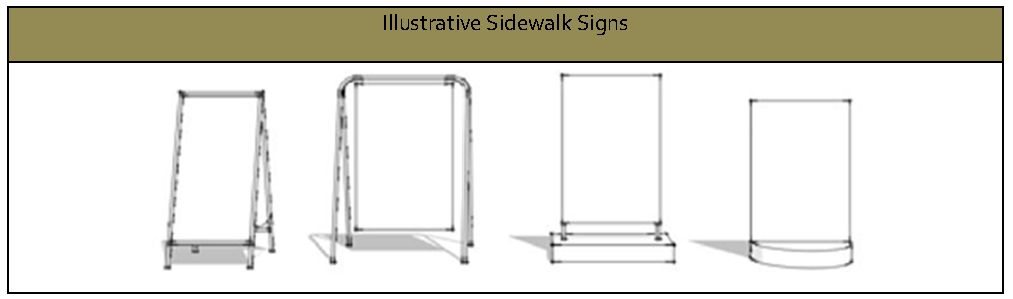
Sign, sidewalk. A type of portable sign that is intended to be placed on a hard surface, most commonly a sidewalk. These signs include A-frame signs, signs that are suspended from the top member of an A-frame, signs with weighted bases, and comparable signs. See Illustrative sidewalk signs, below.
Sign, site. A temporary freestanding sign constructed of vinyl, plastic, wood or metal and designed or intended to be displayed for a short period of time.
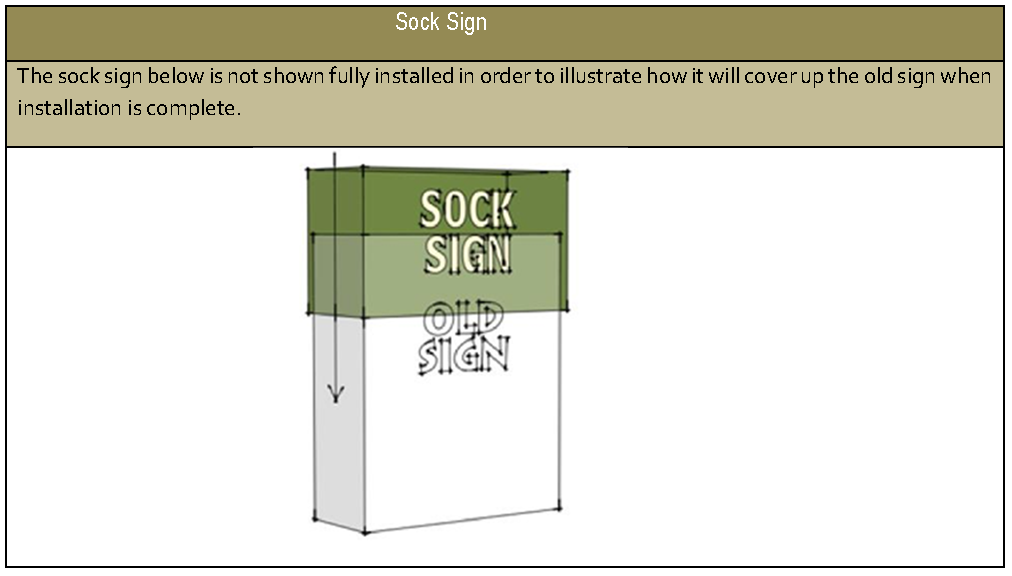
Sign, sock. A temporary sign constructed of flexible material, designed to fit over a permanent sign face or mount. Sock signs are typically installed while a new permanent sign is being designed and fabricated.
Sign structure. A sign structure shall include, but not be limited to, the supports, uprights, braces, backing, sign board, and framework designed to contain a sign message. Sign structure is not meant to include the message conveyed by the sign.
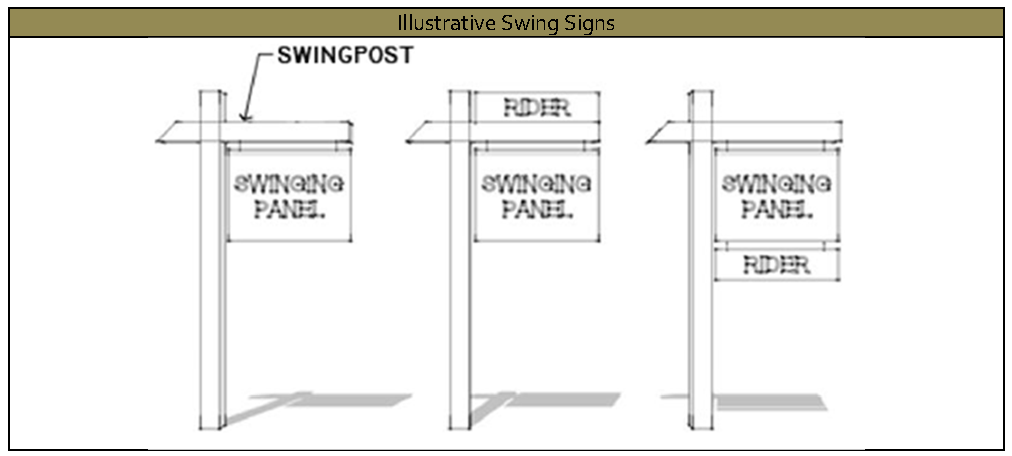
Sign, swing. A sign that is suspended from a horizontal support (a swingpost) that is attached to a vertical support mounted in the ground. A swing sign may also include riders. See Illustrative swing signs, below.
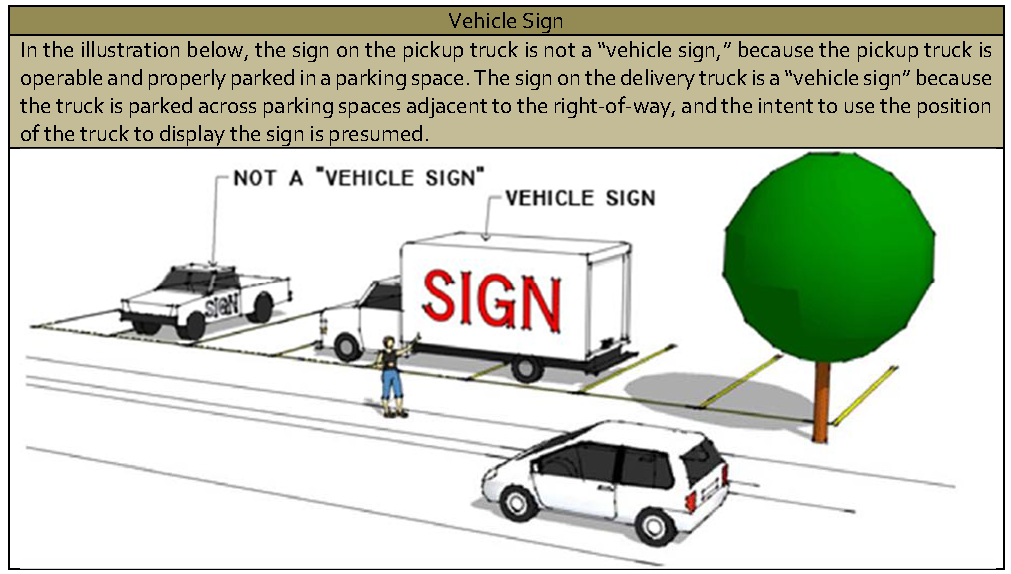
Sign, vehicle. A sign attached to or painted on a vehicle parked and visible from the public right-of way, unless said vehicle is used for transporting people or materials in the normal operations of the business and it is properly parking in a designated parking space. Signs attached to trailers or inoperable vehicles are presumed to be vehicle signs if they are parked in plain view from the right-of-way. Bumper stickers are not vehicle signs.
Sign, wall. A sign attached to, painted on, or erected against a wall of a building, whose display surface is parallel to the face of the building, structure, or fence, and whose height does not exceed the height of the wall, structure, or fence to which said sign is attached, painted upon, or against which said sign is erected.
Sign, window. A sign which is applied or attached to the exterior of a window, or applied to, attached to, or located within one foot of the interior of a window, which can be seen through the window from the exterior of the structure.
Sign without backing. Any word, letter, emblem, insignia, figure, or similar character or group thereof that is neither backed by, incorporated in, or otherwise made a part of any larger display area.
Sign, yard. A temporary portable sign constructed of paper, vinyl, plastic, wood, metal or other comparable material, and designed or intended to be displayed for a short period of time.
Small wireless facility. A wireless facility that meets both of the following qualifications:
(1)
Each antenna is located inside an enclosure of no more than six cubic feet in volume or, in the case of an antenna that has exposed elements, the antenna and all of its exposed elements could fit within an imaginary enclosure of no more than six cubic feet; and
(2)
All other wireless equipment attached directly to a utility pole associated with the facility is cumulatively no more than 25 cubic feet in volume.
The following types of associated ancillary equipment are not included in the calculation of equipment volume: Electric meter, concealment elements, telecommunications demarcation box, ground-based enclosures, grounding equipment, power transfer switch, cut-off switch, and vertical cable runs for the connection of power and other services.
Swimming pool. Whether indoors or outdoors and whether above or below the surface of the ground or both, intended to contain water for swimming, with a diameter greater than six feet and designed to contain greater than two feet of water at any point.
—T—
Terrace. An open platform extending outdoors from a floor of a house or apartment building located on grade or above grade, attached to the structure and which is constructed not more than two feet in height above the average level of the adjoining ground grade.
Tower. Includes any structure built for the sole or primary purpose of supporting a personal wireless service facility.
Townhome. See Single-family dwelling, attached.
Toxic material. A liquid, solid, or gaseous substance which by reason of an inherent deleterious property tends to destroy life or impair health.
Trailer. Any portable structure or vehicle designed for highway travel and used on a short-term or interim basis for living, sleeping, or commercial purposes.
—U—
Use. The purpose or activity for which land or structures thereon are designed, arranged, or intended or for which they are occupied or maintained.
(1)
Discontinued legal nonconforming use. A use that has not conducted regular, lawful business operations for a period of six consecutive months or more. Before declaring a use discontinued, the village shall make a good faith effort to contact the business owner.
(2)
Nonconforming use. An existing use of a structure or land which does not comply in some respect with the use regulations applicable to new uses in the zoning district in which it is located.
(3)
Permitted use. A use allowable within a zoning district without a special use permit, which is noted in the land use table.
(4)
Principal use. The main use of a property as distinguished from an accessory use.
(5)
Special use. A use that because of its special character cannot be allowable generally in a particular zoning district but which may be allowed under special conditions and which is therefore subject to the prior approval of a special use permit by the village.
(6)
Temporary use. A principal or accessory use that is established for a period of less than one year and is discontinued within that time period.
Unified control. The combination of two or more tracts of land wherein each owner has agreed that their tract of land shall be developed as part of a planned development, or other activities identified in this code.
—V—
Variance. A modification of the provisions of this chapter in accordance with the provisions herein concerning variances in cases where strict enforcement would cause undue hardship as a result of special circumstances affecting an individual property that do not generally affect other properties in the same zoning district.
Vehicle, commercial. Any vehicle operated for the transportation of persons or property in the furtherance of any commercial or industrial enterprise, for hire or not-for-hire having a gross weight in excess of 8,000 pounds, and construction equipment, not including, however, a commuter van, a vehicle used in a ride-sharing arrangement or a recreational vehicle not being used commercially.
Vehicle, recreational. Any camping trailer, motor home, mini-motor home, travel trailer, truck camper or van camper and any towed recreational equipment, including the trailers for same such as boats, snowmobiles and motorcycles used privately for recreational purposes and not used commercially. Recreational vehicles more specifically include:
(1)
Camper trailer (pop up). A recreational trailer not used commercially, constructed with partial side walls which fold for towing and unfold to provide temporary living quarters for recreational camping or travel use and are of a size or weight not requiring an over-dimension permit when towed on a highway.
(2)
House trailer. A recreational trailer or semitrailer equipped and used for living quarters for human habitation (temporarily or permanently) rather than for the transportation of freight, goods, wares and merchandise.
(3)
Motor home, mini-motor home or van camper. Any self-contained motor vehicle, not used commercially, designed or permanently converted to providing living quarters for recreational, camping or travel use, with direct walk-through access to the living quarters from the driver's seat.
(4)
Travel trailer. A recreational trailer not used commercially, designed to provide living quarters for recreational, camping, or travel use, and of a size or weight not requiring an over-dimension permit when towed on a highway.
(5)
Truck camper. A recreational truck, not used commercially, when equipped with a portable unit designed to be loaded onto the bed which is constructed to provide temporary living quarters for recreational, travel or camping use.
Vehicular use area. Any area of the lot not located within any enclosed or partially enclosed structure and that is devoted to a use by or for motor vehicles including parking (accessory or non- accessory); storage of automobiles, trucks or other vehicles; gasoline stations; car washes; motor vehicle repair shops; loading areas; service areas and drives; and access drives and driveways.
Village attorney. The attorney representing the Village of Bourbonnais.
Village board. The board of trustees of the Village of Bourbonnais.
Village clerk. The clerk of the Village of Bourbonnais.
—W—
Warehouse. A building or structure or part thereof used principally for the storage of goods and merchandise.
Warehouse, mini. A mini-warehouse is a structure or structures designed and used exclusively for the storage of personal property, including a caretaker's residence and office.
—Y—
Yard. The open space surrounding the principal or accessory building on any lot, unoccupied and unobstructed by any portion of that building from the ground to the sky except where specifically permitted by this zoning code. Yards are further defined as follows:
(1)
Front yard. That portion of the yard extending the full width of the lot and measured between the front property line, between the side lot lines and from the front lot line to the front building line in depth.
(2)
Rear yard. That portion of the yard extending the full width of the lot measured between the rear setback line and a parallel line tangent to the nearest part of the principal or accessory building.
(3)
Side yards. Those portions of the yard extending from the front yard to the rear yard and measured between the side setback lines and parallel lines tangent to the nearest parts of the principal or accessory building.
—Z—
Zero lot line development. A development of single-family detached residences other than a planned development in which one interior side yard may be lawfully reduced to zero on any lot for the purpose of creating larger, more usable, and more easily maintained yard spaces, particularly on smaller lots.
Zoning administrator. The Village of Bourbonnais Assistant Administrator.
Zoning map. The Village of Bourbonnais Zoning Map, as amended.
(Ord. No. 19-2142, § 2, 4-15-19)

