
Buena Vista City Zoning Code
ARTICLE 16
04 - Development and Design Standards
Sec. 4.1. - Stormwater drainage and erosion control.
4.1.1. Purpose. The purpose of these standards is to ensure adequate drainage and infiltration of stormwater, to improve water quality, and to maintain the stability of soils on development sites.
4.1.2. Reserved.
4.1.3. Site Drainage.
A.
Applicability and General Provisions. Site drainage shall be in accordance with the Municipal Code and the Development and Infrastructure Manual. Drainage will be reviewed using the applicable approval procedure pursuant to Article 16.06: Review Procedures.
B.
Low-Impact Development. To the maximum extent possible, applicants should implement Low-Impact Development (LID) features, such as:
1.
Disconnecting impervious areas (keeping runoff out of piped systems);
2.
Grass buffers and swales;
3.
Bioretention through rain gardens or porous landscape detention;
4.
Pervious pavement systems; and/or
5.
Alternative means of stormwater management as deemed appropriate by Public Works.
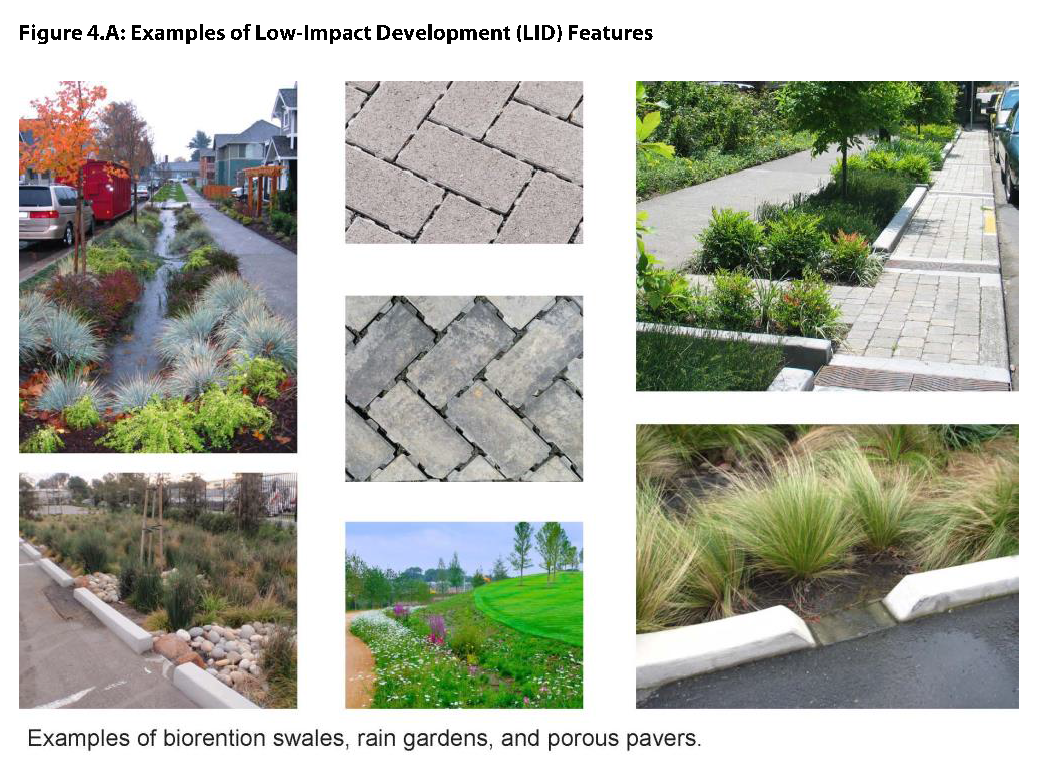
4.1.4. Grading and Erosion Control. No site grading shall occur without approval of a stormwater quality control plan and a grading, erosion, and sediment control plan prepared according to the standards of the Development and Infrastructure Manual. A GESC Permit may also be required.
(Ord. 4 §§1, 40, 41, 2025)
Sec. 4.2. - Access and circulation.
4.2.1. Purpose. The purpose of the access and circulation standards is to improve multimodal circulation for existing and future development areas, to increase the effectiveness of local service delivery and emergency service times throughout the Town, and to minimize vehicular and pedestrian conflicts throughout Town.
4.2.2. Applicability. These standards apply to all new development unless otherwise stated in this UDC.
4.2.3. Driveways and Access.
A.
Every lot shall have sufficient access to afford reasonable means of ingress and egress for emergency vehicles as well as those needing access to the property for its intended use.
B.
Driveways and access points shall be constructed to the standards of the Development and Infrastructure Manual. All driveways and access points shall be a hard surface for at least the first eighteen (18) feet from the edge of asphalt or concrete pan in the Town right-of-way, or five (5) feet or less as permitted. An access permit may also be required.
C.
Single-family and two-family dwellings shall not have direct driveway access from arterial or collector streets, or highways, unless no other alternative exists.
D.
No new vehicular access shall be permitted from East Main Street.
E.
Vehicular access to streets, other than East Main Street, shall be from alleys. Alternative vehicular access to a street other than East Main Street may be granted at the discretion of the applicable decision-maker under this Code, based upon location and size of the access and how it minimizes pedestrian and vehicular conflicts with sidewalk and street traffic.
F.
Driveways and accesses shall be designed to prevent parking and stacking on public sidewalks or stacking within the traveling portion of the right-of-way.
4.2.4. Streets and Vehicular Circulation. All streets shall comply with the standards in Section 5.2, Subdivision Design Standards and the Development and Infrastructure Manual.
4.2.5. Pedestrian Circulation.
A.
Sidewalks.
1.
Generally.
a.
Where required, sidewalks shall comply with the standards in the Development and Infrastructure Manual.
b.
All sidewalks shall be constructed and maintained in compliance with the Development and Infrastructure Manual.
2.
Where Required.
a.
Except for within the I-1 zoning district, curb, gutter, and/or sidewalk shall be required per the current Context Map and Infill Infrastructure Guidelines or if the Town Administrator determines that such improvements are necessary to serve the development and/or to protect the public health, safety, or welfare.
b.
A new sidewalk shall not be required for the development of one (1) infill lot or construction of a new accessory dwelling unit, unless determined necessary by the Town Administrator to protect the public health, safety, or welfare and are necessary to maintain or create a general and consistent pattern of development within the area.
3.
Light Industrial (I-1) Zoning District. In the I-1 zoning district, the Town Administrator may require curb, gutter, and sidewalks at time of review and/or approval of a development or subdivision application.
B.
On-Site/Pedestrian Connections. All new nonresidential and multi-family development shall provide a network of on-site pedestrian walkways to and between the following areas:
1.
Entrances to each building on the site, including pad site buildings;
2.
Public sidewalks, trails, or walkways on adjacent properties that extend to the boundaries shared with the subject development;
3.
Adjacent public parks, open space, trails, or other civic uses such as schools, places of worship, public recreational facilities, or government offices; and
4.
At least one (1) accessible route within the site shall be provided from public transportation stops, accessible parking, accessible passenger loading zones, and public streets or sidewalks to the accessible building entrance served.
(Ord. 3 §§4, 6, 2020; Ord. 4 §§42—47, 2025; Ord. 12 §6, 2025)
Sec. 4.3. - Off-street parking and loading.
4.3.1. Purpose. This section is intended to ensure off-street parking and loading facilities are provided in rough proportion to the generalized parking, loading, and transportation demands of different land uses. This section is also intended to help protect the public health, safety, and general welfare by:
A.
Avoiding and mitigating traffic congestion;
B.
Encouraging multi-modal transportation options and enhanced pedestrian safety;
C.
Reducing stormwater runoff and the heat island effect of large paved parking areas; and
D.
Providing flexible methods of responding to the transportation and access demands of various land uses in different areas of the Town.
4.3.2. Applicability and Exemptions.
A.
Applicability. This section applies to all new development and changes in use after the effective date of this UDC, unless exempted by paragraph B below.
B.
Exemptions. This section shall not apply to the following:
1.
Properties with payment of a fee-in-lieu as determined by resolution of the Board of Trustees and approved in accordance with Section 16.04.4.3.5.E.
2.
Properties in the MU-1 and MU-2 districts without an alley, provided required bicycle parking is installed pursuant to Section 4.3.5.C with Town Administrator approval. The Town Administrator's decision shall be based upon the size of the property, intensity and density of the use.
3.
Expansions or remodels that increase the square footage of an existing structure by less than twenty percent (20%) provided that existing off-street parking remains unaltered.
4.
Changes in use of a structure that do not expand the square footage of the structure provided that the existing off-street parking remains unaltered.
4.3.3. Computation of Parking and Loading Requirements.
A.
Area Measurements. All square-footage based parking and loading requirements shall be computed on the basis of gross floor area of the subject use. Structured parking within a building shall not be counted in such computation.
B.
Fractions. When measurements of the number of required spaces result in a fractional number, the fraction shall be rounded to the nearest whole number. For example, if a computation results in a parking requirement of three and forty-nine-hundredths (3.49) spaces, that shall be rounded down to three (3) spaces. If a computation results in a parking requirement of three and one-half (3.5) spaces, that shall be rounded up to four (4) spaces.
4.3.4. Required Off-Street Parking.
A.
Minimum Required Off-Street Parking Spaces in the Downtown Core. Originally platted Old Town Lots in the area generally located east of Highway 24 and within the Original Town of Buena Vista plat, dated 1905, and not abutting the highway shall be subject to a minimum off-street parking requirement of one and one-half (1.5) parking spaces per twenty-five (25) linear feet of street frontage. For example, a twenty-five (25) feet wide lot that is mixed-use with a residence and a retail store shall require two (2) parking spaces (one and one-half (1.5) spaces rounded up to the next whole number). Lots that have been subject to a subdivision after 1905 and are outside the MU-MS Zoning District shall be subject to minimum off-street parking requirements based upon Table 4.1 below.
B.
Minimum Required Off-Street Parking Spaces for All Other Areas. Unless otherwise provided in this Section 4.2, the number of off-street parking spaces shall be provided in accordance with Table 4.1 below.
C.
Bicycle Parking.
1.
All nonresidential uses shall provide a minimum of one (1) exterior bicycle parking space with convenient access to the main entrance of the structure. Each bicycle parking space shall accommodate at least two (2) adult sized bicycles with an adequate storage area so as not to impede travel or encroach into Town rights-of-way or neighboring properties. Covered bicycle storage is encouraged.
2.
Single-family uses are not required to provide and maintain bicycle parking.
3.
All multi-family residential uses shall provide a minimum of one (1) exterior bicycle parking space per residential unit with convenient access to the main entrance of the structure. Each bicycle parking space shall accommodate at least two (2) adult sized bicycles with an adequate storage area so as not to impede travel or encroach into Town rights-of-way or neighboring properties. Covered bicycle storage is encouraged.
D.
Accessible Parking. Accessible parking spaces shall be provided for all multifamily and nonresidential uses according to the Americans with Disabilities Act (ADA) Accessibility Guidelines for Buildings and Facilities and the Colorado Revised Statutes, as amended.
E.
Unlisted Uses. For applications proposing a use not expressly listed in Table 4.1, Minimum Number of Off-Street Parking Spaces Required, the Town Administrator is authorized to establish the minimum off-street parking requirement based upon one (1) of the following factors:
1.
Parking requirements for a listed use that is deemed most similar to the proposed use;
2.
National or local best practices; or
3.
A parking study prepared by the applicant that estimates parking demand based on recommendations from the Institute of Traffic Engineers (ITE) or other reputable source of information.
F.
Sites with Multiple Uses. On sites with multiple principle uses, the total requirement for off-street parking shall be the sum of the requirements of the various uses computed separately in accordance with Table 4.1, Minimum Number of Off-Street Parking Spaces Required, unless the Town Administrator approves a shared parking agreement pursuant to Section 4.3.5.A.
G.
Use of Required Parking Areas.
1.
Spaces in garages and driveways shall count towards the requirements of this section.
2.
Areas required to maneuver vehicles shall not be used or considered to meet off-street parking requirements, except for single- or two-family dwellings.
H.
Maximum Parking for Retail in HC District. Retail uses in the HC district shall not provide more than five (5) spaces per one thousand (1,000) square feet.
4.3.5. Parking Alternatives.
A.
Shared Parking. The Town Administrator may approve shared parking facilities for developments or uses with different operating hours or different peak business periods pursuant to the following standards:
1.
Location.
a.
Shared parking spaces shall be located within five hundred (500) feet of a main entrance.
b.
The applicant shall demonstrate the feasibility for shared parking showing that a reduction in required parking will not result in spillover of parking onto other properties or the public-right-of way.
2.
Adjustment of Required Parking. The Town Administrator may reduce the amount of parking spaces required per Table 4.1, Minimum Number of Off-Street Parking Spaces Required, or may increase the maximum parking requirement, up to twenty-five percent (25%) based on the review of the shared parking feasibility demonstrated by the applicant with a fee in lieu determined by fee schedule.
3.
Feasibility and Agreement. The parties involved in the joint use of off-street parking facilities shall submit a written agreement in a form to be recorded for such joint use, approved by the Town Administrator as to the format and content of the agreement.
B.
Off-Site Parking.
1.
Required vehicle parking may be provided off site, provided that such property is located within five hundred (500) feet of the main entrance to the principal use.
2.
The applicant shall demonstrate that off-site vehicle parking spaces will be available for use for a period of at least two (2) years, after which required parking shall be provided on site or shall be provided in another off-site parking facility meeting the requirements of this subsection.
3.
The parties involved in off-site parking facilities shall submit a written agreement in a form to be recorded for such joint use, approved by the Town Administrator as to the format and content of the agreement.
4.
Required parking areas for nonresidential uses may extend up to one hundred twenty (120) feet into a residential zoning district, provided that the parking area or space:
a.
Adjoins the nonresidential district;
b.
Has its only access to, or fronts upon, the same street that serves the nonresidential use, and is adjacent to the subject property; and
c.
Is screened from adjacent properties in the residential zoning district by a fence or a buffer strip of vegetation at least six (6) feet in height and complies with the screening and fencing requirements in Section 4.4.6.
C.
Bicycle Parking.
1.
All nonresidential uses shall provide a minimum of one (1) bicycle parking space with convenient access to the main entrance of the structure. Each bicycle parking space shall accommodate at least two (2) bicycles.
2.
In all zoning districts, except the originally platted Old Town lots as described in Section 16.04.4.3.4.A, each bicycle parking space in excess of the required bicycle parking shall count as one-half (½) of a required vehicle parking space up to a maximum of two (2) required vehicular parking spaces, or ten percent (10%) of the required vehicular parking spaces, whichever is greater.
3.
Bicycle parking will not reduce the required vehicle parking for single-family uses.
4.
All multi-family residential uses shall provide a minimum of one (1) bicycle parking space per residential unit with convenient access to the main entrance of the structure. Each bicycle parking space shall accommodate at least two (2) bicycles.
5.
A minimum of thirty-six (36) inches of clearance shall be maintained on any public walkway where a bicycle parking space is installed per ADA requirements.
6.
The use of additional bicycle parking to reduce the required vehicular parking does not relieve the applicant from paying the fee in lieu of parking. This shall be a reduced fee in lieu of parking as determined in the Fee Schedule and can be approved by the Town Administrator.
D.
Reserved.
E.
Cash In Lieu. Cash-in-lieu may be considered and reviewed following the variance procedures pursuant to Section 6.7.2 but shall require a Cash-in-Lieu for Parking Application and is not subject to the variance criteria in that Section. Cash-in-lieu may be permitted if the Board of Adjustment finds that all of the following criteria are met:
1.
There is substantial, specific and documented benefit that the community will receive from granting the parking relief requested;
2.
The parking relief requested is the minimum necessary that will afford relief of the applicable standards of the UDC;
3.
The reduced parking will not result in substantial impacts to adjacent property or the character of the zoning district; and
4.
The parking relief requested is not related to purposes of convenience.
F.
Parking Alternative Reductions are Cumulative. Any combination of parking alternative reductions in this section may be applied cumulatively.
4.3.6. Parking Area Layout and Design.
A.
Location of Parking Areas.
1.
Off-street parking areas shall have vehicular access to a street or alley and shall be designed or installed with adequate space for turning so that no vehicle shall be required to back into the street, except from spaces used for single- or two-family dwellings.
2.
If parking areas are provided on site in the MU-MS district, they shall be located behind the front façade of the primary structure.
3.
For multifamily dwellings, no more than twenty percent (20%) of the required parking spaces shall be located between the front façade of the structure and the public right-of-way.
4.
Off-street parking adjoining an alley shall not block the alley for any driveways less than eighteen (18) feet from the rear property line. If any driveways are less than eighteen (18) feet, a sign shall be installed indicating that parking shall not block the alley.
B.
Accommodation of RVs and Trailers. In the HC district, retail parking areas shall be designed to adequately accommodate RVs and Trailers.
C.
Surfacing Requirements.
1.
All Lots.
a.
All off-street parking spaces shall be clearly marked and shall have a paved or other all-weather hardened surface of not less than nine (9) feet by eighteen (18) feet.
b.
All off-street parking areas shall be maintained to prevent the creation of ruts, potholes, and/or mud.
2.
Lots Requiring Six or More Parking Spaces. For lots with six (6) or more parking spaces required per Table 4.1, Minimum Number of Off-Street Parking Spaces Required, all parking areas shall be surfaced with concrete, asphalt, or pavers.
3.
Lots Requiring Fewer than Six Parking Spaces. For lots with fewer than six (6) parking spaces required per Table 4.1, Minimum Number of Off-Street Parking Spaces Required, surfaces for parking areas may include concrete, asphalt, pavers, and/or compacted or compressed stone or gravel of sufficient size and depth to completely cover the surface of the parking area.
4.
Mini-Warehousing. Mini-warehousing may have gravel parking and drive aisles if fewer than five (5) parking spaces are required.
D.
Parking Lot Landscaping.
1.
Applicability. The parking lot landscaping standards in this subsection shall apply to all development except for single-family and two-family dwellings.
2.
Perimeter Landscaped Buffer.
a.
A landscaped buffer shall be required between any parking area and property lines, excluding those property lines within or adjacent to an alley. Such buffer shall be a minimum of five (5) feet in width. Required buffers shall count toward the minimum landscaping area.
b.
If perimeter buffers are installed using Town-approved xeriscaping methods, then the minimum width shall be three (3) feet.
3.
Interior Parking Lot Landscaping. Any parking area containing more than ten (10) parking spaces shall meet the following standards:
a.
Landscaped islands shall be provided at the ends of any rows of parking with more than twelve (12) parking spaces.
b.
Landscaped islands shall be a minimum of one hundred twenty-five (125) square feet in area and a minimum of eight (8) feet in width.
c.
Each landscaped island shall contain a minimum of one (1) tree and five (5) five-gallon shrubs.
d.
Landscaped islands shall be dispersed throughout the parking area to provide visual relief, particularly of parking aisles, by using flowering ornamental plantings and to provide physical relief by using seasonal shade trees.
e.
Required interior parking and access area landscaping shall count toward the minimum requirements in Section 4.4, Landscaping, Screening, and Fencing.
4.3.7. Off-Street Loading.
A.
Off-street loading spaces shall be provided for all mixed-use, commercial, and other nonresidential districts according to the following table:
4.3.8. Stacking. Where traffic flow is controlled by an entry gate or drive-through service facility, an adequate stacking lane outside of the public right-of-way shall be provided separate from required parking spaces or required maneuvering areas for flow of aisles, streets, bicycle paths, or pedestrian walkways as determined by the Town Administrator.
(Ord. 5 §§9—12, 2019; Ord. 3 §5, 2020; Ord. 7 §§2, 3, 2022; Ord. 2 §§1—3, 2024; Ord. 20 §§1—3, 2024; Ord. 4 §1, 2025; Ord. 08 §§15—17, 2025; Ord. 12 §8, 2025)
Sec. 4.4. - Landscaping, screening, and fencing.
4.4.1. Purpose. This section is intended to ensure that new landscaping, screening, and fencing are provided to contribute to high-quality development, the conservation of water, the reduction of heat islands, and to maintain the character of the Town of Buena Vista.
4.4.2. Applicability. These standards apply to all new development. Changes of use and maintenance and repairs that do not expand the use or structure by more than ten percent (10%) shall be exempt from this Section, unless any redevelopment of the property requires a building permit or site plan approval and will result in the disturbance of more than fifty percent (50%) of existing landscaped area(s).
4.4.3. Minimum Landscaping Required.
A.
Site Area Landscaping.
1.
The minimum percent of site area required to be landscaped is established in the dimensional standards for each zoning district in Article 16.02: Zoning Districts.
2.
Except for rear yards of single-family and two-family dwellings, any part of a site not used for building coverage, parking areas, driveways, sidewalks, or other site improvements shall be landscaped. Single-family and two-family dwellings shall provide and maintain landscaping in the front yard as required by this Section.
3.
Existing healthy vegetation meeting Town specifications that is retained on a site shall count toward the landscape area requirements.
B.
Trees Required.
1.
Trees shall be planted on sites pursuant to the following:
2.
At least one (1) of the required trees for single-family and two-family uses shall be planted in the front yard. Additional trees above the required number are encouraged. Existing mature trees may count toward these requirements pursuant to 4.4.4.B.
3.
Street trees that comply with the Development and Infrastructure Manual and the Town of Buena Vista Planting Guide shall count toward the requirement in this subsection.
4.
All planted trees shall comply with the minimum plant material sizes in Section 4.4.4.D.
5.
With approval by the Town Administrator, the applicant may provide a fee in-lieu of planting to the Town pursuant to Section 5.3.3, Tree Planting Fund.
C.
Parking Lot Landscaping. Parking lot landscaping shall be provided according to Section 4.3.6.D. Parking and access area landscaping shall count toward the minimum required landscaping.
4.4.4. General Requirements for Landscaping.
A.
Landscape Plan Required. A landscape plan shall be submitted with all new developments. Plant materials shall be installed prior to issuance of a Certificate of Occupancy unless the Town Administrator approves a seasonal delay pursuant to Section 4.4.5.A. The landscape plan shall contain all information in the Development and Infrastructure Manual.
B.
Tree and Existing Vegetation Preservation. Existing healthy trees and shrubs shall be retained to the maximum extent possible. Existing healthy trees that are four (4) inches in caliper or more and healthy shrubs that are five-gallon or larger shall count one-and-one-half (1½) times toward the landscaping standards of this section if they are preserved.
C.
Water Conservation.
1.
The total amount of high-water-use landscaping, according to Town specifications, on a property may not exceed fifty percent (50%) of the total landscaped area. The total amount of high water use turf grass may not exceed thirty percent (30%) of the total landscaped area. Turf grass areas designated for high use or a specific recreational use shall be excluded from the total landscaped area under this requirement.
2.
High water use plants or turf grasses shall not be planted on slopes or berms at a four (4) to one (1) slope or steeper.
D.
Minimum Plant Material Sizes. All plant materials shall be planted according to the Buena Vista Planting Guide and Chapter 11, Article V of the Municipal Code. Trees or shrubs that are not recommended in the Buena Vista Planting Guide shall not count towards the required trees and shrubs in this Section. Minimum tree and shrub sizes are as follows:
1.
Deciduous trees shall be a minimum of one and one-half (1½) inches in caliper, measured six (6) inches above the ground.
2.
Coniferous trees shall be a minimum of six (6) feet in height.
3.
Shrubs shall be a minimum of five (5) gallons.
E.
Neither nonfunctional turf nor synthetic ground covers, including but not limited to artificial turf (functional or nonfunctional), shall be installed on:
1.
Any property containing a principal use that is listed as a Public, Institutional, or Civic Use (except an Outdoor Recreation and Entertainment Use), a Commercial Use, or an Industrial use in Table 3.1: Table of Allowed Uses;
2.
Any property within a common interest community as defined in Section 38-33.3-103, C.R.S. that is owned and maintained by a unit owners association, such as entryways, parks, and other common elements as defined in Section 38-33.3-103, C.R.S.;
3.
Any portion of a street right-of-way, median, transportation corridor, or parking lot subject to this Code; and
4.
After December 31, 2027, multi-family residential housing premises property that contains more than twelve (12) dwelling units.
F.
Prohibited Vegetation. The following plants may not be planted as landscaping:
1.
Invasive Plant Species, including without limitation plants listed on the Colorado Department of Agriculture Noxious Weed lists or listed as an invasive plant species by the Colorado State University Extension Service;
2.
Ash (Fraxinus, species);
3.
Tamarisk (Tamarix, all species);
4.
Siberian elm (Ulmus, all species); and
5.
Russian olive (Elaeagnus angustifolia, all cultivars).
G.
Obstructions Prohibited.
1.
Fire Hydrants, Public Traffic Signs, Sidewalks, and Utilities.
a.
Landscaping shall not obstruct fire hydrants, public traffic signs, sidewalks, or utility boxes except to comply with screening of mechanical equipment pursuant to Section 4.4.6.B.1.
b.
Landscaping shall not grow into any overhead utility lines.
2.
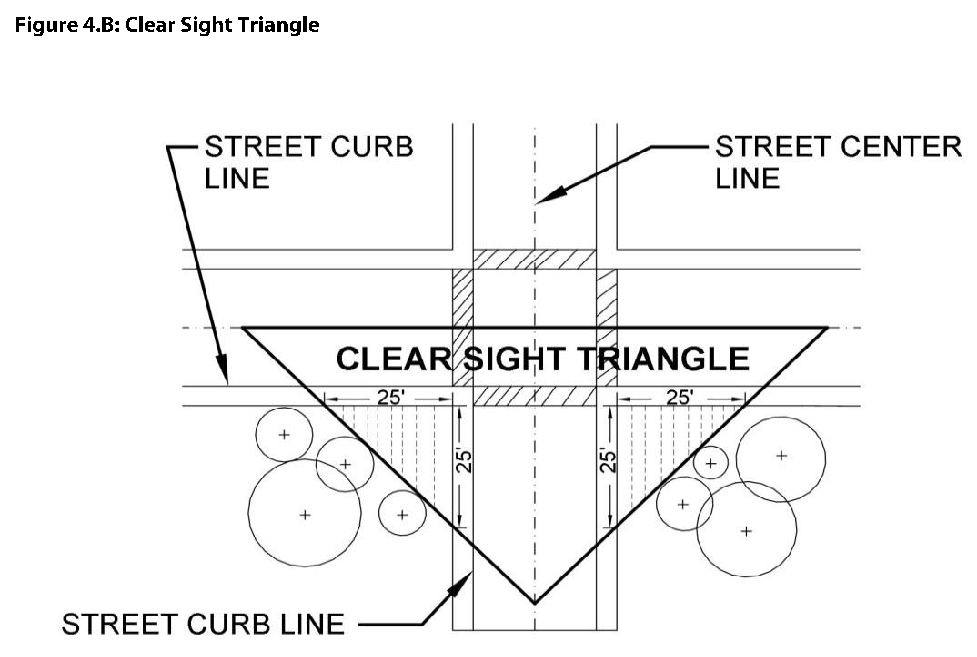
Clear Sight Triangle. No planting, structure, sign, fence, wall, or other visual obstruction more than three (3) feet in height measured from the centerline of the street shall be located within the triangular area formed by the intersecting street curb lines and a straight line connecting points on the street curb lines, each measuring twenty-five (25) feet from the point of intersection. The clear sight triangle requirement shall not apply to alleys but shall apply to parking lots.
H.
Deer Fencing and Guy Lines Required. Wire mesh deer fencing and guy wires shall be installed around all new tree plantings. See the Buena Vista Planting Guide for best practices. Guy wires shall be removed after the first full growing season from the date of installation to minimize damage to growing trees. Deer fencing shall not require a fence permit but shall comply with Section 4.4.6.G.2.b.
4.4.5. Installation and Maintenance.
A.
Required Installation Completion. With approval from the Town Administrator, landscaping required for all uses may be installed after a certificate of occupancy is issued, provided the landscaping is installed within six (6) months of its initial date of occupancy, excluding the months of October through April, and collateral for outstanding work is submitted to the Town Administrator. Such collateral shall include the cost of landscaping, the labor for installing required materials, plus ten percent (10%). The collateral shall be refunded upon installation and Town inspection of the landscaping.
B.
Irrigation Systems and Plans. If an irrigation system is installed, the system shall meet the following minimum requirements:
1.
An approved backflow prevention device shall be installed with all irrigation systems.
2.
Low-volume, drip or subsurface irrigation systems shall be used in all non-turf grass areas and in landscaped areas where any one (1) dimension is less than six (6) feet in width and surrounded by impervious surfaces.
3.
Any landscaping areas that are being dedicated to the Town or will be maintained by the Town in association with a development shall be required to install an irrigation system with a separate meter. The plans for this irrigation system shall be approved by the Public Works Department. This excludes non-disturbed areas, natural areas, or areas located in the floodplain.
C.
Landscaping in the Right-of-Way. The portion of the public right-of-way, if any, between the property line and the street curb line may be used for landscaping purposes, provided it will be maintained by the abutting property owner. The replacement of any damaged landscaping due to work in the right-of-way is the responsibility of the abutting property owner.
D.
Landowner Responsible. Maintenance of all landscaped areas on a developed site shall be the responsibility of the property owner.
E.
Replacement of Dead Plant Materials. Required landscaping that does not survive shall be replaced within three (3) months of initial notice from the Town, excluding the months of October through April. Replacement vegetation shall be similar in size and type.
4.4.6. Screening and Fencing.
A.
Purpose. The purpose of these standards is to provide reasonable regulations for the appearance, location, type, and long-term maintenance of fences and walls to ensure the safety of residents and the high-quality character and appearance of the Town.
B.
Screening Requirements.
1.
Screening of Mechanical Equipment. Meters and mechanical equipment, excluding publicly-owned utility boxes and mechanical equipment in alleys, shall be screened from public view by landscaping or architectural elements compatible in material and color with the primary structure.
2.
Screening of Storage, Waste Collection, and Loading Areas.
a.
Storage, service, and loading areas in nonresidential or multifamily residential developments, excluding areas not visible from a public right-of-way, shall be screened from public view by privacy fences or walls with a minimum height of six (6) feet.
b.
Waste collection and/or recycling areas on nonresidential or multifamily properties shall be enclosed on all sides with a gated solid screening wall at least six (6) feet in height, designed to be compatible with the primary structure material and color.
c.
A concrete or asphalt pad shall be installed beneath the waste collection area for any collection bin that is two (2) cubic yards or greater in size.
C.
Procedures and Exemptions.
1.
Fences and Walls Requiring a Fence Permit.
a.
Fences not exempt from permit requirements in paragraph 3.
b.
Retaining walls less than or equal to forty-eight (48) inches in height as measured from top of wall to finished grade.
2.
Fences and Walls Requiring a Building and Fence Permit.
a.
Any fence over six (6) feet in height and any wall over four (4) feet in height (measured from the finished grade of the bottom of the fence or wall to the top) shall require both a fence permit and a building permit issued by the Town Administrator and the authorized building department.
b.
Any fence over six (6) feet in height or wall over four (4) feet in height shall also require an engineered design of the wall to be submitted prior to approval of a building permit. The Town Administrator may waive this requirement for open fencing not subject to failure in wind conditions.
c.
Fences will not be allowed in a floodway. Fences may be allowed in the floodplain, if approved by a Floodplain Development Permit.
3.
Exempt Fences Not Requiring a Fence Permit. The following do not require a fence permit:
a.
Fences that adhere to the setback, sight triangle, and all other development standards of the Municipal Code and are six (6) feet in height or less.
b.
A seasonal or temporary fence, up to six (6) feet in height, constructed of lightweight wire, or vinyl- or plastic-coated wire, which is installed immediately adjacent to a garden, ornamental tree, or other landscaping for the sole purpose of preventing damage from grazing wildlife.
c.
Temporary fences used to secure or protect construction sites or open excavations. Such fences shall be six (6) feet in height unless a taller fence is necessary to safely secure the site.
d.
Temporary fences used to contain, direct, or control crowds at outdoor events. Such fencing may be addressed through a Special Event permit if required.
e.
Temporary fences constructed of wood, vinyl, plastic or cloth-like fabric and installed during the winter snowfall season for snow control.
f.
Open-mesh chain-link fences installed by a school or government agency on school or other publicly-owned or managed land to demarcate, enclose, or protect playing fields or equipment (including tennis courts or baseball field fencing and/or walls), outdoor pools, parks or playgrounds, or mechanical equipment. These fences may be installed to a maximum height of ten (10) feet, and a maximum height of twenty-five (25) feet for batting backstops; however, fences and backstops in excess of six (6) feet in height shall be required to obtain a building permit.
g.
Deer fencing required for new planting materials.
D.
Acceptable Fencing and Screening Materials.
1.
Fences and screening walls shall be constructed from durable, low-maintenance materials. Acceptable fence and screening materials shall include:
a.
Masonry (brick) with stucco or other acceptable finish, or constructed masonry units with an indigenous pattern or finish;
b.
Stone or rock;
c.
Wood;
d.
Wrought iron, welded wire, galvanized metal panels, and other manufactured metal;
e.
Recycled composite fencing;
f.
Chain-link fence constructed with round metal posts and top rail may be allowed (color shall be dark or natural, if coated) for fences within side and rear yards other than those required for screening;
g.
Other alternative materials that can withstand exposure to the weather, subject to review and approval by the Town Administrator.
2.
Live vegetation hedges may be used in place of a fence or wall where appropriate.
E.
Prohibited Fencing and Screening Materials.
1.
Barbed wire, razor wire or concertina wire fences, electrified fences, and fences with embedded glass shards or utilizing sharp protrusions are prohibited unless required for security purposes by a government agency, for a use in an industrial zoning district, or for the containment of livestock.
2.
No fence, hedge, or wall over four (4) feet in height shall be installed closer than eighteen (18) inches to the closest edge of a public sidewalk or walkway.
3.
Chain-link and/or wire fencing equipped with interwoven plastic, wood, fabric, or metal slats shall not qualify as an appropriate or allowable screening fence.
4.
Slab lumber is a prohibited fencing and screening material. For purposes of this provision, slab lumber means a relatively flat piece of wood cut from a tree with irregular edges and sometimes with bark left on that displays the natural insides of a tree. Slab lumber is commonly referred to as "live edge lumber."
F.
Clear Sight Triangle. Fences and walls shall comply with the clear sight triangle requirements in Section 4.4.4.E.2. Solid fences abutting the intersection of an alley and a public street shall be located a minimum of five (5) feet from the intersection along both the street and alley property lines to allow for visibility of pedestrians from vehicles in the alley. Fences with an opacity of less than fifty percent (50%) are exempt from this requirement.
Solid fences abutting the intersection of an alley and a public street shall be located a minimum of five (5) feet from the intersection along both the street and alley property lines to allow for visibility of pedestrians from vehicles in the alley. Fences with an opacity of less than fifty percent (50%) are exempt from this requirement.
G.
Construction Standards and Dimensions.
1.
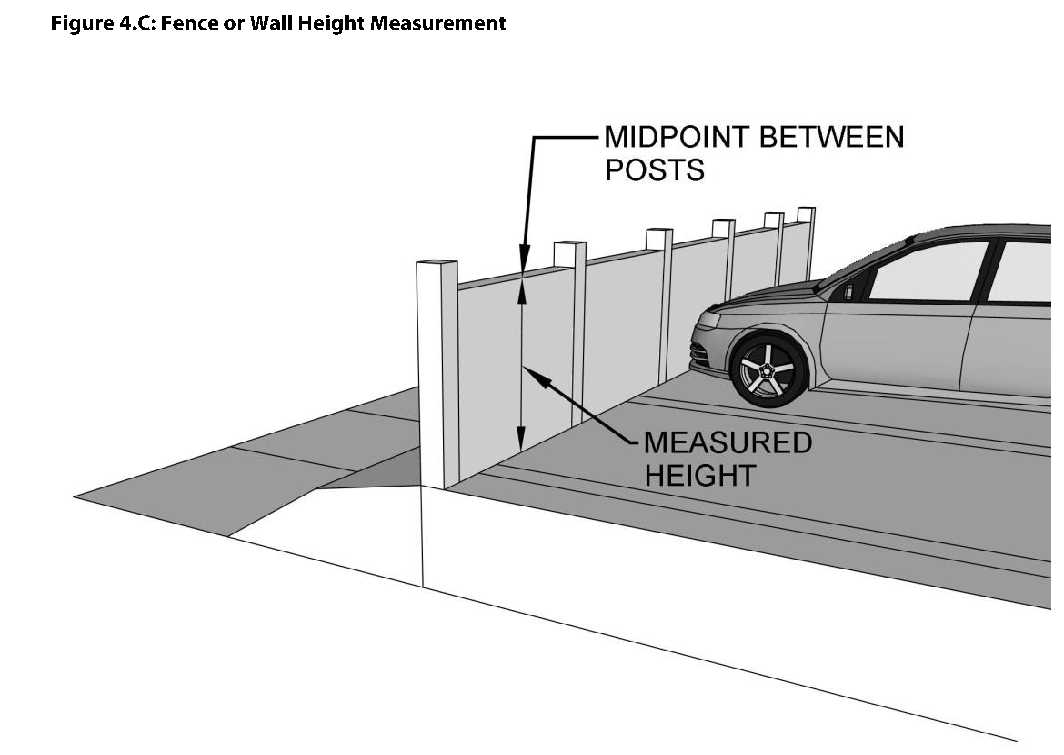
Fence or Wall Height Measurement. The height of a fence or wall shall be measured from the finished grade of the storage or parking area adjacent to the fence or wall to the top of the fence or wall, at the midpoint between posts. Posts shall be allowed to extend up to one (1) foot above the height of the fence.
2.
Residential Districts. The following height and construction standards shall apply to all fences and screening walls in residential zoning districts:
a.
Generally.
i.
Solid fences in a front, side, or rear yard that abut a public street, excluding public alleys, shall not exceed a height of four (4) feet.
ii.
Fences in rear yards, fences in side yards extending up to the front yard, and fences on double frontage lots shall not exceed a height of six (6) feet. Any portion of a side yard fence extending beyond a front yard setback line shall not exceed a height of four feet, except that a fence that is less than fifty percent (50%) opaque shall be permitted up to a height of six (6) feet as approved by the Town Administrator.
iii.
Fencing enclosing or protecting an athletic court (e.g., tennis court) may exceed six (6) feet in height subject to the issuance of a building permit.
iv.
In addition to the regulations set forth in this Paragraph 2, multifamily properties located in residential districts shall be subject to the regulations contained in Paragraph 3 below.
b.
Deer Protection Fencing.
i.
Deer protection fencing shall be allowed in front, side, or rear yards up to a maximum height of six (6) feet.
ii.
Deer protection fencing shall be limited to those areas immediately surrounding the tree and/or plant(s) being protected.
iii.
Any portion of a deer protection fence above four (4) feet in height shall not exceed a maximum of fifty percent (50%) opacity.
3.
Mixed-Use, Commercial, and Other Nonresidential Districts and Multifamily Properties. The following height and construction standards shall apply to all fences, berms, and screening walls in mixed-use, commercial, and other nonresidential zoning districts, and on all multifamily properties:
a.
In the MU-1, MU-2, and MU-MS districts, fences in a front, side, or rear yard that abut a public street, excluding public alleys, shall not exceed a height of four (4) feet, except that a fence that is less than fifty percent (50%) opaque shall be permitted up to a height of six (6) feet.
b.
Fences used or required for purposes other than for screening (e.g., deer fencing, security, or boundary fences) shall not exceed six (6) feet in height.
c.
Screening shall be provided when multifamily, mixed-use, commercial, or other nonresidential development abuts the R-1, R-1.5, or R-2 zoning districts.
d.
Screening fences, berms, walls, and gates shall be constructed of materials and installed in such a manner to create a completely opaque screen through which no portion of the material being screened is visible.
e.
Berms shall be planted with vegetation to prevent erosion.
4.
Retaining Walls.
a.
All retaining walls shall be designed and constructed to resist and contain loads due to the lateral pressure of the material or slope to be retained, in accordance with accepted engineering practices.
b.
The construction and/or installation of a retaining wall in excess of 48 inches in height measured from the finished grade to the top of the wall shall require a building permit and require that the structural design be certified by a state-licensed professional engineer.
c.
No retaining wall shall be constructed or installed that creates erosion or scarring.
H.
Swimming Pool Fences. All rigidly framed or non-inflatable above-ground pools exceeding twenty-four (24) inches in depth and all below-ground swimming pools, excepting portable hot tubs and inflatable or other similar temporary pools that are filled by a hose, shall be completely enclosed by a fence not less than four (4) feet in height. Such fence shall not have openings wider than four (4) inches unless the yard or site in which the pool is situated is already fully enclosed by a fence of at least four (4) feet in height with openings less than four (4) inches in width. All gates shall be equipped with child-resistant, self-latching, and self-closing devices that meet the building code requirements.
I.
Maintenance.
1.
All fencing and screening shall be maintained in a structurally safe and visually acceptable manner. For purposes of this Section, "visually acceptable manner" shall mean, without limitation, that the paint on a fence is not peeling or excessively chipped or faded; that rot, rust, or corrosion is not prominent; that slats, bricks, stones, wire, posts or other fence material or equipment are not broken or missing; and/or that the fence is not leaning or falling down at an angle of five (5) degrees or more from vertical. Vegetation growing on or supported by a fence shall be maintained in a healthy condition and shall be regularly pruned and trimmed to prevent the deterioration, collapse, or other structural failure of the fence or wall.
2.
Dilapidated, broken, structurally unsound, or unsafe fences or walls shall be removed or repaired upon written notice served by the Town Administrator. The notice shall specify the nature of all repairs or replacements needed to be undertaken and a reasonable time period by which such repairs or replacements shall be completed.
(Ord. 15 §16, 2018; Ord. 5 §§15, 21, 2022; Ord. 21 §2, 2024; Ord. 4 §§1, 48—52, 2025; Ord. 15 §§1—4, 2025; Ord. 10 §3, 2026)
Sec. 4.5. - Site and building design standards.
4.5.1. Purpose. The purpose of these standards is to promote high-quality and attractive development in Buena Vista. These standards are intended to:
A.
Protect and enhance the character and quality of residential, commercial, and mixed-use areas in Buena Vista;
B.
Balance Buena Vista's economic and aesthetic concerns; and
C.
Mitigate the negative visual impacts of the scale, bulk, and mass of large buildings.
4.5.2. Residential Site and Building Design Standards.
A.
Applicability. This subsection applies to the following uses and areas:
1.
In all districts, any multifamily development with three (3) or more units; and
2.
All residential development in the MU-MS district.
B.
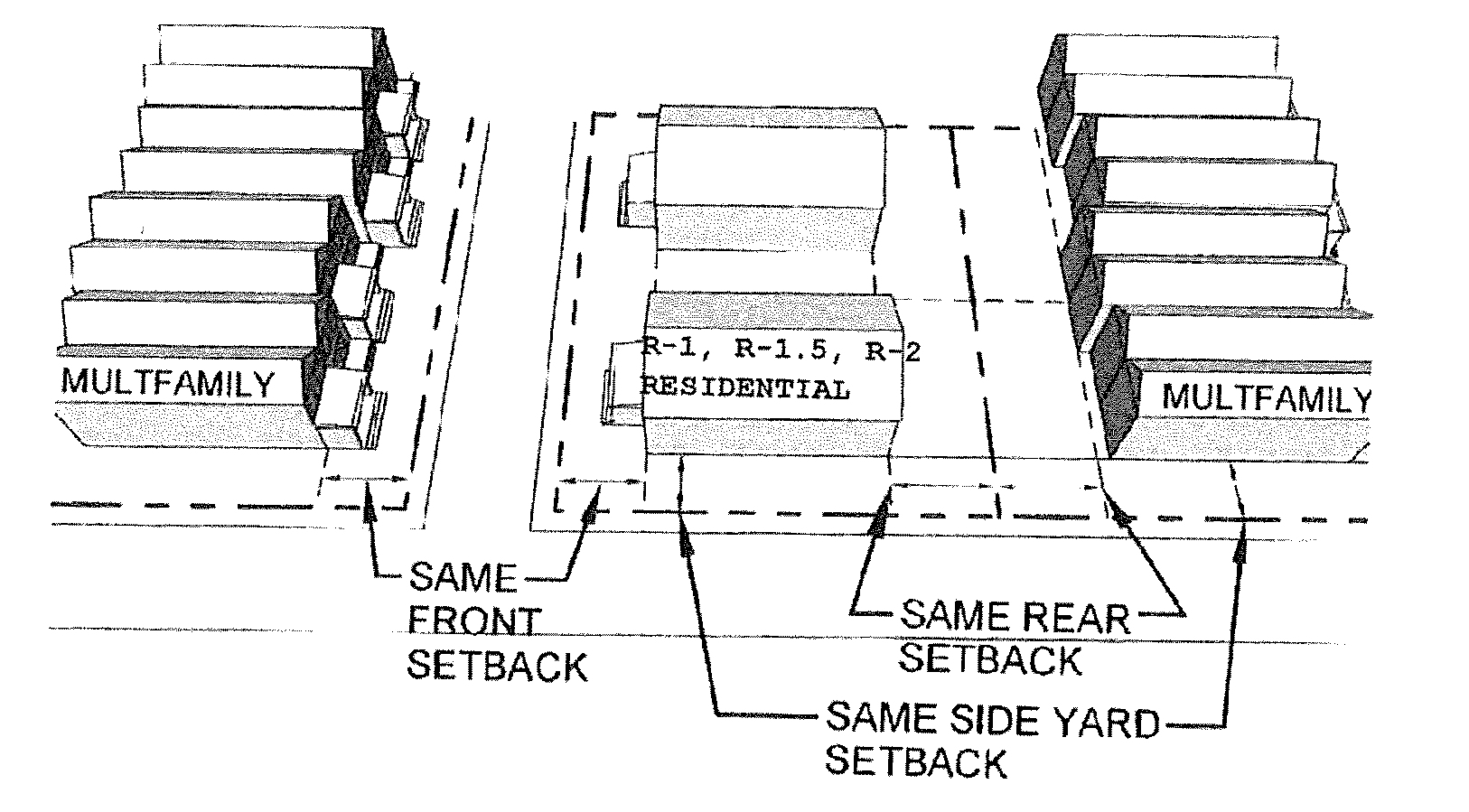
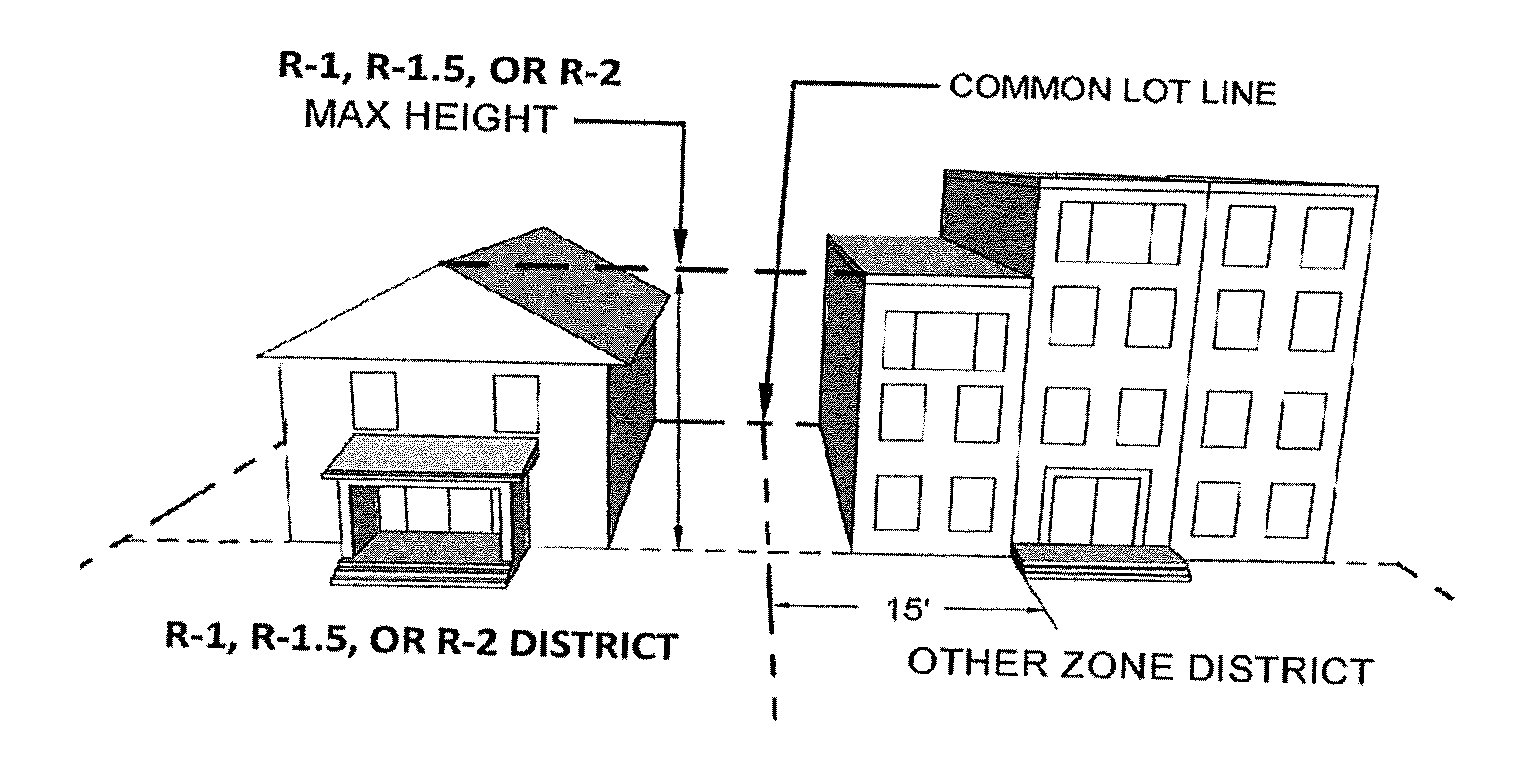
Transitional Setbacks and Height. For multifamily residential developments adjacent to or within one hundred (100) feet, as measured from lot line to lot line, from residential uses in the R-1, R-1.5, or R-2 districts. See Figure 4.D below.
1.
The required side or rear setback of the adjacent residential district shall apply along the common lot line to the subject property;
2.
The required front setback of a residential use immediately across the street from the subject property shall apply to the subject property, except for residential uses on corner lots when the setback of the residential use immediately across the street is the side setback pursuant to Section 2.8.2.D.2.b;
3.
Building height shall not exceed the adjacent R-1, R-1.5, or R-2 maximum height requirement (as applicable) within fifteen (15) feet of a common lot line.
C.
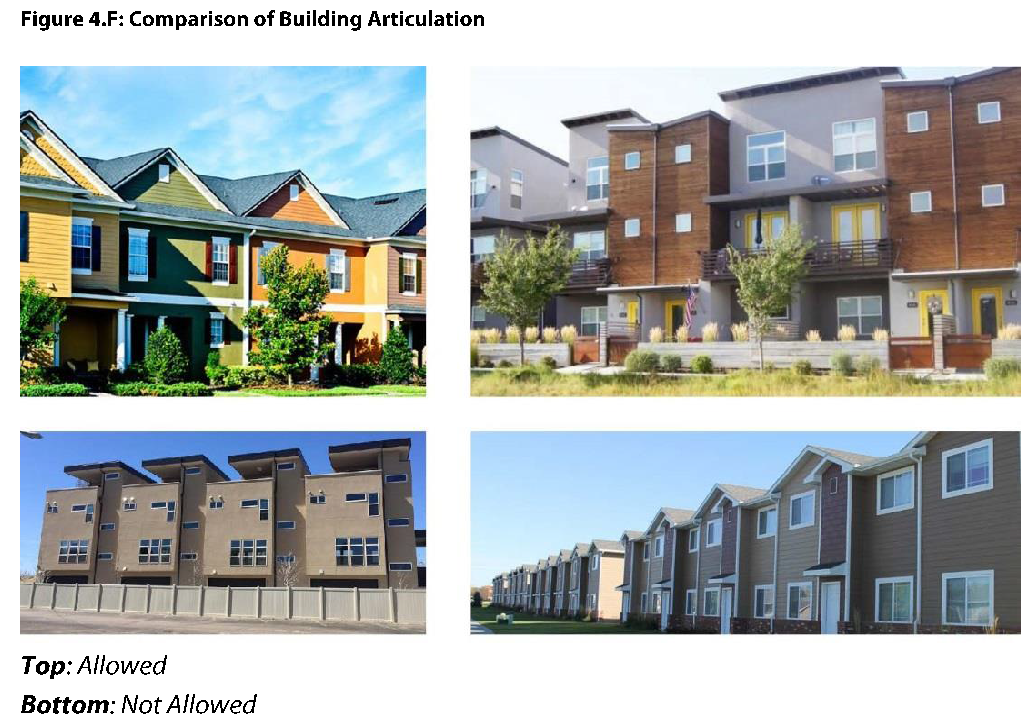
Building Mass and Form. Blocky, uniform façades are prohibited. Buildings shall be articulated through the incorporation of three (3) or more of the following:
1.
Balconies;
2.
Bay or box windows;
3.
Relief in wall plane of twelve (12) inches or more;
4.
Front porches;
5.
Prominent entry features;
6.
Dormers;
7.
Variation in materials;
8.
Window and door trim at least four (4) inches wide or with a reveal from the wall plane of at least three (3) inches; or
9.
Other design elements that add visual interest as determined by the Town Administrator.
D.
Roof Form. Roof forms shall avoid large, unbroken expanses and long, continuous rooflines using the following techniques:
1.
Variation in rooflines at a maximum of every forty (40) feet;
2.
Variation in roof height at a maximum of every forty (40) feet and by a minimum of two (2) feet; and
3.
Use of dormers.
E.
Garages and Carports.
1.
Front-Loading (Street-Facing) on Lots without Alley Access.
a.
Front-loading (street-facing) garages and carports are prohibited unless the garage or carport is detached from the primary structure and located in the rear yard.
b.
Front-loading garages shall not protrude more than ten (10) feet from the front plane of the building.
c.
The garage façade shall not comprise more than sixty percent (60%) of the width of the front façade of the building.
2.
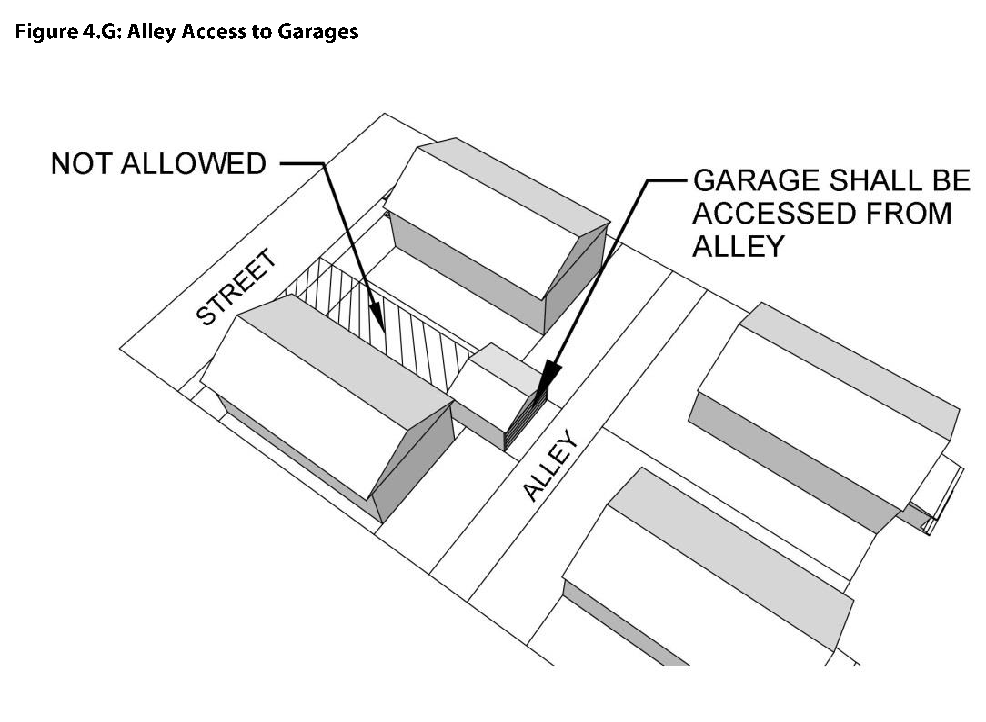
Blocks with Alley Access. Garages and carports on blocks with alley access shall be accessed from the alley, not from the primary street. Existing homes within the Esgar's Addition and Collegiate Heights subdivisions are allowed access to the primary street to a new garage or carport.
F.
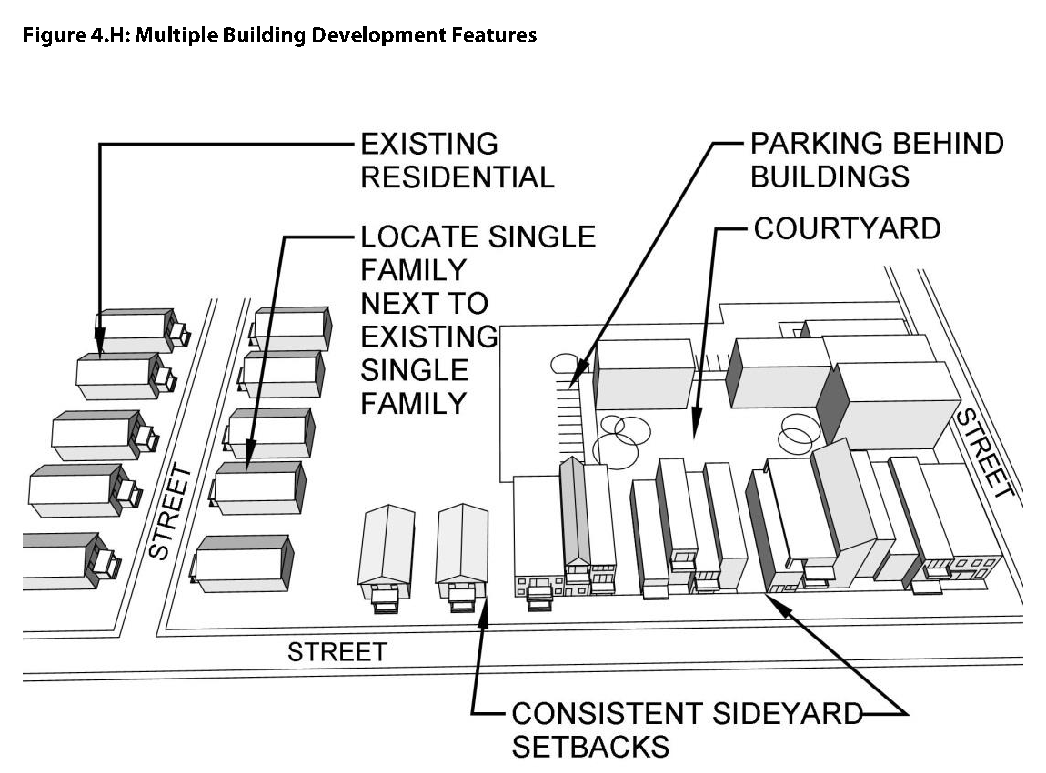
Multi-Building Developments. For developments with three (3) or more buildings, the buildings shall be arranged using one (1) or more of the following techniques:
1.
Organize units around a central courtyard that maintains a consistent side yard setback between units along the street frontage;
2.
Locate the buildings on the corner of an adjacent street intersection or entry point to the development to frame the corner;
3.
Locate parking areas behind the primary structures;
4.
Provide outdoor dining and/or common gathering spaces between buildings; and/or
5.
Other site development elements approved by the Town Administrator.
4.5.3. Nonresidential Site and Building Design Standards.
A.
Applicability. The nonresidential site and building design standards in this subsection apply to all nonresidential and mixed-use development in the MU-MS district.
B.
Building Orientation. Local climatic conditions shall be considered when orienting buildings on a site. The following shall be incorporated into the building orientation to the maximum extent possible:
1.
Building entries on north-facing facades shall be designed to prevent ice accumulation;
2.
Snow shed from roofs and snow piling areas along internal streets and walkways shall be considered; and
3.
Adequate solar access shall be considered when planning outdoor spaces, with shade and relief from glare provided by landscaping and/or overhead structures.
C.
Multi-Building Developments. Nonresidential and mixed-use developments with three (3) or more buildings shall comply with the multi-building development standards for residential developments in Section 4.5.2.F.
D.
Building Mass and Form.
1.
Groupings of three (3) or more buildings on adjacent lots shall vary in size and shape.
2.
Buildings shall incorporate features at the ground level to enliven pedestrian space. Examples are well-defined and articulated entries and windows, awnings, canopies, arcades, recessed entries, changes in color, material, or texture.
3.
No single building façade or plane shall exceed thirty (30) feet, measured horizontally, without being broken up or distinguished from another building façade or plane using the following techniques:
a.
Variations in roof form or variations in roof height of two (2) feet or more;
b.
Insets or other relief in wall plane of twelve (12) inches or more;
c.
Changes in color, materials, or textures; and
d.
Any other architectural elements designed to vary the façade as approved by the Town Administrator.
4.
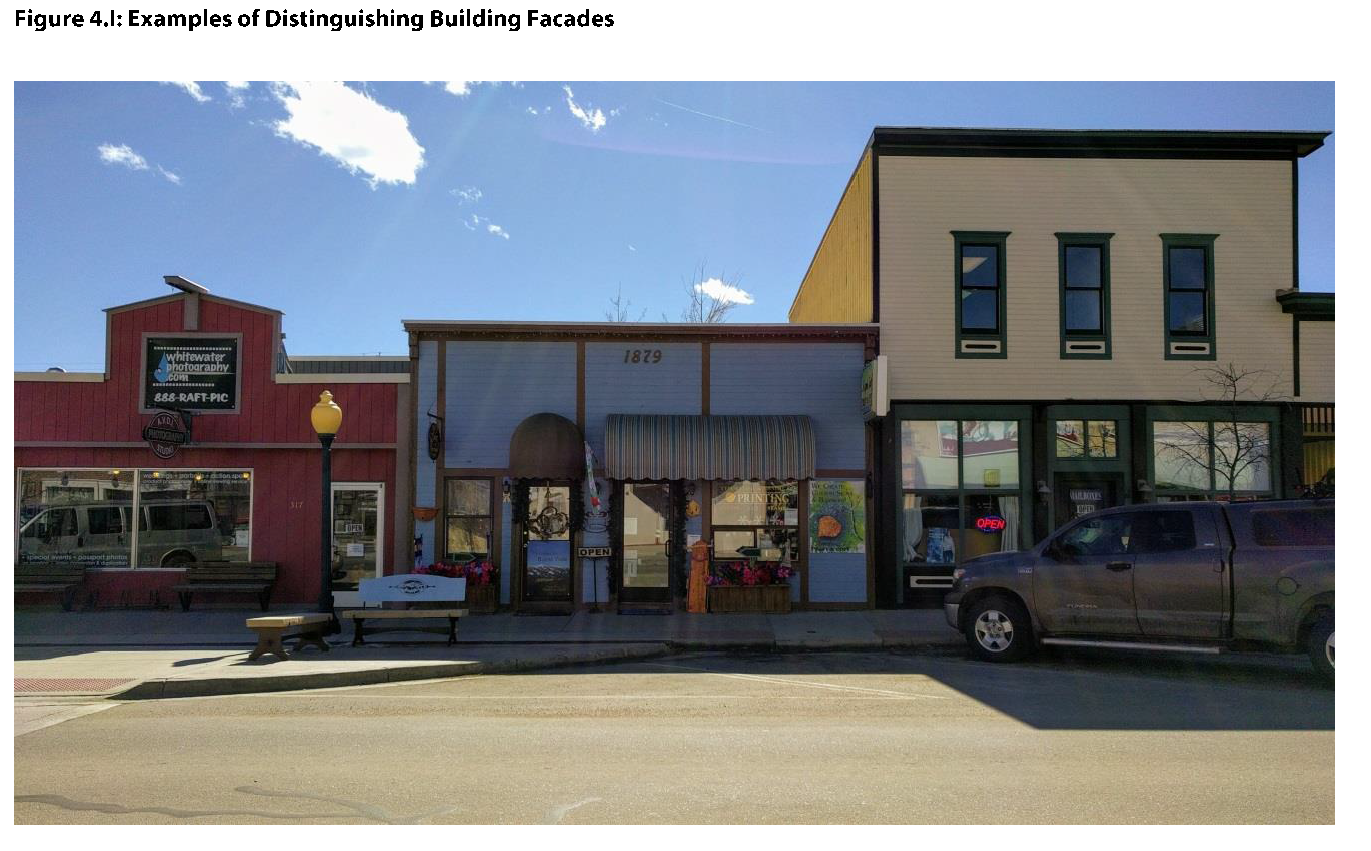
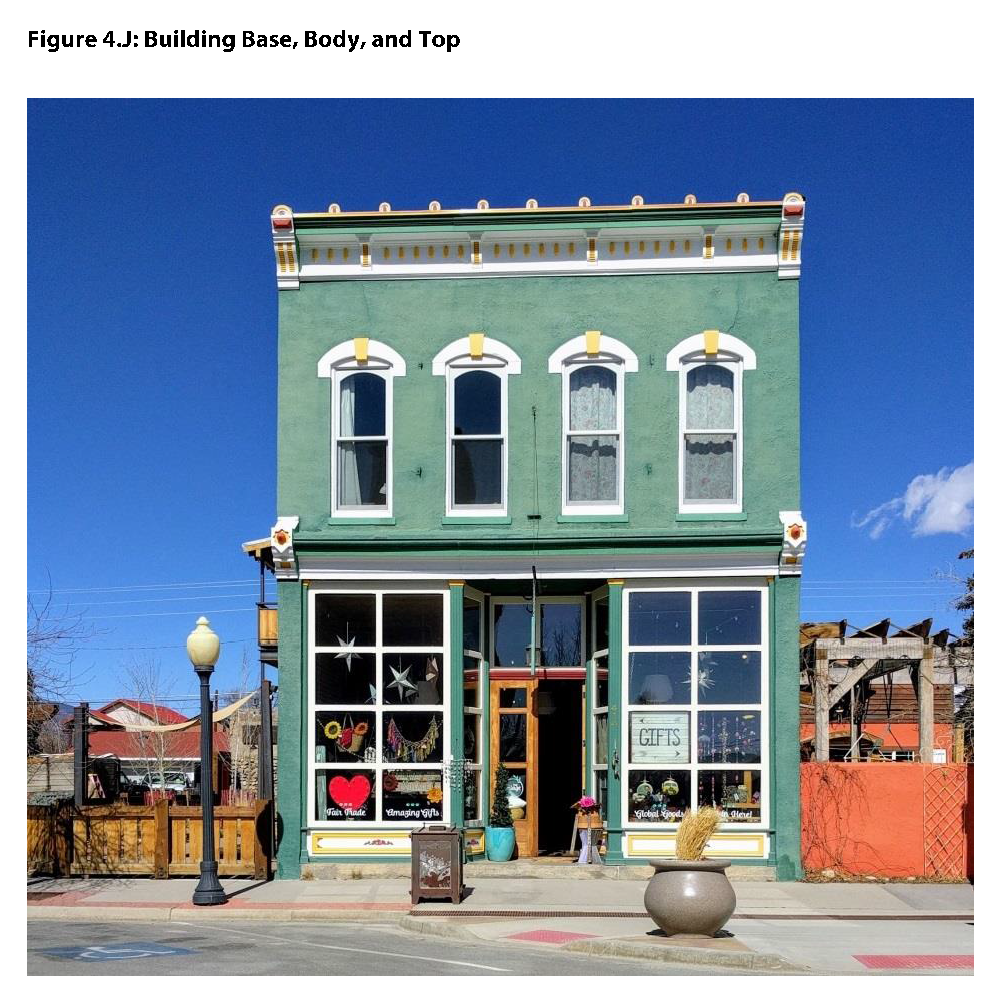
Buildings façades shall incorporate four (4) or more architectural elements or materials that distinguish the base, body, and top of the building. These elements shall include kickplates, display windows with transoms, recessed entry, belt course, upper story windows and cornices. See Figure 4.J.
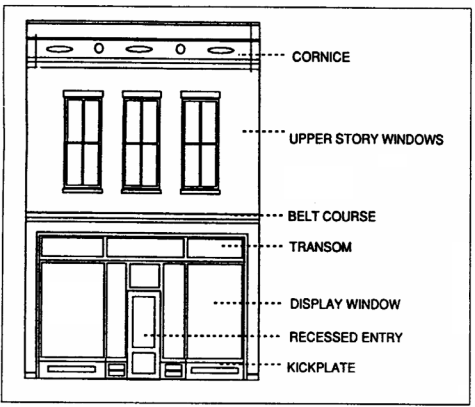
Figure 4.J Typical Historic East Main two-story commercial structure
E.
Building Transparency. Building facades facing a street, plaza, park, or other public space shall comply with the following standards:
1.
At least sixty percent (60%) of the ground floor shall be comprised of transparent window openings to allow views of interior spaces; and
2.
At least thirty percent (30%) of each upper floor shall be comprised of transparent glazing utilizing a minimum of three (3) vertically oriented windows. The height of these windows shall be at least twice the width.
F.
Street Corners. Buildings situated on street corners shall comply with the following standards:
1.
The most prominent features of the building shall be concentrated at the intersection to adequately frame the corner; and
2.
Architectural features such as angled facades, prominent entrances, or other unique building features as approved by the Town Administrator shall be employed to the maximum extent possible.
G.
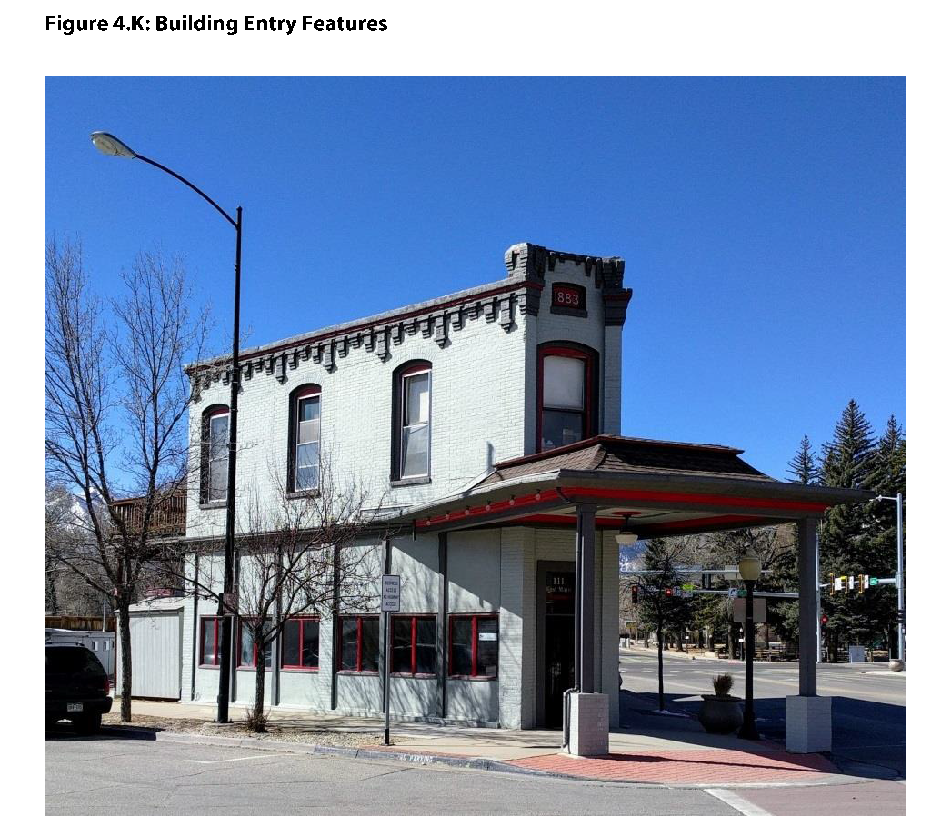
Primary Entrance. Buildings shall feature visually-prominent entrances. Unless otherwise provided in this UDC, primary building entrances shall incorporate two (2) or more of the following techniques:
1.
Recessed entrance, canopy, portico, archway, arcade, or similar feature that provides architectural interest and protection for pedestrians; or
2.
Other techniques deemed comparable by the Town Administrator.
H.
Primary Exterior Building Materials.
1.
Buildings are allowed to use a variety of exterior durable materials, including:
a.
Brick, natural stone, or cast stone;
b.
Horizontal bevel siding comprised of composite or rot-resistant wood. Steel may be used as an accent material only; or
c.
Comparable material as approved by the Town Administrator.
I.
Blocks with Alley Access. Garages and carports on blocks with alley access shall be accessed from the alley, not from the primary street. Vehicular access from a street, other than East Main Street, shall be at the discretion of the applicable decision-maker under this Code, and granted only if conflicts between vehicular and pedestrian traffic are minimized. New vehicular access from East Main Street shall not be permitted.
J.
Buildings with Three (3) Floors. If a building will have a third floor, the façade of the third floor shall be set back a minimum of fifteen (15) feet from the front façade of [the] first two (2) floor[s] and designed not to impede the views of the mountains and Courthouse that exist on East Main Street. The exterior building materials on the third floor shall be designed to minimize the visual impact of the third floor.
4.5.4. Design Standards in the Airport (AP) District. The following design standards apply to construction in the AP District:
A.
All exterior surfaces shall be of prefinished aluminum, steel, decorative masonry, or pre-colored laminate. No painted wood, unfinished materials, or walls comprised of more than fifty percent (50%) glass will be permitted;
B.
All exterior colors and materials shall be of neutral tones and shall be submitted for review and approval by the Airport Advisory Board;
C.
The front, rear, and sides of all buildings shall be of compatible design and aesthetics;
D.
All roofs shall be metal or cement tile and shall be of a tone and color consistent with the exterior façade materials; and
E.
Building materials shall not cause glare, reflections, or any other interference with flight operations, airport operations, or ground circulation.
(Ord. 5 §13, 2019)
(Ord. 3 §7, 2020; Ord. 5 §§16—19, 2022; Ord. 19 §§1—9, 2024)
Sec. 4.6. - Exterior lighting.
4.6.1. Purpose. The purpose of this Section is to ensure adequate exterior lighting for the safety, security, enjoyment and function of the proposed land use; conserve energy and resources; reduce light trespass, glare, artificial night glow, and obtrusive light; protect the local natural ecosystem from damaging effects of artificial lighting; and encourage quality lighting design and fixtures.
4.6.2. Applicability.
A.
General Applicability.
1.
The exterior lighting requirements apply to all new development and new buildings on previously developed lots unless exempted in paragraph B below.
2.
For nonresidential and multifamily developments, the applicant shall demonstrate compliance with this section through a detailed lighting and photometric plan submitted with applicable development application, building permit, and/or electrical permit requirements.
B.
Exemptions.
1.
Holiday Lighting.
a.
Temporary winter holiday lighting illuminated from November 1 to March 1 is allowed in nonresidential zoning districts. Residential zoning districts may use holiday lighting any time of year. Other exemptions for temporary holiday lighting may be approved by the Town Administrator through a temporary use permit.
b.
Holiday lighting shall not exceed one (1) footcandle at any property line, except where the property line is adjacent to walkways, driveways, and streets.
2.
Single-Family Dwellings. Soffit or wall-mounted lights with a light output of less than one thousand (1,000) lumens and permanently attached to single-family dwellings shall be exempt from the exterior lighting regulations, provided the lights do not exceed the height of the eave. Such lights shall be downcast and directed away from abutting properties. Once a property is subject to this Section, all lights shall continue to satisfy this requirement and lights may not be modified in violation of this Section.
3.
Outdoor Seating Areas. String lights located over an exterior dining or seating area of a commercial establishment shall be allowed provided such lighting does not exceed light spillover onto adjacent properties as required by 4.6.3.C.
4.6.3. Standards Applicable to All Development. The following standards apply to all development unless specifically exempted in Section 4.6.2.A. The development shall submit a proposed photometric (lighting) plan that complies with the standards in Sections 4.6.3, 4.6.4, 4.6.5, and 4.6.6 and meets the functional needs of the proposed land use while minimizing the adverse effects on adjacent properties or the community.
A.
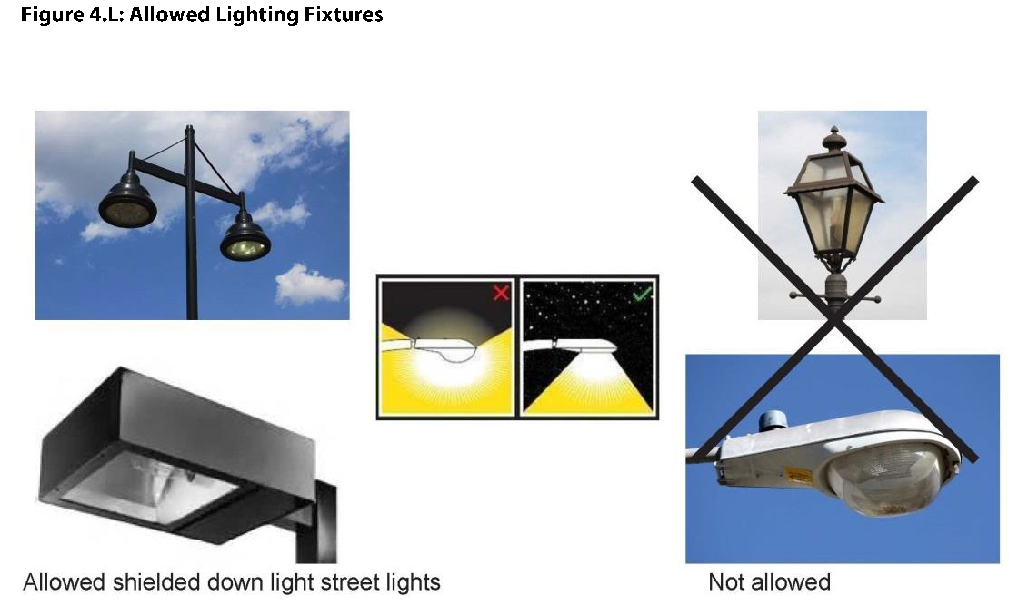
Except in the R-1, R-1.5, and R-2 districts, sidewalks, internal pedestrian paths, and bicycle paths shall be lit with full cutoff shielded and downcast fixtures no more than sixteen (16) feet tall and providing consistent illumination of at least one (1) footcandle on the walking surface.
B.
Lighting along public rights-of-way and landscaped areas for a specific development shall be designed uniformly.
C.
Light spillover onto adjacent properties shall not exceed one (1) footcandle at any property line, except where the property line is adjacent to walkways, driveways, and streets.
D.
Provide a comprehensive plan that clearly calculates the lumens of all exterior lighting being proposed. The plan shall consider nighttime safety, utility, security, enjoyment and commerce.
E.
Emergency egress lighting shall meet the illumination requirements in the IBC, as currently adopted per Section 18-271.
4.6.4. Parking Area Lighting.
A.
Pole Height. Parking area lighting fixtures shall not exceed twenty-five (25) feet in height.
B.
Shielding of Lights.
1.
Parking area lighting shall be full cutoff shielded and downcast fixtures.
2.
The source of light on any fixtures on a nonresidential or mixed-use lot adjacent to a residential use or district shall be shielded from sight from all residential uses.
3.
Lighting fixtures for canopies or similar structures shall be flush-mounted or recessed above the lower edge of the canopy.
C.
Illuminance.
1.
Average illuminance values in commercial and multifamily parking areas shall be a minimum of two (2) footcandles.
2.
Illuminance values in commercial and multifamily parking areas shall not exceed ten (10) footcandles directly below the light(s).
3.
The acceptable uniformity ratio for lighted areas shall comply with recommended ranges adopted by the International Engineering Society of North America (IESNA) for low, medium, and high activity areas.
D.
Hours of Lighting. A maximum of twenty-five (25) percent of the parking lot lighting fixtures may remain in operation from one (1) hour after business closing to one (1) hour before business opening to provide necessary security. During such time period, the average illuminance values in paragraph C.1 do not apply.
4.6.5. Building Lighting.
A.
Location and Direction.
1.
Except for decorative lighting, building-mounted lights shall be installed so that all light is directed downward.
2.
Wall packs and similar lights shall be prohibited unless the cutoff angle effectively eliminates glare from beyond the property lines.
4.6.6. Street Lighting.
A.
Street lights shall be installed by the developer for every new nonresidential or multifamily development, and for single-family developments containing more than ten (10) lots. Street lights may be required for other developments, if determined by the Town Administrator that they are necessary to protect the public health, safety, and welfare of the site and/or surrounding neighborhoods, and/or to maintain a consistent pattern of development.
B.
At a minimum, street lighting shall be installed at intersections to provide adequate lighting for pedestrians.
C.
All fixtures shall be compatible with the character of the neighborhood and Town as a whole as determined by the Public Works Director. The approved light types for installation in the Town's rights-of-way are detailed in the Development and Infrastructure Manual.
(Ord. 5 §14, 2019; Ord. 5 §20, 2022; Ord. 4 §§1, 53—57, 2025)
Sec. 4.7. - Signs.
4.7.1. Purpose. This section is intended to coordinate the use, placement, physical dimensions, and design of all signs within the Town while preserving the right of free speech and expression. The purpose of these regulations is to:
A.
Ensure that signs are well-designed and contribute in a positive way to the Town's visual environment, express local character, honor local heritage, and enhance the distinctive image for the Town;
B.
Recognize that signs are a necessary means of visual communication for the convenience of the public;
C.
Limit signage to those reasonably necessary to convey a desired message or identify an establishment or event;
D.
Lessen the visual clutter caused by proliferation, improper placement, illumination, animation, and excessive height and area of all signs that compete for the attention of pedestrian and vehicular traffic;
E.
Protect the public from the dangers of unsafe signs and require signs to be located, constructed, installed, and maintained in a safe and satisfactory manner;
F.
Encourage signs that are responsive to the aesthetics and character of their particular location, adjacent buildings, uses, site features, and the surrounding neighborhood; and
G.
Ensure that signs are appropriately sized for adjacent lots, building frontages, and rights-of-way.
4.7.2. Applicability.
A.
Generally. This section shall apply to any sign in any district, unless otherwise stated in this section or the UDC.
B.
Permit Required. No person shall erect, display, alter, relocate, or replace any sign, including a sign face replacement, without the prior issuance of a sign permit issued pursuant to Section 4.7.6, unless the sign is exempt from permit requirements as provided in Subsection C below.
C.
Signs That Do Not Require a Permit. The following signs do not require a sign permit, provided they comply with the applicable conditions and limitations listed below.
1.
Signs Required by Building Code. All signs required by building code shall be exempt from these standards provided they do not exceed two (2) square feet in area.
2.
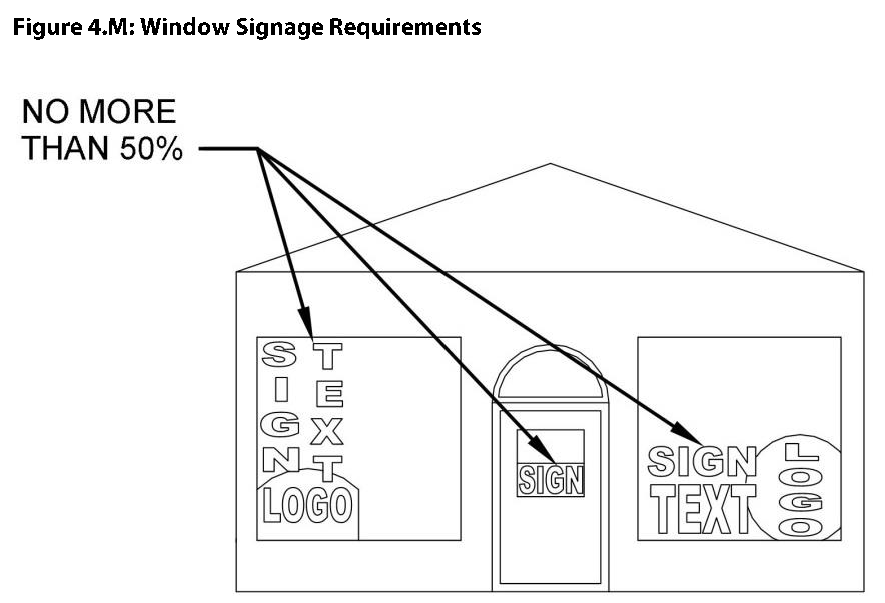
Window Signage. Signs and decals affixed or painted on windows or door glass panels, provided window signage does not cover more than fifty percent (50%) of any one (1) window panel.
3.
Banners.
a.
A banner shall not require a permit provided the following:
i.
Banners shall not exceed sixteen (16) square feet.
ii.
No more than one (1) banner shall be displayed on a property at one (1) time.
iii.
Banners shall be professionally printed and installed in a way that does not create a safety hazard.
iv.
No property shall display a banner for more than two (2) weeks every calendar quarter (January through March, April through June, July through September, and October through December).
b.
Banners not meeting any of the above may be permitted with a temporary sign permit pursuant to Section 4.7.5.C.1, with the required fee per the fee schedule.
4.
Flags. Up to three (3) flags allowed per property. Flags shall be affixed to permanent flagpoles, whether or not such flagpole is freestanding or attached to a building. A minimum pedestrian clearance of seven (7) feet shall be maintained for any flag hanging above a sidewalk or walkway. Nonpermanent flags for special events may be allowed if identified as part of the special event application.
5.
Public Signs. Signs required by the local and/or state government, or signs erected by government agencies, utilities, or special districts, including traffic, streets, utility, schools, safety, railroad crossing, wayfinding, public notices, and identification signs for public facilities.
6.
Signs Located Inside Buildings. Signs located inside a building, except that any sign located within five (5) feet of any window shall not have any flashing or moving lights that would produce any glare or distraction for any passing motorist, including video monitors and excluding temporary ambience or string lighting.
7.
Yard Signs. Yard signs are permitted on a property provided such signs comply with the following:
a.
Yard signs shall be limited to two (2) per property, except that during a period of sixty (60) days before and seven (7) days after an election date, yard signs shall be limited to five (5) per property. For purposes of this section, election date means the date of any regular or special Town election, county election or state or federal primary or general election.
b.
Yard signs shall be limited to six (6) square feet per sign within residential zoning districts, and sixteen (16) square feet per sign within all other zoning districts.
c.
No person shall post any yard sign upon public or private property without permission of the property owner;
d.
Yard signs shall not be permitted on any utility pole, lighting pole, or other similar structure; and
e.
Yard signs shall not be placed on a property for more than ninety (90) days in a calendar year.
8.
Site Construction Signs. One (1) temporary sign may be allowed after the commencement of construction on a site. The sign shall not exceed thirty-two (32) square feet in area and six (6) feet in height. The site sign shall be removed after the first certificate of occupancy for the project is issued.
4.7.3. Prohibited Signs. The following signs are prohibited:
A.
Glaring Signs. Signs with light sources or that reflect brightness (such as mirrors) to constitute a hazard or nuisance as determined by the Town Administrator. This includes signs with neon, LED lights, fluorescent text, graphics, or background, as well as holographic signs.
B.
Obstructive Signs or Signs in the Public Right-of-Way. Any sign that obstructs free and clear vision of an intersection or traffic approaching the intersection or a roadway or any sign in, on, or above a public right-of-way that in any way interferes with normal or emergency use of that right-of-way without entering into a revocable encroachment license agreement with the Town.
C.
Exterior Signs. Any exterior sign affixed to any structure, fence, tree, pole, or natural vegetation except in designated community areas or as otherwise permitted by this UDC.
D.
Vehicle Signs. Any sign displayed on a parked vehicle or trailer, unless:
1.
The vehicle or trailer is functional with current registration; and
2.
The vehicle or trailer is parked in a parking space or behind a principal building.
E.
Abandoned Signs. Any unused abandoned sign, including any pole or structure supporting such sign, shall be removed within six (6) months after becoming abandoned. If an existing sign pole or structure is expected to be used for future use of an existing building, then such structure may remain; however, the copy, text, icon, or any messages on such sign shall be removed.
F.
Backlit and Internally-Illuminated Signs in the MU-MS district. Any backlit or internally-illuminated sign is prohibited except for within the HC and I-1 zoning districts. Backlit or internally-illuminated signs existing as of the effective date of this UDC shall be considered nonconforming.
G.
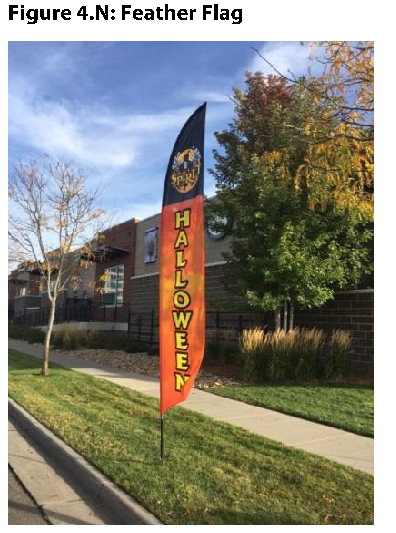
Feather Flags. Feather flags and similar devices shall only be allowed with a special event permit and shall be limited to a maximum of two (2) weeks.
H.
Streamers. No sign shall contain or consist of pennants, ribbons, streamers, spinners or other similar moving, fluttering, or revolving devices.
I.
Permanent Banners. Banners shall only be allowed as a temporary sign, pursuant to Section 4.7.2.C.3.
J.
Roof-Mounted Signs. No sign shall be permitted to be mounted on the roof of a building.
K.
Animated or Moving Signs. Animated or moving signs are not permitted unless approved through a Comprehensive Sign Plan pursuant to Subsection 4.7.6.F. Fluttering air devices shall not be permitted through the Comprehensive Sign Plan procedures.
L.
Inflatable Signs and Objects. Signs and other objects that are inflated, including, but not limited to, balloons are prohibited.
M.
Obscene Signs. Signs containing obscenity are prohibited.
4.7.4. Nonconforming Signs. A nonconforming sign may remain, provided that it is maintained in good repair, pursuant to the following provisions.
A.
Modification. Nonconforming signs shall not be enlarged, extended, structurally reconstructed, or altered in any manner unless the sign is modified to conform to this Section 4.7.
B.
Damage.
1.
A nonconforming sign or the structure supporting the sign that is damaged or destroyed to the extent of fifty percent (50%) or more of the replacement cost shall not be altered, replaced, or reinstalled unless it is in conformance with this Section 4.7.
2.
A nonconforming sign or the structure supporting the sign that is damaged or destroyed to the extent of less than fifty percent (50%) of the replacement cost shall comply with the following:
a.
Repairs shall return the sign to previous conditions prior to the damage, or shall bring the sign into conformance with this Section 4.7;
b.
Repairs shall commence within sixty (60) days;
c.
Repairs shall be completed within six (6) months from the date of damage or destruction.
C.
Abandonment. Nonconforming signs that also constitute an abandoned sign shall be brought into conformance with Section 4.7 prior to establishing any new use.
D.
Change in Use. A sign face on a nonconforming sign may be replaced following a change in use so long as such change does not increase the nonconformity of the sign and the sign does not qualify as an abandoned sign. Changes to the sign face shall require approval of a new sign permit.
E.
Change in Location. Nonconforming signs shall not be moved to a new location either on-site or off-site, unless the new location of such sign eliminates all nonconformities associated with the sign.
4.7.5. Sign Standards.
A.
General Sign Standards.
1.
Materials and Safety.
a.
All signs shall be constructed of durable materials and installed to withstand expected winds, snow loads, and deterioration from the elements.
b.
Permitted sign materials include wood, metal, stone, or other durable material. No sign shall contain iridescent or Day-Glo paint. Permitted permanent exterior signs shall not be made of paper, cloth, canvas, cardboard, wallboard, or other similar nondurable material.
2.
Sign Maintenance. All signs shall be maintained in good repair and in a safe, clean, and attractive condition. Changes to a sign face that do not alter the sign structure shall require approval of a new sign permit. Changes to the sign structure other than the sign face shall be evaluated for compliance at the time of permit.
3.
Design and Use. All signs shall be uncluttered, used for the purpose of business or subdivision identification, and provide sufficient contrast between letters, images, and the background.
4.
Revocable License and Encroachment Permit Required. The owner of any sign extending over a public street or other public right-of-way or space shall complete an encroachment permit application with required fees and enter into a revocable license agreement with the Town prior to installing the sign.
5.
Sign Measurement.
a.
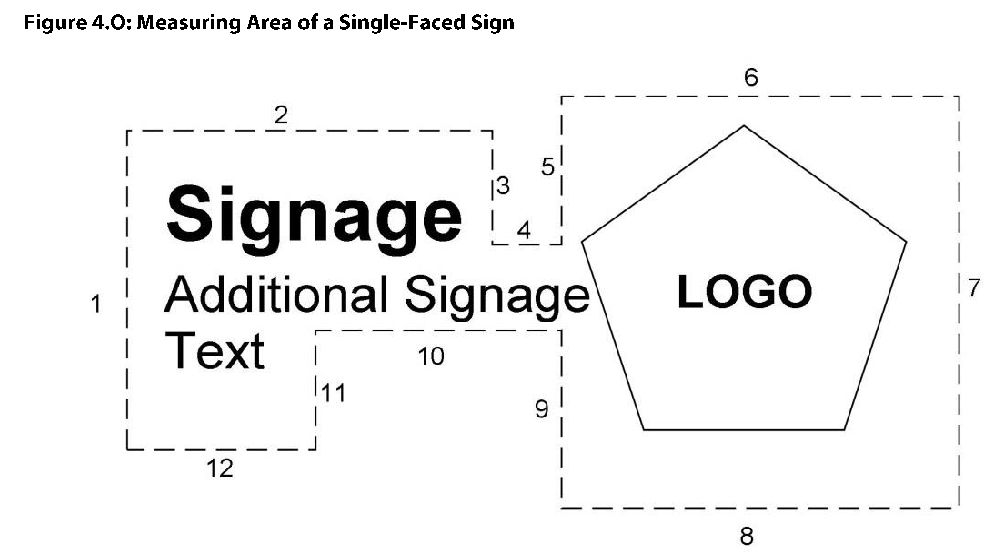
Area. The area of a sign shall be equivalent to the total surface devoted to a sign message, including text, symbols, photographs, logos, and display faces, but excluding supporting structures and time-and-temperature display.
i.
Single-Faced Signs. The area of a sign with one (1) sign face shall be calculated as the total area of the sign face measured by using no more than twelve (12) perpendicular lines for rectilinear designs. For signs with cutout letters, displays, symbols, or logos, the area shall be calculated by determining the area that can be enclosed by a rectangle or series of geometric shapes.
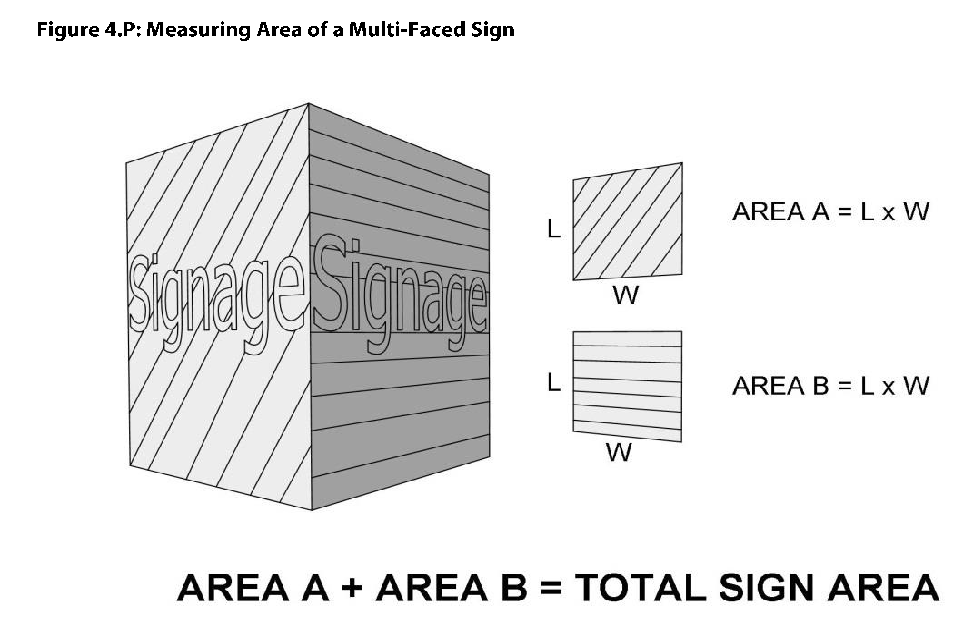
ii.
Double-Faced Signs. The area of a sign with two (2) sign faces shall be considered as one (1) total sign face calculated by adding the area of both sign faces.
iii.
Multi-Faced (Three or More) Signs. The sign area shall be calculated by the area of all sign faces.
b.
Height. The height of a sign shall be measured from the average grade at the base of the sign to the highest point of a sign.
6.
Illumination.
a.
The light from any sign shall be directed to avoid causing a traffic hazard, nuisance, or glare on any public right-of-way or adjacent property.
b.
All lighting fixtures shall be directed downward below a ninety-degree horizontal plane extending from the lowest point of the light source.
c.
The source of illumination shall not be visible from any street, sidewalk, or adjacent property.
d.
Full-spectrum and energy-efficient light bulbs are recommended.
e.
Exterior sign lights shall have a maximum illuminance of one thousand (1,000) lumens.
B.
Permanent Signs.
1.
Summary Table of Permanent Sign Standards. Table 4.5 below summarizes the requirements for permanent signs. Additional applicable requirements follow the table.
2.
Wall Signs. A wall sign shall not:
a.
Extend above the roof or parapet of the building front or fascia.
b.
Result in the modification, alteration, or obstruction of any historic architectural design elements.
3.
Projecting Signs. Projecting signs:
a.
Shall not result in the modification, alteration, or obstruction of any historic architectural design elements.
b.
Shall extend from the building wall or fascia at an angle of ninety (90) degrees.
c.
Shall not project more than three (3) feet from the plane of the face of the building to which they are attached.
d.
Extending over a public street or other public right-of-way or space during the period of time that the sign and associated attachments are installed shall enter into a revocable license agreement pursuant to Section 4.7.5.A.4 prior to installing the sign.
4.
Awning, Canopy, or Marquee Signs.
a.
Awnings shall not be constructed of vinyl or plastic. Awnings shall be made of durable materials such as fabric or metal.
b.
The sign on an awning may be printed or painted.
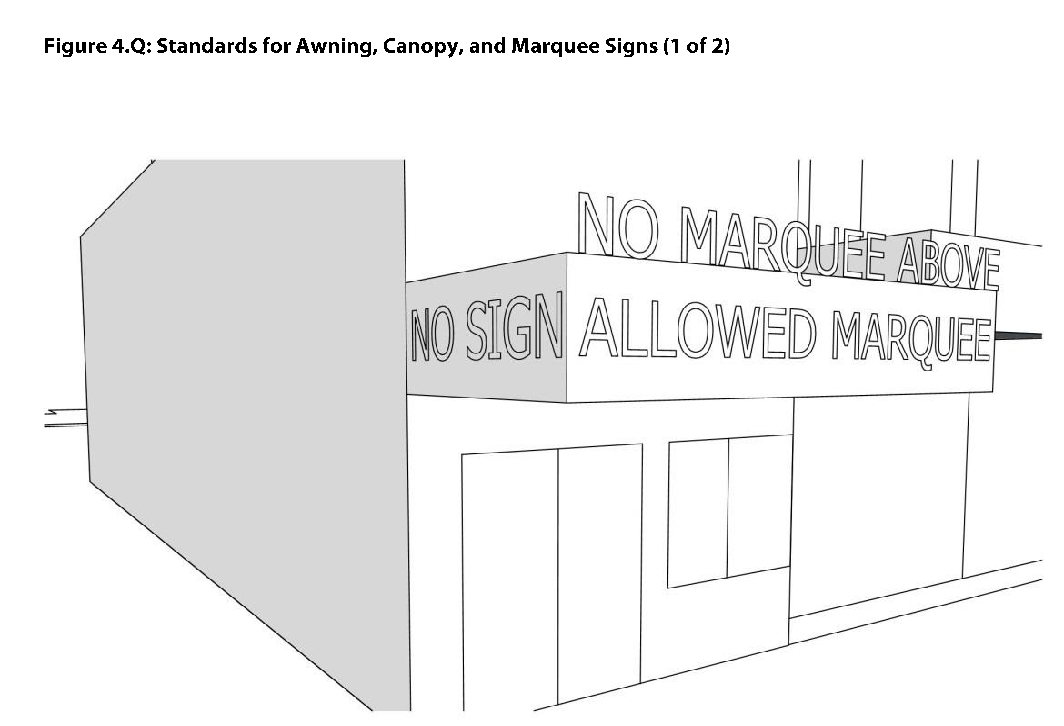
c.
An awning sign shall not project above the awning.
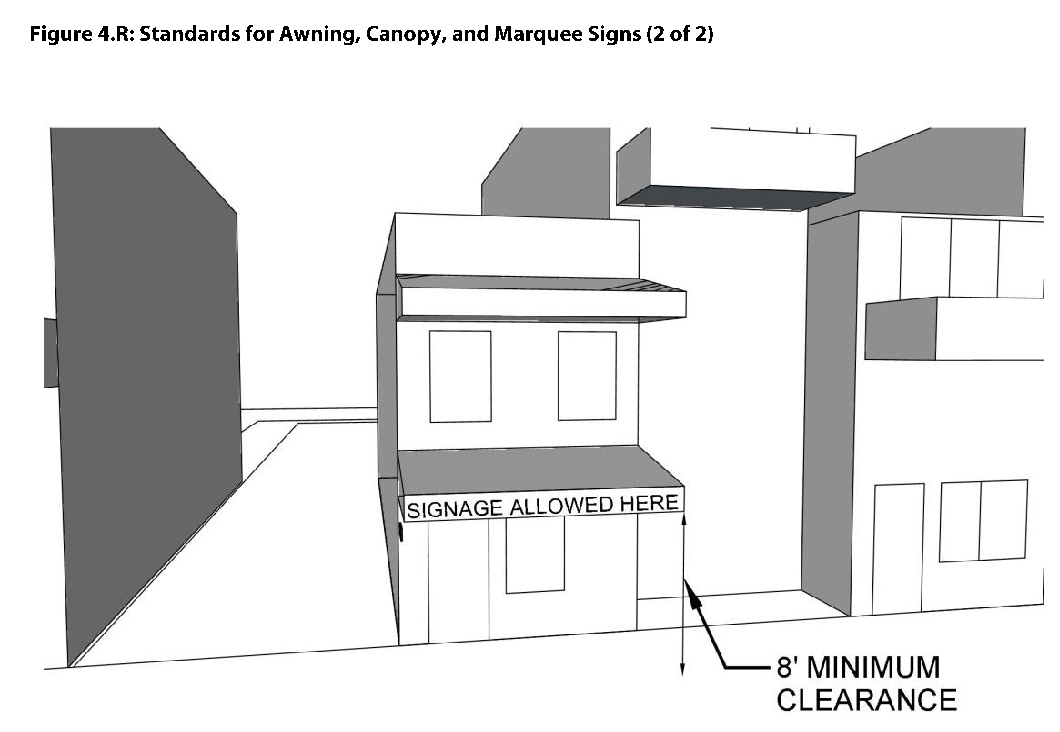
d.
An awning, canopy, or marquee sign shall be located on the front surface, parallel with the building wall facing the street frontage.
e.
An awning, canopy, or marquee sign shall not project above the structure on which it is affixed to, or be located on the canopy roof.
f.
An awning, canopy, or marquee sign shall be at least eight (8) feet above the ground or sidewalk over which it extends.
g.
An awning, canopy, or marquee sign shall be located on the first-floor business only.
h.
Any sign suspended below an awning or canopy, such as a soffit sign shall be no lower than eight (8) feet above the sidewalk.
5.
Freestanding Signs, Generally.
a.
Freestanding signs shall be located inside the property line and outside all clear sight triangles.
b.
Freestanding signs shall be designed to not block the view of an adjacent business and shall not interfere with any sidewalk or path.
c.
Surrounding landscaping shall be provided where possible, as determined by the Town Administrator.
6.
Freestanding Monument and Pole Signs. For properties or buildings with multiple tenants, monument and pole signs shall provide space for all potential tenants.
7.
Electronic Message Boards.
a.
Only Permitted as Freestanding Monument Sign. Electronic message boards shall only be permitted as freestanding monument signs and shall not be attached to any other building, structure, or pole.
b.
Illumination and Brightness.
i.
Electronic message boards shall have automatic dimmer software or sensors to control brightness according to ambient light conditions. The light source shall not produce any glare that constitutes a traffic hazard or negatively impacts the public health, safety, or welfare of the community.
ii.
An electronic message board luminance shall not exceed three hundred (300) NITs between dusk and dawn as measured from the sign's face.
iii.
Applications for a sign permit for an electronic message board shall include the manufacturer's specifications and NIT rating.
c.
Location. Electronic message boards shall comply with the locational requirements of freestanding monument and pole signs in subsections 5 and 6 above.
d.
Message Images and Transitions. Electronic message boards shall:
i.
Contain static messages only;
ii.
Display images and messages for a period of not less than eight (8) seconds.
iii.
Not include any movement or transitions.
8.
Sidewalk Signs.
a.
Portable signs shall not be located in the public right-of-way, except for an A-Frame sign for properties in the MU-MS district with an approved encroachment permit and revocable license agreement pursuant to Section 4.7.5.A.4. Portable signs in MU-MS must adhere to the following:
i.
Portable signs must be located on a sidewalk or other hardscape pedestrian areas (non-vehicular) as adjacent to the building wall as practical and within eight (8) feet of the public entrance to the tenant or occupant that displays the sign;
ii.
Multi-tenant buildings must coordinate placement of sidewalk signage to ensure that the sidewalk remains accessible and uncluttered, as approved by the Planning Department;
iii.
Portable signs are prohibited from being placed in sidewalk bump-outs or curb extensions; and
iv.
A minimum unobstructed width of four (4) feet shall be maintained along all sidewalks.
b.
Portable signs shall be made of durable material and must be anchored or weighted to avoid movement in strong winds.
c.
Portable signs may only be displayed during business hours.
9.
Drive-Through Signs.
a.
Each drive-through sign shall incorporate materials and colors that match or complement the materials and colors of the associated building;
b.
Each drive-through sign shall include an architecturally complementary base that is proportional to the size of the sign;
c.
No other sign shall be attached or added to a drive-through sign; and
d.
Each drive-through sign shall be surrounded at its base with appropriate landscaping and/or xeriscaping consistent with the remainder of the site.
10.
Historical Signs.
a.
Signs of thirty (30) years of age or more are permitted by the Town to be retained in nonresidential zoning districts and shall not count toward permitted signage for the property, provided that:
i.
The sign is kept in good repair;
ii.
The sign does not constitute a hazard to public safety; and
iii.
The original content on the sign does not change.
b.
Historic marquee signs shall be exempt from the projecting sign standards in Section 4.7.5.B.3, except an historic marquee sign shall require a revocable license agreement and encroachment permit where projecting over the public right-of-way.
11.
Off-Premises Signs.
a.
Location. Off-premises signs:
i.
Are prohibited on Town property.
ii.
Are limited to mixed-use and nonresidential zoning districts.
iii.
Shall not interfere with pedestrian or vehicle traffic.
iv.
Shall not be placed in areas designated as Town parks.
v.
Shall comply with state standards if located adjacent to state highways.
b.
Standards.
i.
Off-premises signs shall not detract from the general appearance of the area in which the sign is being placed.
ii.
No property owner shall be permitted more than one (1) off-premise sign.
iii.
No more than two (2) off-premises signs shall be placed on any single parcel of property or property frontage.
iv.
Off-premises signs shall be a maximum of six (6) square feet per side.
c.
Review Procedures. Proposals for off-premises signs shall follow the procedures for a Comprehensive Sign Plan in Subsection 4.7.6.F in addition to the following:
i.
The applicant shall submit an off-premises sign application and processing fee as established by the Town; and
ii.
The applicant shall obtain written permission from all adjacent property owners for the placement of the off-premises sign along street frontage or property by adjoining property owners.
C.
Temporary Signs.
1.
Permit and Application.
a.
Temporary signs shall only be erected after obtaining a temporary sign permit. The temporary sign permit shall cite the length of time the sign may be displayed and date of expiration. Temporary signs shall not be permitted for a period exceeding one hundred eighty (180) days unless otherwise stated in this UDC.
b.
A temporary sign permit application shall include the appropriate permit fee as established by resolution of the Board of Trustees.
c.
Temporary signs shall be removed within the time period specified on the permit. Upon applicant certification that the sign has been removed, the deposit shall be returned.
d.
No more than five (5) temporary signs are allowed on single property in total, including temporary signs allowed without a permit.
2.
Type and Size of Temporary Signs.
a.
Temporary Vendor Signs. Signs for temporary vendors shall be processed concurrently with an application for a temporary vendor permit and fee provided per the fee schedule. Vendor signs shall be constructed of permanent durable materials. Signs for temporary vendor vehicles shall be limited to those affixed and/or painted on the vehicle and to one (1) freestanding temporary sign (such as a sidewalk sign) no more than twelve (12) square feet in size.
b.
Special Event Banners. Banners may be allowed to be hung over Main Street in association with a special event approved or sponsored by the Town. Such signs shall constitute temporary signs, and may be erected one (1) week prior to the special event and shall be removed within three (3) days following the special event. Such banners shall be reviewed and approved as part of a special event permit and shall not require a separate temporary sign permit.
4.7.6. Sign Review and Approval Procedures. No sign, except as provided by Section 4.7.2.C, shall be erected, displayed, altered, relocated, or replaced, including a sign face replacement, until the Town has issued a sign permit.
A.
Sign Permit Application Submittal. Sign permit applications shall be submitted on forms provided by the Town, and shall include the following:
1.
Business name, address, and phone number where the proposed sign is to be located;
2.
Business owner name, mailing address, and phone number;
3.
Property owner name, mailing address, and phone number;
4.
Site plan showing the location of the sign on the premises in relation to lot lines, buildings, sidewalks, streets, and public rights-of-way;
5.
Description of sign(s), including type, size, structural design, and construction materials;
6.
Drawing or photograph of the proposed sign with specifications indicating height, perimeter, area of sign and/or area of copy, dimensions, type of lettering proposed, means of support, method of illumination, and any other significant characteristics;
7.
Electrical permit for any new electrical work required;
8.
Any other information requested by the Town Administrator to determine compliance with the regulations in this Section 4.7; and
9.
The required sign permit fee as established by resolution of the Town.
B.
Application Completeness Determination. The Town Administrator shall make a determination that the application, with all required data, has been properly prepared and submitted and is complete. The official date of submission shall be the day the Town Administrator determines that the application is complete.
C.
Permit Review and Action.
1.
Permit Application Review. The Town Administrator shall review the sign permit application for compliance with this Section 4.7 and shall either ask for more information or issue or deny the permit.
2.
Inspection for Compliance.
a.
The Town Administrator shall perform a final inspection after installation of any approved sign.
b.
Any discrepancies between any sign as approved and the sign as constructed or installed shall be identified in writing and shall require correction of the discrepancy. If the discrepancy is not corrected within 20 days after written notice, the sign may be ordered removed by the Town Administrator.
D.
Violations. Any sign that has not been permitted or has not been designated a legal nonconforming sign shall be deemed to be in violation of these regulations and shall be ordered removed by the Town Administrator. Any costs for removal shall be at the expense of the sign owner or the property owner. Failure to comply will result in the Town proceeding with additional enforcement procedures pursuant to Section 1.6. Any sign that has not been permitted or has not been designated a legal nonconforming sign that is placed within the Town or CDOT right-of-way may be removed by the Town Administrator. After five (5) business days the Town Administrator may dispose of any sign removed if it is not collected prior.
E.
Post-Approval Actions.
1.
Expiration of Sign Permit. If a sign authorized by any sign permit has not been erected within one (1) year from the date of permit approval, the sign permit shall be deemed expired. Prior to the deadline of sign installation, the applicant may request an extension, in writing, from the Town Administrator. The Town Administrator may establish an extended time period for sign installation at the time of permit approval for sign applications that are submitted as part of developments requiring site or building construction.
2.
Revocation of Sign Permit. The Town Administrator shall take action if any sign, whether new or preexisting, is damaged, moved, or otherwise altered, either intentionally or by natural forces, in a manner that causes the sign to be not in conformity with these regulations or to be a hazard or danger to the public. The Town Administrator shall give written notice specifying the violation to the sign owner and the property owner to conform or to remove the sign. If the sign has not been brought into conformance within twenty (20) days from the date of the notice, the Town Administrator shall schedule a public hearing before the Board of Trustees. At such hearing, the Board of Trustees shall revoke the sign permit and the subject sign shall be deemed a nuisance and may be abated as such.
F.
Comprehensive Sign Plan.
1.
Applicability.
a.
The Comprehensive Sign Plan procedures apply to the following types of signs:
i.
Signs greater in number or size than permitted by this Section 4.7;
ii.
Off-premises signs, pursuant to the standards in Subsection 4.7.5.B.11;
iii.
Neon signs;
iv.
Statuary signs; and
v.
Animated and moving signs.
b.
The following signs are not eligible for inclusion with any Comprehensive Sign Plan:
i.
Pole signs taller than twenty (20) feet;
ii.
Roof signs;
iii.
Signs that do not require a permit, pursuant to Section 4.7.2.C;
iv.
Inflatable signs;
v.
Feather flags;
vi.
Internally-illuminated signs outside the HC or I-1 zoning districts; or
vii.
Fluttering air devices pursuant to Section 4.7.3.K.
2.
Comprehensive Sign Plan Application Submittal.
a.
Applications for a Comprehensive Sign Plan shall be submitted to the Town Administrator on forms provided by the Town.
b.
A reasonable fee as determined by the Town shall be submitted with each application. Actual costs for professional planning, engineering, legal and/or other consulting services incurred by the Town in reviewing an application shall be paid by the applicant.
c.
A site plan showing location of signs shall be required as part of the application.
d.
Additional information may be required by the Town Administrator as necessary to evaluate the merits of the Comprehensive Sign Plan application.
3.
Completeness Determination. Applications for a Comprehensive Sign Plan shall be initially reviewed by the Town Administrator for completeness prior to further processing or distribution to review bodies and/or decision-makers.
4.
Review Procedures.
a.
Administrative Review.
i.
Applicability. Administrative review shall be limited to the following types of applications:
(a)
Comprehensive Sign Plans with total proposed signage of less than forty-eight (48) square feet above the stated maximum for the subject property, and with no internally lit signage, except as allowed in the HC and I-1 zoning districts;
(b)
Off-premises signs, pursuant to the standards in Subsection 4.7.5.B.11;
(c)
Exterior wall murals, signs painted on a wall, or roof murals;
(d)
Neon signs; and
(e)
Statuary signs.
ii.
Notice. Following application submittal, the Town shall provide notice of the application to adjacent property owners (excluding public rights-of-way) summarizing the plan and notifying them of their right to comment on or object to the plan by filing such comments or objections with the Town Administrator within seven (7) business days of the date of notification. Such notice shall be provided by:
(a)
Prominently and visibly posting notice on the property subject to the application; and
(b)
Delivering notice either by regular mail or personal delivery.
b.
Planning and Zoning Commission Review.
i.
Applicability. Applications that do not meet the requirements for the administrative review process set forth in Subsection 4.7.6.F.4.a above shall be reviewed by the Planning and Zoning Commission.
ii.
Notice and Public Hearing. The applicant shall be notified in advance of the time and place of the Planning and Zoning Commission's public hearing and may attend and participate in such hearing. Not less than fifteen (15) days prior to the hearing, written notice describing the request and the time and place for the hearing shall be prominently and visibly posted on the property subject to the application and sent by regular mail to the applicant and the owners of all properties that are adjacent to the subject property (excluding public rights-of-way).
5.
Action Required.
a.
For Comprehensive Sign Plan applications subject to administrative review, the Town Administrator shall approve, deny, or conditionally approve the application within ten (10) business days based on the criteria set forth in paragraph 6.
b.
For applications for Comprehensive Sign Plans subject to Planning and Zoning Commission Review the Planning and Zoning Commission shall approve, deny, or conditionally approve the application at the next available meeting based on the criteria set forth in paragraph 6.
6.
Approval Criteria.
a.
Comprehensive Sign Plans shall be approved by the Planning and Zoning Commission or Town Administrator, as applicable, after finding that the proposed plan will not adversely impact the neighborhood or the public safety and welfare and the applicant has demonstrated compliance with the following criteria:
i.
The proposed Comprehensive Sign Plan results in a greater community benefit than otherwise achieved through the strict application of the sign regulations in this Section 4.7;
ii.
The features of the sign(s), including the illumination, support structure, color, lettering, height and location, are designed so that the signs are an attractive, effective, and complementary feature of the building or property;
iii.
The scale and placement of the signs are appropriate for the building and the site and are sensitive to the context in which they are used; and
iv.
The signs are professionally designed and fabricated of high-quality, durable materials.
b.
Decisions shall be in writing and shall be provided to the applicant.
c.
A Comprehensive Sign Plan may or may not run with the property and shall be approved subject to such safeguards, terms, and conditions as deemed necessary to protect and preserve the intent and purposes of this Section 4.7.
7.
Comprehensive Sign Plan Amendments. The following activities shall require a Comprehensive Sign Plan Amendment:
a.
Additional Sign Square Footage.
i.
Additional sign square footage up to ten percent (10%) over the approved square footage shall be reviewed administratively.
ii.
Additional sign square footage more than ten percent (10%) over the approved square footage shall be reviewed by the Planning and Zoning Commission.
b.
Additional Number of Signs.
i.
Amendments proposing one (1) additional sign more than what was approved shall be reviewed administratively.
ii.
Amendments proposing more than one (1) additional sign in addition to what was approved shall be reviewed by the Planning and Zoning Commission.
c.
Amendment Procedure.
i.
Amendments shall be processed as new applications according to the procedures in Paragraph 4 above.
ii.
Only one (1) amendment to an individual Comprehensive Sign Plan shall be processed per calendar year.
d.
Replacement Signs.
i.
Individual units and tenants shall be permitted to replace and/or change signage without requiring an amendment to the Comprehensive Sign Plan provided that the sign does not increase square footage or the number of signs. Replacement signs shall be required to obtain a sign permit according to Section 4.7.6.
4.7.7. Savings and Severability.
A.
Signs containing noncommercial speech are permitted in any location where commercial signs are permitted, subject to the same regulations applicable to such signs.
B.
If any clause, section, or other part of the application of this Section 4.7, Signs, shall be held by any court of competent jurisdiction to be unconstitutional or invalid, it is the intent of the Board of Trustees that such clause, section, or other part of the application of this section shall be considered eliminated and not affecting the validity of the remaining clauses, sections, or applications remaining in full force and effect.
(Ord. 3 §§8, 9, 2020; Ord. 10 §§1-3, 2021; Ord. 21 §§5, 8, 2024; Ord. 08 §§18, 19, 2025; Ord. 12 §§9, 10, 2025)
Sec. 4.8. - Water supply.
4.8.1. Adequate Water Supply.
A.
Purpose. The purpose of this section is to ensure that developments demonstrate the availability of water for the type of use proposed and that the Town, as the water utility, has adequate water capacity to supply water to a development.
B.
Applicability. For every development, the Town shall evaluate whether it has adequate water to supply for the development. In making this evaluation, the Town may take into consideration the type of use, density, long-term water goals of the Town, water quality and any other factor relevant to the evaluation of whether an adequate water supply exists. No development is ensured water from the Town and the lack of adequate water supply may be a basis for denial of a development or building permit application. For developments involving more than thirty-two (32) single-family equivalents, which shall include both possible primary and accessory uses based upon the type of permitted uses, evaluation of an adequate water supply shall occur during preliminary plat phase in accordance with Sec. 16.06.6.6.3 and if adequate water supply is found, no further evaluation shall be made for the specific project, except as allowed by C.R.S. § 29-20-303.
C.
Water Report. A development which results in a new water use in an amount more than that used by thirty-two (32) single-family equivalents must submit a water report with the following information:
1.
An estimate of the water supply requirements for the proposed development through build-out conditions;
2.
A description of the physical source of water supply that will be used to serve the proposed development;
3.
An estimate of the amount of water yield projected from the proposed water supply under various hydrologic conditions;
4.
Water conservation measures, if any, that may be implemented within the development;
5.
Water demand management measures, if any, that may be implemented within the development to account for hydrologic variability; and
6.
Such other information as may be required by the Town.
(Ord. 5 §3, 2021)
Sec. 4.9. - Certain development activities in the MU-MS District.
4.9.1. Certain development activities in the MU-MS District. Notwithstanding the requirements in this Article, exterior alterations to an existing building, alterations affecting a party wall between units in an existing building or between existing buildings, a change in use of an existing building, or new construction in the MU-MS district shall be subject to provisions of Title 19 of this Code
(Ord. 15 §2, 2022)
Sec. 4.10. - Design report requirements.
Complete engineering design reports, prepared and sealed by a Colorado registered engineer, shall be submitted to the Town with the final plat and major site plan submittals. Design reports may also be required for minor subdivisions, as determined by Staff or the Town Administrator. The content of a design report is designated in the Development and Infrastructure Manual. The Town may require additional engineering reports as needed during the development review process. A design report shall include a geotechnical report, water usage report, traffic impact statement or report, drainage report, utility report, and pavement design report, as applicable.
(Ord. 4 §58, 2025)

