
Buena Vista City Zoning Code
ARTICLE 16
07 - Rules of Construction and Definitions
Sec. 7.1. - General rules of construction.
The following shall apply for construing or interpreting the terms and provisions of this UDC.
7.1.1. Meanings and Intent. All provisions, terms, phrases, and expressions in this UDC shall be construed according to the general purpose set forth in Section 1.2 and the specific purpose statements elsewhere in this UDC. If a specific section provides a different meaning of a term defined for general purposes in this Article, the specific section's meaning and application shall control. Otherwise, terms will have the general and commonly accepted meanings.
7.1.2. Headings, Illustrations, and Text. In case of any difference of meaning or implication between the text of this UDC and any heading, caption, figure, illustration, table, or map, the text shall control.
7.1.3. Lists and Examples. Unless otherwise indicated, lists of items or examples that use terms such as "for example," "including," and "such as," or similar are intended to provide examples and are not exhaustive lists of all possibilities.
7.1.4. Computation of Time. The time in which an act is to be done shall be computed by excluding the first day and including the last day. If a deadline or required date of action falls on a Saturday, Sunday, or holiday, the deadline shall be the next day that is not a Saturday, Sunday, or holiday. References to "days" are calendar days unless otherwise stated.
7.1.5. Public Officials and Agencies. All public officials, bodies, and agencies referred to in this UDC are those of the Town of Buena Vista, Colorado unless otherwise stated.
7.1.6. Mandatory and Discretionary Terms. The words "shall," "must," and "will" are mandatory in nature, establishing an obligation to comply. The words "may" and "should" are permissive in nature.
7.1.7. Conjunctions. Unless the context clearly suggests otherwise, conjunctions shall be interpreted as follows:
A.
"And" indicates that all connected items apply; and
B.
"Or" indicates that one (1) or more of the connected items apply.
7.1.8. Tenses, Plurals, and Gender.
A.
Words used in the present tense include the future tense, unless the context clearly indicates otherwise.
B.
Words used in the singular number include the plural number, and words used in the plural number include the singular number, unless the context clearly indicates otherwise.
C.
Words used in the masculine gender shall include the feminine gender, and words used in the feminine gender shall include the masculine gender.
Sec. 7.2. - Definitions.
Abandoned sign. A sign that, for a period of ninety (90) consecutive days, has not advertised a business on the premises where such sign is located or for which a special or temporary sign permit has expired. This definition does not include off-premise signs.
Above-ground bulk storage tank. Any one (1) or combination of tanks (including underground pipes connected thereto) of fifty-five (55) gallons or greater that is used to contain an accumulation of potential groundwater contaminants and the volume of that occurring mostly above the surface of the ground.
Access. A way or means of approach to provide vehicular or pedestrian physical entrance to a property.
Accessory dwelling unit. An attached or detached dwelling unit that is accessory in character and lesser in size and character to a principal building situated on the same lot or parcel, and that otherwise satisfies the requirements contained in this UDC.
Accessory equipment for a Wireless Service Facility. Equipment, including buildings and structures, used to protect and enable radio switching equipment, backup power, and other devices incidental to a wireless service facility, but not including antennas.
Adequate public facilities. The public facilities and services necessary to maintain the adopted level of service standards, pursuant to the adequacy determination process in Section 5.2.4.B.
Adequate Water or Adequate Water Supply. A supply of water as determined by the Town pursuant to subsection 16.04.4.8.1.
Adjacent. The condition where two (2) or more parcels share common property lines or where two (2) parcels are separated only by an alley, easement, or street. For corner properties, adjacent properties include all other corner properties at the subject intersection.
AMI or adjusted median income. The median income for Chaffee County, adjusted for household size as calculated by CHFA.
Administrative adjustment. A development approval authorizing limited deviations from certain provisions of this UDC's dimensional or numerical development standards that is reviewed by the Town Administrator pursuant to 6.7.1.
Affordable Housing. Housing which meets the affordability thresholds set forth in Section 29-32-101, C.R.S., using local area median income (AMI). AMI is calculated by household size using demographic data from within Chaffee County and is established and periodically changed by the Chaffee County Housing Authority. A unit reaches the affordability threshold as follows:
1.
Rental housing at or below sixty percent (60%) AMI; or
2.
For-sale housing at or below one hundred percent (100%) AMI; and
3.
Which costs the household less than thirty percent (30%) of its monthly income.
Affordable housing units. Dwelling units for which the anticipated rent or purchase price is structured so that the eligible household pays no more than thirty (30) percent of their gross household income for rent, or mortgage payments, and utilities.
Agricultural or animal-related services. Agricultural and farming activities, including nurseries and facilities for processing and selling agricultural products. Agricultural uses involve farming, dairying, pasturage, apiculture, horticulture, floriculture, viticulture, and animal husbandry. Animal-related uses include the boarding and care of animals on a commercial basis. Accessory uses may include confinement facilities for animals, parking, and storage areas.
Alley. A public or private right-of-way primarily designed to serve as secondary access to the side or rear of those properties whose principal frontage is on some other street.
All-weather hardened surface. A hardened surface used for parking and/or other paved areas meant to withstand the impacts of rain, snow, and other runoff. Such surfacing materials include concrete, asphalt, pavers, compacted or compressed stone, gravel, or other approved surfacing materials approved by the Town Administrator.
Alternative tower structure. Man-made trees, clock towers, bell steeples, light poles and similar alternative design mounting structures that are compatible with the natural setting and surrounding structures, and camouflage or conceal the presence of antennas and/or towers. This term also includes any antenna or antenna array attached to the alternative tower structure.
Animated or moving sign. A sign or other display with either kinetic or illusionary motion powered by natural, manual, mechanical, electrical or other means, including, but not limited to, flags, garrison flags and all pennants, banners, streamers, propellers and discs, as well as flashing signs, signs with illuminated elements that are used to simulate the impression of motion, searchlights and signs with emissions such as smoke, vapors, sound or odor.
Antenna. A structure built for the sole or primary purpose of supporting any Federal Communications Commission-licensed or authorized antennas and their associated facilities, including structures that are constructed for wireless communications services including without limitation private, broadcast, and public safety services, as well as unlicensed wireless services and fixed wireless services such as microwave backhaul, and the associated site. This includes guyed mast, lattice towers, monopole antennas, alternative antenna tower structures and towers taller than ten (10) feet constructed on top of another building, along with any separate building on the lot used to house any supporting electronic equipment.
Antenna tower. Any structure that is designed and constructed primarily for the purpose of supporting one (1) or more antennas. This includes guyed mast, lattice towers, monopole antennas, alternative antenna tower structures and towers taller than ten (10) feet constructed on top of another building, along with any separate building on the lot used to house any supporting electronic equipment.
Apartment. A structure which is either a small multi-family or large multi-family dwelling in which the individual units are not held in separate ownership.
Applicant. A person who submits a development application requesting a development permit or approval authorized by this UDC.
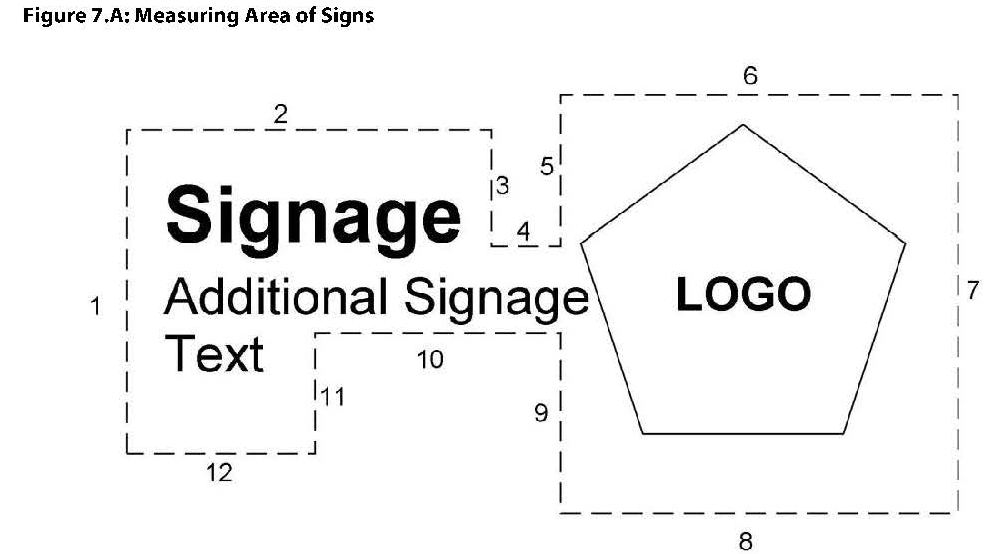
Area of copy. The entire area within a single continuous perimeter composed of squares, rectangles, circles, ovals or any other geometrical shape which enclose the extreme limits of the message, announcement or decoration on a wall, projecting or freestanding sign.
Area of sign. The area of the largest single face of the sign within a perimeter which forms the outside shape, including any frame, or forms an integral part of the display, but excluding the necessary supports or uprights on which the sign may be placed. If the sign consists of more than one (1) section or module (as in the case of wall and awning signs), all areas will be totaled. A maximum of twelve (12) perpendicular lines shall be used to determine the total sign area.
Assembly hall. A commercial or non-profit facility intended to accommodate large groups of persons for entertainment, conferences, conventions, exhibitions, weddings, and similar activities.
Assisted living facility. A state-licensed facility regulated as a personal care boarding home defined by state statute. Such facilities do not offer diagnosed medical or psychological treatment under professional medical supervision, but may offer physical therapy, occasional medical or nursing care to address non-chronic and non-recurring conditions such as colds, flu, or household injuries, and assistance with routine living activities not aimed at recovery from a specific diagnosed condition.
Automobile leasing or sales. The sale, display, lease, rental, or storage of light motor vehicles, including automobiles, vans, light trucks, and light trailers. This shall not include salvage operations, scrap operations, vehicle impound yards, or commercial parking lots available for short-term use.
Automobile service, major. A facility that provides general automobile service, rebuilding, painting, or reconstruction of engines, transmissions, or other systems, steam cleaning, or painting or detailing services for automobiles or trailers.
Automobile service, minor. An establishment for the retail sale of products and supplies for automobile and light motor vehicles, including lubricants and minor accessory parts, and with or without retail of fuel. This use may also include minor parts installation, towing, servicing, and minor repairs of vehicles; and vehicle washing facilities and trailer rental when secondary to the above activities. Accessory uses may include convenience retail, refreshments, and ice. Major repairs and/or sale of vehicles are expressly excluded.
Awning. A roof-like cover over a window or doorway that is attached to the outer wall or fascia of a building.
Banner. A sign composed of lightweight material.
Bar or tavern. An establishment providing or dispensing by the drink for on-site consumption fermented malt beverages, and/or malt, special malt, vinous or spirituous liquors, and in which the sale of food products such as sandwiches and light snacks is secondary.
Bed and breakfast. A residential structure, or portion thereof, that is occupied by an owner or operator, in which three (3) or more habitable spaces are made available to paying guests for thirty (30) consecutive days or less, which typically, but not necessarily, provides at least one (1) meal for guests.
Base station. A structure or equipment, other than a tower, at a fixed location that enables Federal Communications Commission-licensed or authorized wireless communications between user equipment and a communications network. The term includes any equipment associated with wireless communications services, including radio transceivers, antennas, coaxial or fiber-optic cable, regular and backup power supplies, and comparable equipment, regardless of technological configuration (including Distributed Antenna Systems and small-cell networks). The term includes any structure, other than a tower, to which any of the equipment described above is attached.
Berm. A mound of earthen material typically used or shield, screen, and/or buffer views from incompatible land uses, parking areas, storage areas, or public streets.
Bioretention. Use of shallow, vegetated depressions and engineered soils to collect, filter, and store stormwater runoff as it percolates into the ground.
Block. A tract of land bounded by streets, or by a combination of streets and alleys, public parks, civic property boundaries, or boundary lines of municipalities.
Board of Adjustment. The Board of Adjustment of the Town of Buena Vista, Colorado.
Board or Board of Trustees. The Board of Trustees of the Town of Buena Vista, Colorado.
Breezeway. A breezeway is a roofed, covered passageway that connects two (2) separate structures designed to allow for natural airflow (a "breeze") while offering sheltered passage from the elements. Walls may be absent, screened in or enclosed with windows, but typically without heating or cooling.
Building. Any structure having a roof supported by columns or walls for the housing or enclosure of persons, animals or property of any kind.
Building coverage. The portion of the surface of a lot or other unit of land covered, or permitted to be covered, by buildings measured on a horizontal plane from the exterior foundation walls of all buildings at ground level, and sometimes known as lot coverage or site coverage.
Building footprint. See "building coverage."
Building materials sales and storage. An establishment for the sale of materials and hardware customarily used in the construction of buildings and other structures, which includes facilities for storage.
Building roof-mounted Wireless Service Facility. A wireless service facility that is mounted and supported entirely on the roof of a legally existing building or structure.
Building, accessory. A detached building subordinate to the main building on a lot and used for purposes customarily incidental to the main or principal building but not for dwelling purposes and located on the same lot as the principal building.
Camping. Conducting basic life activities such as sleeping, residing, eating, or bathing on property outside of a permanent structure intended for residential living.
Canopy sign. A sign attached to a permanent covered area that extends over the public sidewalk, or over uses or structures on private property.
Cemetery. Land used or intended to be used for the burial of the dead and dedicated for cemetery purposes, including columbaria, crematories, mausoleums, and mortuaries.
Certificate of occupancy. A document issued by the Town building official certifying a building's compliance with applicable building codes and other laws, and indicating the building to be in a condition suitable for occupancy.
Church or place of worship. A structure or group of structures that is intended for regular gatherings of people to attend, participate in, or conduct religious services and other related activities and associated accessory uses.
Civic organization, club, or lodge. A building or portion of a building or premises owned or operated by a corporation, association, person, or persons for a social, educational, or recreational purpose, but not primarily for profit or to render a service that is customarily carried on as a business.
Clear sight triangle. See standard in Section 4.4.6.F.
Co-housing. A residential development that combines small individually-owned units on a single lot with common open space and sometimes including larger community kitchen and dining room intended for communal use on a regular basis.
College or university. An institute of higher education authorized by the State to award baccalaureate or higher degrees, which may include on-site student, faculty, and/or employee housing facilities.
Co-location. Locating one (1) or more antennas for more than one (1) provider on a single antenna tower or alternative antenna tower structure on a single lot.
CHFA. Colorado Housing Finance Authority.
Common open space. A parcel of land, an area of water, or a combination of land and water, within the site designated for a planned unit development, co-housing development, or subdivision, designed and intended primarily for the use or enjoyment of residents, occupants and owners of the planned unit development, co-housing development, or subdivision. Areas included in driveways or otherwise required to move cars in or out of parking spaces shall not be considered common open space.
Common ownership. Ownership by the same person, corporation, firm, entity, partnership, or unincorporated association; or ownership by different corporations, firms, partnerships, entities, or unincorporated associations, in which a stockbroker, partner, or associate, or a member of his family owns an interest in each corporation, firm, partnership, entity, or unincorporated association.
Community and cultural facilities. Uses including buildings, structures, or facilities owned, operated, or occupied by a governmental entity or nonprofit organization to provide a service to the public.
Community center. A facility used for recreational, social, educational, and cultural activities. This definition includes private nonprofit recreational and social facilities, recreational buildings and facilities, and community centers operated by public agencies.
Community garden. A public or not-for-profit area for cultivation of food crops and/or ornamental plants by more than one (1) person or family with the crops shared among the participants or members and sometimes sold to the general public.
Comprehensive Plan. The Comprehensive Plan for development of the Town prepared and adopted by the Planning Commission and Board of Trustees, and including any part of such plan separately adopted and any amendment to such plan.
Condominium. A common interest community defined by C.R.S. §§38-33-103(1) and 38-33.3-103(9), in which portions of the real estate are designated for separate ownership and the remainder of which is designated for common ownership by the owners of the separate ownership portions.
Continuum of care or nursing home. A facility providing independent living that may or may not be affiliated with or located near health care facilities or a facility for individuals who require specialized nursing care on a regular basis but who do not need to be hospitalized. A continuum of care facility may include a large scale facility that provides continuing care for retirement-age persons with graduating levels of assistance required over time.
Cul-de-sac. A local street with only one (1) outlet that terminates in a paved vehicular turnaround and has an appropriate terminal for the safe and convenient reversal of traffic movement.
Customer premises equipment. Equipment employed on the premises of an individual telecommunications service end-user or customer to receive or transmit personal telecommunications.
Cut-out-letter sign. The sign area considered to be that of a single rectangle or square encompassing all of the letters used to convey the message of the sign, including the open space between letters of words within that rectangle or square.
Day care home. A state-licensed dwelling or residence providing less than 24-hour care to groups of five (5) or more children under the age of eighteen (18) years, or five (5) or more developmentally disabled or mentally ill adults, or five (5) or more adults sixty (60) years of age or older, who are not related to the owner, operator, or manager of the dwelling.
Dead-end. A street that has only one (1) connection to any other existing through street or planned through street.
Developer. The owner of land proposed to be developed or its representative responsible for any undertaking that requires review and/or approval under this UDC.
Development. The carrying out of any building activity or mining operation, the making of any material change in the use or appearance of any structure or land, or the dividing of land into two (2) or more parcels. When appropriate in context, development shall also mean the act of developing or to the result of development.
Development shall also include:
1.
Any construction, placement, reconstruction, alteration of the size, repair, structural modification, or material change in the external appearance of a building or structure on land;
2.
Construction, alteration, or removal of any infrastructure;
3.
Any change in the intensity of use of land, such as an increase in the number of dwelling units in a structure or on a tract of land or a material increase in the intensity and impacts of the development;
4.
Any change in use of land or a structure;
5.
Any alteration of a shore or bank of a river, stream, lake, pond, reservoir or wetland;
6.
The commencement of drilling oil or gas wells, or mining;
7.
Stockpiling of fill materials, filling or excavation on a parcel of land;
8.
The demolition of a structure;
9.
The clearing of land as an adjunct of construction;
10.
The deposit of refuse, solid or liquid waste, or fill on a parcel of land;
11.
The installation of landscaping within the public right-of-way, when installed in connection with the development of adjacent property; and
12.
The construction of a roadway through or adjoining an area that qualifies for protection as a wildlife or natural area.
Development agreement. A written contract between a developer and the Town memorializing terms and conditions associated with the approval of a subdivision or other development project and which may specify required improvements and vest property rights. Development agreements may include, but are not limited to, provisions clarifying the phasing of construction, timing and location of infrastructure, reimbursement for oversized infrastructure, assurances for adequate public facilities, and mitigation of anticipated impacts of the development on the general public.
Development and Infrastructure Manual. The Development and Infrastructure Manual adopted by the Town, containing provisions related to the development process, infrastructure design standards, and any other regulations the Town deems appropriate.
Development Review Team (DRT). The Development Review Team includes staff from Town Administration, Planning Department, Public Works Department, and Town consultants.
Development site. Land used or proposed to be used for development, consisting of either a single lot or multiple contiguous lots.
Distillery. An establishment where spirituous liquors are manufactured for commercial purposes.
Disturbed area. Land that is cleared, grubbed, and/or graded for construction purposes, not including the addition of vegetated areas.
Dormitories. A building oftentimes associated with an educational facility, providing housing for a number of unrelated persons utilizing common entrances and hallways, single or group sleeping accommodations and shared bath and toilet facilities.
Double-faced sign. A two-faced sign utilizing both sides or surfaces for display purposes.
Double-frontage lot. See "Lot, double-frontage."
Drive through. A structure with a service window, automated device, or other facility that is designed and intended to be used to provide for sales and service to patrons who remain in their vehicles.
Drive-through sign. A freestanding sign intended to convey information to vehicles in drive-through lanes.
Driveway. A paved or unpaved area used for the ingress and/or egress of vehicles, and allowing access from a street to a building or other structure.
Dwelling or dwelling unit. A building, or a portion of a building, designed and intended to be used by a person or family for private residential purposes and which has its own separate entrance and is equipped with facilities for sleeping, bathing, and cooking and has permanent plumbing.
Dwelling, multifamily large. A building (or group of buildings) designed and constructed to contain five (5) or more dwelling units, on one (1) lot or parcel under single ownership, and does not meet the definition of "dwelling, single-family attached."
Dwelling, multifamily small. A building designed and constructed to contain three (3) or four (4) dwelling units, on one (1) lot or parcel under single legal ownership, and does not meet the definition of "dwelling, single-family attached."
Dwelling, single-family. A dwelling unit to be used by one (1) person or group of persons acting as one (1) household unit.
Dwelling, single-family attached. A building designed and constructed to contain three (3) or more single-family dwelling units in a side-by-side configuration in which each unit is in separate legal ownership. Includes townhomes and rowhouses separated by a fire-resistant common wall.
Dwelling, single-family detached. A detached building containing only one (1) dwelling unit.
Dwelling, two-family (duplex). A building designed and constructed to contain two (2) dwelling units, on one (1) or two (2) lots or parcels, separated by a fire-resistant common wall in a side-by-side, front-to-back, or a stacked configuration, each with its own separate exterior entrance.
Easement. Authorization by a property owner for another to use the owner's property for a specified purpose.
Education facilities. Public, private, and religious institutions at the primary, elementary, middle, high school, or post-secondary level, or trade or business schools, that provide educational instruction to students. Accessory uses include play areas, cafeterias, recreational and sport facilities, auditoriums, and before- or after-school day care.
Elementary or secondary school. Public schools, elementary and secondary, private schools with curriculum equivalent to that of a public elementary or high school, and related facilities such as including gymnasiums, stadiums, and dormitories if located on the campus.
Eligible household. A household whose income and assets qualifies the household to purchase or rent affordable housing unit according to the standards in this Code.
Eligible wireless service facility request. Any request for a land use approval for the modification of an existing tower or base station that involves the collocation of new transmission equipment, the removal of transmission equipment, or the replacement of transmission equipment.
Enclosed storage. The stockpiling or keeping of materials, products, equipment or goods within a fully enclosed building utilized in association with a principal use.
Energy and utilities. All lines, buildings, easements, passageways, or structures used or intended to be used by any public or private utility related to the provision, distribution, collection, transmission, or disposal of power, oil, gas, water, sanitary sewage, communication signals, or other similar services at a local level.
Equipment sales. The display and sales or rental of products and equipment primarily used for home improvement projects.
Equipment storage shelter. Buildings, storage shelters, and cabinets used to house wireless service facility equipment.
External illumination. Illumination of a sign from a source of light not contained within the sign itself.
FAA. Federal Aviation Administration.
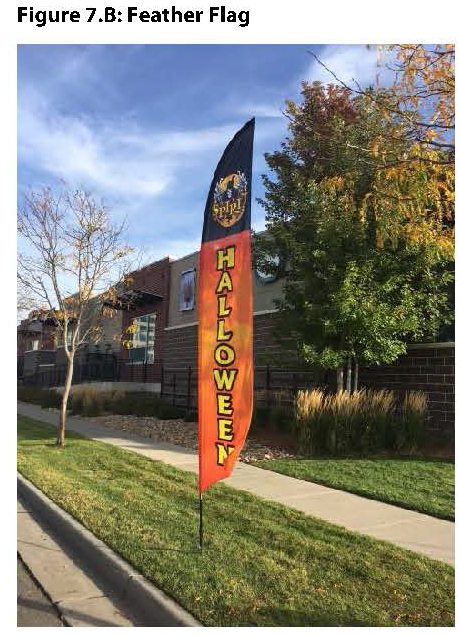
Feather flag. A temporary fabric sign intended to be inserted directly into the ground or into a mounting device that sits on the ground, often with a feather-like shape. Other common names for feather flags include blade flags, sail flags, quill flags, and flutter flags.
Fence or wall. A manmade barrier constructed or installed to demarcate or create a boundary, partition, or enclosure, to restrict or prevent access to an area, to conceal or screen an area, and/or for decorative purposes. A fence may be open or solid and generally includes materials such as wood, metal, or other permitted materials and is usually connected by boards, rails, panels, and/or wires. A wall is generally solid and consists of masonry, stone, brick, tile, concrete, or plaster. The definition of fence or wall shall also include trellises, or other man-made structures intended to support vines, flowers, and other vegetation, or as a decorative element, when erected in such position to enclose, partially enclose, surround, or separate areas on a property or between properties.
Fire or police station. Facilities for the provision of local rapid response emergency services such as policing, firefighting, and mobile medical emergency services, including areas for the storage and maintenance of emergency vehicles and equipment and housing and feeding of emergency personnel.
Flag. Any fabric not exceeding three (3) feet by five (5) feet when hung from a building; or five (5) feet by seven (7) feet when hung from a pole.
Flea market or auction house. An indoor or outdoor premises where the main use is the sale of new or used household goods, personal effects, tools, art work, small household appliances, and similar merchandise, objects, or equipment in small quantities, sold in individual stalls, lots, or parcels, not in bulk, for the use or consumption by the immediate purchaser in a building.
Special flood hazard area (SFHA). See definition in Flood Regulations in Chapter 18, Article IX.
Floor area/space, gross. The sum of all horizontal floor areas within a building measured from the interior faces of the exterior building walls or from the interior faces of common walls separating buildings.
Food and beverage services. Establishments involved in serving prepared food or beverages for consumption on or off the premises. Accessory uses may include food preparation areas, offices, and parking.
Footcandle. A unit of surface illumination that is equal to one (1) lumen per square foot as measured by a properly calibrated digital light meter. Footcandles shall be measured at a height of three feet above finished grade directly under the illumination source.
Freestanding sign. A sign permanently anchored directly to the ground or supported by one (1) or more posts, columns or other vertical structures or supports and not attached to or dependent for support from any building.
Frontage. The front boundary or length of a plot of land or building that directly faces and abuts a street or road. Frontage requirements must be achieved on the ground floor.
Frontage buildout. The percentage of building frontage that must be between zero feet and the maximum setback distance for the respective zoning district.
Frontage, business. The linear distance of the exterior building wall of a business facing a public right-of-way that contains the main entrance to the business.
Fueling station. A place where gasoline and petroleum products are sold. Accessory uses may include convenience retail, refreshments, and ice.
Full cutoff fixture. A light fixture that prevents distribution of light above a horizontal plane through the lowest point of the bulb or lens, diffuser, reflective passing enclosure, or other parts intended to distribute light.
Fully shielded. A light fixture equipped with internal and/or external shields or louvers or opaque lensing to prevent brightness and glare at normal viewing angles by directing illumination and light downward.
Geothermal facility, large. A facility, land area, and equipment used for the conversion of natural geothermal energy into energy for beneficial use, including geothermal heat pumps for nonresidential use and electricity generation of ten (10) kilowatts (kW) or greater.
Geothermal facility, small. A facility, land area, and equipment used for the conversion of natural geothermal energy into energy for beneficial use, including geothermal heat pumps for on-site use or electricity generation up to ten (10) kilowatts (kW).
Golf course. A tract of land typically laid out for at least nine (9) holes for playing the game of golf that may include a clubhouse, dining and snack bars, pro shop, and practice facilities.
Grade. The slope of a road, street, or other public way specified in percentage terms.
Grading, Erosion, and Sediment Control (GESC) Permit. Projects involving any earth disturbance will require a GESC permit. Reference the permit and the Development and Infrastructure Manual - Sitework and Erosion Control.
Greenhouse. A building or structure with roof and sides made largely of glass or other transparent or semi-transparent material in which the temperature and humidity can be regulated for the cultivation of fragile or out-of-season plants for personal enjoyment.
Greenhouse, nursery, or garden supply store. An establishment, including a building, part of a building or open space, for the growth, display and/or sale of plants, trees, and other materials used in indoor or outdoor planting for retail sales and incidental wholesale trade.
Grocery store. A retail establishment that primarily sells food for off-site consumption, but also may sell other convenience and household goods for off-site consumption. Accessory uses may include but are not limited to sales of food or beverages for on-site consumption, grocery delivery services, florists, and pharmacy services.
Group home. An owner-occupied or nonprofit residential facility operated or licensed by the state to provide housing and services for up to eight (8) developmentally disabled or mentally ill persons, or up to eight (8) persons sixty (60) years of age or older, along with one (1) or more resident professional staff persons; but excluding halfway houses or other facilities for persons transitioning from a jail or prison back into the community, and excluding facilities for sex offenders.
Group living. Uses characterized by residential occupancy of a structure by a group of people who do not meet the definition of "household living." Tenancy is arranged on a monthly or longer basis, and the size of the group may be larger than a family. Generally, group living structures have a common eating area for residents. The residents may receive care, training, or treatment, and caregivers may or may not also reside at the site. Accessory uses commonly include recreational facilities and vehicle parking for occupants and staff.
Guyed mast towers. A guyed mast is a tall thin vertical structure that receives support from guy lines.
Healthcare facilities. Uses characterized by activities focusing on medical services, particularly licensed public or private institutions that provide primary health services and medical or surgical care to persons suffering from illness, disease, injury, or other physical or mental conditions. Accessory uses may include laboratories, outpatient, or training facilities, and parking, or other amenities primarily for the use of employees in the firm or building.
Heat island. Urbanized area typically having warmer temperatures than surrounding average ambient temperatures due to surfacing materials or building coverage on a property.
Height, antenna tower. The distance measured from the anchored base of a tower, at grade, to the highest point of the structure inclusive of any antennas placed on the top of the tower.
Historical sign. A legal sign that is at least thirty (30) years in age.
Home occupation. A lawful use conducted in or on the premises of a dwelling unit, said use being secondary to the use of the dwelling for dwelling purposes.
Hospital. An institution providing health services, primarily for in patients and medical or surgical care of the sick or injured, including related facilities such as laboratories, out-patient facilities, training facilities, central service facilities, and staff offices.
Hotels, motels, and other forms of public lodging and boarding. A nonresidential structure, or portion thereof, in which at least one (1) habitable space is made available to paying guests for thirty (30) consecutive days or less; provided that two (2) or more cabins or similar structures on a single parcel or under common ownership on adjacent parcels, that are designed, intended, or available for occupancy for thirty (30) consecutive days or less shall be considered hotels or motels.
Household. One (1) or more persons who intend to live together in the premises of a dwelling unit as a single housekeeping unit.
Household living. Uses characterized by residential occupancy of a dwelling unit by a household. Tenancy is arranged on a month-to-month or longer basis (lodging where tenancy may be arranged for a period of less than thirty (30) days is classified under the "lodging facilities" category). Common accessory uses include recreational activities, raising of pets, gardens, personal storage buildings, hobbies, and parking of the occupants' vehicles.
Illegal sign. Any sign for which a valid and current Town sign permit has not been obtained and which is not exempt from the provisions of this Section.
Illuminance. The measure of light intensity striking a surface, measured in footcandles.
Indoor recreation or entertainment. A facility providing entertainment or recreation activities where all activities take place within enclosed structures, but not including a theater or a convention or event center, which are considered assembly halls. Examples include bowling alleys, trampoline centers, video arcades, climbing wall centers, recreation center, gym, and paintball or laser tag centers.
Infill development. Development designed to occupy vacant parcels of previously unused or underutilized land which remain after the majority of development has occurred in an area, specifically within the Original Town of Buena Vista plat, dated 1905.
Internal illumination. Illumination of a sign from a source of light contained within the sign itself, including sign letters created with neon tubing.
Invasive plant species. Invasive Plant Species has the meaning set forth in Section 37-60-135(2)(e), C.R.S.: Plants that are not native to the state and that:
1.
Are introduced into the state accidentally or intentionally;
2.
Have no natural competitors or predators in the state because the state is outside of their competitors' or predators' range; and
3.
Have harmful effects on the state's environment or economy or both.
Kennel. A facility licensed to house dogs, cats, or other household pets and/or where grooming, breeding, boarding, or training or selling of animals occurs.
Landscaping. Any combination of living plants, such as trees, shrubs, vines, groundcover, flowers, and grasses, and may include any nonliving groundcover or common areas meeting the standards of this UDC such as mulches, topsoil, walkways, fences, pedestrian amenities, works of art, and similar features.
Lattice antenna tower. A self-supporting tower with multiple legs and cross bracing of structural steel.
Library. A facility for storing and loaning books, periodicals, reference materials, audio and video media, and other similar media. A library may also include meeting rooms, offices for library personnel, and similar support facilities.
Live-work. A dwelling unit(s) that accompanies a nonresidential structure for the purpose of housing the owner or staff of the business occupying the nonresidential space.
Lodging facilities. Facilities where lodging, meals, and the like are provided to transient visitors and guests for a defined period.
Long-term storage of recreational/camping vehicles. Indoor or outdoor storage facility or area designed for storage of recreational vehicles for a period of more than two (2) weeks when not in use. This definition does not include short-term parking of recreational/camping vehicles.
Lot. An area of land that has been created:
1.
Within a legal subdivision per this UDC; or
2.
By a valid and recorded instrument of conveyance effective prior to adoption of a previous Subdivision Code Ordinance; or
3.
By the sale or exchange of parcels of land between owners of adjoining properties for the purpose of adjusting boundaries that did not create additional lots and that the original parcels or lots were not reduced below the minimum size requirement. These lots were permitted through July 27, 2010; or
4.
Prior to annexation to the Town of Buena Vista; or
5.
As otherwise permitted by law.
Lot area. The total horizontal area within the lot lines of a lot.
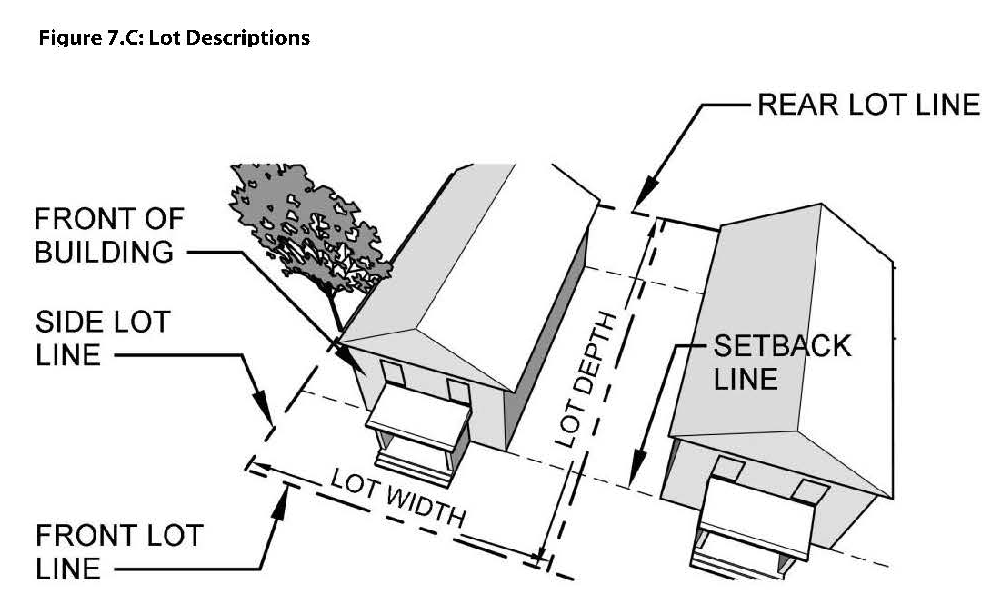
Lot depth. The average distance measured on a horizontal plane between the front and rear lot lines.
Lot line, front. The property line closest to and normally dividing a lot from the street or street right-of-way upon which the lot abuts, and which street or street right-of-way is used and referenced in assigning a street number or address for the subject lot.
Lot line, rear. The lot line opposite the front lot line, or in the case of an irregularly shaped lot, that lot line which is determined by the Town from the lot's orientation and any existing structures to be the rear lot line.
Lot line, side. The lot lines defining a lot other than the front and rear lot lines.
Lot of record. A lot which was legally created and/or defined and illustrated on a plat, map or deed that was recorded in the records of the County Clerk and Recorder prior to the adoption of subdivision regulations by the Town or County.
Lot width. The distance between the side lot lines measured on a horizontal plane along the front yard setback line or building line, whichever is longer.
Lot, double-frontage. A lot having frontage on two (2) parallel or almost parallel streets.
Lot, reverse-corner. A lot that has three (3) sides along a public street.
Low-Impact Development (LID). Systems and practices that use or mimic natural processes that result in the infiltration, evapotranspiration, or use of stormwater in order to protect water quality and associated aquatic habitat.
Luminance. Surface brightness or the amount of light an object gives off.
Major development. A development that does not meet the definition of minor development.
Manufactured home. Any wheeled vehicle, exceeding either eight (8) feet in width or thirty-two (32) feet in length, excluding towing gear and bumpers, without motive power, which is designed and commonly used for occupancy by persons for residential purposes, in either temporary or permanent locations, and which may be drawn over the public highways by a motor vehicle (Section 42-1-102, C.R.S.).
Manufactured home park. Any premises one (1) or more acres in size that is used or set apart for the purpose of supplying to the public parking space for manufactured homes for living or sleeping purposes, and which includes any buildings, structures, vehicles or enclosures used or intended for use as part of such manufactured home park (includes trailer coaches).
Manufactured home site. A designated area of land intended for location of an individual manufactured home for residential occupancy within a manufactured home park.
Manufacturing. Uses including all transformative processes, regardless of whether or not the new product is finished or semi-finished. Production is typically for commercial wholesaling rather than for direct sales.
Manufacturing, light. An establishment engaged in fabrication, assembly, processing, or manufacturing that generally does not create significant impacts on surrounding areas. Products of such establishments include bedding; boots or shoes; carpet; cloth products ; finished wood products; small household appliances, business machines, etc.; lithographing; musical instruments; orthopedic and medical appliances; pottery and ceramics; rope, cord, and twine; sporting goods; and wearing apparel.
Manufacturing, medium or heavy. An establishment engaged in fabrication, assembly, processing, or manufacturing that has the potential to create significant impacts on surrounding areas due to the types of materials used, byproducts created, hours of operations, volumes of heavy truck or rail traffic, or other factors. Products of such establishments include abrasives; agricultural implements, equipment, or vehicles; large appliances; asphalt products; brick or structural clay products; and cosmetics. This use also includes processes such as electroplating and chemical processing.
Marquee sign. Any sign attached to or under a covered structure projecting from a building which extends over the sidewalk, usually also supported by posts.
Mechanical equipment. Heating, ventilating and air conditioning systems, transformers, generators, utility meters, connection boxes, satellite dishes, antennas, tanks, and other similar features.
Medical or dental clinic, office, or laboratory. A building or group of buildings in which the primary use is the provision of health care services to patients or clients. Such services may include medical, dental, psychiatric, psychological, chiropractic, dialysis, acupuncture, reflexology, massage therapy, mental health professional, physical and/or occupational therapy, related medical services, vocational training, placement service and social and recreational activities suitable for disabled adults and children or similar service, or a laboratory which provides bacteriological, biological, medical, X-ray, pathological and similar analytical or diagnostic services to doctors or dentists. No fabricating is conducted on the premises, except the custom fabrication of dentures or similar dental appliances. This definition excludes in-patient or overnight care, animal hospitals, veterinarians, or other similar services.
Microbrewery, distillery, or winery. A commercial operation of less than fifteen thousand (15,000) square feet engaged in the production of beer, liquor, or wine that also may have retail sales for consumption on site or off the premises. Similar operations with more than fifteen thousand (15,000) square feet shall be considered "manufacturing, medium or heavy."
Micro wireless facility. A wireless service facility that is no larger in dimensions than twenty-four (24) inches in length, fifteen (15) inches in width, and twelve (12) inches in height and that have an exterior antenna, if any, that is no more than eleven (11) inches in length.
Mini-warehouse. A building or group of buildings that are rented and designed, through individual compartments or controlled stalls, for self-service storage purposes.
Minor development. Nonresidential development of less than ten thousand (10,000) square feet gross floor area, residential development of ten (10) or fewer dwelling units, and/or mixed-use development of ten (10) or fewer dwelling units and less than ten thousand (10,000) square feet of nonresidential gross floor area.
Minor subdivision. Any subdivision meeting the applicability standards in Section 6.6.1.B.
Mixed-use structure. Any structure containing both residential uses and nonresidential uses where no less than twenty-five percent (25%) of the finished floor area contains nonresidential uses.
Monopole antenna tower. A slender un-guyed self-supporting tower that does not include any lattice cross bracing structure, on which wireless antennas can be placed.
Monument sign. A freestanding sign with a base affixed to the ground, where the length of the base is at least two-thirds (⅔) the horizontal length of the monument.
Motor sports facility. A facility providing raceways, speedways, and typical accessory uses to motor sports including dining and snack bars, and retail sales.
Multi-family residential housing premises property. Common interest property such as entryways, parks, and other common elements as defined in Section 38-33.3-103(5), C.R.S.
Mural. A painting or picture applied to and made part of a wall which may be pictorial or abstract and is characteristically visually set off or separated from the background color or architectural environment.
Museum. An establishment operated as a repository for a collection of nature, scientific, literary curiosities, or objects of interest or works of art, not including the regular sale or distribution of the objects collected. Museums may include incidental retail and food/beverage sales.
Natural medicine. Psilocybin or psilocin. "Natural medicine" does not mean a synthetic or synthetic analog of these substances including a derivative of a naturally occurring compound of natural medicine that is produced using chemical synthesis, chemical modification, or chemical conversion.
Natural medicine business. Any of the following entities licensed pursuant to the Colorado Natural Medicine Code and as defined under state law: a natural medicine healing center, a natural medicine cultivation facility, a natural medicine products manufacturer, or a natural medicine testing facility.
Natural medicine services. A preparation session, administration session, and integration session provided pursuant to Title 12, Article 170, C.R.S., as may be amended.
Neon sign. Any sign that is illuminated by tubes filled with neon, argon, krypton and related inert gases, including any display of neon lighting tubes which is in view of the general public from a public right-of-way or from any public area, regardless of the shape, size, design, or configuration.
Noise Attenuation. The use of materials in the construction of new or redeveloped buildings in such a manner that aircraft noise is attenuated by the structure to an interior level that reasonably minimizes adverse impacts on the health, safety, and general welfare of the structure's residents.
Nonconforming lot. Any lot that was lawful when established but is not in compliance with the requirements of this UDC.
Nonconforming sign. Any sign that was lawful when constructed but is not in compliance with the current sign regulations in this UDC.
Nonconforming site feature. Any site feature legally approved and installed or constructed that is not in compliance with the development standards in this UDC. Site features may include but are not limited to driveways, off-street parking, loading areas, landscaping, buffers, screening, fencing, and exterior lighting.
Nonconforming structure. Any structure that was lawful when constructed prior to the adoption or subsequent amendment of this UDC but does not currently comply with the requirements of this UDC.
Nonconforming use. Any use or activity that was lawful prior to the adoption or subsequent amendment of this UDC and has been continued under the requirements of this UDC but is not currently allowed and/or does not conform and comply with the requirements of this UDC.
Nonresidential structure. Any structure used exclusively for, or designed as and capable of being used for, office, commercial, industrial, governmental occupation, or hotels, motels and other forms of public lodging and boarding.
Obscenity. Graphic material (such as words, symbols, drawings, or photographs) that: (1) the average person, applying contemporary community standards would find, taken as a whole, appeals to the prurient interest; (2) describes in a patently offensive way, sexual conduct; and (3) which, taken as a whole, lacks serious literary, artistic, political, or scientific value.
Office. Professional, governmental, executive, management or administrative offices of private organizations or government agencies, including government offices, administrative offices, legal offices, and architectural firms.
Offices and professional services. Uses that provide executive, management, administrative, or professional services, but do not involve the sale of merchandise except as incidental to a permitted use. Typical uses include real estate, insurance, property management, investment, employment, travel, advertising, law, architecture, design, engineering, accounting, call centers, and similar offices. Accessory uses may include cafeterias, health facilities, parking, or other amenities primarily for the use of employees in the firm or building.
Off-premises sign. A commercial sign not related to the activity on the property where the sign is located.
Offsite improvements. Any improvements that are not located within the area of the property to be developed, whether or not in the common ownership of the applicant, but are required for development approval.
On-site. The term "on-site" shall include the lot, lots, or land on which a use is operating, but shall not include abutting public land or rights-of-way unless an encroachment license or permit has been issued by the Town or other public entity owning said abutting public land or right-of-way.
Outdoor entertainment facility. An outdoor facility providing entertainment, with or without charge, including drive-in theaters, stages, and amphitheaters for public entertainment such as concerts and theatrical performances.
Outdoor operations. An area that is not fully enclosed by solid walls and a roof and where services are rendered or goods are displayed, sold, or stored.
Outdoor recreation facility. An outdoor facility providing recreation, with or without charge, including amusement parks, batting cages, golf driving ranges, miniature golf courses, go-cart tracks, skating rinks, skateboard parks, swimming pools, tennis courts, sports courts, water parks, zoological parks and similar uses, but not including auto or horse race tracks.
Outfitter. A legally authorized commercial business that provides the following services in connection with guided outdoor recreation activities: logistics, equipment, permits, guide services, and/or transportation. Typical activities include hunting, fishing, snowmobiling, whitewater rafting, and similar outdoor recreation experiences.
Outlot. A parcel of land that is shown within the boundaries of a final plat, which is identified for future re-subdivision. No building permits shall be issued on an outlot unless authorized by the Town.
Parcel. Any part or portion of land.
Park and playground. A lot, tract, or development site designated and used by the public for active and/or passive recreation.
Parking area. An area, other than a street or alley, designed or used primarily for the temporary parking of vehicles.
Parking lot or structure. An off-street area or structure, other than the parking or loading spaces or areas required or permitted under this section, for the parking of automobiles and available to the public often for a fee.
Participant. An individual who is twenty-one (21) years of age or older and receiving natural medicine services prescribed by and under the supervision of a facilitator, as provided by the Colorado Natural Medicine Code, as may be amended.
Permanent sign. An exterior sign constructed of durable, permanent material, such as wood, metal, stone, or other durable material, not including paper, cloth, canvas, cardboard, wallboard, or banner plastic (unless the sign is part of an awning).
Personal service. Establishments that primarily engage in providing services generally involving the care of the person or his or her personal goods or apparel. Personal services may include, but are not limited to, barber shops, beauty salons, dry cleaners, health and fitness studios, music schools, informational and instructional services, tanning salons, and portrait studios.
Pervious pavement. Paving materials that provide surfaces able to absorb water or allow the passage of water through the paving material to the ground below.
Pets. Any animal customarily kept by humans for companionship, including, but not limited to, dogs, cats, birds, rabbits, hamsters, mice, turtles, and the like.
Pet common area. Land within a development, not individually owned or dedicated for public use, which is designed and intended for the common use or enjoyment of residents of the development with pets. Said area should be clearly labeled on the site plan and final plat, be surrounded by a fence, and included in the covenants of the property to be maintained by the ownership entity.
Planned unit development (PUD). An area of land, controlled by one (1) or more landowners, to be developed under unified control or unified plan of development for a number of dwelling units, residential, commercial, educational, recreational or industrial uses, or any combination of the foregoing. A PUD allows for flexibility in lot size, bulk or type of use, density, lot coverage, open space, or other standard in this UDC in exchange for a public benefit not otherwise achieved by this UDC.
Planned unit development (PUD) concept plan. A graphic depiction in plan form of the elements of a Planned Unit Development district that illustrates the development program and the district's specific regulations where they differ from the base regulations of the UDC.
Planning Commission. The Planning and Zoning Commission of the Town of Buena Vista established pursuant to Article IX of Chapter 2 of the Buena Vista Municipal Code.
Planning department. The planning department for the Town of Buena Vista, Colorado.
Plat. A printed instrument drawn to scale by a professional land surveyor registered or licensed under the laws of the State which accurately depicts the location, dimensions, and boundaries of lots or other units of land, along with adjacent public streets and rights-of-way and easements and other features relevant to the development of land pursuant to this UDC.
Pole sign. A freestanding sign with a base supported from the ground by a pole or a similar support structure of narrow width.
Porch. A covered structure attached to a building forming a covered entrance to a vestibule or doorway. It is external to the walls of the main building proper but may be enclosed by screen or latticework, extending from the main structure. For the purpose of measuring setback, the porch shall be counted as the start of the building edge. Front porches may encroach into required front setback according to the encroachment standards in Section 2.8.2.D.6.
Primary access. The place of ingress and egress used, or intended to be used, most frequently by the public.
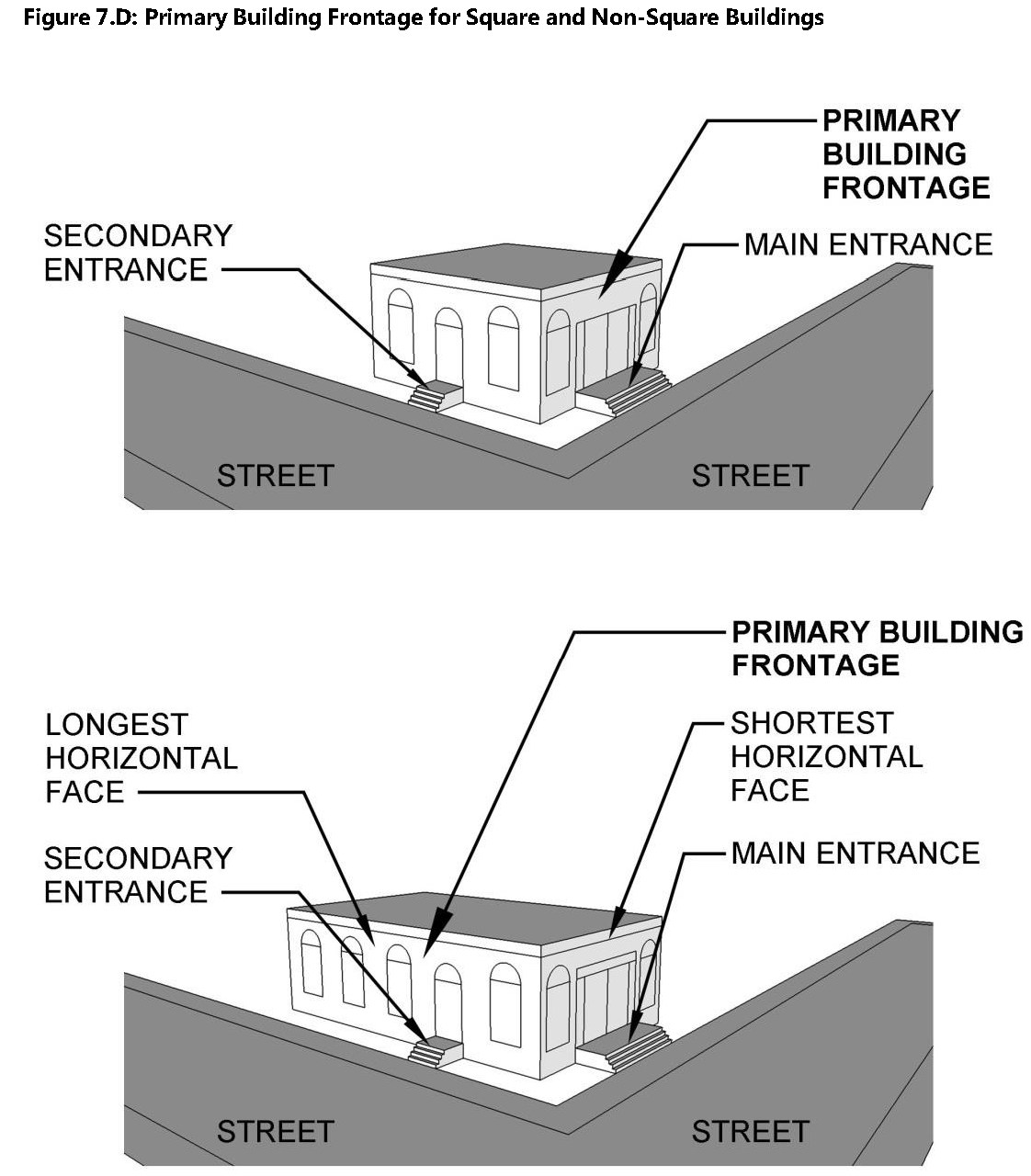
Primary building frontage. The longest horizontal linear dimension of a building that is adjacent to or fronts on a public street. The building wall fronting on a public street that includes or is closest to the main entrance of the structure shall be the primary building frontage for a square building situated on the corner of two (2) public streets.
Primary street frontage. Street frontage to which the primary building on the site is oriented, generally the street containing the primary pedestrian entrance to the building and/or the numbered street address of the building.
Primary structure. A structure or building in which the principal use of the lot on which the building is located is conducted.
Primary surface. The surface longitudinally centered on the runway. When the runway has a specifically prepared hard surface, the primary surface extends two hundred (200) feet beyond each end of the runway. The width of the primary surface is five hundred fifty (550) feet.
Projecting sign. A sign that is supported by an exterior wall of a building or other structure and is constructed and displayed perpendicular to the face of the building or other structure so that both sides of the sign are visible. A projecting sign extends out from the building face.
Property owners' association. An association or organization as defined by Colorado law, for the purpose of owning, operating, or maintaining various common properties and facilities.
Public hearing. A formal hearing held under public notice, intended to inform and obtain public input.
Public meeting. An informal meeting held under public notice, intended to inform and obtain public input, where no official decision and/or action is taken by the applicable decision-making body(ies) present.
Public improvements. Any drainage, ditch, roadway, parkway, sidewalk, pedestrian way, tree, lawn, off-street parking area, lot improvement, or other facility that the local government may ultimately assume the responsibility for maintenance and operation, or that may affect an improvement for which local government responsibility is established.
Public improvements agreement. An agreement executed by the Town and a developer/subdivider guaranteeing the installation of, and participation in, specific public improvements, pursuant to Section 5.4, Public Improvements Agreements.
Public right-of-way. All roads, streets, and alleys and all other dedicated rights-of-way, access, and utility easements of the Town, the state, or any district, utility, or roadway.
Public utility distribution or transmission facility. A building, structure, or use of land for pipelines, power transmission lines, communication lines, railroad tracks, and such related public utility structure or station necessary for the installation and maintenance of franchised utility services.
Public water service facility. Any essential public utility water service installations, which are owned, operated or used by a governmental entity, or any entity defined as a public utility for any water-related purpose by the Colorado Public Utilities Commission and used in connection with the transmission, delivery, collection, or storage of water and similar uses necessary for the protection and venefit of the public, but shall not include water tanks.
Radio and television transmitting station and studio. A building or portion of a building used as a place to record and broadcast music, videos, television, and other oral and visual related media.
Railroad transshipment facility. An area and related facilities connected with the assembly or disassembly of trains, including without limitation passenger or freight terminals, operations and maintenance shacks, train sheds, and classification yards.
Recreation and entertainment. Uses providing recreation or entertainment activities inside a building or outside of an enclosed environment. Accessory uses may include, but are not limited to, concessions, snack bars, parking, and maintenance facilities.
Recreational vehicle. A vehicular or portable unit mounted on a chassis and wheels, which either has its own motive power or is mounted on, in or drawn by another vehicle, including, but not limited to, travel trailers, fifth wheel trailers, pop-up trailers, bed mounted truck campers, camping trailers, or motor homes. A recreational vehicle is not designed or intended for use as a permanent dwelling or sleeping place, but is to provide temporary living quarters for recreational, camping, or travel use.
Recreational vehicle and large equipment sales. Sale, retail or wholesale, and/or rental from the premises of recreational vehicles, boats, heavy construction equipment, farm equipment, trucks, and aircraft, together with incidental maintenance. Typical uses include heavy construction equipment dealers and tractor trailer sales. This use does not include use of a recreational vehicle as a dwelling unit, either for short-term or long-term.
Residential structure. Any structure that is used for, or designed as and capable of being used for, the domicile of persons. Residential structures shall not include any lodging facilities, except for a bed and breakfast or a licensed short-term rental pursuant to this code.
Restaurant. A business establishment where meals and/or refreshments may be purchased.
Retail. Uses involving the sale of a product directly to the final consumer for whatever purpose but not specifically or exclusively for the purpose of resale.
Retail display. The on-site outdoor exhibition of products or merchandise for retail sale by a retail business, excluding home occupations.
Retail, general. A facility or area for the retail sale of general merchandise or food to the general public for direct use and not for wholesale. This use includes but is not limited to sale of general merchandise, clothing and other apparel, flowers and household plants, dry goods, convenience and specialty foods, hardware, liquor, and similar consumer goods.
Rezoning. A change in the zoning district classification applied to land by the Official Zoning Map, reviewed and decided by the Board of Trustees pursuant to Section 6.4.1.
Right-of-way. See definition of "public right-of-way."
Roof sign. A sign that is constructed to extend above the primary peak of the roofline.
Rooming unit. A type of housing accommodation that consists of a room or group of rooms for a rental space, arranged primarily for sleeping and study, and that may include a private bath and countertop cooking devices, such as a microwave or a hot plate, but does not include any of the kitchen requirements for an ADU listed in Section 16.03.3.3.4(A)(3). Rooming units shall not be converted to an ADU without compliance with all applicable provisions of this code.
Rowhouse or townhouse. An attached single-family dwelling unit located on land owned by the unit owner and situated in a row of three (3) or more similar horizontally attached dwelling units, each unit having its own separate access to the outdoors and its own separate water, sanitary sewer, ventilation and heating system, inclusive of separate utility service lines and meters, and which is separated from attached adjacent dwelling units by a fire-resistant common wall constructed in conformity with the Town's uniform fire and building codes.
Runway Protection Zone (RPZ). The land area that lies under the approach surface from the end of the primary surface for a distance of one thousand (1,000) feet for all runways.
Screened storage. The stockpiling or keeping of materials, products, equipment or goods within an area enclosed by a fence, wall or other physical barrier designed to screen and obstruct the visual observation of the enclosed material by a person standing at ground level utilized in association with a principal use.
Screening. A method of visually shielding or obscuring one (1) structure or use from another structure or use by installing fencing, walls, berms, gates, parapets, enclosures, features of a building, or vegetation.
Setback. The minimum horizontal distance required, in any given zoning district, to be maintained free of man-made structures between a lot line or property line (projected vertically) and the nearest point along or on an exterior wall or surface of a building or other structure.
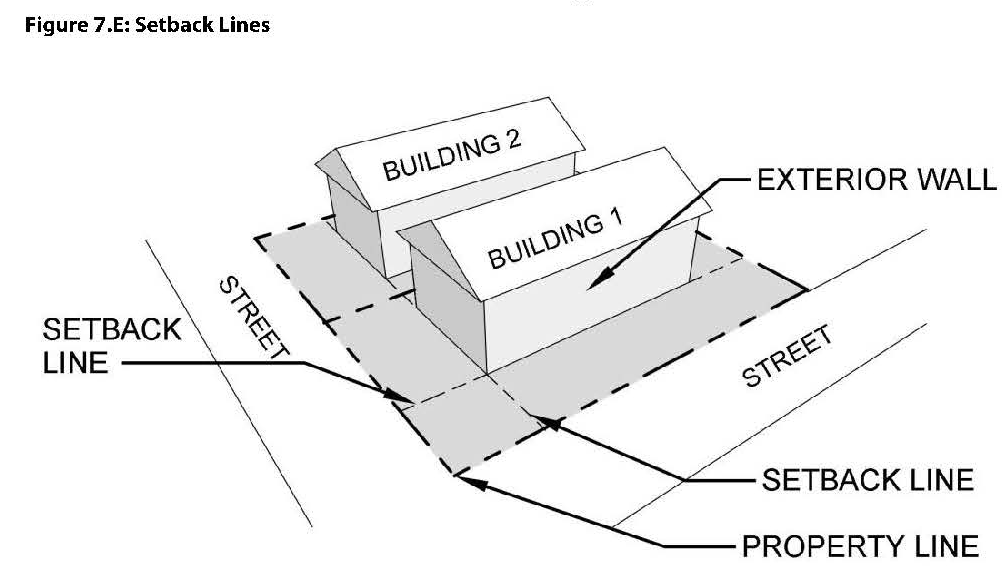
Setback line. A line running parallel to a lot line or property line defining the boundary of a setback which is projected on a vertical plane from the ground skyward.
Sexual encounter center. An establishment that as one (1) of its purposes offers for any form of consideration a place where two (2) or more persons may congregate, associate, or consort for the purpose of engaging in specified sexual activities or where one (1) or more of the person is nude or semi-nude. This definition shall not include a licensed health care facility, or establishment where a medical practitioner, psychologist, psychiatrist, or similar professional person licensed by the state engages in medically approved and recognized sexual therapy.
Sexually oriented business. An adult arcade, adult bookstore, adult novelty shop, adult video store, adult cabaret, adult motel, adult motion picture theater, adult theater, sexual encounter center, or nude model studio.
Shooting range. An area or facility to be used for firearm target practice, competitions, or similar uses, including, but not limited to, archery, skeet, trap, and similar shooting activities, and including both indoor and outdoor facilities.
Short-term parking of recreational/camping vehicles. An outdoor facility designed for overnight accommodation of human beings in motorized vehicles, or trailers for recreation, education, naturalist, or vacation purposes. Office, retail, and other commercial uses commonly established in such facilities and related parking structures shall be allowed as accessory uses and structures. This use does not include use of an individual recreational vehicle located on a property for use by the property owner as a dwelling unit, pursuant to Section 3.2.4.C.
Short-term rentals. A residential structure, or portion thereof, in which the entire structure, or two (2) or fewer rooming units within a single structure, are made available to paying guests for thirty (30) consecutive days or less or dwelling units in the residential portion of a mixed use structure, located in the a mixed use zone district, made available to paying guests for thirty (30) consecutive days or less. Bed and breakfasts, hotels and motels shall not constitute short-term rental properties.
Sidewalk. A hard-surfaced walk or raised path and any curb ramps or blended transitions along and generally paralleling the side of the streets for pedestrians.
Sidewalk Sign. A sign intended to be located on or near a sidewalk with the ability to be readily moved, and that is not affixed to a building, vehicle, or the ground. Sidewalk signs include wheeled signs and A-frame signs.
Sign. Any identification, illustration, means of communication, or device, illuminated or non-illuminated, that is visible from any public place or is located on private property and exposed to the public and that is intended to direct attention, advertise, announce, communicate, declare, demonstrate, or display a particular use, product, service, idea, interest, or message.
Single room occupancy. A residential structure characterized by residential occupancy by a group of people who do not meet the definition of "household living." Tenancy is arranged on a monthly or longer basis. Structures used for single room occupancy may have a common cooking, eating area and sanitary facilities for residents, but individual bedrooms are separate lease areas. Single room occupancy structures are not associated with an educational facility.
Site plan. A plan drawn to scale showing uses and structures proposed for a lot.
Site sign. A temporary sign erected on the premises on which construction is taking place, during the period of such construction, indicating the names of the architects, engineers, landscape architects, contractors and similar persons or firms having a role or interest with respect to the structure or project.
Site-specific development plan. A plan that has obtained final development approval under the standards and procedures as contained in this UDC, and that describes with reasonable certainty the type and intensity of use for a specific parcel or parcels of property, and includes all terms and conditions of approval. See Section 6.7.3.
Sketch plan. A sketch preparatory to the preliminary plat for major subdivisions to enable the applicant to receive feedback from the Town prior to committing considerable time and expenses toward engineering or construction drawings.
Small cell facility. Either a personal wireless service facility as defined by the federal Telecommunications Act of 1996, or a wireless service facility where:
1.
Each antenna is located inside an enclosure of no more than three (3) cubic feet in volume or, in the case of an antenna that has exposed elements, the antenna and all of its exposed elements could fit within an imaginary enclosure of no more than three (3) cubic feet; and
2.
Primary equipment enclosures are no larger than seventeen (17) cubic feet in volume. The following associated equipment may be located outside of the primary equipment enclosure and, if so located, is not included in the calculation of equipment volume: Electric meter, concealment, telecommunications demarcation box, ground-based enclosures, back-up power systems, grounding equipment, power transfer switch, and cut-off switch.
A small cell facility includes a micro wireless facility.
Small cell network. A collection of interrelated small cell facilities designed to deliver wireless service.
Solar energy facility, large. A solar energy conversion system with a nameplate generating capacity of ten (10) kW or greater including solar panels, arrays, and related equipment, pipes, batteries, and wiring that converts sunlight to heat or electricity for use either on-site or off-site for delivery to a power grid.
Solar energy facility, small. A roof-mounted panel, wall-mounted panel, or other solar energy device, including batteries, of less than ten (10) kW in total nameplate generating capacity, other than a solar array with the primary purpose of providing for the collection, inversion, storage, and distribution of solar energy for electricity generation, space heating, space cooling, or water heating on-site; however, any excess energy output may be delivered to a power grid to offset the cost of energy on-site.
Special event. A temporary commercial or festive activity or promotion at a specific location that is planned or reasonably expected to attract large assemblies of persons. Temporary special events include carnivals, festivals, circuses, music fairs or concerts, tent revivals, art shows, crafts shows, rodeos, corn mazes, civil war enactments, equestrian shows, and similar events. See Chapter 11, Article VII, Special Events in Public Spaces.
Special flood hazard area (SFHA). See definition in Flood Regulations in Chapter 18, Article IX.
Special use permit. A permit for a use as required for specified uses per Table 3.1, Table of Allowed Uses. Such uses may be permitted in a zoning district by special use permits, if specific provision for granting such special use permits is made in accordance with Section 6.5.2, Special Use Permit.
Staff. Employees of the Planning Department for the Town of Buena Vista.
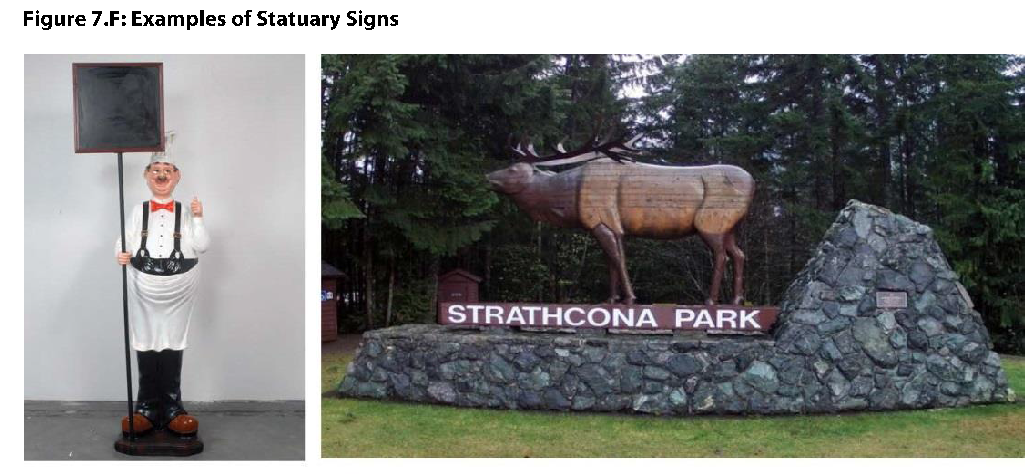
Statuary sign. Any three-dimensional sign which is a modeled or sculptured likeness of a living creature or inanimate object.
Stealth design. The camouflaging of an antenna or other telecommunications facility to integrate the antenna or facility with a building or the landscape in terms of design, colors, materials, and height.
Storage and warehousing. Uses that are engaged in the storage or movement of goods for themselves or other firms. Goods are generally delivered to other firms or the final consumer, except for some will call pickups. There is little on site sales activity with the customer present. Accessory uses may include offices, truck fleet parking, and maintenance areas.
Storage, enclosed. Storage or keeping of materials, products, equipment, or goods completely within the confines of a fully-enclosed building.
Storage, outdoor. A principal or accessory use consisting of the open-air and unscreened stockpiling or keeping of materials, products, equipment or goods utilized in association with a principal commercial or other nonresidential use, but excepting the retail display of motor vehicles, trailers, agricultural equipment or machinery, boats, recreational vehicles or equipment and mechanized equipment in an open sales yard or sales lot, and further excluding the outdoor parking of motor vehicles in designated off-street parking areas or spaces.
Storage, unenclosed. The unscreened stockpiling or keeping of materials, products, equipment, or goods beyond or outside the confines of a fully-enclosed building used in association with a principal use.
Street. A public thoroughfare that affords a principal means of access to abutting property.
Street tree. A tree located in the public right-of-way between the edge of the street and the edge of private or public property, and a tree located in street medians.
Structure. Anything constructed or erected thirty (30) inches or more above grade, or anything attached to something having a permanent foundation or location on the ground; excepting fences, pole-mounted or pedestal bird feeders, movable yard ornaments, portable child play/recreational equipment, sidewalks, attached stairways, driveways and utility boxes or appurtenant fixtures serving public utilities. Disputes or interpretations regarding whether a particular item or structure constitutes a structure within the scope of this definition shall be resolved by the Town Administrator per Section 1.6, Enforcement.
Structure, temporary. A building or other structure that is not constructed on a permanent foundation and that may or may not be equipped with permanently installed utility lines or plumbing, including, by way of example, tents, trailers, vending carts, huts, portable buildings or seasonal structures.
Subdivide. To divide an area or tract of land into lots pursuant to the definition of "subdivision."
Subdivider. Any individual, firm, association, syndicate, partnership, corporation, trust or any other legal entity who has a proprietary interest in the land sought to be subdivided and who commences proceedings under this UDC to effect a subdivision of land under this UDC for himself or herself or for any co-owners.
Subdivision. The division of a lot, tract, or parcel of land into two (2) or more lots, plats, sites, or other divisions of land. The term shall also include and refer to any division of land, lot line adjustment, and elimination of lot lines on previously subdivided or platted land.
Temporary. Unless otherwise stated in this UDC, temporary shall mean a period of time not exceeding one hundred eighty (180) days in any one (1) calendar year.
Temporary office, contractor's quarters, or equipment storage. A facility or area used as a temporary office to sell or lease land or buildings or interests in land or buildings within a specified area for a temporary field construction office or temporary outdoor storage of construction equipment and materials associated with an active permit to demolish or construct buildings, structures or infrastructure.
Temporary sign. A sign intended for a limited period of display.
Temporary use. A use that may or may not be permitted under the regulations for a given zoning district, but may be allowed on a nonpermanent and temporary basis following the procedures in Section 6.5.3, Temporary Use/Structure Permit.
Temporary vendor. A use including the retail display or sale of merchandise through a non-permanent structure or vehicle not intended to be a permanent fixture on a lot, including any cart, table, equipment, or apparatus that is not a structure.
Tower. Any structure built for the sole or primary purpose of supporting any Federal Communications Commission-licensed or authorized antennas and their associated facilities, including structures that are constructed for wireless communications services including without limitation private, broadcast, and public safety services, as well as unlicensed wireless services and fixed wireless services such as microwave backhaul, and the associated site.
Town. The Town of Buena Vista, Colorado.
Town Administrator. The Town Administrator, or their designee, for the Town of Buena Vista, Colorado.
Tract. A parcel of land that is included in a subdivision that is not intended for development with habitable structures. Common uses include, but are not limited to, open space, trails, landscape areas and landscape buffers, recreation, gardens, drainage detention, or common amenity areas such as playgrounds that are owned by a property owner's association or special district.
Trade or vocational school. A school offering special training in a skill or trade.
Transit facility. A facility associated with a transportation system, such as bus stops, transit centers, or trails designated as a regional, community connector, or local access trails, and similar facilities, but excluding public or private streets.
Turf. Areas of continuous plant coverage consisting of non-native grasses or grasses that have not been hybridized for arid conditions and which, when regularly mowed, form a dense growth of leaf blades and roots.
Turf, Artificial. Synthetic materials developed to resemble natural grass.
Turf, Functional. Turf that is located in a recreational use area or other space that is regularly used for civic, community, or recreational purposes, that may include a playground, a sports field, a picnic ground, an amphitheater, a portion of a park, and the playing area of a golf course, such as a driving range, chipping and putting green, tee box, green, fairway, and rough.
Turf, Functional artificial turf. Artificial turf that is:
1.
Located in a recreational use area or other space that is regularly used for civic, community, or recreational purposes, which may include a playground, a sports field, a picnic ground, an amphitheater, a portion of a park, and the playing area of a golf course, such as a driving range, chipping and putting green, tee box, green, fairway, and rough; or
2.
A component of a product designed and approved by a professional engineer for civil infrastructure projects, including but not limited to:
a.
Covers for solid waste facilities and brownfield sites; and
b.
Revetments for slopes, channels, levees, and dams.
Turf, Nonfunctional. Turf that is not functional turf. This term includes turf located in a street right-of-way, parking lot, median, or transportation corridor. The term does not include turf that is designated to be part of a water quality treatment solution required for compliance with federal, state, or local agency water quality permitting requirements that is not irrigated and does not have herbicides applied.
Turf, Nonfunctional artificial turf. Artificial turf that is not functional artificial turf.
Use. Any activity, occupation, business, or operation carried on, or intended to be carried on, in a building or other structure or on a tract of land.
Use, accessory. A use located on the same lot with a principal use and clearly incidental to and customary in connection with the principal use.
Use, permitted. A specific use of land, buildings, or structures authorized and allowed by right in a given zoning district, as indicated in Table 3.1, Table of Allowed Uses.
Use, primary. The dominant use on a lot. Also known as principal use.
Use, principal. The main use on a lot.
Variance. A development permit authorizing a deviation from the standards of this UDC where strict application of the standard results in a hardship due to circumstances peculiar to a lot, and that is reviewed and decided by the Board of Adjustment pursuant to Section 6.7.2.
Vehicular and transportation. Uses include a broad range of uses for the maintenance, sale, or rental of motor vehicles and related equipment. Accessory uses may include incidental repair and storage and offices.
Vertically mixed use. A type of development where a single building or complex contains multiple uses including residential. These uses are contained vertically within the same structure with commercial uses on the ground floor and residential on upper levels.
Vested property right. The right to undertake and complete the development and use of property under the terms and conditions of a site-specific development plan.
Veterinary hospital or clinic. A facility rendering surgical and medical treatment to large animals and/or household pets, including those that provide overnight accommodations, outdoor runs, or crematory facilities.
Walkway. A clearly defined path for pedestrian movement between buildings, structures, destinations, and/or other walkways on or adjacent to a site.
Walkway sign. A sign affixed to the underside, side, or top of a permanent cover or canopy above a walkway or public right-of-way.
Wall sign. A sign painted on or affixed to an exterior wall of a building or other structure and which is mounted parallel to the surface so that only one (1) side is visible to the public.
Whip antenna. An array of antennas that is cylindrical in shape.
Wholesale distribution or warehouse. A facility engaged in storage, wholesale, and distribution of manufactured products, supplies, and equipment, excluding bulk storage of materials that are inflammable or explosive or that create hazardous or commonly recognized offensive conditions.
Wind energy facility, large. A Wind Energy Conversion System (WECS) ten (10) kilowatts (kW) or greater total nameplate generating capacity.
Wind energy facility, small. A Wind Energy Conversion System (WECS) of less than ten (10) kilowatts (kW) in total nameplate generating capacity. The primary use of a small wind energy facility is for onsite collection, conversion, and distribution of energy; however, any excess energy output may be delivered to a power grid to offset the cost of energy on-site.
Winery. An establishment with facilities for making and bottling wine for sale on site and/or through wholesale or retail outlets. Uses at a winery may also include the growing of fresh fruits or agricultural products for the production of wine.
Wireless service. Data and telecommunications services, including commercial mobile services, commercial mobile data services, unlicensed wireless services, and common carrier wireless exchange access services, as all of these terms are defined by federal law and regulations.
Wireless service facility. A facility for the provision of wireless services, including a small cell facility; except that "wireless service facility" does not include coaxial or fiber-optic cable that is not immediately adjacent to, or directly associated with, a particular antenna.
Xeriscape or xeriscaping. Landscaping characterized by the use of vegetation and other landscaping materials that are drought-resistant or water-conserving.
Yard. An open space on the same lot with a building, unoccupied and unobstructed from the ground upward, except by trees or shrubbery or as otherwise provided in this UDC.
Yard, front. A yard across the full width of the lot extending from the front line of the building to the front line of the lot. On corner lots, the front yard shall be considered as parallel to the street upon which the lot has its least dimension.
Yard, rear. A yard extending across the full width of the lot and measured between the rear line of the lot and the rear line of the main building.
Yard, side. A yard on the same lot with a building between the building and the side line of the lot extending from the front of the building line to the rear of the building.
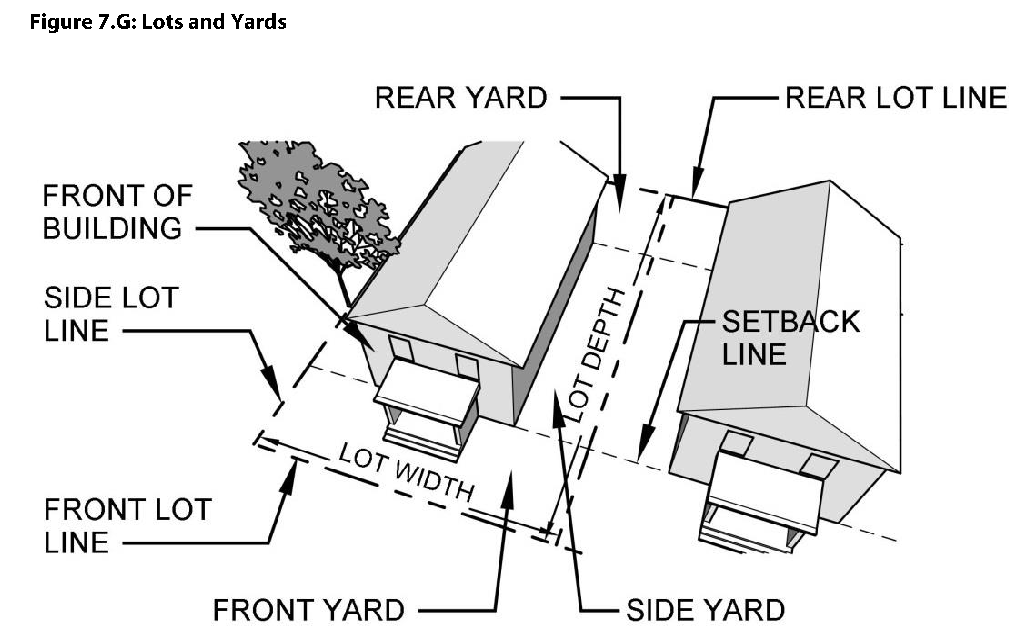
(Ord. 21 §7, 2018; Ord. 5 §4, 2021; Ord. 12 §§1, 2, 2021; Ord. 6 §2, 2022; Ord. 7 §4, 2022; Ord. 05 §3, 2023; Ord. 06 §3, 2023; Ord. 16 §15, 2023; Ord. 14 §3, 2024; Ord. 21 §3, 2024; Ord. 4 §§88—90, 2025; Ord. 08 §§20—24, 2025; Ord. 14 §5, 2025; Ord. 15 §5, 2025; Ord. 04 §9, 2026; Ord. 05 §3, 2026; Ord. 10 §§7—9, 2026)

