
Burr Ridge City Zoning Code
IV GENERAL
REGULATIONS
- SCOPE OF REGULATIONS
- No building or land shall hereafter be used or occupied, and no building or structure, or part thereof, shall hereafter be erected, raised, moved, reconstructed, extended, enlarged, or altered, except in conformity with the regulations herein specified for the district in which it is located. No building or land shall be devoted to any use other than one which is specified as a permitted or special use by the district regulations applicable to the district in which such building or land is located as herein set forth in Sections VI, VII, VIII, IX, and X. However, where a building permit for a building or structure has been issued in accordance with law prior to the effective date at this Ordinance, and where construction has been begun prior to such effective date and is being prosecuted to completion, said building or structure may be completed in accordance with approved plans on the basis of which the building permit was issued and further, may, upon completion, be occupied under a certificate of occupancy for the use or uses originally designated, subject to the provisions herein set forth in Section XIII of this Ordinance.
- ALLOWABLE USE OF LAND, BUILDINGS, OR STRUCTURES
- The following uses of land, buildings, or structures are allowed in the districts indicated hereinafter in Sections VI, VII, VIII, IX, and X under the conditions herein specified in this Ordinance.
- Except as otherwise provided in Section XII, uses lawfully established and existing on the effective date of this Ordinance, except uses lawfully established and existing on the effective date of this Ordinance and rendered non-conforming by the provisions herein shall be subject to the regulations of Section XII.
- Permitted uses as designated in Sections VI, VII, VIII, IX, and X.
- Special uses as designated in Sections VI, VII, VIII, IX, and X: A classification of special uses is hereby established to provide for such "special" uses hereinafter specified that have a unique, special or unusual impact upon the use or enjoyment of neighboring property. Due to the unique characteristics of the special uses, special standards and other conditions for their locations and development are herein set forth for each special use in the district regulations. A special use shall be granted only upon evidence that such use meets standards established for such classification in this Ordinance and any other applicable ordinances of the Village of Burr Ridge. The granting of permission therefore may be subject to conditions reasonably necessary to meet such standards. Additions or alterations to existing building or land improvements or expansion for a use herein designated as a special use shall conform with standards and other conditions governing the special use as herein set forth for the district in which it is located.
- CONTROL OVER BULK
- All buildings existing as of the date of adoption of this 1996 Comprehensive Amendment that were in lawful compliance with the provisions of the Burr Ridge Zoning Ordinance at the date of their construction shall be construed to be in compliance with this Comprehensive Amendment. If any such building is subsequently destroyed in whole or in part, such shall then become subject to the provisions of the "non-conforming building, structures and uses" section of this Ordinance. All new buildings shall conform to the bulk regulations established herein for the district in which each building is located. No modification or alteration of any building, or any subdivision of any land, shall conflict or further conflict with the bulk regulations of this Ordinance for the district in which such existing building or land is located.
- LOTS OF RECORD IN RESIDENCE DISTRICTS
- Notwithstanding the requirements of the subsection above, in a Residence District a lot of record in single-ownership which is located in a subdivision recorded prior to the effective date of this Comprehensive Amendment or a parcel of land under single-ownership which existed as of January 1, 1980, and which was not a part of any other parcel as of that date, but which does not conform with the requirements of this Comprehensive Amendment as to minimum lot area or lot width, may be used for a single-family detached dwelling, provided there is conformance with all other applicable regulations of this Comprehensive Amendment (except as may otherwise be permitted by the Community Development Director as set forth in subsection 5 below) and the following requirements, provided however that as an exception to these regulations, a lot that has been previously legally subdivided and recorded but combined with another lot may be returned to the originally platted and recorded dimensions provided that the majority of the lots on both sides of the street, on the same block, and in the same rezoning district are equal or greater in area and width to said lot may be used for a single-family detached dwelling: (Ord. A-834-07-05)
- The applicant shall furnish with the application for a building permit a certified survey of current date showing the following:
- The lot or parcel upon which he proposes to erect a single-family detached dwelling;
- The lots or parcels on either side of the lot or parcel upon which he proposes to erect a single-family detached dwelling, with all improvements thereon; and
- Widths of adjoining side yards, with any projections of buildings or structures into the adjoining side yards duly spotted by the surveyor.
- The applicant shall furnish with the application for a building permit an affidavit by the owner of record of the lot or parcel described in the application, which shall state the following:
- That the owner is not holding title to any contiguous lot or lots or parcels either in his or her own name, or jointly with anyone else, or in trust or for the benefit of the owner or any other person, and that the owner has no beneficial interest in any such contiguous lot or lots or parcels;
- That neither the applicant nor any owner of, or beneficiary of any land trust for the subject lot or parcel, nor any predecessor in the title for a period of more than five years prior to the date of the application, has been the owner, either directly or indirectly, or as a beneficiary of any trust, or through any other person, of the contiguous lot or lots or parcels on either side of the subject lot or parcel.
- If there is additional land available from a contiguous vacant lot or parcel or if there is a contiguous improved lot of record or parcel which has five feet or more of side yard in excess of the minimum required side yard for the building or structure on the said improved lot or parcel and which additional side yard could be added to the subject lot or parcel, thereby increasing its area or width, then the applicant shall furnish an affidavit, signed by the owner of record of the contiguous lot or parcel, which states that the owner of the contiguous lot or parcel refuses to sell or refuses to sell at a reasonable price the land needed to increase the width or area of the applicant's lot or parcel.
- The Community Development Director shall approve the issuance of a permit for erecting a single-family detached dwelling on the subject lot or parcel upon compliance with all of the foregoing provisions and all other applicable provisions of this Comprehensive Amendment if the survey and affidavit show that there is no land physically available on either side of the lot described in the application for a building permit that could be added thereto to increase its width of area for the following reasons:
- That the said lot or parcel is not contiguous to a vacant lot or parcels;
- That the owner, nor any predecessor in title for a period of more than five years, does not have any ownership or beneficial interest in any contiguous lot or parcel;
- That the said lot or parcel is not contiguous to an improved lot of record or parcel which has five feet or more of side yard in excess of the minimum required side yard for the building or structure on the said improved lot or parcel and which additional side yard could be added to the subject lot or parcel, thereby increasing its area or width; and
- That there is additional land available from a contiguous vacant lot or parcel or a side yard as herein before stated, but the present owner refuses to sell, or refuses to sell at a reasonable price.
- For lots or parcels covered by these provisions, the Community Development Director may, when requested by the applicant, approve in specific cases a reduction in the side yard width requirements for lots or parcels not conforming with the lot width requirements of the district where located. However, in no case shall either such reduced side yard have a width of less than ten percent of the width of the lot or four feet, whichever is the greater width.
- NUMBER OF BUILDINGS ON A LOT Every building hereafter erected or structurally altered shall be located on a lot, and there shall be not more than one such building on a lot except as follows:
- Additional buildings on a lot may be approved in planned unit developments.
- Permitted accessory buildings as per Sections IV.H and IV.I, herein, shall be allowed on a lot with a principal building.
- A permit for construction of a second single-family dwelling on a lot may be issued for the purpose of allowing a property owner to continue residing in an existing single-family dwelling while a new single-family dwelling is under construction. Said permit shall be subject to the following:
- The new dwelling shall be completed and a Building Certificate of Occupancy issued within one year after issuance of the building permit.
- The original dwelling shall be razed within 30 days after issuance of a Building Certificate of Occupancy for the new dwelling. The grade and landscape within and surrounding the original dwelling shall be restored and all construction material, debris, etc. shall be totally removed within 60 days after issuance of the Building Certificate of Occupancy.
- Prior to issuance of the building permit for a new dwelling, the property owner shall deposit funds in a cash escrow with the Village of Burr Ridge or shall post a letter of credit drawn on a bank to be approved by the Village. The cash escrow or letter of credit shall be in an amount sufficient to cover all costs related to the demolition of the original dwelling. If a letter of credit is used, such letter of credit shall be drawn for the benefit of the Village and on such terms and conditions as shall be satisfactory to the Village. The cash escrow or letter of credit shall be in an amount equal to 125% of the cost of demolition of the existing dwelling. The estimated cost of demolition shall be based on written estimates from qualified demolition companies and shall be subject to the approval of the Community Development Director. The Village of Burr Ridge shall use the funds for demolition of the original dwelling if the property own fails to comply with the terms and conditions herein. (Amended by Ordinance A-834-5-98)
- LOT DIVISION
- Compliance with Zoning Ordinance.
No lot shall hereafter be divided in order to secure one or more additional lots for transfer of ownership and establishment of a principal use thereon, unless each lot resulting from such division shall meet all requirements of this Ordinance for the district in which the lot is located. - Side Lot Lines for Lot Divisions
No lot shall hereafter be divided in any manner unless all new side lot lines created by said lot division shall be substantially at right angles or radial to the street line. Side lot lines cannot be made irregular for the purpose of establishing compliance with the minimum lot size requirements of this Ordinance.
- Compliance with Zoning Ordinance.
- YARDS, COURTS AND OTHER OPEN AREAS
- Required Yards, Courts, and Open Areas
Yards, courts or other open areas required in district regulations shall be provided for all new uses or additions or enlargements of existing uses. Such required yards, courts and other open areas shall be located on the same lot that is designated, at the time of issuance of the building permit, as the lot comprising the site for the new principal use or the lot containing the existing use with additions or enlargements thereto. - Through Lots
- Front yards shall be provided along both lot lines adjoining streets; provided, however, if either of said yards also will constitute the rear yard of the lot, such yard shall conform to the larger of the two different (front or rear) yard requirements. Any such combined yard which is both the front and rear yard shall not contain obstructions which would otherwise be permitted in rear yards. Provided, however, if the lot is in a subdivision which has a recorded covenant prohibiting access from the adjoining thoroughfare and the subdivision has constructed an approved subdivision fence across the rear lot line, the obstructions that are allowed in rear yards under this Ordinance shall be permitted on such through lot (the rear yard shall be the yard with the fence).
- The subdivision has constructed an approved subdivision fence across the rear lot line;
- A dedicated landscape easement along the rear lot line where the use of a substantial berm and landscaping in accordance with applicable Village regulations and a landscaping plan submitted to and approved by the Community Development Director. All such buffering shall be as close to 100 percent opacity as possible, including during the dormant stage of such landscaping. (Amended by Ordinance A-834-12-06)
- Either of the lot lines adjoining a street may be established by the Community Development Director as the front lot line; except where a front lot line has been established by an existing use on one or more lots in a block, the front lot line of the through lot shall be along such same street line. Provided, however, in blocks containing two or more through lots having front lot lines not established on the same street line, the front lot line on the remaining lots shall be as designated by the Community Development Director.
- Vehicular access drives to a through lot shall be prohibited from the thoroughfare, which abuts the rear property line. The Community Development Director may require a covenant to be recorded, which prohibits access via the street abutting the rear property line.
- On a through lot which has its rear yard abutting a collector or arterial street (as classified by the Village of Burr Ridge Comprehensive Plan) and does not have an approved subdivision fence adjacent to or within the rear yard, a berm and landscaping shall be provided in said rear yard for the purpose of screening accessory structures and uses from the adjoining thoroughfare. Said berm and landscaping shall be subject to the approval of the Community Development Director and shall be provided at such time that a principal or accessory building is constructed.
- Front yards shall be provided along both lot lines adjoining streets; provided, however, if either of said yards also will constitute the rear yard of the lot, such yard shall conform to the larger of the two different (front or rear) yard requirements. Any such combined yard which is both the front and rear yard shall not contain obstructions which would otherwise be permitted in rear yards. Provided, however, if the lot is in a subdivision which has a recorded covenant prohibiting access from the adjoining thoroughfare and the subdivision has constructed an approved subdivision fence across the rear lot line, the obstructions that are allowed in rear yards under this Ordinance shall be permitted on such through lot (the rear yard shall be the yard with the fence).
- Corner Lots
In all Residence Districts, the front yard shall be along the lot line adjoining the street that has the shortest dimension. (Amended by Ordinance A-834-19-01) - Yard Requirements Along District Boundary Lines
Yards, courts or other required open areas that abut or are across an alley or street from a district having greater yard, court or other open area requirements, shall comply with requirements of the adjacent district. - Building Setback Lines
- Where 40 percent or more of the lots along the same side of the street in the same block have front yard setback lines established by detached single-family dwellings, the front setback line for each remaining detached single-family dwelling shall be not less than the lessor setback of the two adjacent detached single-family dwellings. If only one adjacent detached single-family dwelling exists, the front yard setback shall be not less than the minimum front yard setback otherwise required by the applicable district requirements. Lots that have frontage on the turnaround of a cul de sac street shall be excluded from this requirement. See figure IV.G.5 below for a graphic example of the application of this section. (Amended by Ordinance A-834-9-01, Ordinance A-834-21-01, Ordinance A-834-13-11).
- Along streets duly designated as thoroughfares on the Comprehensive Plan and Official Map of the Village of Burr Ridge, the established future right-of-way line of the thoroughfare shall be considered the front property line for purposes of determining the required setbacks and permitted obstructions in yards, courts, or other open areas.
- Where 40 percent or more of the lots along the same side of the street in the same block have front yard setback lines established by detached single-family dwellings, the front setback line for each remaining detached single-family dwelling shall be not less than the lessor setback of the two adjacent detached single-family dwellings. If only one adjacent detached single-family dwelling exists, the front yard setback shall be not less than the minimum front yard setback otherwise required by the applicable district requirements. Lots that have frontage on the turnaround of a cul de sac street shall be excluded from this requirement. See figure IV.G.5 below for a graphic example of the application of this section. (Amended by Ordinance A-834-9-01, Ordinance A-834-21-01, Ordinance A-834-13-11).
- Required Yards, Courts, and Open Areas
- GENERAL REGULATIONS FOR ACCESSORY BUILDINGS, STRUCTURES AND USES
Accessory buildings, structures and uses shall not be erected or altered in required yards, courts or other open areas, except those that are herein permitted as obstructions in yards, courts, or other open areas. All accessory buildings, structures and uses shall comply with the following regulations and all other regulations of this Ordinance.- Accessory to Principal Building
Accessory buildings, structures and uses shall be accessory to and compatible with the principal use. Human occupancy of an accessory building or structure is expressly prohibited except as may be specifically allowed herein. - No Construction Prior to Principal Building
No detached or attached garage or accessory building may be constructed on a lot previous to the house being constructed except that a garage or approved accessory building may be erected for tool and material storage after the foundation for the house is completed and approved. - Keeping of Livestock, Chickens, and Bees as Accessory Uses in Residential Districts
Except as otherwise expressly provided herein, accessory buildings or structures shall not be used for the keeping of livestock, poultry or rabbits, whether for profit or not, unless said buildings or structures meet the following requirements:- All livestock, poultry, and rabbits (except up to a maximum of two rabbits kept as household pets and except for chickens and bees as regulated herein) shall be kept only on lots or parcels of at least five acres in size. (Amended by Ordinance A-834-05-14)
- There shall be no more than one horse or other livestock, poultry, and rabbits for each 20,000 square feet of lot area except for chickens and rabbits as regulated herein.
- Accessory buildings or structures for livestock shall be located at least 50 feet from the side or rear lot lines.
- Chickens, also referred to herein as domestic hens or hens, are permitted on properties of one acre or more and zoned for single-family residential use subject to the following terms and conditions:
- A maximum of four domestic hens are permitted;
- The keeping of roosters and the slaughtering of any chickens is prohibited;
- Hens shall be kept in an enclosure at all times and the enclosure shall comply with the following:
- The area of the enclosure shall not exceed 150 square feet.
- The enclosure shall be designed for the specific purpose of keeping chickens, to prevent access by wild animals, and to prevent attraction of rodents.
- The enclosure shall include an open area enclosed with hardware cloth that is buried at the perimeter at least six inches in the ground.
- The enclosure shall be considered an accessory building for purposes of zoning, shall comply with all zoning regulations for accessory buildings not specifically modified herein, and shall be subject to the issuance of permit.
- The enclosure shall be located in the rear buildable area of the property with a minimum setback from the interior side and corner side lot lines equal to the setback of the principal building and may encroach into the required rear yard setback subject to a minimum setback from the rear lot line of 10 feet.
(H.3.b,c,d amended by Ordinance A-834-23-12).
- Bee colonies maintained as a hobby by a resident of the same property and which is not for commercial purposes are permitted as within the R-1, R-2, R-2A, R-2B, and R-3 Districts subject to the following terms and conditions:
- All bees shall be of the common domestic honey bees of the Apis Mellifera species.
- All bee colonies and beekeepers shall be registered with the Illinois Department of Agriculture as required by the Illinois Bees and Apiaries Act (510 ILCS 20/1 et seq.) and shall comply with all applicable regulations of said Department and legislation as may be amended from time to time.
- All colonies must be kept in inspectable-type hives, with removable combs, which shall be kept in sound, usable and sanitary condition.
- All colonies must be kept within the rear yard and rear buildable area with a minimum setback from all lot lines of 15 feet.
- Bee hives shall be kept within one or more contiguous bee hive structure(s) with a combined area not exceeding 8 square feet and 6 feet in height.
- Lots having 80,000 square feet of lot area or less shall not have more than two colonies. Lots exceeding 80,000 square feet of lot area may have a maximum of four colonies.
- In any instance where a bee colony exhibits unusually aggressive characteristics by stinging of attempting to sting without due provocation or exhibits an unusual disposition towards swarming, it shall be the duty of the beekeeper to re-queen the colony. Queens shall be selected from a stock bred for gentleness and non-swarming characteristics. (H.3.e Added by Ordinance A-834-05-14)
- Setback and Location of Accessory Buildings and Structures
Accessory buildings and structures shall be setback a minimum of 10 feet from a rear lot line and shall comply with the minimum interior side and corner side yard setback of the zoning district in which the accessory building or structure is located except as may otherwise be specifically permitted in Section IV.I of this Ordinance. - Rear Yard Setbacks on Corner Lots and Through Lots
- On corner lots accessory buildings and structures shall be located not nearer to the rear lot line than the distance of the required side yard for the lot adjoining the rear lot line and not nearer to the side street line than the distance required for a side yard adjoining a street, or in the case of a reverse corner lot, this distance shall equal the required front yard on such lot adjoining the rear lot line
- On through lots that do not have a rear lot line adjoining a no-access strip accessory buildings and structures shall be located not nearer to the rear lot line adjoining a street than the distance required for a front yard.
- Distance Between Buildings
Accessory buildings shall be separated by at least 10 feet from the principal building and from all other accessory buildings on a lot. - Distance from a Corner Side Lot Line
No detached or attached accessory building hereafter erected or altered shall project nearer to a lot line adjoining a street than the distance equivalent to the shortest distance between such lot line and the nearest wall of the principal building. - Height of Accessory Buildings
The height of accessory buildings in residential districts shall comply with the following;- In no case shall the roofline of an accessory building be higher than the roofline of the principal building.
- No accessory building shall exceed one story or 15 feet in height as defined in Section XIV – Building Height of the Zoning Ordinance – whichever is lower except as permitted herein for accessory buildings in an R-1 or R-2 District.
- An accessory building in an R-1 Single-Family Residence District may be two stories and may be 25 feet as defined in Section XIV – Building Height of the Zoning Ordinance.
- An accessory building with a gable, hip, or gambrel roof in an R-2 Single- Family Residence District may have an absolute height to the peak of the roof of 22 feet 6 inches or an average height of 15 feet as defined in Section XIV – Building Height of the Zoning Ordinance. (Amended by Ordinance A-834-02-07)
- Overhead Door Height (Residential): The vertical distance from the bottom of the overhead door opening to the top of the overhead door opening shall not exceed 9 feet in height except one door may be 10 feet in height if approved through a special use.
- Combined Horizontal Floor Area of Accessory Buildings and Structures
- The combined horizontal area of all accessory buildings, structures, and uses shall not exceed 30 percent of the area to the rear of the principal building. Lot coverage for corner lots shall be determined by measurement of the rear yard from the rear wall extended to the side lot lines and extended to the rear lot lines.
- The combined horizontal area of all accessory buildings shall not exceed 60% of the horizontal floor area of the principal building.
- Number and Floor Area of Detached Accessory Buildings
For each lot of record in a residential district, the number and floor area of permitted accessory buildings shall be as follows:- R-1 District: For a lot of record in an R-1 District that meets the minimum lot area requirement as per Section VI.B of this Ordinance, accessory buildings shall be permitted as follows:
- Maximum Number: 2
Plus one additional building for every 2 acres that the property exceeds 5 acres. - Maximum Floor Area Per Building: 3,000 square feet
- Maximum Number: 2
- R-2 District: For a lot of record in an R-2 District that meets the minimum lot area requirement as per Section VI.C of this Ordinance, accessory buildings shall be permitted as follows:
- Maximum Number: 2
- Maximum Floor Area Per Building: 2,500 square feet
- R-2A or R-2B District: For a lot of record in an R-2A or R-2B District accessory buildings shall be permitted as follows:
- Maximum Number: 2
Plus one additional building for every 2 acres that the property exceeds 5 acres. - Maximum Floor Area For Building 1: 0.0475 (4.75%) FAR & 2,500 square feet
Building 1 refers to the only accessory building on a lot or the larger of two accessory buildings on a lot. The maximum floor area for Building 1 cannot exceed 0.0475 FAR and 2,500 square feet, whichever is less. FAR, or floor area ratio, is the total floor area of the accessory building divided by the total lot area.
Maximum Floor Area For Building 2: 750 square feet
Building 2 refers to the smaller of two accessory buildings on a lot.
- Maximum Number: 2
- R-3 or R-4 District: For a lot of record in an R-3 or R-4 District detached accessory buildings shall be permitted as follows:
- Maximum Number: 2
Plus one additional building for every 2 acres that the property exceeds 5 acres. - Combined Maximum Floor Area Ratio: 0.0375 (3.75%)
Combined floor area ratio is the total floor area of all accessory buildings divided by the total lot area. - Combined Maximum Gross Floor Area:1,500 square feet
Combined maximum gross floor area is the sum of all detached accessory building floor areas on a lot of record. - Minimum Permitted Floor Area: 750 square feet
For lots that are less than 20,000 square feet, the maximum floor area for an accessory building shall be 750 square feet regardless of the FAR.
(Section IV.H.10 Amended by Ordinance A-834-20-06)
- Maximum Number: 2
- R-1 District: For a lot of record in an R-1 District that meets the minimum lot area requirement as per Section VI.B of this Ordinance, accessory buildings shall be permitted as follows:
- Accessory to Principal Building
- PERMITTED ACCESSORY BUILDINGS, STRUCTURES AND USES - LOCATION & REGULATION
The buildings, structures, and uses listed below may be located in buildable areas on a lot and may encroach into required yards as shown on the following graphics and as defined in Section XIV of this Ordinance or as may otherwise be specified in this Ordinance. (Amended by Ordinance A-834-13-11)- Detached Accessory Buildings in Residential Districts
Detached buildings accessory to permitted residential uses are permitted in the rear buildable area and may also be located in a required rear yard but not closer than 10 feet to the rear lot line. Detached buildings accessory to residential uses are also subject to the regulations in Section IV.H above. (Amended by Ordinance A-834-20-06) - Access Driveways and Walks
Access driveways and walks are permitted in all buildable areas of a lot in all districts and may also project into any required yard but not closer than 2 feet from the side lot line as extended to the street pavement except that the radius of flare within the driveway apron (right-of-way) may encroach into the 2 foot setback provided that it does not encroach beyond the property line as extended to the street pavement (also see Appendix VI). (Amended by Ordinance A-834-5-98) - Arbors or Trellises
Arbors or trellises, and trellises attached to the principal building are permitted in a side or rear buildable area or within a court yard and may also project not more than 3 feet into any required yard. - Air Conditioning Equipment and Shelters
Air conditioning equipment and shelters may be located within a court yard or within the buildable area between the principal building and the corner side lot line (but not in the buildable area between the principal building and the front lot line) and may also project into the required side yard and rear yard setbacks if said equipment or shelter is located not less than 5 feet from the side or rear wall of the principal building. However, under no circumstance may such units be located within 15 feet of the façade of the principal building facing the front lot line nor shall any such units encroach into a required side or rear setback by more than 5 feet. All air conditioning units and shelters must be adequately screened with year-round landscaping material. (Amended by Ordinance A-834-20-00) - Architectural Entrance Structures
Architectural entrance structures, on a lot not less than 40,000 square feet in area, are permitted in a front, side, corner side or rear buildable area and are also permitted in the required front yard. Architectural entrance features must comply with the following terms and conditions:- Architectural entrance structures shall be located adjacent to driveways and the number of structures shall not exceed two per driveway; one on each side of the driveway.
- Each architectural entrance structure may not exceed six feet in height measured from the ground level at the lowest grade level within five feet of either side of the structure. A light fixture may be added above the six foot height limit not exceeding 18 inches.
- The foot print of an architectural entrance structure shall not exceed three feet by three feet except that wing walls not exceeding four feet in height and three feet in length shall be permitted.
- The primary materials for architectural entrance structures are limited to masonry brick, natural stone, or similar materials.
- Architectural entrance structures are subject to the issuance of a permit and must be provided with a foundation and structural elements as required by the Village building codes.
- Architectural entrance features at an entrance to a subdivision are permitted as regulated by the Village of Burr Ridge Subdivision Ordinance.
(Amended by Ordinance A-834-8-00 and A-834-27-16)
- Balconies
Balconies extending from and attached to the principal building may be located in the front, side, or rear buildable area or within a court yard and may also project not more than 6 feet into a required rear yard. (Amended by Ordinance No. A-834-01-05) - Basketball and Similar Athletic Courts (not including driveways)
Basketball and similar athletic courts shall be permitted on single-family residential properties in the rear buildable area and my encroach into the required rear yard provided a 10-foot setback from the rear property line is provided, that a setback from the side property line in compliance with the interior or corner side yard setback of the district is provided, and that the court complies with all other regulations for accessory structures in residential areas. (Amended by Ordinance A-834-5-98). - Bay Windows
Bay windows are permitted in the front, side or rear buildable area and in a court yard and may also project not more than three feet into any required yard. - Bridges (Open and Uncovered), Spillways, and Similar Architectural Structures
Such structures may be located in the front, side, or rear buildable area of a lot and within 10 feet of any lot line provided the lot exceeds five acres in area. (Amended by Ordinance A-834-29-01) - Chimneys
Chimneys, attached to the principal building, are permitted in front, side, and rear buildable areas and also may project not more than 24 inches into any required yard. - Dog Runs
Dog runs shall be permitted in residential districts subject to the following:- No dog run shall be erected, placed or altered on a lot unless approved by the Community Development Director and a permit is issued for the same. For purposes of this section, a dog run shall be defined as an enclosed area intended to contain one or more dogs.
- Dog runs shall be obscured from view from neighboring properties and adjacent streets by the planting of shrubbery according to a landscape plan to be approved by the Community Development Director prior to issuance of the permit.
- All dog runs must be located in the buildable area directly behind and adjacent to the principal building. In no event shall a dog run encroach into a required setback or be located closer to a corner or interior side property line than the principal building.
- Dog runs shall be situated on a lot so that the longest dimension of the dog run is parallel with the principal building.
- No dog run shall be in excess of 250 square feet in area, nor more than six feet (6') in height above the surface of the ground, as measured from the ground level at the lowest grade level within five feet of either side thereof.
- Fences enclosing a dog run may be constructed of any material permitted for a residential fence as per Section IV.J herein or may be constructed of a vinyl coated, chain link fence made of a color compatible with the surrounding landscape.
- Driveway Gates (Residence Districts)
Gates across private driveways shall be permitted on parcels in residential districts that are a minimum of 2 acres in area and have a front or corner side lot line with a minimum of 150 feet of street frontage (Amended by Ordinance A-834-13-11). All driveway gates must comply with the following terms and conditions:- Driveway gates are permitted in a front buildable area and are also permitted in the required front and corner side yard but not closer to the front or corner side lot line than 30 feet. However, for each 3 feet of lot frontage less than 220 feet, an additional one foot setback shall be provided. For example, for a 2 acre lot with 160 feet of lot frontage, the minimum required setback from the front lot line shall be 50 feet [30+((220-160)/3) = 50]. (Amended by Ordinance A-834-13-11).
- One gate per driveway is permitted.
- Driveway gates and related architectural entrance structures may not exceed six feet in height measured from the ground level at the lowest grade level within five feet of either side of the fence.
- The primary materials for driveway gates and related architectural entrance structures are limited to natural stone, masonry, wrought iron, or similar materials.
- Driveway gates are subject to the issuance of a permit and are subject to access requirements by the Fire District having jurisdiction over the property. (Amended by Ordinance A-834-24-07 and Ordinance A-834-26-08)
- Eaves and Gutters
Eaves and gutters on principal buildings or detached accessory buildings are permitted in all buildable areas and may also project not more than four feet into the required front or rear yard and not more than two feet into a required side yard. (Amended by Ordinance A-834-9-01) - Fallout Shelters
Fallout shelters (attached or detached) are permitted in the rear buildable area, when conforming also to other codes and ordinances of the Village. - Fences – See Section IV.J
- Fire Escapes and Fire Towers
Fire escapes, open or enclosed, or fire towers may be located in any buildable area in business and manufacturing districts only and may project into a required front yard or side yard adjoining a street by not more than five feet and into a required interior side yard not more than three and one-half feet. - Fireplaces and Grills, Outdoor
Masonry fireplaces including gas or wood grills may be located in the rear buildable area and are also permitted in the required rear yard of a residential property, but not closer than 10 feet to any principal or accessory building, not closer than 10 feet to the rear lot line and not closer than the required side yard setback to the interior side yard. Outdoor fireplaces and grills may not exceed the maximum height of 15 feet and 20 square feet in area. (Amended by Ordinance A-834-07-12) - Flagpoles
Flagpoles may be located in any buildable area and are also permitted in the required front or rear yard, but not closer than 10 feet to the lot line. A maximum of three flag poles shall be permitted on a lot and flagpoles may not exceed 25 feet in height in residential districts nor more than 40 feet in height in non-residential districts. (Amended by Ordinance A-834-09-15) - Fountains, Related Water Features, and Related Equipment Shelters
Fountains and related water features, with water depths not exceeding 2 feet, are permitted in the front and rear buildable area and may also be located in the required front and rear yards, but not closer than 10 feet to the front and rear lot line. Related equipment shelters are not permitted in a front buildable area or a required front yard and may be located in a rear buildable area and a required year yard provided they are a minimum of 10 feet from the rear lot line. (Amended by Ordinance A-834-9-01) - Garden or Farm Crops
Garden (in the open) or gardens which are largely enclosed by bushes, hedges, or trees and where the enclosure includes a freestanding architectural wall or monument shall be permitted in the interior side and rear buildable areas and are also permitted in the required rear yard but not closer than 10 feet from a rear lot line. Any architectural wall or monument built in conjunction with a garden shall be subject to the following restrictions:- The façade of the wall or monument shall be limited to stone or brick that replicates the façade of the principal dwelling and in no case shall it include exposed concrete blocks.
- There shall be no more than one such wall or monument and it shall be no more than eight feet in height and cannot exceed 15 feet and 15 percent of the total length or surface area of the total perimeter area of the garden enclosure, whichever is less.
- The exterior side of any wall or monument used to enclose a garden shall be screened with landscaping.
- All such walls or monuments shall comply with the required side yard setback of the underlying zoning district and shall be at least 10 feet from rear property lines.
- Architectural wall or monument enclosing a garden shall only be permitted on properties of two acres or greater. (Amended by Ordinance A-834-11-06)
- Generators – Residential
Natural gas or propane generators provided for standby electrical power but not as a primary power source are permitted subject to the following standards;- Generators may be located within a court yard, in an interior side, corner side, or rear buildable area or within the buildable area between the principal building and the corner side lot line and may also project into the required interior side yard and rear yard setbacks if said equipment or shelter is located within 5 feet from the side or rear wall of the principal building. However, under no circumstance may such units be located within 15 feet of the façade of the principal building facing the front lot line nor shall any such units encroach into a required side or rear setback by more than 5 feet.
- Generators must be adequately screened with year-round landscaping material.
- Generators shall not generate noise exceeding 75 decibels measured 23 feet from the generator.
- Generators must be enclosed by a sound attenuated box or cabinet that shall not exceed 28 square feet in area or 5 feet in height. Any noise reducing mufflers provided by the manufacturer shall be utilized. (Amended by Ordinance A-834-8-00 and A-834-22-11)
- Kitchens, Outdoor
Outdoor kitchens (typically being a masonry structure with a cook top and oven, plumbing, cabinet storage areas, and counter top) may be located in the rear buildable area and are also permitted in the required rear yard of a residential property subject to the following:- Outdoor kitchens must be a minimum of 10 feet from the rear lot line and not closer than the required side yard setback to the interior side yard.
- Outdoor cooking appliances shall maintain a minimum distance from combustible materials as recommended by the appliance manufacturer or a minimum distance of 10 feet. (Amended by Ordinance A-834-10-13).
- Outdoor kitchens may not exceed 5 feet in height and 60 square feet in area except that a chimney provided for a stove or fireplace may extend to 15 feet in height. (Amended by Ordinance A-834-19-12).
- Lawn Furniture
Lawn furniture, such as benches, sun dials, bird baths, and similar architectural features, may be located in any buildable area and are also permitted in the required front or rear yard, but not closer than 10 feet to the front, corner side or rear lot line. - Open Off-Street Loading – Non-Residential
Open off-street loading spaces may be located in the side or rear buildable area and are also permitted in the required rear yard, subject to those regulations set forth in Section XI of this Ordinance. - Open Off-Street Parking
Open off-street parking spaces may be located in the interior side or rear buildable area and may also be located in a required interior side or rear yard provided a minimum setback of 8 feet is provided from an interior or rear lot line. Unless otherwise specifically allowed elsewhere in this Ordinance, open off-street parking spaces shall be at least 10 feet from a building wall.
In all Business Districts, open off-street parking spaces may also be in a front buildable area or a required front yard or corner side yard provided a minimum 15 foot setback is provided from the front and corner lot lines.
Open Off-Street Parking shall also comply with Section XI herein. - Ornamental Light Standards
Ornamental light standards, defined as light standards with a prefabricated, monopole design, may be located in any buildable area and are also permitted in the required front or rear yards, but not closer than 10 feet to the lot line. Such ornamental light standards shall not exceed 10 feet in height. However, the location of the light on the ornamental light standard shall not be more than 8 feet above grade and all lighting shall comply with the performance standards as per Section IV.W.7 herein. (Amended by Ordinance A-834-6-99, A-834-07-12). - Playground and Laundry Drying Equipment
Playground and laundry-drying equipment may be located in the rear buildable area and are also permitted in the required rear yard, but not closer than 10 feet to the lot line. - Ponds (Private)
Ponds (private) and related features with water depths greater than 2 feet may be located in the rear buildable area and are permitted in the required rear yard, but not closer than 10 feet to the rear lot line. Ponds are subject to issuance of a grading permit by the Village and shall meet the regulations for Swimming Pools (Private) including the requirement for a perimeter fences as adopted by the Village of Burr Ridge Building Ordinance. Related equipment shelters may encroach into the required rear yard but not closer than 10 ft. to the rear lot line. - Satellite Dishes, See Section IV.S
- Sills, etc.
Sills, belt courses, cornices, and ornamental features attached to the principal building may be located in any buildable area and may project not more than 18 inches into any required yard. - Steps (Open)
Steps (open), below or above grade and necessary for access to and from a dwelling or an accessory building may be located in any buildable area and are also permitted in the required yards not closer than 10 feet to a lot line, provided there are no more than eight steps for access to and from a principal or accessory building. Steps built at grade shall be considered a walk and shall be regulated by Section IV.I.2 herein. (Amended by Ordinances A-834-9-01 and A-834-23-06) - Swimming Pool Equipment
Equipment for swimming pools and spas are permitted subject to the following standards;- Pool equipment may be located within a court yard, in an interior side, corner side, or rear buildable area or within the buildable area or within the buildable area between the principal building and the corner side lot line and may also project into the required interior side yard and rear yard setbacks if said equipment is located within 5 feet from the side or rear wall of the principal building. However, under no circumstance may such equipment be located within 15 feet of the façade of the principal building facing the front lot line nor shall any such units encroach into a required side or rear setback by more than 5 feet.
- Pool equipment must be adequately screened with year-round landscaping material.
- Pool equipment shall not generate noise exceeding 75 decibels measured 23 feet from the equipment pad.
- Pool equipment shall not exceed 48 square feet in area or 5 feet in height.
- Swimming Pools (Private)
Swimming pools (private) may be located in a rear buildable area and are also permitted in the required rear yard, but not closer than 10 feet to the rear lot line. Section IV.J details fence requirements for outdoor swimming pools. - Terraces, Patios and Decks
Terraces, patios, and decks may be located in a side buildable area, a rear buildable area or a court yard and are also permitted in the required rear yard, but not closer than 10 feet to the lot line. - Tennis Courts (Private)
Tennis courts (private) may be located in the rear buildable area on residential properties and are also permitted in the required rear yard but not closer than 10 feet to the lot line. A fence may be located at the perimeter of a tennis court subject to the following conditions:- No such fence shall exceed the height of 10 feet.
- Materials for tennis court fences may include green vinyl coated chain link or a comparable material as may be determined appropriate by the Community Development Director.
- The view of tennis court fences from adjacent properties shall be obscured by the planting of shrubbery, evergreen trees, or comparable plant materials subject to the approval of the Community Development Director.
- Trash Dumpsters – Non-Single-Family Residential
All facilities for the collection of garbage, refuse, ashes and similar waste materials shall comply with Chapter 50 of the Village of Burr Ridge Municipal Code. Dumpsters for the storage of such waste materials shall be permitted to be located on non-residential properties subject to compliance with the following conditions:- Dumpsters shall be located within a principal or accessory building or adjacent to the rear wall of the principal building. If the property is adjacent to a residential property, the Community Development Director may approve an alternate location for the purpose of ensuring that a dumpster is not located in proximity to the residential property.
- Dumpsters shall be enclosed on all sides with solid walls of a material and color compatible with the principal building. Wall enclosures for dumpsters may be masonry or solid wood subject to the review and approval of the Community Development Director. The access gate to a dumpster shall be properly maintained and kept latched except when being used.
- There shall be no more than one dumpster enclosure for a building (or one per tenant for a multiple-tenant building) and said dumpster enclosure shall be used only for the enclosure of a trash dumpster.
- Trees, Shrubs and Flowers
Trees, shrubs, and flowers may be located in any buildable area and are also permitted in any required yard. - Walls and Masonry Piers (Residence Districts)
In Residence Districts only, solid architectural walls of compatible building material as the principal building shall be permitted as follows:- Wing Walls: Wing walls, not more than 4 feet in height, shall be permitted in a front buildable area, an interior side buildable area or court yard extending not more than 10 feet from the front two corners of the principal building; and may also project up to 3 feet into the required front or corner side yard.
- Solid or open decorative walls: Solid or open decorative walls, not more than 4 feet in height may be located in court yards.
- Patio Seat Walls: Patio seat walls, not more than 24 inches in height from patio floor to the top of wall and not more than 42 inches measured within 2 feet of the base of the wall shall be permitted in association with patios in permitted locations as per Section IV.I.32. Monuments in association with patio seat walls shall be not more than 42 inches in height from the patio floor to the top of the monument and shall be limited to not more than two per patio. (Amended by Ordinance A-834-20-04)
- Driveway Seat Walls: Driveway seat walls shall be permitted in association with driveways in permitted locations as per Section IV.I.2. and subject to the following terms and conditions:
- Driveway seat walls may be located in a required front yard or corner side yard provided they are at least 20 feet from a front or corner side lot line.
- Driveway seat walls shall not exceed 24 inches in height from drive floor to the top of wall and not more than 42 inches measured within 2 feet of the base of the wall except that monuments located at the end of such walls may be 36 inches in height. (Amended by Ordinance A-834-20-04 and A-834-27-146)
- Decorative Estate Walls: For parcels that are a minimum of 2 acres in area and 220 feet in width, decorative estate walls shall be permitted subject to the following terms and conditions:
- Decorative estate walls shall not exceed 4 feet in height measured from the ground level at the lowest grade level within five feet of either side of the fence.
- Decorative estate walls shall not exceed 4 feet in height measured from the ground level at the lowest grade level within five feet of either side of the fence.
- Decorative estate walls may be located in any buildable area and shall be permitted to encroach into the required front, corner side, interior side, and rear yard setbacks but shall be setback a minimum of 30 feet from the front and corner lot lines and 10 feet from the interior side and rear lot lines.
- Decorative estate walls shall be constructed of natural stone materials – synthetic or manufactured materials and wood are prohibited.(Amended by Ordinances A-834-24-07 and A-834-26-08).
- Retaining Walls: Retaining walls may be located in any buildable area and are also permitted in any required yard subject to the following:
- Retaining walls shall not exceed 42 inches in height measured from the top of grade at the bottom of a wall to the top of the wall.
- Terraced retaining walls shall be permitted where each section of the wall does not exceed 42 inches in height and a minimum of 36 inches is provided between each face of the retaining walls. (Amended by Ordinance A-834-13-11)
- Masonry Piers: A maximum of four masonry piers are permitted in the rear buildable area of a residential lot and may encroach into the required rear yard provided a 10-foot setback from the rear lot line is provided and that they do not exceed 6 feet in height and four square feet in area. (Amended by Ordinance A-834-10-13)
- Wine Cellars, Underground Basketball Courts, and Underground Swimming Pools
Underground wine cellars, underground basketball courts, and underground swimming pools may be located in any buildable area and are also permitted to in a required rear yard provided that a minimum setback of 25 feet is provided from the rear lot line. The horizontal area of underground wine cellars, underground basketball courts, and underground swimming pools – in combination with the horizontal area of all other accessory buildings, structures and uses – shall not cover more than 30% of the area to the rear of the principal building as per Section IV.H.4.c.2 herein. (Amended by Ordinance A-834-23-00 and A-834-14-15)
- Detached Accessory Buildings in Residential Districts
- FENCES
Fences are permitted and may be obstructions in yards (for purposes of this Section the term "yards" shall not be limited to the required yards set forth in this Zoning Ordinance but also shall include all unobstructed open areas on a lot) or courts as regulated herein.- Fences, Open -- in residence districts only
- Fences in residential districts shall be not more than five feet in height measured from the ground level at the lowest grade level within five feet of either side of the fence.
- Such fences shall be permitted, unless otherwise provided herein, along the rear lot line and along the side lot lines extending no further toward the front of the lot than the rear wall of the principal building on the lot. Except, however, on corner lots such fences shall extend not nearer to the corner side lot line than the required corner side yard setback. Fences on corner lots that do not meet the aforementioned regulation, shall be considered as special uses and shall be subject to compliance with Section XIII.K of this Ordinance except as modified herein.
- All fence posts and all supports must face the interior of the property on which it is located.
- Chain link, barbed wire and fences which are electrically charged to produce a shock when touched are specifically prohibited. No fence shall have any sharp, dangerous, or impaling members.
- All fences in residential districts shall be open fences as defined by Section XIV and as depicted below (Amended by Ordinances A-834-09-01 and A-834-13-11). Open fences are defined as a fence, including gates, which has, for each one foot wide segment extending over the entire length and height of the fence, 50 percent of the surface area in open spaces which afford direct views through the fence.
- Fences -- in non-residence districts
Fences in non-residential districts, unless specifically required by other provisions of this Ordinance, may only be provided if they comply with the following provisions:- Fences in non-residential districts, unless otherwise required by this Ordinance, shall be considered special uses and shall be subject to compliance with Section XIII.K of this Ordinance except as modified herein.
- The standards for consideration of a special use pertaining to a non-residential fence shall be limited to the standards referenced as b, c, d, and h in Section XIII.K.7 of this Ordinance and reiterated as follows:
- The establishment, maintenance, or operation of the special use will not be detrimental to, or endanger the public health, safety, morals, comfort, or general welfare.
- The special use will not be injurious to the uses and enjoyment of other property in the immediate vicinity for the purposes already permitted, nor substantially diminish or impair property values within the neighborhood in which it is to be located.
- The establishment of the special use will not impede the normal and orderly development and improvement of the surrounding property for uses permitted in the district.
- The special use shall, in other respects, conform to the applicable regulations of the district in which it is located, except as such regulations may, in each instance, be modified pursuant to the recommendations of the Plan Commission or, if applicable, the Zoning Board of Appeals.
- The location, height, design, and type of fence shall comply with the standards for residential fences contained in Section IV.J.1 above, except as may be specifically authorized by conditions for approval of the special use.
- Fences for Swimming Pools
An outdoor swimming pool, including an in-ground, above-ground or on-ground pool, shall be surrounded by a permanent fence, wall, building wall, or combination thereof that completely surrounds and obstructs the access to the swimming pool. The fence shall also comply with Building Ordinance regulations including but not limited to height, openings, and access gates. A hot tub or spa does not require a fence but must adhere to Building Code barrier regulations including but not limited to requiring a safety cover which complies with ASTM F1346.
- Fences, Open -- in residence districts only
- PARKING AND STORAGE OF TRAILERS, MOBILE HOMES, MOTOR HOMES, BOATS, TRUCKS, COMMERCIAL VEHICLES, AND BUSES
Trailers, mobile homes, motor homes, boats, trucks, commercial vehicles, and buses may be parked on private property subject to the following regulations:- Trailers, Mobile Homes, Motor Homes, and Boats
For purposes of this section, trailers, mobile homes, motor homes, and boats shall be hereinafter collectively referred to as trailers and shall comply with the following regulations:- Trailers shall not be permitted to be used as dwelling units in any district as principal or accessory uses on a lot.
- Trailers shall not be parked or stored in the open on any lot, except one trailer owned by the occupant of a dwelling on the same property may be stored or parked in the rear buildable area or the required rear yard of a lot containing a dwelling, provided that the trailer is no wider than 8.5 feet and no longer than 35 feet, or when herein permitted in the operations of a lawfully established trailer sales establishment. (Amended by Ordinances A-834-4-02 and A-834-13-11)
- Temporary parking and use of trailers shall be permitted when approved by the Community Development Director for the following purposes:
- Parking in the open and use of a trailer owned by the occupant of the dwelling for lodging purposes on a lot containing a dwelling, provided it is not parked or used thereon more than two days (or any portion thereof) in any consecutive 30-day period.
- Parking in the open and use of a trailer for lodging purposes on a lot during reconstruction of the dwelling on the lot when that dwelling has been destroyed by fire, tornadoes, or other acts of nature or otherwise beyond the control of the owner; provided that such use shall only be allowed when such reconstruction commences within a reasonable period of time after destruction of the original dwelling and further provided such reconstruction continues without cessation on a reasonable construction schedule.
- Parking and use of trailers for temporary office or storage uses incidental to and only for the period of time of land development and/or the construction of a building provided such trailers are located on the same or contiguous lots as the building or land development and are at such location as approved by the Community Development Director.
- One boat owned by the occupant of the dwelling may be stored or parked in the rear yard of a lot containing a single-family detached dwelling, provided no major repair, disassembly, or rebuilding operations are conducted thereon.
- Trucks, Commercial Vehicles, and Buses - Residential Districts
Off-street parking facilities accessory to residential uses shall be used principally for the parking of passenger automobiles. Overnight, outside parking of commercial vehicles, as defined herein, is prohibited but may be permitted in a fully enclosed building or structure upon any lot or parcel of land in a residential district in accordance with the following provisions:- Commercial vehicles may be stored and/or parked overnight only in a fully enclosed building or structure.
- No commercial vehicle shall be permanently affixed to the ground.
- No more than a combined total of two (2) commercial vehicles may be stored or parked overnight in a fully enclosed building or structure upon any lot or parcel of land, except as hereinafter provided.
- Only one (1) commercial vehicle may be stored or parked overnight for each unit in a duplex, two-family, multi-family, or townhouse structure, provided it is in a fully enclosed building or structure.
- For purposes of this section commercial vehicles shall be defined as follows:
- Any vehicle exhibiting lettering or logos advertising a business related enterprise (other than traditional bumper stickers).
- Any vehicle with attached auxiliary equipment or racks. Racks which are used for luggage or recreational equipment are not included in this definition. Snow plows for personal use are permitted during the winter season only.
- Any vehicle requiring a vehicle license of Class D as regulated by the State of Illinois including but not limited to trucks, cargo vans, commercial limousines, and buses. (Amended by Ordinance A-834-19-06)
- Any vehicle containing products, equipment, debris, or materials intended for commercial or business use whether in the open, in a cargo storage area, or covered by removable material or fabric.
- Any van that does not have seating behind the driver’s seat and the front passenger seat or without side windows adjacent to the rear seating area such as panel vans. (Amended by Ord. A-834-03-03)
- Semi-Tractors and Other Similar Vehicles – Residential Districts
Off-street parking facilities accessory to residential uses shall be used for the parking of passenger automobiles only. Parking of any vehicle with a registered weight of 16,000 pounds or greater and requiring a vehicle license of Class F or greater as regulated by the State of Illinois including but not limited to semi-tractors and other heavy vehicles is prohibited in all residence districts. (Amended by Ordinance A-834-12-07)
- Trailers, Mobile Homes, Motor Homes, and Boats
- SEWER AND WATER SYSTEMS
- Connection to Public Sewer and Water Systems
Each use hereafter established which requires sewer and water facilities shall be served by public or community sewer and water systems. However, such uses, hereafter established on lots in areas that are not served with public sewers or water systems may be served with individual sewage disposal systems or private wells, provided the Board of Trustees shall (a) find, after receiving the recommendation of the Plan Commission, that it is impractical to extend public or community sewer or water lines to serve the area, and (b) there is an irrevocable commitment by the owners of the lot that connections shall be made to a public or community sewer or water system not less than six months after any such system has been installed or extended to serve the lot. - Standards for Private Systems
Installation of individual sewage disposal systems and private wells or community sewer and water systems shall be in accordance with standards and specifications set forth in applicable laws of the Village, county, and state, or other applicable governmental agencies. - Minimum Lot Size
Any lot or parcel which is to be used for a single-family detached dwelling served with an individual sewage disposal system shall have an area of not less than one acre and a width of not less than 150 feet or a greater area or width if required to conform with regulations contained in Section IV.L.2 above; provided, however, any lot or parcel containing, as of December 1, 1991, a single-family detached dwelling served by an individual sewage disposal system can continue to be served thereby (until a community sewer system becomes available) regardless of lot size or lot width but only if it complies with all other applicable regulations and provided further no such lot or parcel may be divided in any manner until such time as it is served by a community sewer system.
- Connection to Public Sewer and Water Systems
- STORM WATER DETENTION & RETENTION PONDS AND FLOOD-PLAIN AREAS
Storm water detention and retention ponds shall be allowed in all districts when approved by the Village either as a separate use or as accessory to a permitted use. Any development on any lot or parcel which contains any flood-plain area (as defined by applicable Village, county, state or federal rules, regulations, ordinances or laws) shall comply with all applicable ordinances, laws, rules and regulations of all governmental authorities having jurisdiction thereof. Specific attention must be given to the flood plain regulations set forth in the Burr Ridge Municipal Code. - BUILDING HEIGHT AND PERMITTED ROOF TOP EQUIPMENT OBSTRUCTIONS
No building shall be erected, converted, enlarged, reconstructed or structurally altered to exceed the height limit herein established for the district in which the building is located, except as follows:- Exceptions in Non-Residential Districts
Penthouses or roof structures for the housing of elevators, stairways, tanks, ventilating fans or similar equipment required to operate and maintain the building, and fire or parapet walls, skylights, towers, steeples, flagpoles, chimneys, smokestacks, radio and television antennas, wireless masts, water tanks, silos, storage hoppers, elevators, or similar structures may be erected above the height limits herein prescribed in any non-residential district. However, such rooftop obstructions shall not exceed by more than ten (10) feet the height of the existing or proposed building, on which the structure is located, except as otherwise indicated below. The 10’ obstruction shall be measured as follows: - Exceptions in Residential Districts
Skylights, chimneys, radio and television antennas and wireless masts, and church steeples may be erected above the height limits herein prescribed in any residential district. However, such rooftop obstructions shall not exceed by more than ten (10) feet the height of the existing or proposed building, on which the structure is located, except as otherwise indicated below. Solar Collectors may be erected as rooftop obstructions subject to the following (Amended by Ordinance A-834-17-08):- Appearance and Materials: Solar collectors should be neutral in color and generally matching the roof color of the principle structure. All such devices shall have the following characteristics:
- Not be plastic or other non-UV stable material;
- Include factory finished aluminum frames;
- Where devices are encased with glass, the glass shall be non-reflective tempered glass; and
- No accessory or ancillary equipment associated with solar collectors located on front or corner side elevations shall be permitted to the exterior of the home greater than twelve (12) inches at the base of the solar collector before entering the roof;
- Exterior accessory or ancillary equipment associated with solar collectors may be permitted to the rear and side elevations only. No such exterior equipment shall be permitted to extend over and around the eaves, gutters, or soffit. The equipment shall be wrapped or encased in pre-finished aluminum material or material of similar quality to match the design and character of the single-family home; and
- No accessory or ancillary equipment associated with solar collectors for new residential construction shall be permitted to the exterior of the home.
- Solar collectors shall not extend beyond the edge of a roof and not extend beyond the hip rafter on hip-roofed buildings. (Amended by Ordinance A-834-03-14)
- Height: Solar collectors shall be subject to the following height requirements:
- Sloped Roof: Solar collectors located on sloped-roof buildings may not extend higher than the ridge, must be parallel to the pitch of the roof, and extend no more than six (6) inches higher than the roof surface on which they are located
- Flat Roof:
- Solar collectors located on flat-roofed buildings may not exceed the maximum building height by more than four feet (4’).
- Solar collectors located on flat-roofed buildings must not be visible from any street-facing façade at the front or street side property line.
- Solar collectors integrated into the structure or building cladding: Solar collectors integrated into the structure of building cladding shall be subject to the bulk requirements of the zoning district in which the structure or building is located.
- Appearance and Materials: Solar collectors should be neutral in color and generally matching the roof color of the principle structure. All such devices shall have the following characteristics:
- Exceptions in Non-Residential Districts
- UTILITY EXEMPTIONS
The following public utility uses are permitted in any district: poles, towers, wires, cables, conduits, vaults, laterals, pipes, mains, and valves or other similar distributing equipment, provided that the installation and location shall conform with the rules and regulations of applicable administrative authorities, the requirements of the Subdivision Regulations Ordinance of the Village, the requirements of this Ordinance and of Chapter 12, Article VIII of the Village Code regulating the placement of personal wireless facilities in rights-of-way, applicable height restrictions set forth in this Ordinance, and any other ordinances or regulations of the Village, as well as any applicable franchise agreements or ordinances. (Amended by Ordinance A-834-05-17) - TEMPORARY MODEL RESIDENTIAL UNIT REGULATIONS
Temporary model residential units shall be used primarily to offer for sale or rental dwelling units located within the same subdivision or planned unit development in which the model unit is located. The following regulations shall govern the operation of a model unit (as well as any other applicable rules, regulations and ordinances of the Village).- Upon request by the Village of Burr Ridge, the owners of the property shall provide information relating to the use of the model unit, including but not limited to, a record of sales or rentals made from the model unit.
- Building materials shall not be stored upon the lot on which a model unit is situated.
- Model units may only be shown to potential customers and realtors between the hours of 8:00 a.m. and 9:00 p.m.
- Sales offices, rental offices, and construction offices may be contained in a model unit provided that the appearance of the model unit is not substantially different from that of the other dwelling units in the subdivision or planned unit development, and further provided that the hours of operation of any such offices shall be restricted to between the hours of 6:30 a.m. and 10:00 p.m.
- A temporary off-street parking lot is required with the number of parking spaces to be as approved by the Community Development Director.
- Exterior floodlights may be used to illuminate the model home, provided that lights are sufficiently screened so that private dwelling units and nearby vehicular traffic are not adversely affected by the floodlights.
- SIGN CONTROL
The regulations and standards contained within the Village of Burr Ridge Sign Ordinance, Chapter 55 of the Burr Ridge Municipal Code, shall regulate the construction, installation and maintenance of all signs within the Village, including but not limited to location and size. While such sign regulations and standards apply to any signs within the Village, the provisions of such Sign Ordinance shall not be construed to also be provisions of this Ordinance. - HOME OCCUPATIONS
In all Residence Districts and for all residential uses in non-residential districts (Amended by Ordinance A-834-13-11), any customary home occupation shall be permitted provided that it meets the regulations as detailed below. Short-term rentals are expressly prohibited as a home occupation use.- It is conducted entirely within the dwelling by a member of the family residing in the dwelling and when such home occupation is incidental and secondary to the use of the dwelling for dwelling purposes.
- It is not conducted from a detached or attached accessory building or require internal or external alteration, or involve construction features or use of equipment not customary, either as to its use or size, in a dwelling (except one copying machine and one FAX machine shall be allowed), and the entrance to the space devoted to such occupation shall be from within the dwelling and not more than one-fourth of the floor area of a story including also a cellar of the dwelling is devoted to such home occupation.
- There is no display or activity that will indicate from the exterior of the dwelling that it is being used in whole or in part for any use other than a dwelling.
- Only a member of the family residing on the premises, plus only one additional person, whether or not a member of such family conducts it.
- No mechanical equipment (except as provided above and except any personal computer) is used, except such as is customarily used for purely domestic or household purposes.
- No stock in trade is kept or sold including also such as are made on the premises, or services rendered on the premises that require receipt or delivery of merchandise, goods or equipment by other than U.S. letter carrier mail service or the passenger automobile of the person conducting the home occupation.
- No home occupation shall be allowed which is of a nature that will necessitate customers and/or personal deliveries to come to the dwelling either for goods, services and/or the business product (either goods or written products), except home day care as regulated herein.
- A home occupation conducted by a professional person shall be only for consultation or performance of religious rites, but not for the general practice of the professional.
- Teaching of musical instruments and dancing shall be conducted only in a single-family detached dwelling and then to not more than two pupils at one time, and academic or religious instruction may be given to not more than six pupils at one time in a single-family detached dwelling, not more than one pupil at one time in any other type dwelling unit.
- Day care centers, subject to site plan review and the following provisions:
- That no more than six (6) children are permitted, including the children of the home day care operator aged 16 or under.
- That the type and ages of children cared for and the provision of service minimally conforms to the current limitations and requirements of the Illinois Department of Children and Family Services and other applicable law for this use.
- That outside activity is permitted for this use. The outside activity area shall be fenced, said fence to be otherwise in compliance with Village zoning requirements, or if not fenced, then adult (18 or older) supervision is required at all times.
- That this use is permitted in single family detached dwellings only and not in multi-family units such as condominiums or townhomes.
- That the hours of operation shall be between 7:00 a.m. and 6:00 p.m.
- Unless otherwise specifically provided in this subparagraph 10, all other requirements related to home occupations shall apply to this use.
- SATELLITE DISHES
Satellite dishes shall comply with the following regulations:- Satellite dishes and other signal receiving equipment shall comply with the regulations set forth in the Burr Ridge Building Ordinance.
- Satellite dishes with a diameter of one meter or less are permitted in residential areas.
- Satellite dishes with a diameter of two meters or less are permitted in non-residential areas.
- All other satellite dishes shall be considered special uses in all residential and non-residential districts and shall be subject to compliance with Section XIII.K of this Ordinance. Satellite dishes also shall comply with the following:
- Satellite dishes shall be mounted on the roof of a building unless it is determined that a roof top location is impractical based on the design of the building or the functioning of the dish. Rooftop dishes shall be screened with materials architecturally compatible with the principal building.
- Ground mounted satellite dishes shall be located to the interior side or rear of the principal building on a lot and shall be screened to ensure minimal visibility from surrounding properties.
- INTERPRETATION OF USES LISTS
The Community Development Director, subject to the approval of the Board of Trustees upon recommendation from the Plan Commission, may determine zoning compliance for land uses which, though not contained by name in the zoning district lists of permitted and special use, are deemed to be similar in nature and clearly compatible with the listed uses.
All such non-listed uses shall require approval by the Board of Trustees upon recommendation from the Plan Commission prior to issuance of a Zoning Certificate of Occupancy. Consideration to classify a non-listed use shall not require a public hearing. All such uses shall be added to the appropriate list of permitted or special uses upon periodic updating of the Zoning Ordinance. - VISUAL OBSTRUCTIONS ON CORNER LOTS
On corner lots within that part of any yard or court or other open area located within a radius of 25 feet from the point of intersection of the two street right-of-way lines forming the lot corner, no buildings, structures, or shrubs as herein permitted as obstructions in front yards or side yards adjoining a street shall be erected, altered, or planted which have a height more than 30 inches above the ground grade in this area, and trees planted in such areas shall be maintained in a manner that trees shall not have branches lower than 8 feet above the ground grade elevation in this area.(Amended by Ordinance A-834-13-11) - REGULATIONS FOR PERSONAL WIRELESS SERVICE FACILITIES
- Permitted Locations
Placement of personal wireless service facilities in any right-of-way within the Village limits is permitted subject to compliance with the requirements of Chapter 12, Article VIII of the Village Code, a special use is required and may be requested for any public utility service use that satisfies the definition of personal wireless service facility, as defined herein, provided that the proposed location satisfies any one of the criteria listed below. Personal Wireless Service Facilities attached to existing freestanding towers used for other Personal Wireless Services shall also require a special use approval for the purpose of determining compliance with the regulations herein. (Amended by Ordinance A-834-05-17)- The proposed location of the Personal Wireless Service Facilities is within a manufacturing district and is not within 1000 feet of a residential district or is separated from residential districts by a freeway or principal arterial as defined by the Village of Burr Ridge Comprehensive Plan.
- The proposed location of the Personal Wireless Service Facilities is attached to an existing building or structure within a non-residential district.
- The proposed location of the Personal Wireless Service Facilities is located on a property owned by or used for municipal services.
- Maximum Height for Personal Wireless Service Facilities
An applicant for approval of a Personal Wireless Facility shall demonstrate that the Personal Wireless Facilities do not exceed the minimum height required to function satisfactorily. Under any circumstances, Personal Wireless Facilities shall not exceed the following height restrictions unless otherwise specifically approved by grant of a special use permit as per Section IV.V.3, herein:- The maximum height of a freestanding tower shall not exceed 100 feet provided, however, that an applicant requesting a freestanding tower shall demonstrate that the tower/antenna is the minimum height required to function satisfactorily.
- If mounted on the roof of an existing building or structure, the height of an antenna shall not exceed 10 feet above the height of the existing structure.
- An antenna attached to the side of a building, structure, or tower, shall not extend above the roof of the building, structure, or tower.
- Screening and Site Location for Personal Wireless Service Facilities Attached to Freestanding Towers
- Support structures and antennas shall have a non-contrasting blue, gray or similar color that minimizes their visibility and is compatible with the surrounding landscape.
- Personal Wireless Service Facilities should be architecturally compatible with the surrounding buildings and land uses or otherwise integrated, through location and design, to blend in with the existing characteristics of the site to the extent practical.
- Personal Wireless Service Facilities attached to a freestanding tower shall not be located between a principal building and a street. Such freestanding towers shall be located adjacent to the rear wall of the principal building unless it is shown that an alternate location results in more effective screening or blending of the tower into the surrounding landscape. Freestanding towers shall be at least 20 feet from side and rear property lines.
- Screening and Site Location for Personal Wireless Service Facilities Attached to Existing Buildings or Structures
- Personal Wireless Facilities may be attached to the wall or roof of a building subject to height restrictions herein. Such Facilities shall not be attached to the front wall of a building unless it can be shown that other locations are not feasible and that the Facilities shall be made to effectively blend into the architecture of the building.
- Personal Wireless Facilities and their support structures attached to an existing building or structure shall be of a color identical to the building or that maximizes the blending of the Facilities and support structures into the architecture of the building or structure.
- Personal Wireless Facilities and their support structures attached to an existing building or structure shall not extend more than 24 inches beyond the wall of such building or structure.
- Screening and Site Location for Ground Level Equipment and Buildings
- Ground level equipment, buildings, and the tower base shall be located and provided with screening to reduce visibility from public streets and residentially zoned properties to the maximum extent possible and reasonable.
- Landscaping, consisting of shrubs and similar materials, shall be provided surrounding the foundation of ground level buildings, structures, and fences subject to the review and approval of the Community Development Director.
- Ground level buildings and structures shall be designed and located to blend with the existing architecture and landscaping of the subject property and the surrounding area. Masonry facades shall be required for such buildings or structures unless otherwise allowed as a condition of the special use approval.
- Fencing may be provided as a condition of the special use approval for the purpose of enclosing and screening freestanding towers or antennas and their support facilities. Such fencing shall comply with the requirements for residential fences contained in Section IV.J.1, herein, except as specifically authorized by conditions for approval of a special use.
- Compliance with Governmental and other Safety Regulations
- The applicant shall demonstrate that the proposed antennas and support structures are safe and that surrounding areas will not be negatively affected by support structure failure, falling ice, or other debris. All support structures shall be fitted with anti-climbing devices, as approved by the manufacturers.
- All towers and antennas shall comply with the current standards and regulations of the Federal Communications Commission, the Federal Aviation Administration, and any other agency of the federal government with the authority to regulate towers and antennas.
- Upon application and approval, the Building Commissioner shall issue a permit prior to construction of any tower or antenna. Said permit shall verify that towers and antennas are constructed in compliance with applicable Village building codes and any requirements of the Electronic Industries Standards and the Federal Communications Commission, as well as the provisions herein.
- Co-Location and Location on Existing Structures Preferred
In order to minimize adverse visual impacts associated with the proliferation of towers, co-location of antennas by more than one provider on existing or new towers and location of antennas on existing buildings or structures, shall take precedence over the construction of new, freestanding towers. If a new, freestanding tower is proposed, special use approval shall not be granted unless the applicant demonstrates compliance with the following:- A diligent effort has been made to locate the antenna on an existing structure and that, due to valid considerations, including physical constraints and economic or technological feasibility, no other appropriate location is available.
- Covenants shall be recorded which require that the applicant allow, on a commercially reasonable basis, other providers of Personal Wireless Service Facilities and other antennas to co-locate on the proposed freestanding tower, where such co-location is technologically feasible.
- The site plan for the construction of a new, freestanding tower shall delineate an area near the base of the tower to be used for the placement of additional equipment and buildings for other users.
- Abandonment of Towers or Antennas
- In the event the use of a tower or antenna is discontinued for a period of 60 consecutive day, the tower or antenna shall be deemed to be abandoned. The Community Development Director shall determine the date of abandonment based on documentation required from the tower owner/operator or other appropriate sources. Upon abandonment, the tower owner/operator shall have an additional 60 days within which to:
- Reactivate the use of the tower either by said owner/operator or transfer of the tower to another owner/operator for such use within the aforesaid 60-day period. Transfer of the tower to another owner/operator shall not require special use approval provided use of the tower is re-activated within the 60-day period and that the use of the tower complies with all conditions of the original special use approval and the terms of this Ordinance.
- Dismantle and remove the tower, at which time, any special use shall become null and void.
- Request approval from the Board of Trustees to allow the abandoned tower or antenna to remain for a specified period of time. If said approval is granted, the tower shall be reactivated or removed within the time period approved by the Board of Trustees as per the regulations herein. (Amended by Ordinance A-834-9-97)
- Permitted Locations
- PERFORMANCE STANDARDS
Any use established in any district shall be so operated as to comply with the performance standards as set forth hereinafter. Established uses other than legal, nonconforming uses subject to the regulations of Section XII may be altered, enlarged, expanded or modified provided that the additions or changes comply with said performance standards. (Amended by Ordinance A-834-5-10)
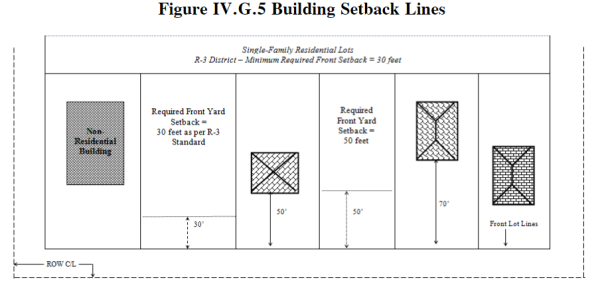
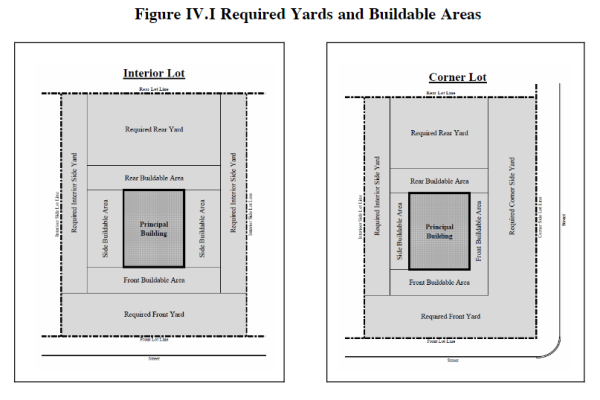
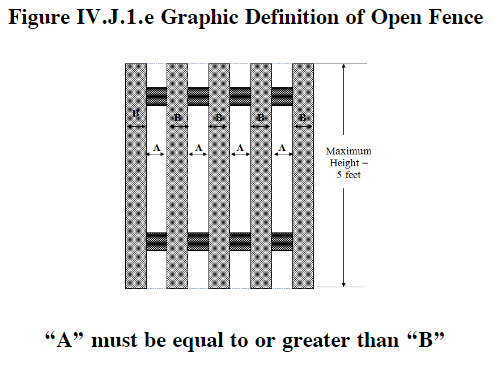
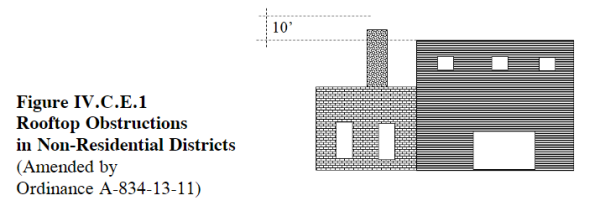
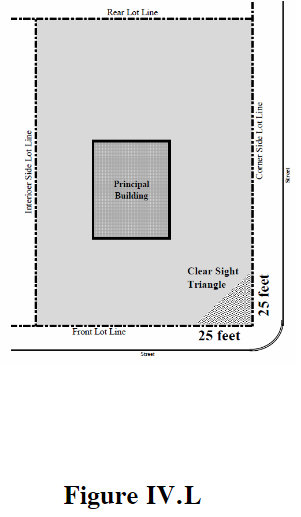
1. Noise
Definitions
Amplification Device. Any speaker, loudspeaker, amplifier, stereo, radio, television, or other device or system of any kind that can emit, increase, or magnify sound.
Day Hours. 7:00am-10:00pm
Excessively Audible. Any sound that can be detected by a person by ear, unaided by any device such as hearing aid, which unreasonably affects the enjoyment of an adjacent property owner’s use of their property and/or impacts one or several adjacent property owners’ ability to perform normal tasks without interruption. A sound is considered excessively audible regardless of whether particular words or phrases are not determinable and regardless of whether the instrument or device can be determined. The detection of reverberation or similar types of sound is sufficient to constitute an Excessively Audible sound.
Night Hours. 10:00pm-7:00am
Noise Pollution. The emission of sound that unreasonably interferes with the enjoyment of life, use of property or with any lawful business activity.
Sound. An oscillation in pressure in air.
Noise Pollution Prohibited
No person may cause or allow Noise Pollution to become Excessively Audible within the corporate limits of the Village.
Noise Standards for Public Property
A. Authority to Abate Violations. The Village Administrator or their designee is authorized to determine violations of this Section and, in the event of Noise Pollution or other violation, take reasonable actions necessary to abate the violation.
B. Performances on Public Property, Ways Prohibited. No person may perform, with or without musical instruments, on any street, sidewalk, public right of way, or publicly owned property while seeking or in expectation of a monetary gift or payment.
C. Advertisements. No person, business, or other entity may use a sound amplification device for the purpose of advertising or announcing goods or services, or to invite or encourage the patronage of any person or any business in such a way as to be Excessively Audible on any street, sidewalk, public right of way, or publicly owned property.
D. Attention-Getting Devices. No person or other entity may operate or cause to be operated, on any street, sidewalk, public right of way, or publicly owned property any attention-getting device such as, but not limited to, sound amplification, mechanically-operated, inflatable, noise-generating, or other device for the purpose or effect of attracting attention.
Noise Standards for Private Property
No person may cause or allow the emission of sound from any property in such a manner so as to cause Noise Pollution which is Excessively Audible with a determination taken from the property line of the property on which the noise is received.
Exceptions
The standards and limitations set forth in this Chapter do not apply to the following:
A. Trains on rails or safety mechanisms associated with railways.
B. Emergency related sounds, such as any type of sound rendered on an intermittent, emergency basis, including but not limited to sounds associated with police/fire/emergency medical vehicles, snow removal, flood water removal, and/or storm debris removal, emergency generators that are used during electrical storms, as well as alarms and other emergency warning sounds.
C. Landscaping equipment during Day Hours as permitted by the Municipal Code
D. Noises associated with religious activities or places of worship, such as bells and chimes.
E. Events occurring in public spaces or rights-of-way, such as concerts, that are approved by either the Village Administrator or Board of Trustees.
F. Noise emitting from generators in Residential Districts are specifically governed by Section IV.I.21 of the Zoning Ordinance.
G. Construction activity during Day Hours as permitted by the Municipal Code.
H. Garbage and recycling trucks.
I. Government, utility, and other such vehicles or equipment in operation.
J. Educational institutions, public or private, operating during Day Hours, including but not limited to recess, outdoor learning activities, or the like, in any District.
Permit for Private Event
Those owners of real property in the Village wishing to hold a special event on one’s property which may violate the standards set forth in this section may apply for one-time exemptions to these standards. Examples of these exemptions may include weddings or wedding receptions, graduation parties, charity events, and the like. A property owner wishing to obtain an exemption to these standards must comply with the following regulations:
A. Not less than 21 calendar days prior to the event, an application must be placed on file with the Village Administrator describing the nature of the request. The request must include the following information:
a. The address of the property owner in which the event will occur. b. The name of the property owner where the event will occur. c. The contact information of the property owner where the event will occur, including an active phone number and email address.
d. The times of day in which the noise is expected to be generated. e. The number of people expected to be present at the gathering.
B. The Village shall notify all property owners within 500 feet of the subject property at which the event will occur with a written notice of the event’s occurrence at least five business days prior to the event’s occurrence.
C. The application shall include a $50 fee.
D. At no point shall the exemption extend beyond midnight or prior to 6:00am in any District.
E. Property owners shall be entitled to one exemption per six calendar months; that is, if an exempted event were held on January 1, the property owner shall not be permitted to apply for or receive an exemption to these standards until July 1 or thereafter.
F. No exceptions will be given if the activities listed in which the noise will be generated are found to be in violation of any local, state, or federal law.
Penalty
Any person, firm, or corporation who violates, disobeys, omits, neglects, refuses to comply with, or who resists enforcement of any of the provisions of this Section shall, upon conviction, be fined not less than $100.00 nor more than $750.00 for each offense. Each day that a violation is permitted to exist shall constitute a separate offense.
3. Air Pollution
In all Districts, all uses shall comply with the State of Illinois Pollution Control Board rules and regulations codified as Title 35 of the Illinois Administrative Code, Sub-Title B and as may be amended from time to time.
4. Toxic Substances
a. Definition of Toxic Substances; Any gas, liquid, solid, semi-solid substance or mixture of substances, which if discharged into the environment could, alone or in combination with other substances likely to be present in the environment, cause or threaten to cause bodily injury, illness, or death to members of the general public through ingestion, inhalation, or absorption through any body surface. In addition, substances which are corrosives, irritants, strong sensitizers, or radioactive substances shall be considered toxic substances for the purposes of this regulation.
b. The use, storage, handling or transport of toxic substances shall comply with applicable laws and regulations.
c. In the RA, LI and GI Districts, any toxic substance listed by the U.S. Department of Health and Human Development (Public Health Service, Center for Disease Control, National Institute for Occupational Safety and Health, "Registry of Toxic Effects of Chemical Substances"), as revised from time to time, contained in one or more containers within the lot line in quantities in excess of 100 gallons as a liquid, 1,000 pounds as a solid or 100 pounds as a gas shall not be permitted.
d. In the RA, LI & GI Districts, the storage, utilization, manufacture or handling of any toxic or radioactive substance shall be allowed only as a conditional use and only after a conditional use permit is granted under the standards set forth above.
5. Water Pollution
In all Districts, all uses shall comply with the State of Illinois Pollution Control Board rules and regulations codified as Title 35 of the Illinois Administrative Code, Sub-Title C and as may be amended from time to time.
6. Fire and Explosive Hazards
a. In a Manufacturing District, activities involving the storage, handling, utilization’s, or manufacture of materials or products which decompose by detonation and which are classified by the Department of Transportation as Explosive A (and/or by the United Nations as UN Class 1.1 or 1.2), Explosive B (and/or by the United Nations as UN Class 1.3), or Explosive C (and/or by the United Nations as UN Class 1.4), as such classes are amended from time to time (See C.F.R. 49, Parts 100 to 177), shall be permitted only as a conditional use, in accordance with the standards set forth below, provided that such quantities do not exceed the limits set forth in the following Table 7. Explosives categorized or classified by the Department of Transportation as "Forbidden" or "Restricted" shall not be permitted. Permitted explosives shall be stored, utilized, handled, and manufactured in accordance with National Fire Protection Association - National Fire Codes (as adopted by the Village) and all other applicable Village regulations and ordinances. The storage and accountability of permitted explosives shall comply with applicable Department of the Treasury, Bureau of Alcohol, Tobacco and Firearms Regulations ("Your Guide to Explosive Regulations as most recently amended and as amended from time to time - ATF P5400.7). This includes the requirement of an explosives permit (18 USC Chapter 40).
b. In a Manufacturing District, the storage, utilization, handling or manufacture of radioactive isotopes (fissionable material) (regardless of atomic mass) shall not be permitted except as a conditional use and only after a conditional use permit is granted under the standards set forth in this Ordinance, and also shall not be permitted unless the material is contained in an approved (by the Village) shielded and fire resistant container for which it is never removed. Radioactive isotopes (fissionable materials) in such shielded and fire resistant containers which are granted a Conditional use shall be classified for the purposes of the Manufacturing Districts as Explosive A materials and shall comply with the quantity limitations set forth in the following Table 7.
c. In the Manufacturing District, the storage, utilization, handling or manufacture of highly reactive oxidizing or reducing agents, unstable or pyroforic materials, or highly unstable materials which include but are not confined to organic peroxides, organic nitrated, fluorine, liquid oxygen, hydrazine, acetylides, tetrazoles, ozonides, percholoric acid, perchalorated, chlorated, alkyaluminums, diborane, calcium trifluoride, hydroxylamine and other similar materials shall be considered as Explosive C materials and shall comply with the quantity limitations set forth in the following Table 7. The storage utilization, handling or manufacture of these materials shall be in accordance with The National Fire Protection Association - National Fire Codes (as adopted by the Village) and all other applicable Village regulations and ordinances.
d. In the Manufacturing District, the storage, utilization, handling or manufacture of flammable liquids and gases shall be permitted in accordance with the following Table 8, including the storage of finished products. Flammable liquid and storage tanks shall not be less than fifty (50) feet from all lot lines. The storage, utilization, handling or manufacture of flammable liquids and gases shall be in accordance with the National Fire Protection Association National Fire Codes (as adopted by the Village) and all other applicable Village regulations and ordinances.
e. No activities covered by this Subsection are allowed anywhere other than in a Manufacturing District and in conformance with the requirements set forth above.
TABLE 7: TOTAL CAPACITY OF EXPLOSIVE AND OTHER UNSTABLE OR HIGHLY REACTIVE MATERIAL
| Materials Classification | Total Quantity |
| Forbidden | 0 |
| Restricted | 0 |
| Explosive A | 0.1 Pounds |
| Explosive B | 1 Pounds |
| Explosive C | 10 Pounds |
| (The Total Quantity of All Such Materials Shall Not exceed Ten (10) Pounds). | |
TABLE 8: TOTAL CAPACITY OF FLAMMABLE MATERIALS PERMITTED (IN GALLONS)
| For Material Having an Open Cup Flash Point | Above Ground | Underground | ||
| RA & LI Districts | GI Districts | RA & LI Districts | GI Districts | |
| …at or above 140 degree F | 5,000 | 30,000 | 20,000 | 100,000 |
| …at or above 100 degree F., and below 140 degree F | 2,000 | 10,000 | 20,000 | 100,000 |
| …below 100 degree F | 500 | 2,000 | 20,000 | 100,000 |
| (When flammable gases are stored, utilized or manufactured and measured in cubic feet, the quantity in cubic feet at standard temperature and pressure shall not exceed 30 times the quantities listed in Table 8 above). | ||||
7. Glare
In all Districts, any activity or operation producing glare shall be conducted in accordance with the following requirement: Exposed sources of light shall be controlled so that direct and indirect illumination within the lot lines shall not cause illumination in excess of 1/2 foot candle in any R District.
8. Other Nuisances
In addition to the performance standards specified above in subsection 1 through subsection 7 above, the dissemination of noise, vibration, particulate matter, odor, toxic substances, or fire or explosive materials in either such manner or quantity as to be determined to endanger the public health, safety, comfort or welfare is hereby declared to be a public nuisance and shall be unlawful.
9. Landscaping
All required yards or other required open spaces shall be appropriately landscaped in accordance with landscaping plans submitted to and approved by the Community Development Director, and thereafter maintained in such a manner as to retain at least the intended standards of the initial landscaping plan and to conform to the landscaping requirements as set forth as follows:
a. Required Landscaping
All Manufacturing uses (uses established in any district involving manufacturing, fabricating, assembly, disassembly, repairing, storing, cleaning, servicing, warehousing, shipping or testing of materials, goods, or products) must be buffered from adjacent residential uses and residentially zoned properties through the use of substantial berming and landscaping in accordance with applicable Village regulations and a landscaping plan submitted to and approved by the Community Development Director. All such buffering shall be as close to 100 percent opacity as possible, including during the dormant stage of such landscaping, and shall include a mix of the plant materials set forth in EXHIBIT I. Approval of the landscaping plan or approval of the landscaping plan with modification shall be based on the recommendations of the Village Forester.
b. Building Setback
If landscaping complies with the requirements above, no buildings or structure may be located within 50 feet of a residence district boundary line. If landscaping does not comply with said requirements, no building or structure shall be located within 150 feet of a residence district boundary line.
c. Parking Lot Setback
No parking lot may be located within 30 feet of a residence district boundary line. This setback area shall also be landscaped as set forth above.
EXHIBIT I - PERMITTED PLANT MATERIAL
The plant material used in required landscaping in manufacturing districts and for any use established in any district involving manufacturing, fabricating, assembly, disassembly, repairing, storing, cleaning, servicing, warehousing, shipping or testing of materials, goods, or products, shall conform to the following plant list.
| Plant Group A: Deciduous Shade Trees (Installation Size: min. 2.5 inch trunk diameter measured 1 foot above ground level) |
| 1. All street trees contained in the permitted species list of the Village of Burr Ridge Subdivision Regulations Ordinance. |
| Plant Group B: Evergreen Trees (Installation Size: 8 ft. in height) | |
| Spacing on Center | |
| 1. Scotch Pine | 20 feet |
| 2. Red Pine | 20 feet |
| 3. White Pine | 30 feet |
| 4. Douglas Fir | 20 feet |
| 5. Norway Spruce | 18 feet |
| Plant Group C: Ornamental Deciduous Trees (Installation Size: 6 ft. in height) (All plants shall be in shrub form) | |
| Spacing on Center | |
| 1. Cockspur Hawthorn | 15 feet |
| 2. Washington Hawthorn | 10 feet |
| 3. Winter King Hawthorn | 12 feet |
| 4. Ironwood or American Hornbeam | 12 feet |
| 5. Amur Maple | 12 feet |
| 6. Cornelian Cherry | 15 feet |
| Plant Group D - Deciduous and Evergreen Shrubs | ||
| Installed Size (Height) | Spacing on Center | |
| 1. Winged Euonymus | 4 feet | 8 feet |
| 2. Arrowwood Viburnum | 4 feet | 6 feet |
| 3. Nannyberry | 4 feet | 8 feet |
| 4. Mochican Viburnum | 4 feet | 6 feet |
| 5. American Hazelnut | 4 feet | 6 feet |
| 6. American Cranberry Viburnum | 4 feet | 6 feet |
| 7. Pfitzer Juniper | 4 feet | 6 feet |
| 8. Hetzi Juniper | 3 feet | 6 feet |
| 9. Mugo Pine | 3 feet | 6 feet |
| 10. Dwarf Mugo Pine | 4 feet | 8 feet |
(Amended by Ordinance A-834-05-10)
X. UTILITIES AND MECHANICAL EQUIPMENT
For all buildings except detached single-family dwellings, utilities and mechanical equipment shall comply with the following: (Amended by Ordinance A-834-13-11)
- All utilities shall be placed underground.
- Rooftop equipment, exclusive of flues, exhaust stacks and vents, shall be completely screened from view from any adjacent private or public street or from any point along an exterior property line. Screening shall be of permanent construction material at least one foot (1') higher than the object being screened and architecturally compatible with the principal building.
- Ground-level mechanical equipment shall be completely screened from view from any adjacent private or public street or from any point along an exterior property line. The screen shall be of permanent construction material architecturally compatible with the principal building or be screened by the use of landscape material that affords a minimum of 80 percent opacity during the vegetation's dormant season. Minimum height of screening shall be at least one foot (1') higher than the object being screened.
- Screening methods and materials to be utilized for both rooftop and ground-level equipment shall be specified on the building permit application required for each lot
Y. ACCESS DRIVEWAY FROM STREETS TO OFF-STREET PARKING AND LOADING SPACES
1. WIDTH AND NUMBER OF DRIVEWAYS
a. Measurement of Driveway Width: The width of all driveways shall be measured at the lot line adjoining a street.
b. Residential Uses
(1) The width of a driveway providing access to a residential use shall not be less than 9 feet or more than 22 feet. However, for all single-family residences existing as of November 11, 2013 that have front loaded, thee-car garages also existing as of November 11, 2013, the maximum width of a driveway shall not be more than 30 feet. (Amended by A-834-11-13, A-834-34-13)
(2) The number of driveways providing access to a residential use from a single street shall not exceed two. The number of driveways providing access to a residential use on a corner lot shall not exceed three.
(3) The combined width of all driveways accessing a residential property shall not exceed 36 feet.
c. Non-Residential uses
(1) Not less than 14 feet wide or more than 20 feet wide for a one-way driveway.
(2) Not less than 20 feet wide or more than 35 feet wide for a two-way driveway serving two or fewer parking spaces and/or one loading space.
(3) Not less than 24 feet wide or more than 35 feet wide for a two-story driveway serving more than 20 parking spaces and/or two or more loading spaces.
2. RADIUS CONNECTING STREET PAVEMENT EDGE AND DRIVEWAY EDGE
a. In Residence Districts; A driveway flare or radius shall be provided that does not exceed 5 feet and does not encroach beyond the side property line as extended to the street pavement. (Amended by Ordinance A-834-5-98)
b. Business Districts
(1) Not less than 15 feet at the intersection of a driveway and street pavement in a street having a right-of-way more than 66 feet wide.
(2) Not less than eight feet at the intersection of a driveway and a street pavement in a street having a right-of-way of 66 feet or less in width.
3. ANGLE AT INTERSECTION OF A DRIVEWAY AND STREET
The acute angle formed at the intersection of driveway and street pavement edges shall be not less than 60 degrees.
4. SPACING BETWEEN SEPARATE DRIVEWAY ENTRANCES ON A LOT (measured at the lot line adjoining a street)
a. Not less than 20 feet on streets having rights-of-way more than 66 feet in width.
b. Not less than ten feet on streets having rights-of-way 66 feet or less in width.
5. ON CORNER LOTS - SPACING BETWEEN DRIVEWAY ENTRANCE AND RIGHT-OF-WAY LINE OF AN ADJACENT INTERSECTION STREET
(measured from the nearest edge of the driveway pavement at its intersection with the street right-of-way line of an adjacent intersecting street)
a. Not less than 15 feet to an adjacent intersecting street having a right-of-way more than 66 feet in width.
b. Not less than eight feet to an adjacent intersecting street having a right-of-way 66 feet or less in width.
Amended by Ord. A-834-16-21 on 10/11/2021
Amended by Ord. A-834-19-22 on 12/12/2022
Amended by Ord. A-834-12-23 on 9/25/2023
Amended by Ord. A-834-14-23 on 10/23/2023
Amended by Ord. A-834-04-24 on 1/8/2024
Amended by Ord. A-834-16-24 on 7/8/2024
Amended by Ord. A-834-02-25 on 1/13/2025
Amended by Ord. A-834-15-25 on 9/22/2025

