42 - DO Downtown Overlay District
The purpose of the Downtown Overlay District (DOD) is to establish architectural, landscaping, design, building, and use and site development regulations that encourage compatible land uses, ensure higher quality development and function in order to protect property values and provide safe and efficient pedestrian and automobile access. These architectural, landscaping, design, building, use and site development criteria can encourage quality development through the use of a variety of design and site techniques while continuing to provide for a wide range of economic development opportunities. The term Board as used in this Chapter shall mean the Design Review Board, as established under Section 17.42.090.
(Ord. 2012-18 §1)
The DOD is intended to encourage mixed-use within the same structure or block and/or high intensity commercial development. Accordingly, a structure or development within the DOD that interfaces with another structure or development within the DOD shall not be required to comply with the provisions of Chapter 17.50, Residential/Non-Residential Interface Regulations; however, such regulations shall be applied to structures or development within the DOD which interface with structures or development outside the DOD.
(Ord. 2012-18 §1, 2012)
A.
In the event of a conflict between the entitlements, regulations or standards established in this Chapter and the equivalent provisions in the underlying zoning districts, the provisions of this Chapter shall govern. Except in the event such preemption by this Chapter, the underlying zoning district provisions and all other provisions of this Code shall be applicable and enforced within the DOD.
B.
For the purpose of applying the Sign Code regulations under Title 19 of this Code in the DOD, Section 19.04.053 of this Code shall govern.
C.
The DOD shall have no application to those properties zoned PD until and unless such properties are rezoned.
(Ord. 2013-23 §1, 2013; Ord. 2012-18 §1, 2012)
The uses permitted in the DOD are outlined in Section 17.28.030. These permitted uses shall be allowed on all properties within the DOD in addition to the permitted and accessory uses allowed in the underlying Zoning District.
(Ord. 2012-18 §1, 2012)
The following uses are not permitted in the DOD even if permitted in the underlying Zoning District:
A.
Freestanding radio, television and cell antenna towers. (Such facilities may be incorporated into the design of a building if approved by the Board.)
B.
Towing services, trash removal operations, wrecked, junked or abandoned vehicle storage or similar uses.
C.
Vehicle, RV, boat and equipment sales and leasing.
D.
Automobile body shop/Vehicle, RV, boat and equipment service.
E.
No new single-family residential construction is permitted. Existing single-family detached homes are classified as legal nonconforming uses. Structures that were originally constructed as single-family residential units may convert back to single-family residential use.
F.
Outdoor storage of merchandise as defined in Section 17.52.150.
G.
Uses that involve hazardous processes or emit noxious noise, odors, fumes, or particulates.
(Ord. 2012-18 §1, 2012)
The following development standards shall apply within the DOD:
A.
Maximum lot coverage: 100% of lot area.
B.
Minimum side yard: zero feet.
C.
Minimum front yard: zero feet.
D.
Minimum rear yard: zero feet.
E.
Maximum building setback: A minimum of 25% of a building's linear footage facing a public roadway must have a setback of zero to twenty feet with a direct pedestrian connection.
F.
Maximum fence height: ten-feet.
G.
Multifamily residential units must each be a minimum of 500-square feet in size and must each have an individual kitchen and individual bathroom.
(Ord. 2012-18 §1, 2012)
A.
A building's crown design shall be reviewed by and is subject to approval of the Board based aesthetic design, conformity with the Downtown Master Plan, and the need to maintain appropriate view sheds. The crown of a building is defined as the area of the structure that is above the top floor, and may include angled roofs, decorative elements, towers and other similar construction.
B.
Maximum building heights within the DOD are regulated as follows:
1.
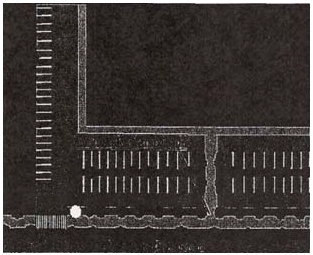
Downtown Core District: The Downtown Core District is defined as that area depicted on Figure 1 below.
a.
Building height in the Downtown Core District is limited to four stories, with a maximum height of 60-feet. A building's crown cannot exceed the sixty-foot building height limitation.
2.
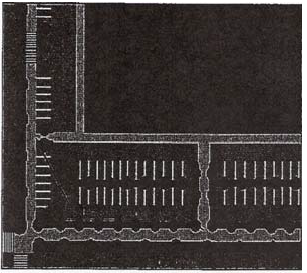
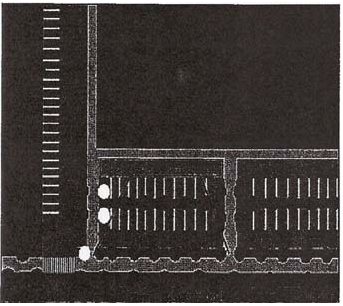
North and South Districts: The North District is defined as the area depicted on Figure 2 below. The South District is defined as the area depicted on Figure 3 below.
a.
Building height in the North or South Districts is limited to six (6) stories, with no maximum height limitation.
C.
A landowner may request one (1) additional floor (with the corresponding increase in building height) in the Downtown Core District, or two (2) additional floors in the North and South Districts through the Board. The Board, at its discretion, may grant an additional floor request after considering the following criteria:
1.
Whether the project will incorporate design elements found in adjacent Landmark structures; and
2.
The impacts of the increased building height on adjacent properties.
(Ord. 2012-18 §1)
A.
Prior to the issuance of a structural building permit within the DOD, all projects must be reviewed by the Board for compliance with the standards set forth in this Section.
B.
Projects within the DOD shall be reviewed on the following criteria. Guidance documents, such as Castle Rock Design (see Resolution No. 2003-64) and the Downtown Master Plan (see Resolution No. 2008-38), as amended from time to time, may be used as guidelines and aid in such review; provided, however, that, in the event of a conflict between the provisions of this chapter and the guidance documents, this chapter shall control.
1.
Window or transparency. The main front elevation shall provide at least thirty-five percent (35%) window or transparency at the pedestrian level. Side elevations that face a public roadway shall provide at least thirty percent (30%) window or transparency at the pedestrian level. The window or transparency is measured in lineal fashion. (For example, a one hundred-foot long building elevation shall have at least thirty-five percent (35%) transparency in length.) The height of the glass or Plexiglas must be a minimum height of five (5) feet.
2.
Accessory structures. The design of accessory structures should incorporate design elements of the primary structure and should not become a dominant feature on the property.
3.
Rooftop equipment. All rooftop equipment shall be screened from view on all sides visible to the general public, by building parapet walls or other building elements that appear as integral elements of the overall building.
4.
Service station. All service stations will be required to develop the site following a backwards service station design. This will require the convenience store to be located along the sidewalk/public roadway with pedestrian connectivity. The gas pump facilities shall be located on the side or rear of the project.
5.
Outdoor storage, repair, rental and servicing areas shall be:
a.
Set back fifteen (15) feet from the front lot line;
b.
Screened by an opaque wall or fence with a height of ten (10) feet. An opaque wall or fence must completely screen the property beyond the fence and can include stockade fences or walls. Chain-link fences with slat, cloth or other similar measures are not considered to be opaque fences. An opaque berm and/or landscaping that provide the equivalent screening as a required opaque fence may be used.
6.
Landscaping. All developments shall adhere to the following landscaping requirements with a focus on the pedestrian space and sidewalk areas. A landscaping plan will be required with all site plans, showing the proposed landscaping for the site. One (1) large canopy tree will be required for every twenty-two (22) linear feet (on center) or one (1) small canopy tree will be required for every fifteen (15) linear feet (on center) of property fronting along a public roadway. The landscaping plan is subject to approval by Castle Rock Water and Public Works Departments. Routine tree maintenance, such as trimming, thinning, watering and, if necessary, tree replacement may be needed to ensure the quality of the streetscape. The following landscaping provisions include a ratio relationship between the number of plantings required, based upon the number of trees required. All shrubs plants must be a minimum size of five (5) gallons at planting and all flowering perennial plants must be a minimum of one (1) gallon at planting. For every required tree, a corresponding number of plantings or trees, from either Subparagraph a., b., or c., below, will be required for each site plan:
a.
Shrubs: Five (5) per required tree.
b.
Perennial plants: Seven (7) per required tree.
c.
Trees: One (1) per required tree.
7.
Parking Requirements:
a.
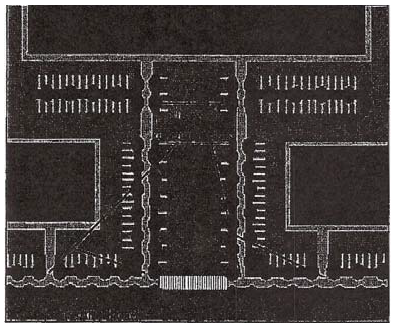
Parking requirements for the North Non-Residential Downtown Parking Area, as depicted on Figure 4 shall be as follows:
i.
One (1) parking space per five hundred (500) square feet of new construction. The first two thousand (2,000) square feet of new non-residential construction shall be exempt from parking requirements. Interior tenant finishes or remodels are exempt from this parking requirement.
ii.
Existing building square footage shall be excluded from the required parking calculation. Existing building square footage to be demolished shall be deducted from the new building square footage for parking calculations.
iii.
Hotel use shall comply with off-street parking standards set forth in Chapter 17.54.
b.
Parking requirements for the South Non-Residential Downtown Parking Area shall be in accordance with the requirements set forth in Chapter 17.54.
c.
No on-site parking is allowed on the side of a structure abutting a street, as determined by the Director.
8.
Sidewalk requirements: All sidewalks must be designed and built to meet the Town's sidewalk construction and design regulations as set forth in the Transportation Design Criteria Manual.
a.
All buildings will be required to have a minimum of one (1) sidewalk connection from a sidewalk located along a public roadway to the entrance of the primary structure.
(Ord. No. 2023-009, § 4, 4-4-2023; Ord. No. 2022-013, § 2, 7-5-2022; Ord. No. 2018-015, § 1, 5-15-2018; Ord. No. 2016-044, § 4.A., 12-6-2016; Ord. No. 2015-06, § 3, 2-17-2015; Ord. 2012-18 §1)
A.
The Design Review Board shall consist of seven (7) members appointed by the Town Council in accordance with Chapter 2.14 of this CRMC. The Design Review Board shall be comprised of:
(i)
One (1) member from the Planning Commission;
(ii)
Two (2) members from the Downtown Development Authority Board;
(iii)
Two (2) members from the Historic Preservation Board; and
(iv)
Two (2) property owners within the Downtown Development Authority boundary. Such property owners may not be members of the aforementioned boards.
B.
Terms for each member of the Design Review Board shall be as follows:
1.
Planning Commission representative - One-year term.
2.
Downtown Development Authority representatives - One-year term.
3.
Historic Preservation Board - One-year term.
4.
Property owners with the Downtown Development Authority boundary - Two-year term.
If at any time a Design Review Board member loses his or her qualification for appointment, such member shall concurrently lose his or her seat on the Design Review Board.
C.
Unless expressly modified in this Section 17.42.090, the Design Review Board shall serve in accordance with the provisions of Chapter 2.14 of this CRMC.
(Ord. No. 2016-011, § 1, 5-17-2016; Ord. No. 2015-04, § 7, 2-17-2015; Ord. 2012-18 §1)
The Board shall have the following powers and duties, all of which shall be exercised consistent with the purpose and intent of this Chapter:
A.
Review all development applications that require a Site Development Plan—Downtown under Chapter 17.38 for compliance with this Chapter, including but not limited to setbacks (Section 17.42.060), building height and crown (Section 17.42.070), design standards (Section 17.42.080), outdoor display of merchandise in Section 17.52.150, accessory structures and uses, and variance requests.
1.
With respect to any development application that requires a site development plan for the construction of a new structure or addition to a residential, commercial, or mixed-use property of equal to or greater than ten thousand (10,000) square feet, all actions taken by the Board shall be advisory in nature to the Town Council and, as such, are not binding upon the Town Council nor subject to judicial review.
2.
With respect to any development application that requires a site development plan for the construction of a new structure or addition to a residential, commercial, or mixed-use property of less than ten thousand (10,000) square feet, all actions taken by the Board shall be final, subject only to the appeal process described in Section 17.42.110.D of this Code.
3.
With respect to any development application for a minor or non-material amendment to a site development plan that has no significant impact, as determined by the Director, shall be processed administratively.
(Ord. No. 2025-009>, § 2, 2-18-2025; Ord. 2012-18 §1, 2012)
A.
A Site Development Plan - Downtown shall be submitted in compliance with the Development Procedures Manual and application fees as defined in the Development Services Fee Schedule.
B.
The Board shall hold a public hearing on all applications submitted under this Chapter. The public notice for such hearing shall be governed by Chapter 17.04 of this CRMC.
C.
Except as otherwise provided in Section 17.42.100.A.1 of this Code, the Board shall approve, approve with conditions or deny an application based on the criteria in this Chapter and the review and approval criteria set forth in Section 17.38.040.
D.
Except as otherwise provided in Section 17.42.100.A.1 of this Code, the applicant for a Site Development Plan - Downtown that is denied by the Design Review Board may appeal to the Town Council within thirty (30) days of the Board's action. The Town Council shall review and consider the Site Development Plan - Downtown following the notice and public hearing procedures in Chapter 17.04, CRMC and the review and approval criteria set forth in Section 17.38.040 and Chapter 17.42.
(Ord. No. 2025-009>, § 3, 2-18-2025; Ord. 2012-18 §1, 2012)
Any application for a demolition permit within the DOD shall comply with the provisions and criteria set forth in Section 15.64.090, CRMC.
(Ord. 2012-18 §1, 2012)
A.
No person shall violate any of the provisions of the ordinances of the Town, including the provisions of this Chapter. Except in cases where a different punishment is prescribed by any ordinance of the Town, any person who violates any of the provisions of the ordinances of the Town or this Chapter shall be punished by a fine of not more than one thousand dollars ($1,000.00) or by imprisonment not to exceed one (1) year, or by both such fine and imprisonment.
B.
Each such person shall be guilty of a separate offense for each and every day during any portion of which any violation is committed, continued or permitted by any such person, and he or she shall be punished accordingly.
(Ord. 2012-18 §1, 2012)
42 - DO Downtown Overlay District
The purpose of the Downtown Overlay District (DOD) is to establish architectural, landscaping, design, building, and use and site development regulations that encourage compatible land uses, ensure higher quality development and function in order to protect property values and provide safe and efficient pedestrian and automobile access. These architectural, landscaping, design, building, use and site development criteria can encourage quality development through the use of a variety of design and site techniques while continuing to provide for a wide range of economic development opportunities. The term Board as used in this Chapter shall mean the Design Review Board, as established under Section 17.42.090.
(Ord. 2012-18 §1)
The DOD is intended to encourage mixed-use within the same structure or block and/or high intensity commercial development. Accordingly, a structure or development within the DOD that interfaces with another structure or development within the DOD shall not be required to comply with the provisions of Chapter 17.50, Residential/Non-Residential Interface Regulations; however, such regulations shall be applied to structures or development within the DOD which interface with structures or development outside the DOD.
(Ord. 2012-18 §1, 2012)
A.
In the event of a conflict between the entitlements, regulations or standards established in this Chapter and the equivalent provisions in the underlying zoning districts, the provisions of this Chapter shall govern. Except in the event such preemption by this Chapter, the underlying zoning district provisions and all other provisions of this Code shall be applicable and enforced within the DOD.
B.
For the purpose of applying the Sign Code regulations under Title 19 of this Code in the DOD, Section 19.04.053 of this Code shall govern.
C.
The DOD shall have no application to those properties zoned PD until and unless such properties are rezoned.
(Ord. 2013-23 §1, 2013; Ord. 2012-18 §1, 2012)
The uses permitted in the DOD are outlined in Section 17.28.030. These permitted uses shall be allowed on all properties within the DOD in addition to the permitted and accessory uses allowed in the underlying Zoning District.
(Ord. 2012-18 §1, 2012)
The following uses are not permitted in the DOD even if permitted in the underlying Zoning District:
A.
Freestanding radio, television and cell antenna towers. (Such facilities may be incorporated into the design of a building if approved by the Board.)
B.
Towing services, trash removal operations, wrecked, junked or abandoned vehicle storage or similar uses.
C.
Vehicle, RV, boat and equipment sales and leasing.
D.
Automobile body shop/Vehicle, RV, boat and equipment service.
E.
No new single-family residential construction is permitted. Existing single-family detached homes are classified as legal nonconforming uses. Structures that were originally constructed as single-family residential units may convert back to single-family residential use.
F.
Outdoor storage of merchandise as defined in Section 17.52.150.
G.
Uses that involve hazardous processes or emit noxious noise, odors, fumes, or particulates.
(Ord. 2012-18 §1, 2012)
The following development standards shall apply within the DOD:
A.
Maximum lot coverage: 100% of lot area.
B.
Minimum side yard: zero feet.
C.
Minimum front yard: zero feet.
D.
Minimum rear yard: zero feet.
E.
Maximum building setback: A minimum of 25% of a building's linear footage facing a public roadway must have a setback of zero to twenty feet with a direct pedestrian connection.
F.
Maximum fence height: ten-feet.
G.
Multifamily residential units must each be a minimum of 500-square feet in size and must each have an individual kitchen and individual bathroom.
(Ord. 2012-18 §1, 2012)
A.
A building's crown design shall be reviewed by and is subject to approval of the Board based aesthetic design, conformity with the Downtown Master Plan, and the need to maintain appropriate view sheds. The crown of a building is defined as the area of the structure that is above the top floor, and may include angled roofs, decorative elements, towers and other similar construction.
B.
Maximum building heights within the DOD are regulated as follows:
1.
Downtown Core District: The Downtown Core District is defined as that area depicted on Figure 1 below.
a.
Building height in the Downtown Core District is limited to four stories, with a maximum height of 60-feet. A building's crown cannot exceed the sixty-foot building height limitation.
2.
North and South Districts: The North District is defined as the area depicted on Figure 2 below. The South District is defined as the area depicted on Figure 3 below.
a.
Building height in the North or South Districts is limited to six (6) stories, with no maximum height limitation.
C.
A landowner may request one (1) additional floor (with the corresponding increase in building height) in the Downtown Core District, or two (2) additional floors in the North and South Districts through the Board. The Board, at its discretion, may grant an additional floor request after considering the following criteria:
1.
Whether the project will incorporate design elements found in adjacent Landmark structures; and
2.
The impacts of the increased building height on adjacent properties.
(Ord. 2012-18 §1)
A.
Prior to the issuance of a structural building permit within the DOD, all projects must be reviewed by the Board for compliance with the standards set forth in this Section.
B.
Projects within the DOD shall be reviewed on the following criteria. Guidance documents, such as Castle Rock Design (see Resolution No. 2003-64) and the Downtown Master Plan (see Resolution No. 2008-38), as amended from time to time, may be used as guidelines and aid in such review; provided, however, that, in the event of a conflict between the provisions of this chapter and the guidance documents, this chapter shall control.
1.
Window or transparency. The main front elevation shall provide at least thirty-five percent (35%) window or transparency at the pedestrian level. Side elevations that face a public roadway shall provide at least thirty percent (30%) window or transparency at the pedestrian level. The window or transparency is measured in lineal fashion. (For example, a one hundred-foot long building elevation shall have at least thirty-five percent (35%) transparency in length.) The height of the glass or Plexiglas must be a minimum height of five (5) feet.
2.
Accessory structures. The design of accessory structures should incorporate design elements of the primary structure and should not become a dominant feature on the property.
3.
Rooftop equipment. All rooftop equipment shall be screened from view on all sides visible to the general public, by building parapet walls or other building elements that appear as integral elements of the overall building.
4.
Service station. All service stations will be required to develop the site following a backwards service station design. This will require the convenience store to be located along the sidewalk/public roadway with pedestrian connectivity. The gas pump facilities shall be located on the side or rear of the project.
5.
Outdoor storage, repair, rental and servicing areas shall be:
a.
Set back fifteen (15) feet from the front lot line;
b.
Screened by an opaque wall or fence with a height of ten (10) feet. An opaque wall or fence must completely screen the property beyond the fence and can include stockade fences or walls. Chain-link fences with slat, cloth or other similar measures are not considered to be opaque fences. An opaque berm and/or landscaping that provide the equivalent screening as a required opaque fence may be used.
6.
Landscaping. All developments shall adhere to the following landscaping requirements with a focus on the pedestrian space and sidewalk areas. A landscaping plan will be required with all site plans, showing the proposed landscaping for the site. One (1) large canopy tree will be required for every twenty-two (22) linear feet (on center) or one (1) small canopy tree will be required for every fifteen (15) linear feet (on center) of property fronting along a public roadway. The landscaping plan is subject to approval by Castle Rock Water and Public Works Departments. Routine tree maintenance, such as trimming, thinning, watering and, if necessary, tree replacement may be needed to ensure the quality of the streetscape. The following landscaping provisions include a ratio relationship between the number of plantings required, based upon the number of trees required. All shrubs plants must be a minimum size of five (5) gallons at planting and all flowering perennial plants must be a minimum of one (1) gallon at planting. For every required tree, a corresponding number of plantings or trees, from either Subparagraph a., b., or c., below, will be required for each site plan:
a.
Shrubs: Five (5) per required tree.
b.
Perennial plants: Seven (7) per required tree.
c.
Trees: One (1) per required tree.
7.
Parking Requirements:
a.
Parking requirements for the North Non-Residential Downtown Parking Area, as depicted on Figure 4 shall be as follows:
i.
One (1) parking space per five hundred (500) square feet of new construction. The first two thousand (2,000) square feet of new non-residential construction shall be exempt from parking requirements. Interior tenant finishes or remodels are exempt from this parking requirement.
ii.
Existing building square footage shall be excluded from the required parking calculation. Existing building square footage to be demolished shall be deducted from the new building square footage for parking calculations.
iii.
Hotel use shall comply with off-street parking standards set forth in Chapter 17.54.
b.
Parking requirements for the South Non-Residential Downtown Parking Area shall be in accordance with the requirements set forth in Chapter 17.54.
c.
No on-site parking is allowed on the side of a structure abutting a street, as determined by the Director.
8.
Sidewalk requirements: All sidewalks must be designed and built to meet the Town's sidewalk construction and design regulations as set forth in the Transportation Design Criteria Manual.
a.
All buildings will be required to have a minimum of one (1) sidewalk connection from a sidewalk located along a public roadway to the entrance of the primary structure.
(Ord. No. 2023-009, § 4, 4-4-2023; Ord. No. 2022-013, § 2, 7-5-2022; Ord. No. 2018-015, § 1, 5-15-2018; Ord. No. 2016-044, § 4.A., 12-6-2016; Ord. No. 2015-06, § 3, 2-17-2015; Ord. 2012-18 §1)
A.
The Design Review Board shall consist of seven (7) members appointed by the Town Council in accordance with Chapter 2.14 of this CRMC. The Design Review Board shall be comprised of:
(i)
One (1) member from the Planning Commission;
(ii)
Two (2) members from the Downtown Development Authority Board;
(iii)
Two (2) members from the Historic Preservation Board; and
(iv)
Two (2) property owners within the Downtown Development Authority boundary. Such property owners may not be members of the aforementioned boards.
B.
Terms for each member of the Design Review Board shall be as follows:
1.
Planning Commission representative - One-year term.
2.
Downtown Development Authority representatives - One-year term.
3.
Historic Preservation Board - One-year term.
4.
Property owners with the Downtown Development Authority boundary - Two-year term.
If at any time a Design Review Board member loses his or her qualification for appointment, such member shall concurrently lose his or her seat on the Design Review Board.
C.
Unless expressly modified in this Section 17.42.090, the Design Review Board shall serve in accordance with the provisions of Chapter 2.14 of this CRMC.
(Ord. No. 2016-011, § 1, 5-17-2016; Ord. No. 2015-04, § 7, 2-17-2015; Ord. 2012-18 §1)
The Board shall have the following powers and duties, all of which shall be exercised consistent with the purpose and intent of this Chapter:
A.
Review all development applications that require a Site Development Plan—Downtown under Chapter 17.38 for compliance with this Chapter, including but not limited to setbacks (Section 17.42.060), building height and crown (Section 17.42.070), design standards (Section 17.42.080), outdoor display of merchandise in Section 17.52.150, accessory structures and uses, and variance requests.
1.
With respect to any development application that requires a site development plan for the construction of a new structure or addition to a residential, commercial, or mixed-use property of equal to or greater than ten thousand (10,000) square feet, all actions taken by the Board shall be advisory in nature to the Town Council and, as such, are not binding upon the Town Council nor subject to judicial review.
2.
With respect to any development application that requires a site development plan for the construction of a new structure or addition to a residential, commercial, or mixed-use property of less than ten thousand (10,000) square feet, all actions taken by the Board shall be final, subject only to the appeal process described in Section 17.42.110.D of this Code.
3.
With respect to any development application for a minor or non-material amendment to a site development plan that has no significant impact, as determined by the Director, shall be processed administratively.
(Ord. No. 2025-009>, § 2, 2-18-2025; Ord. 2012-18 §1, 2012)
A.
A Site Development Plan - Downtown shall be submitted in compliance with the Development Procedures Manual and application fees as defined in the Development Services Fee Schedule.
B.
The Board shall hold a public hearing on all applications submitted under this Chapter. The public notice for such hearing shall be governed by Chapter 17.04 of this CRMC.
C.
Except as otherwise provided in Section 17.42.100.A.1 of this Code, the Board shall approve, approve with conditions or deny an application based on the criteria in this Chapter and the review and approval criteria set forth in Section 17.38.040.
D.
Except as otherwise provided in Section 17.42.100.A.1 of this Code, the applicant for a Site Development Plan - Downtown that is denied by the Design Review Board may appeal to the Town Council within thirty (30) days of the Board's action. The Town Council shall review and consider the Site Development Plan - Downtown following the notice and public hearing procedures in Chapter 17.04, CRMC and the review and approval criteria set forth in Section 17.38.040 and Chapter 17.42.
(Ord. No. 2025-009>, § 3, 2-18-2025; Ord. 2012-18 §1, 2012)
Any application for a demolition permit within the DOD shall comply with the provisions and criteria set forth in Section 15.64.090, CRMC.
(Ord. 2012-18 §1, 2012)
A.
No person shall violate any of the provisions of the ordinances of the Town, including the provisions of this Chapter. Except in cases where a different punishment is prescribed by any ordinance of the Town, any person who violates any of the provisions of the ordinances of the Town or this Chapter shall be punished by a fine of not more than one thousand dollars ($1,000.00) or by imprisonment not to exceed one (1) year, or by both such fine and imprisonment.
B.
Each such person shall be guilty of a separate offense for each and every day during any portion of which any violation is committed, continued or permitted by any such person, and he or she shall be punished accordingly.
(Ord. 2012-18 §1, 2012)