Clifton Forge City Zoning Code
ARTICLE 7
- DEVELOPMENT STANDARDS
Sec. 7-1.- Applicability.
The provisions of this article shall apply to any application for a zoning permit or site plan approval, unless otherwise noted specifically within this article.
Sec. 7-10. - Purpose.
The purpose of this division is to protect the public health, safety, and general welfare by incorporating landscaping and screening into the development process, excluding the development of single-family and two-family dwellings. The purpose and intent of these regulations is to establish minimum requirements for the installation and maintenance of planting and screening materials intended to:
(a)
Ensure development consistent with the goals of the town's comprehensive plan;
(b)
Reduce the hazards of flooding;
(c)
Better control soil erosion;
(d)
Replenish ground water supplies;
(e)
Screen noise, dust, and glare;
(f)
Increase infiltration in permeable land areas to improve storm water management;
(g)
Reduce public costs to taxpayers for storm water management and related infrastructure;
(h)
Enhance property values; and
(i)
Mitigate the impacts of intense development on less intensive uses.
Sec. 7-11. - Applicability.
(a)
Unless expressly exempted, the landscaping, screening, and buffering standards of this division shall apply to all new townhouse and multifamily residential development and all new non-residential development.
(b)
When a site plan is submitted to expand an existing building or site improvements, or to accommodate a change in land use, which building, site, or change in use involves a townhouse development, multifamily development, or non-residential development, the requirements of this division shall apply only to those portions of the site that are directly affected by the proposed improvements or change in land use, as determined by the zoning administrator.
Sec. 7-12. - Installation, maintenance, and replacement.
The property owner shall be responsible for the ongoing protection and maintenance of all required landscaping and screening in a manner that complies with the requirements of this appendix and in conformance with the approved site plan.
Sec. 7-13. - Relationship to certificates of occupancy.
No permanent certificate of occupancy shall be issued until all required landscaping and screening is completed in accordance with an approved site plan.
Sec. 7-14. - General landscaping and screening standards.
(a)
General areas to be landscaped. All portions of a lot which are not covered by buildings, walkways, and parking areas shall be landscaped. Landscaping shall include plant materials as may be required by this division as well as open areas covered with vegetative groundcover. Acceptable vegetative groundcover shall consist of shrubs and ground cover including grass.
(b)
Sight distance triangle. Landscaping within a sight distance triangle shall be subject to the requirements of section 2-9 [of this appendix].
(c)
Calculations. When a determination of the number of required trees or shrubs, as set forth in this division, results in a fraction, any fraction shall be counted as one tree or shrub.
(d)
Existing vegetation. Where landscaping is required by this division, existing vegetation which meets the standards prescribed by this division, as determined by the zoning administrator, may be preserved and may be used to meet some or all of the landscaping requirements.
Sec. 7-15. - Buffer yards.
(a)
Purpose. The purpose of buffer yards is to visually and spatially separate distinct land uses from one another through the use of vegetation, screening, and distance. The provisions for buffer yards are intended to shield, obstruct, or minimize views, noise, illumination, and other nuisances between abutting incompatible uses, mitigate the effects of a higher intensity use on a lower intensity use or district, and ease the transition from one zoning district to another.
(b)
General standards.
(1)
Buffer yards may be included within setback and other yard requirements specified in this appendix for each zoning district.
(2)
Buffer yards shall be reserved solely for screening and landscaping. No building, building addition, structure, parking area, loading or storage area, display or servicing of materials, products, equipment or supplies, or area for collection of trash, or any other type of physical land improvement, shall be located in a buffer yard. However, a driveway may cross a buffer yard if it is necessary for safe and convenient access to the development site and provided further that such driveway shall run substantially perpendicular to the buffer yard.
(3)
Where a combination of screening and planting materials is utilized to achieve the effective visual screening intent of the buffer yard, required landscaping shall be located on the exterior side of the screening material.
(4)
Any buffer yard shall be located entirely within the higher intensity zoning district and abutting the zoning district line or adjacent alley right-of-way if such right-of-way separates the lot from the zoning district line.
(5)
When property lines abut an adjacent jurisdiction, the zoning administrator shall determine the specific screening and buffering requirements along that property line after consideration of the zoning designation and or land use of the adjacent property. Requirements shall not exceed those that would be required for similarly situated and/or zoned property within the town.
(c)
Modification of buffer yard requirement. Where the zoning administrator finds that the difference in topography of the subject property and the abutting property would make adherence to the buffer yard requirement ineffective in meeting the purpose of the buffer yard, the zoning administrator may approve, in writing, an alternative buffer and screening plan.
(d)
Buffer yard requirements. Any required buffer yard shall substantively screen the site from view from the adjoining property and shall meet the following requirements in order to achieve the effective visual and spatial screening intent of the buffer yard set forth in subsection (a) of this section.
(1)
Any required buffer yard shall be a minimum of ten feet in width and shall incorporate the elements as set forth in subsections [(d)](2), (3), and (4) of this section.
(2)
Plantings shall meet the requirements set forth in Table 7-15-1.
(3)
Screening used in buffer yards to achieve effective visual screening shall meet the requirements set forth in section 7-17 [of this appendix] and shall be between six and ten feet in height. In order to achieve effective visual screening, screening may be used alone or in combination with plantings as set forth in subsection [(d)](2) of this section.
(4)
The balance of the buffer yard shall be planted in grass or other ground cover.
(e)
Where buffer yards are required. Buffer yards shall be provided along side and rear lot lines, where the lot of a higher intensity zoning district, or use in a higher intensity district in certain circumstances, abuts the lot of a lower intensity zoning district as set forth in Table 7-15-2. For purposes of this subsection, abutting lots shall not include lots separated by a street, stream, or railroad track. Lots that would abut if not for their separation by an alley shall be considered abutting lots for purposes of this subsection and shall be subject to the requirements for buffer yards. The buffer yard shall be provided on the lot in the higher intensity zoning district and shall meet width, planting, and screening requirements set forth in subsection (d) of this section.
Sec. 7-16. - Parking lots; perimeter landscaping.
The development of any new or expanded impervious surfaces in existing parking lots with five or more parking spaces shall be subject to the following landscaping requirements:
(a)
Multifamily or townhouse use in R-3 district. A perimeter landscape area, at least six feet in width, shall be provided between parking areas of a multifamily or townhouse use in the R-3 district and any street right-of-way line or any lot zoned R-1 or R-2 in accordance with the following:
(1)
Along any street right-of-way, such landscape area shall include a continuous landscape element of evergreen shrubs, planted five feet on center and at a minimum height of three feet at time of planting. All portions of the perimeter landscape area not planted with shrubs or trees shall be planted in grass or other vegetative ground cover, or covered with mulch or landscaping gravel.
(2)
Along any lot zoned R-1 or R-2, such landscape area shall screen the parking area from the adjacent property in R-1 or R-2 by the provision of plantings as set forth in Table 7-15-1, and the balance of the landscape area shall be planted with grass or other vegetative ground cover. For purposes of this requirement, an adjacent property shall be construed to be a property which abuts or is situated directly across a public alley from the parking area.
(b)
Non-residential use in R-3 district.
(1)
A perimeter landscape area, at least six feet in width, shall be provided between parking areas of a non-residential use in the R-3 district and any street right-of-way line. Such landscape area shall include a continuous landscape element of evergreen shrubs, planted five feet on center and at a minimum height of three feet at time of planting. All portions of the perimeter landscape area not planted with shrubs or trees shall be planted in grass or other vegetative ground cover, or covered with mulch or landscaping gravel.
(2)
A perimeter landscape area, at least six feet in width, shall be provided between parking areas of a non-residential use in the R-3 district and any adjacent property zoned R-1 or R-2. In order to screen such parking areas from adjacent properties zoned R-1 or R-2, plantings shall be provided as set forth in Table 7-15-1, and the balance of the landscaped area shall be planted with grass or other vegetative ground cover. For purposes of this requirement, an adjacent property shall be construed to be a property which abuts or is situated directly across a public alley from the parking area.
(c)
Landscape protection. Curbing or wheel stops shall be provided to prevent damage by motor vehicles to landscaping required in subsections (a) and (b) of this section.
Sec. 7-17. - Screening.
Where screening is required by this division, the following standards shall apply:
(a)
Screening shall be continuous, visually opaque, constructed of a durable material, and uniform in nature and construction.
(b)
Acceptable screening materials shall include stockade fences, decorative masonry walls, brick walls, and earth berms and other like materials, where the zoning administrator determines that the characteristics and design of the alternative material meets the intent and standards of this division.
Sec. 7-20. - Purpose.
The purpose of this division is to provide off-street parking, stacking, and loading areas that are appropriate for each permitted and conditional land use. The intent of these regulations is to support transportation in a functional and efficient manner and to minimize negative impacts on adjacent land uses. To further the purpose of this division, these regulations are intended to:
(a)
Reduce traffic hazards and excessive levels of congestion on surrounding streets;
(b)
Address motor vehicle parking, loading, and access issues; and
(c)
Provide options for the provision of adequate parking.
Sec. 7-21. - Applicability.
The off-street parking, stacking, and loading requirements of this division shall apply to any new structure or use, any increase in intensity of use including an addition to or enlargement of an existing structure, or a change of existing use, except as may otherwise be specifically provided in this division. No certificate of occupancy shall be issued until required off-street parking, stacking, and loading spaces have been provided in accordance with the requirements of this division.
Sec. 7-22. - Minimum parking required.
(a)
Applicability.
(1)
Except in the Downtown Business District (BD), which district shall be exempt from any minimum parking requirement, the minimum off-street parking requirements shall apply to the development of a land use, or expansion of a land use, or a change of use which may or may not involve the erection or enlargement of a building.
(2)
Where minimum off-street parking is required pursuant to subsection [(a)](1) of this section, the required minimum number of off-street parking spaces shall be provided as set forth in Table 7-22-1 except for allowable reductions as noted in subsections (c) and (d) of this section.
(3)
In the case of any enlargement, expansion, or change in an existing building or use that is nonconforming with regard to the minimum parking requirements of this section, the required number of spaces shall be the sum of the spaces provided prior to the enlargement, expansion, or change and any additional spaces required by Table 7-22-1 as a result of the enlargement, expansion or change.
(4)
All required off-street parking spaces shall be located on the same zoning lot as the use or structure to be served, except as provided in subsection (e) of this section.
(5)
Spaces allocated to a fleet or accessory vehicles necessary for and directly associated with the operation of a business or service establishment shall not, while so allocated, be used to meet the minimum requirements for off-street parking or portions thereof. For purposes of this section, a "fleet" shall mean a group of motor vehicles, such as taxicabs, vans, or trucks, operated as a unit in association with a business or service establishment.
(b)
Rules for calculating required spaces.
(1)
Fractions. When computation of the required minimum number of off-street parking spaces, as set forth in Table 7-22-1, results in a fractional number, the required number of spaces shall be the next whole number.
(2)
Multiple uses. When computing required minimum off-street parking spaces, the total number of required spaces shall be based on the use(s) of the zoning lot, or portion thereof. In those instances where there are clearly identified multiple uses on a zoning lot, the minimum parking space requirements of Table 7-22-1 shall apply to each use, and the total number of spaces required shall be the sum of the spaces required for each use.
(3)
Accessible (handicapped) parking. Off-street parking spaces accessible to persons with disabilities shall be provided in accordance with the requirements of the Building Code. Handicapped accessible parking spaces shall count toward the number of off-street parking spaces provided to satisfy the minimum parking space requirements of Table 7-22-1.
(4)
Basic calculations. First, a baseline number of required parking spaces shall be calculated in accordance with the parking schedule set forth in Table 7-22-1. Second, the number of off-street parking spaces required pursuant to Table 7-22-1 may be reduced, where applicable, through one individually or both techniques in combination as set forth in subsections (c) and (d) of this section.
(c)
Reduction for on-street parking. The total number of required off-street parking spaces as set forth in Table 7-22-1 may be reduced by one space for every 20 feet of lot frontage on a street to the extent that on-street parking is permitted along the same frontage.
(d)
Reduction for first 4,000 square feet of non-residential use. Where the off-street parking requirement for a non-residential use is based on square footage, as set forth in Table 7-22-1, the total number of required off-street parking spaces, for the first 4,000 square feet of net floor area of the use, may be reduced to two spaces.
(e)
Off-site parking to meet minimum parking requirement. Except in residential districts, the minimum off-street parking requirements of a non-residential use may be met with off-site, off-street parking spaces when, and if, all of the following requirements are met. For the purposes of this appendix, off-site, off-street parking provided in accordance with this section shall not be subject to the definition of, or supplementary regulations for, accessory uses or structures.
(1)
The parking area within which such parking spaces are provided shall comply with the use regulations and all other requirements of the district in which it is located;
(2)
The off-site parking area may be located in a different zoning district than the structure or use it serves, provided the off-site parking area is not located in a residential district;
(3)
Off-site, off-street parking shall be located within 600 feet of the lot of the use or structure served. For the purpose of this requirement, the distance from off-street parking spaces to the lot served shall be measured in a straight line from the nearest parking space to the lot of the use served; and
(4)
Off-site, off-street parking shall be designated for the purpose of the off-site use it serves and shall not be used to meet the minimum off-street parking requirements of another use.
Sec. 7-23. - Parking area standards.
(a)
General standards. All off-street parking areas required by this appendix, or otherwise provided, shall be subject to the following general requirements:
(1)
Unobstructed access shall be provided to and from a street or an alley.
(2)
Off-street parking areas shall be designed so as not to require or permit the parking of any motor vehicle across a sidewalk.
(3)
All off-street parking spaces shall be located so that maneuvering to and from a street shall not be required to access or exit an off-street parking space, except for single-family detached and two-family dwellings, where maneuvering to and from a street shall be permitted.
(4)
Any lights used to illuminate parking areas shall be arranged to direct light away from adjoining properties in a residential district.
(5)
Screening and landscaping of off-street parking areas shall be provided pursuant to the requirements of section 7-16 [of this appendix].
(b)
Design and construction standards. Off-street parking areas shall comply with the following design and construction standards:
(1)
Surface. All off-street parking areas and all related entrances, exits, and driveways shall be surfaced with asphalt, concrete, brick or stone unit pavers, crushed stone, or gravel.
(2)
Curbs and wheel stops. Curbs, wheel stops, bumper guards, walls, or fences shall be provided, located, and arranged so that no part of any parked motor vehicle will extend beyond the boundaries of the parking area, encroaching onto adjacent properties or into public streets and alleys, required yards, or public walkways.
(3)
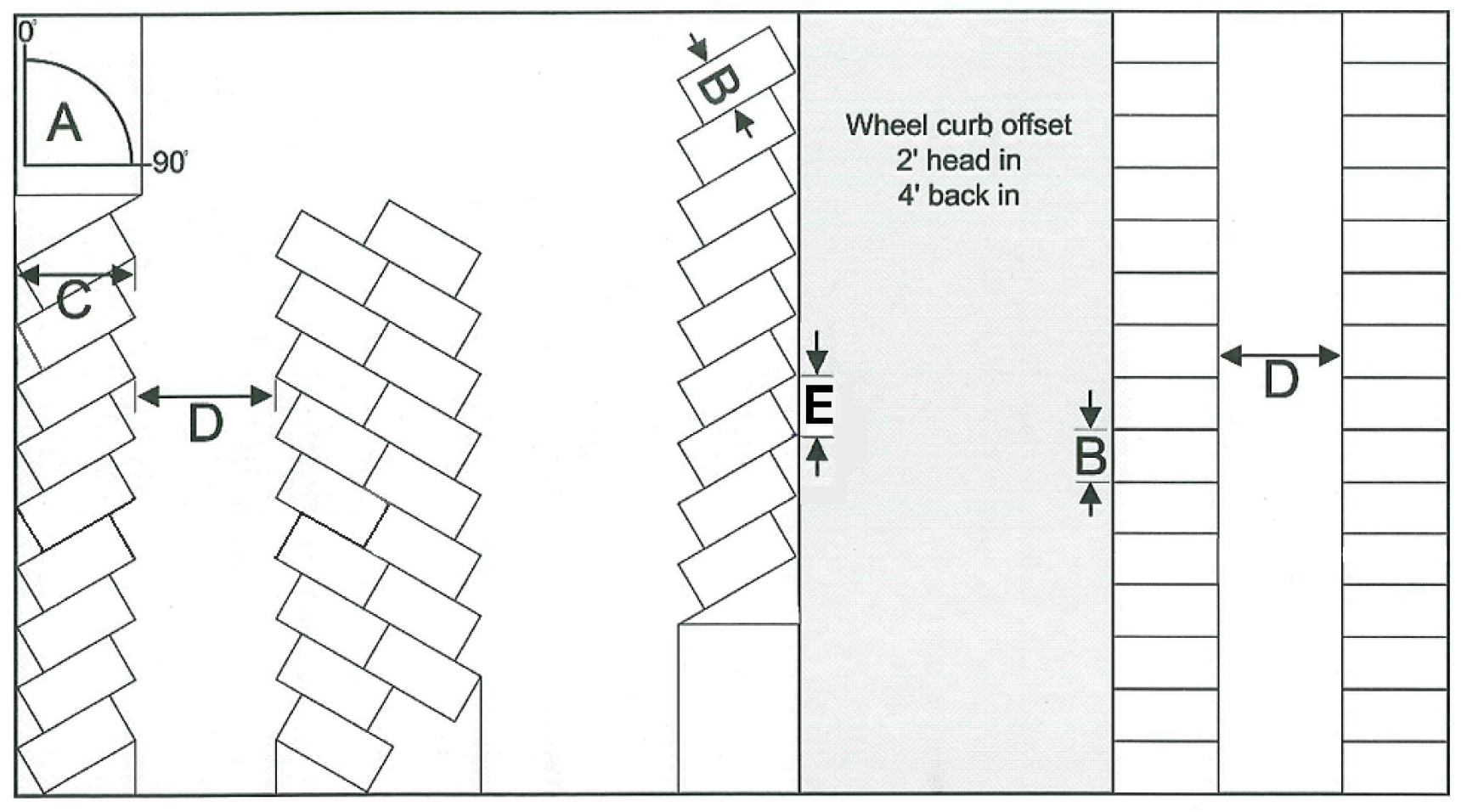
Access. Each required off-street parking space shall be provided with a driveway or common access aisle directly serving such space. In order to enable vehicles to maneuver into and out of parking spaces without encroaching into another parking space or extending beyond the designated driveway or access aisle area, access aisles serving off-street parking spaces for uses other than single-family detached and two-family dwellings shall meet the minimum dimensions set forth in Table 7-23-1 and Diagram 7-23-1 of this section.
(4)
Minimum parking space dimensions. Each required off-street parking space shall meet the minimum dimensions set forth in Table 7-23-1 and Diagram 7-23-1 of this section.
Diagram 7-23-1. Parking Spaces and Aisles
Sec. 7-24. - Stacking spaces for drive-through facilities.
(a)
Purpose. The following standards for drive-through facilities are intended to allow for such facilities in a manner that promotes public safety and efficient operation by addressing their unique challenges, such as high volumes of traffic, vehicular access, and on-site circulation. The specific purposes of this section are to:
(1)
Minimize the negative impact of drive-through facilities created by additional traffic hazards from motor vehicles entering and exiting the site;
(2)
Promote safer and more efficient on-site vehicular and pedestrian circulation;
(3)
Reduce conflicts between queued motor vehicles and traffic on adjacent streets; and
(4)
Minimize the negative impacts drive-through facilities create on abutting residential properties.
(b)
Applicability. The regulations of this section shall apply to any drive-through facility as permitted by this appendix.
(c)
Standards. Stacking spaces shall be provided for any use having a drive-through facility or areas having drop-off and pick-up areas. The following general standards shall apply to all stacking spaces and drive-through facilities:
(1)
Stacking spaces and lanes for drive-through stations shall not impede on any off-site traffic movements, shall not cross or pass through off-street parking areas, and shall not create a potentially unsafe condition where crossed by pedestrian access to a public entrance of a building.
(2)
Drive-through lanes shall be separated from off-street parking areas and shall be striped, marked, or otherwise distinctly delineated.
(3)
Alleys in residentially zoned areas which are adjacent to drive-through facilities shall not be used for circulation of customer traffic.
(4)
All drive-through facilities shall be provided with a bypass lane, approach lanes, and stacking spaces which shall comply with the minimum requirements set forth in Table 7-24-1 of this section.
(5)
Drive-through facilities shall provide a minimum number of stacking spaces on site in accordance with the standards set forth in Table 7-24-2 of this section:
Sec. 7-25. - Off-street loading areas.
Whenever the normal operation of any commercial or industrial use requires that goods, merchandise, equipment, or refuse shall be routinely delivered to or shipped from the site, space for the loading and unloading of trucks and other vehicles shall be provided in accordance with the following regulations:
(a)
Loading areas shall be located on the same zoning lot as the use served.
(b)
Loading areas shall be so located on the site and of such dimensions as not to require maneuvering, loading, or unloading in, projecting into, or obstructing a street, sidewalk, or alley.
(c)
Loading areas shall be so located on the site and of such dimensions as not to occupy or obstruct required off-street parking spaces or to obstruct any fire lane or emergency access route during the loading or unloading of vehicles.
(d)
The off-street loading area requirement shall not apply in the Downtown Business District (BD).
Sec. 7-30. - Purpose.
The purpose of this division is to define, permit, and equitably control the use of publicly visible signs in a manner that protects the public health, safety, and welfare. It is not the intent of this division to suppress any activities protected under the First Amendment, but to enact a content-neutral ordinance which will address the secondary effects of signs. The objective of this division is to establish effective, consistent, and equitable controls pertaining to the time, location, and manner in which signs which are legible from the public right-of-way may be erected and maintained, intended to achieve the following goals and objectives:
(a)
Promote the health, safety, and welfare of the public;
(b)
Equitably distribute the privilege of, and opportunity for, using the public environs to communicate private information;
(c)
Minimize distractions and obstructions of drivers' views of pedestrians, obstacles, other vehicles, or traffic signs that contribute to traffic hazards and endanger public safety;
(d)
Provide for the reasonable advertising of business and civic products and services, while recognizing the effects of signage on the character of the community;
(e)
Promote economic vitality by creating a community image that is conducive to meeting the visibility and legibility needs of business and industrial development while promoting appropriately placed and sized signage;
(f)
Preserve the residential character of residential neighborhoods;
(g)
Protect and enhance the visual environment of the town;
(h)
Protect property values by eliminating nuisances to the use of other properties because of sign size, height, movement, or glare; and
(i)
Establish clear procedures for the administration and enforcement of this division.
Sec. 7-31. - Applicability.
(a)
The provisions of this division shall apply to any new sign or sign structure and to the modification or alteration of any existing sign which is visible from any street, sidewalk, or public or private outdoor common space, except those listed in section 7-37 [of this appendix]. For the purposes of this division, changing the message of an approved marquee or other approved changeable copy sign or electronic readerboard shall not constitute an alteration or modification of such sign.
(b)
The content of message, commercial or non-commercial, shall not be regulated by this division. Any sign that can be displayed under the provisions of this division may contain a non-commercial message. This subsection supersedes any other requirement of this division to the extent of any inconsistency.
(c)
Signs permitted by the provisions of this division and as specifically allowed in Table 7-35-1 are intended, and shall be required, to be on-premises signs.
Sec. 7-32. - Zoning permit for signs.
(a)
Applicability. It shall be unlawful for any person to erect, install, structurally alter, modify, relocate, or replace any sign or sign structure, except for those signs specifically exempted in section 7-37 [of this appendix], without first obtaining a zoning permit pursuant to this section. The refacing of a sign shall not require a zoning permit. The issuance of a zoning permit for a sign shall be required prior to the issuance of any permit required for a sign pursuant to the Building Code.
(b)
Application. An application for a zoning permit for a sign, accompanied by the required application fee, shall be submitted to the zoning administrator prior to the issuance or consideration of issuance of any permit. All applications for a zoning permit for a sign shall be accompanied by the following information:
(1)
A sketch of the property indicating the lot frontage;
(2)
A list of all existing signs on the property, including their dimensions and their location;
(3)
For any proposed sign, specifications regarding the type of sign to be constructed, sign height, sign face dimensions, source of illumination, the location of such sign on any wall or property, the official tax map number of the lot on which the sign is to be located, and the zoning district of the subject lot;
(4)
For building-mounted signs, a recent photo of the facade where the sign is to be placed;
(5)
For building-mounted signs, the linear footage of the building wall and appurtenance, where applicable, on which the sign is to be affixed, and the dimensions and location of the proposed building-mounted sign;
(6)
For freestanding signs, a scaled drawing showing the location of any proposed freestanding sign, the relationship of the proposed sign to sight distance triangles, as defined in section 2-9 [of this appendix], if applicable, and the relationship of the proposed sign to any other freestanding sign on the lot or to the lot line; and
(7)
Any other information that the zoning administrator may require to determine full compliance with the regulations of this division.
(c)
Certificate of appropriateness. In addition to the requirements of subsection (b) of this section, an application for a zoning permit for any sign located in the Historic Commercial Area Overlay District (H-1), excluding temporary signs, shall include a copy of a certificate of appropriateness issued by the board of architectural review for the proposed sign, accompanied by renderings.
(d)
Encroachment. In addition to the requirements of subsections (b) and (c) of this section an application for a zoning permit for any sign to be placed on, or project over, any sidewalk, street, alley, or other public property shall include documentation of meeting, and having received approval for, the requirements of the Town Code regarding encroachments.
(e)
Zoning administrator action. A zoning permit for a sign shall be issued only upon determination by the zoning administrator that the proposed sign is in full compliance with the provisions of this division.
(f)
Scope of approval. A zoning permit for a sign shall become null and void if the work described in such permit has not begun within six months from the date it was issued. Upon written request and for good cause shown, the zoning administrator may grant one six-month extension.
Sec. 7-33. - Calculating sign area and number of signs.
(a)
Basis for calculating sign area, number of signs, and placement. The calculation of the number of on-premises signs and sign area allotment, as permitted in Table 7-35-1, shall be based on the applicable lot frontage for freestanding signs and the applicable building frontage or storefront for building-mounted signs.
(1)
Any freestanding sign permitted on a "per lot frontage" basis shall be allocated to and located along the specific lot frontage from which the allotment for the freestanding sign is computed.
(2)
Any building-mounted sign permitted on a "per building face or storefront" shall be allocated to and located on the building facade or storefront from which the allotment for the building-mounted sign is computed. For purposes of a building-mounted sign which is attached to an appurtenance of the building, such sign shall be located between the building line of the facade from which the building-mounted sign allotment is computed and the public right-of-way which it faces.
(b)
Determining sign area. For purposes of this division, the following methods shall be utilized to calculate sign area:
(1)
Sign area for freestanding signs and building-mounted signs shall be calculated separately.
(2)
Each sign face shall count in calculating total sign area, except that in the case of a double-faced sign, only one sign face shall be counted in the calculated sign area (see Figure 7-33-1).
(3)
Sign area shall be calculated using simple geometric shapes (see Figure 7-33-2).
(4)
For building-mounted signs enclosed by a frame or border or encased by a cabinet, the sign area shall be determined by computing the entire area within a continuous perimeter, enclosing the limits of writing, representation, emblem, or any figure or similar character, together with any cabinet, frame, or other material or color forming an integral part of the display or used to differentiate the sign from the background against which it is placed (see Figure 7-33-3).
(5)
For building-mounted signs composed of individually attached, or painted on, letters, numerals, pictures, logos, symbols, or figures, the sign area shall be determined by computing the entire area within a single, continuous geometric form that encloses the limits of all lettering, numerals, figures, designs, symbols, fixtures, logos, emblems, insignias, or other drawings or images (see Figures 7-33-3 and 7-33-4).
(6)
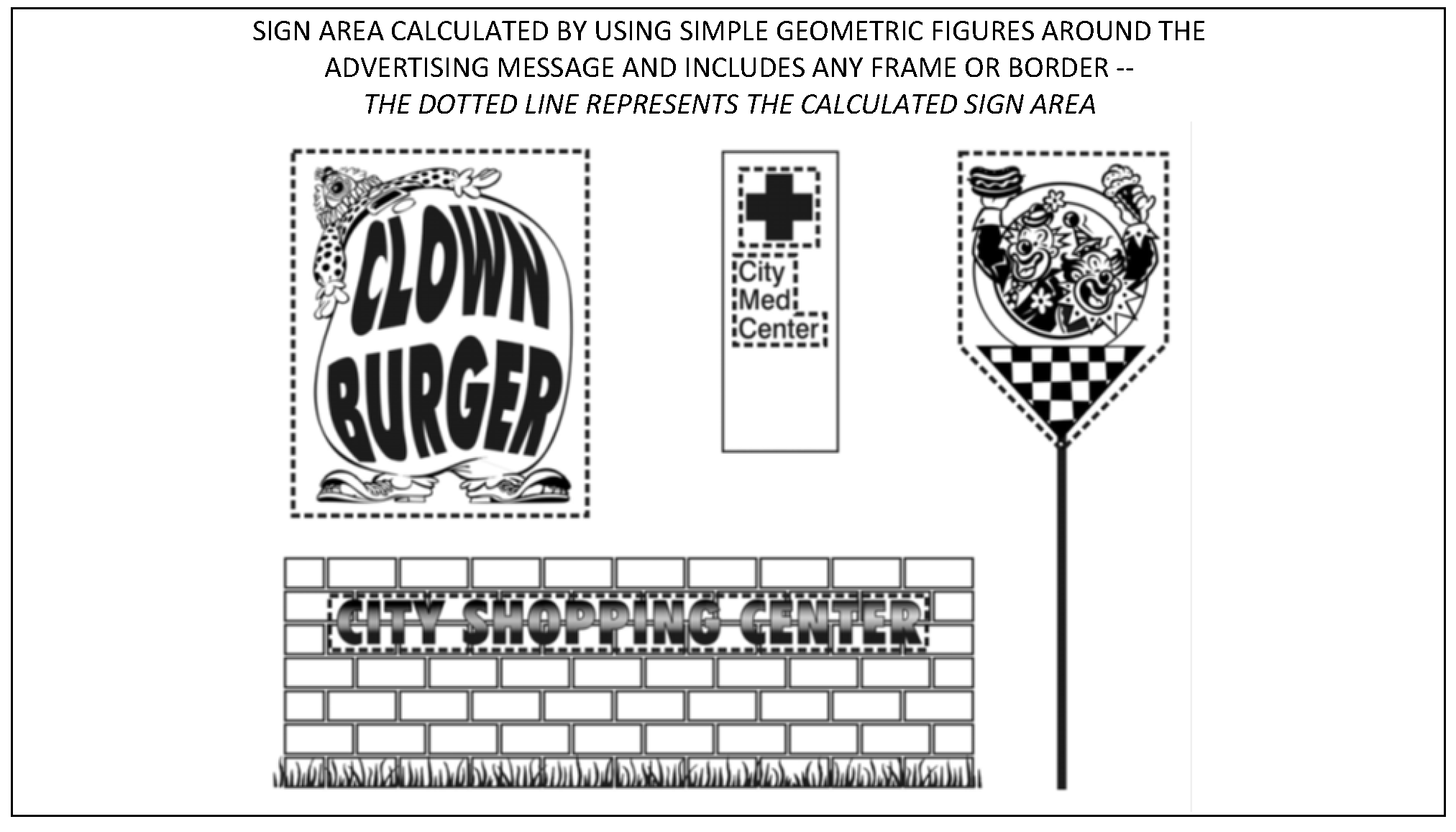
For freestanding signs, the sign area shall be the total area of all surfaces, excluding poles or other support structures. Sign area shall be calculated by the area defined by the constructed or fabricated cabinet, panel, or frame. If the sign does not have a defined cabinet, panel, or frame, or the cabinet, panel, or frame is of an irregular shape, the sign area shall be calculated by using up to a simple eight-sided geometric figure around the advertising message and shall include any framing or border. (See Figures 7-33-4, 7-33-5, 7-33-6 and 7-33-7)
(7)
The sign area of a monument sign shall be determined by the size of the copy area, visual breaks in the structural components of the sign, and/or variation in the monument's color scheme.
Figure 7-33-1. Sign Faces and Total Sign Area
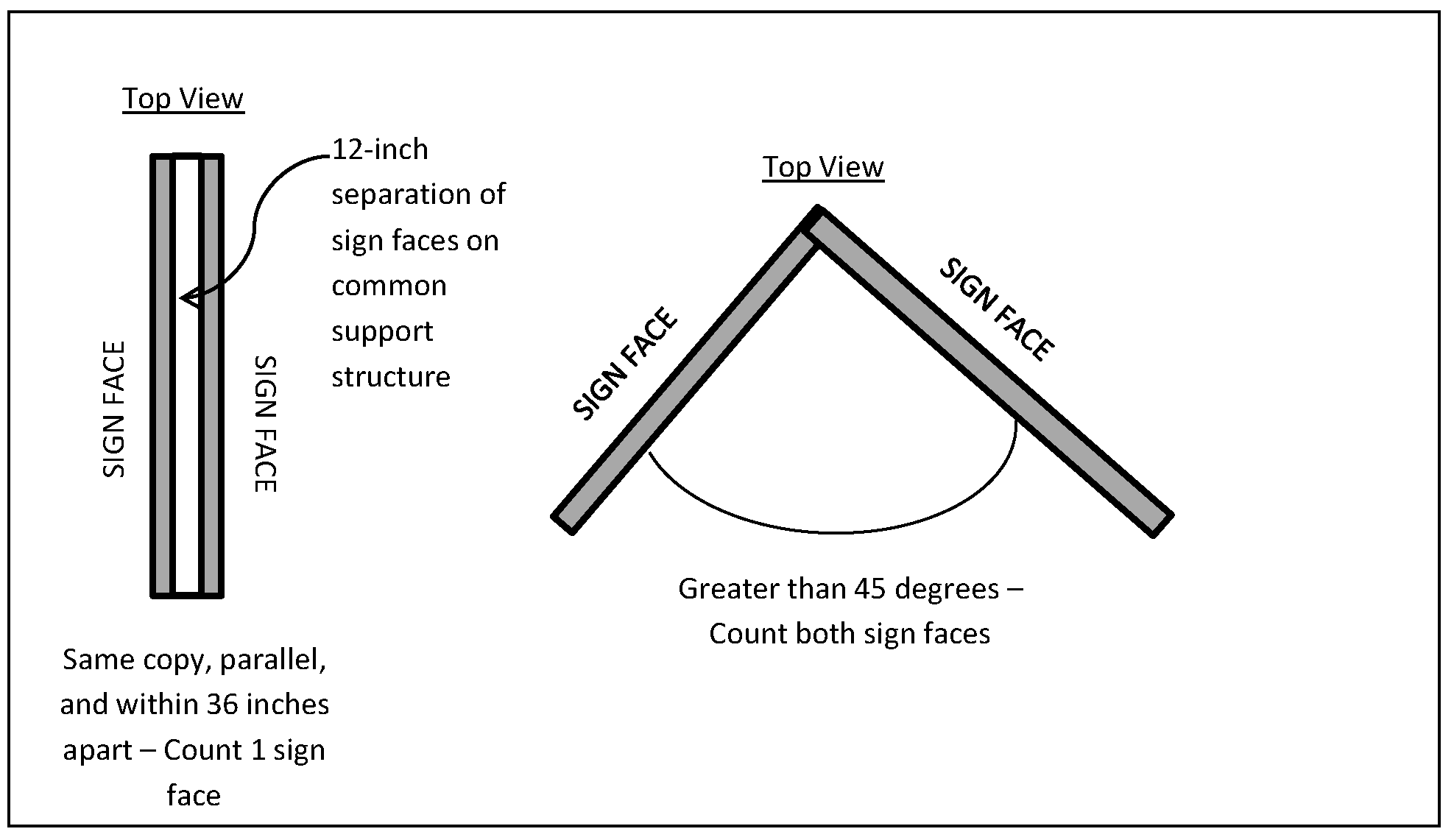
Figure 7-33-2. Simple Geometric Figures
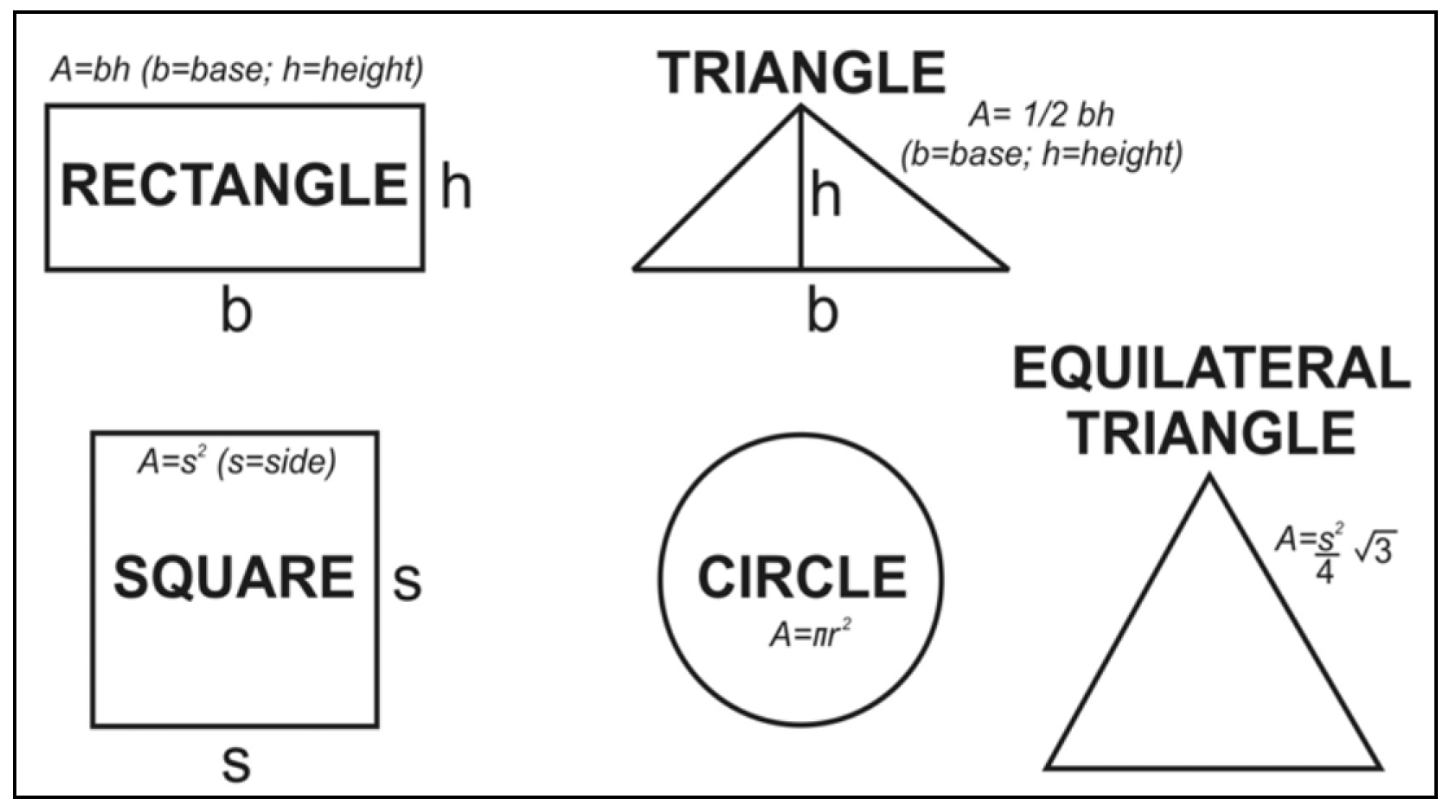
Figure 7-33-3. Calculating Area of a Wall Sign

Figure 7-33-4. Calculation of Sign Face Area
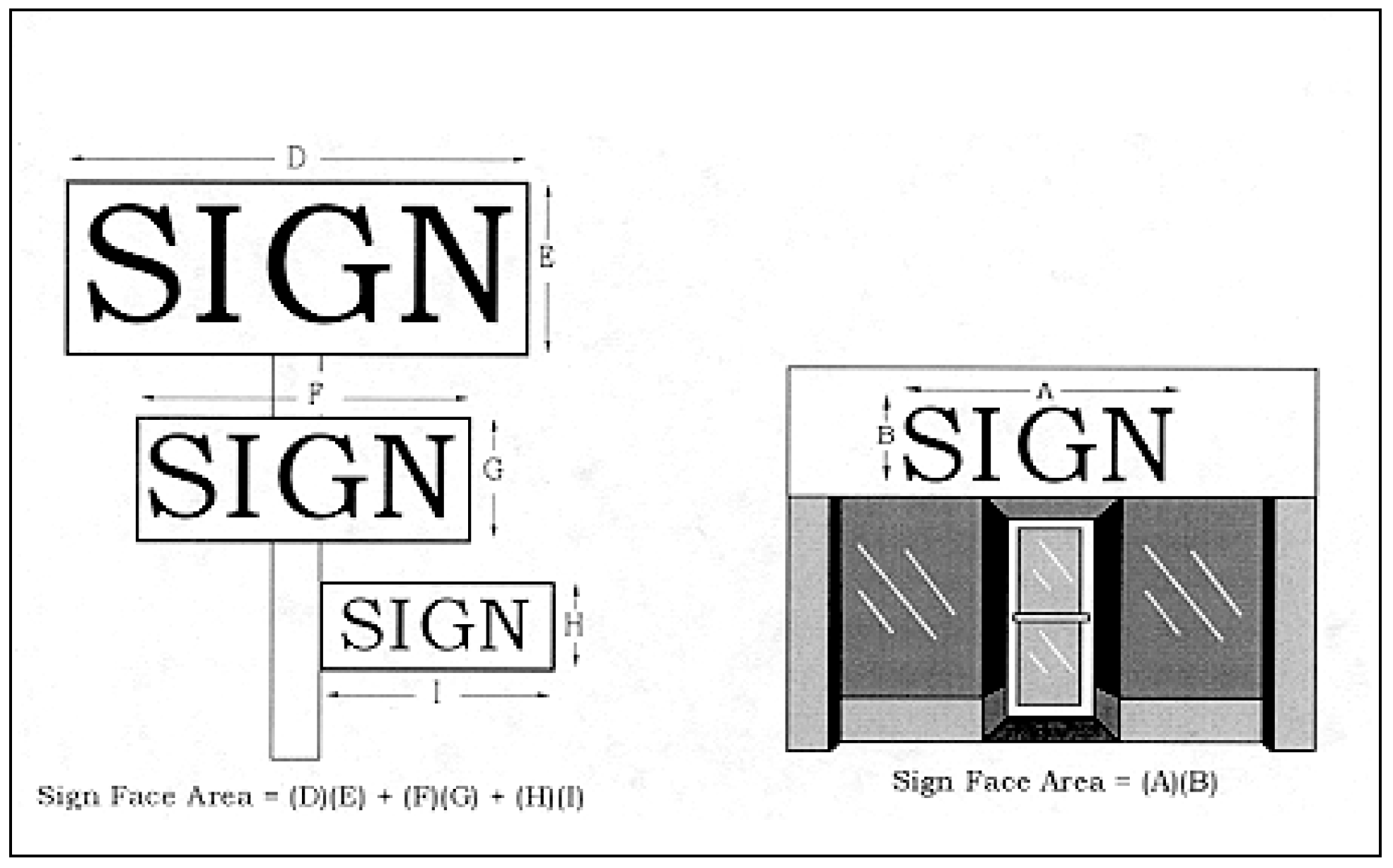
Figure 7-33-5. Calculation of Sign Face Area
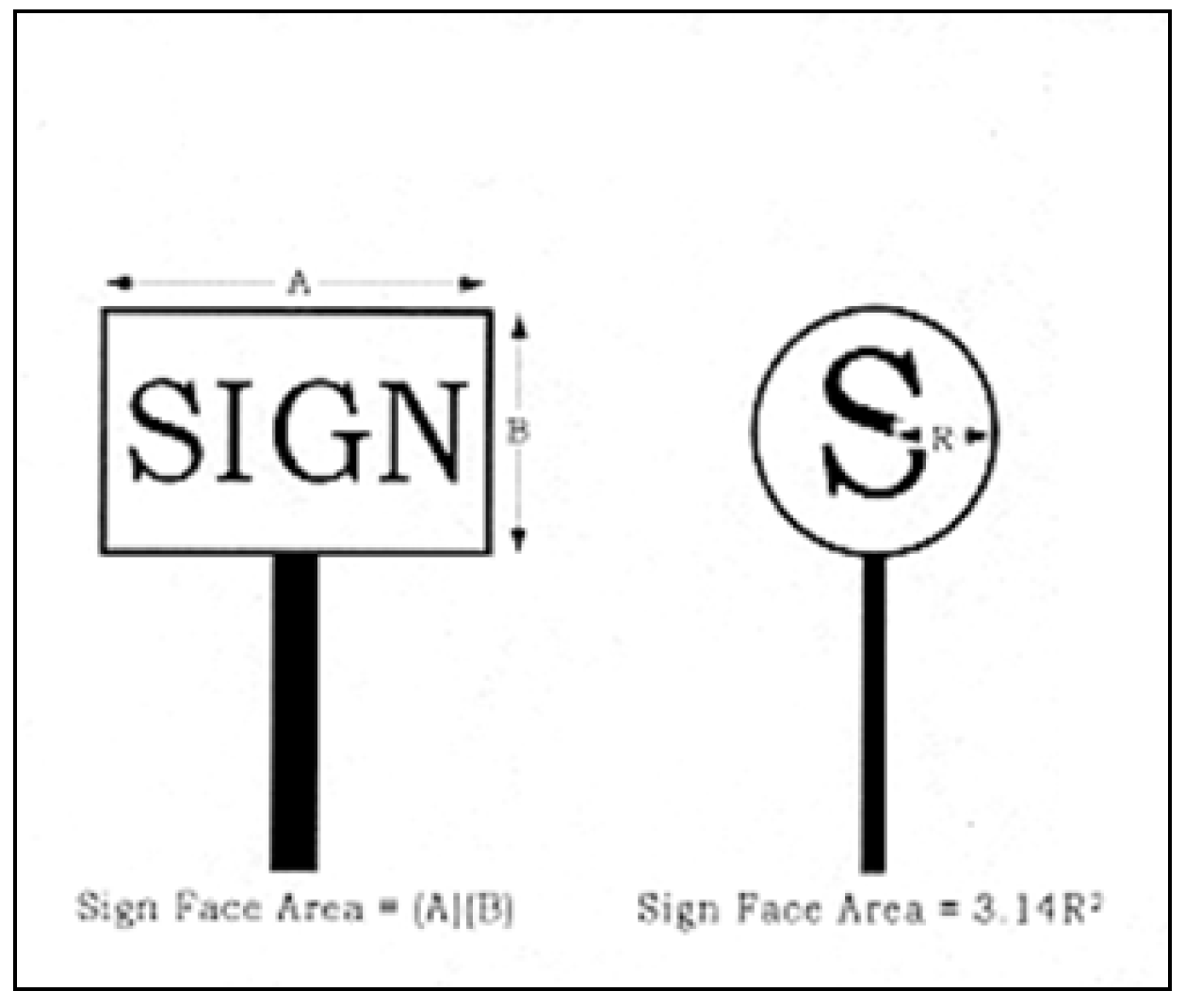
Figure 7-33-6. Calculating Sign Area: Sign Constructed with Panels or Cabinets
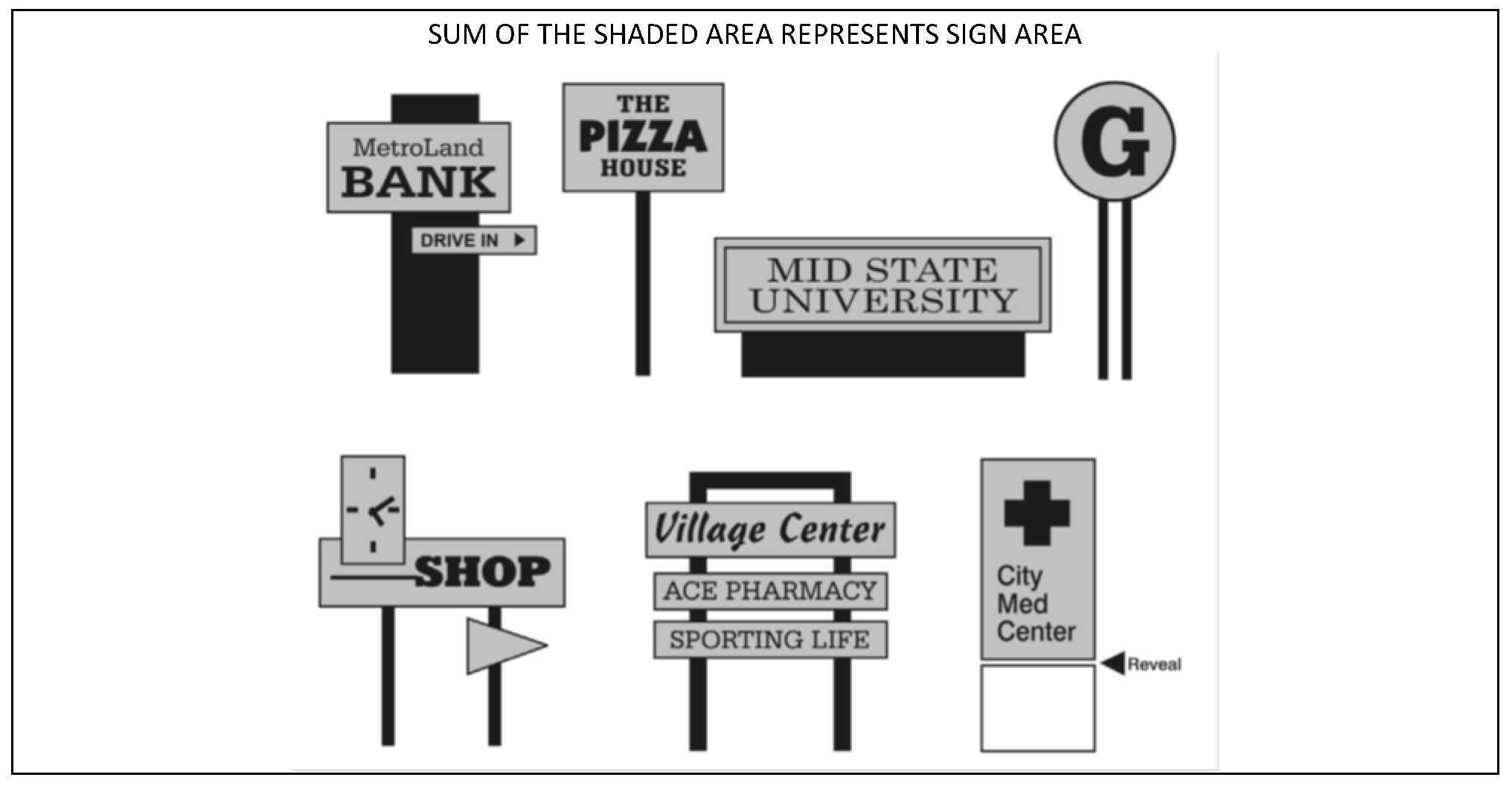
Figure 7-33-7. Calculating Sign Area: Without Defined Panel or Irregular Shape
Sec. 7-34. - Uniform on-premises sign regulations.
The following sign regulations shall apply to on-premises signs, regardless of zoning district, unless specifically provided otherwise herein, and as permitted in Table 7-35-1.
(a)
Building-mounted signs, generally.
(1)
Building-mounted signs shall be permitted only on the building facades or appurtenances of buildings or accessory structures which face upon an abutting street or which contain a public entrance.
(2)
No building-mounted sign, except for a projecting sign, shall cover, cross, or otherwise hide any cornice, column, belt course, window, or balcony of a building, or any portion of such feature.
(3)
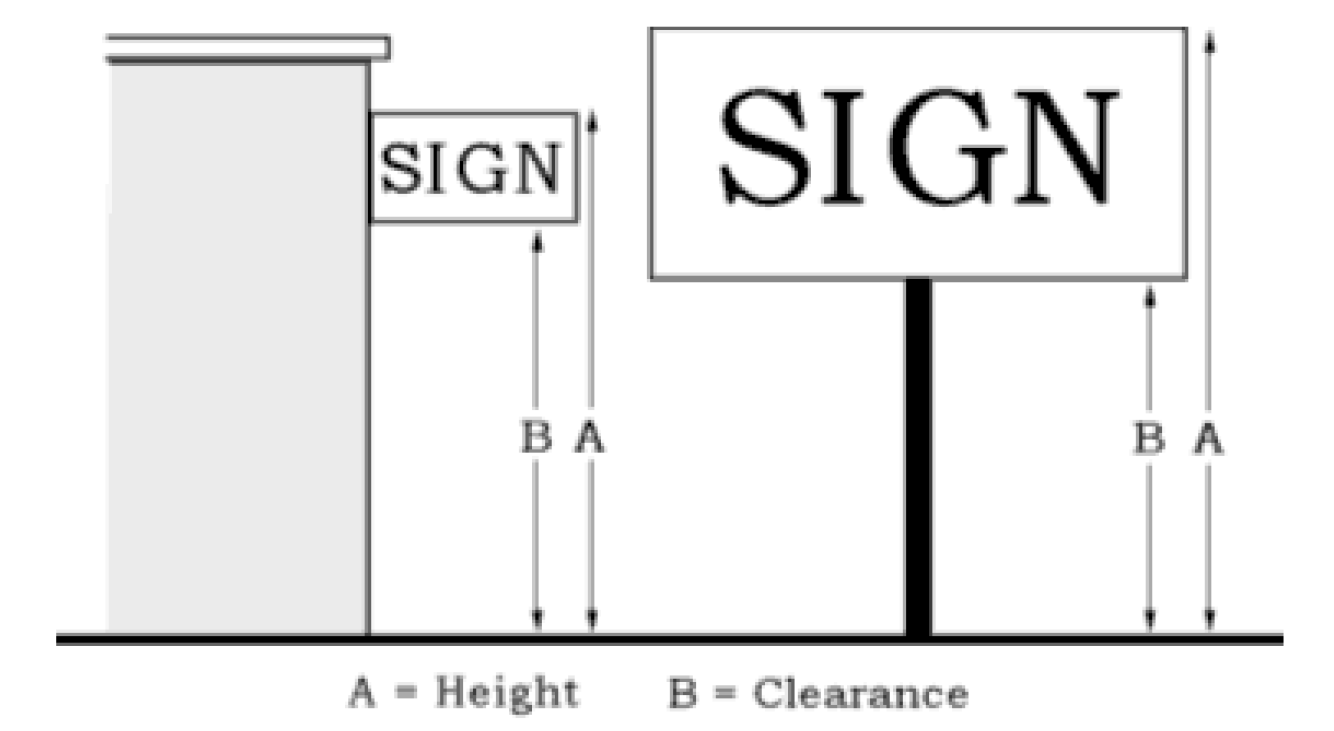
Any building-mounted sign shall be attached to provide a minimum clearance of ten feet above the adjoining sidewalk or ground. See Figure 7-39-3 for illustration of sign clearance.
(b)
Building-mounted signs; awning or canopy signs. No part of any awning or canopy containing a sign shall extend above the height of the bottom sill of any second story window of the building facade to which it is attached. All lettering and images comprising any portion of an awning or canopy sign shall be located on the face of the awning or canopy and shall not project above or below the face or in any way beyond the physical dimensions of the awning or canopy.
(c)
Building-mounted signs; projecting signs. Any projecting sign shall not extend more than three feet, in whole or in part, from the building face or wall to which it is attached.
(d)
Building-mounted signs; window signs. Where building-mounted signs are permitted by this division, window signs are allowed, subject to the following provisions:
(1)
Location. Window signs shall be permitted only on the ground level of facades of buildings which face upon an abutting street or which contain a public entrance.
(2)
Permitted numbers and sign area. Window signs shall not be counted in the allowable number and permitted total sign area of building-mounted signs.
(3)
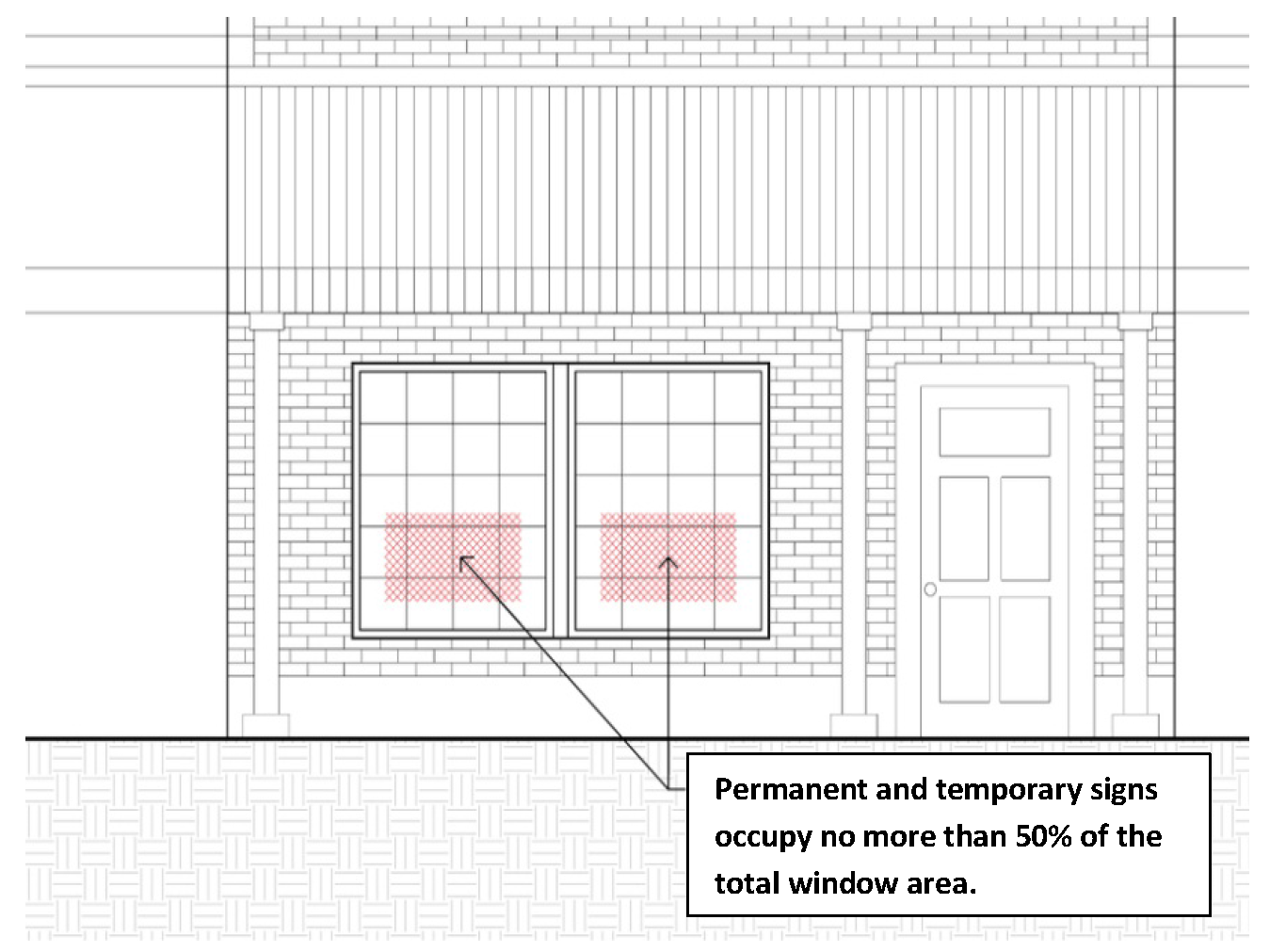
Sign area. To ensure that visibility both in and out of the window is not obscured, the surface area of window signs, whether temporary or permanent, shall not exceed 50 percent of the window or door surface area to which they are applied or attached, from which they are suspended, or through which they are displayed. Window surface area is counted as a continuous surface until divided by an architectural or structural element. Mullions are not considered an element that divides window or door glass area. (See Figure 7-34-1.)
(4)
Illumination. Window signs may be illuminated only in those districts where illuminated signs are permitted by this division, and shall be permitted only on the interior of the storefront. Illuminated window signs shall be subject to the provisions of subsection (h) of this section.
(5)
Prohibited sign characteristics. Window signs are subject to the prohibited signs and sign characteristics as set forth in section 7-38 [of this appendix].
(6)
Historic Commercial Area Overlay District. Any window sign that is to be located in the Historic Commercial Area Overlay District (H-1) shall be subject to the requirement of a certificate of appropriateness pursuant to article 9, division 4 [of this appendix].
(7)
Permits. Where building-mounted signs are permitted by this division, window signs located on the interior of the window or door are allowed without a permit, subject to the provisions of this section, except in the case of any internally illuminated sign including any made of neon tubes which shall require a permit as set forth in section 7-32 [of this appendix].
Figure 7-34-1. Window Signs
(e)
A-frame or easel signs.
(1)
Any A-frame or easel sign shall be of durable construction, and when displayed shall be anchored in a manner approved by the zoning administrator.
(2)
Any A-frame or easel sign shall be located within three feet of the entry door.
(3)
No A-frame or easel sign shall interfere with pedestrian or vehicular circulation.
(4)
Any A-frame or easel sign shall leave a sidewalk clearance of at least five feet.
(f)
Changeable copy signs. Any changeable copy sign shall abut or connect with a static sign face, and the changeable copy portion of the sign shall not exceed 80 percent of the overall sign of which it is a part.
(g)
Electronic readerboard signs. Electronic readerboard signs shall be subject to the following requirements:
(1)
An electronic readerboard shall be integrated with a static sign face. For purposes of this provision, integrated shall mean the readerboard is contiguous to the static sign face and is bounded by the same or similar framework.
(2)
The electronic readerboard portion of a sign shall not exceed 40 percent of the total sign area of the sign of which it is an integral part, provided that under no circumstance shall the readerboard exceed 25 square feet in sign area.
(3)
All electronic messages shall be static, with the frequency of change of electronic message being such that each message display remains static for at least six seconds before changing to a new electronic message.
(4)
Transition between messages is permitted, but such transition may only dissolve or fade and the transition between messages shall not exceed one second in time.
(5)
An electronic readerboard shall not contain animation, rolling or running letters or message, flashing lights, or scrolling displays.
(6)
An electronic readerboard shall not use flashing or blinking characters or streaming video.
(7)
No electronic readerboard shall create glare, the effect of which constitutes a traffic hazard or is otherwise detrimental to the public health, safety, or welfare.
(8)
Audio speakers or any form of pyrotechnics shall be prohibited in conjunction with an electronic readerboard.
(9)
Only one electronic readerboard shall be permitted on a lot.
(10)
No electronic readerboard shall be permitted within 200 feet of a residential district.
(11)
An electronic readerboard sign shall be permitted only as an on-premises sign and therefore shall not be used to display commercial messages relating to products or services that are not offered on the premises.
(h)
Illuminated signs. Where illumination is permitted by this division, signs may be illuminated either through the use of backlighting or direct lighting, provided that no light from any illuminated sign shall cause direct glare into or upon any adjoining property or adjoining right-of-way, and provided further that the following standards are met:
(1)
Information on any illumination proposed as part of a sign must be provided by the applicant on the zoning permit application.
(2)
Any sign containing electrical components shall conform to current UL, ETL, CSA, or ULC standards and display a label from one of these recognized testing labs.
(3)
When any sign is illuminated, such lights shall be enclosed in the sign, or if external, such external light source shall be located, shielded, or directed so as to concentrate the illumination upon the area of the sign face and so that the point source of the light is not visible from any adjacent street or lot.
(4)
If ground lighting is used to illuminate a sign, and the point source of the light is not equipped with shielding to prevent its visibility from any adjacent street or lot, such ground lighting shall be fully screened from view by landscaping material.
(i)
Rights-of-way. No sign shall be located or hung over the right-of-way of any street, sidewalk, driveway, walkway, or access way, except that, in the Downtown Business District (BD), a sign attached to a wall of a building may project 36 inches from the wall and into such right-of-way, provided that projection does not occur within ten feet vertical clearance of the ground. No sign shall extend closer than one foot to the curb line.
(j)
Setbacks for freestanding signs. Freestanding signs shall be required to meet the setbacks of Table 7-34-2, unless otherwise specifically provided by this division.
Sec. 7-35. - Permitted on-premises signs.
The type, number, and size of on-premises signs permitted in each zoning district are set forth in Table 7-35-1, subject to all other applicable requirements contained in this division.
Sec. 7-36. - Temporary on-premises signs.
(a)
No temporary sign shall be erected or posted until a zoning permit has been issued pursuant to section 7-32 [of this appendix]. Zoning permits for temporary signs shall be limited to four such permits per 365-day period per establishment located on the lot and shall be issued only for the premises of the business, product, commodity, activity, event, or service which the sign identifies or to which the sign directs attention.
(b)
Temporary signs shall not be included in the computation of permitted sign area for any lot or structure.
(c)
Except as otherwise provided in this section, no temporary sign shall be erected or placed for a period exceeding 30 calendar days.
(d)
Only one temporary sign per lot frontage shall be erected or posted at any given time on any lot, except when such lot contains multiple establishments or uses, one temporary sign shall be permitted for each separately identifiable use or establishment located thereon.
(e)
A temporary sign shall not be illuminated.
(f)
Except as otherwise provided in this section, temporary on-premises signs shall be securely attached to a building or building appendage or securely attached to posts, stakes, or other supports that shall be removed at the time the sign is removed.
(g)
Except as otherwise provided in this section, temporary signs shall be permitted in accordance with Table 7-36-1.
(h)
Pennants and streamers, without advertising, may be displayed simultaneously with a temporary grand opening sign, but at no other time, provided such pennants and streamers shall be permitted only in conjunction with the opening of a new business in a business district and shall be permitted only for a period of not more than 15 days after the opening of such new business.
(i)
In addition to the other requirements of this section, banners permitted as temporary signs shall be securely fastened in a manner to eliminate excessive movement and billowing. A banner shall be removed immediately if it is not securely fastened or if it becomes torn or damaged. Banners shall be erected at a minimum of seven feet above grade, except where flush-mounted against the face of a building.
(j)
Inflatable signs shall be permitted only in conjunction with the opening of a new business in a business district and shall be permitted only for a period of not more than 15 days after the opening of such new business. Such inflatable signs shall meet the following additional requirements:
(1)
Only one such sign per lot shall be permitted at any one time; and
(2)
Inflatable signs shall be securely fastened to the ground or other immovable object and shall be located a minimum of eight feet from the lot line.
(k)
A temporary cover placed over an existing sign face because of change of ownership or the name of the business establishment shall be considered a temporary sign and shall be subject to the regulations of this section, except that such sign shall be permitted for a period of up to 60 calendar days. Such temporary cover shall not exceed the sign area of the existing permanent sign face it is covering and shall not increase the height of the existing sign face. Upon written application by the original applicant to the zoning administrator, prior to the expiration of the original zoning permit for the temporary sign, the zoning administrator may extend the time period for the zoning permit up to 30 calendar days if, in the opinion of the zoning administrator, the applicant is diligently pursuing a permanent sign replacement or reface. Failure of a person to apply for such extension within the timeframe set forth in this subsection, and the continued display of the temporary sign beyond the duration of the original zoning permit, shall constitute a violation of this appendix.
Sec. 7-37. - Exempt signs.
The provisions of this division, including the requirements for a zoning permit, shall not apply to the following signs, provided that no such sign shall be placed within the public right-of-way or any closer than five feet from a street right-of-way (except for real estate signs which may be located up to the front property line) or any closer than five feet from any side or rear property line, and provided further that such sign be located outside of any sight distance triangle as defined in section 2-9 [of this appendix]. It is intended that these exempt signs shall be on-premises signs. Any exempt sign shall not be included in the maximum permissible number of signs or sign area. Any exempt sign that is to be located in the Historic Commercial Area Overlay District (H-1) shall be subject to the requirement of a certificate of appropriateness pursuant to article 9, division 4 [of this appendix].
(a)
Legal notice, informational, traffic control, warning, regulatory, or directional signs erected by a government body or required to be erected by a government body, which signs are directly related to the health, safety, convenience or welfare of the community, but not including governmental signs for proprietary or identification purposes.
(b)
Commemorative plaques, historical markers, and signs which have special historical value or significance to the community, which are erected by a government body.
(c)
Flags of the Commonwealth of Virginia, United States of America, or other governmental flags flown for noncommercial purposes.
(d)
Decorative flags displaying strictly ornamental information, such as graphic depictions of flowers and the like.
(e)
Address identification signs.
(f)
Memorial plaques.
(g)
Nameplates.
(h)
Political signs, provided that such signs shall be removed within ten calendar days after the election.
(i)
Signs displaying the hours of operation, or the word "open" or "closed," neon or otherwise, on the main entry or on a window next to the main entry, and not exceeding one per lot or tenant and two square feet in sign area.
(j)
On-premises directional signs.
(k)
Real estate signs, provided such signs shall not exceed one per lot frontage, shall not be illuminated, shall be removed within seven days after the sale is closed or the rent or lease transaction is finalized, and shall not exceed the square footages and heights set forth in Table 7-37-1 of this section.
(l)
Construction signs erected on the wall of a construction trailer or construction shed or erected on the ground, provided such signs shall be located only on the property on which construction is underway or is proposed, shall not be illuminated by any means, shall be removed prior to the issuance of any certificate of occupancy, and shall not exceed the size or quantities as listed in Table 7-37-2 of this section.
(m)
Signs placed on temporary structures, fences, and barricades placed around excavations or building projects, whether on public or private property, which are related to safety considerations with the construction.
(n)
Signs located on the inside of an enclosed ball field, amphitheater, stadium or similar facility.
(o)
Murals.
(p)
Fuel pump accessory and fuel pump topper signs.
(q)
Signs displaying time, date, temperature, or a public service announcement, and containing no commercial advertisement, and located in a non-residential zoning district.
Sec. 7-38. - Prohibited signs.
The following signs and sign characteristics shall be prohibited in all zoning districts:
(a)
Animated signs.
(b)
Flashing signs, provided that theatre marquees shall not be deemed a flashing sign for purposes of this prohibition.
(c)
Pennants, streamers, ribbons, spinners, inflatables, or other similar moving devices, except as provided in section 7-36 [of this appendix] for temporary signs.
(d)
Laser light or image projection signs.
(e)
Off-premises signs.
(f)
Portable signs, except for A-frame or easel signs as expressly permitted in this appendix.
(g)
Projecting signs erected with their lowest portions above a height of 25 feet above adjacent ground level.
(h)
Roof signs.
(i)
Searchlight or beacon signs.
(j)
Any electrical signs that do not display the UL, ETL, CSA, or ULC label.
(k)
Any sign, except an official public notice, which is nailed, tacked, stapled, pasted, painted, posted, or attached in any manner to any utility pole, or structure supporting wire, cable, or pipe; or to public property of any description.
(I)
Any sign which imitates or approximates an official traffic sign or signal and which contains the word "STOP," "GO," "SLOW," "CAUTION," "DANGER," "WARNING," or similar words, any sign using traffic symbols or colors of red, amber, and green in such combination of shape or color as to be confused with traffic control devices, or any sign which obscures a sign displayed by public authority for the purpose of giving traffic instruction or direction.
(m)
Flashing or revolving lights, or beacons intended to direct attention to a location, building, or service, or any similar device otherwise displayed that imitates by its design or use emergency service vehicles or equipment.
(n)
Any sign displayed on a stationary motor vehicle or trailer when the vehicle or trailer is parked or oriented for the purpose of serving the function of a sign, except when such vehicle or trailer is parked in the operator's driveway or when the vehicle is parked to the side or rear of a commercial building and is not visible from adjacent public streets or is loading or unloading.
(o)
Any sign, other than a projecting sign, which projects horizontally or vertically beyond any part of the building to which it is attached.
(p)
Any sign which interferes with free passage from or obstructs any fire escape, window, door, stairway, ladder, or opening intended as a means of ingress or egress or providing light or air.
(q)
Exposed neon tubing which outlines buildings.
(r)
Any sign that produces sound, odor, or visible matter such as smoke or vapor.
Sec. 7-39. - Sign definitions.
Signs and their characteristics, as used in this division, shall be defined as set forth in this section and in article 11 [of this appendix]. For the purposes of this division, to the extent of any inconsistency between article 11 [of this appendix] and this division, the definitions provided in this division shall control.
Address identification sign: A sign, attached to a building, measuring up to one square foot in area, displaying only the occupant's name or the assigned address of a property or building.
A-frame or easel sign: An upright sign with a rigid supporting frame either in the form of an inverted "V" or in the form of an easel. This sign is typically used to display a temporary or frequently changed message and is not permanently affixed to the ground. For the purposes of this division, an A-frame or easel sign is considered neither a freestanding nor a building-mounted sign.
Animated sign: Any sign or part of a sign that changes physical position by any movement, oscillation, or rotation by natural or artificial means or that imitates or gives the visual appearance of such movement. A flashing sign and a sign that indicates only time and temperature shall not be considered an animated or moving sign.
Awning: A structure made of fabric or similar non-rigid material supported by and projecting from the exterior wall of a building and designed to be raised, folded, retracted, or collapsed to a flat position against the face of the supporting building.
Awning sign: A sign that is painted on, printed on, or applied directly to the face of an awning. For the purposes of this division, an awning sign shall be considered a type of building-mounted sign. (See Figures 7-39-1 and 7-39-2.)
Banner: A sign, intended to be hung, consisting of cloth, canvas, flexible plastic or fabric of any kind, with only such non-rigid material for backing, temporarily secured at one or more edges flat against the facade of the building or to a pole or other structure. This definition shall not be interpreted to include national, state, and municipal flags and official flags of professional, institutional, or educational organizations.
Building-mounted sign: A sign erected on, attached to, or painted on the wall, window, or door of a building, or attached to, printed on, or painted on an appurtenance of a building such as a canopy or awning or other accessory structure not otherwise designed or constructed to support signage. For the purpose of calculating the permitted number of building-mounted signs and total maximum permitted sign area for building-mounted signs as provided in this division, building-mounted signs shall include awning signs, canopy signs, hanging canopy signs, marquee signs, projecting signs, and wall signs, but shall not include window signs.
Canopy sign: A sign that is painted on, printed on, or attached flat against the surface of a canopy. For the purposes of this division, a canopy sign shall be considered a type of building-mounted sign.
Changeable copy sign: A sign, or portion thereof, that is designed so that letters or numbers attached to the sign can be changed or rearranged manually, or mechanically, to display a different copy or message, without altering the surface of the sign display.
Construction sign: An on-premises temporary sign that notifies the public of a specific building or development under construction or reconstruction or proposed to be constructed or reconstructed, or announcing future use of the property, and which sign may identify the architect, engineer, contractor, subcontractor, or lending institution engaged in the project on the property on which the sign is located, or the suppliers of materials used thereon.
Copy: Any words, letters, numbers, figures, characters, symbols, logos, or insignia that are used on a sign display surface area.
Development identification sign: A sign used to display only the name, address, crest, or trademark of a business or organization, or to display the name of a subdivision, religious institution, school, park, or multifamily housing development.
Double-faced sign: A sign with two sign faces attached to a common support structure and constructed to display the same copy or message on the outer surfaces of two identical and opposite parallel planes not more than 36 inches apart or not separated by an interior angle of more than 45 degrees.
Electronic readerboard: A computer generated sign which displays messages with letters, pictographic, or symbolic informational content which can be changed or altered on a fixed display screen by electrically illuminated segments. A sign on which the only copy that changes is an electronic indication of time or temperature shall be considered a "time and temperature" portion of a sign and not an electronic readerboard.
Flag: A single piece of canvas, plastic, cloth, or other durable fabric which has been attached along one side or edge to a permanent support.
Flashing sign: A sign that uses intermittent or sequential flashing or running lights, or lights creating an illusion of movement, to attract attention. Electronic readerboards shall not be considered flashing signs.
Freestanding sign: A sign supported by one or more upright poles, columns, or braces placed exclusively in or on the ground. The term "freestanding sign" shall include pole and monument signs. (See Figure 7-39-1.)
Fuel pump accessory sign: A sign attached to a gasoline pump or to the island in which the gasoline pump is located, not exceeding six square feet in area, which identifies acceptable methods of payment or other important information related to the use of the pumps and sale of fuel. These signs contain no advertising matter for the gasoline station or its products.
Fuel pump topper sign: A sign located on the top of a gasoline pump, not exceeding two square feet in area, which displays the price per gallon of gasoline or advertisements for products sold on the premises.
Graphic: Any logo, emblem, insignia, or text formed by writing, drawing, painting, or engraving.
Hanging canopy sign: A small, pedestrian-oriented sign that is suspended beneath a canopy by means of brackets, hooks or chains, and the like, and which face is generally perpendicular or parallel to the building element to which the canopy is attached. For the purposes of this division, hanging canopy sign shall be considered a type of building-mounted sign.
Historical marker: A memorial sign limited in content to the identification of a historical building or structure or the site of a historical event.
Identification sign: A sign which displays only the name, trademark or other readily recognized symbol, street address and number, or any combination thereof, of a building, institution, business, organization, or establishment and the activity carried on in the building, institution, business, or establishment on the premises where the sign is located, or announcing the name of a subdivision, shopping center, church, school, park, or multifamily housing development. Identification signs shall also include nameplates.
Illuminated sign: A sign with an artificial light source, incorporated internally or externally, for the purpose of illuminating the sign. A neon sign shall be considered an illuminated sign.
Inflatable sign: One or more moored balloons, or any other type of tethered object that is capable of being expanded by air or other gas, water, or other means, that exceeds 24 inches in diameter and is used as a means of directing attention to any business, profession, service, product, goods, promotion, activity, or special event.
Laser light or image projection sign: The projection of light or a laser beam onto a solid surface, or projected into the sky, in order to project an image.
Logo: Any emblem used as the symbol of an organization or residential or non-residential community. A logo may include a graphic, text, or both.
Marquee: A fixed hood located at the main entrance of a building, constructed of metal or other permanent material, which is projecting from and supported only by the building to which it is attached and which includes a sign or advertising announcement.
Marquee sign: A sign attached to or painted on a marquee. For the purposes of this division, a marquee sign shall be considered a type of building-mounted sign.
Memorial plaque: A plaque or sign, measuring no more than two square feet in display area, designating the name of a building or date of erection and other similar information such as the architect, contractor, or others involved in the building's creation, with such information carved into stone or cast in bronze or similar material and made an integral part of the structure.
Monument sign: A type of freestanding sign with the entire bottom of the sign mounted or affixed to a base or pedestal or directly to the ground, in which the sign and support structure are an integral part of one another and are mounted generally flush with the ground plane.
Mural: A picture painted on or affixed to the exterior wall or window of a building, generally for the purpose of decoration or artistic expression, and which includes no words, graphics, or logos that advertise existing products or services of any entity. A mural may contain words, graphics, or logos that depict products that are no longer available or services or entities that no longer exist.
Nameplate: A sign, not exceeding two square feet in sign area, affixed to the wall of a building in such a manner as to become an integral part thereof, and which provides only the name or address, or both, of the owner or occupant of a building or premises.
Neighborhood identification sign: A sign which displays only the name of the neighborhood.
Off-premises sign: A sign which directs attention to a business, activity, commodity, service, product, entertainment, or attraction not conducted, sold, or offered on the lot where the sign is located. Off-premises signs include outdoor advertising signs, general advertising signs, and directional signs directing traffic to a site other than the lot on which the sign is located.
On-premises directional sign: An on-premises sign, measuring no more than two square feet in sign area, and if freestanding, not exceeding four feet in height, designed to guide pedestrian or vehicular traffic on the site by using words such as "Entrance," "Exit," "Parking," "One-Way," "Service Entrance," parking restrictions, or other similar directional language, which sign may contain the name of the establishment or its commercial logo in addition to the directional language.
On-premises sign: A sign which is accessory to a principal use on a development site and which directs attention to a business, commodity, activity, service, product, entertainment, or attraction conducted, sold, or offered on the lot on which the sign is located.
Outdoor advertising sign: An off-premises sign or sign structure, commonly referred to as a billboard or general advertising sign, with display space available for lease and designed so that the copy or poster on the sign can be changed frequently.
Pennant: Any lightweight plastic, fabric, or other similar material, whether or not containing a message or copy of any kind, suspended from a rope, wire, or string, usually in a series, designed to move in the wind.
Pole sign: A type of freestanding sign which is mounted on and supported by one or more freestanding stationary poles.
Political sign: A sign promoting the candidacy of a person running for a governmental office or promoting a position on an issue to be voted on at a government election.
Portable sign: A self-supported sign which is movable without involving any structural or support changes, and which is not affixed to a building or building appendage, including but not limited to portable changeable message cabinets and A-frame or easel signs. Portable signs include signs with wheels or with wheels removed, signs with chassis or support constructed without wheels, and signs mounted on a motor vehicle, or portion thereof, for the express purpose of advertising a business establishment, product, service, or entertainment when that motor vehicle is parked so to attract the attention of vehicular or pedestrian traffic. Portable signs shall not include bumper stickers or identification signs directly applied to or painted on motor vehicles identifying the owner of the vehicle, business name, logo, or emblem.
Projecting sign: A sign which is attached to, supported by, and extending more than 12 inches from a building face or wall, in whole or in part, at a 90-degree angle to the building wall from which it projects and to which it is attached. An awning, canopy, or marquee sign shall not be considered a projecting sign. For the purposes of this division, a projecting sign shall be considered a type of building-mounted sign. (See Figures 7-39-1 and 7-39-2.)
Real estate sign: A sign which advertises for sale, lease, or rent the lot or structure, or portion thereof, upon which the sign is located.
Refacing: The replacement of a sign face panel within a sign cabinet, regardless of change in copy, of equal size to the original, without altering the sign cabinet, sign frame, or sign support structure. The introduction of a different sign characteristic, such as illumination, electronic readerboard, or changeable copy, shall not be considered refacing.
Roof sign: A sign that is mounted on the roof of a building, or any appurtenances thereto, such as a parapet wall, mechanical penthouse, or elevator house, and extending vertically above any portion of the roof or appurtenances thereto. A sign that is mounted to or painted on a parapet wall that is an extension of the facade of the building shall not be considered a roof sign, provided such sign does not extend vertically above the parapet wall to which it is attached. (See Figure 7-39-1.)
Searchlight or beacon sign: A stationary or revolving light, not primarily illuminating a sign, which flashes or projects illumination, single color or multi-colored, in any manner which is intended to attract or divert attention.
Sign cabinet: A structure that frames and supports the sign face(s). A sign cabinet may enclose internal illumination.
Sign face: The area or display surface that is used or can be used to identify, advertise, or communicate information or for visual representation that attracts the attention of the public for any purpose. The term "sign face" shall not include the sign cabinet or sign structure.
Sign height: The vertical distance measured from and perpendicular to the average ground level on all sides of the sign support structure to the level of the highest point of the sign or sign structure, whichever is higher. (See Figure 7-39-3.)
Sign setback: The minimum distance required between any lot line and any portion of a sign or sign structure.
Sign support structure: Any structure that supports or is capable of supporting a sign, including uprights on which the sign is placed or bracing or the decorative wall or fence to which a sign is attached. A decorative pole cover shall be considered part of the sign support structure.
Streamer: Any long, narrow strip of cloth, paper, plastic, or other material.
Temporary sign: A sign or other advertising device erected or posted for a specified period of time as delineated in section 7-36 [of this appendix]. Temporary signs are not permanently mounted to a building or into the ground and are designed to be readily relocated and displayed for temporary purposes such as the identification or announcement of seasonal or brief activities, including special commercial sales, holiday events, auctions, grand openings, under new management, going out of business, or a special event or activity. A temporary sign may be attached by rope, string, chain, tape, paste, and similar mechanisms, is not rigidly attached to a supporting structure, and may be made of paper, cardboard, cloth, or similar material. Signs that are pushed, hammered, or similarly put into the ground are considered temporary signs.
Wall sign: A sign painted directly on the outside wall of a building, or attached to and erected parallel to the face of a building and projecting no more than one-foot outward from the facade of the building to which it is attached, and supported throughout its length by such wall of the building. For the purposes of this division, a wall sign shall be considered a type of building-mounted sign. (See Figures 7-39-1 and 7-39-2.)
Window area: The total square footage of the glass area within a frame upon which a window sign is applied, attached, suspended from, or through which it is displayed. Such glass area may include glass windows, doors, sidelights, and transoms, fixed or operable.
Window sign: A sign that is applied or attached directly to the interior or exterior of a window or glass door, or that is suspended from or located within 12 inches of a window or glass door, so that it is visible from any street, sidewalk, or public or private outdoor common space. The display of merchandise shall not be construed as a window sign, nor shall any signs identifying or promoting merchandise or services, so long as the signs are located more than 12 inches from the interior surface of the glass. (See Figure 7-39-2.)
Window sign area: The total area within the continuous perimeters contiguous to and enclosing the extreme limits of each word, picture, logo, logotype, symbol, banding, or graphic.
Figure 7-39-1. Sign Types
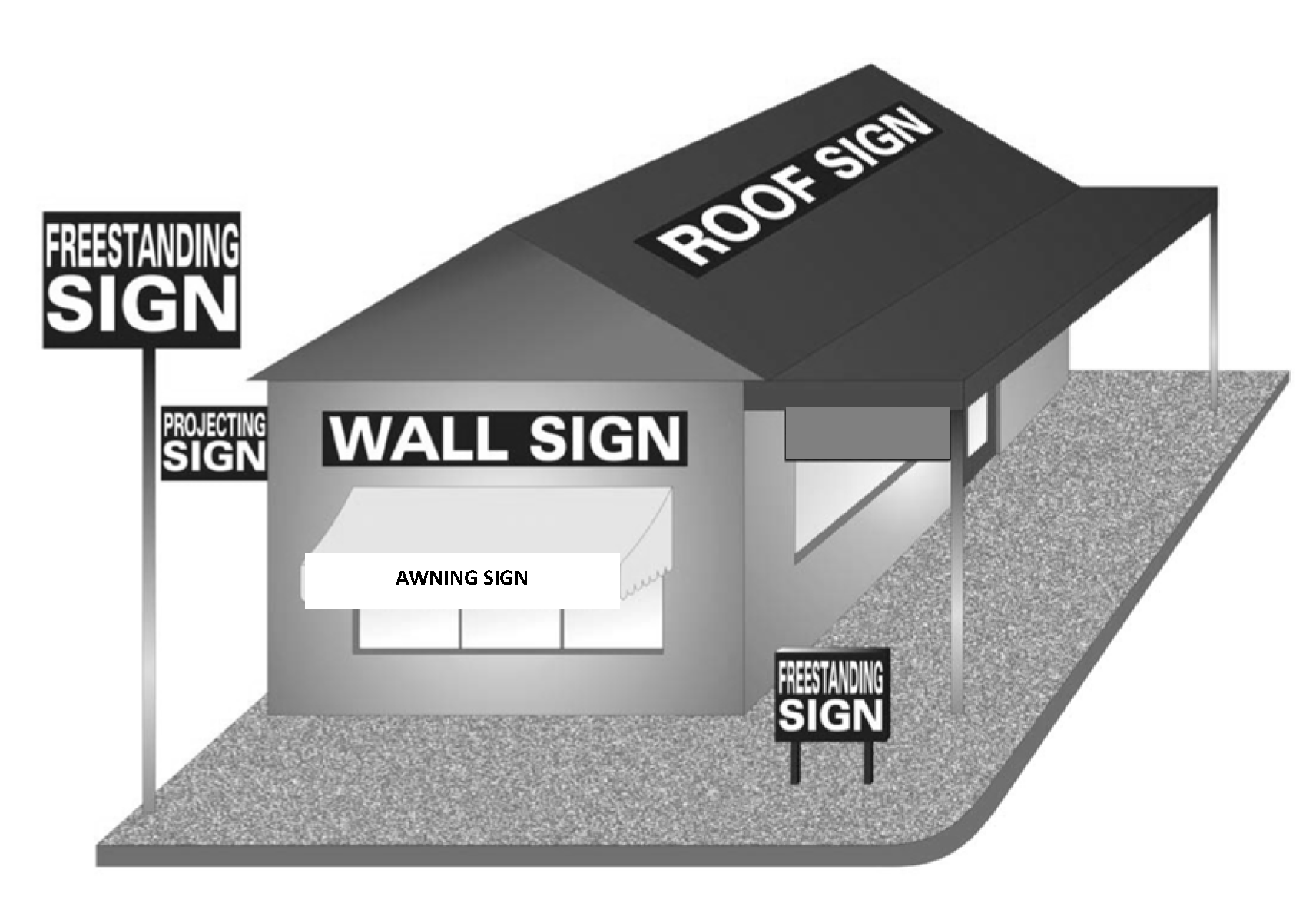
Figure 7-39-2. Sign Types
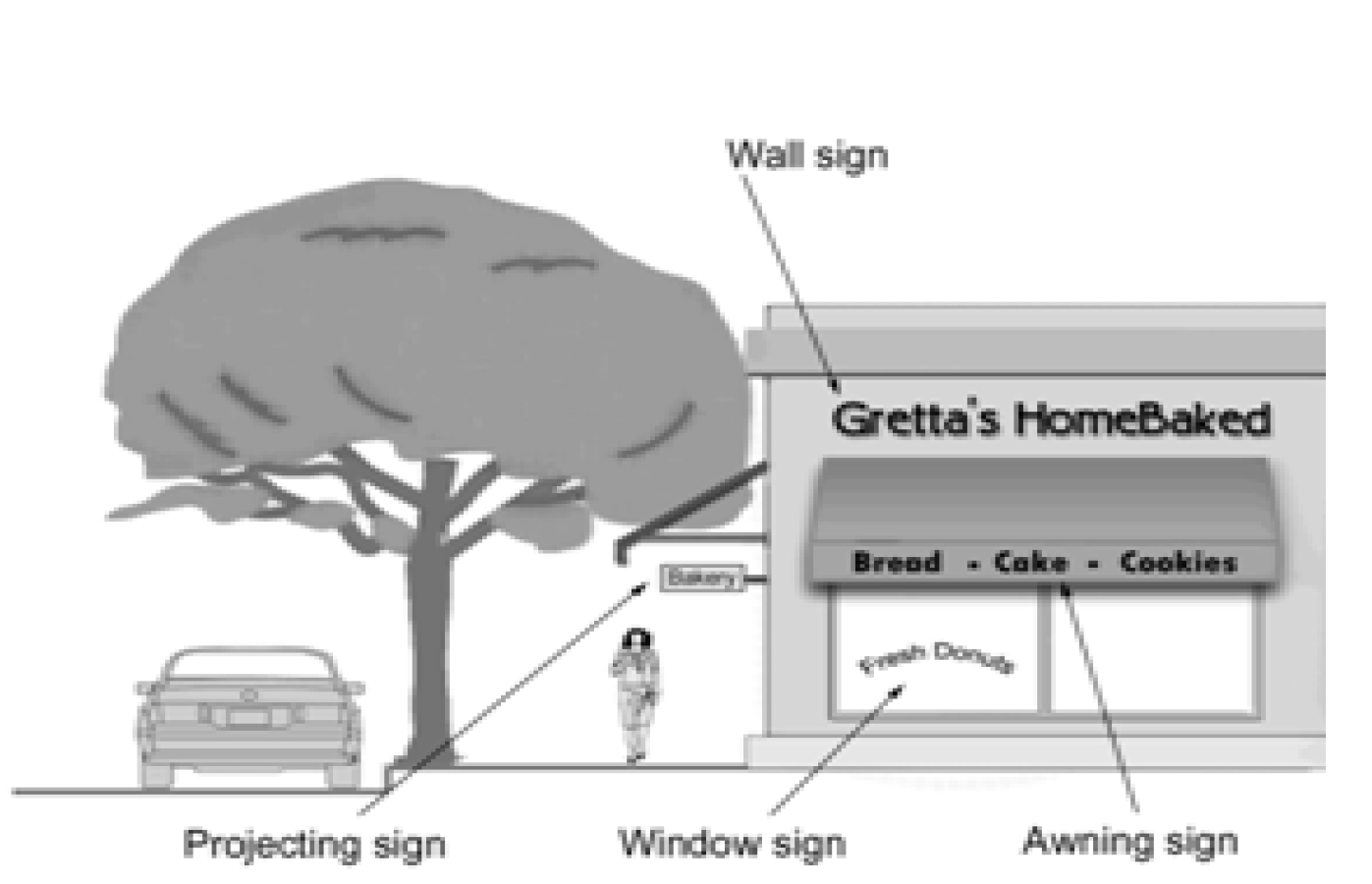
Figure 7-39-3. Sign Height and Clearance