
Daytona Beach City Zoning Code
ARTICLE 5
- USE STANDARDS
Sec. 5.1. - Organization.
A.
Section 5.2, Principal Uses, sets out which land uses are allowed as principal uses of a parcel, where they are allowed, what type of permit or review is required to establish them, and any special standards applicable to particular principal uses. These special standards are in addition to any General Standards provided in Section 5.5.
B.
Section 5.3, Accessory Uses and Structures, identifies a number of land uses and structures commonly allowed as accessory to principal uses and sets out where they are allowed, what type of permit or review is required to establish them, general standards applicable to all accessory uses and structures, and any special standards applicable to particular accessory uses and structures.
C.
Section 5.4, Temporary Uses and Structures, sets out which land uses or structures are allowed on a temporary basis, whether a Temporary Use Permit is required to establish them, general standards applicable to all temporary uses and structures, and any special standards applicable to particular temporary uses and structures.
D.
Section 5.5, General Standards, establishes additional use standards that are not based on the specific use type described in the Principal Use Tables contained in Section 5.2.
(Ord. No. 2020-29, § 10, 1-22-2020)
Sec. 5.2. - Principal Uses.
A.
Principal Use Tables.
1.
Structure of Principal Use Tables.
a.
Organization and Classification of Principal Uses.
i.
The Principal Use Tables organize allowable principal uses with the following hierarchy of use classifications:
(a)
Use Classifications are very broad and general (e.g., Agricultural Uses, Residential Uses, Institutional Uses, Commercial Uses, and Industrial Uses).
(b)
Use Categories represent major subgroups of the use classifications that have common functional, product, or physical characteristics, such as the type and amount of activity, type of occupants or users/customers, or operational characteristics. For example, the Commercial Uses classification is divided into multiple use categories, including Eating or Drinking Establishments and Visitor Accommodation Uses.
(c)
Use Types identify specific principal land uses whose characteristics are considered to fall within the various use categories. For example, bars, lounges, brewpubs, and restaurants are use types within the Eating and Drinking Establishments use category. Each use type is defined in Section 11.5, Terms and Uses Defined. Whereas the Residential and Institutional use classifications tend to include relatively specific and well-defined use types, the Commercial and Industrial use classifications tend to include broader use types, reflecting the wider range and ever-growing variety of commercial and industrial uses existing in the community.
ii.
Classifying principal uses in this manner provides a systematic basis for determining whether a particular land use not expressly listed should be considered a form or example of a listed principal use, and for addressing future additions to the Principal Use Tables. See Section 11.3, Use Classifications and Interpretation, for a description of the use classification system and procedures for using it to interpret unlisted uses.
b.
Designation of Principal Uses as Permitted Use, Special Use, Allowable Planned Development Use, or Prohibited Use. The Principal Use Tables use the following abbreviations to designate whether and how a principal use is allowed in a particular zoning district:
i.
A "P" under a base zoning district column indicates that the use is allowable as a principal use by right in the district, subject to any referenced use-specific standards and all other applicable regulations of this Code.
ii.
An "S" under a base zoning district column indicates that the use is allowable as a principal use in the district only on approval of a Special Use Permit in accordance with Section 3.4.G, Special Use Permit, and subject to any referenced use-specific standards and all other applicable regulations of this Code.
iii.
A "PD" under a planned development (PD-) district column indicates that the use is allowable as a principal use in the district only if the PD Plan/Agreement approved for the district expressly identifies the use type as allowed.
iv.
A blank cell indicates that the use is prohibited as a principal use in the corresponding zoning district.
v.
An "X" under an overlay district indicates that the use is prohibited as a principal use in the overlay district, irrespective of whether it is allowed by the underlying base district.
c.
Reference to Use-Specific Standards. A particular use category or use type allowable as a principal use in a zoning district may be subject to additional standards that are specific to the particular use. The applicability of such use-specific standards is noted through a section reference in the last column of the Principal Use Tables titled "Use-Specific Standards." References refer to standards in Section 5.2.B, Standards for Specific Principal Uses.
d.
Multiple Principal Uses. Although development may include a single principal use with one or more accessory uses that are customarily incidental and subordinate to the principal use (e.g., home occupation as accessory to a dwelling, administrative offices as accessory to a school, retail sales establishment, or manufacturing use), development may include multiple principal uses, none of which is necessarily customarily incidental or subordinate to another principal use (e.g., a place of worship combined with a school, a gas station combined with a restaurant, a flex building housing retail, industrial service, and warehousing tenants). A development with multiple principal uses shall include only those principal uses designated in the use tables as allowed in the applicable zoning district, and each principal use shall be subject to any use-specific standards applicable to the use.
2.
Principal Use Table for Residential, Business, Industrial, Tourist, and Specialty Districts.
3.
Principal Use Table for Redevelopment Districts.
4.
Principal Use Table for Planned Development and Overlay Districts. Table 5.2.A.4 below primarily designates what principal uses are allowed in the Planned Development Districts, with a blank cell meaning that the corresponding use is prohibited in the corresponding Planned Development District. For the overlay districts, however, the table includes designations only where they modify those for the underlying base district (e.g., prohibit a use otherwise allowed by the underlying base district, or allow a use otherwise prohibited by the underlying base district, or require a Special Use Permit or a Public or Semipublic Use Permit for a uses that is permitted by right or prohibited by the underlying base district); for the overlay districts, a blank cell means that the use designation of the underlying base district applies, without modification.
B.
Standards for Specific Principal Uses.
1.
General. Standards for a specific principal use shall apply to the particular individual principal use regardless of the zoning district in which it is located or the review procedure by which it is approved, unless otherwise specified in this Code. This section is intended to set forth and consolidate the standards for all principal uses for which a reference to this section is provided in the "Use-Specific Standards" column of the principal use tables in Section 5.2.A, Principal Use Tables. These standards may be modified by other applicable standards or requirements in this Code.
2.
Agricultural Uses [Reserved].
3.
Residential: Household Living Uses.
a.
Duplex Uses.
1.
Duplexes are allowed on all properties in the RDM-4 zoning district except for properties fronting West International Speedway Boulevard.
2.
Duplex Subdivision. A duplex subdivision shall comply with the following standards:
i.
Lot lines dividing units of a duplex shall run along the centerline of the common wall between the units.
ii.
Off-street parking shall not be located within any required yard except driveways serving individual units.
iii.
Deed restrictions shall be filed for each duplex subdivision that require establishment of a cooperative maintenance system, governed and operated by the owners of individual units, to prevent the deterioration of any unit by failure of the unit's owner to maintain the property in a standard condition at all times and to ensure the cooperative maintenance of any common areas and facilities. Deed restrictions shall also include requirements for similar architectural style, architectural review, and a mandatory homeowners' association. Legal instruments proposed to establish the deed restrictions shall be submitted with the duplex subdivision application.
b.
Live/Work Unit. A live/work unit shall comply with the following standards:
i.
The residential portion of the building shall occupy no more than 65 percent of the gross floor area.
ii.
The nonresidential portion of the building shall be located on the ground floor.
iii.
The nonresidential portion of the building shall comply with all applicable nonresidential building Code and business licensing requirements.
iv.
Employees shall be limited to occupants of the residential portion of the building plus up to two persons not residing in the residential portion.
v.
Drive-through service is prohibited as an accessory use.
vi.
The use shall comply with the parking, landscaping, and open space standards for mixed uses in Article 6: Development Standards.
vii.
Any off-street parking for the nonresidential portion shall be located as far as practicable from existing adjacent single-family dwellings.
c.
Mobile/Manufactured Home. A mobile/manufactured home dwelling is allowed only within a mobile/manufactured home park (See Section 5.2.B.3.d, Mobile/Manufactured Home Park.).
d.
Mobile/Manufactured Home Park. Mobile/manufactured home parks have been prohibited in all zoning districts other than planned districts since May 5, 1993. Within any mobile/manufactured home park made nonconforming by this prohibition, an individual mobile/manufactured home may be replaced by another mobile/manufactured home subject to compliance with the following minimum spacing standards:
e.
Multifamily Complex; Multifamily Dwelling. A multifamily dwelling or multifamily complex shall comply with the following standards:
i.
A landscaped area at least ten feet wide shall be provided between multifamily dwellings and any paved parking area.
ii.
A multifamily complex or multifamily dwelling may include one game of skill per 5 dwelling units, up to a maximum of 15 games, as an accessory use.
f.
Single-Family Detached Dwelling.
i.
A single-family detached dwelling is limited to occupancy by a single family, except where specifically provided otherwise by this Code.
ii.
Single-family detached dwellings are allowed on all properties in the RDM-4 zoning district except for properties fronting West International Speedway Boulevard.
g.
Townhouse Subdivision. A townhouse subdivision shall comply with the following standards:
i.
Lot lines dividing individual townhouse units shall run along the centerline of the common wall between the units.
ii.
Required off-street parking spaces may be located in a combined parking area for each townhouse building.
iii.
A townhouse subdivision's common facilities may include one game of skill per 5 dwelling units, up to a maximum of 15 games, as an accessory use.
iv.
Deed restrictions shall be filed for each townhouse subdivision that require establishment of a cooperative maintenance system, governed and operated by the owners of individual units, to prevent the deterioration of any unit by failure of the unit's owner to maintain the property in a standard condition at all times and to ensure the cooperative maintenance of any common areas and facilities. Deed restrictions shall also include requirements for similar architectural style, architectural review, and a mandatory homeowners' association. Legal instruments proposed to establish the deed restrictions shall be submitted with the townhouse subdivision application.
h.
Upper Story Dwelling (above nonresidential use). Upper story dwelling uses are generally intended to accommodate residential living above street level nonresidential uses. Lobbies, security, and uses incidental to the upper story dwelling use may be allowed on the street level, but all principal living spaces in multi-story or multi-tenant buildings shall be above the first floor.
i.
Zero Lot Line Subdivision. A zero lot line subdivision shall comply with the following standards:
i.
Irrespective of the dimensional standards applicable in the zoning district in which the zero lot line subdivision is located, the following dimensional standards shall apply to zero lot line subdivisions:
ii.
Each lot in a zero lot line subdivision shall have one interior side lot line designated on the subdivision plat as its zero lot line, which shall be the same side lot line (i.e., right or left) relative to the fronts of all lots within the same blockface—provided, however, that no street side lot line abutting a public street or an interior side lot line forming the perimeter of the zero lot line subdivision site shall be designated a zero lot line. One side of a dwelling on a zero lot line lot shall be sited along the designated zero lot line.
iii.
A four-foot-wide maintenance easement shall be provided on the adjoining lot, running along and around the corners of the dwelling located along the zero lot line. Roof overhangs may extend up to 2 feet into the easement provided the roof and roof drainage facilities are designed to limit water runoff from the roof to the area of the maintenance easement. Fences or walls are prohibited within the easement.
iv.
Open patios, swimming pools, gazebos, trellises, garden ponds, and other similar garden elements located within the rear yard shall be set back five feet from the rear lot line.
v.
Fences or walls not exceeding six feet in height may be provided along the rear lot line, along those parts of side lot lines located behind the front building line, and in additional locations behind the front building line as necessary to screen patio or deck areas from nearby units or streets.
vi.
Dwelling walls sited along the zero lot line shall be maintained in their original color and treatment unless otherwise agreed to in writing by the owners of the lots on either side of the zero lot line.
j.
Event Center.
i.
All event centers shall be subject to each of the following standards:
(a)
Event centers shall be located a minimum of 250 feet from any residential zoning district or adjacent residential use.
(b)
Event centers shall be located a minimum 500 feet from another event center use.
(c)
Parking shall be located on the side or rear of the property.
(d)
Event centers shall meet the minimum setbacks for the zoning district where the use is located.
(e)
Event centers shall have direct ingress/egress from an arterial or collector street;
(f)
Event centers with capacity of 50 to 199 patrons must be located on a site with an area of at least 9,000 square feet.
(g)
Event centers with capacity of 200 to 599 patrons must be located on a site with an area of at least 20,000 square feet.
(h)
Event centers with capacity of 600 to 1,999 patrons shall be located on a site with an area of at least three acres, and must have direct ingress/egress from a collector street.
(i)
Event centers with capacity of 2,000 and above shall be located on a site with an area of at least five acres, and must have direct ingress/egress from a major city thoroughfare.
ii.
Where an event center is proposed as a special use in a residential zoning district, the use shall be subject to the each of the following additional standards:
(a)
Maximum capacity shall not exceed 500 patrons.
(b)
Maximum event space shall not exceed 7,500 square feet.
(c)
The event center shall be prohibited from operating between the hours of 12:00 midnight and 8:00 a.m.
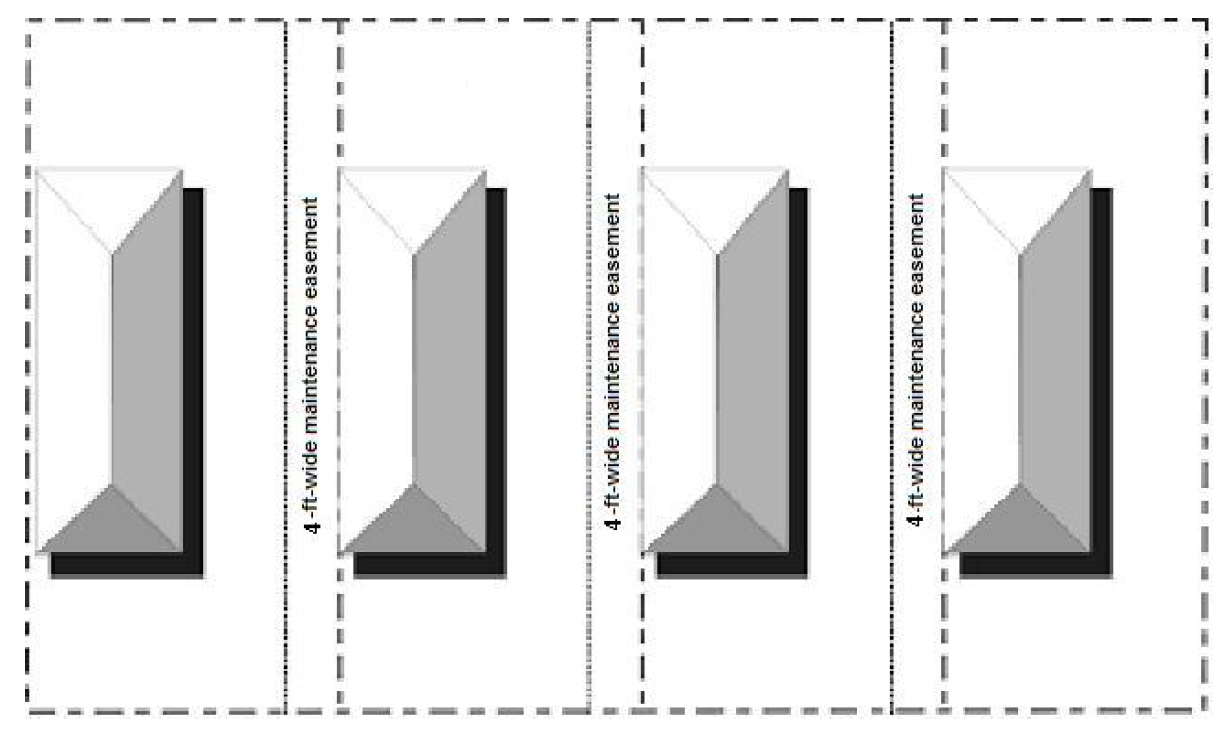
Figure 5.2.B.3.a: Zero Lot Line Subdivision Example
4.
Residential: Group Living Uses.
a.
Assisted Living Facility. An assisted living facility shall comply with the following standards:
i.
The facility shall comply with all applicable county and State regulations regarding the licensing and operation of assisted living facilities.
ii.
Each habitable unit shall include at least 200 square feet of living space (450 if the unit includes a kitchen), which shall include a full bathroom (with toilet, sink, and tub) and at least 80 square feet of sleeping space (if designed for single occupancy) or 60 square feet of sleeping space per bed (if designed for multiple occupancy).
b.
Community Residential Home. A community residential home shall comply with the following standards:
i.
Irrespective of the districts in which community residential homes are shown as allowed by the use tables in Section 5.2.A, Principal Use Tables, they shall be prohibited in any Redevelopment Area.
ii.
The community residential home shall comply with all applicable State regulations regarding the licensing and operation of community residential homes.
iii.
More than one community residential home may be located on a lot only if the lot fronts on a principal arterial street.
iv.
A lot containing one or more community residential homes shall be located at least 1,200 feet from any other lot containing a community residential home and located in a multifamily residential zoning district. This spacing requirement shall not apply to family care homes located within a "planned residential community" as defined in F.S. 419.01(1)(d).
c.
Continuing Care Retirement Community. A continuing care retirement community shall comply with the following standards:
i.
The major component parts of a continuing care retirement community shall each comply with the standards applicable to the principal use most closely representing the component—i.e., nursing home facility standards for the skilled nursing services components, assisted living facility standards for assisted living services component, and single-family, two-family, and/or multifamily dwelling standards, as appropriate, for the independent living component.
5.
Institutional: Communication Uses.
a.
Telecommunications Facility.
i.
Purpose. The standards in this subparagraph and the following Section 5.2.B.5.b, Telecommunications Facility, Collocated on an Existing Structure Other than a Telecommunications Tower, Section 5.2.B.5.c, Telecommunications Facility, Collocated on an Existing Telecommunications Tower, and Section 5.2.B.5.d, Telecommunications Tower, are intended to establish standards for the siting, design, construction, and installation of wireless telecommunications facilities that will:
(a)
Enhance the provision of advanced telecommunications services throughout the community;
(b)
Strongly encourage collocation of telecommunications facilities on existing towers and other structures as preferred options to construction of additional telecommunications towers;
(c)
Minimize the total number of new towers throughout the City by providing incentives for the use of existing structures;
(d)
Encourage the location of telecommunications towers, to the extent possible, in areas where the adverse impact on the community will be minimal;
(e)
Protect residential areas and land uses from potential adverse impacts of telecommunications towers;
(f)
Minimize the potential adverse impacts associated with the construction of telecommunications towers through reasonable design, landscaping, and construction practices;
(g)
Consider the public health and safety concerns of telecommunication towers and antennas;
(h)
Encourage the use of engineering and careful siting of telecommunications towers to avoid potential damage to adjacent properties from tower failure; and
(i)
Conform to federal and State laws addressing wireless telecommunications facilities.
ii.
Applicability.
(a)
General. Unless exempted in accordance with provision (b) below, any telecommunications facility—whether deemed a principal or an accessory use—shall comply with the standards in this subsection.
(b)
Exemptions. The following shall be exempt from the standards of this subparagraph (but may be subject to other standards in this Code, such as accessory use standards in this article or design standards in Article 6: Development Standards):
(1)
Satellite dish antennas, as an accessory use (See accessory use standards in Section 5.3.C.26, Satellite Dish.);
(2)
Antennas used solely for broadcast radio or television reception, as an accessory use (See accessory use standards in Section 5.3.C.29, Television or Radio Antenna);
(3)
Antennas legally operated by FCC-licensed amateur radio operators (See accessory use standards in Section 5.3.C.1, Amateur Ham Radio Antenna.);
(4)
Emergency wireless telecommunications facilities owned by the City or other public agency and used wholly or in part for public safety or emergency communication purposes;
(5)
Cell-on-wheels (COW) units, mobile satellite uplink vehicles, and similar portable wireless telecommunications facilities used temporarily for emergency purposes during a period subject to a declaration of an emergency or disaster by a responsible official of the City, county, State, or federal government;
(6)
Cell-on-wheels (COW) units, mobile satellite uplink vehicles, and similar portable wireless telecommunication facilities used temporarily in conjunction with conducting a special event or news coverage of an event; and
(7)
Modifications of an existing telecommunications tower—including the collocation, removal, or replacement of transmission equipment on the tower—or its base station (i.e., a building at the base of the tower that houses equipment associated with the telecommunications facility) that do not substantially change the physical dimensions of the tower or base station.
iii.
Timely Action on Telecommunications Facility Applications. The City shall process all applications for a telecommunications facility in a timely manner in accordance with the review procedures in Article 3: Review Procedures, and shall make a decision on such applications within a reasonable period of time after the application is submitted and determined complete (See Section 3.3.C. Application Submittal and Acceptance.), taking into account the nature and scope of the application. Specifically, the City shall decide all applications for collocation of a telecommunications facility on an existing telecommunications tower or other existing structure within 90 days after acceptance of a complete application, and shall decide applications for telecommunications towers within 150 days after acceptance of a complete application.
iv.
General Standards for All Telecommunications Facilities.
(a)
Allowance of Collocation on Existing Towers. The owner of an existing telecommunications tower with suitable capacity for collocation of one or more telecommunication antennas shall allow telecommunications providers to collocate an antenna on the tower in accordance with this subparagraph, subject to mutually agreeable terms and conditions negotiated between the owner and provider.
(b)
Exterior Finish. Except where otherwise required by State or federal regulations, a telecommunication facility and any associated structures shall be painted or constructed of materials and neutral colors designed to reduce visual obtrusiveness and blend into the surrounding environment.
(c)
Lighting. Lights are allowed on a telecommunications facility or associated structures unless prohibited by the Federal Aviation Administration (FAA) or other applicable authority. To the extent allowed by the FAA, any required lighting shall not include use of strobe lights for nighttime lighting and shall be oriented so as not to project directly onto any surrounding residentially-zoned property.
(d)
Compliance with FCC Emissions Standards. All telecommunications facilities shall comply with the radio frequency emissions standards of the Federal Communications Commission (FCC).
(e)
Interference. A telecommunications facility shall be designed and constructed or installed to minimize, to the extent technologically feasible, any potential signal interference with public safety communications and the usual and customary transmission or reception of radio and television service enjoyed on adjoining properties.
(f)
Maintenance. All telecommunications facilities and associated structures shall be maintained in good condition, order, and repair so that they do not endanger the life or property of any person and retain their original characteristics. Any graffiti or other unauthorized materials inscribed on a telecommunications facility or associated structure shall be removed or covered in a manner substantially similar to and consistent with the original exterior finish.
(g)
Compliance with Other Regulations. All telecommunications facilities shall meet or exceed the standards and regulations of the FAA, the FCC, and any other agency of the State or federal government with the authority to regulate telecommunications facilities.
(h)
Compliance with Airport Overlay District Height Limits. All telecommunication facilities and associated structures within an Airport Impact Overlay District shall comply with the applicable height limits established in Section 4.9.F, Airport Overlay Zoning Districts.
(i)
Abandonment and Removal.
(1)
If a telecommunications facility is discontinued for a continuous period of six months, the City shall deem it abandoned and provide the owner a written notice of abandonment stating that the owner has six months from the date of receipt of the notice to either resume use of the facility or remove the facility.
(2)
On removing an abandoned telecommunications facility, the owner shall restore the site of the facility to as good a condition as existed before construction or installation of the facility, unless otherwise instructed by the City.
b.
Telecommunications Facility, Collocated on an Existing Structure Other than a Telecommunications Tower. In addition to the general standards for all telecommunications facilities in Section 5.2.B.5.a.iv, a telecommunications facility collocated on any structure shall comply with the following standards:
i.
The facility shall not extend more than 20 feet higher than the highest point of the structure to which it is attached.
ii.
Any roof-top building housing equipment associated with the facility shall not exceed a height of ten feet or an area of 50 feet and shall not occupy more than 25 percent of the roof area.
iii.
The antenna, its supports, and any associated equipment building shall be located, screened, painted, or otherwise designed to minimize their visual impact on adjacent properties. The antenna, its supports, any associated equipment building, and any screening shall be of a material and color matching those of the exterior of the structure to which the antenna is attached.
c.
Telecommunications Facility, Collocated on an Existing Telecommunications Tower. In addition to the general standards for all telecommunication facilities in Section 5.2.B.5.a.iv, a telecommunications facility collocated on an existing telecommunications tower shall comply with the following standards:
i.
It is demonstrated, in a report signed and sealed by a professional structural engineer licensed by the State of Florida, that the tower can accept the additional structural loading created by the collocation.
ii.
Any modification of the tower necessary to accommodate the collocation shall comply with the height limit established for freestanding telecommunication towers in Section 5.2.B.5.d, Telecommunications Tower.
d.
Telecommunications Tower. In addition to the general standards for all telecommunications facilities in Section 5.2.B.5.a.iv, a freestanding telecommunications tower shall also comply with the following standards:
i.
Prohibited on Single-Family Platted Lots. Irrespective of whether a telecommunications tower is indicated as permitted in the principal use tables in Section 5.2.A, no telecommunication tower shall be allowed on a lot platted for single-family development.
ii.
Allowable Types of Tower Design. A new tower shall be either a monopole tower, lattice tower, or guyed tower.
iii.
No Available Alternative. No new free-standing telecommunications tower shall be allowed unless it is demonstrated that no suitable existing tower or other existing structure within the coverage area is reasonably available for collocation of the needed telecommunications facility and there is no reasonable alternative technology to accommodate such a facility on an existing tower site.
iv.
Collocation Opportunities Required.
(a)
A new tower greater than 180 feet in height shall be designed and constructed with excess capacity to accommodate at least three additional collocation sites.
(b)
A new tower 180 feet or less in height shall be designed and constructed with excess capacity to accommodate at least two additional collocation sites.
(c)
The owners of a new telecommunications tower shall permit other telecommunications providers to collocate antennas and associated equipment on the tower, subject to mutually agreeable terms and conditions negotiated between the parties.
v.
Structure. Any new tower exceeding a height of 35 feet shall be designed by a professional structural engineer licensed by the State of Florida. Before start of construction, the engineer shall provide the City a signed and sealed report certifying that the tower design is structurally sufficient and meets applicable FCC and ANSI standards.
vi.
Setbacks.
(a)
The base of a new tower shall be set back a distance equal to at least twice its height from any lot line abutting a lot containing a single-family dwelling or a vacant lot within a single-family zoning district, and a distance equal to at least one-half its height from any other lot line.
(b)
If a tower requires a Public or Semi-Public Use Permit, the City Commission may modify these minimum setback standards on finding that doing so is justified by the character of the area and public safety concerns.
(c)
Ground-based equipment buildings associated with a tower shall comply with the setback standards applicable to principal uses in the zoning district in which the tower is located.
vii.
Security Fencing. A new tower (including any guy anchor supports) and any associated ground-based equipment buildings shall be enclosed by security walls no less than eight feet high. The walls shall be fully screened from adjacent streets by landscaping material in accordance with Section 6.4, Landscaping.
viii.
Signage. No signage or advertising shall be affixed to a tower, support structure, ground-based equipment building, or security fencing other than signs warning against trespassing ("No Trespassing") or high voltage danger ("High Voltage - Danger") and one sign no greater than three square feet in area that identifies the owner of the tower.
6.
Institutional: Community Service Uses.
a.
Art and Cultural Center. An art and cultural center in the RDD-6 zoning district shall comply with the following standards:
i.
The principal building and accessory buildings shall comply with the following minimum yard and setback requirements or the district standards if more restrictive.
(a)
Lot area, minimum: 30,000 square feet.
(b)
Street and interior side yard setback: 15 feet.
(c)
Structure height: 35 feet.
ii.
The site shall be adjacent to an arterial or collector street. Ingress and egress shall be planned and provided to inhibit the movement of vehicular traffic from the site directly to a minor street.
iii.
Another use of the same type shall not be located within 600 feet of the use.
iv.
There shall be adequate access to all required off-street parking areas, and no parking shall be permitted in the required front yard.
vi.
Screening shall be provided and maintained in an attractive condition around any boundary of the site which abuts a single-family residential use.
vii.
Art and Cultural Centers which existed in residential districts on or before August 17, 1967, and which were made nonconforming by amendments to the city's land development regulations on or after that date, shall be treated as permitted uses in the district and shall be exempt from the restrictions set forth in Section 8.2 for nonconforming uses. Any expansion of the use shall comply with the current use standards.
7.
Institutional: Day Care Uses.
a.
Adult Day Care Center. An adult day care center shall comply with all applicable State regulations regarding the licensing and operations of adult day care centers.
b.
Child Care Facility. A child care facility shall comply with the following standards:
i.
The facility shall comply with all applicable county and State regulations regarding the licensing and operations of child care facilities.
ii.
Required minimum yard setbacks shall be the greater of those applicable in the zoning district where the facilities are located or those applicable in the T-4 zoning district.
iii.
When the child care facility is a principal use, the use shall be located at least 500 feet:
(a)
From any existing industrial zoning district, unless the child care facility is also permitted in the industrial zoning district.
(b)
From any existing industrial use, unless the child care facility is also a permitted use within the zoning district in which the existing industrial use is located. This prohibition shall not apply where the existing industrial use is not permitted within the zoning district in which it is located.
iv.
Outdoor play areas in the facility shall be:
(a)
Safely segregated from accessways, and parking, loading, or service areas; and
(b)
Not operated for outdoor play activities after 8:00 P.M.
v.
Vehicular access and circulation shall:
(a)
Be designed to enhance the safety of children as they arrive and leave the facility;
(b)
Provide designated passenger drop-off and pick-up spaces in accordance with Section 6.2.E, Vehicle Drop-Off/Pick-Up Zones, Stacking Spaces, and Stacking Lanes.
vi.
Where a child care facility is allowed as a Special Use:
(a)
The lot containing the facility shall be located at least 600 feet from a lot containing another child care facility.
(b)
Signage shall be limited to a single directory sign.
8.
Institutional: Education Uses.
a.
Private School with 20 or Fewer Students. A private school with an enrollment of 20 or fewer students shall comply with the following standards:
i.
Minimum yard setbacks shall be the greater of those applicable in the zoning district where the school is located or those applicable in the T-4 zoning district.
ii.
An existing private school with 20 or fewer students that existed in a residential district on August 17, 1967—when such schools were prohibited in certain residential districts by amendments to the City's land development regulations—shall be treated as a conforming use, rather than nonconforming use subject to the limitations in Article 8, in those districts.
b.
Private School with more than 20 Students. A private school with an enrollment of more than 20 students shall comply with the following standards:
i.
Where the school is proposed as a Special Use in a residential district, it shall comply with the following additional standards:
(a)
The school shall be located on a site with an area of at least two acres.
(b)
The school shall be located at least 600 feet from another school with more than 20 students.
(c)
The site shall have direct vehicular access to and from an arterial or collector street. There shall be no vehicular access to or from any local street, or any such access shall be located and designed to inhibit its regular use.
(d)
No parking shall be allowed in the front yard.
(e)
The required minimum street side, interior side, and rear yard setbacks shall be 34 feet.
ii.
An existing private school with more than 20 students that existed in a residential district on August 17, 1967—when such schools were prohibited in certain residential districts by amendments to the City's land development regulations—shall be treated as a conforming use, rather than nonconforming use subject to the limitations in Article 8, in those districts.
c.
Colleges or Universities. A college or university may sell or serve alcoholic beverages to its students, employees, and guests provided:
i.
The chief administrative officer of the college or university consents to such sales or service in writing; and
ii.
No off-premise advertising is used to attract alcoholic beverage sales customers who are unrelated to the college or university; and
iii.
The use shall comply with Section 6.21, Alcoholic Beverages.
9.
Institutional: Health Care Uses.
a.
Blood/Tissue Collection Center. A blood/tissue collection center shall comply with the following standards:
i.
Irrespective of the districts in which blood/tissue collection centers are shown as allowed by the use tables in Section 5.2.A, Principal Use Tables, they shall be prohibited in any Redevelopment Area.
ii.
The center shall not be located within 200 feet of a residential zoning district.
iii.
An interior waiting area for blood or tissue donors shall be provided.
iv.
The center shall comply with all applicable State regulations regarding the licensing and operation of blood establishments.
b.
Drug or Alcohol Treatment Facility. A drug or alcohol treatment facility shall comply with the following standards:
i.
Irrespective of the districts in which drug or alcohol treatment facilities are shown as allowed by the use tables in Section 5.2.A, Principal Use Tables, they shall be prohibited in any Redevelopment Area.
c.
Hospital. A hospital shall comply with the following standards:
i.
The hospital shall comply with applicable State regulations regarding licensing and operation of hospitals.
ii.
Vehicular access and circulation systems and exterior signage shall be designed to provide safe and separate emergency vehicle access to the hospital, with minimal conflicts with other vehicular or pedestrian traffic in the area.
iii.
Accessory uses to a hospital may include retail sales of foods and beverages, gifts, books and periodicals, and other convenience items, as long as such accessory retail uses are confined to the interior of the principal building(s), access is from a lobby or corridor of the principal building(s), and there is no advertising or visible indication of the use viewable from outside the principal building(s).
d.
Medical Treatment Facility. A medical treatment facility shall comply with the following standards:
i.
Accessory uses to a medical or dental clinic/office or medical treatment facility may include retail sales of foods and beverages, gifts, books and periodicals, and other convenience items, as long as such accessory retail uses are confined to the interior of the principal building(s), access is from a lobby or corridor of the principal building(s), and there is no advertising or visible indication of the use viewable from outside the principal building(s).
e.
Nursing Home Facility. A nursing home facility shall comply with the following standards:
i.
The facility shall comply with all applicable State regulations regarding the licensing and operation of a nursing home facility.
ii.
The facility site shall have direct vehicular access to and from an arterial or collector street. There shall be no vehicular access to or from any local street, or any such access shall be located and designed to inhibit its regular use.
iii.
The facility site shall include security provisions (e.g., fencing) that restricts patients from leaving the property without authorization.
iv.
Accessory uses to a nursing home facility may include retail sales of foods and beverages, gifts, books and periodicals, and other convenience items, as long as such accessory retail uses are limited to a floor area not exceeding 1,000 square feet or 10 percent of the building's gross floor area, whichever is less.
10.
Institutional: Open Space Uses.
a.
Cemetery. Except as otherwise stated, the development and expansion of a cemetery shall comply with the following standards:
i.
The cemetery shall comply with all applicable county, State, and federal regulations regarding the licensing and operation of cemeteries.
ii.
The cemetery shall be located on a site with an area of at least 15 acres.
iii.
The cemetery site shall have direct vehicular access to and from an arterial or collector street. There shall be no vehicular access to or from any local street, or any such access shall be located and designed to inhibit its regular use.
iv.
The cemetery shall include adequate space for the parking and maneuvering of funeral processions.
v.
All buildings shall be set back at least 25 feet from exterior property lines.
vi.
If a cemetery use is combined with a funeral home or mortuary use, the combined use shall comply with the standards (including districts where permitted) applicable to each component use.
b.
Community Garden. A community garden shall comply with the following standards:
i.
Overhead lighting is prohibited.
ii.
Accessory buildings shall be limited to sheds for the storage of tools, greenhouses, and seasonal farm stands. The combined area of all buildings and other structures shall not exceed 15 percent of the area of the site.
iii.
Retail sales are allowed provided they are limited to sales of items grown on-site and to a sales area of less than 64 square feet.
iv.
Areas used for communal composting shall be limited to ten percent of the area of the site.
v.
The community garden shall have an established set of operating rules addressing the governance structure of the garden, hours of operation, assignment of garden plots, and maintenance and security requirements and responsibilities.
11.
Institutional: Transportation Uses.
a.
Surface Transportation Passenger Station/Terminal. A surface transportation passenger terminal shall comply with the following standards:
i.
No part of any surface transportation passenger station/terminal shall be used for residential or overnight sleeping purposes except during emergencies declared by federal, State, or local authorities.
b.
Transit Operations Center. A transit operations center shall comply with the following standards:
i.
Services shall be limited to transit fleet vehicles.
ii.
All vehicular repair and service activity shall be screened by means of a permanent structure from view from adjacent street rights-of-way and adjacent properties.
iii.
No vehicle body repairs shall be conducted between 8:00 p.m. and 7:00 a.m.
12.
Institutional: Utility Uses.
a.
Solar Energy Collection System (as a principal use). A solar energy collection system that constitutes a principal use shall comply with the following standards:
i.
The maximum lot coverage of the system and any associated equipment shall not exceed 80 percent.
ii.
Adequate access for maintenance of the system shall be provided.
iii.
The system shall not exceed a height of 20 feet.
iv.
The property owner shall be responsible for negotiating with other property owners in the vicinity to establish any solar easement designed to protect solar access for the solar energy collection system, and shall record any such solar easement with the Volusia County Clerk of the Circuit Court and provide a copy to the City staff.
b.
Utility Use, Major. An electrical power facility, substation, or transmission station shall be set back at least 100 feet from all lot lines.
13.
Institutional: Other Institutional Uses.
a.
Civic Center. A civic center shall comply with the following standards:
i.
The civic center shall be located on a lot with an area of at least five acres.
ii.
The civic center shall be located within a building that is at least 500 feet from any single-family residential zoning district.
b.
Club or Lodge. A club or lodge shall comply with the following standards:
i.
A club or lodge may include one game of skill per 15 seats, up to a maximum of ten games, as an accessory use—provided there is no outside advertising of the games.
ii.
A club or lodge may sell or serve alcoholic beverages to its members and guests pursuant to an 11-C license, provided:
(a)
The club or lodge does not operate as a bar or nightclub; and
(b)
Sales of alcoholic beverages are incidental to the club or lodge's primary use for fraternal, social, educational, recreational, or cultural activities.
(c)
The use shall comply with Section 6.21, Alcoholic Beverages.
c.
Congregate Meal Facility. A congregate meal facility shall comply with the following standards:
i.
Irrespective of the districts in which congregate meal facilities are shown as allowed by the use tables in Section 5.2.A, Principal Use Tables, they shall be prohibited in any redevelopment area.
d.
Homeless Shelter or Services Facility. A homeless shelter or services facility shall comply with the following standards:
i.
Irrespective of the districts in which homeless shelters and service facilities are shown as allowed by the use tables in Section 5.2.A, Principal Use Tables, they shall be prohibited in any Redevelopment Area.
e.
Place of worship.
i.
A place of worship shall comply with the following standards:
(a)
If a place of worship is combined with a school, child care facility, or other use, the combined use shall comply with the standards (including districts where permitted) applicable to each component use.
(b)
An existing place of worship that existed in a residential district on August 17, 1967—when such uses were prohibited in certain residential districts by amendments to the City's land development regulations—shall be treated as a conforming use, rather than nonconforming use subject to the limitations in article 8, in those districts.
ii.
Where a place of worship is proposed as a Special Use in a residential zoning district, it shall be subject to the following additional standards:
(a)
The site shall be at least two acres in area.
(b)
The site shall have direct vehicular access to and from an arterial or collector street. There shall be no vehicular access to or from any local street, or any such access shall be located and designed to inhibit its regular use.
(c)
No parking shall be allowed in the front yard.
iii.
A decision-making authority may grant modifications of the above standards on finding the modification is necessary to eliminate a substantial burden on religious exercise, as guaranteed by the federal Religious Land Use and Institutionalized Persons Act (RLUIPA) of 2000 (42 U.S.P. Sec. 2000), as amended. In doing so, the decision-making authority may impose conditions consistent with RLUIPA that will substantially secure the objectives of the modified standard and substantially mitigate any potential adverse impact on the environment or adjacent properties.
f.
Shelter for Victims of Domestic Abuse. A shelter for victims of domestic abuse shall comply with the following standards:
i.
Irrespective of the districts in which shelters for victims of domestic abuse are shown as allowed by the use tables in Section 5.2.A, Principal Use Tables, they shall be prohibited in any Redevelopment Area.
14.
Commercial: Adult Uses.
a.
Purpose. The purpose of these standards is to reduce the adverse impacts of adult book/video stores and adult theaters upon neighborhoods by:
i.
Avoiding the concentration of uses which cause or intensify physical and social blight;
ii.
Improving visual appearance of adult uses;
iii.
Reducing negative impacts of adult uses upon other business uses, neighborhood property values, residential areas, and public and semi-public uses;
iv.
Ensuring that adult uses do not impede redevelopment and neighborhood revitalization efforts; and
v.
Avoiding adult uses in heavily used pedestrian areas.
b.
Prohibited in Redevelopment Areas. Irrespective of the districts in which adult uses are shown as allowed by the use tables in Section 5.2.A, Principal Use Tables, they shall be prohibited in any Redevelopment Area.
c.
Separation Standards. The following separation standards shall apply to all adult book/video stores and adult theaters located in a BA district.
i.
Proximity to Residential, T-1, or T-2 Zoning. No lot containing an adult book/video store or adult theater shall be located within 400 feet of a residential, T-1, or T-2 zoning district, or the residential portion of any PD district.
ii.
Other Adult Book/Video Stores and Adult Theaters. No lot containing an adult book/video store or adult theater shall be located within 1,000 feet of a lot containing another adult bookstore or adult theater.
iii.
Places Where Minors Assemble. No lot containing an adult book/video store or adult theater shall be located within 400 feet of a lot containing a school, park, playground, place of worship, or other public or semi-public place of assembly where large numbers of minors regularly travel or congregate.
iv.
Not Applicable from Subsequently-Established Uses or Zoning. Compliance with the above separation standards shall not be affected by the subsequent zoning of land, or establishment of one of the uses from which separation is required, at a location closer than the required separation distance. In such a case, the adult book/video store or adult theater shall be construed as continuing to comply with the separation standards.
d.
Obstruction of Views into Building Required. All windows, doors, or other apertures in a building containing an adult book/video store or adult theater shall be blacked out or otherwise obstructed to prevent viewing of the interior of the building from outside.
e.
Presentations in Enclosed Rooms. Any room or open space in an adult theater that is used for a live performance shall have at least 500 square feet of floor area.
15.
Commercial: Animal Care Uses.
a.
Animal Shelter. An animal shelter shall comply with the following standards:
i.
Those parts of shelter structures in which animals are received or reclaimed/adopted, boarded (e.g., cages, pens, kennels), treated (e.g., treatment rooms, recovery rooms), or euthanized (e.g., euthanasia and dead-animal storage rooms) shall be fully enclosed and sufficiently insulated so no unreasonable noise or odor can be detected off the premises.
ii.
Runs or areas for the periodic exercise of animals may be located outside provided they are not used for regular boarding of animals, they are not used between the hours of 10:00 p.m. and 8:00 a.m., they are located at least 75 feet from any lot line, and a type D perimeter buffer is provided between them and the property line.
iii.
Accessory uses to an animal shelter may include a crematory and retail sales, as long as the accessory uses occupy no more than 25 percent of the total gross floor area.
b.
Kennel; Veterinary Hospital or Clinic. A kennel or veterinary hospital or clinic shall comply with the following standards:
i.
Those parts of structures in which animals are received (e.g., receiving area), boarded (e.g., cages, pens, kennels), groomed, treated (e.g., treatment rooms, recovery rooms), or bred (e.g., mating, birthing, and nursing areas) shall be fully enclosed and sufficiently insulated so no unreasonable noise or odor can be detected off the premises.
ii.
Runs or areas for the training or periodic exercise of animals may be located outside provided they are not used for regular boarding of animals, they are not used between the hours of 10:00 p.m. and 8:00 a.m., they are located at least 75 feet from any lot line, and a type D perimeter buffer is provided between them and the property line.
iii.
Accessory uses may include retail sales and grooming services, as long as the accessory uses occupy no more than 25 percent of the total gross floor area.
iv.
No crematory facilities are allowed.
16.
Commercial: Boat and Marine Sales and Service Uses.
a.
In the RDD-4 zoning district, boat and marine sales and service use shall only be located in the Ballough Road Redevelopment Area.
b.
Boat or Marine Repair and Servicing. A boat or marine repair and servicing use shall comply with the following standards:
i.
No operation associated with the use shall occur in a manner that impedes the normal free flow of vehicular or pedestrian traffic on adjacent rights-of-way.
ii.
Boats shall be not stored as a source of parts.
iii.
The use shall be designed so that service bays are not visible from an adjoining street.
iv.
Repair of all boats and equipment shall occur within an enclosed building.
v.
Outdoor boat and equipment storage is allowed in an outdoor storage area that complies with the outdoor storage standards in Section 5.3.C.18, Outdoor Storage (as an accessory use).
vi.
Boats that are repaired and awaiting removal shall be stored for no more than 30 consecutive days. A boat abandoned by its lawful owner before or during the repair process may remain on site after the 30 day period, provided the owner or operator of the establishment demonstrates steps have been taken to remove the boat from the premises using the appropriate legal means.
vii.
If the boat repair and servicing use is combined with a boat or marine sales or rental use, docking facility, or marina, the combined use shall comply with the standards (including districts where permitted) applicable to each component use.
c.
Boat or Marine Sales or Rental. A boat or marine sales or rental use shall comply with the following standards:
i.
No boat or equipment displays shall be located within a required yard or perimeter buffer except for boat display pads as provided below.
ii.
The use shall not have more than one boat display pad for every 100 feet of street frontage. A boat display pad shall not exceed 500 square feet in area and may be elevated up to two feet above adjacent displays or grade level.
iii.
No boats or other similar items shall be displayed on the top of a building.
iv.
No materials for sale other than boats and marine equipment shall be displayed between the principal structure and the street.
v.
If the boat or marine sales and rental use is combined with a boat or marine repair and servicing use, docking facility, or marina, the combined use shall comply with the standards (including districts where permitted) applicable to each component use.
d.
Docking Facility, Commercial. A commercial docking facility shall comply with the following standards:
i.
Only one dock is allowed on a lot with less than 100 feet of water frontage. An additional dock is allowed for each additional 50 feet of water frontage.
ii.
The dock shall set back at least 20 feet inward of the street side lot lines and interior side lot lines, as extended out over the water.
iii.
The dock shall extend no more than 350 feet over the water.
iv.
The dock walkway shall be no more than 12 feet above mean high water level.
v.
The dock walkway shall be at least ten feet wide for the entire length of the dock.
vi.
The dock platform shall be no more than 500 square feet in area.
vii.
No part of the dock platform or walkway may be covered, though roofs may be provided over boat storage or mooring areas.
viii.
No part of the dock or any boat shelter may be enclosed or provided with siding.
ix.
The facility shall comply with all applicable requirements of the U.S. Army Corps of Engineers (USACE) and Florida Department of Environmental Protection (FDEP). For nonresidential docks, an agreement from the FDEP for use of submerged lands shall be submitted before the start of construction.
x.
The facility shall be sized, located, designed, constructed and used in a way that is compatible with other uses and conditions on the site and the neighborhood and has no adverse impacts on the use and enjoyment of adjacent properties or on navigation and boat traffic.
xi.
The facility shall comply with the boat slip limits in Section 3.4.CC, Boat Slip Allocation.
e.
Docking Facility, Commercial Passenger Boat. A commercial passenger boat docking facility shall comply with the following standards:
i.
Only one dock is allowed on a lot with less than 100 feet of water frontage. An additional dock is allowed for each additional 50 feet of water frontage.
ii.
The facility shall not permit the docking of a "casino" boat, which operates primarily for the purpose of transporting passengers outside the territorial limits of the United States to engage in on-board gambling.
iii.
No part of the dock platform or walkway may be covered, though roofs may be provided over boat storage or mooring areas.
iv.
No part of the dock or any boat shelter may be enclosed or provided with siding.
v.
If the facility includes a combination of uses, the minimum number of off-street parking spaces required by Section 6.2.C, Off-Street Parking Space Standards, shall be the sum of the numbers required for each component use.
vi.
If the facility serves more than one boat, the minimum number of parking spaces required by Section 6.2.C, Off-Street Parking Space Standards, shall be calculated for each boat.
vii.
On days when more than one boat departure is scheduled, boat arrivals and subsequent boat departures shall be scheduled at least three hours apart unless parking areas include a sufficient number of parking spaces to accommodate the parking demands of passengers of both the arriving and departing boats.
viii.
Parking areas shall be open to passengers no earlier than two hours before the earliest scheduled boat departure time of the day and no later than two hours after the last boat arrival of the day. No overnight parking in parking areas is allowed.
ix.
Access to parking areas shall be directly from an arterial or collector street, or indirectly from an arterial street exclusively by way of streets within a nonresidential area. No access shall rely on local streets or on any street passing directly through a residential area. The capacity of any access streets or intersections between the facility and the arterial street shall be reviewed to determine that level of service standards will be met after the facility begins operation. Intersections must be capable of handling traffic without relying on police to direct traffic.
x.
The facility shall be sized, located, designed, constructed and used in a way that is compatible with other uses and conditions on the site and the neighborhood and has no adverse impacts on the use and enjoyment of adjacent properties or on navigation and boat traffic.
xi.
The facility shall comply with the boat slip limits in Section 3.4.CC, Boat Slip Allocation.
f.
Marina. A marina shall comply with the following standards:
i.
The facility shall comply with the boat slip limits in Section 3.4.CC, Boat Slip Allocation.
ii.
If the marina is combined with a boat dry storage facility, boat or marine repair and servicing use, docking facility, Laundromat, convenience store, liquor or package store, or other use, the combined use shall comply with the standards (including districts where permitted) applicable to each component use.
iii.
A marina in the RDD-4 zoning district shall comply with the following standards:
(a)
The development shall incorporate brick or other textured treatment in pedestrian areas, using materials consistent or compatible with City standards.
(b)
Structures facing commercially-oriented streets or open spaces shall have a mix of tenants or be designed to generate uses providing a range of activities and services for day and evening hours.
(c)
The development shall be in the Ballough Road Redevelopment Area and have access to Ballough Road and have direct access to its required off-street parking area(s).
(d)
The development may be a mixed use development utilizing the waterfront and containing water-oriented activities.
(e)
Marinas in the RDD-4 zoning district may have boat marine parts sales and installation, boat or marine repair and servicing, and boat or marine sales or rental as accessory uses.
17.
Commercial: Business Support Service Uses.
a.
Conference or Training Center. A conference or training center shall comply with the following standards:
i.
Dining and banquet facilities may be provided for employees, trainees, and conferees only, provided the gross floor area devoted to such facilities does not exceed 20 percent of the total floor area of the principal building.
ii.
On-site recreational facilities such as fitness centers and swimming pools may be provided for use by employees, trainees, or conferees only.
iii.
No products shall be sold on-site except those that are clearly incidental and integral to training programs and seminars conducted in the center (e.g., books, training manuals and videos, shirts, glasses and mugs, pens and pencils, and similar items bearing the logo of conference or seminar sponsors or participants).
b.
Day Labor Service. A day labor service use shall comply with the following standards:
i.
Regardless of the districts in which day labor service is shown as allowed by the use tables in Section 5.2.A, Principle Use Tables, they shall be prohibited in any Redevelopment Area.
18.
Commercial: Eating and Drinking Establishments.
a.
Bar or Lounge; Boutique Bar; or Nightclub. A bar or lounge, boutique bar, brewpub, or nightclub shall comply with the following standards:
i.
Irrespective of the districts in which a bar or lounge use is shown as allowed by the use tables in Section 5.2.A, Principal Use Tables, it shall be prohibited as a principal use on those lots in the South Atlantic Redevelopment Area that abut the west side of Atlantic Avenue or the south side of International Speedway Boulevard, except as part of a Planned Redevelopment District.
ii.
The bar or lounge, boutique bar, or nightclub shall comply with the standards in Section 6.21, Alcoholic Beverages.
iii.
If the bar or lounge, boutique bar, or nightclub involves the sale, preparation, or service of food or beverages outside of an enclosed building, it shall comply with the accessory use standards (including districts where permitted) in Section 5.3.C.17, Outdoor Seating (as accessory to an eating or drinking establishment).
iv.
The bar or lounge, boutique bar, or nightclub may include one game of skill per 15 seats, up to a maximum of ten games, as an accessory use—provided there is no outside advertising of the games.
v.
Any live outdoor entertainment provided at a boutique bar shall cease by 10:00 p.m. on Sunday through Thursday, and by midnight on Friday and Saturday.
vi.
A boutique bar may have adjacent retail package wine or beer sales.
vii.
In a nightclub, all performances and all interactions between performers and customers for which the performer is compensated, including compensation in the form of tips, shall occur in an area meeting the requirements in (a), (b), or (c) below. Those establishments legally operating prior to the effective date of this subsection [vii] and offering entertainment in private rooms or areas which do not meet this requirement shall be modified to comply within 180 days of the effective date of the ordinance adopting this amendment.
(a)
A room open to all customers of the establishment and containing at least 600 square feet of floor area. No curtains, screens, shades, or other devices shall be used to obscure any part of the room. Lighting shall be sufficient to allow any person in the room to observe the activity of those in the room at all times the room is occupied.
(b)
A room the interior of which is fully visible to a person standing in at least one place within ten feet of the primary entrance to the premise in which the entertainment is offered. No curtains, screens, shades, or other devices shall be used to obscure any part of the room. Lighting shall be sufficient to allow any person in the room to observe the activity of those in the room at all times the room is occupied.
(c)
A nightclub legally operating and offering entertainment in private areas or rooms constructed under valid building permits prior to the effective date of this subsection [vii] and which cannot reasonably comply with (a) or (b) above may achieve compliance by providing visibility into and out of the room or area through installation in the wall separating the private room or area from the main room of the premises or from a corridor accessible to all patrons without restriction, a 12-square-foot window or opening measuring four feet in width by three feet in height, the lower edge of which shall be installed at a point four feet above the floor. If there is insufficient wall surface separating the private room from the main room or a corridor accessible to all patrons to allow installation of a 12-square-foot window or opening as provided herein, then visibility shall be provided through the installation of a six-square-foot window or opening measuring two feet in width by three feet in height, the lower edge of which shall be installed at a point four feet above the floor. The window must meet all other requirements of this paragraph. The window or opening shall remain completely clear and unobstructed at all times and shall not be equipped with a shade, curtain, door, or any other covering. No private room shall be configured so that the installation of the window or opening will not provide substantially complete visibility into the private room to a person standing outside the room. The private room shall be lit to the point that allows a person on the outside of the room to observe the activity of those in the room at all times the room is occupied. Doors providing access to private rooms shall not be equipped with locks of any kind.
viii.
Where a bar or lounge, boutique bar, or nightclub is permitted only as a special use it shall be subject to the following additional standards and considerations:
(a)
Alcohol sales or service shall be limited to on-premise consumption only.
(b)
The use shall not be located within 500 feet of a place of worship or residential district, as measured from the nearest point of the use and the property containing the place of worship or residential district zoning. This restriction shall not apply to a use that is limited to beer and wine for on-premises consumption only in a shopping center of 23 acres or more in a redevelopment area.
(c)
The use shall not be located within 500 feet of any other similar use, as measured along the right-of-way from the closest property lines of the businesses, including parking areas.
(d)
Off-street parking shall be provided for the use in accordance with the provisions of this Code.
(e)
Consideration shall be given to the impact the use would have on the presence of criminal activities related to neighborhood life in the vicinity of the use (including burglary, robbery, car theft, illegal drug sales, and sex-related crimes).
(f)
Consideration shall be given to the compatibility of the use and the extent to which it may disrupt the normal activity of the neighborhood.
b.
Restaurants and Specialty Eating or Drinking Establishments with Alcohol Sales and Service.
i.
All restaurants or specialty eating or drinking establishments offering sales or service of alcoholic beverages shall comply with the standards in Section 6.21, Alcoholic Beverages, in addition to all applicable standards set forth in this Section 5.2.B.18.b—f.
ii.
A restaurant or specialty eating or drinking establishment offering sales or service of alcoholic beverages shall comply with the following standards:
(a)
Alcoholic beverage sales and service shall be for on-premise consumption only.
(b)
The establishment shall contain a full-service, operational kitchen used for cooking and preparing food, including a commercial refrigerator and freezer. When installed as part of a commercial kitchen, commercial cooking appliances are required to include a hood and fire suppression system in accordance with Florida Building Code standards.
(c)
Alcoholic beverages may be sold or served only when the kitchen is open, or has closed within one hour of the establishment's closing, and prepared food is available to patrons.
(d)
Any separate bar or lounge area shall occupy no more than 25 percent of the total floor area of the establishment (excluding the kitchen, restrooms, storage areas, and utility areas).
(e)
Any take-out service shall be entirely incidental to the establishment's primary sit-down use.
(f)
The establishment shall have permanent seating arrangements (with at least 36 inches of separation between dining tables) that accommodate at least 50 patrons.
(g)
No dance floor is permitted.
(h)
Any live entertainment within the establishment shall:
(1)
Be limited to a single contiguous area of no more than 100 square feet;
(2)
Occur only between the hours of 11:00 a.m. and 11:00 p.m.; and
(3)
Involve no cover charge.
(i)
At least 51 percent of gross sales shall be derived from sales of food and nonalcoholic beverages; and the business operator shall keep separate records accurately distinguishing between sales of alcohol and other items, and the records shall be available for inspection by the City.
iii.
A restaurant or specialty eating or drinking establishment located and permitted in an RDB-2, RDB-3, or RDB-5 district may sell or serve alcoholic beverages either pursuant to Section 5.2.B.18.b.ii or the following standards:
(a)
Alcoholic beverage sales and service shall be for on-premise consumption only.
(b)
The establishment shall contain a full-service, operational kitchen used for cooking and preparing food, including a commercial refrigerator and freezer. When installed as part of a commercial kitchen, commercial cooking appliances are required to include a hood and fire suppression system in accordance with Florida Building Code standards.
(c)
The kitchen must remain open and food must be available to patrons at all times up until one hour before closing time.
(d)
The establishment shall be open to customers at least six hours a day, and 250 days a calendar year.
(e)
The establishment shall contain or be part of a development containing a mixed-use component such as a retail outlet, amusement enterprise, or live entertainment area that:
(1)
Occupies at least 25 percent of the total indoor floor area of the development (excluding kitchens, restrooms, storage areas, and utility areas); and
(2)
Is arranged and oriented to increase pedestrian level interest along the development's primary street frontage.
iv.
Any restaurant or specialty eating or drinking establishment located and permitted in an RDD-1 or RDD-2 district may sell or serve alcoholic beverages either pursuant to Section 5.2.B.18.b.ii or the following standards:
(a)
The establishment shall contain a full-service, operational kitchen used for cooking and preparing food, including a commercial refrigerator and freezer. When installed as part of a commercial kitchen, commercial cooking appliances are required to include a hood and fire suppression system in accordance with Florida Building Code standards.
(b)
The kitchen must remain open and food must be available to patrons at all times up until one hour before closing time.
(c)
Alcoholic beverages shall not be sold after midnight on Sunday through Thursday nights, or after 2:00 a.m. in the early morning following Friday and Saturday nights.
(d)
Permanent seating arrangements shall cover at least 75 percent of the customer service area during all hours of operation.
(e)
The establishment may have live entertainment provided entertainment ceases by 10:00 p.m. on Sunday through Thursday nights, and by midnight on Friday and Saturday nights.
(f)
Alcoholic beverage sales and service shall be for on-premise consumption only.
c.
Restaurant, with Drive-In Service. A drive-in restaurant shall comply with the following standards:
i.
Irrespective of the districts in which restaurants with drive-in service are shown as allowed by the use tables in Section 5.2.A, Principal Use Tables, they shall be prohibited on those lots in the South Atlantic Redevelopment Area that abut the west side of Atlantic Avenue or the south side of International Speedway Boulevard.
ii.
The drive-in service facilities shall be designed to avoid obstructions to pedestrian movement along sidewalks, through public use areas, or between parking spaces and building entrances.
d.
Restaurant, with Drive-Through Service. A drive-through restaurant also shall comply with the following standards:
i.
Irrespective of the districts in which restaurants with drive-through service are shown as allowed by the use tables in Section 5.2.A, Principal Use Tables, they shall be prohibited on those lots in the South Atlantic Redevelopment Area that abut the west side of Atlantic Avenue or the south side of International Speedway Boulevard.
ii.
The drive-through service facilities shall be located at least 100 feet from any residential zoning district.
iii.
The drive-through service facilities shall be designed with a sufficient number of vehicular stacking spaces to comply with the standards in Section 6.2.E, Vehicle Drop-Off/Pick-Up Zones, Stacking Spaces, and to avoid obstructions to vehicular movement along adjacent streets, through parking areas, and in front of buildings.
iv.
A bypass lane at least ten feet wide shall also be provided.
v.
The drive-through service facilities shall be designed to avoid obstructions to pedestrian movement along sidewalks, through public use areas, or between parking spaces and building entrances.
vi.
If the restaurant involves the sale, preparation, or service of food or beverages outside of an enclosed building in addition to sales and service through the drive-through window, it shall comply with the accessory use standards (including districts where permitted) in Section 5.3.C.17, Outdoor Seating (as accessory to an eating or drinking establishment).
vii.
The restaurant may include one game of skill per 15 seats, up to a maximum of ten games, as an accessory use—provided there is no outside advertising of the games.
e.
Restaurant, without Drive-In or Drive-Through Service. A restaurant without drive-in or service-through service shall comply with the following standards:
i.
If the restaurant involves the sale, preparation, or service of food or beverages outside of an enclosed building, it shall comply with the accessory use standards (including districts where permitted) in Section 5.3.C.17, Outdoor Seating (as accessory to an eating or drinking establishment).
ii.
The restaurant may include one game of skill per 15 seats, up to a maximum of ten games, as an accessory use—provided there is no outside advertising of the games.
iii.
A restaurant in the RDD-6 zoning district shall be an accessory to a Bed and Breakfast Inn located adjacent to South Beach Street.
f.
Specialty Eating or Drinking Establishment. A specialty eating or drinking establishment shall comply with the following standards:
i.
If the establishment involves the sale, preparation, or service of food or beverages outside of an enclosed building, it shall comply with the accessory use standards (including districts where permitted) in Section 5.3.C.17, Outdoor Seating (as accessory to an eating or drinking establishment).
ii.
The establishment may include one game of skill per 15 seats, up to a maximum of ten games, as an accessory use—provided there is no outside advertising of the games.
iii.
A specialty eating or drinking establishment in the RDD-6 zoning district shall be an accessory to a Bed and Breakfast Inn located adjacent to South Beach Street.
g.
Micro-breweries, micro-wineries, and craft distilleries. Micro-breweries, micro-wineries, and craft distilleries shall comply with the following standards:
i.
Manufacturing operations that produce alcoholic beverages for on-site consumption and off-site sales may encompass up to 70 percent gross floor area with a maximum total square footage of 7,000 square feet.
ii.
Up to 70 percent of the gross floor area of micro-breweries, micro-wineries, and craft distilleries, may be allowed as a restaurant, tasting room, or retail operation (or any combination thereof).
iii.
Micro-breweries, micro-wineries, or craft distilleries shall comply with the standards in Section 6.21, Alcoholic Beverages.
iv.
If the micro-brewery, micro-winery, or craft distillery involve the sale, preparation, or service of food or beverages outside of an enclosed building, it shall comply with the accessory use standards (including districts where permitted) in Section 5.3.C.17, Outdoor Seating (as accessory to an eating or drinking establishment).
v.
The micro-brewery, micro-winery, or craft distillery may include one game of skill per 15 seats, up to a maximum of ten games, as an accessory use—provided there is no outside advertising of the games.
19.
Commercial: Motor Vehicle Sales and Service Uses.
a.
Automotive Wrecker Service. An automotive wrecker service use shall comply with the following standards:
i.
Vehicles shall not be stored for more than 90 days.
ii.
Outdoor vehicle storage may be allowed in an outdoor storage area that complies with the outdoor storage standards in Section 5.3.C.18, Outdoor Storage (as an accessory use).
b.
Car Wash or Auto Detailing. A car wash or auto detailing use shall comply with the following standards
i.
The use shall be designed with a sufficient number of vehicular stacking spaces to comply with the standards in Section 6.2.E, Vehicle Drop-Off/Pick-Up Zones, Stacking Spaces, and to avoid obstructions to vehicular movement along adjacent streets, through parking areas, and in front of buildings.
ii.
All washing activity shall occur within an enclosed structure.
iii.
If the car wash or auto detailing use is combined with a gas station or other use, the combined use shall comply with the standards (including districts where permitted) applicable to each component use.
c.
Fleet Service Repair Facility. A fleet service repair facility shall comply with the following standards:
i.
Services and outside advertising shall be limited to fleet vehicles and shall not include general vehicular repair.
ii.
All vehicular service activity shall be in an enclosed structure.
iii.
Outside storage of supplies and parts is prohibited.
iv.
Damaged vehicles or vehicles in disrepair shall be parked within an enclosed structure.
v.
No vehicle body repairs shall be conducted between 8:00 p.m. and 7:00 a.m.
d.
Gas Station. A gas station use shall comply with the following standards:
i.
If the gas station is located on a corner lot, the lot shall have an area of at least 20,000 square feet and a frontage of at least 150 feet on each street side. In all other cases, the lot shall have an area of at least 15,000 square feet and a frontage of at least 150 feet.
ii.
The gas station shall have no more than two vehicular access points to a right-of-way. Access points shall be located at least 100 feet from any intersecting street rights-of-way and at least 15 feet from any other lot line, and shall be no more than 40 feet wide.
iii.
The gas station shall be designed with a sufficient number of vehicular stacking spaces to comply with the standards in Section 6.2.E, Vehicle Drop-Off/Pick-Up Zones, Stacking Spaces, and to avoid obstructions to vehicular movement along adjacent streets, through parking areas, through pump service areas, and in front of buildings.
iv.
Gasoline pump canopies shall have a maximum clearance height of 24 feet above grade, except where State or federal law requires higher clearances.
v.
If the gas station use is combined with a vehicle repair and servicing, car wash or auto detailing, convenience store, or other use, the combined use shall comply with the standards (including districts where permitted) applicable to each component use.
e.
Parking Deck or Garage (as a principal use). A parking deck or garage operated as a principal use shall comply with the following standards:
i.
Parking shall be the principal use of the parking structure. Parking spaces may be rented for parking, and retail sales and service and office establishments may be located on the ground floor of the structure. No other business of any kind shall be conducted in the structure, including repair, servicing, washing, display, or storage of vehicles or other goods.
f.
Parking Lot (as a principal use). A parking lot operated as a principal use shall comply with the following standards:
i.
Parking shall be the principal use of the parking lot. Parking spaces may be rented for parking, or otherwise used in accordance with an approved Temporary Use Permit or other permit from the City, but no other business of any kind shall be conducted on the lot, including repair, servicing, washing, display, or storage of vehicles or other goods.
g.
Sales or Rental of Heavy Vehicles, Heavy Recreation Vehicles, or Trailers; Sales or Rental of Light Vehicles or Light Recreation Vehicles. The sales or rental of heavy or light vehicles, heavy or light recreation vehicles, or trailers shall comply with the following standards:
i.
No vehicle displays shall be located within a required yard or perimeter buffer except for boat display pads as provided below.
ii.
The use shall not have more than one vehicle display pad for every 100 feet of street frontage. A vehicle display pad shall not exceed 500 square feet in area and may be elevated up to two feet above adjacent displays or grade level.
iii.
No vehicles or other similar items shall be displayed on the top of a building.
iv.
No materials for sale or rent other than vehicles, recreational vehicles, or trailers shall be displayed between the principal structure and the street.
v.
If the use is combined with a vehicle repair and servicing or other use, the combined use shall comply with the standards (including districts where permitted) applicable to each component use.
vi.
Sales or rental of light vehicles in the RDD-4 or RDM-5 zoning districts shall comply with the following standards:
(a)
In the RDD-4 zoning district, the site for the use shall abut North Beach Street or Ballough Road.
(b)
In the RDM-5 zoning district, the site for the use shall abut the north side of West International Speedway Blvd. and be located east of Helme Place and west of the railroad tracks.
(c)
The project shall include accessory retail and service establishments which contribute to the creation of evening activity centers and are accessible to pedestrians.
(d)
All structures shall comply will all applicable redevelopment design guidelines in Section 6.4.C for buildings, including structures which face commercially oriented streets and open spaces shall utilize building design and/or tenant mix to generate uses that provide a range of activities and services for day and evening hours.
(e)
Site shall provide off-street parking required in the Land Development Code. The vehicular parking areas shall be striped to designate parking spaces. Vehicles in parking areas visible from street rights-of-way shall be parked only in designated parking spaces. Parking areas visible from the public right-of-way shall not exceed 35 percent of the gross site area. Additional vehicles may be parked in areas not visible from the public right-of-way.
(f)
Site landscaping shall meet all required landscape standards in the Land Development Code.
(g)
There shall be no outside service or storage of supplies or other material displays.
(h)
Sales and Rental of Light Vehicles may have accessory repair services provided the following use standards are met:
1.
All vehicular repairs shall be done within an enclosed structure.
2.
All doors for service entrances or bays shall either not face a public right-of-way, or be screened from the public right-of-way so as to obscure the visibility of service activities.
3.
Areas devoted to the storage of vehicles to be serviced shall be screened from all public rights-of-way and shall meet all other requirements.
vii.
Sales, rental, or servicing of light recreation vehicles in the RDD-4 zoning district shall comply with the following standards:
(a)
Site shall abut North Beach Street or Ballough Road.
(b)
Site shall provide off-street parking required in Section 6.2.
(c)
Site landscaping shall meet all required landscape standards in Section 6.4 and incorporate brick or other textured treatment in pedestrian areas using materials consistent or compatible with city standards.
h.
Taxi or Limousine Service Facility. A taxi or limousine service facility shall comply with the following standards:
i.
All activities, including parking and vehicle service, shall be located on a single contiguous site.
ii.
The facility shall obtain a certificate of public convenience and necessity in accordance with Chapter 102 of the Code of Ordinances.
i.
Tire Sales and Mounting. A tire sales and mounting use shall comply with the following standards:
i.
Mounting services shall occur within an enclosed building. Outdoor vehicle storage may be allowed in an outdoor storage area that complies with the outdoor storage standards in Section 5.3.C.18, Outdoor Storage (as an accessory use).
ii.
All automobile parts, dismantled vehicles, and similar materials shall be stored within an enclosed building or an outdoor storage area that complies with the outdoor storage standards in Section 5.3.C.18, Outdoor Storage (as an accessory use).
j.
Vehicle Repair and Servicing. A vehicle repair and servicing use shall comply with the following standards:
i.
The use shall be designed to ensure proper functioning of the site as related to vehicle stacking, circulation, and turning movements.
ii.
No operation associated with the use shall occur in a manner that impedes the normal free flow of vehicular or pedestrian traffic on adjacent rights-of-way.
iii.
Vehicles shall not be parked or stored as a source of parts.
iv.
The use shall be designed so that service bays are not visible from an adjoining street.
v.
Repair and storage of all vehicles shall occur within an enclosed building. Outdoor vehicle storage may be allowed in an outdoor storage area that complies with the outdoor storage standards in Section 5.3.C.18, Outdoor Storage (as an accessory use).
vi.
Vehicles that are repaired and are awaiting removal shall not be stored or parked for more than 30 consecutive days. If a vehicle is abandoned by its lawful owner before or during the repair or servicing process, the vehicle may remain on site after the 30 day period, provided the owner or operator of the establishment demonstrates steps have been taken to remove the vehicle from the premises using the appropriate legal means.
vii.
If the use is combined with a use involving the sales or rental of light motor vehicles, recreational vehicles, or trailers, or other use, the combined use shall comply with the standards (including districts where permitted) applicable to each component use.
20.
Commercial: Office Uses [Reserved].
21.
Commercial: Recreation/Entertainment Uses.
a.
Arena or Stadium; Racetrack. An arena or stadium shall comply with the following standards:
i.
The use shall be located on a site with an area of at least five acres.
ii.
Access points to the site shall be located and designed to minimize traffic to and through local streets in residential neighborhoods.
iii.
Automobile, product, or entertainment shows are allowed within the arena, stadium, or racetrack at any time a sports activity is not underway. They are allowed outside of the arena, stadium, or racetrack on up to 120 days per calendar year, provided displays are set back at least 50 feet from any public right-of-way.
iv.
Nonprofit promotional activities and events are allowed provided there exists adequate off-street parking to accommodate the parking demand generated by the activities or event and the activities or event will not generate excessive traffic, noise, or other adverse impacts on adjacent properties.
v.
Use of racetrack grounds for merchandising of souvenir items is allowed as an accessory use at outside vending sites or from mobile merchandising units in accordance with the following standards:
(a)
All merchandise displayed or sold shall be of a souvenir nature, related to an event occurring at the racetrack, and primarily consist of licensed or copyrighted items.
(b)
Merchandising may occur only during major racing event periods proclaimed by the Mayor.
(c)
Each outside vending site or mobile merchandising unit shall be set back at least 50 feet from principal arterial roadways.
(d)
No more than 50 outside vending sites are allowed, and each outside vending site shall not exceed 500 square feet in area (excluding area occupied by trailer cabs or tractors).
(e)
No more than seven mobile merchandising units are allowed, all such units shall be located south of International Speedway Boulevard, each unit shall be licensed as part of a master occupational license in accordance with Chapter 90 of the Code of Ordinances, and no unit may be used or operated by third-party itinerant vendors.
vi.
Use of grounds as the site for temporary living quarters is allowed as an accessory use in connection with permitted uses.
vii.
In an arena or stadium or racetrack located in the MS district, alcoholic beverage sales and service may occur as part of an accessory concessions use. The use shall comply with Section 6.21, Alcoholic Beverages.
b.
Bingo Hall.
i.
Purpose. State statutes allow bingo games to be conducted by nonprofit organizations in accordance with certain conditions, including that the organization conduct games no more than two days per week. The purpose of these standards is to further the intent of the State legislature to allow bingo games to be conducted for charitable purposes while limiting such activity to an occasional use, and to prevent the commercialization of bingo games.
ii.
Standards.
(a)
No hall for hire or other structure or lot or parcel of land shall be used to operate bingo games more than two days per week.
(b)
Where a structure or lot was used to operate bingo games as of June 21, 2000, such use may continue to operate as nonconforming use in accordance with Article 8: Nonconformities, and the following standards:
(1)
Bingo games shall not be conducted on Wednesdays.
(2)
Bingo games shall not be conducted more than six days per week.
(3)
Bingo sessions shall be conducted only between the hours of 3:00 p.m. and 11:00 p.m. (Eastern Daylight Saving Time) or 2:00 p.m. and 10:00 p.m. (Eastern Standard Time).
(4)
No bingo session shall be conducted in excess of eight continuous hours.
(5)
No more than two bingo sessions shall be conducted in any 24-hour period.
(6)
No more than three jackpots per session, and no more than six jackpots in any 24-hour period, shall be permitted.
(7)
The maximum fee charged for one session shall be $600.00, provided no fee shall exceed 50 percent of the net revenues for any single or dual session.
c.
Cinema. A cinema shall comply with the following standards:
i.
The cinema may include one game of skill per 100 seats, up to a maximum of ten games, as an accessory use—provided:
(a)
There is no outside advertising of the games;
(b)
There is no separate entrance to the game area; and
(c)
The games are accessible only to cinema ticket holders.
ii.
Irrespective of Section 4.3.D.4, off-street parking shall be provided for cinemas in the BR-1 district in accordance with Section 6.2, Off-Street Parking and Loading.
d.
Entertainment and Amusement Center. An entertainment and amusement center shall comply with the following standards:
i.
The center shall provide one or more high-quality passive or interactive entertainment experiences (e.g., water park, amusement ride, miniature golf, museum, multiscreen cinema, cinema technology, music theater).
ii.
The development shall provide space for high quality retail and service establishments that contribute to the creation of evening activity centers accessible to pedestrians.
iii.
The development may include one business establishment devoted principally to games of skill, which shall be designed to provide for the passage of light and air.
iv.
Minimum lot area shall be 32,000 square feet north of Main Street and 15,000 square feet south of Main Street, provided that the minimum lot area for a mixed-use development with family amusement and entertainment uses shall be one acre.
v.
Minimum lot depth shall be 150 feet.
vi.
The development site shall;
(a)
Abut an east-west street and a north-south street; and
(b)
Not cover so much of a block as to leave an uncovered portion that is too small to accommodate quality redevelopment.
vii.
Structures facing a commercially-oriented street or open space shall have a mix of tenants or be designed to generate uses providing a range of activities and services for day and evening hours.
viii.
The development shall include a large plaza on at least one quadrant of the site, which at a minimum includes a triangle with sides at least 25 feet long at each corner of the site.
ix.
The elements of the architectural design shall not function as signage for the center, and signage materials shall not dominate the architectural design.
x.
Unusual outdoor features such as replicas of animals, miniature buildings, models, or animated characters, and features commonly associated with sideshows, carnivals, and rides are prohibited.
xi.
Buildings and architectural elements shall be proportional to each other in terms of light, air, height, shadow, spacing, bulk, and scale.
xii.
Building masses and related architectural features shall be located to enhance the ability of the general public to find their way into and around buildings and open spaces. The architectural forms and open spaces around them shall be integrated to enhance the quality of the pedestrian environment, including such factors as sunlight, weather protection, noise, air quality, seating arrangement, landscaping, street furniture, and artistic embellishments.
xiii.
Architectural features and details such as balconies, decks, covered porches, decorative shingles, bracketed eaves, columns, balustrades, towers, turrets, skylights and arches, and awnings shall improve the functional and visual enjoyment of the center.
xiv.
High quality and durable materials shall be used.
xv.
Colors shall be neutral, subdued, or earth tones. Special features may include brighter colors. Fluorescent colors are prohibited.
e.
Marine Mammal Park. A marine mammal park shall comply with the following standards:
i.
The park shall be located on a site with an area of at least five acres.
ii.
Access points to the site shall be located and designed to minimize traffic to and through local streets in residential neighborhoods.
f.
Outdoor Facility for Field Sports, Swimming, or Court Games. An outdoor facility for field sports, swimming, or tennis or other court game shall comply with the following standards:
i.
Facilities operated for profit shall not be allowed in the SFR-5 zoning district.
ii.
Access points to the facility site shall be located and designed to minimize traffic to and through local streets in residential neighborhoods.
iii.
If the facility is located within the SFR-5 district, no more than 50 percent of the site shall be covered with impervious surfaces.
iv.
Accessory buildings such as locker rooms, shower facilities, and sun shelters shall meet the lot and building standards for the district in which they are located.
v.
No accessory buildings shall be installed in any required front, street side, or interior side yard.
g.
Pier, Ocean. An ocean pier shall comply with the following standards:
i.
The pier shall be established in accordance with F.S. § 161.053 and the FDEP Coastal Construction Control Line (CCCL) Program.
h.
Sport Shooting and Training Range. A sport shooting and training range shall comply with the following standards:
i.
The range shall be located either:
(a)
Within a structure that is fully enclosed with steel plate and acoustical tiles, or other materials with comparable bullet-stopping and soundproofing capacities; or
(b)
Outside such an enclosed structure provided backstops at least 20 feet high are provided behind all target lines and supplemented by baffles designed and arranged to contain all projectiles within the boundaries of the range and to reduce noise exiting the site.
ii.
The owners, operator, tenant, or occupants of a sport shooting and training range shall implement appropriate environmental management practices for containing, controlling, and removing lead from the range in accordance with the latest edition of the Florida Department of Environmental Protection's "Best Management Practices for Environmental Stewardship of Florida Shooting Ranges."
i.
Other Indoor Recreation/Entertainment Use. An indoor recreation/entertainment use other than the specific uses listed in the principal use table in Section 5.2.A shall comply with the following standards:
i.
Irrespective of the districts in which indoor recreation/entertainment uses are shown as allowed by the use tables in Section 5.2.A, Principal Use Tables, Turkish baths shall be prohibited in any Redevelopment Area.
ii.
The use may include up to 30 games of skill as a principal or accessory use—provided there is no outside advertising of the games.
iii.
Other Indoor Recreation/Entertainment Use in the RDD-1 zoning district shall comply with the following use standards:
(a)
There shall not be more than one of the same use type per block face.
(b)
The building shall be a minimum of 5,000 square feet.
(c)
The establishment shall close by midnight on Sunday through Thursday night and by 2:00 a.m., in the early morning following Friday and Saturday nights.
(d)
The proposed establishment shall provide a detailed floor plan showing the location of all proposed primary and accessory uses.
(e)
If the use is combined with a retail or restaurant use, the combined use shall comply with the standards (including districts where permitted) applicable to each component use.
j.
Event Center.
i.
All event centers shall be subject to each of the following standards:
(a)
Event centers shall be located a minimum of 250 feet from any residential zoning district or adjacent residential use.
(b)
Event centers shall be located a minimum 500 feet from another event center use.
(c)
Parking shall be located on the side or rear of the property.
(d)
Event centers shall meet the minimum setbacks for the zoning district where the use is located.
(e)
Event centers shall have direct ingress/egress from an arterial or collector street;
(f)
Event centers with capacity of 50 to 199 patrons must be located on a site with an area of at least 9,000 square feet.
(g)
Event centers with capacity of 200 to 599 patrons must be located on a site with an area of at least 20,000 square feet.
(h)
Event centers with capacity of 600 to 1,999 patrons shall be located on a site with an area of at least three acres, and must have direct ingress/egress from a collector street.
(i)
Event centers with capacity of 2,000 and above shall be located on a site with an area of at least five acres, and must have direct ingress/egress from a major city thoroughfare.
ii.
Where an event center is proposed as a special use in a residential zoning district, the use shall be subject to the each of the following additional standards:
(a)
Maximum capacity shall not exceed 500 patrons.
(b)
Maximum event space shall not exceed 7,500 square feet.
(c)
The event center shall be prohibited from operating between the hours of 12:00 midnight and 8:00 a.m.
k.
Auditorium or Theater. Auditorium or Theater uses shall comply with the following standards:
i.
All entertainment/performances must occur within the enclosed building.
ii.
A stage or designated performance area is required.
iii.
Sale, preparation and service of food is a permitted accessory use.
iv.
Sale and service of beer and wine (2COP) for on-site consumption is a permitted accessory use.
v.
May only operate between the hours of 9:00 a.m. and midnight.
vi.
Dance floor/space prohibited.
22.
Commercial: Retail Sales and Service Uses.
a.
General Standards. All retail sales and service uses must comply with the following standards:
i.
The use may include two games of skill for the first 10,000 square feet of gross floor area and one additional game for each additional 10,000 square feet of gross floor area, up to a maximum of ten games, as an accessory use—provided there is no outside advertising of the games.
ii.
If a retail sales establishment involves the sale of alcoholic beverages for on-premise consumption, it shall comply with the standards in Section 6.21, Alcoholic Beverages.
iii.
No retail sales and service use shall display or offer for sale an item defined as or determined to be drug paraphernalia in accordance with F.S. 893.145-6.
iv.
Antique stores, art galleries, bank or financial institutions without drive-through service, drug stores or pharmacies without drive-through service, grocery stores, jewelry, stores, personal service establishments, and other retail sales establishments located in the RDM-4 zoning district are only allowed on properties fronting on West International Speedway Boulevard.
b.
Bank or Financial Institution with Drive-Through Service. A bank or financial institution with drive-through service shall comply with the following standards:
i.
The drive-through service facilities shall be located at least 100 feet from any residential zoning district.
ii.
The drive-through service facilities shall be designed with a sufficient number of vehicular stacking spaces to comply with the standards in Section 6.1.E, Vehicle Drop-Off/Pick-Up Zones, Stacking Spaces, and to avoid obstructions to vehicular movement along adjacent streets, through parking areas, and in front of buildings.
iii.
A bypass lane at least ten feet wide shall also be provided.
iv.
The drive-through service facilities shall be designed to avoid obstructions to pedestrian movement along sidewalks, through public use areas, or between parking spaces and building entrances.
v.
If the bank or financial institution includes an automated teller machine (ATM) in the exterior wall of the principal building or in a separate structure providing walk-up service, the use also shall comply with the accessory use standards in Section 5.3.D.2, Automated Teller Machine (ATM).
vi.
Bank or financial institutions without drive-through service located in the RDM-4 zoning district are only allowed on properties fronting on West International Speedway Boulevard.
c.
Bank or Financial Institution without Drive-Through Service. A bank or financial institution without drive-through service shall comply with the following standards:
i.
If the bank or financial institution includes an automated teller machine (ATM) in the exterior wall of the principal building or in a separate structure providing walk-up service, the use also shall comply with the accessory use standards in Section 5.3.D.2, Automated Teller Machine (ATM).
d.
Check Cashing Service. A check cashing service use shall comply with the following standards:
i.
Regardless of the districts in which check cashing is shown as allowed by the use tables in Section 5.2.A, Principle Use Tables, they shall be prohibited in any redevelopment area.
e.
Cigar Lounge. A cigar lounge shall comply with the following standards:
i.
The cigar lounge may have live indoor entertainment provided the live entertainment ceases by 10:00 p.m. on Sunday through Thursday and by midnight on Friday and Saturday.
ii.
A cigar lounge may sell, serve, or dispense beer and wine to its members and guests for on-site consumption pursuant to a 2-COP license, provided:
(a)
The customer service area for the sale, service, and consumption of beer and wine, including any bar, shall be limited to 2,000 square feet.
(b)
Hours during which beer and wine may be sold, served, or consumed shall be limited to those for the principal retail cigar use, provided no beer or wine may be sold or served between the hours of 1:00 a.m. and 7:00 a.m.
(c)
The use shall comply with Section 6.21, Alcoholic Beverages.
f.
Convenience Store. A convenience store shall comply with the following standards:
i.
Irrespective of the districts in which convenience stores are shown as allowed by the use tables in Section 5.2.A, Principal Use Tables, they shall be prohibited on those lots in the South Atlantic Redevelopment Area that abut the west side of Atlantic Avenue or the south side of International Speedway Boulevard.
ii.
If a convenience store use is combined with a gas station or other use, the combined use shall comply with the standards (including districts where permitted) applicable to each component use.
g.
Drug Store or Pharmacy with Drive-Through Service. A drug store or pharmacy with drive-through service shall comply with the following standards:
i.
The drive-through service facilities shall be located at least 100 feet from any residential zoning district.
ii.
The drive-through service facilities shall be designed with a sufficient number of vehicular stacking spaces to comply with the standards in Section 6.2.E, Vehicle Drop-Off/Pick-Up Zones, Stacking Spaces, and to avoid obstructions to vehicular movement along adjacent streets, through parking areas, and in front of buildings.
iii.
A bypass lane at least ten feet wide shall also be provided.
iv.
The drive-through service facilities shall be designed to avoid obstructions to pedestrian movement along sidewalks, through public use areas, or between parking spaces and building entrances.
h.
Dry-Cleaning or Laundry Establishment. A dry-cleaning or laundry drop-off establishment shall comply with the following standards:
i.
The establishment shall not engage in dry cleaning work other than that brought in over the counter or by normal customer service delivery truck. Drive-through service is prohibited.
ii.
Only synthetic, non-flammable solvents shall be used in dry-cleaning and laundry operations.
iii.
Dry-cleaning and laundry boiler horsepower shall not exceed 25 horsepower.
iv.
Steam discharge from dry-cleaning or laundry operations shall be funneled into a suitable vacuum or steam tank for condensation and discharge into the sanitary sewer system and shall not be funneled to the exterior of the building.
i.
Funeral Home or Mortuary. A funeral home or mortuary use shall comply with the following standards:
i.
All structures shall be set back at least 25 feet from any property line.
ii.
A type B perimeter buffer shall be provided along all perimeters of the site.
j.
Shopping Center. A shopping center shall comply with the following standards:
i.
Dimensional Standards.
(a)
The site shall have a minimum area of five acres and a minimum depth of 300 feet.
(b)
A minimum setback of 25 feet shall be provided from any perimeter property line. The ten feet nearest the property lines shall be devoted to landscaping. Within the required setback, there shall be no development except landscaping and access points to the shopping center. All shopping center uses shall also comply with the standards in Section 6.4, Landscaping.
(c)
All buildings and structures shall be located one additional foot from perimeter boundaries for each foot in height exceeding 35 feet.
(d)
The maximum impervious coverage shall not exceed 70 percent of the net land area of the site.
(e)
Open space in the form of greenbelts, buffers, or landscaped areas shall be 25 percent of the land within the legal description of the property. Stormwater management areas may be located within the open area if designed as an amenity to the site.
ii.
Utilities. All utility lines shall be installed beneath the surface of the ground.
iii.
Satellite Buildings. To insure that shopping centers do not take on the appearance of—or function as—strip commercial developments, satellite buildings shall meet the following requirements:
(a)
Within the area between the public right-of-way and a distance parallel to and 200 feet from the public right-of-way there shall be a maximum of one satellite building for every 500 feet of right-of-way. Properties shall not be subdivided prior to shopping center approval with the intent of avoiding compliance.
(b)
Any satellite building either approved by the City Commission or existing before October 17, 1984, shall be considered conforming.
iv.
Non-Conforming Uses. Shopping centers existing on August 3, 1972, shall not be deemed nonconforming due to noncompliance with landscaping, parking, and underground utility requirements.
k.
Tattoo Establishment. A tattoo establishment shall comply with all federal, state, and local regulations.
l.
Other Retail Sales and Service Establishment. A retail sales and service establishment other than the specific uses listed in the principal use table in Section 5.2.A shall comply with the following standards:
i.
Irrespective of the districts in which other retail sales and service uses are shown as allowed by the use tables in Section 5.2.A, Principal Use Tables, massage parlors shall be prohibited in any Redevelopment Area.
ii.
Irrespective of the districts in which other retail sales and service uses are shown as allowed by the use tables in Section 5.2.A, Principal Use Tables, used clothing stores and used furniture stores shall be prohibited on those lots in the South Atlantic Redevelopment Area that abut the west side of Atlantic Avenue or the south side of International Speedway Boulevard.
iii.
Other retail sales establishments located in the RDM-4 zoning district are only allowed on properties fronting on West International Speedway Boulevard.
23.
Commercial: Self-Service Storage Uses.
a.
Self-Storage or Mini-Warehouse Facility. A self-storage or mini-warehouse facility shall comply with the following standards:
i.
Site Layout.
(a)
The facility shall be located on a site with an area of at least one acre.
(b)
If separate buildings are constructed, there shall be a minimum separation of ten feet between buildings.
(c)
Self-Storage or Mini-Warehouse Facility in the BR-2 or RDD-3 zoning district shall have only storage bays accessible from an interior corridor. Access for the individual storage bays shall not be from exterior of the building.
(d)
Self-Storage or Mini-Warehouse uses shall not be located within 500 feet of a Major Thoroughfare, except that such uses may be permitted as part of a mixed-use development within the BR-2 or RDD-3 zoning districts.
ii.
Operation.
(a)
The only commercial uses permitted on-site, or within the self-storage or mini warehouse facility in the BR-2 or RDD-3 zoning districts, shall be the rental of storage bays and the pickup and deposit of goods or property in dead storage and the incidental sales or rental of moving supplies (e.g., boxes) and equipment (e.g., dollies). Storage bays shall not be used to manufacture, fabricate, or process goods, to service or repair vehicles, small engines or electrical equipment, or conduct similar repair activities, to conduct garage sales or retail sales of any kind, or to conduct any other commercial or industrial activity on the site.
(b)
Individual storage bays or private postal boxes within a self-service storage facility use shall not be considered premises for the purpose of assigning a legal address.
(c)
Except as otherwise authorized in this subparagraph, all property stored on the site shall be contained entirely within enclosed buildings.
(d)
Hours of public access to a self-storage use abutting a residential zoning district or existing residential use shall be restricted to the hours between 6:00 a.m. and 10:00 p.m.
(e)
If a self-storage or mini-warehouse facility includes a truck rental use or a trailer rental use, it shall also comply with the standards in 5.2.B.19.g, Sales or Rental of Heavy Vehicles, Heavy Recreation Vehicles, or Trailers; Sales or Rental of Light Vehicles or Light Recreation Vehicles.
iii.
Storage of Recreational Vehicles and Boats. Open storage of recreational vehicles (RVs) and pleasure boats of the type customarily maintained by persons for their personal use shall be permitted within a self-service storage facility use, provided that the following standards are met:
(a)
The storage shall occur only within a designated area, which shall be clearly delineated.
(b)
Self-Storage or Mini-Warehouse Facility in the BR-2 or RDD-3 zoning districts shall not have storage of recreation vehicles and boats.
iv.
Outdoor storage areas shall be located to the rear of the principal structure and shall comply with the outdoor storage standards in Section 5.3.D.18, Outdoor Storage (as an accessory use).
(a)
Storage shall not occur within required yard setbacks.
(b)
Vehicles shall be allowed on the premises overnight for storage only.
(c)
Self-Storage or Mini-Warehouse Facility in the BR-2 or RDD-3 zoning districts shall not have outdoor storage.
v.
Parking and Circulation.
(a)
Interior parking shall be provided in the form of aisleways adjacent to the storage bays. These aisleways shall be used both for circulation and temporary customer parking while using storage bays. The minimum width of these aisleways shall be 21 feet if only one-way traffic is permitted, and 30 feet if two-way traffic is permitted.
(b)
The one- or two-way traffic flow patterns in aisleways shall be clearly marked. Marking shall consist, at a minimum, of standard directional signage and painted lane markings with arrows.
(c)
Appropriate access and circulation by vehicles and emergency equipment shall be ensured through the design of internal turning radii of aisleways.
(d)
All access ways shall be paved with asphalt, concrete, or comparable paving materials.
(e)
Exterior parking within the BR-2 zoning district shall be provided in a surface lot, structured parking garage, or other approved arrangements, and shall meet the requirements of Article 6, Development Standards, Section 6.2 Off-Street Parking and Loading. The storage facility must provide adequate parking, including space for loading/unloading large items, without interfering with the parking needs of other tenants.
vi.
Building Appearance.
(a)
Where not enclosed within the self-storage or mini-warehouse facility, garage doors serving individual storage units shall be oriented perpendicular to any public or private street so as to not be visible from adjacent streets.
(b)
The exterior facades of all structures shall receive uniform architectural treatment, including masonry, stucco, and painting of surfaces. Colors used shall be compatible with the character of the surrounding area. Perimeter or exterior walls visible from a public street or detached residential dwelling shall not include metal as a primary material.
24.
Commercial: Visitor Accommodation Uses.
a.
Bed and Breakfast Inn. A bed and breakfast inn shall comply with the following standards:
i.
Prohibited in Redevelopment Areas Unless in a Historic Overlay District. Irrespective of the districts in which bed and breakfast inns are shown as allowed by the use tables in Section 5.2.A, Principal Use Tables, they shall be prohibited in any Redevelopment Area outside of a Historic Overlay district.
ii.
General Standards.
(a)
Only temporary and short term lodging of no more than 14 consecutive days per guest within a 30-day period shall be permitted.
(b)
The facility shall maintain a guest register with the date of arrival and departure, guest name, and current home address for each guest. Current registers and those for the immediately preceding 12-month period shall be available for inspection.
(c)
The owner or operator of the inn shall reside on the premises.
(d)
In single-family districts, a maximum of ten guestrooms shall be permitted.
(e)
Each guestroom shall have its own private bathroom, and shall not contain any cooking facilities.
(f)
All guest parking shall be to the side or rear of the inn, and shall include at least one off-street parking space per guest room plus one space per three employees.
(g)
There shall only be one kitchen facility, and all meals served on the premises shall be for residents and overnight guests only.
(h)
All bed and breakfast facilities shall serve daily breakfast to registered guests, and the room rate shall include breakfast. Only facilities with a restaurant as an accessory use may serve meals other than daily breakfast to registered guests.
iii.
Special Events. Bed and breakfasts may be used for events such as receptions or private parties provided sufficient parking is available for all attendees.
iv.
Signage. Signage and other advertising shall identify the facility as a bed and breakfast, not as a rooming or boarding house or any other type of lodging. All signage shall meet the standards in Section 6.10, Signage.
v.
Restaurants as an Accessory Use. Restaurants are allowed as an accessory use to a bed and breakfast inn with five or more guestrooms, subject to the following standards:
(a)
The restaurant location shall be compatible with the existing land uses in the area.
(b)
Off-street parking for the restaurant shall be provided in accordance with the requirement for restaurants.
(c)
The restaurant shall be operated as a conventional table service restaurant.
(d)
Outdoor seating and service may be provided in accordance with Section 5.3.D.17, Outdoor Seating (as accessory to an eating or drinking establishment).
(e)
No food or beverage service shall be provided to persons at walkup windows, drive-up windows, or in parked cars. Counter stools are prohibited.
(f)
No additional signs shall be permitted. The restaurant may be included on permitted bed and breakfast inn signage. Restaurant sign lettering shall be secondary in position and size to the bed and breakfast inn lettering.
vi.
In Historic Overlay Districts. A bed and breakfast inn located in a Historic Overlay (HO) district shall comply with the modified use standards in Section 4.9.B.6.b, Bed and Breakfast Inns as Special Uses in HO Districts.
b.
Hotel or Motel. A hotel or motel shall comply with the following standards:
i.
Prohibited in Part of South Atlantic Redevelopment Area. Irrespective of the districts in which hotels or motels are shown as allowed by the use tables in Section 5.2.A, Principal Use Tables, they shall be prohibited on those lots in the South Atlantic Redevelopment Area that abut the west side of Atlantic Avenue or the south side of International Speedway Boulevard.
ii.
Accessory Uses.
(a)
General Standards. Except as expressly provided otherwise, the following standards shall apply to all accessory uses to a hotel or motel:
(1)
No more than 20 percent of the gross floor area of a hotel or motel may be devoted to accessory uses.
(2)
The accessory use shall be designed to primarily serve hotel or motel guests.
(3)
The accessory use shall be located within the principal building of the hotel/motel development and accessible only from an interior court, lobby, corridor, or pool deck.
(4)
If the accessory use involves the sale of alcoholic beverages for on-premise consumption, it shall comply with the standards in Section 6.21, Alcoholic Beverages, and the use specific standards in Section 5.2.B, Standards for Specific Principal Uses.
(b)
Accessory Uses for Any Hotel or Motel. Any hotel or motel may include the following accessory uses, subject to any standards that follow the use:
(1)
An automobile rental office, provided the hotel or motel development shall provide one additional off-street parking space for each rental automobile stored on-site, up to a maximum of ten percent of the total guestrooms or 25 spaces, whichever is higher.
(2)
Games of skill, provided the number of games is limited to one game per five rental units, up to a maximum of 30 games.
(3)
Newsstands or snack bars.
(4)
Outdoor guest recreation sales and service—such as the sale of sun tanning products and other articles related to guest recreation activities, the rental of beach chairs and umbrellas, and the outdoor sales, preparation, and service of food and beverages including alcoholic beverages—provided the use complies with the following:
(A)
The sales and services may be provided outside of the development's principal building.
(B)
The sales and services shall be provided from no more than two portable bars—one no greater than 120 square feet and the other no greater than 80 square feet.
(C)
If there are two portable bars, one shall be used only for the sale of food and beverage, and the other only for the sale or rental of articles related to guest recreation activities.
(D)
A portable bar shall be no more than 12 feet high.
(E)
Walls beneath a portable bar surface may be completely enclosed, but no more than one solid wall is allowed above the bar surface—provided, however, that shutters may be used to protect the content of the bar when it is not in use.
(F)
During a severe storm, portable bars shall be moved inside a principal building, anchored to a principal building, or otherwise secured.
(G)
Areas used for the sales, preparation, and service of food or beverages shall be screened from adjacent residential uses or residential zoning districts.
(H)
Areas used for the sales, preparation, and service of food or beverages located within 500 feet of a residential zoning district shall be closed between the hours of 3:00 a.m. and 7:00 a.m.
(5)
Restaurants, provided:
(A)
The restaurant does not have drive-in or drive through service; and
(B)
The restaurant does not have dancing or live entertainment.
(6)
Ticket offices, provided:
(A)
The office need not be designed to primarily serve hotel or motel guests and may have outside advertising and signage.
(B)
The hotel or motel development shall provide at least two additional off-street parking spaces per office, which shall be located on the same side of the street and contiguous to the development's principal building, and shall be identified as reserved for ticket office customers only during ticket office hours.
(c)
Accessory Uses for a Hotel or Motel with 100 or More Units. Only a hotel or motel with 100 or more rental units may include the following accessory uses, provided the gross floor area devoted to such accessory uses does not exceed six square feet per hotel or motel rental unit, and subject to any standards that follow the use:
(1)
Bars or lounges, provided:
(A)
Except where the hotel or motel is a designated historic structure, an accessory bar or lounge may be located in an accessory building structurally attached to the development's principal building, or may be accessible from the exterior of the principal building, provided it is not directly accessible from the Atlantic Ocean beach;
(B)
A bar or lounge accessory to a hotel or motel that is a designated historic structure may be advertised on exterior signage, provided such signage is limited to a ground sign or 20 percent of the area of each exterior wall of the structure.
(C)
The hotel or motel development shall provide additional parking for the bar or lounge use, in accordance with the parking requirements for bars or lounges in Section 6.1.C, Off-Street Parking Space Standards.
(2)
Restaurants with dancing or live entertainment, provided:
(A)
The restaurant does not have drive-in or drive through service;
(B)
The restaurant may be located in an accessory building structurally attached to the development's principal building, or may be accessible from the exterior of the principal building, provided it is directly accessible from the Atlantic Ocean beach; and
(C)
The hotel or motel development shall provide additional parking for the restaurant use, in accordance with the parking requirements for restaurants in Section 6.1.C, Off-Street Parking Space Standards.
(3)
Retail sales establishments such as drug stores, florist shops, gift and confectionary shops, beach and swimming apparel shops, or personal services establishments.
(d)
Traveling or Temporary Retail Commercial Activities. Traveling or temporary retail commercial activities—where the primary purpose is to buy items or sell items to the general public—shall not be allowed within a hotel or motel unless specifically authorized by the City Commission or this Code. Incidental retail sales or transactions in connection with a trade show, convention, or similar event held within the hotel or motel are not prohibited where such sales or transactions are not the primary purpose of the event.
c.
Recreational Vehicle Park. A recreational vehicle park shall comply with the following standards:
i.
Prohibited in Redevelopment Areas. Irrespective of the districts in which recreational vehicle parks are shown as allowed by the use tables in Section 5.2.A, Principal Use Tables, they shall be prohibited in any Redevelopment Area.
ii.
Location Standards. The park shall not be located:
(a)
The park shall be located on land between US Highway 92 and Interstate 4.
(b)
The park shall not be located on land adjoining a single-family residential use.
(c)
The park shall not be located within one mile of any other planned recreational park district or recreational vehicle park.
iii.
Size and Space Standards.
(a)
The park site shall be no less than 25 acres in area.
(b)
The maximum gross density shall be eight recreational vehicle spaces per acre.
(c)
Recreational vehicle spaces shall have a minimum width of 30 feet and a minimum depth of 50 feet.
(d)
At least 20 percent of the total recreational vehicle spaces shall be pull-through spaces.
(e)
All recreational vehicle spaces shall be set back at least 50 feet from any public right-of-way or property line.
iv.
Circulation, Roads, and Parking.
(a)
Traffic circulation shall be designed to encourage smooth traffic flow.
(b)
Circulation and parking areas shall be arranged for convenient access and safety of pedestrians and vehicles.
(c)
Roads that provide external access to recreational vehicle parks shall provide two-way circulation.
(d)
Recreational vehicle parks shall be serviced by at least one interior road of continuous two-way circulation.
(e)
Two-way traffic roads shall have a minimum width of 24 feet.
(f)
One-way traffic roads shall have a minimum width of 12 feet, provided the one-way road originates from and terminates in a two-way road.
v.
Landscaping and Buffering.
(a)
An approved landscape plan is required and shall include provisions for plantings on all pervious surfaces and irrigation.
(b)
A type B perimeter buffer shall be provided along all perimeters of the site.
(c)
Recreational vehicle parks adjoining multifamily residential or industrial uses shall be screened with a six-foot high decorative masonry wall located within the setback.
vi.
Lighting and Utilities.
(a)
All exterior lighting shall be shielded and/or recessed so that the source of illumination is not visible from off-site areas.
(b)
Utilities, including electricity and telephone lines shall be installed underground.
(c)
Method of fire protection shall be in accordance with Section 7.2.I, Fire Protection.
vii.
Facilities. The following facilities shall be provided and connected to existing City systems where required by City ordinance:
(a)
Each recreational vehicle site shall have access to an adequate, safe and potable water supply.
(b)
Each recreational vehicle site shall be sufficiently sized to accommodate at least one automobile in addition to the recreational vehicle.
(c)
A portion of required off-street parking shall be provided to serve recreation areas and a manager's office. Individual parking spaces for sites required by provision (b) above may not be counted toward meeting the off-street parking requirement.
(d)
Signage shall be provided as outlined in Section 6.10, Signage.
(e)
Twenty-four hour security shall be provided on-site.
(f)
A first aid station shall be provided on-site.
(g)
Containers for trash storage and garbage disposal or recycling shall be provided and easily accessible to the RV park guests and invitees.
viii.
Caretaker. A caretaker, responsible for keeping the recreational vehicle park grounds, facilities and equipment in a clean, orderly, and sanitary condition, shall be present on-site 24 hours a day.
ix.
Permanent Structures. Permanent structures within recreational vehicle parks are permitted as provided in this provision:
(a)
Each recreational vehicle park must provide a recreational building. The recreational building may be a component of the required open space.
(b)
Each recreational vehicle park must provide a caretaker's/manager's building. The building may be combined with the recreational building described above. This building shall house the caretaker responsible for the management of the recreational vehicle park.
(c)
Accessory commercial buildings, including but not limited to bath and laundry facilities, mini-markets and daycare facilities, may be constructed on the recreational vehicle park site. Such accessory uses shall be designed to serve only the needs of visitors using the park, and may not be advertised off-site or on signs facing access roadways to the park.
(d)
All permitted buildings and all signage shall follow a uniform architectural theme of styles and colors to maintain consistency with the overall development pattern.
x.
Required Open Space.
(a)
Each recreational vehicle park must provide open space accessible from all areas of the recreational vehicle park and any adjacent recreational vehicle parks.
(b)
The cumulative size of the open space shall not be less than five percent of the gross area of the recreational vehicle park site. Setback areas, walkways, landscaped areas, required parking, and permanent structures other than the recreation building, shall not count towards the required open space.
(c)
The open space shall provide outdoor recreational facilities for passive and active recreation.
(d)
Required open space shall be landscaped according to plans approved as part of the site plan.
d.
Other Accommodations. An "other accommodations" use shall comply with the following standards:
i.
Accessory Uses. Except as expressly provided otherwise, the following standards shall apply to all accessory uses to other accommodations:
(a)
No more than 20 percent of the gross floor area of the other accommodations use may be devoted to accessory uses.
(b)
The accessory use shall be designed to primarily serve short-term rental lodging guests.
(c)
The accessory use shall be located within the principal building of the other accommodations development and accessible only from an interior court, lobby, corridor, or pool deck.
(d)
There shall be no outside advertising or signage for the use.
(e)
If the accessory use involves the sale of alcoholic beverages for on-premise consumption, it shall comply with the standards in Section 6.20, Alcoholic Beverages.
25.
Industrial: Industrial Services Uses.
a.
Building, Heating/Air Conditioning, Plumbing, or Electrical Contractor's Storage Yard. A building, heating, plumbing, or electrical contractor's storage yard shall comply with the standards for outdoor storage in Section 5.3.C.18, Outdoor Storage (as an accessory use), except for Section 5.3.C.18.b and Section 5.3.C.18.d.
b.
Electric Motor Repair, Machine Shop, or Tool Repair Shop. An electric motor repair, machine shop, or tool repair shop use shall comply with the following standards:
i.
Repair of all motors shall occur within an enclosed building.
ii.
Outdoor storage may be allowed in an outdoor storage area that complies with the outdoor storage standards in Section 5.3.C.18, Outdoor Storage (as an accessory use).
iii.
The height of materials and equipment stored shall not exceed the height of the screening fence or wall.
c.
Heavy Equipment Repair and Servicing. A heavy equipment repair and servicing use shall comply with the following standards:
i.
The use shall be located at least 250 feet from any residential district or existing residential use, school, or child care facility.
ii.
Heavy equipment shall not be stored as a source for salvaged parts.
iii.
All repairs of heavy equipment shall be conducted on a paved surface.
iv.
The use shall be designed so that service bays are not visible from an adjoining street.
v.
Outdoor storage of heavy equipment may be allowed in an outdoor storage area that complies with the outdoor storage standards in Section 5.3.C.18, Outdoor Storage (as an accessory use).
d.
Heavy Equipment Sales, Rental, or Storage. A heavy equipment sales, rental, or storage use shall comply with the following standards:
i.
The use shall be located at least 250 feet from any residential district or existing residential use, school, or child care facility.
ii.
No heavy equipment displays shall be located within a required yard or perimeter buffer.
iii.
The use shall not have more than one heavy equipment display pad for every 100 feet of street frontage. A display pad shall not exceed 750 square feet in area.
iv.
No heavy equipment shall be displayed on the top of a building.
v.
All lights and lighting shall be designed and arranged so no source of light is directly visible from any residential district or existing residential use.
vi.
A sales, rental, or storage use with repair and servicing shall also comply with the standards in Section 5.2.B.25.c, Heavy Equipment Repair and Servicing.
e.
Laundry or Dry Cleaning Facility. A laundry, dry cleaning, carpet cleaning, or dyeing facility shall comply with the following standards:
i.
The facility shall be within an enclosed building.
ii.
The facility shall use nonflammable liquids in the cleaning or dyeing processes that emit no odor, fumes, or steam detectable to normal senses from off the premises.
26.
Industrial: Manufacturing and Production Uses.
a.
Brewery, Winery, or Distillery. A brewery, winery, or distillery shall comply with the following standards:
i.
The use shall comply with all applicable State laws and licensing regulations.
ii.
Any outdoor storage of equipment or materials shall be located to the rear of the principal structure and comply with the outdoor storage standards in Section 5.3.C.18, Outdoor Storage (as an accessory use).
iii.
If the brewery, winery, or distillery involves the sale of alcoholic beverages for on-premise consumption, it shall comply with the standards in Section 6.21, Alcoholic Beverages.
b.
Cement Concrete Batching Plant; Cement Concrete or Brick Products Manufacturing. A cement concrete batching plant or cement concrete/ brick products manufacturing use shall comply with the following standards:
i.
The lot containing the use shall be located at least 1,000 feet from a lot containing any other such use.
ii.
The lot containing the use shall front on a paved public street with a right-of-way at least 60 feet wide.
iii.
Any outdoor storage of equipment or materials shall be located to the rear of the principal structure and comply with the outdoor storage standards in Section 5.3.C.18, Outdoor Storage (as an accessory use).
iv.
All areas used for outdoor storage shall have a hard surface that avoids dust and safeguard groundwater.
v.
The use shall be designed to ensure proper functioning of the on-site transportation circulation system.
vi.
A type D perimeter buffer shall be provided along all perimeters of the site.
c.
Manufacturing, Assembly, or Fabrication, Heavy. A heavy manufacturing, assembly, or fabrication use shall comply with the following standards:
i.
The use shall be located at least 500 feet from any residential district or existing residential use.
ii.
The use must meet minimum perimeter buffer requirements when adjacent to schools.
iii.
Any outdoor storage of equipment or materials shall be located to the rear of the principal structure and comply with the outdoor storage standards in Section 5.3.C.18, Outdoor Storage (as an accessory use).
iv.
The use shall be designed to ensure proper functioning of the on-site transportation circulation system.
27.
Industrial: Warehousing and Freight Movement Uses.
a.
Outdoor Storage (as a principal use). Outdoor storage as a principal use shall comply the following standards:
i.
Irrespective of the districts in which outdoor storage is shown as allowed by the use tables in Section 5.2.A, Principal Use Tables, it shall be prohibited on those lots in the South Atlantic Redevelopment Area that abut the west side of Atlantic Avenue or the south side of International Speedway Boulevard.
ii.
The area(s) used for outdoor storage shall be fully enclosed with a fence or masonry wall no less than eight feet high in accordance with Section 6.8, Fences, Walls, and Hedges. The height of materials and equipment stored shall not exceed the height of the screening fence or wall.
iii.
Perimeter buffers in accordance with Section 6.6, Perimeter Buffers, shall be provided between the outdoor storage area(s) and the site's boundaries, with a type D buffer provided between an outdoor storage area and the front lot line, a type D buffer provided between an outdoor storage area and any side or rear lot line adjoining a street, and a type C buffer provided between an outdoor storage area and any other side or rear lot line.
iv.
Any repair of equipment shall be conducted within an enclosed building.
v.
Customers and vehicles shall be allowed to circulate through the area used for outdoor storage.
b.
Truck or Freight Terminal; Warehouse, Storage and Distribution. A truck or freight terminal, or storage and distribution warehouse shall comply with the following standards:
i.
The use shall be located at least 500 feet from any residential district or existing residential use.
ii.
The use must meet minimum perimeter buffer requirements when adjacent to schools.
iii.
The use shall be designated to ensure proper functioning of the site as related to vehicle stacking, circulation, and turning movements.
iv.
Any outdoor storage areas shall be located to the rear of the principal structure and comply with the outdoor storage standards in Section 5.3.C.18, Outdoor Storage (as an accessory use).
28.
Industrial: Waste-Related Services Uses.
a.
Construction or Demolition Debris Disposal Facility; Land Clearing Debris Disposal Facility. A construction debris disposal facility or land clearing debris disposal facility use shall comply with the following standards:
i.
The use shall be set back at least 300 feet from any residential district or existing residential use, school, or child care facility, and shall provide a type D landscape buffer around its perimeter (See Section 6.6, Perimeter Buffers).
ii.
Access to the use shall be controlled through the use of a fence, wall, gate, or other suitable device to prevent unregulated dumping.
iii.
The use shall include measures to reduce the off-site transmission of noise or dust to the maximum extent practicable.
iv.
The use shall comply with State solid waste management regulations, permitting requirements, and permit conditions.
b.
Hazardous Waste Collection Site; Incinerator; Tire Disposal or Recycling Facility; Waste Composting; Waste-to-Energy Plant. A hazardous waste collection site, incinerator, tire disposal or recycling facility, waste composting, or waste-to-energy use shall comply with the following standards:
i.
The use shall be located on a site with an area of at least three acres.
ii.
The use shall be located at least 1,000 feet from any existing residential district, school, or child care facility.
iii.
The use shall be surrounded by a solid fence that is at least eight feet high, located no less than 100 feet from any public right-of-way, and located no less than 50 feet from any adjacent property.
iv.
The use shall comply with State solid waste management regulations, permitting requirements, and permit conditions.
c.
Recovered Materials Processing Facility. A recovered materials processing facility will comply with the following standards:
i.
All processing of salvage and/or recycled materials shall be conducted entirely within an enclosed building.
ii.
The facility shall be located at least 250 feet from any residential district or existing residential use, education use, or child care facility.
iii.
Except for a freestanding office, no part of the facility shall be located within 50 feet of any property line.
iv.
All loading or unloading of materials shall occur inside a building or by dock-type facilities designed to allow loading or unloading directly into a building.
v.
Outside storage of materials or equipment is prohibited.
vi.
All loading and vehicular use areas shall consist of a durable asphalt or concrete surface which includes adequate onsite area for the stacking of trucks and trailers waiting to be loaded and unloaded.
vii.
Only limited sorting, separation, or other processing of deposited materials shall occur on the site.
viii.
There shall be no collection or storage of hazardous or biodegradable wastes on the site.
ix.
The entire site shall be maintained at all times in a clean, litter-free condition and shall be cleared of loose debris on a daily basis.
x.
The use shall comply with any applicable State solid waste management regulations, permitting requirements, and permit conditions.
d.
Recycling Drop-Off Center. A recycling drop-off center shall comply with the following standards:
i.
The collection bin shall be located in or adjacent to an off-street parking area and shall not occupy more than five percent of the total area of the parking area.
ii.
The collection bin shall be covered or have a lid and be maintained in good appearance, and the adjacent area shall be kept free of trash.
iii.
The collection bin shall be at least 10 feet from any lot line.
iv.
There shall be no collection or storage of hazardous or biodegradable wastes on the site.
v.
The facility shall be screened with a solid fence or masonry wall in accordance with Section 6.8, Fences, Walls, and Hedges. The height of materials and equipment stored shall not exceed the height of the screening fence or wall.
e.
Salvage/Recycling Facility. A salvage/recycling facility shall comply with the following standards:
i.
The facility shall be located on a site with an area of at least three acres.
ii.
The facility shall be not located within 50 feet of any property line (except for a freestanding office).
iii.
The facility shall be screened with a solid fence or masonry wall no less than eight feet in height in accordance with Section 6.8, Fences, Walls, and Hedges. The height of materials and equipment stored shall not exceed the height of the screening fence or wall.
29.
Industrial: Wholesale Uses (Plant Nursery, Showroom, Other Wholesale Use). The outdoor storage component of these uses shall comply with the outdoor storage standards in Section 5.3.C.18, Outdoor Storage (as an accessory use).
(Ord. No. 15-123, § 1(Exh. A), 5-6-2015; Ord. No. 15-312, § 1(Exh. A), 12-16-2015; Ord. No. 16-25, §§ 1—7, 1-20-2016; Ord. No. 16-26, §§ 1, 1(Exh. A), 1-20-2016; Ord. No. 16-122, § 1, 4-20-2016; Ord. No. 16-203, § 1(Exh. A), 7-20-2016; Ord. No. 16-140, § 1(Exh. A), 5-18-2016; Ord. No. 16-354, § 1(Exh. A), 12-21-2016; Ord. No. 17-116, §§ 1—4(Exh. A), 4-19-2017; Ord. No. 17-117, § 1(Exh. A), 4-19-2017; Res. No. 18-30, § 1(Exh. A), 1-17-2018; Ord. No. 18-70, §§ 1(Exh. A), 2, 2-21-2018; Ord. No. 18-108, §§ 1, 2, 3-21-2018; Ord. No. 18-320, § 1, 9-19-2018; Ord. No. 18-409, § 5, 12-5-2018; Ord. No. 19-40, § 1, 2-20-2019; Ord. No. 19-149, § 1, 7-3-2019; Ord. No. 2020-29, § 11, 1-22-2020; Ord. No. 2020-153, § 2, 6-3-2020; Ord. No. 2020-225, § 1, 8-5-2020; Ord. No. 2021-22, § 1, 1-6-2021; Ord. No. 2021-41, §§ 1, 2(Exhs. A, B), 2-3-2021; Ord. No. 2021-123, § 1, 4-7-2021; Ord. No. 2022-32, § 1, 2-2-2022; Ord. No. 2022-235, § 1, 6-15-2022; Ord. No. 2022-414, § 2, 10-19-2022; Ord. No. 2023-33, § 1, 1-18-2023; Ord. No. 2024-08, §§ 1, 2, 1-3-2024; Ord. No. 2023-18, §§ 1—4, 1-17-2024; Ord. No. 2024-500, § 1, 12-18-2024; Ord. No. 2025-69, §§ 1, 2, 2-19-2025; Ord. No. 2025-70, §§ 1, 2, 2-19-2025; Ord. No. 2025-277, § 1, 7-2-2025; Ord. No. 2023-33 REISSUED, § 1, 9-19-2025; Ord. No. 2025-443, §§ 1, 2, 11-5-2025)
Sec. 5.3. - Accessory Uses and Structures.
A.
Purpose. This section authorizes the establishment of accessory uses that are incidental and customarily subordinate to principal uses. The purpose of this section is to allow a broad range of accessory uses, so long as such uses are located on the same site as the principal use and comply with the standards set forth in this section to reduce potentially adverse impacts on surrounding lands.
B.
General.
1.
Applicability. Any use that is customarily incidental and subordinate to a principal use of the same lot is allowed as an accessory use to the principal use, and any nonhabitable structure that is detached from a principal structure on the same lot and incidental and subordinate in use and size to the principal structure and the principal use of the lot is allowed as an accessory structure to the principal structure and use. Section 5.3.B.2, General Standards for All Accessory Uses and Structures, establishes general standards that apply to all allowed accessory uses and structures. Section 5.3.B.3, Abbreviations Used In Accessory Use/Structure District Tables, explains the abbreviations used in the tables showing whether a particular type of accessory use or structure is permitted or prohibited within the various zoning districts. Section 5.3.C, Standards for Specific Accessory Uses and Structures, establishes standards that apply to particular types of accessory uses or structures regardless of the zoning district in which they are allowed or the review procedure by which they are approved, unless expressly stated to the contrary. These standards may be modified by other applicable requirements in this Code. The uses are organized alphabetically.
2.
General Standards for All Accessory Uses and Structures.
a.
Relationship to Principal Use or Structure.
i.
Except as otherwise authorized in Section 5.4.C.14, Temporary Use of an Accessory Structure as a Principal Dwelling After a Catastrophe, an accessory use or structure shall not be established or constructed before the establishment or construction of the principal use or structure.
ii.
If the principal use or structure is destroyed or removed, the accessory use or structure shall no longer be allowed.
b.
Location of Accessory Uses and Structures.
i.
No accessory use or structure shall be located within any platted or recorded easement or over any known utility.
ii.
No accessory use or structure shall be allowed in an area designated as a fire lane or emergency access route on an approved site plan.
iii.
Except for flagpoles, fences, benches, or parking covers in designated parking areas, no accessory use or structure shall be located in an area designated as a parking area on an approved site plan.
iv.
Except for outdoor seating (accessory to an eating or drinking establishment), permitted fences, walls, flagpoles, or ornamental ponds, no accessory use or structure shall occupy or take place in a required front yard or street side yard.
v.
Except for garages and carports, accessory uses or structures may be located in a required interior side yard or rear yard, provided:
(a)
No accessory use or structure except permitted fences, walls, or flagpoles may be located within three feet of the nearest side or rear lot line;
(b)
No accessory structure or mechanical equipment may be located within 15 feet of a waterway or canal.
(c)
An accessory structure more than ten feet in height shall be set back from the nearest side or rear lot line one additional foot for every two feet (or fraction thereof) the structure's height exceeds ten feet; and
(d)
Accessory uses and structures may not occupy more than 40 percent of the area of a required rear yard.
vi.
Unless otherwise provided above or in Section 11.4.B.4, Allowable Required Yard Encroachments, accessory uses and structures shall comply with the minimum yard standards applicable in the zoning district where the structure is located.
3.
Abbreviations Used In Accessory Use/Structure District Tables. In the tables designating the zoning districts in which an accessory use or structure is allowed, the following abbreviations apply:
a.
An "A" indicates that the use or structure is allowable as an accessory use or structure by right in the corresponding zoning district, subject to compliance with Section 5.3.B.2, General Standards for All Accessory Uses and Structures, any referenced use-specific standards, and all other applicable regulations of this Code.
b.
A blank cell indicates that the use or structure is prohibited as an accessory use or structure in the corresponding zoning district. For the overlay districts, in which prohibitions of uses allowed by underlying base districts is an exception, an "X" indicates that the use or structure is prohibited as an accessory use or structure in the overlay district.
4.
Accessory Use/Structure Table for Residential, Business, Industrial, Tourist, and Specialty Districts.
5.
Accessory Use Table for Redevelopment Districts.
6.
Accessory Use/Structure Table for Planned Development and Overlay Districts.
C.
Standards for Specific Accessory Uses and Structures.
1.
Amateur Ham Radio Antenna. A ham radio antenna is allowed as an accessory use, subject to the following standards:
a.
The antenna shall not exceed a height of 70 feet above grade unless the ham radio operator can demonstrate that a greater height is necessary to reasonably accommodate the operator's amateur communications needs.
b.
An antenna attached to a principal structure on the lot shall be located on a side or rear elevation of the structure.
c.
A freestanding antenna shall be located to the rear of the principal structure on the lot, but not within five feet of any lot line.
2.
Automated Teller Machine (ATM). An automated teller machine (ATM) is allowed as an accessory use to any principal institutional, commercial, or industrial use, provided that an ATM designed for walk-up use and located in the exterior wall of a building or a parking area shall be designed to avoid obstructions to pedestrian movement along sidewalks, through public use areas, or between parking areas and building entrances, or vehicular movement in front of buildings or through parking areas.
3.
Beach Concession Vehicle Storage (as accessory to a gas station). The storage of beach concession vehicles is allowed as an accessory use to a gas station, subject to the following standards:
a.
The gas station use shall not also include rental of vehicles, trucks, or trailers.
b.
No more than one beach concession vehicle may be parked or stored on the gas station site.
c.
The beach concession vehicle shall not be parked or stored closer to any public right-of-way than the principal building, or within 25 feet of any public right-of-way.
4.
Canopy, Nonresidential. A canopy is allowed as accessory to a gasoline filling station or other nonresidential use or structure, subject to the following standards:
a.
The form, pitch, and materials used for the roof of a canopy covering a drive-through service facility shall be designed to appear as an extension of the roof covering the principal structure.
b.
The canopy height shall be consistent with the overall project's design. Canopy height shall be based on building height and scale, roof design, and any other project design features deemed significant.
c.
The design of the canopy, including any columns, shall match the design and exterior building materials of the principal building.
d.
No portion of the canopy shall be used as part of the structure of the principal building.
e.
A canopy covering fuel pumps may include logos or trademarks, but shall not include any other signage or advertising except as authorized by Section 6.10, Signage.
f.
In addition to meeting the standards in Section 6.9, Exterior Lighting, a canopy shall not be internally illuminated, and any exterior lighting associated with a canopy shall be shielded and/or recessed so that the source of illumination is not visible from off-site areas.
5.
Clubhouse. A clubhouse is allowed as an accessory use to a membership club (e.g., country club, golf course, tennis club, swim club, yacht club) or a multifamily development in any district in which those uses are permitted. They are also allowed as an accessory use to a residential subdivision development. Clubhouses shall comply with the following standards:
a.
Food and alcoholic beverages may only be sold to members and their guests, and patrons actually using the club facilities.
b.
A clubhouse accessory to a residential subdivision shall be proposed, reviewed, and developed in conjunction with the subdivision, or approved phase thereof.
6.
Crematory. A crematory is permitted as an accessory use only to a cemetery principal use.
7.
Docking Facility.
a.
One dock shall be permitted for each lot of record located along a waterfront.
b.
Where water frontage of a parcel is 100 feet or more, one additional dock may be permitted for each additional 50 feet of frontage.
c.
A roof may be permitted over boat slips, mooring areas, and dock platform areas adjacent to boat slips and mooring areas. No portion of the roofed area of dock platform, boat shelter, or walkway may be enclosed or covered with siding.
d.
Docks shall comply with the dimensional standards in Table 5.3.C.7 below:
e.
All requirements of the U.S. Army Corps of Engineers and the Florida Department of Environmental Protection shall be met prior to approval to construct a dock.
f.
For nonresidential docks, agreement for use of submerged lands from Florida Department of Environmental Protection shall be submitted before the beginning of construction.
g.
A facility shall comply with the boat slip limits in Section 3.4.CC, Boat Slip Allocation.
8.
Drop-In Child Care. Drop-in child care is allowed as an accessory use to a retail sales and service use, provided it complies with applicable State licensing requirements.
9.
Family Day Care Home. A family day care home is allowed as an accessory use to a single-family dwelling, provided it complies with all applicable regulations.
10.
Fuel/Oil/Bottled Gas Distribution. Fuel/oil/bottled gas distribution is allowed as an accessory use to convenience stores, grocery stores, retail sales establishments, gas stations, and mobile/manufactured home parks.
11.
Gambling. Gambling is allowed as an accessory use where allowed by State law.
12.
Greenhouse. A greenhouse is allowed as an accessory use provided all incidental equipment and supplies related to a greenhouse use, including fertilizer and empty containers, are kept within the greenhouse or an accessory structure.
13.
Home Based Business. A home based business is allowed as an accessory use to any principal dwelling unit, subject to the following standards:
a.
Home offices are limited to professional and business services that do not involve clients or customers visiting the premises.
b.
No person other than a member of the family who resides on the premises shall be engaged in the home based business.
c.
There shall be no change in the appearance of the dwelling or outside evidence of nonresidential use.
d.
The home based business shall be located within the dwelling and involve an area that does not exceed 20 percent of the living area of the dwelling. No accessory structure may be used as part of the home based business.
e.
Any addition of living area to the dwelling shall not be eligible for home based business use for two years after its completion, starting the date the Certificate of Occupancy was issued.
f.
There shall be no products of the home based business stored on the premises.
g.
There shall be no storage of equipment or supplies associated with the home based business outside the dwelling.
h.
Advertising and telephone listing for the home office shall not carry the residential address of the home based business.
i.
No equipment or process shall be used in the home based business that creates visual or electrical interference in any radio or television receiver off the premises, or that causes fluctuations in line voltage off the premises.
j.
The home based business shall not generate traffic on a regular basis greater than that customarily generated by the type of residence involved.
k.
No equipment or process shall be used in the home based business that creates excessive noise, vibration, glare, fumes, or odor detrimental to the health, safety, morals, comfort, and general welfare of persons residing in the neighborhood.
l.
The home based business shall not cause an increase in the use of any one or more public utilities (e.g., water, sewer, electricity, and garbage collection) such that the combined total use for the dwelling and home based business exceeds the customary average for similar type residences in the City.
14.
Office (as accessory to a multifamily complex or commercial use). An office is allowed as an accessory use to a multifamily complex or commercial use subject to the following standards:
a.
No mobile/manufactured home, trailer, or other vehicle shall be utilized as a permanent office space.
15.
Offsite information/Solicitation Booth (as accessory to hotel mixed-use development). Freestanding booths used to provide information on or solicit business for district uses or activities may be allowed as an accessory use to a hotel mixed-use development, subject to the following standards:
a.
No more than three booths are allowed per hotel mixed-use development site.
b.
The booths shall be specifically approved as part of the approval of the hotel mixed-use development.
c.
The booths shall be located at least 35 feet from the right-of-way of A-1-A and at least ten feet from any other right-of-way.
d.
The booths shall not be located within any driveway, required parking area, or required yard.
e.
The area of a booth shall not exceed 50 square feet.
f.
The height of a booth shall not exceed ten feet.
g.
Booth walls below the counter shall be enclosed. (Walls above the counter may be enclosed by shutters to protect booth contents when the booth is not in use.)
h.
In the event of severe weather, the booths shall be temporarily relocated to a protected location or otherwise secured.
i.
No banners, pennants, flags, or general merchandise shall be attached to a booth.
j.
Signage shall comply with the following standards:
i.
A booth may display wall-mounted or awning style signs. A-frame, lean-to, bandit-style, or any other type of sign not located on the booth shall be prohibited.
ii.
There shall be no more than four signs per booth.
iii.
Signage area for any sign shall not exceed 16 square feet and total signage area per booth shall not exceed 32 square feet.
k.
The owner and operator of the booth shall comply with City regulations for off-premise solicitation (Chapter 66, Article 5 of the Code of Ordinances).
16.
Offsite Information/Solicitation Booth (as accessory to a hotel, motel, restaurant, or any recreation/entertainment use). A single freestanding booth used to provide information on or solicit business for district uses or activities may be allowed as an accessory use to a hotel or motel, restaurant, or any recreation/entertainment use, subject to the following standards:
a.
The booth shall be located at least ten feet from the boardwalk right-of-way and at least 200 feet from any other off-site information/solicitation booth.
b.
The area of the booth shall not exceed 32 square feet unless located on an ocean pier, in which case its area shall not exceed 50 square feet.
c.
The height of the booth shall not exceed ten feet.
d.
Booth walls below the counter shall be enclosed. (Walls above the counter may be enclosed by shutters to protect booth contents when the booth is not in use.)
e.
In the event of severe weather, the booth shall be temporarily relocated to a protected location or otherwise secured.
f.
No banners, pennants, flags, or general merchandise shall be attached to the booth.
g.
Signage shall comply with the following standards:
i.
The booth may display wall-mounted or awning style signs. A-frame, lean-to, bandit-style, or any other type of sign not located on the booth shall be prohibited.
ii.
There shall be no more than four signs.
iii.
Signage area for any sign shall not exceed 16 square feet and total signage area per booth shall not exceed 32 square feet.
h.
The owner and operator of the booth shall comply with City regulations for off-premise solicitation (Chapter 66, Article 5 of the Code of Ordinances).
i.
Approval of the booth shall be valid only for a three-year period and must be renewed to continue the booth use.
17.
Outdoor Seating (as accessory to an eating or drinking establishment). Outdoor seating is allowed as an accessory to any eating or drinking establishment that is not a nonconforming use, subject to the following standards:
a.
The outdoor seating area shall be screened from an adjoining residential use or zoning district by a wooden privacy fence or masonry wall that is at least six feet high.
b.
The outdoor seating area shall be permitted in any required yard and shall not be required to comply with maximum lot coverage requirements in the LDC. The outdoor seating area shall incorporate textured surface treatment using brick or other materials consistent with City standards and may include umbrella tables and open-walled shade structures with roof constructed of soft flameproof materials such as canvas intended to provide customers with protection from sun and rain. The applicant shall identify the location, dimensions, and materials for hardscape and landscape features, outdoor furniture, and any other permanent or temporary features associated with the outdoor dining area, including drawings, product specifications, and other documentation required to demonstrate compliance with this LDC and any other City Codes.
c.
Where alcoholic beverages are served, the perimeter of the outdoor seating area shall be defined in accordance with State alcoholic beverage regulations.
d.
No sound production or reproduction machine or device (including, but not limited to musical instruments, loud-speakers, and sound amplifiers) shall be used, operated, or played in the outdoor seating area at a volume that is any louder than necessary for the convenient hearing of persons within the outdoor seating area, and that would disturb the peace, quiet, or comfort of adjoining properties.
e.
Hours of operation of the outdoor seating area shall be the same as those for the eating or drinking establishment or visitor accommodation use to which it is accessory. If located within 500 feet of a single-family detached dwelling or a SFR-5 zoning district, the outdoor seating area shall be closed between the hours of midnight and 7:00 a.m.
f.
The outdoor seating area shall not obstruct the movement of pedestrians along sidewalks or through areas intended for public use.
g.
The outdoor seating area of a eating or drinking establishment may be permitted on a public sidewalk abutting the front of the property containing such business, subject to the following conditions:
i.
Prior to commencing use of the license area, the business owner or operator shall enter into a revocable license agreement with the City pursuant to section 6.3.I. The license agreement:
(a)
Ensure that the owner/operator is adequately insured against and indemnifies and holds the City harmless for any claims for damages or injury arising from associated with the business owner's use of license area, and will maintain the license area in good repair and in a neat and clean condition.
(b)
Authorize the City to remove or relocate any sidewalk seating facilities, at the owner/operator's expense, if the owner/operator violates these standards or conditions of the license agreement and fails to comply with a City order to remedy the violation within a reasonable time period; and
(c)
Provide for termination by the City if the owner/operator fails to meet all applicable conditions, or if the City Manager determines that the owner/operator's use of the license area interferes with the normal use of the surrounding sidewalks or streets.
ii.
The business owner or operator shall provide annual proof of liability insurance concurrent with submittal of the local business tax.
iii.
The license area shall be limited in size so as to allow the maintenance of a clear pathway to allow through public pedestrian traffic along the sidewalk in accordance with the minimum requirements established under the Americans with Disabilities Act.
iv.
A clear distance of at least five feet from any alley, crosswalk, fire hydrant, or similar public or emergency access feature in or near the sidewalk; and required sight distances for pedestrian and motor vehicle safety.
v.
No tables, chairs, or other furnishings or equipment associated with the outdoor seating area shall be attached, chained, or otherwise affixed to any tree, post, sign, or other fixture or street furniture within the sidewalk area. However, if expressly authorized by the City Manager, the owner/operator may enclose the license area through use of a fence or other type of barricade if consistent with city policy. The City Manager is authorized to adopt and implement this policy, including standards as reasonably helpful or necessary to promote a design aesthetic, protect public safety, and avoid an undue risk of damage to City sidewalks and other property.
vi.
No permanent encroachment on or above the sidewalk shall be allowed.
vii.
The applicant shall submit a site plan showing the location and number of tables and chairs for the outdoor seating on the sidewalk, and where applicable the type of fence or barricade and proposed manner of affixing (if any) to the sidewalk, consistent with these conditions.
viii.
All requirements of law must be met.
h.
Dogs in designated outdoor dining areas.
i.
Purpose. The purpose of this section is to provide an exemption procedure to certain provisions of the Food and Drug Administration Food Code, as adopted by the Florida Division of Hotels and Restaurants, to allow patrons' dogs within designated outdoor portions of public food service establishments, in accordance with F.S. (2011) § 509.233.
ii.
Permit required. No dog shall be allowed in a public food service establishment except as authorized by state and local law. A public food service establishment must obtain a permit from the city before allowing dogs in designated outdoor dining areas of the establishment, and the permit must be renewed annually concurrent with payment of the business tax. The permit application must include the following information:
(a)
Name, mailing address, and telephone number of applicant.
(b)
Name, location, mailing address, and Florida Division of Hotels and Restaurants-issued license number of the public food service establishment.
(c)
Days of the week and hours of operation that the patrons' dogs will be permitted in the designated outdoor area.
(d)
An accurate and to scale diagram of the outdoor area to be designated as available to patrons' dogs that includes the following information:
a.
Dimensions;
b.
The number and placement of tables, chairs, and restaurant equipment;
c.
Entryways and exits to the designated outdoor area;
d.
Boundaries of the designated area and excluded areas;
e.
Any fences or barriers; and
f.
Surrounding property lines, public rights-of-way, sidewalks, paths, etc.
iii.
License number. A copy of all approved applications and permits issued by the city shall be provided to the Florida Division of Hotels and Restaurants and all applications, permits, and other related materials shall contain the appropriate division-issued license number for the public food service establishment.
iv.
Requirements. A public food service establishment that allows dogs within a designated outdoor dining area shall comply with the following requirements:
(a)
Employees shall wash their hands promptly after touching, petting, or otherwise handling any dog, and before entering other parts of the public food service establishment from the designated outdoor area.
(b)
Employees are prohibited from touching, petting, or otherwise handling any dog while serving food or beverages or while handling tableware.
(c)
Patrons in a designated outdoor dining area shall be advised by appropriate signage at conspicuous locations that they should wash their hands before eating. Waterless hand sanitizer shall be provided at all tables in the designated outdoor dining area.
(d)
Employees and patrons shall not allow dogs to come into contact with serving dishes, utensils, tableware, linens, paper products, or any other items involved with food service operations.
(e)
Patrons shall keep their dogs on a leash at all times and shall keep their dogs under reasonable control.
(f)
Employees and patrons shall not allow any part of a dog to be on chairs, tables, or other furnishings.
(g)
Employees shall clean and sanitize all table and chair surfaces with an approved product between seating of patrons.
(h)
Employees shall remove all dropped food and spilled drink from the floor or ground as soon as possible but in no event less frequently than between seating of patrons.
(i)
Employees and patrons shall remove all dog waste immediately and the floor or ground shall be immediately cleaned and sanitized with an approved product. Dog waste shall not be washed into the storm drain. Employees shall keep a kit with the appropriate materials for this purpose near the designated outdoor dining area.
(j)
A sign or signs informing employees and patrons of these regulations shall be posted on the premises in a conspicuous manner and place as determined by the city.
(k)
A sign or signs notifying the public that the designated outdoor dining area is available for the use of patrons and patrons' dogs shall be posted in a conspicuous manner that places the public on notice.
(l)
Employees or patrons shall not permit dogs to be in, or to travel through, indoor or non-designated outdoor portions of the public food service establishment.
v.
Complaints. Violations of any provision of this section shall be enforced as provided in Article 1, Section 1-8, LDC. In addition, all complaints and the responses to the complaints shall be reported to the Florida Division of Hotels and Restaurants as provided in F.S. (2011) § 509.233(5).
vi.
Non-transferable. A permit issued pursuant to this section shall not be transferred to a subsequent owner upon the sale or transfer of a public food service establishment and automatically expires upon such sale or transfer.
vii.
License number. A copy of all approved applications and permits issued shall be provided to the Florida Division of Hotels and Restaurants and all applications, permits, and other related materials shall contain the appropriate division-issued license number for each public food service establishment.
18.
Outdoor Storage (as an accessory use). Outdoor storage may be allowed as an accessory use to any commercial or industrial use (except where such accessory use is expressly prohibited by district standards or the principal use standards), subject to the following standards:
a.
Irrespective of the districts in which outdoor storage is shown as allowed by the use tables in Section 5.3, Accessory Uses and Structures, it shall be prohibited on those lots in the South Atlantic Redevelopment Area that abut the west side of Atlantic Avenue or the south side of International Speedway Boulevard.
b.
The total area of outdoor storage areas shall not exceed 35 percent of the total gross floor area of the building(s) containing the principal use(s) of the lot.
c.
Each outdoor storage area shall be incorporated into the overall design of the principal structure on the site, and shall be located to the side or rear of the principal structure, and not on the roof of a structure.
d.
Goods stored in an outdoor storage area intended for sale or resale shall be limited to those sold on the premises in conjunction with the principal use.
e.
Each outdoor storage area shall be screened from view from all property lines and adjacent rights-of-way by any combination of an opaque fence, wall, and landscaped berm that is at least six feet high in side yards and eight feet high in rear yards, and incorporates at least one of the predominant materials and one of the predominant colors used in the primary structure. Materials shall not be stored higher than the height of the screening.
f.
If the outdoor storage area is covered, then the covering shall include at least one of the predominant exposed roofing colors on the primary structure.
g.
Flammable liquids or gases in excess of 1,000 gallons shall be stored underground.
h.
No materials may be stored in those parts of an outdoor storage area intended for vehicular or pedestrian circulation.
19.
Outside Parking or Storage of Noncommercial Motor Vehicles, Recreation Vehicles, Boats, or Trailers in Residential Zoning Districts.
a.
Applicability.
i.
General. The standards in this paragraph apply to any noncommercial motor vehicle in excess of one-ton capacity, recreation vehicle, boat, wagon, or trailer parked or stored outside an enclosed structure or carport in a residential zoning district, except where exempted by provision [ii] below.
ii.
Exemptions. The following activities are exempt from the standards of this subsection:
(a)
The active loading, unloading, or cleaning of a recreational vehicle, boat, or trailer on private property in preparation for or following an off-premises trip, where the loading/unloading/cleaning period does not exceed two 24-hour periods in any seven-day period;
(b)
The dockage of a boat used for recreational purposes in a canal or waterway or the landing of such a boat from a canal or waterway by a permanent hoist mechanism;
(c)
The storage of a canoe or kayak; and
(d)
The parking or storage of a light van with a permanently raised roof or other special vehicle for use by a person confined to a wheelchair.
b.
Standards. Outside parking or storage of a noncommercial motor vehicle in excess of one-ton capacity, recreational vehicle, boat, wagon, or trailer in a residential district is allowed as an accessory use, subject to the following standards (unless exempted by provision [ii] above):
i.
The motor vehicle, recreational vehicle, boat, wagon, or trailer may not be parked or stored on a public right-of-way in a residential zoning district for a period of more than two hours on any calendar day.
ii.
The lot on which the motor vehicle, recreational vehicle, boat, wagon, or trailer is parked or stored shall contain a permitted principal structure and not be a vacant lot.
iii.
The motor vehicle, recreational vehicle, boat, wagon, or trailer may be parked or stored only in a rear or interior side yard.
iv.
Any motor vehicle, recreational vehicle, boat, wagon, or trailer parked or stored in a garage or carport shall not project horizontally beyond the roofline of the garage or carport.
v.
A boat shall be parked or stored on a trailer.
vi.
A motor vehicle, recreational vehicle, boat, wagon, or trailer parked on a lot shall:
(a)
Have current, valid license plates or decals attached to and visible from outside of the motor vehicle, recreational vehicle, boat, wagon, or trailer;
(b)
Be owned by an occupant of the property on which it is parked or stored;
(c)
Be placed on the lot in a neat and orderly manner, and if collapsible, in a collapsed state;
(d)
Be maintained in a moveable condition, with mounted and inflated tires;
(e)
Not be undergoing construction, reconstruction, or repair work other than minor repairs (e.g., tune-ups and similar ignition work, lights, changing fluids, starters, alternators, routine adjustments, tire changes, brake repairs) being performed on it outside an enclosed structure or carport;
(f)
Not be stored on jacks or blocks except during active loading or unloading; and
(g)
Not extend over a public right-of-way.
vii.
No parked or stored motor vehicle, recreational vehicle, boat, wagon, or trailer shall be inhabited as a principal residence. Recreational vehicles and boats may be connected to utilities as needed to replenish supplies in preparation for or following an off-premise trip.
20.
Outside Parking or Storage of Commercial Vehicles in Residential Zoning Districts.
a.
Applicability.
i.
General. The standards in this paragraph apply to any commercial vehicle (as defined in Section 11.5, Terms and Uses Defined) that is parked or stored outside an enclosed structure or carport in a residential zoning district, except where exempted by provision [ii] below.
ii.
Exemptions. The following commercial vehicles are exempt from the standards of this paragraph:
(a)
Delivery service vehicles making a pickup or delivery to the property on which they are parked for the time reasonably necessary to provide that service;
(b)
Commercial vehicles providing a service to the property on which they are parked for the time reasonably necessary to provide that service;
(c)
Official vehicles of governmental agencies; and
(d)
Commercial vehicles being used for construction activities on the property on which they are parked, provided the construction is pursuant to a valid and current City permit and parking of such vehicles is limited to the hours between 7:00 a.m. and 10:00 p.m.
b.
Standards. The outside parking or storing of a commercial vehicle in a residential zoning district is allowed as an accessory use, subject to the following standards (unless exempted by provision [a.ii] above):
i.
The commercial vehicle may not be parked or stored on a public right-of-way for a period of more than two hours on any calendar day.
ii.
The commercial vehicle may be parked or stored only in a rear or interior side yard.
iii.
The lot on which the commercial vehicle is parked or stored shall contain a permitted principal structure and not be a vacant lot.
iv.
Any commercial vehicle parked or stored in a garage or carport shall not project horizontally beyond the roofline of the garage or carport.
v.
A commercial vehicle parked or stored on a lot in a residential zoning district shall:
(a)
Have current, valid license plates attached to and visible from outside of the vehicle;
(b)
Be principally used by an occupant of the property on which it is parked;
(c)
Be maintained in a moveable condition, with mounted and inflated tires;
(d)
Not be undergoing construction, reconstruction, or repair work other than minor repairs (e.g., tune-ups and similar ignition work, lights, changing fluids, starters, alternators, routine adjustments, tire changes, brake repairs); and
(e)
Not extend over a public right-of-way.
21.
Produce Stand. A produce stand is allowed as an accessory use, provided it:
a.
Shall not exceed the lesser of 500 square feet in area or ten percent of the lot area;
b.
Shall not be more than 15 feet in height;
c.
Shall be located on a private lot of record within a commercial or industrial zoning district, a parking lot, a public plaza, or some other public space.
d.
Shall be located under a roof or canopy;
e.
Shall be located within 30 feet of the principal use building;
f.
Shall not be located along major arterial and collector roads where parking facilities are not provided;
g.
Be limited to the retail sale of agricultural products;
h.
Be located to minimize the visual impact of the structure from adjacent public streets;
i.
Provide adequate ingress, egress, and off-street parking areas;
j.
Shall met regulations of the State department of health; and
k.
Are subject to the sign standards in Section 6.10, Signage.
22.
Rainwater Cistern. An aboveground rainwater cistern is allowed as an accessory use or structure to any principal use or structure, provided it shall:
a.
Be located directly adjacent to the principal structure on a lot;
b.
Not be located within required front, side, or rear yards, unless the cistern is underground or less than five feet in height;
c.
Be affixed to the principal structure or accessory structure so as to capture rainwater from the structure's gutter system; and
d.
Not serve as signage.
23.
Refuse or Recycling Drop-Off Station. A refuse or recycling drop-off station is allowed as an accessory use or structure to any principal use or structure, subject to the following standards:
a.
Must comply with all applicable City solid waste regulations in accordance with Chapter 78 of the City Code of Ordinances.
b.
All drop-off containers and storage bins, with the exception of roll-out carts located in townhouse and multifamily developments and recycling containers located on education use sites, shall be located within an enclosed structure or screened from view with fencing or plantings that have a height that encompasses the full height, length, and width of the container or storage bin. If plantings are used, the plants must reach the required height within three years of planting.
c.
Roll-out carts shall be a neutral or earth tone color, not be visible from a public street, and be located within the interior of the development.
d.
Gates intended for service access to the drop-off station shall provide an opening at least ten feet wide; a separate gate is recommended for daily disposal use in order to prevent excess wear on the service gate.
e.
Where a gate in the screening faces the public right-of-way, the gate shall be closed and latched at all times except two hours prior to a scheduled collection time and one hour after collection.
f.
All drop-off containers, bins, and roll-out carts shall have a lid or otherwise be covered.
g.
The station shall be kept free of litter, debris, and residue.
h.
Excluding screening, refuse and recycling drop-off stations shall occupy no more than 500 square feet.
i.
The station shall not occupy or block access to parking spaces or aisles.
j.
The station shall not use portable shipping containers or tractor trailers for storage.
24.
Retail Merchandising Units (as accessory to hotel mixed use development). Freestanding retail merchandizing units such as kiosks, carts, or similar vending structures designed to serve pedestrian traffic internal to a hotel mixed-use development are allowed outdoors as an accessory use to such development, subject to the following standards:
a.
Each unit shall be approved as part of the hotel mixed-use approval or as an amendment thereto.
b.
Units shall be used solely for retail sales of merchandise or food/beverage service.
c.
No alcoholic beverages shall be served from the units except when used in conjunction with outdoor guest recreation sales and service authorized in accordance with Section 5.2.B.24.b.ii(b)(4).
d.
No more than four units per hotel mixed-use development shall be permitted.
e.
No unit shall exceed 50 square feet in area or eight feet in height.
f.
Units shall be constructed of high quality durable materials suitable for extended outdoor use. The graphics, colors and design of any units shall complement the overall design of the hotel mixed-use development.
g.
Units may display no more than four wall or awning style signs with a total sign area of no more than 32 square feet. No single sign shall exceed 16 square feet in area. A-frame lean-to, bandit-signs or any types of sign not mounted to and supported by the unit are prohibited. Banners, pennants or flags attached to the unit are prohibited.
h.
Units shall not be located in such a manner to cause congestion or block pedestrian traffic on any sidewalk or walkway. Units shall not be located in any parking spaces, driveways, drive aisles, or landscaped areas.
i.
No unit shall be located within 35 feet of the Atlantic Avenue right-of-way or ten feet of any other public right-of-way.
j.
Units shall be designed so that they can be relocated to a protected location or otherwise secured in the event of severe windstorms.
25.
Retail Sales (as accessory to manufacturing uses). Retail sales of manufactured goods and all other retail sales are allowed as an accessory use in industrial zoning districts in accordance with the following:
a.
Retail sales of souvenir promotional items (e.g., t-shirts and glassware) and beer produced on-site are allowed as accessory uses to a brewery in the M-4 District provided:
i.
The sales occur in a taproom with a floor area not exceeding 25 percent of the total floor area of the brewery use; and
ii.
Additional off-street parking is provided for the accessory sales use at a ratio of 35 spaces per 1,000 square feet of taproom floor area.
b.
Retail sales of manufactured goods developed on-site are allowed as an accessory use to other uses in industrial zoning districts provided:
i.
A maximum of 33 percent of the floor area of the building shall be available for a retail showroom or sales space;
ii.
In buildings with multiple occupancy, no tenant or licensee shall have a customer showroom greater than 33 percent of the floor area occupied by the business;
iii.
Additional off-street parking shall be provided for the retail customer showroom in accordance with the retail use parking requirements;
iv.
With the exception of building materials, all goods shall be stored indoors or in rear yards which meet the screening requirements for such use;
v.
No merchandise shall be displayed behind windows facing a public right-of-way in a manner which allows the displays to be visible from the right-of-way; and
vi.
Signage identifying the retail activity is prohibited.
c.
All other retail sales are allowed as an accessory use in industrial zoning districts provided:
i.
No entrance shall be permitted directly from the street to the accessory use;
ii.
No sign relating to the accessory use shall be visible from the outside of any building;
iii.
Retail customers shall not have access to other storage areas, and retail displays shall not be placed in other storage areas;
26.
Satellite Dish. A satellite dish is allowed as an accessory use or structure to any principal use or structure. A satellite dish greater than one meter in diameter in a residential zoning district, or a satellite dish greater than two meters in diameter in a nonresidential zoning district, shall comply with the following standards to the extent such compliance does not unreasonably delay, prevent, or increase the cost of installation, maintenance, or use of the dish, or preclude reception of an acceptable quality signal. These standards shall not be interpreted or enforced in any manner contrary to federal or State law.
a.
In a residential zoning district, a satellite dish may be located within a required interior side yard or rear yard, but shall not:
i.
Be located within a front yard or street side yard;
ii.
Be located within five feet of any lot line; and
iii.
Exceed a height of 15 feet above ground level, where mounted on a mast.
b.
A satellite dish may be located on the roof of a principal structure, provided it shall not extend more than 15 feet above the roof surface.
27.
Solar Energy Collection System. A solar energy collection system is allowed as an accessory use or structure to any principal use or structure, subject to following standards.
a.
The system may be located on the roof of a principal or accessory structure, on the side of such structures, on a pole, or on the ground in accordance with the standards in Section 5.3.B. 2.b, Location of Accessory Uses and Structures.
b.
The system shall comply with the maximum height standards for the zoning district in which it is located, provided that a roof-mounted system shall not extend more than 15 feet above the roofline of the structure on which it is mounted.
c.
Where an existing structure exceeds the applicable height limit, a solar energy collection system may be located on its roof irrespective of applicable height standards, provided the system extends no more than five feet above the roof surface.
d.
The area of the system shall not exceed one-half the footprint of the principal structure or 600 square feet, whichever is greater.
e.
The property owner shall be responsible for negotiating with other property owners in the vicinity to establish any solar easement designed to protect solar access for the solar energy collection system, and shall record any such solar easement with the Volusia County Clerk of the Circuit Court and submit a copy to City staff.
28.
Swimming Pool, Spa, or Hot Tub. A swimming pool, spa, or hot tub is allowed as an accessory use or structure provided it complies with all applicable standards in the Building Code—including, but not limited to, barrier requirements and the following locational and screening requirements:
a.
Swimming pools, spas, or hot tubs and related enclosures erected around swimming pools may be located within rear or side yards.
b.
The swimming pool, spa, or hot tub shall be set back from all property lines at least six feet.
c.
The enclosure around the swimming pool, spa, or hot tub shall be set back from all property lines at least three feet.
d.
Solid-face construction on any swimming pool, spa, or hot tub enclosure within a required yard area shall be a maximum height of four feet.
29.
Television or Radio Antenna. A television or radio antenna is allowed to be attached to a principal structure provided it is located on a side or rear elevation of the structure and extends no more than 15 feet above the highest point of the structure.
30.
Vending Machine. A vending machine is allowed as an accessory use, subject to the following standards.
a.
Vending machines and refrigerated storage machines, except newspaper machines, shall be permitted on the exterior of commercial or retail service and sales uses only if they are fully screened or otherwise not visible from the public right-of-way.
b.
Vending machines shall be screened on all sides by a wooden or cyclone slat fence, brick, stone, concrete or shrubbery.
c.
One identification sign no larger than three inches by 12 inches shall be permitted on screening material.
31.
Brewpubs. A brewpub is allowed as accessory to a restaurant, subject to the following standards:
a.
Manufacturing operations that produce alcoholic beverages for on-site consumption may encompass no more than 25 percent gross floor area.
b.
The use shall comply with Section 6.21, Alcoholic Beverages.
32.
Accessory dwelling units.
a.
Purpose. An Accessory Dwelling Unit (ADU) is a bonus residential dwelling unit that is in addition to an existing principal dwelling on a single-family lot, and which complies with the standards below.
b.
Applicability. ADUs are permitted in various certain zoning districts on lots where a single-family detached dwelling is a permitted principal use as described in section 5.3.B, subject to compliance with all of the standards below.
c.
Use standards.
i.
An ADU is authorized only on a lot with an existing single family detached dwelling ("principal dwelling").
ii.
Only one ADU is permitted per lot.
iii.
The design of the ADU will be compatible with the principal dwelling and the surrounding neighborhood.
iv.
A lot containing an ADU is required to provide off-street parking spaces as referenced in Section 6.2. These parking spaces must be stabilized and are in addition to the minimum off-street parking required for the principal dwelling. In addition, a lot with an ADU will not be entitled to parking exemptions which may otherwise be authorized by this Code.
v.
Either the principal dwelling or the ADU shall be owner occupied.
vi.
An ADU shall be occupied solely by a single household.
vii.
If the ADU is rented, there must be a written lease, and the lease must provide for a minimum lease period greater than six months.
viii.
ADUs will be permitted in a Planned Development Zoning District, only when specifically authorized in the Planned Development Agreement.
ix.
ADUs located in Transition Overlay District (TD) zoning districts will also comply with section 9.C.4.b.
x.
Staff is authorized to administratively approve minor adjustments to dimensional standards for ADUs as per the following table.
d.
Dimensional standards. Regardless of the zoning district in which it is located, the ADU will comply with all special standards for accessory structures of single-family dwellings in the SFR-5 zoning district set forth in section 4.2.B.3, and the following additional standards:
33.
Reserved.
34.
Outside Art Displays and Sales. Outdoor art displays and sales may be permitted as accessory uses in the RDB-2, RDB-3, RDD-3, RDM-2, RDM-5, and BR-1 zoning districts subject to each of the following standards:
a.
The property must be located on Main Street, from Atlantic Avenue to the Main Street bridge; and on Dr. Mary McLeod Bethune Boulevard, from North Ridgewood Avenue to Dr. Martin Luther King, Jr. Boulevard and from Lincoln Street to Fulton Street.
b.
Outdoor art displays and sales shall not commence until all applicable business taxes for the property have been paid, and a sketch showing proposed layout has been submitted and approved. The city manager or designee will approve the sketch only if it contains sufficient information to show that the layout fully complies with these standards.
c.
Outdoor art displays and sales only occur within the area designated on the approved site layout sketch (the "Outdoor Display Area").
d.
Operating hours shall be limited to Saturdays between the hours of 9:00 a.m. to 10:00 p.m. and Sundays between the hours of 9:00 a.m. to 7:00 p.m.
e.
The products displayed and offered for sale shall consist solely of fine art and handmade crafts products produced by local area artists. Neither the display nor sale of mass-produced goods, nor food or beverages, is authorized.
f.
Any temporary signage posted on the Property in association with the accessory use must strictly comply with the Land Development Code.
g.
One or more tents may be temporarily set up within the Outdoor Display Area during operating hours, subject to compliance with permitting requirements.
h.
Live or recorded music may be played within the Outdoor Art Display Area in a manner that is ancillary, subordinate, and complimentary to the accessory use, subject to compliance with noise regulations, including sound amplification regulations.
i.
No outside storage shall be permitted in association with outdoor art displays and sales, other than overnight storage on Saturday evening (when the accessory use will also continue on Sunday). At all other times, and during severe weather, all tents, equipment, and goods and other materials shall be promptly removed from the Outdoor Display Area.
j.
Outdoor art displays and sales shall not be permitted at any time when the building on the property is not in compliance with this Code.
k.
This section does not authorize outdoor art displays and sales during Bike Week, Biketoberfest, or other event periods during which the City Commission authorizes temporary outside activities associated with a festival pursuant to section 5.4.C.11. Nothing herein will be deemed to alter or modify the City Commission's authority to approve temporary outdoor art displays and sales during as a part of such events pursuant to section 5.4.C.11.
l.
All other LDC standards not in conflict with these conditions shall apply.
m.
The authority to conduct outdoor art displays and sales as an accessory use will expire on October 19, 2022, unless extended by City Commission ordinance, as referenced in the Notes to Table 5.3.B.5.
35.
Daytona International Speedway Event Parking.
a.
Off-street parking associated with racing and other mass-assembly events held within one-mile of Daytona International Speedway Planned Development General (PD-G) district boundaries, may be allowed as an accessory use on any developed non-residential property subject to the following standards:
i.
Unless otherwise allowed by this Code this accessory use shall not occur on any lot or site which is within 150 feet of a residential use.
ii.
Unless otherwise allowed by this Code, this accessory use shall only be permitted on parcels which regularly operate a permitted use year-round.
iii.
No overnight parking is allowed except during event periods.
iv.
An event layout must be submitted to the City's Permit & Licensing Department to be kept on file with the Business Tax Receipt (BTR). The site layout shall identify ingress and egress areas, traffic flow and parking layout. Failure to comply with the approved event layout shall be grounds to terminate the use.
b.
Off-street event parking shall not be allowed under this section:
i.
In required landscape areas.
ii.
On any lot or site which is in violation of provisions of this Code or the City Code.
iii.
For any applicant who is indebted to the city, or on any lot whose owner is indebted to the city, if such debt is in arears.
iv.
Any lot which has been adjudicated to be a public nuisance by a court of law.
(Ord. No. 16-26, § 1, 1-20-2016; Ord. No. 18-138, § 1, 4-18-2018; Ord. No. 18-409, § 6, 12-5-2018; Ord. No. 19-149, § 2, 7-3-2019; Ord. No. 19-211, §§ 1, 2, 8-21-2019; Ord. No. 2020-153, § 3, 6-3-2020; Ord. No. 2021-338, § 2, 10-20-2021; Ord. No. 2021-384, § 2, 12-1-2021; Ord. No. 2022-379, § 1, 9-21-2022; Ord. No. 2022-380, § 1, 9-21-2022; Ord. No. 2022-485, § 1, 12-21-2022; Ord. No. 2023-46, § 3, 2-1-2023; Ord. No. 2024-233, § 1, 6-19-2024)
Sec. 5.4. - Temporary Uses and Structures.
A.
Purpose. This section allows for the establishment of certain temporary uses (including special events) of a limited duration and temporary structures, provided that such uses, structures, and events do not negatively affect adjacent land, are discontinued upon the expiration of a set time period, and do not involve the construction or alteration of any permanent building or structure.
B.
General.
1.
Applicability. Section 5.4.B.2, Prohibited Temporary Uses and Structures, lists several temporary uses and structures that are expressly prohibited. Section 5.4.B.3, General Standards for All Temporary Uses and Structures, establishes general standards that apply to all allowed temporary uses and structures. Section 5.4.B.4, Abbreviations Used in Temporary Use/Structure District Tables, explains the abbreviations used in the tables showing whether a particular type of temporary use or structure is permitted or prohibited within the various zoning districts. Section 5.4.C, Standards for Specific Temporary Uses and Structures, establishes standards that apply to particular types of temporary uses or structures regardless of the zoning district in which they are allowed or the review procedure by which they are approved, unless expressly stated to the contrary. These standards may be modified by other applicable requirements in this Code. The uses are organized alphabetically.
2.
Prohibited Temporary Uses and Structures. Without limiting the standards of this Code, retail sales or display of goods, products, or services within the public right-of-way, is prohibited in all districts, except as part of an authorized not-for-profit, special, or City-recognized or authorized event which may include mobile food vendors.
3.
General Standards for All Temporary Uses and Structures. Unless otherwise specified in this Code, any temporary use or structure shall:
a.
Obtain a Temporary Use Permit (if required) and any other applicable City, county, or State permits;
b.
Not be detrimental to property or improvements in the surrounding area or to the public health, safety, or general welfare;
c.
Be compatible with the principal uses taking place on the site;
d.
Not have substantial adverse effects or noise impacts on any adjoining permanent uses or nearby residential neighborhoods;
e.
Not include permanent alterations to the site;
f.
Meet all the setback requirements of the underlying base and overlay zoning districts;
g.
Comply with temporary signage standards in Section 6.10, Signage.
h.
Not maintain temporary signs associated with the temporary use or structure after the activity ends;
i.
Not violate the applicable conditions of approval that apply to a site or a use on the site;
j.
Not interfere with the normal operations of any permanent use located on the property; and
k.
Be located on a site containing sufficient land area to allow the temporary use, structure, or special event to occur and accommodate associated pedestrian, parking, traffic movement without disturbing environmentally sensitive lands.
4.
Abbreviations Used in Temporary Use/Structure District Tables. In the tables designating the zoning districts in which a temporary use or structure is allowed, the following abbreviations apply:
a.
A check "✓" indicates that the use or structure is allowed as a temporary use by right in the corresponding zoning district, subject to compliance with Section 5.4.B.3, General Standards for All Temporary Uses and Structures, any standards set forth for the specific use or structure, and all other applicable regulations of this Code. No Temporary Use Permit is required.
b.
A "T" indicates that the use or structure is allowable as a temporary use in the corresponding zoning district only on approval of a Temporary Use Permit in accordance with Section 3.4.P, Temporary Use Permit, and subject to compliance with Section 5.4.B.3, General Standards for All Temporary Uses and Structures, any standards set forth for the specific use or structure, and all other applicable regulations of this Code.
c.
A blank cell indicates that the use or structure is prohibited as a temporary use or structure in the corresponding zoning district. For the overlay districts, in which prohibitions of uses allowed by underlying base districts is an exception, an "X" indicates that the use or structure is prohibited as a temporary use or structure in the overlay district.
5.
Temporary Use/Structure Table for Residential, Business, Industrial, Tourist, and Specialty Districts.
6.
Temporary Use/Structure Table For Redevelopment Districts.
NOTE:
1.
See Code of Ordinances regarding regulations for Mobile Food Vending.
7.
Temporary Use/Structure Table for Planned Development and Overlay Districts.
NOTE:
1.
See Code of Ordinances regarding regulations for Mobile Food Vending.
2.
Allowed with City Commission approval.
_____
C.
Standards for Specific Temporary Uses and Structures.
1.
Farmers' Market (as a temporary use). A farmers' market operating as a temporary use shall:
a.
Operate on a continuous basis for no more than five months per year on a single site;
b.
Renew all applicable Temporary Use Permits once per calendar year;
c.
Be limited to the retail sale of fresh fruits and vegetables, herbs, mushrooms, nuts, honey, raw juices, molasses, dairy products, eggs, poultry, meats, fish, shellfish, fresh-cut or dried flowers, nursery stock, seedlings, plants, and other agriculture, aquaculture, and horticulture products produced by the vendor/producer, including the sale of products made by the vendor/producer from such agriculture, aquaculture, and horticulture products (e.g., baked goods, jams and jellies, juices, cheeses) and incidental sales of crafts or similar home-made products made by the vendor/producer.
d.
Be located to minimize the visual impact of the structure from adjacent public streets;
e.
Provide adequate ingress, egress, and off-street parking areas; and
f.
Comply with applicable signage standards in Section 6.10, Signage.
2.
Garage or Yard Sale. A garage or yard sale is allowed as a temporary use provided it complies with the requirements in Article III (Garage Sales) of Chapter 74 of the Code of Ordinances, as amended.
3.
Outside Temporary Promotional Activities. Temporary promotional activities (TPAs) shall be permitted outside in connection with any permitted nonresidential use, provided:
a.
No TPA permit shall be issued for any lot or site that has been the subject of a Code Enforcement Board order finding noncompliance or imposing a fine within the three-year period prior to the date of TPA application, unless the Special Magistrate specifically waives this requirement for good cause. In determining whether just cause exists to waive this requirement, the Special Magistrate shall consider:
i.
Where the applicant is an individual: the fault of the applicant in creating the condition that led to the order;
ii.
Where the applicant is a corporation, limited liability company, or similar business firm: the fault of the firm's principals in creating the condition that led to the order;
iii.
The gravity of the violation; and
iv.
Any prior opportunity that the applicant (or where the applicant is a business firm, the applicant's principals) had to remedy the condition.
b.
TPA permits shall be personal to the permittee. TPAs shall not be transferable and shall not authorize itinerant vending.
c.
Except where modified pursuant to subparagraph [d] below, all of the following conditions shall apply:
i.
No lot or parcel shall be the site of TPAs for more than 20 days per calendar year.
ii.
TPAs shall not be held during the seven days before or the seven days after a major event period as proclaimed by the mayor.
iii.
TPAs shall consist solely of outside displays or sales.
iv.
Only products customarily sold as part of the principal use may be displayed or sold, except for promotional items bearing the logo of the business—provided, however, that promotional items may not be displayed or sold out of temporary structures such as tents or trailers.
v.
The outside sales area shall be located within 100 feet of the main entrance to the business, and during major event periods declared by the mayor, shall be limited in size to 500 feet maximum.
vi.
The outside sales area shall not occupy or block driveways, drive aisles, fire lanes, or required parking spaces.
vii.
If the outside sales area occupies sidewalk areas, the outside sales area shall not impede the safe ingress and egress of pedestrians.
viii.
Supplemental parking may be used for the display and sale of merchandise provided pedestrians are not compelled to walk across unmarked drive aisles or through parking spaces to reach the temporary sales area.
d.
The City Commission may adopt, by resolution, conditions that are more or less restrictive than those set forth in this paragraph [3], for TPAs to be held during national holidays or major event periods as declared by the Mayor.
e.
The TPA permittee shall fully comply, and shall require compliance from all employees, agents, invitees, and guests, with all federal, State and local laws, including City Codes and ordinances.
f.
It shall be a violation of this Code to violate the terms of any TPA permit. In addition to other remedies such as Code Enforcement Board action, the City Manager is authorized to immediately suspend a TPA without prior warning if the City Manager determines that the TPA is being conducted in a manner that violates this paragraph [3], or in a manner that poses imminent threat to public health, safety, or welfare. Upon suspension of a TPA permit, the TPA permittee must close down the temporary promotional activities authorized by the TPA permit until the suspension order is lifted. The conduct of a TPA after the permittee is notified of suspension shall be presumed to be an "irreparable" or "irreversible" violation, as those terms are used in F.S. § 162.09(1) or any successor provision, in any Code Enforcement Board proceeding. Suspension shall be effective immediately upon notice to the permittee. Notice to the permittee shall be deemed to be given when delivered to the permittee or to any person listed in the permit application as managing or supervising the TPA; or, if no such person appears to be on the site of the TPA at the time of issuance, to any other person who appears to be in control of the TPA or who appears to be acting on the TPA permittee's behalf.
4.
Special Event.
a.
Applicability.
i.
General. Except where exempted by paragraph ii. below, the standards in this paragraph apply to any special event.
ii.
Exemptions. The following events or activities are exempt from these use-specific standards (though are still subject to all other applicable procedures and standards of this Code):
(a)
Any special event occurring within, or on the grounds of, a dwelling or on the common areas of a residential development.
(b)
Any special event conducted at a site that is developed with facilities typically intended and used for such activities as permitted uses.
(c)
Any special event that takes place during the major event periods commonly known as Bike Week and Biketoberfest; provided the event is approved pursuant to section 5.4.C.11 of this Code.
(d)
Any temporary use type specifically listed in the Temporary Use/Structure Tables contained in Section 5.4.B of this Code.
b.
Standards. Special events may be permitted outdoors on any vacant lot of 20,000 square feet or more in area, and on any developed nonresidential property, provided the following standards are met:
i.
The special event shall not create an unreasonable risk of significant:
(a)
Damage to public or private property, beyond normal wear and tear;
(b)
Injury to persons;
(c)
Public or private disturbances or nuisances;
(d)
Unsafe impediments or distractions to, or congestion of, vehicular or pedestrian travel;
(e)
Additional and impracticable or unduly burdensome police, fire, trash removal, maintenance, or other public services demands; or
(f)
Other adverse effects upon the public health, safety, or welfare.
ii.
The special event shall not be of such a nature, size, or duration that the particular location requested cannot reasonably accommodate the event. Off-street parking available during the event must be sufficient to accommodate the needs of all persons working, supplying, and attending the event. Where parking spaces are in existing parking lots serving other permitted uses, it must be sufficient to serve both uses without adversely affecting the neighborhood. Within residential districts, the off-street parking shall be contiguous to the special event, or the parking area shall buffer the proposed event from existing residences.
iii.
Unless specifically waived by the City Commission for good cause shown, the following additional standards apply:
(a)
Within residential districts, setting up, taking down, or operating between the hours of 10:00 p.m. and 8:00 a.m. is prohibited. If located in any other zoning district but within 500 feet of a residence, the event shall be prohibited from operating between the hours of 12:00 midnight and 8:00 a.m.
(b)
No rides or shows shall be located adjacent or in close proximity to a residential unit.
(c)
Each special event shall be limited to a total of no more than 10 consecutive days, plus any additional days specifically authorized for setup and breakdown.
(d)
No undeveloped lot shall be used as a location for a special event for more than 16 days per calendar year, inclusive of setup and breakdown.
(e)
No permit will be issued authorizing a special event on a site for at least 90 days after the expiration of the most recent special event held on that site.
(f)
No permit shall be issued authorizing a special event to be conducted during the seven days prior to or the seven days after a major event period.
(g)
No permit will be issued authorizing a special event on any site that has existing code violations or to any person who is indebted to the City where the debt is in arrears.
A person may seek a waiver from one or more of the standards set forth in this Paragraph iii. by filing a request for a hearing before the City Commission. The request for waiver must be filed with the Growth Management and Planning Department within 30 days after receipt of notice of the City staff's determination. The City Commission will consider the waiver within 40 days after the Department has received the request for the waiver.
iv.
Additional conditions may be imposed as may be helpful or necessary to ensure compliance with these standards, as long as the condition relates to a situation created or aggravated by the proposed special event. Such conditions, where appropriate, may require:
(a)
Provision of a traffic control plan for the event site and the surrounding area, including vehicular access and egress and temporary parking facilities;
(b)
Prevention or control of nuisance factors—including, but not limited to, glare or direct illumination of adjacent properties, noise, vibrations, smoke, dust, dirt, odors, gases, and heat;
(c)
Regulation of temporary buildings, structures, and facilities—including placement, height and size, location of equipment, and open spaces, including buffers;
(d)
Provision of sanitary and medical facilities;
(e)
Provision of solid waste collection and disposal;
(f)
Provision of security and safety measures;
(g)
Use of an alternative location or date for the proposed special event;
(h)
Modification or elimination of certain proposed activities;
(i)
Regulation of operating hours and days, including limitation of the duration of the special event to a shorter time period than that requested or specified in this paragraph; or
(j)
Submission of a performance guarantee to ensure that any temporary facilities or structures used for such proposed special event will be removed from the site within a reasonable time following the event and that the property will be restored to its former condition.
v.
Unless waived by City staff, an application for special event approval will include a proposed site layout showing the following information:
(a)
All streets abutting the lot(s) where the special event will occur;
(b)
Parking area with vehicular ingress and egress points;
(c)
Location of any temporary restroom facilities and handwashing stations;
(d)
Type, number, and location of all vendors participating in the event;
(e)
Location of all tents, including measurements;
(f)
Location of all stages, including measurements;
(g)
Location of any amplified sound and direction of speakers;
(h)
A legend on the event layout with the following data:
(1)
Proposed number of patrons attending the event; and
(2)
Identifiers for all of information provided above.
(i)
If the special event includes proposed temporary parking facilities, the location of any temporary restroom facilities and handwashing stations.
5.
Temporary Construction-Related Structure or Facility.
a.
All temporary construction-related structures and facilities shall not be moved onto the project site prior to the issuance of a building permit and shall be removed within 30 days after issuance of the final certificate of occupancy for the constructed development.
b.
A temporary construction-related structure or facility may be placed on a property adjacent to the construction site if site constraints make it infeasible to locate the structures or facilities on the construction site, provided the adjacent site is restored to its previous condition within 60 days after issuance of the final certificate of occupancy of the constructed development.
c.
Parking for employees of the temporary construction-related structure and facility shall be provided.
d.
Construction site fencing may remain in place provided the building permit remains active and has not expired.
6.
Temporary Factory-Fabricated Transportable Building. A temporary factory-fabricated transportable building shall comply with the following standards:
a.
The building may be placed on a lot and temporarily used only for the following uses:
i.
Temporary on-site expansion of classroom space for an existing school or other education use pending implementation of City-approved plans for the permanent expansion of classroom space or alternative means of meeting growing classroom needs.
ii.
Temporary on-site expansion of space for an existing community services use, government administrative offices, health care use, place of worship, or other community-serving institutional use (other than education uses) pending implementation of City-approved plans for the permanent expansion of existing facilities.
iii.
Temporary on-site office space for construction management and security uses during construction of new development in accordance with City-approved plans.
iv.
A temporary on-site space for real estate sales or leasing activities associated with a new development pending construction of the development.
v.
Temporary on-site space for recreational use for a new residential development pending construction of permanent recreational facilities approved by the City as part of the development.
vi.
A temporary building providing temporary quarters for the occupants of a principal dwelling or nonresidential building damaged or destroyed by a fire, hurricane, or other physical catastrophe while the dwelling or building is being repaired or reconstructed.
b.
Except as otherwise provided in this Code, the temporary building may be located anywhere on the site except within the following areas:
i.
Existing required landscaping or perimeter buffer areas;
ii.
Areas designated as future required landscaping areas, whether or not vegetation currently exists; and
iii.
Other areas designated on the site for open space, vehicular access, or parking.
c.
Adequate off-street parking for the temporary building use shall be provided in accordance with the minimum standards for number of off-street parking spaces in Section 6.2.C, Off-Street Parking Space Standards.
d.
All permits required by applicable building, electrical, plumbing, and mechanical Codes shall be obtained before placement of the temporary building.
e.
The temporary building shall be compatible with any existing buildings on the site in terms of exterior color. Bright, luminescent, or neon colors and highly reflective surfaces are prohibited.
f.
The exterior of the temporary building shall not be used to display advertising other than signage authorized by Section 6.10, Signage.
g.
The temporary building shall be removed from the site within 30 days after issuance of the final certificate of occupancy for the permanent expansion, new development, permanent recreation facility, permanent facility, or repaired or reconstructed dwelling/building, as appropriate.
7.
Temporary Mobile/Manufactured Home/Trailer Living Unit. The use of trailers, travel trailers, mobile campers, and mobile/manufactured homes on public property as living quarters shall be permitted in connection with sporting or recreational events where the allowance for use of temporary mobile living quarters by event participants is essential to success of the event, as determined by the City Manager, subject to the following conditions:
a.
Use shall be limited to event participants and shall not include spectators.
b.
Health and sanitary facilities shall be available at all times for the uses permitted herein, in sufficient capacity to serve the temporary residents.
c.
The use shall be limited to temporary periods not in excess of 21 consecutive days.
8.
Temporary Model Sales Home/Unit. A single model sales home/unit may be located on a new development site and temporarily used for sales or leasing uses associated with the development, subject to the following standards:
a.
A model sales home shall be located on a lot or building site approved as part of the development, and a model sales unit shall be located within a building approved as part of the development.
b.
The model sales home/unit shall be aesthetically compatible with the character of surrounding development in terms of exterior color, predominant exterior building materials, and landscaping. Bright, luminescent, or neon colors and highly reflective surfaces are prohibited.
c.
The exterior of the temporary model sales home/unit shall not be used to display advertising other than signage authorized by Section 6.10, Signage.
d.
Adequate off-street parking for the real estate sales/leasing use of the model sales home/unit shall be provided, in accordance with the minimum standards for number of off-street parking spaces in Section 6.2.C, Off-Street Parking Space Standards, (including requirements for compliance with the Florida Accessibility Code for Building Construction),
e.
One model home may be constructed for every 20 lots, or one model home for every 15 lots if the model homes are contiguous to each other under construction, up to a maximum of three model homes for a subdivision.
f.
A model sales home/unit may be used for temporary sales/leasing until such time as the last lot in the subdivision is developed.
g.
On termination of the temporary real estate sales/leasing use of a model sales home/unit, the home/unit shall be converted into, or removed and replaced with, a permanent permitted use, and any excess parking shall be removed and landscaped in accordance with Section 6.4, Landscaping.
h.
No model home may be constructed or occupied prior to plat recording.
i.
No model home may be converted to a single family unit and occupied until all subdivision improvements are accepted in accordance with Article 7: Subdivision and Infrastructure.
j.
Temporary structures such as modular buildings may be allowed as a temporary sales office, only while the model home is being constructed in accordance with this section. There shall be no more than one temporary sales office per subdivision.
k.
City water and wastewater facilities shall be operating and accessible to the public.
l.
A stabilized road access shall be in place.
m.
A Certificate of Completion will be in effect for a model sales home until a change of occupancy is permitted for a single-family dwelling unit, then a certificate of occupancy will be issued for a single-family dwelling.
n.
A model sales home shall not be used for storage of building materials.
o.
If the space for a required garage has been converted to space for purposes other than a garage, the space must be converted back to a residential garage and equipped with a standard garage door prior to the sale and use of the home as a dwelling unit.
9.
Temporary Not-For-Profit Car Wash. Temporary not-for profit car wash services shall comply with the following standards:
a.
The use shall be limited to no more than a total of 14 days per calendar year, per individual site.
b.
The use shall comply with NPDES requirements and Section 7.2.N, Illicit Discharge and Connection to the Stormwater Drainage System.
10.
Temporary Off-Street Event Parking. Civic centers that are designed and intended for multiple uses and varying patronage and racetracks may meet the parking requirement set forth in Section 6.2.C, Off-Street Parking Space Standards, by providing at least one-half of the required spaces onsite and the remainder of the spaces offsite in any nonresidential district provided the following conditions are met:
a.
For all events exceeding on-site parking capacity, the facility shall provide shuttle service between the off-street parking and the facility. Alternatively, parking can be located within a reasonable walking distance of the facility it is intended to serve.
b.
The property shall be used for parking no more than 20 days per year, and no other temporary use of the property shall be permitted at any time.
c.
The property shall be a grassed surface with perimeter landscaping.
d.
No fee shall be charged for parking on the property.
e.
The off-street parking area shall be under the same ownership or control as the property it is intended to serve.
11.
Temporary Outside Activities Associated with a Festival.
a.
By resolution, the City Commission may authorize temporary outside activities associated with a festival in distressed or blighted areas unless inconsistent with the applicable Redevelopment Area Plan. All outside activities shall be confined to the distressed or blighted area and designed to promote interest in year-round activity in the area.
b.
The following additional standards shall apply:
i.
Temporary outside activities shall not be approved for:
(a)
Any lot that has been the subject of a Code enforcement order finding noncompliance or imposing a fine within the three-year period prior to the date of application, or that is subject to an unpaid lien or assessment in favor of the City; or
(b)
Any person who at the time of application is indebted to the City where the debt is in arrears.
(c)
A person may seek a waiver from the prohibition in provision (b) above by filing a written request for hearing before a Special Magistrate.
(1)
The hearing on the request shall be held within 40 days of the date that the request for hearing is filed by a Special Magistrate appointed for such purpose by the City Commission pursuant to Section 2.8.
(2)
A waiver may only be granted for just cause based on the following considerations:
(A)
Where the applicant is an individual: the fault of the applicant in creating the condition that led to the order;
(B)
Where the applicant is a corporation, limited liability company, or similar business firm: the fault of the firm's principals in creating the condition that led to the order;
(C)
The gravity of the violation; and
(D)
Any prior opportunity that the applicant (or where the applicant is a business firm. the applicant's principals) had to remedy the condition.
(3)
A waiver may be conditioned upon compliance with additional requirements determined to be helpful or necessary in maintaining public health, safety, and welfare.
ii.
There shall be no variances or waivers to the requirements of this paragraph [11] except as allowed by provision [i(c)] above.
12.
Temporary Portable Storage Unit. Temporary storage in a portable storage unit may be permitted to serve an existing use on the same lot, subject to the following standards:
a.
Number. No more than two units shall be located on a lot.
b.
Size. No unit shall be more than eight feet wide, 16 feet long, or eight feet high.
c.
Duration.
i.
No unit shall be placed on a lot in a residential zoning district for more than three consecutive days, or for more than six days within any calendar year.
ii.
No unit shall be placed on a lot in a nonresidential zoning district for more than 14 consecutive days, or for more than 28 days within any calendar year.
d.
Location.
i.
In a residential zoning district, a unit may be placed only in a driveway or, if alley access to the rear of the lot exists, in the rear yard. If no driveway or alley access to the rear of the lot exists, a unit may be placed in the front yard of the lot provided City staff determines that such placement does not obstruct the free, convenient, and normal use of the public right-of-way.
ii.
In a nonresidential district, a unit may be placed only in the rear yard or side yard. In no case may a unit be placed in the front yard, in any front parking lot of a commercial use, or in fire lanes, passenger loading zones, commercial loading areas, or public rights-of-way.
e.
Removal upon Hurricane Warning. Notwithstanding the time limitations established in subparagraph [c] above, all portable storage units shall be removed immediately upon issuance of a hurricane warning by a recognized government agency.
f.
Maintenance and Security.
i.
The owner and operator of the lot containing a portable storage unit shall ensure that the unit is in good condition, free from evidence of deterioration, weathering, discoloration, rust, ripping, tearing, or other holes or breaks.
ii.
The unit shall be kept locked when not being loaded or unloaded.
g.
Hazardous Materials Prohibited. The owner and operator of the lot containing a portable storage unit shall ensure that no hazardous material is stored within the unit.
13.
Temporary Redevelopment Project Parking Lot. A temporary parking lot may be allowed in conjunction with an approved redevelopment project, subject to the following standards:
a.
The applicant shall identify a redevelopment project for the site and a schedule for completion of the redevelopment project in an approved development agreement.
b.
The temporary or interim use of the land for a parking lot shall be authorized for a period of two years from the date of approval of the Temporary Use Permit for the parking lot through site plan approval.
c.
The City Commission may authorize extensions of the two-year period for additional two-year periods on findings that there is a need to extend the schedule to complete the redevelopment project and that all conditions herein are satisfied.
d.
The parking lot surface shall be stabilized with crushed shell, crushed concrete, open-jointed pavers, pervious concrete, pervious asphalt, gravel, or sod. A crushed shell, crushed concrete, or gravel surface shall be treated with a soil stabilizer, such as Soiltec® or DirtGlue™ to control dust and erosion on-site. Construction details and a maintenance plan, approved by City staff, shall be submitted with the application.
e.
A stormwater permit or a determination that a permit is not required shall be obtained from the St. John's River Water Management District. If a district permit is not required, the City will, at a minimum, require any necessary improvements to prevent erosion sediment from entering the public drainage system.
f.
A fence shall be provided along the perimeter of the parking lot—excluding permitted access points—to screen it from abutting rights-of-way. The fence shall:
i.
Be at least four feet high, measured from the top of the fence to the finish grade of the ground.
ii.
Be located behind required landscaping.
iii.
Have an appearance that meets the design standards for fences in Redevelopment Areas.
iv.
Be constructed of vinyl or the finest grade cypress or pressure treated pine utilizing "dog eared" or "stockade" pickets with posts of sufficient strength and depth to hold the fence plumb and erect during anticipated wind loads.
v.
Be white on both sides.
g.
The parking lot shall be landscaped in accordance with Section 6.4.D, Vehicular Use Area Landscaping, except that:
i.
The perimeter landscaping strip may be five feet wide along public rights-of-way; and
ii.
Parking lots with an area less than one acre are not required to have landscaped islands and areas within the vehicular use area.
h.
One ground sign along each right-of-way shall be permitted provided it has a maximum sign area of 15 square feet and meets the design standards for signs in Redevelopment Areas.
i.
The parking lot shall have lighting that is capable of providing adequate illumination for security and safety, but does not cause a nuisance to adjoining properties.
j.
Proper maintenance of all site improvements is required.
k.
Temporary parking lots shall be used for public parking only and may not be used or approved for use for outside activities.
l.
Upon expiration of authorization of a temporary parking lot, the parking lot shall promptly be restored and maintained in accordance with Section 6.18.D, Site Restoration.
m.
A complete and automatic underground irrigation system shall be installed and maintained which provides 100 percent coverage to all landscaped areas. An irrigation plan shall be approved prior to construction.
14.
Temporary Use of an Accessory Structure as a Principal Dwelling After a Catastrophe. An existing structure that is accessory to an existing principal dwelling that has been damaged or destroyed by a fire, hurricane, or other physical catastrophe may be temporarily used as the principal dwelling on the lot while the damaged or destroyed principal dwelling is being repaired or reconstructed, provided it meets the following standards:
a.
The building or inhabited part thereof shall meet all applicable building, health, and other regulations for a habitable dwelling.
b.
The building shall comply with any additional standards set forth in a Declaration of Emergency issued by authorized officials in response to the catastrophe.
c.
The building shall be removed or converted to an authorized accessory use within 30 days after issuance of the certificate of occupancy for the permanent principal dwelling. In no case shall the building be used as the principal dwelling for more than four years unless authorized by a longer time period set forth in a Declaration of Emergency issued by authorized officials in response to the catastrophe.
15.
Temporary Overnight Parking (RVs only). Temporary overnight parking of recreational vehicles (RVs) only shall be permitted with the following conditions:
a.
Temporary overnight RV parking shall not occur on any lot or site which adjoins a residential use.
b.
Temporary overnight RV parking shall be permitted only on parcels which regularly operate a permitted use year-round. No other temporary uses are permitted, including but not limited to food and beverage services and entertainment uses.
c.
Temporary overnight RV parking shall be permitted on any one lot or site for no more than 30 days per calendar year.
d.
Temporary overnight RV parking shall not occur on any lot or site which is less than three and one-half acres.
e.
Temporary overnight RV parking shall not occur on any lot which is more than one mile from the Daytona International Speedway PD-G district boundary.
f.
Notwithstanding the provisions of this section, temporary overnight RV parking shall not be permitted unless the property owner obtains all additional permits and licenses required by the City or any other governmental body for such use.
g.
The following shall be provided on site at all times while the conditional use is in operation:
i.
Hose bibs with a minimum ratio of one hose bib for every ten recreational vehicles;
ii.
A first aid station;
iii.
Overhead lighting, which shall be oriented inward to avoid impacting neighboring properties;
iv.
24-hour security;
v.
An office, open and staffed 24 hours per day;
vi.
Signage notifying the customers of the site of limitation on access to right-of-way as set forth in subsection [h] of this section (when applicable); and
vii.
A solid waste pick-up site.
h.
Temporary overnight RV parking shall not be permitted in required landscape areas.
i.
Every RV parked on the lot during the last day of the Daytona 500 shall be prohibited from exiting the lot until 5:30 p.m. The owner of the lot shall require each party utilizing the lot for RV parking to sign a written agreement which provides clear notice of this prohibition.
j.
Temporary overnight parking shall not be permitted on any lot or site which has been the subject of an enforcement action related to this use within the three-year period prior to the date of use, including any order issued by the City Code Enforcement Board finding noncompliance with one or more City Codes or ordinances, any order issued by a State or Federal court enjoining the use, and any other enforcement action regarding this request.
(Ord. No. 15-312, § 2, 12-16-2015; Ord. No. 16-26, § 1(Exh. A), 1-20-2016; Ord. No. 17-395, § 1, 12-6-2017; Ord. No. 19-136, § 1, 6-19-2019; Ord. No. 2023-285, § 1, 7-19-2023)
Sec. 5.5. - General Standards Not Relating to Specific Use Types.
A.
Restrictions on Occupancy of Dwelling Units.
1.
Family Occupancy. Except as provided below, a dwelling unit shall only be occupied by a single family.
2.
Exceptions. The limitation above shall not apply to:
a.
Occupancy of a dwelling unit by a group of persons other than a single household as specifically authorized by this Code or by state law.
(Ord. No. 2020-29, § 7, 1-22-2020; Ord. No. 2023-46, § 2, 2-1-2023)

