
Effingham County Unincorporated
City Zoning Code
City Zoning Code
ARTICLE XIII
SIGNS, BILLBOARDS, AND INTERSTATE SIGNS
13.1 - Purpose and intent.
It is the purpose of this article to promote public health, safety, and general welfare through a comprehensive system of reasonable, consistent, and nondiscriminatory signs, billboards, and interstate sign standards and requirements. This includes the following:
A.
Promote the safety of people and property by providing signs that do not create traffic hazards or hazards due to collapse, fire, collision, decay or abandonment.
B.
To protect the public welfare and county property values by preserving the aesthetic quality of the natural environment.
C.
Promote efficient commercial and non-commercial identification or information by improving the legibility and effectiveness of signs through the control of their number, location, size, appearance, illumination, and animation.
D.
Preserve the right of free speech and expression.
(Ord. No. 2024-673, 1-7-25)
13.2 - Permits, administration, and enforcement.
A.
Building and Electrical Code Standards. All permanent signs must meet the structural and installation standards of the International Building Code and electrical standards of the National Electrical Code as enforced by Effingham County.
B.
Businesses that apply for permits must have an active business license in the County.
C.
Sign permit. All signs on commercial or industrial properties must have a sign permit issued by the Effingham County Zoning Department. Multiple similar signs such as real estate or political signs shall only be required to have a single sign permit. All signs are required to obtain a building permit and meet all required wind load and building regulations.
D.
Temporary business signs are not allowed in the County. A temporary business sign is not permanently attached to the ground or an object, and typically advertises a business or service, promotes a business, service, or seasonal sale, and can be used to announce a new business or service. Typically, these signs can be installed or removed quickly.
E.
Community event temporary signs require a permit. Community event temporary signs are not permanent and used only temporarily (typically 30 days or fewer).
F.
No sign shall be erected unless a sign permit has been issued by development services in accordance with the procedures of this ordinance.
G.
No sign permits shall be valid for more than six months unless work at the site commences within such a period.
H.
No signs are allowed in GDOT right-of-way or County right-of-way except government signs.
(Ord. No. 2024-673, 1-7-25)
13.3 - Sign definitions.
The following definitions refer to the County's sign standards.
•
Abandoned sign: A sign structure that has ceased to be used, and the owner intends no longer to have used, for the display of sign copy, or as otherwise defined by state law.
•
Animated sign: A sign employing actual motion or the illusion of motion. Animated signs, which are differentiated from changeable signs as defined and regulated by this ordinance.
•
Architectural projection: Any projection that is not intended for occupancy and that extends beyond the face of an exterior wall of a building, but that does not include signs as defined herein. See also "awning;" "backlit awning", and "canopy, attached and free-standing."
•
Awning: A cloth, plastic, or other nonstructural covering that either is permanently attached to a building or can be raised or retracted to a position against the building when not in use. A sign on an awning is considered a projecting sign.
•
Backlit awning: An awning with a translucent covering material and a source of illumination contained within its framework.
•
Back-to-back or vformation sign: A sign constructed on a single set of supports with messages visible on any side, provided that double message boards are physically contiguous.
•
Banners, pennants, and balloons: A lightweight material that is secured or mounted to a building and/or any animated rotating, fluttering or non-stationary device made of flexible materials designed to attract attention.
•
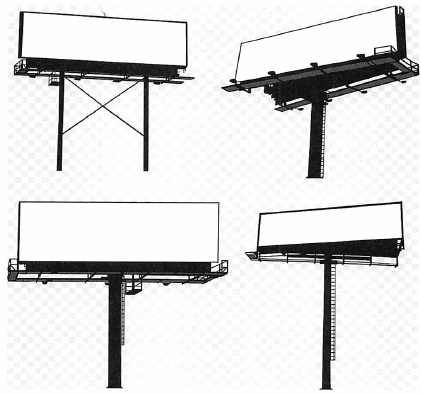
Billboards: Billboards are large signs erected along a state or interstate highway and intended to be viewed from travelers on said highway. They are outdoor signs which advertise firms, organizations, goods, products, or services which are not located on the same premises as the sign and which are sold, rented, owned, or leased for the display of advertising messages.
•
Canopy (attached): A multisided overhead structure or architectural projection supported by attachments to a building on one or more sides and either cantilevered from such building or supported by columns at additional points. The surface(s) and/or soffit of an attached canopy may be luminated by means of internal or external sources of light. See also "marquee".
•
Canopy (free-standing): A multisided overhead structure supported by columns, but not enclosed by walls. The surface(s) and or soffit of a free-standing canopy may be illuminated by means of internal or external sources of light.
•
Development complex sign: A free-standing sign identifying am multiple-occupancy development, such as a shopping center or planned industrial park, that is controlled by a single owner or landlord, approved in accordance with Section 1009.2 of this chapter.
•
Directional sign: Any sign that is designed and erected for the purpose of providing direction and/or orientation for pedestrian or vehicular traffic.
•
Electrical sign: A self-illuminated sign or sign structure in which electric wiring, connections and/or fixtures are used as part of the sign property.
•
Existing sign: Any sign that was erected, mounted or displayed prior to the adoption of this ordinance.
•
Flat wall sign: A sign that is parallel to the wall of a building to which it is attached but does not extend more than 12 inches from the building face.
•
Freestanding sign: A sign principally supported by a structure affixed to the ground, and not supported by a building, including signs supported by one or more columns, poles, or braces placed in or on the ground.
•
Frontage (building): The length of an exterior building wall or structure of a single premise orientated to the public way or other properties that it faces.
•
Frontage (property): The length of the property line(s) of any single premise along either a public way or other properties on which it borders.
•
Frontage wall face: The building facade, excluding parapet, fascia, soffit, mansard and roof, which faces a frontage of the premises.
•
Height of sign: The vertical distance measured from the average elevation of the nearest road centerline to the top of the sign face or sign structure, whichever is greater.
•
Illuminated sign: A sign characterized by the use of artificial light, either projecting through its surface(s) (internally illuminated); or reflecting off its surface(s) (externally illuminated).
•
Interior sign: Any sign placed within a building, but not including "window signs" as defined by this ordinance.
•
Historic or scenic area: An area that contains unique historic or scenic characteristics that require special regulations to ensure that street graphics displayed within the area are compatible with its visual character.
•
Marquee: See "canopy (attached)."
•
Marquee sign: See "canopy sign."
•
Monument sign: A sign that is permanently affixed to the ground at its base, supported entirely by the base structure, and not mounted on a pole.
•
Neon sign: A sign that is created by bending a neon filled glass tube to form text or graphics.
•
Nonconforming sign: A sign that was lawfully constructed or installed prior to the adoption or amendment of this ordinance and followed all ordinances at the time of installation, but which does not presently comply with these regulations. Any sign which has a valid permit, was erected or displayed prior to the effective date of this ordinance or any subsequent amendment hereto and does not conform with any provision of this ordinance.
•
Non-permanent sign: See "temporary sign"
•
Off-premises sign: See "outdoor advertising sign."
•
On-premise sign: A sign erected, maintained or used in the outdoor environment for the purpose of the display of messages appurtenant to the use of, products sold, on or the ale or lease of, the property on which it is displayed.
•
Outdoor advertising sign: a permanent sign erected, maintained or used in the outdoor environment for the purpose of the display of commercial or non-commercial messages not appurtenant to the use of products sold on, or the sale or lease of, the property on which it is displayed.
•
Parapet: The extension of a building facade above the line of the structural roof.
•
Permanent sign: A sign that is constructed in a manner and of materials that will withstand long-term display and is intended to be displayed for an indefinite period of time. A permit must be obtained prior to installation.
•
Pole sign: See "free-standing sign."
•
Political sign: A temporary sign intended to advance a political statement, cause or candidate for office. A legally permitted outdoor advertising sign shall not be considered to be a political sign.
•
Portable sign: A sign not permanently attached to the ground or a building or designed to be permanently attached to the ground.
•
Projecting sign: Any sign other than a wall sign attached to and projecting from a wall more than 18 inches from a building face or a wall and is not in the same plane as the wall.
•
Roof line: The top edge of a peaked roof or, in the case of an extended façade or parapet, the uppermost point of said façade or parapet.
•
Roof sign: A sign mounted on and supported by the main roof portion of a building, or above the uppermost edge of a parapet wall of a building and that is wholly or partially supported by such a building. Signs mounted on mansard facades, pent eaves and architectural projections such as canopies or marquees shall not be considered to be roof signs.
•
Sign: Any device visible from a public place that displays either commercial or non-commercial messages by means of graphic presentation of alphabetic or pictorial symbols or presentations. Non-commercial flags or any flags displayed from flagpoles or staffs will not be considered to be signs.
•
Sign, area of: The square foot area enclosed by the perimeter of the sign face. With respect to signs which are composed of individual symbols, letters, figures, illustrations, messages, forms or panels, sign area shall be considered to include all lettering, wording, and accompanying designs and symbols together with the background on which they are displayed, any frame around the sign and any "cutouts" or extensions; but shall not include any supporting structure or bracing.
•
Sign, wall: Any sign that is attached to the wall of a building. There are two types of wall signs:
•
Sign projecting wall: A sign that is attached to a wall of a building and extends more than 12 inches from the building face.
•
Sign structure: Any structure supporting a sign.
•
Temporary sign: A sign that is not permanently installed in the ground or affixed to any structure or building, and which is erected for a limited period of time. A temporary sign is intended to be displayed for 30 days or fewer.
•
Temporary business sign: Temporary business signs are not allowed in the County. A temporary business sign is not permanently attached to the ground or an object, and typically advertises a business or service, promotes a business, service, or seasonal sale, and can be used to announce a new business or service. Typically, these signs can be installed or removed quickly.
•
Under canopy sign or under marquee sign: A sign attached to the underside of a canopy or marquee.
•
Variance. A modification of the terms of this ordinance granted by the board of commissioners, where such modification will not be contrary to the public interest, and where, owing to conditions peculiar to the property and not as the result of any action on the part of the property owner, a literal enforcement of the ordinance would result in unnecessary and undue hardship, and where such modification will not authorize a principal or accessory use of the property which is not permitted within the zoning district in which the property is located. Hardships shall not be construed so as to include financial burdens or hardships that are created by the landowner or developer of the particular property.
•
Window sign: A sign affixed to the surface of a window with its message intended to be visible to and readable from the public way or from adjacent property.
•
Yard, front: A yard situated between the front building line and the front lot line extending the full width of the lot.
(Ord. No. 2024-673, 1-7-25)
13.4 - General sign types.
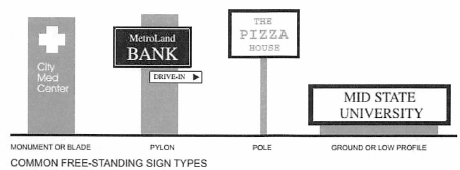
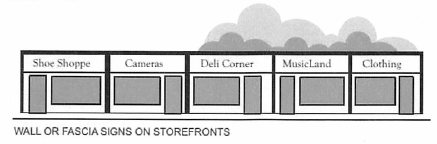
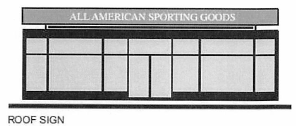
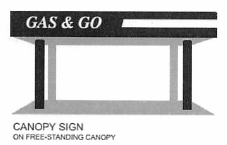
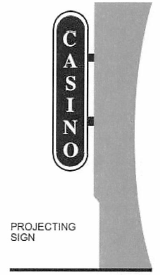
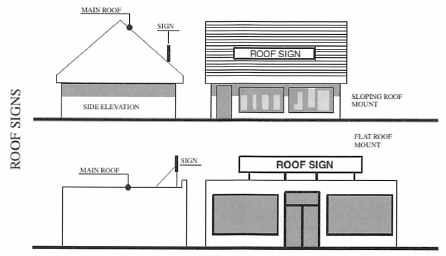
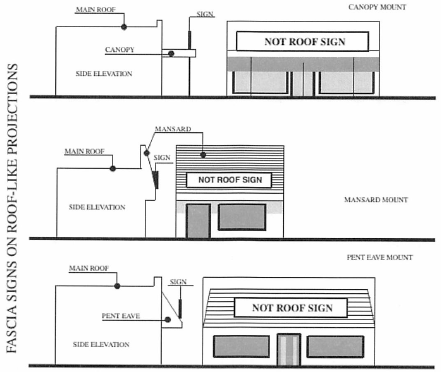
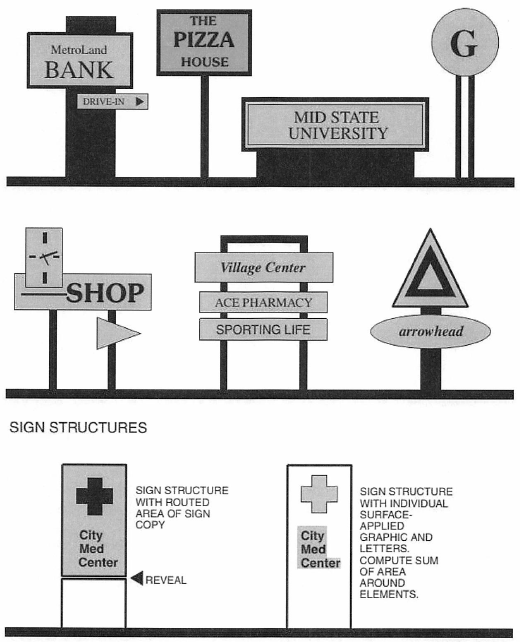
SIGN AREA—COMPUTATION METHODOLOGY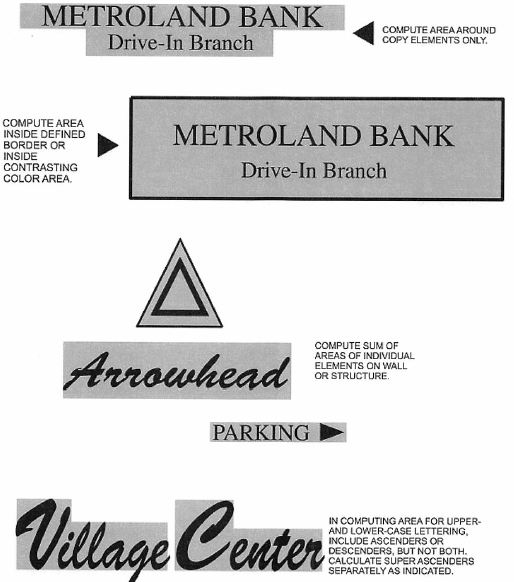
Note— Sum of shaded areas only represents sign area for code compliance purposes. Examples of signs consisting of individual letters, elements or logos placed on building walls or structures.
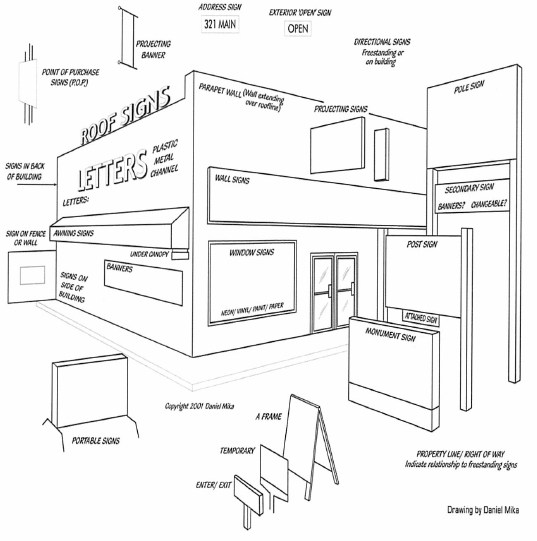
(Ord. No. 2024-673, 1-7-25)
13.5 - Legal signs.
A.
Any permitted sign which complies with the provisions of this article, and any subsequent amendments hereto, is hereby deemed to be a legal sign. Any proposed alteration to or relocation of such sign shall require a new permit pursuant to this section.
B.
Any legal sign which does not comply with the provisions of this article solely due to the enactment of an amendment shall, upon the effective date of such amendment, become a nonconforming sign and shall be considered an illegal sign unless it is relocated or altered.
(Ord. No. 2024-673, 1-7-25)
13.6 - Illegal signs.
Any commercial, residential, or existing sign that does not have a permit issued by Effingham County pursuant to this section is hereby deemed to be an illegal sign and such sign and the person or persons responsible for such sign shall be subject to the enforcement and penalty provisions in this-article.
(Ord. No. 2024-673, 1-7-25)
13.7 - Signs exempt from regulation.
A.
Governmental agency signs.
B.
Property addresses up to 12 inches in height.
C.
Incidental signs one square foot or less.
D.
Political/election signs (see section 13.2).
E.
Realtor signs (see section 13.2).
(Ord. No. 2024-673, 1-7-25)
13.8 - Prohibited signs.
A.
Any sign, except those erected by a governmental agency, in a public street or highway right-of-way.
B.
Temporary business signs. (See Definition.)
C.
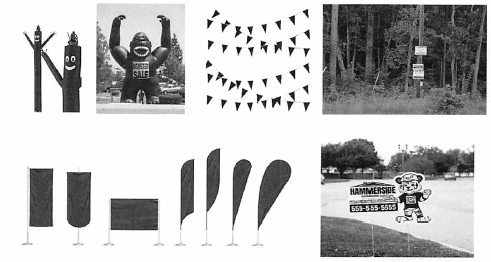
Inflatable signs.
D.
Fluttering ribbons, pennants, streamers, banners, and other animated signs are prohibited.
E.
Signs mounted on a roof extending 25 feet above the elevation of the roofline.
F.
Signs imitating traffic devices (signals) or warning signals are prohibited. No signs shall display lights resembling the flashing lights customarily used in traffic signals or in police, fire, ambulance, or rescue vehicles; nor shall any signs use the words, slogans, dimensional shape, and size, or colors of the governmental traffic signs.
G.
Any light source on a sign that is directly visible from a vehicle or residence.
H.
Any flashing or intermittent light.
I.
Any sign attached to a telephone pole or utility pole.
J.
Any unpermitted sign attached to a permitted sign.
K.
No sign shall be placed in or obstruct the view of an area of designated historic interest.
L.
Signs within 300 feet of any officially designated historical site or monument, except signs pertaining to that particular site or monument, are prohibited.
M.
Signs painted or attached to natural features, or man-made, such as trees or rocks, telephone poles, utility poles, or fence posts are prohibited.
N.
Signs in wetlands unless appropriately delineated as required by this ordinance.
(Ord. No. 2024-673, 1-7-25)
13.9 - Community event temporary signs.
Community event temporary signs are signs that are intended to strengthen social bonds, encourage local involvement, functions, festivals, events, non-profit functions, charities, cultural events, religious events, fairs, etc., and provide a platform with a focus on inclusivity and accessibility. Community event temporary signs do not include local business advertisements, commercial advertisements, sales, promotions, etc., and those signs must comply with all appropriate permitting, approval, etc.. Community event temporary signs must be permitted and must be displayed for a limited time. These signs must be constructed of wood, metal or other durable materials in such a manner as to resist high winds. Electricity or another power source is not allowed. Freestanding community event temporary signs shall be constructed in such a manner that incorporates a base from which no support or feet extend out or in such a way that may cause pedestrians to trip. No external cables, brackets, wires or props shall be permitted as support.
A.
In the B-1, B-2, B-3, I-1, R-3, or R-4 Zoning Districts, one community event temporary sign may not exceed 24 square feet in size and shall not to be displayed for more than 30 days on each parcel. Temporary event signs in these districts must be secured to a building.
B.
In all other zoning districts, each parcel is entitled to one community event temporary sign which shall not exceed six square feet in size. Such signs may be displayed for the length of the event. Each parcel may have no more than three such events per calendar year.
C.
When there is the threat of a serious wind event, the County reserves the right to remove any community event temporary sign that it considers to be a hazard to public safety. It will be the responsibility of the sign owner to retrieve any impounded sign from the County zoning office.
D.
Signs not removed within ten days following the occurrence of an event or expiration of the permitted period may be removed by the County's zoning office and impounded. The costs of removal shall be charged to the person owning or using the sign, or the owner of the building or premises.
E.
Impounded signs will be held for ten days, after which they will be destroyed.


(Ord. No. 2024-673, 1-7-25)
13.10 - Temporary subdivision signs.
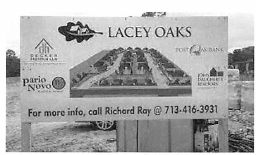
Temporary signs, not exceeding 40 square feet in an area announcing a land subdivision development, are permitted on the premises of the land subdivision. Such signs shall be spaced not less than 300 feet apart. They shall be removed when 75 percent of the lots are conveyed.
(Ord. No. 2024-673, 1-7-25)
13.11 - Temporary business signs.
Temporary business signs are not allowed in the County. A temporary business sign is not permanently attached to the ground or an object, and typically advertises a business or service, promotes a business, service, or seasonal sale, and can be used to announce a new business or service. Typically, these signs can be installed or removed quickly.

(Ord. No. 2024-673, 1-7-25)
13.12 - Billboards.
A.
Uniform size. The outside measurements of all billboards shall be 12 feet in height and 25 feet in length.
B.
Location. The billboard must be on commercial or industrial land. It must be located on a parcel with at least 200 feet of state or federal highway frontage.
C.
Illumination. All illuminated billboards shall use base-mounted lights. The light source must not be visible from a vehicle or a residence. No additional lighting shall be allowed.
D.
Height. All billboards shall be a minimum often feet above grade and a maximum of 30 feet above grade.
E.
Extrusions prohibited. Extrusions beyond the face of the billboard, excluding aprons, are prohibited.
F.
Number of signs per location. Only one billboard shall be allowed to face the same direction per location. This allows back to back or V formation billboards but prohibits two billboards facing the same direction.
G.
Spacing. billboard location shall be no less than 500 feet from the nearest billboard measuring from the nearest point. No more than three billboards shall be permitted per mile when such billboards are located on the same side of the road.
H.
Distance from property line. Billboard structures shall be no less than ten feet from any property line.
I.
State law. All billboards must also comply with all aspects of the Georgia Outdoor Advertising Code.
J.
Changeable copy signs.
1.
General rule — Animated or changeable copy signs shall be erected, posted, displayed or modified only in accordance with the criteria hereunder as well as all other generally applicable standards of this ordinance related to the location, height, size, and other characteristics, billboards that move, flash or simulate movement are prohibited.
2.
Each message displayed on any changing billboard display shall remain static for at least ten seconds following the completion of its transition from the previous message. As used in this subsection "static" shall mean a display that is fixed in one position with no portion of the display being in motion or changing in color or light intensity.
3.
Changing of image shall be substantially instantaneous, two seconds or less, as seen by the human eye and shall not use fading, rolling, window shading, dissolving or similar effect as part of the change.
4.
No display or other effect from any electronically changed billboard shall cause a glare or other condition that impairs the vision of the driver of any motor vehicle or which otherwise interferes with the safe operation of a motor vehicle.
5.
Video technology in billboards shall use automatic level controls to reduce light levels at night and under cloudy or other darkened conditions, in accordance with the following standards. All electronic or digital display unit message boards shall have installed ambient light monitors, and such monitors shall at all times automatically adjust the brightness level of the electronic billboard based on ambient light conditions. Maximum brightness levels for electronic or digital display boards shall not exceed ambient light levels by more than 0.3 foot candles.
6.
Any billboard using video technology which malfunctions, fails, or ceases to operate in its usual or normal manner causing therein motion, movement, flashing or any other similar effects shall be repaired or disconnected within 48 hours by the owner or operator of such billboard, and shall be equipped so that it may be turned off by the county in the event of such malfunction or failure.
7.
The county shall be permitted to post emergency notices on electronically changeable billboards on 24 hours' notice.
8.
Conversion of an existing billboard to an automatic changeable copy video billboard or to add an automatic changeable copy video element to it is allowed only if the billboard as modified will conform with all standards in this section and with all other applicable standards related to the height, size, location and other characteristics of the billboard.
(Ord. No. 2024-673, 1-7-25)
13.13 - Signs in commercial zones.
A.
Each parcel in a commercial zone is entitled to one freestanding sign for up to 200 feet of street frontage.
B.
Each parcel in a commercial zone may have an additional freestanding sign for each additional 200 feet of street frontage and must be separated by at least 200 feet from any other sign on the property.
C.
A multi-unit building on a single commercial parcel may have multiple tenant panels on a single sign.
D.
No sign shall encroach into the street right-of-way or be within 25 feet of an established street intersection and no sign or support thereof shall obstruct driver visibility.
(Ord. No. 2024-673, 1-7-25)
13.14 - Number of signs.
In addition to any potential free-standing sign, each business in a commercial or industrial zone shall be limited to one facade sign, one projecting sign attached to the building and one wall sign for each exposed side of the building other than the front.
(Ord. No. 2024-673, 1-7-25)
13.15 - Freestanding sign size.
The maximum size of the signable area of a freestanding sign is as follows:
A.
In the B-2, B-3, and I-1 districts: 64 square feet for a single tenant parcel or 100 square feet for a multiple tenant parcel.
B.
In the B-1 zoning district: 32 square feet.
C.
In the R-3 and R-4 zoning districts: 50 square feet.
D.
In the R-1, R-1A, and R-2 zoning districts: Six square feet excluding signs at the entrance to neighborhoods which may be up to 24 square feet.
E.
In the CP zoning district: 16 square feet.
F.
In the PD zoning district: Sign regulations not less stringent than the regulations herein must be included in the written development text required by section 5.15.3.3 of the Effingham County Zoning Ordinance.
(Ord. No. 2024-673, 1-7-25)
13.16 - Height.
A.
Maximum height. In all commercial and industrial districts no freestanding sign shall exceed 30 feet from grade.
B.
Clearance. No hanging, suspended, or projecting sign shall have a vertical clearance of less than 14 feet over any vehicular public way, nor less than nine feet over any pedestrian public way. Public ways include privately owned sidewalks and drives customarily used by the public.
(Ord. No. 2024-673, 1-7-25)
13.17 - Institutional uses.
Institutional uses are allowed one sign per 200 feet of street frontage with a maximum signable area of 64 square feet regardless of which zoning district they are located in.
(Ord. No. 2024-673, 1-7-25)
13.18 - Projections.
No sign shall project more than six feet from the wall of a building.
(Ord. No. 2024-673, 1-7-25)
13.19 - Flags.
In the B1, B-2, B-3, and I-1 zoning districts no more than three flags are allowed per parcel. The combined square footage of all flags displayed on a parcel in these districts shall be no more than 64 square feet.
(Ord. No. 2024-673, 1-7-25)
13.20 - Sign conditions.
A.
Unsafe signs. Whenever a sign becomes structurally unsafe or otherwise endangers the safety of the building or the public, the zoning administrator shall order that such sign be made safe or removed. The person owning or using the sign or the owner of the building or premises on which such unsafe sign is affixed or erected shall comply with such order within ten days of receipt thereof.
B.
Unmaintained signs. Whenever a sign is physically damaged or is not maintained and is determined by the zoning administrator to negatively impact the visual character of the surrounding area or pose an unsafe condition, the zoning administrator shall order that such sign be properly maintained or removed. The person owning or using the sign or the owner of the building or premises on which such unsafe sign is affixed or erected shall comply with such order within 60 days of receipt thereof.
(Ord. No. 2024-673, 1-7-25)
13.21 - Nonconforming signs.
No nonconforming signs may be relocated or altered other than for routine maintenance without bringing the sign into conformance with the current sign ordinance. A temporary sign may not be considered as a nonconforming sign for purposes of grandfathering.
(Ord. No. 2024-673, 1-7-25)
13.22 - Traffic visibility across corner lots.
On any corner lot in any district, no fence, structure, sign, or vegetation more than 30 inches high measured from the center of the road shall be erected or maintained within 20 feet of the corner so as not to interfere with traffic visibility across the corner.
(Ord. No. 2024-673, 1-7-25)
13.23 - Interstate Signs.
A.
This article shall apply to all outdoor advertising signs abutting or visible from the Interstate 16 and 95 right-of-way in the County.
B.
No sign shall be erected or maintained unless it follows the regulations of this article.
C.
Signs must be constructed of durable materials, maintained in good condition, and not permitted to become dilapidated.
D.
All signs located on sites abutting or visible from the Interstate 16 and 95 rights-of-way shall conform with O.C.G.A. § 32-6-70 et seq., the Georgia Outdoor Advertising Code, and shall meet all federal and state requirements necessary to obtain a permit under that code. In instances where the sign controls of this article are stricter, these regulations shall apply.
E.
This article shall also apply to any sign which advertises an activity, business, product, or service.
(Ord. No. 2024-673, 1-7-25)
13.24 - Regulation for specific types of signs.
(a)
Home occupation and residential business signs. Only one nonilluminated sign not to exceed eight square feet is permitted, location to be approved by the zoning administrator. Said location must be at least 15 feet from all property lines.
(b)
Rural business signs. Only one nonilluminated sign not to exceed 16 square feet is permitted, location to be approved by the zoning administrator. Said location must be at least 15 feet from all property lines.
(c)
Signs of work under construction. One nonilluminated sign not exceeding 40 square feet in area displaying the name of the building, the contractors, the architects, the engineers, the owners, the financial, selling, and development agencies is permitted upon the premises of any work under construction, alteration, or removal. Such signs shall be removed from the site within 30 days after the completion of the project.
(d)
Roof signs. No more than one roof sign structure may be erected on the roof of any building. No roof sign structure shall extend above the elevation of the roof.
(e)
Wall signs. Signs on the walls of a building, including signs attached flat against the wall, painted wall signs, and projecting signs, shall meet the following requirements:
(1)
Signs on the front surface of a building. The total area of signs on the exterior front surface of a building shall not exceed 25 percent of the front surface of the building.
(2)
Signs on the side and rear surface of a building. The total area of signs on a side or rear surface of a building shall not exceed 50 percent of the exterior side or rear surface of the building, respectively.
(3)
Projecting signs. Wall signs attached flat against a wall may extend not more than 24 inches from the wall. Signs attached at an angle to a wall may extend outward from the wall of a building not more than five feet.
(f)
Illuminated signs. Illuminated devices shall be so placed and so shielded that light from the sign itself will not be cast directly into any residential district, sleeping rooms in any district, or the eyes of an automobile or vehicular driver.
(g)
Outdoor advertising signs. Outdoor advertising signs shall meet the following requirements:
(1)
Uniform size. The outside measurements of all such signs shall be 12 feet in height and 50 feet in length, with or without trim.
(2)
Illumination. All illuminated signs shall use base-mounted lights and shall be activated by photoelectric cells. Additional lighting, including but not limited to neon, animation, and running lights, is prohibited.
(3)
Height above interstate grade. All signs shall be a minimum of ten feet above adjacent interstate pavement measuring from the lower portion of the sign face. Signs shall not exceed 30 feet in height. Two signs in the same location (back-to-back) or V formation shall be the same height above the interstate's surface.
(4)
Extrusions prohibited. Extrusions beyond the face of the sign, excluding aprons, are prohibited.
(5)
Number of signs per location. Only one sign shall be allowed to face the same direction per location. This allows back-to-back or V formation signs but prohibits two signs (side-by-side) facing the same direction.
(6)
Spacing. The sign location shall be no less than 500 feet apart measuring from the two closest points.
(7)
Distance from property lines. Sign structures shall be no less than ten feet from any property or right-of-way line.
(8)
Number of signs per interchange quadrant. Three outdoor advertising signs per quadrant of any interchange adjacent to the interstate highway are allowed. These signs must be within commercially or industrially zoned area as specified in state law and are restricted to an area 1,200 feet long beginning 500 feet from the point where the pavement widens on the main traveled way to accommodate the longest entrance or exit ramp.
(9)
Historic area locations are prohibited. No sign shall be placed in or obstruct the view of an area of designated historic interest.
(h)
On-premises signs. On-premises signs located within 100 feet of a regularly used part of the activity being advertised and located on the same property and for sale or for lease signs located on the property being advertised are permitted.
(i)
Nonconforming signs. Any legally erected sign that would become nonconforming as a result of this article will be allowed to remain until purchased by the department of transportation or the county, provided that the sign owner meets the requirements of state laws and rules and regulations governing such signs.
(Ord. No. 2024-673, 1-7-25)
APPENDIX TO ZONING ORDINANCE
HOUSING ORDINANCE
Section 1. - Preamble and enactment.
1.1 Pursuant to the authority granted by the Constitution of the State of Georgia and for several purposes of promoting the health, safety, aesthetics, convenience, order, prosperity, and general welfare of the present and future inhabitants of Effingham County ("county"); of improving the county's appearance; providing fiscal stability and preventing unreasonable increases in county taxes; securing safety from fire, panic, and other dangers; facilitating the adequate provision of transportation, water, sewerage, schools, parks, and other public requirements; protecting property against blight and depreciation; encouraging the most appropriate use of land and other structures throughout the county; securing economy in government expenditures; and for other purposes, all in accordance with the Effingham County Comprehensive Growth Management Plan ("comprehensive plan"), the board of commissioners of Effingham County, Georgia ("county commission") does hereby ordain and enact into law the following articles and sections as an appendix of the Effingham County Zoning Ordinance.
Section 2. - Short title.
2.1 This ordinance shall be known and may be cited as the "Housing Ordinance of Effingham County, Georgia."
Section 3. - Jurisdiction.
3.1 This ordinance shall apply to all land and structures within the unincorporated areas of the county.
Section 4. - Relation to other ordinances or agreements.
4.1 This ordinance does not in any way repeal existing provisions of any other ordinances, except any provisions of the zoning ordinance in effect on the effective date of this ordinance which are in conflict with the provisions of this ordinance. Except as provided for herein, if the provisions of this ordinance impose greater restrictions or higher standards than are called for in other ordinances, then the provisions of this ordinance will take precedence over the others and will control. This ordinance shall be considered as an appendix of the Zoning Ordinance of Effingham County, Georgia.
Section 1. - Usage.
1.1 Words used in the present tense include the future tense. Words used in the singular number include the plural, and vice versa. The word "person" includes any individual, firm, organization, association, partnership, trust, or corporation. The word "lot" includes the word "plot" or "parcel." The word "shall" is mandatory. The word "used" or "occupied" as applied to any land or building shall be construed to include the words "intended, arranged, or designed to be used or occupied."
Section 2. - Definitions.
2.1 The words and terms used herein shall be given the definition accorded them by the Zoning Ordinance of Effingham County, Georgia. Words and terms not defined in the Zoning Ordinance of Effingham County, Georgia shall be given their ordinary meaning.
Section 1. - Equal treatment.
1.1 Within each zoning district, all allowed residential uses shall be treated equally with respect to zoning ordinance and building code enforcement. To ensure compatibility, the standards contained herein shall be applied equally to all single-family detached dwellings.
Section 2. - General provisions.
2.1 Upon placement, any means of transportation, such as towing devices, wheels, axles, and hitches, shall be removed, unless the removal of said transportation devices would affect the structural integrity of the structure.
2.2 All structures that require a certificate of occupancy, except historic structures, shall, at a minimum, be completely anchored, and each site-built or manufactured or mobile home installed after October 1, 1993, shall be completely underpinned or "skirted" either with approved masonry, approved treated wood (excluding latticework) or with approved manufacturer's underpinning kits. The underpinning shall be installed and maintained in such a manner as to permit adequate ventilation and to prohibit the intrusion of small animals and rodents. Those structures qualifying under the compatibility standards in section 3 of this article must meet additional foundation requirements. Structures that are elevated more than 48 inches for more than 25 percent of the square footage will not have to be skirted if located in a floodplain area.
2.3 Prohibited uses.
2.3.1 No manufactured home, mobile home, or site-built single-family detached dwelling shall remain vacant for a period exceeding 120 days. This subsection does not apply to manufactured housing dealers or planned manufactured housing communities.
2.3.2 No manufactured home or mobile home may be used as a storage facility except as provided herein. A manufactured home or mobile home used as a storage facility as of the effective date of this ordinance may be used as storage facility for not more than two years following the effective date of this ordinance.
2.3.3 Failure to comply with the provisions of this section within 60 days of receipt of a certified letter from the zoning administrator will result in the removal of said structure at the real property owner's expense. The cost charged to the property owner for removal of said structure will be the actual removal cost and will be assessed against the land.
2.4 Each newly installed manufactured or mobile home that is not located in a planned manufactured home community shall conform to the minimum construction and safety standards required by the U.S. Department of Housing and Urban Development before being connected to any utility service. It is the intent of this section of this ordinance to prohibit moving manufactured or mobile homes into Effingham County that do not conform to the applicable Housing and Urban Development construction and safety standards.
2.5 Each mobile home and manufactured home in Effingham County shall have beneath and descending from each outside door of such home a platform and a set of steps descending to the ground or grade level. The steps and platform must be constructed of all-weather materials or manufactured kits. Furthermore, all construction and/or manufactured kits shall comply with the requirements of Georgia Administrative Code Chapter 120-3-7, Rules and Regulations for Manufactured Homes. Each newly installed mobile home and manufactured home in this county shall comply with the requirements of this subsection.
2.6 Each manufactured home qualifying as a class A single-family detached dwelling shall be assessed as real property for the purposes of ad valorem taxation.
2.7 Except as otherwise provided in this ordinance, all structures existing within the unincorporated areas of Effingham County as of the date of this ordinance [August 4, 1998] shall be considered nonconforming and exempt from the requirements of this ordinance, provided such structures are not relocated, replaced, or expanded.
2.8 Subject to the limitation set forth in section 2.55.2 of the Zoning Ordinance of Effingham County, Georgia, a nonconforming single-family dwelling which has been damaged by fire, explosion, act of God, or act of war may be repaired, reconstructed, or replaced with a nonconforming structure of the same dimensions and used as before the time of damage, provided such repair, reconstruction, or replacement is completed within one year of the date of such damage and provided that the structure meets all applicable county building and permitting requirements.
Section 3. - Compatibility standards for single-family dwellings.
3.1 [Requirements.] All class A single-family detached dwellings shall meet or exceed the following requirements:
3.1.1 Foundation.
3.1.1.1 The structure shall be attached to a foundation to be installed according to the manufacturer's or architect's specifications and soil conditions.
3.1.1.2 The area beneath the ground floor of the structure shall be enclosed around the exterior of the structure with a curtain wall constructed of masonry at least four inches thick or enclosed by an approved manufacturers underpinning kit, penetrated only by openings for installed vents and access doors. If a masonry curtain wall is constructed a permanent foundation that is at least six inches deep and 12 inches wide must be constructed.
3.1.2 Exterior siding. Exterior siding materials shall consist of any combination of wood, brick, stone, stucco, or similar materials, or lap siding of hardboard, vinyl, vinyl covered or painted metal, or similar materials.
3.1.3 Roofs.
3.1.3.1 All roof surfaces shall have a minimum pitch of 2:12 (two feet of rise for every 12 feet of run);
3.1.3.2 All roof surfaces exposed to view shall be covered with asphalt or fiberglass shingles, wood shakes or shingles, standing seam (noncorrugated) tin, clay tiles, slate, or similar materials.
3.1.4 [Minimum width.] Except as may be provided by Section 3.2, the minimum width of the structure shall be 14 feet.
3.1.5 [Minimum dimension for landing.] Each structure must have a landing with a minimum dimension of 48 inches by 48 inches, steps, and handrails.
3.2 Exemptions from compatibility standards. Exemptions from the compatibility standards may be granted to place a class B single-family detached dwelling in a residential zoning district restricted to class A single-family detached dwellings if the structure appears to be compatible in appearance to other housing in the immediate general area within the same zoning or residential district or area. Approval to place the structure may be granted by the planning board upon application and determination that the dwelling is substantially similar or superior in size, siding material, roof material, foundation, and general aesthetic appearance to:
3.2.1 Site-built or other forms of housing which may be permitted in the same general area under this ordinance;
3.2.2 Existing development; or
3.2.3 Proposed development in the same zoning classification or area, or as envisioned in the comprehensive plan of Effingham County.
3.2.4 Notwithstanding the criteria above, the planning board may grant a permit to place a manufactured home of less than 14 feet in width within a zoning district restricted to class A single-family detached dwellings during the construction of a site-built home. Said permit shall remain valid for a period which shall be the lessor of two years or issuance of the certificate of occupancy for the site-built home. Said permit may be extended for a period not to exceed one year upon approval of the county commission.
3.3 Process. The owner shall, prior to securing a building permit or placement of the structure, submit to the zoning administrator or designee an application containing the following:
3.3.1 Applicant's name and address and his or her representative, and the interest of every person represented in the application.
3.3.2 Documentation, which may include statements, pictures, or maps, of uses in the zoning district and the abutting district in which the structure is proposed to be placed.
3.3.3 A plat or sketch plan showing the configuration of the land on which the structure is to be placed and the location of placement, including distances of the structure from the property lines.
3.3.4 Specifications or pre-design plans which contain a complete description of the structure, including but not limited to square footage, siding material, roof material and pitch, foundation, and other evidence of the general aesthetic appearance required by the zoning administrator or designee and necessary to make a determination of compliance and compatibility as required by this ordinance.
3.3.5 Documents certifying that the structure is in compliance with the Standard Building Code, the National Manufactured Home Construction and Safety Standards, and any other codes, regulations, or manufacturing standards as required by this ordinance.
3.3.6 The applicant must carry the burden of proof to establish that the structure is compatible with surrounding structures. The criteria should include such factors as exterior material, square footage, foundation type, and other factors as deemed necessary for compliance and compatibility as required by this ordinance. The planning board shall further consider the possible negative effect of the structure on the property values of other properties in the immediate area and the possible effect the structure could have on the surrounding area in the event of inclement weather or high winds.
3.4 Appeals.
3.4.1 The county commission may approve an exemption from one or more of the compatibility standards provided herein on the basis of finding that the material to be utilized or the architectural style proposed for the structure will be compatible and harmonious with existing structures in the vicinity. The findings must be in writing and adopted by the county commission.
3.4.2 The applicant must apply for the exemption and carry the burden of proof to establish that the structure is compatible with surrounding structures. The criteria should include such factors as exterior material, square footage, foundation type, and other factors as deemed necessary for compliance and compatibility as required by this ordinance. The county commission shall further consider the possible negative effect of the structure on the property values of other properties in the immediate area and the possible effect the structure could have on the surrounding area in the event of inclement weather or high winds. The applicant must file for appeal within 30 days of the decision of the planning board.
3.5 Violations. It shall be a violation of this ordinance to occupy any structure without first obtaining a certificate of occupancy from the zoning administrator or designee, who, before issuing said certificate of occupancy, shall determine that the structure is in compliance with the terms of this ordinance and all other zoning requirements and county ordinances. In the event the zoning administrator or designee is unable to determine whether the applicant meets the criteria established by this ordinance or other zoning requirements and county ordinances, the zoning administrator may refer the matter to the planning board for a final determination of applicability.
Section 4. - Other structures.
4.1 Any person, firm, or corporation desiring to place a manufactured home or site-built single-family dwelling not complying with the standards in this article within the limits of the county may make an application for same to the zoning administrator. The zoning administrator shall refer said application to the planning board which shall make a recommendation to the county commission on the basis of the criteria set forth in section 4.2 of this article.
4.2 If, in the opinion of the county commission, it should become necessary as a temporary emergency or hardship or for security or protection, such permit may be granted on a limited basis for a period not exceeding one year from the date of permit. If, before the anniversary date of the permit, the emergency or other reasons for the structure ceases to exist, then said permit automatically shall be cancelled and said structure shall be removed by the owner. If said structure is not removed, it will be removed by the county at the owner's expense as provided in section 2.3 of article III of this ordinance.
Section 1. - Procedure.
An exemption may be granted to locate a manufactured home, manufactured office, or industrialized structure in a nonresidential zoning district for nonresidential uses provided the following requirements are met:
1.1 An application for placement must be filed with the Zoning Administrator or his designee, said application containing the following:
1.1.1 Applicant's name and address and his representative, and the name and interest of every person represented in the application, and having an interest in the business or enterprise which shall use the structure, and in the land on which the structure shall be located.
1.1.2 A legal description of the property on which the structure is to be placed, together with a recent plat of the property prepared by an architect, engineer, or land surveyor, whose state registration is valid and whose seal shall be affixed to the plat. The plat must contain property lines, bearings, distances, adjoining streets with right-of-way and paving width, location of existing structures, creeks, easements, north arrow, and scale.
1.1.3 A statement of circumstances in the proposed district and the abutting districts.
1.1.4 A plat or sketch plan showing the configuration of the land on which the structure is to be placed and the location of placement, including distances of the structure from the property lines.
1.1.5 Specifications or pre-design plans which contain a complete description of the structure to include square footage, siding material, roof material and pitch, foundation, and other evidence of the general aesthetic appearance required by the zoning administrator or designee and necessary to make a determination of compliance and compatibility as required by this ordinance.
1.1.6 Documents certifying that the structure is in compliance with the Standard Building Code and any other codes, regulations, or manufacturing standards as required by this ordinance.
1.1.7 It shall be a violation of this ordinance to occupy or commence activity from any structure without first obtaining a certificate of occupancy from the zoning administrator or his designee, who shall determine, before issuing a certificate of occupancy, that the structure is in compliance with the terms of this ordinance and all other zoning requirements and county ordinances. In the event the zoning administrator or his designee is unable to determine whether the applicant meets the criteria established by this ordinance, the zoning administrator may refer the matter to the planning board for a final determination of applicability.
1.2 Manufactured homes or industrialized buildings may be permitted in nonresidential districts for nonresidential uses provided the following criteria are met:
1.2.1 Placement of said structure complies with the requirements and limitations generally applicable in such zoning districts, including but not limited to minimum lot size, yard and building spacing, square footage requirements, percentage of lot coverage, off-street parking requirements, and approved foundations as described herein;
1.2.2 The structure compares favorably to site-built and other structures in the immediate general area within the same zoning district. Approval to place the structure shall be granted by the zoning administrator or designee upon application and determination that the structure is substantially similar in size, siding material, roof material, foundation, and general aesthetic appearance to:
(1)
Site-built or other forms of structures which may be permitted in the same general area under this ordinance;
(2)
Existing development; or
(3)
Proposed development in the same zoning district or area, or as envisioned in the comprehensive plan of Effingham County.
1.2.3 In making a determination the zoning administrator or designee shall consider exterior materials, square footage, foundation type, and other factors as deemed necessary for compliance and compatibility as required by this ordinance.
1.2.4 All towing devices, wheels, axles, and hitches must be removed, unless the removal of said transportation devices would affect the structural integrity of the structure.
1.2.5 The structure shall be attached to a permanent foundation, to include foundation walls. Skirting of structures is not sufficient to comply with the requirements of this article.
1.2.6 The structure shall be constructed according to the standards established by the Standard Building Code adopted by the county and in effect at the time of erection or placement. A manufactured building unit must bear the label or seal of compliance with the National Manufactured Home Construction and Safety Standards issued by the Department of Housing and Urban Development. No manufactured home unit manufactured before June 15, 1976, shall be allowed within the county. The zoning administrator or designee shall report any manufactured home or building unit manufactured after June 15, 1976, that does not bear such seal or label to the state administrative agency having jurisdiction and shall not grant a certificate of occupancy. All modular or industrialized homes must bear any and all labels, stamps, or seals of compliance required by the department of community affairs or Effingham County.
1.3 The county commission, based on a recommendation from the planning board, may approve an exemption from one or more of the development or architectural standards provided herein upon a finding that the material to be utilized or the architectural style proposed for the structure will be compatible and harmonious with existing structures in the vicinity. The applicant must apply for the variance and carry the burden of proof to establish that the structure is compatible with surrounding structures. The criteria should include such factors as exterior materials, square footage, foundation type, and other factors as deemed necessary for compliance and compatibility as required by this ordinance.
Section 1. - Site plan.
A site plan shall be prepared by the applicant and approved by the county commission prior to development or expansion of any planned manufactured home community. The site plan shall be prepared by an architect, engineer, land surveyor, or landscape architect who currently holds state registration in Georgia and whose seal shall be affixed to the plan. Eight copies of the site plan shall be submitted at a scale not to exceed one inch equals 100 feet, showing:
1.1 The name and address of the applicant and architect, engineer, surveyor, or designer.
1.2 Names and addresses (as listed by the county tax assessor) of all owners of land adjacent to the site.
1.3 Graphic scale, north arrow, and date of survey.
1.4 Full name of the proposed planned manufactured housing community.
1.5 Total acreage in the tract.
1.6 Proper identification of the boundaries of the tract with all bearings and distances indicated. The boundary survey shall be to such a degree of accuracy that the error is not greater than 1:7,500.
1.7 Location and date of each percolation test, soil boring, and well in the proposed planned manufactured housing community.
1.8 Topographic survey by contours at vertical intervals of not more than three feet or if the property does not have a five-foot change in elevation, a certification from a professional engineer shall be required stating that the drainage from the property will not affect adjacent property owners.
1.9 Existing and proposed zoning district classification.
1.10 Zoning district classification of adjoining land.
1.11 Location of natural features such as streams, lakes, swamps, and land subject to flood based on a 100-year flood frequency.
1.12 Location of existing adjoining property lines and existing buildings.
1.13 Locations and widths of rights-of-way of streets, roads, railroads, and utility lines either on or adjacent to the property. The plan shall specify whether utility lines are in easements or rights-of-way and show location of poles and/or tower.
1.14 Size and location of existing sewers, water mains, drains, culverts, or other underground facilities within the street or within the right-of-way of streets or roads adjoining the tract. Grades and invert elevations of sewer lines shall be shown.
1.15 Acreage of each drainage area affecting the proposed planned manufactured housing community.
1.16 Location of city limit lines and county lines, if applicable.
1.17 Layout of streets, roads, alleys, and public crosswalks, including widths, road names or designations, grade, and cross-sections.
1.18 Profile of proposed streets showing natural and finished grades.
1.19 Detailed layout of all lots, including building setback lines, scaled dimensions on lots, lot and block numbers, and utility easements with width and use.
1.20 Construction drawings of sanitary sewers (if applicable) with grade, pipe size, location of manholes, and points of discharge, and percolation tests, soil borings, and wells as specified by the Health Department or State of Georgia Environmental Protection Division (EPD).
1.21 Construction drawings of storm sewer system with grade, pipe size, and location of outlet. Storm sewers shall be sized to accommodate runoff for a 25-year frequency rainfall.
1.22 Plans of all drainage provisions, retaining walls, curbing, planting, anti-erosion devices, or other protective devices to be constructed in connection with, or as part of the proposed work together with a map showing the drainage area of land tributary to the site and estimated runoff of the areas served by any drains.
1.23 Construction drawings of water supply system with pipe sizes and location of hydrants and valves.
1.24 Designation of all land to be reserved or dedicated for public use.
1.25 Designation of proposed use of all lots to be used for other than single-family residential purposes (if any).
1.26 Proposed major contour changes in areas where substantial cut and/or fill is to be done.
1.27 A timing/phasing schedule indicating the anticipated starting and completion dates of the development sequence.
1.28 Total number of lots, total acreage, and total length of new streets.
1.29 Name, registration number, and seal of registered surveyor or civil engineer.
1.30 The location and dimensions of all buffers, recreation areas, office structures, and support facilities.
Section 2. - Vicinity map.
2.1 Vicinity map drawn to a scale of not less than one inch equals one mile showing the relationship of the proposed planned manufactured housing community to surrounding development.
Section 3. - Minimum acreage.
3.1 The minimum area for a planned manufactured home community shall be five contiguous acres. Each community shall have a minimum frontage of 150 feet on a street having minimum classification of major collector. The community shall be connected to and utilize the county sanitary system for water and sewage, if available; however, if unavailable, any septic or other individual waste disposal methods used by the community must be approved by the Effingham County Health Department.
Section 4. - Density.
4.1 The maximum overall density of a planned manufactured home community shall not exceed four units per gross acre.
Section 5. - Pad requirements.
5.1 Each individual structure pad shall be clearly delineated and shall abut a paved street of not less than 22 feet in width.
5.2 Each manufactured home space shall contain a minimum of 10,000 square feet when using an approved septic system; or 5,000 square feet when using an approved sanitary sewerage system.
Section 6. - Setbacks.
Minimum setback and location requirements for structure pads shall be as follows:
6.1 Front yard—20 feet except when adjacent to a county or state road, in which case front yard setback shall be 50 feet.
6.2 Side yards—20 feet on each side of the dwelling.
6.3 Rear yard—20 feet.
6.4 No manufactured home shall be located closer than 25 feet to any permanent principal structure.
6.5 No manufactured home shall be located closer than 25 feet to any community property boundary.
6.6 No additions shall be made to a dwelling that will violate setback requirements.
Section 7. - Streets, driveways, and walkways.
7.1 All dwelling spaces shall be served by an all-weather surface walkway of not less than three feet in width.
7.2 All driveways and walkways shall be lighted at night by not less than 25 watt fixtures spaced not more than 100 feet apart.
7.3 All streets and driveways shall be laid out and paved, and shall have a minimum pavement width of 22 feet.
7.4 All private streets or driveways within the community shall be lighted between sunset and sunrise with electric lights emitting light at an intensity of at least 5,000 lumens, and the light poles shall be not more than 250 feet apart.
Section 8. - Manufactured and mobile homes.
8.1 Manufactured or mobile home tie-downs shall be provided for all units in accordance with the requirements of Appendix "A" of the Georgia Manufactured Housing Rules and Regulations or the manufacturer's specifications.
8.2 No dwelling unit shall be admitted to any community unless it can be demonstrated that it meets the State of Georgia and National Manufactured Home Construction and Safety Standards and federal and state regulations.
8.3 Each dwelling unit shall be installed on a concrete block foundation, of which the base block shall be solid and equal in size to the pier-block size (a minimum of 4 inches by 16 inches by 16 inches). Top course of said parts of foundation shall be a solid cap block with a minimum dimension of 4 inches by 8 inches by 16 inches. The dwelling unit shall be installed true and plumb.
8.4 No space shall be rented for residential use of a manufactured or mobile home in any such community except for periods of 30 days or more, and no manufactured or mobile home shall be admitted to any community unless it can be demonstrated that it meets all requirements prescribed by applicable laws and regulations.
Section 9. - Utilities.
The following utilities are required:
9.1 An electrical service supplying 200 amperes of service shall be provided for each dwelling space. All such outlets shall be weather proof, and installations shall meet the requirements of the National Electrical Code.
9.2 An adequate supply of pure, potable water for drinking and domestic purposes shall be supplied by pipes to all buildings and dwelling lots within the planned manufactured home community. Each dwelling stand shall be provided with an approved cold water connection and a tap, constructed in accordance with the plumbing standards adopted by the county.
9.3 Approved fire hydrants with isolation valves shall be located at least every 500 feet and at every intersection or as designated by fire officials of the county. They shall be located and designed in accordance with the National Fire Protection Codes.
9.4 Waste from shower, bathtubs, flush toilets, urinals, lavatories, slop sinks, and laundries in service and other buildings within the planned manufactured home community shall be discharged into a public or private sewer and disposal plant or septic tank system of such construction and in such manner as approved by the Effingham County Health Department or State of Georgia Environmental Protection Division (EPD).
9.5 Each dwelling stand shall be provided with a trapped sewer at least four inches in diameter, which shall be connected to receive the waste from the shower, bathtub, flush toilet, lavatory, and kitchen sink of the manufactured home harbored in such dwelling space. The trapped sewer in each space shall be connected to discharge the dwelling waste into a public sewer system in compliance with applicable ordinances or into a private sewer and disposal plant or septic tank system of such construction and in such manner as approved by the Effingham County Health Department.
9.6 If public water is available within 1,000 feet of the proposed planned manufactured home community, the owner shall connect into the existing public system. If public water becomes available within one thousand feet of an existing manufactured home community, the owner may connect into the system.
9.7 If public sewerage service becomes available to an existing planned manufactured housing community, a revised planned manufactured housing community plan reflecting proposed density increases, layouts, etc. shall be submitted to the planning board and county commission for review and approval prior to obtaining sewerage service. Notwithstanding the availability of public sewerage, the county commission is under no obligation to grant increased density at any community. The county commission reserves the right to require that manufactured and mobile homes using septic tanks connect to public sewerage service when available.
Section 10. - Sanitation.
The following conditions regarding sanitation shall be complied with:
10.1 The area around and underneath each dwelling unit shall be kept clean and free from collections of refuse, rubbish, glass bottles, or other unsightly material.
10.2 Each dwelling space shall be provided with an approved garbage container with a tight-fitting cover. The container shall be kept in a sanitary condition and shall be stored at least three inches off the ground, preferably on a metal rack or hanger for such purpose. Waste shall be removed from the premises and disposed of often enough to prevent a nuisance or health hazard and to insure that the garbage containers shall not overflow. With the approval of the building inspector the use of a central garbage collection system may be permitted as an alternative.
10.3 Each dwelling shall be provided with sanitary sewage lateral of at least four inches in diameter, which shall be fitted with accessible connections to receive waste from the shower, bathtub, flush toilet, lavatory, and kitchen sink of the dwelling stand and shall be connected to discharge the waste into a sewer system which meets the health requirements of the State of Georgia and Effingham County.
10.4 The sewage laterals shall be made of approved semi-rigid four-inch SDR 35 PVC sewer pipe. While a dwelling stand is unoccupied or the drain not in use, the sewer opening shall be closed with an approved closure plug or cap.
10.5 No planned manufactured home community shall be served by a privy.
Section 11. - Parks.
11.1 A minimum of ten percent of the gross acreage of the planned manufactured home community shall be set aside for the recreational use by residents of the community, and maintained by the community owner, transferee, or assignee. Said recreational park shall be one contiguous tract or several tracts each no smaller than one-half acre and located within the planned manufactured home community in such manner as to be convenient to all its residents. The recreational park shall be located on land suitable for park development and may contain a sufficient amount of play equipment designed for pre-school and elementary school age children.
Section 12. - Drainage.
12.1 Each planned manufactured housing community shall be graded and drained so that rain water will not stand in pools or puddles; physical layout subject to board of commissioners approval.
Section 13. - Buffers.
13.1 Planted buffers shall be required and shall be installed as follows:
13.1.1 Planned manufactured home communities shall be surrounded by planted buffers at least 15 feet in depth on the sides and rear and 25 feet in depth along the front of any structure contained therein, provided, however, that no side and rear buffer is required between adjacent developments.
13.1.2 The buffer shall be densely planted with shrubs and/or trees at least three feet high at the time and of such a nature as to produce a dense, compact evergreen planting screen capable of growing to a height of at least six feet within three years. A site plan identifying all plants to be incorporated in the buffer strip must be approved by the county commission prior to any site construction. The county commission may require additional planting to acquire a uniform buffer strip.
13.1.3 Such buffers shall be erected and maintained by the owners of the park property.
Section 14. - General.
14.1 Coin-operated laundries for the use of the residents of the planned manufactured home community shall be permitted within enclosed buildings inside the community. Building structures containing said laundries may also contain vending machines and recreational rooms and activities. More intensive commercial uses than these specified herein are strictly prohibited.
14.2 The regulations governing planned manufactured home communities prescribed by the health department, as well as other Effingham County or state regulations, shall be complied with.
14.3 Before the dedication of any street, water or sewer line, or system, or other utility within any planned manufactured home community will be accepted by Effingham County, said improvements must be manufactured and installed in compliance with all then-existing specifications and standards of Effingham County. Further, the owner of the property making the dedication shall warranty such improvements and shall agree to indemnify the county against defects for a period of one year for all design, materials, workmanship, and equipment associated with the dedication.
14.4 The developer shall certify that the street naming and addressing system is not confusingly similar to other existing named streets; and furthermore, each manufactured or mobile home shall be clearly numbered or identified by some means visible to visitors or delivery persons.
Section 15. - Recordkeeping.
15.1 The manufactured housing community owner or designee must submit to the tax assessor on a quarterly basis detailed information regarding occupancy of the community. This information must include year, make, and model of each manufactured or mobile home, name and mailing address of owner, name and address of resident if different from owner, 911 address of home location, and date of arrival and departure of each home.
Section 16. - Communities existing prior to the date of enactment of this ordinance.
16.1 Before the expansion or alteration of any planned manufactured home community which is in existence at the time of the enactment of this ordinance, the existing community must be brought into compliance with all requirements for planned manufactured home communities established by this ordinance.
16.2 All manufactured housing communities of ten or more dwelling spaces which are in existence on the effective date of this ordinance shall be required to meet all the conditions set forth in sections 7.4, 9, and 15 of this article within 12 months of the date of enactment of this ordinance. At the request of the property owner, extensions and exceptions for extenuating circumstances may be granted at the discretion of the county commission.
Section 1. - Administration.
1.1 The provisions of this ordinance shall be administered by the zoning administrator as per section 8.1 of the Effingham County Zoning Ordinance.
1.2 Subject to the provisions of this ordinance, the tax commissioner is hereby authorized and empowered to prescribe application, moving permit, and location decal forms and thereafter to alter and change the same, and said tax commissioner is empowered to require that applicants furnish such information in writing as may be reasonably required to effectuate the purpose thereof.
Section 2. - Moving permits.
2.1 No mover, hauler, person, firm, corporation, or other entity shall move a manufactured or mobile home or other structure to any location within Effingham County beyond the limits of the lot or parcel of land upon which it is presently located, without first obtaining from the tax commissioner's office of Effingham County a moving permit authorizing such relocation. No moving permit shall be issued unless the person, firm, corporation, or other entity moving such structure specifies the new location to which it is to be moved.
2.2 It is a violation of this ordinance for any mover, hauler, person or other entity to move, or to have moved, a manufactured or mobile home or other structure into Effingham County whose destination is within Effingham County or to move a manufactured or mobile home or other structure out of Effingham County whose location has been in Effingham County without first obtaining a moving permit from the tax commissioner of Effingham County authorizing such relocation.
2.3 If the entity requesting the mover or hauler's services has not applied for a moving permit from the tax commissioner, the mover or hauler shall contact the tax commissioner prior to moving the manufactured or mobile home and obtain a moving permit number and provide the information necessary for updating records and locating the owner of the manufactured or mobile home. The issuance of this permit number to the mover or hauler does not release the owner(s) of their responsibilities under this article; however, the mover or hauler shall be released from their liability related to the nonissuance of a moving permit provided a moving permit number was obtained.
2.4 The moving permit authorizing the relocation of a manufactured or mobile home shall be a designated color and shall be affixed to the manufactured home or mobile home or other structure at all times such structure is being transported within the confines of the county.
2.5 It shall be a condition precedent to issuance of any permit required by this ordinance that the owner of said manufactured or mobile home submit to the aforesaid tax commissioner proof that all state and county taxes theretofore accruing and payable with respect to such manufactured or mobile home have in fact been paid.
Section 3. - Building permits.
3.1 Before any person shall locate or relocate a manufactured home or mobile home within the limits of the county, said person shall apply for and obtain from the zoning administrator a building permit authorizing such location or relocation if such manufactured or mobile home is to be used as a residence by the owner thereof, as a residence for others, or for any other purpose.
3.2 The application for a building permit must be in compliance with section 8.2.1 of the Effingham County Zoning Ordinance.
3.3 The owner of a manufactured home or mobile home or any other structure which is located within the limits of the county may not relocate the structure either within the confines of the county without first obtaining a building permit from the zoning administrator authorizing such relocation.
3.4 It shall be a condition precedent to the issuance of any permit required by this article that the owner of the manufactured or mobile home shall submit to the tax assessor proof that all state and county taxes theretofore accruing and payable with respect to such mobile or manufactured home have in fact been paid; and if the manufactured or mobile home which is to be located or relocated is then located within any portion of the county that lies within the limits of a municipality therein, such owner shall likewise submit proof that all applicable municipal taxes have been paid before a permit may be issued.
3.5 A building permit shall not be required before delivery of a manufactured or mobile home from the factory to a manufactured housing dealer's lot. A building permit shall be required before delivery of a manufactured or mobile homes from the factory or dealer to a private parcel of land.
Section 4. - Location permits and decals.
4.1 Location permits and decals are required as per the Uniform Procedures for Manufactured Homes, Chapter 560-11-7, Rules of the Department of Revenue, Tax Division.
4.2 Manufactured homes that are currently classified as storage buildings do not require a yearly decal. Manufactured homes qualifying under this classification shall not be used as either a temporary or permanent residence.
4.3 The tax commissioner shall collect all ad valorem taxes imposed on manufactured or mobile homes. No other official or constable shall be authorized to collect ad valorem taxes.
4.4 Homestead and nonhomestead manufactured and mobile homes are required to display current year decals showing proof of tax paid. Failure to comply will result in the notification, citation, and prosecution as follows:
4.4.1 The property appraisal staff or the agent authorized by the Effingham County governing authority shall leave a notice on those mobile or manufactured homes to which a decal is not affixed giving notification of violation of O.C.G.A. § 48-5-492, failure to secure and display current year decal and the penalty for failure to do so as set forth in O.C.G.A. § 48-5-493 or serve a citation to the occupant. If notice is tacked to the structure, the property appraisal staff shall mail a copy of the notice to the property owner's last address as listed in the tax records.
4.4.2 The property appraisal staff shall forward to the tax commissioner a list of mobile and manufactured homes not in compliance with O.C.G.A. 48-5-492 at the end of each month. The list shall contain information set out in 560-11-7-12 (uniform procedures for mobile homes adopted by the state commissioner).
a.
Owner's name and address;
b.
Map and parcel number;
c.
Physical location of mobile or manufactured home including the 911 street address, lot number and planned manufactured housing community name, when known;
d.
Tax district; and
e.
Any prior year decal numbers found on home including what county it was issued from.
4.4.3 The tax commissioner shall review the list received from the property appraisal staff and void notices issued in bankruptcy cases and cases where the owner had already made and kept payment arrangements prior to receiving notice. The burden of proof for these circumstances rests with the property owner.
4.4.4 The Tax Commissioner shall forward a copy of the list received from the property appraisal staff to the magistrate 45 days after receipt of the listing from the property tax appraisal staff. The list forwarded from the tax commissioner to the Magistrate shall contain a detailed history of tax and penalty amounts outstanding.
4.4.5 Citations issued for the illegal moving of a manufactured or mobile home shall be sent directly to the magistrate and shall be prosecuted in accordance with O.C.G.A. § 48-5-493(b)(1). It shall be unlawful for any person to move or transport any manufactured or mobile home that is required to and that does not have attached and displayed thereon the decal provided for in O.C.G.A. § 48-5-492.
4.5 Decals shall be the color and form prescribed each year by the state tax commissioner and shall reflect the county and calendar year of issuance.
4.6 Decals shall be displayed in a prominent location that can readily be seen on the manufactured or mobile home upon entering the driveway or entrance to the property.
Section 5. - Certificates of occupancy.
5.1 All structures must be in compliance with the requirements of section 8.2.2 of the Effingham County Zoning Ordinance with reference to certificates of occupancy.
Section 6. - Development of forms and procedures.
6.1 The county administrator is authorized to develop, approve, and modify forms and procedures necessary to apply for and approve the required permits, decals, and certificates.
Section 1. - Interpretation.
1.1 In interpreting and applying the provisions of this ordinance, they shall be held to be minimum requirements for the promotion of the public safety, health, convenience, comfort, morals, prosperity and general welfare. It is not intended by this ordinance to interfere with or abrogate or annul any ordinance, rules, regulations, or permits previously adopted or issued and not in conflict with any of the provisions of this ordinance, or which shall be adopted or issued, pursuant to law relating to the use of buildings or premises and likewise not in conflict with this ordinance nor is it intended by this ordinance to interfere with or abrogate or annul any easements, covenants, or other agreements between parties not in conflict with this ordinance.
Section 2. - Severability and conflict.
2.1 If any article, section, subsection, sentence, clause, phrase, or portion of this ordinance is declared invalid or unconstitutional by any court of competent jurisdiction, or if the provisions of any part of this ordinance as applied to a particular situation or set of circumstances shall be declared invalid or unconstitutional, such invalidity shall not be construed to affect or invalidate the remainder of this ordinance. It is hereby declared that this ordinance would have been adopted had such invalid portions not been included herein.
Section 3. - Repeal.
3.1 All ordinances or parts thereof which are in conflict with the provisions of this ordinance are hereby repealed.
Section 4. - Effective date of this ordinance.
4.1 This ordinance shall become effective from and after the date of its adoption by the board of commissioners of Effingham County.

