
Estes Park City Zoning Code
APPENDIX D
STREET DESIGN AND CONSTRUCTION STANDARDS
(Ord. 8-05 #1)
I.
GENERAL
Appendix D shall apply to all subdivisions and development. The Larimer County Road Standards Manual is also incorporated herein.
(Ord. 8-05 #1)
A.
Standards of Construction. Standards of construction not otherwise specified hereunder shall be according to the Standard Specifications for Road and Bridge Construction of the Colorado Department of Highways (latest edition, with amendments in effect at that time), Town of Estes Park Right-of-Way Permit Construction Guidelines, Larimer County Access Policy, Larimer County Urban Street Standards and Larimer County Road Standards, as amended. Quality control testing shall meet the minimums as described in "Other Standards."
(Ord. 8-05 #1; Ord. 25-07 §1)
B.
Typical Cross-Sections. Design and construction shall conform to the typical cross-sections appended hereto.
(Ord. 8-05 #1)
C.
Terrain Classification. Terrain shall be classified "mountainous" when the average cross-slope at streets being developed exceeds fifteen percent (15%).
(Ord. 8-05 #1)
D.
Modifications and Waivers. The Town Engineer or Larimer County Engineer, or designee, shall have authority to grant modifications and/or waive standards set forth in this Appendix in conjunction with a site specific development plan. Modifications and/or waivers shall be presented in writing with the application submittal. Approval of requested modifications and/or waivers shall require that the Engineer finds approval of such modification and/or waiver:
(Ord. 8-05 #1)
1.
Advances the goals and purposes of this Code; and
(Ord. 8-05 #1)
2.
Either results in less visual impact, more effective environmental or open space preservation, relieves practical difficulties in developing a site, or results in the use of superior engineering standards than those required by this Code.
(Ord. 11-02 §1; Ord. 8-05 #1)
(Ord. 11-02 §1, 8/13/02; Ord. 8-05 #1, 6/14/05; Ord. 25-07 §1, 11/27/07)
II.
STREETS
A.
Street Construction and Design Specifications. All new development or subdivisions (including condominiums) shall comply with the street construction and design specifications contained herein. Refer to Appendix D.IX.D for street construction details.
(Ord. 8-05 #1)
B.
Width and Thickness. (Ord. 8-05 #1)
1.
Width: (Ord. 8-05 #1)
a.
Table D-1: Right-of-Way and Surfacing Width (Ord. 8-05 #1)
b.
Shoulders shall be required on streets without curb and gutter, and shall have a minimum of three (3) inches of compacted road base that matches finished grade and crown of the street.
(Ord. 8-05 #1)
c.
Arterial and collector streets shall require bike lanes, which shall be a minimum of six (6) feet in width.
(Ord. 8-05 #1)
2.
Thickness: Minimum base thickness shall be four (4) inches. Minimum street asphalt thickness shall be three (3) inches. When warranted by existing soil conditions or proposed traffic loadings, the Town Engineer or Larimer County Engineer, or designee, may require thickness of the streets to be designed based on a report prepared by a registered professional engineer.
(Ord. 8-05 #1)
C.
Lane Separations. In order to reduce cut and fill on steep slopes, travel lanes may be separated. The lane width, shoulder widths and curb and gutter requirements must be met.
(Ord. 8-05 #1)
D.
Private Streets. Where private streets are used, they shall meet all design and construction standards of this Section, including right-of-way widths and surfaced widths. The entire street width shall be deed restricted for street purposes. When private streets are used, the subdivider shall submit written documentation, acceptable to the Town, that the streets will be properly maintained. The recorded plat of any subdivision that includes a private street shall clearly state that each street is a private street. Private streets shall not be allowed where a public street connection to adjacent property may be required for existing or future access and traffic flow purposes. Private streets shall have a primary entrance that is not restricted to vehicular traffic. Refer to Section 7.12.C.
(Ord. 8-05 #1; Ord. 21-19, §1(Exh. A))
E.
Cul-de-Sacs and Dead-End Streets. ;dn;
1.
Length. The maximum length of a cul-de-sac or dead-end street shall be one thousand (1,000) feet, measured from the center of the nearest intersection to the center of the cul-de-sac turnaround.
(Ord. 8-05 #1)
2.
Number of Vehicle Trips Per Day. A cul-de-sac or dead-end street may provide access for not more than one hundred twenty (120) vehicle trips per day.
(Ord. 8-05 #1)
3.
Street Connections. Where terrain permits street connections, cul-de-sacs and dead-end streets shall be prohibited.
(Ord. 8-05 #1)
F.
Street Intersections. Whenever possible, streets shall intersect at right angles. Minimum centerline offset shall be one hundred fifty (150) feet. Edge radius of asphalt at intersections shall be as follows:
(Ord. 8-05 #1)
1.
Radius. (Ord. 8-05 #1)
2.
Sight Distance. Intersection sight distance shall be as follows:
(Ord. 8-05 #1)
3.
Grade. Streets shall be leveled to a grade of less than four percent (4%) for a distance of at least fifty (50) feet approaching all intersections, and, at the intersection, a grade of three percent (3%) shall be maximum.
(Ord. 8-05 #1)
G.
Vertical Alignment.
1.
Street grades shall be more than one percent (1%) but less than ten percent (10%) for local and sub-local streets and less than eight percent (8%) for collector and arterial streets. Maximum grade limits may be exceeded by up to one percent (1%) in mountainous terrain or for stretches not exceeding two hundred (200) feet where necessitated by field conditions.
2.
All changes in street grade shall be connected by vertical curves a minimum length equivalent to a multiplier times the algebraic difference in the rate of grade (A), as shown in the following table:
(Ord. 8-05 #1)
H.
Horizontal Alignment.
1.
Minimum radii of curvature on the centerline shall be as follows:
Lesser radii may be used in mountainous terrain and in other cases in which sufficient evidence is presented to show that the above requirements are not practicable.
2.
Reverse curves shall be separated by tangent sections as follows:
I.
Curb and Gutter. Concrete curb and gutter shall be required on both sides of the street, the entire length, for all subdivisions and development requiring development plan review. Asphalt curb shall not be allowed. Type "R" catch basins are required for all on-street drainage facilities, and the design shall be reviewed and approved prior to construction. Refer to Appendix D.IX.D for construction details. Curb and gutter shall be filled to top-back-of-curb and the material behind the curb shall be compacted to a minimum of ninety percent (90%).
(Ord. 8-05 #1)
J.
Street Dedication.
1.
All streets that dead-end at the subdivider's property line, but will not connect with a street dedicated to public use, shall be dedicated to public use to the property line.
(Ord. 8-05 #1)
2.
All subdivisions shall provide for street construction and right-of-way connections to adjoining properties, and shall not use gate-controlled access to restrict to vehicular traffic. Refer to Section 7.12.C.
(Ord. 8-05 #1; Ord. 21-19, §1(Exh. A))
3.
All right-of-way dedications to Larimer County for the purpose of streets shall be in accordance with the Larimer County Transportation Plan Functional Road Classification System.
(Ord. 8-05 #1)
K.
Part-Width Street. In case of a part-width street, a minimum of forty (40) feet along and adjacent to a boundary of the subdivision will be required, except in cases in which a proper deed or instrument of dedication to the Town is filed with the map or plat of the subdivision, granting sufficient land to make a street of the required full width. "Part-width street" shall be lettered on the map or plat following the name of the street. Whenever there exists a dedicated or platted part-width street or alley adjacent to the tract to be subdivided, the other half shall be platted.
(Ord. 8-05 #1)
L.
Additional Rights-of-Way. When required for public convenience, additional rights-of-way in connection with streets shall be provided for automobile standing or turning space, or emergency access.
(Ord. 8-05 #1)
M.
Street Paving and Signs The subdivider shall install and pave all streets in accordance with design and .construction requirements established by the Town, and subject to the approval of the Town. The subdivider shall provide and install all street signs, which shall comply with the Manual of Uniform Traffic Control Devices (MUTCD). Street name signs shall comply with Town standards.
(Ord. 8-05 #1)
N.
Roadside Delineators. The subdivider shall provide and install roadside delineators (steel posts with white reflector, at all points of tangency and points of curvature, or as directed by Staff).
(Ord. 2-02 #2, 2/12/02; Ord. 8-05 #1, 6/14/05; Ord. 21-19, §1(Exh. A), 8/13/19)
III.
GENERAL SITE ACCESS
A.
Access to Public Streets. All new lots, however created, shall have access to a dedicated public road. If the approved plat provides for indirect access (i.e., over intervening private drives), access easements and driveway/drainage maintenance agreements, benefiting all lots with indirect access, shall be provided and recorded at the same time the plat is recorded. Refer to Section 7.12.H.
(Ord. 8-05 #1)
B.
Driveway Access—General Standards.
1.
Safe Access Required. Safe, convenient and adequate access to individual buildings by driveways shall be provided. Driveway access to collector and arterial streets shall be discouraged. No driveway shall be so located as to create a hazard to pedestrians or motorists, invite or compel illegal or unsafe traffic movements or block or alter access to adjoining properties or uses. To the maximum extent feasible, new driveways shall align directly across from existing driveways.
(Ord. 8-05 #1; Ord. 25-07 §1)
2.
Backing Prohibited. All multi-family and nonresidential off-street parking spaces shall be accessible without backing into or otherwise reentering a public right-of-way, unless it is physically impossible to provide for such access. See Chapter 10, Subdivision Standards, for flagpole lot requirements.
(Ord. 8-05 #1)
3.
Access to Streets Required. Driveways to a nonresidential building site shall have access to an approved public or private street or private right-of-way. Gates across single-access private driveways shall be allowed, but no gate shall block a public right-of-way. Refer to Section 7.12.C.3.b.
(Ord. 8-05 #1; Ord. 21-19, §1(Exh. A))
4.
Grade Requirements. (Ord. 8-05 #1)
a.
Finished Driveway Grades shall comply with the following:
(Ord. 8-05 #1)
(1)
Residential driveways shall have a maximum grade of twelve percent (12%), except that Staff may allow a greater maximum grade, provided that health and safety concerns and the need for adequate access for service providers are adequately addressed.
(Ord. 8-05 #1)
(2)
Driveways serving nonresidential uses shall have a maximum grade of nine percent (9%).
(3)
Driveway grades within twenty (20) feet of any intersection with streets and roads shall not exceed ten percent (10%) for single-family residential driveways and four percent (4%) for multi-family residential and nonresidential driveways.
(Ord. 8-05 #1)
(4)
Driveways shall to the maximum extent feasible follow natural contour lines.
5.
Limits on Number of Driveway Curb Cuts.
a.
See Chapter 4, §4.4.D.3, for vehicular access and circulation requirements in the nonresidential zoning districts, including the CD Zoning District.
b.
To the maximum extent feasible, the number of new curb cuts shall be minimized by consolidation, shared driveways or other means.
c.
No driveway openings or curb cuts shall be allowed on State Highways except with an approved access permit from the Colorado Department of Transportation.
(Ord. 8-05 #1)
d.
No lot shall be allowed more than two (2) driveway openings.
(Ord. 8-05 #1)
e.
Direct access onto arterial streets shall be permitted only when no other reasonable access is available. When direct access must be provided, arterial street frontages shall be limited to one (1) driveway opening per lot.
(Ord. 8-05 #1)
f.
Refer to Table 4-7, "Vehicular Access and Circulation Requirements - Nonresidential Zoning Districts," for additional requirements.
(Ord. 8-05 #1)
6.
Shared Driveways. Private residential driveways shared by two or more dwelling units shall be maintained with unobstructed vehicular access between the dwelling entrance(s) and the public street access. Refer to Section 7.12.C.3.c.
(Ord. 8-05 #1; Ord. 21-19, §1(Exh. A))
a.
Shared driveways are strongly encouraged.
(Ord. 8-05 #1)
b.
Shared driveways may be used on adjoining properties.
(Ord. 8-05 #1)
c.
Shared driveways require submittal of a maintenance agreement for recordation.
(Ord. 8-05 #1)
d.
Single-family. Driveways may be shared by up to four (4) single-family residential units.
(Ord. 8-05 #1)
e.
Multi-family Developments. A driveway may provide access for not more than one hundred twenty (120) vehicle trips per day.
(Ord. 8-05 #1)
f.
Nonresidential. Driveways may be shared by two (2) or more principal nonresidential uses.
(Ord. 8-05 #1)
7.
Driveway Opening Requirements. (Ord. 8-05 #1)
a.
Nonresidential and Multi-family residential driveway openings shall not exceed thirty (30) feet in width at the street line. Refer to Section 7.11.K.2 for minimum driveway openings.
(Ord. 8-05 #1)
b.
Single-family residential and duplex driveway openings shall not exceed a cumulative width of thirty (30) feet at the street.
(Ord. 8-05 #1)
c.
The primary entrance for driveway openings shall not have gated access or other security barriers installed, with the exception of private single-family driveways where gated access is not restricted by Section 7.12.C.
(Ord. 21-19, §1(Exh. A))
8.
Driveway Spacing. Unless otherwise limited or allowed by the applicable zoning district regulations (See Section 4.4.D.3), the following driveway spacing requirements shall apply:
(Ord. 8-05 #1)
a.
Arterial Streets.
(Ord. 8-05 #1)
(1)
To the maximum extent feasible, all driveways shall be spaced at least two hundred fifty (250) feet from the pavement edge of any other driveway on either side of the street.
(Ord. 8-05 #1)
(2)
To the maximum extent feasible, all driveways shall be spaced at least two hundred fifty (250) feet from the pavement edge of an arterial street intersection.
(Ord. 8-05 #1)
b.
Collector Streets.
(Ord. 8-05 #1)
(1)
To the maximum extent feasible, all driveways shall be spaced at least one hundred fifty (150) feet from the pavement edge of any other driveway.
(Ord. 8-05 #1)
(2)
To the maximum extent feasible, all driveways shall be spaced at least twenty (20) feet from the pavement edge of a nonarterial street intersection.
(Ord. 8-05 #1)
c.
Corner Lots. A driveway or curb cut on a corner lot shall be set back a minimum of fifteen (15) feet from the property line at the corner or shall be a minimum of thirty (30) feet from the cross-street curb line, whichever is greater.
(Ord. 8-05 #1)
d.
Property Lines. Driveways and sidewalks shall be set back at least three (3) feet from an adjacent property line unless owners of abutting properties agree in writing that the edge may be closer to or abut their common property line.
(Ord. 8-05 #1)
e.
To the maximum extent feasible, new driveways shall align directly across from existing driveways.
(Ord. 8-05 #1)
9.
Driveway Design Requirements. (Ord. 8-05 #1)
a.
All driveways serving eight (8) or more parking spaces shall be paved and constructed with a minimum edge radius of five (5) feet on both sides, and shall be surfaced with at least two (2) inches of bituminous paving material or four (4) inches of concrete.
(Ord. 8-05 #1)
b.
All driveways serving twenty (20) or more parking spaces shall be paved and designed and constructed meeting the standards applicable to a public street.
(Ord. 8-05 #1)
c.
Where garages are used to satisfy parking requirements, the driveway apron shall be at least twenty (20) feet in length unless it is demonstrated the design will not interfere with adjoining traffic movements.
(Ord. 25-07 §1)
10.
Driveway Construction Standards. (Ord. 8-05 #1)
a.
Any portion of a driveway that is not on the subject property shall be contained within the area between the street and the subject property. See Figure D.1 below.
(Ord. 8-05 #1)
b.
Whenever possible, driveways shall intersect streets at right angles. See Figure D.1 below.
(Ord. 8-05 #1)
c.
Driveway openings shall be graded and drainage facilities provided where necessary to prevent stormwater from ponding or running across any sidewalk or other pedestrian way.
(Ord. 8-05 #1)
d.
All driveways shall be constructed in a manner that shall not cause water to enter onto the street and shall not interfere with the drainage system within the right-of-way.
(Ord. 8-05 #1)
e.
Where curbs exist, or are required, driveways shall be paved for their full width from curb to property lines.
(Ord. 8-05 #1)
f.
Where curb and gutter exist, a concrete pan shall be provided to carry the flow line.
(Ord. 8-05 #1)
g.
Where a driveway crosses a sidewalk, the sidewalk shall be increased to a minimum depth of six (6) inches of concrete.
(Ord. 8-05 #1)
h.
Where a commercial driveway crosses a sidewalk, the sidewalk shall be increased to a minimum of eight (8) inches of concrete.
(Ord. 8-05 #1)
i.
Where a water meter pit is located in a concrete or paved driveway, a four-foot-by-four-foot concrete square with expansion joints shall be provided and a traffic load-bearing lid and ring shall be installed.
(Ord. 8-05 #1)
j.
Where curbs do not exist and a driveway crosses a drainage ditch, a culvert shall be installed by the property owner at a diameter size according to the ditch capacity, but in no case less than fifteen (15) inches. The minimum length of any culvert shall be five (5) feet greater than the driveway width or twenty (20) feet, whichever is greater.
(Ord. 8-05 #1)
k.
Where sidewalks are removed for the construction of a driveway or entrance, they shall be replaced with a concrete apron from the edge of the street to the back of the remaining sidewalk. Said concrete apron shall be constructed in conformance with applicable driveway approach details set forth in the Larimer County Road Standards.
(Ord. 8-05 #1)
l.
Where curbs are removed for the construction of a driveway or entrance, they shall be replaced with a concrete apron to be constructed in conformance with curb and gutter detail set forth in Appendix D.IX of this Code.
(Ord. 8-05 #1)
m.
All proposed driveway paving shall connect to the paved street by first saw cutting the existing road asphalt, full depth, by the paving contractor (or property owner), in a straight line, parallel to the edge of traveled way. No irregular angles or jagged edges shall be left on the match line.
(Ord. 8-05 #1)
n.
An access that has a gate across it shall be designed so that the longest vehicle using the access can completely clear the traveled way when the gate is closed.
(Ord. 8-05 #1)
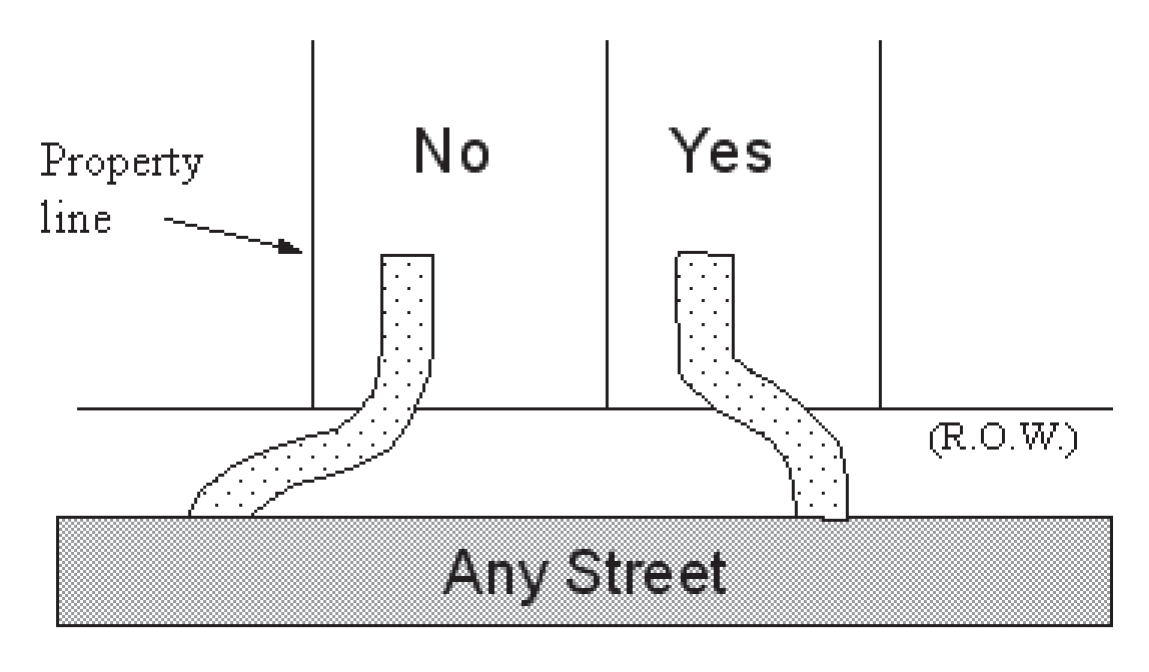
Figure D.1
(Ord. 8-05 #1, 6/14/05; Ord. 25-07 §1, 11/27/07; Ord. 21-19, §1(Exh. A), 8/13/19)
IV.
INTERSECTION AND DRIVEWAY VISIBILITY (Ord. 8-05 #1)
1.
Intersections. No fence, wall, hedge, landscaping, sign or other material or structure that will obstruct vision between a height of three (3) feet and eleven (11) feet shall be erected, placed or maintained within the sight visibility triangle formed by an imaginary line starting at the point of intersection of property lines and extending thirty (30) feet from their point of intersection, as shown on the following illustration:
(Ord. 8-05 #1)
Sight Visibility Triangle at Intersection (Ord. 8-05 #1)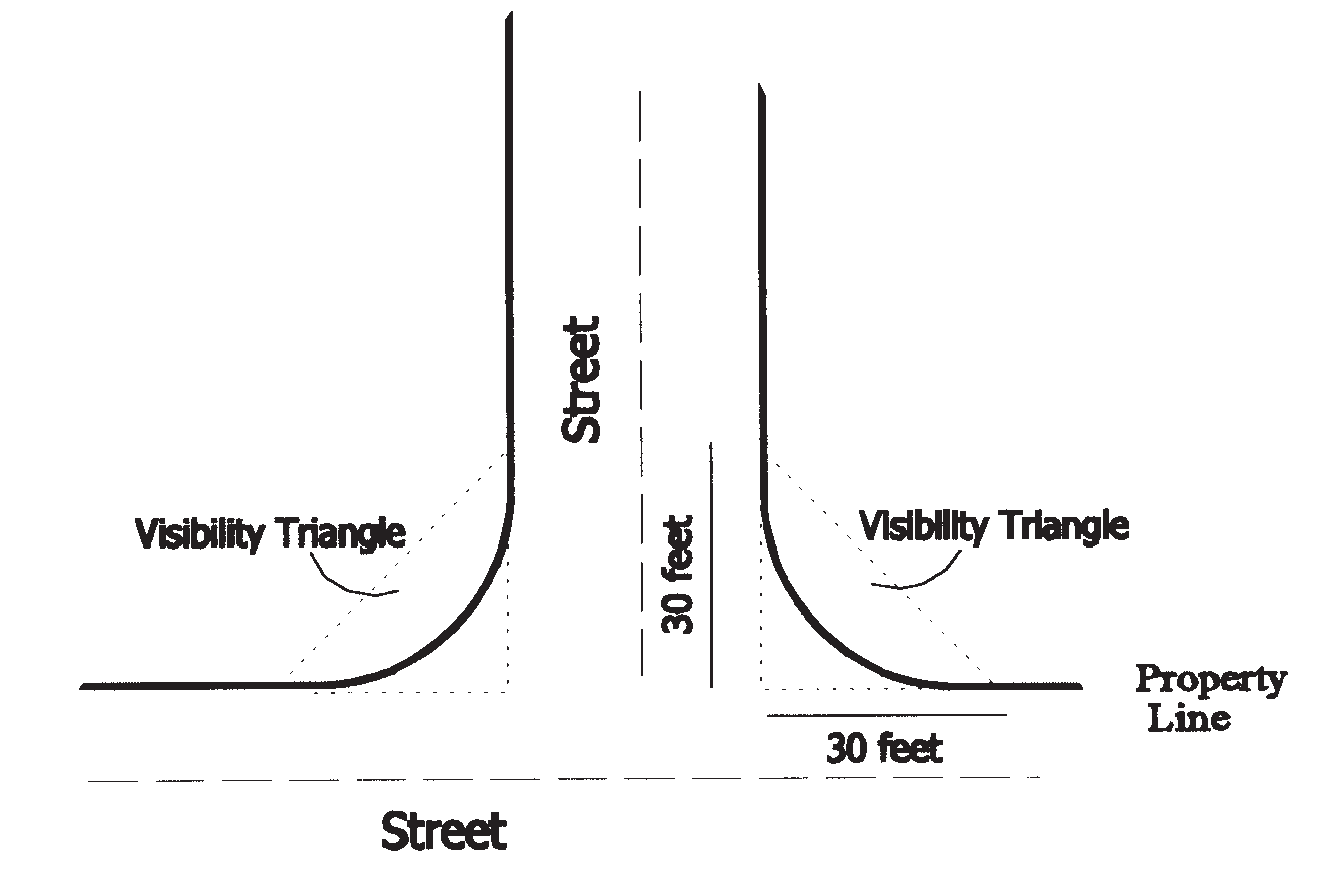
Visibility triangle requirements may be increased when deemed necessary for traffic safety.
(Ord. 18-01 #34; Ord. 8-05 #1)
2.
Driveways. (Ord. 8-05 #1)
a.
No fence, wall, hedge, landscaping, sign or other material or structure that will obstruct vision between a height of three (3) feet and eight (8) feet shall be erected, placed or maintained within the sight visibility triangle, as shown on the following illustration:
(Ord. 8-05 #1)
Sight Visibility Triangle at Driveway (Ord. 8-05 #1)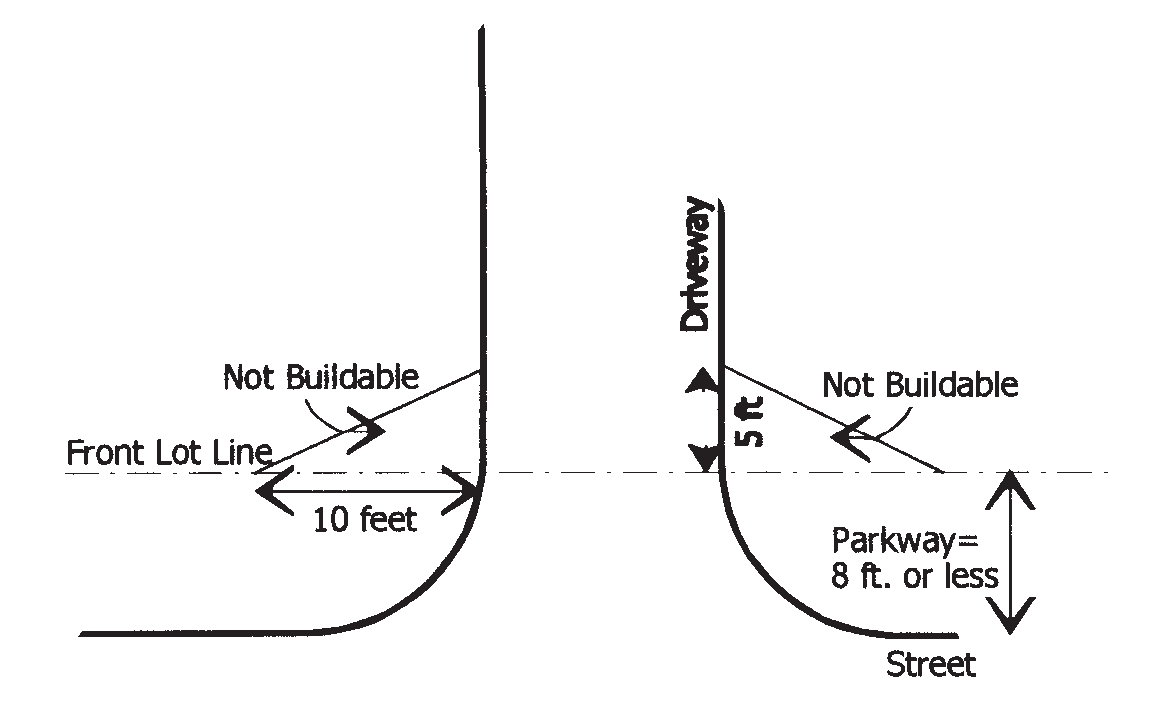
The provisions of this Section may be waived if it can be shown that visibility will not be restricted either because of a turnaround driveway or a parkway (tree lawn) greater than eight (8) feet.
(Ord. 18-01 #35; Ord. 8-05 #1)
b.
Driveways serving twenty (20) or more parking spaces shall have not less than two hundred fifty (250) feet of visibility in each travel lane entering an arterial street and not less than one hundred (100) feet of visibility on other streets.
(Ord. 8-05 #1)
(Ord. 18-01 #34, #35, 10/23/01; Ord. 8-05 #1, 6/14/05)
V.
SIDEWALKS, PEDESTRIAN CONNECTIONS AND TRAILS (Ord. 8-05 #1)
1.
Sidewalks. (Ord. 8-05 #1)
a.
ADA Requirements. All pedestrian facilities shall be designed in accordance with American Disabilities Act (ADA) regulations and the requirements of this Code, whichever is safer for pedestrians.
(Ord. 8-05 #1)
b.
Design. All sidewalks shall be designed in accordance with these standards. Slope, curve, vertical clearance, pedestrian crossing, underwalk drains and other design elements shall be in accordance with Larimer County Standards.
(Ord. 8-05 #1)
c.
Width. The minimum width of a required sidewalk shall be a minimum of five (5) feet in all residential zoning districts and the A-1 Zoning District and a minimum of eight (8) feet in all other nonresidential zoning districts.
(Ord. 8-05 #1)
d.
Location. The location of the sidewalk on a property will be determined on a case-by-case basis to account for, among other things, unique natural features and existing sidewalk location on adjoining properties; accordingly, in some instances, the sidewalk may be located outside of an existing right-of-way.
(Ord. 8-05 #1)
e.
Concrete Thickness. All detached sidewalks less than eight (8) feet in width and not within driveways shall be a minimum of 4-inch thick concrete. All detached sidewalks eight (8) feet and greater in width shall be six (6) inches thick. All sidewalks within a driveway shall be a minimum of six (6) inches thick. All attached sidewalks shall be a minimum of six (6) inches thick. Sidewalks shall be a minimum of eight (8) inches thick where crossed by commercial traffic.
(Ord. 8-05 #1)
2.
Trails. (Ord. 8-05 #1)
a.
Dedication of land shall be a minimum width of twenty-five (25) feet.
(Ord. 8-05 #1)
b.
Refer to the bicycle facilities design and technical criteria set forth in the Larimer County Urban Area Street Standards.
(Ord. 8-05 #1)
(Ord. 8-05 #1, 6/14/05)
VI.
EROSION CONTROL (Ord. 8-05 #1)
An erosion control plan sheet shall be required with the construction plans for the subdivision or development. The plan shall be in accordance with the Urban Drainage and Flood Control District Drainage Criteria Manual, Federal requirements, and the State Stormwater Management Plan.
(Ord. 8-05 #1, 6/14/05)
VII.
FLOOD PROTECTION
The following design standards shall apply to all subdivision and annexation proposals for areas located within the area of special flood hazard:
1.
All such subdivisions and annexation proposals shall include base flood elevation flood data.
2.
All new and replacement water supply systems shall be designed to minimize or eliminate infiltration of floodwater into the system.
3.
All new and replacement sanitary sewer systems shall be designed to minimize or eliminate infiltration of floodwaters into the systems and discharges from the systems into floodwaters.
4.
All such subdivisions shall have public utilities and facilities such as sewer, gas, electrical and water systems located and constructed to minimize flood damage.
5.
All such subdivisions shall have adequate drainage provided to reduce exposure to flood damage.
(Ord. 8-05 #1)
(Ord. 8-05 #1, 6/14/05)
VIII.
TREE AND VEGETATION PROTECTION DURING CONSTRUCTION AND GRADING ACTIVITIES
A.
Fencing.
1.
Within the limits of disturbance, fencing, at a minimum, should be placed around each significant tree and around stands of twelve (12) or more smaller trees a distance equal to the size of the individual or outermost tree's drip zone.
2.
For purposes of this subsection, the drip zone is calculated by measuring the diameter of the tree at breast height; every inch of diameter is equal to one and one-half (1.5) feet of drip zone. For example, a twelve-inch-diameter tree will require a minimum eighteen-foot-wide drip zone.
3.
No construction, grading, equipment or material storage, or any other activity shall be allowed within this area, and the fencing shall remain in place until all land alteration, construction and development activities are completed.
B.
Root Protection.
1.
If it is necessary to fill over the root zone, compacted soils shall be avoided by sandwiching fabric, rocks and more fabric under the area to be filled.
2.
Fill placed directly on the roots shall not exceed a maximum of six (6) inches in depth.
3.
If fill creates a tree well or depression around a tree or shrubs, such area shall be drained so that the vegetation is not drowned by the pooling of rainfall or irrigation.
4.
Utility trenches near trees should be avoided. If a line must be near a tree, tunneling, auguring or other mitigation measure shall be used. Cutting more than thirty percent (30%) of the roots endangers the health of the tree, and over forty percent (40%) affects the tree's stability.
IX.
OTHER REQUIREMENTS
A.
Construction Approval. All subdivisions shall be designed and improvements made by the developer consistent with the requirements in this Code. Construction plans for subdivisions shall be approved prior to final plat approval. Construction plans for all developments shall be approved prior to issuance of first building permit.
(Ord. 8-05 #1)
B.
Quality Control. Refer to Larimer County Road Manual for as-built, material testing and professional engineer certification requirements.
(Ord. 8-05 #1)
C.
Repairs and Restoration. Developers of all sites and subdivisions shall be required to repair or restore any off-site damage that occurred during development, including, but not limited to, street repair, revegetation of disturbed areas and regrading.
D.
Street Construction Details. Refer to Larimer County Road Manual Appendix C for additional street construction details.
(Ord. 8-05 #1)
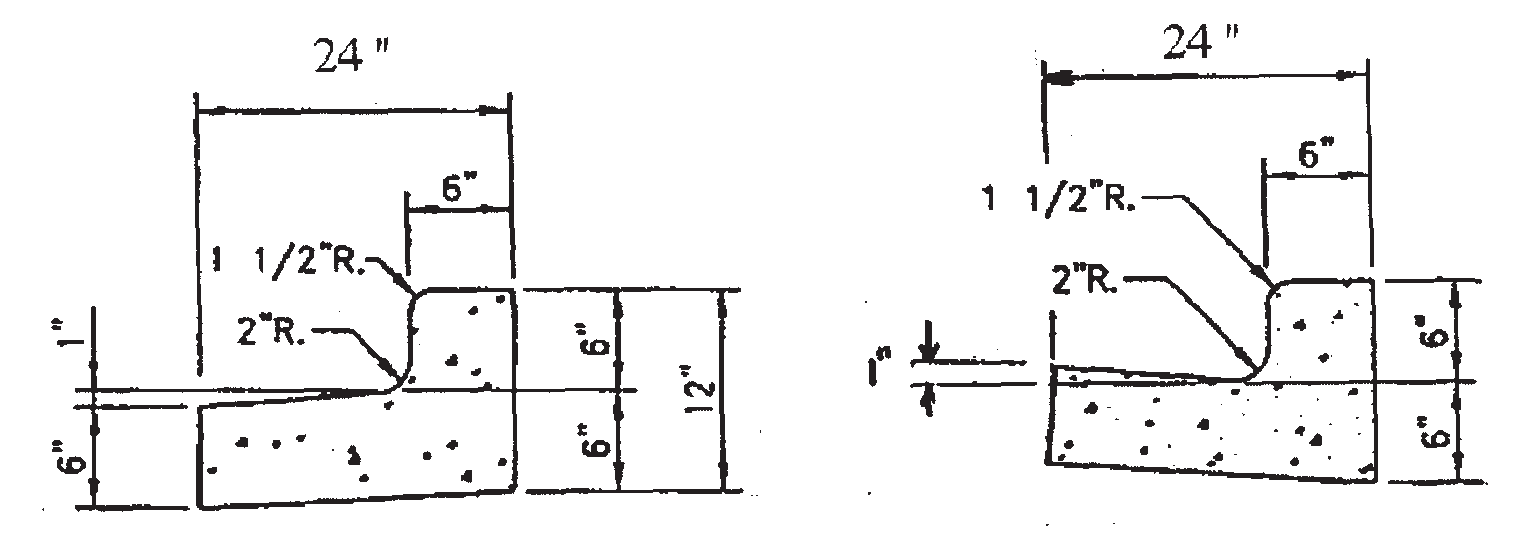
CURB AND GUTTER (Ord. 8-05 #1)
NOTE: THESE STANDARDS MAY BE APPLIED TO ASYMMETRICAL CUL-DE-SACS. THESE STANDARDS SHOW A ONE-WAY TRAFFIC DESIGN. TWO-WAY DESIGNS REQUIRE A MINIMUM WIDTH OF TWENTY (20) FEET INSTEAD OF THE FIFTEEN (15) FEET SHOWN. THE CENTER ISLAND SHALL BE LANDSCAPED.
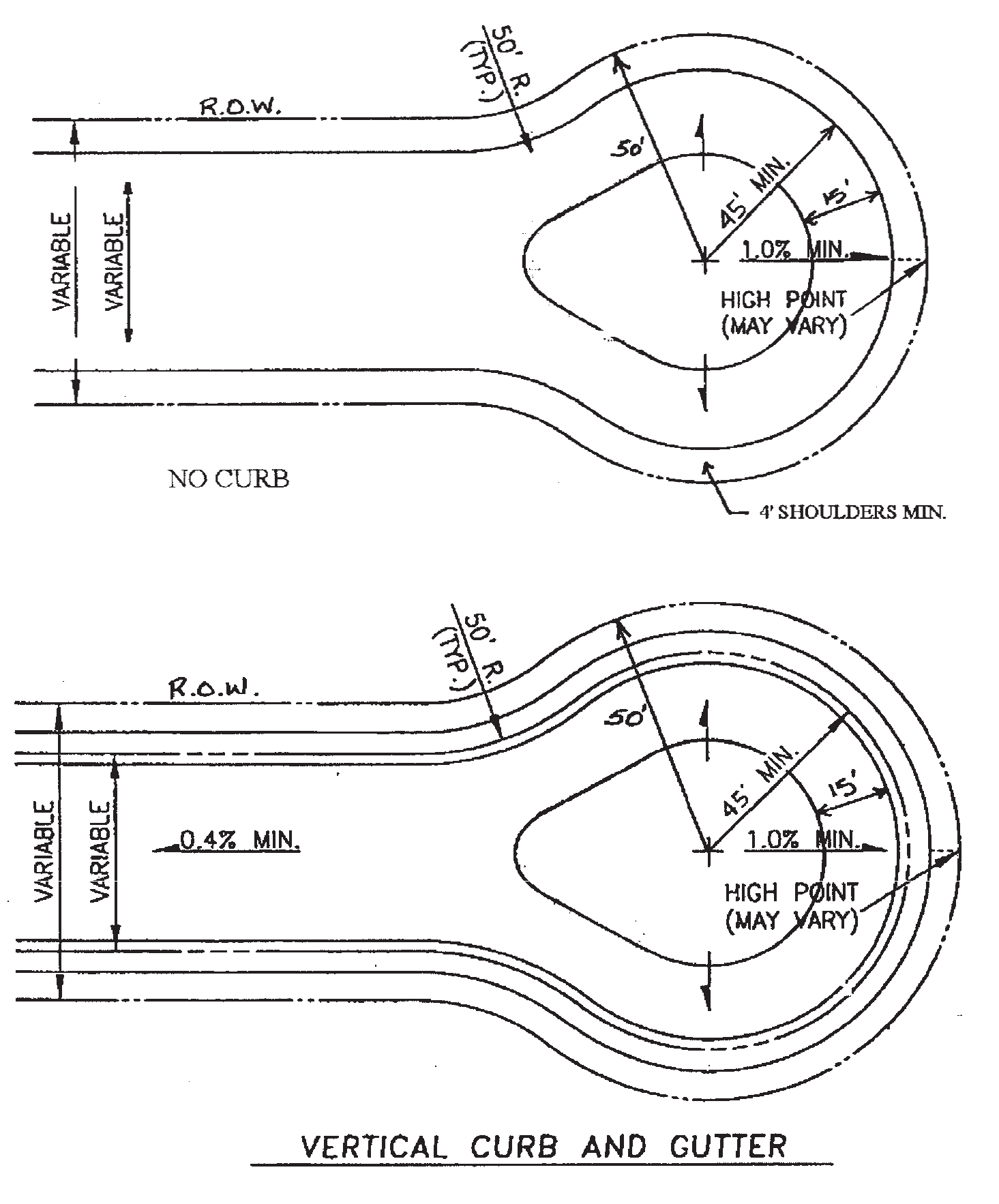
Cul-de-Sac Details (Ord. 8-05 #1)
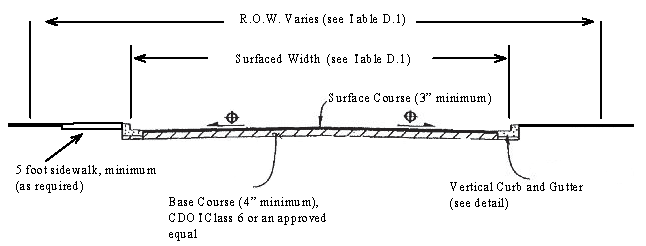
Typical Street Section with Curb and Gutter (Ord. 8-05 #1)
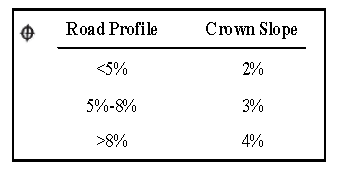
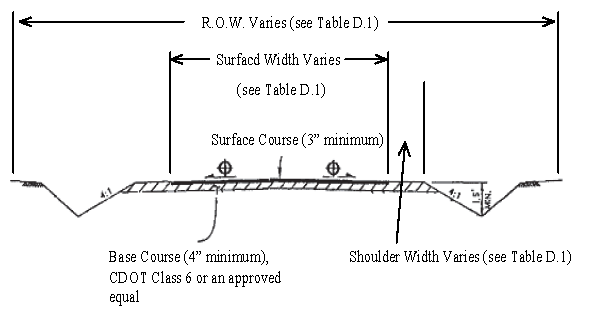
Typical Street Section with Ditch (Ord. 8-05 #1)
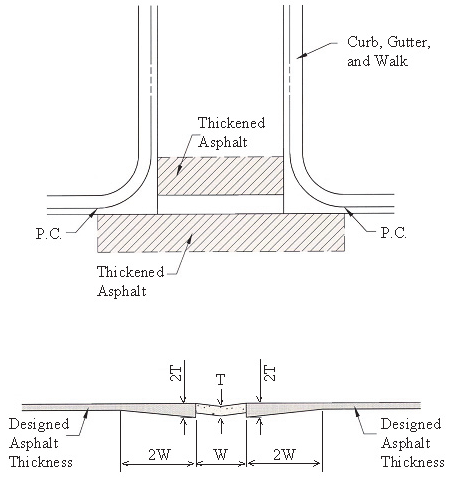
Asphalt Paving Detail at Crosspans (Ord. 8-05 #1)
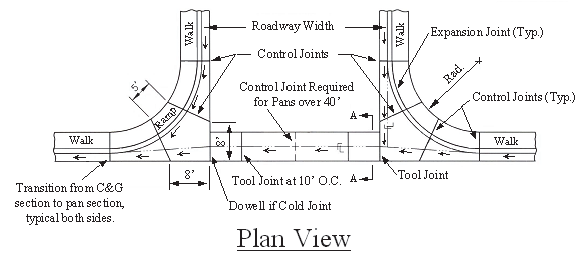
NOTE: ALL INTERSECTIONS TO HAVE ACCESS RAMPS DESIGNED IN ACCORDANCE WITH ADA STANDARDS.
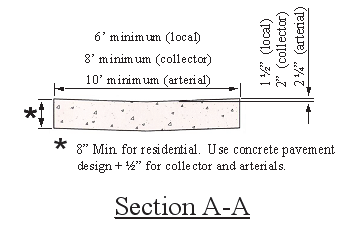
Street Intersection Gutter Details (Ord. 8-05 #1)
(Ord. 8-05 #1, 6/14/05)

