
Faribault City Zoning Code
CHAPTER 8
- OFF-STREET PARKING AND LOADING
Sec. 8-10. - Purpose.
Parking and loading regulations are established to alleviate or prevent congestion of the public right-of-way, to provide for the parking and loading needs of uses and structures, to enhance the compatibility between parking and loading areas and their surroundings, and to regulate the number, design, maintenance, and location of required off-street parking and loading spaces, and access driveways and aisles.
(Ord. No. 99-20, § 1, 11-23-99)
Sec. 8-20. - Change of use.
When the use of a building or site is changed or the intensity of use is increased through the addition of dwelling units, gross floor area, capacity, or other unit of measurement used for determining parking and loading requirements, parking and loading facilities shall be provided for such change or intensification of use as specified in Table 8-3.
(Ord. No. 99-20, § 1, 11-23-99)
Sec. 8-30. - Existing facilities.
Existing parking and loading facilities shall not be reduced below the requirements for a similar new use or, if less than the requirements for a similar new use, they shall not be reduced further.
(Ord. No. 99-20, § 1, 11-23-99)
Sec. 8-40. - Use.
Required parking and loading spaces and the driveways providing access to them shall not be used for storage, display, sales, rental or repair of motor vehicles or other goods, or for the storage of inoperable vehicles or snow. Additionally, no fee shall be charged for any required parking space.
(Ord. No. 99-20, § 1, 11-23-99)
Sec. 8-50. - Location.
Required parking and loading spaces shall be located on the same lot or development site as the use served except under the following provisions:
(1)
Reasonable and improved access shall be provided from the off-site parking facilities to the use being served.
(2)
Off-site parking for multiple-family dwellings shall be located no more than one hundred (100) feet from any normally used entrance of the use being served.
(3)
Off-site parking for non-residential uses shall be located no more than three hundred (300) feet from the main entrance of the principal use being served.
(4)
The site used for off-site parking shall be under the same ownership as the principal use being served or the use of the parking facilities shall be protected by a recorded instrument acceptable to the city.
(Ord. No. 99-20, § 1, 11-23-99)
Sec. 8-60. - Calculation of requirements.
Calculating the number of parking spaces required shall be in accordance with the following:
(1)
Gross floor area. The term "gross floor area" (GFA) for the purpose of calculating the number of off-street parking spaces required shall be determined on the basis of the exterior floor dimensions of the building, structure, or use times the number of floors, minus ten (10) percent.
(2)
In churches and other places of public assembly in which patrons or spectators occupy benches, pews, or other similar seating facilities, each twenty-four (24) inches of such seating shall be counted as one seat for the purpose of this chapter.
(3)
In cases where parking requirements are based on "capacity" of persons, capacity shall be based on the maximum number of persons that may occupy a place, as determined by the Building Code. Maximum capacity shall be posted within the establishment. Both indoor and outdoor seating is included in maximum capacity.
(4)
When calculating the number of off-street parking spaces results in a fraction, each fraction of one-half (½) or more shall require another space.
(5)
Except in shopping centers or where joint parking requirements have been approved, if a structure or site contains two or more uses, each use shall be calculated separately in determining the total off-street parking spaces required.
(6)
In cases where future potential uses of a building may generate additional parking demand, the city may require a proof of parking plan for the site, showing how the anticipated parking demand will be met. The city may permit the additional land area that would be required for anticipated parking to be placed in reserve as landscaped open space until needed.
(Ord. No. 99-20, § 1, 11-23-99)
Sec. 8-70. - Submission of parking plan.
Any application for a building permit or zoning certificate requiring or including the provision of off-street parking shall include a parking plan. Said plan shall be drawn to scale and fully dimensioned, showing parking facilities to be provided in compliance with this ordinance. Design of such facilities, in addition to requirements shown below, is also subject to the standards identified in Chapter 4, Site Plan Review.
(Ord. No. 99-20, § 1, 11-23-99)
Sec. 8-80. - Access to parking spaces.
Each required off-street parking space shall open directly to an aisle or driveway of such width and design as to provide safe and efficient means of vehicular access to the parking space, as shown in Table 8-2, except where accessory to residential uses of up to four (4) units, the requirements of Table 8-2 do not apply.
(Ord. No. 99-20, § 1, 11-23-99; Ord. No. 2001-24, § 1, 1-8-02)
Sec. 8-90. - Maneuvering area.
All parking areas except those serving single and two-family dwellings on local streets shall be designed so that cars shall not be required to back into the street. If deemed necessary for traffic safety, turn-around areas may be required.
(Ord. No. 99-20, § 1, 11-23-99)
Sec. 8-100. - Surfacing.
(A)
All off-street parking areas, all access drives leading to such parking areas or garages, and all other areas upon which motor vehicles may be located, except as otherwise stated below, shall be surfaced with a dustless all-weather hard surface material capable of carrying a wheel load of four thousand (4,000) pounds.
(B)
All industrial off-street parking areas, all access drives leading to such parking areas, and all other areas upon which motor vehicles may be located shall be surfaced with a dustless all-weather hard surface material capable of carrying a wheel load of four thousand (4,000) pounds.
(C)
Acceptable surfacing materials shall include asphalt, concrete, brick, cement pavers or similar material installed and maintained per industry standards.
(D)
Crushed rock shall not be considered an acceptable surfacing material on any public, employee, or resident off-street parking areas, or access drives leading to such parking areas or garages, except as provided for elsewhere in this section.
(E)
Within all industrial zoning districts, loading areas are allowed to have a Class II (one hundred (100) percent crushed) aggregate base. Access drives that serve loading areas shall be hard surfaced with either bituminous or concrete within the required front or corner side building setback. A dust control plan shall be submitted and approved by the city.
(F)
Within all industrial zoning districts, internal yard areas are allowed to have a Class II (one hundred (100) percent crushed) aggregate surface. Such internal yard areas shall be located to the side or rear of the principal building. The internal yard area shall be clearly separated from public areas by fencing or other acceptable means. Access drives that serve loading areas shall be hard surfaced with either bituminous or concrete within the required front or corner side building setback. A dust control plan shall be submitted and approved by the city.
(Ord. No. 99-20, § 1, 11-23-99; Ord. No. 2001-24, § 1, 1-8-02; Ord. No. 2008-09, § 4, 5-13-08)
Sec. 8-110. - Curbing.
(A)
Except for one-family to four-family residential uses, all public, employee, or multifamily residential off-street parking areas, all access drives leading to such parking areas, landscaped islands, and all other areas upon which motor vehicles may be located shall have a continuous, poured concrete curbing around the perimeter.
(B)
Within all industrial zoning districts, loading areas shall not be required to have a continuous, poured concrete curb. Access drives that serve loading areas and are located within the required front or corner side building setback shall have a continuous, poured concrete curbing.
(C)
Within all industrial zoning districts, internal yard areas are not required to provide a continuous, poured concrete curb. Access drives that serve loading areas and are located within the required front or corner side building setback shall have a continuous, poured concrete curbing.
(Ord. No. 99-20, § 1, 11-23-99; Ord. No. 2008-09, § 4, 5-13-08)
Sec. 8-120. - Lighting.
Lighting used to illuminate an off-street parking area shall comply with the performance standards identified in Section 6-340. The height of parking lot light poles or standards shall be no less than twelve (12) feet and no more than the maximum height established for structures in the zoning district where the lights will be installed.
(Ord. No. 99-20, § 1, 11-23-99)
Sec. 8-130. - Required setbacks, screening, and landscaping.
Required setbacks for parking, loading, and driving areas are specified within the individual zoning district chapters. Landscaping and screening requirements for parking and driving areas are identified in Chapter 4, Site Plan Review.
(Ord. No. 99-20, § 1, 11-23-99)
Sec. 8-140. - Curb cut requirements.
(A)
Requirements for curb cut openings are shown in Table 8-1. For the purposes of measuring distance between curb cuts and between curb cuts and street intersections, such distance is determined based on where the curb lines intersect.
Table8-1.Curb cut requirements.
* See section 23-439
**See section 8-140(B)
(B)
Requirements for second curb cuts for residential uses.
(1)
A second curb cut shall only be permitted if the lot width is eighty-five (85) feet or more.
(2)
The combined total curb cut width of the first and second curb cuts shall be no more than thirty-two (32) feet.
(3)
Curb cuts on the same property shall have a minimum distance of twenty-two (22) feet between curb openings.
(4)
The second curb cut shall be at least thirty (30) feet or two-thirds (⅔) lot width from an intersection.
(Ord. No. 99-20, § 1, 11-23-99; Ord. No. 2017-5, § 2, 6-13-17)
Sec. 8-150. - Increased curb cut width.
Upon written approval of the City Engineer, curb cut width may be increased to fifty (50) feet in cases where it is necessary to facilitate vehicle maneuvering onto and off the site, provided that the overall driveway width does not exceed forty (40) percent of the lot width.
(Ord. No. 99-20, § 1, 11-23-99)
Sec. 8-160. - Marking of parking spaces.
All parking areas containing four (4) or more spaces or containing angled parking shall have the parking spaces and aisles clearly marked on the pavement, using paint or other approved marking devices approved by the City Planner. Such markings shall be maintained in a clearly legible condition.
(Ord. No. 99-20, § 1, 11-23-99)
Sec. 8-170. - Size.
The minimum dimensions for required parking spaces are shown in Figure 8-1 and Table 8-2. Minimum dimensions are exclusive of access drives or aisles, ramps, or columns. In no case shall any part of the public right-of-way contribute towards required stall size. Ninety degree (90°) parking spaces that use a curb overhang over a landscaped area or a minimum seven (7) foot wide sidewalk may be reduced to eighteen (18) feet in length.
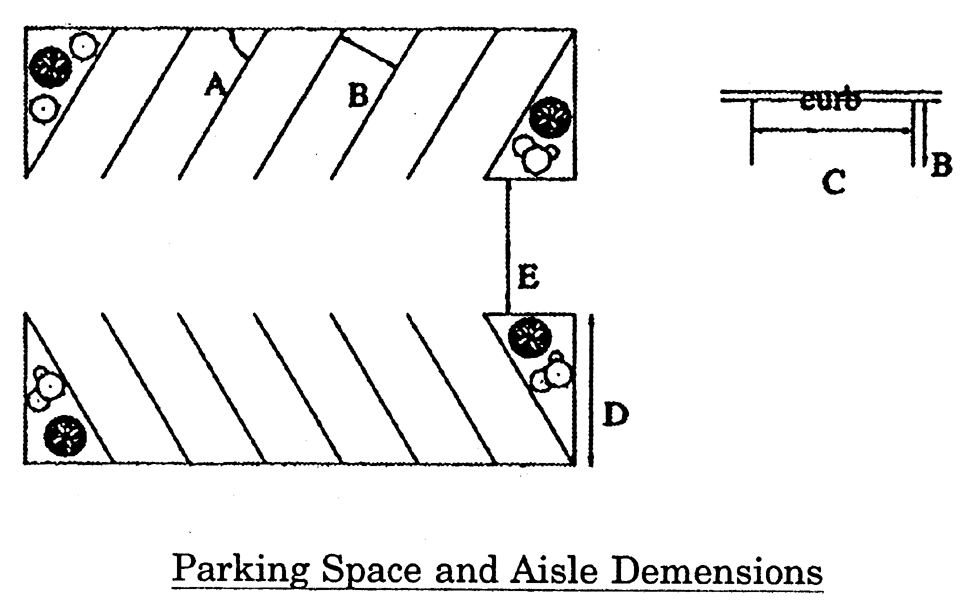
Table8-2.Minimum parking space and aisle dimensions.
(Ord. No. 99-20, § 1, 11-23-99)
Sec. 8-180. - General maintenance.
Parking areas and driveways shall be kept free of dirt, dust, and debris and the pavement shall be maintained in good condition. In winter months, required parking areas shall be cleared of snow within twenty-four (24) hours of the end of any snowfall event.
(Ord. No. 99-20, § 1, 11-23-99)
Sec. 8-190. - Accessible parking.
Accessible parking spaces for the disabled shall be provided as required by the State Building Code.
(Ord. No. 99-20, § 1, 11-23-99)
Sec. 8-200. - Specific off-street parking requirements.
(A)
In general. Accessory, off-street parking shall be provided as specified in Table 8-3 except as otherwise specified in this chapter. When a particular use specifies an "x" under the Notes column, such use is subject to specific standards as identified in Section 8-200(C) below.
Table 8-3. Specific off-street parking requirements.
(B)
Special considerations for parking requirements. Certain types of uses, due to their unique characteristics, require additional considerations to be made in determining parking requirements, as follows:
(1)
Senior housing. When senior housing may convert to general housing at some point in time, proof of additional parking shall be required.
(2)
Residential care facilities. For facilities that serve six (6) or fewer residents, and have no employees, the single-family dwelling parking requirement of two (2) spaces shall be required. For facilities that allow residents to own/operate vehicles, an additional one (1) space per two (2) residents shall be required. Garage stalls shall not be counted towards satisfaction of required parking.
(3)
Preschools and day care facilities. On-street drop-off spaces may be utilized to meet requirements subject to approval by the City Engineer.
(4)
Auto repair and service facilities. Service bays shall not contribute to the satisfaction of required parking.
(5)
Employee counts. When parking requirements are to be determined by employee counts, such calculation shall be based on the maximum number of employees on the premises at any one time.
(6)
Governmental and public uses. Parking requirements for governmental and other similar public uses shall be based on the type of use and the requirements established for such use.
(7)
Ambulance facilities. For the purposes of this use, net floor area shall be the total floor area of the facility minus the garage/storage area of the facility. In addition to the off-street parking requirements, all ambulance facilities shall provide one indoor and one outdoor parking space for each commercial vehicle used in the operation of the facility.
(8)
Business vehicles. In addition to the requirements in Table 8-3, one (1) parking space shall be provided for each commercial vehicle or vehicle necessary for the operation of the use that is maintained on the premises.
(9)
Reduction in required parking. A development may reduce the number of required parking spaces when the use can demonstrate, in documented form, a need which is less than required. In such cases, future parking sufficient in quantity to meet the ordinance requirement shall be shown on the approved site plan. The city may require the additional land that is necessary to meet the required parking standard to be placed in reserve for parking development should the use change or parking provided be determined inadequate. If at any time the city determines parking to be inadequate, the city may require construction of any or all of the additional parking held in reserve. A reduction in required parking is available for the following zoning districts, subject to any additional stipulations:
(i)
In all industrial zoning districts.
(ii)
In C-1, C-2, C-3, PUD, and P-I zoning districts and overlays, provided the reduction in constructed spaces may not be more than thirty (30) percent of the total required parking space.
(iii)
A parking reduction through this provision shall not apply to residential uses.
(Ord. No. 99-20, § 1, 11-23-99; Ord. No. 2002-13, § 1, 6-25-02; Ord. No. 2002-16, § 1, 8-13-02; Ord. No. 2003-10, § 1, 5-27-03; Ord. No. 2004-14, § 1, 6-8-04; Ord. No. 2008-09, § 4, 5-13-08; Ord. No. 2008-15, § 1, 6-24-08; Ord. No. 2009-12, § 3, 10-27-09; Ord. No. 2025-7, § 2(Exh. A), 6-10-25)
Sec. 8-210. - Exemptions.
Properties existing prior to adoption of this ordinance and located within the CBD, Central Business District, are exempt from the provisions of this section. Any development or redevelopment of a cleared site within the CBD, Central Business District, shall require the provision of on-site parking equal to one-half (½) the stalls required in Table 8-3.
(Ord. No. 99-20, § 1, 11-23-99)
Sec. 8-220. - Shared parking.
The city may approve the use of a required off-street parking area for more than one principal use on the same or an adjacent development site if the following conditions are met:
(1)
Entertainment uses. Up to fifty (50) percent of the parking facilities required for a theater, bowling alley, bar, nightclub, or tavern may be supplied by off-street parking facilities provided for primarily daytime uses, as specified below.
(2)
Nighttime or Sunday Uses. Up to fifty (50) percent of the off-street parking facilities required for any use specified below as primarily daytime uses may be supplied by the parking facilities provided for the following nighttime or Sunday uses: auditoriums incidental to a public or parochial school, churches, bowling alleys, theaters, bars, nightclubs, or taverns (excluding those with restaurants) or multi-family apartments.
(3)
School auditorium and church uses. Up to eighty (80) percent of the parking facilities required by this section for a church or an auditorium incidental to a public or parochial school may be supplied by the parking facilities provided by uses specified below as primarily daytime uses.
(4)
Daytime uses. For the purpose of this section the following uses are considered as primarily daytime uses: banks, offices, retail stores, personal service shops, service and repair shops, manufacturing, wholesale, and similar uses.
(5)
The use for which application is being made for joint parking shall be located within three hundred (300) feet of the use providing the parking facilities.
(6)
The applicant shall show that there is no substantial conflict in the principal operating hours of the buildings or uses for which joint parking is proposed.
(7)
A legally binding instrument, executed by the parties concerned, for joint use of off-street parking facilities shall be approved by the City Attorney and filed with the Rice County Recorder's Office within sixty (60) days after approval of the joint parking use.
(Ord. No. 99-20, § 1, 11-23-99)
Sec. 8-230. - Valet parking.
Up to fifty (50) percent of the off-street parking for restaurants, hotels, theaters, and other similar establishments may be fulfilled by maintaining a valet parking service for customers. The valet service shall provide service to and from the main entrance. A passenger loading area, as approved by the City Engineer, shall be provided near the main entrance. The parking area shall be located no farther than eight hundred (800) feet from the main entrance. Parking areas used exclusively for valet parking need not be striped.
(Ord. No. 99-20, § 1, 11-23-99)
Sec. 8-240. - Bicycle parking.
(A)
In general. A minimum of four (4) bicycle parking spaces may be provided in lieu of not more than one (1) required automobile parking space.
(B)
Location. Bicycle parking spaces and racks shall be located in a convenient and visible area no farther from the principal entrance to the building served than the closest automobile parking space. With the permission of the City Engineer, bicycle parking may be located in the public right-of-way.
(C)
Covered spaces. If accessory automobile parking spaces are covered, bicycle parking spaces shall also be covered.
(D)
Design. Bicycle parking shall consist of a bike rack designed so that the bicycle frame can be locked to the rack and shall be subject to approval by the City Planner.
(Ord. No. 99-20, § 1, 11-23-99)
Sec. 8-250. - Parking in residential districts.
The following standards pertain to the parking of vehicles, including recreational vehicles such as travel trailers, motor homes, camping trailers, boats, and other similar items, within a residential district:
(1)
Off-street parking for one to four-family residential uses shall be provided in the rear yard, side yard, garage or carport, upon a well-defined driveway, or in an area not to exceed twelve (12) feet in width on one (1) side of a front yard driveway.
(2)
Parking areas shall be used for vehicles only and shall not contain any outdoor storage or sales of goods or materials, commercial repair work, or other similar uses.
(3)
Recreational vehicles shall be permitted to be parked within side or rear yards provided that such vehicle is parked no closer than three (3) feet from any lot line.
(4)
Parking of any vehicle specifically utilized as part of a waste hauling operation shall not be permitted on any residential lot.
(Ord. No. 99-20, § 1, 11-23-99)
Sec. 8-260. - Parking of commercial vehicles in residential districts.
The standards in this section shall apply to the following types of vehicles: commercial trucks, tractors, vans, pickups or any vehicle required to be registered as a "Y"-type vehicle (vehicles with a carrying capacity of one (1) ton or more; and any commercial trailer or other machinery capable of being trailed behind a vehicle. Regulation of on-street parking is controlled by Chapter 15 of the City Code.
(1)
Engines of commercial vehicles may not run continuously. A thirty (30) minute engine warm-up time shall be permitted immediately prior to the commercial vehicle and/or any other motorized equipment leaving the premises. The warm-up period shall begin no earlier than 6:00 a.m. and end no later than 10:00 p.m. This provision does not authorize the violation of any applicable noise standard, law or regulation.
(2)
The vehicle shall be parked only upon a paved off-street parking area or pad constructed in accordance with the off-street parking requirements of this ordinance.
(3)
An exemption from requirement (2) above may be granted for one (1) vehicle per property only under the following circumstances:
(a)
The vehicle is used for a home occupation registered with the city and in existence prior to December 1, 1989; and
(b)
The property registered for the home occupation has insufficient room in the front yard area to accommodate at least one (1) lane into a garage or driveway area in addition to the required parking pad.
(Ord. No. 99-20, § 1, 11-23-99; Ord. No. 2004-05, § 7, 6-8-04)
Sec. 8-265. - Electric vehicle charging stations.
The standards of this section apply to the provision of parking spaces dedicated to charging electric vehicles.
(A)
Purpose. This section is established to provide for the appropriate location and development of EVSE to reduce adverse impacts of such facilities and maximize the use of limited resources including land and energy.
(B)
General standards.
(1)
All electric vehicle charging spaces and EVSE for accessible spaces are subject to the Minnesota State Building and Accessibility codes.
(2)
Electric vehicle supply equipment is permitted in every zoning district when accessory to the primary use.
(3)
If a Level 3 EV charging station is installed, or any electric vehicle supply equipment is installed or used for retail charging of electric vehicles that would not otherwise be on-site, then the use is considered an automobile convenience facility for zoning purposes and allowed only in zoning districts that permit by-right or by conditional use permit automobile convenience facilities uses, and shall comply with the applicable development standards, including Section 7-30.
(4)
Building permits are required for the installation of building-mounted and free-standing electric vehicle charging stations. All such systems shall be designed and installed in compliance with pertinent building codes and other applicable regulations.
(5)
Primary pedestrian access and accessible routes shall not be obstructed or crossed by cords, cables, or other components of EVSE in compliance with Minnesota State Building and Accessibility codes. In no case shall EVSE components, cords, or cables obstruct sidewalks in public right-of-way.
(C)
Parking design and calculations.
(1)
Parking spaces dedicated to electric vehicle charging will count towards required automobile parking spaces.
(2)
Parking lots providing electric vehicle charging spaces are subject to the following regulations:
(a)
In an existing or redeveloped parking lot with four (4) or more spaces, parking spaces lost to accommodate the electrical service required to install EVSE and associated equipment (including switchgear, transformers, or similar), shall not count against the property owner regarding parking minimums.
(b)
Electric vehicle charging facilities are exempt from the stacking requirements identified for automobile convenience facilities in Section 8-270.
(D)
EVSE standards for garages and properties with unmarked parking areas. Electric vehicle charging stations located on properties with a garage or with parking areas for three (3) or fewer spaces:
(1)
Must be solely for the private use of the property owner, resident, or their guests;
(2)
Must be located in a garage, on the exterior wall of the home or garage, or freestanding pole with footing, adjacent to a driveway or parking area, and setback no less than five (5) feet from the front or corner-side property line. EVSE, including components, cables, and cords, must be completely within the property boundaries.
(3)
When not located indoors, electric vehicle charging stations must be rated for outdoor use.
(E)
Electric vehicle charging stations may be located on city property or within city rights-of-way on a case-by-case basis, subject to a limited use or lease agreement, and may be subject to review by the Development Review Committee and approval by City Council.
(Ord. No. 2024-9, § 4, 5-14-24)
Editor's note— Ord. No. 2024-9, § 4, adopted May 14, 2024, set out provisions intended for use as § 8-270. Inasmuch as there were already provisions so designated, said section has been codified herein as § 8-265 at the discretion of the editor.
Sec. 8-270. - Drive-in and drive-through stacking requirements.
Drive-in and drive-through facilities shall provide adequate stacking space for vehicles based on the requirements shown in Table 8-4. Stacking spaces shall require a minimum pavement width of twelve (12) feet, a length of twenty (20) feet per vehicle, and shall be exclusive of any other required aisles or parking spaces.
Table 8-4. Stacking requirements for drive-in and drive-through facilities.
(Ord. No. 99-20, § 1, 11-23-99; 2006-16, § 1, 7-11-06)
Sec. 8-280. - Requirements.
Off-street loading space shall be provided for any non-residential use which requires the receipt or distribution of materials or merchandise by trucks or similar vehicles, and which will have a gross floor area of five thousand (5,000) square feet or more, according to the following minimum standards:
(1)
The off-street loading requirement for buildings with less than twenty thousand (20,000) square feet GFA may be satisfied by the designation of a loading zone area on the site. This loading zone area shall be separate from any required off-street parking area, and access to it shall not conflict with automobile or pedestrian circulation within the site.
(2)
Buildings with 20,001 to 50,000 square feet of GFA shall provide one (1) loading space.
(3)
Buildings with 50,001 to 100,000 square feet of GFA shall provide two (2) loading spaces.
(4)
Buildings with 101,000 or more square feet of GFA shall provide one (1) additional loading space per additional 300,000 sq. ft. GFA.
(Ord. No. 99-20, § 1, 11-23-99)
Sec. 8-290. - Size and location.
In addition to the design guidelines specified in Section 4-80, off-street loading areas shall be subject to the following standards:
(1)
Semi-trailer spaces shall be at least fifty-five (55) feet in length, ten (10) feet in width and fourteen (14) feet in height plus necessary additional maneuvering space.
(2)
Spaces shall be at least fifty (50) feet from the property line of any residential property or residentially-zoned property.
(3)
All loading spaces and driveways shall be surfaced with a dustless all-weather material meeting the standards for off-street parking areas and driveways.
(4)
All loading spaces shall be provided in a location where it is not necessary to utilize the public right-of-way for access to such space.
(Ord. No. 99-20, § 1, 11-23-99)

