
Faribault City Zoning Code
CHAPTER 4
- SITE PLAN REVIEW
Sec. 4-10. - Purpose.
Site plan review standards and guidelines are established to promote development that is compatible with nearby properties, neighborhood character, and natural features, to minimize conflict between pedestrian and vehicular traffic, to promote public safety, and to visually enhance development within the city. The requirements of this chapter aim to recognize the unique character of land and development and the need for flexibility in site plan review.
(Ord. No. 99-20, § 1, 11-23-99)
Sec. 4-20. - Uses subject to site plan review.
The site plan review requirements of this chapter shall apply to all new construction, remodeling, or expansion of commercial, industrial, or multi-family residential uses, with the following exceptions:
(1)
The use is established in an existing building that has received site plan approval, and the establishment of the use does not alter the approved site plan for the property.
(2)
Proposed modifications are strictly related to the interior of the building.
(3)
Modifications, additions, or enlargements to a building which do not increase the gross floor area by more than five hundred (500) square feet or ten (10) percent, whichever is less, and which do not require a variance from the provisions of this ordinance.
(4)
Grading or site preparation that results in minor modifications to the existing site, as approved by the City Engineer.
(Ord. No. 99-20, § 1, 11-23-99)
Sec. 4-30. - Site plan requirements.
(A)
In general. Except in those instances specified in Section 4-20, site plan approval is required prior to issuance of a building permit for any proposed construction or issuance of a zoning certificate for any proposed use. When a site plan is required in support of a request for conditional use permit or variance approval, such plan shall also be subject to the requirements established within this chapter.
(B)
Required information. All site plans shall be drawn to scale and shall contain the following information, unless otherwise specifically waived by the City Planner:
(1)
A vicinity map which shall include the location of any railroads, major streams or rivers, and public streets in the vicinity of the site.
(2)
The boundaries and dimensions shown graphically, along with a written legal description of the property.
(3)
The present and proposed topography of the site and adjacent areas within fifty (50) feet by contour lines at an interval of not more than five (5) feet, and by use of directional arrows, the proposed flow of storm water runoff from the site.
(4)
The location of existing and proposed structures, with height and gross floor area appropriately noted.
(5)
The location and dimensions of existing and proposed curb cuts, aisles, off-street parking and loading spaces, and walkways.
(6)
The location, height, and material for screening walls and fences.
(7)
The type of surfacing and base course proposed for all parking areas, loading areas, and walkways.
(8)
The location of all existing and proposed water lines, hydrants, sanitary sewer lines and storm drainage systems.
(9)
Existing and proposed public streets or rights-of-way, easements, or other reservations of land on the site.
(10)
The location and method of screening of outdoor trash storage areas.
(11)
The location and size of all proposed signage.
(12)
The location and height of proposed lighting facilities.
(13)
Elevation views of all proposed buildings or structures, with building materials and proposed colors noted.
(14)
When a site is to be developed in stages, the plan should indicate the ultimate development of the site and proposed developmental phases.
(Ord. No. 99-20, § 1, 11-23-99)
Sec. 4-40. - Administrative site plan review.
(A)
In general. The Development Review Committee shall conduct the administrative review of all site plan approval requests. All findings and decisions of the Committee shall be final, subject to appeal to the Planning Commission and City Council, as specified in Section 2-110.
(B)
Required findings. The Development Review Committee shall make each of the following findings before approving a site plan approval request:
(1)
The site plan conforms to all applicable standards within this chapter.
(2)
The site plan conforms to all applicable regulations of this ordinance and is consistent with the applicable policies of the Land Use Plan.
(3)
The site plan is consistent with any applicable functional or special area plans or development objectives adopted by the City Council.
(4)
The site plan minimizes any adverse affects of property in the immediate vicinity and minimizes congestion of the public streets.
(C)
Conditions of site plan approval. The Development Review Committee may impose conditions on any proposed site plan and require such guarantees as it deems necessary for the protection of the public interest and to ensure compliance with the standards and purposes of this ordinance, the applicable policies of the Land Use Plan, and any special land use plans adopted by the City Council.
(D)
Changes to approved site plan. An approved site plan may not be changed, modified, or altered in any manner without the approval of the city. In such cases where proposed changes are minor in nature, as determined by the City Planner, a revised site plan may not be required. In all other cases, a revised site plan shall be re-submitted for consideration by the Development Review Committee.
(E)
Expiration of approved site plan. Unless a written extension request is submitted to and approved by the City Planner, an approved site plan shall expire upon either of the following conditions:
(1)
A new site plan for the property is submitted to and approved by the Development Review Committee.
(2)
A building permit has not been issued within two (2) years from the date of site plan approval.
(F)
Inspection and enforcement. Prior to issuance of a certificate of occupancy for any use not exempted within Section 4-20, the City Planner shall conduct an inspection to determine compliance with the conditions set forth on the approved site plan for the project. A temporary certificate of occupancy may be issued without completion of all elements on the site plan, provided written assurance is given that all improvements will be completed when feasible.
(Ord. No. 99-20, § 1, 11-23-99)
Sec. 4-50. - Purpose.
Building and site design guidelines, as established in this section, are for the purpose of promoting quality development in terms of attractiveness, convenience, ease of access, and compatibility with surrounding uses. These guidelines are intended to be general in nature and are not intended to restrict creativity, variety, or innovation. However, unless site characteristics or conditions dictate otherwise, the city's expectation is that these guidelines be adhered to. In cases where building and site design standards are specific in nature and required as part of this ordinance, such standards are noted within the individual zoning district chapters.
(Ord. No. 99-20, § 1, 11-23-99)
Sec. 4-60. - Architectural design guidelines.
(A)
In general. Building materials for all projects should be durable, require low maintenance, and be of the same or better quality than those used at surrounding properties. Special care should be given to those elevations that face a public street or residential area, with quality building materials selected that will enhance the surrounding neighborhood or view from the street.
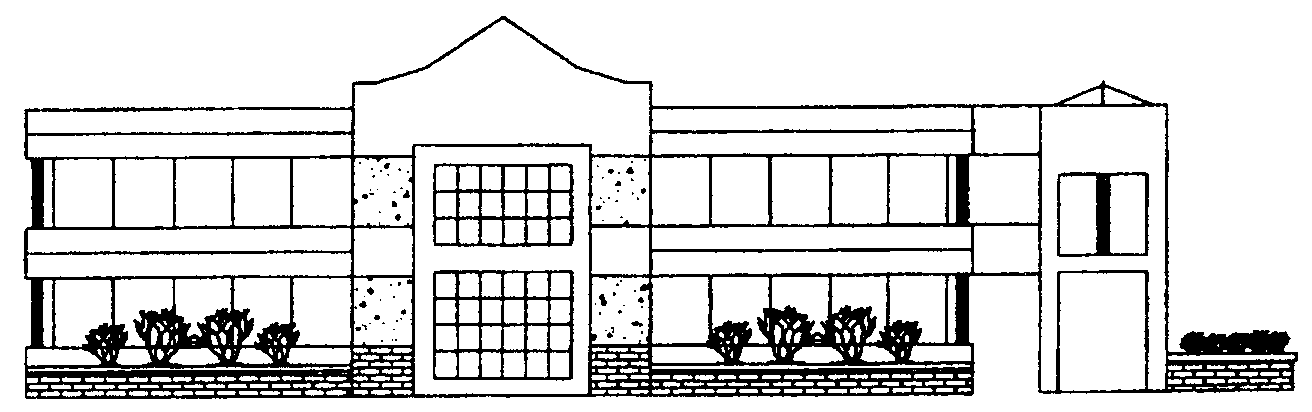
Figure 4-1
(B)
Architectural variety. The use of a variety of architectural features and building materials is encouraged to give each development a distinct character. The use of accent colors and architectural features should be utilized to avoid repetitious and bland building elevations, as shown in Figure 4-1. When accent colors are proposed, the number of colors should be limited to prevent a gaudy appearance. Doors, screening walls, or other architectural features should be painted or finished to complement the color of the building.
(C)
Signage. Signage should be integrated as an architectural element, with attention given to the color, scale, and orientation of all proposed signs in relation to the overall design of the building.
(Ord. No. 99-20, § 1, 11-23-99)
Sec. 4-70. - Site layout guidelines.
(A)
Existing site features. Site design, where feasible, should incorporate existing topography and natural features, such as hillsides, wooded areas, and greenways. Important vistas and viewpoints, both from the site and into the site, should be protected and enhanced.
(B)
Building arrangement. When multiple buildings are proposed for a site, care should be taken to provide maximum street exposure for all buildings. Pad site buildings should be located using elevations and angles that do not inhibit the view of other buildings on the site.
(C)
Service and docking facilities. Loading, delivery, and service bays should be oriented away from existing residences and public streets. When site considerations do not allow for such orientation, such service and docking areas should be screened from view through the provision of walls, fencing, or landscaping. Industrial zoning districts are exempt from these screening requirements.
(D)
Lighting. Lighting location should provide for security and visual interest while limiting impact on adjacent properties. All light sources adjacent to residential properties shall be shielded from view, with illumination directed in a manner to prevent bleeding and glare onto adjacent properties and public right-of-way. Additionally, parking and loading areas should be located in such a manner to minimize the chance of headlights shining into residential windows. Performance standards related to glare and lighting are further specified in Section 6-340.
(E)
Drive-through facilities. Drive-through facilities, where permitted in the applicable zoning district, are permitted when the resulting traffic patterns are safe, easily understood, and provide sufficient stacking space based on the requirements shown in Section 8-270. Drive-through windows should be placed on an elevation that does not face a public street. Loudspeakers should be so directed to avoid the creation of a nuisance for adjacent properties.
(F)
Public safety through site design. Site plans should employ design principles aimed at crime prevention, such as the promotion of natural surveillance and visibility, minimization of the number of entrances and exits to the site, and clear distinction between public and non-public spaces.
(G)
Stormwater management. Site design should utilize practices to minimize off-site stormwater runoff, increase on-site filtration, and minimize the discharge of pollutants to ground water and surface water. Consideration should be given to reducing the need for stormwater management facilities by incorporating the use of natural topography and existing land cover.
(Ord. No. 99-20, § 1, 11-23-99; Ord. No. 2008-09, § 1, 5-13-08)
Sec. 4-80. - Vehicular access and circulation.
(A)
In general. Vehicular circulation should be designed to minimize conflicts with pedestrian access and circulation within surrounding residential areas. Primary access should be from streets designed to handle higher traffic volumes, rather than from streets whose primary purpose is to serve residential areas.
(B)
Entrance and exits. All entrances and exits should be designed to facilitate efficient and safe traffic flow for both in-bound and out-bound traffic. Parking spaces that require backing into an entrance or exit drive are discouraged. Figure 4-2 illustrates a site with efficient separation between access driveways and parking areas.
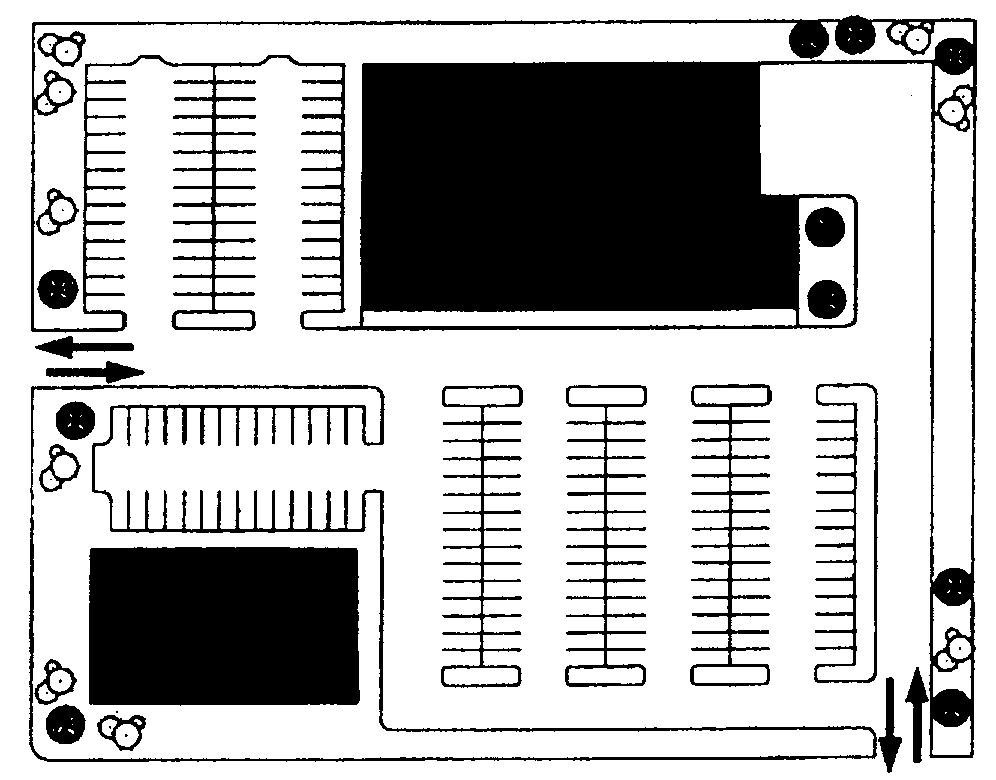
Figure 4-2
(C)
Internal traffic circulation. Internal traffic circulation patterns should be easily understood, allow for efficient movement of traffic, and be designed in such a way to reduce the potential for traffic accidents. When multiple buildings are proposed as part of a development, the use of access easements is encouraged to ensure adequate access in the event of any property ownership changes.
(D)
Snow storage and removal. Adequate areas for snow storage should be provided on site in order to eliminate the utilization of access drives and parking areas for such purposes.
(E)
Service and delivery access. Reasonable access for service and delivery vehicles should be provided which does not conflict with pedestrian or general vehicle use of the site. Access points for such vehicles should provide as direct a route as possible to service and loading dock areas while avoiding movement through parking areas, as shown in Figure 4-3.
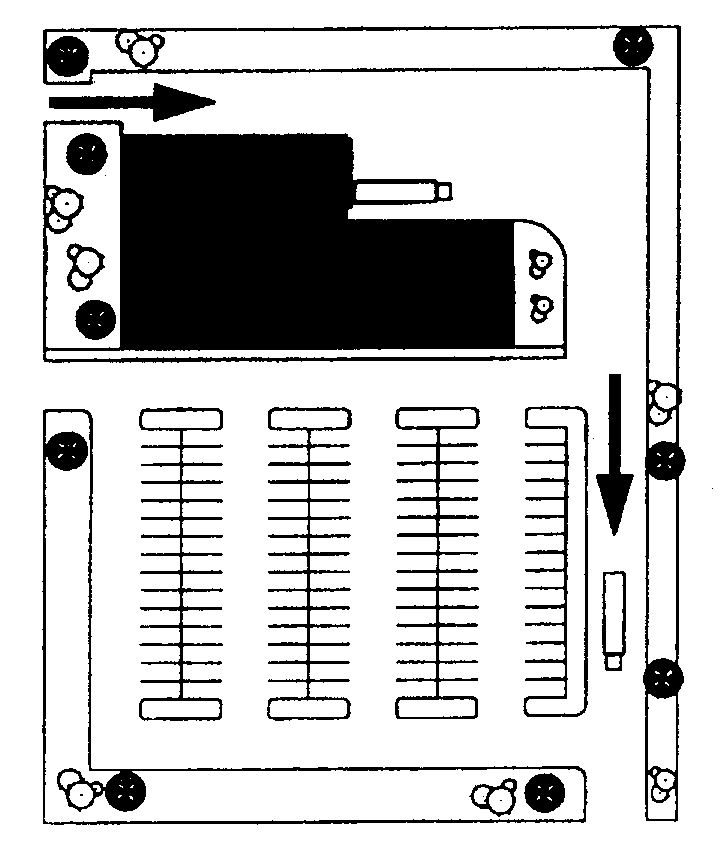
Figure 4-3
(Ord. No. 99-20, § 1, 11-23-99)
Sec. 4-90. - Purpose.
Landscaping and screening requirements are established to transition between uncomplimentary land uses, to screen unsightly views, to reduce noise, glare, and stormwater runoff, and to generally enhance the quality and appearance of development within the city.
(Ord. No. 99-20, § 1, 11-23-99; Ord. No. 2010-09, § 1, 6-8-10)
Sec. 4-100. - Landscape plan required.
(A)
In general. A landscape plan shall be required in support of a site plan or building permit for all new construction, remodeling, or expansion of commercial, industrial, or multi-family residential uses.
(B)
Review. The City Planner shall review all landscape plans for compliance with the landscaping and screening requirements outlined within this chapter. For the purposes of this section, all calculations regarding the number of required plantings shall be rounded to the nearest whole number, unless indicated otherwise.
(C)
Plan contents. All landscape plans submitted for approval shall contain, at a minimum, the following information:
(1)
North point and scale.
(2)
The boundary lines of the property with accurate dimensions.
(3)
The location of all driveways, parking areas, sidewalks, structures, utilities, or other features, existing or proposed, affecting the landscaping and screening of the site.
(4)
The location, size, and identification of all existing trees, shrubs, and other vegetation intended for use in meeting the planting requirements of this chapter.
(5)
The location, common name, size, and quantity of all proposed landscape materials.
(6)
Proposed seeding or sodding plans for all disturbed areas, including the type of ground cover and method of application.
(7)
The location and height of any proposed earth berms, fences, or other measures used to satisfy screening requirements of this chapter.
(Ord. No. 99-20, § 1, 11-23-99; Ord. No. 2010-09, § 1, 6-8-10)
Sec. 4-110. - Landscape design requirements.
Landscape design shall serve to provide visually interesting open space, to reduce the potential negative impact of development on adjacent land uses, and to facilitate the preservation and reestablishment of plants native to the region. The following items are required in developing a landscape plan for submittal to the city:
(1)
The overall composition and location of landscaped areas should complement the scale of the development and its surroundings.
(2)
Plant materials should be selected and arranged to prevent blocking or obscuring of required site lighting during all stages of plant growth.
(3)
Plantings at intersections or driveway entrances shall be arranged to allow a permanently clear, safe sight distance.
(4)
Trees or shrubs shall not be planted under existing or proposed utility lines when their ultimate height may interfere with the lowest lines.
(5)
Trees and shrubs shall not be placed over underground drainage and shall maintain adequate distance from storm sewers, sanitary sewers, and water lines to prevent roots from entering such facilities.
(6)
Landscaped areas should be of adequate size to promote proper plant growth and to protect plantings from pedestrian traffic, vehicle traffic, and other types of concentrated activity.
(7)
Landscaped areas and plantings should be located in a manner to prevent spread onto adjacent properties or right-of-way, and to allow adequate room for proper maintenance.
(8)
A variety of tree and shrub species should be utilized to provide visual, four-season interest. Not more than fifty (50) percent of the required number of trees or shrubs may be comprised of any one (1) species.
(9)
Final slopes greater than a 3:1 ratio will not be permitted without special approval or treatment, such as special seed mixtures or reforestation, terracing, or retaining walls.
(Ord. No. 99-20, § 1, 11-23-99)
Sec. 4-120. - Landscaping requirements, single and two-family residential uses.
A minimum of two (2) trees shall be required per single or two-family residential lot. The trees shall be placed in the front yard area at least ten (10) feet from the curb line. On corner lots and cul-de-sac lots, one of the trees may be placed in the side yard area. All remaining lot area not used for structures, parking area, or driveway shall be landscaped with turf grass, native grasses, ground cover, or other perennial flowering plants, vines, shrubs, or trees.
(Ord. No. 99-20, § 1, 11-23-99)
Sec. 4-125. - Landscaping requirements, industrial districts.
(A)
[Base number of landscape plantings.] The base number of landscape plantings required on industrially zoned properties shall be determined by the percent of impervious surface on the property as shown in the following table. For the purposes of this section, all calculations regarding the number of required plantings shall be rounded to the nearest whole number.
(B)
Shrub plantings. No more than ⅓ of the total required plantings shall be shrubs. Perennials and annuals shall not qualify as shrubs.
(C)
Evergreen plantings. A minimum of ⅓ of the required plantings shall be evergreen.
(D)
Planting locations. A minimum of fifty (50) percent of the required base plantings shall be located within the required front building setback area. If the property has more than one (1) street frontage, the plantings required within this section shall be evenly divided between the street frontages.
(E)
Landscape transitions. Landscape transitions are established to lessen the impact of industrial uses on certain less intense land uses, zoning districts, and Interstate 35. Such transitions are required as follows:
(1)
A fifty (50) percent increase in the base number of plantings is required for properties abutting Interstate 35. Such plantings shall be planted within the building or parking setback area adjacent to Interstate 35.
(2)
A fifty (50) percent increase in the base number of plantings is required if the property is adjacent to a Public Park, Trail, or Open Space. Such plantings shall be planted in the setback area immediately adjacent to the Public Park. Trail, or Open Space. If a trail is located adjacent to or within the public right-of-way it is exempt from this provision.
(3)
A fifty (50) percent in the base number of plantings is required if the property is adjacent to a residential use or zoning district. Such plantings shall be planted in the setback area adjacent to the residential use or zoning district.
(4)
A maximum increase of seventy-five (75) percent increase in the base number of plantings shall be required on any one (1) property. In cases where two (2) or more of the above criteria are met, the plantings shall be evenly distributed and planted in the building setback area along the property line for which the increased plantings are required.
(F)
Interior landscaping of parking lots. In all parking areas that contain more than fifty (50) parking spaces, a landscaped island of not less than one hundred (100) square feet shall be provided for each twenty-five (25) parking spaces or fraction thereof, and shall contain one (1) tree which provides shade or is capable of providing shade upon maturity, as illustrated in Figure 4-4. The remainder of the landscaped area shall be covered with turf grass, native grasses, or other perennial flowering plants, vines, shrubs, trees, or landscape rock a minimum of one and one-half (1½) inch in size.
(G)
Lawn coverage. All areas, excluding those within the public right-of-way, which are disturbed by grading and not built upon, paved, retained as natural area, or covered with other landscaping materials shall be seeded or sodded to provide complete coverage. Disturbed areas located within the public right-of-way shall be sodded. Disturbed areas located within the public right-of-way unmaintained ditch areas may be seeded, subject to approval by the City Engineer.
(H)
Screening. When screening is required, as stated in other sections of this chapter, the following standards shall apply:
(1)
The screening shall be a minimum of six (6) feet in height.
(2)
The screening shall have a minimum of ninety (90) percent opacity.
(3)
If landscaping is used for the screening, the plantings shall be evergreen and a minimum of six (6) in height when planted. A ninety (90) percent opacity level shall be obtained within two (2) years.
(4)
Screening shall be required when the area is visible from one (1) of the following areas:
a.
A residential zoning district or use.
b.
A public park, trail, or open space.
c.
Interstate 35, a State Highway, or County Highway.
(Ord. No. 2008-09, § 1, 5-13-08; Ord. No. 2010-09, § 1, 6-8-10)
Sec. 4-130. - Landscaping requirements, all other uses.
(A)
The base number of landscape plantings required for all other uses shall be determined by the percent of impervious surface on the property as shown in the following table. For the purposes of this section, all calculations regarding the number of required plantings shall be rounded to the nearest whole number.
(B)
Shrub plantings. No more than one-third (⅓) of the total required plantings shall be shrubs. Perennials and annuals shall not qualify as shrubs.
(C)
Evergreen plantings. A minimum of one-third (⅓) of the required plantings shall be evergreen.
(D)
Planting locations. A minimum of fifty (50) percent of the required base plantings shall be located within the required front building setback area. If the property has more than one (1) street frontage, the plantings required within this section shall be evenly divided between the street frontages.
(E)
Landscape transitions. Landscape transitions are established to lessen the impact of more intense land uses on certain less intense land uses. Such transitions are required as follows:
(1)
A fifty (50) percent increase in the base number of plantings is required if the property is adjacent to a public park, trail, or open space. Such plantings shall be planted in the setback area immediately adjacent to the public park, trail, or open space. If a trail is located immediately adjacent to or within the public right-of-way, it is exempt from this provision.
(2)
A seventy-five (75) percent increase in the base number of plantings is required if a commercial property is adjacent to an elementary school. Such plantings shall be planted in the setback area adjacent to the elementary school.
(3)
A seventy-five (75) percent increase in the base number of plantings is required if the high density residential use is adjacent to a medium density residential use or a medium density residential use is adjacent to a high density residential use. Such plantings shall be planted in the setback area adjacent to the neighboring use.
(4)
A seventy-five (75) percent increase in the base number of plantings is required if the medium density residential use is adjacent to a single- or two-family residential use or if a single- or two-family residential use is adjacent to a medium density residential use. Such plantings shall be planted in the setback area adjacent to the neighboring use.
(5)
A one hundred (100) percent increase in the base number of plantings is required if a high density residential use is adjacent to a single- or two-family use or if the single- or two-family is adjacent to a high density residential use. Such plantings shall be planted in the setback area adjacent to the neighboring use.
(6)
A one hundred (100) percent increase in the base number of plantings is required if the commercial property is adjacent to a residential use or zoning district. Such plantings shall be planted in the setback area adjacent to the residential use or zoning district.
(7)
The base number of plantings shall be adjusted by the number of stories in the building according to the table below. A story is defined as provided in Section 1-120.
(8)
A maximum increase of one hundred fifty (150) percent in the base number of plantings shall be required on any one (1) property. In cases where two (2) or more of the above criteria are met, the plantings shall be evenly distributed and planted in the building setback area along the property line for which the increased plantings are required.
(F)
Rain garden and bio-retention cell discount. A discount in the total number of landscape plantings required may be allowed for properly installed and maintained rain gardens and bio-retention cells due to their ability to enhance the landscaped environment. A properly installed rain garden or bio-retention cell provides numerous plantings that are not considered trees or shrubs but add to the landscaped environment. A discount is being provided based on the square footage of the rain garden or bio-retention cell as stated below:
(G)
Interior landscaping of parking lots. In all parking areas that contain more than fifty (50) parking spaces, a landscaped island of not less than one-hundred (100) square feet shall be provided for each twenty-five (25) parking spaces or fraction thereof, and shall contain one (1) tree which provides shade or is capable of providing shade upon maturity, as illustrated in Figure 4-4. The remainder of the landscaped area shall be covered with turf grass, native grasses, or other perennial flowering plants, vines, shrubs, trees, or landscape rock a minimum of one and one-half (1½) inch in size.
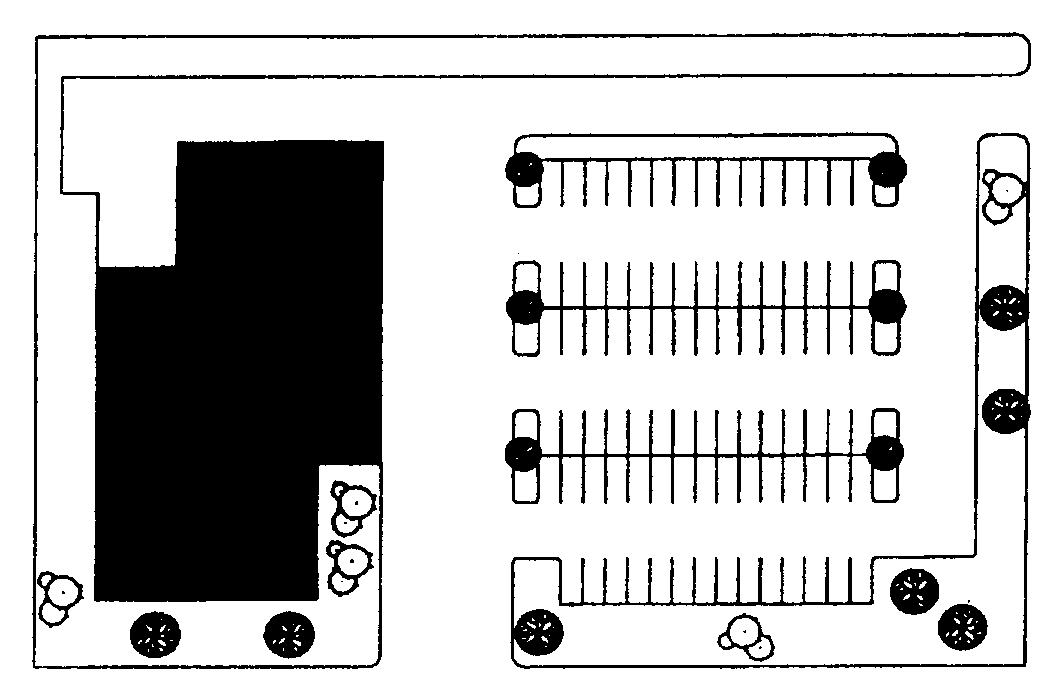
Figure 4-4
(H)
Lawn coverage. All areas, excluding those within the public right-of-way, which are disturbed by grading and not built upon, paved, retained as natural area, or covered with other landscaping materials shall be seeded or sodded to provide complete coverage. Disturbed areas located within the public right-of-way shall be sodded. Disturbed areas located within the public right of way unmaintained ditch areas may be seeded, subject to approval by the City Engineer.
(I)
Screening. When screening is required, as stated in other sections of this chapter, the following standards shall apply:
(1)
The screening shall be a minimum of six (6) feet in height.
(2)
The screening shall have a minimum of ninety (90) percent opacity.
(3)
If landscaping is used for the screening, the plantings shall be evergreen and a minimum of six (6) [feet] in height when planted. A ninety (90) percent opacity level shall be obtained within two (2) years.
(4)
Screening shall be required when the area is visible from one (1) of the following areas:
a.
A residential zoning district or use.
b.
A public park, trail, or open space.
c.
Interstate 35, a State Highway, or County Highway.
(Ord. No. 99-20, § 1, 11-23-99; Ord. No. 2008-09, § 1, 5-13-08; Ord. No. 2010-09, § 1, 6-8-10)
Sec. 4-140. - Reserved.
Editor's note— Ord. No. 2010-09, § 1, adopted June 8, 2010, repealed § 4-140 in its entirety. The former § 4-140 pertained to landscaped buffer areas and derived from Ord. No. 99-20, § 1, adopted Nov. 23, 1999; Ord. No. 2008-09, § 1, adopted May 13, 2008.
Sec. 4-150. - Landscaping materials.
(A)
In general. All plant materials must meet the standards set by the American Association of Nurserymen and be of a variety that is indigenous to the hardiness zone in which Faribault is located.
(B)
Minimum plant size. All plant materials shall meet the minimum size standards identified in Table 4-3. For the purposes of determining tree trunk size, the diameter shall be measured six (6) inches above ground level.
Table 4-3. Minimum plant size for landscape materials.
(C)
Existing plant material. Existing, healthy plant material may be utilized to satisfy landscaping requirements, provided it meets the minimum plant size specified in Table 4-3.
(Ord. No. 99-20, § 1, 11-23-99; Ord. No. 2010-09, § 1, 6-8-10)
Sec. 4-160. - Installation and maintenance of required landscaping.
(A)
In general. All landscaping materials depicted on plans approved by the city shall be considered as required elements of the project.
(B)
Installation requirements. All landscape material and required screening shall be installed prior to issuance of a final certificate of occupancy. A temporary certificate of occupancy may be issued without the installation, provided a financial security shall be submitted, in an amount established by the City Council, to ensure the remaining improvements are completed. The remaining improvements shall be installed when weather conditions are favorable.
(C)
Maintenance and care. The landowner shall be responsible for the continued maintenance of landscape materials to remain in compliance with all requirements of this chapter. Plant material that exhibits evidence of insect pests, disease, or damage shall be appropriately treated and dead plants promptly removed and replaced within the next planting season.
(D)
Inspection. All landscaping shall be subject to periodic inspection by the City Planner. Landscaping that is not installed, maintained, or replaced as needed to comply with the approved landscape plan shall be considered in violation of the terms of the site plan or building permit. The landowner shall receive notice of such violation in accordance with code enforcement requirements as specified in Section 2-620.
(Ord. No. 99-20, § 1, 11-23-99; Ord. No. 2008-09, § 1, 5-13-08; Ord. No. 2010-09, § 1, 6-8-10)
Editor's note— Ord. No. 2010-09, § 1, adopted June 8, 2010, changed the title of § 4-160 from "Installation and maintenance of required landscaping and buffering methods" to "Installation and maintenance of required landscaping".
Sec. 4-170. - Substitutions or reductions of required landscaping.
The City Planner may approve the substitution or reduction of planting requirements where one (1) or more of the following conditions are shown to exist:
(1)
The proposal will allow site development that is more consistent with the historic nature of the area.
(2)
Existing plant materials, walls, fences, or the topography of the site and its surroundings make the required landscaping less necessary.
(3)
The required landscaping would hinder truck access and service necessary to the operation of the use or create a hazard by obstructing a motorist's view of traffic.
(4)
The required landscaping would reduce necessary surveillance of the site for security purposes.
(Ord. No. 99-20, § 1, 11-23-99; Ord. No. 2010-09, § 1, 6-8-10)

