
Faribault City Zoning Code
CHAPTER 6
- GENERAL REGULATIONS
Sec. 6-10. - Purpose.
This chapter is established to provide regulations of general applicability for property throughout the city, to promote the orderly development and use of land, to protect and conserve the natural environment, to minimize conflicts among land uses, and to protect the public health, safety, and welfare.
(Ord. No. 99-20, § 1, 11-23-99)
Sec. 6-20. - Applicability.
The regulations set forth in this chapter apply to all structures and all land uses, except as otherwise provided in this ordinance.
(Ord. No. 99-20, § 1, 11-23-99)
Sec. 6-30. - Mechanical equipment.
(A)
In general. All mechanical equipment installed on or adjacent to structures shall be arranged so as to minimize visual impact using one of the following methods.
(1)
Screened by another structure. Mechanical equipment installed on or adjacent to a structure may be screened by a fence, wall, or similar structure. Such screening structure shall comply with the following standards:
(a)
The required screening shall be permanently attached to the structure or the ground and shall conform to all applicable building code requirements.
(b)
The required screening shall be constructed with materials that are architecturally compatible with the structure.
(c)
Off-premise advertising signs and billboards shall not be considered required screening.
(2)
Screened by vegetation. Mechanical equipment installed adjacent to the structure served may be screened by hedges, bushes, or similar vegetation.
(3)
Screened by the structure it serves. Mechanical equipment on, or adjacent to, a structure may be screened by a parapet or wall of sufficient height, built as an integral part of the structure.
(4)
Designed as an integral part of the structure. If screening is impractical, mechanical equipment may be designed so that it is balanced and integrated with respect to the design of the building.
(B)
Exceptions. The following mechanical equipment shall be exempt from the screening requirements of this section:
(1)
Minor equipment not exceeding one (1) foot in height.
(2)
Mechanical equipment accessory to a single or two-family dwelling.
(3)
Mechanical equipment located in an industrial district not less than three hundred (300) feet from a residence or residential zoning district.
(Ord. No. 99-20, § 1, 11-23-99)
Sec. 6-40. - Screening of trash enclosures.
Trash or recycling collection areas, when provided for any property other than one containing a single or two-family residential use, shall be enclosed on at least three (3) sides by opaque screening at least six (6) feet in height. The open side of the enclosure shall not face any street or the front yard of any abutting property.
(Ord. No. 99-20, § 1, 11-23-99)
Sec. 6-50. - Purpose.
Lot controls are established to provide for the orderly development and use of land, to minimize conflicts among land uses, and to provide adequate light, air, open space, and separation of uses.
(Ord. No. 99-20, § 1, 11-23-99)
Sec. 6-60. - Zoning lots.
No part of an existing zoning lot shall be used as a separate zoning lot or for the use of another zoning lot, except as otherwise provided in this ordinance.
(Ord. No. 99-20, § 1, 11-23-99)
Sec. 6-70. - Minimum lot area.
Lot area requirements shall be as specified in the applicable zoning district in which a zoning lot is located. No yard or lot existing at the time of passage of this ordinance shall be reduced in size or area below the minimum requirements identified within this ordinance.
(Ord. No. 99-20, § 1, 11-23-99)
Sec. 6-80. - Division of zoning lot.
No zoning lot shall be divided into two (2) or more zoning lots unless all zoning lots resulting from such division conform to all applicable regulations of this ordinance.
(Ord. No. 99-20, § 1, 11-23-99)
Sec. 6-90. - Street frontage.
Each lot shall have frontage on a public street at a width satisfying the requirements specified for each zoning district. In the case of a condominium, unified shopping center, or planned unit development, the entire site shall be considered one zoning lot.
(Ord. No. 99-20, § 1, 11-23-99)
Sec. 6-100. - Limited principal buildings in residential districts.
There shall be no more than one principal building on one zoning lot in any residential district except as part of a planned unit development. A detached accessory dwelling unit shall be considered an accessory building and not a principal building.
(Ord. No. 99-20, § 1, 11-23-99; Ord. No. 2009-12, § 2, 10-27-09)
Sec. 6-110. - Required setbacks.
Setback requirements shall be as specified in the applicable zoning district. Setbacks provided for an existing structure or use shall not be reduced below, or further reduced if already less than, the minimum requirements of this ordinance for equivalent new construction, except as otherwise provided in Section 3-40.
(Ord. No. 99-20, § 1, 11-23-99)
Sec. 6-120. - Setback encroachments.
All required setbacks shall remain open and unobstructed from ground level to the sky, subject to the following permitted obstructions. In no case, however, shall the identified permitted obstructions be located closer than one (1) foot to a property line, except for fences.
(1)
Cornices, canopies, eaves, and other ornamental features, provided they do not extend more than three (3) feet into a yard.
(2)
Chimneys, fire escapes, uncovered stairs, ramps and necessary landings, bay windows, balconies, uncovered decks or porches, provided they do not extend more than four (4) feet into a yard.
(3)
Vestibules, greenhouses, or structures for energy conservation, provided they do not extend more than four (4) feet into a yard.
(4)
Driveways and parking areas, subject to the provisions established in Chapter 8, Off-Street Parking and Loading.
(5)
Recreational playground equipment.
(6)
Fences in compliance with Sections 6-250 and 6-260.
(7)
Accessory buildings in compliance with Sections 6-170 through 6-200.
(8)
Air-conditioning, heating, ventilation, or other mechanical equipment, subject to the screening requirements specified in Section 6-30. In no case, however, shall such equipment be located in the front yard area or closer than five (5) feet to a side or rear property line.
(9)
Containers for storage of household refuse, compost, or firewood.
(10)
Signs in compliance with the provisions of Chapter 9, Signs.
(Ord. No. 99-20, § 1, 11-23-99)
Sec. 6-130. - Corner lots.
On a corner lot, one of the lot lines that abuts the street shall be considered a front lot line and the other shall be considered a corner side lot line. Establishment of the front lot line shall be based on the orientation of the existing or proposed building.
(Ord. No. 99-20, § 1, 11-23-99)
Sec. 6-140. - Through lots.
On a through lot, both lot lines that abut the street shall be considered front lot lines. The required front setback shall be provided and maintained along each front lot line.
(Ord. No. 99-20, § 1, 11-23-99)
Sec. 6-150. - Structure height.
(A)
In general. The building height limitations established in each separate zoning district shall apply to all buildings and structures, with the exception of the following:
(1)
Church steeples, spires, or belfries.
(2)
Chimneys or flues.
(3)
Cupolas and domes which do not contain useable space.
(4)
Flagpoles.
(5)
Mechanical or electrical equipment.
(6)
Monuments.
(7)
Parapet walls extending not more than three (3) feet above the limiting height of the building.
(8)
Communication antennas and towers in accordance with the standards identified in Section 6-230.
(9)
Towers, poles, or other structures for essential services.
(10)
Water towers.
(B)
Limits. No excluded roof equipment or structural element extending beyond the defined height of a building may occupy more than twenty-five (25) percent of the roof area.
(Ord. No. 99-20, § 1, 11-23-99; Ord. No. 2010-07, § 1, 5-25-10)
Editor's note— Ord. No. 2010-07, § 1, adopted May 25, 2010, changed the title of § 6-150 from "building height" to "structure height". This historical notation has been preserved for reference purposes.
Sec. 6-160. - Protection of natural features.
(A)
In general. All developments shall be located so as to preserve the natural features of the site, to avoid areas of environmental sensitivity, to minimize the creation of impervious surface area, and to minimize negative impacts on the alteration of the natural environment. The following areas shall be preserved as undeveloped open space, to the extent consistent with the reasonable utilization of land, and in accordance with applicable federal, state, or local regulations:
The following areas shall be preserved as undeveloped open space, to the extent consistent with the reasonable utilization of land, and in accordance with applicable federal, state, or local regulations:
(1)
Shorelands. Lands within the Shoreland Management District shall be governed by the regulations specified in Chapter 13, Overlay and Special Districts.
(2)
Wetlands. No development, grading or filling, alteration of the natural character of the land, or construction of buildings or structures shall occur within any vegetated wetland, except in compliance with the Minnesota Wetland Conservation Act and by the regulations specified in Chapter 28, Section 28-232, Wetlands and Wetland Buffer Strips.
(3)
Vegetated areas. Significant trees or plant communities, including remnant stands of native trees or prairie grasses, trees or plant communities that are rare to the area or of particular landscape significance.
(4)
Steep slope areas. Development on slopes of fifteen (15) percent or greater shall be prohibited. Where no practicable alternatives exist, development on steep slope areas shall be subject to the following conditions:
(a)
The foundation and underlying material of any structure shall be adequate for the slope condition and soil type.
(b)
The proposed development will not result in soil erosion, flooding, severe scarring, reduced water quality, inadequate drainage control, or other problems.
(c)
The proposed development will preserve significant natural features by minimizing disturbance to existing topographical forms.
(d)
The city may require that a property be rezoned and developed as a planned unit development to utilize flexible development standards to preserve steep slopes.
(e)
The proposed development shall comply with all provisions of Chapter 28, Article VII related to stormwater pollution.
(5)
Habitats of threatened or endangered wildlife as identified on federal or state lists, including the federal Endangered Species Act and the Minnesota County Biological Survey.
(B)
Mitigation. Where preservation is not consistent with the reasonable utilization of land, the city may require mitigation through replacement of the resource or similar resource on the site, restoration of former natural amenities to the site, or other reasonable measures to protect or enhance the natural features of the land.
(Ord. No. 99-20, § 1, 11-23-99; Ord. No. 2006-21, § 3, 9-26-06; Ord. No. 2010-04, § 1, 5-25-10; Ord. No. 2022-13, § 4, 6-28-22)
Sec. 6-165. - Prescribed grazing of noxious and invasive vegetation.
(A)
Intent. The intent of this section is to allow prescribed grazing of goats on certain property in the City of Faribault for a specified period and for the express purpose of controlling invasive and/or noxious vegetation. Prescribed grazing is intended to provide an alternative to the use of chemicals as a means to control undesirable vegetation. It is also intended to provide an alternative means to control undesirable vegetation on steep slopes or other challenging terrain where it is difficult for humans to access. Prescribed grazing is not intended to allow the raising or keeping of goats as livestock or pets on property that is not within the O, Open Space/Agricultural District or the TUD, Transitional Urban Development District.
(B)
Allowable locations for prescribed grazing. Prescribed grazing is allowed in all zoning districts with the following conditions:
(1)
Prescribed grazing shall be limited to properties that are primarily used for public, semi-public, or institutional uses, such as parks, trails, public or private schools, or similar uses as determined by the City Planner or other authorized agent of the City.
(2)
The City Planner or other authorized agent of the City may authorize prescribed grazing on properties other than those described in Section 6-165(B) of this Ordinance if the property is directly contiguous to a property where prescribed grazing is allowed and is occurring or is planned to occur.
(3)
This ordinance does not prevent the keeping of goats as livestock or pets in the O, Open Space/Agricultural District or the TUD, Transitional Urban Development District as allowed by this Ordinance.
(C)
Duration of a prescribed grazing activity. The duration of a prescribed grazing activity shall be consistent with the following:
(1)
Properties under two (2) acres in area. On properties with an area of less than two (2) acres, prescribed grazing shall not be permitted for more than thirty (30) consecutive days. No more than two (2) prescribed grazing permits may be issued within one (1) year for the property. There shall be a minimum of sixty (60) days between the expiration of the first permit issued and the second permit issued in a one (1) year period.
(2)
Properties two (2) or more acres in area. On properties with an area of two (2) or more acres, the duration of the prescribed grazing activity shall be as specified by the City Planner or other authorized agent of the City in the approved prescribed grazing permit.
(D)
Proper Enclosure. The prescribed grazing activity shall be fully and properly enclosed at all times. Proper enclosure refers to any combination of temporary or permanent fences or structures designed to prevent the escape of the prescribed grazing animals and to protect the prescribed grazing animals from the intrusion of other animals. All sides of the enclosure(s) shall be of sufficient height and the bottom of the enclosures shall be constructed or secured in a manner as to prevent prescribed grazing animals from escaping over or under the enclosure(s). Enclosures shall meet the following requirements:
(1)
Permanent enclosures. Fences and structures constructed to enclose prescribed grazing animals, but intended to remain at the expiration of the prescribed grazing activity, shall comply with the regulations for the zoning district in which the prescribed grazing is located and shall be permitted separately from the prescribed grazing activity.
(2)
Temporary enclosures. Temporary fencing and structures for the sole purpose of enclosing prescribed grazing animals shall be allowed for the duration of the prescribed grazing as specified by the City Planner or other authorized agent of the City in the approved prescribed grazing permit.
(a)
Temporary fences may be electric or electrified as specified in the approved prescribed grazing permit. Where electric fences are used, the City Planner or other authorized agent of the City may require a double fence system with a non-electric outer fence to serve as a safety barrier to reduce the possibility of the public coming in contact with the electric fence.
(b)
Any electric or electrified fence in association with a prescribed grazing activity must have a warning sign posted on every boundary of the enclosure at least every fifty (50) feet along each side of the fence. The warning sign shall clearly identify the electric fence. No single sign shall exceed four (4) square feet in area. Each sign shall be clearly visible on the approach to the fence and be posted on or within one (1) foot of the electric or electrified fence.
(E)
Animal welfare. The welfare of the prescribed grazing animals must be ensured by the owner of the prescribed grazing animals.
(1)
Supervision. The prescribed gazing service must list on its grazing permit application contact information for the party responsible for promptly addressing issues associated with prescribed grazing on the specified property. The responsible party shall be available to be contacted at all hours of the day and all days of the week.
(2)
Health. Prescribed grazing animals must receive proper veterinary treatment and regular deworming. In the event that a prescribed grazing animal becomes ill, hurt, or perishes, the owner of the prescribed grazing animal(s) must provide immediate on-site care or remove the animal(s) from the property promptly if immediate on-site care cannot be provided.
(3)
Neutering. Male goats used for prescribed grazing must be neutered. Male goats less than six (6) months of age that accompany an adult female goat shall be exempt from the neutering requirement.
(F)
Storage of supplement feed. Any feed for the prescribed grazing animals (other than the vegetation on the property that is intended for grazing) must be securely stored so as not to encourage vermin or other pests.
(G)
Protection of significant natural resources. Prescribed grazing shall not adversely affect significant natural resources. Prescribed grazing activities shall comply with the following:
(1)
Prescribed grazing activities shall comply with the best management practices established by the Minnesota Department of Agriculture, the Minnesota Department of Natural Resources, Rice County Soil and Water Conservation District, and all other pertinent agencies.
(2)
Prescribed grazing activities shall not impair water quality as defined by the Federal Clean Water Act.
(3)
Threatened or endangered plant species shall not be negatively impacted by prescribed grazing activities.
(4)
Prescribed grazing activities shall comply with all applicable regulations promulgated by Minnesota Department of Agriculture, the Minnesota Department of Natural Resources, Rice Soil and Water Conservation District, all state laws, and all federal laws, including the best management practices established by the Natural Resources Conservation Service.
(H)
Identification signage. A single sign, not to exceed four (4) square feet in area and not to exceed four (4) feet in height if freestanding, shall be erected and visible from the nearest public right-of-way, but not in the public right-of-way. The City Planner or other authorized agent may approve an alternate location for the sign or may require more than one (1) identification sign if needed to comply with the intent of this ordinance. The sign shall include the prescribed grazing permit number for the issued permit and the phone number for a 24-hour contact for the prescribed grazing animals. The sign shall be present for the duration of the prescribed grazing activity and shall be promptly removed at the conclusion of the prescribed grazing activity.
(I)
Insurance. When an applicant submits an application for a prescribed grazing permit, the applicant shall also submit a current, effective insurance policy or a copy thereof providing liability insurance covering claims arising out of the prescribed grazing activity.
(J)
Prescribed grazing permit and fee. A prescribed grazing permit approved by the City of Faribault shall be required for each prescribed grazing activity covering a specified period. The fee for the permit shall be as established in the City's applicable fee schedule.
(Ord. No. 2017-3, § 2B, 5-9-17)
Sec. 6-170. - General requirements.
Accessory uses and structures shall comply with the following standards and all other applicable regulations of this ordinance:
(1)
No accessory use or structure shall be constructed or established on any lot prior to the time of construction of the principal use to which it is accessory.
(2)
The accessory use or structure shall be incidental to and customarily associated with the principal use or structure except in the case of a detached accessory dwelling unit, as provided elsewhere in this ordinance.
(3)
The total accessory use or structure floor area shall be subordinate in area, extent, and purpose to the total principal use or structure floor area served. Floor area from nonwalkout basements, mezzanines, attics, lofts, and other similar areas shall not count towards the total floor area. Lots meeting the conditions of Table 6-2 are exempt from this provision.
(4)
The accessory use or structure shall contribute to the comfort, convenience, or necessity of the occupants of the principal use or structure served, except in the case of a detached accessory dwelling unit, as provided elsewhere in this ordinance. In no case shall an accessory structure be utilized as an independent residence, either permanently or temporarily, except as provided elsewhere in this ordinance.
(5)
The accessory use or structure shall be located on the same zoning lot as the principal use or structure, except for accessory off-street parking and loading facilities, subject to the provisions of Chapter 8, Off-Street Parking and Loading.
(6)
The accessory use or structure shall not be injurious to the use and enjoyment of surrounding properties.
(7)
An accessory structure of two hundred (200) square feet or more shall be provided with a driveway in compliance with the provisions of Chapter 8, Off-Street Parking and Loading. If an accessory structure is proposed and an interior plan is provided that demonstrates no accessibility for motorized vehicles, the city planner may waive the requirement for a driveway to the accessory structure.
(8)
Accessory structures located on lots with frontage on a water body may be located between the public road and the principal structure, provided it is clearly demonstrated that physical conditions require such a location, such as floodplain, shoreland, steep slopes, or bluffs, but must adhere to setbacks applicable to the principal structure.
(9)
When a principal structure is two hundred (200) feet or more from a public road right-of-way, an accessory structure may be located in the front yard, but must adhere to setbacks applicable to the principal structure.
(Ord. No. 99-20, § 1, 11-23-99; Ord. No. 2009-12, § 2, 10-27-09; Ord. No. 2025-11, § 2(Exh. A), 8-26-25)
Sec. 6-180. - Residential accessory buildings.
(A)
In general. In all districts, all new single-family residential construction, or existing single-family where remodeling or additions cumulatively exceed fifty (50) percent of the total floor area or property's assessed market value shall require the construction or retention of at least a single stall garage. If changes to the dwelling do not trigger the conditions stated above, the property owner may remove or convert an existing garage.
(1)
In no case shall an accessory structure be placed less than five (5) feet from a property line nor less than ten (10) feet from other structures except as provided in paragraph two (2) of this section.
(2)
Accessory structures shall be properly anchored with tie downs or strapped, bolted or otherwise properly connected to concrete peers or other types of permanent foundations to secure it from high winds in accordance with manufacturer's specifications or as may be approved by the City Building Official.
(3)
Accessory structures of less than eighty (80) square feet shall not require zoning certificates and shall not be subject to building separation requirements, but if placed within ten (10) feet of another structure must meet the applicable setback requirement for that structure.
(4)
Accessory structures between eighty (80) square feet and less than two hundred (200) square feet require a zoning certificate prior to installation on site and shall be subject to all building separation and setback requirements for accessory structures, but shall not be subject to building design and compatibility requirements set forth in elsewhere in this section. Accessory structures less than two hundred (200) square feet shall not be subject to building permits and no color or design standards shall be required.
(5)
Accessory structures of two hundred (200) square feet or more in area shall be subject to building permit approval (which shall constitute a zoning certificate) prior to installation on site. A certificate of survey is required at the time of building permit for all new construction of two hundred (200) square feet or more accessory structures. Enclosed accessory structures such as sheds and garages, of two hundred (200) square feet or greater (accessory buildings), shall be compatible with the principal building on the lot.
(a)
"Compatible" for the purpose of this section shall mean that the exterior appearance of the accessory building is not at variance with that of the principal building from an aesthetic and architectural standpoint as to cause a degree of incongruity or a nuisance. The exterior colors of the roofing and siding materials shall match or compliment that of the principal structure. Greenhouses may utilize different building materials and finishes from the principal structure, provided that the greenhouse is translucent or transparent by means of glass, vinyl, or other similar materials.
(6)
Carports and similar open sided roofed structures shall be subject to the same setbacks, size limits and design compatibility requirements as other accessory structures. Carports and similar open sided roofed structures shall be constructed of durable construction materials secured to a permanent foundation (as approved by the Building Official) and shall have a parking surface that is paved with concrete, asphalt or paver bricks and shall be compatible with the principal building on the lot. Carports must have a paved driveway with access to the public street. Steel tube framed carports, structures as described in (8) below, and similar open sided roofed structures with metal siding and roofs are prohibited.
(a)
"Compatible" for carports and similar open sided roofed structure shall mean that the exterior appearance of the structure is not at variance with that of the principal building from an aesthetic and architectural standpoint as to cause a degree of incongruity or a nuisance. The exterior colors of the roofing materials and supporting members shall match or compliment that of the principal structure.
(7)
Temporary accessory uses:
(a)
Temporary reception/special event tents shall be permitted for up to seven (7) days per event and no more than fourteen (14) days per year without a zoning certificate. A zoning certificate shall be required for temporary reception/special event tents needed for events or activities greater than seven (7) days in duration. Reception/special event tents and enclosures shall not be permitted for more than thirty (30) days per year in residential districts.
(b)
Personal camping/recreational tents for personal recreational uses of persons residing at the premises shall be exempt from this section.
(c)
Storage Pods used for a short-term during remodeling and household moving are permitted for up to six (6) months without a zoning certificate and up to one (1) year with a zoning certificate or current building permit.
(8)
Prohibited accessory structures or uses:
(a)
Membrane-covered accessory structures, which may include carports and storage enclosures utilizing membrane covers or a similar fabric-like material, are prohibited except as provided in paragraph (7) of this section.
(b)
Cargo or shipping containers except as provided in paragraph (7)(c) above.
(c)
Greenhouses shall not be used for storage of materials or equipment not used in the greenhouse.
(B)
Attached structures. An accessory structure shall be considered attached, and an integral part of, the principal structure when it is connected by an enclosed passageway. Such structures shall be subject to the following requirements:
(1)
The structure shall meet the required setbacks for a principal structure, as established for the zoning district in which it is located.
(2)
In no case shall the total floor area of an attached garage, carport, or other accessory structure exceed the total floor area of the principal building located on the same lot. Floor area from nonwalkout basements, mezzanines, attics, lofts, and other similar areas shall not count towards total floor area. Lots meeting the conditions of Table 6-2 are exempt from this provision.
(3)
The structure shall not exceed the height of the principal building to which it is attached.
(C)
Detached structures. Detached accessory structures shall be permitted in residential districts in accordance with the requirements shown in Table 6-1 and as follows:
(1)
Detached accessory structures shall be located to the side or rear of the principal building, and are not permitted within the front yard or within a corner side yard. When such structure is located in a side yard, the required setback shall be the same as that for the principal structure.
(2)
The maximum size may be increased by up to twenty-five (25) percent upon approval of a conditional use permit, provided that lot coverage requirements are satisfied.
(3)
Structures with a corrugated metal exterior finish shall not be permitted.
(4)
Garages, when accessed from and situated perpendicular to a public alley, shall maintain a setback of at least twenty (20) feet from said alley right-of-way.
(5)
Maximum lot coverage for detached structures is regulated under Section 10-130. For those properties that are exempted under Section 10-130, no more than thirty (30) percent of the rear yard area may be covered by accessory structures.
(6)
Distance between structures shall be measured from wall to wall.
Table6-1.Requirements for detached accessory structures, residential districts.
** See exceptions for larger properties in Table 6-2 below.
*** May be increased to two (2) stories or twenty-four (24) feet to accommodate a second-story accessory dwelling unit.
**** Accessory structures over one thousand (1,000) square feet must meet building code requirements, which may include construction standards and permitting similar to a commercial building, or segmented building construction into no larger than one thousand (1,000) square foot sections.
Table6-2.Detached accessory structure allowances for large single-family lots.*
* Accessory structures over one thousand (1,000) square feet must meet building code requirements, which may include construction standards and permitting similar to a commercial building, or segmented building construction into no larger than one thousand (1,000) square foot sections.
** May be increased to two (2) stories or twenty-four (24) feet to accommodate a second-story accessory dwelling unit
(Ord. No. 99-20, § 1, 11-23-99; Ord. No. 2001-24, § 1, 1-8-02; Ord. No. 2009-12, § 2, 10-27-09; Ord. No. 2010-04, § 2, 5-25-10; Ord. No. 2018-3, § 1, 8-15-18; Ord. No. 2025-11, § 2(Exh. A), 8-26-25)
Sec. 6-190. - Reserved.
Editor's note— Ord. No. 2025-11, § 2(Exh. A), adopted Aug. 26, 2025, repealed § 6-190, which pertained to increase in wall height and derived from Ord. No. 99-20, § 1, adopted Nov. 23, 1999; and Ord. No. 2001-24, § 1, adopted Jan. 8, 2002.
Sec. 6-200. - Non-residential accessory buildings.
Accessory buildings permitted in non-residential zoning districts shall meet the following requirements:
(1)
Gate houses, guard shelters, structures for parking attendants, and transformer buildings may be located in a front or side yard at least five (5) feet from any property line.
(2)
All other commercial, industrial, or agricultural accessory buildings shall conform to all applicable setback and lot coverage requirements for principal buildings.
(3)
No accessory building in a non-residential district shall exceed the height or floor area of the principal building, except that agricultural buildings where a farm residence also exists are exempt from this provision.
(4)
Separation of accessory structures from the principal structure and other accessory structures shall meet applicable building code requirements.
(Ord. No. 99-20, § 1, 11-23-99)
Sec. 6-210. - Private swimming pools.
All private residential swimming pools, both above the ground and in the ground, that are capable of holding water at a depth of more than thirty (30) inches and have a surface area greater than one hundred fifty (150) square feet, are subject to the following standards:
(1)
The pool is not operated as a business or private club, except when allowed as a permitted home occupation.
(2)
The pool, including any related walks, paved areas, or other structures shall not be located in a front yard, and must be set back at least five (5) feet from any property line.
(3)
The pool, or the rear yard, or the entire property, shall be enclosed by a wall or fence or combination thereof which is at least four (4) feet in height, with a self-closing gate capable of being secured with a lock so as to prevent uncontrolled access by children from the street or adjacent properties. A cover capable of being locked, but not easily penetrated, when the subject is not in use may be substituted for fencing.
(4)
If the only access to a pool is through a principal or accessory structure, all points of access shall be made lockable.
(5)
Required fencing shall be of durable wood, masonry, or metal, and shall be so designed as to discourage climbing. Building walls may contribute to enclosure requirements.
(6)
In the case of aboveground pools, sides that are vertical or slanted outward may contribute to required fencing, provided all points of access are controlled to prevent access by children, including the removal of all ladders and/or stairs whenever the pool is not in use. A cover capable of being locked, but not easily penetrated, when the subject is not in use may be substituted for fencing.
(7)
Existing pools, as defined by this ordinance, shall comply with all provisions of this ordinance within one year of the effective date of this ordinance.
(Ord. No. 99-20, § 1, 11-23-99; Ord. No. 2002-03, § 1, 2-12-02)
Sec. 6-220. - Travel trailers and other recreational vehicles.
Travel trailers and other similar recreational vehicles may be parked or stored on any property within the city only under the following conditions:
(1)
At no time shall a travel trailer or recreational vehicle be used as a residence on any site, except as expressly provided within this section.
(2)
Unoccupied vehicles may be stored within buildings or displayed for sale in a commercial district where such a use is permitted.
(3)
One (1) unoccupied travel trailer or similar recreational vehicle may be stored on a year-round basis within a building or in a rear yard no less than three (3) feet from the property line.
(4)
Travel trailers may be used as on-site offices in conjunction with construction work, provided that they shall be removed upon completion of construction. Such vehicles may be occupied twenty-four (24) hours a day for on-site security but shall not be used as a residence.
(5)
One (1) travel trailer or similar recreational vehicle may be used as a temporary residence for no more than fourteen (14) days per calendar year, provided it is placed on a lot occupied by a principal building, and has access to sanitary sewer and water facilities.
(6)
Travel trailers and similar recreational vehicles may be parked, stored, and utilized as a seasonal residence within an approved recreational vehicle park.
(Ord. No. 99-20, § 1, 11-23-99)
Sec. 6-230. - Antennae, satellite dishes, wind energy conversion systems, solar energy systems, and towers.
(A)
Purpose. This section is established for the purpose of providing for the appropriate location and development of antennae, satellite dishes, towers, wind energy conversion systems, and solar energy systems which are often needed to serve the residents and businesses within the city, to reduce potential negative visual impacts of such facilities, to maximize the use of existing towers and structures, and to provide restrictions which do not conflict with any federal statute or FCC rule or regulation. Towers and antennae provided for use by a political subdivision shall be exempt from the regulations identified in this section.
(B)
Building mounted antennae and satellite dishes. Building mounted antennae and satellite dishes shall be permitted in all zoning districts subject to the following requirements:
(1)
The height of any building mounted antenna or satellite dish, including its support structure, shall not exceed twenty (20) feet above the highest point of the roof.
(2)
Accessory equipment associated with a building mounted antenna or satellite dish shall be located within the building or with a roof or ground enclosure that is constructed of materials and color scheme compatible with the principal structure.
(3)
Building mounted satellite dishes located in any residentially zoned district shall not be larger than forty (40) inches in diameter.
(4)
Building mounted satellite dishes and antennae located in any residentially zoned district shall not be used for commercial purposes.
(C)
Public utility tower mounted antennae. Public utility tower mounted antennae shall be permitted in all zoning districts in which the public utility tower is located, subject to the following requirements:
(1)
The height of any antennae mounted to a public utility tower shall not exceed twenty (20) feet above the highest point of the public utility tower.
(2)
Accessory equipment associated with the antennae shall be located within an enclosure which shall not be greater in area than four hundred (400) square feet and shall be designed and constructed of material and color scheme compatible accessory structures on surrounding properties.
(3)
A freestanding tower for the purpose of elevating an antenna shall be permitted provided that it is located within the base area of the public utility tower and directly surrounded by its support structure.
(D)
Freestanding satellite dishes. Freestanding satellite dishes shall be permitted in all zoning districts, subject to the following requirements:
(1)
Freestanding satellite dishes that are permanently installed shall be located in the rear yard.
(2)
Accessory equipment associated with a freestanding satellite dish shall be located within the principal structure or within an enclosure which is constructed of materials and color scheme compatible with the principal building or within an equipment encasement not exceeding ten (10) feet by ten (10) feet in area and five (5) feet in height.
(3)
Satellite dishes and accessory equipment enclosures shall meet the setback requirements for accessory structures as set forth elsewhere in this ordinance.
(4)
Satellite dishes and accessory equipment enclosures shall not be located within any utility or drainage easement.
(5)
Freestanding satellite dishes located in any residentially zoned district shall not be used for commercial purposes.
(E)
Freestanding towers and antennae. Freestanding towers and antennae shall be permitted in all zoning districts, subject to the following requirements:
(1)
Freestanding towers and antennae in residential zoning districts. Freestanding towers and antennae shall be permitted as an accessory use in residential zoning districts, subject to the following requirements:
(a)
The combined height of a freestanding tower and any antenna mounted thereto shall not exceed sixty (60) feet in height, measured from ground elevation of the tower to the highest point of the tower, including any antenna mounted thereto.
(b)
Permanent platforms or structures, exclusive of antennae, that increase off-site visibility are prohibited.
(c)
No more than one freestanding tower shall be permitted on any one residential lot.
(d)
All setback requirements for accessory structures shall be met, provided the minimum setback distance from a residential structure shall be equal to the permissible height of the tower.
(e)
The tower shall be located in the rear yard and shall be self-supporting through the use of a design that uses an open frame or monopole configuration.
(f)
No tower shall be used for commercial purposes, except when an antenna is mounted on a city water reservoir tank or tower.
(2)
Freestanding towers and antennae in non-residential zoning districts. Freestanding towers and antennae shall be permitted as a conditional use in non-residential zoning districts, subject to the following requirements:
(a)
The combined height of a freestanding tower and any antenna or satellite dishes mounted thereto shall not exceed:
(i)
One hundred (100) feet in height, measured from ground elevation of the tower to the highest point of the tower, including any antenna or satellite dish mounted thereto.
(ii)
One hundred twenty-five (125) feet, measured from ground elevation of the tower to the highest point of the tower, including any antenna or satellite dish mounted thereto, provided the tower is designed to accommodate the applicant's antennae and at least one (1) additional comparable antennae for other communication providers, accept antennae mounted at varying heights, and allow the future rearrangement of antennae upon the tower.
(iii)
One hundred fifty (150) feet, measured from ground elevation of the tower to the highest point of the tower, including any antenna or satellite dish mounted thereto, provided the tower is designed to accommodate the applicant's antennae and at least two (2) additional comparable antennae for other communication providers, accept antennae mounted at varying heights, and allow the future rearrangement of antennae upon the tower.
(b)
Any equipment building or structure shall meet the setbacks required for a principal building within the zoning district in which the building is located.
(c)
The minimum setback distance of the tower from any property line of a lot within a residential use district shall be equal to two (2) times the height of the tower or three hundred (300) feet, whichever is greater.
(d)
The tower shall be self-supporting through the use of a design that uses an open frame or monopole configuration.
(e)
Permanent platforms or structures, exclusive of antennae, that increase off-site visibility are prohibited.
(f)
Existing vegetation on the site shall be preserved to the greatest possible extent.
(g)
Accessory equipment associated with freestanding towers and antennae shall be located within an equipment building constructed of materials and color scheme compatible with the principal building and/or surrounding buildings or within an equipment encasement not exceeding ten (10) feet by ten (10) feet in area and five (5) feet in height.
(h)
No new tower shall be permitted unless the City Council finds that the equipment planned for the proposed tower cannot be accommodated at any preferred co-location site. The City Council may find that a preferred co-location site cannot accommodate the planned equipment for the following reasons:
(i)
The planned equipment would exceed the structural capacity of the preferred co-location site, and the preferred co-location site cannot be reinforced, modified, or replaced to accommodate the planned equipment or its equivalent at a reasonable cost, as certified by a qualified radio frequency engineer.
(ii)
The planned equipment would interfere significantly with the usability of existing or approved equipment at the preferred co-location site, and the interference cannot be prevented at a reasonable cost, as certified by a qualified radio frequency engineer.
(iii)
A preferred co-location site cannot accommodate the planned equipment at a height necessary to function reasonably, as certified by a qualified radio frequency engineer.
(iv)
The applicant, after a good-faith effort, is unable to lease, purchase, or otherwise obtain space for the planned equipment at a preferred co-location site.
(F)
Wind energy conversion systems. Wind energy conversion systems up to 40 kW shall be permitted in all zoning districts except the CBD, Central Business District, subject to the following requirements:
(1)
The system shall not exceed fifty-six (56) feet in height.
(2)
All setback requirements for principal structures, as required for the zoning district in which the structure is to be located, shall be met, provided the minimum setback distance from any property line of a residential district or use shall be equal to two (2) times the total height of the system. A minimum setback distance from any other uses property line shall be a minimum of 1.25 time the total height of the system.
(3)
All systems shall have a manual and an automatic speed control device as part of the design.
(4)
All systems shall comply with the Minnesota Pollution Control Agency's Noise Pollution Section (NPC 1 and NPC 2), as amended.
(5)
Any wind energy conversion system that utilizes a propeller shall have neither a blade rotation diameter of greater than thirty-five (35) feet nor a blade arc less than twenty (20) feet above the ground.
(6)
All freestanding ground systems shall be constructed using a monopole or lattice tower type construction. In no case shall guy wires be permitted.
(7)
The majority of the utility connections shall be located underground.
(8)
A visible exterior disconnect is required, per the National Electrical Code.
(9)
All WECS shall be UL listed or certified by an equal agency recognized by the State of Minnesota.
(10)
Building and Electrical permits shall be required for all WECS.
(11)
All WECS that remain nonfunctional or inoperative for a continuous period of twelve (12) months shall be deemed abandoned and shall constitute a public nuisance. The owner shall remove the abandoned system at their expense after a demolition permit has been obtained. Removal includes the entire structure, including but not limited to the foundation, transmission equipment, structure, and any associated accessory structures. Any owner that has not removed the system within these twelve (12) months shall be notified by the Zoning Administrator in writing and given thirty (30) days to comply with the removal. Upon failure to comply with the notice within the specified time period, the Zoning Administrator is authorized to cause removal of such system, and assign any expenses incidental to the removal of the same to the property owner.
(G)
Solar energy systems. Solar energy systems shall be permitted in all zoning districts. A property is permitted to have up to four (4) square feet of solar panels before the following standards are required to be met. All panels and/or systems with over four (4) square feet of are subject to the following requirements:
(1)
All roof-mounted systems shall meet the following requirements:
a.
A roof-mounted system that does not extend past the edge of the roof are allowed subject to the standards stated in this section and subject to issuance of building and electrical permits required by state or local codes.
b.
A roof-mounted system on a peaked roof shall not extend above the peak of that section of the roof. The height of the system shall be measured from the roof peak to the highest extent the system is capable of reaching.
c.
A roof-mounted system on a flat roof shall not extend more than twelve (12) feet above the average height of that section of the roof. The height of the system shall be measured from the roof surface to the highest extent the system is capable of reaching.
d.
In no case shall the mounting brackets or other support structure of a system extend past the wall line of a structure.
e.
All roof-mounted systems within the Heritage Preservation District shall have a Certificate of Appropriateness issued by the Heritage Preservation Commission prior to the issuance of a building permit. These systems shall be mounted so as not to be visible from the street adjoining the premises unless otherwise approved with the Certificate of Appropriateness.
(2)
All ground-mounted systems shall meet the following requirements:
a.
A ground-mounted system of up to one hundred twenty (120) square feet shall be permitted in all zoning districts.
b.
Ground-mounted systems of greater than one hundred twenty (120) square feet shall be permitted in Industrial Districts and in all other districts with a conditional use permit.
c.
A ground system shall not extend over ten (10) feet in height in all residential zoning districts. An institutional use may apply for a conditional use permit to allow for a taller structure. The height of the system shall be measured from the ground surface to the highest extent the system is capable of reaching.
d.
A ground system shall not extend over fifteen (15) feet in height in all other zoning districts. A taller system may be permitted by conditional use. The height of the system shall be measured from the ground surface to the highest extent the system is capable of reaching.
e.
All ground systems shall meet the setbacks required of an accessory structure. The setbacks shall be measured from the property line to the closest extent the system is capable of reaching.
f.
All ground systems within residential zoning districts shall be located in a side or rear yard. Church and school uses shall be exempt from this requirement provided the lot exceeds one (1) acre is [in] size.
g.
A ground system shall not be located within a drainage and utility easement.
h.
Ground systems shall not be permitted within the Heritage Preservation District.
(3)
The majority of all associated utilities shall be installed underground.
(4)
A visible exterior disconnect shall be provided per the National Electrical Code.
(5)
All solar energy systems shall be UL listed or certified by an equal agency recognized by the State of Minnesota.
(6)
Building and electrical permits shall be required for all systems over four (4) square feet in size.
(7)
A property owner who has installed or intends to install a solar energy system shall be responsible for negotiating with other property owners in the vicinity for any necessary solar easements and shall record the easement with the Rice County Recorder. If no such easement is negotiated and recorded, the owner of the solar energy system shall have no right to prevent the construction of structures, planting of trees, or any other items that may affect the performance of the solar energy system permitted by this ordinance [section] on nearby properties on grounds that the construction would cast shadows on the solar energy system.
(8)
All solar energy systems, unless it is an integral part of the structure, that remain nonfunctional or inoperative for a continuous period of twelve (12) months shall be deemed abandoned and shall constitute a public nuisance. The owner shall remove the abandoned system at their expense after a demolition permit has been obtained. Removal includes the entire structure, including, but not limited to, the foundation, transmission equipment, structure, and any associated accessory structures. Anyowner that has not removed the system within these twelve (12) months shall be notified by the Zoning Administrator in writing and given thirty (30) days to comply with the removal. Upon failure to comply with the notice within the specified time period, the Zoning Administrator is authorized to cause removal of such system, and assign any expenses incidental to the removal of the same to the property or the property owner.
(9)
No solar energy system may reflect onto other property so as to create a nuisance.
(H)
General standards. All antennae, satellite dishes, towers, wind energy conversion systems, and solar energy systems shall be subject to the following additional requirements:
(1)
Location and color shall be in a manner to minimize off-site visibility to the greatest possible extent.
(2)
Building permits shall be required for the installation of building-mounted satellite dishes in excess of five (5) feet in diameter, and all towers and wind energy conversion systems. All such structures shall be designed and installed in compliance with pertinent building codes and other regulations.
(3)
No signs, other than public safety warning or equipment information, shall be affixed to any portion of the structure.
(4)
No artificial illumination, except when required by law or by a governmental agency to protect the public's health and safety, shall be utilized.
(5)
The placement of transmitting, receiving, and switching equipment shall be integrated within the site, being located within an existing structure whenever possible. Any new accessory equipment structure shall be attached to the principal building, if possible, and be constructed of materials and a color scheme compatible with the principal structure and/or surrounding area, or within an equipment encasement not exceeding ten (10) feet by ten (10) feet in area and five (5) feet in height.
(6)
Accessory equipment or buildings shall be screened in accordance with the provisions required within Chapter 4, Site Plan Review.
(7)
Towers, and any equipment attached thereto, shall be unclimbable by design for the first twelve (12) feet or be completely surrounded by a six-foot-high security fence with a lockable gate.
(Ord. No. 99-20, § 1, 11-23-99; Ord. No. 2011-05, 6-14-11; Ord. No. 2011-11, 9-27-11; Ord. No. 2015-12, § 1, 10-13-15)
Editor's note— Ord. No. 2011-05, adopted June 14, 2011, changed the title of § 6-230 from "Antennae, satellite dishes, wind energy conversion systems, and towers" to "Antennae, satellite dishes, wind energy conversion systems, solar energy systems, and towers". This historical notation has been preserved for reference purposes.
Sec. 6-240. - Permitted temporary uses and structures.
The following temporary uses and structures shall be permitted in all zoning districts, except as otherwise specified below, provided such temporary use or structure shall comply with the regulations of the zoning district in which it is located and all other applicable regulations of this ordinance.
(1)
Garage sales. Garage sales shall be limited to a total of ten (10) days of operation per calendar year at any residential location.
(2)
Construction sites. Storage of building materials and equipment or temporary buildings for construction purposes may be located on the site under construction for the duration of the construction or a period of one (1) year, whichever is less. The City Planner may grant extensions to this time limit for good cause shown.
(3)
Amusement events. Temporary amusement events, including the erection of tents for such events, may be allowed as a temporary use for a maximum of fifteen (15) days per calendar year. In residential districts, such temporary amusement events shall be located on institutional and public property only.
(4)
Promotional activities involving outdoor sales and display. Promotional activities including outdoor sales and display may be allowed as a temporary use in non-residential districts for a maximum of thirty (30) days per calendar year. Such sales and display may also be conducted within a tent or other temporary structure.
(5)
Seasonal outdoor sale of agricultural products. The seasonal outdoor sale of agricultural products, including but not limited to produce, plants, and Christmas trees, may be allowed as a temporary use. In no case, however, shall the public right-of-way or any public property be utilized for the sale and display of such items.
(6)
Additional temporary uses. In addition to the temporary uses and structures listed above, the City Planner may allow other temporary uses and structures for a maximum of fifteen (15) days per calendar year, provided that the proposed temporary use or structure is substantially similar to a temporary use or structure listed above.
(Ord. No. 99-20, § 1, 11-23-99)
Sec. 6-250. - Fence location and height.
Fences may be erected, placed, or maintained in any yard along or adjacent to a lot line, in accordance with the requirements identified below. The owner shall be responsible for properly locating all property lines before construction of any fence. A zoning certificate of compliance shall be required prior to installation of fences in any zoning district.
(1)
Fences in residential zoning districts shall meet the following requirements:
a.
No fence shall exceed six (6) feet in height, not including finials, nor be less than three (3) feet in height. In the case of grade separation such as the division of properties by a retaining wall, fence height shall be determined based on measurement from the average point between highest and lowest grade.
b.
Any fence extending into a front building setback area, shall not exceed four (4) feet. Fences within a required sight distance triangle shall not exceed three (3) feet in height, except as provided under subsection (c) below.
c.
Any fence within a front yard may be a maximum height of four (4) feet if open, decorative, ornamental fencing materials that are less than fifty (50) percent opaque are used subject to the specifications in section 6-260 below.
d.
Any fence, in residential districts with a residential use, meeting the height requirements of subsection (1)(a) may be permitted in a corner side yard up to one (1) foot from the property line. In no case may these sections be permitted within any portion of a sight distance triangle.
e.
A rear yard of a through-lot shall be permitted to construct a fence up to the property line in compliance with the height requirements of [subsection] (1)(a).
f.
The sight distance triangle as it pertains to this section shall be defined beginning at the intersection of where a driveway intersects a property line, measured fifteen (15) feet along each line and connected by a diagonal line. This requirement shall also apply to sites adjoining alleys. Fences shall also be prohibited within the sight distance triangle area as defined in section 1-120.
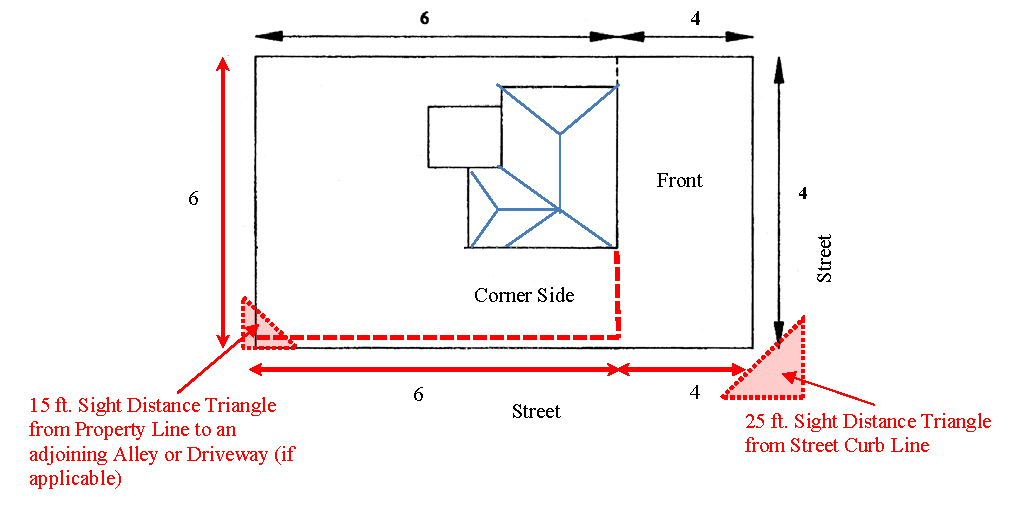
Figure 6-2. Maximum Fence Height, Residential Districts
(2)
Fences in nonresidential zoning districts shall meet the following requirements:
a.
In industrial zoning districts, no fence shall exceed twelve (12) feet in height, nor be less than three (3) feet in height. In commercial zoning districts, no fence shall exceed eight (8) feet in height, nor be less than three (3) feet in height. In all other zoning districts, the city planner shall determine if the residential, commercial, or industrial fence height requirements shall apply. In the case of grade separation, such as the division of properties by a retaining wall, fence height shall be determined based on measurement from the average point between highest and lowest grade.
b.
No fence shall exceed four (4) feet in height in the area between the required minimum building setback as stipulated by the unified development ordinance and the front lot line.
c.
Any fence in a nonresidential zoning district with a nonresidential use may be permitted to construct a fence up to the corner side lot lines and rear lot lines of through-lots at the height allowed by subsection (2)(a) above.
d.
Essential service uses requiring protection, including but not limited to, electrical and gas substations and water and wastewater treatment plants, shall be allowed to construct a fence up to twelve (12) feet in height on any property line.
e.
In no case shall a fence obscure the required sight triangle as required by this article or as required by the city engineer or other authorized agent of the city.
(Ord. No. 99-20, § 1, 11-23-99; Ord. No. 2008-09, § 2, 5-13-08; Ord. No. 2010-04, § 3, 5-25-10; Ord. No. 2011-06, 6-14-11; Ord. No. 2018-2, § 1, 9-11-18; Ord. No. 2019-10, § 2, 7-9-19)
Sec. 6-260. - Fence materials and maintenance.
(1)
All walls and fences shall be durable, standard fence materials, and kept in a condition so as not to become a nuisance. Drywall, cardboard, plywood and particle board panels shall not be used as fencing material. Standard fence materials shall include cedar fence posts and boards, treated wood fence posts and boards, PVC or vinyl fence posts and panels designed and manufactured for use as fence sections, aluminum fence posts and panels, wrought iron fence panels, steel fence panels (designed and manufactured for use as fencing, chain link fencing with wood or tubular steel posts and frames and other materials as approved by the City Planner.
(2)
Barbed wire shall be prohibited except as follows:
a.
Barbed wire shall be permitted for allowed agricultural purposes and the retention of allowed livestock.
b.
Barbed wire shall be allowed in industrial districts and for essential service uses (including, but not limited to, electrical and gas substations, and water and wastewater treatment plants). The barbed wire shall begin at a point at least six (6) feet above finished grade and it shall not project over property lines.
c.
Barbed wire shall be allowed when necessary for security purposes at correctional facilities and similar facilities.
d.
Barbed wire may be allowed in commercial districts with the issuance of a conditional use permit. The barbed wire shall begin at a point at least six (6) feet above finished grade and it shall not extend over property lines. Findings shall be made that the barbed wire is necessary to protect the property for which the barbed wire is intended.
(3)
All fence posts and supporting members shall be erected so that the finished side or sides of the fence face the adjacent property or public right-of-way.
(4)
Slats shall be permitted on chain link fences in industrial districts or uses. Screening slats shall be properly maintained free of graffiti and if damaged screening slats shall be promptly replaced with a matching color slat.
(5)
Metal wall or roof panels may be permitted as a fence material by conditional use.
(6)
Decorative - Ornamental fences per section 6-250, subsection (2)(c) above, shall include wrought iron, wood or vinyl picket, split rail, rail and post, and wood framed vinyl coated (or equal) chain link with minimum 4" × 4" decorative posts and minimum 2" × 4" horizontal framing members. Alternative ornamental materials beyond those listed above may be approved with a conditional use permit.
(Ord. No. 99-20, § 1, 11-23-99; Ord. No. 2008-09, § 2, 5-13-08; Ord. No. 2011-06, 6-14-11; Ord. No. 2018-2, § 2, 9-11-18; Ord. No. 2019-10, § 2, 7-9-19)
Sec. 6-270. - Purpose.
Home occupation regulations are established to ensure that home occupations will not adversely affect the character and livability of the surrounding neighborhood and that a home occupation remains accessory and subordinate to the principal residential use of the dwelling. The regulations recognize that many types of home occupations can be conducted with little or no effect on the surrounding neighborhood.
(Ord. No. 99-20, § 1, 11-23-99)
Sec. 6-280. - Standards.
(A)
General. All permitted home occupations shall be allowed as an accessory use to a dwelling subject to the following standards:
(1)
Machine shops, body shops, repair of internal combustion engines (other than small engine repair), welding, manufacturing, or any other objectionable use as determined by the city council shall not be permitted as a home occupation.
(2)
The home occupation shall be clearly incidental and subordinate to the residential use of the dwelling.
(3)
Exterior alterations or modifications that change the residential character or appearance of the dwelling, any accessory buildings, or the property itself shall be prohibited.
(4)
Exterior display or storage of equipment or materials is prohibited.
(5)
Signage is permitted as allowed in Chapter 9, Signs, for the zoning district in which the home occupation is located.
(6)
There shall be no indication of offensive noise, vibration, smoke, dust, odors, heat, or glare at or beyond the property line.
(7)
Shipment and delivery of products, merchandise, or supplies shall be limited to between 8:00 a.m. and 6:00 p.m. and shall occur only in single rear axle straight-trucks or smaller vehicles normally used to serve residential neighborhoods.
(B)
Type I home occupations. Type I home occupations shall include but are not limited to: art or photo studio; tailoring; secretarial service; consulting services; and professional offices, none of which shall involve regularly scheduled client visits.
(1)
Only persons residing on the premises may be engaged in the conduct of the home occupation.
(2)
Home occupations shall be limited to the performance of services only. In person retail sales from the premises are prohibited.
(3)
Accessory structures and may not be used as part of the home occupation.
(4)
There shall be no separate business entrance.
(5)
Infrequent client visits shall be permitted by appointment only, and shall be limited to five (5) per week.
(6)
The operation of the home occupation, as it is apparent to adjacent residential uses, shall begin no earlier than 7:00 a.m. and end no later than 9:00 p.m.
(C)
Type II home occupations. Type II home occupations shall include all of the above home occupations that exceed Type I home occupation standards and meet the Type II home occupations requirement, such uses as hair-styling and tanning salons or other uses that generate regular customer visits to the premises, and small engine repair uses.
(1)
Only persons residing on the premises may be engaged in the conduct of the home occupation. Those employed indirectly as part of the home occupation may be allowed, but shall not report to work at the premises on a daily basis.
(2)
Home occupations, including but not limited to hair-styling and tanning salons, may provide no more than one (1) station.
(3)
The required off-street parking area provided for the principal use shall not be reduced or made unusable by the home occupation.
(4)
The operation of the home occupation, as it is apparent to adjacent residential uses, shall begin no earlier than 7:00 a.m. and end no later than 9:00 p.m.
(5)
The home occupation shall not generate excessive customer or client traffic that is detrimental to the character of surrounding properties or the neighborhood.
(6)
Client visits to the premises shall be limited to three (3) clients on the premises at any one (1) time and the maximum number of clients visits per day shall be no more than that day's number of operating hours multiplied by two (2).
(7)
Accessory structures and/or attached garages may be used as part of the home occupations, provided that no more than thirty (30) percent of the structure is dedicated specifically to such use.
(Ord. No. 99-20, § 1, 11-23-99; Ord. No. 2002-06, § 1, 3-26-02)
Sec. 6-290. - Licensing.
Each Type II home occupations shall be required to obtain a home occupation certificate from the City Planner, subject to payment of a filing fee as established by resolution of the City Council. Issued home occupation certificates are not transferable. The certificate shall be renewed biannually. The certificate shall also be renewed if the home occupation is transferred to a new owner or operator, if the character or intensity, or if the location of the home occupation changes. All home occupation owners shall be required to complete a questionnaire describing its operations, to be kept on file with the city.
(Ord. No. 99-20, § 1, 11-23-99; Ord. No. 2002-06, § 1, 3-26-02)
Sec. 6-300. - Modifications.
Modifications from the above regulations may be approved by the City Council in individual cases if the modification is in accordance with the purposes set forth herein. Additional requirements or conditions may be added as deemed necessary to ensure that the home occupation will not have an adverse impact on the character of the surrounding residential neighborhood or on adjacent residential uses.
(Ord. No. 99-20, § 1, 11-23-99)
Sec. 6-301. - Inspection.
The city hereby reserves the right to inspect the premises in which a home occupation is being conducted to ensure compliance with the provisions of this Chapter or any conditions additionally imposed.
(Ord. No. 2002-06, § 1, 3-26-02)

